[Adam] We settle into a routine here at the lodge. After breakfast, we head out and explore another trail in the jungle. It usually takes us 2-3 hours for each sortie we make. Most of the animal activity occurs early in the morning and just before sunset.
The middle of the day is stiflingly hot and almost nothing is out and about.
After lunch, we use the afternoon to check internet, work, do some laundry, take a nap and read.
The animals in the jungle do not wish to be seen. The guides work hard to find the animals they do – and since we’re in the wild there are no guarantees we’ll see much of anything. Such is the nature of these hikes. After our walks in the woods, we come back drenched in sweat, hit the potty, hit the showers and then lay spread eagled on the bed in front of the A/C until we feel something closer to normal. Then, head back out!
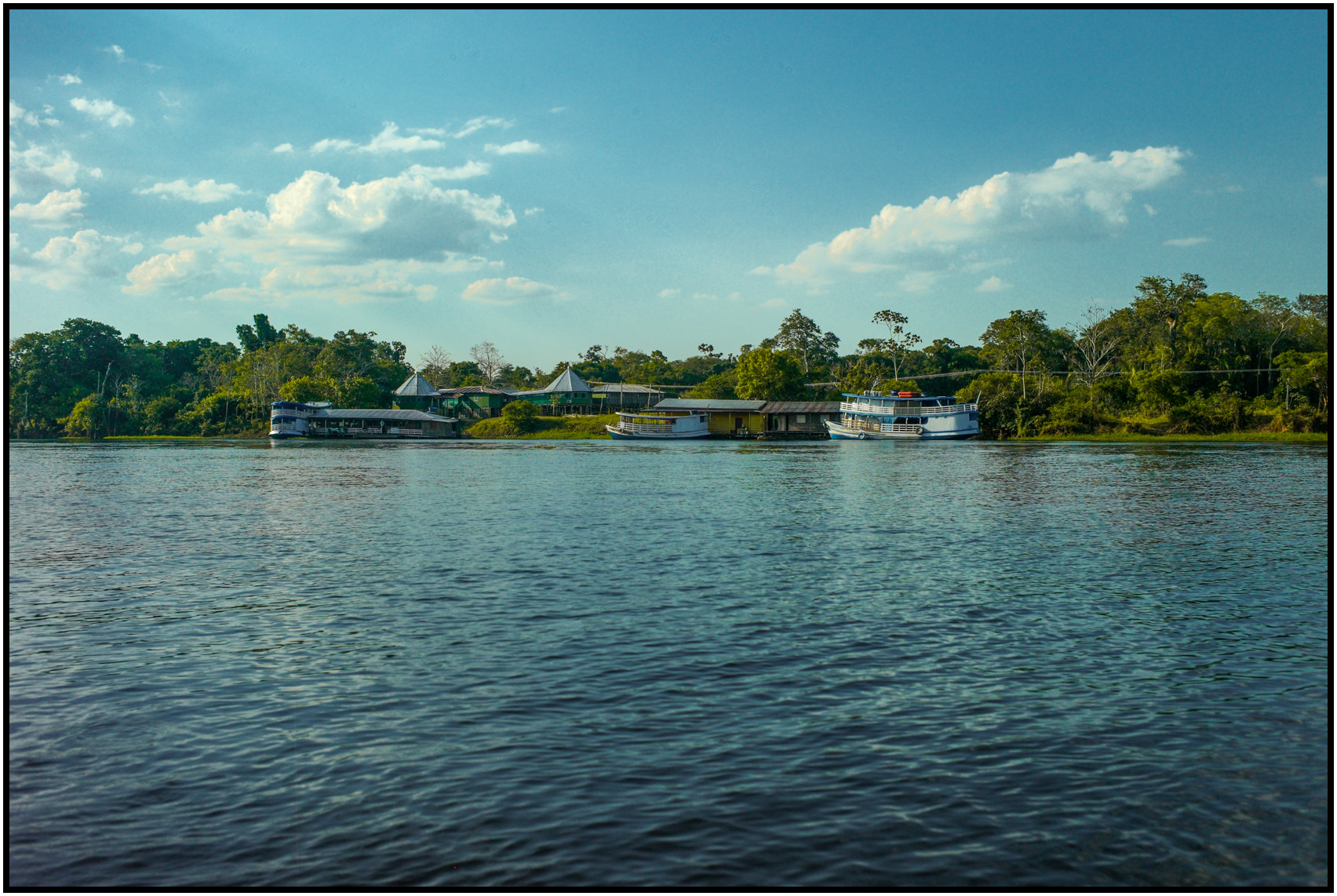
Life on the river. This was one of the larger/nicer settlements we passed.
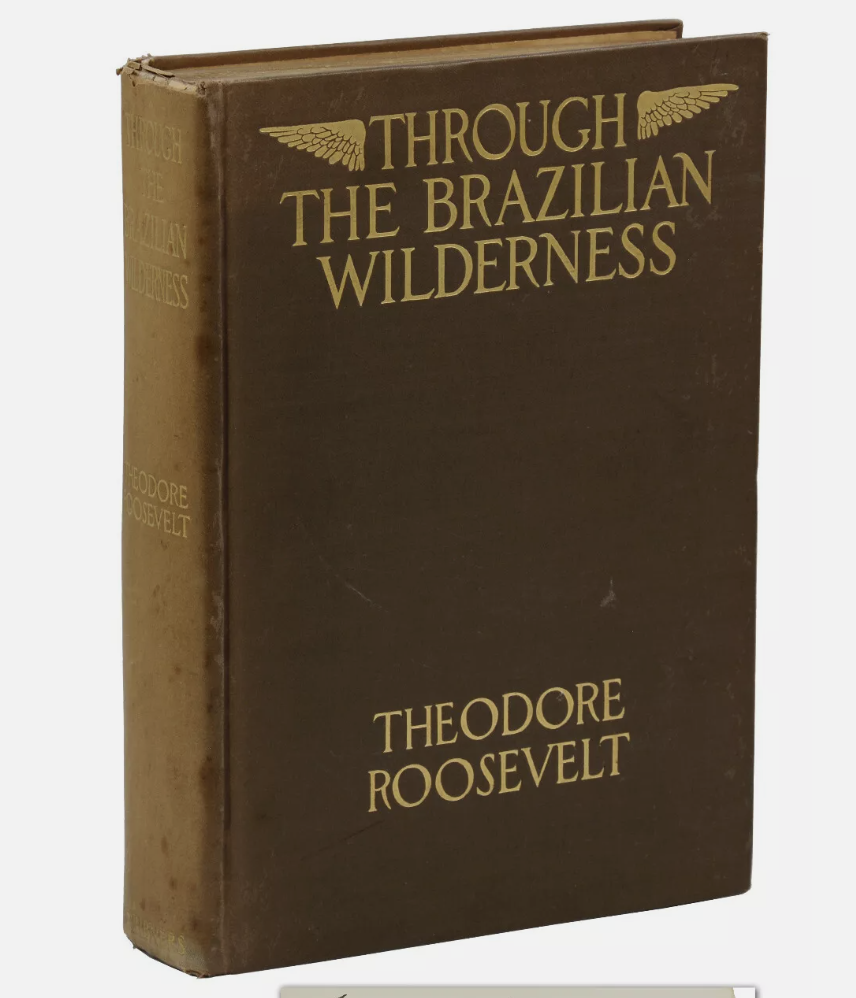
This is the book (in electronic form) that I brought for the down times on the journey. Teddy wrote this in 1914 and it describes his journey up several unknown (at the time) rivers. His journey ends in Manaus and he spends a great deal of time stomping around the areas we are currently touring. Anything that moved was shot, stuffed and classified – all in the name of conservation! Roosevelt is an entertaining writer and such a “field naturalist” nerd – he was fascinated about everything in life and always dove right into the deep end. He could talk at length about almost anything and only shut up when someone else, speaking from a greater authority on the matter at hand, was talking. I would like to think that Roosevelt would be the preferred candidate over everyone else should he somehow run this fall.
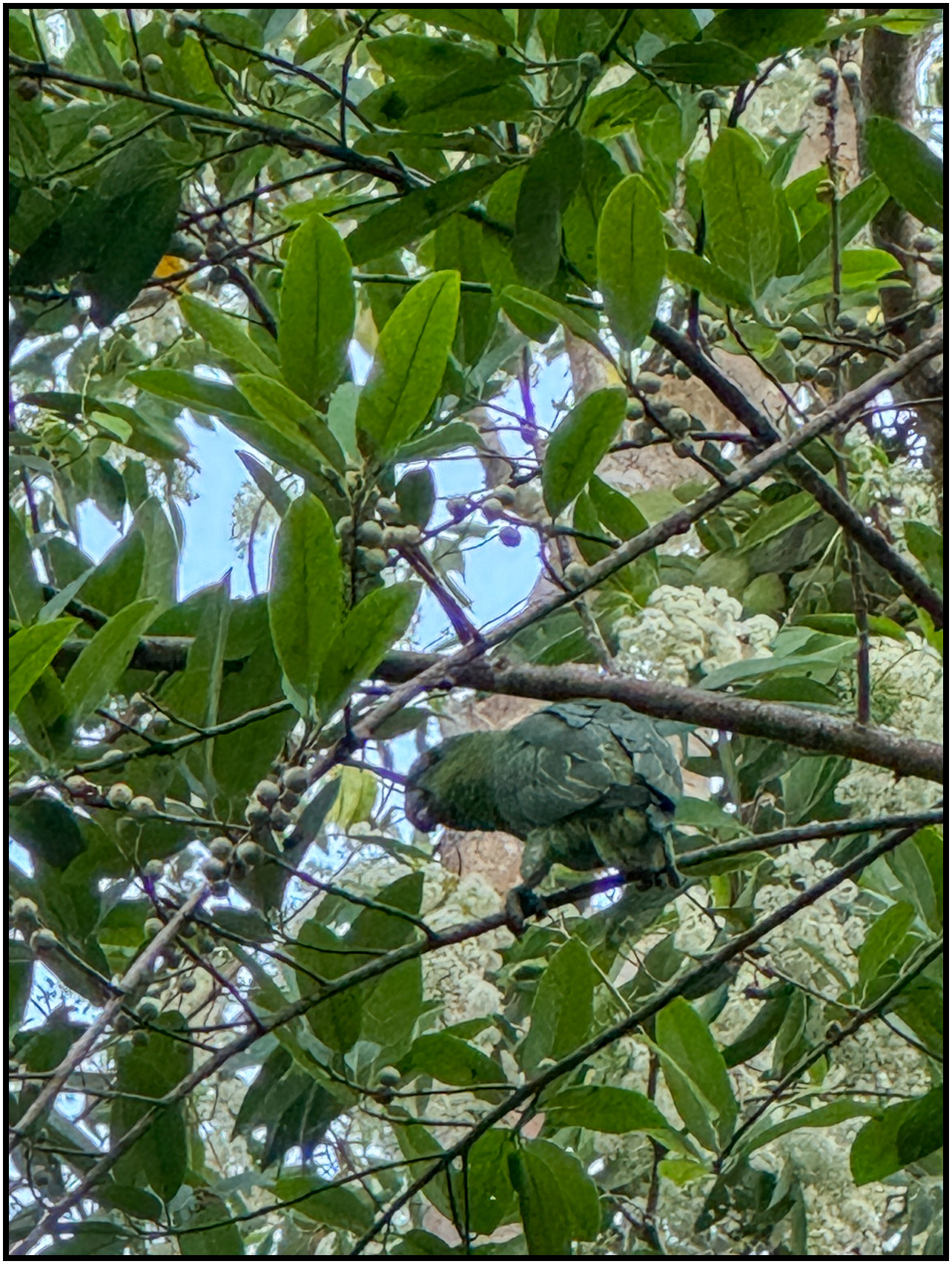
Our cabin has a back porch that abuts the forest. Brenda can sit in a chair on the porch, enjoy a tea and watch parrots take fruit from the tree right in front of her.
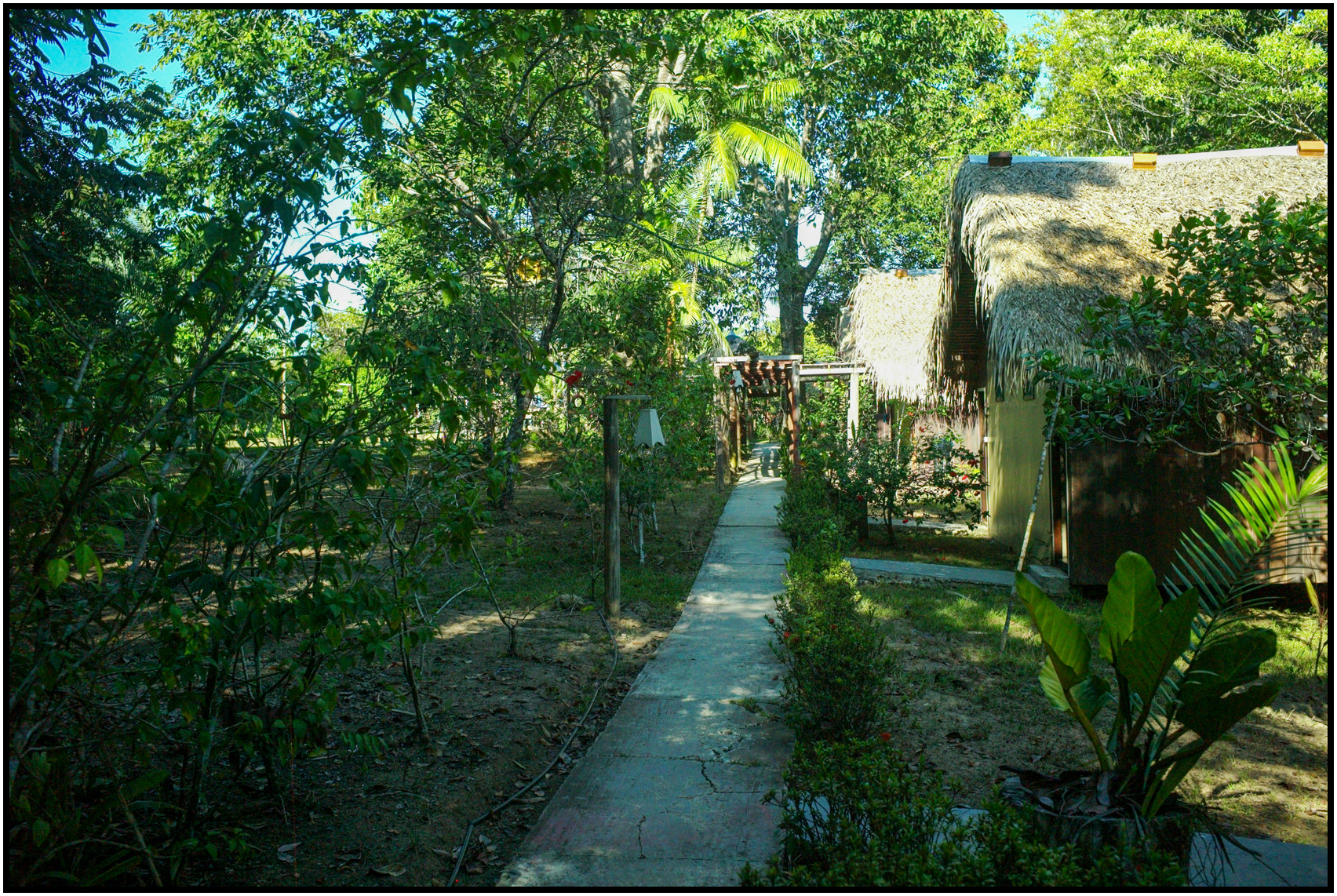
More establishing shots of Turtle Lodge.
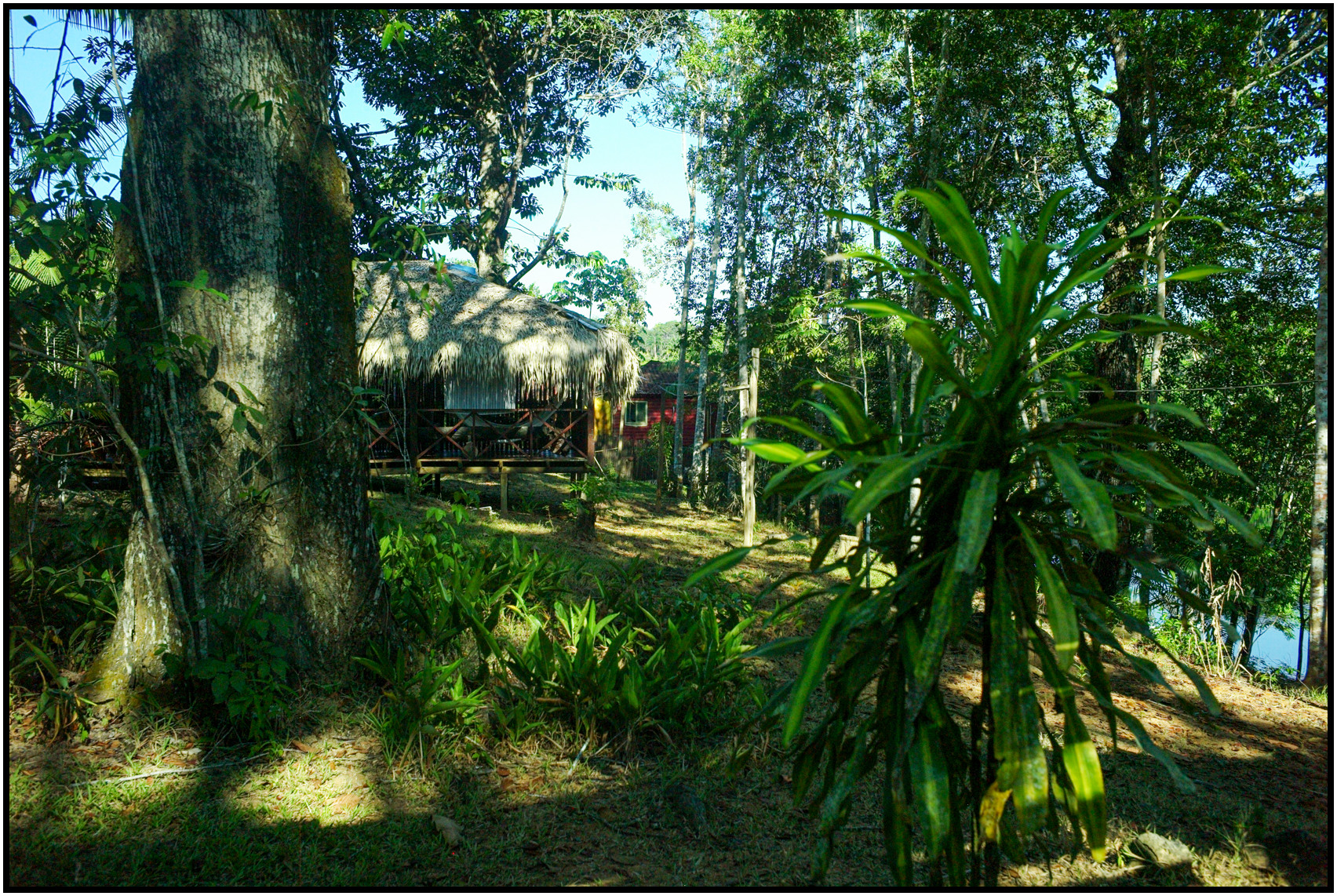
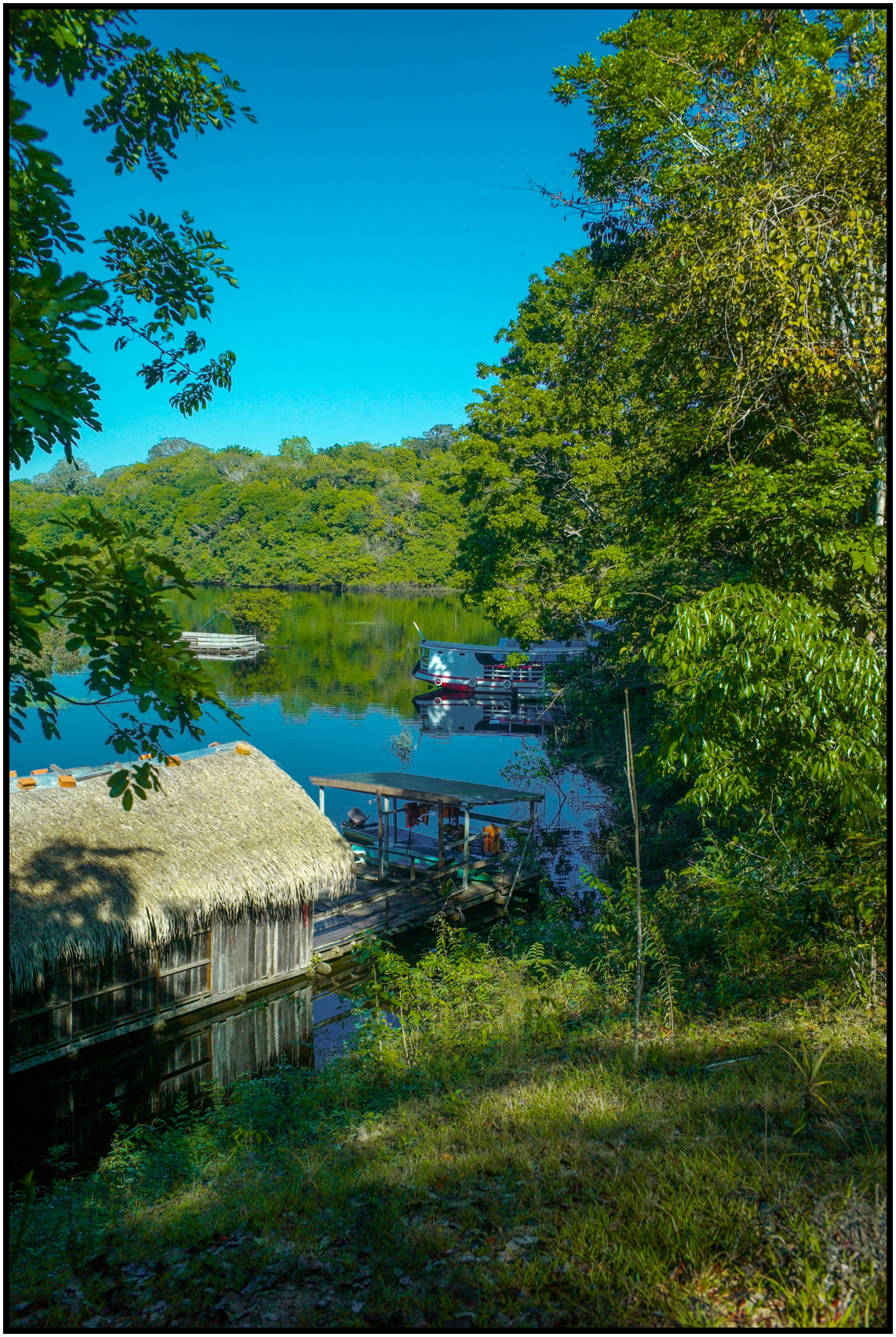
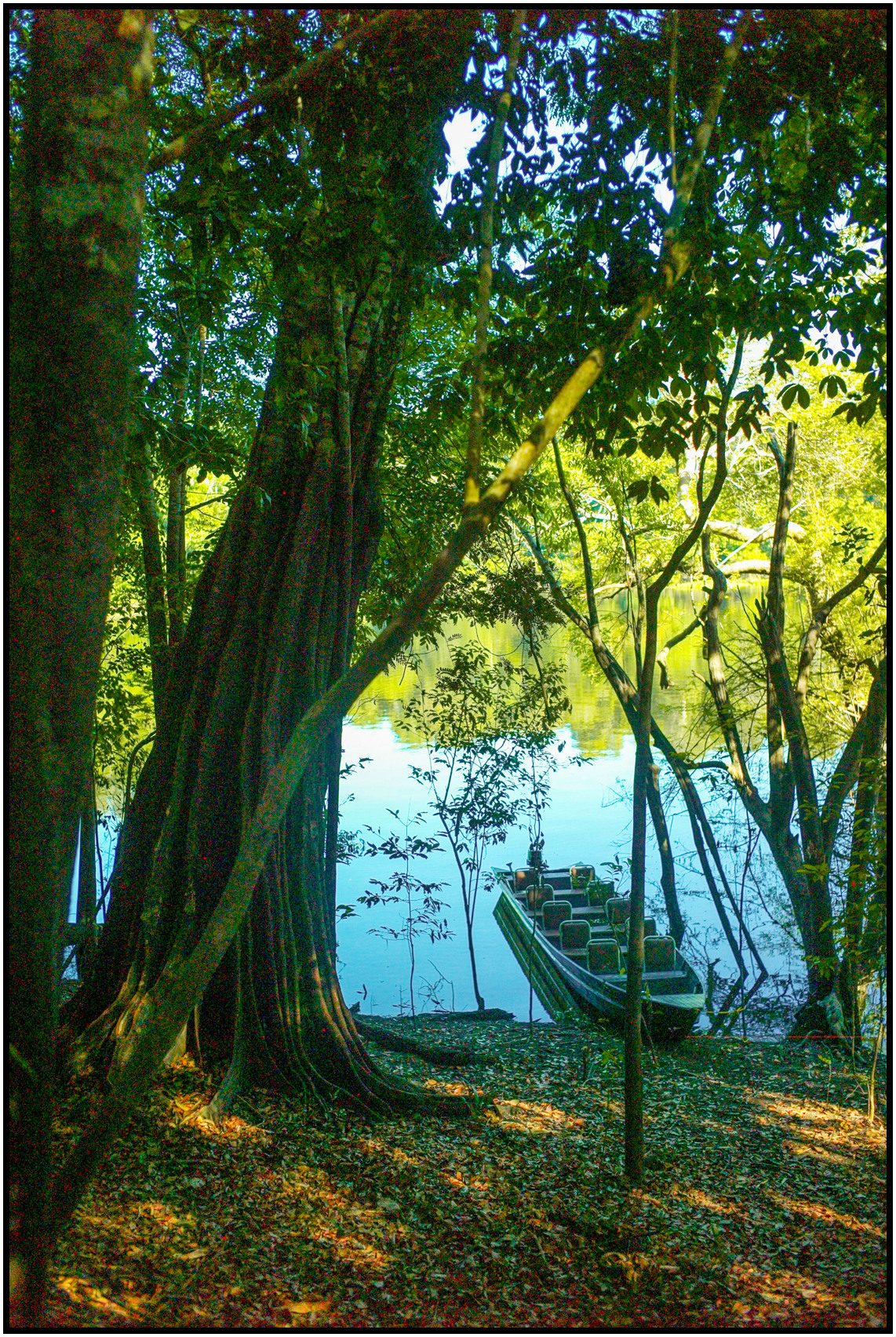
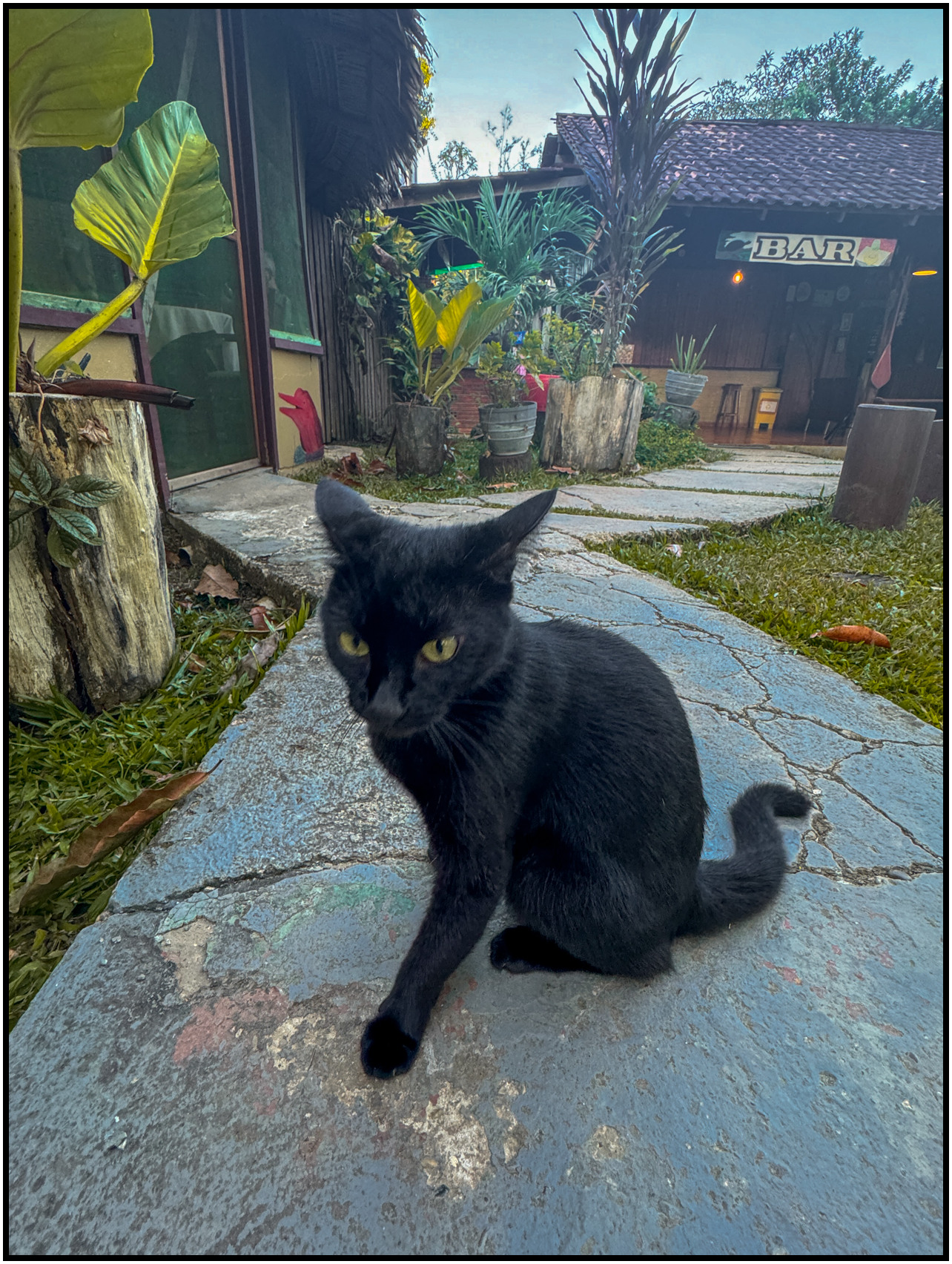
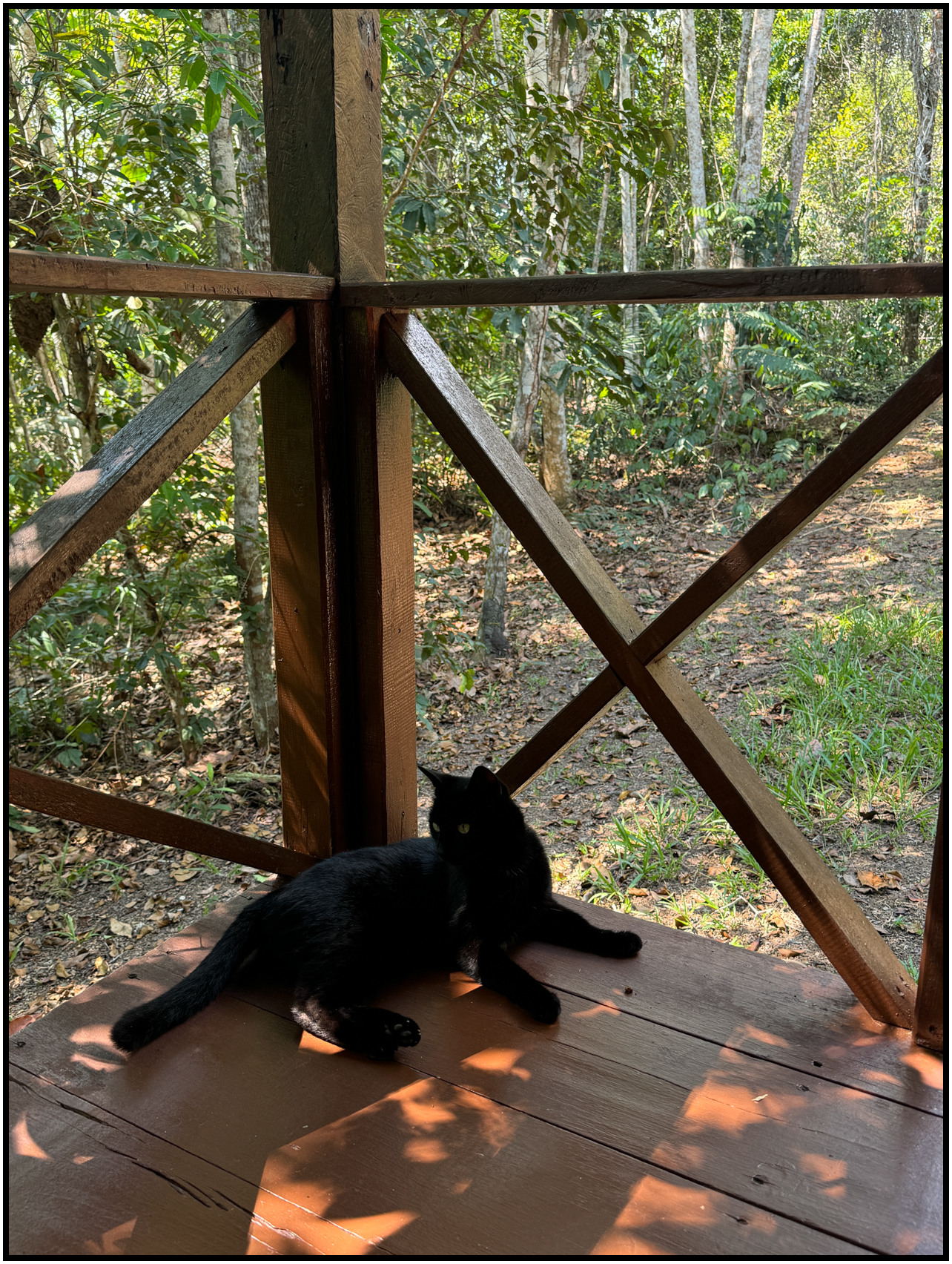
[Brenda] Outside the Lodge restaurant after breakfast, this angry-looking cat attacked my ankles as I walked by and scratched me up pretty good. One of the employees came running to my rescue, shouting “NO, Juju!”
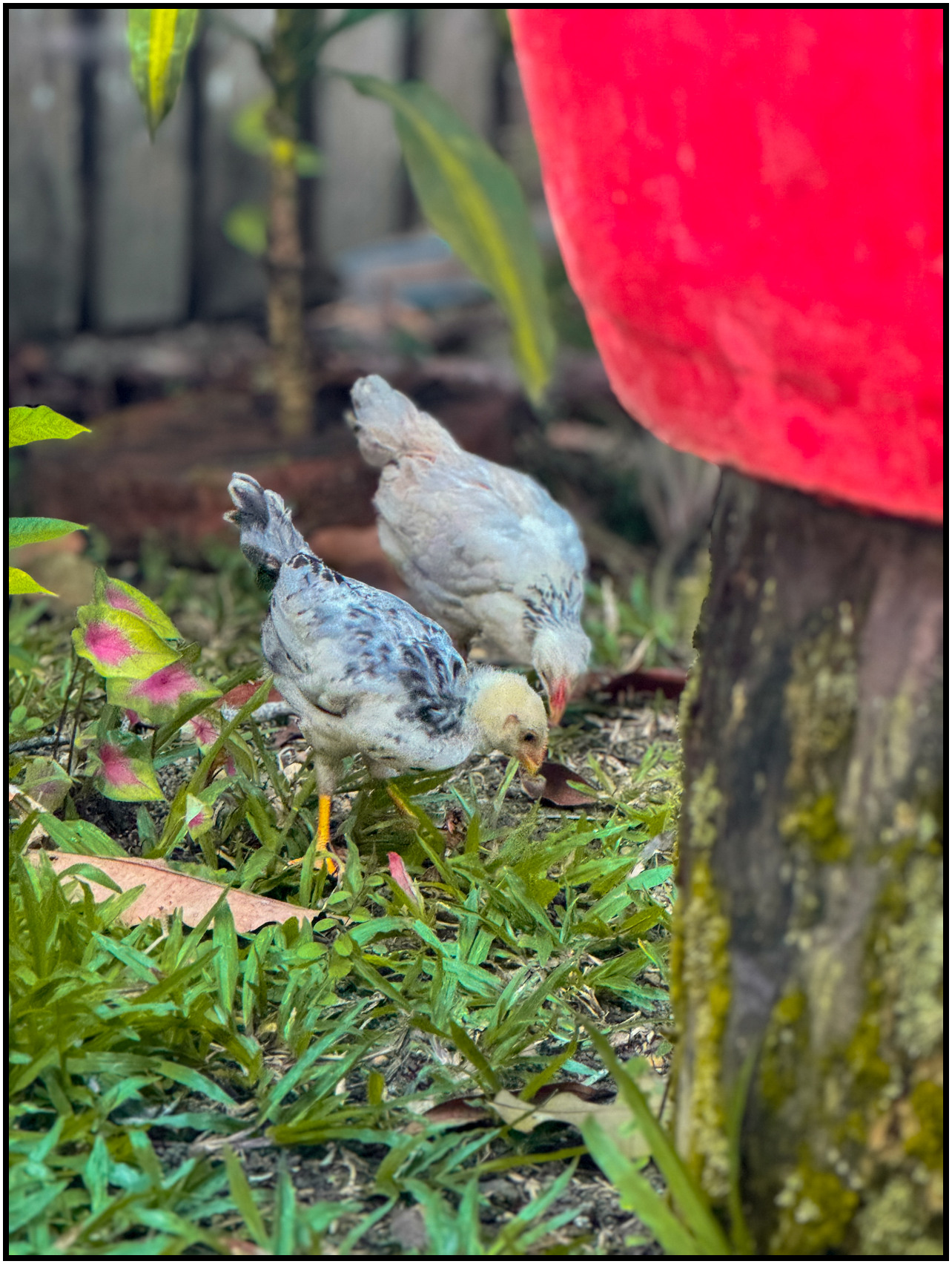
Baby chickens running around the property.
I made it my mission to befriend Juju. I gave her a little piece of ham and now she follows me around and hangs out on our porch. No more jungle kitty attacks. She even slipped into our room when Adam opened the door, jumped up on my bed and licked my face. Now she’s a sweetie!
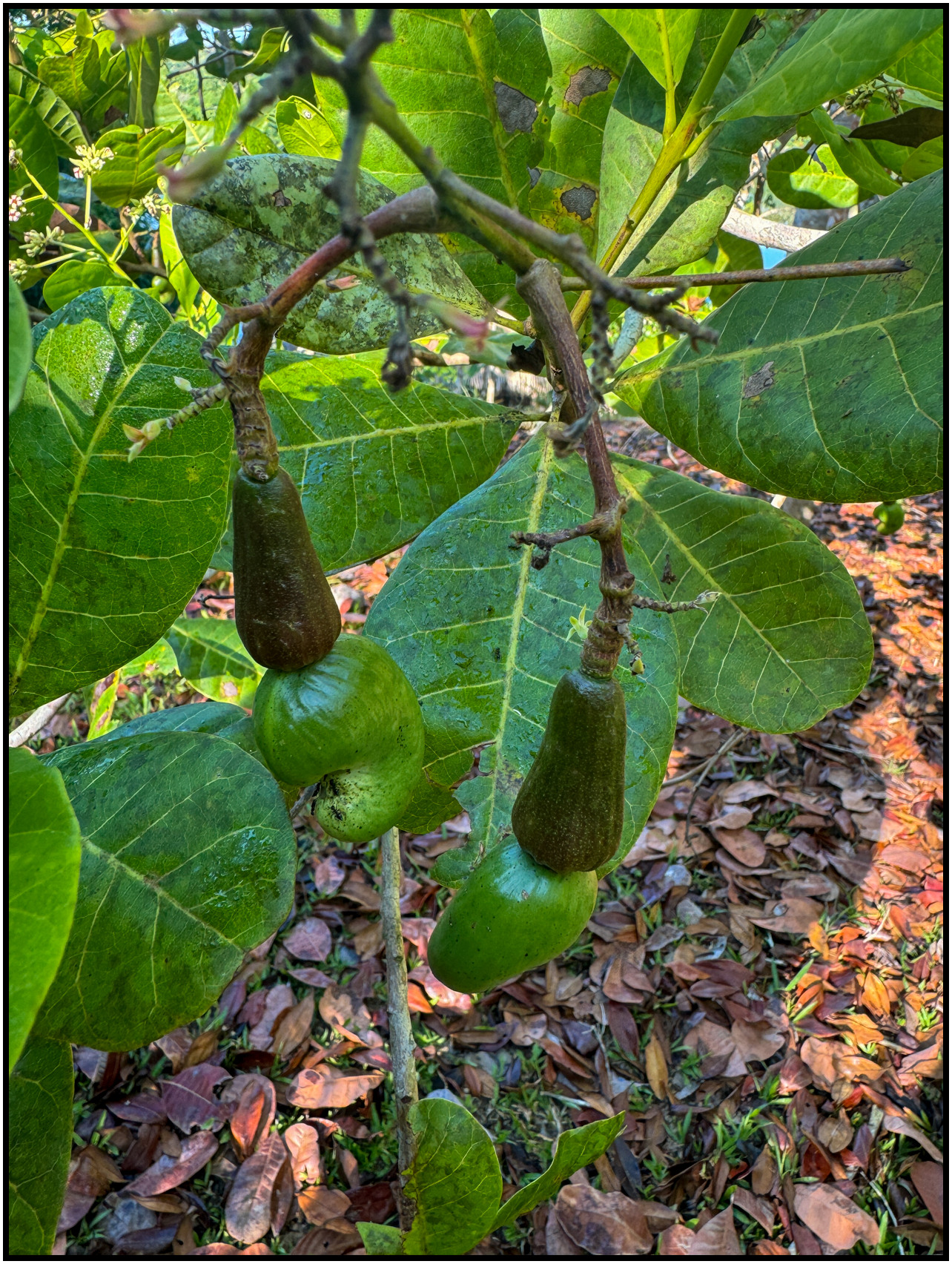
A cashew tree on the property. The first pic is an immature fruit, with the cashew nut hanging off the bottom.
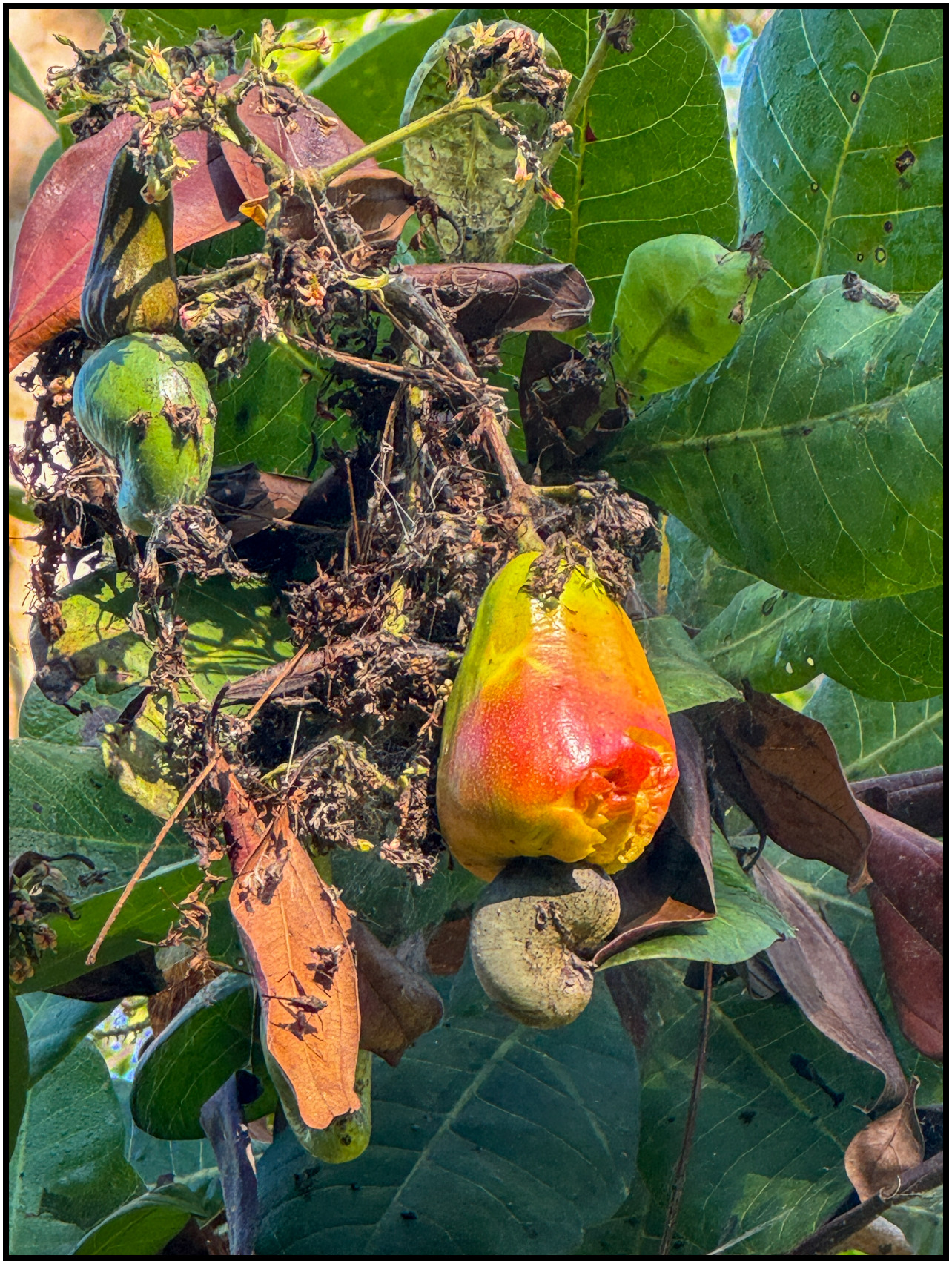
The second pic is a ripe fruit (nut hanging off the bottom.) The fruits are edible and people make them into juices. This one looks like an animal has been chewing on it.
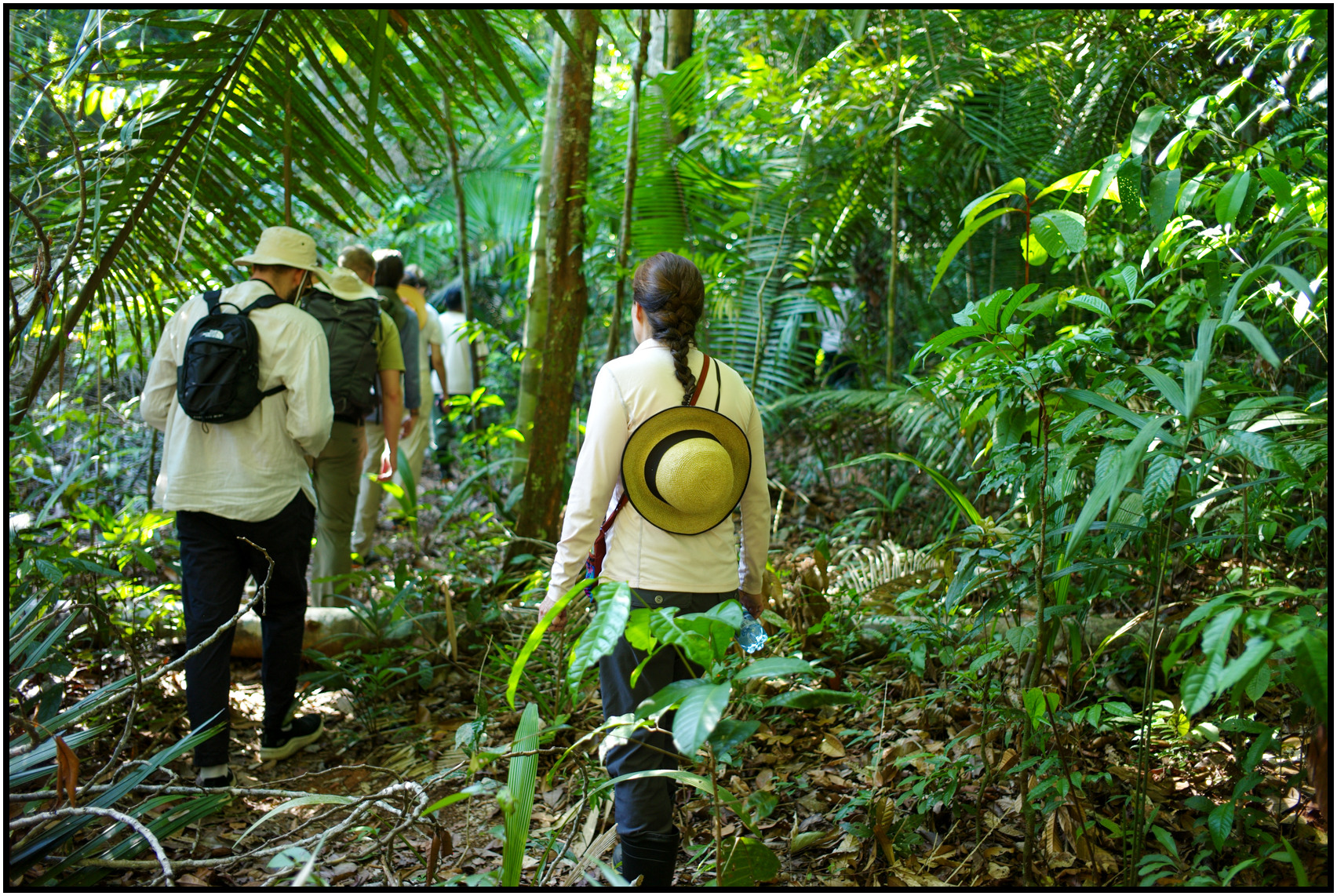
After breakfast, we head out by boat – sometimes for 10 minutes, sometimes for more than an hour. The guide picks a spot for us to land – we then get out and walk.
The guide knows these areas well and gives us a good variety of trees, plants and bugs to discuss. The one item he would never leave home without? A machete. He says survival without one in the woods is doubtful.
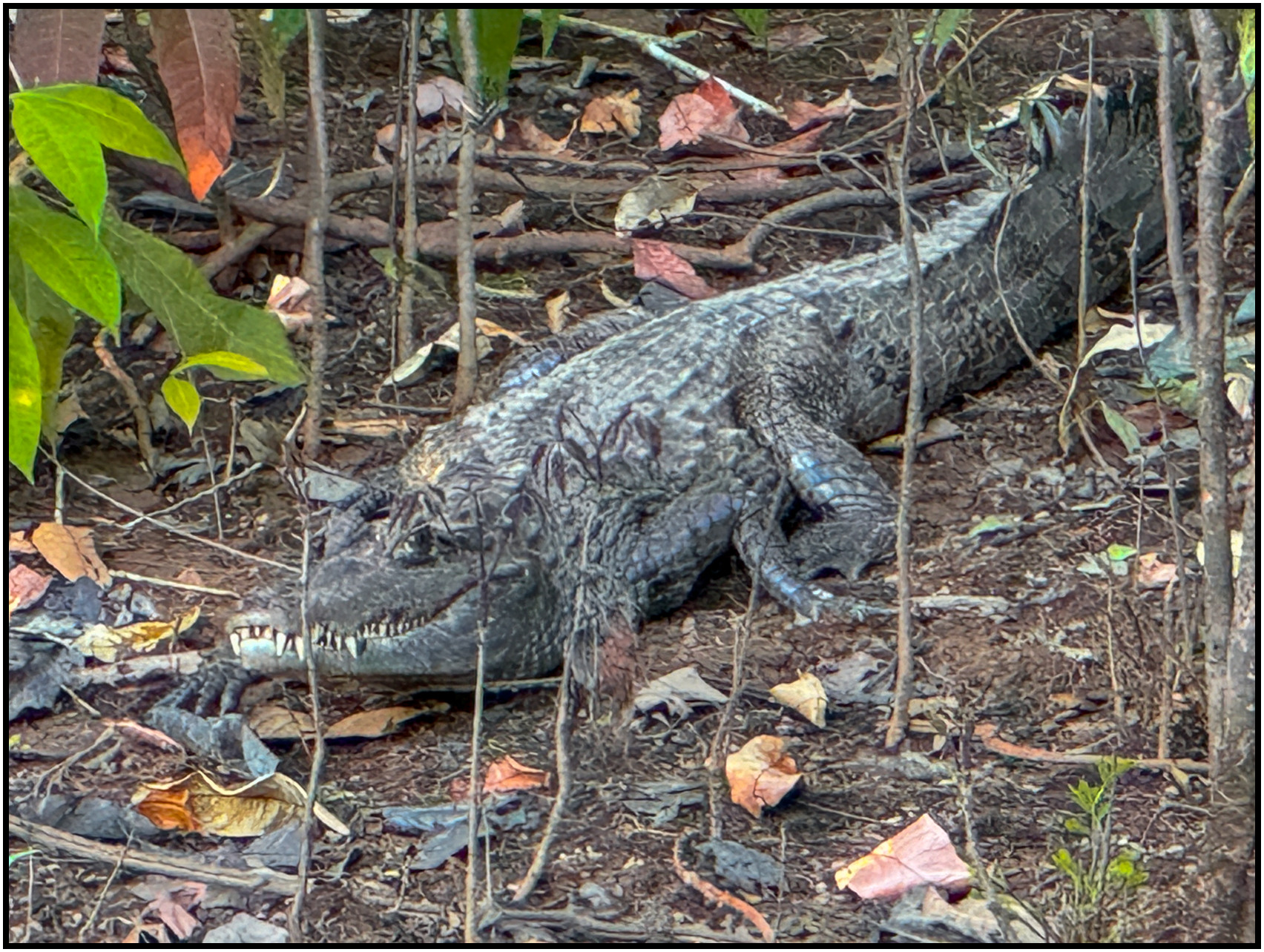
Another caiman – this one was medium sized – about 8’ long.
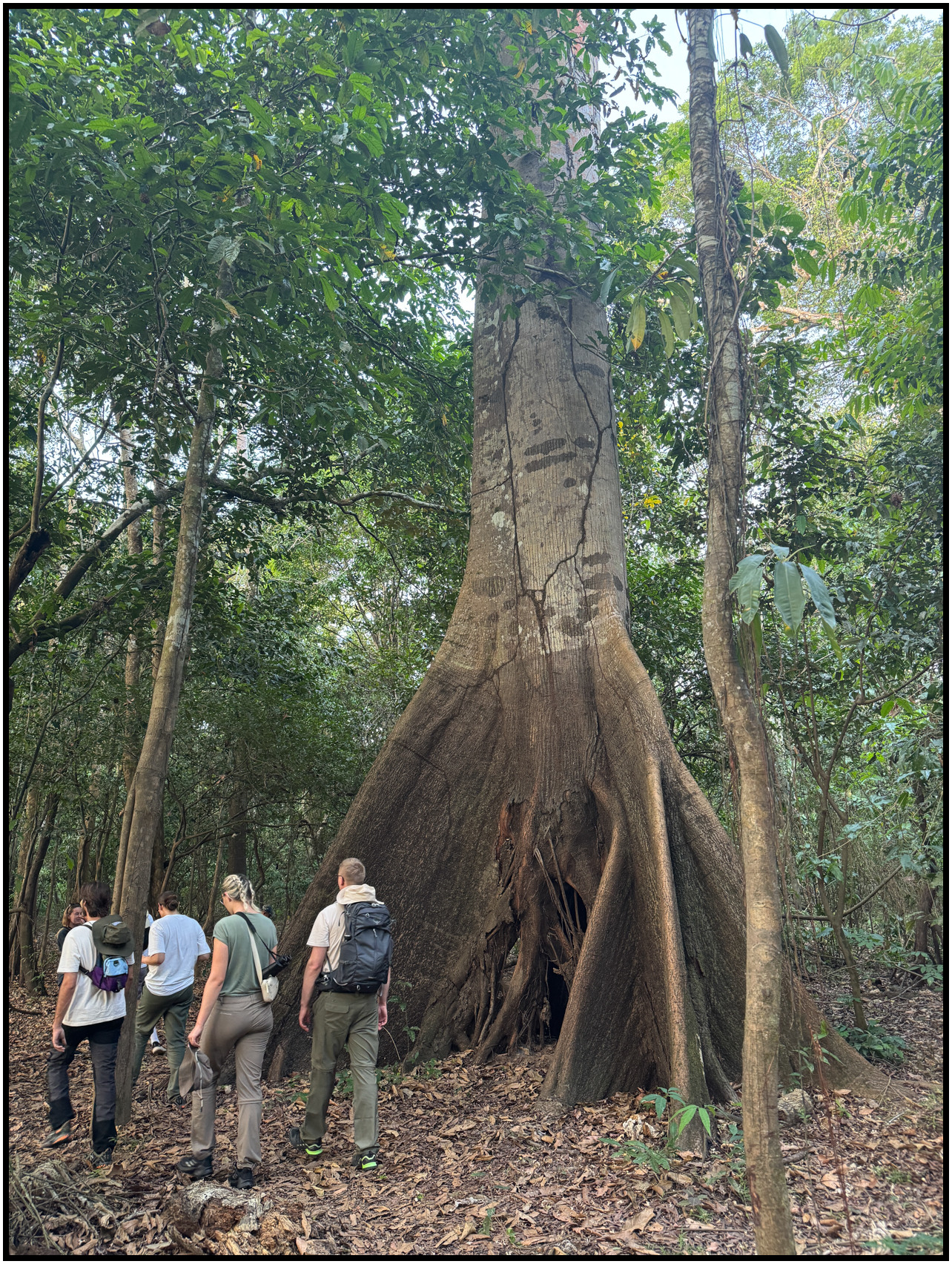
The tree below is a brazil nut tree. They can’t effectively be farmed because they produce nuts only sporadically, depending on the weather, rainfall, temperatures, etc. in any given year, making them an unreliable crop. They are collected from the wild.
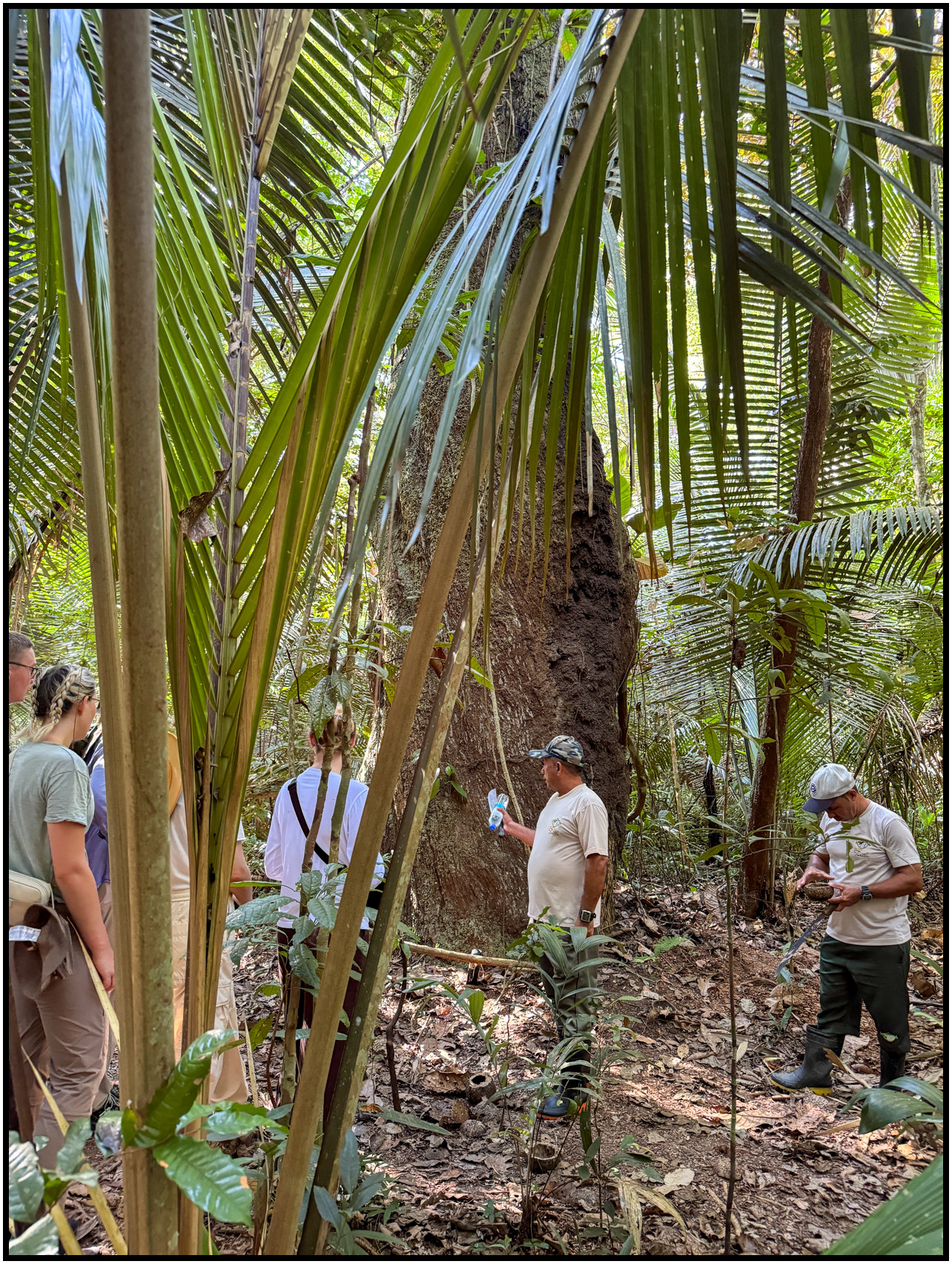 The nuts grow inside a hard shell that looks a lot like a coconut, but thicker and much stronger. In fact, during the months when the trees are dropping their pods, it’s incredibly dangerous to walk in the jungle because if one hits you on the head, it’s instant death. The pods are really heavy.
The tree has a symbiotic relationship with the acouti (a rodent), which is just about the only animal with teeth strong enough to open the outer shell. Acoutis eat some of the nuts and bury the others, which is how the tree gets its seeds dispersed. The guide said the only other animal that can open the outer shell is a human with a machete.
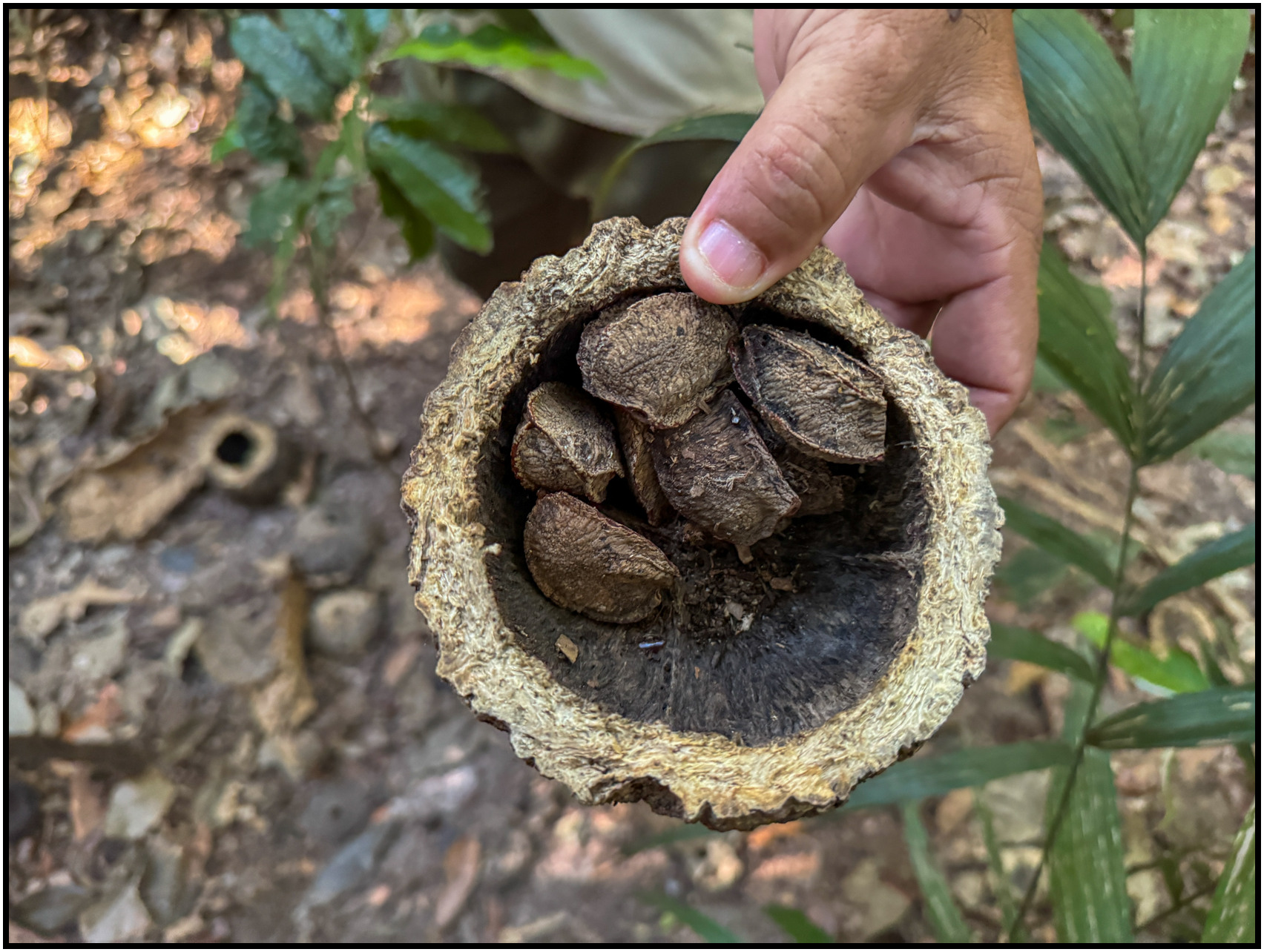 Here he is showing how they use the machete to crack open the nut and peel off the shell. The raw brazil nuts have a texture sort of like jicama. I’ve only ever had them toasted. The raw fresh ones are pretty good.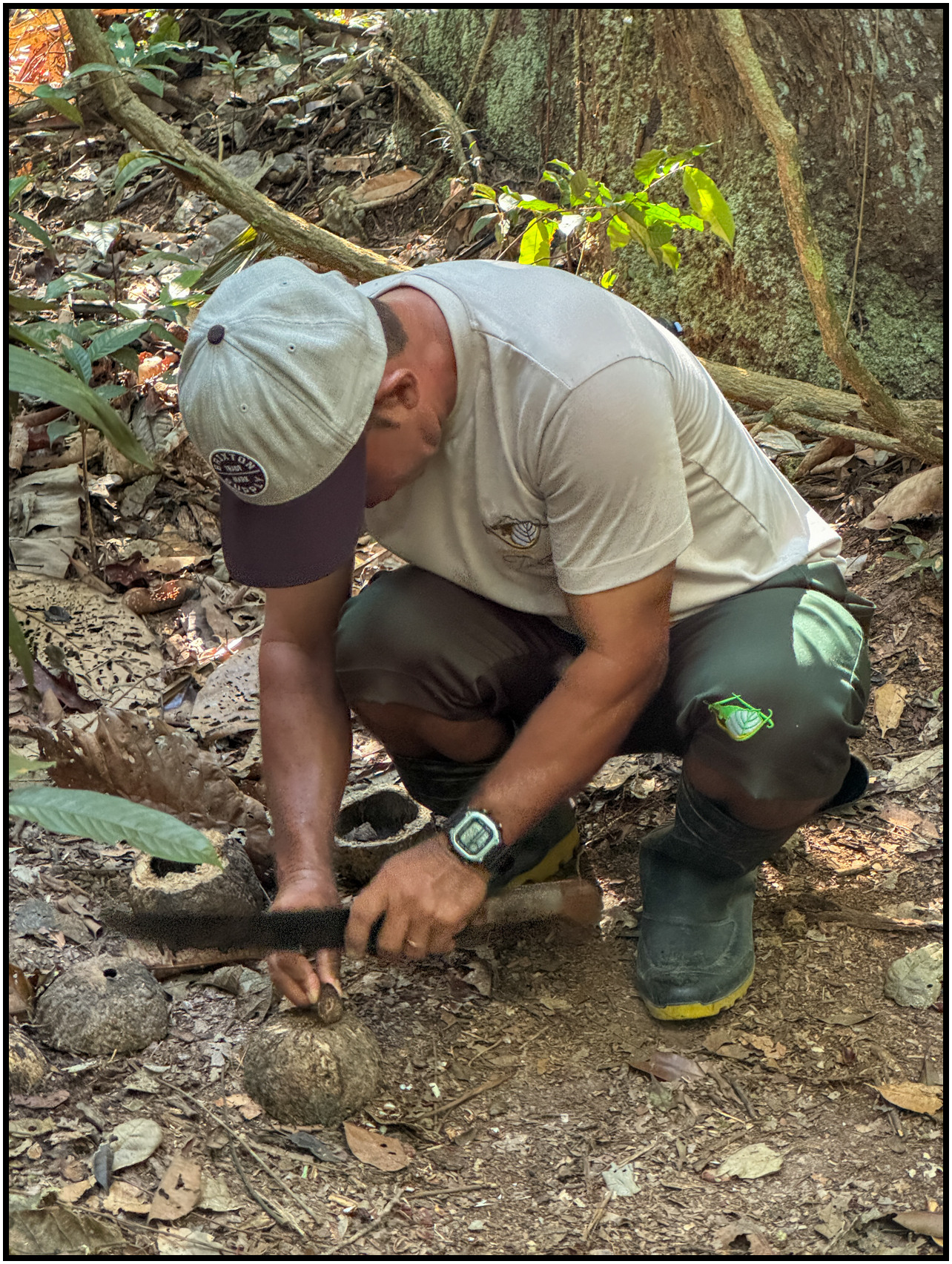
Adam watching the path for creepy-crawlies.
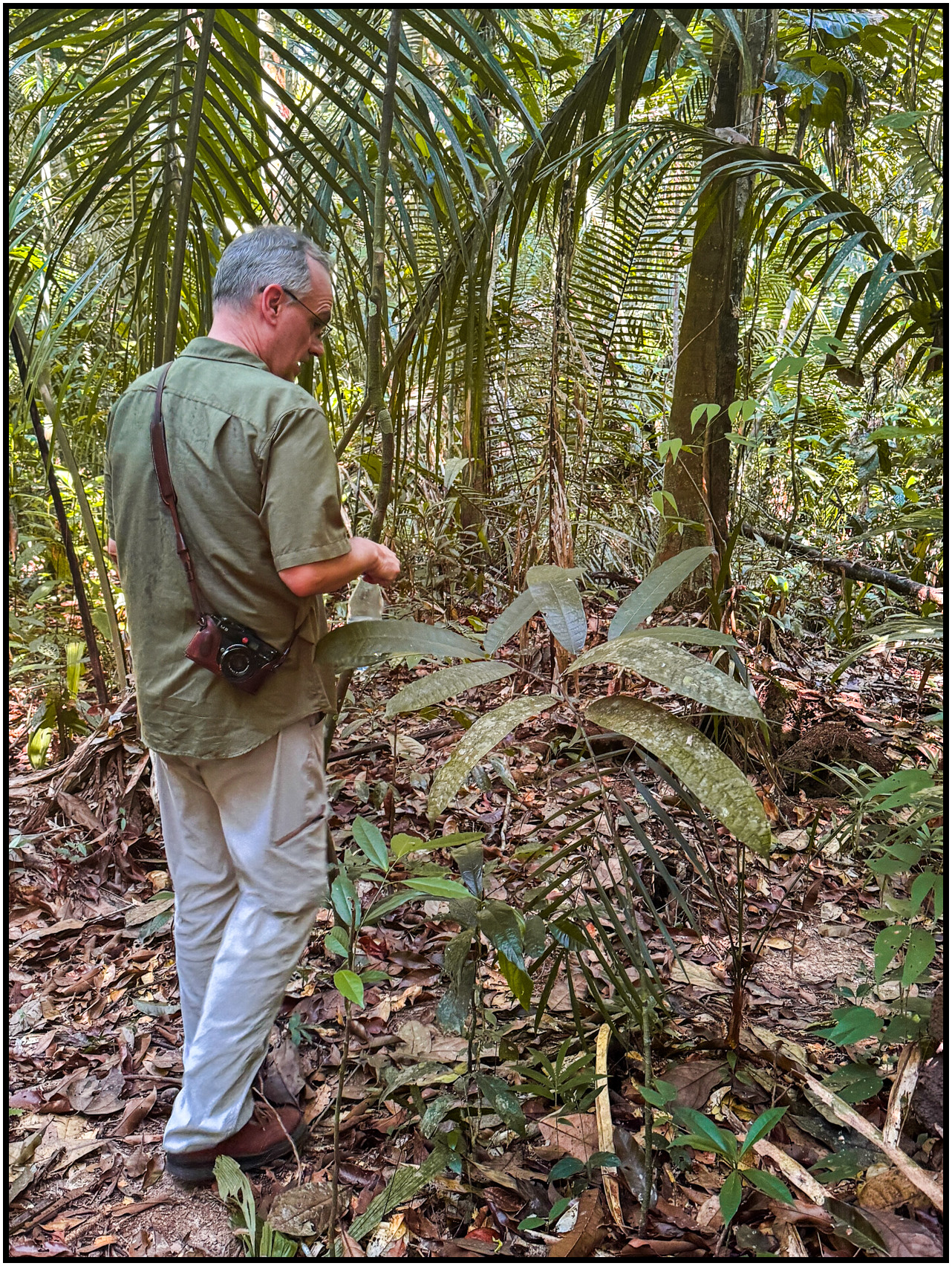
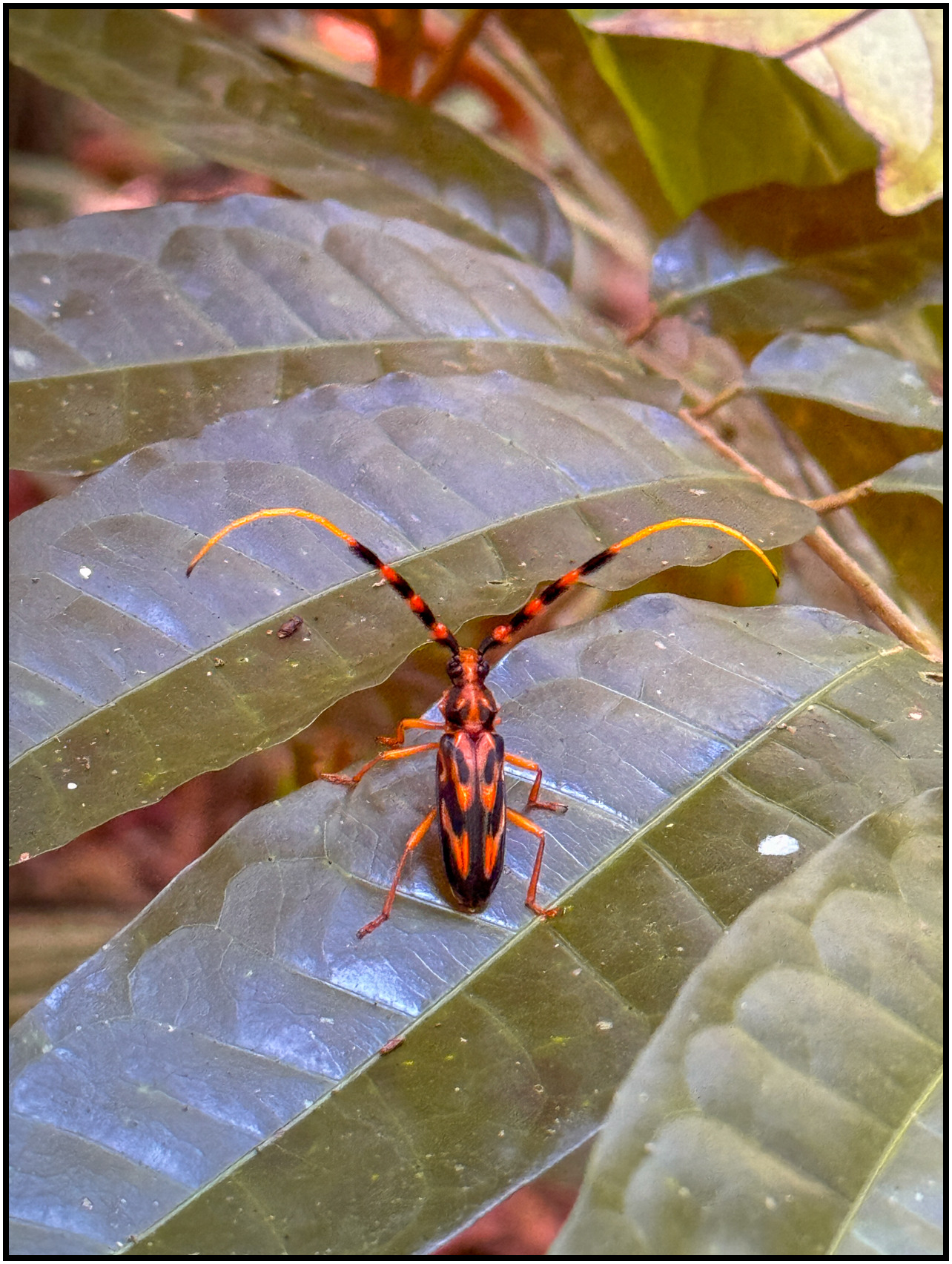
Things to avoid. When we cross a path currently being occupied by flying bees, or ants, or spiders’ webs, the guide uses the machete to clear up a new path. We give a lot of things a wide berth. The beetle below has a nasty sting.
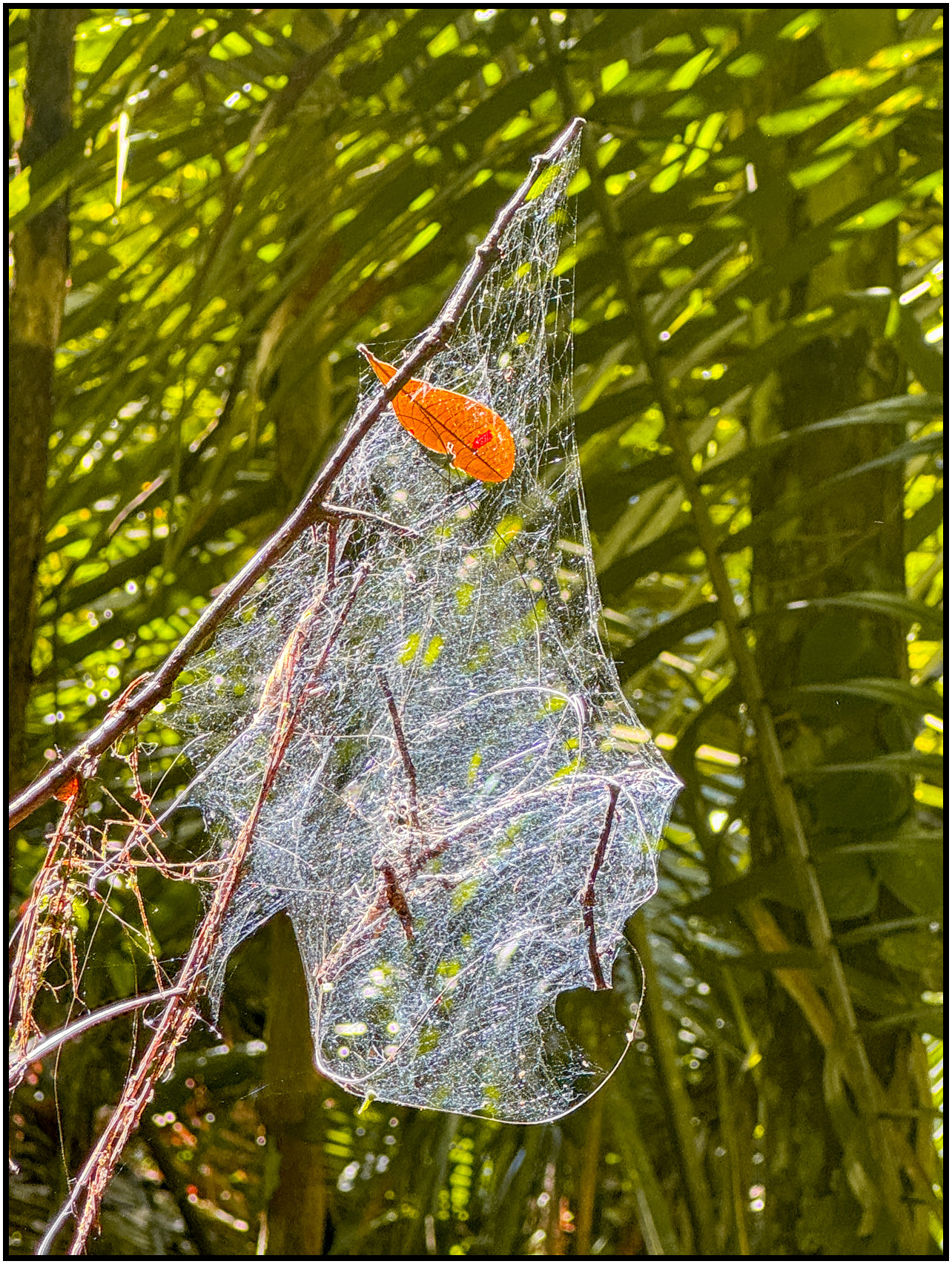
Huge spider web.
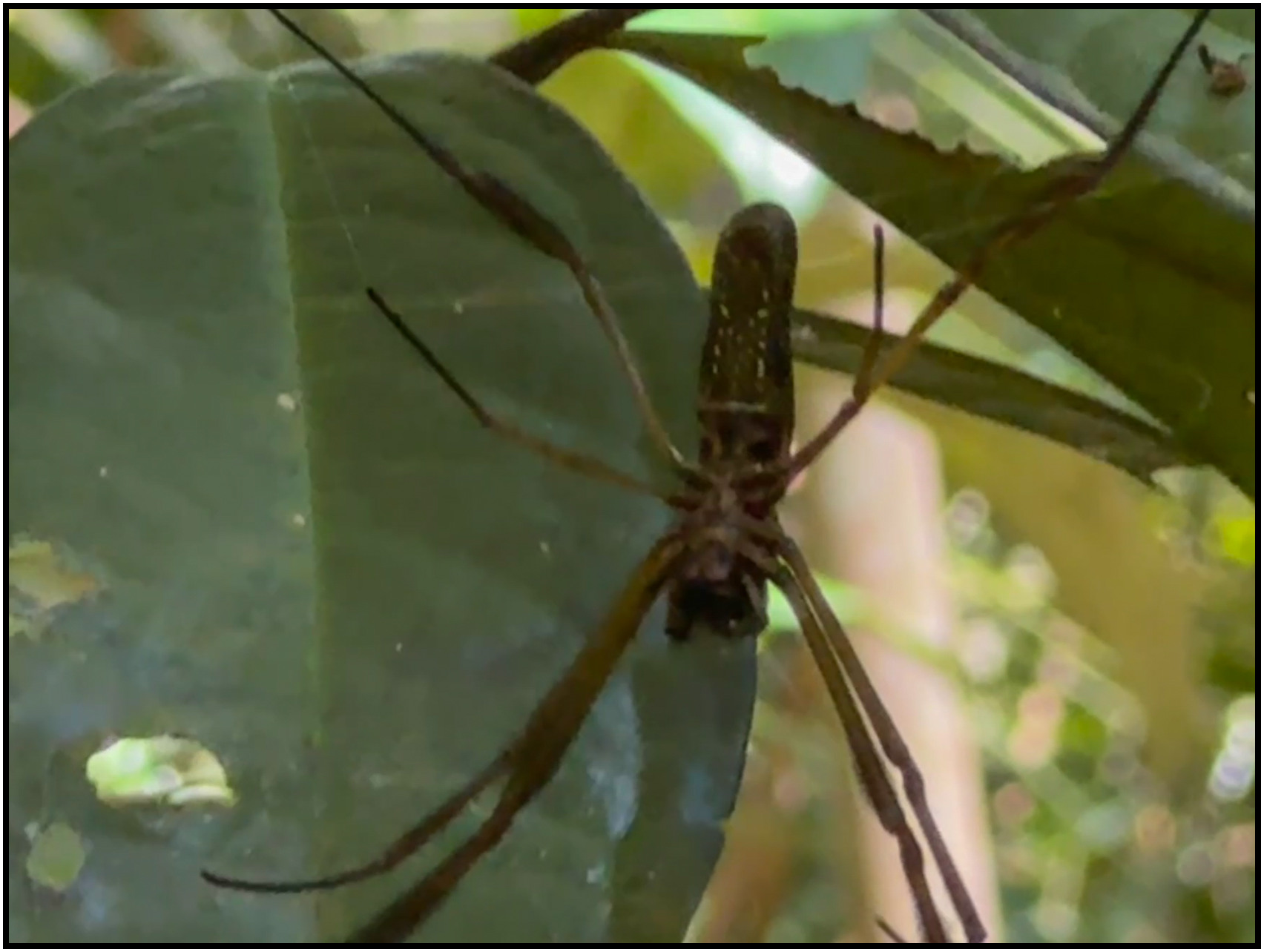
A different spider, on a web spun right across the middle of our trail. This guy was huge. The guides used their machetes to clear a different path for us. They were afraid that if they tried to clear the web, the spider might jump on someone.
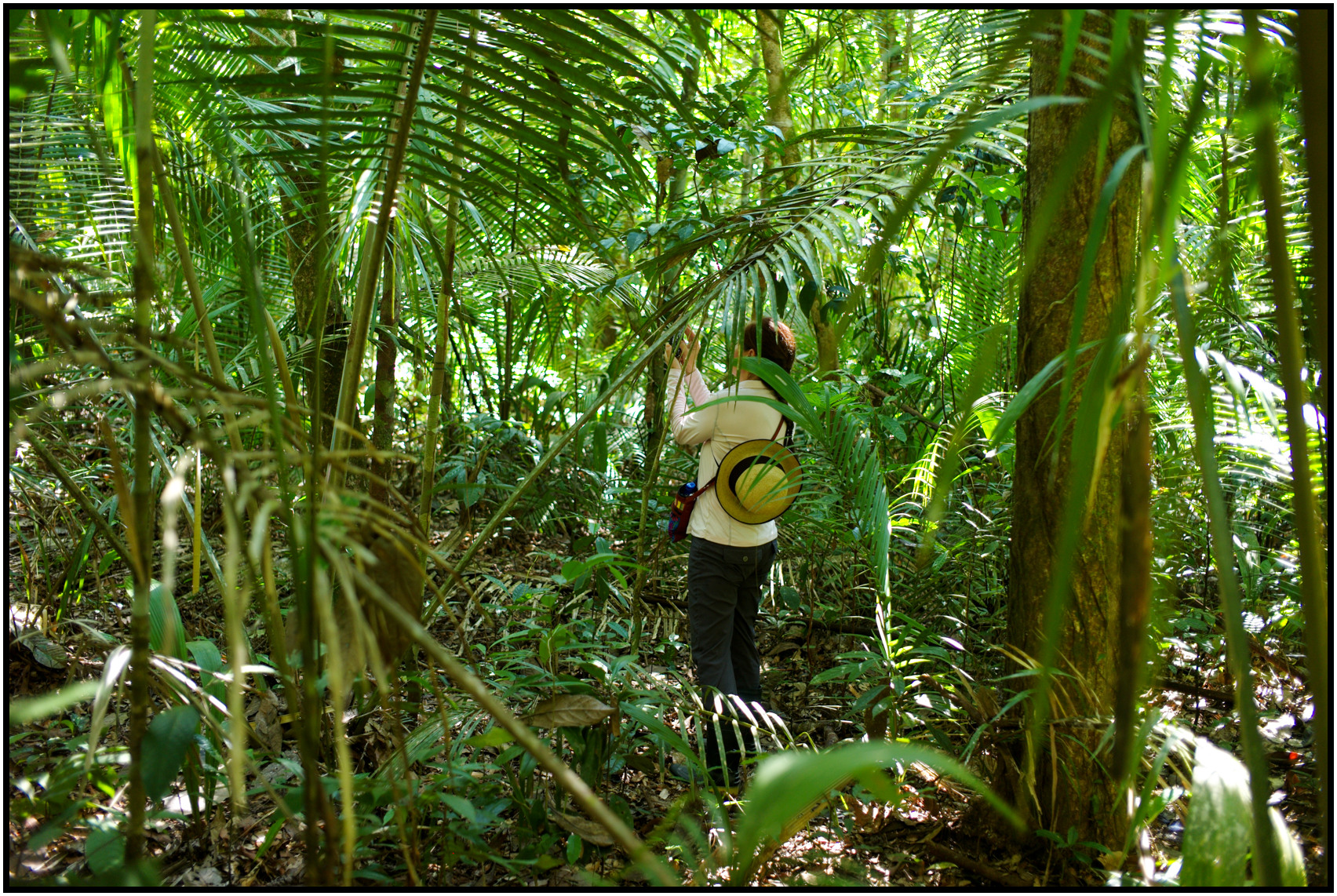
Me taking a photo of a lizard.
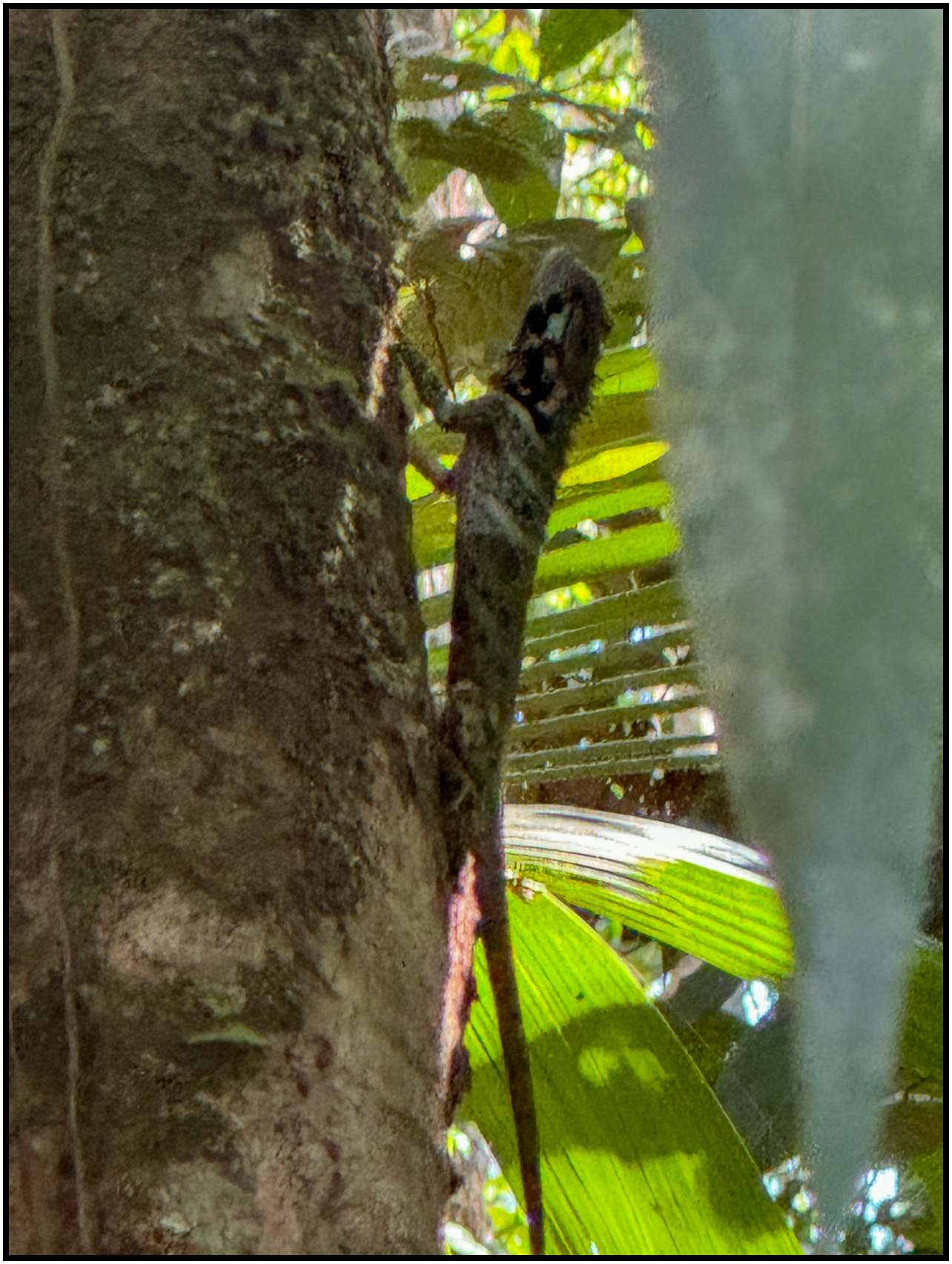
Lousy zoomed-in iPhone shot of the lizard.
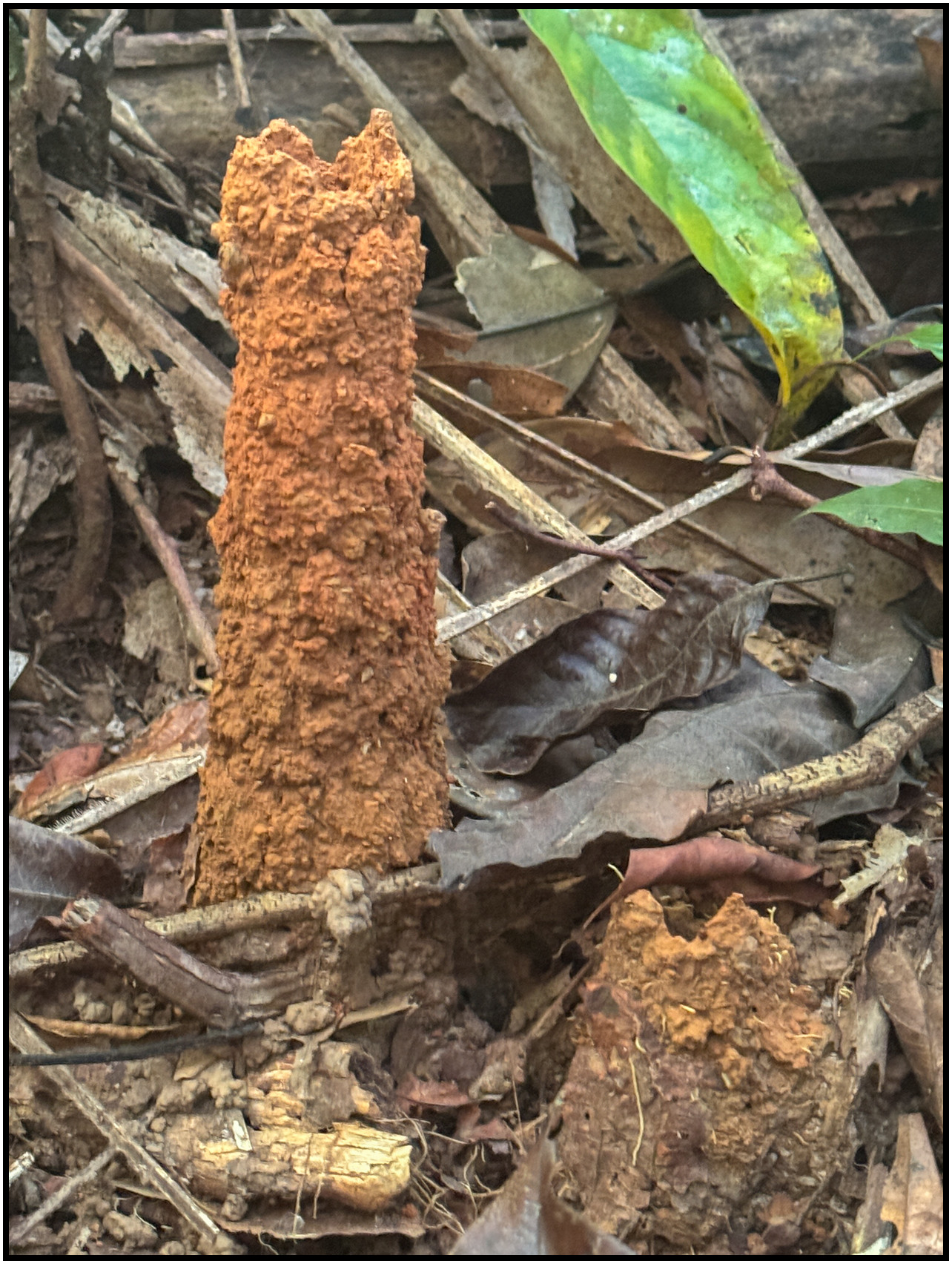
Cicada mud tubes. The cicadas stay underground for several years, then finally emerge to reproduce and die within about 4 days.
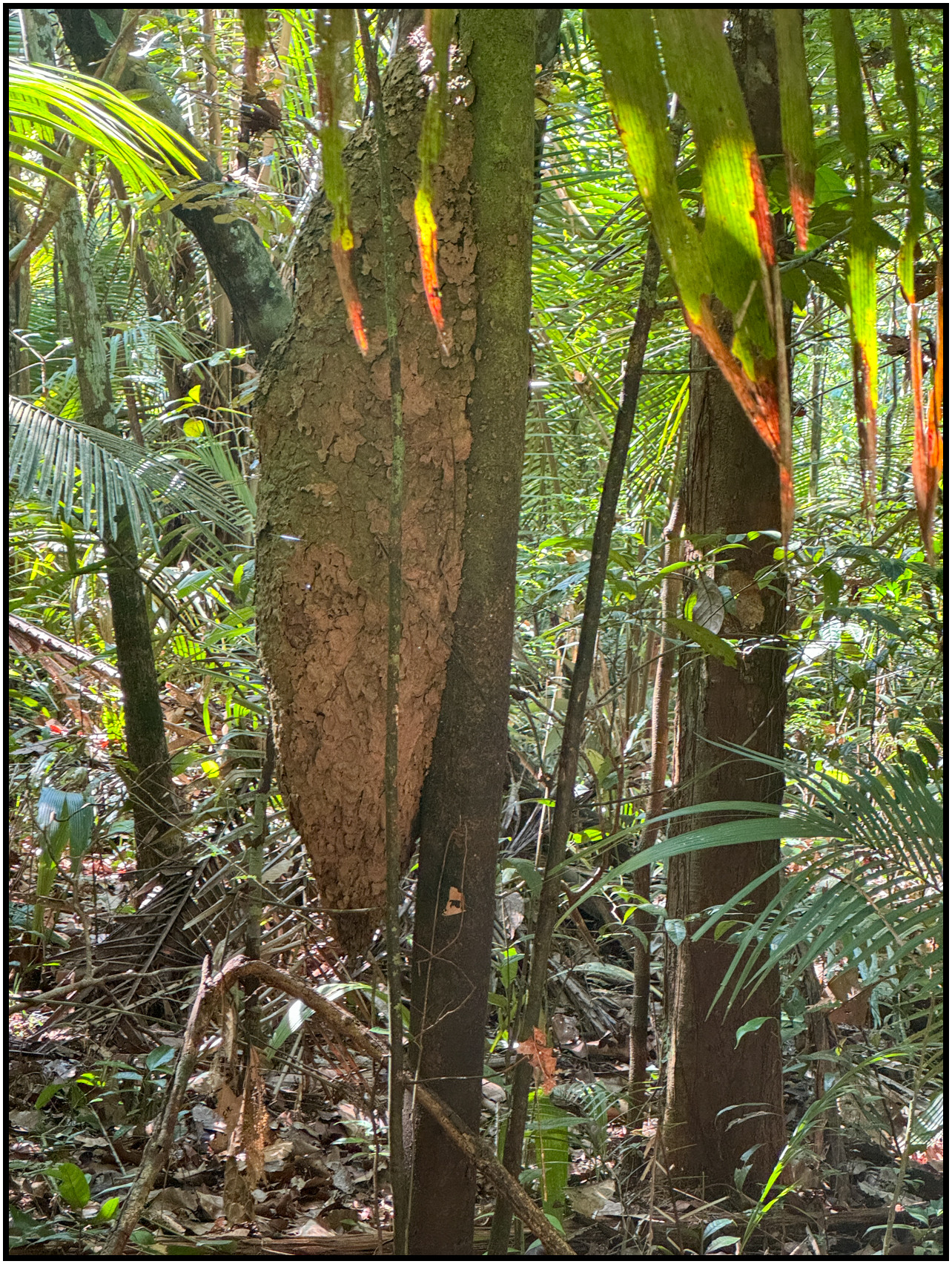
The mud-looking pod stuck to that tree is a termite colony.
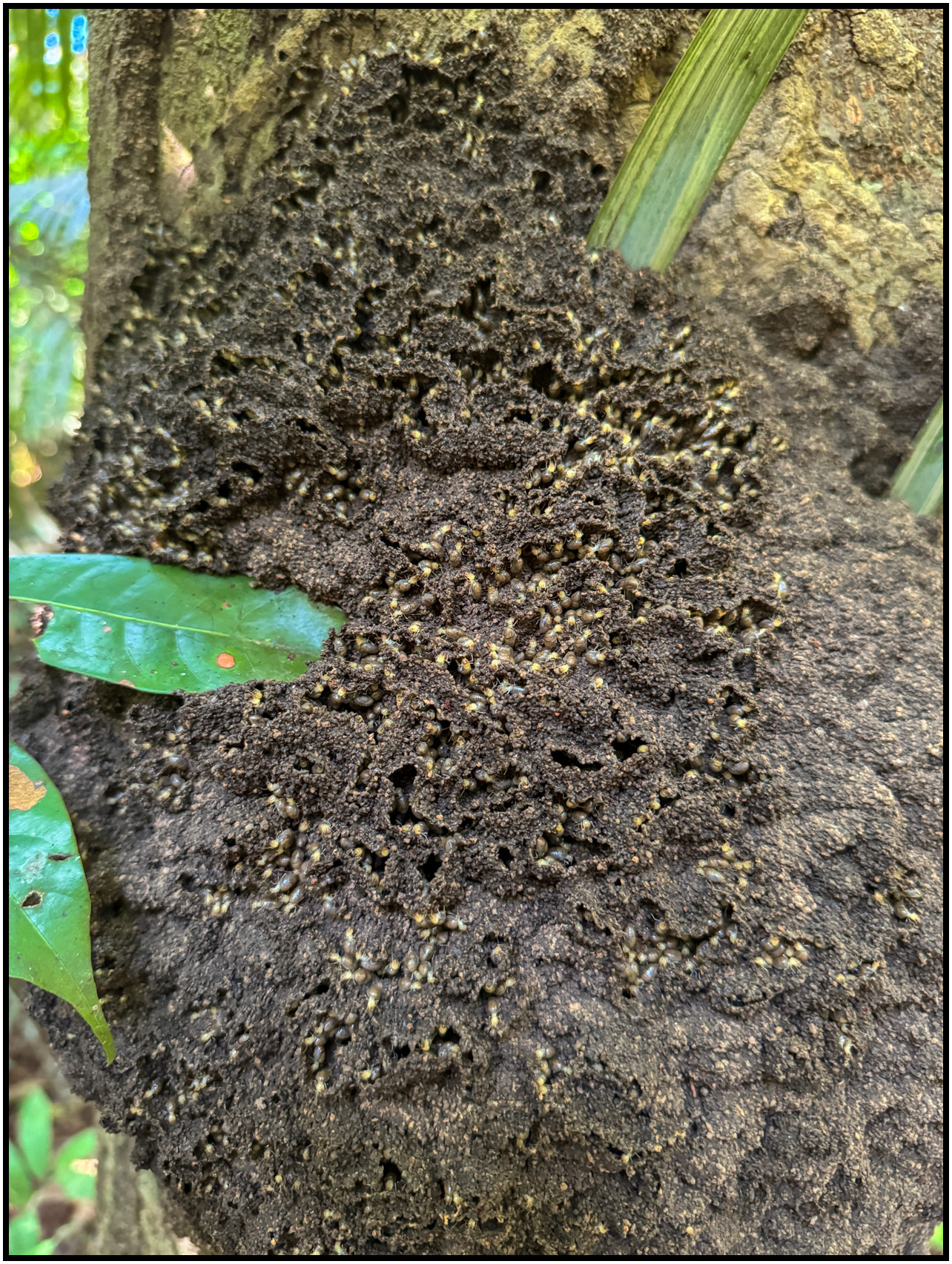
White termites doing their thing. There are two types of termites in the Amazon … these white ones living on trees ….
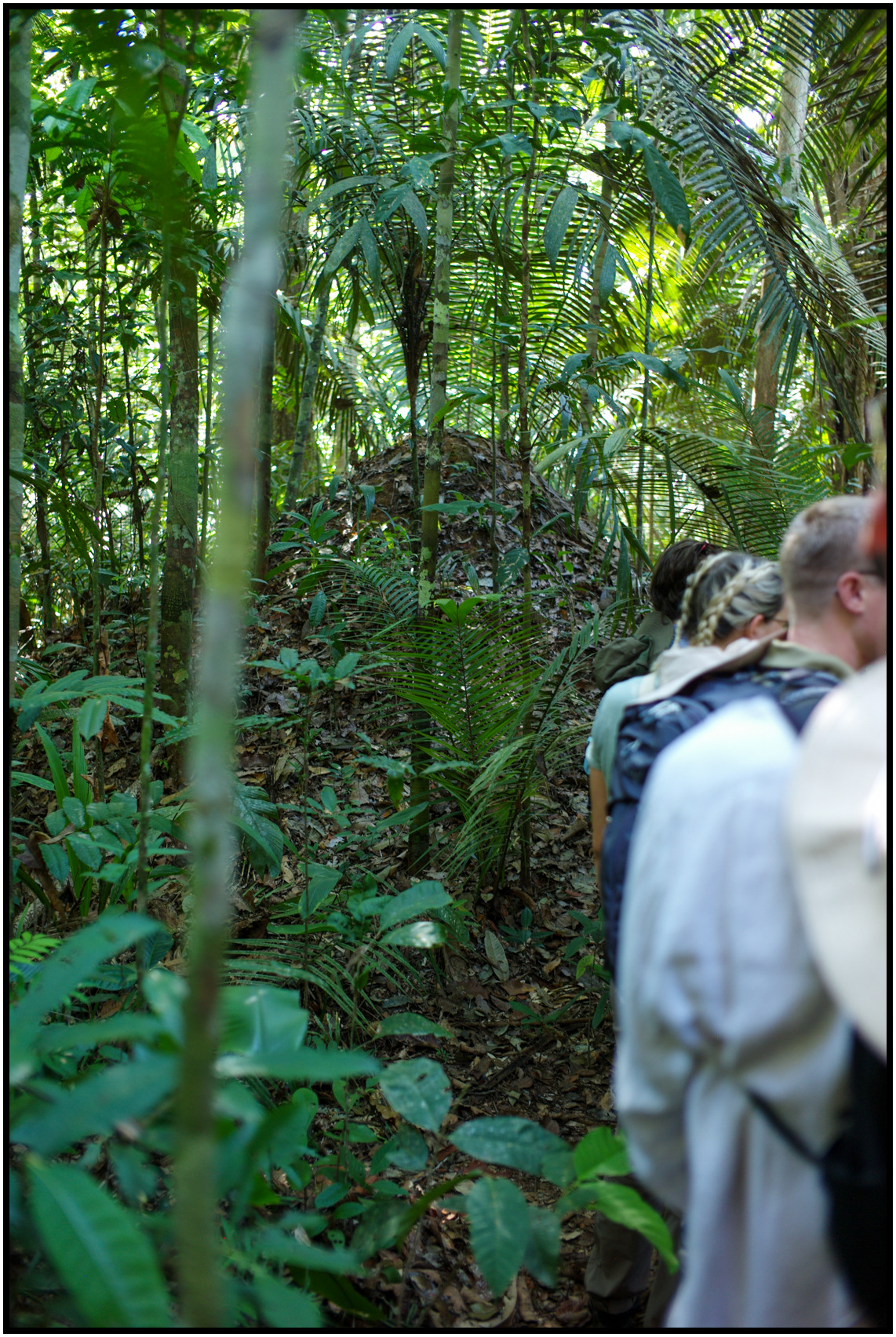
… and black subterranean termites, that make these huge mounds on the forest floor. Barely visible, right near the elbow of the girl with blond braids, is a big hole made by an anteater.
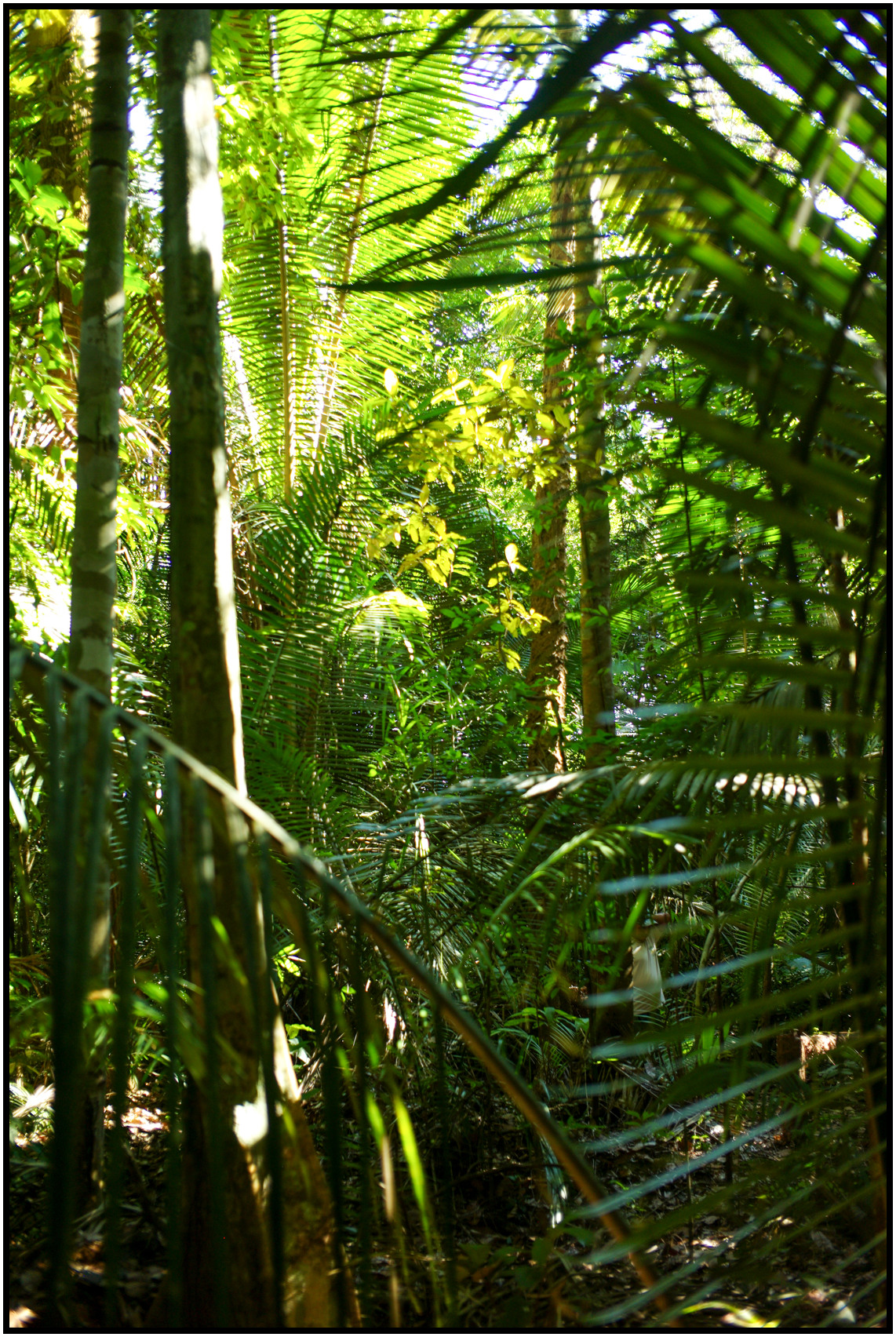
Thick jungle growth.
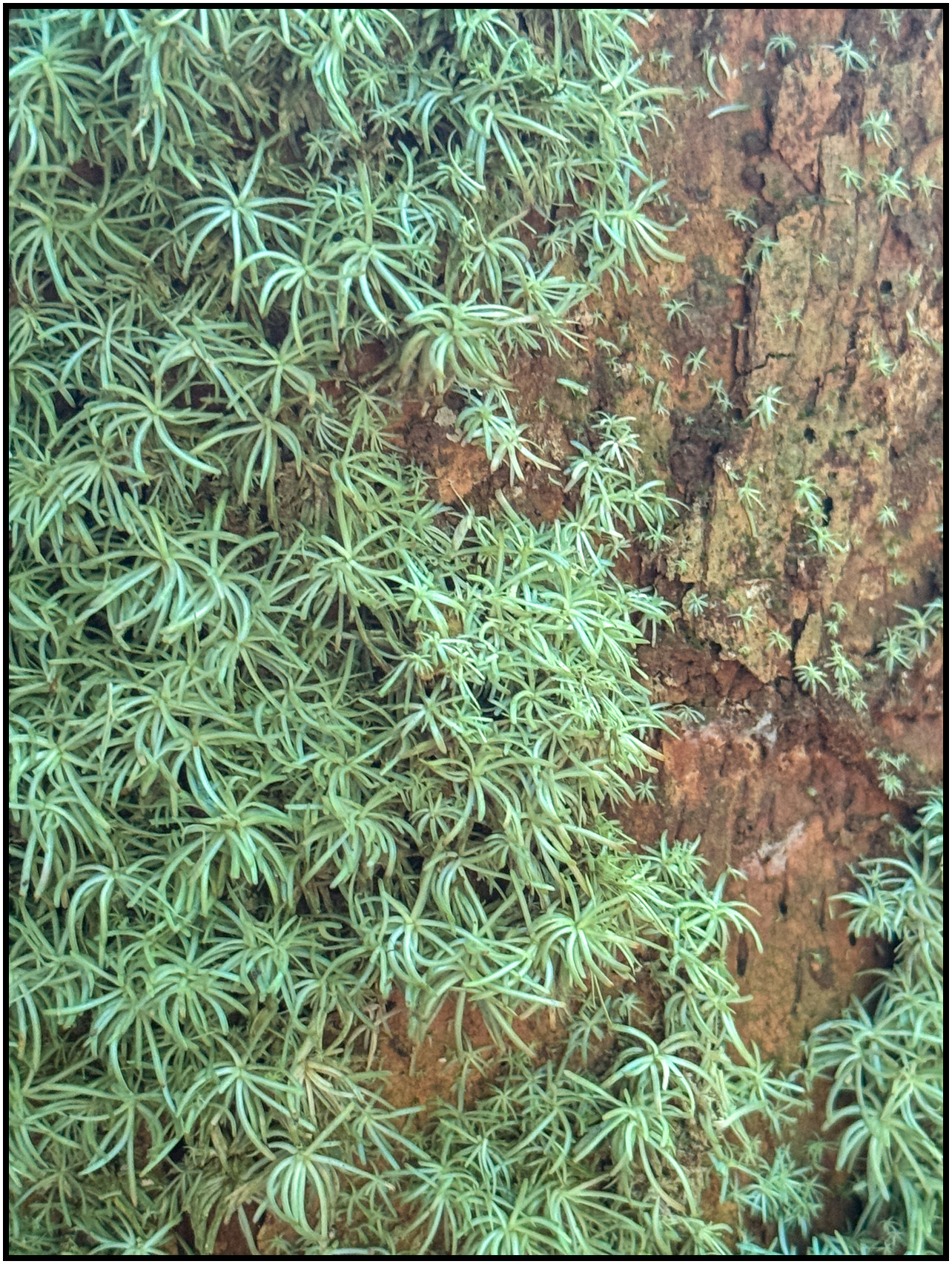
Epiphytes growing on a tree.
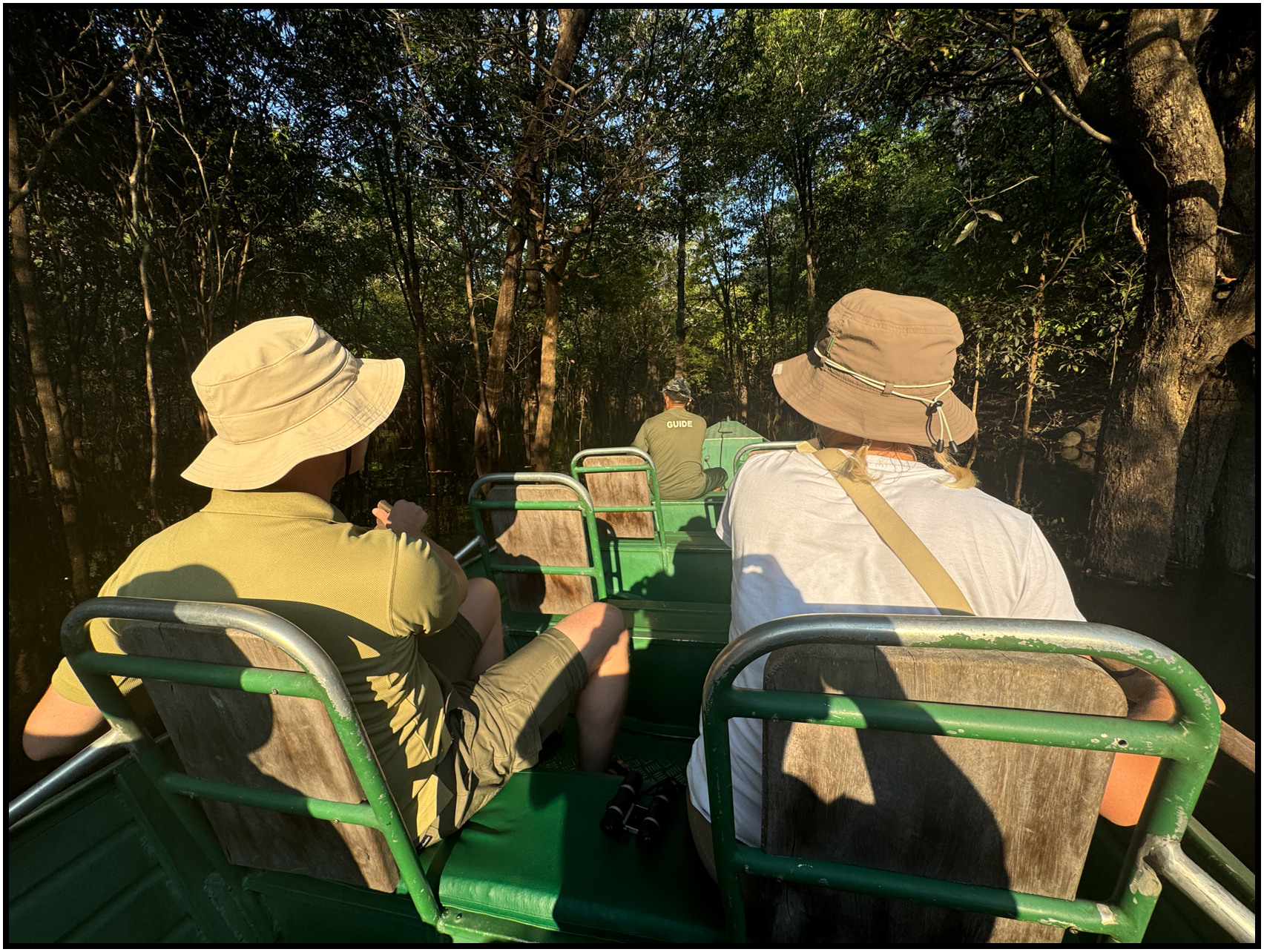
After lunch at the Lodge, we went out in the boat to search for wildlife. It was so hot and humid today (97F, 56% humidity) that most of the animals were inactive. We did see a few, but not nearly as many as the past two days. Tomorrow is supposed to be even hotter… 99F.
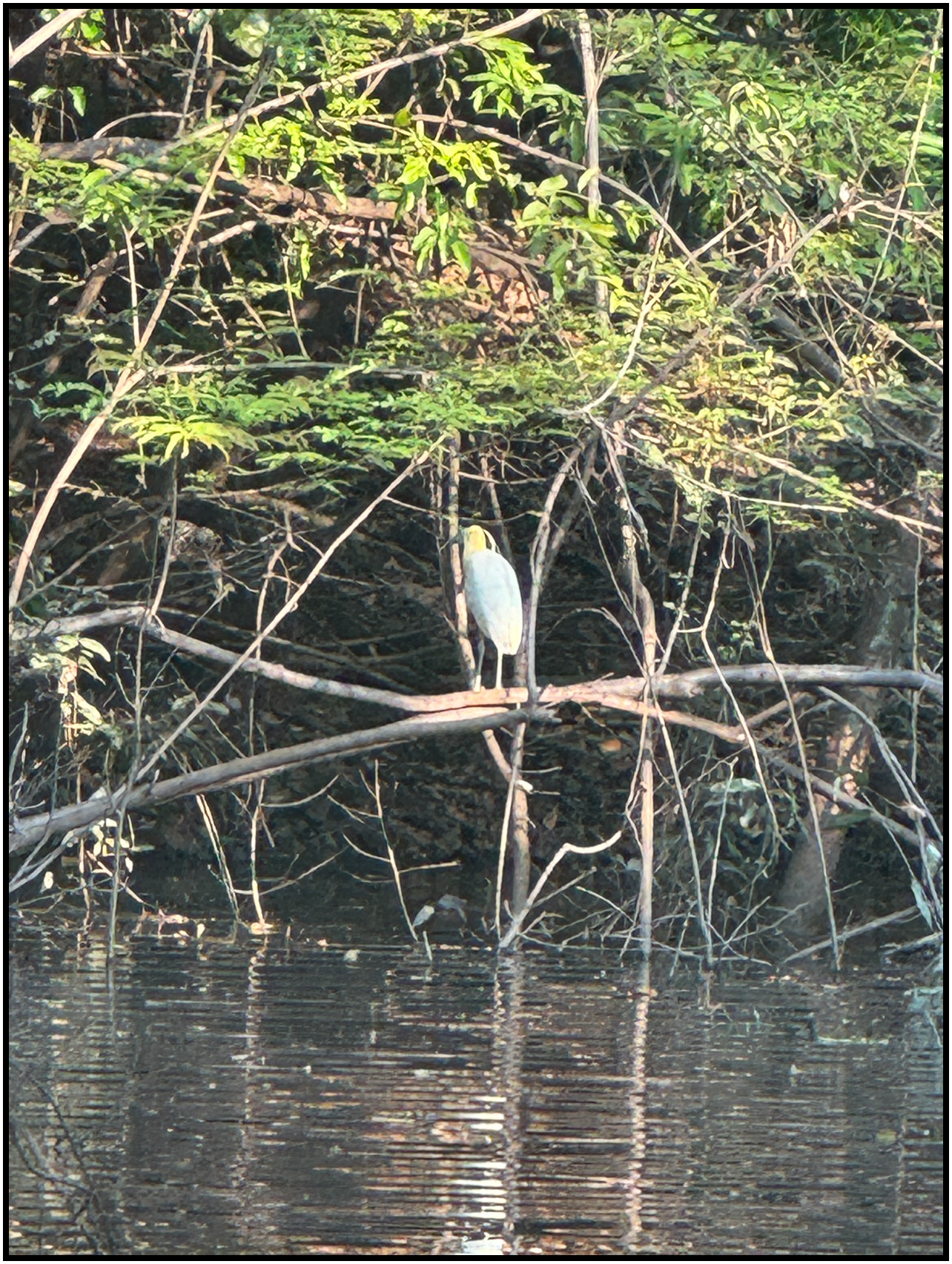
Blue capped heron fishing in the river.
We also glimpsed a pink dolphin, but it was up-and-down so quick we couldn’t get any photos.
As it gets closer to dusk, the black water becomes almost like a mirror. It’s really beautiful and the photos don’t do it justice.
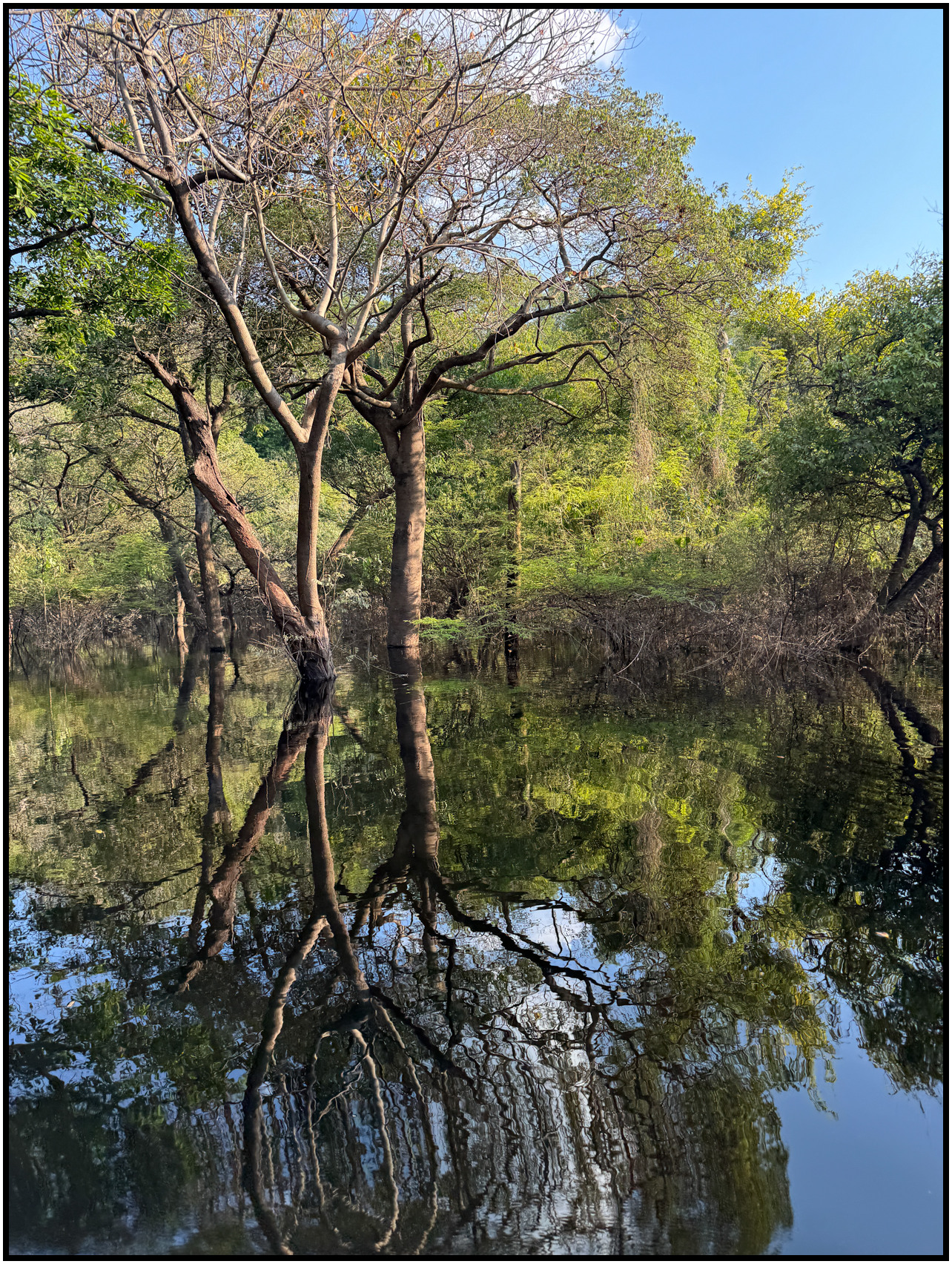
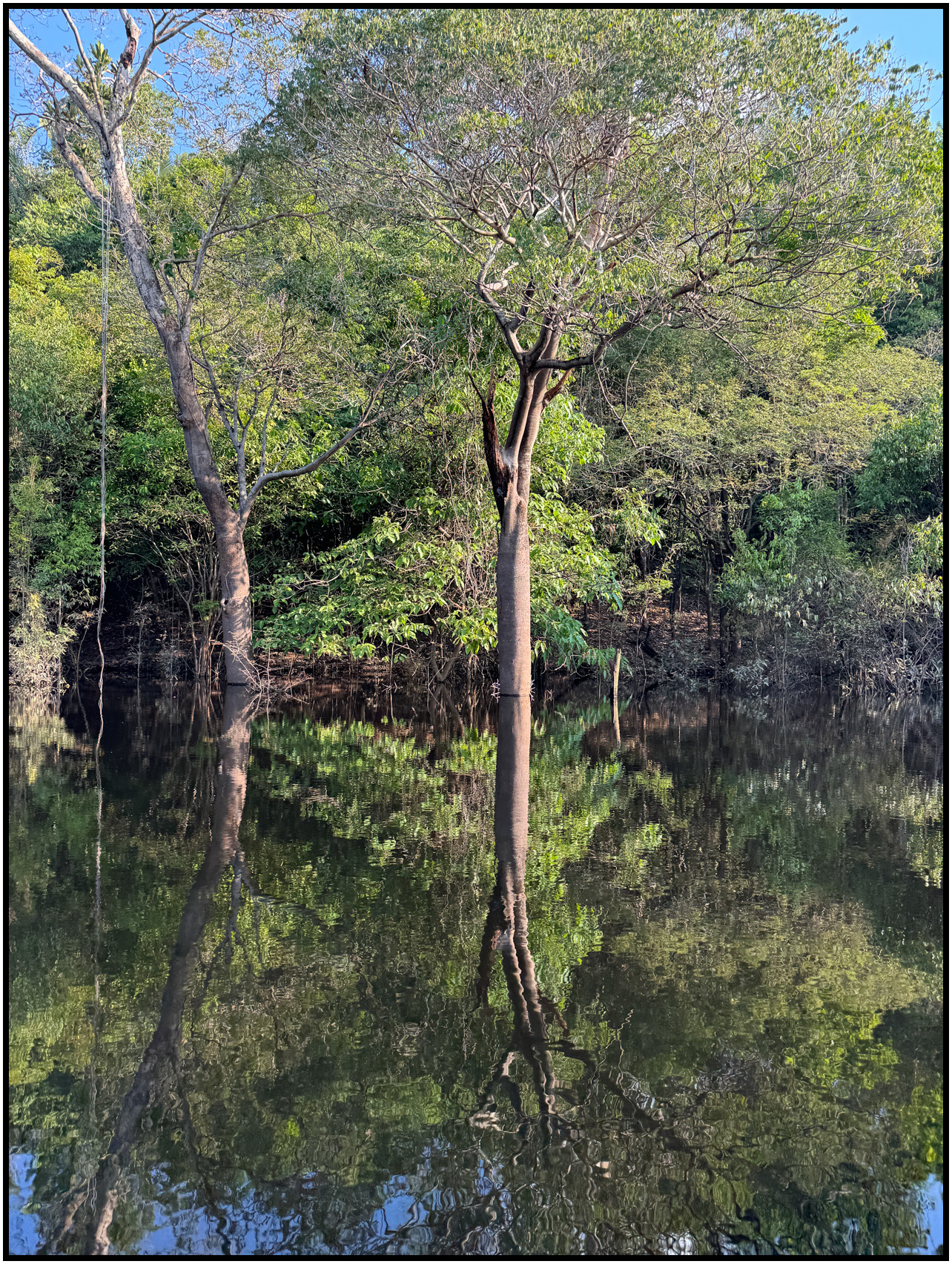
Twilight is a great time to be out on the river. The temperature comes down, and the animal activity increases … especially the birds. They all congregate at sundown to return to their respective roosting spots for the night. It’s a noisy, fascinating spectacle.
Back to the Lodge for dinner and an evening in.

