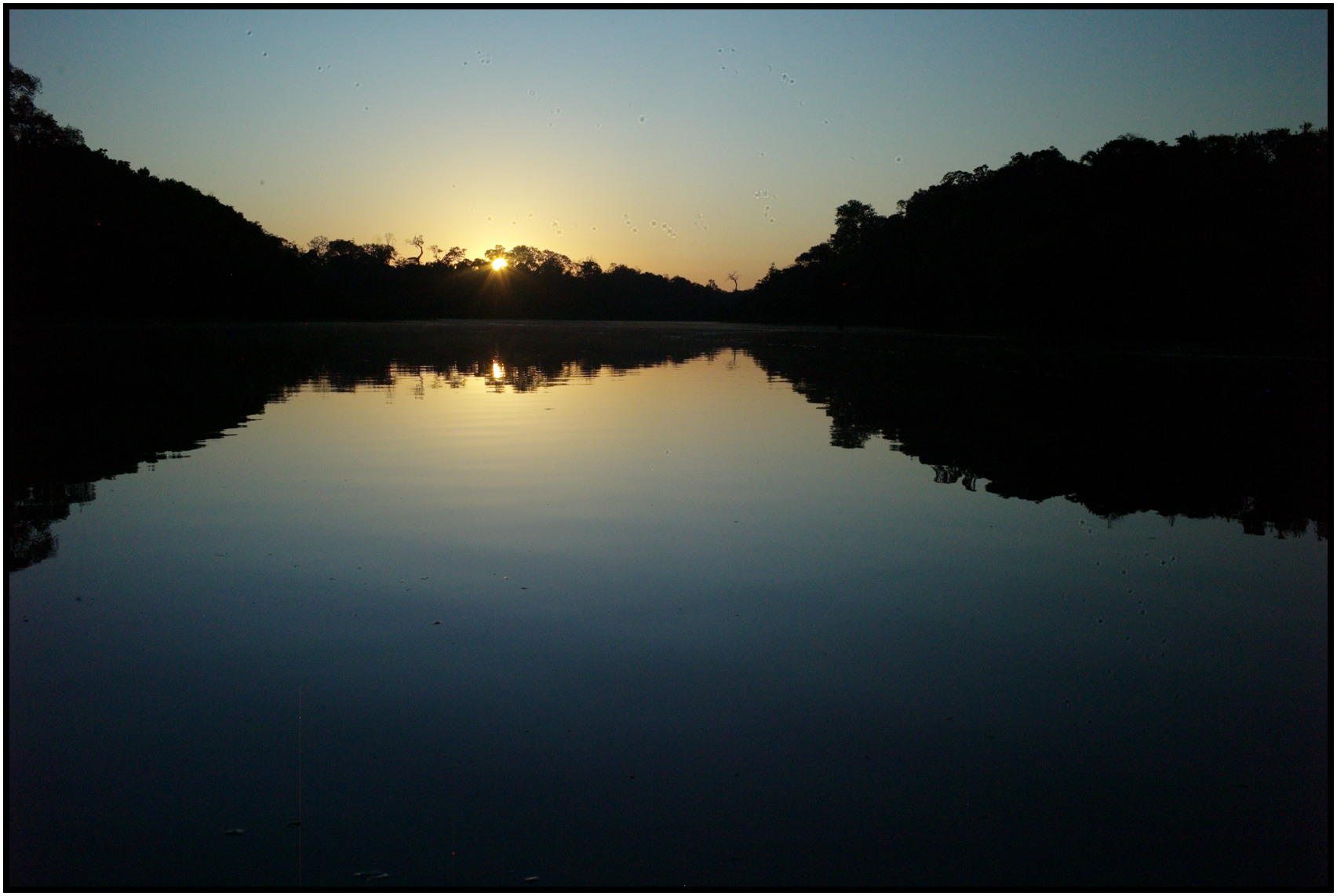
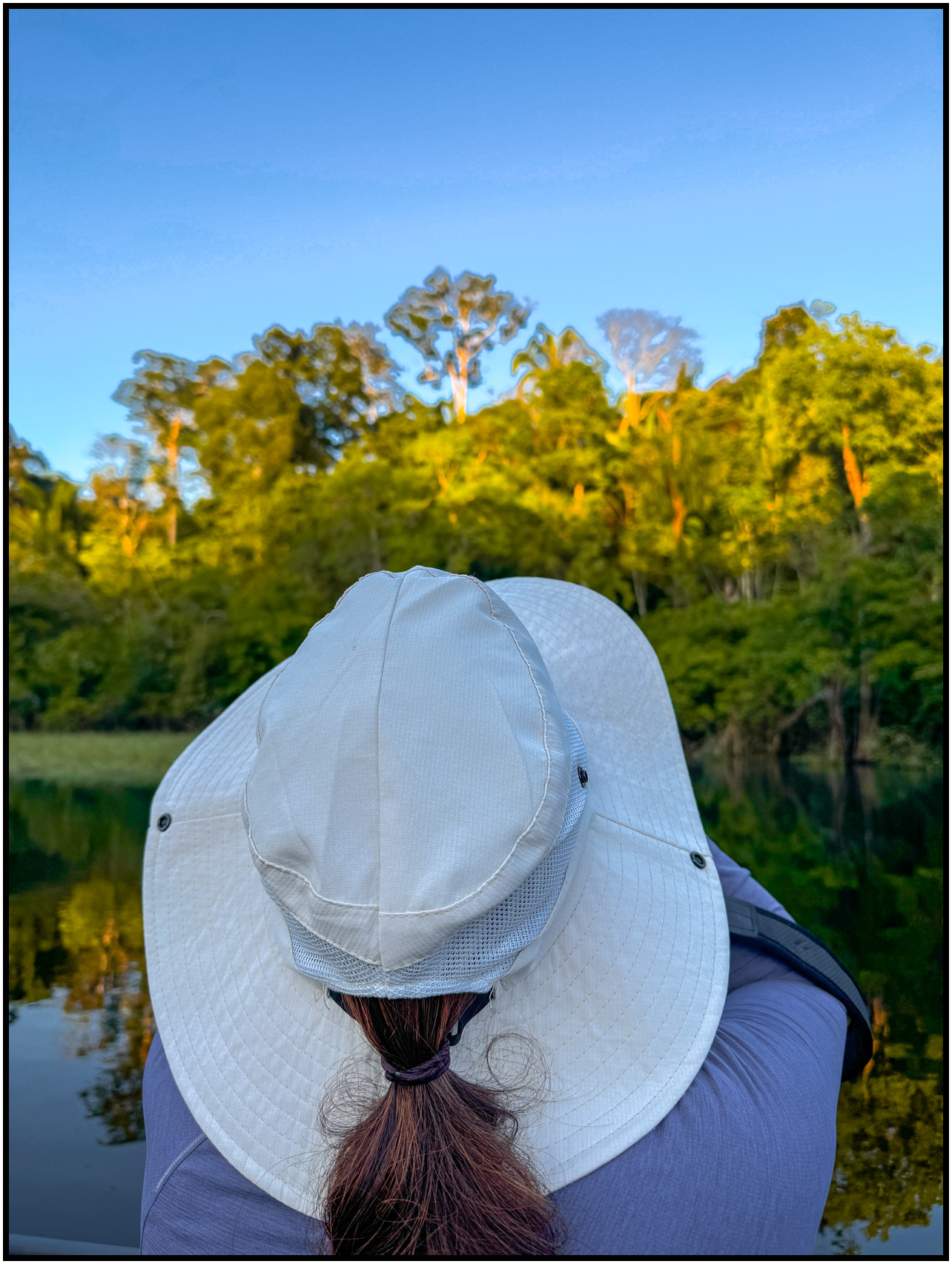
Back up in the morning at 5:30 to see the sunrise and look for birds.
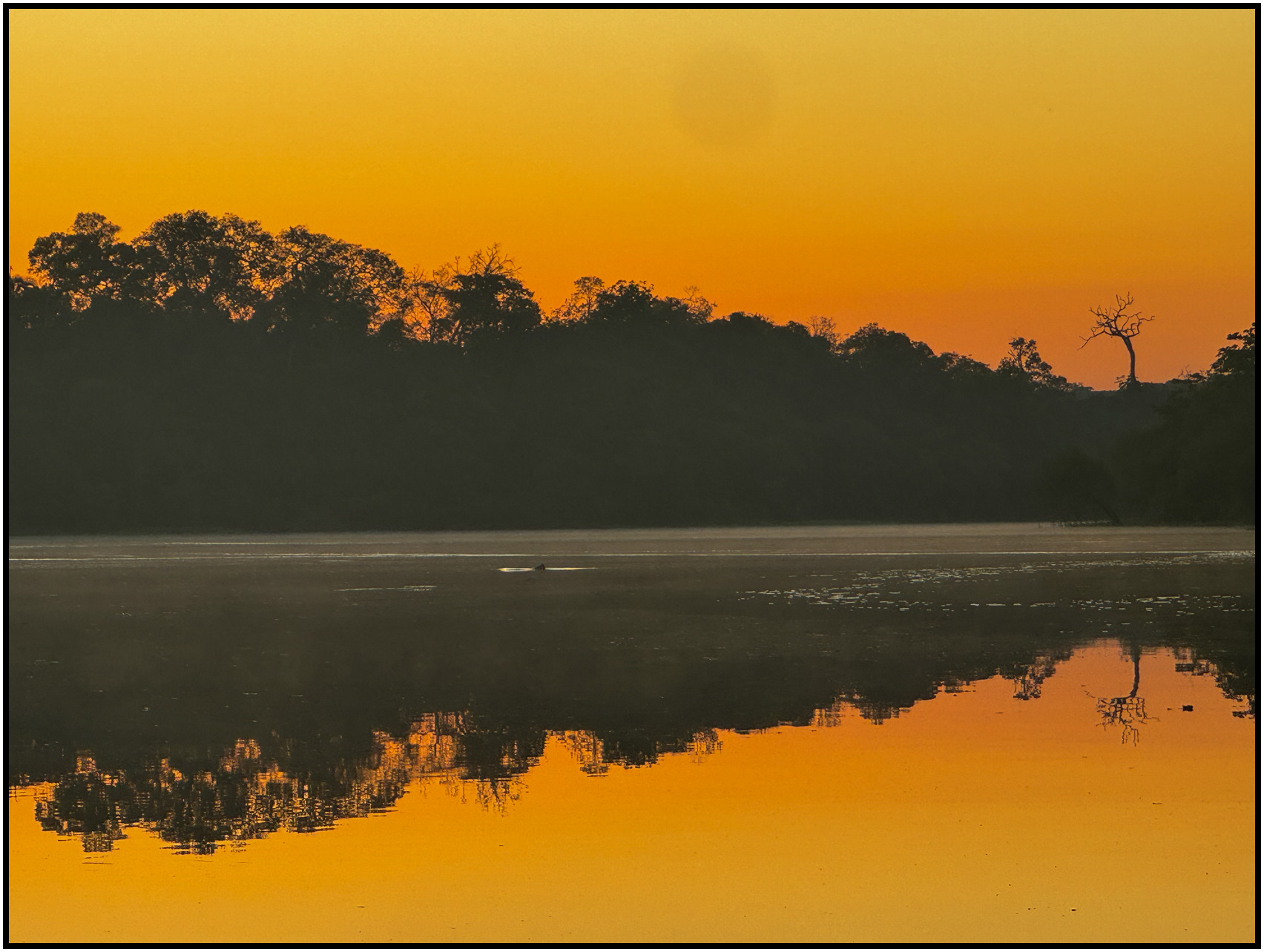
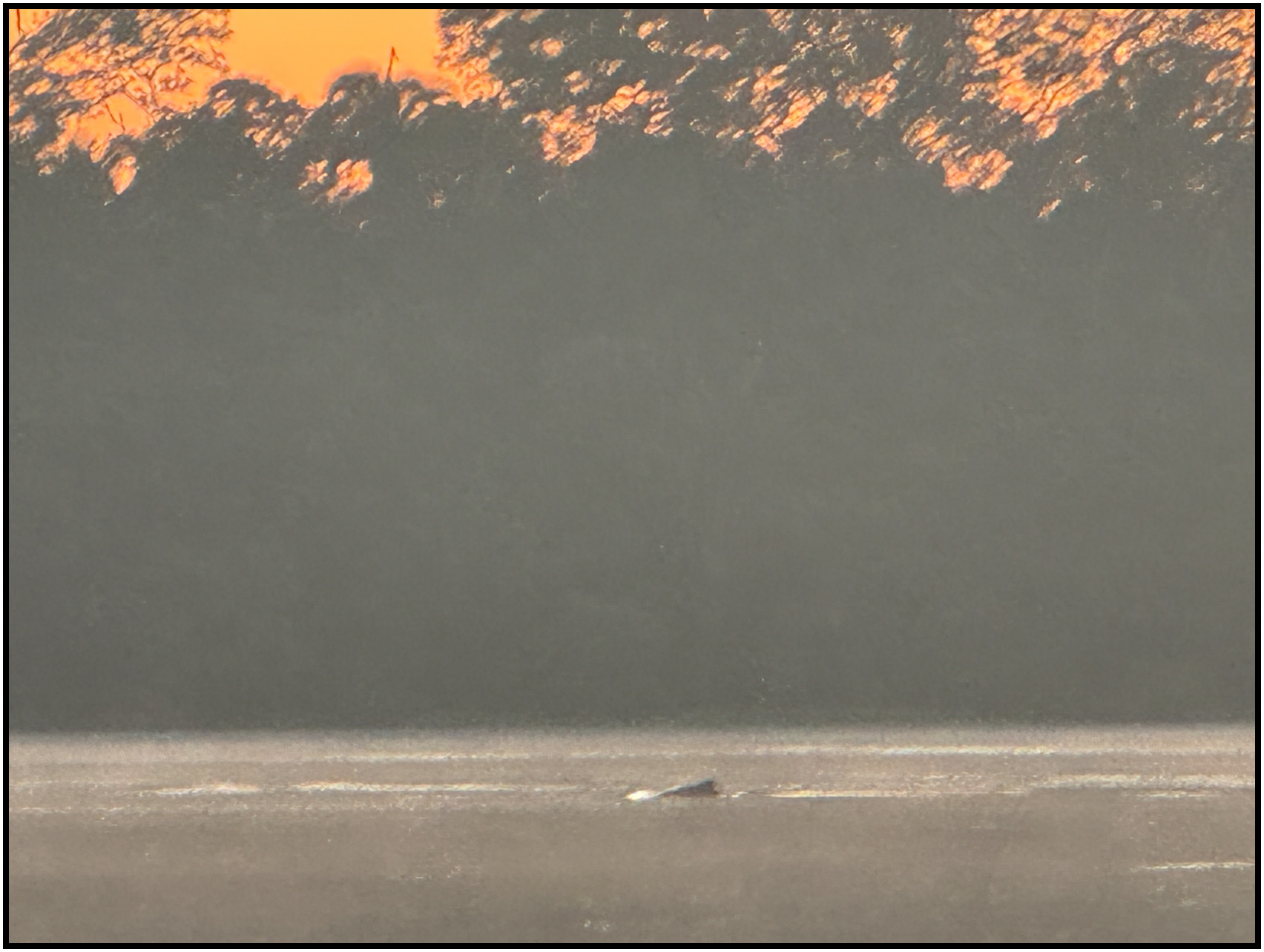
 In the middle of the water you can see the fin of the gray Amazon river dolphin.
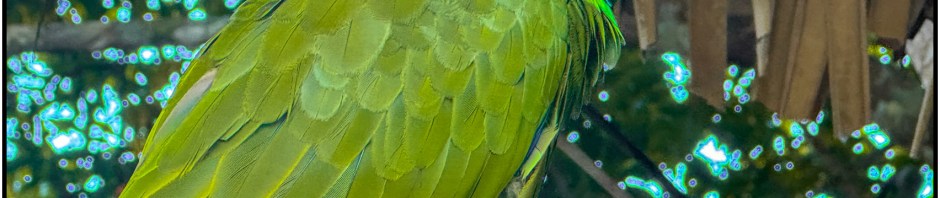
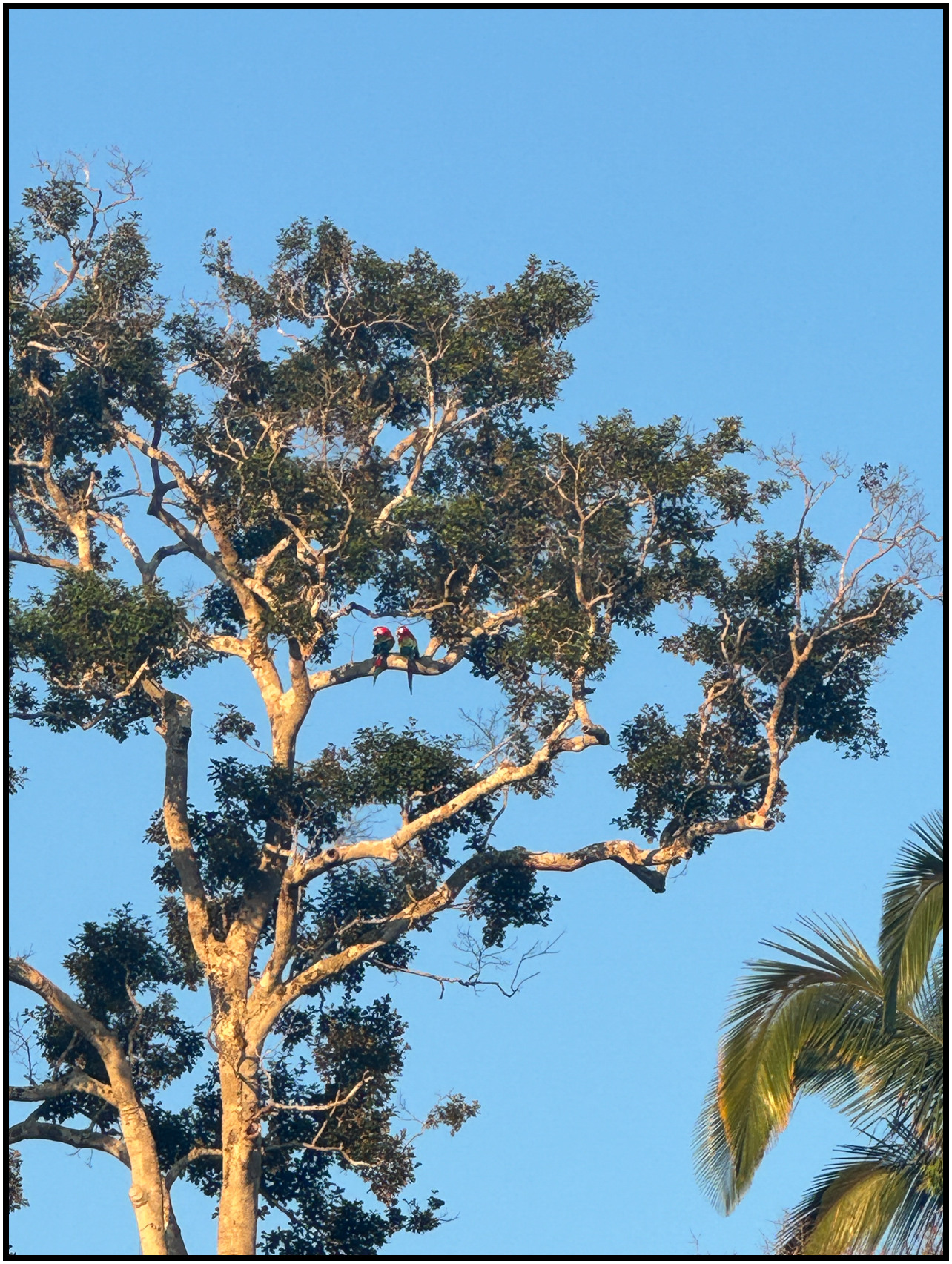
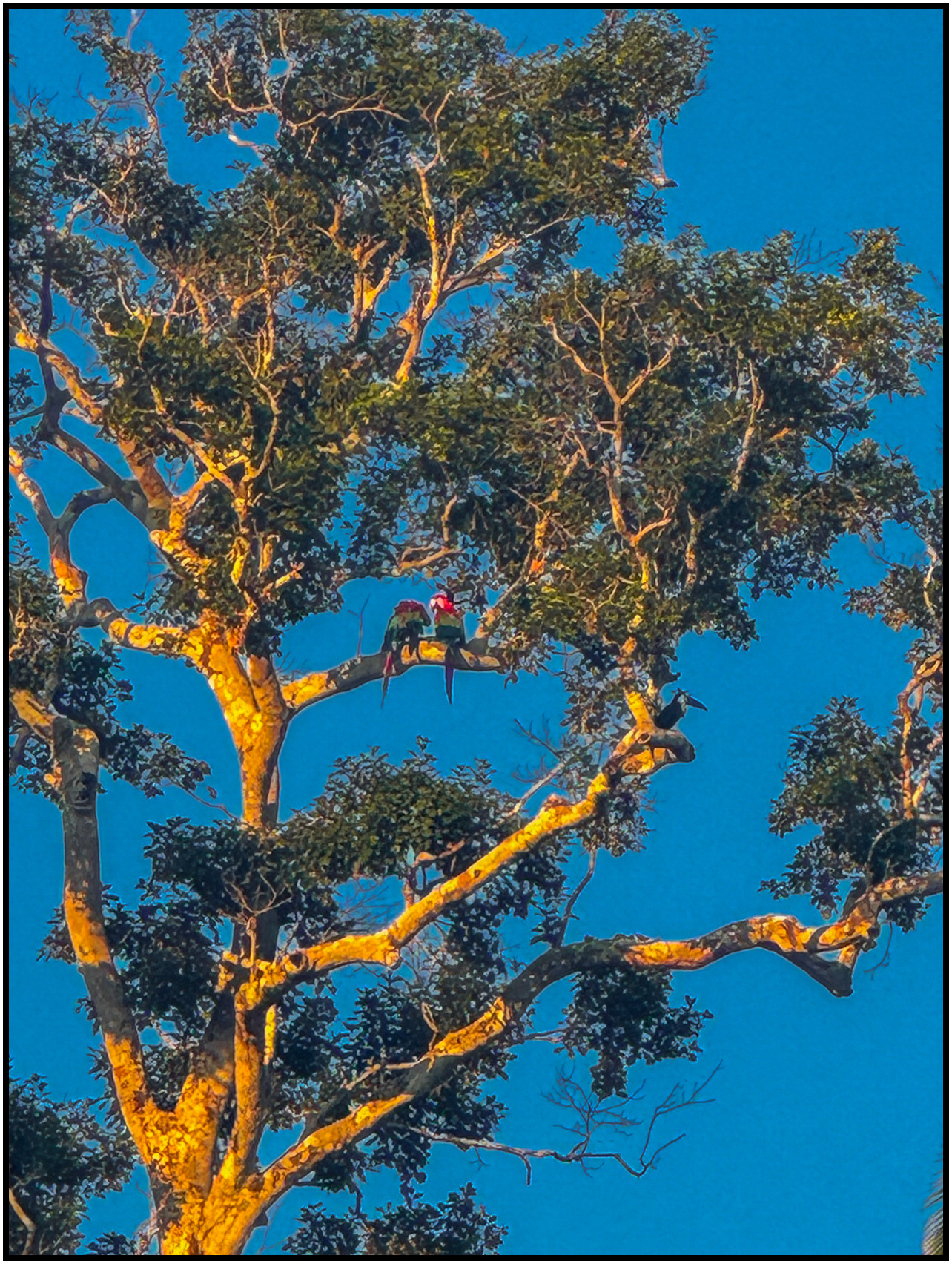
Success.. In the photo you can see a pair of Scarlet Macaws (like the ones we used to own) plus one Toucan to the lower right of the Macaws.
Zoomed in blurry view.
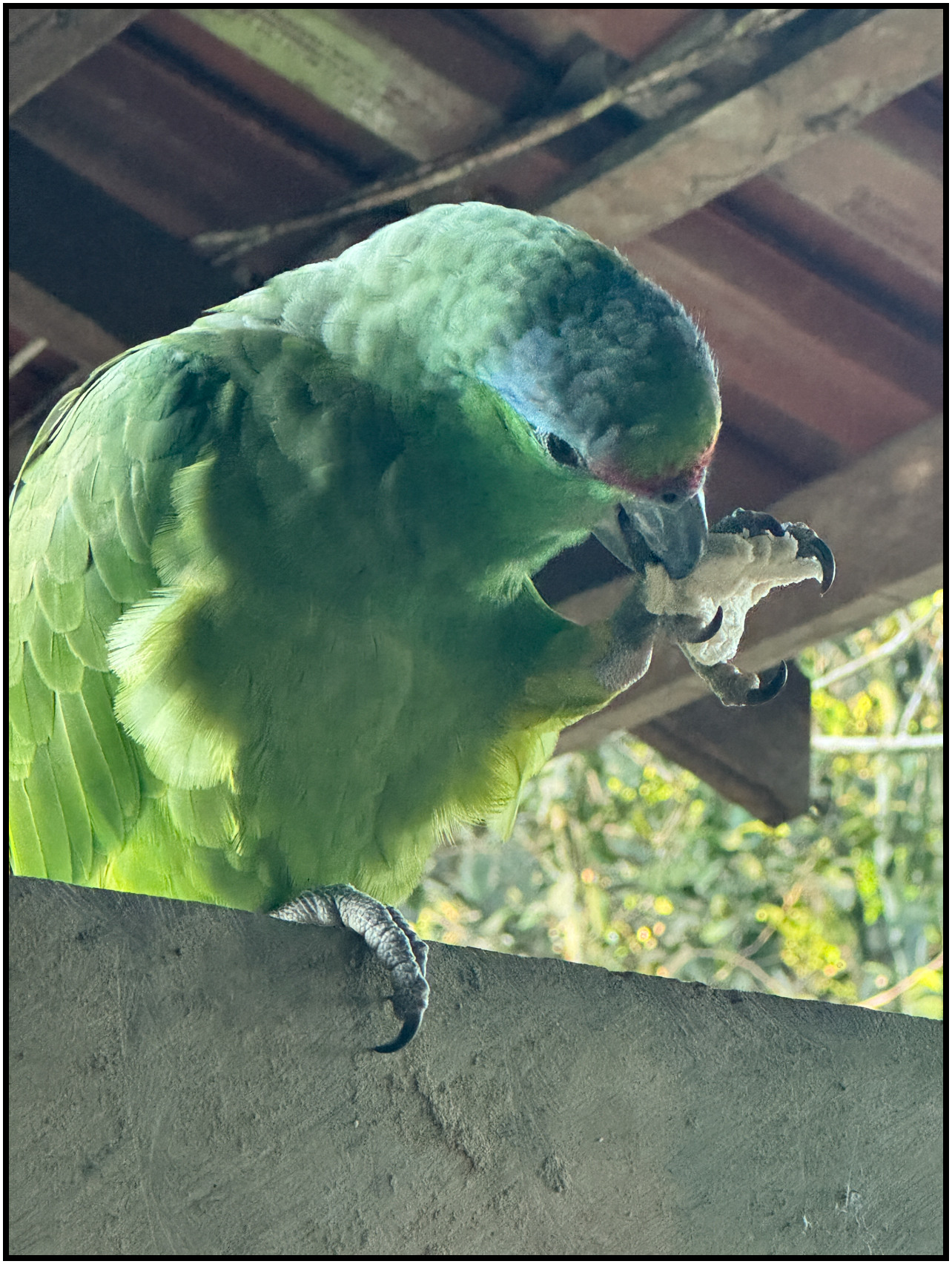
Much closer view. This Festive Amazon is wild (not a pet) but comes to the camp frequently for food. People give him fruits and other yummy tidbits. He’s sort of half-tame. 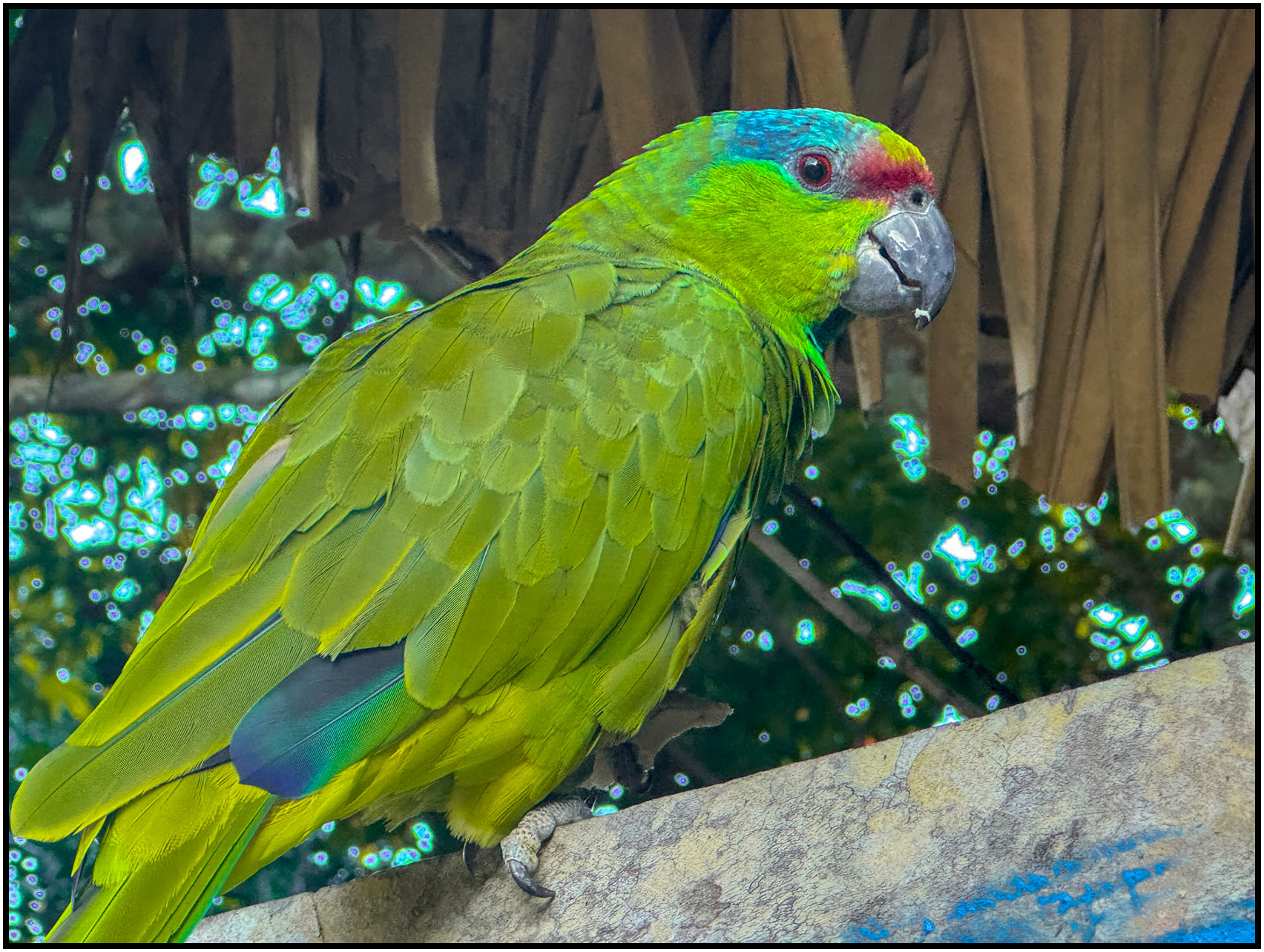
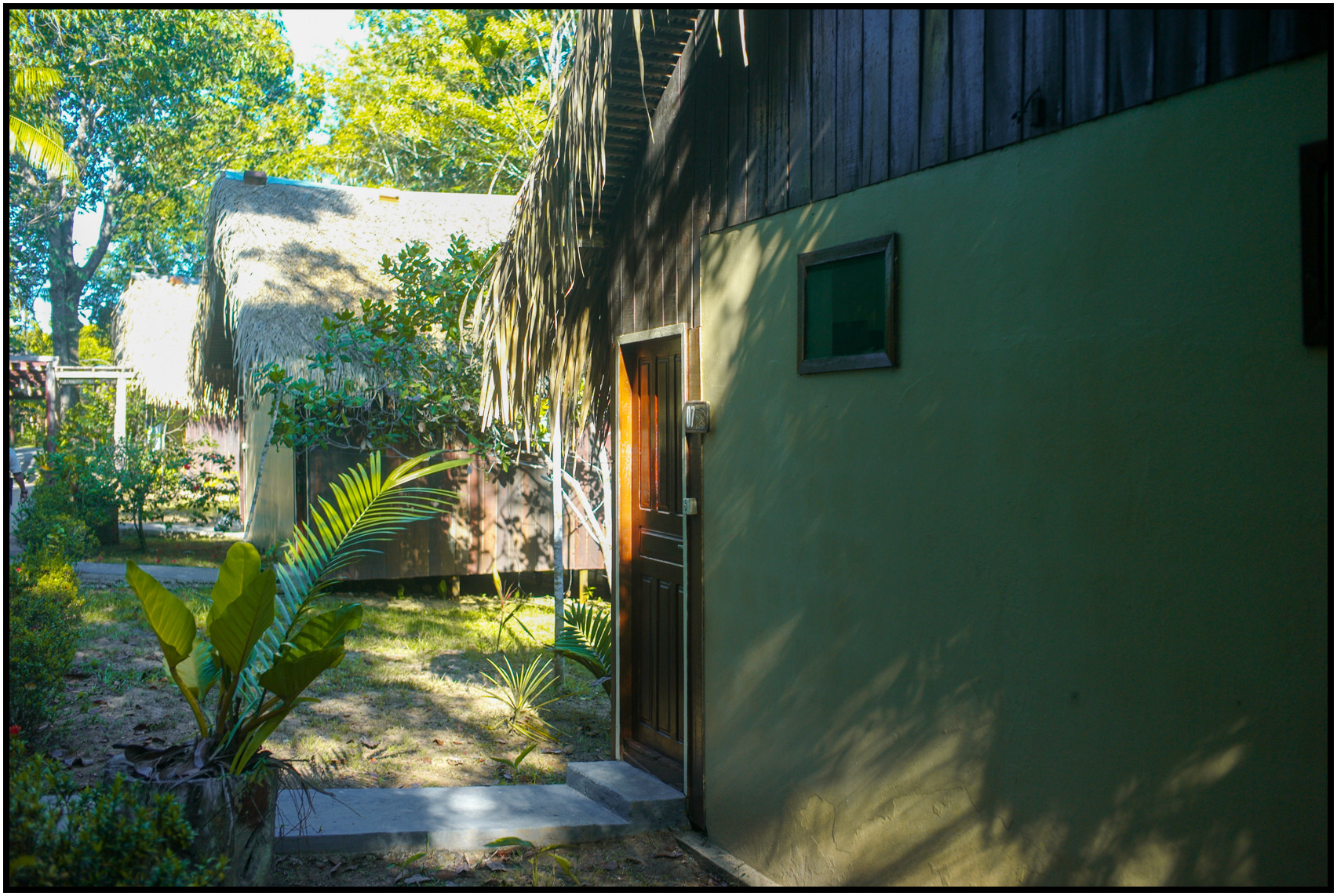
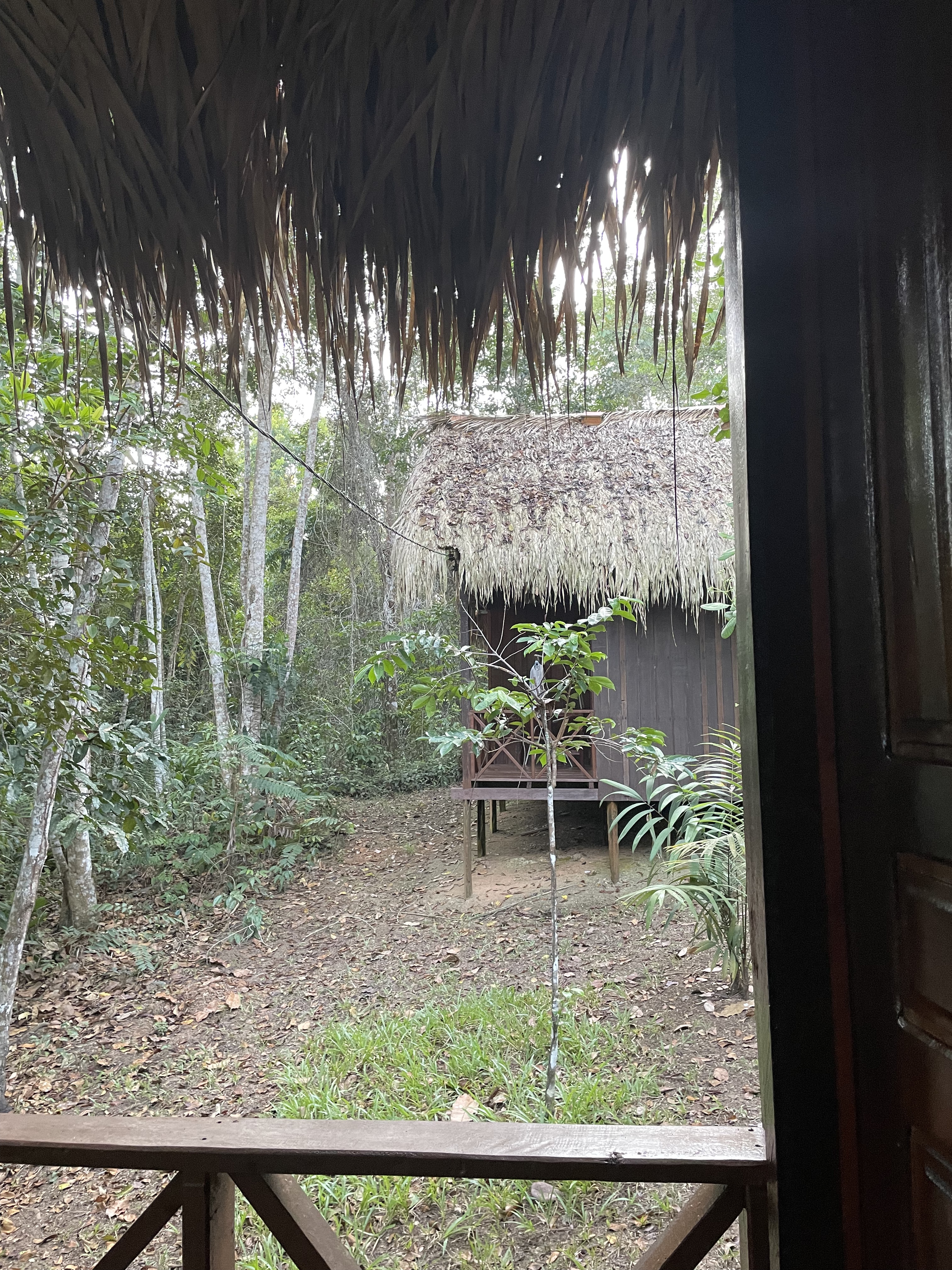
View of our cabin and those of our neighbors’. Total capacity here is about 40 people, but I count no more than about 20 over the past 2 days. Our tour group is limited to 6 people – two other couples go with us, young kids from the UK and an older set from The Netherlands.
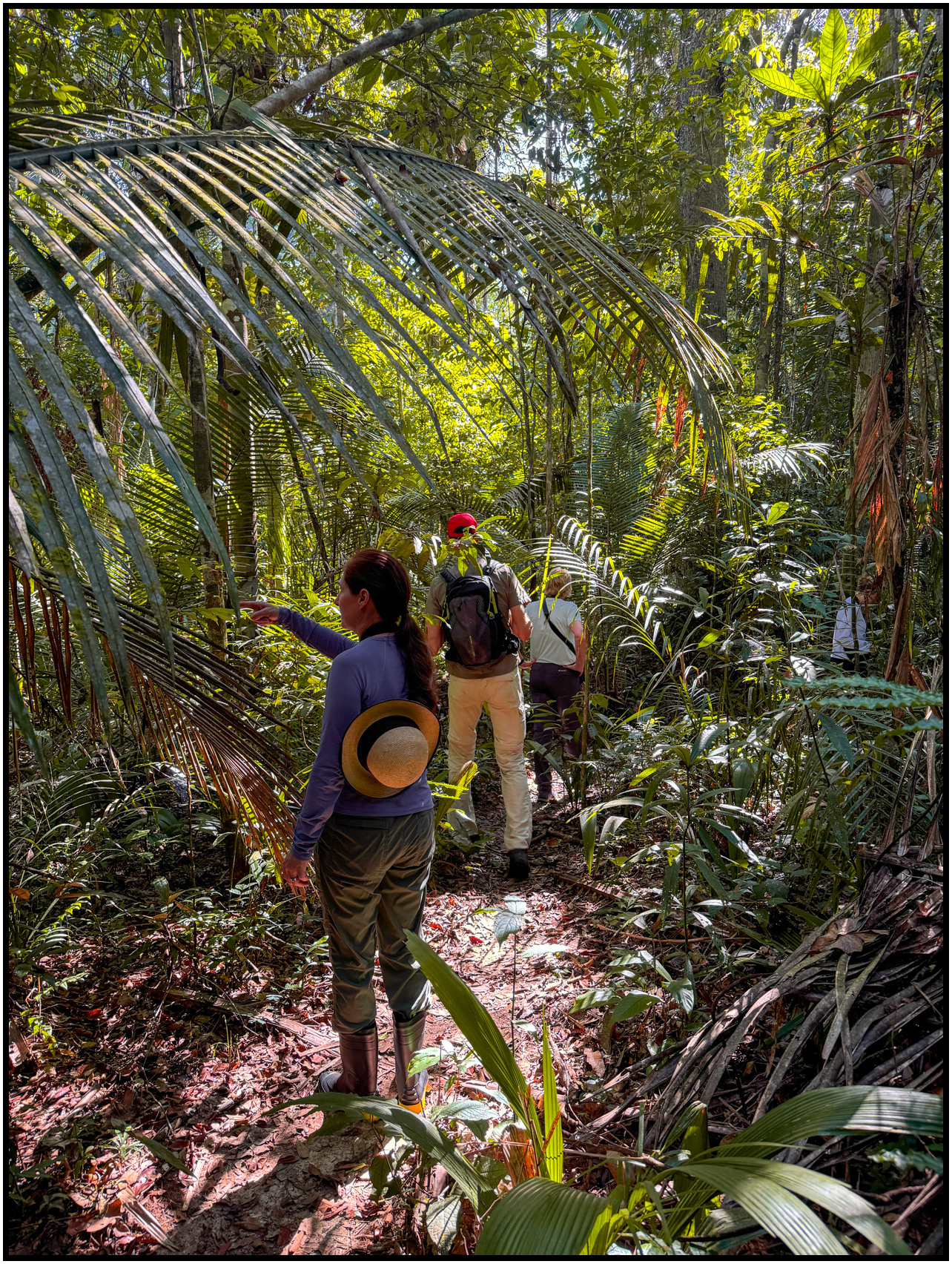
After breakfast today we took a boat to a trailhead and walked back to our camp – about 3 hours in total. It was HOT and humid.
Before we headed into the jungle, our guide cautioned us not to touch anything, step on anything or eat anything. The Amazon is full of life, but it seems as if everything out here is designed to kill humans, starting with the mammals, to the lizards to the insects to the germs.
He said, “Spiders will bite. 3 hours painful.”
“Bully ants,” holding his fingers to show they are over an inch long, “will bite. 12 hours painful.”
Then he pointed out places where bushmaster snakes like to hide. They are not intimidated by humans and won’t move out of the way like the harmless snakes will. “Bushmaster will bite. 6 hours dead.”
Then he pointed out some mushrooms. “Do not eat. 3 hours dead.”
“OK! Follow me!” and off he went.
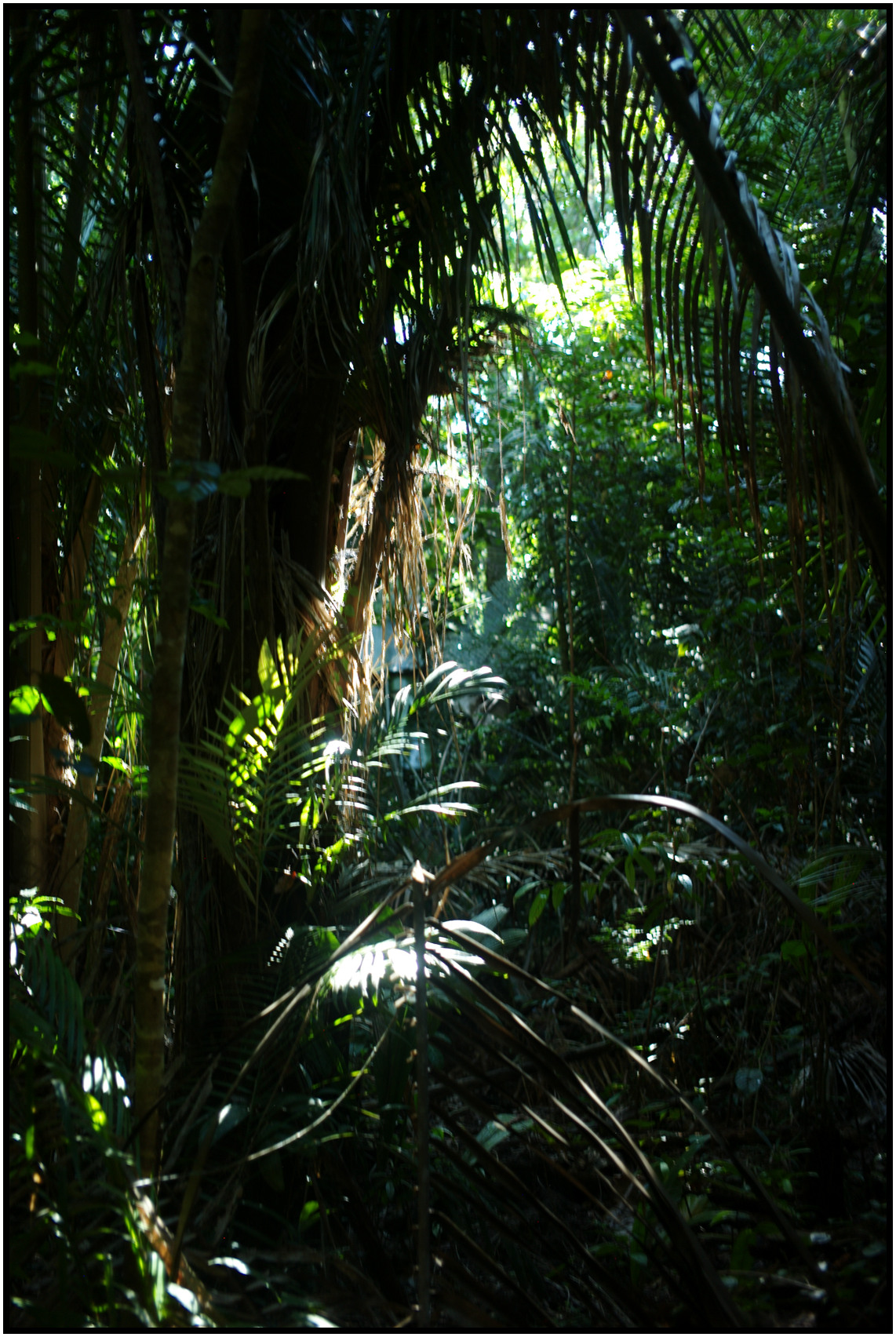
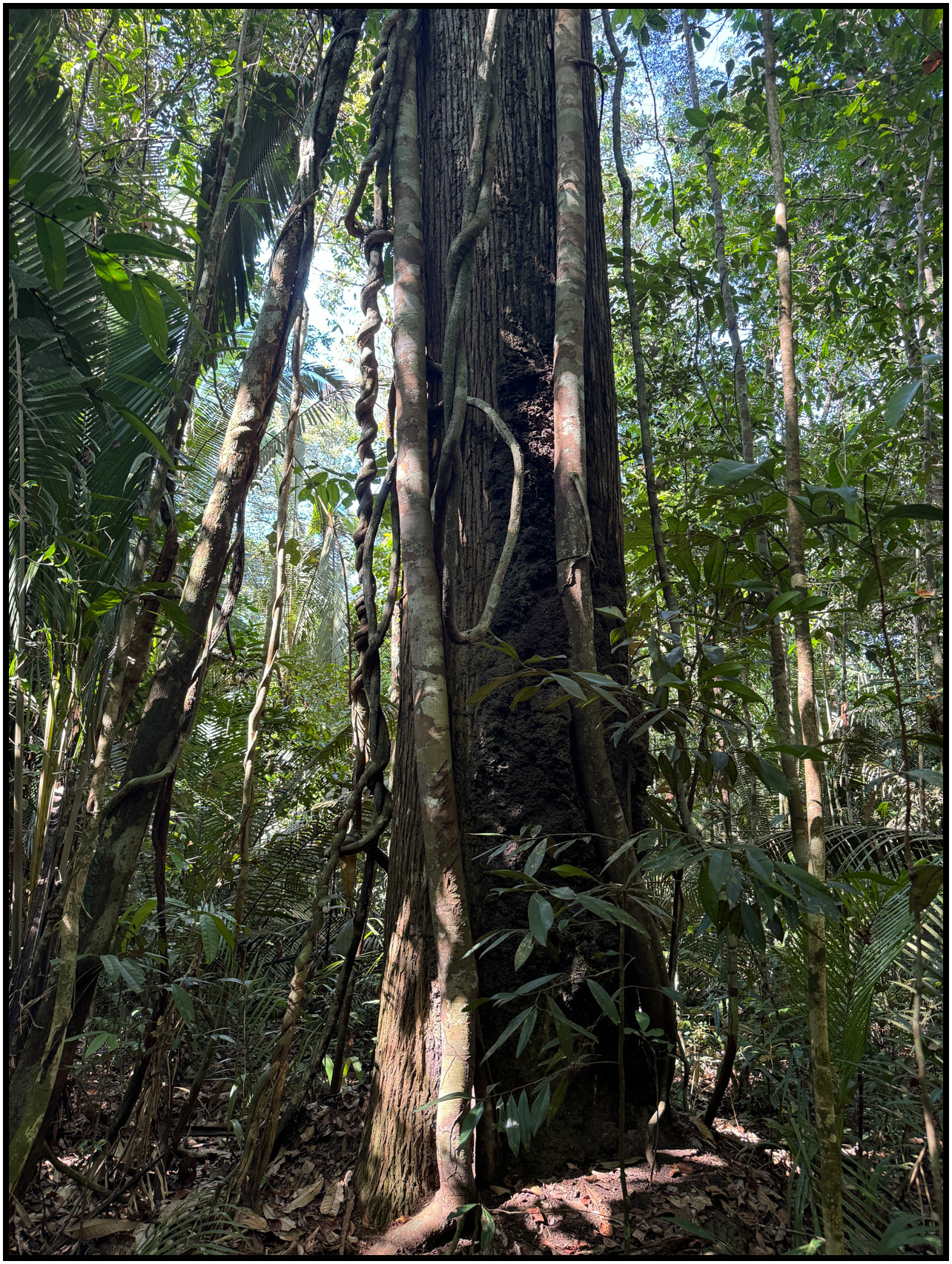
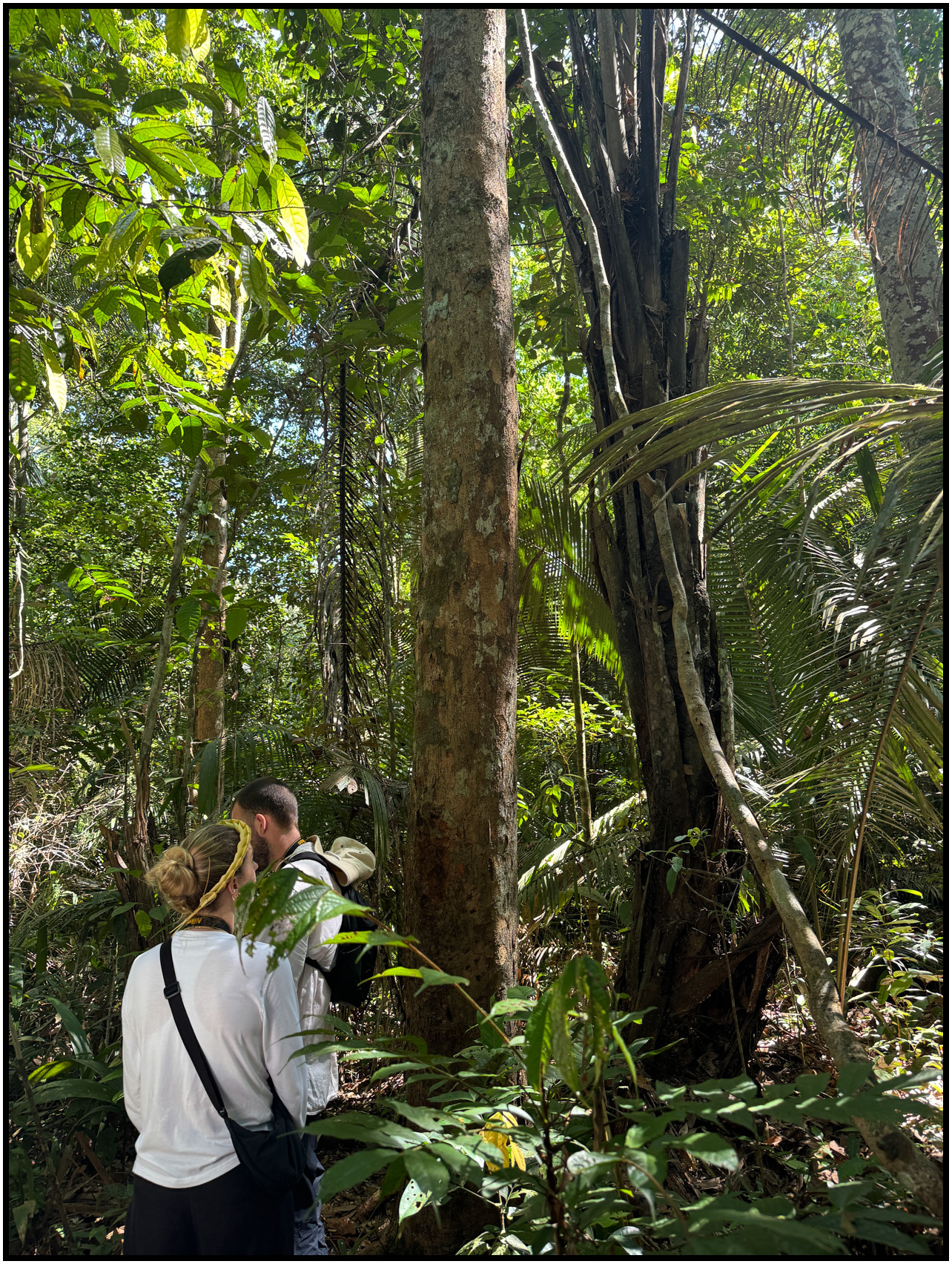 Above is an extremely rare Brazilian rosewood tree. This wood was highly prized by musical instrument makers, particularly for guitars, until it became illegal to harvest or import/export the wood. The trees are now under heavy protection by the Brazilian government.
 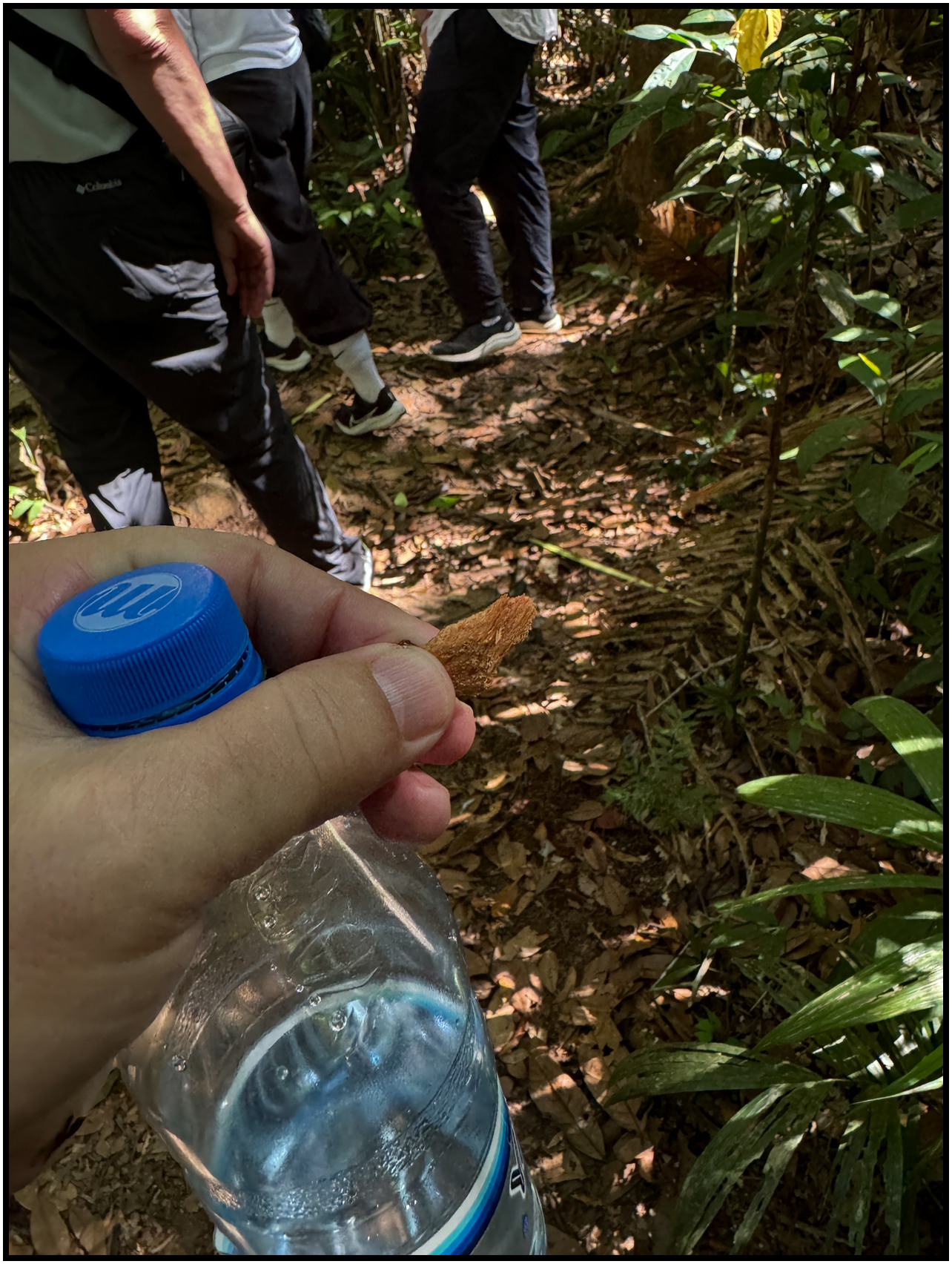 The guide was allowed to chip off a tiny piece of it’s bark so we could smell it. It has a very sweet aroma that smells kind of like cedar, but not quite.
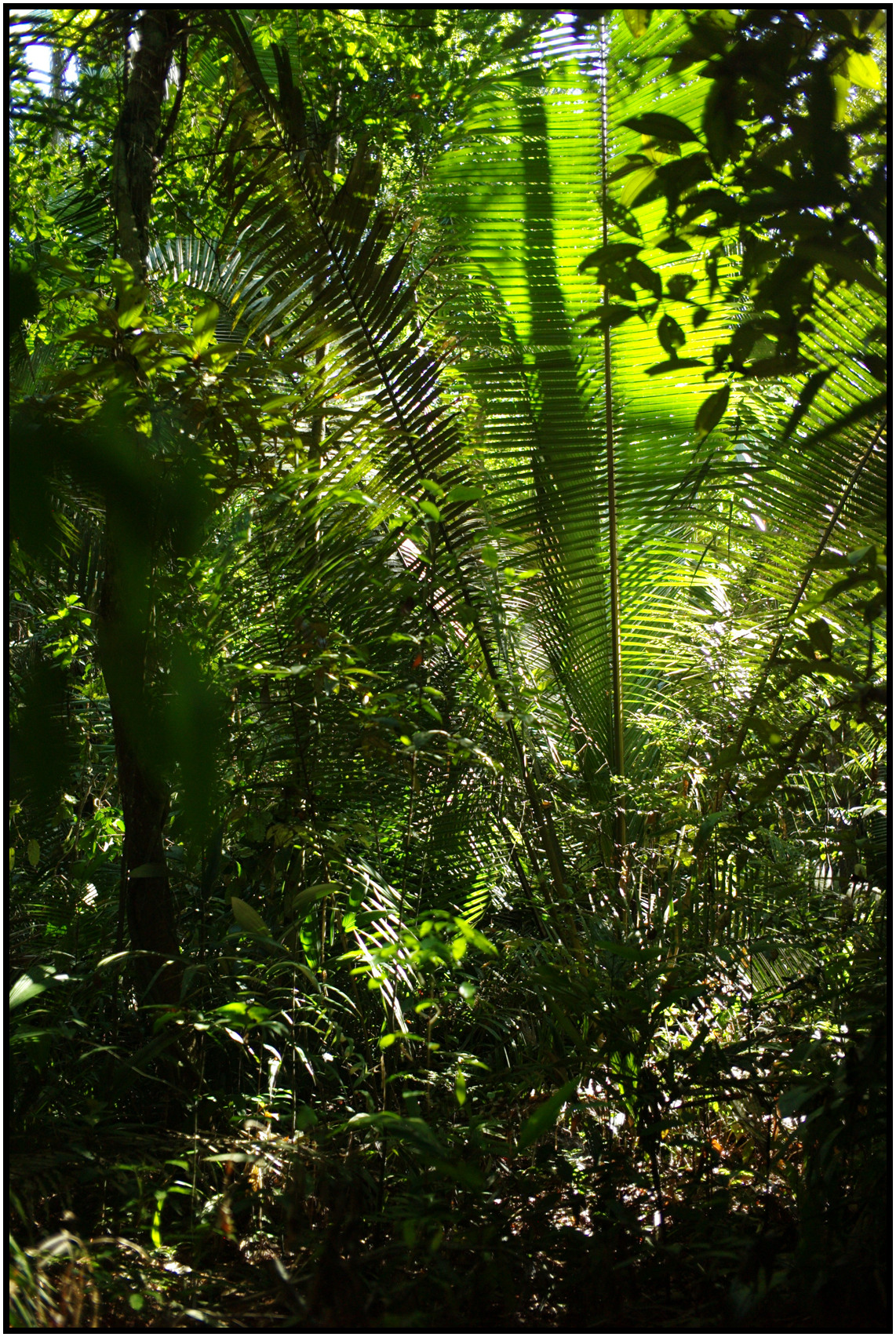
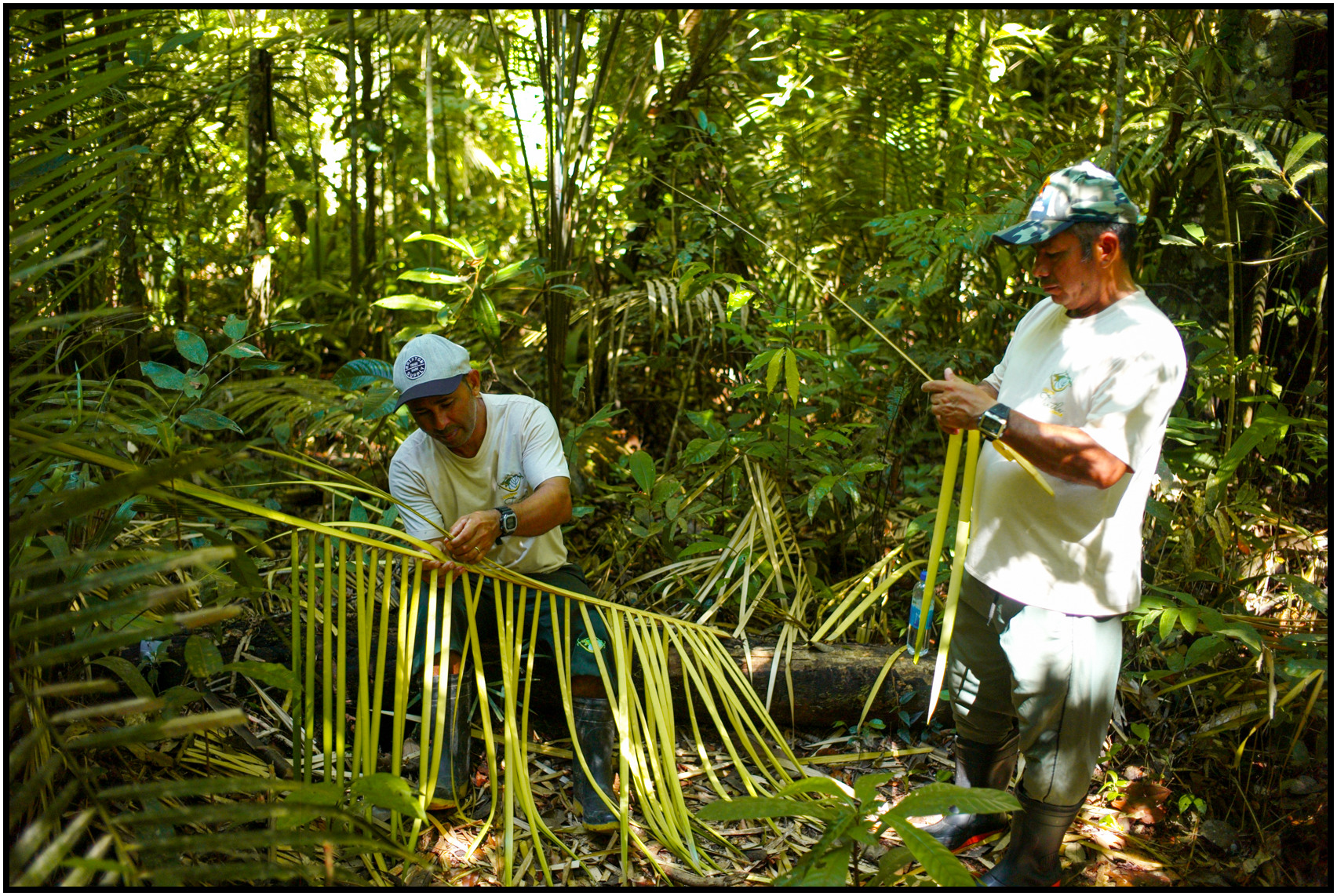
They cut some new fronds from the interior of those huge palms to show how people use them to make roofs for their houses, along with many other things like baskets and clothing. When the emerging fronds are cut from the center of the plant, they grow back very quickly and don’t damage the parent plant.
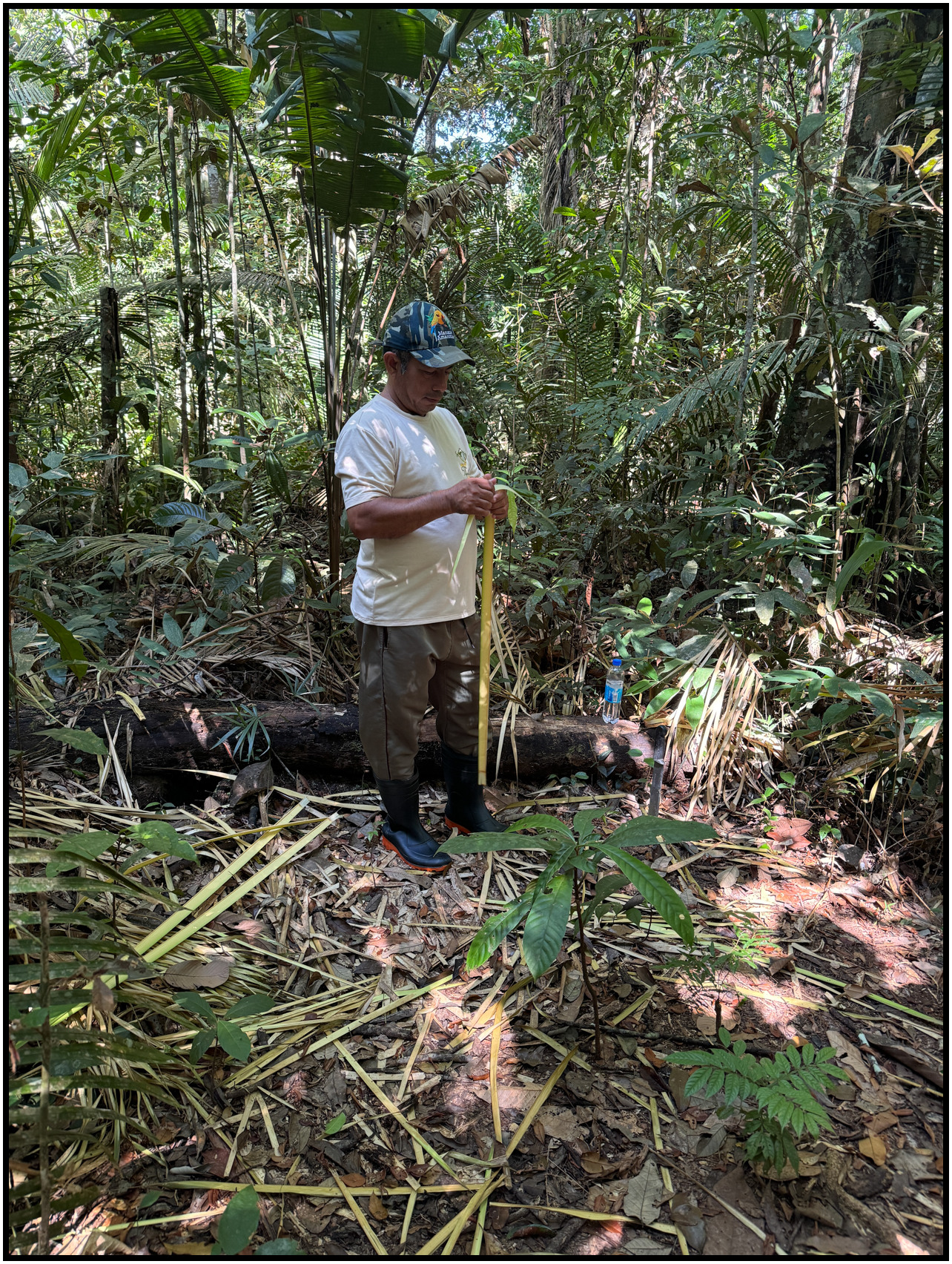
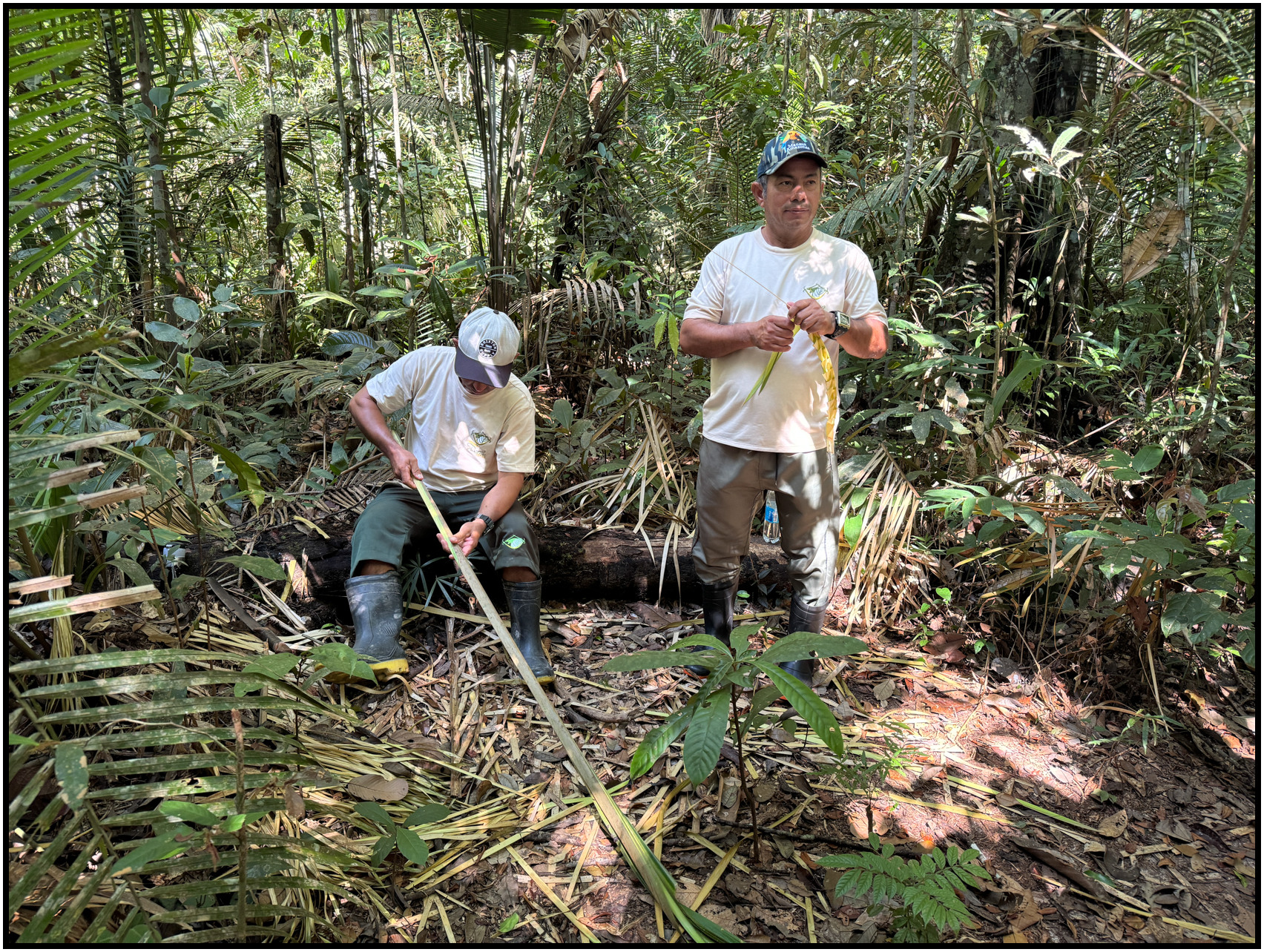
The stems with strips hanging down (photo below) are stacked of top of each other, which forms a waterproof mat for roofing. The roof will last 5 years before needing to be replaced.
Roof of the restaurant at Turtle Lodge. Interior….
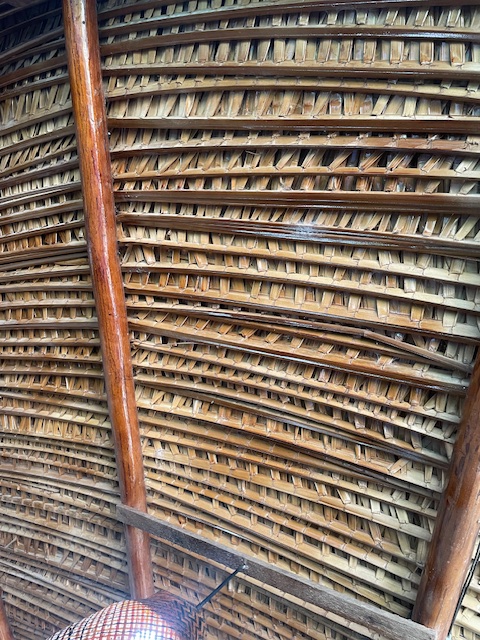
… and exterior.
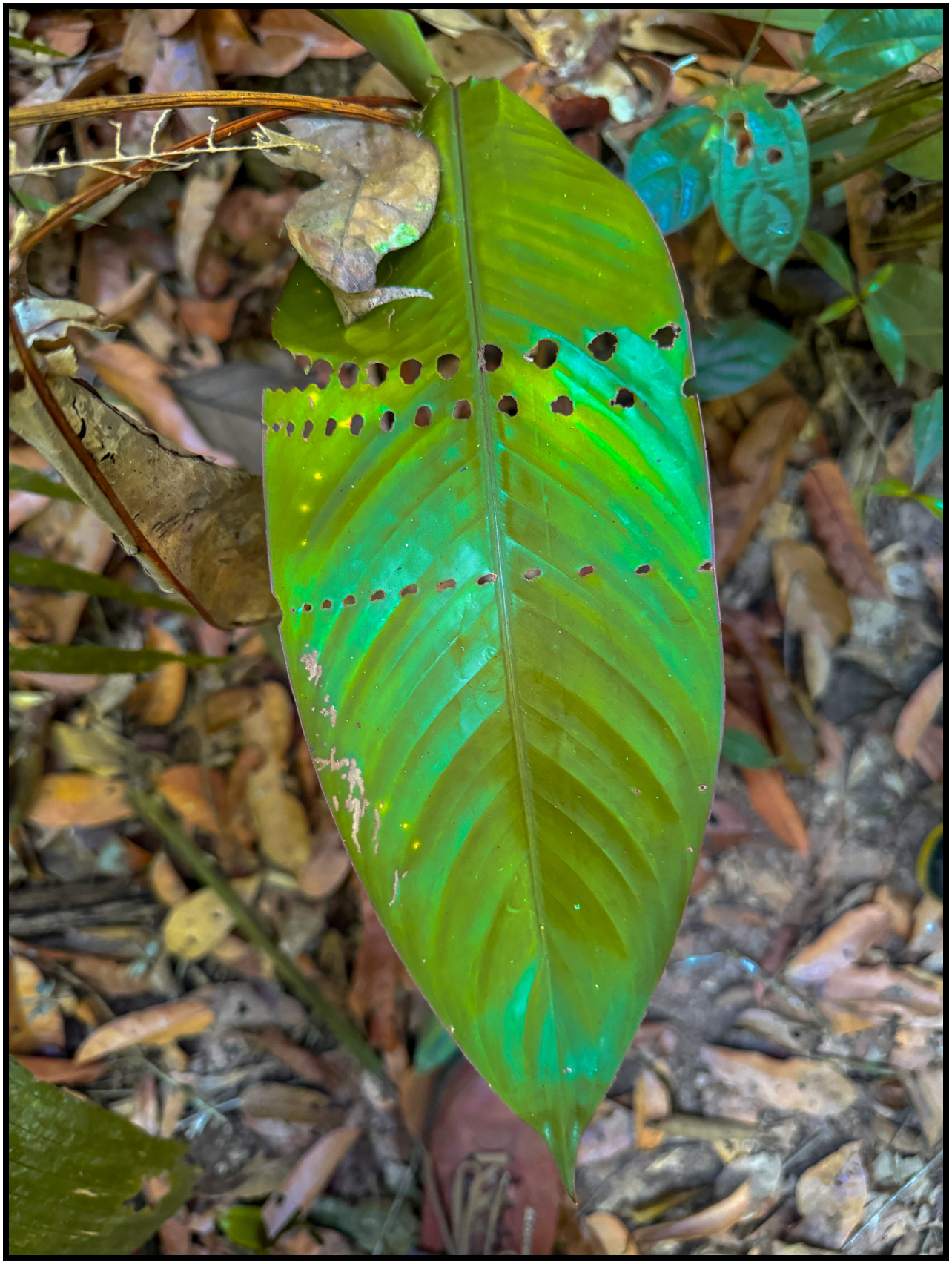
Some critter cut very neat holes in this leaf.
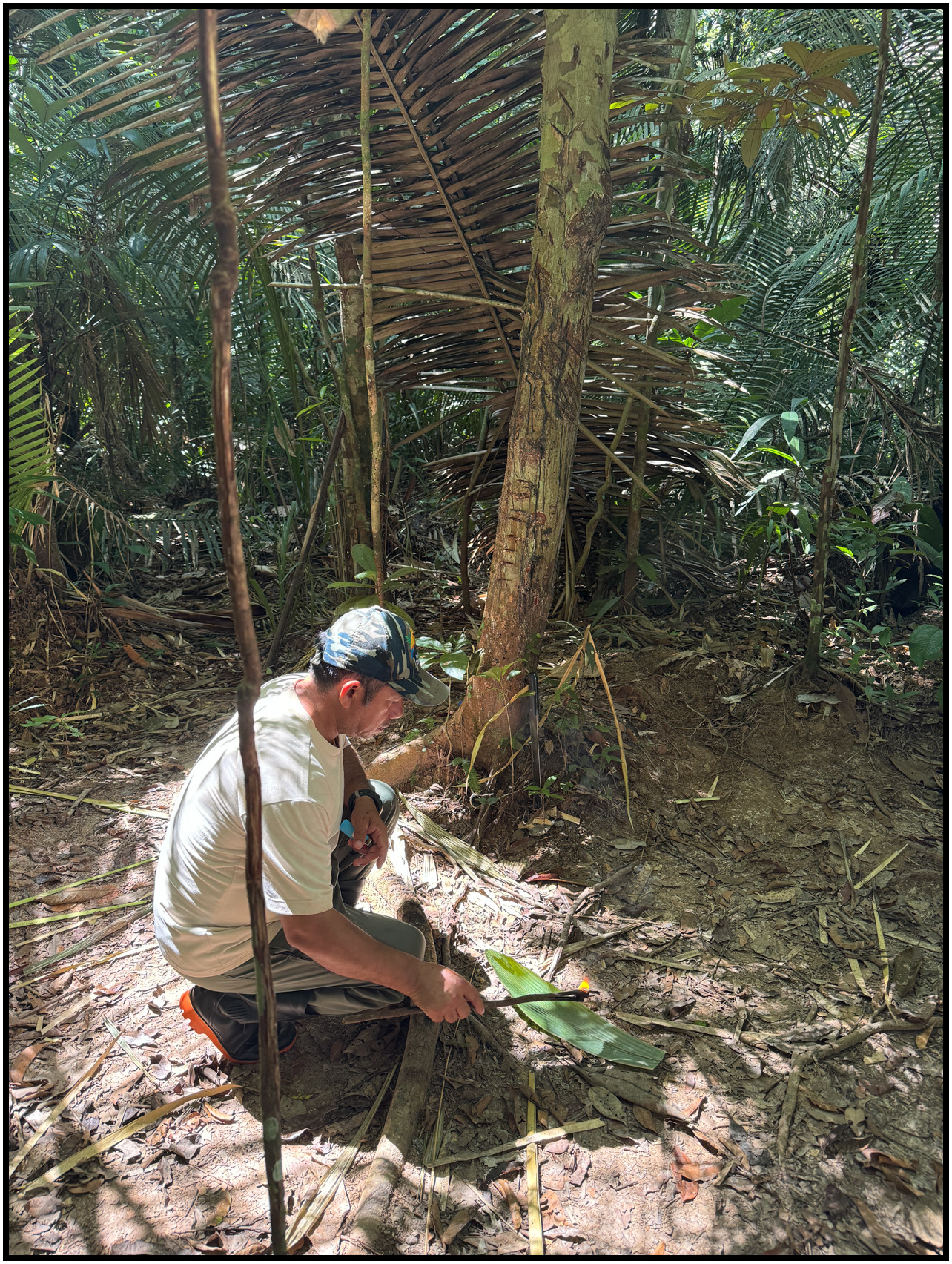
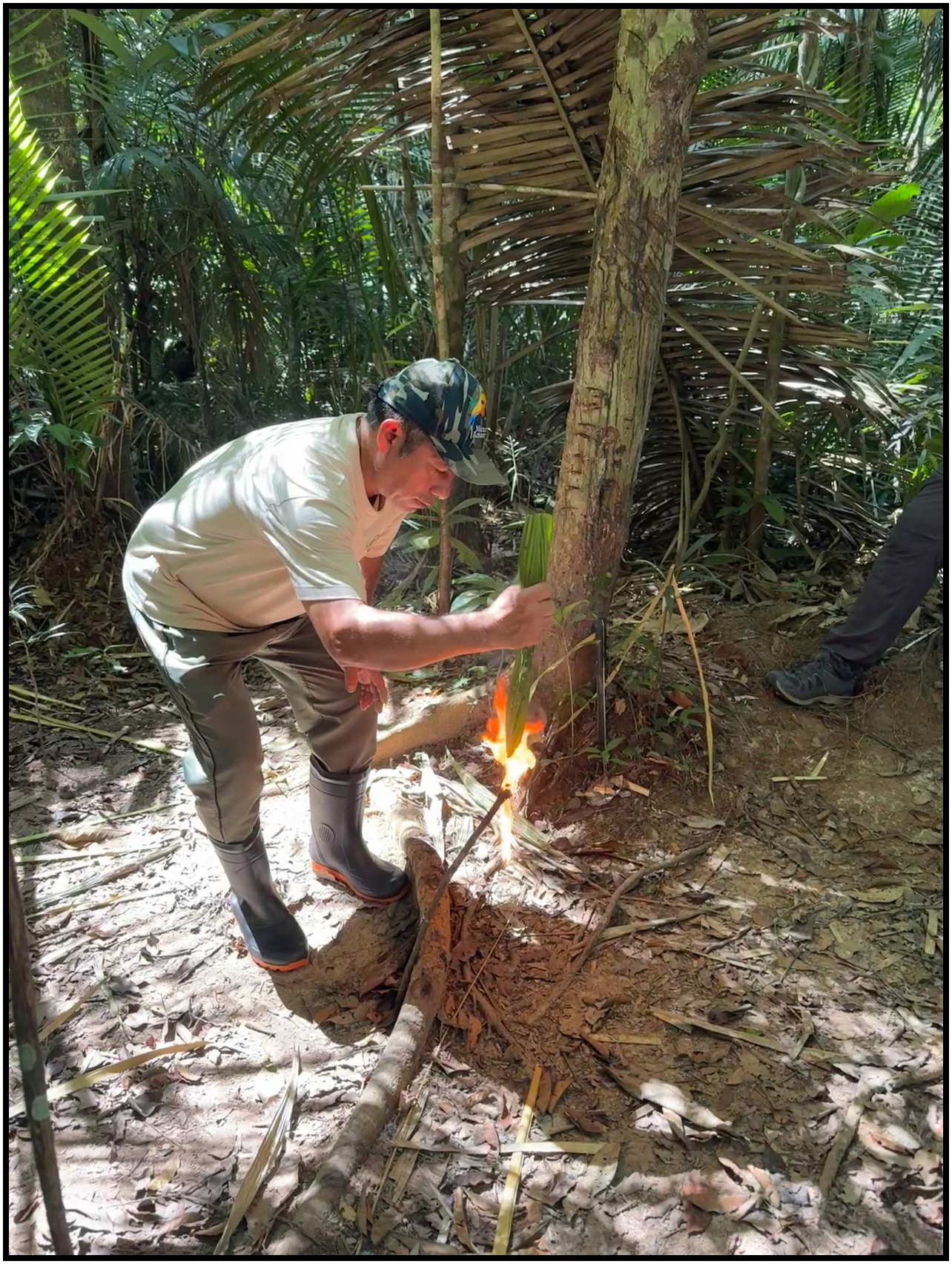
Below: this tree has flammable sap. When people camp in the jungle, generally during the wet season, they use this to start their campfires. You cut a gash in the bark until sap runs … it’s very sticky and reminded me of birch sap. You get a wad of it on the end of a stick, light it, and it turns into a long-burning torch you can use to start a bigger fire.
He is burning the sap wad on a stick, and letting the molten sap drip onto this leaf. It dries to a power-like consistency that you can save in a pouch for starting fires later if you want.
Below you can see the blackened sap that has dripped onto the leaf.
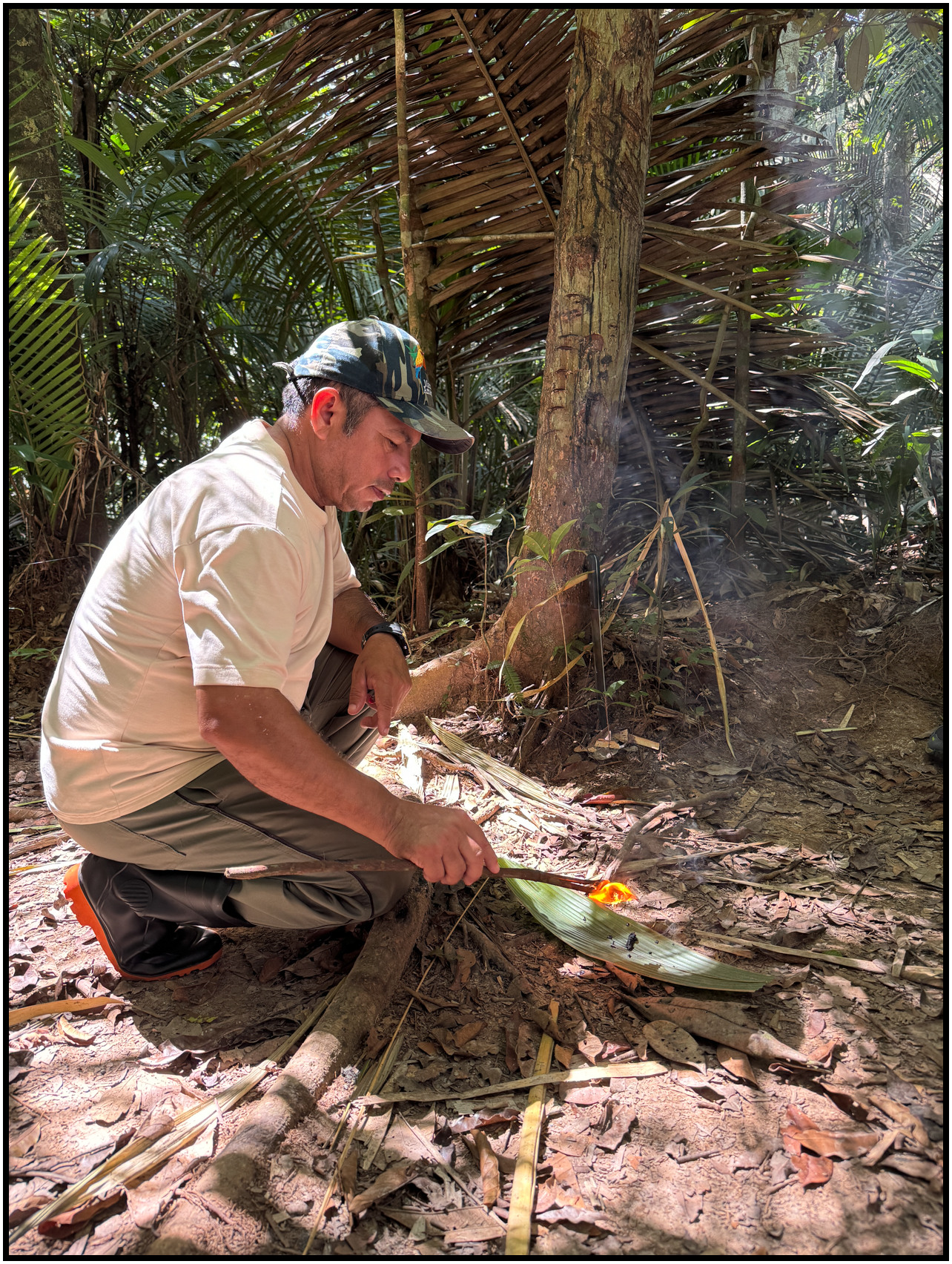
In this form, it acts a lot like gunpowder. He blew the powder into the flame and it sparked up like fireworks.
This evening has no scheduled activities so everyone can sit back and relax, enjoying the sounds of the jungle at night. Tomorrow morning after breakfast, a different jungle hike. Time for bed now!

