9 Aug 2024
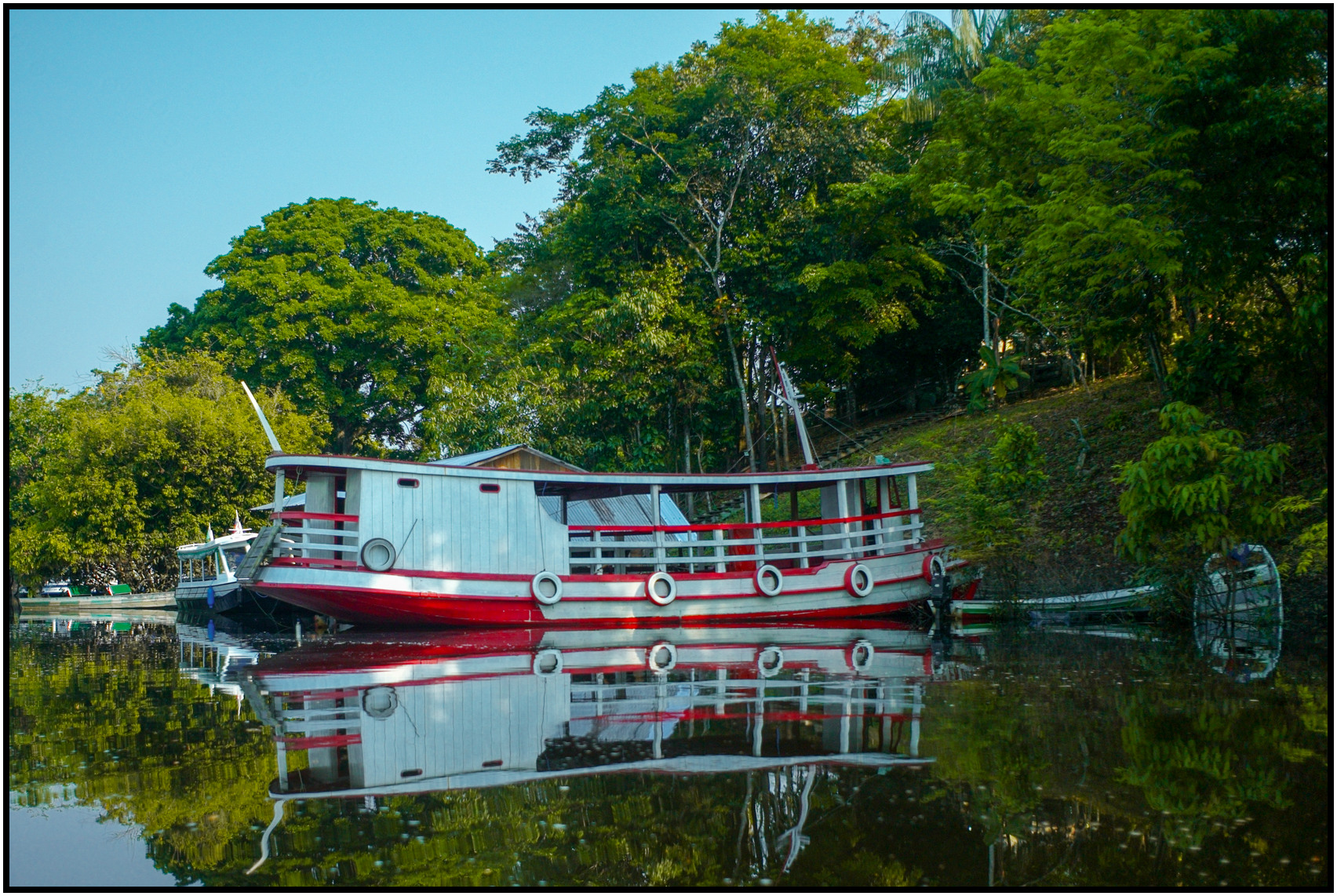
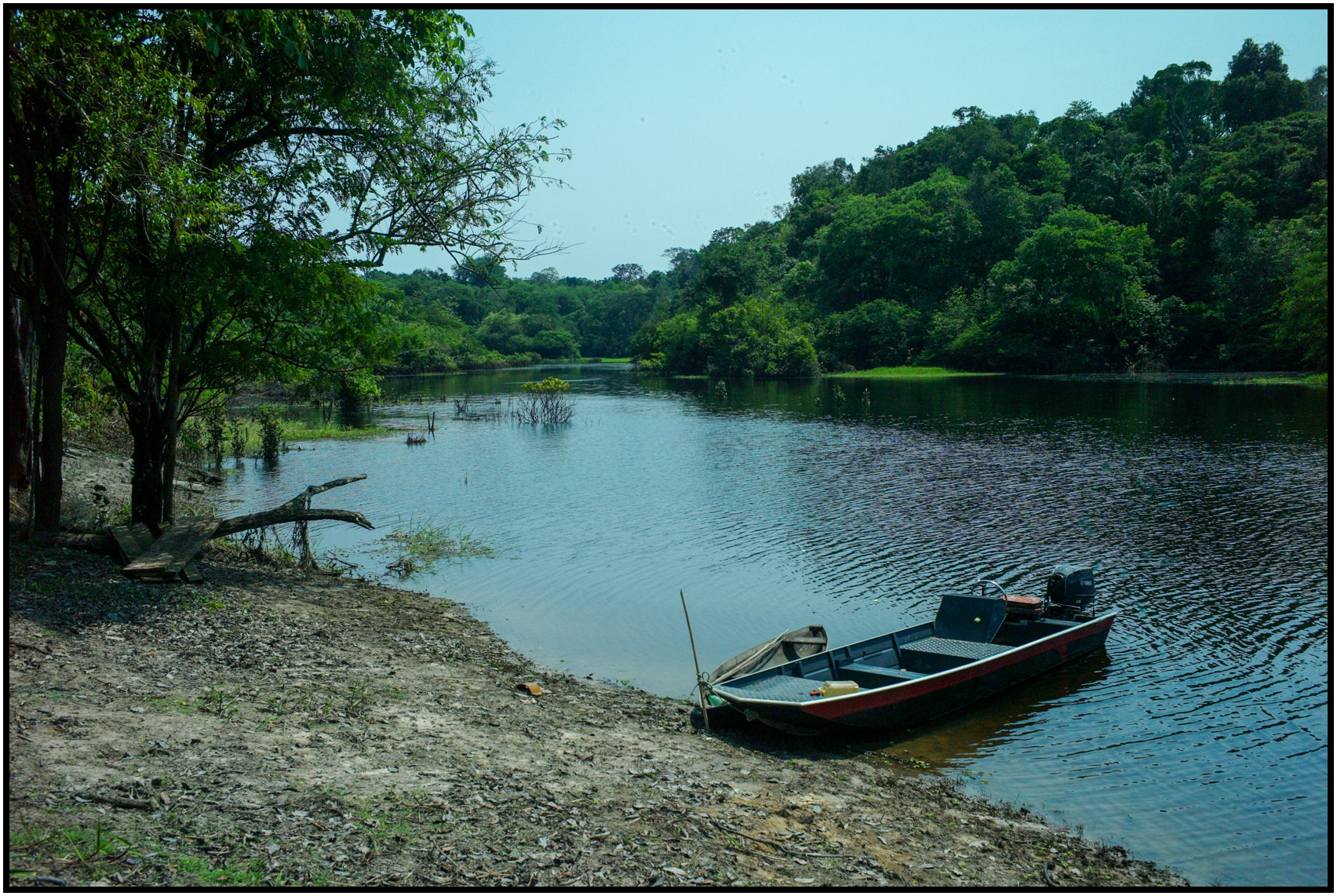
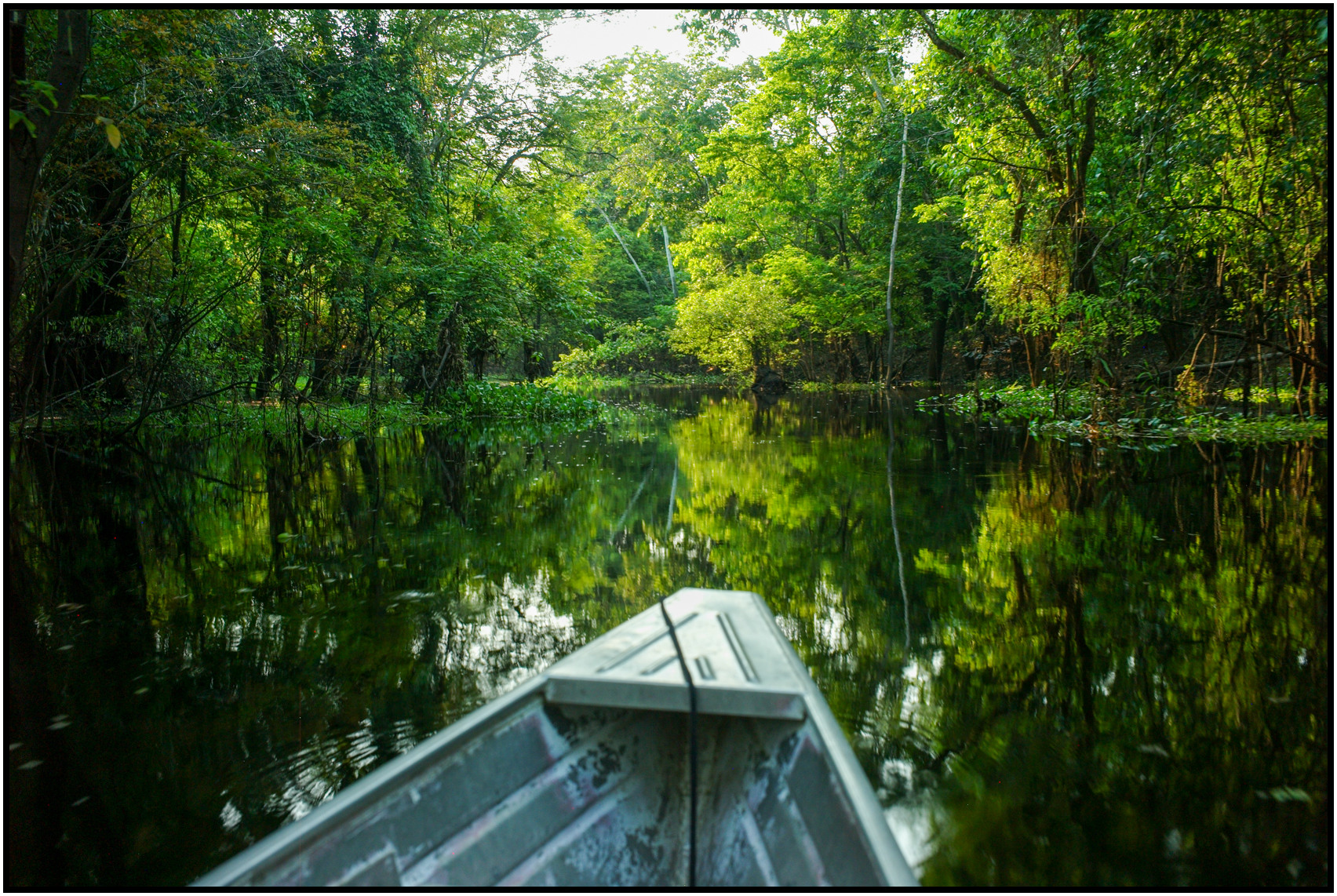
Our final morning excursion down the river was to a family farm. Below, a cool boat on the journey. Look at that reflection in the water!
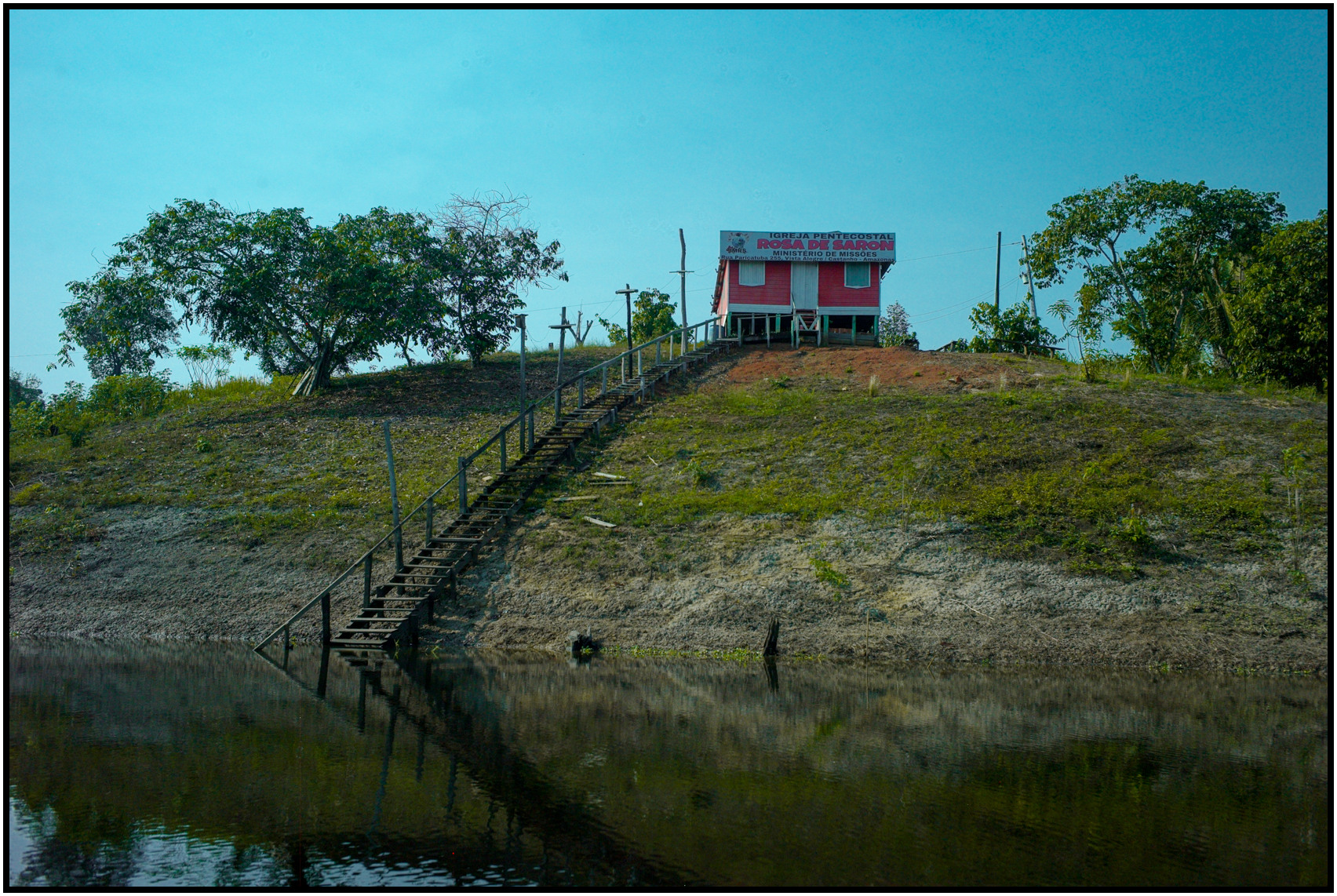
A local church.
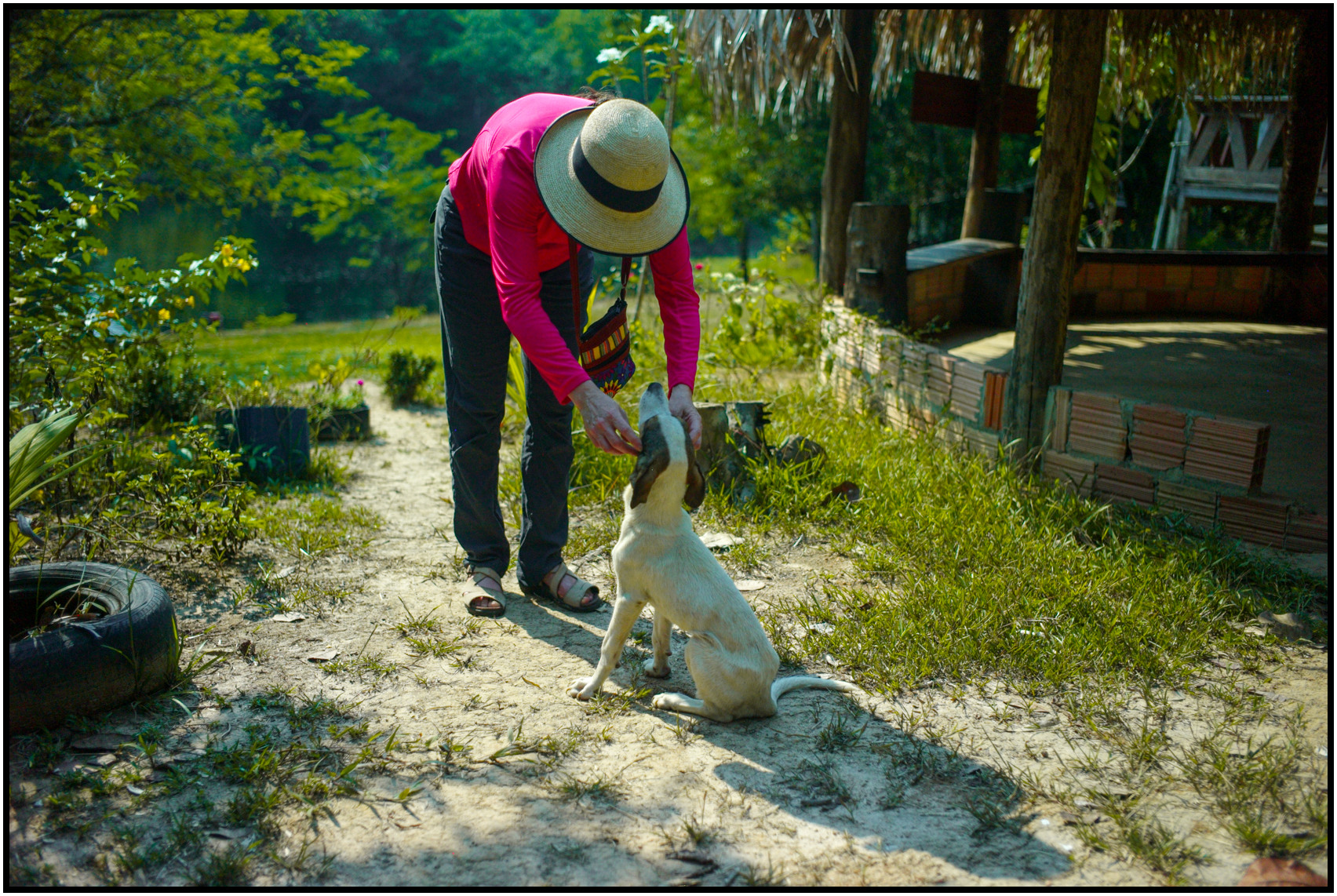
Another doggo greeting party (my favorite kind!) at a local “Caboclo” farm. Caboclo is the common term for the people who live here – mixed race people of native Brazilian (Amerindian), sub-Saharan black ancestry, and white Portuguese, from way back in the rubber plantation days. Our guide said that there are only two types of people who live here – the indigenous tribes folk and ‘Caboclos’. (Our guide told us that he, and all the employees at the Lodge, are Caboclos.) There are hundreds of different tribes in the Amazonas state. The government protects them and will not allow Brazilian citizens, let alone tourists, enter their designated areas.
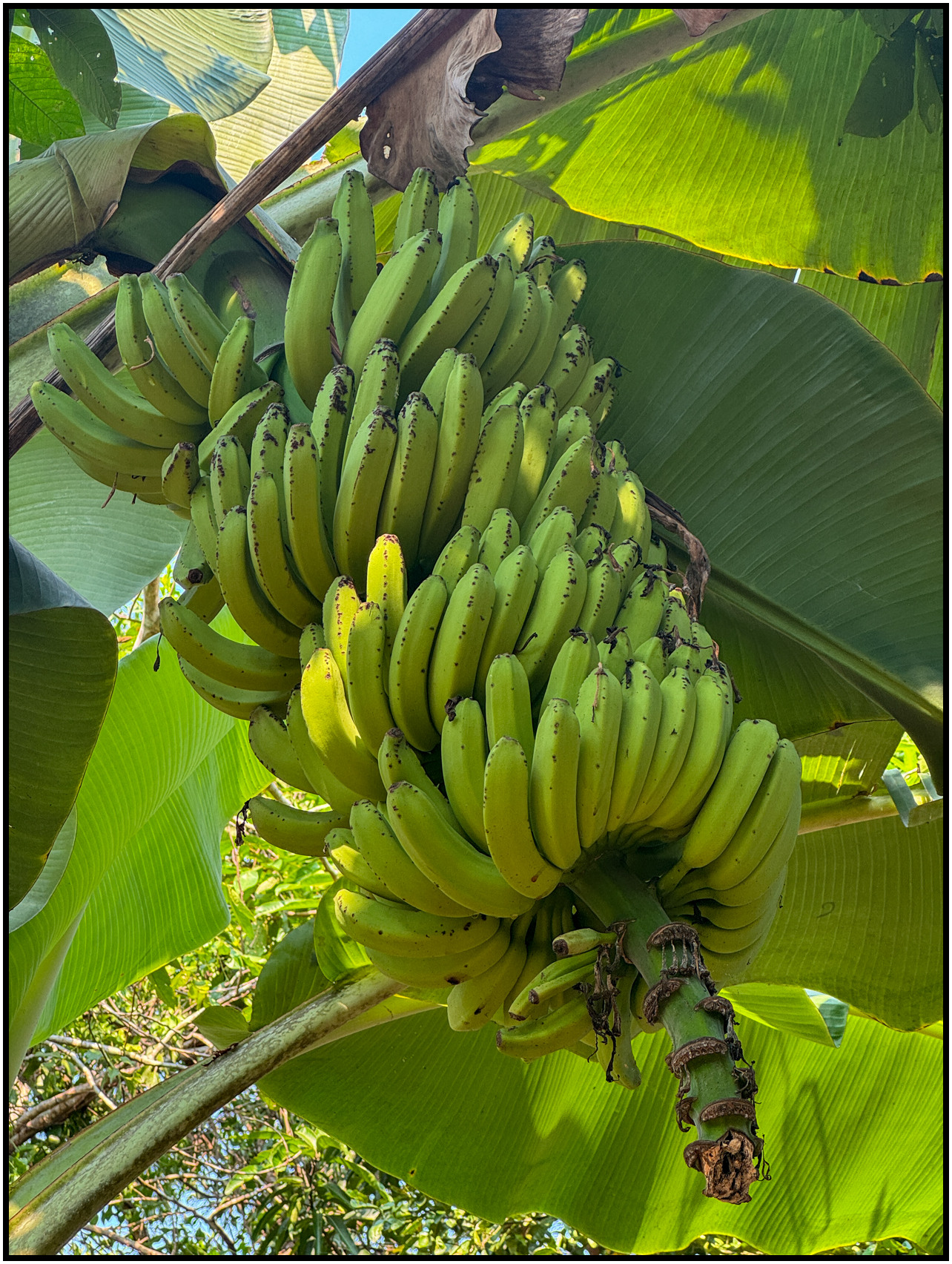
Bananas are one of this family farm’s crops. Manioc is their primary crop. (Manioc = cassava = yucca = tapioca… all depending on where you are from and/or how the root is processed.)
On this farm, they mainly process the manioc roots into farinha flour – their staple for carbohydrate rich meals — which is sold mainly into Manaus. They keep enough for themselves, and sell the rest. Their secondary crops (also mostly sold into Manaus) are bananas and pineapples.
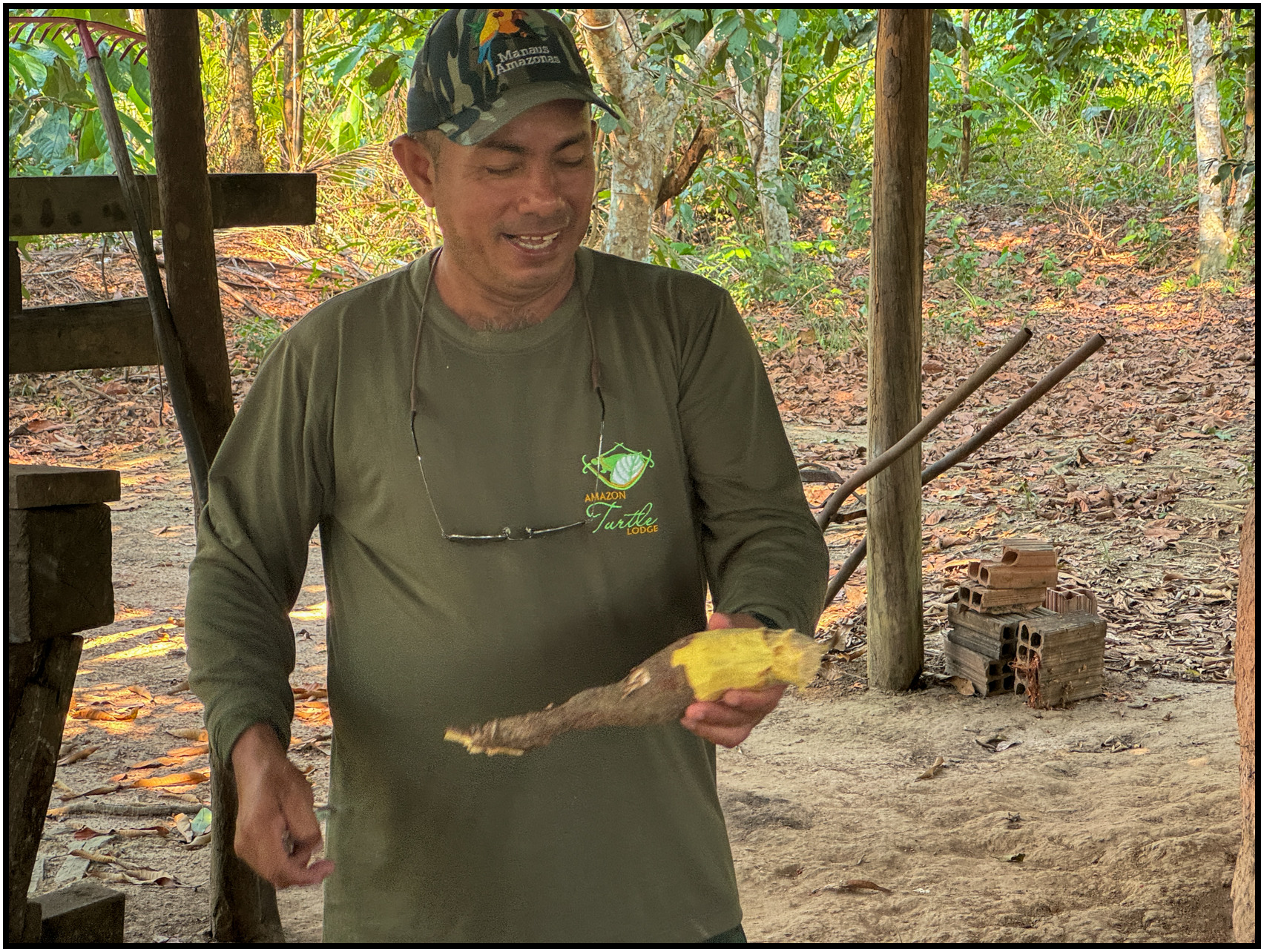
Our guide demonstrating how the manioc roots are processed into flour. (It actually looks more like cornmeal than wheat flour when they’re done with it.) First the roots are peeled. Nothing is wasted. The peels are used as chicken and hog feed.
Once the roots are peeled, they are shredded on a machine that is essentially a giant cheese grater, then put into a huge tub and squashed to get most of the juice out of it. (Adam didn’t get photos of those machines.) The starch sediment that settles out of the juice is dried and powdered to become tapioca.
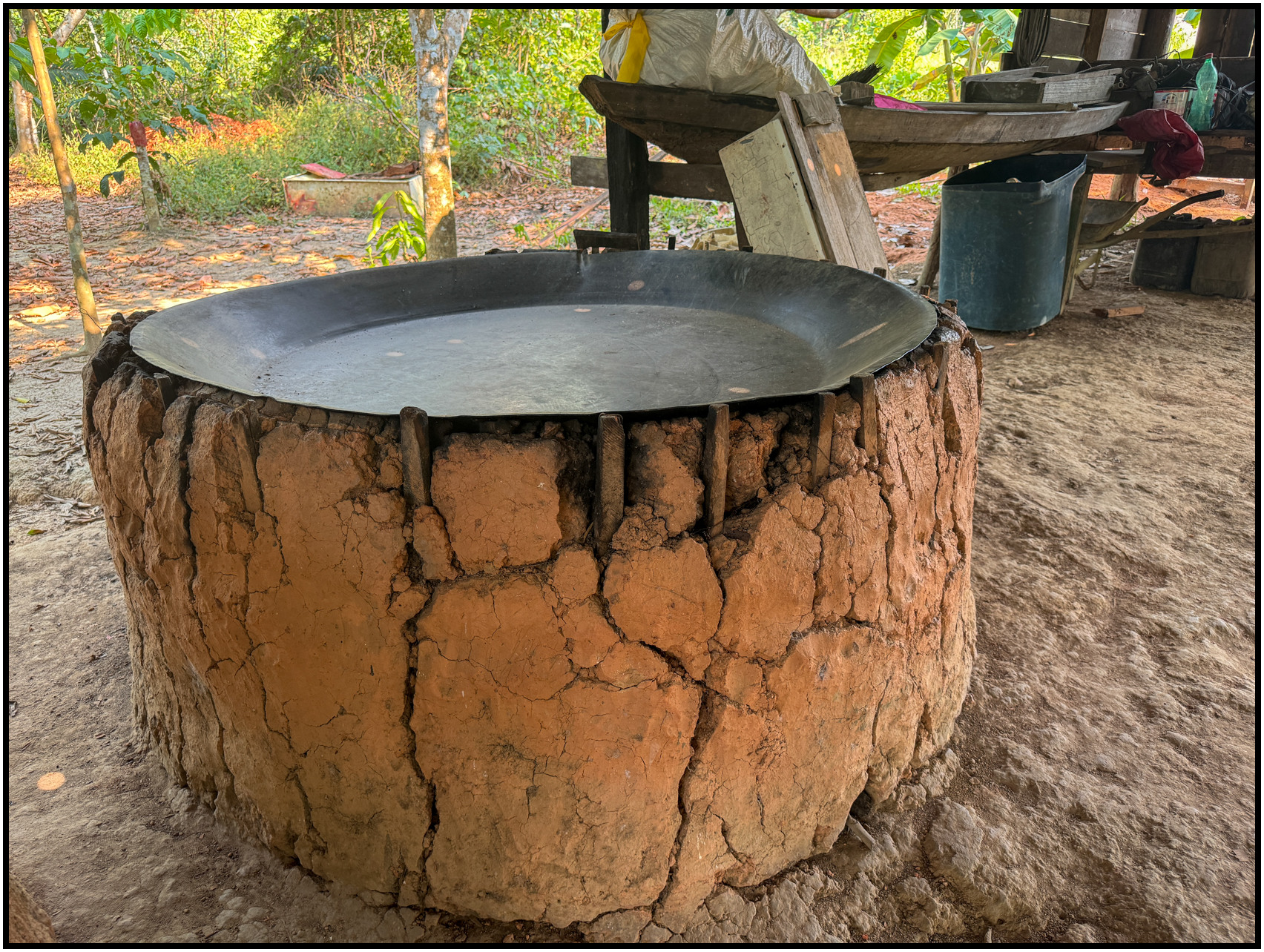
They grow two kinds of manioc (or cassava) — yellow and white. The white is minimally processed and can be boiled and eaten like a potato. The yellow variety is toxic until all the juice is squeezed out and the root is thoroughly dried and cooked. It contains high levels of cyanogenic glycosides (cyanide) in it’s natural state. This is the yellow variety. Once it’s shredded and dried, it is toasted in this huge iron pan for several hours. It must be constantly stirred so it won’t burn … it takes upwards of 10 people working all day to produce about four 75kilo bags. They get around US$90 per bag.
These are the manioc plants, a woody shrub in the spurge family. One of the reasons it’s such a valuable crop is that it’s capable of growing in very poor soils. The family have several fields of manioc in succession and rotation plantings. It takes about a year before the roots can be harvested, and then the field needs to have something else grown on it for a couple of years to re-set the soil. They have fields of manioc planted at different times and therefore at different stages of growth so they can do fairly continuous harvesting.
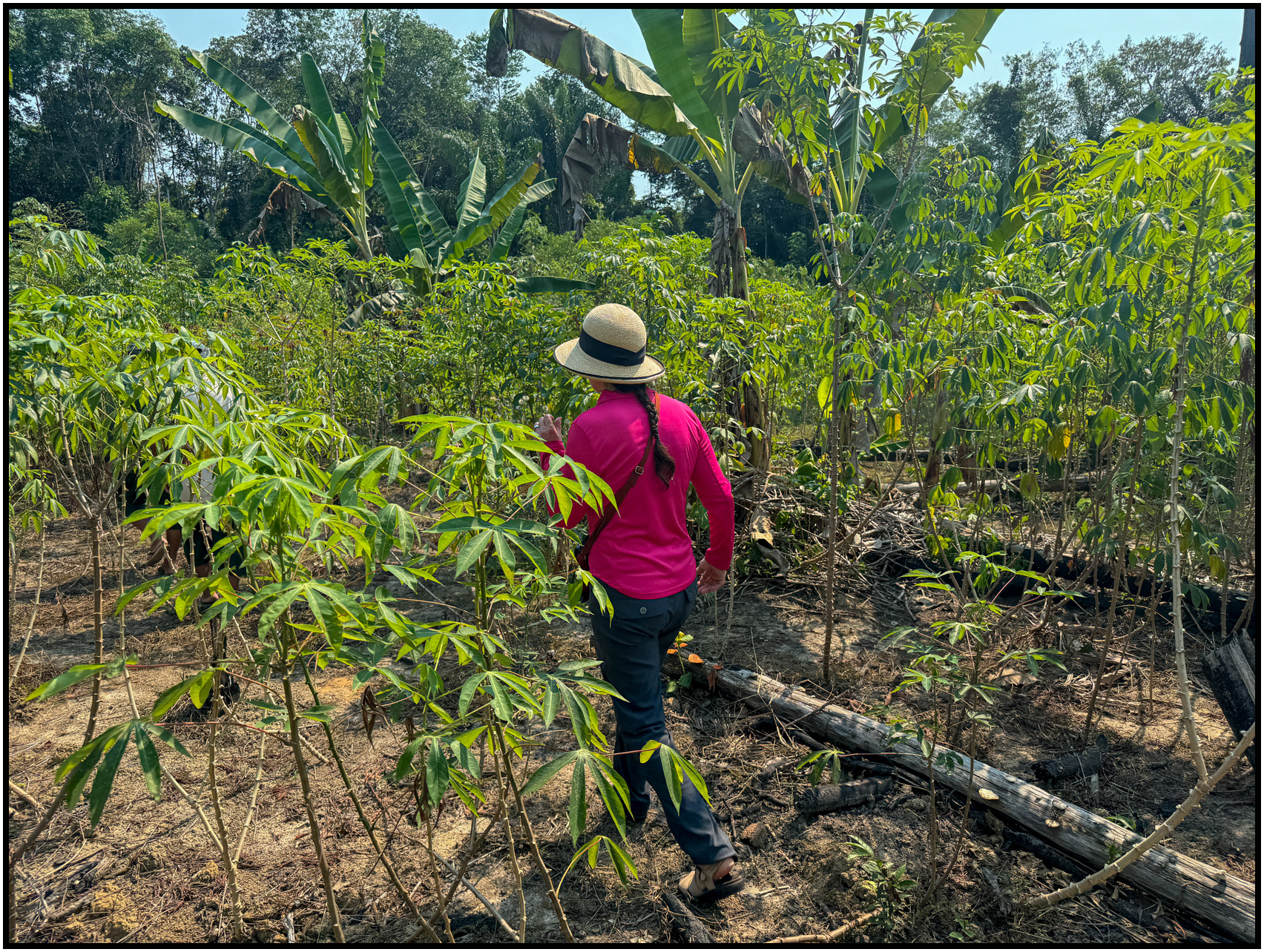
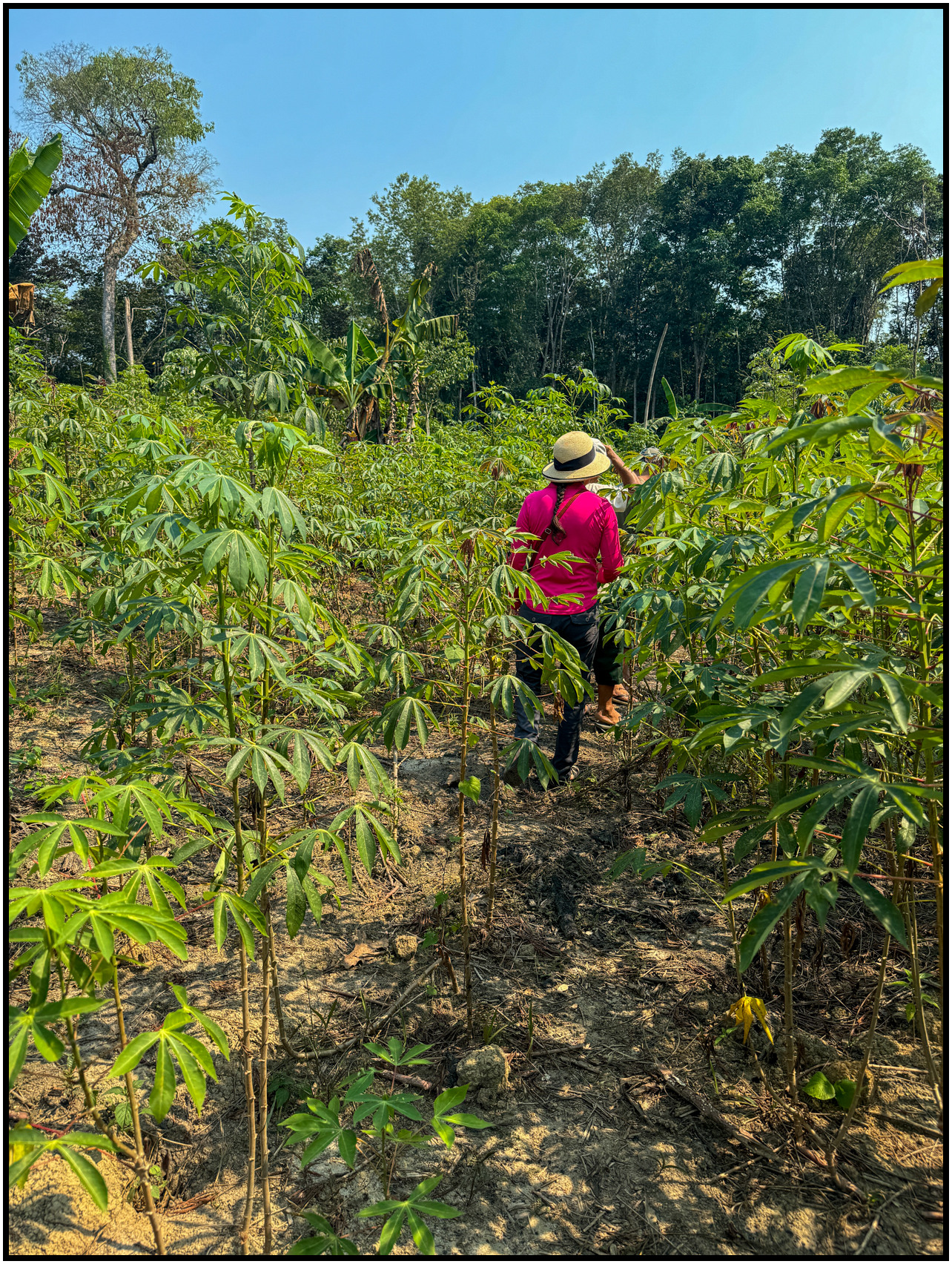
Manioc field with bananas in the background.
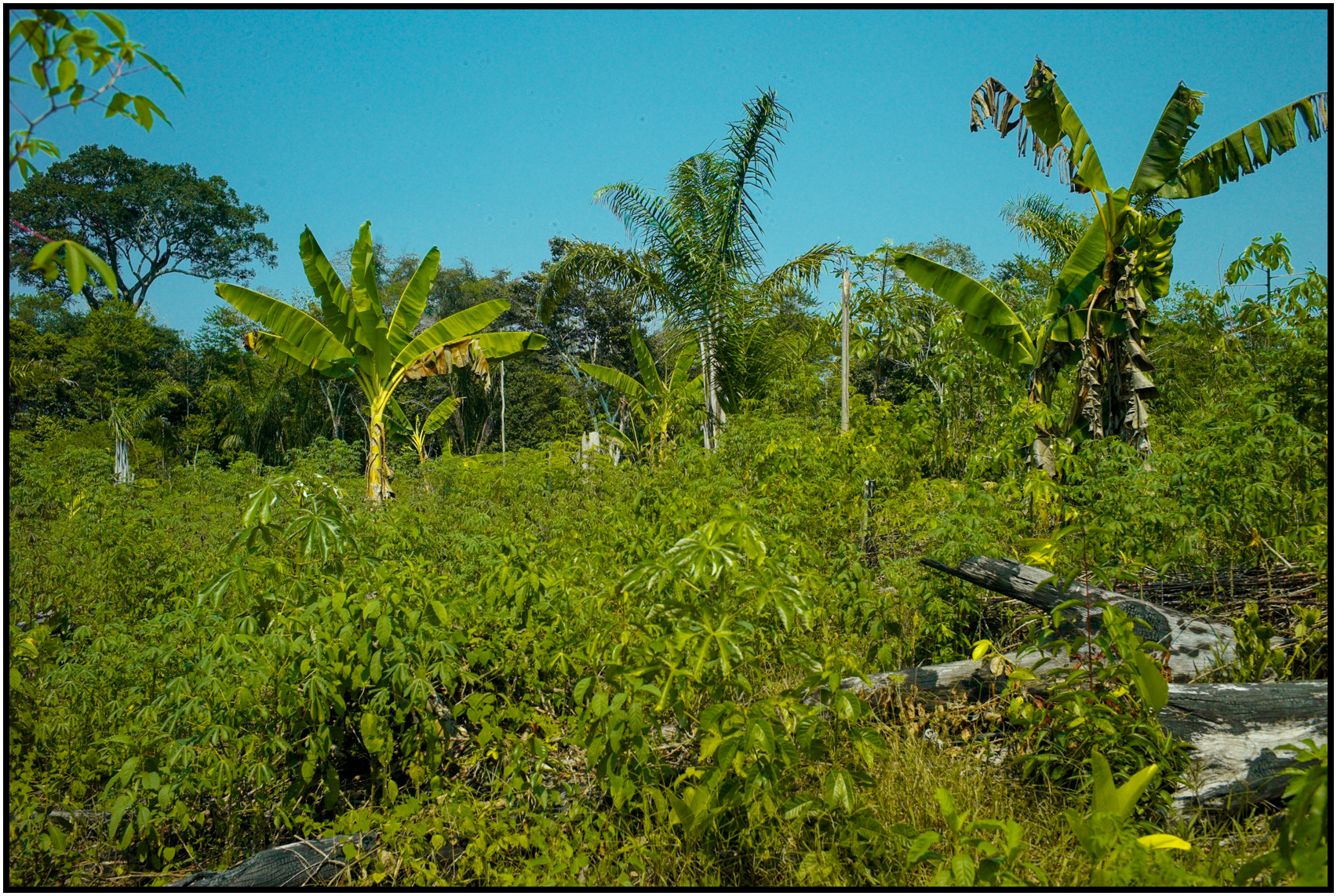
They also grow two types of pineapples. The smooth-leaf kind (which we always see in our US grocery stores) and this type below with serrated leaves. The leaves are wicked sharp! You could probably use them as bread knives, they are so sharp. The pineapples are a little smaller than we’re used to, and MUCH sweeter. I love them. It’s going to be hard to go back to our subpar pineapples at home, now that I know what the good ones taste like.
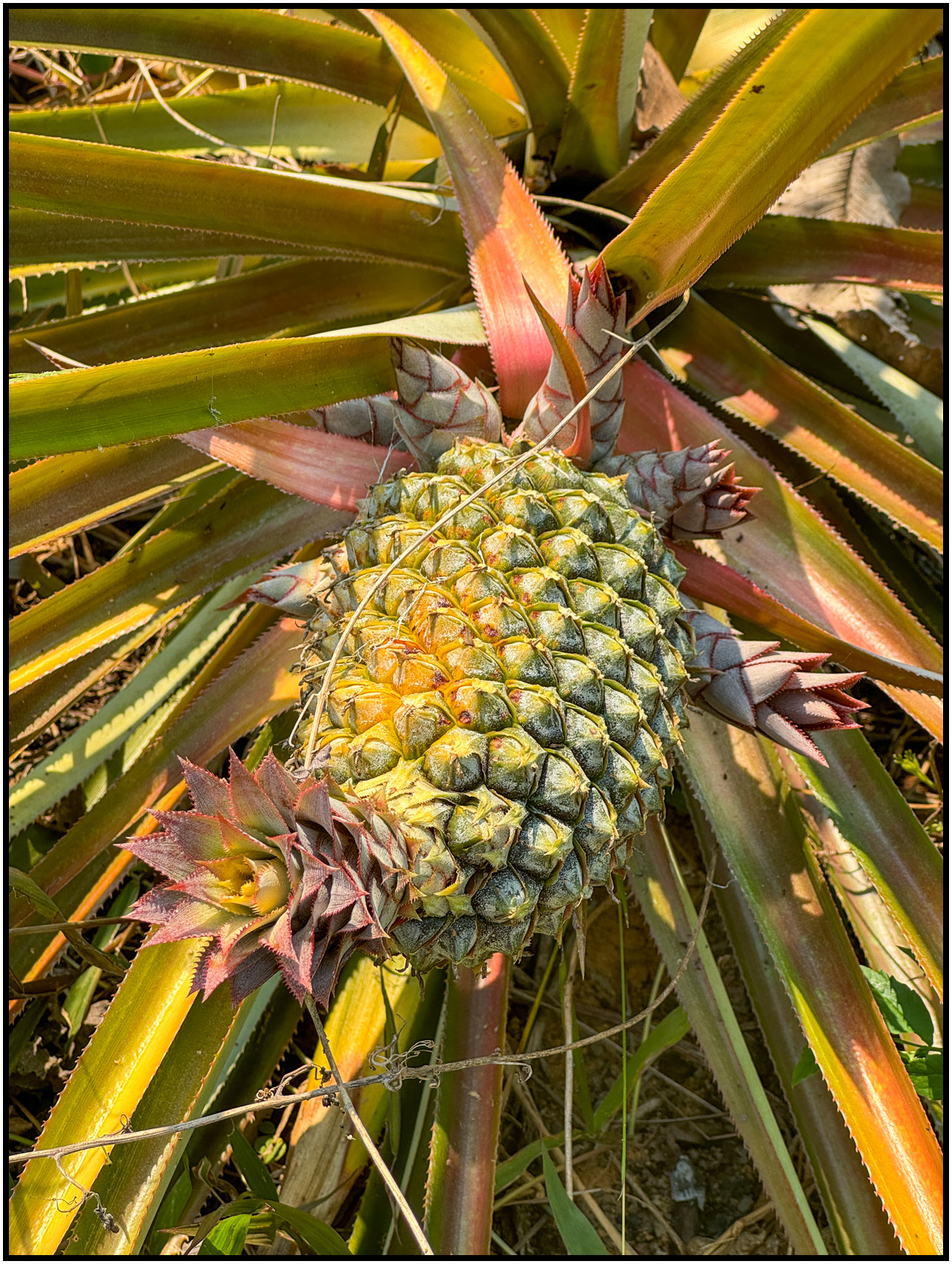
The family’s little shop. They let us sample fresh juices made from fruits on the farm.
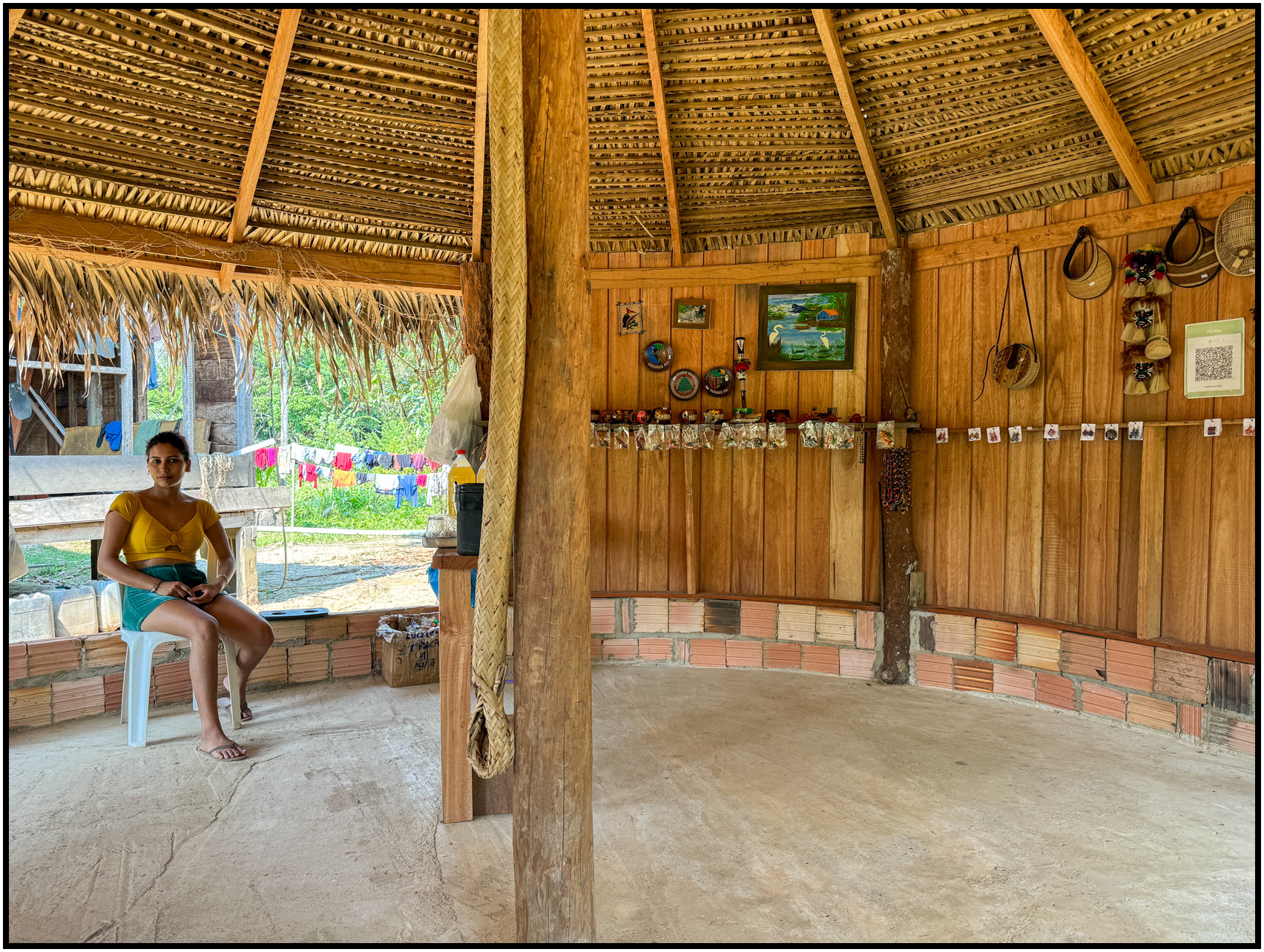
During the months of November through January, the height of the dry season, this part of the riverbed is completely dry. The family has to walk 25 minutes to the nearest put-in spot for a boat if they want to go to a grocery store. They have a very large personal garden and they raise chickens for eggs, and fish in the river … they are almost completely self-sufficient. The only things they buy from the store are bottled water/drinks, beer, coffee, tea, and sugar. Their main diet is fish and manioc, prepared in various ways.
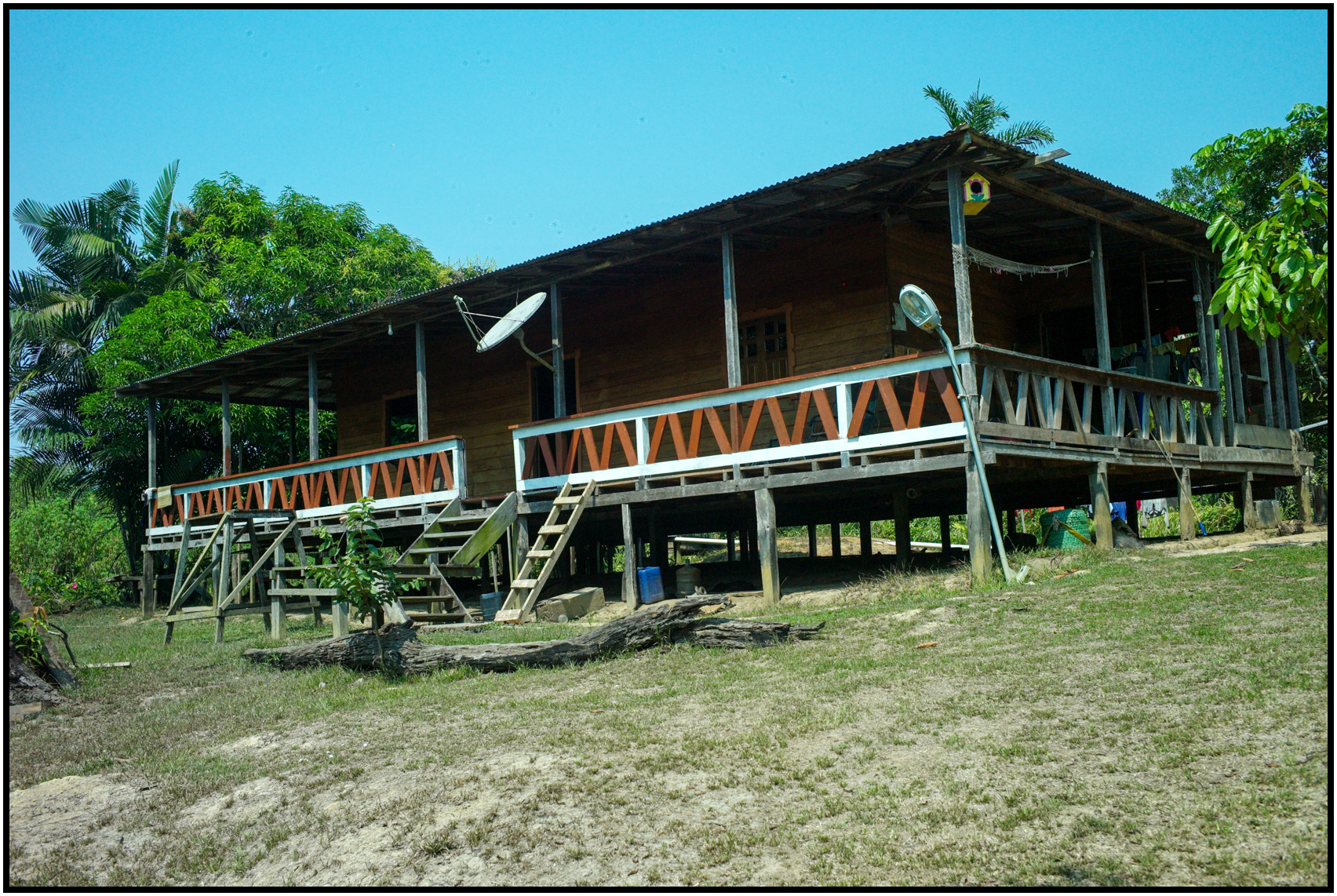
The house. During the wet season, the water is nearly up to their front porch.
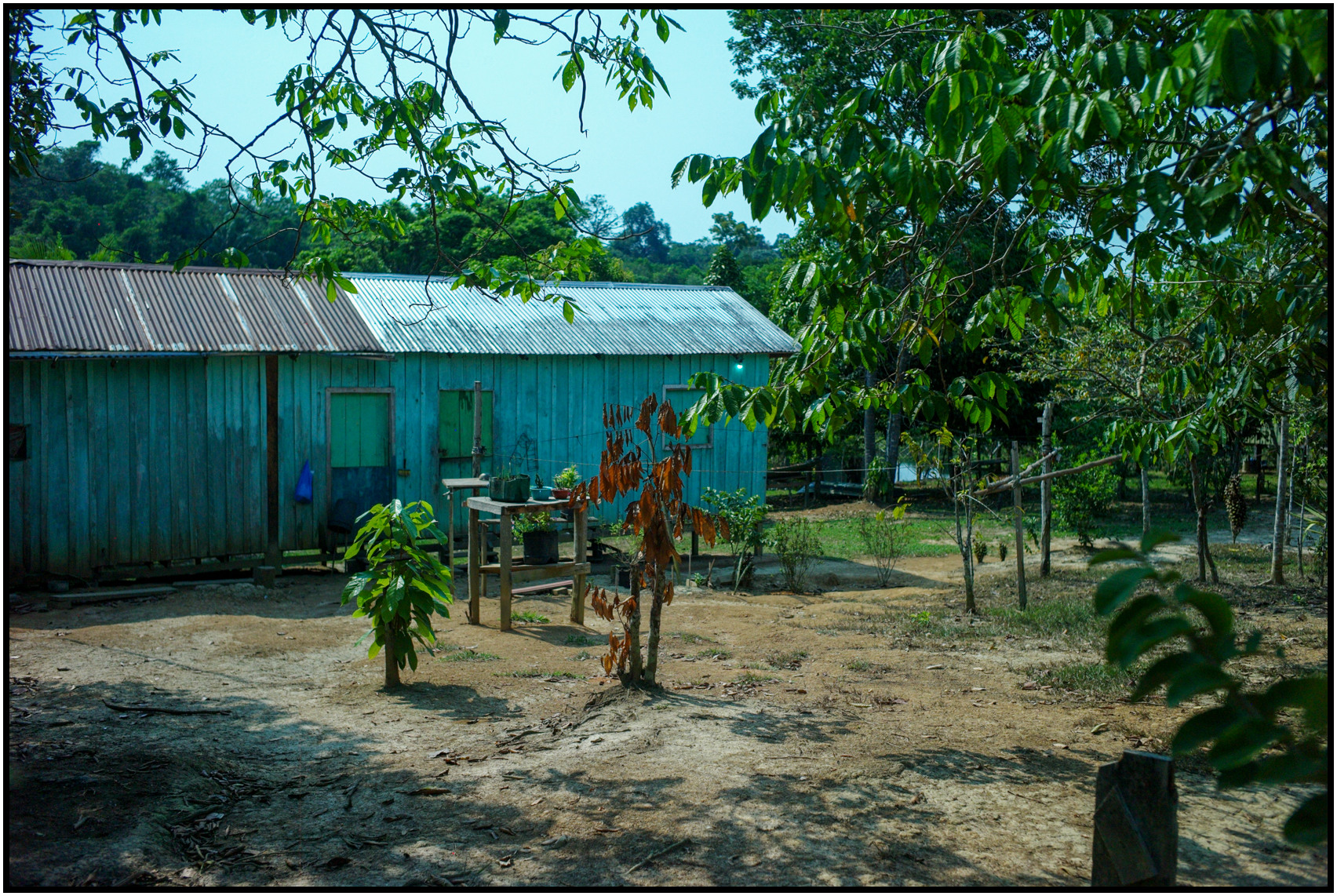
Part of the family’s personal gardens. They grew an astonishing variety of food crops. Two kinds of limes, all the herbs you’ve ever heard of (oregano, mint, etc.), lemongrass, ginger, onions, and tons and tons of fruits, most of which I didn’t recognize. I knew the limes, starfruits and avocados … but that’s about it. Everything else was exotic.
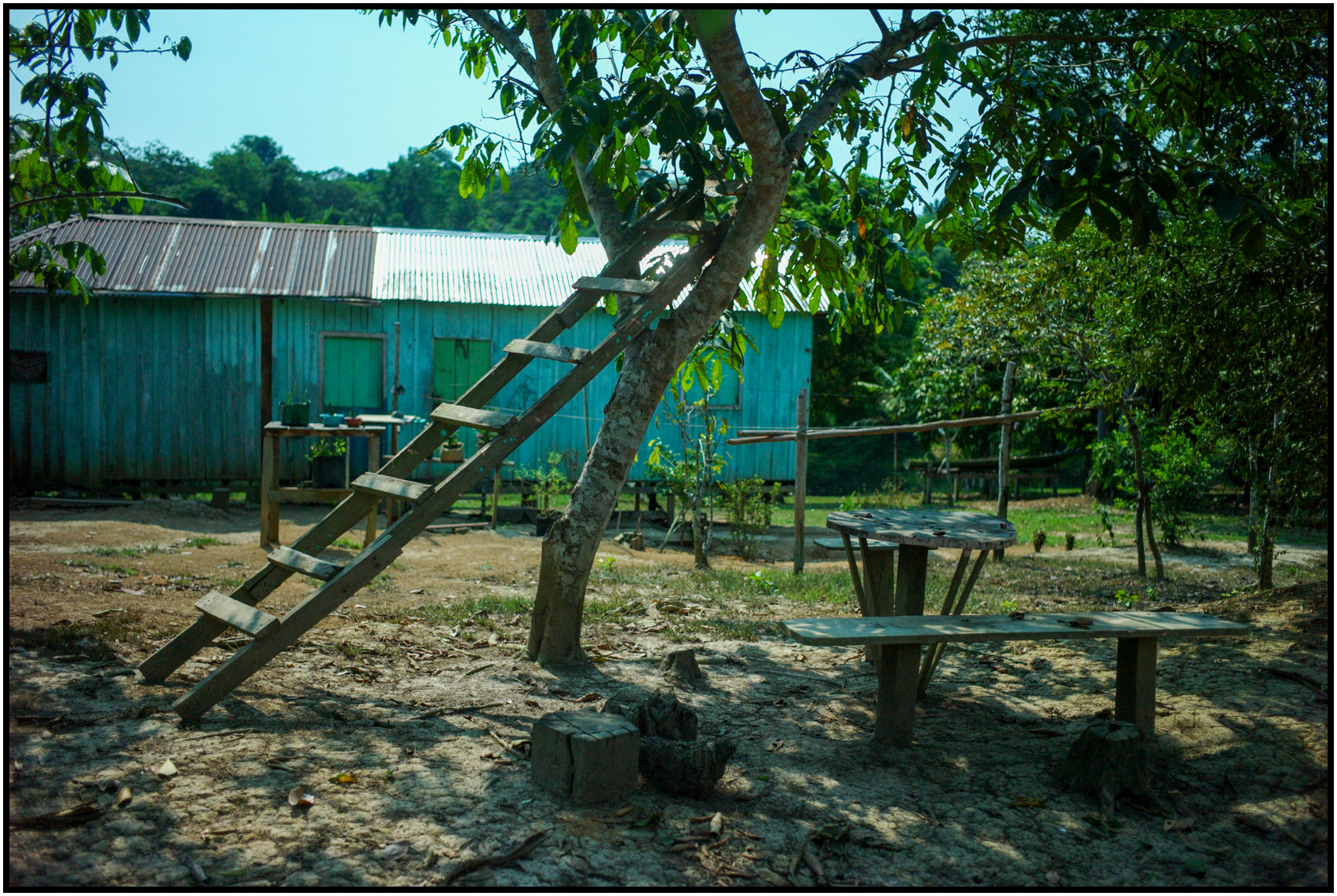
Avocado tree.
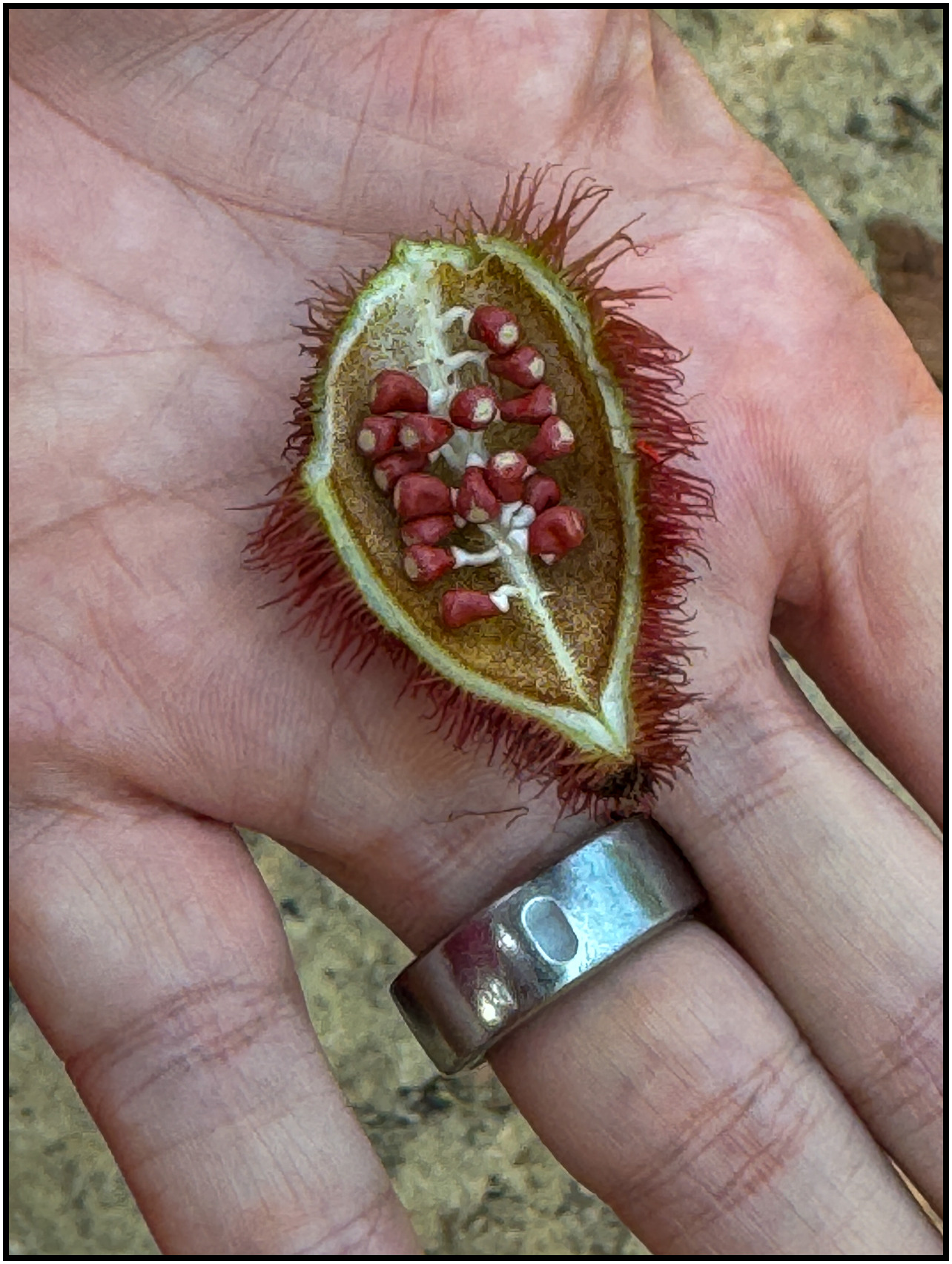
This weird little thing is an achiote fruit, used to make cosmetics like lipstick and blush. The seeds are crushed to produce a bright orangy red pigment that can also be used as a food coloring. I tasted it and it basically had no flavor of it’s own. (It’s commonly known as annatto.) It’s full of carotenoids and has superfood health benefits.
That’s them growing on this tree.
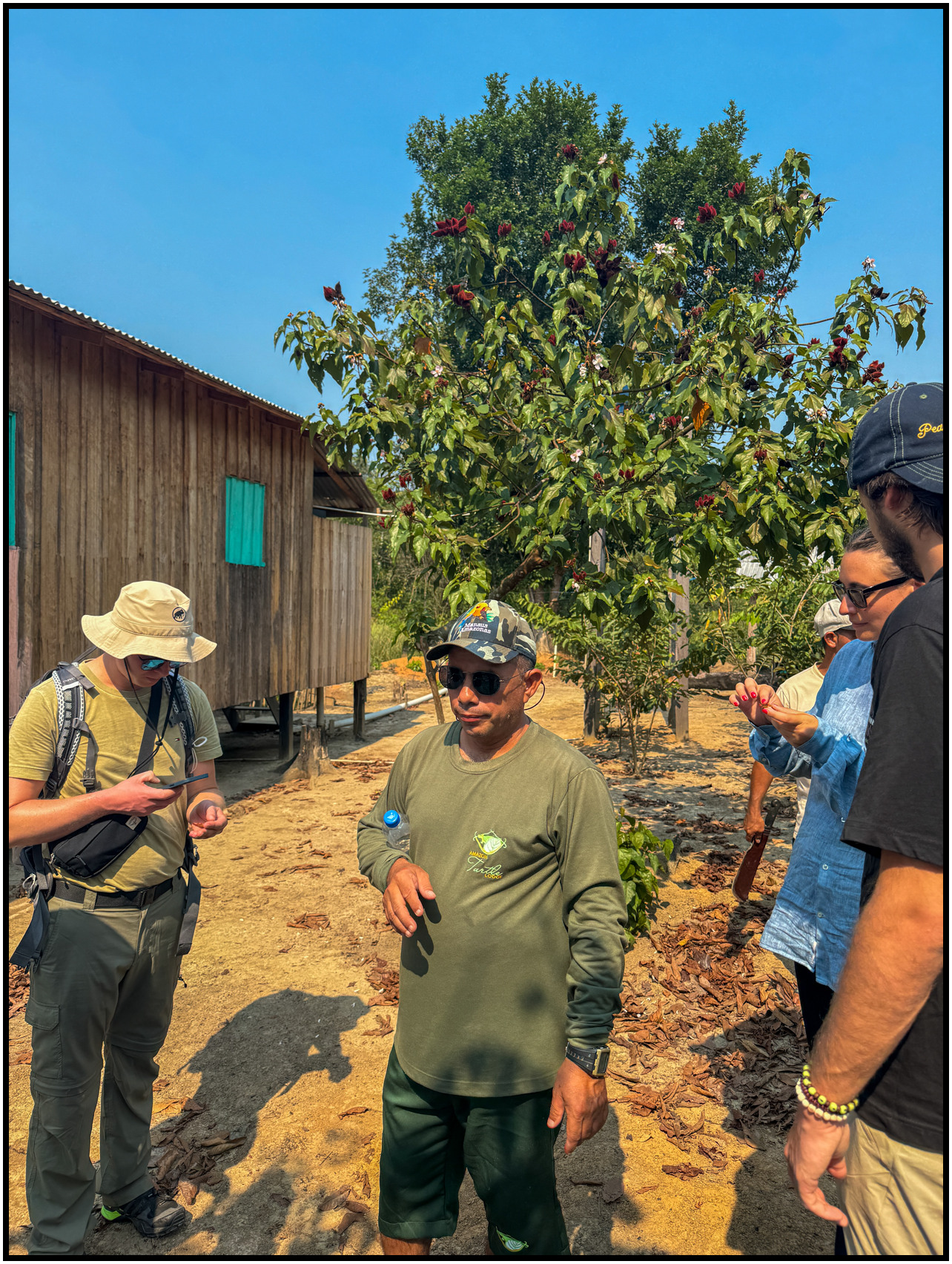
They also had acai trees, aramanth plants, a wide variety of palms, and lots of various nut trees.
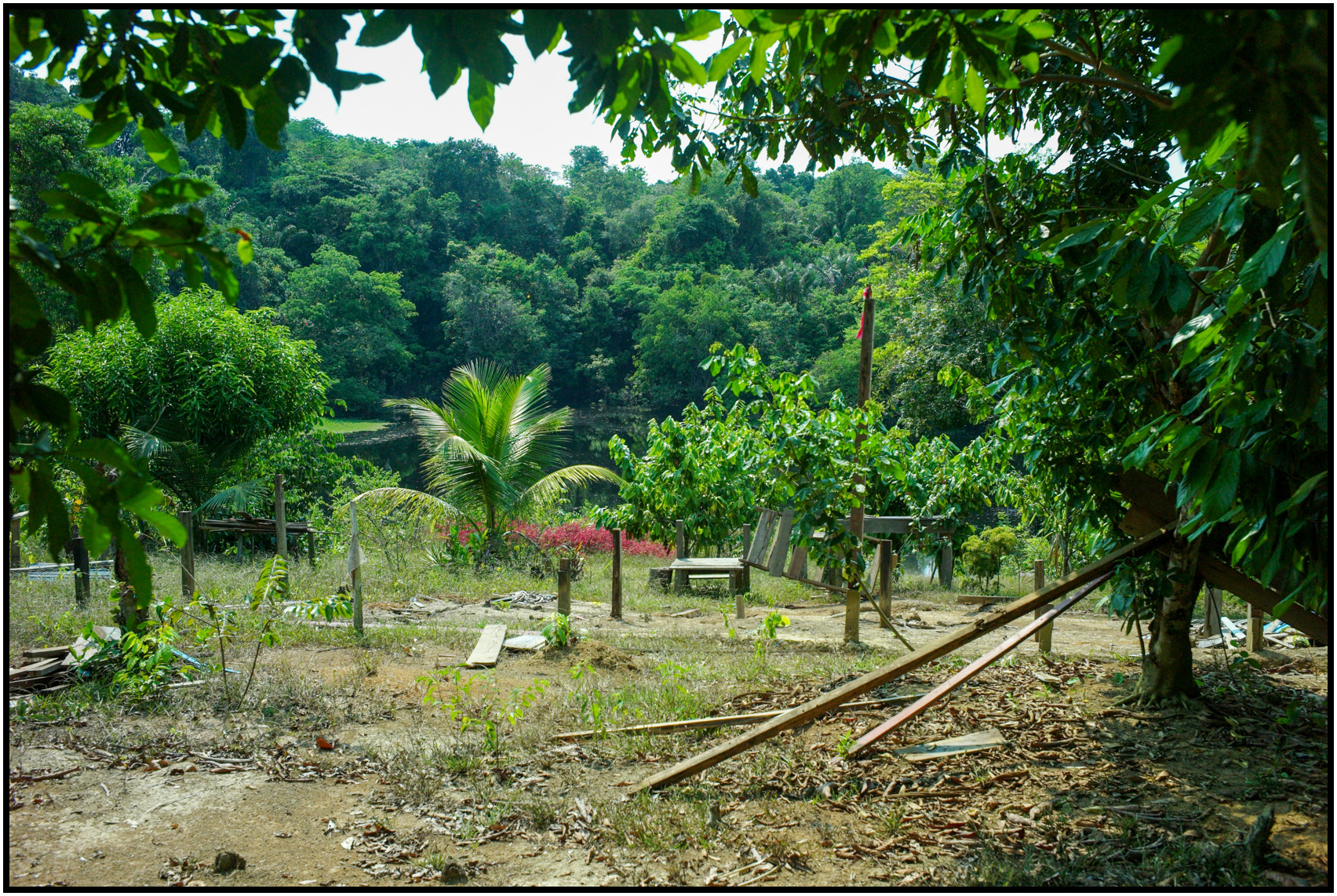
Back at the Lodge for lunch and afternoon siesta before heading out at 3:30 p.m. for the afternoon/sunset excursion.
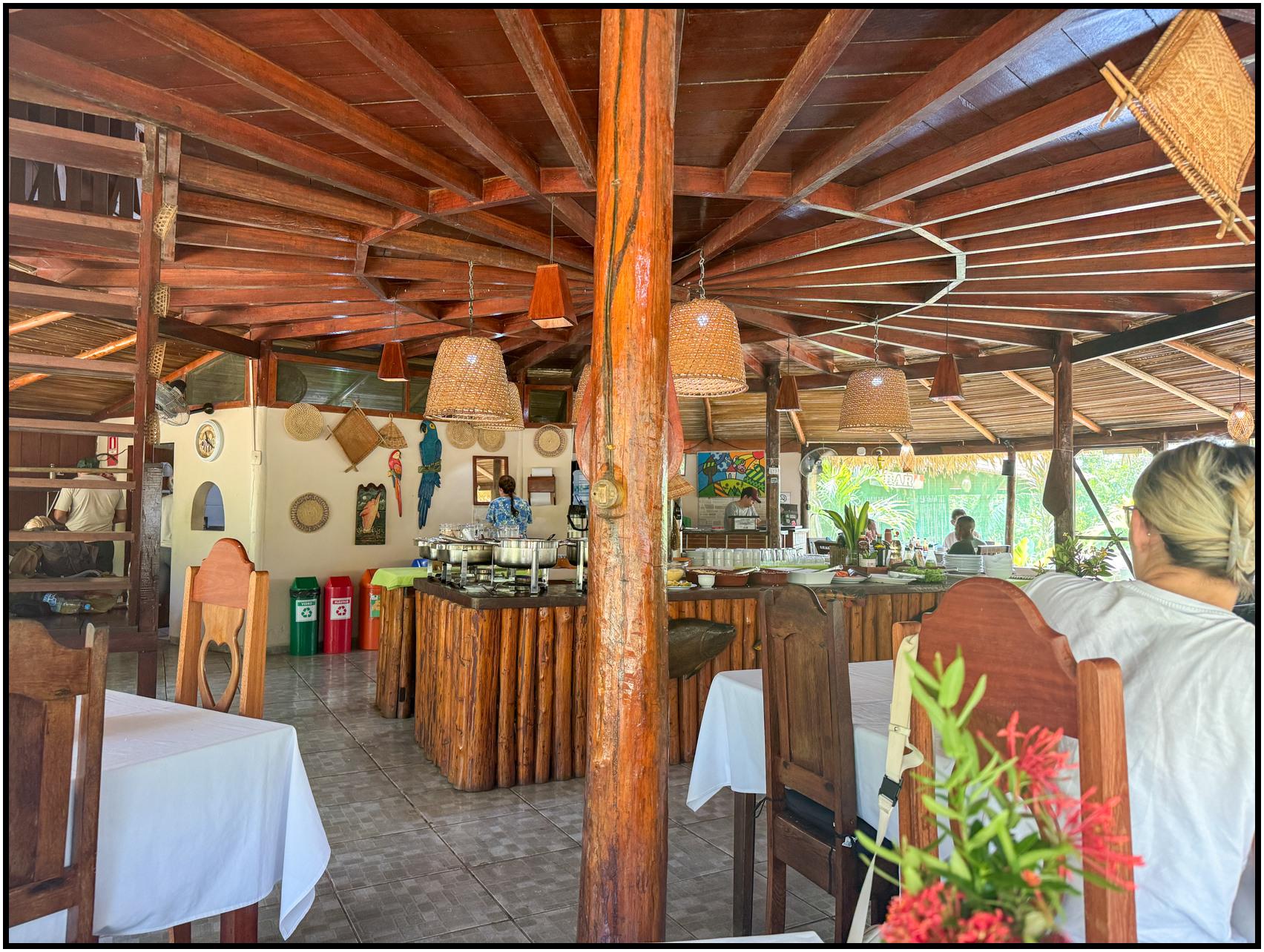
The Lodge restaurant set up for lunch.
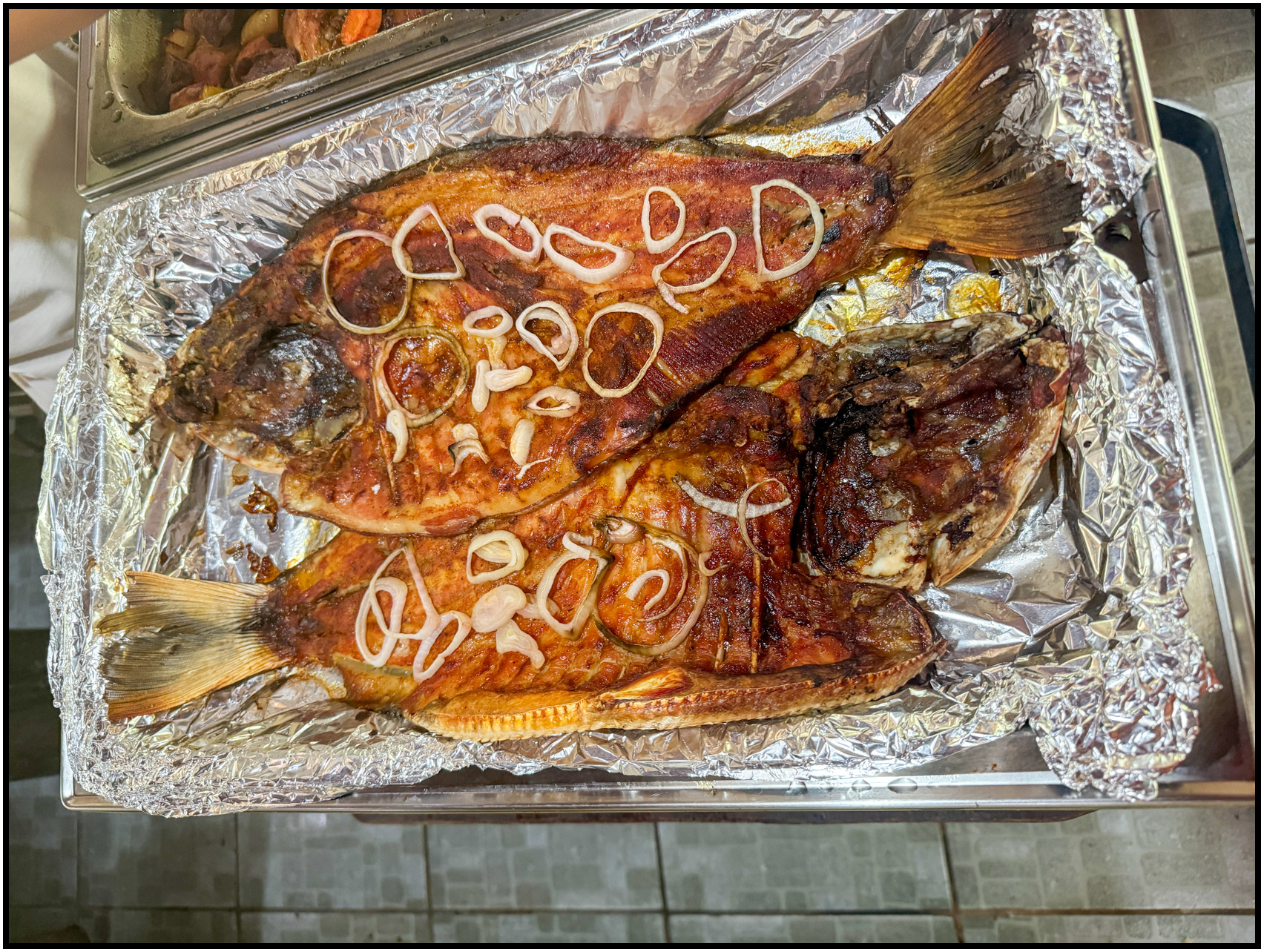
Grilled tambaqui. This was served at nearly every meal.
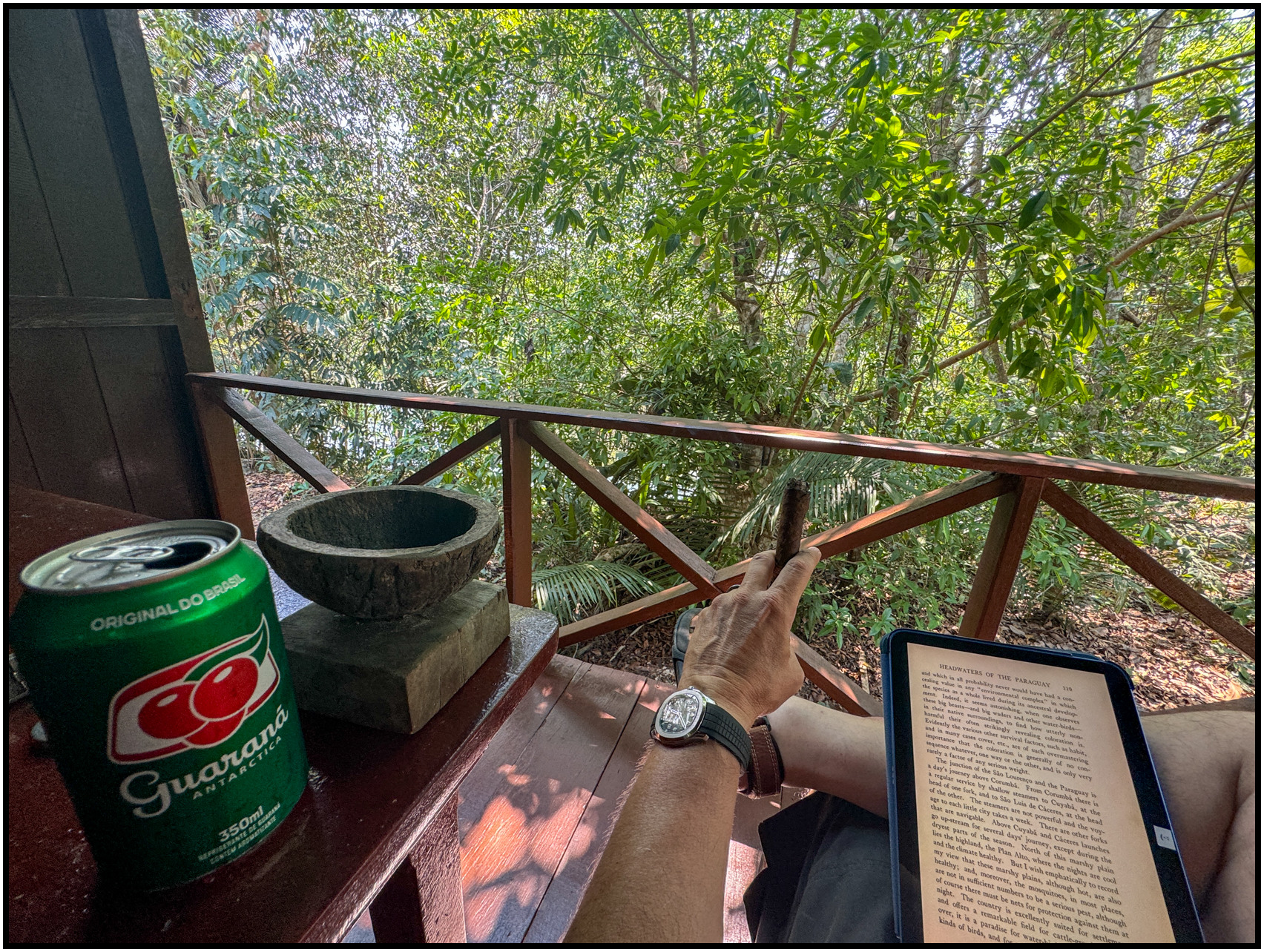
Adam indulging in a Cuban cigar given to him by a friend. The coconut-looking half-shell next to him is a brazil nut shell…. they are so hard they won’t burn, so it’s a very popular ashtray material.
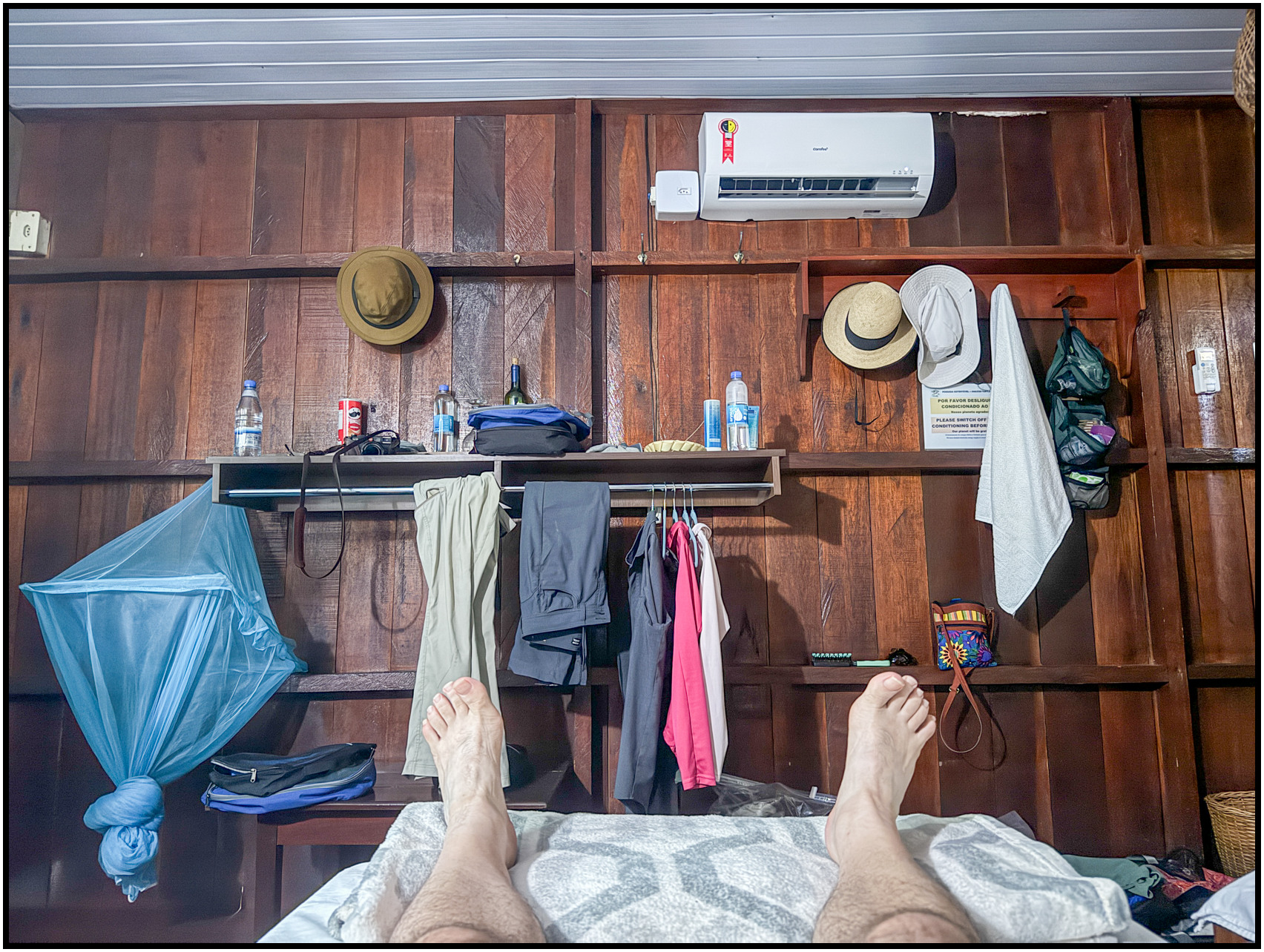
[Adam] This was a common POV for Brenda and I after heading back to the cabin – splayed out on the bed in front of a blasting AC. As I mentioned before, there were usually 2 excursions each day, each lasting about 3 hours. We would always start out on boat and then sometimes land and do some inner forest exploring. We took a different route every day and so nothing seemed routine. Most of our energy was devoted to looking for animals..some trips yielded up a great number of sightings, others were complete duds. The only animal we did not see (that one would reasonably expect to see here) were the sloths. We did see 3 different species of monkeys, 2 species of dolphins, many, many, many birds, caiman, lizards, bats, iguanas and no end of bugs and fish.
Our final afternoon excursion of the trip.
We entered into a swampy area and found quite a lot of wildlife on this outing. The tree trunk below has 5 fruit bats on it … can you spot them?
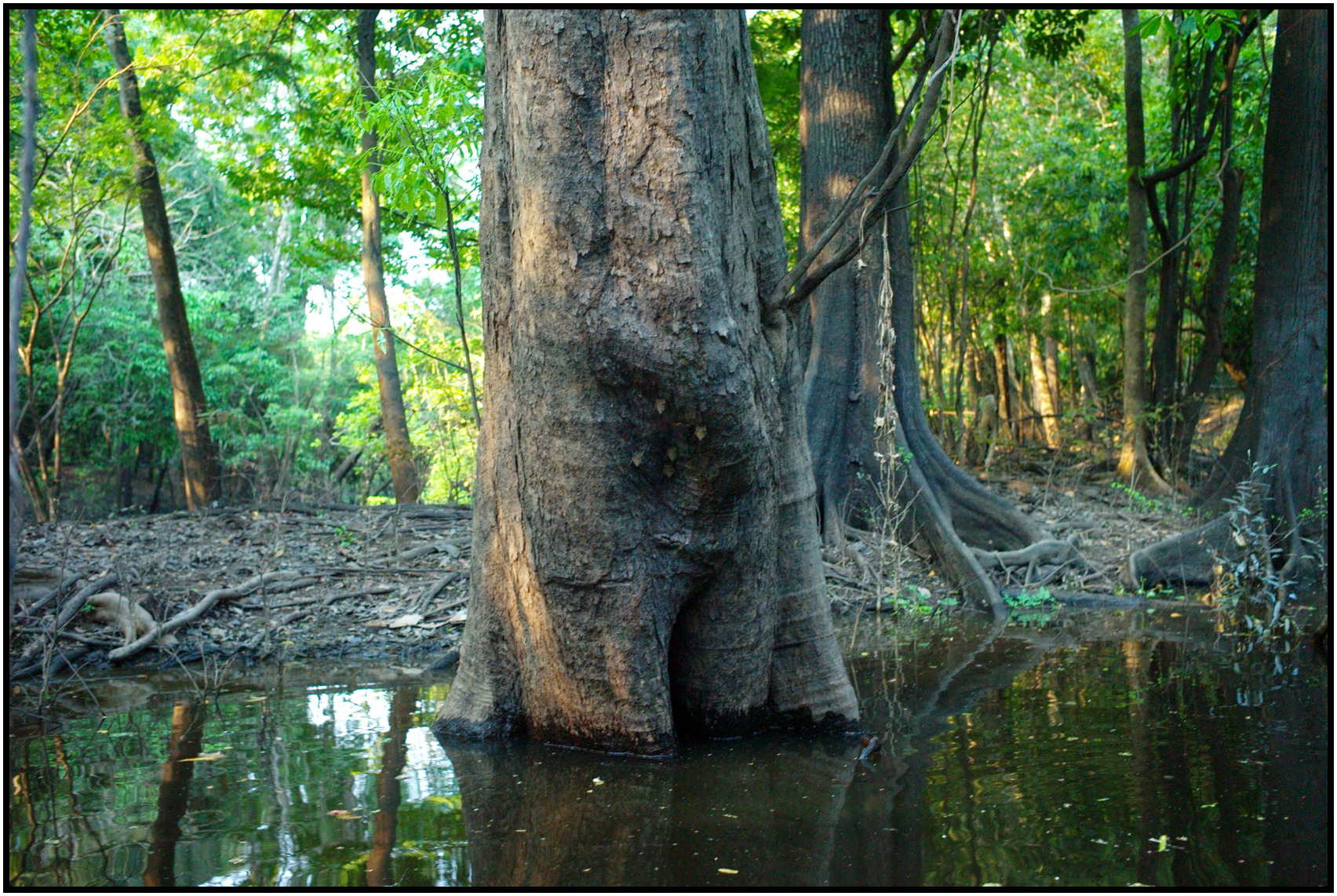
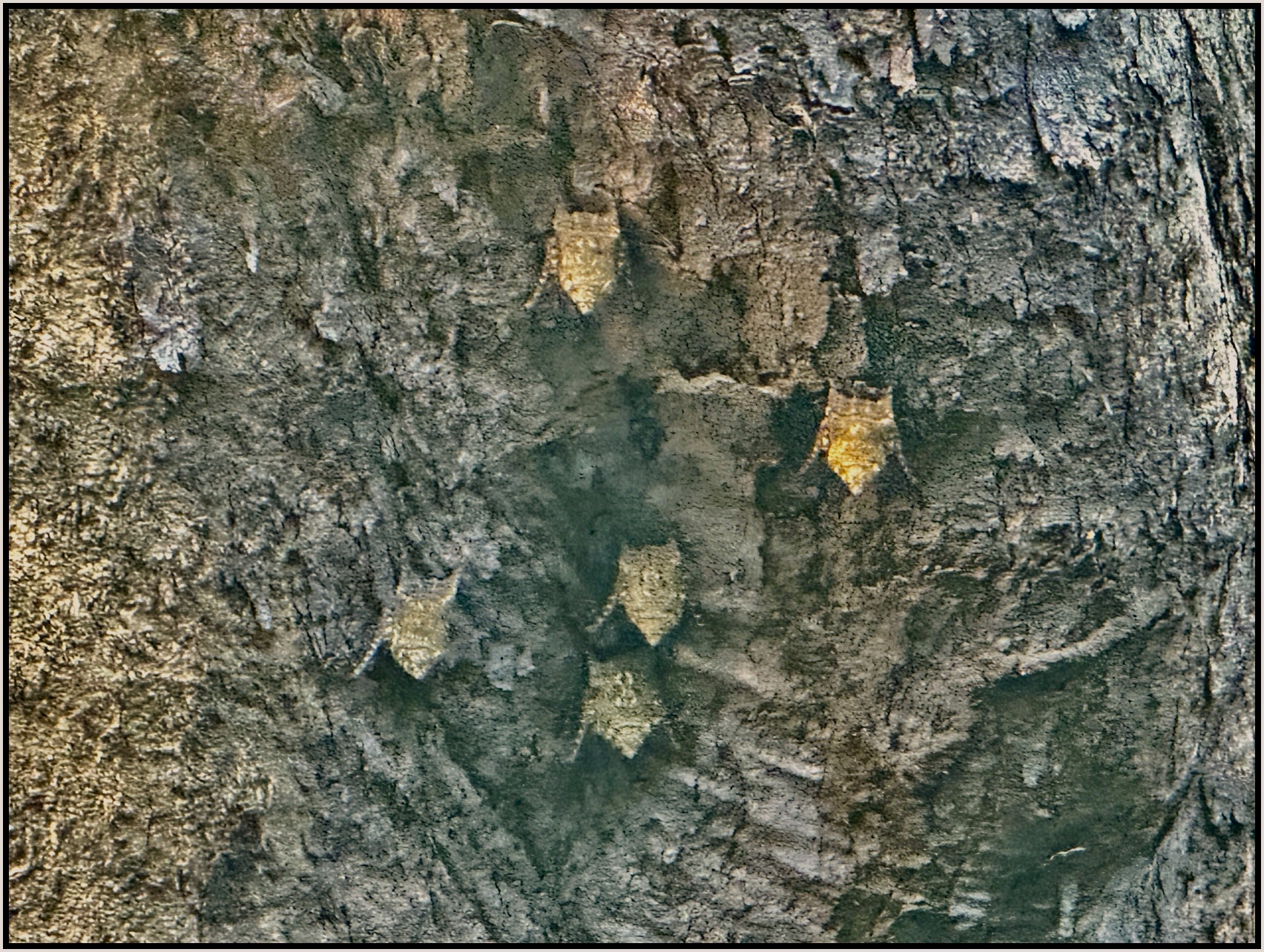
While we were looking at the bats (after viewing a large group of squirrel monkeys), we heard an incredibly loud, eerie, haunted hooting. Our guide suddenly became hyper-alert and excited. He very quietly landed the boat and headed into the forest in his bare feet. (He’d told us we wouldn’t be getting out of the boat on this trip, so we were all in sandals and shorts, etc.)
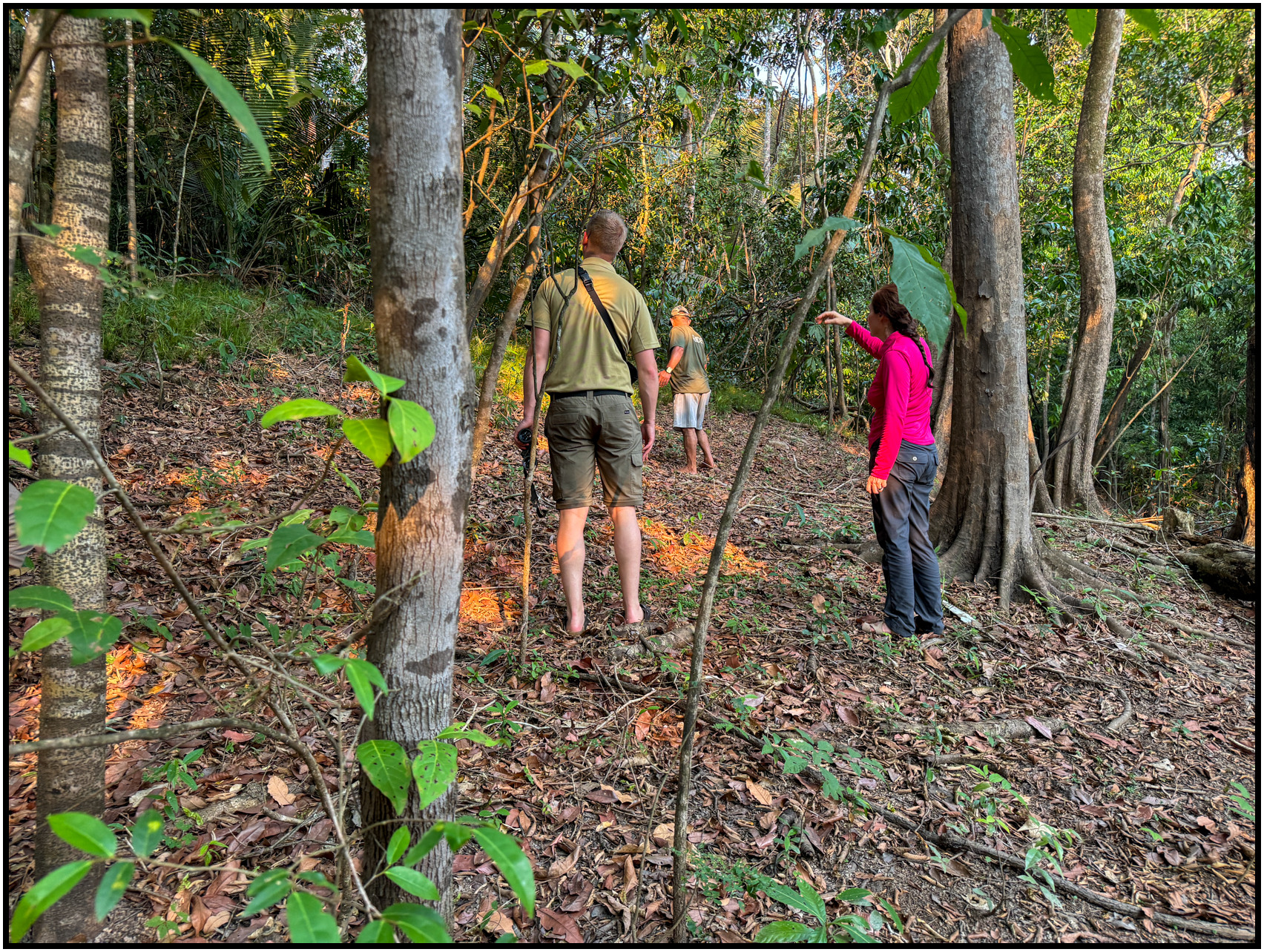
The minute our feet hit the ground, we were attacked by ants. Our guide was so focused on the trees he didn’t seem to notice. He told us what we’d just heard was the call of the Dusky Titi monkey, an extremely rare animal and almost never seen in this area.
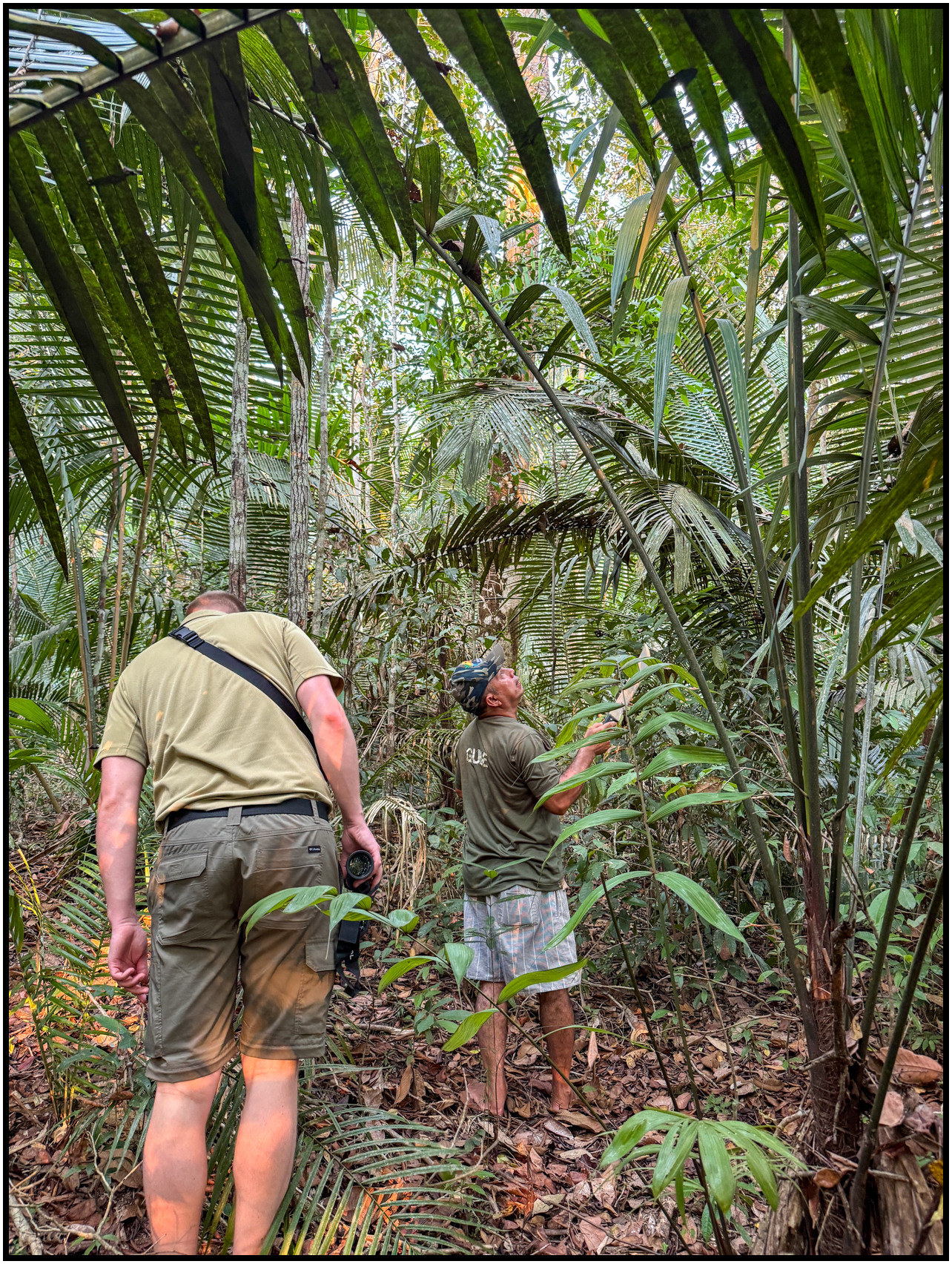
Our group tried desperately to be very quiet so as not to scare the monkeys away, but the ground was covered in dried leaves that crunched loudly with every step. We were also being eaten alive by ants, so trying to do the ants-in-your-pants dance without making sudden movements or noise. We failed.
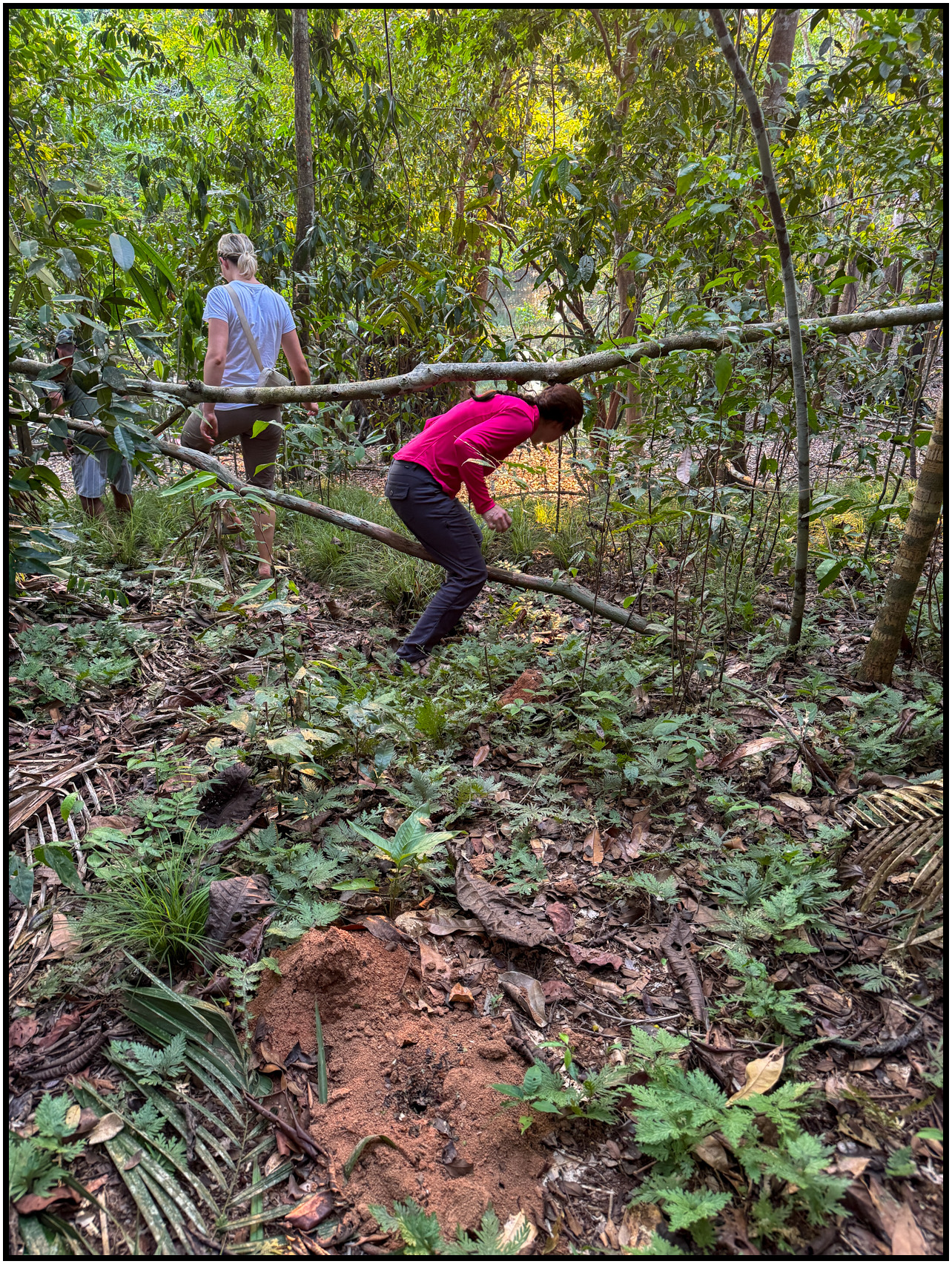
We did end up seeing the monkeys, but they were pretty obscured by trees and too far away for us to get any photos. Our cameras were not well suited to this trip … a trek through the jungle really requires a high-quality telephoto setup. A macro lens would have been quite handy, as well.
Here is a photo I stole off the internet, just to show what one looks like.
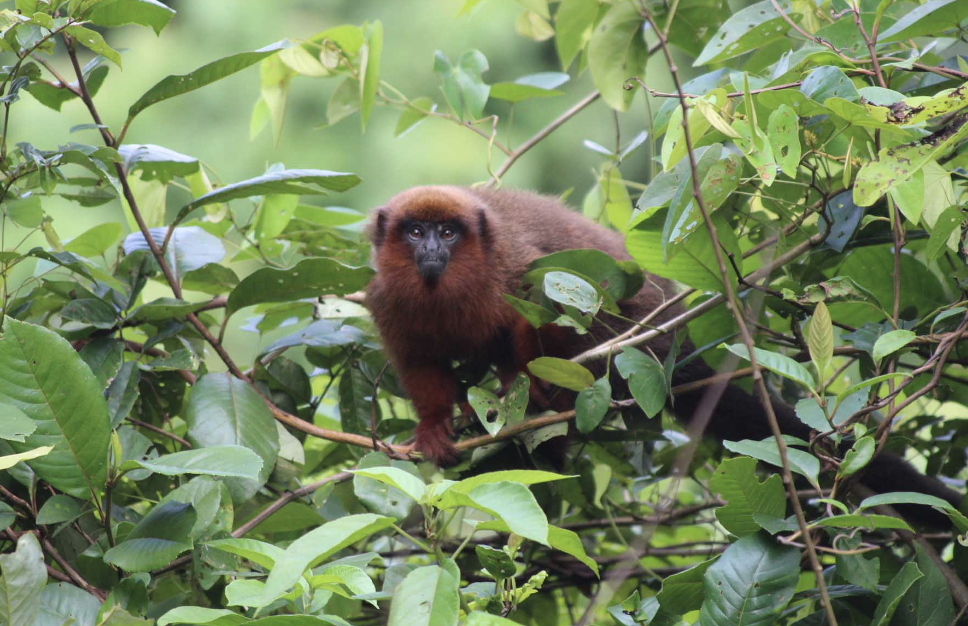
Our guide was so excited about spotting this monkey he said of the ant bites, “Worth it. Ant bites, only 2 hours painful.” He was right, too … by dinnertime, I changed my shoes and realized my feet didn’t hurt anymore. The ant bites had all but disappeared.
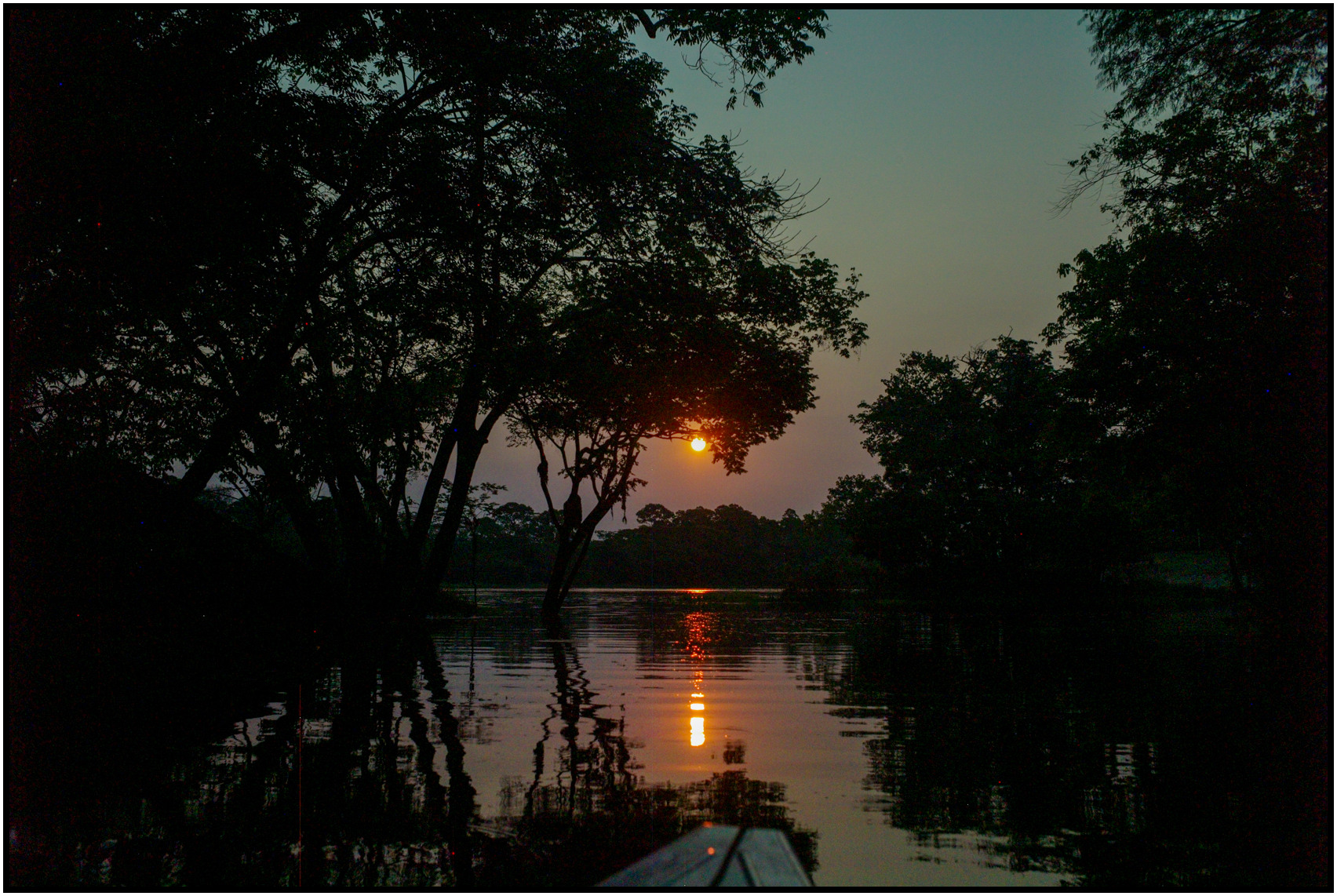
It was dusk by the time we returned to the Lodge.
10 Aug 2024
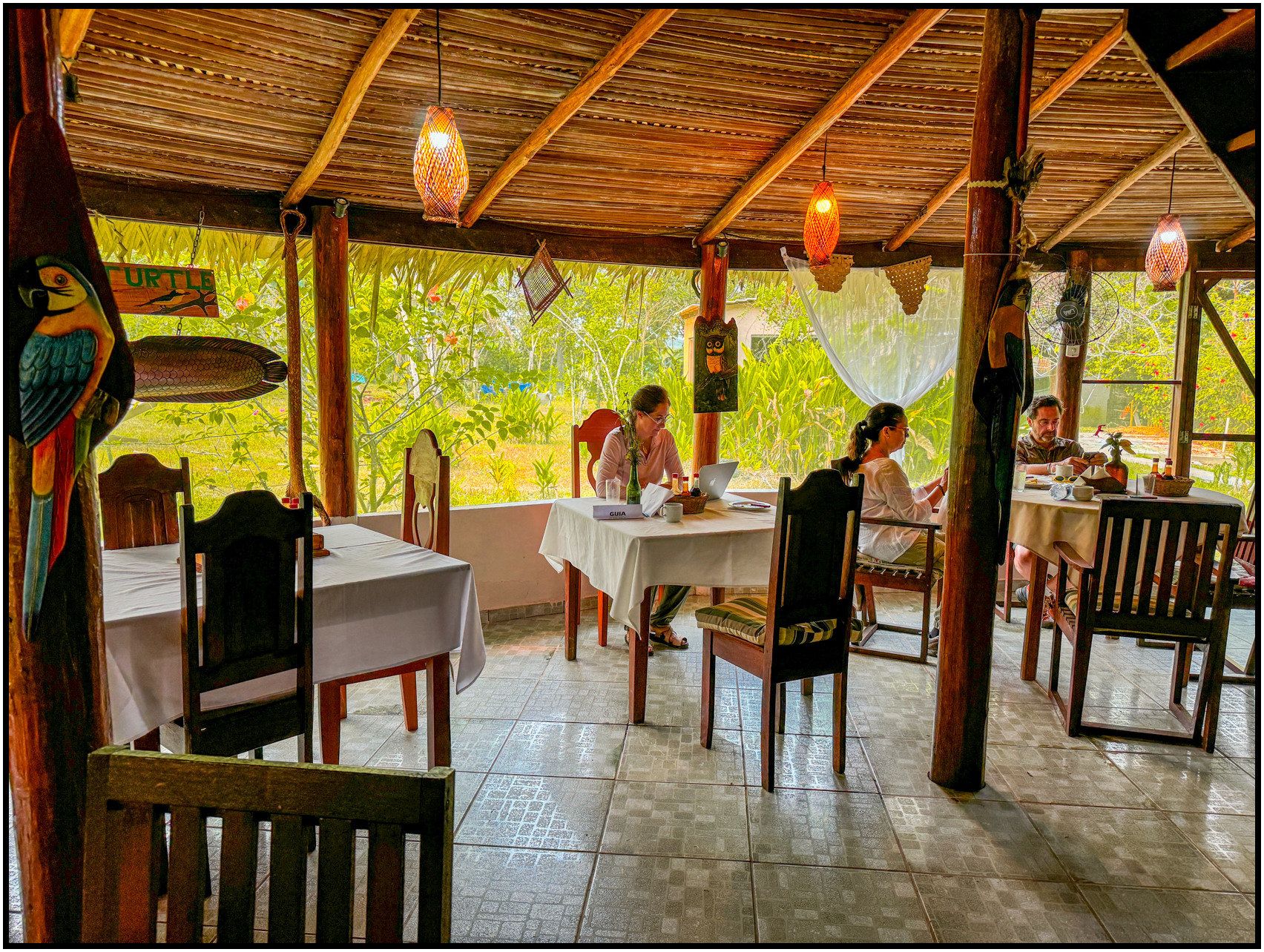
We had breakfast this morning and then embarked on the 4-hour trip back to Manaus. Photo below, me using the internet in the restaurant before breakfast, which was only available in the common areas of the Lodge. That’s what the other people are doing, to0.
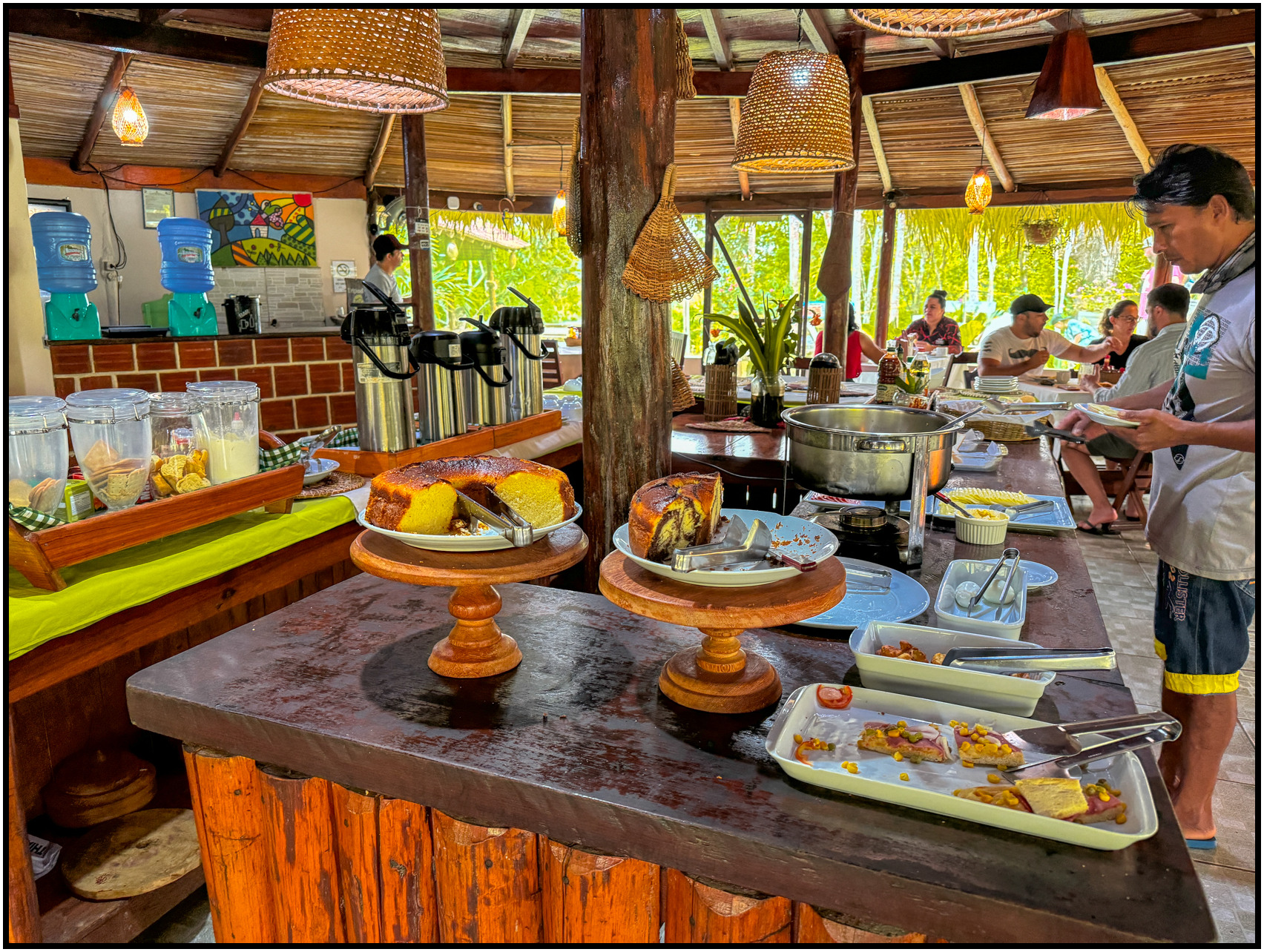
Remains of the breakfast buffet.
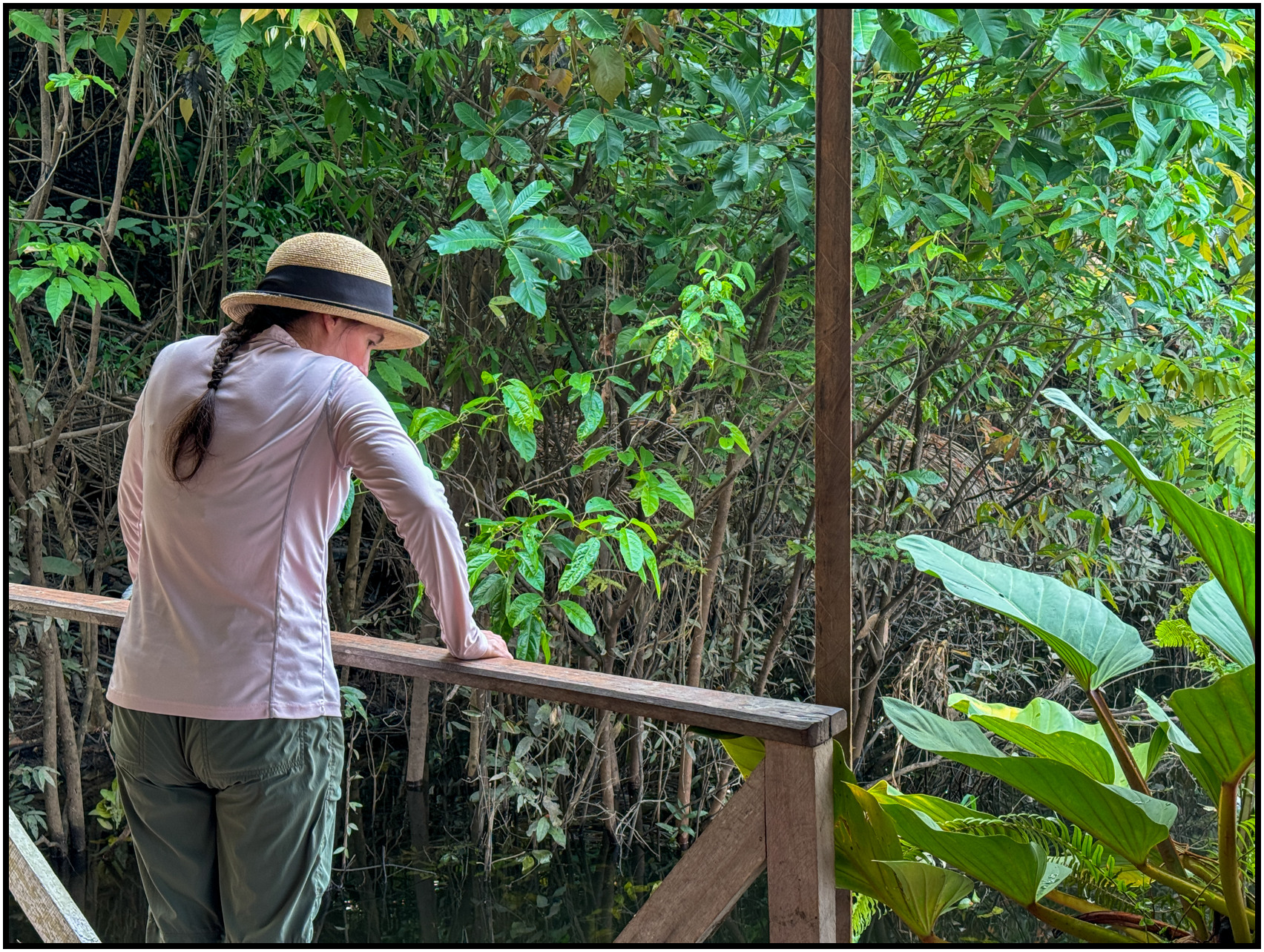
Looking at exotic fish, waiting for our boat taxi.
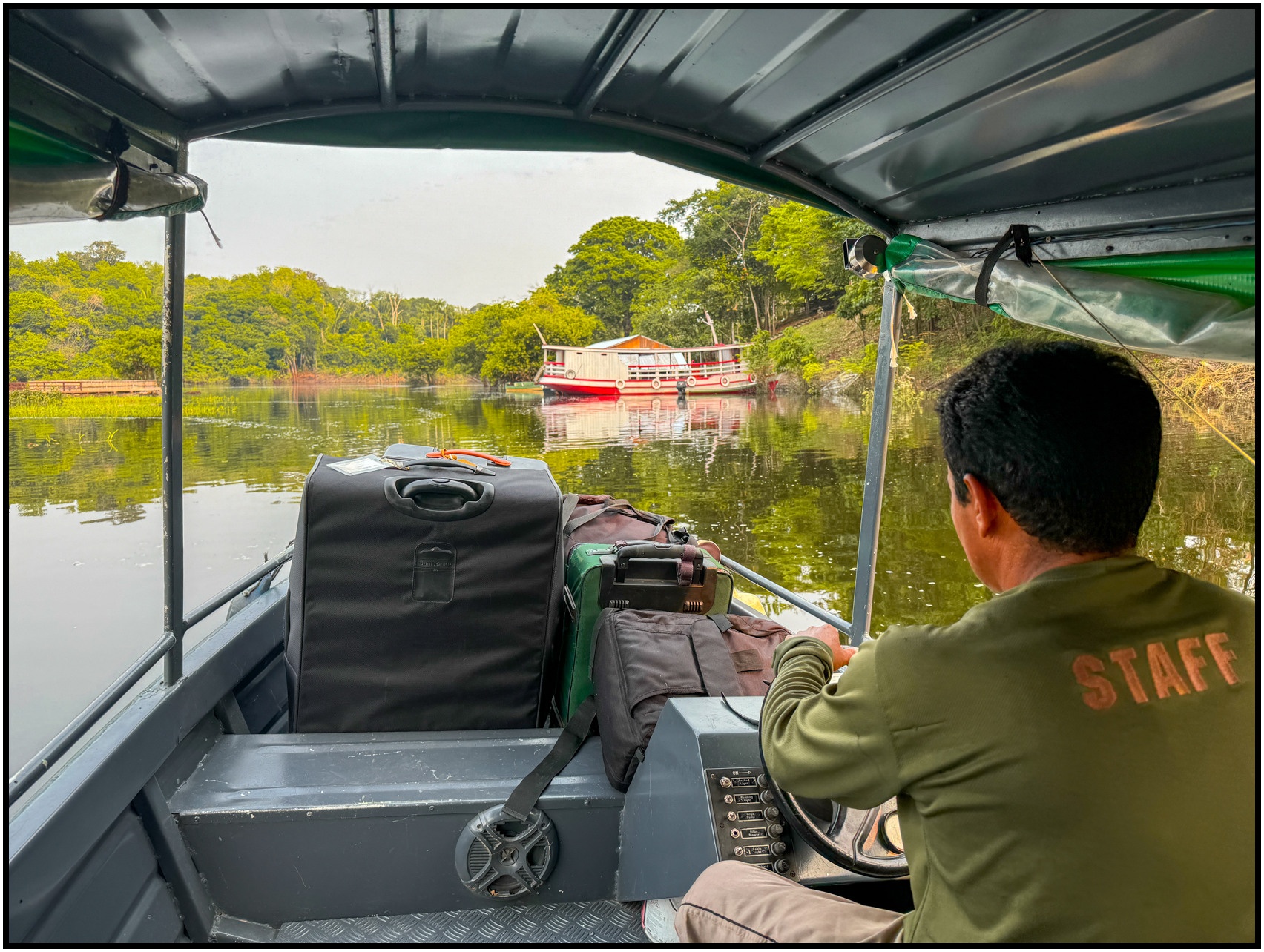
Luggage loaded and ready to go!
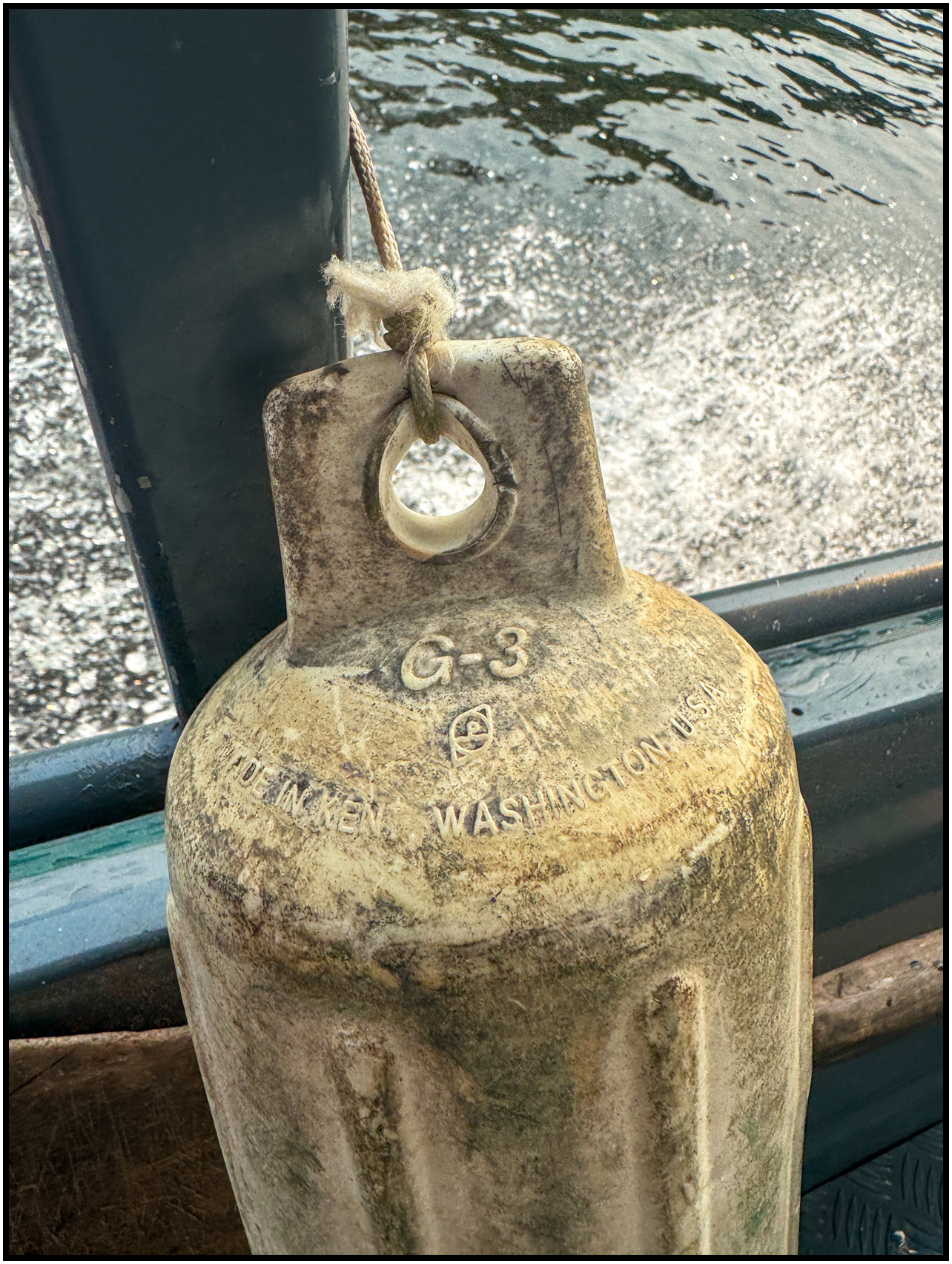
Check out these boat fenders on our boat on the Amazon – we truly are all part of a Globalized community.
One last parting gift, we saw a pod of gray river dolphins on our way back to the first car point. The photos are zoomed-in iPhone pics, so not the best, but it was a magical experience.
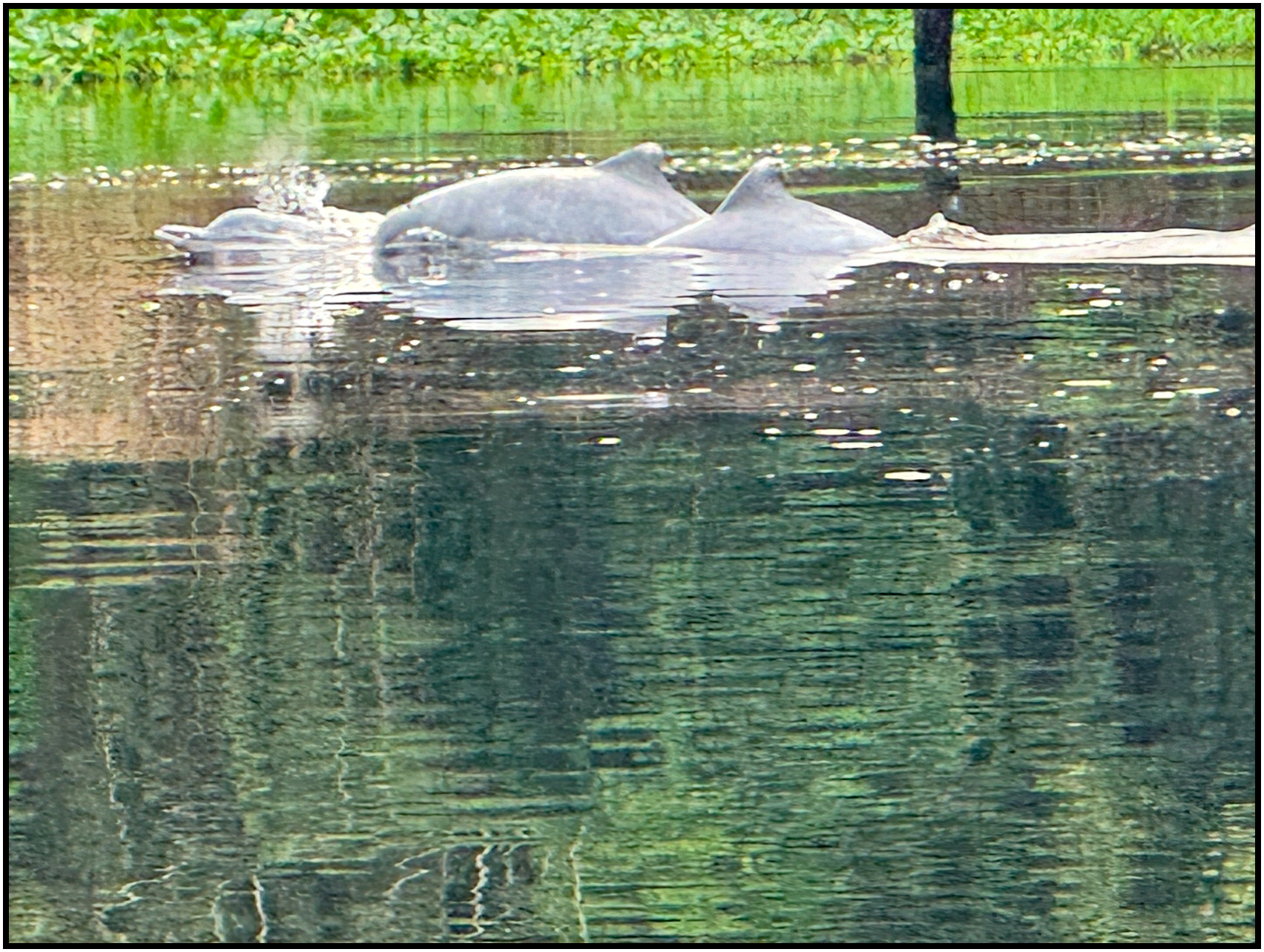
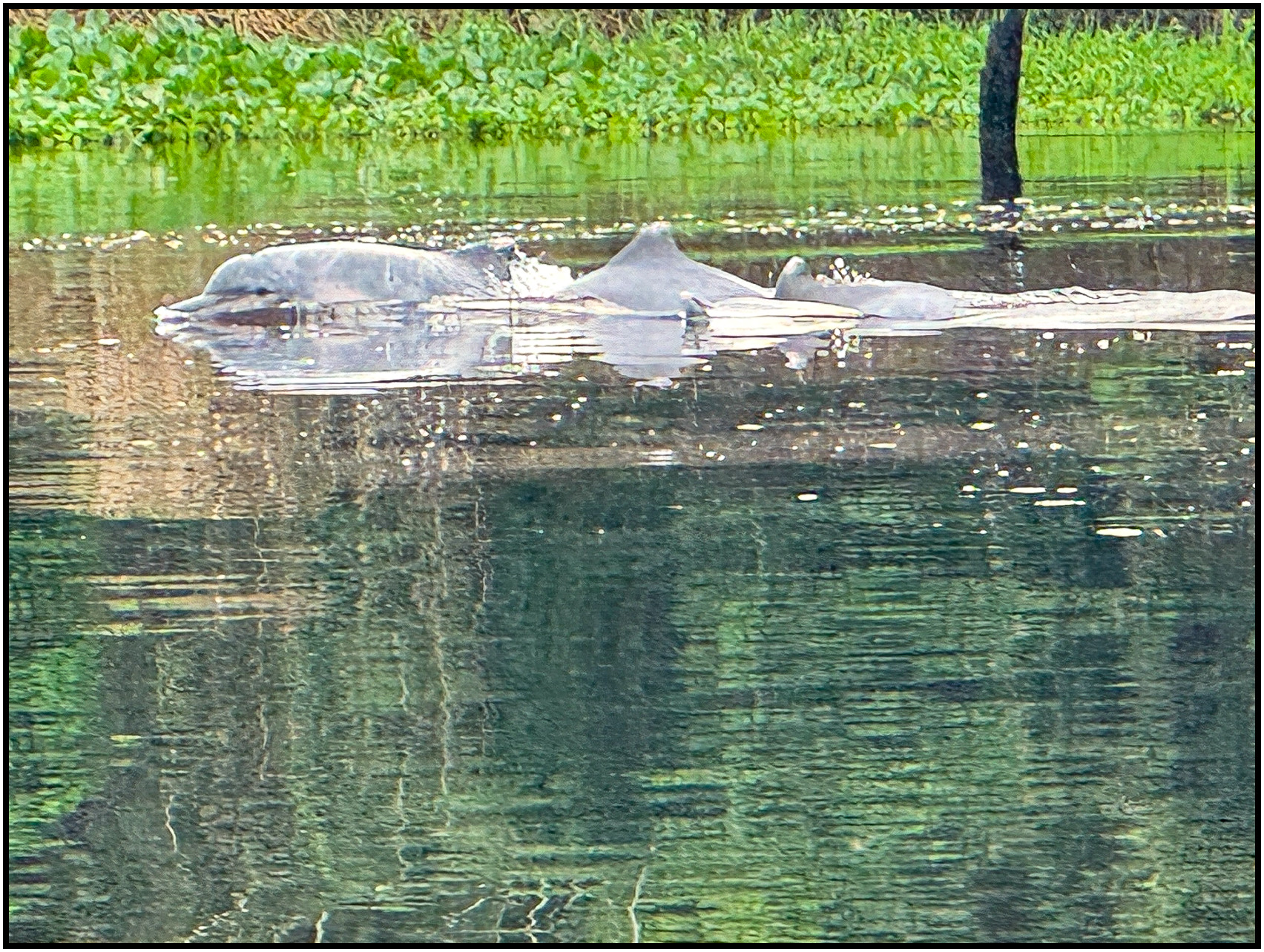
We’re spending one more night in Manaus, then flying to Sao Paulo where the week of work will begin. We expect it will be much less exciting, so for now we will sign off until next time.
Safe travels, everyone!

