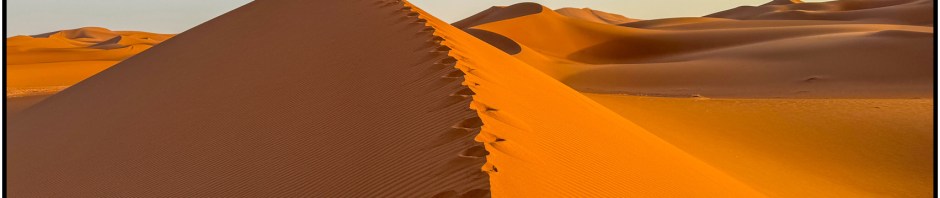
Adam has work in Frankfurt, Germany next week. We found very reasonably-priced tickets from Frankfurt to Marrakech, Morocco on a budget airline, so we came a week early to add a Moroccan leg to the trip.
We are excited to make this journey … we had an extensive trip to Spain and Morocco planned for the summer of 2020 with all three kids, but had to cancel it because of the Covid pandemic. We’ve been looking for another opportunity to visit Morocco for years now, and this seemed too good to pass up. It would have been even better if the kids could have joined us, but all three of them are “adulting” now and have work/college obligations at home. So, this time, it’s just Adam and me on our own.
Äit Benhaddou
25 February 2024
[Adam writing here…] This is our first, full day in Morocco. After breakfast, we were picked up by our driver to whisk us off on a 5-night, 6-day journey through the southern part of the country. His name is Khalid and his English is better than my Moroccan Arabic (called Darija). Khalid is a Berber from a small town in the Sahara and does these tours up to 4x a month during the busy season. During the summer, when no-one wants to be here because of the heat, he heads home to relax before things pick back up again in the fall.
Brenda and I do not need to share the ride with anyone else. We can come/go/stop to suit our interests.
This morning we left the big city of Marrakech and headed into the Atlas Mountains. Temperatures: Lows are in the 40s, which is why we started the trip in coats. It kept pretty cool throughout the day in the high elevations. We stripped down to our shirtsleeves by mid afternoon when we were climbing up and down village stairs.
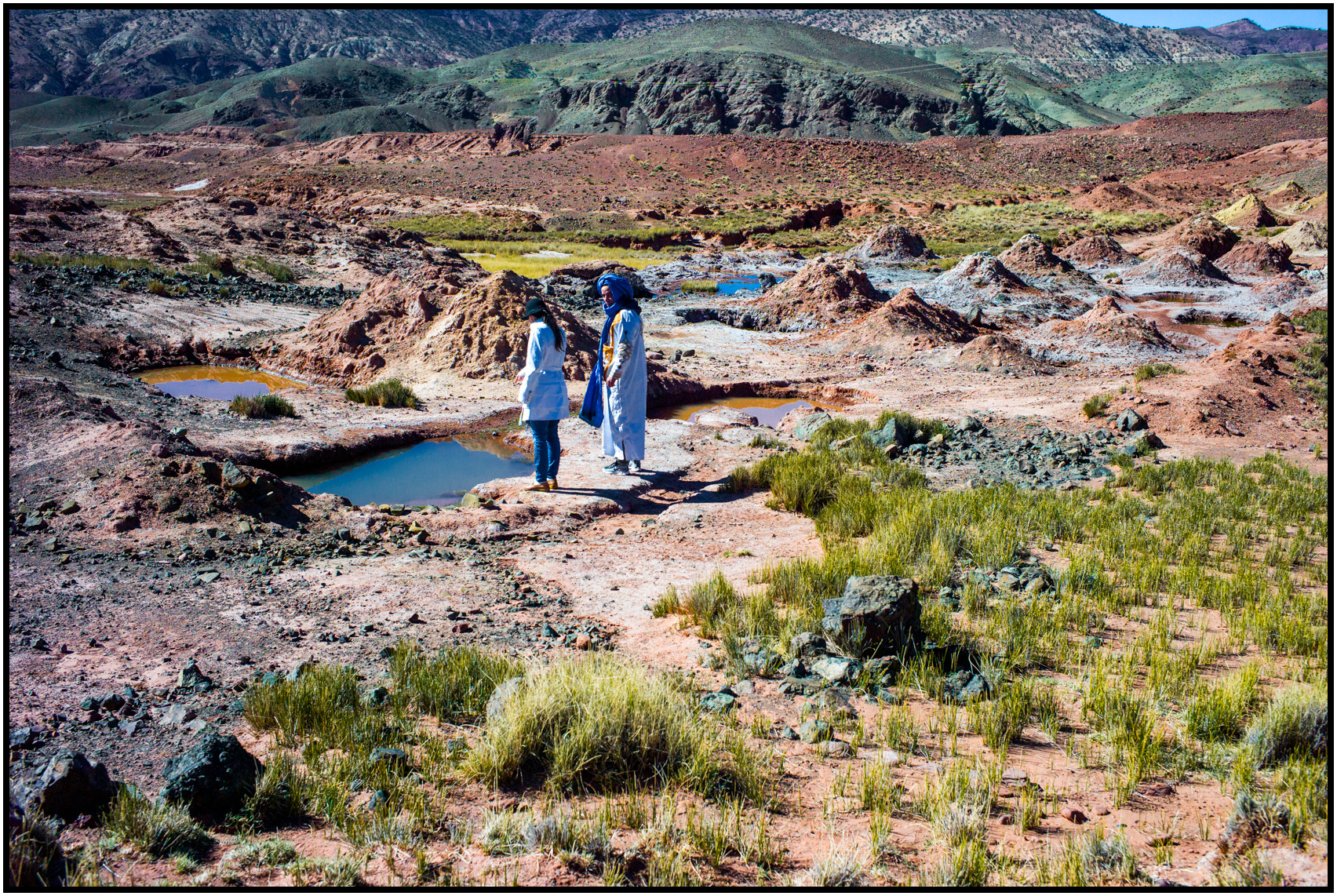
A surreal landscape stop along the way, showing off the salt and other minerals deposited by water that bubbles up from deep below the surface. It’s very similar to Yellowstone National Park, but without the sulfur smell.
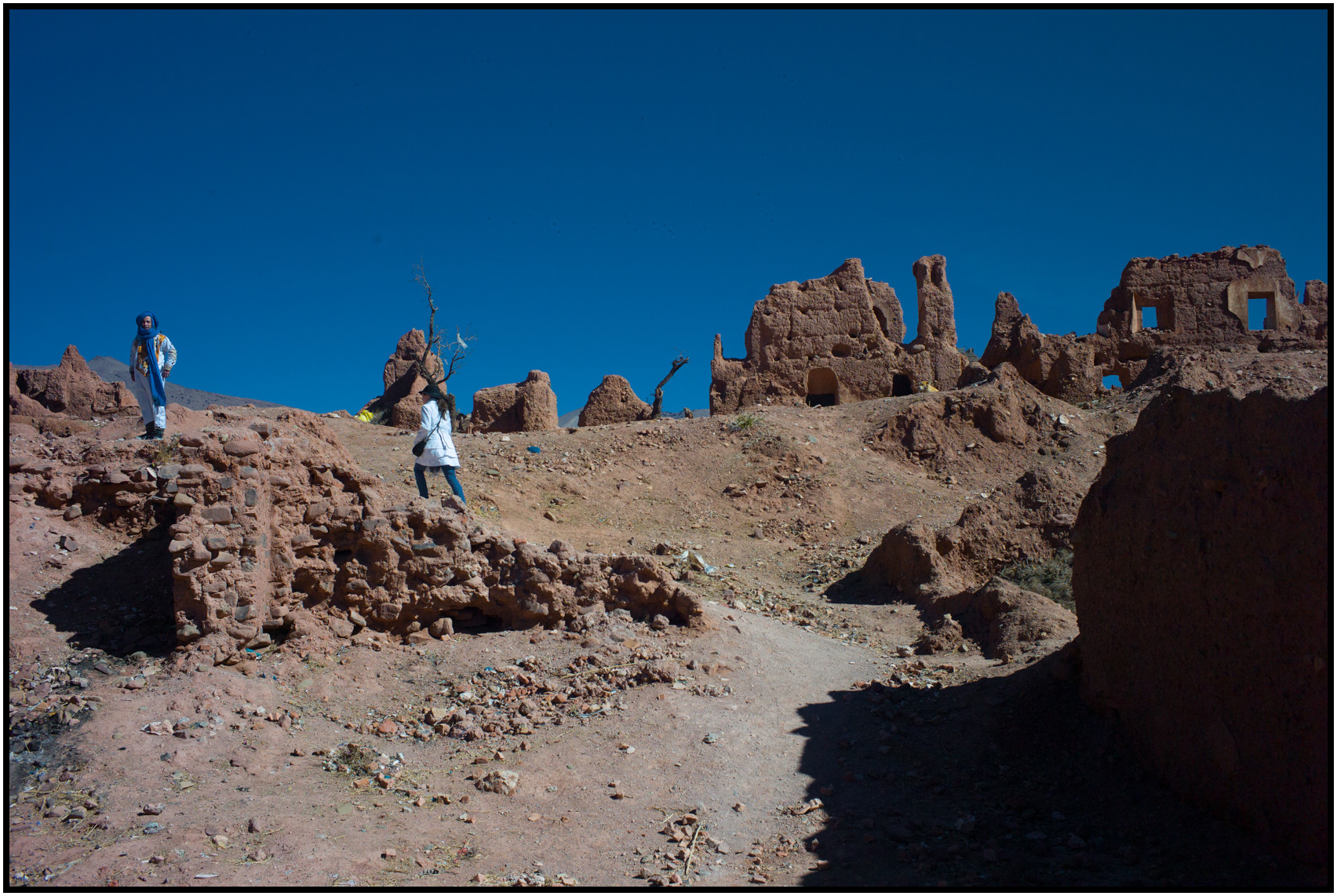
Touring some ruins of an old Kasbah (fort).
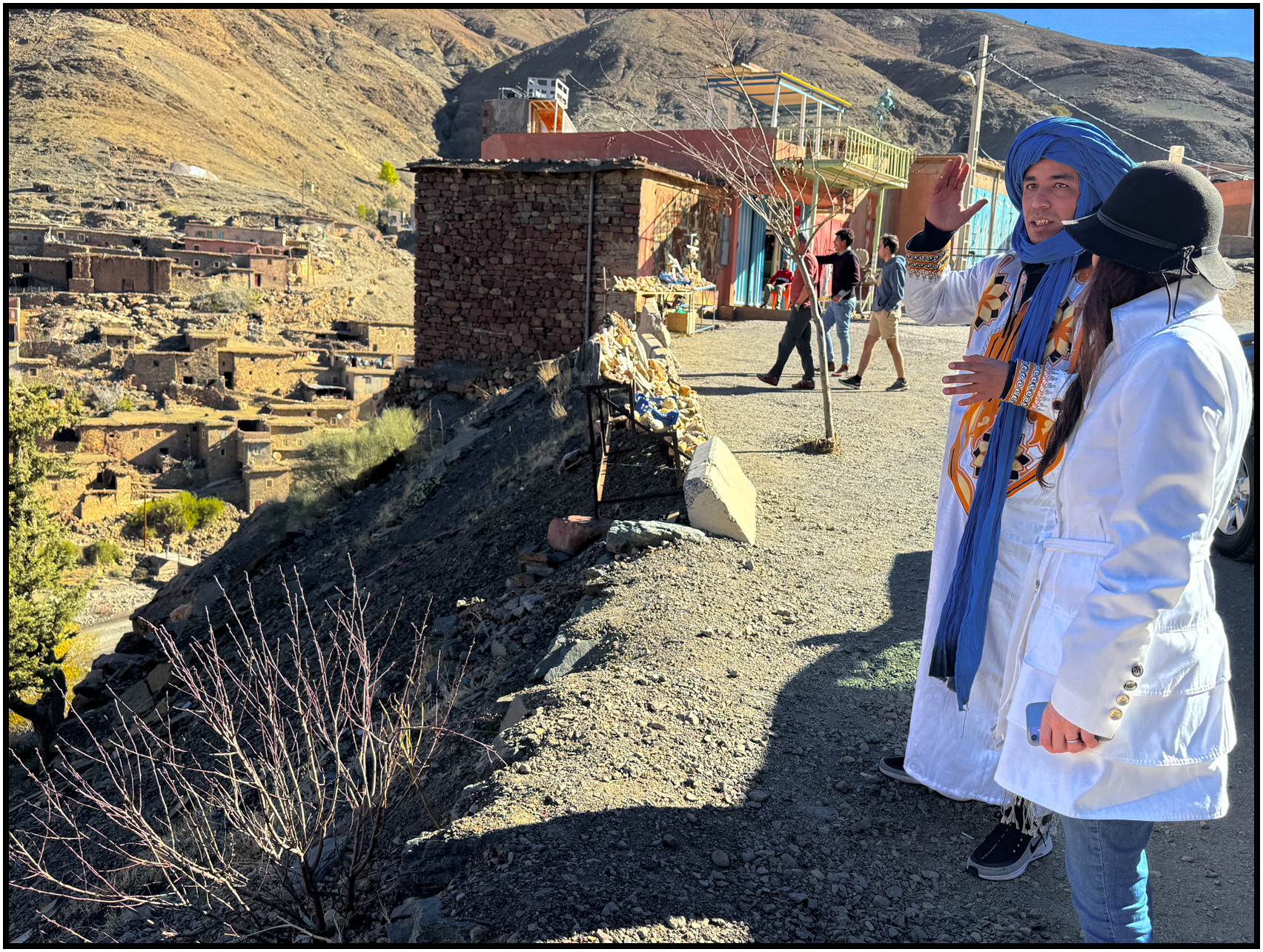
Khalid giving Brenda some history lessons about the Berber tribes that live high up in the mountains in these little villages.
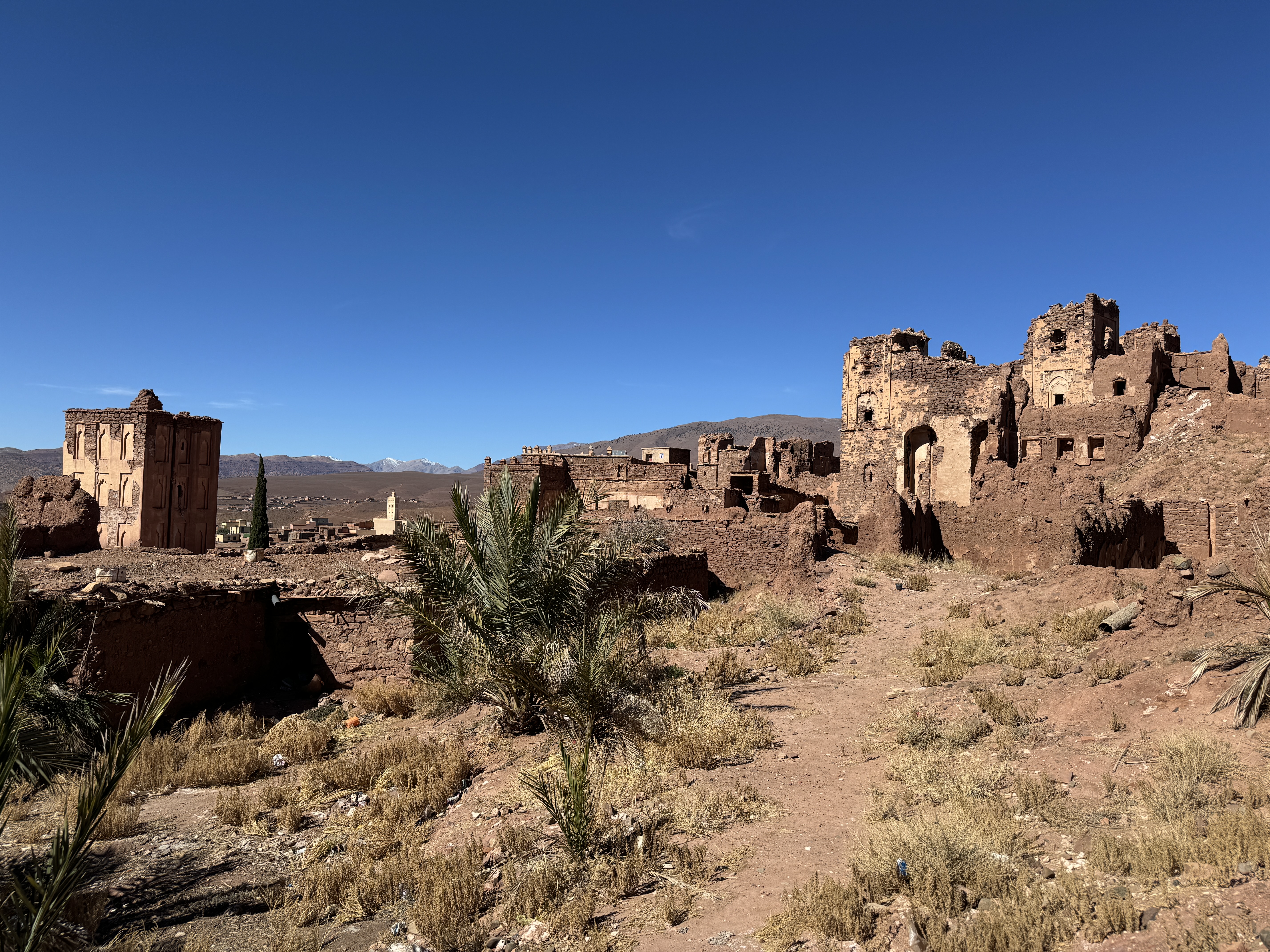
Kasbah Telouet. This was built in the 1800s but is degrading. This area was hit by the big earthquake last September that killed almost 3000 people. We saw a lot of remaining evidence of the quake, rock slides along the roads, building damaged & etc.
The pass through the Atlas mountains here is the highest point in Northern Africa, just over 7,200 feet above sea level.
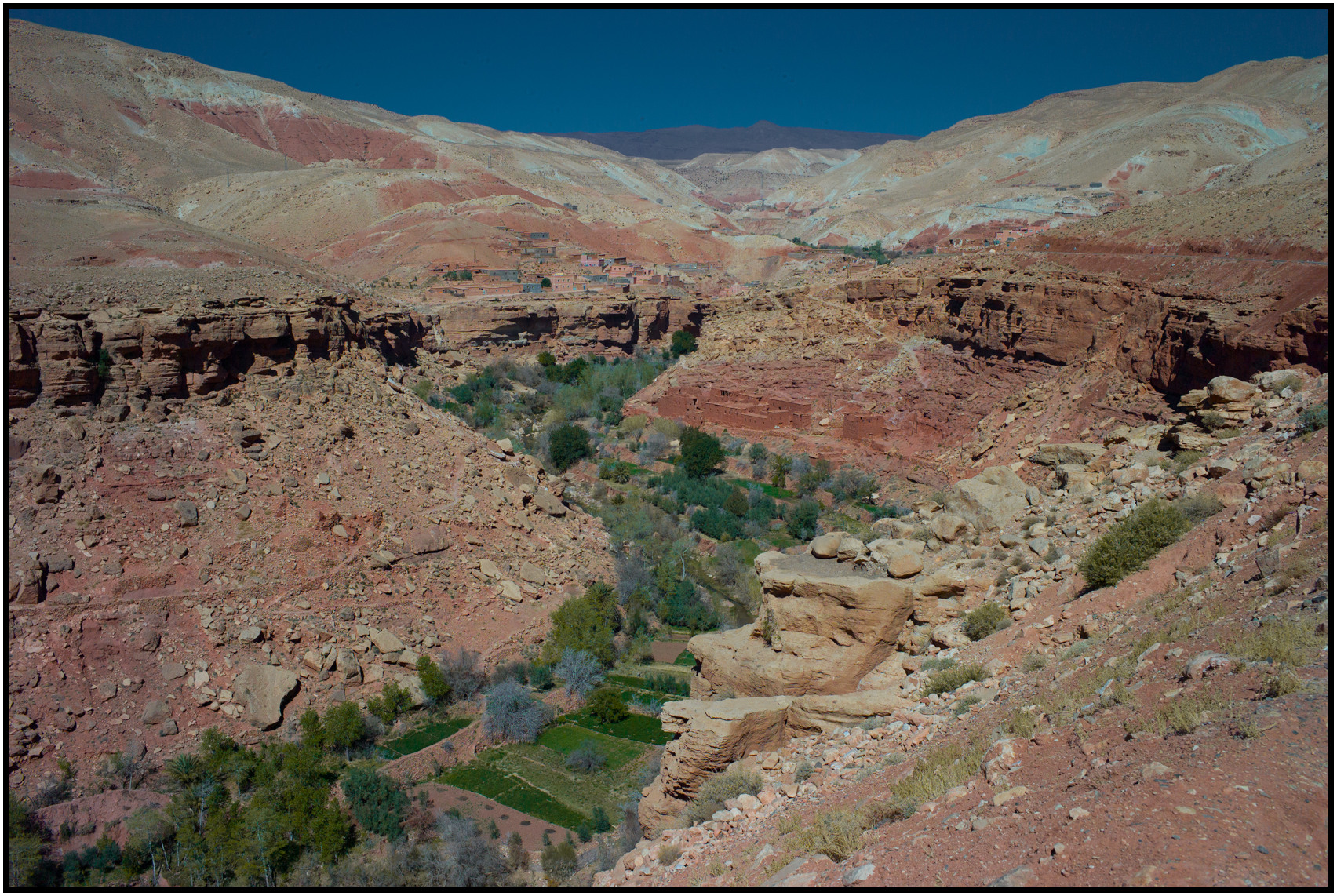
A view of one of the valleys. Where there is water, there is green. One can zoom into this photo and find little houses built along the river and into the rock sides. The principal crops below are Almonds and Saffron.
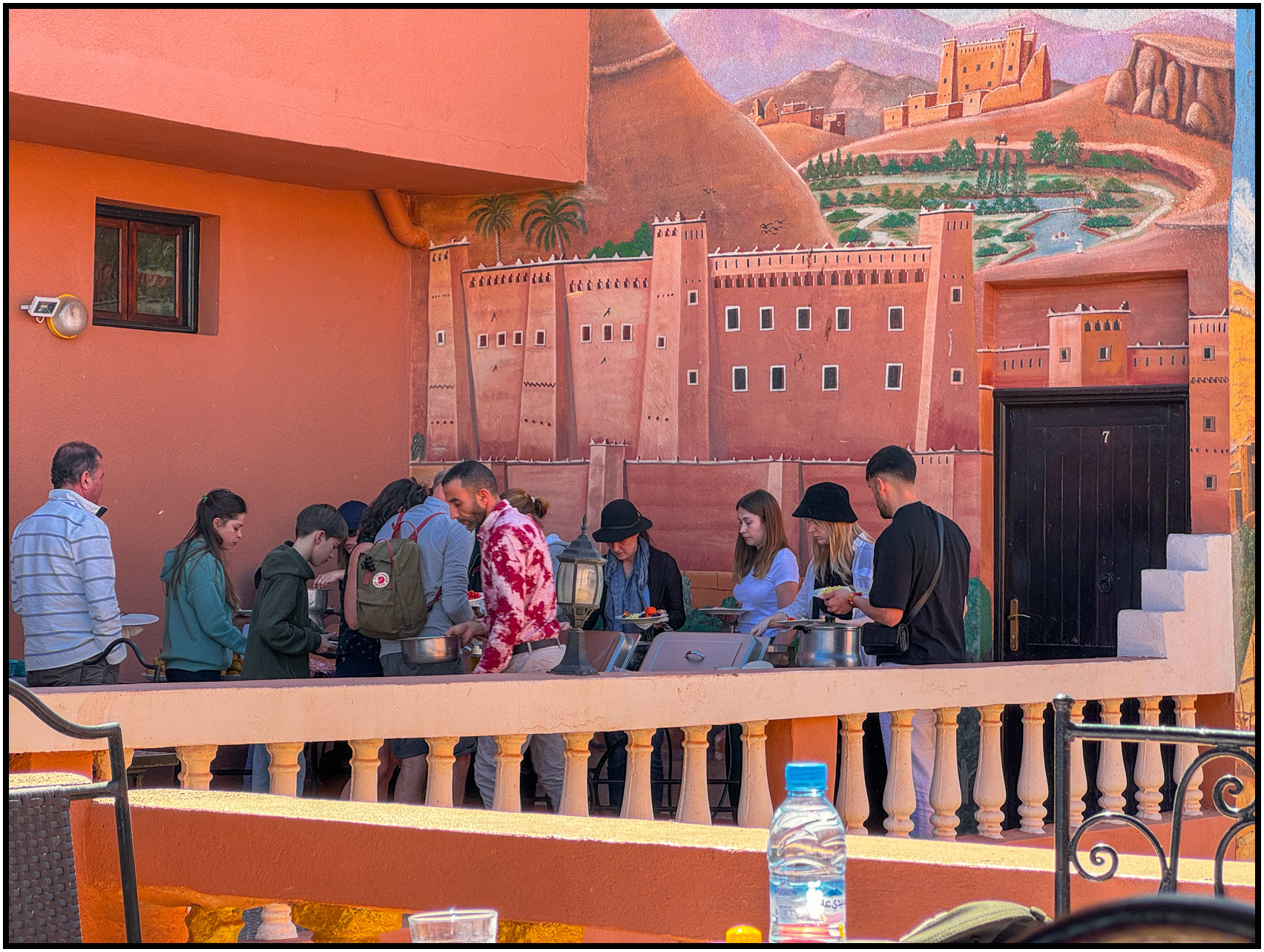
Brenda getting a lunch at a buffet restaurant near our final destination. There were a lot of tourists in the town to see the famous Äit Benhaddou ksar (fortified village). Most of the tourists here are French or German. French is the second language of Morocco and one can get around pretty good if you happen to know more than about 40 words of French (I don’t…).
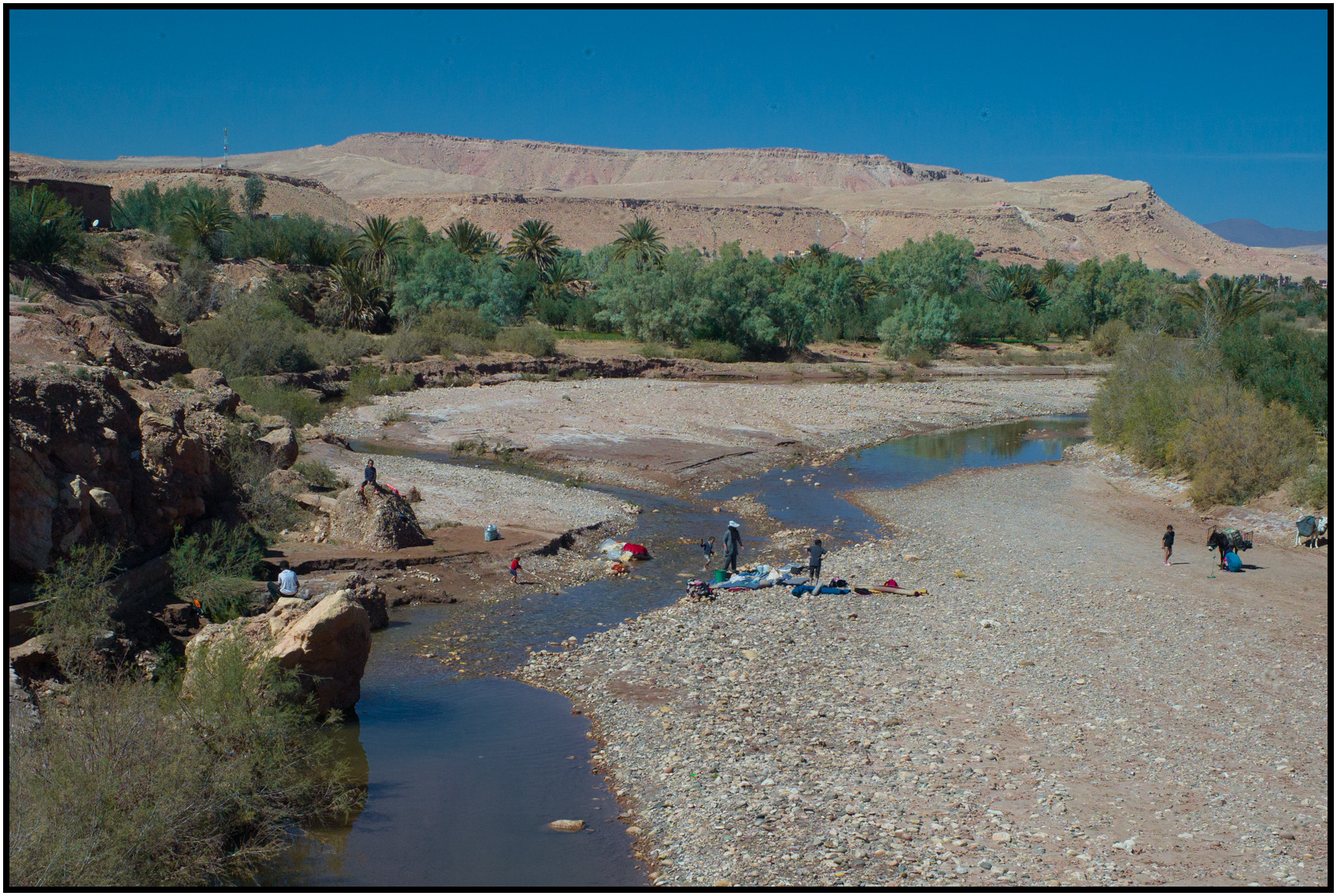
Sunday is laundry day in the rapids of the river.
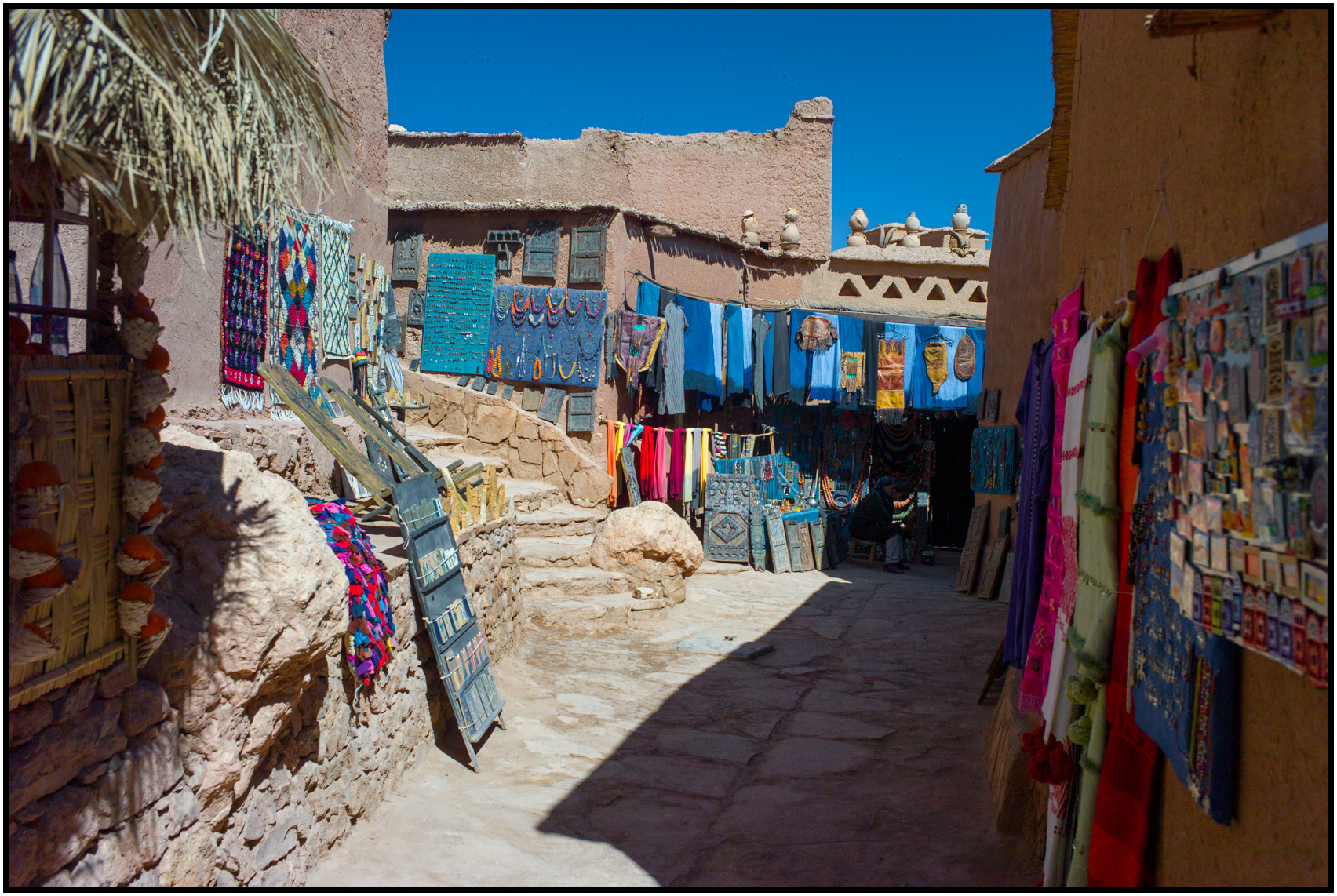
The narrow streets of Äit Benhaddou, full of vendors hawking their wares. Brenda did not leave empty handed.
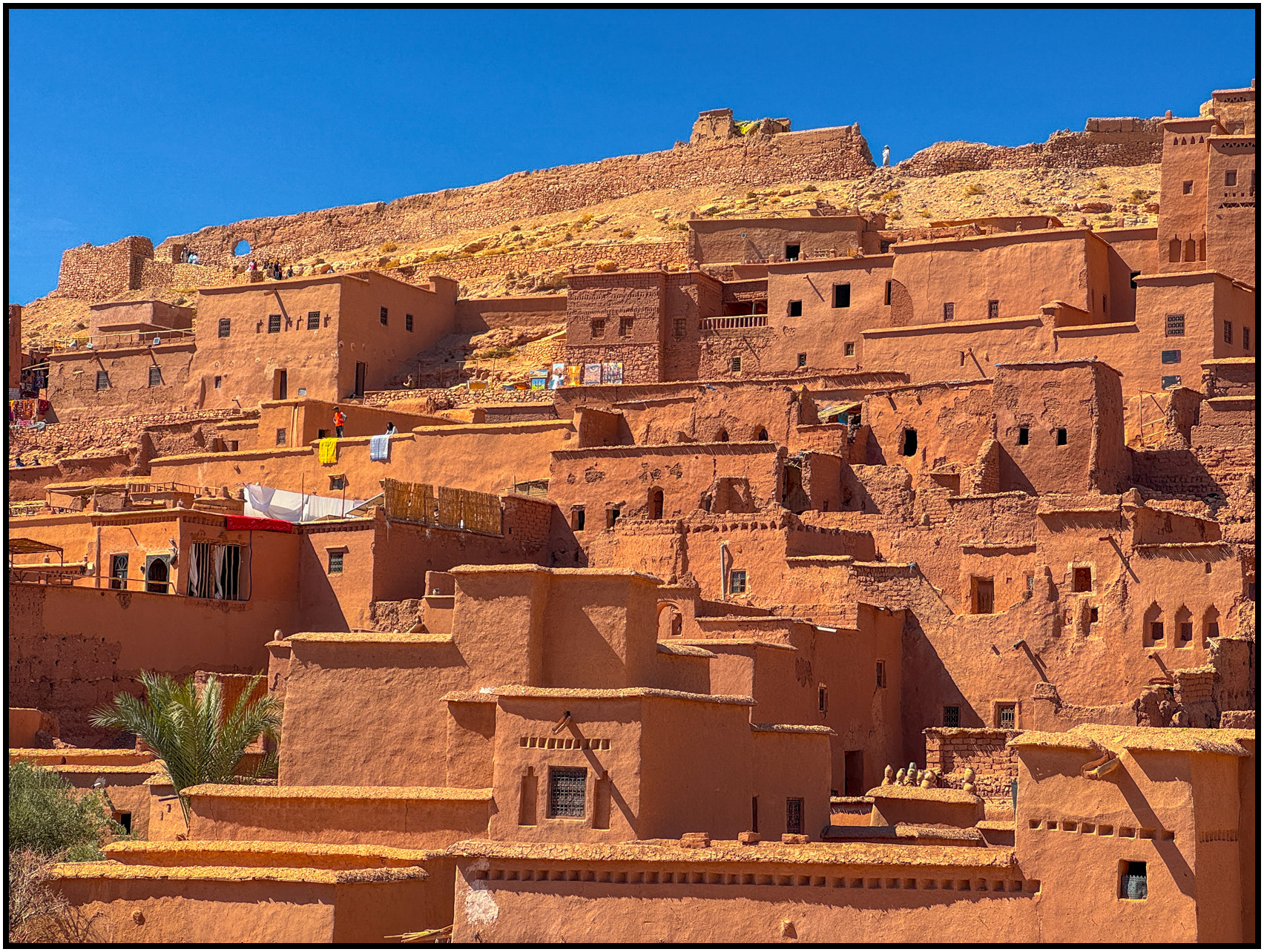
Shot of the village itself. It is a World Unesco site that was built sometime in the 1100s as a trade stopping spot between the Sahara and Marrakech. Most of what you see now is from the 1700s and 1800s.
This town has been used as a backdrop in more than 50 movies and TV shows, including Lawrence of Arabia, Cleopatra, The Mummy, Gladiator and Game of Thrones.
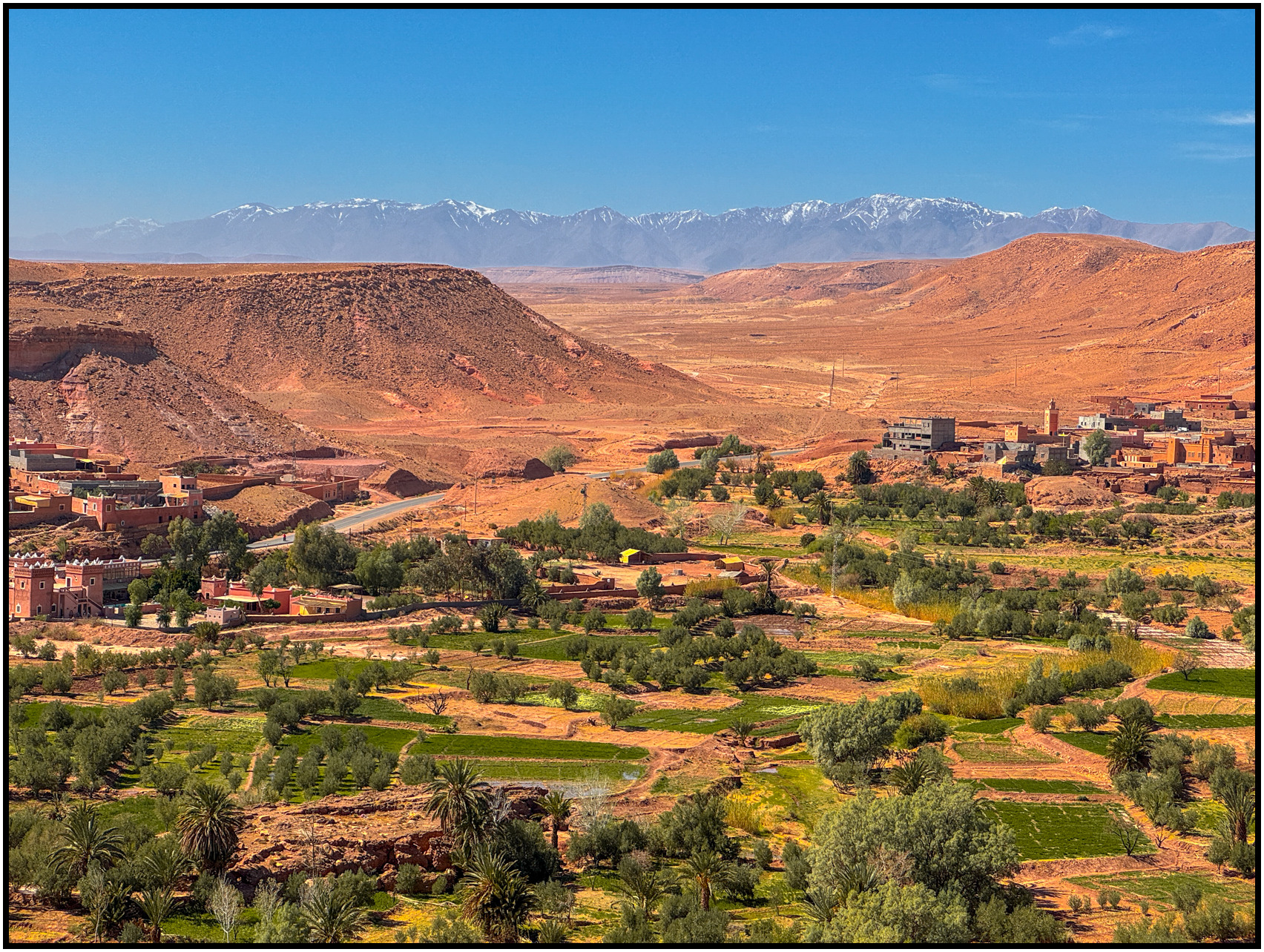
View from our hotel room, looking over to one range of the Atlas mountains. Where we are staying tonight is about 4500’ up.
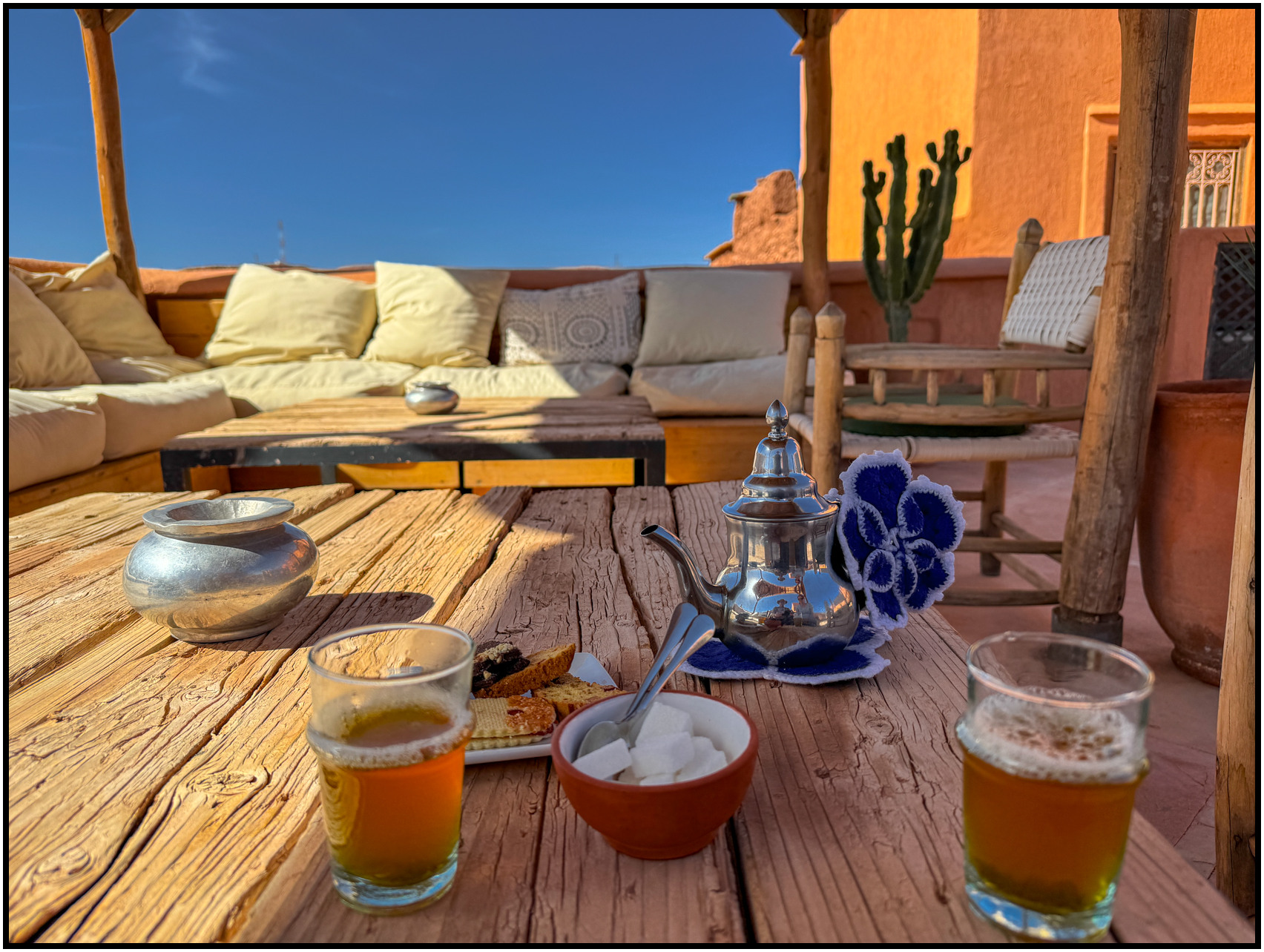
At our hotel. As is customary, we are welcomed with Moroccan tea and snacks.
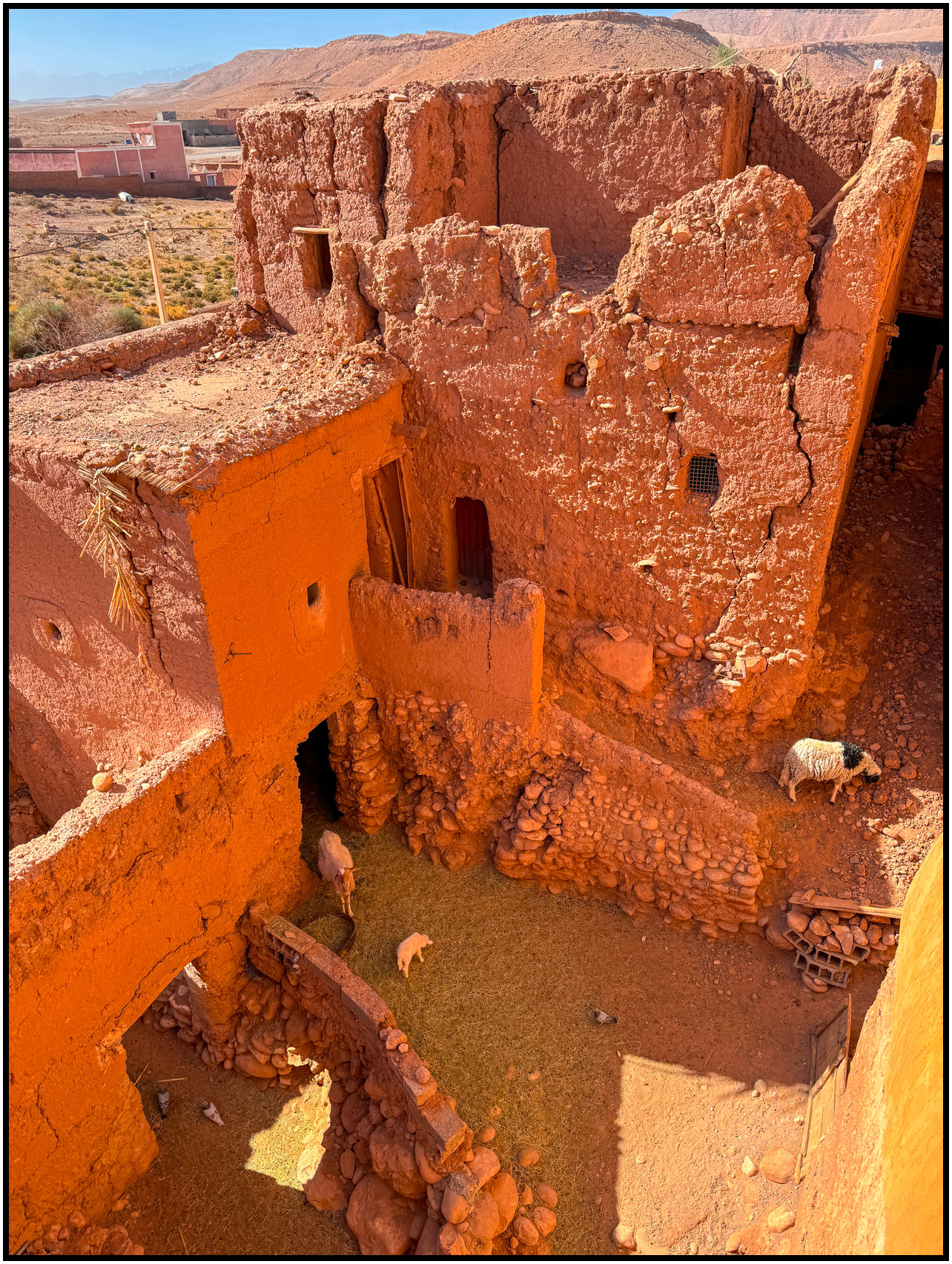
View of our next door neighbors from the rooftop of our hotel.
Foum Zguid
26 February 2024
We continue our journey south, out of the Atlas mountains and to the southern edge of Morocco, along the Algerian border.
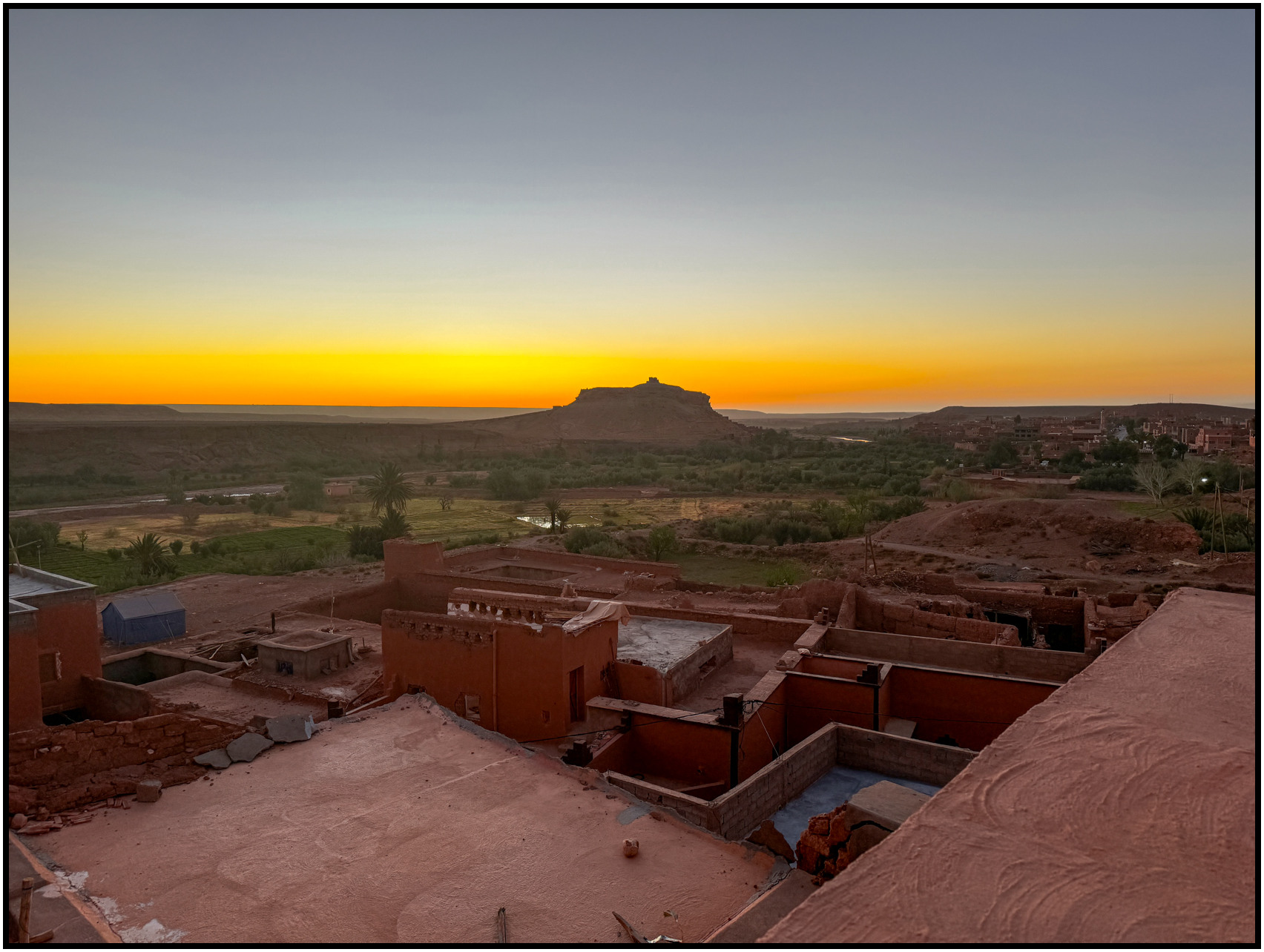
Sunrise in Äit Benhaddou. You can hear the chant of the call to prayer about 10 minutes prior.
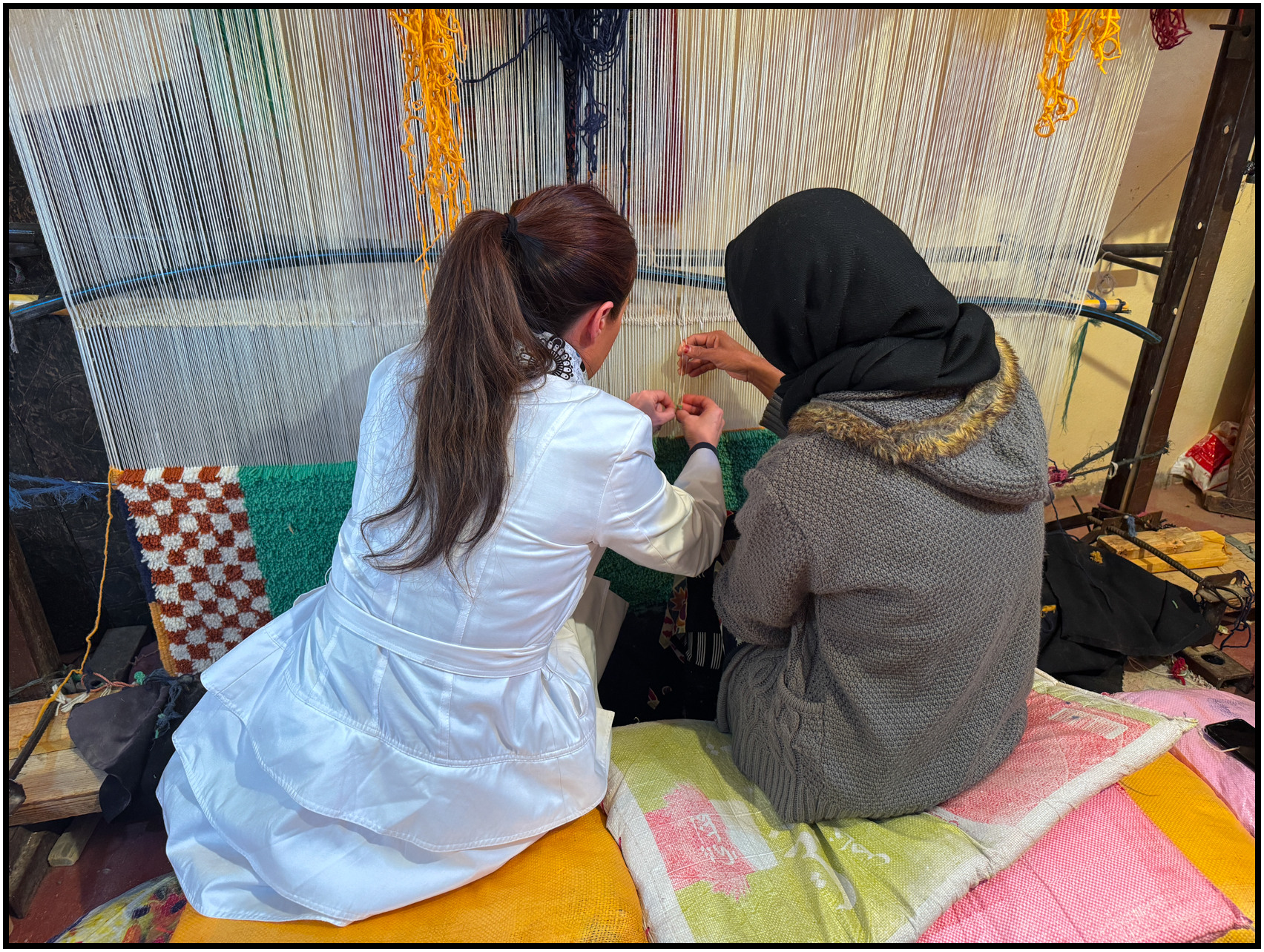
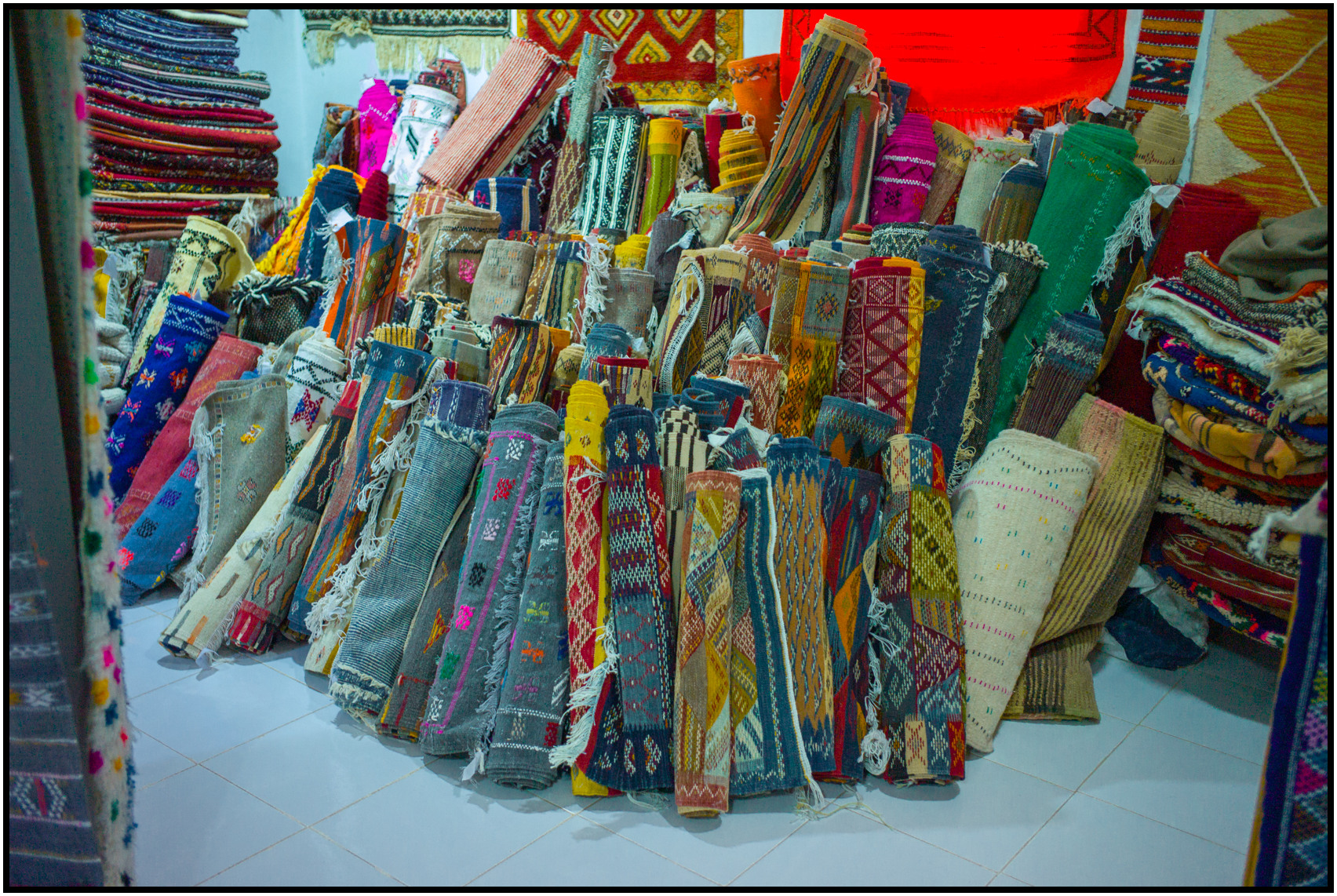
Along the way we stopped at a Berber village that has a Women’s Cooperative to make rugs. There are numerous styles and materials used, depending on the source. Local Berbers do it one way but there are also rugs made by Cave Berbers, Touregs, Nomads and Bedouins. I used to think those were all pretty synonymous, but each is a different “race” and there are numerous tribes within each sub-category.
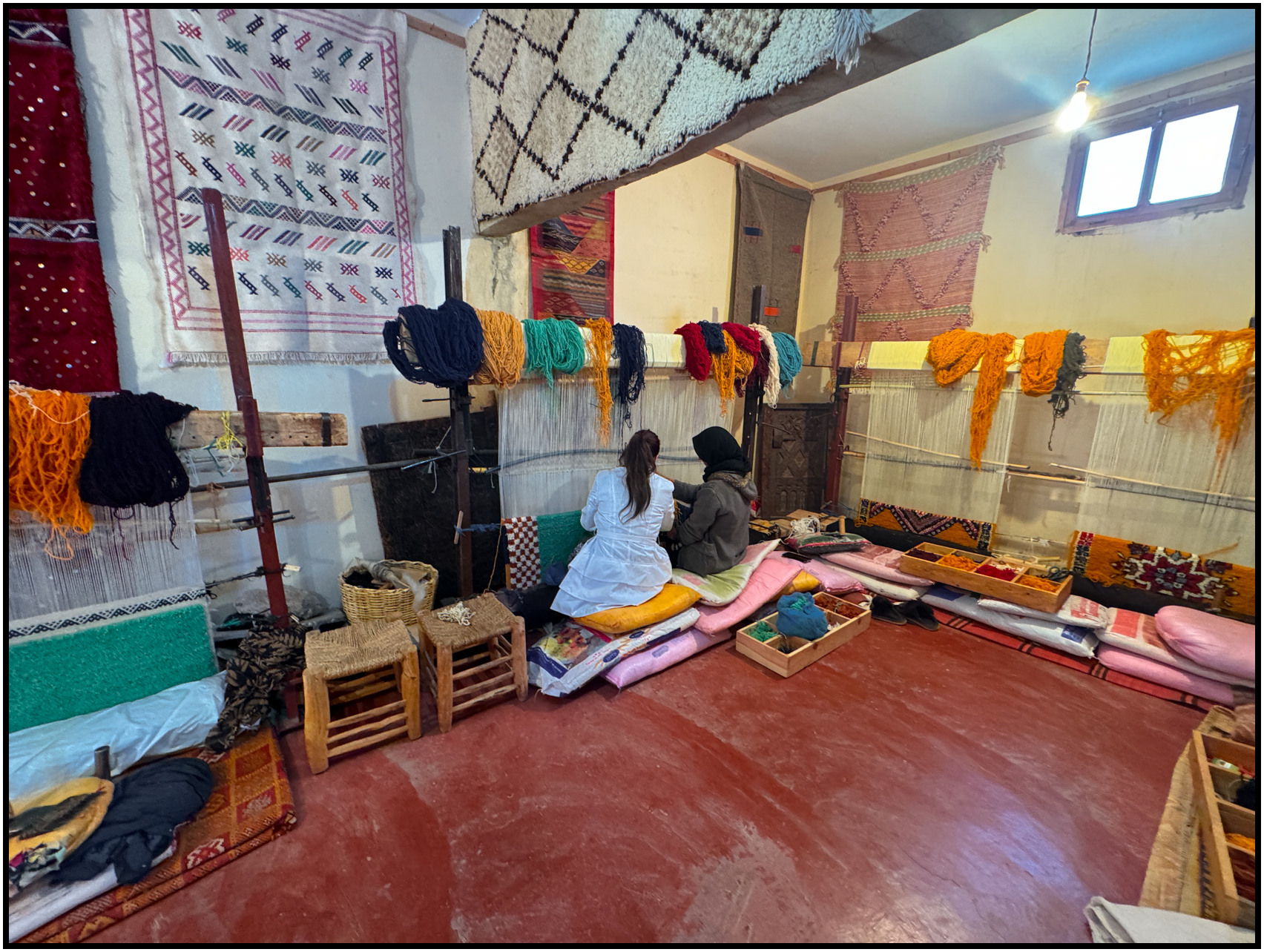
All dyes are made in-house from natural plants. Typical dyes are made from indigo (blues), saffron (oranges and yellows), henna (reds) and mint (greens.) Other plants (berries, flowers, bark, etc.) are mixed in to get other colors. Most rugs are woven on a loom and then embroidered, using sheep or camel hair. Brenda is getting a lesson and doing it wrong.
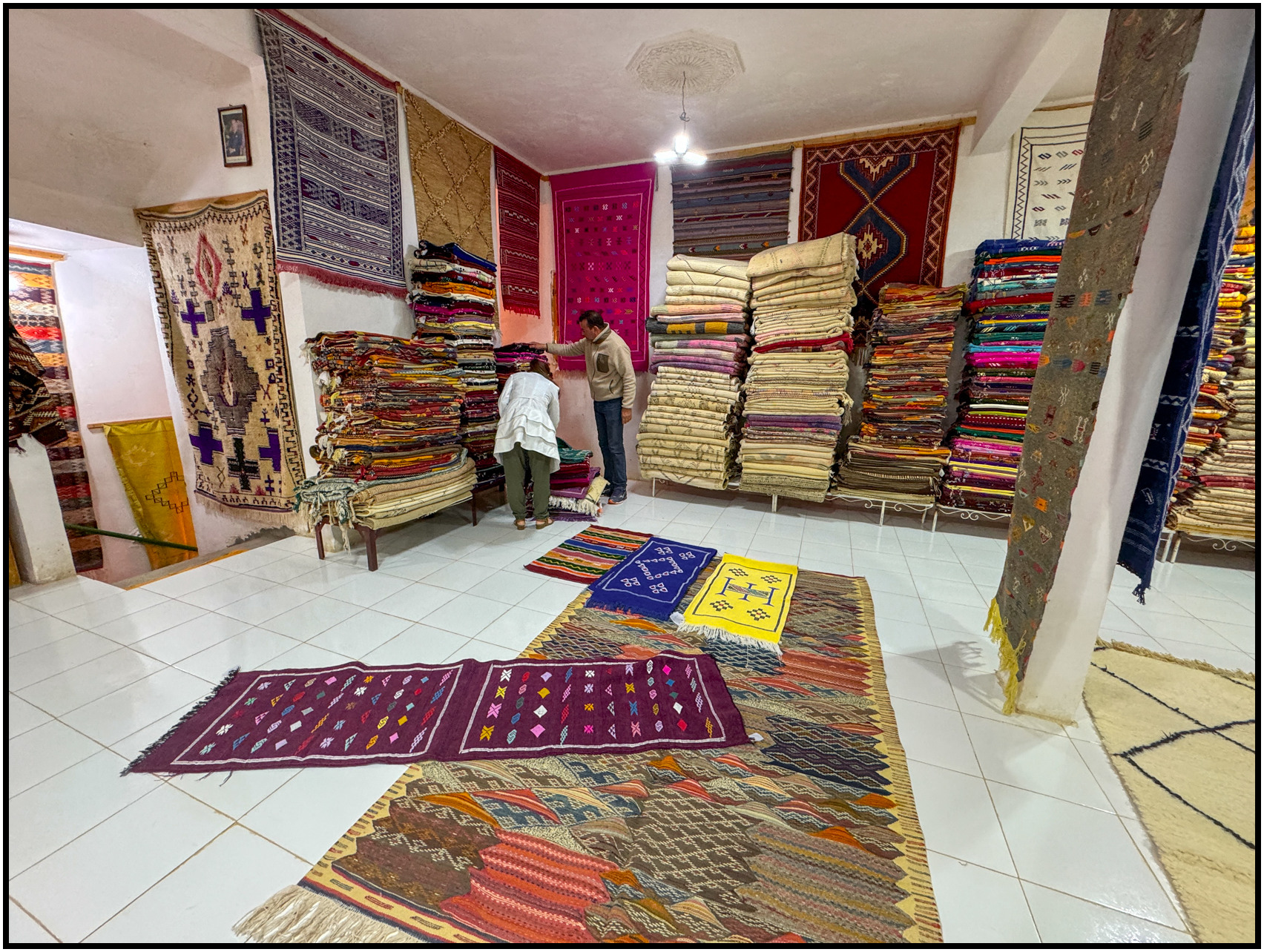
Upstairs is the shop; we couldn’t leave without finding something small and colorful that wasn’t too much money and would fit in our suitcase. (We bought the small blue one on the floor, between the yellow and multi-colored rugs. The primary dye used for ours is indigo.)
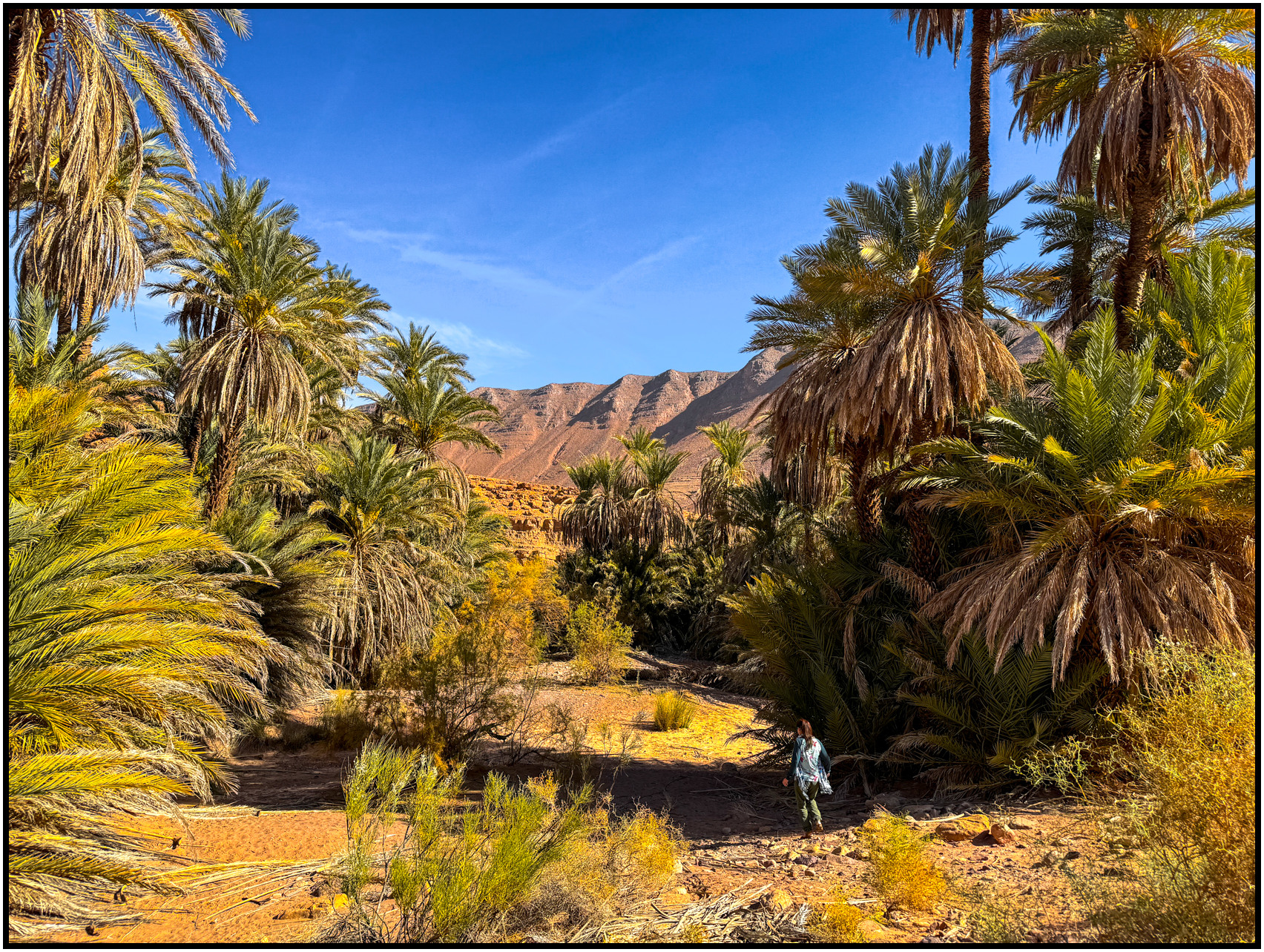
Further on we stopped at a spot where date palms grow. We ate a few, but it’s too early in the season. They were very sweet, but astringent.
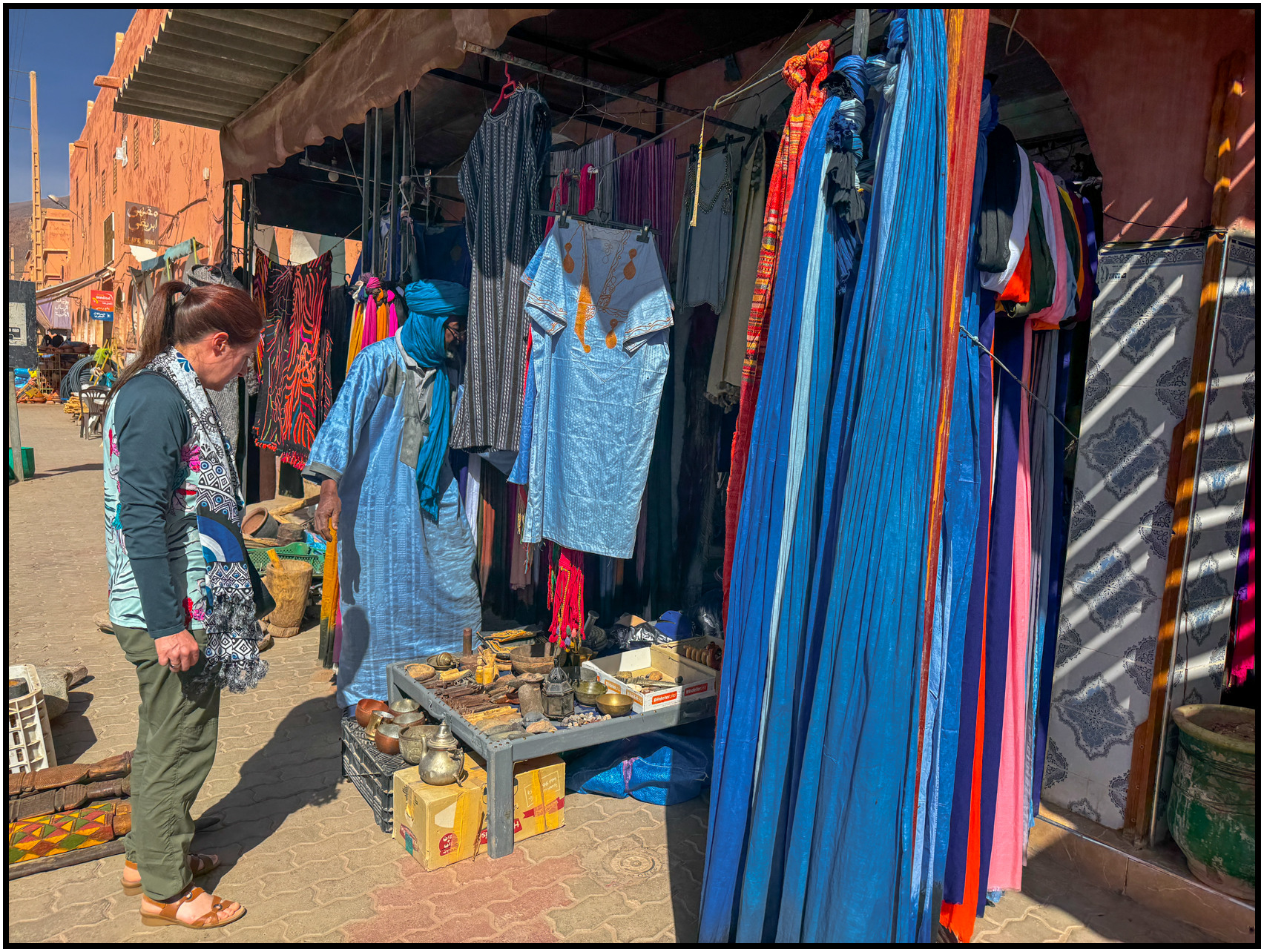
In Foum Zguid (pronounced like “Fomez Gade”). Brenda did some last opportunity shopping. We also picked up food and water for a picnic lunch. This town is the last stop before the roads end and the rest of our trip is done by 4×4 on trails. Eventually, there aren’t even trails.
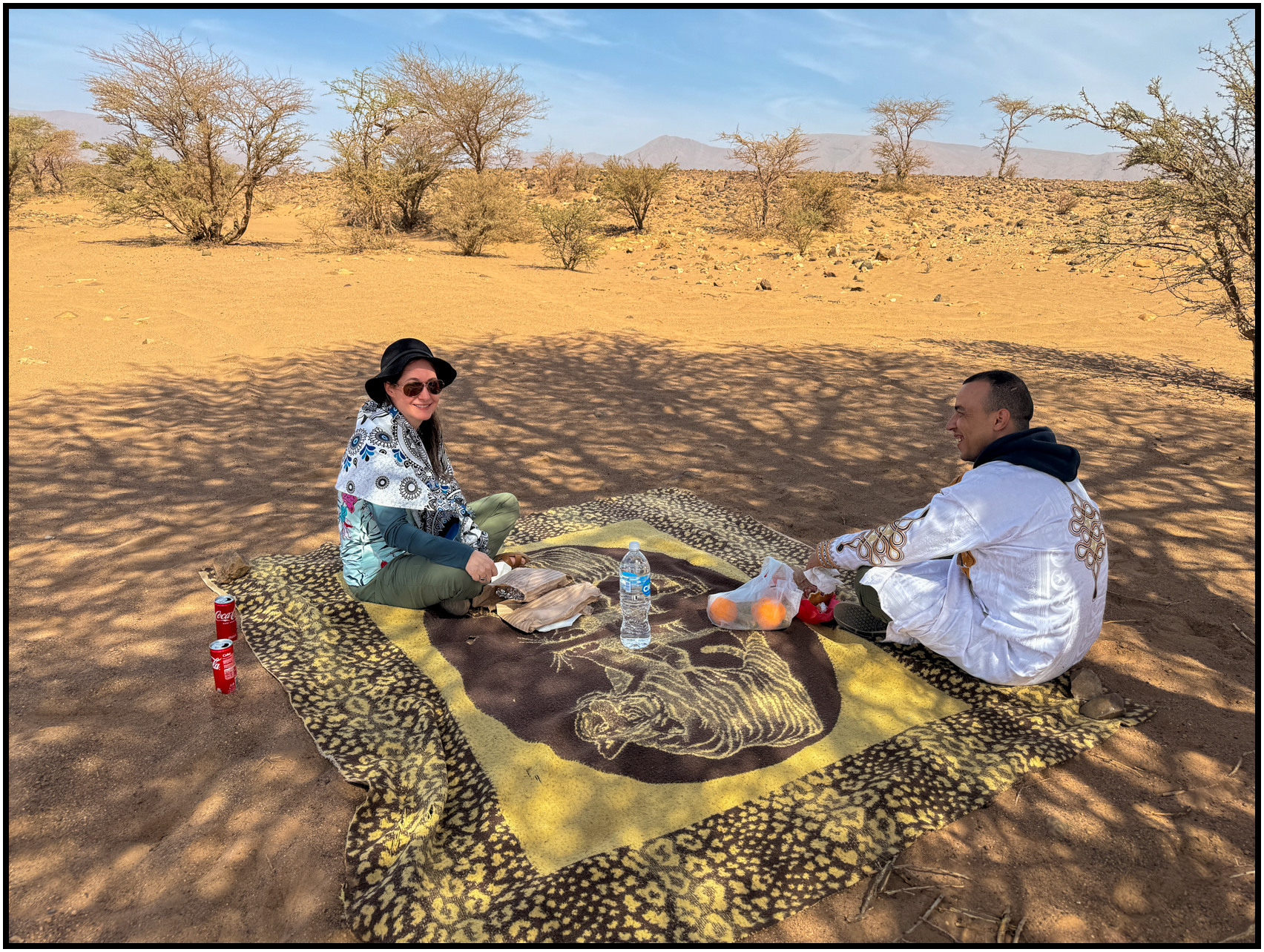
Later that afternoon Khalid stopped at the only shade for miles to give us a chance to eat lunch and go potty.
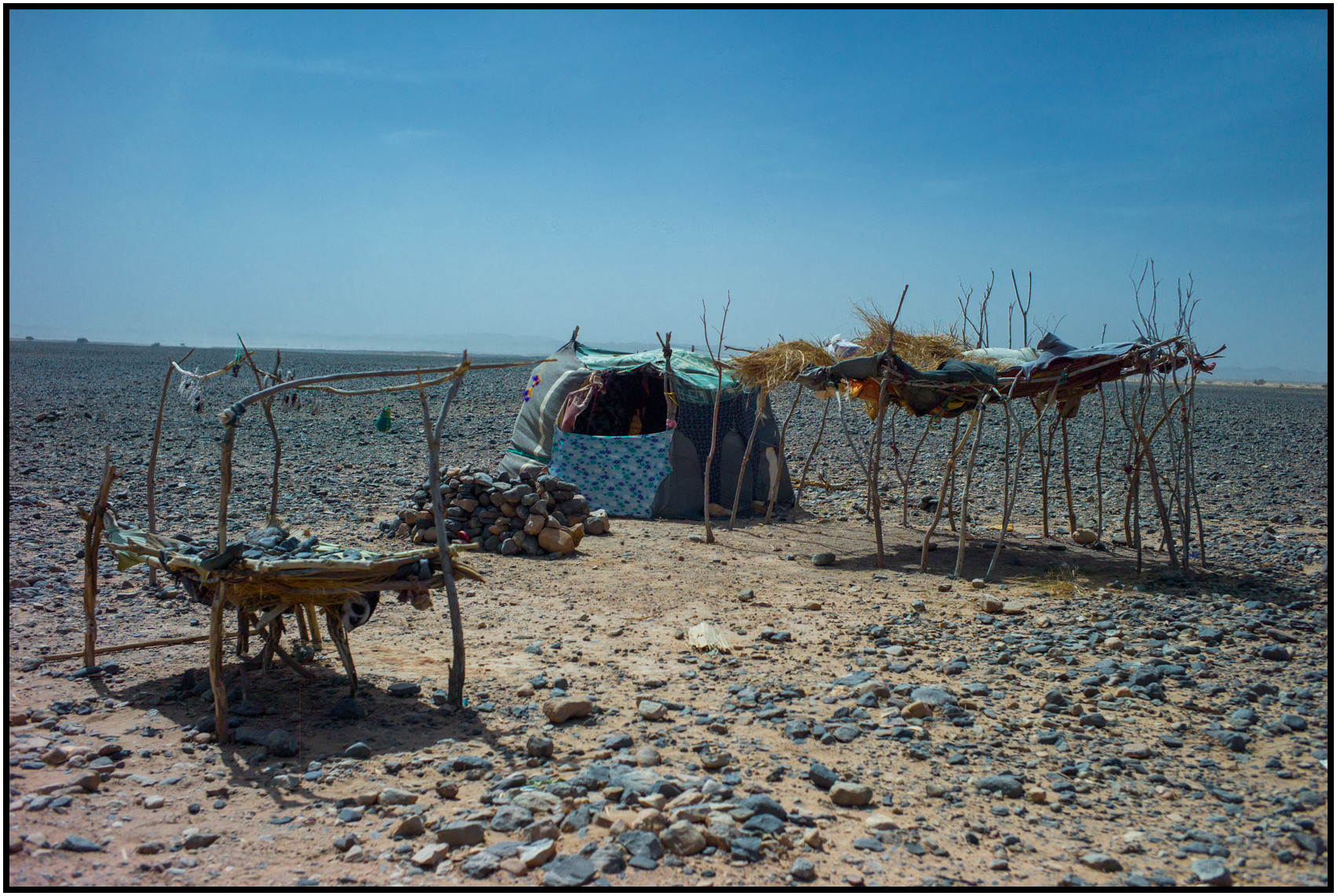
Nomad house on the way
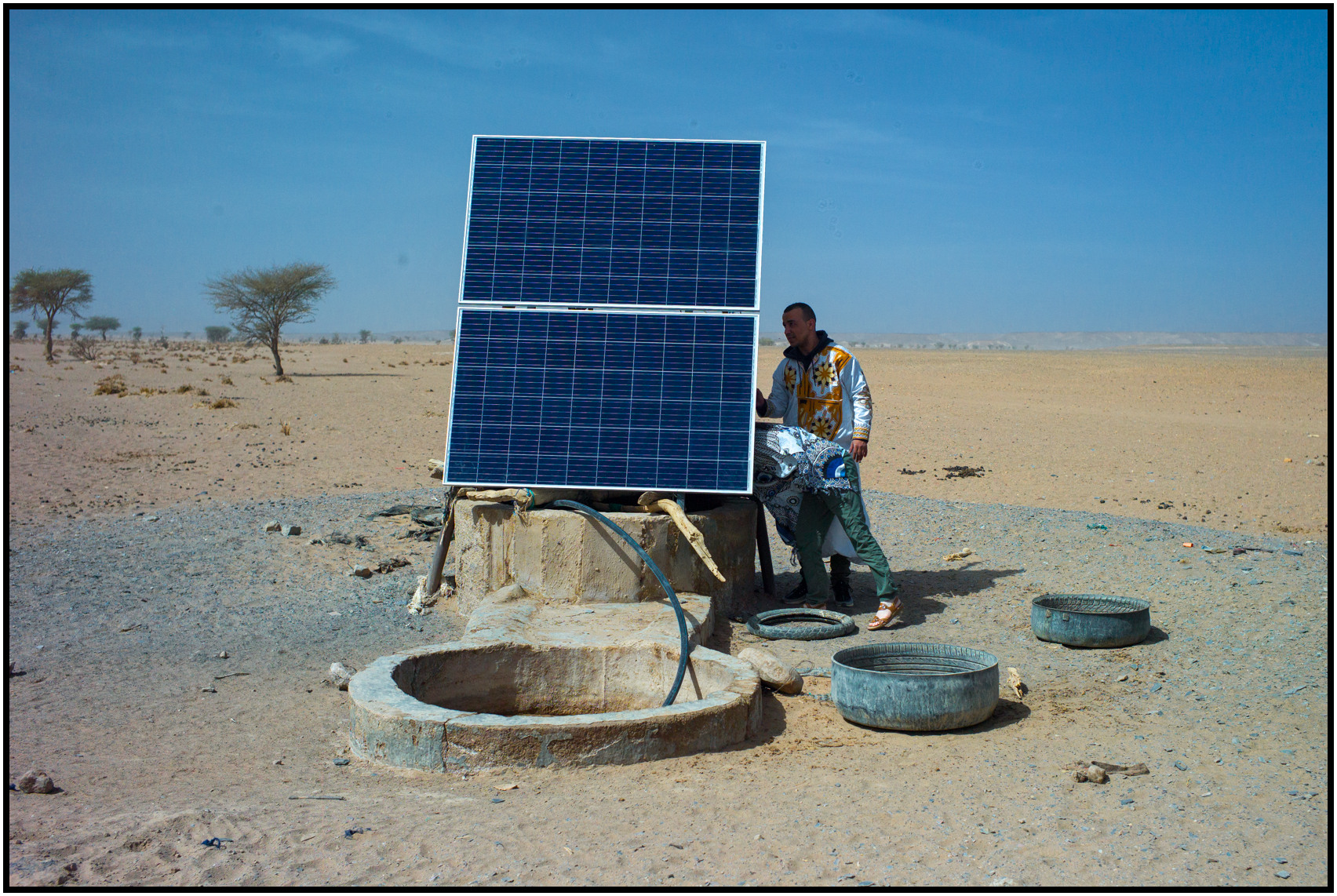
A well in the middle of nowhere… but with solar power to run a pump that will fill the basin when needed.
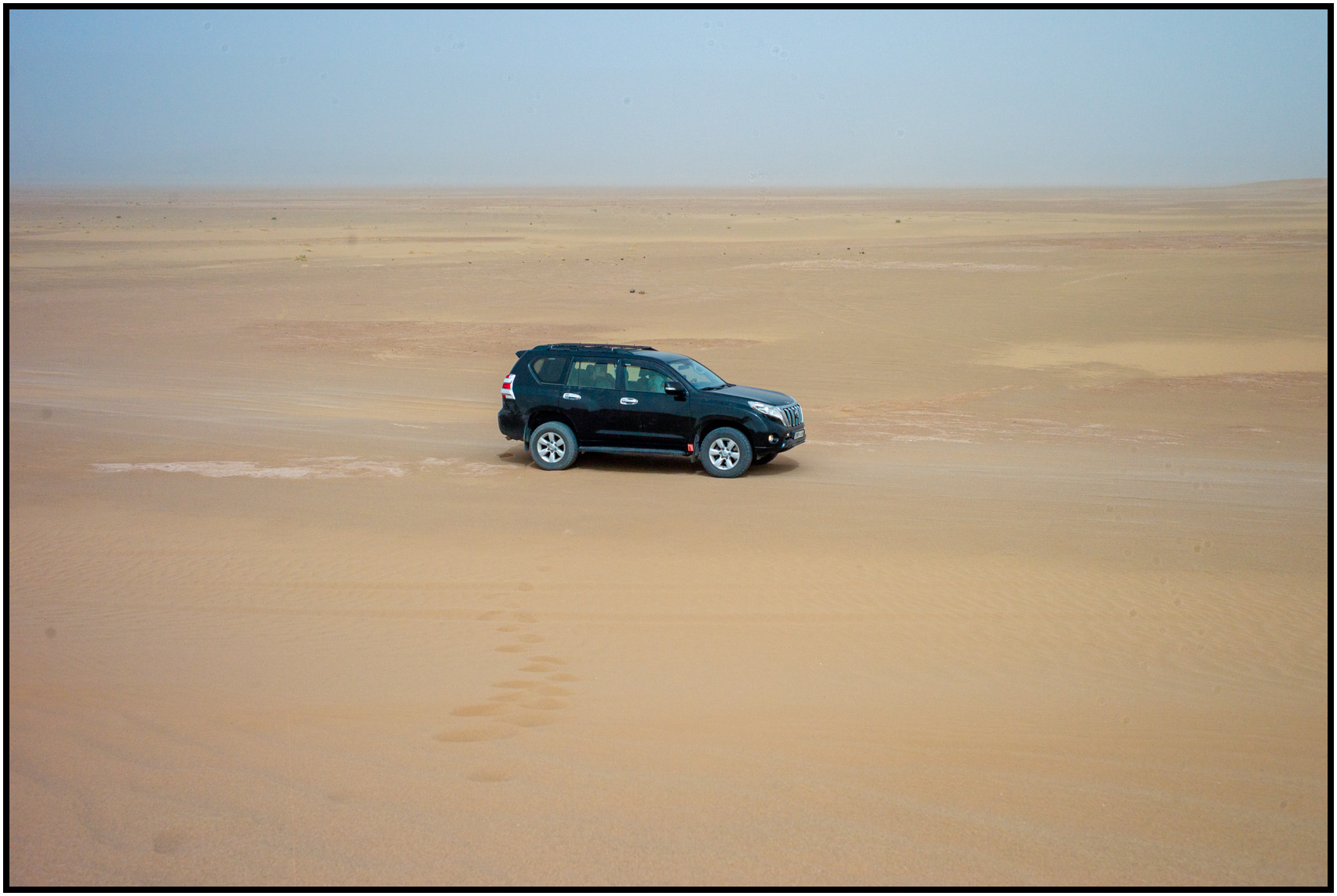
We’re now in the sahara. I took this photo from the top of the dune after “using the facilities” on the other side.
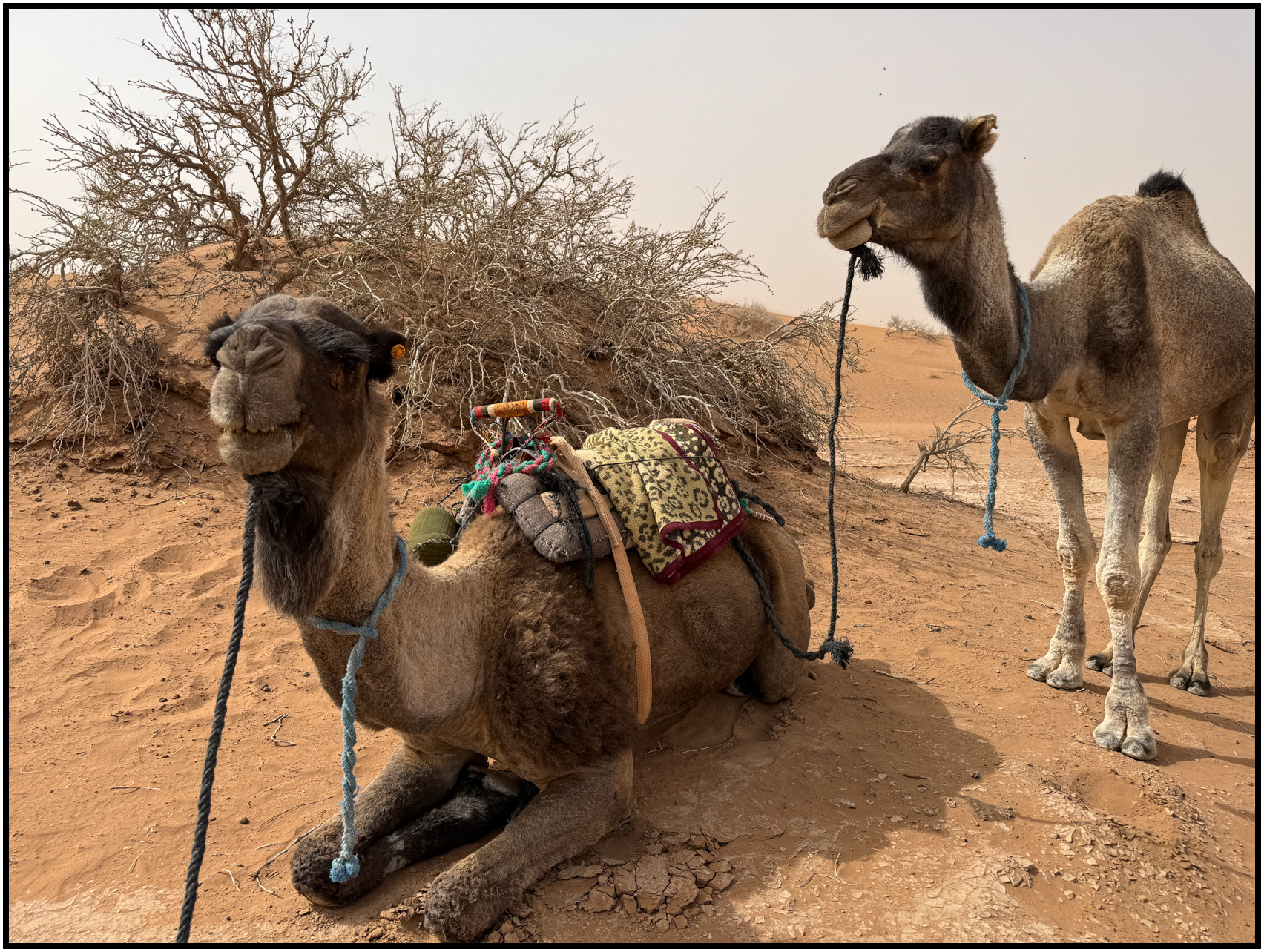
Now we’re talking. The seed goal for this entire trip was to “Go riding camels in the Sahara” … and we finally got to do just that.
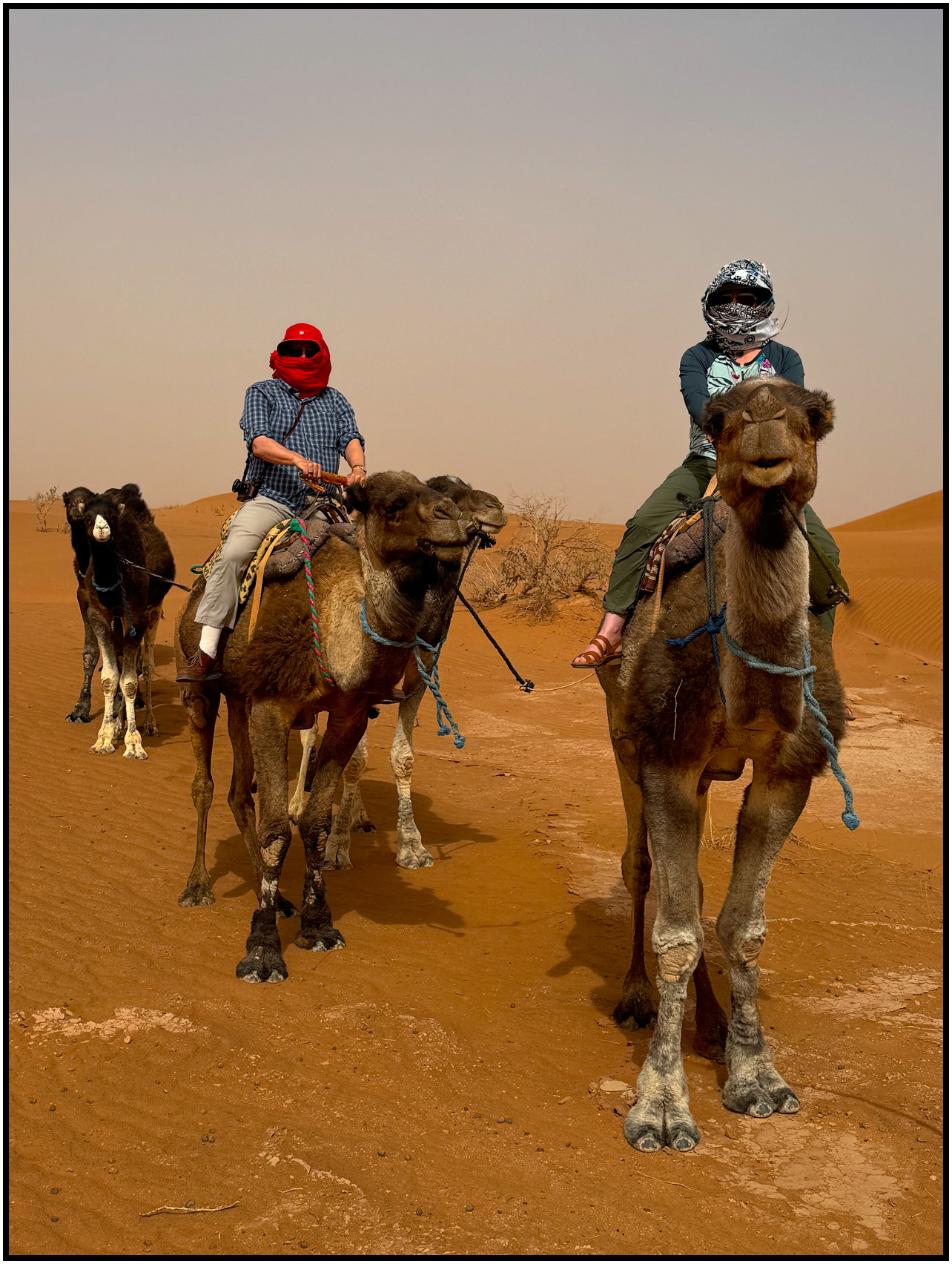
On the way to our camp. It was very windy this afternoon and a sand storm developed; the scarves weren’t just for looks. You need them to protect your skin from the abrasion of flying sand and dust. Temperatures are not bad.. 80s in daytime and upper 40s at night. We’re told the camels actually prefer this type of weather because it’s cooler and sand/dust doesn’t bother them.
The final leg to our camp is about an hour’s ride by camel from the car dropping off spot.
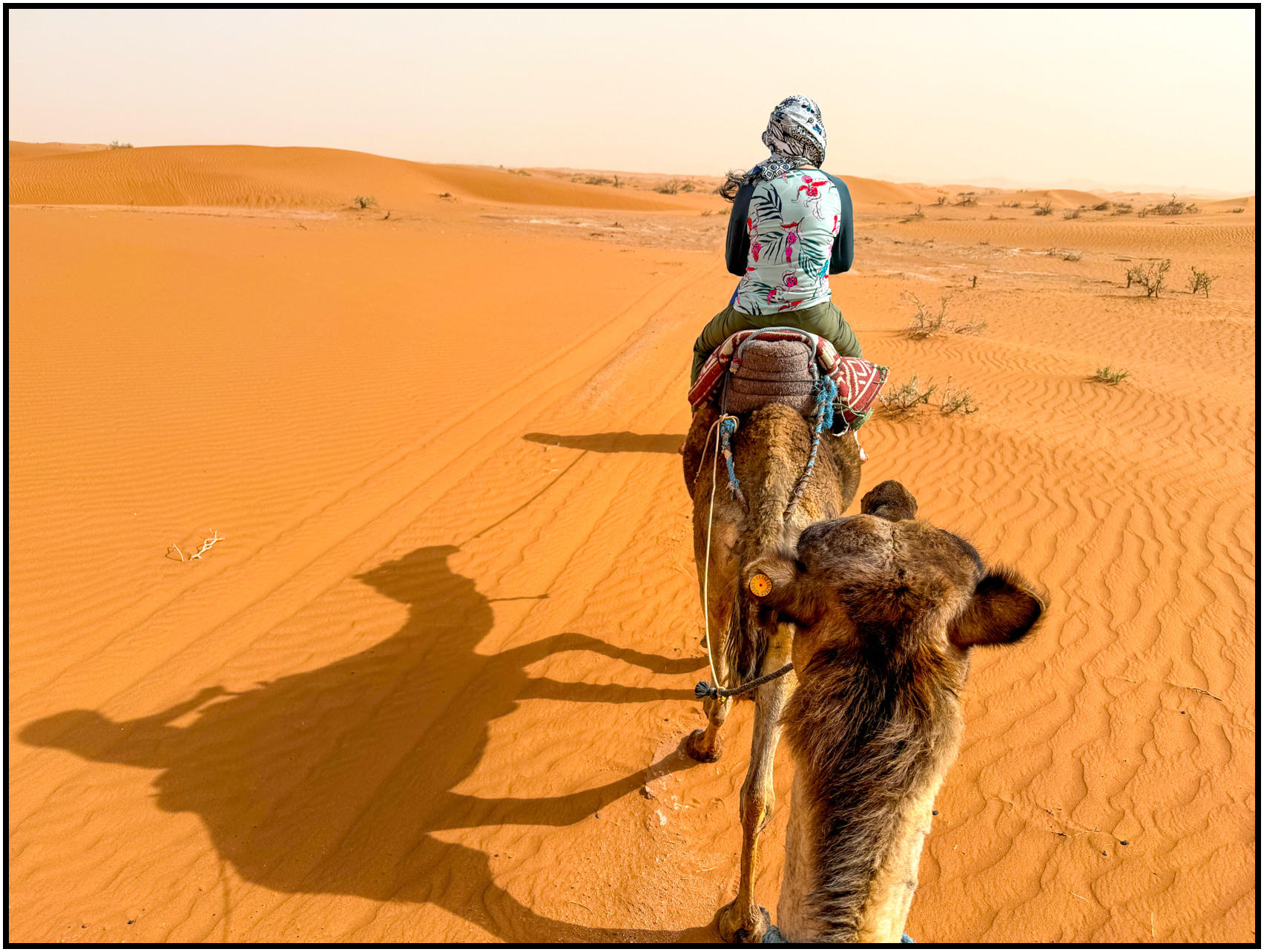
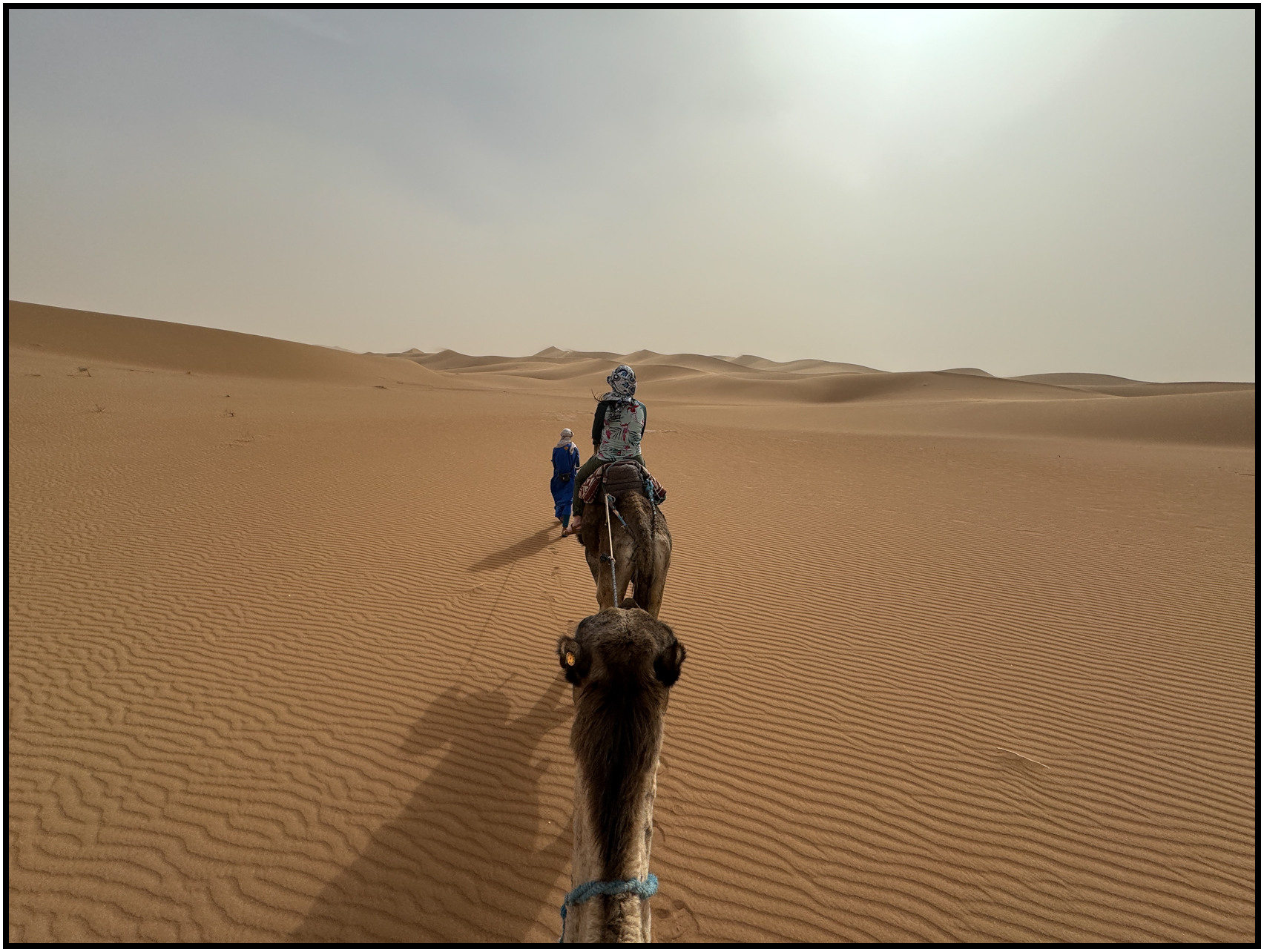
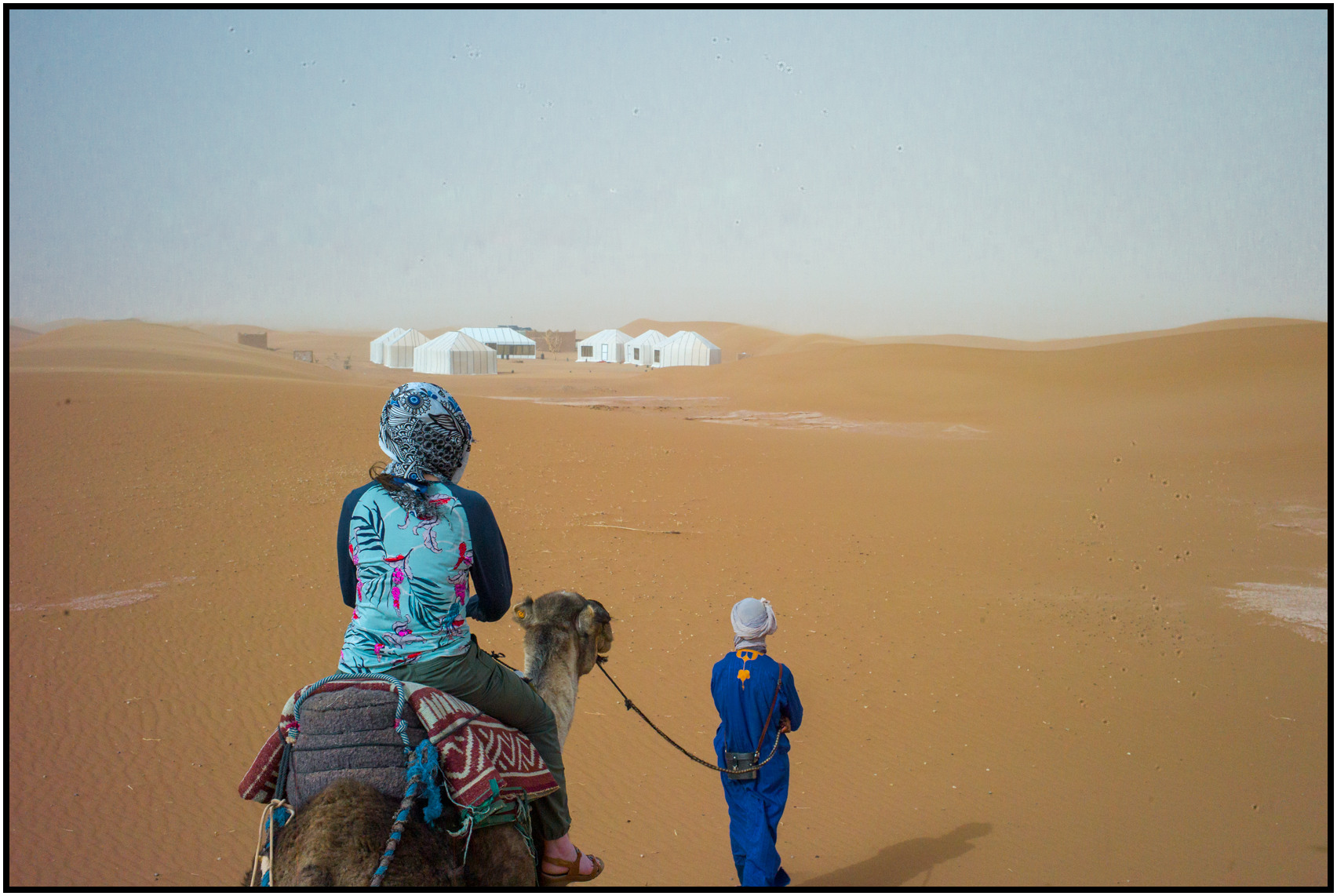
Our final destination coming into view.
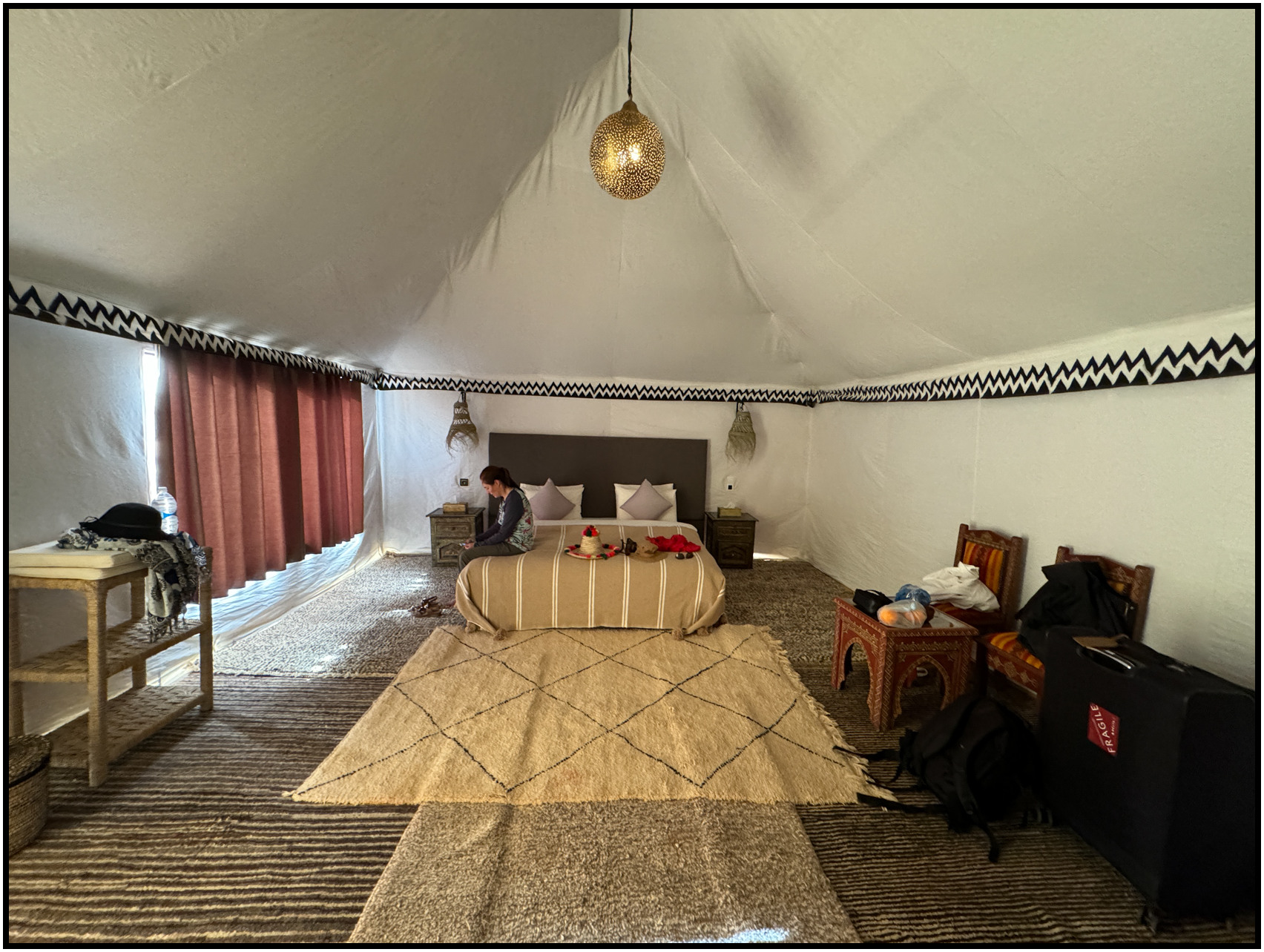
The tents are very nice. They call this place “Nubia Luxury Camp” and, considering where we are, it is quite luxurious. Each tent has electricity, running water, a toilet and rudimentary shower, and wifi. No A/C or heat, but plenty of blankets for when the sun sets. The floor is covered with Berber rugs.
What was special about today was that we had the entire camp to ourselves. We are staying here two nights – the second night 12 other people arrive. But for our first 24 hours, we were waited on to an embarrassing level.
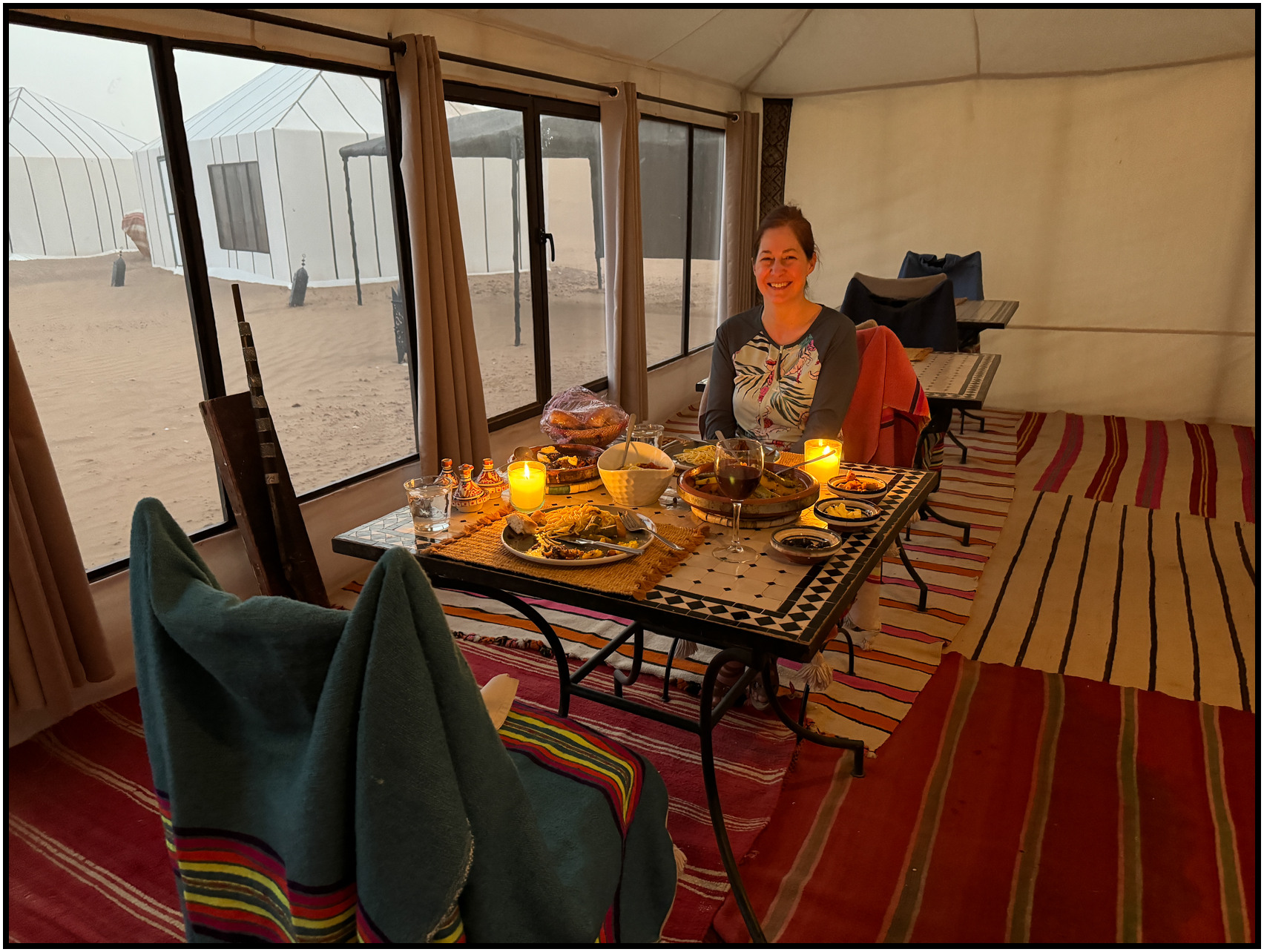
Dinner for two in the communal meal tent. The food was fantastic.
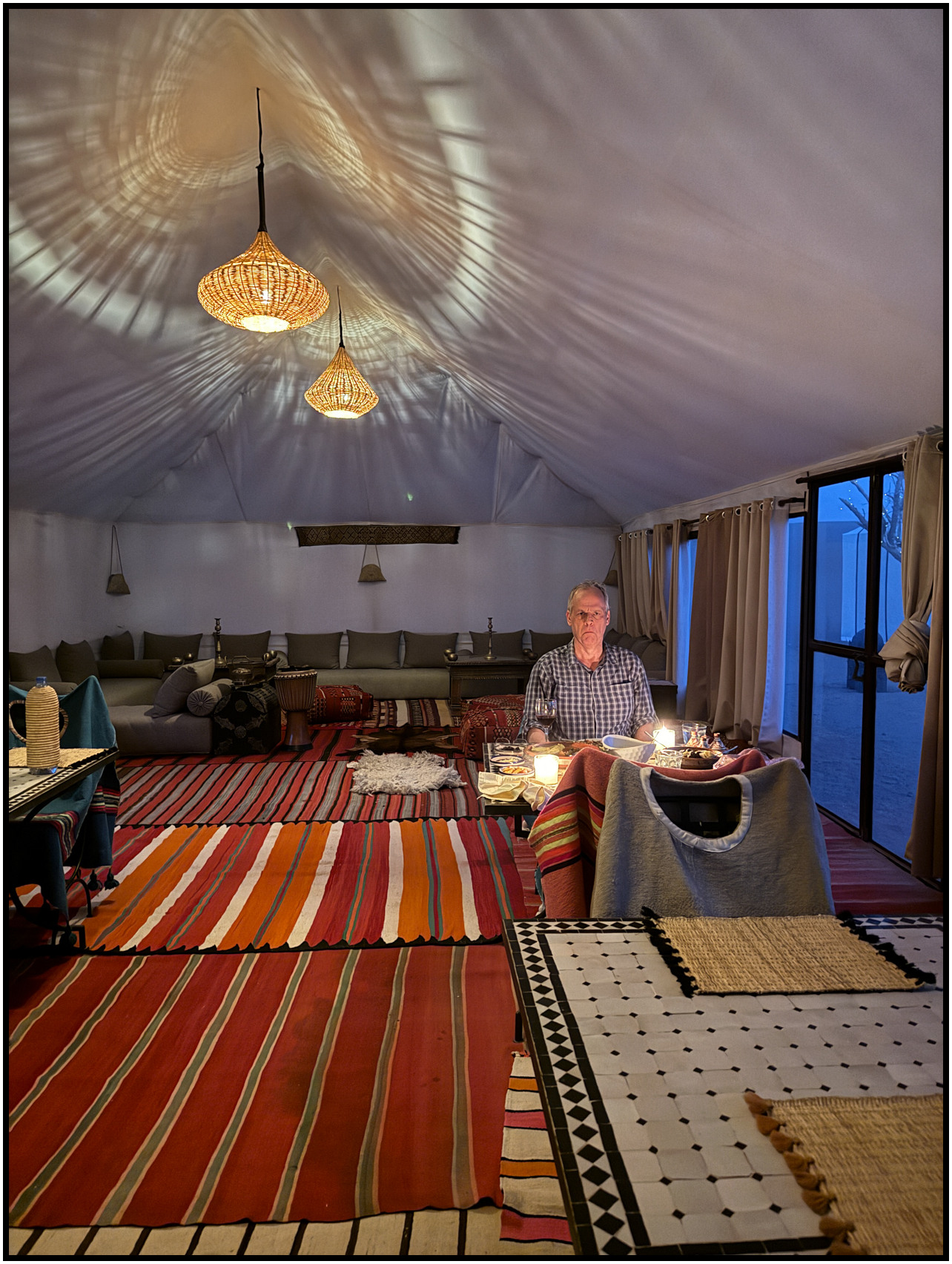
A better view of the tent with me making my “I’m having the time of my life” face.
Sahara Desert
Feb 27, 2024
We are spending 3 days / 2 nights somewhere in the Sahara. This range of dunes is called Erg Chigaga, but it’s more of a region than a specific location. (Broad, flat regions covered with wind-swept sand or dunes, with little or no vegetation, are called ergs or sand seas.) The Berbers all know where they’re going. They grew up here, work here and live here. We certainly wouldn’t be able to find our way anywhere without a guide.
It’s not hot, but very dry. Sand gets everywhere… and the older you get, the more nooks and crannies the sand finds.
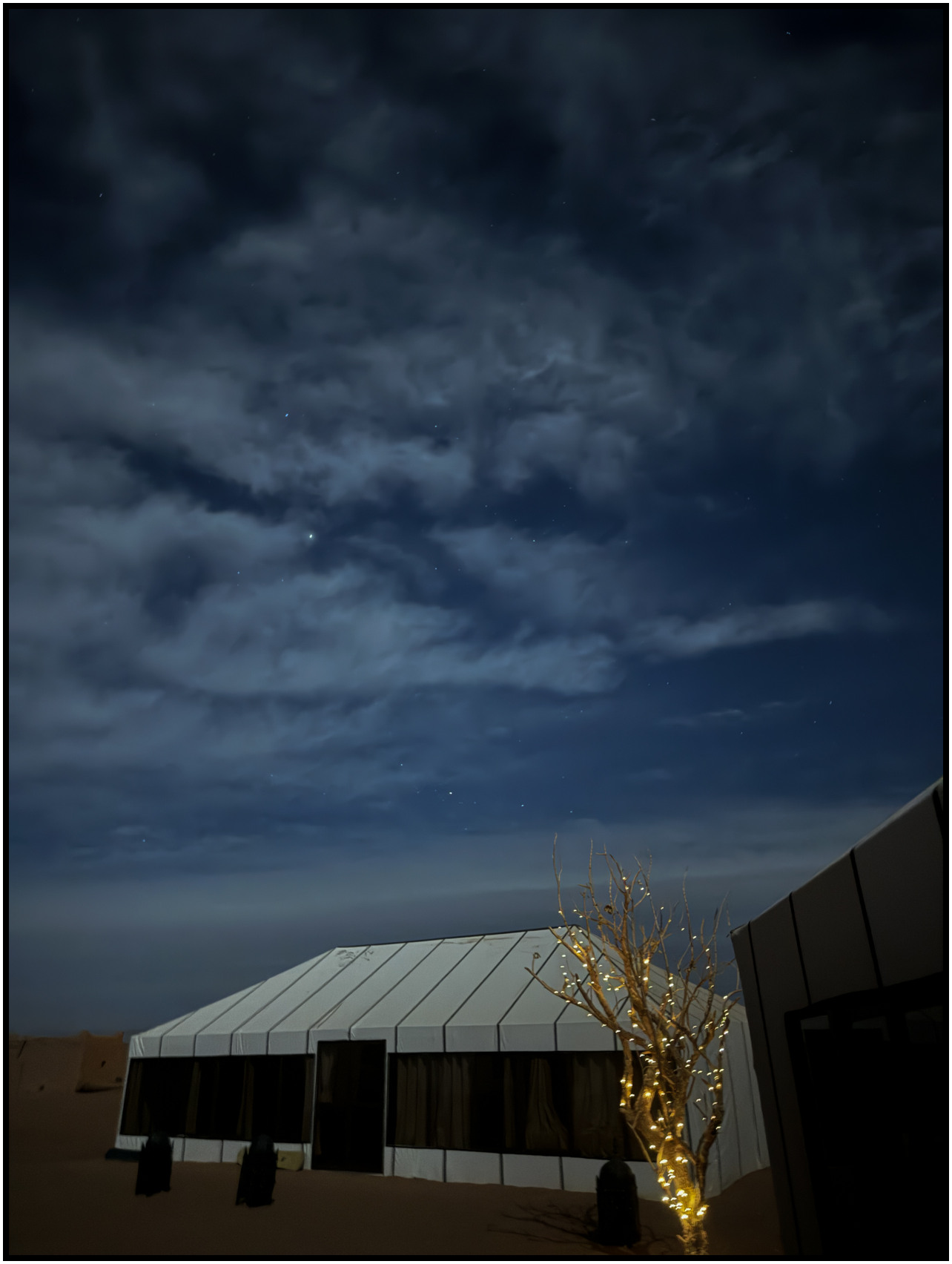
Photo taken about 1:00 am. There was a sand storm yesterday afternoon which kind of ruined things for stargazing. Things finally calmed down a bit at night. The moon is full and it was SO BRIGHT that you could go anywhere you wanted by moonlight. Other than this, there isn’t a light around beyond the led lights on the tree.
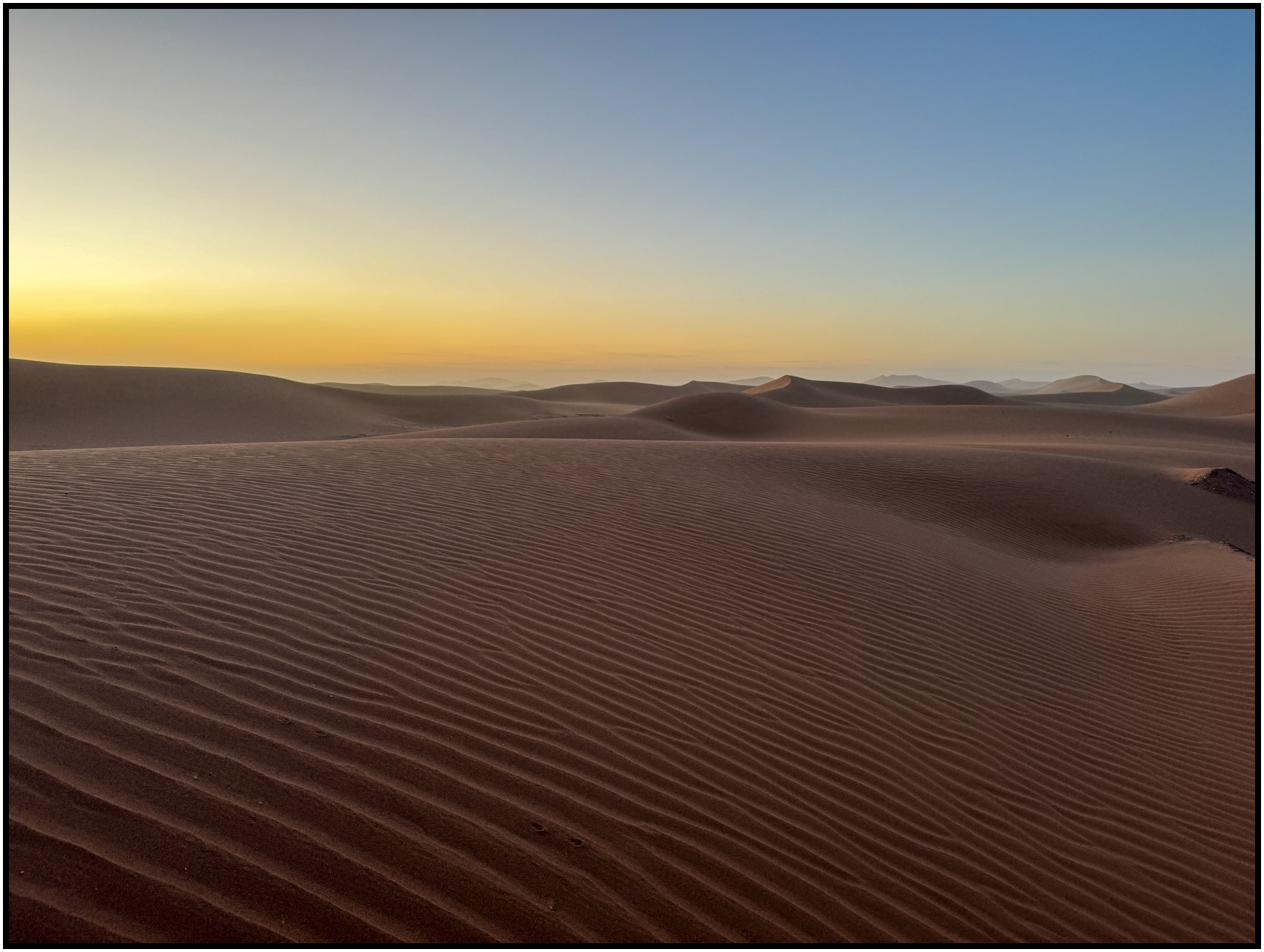
Just before sunrise.
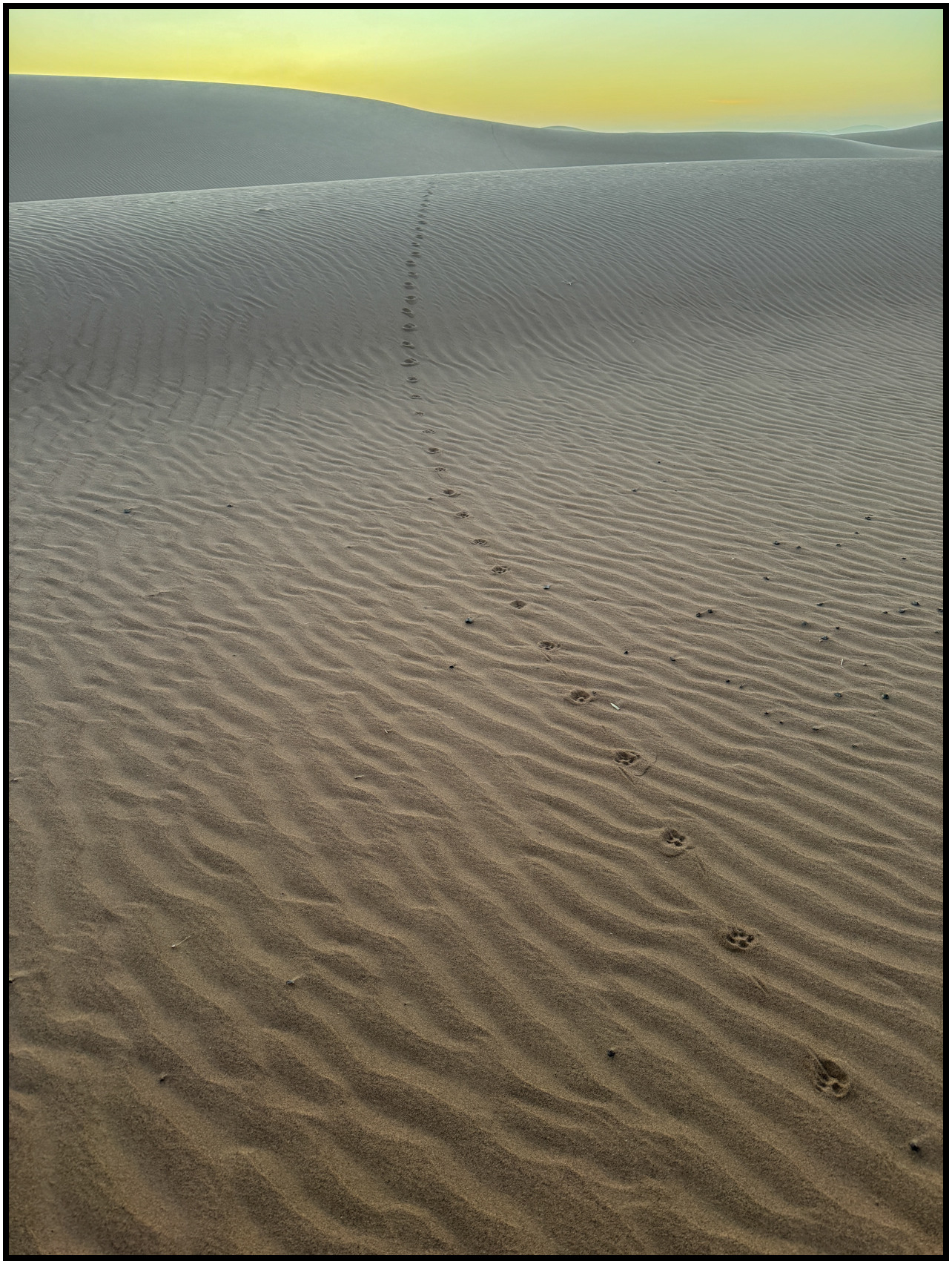
Tracks from the camp’s resident cat. I read that the Berbers keep cats to chase away snakes and scorpions from the camps. They have more wildlife here than you might think, but most are nocturnal.
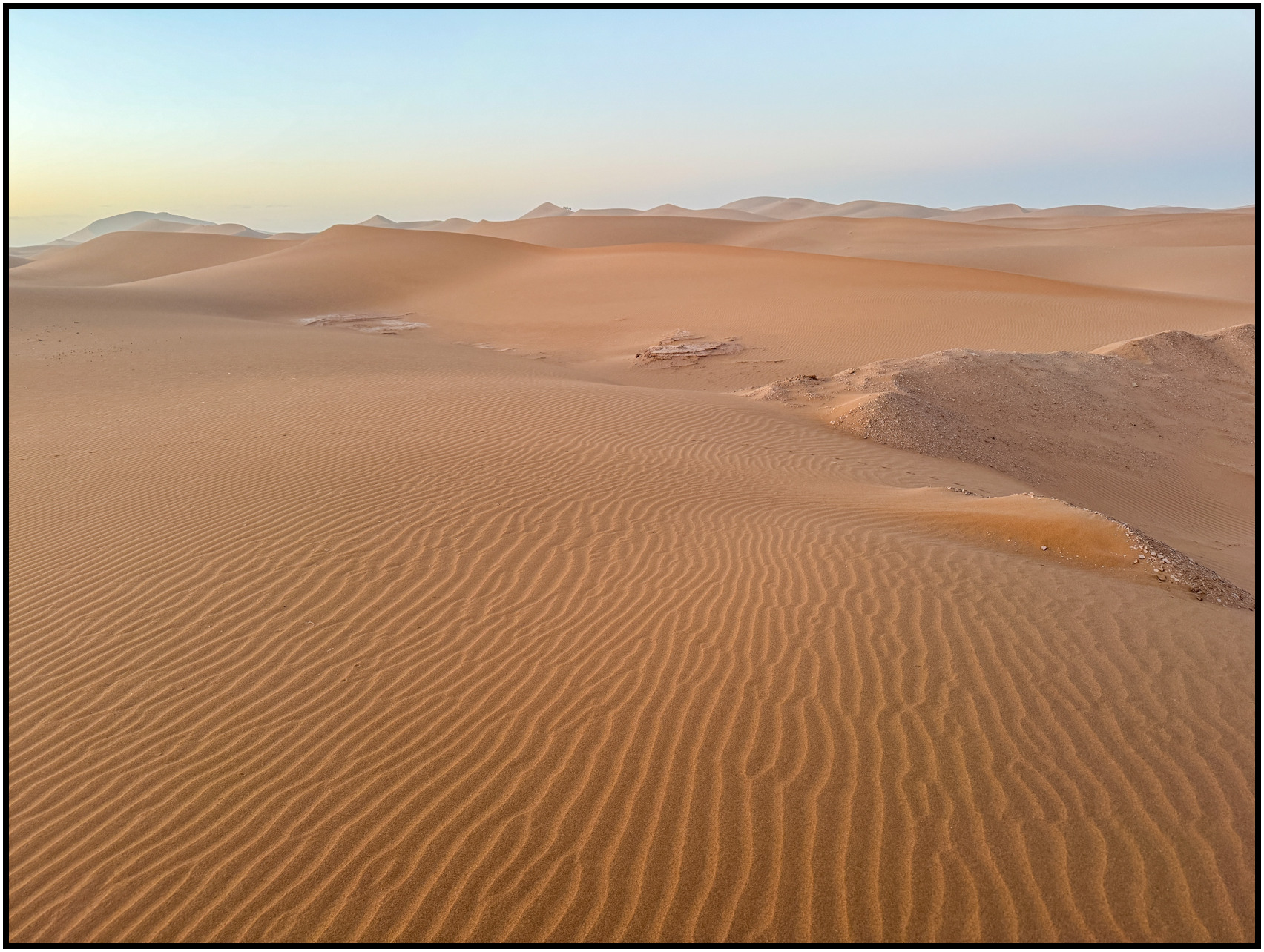
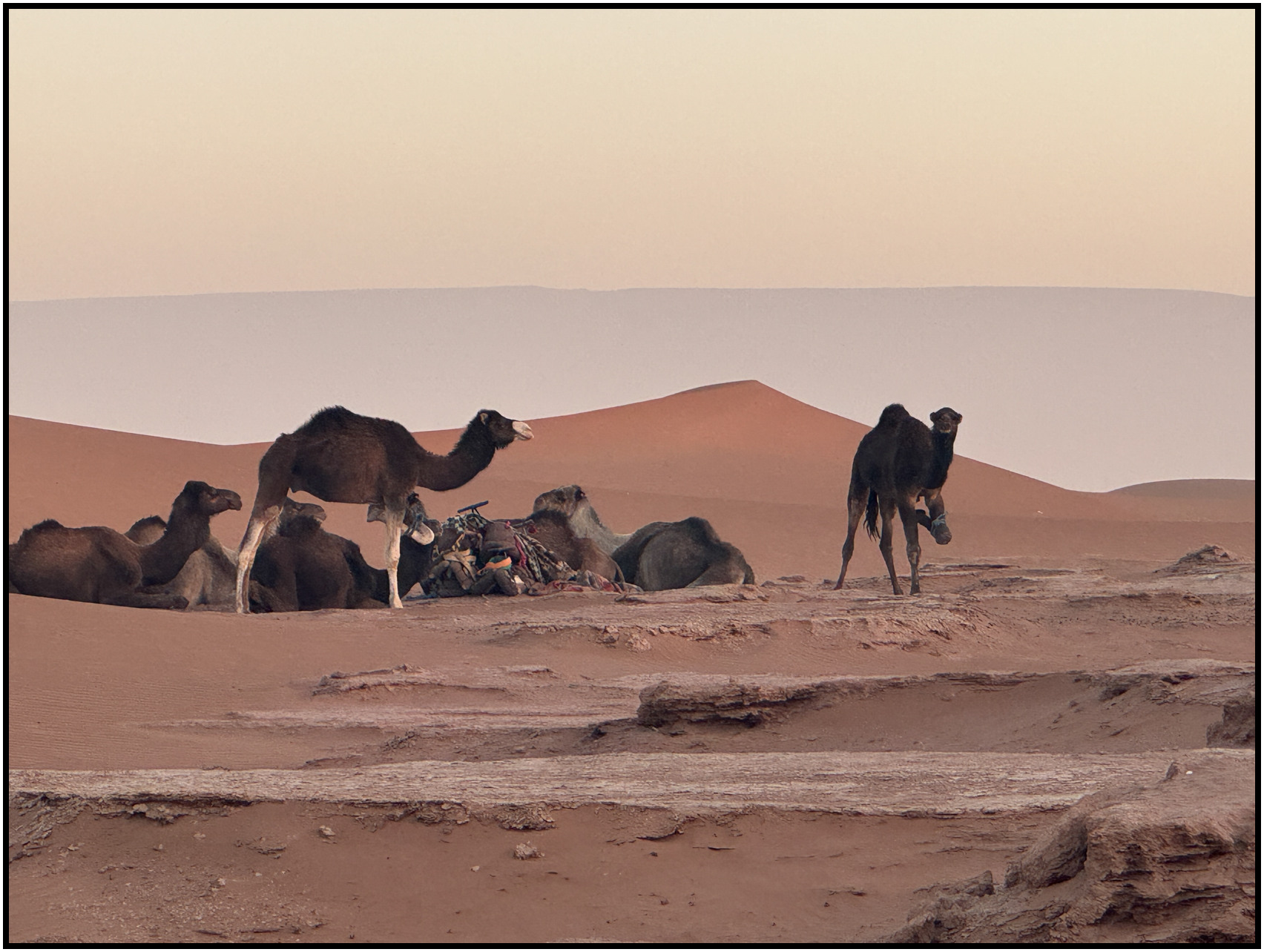
Our camp’s camels. There are no fences here; to keep the camels from wandering off, they tie up one of their legs. (You can see it on the two camels in the foreground.) They can walk on three legs, but don’t like it much. Therefore they stick around.
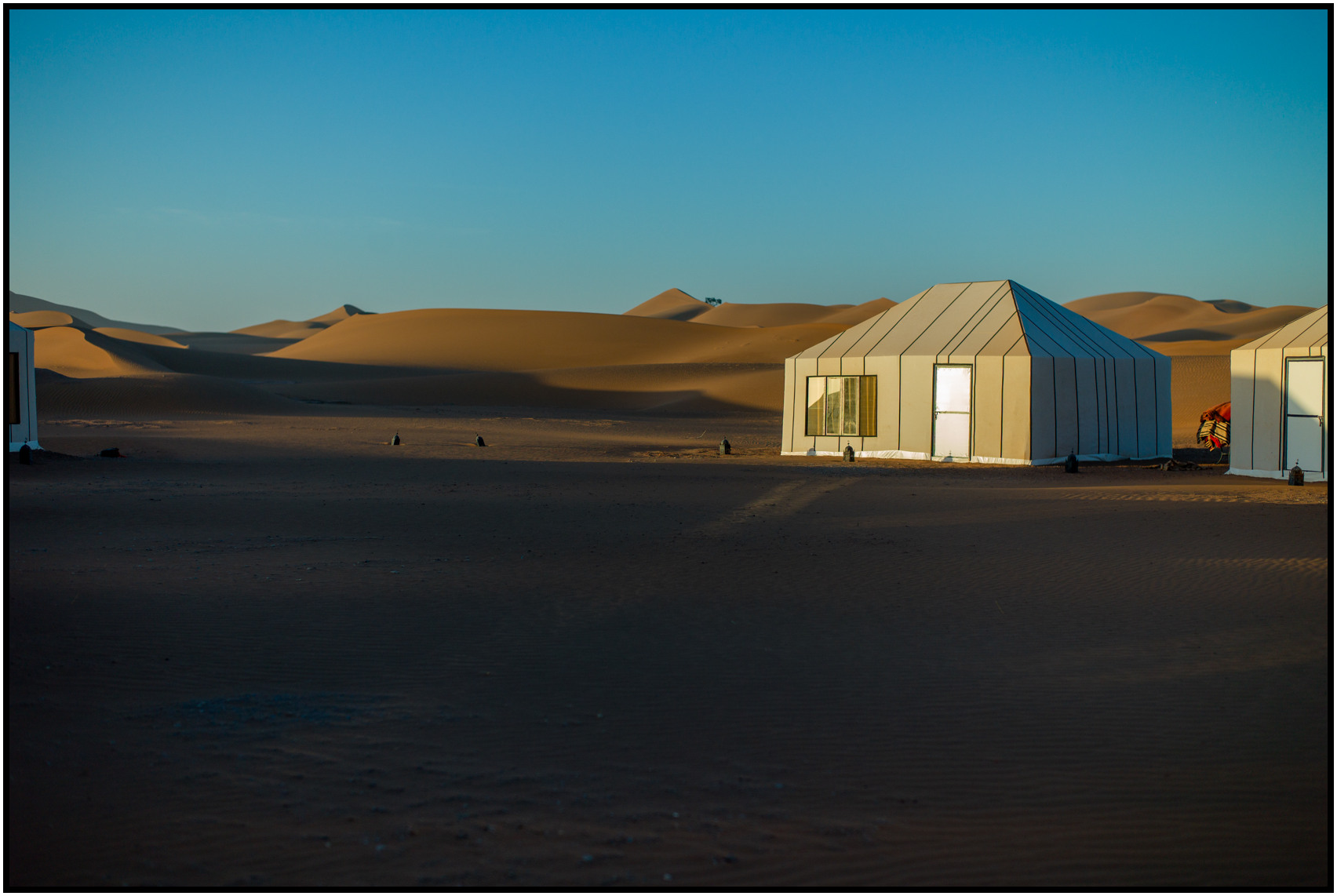
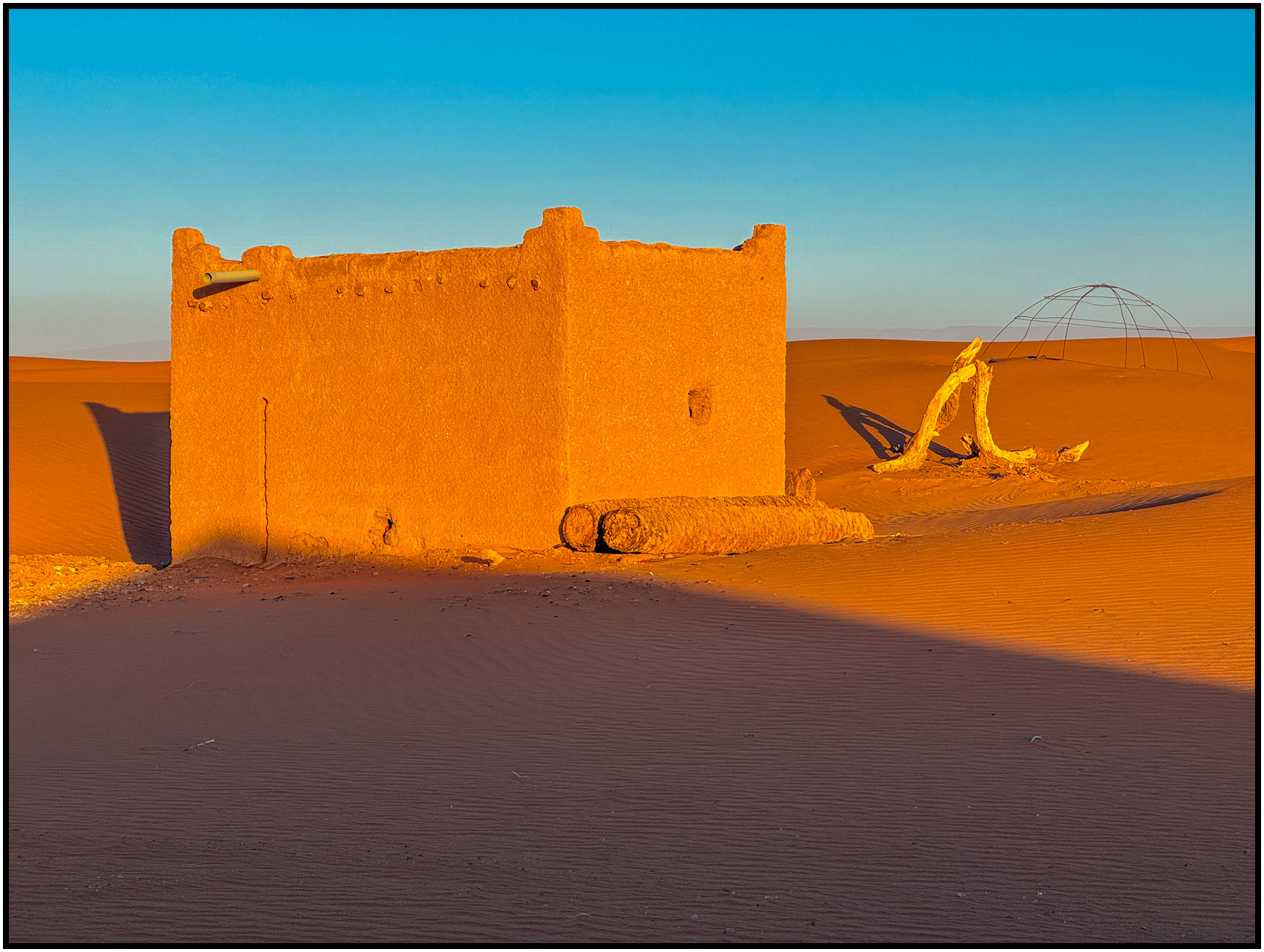
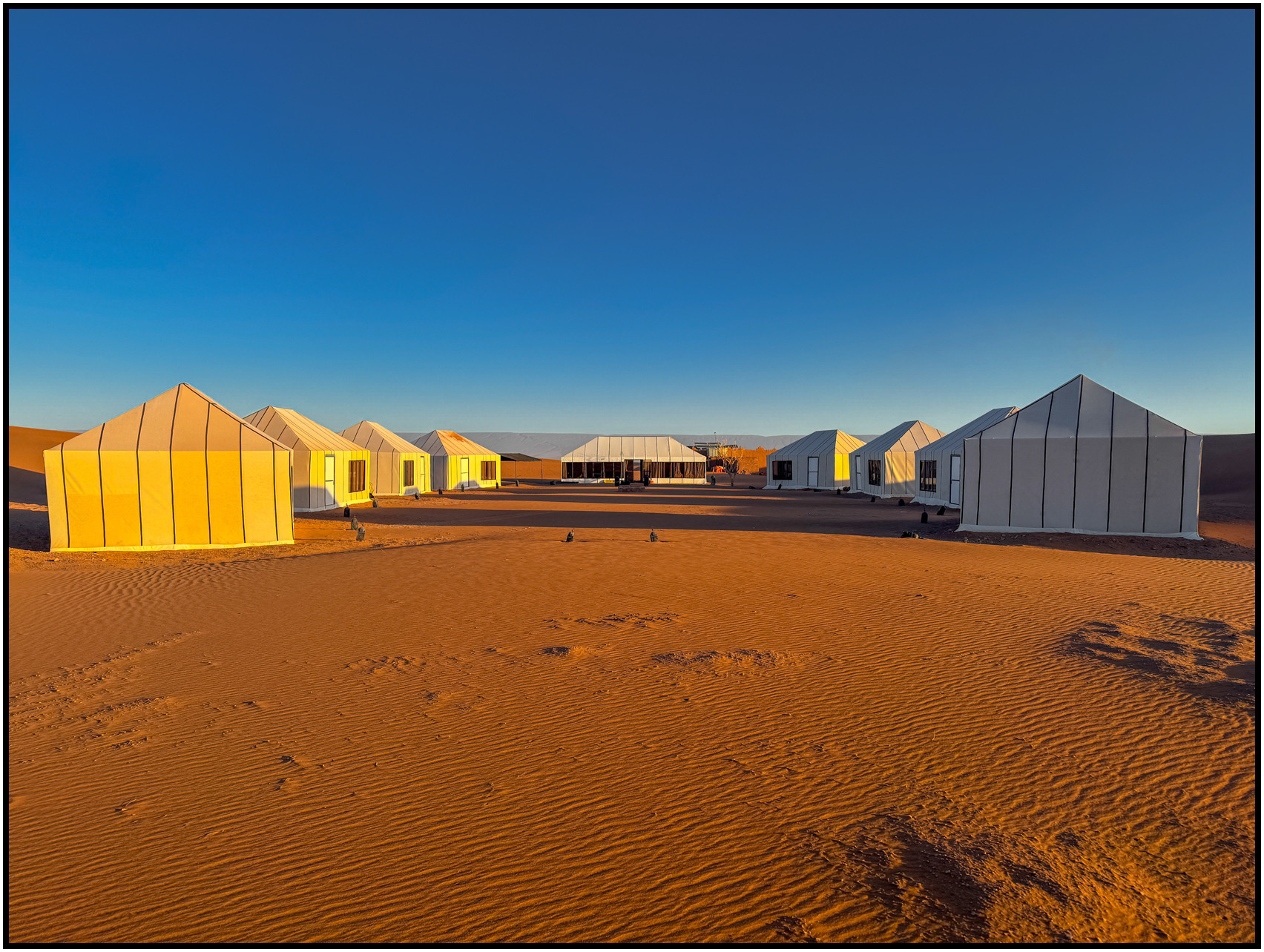
Entire view of our camp at sunrise. We stayed at the tent just to the right of the main tent in center. All of the other ones were empty last night.
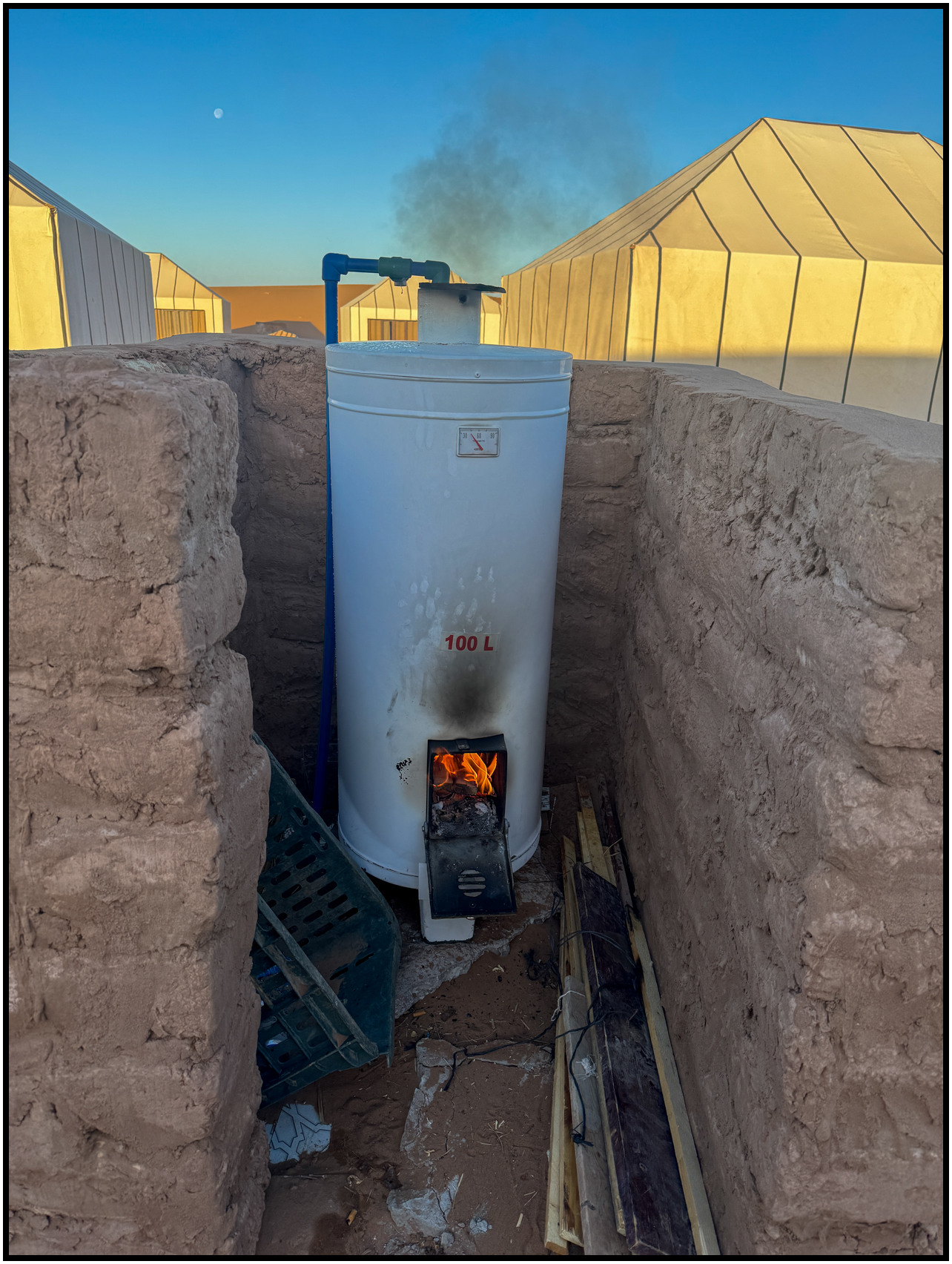
Hot water heater… of a sort. Showers this morning were rather brisk, but maybe if we had waited another hour or two it might have warmed up.
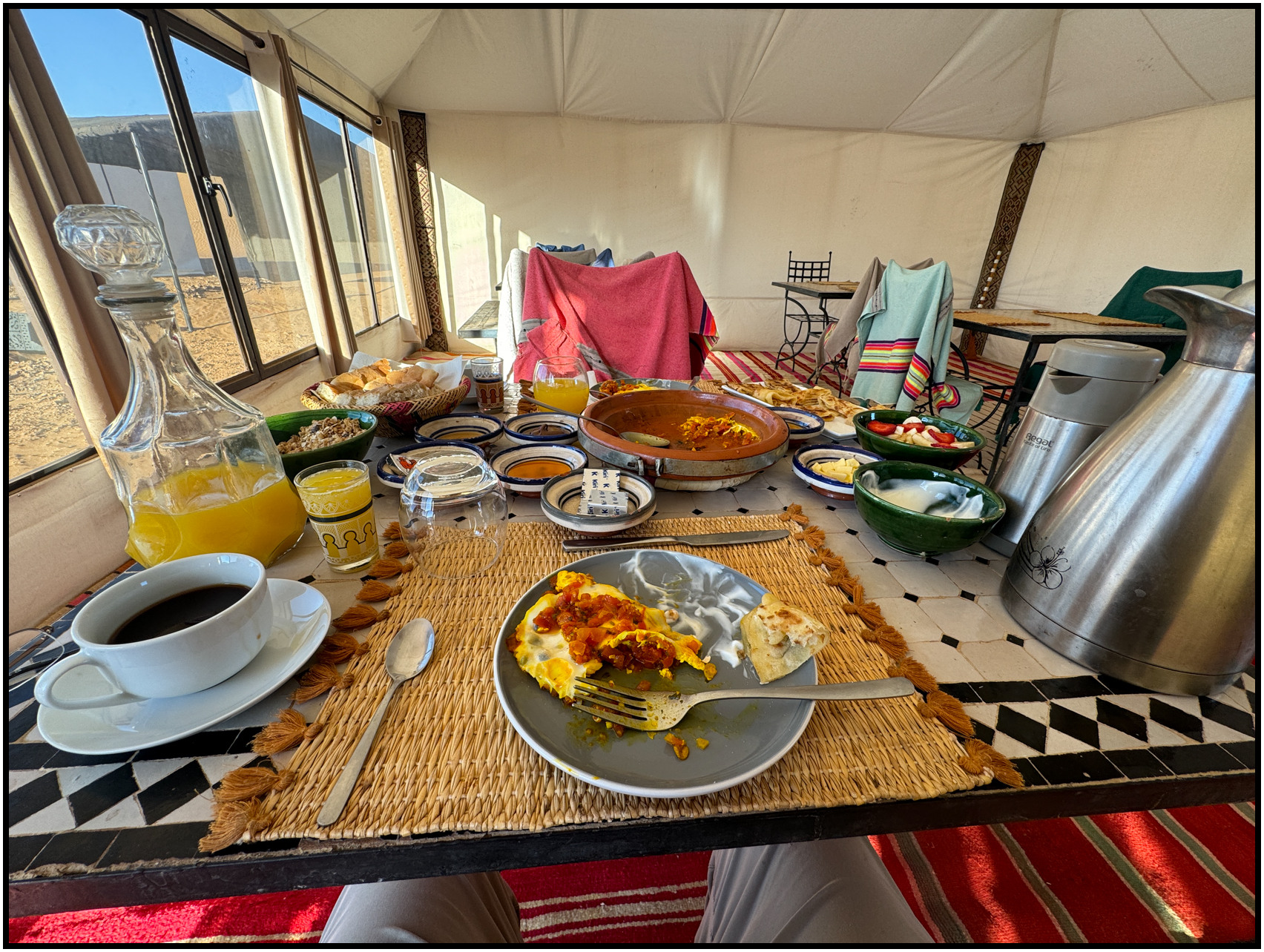
Breakfast. Way too much food for just the two of us.
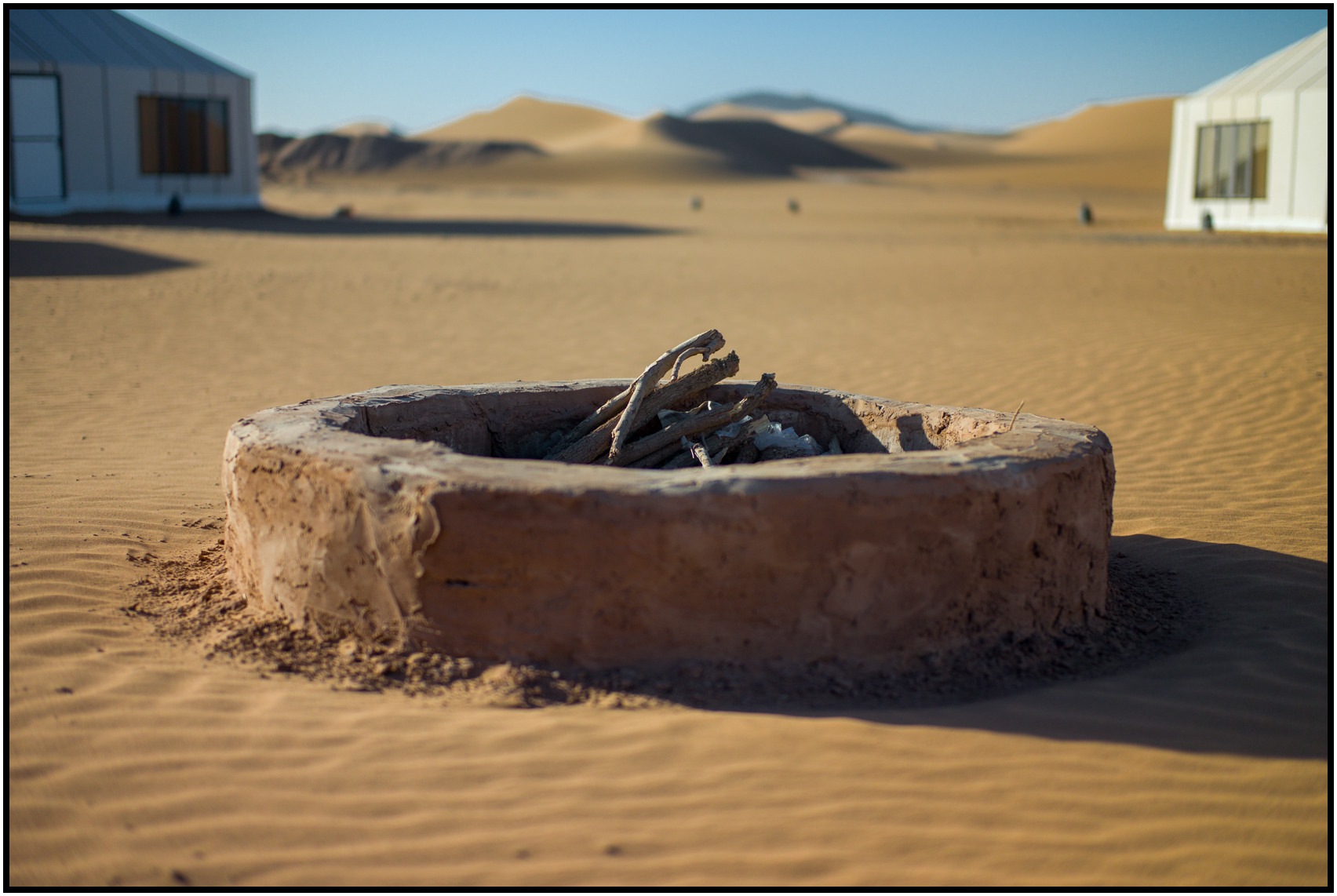
Campfire in the center. This will be a locus of activity later tonight. (Our first night was too sand-stormy to be outside.)
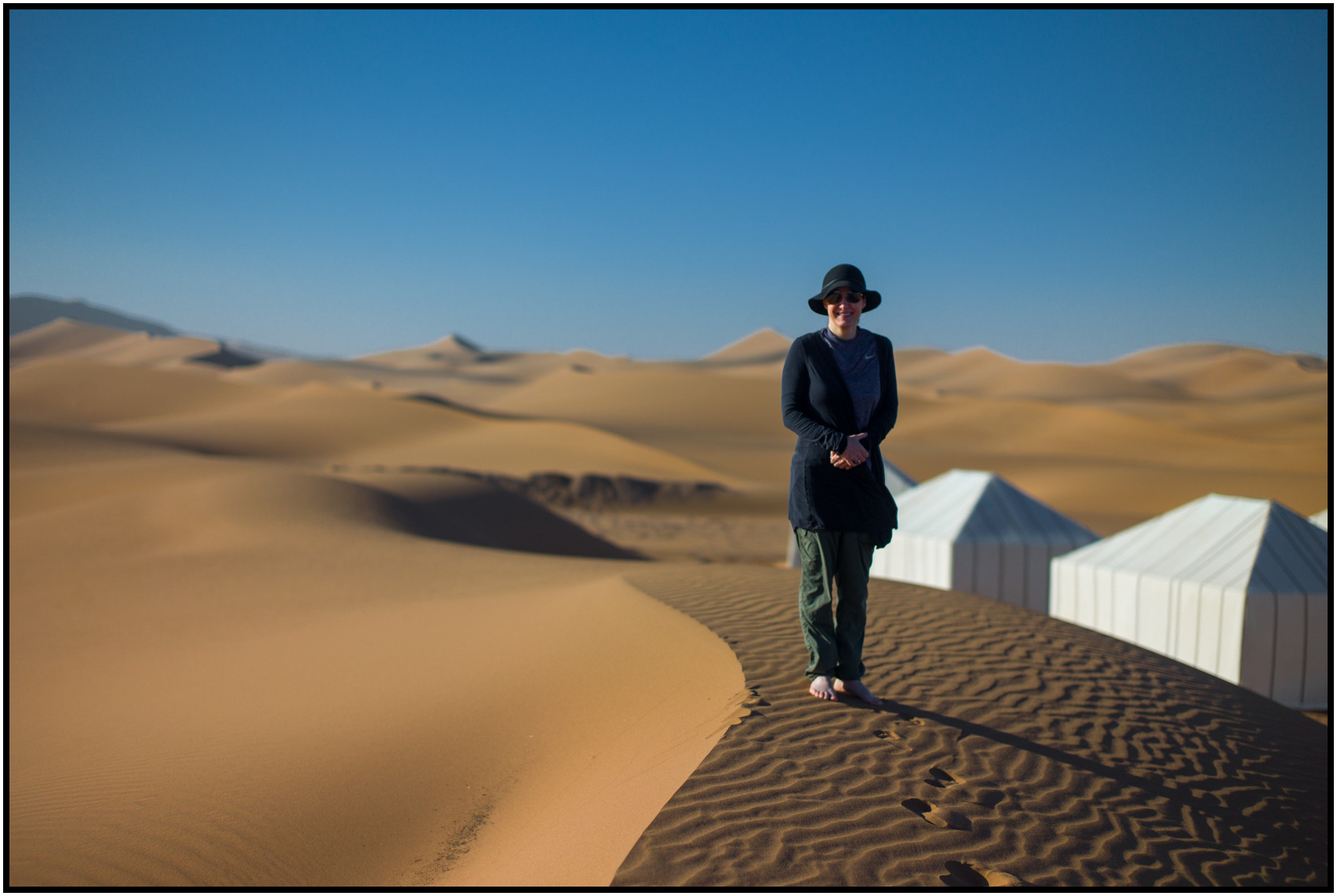
Going for a walk before we start our day. They asked us what we want to do today and we said “Ride more camels.” So, we have plans for a journey to an Oasis about 10 miles away. Getting there by camel.
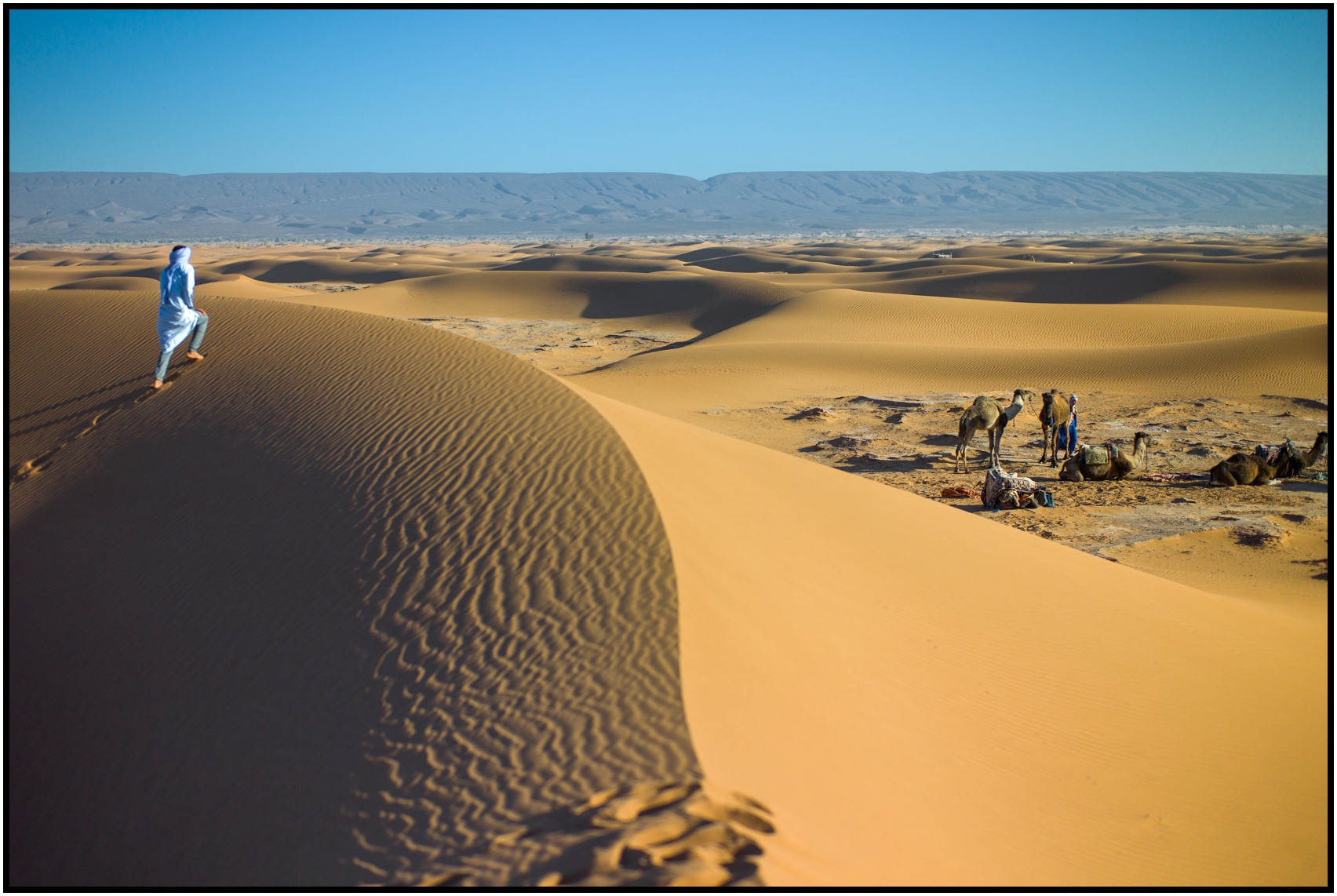
Photo of the camp manager going over to tell the camel shepherd that we’re ready to saddle up.
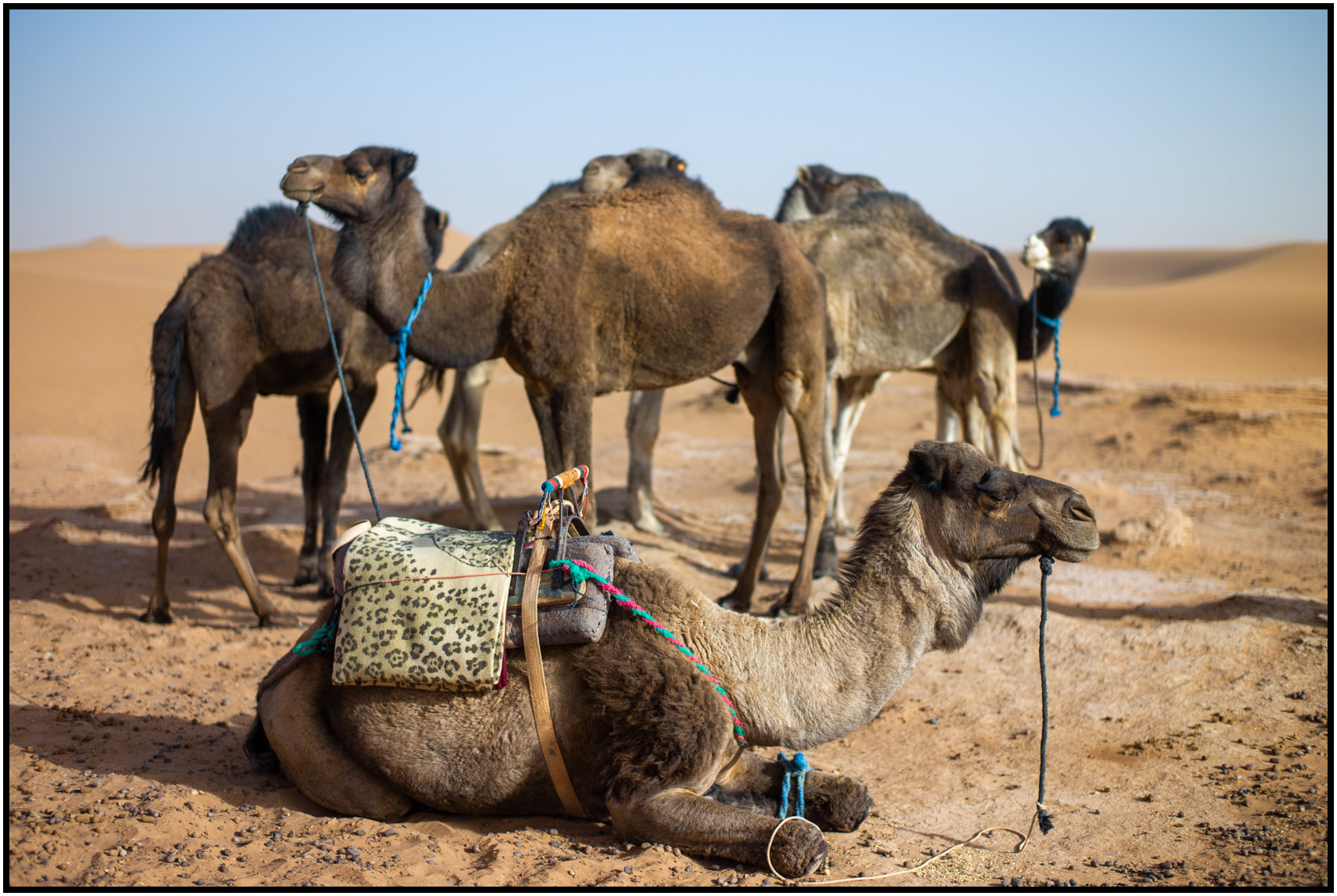
This one is my guy for the day.
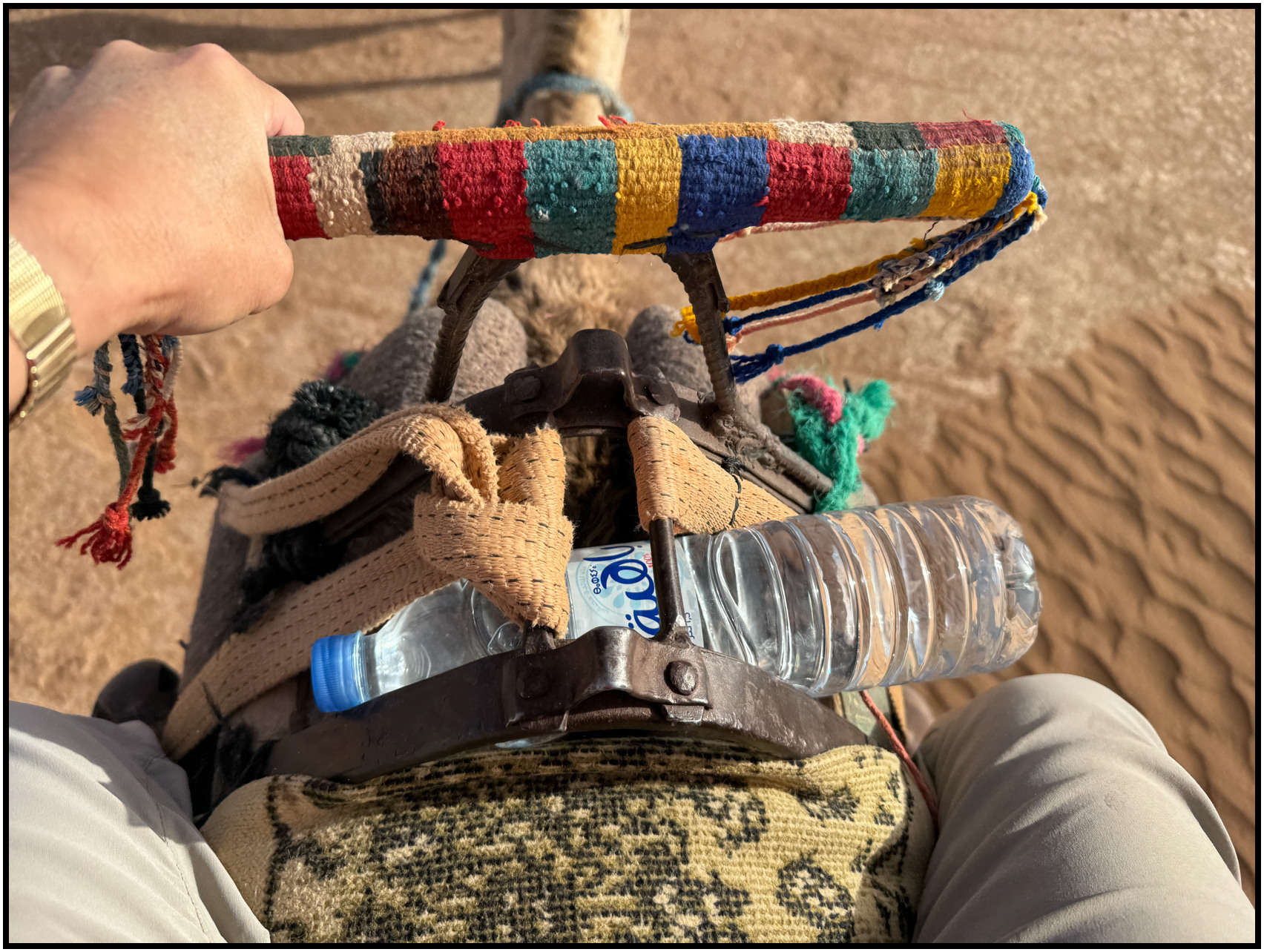
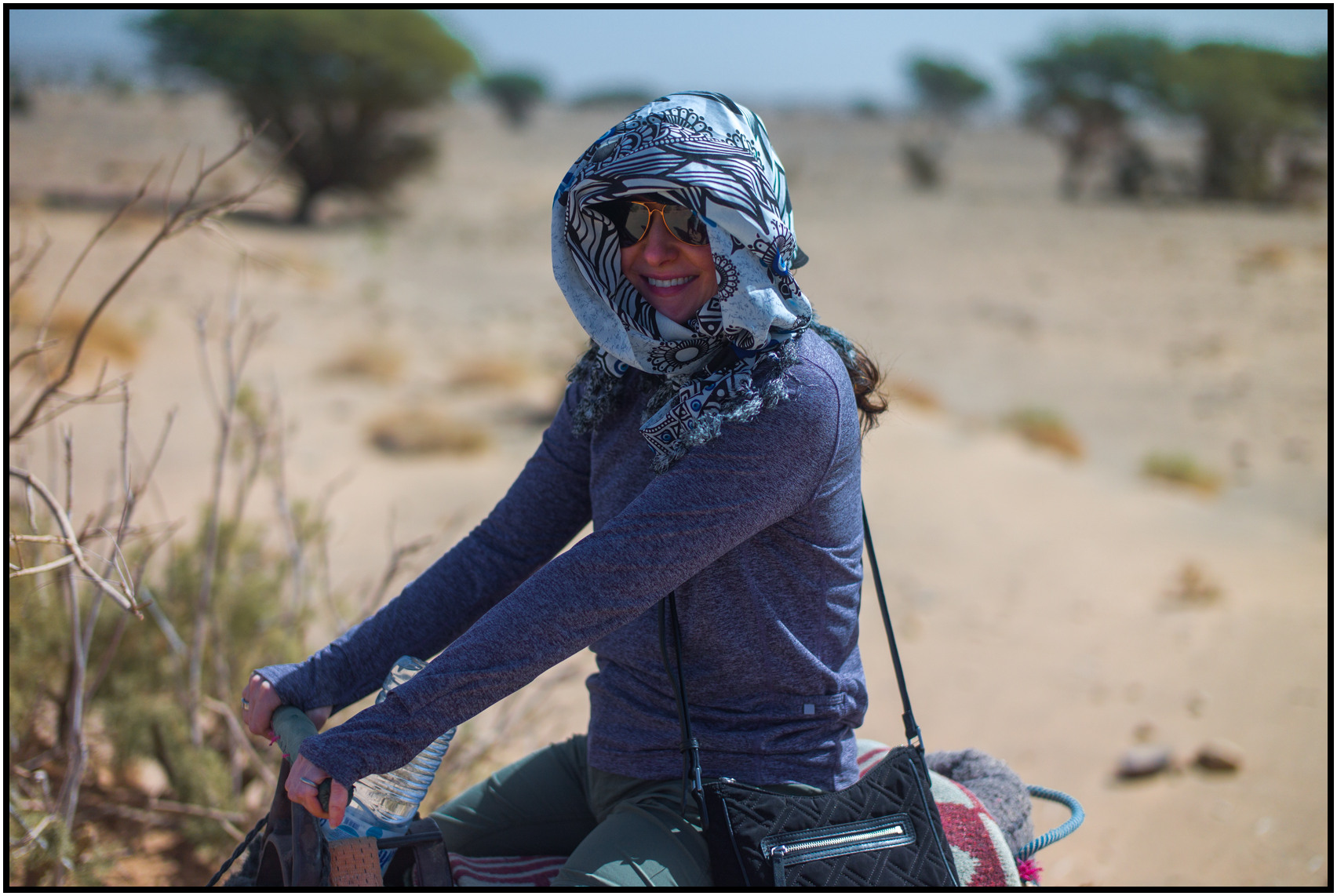
A handy place to keep some water.. .and you need it.
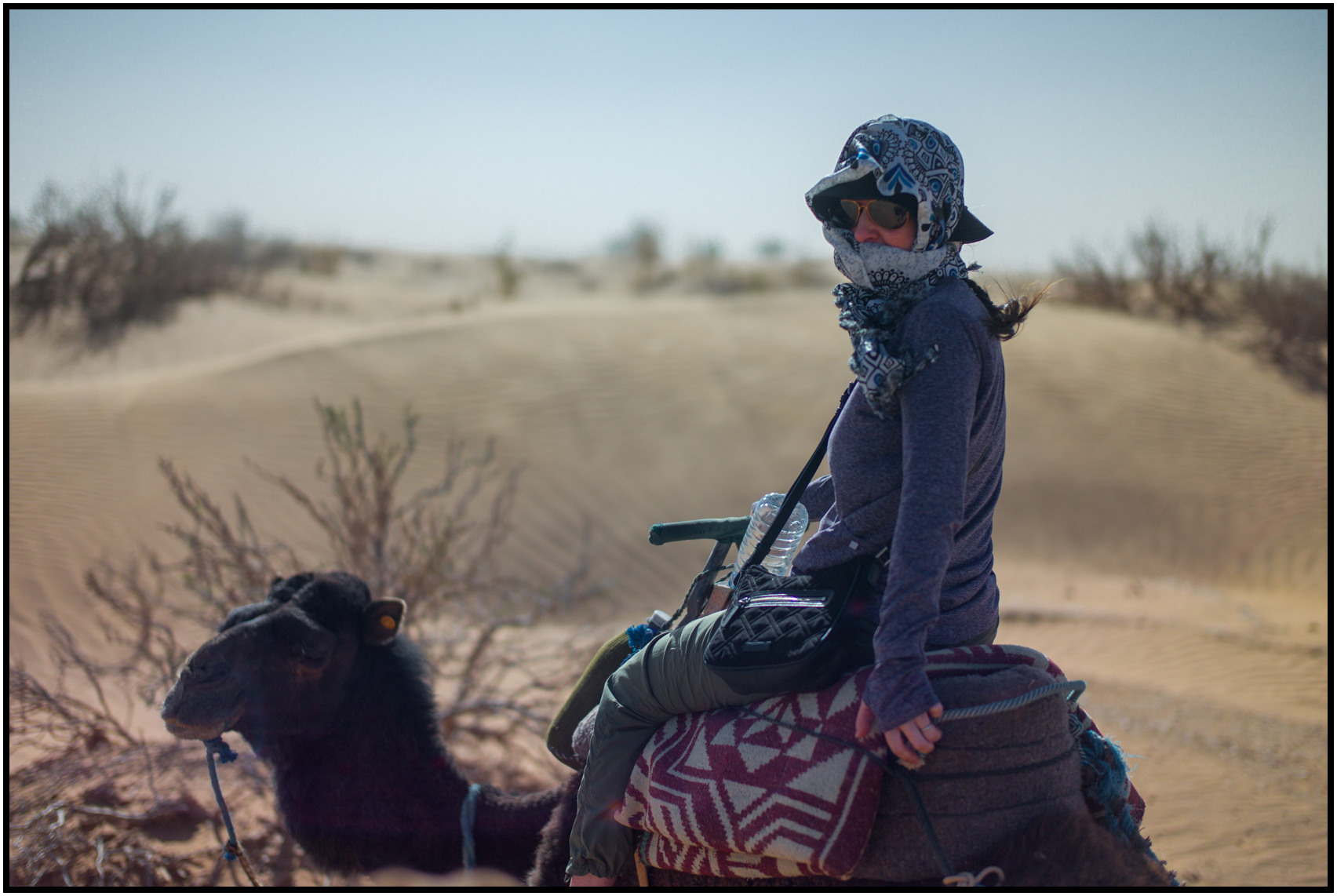
Brenda is in heaven.
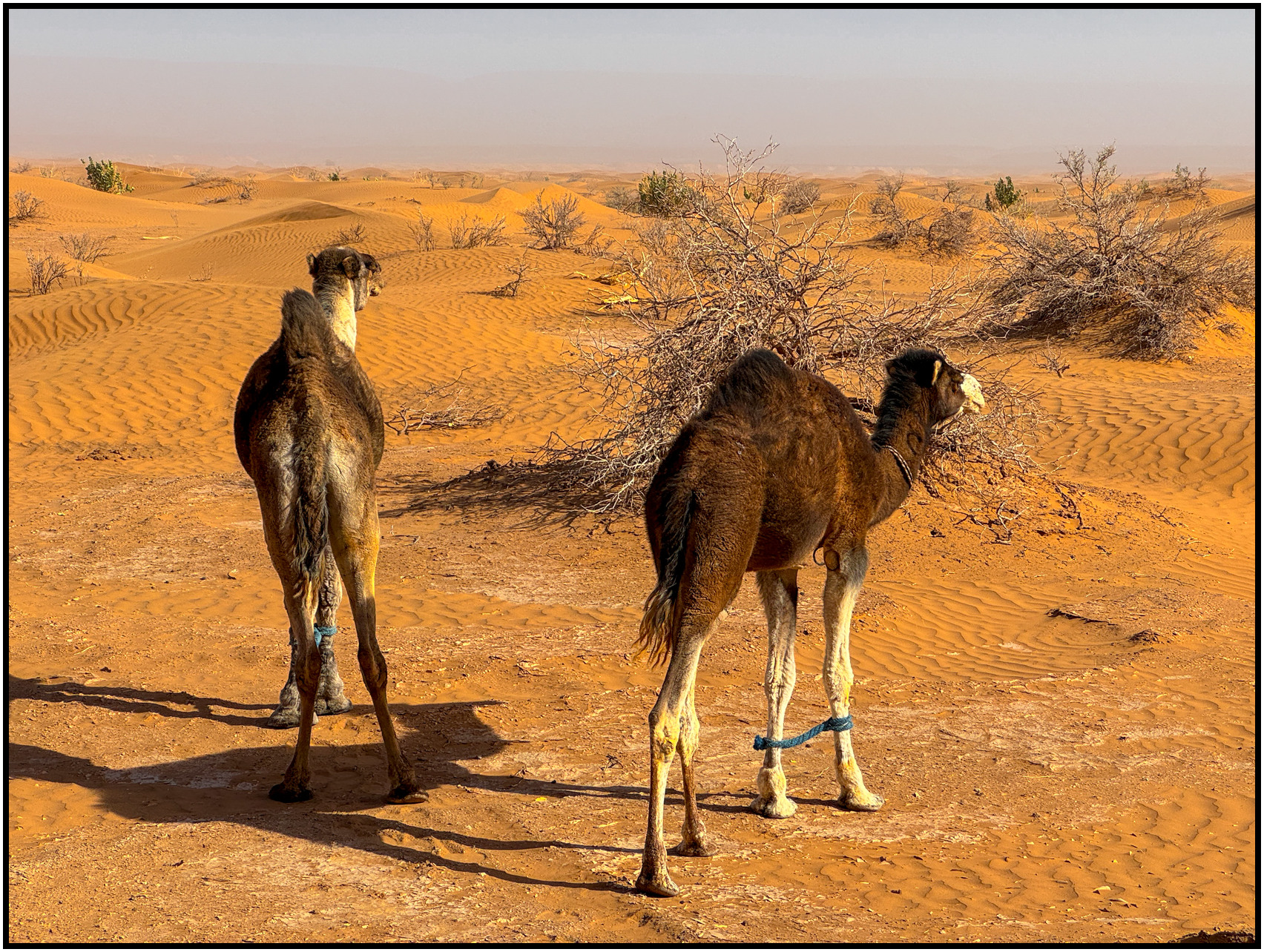
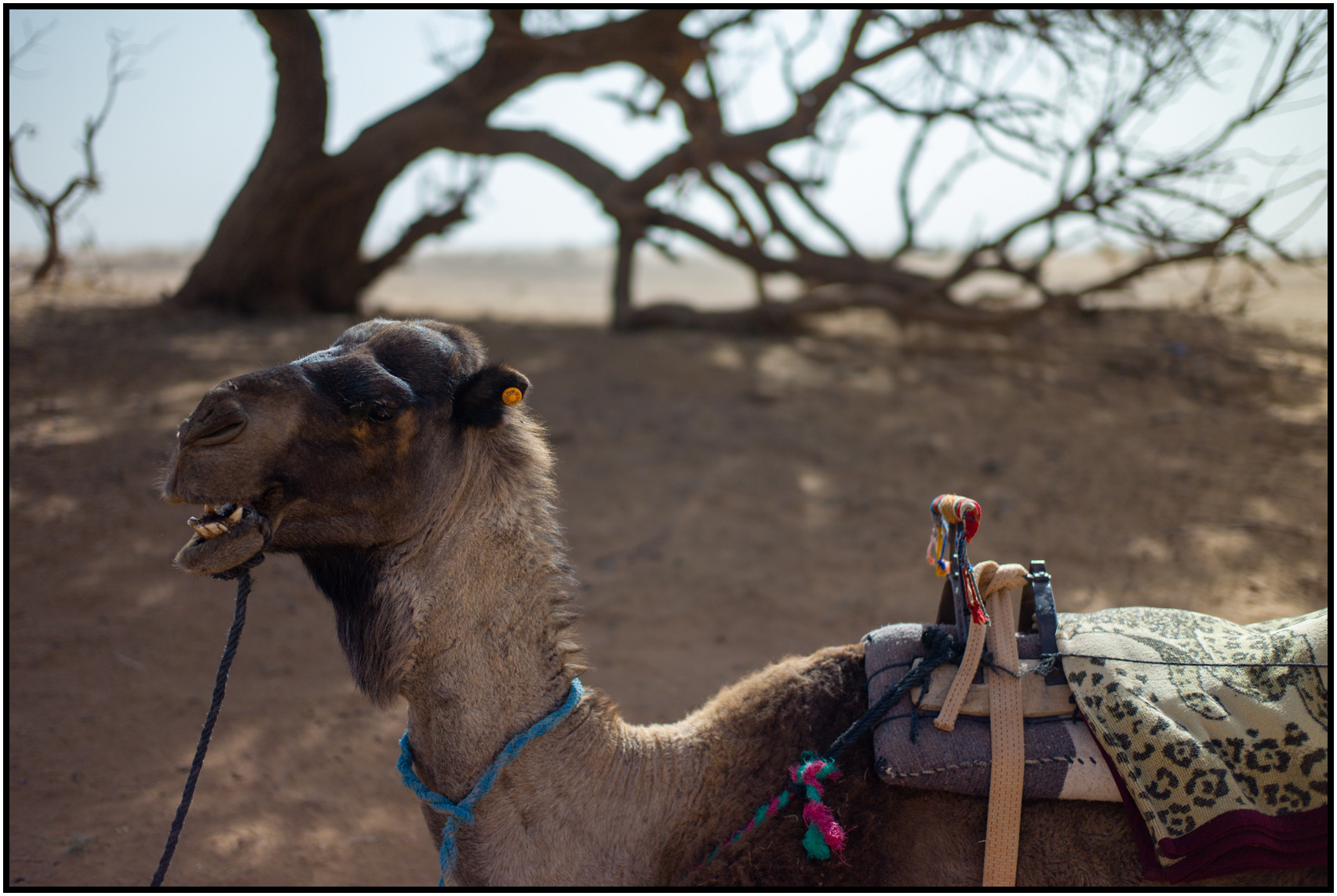
Some of our convoy’s camels. The shepherd set the riderless camels free to graze while we continued on. They bind their legs to keep them from running off too far. He will pick them up on his way back to camp later in the evening. The two camels we were riding were none too happy about having to continue walking while the others all got to stay in the grazing grounds. They did a lot of grunting and moaning.
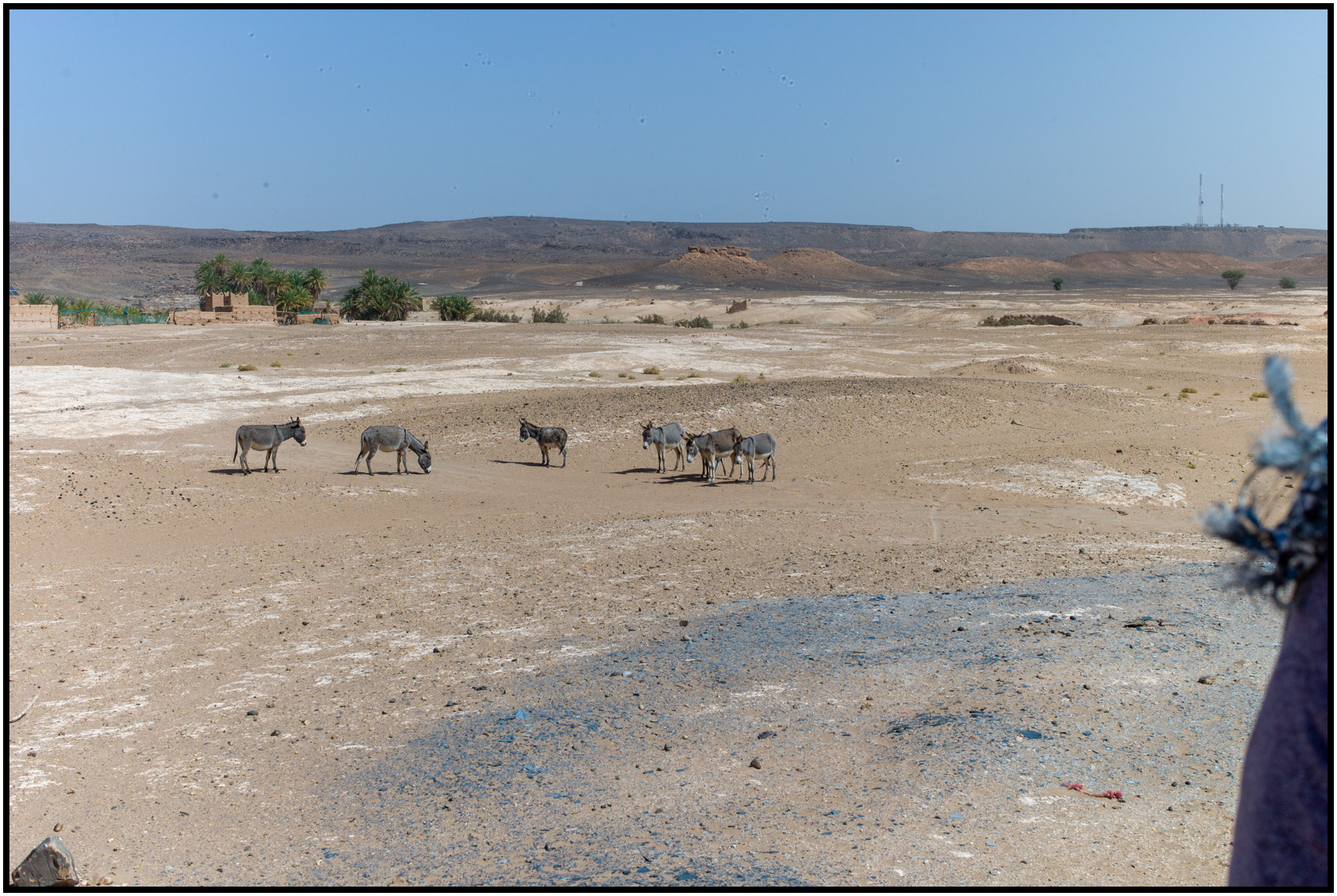
Wild donkeys.
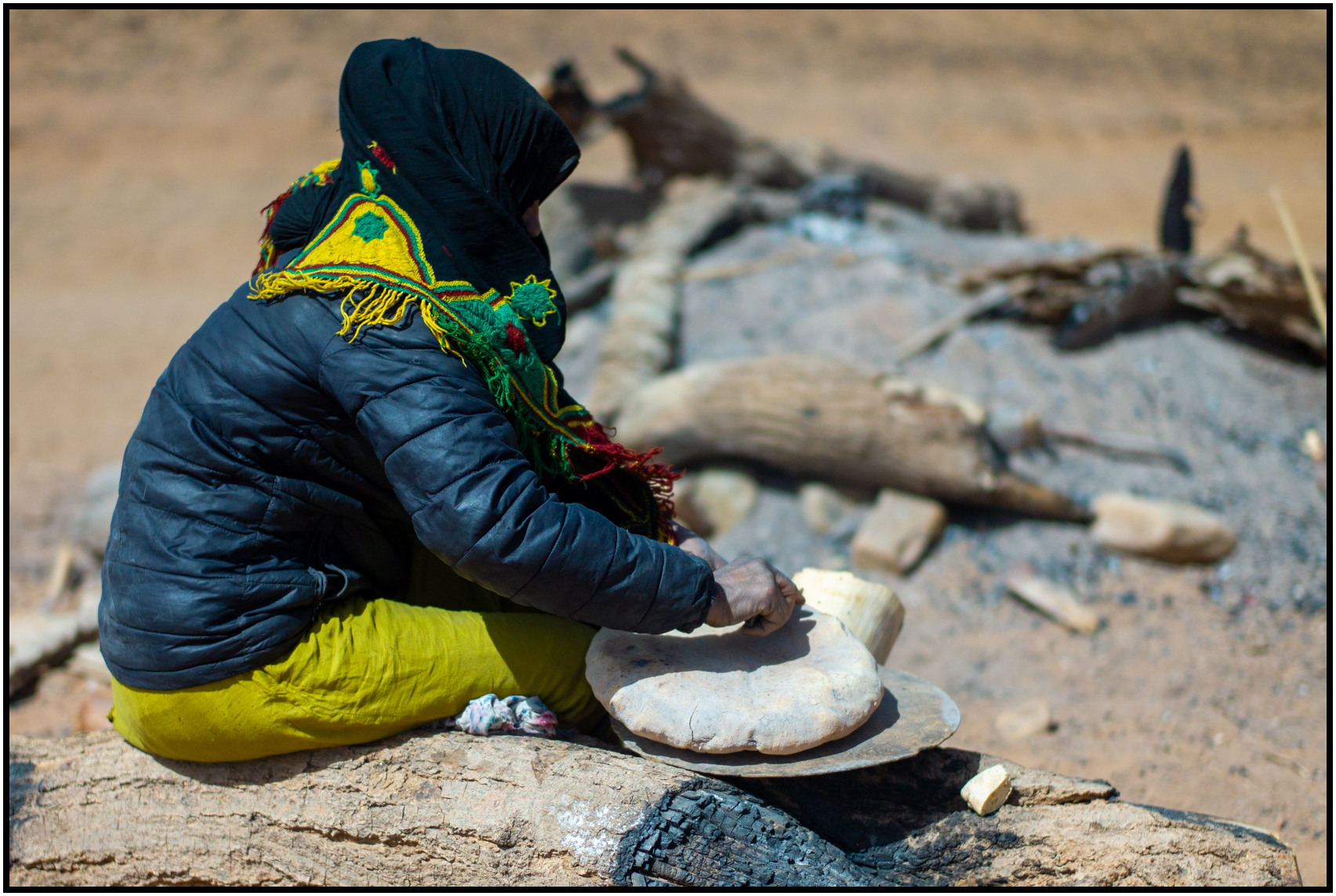
At our final destination. We rode 3 1/2 hours to get here… a Nomad camp that is set up to receive tourists to look around, share a tea with a local and get some food. Here she is demonstrating how she bakes bread.
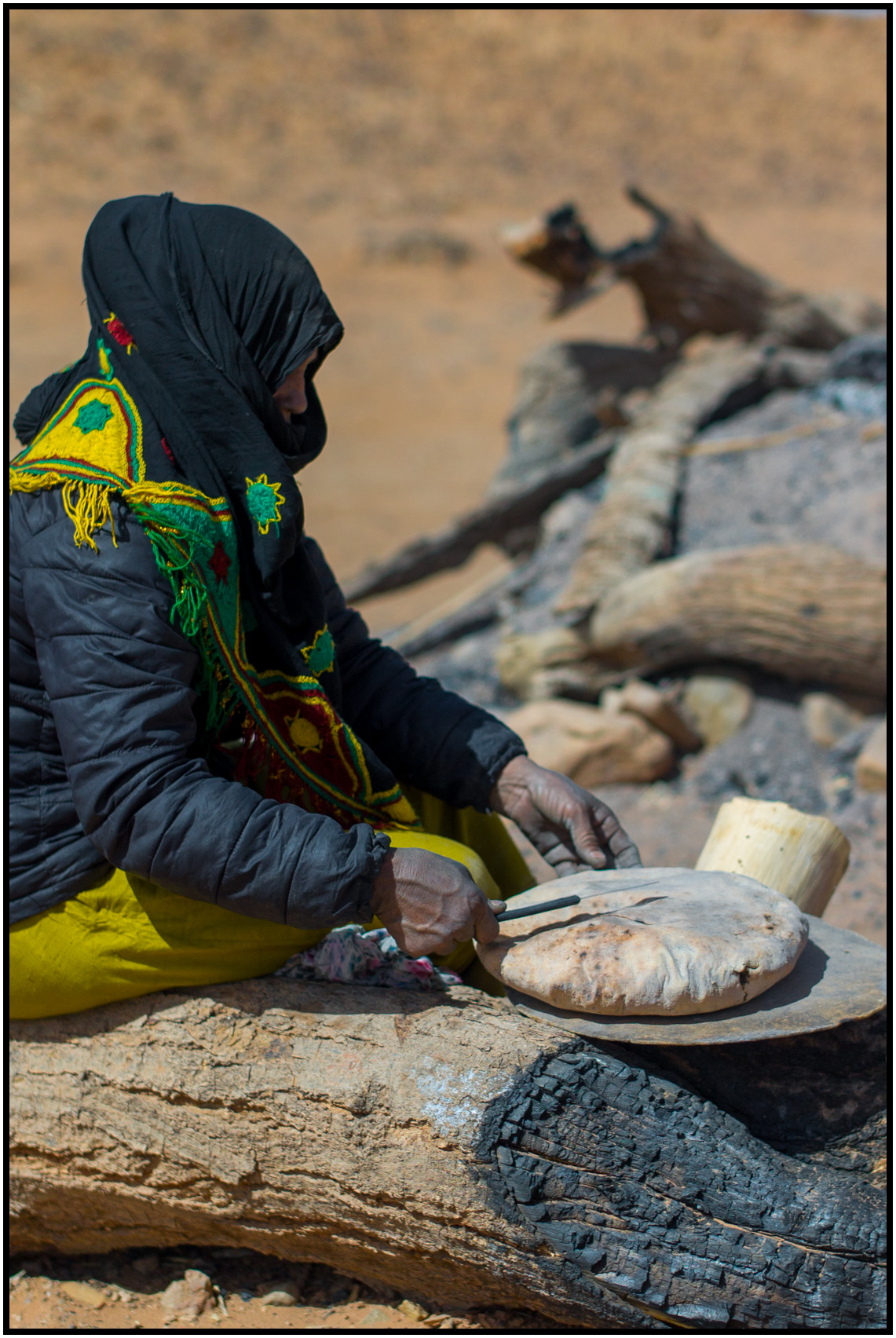
She has an open fire/charcoal pile and the loaves are cooked on top. Later she scrapes off the charcoal and they’re ready for eating. We had some with our tea. It was delicious.
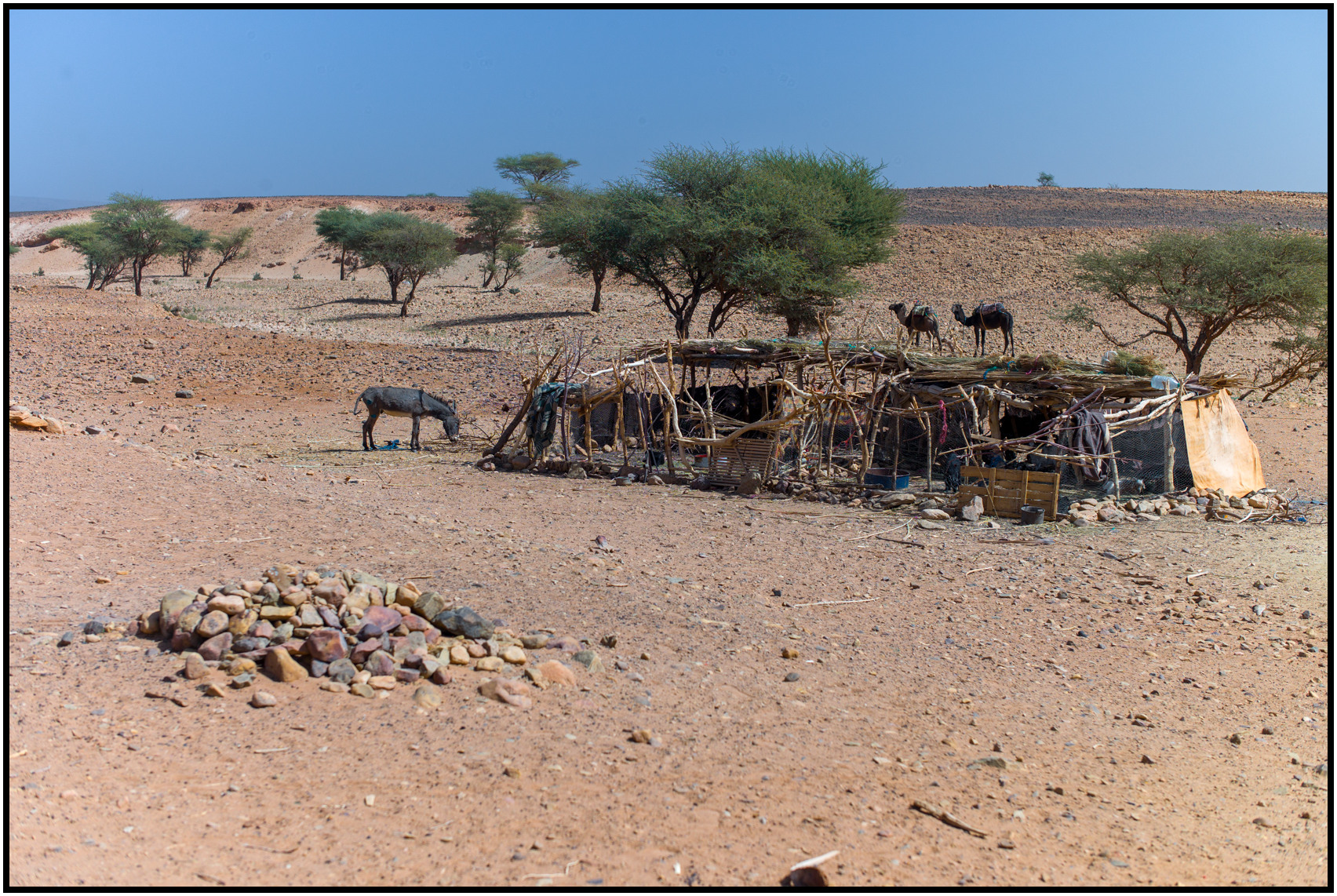
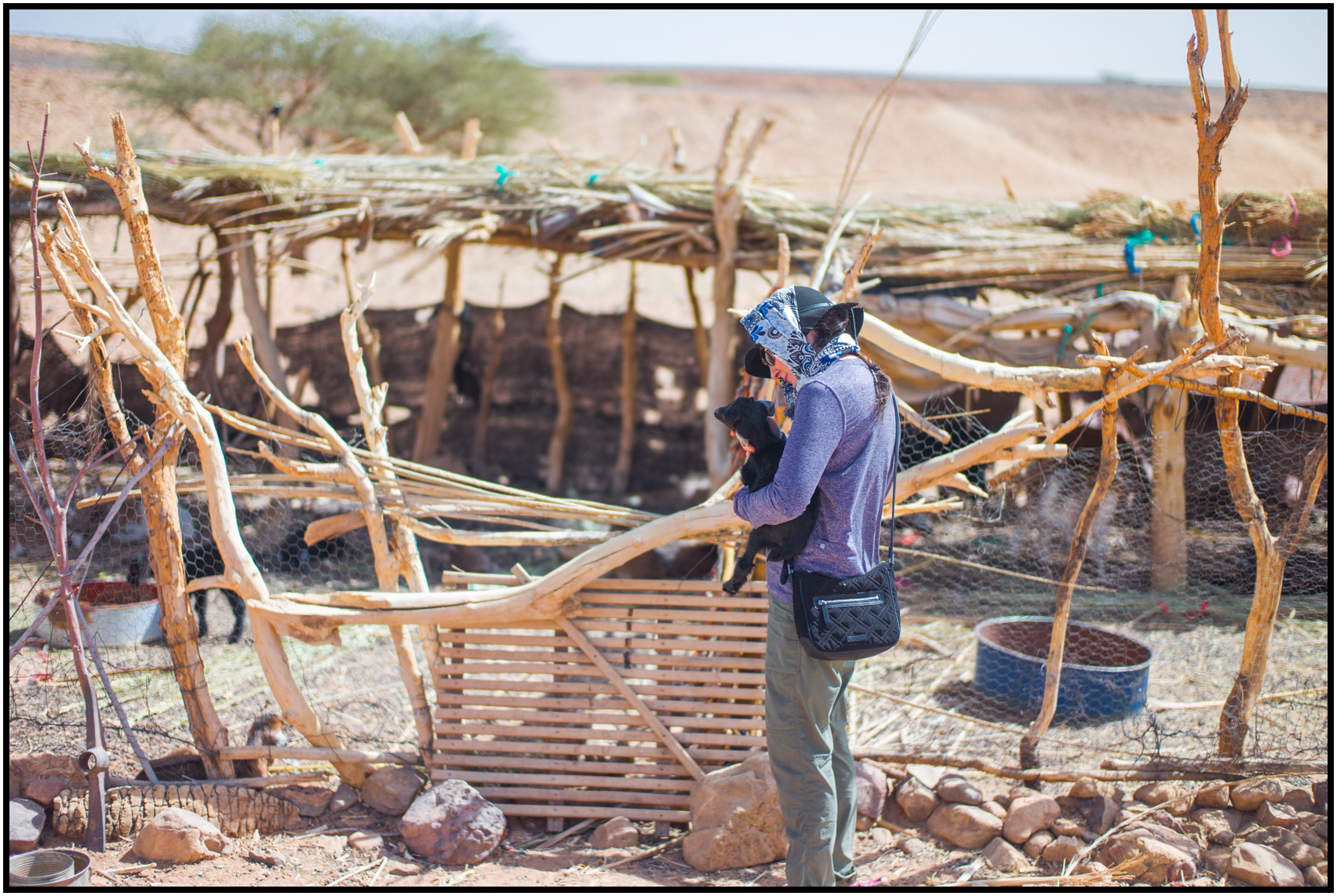
At the Nomad camp. This is a pen for baby goats. The mothers are herded off to the mountains to eat during the day and then return to give milk to kids and humans alike.
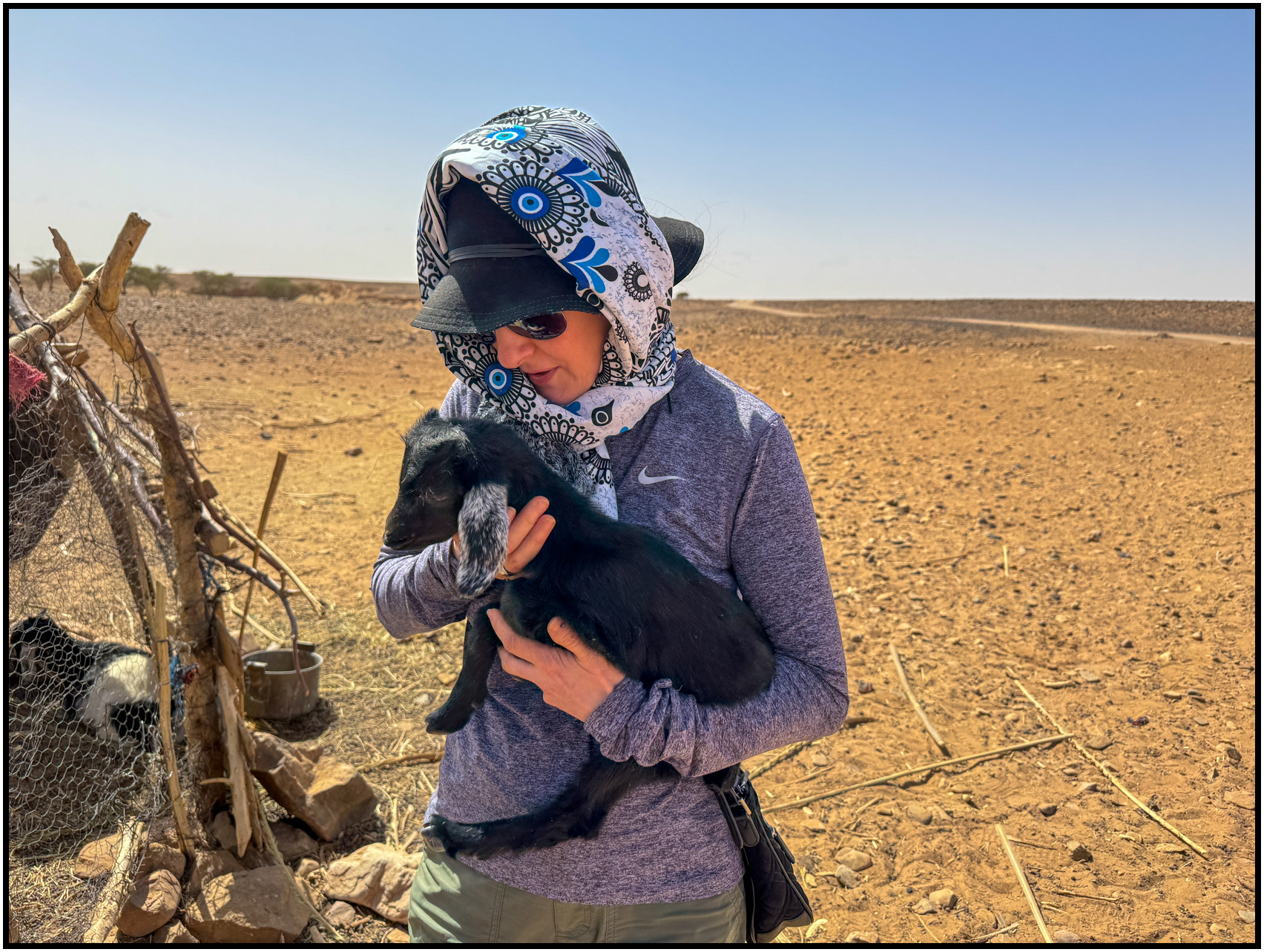
Brenda remains in heaven.
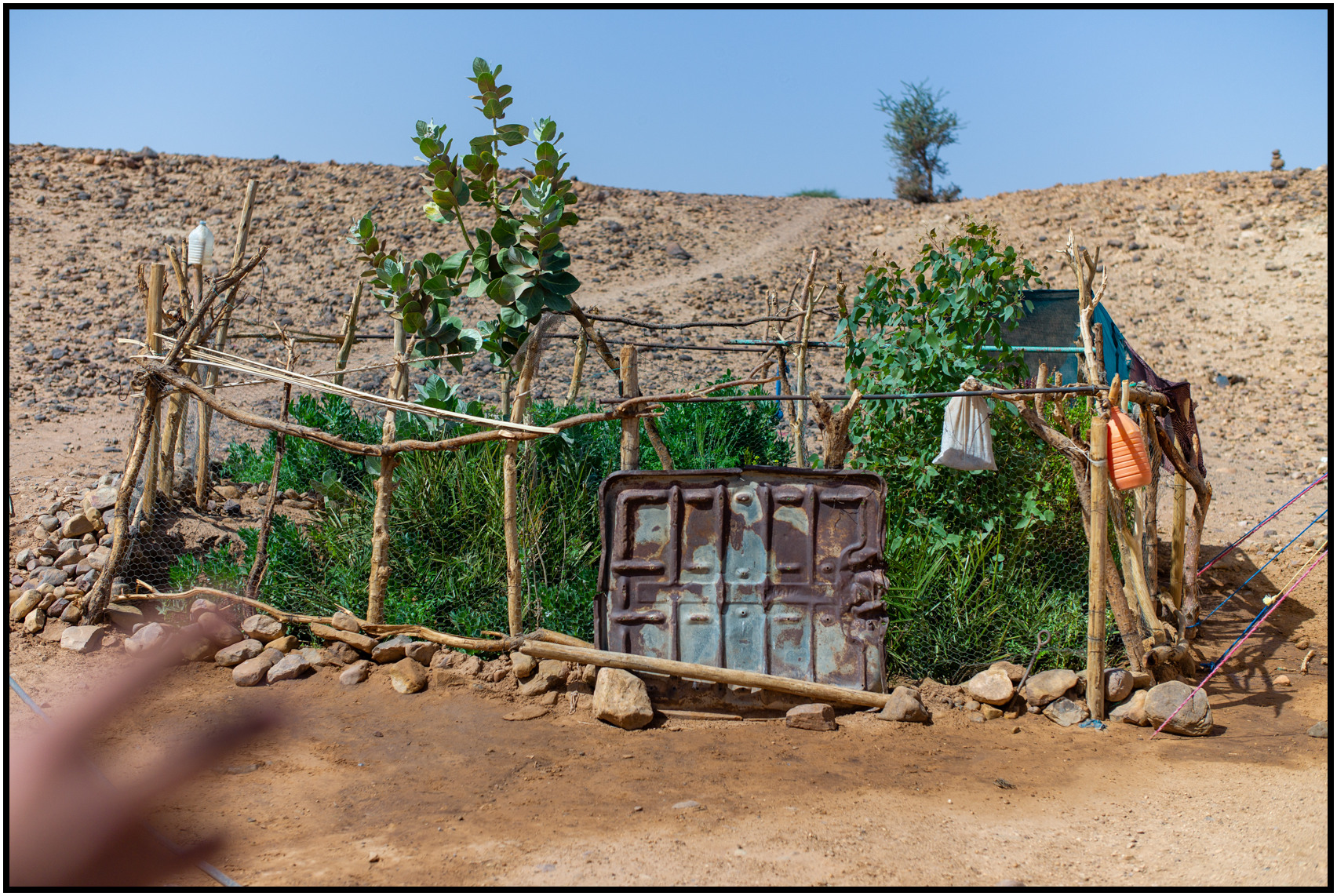
The garden.
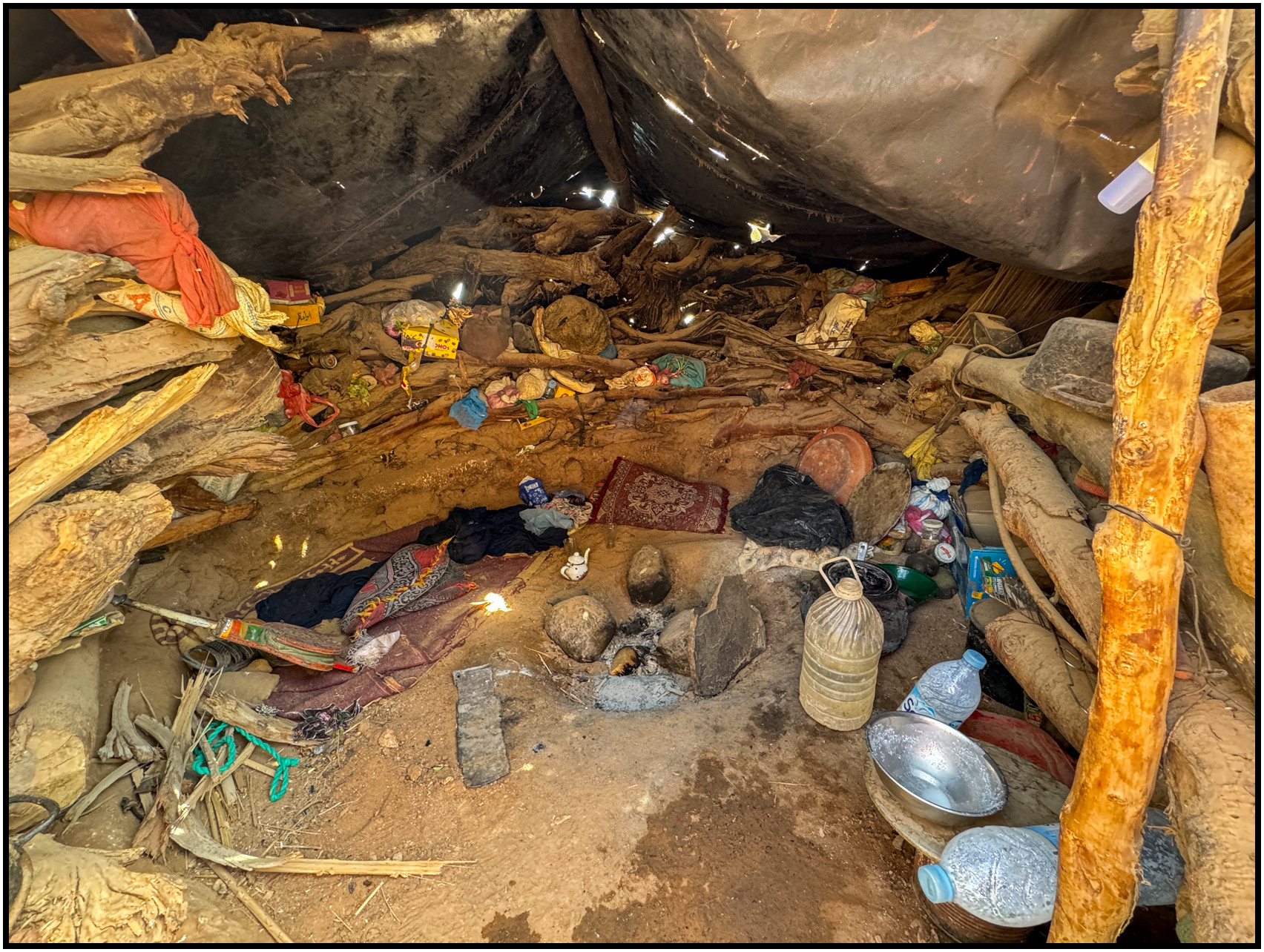
The kitchen.
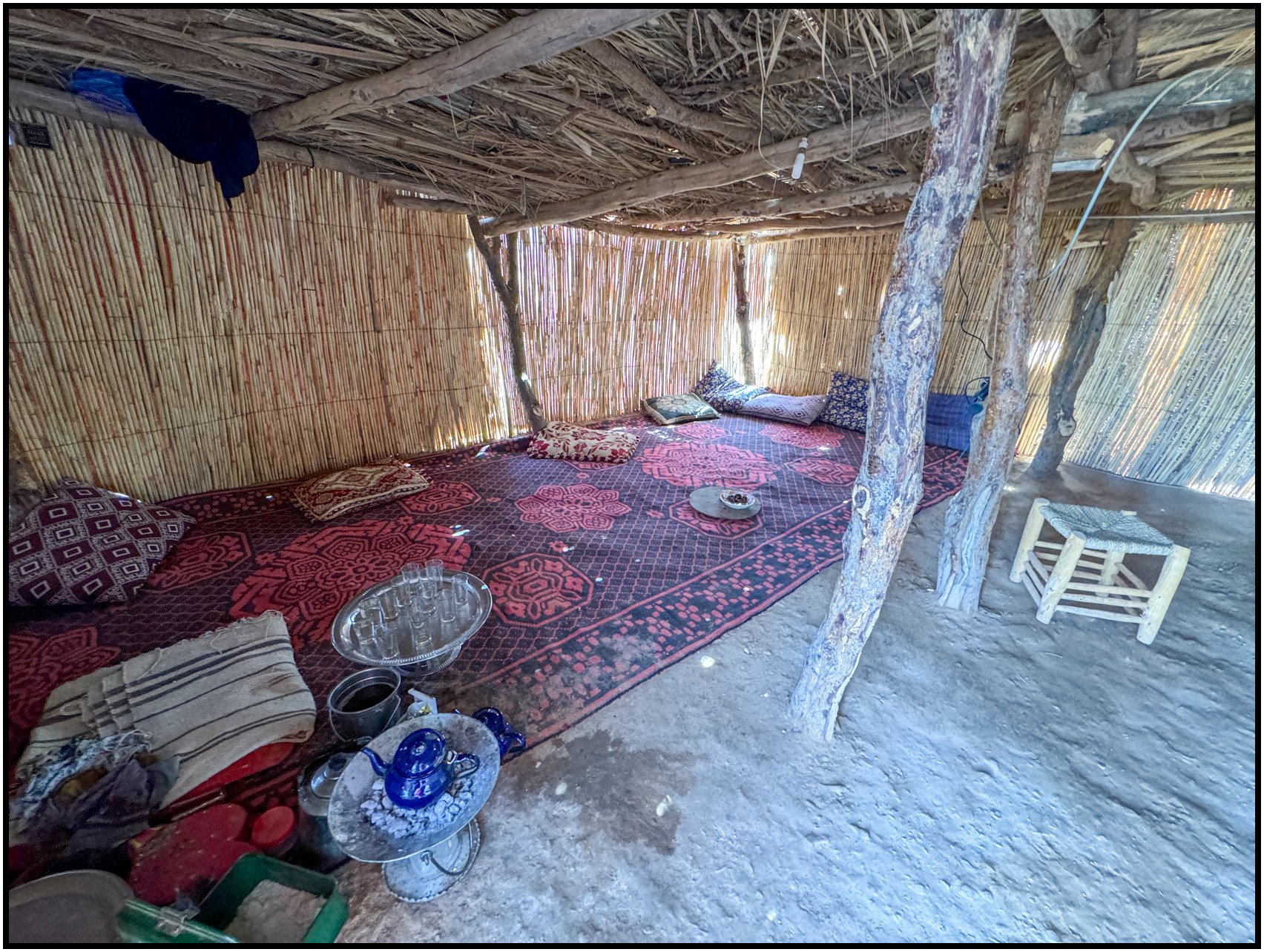
The guest area for meet and greet.
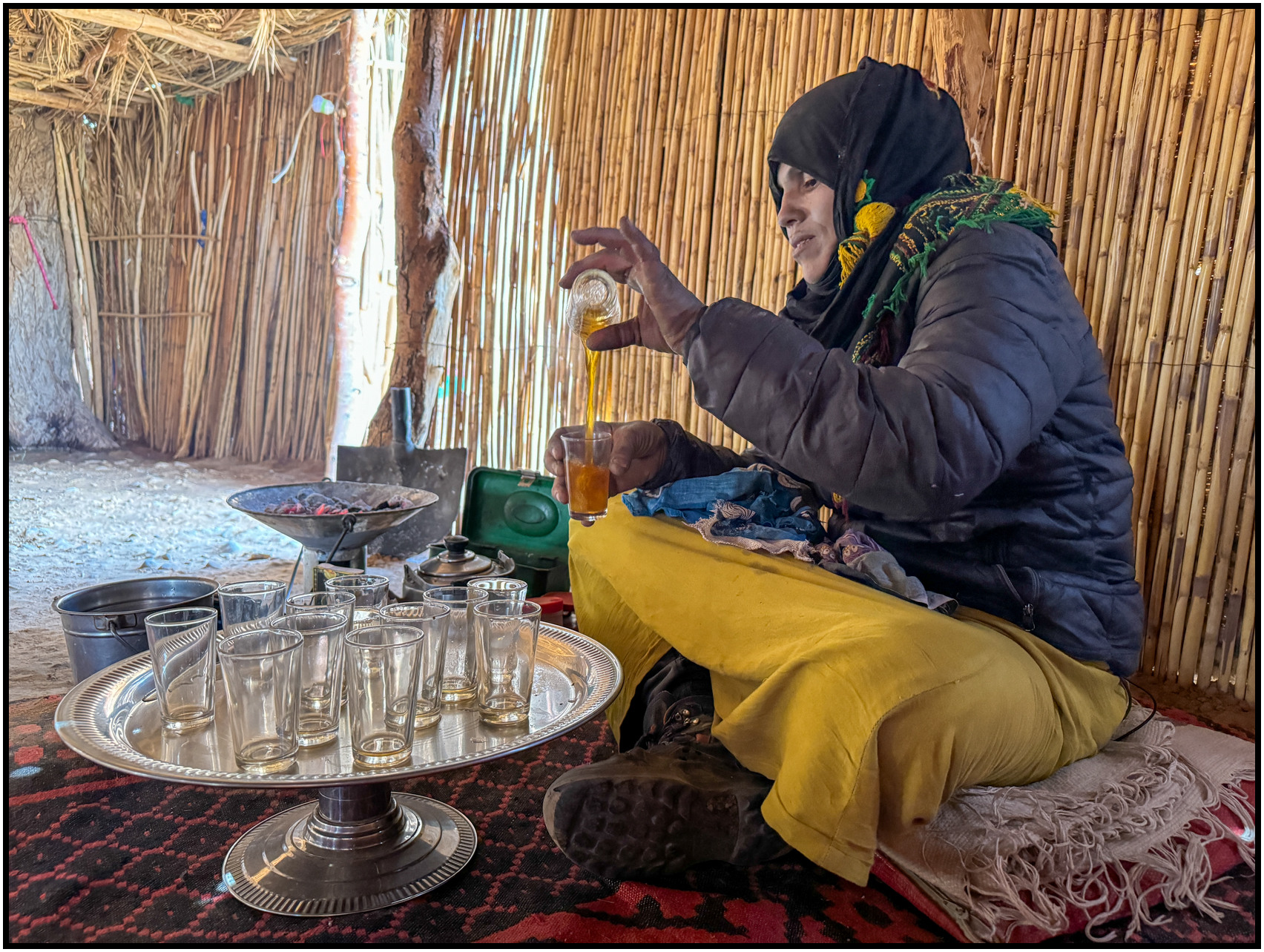
Our hostess making traditional “welcome” tea – a mixture of black tea and frankincense. Most of the other teas we have had this trip are from mint. The frankincense added a delicious and exotic flavor to ordinary black tea.
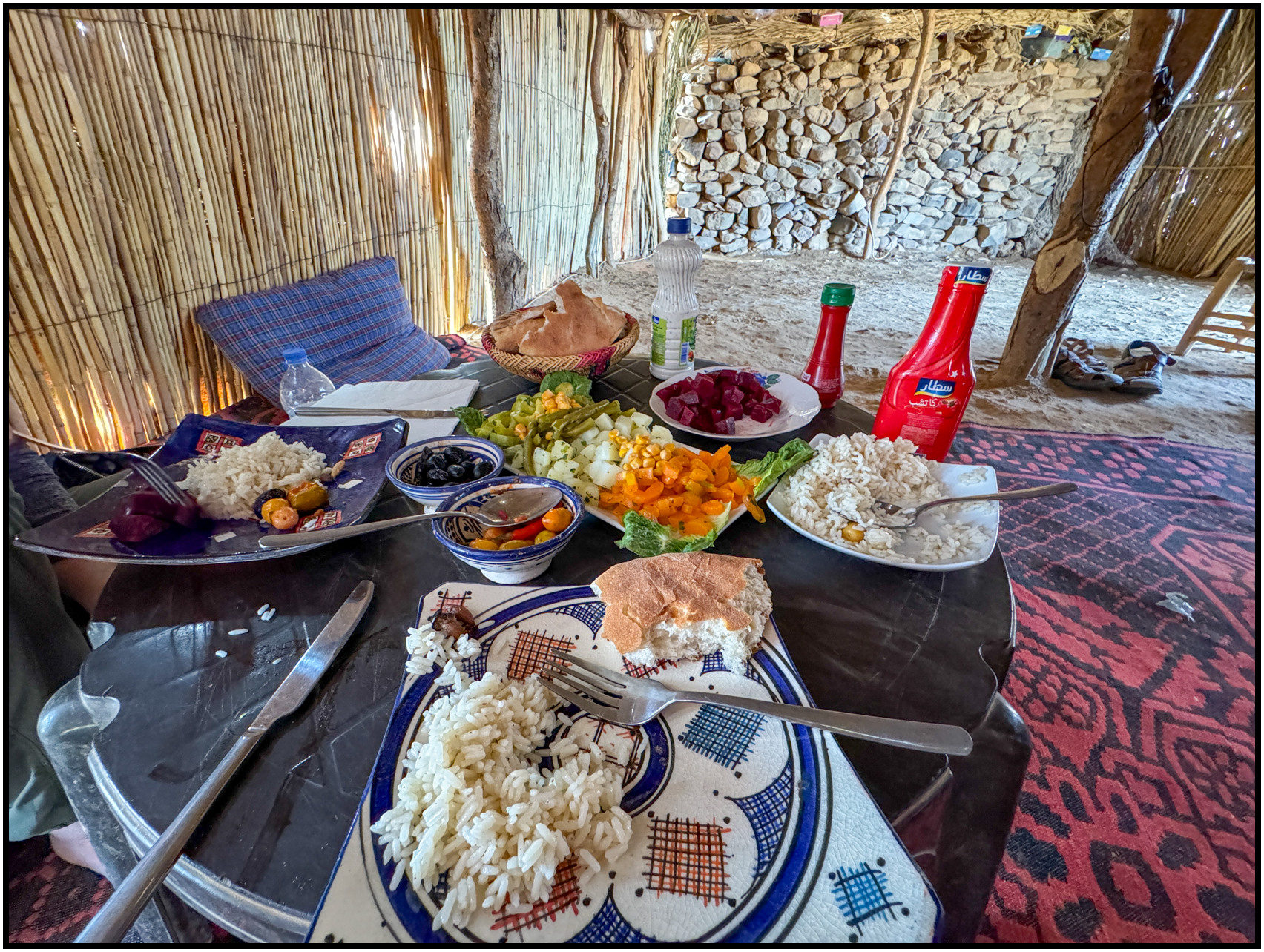
Lunch for us. Vegetarian, with even a few things Brenda couldn’t identify. Once again, though, the food was great.
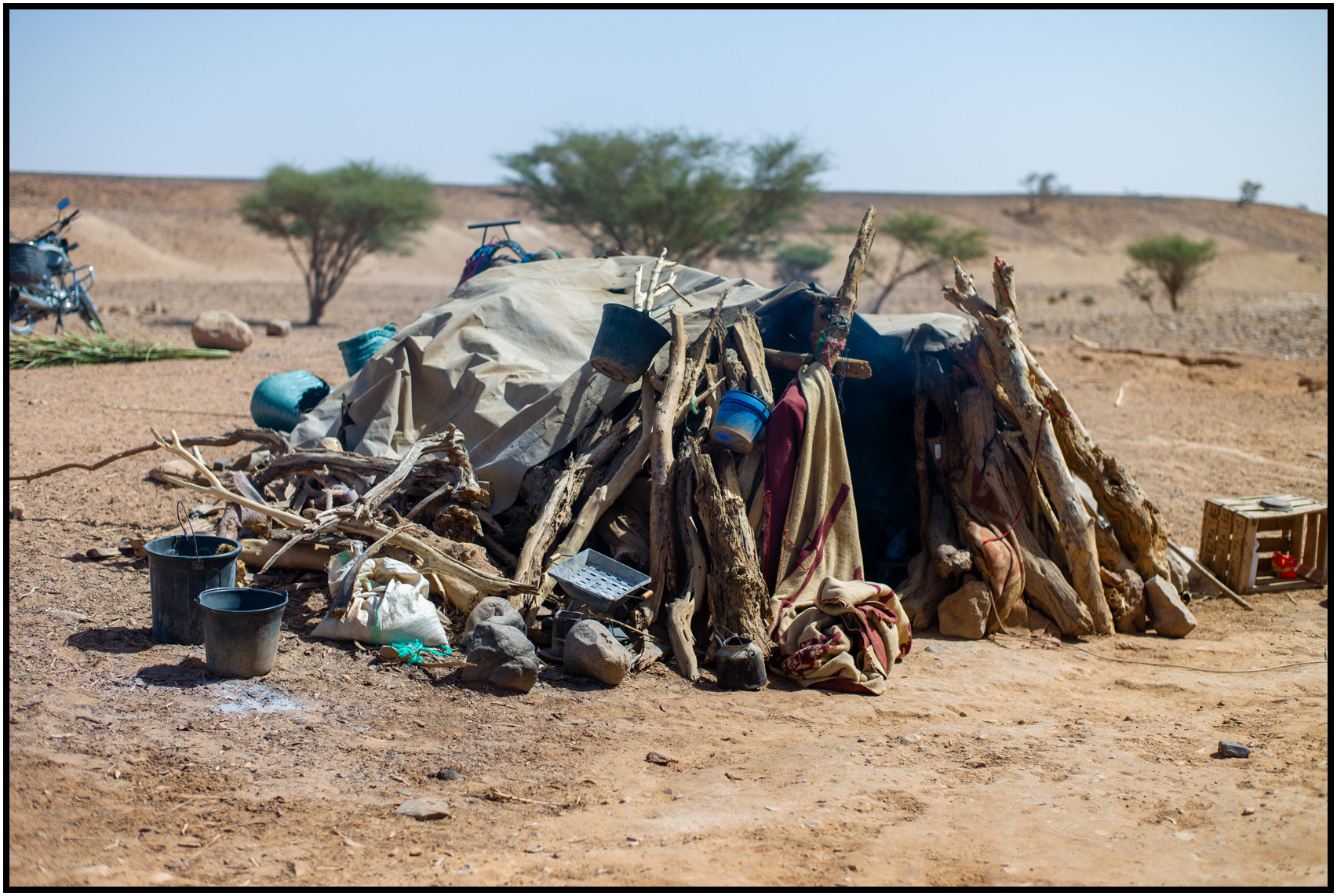
More of the Nomad working areas.
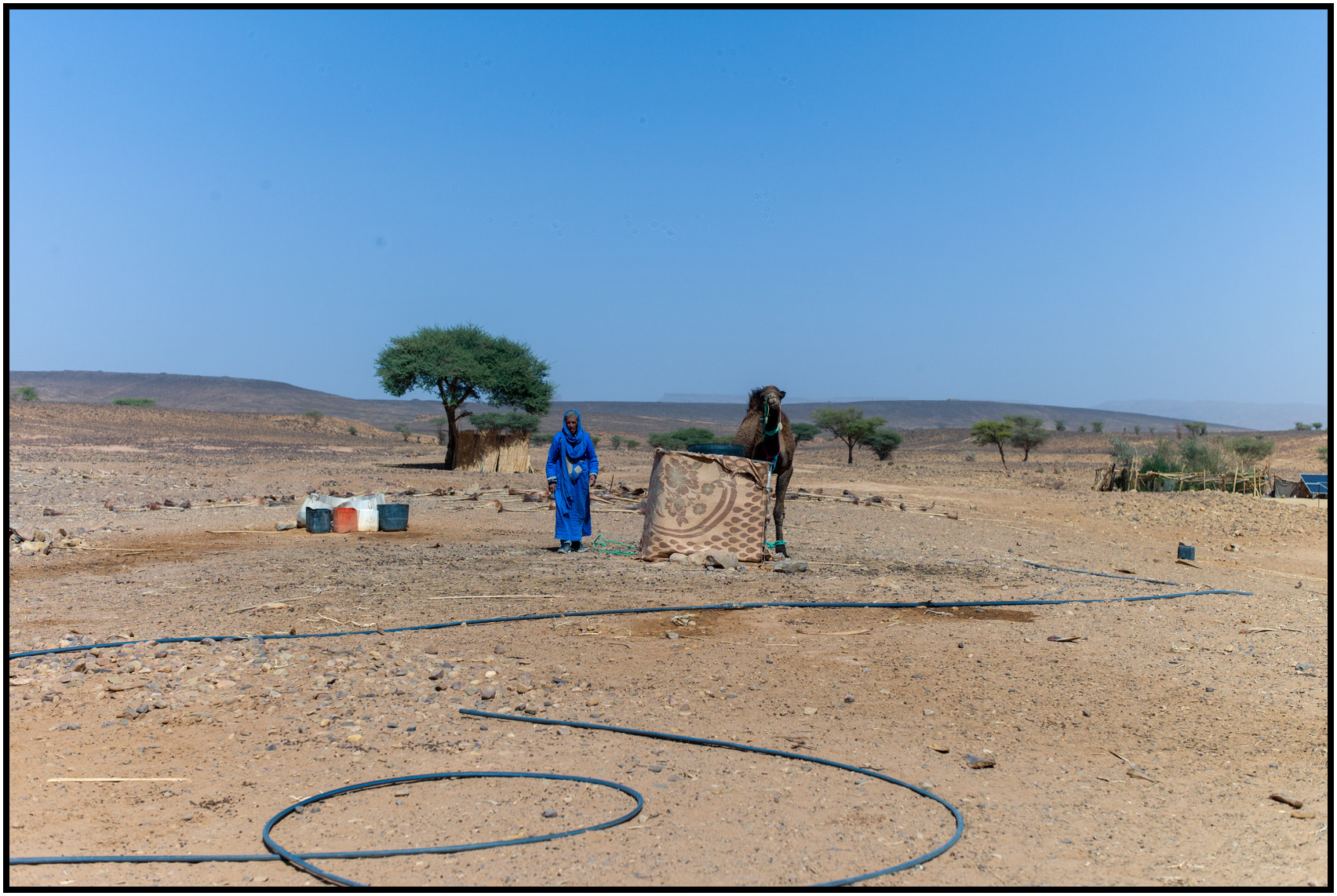
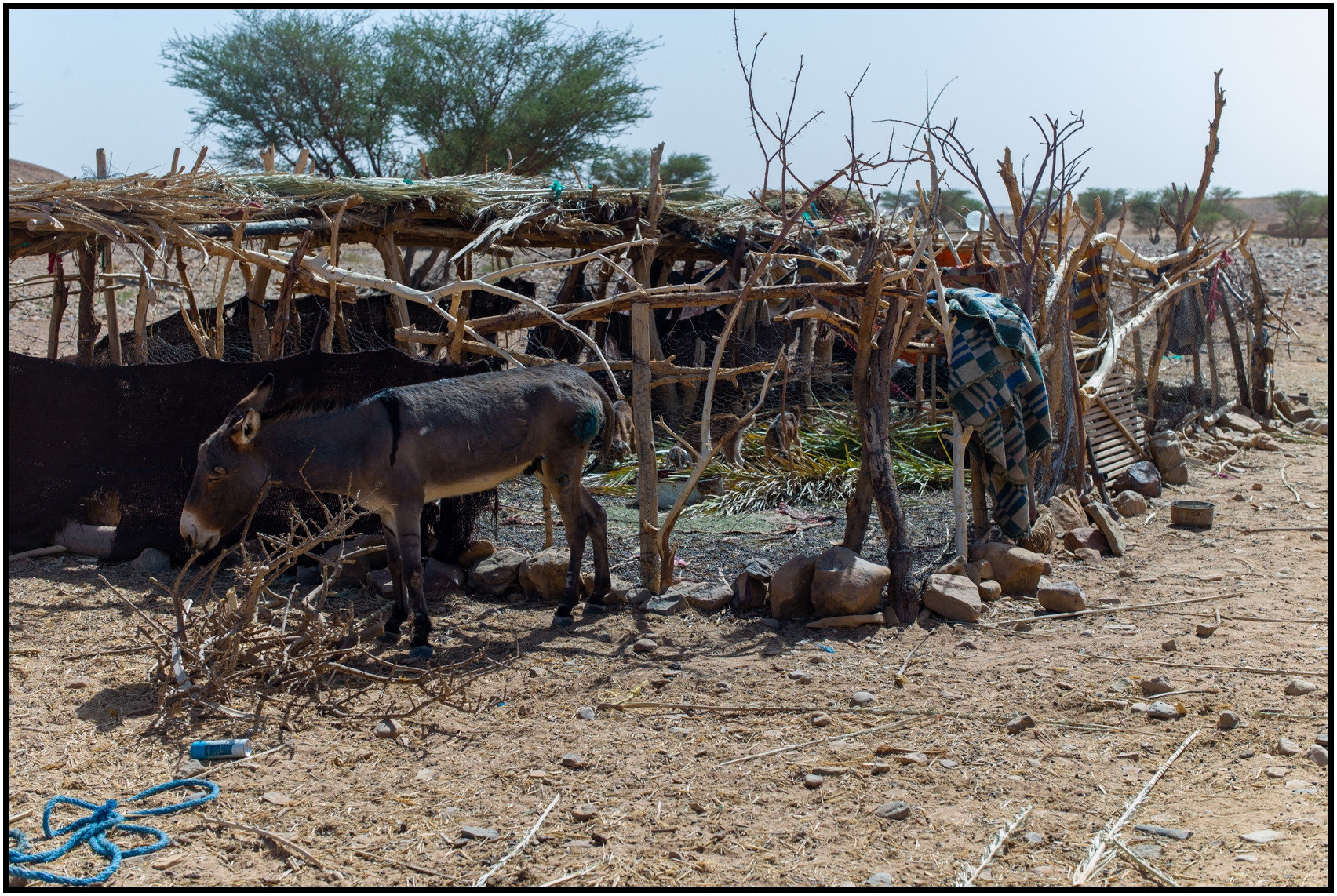
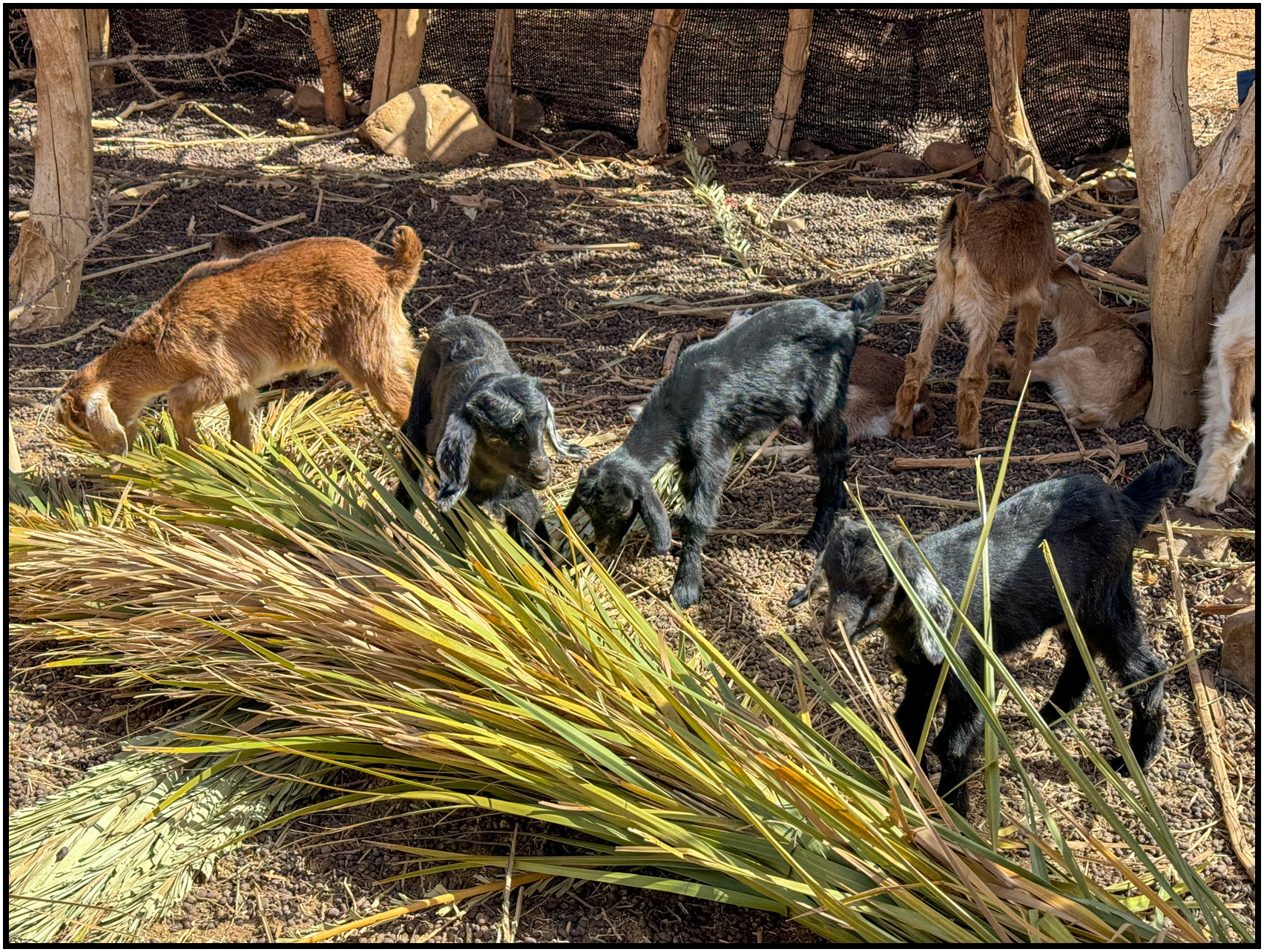
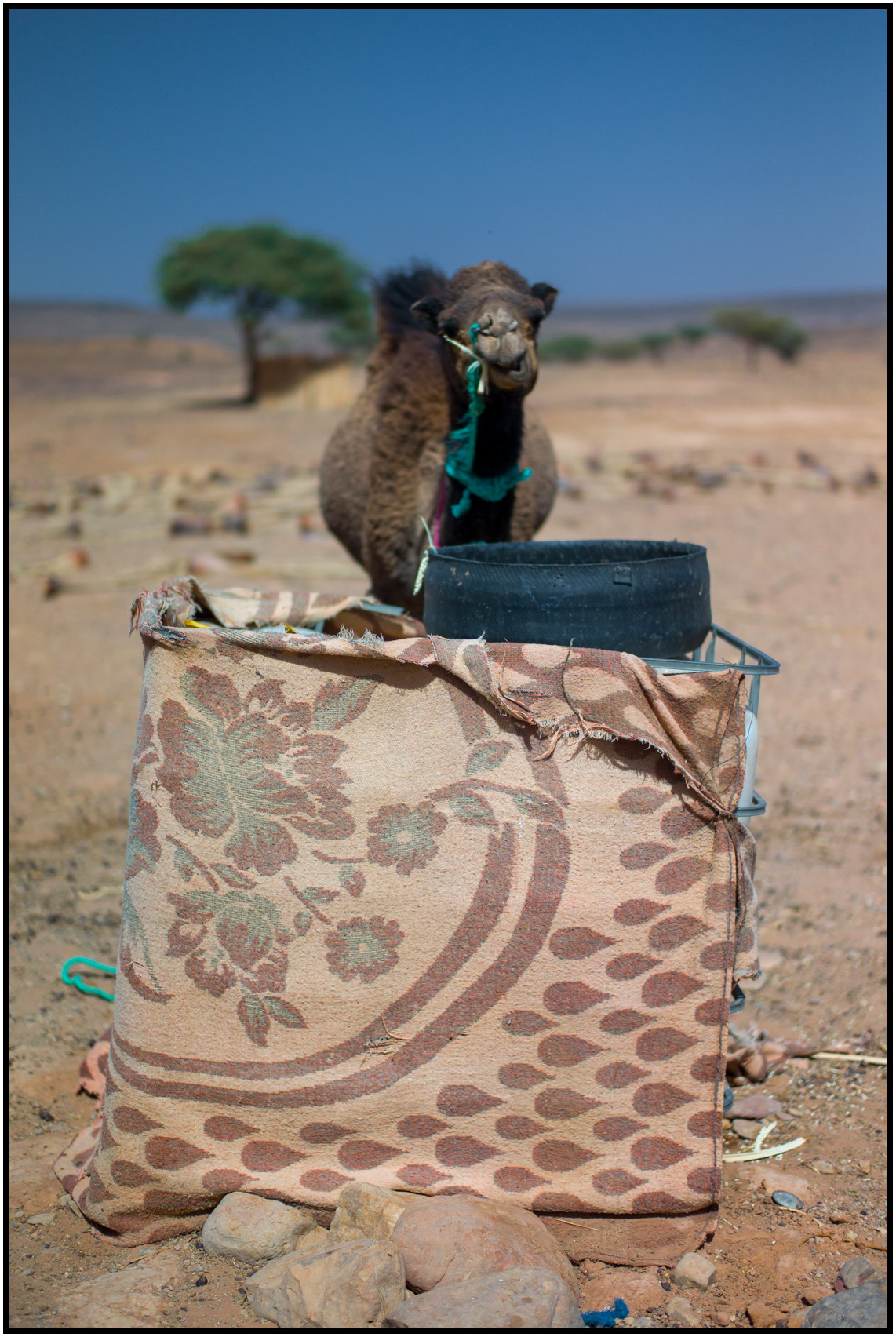
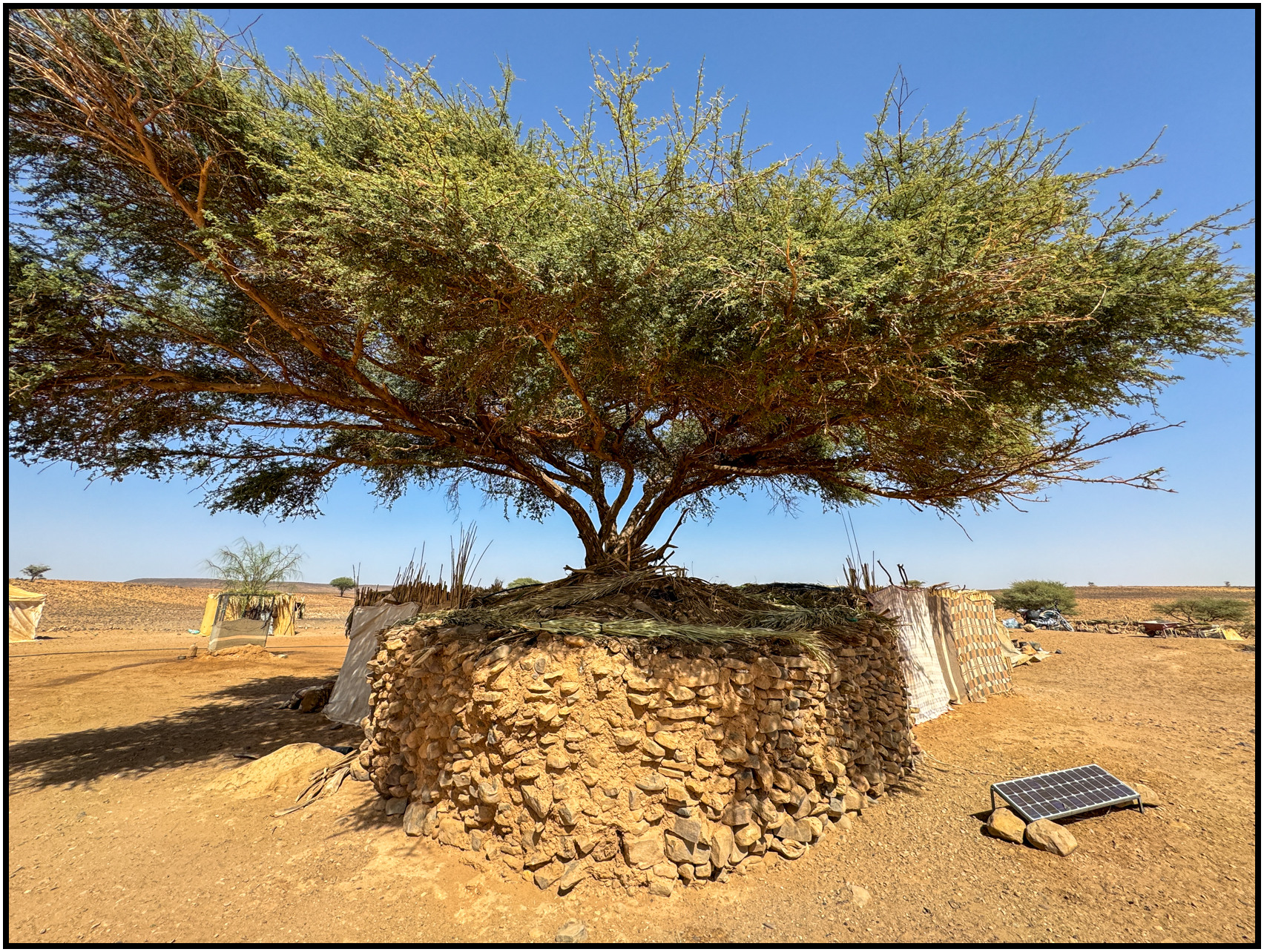
Solar power is a wonderful thing out here. Our camp is run from it, and the Nomad camps have put this technology to use as well.
After the 3.5 hour camel trip in + lunch + time to rest, we decided not to ride the camels back. Our bottoms couldn’t take more of the punishment, and the rate at which we travel it would be after dark before we made it back to camp.
They generously offered to drive us back… only 20 minutes return trip by car. We were sore, but so happy to have experienced the rides. What we asked for is not “on the menu” from the tourist company, but I told them this was our principal goal of the trip and they went above and beyond to accommodate us. (We became under the impression that most people think one hour of riding camels into the camp is quite enough, thank you very much, and a lot of people even opt out of that.) It isn’t the most comfortable mode of travel, but it is ever so cool!
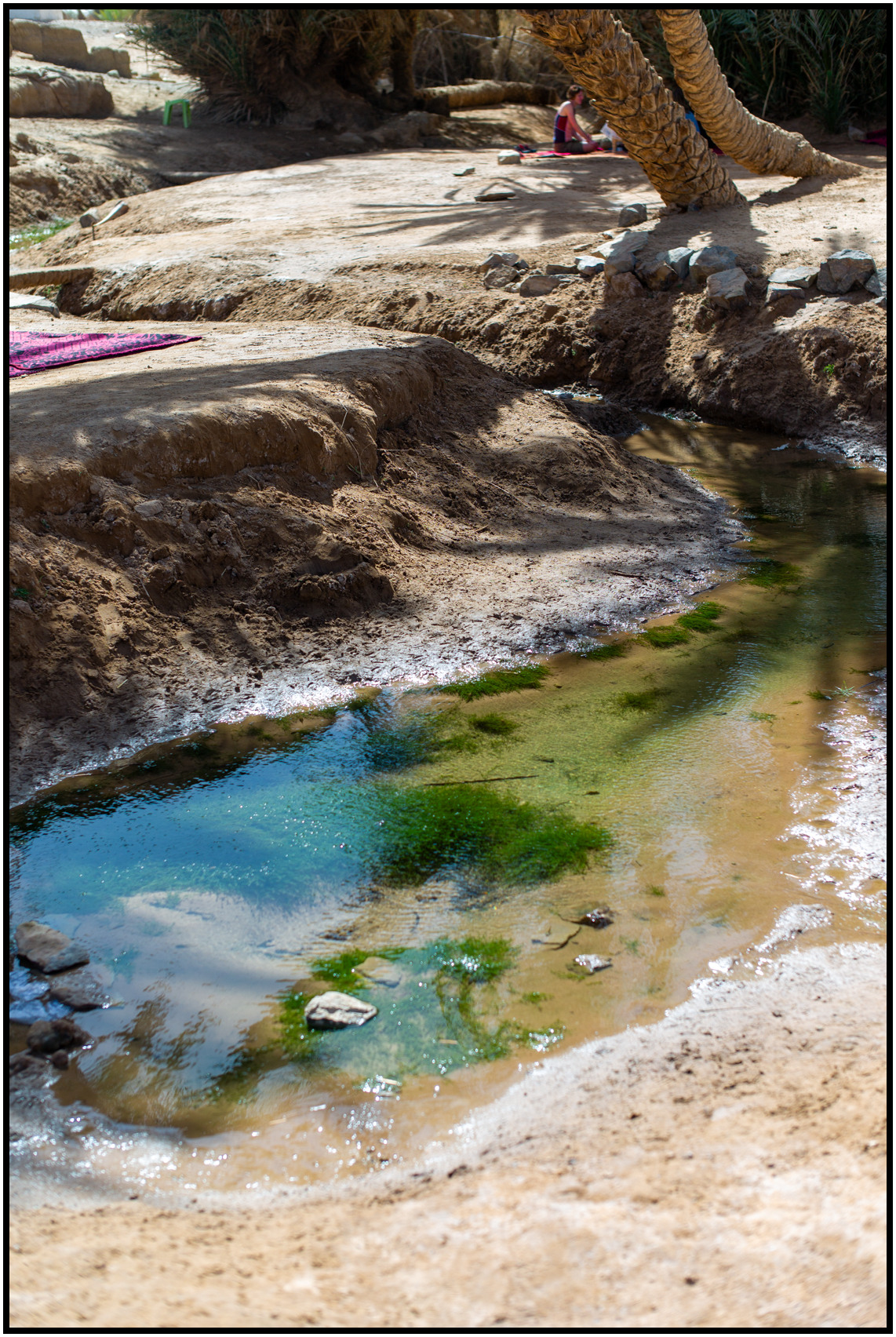
Along the way back we stopped at an honest to goodness Oasis; water year-round that is percolating up from somewhere deep underground. A very popular spot for animals and humans alike. Khalid told us that an oasis has a permanent water source. Most areas with green trees do not have permanent water; they are areas where rainwater collects and sinks into the sand enough for trees to grow, but they do not have spring water. You can see how people dying of dehydration in the desert would see trees and get excited, only to be devastated to find there is no water to drink once they got there. You’d only get that at an oasis, like this one.
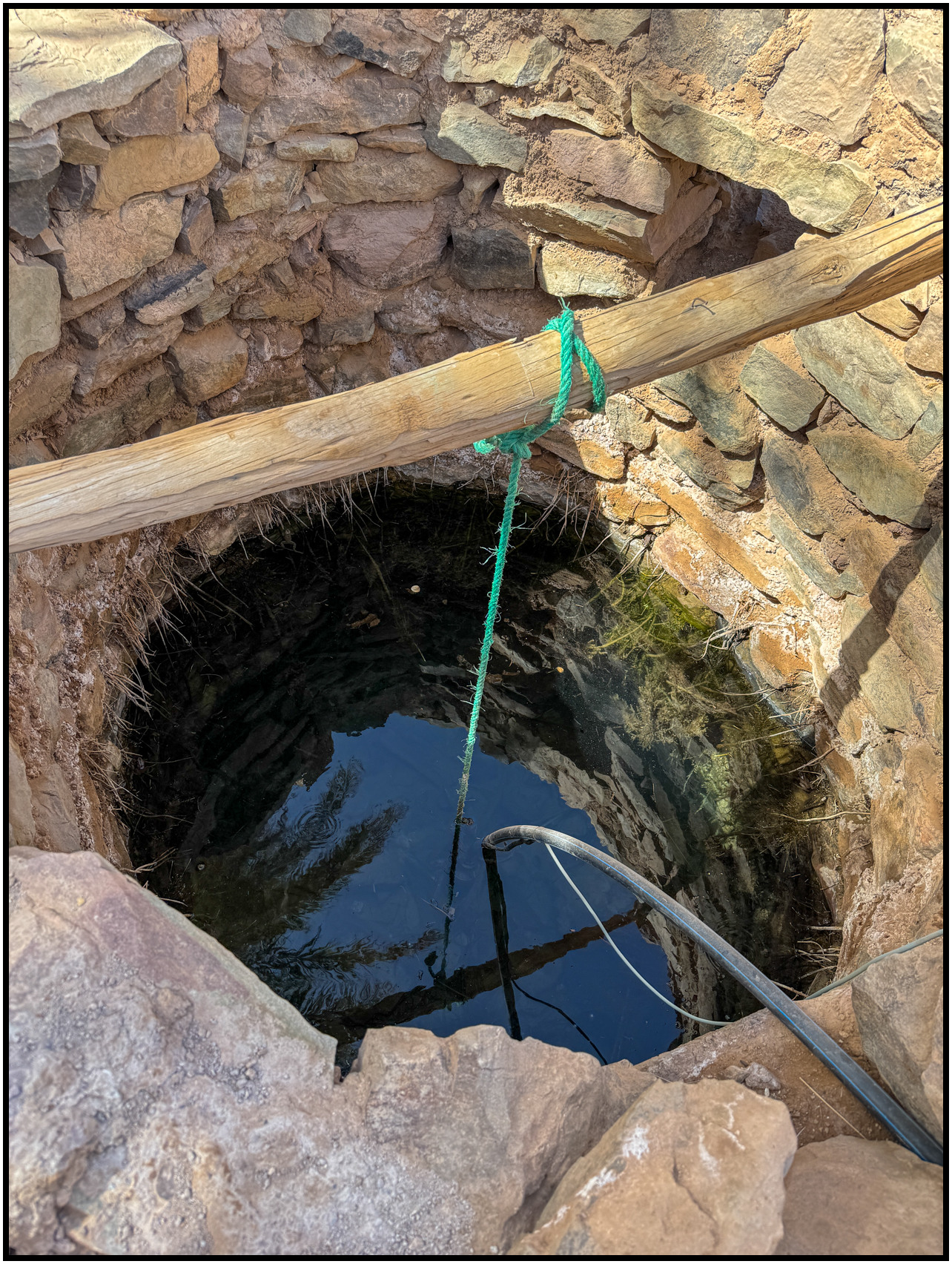
A well created to capture some of the Oasis water. There were frogs living in the well and the oasis spring … how on earth did they get there?!?
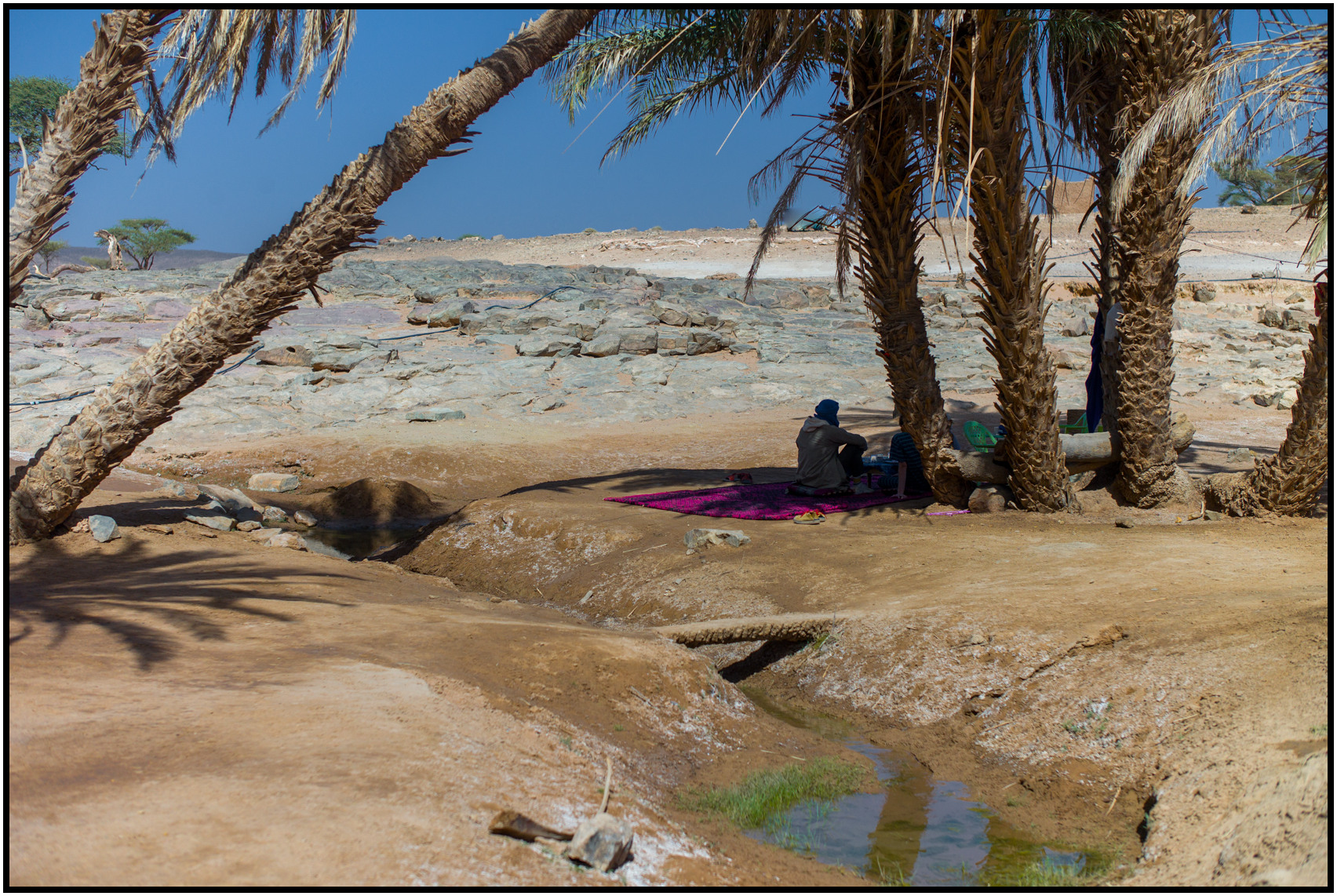
Back at the camp.. and the rest of the guests arrived. 12 “Woo Girls” from the US and Canada, mostly in their 40s and 50s, arrived to the camp hanging out the windows of trucks, Dukes of Hazzard-style, whooping and hollering and all dressed up in turbans. The camp got quite animated and our hosts immediately started apologizing to us for the noise and general behavior.
We were just fine with the group, but the hosts sheepishly kept asking us if we were ok, if we wanted to go stay somewhere else tonight, when we wanted to eat & etc.
Brenda and I went for a long walk (long for sand, that is) to find a nice spot to have a sit and watch the sun set. It was the “magic hour” for light, so lots of photos were taken of the dunes.
With no wind and nothing for miles, it is often dead quiet. One can sit and listen only to one’s tinnitus. The opposite of snow, the sand amplifies sounds; if there is activity around, each dune acts like a sound dish and reflects and reverberates any little noise from very far away.
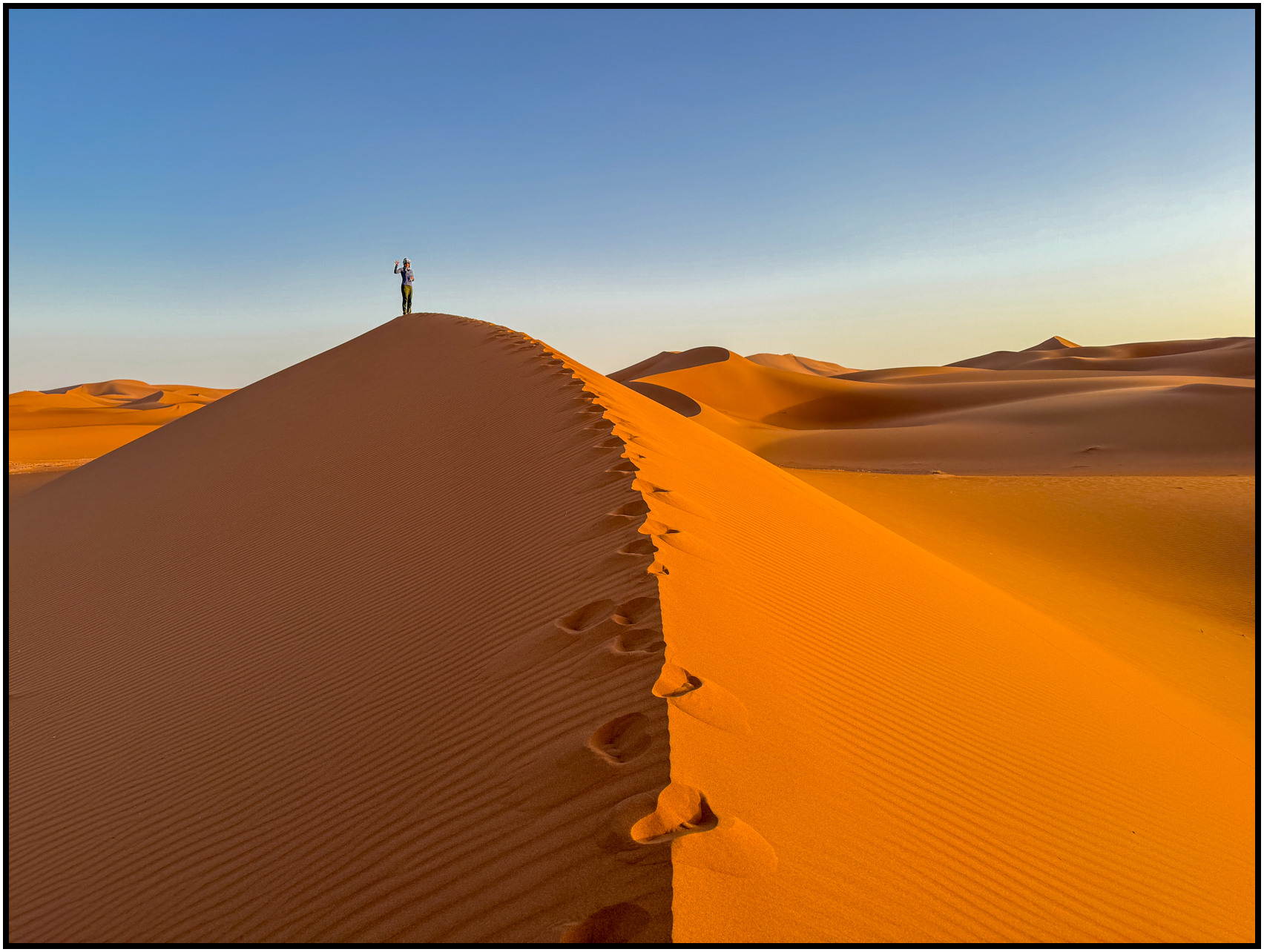
Our last sunset in the Sahara.
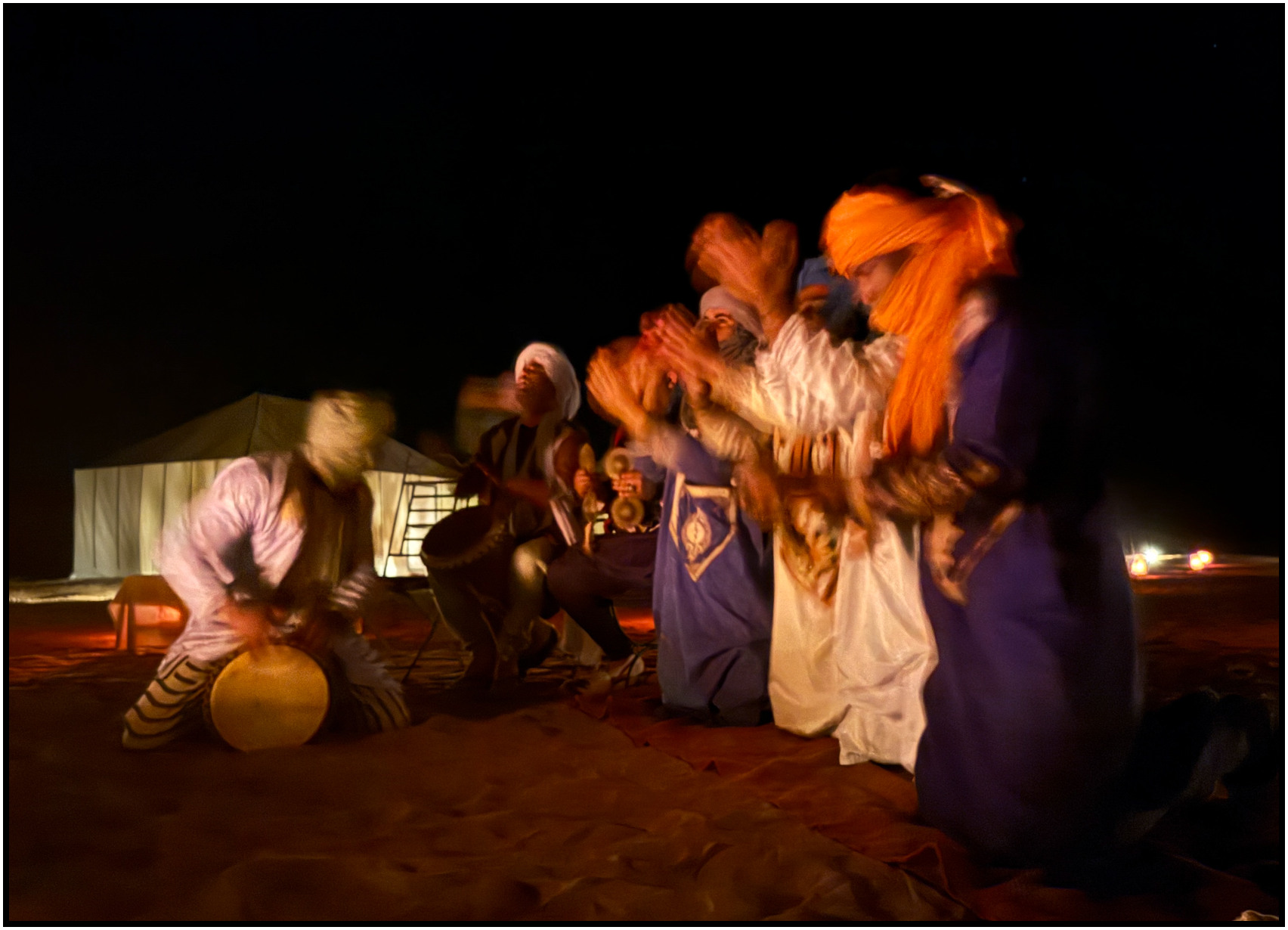
After dinner, the hosts lit up the bonfire and treated us all to a concert, using Berber instruments and songs.
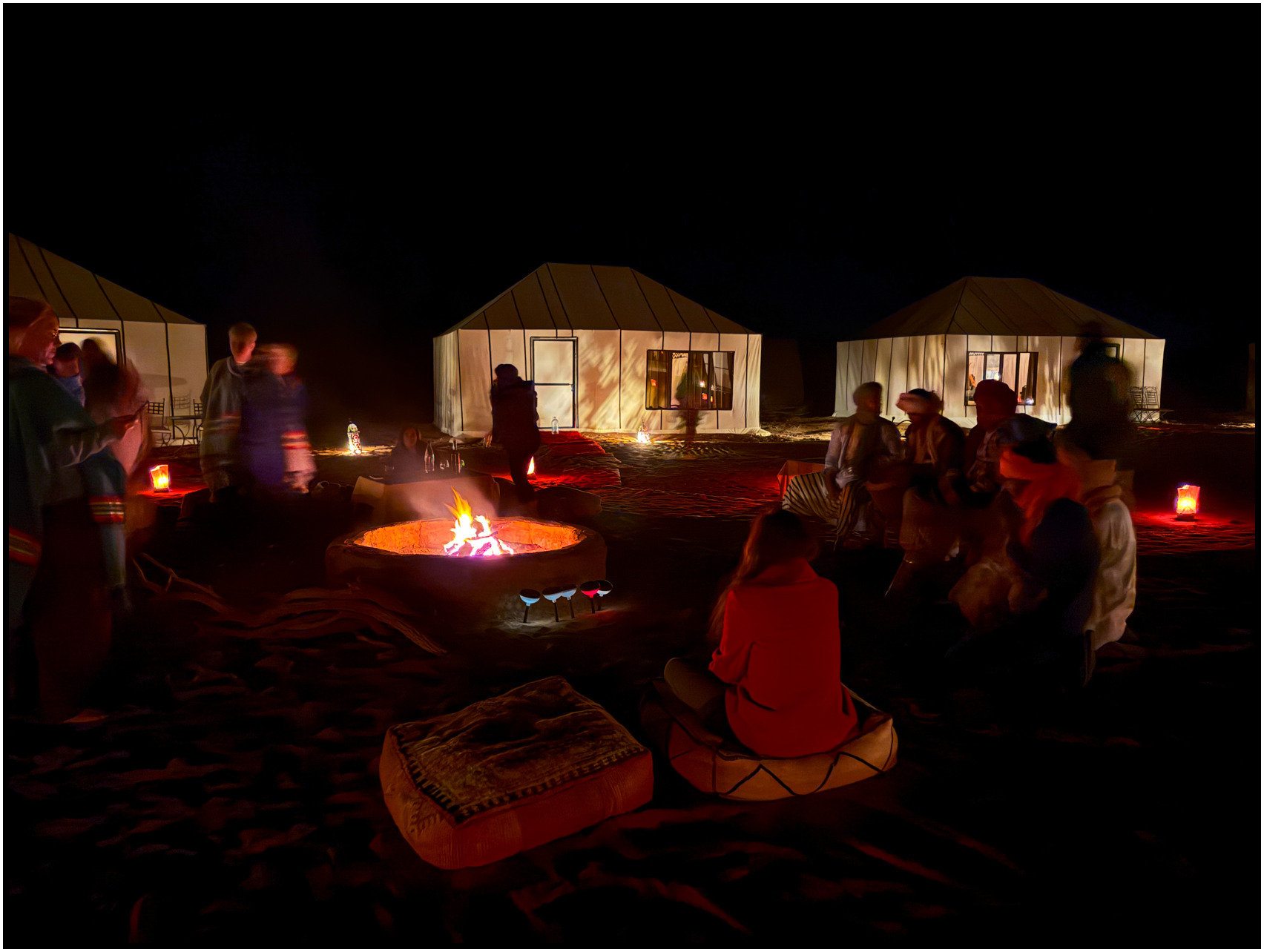
View of the bonfire. Brenda’s back is to the camera. It gets cold quickly here. The Woo Girls are running around, singing and dancing and chugging from the individual bottles of wine each brought with them. (Moroccans are not big drinkers; if you want alcohol, you have to bring your own. It can be found in the bigger cities, like Marrakech.)
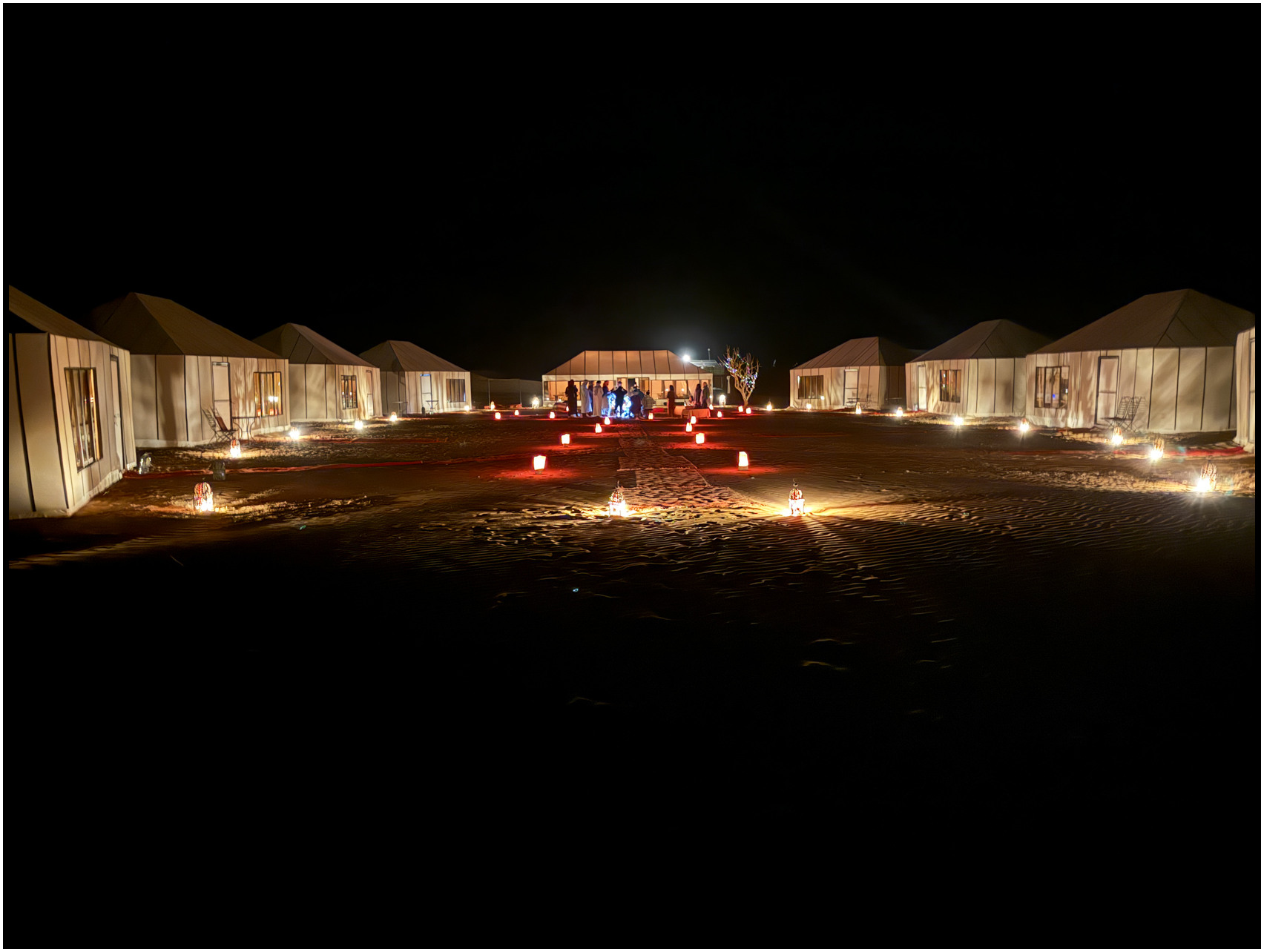
The camp just before bedtime.
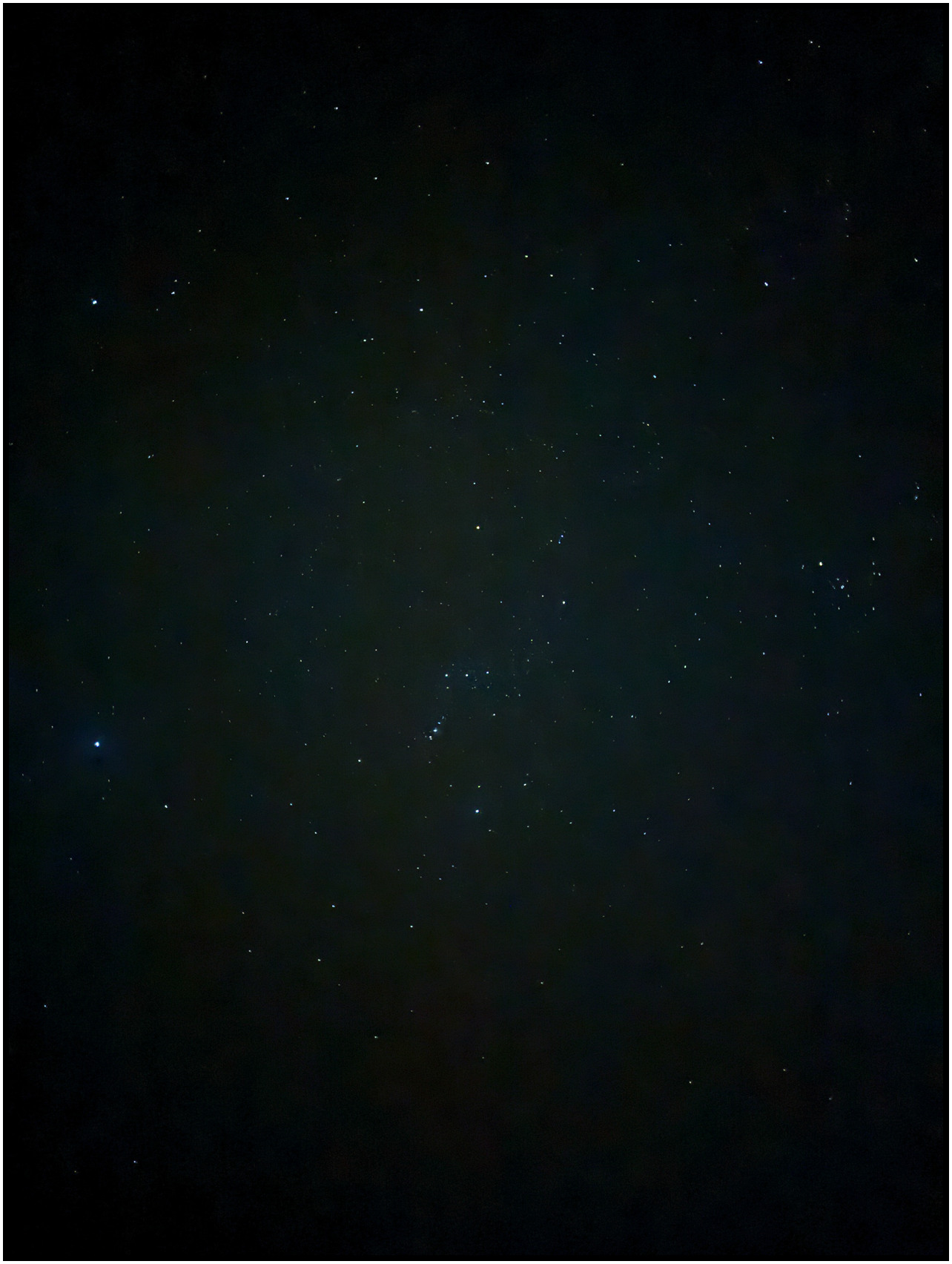
As they promised, the Sahara offers an unparalleled view of the stars. Not a great photo, but you get the idea. Bed time….
Agdz
Feb 28, 2024
Today is the day we pack up and leave our Sahara camp. We’re slowly making our way back to Marrakech, but hitting some interesting stops along the way.
Hey, it’s my birthday today! 55 years old. I now qualify to buy a house in an “Active Lifestyle” senior citizen community.
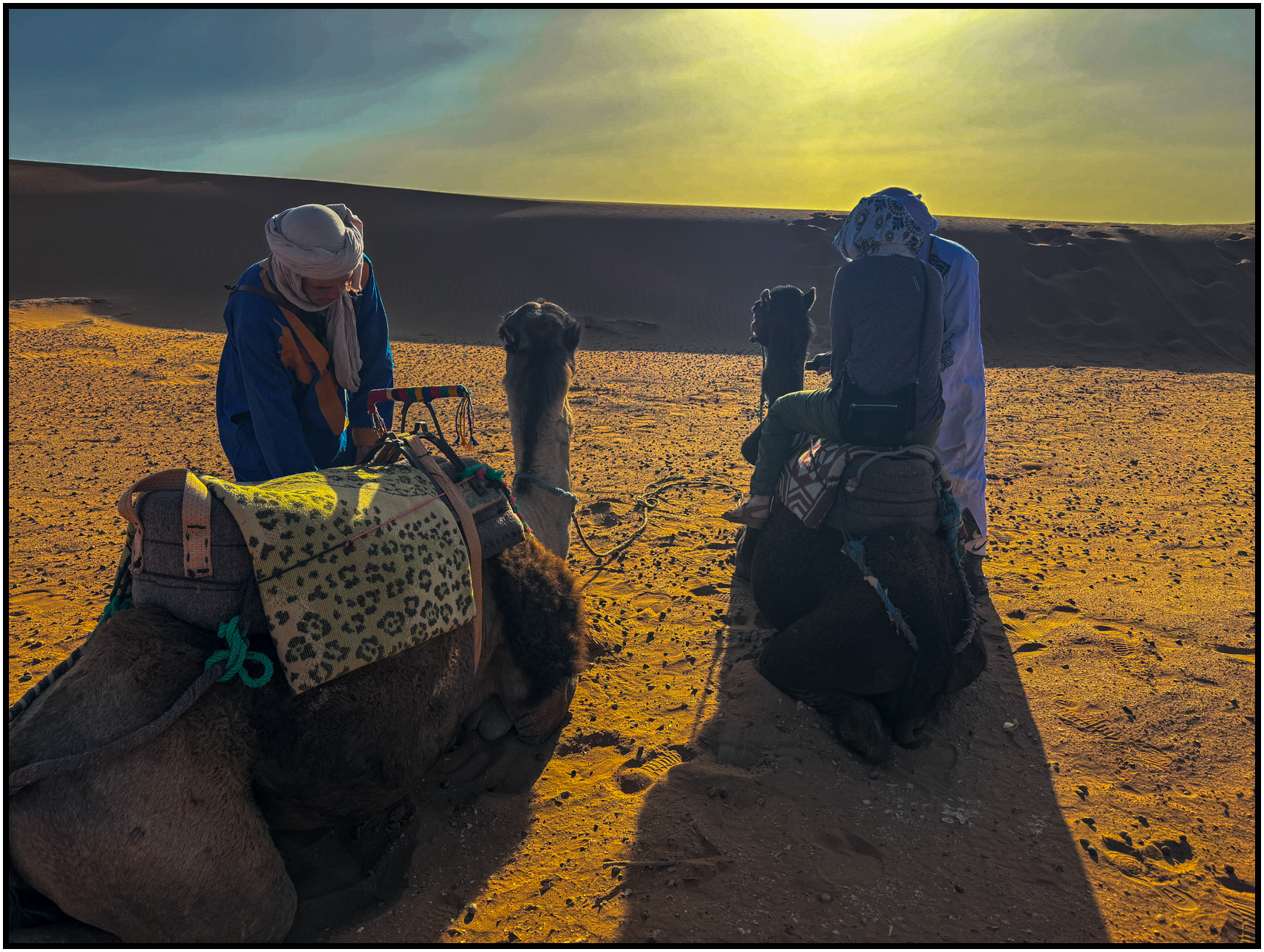
Loading up and out at daybreak. It’s another 75 minute ride back to the place where we meet up with the truck that takes us on. The camp staff drives our luggage in a separate car so we don’t have to load it onto the camels.
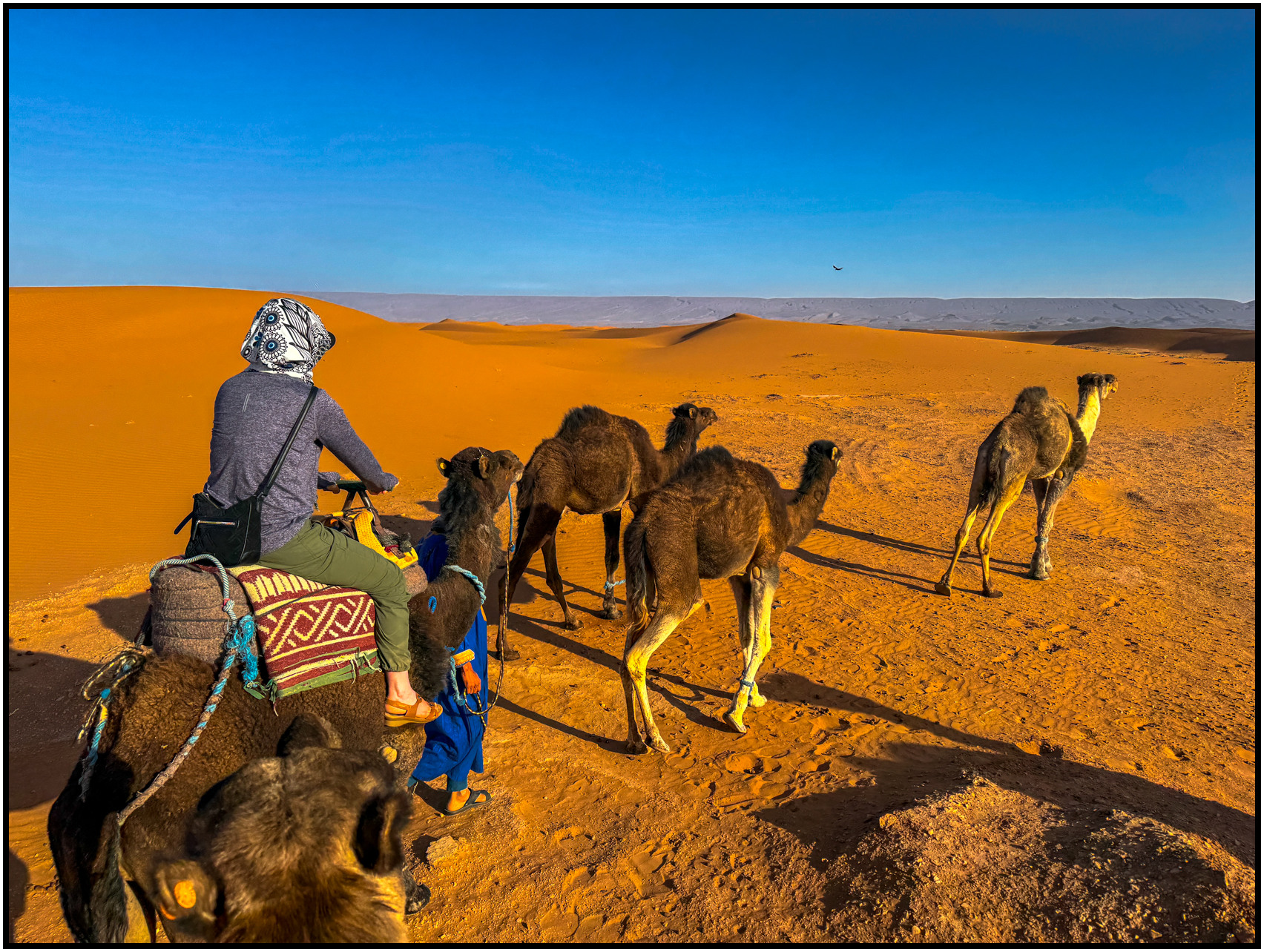
Ho hum, yet another Camel ride for Brenda.
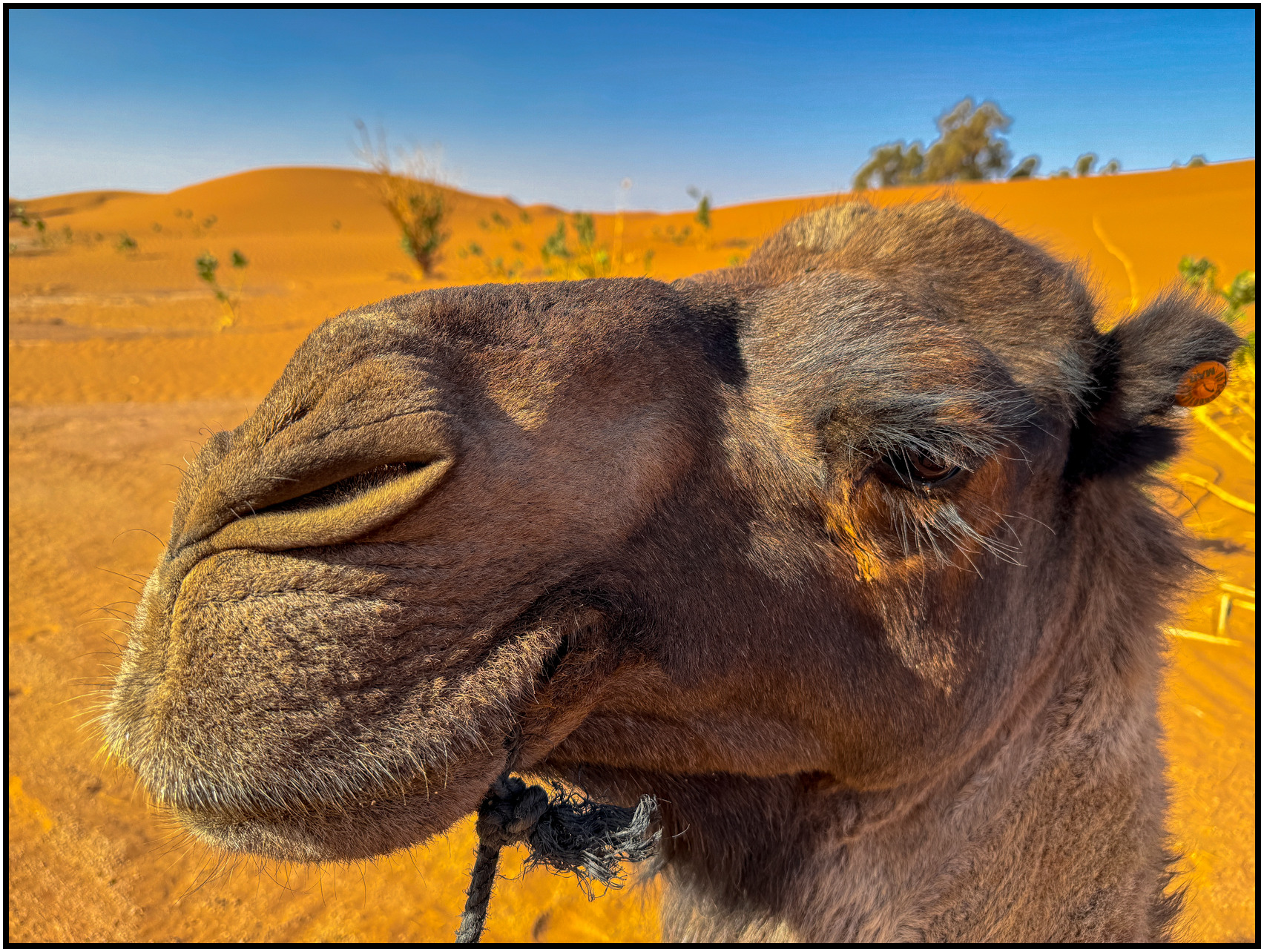
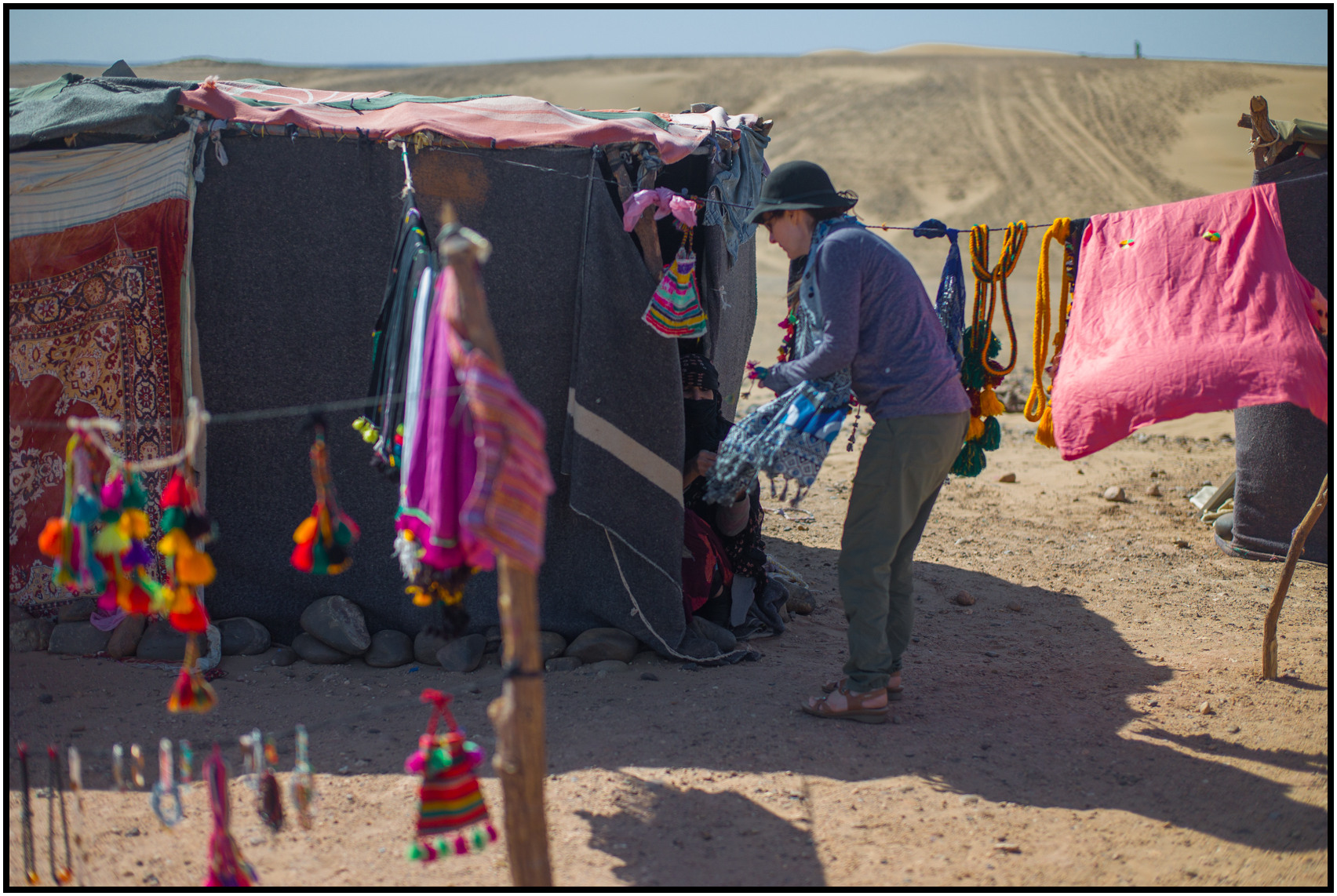
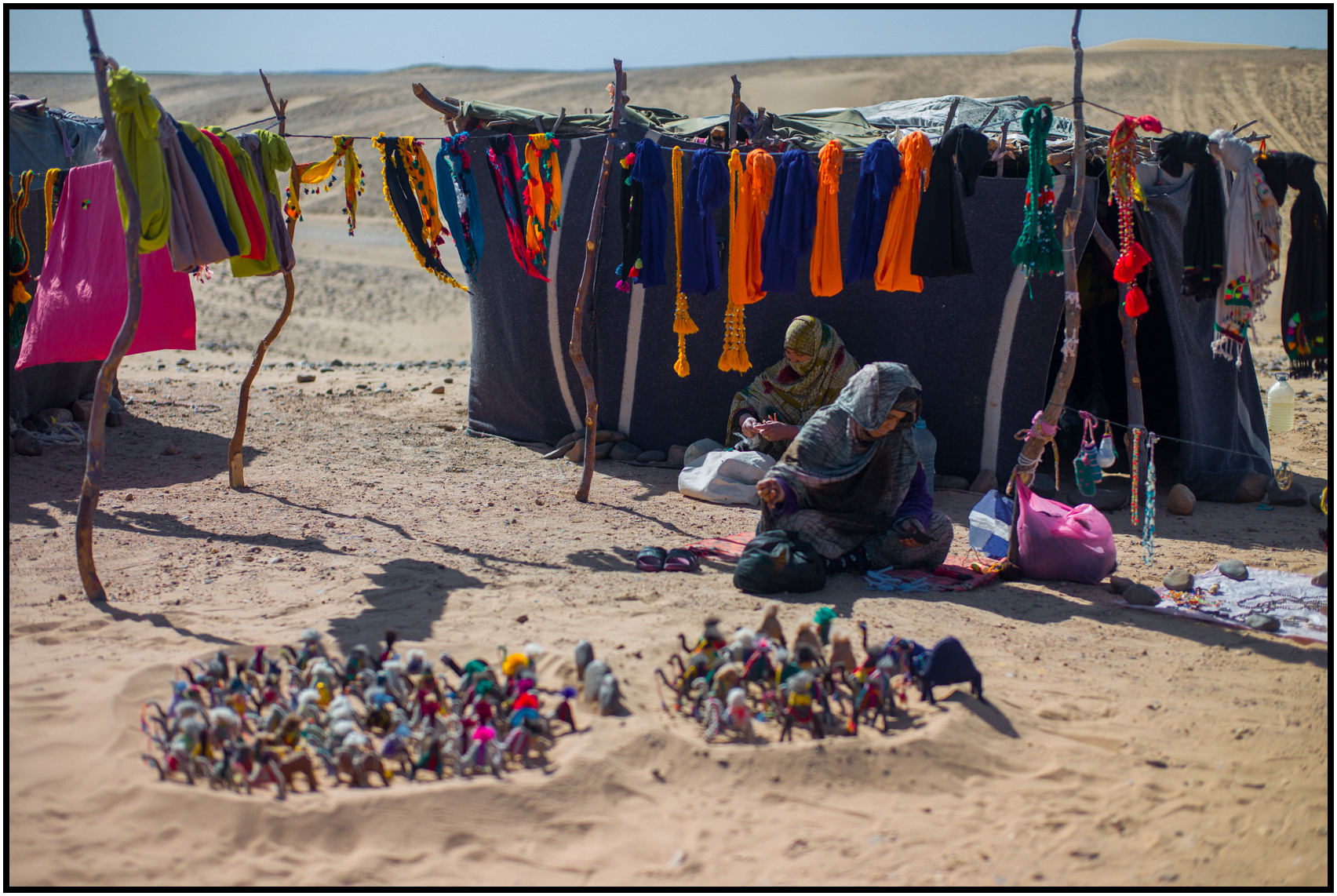
We are heading east toward a town called M’Hamid – where the road begins again. On the way, high up on a hill, we stopped to see these Nomad women selling scarves and little toy trinkets they make by hand.
Brenda is trying to figure out how to buy and thank the woman for some little treasures she is bringing home to the girls.
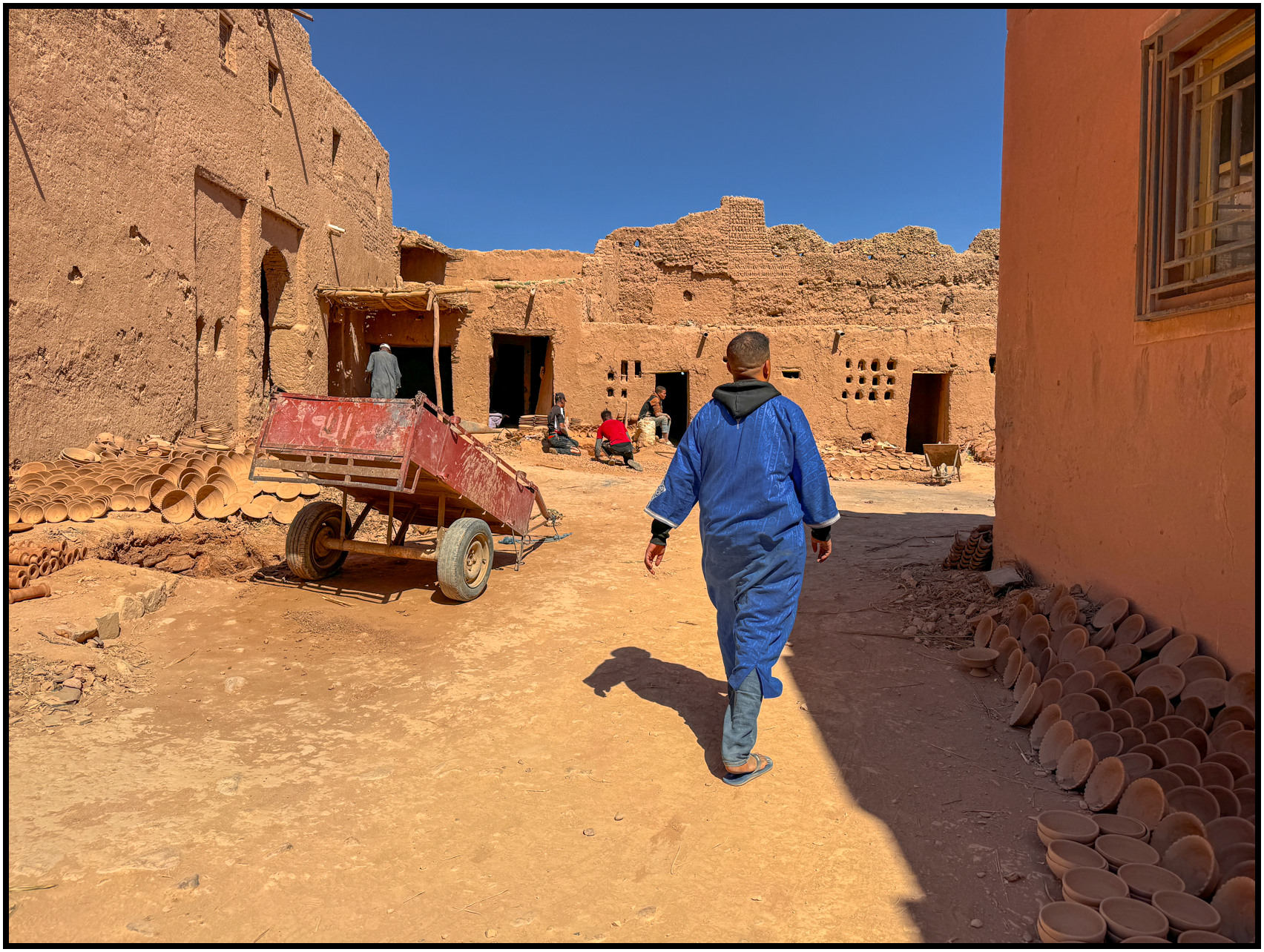
Another of Brenda’s goals was to buy a Tagine – the earthenware pots used for so many meals here. She wants a real one that can be used in our oven at home, not the ornamental ones that are usually sold at the tourist traps.
In Tamegroute, in the Draa River Valley, we stopped at a pottery factory to find what she was after. Tamegroute is known for their pottery, made with traditional techniques and knowledge passed down for generations.
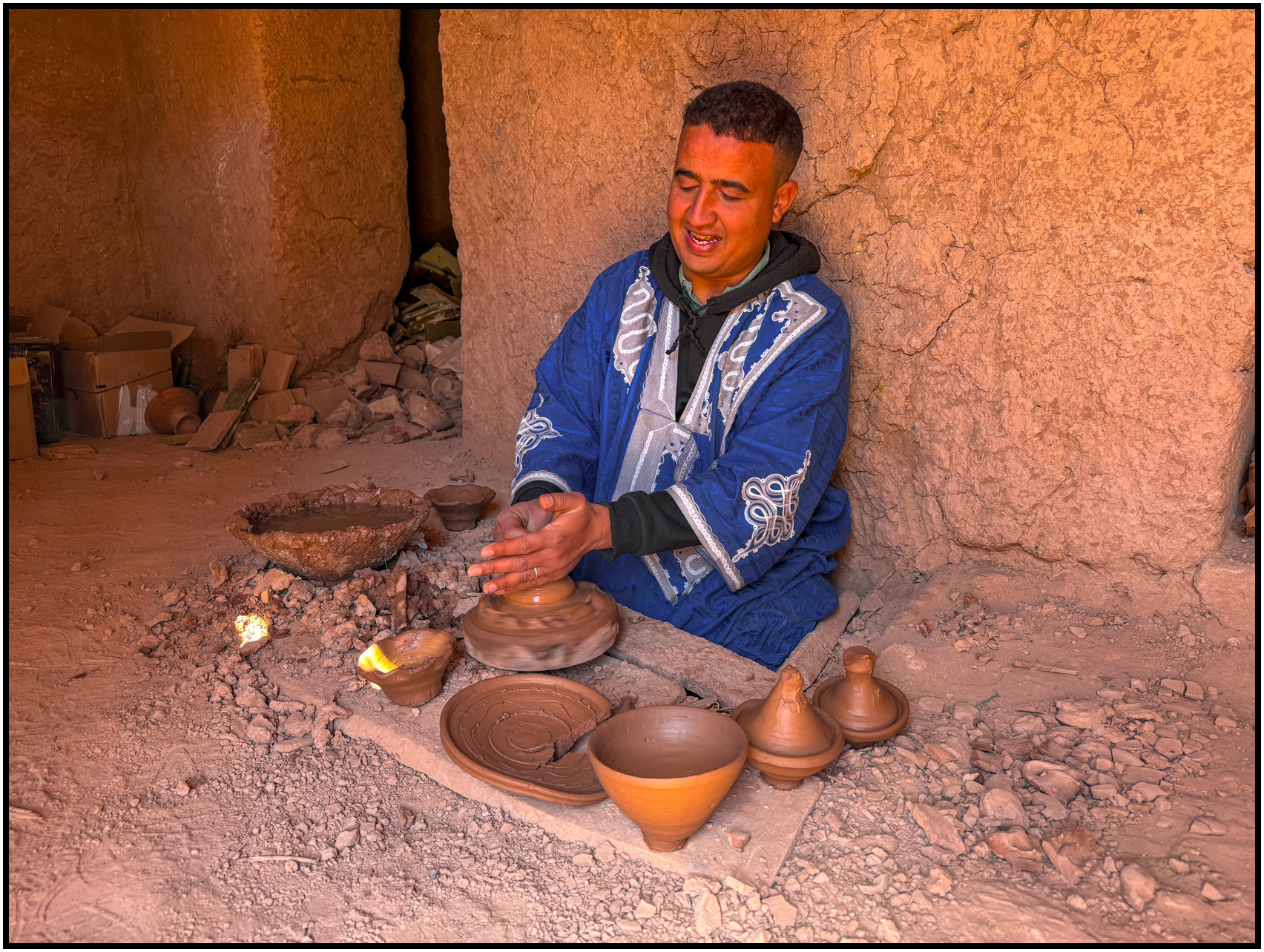
A man demonstrating the pottery wheel techniques.
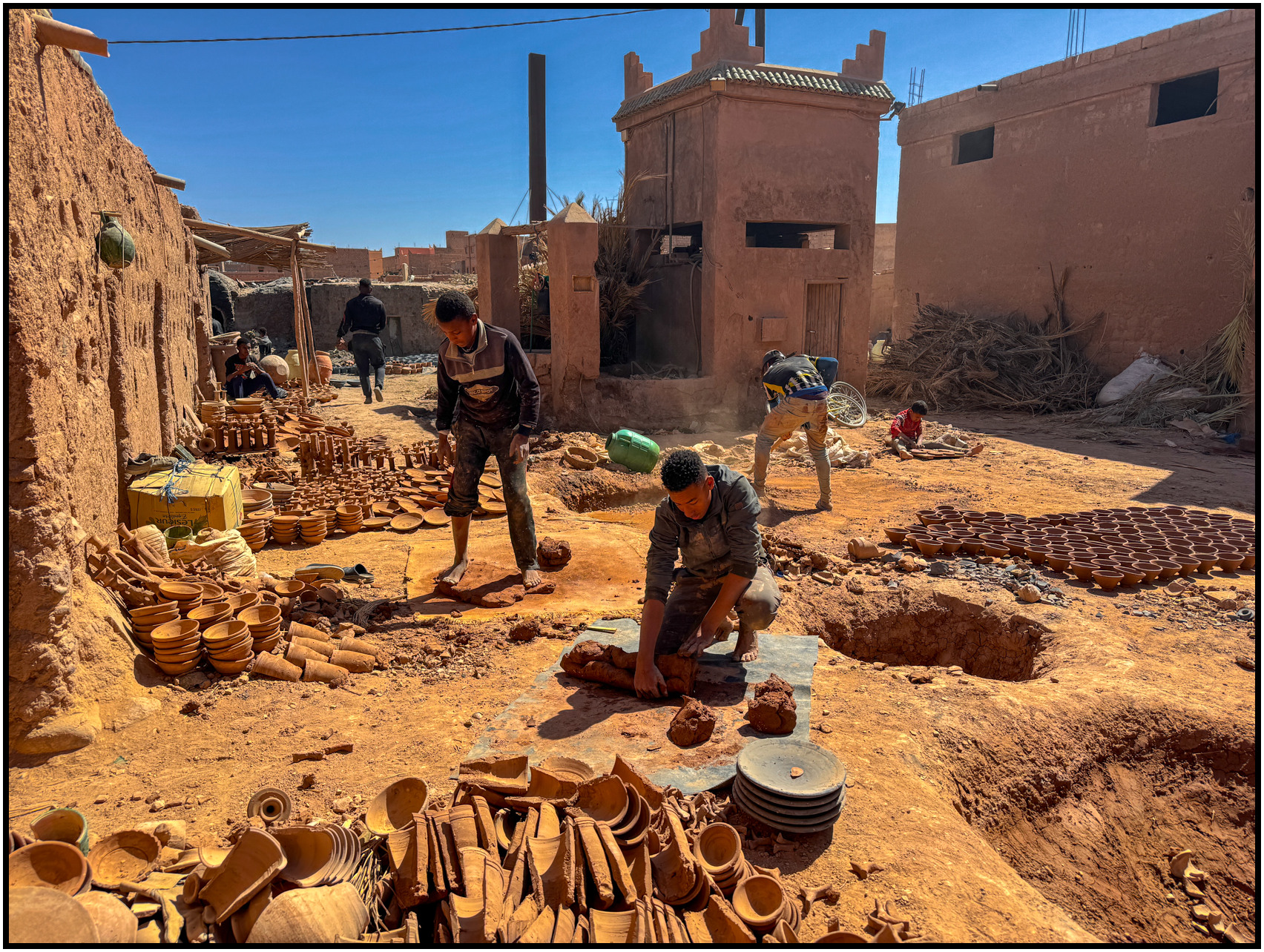
Kids mixing the dirt and water & etc for spinning. This is the factory.
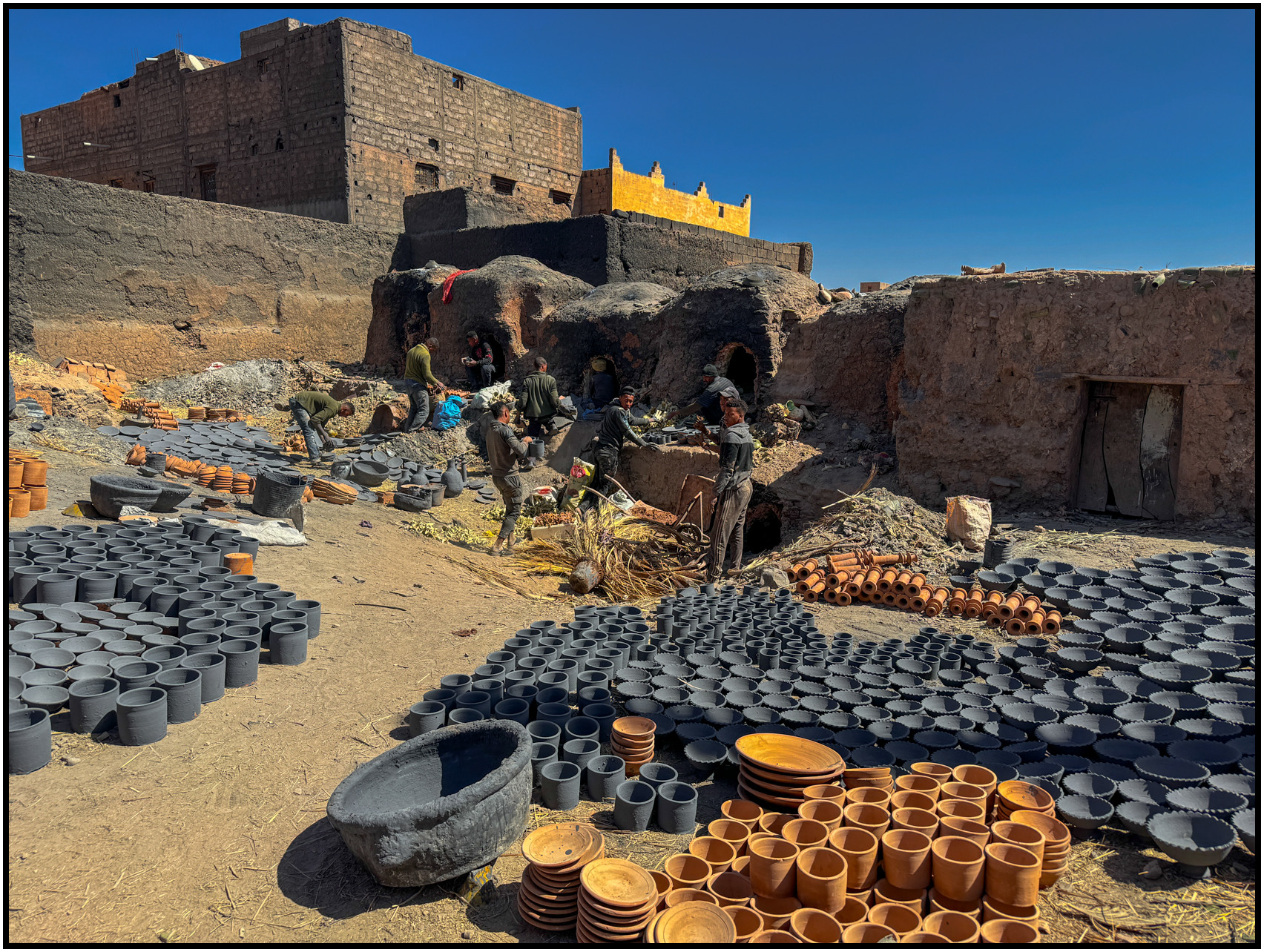
Product going into the kilns. The black coating is a glaze made from copper, magnesium and a couple other minerals, all locally sourced. After firing, the glaze becomes bright green and is the traditional finish. Other colors are offered, as well, also made from local natural materials.
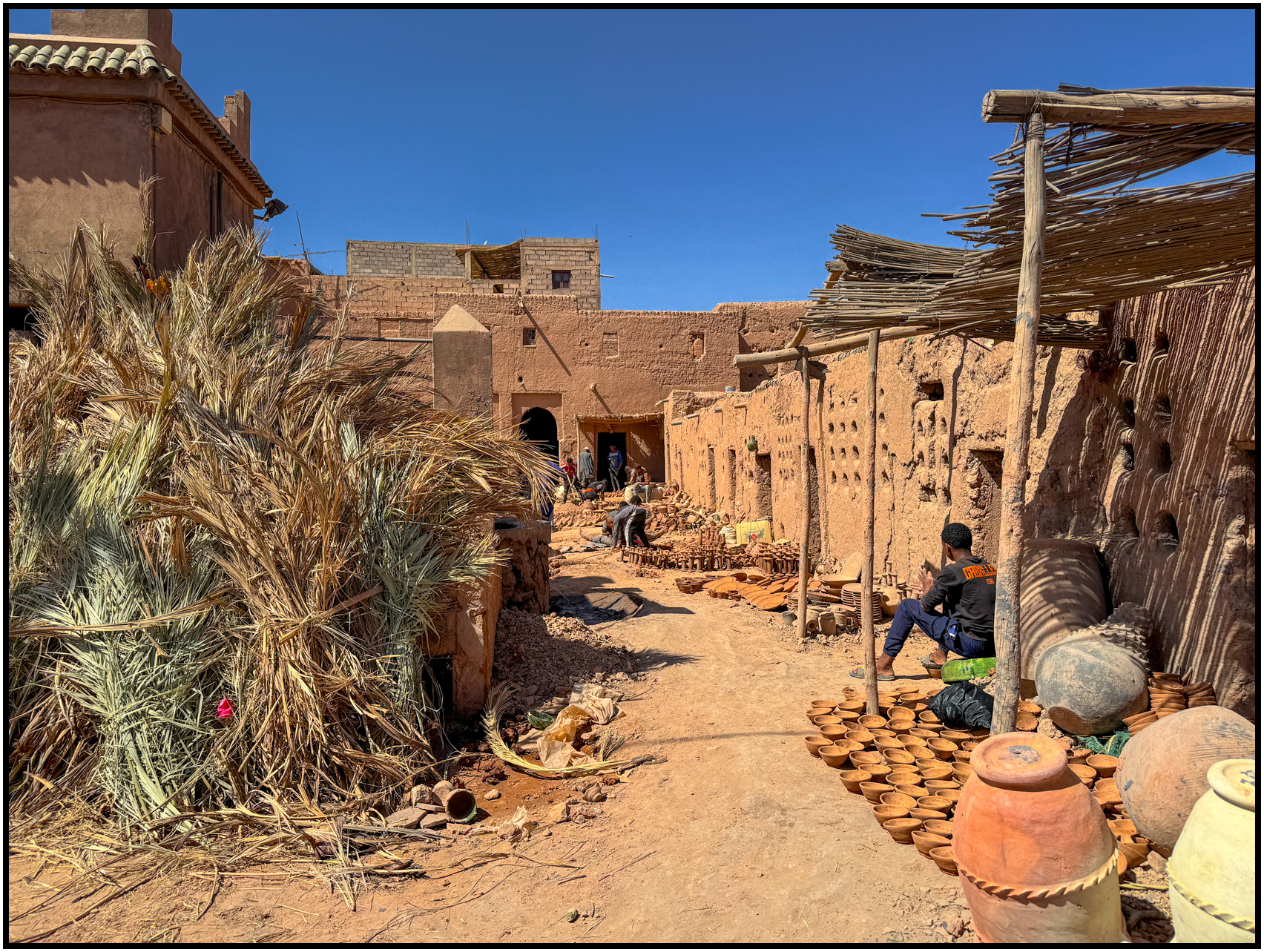
The processes have not changed in thousands of years. As far as we could tell, men make the pottery and women do the painting.
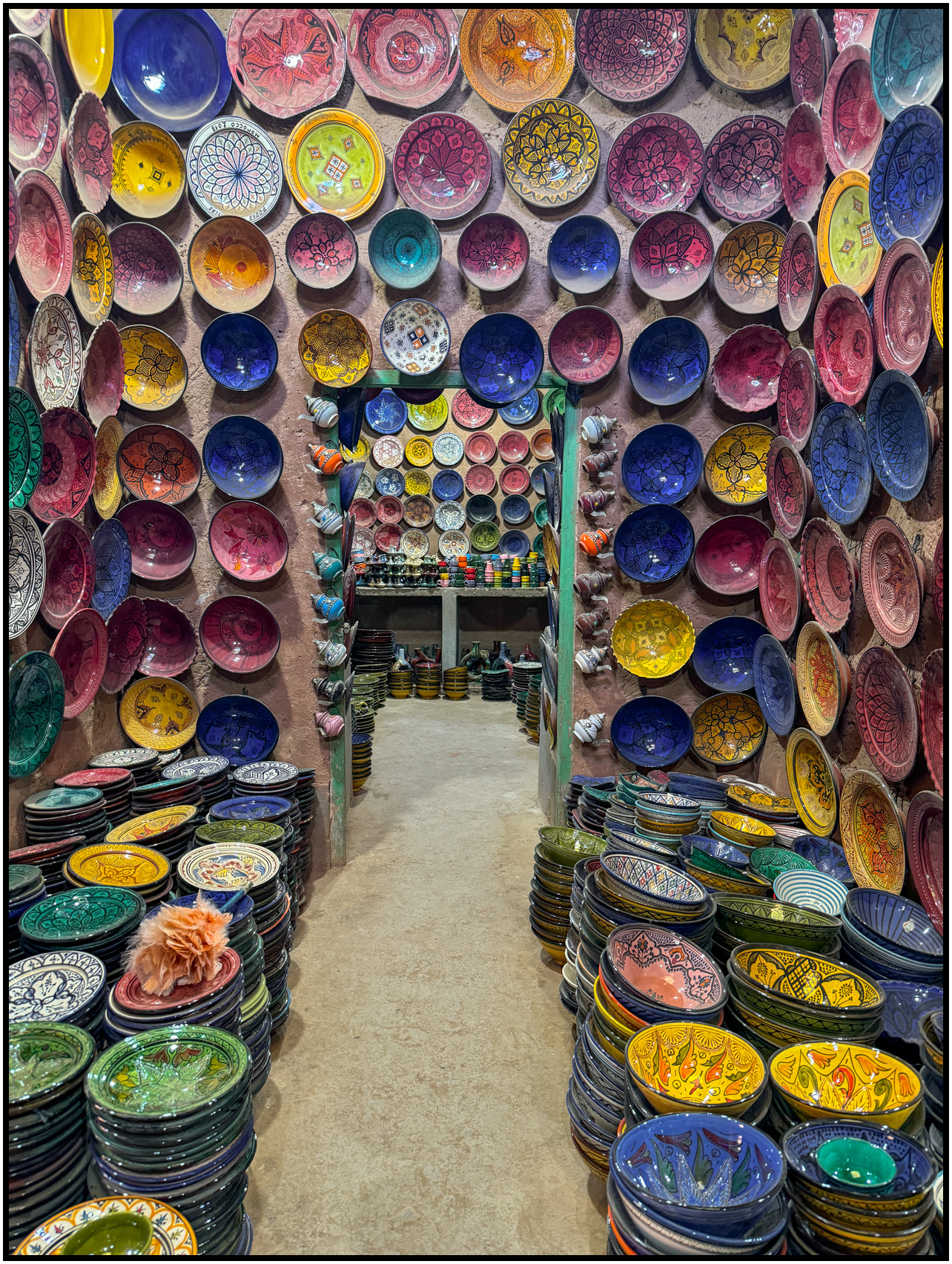
The final product in the warehouse.
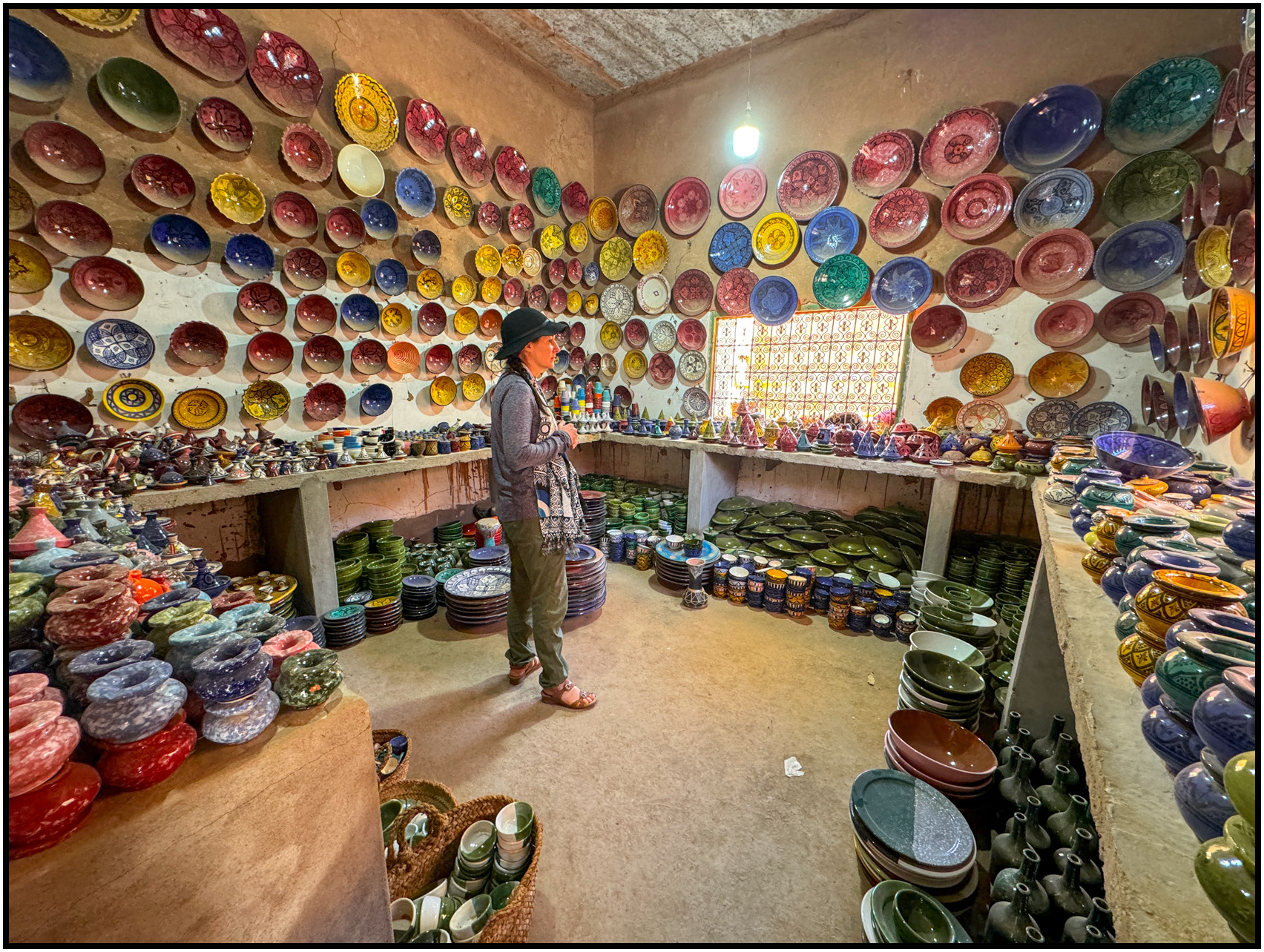
Brenda deciding on her selections.
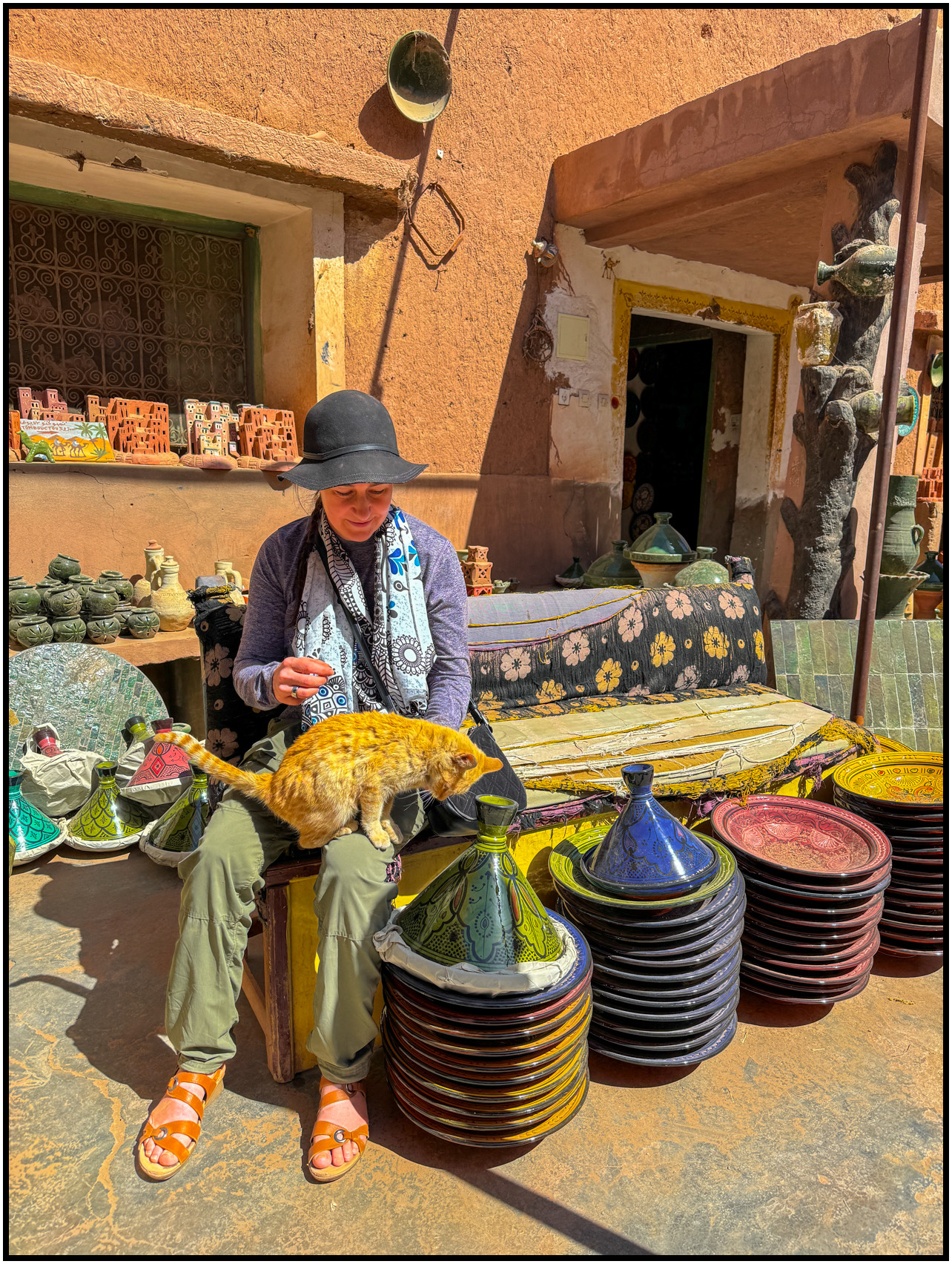
.. and of course, finding the one animal to play with while the owner wraps up our pottery. (Let’s see if they can somehow make it back to home in one piece.)
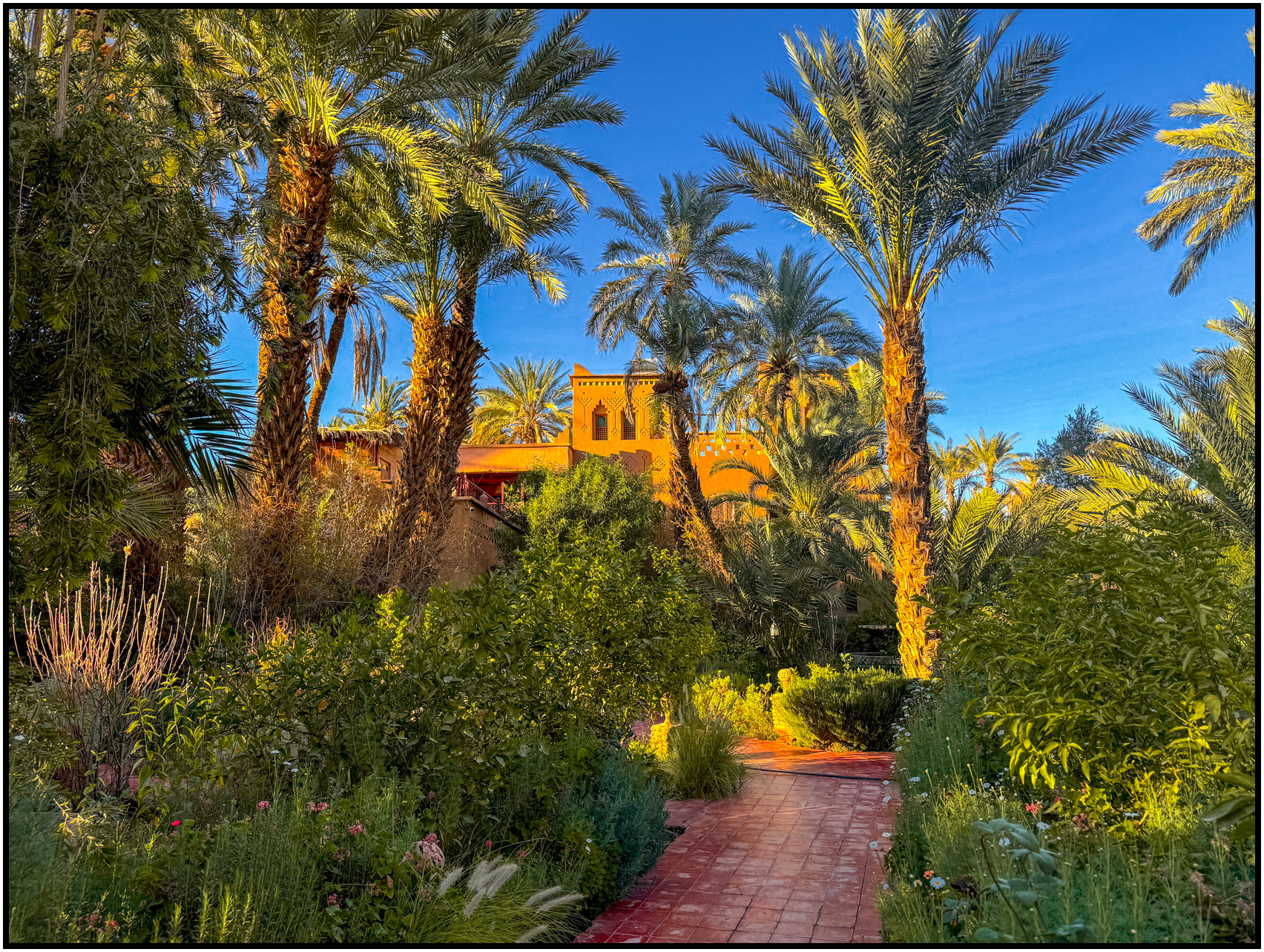
In Agdz… this is our hotel for the night, surrounded by stunning gardens.
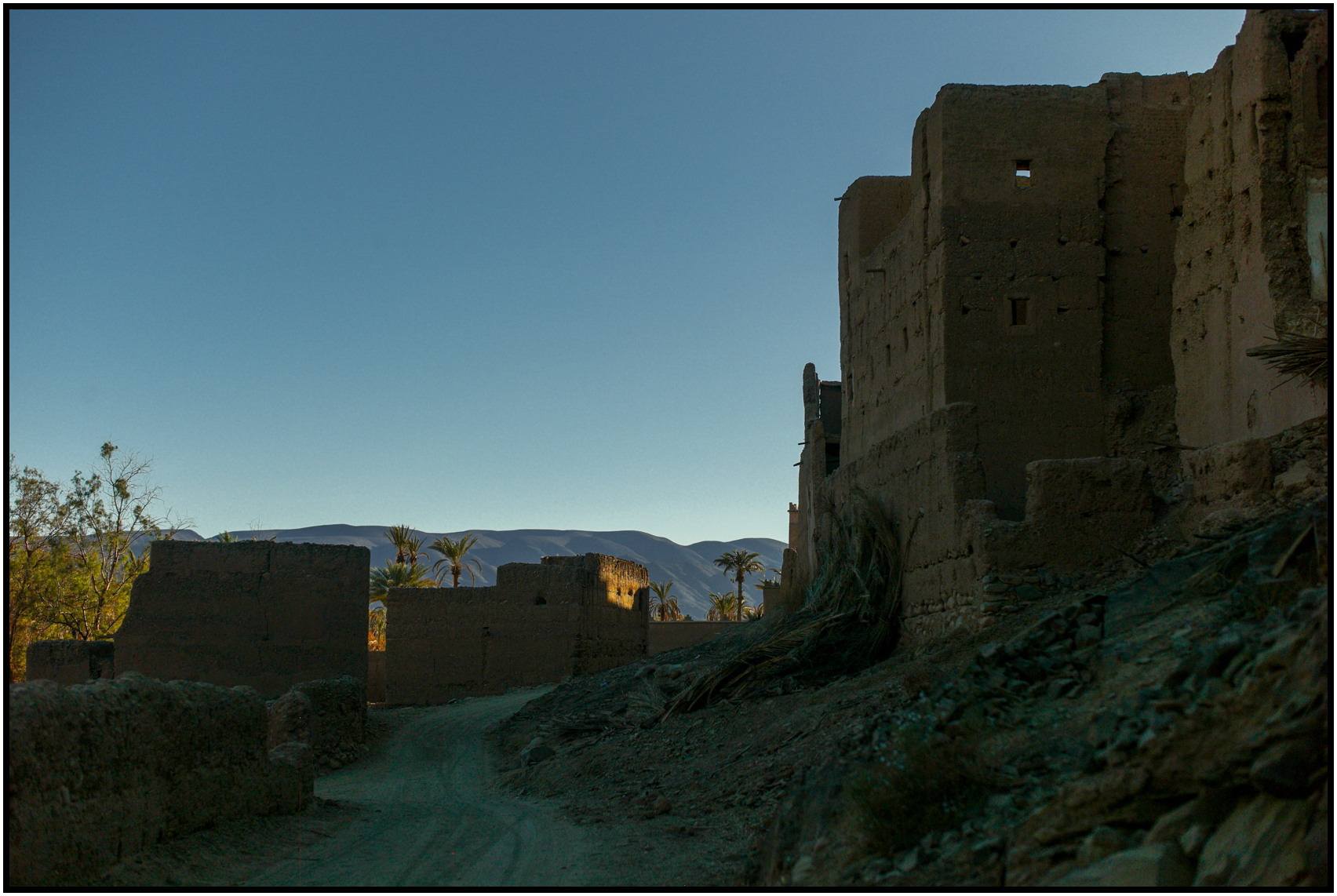
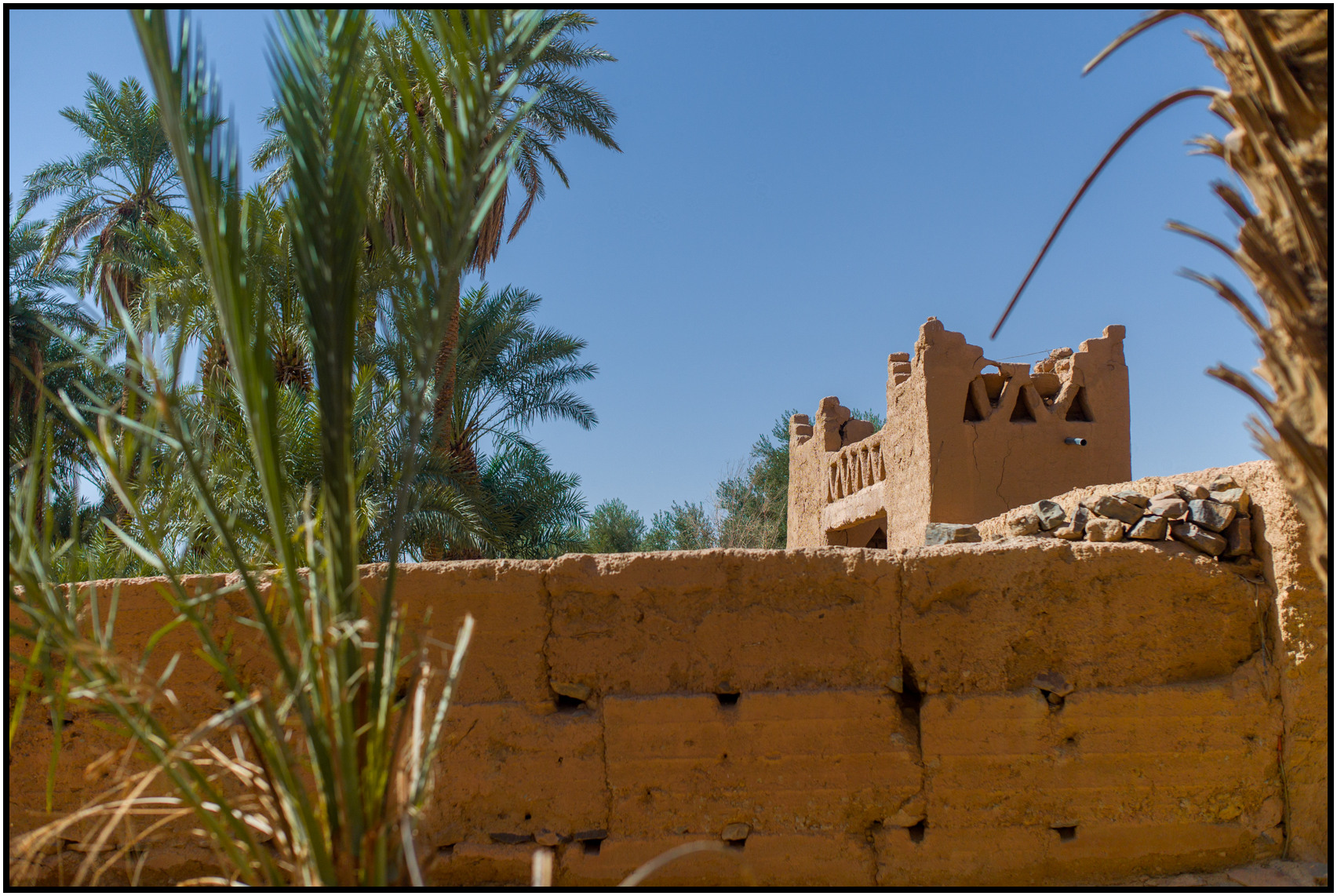
A 50 yard walk out of our compound yields an abandoned village of Ahslim Ksar. No one has lived here for about 70 years – modern citizens moved a bit south and live now in “the city”. This entire walled village can now be explored, at your own risk.
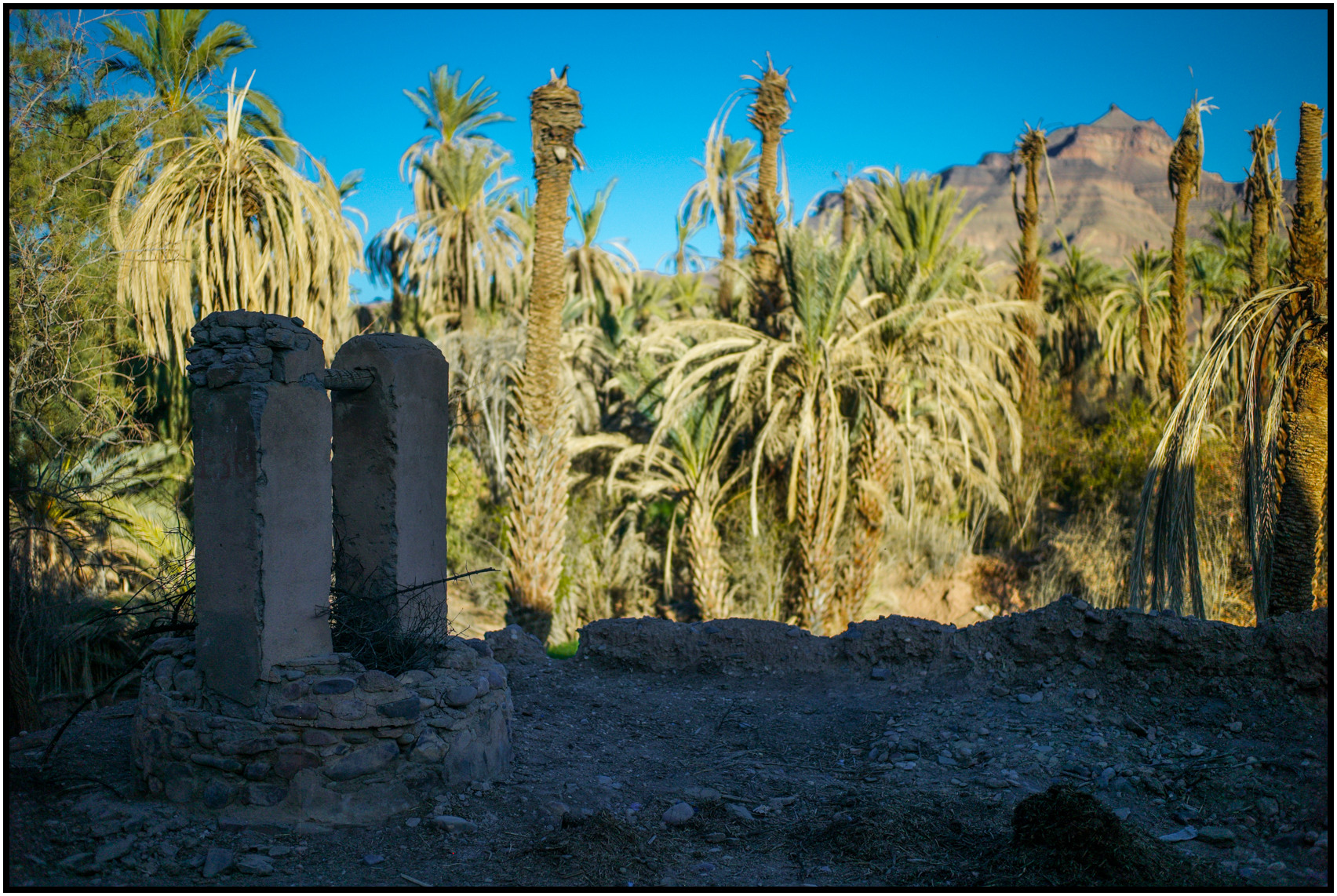
An old well, next to a field of date palms and saffron crocus.
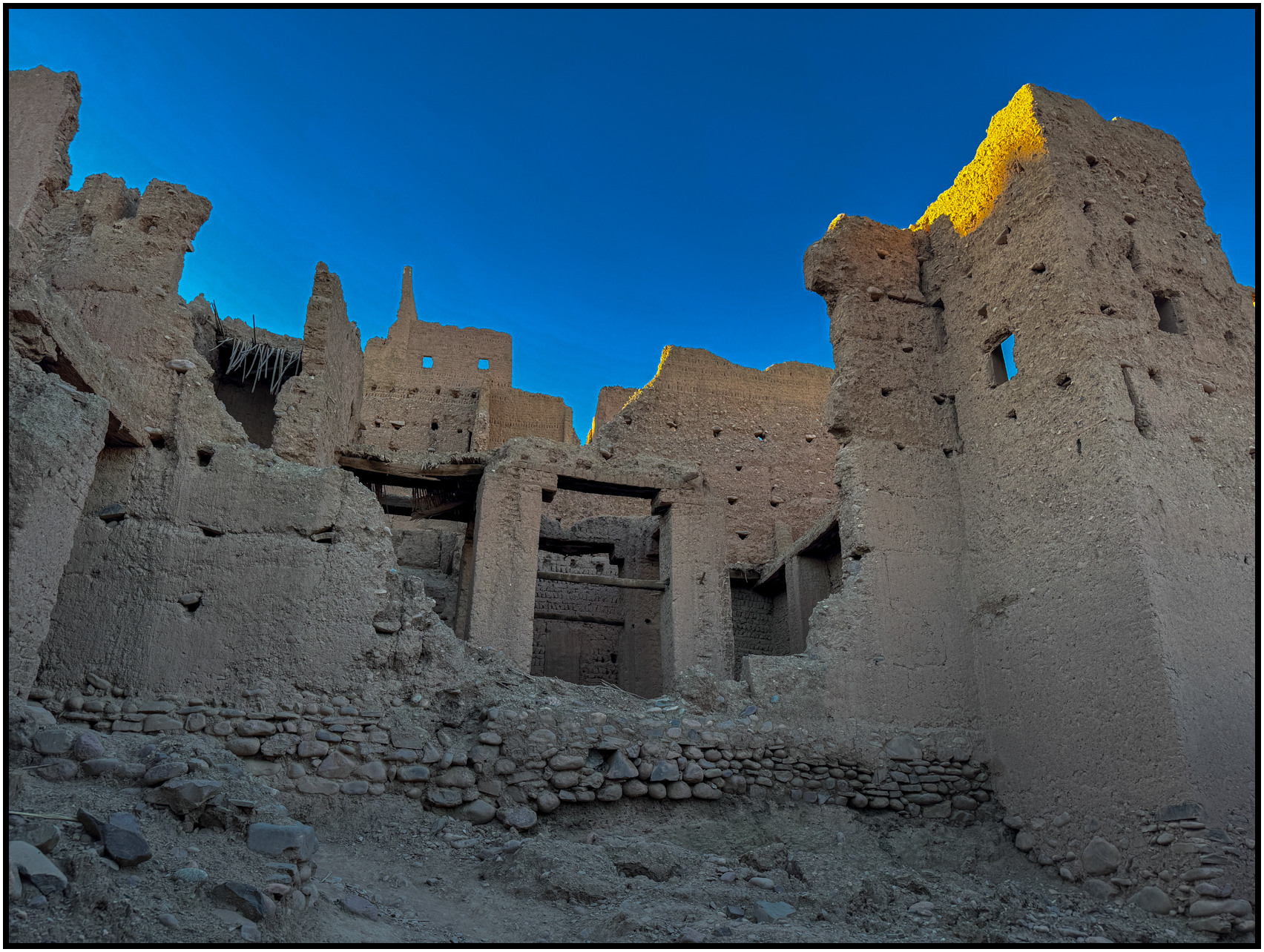
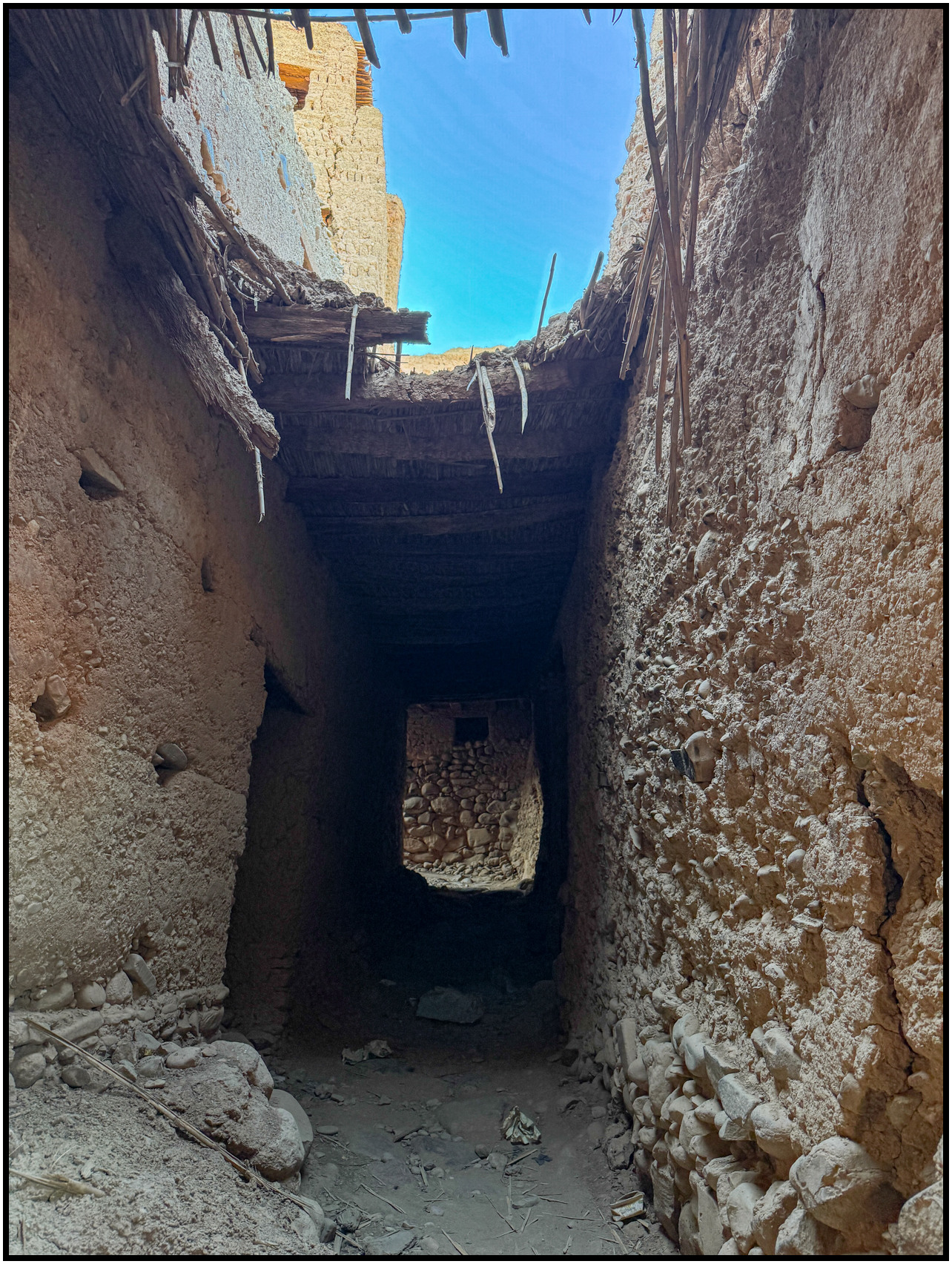
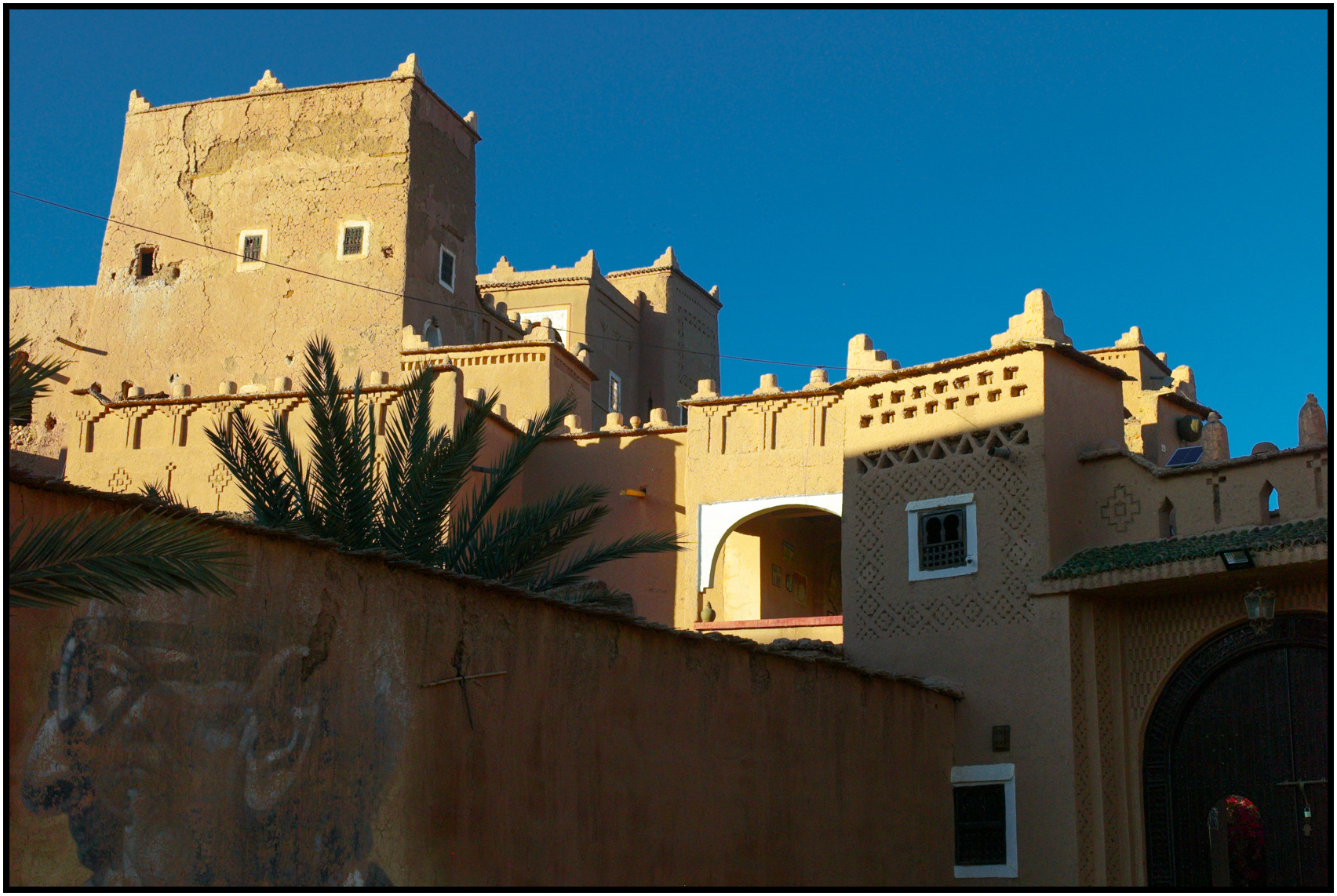
Another Kasbah that is still in use down the way.
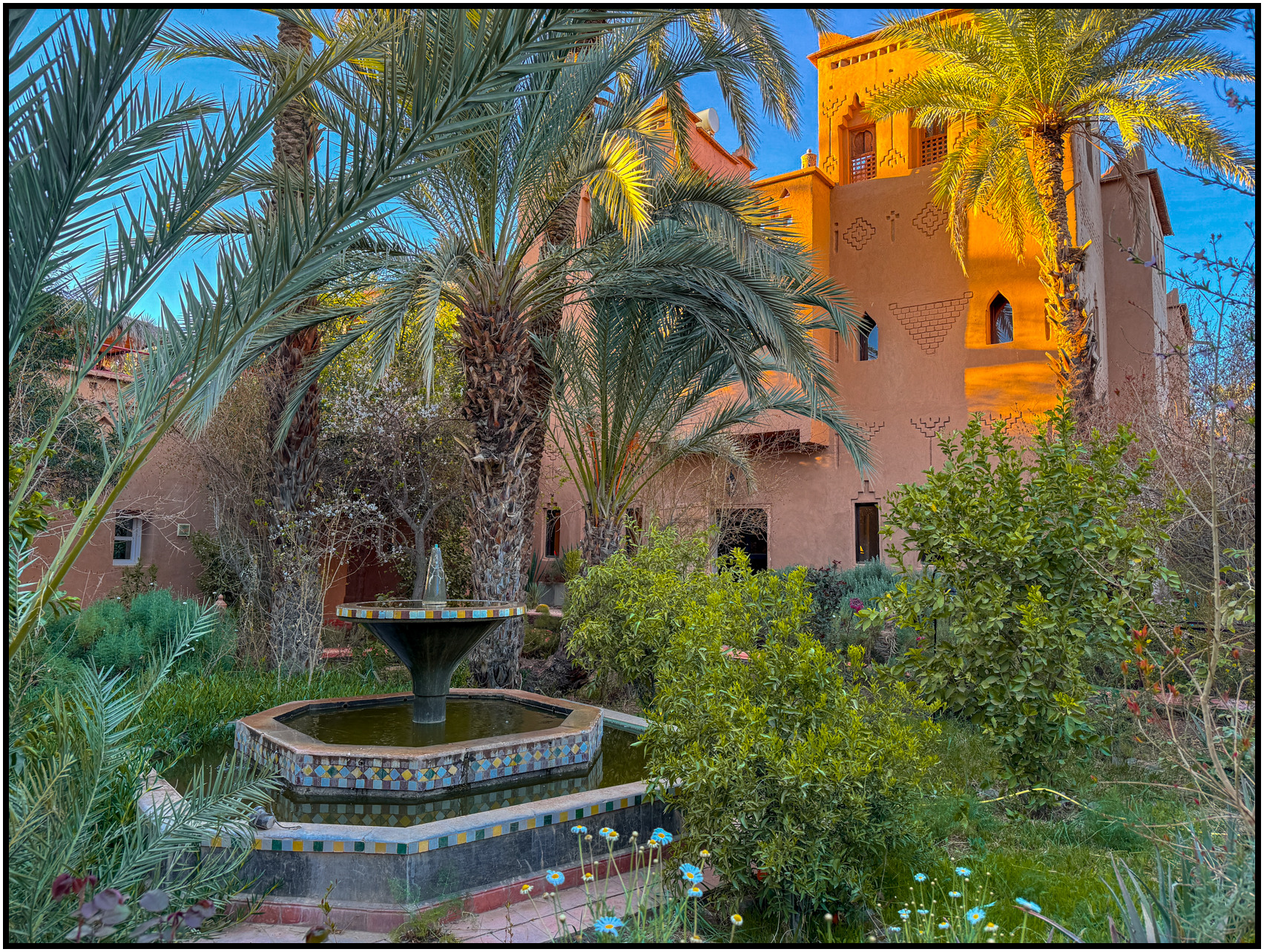
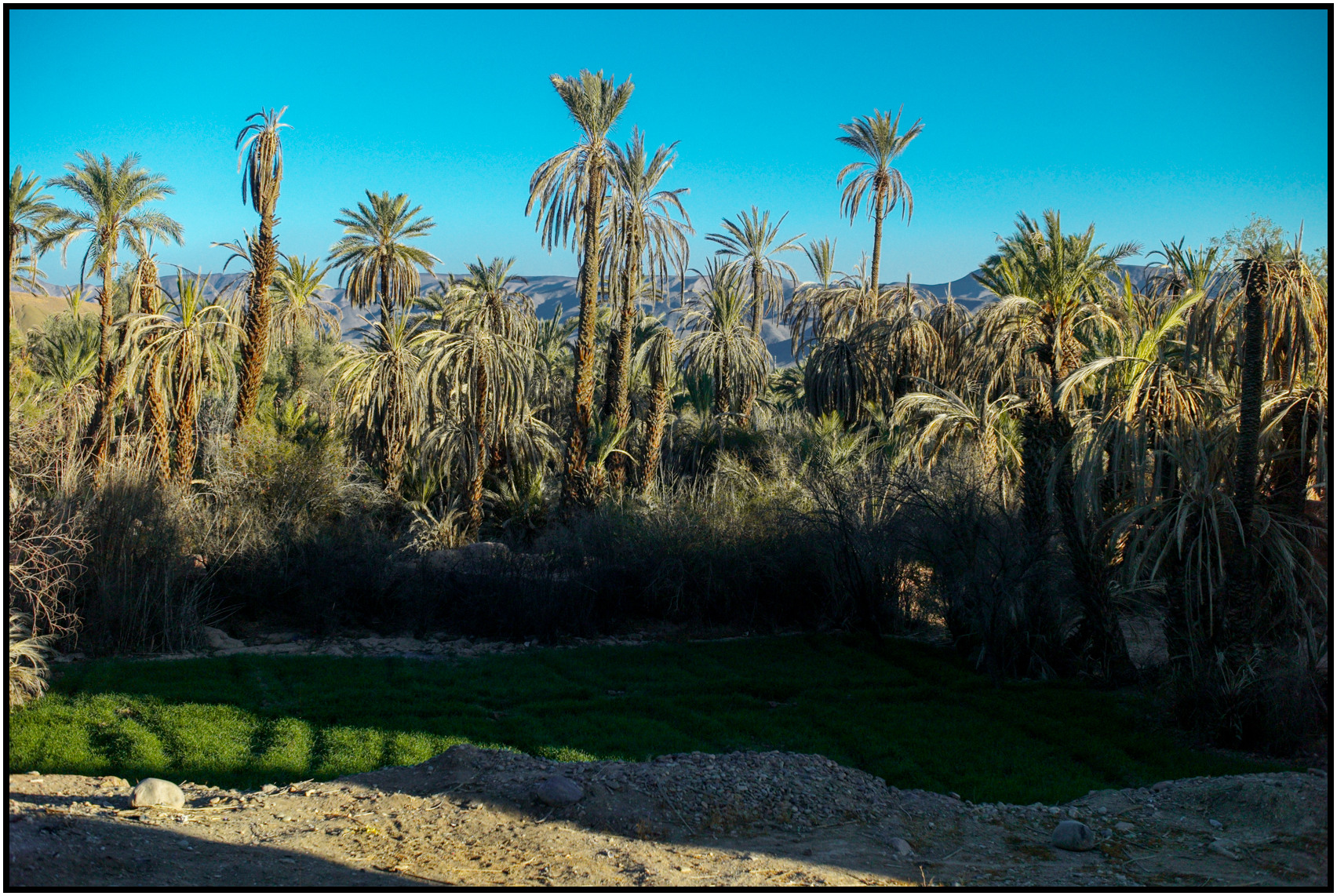
Back at our hotel. We have found that if you can get water here, things grow amazingly well. The soil is rich, just bereft of moisture.
Dadés Gorge
Feb 29, 2024 (Leap Year!)
We are now making a lazy return trip to Marrakech. Today we headed back up deeper into the Atlas mountains to see how many of the Mountain Berber people lived… they have carved out a life wherever there is water, and built villages into the steep rock walls. They are efficient at capturing the melted snowfall to irrigate farms. All of southern Morocco is oranges and browns except where there is any small amount of water – and then you get lush greens and huge varieties of plant life. Top elevation was over 7200’ and most of the villages we visited were above the 6000’ level.
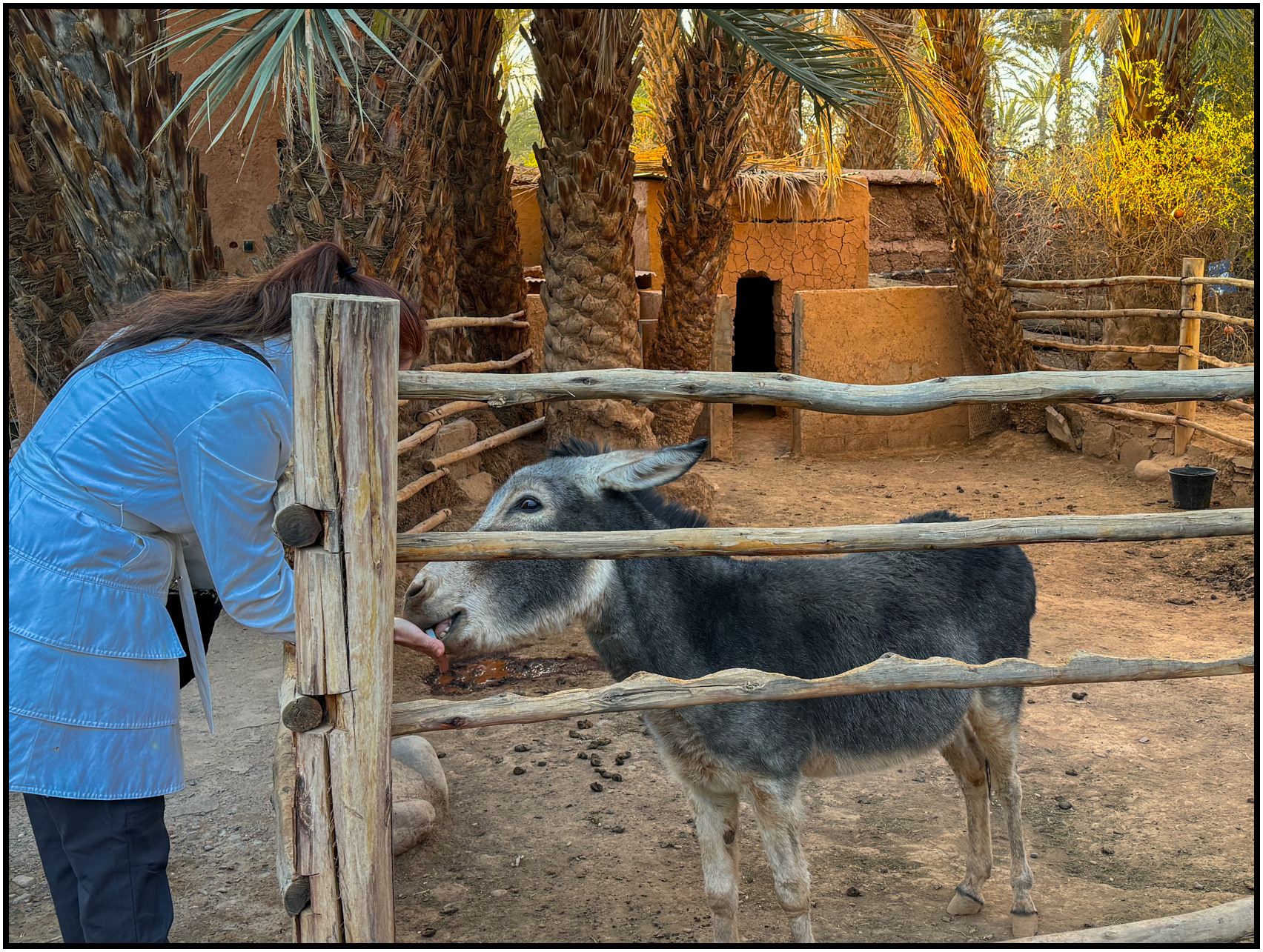
Heading out this morning. Brenda purloined a sugar cube from breakfast to give to the hotel donkey. His braying was our wake up alarm in the dark at 6:00 am today.
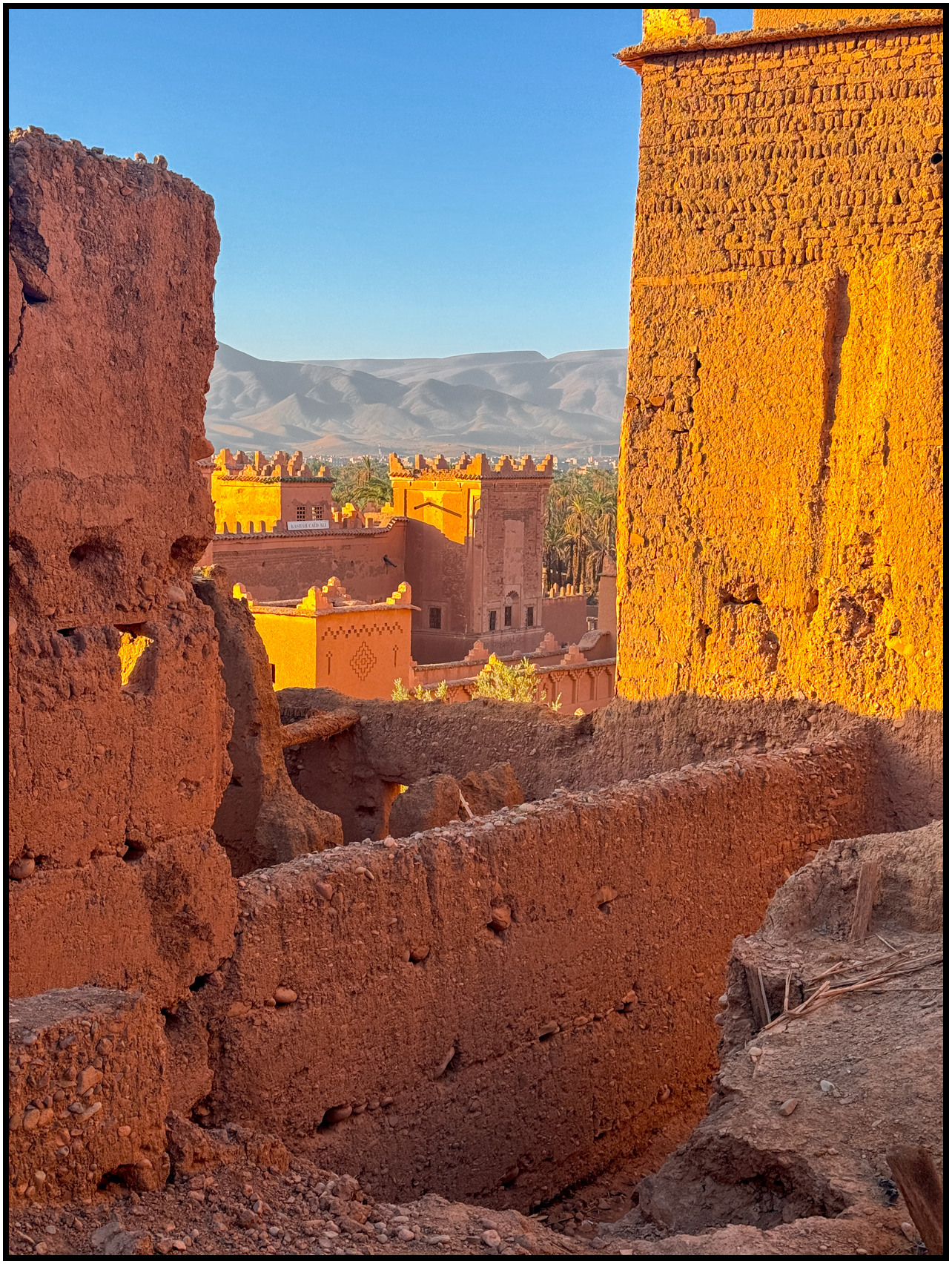
We had some time to explore again the deserted ‘ksar’ village.
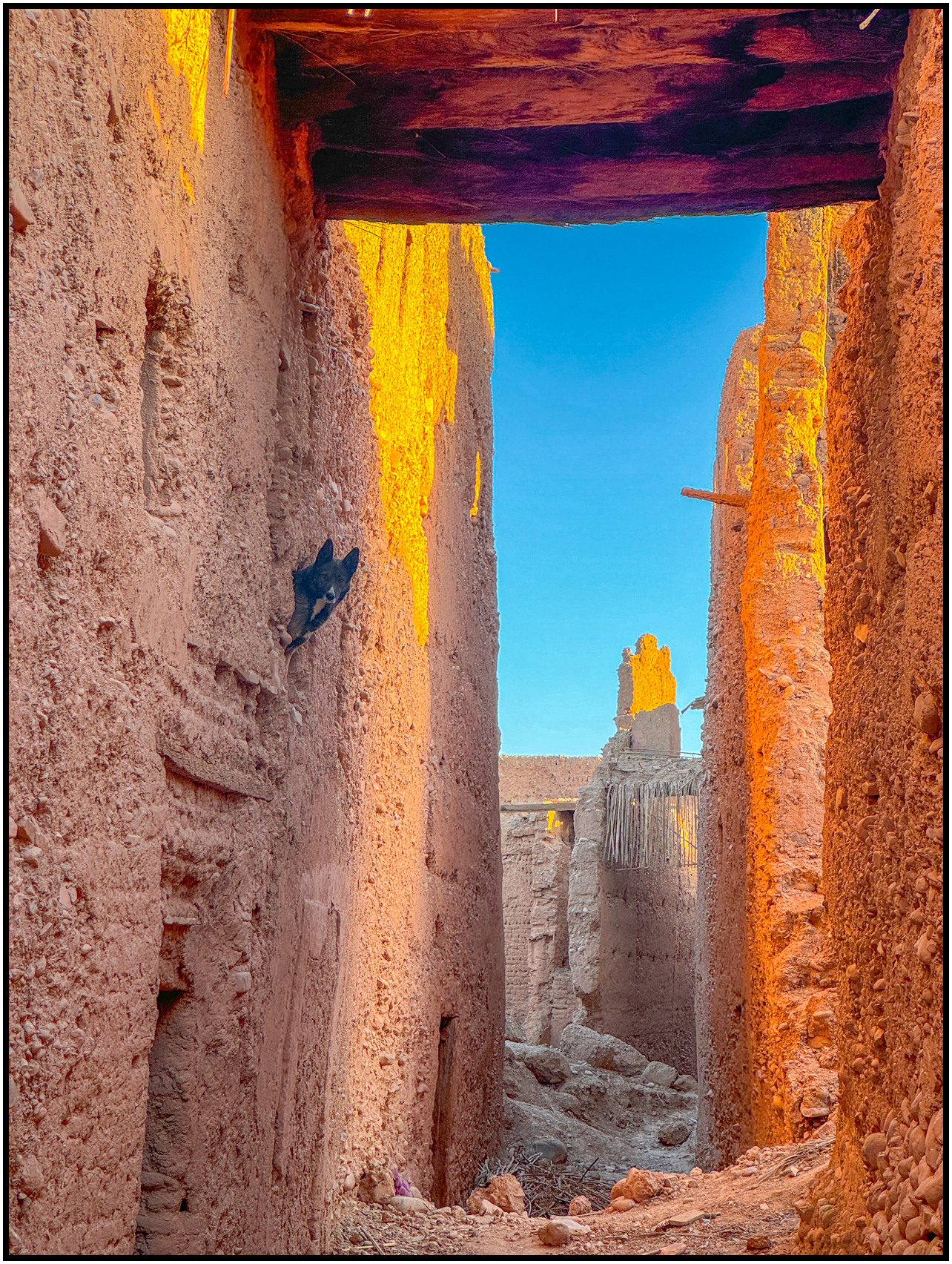
Down one alleyway we encountered a dog seemingly guarding the pass (hanging out the second-floor window opening). His body language got more and more nervous as we approached, so Brenda made us turn back.
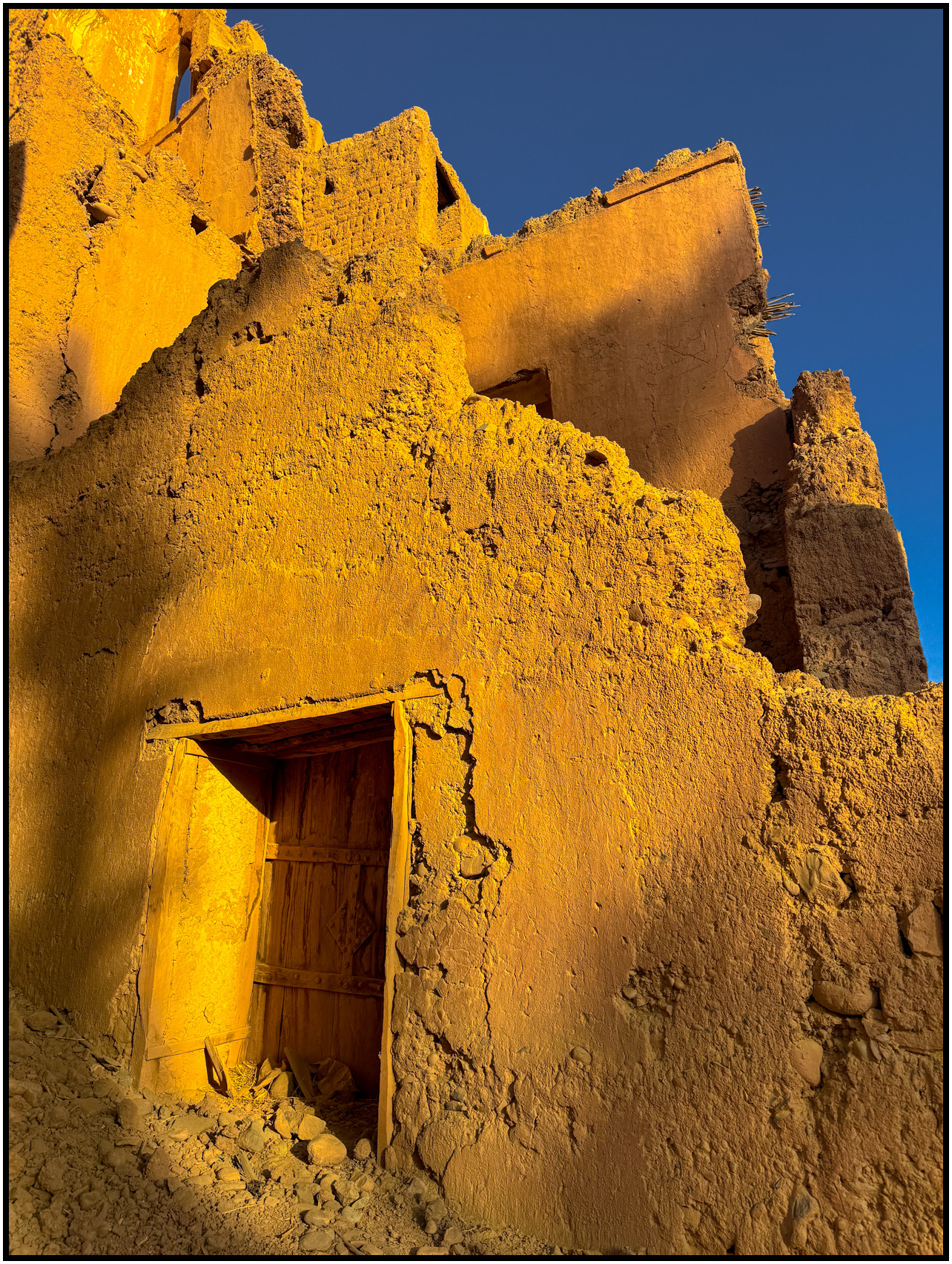
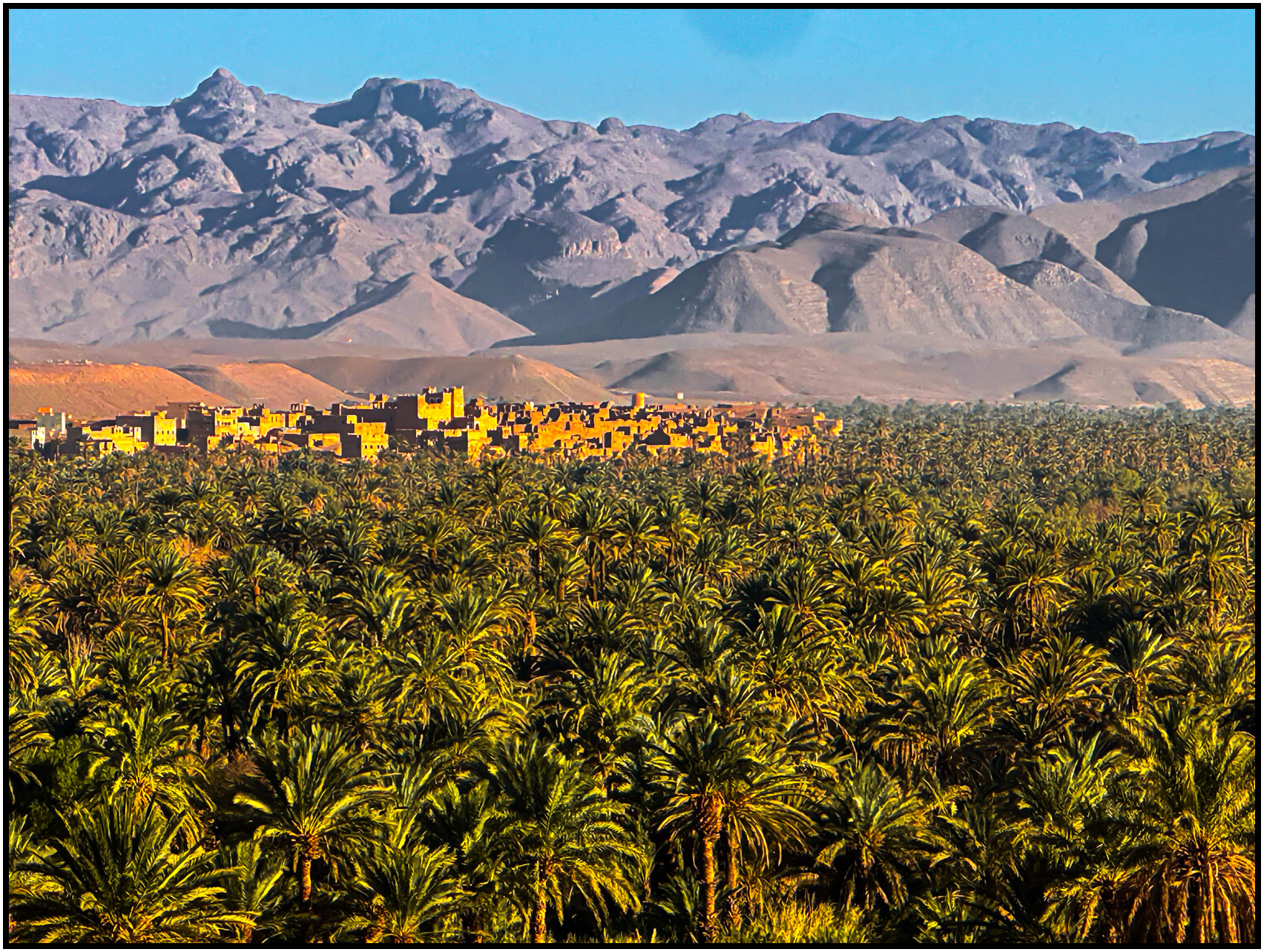
This photo could have been taken yesterday or 2000 years ago.
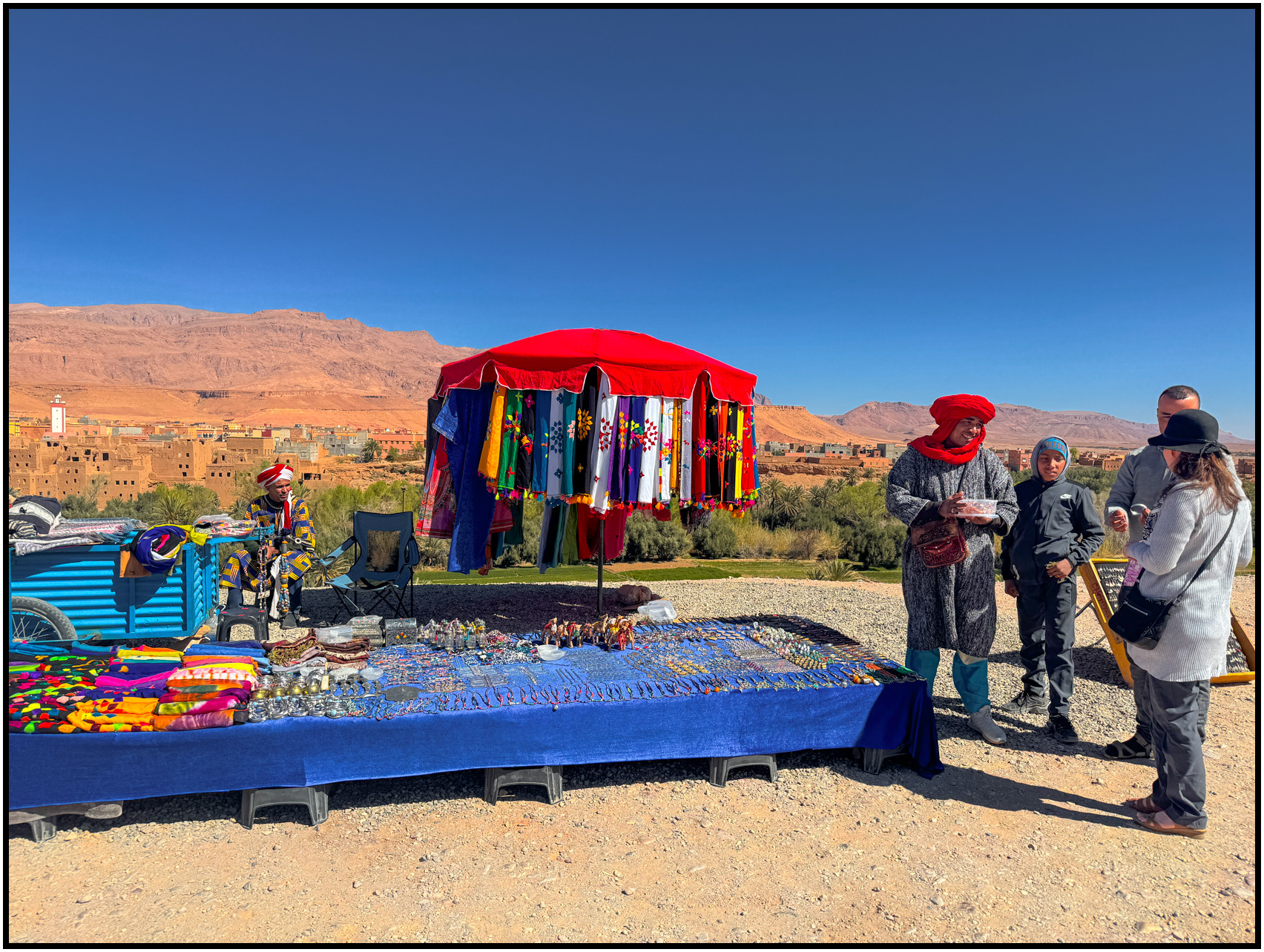
Roadside vendor. Brenda is negotiating final pricing on some more trinkets for the girls. (Khalid was translating.)
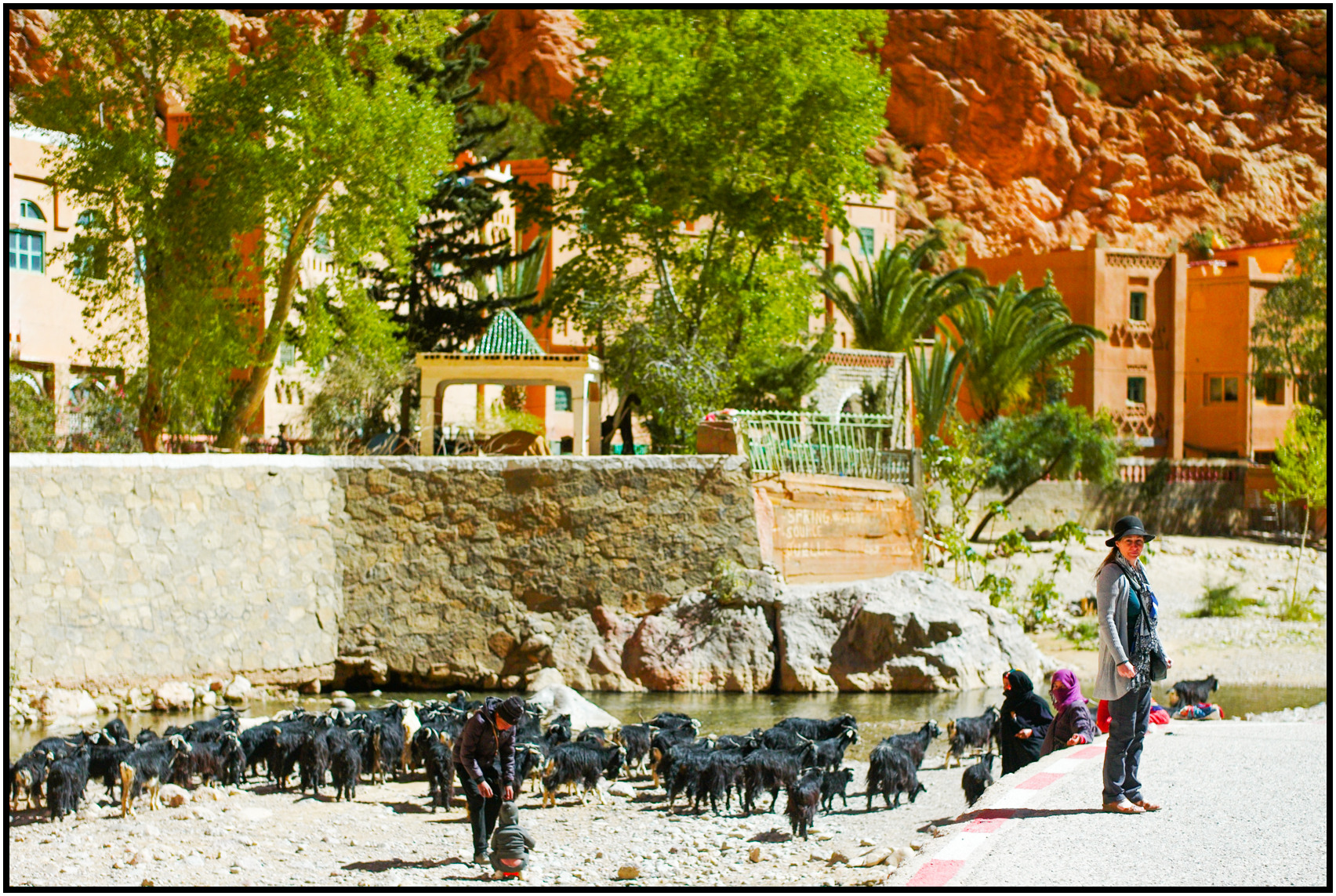
Goats in the Tinghir gorge.
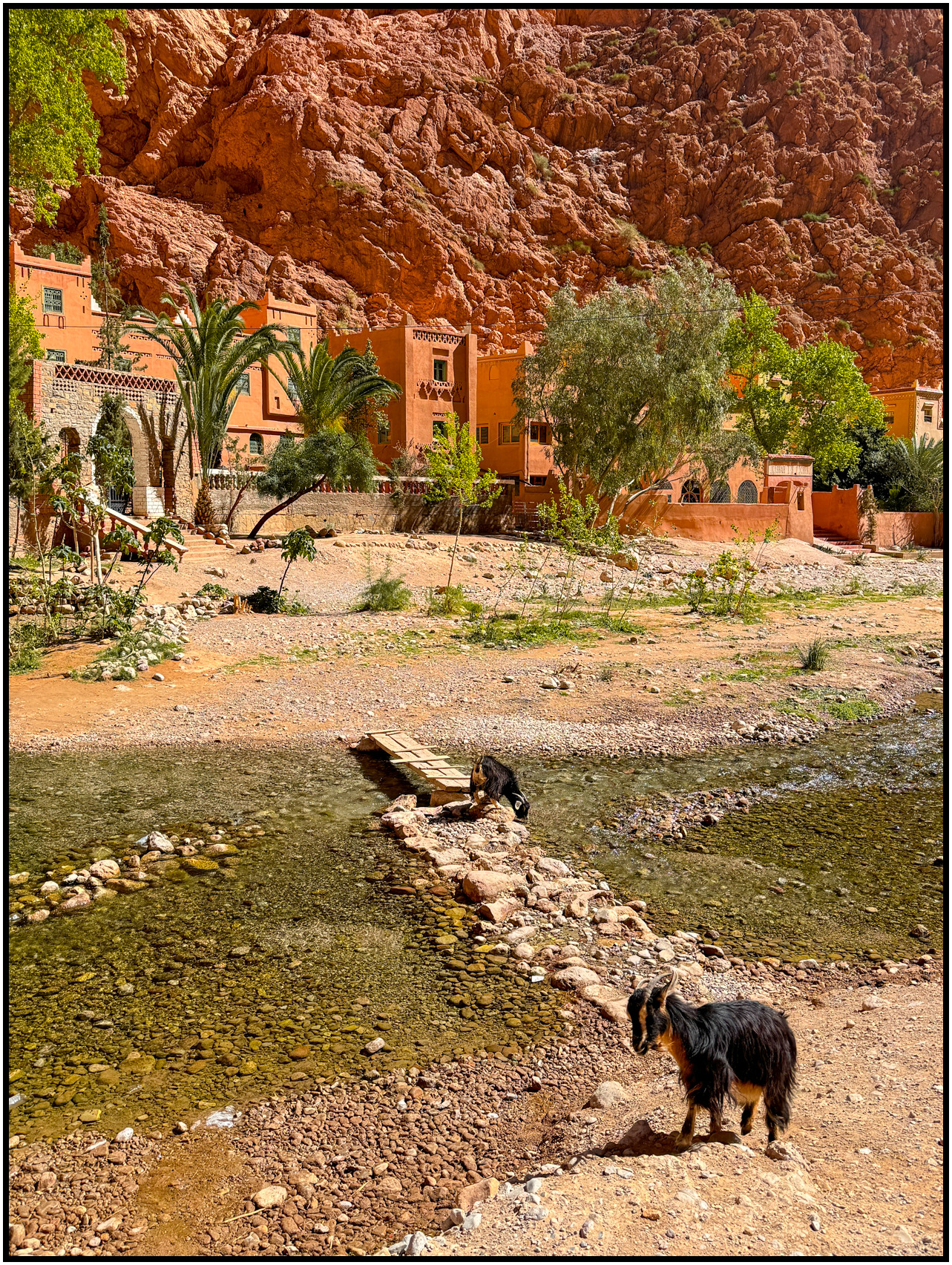
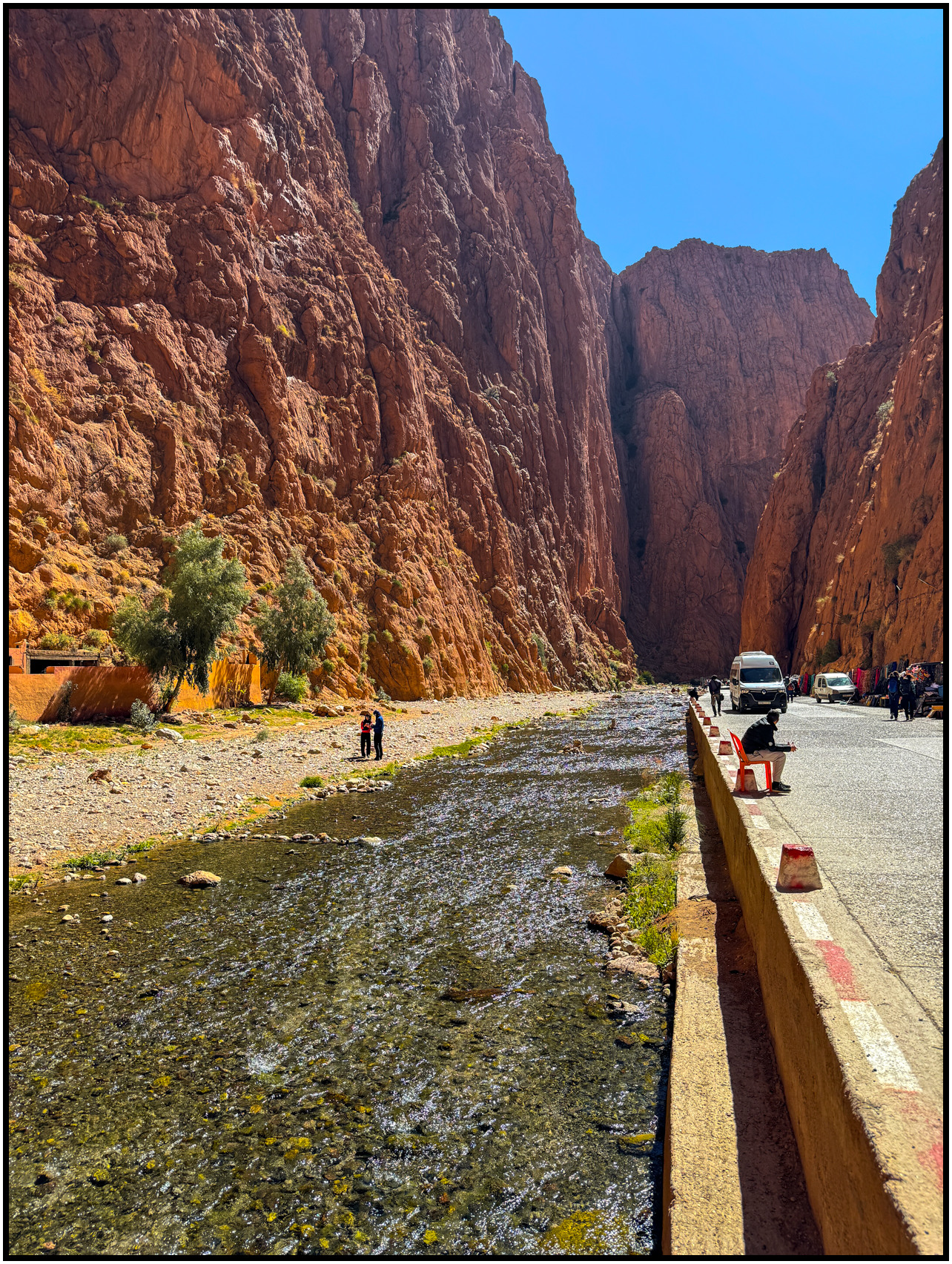
Better shot of this gorge… a creek running through a pass flanked by impenetrable, steep walls.
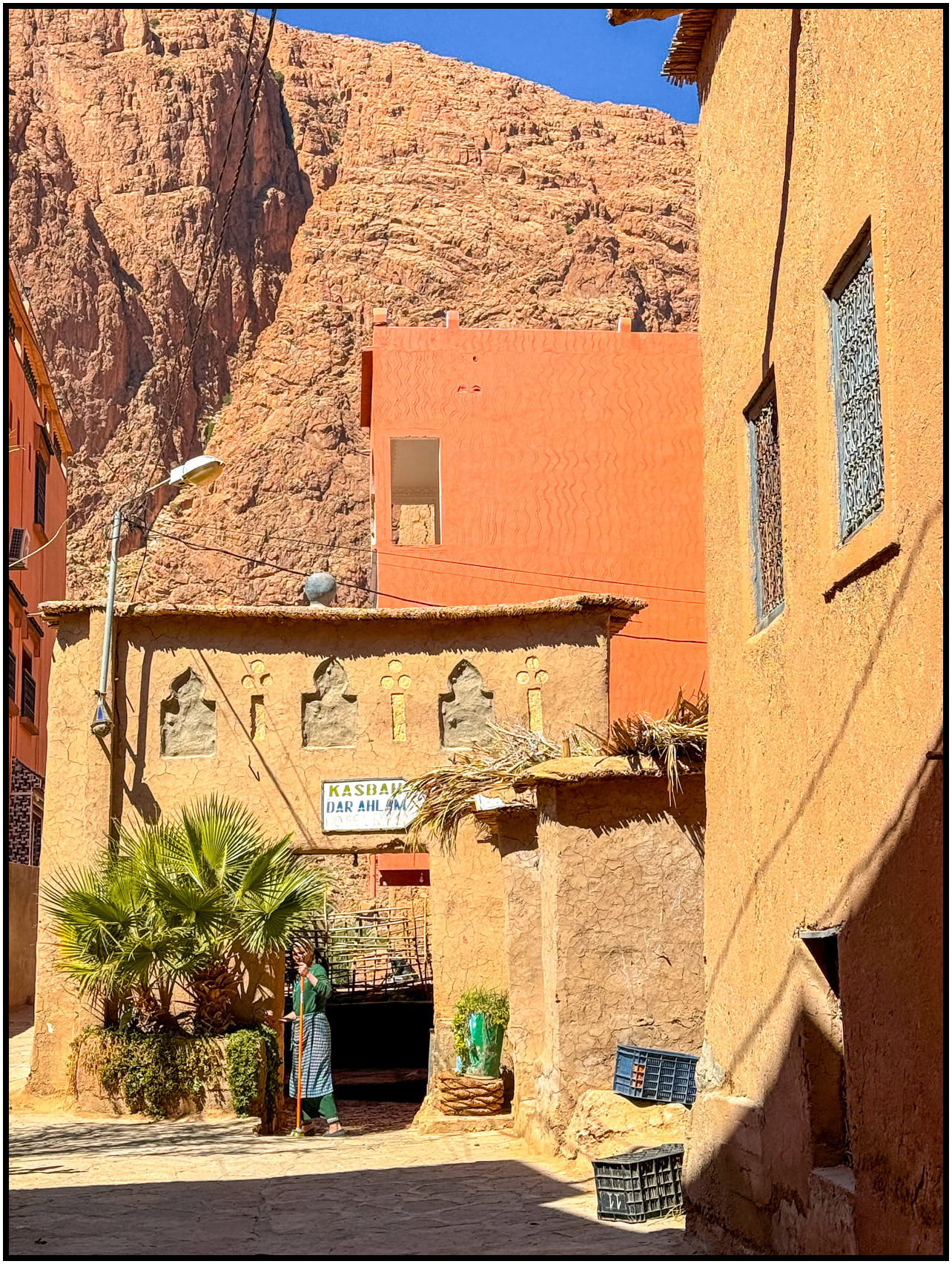
Small town where we got lunch.
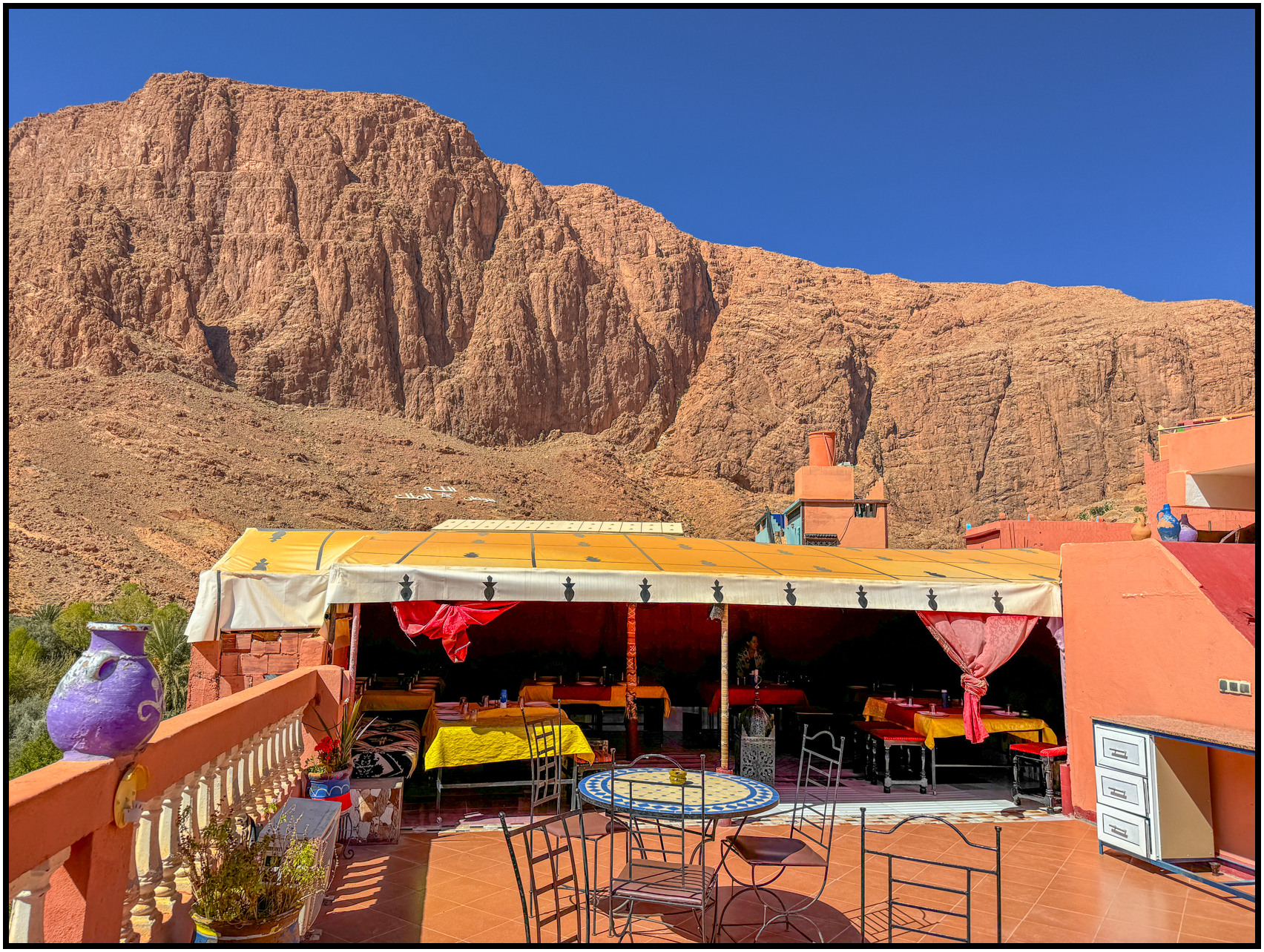
On the rooftop of our restaurant. Khalid knows all the “best kept secret” places that are off the tourist path. Brenda can just be seen, tucked deep into the shadows. The Arabic writing on the mountain side says “Allah, Country, King”.
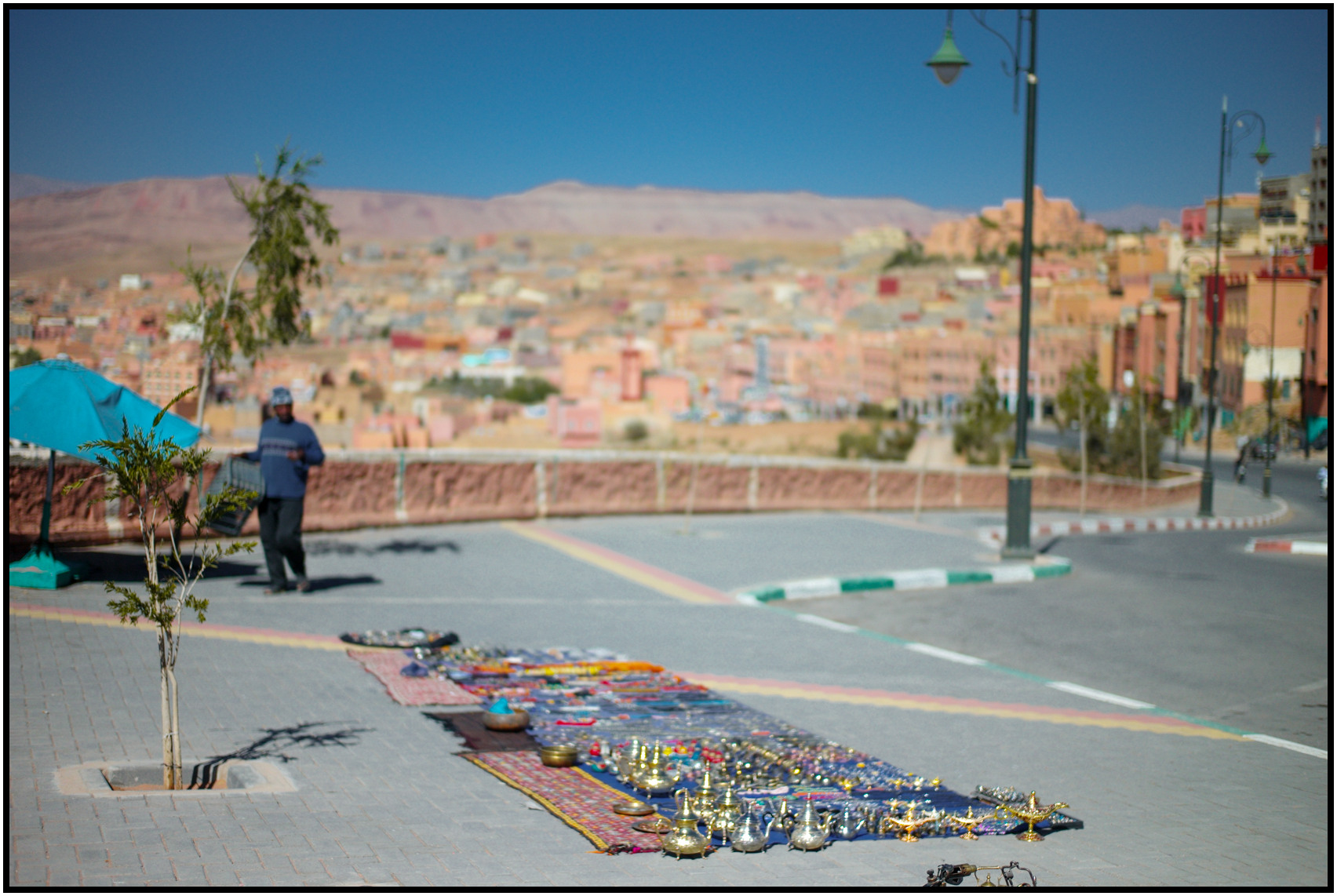
Teapot vendor further along on the trip.
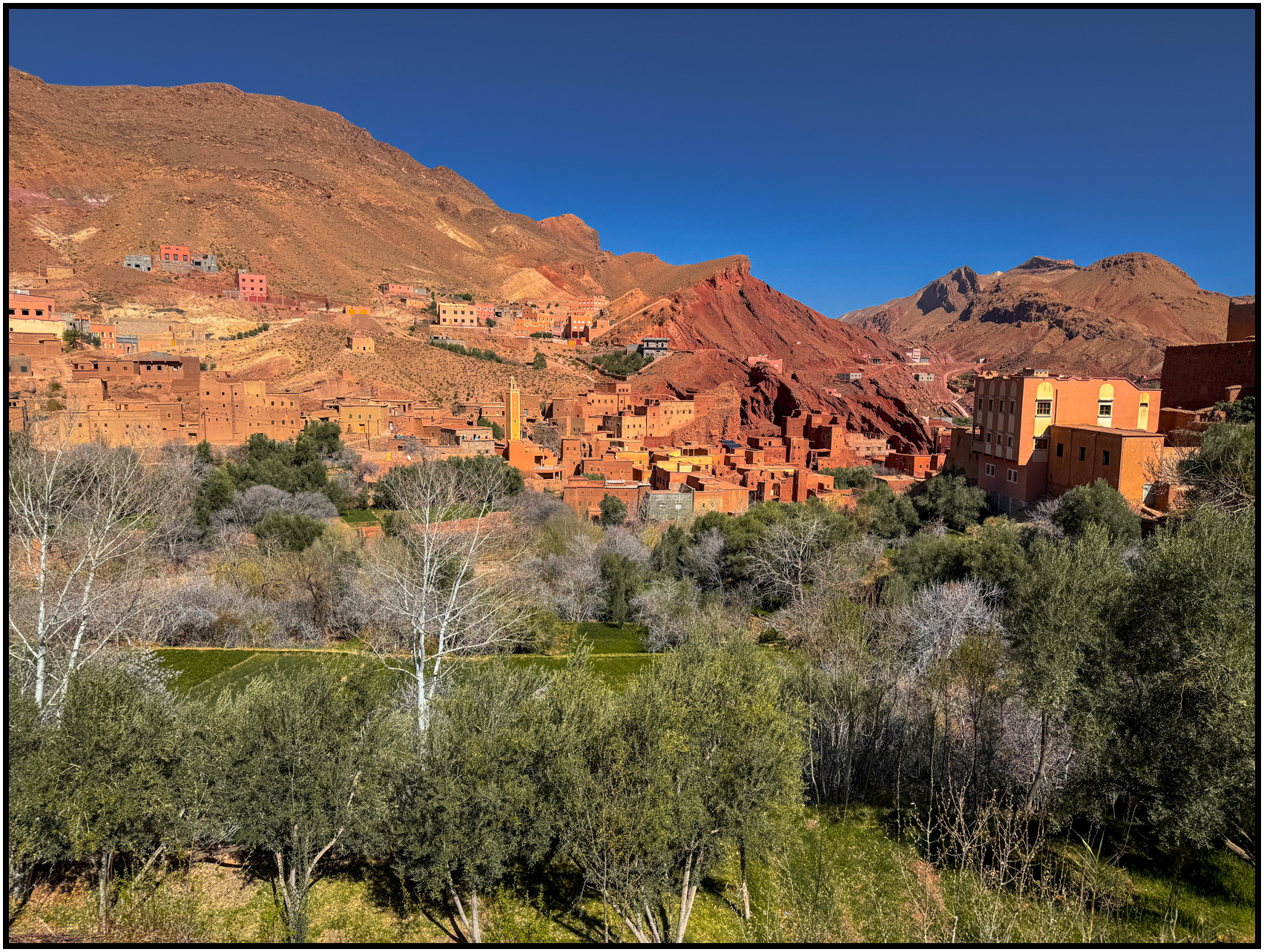
Shot of a typical village in the mountains. Tallest tower is always the mosque. Green in the center of the valley where the water flows and the crops are grown.
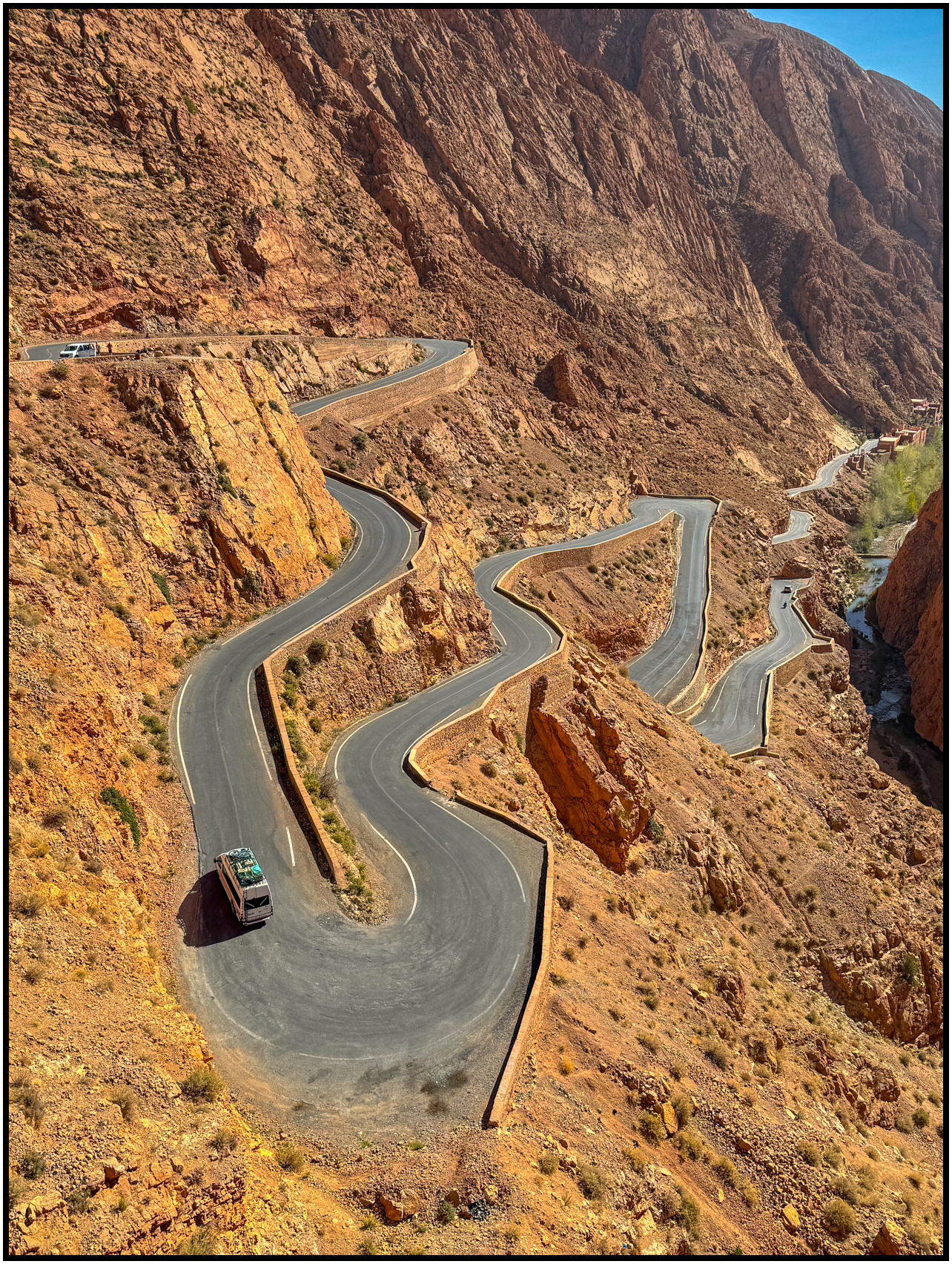
Back up over another mountain.
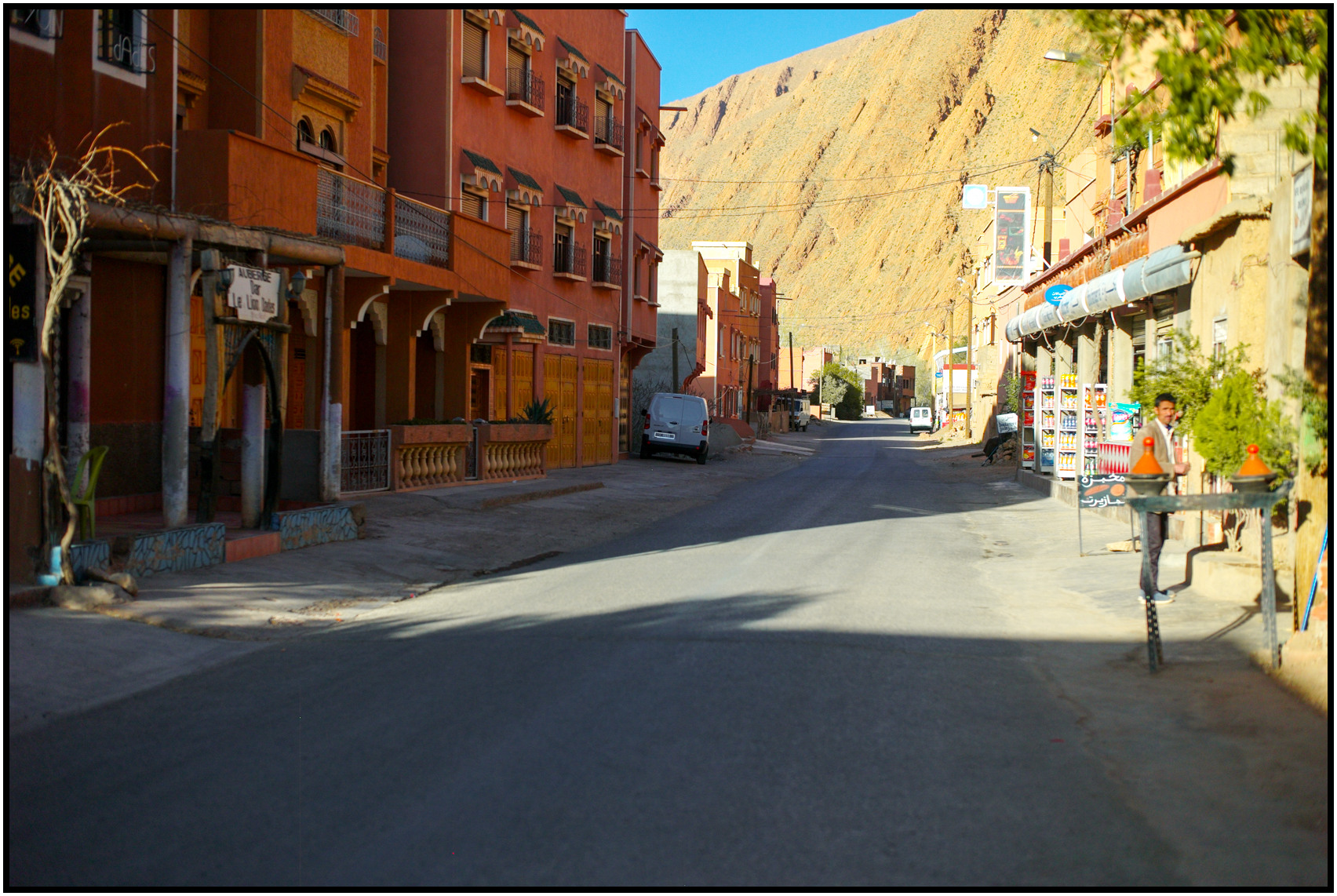
Our final stop for the day, in the Dadés (pronounced “dads”) Gorge. We are calling this the Riggins of Morocco… a small town at the bottom of another gorge with walls of mountain on either side. We walked up and down the road for an hour to get some exercise (long car trip day). I wanted to buy some Moroccan candy to bring home to the kids.
Marrakech
March 1, 2024
Today is mostly a travel (drive) day back to Marrakech – where we will spend the final 2 days of our time here in Morocco.
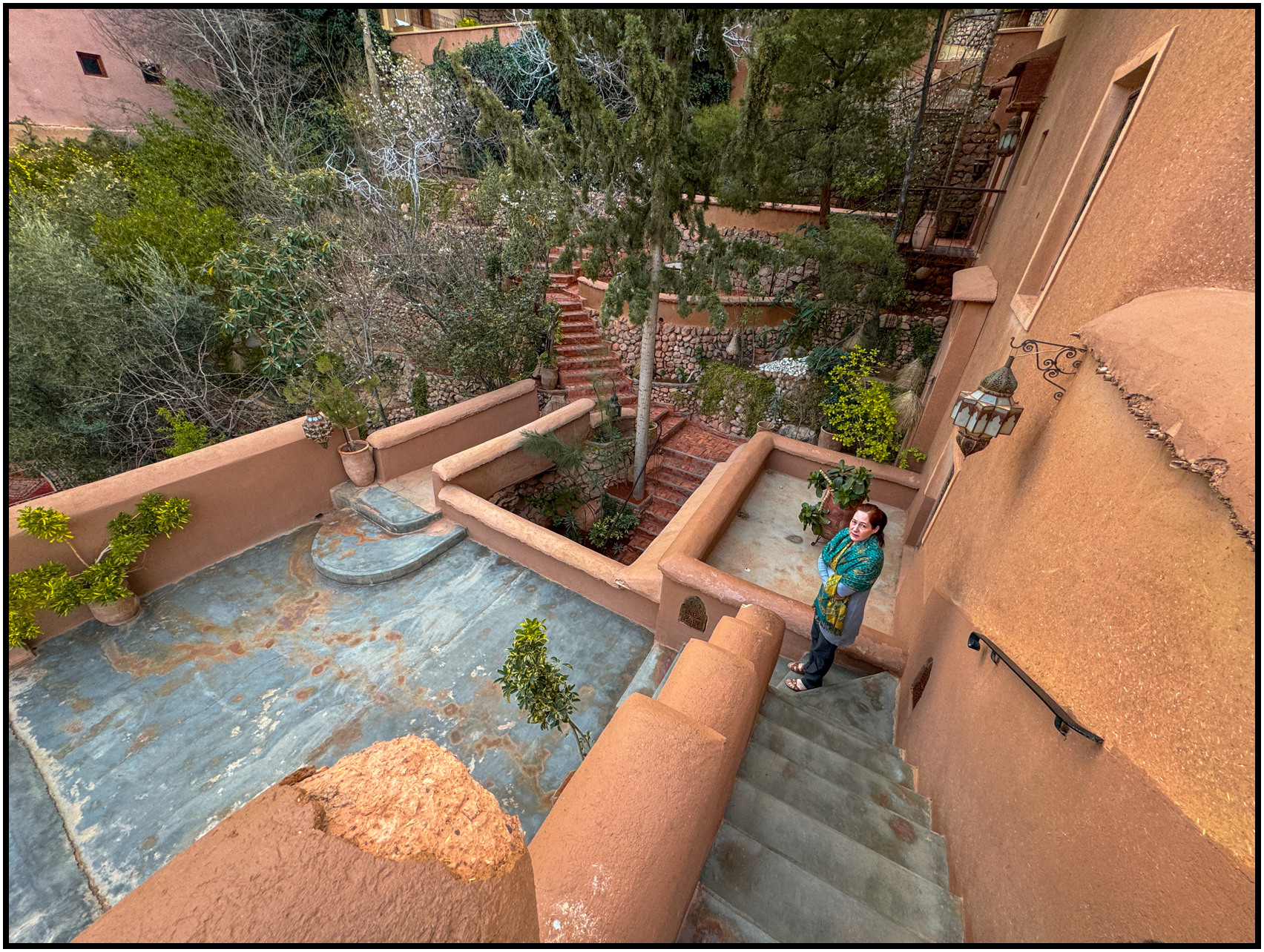
Leaving our hotel in Dadés. Built into the hillside, level space comes at a premium. One has to take many stairs (sometimes both down and up) to get anywhere in the hotel.
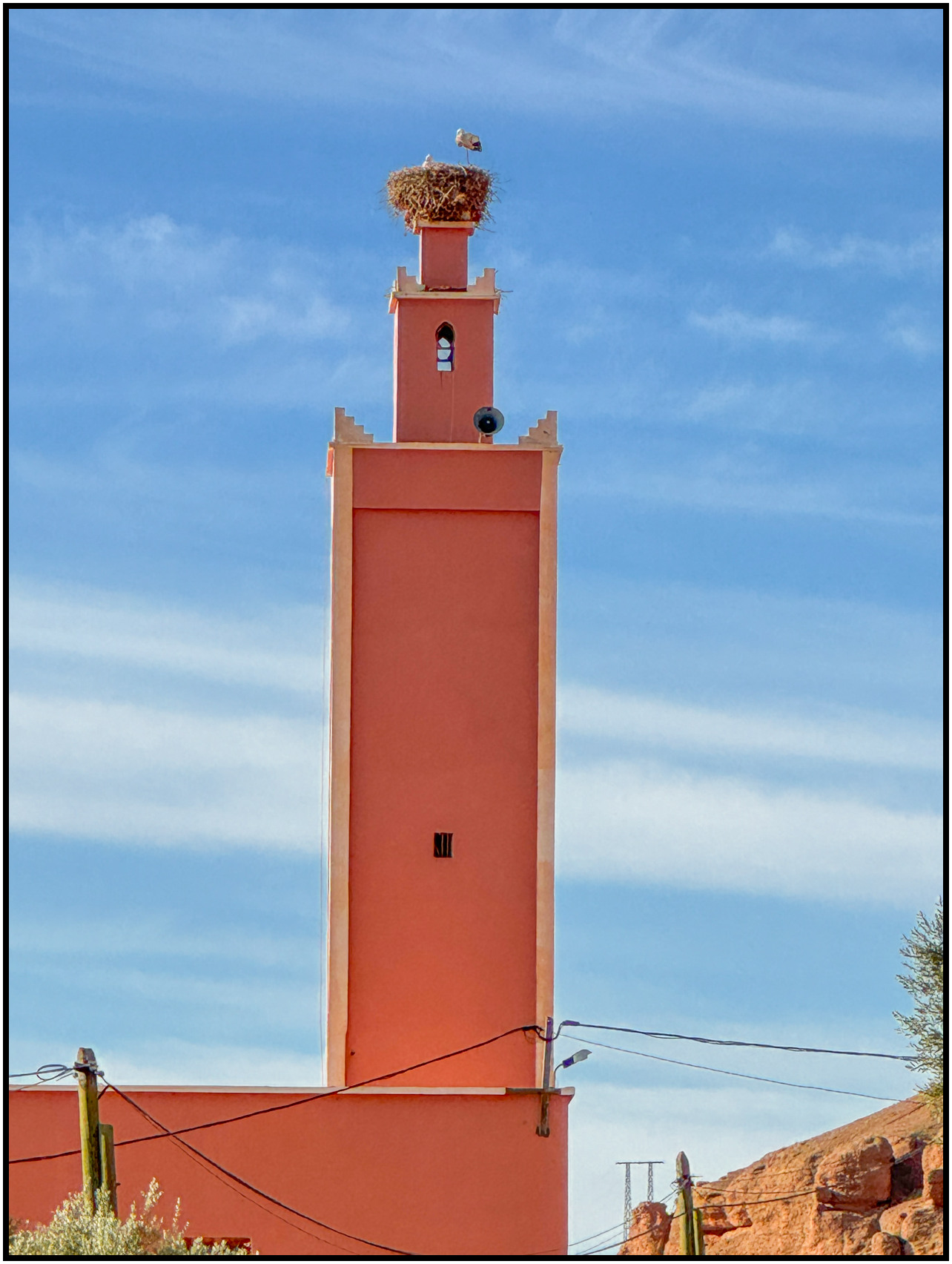
Stork nest on top of the mosque tower. Mom is on eggs and dad stands guard (on one leg, of course).
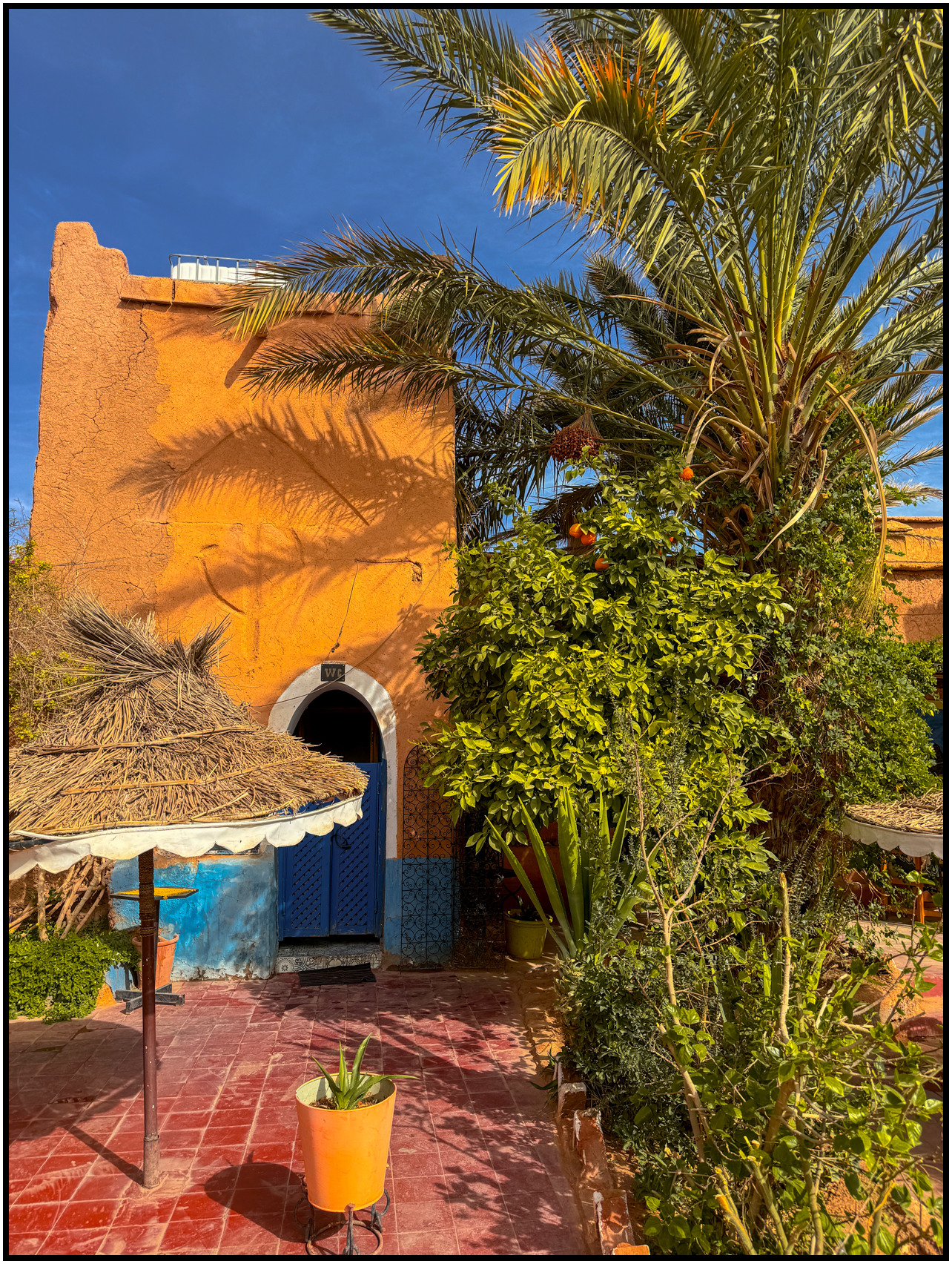
Even roadside bathroom stops are photogenic. (Those blue doors lead to the bathrooms.)
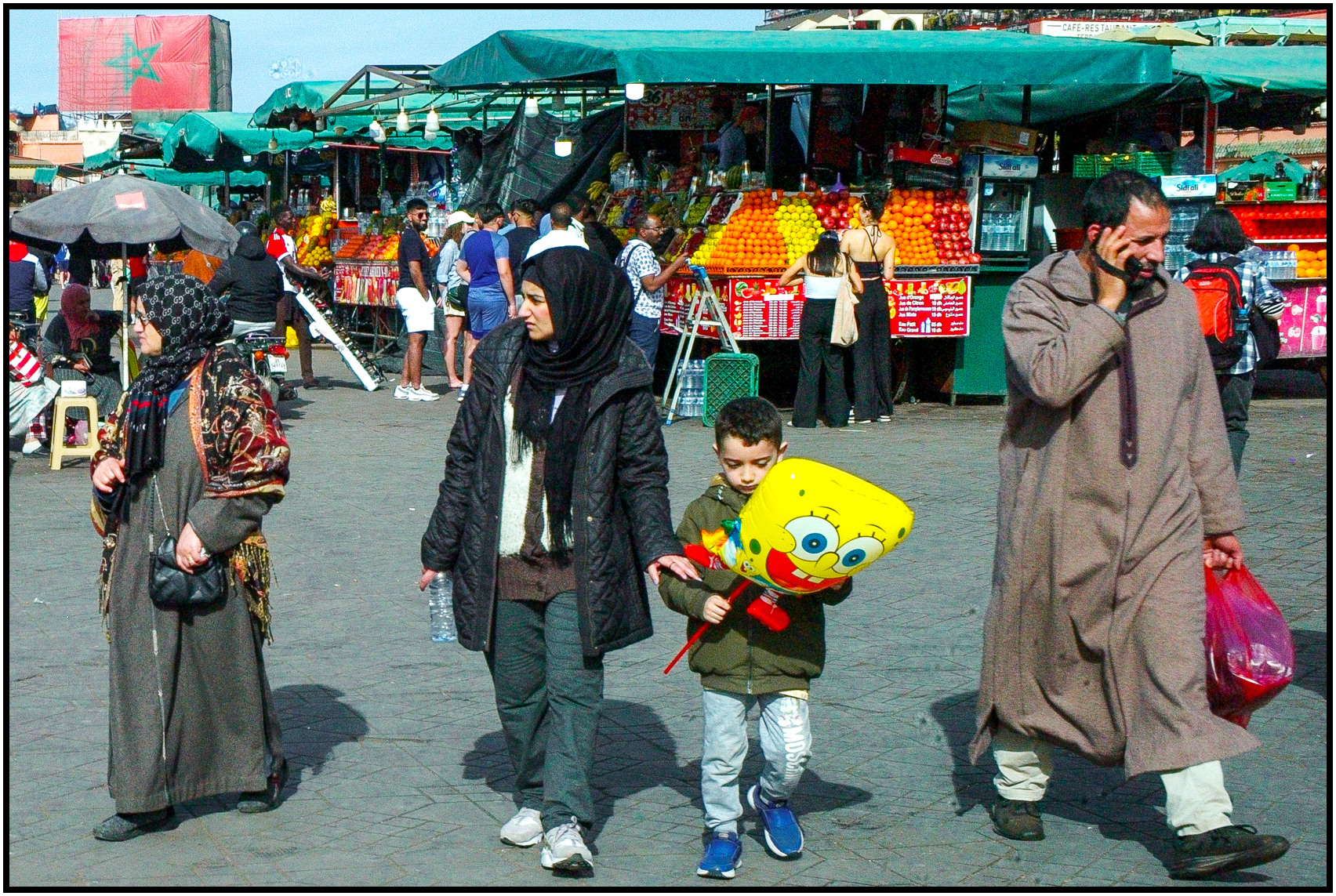
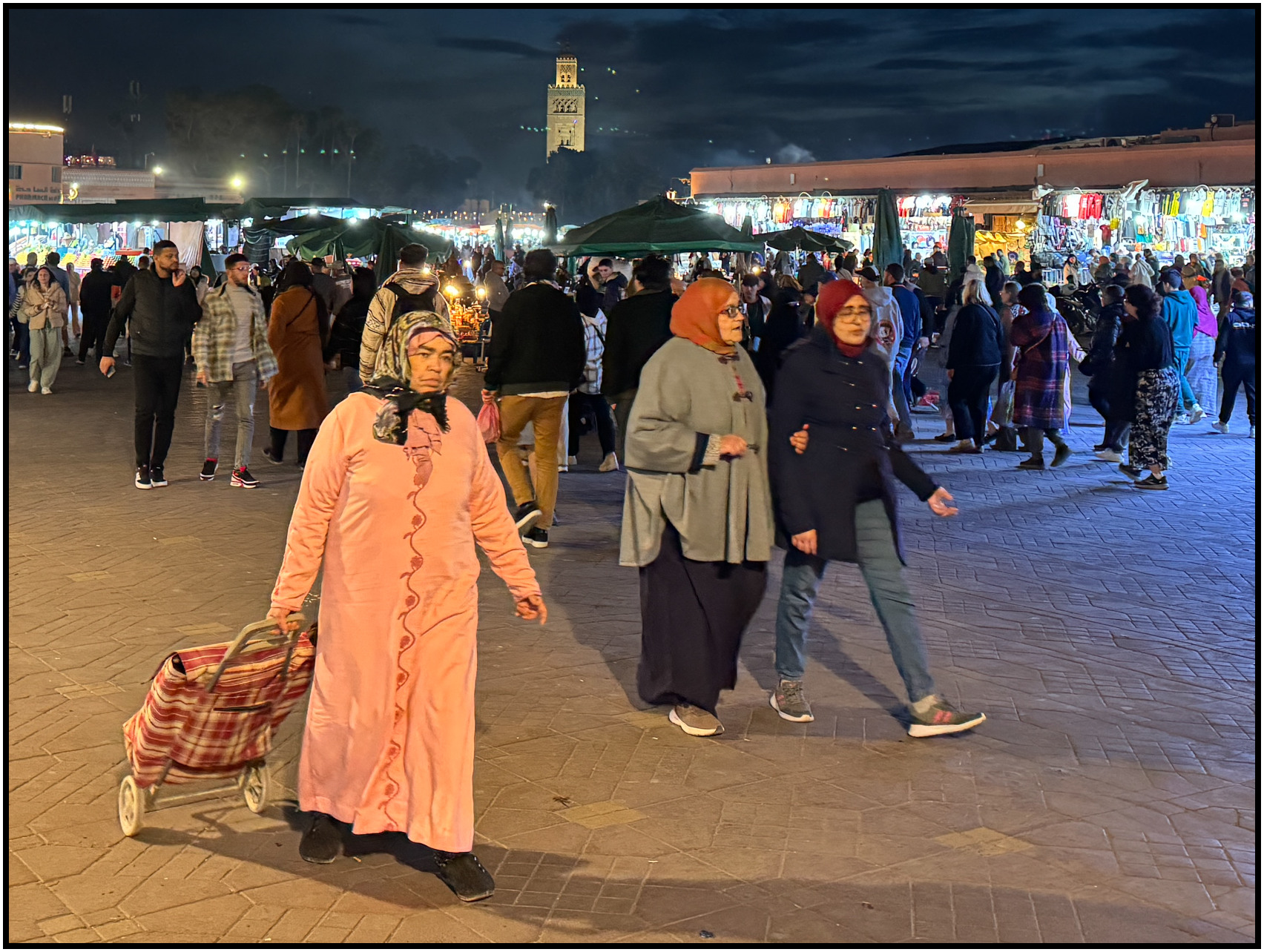
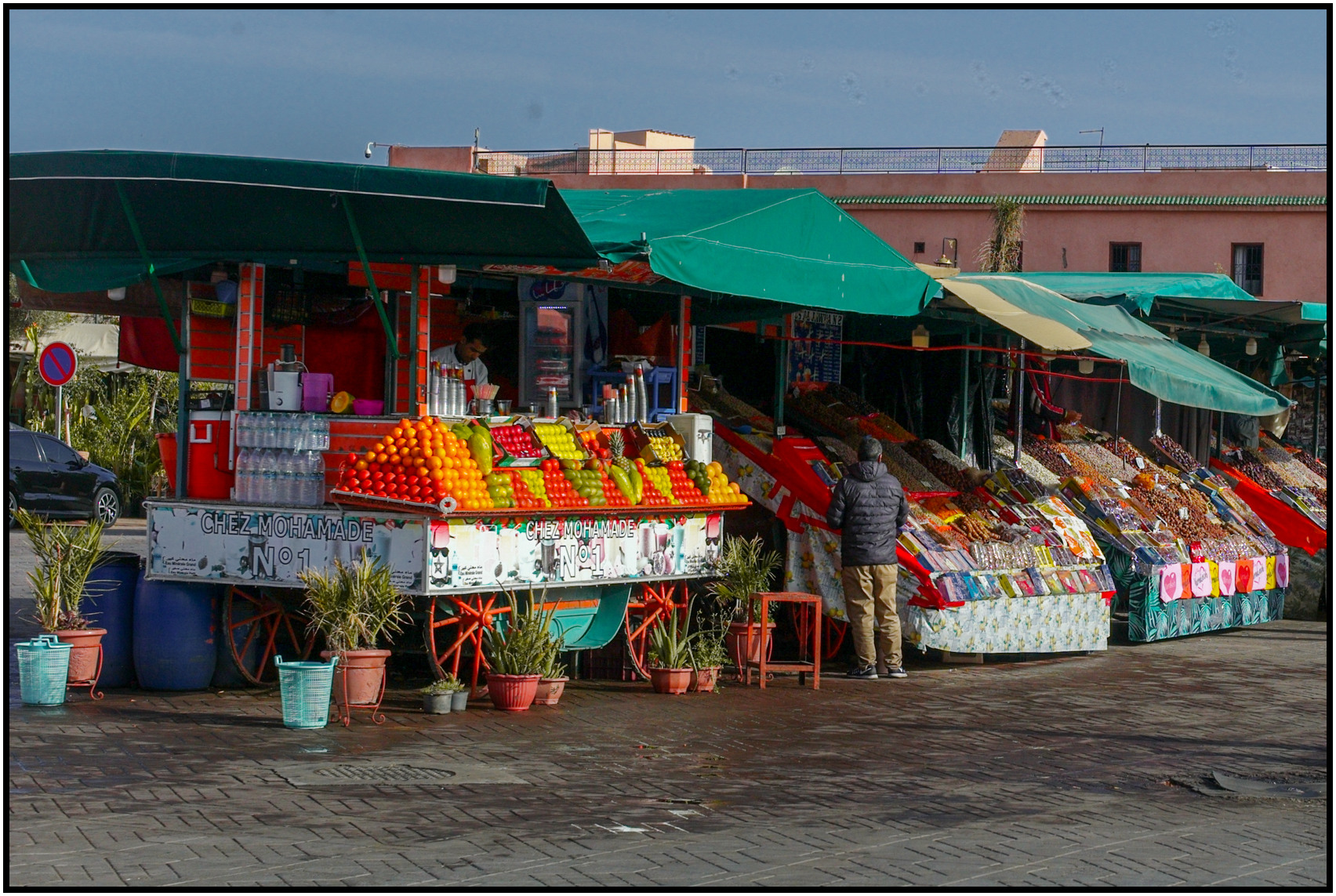
Back in Marrakech – at the Jemaal El Fna, the renowned square and marketplace in Marrakesh’s medina quarter (old city). This has been a marketplace location since at least the 1100s.
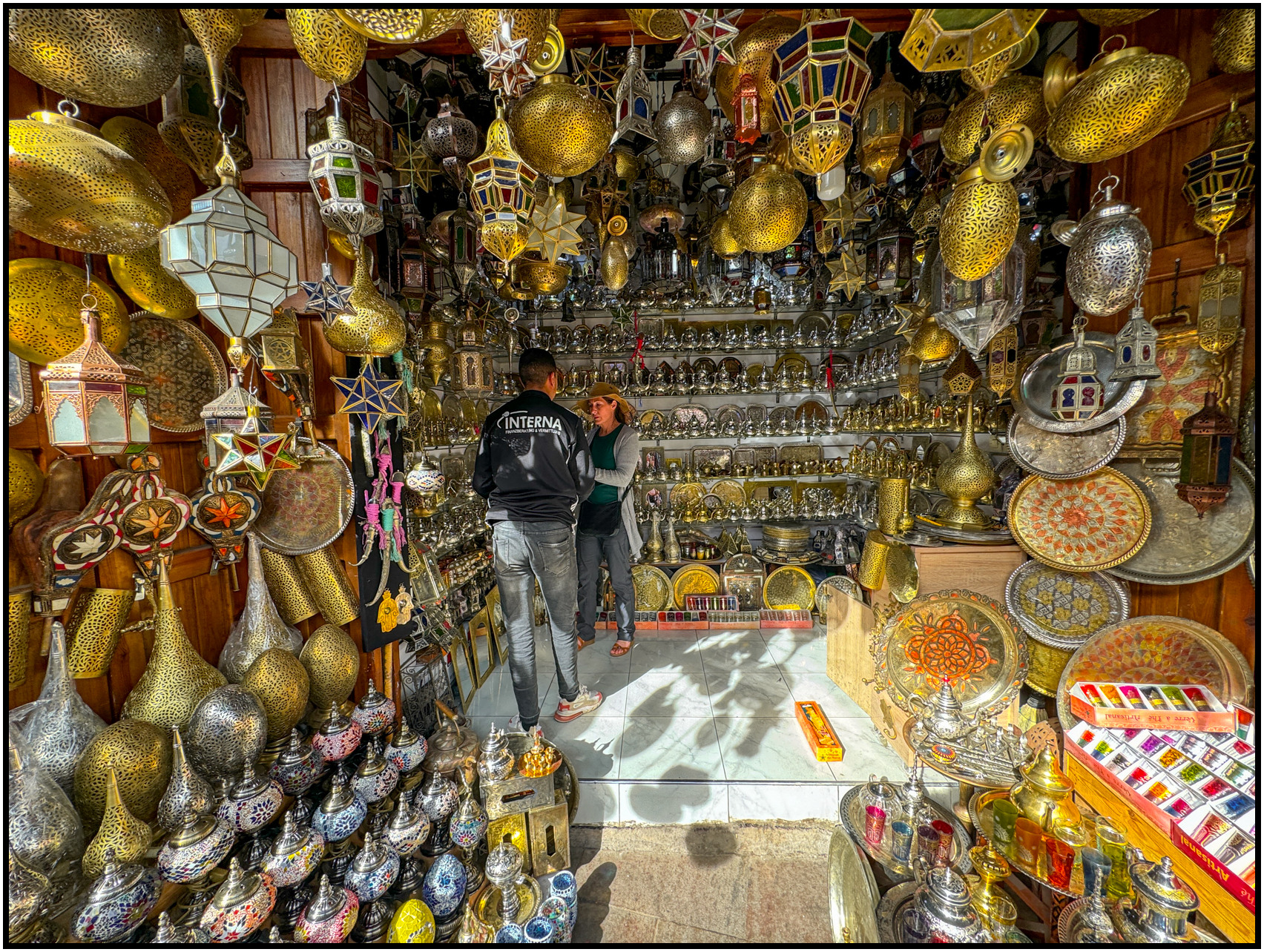
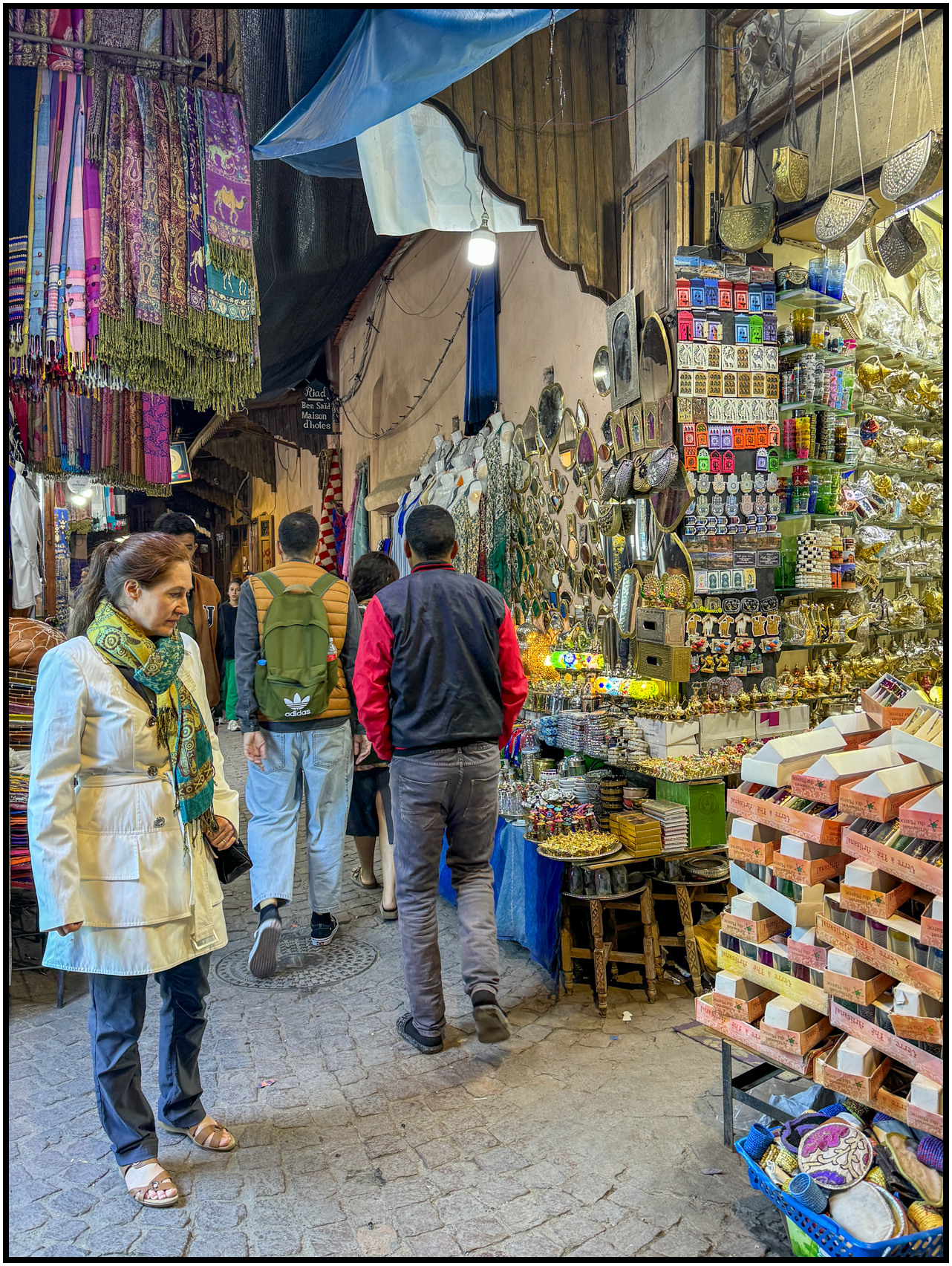
Brenda in one of the souks of the medina, haggling over a teapot. (Most of these vendors speak a little English.)
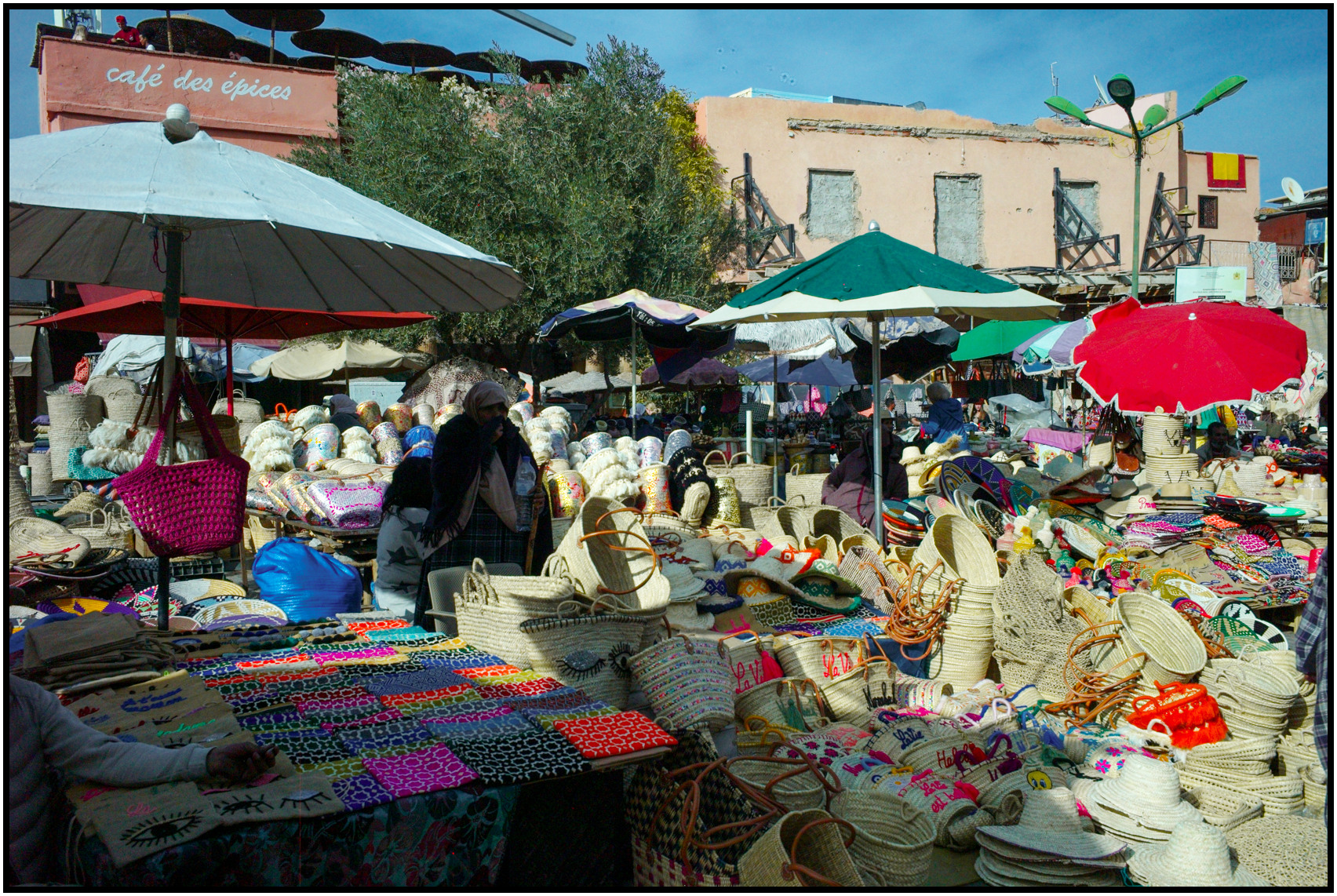
There are “districts” where certain types of merchandise are sold, but we couldn’t discern any organization.
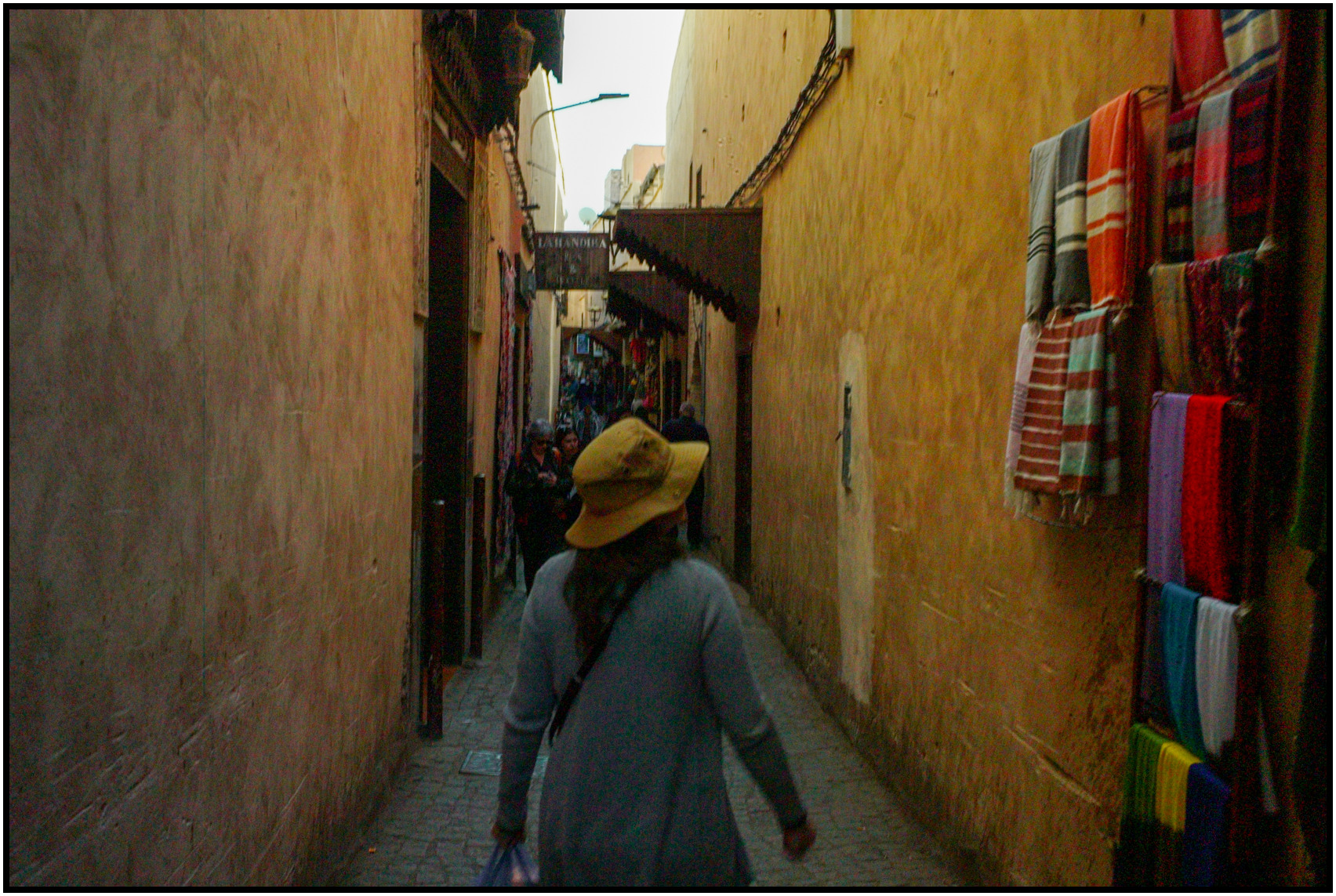
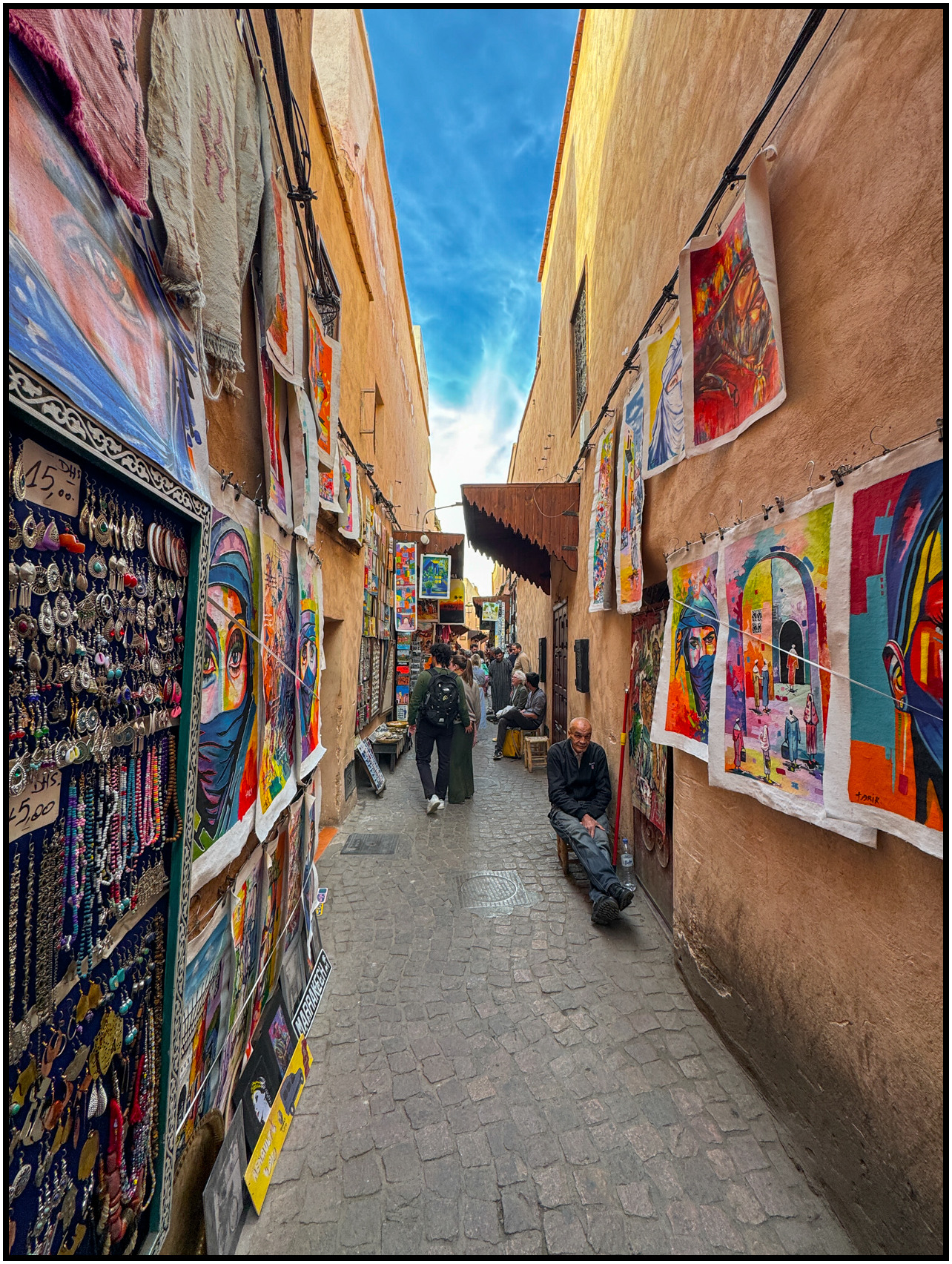
We did find an artist Brenda liked and are coming home with a painting rolled up in our suitcase.
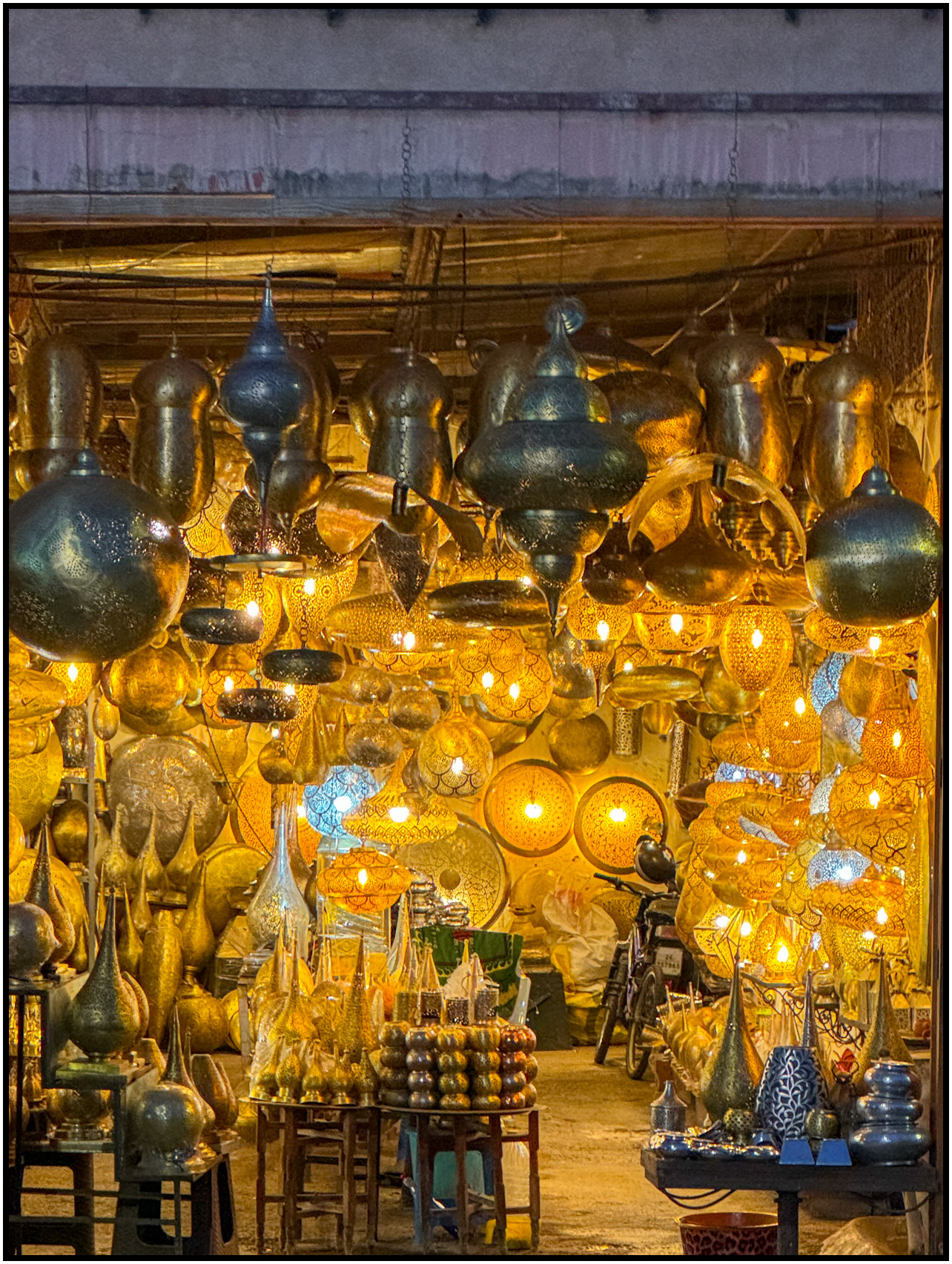
Metal light fixtures and lanterns.
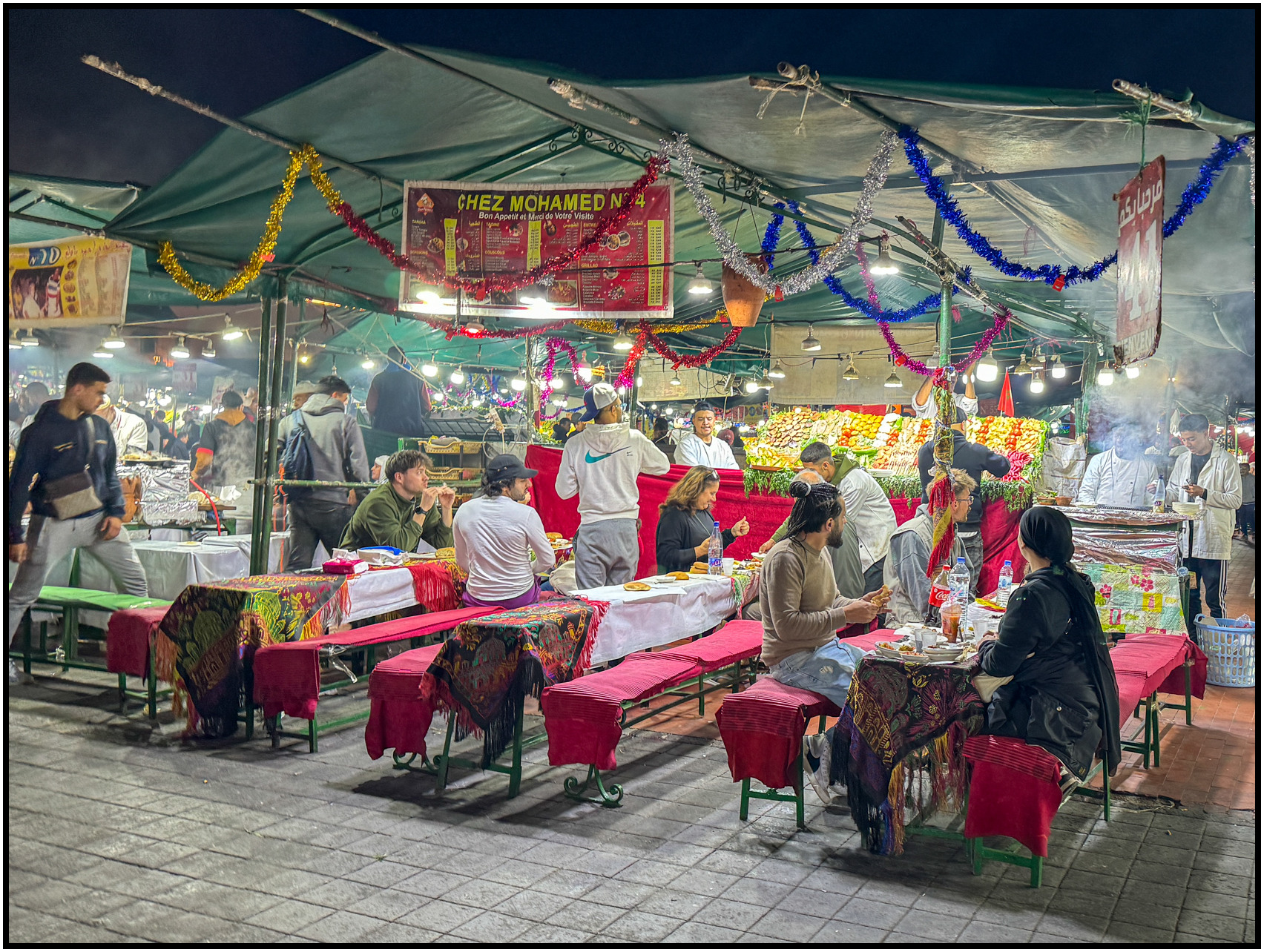
Evening brings out the food vendors for dinner.
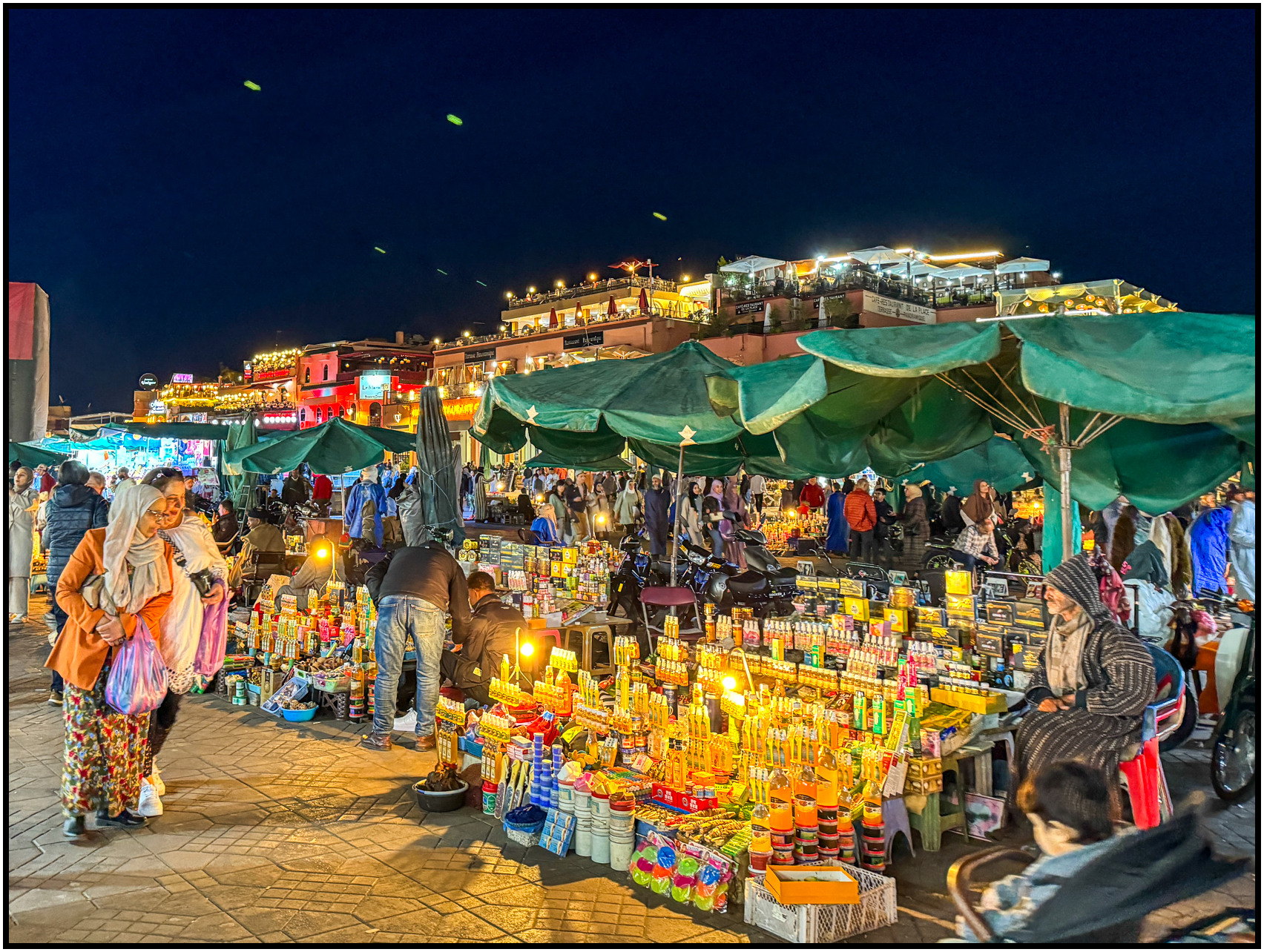
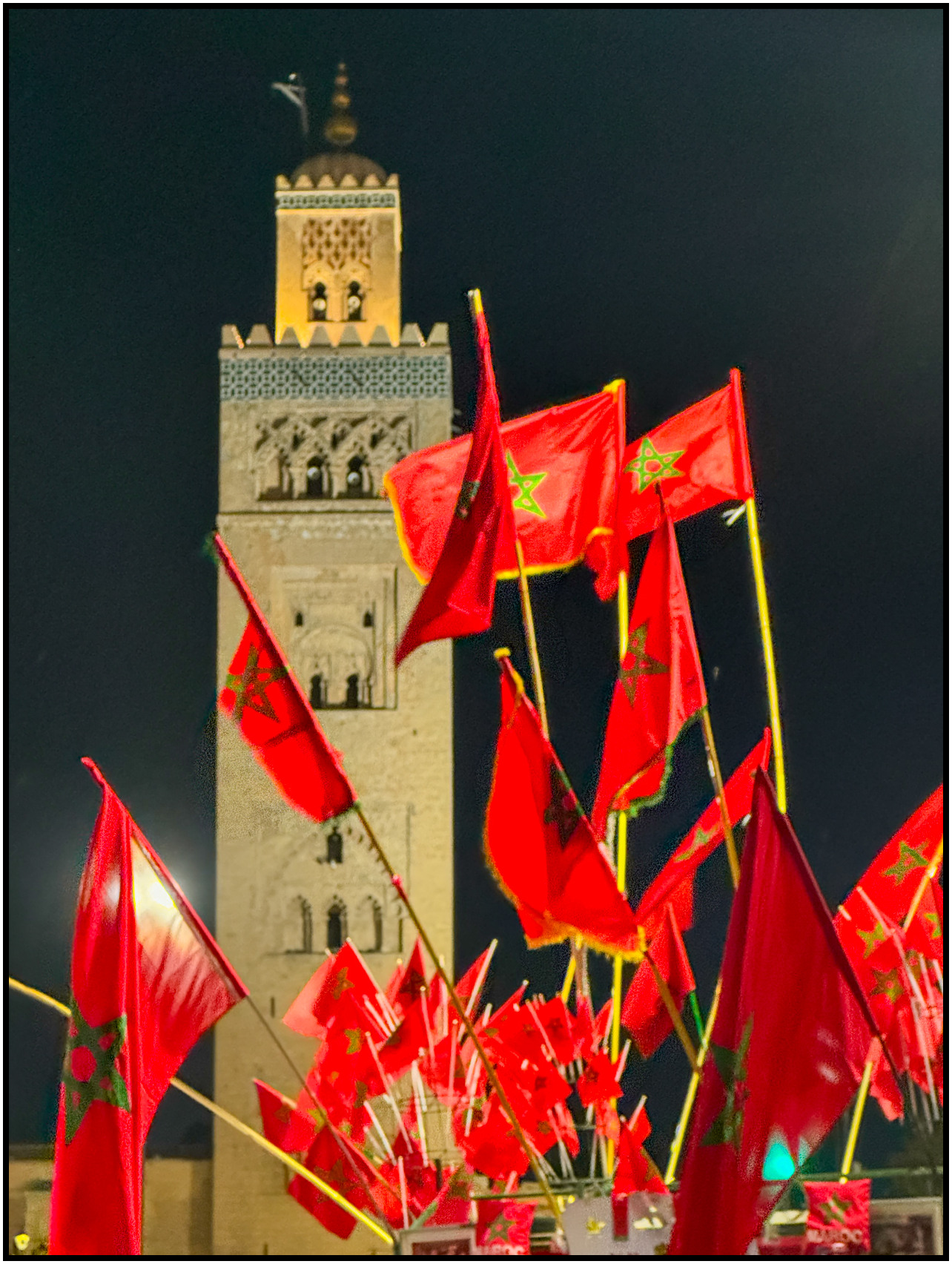
Stall selling Moroccan flags in front of the mosque.
March 2, 2024
Our last day in Morocco. Our flight back to Frankfurt is scheduled for the evening, so we had most of the day to wander around town, do some last minute shopping, and look for cool things to photograph.
We put in over 15 miles of walking all about town, eager to see all we could before we took our flight out. Most of the time was spent wandering through the alleys of the medina, visiting all of the souks.
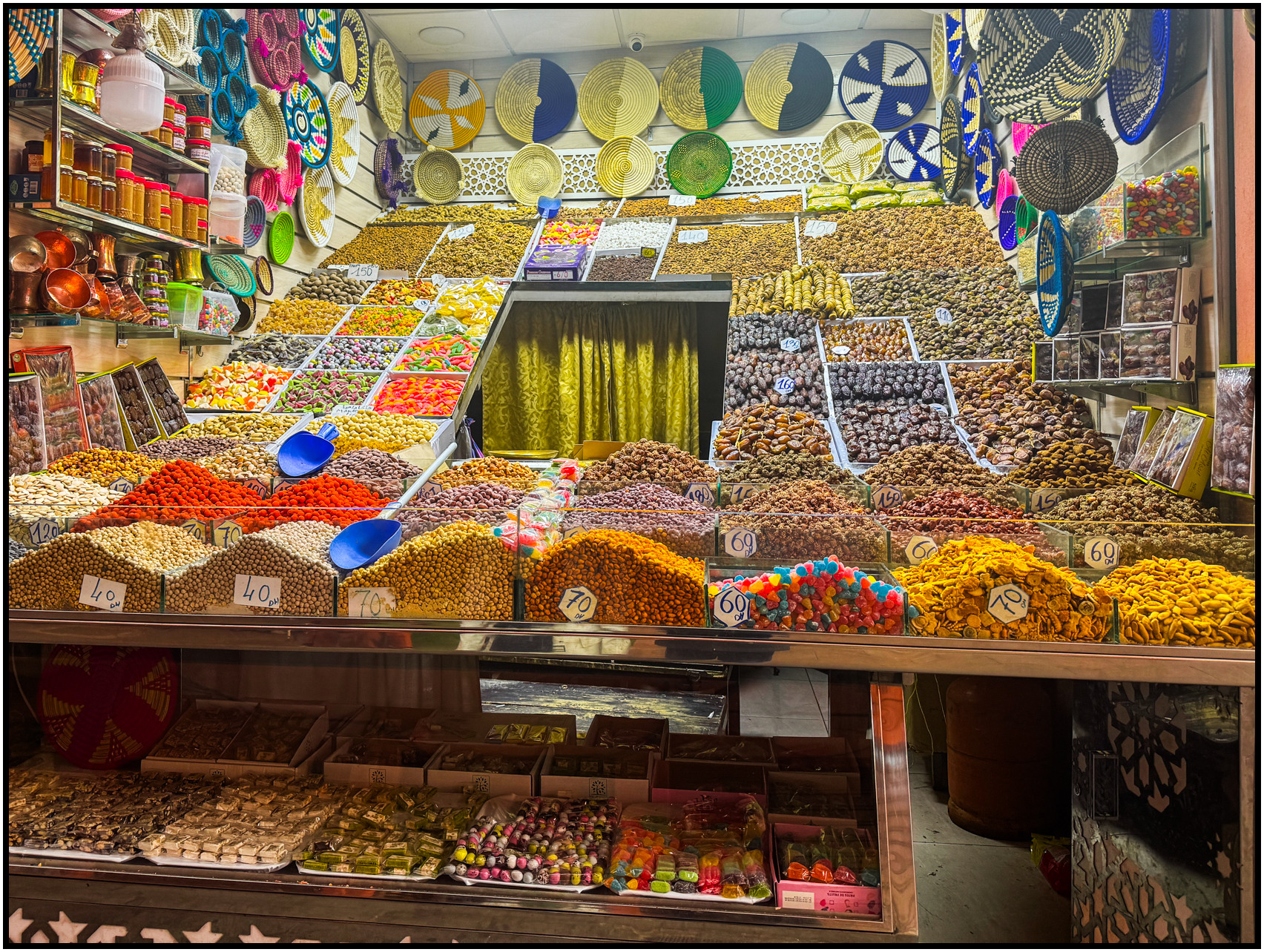
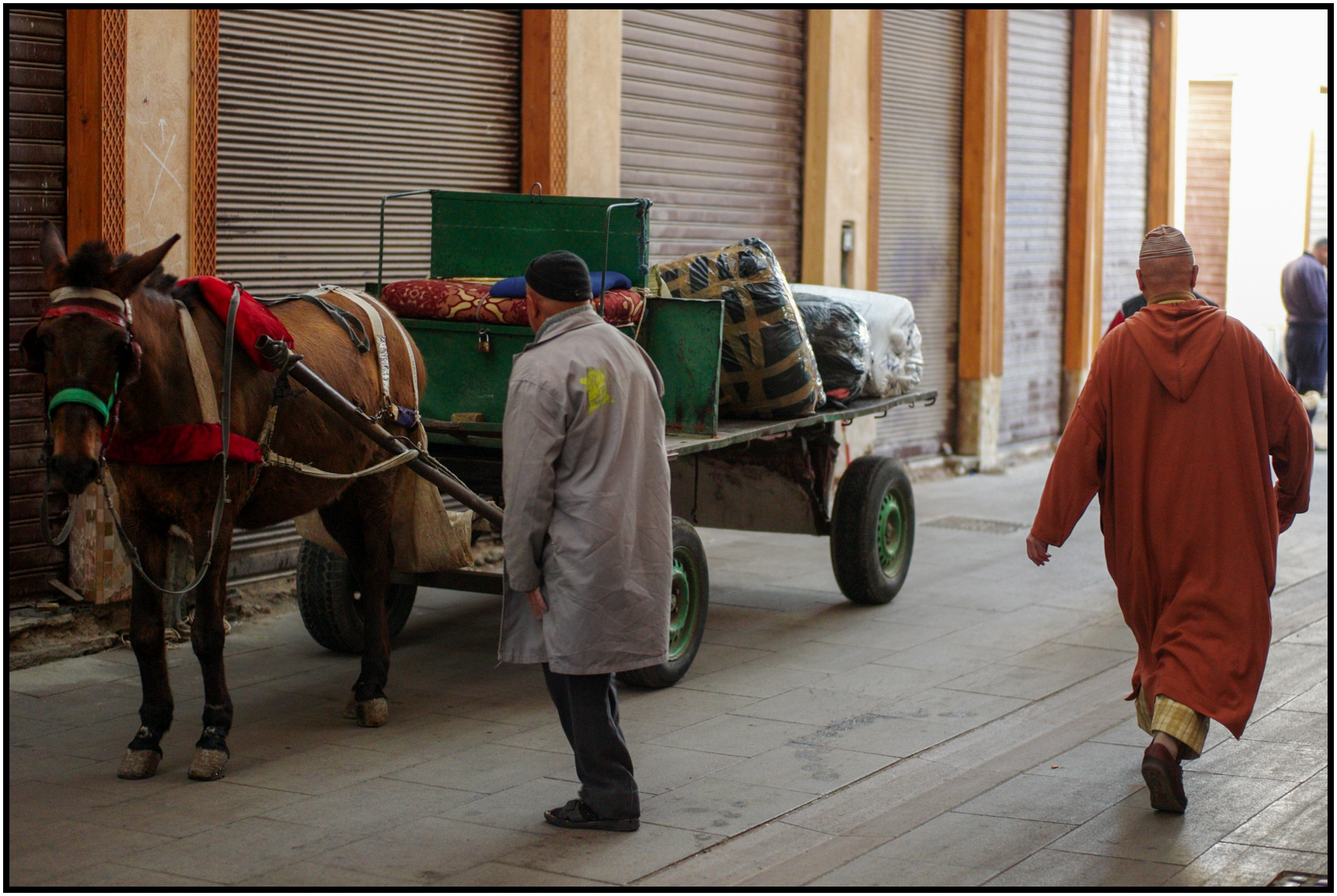
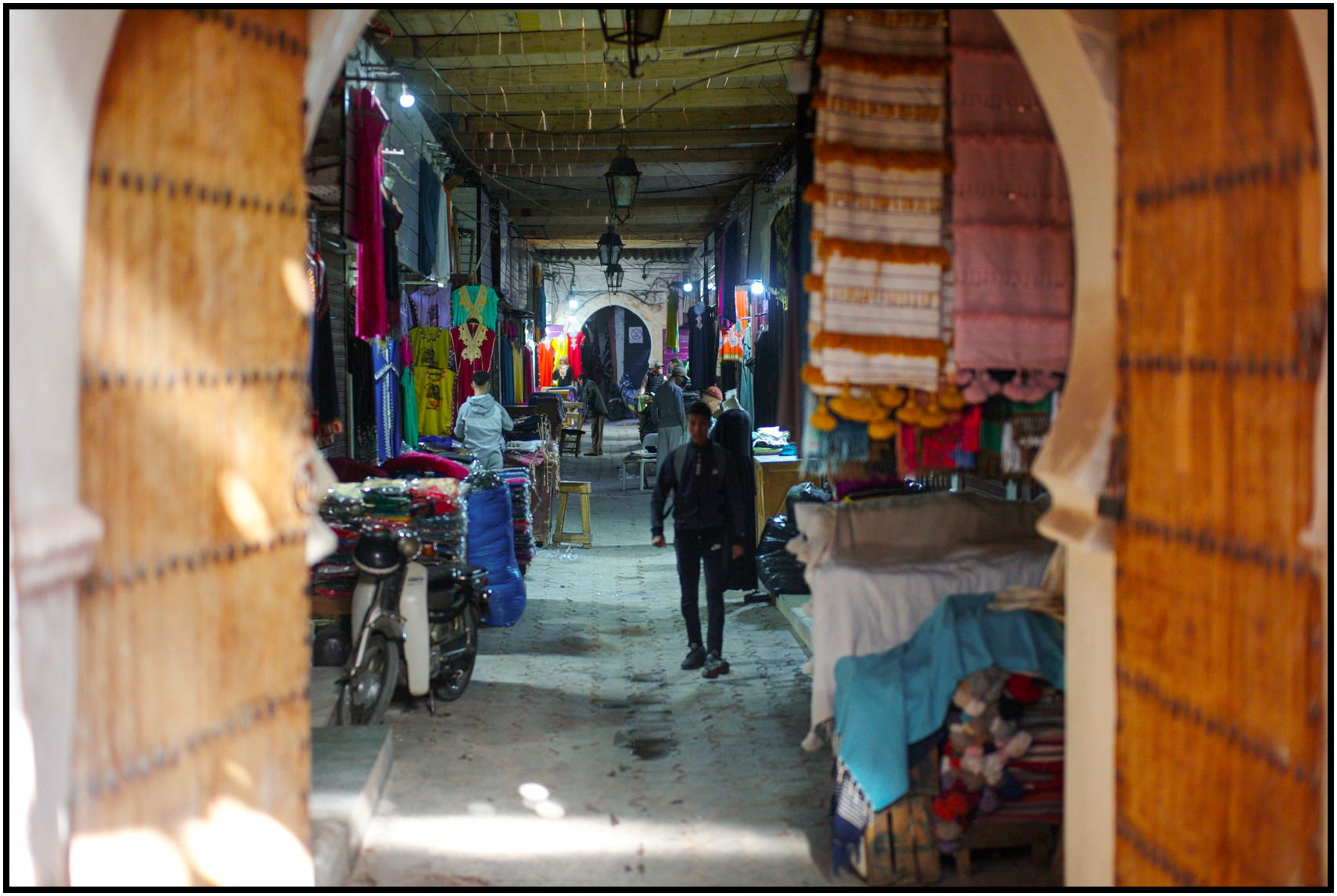
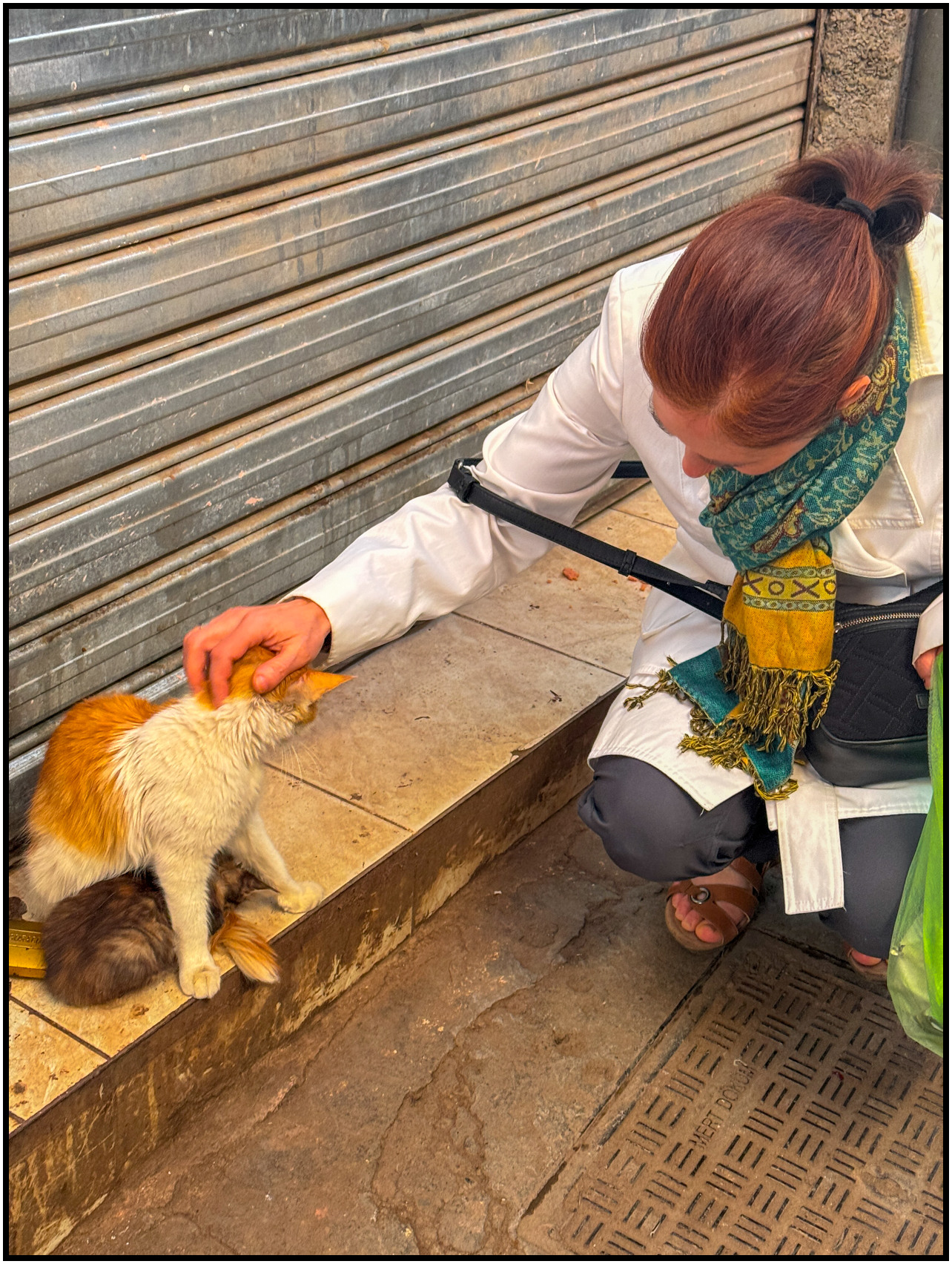
Momma kitty standing over her baby.
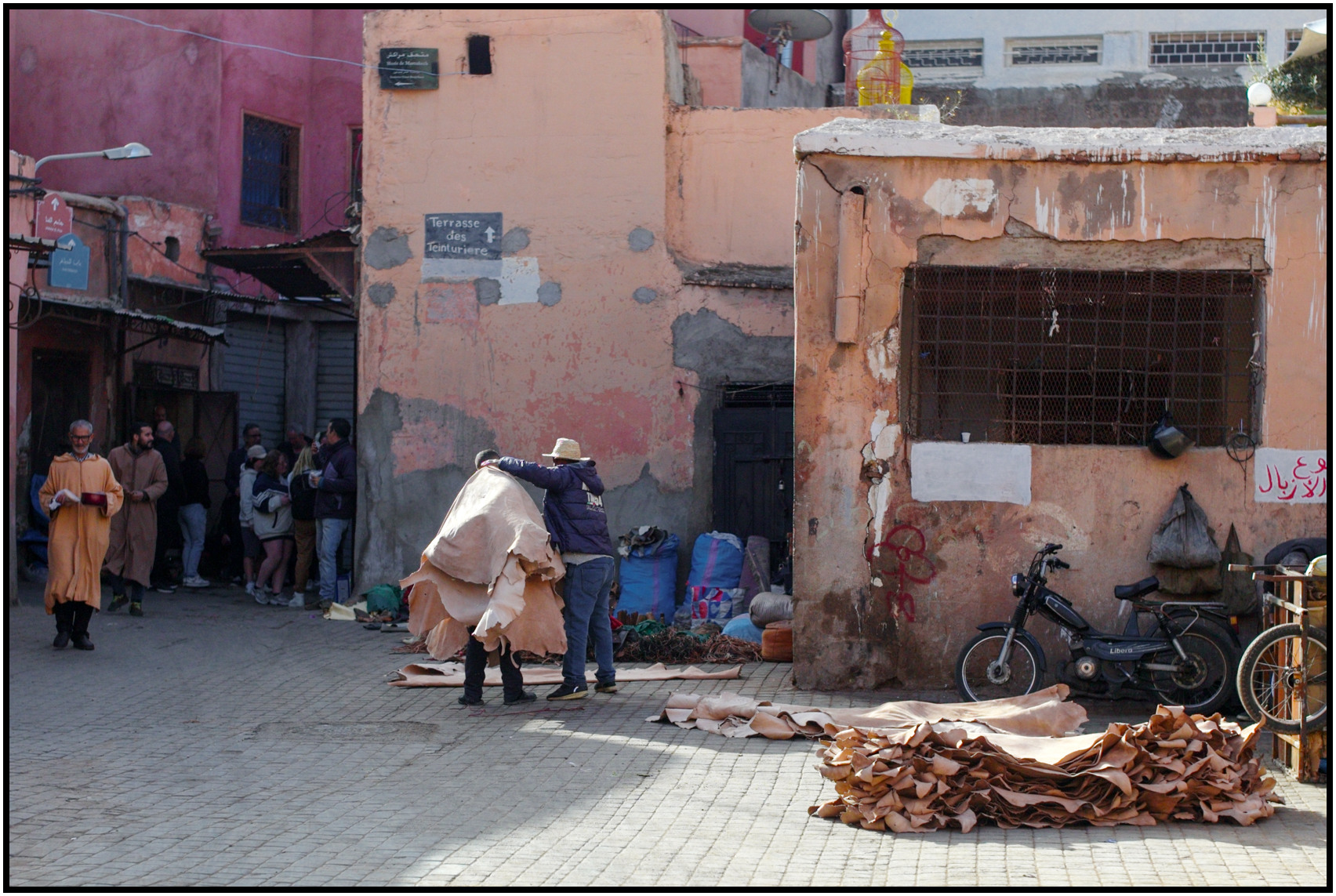
Leather factory; the guy above was loading up with tanned hides, presumably off to deliver them to the individual leather workers in the souk stalls.
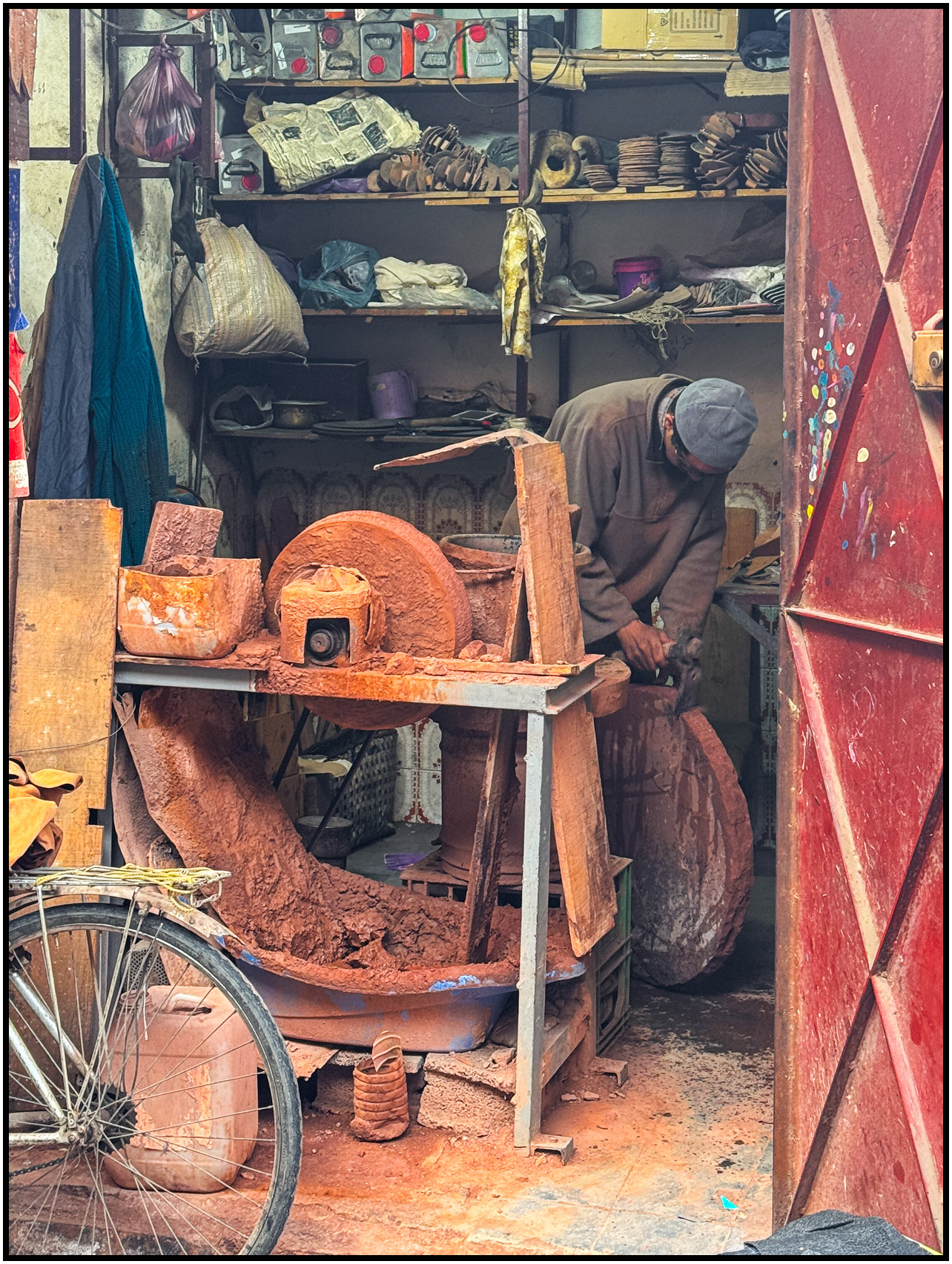
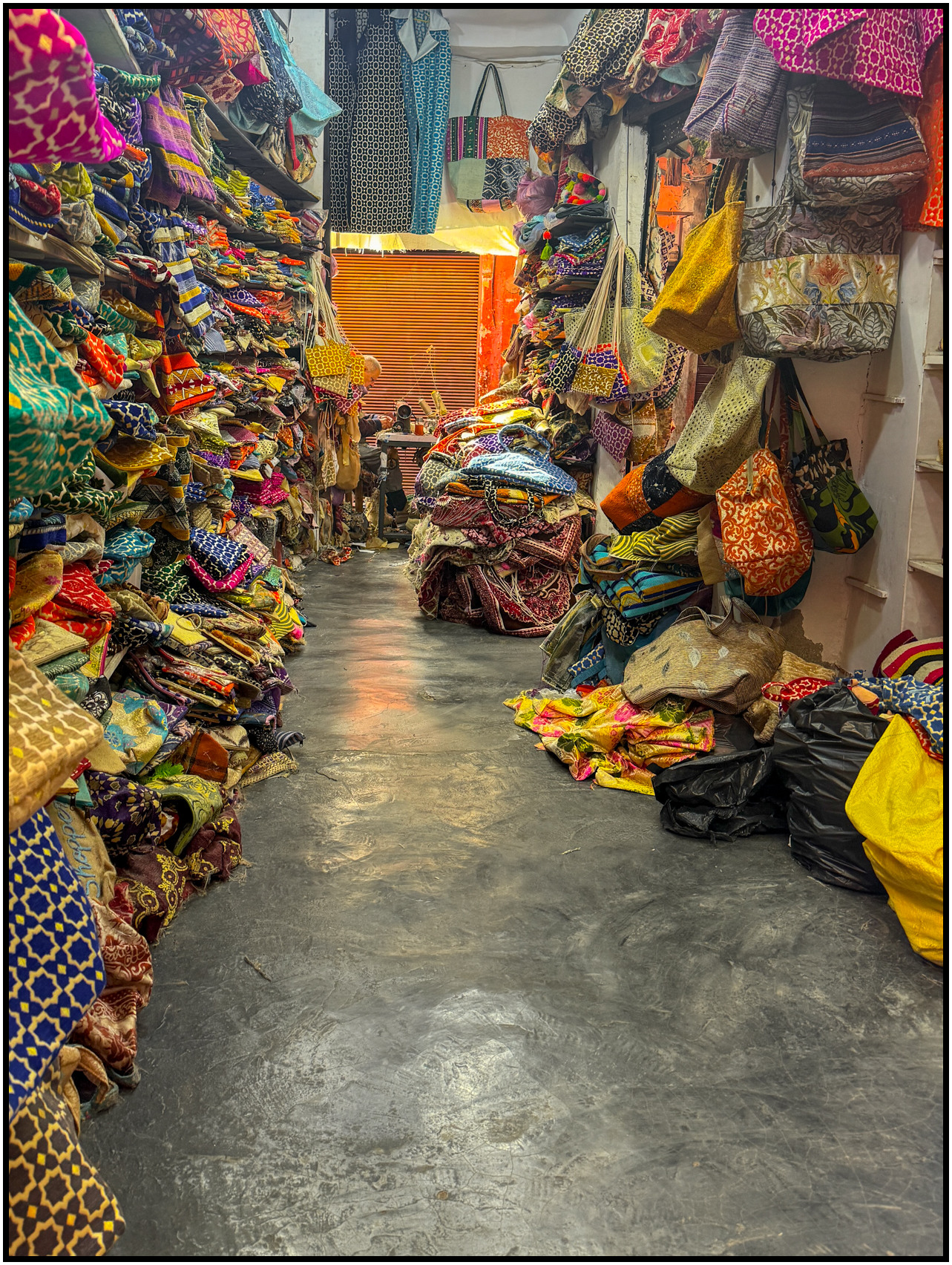
Artisans work in the back of their stalls, sell finished goods in the front.
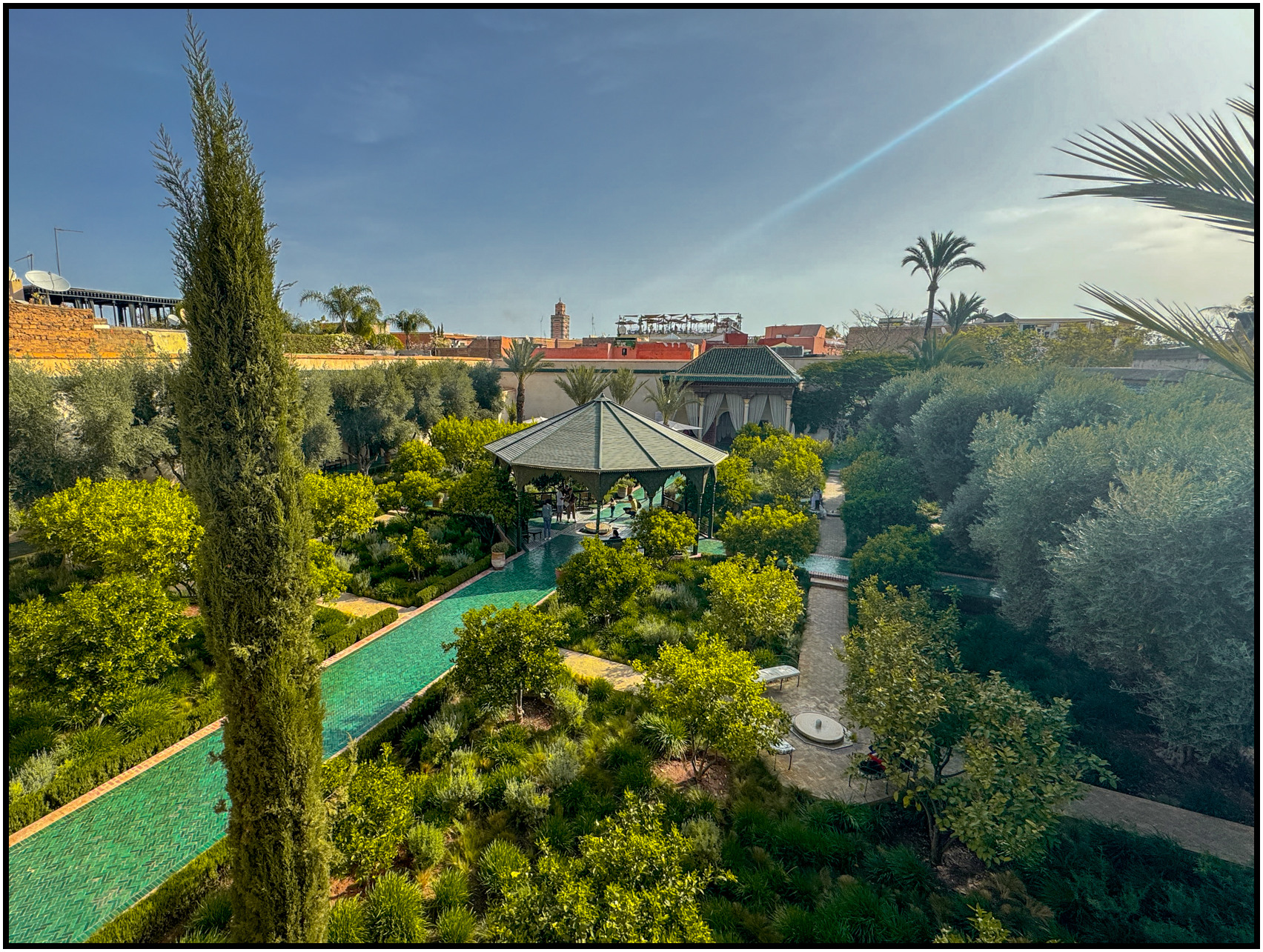
Le Jardin “Secret”… a Riad in the middle of the marketplace. Built about 450 years ago, it fell into ruins until about 10 years ago, when it was restored and turned into a museum.
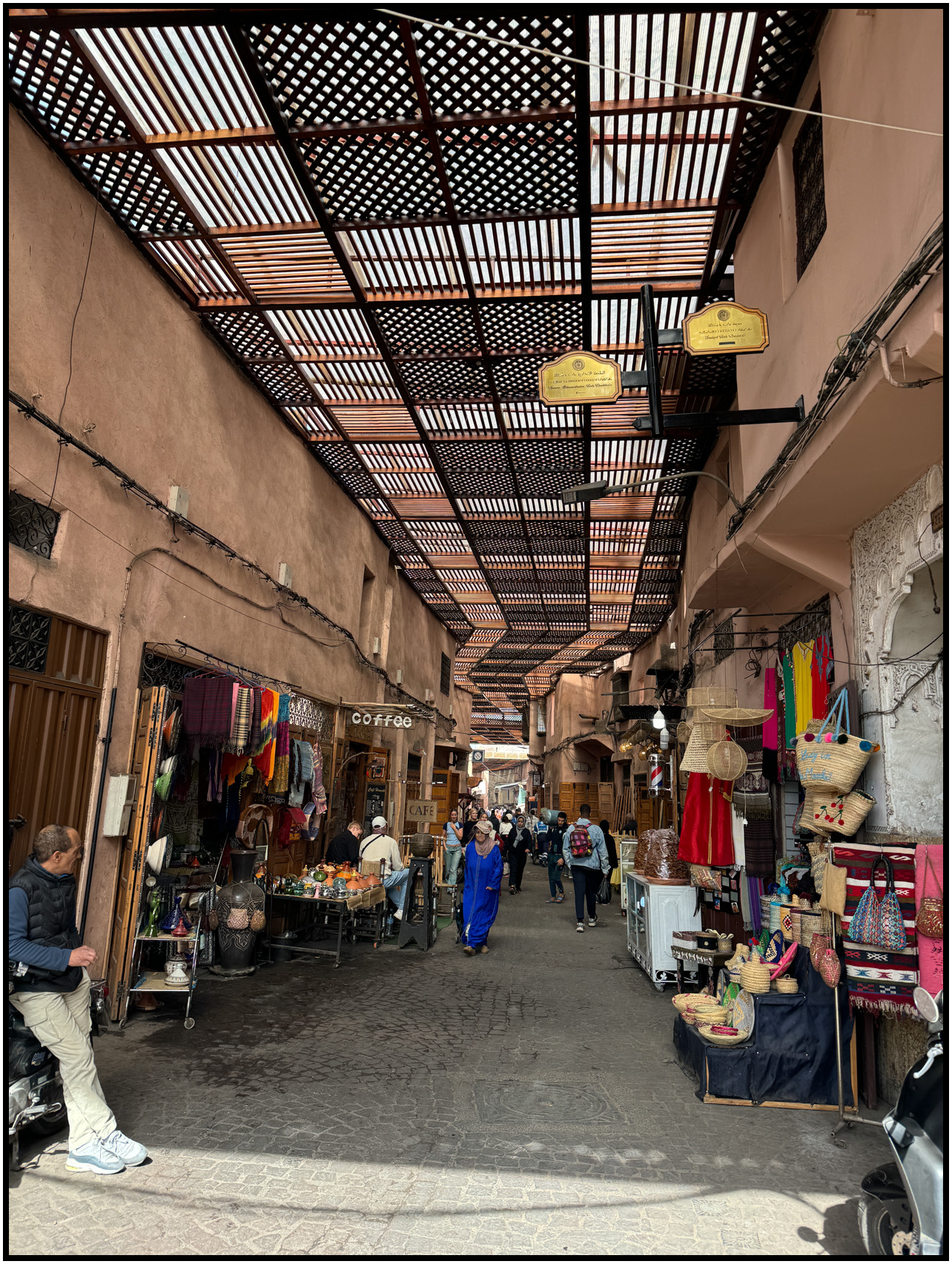
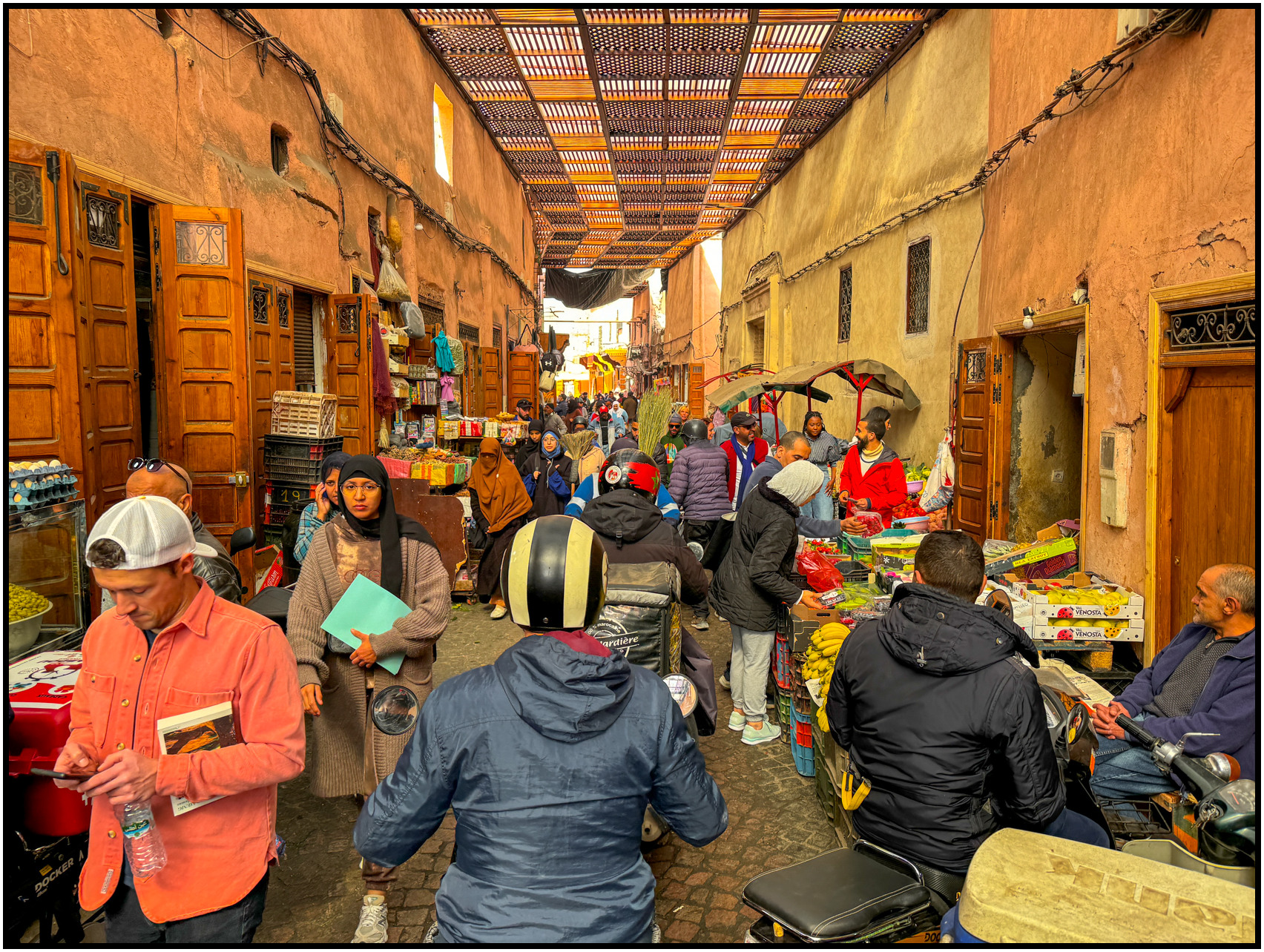
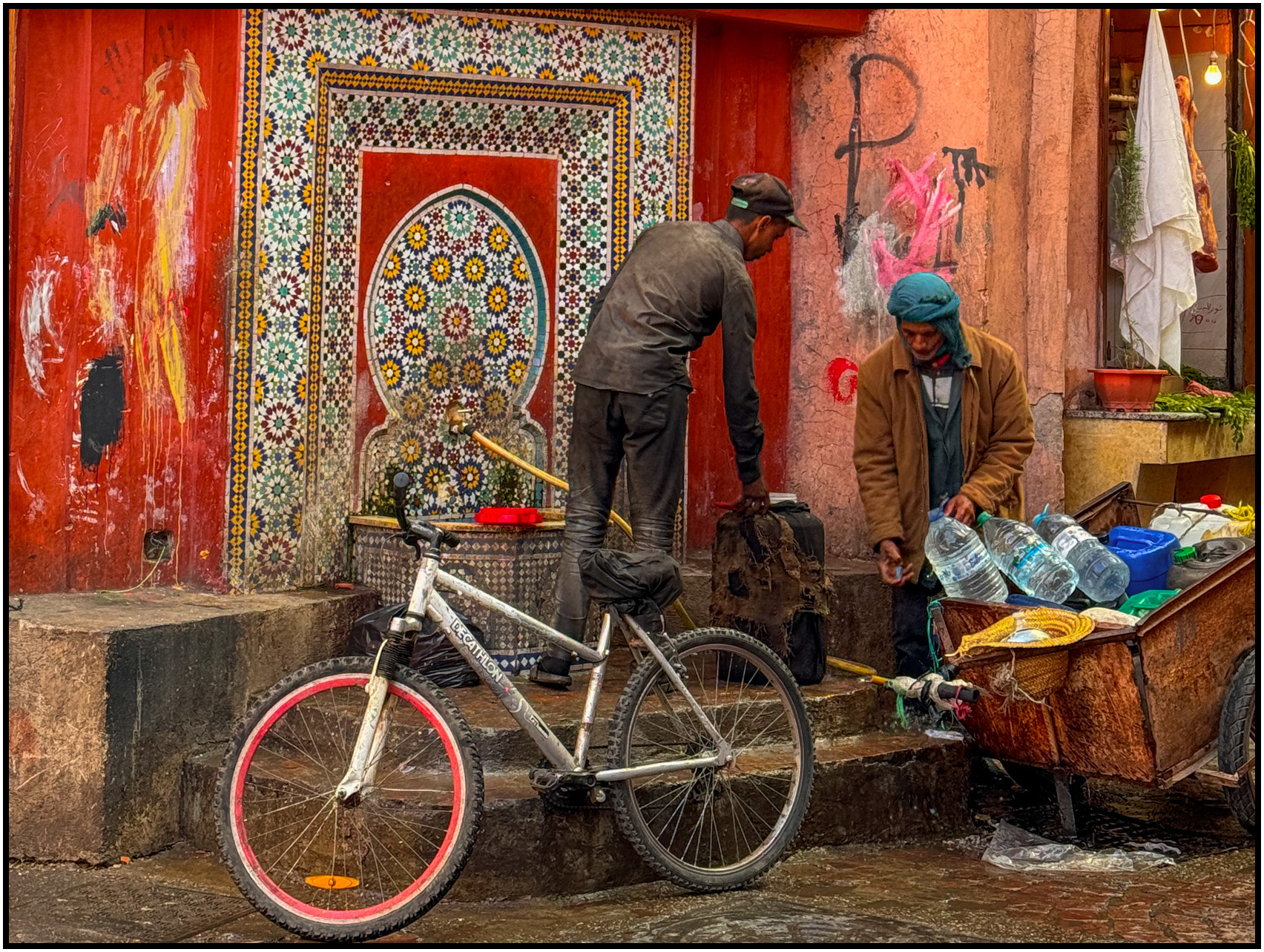
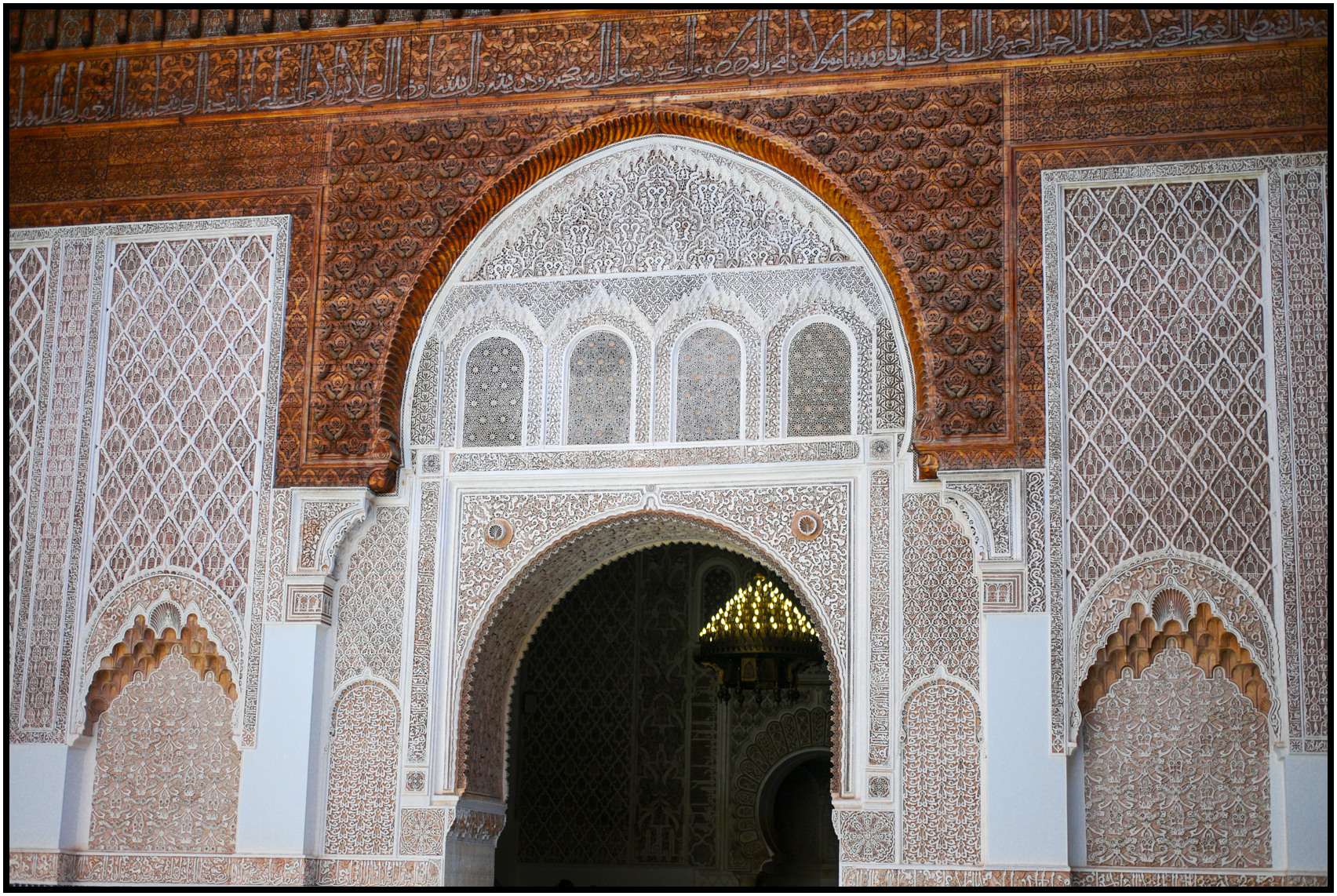
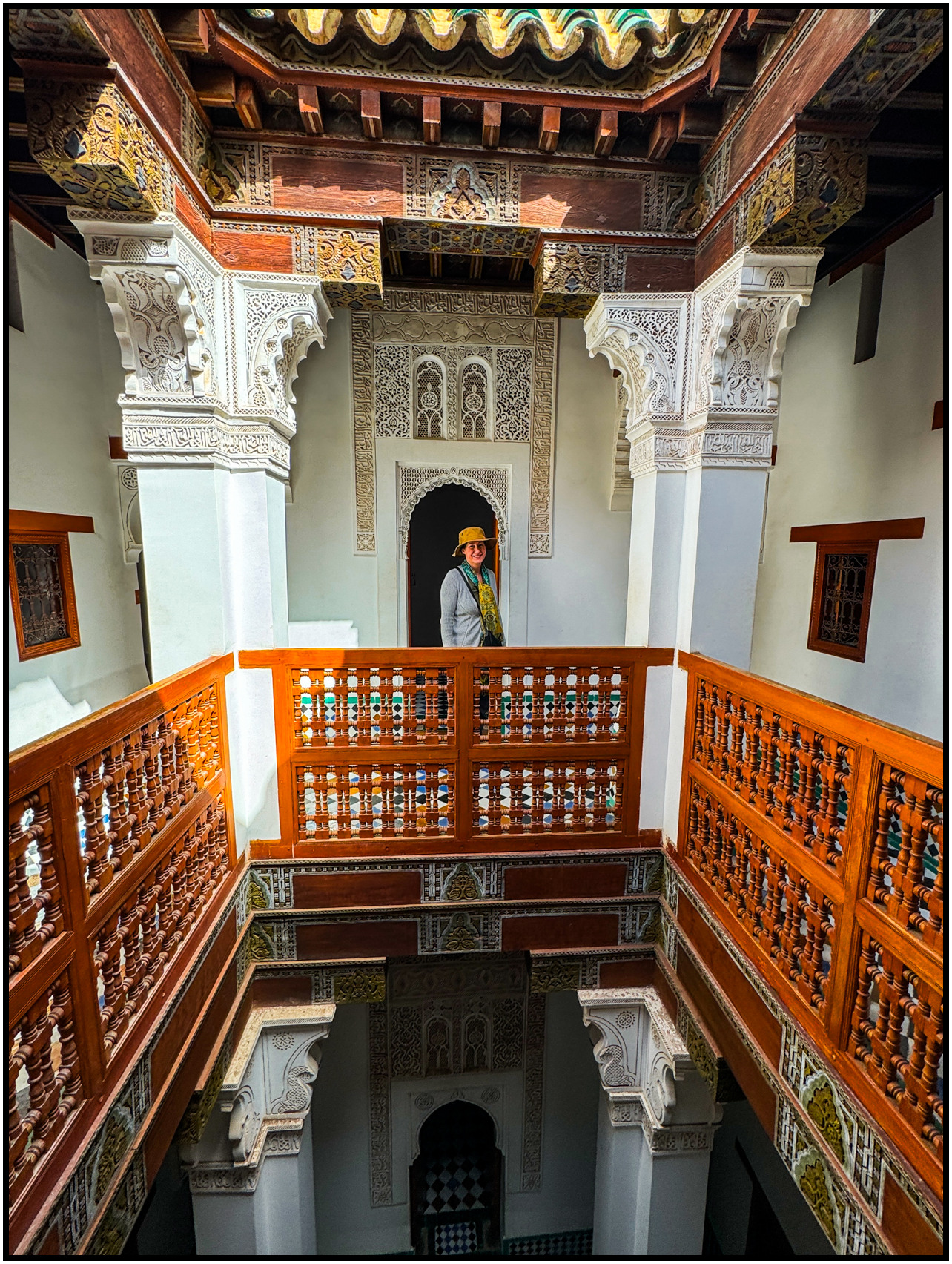
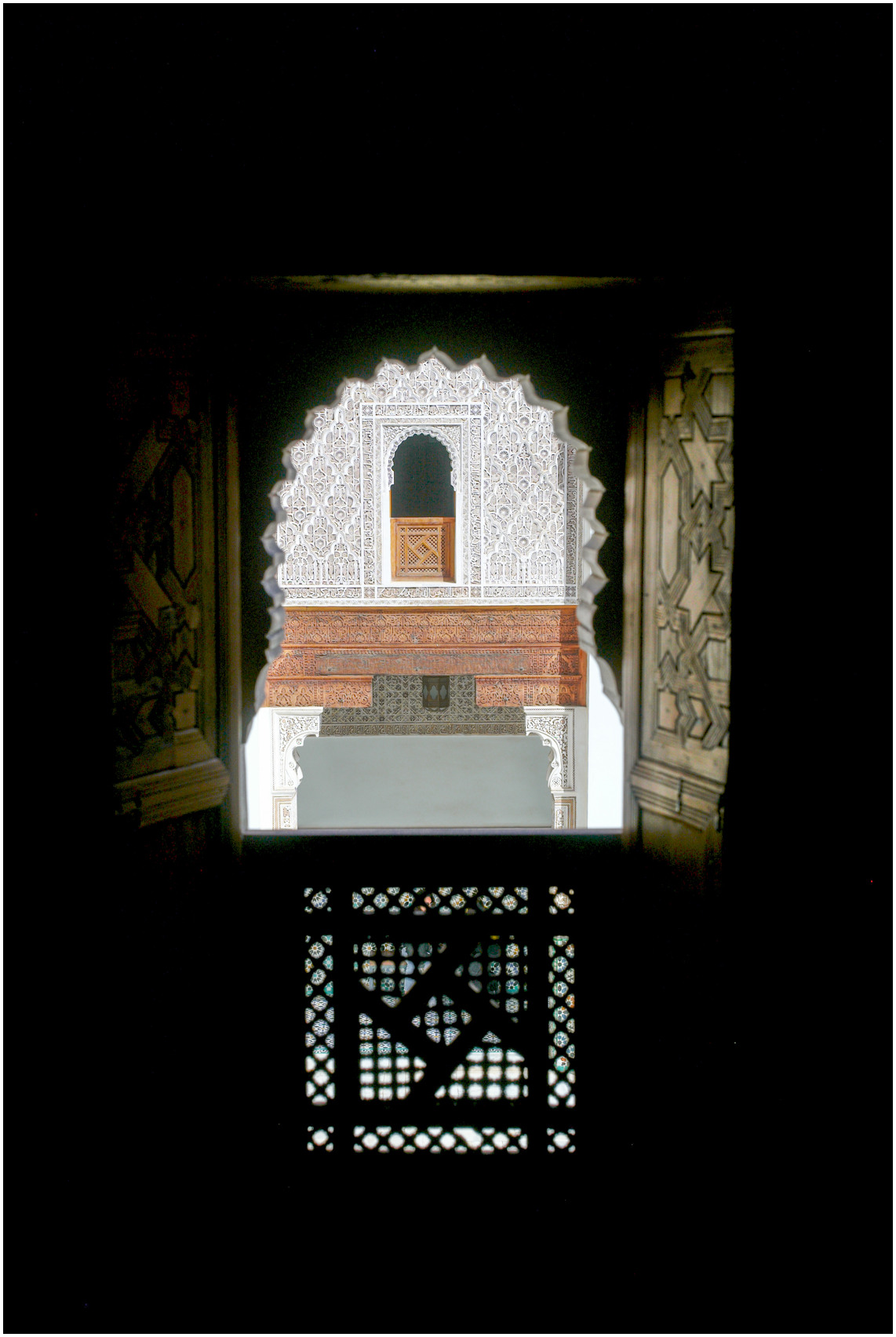
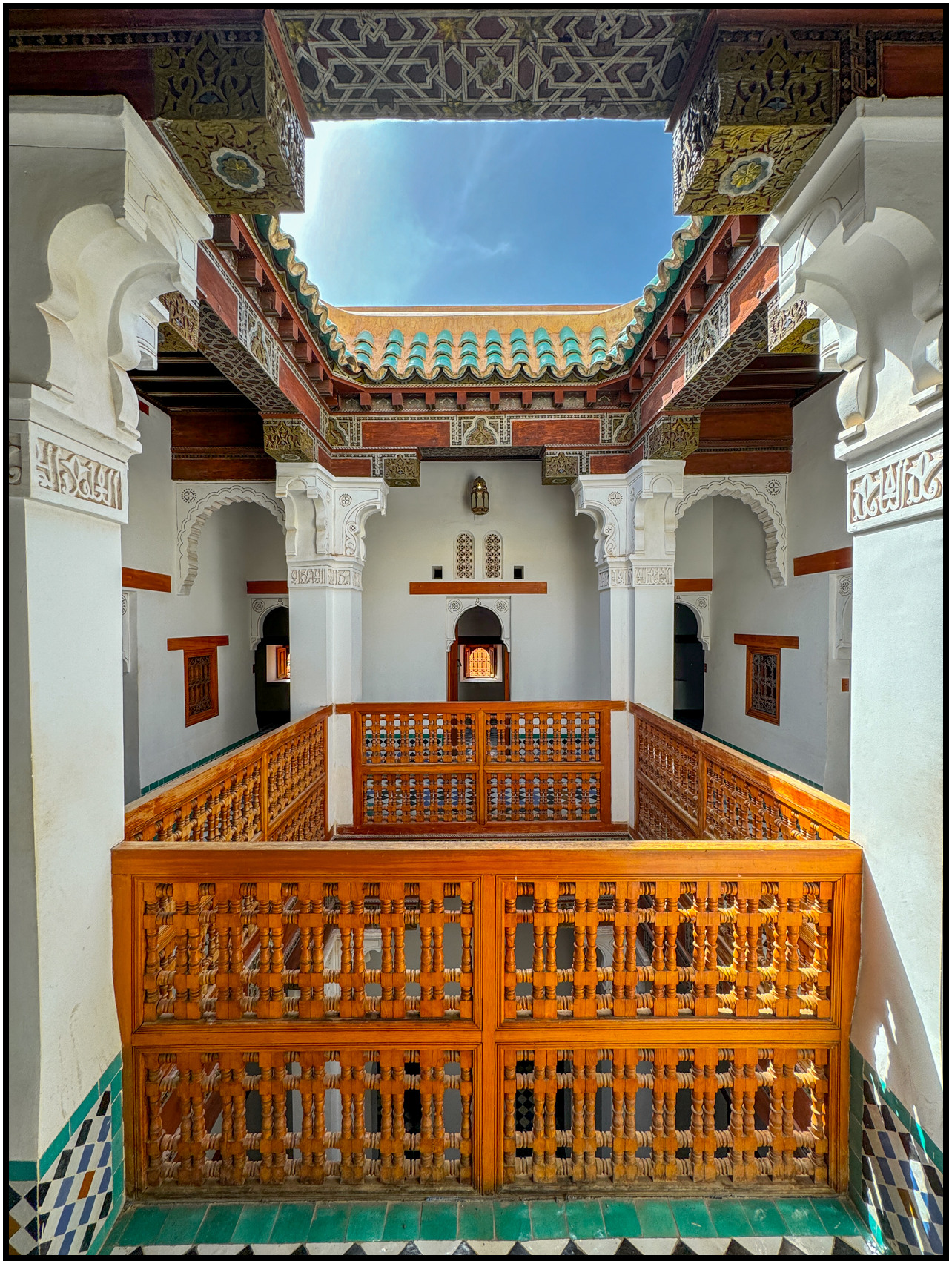
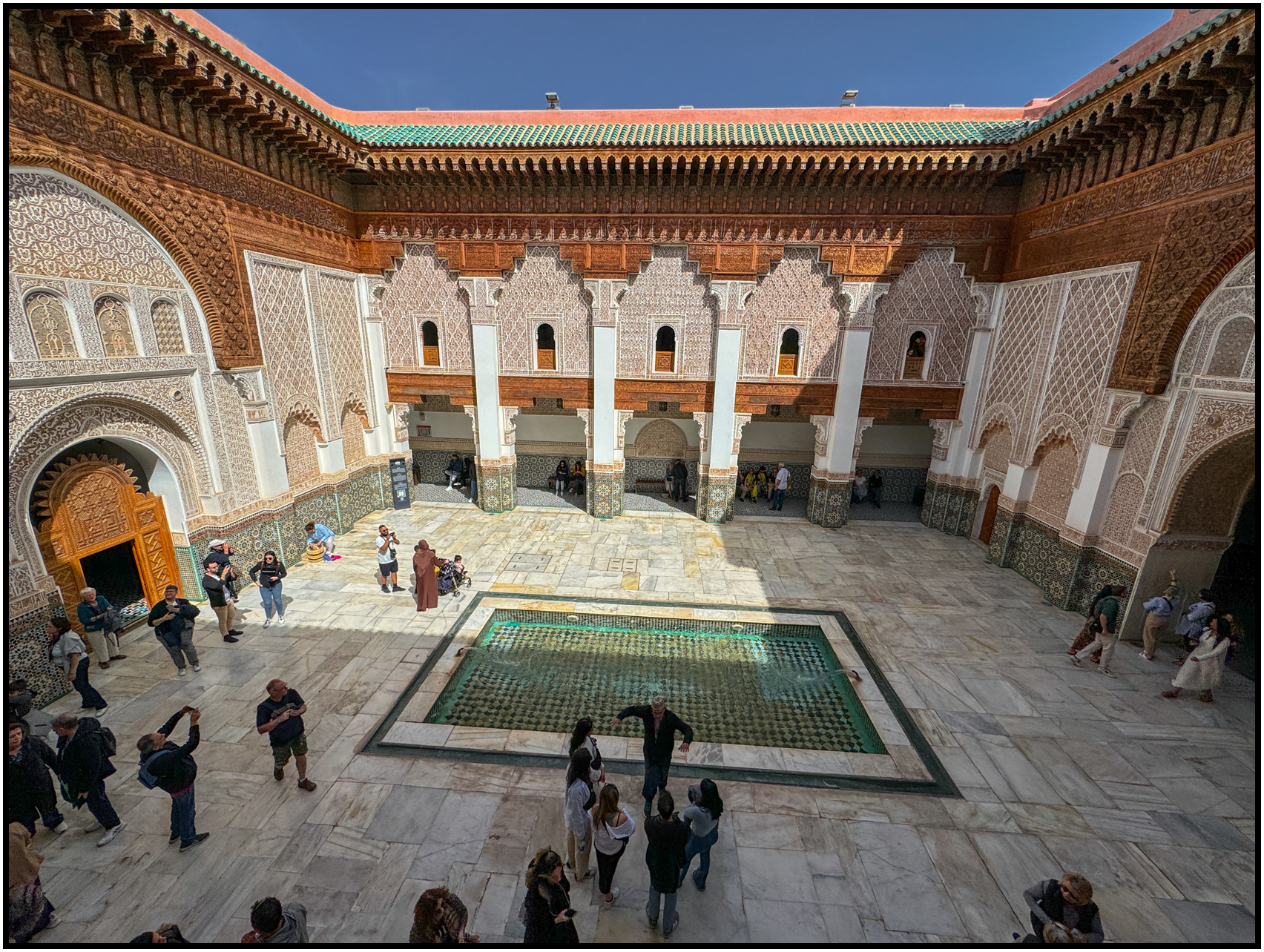
Medersa Ben Youssef: Islamic school for boys built in the 1300s. For hundreds of years it was the largest school in North Africa.
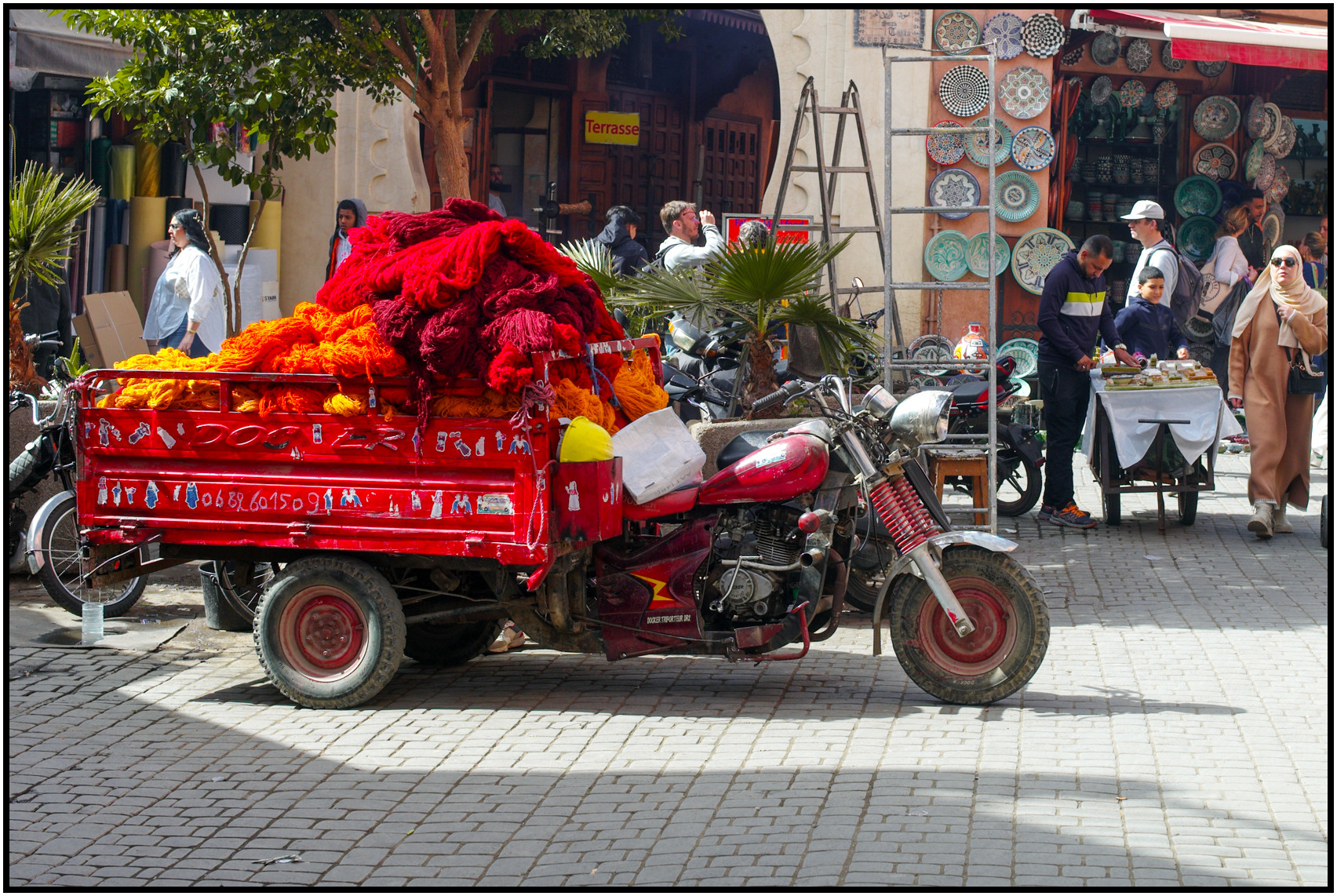
Dyed wool being delivered into the market.
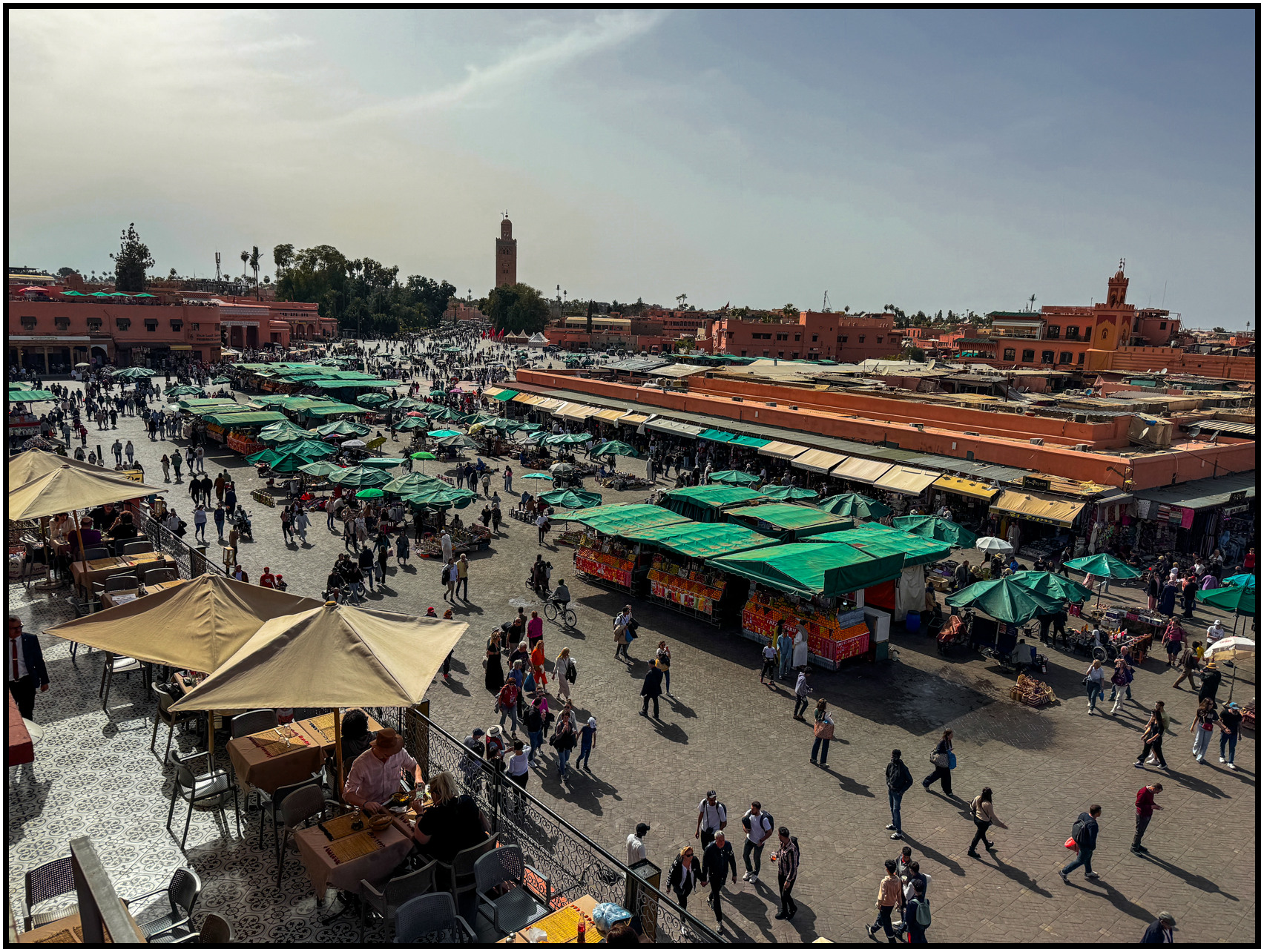
View over Jemaa el Fna. We stopped for one last serving of water, tea and some banana juice.
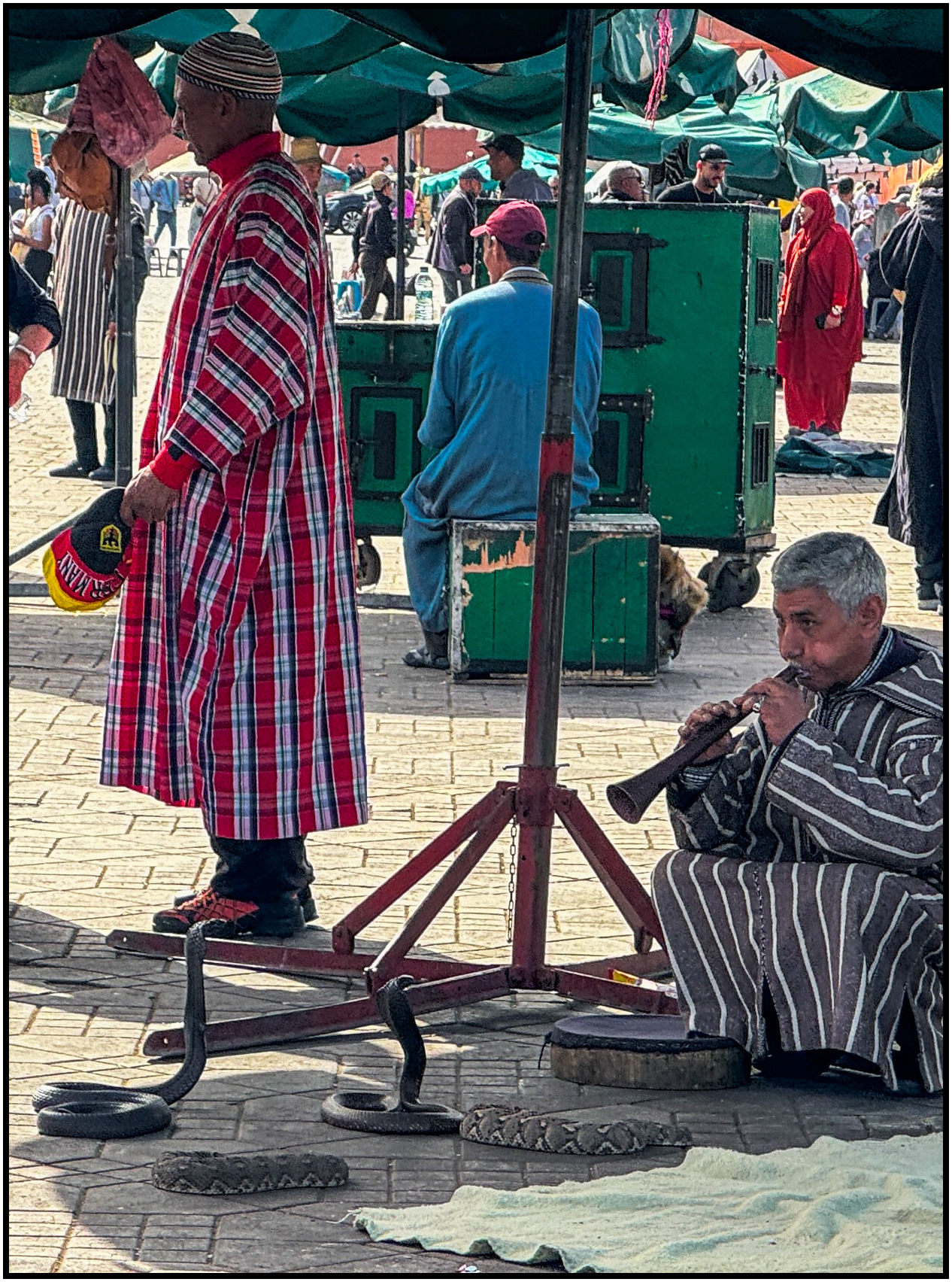
They still have snake charmers.
And now, back to Frankfurt to get to work.

