Monday, 02 July 2018
Monday was a travel day – we packed up our stuff and left Takayama and headed south (and then east) to Hakone. About 320km (200 mile) drive.
Highlights were figuring out how to get gas (it’s all automated, different system than in US and no English) – US$5.41/gallon gas equivalent. Adam spent some time watching youtube videos (“How to get gas in Japan”) so he’d know at least a little bit how things were supposed to work.
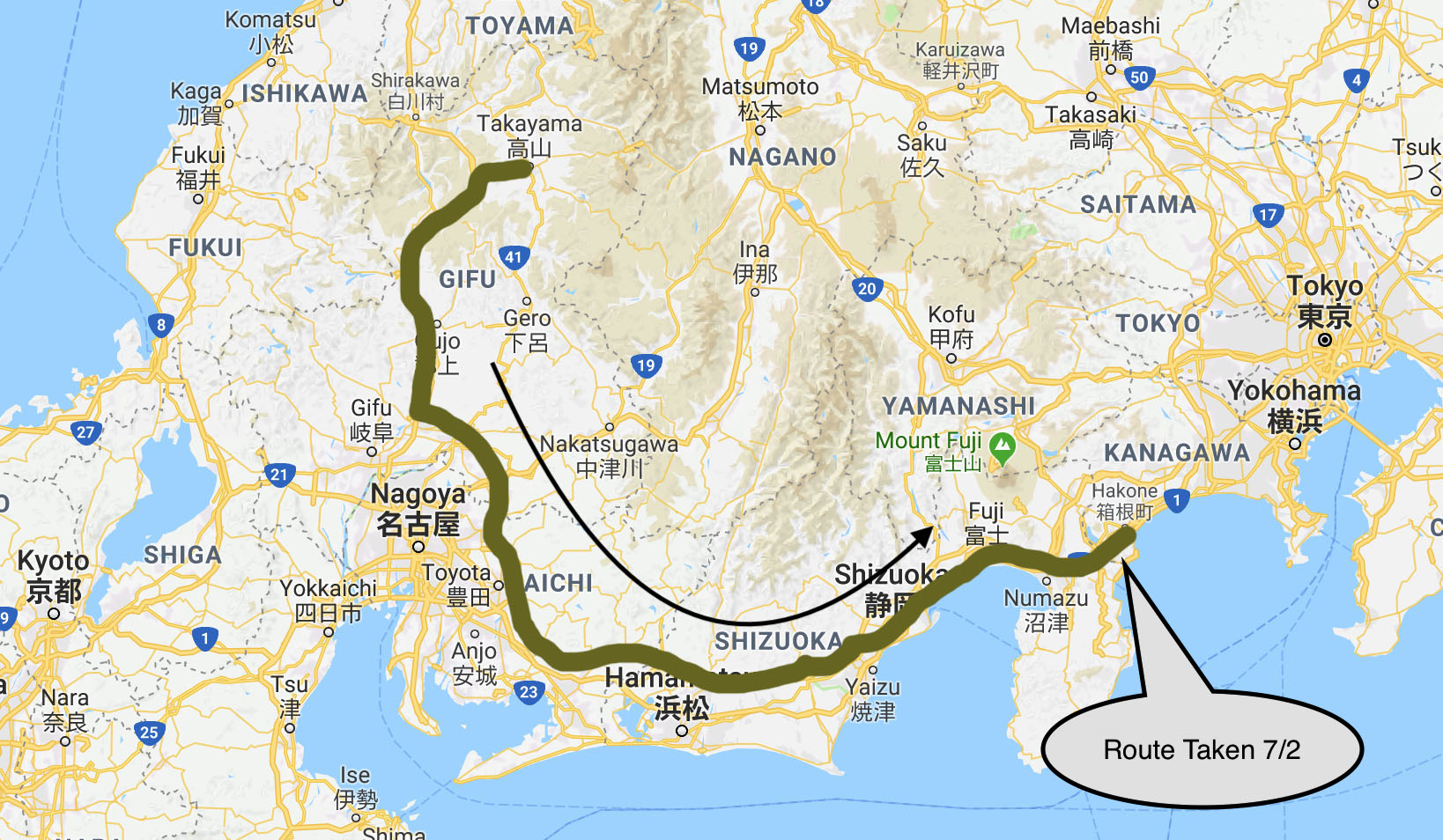
Hakone is a resort town up in the mountains. It is close enough to Tokyo that it gets the weekend and vacation crowds from the big city.
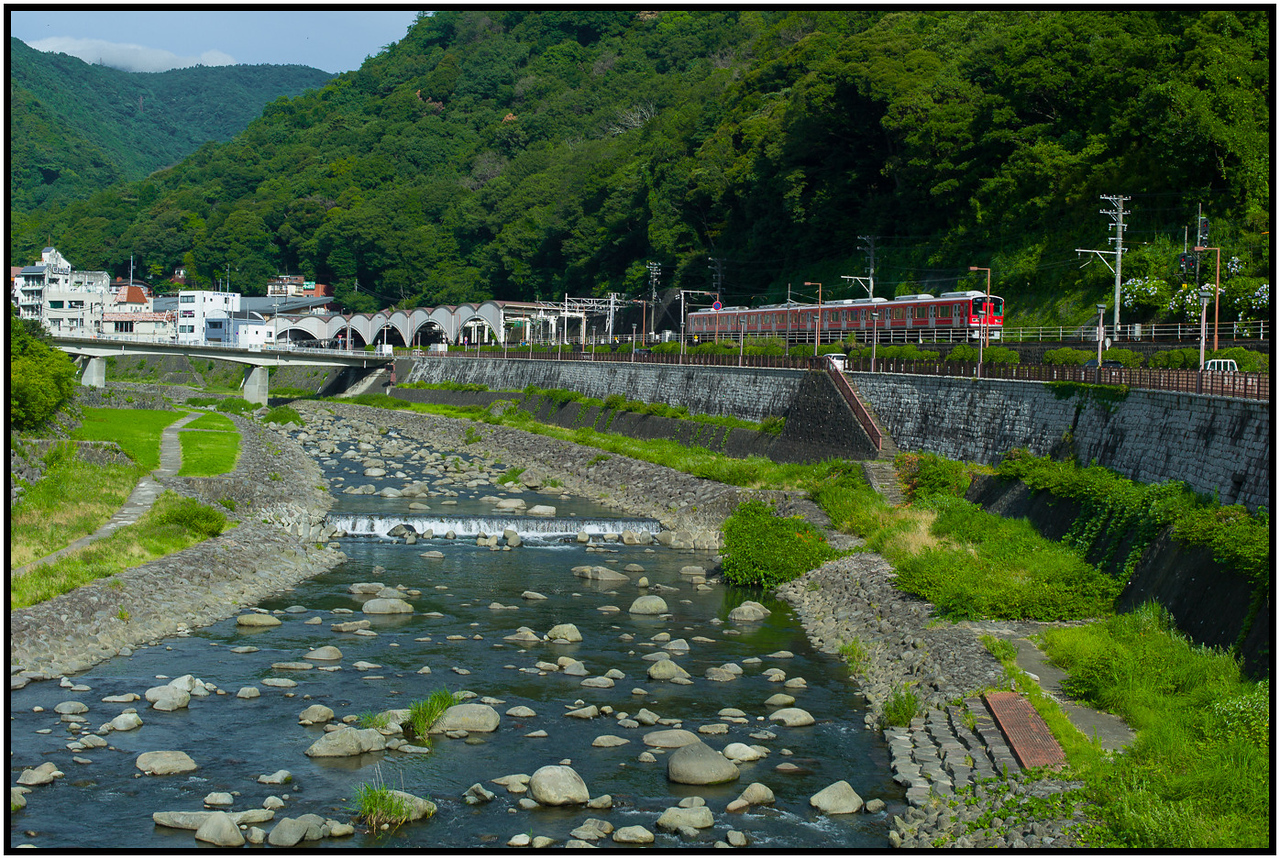
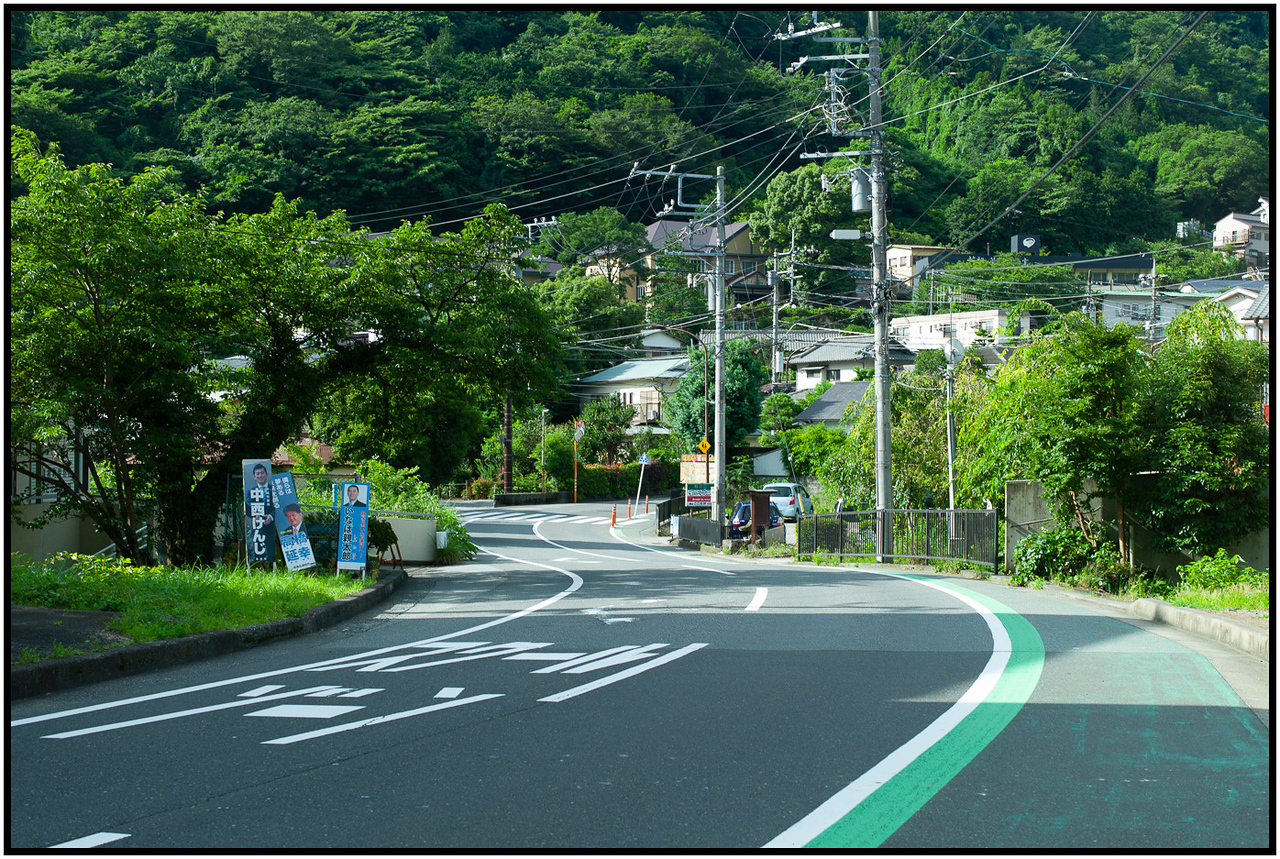
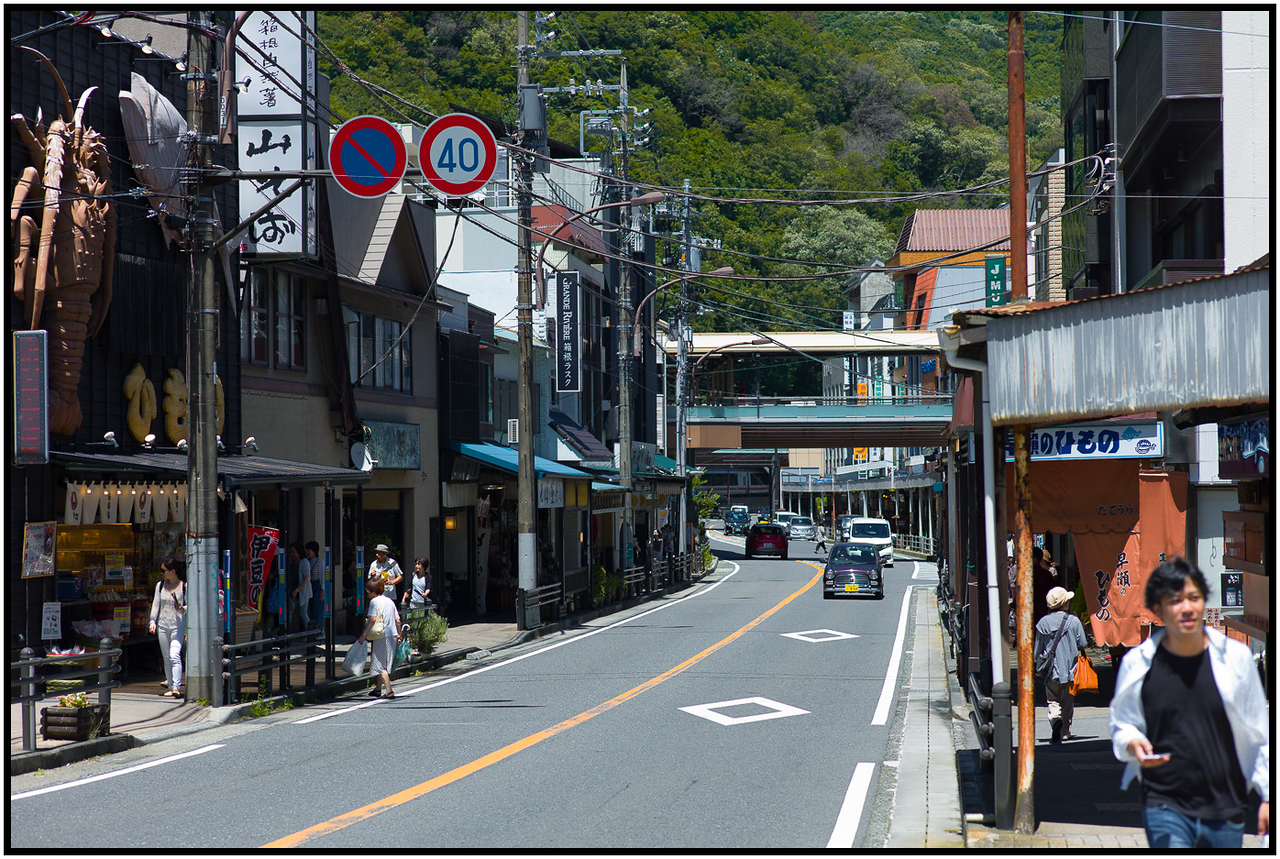
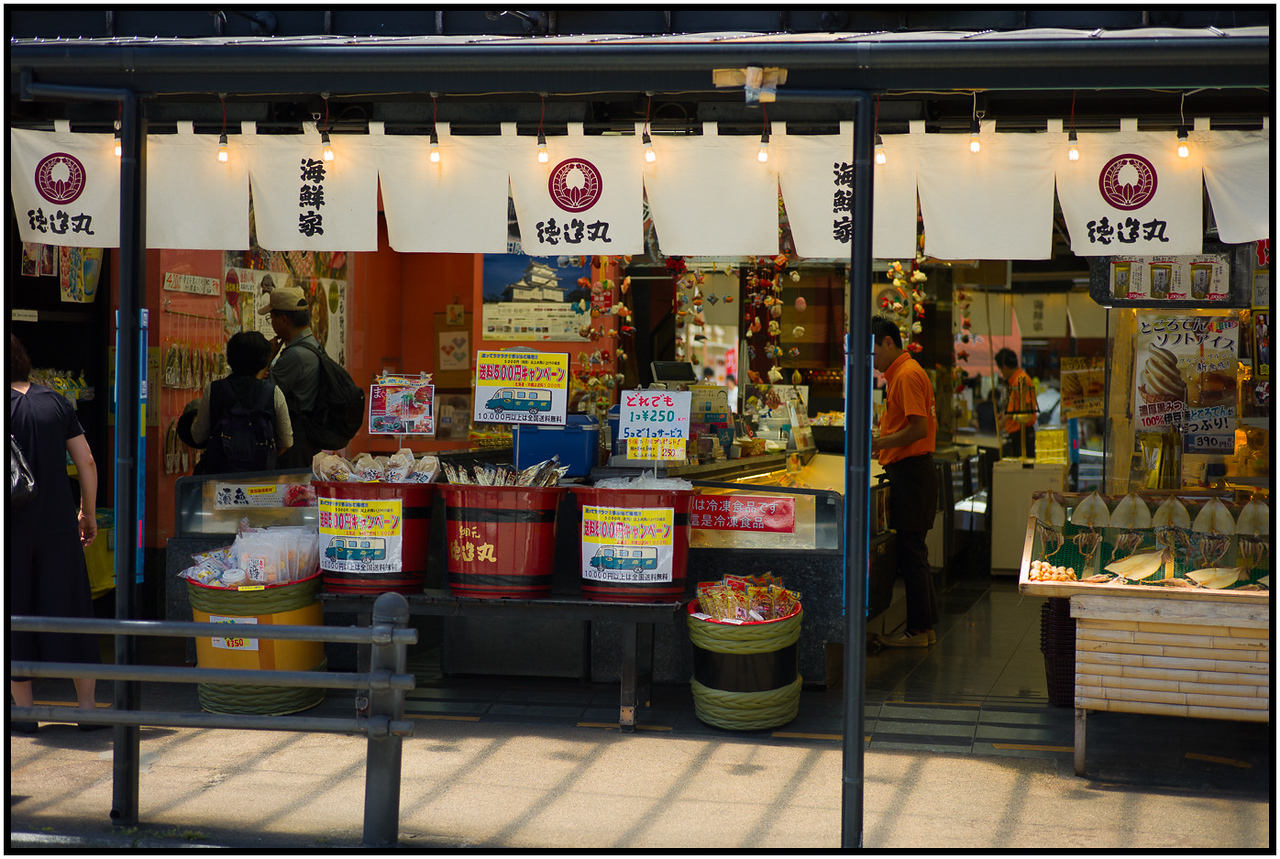
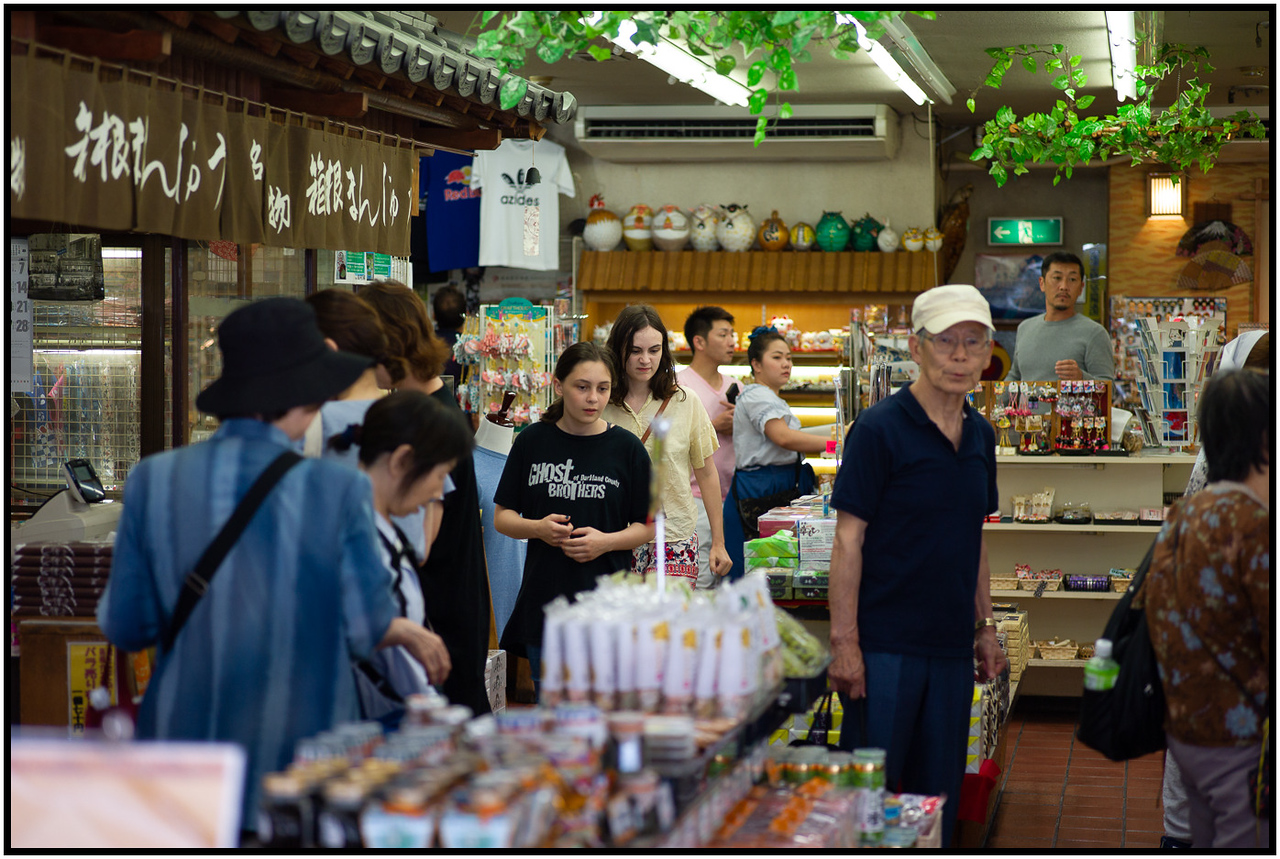
We arrived a bit too early to check into our house, so we parked and did some browsing, grabbed lunch and killed some time. Almost everything in this town centres around the train station.
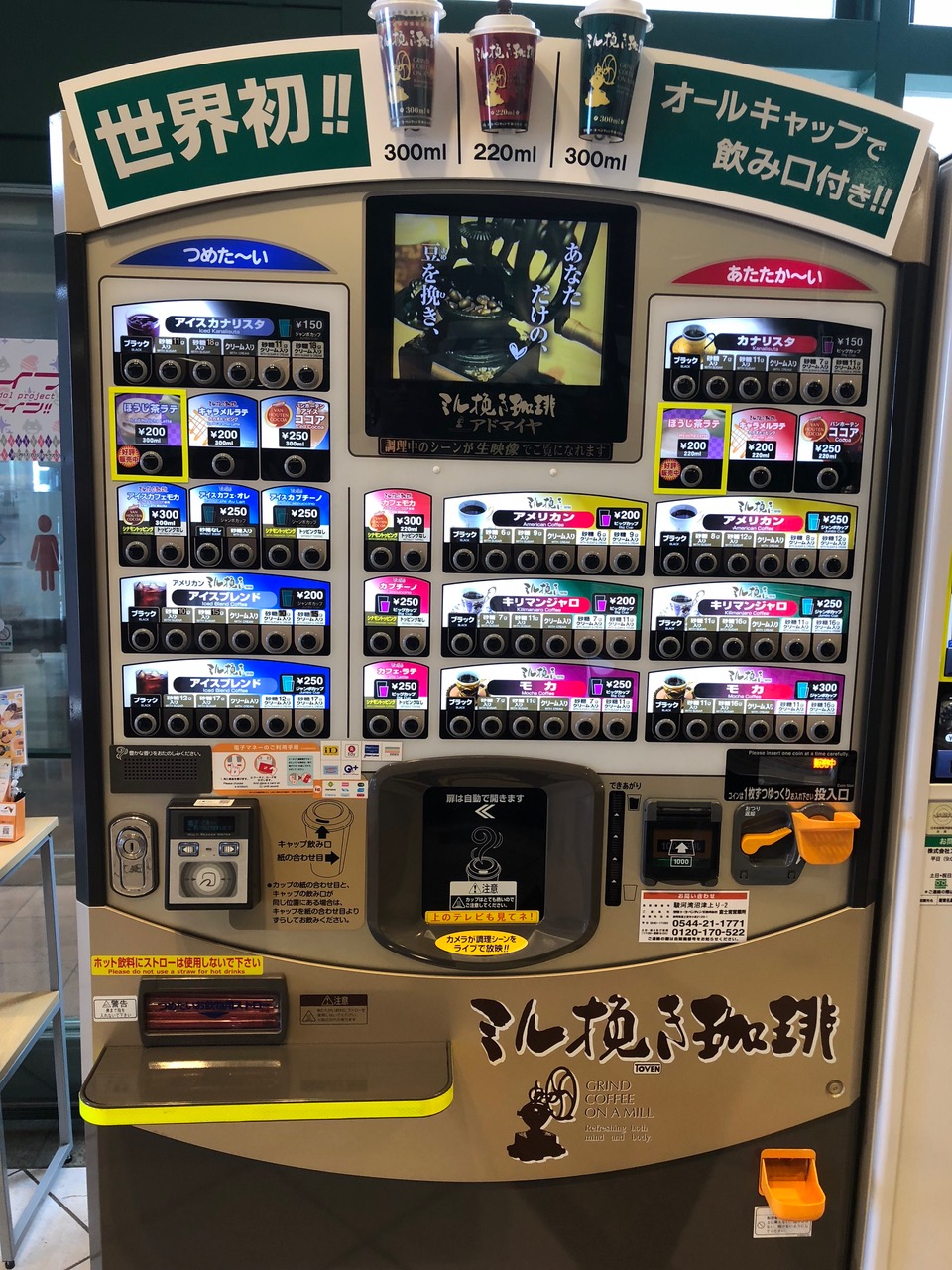
Adam: This is a typical coffee dispenser in Japan.. Nowhere can you get a simple “cup of Joe.” You have to have an engineering degree (lucky me) to get it to dispense.
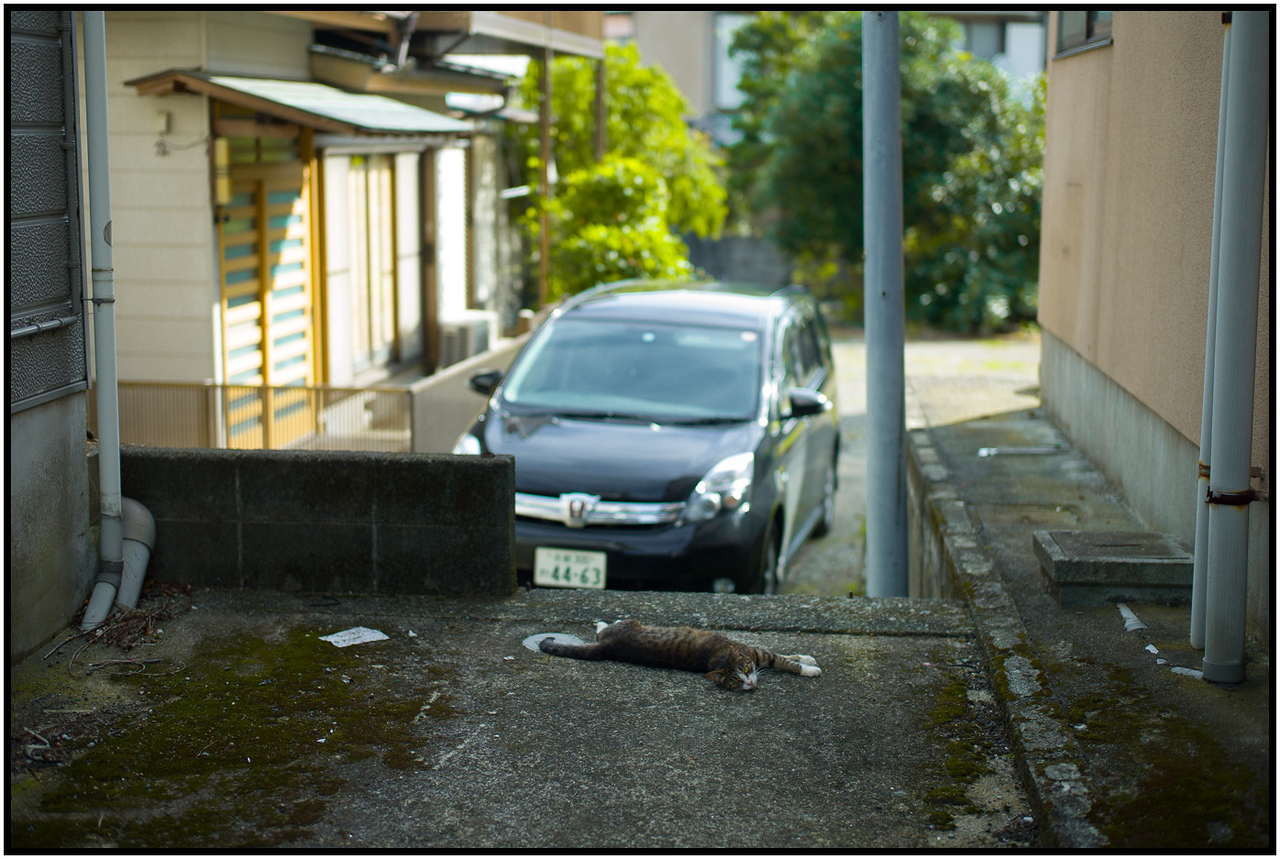
Our car and where we’re staying (in the sunlight to the left of the car), plus a member of the local wildlife. This neighborhood had a lot of cats and dogs, all of whom decided to make a bunch of noise around 3:00 a.m. Cat fights, which set off several indoor dogs who clearly wanted to be outdoors and in on the action. It wasn’t so much “woof woof woof” as it was mournful “roooooooooooooooo”ing going on until sunup. How do people in this neighborhood sleep?
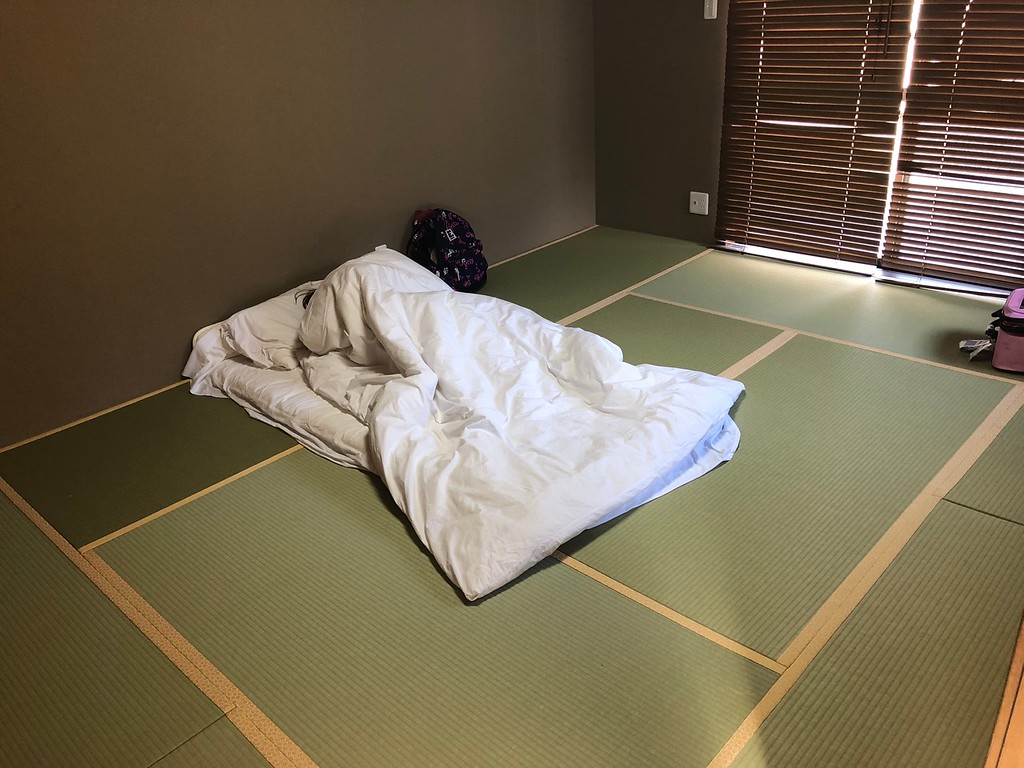
This house had enough rooms that everyone got their own … the kids had to sleep on the typical floor mats but were thrilled to have some privacy (that’s Josie, enjoying her space).
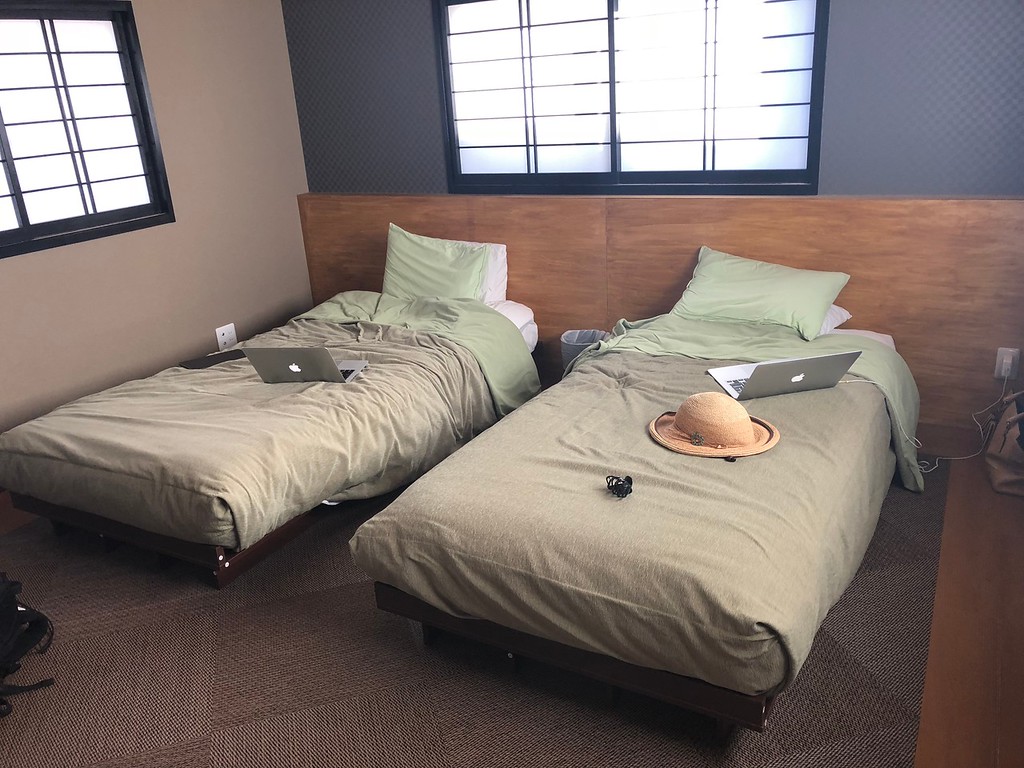
And Adam and I were more than thrilled because our room had real beds! We’ve spent the past two+ weeks sleeping on the floor, which is all fine and dandy when you’re pre-college but not all that great when you’re within rock-throwing distance of 50 years old.
Tuesday, 03 July 2018
Adam: One of Brenda’s goals on this trip was to see Mt. Fuji. On our last trip to Japan, it was never in view. The thing is, Mt. Fuji, in all it’s majesty, can be a hard thing to view on any given day.
The mountain is only about 12,400’ high, but because it sits alone (not as part of a range) and due to it’s nearly perfect symmetry, it leaves a strong impression. However, it also has its own climate and clouds tend to gather and clump about this protrusion. We timed our trip a bit to take advantage of some clearer weather and hoped for the best.
So, for today, we went hunting for a decent Mt. Fuji picture.
The first thing we found, though, was a little wild animal … they do exist in Japan!
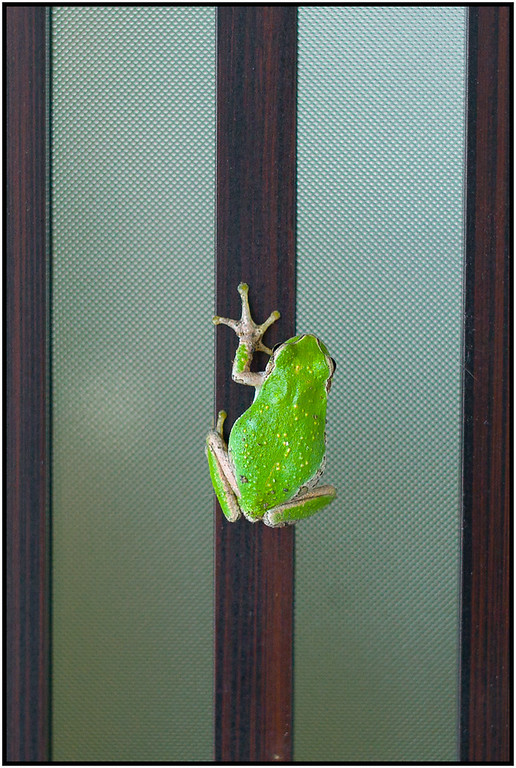
He was clinging to the bathroom door leading into the men’s room in the parking lot of Chureito Pagoda (near Fujiyoshida). I was going to move him to the nearby woods, but Isabella and Josie both freaked out and begged me not to touch him in case he was one of those frogs that exude deadly poison or hallucinogenic compounds from their skin, like Hypnotoad. (“Seriously, I’m gonna freak out if Mom starts trippin’!”)
I’m pretty sure all those frogs are in the Amazon rain forest over in South America, but then I got to thinking that perhaps this little ribbiter was exactly where he wanted to be. What if he’d spent the entire night getting to that spot, hoping to move into the men’s toilet where he’d be safe from birds and big fish? In the end I left him right where he was.
[Later edit: I think he’s a Japanese Tree Frog.]
Although nothing as poisonous as the South and Central American Poison Dart Frogs from the Dendrobatidae family, Japanese Tree frogs do have mild toxins within their skin for protection against predators and disease.
Despite this, they can be handled relatively safety without too much of a problem. Be sure to wash hands after handling any specimens and do not allow the slime from within the frogs’ skin to get in the mouth or into open cuts and wounds.
And as a final safety precaution, don’t stick frogs in your eyes… the slime causes pain and permanent blindness.
Don’t stick frogs in your eyes?! Ummm … ok. (But seriously; if you are the type of person who thinks “I’m gonna stick this frog in my eye” — would someone telling you NOT to stick the frog in your eye stop you?) Whatever. It didn’t occur to me to stick the frog in my eye, or rub it’s slime in my mouth or on my open wounds so I probably would have been ok.
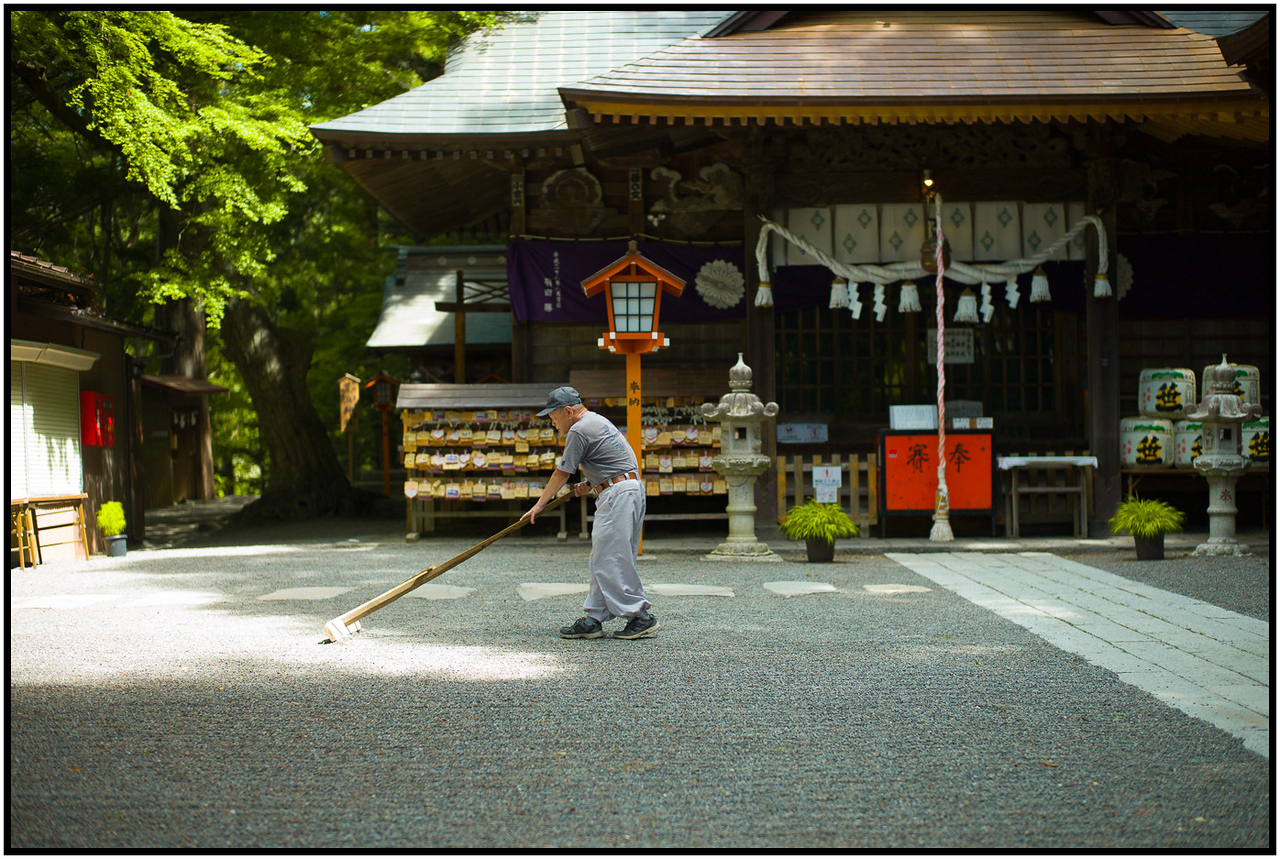
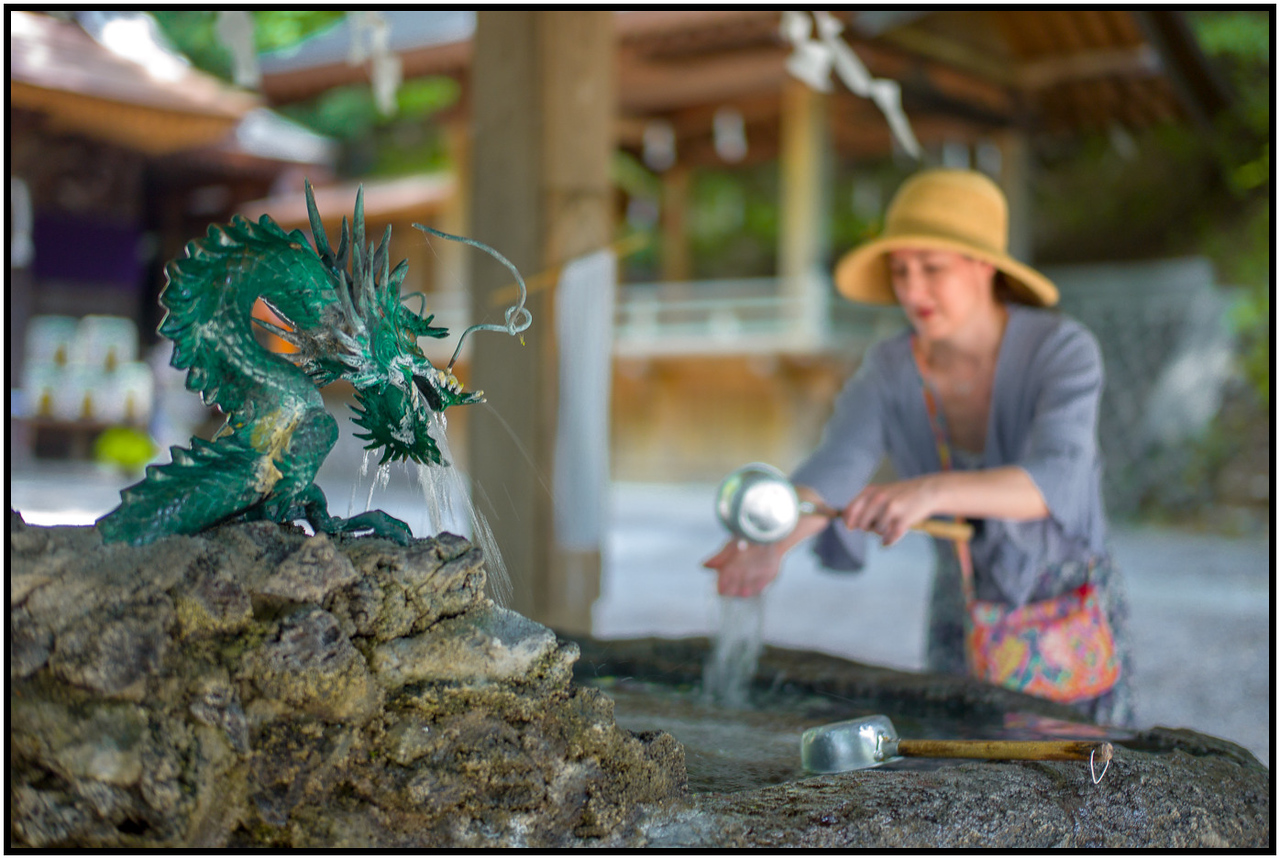
Anyway …. on to Chureito Pagoda. You have to climb 398 steps to the top. At the base of the staircase they have a little shop, snack/drinks stand, and a place to leave prayer ribbons at the Arakura Fuji Sengen Jinja shrine before you embark on your hike.
Somebody has to rake the zen garden each morning so the rest of us can find inner peace.
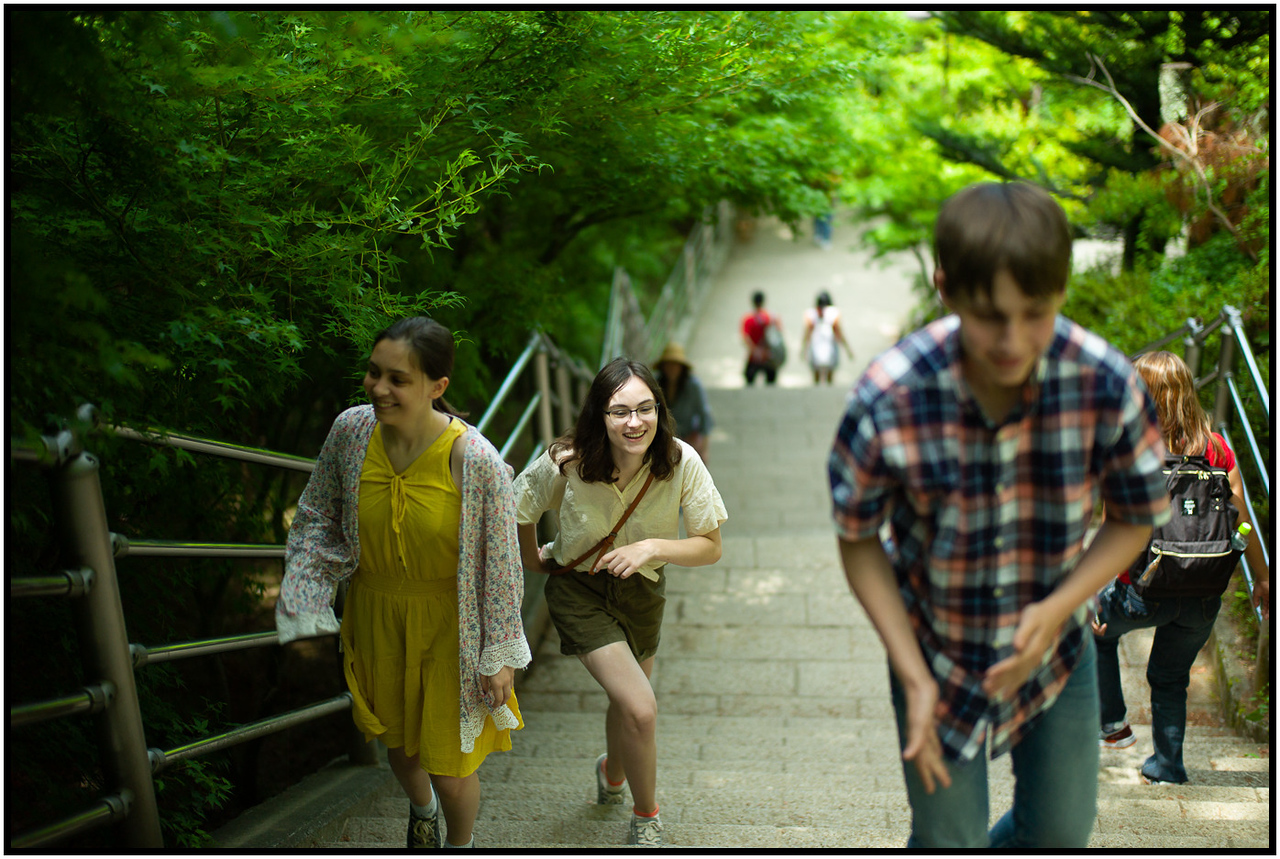
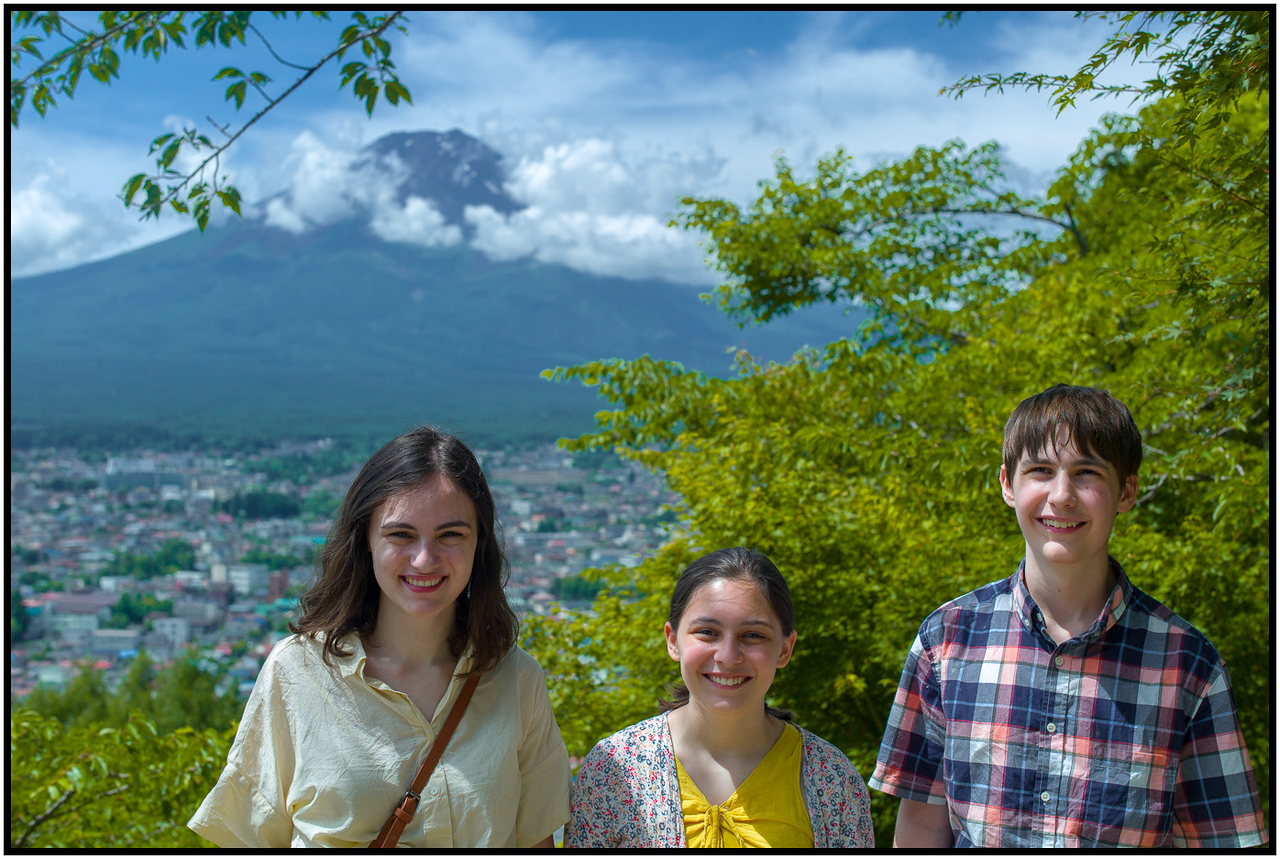
Up the stairs we go! It was already nearly 90°F this morning so we took our time. We got incredibly lucky, though, and the clouds cleared enough to give us a spectacular view of Mt. Fuji.
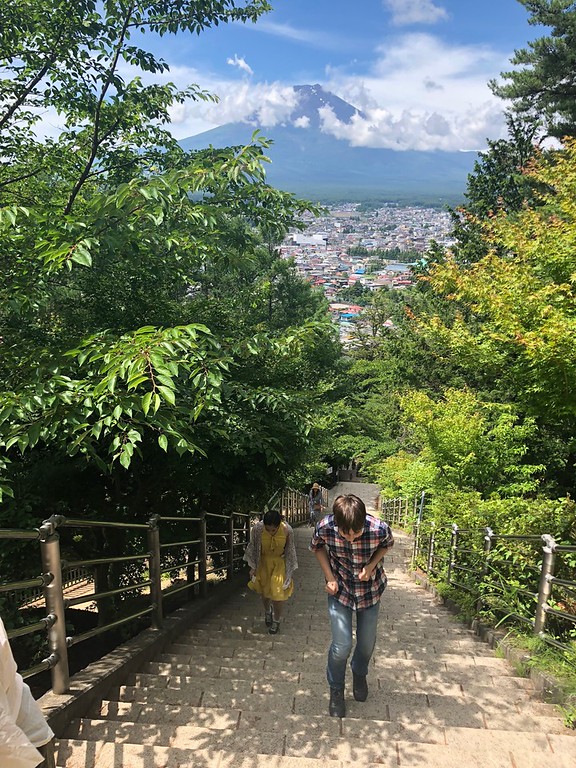
There it is, along with Chureito Pagoda. This view was well worth the climb.
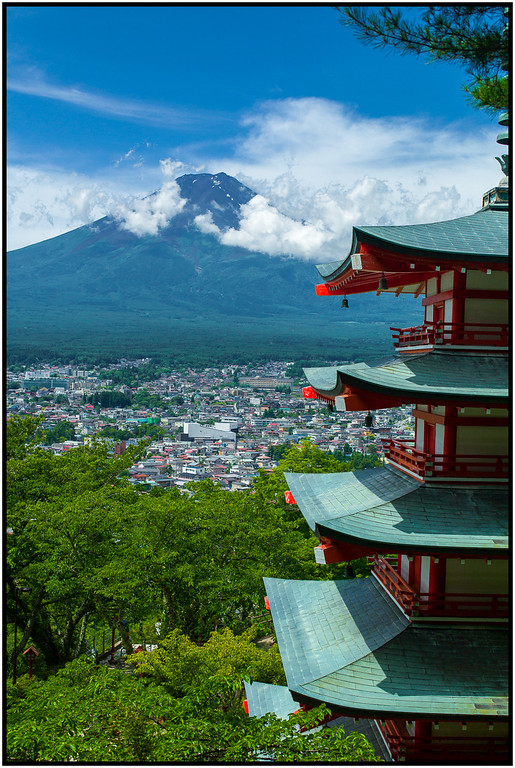
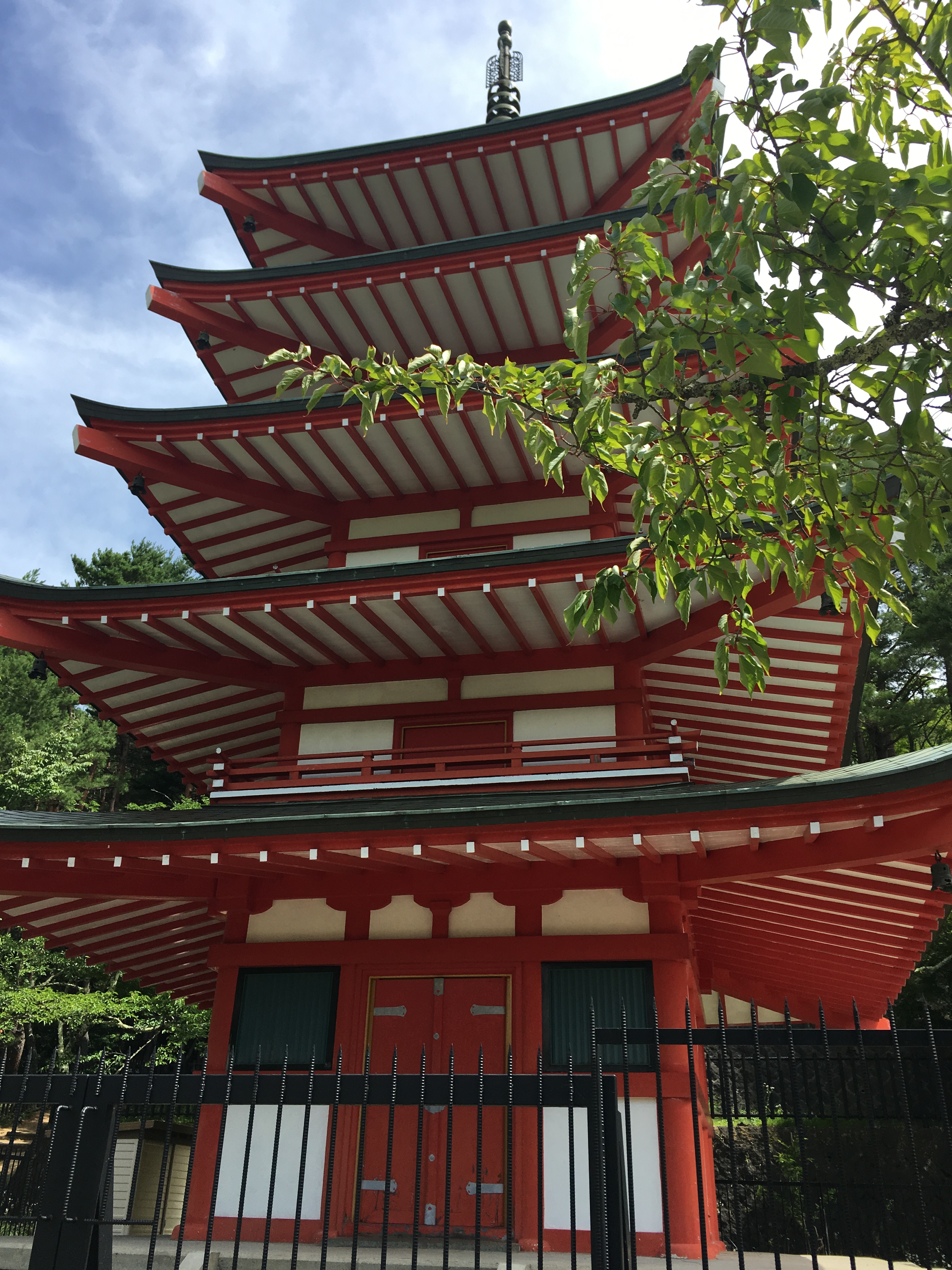
From a plaque at the site: The Fujiyoshida Cenotaph Monument, also known as the Chureito Pagoda, was built by the mayor of Fujiyoshida …. in 1958 to enshrine about 960 citizens from Fujiyoshida who died in the wars which occured after 1868 (the First Sino-Japanese War, the Russo-Japanese War, World War I, and the Pacific War of World War II).
Back down at the base: the purification fountain for cleaning your hands before you enter Arakura Fuji Sengen Jinja shrine.
By the time we walked back down all those stairs, clouds had already formed to obscure the top of the mountain. We got unbelievably lucky to see it at the exact time we were at the top.
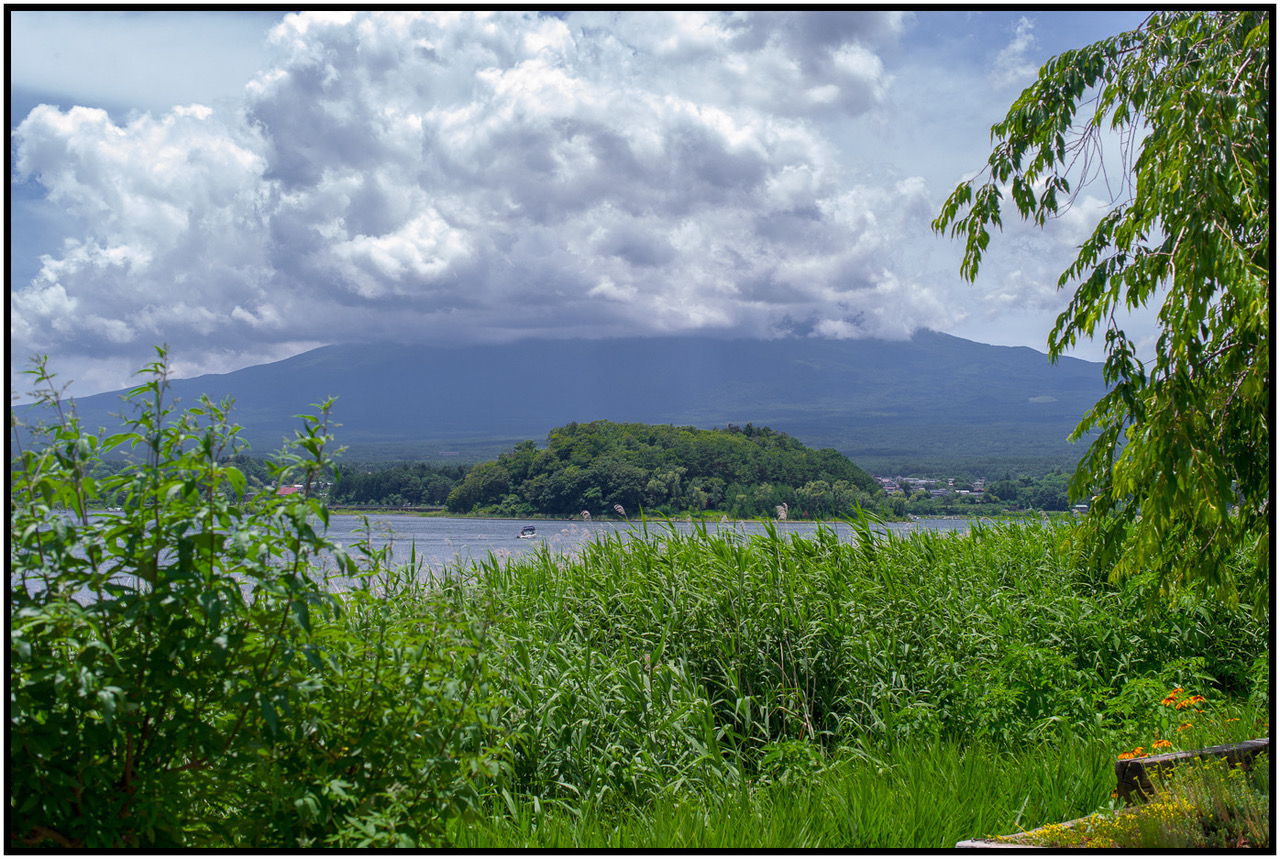
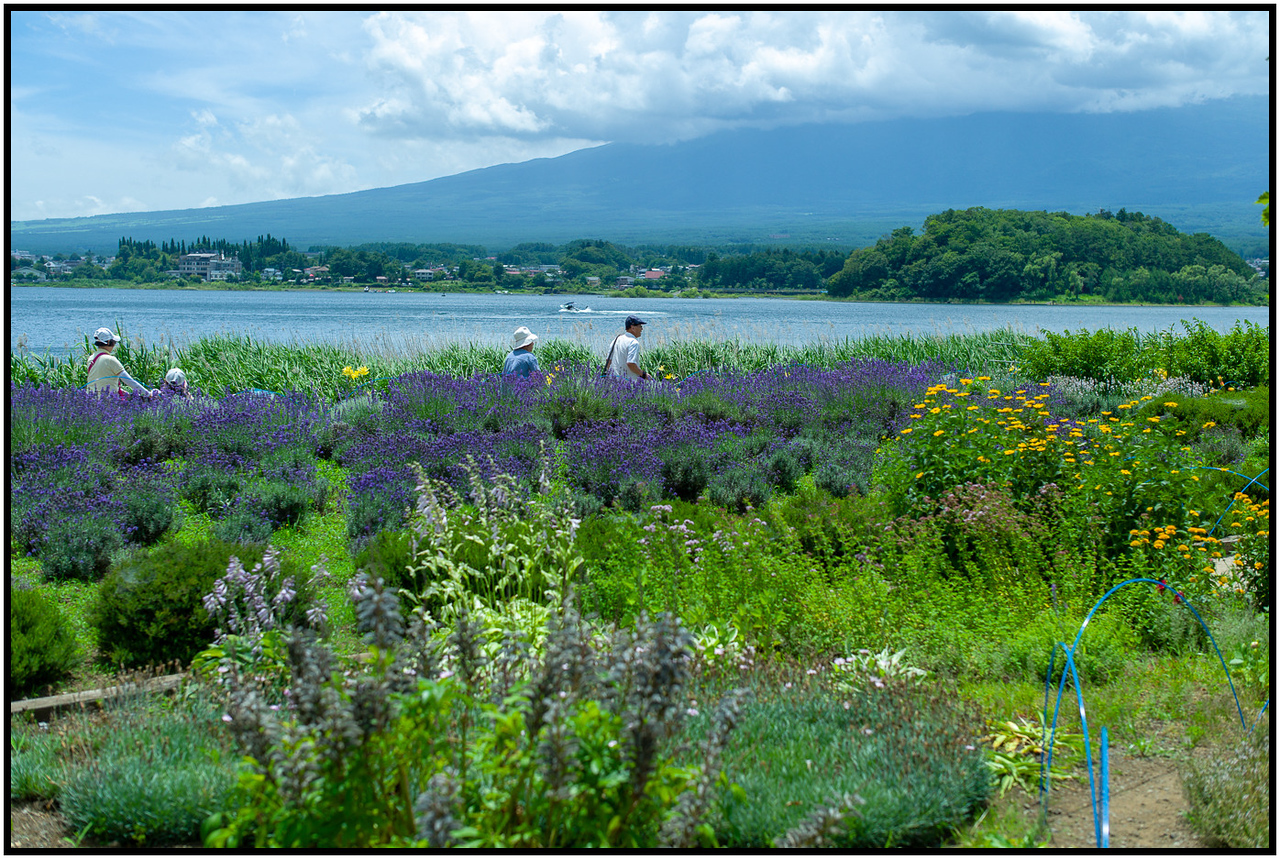
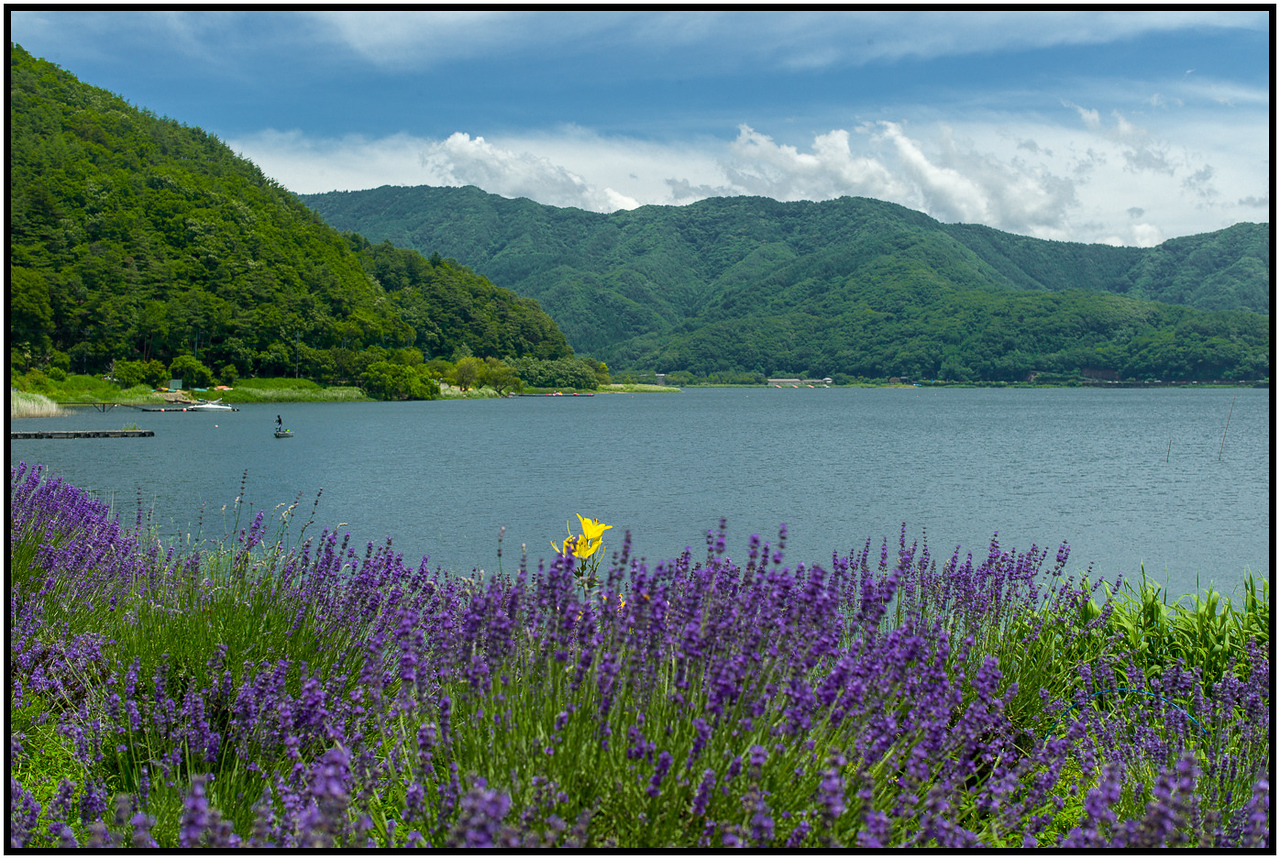
Adam: Here’s another typical view of Mt. Fuji – we drove more than an hour north to lake Kawaguchi for this shot. This lake is the most famous of the five lakes that surround Mt. Fuji, and images of this lake are usually used in posters and commercials. A large number of hotels line its banks, as do locals providing boat rides to the tourists. We did arrive to enjoy the Herb Festival that happened to be going on at that location.
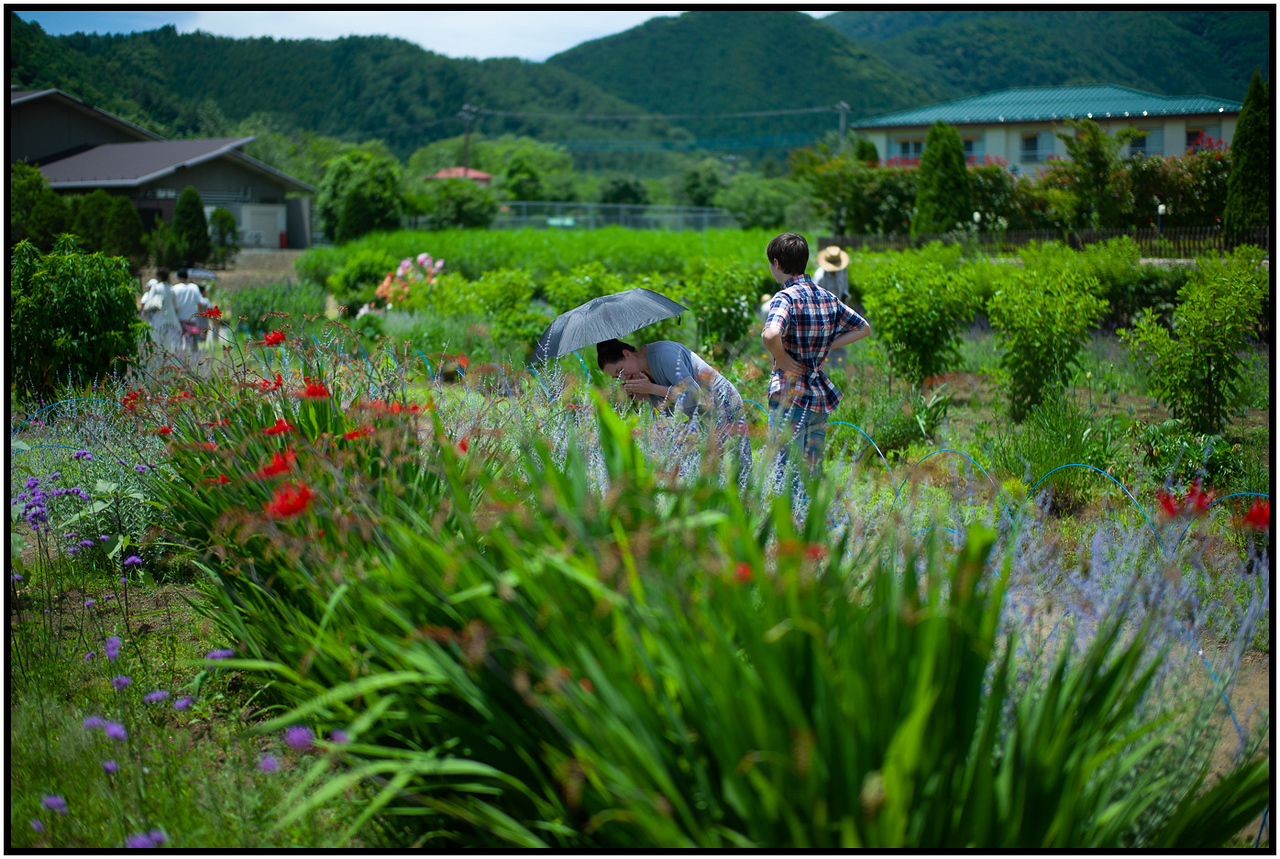
I was thrilled at our good fortune to arrive during their Herb Festival. The garden was packed with various types of lavender (some of which I’d never seen before) and smelled heavenly.
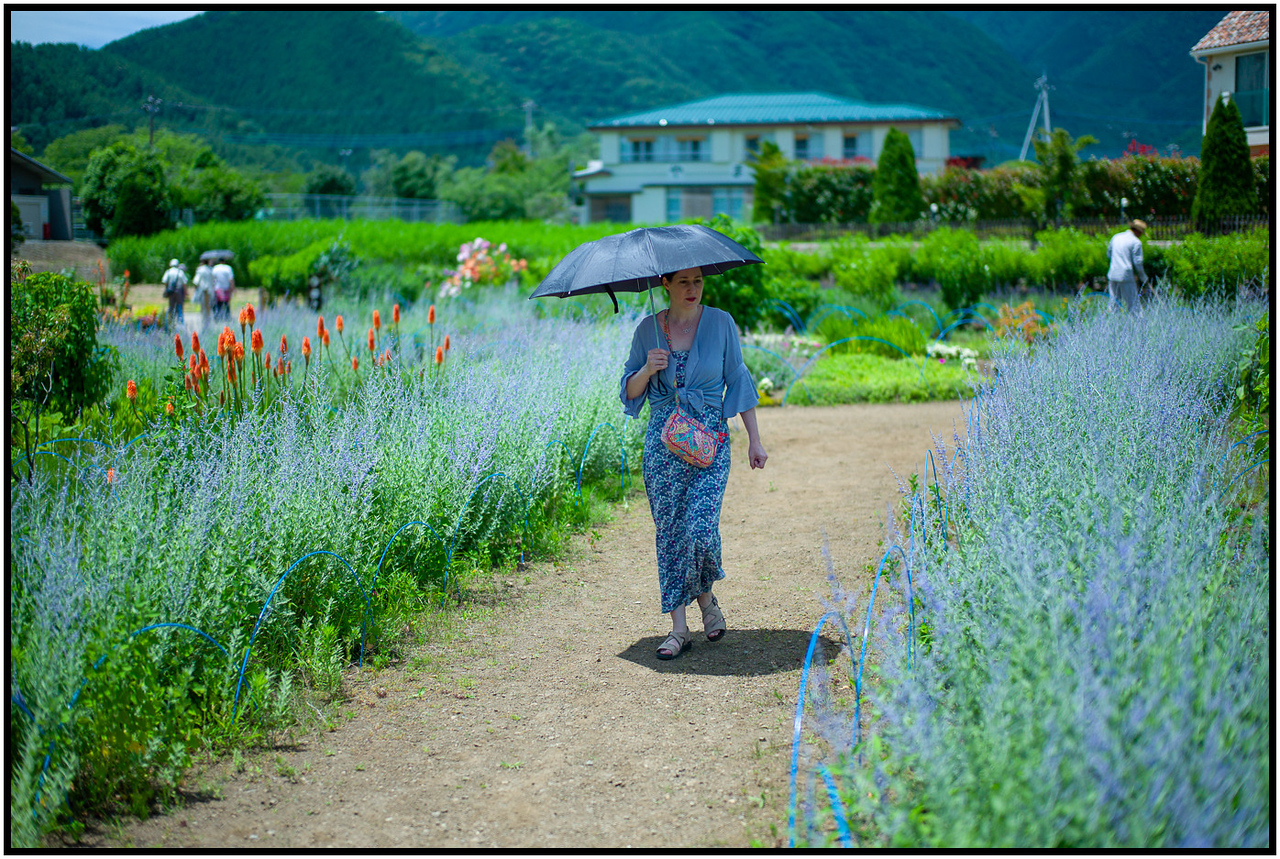
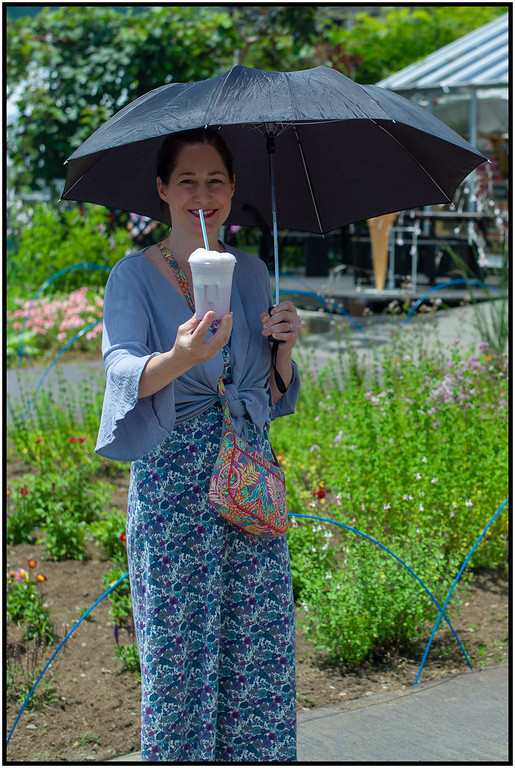
As luck would have it, I was even wearing the right color outfit today.
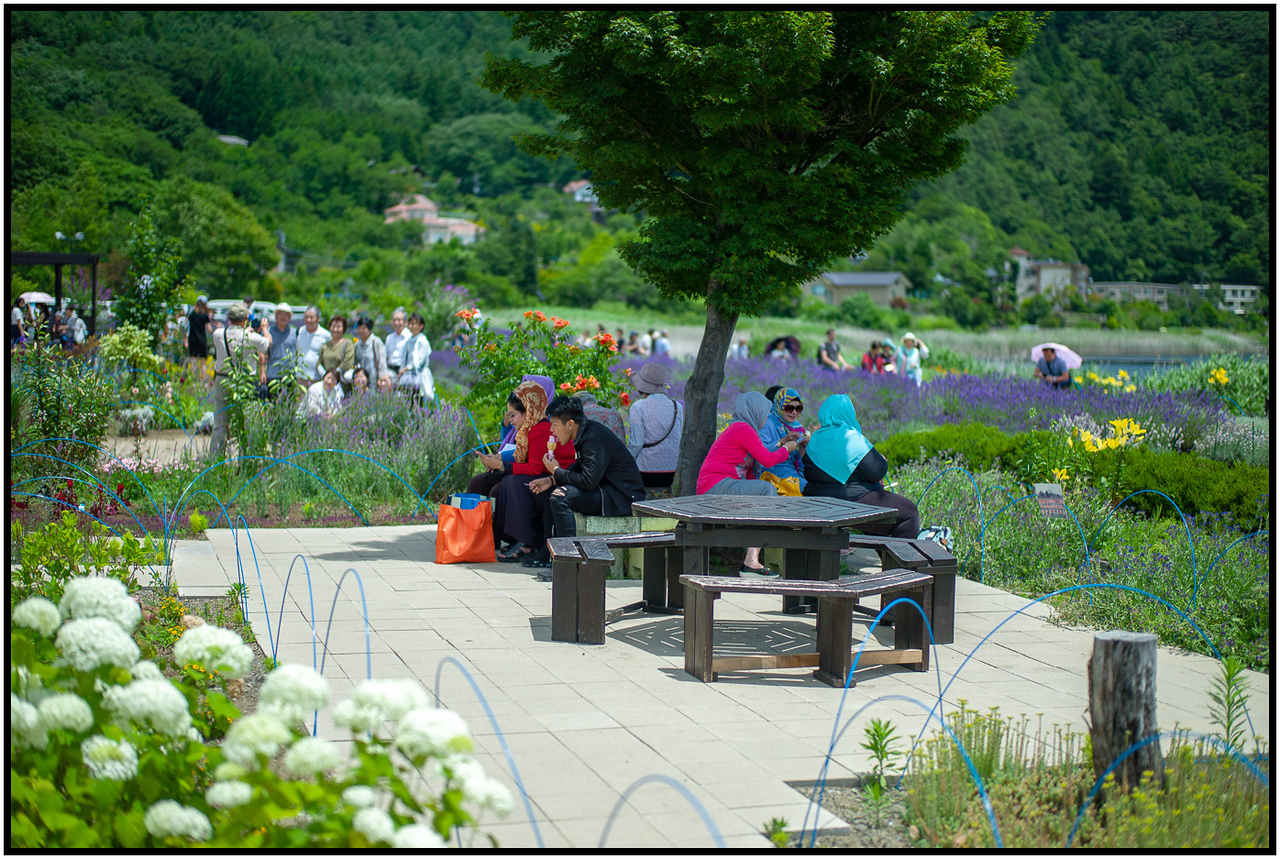
The shops were selling lavender products, including lavender ice cream and this lavender float that Adam bought. It was a shot of lavender syrup, sprite, and a scoop of vanilla ice cream. It was quite good; much better than we thought it would be.
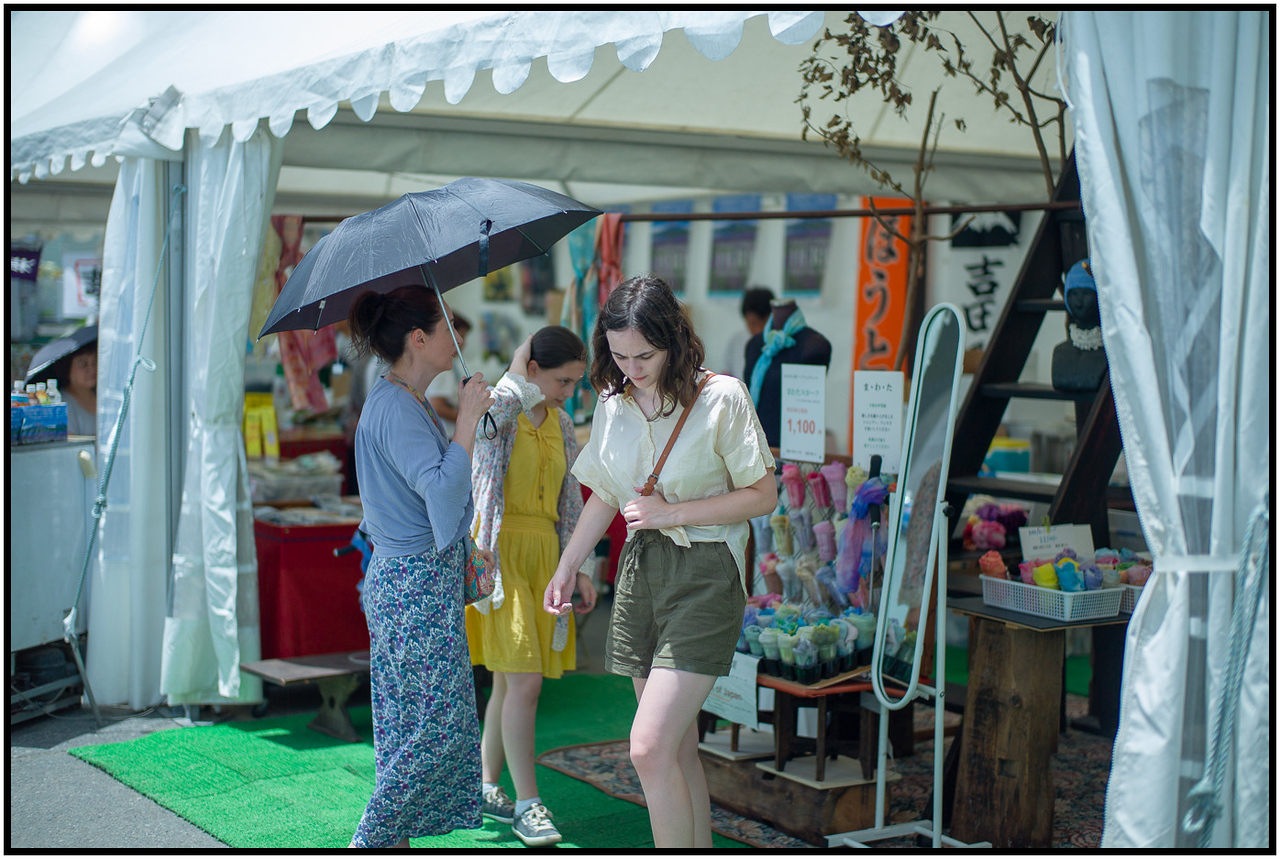
Other lavender products: lavender-filled pillows, huge bags of dried flowers to make your own potpourri, perfumes, soaps, essential oils, cleaning products, etc.
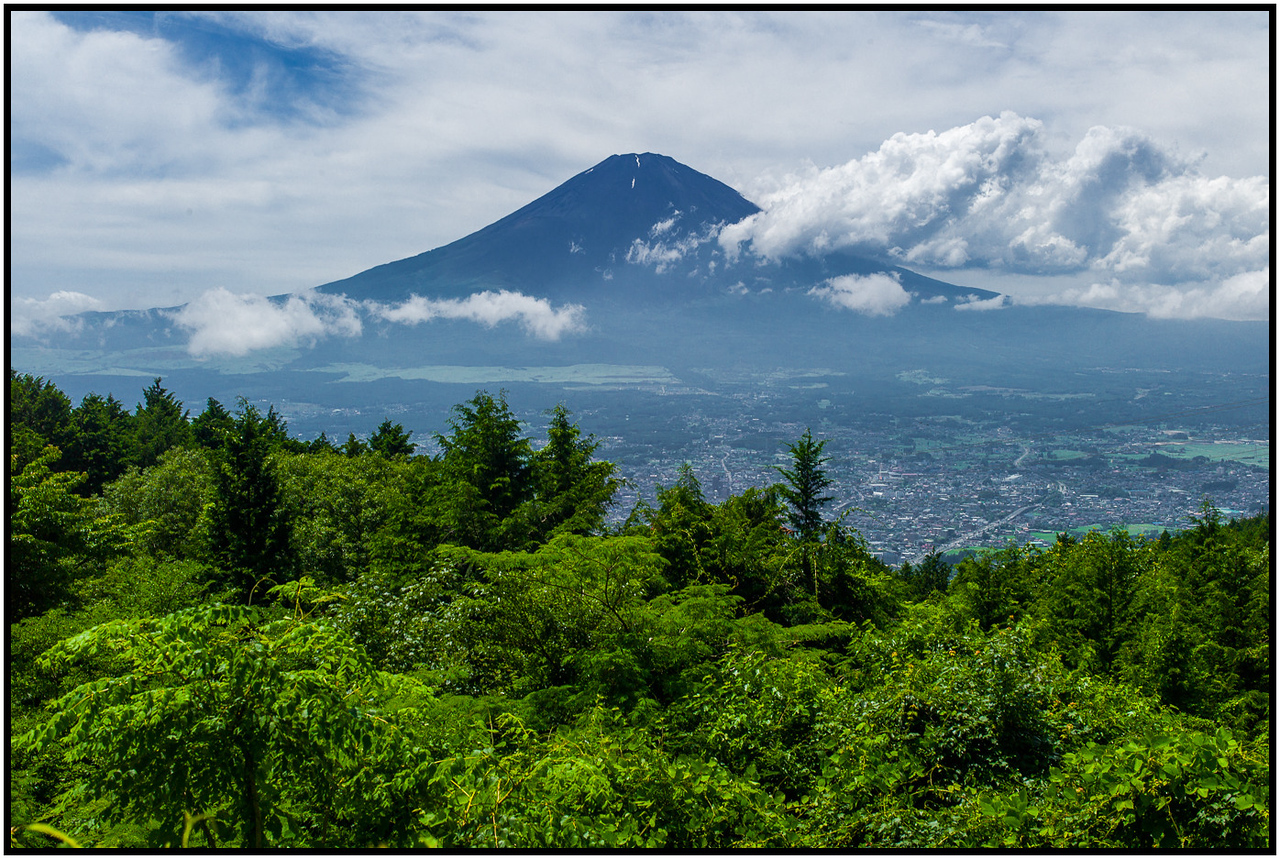
Another shot of Mt. Fuji from the south, facing north, on our way to Lake Ashinoko for lunch and to look around.
Adam: Mt. Fuji is still considered an active volcano, although the last eruption was in 1707. However, the surrounding area is still quite alive. Ōwakudani is a volcanic valley with active sulphur vents and hot springs. It was created around 3000 years ago, as a result of the explosion of the Hakone volcano (about 20km away from Mt. Fuji).
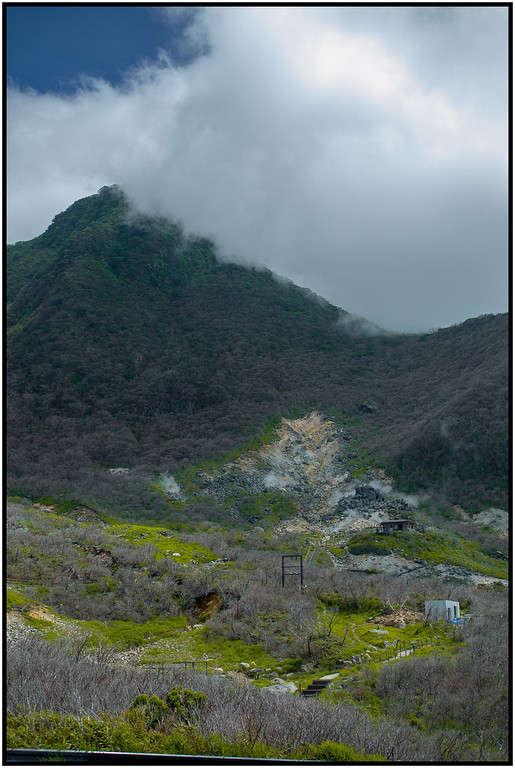
Owakudani is actually inside the crater of the volcano Mount Kamiyama. Owakudani translates to “the Great Boiling Valley,” though some locals refer to it as Jigokudani, meaning “Hell Valley.” Here you can see the cable cars operating to give people a good view over the sulphur springs.
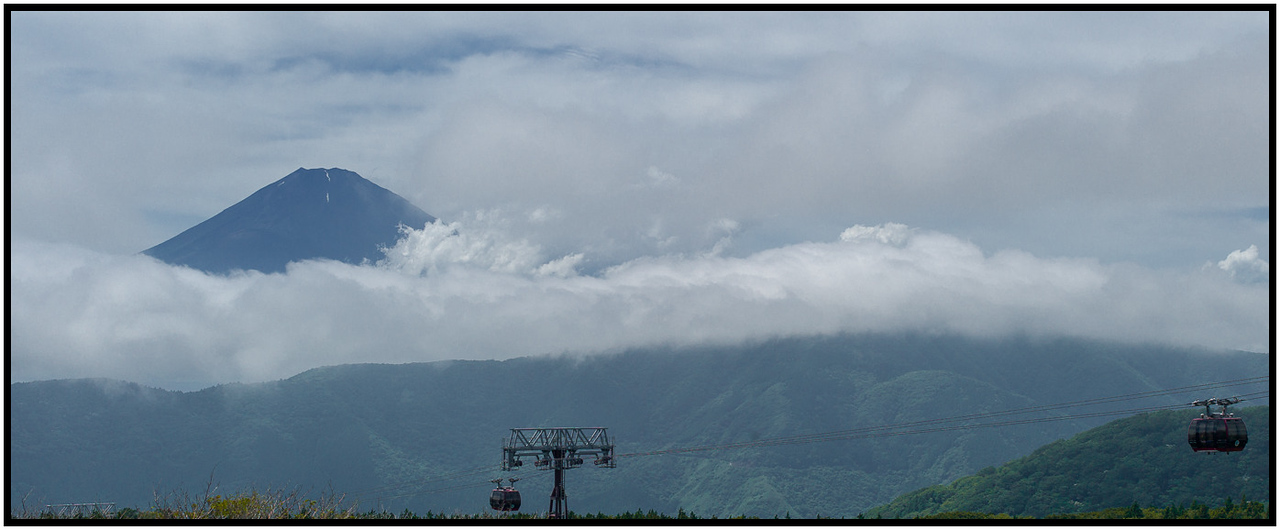
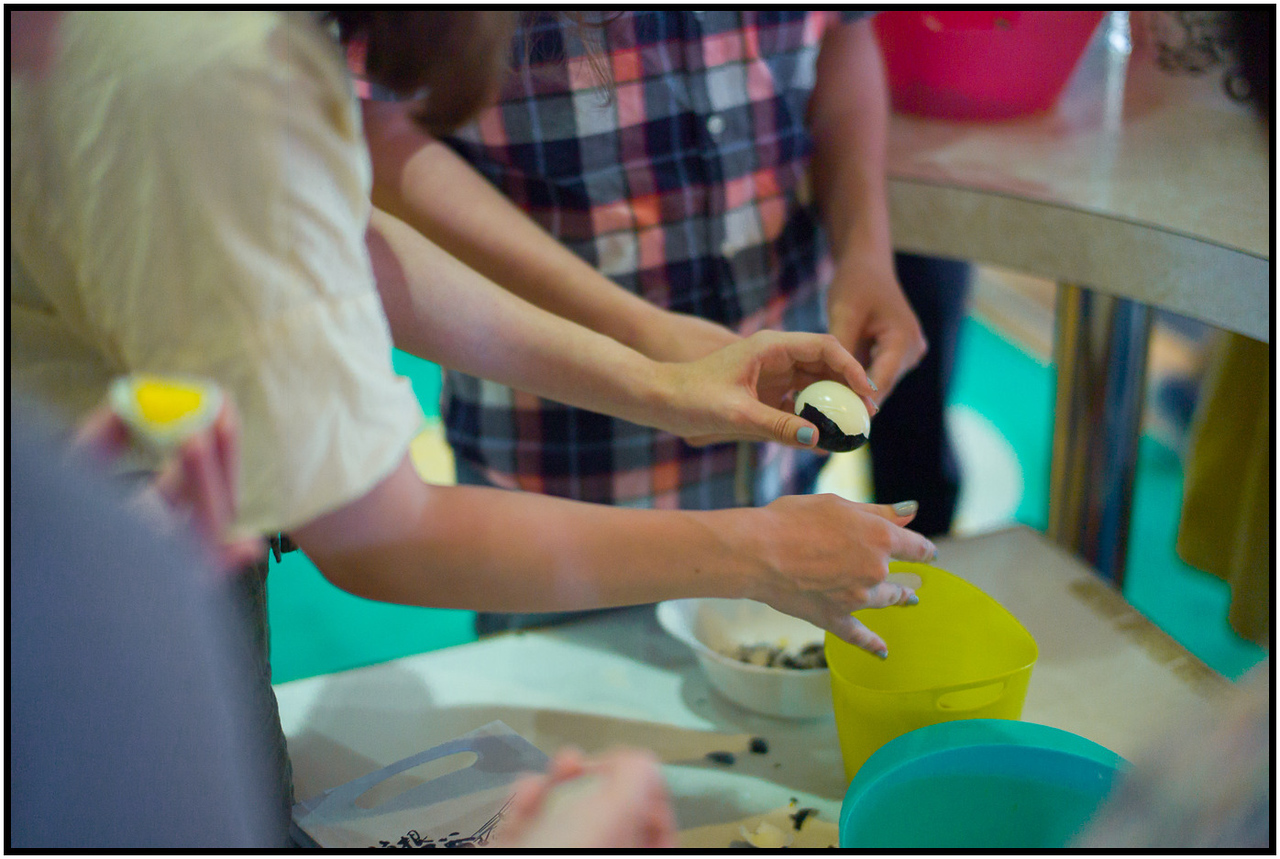
Adam: It is a popular tourist site for its scenic views, volcanic activity, and “Kuro-Tamago” — a local specialty of eggs hard-boiled in the hot springs. The eggs turn black and smell slightly sulphuric; eating one is said to add seven years to your life. The moutaintop views were great, but the place really smelled of sulfur. Due to volcanic activity in 2015, they had to shut the place down for about a year. Even now, there is limited access to the areas and (from what I read) you used to be able to wander a good deal more up the hills and get close to the volcanic vents. Now, no longer.
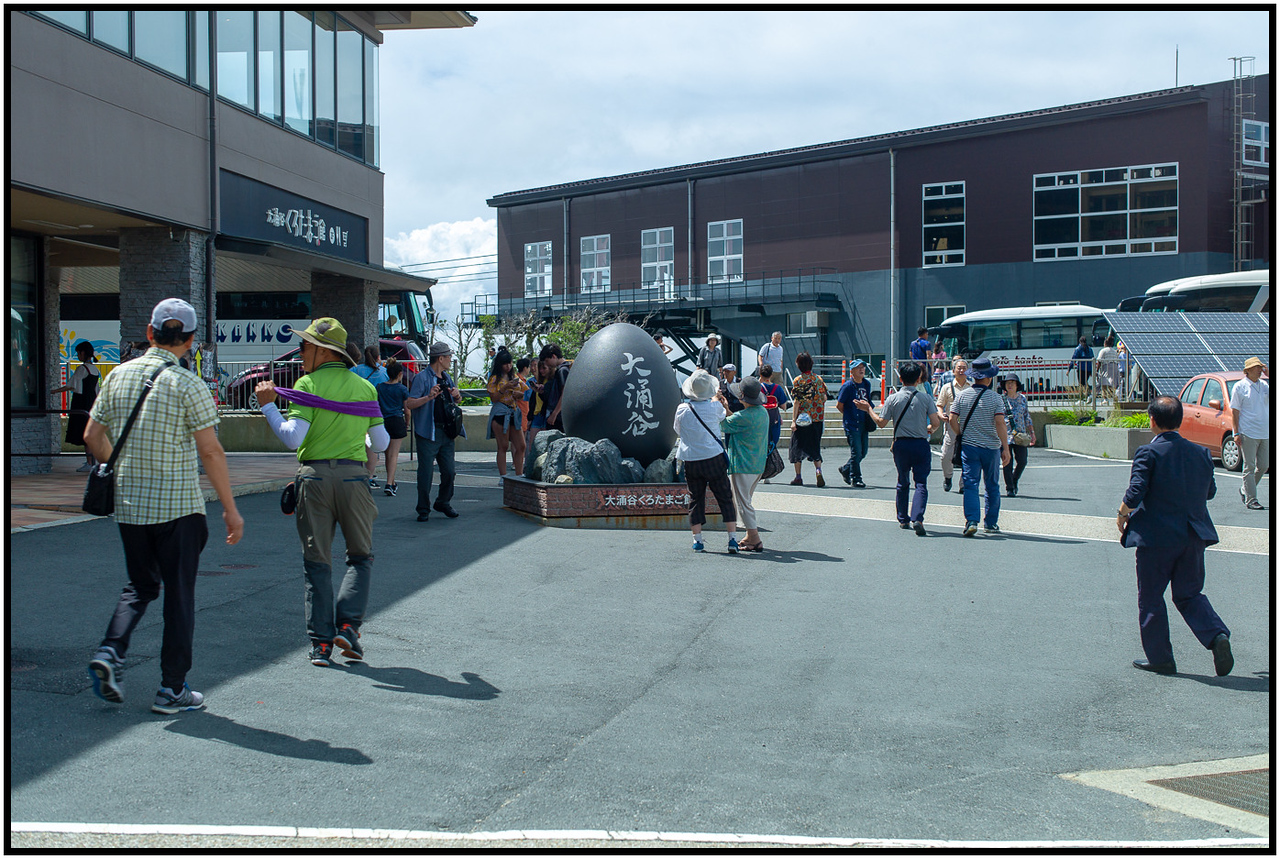
Owakudani’s hot springs contain rich amounts of sulfur and iron. When the eggs are cooked in it, these elements react with calcium in the egg shells. It results in the chemical compound iron sulfide which adheres to the egg shell and turns it black. The eggs are soaked for an hour in the springs with a temperature of 80°C (176°F). Since this process doesn’t fully cook the eggs, another 15 minutes of steaming is done in a caldron.
We bought a package of five eggs, but Adam refused to eat his. He does not like eggs and can only manage to choke them down if they’re scrambled. I ate his for him, so maybe I’ll get an extra 14 years instead of 7? We couldn’t decide if the eggs would add up or cancel each other out (the Japanese do not like for people to be greedy).
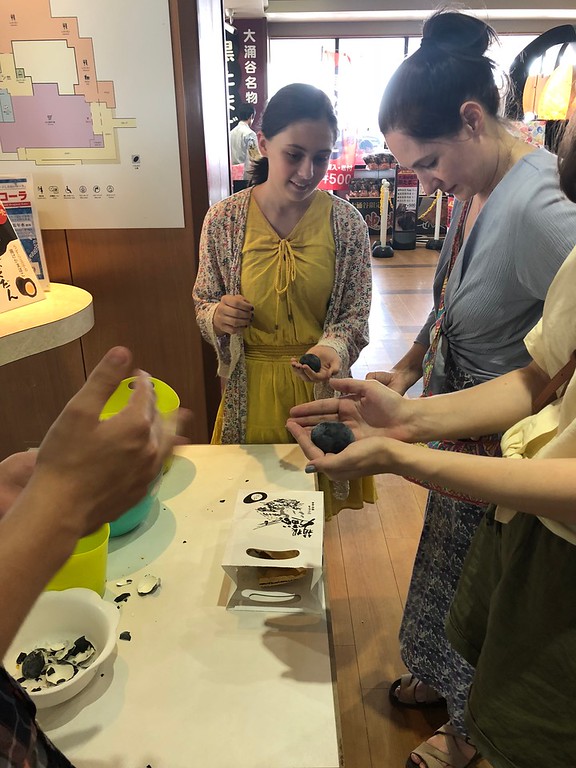
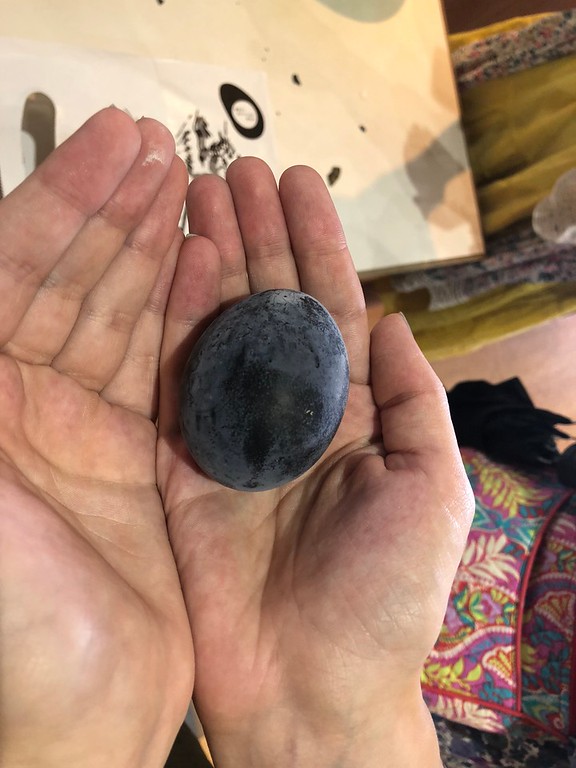
The only difference was in the shell. The hard boiled eggs inside looked and tasted completely normal.
[Later edit]
The internet to the rescue again:
Each egg is believed to add seven years in a person’s life. However, eating more than 2 1/2 eggs can give you bad luck.
Phew! I only ate 2, not 2 1/2. I’ll probably be ok.
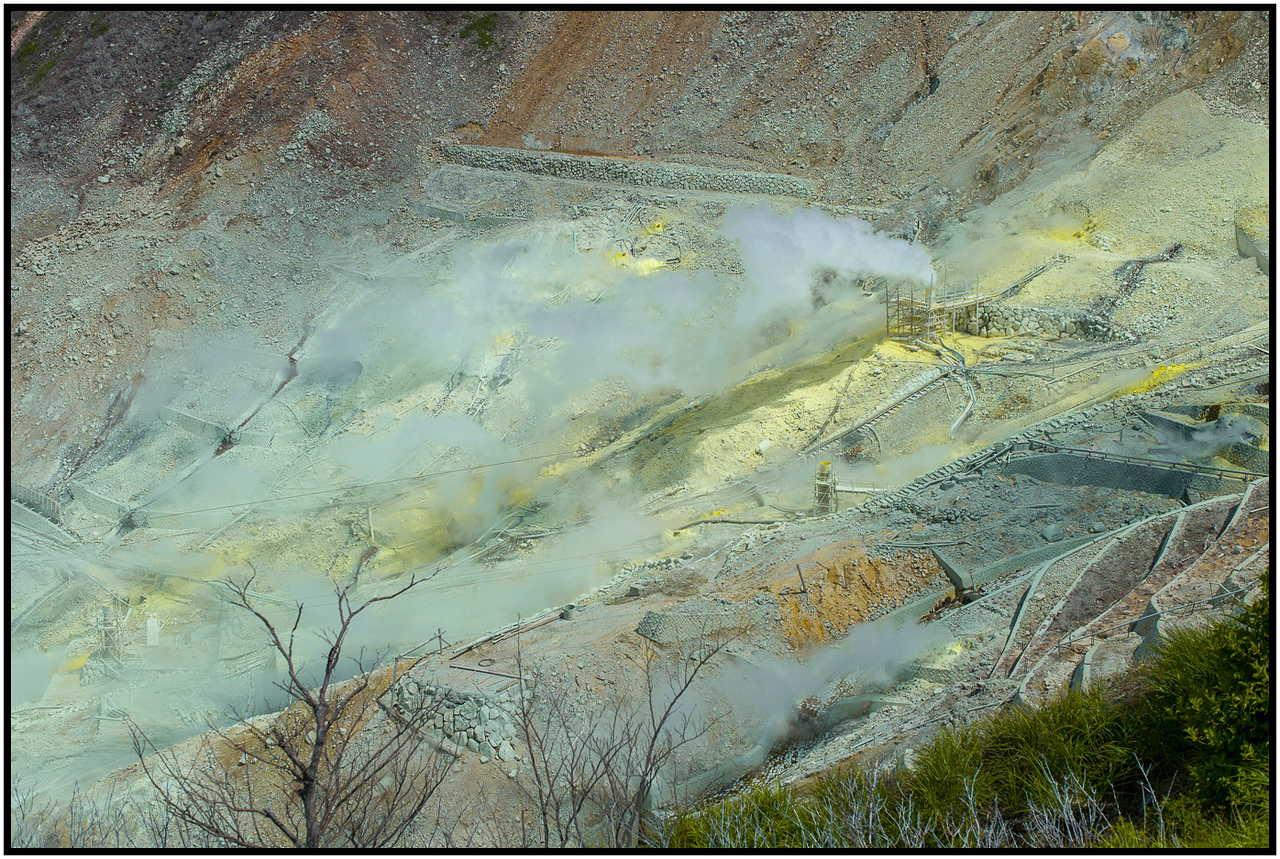
The sulphur springs. They weren’t too stinky … if you’ve been to Yellowstone National Park, you know exactly what it smells like.
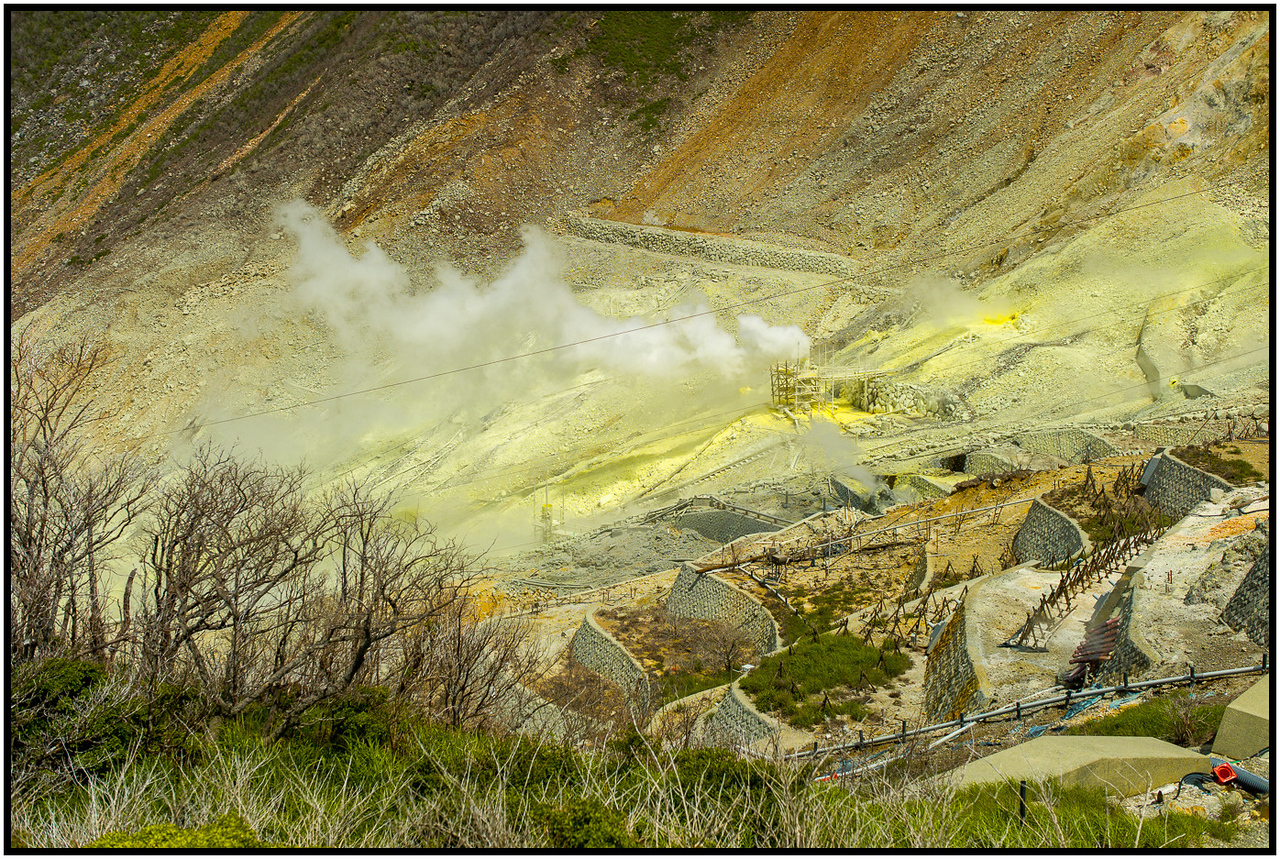
There was quite a lot of steam coming out of the vents, but it was windy enough today that the air stayed pretty clean.
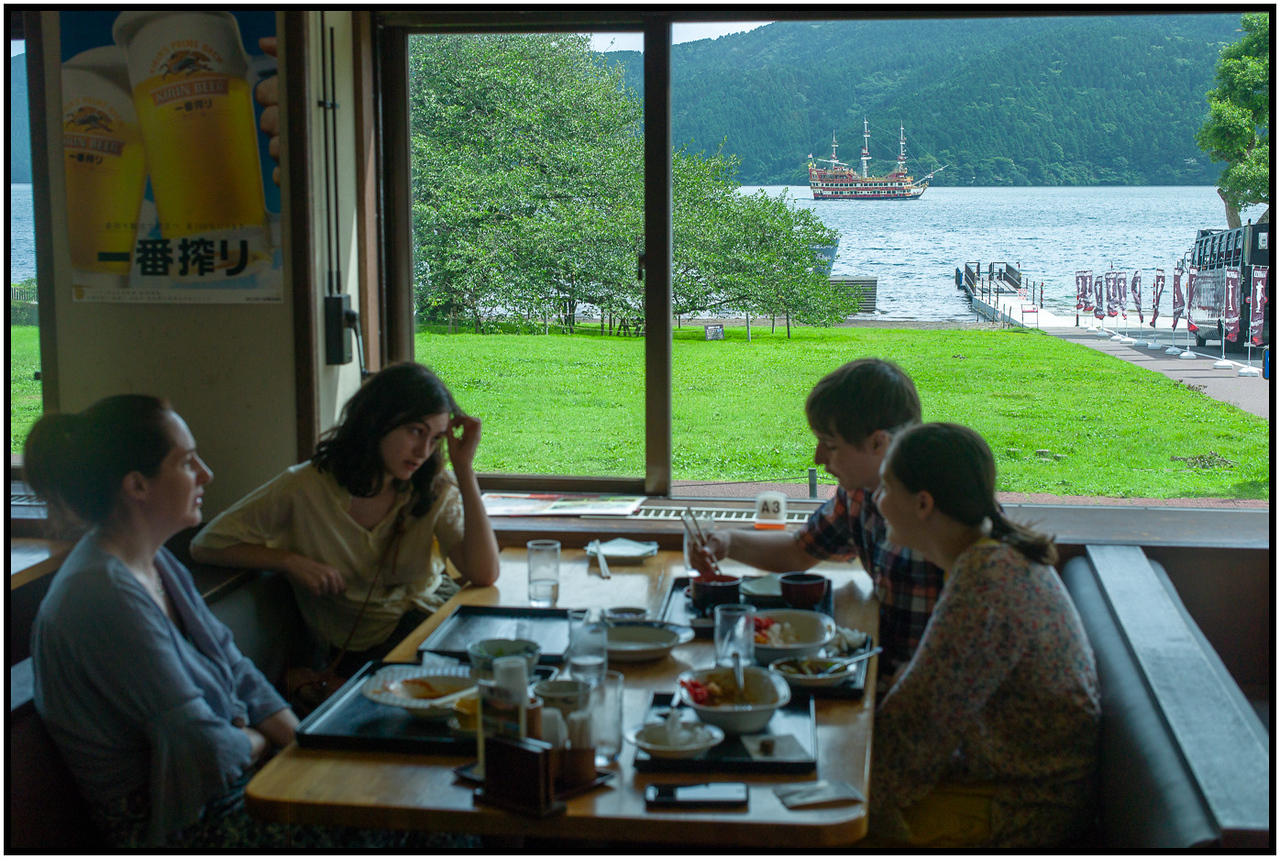
We had a very late lunch (early dinner?) at a nearby lake. We saw the pirate ship sailing around and pulled over on a whim. Sadly, the lunch was really expensive and not very good. The area was far too touristy. You can’t win them all.
Time to head back to the apartment for the evening. Tomorrow we leave for Kamakura, a little seaside town near Tokyo.

