Wednesday, 04 July 2018
Today was short travel day, driving from Hakone to Kamakura. It’s a slow, 50km drive along the ocean. They call the highway “1” and it travels much like US1 in California.
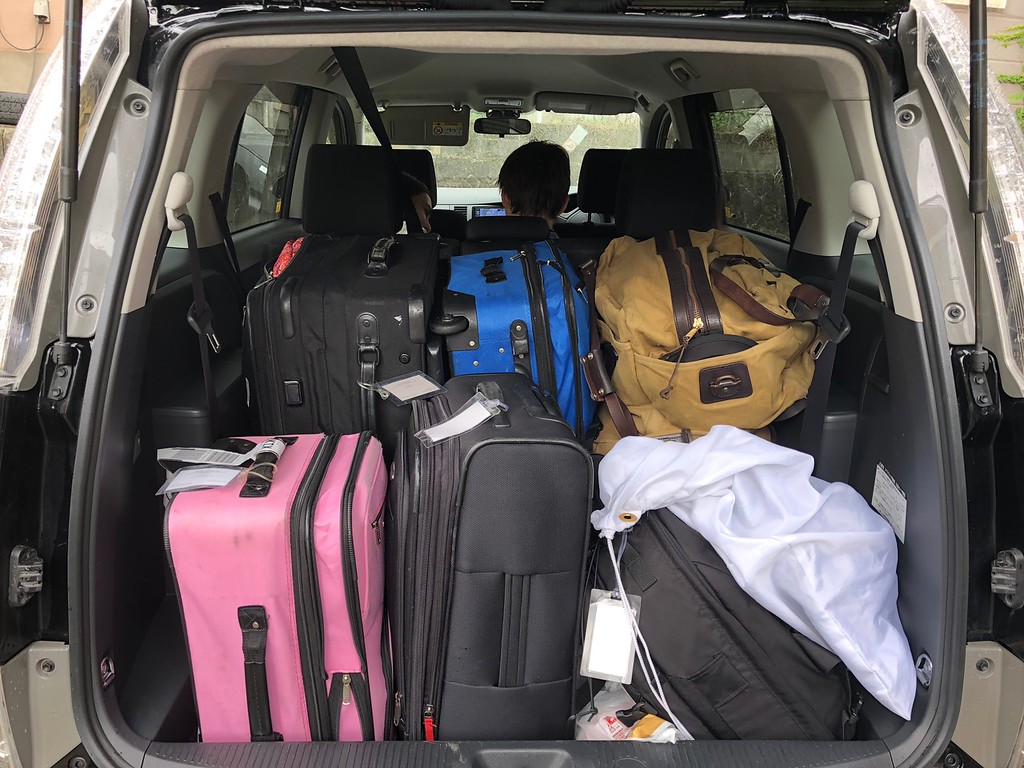
Loaded up for another trip down the road.
Adam: From all of our driving, we can see that Japan has plenty of room, they just don’t have very much level space. If you must build, you’re going to have to build on steep inclines.
Kamakura is another resort town, on the beach. It gets a lot of Tokyo weekend crowds. All beach towns sort of look the same wherever you area. The same surf shops and salt-water worn buildings, a lot of wind, and even the normally uptight Japanese here have a relaxed look to them.
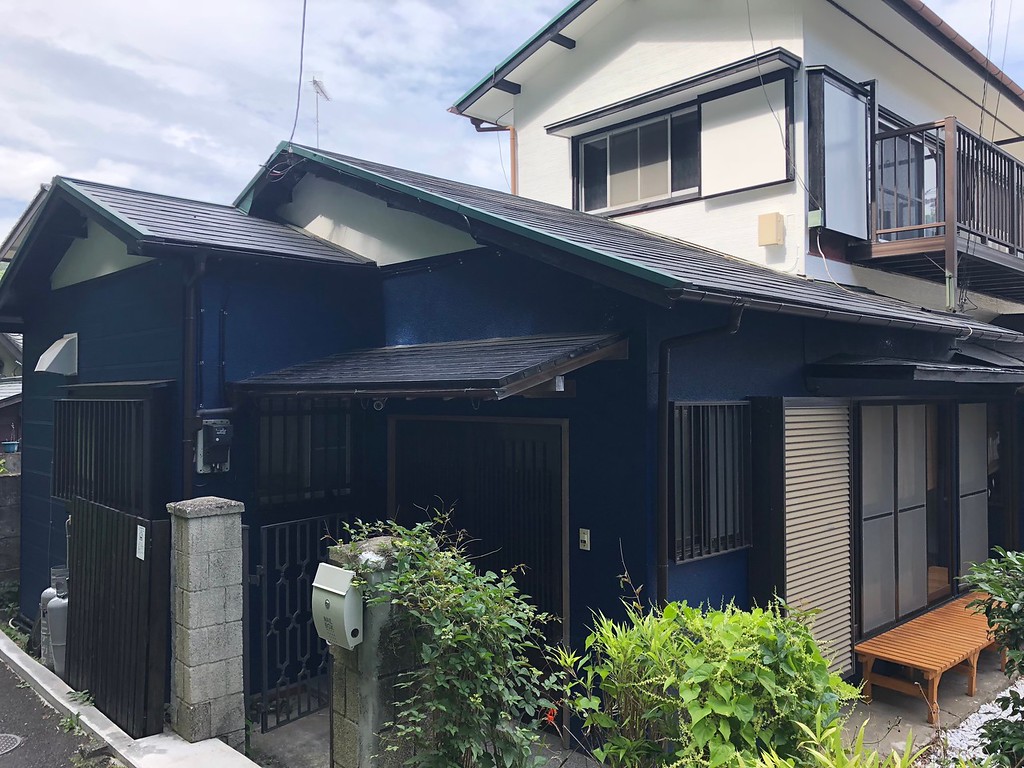
Our place while we’re here.
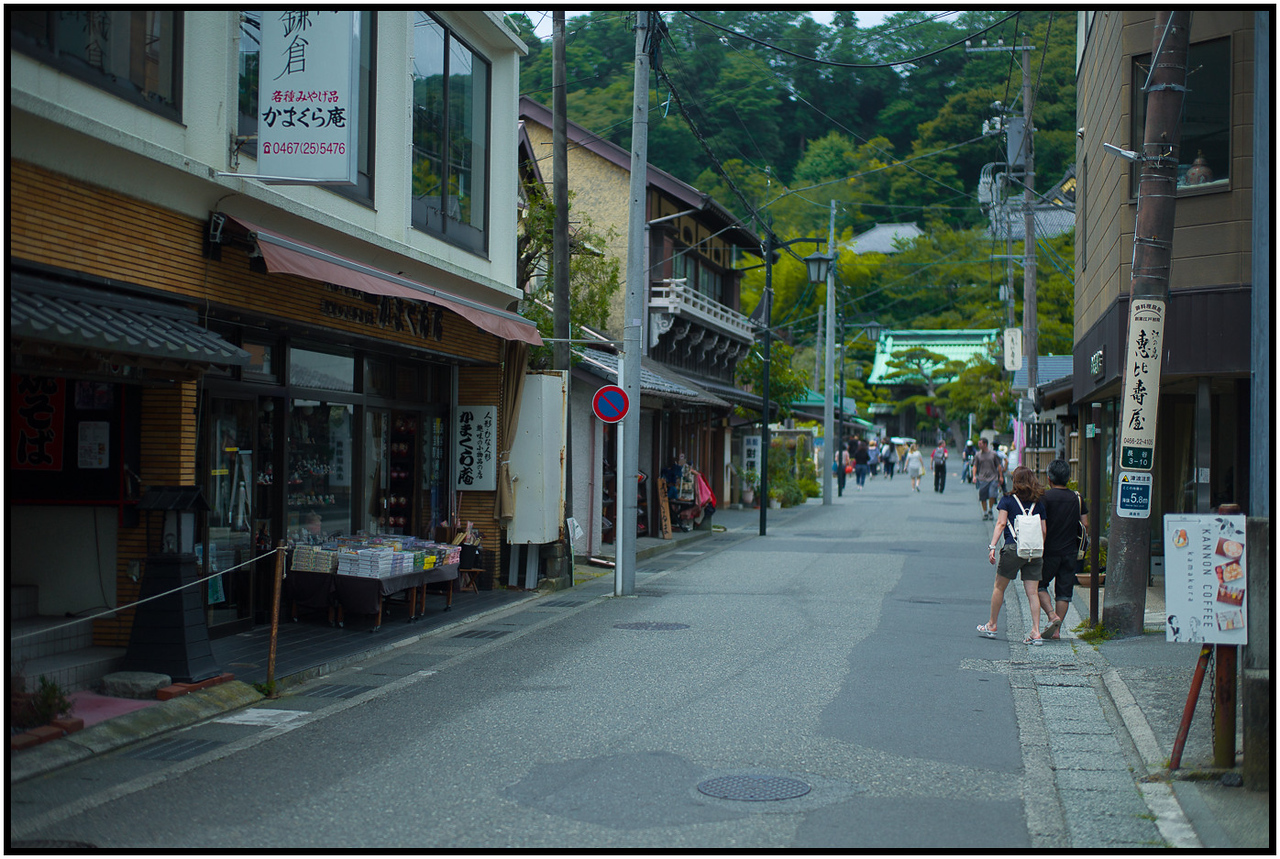
Another hot, humid day.
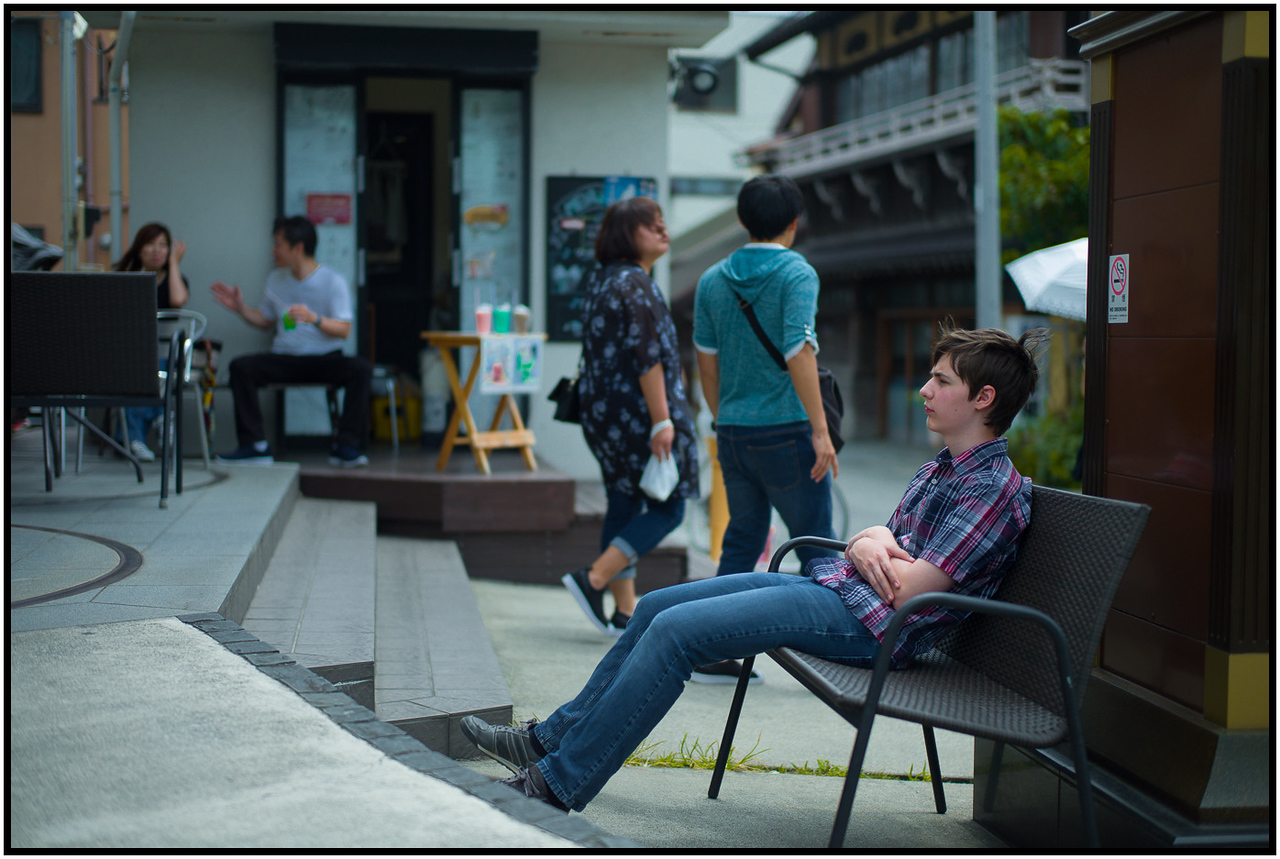
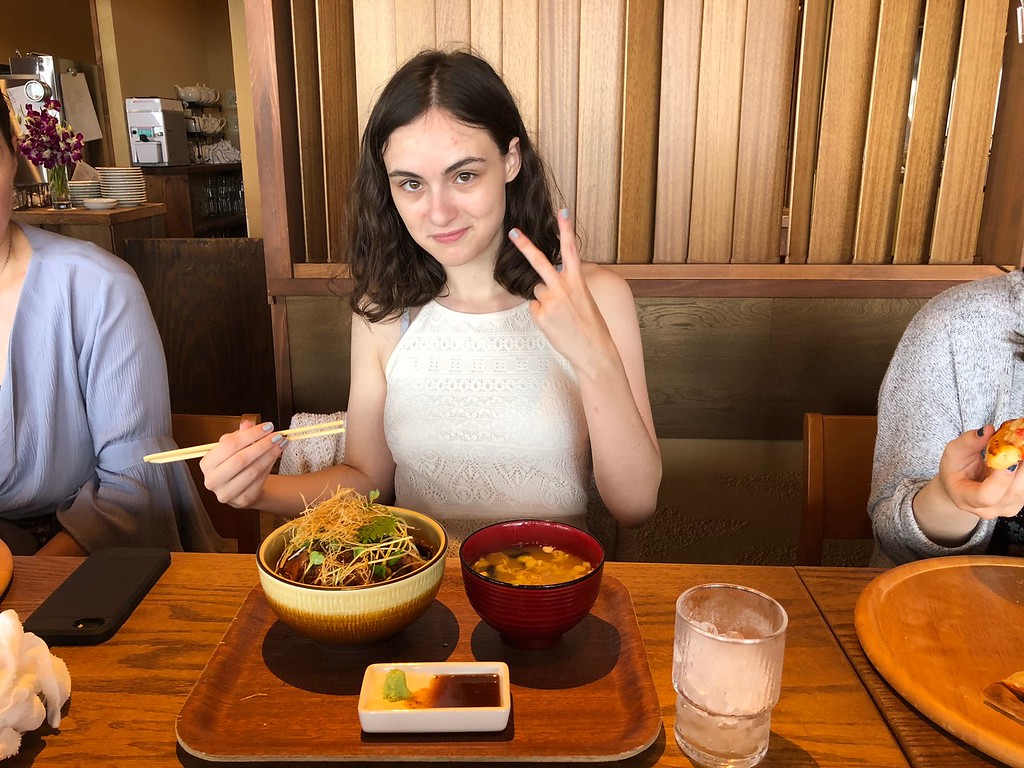
Lunchtime!
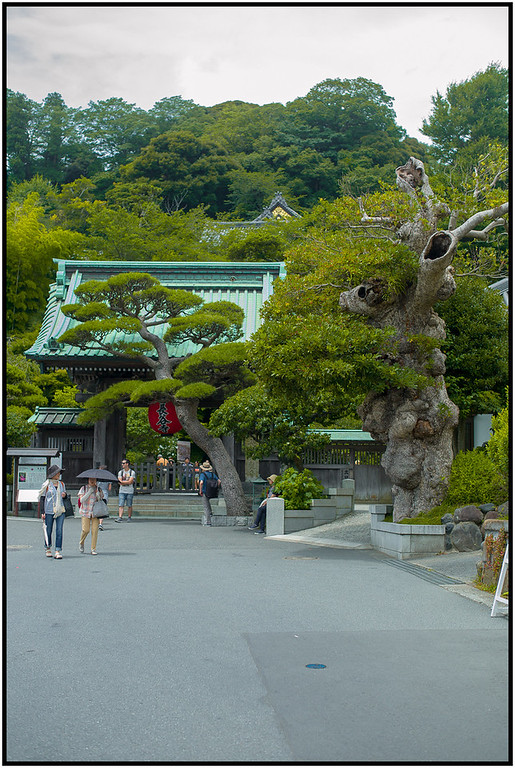
Adam: We couldn’t check into our house until the afternoon, so we parked downtown and visited one of the recommended sights – Hase-dera Temple. This place boasts a massive collection of hydrangea plans of all varieties.
It was a large letdown for Brenda – almost all of the hydrangea plants had recently had their flowers clipped. There were a lot of green plants, but no flowers.
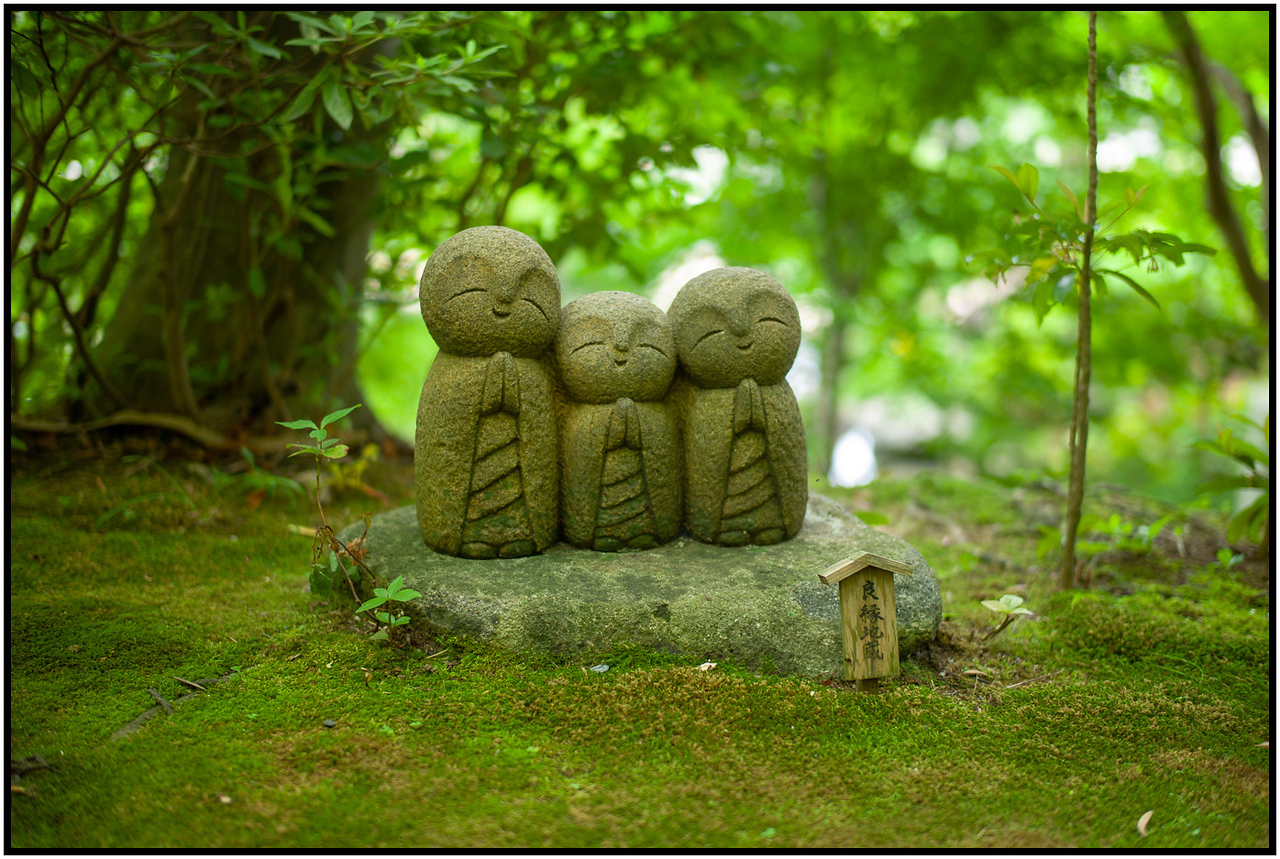
There are three sets of these impossibly cute Jizo statues at Hasedera Temple. If you can find them all and take pictures, good luck will come to you. We didn’t know about the “take pictures” part until afterwards … and we only found two sets anyway. I guess it was not our lucky day. (Edit: I could only find one reference to these guys being lucky, so I don’t know how accurate it is. Everything else I read about them was actually pretty tragic and depressing.)
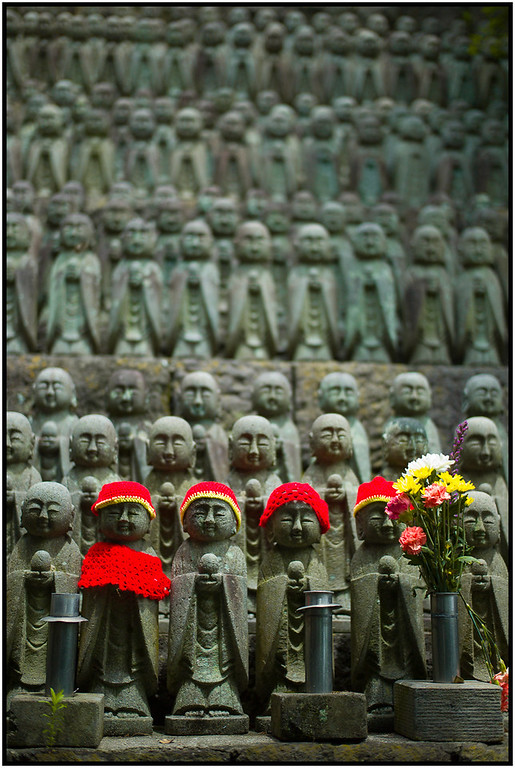
Along the flights of steps leading to the Main Hall are countless Jizo statuettes made of stone. They are called Sentai Jizo, meaning literally ‘one thousand Jizo’. Historically, parents came to Hasedera to set up these statues in hopes the deity would protect and watch over their children. More recently, they have come to represent miscarried, aborted and deceased children. Jizo Bosatsu is the god who will comfort the souls of these children and guide them to Paradise. According to Japanese Buddhist stories, children who face judgement in the afterlife are doomed to stack rocks on the riverbed of souls in purgatory because they didn’t have a chance to build up good karma on earth. Jizo helps these children to cross the river in the sleeves of his robe.
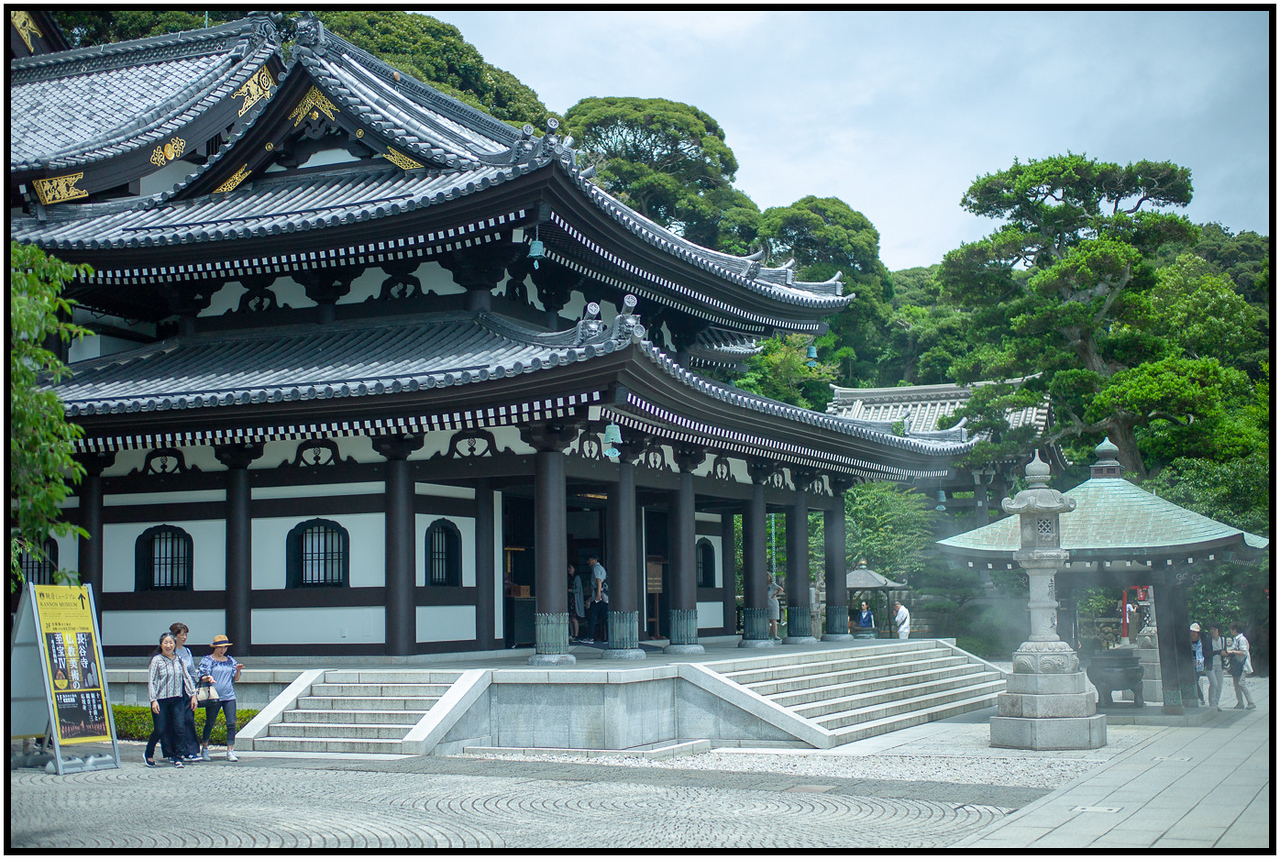
Kannon-do Hall.
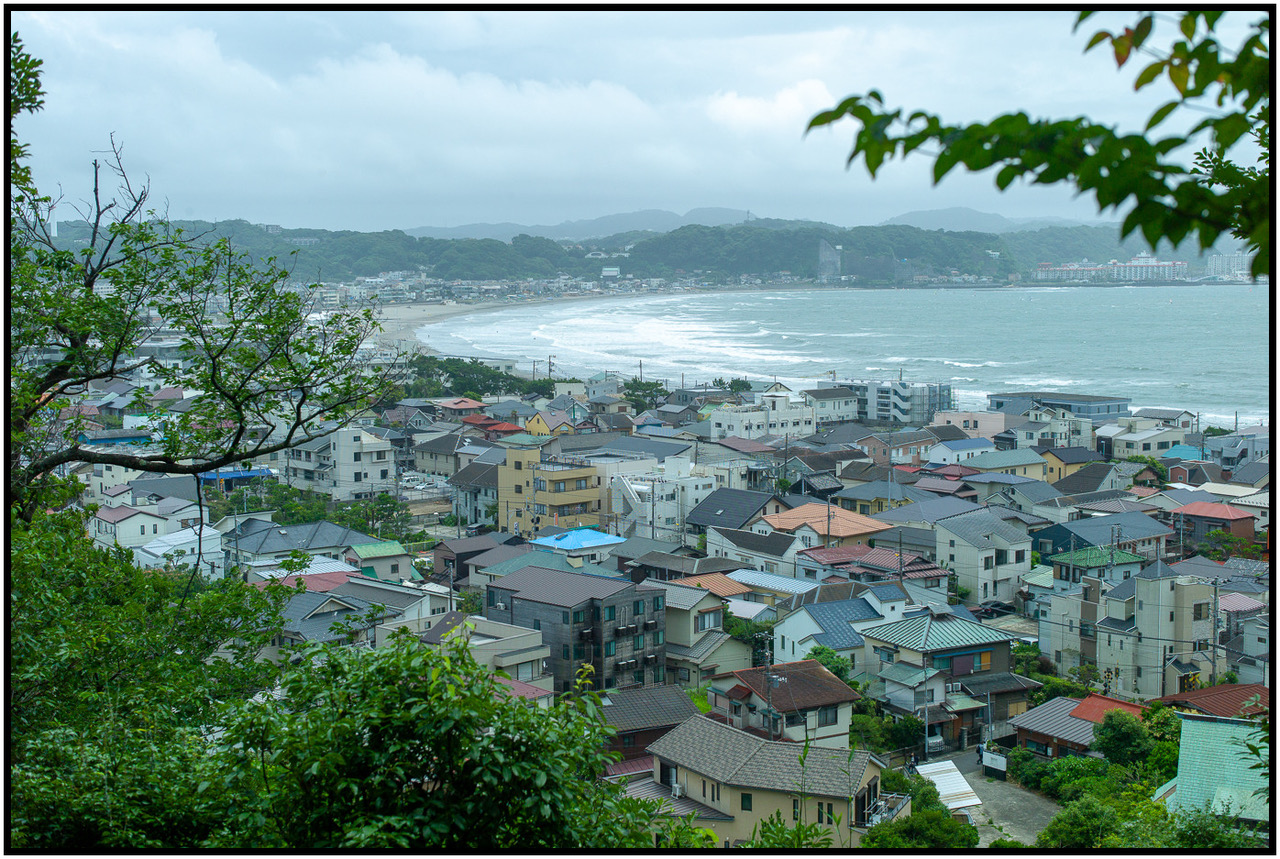
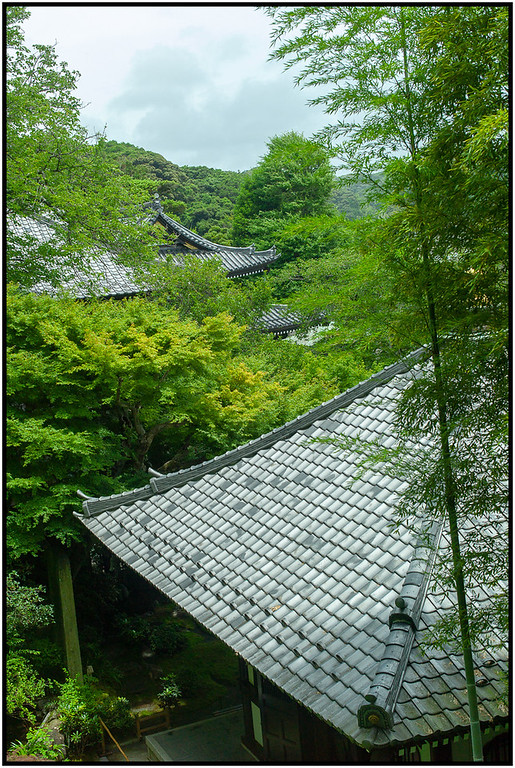
Nice views of the town from up here.
This area has posted signs warning people about the kites. (This photo came from the internet; we didn’t think to get our own photo while we were there.)
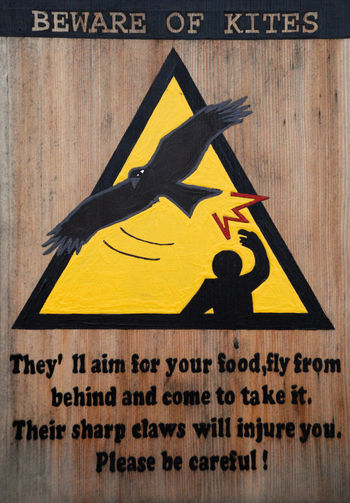
Isabella said, “I kinda would like to be injured by a kite. Can you imagine how cool of a story that would be? People would say How did you get that huge scar on your arm? and you’d say, ‘I was attacked by a falcon at a Buddhist Temple in Japan.’ Then when they said, Wait … WHAT?! you could get all mysterious about it and say, ‘It’s not something I like to talk about.’ You’d be a legend.”
These slopes were covered in hundreds of hydrangeas, almost all of which had recently been pruned. There weren’t very many flowers to see.
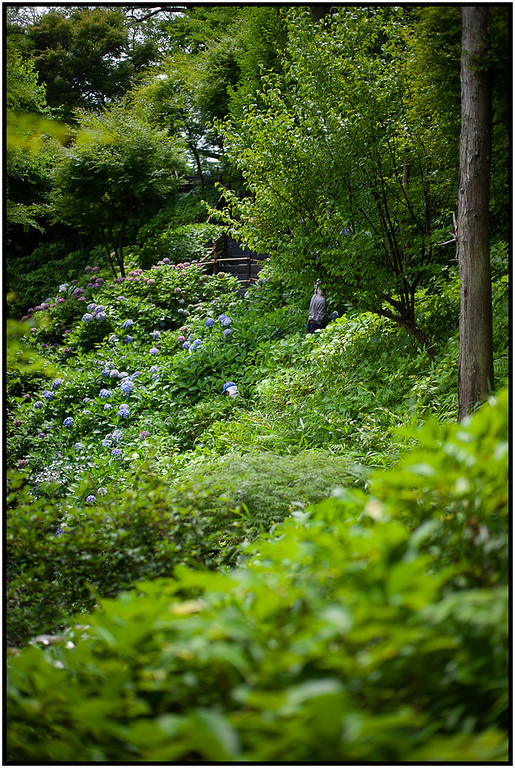
This is the area where the second set of three cute Jizo statues were, but we didn’t get a photo of them.
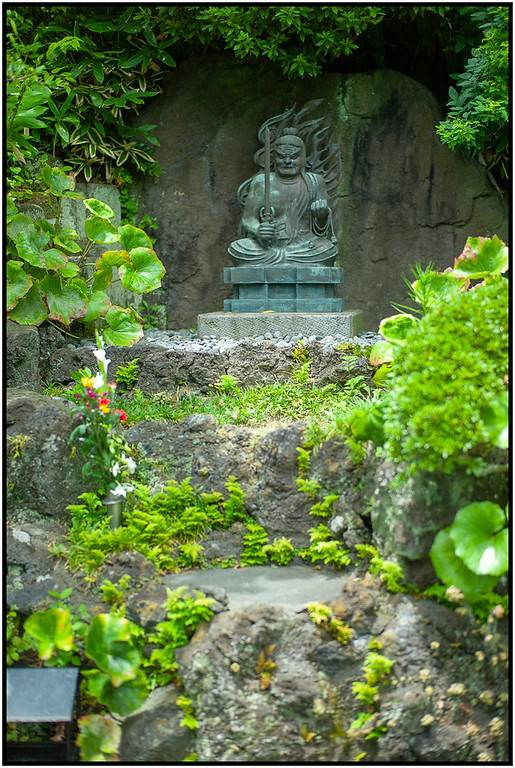
I asked Adam to get this photo because I loved this guy. I don’t know who he is, but with his fire and sword and mad fist and grouchy eyebrows, he’s awesome. This is a dude to be reckoned with. He doesn’t even need to get out of his cross-legged sitting position to let you know he means business.
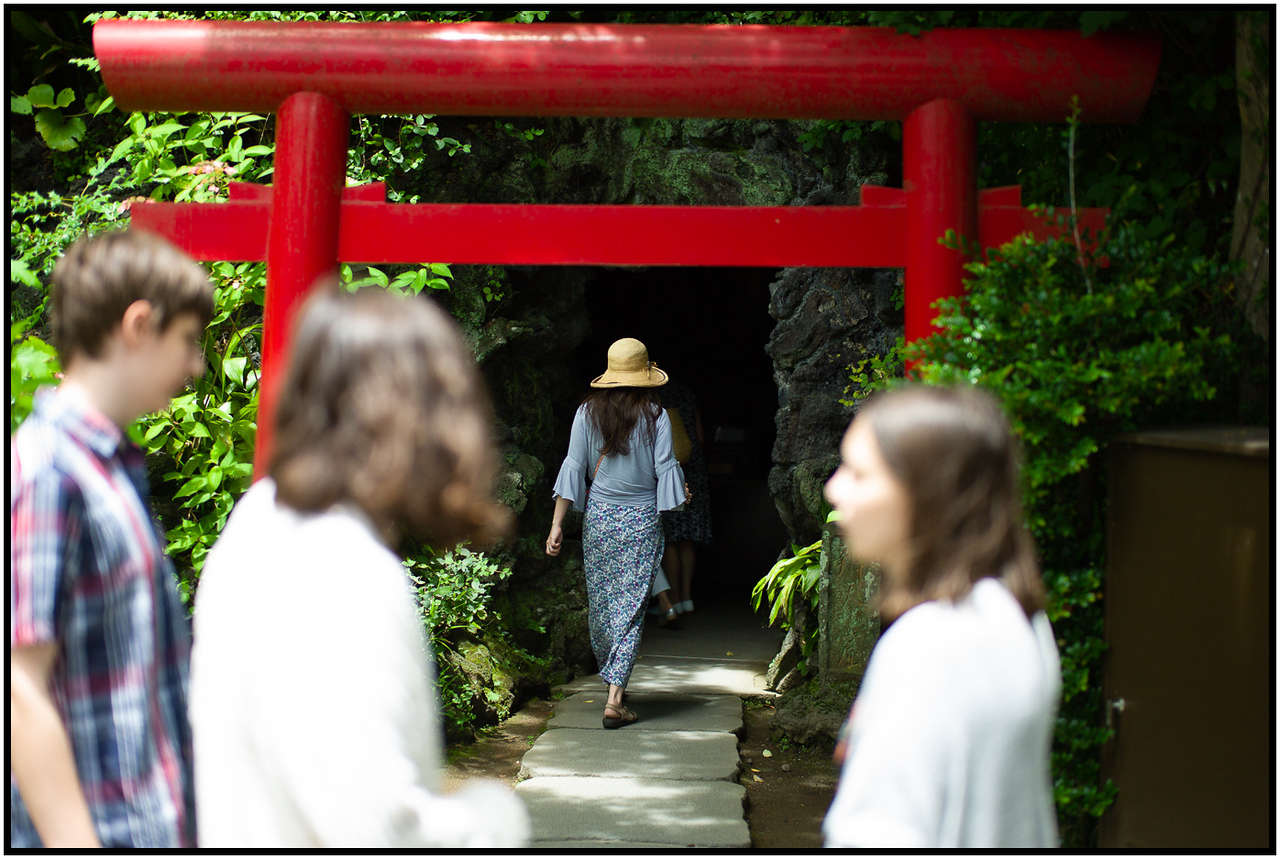
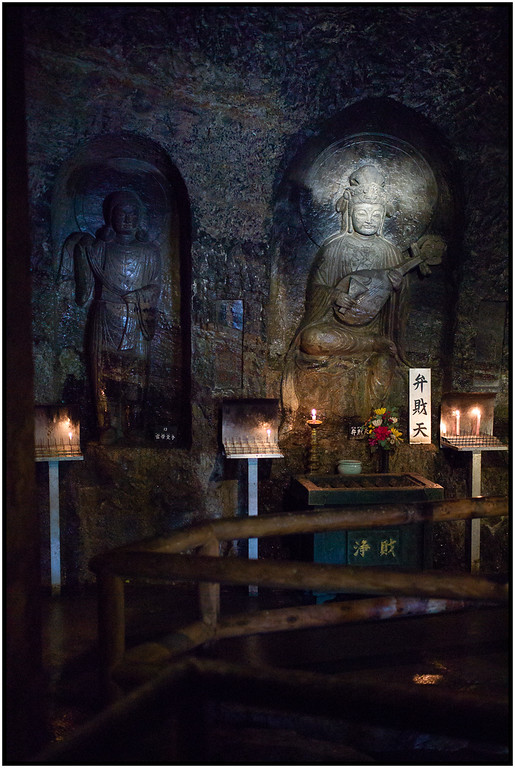
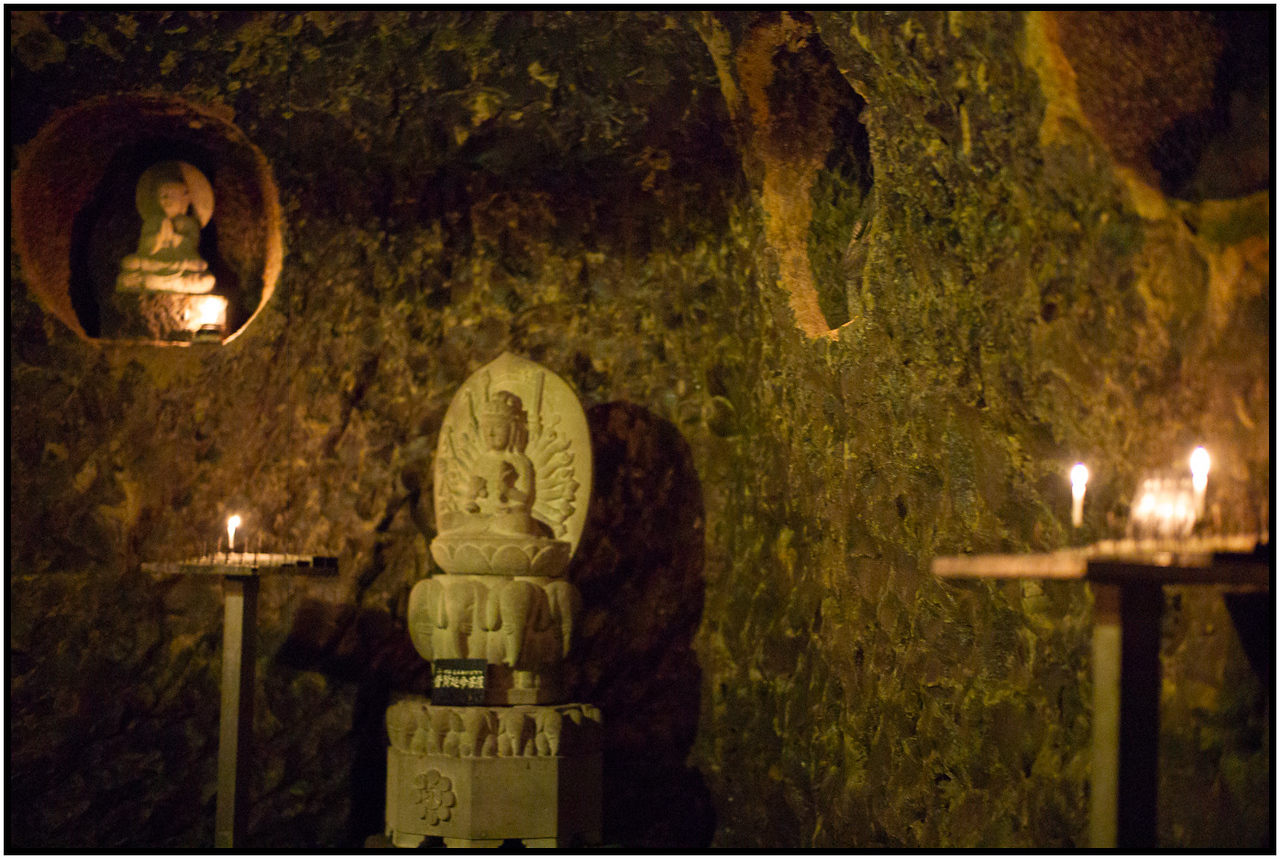
Going into a Benten-kutsu Cave filled with carvings of the sea goddess Benzaiten and her 16 children. These carvings are an unusual style that’s not typical of Japanese sculpture. Benzaiten is the Goddess of water and wealth, and the only female among the Seven Japanese Gods of Fortune. When she was adapted from Buddhism, she was given the attributes of talent, beauty and music among others. She is the patron of artists, writers, dancers, and geisha, among others.
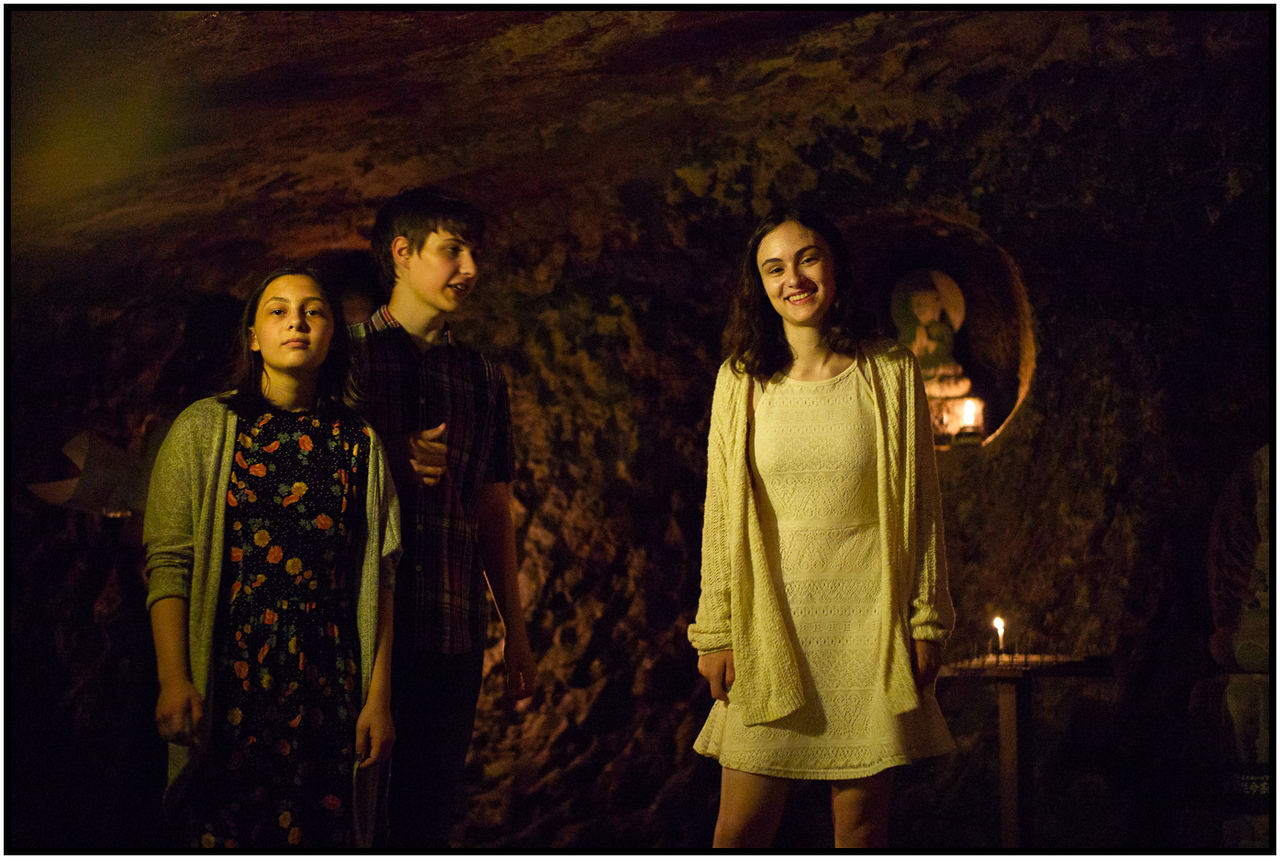
It’s very dark in here, but Adam got a couple of shots.
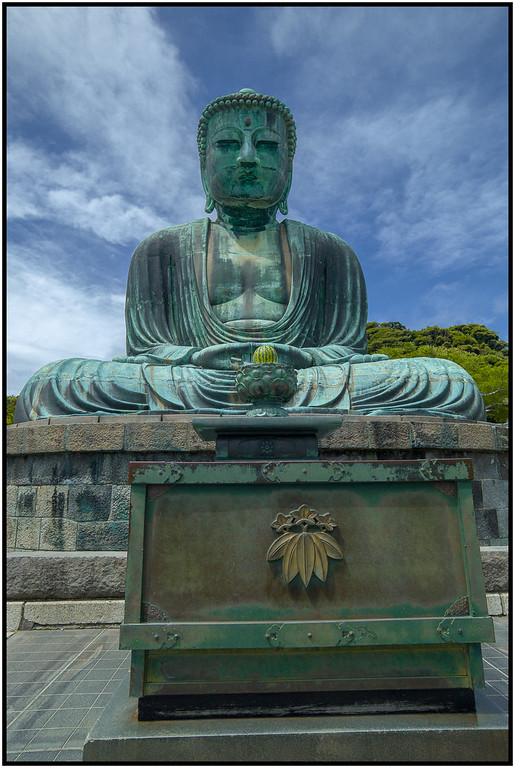
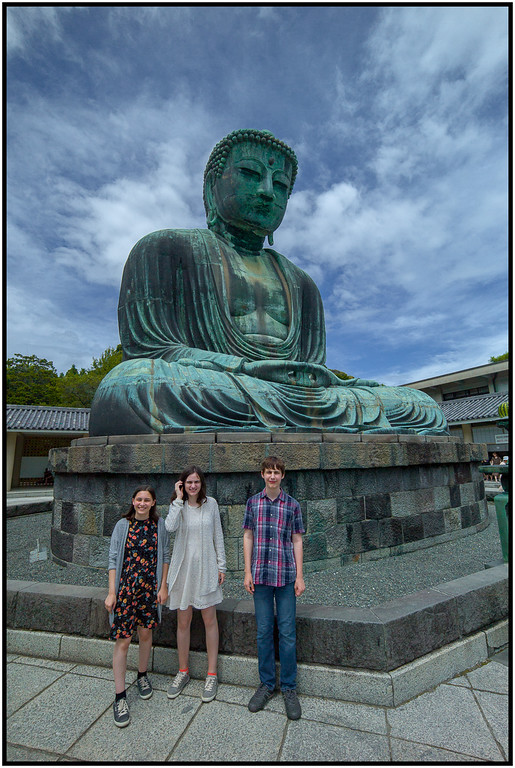
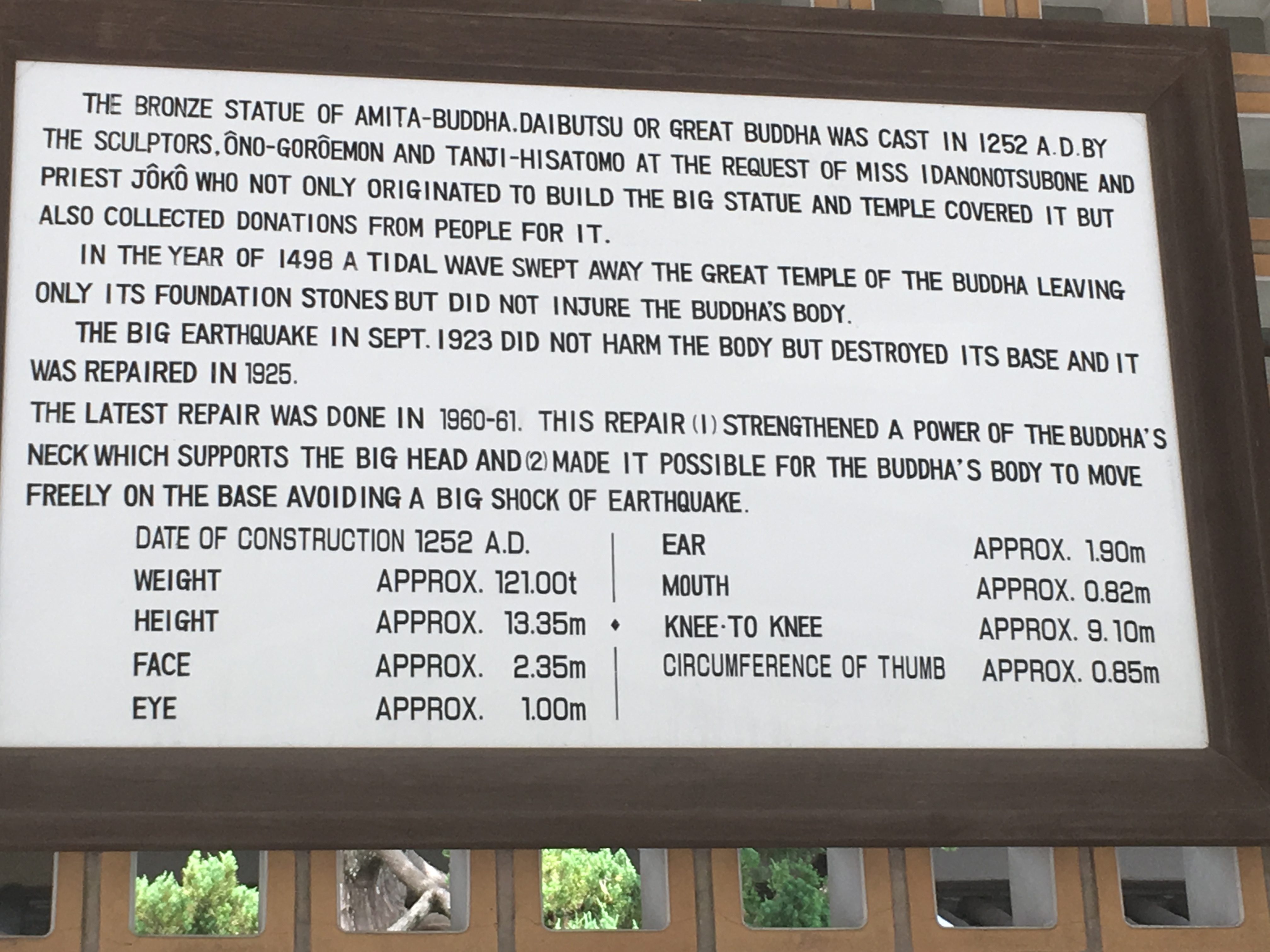
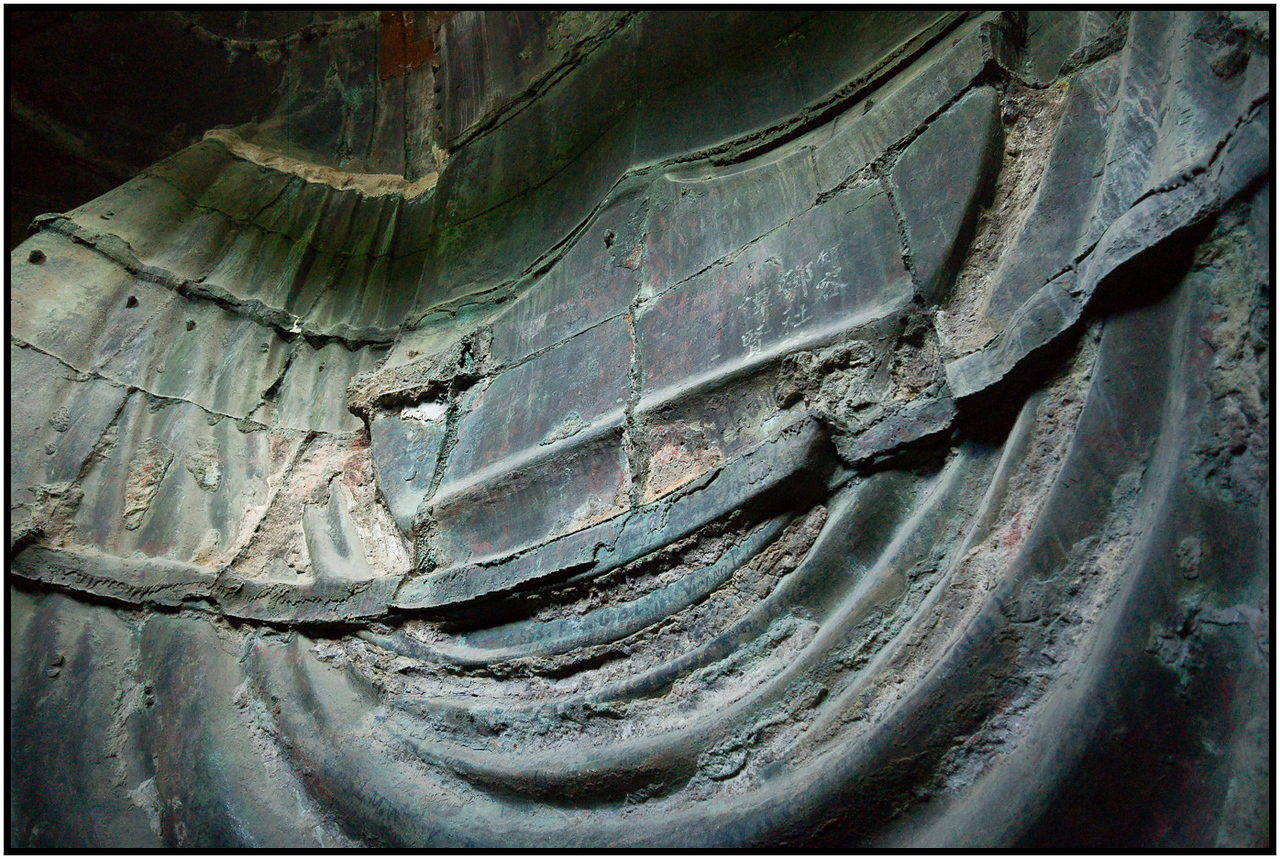
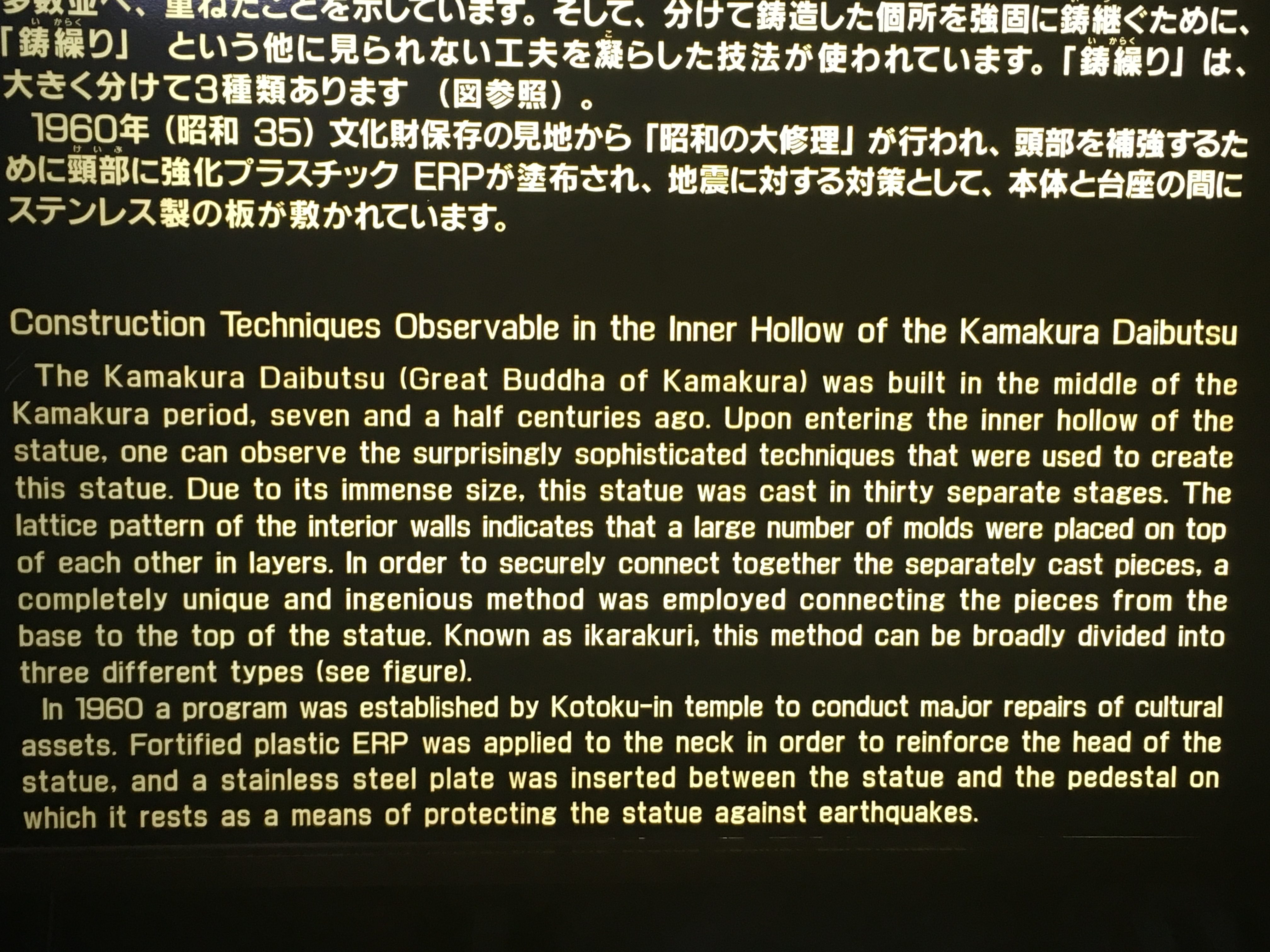
Just a short walk away, there is another Buddha at the Kōtoku-in buddhist temple. What is significant is the age (constructed in 1252) and the “high tech” bronze casting and construction techniques they used. They allow visitors to go inside the hollow Buddha and see from the inside how he was built. (More on that below.)
Some stats on the Buddha.
The copper-colored part is added reinforcement to help support the head from inside.
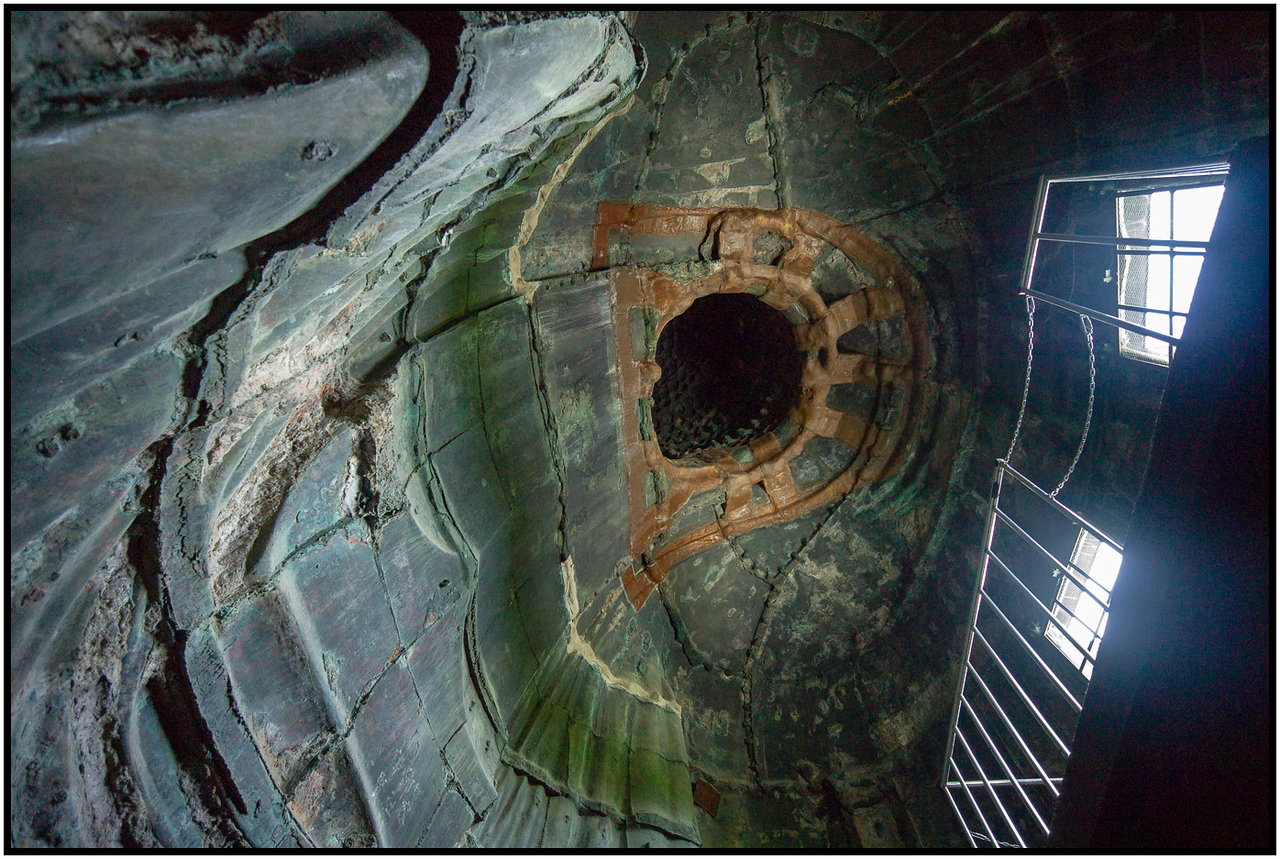
That his robes look like from the inside.
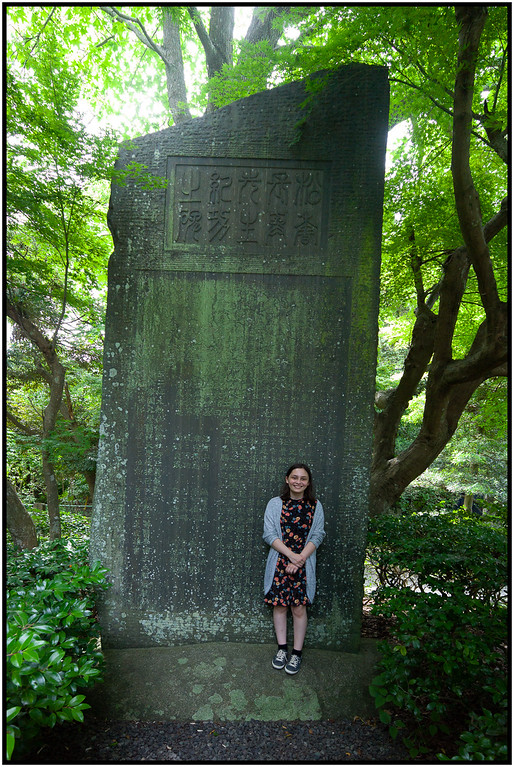
Josie in front of some huge obelisk that is old and has a lot to say, but there wasn’t any sign to help us understand the significance.
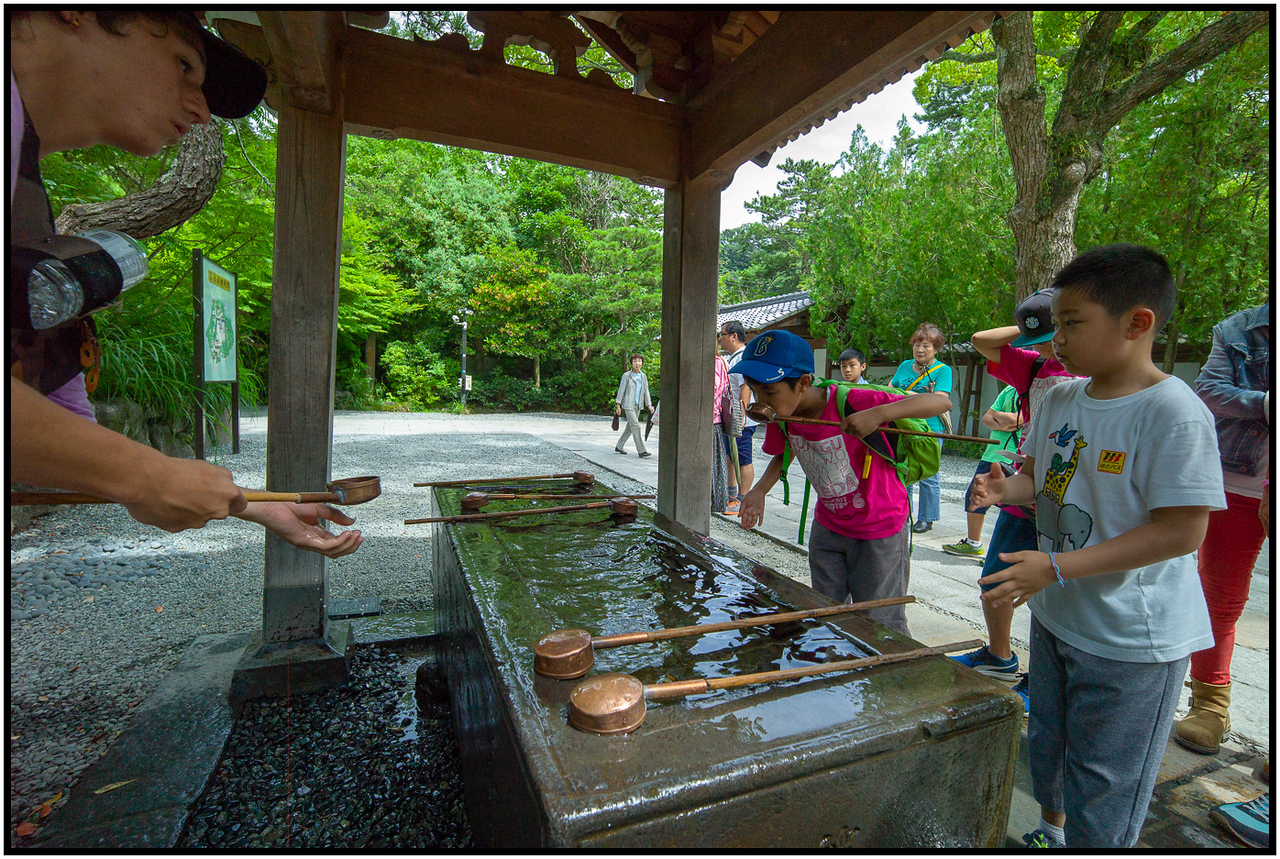
Another purification station.
Thursday, 05 July 2018
Adam: Today we drove to nearby Yokohama – one of Japan’s major ports. Almost 2/3 of Yokohama was destroyed by US bombing during WWII, starting with the Doolittle raid and running right up to Japan’s surrender. Japan invested heavily in the rebuilding and growth of this port. Yokohama and Tokyo are rivals. That is to say, if you ask anyone from Yokohama they’ll tell you that Yokohama is better than Tokyo.
Yokohama’s population of about 4 million people is big enough to make it a major world city on its own. Yokohama and its massive port are the industrial heartland of Japan. In the 1960s, Yokohama came up with a bold plan to transform its industrial cityscape into a futuristic city to rival Tokyo. Train lines were built, warehouses torn down and man-made islands were created. Attractive architecture and parks filled the Yokohama port area.
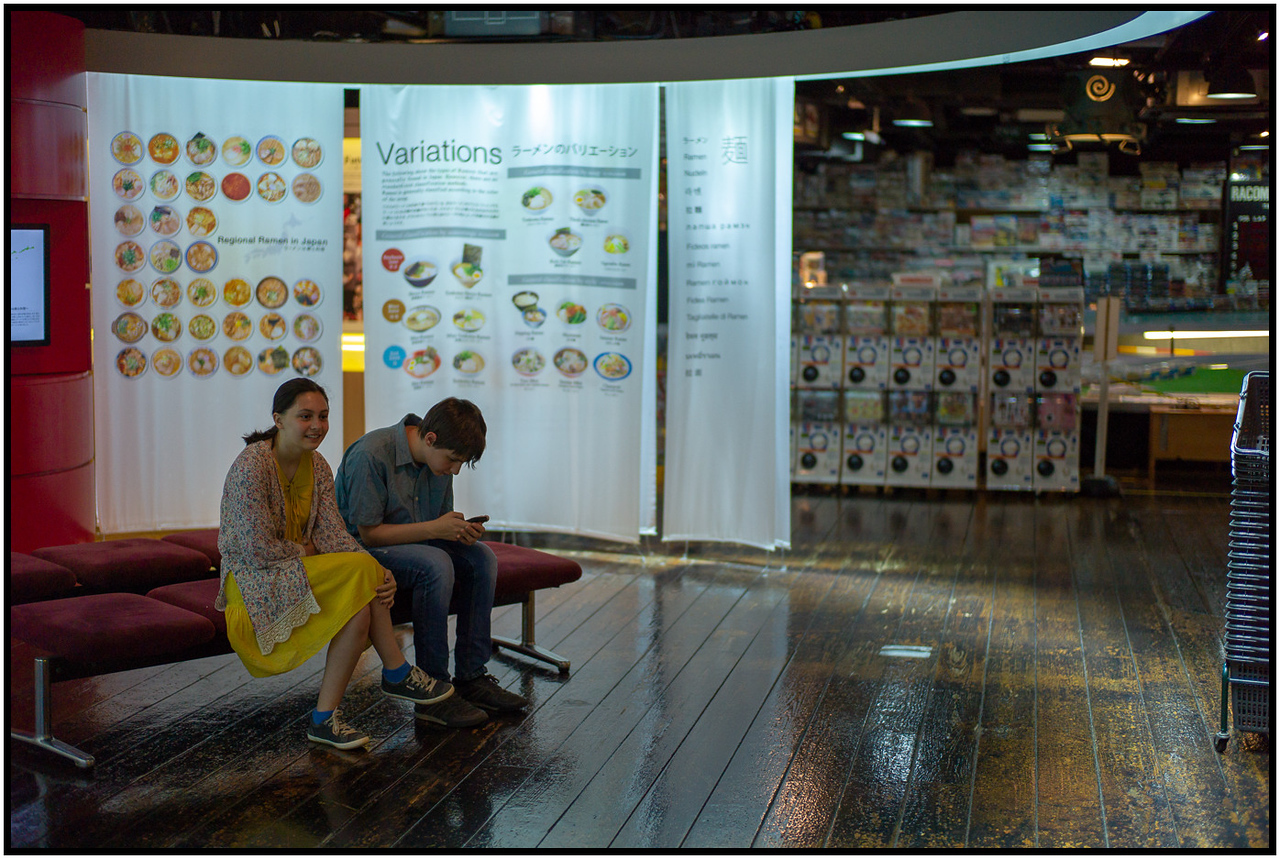
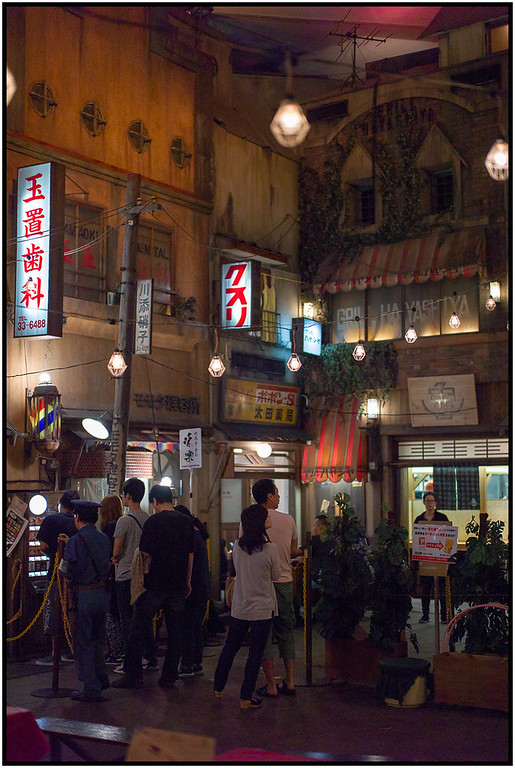
We got a late start (by Mayse standards) and were already hungry by the time we arrived. Our visit started with the Shinyokohama Raumen Museum. The top floor has signs and displays that lay out the history and significance of Ramen to the Japanese. But it’s 2 downstairs floors that draw the crowds.
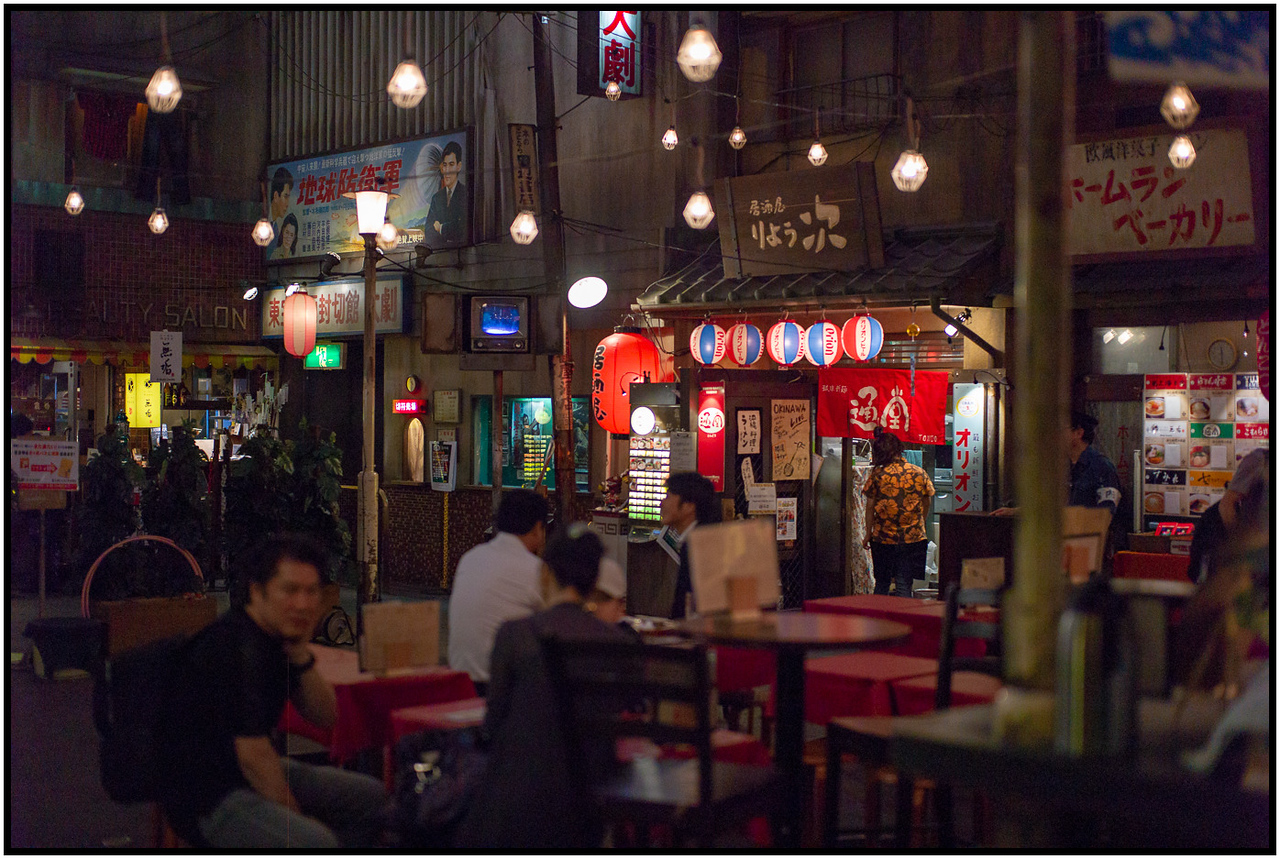
We were able to explore a 1:1 replica of some streets and houses of Shitamachi, part of old town of 1958 Tokyo, when the popularity of ramen was rapidly increasing. Nine ramen restaurants can be found there, each featuring a ramen dish from a different region of Japan.
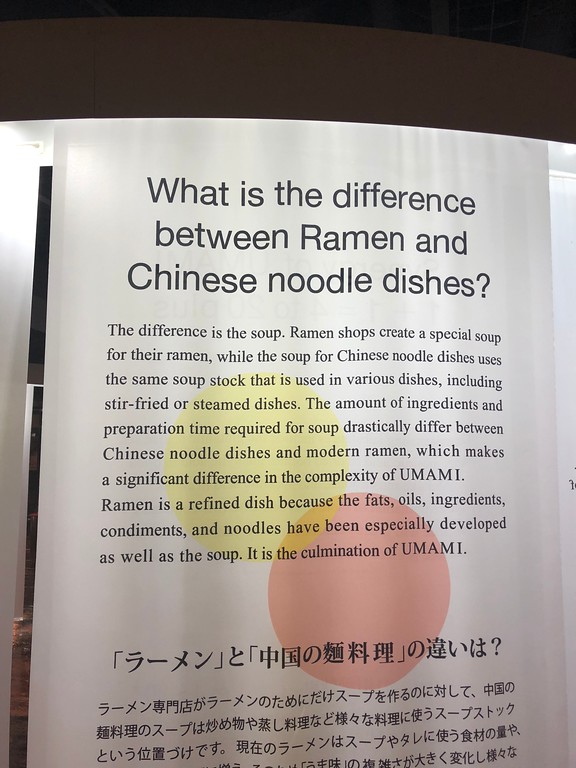
Ramen is the fusion of Chinese noodle dishes and Japanese food culture. Undoubtedly, the root of ramen is Chinese. Cuisine from many different countries entered Japan after 1859, when its ports were opened. The father of ramen is Chinese noodle dishes, and the mother is Japanese food ingredients, such as dashi (Japanese-style soup stock) and shoyu (soy sauce), which have been used in Japanese traditional noodle dishes like soba and udon.
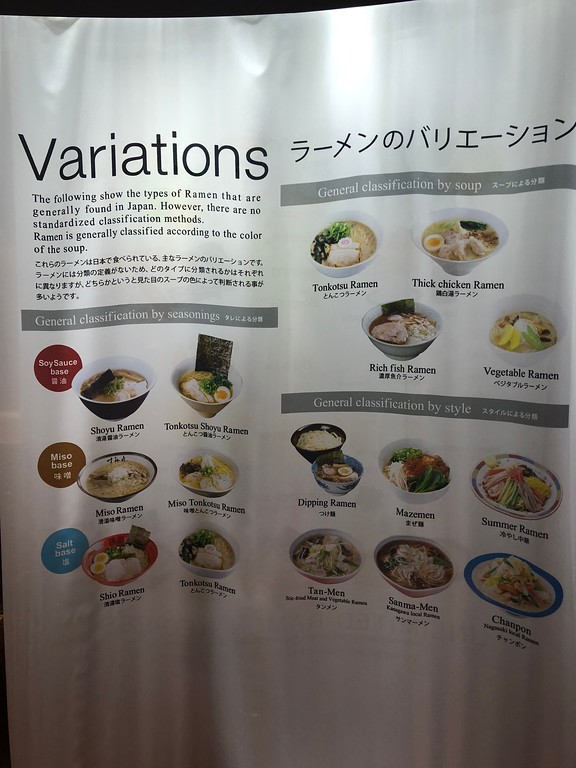
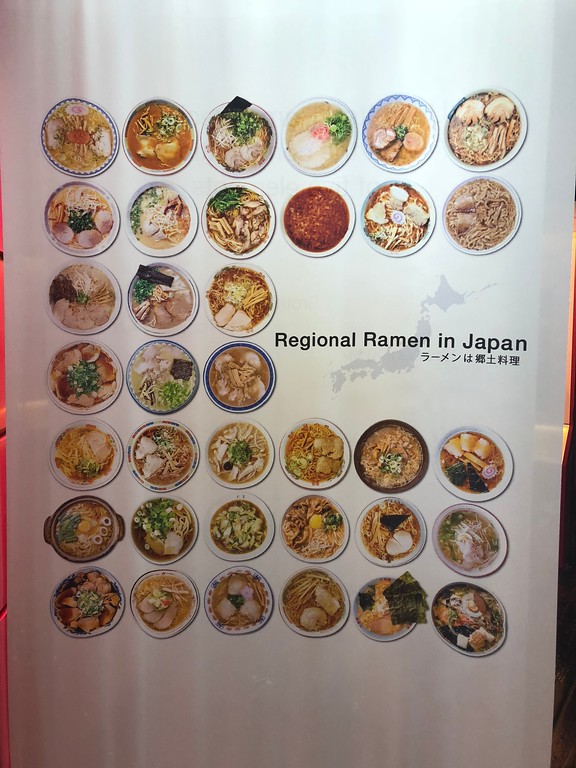
You can walk from restaurant to restaurant and try out their specialties. A guide helps you decide what type of Ramen they serve (different bases, different noodles, different spices, etc). The restaurants also sell 1/2 servings of their dishes so that you can eat at one and then move on.
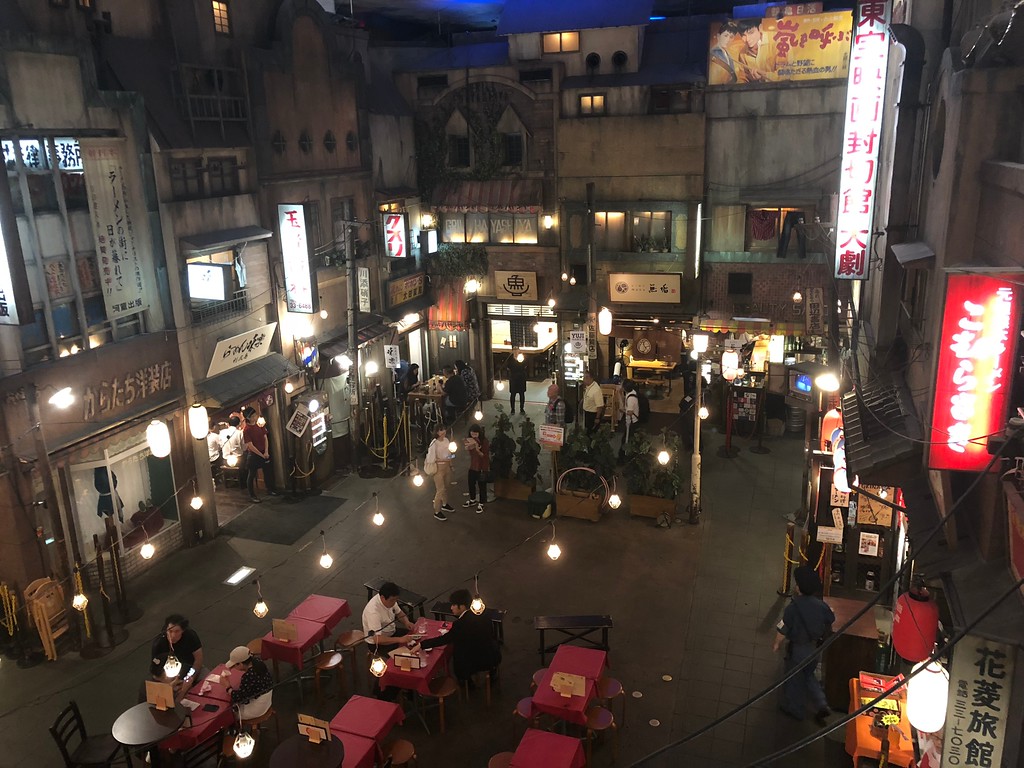
We chose one of the restaurants equipped to seat 5 people, Komurasaki. It turned out to be fantastic. It was the only restaurant featuring tonkotsu-based broth — the others were either soy or salt based, and one was pescatarian-based (the only one with fish broth.)
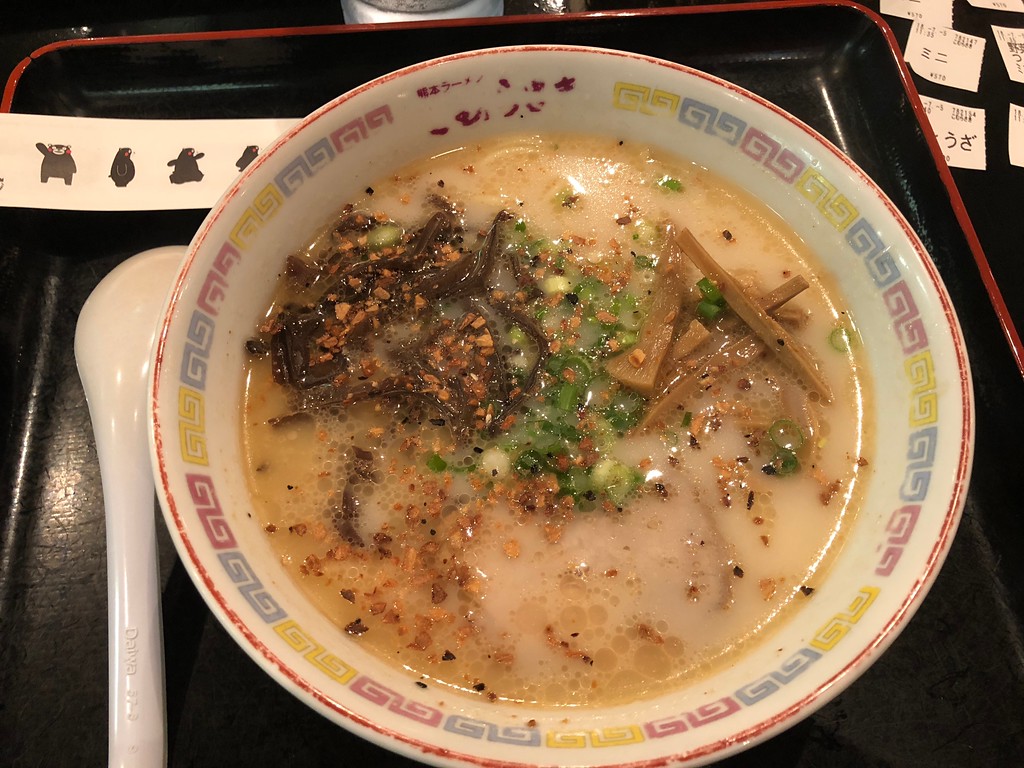
“Founded in 1954, this historic ramen restaurant serves a mild-flavoured soup that combines chicken bone and vegetable broth over a tonkotsu (pork bone) base. The soup includes its own specially-flavoured garlic oil, and home-roasted, crumbled garlic chips scattered on top; whose fragrance really piques your appetite.”
The kids slurping away.
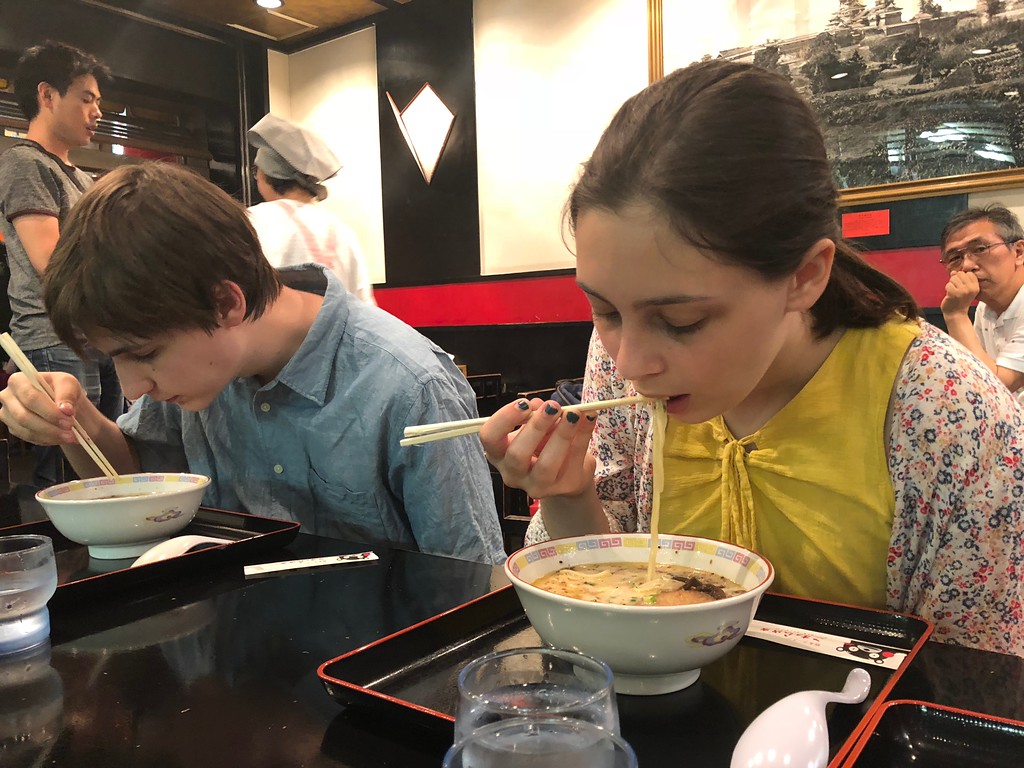
It was VERY good. I spent quite some time trying to identify flavors and ingredients so I can try to make it myself at home. The recipes I’ve found online in the past mostly use miso-based broth, but we liked this one a lot better.
Unfortunately, after all of us had our 1/2 service (with a side of Gyoza), we were already full. We wanted to try another of the restaurants, but it had gotten crowded while we were eating our first serving and we couldn’t find another place that could seat all of us. We gave up and left.
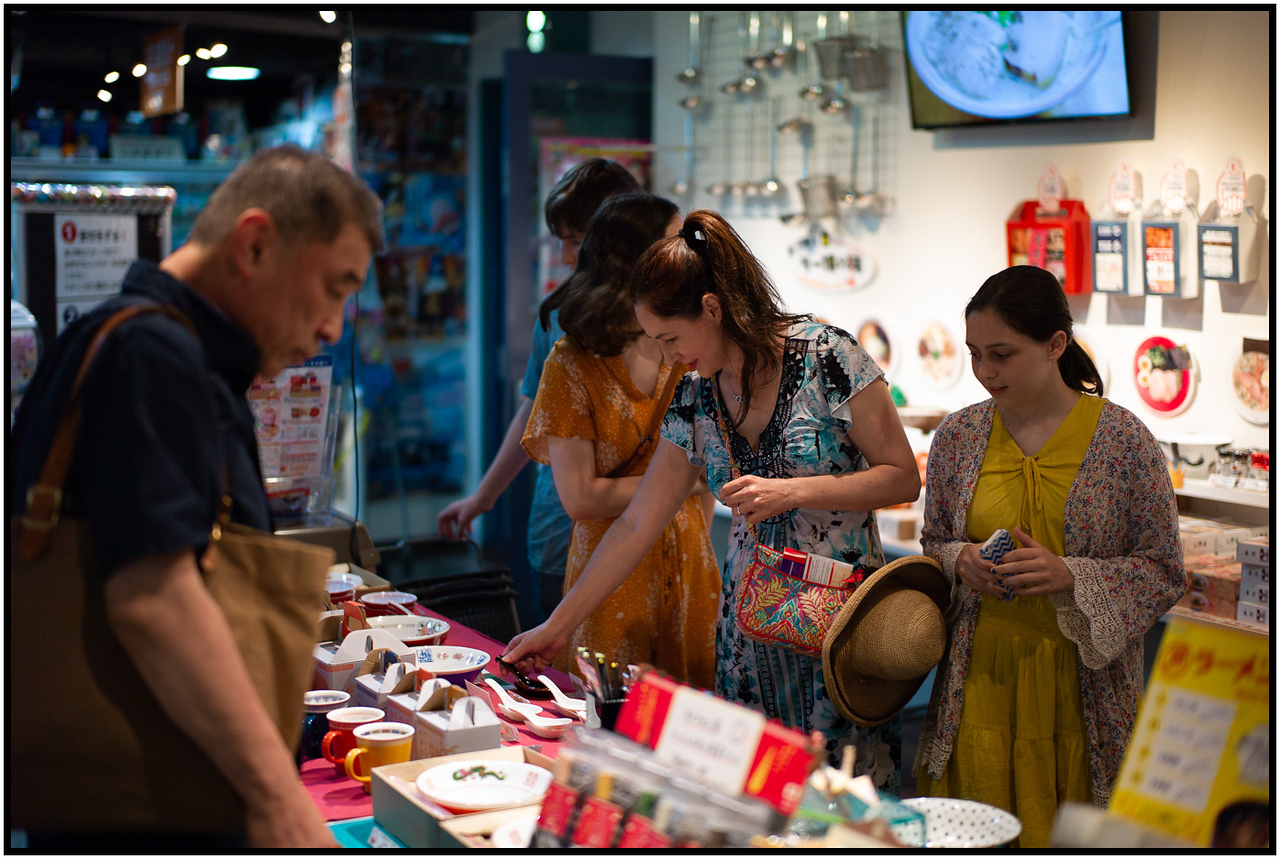
The shop offers all the dishes and utensils you could ever need to properly serve ramen.
People lining up to wait for their turn, which could be 30 minutes or more. This is what chased us out after our first (and only) serving.
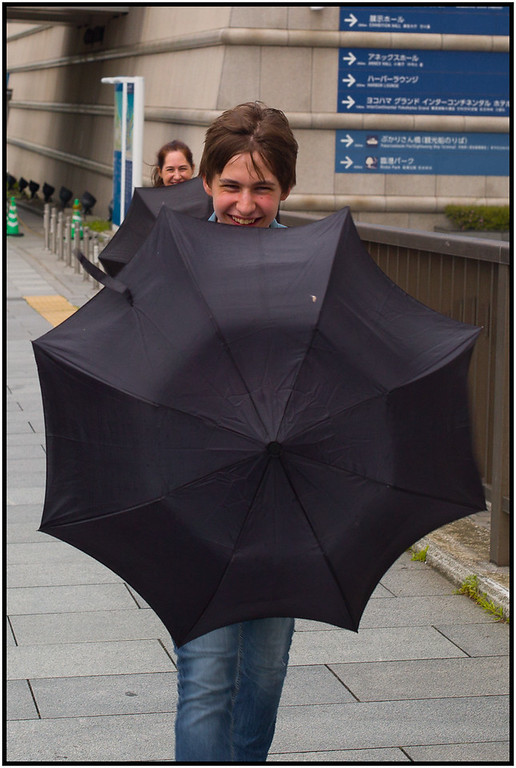
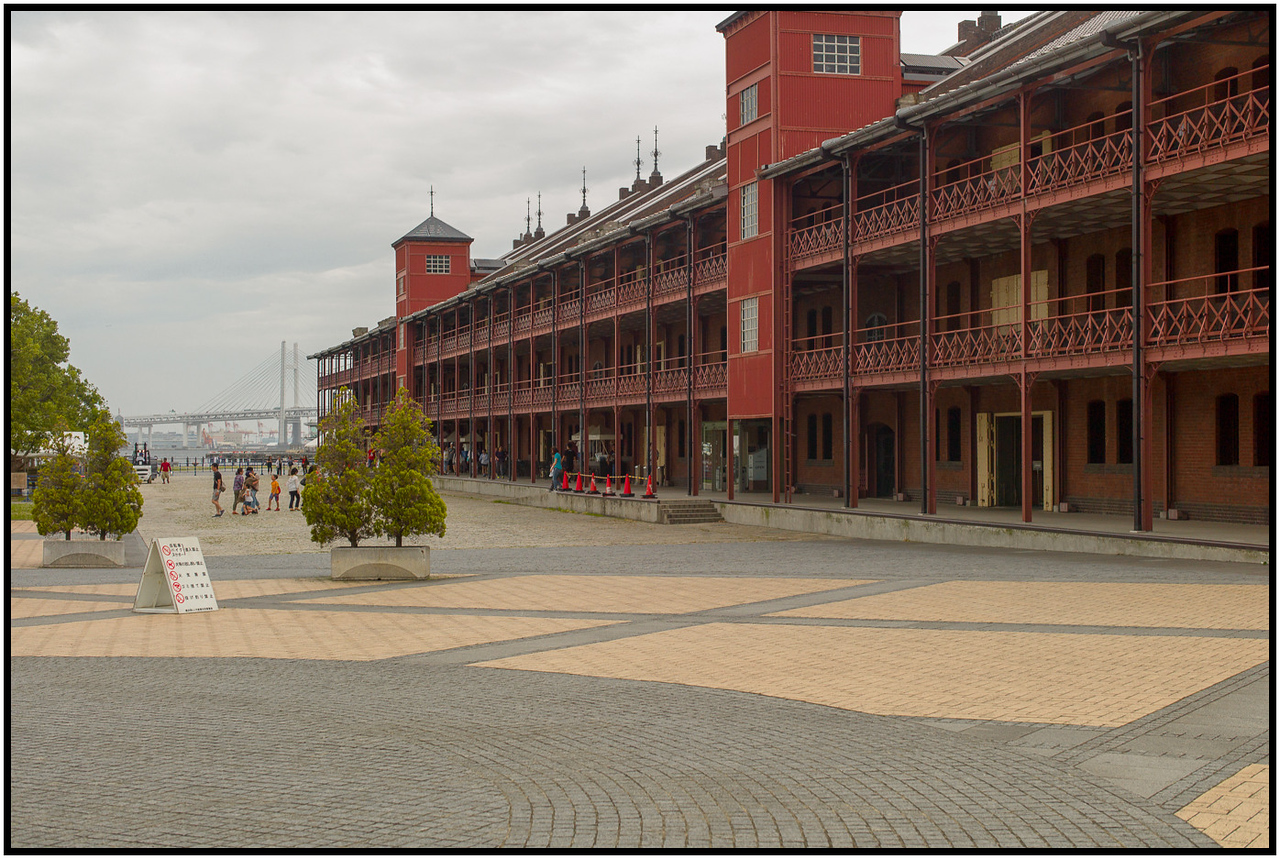
Adam: On to the Yokohama waterfront – it never rained today, but was extremely windy. Holden and Brenda spent more time battling their umbrellas than enjoying them.
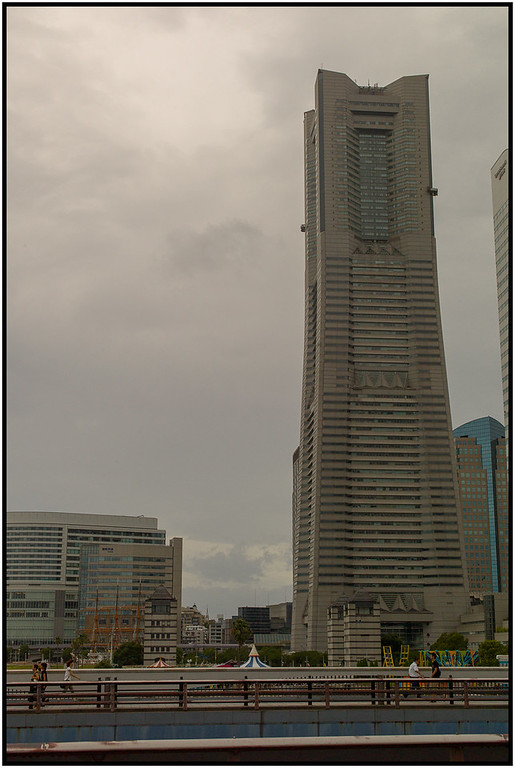
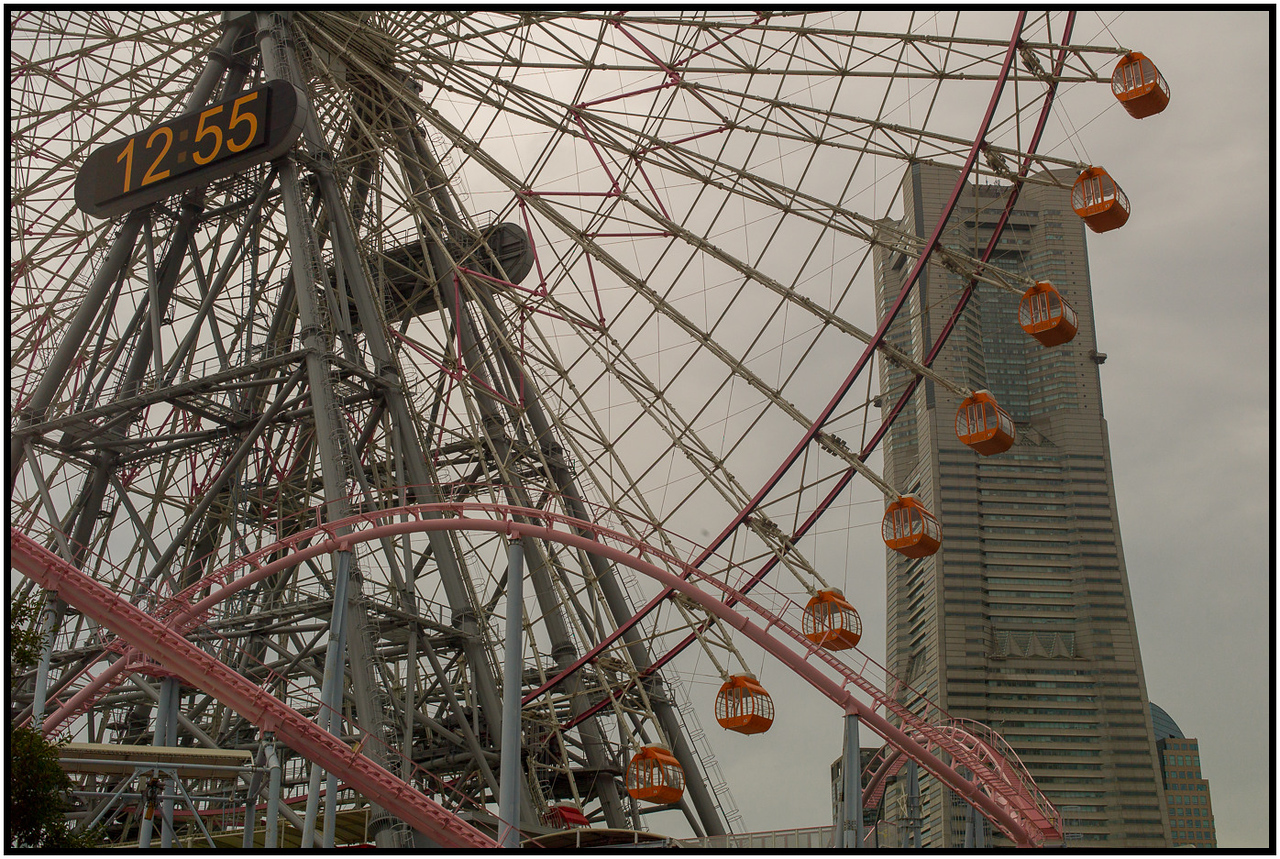
The ferris wheel and roller coaster weren’t running today. We assume it was too windy to safely operate them.
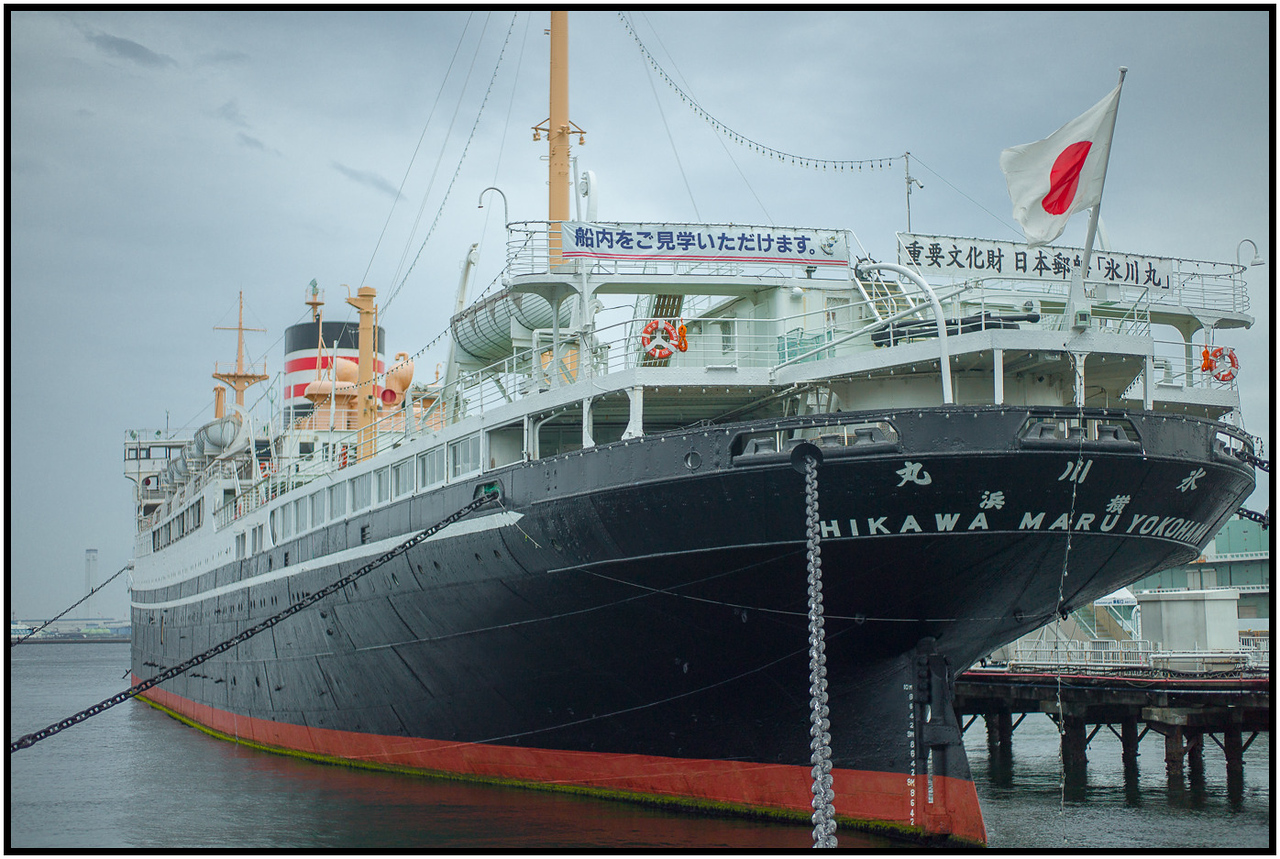
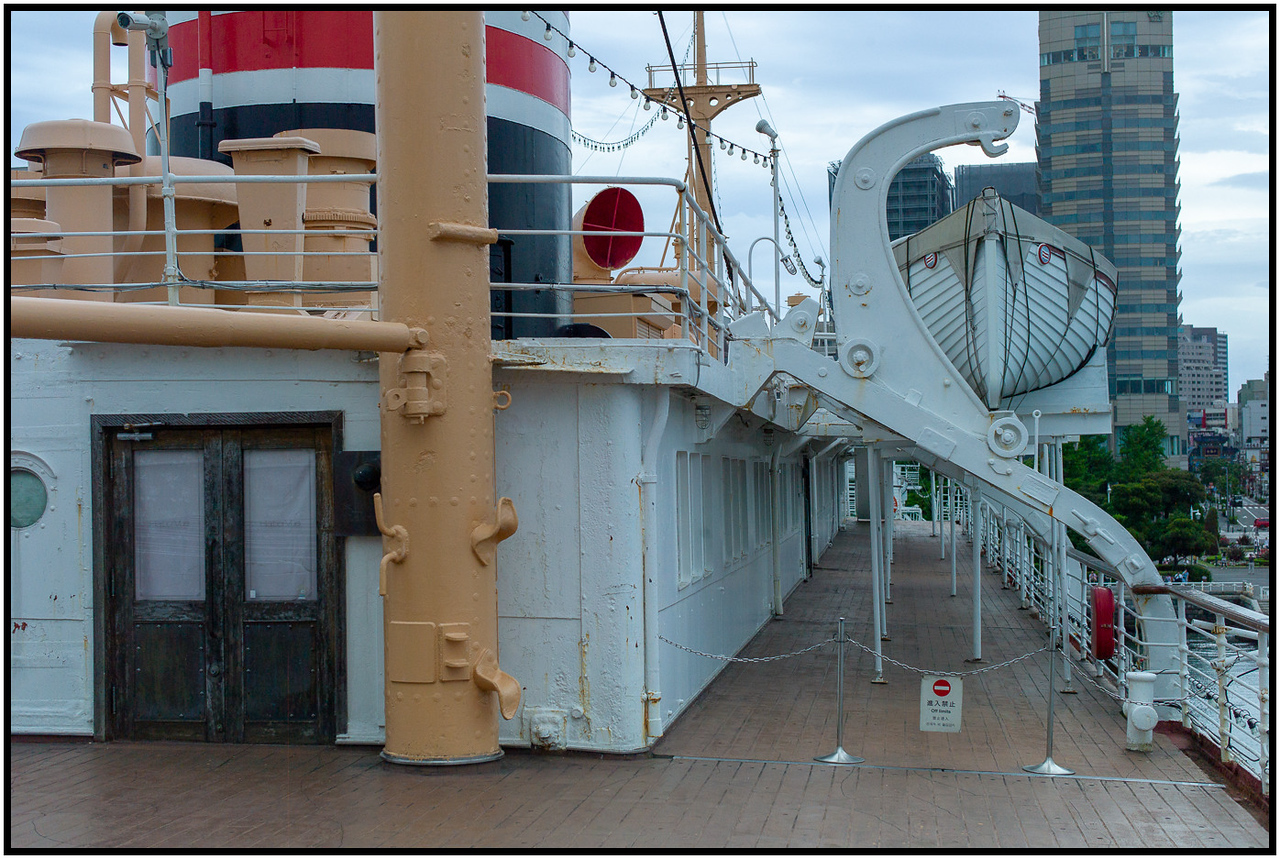
Adam: We walked to the Hikawa Maru – a Japanese ocean liner built in 1930 and used until 1960. At its start, this was the only method of trans-Pacific travel. It’s now a museum and it turned out to be the highlight of our day.
There were NO visitors – we almost literally had the boat to ourselves. It allowed us to explore with complete freedom and made for a very enjoyable afternoon.
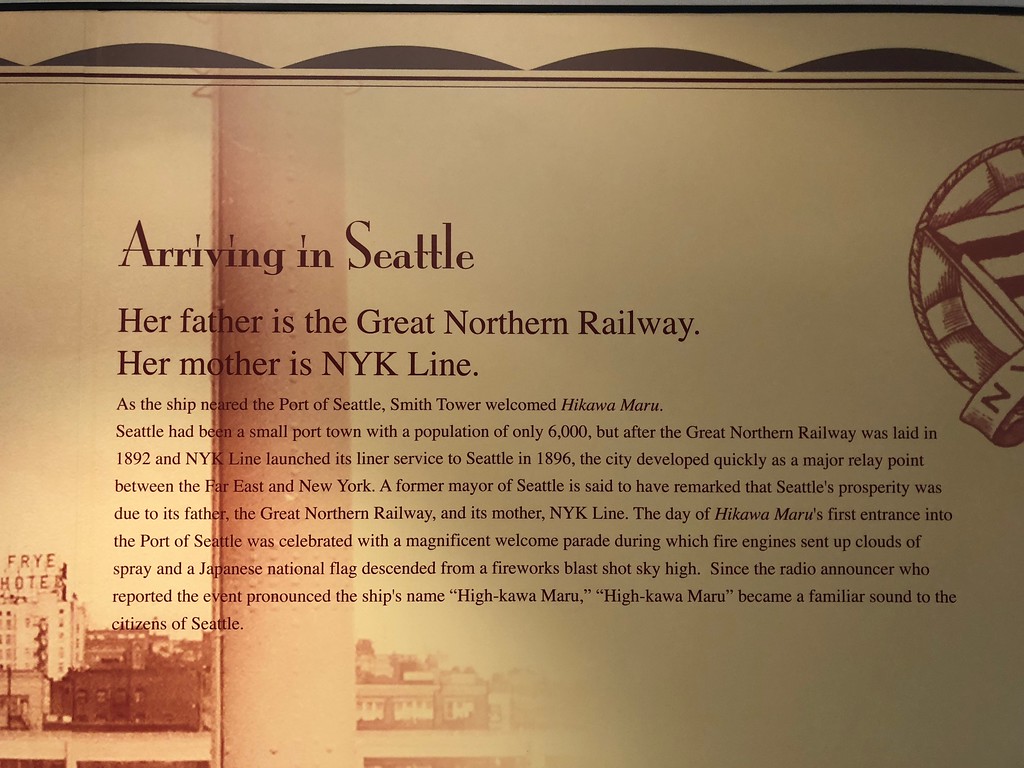
The Hikawa Maru also has some extra significance – it’s main route was from Yokohama to Seattle and back. A one-way journey took 13 days and the first class cabin rate cost the equivalent of a recent college graduate’s 7-months’ salary.
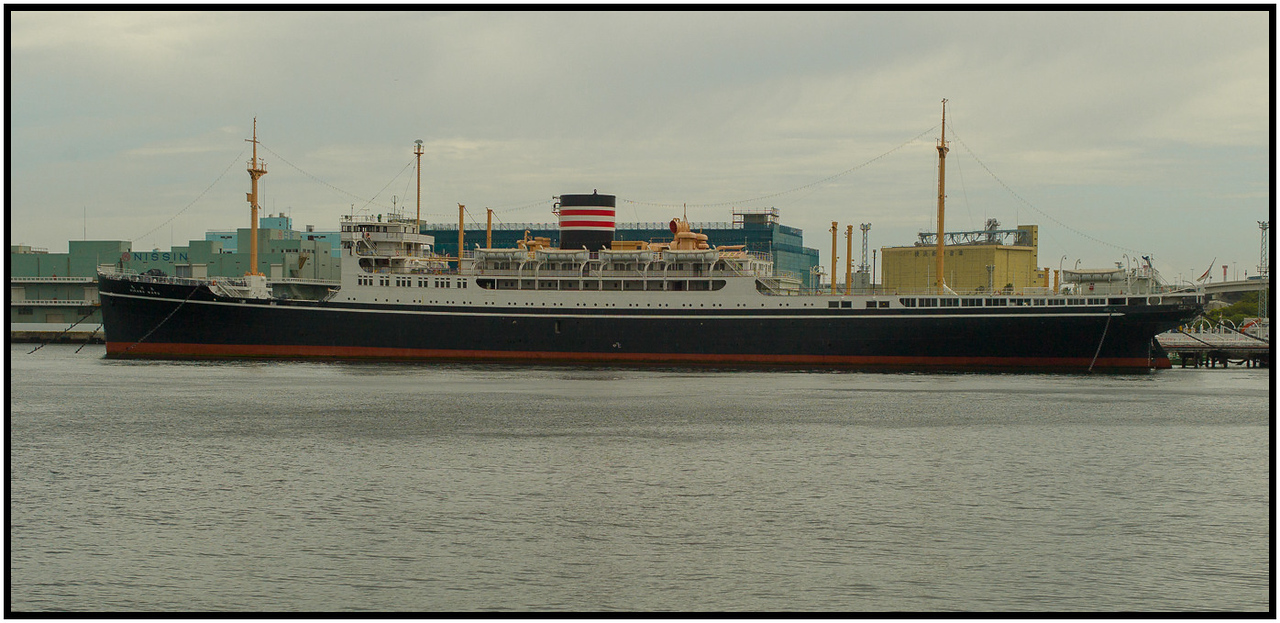
3 Ships of this class were built. During WWII, two were sunk. The Hikara Maru served as a hospital ship during the war and survived three separate incidents of mine collisions. It was built to handle the notoriously rough seas on the Tokyo-Seattle route with extra steel plates and a stronger hull … therefore it survived three+ mine hits.
The first-class hall.
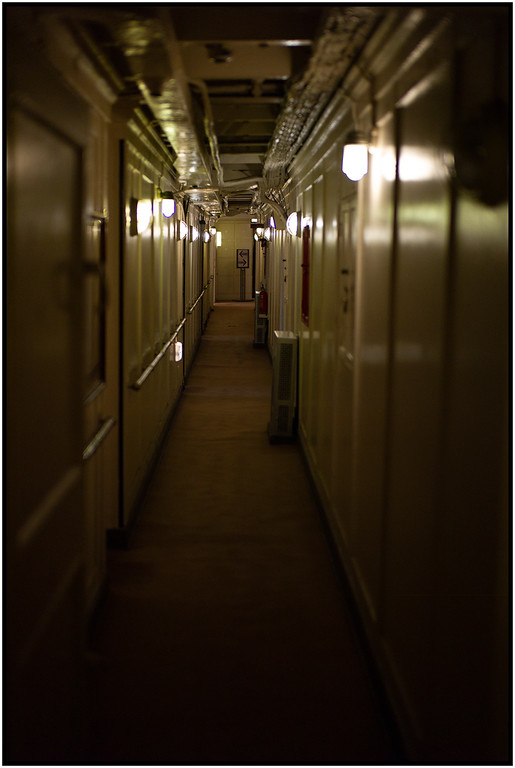
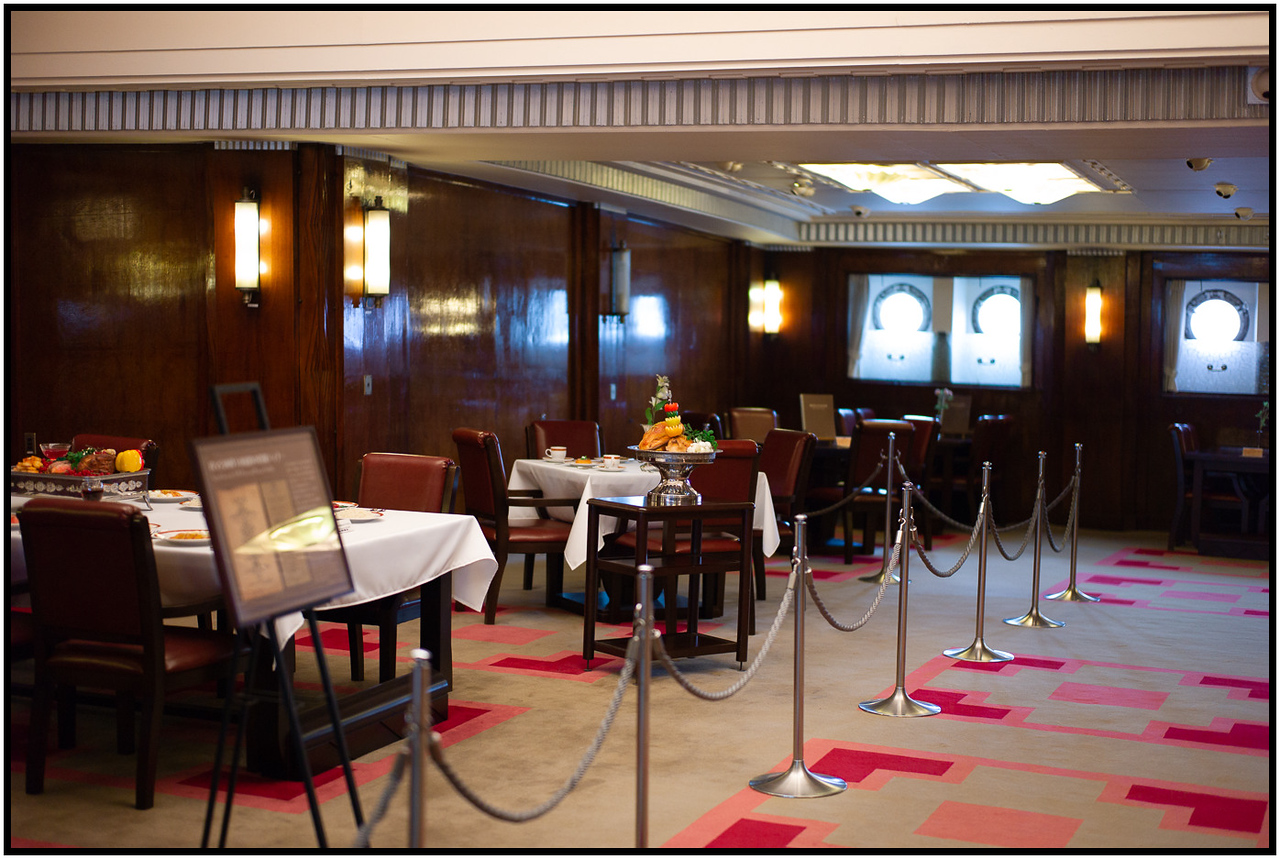
The first-class dining room.
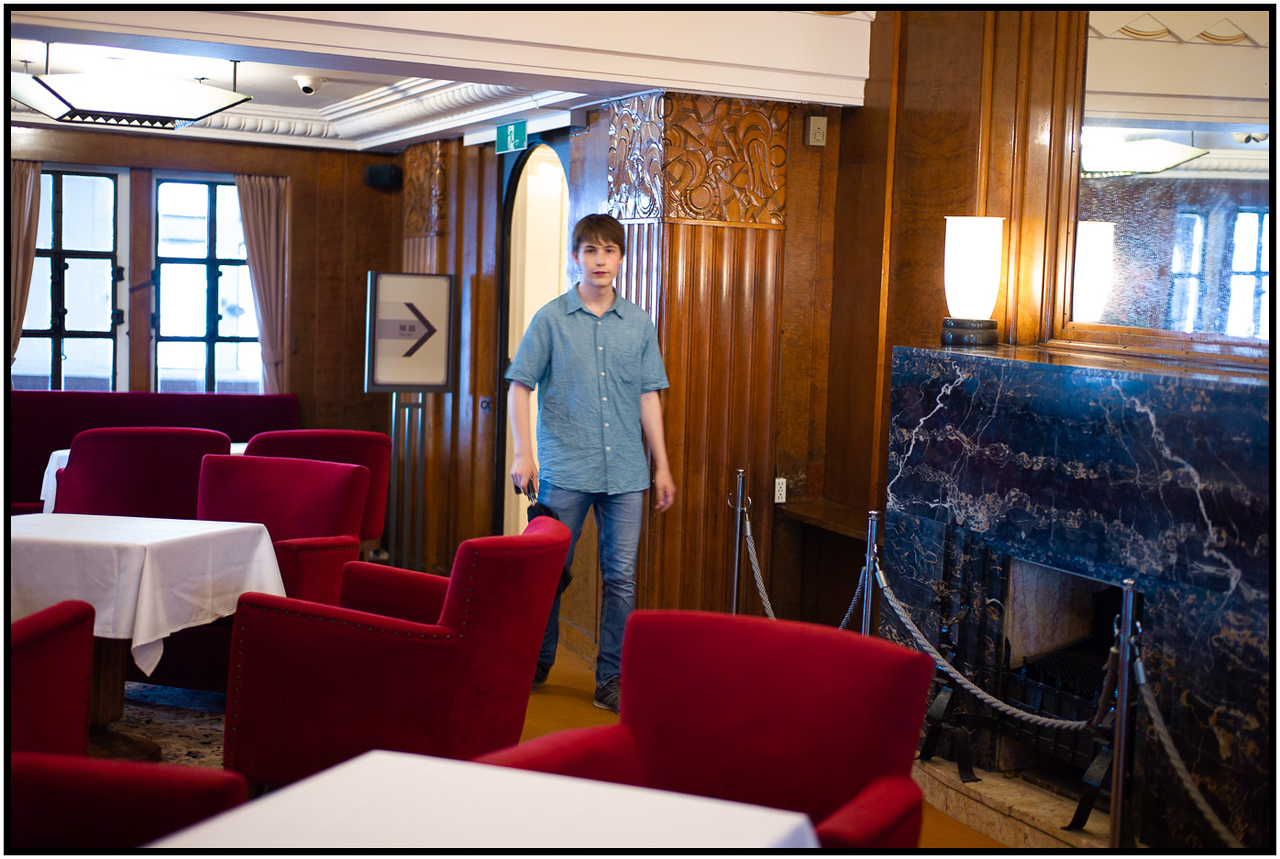
This is the “social room” where evening dances were held for the elites to socialize with each other in a refined atmosphere. There was no internet, so they had to make do with paying attention to each other IRL.
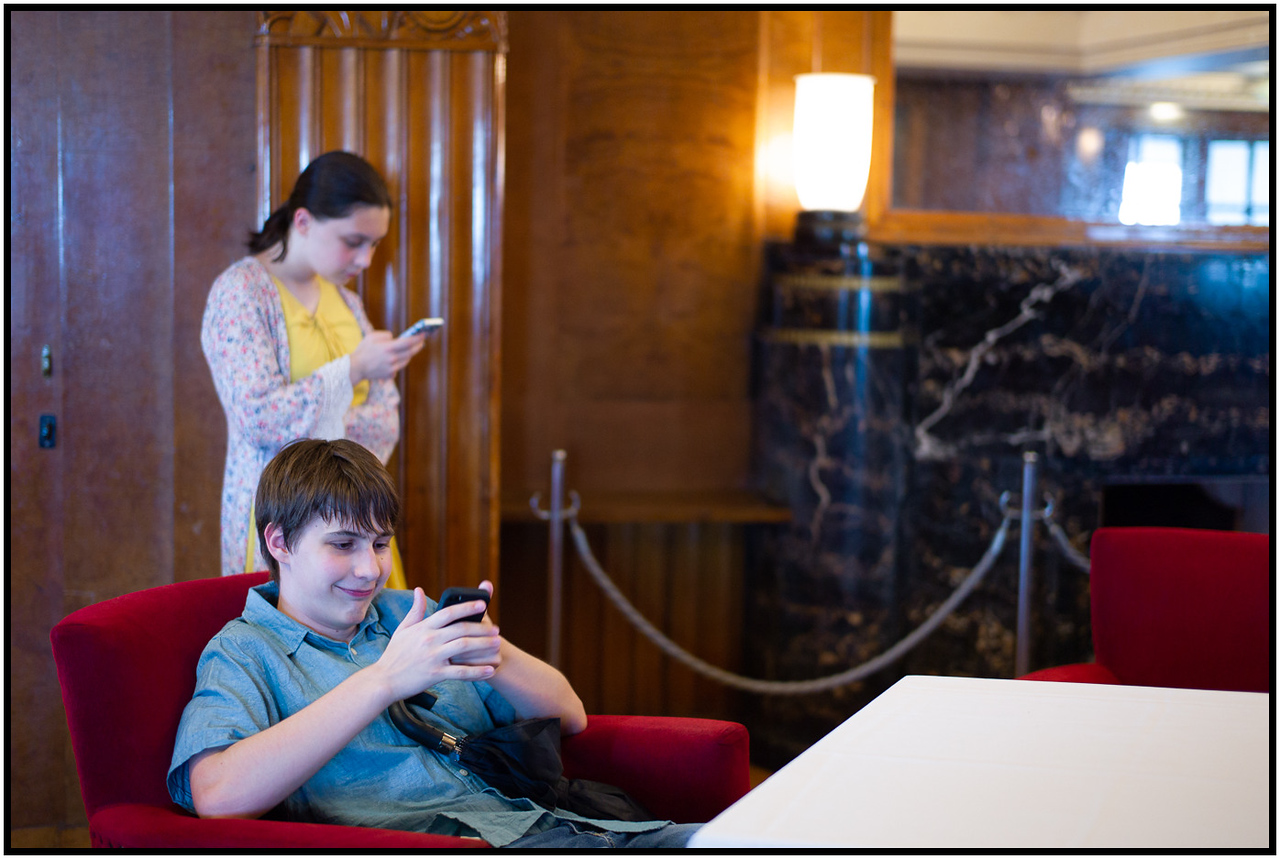
The kids enjoying their internet in the 1st Class Lounge area — something the fancy-pants people of yore couldn’t do.
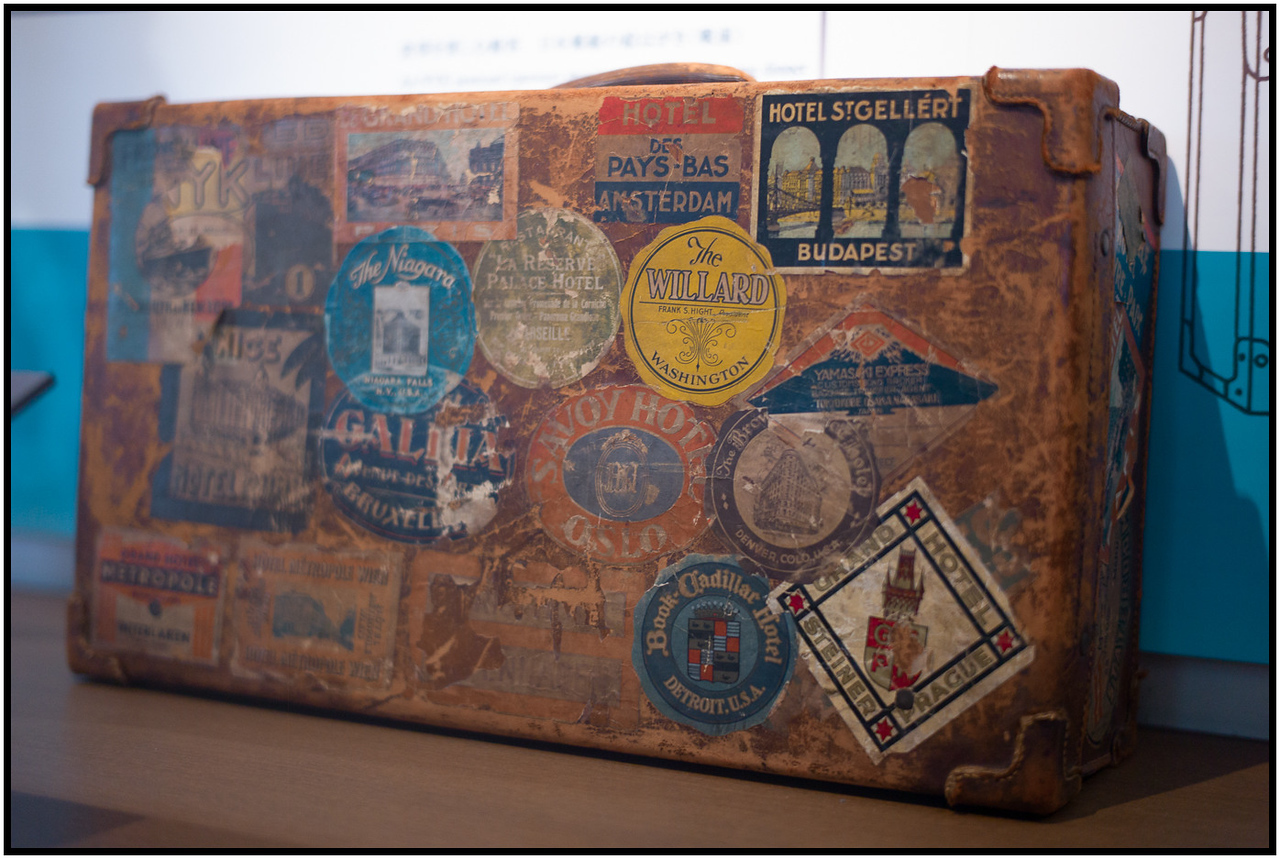
The more seasoned a traveler was perceived to be, the better treatment s/he received. People kept luggage long past it’s best-by date just to keep the stickers.
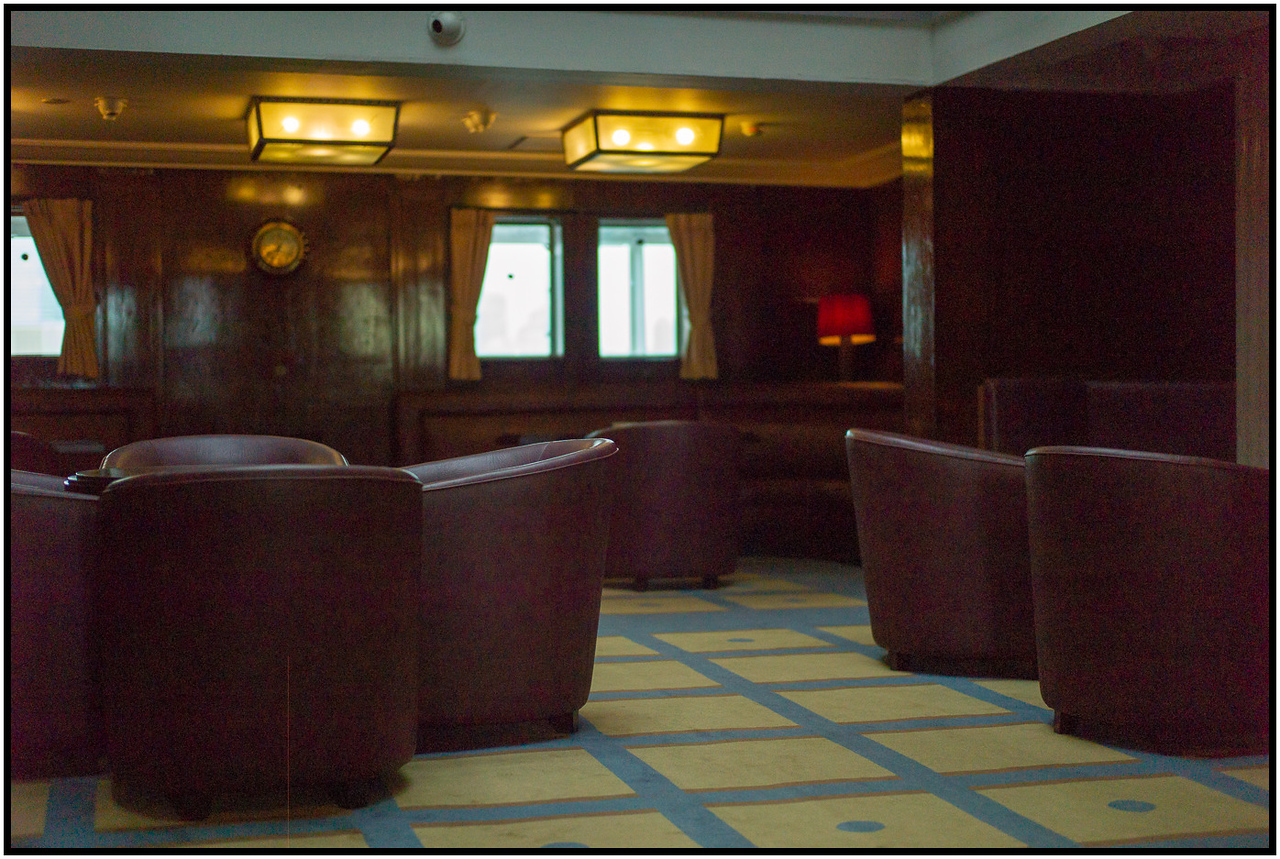
The men’s smoking room. Women weren’t allowed in here.
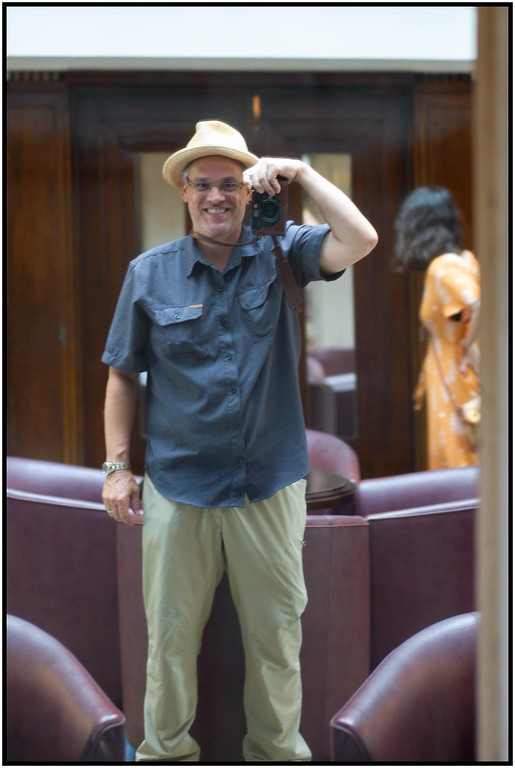
Adam’s version of a selfie.
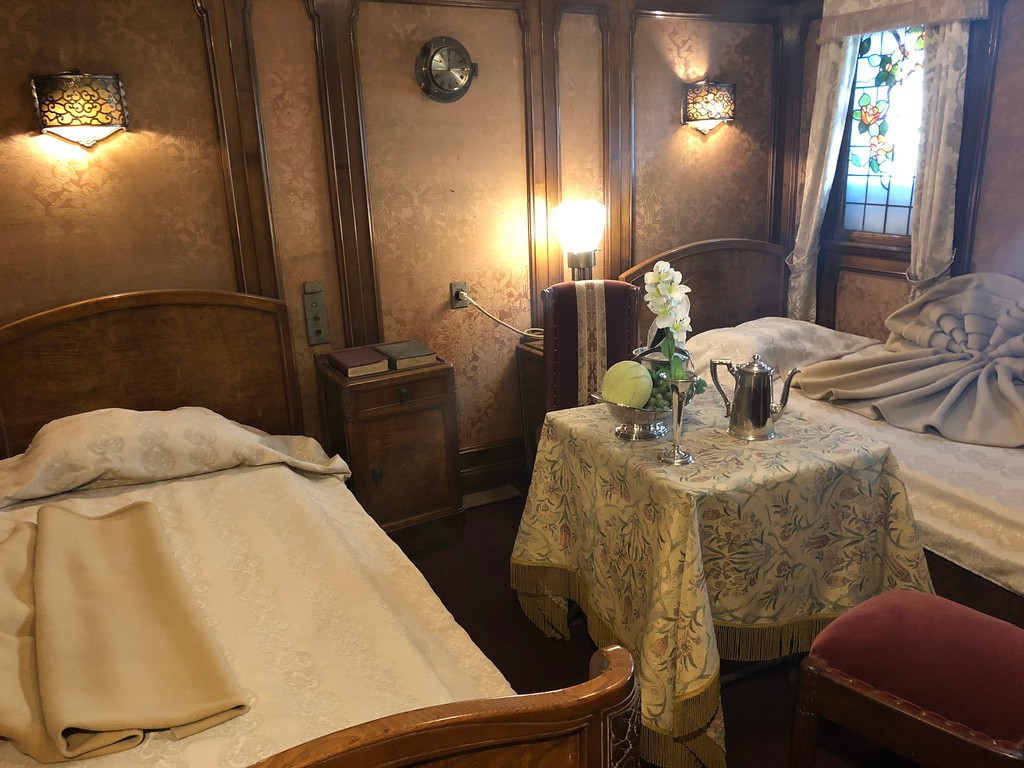
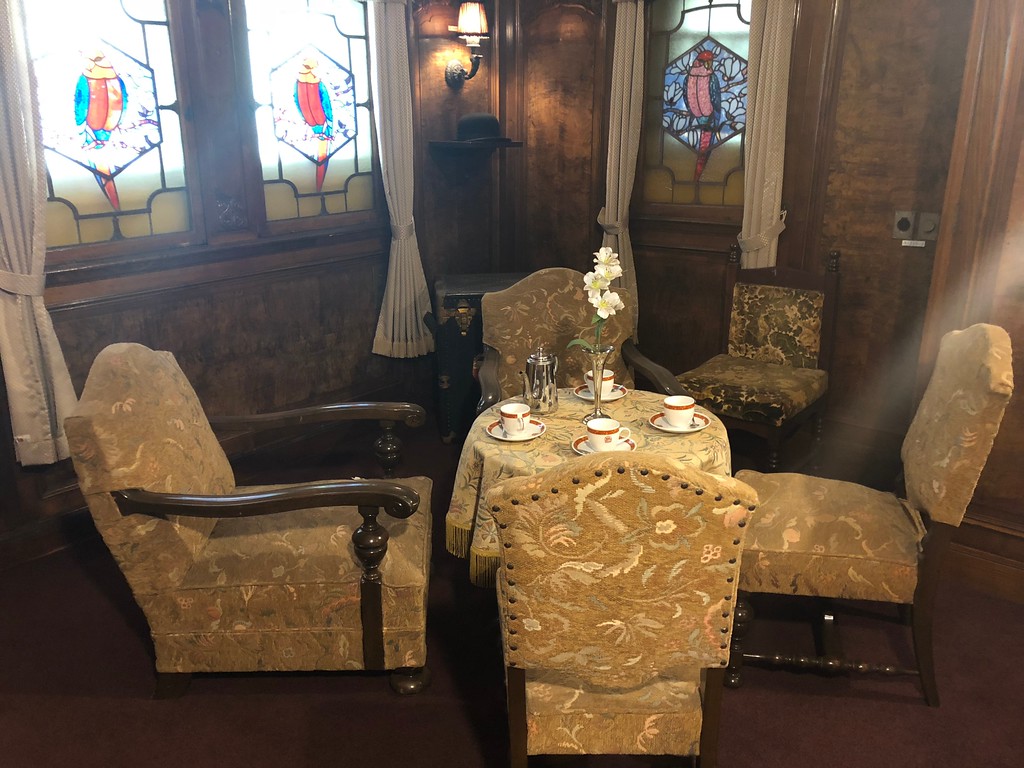
Deluxe Cabin. There was only one: it had a bedroom (two twin beds) and a sitting room connected by a full bathroom. One of the Hikawa Maru’s most famous passengers was Charlie Chaplin, who sailed to Japan in 1932. We got to go into the rooms that he used and took photos of his personal bathroom. Charlie Chaplin, as well as a Princess and other assorted royalty stayed in this cabin. It cost roughly the equivalent of US$28,000 for a one-way (13-day) trip.
The sitting room. I loved the stained-glass window birds.
The bathroom. Just drink in the elegance! All kidding aside, it was much better than what everyone else got. When you were seasick during the notoriously rough passage — and you would be — you could barf privately into your own potty or sink. Even the ship captain’s bathroom was not quite as nice. I said, “Just imagine … Charlie Chaplin peed in here!” The kids said, “Ew, Mom, why do you have to be so gross?”
But this bathroom was actually special; the furniture in the first two rooms were replicas, but the tub/sink/toilet were original to the boat. Charlie Chaplin didn’t sleep in that exact bed, but he totally peed in that toilet and showered in that bathtub and brushed his teeth in that sink. Charlie Chaplin!!
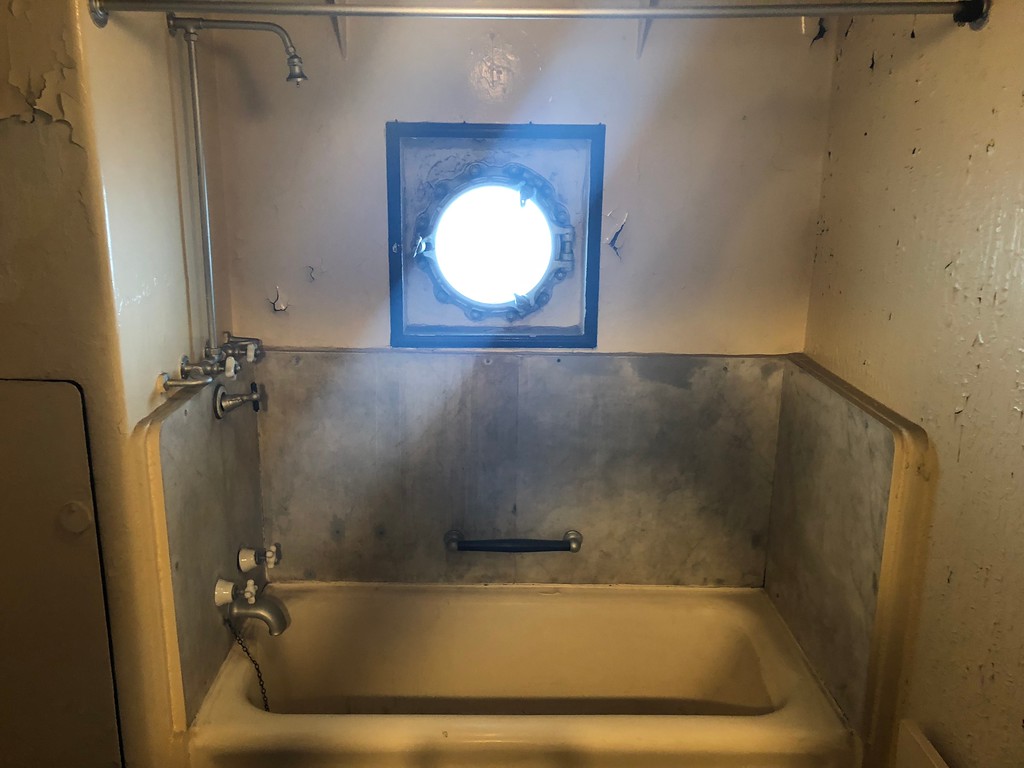
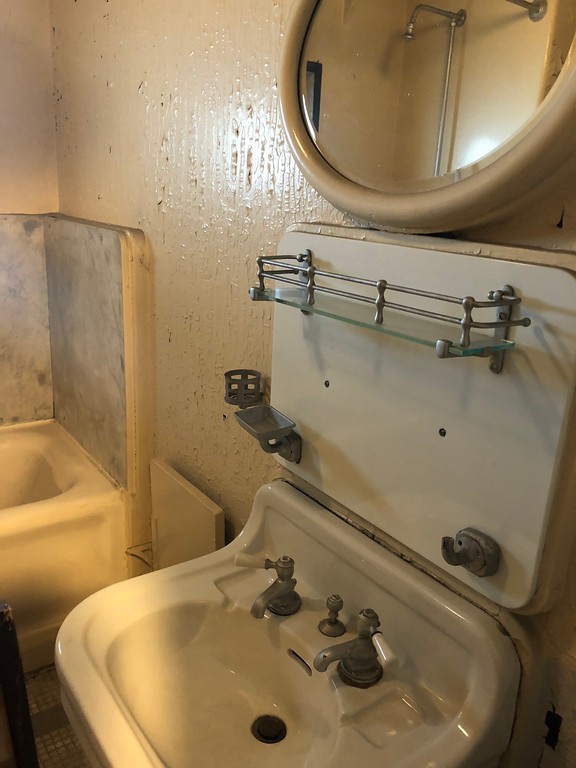
As lousy as that bathroom looks, the Deluxe Cabin was the only one that had a private facility (aside from the captain.) The regular 1st class rooms just had a sink between the two twin beds. For shower and toilet they had to use communal ones.
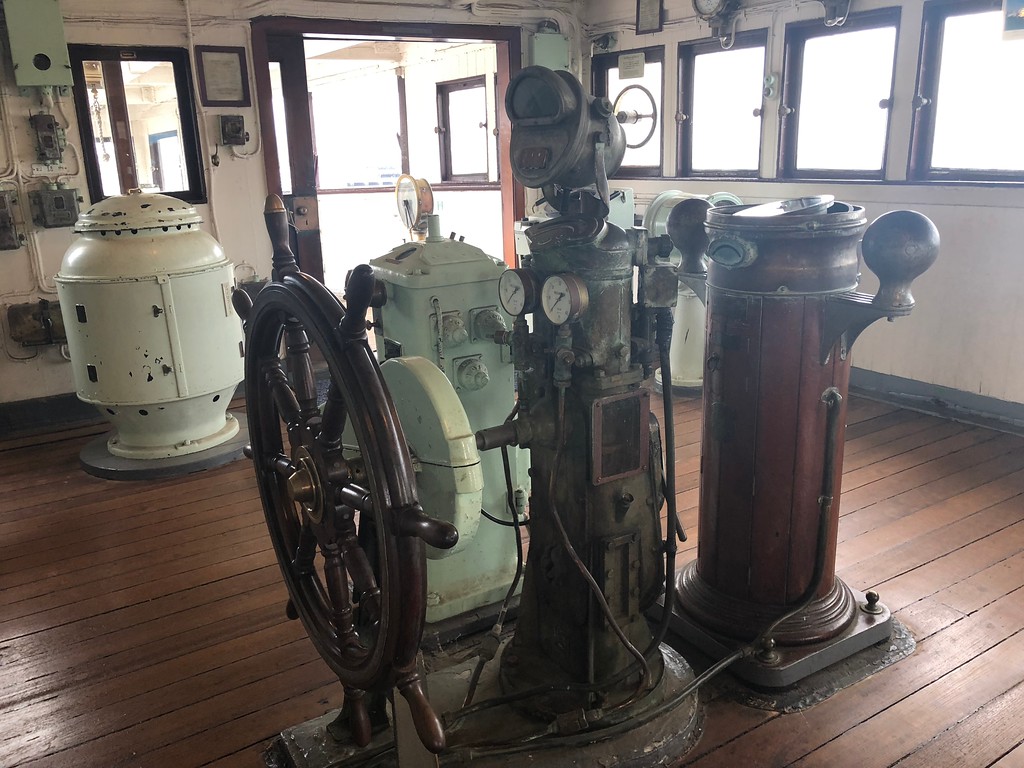
The Wheelhouse.
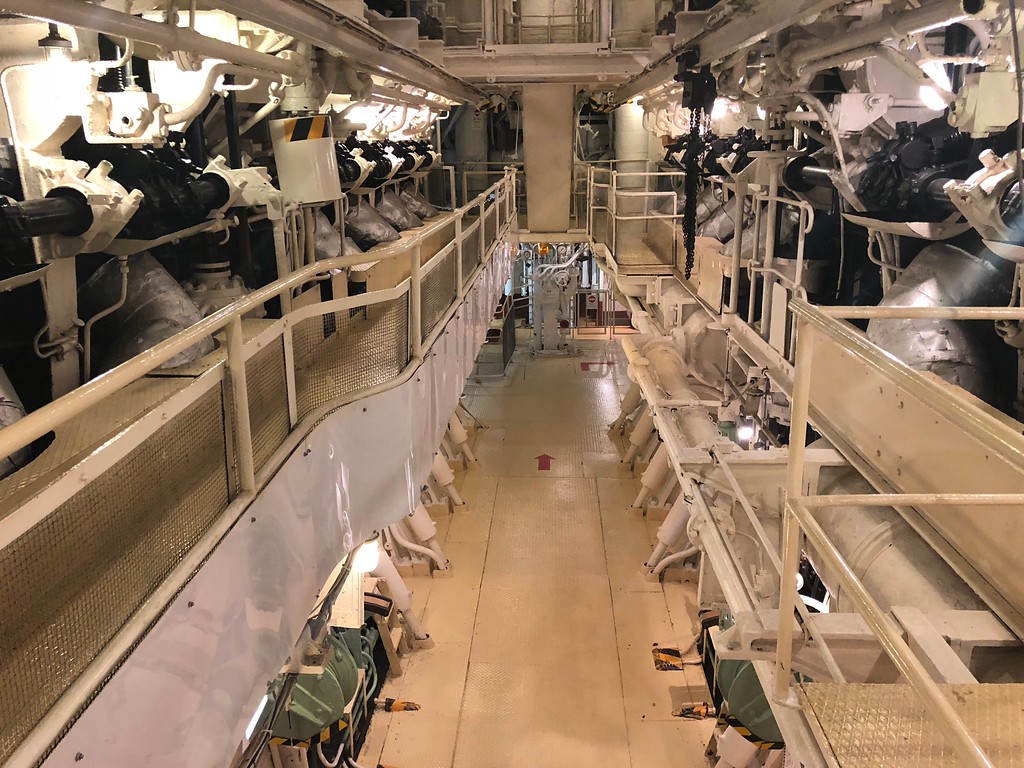
Engine Room
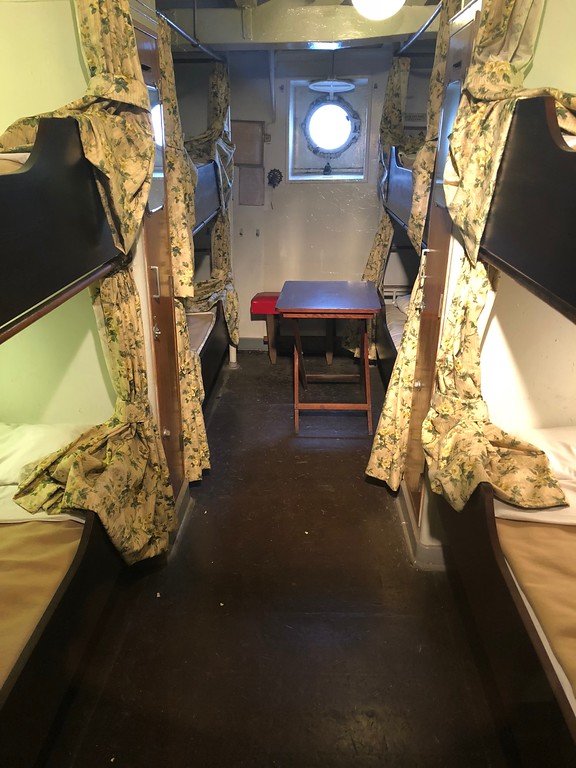
Third class cabin. 8 bunks per room. You stayed with strangers, had no privacy, shared a communal bathroom down the hall, and weren’t even allowed to set foot on the upper deck where the first class cabins were. When you got seasick, I guess you barfed into a sack right in front of everyone. It makes me feel la wee bit queasy just to think about it.
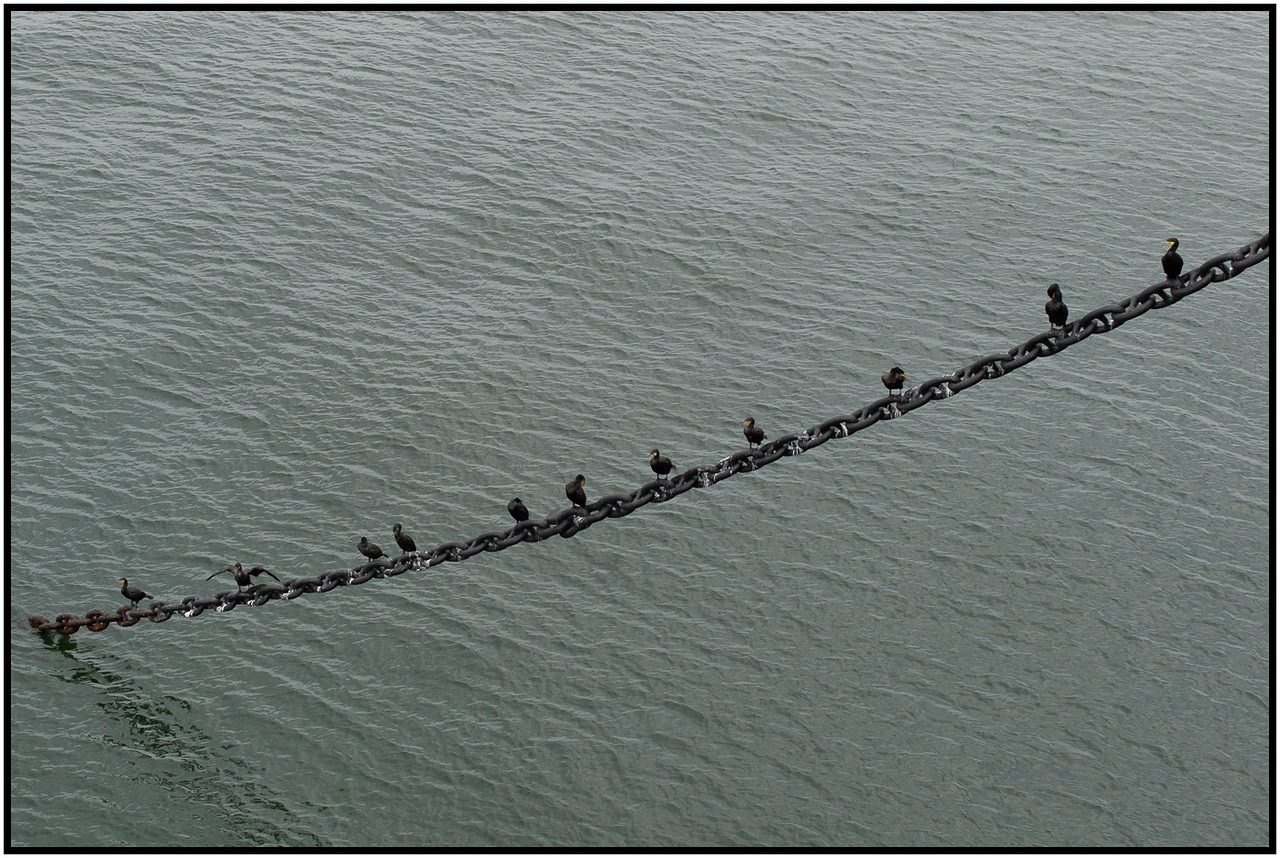
Birds still use the ship.
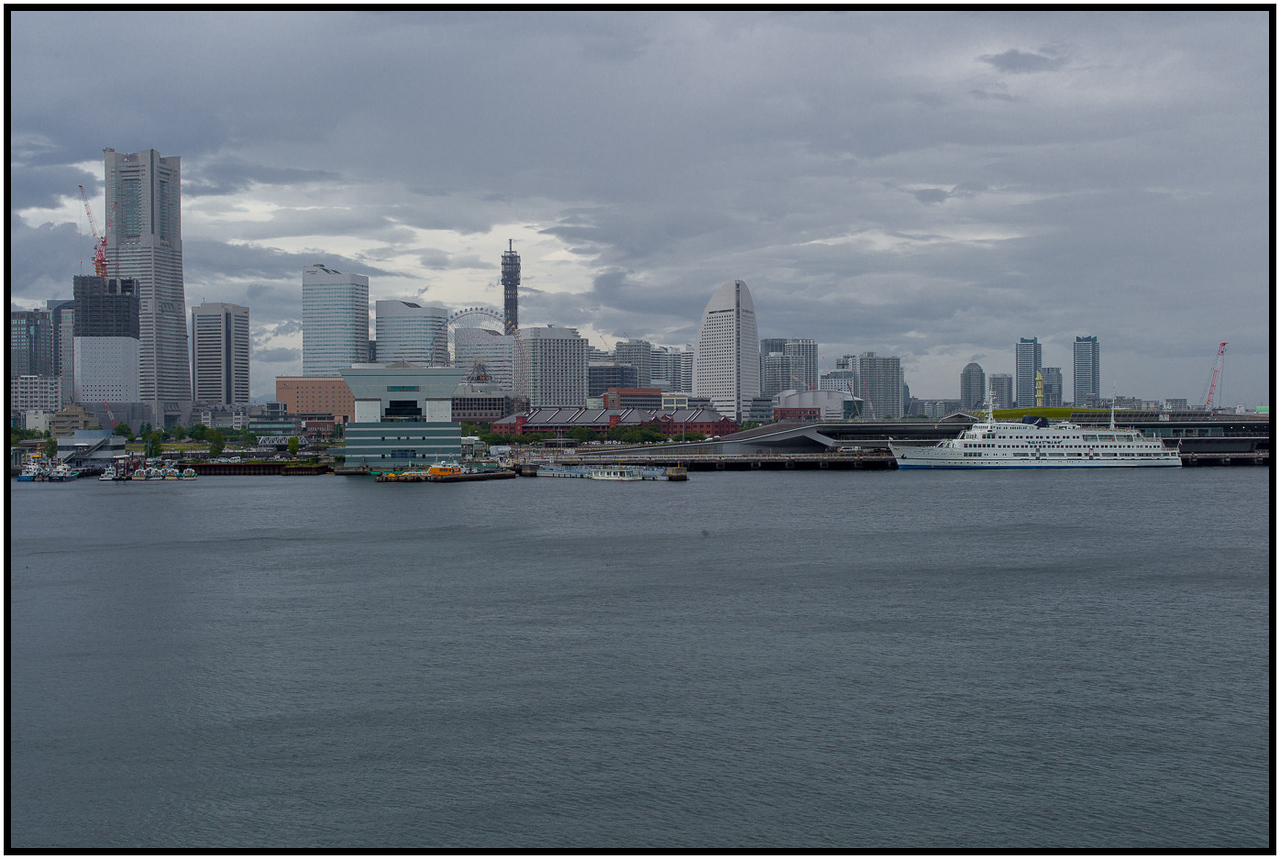
Yokohama skyline from Tokyo Bay.
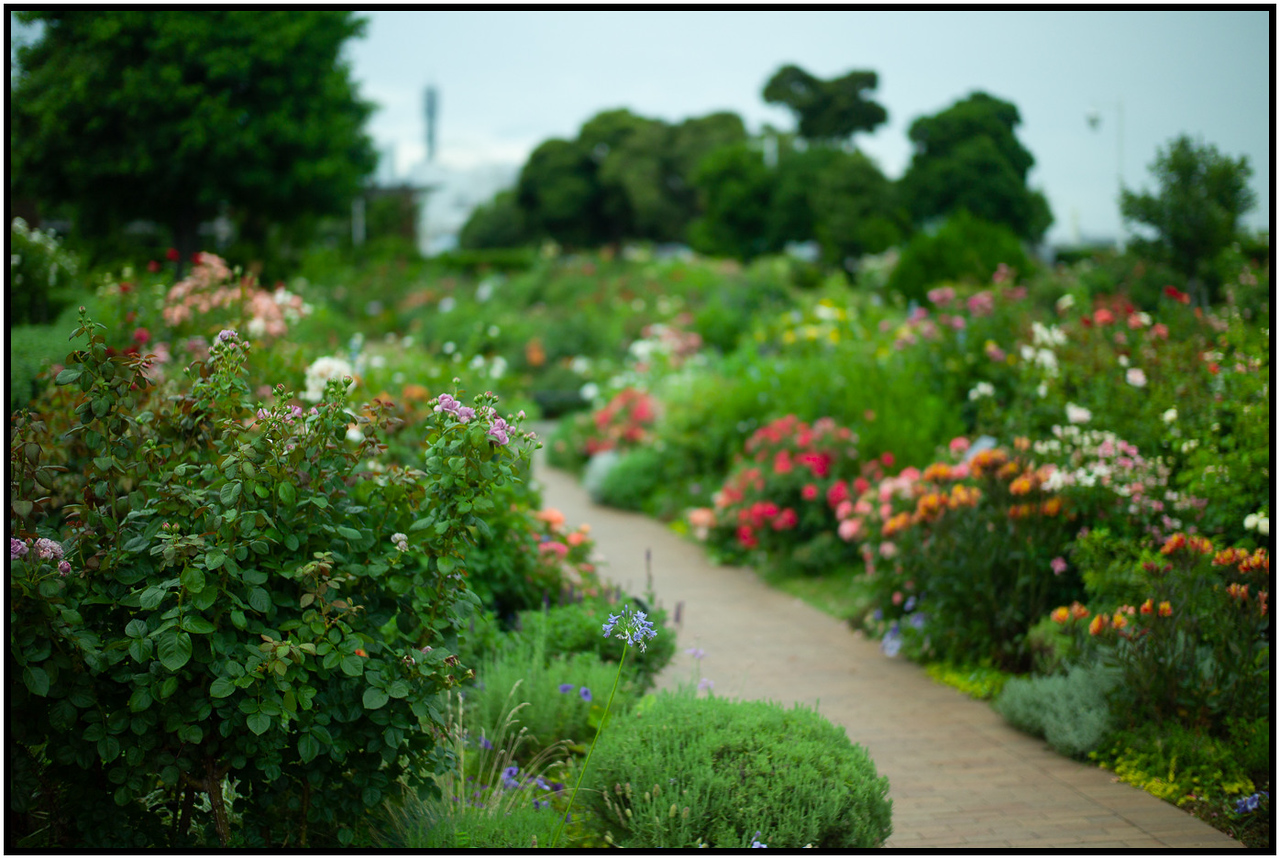
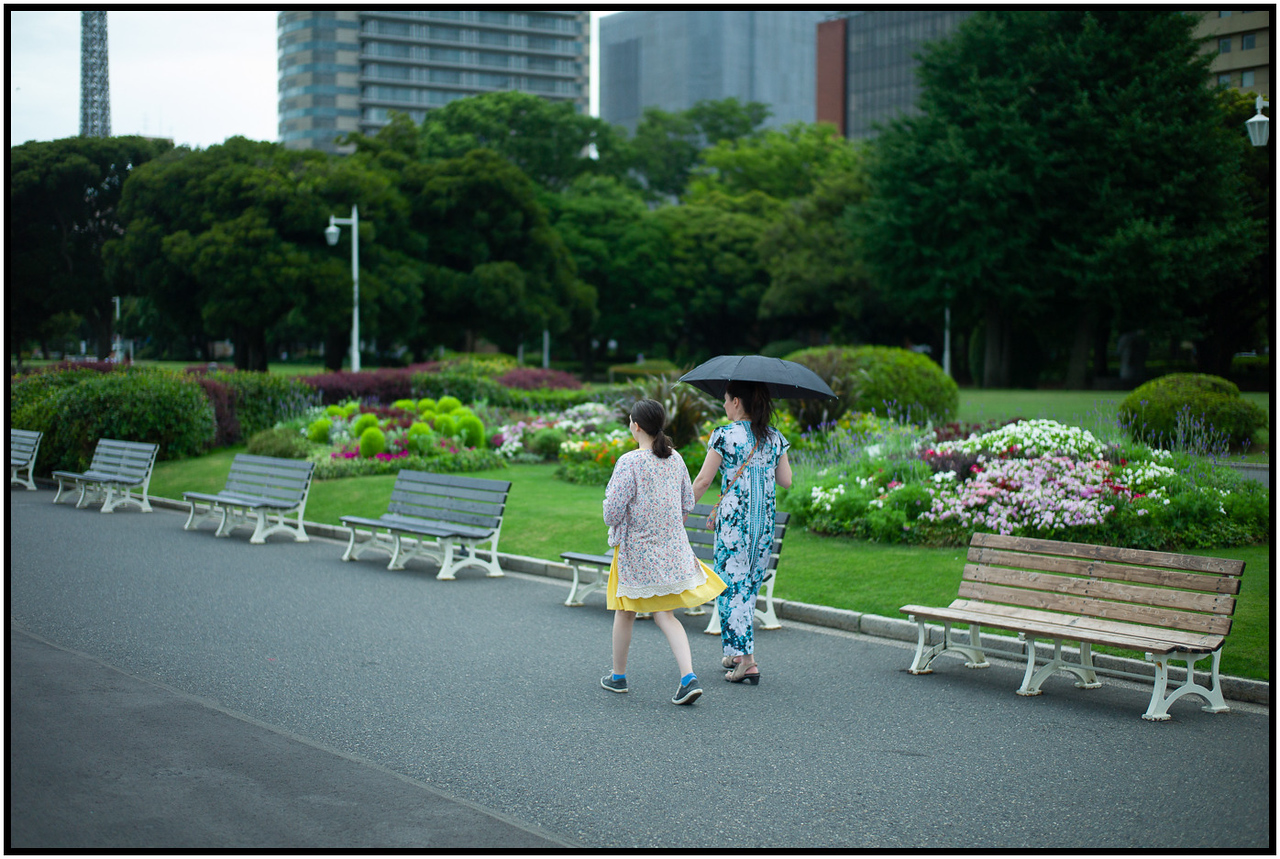
We spent the rest of the afternoon walking up and down the waterfront, checking out parks, the rose garden, and other shopping areas.
Adam: Getting on near dinner time, we found a large mall that had one floor dedicated to all things Hawaii, including a restaurant that served hamburgers. Holden and I have been aching for one for weeks and Brenda finally gave in.
Josie does do things besides look at that phone.. but she’s suddenly become quite camera shy and, while she won’t race out of the camera view, she will quickly look down and not pose in any other method than this one. Like Isabella before her, I now have to be much more clever to get any photos of all three girls. Holden continues not to care.
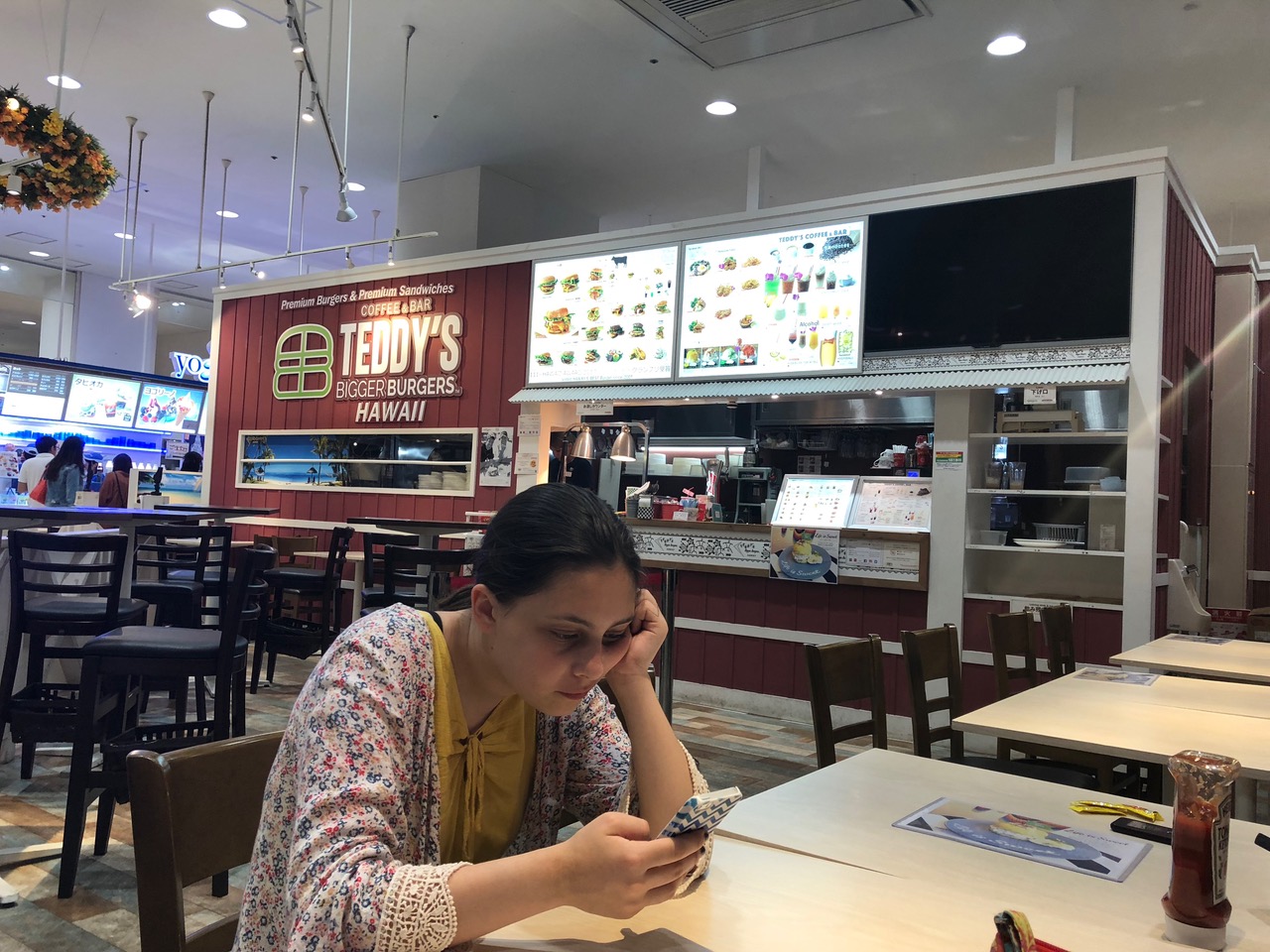
The burgers were only OK. At the risk of sounding smug and patriotic, I’ve never had a truly good hamburger outside of the USA. If I had to think of just one thing the United States does better than everyone else, it would be the hamburger. There basically is no point in eating a burger in any other country. (Well, I take it back — I’ve had a very good burger in Canada. Not quite as good as an American burger, mind you, but still worth eating.)
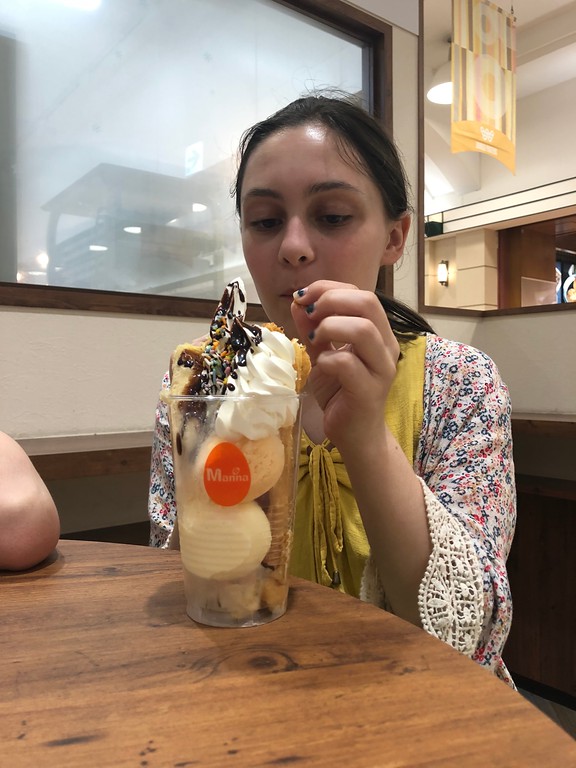
Desserts, though! Other places certainly can put together a treat.
Tomorrow it’s on to Tokyo.

