Monday, 25 June 2018
Today was a travel day from Seoul to Kyoto: flight to Osaka, couple of trains to Kyoto, which is actually a lot closer to Osaka than I remembered. We were here almost exactly three years ago.
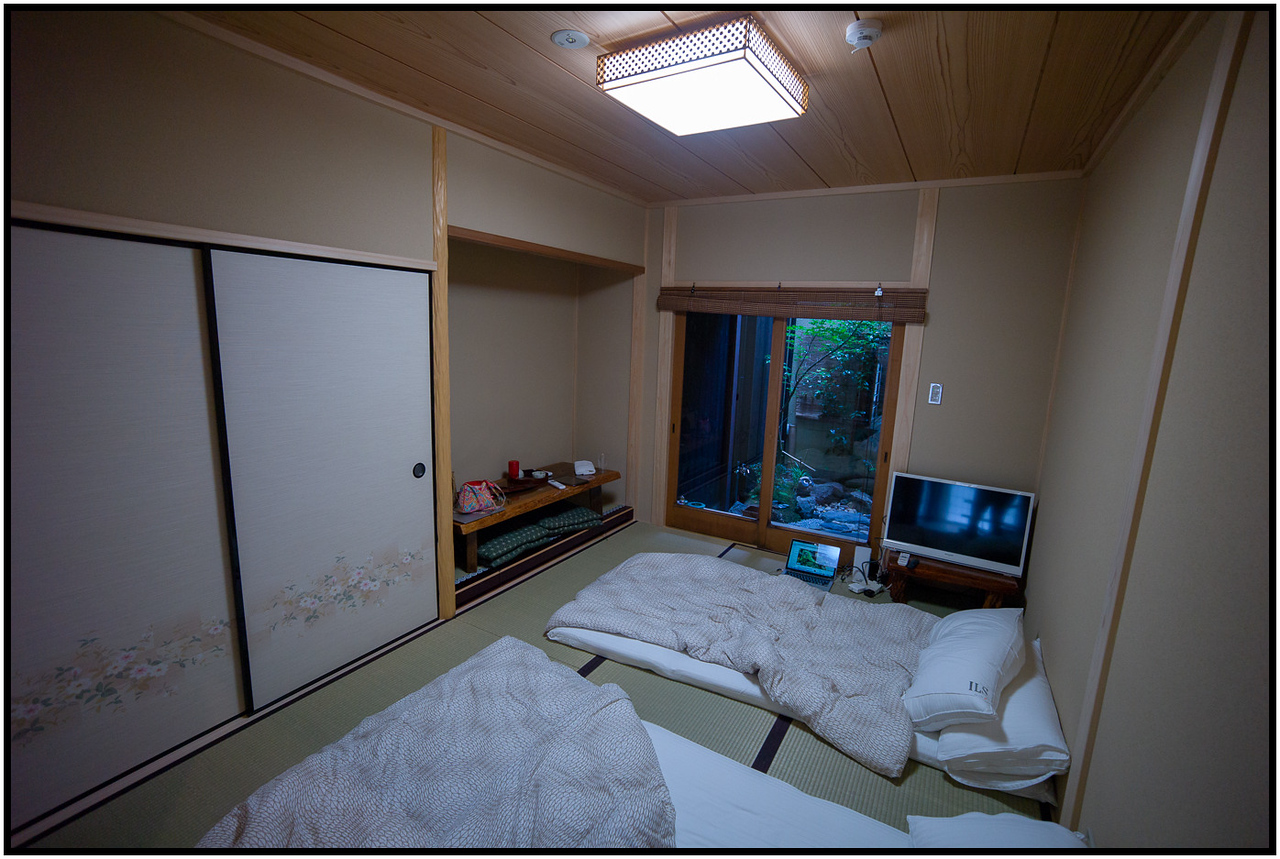
We are staying in a traditional, minimalist house (style: minshuku) that offers tatami rooms with futon bedding to sleep on. During daytime, the futons are usually stored in a closet in the room. We’re too lazy. There are photos of the place below. You’ll note that there is no furniture to speak of in the house … no chairs, cabinets, dressers, etc. This certainly is quaint, but one can sit cross-legged on the floor for only so long.
Entrance. All shoes are to be left here.
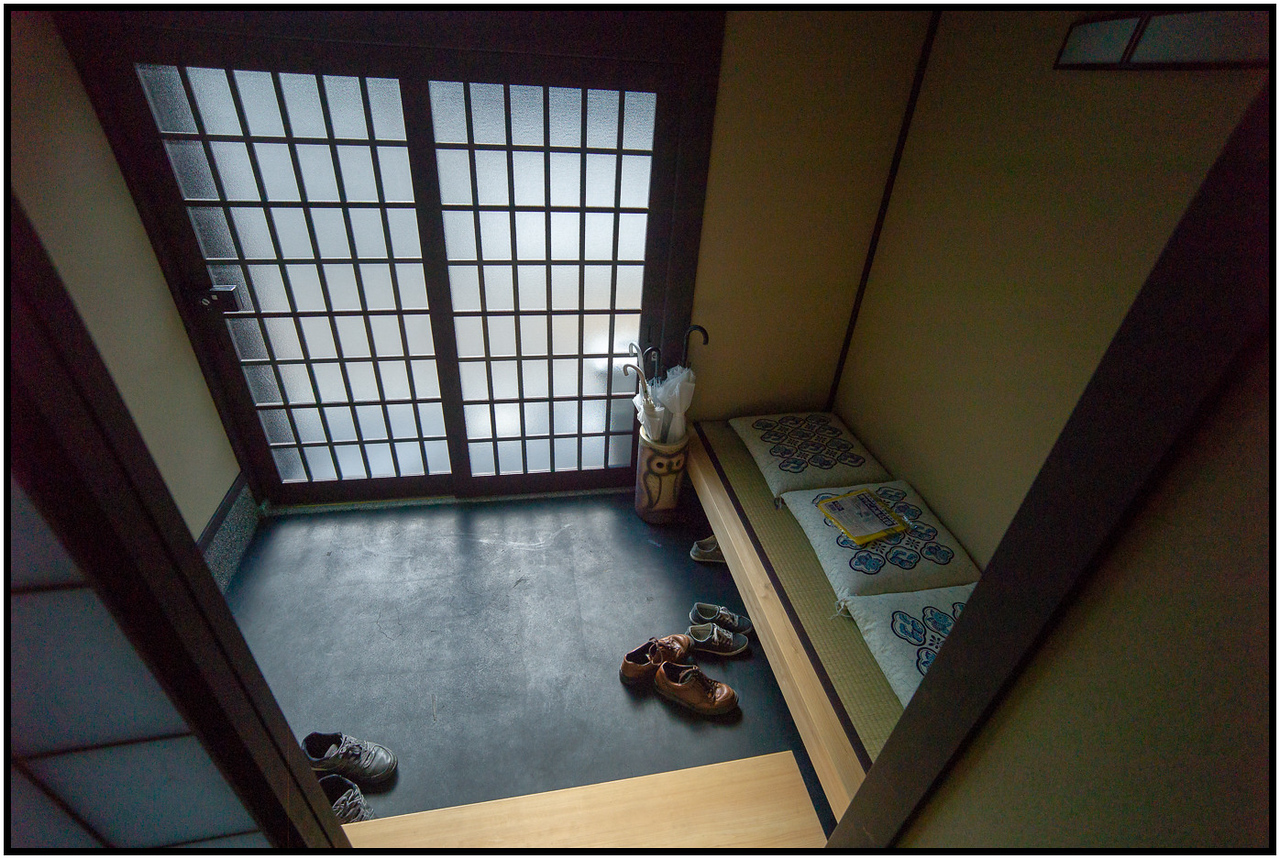
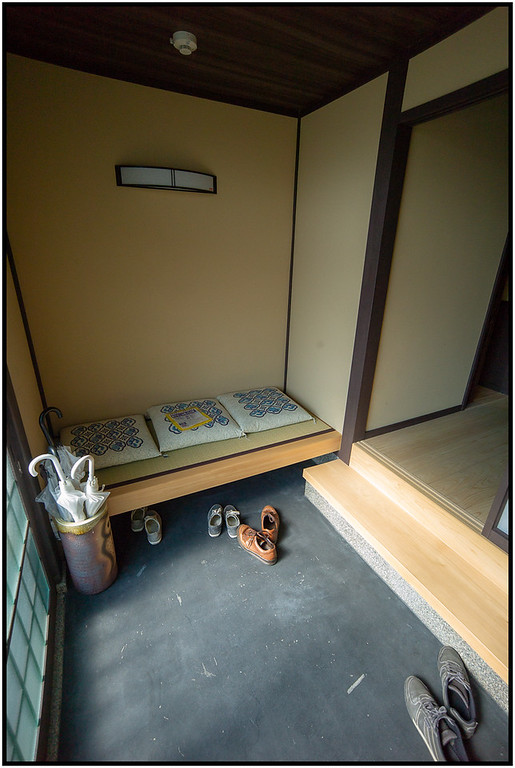
Hall to lower bedroom (which is also the living room, dining room, and pass-through to the shower which is outside in the courtyard.)
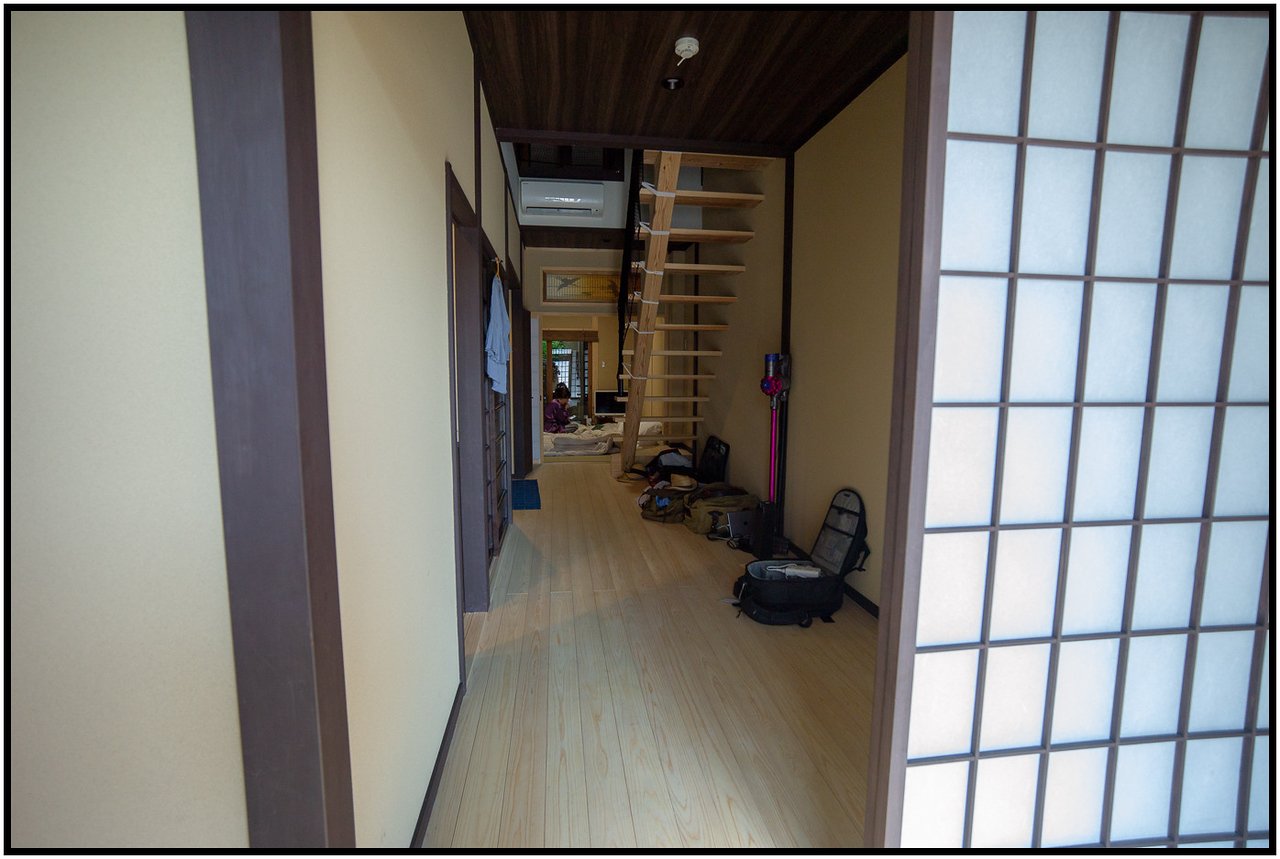
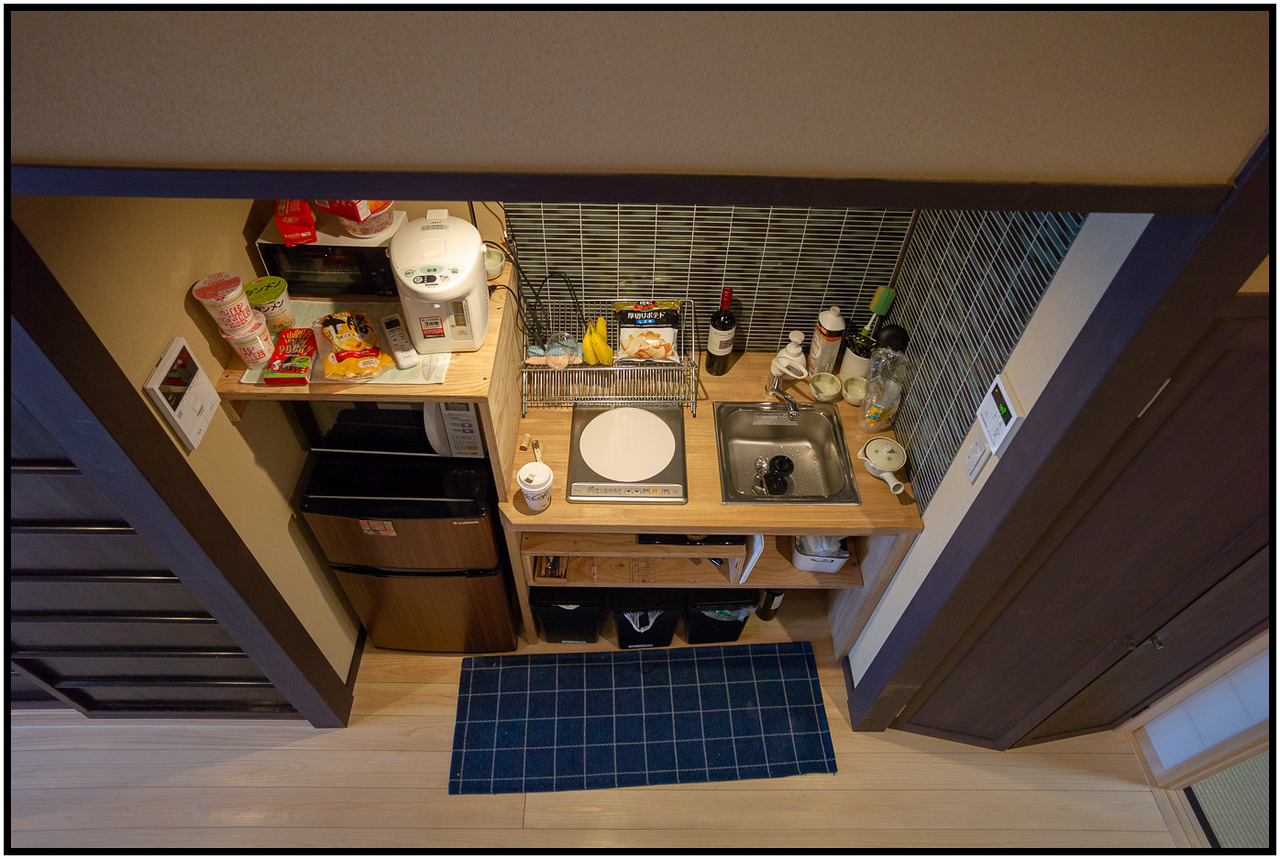
The hallway has a little nook for a tiny kitchen, and the brown doors lead to a toilet.
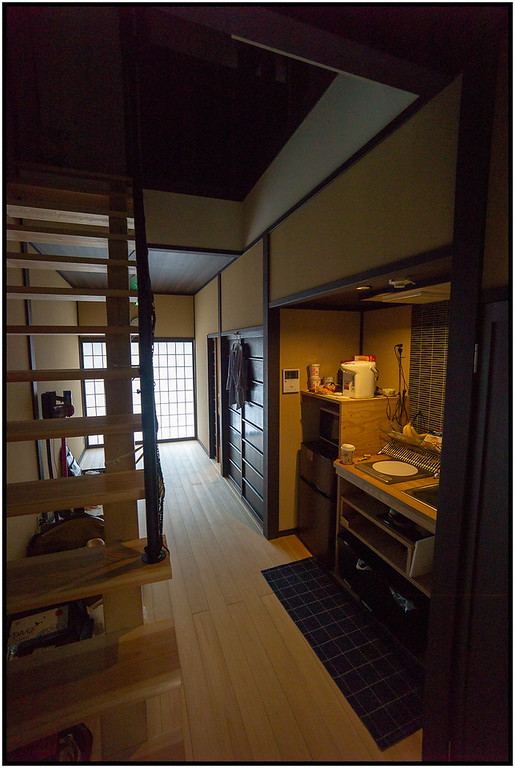
This kitchen is tiny but at least it has a sink!!
The master bedroom. The white doors are a closet and the little table in the nook is the dining table. You’re supposed to store the mattresses in the closet during the day and move the table into the middle of the room. The little green pillows stores underneath the table are the dining room “chairs.” The glass door at the end opens into a small courtyard, which is where laundry is put out to dry. At the end of the courtyard is a shower room.
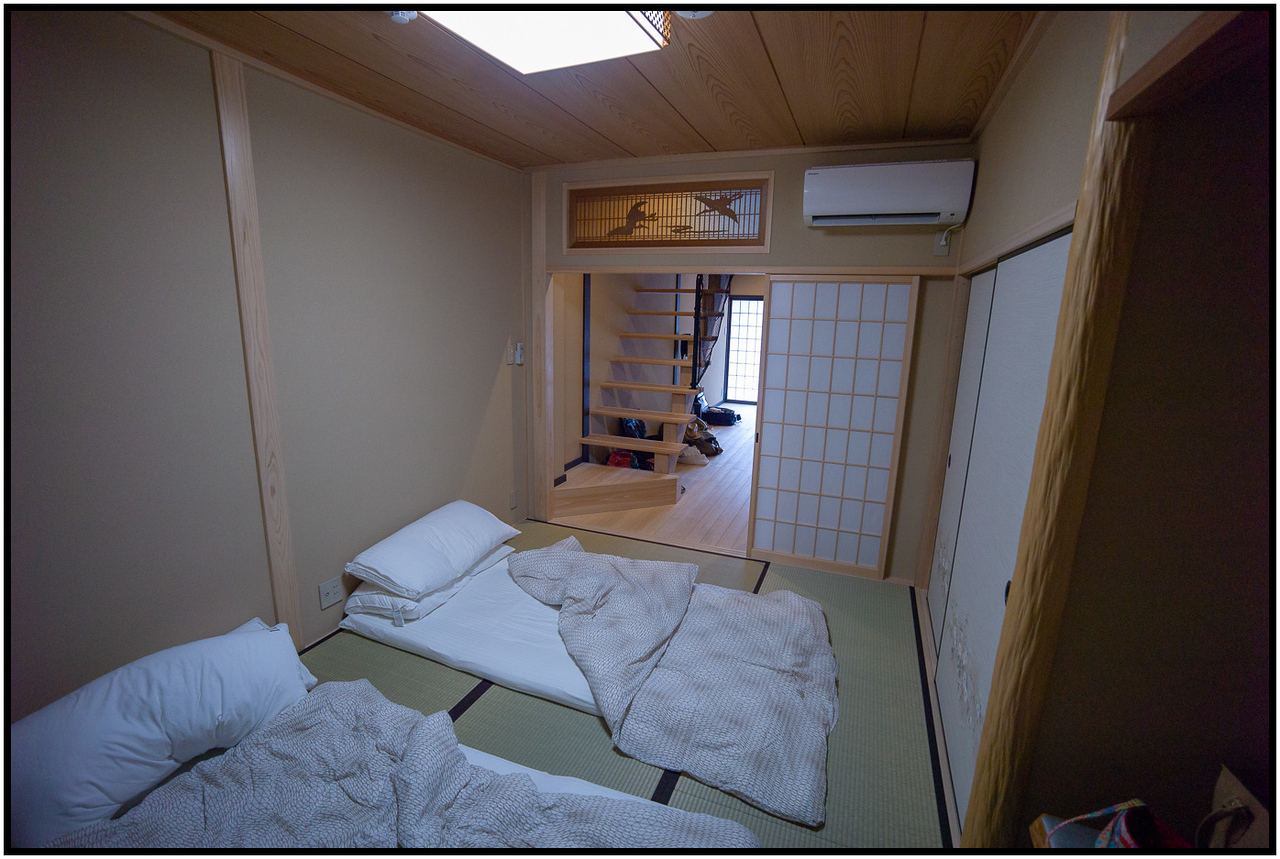
Master bedroom looking toward the kitchen/hall. Those rice paper doors close for privacy.
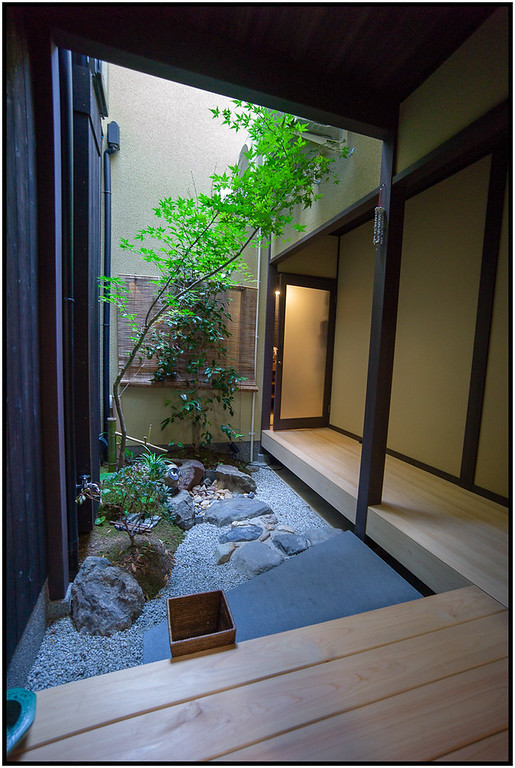
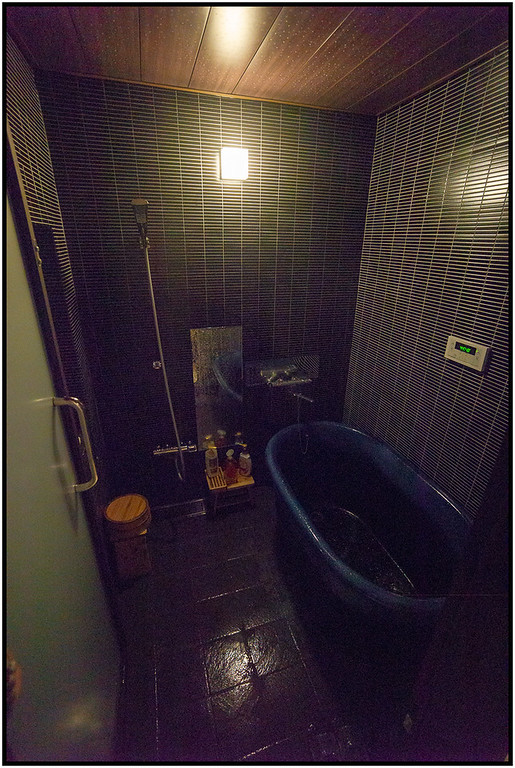
Door at end of courtyard is shower room.
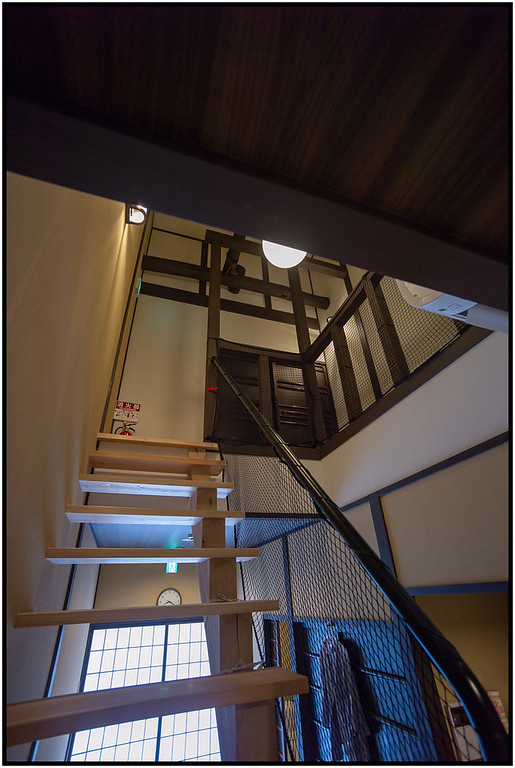
Upper floor. This part of the house reminds me a of a ship. The brown doors at the top open into Holden’s bedroom.
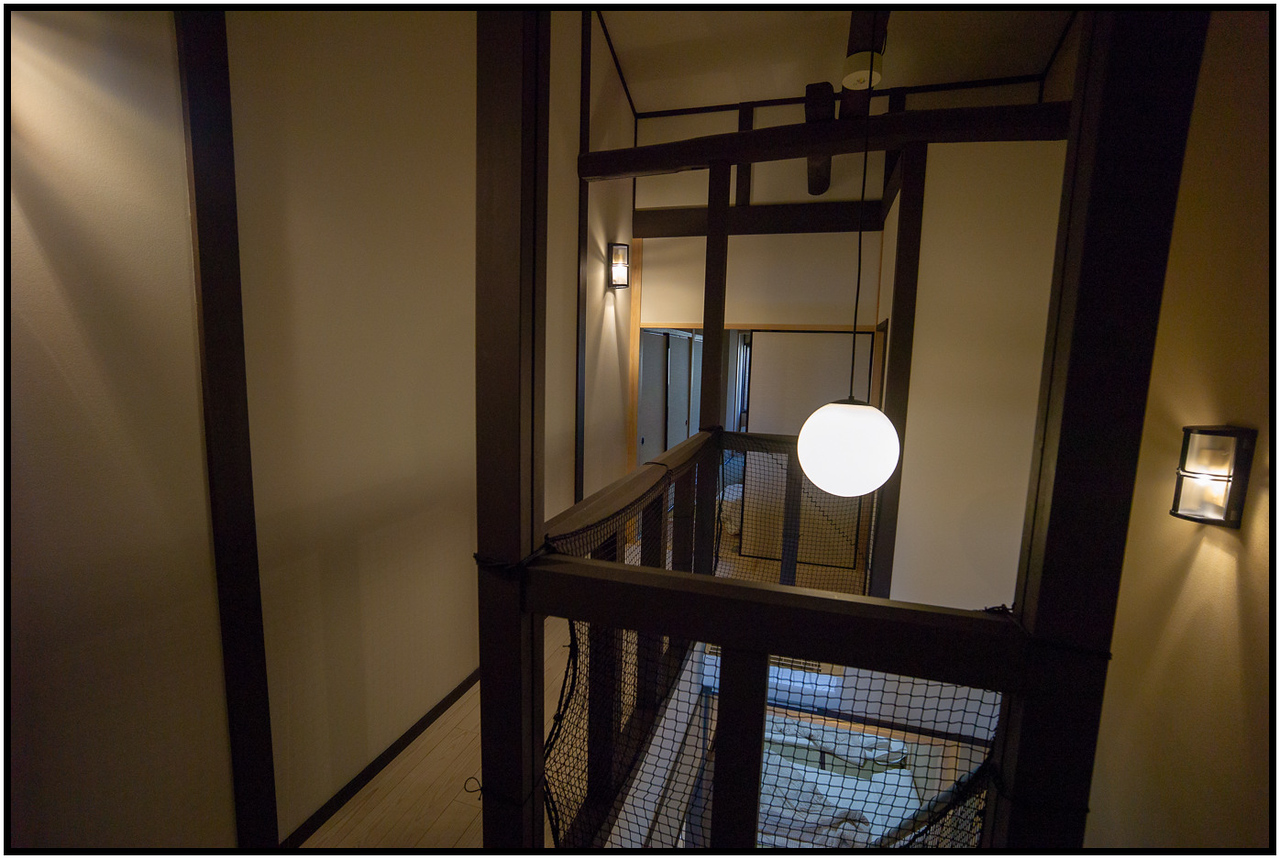
Girls room, doors at the end.
Holden’s room.
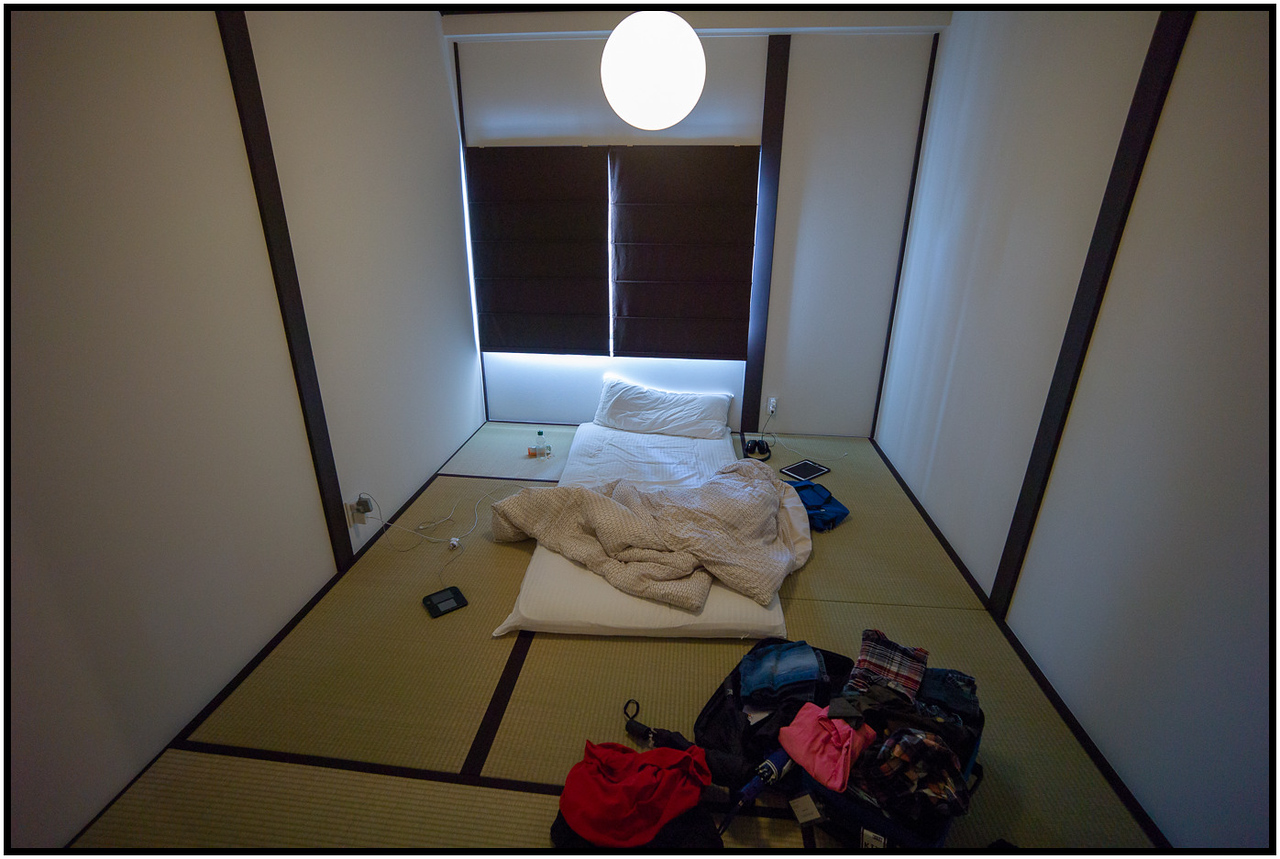
Isabella and Josie’s room. They have a tiny balcony that looks down into the courtyard.
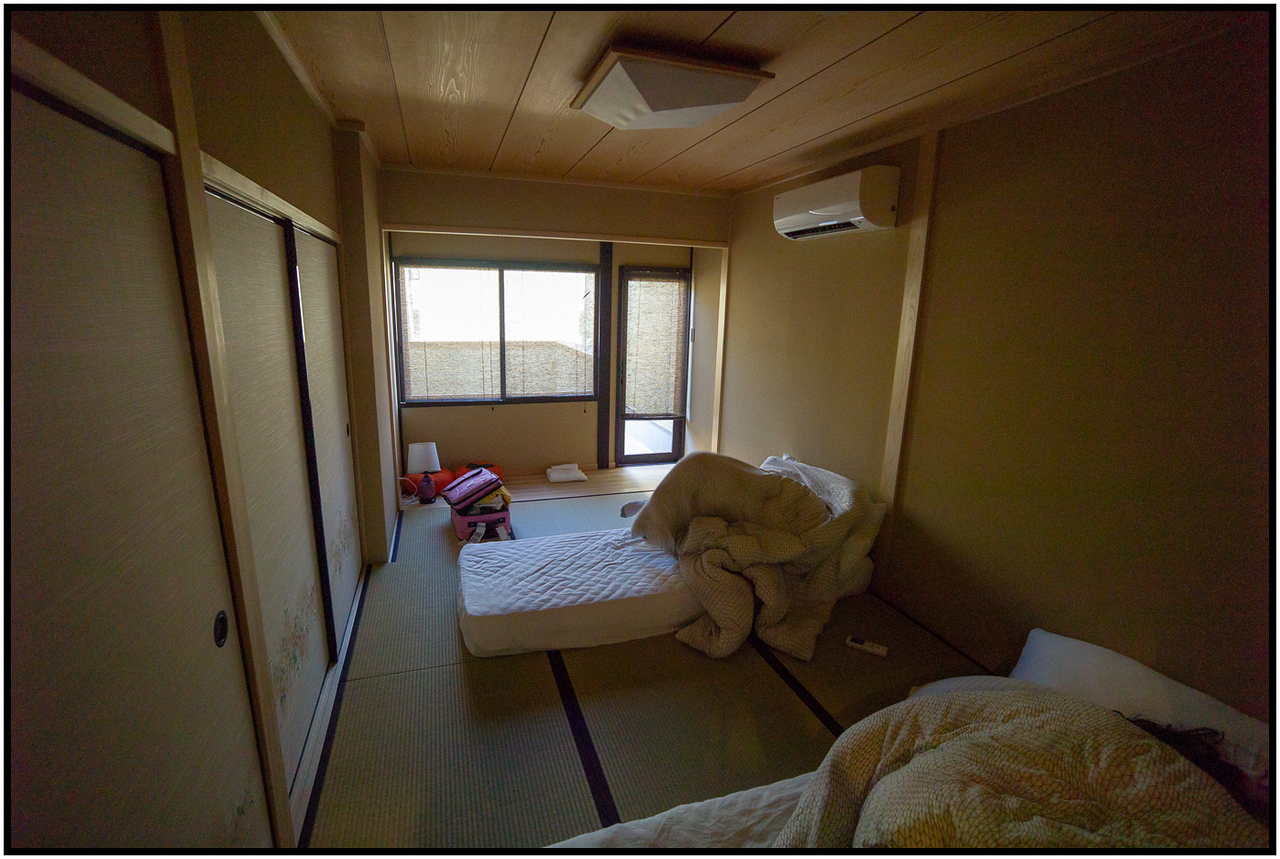
We didn’t do much today besides get here, check in, and find groceries. Tomorrow we’re ready to hit the town.
Tuesday, 26 June 2018
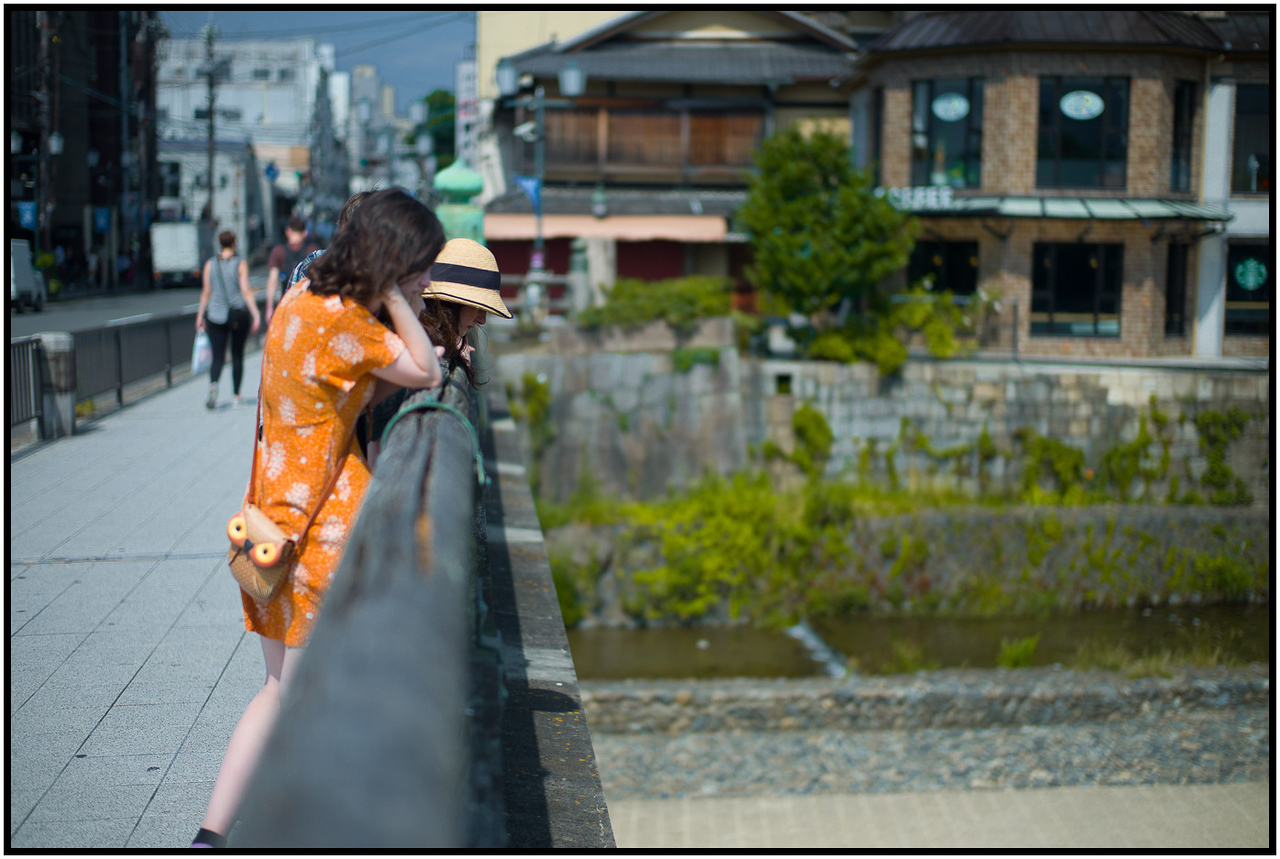
We spent some time this morning walking around our neighborhood, getting our bearings. We found a Starbucks for breakfast.
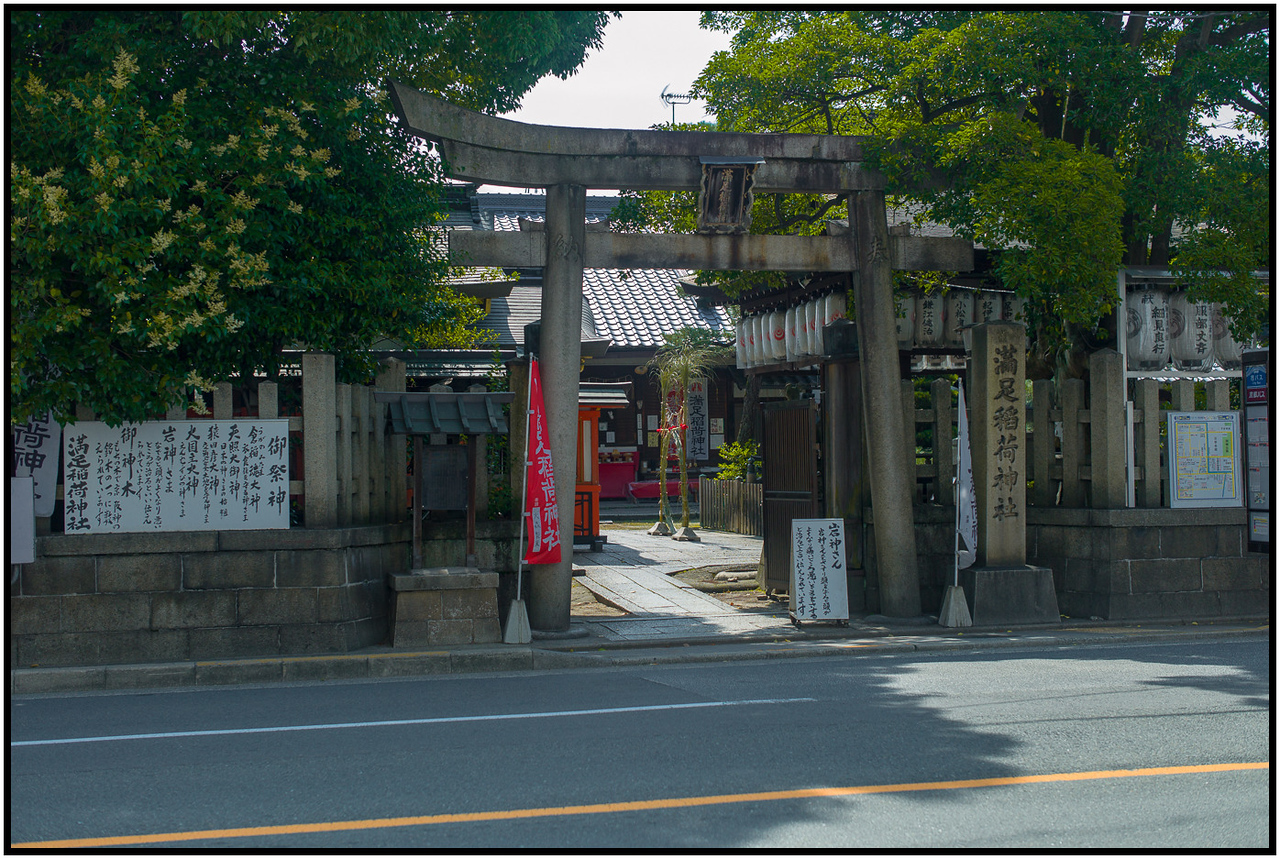
(Starbucks across the bridge, green logo in the window.)
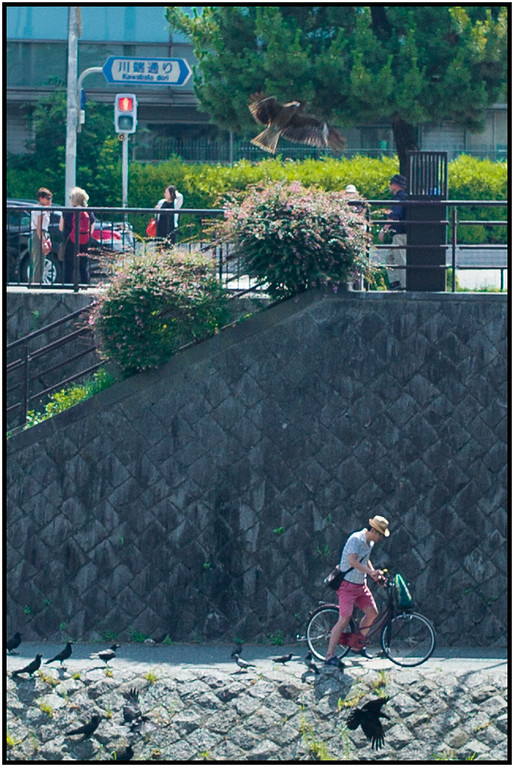
The guy on the bike was throwing food of some sort to the crows. Then a hawk (eagle?) showed up and got in on the action. He must have been throwing fish to attract a bird of prey.
A European-style bread shop.
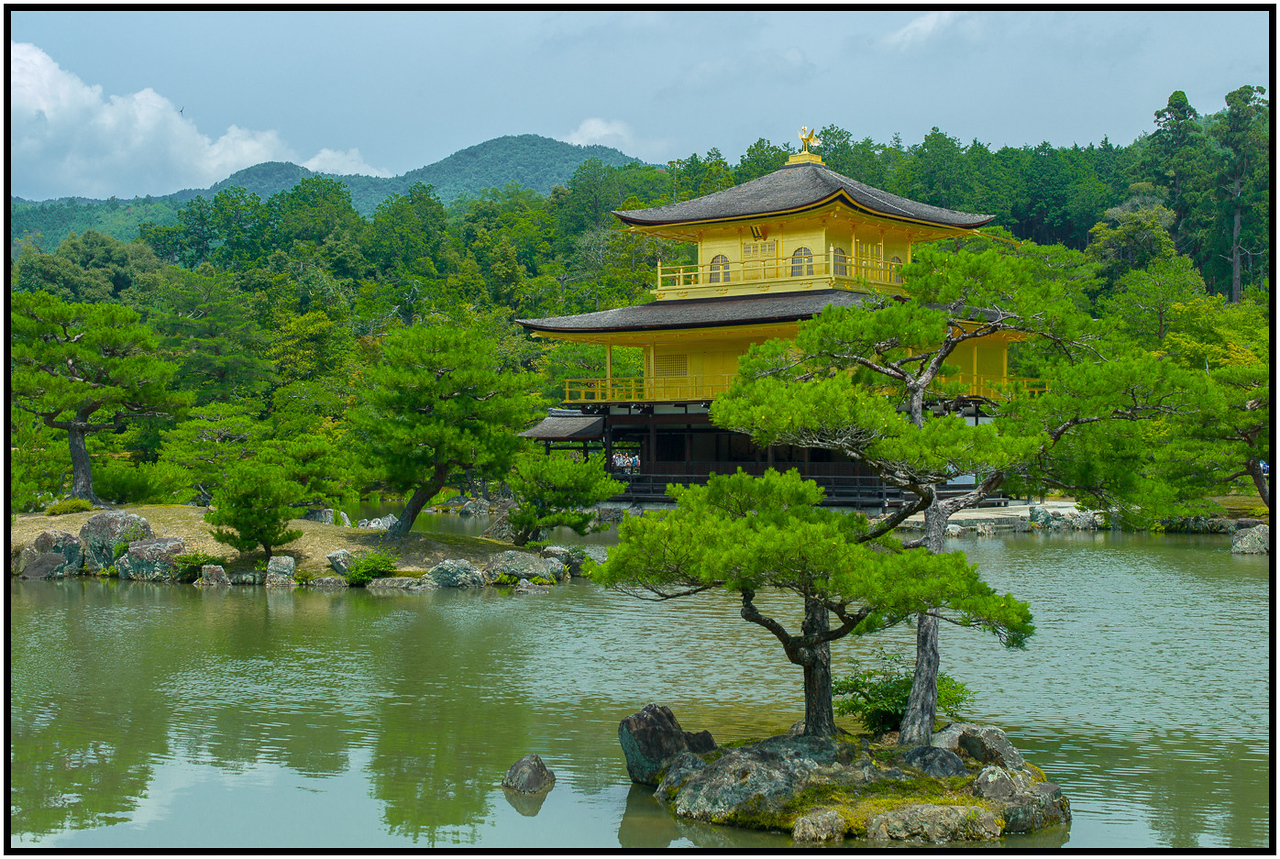
Our main attraction for the day was a visit to the Golden Temple – Kinkaku-ji. This is a zen Buddhist temple that originally dates to 1397… however, the original structure was torched by an arsonist in 1950 and what we see now is a re-construction.
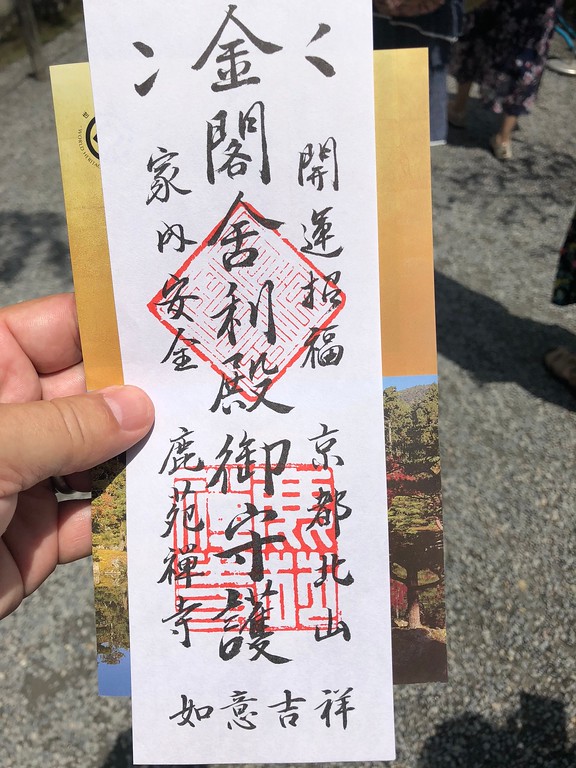
This place had the coolest tickets. They looked like works of art. I would have brought one home to frame except they were so big I couldn’t get them in my purse without creasing them.
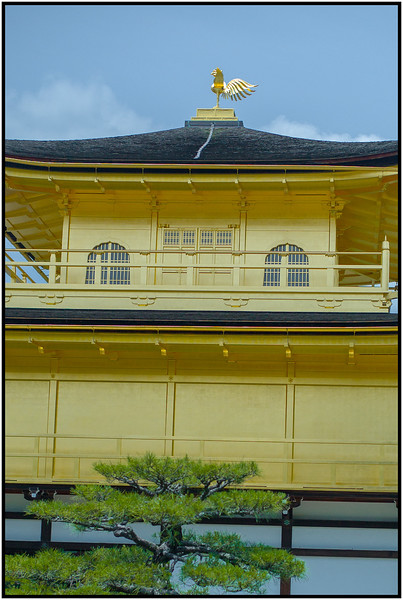
The upper two levels are covered with pure gold leaf on lacquer panels. I learned in Korea that the lacquer (which comes from the resin of a tree) is so durable that they’ve found lacquer boxes and other furniture items in sunken ships that are still in near-perfect shape despite being buried at sea for 150 years.
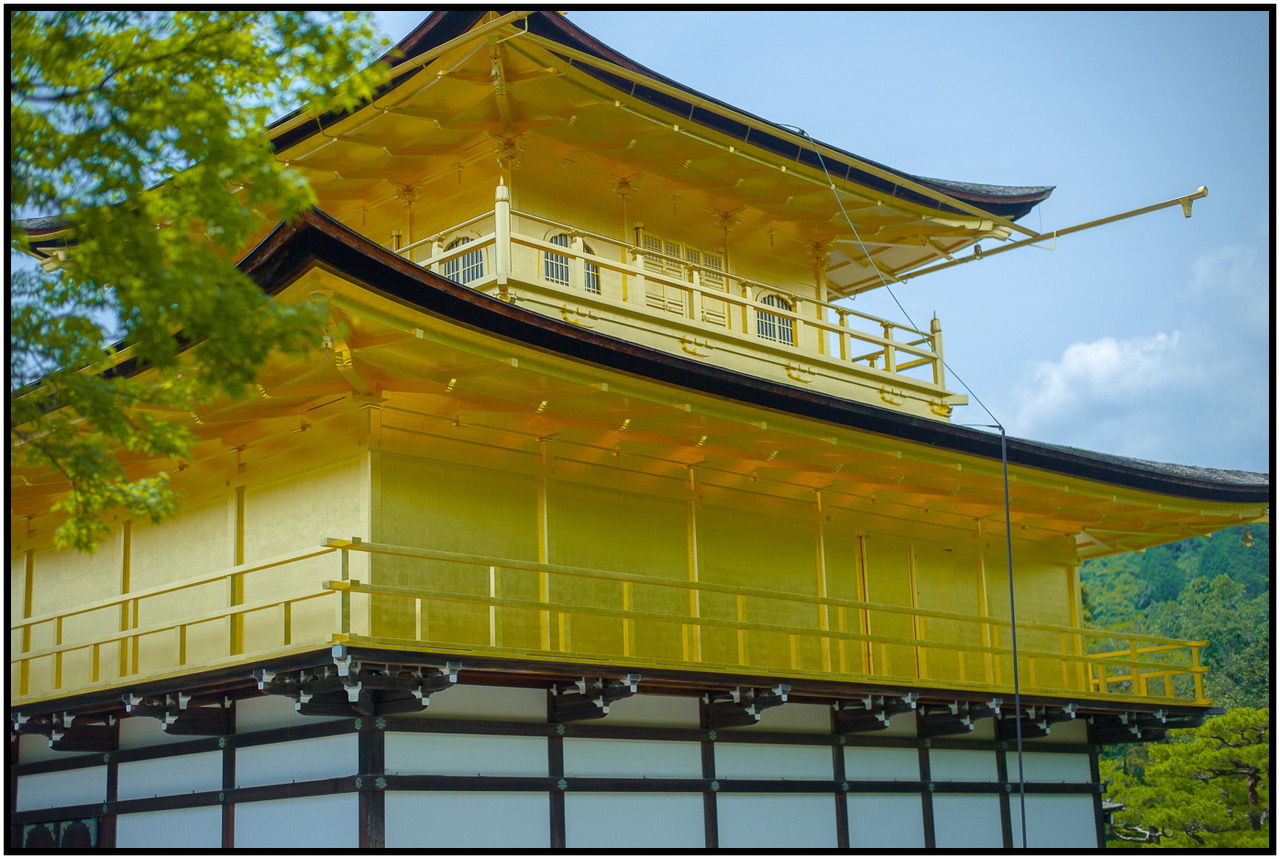
Gold foil on lacquer covers the upper two levels of Kinkaku and a shining phoenix stands on top of the shingled roof. he first level is built in the shinned style of the 11th-century imperial aristocracy; the second level is in the buke style of the warrior aristocracy; and the top level is in the Chinese zenshu-butsuden style. Overall, Kinkaku is representative of Muromachi-period architecture.
The phoenix on top. I thought it was a rooster (like on the world’s fanciest weather vane) until I read differently later.
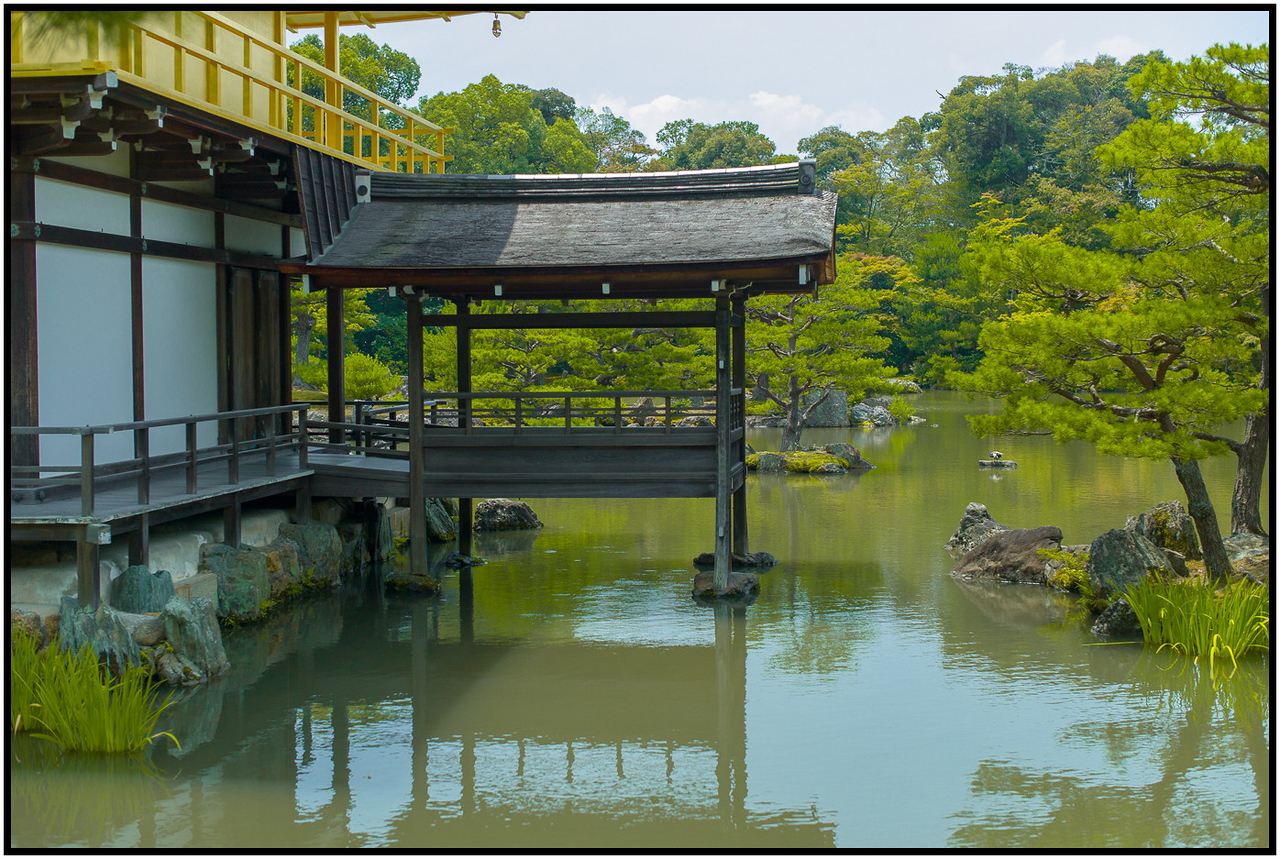
Little fishing dock off the back.
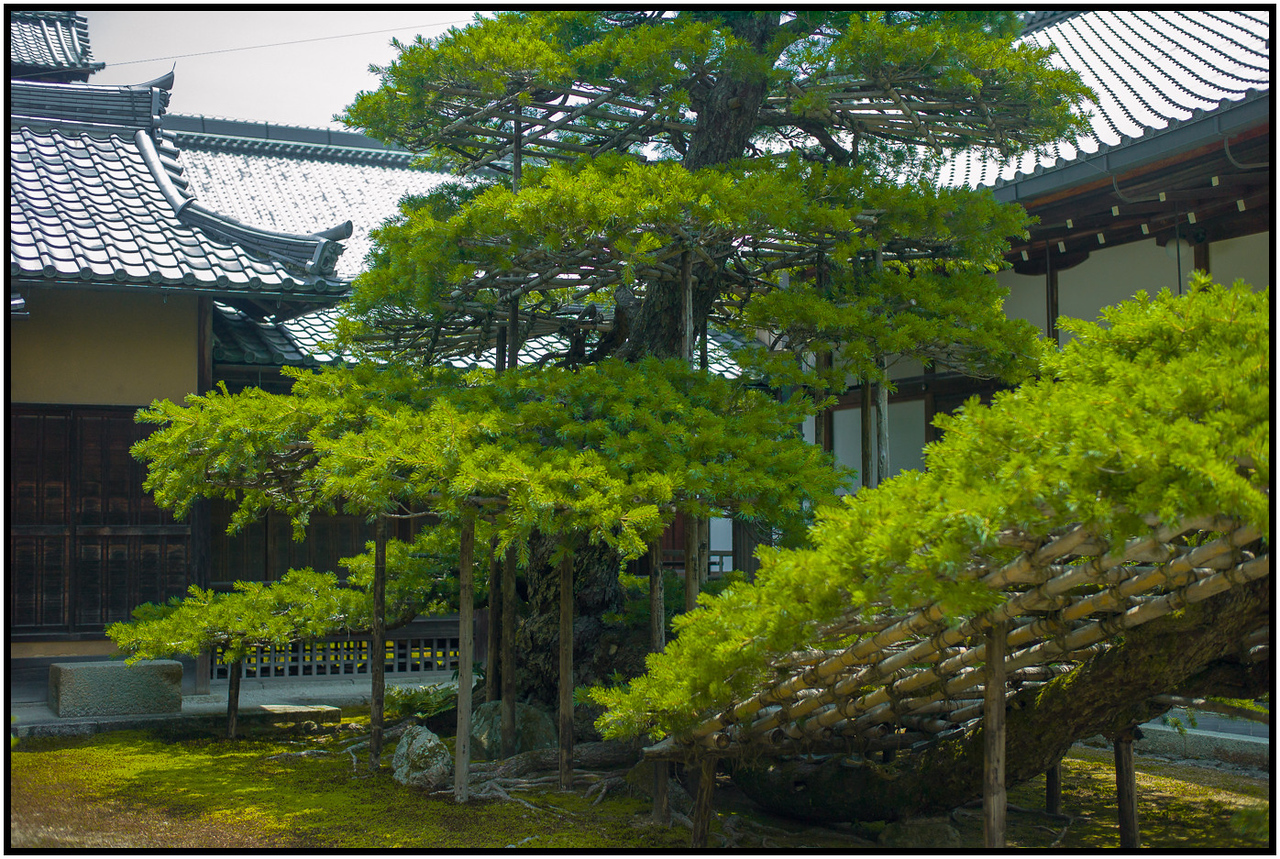
Some other buildings in the park.
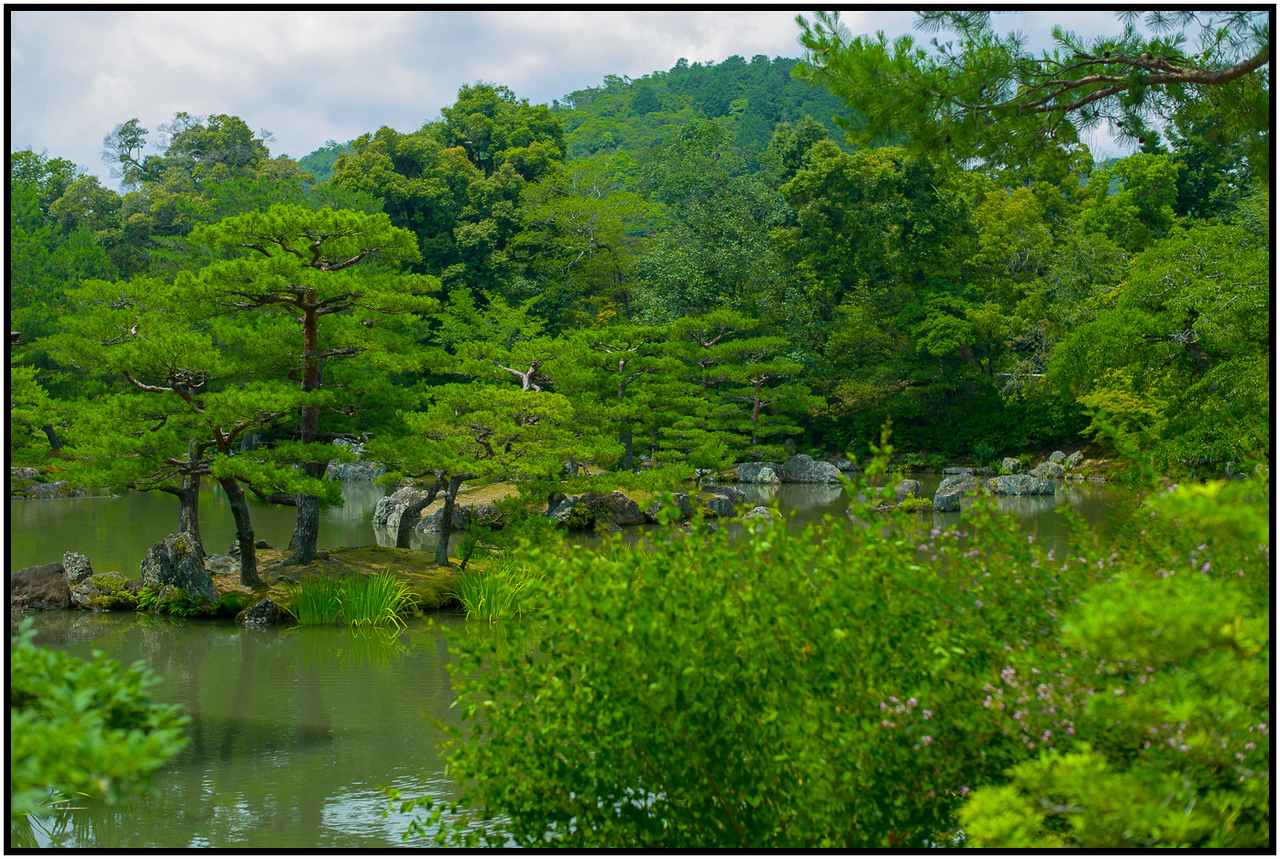
The pond with the Golden Pavilion, and islets large and small, is the center of the garden. Rocks donated by various provincial lords of the period are placed throughout the garden. As a pond garden designed for strolling, it is typical of the Muromachi period. The garden is listed as a National Special Historic Site and Special Place of Scenic Beauty.
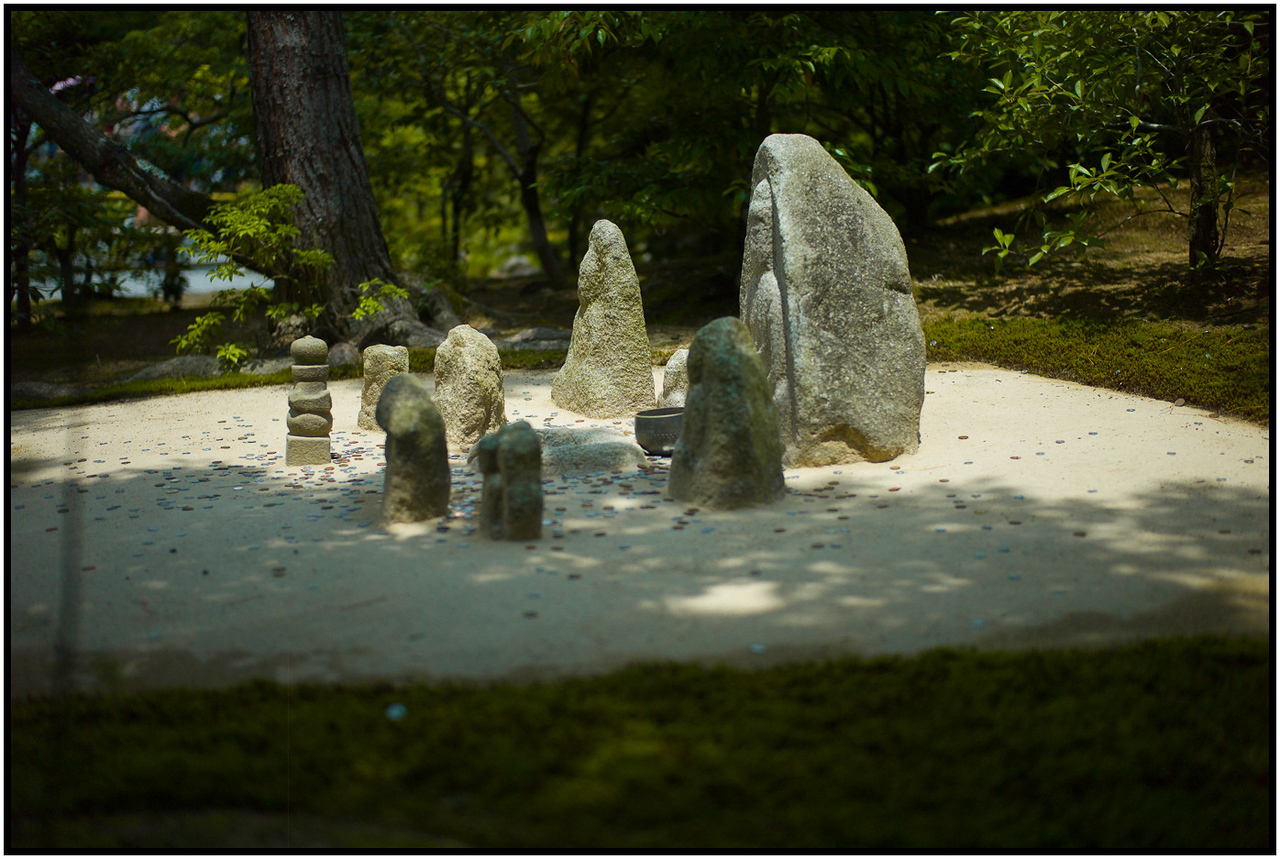
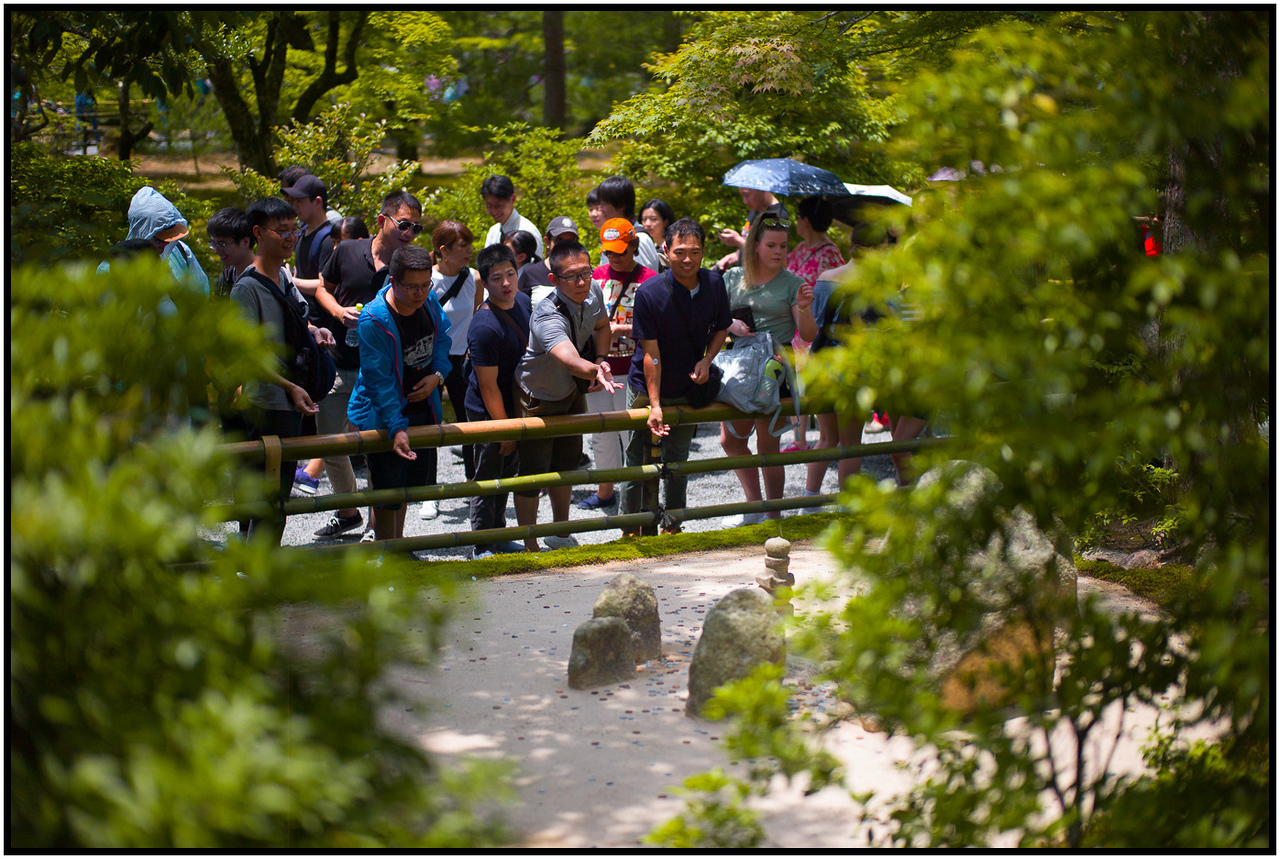
People were trying to toss coins into that little cup in front of the biggest stone carving.
It was really crowded today. Too crowded, in fact. It was so hot and miserable to start with, and then add combat-viewing … ugh. It made for an experience we sort of rushed through.
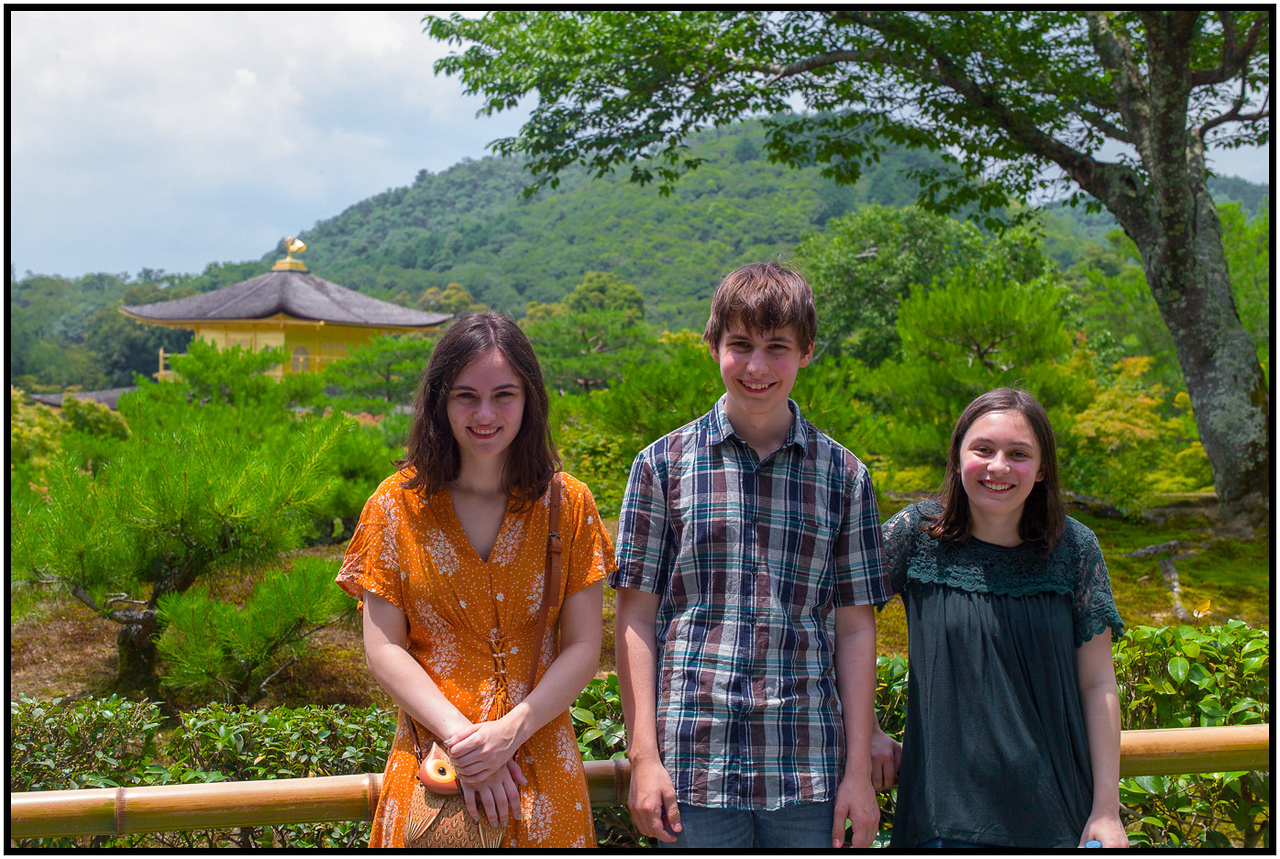
Taking a break to sit in the shade for a few moments.
People could try their hand at ringing a replica of the temple bells. You had to get the timing just right in order to make a gong sound. Most people failed.
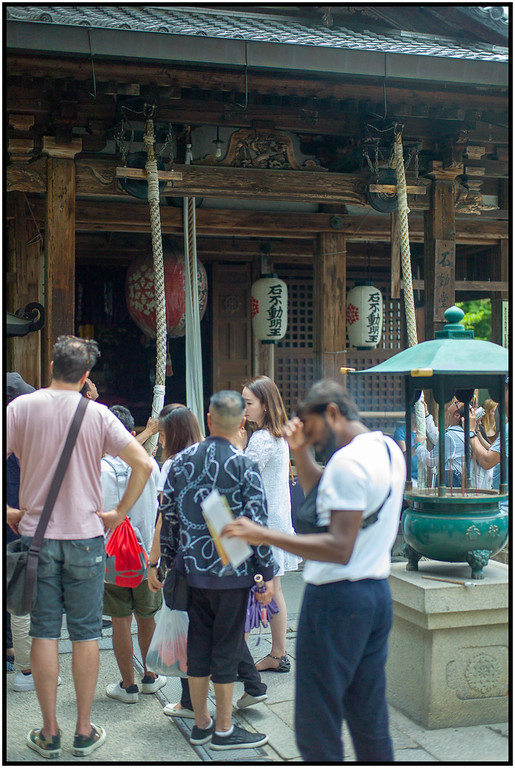
Holden tried, too, and also failed. Right after Holden gave up, a muscle-bound Australian guy hopped on and rang it perfectly on his first try. The entire crowd was impressed.
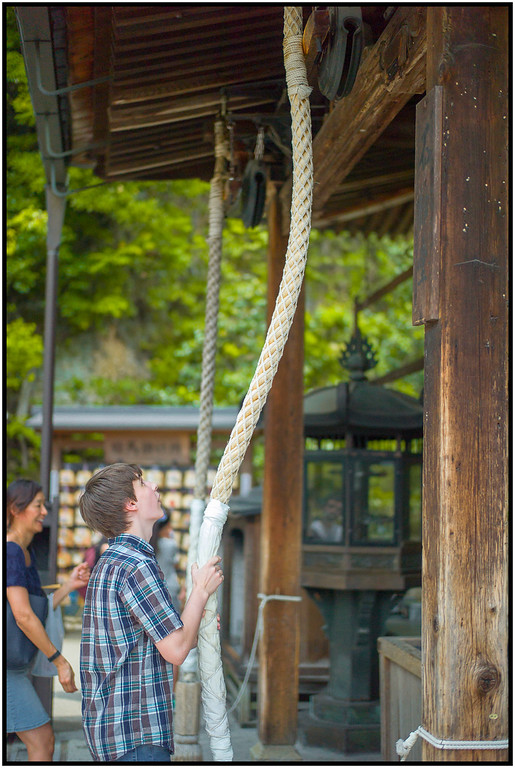
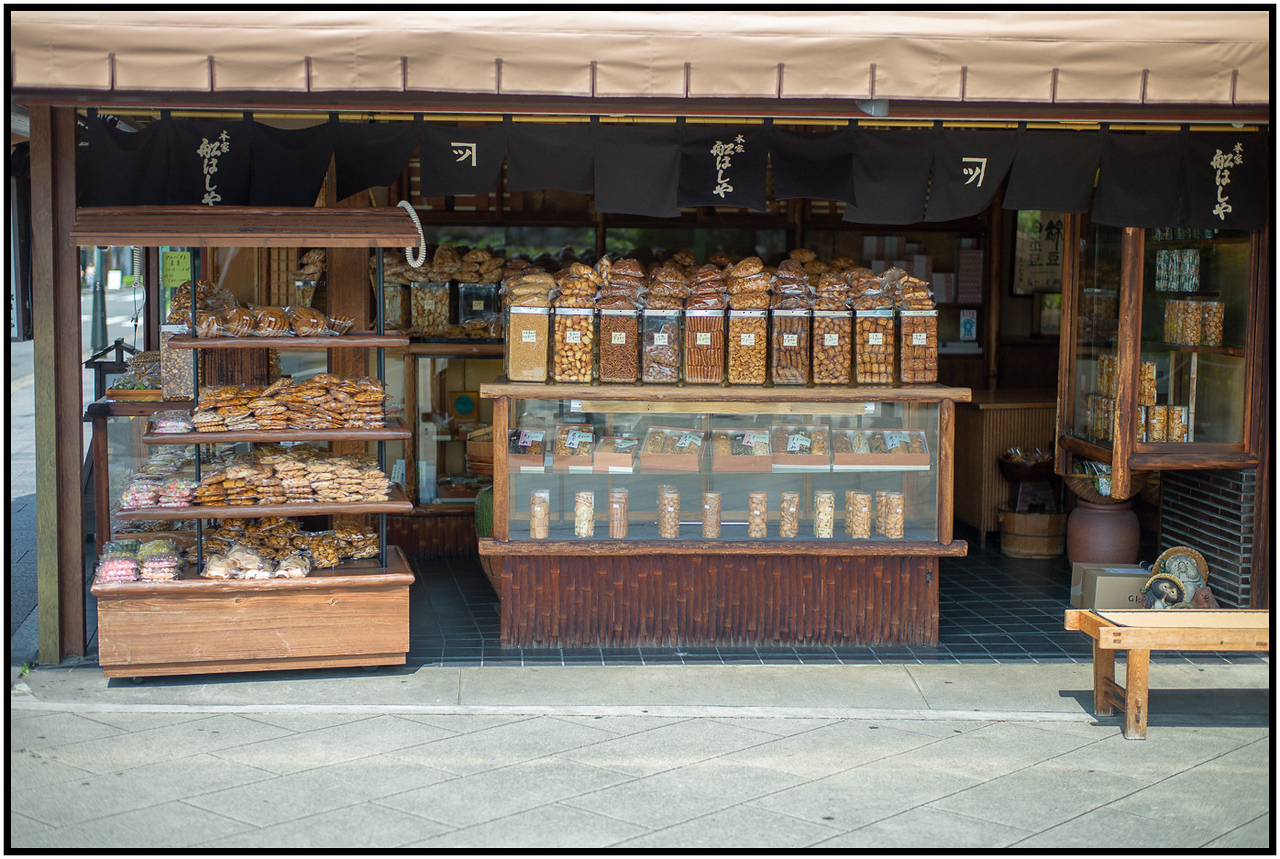
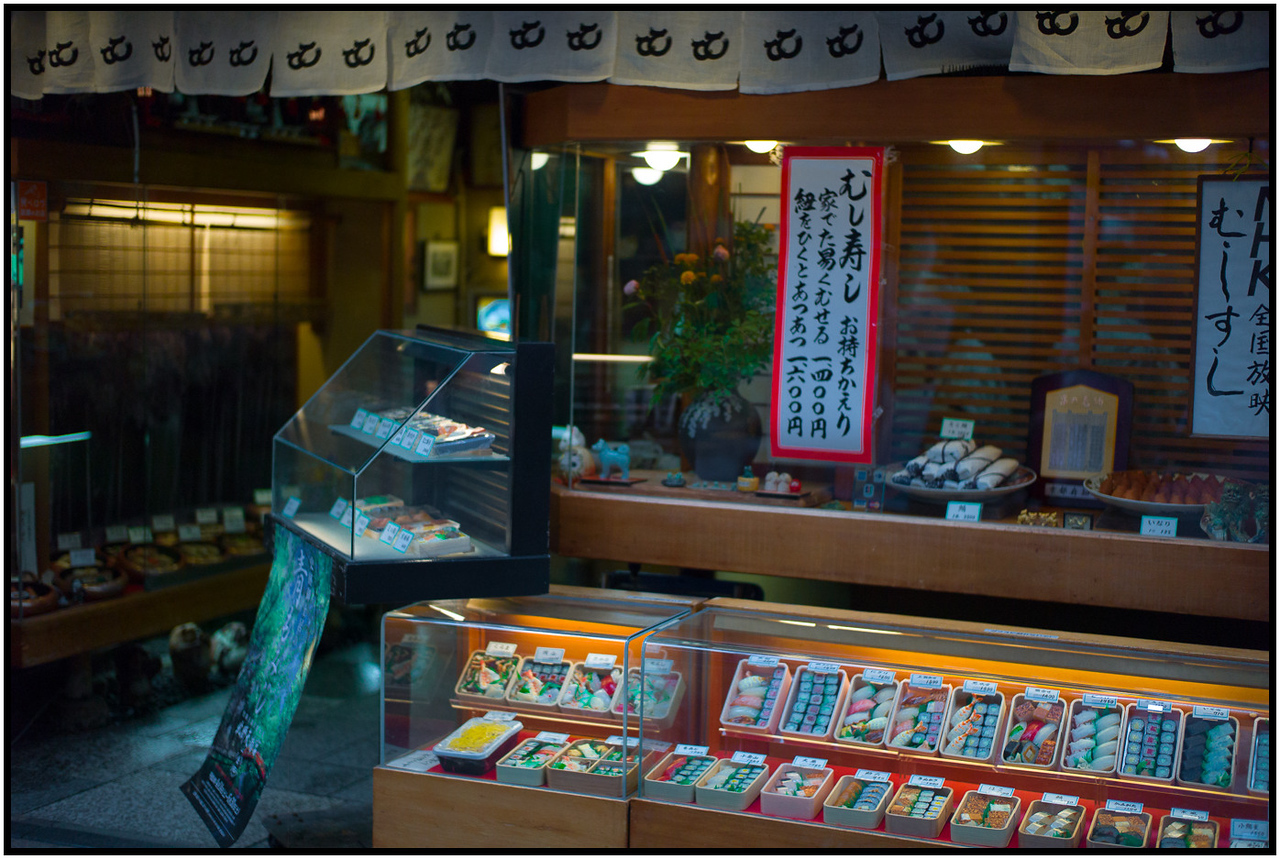
Our lunch restaurant. These little hole-in-the-wall places almost always serve up great food. Another thing that makes travel for the non-Japanese speakers easy is the Japanese tradition of putting plastic replicas of their food out on display. In this photo you can see what looks like a deli case sitting out front: this is filled with representations of their dishes. You can get a real good idea about what will likely show up in front of you once you order. They also put photos of nearly everything on their menus (on the left side of the picture) out front, too.
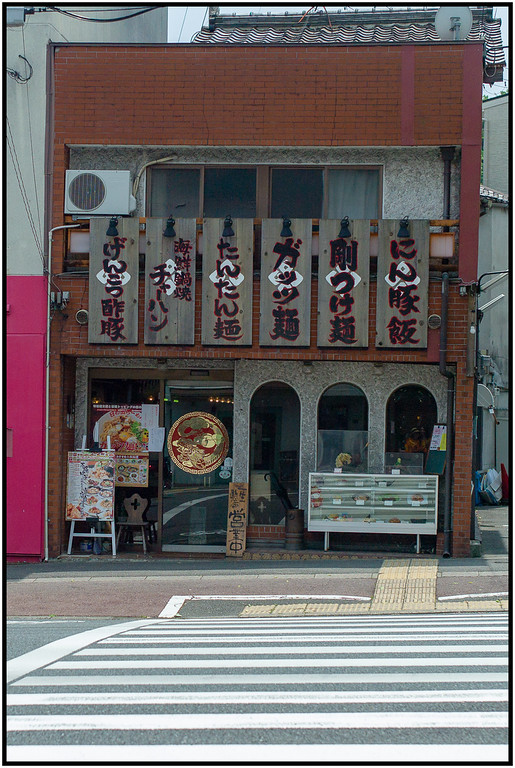
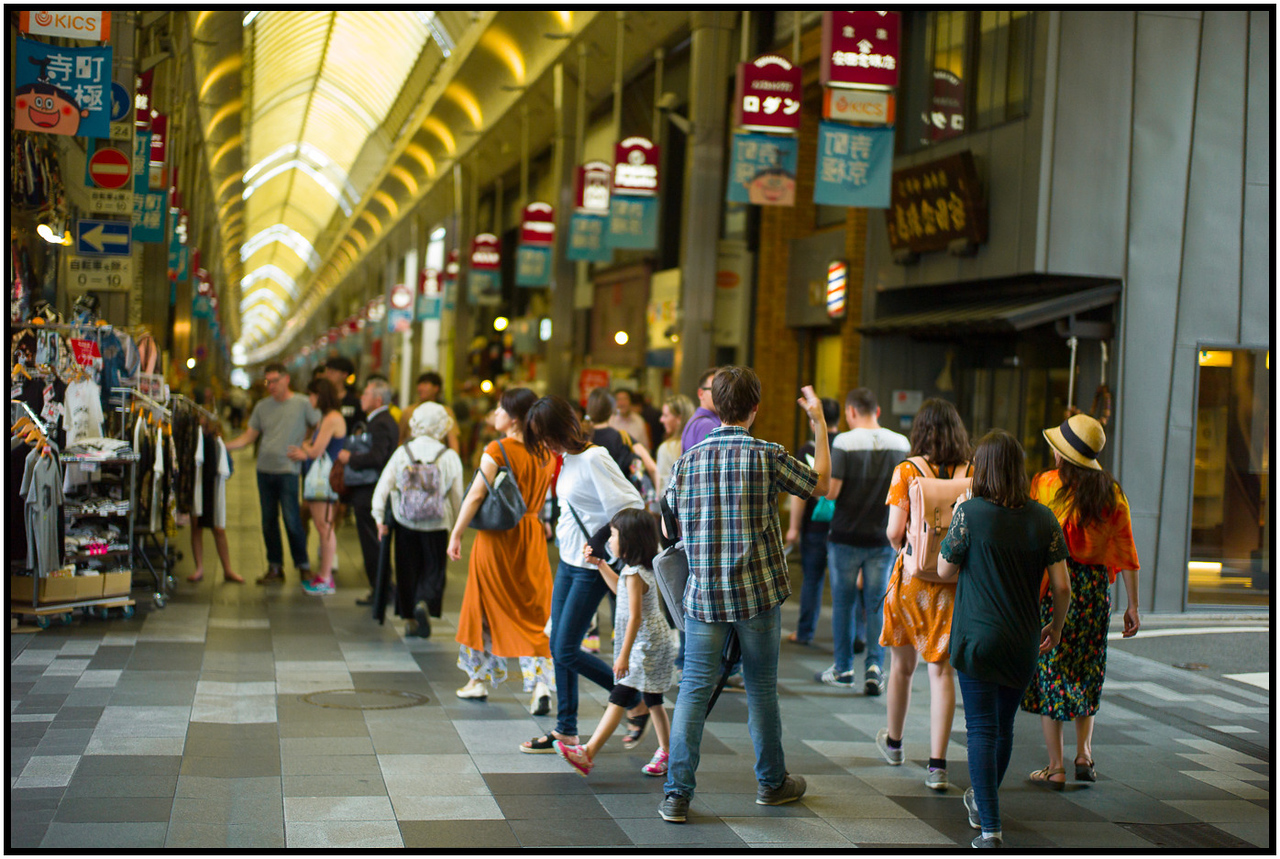
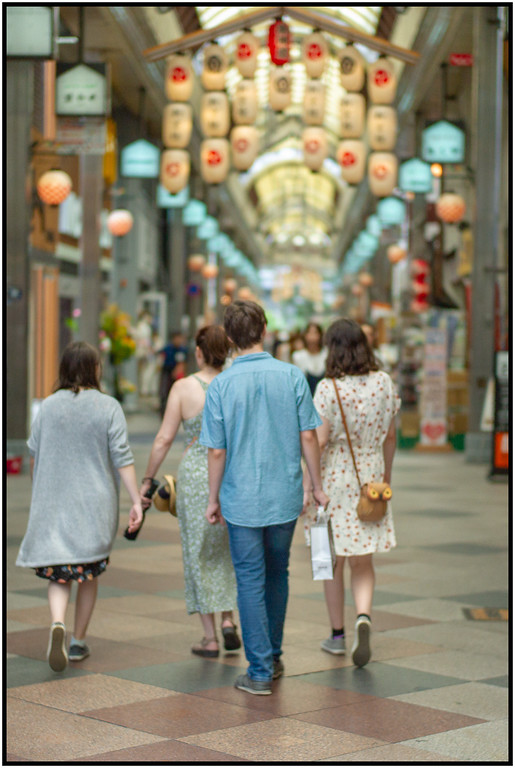
We took a train back toward our house, and then walked from the station to the Teramachi Kyogoku shopping arcade – something we did on our last visit. It was a chance to wander around under a covered roof and do some shopping for supplies. Both Isabella and Holden bought backpacks that they can use now as well as when they get home.
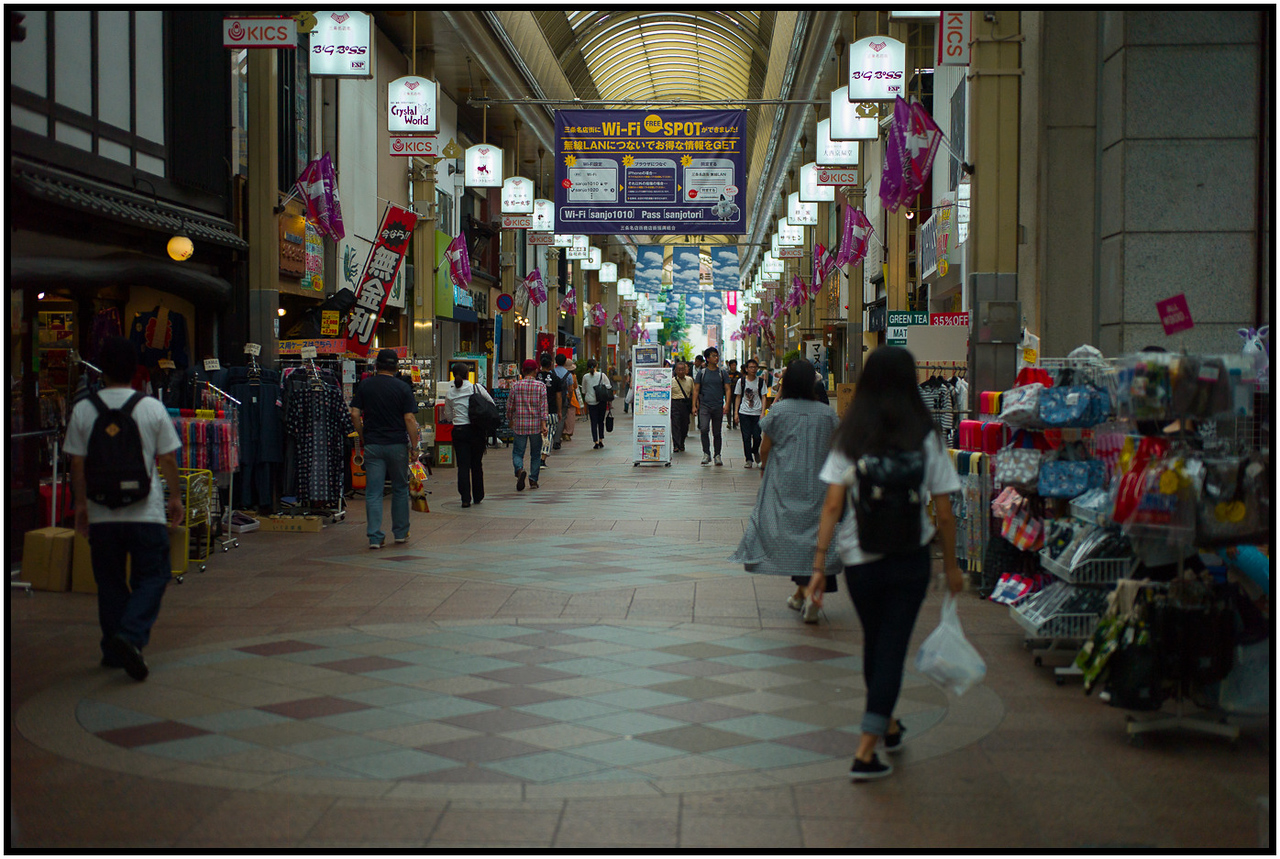
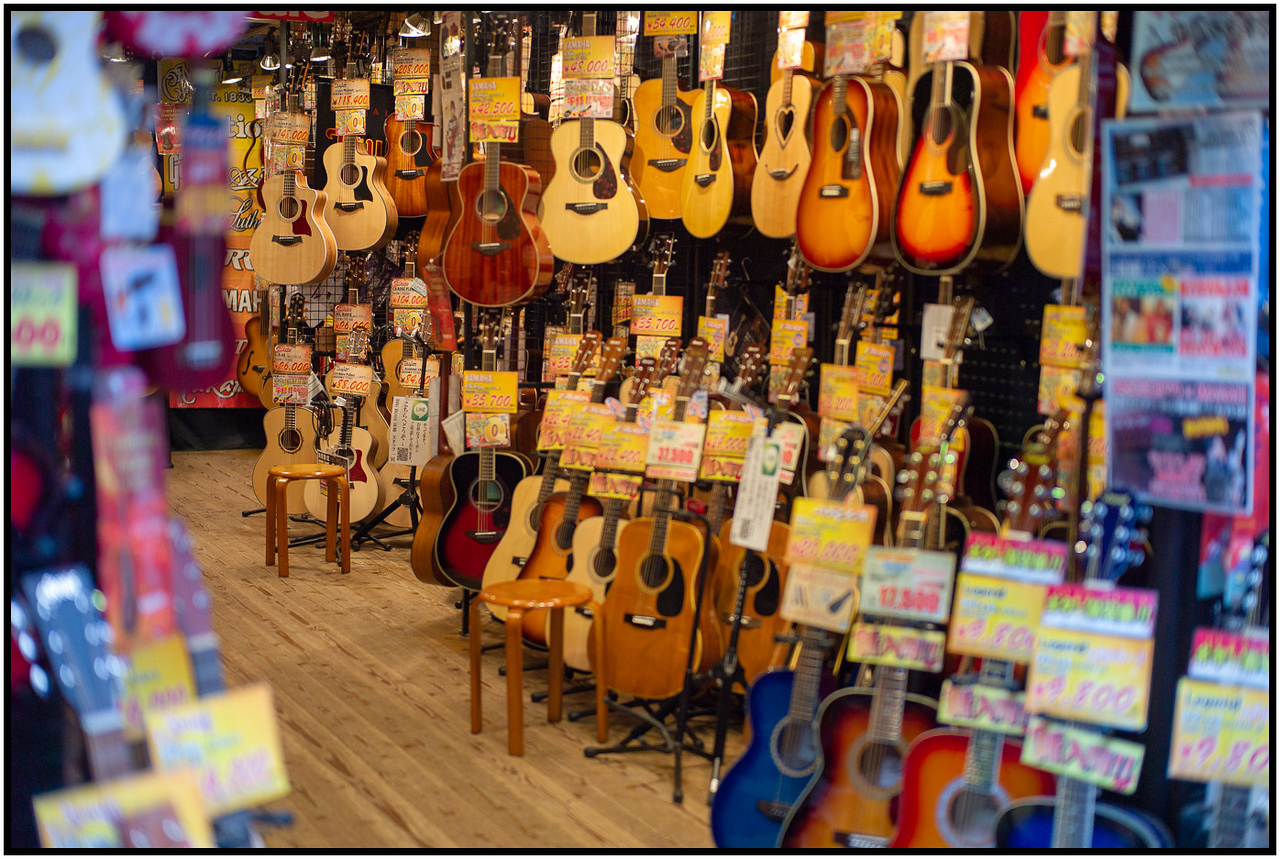
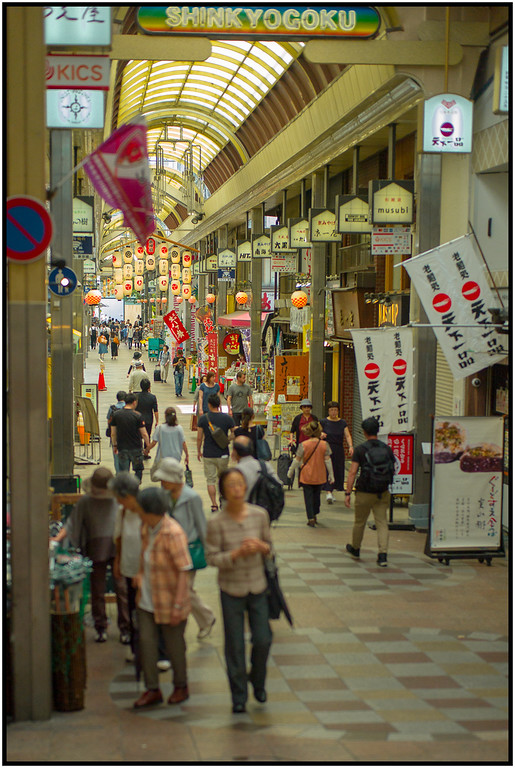
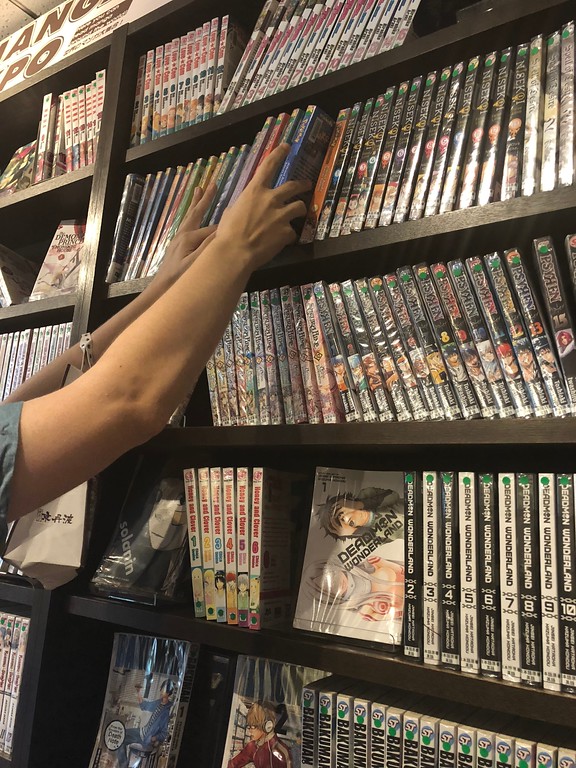
The kids were excited to find a manga store. This became the highlight of their day when …
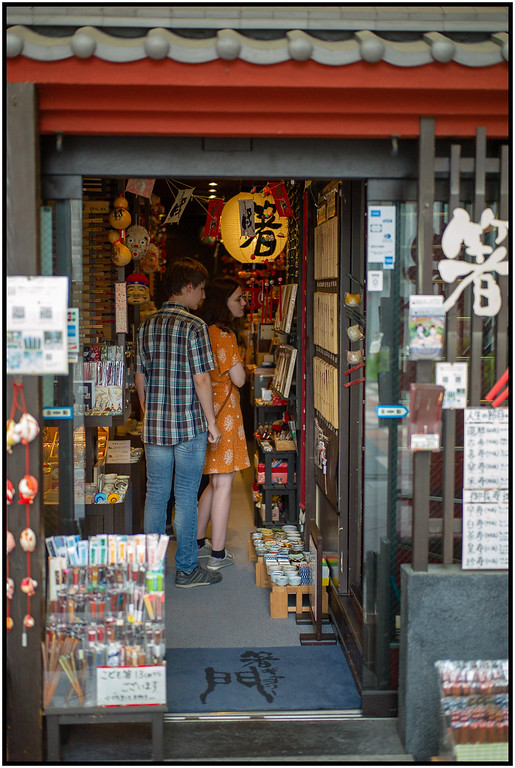
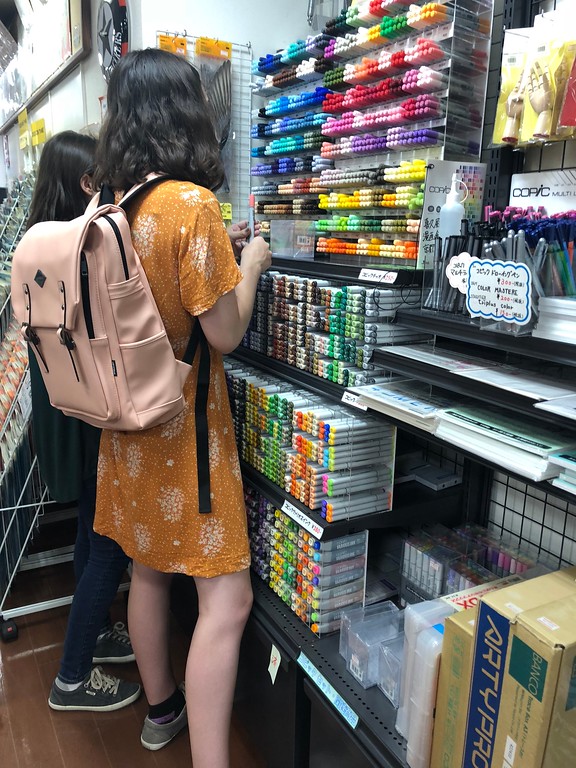
… Isabella and Josie discovered Copic markers on the second floor of the shop that are about 1/3rd the price in the U.S. Both of them loaded up and I can guess we might be back again before we leave. You can also see Isabella’s new backpack. (It was made in Korea, which we had a little laugh about.)
Our little group meandering around the shopping arcade.
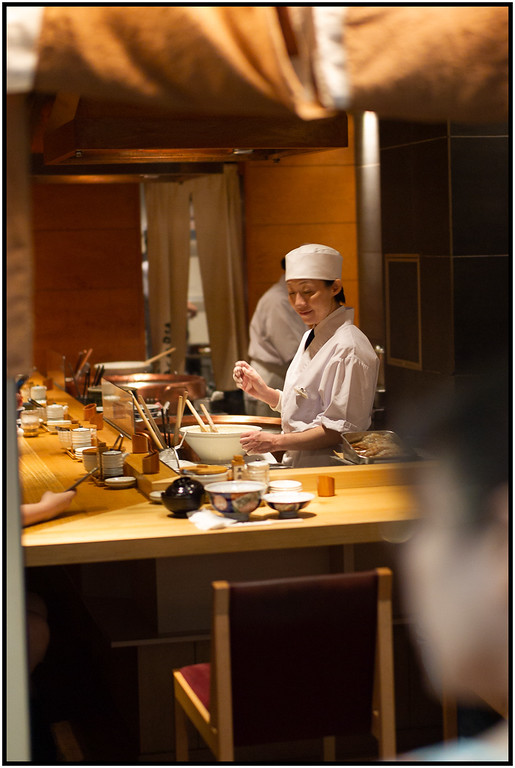
There are also some pretty nice looking restaurants in here.
For all your sushi needs.
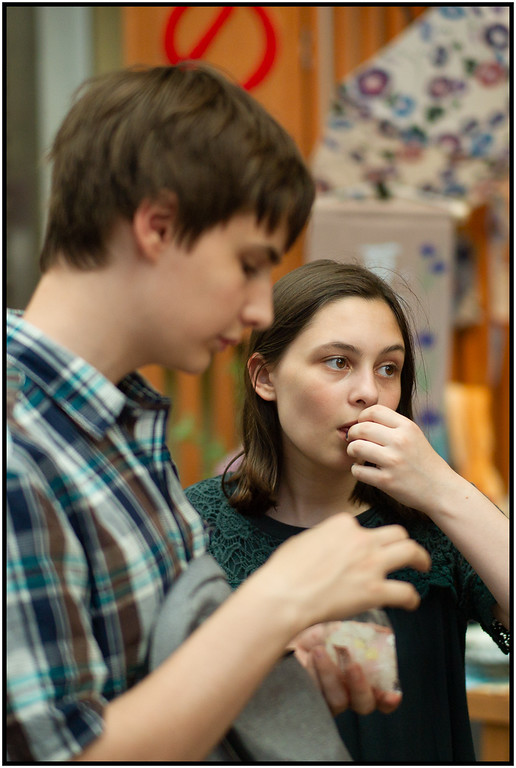
Holden and Josie skipped the raw fish and bought some candy to share instead.
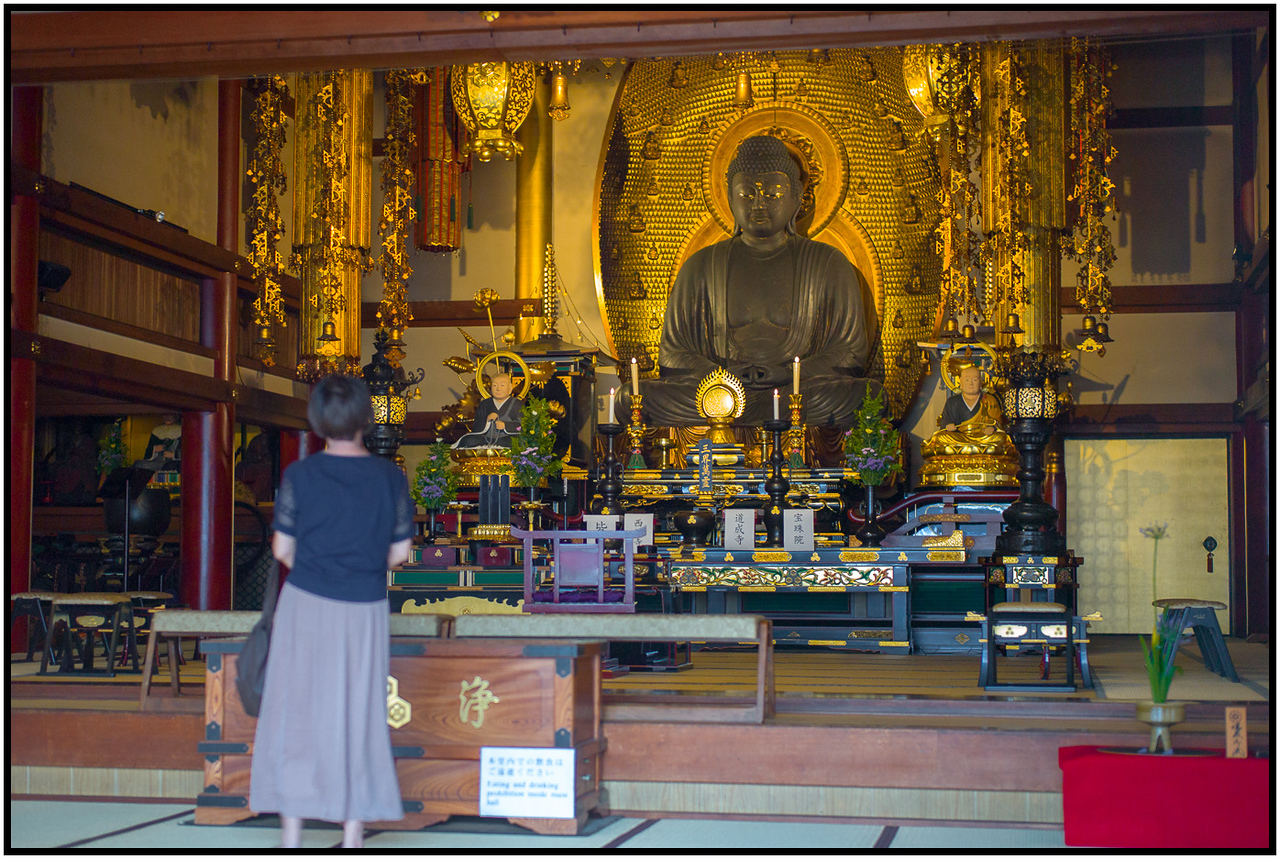
A Buddist Temple right in amongst the shops.
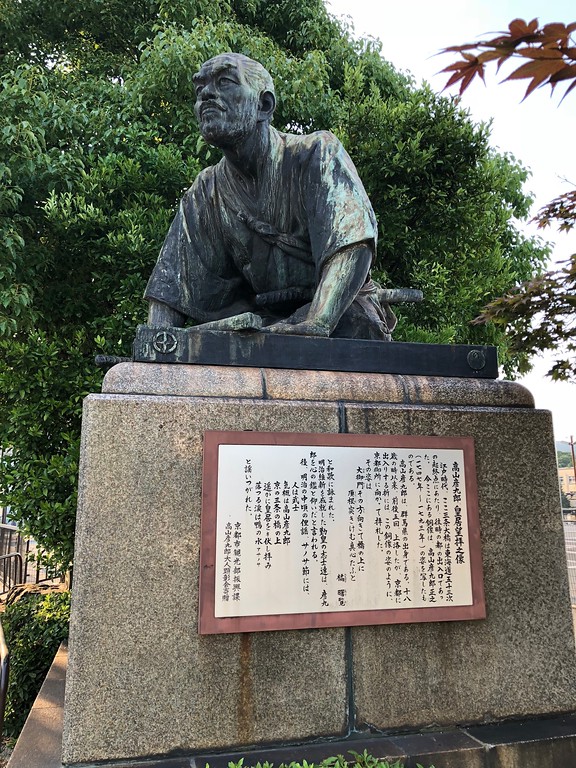
This was a weird statue. We never did learn what it represented.
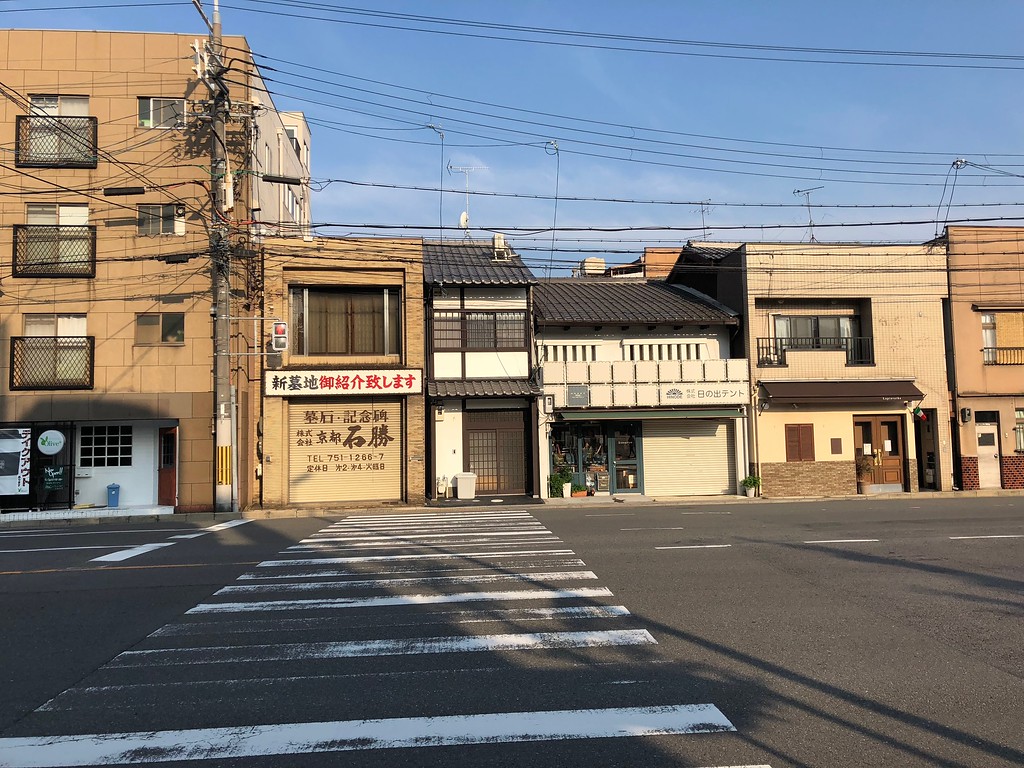
Our house is the squished white and dark brown building directly to the right of the sign with red lettering. It’s so nondescript it’s easy to walk by and not even see the entrance.
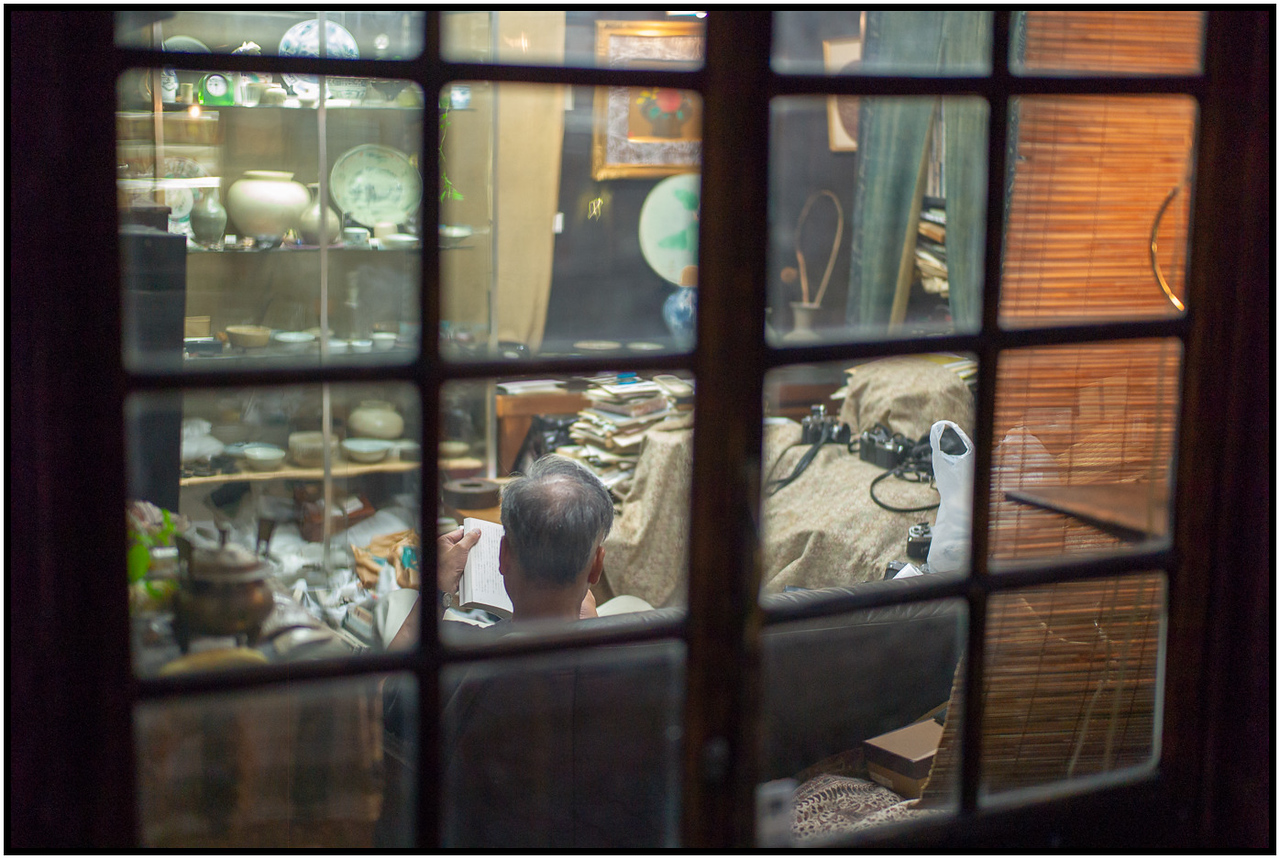
Once it got dark, Adam and I went back out for an evening stroll in the Gion district. Here is a guy just sitting in his jam-packed front room, reading his book.
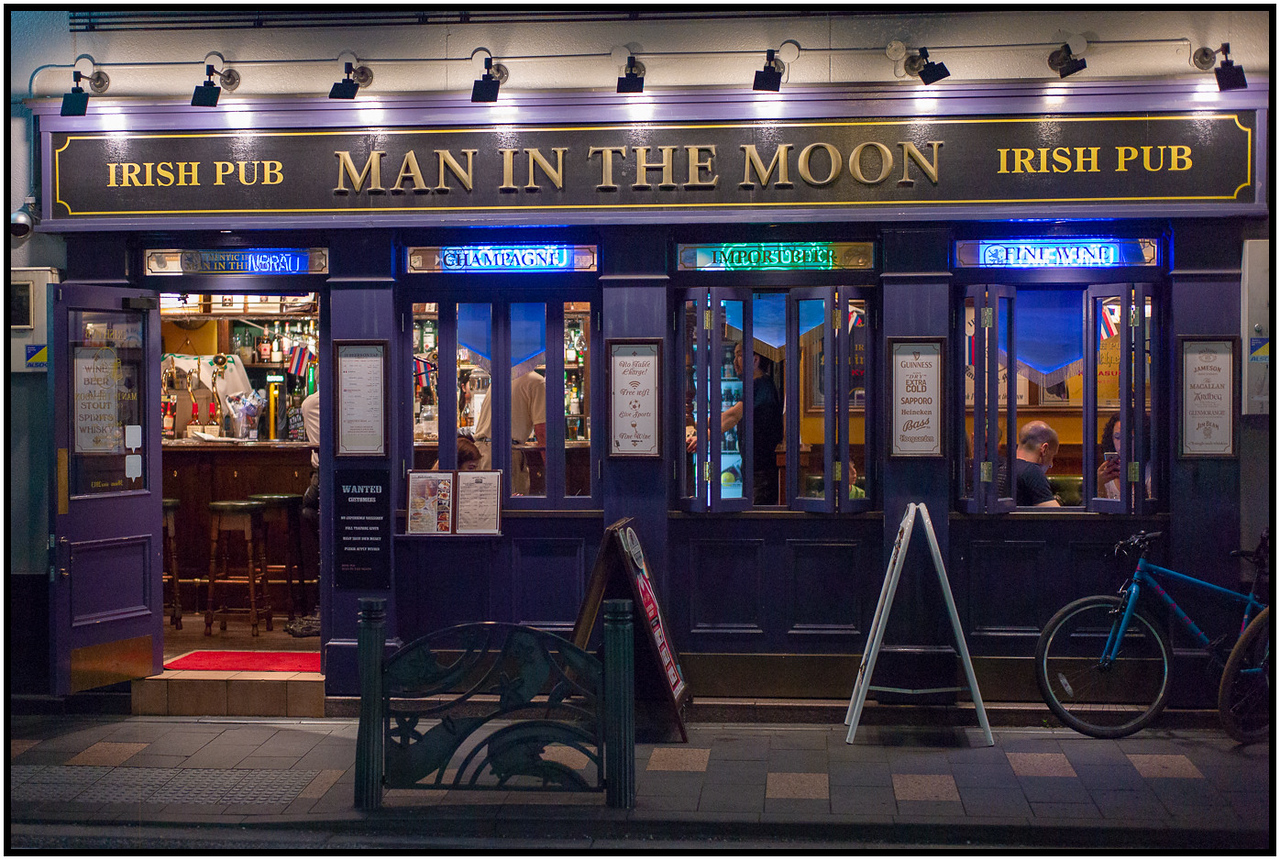
An Irish pub. We were still out way too early at 8:00 p.m. and nothing much was happening.
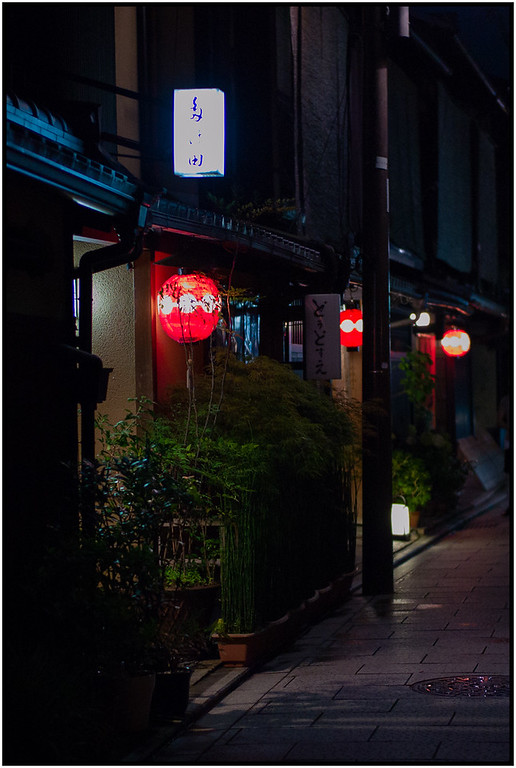
Street lamps.
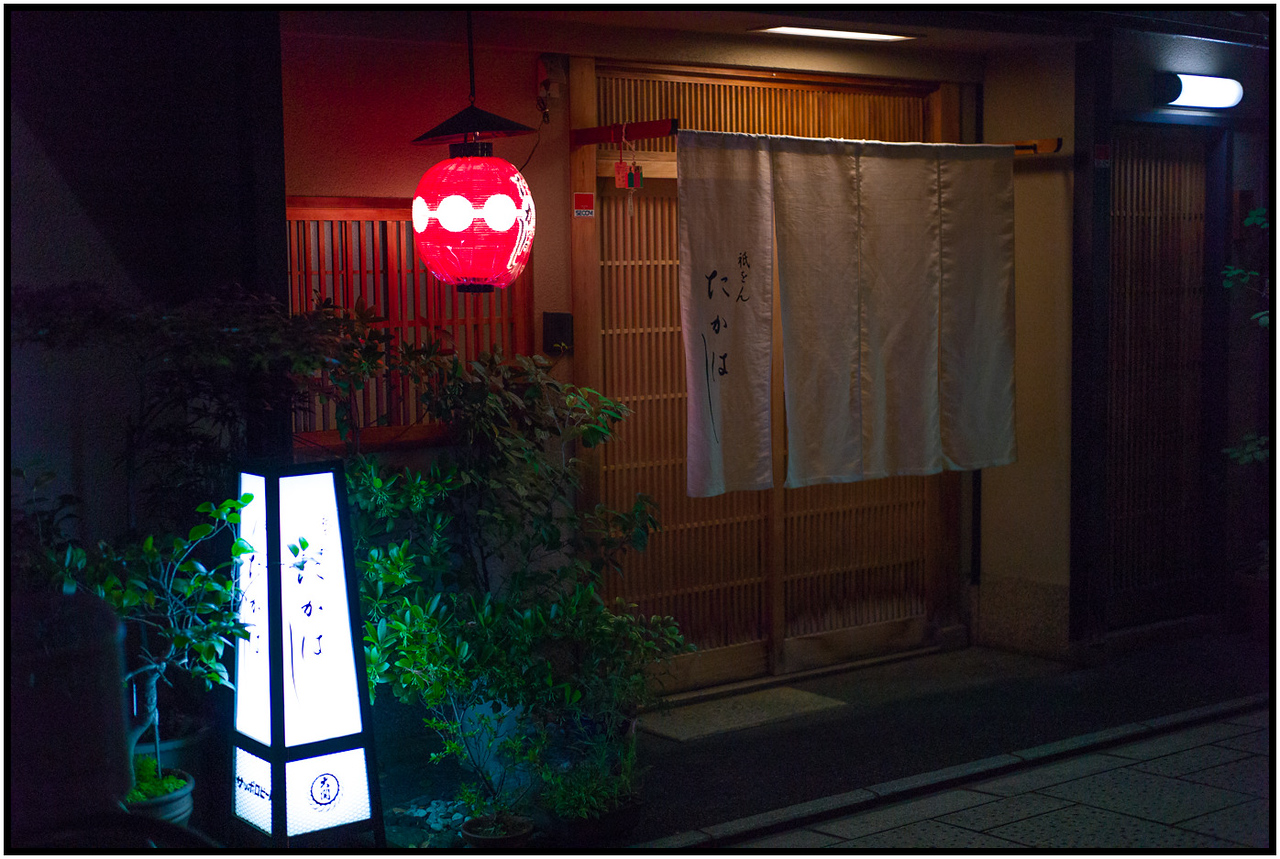
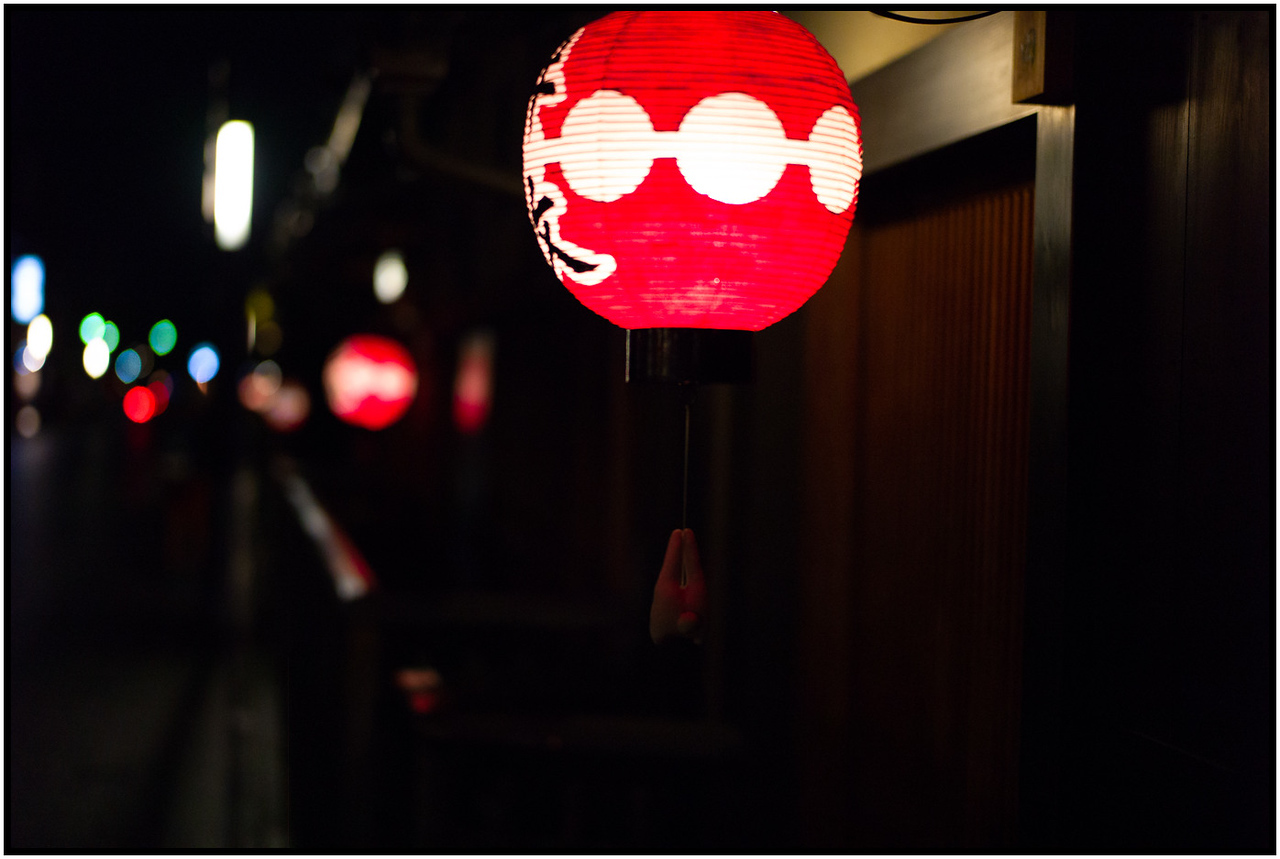
Geishas on their way home.
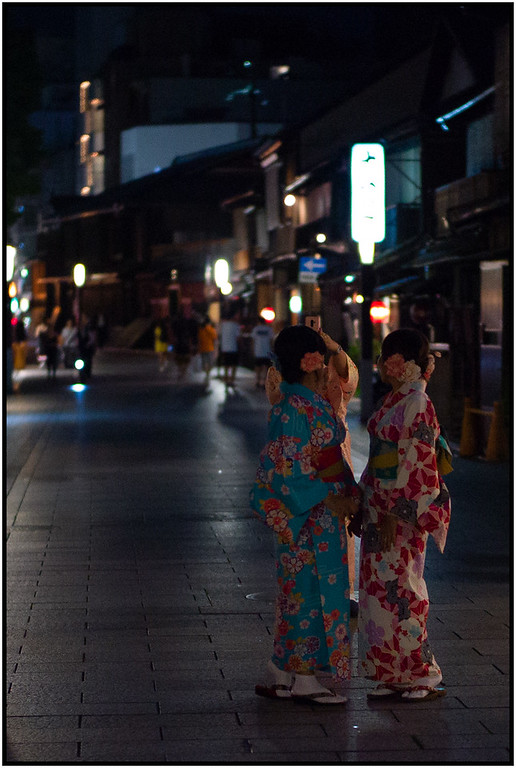
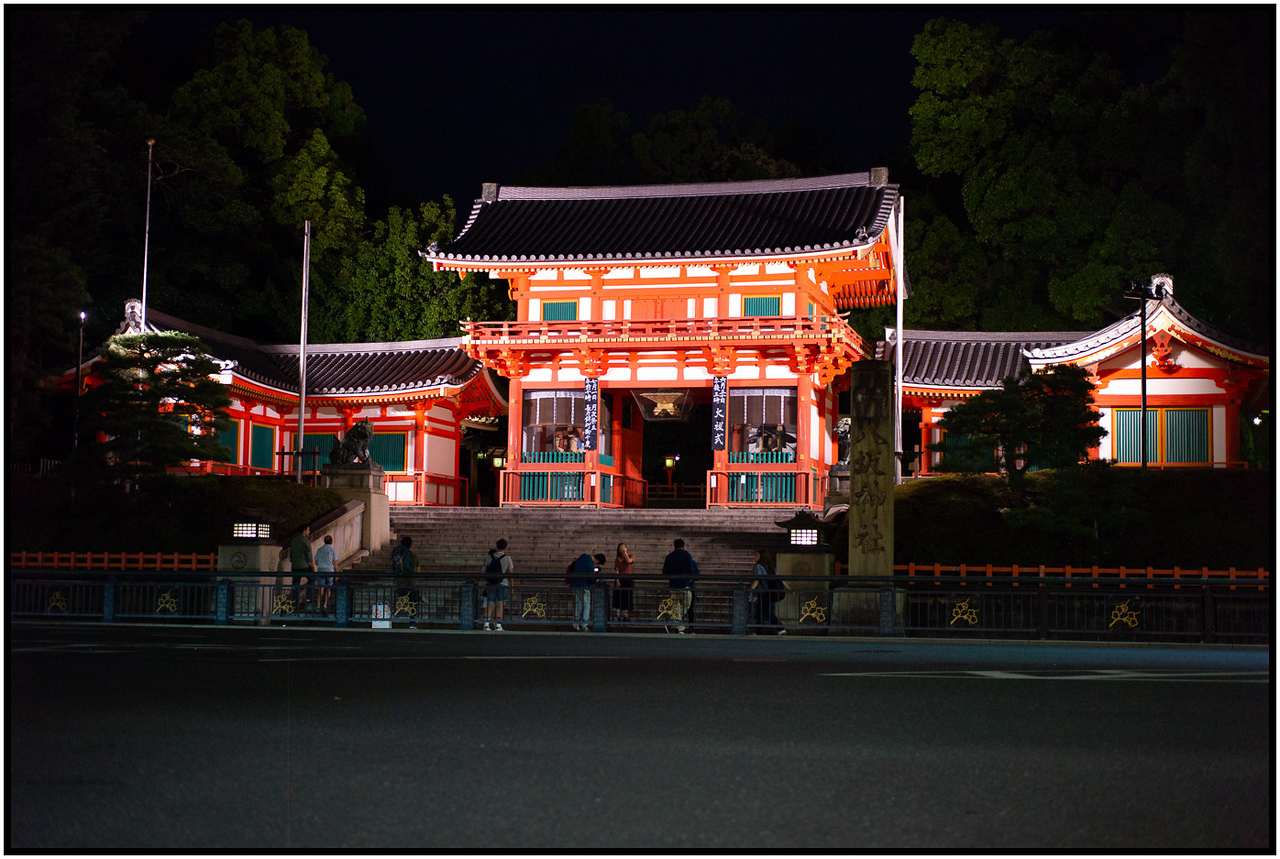
We decided not to hang out for several more hours to see if the nightlife started hopping. Maybe this was as busy as it was going to get — it is a Tuesday night, after all.
Wednesday, 27 June 2018
Today we took a longer train out of town to the village of Arashiyama. We had visited there 3 years ago, but Josie wanted to return to walk through the bamboo forests and to re-visit the snow monkey reserve.
Isabella on the train.
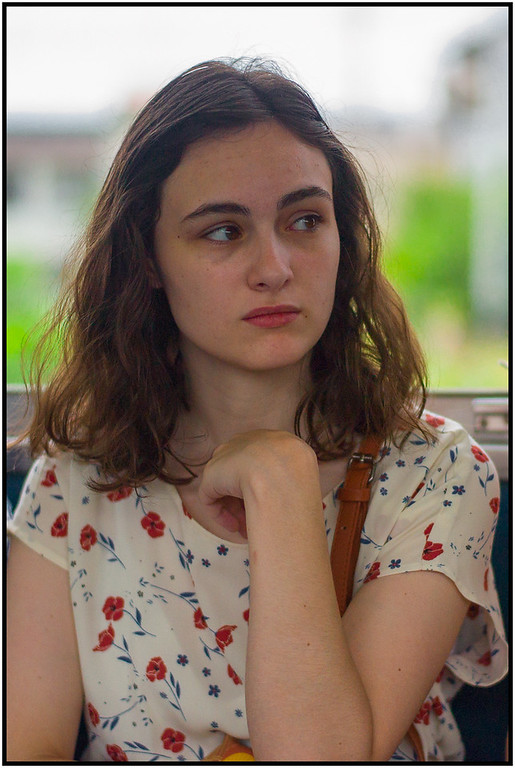
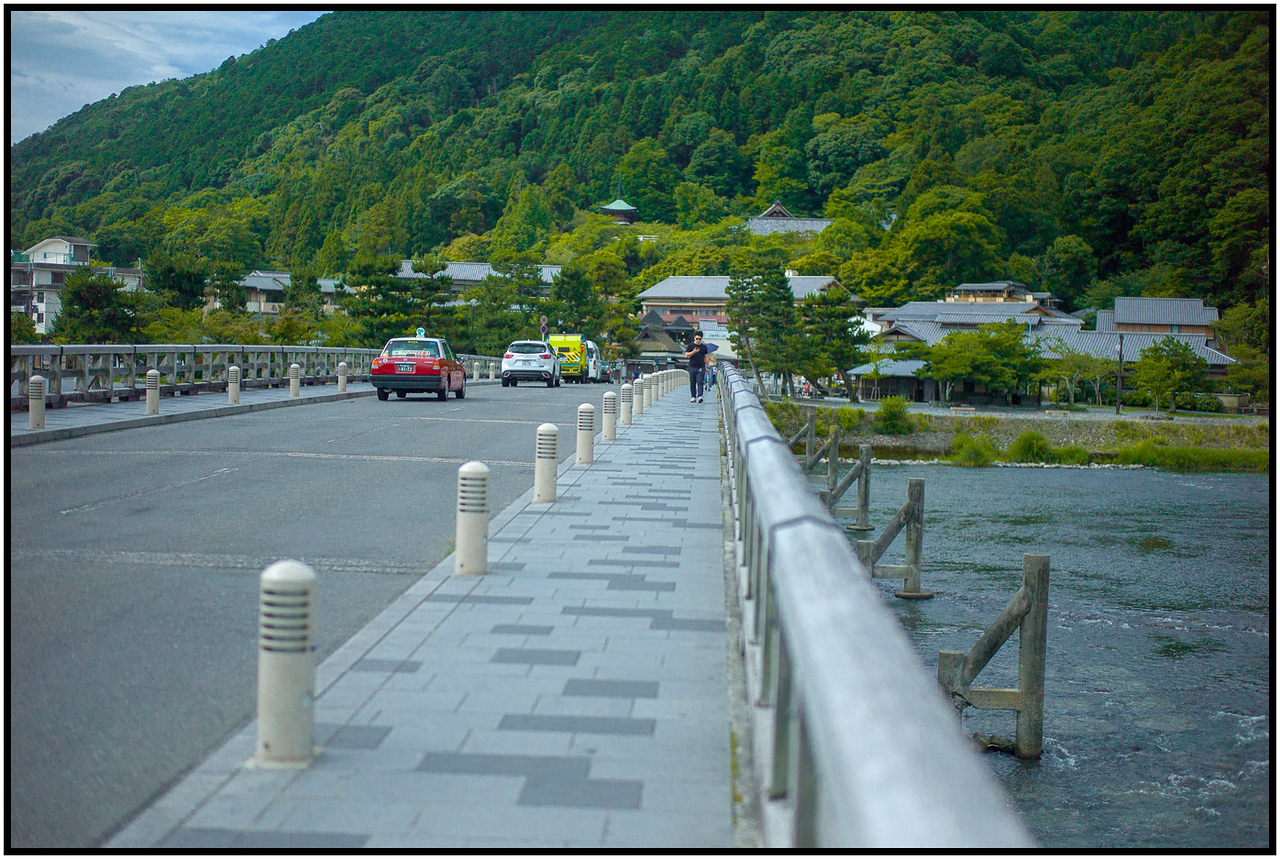
The town of Arashiyama. It’s a cute little place, although very touristy.
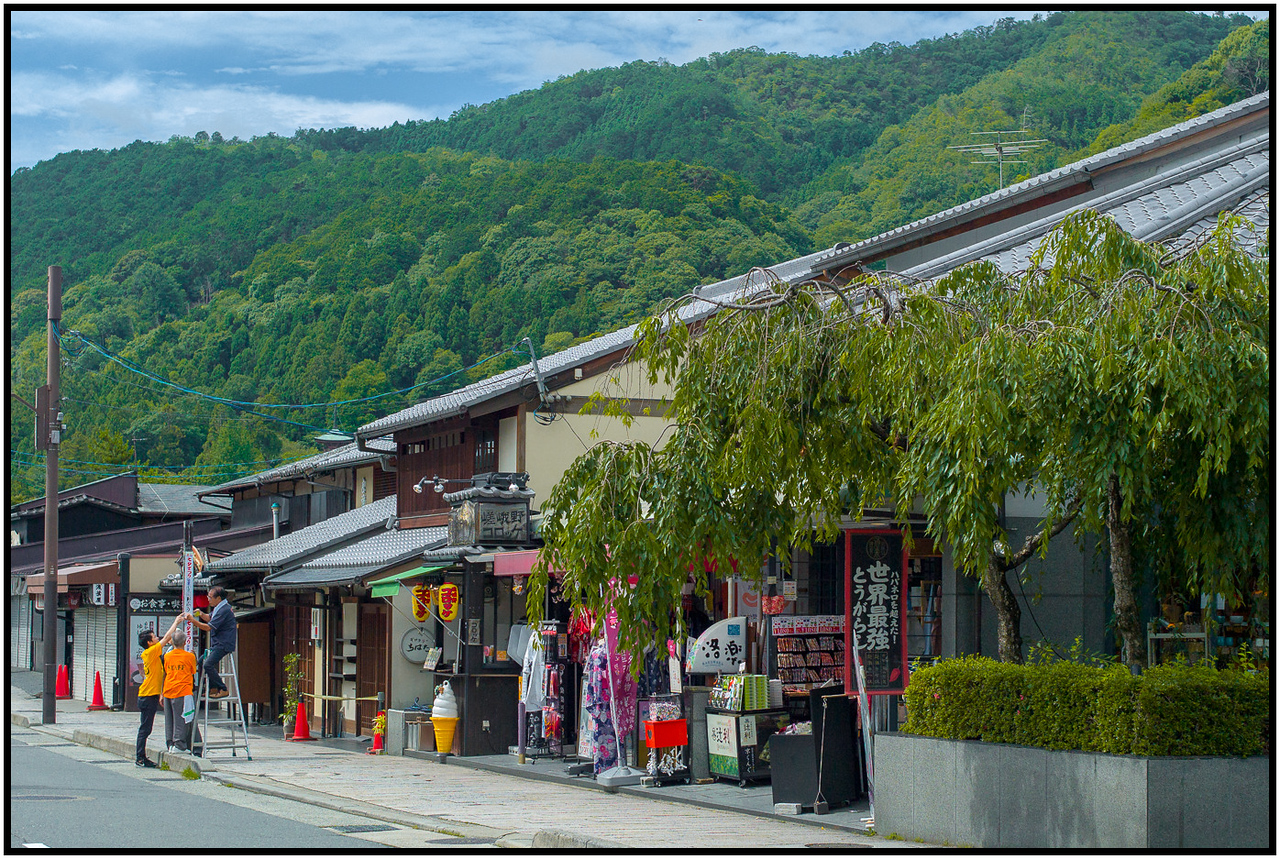
A river runs through the center of the town.
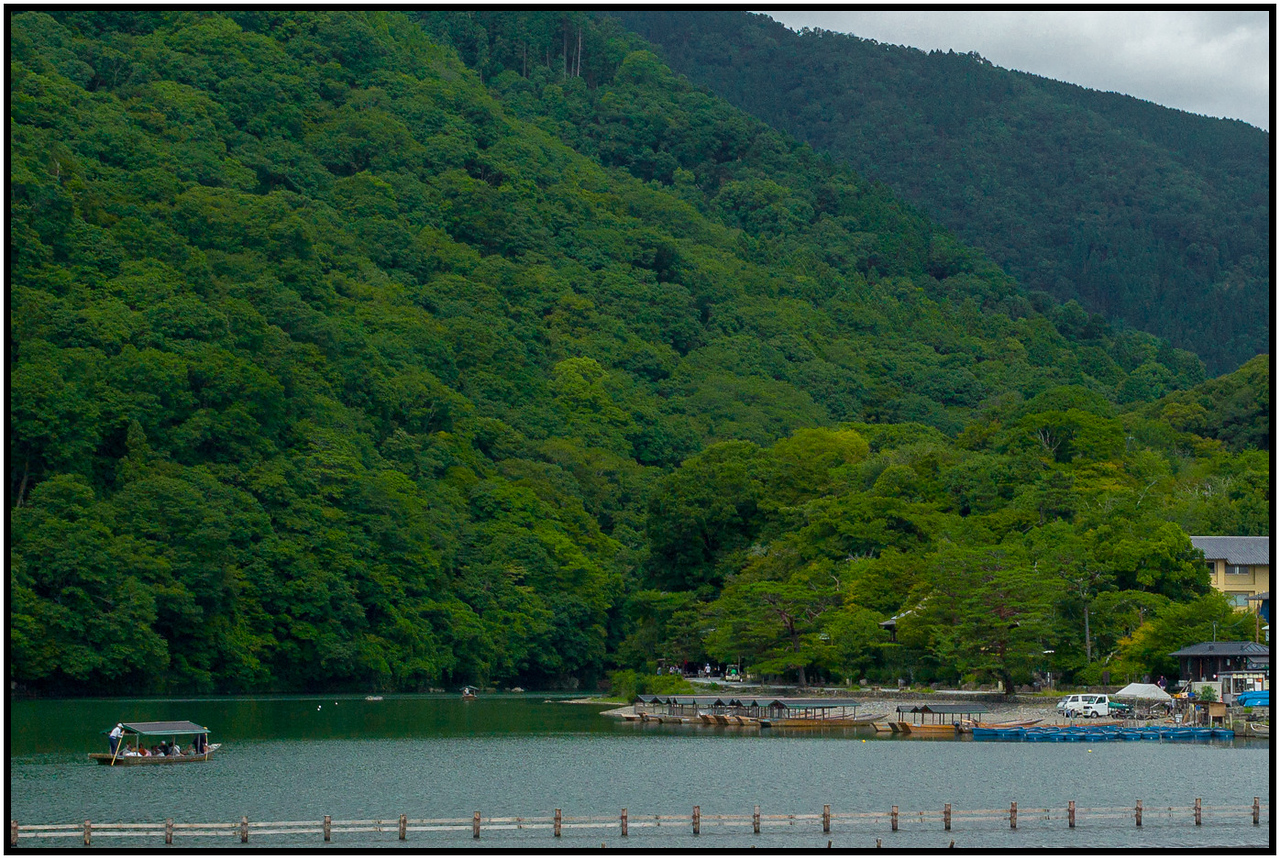
Fishing boats.
The monkeys are up a very, very steep hill. It’s strenuous enough they caution people to take water with them, and then have many seating opportunities on the way up, along with vending machines filled with cold beverages. This is not a hike for the weak.
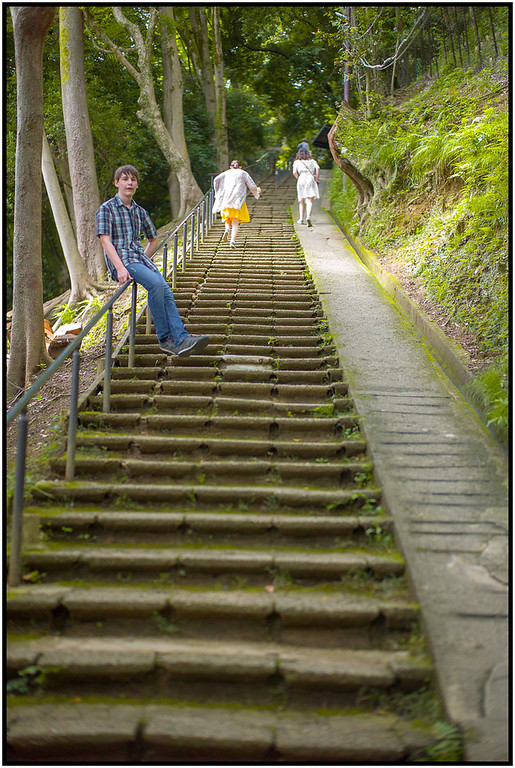
We had to stop frequently to catch our breath and cool off. It wouldn’t be so bad if it weren’t so darned hot.
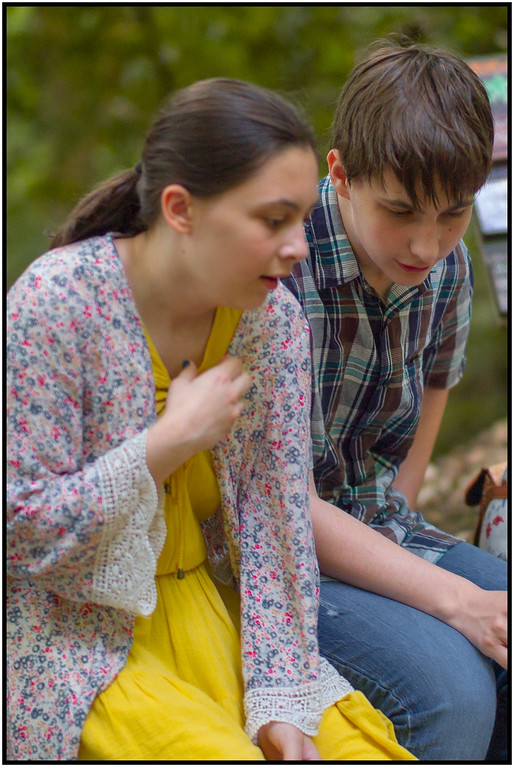
One of the many resting places. Even the youngsters in the bloom of peak health can’t make it up without cooling off periods.
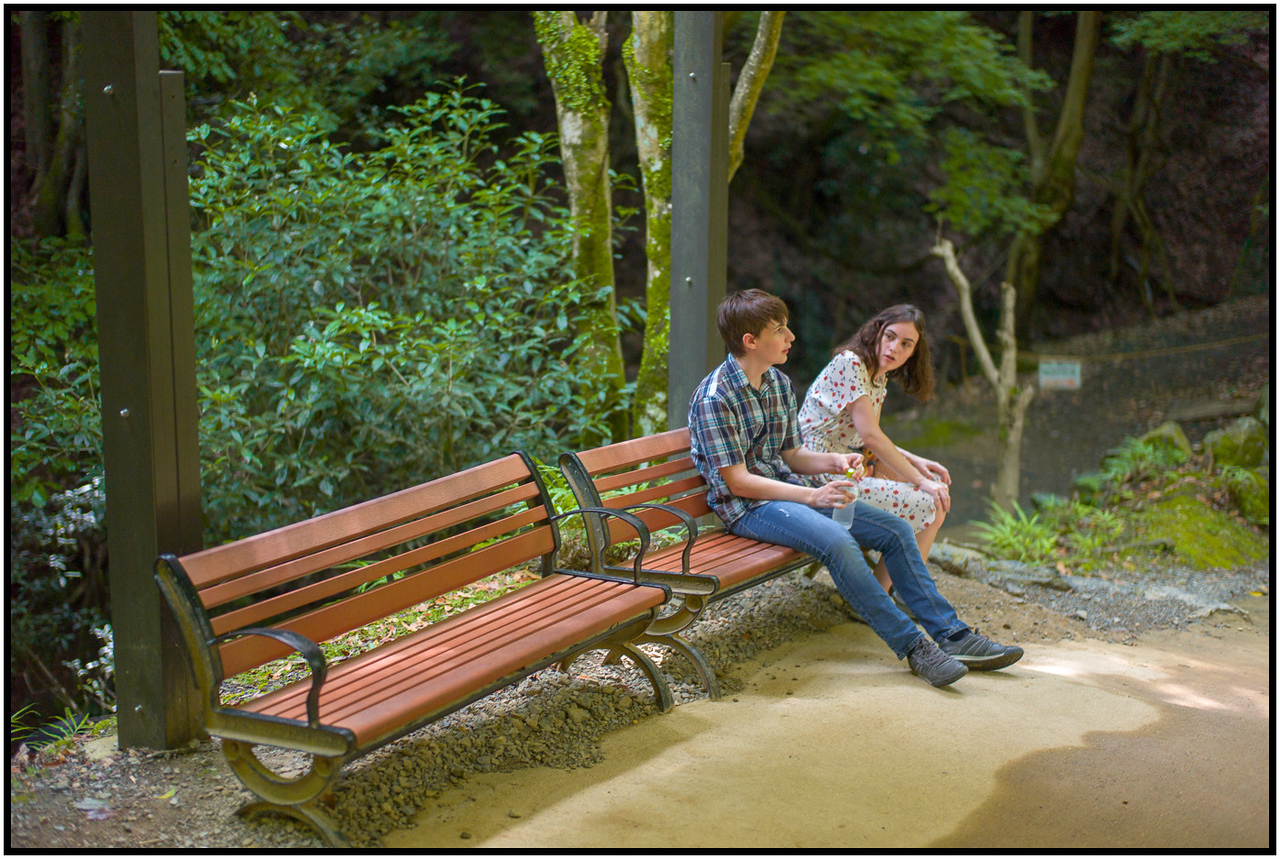
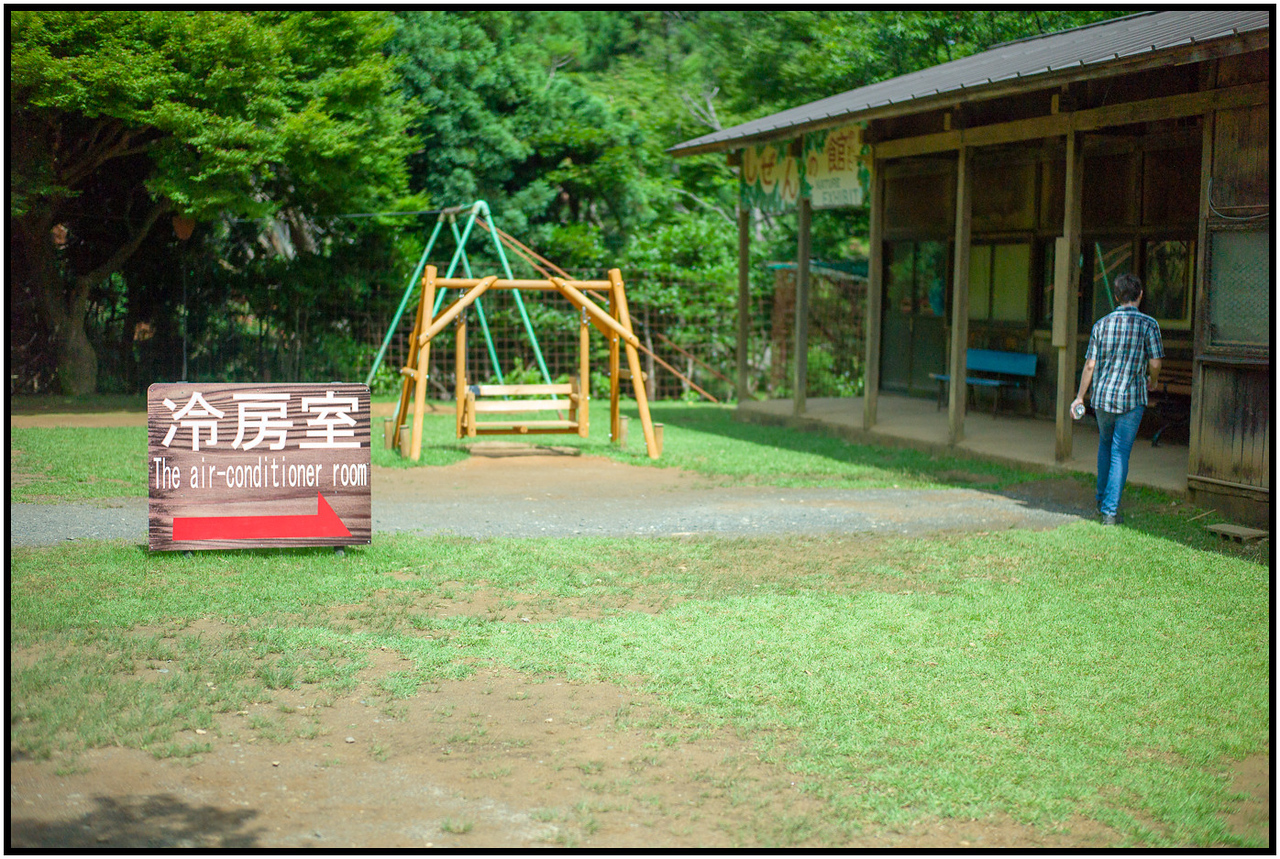
They even have a special air-conditioned break room at the steepest point. It was filled with gross sweaty people breathing hard and smelling bad … including us when we got there.
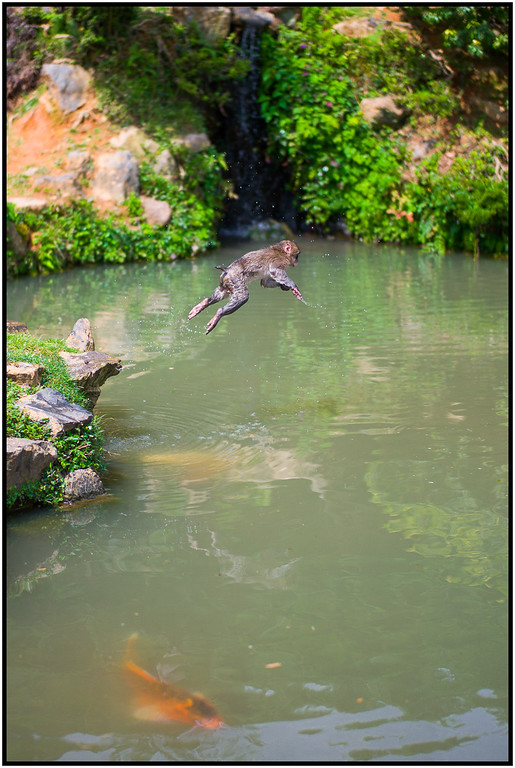
Finally at the top! This baby was having fun keeping cool.
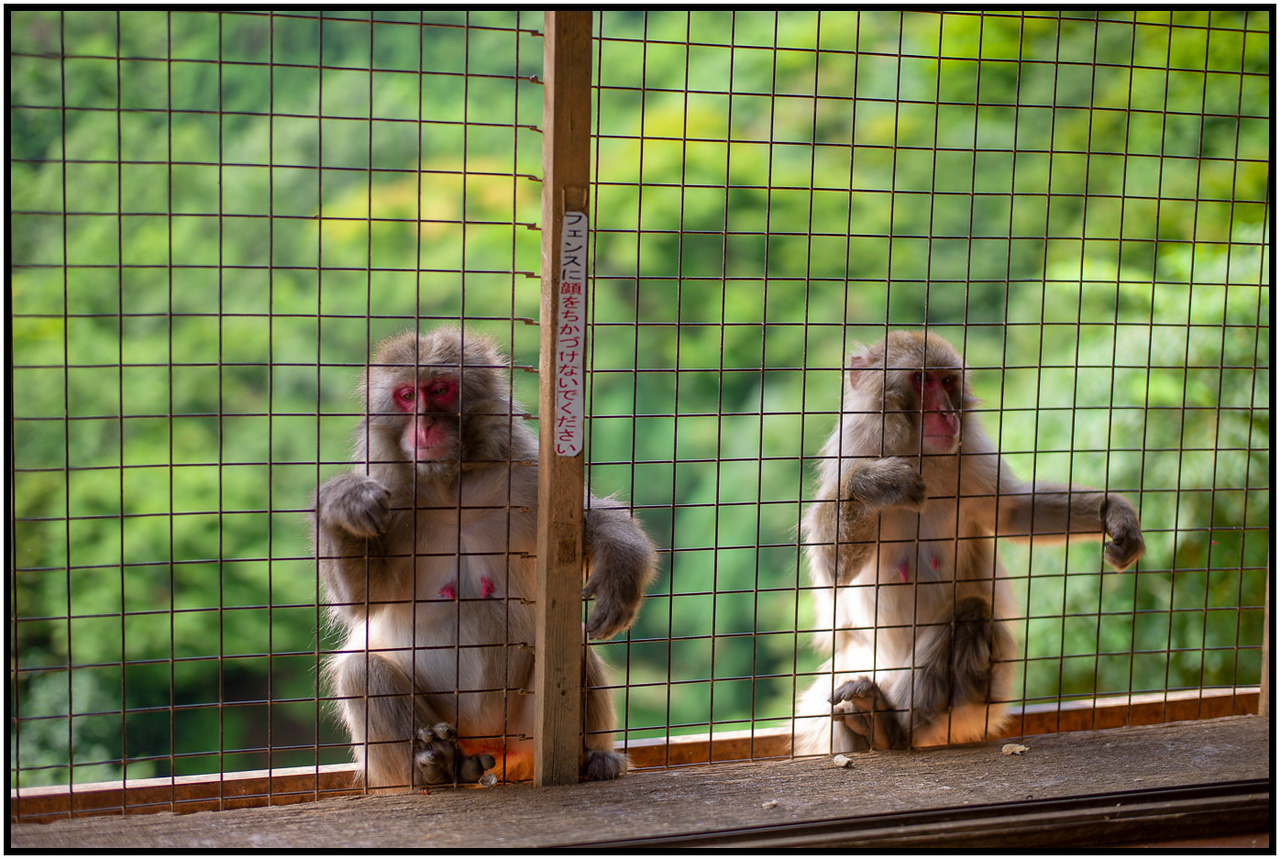
Being early summer, all the mamas were milling around for free food (apples and peanuts) with their babies. Their birthing season is early spring, so most of the babies were between 1 and 2 months old. A couple of females were still heavily pregnant (late bloomers.)
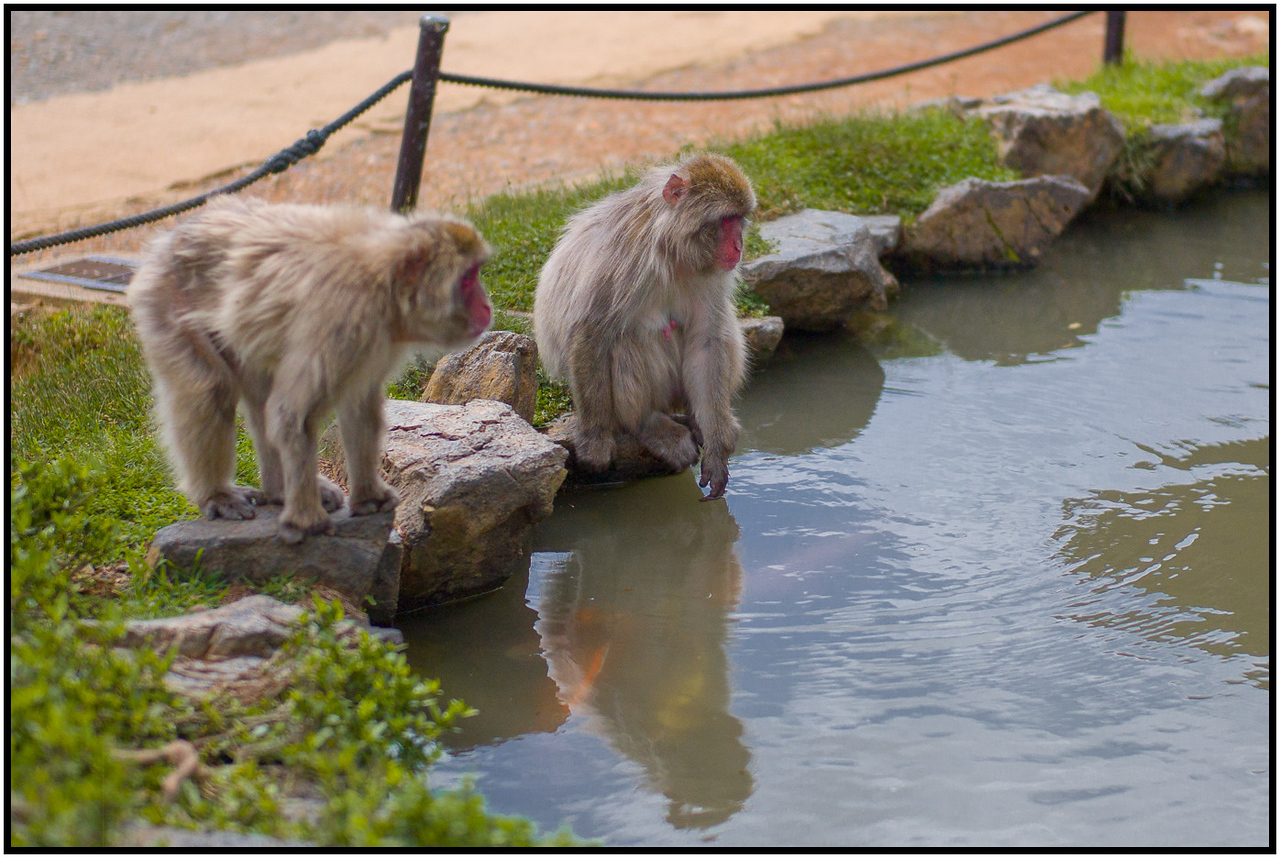
This was the baby seen jumping into the pool in the first photo. He loved apples best of all.
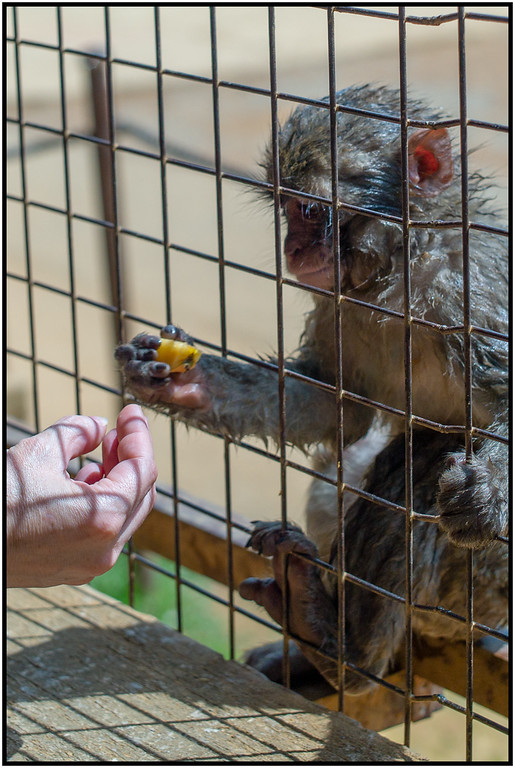
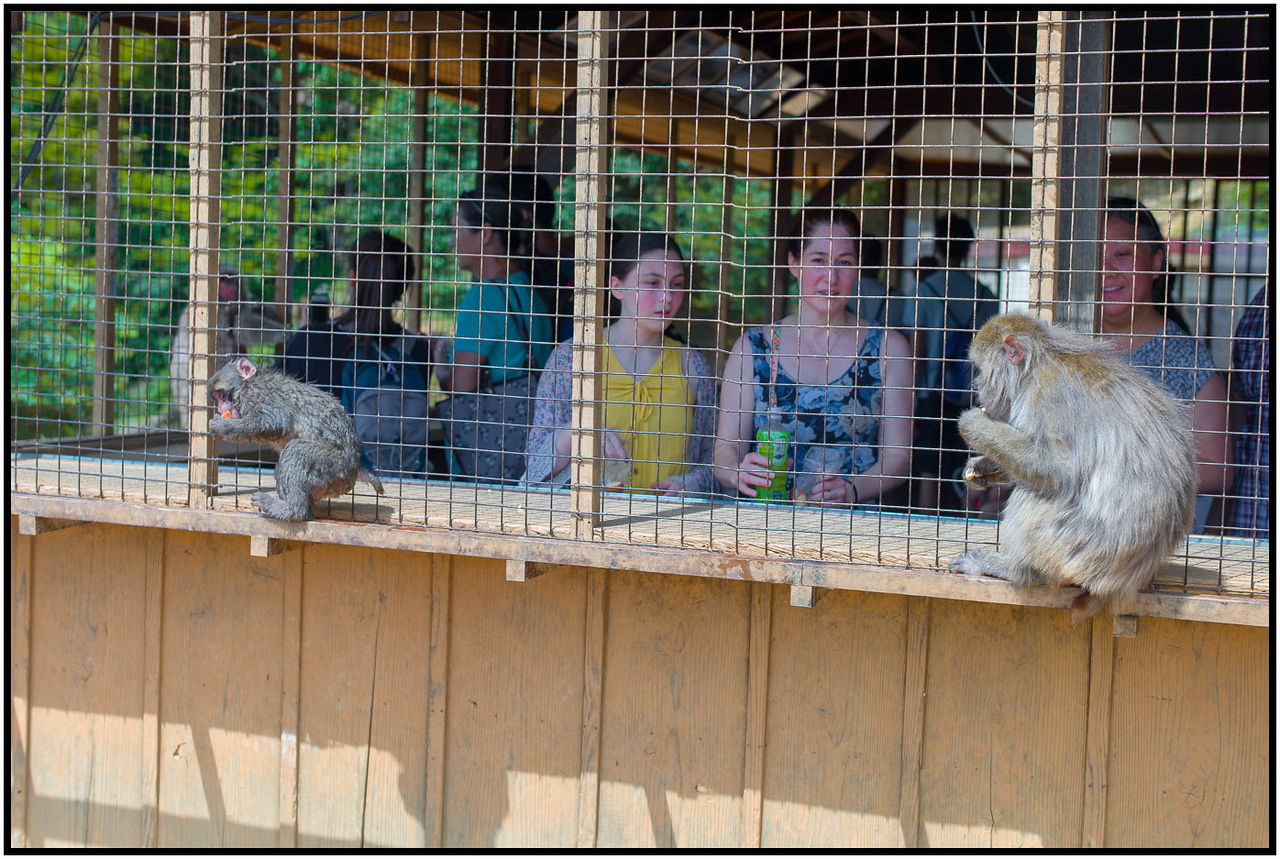
The feed station. The monkeys are very aggressive and are taught that humans will only give them food from inside the “cage.” It’s a reverse zoo situation, but it seems to work. The monkeys will grab and beg from the people inside the cage, but leave you alone once you leave.
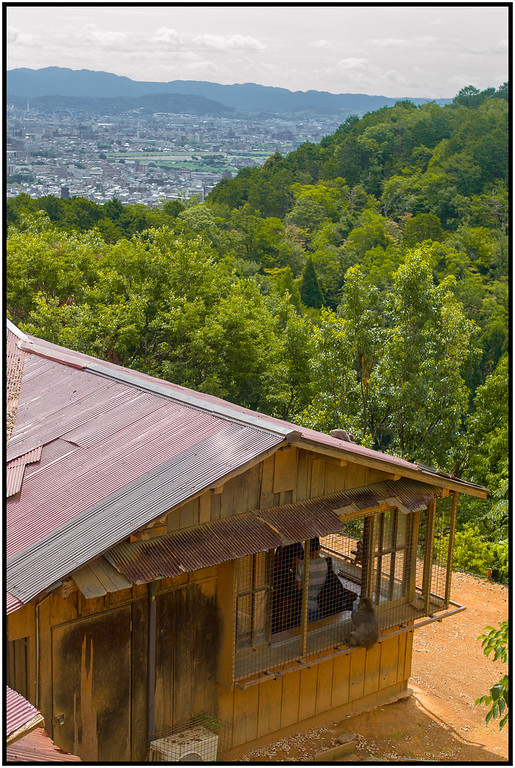
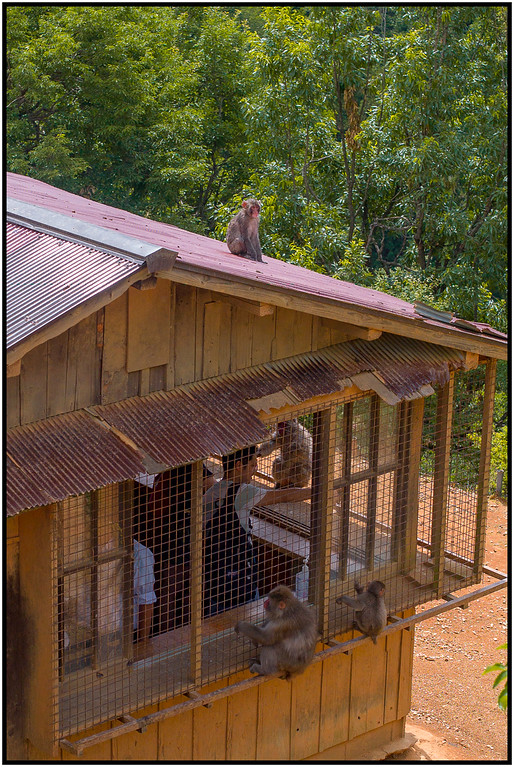
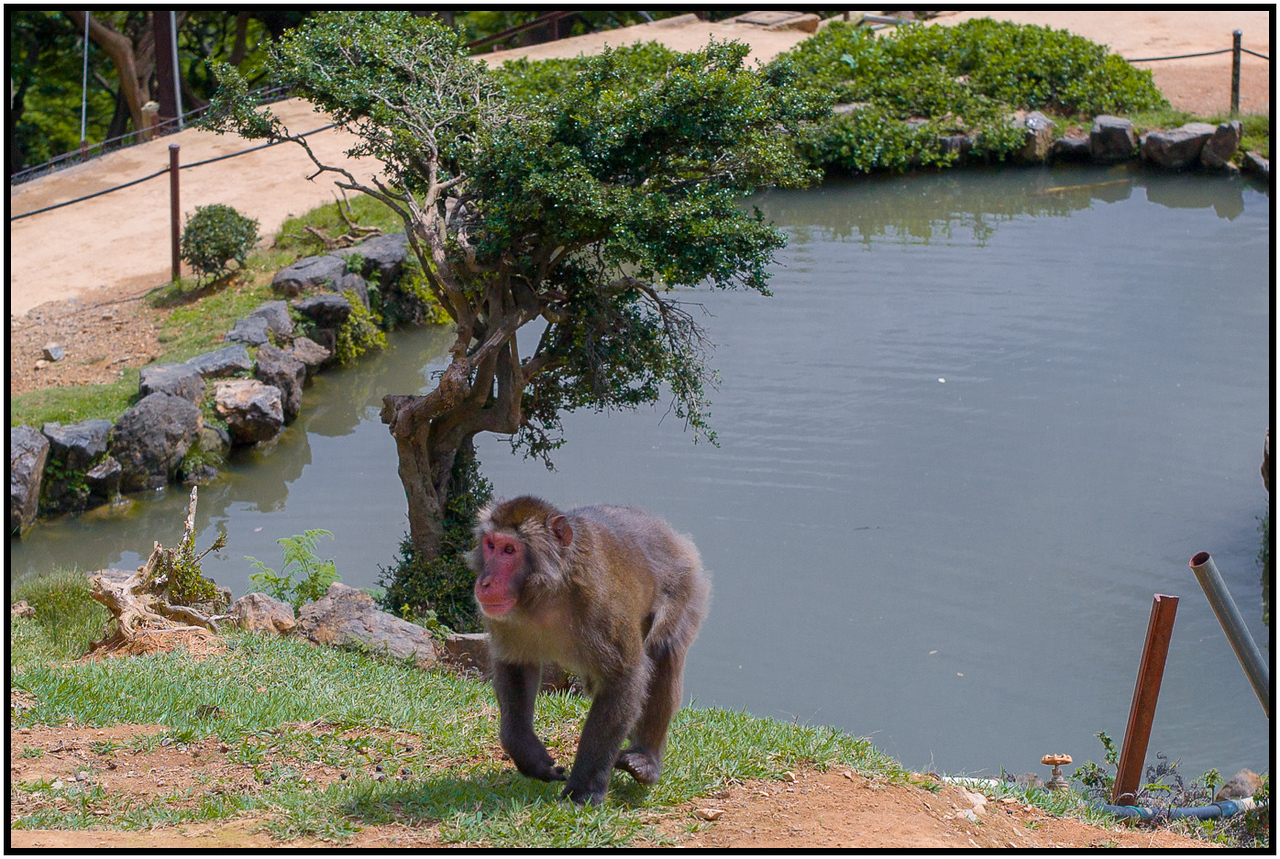
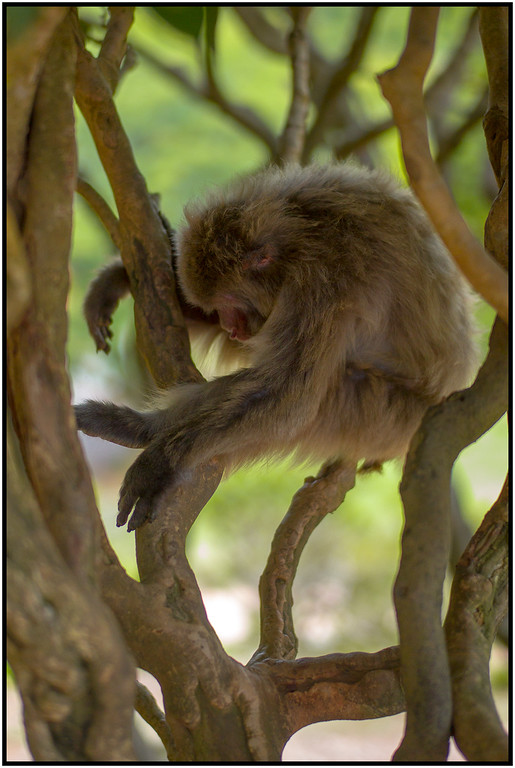
Such a hot day. Most of the monkeys were well into siesta mode.
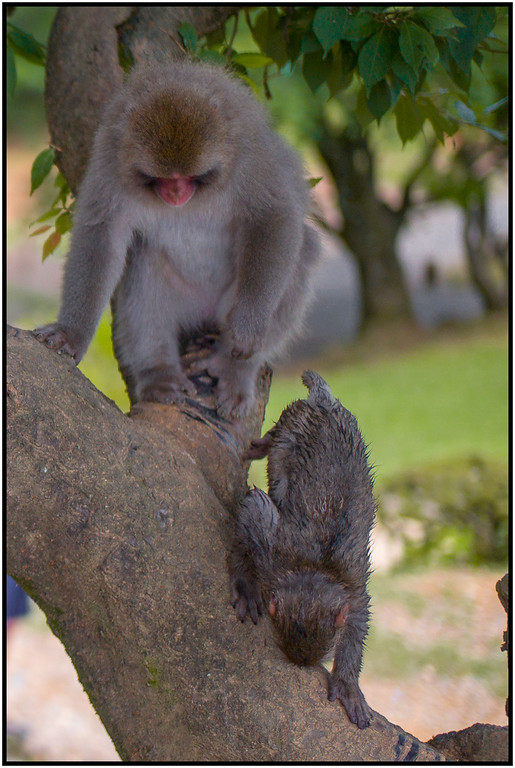
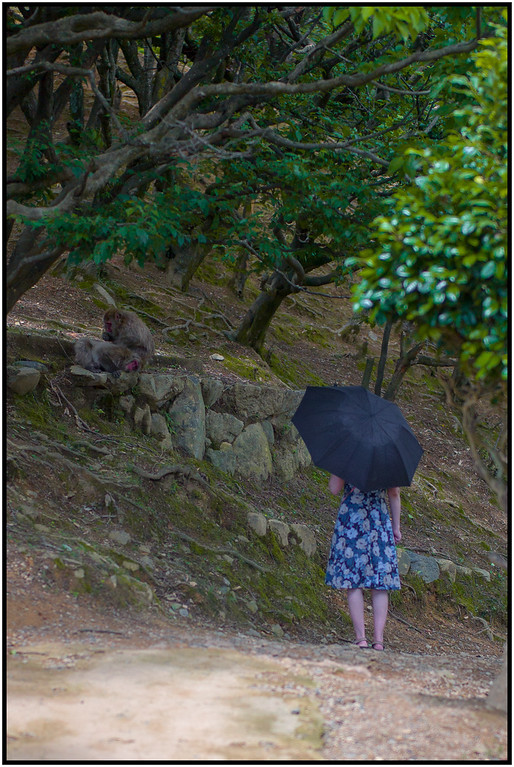
The monkeys not sleeping or preening each other were taking refreshing dips in the pool.
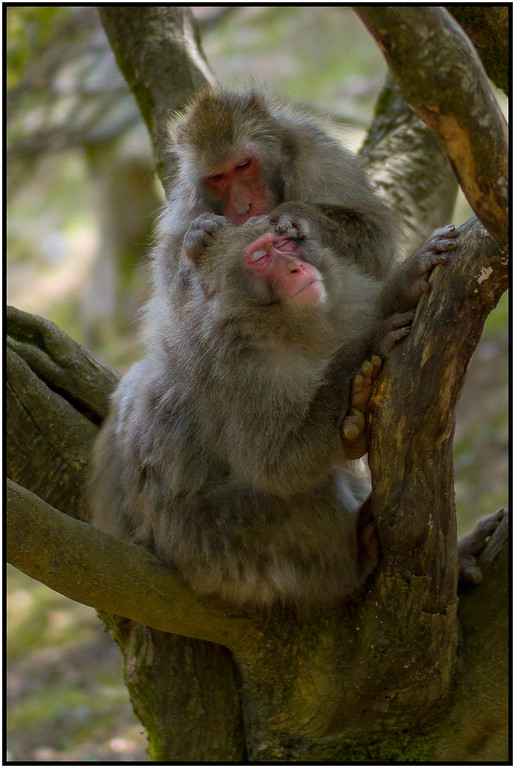
Preening time.
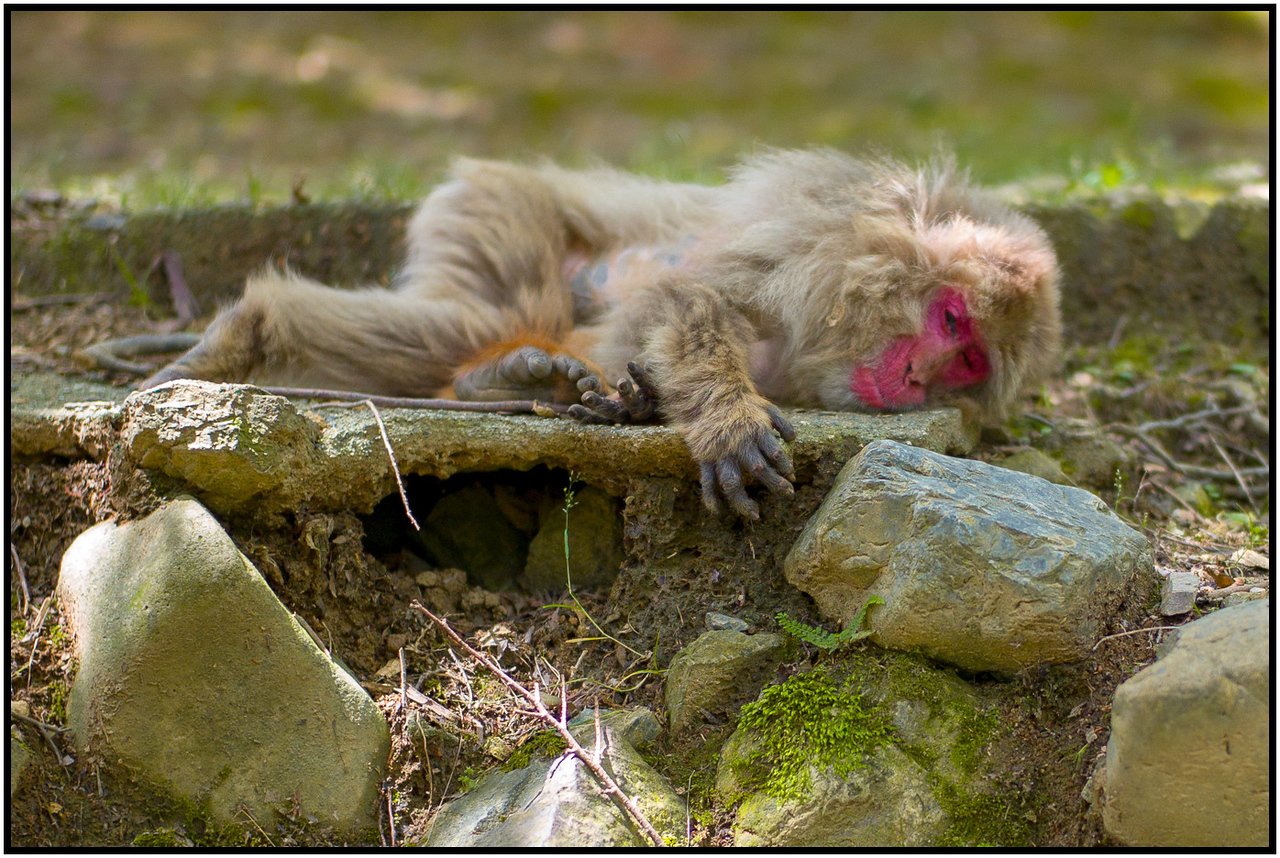
Nap time.
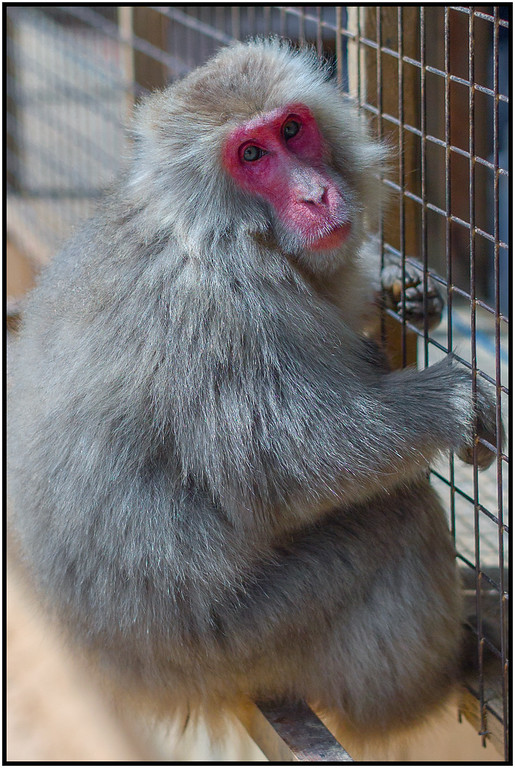
“I’m so pregnant I’m about to pop so please give me apples” time.
View of the natural monkey habitat.
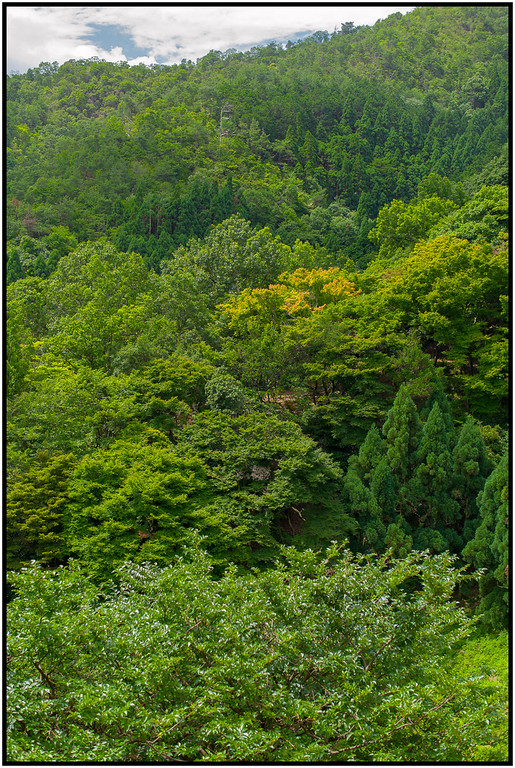
Back down by the river.
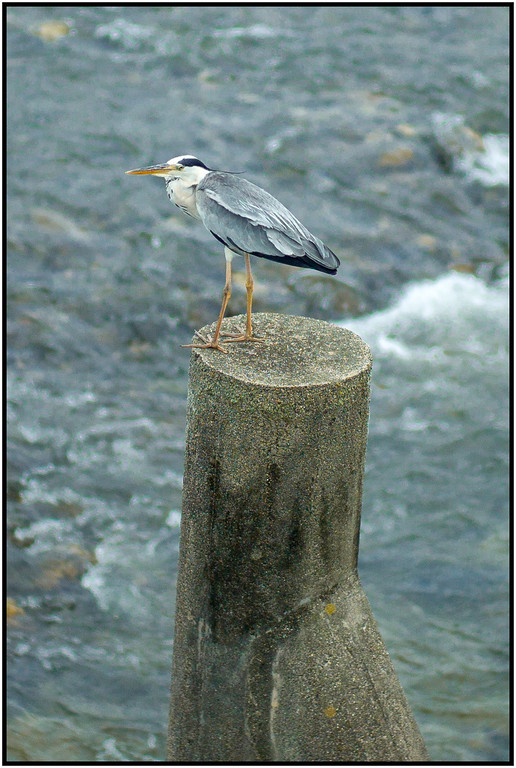
Heron.
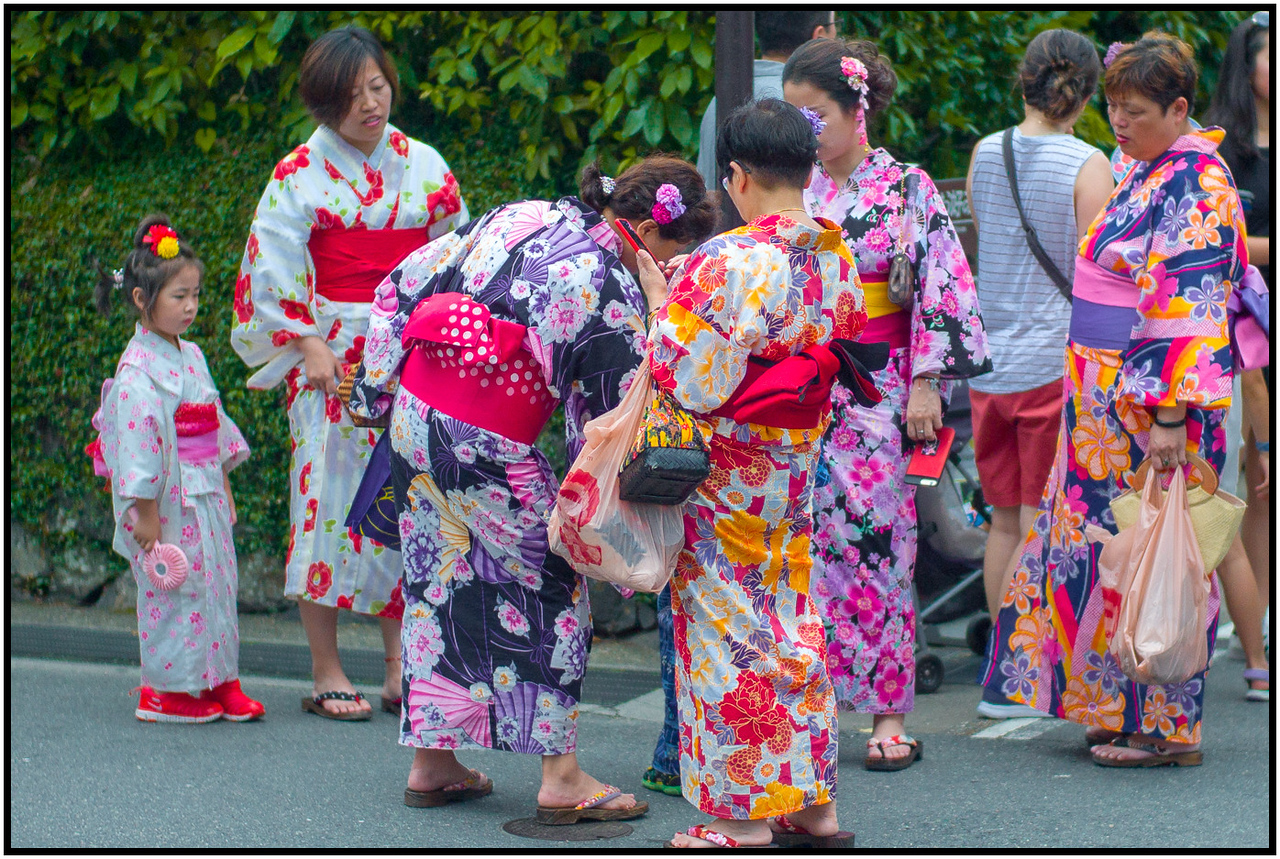
Traditional Japanese couture.
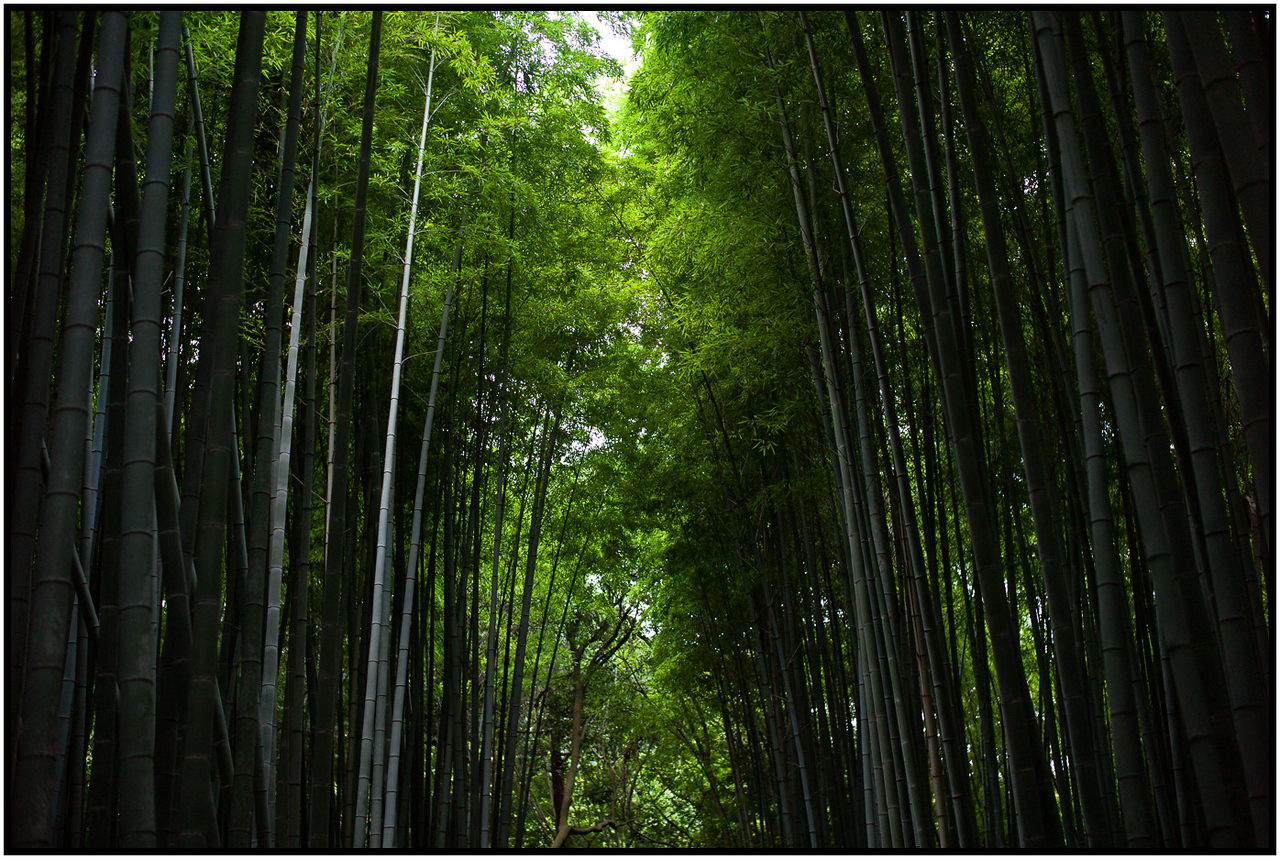
The reason we came back to this town in the first place: Josie wanted to see the bamboo forest again. Bamboo is her very favorite plant. She has several stalks of bamboo in a pot in her room at home and someday wants to have her own bamboo garden.
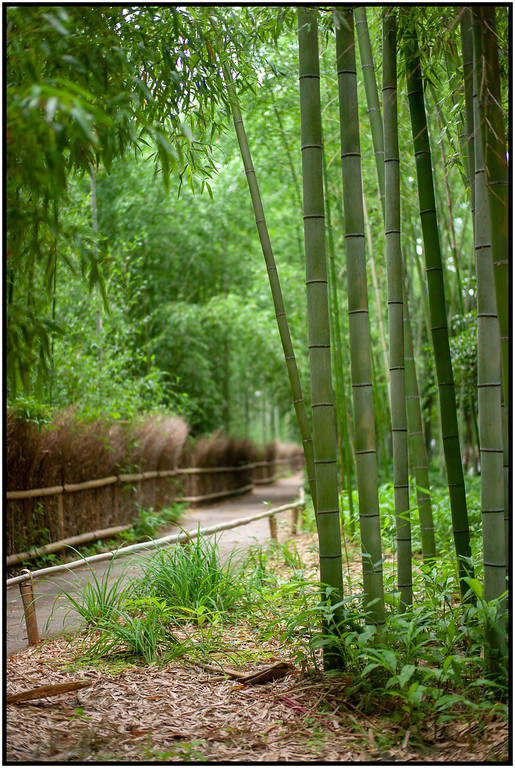
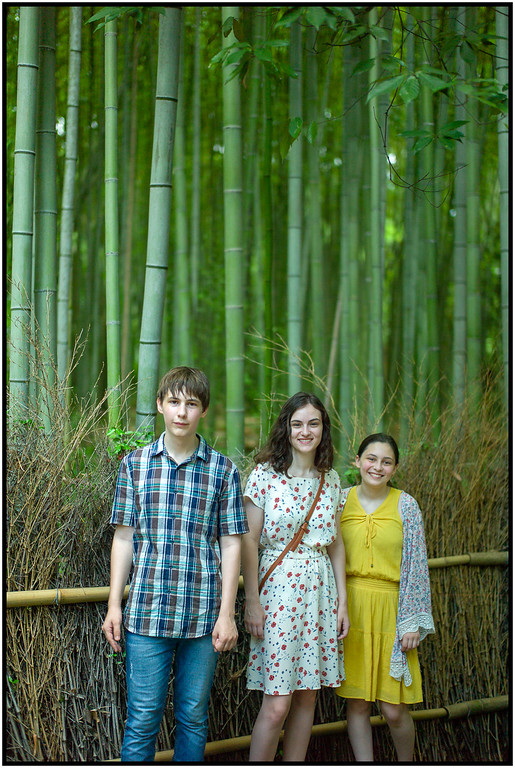
It is gorgeous. Unfortunately, it’s also full of bugs. I started getting bug-bit within minutes of entering. The photos don’t show it, but there were hundreds of people here. I asked Adam, “Why is nobody but ME getting bug bites?” Eventually, on our way out, I saw a little girl about 3 years old, slapping at her legs and scratching like mad at a mosquito welt the size of a grape on her arm. I thought, “You and me, little sister!” Why is it only such a few of us who suffer from the bugs so? Why do the bloodsuckers choose only us?
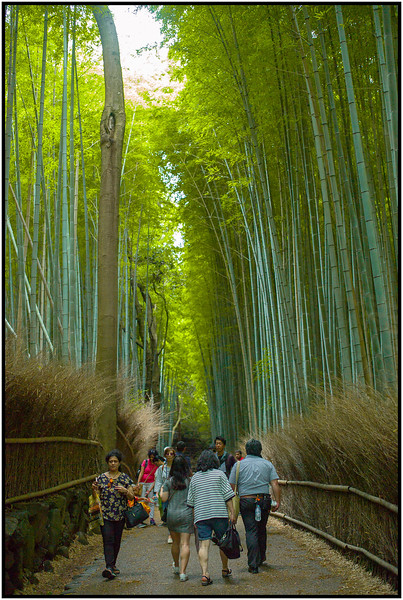
Here is a very small example of the crowds: Adam did an artful job of timing and framing his shots to avoid most of the people.
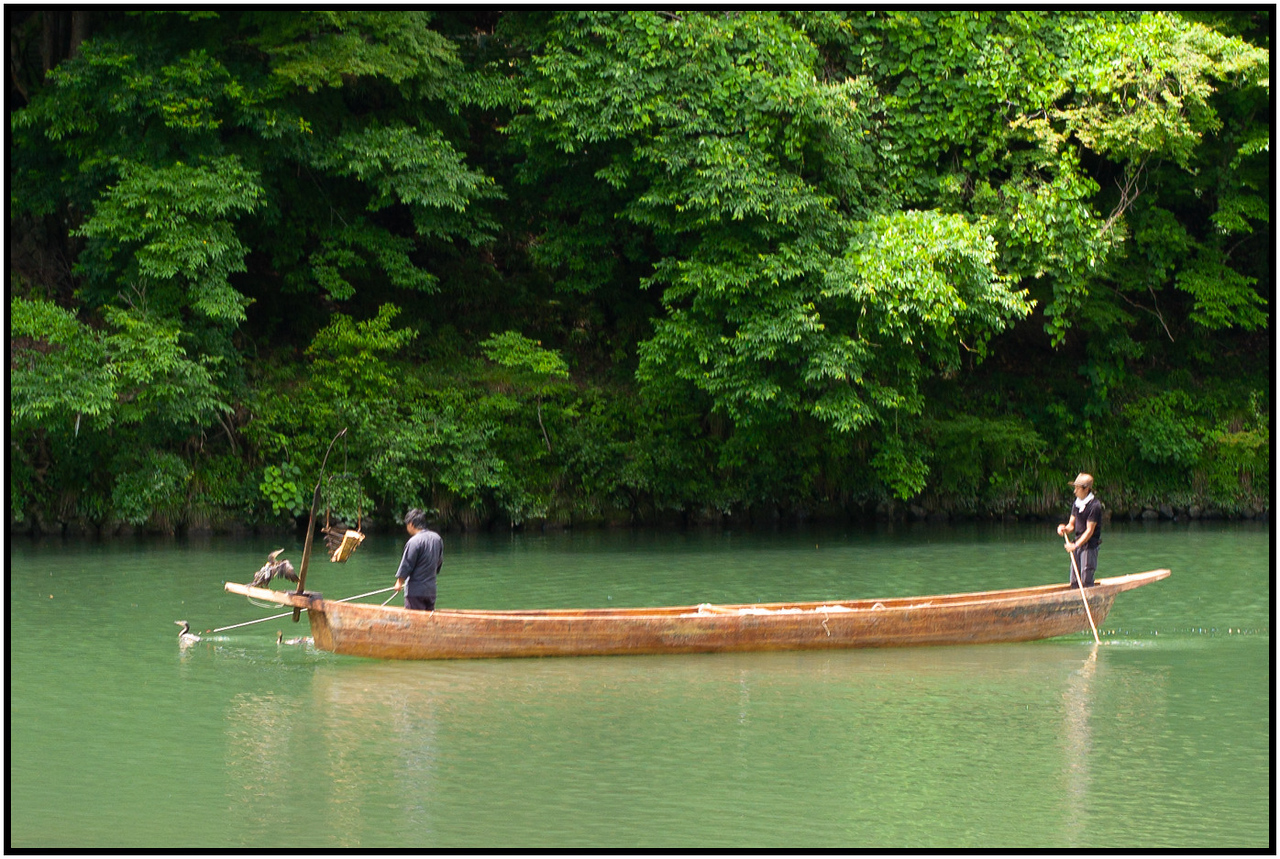
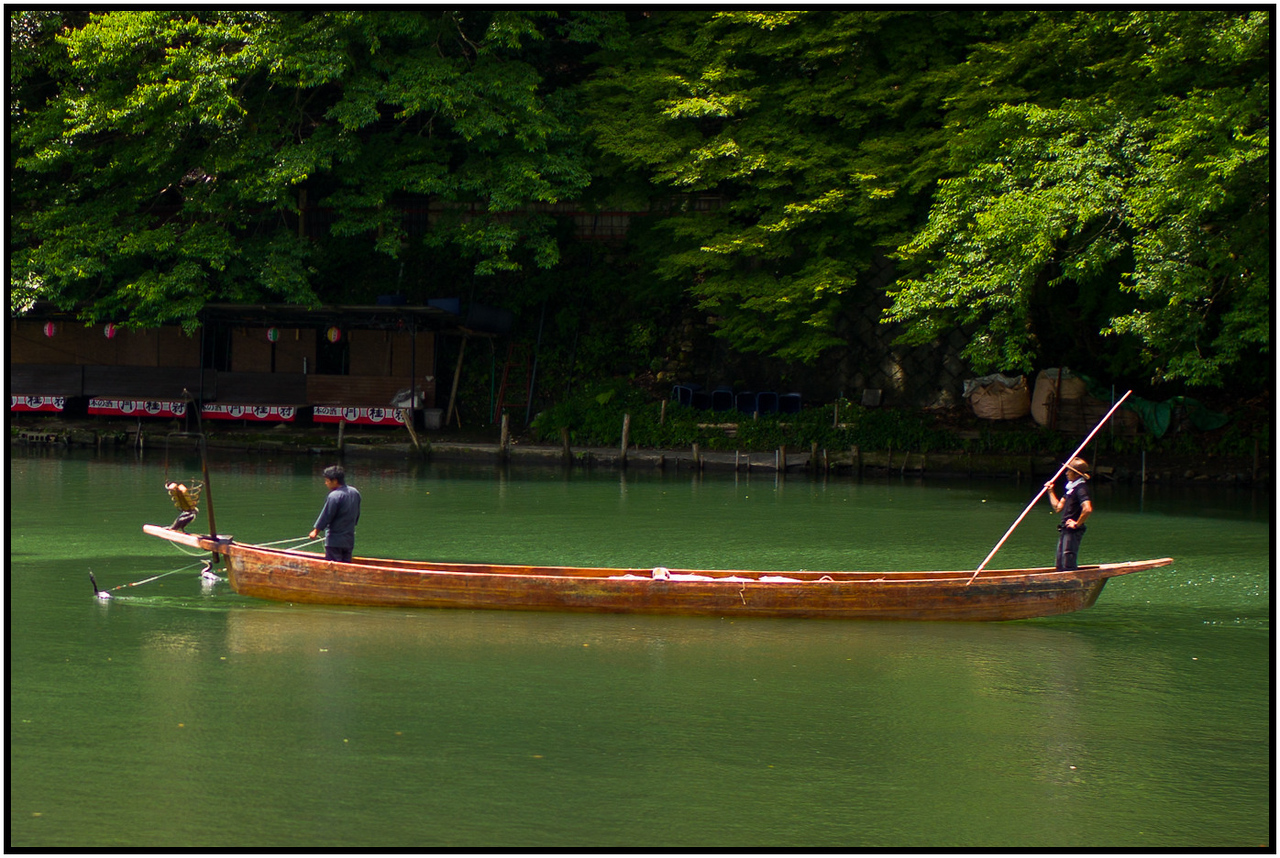
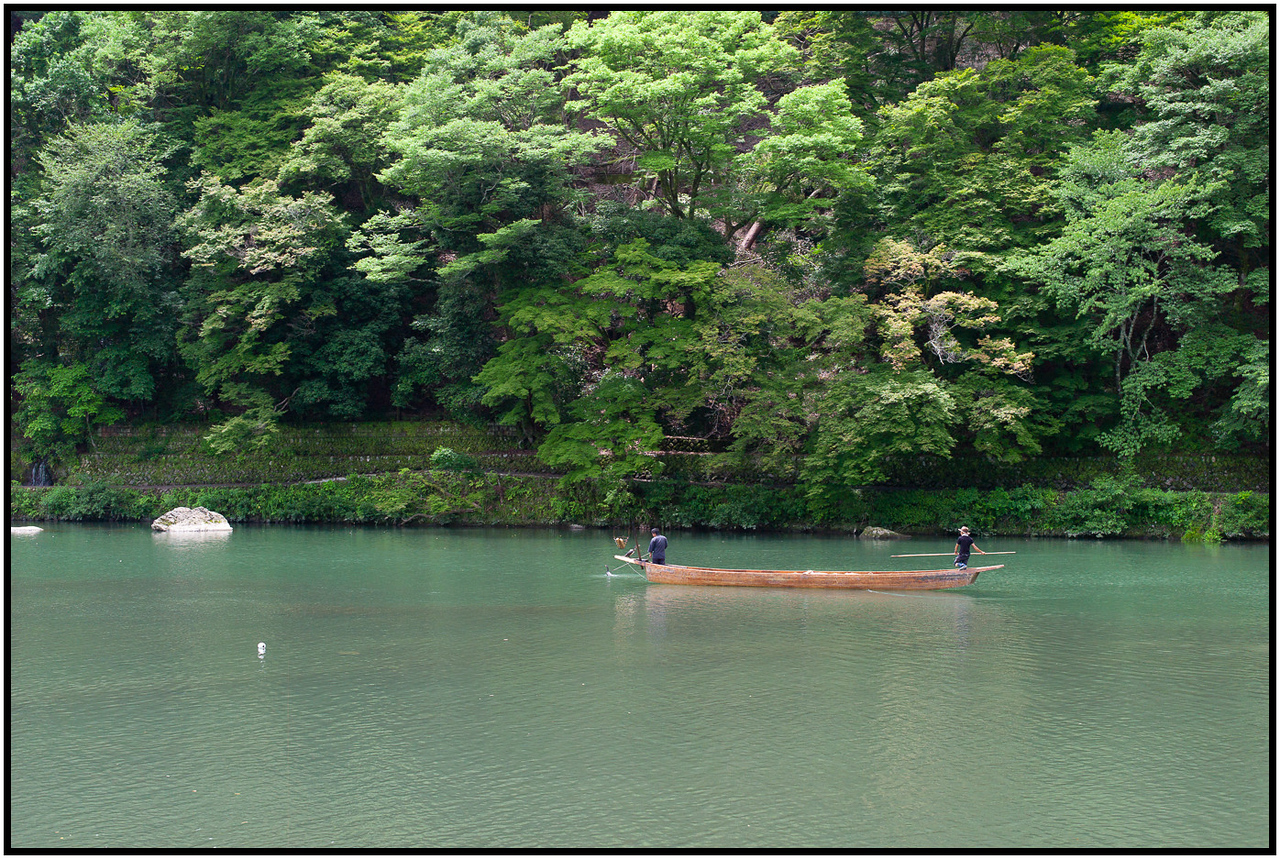
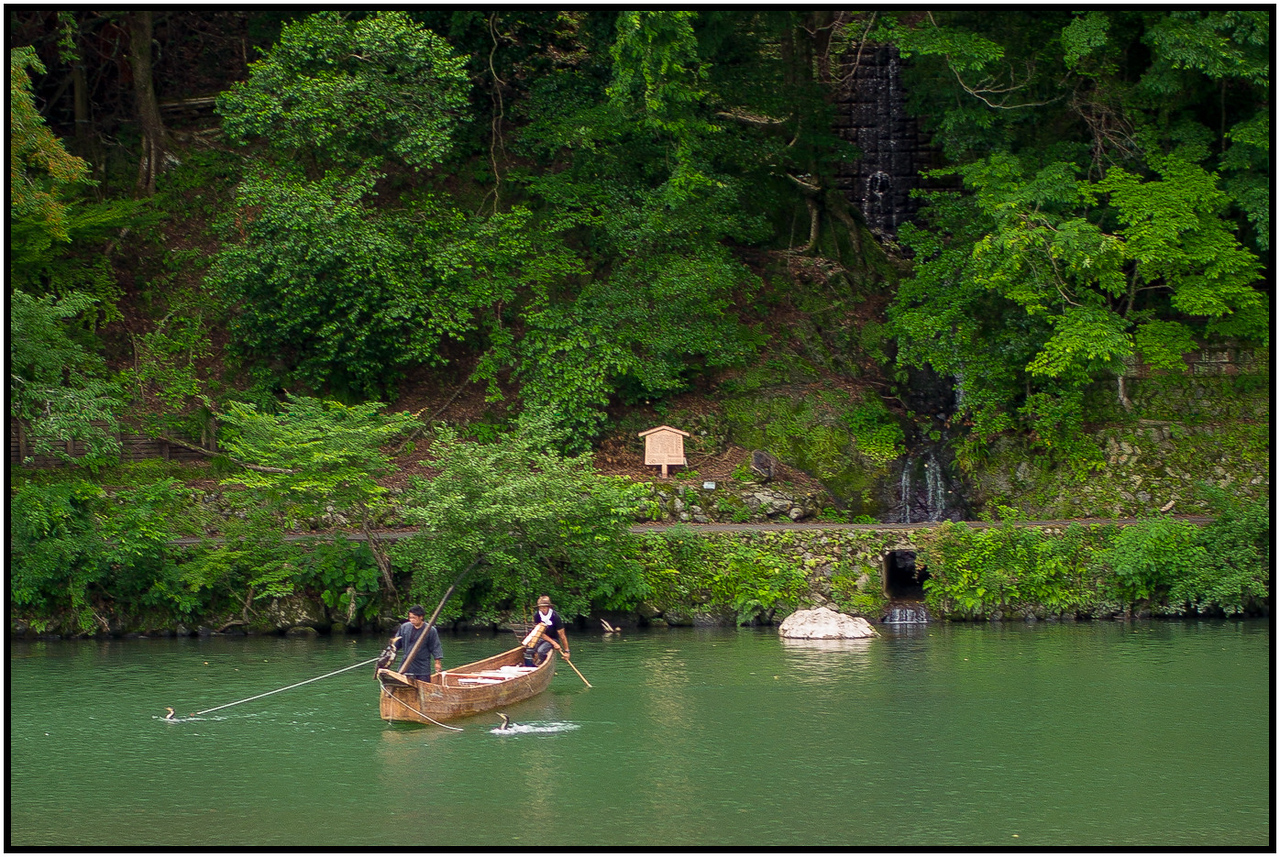
Out of the bamboo forest and back on the river … cormorant fishing. I never thought I’d see this in person. We stood in the heat, battling the bugs for quite a long time watching these guys.
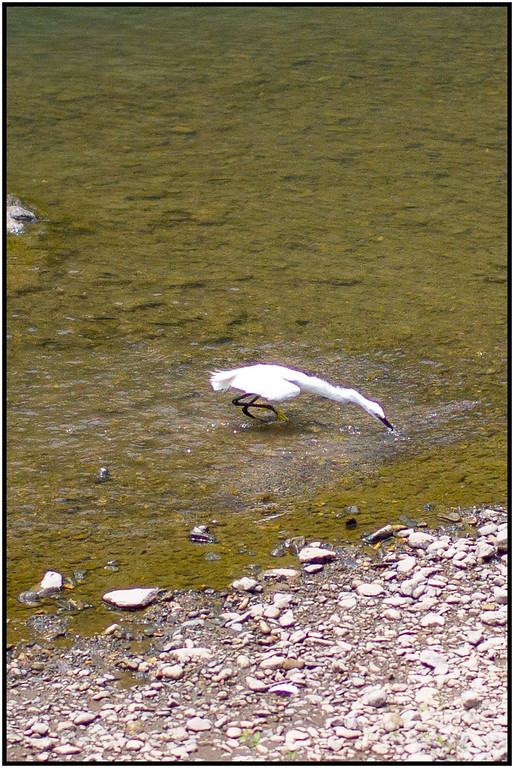
Egret fishing. He caught a lot of them.
Back to the cormorant fishermen.
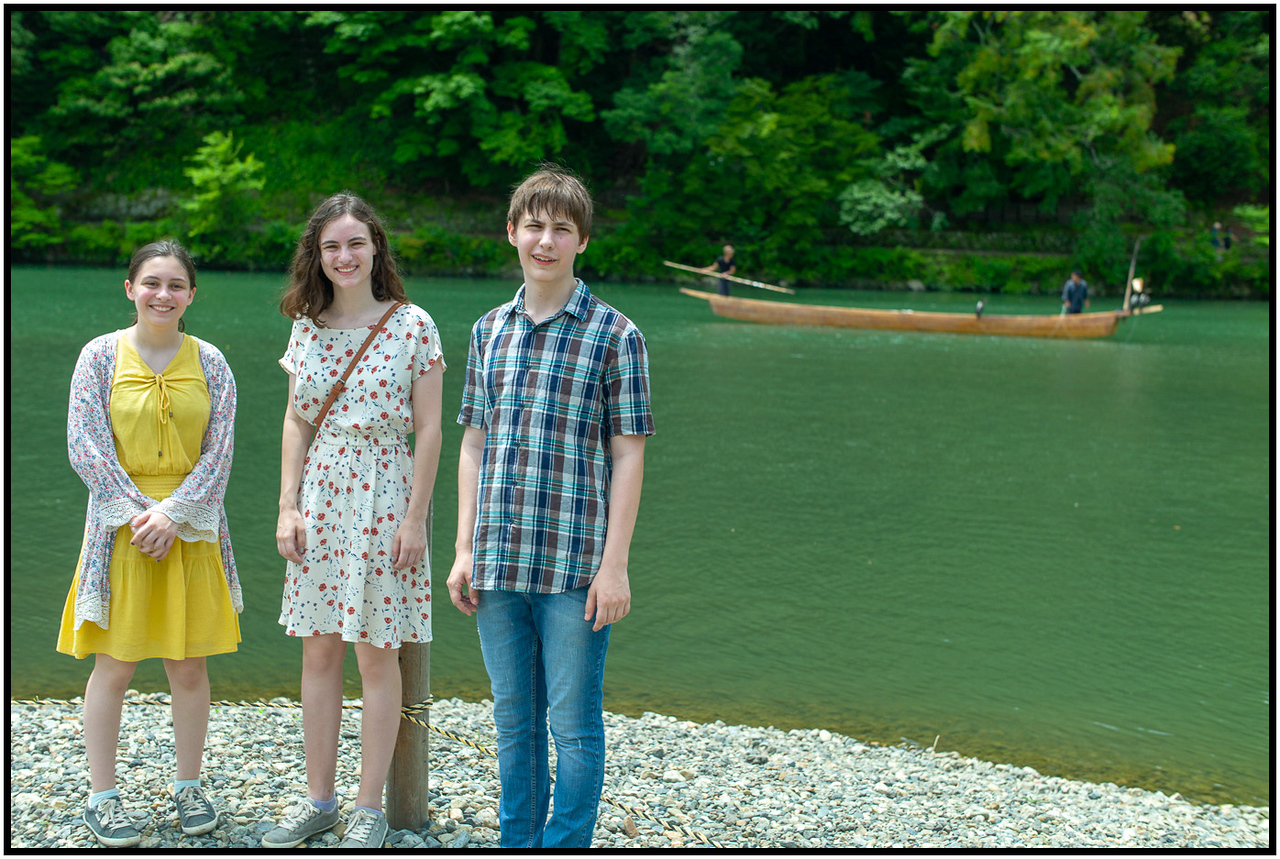
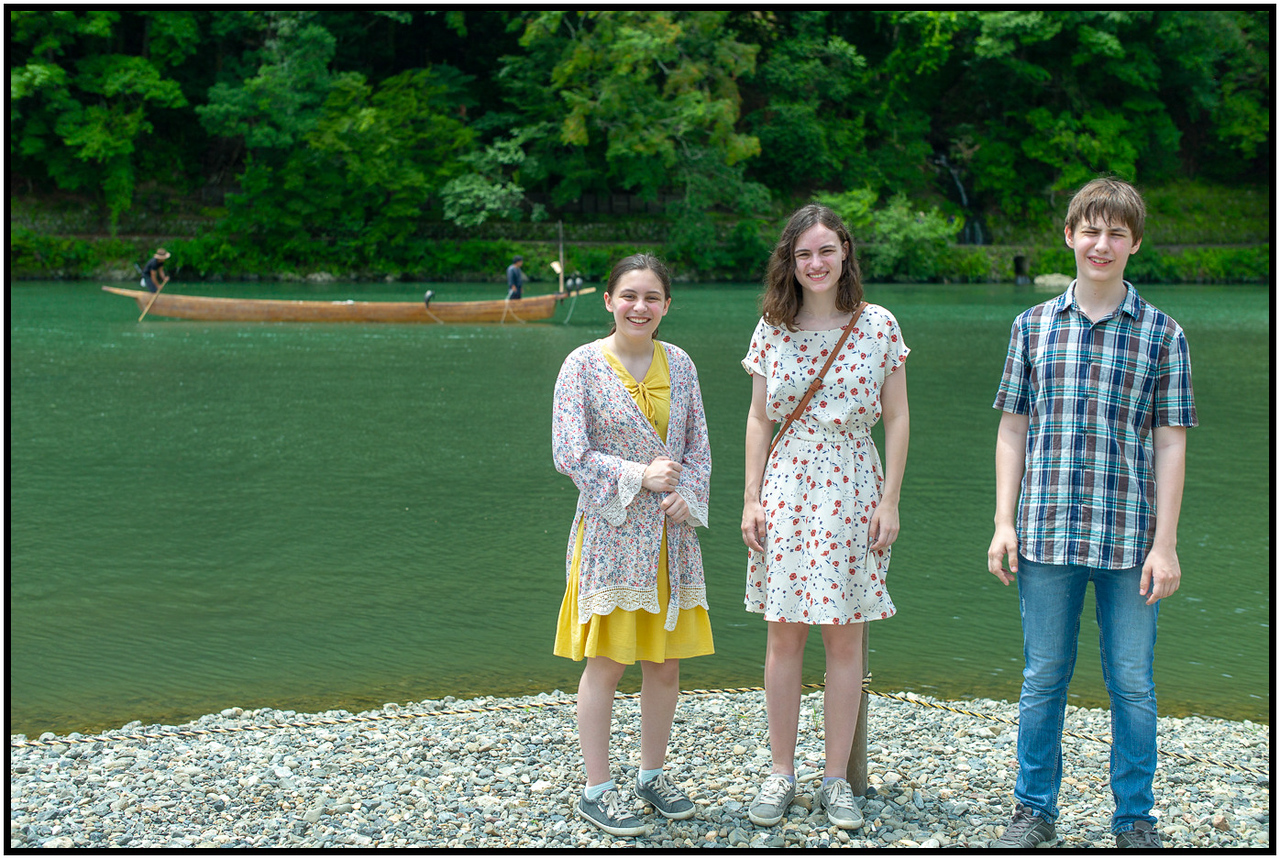
“How long do we have to stand here, Dad? The sun is right in our faces.”
“Holden, stop squinting.”
“I can’t help it. Don’t you have the picture yet?”
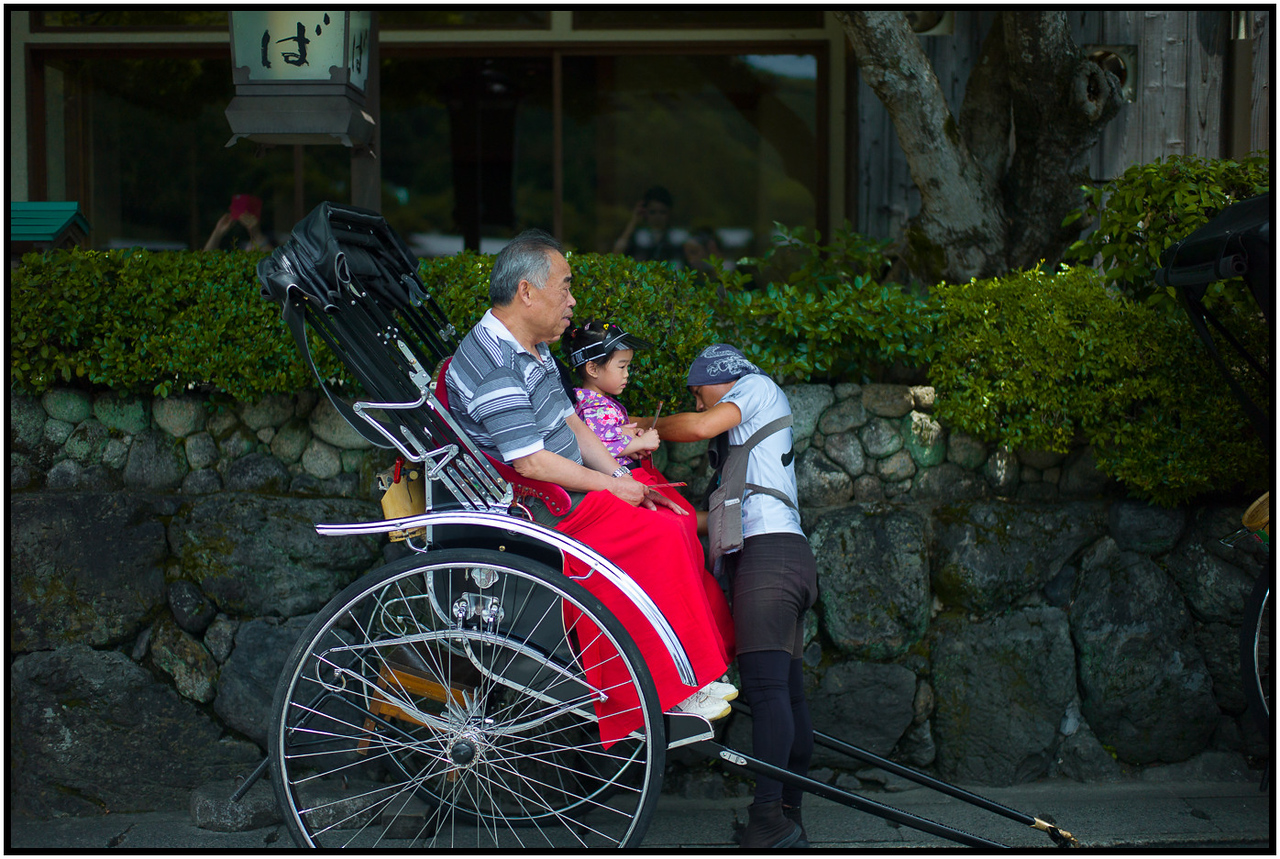
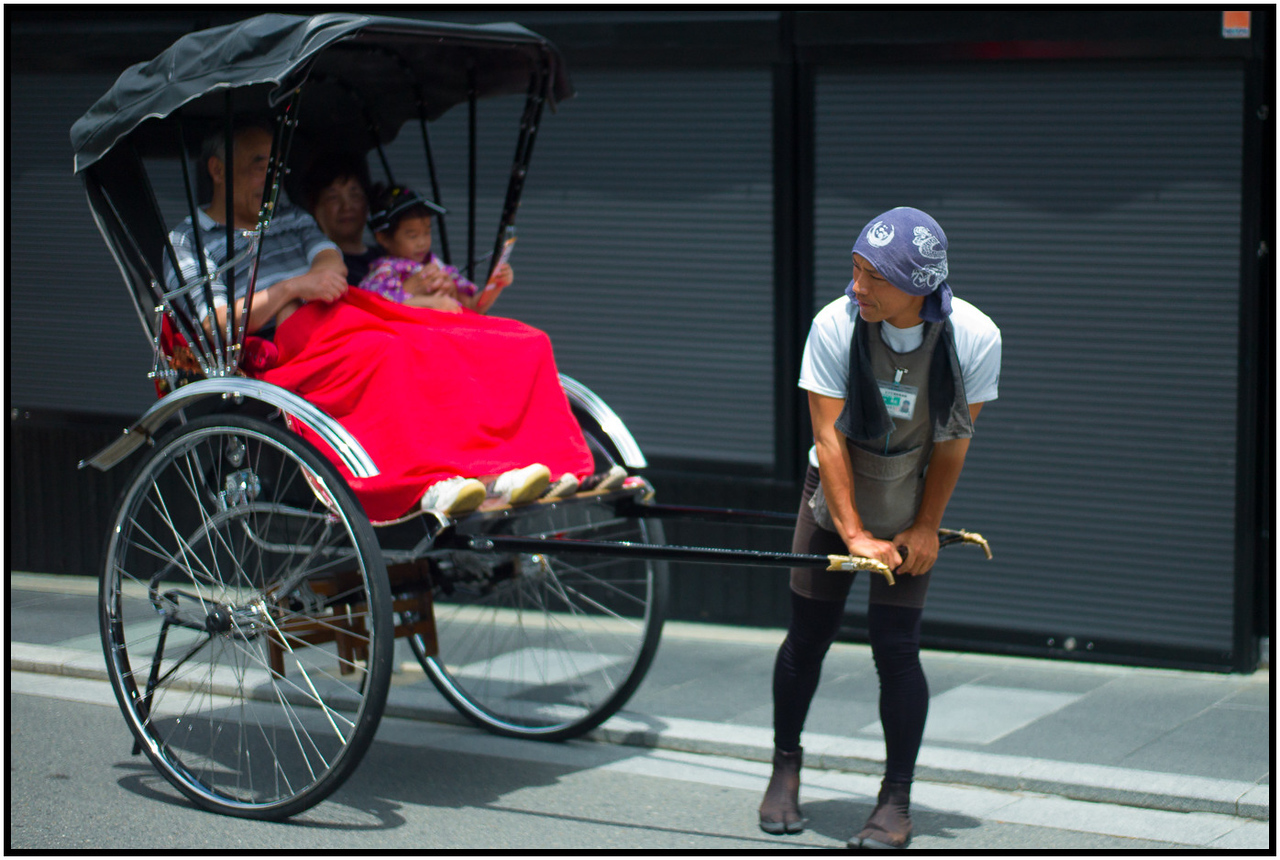
 Guy giving rickshaw rides.
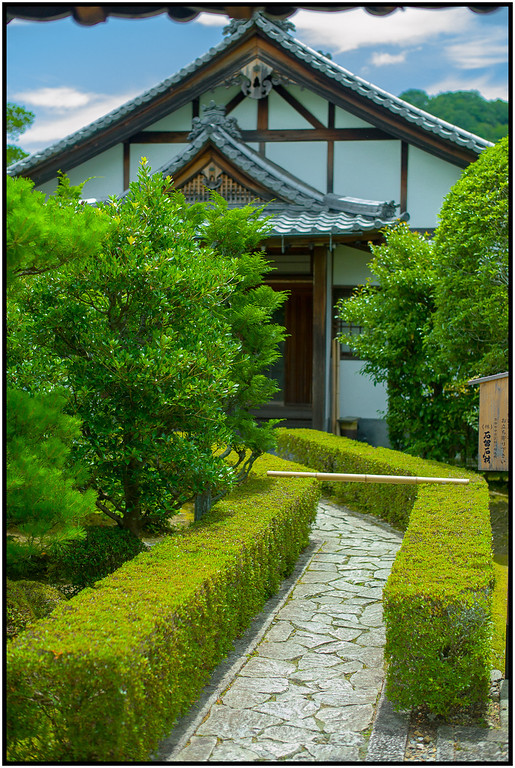
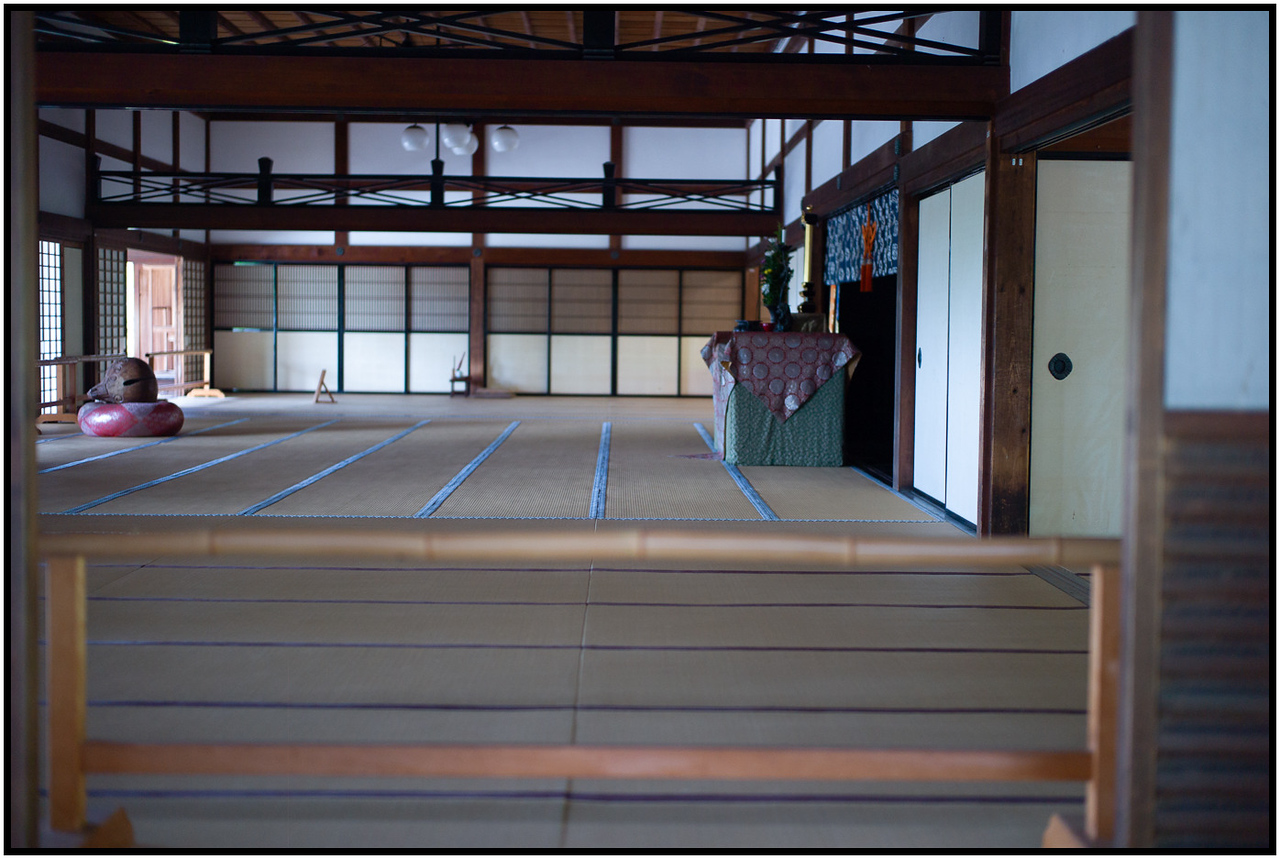
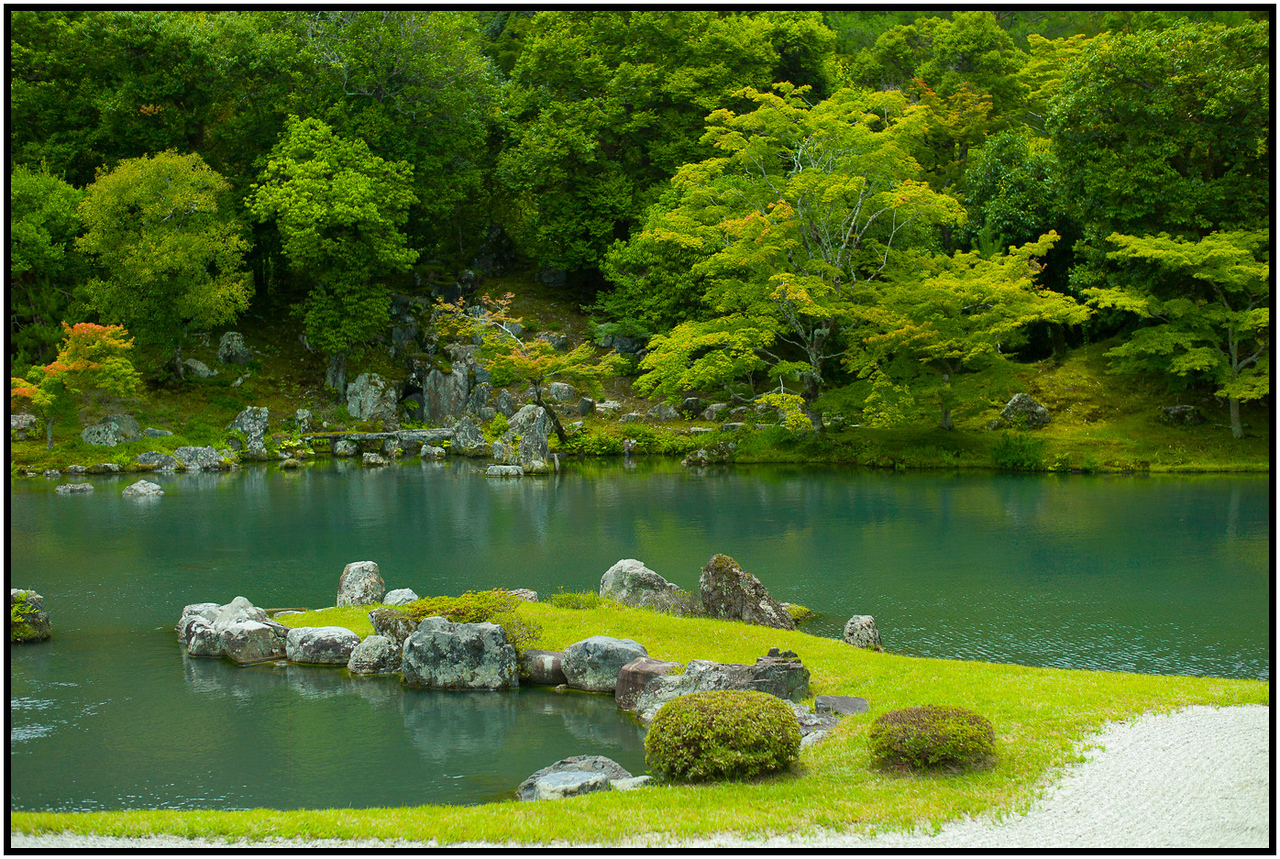
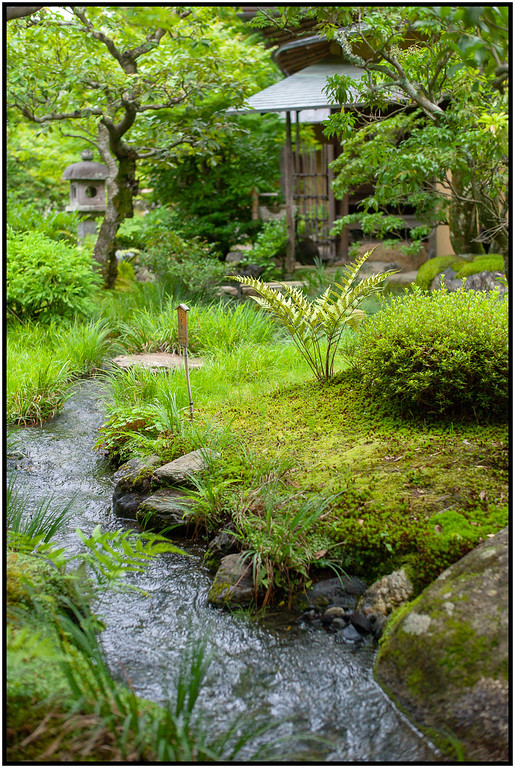
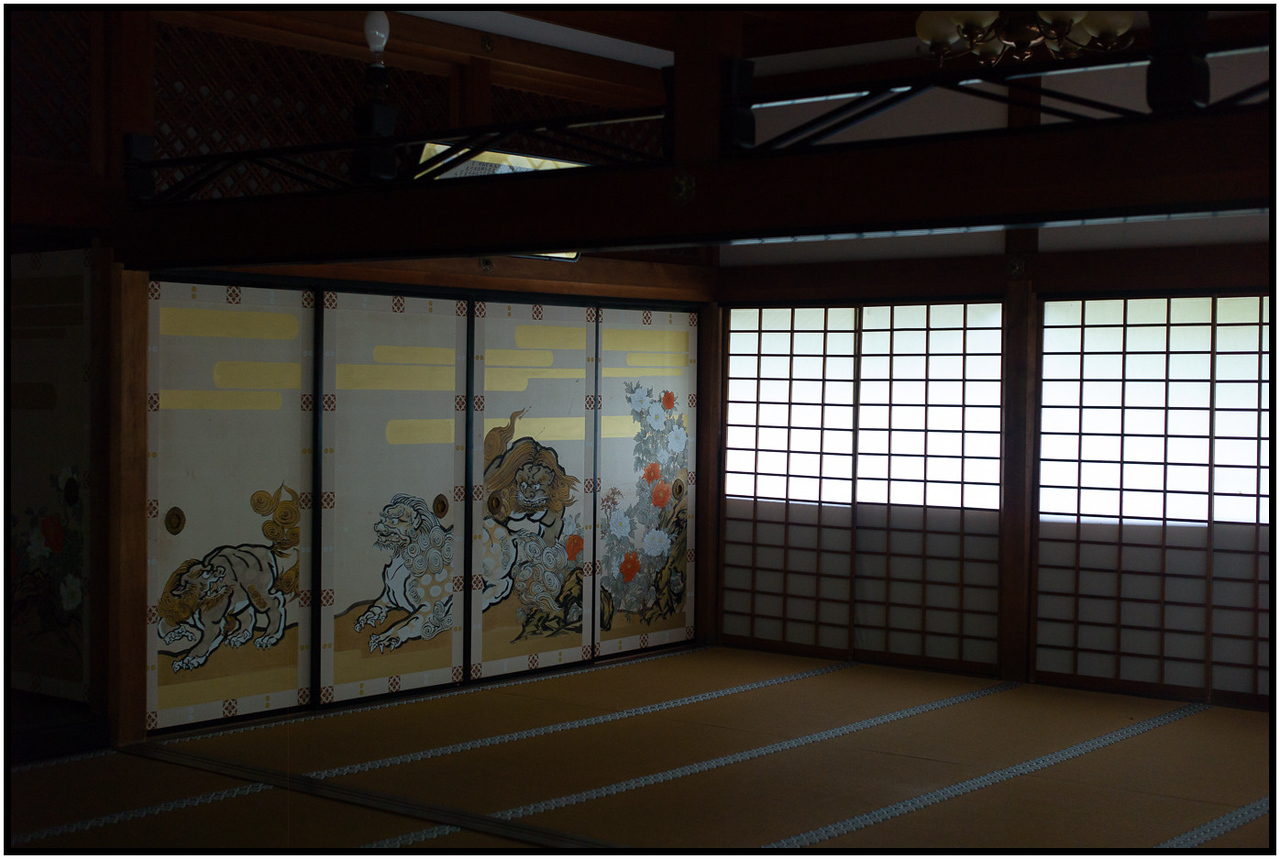
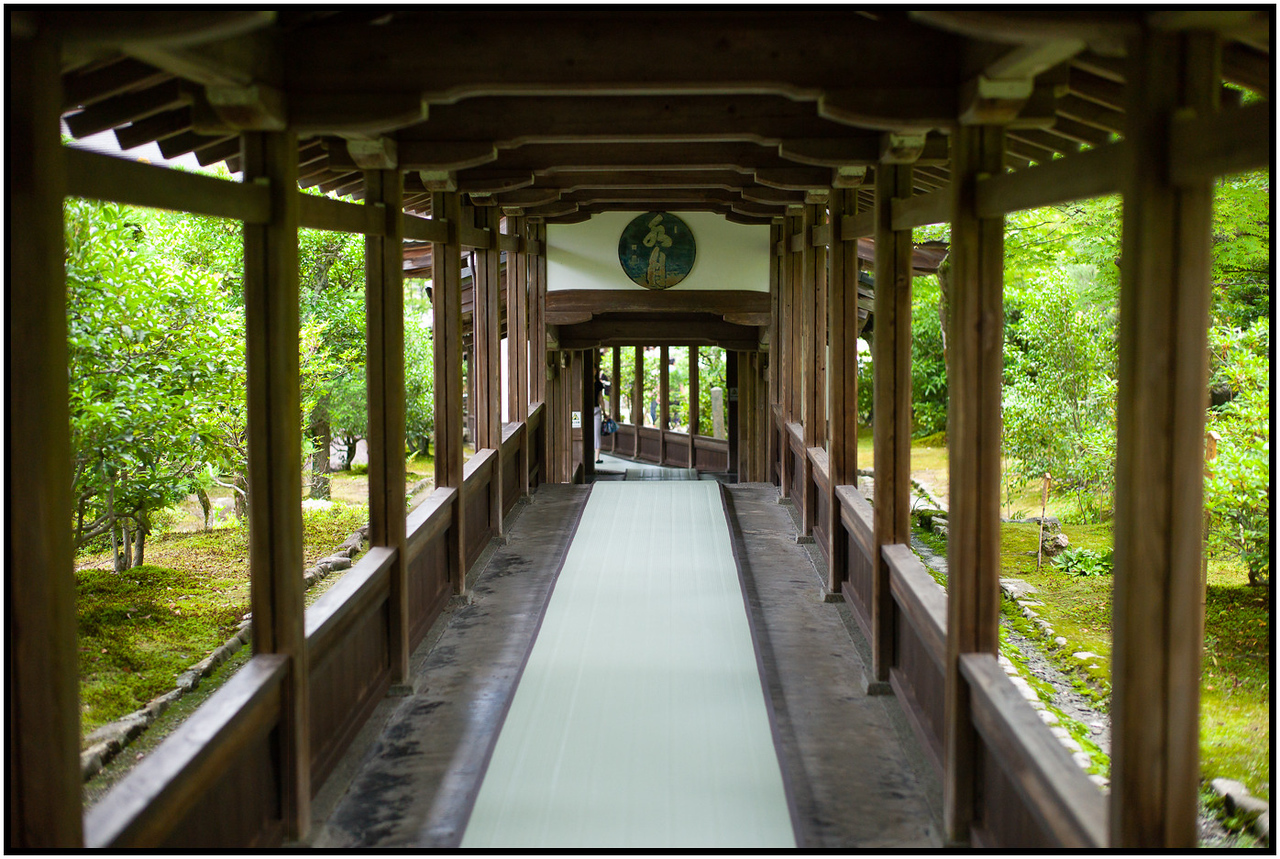
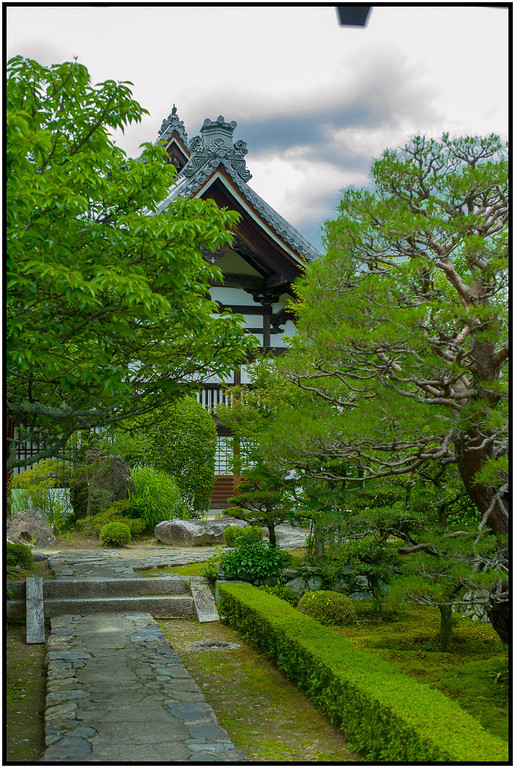
Adam: After lunch, we split up for about an hour. Everyone but me wanted to do some shopping along the main drag. I visited the Tenryū-ji – one of two main Zen Buddhist temples in Japan.
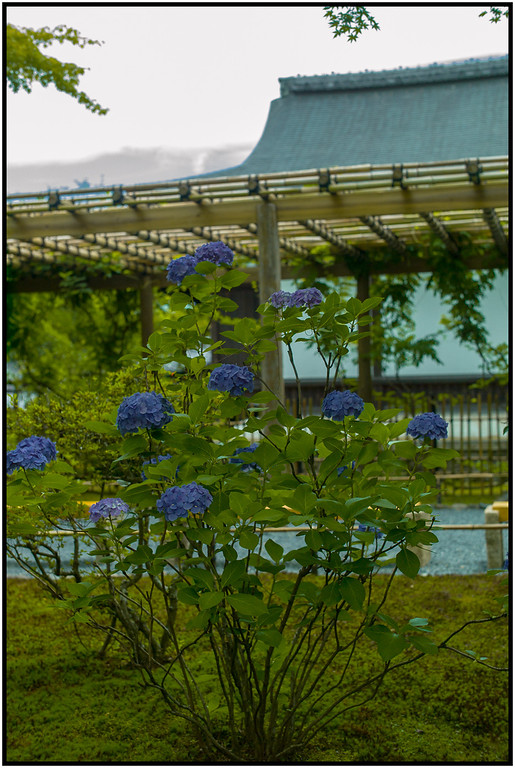
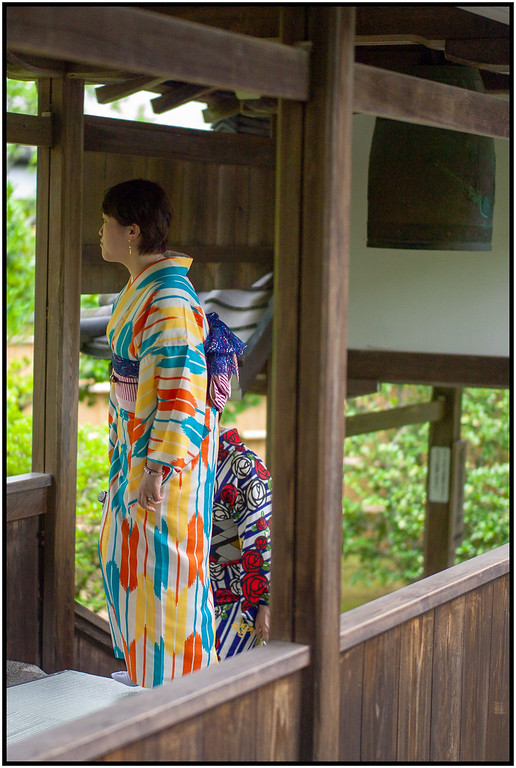
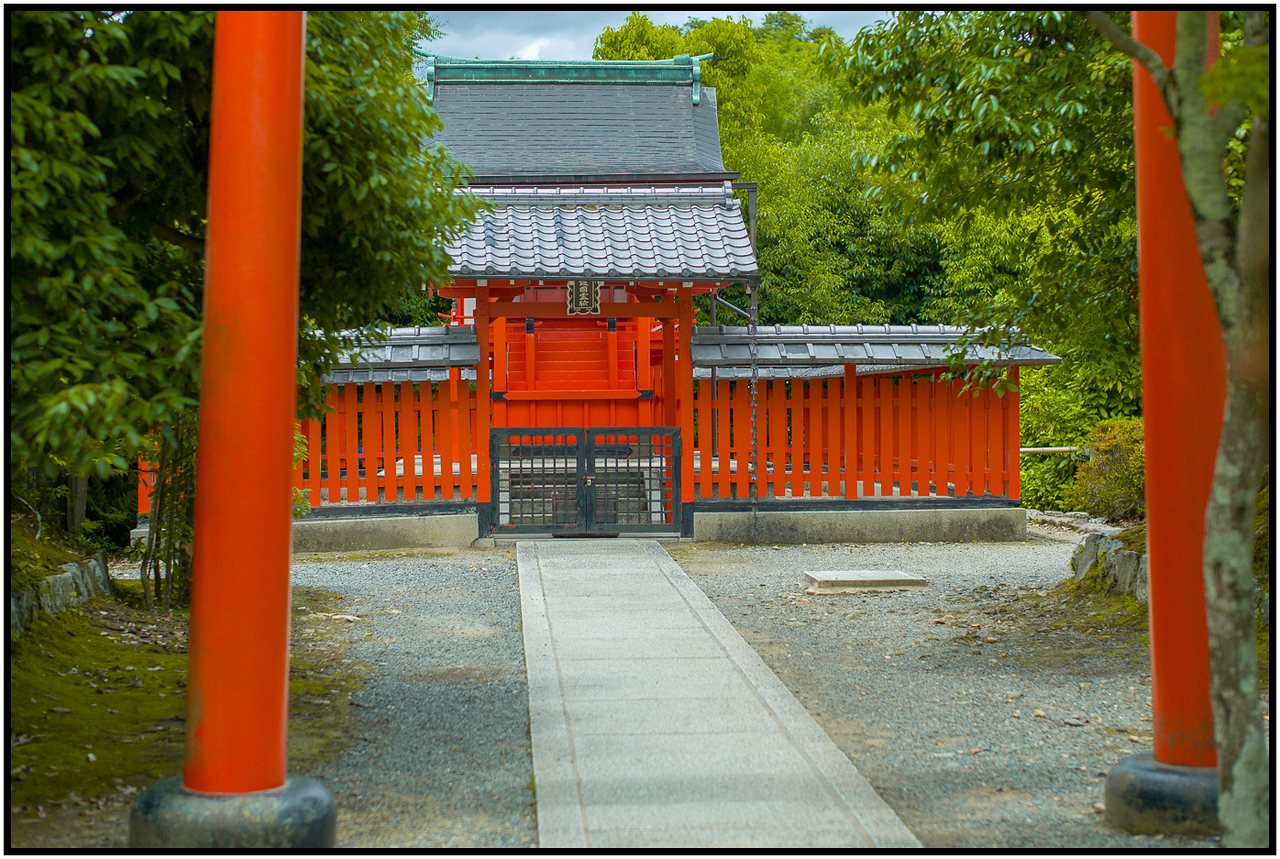
Brenda: I don’t know anything about these next photos. The kids and I all combed through the tourist shops … Holden and I each bought a pair of chopsticks and all three kids bought ice cream. We met up with Adam afterwards and headed back to our house.
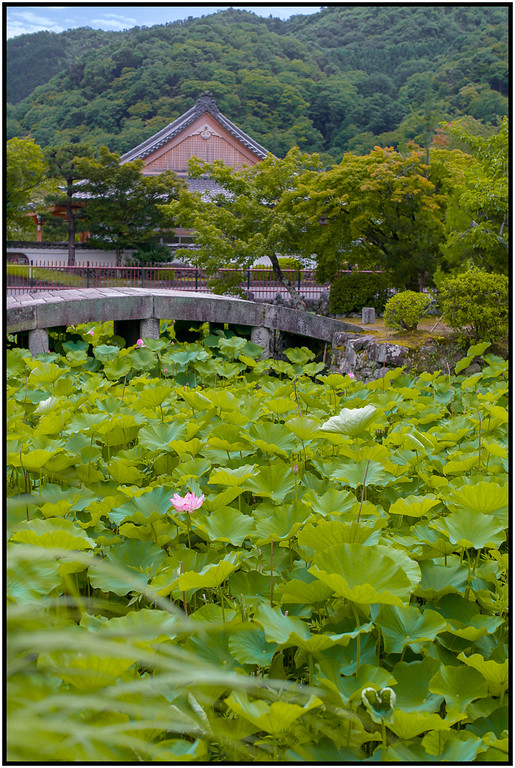
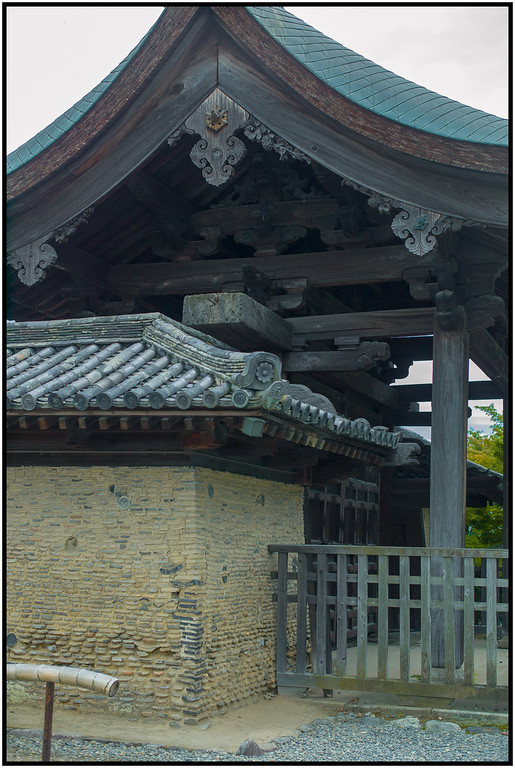
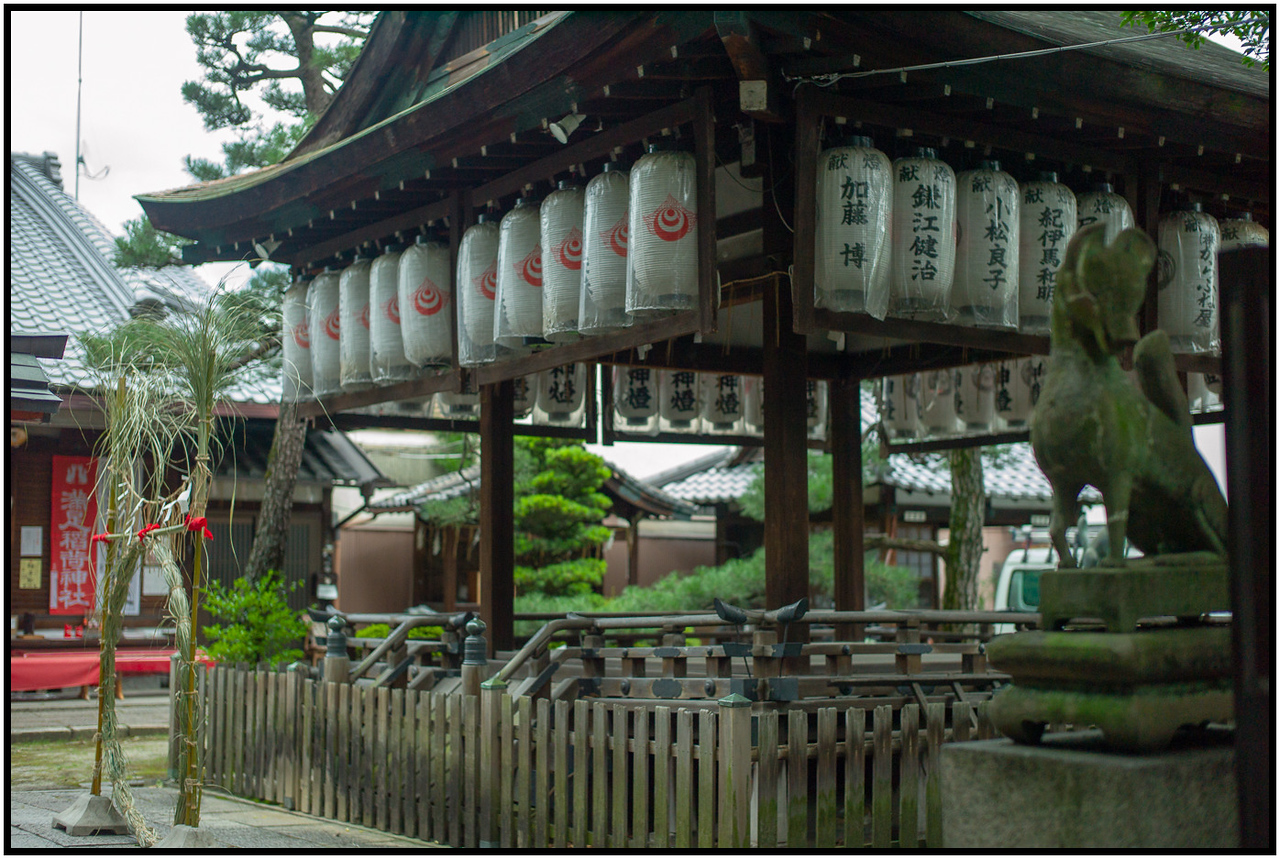
Thursday, 28 June 2018
Long final day in Kyoto – we covered 11.0 miles of walking. Very cloudy and always threatened to rain, but never did. Still hot has Hades, however.
We made a large, clockwise circle around Kyoto, hitting some locations we’ve never been to before.
Some shots around town …
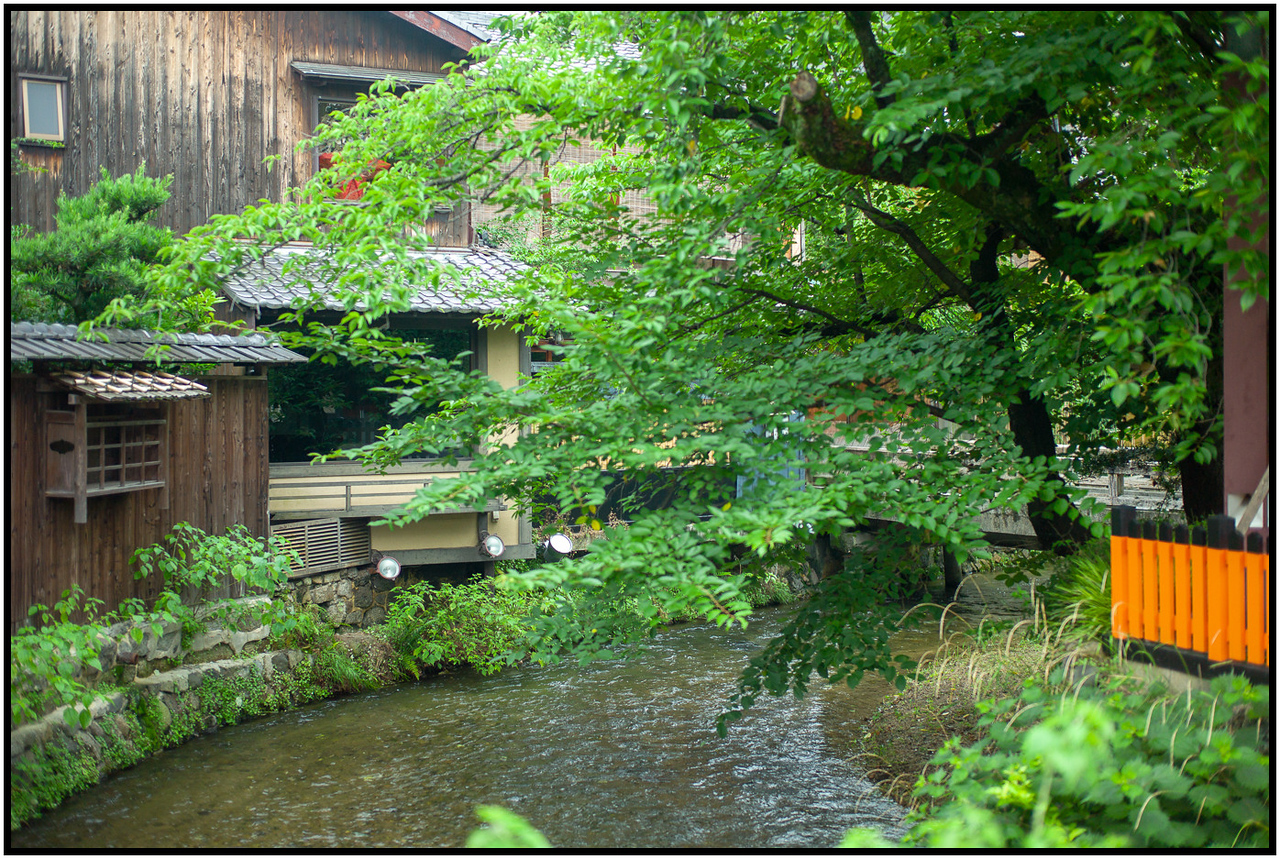
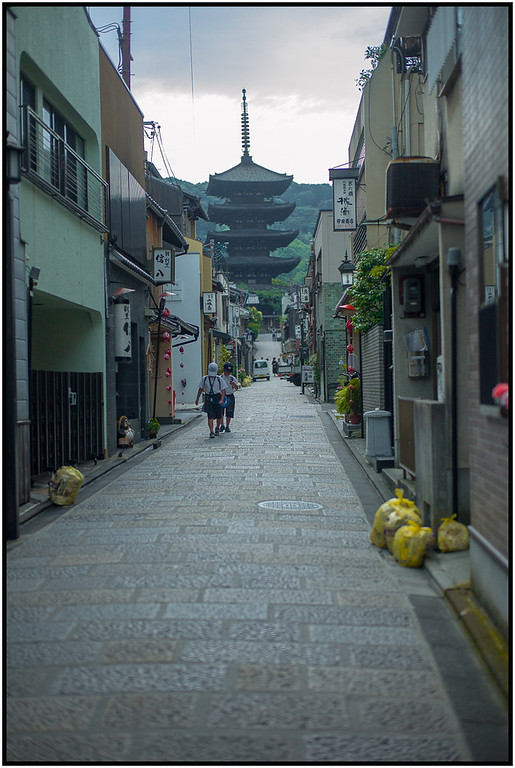
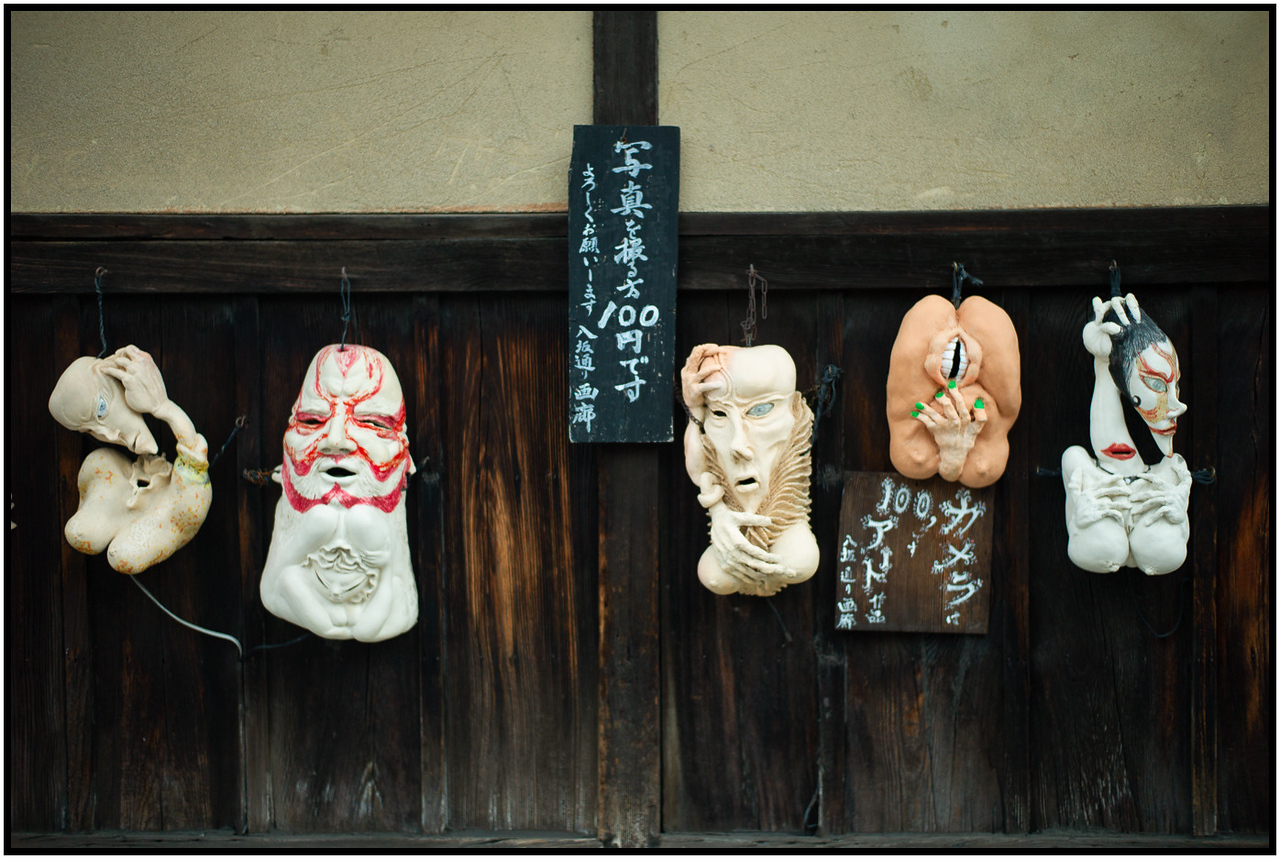
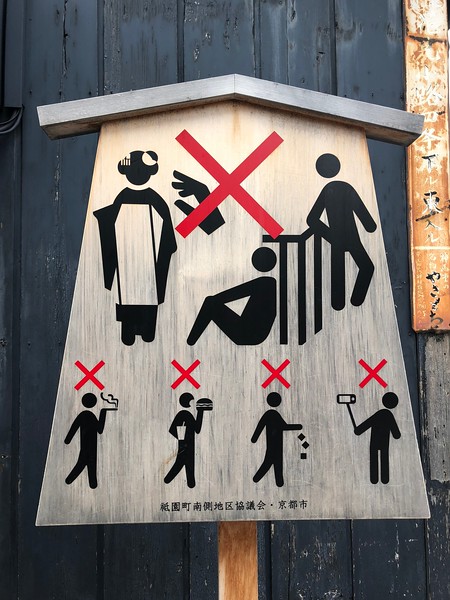
Adam: Sign in the Gion district (below). I like how you are both instructed not to touch the Geishas as well not to hang out and hit on them, giving your best Jersey-style “how you doing?”.
AND – most significantly – no Selfie Sticks. In fact, if I was in charge, I would ban the use of all iPhones and equivalent. If you want to take photos, do it right or don’t do it at all. Things were better when all we had was film and one had to make a major economic decision with each click of the shutter.
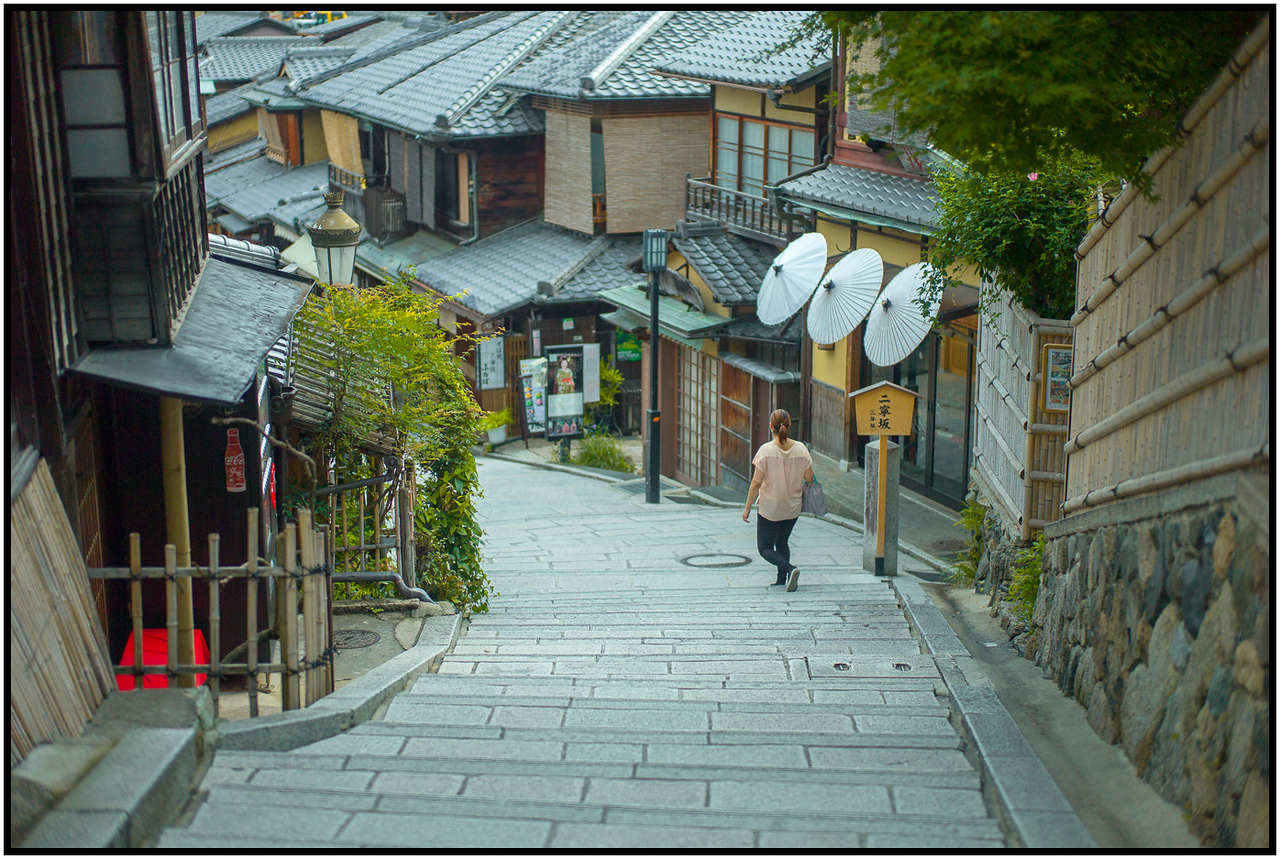
Wonderful houses of the Nineizaka district.
Starbucks. It blends into the area so well it’s hard to find even when you know it’s there and are looking for it (which we were.) Here is Holden saying, “Are you sure this is it?”
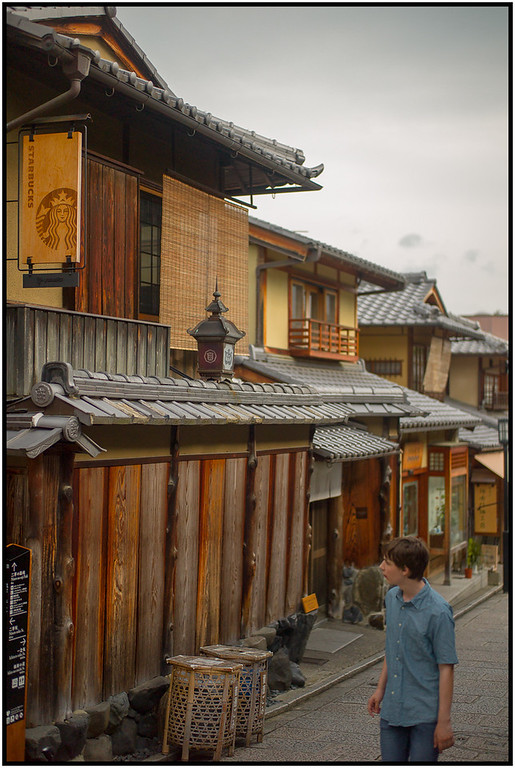
This was our breakfast destination this morning.
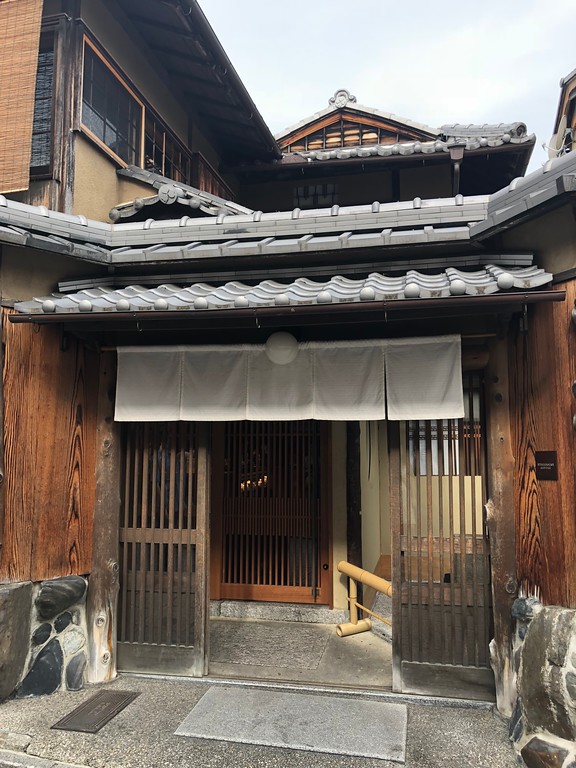
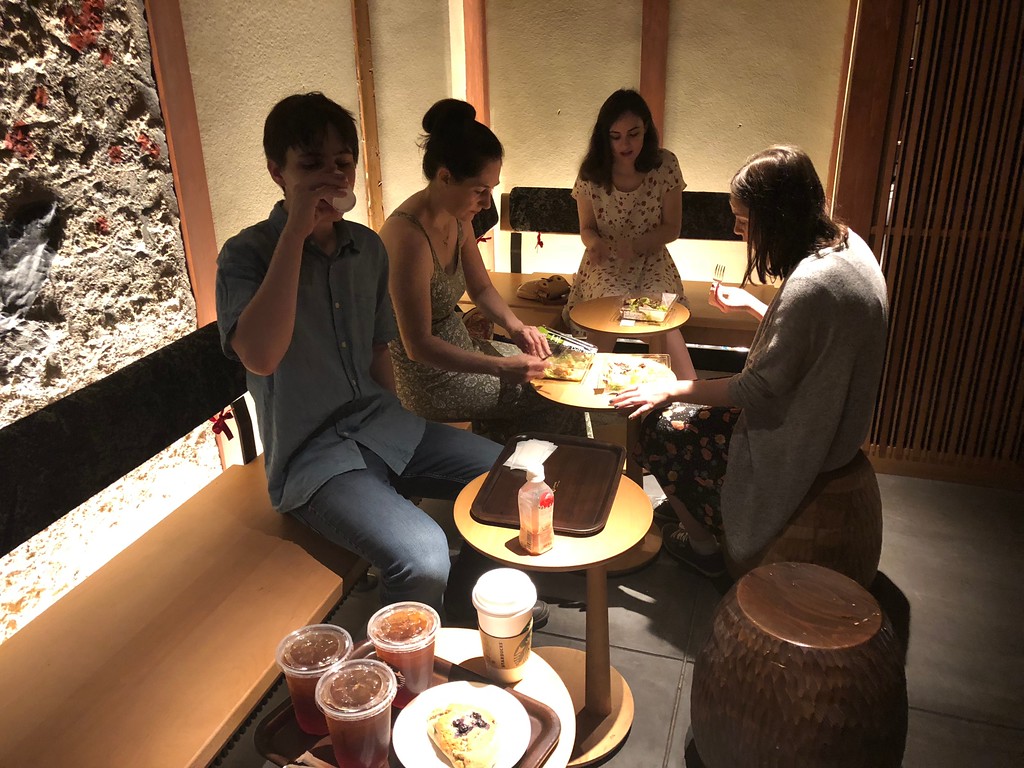
Even the inside of the Starbucks keeps with the architecture of the street.
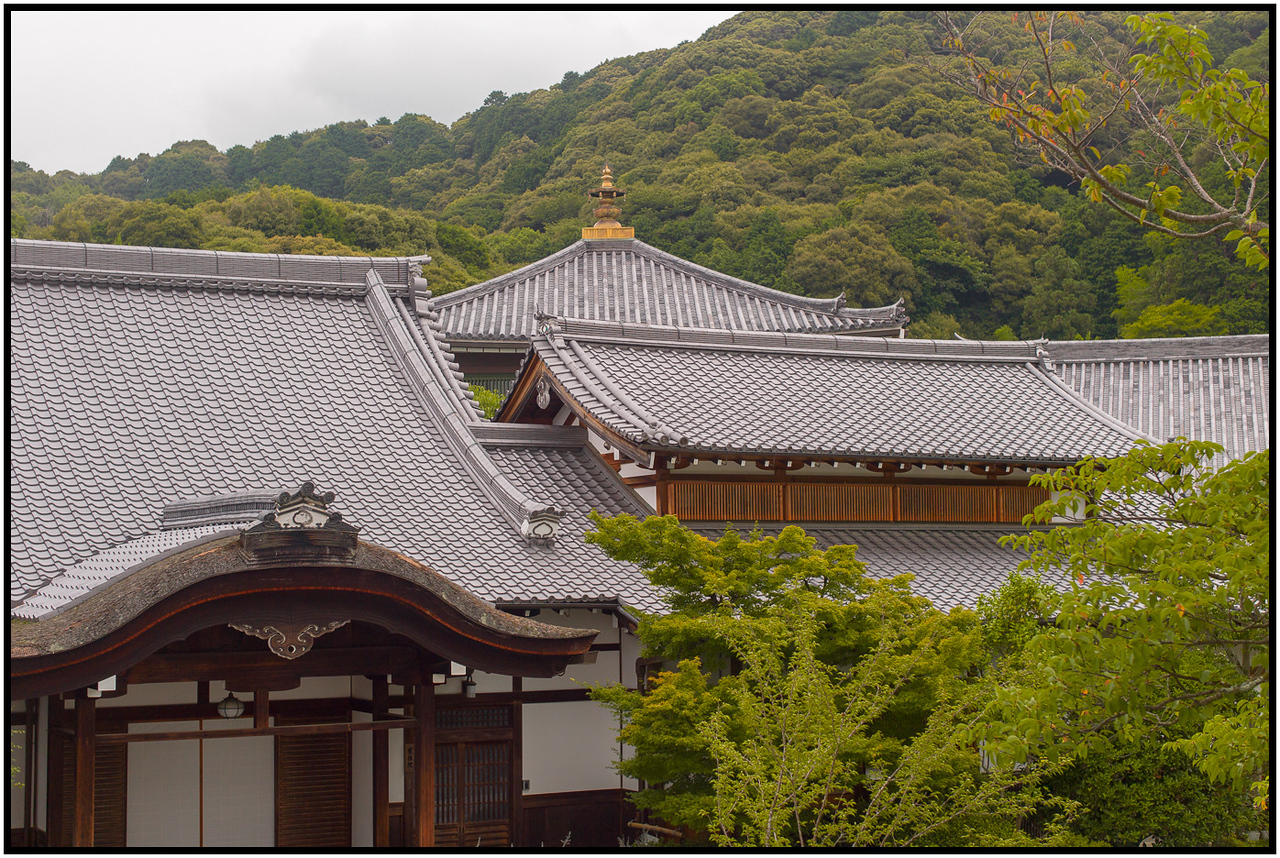
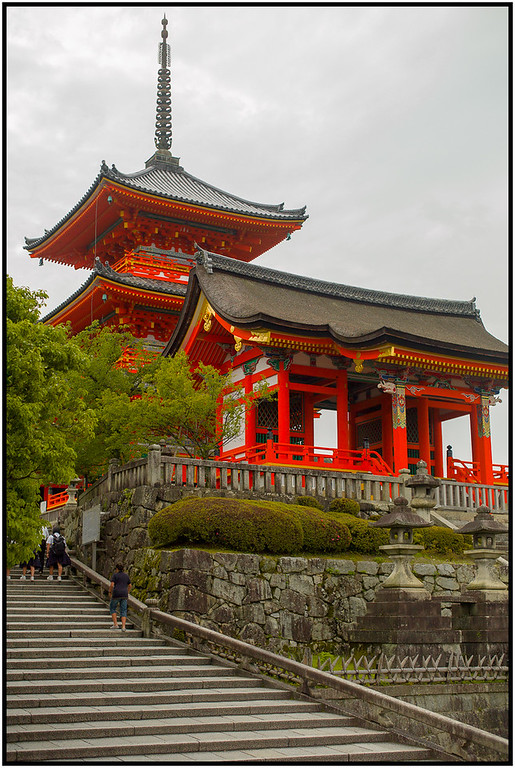
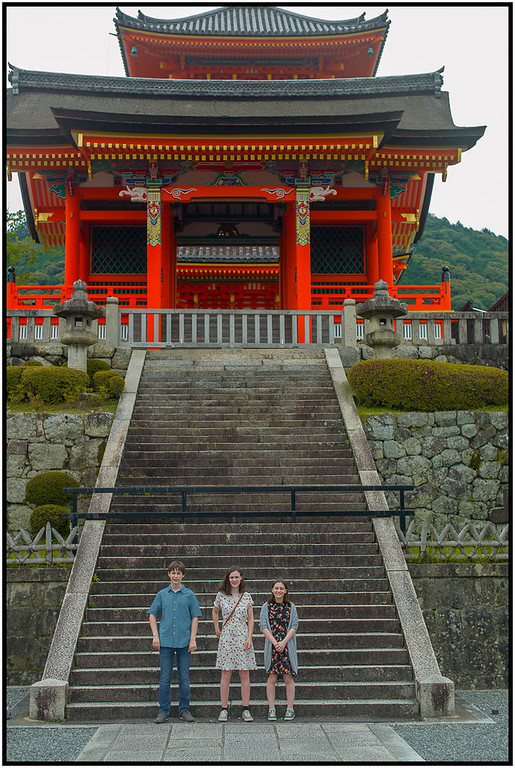
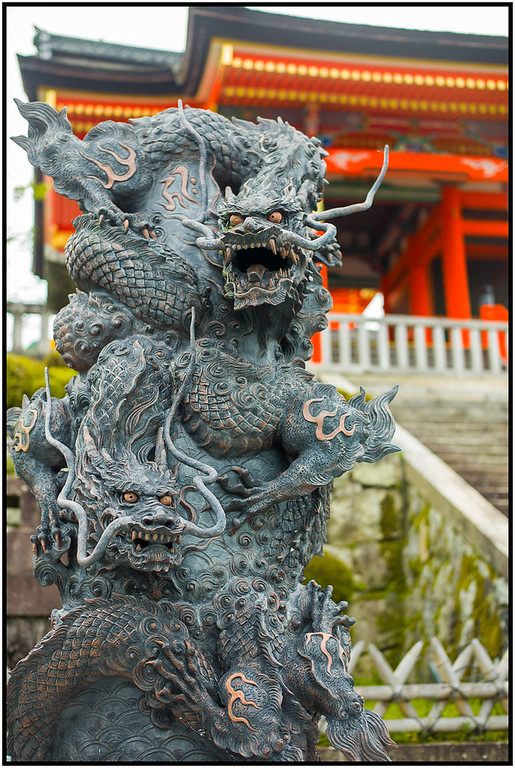
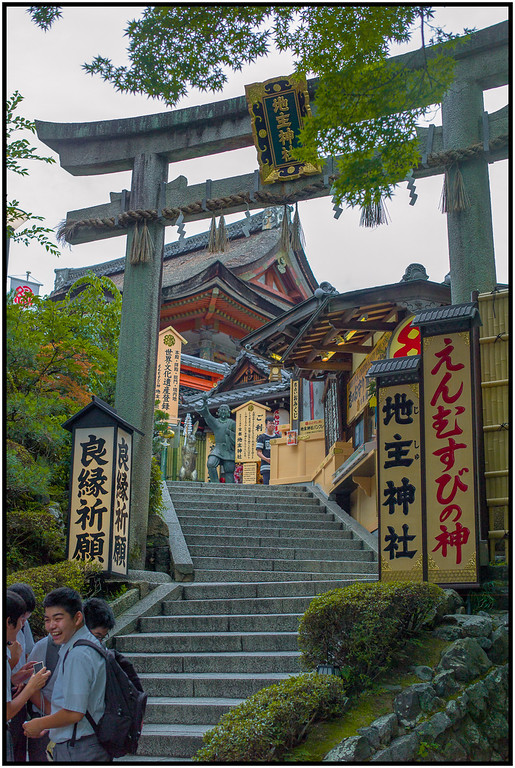
Entrance to the Buddhist Kiyomizu-dera temple (“Pure Water Temple”) and grounds (below).
The temple was founded in 778 by Sakanoue no Tamuramaro, and its present buildings were constructed in 1633, ordered by the Tokugawa Iemitsu. There is not a single nail used in the entire structure. It takes its name from the waterfall within the complex, which runs off the nearby hills. Kiyomizu means clear water, or pure water.

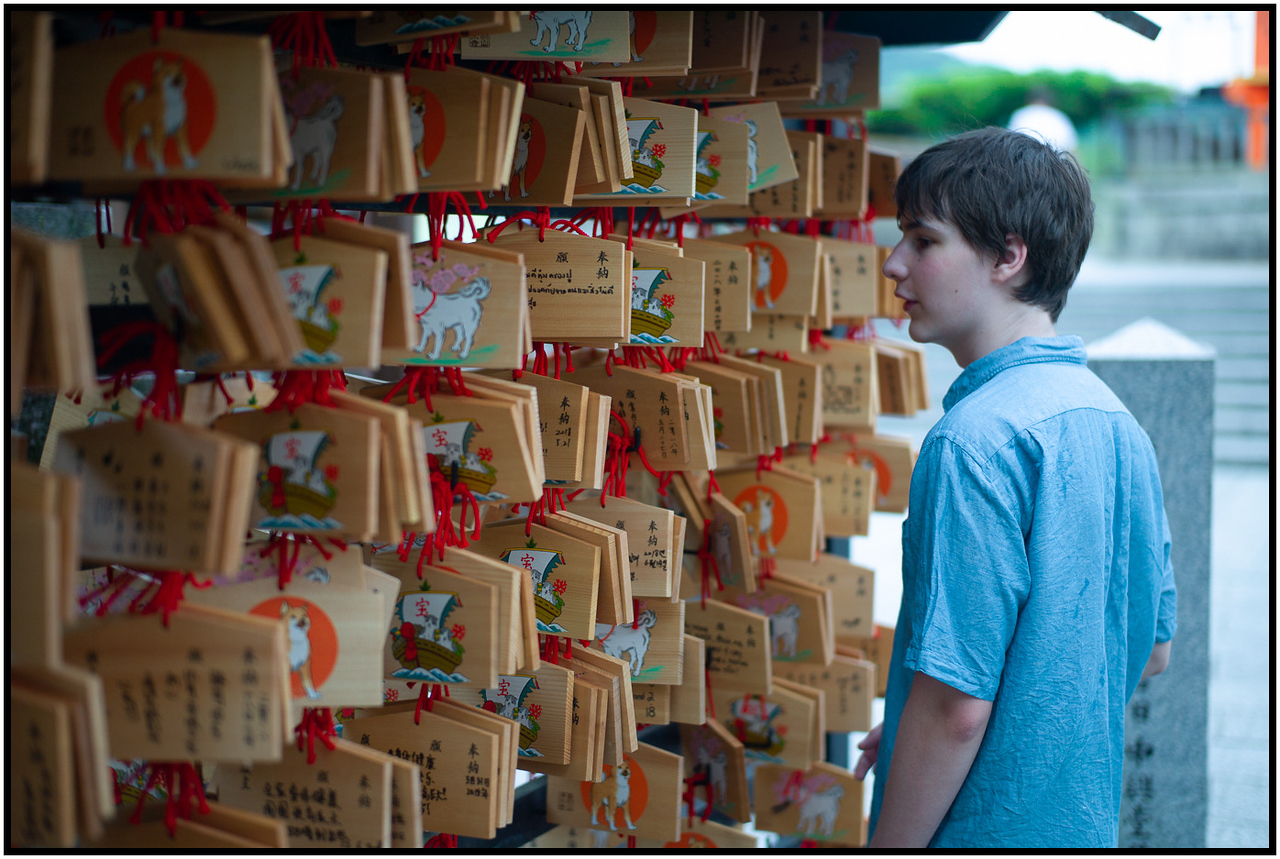
Ema votive tablets. People write their prayer or wishes on the backs of these little wooden plaques. 2018 is the year of the dog, so all the pictures on the front were of various dogs. Most of the wishes we could read in English were “to do well on my exams.”
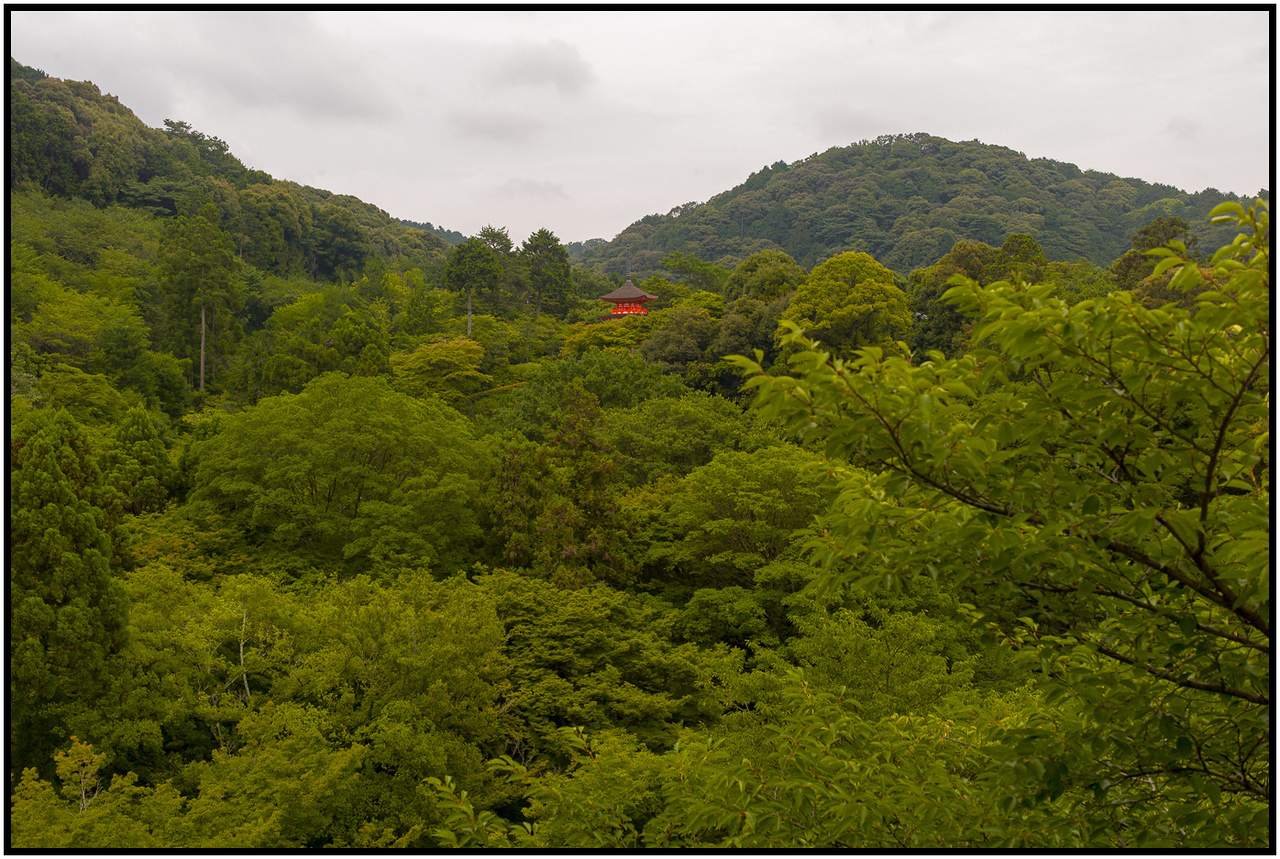
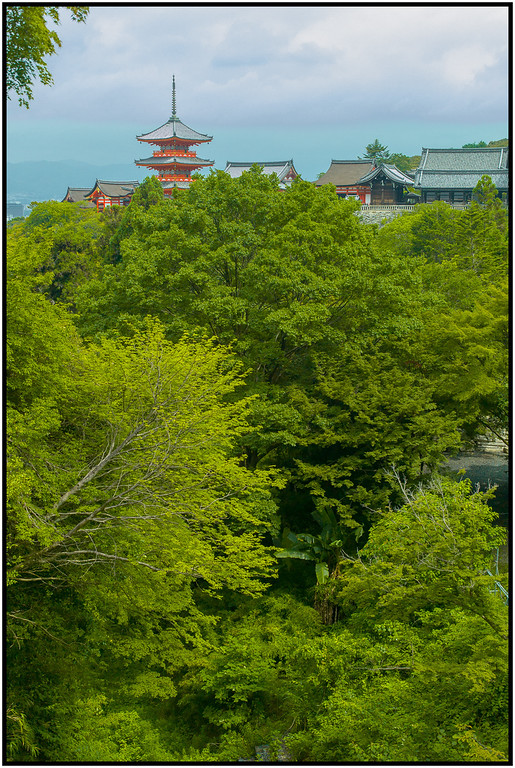
That orange building way off in the distance is the “Easy birthing pagoda.” Visiting the Koyasu pagoda is said to bring pregnant or prospective mothers an easy and safe childbirth.
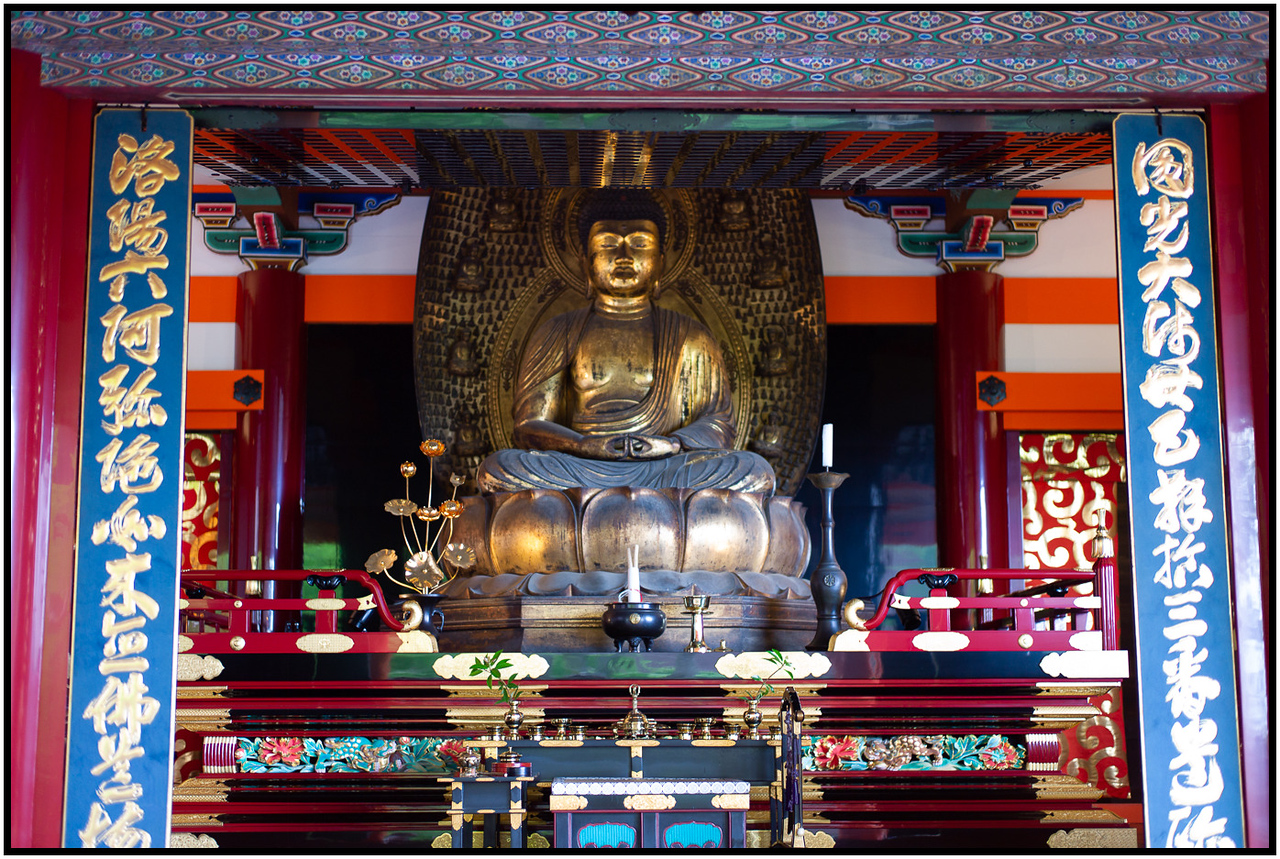
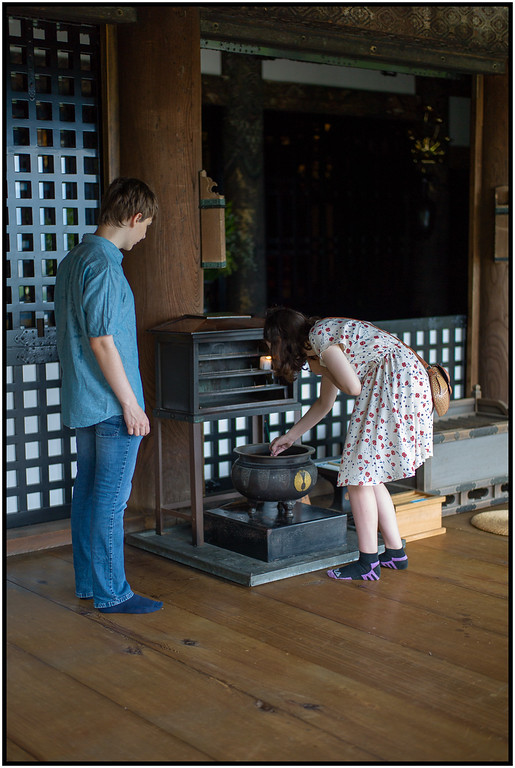
Holden discovered you could buy a stick of incense to light for only ¥10 (about US$0.09)
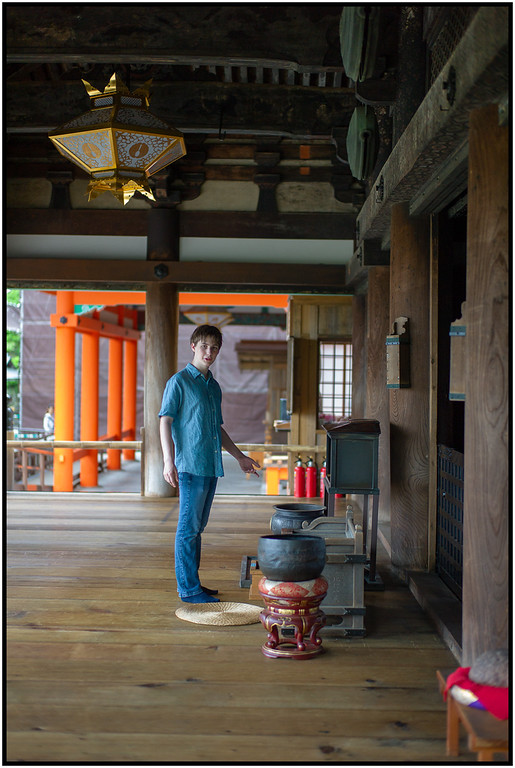
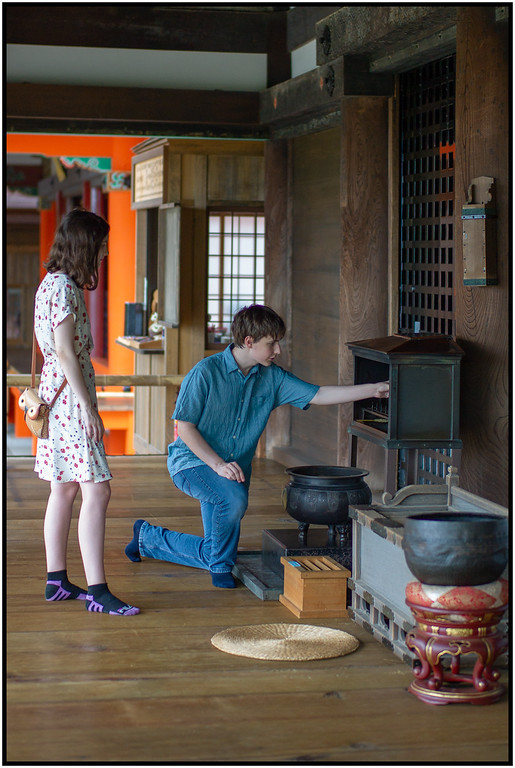
Both Holden and Isabell bought some incense to make a wish/prayer at the Buddhist temple. You light the incense on a candle and then stick it in the iron pot.
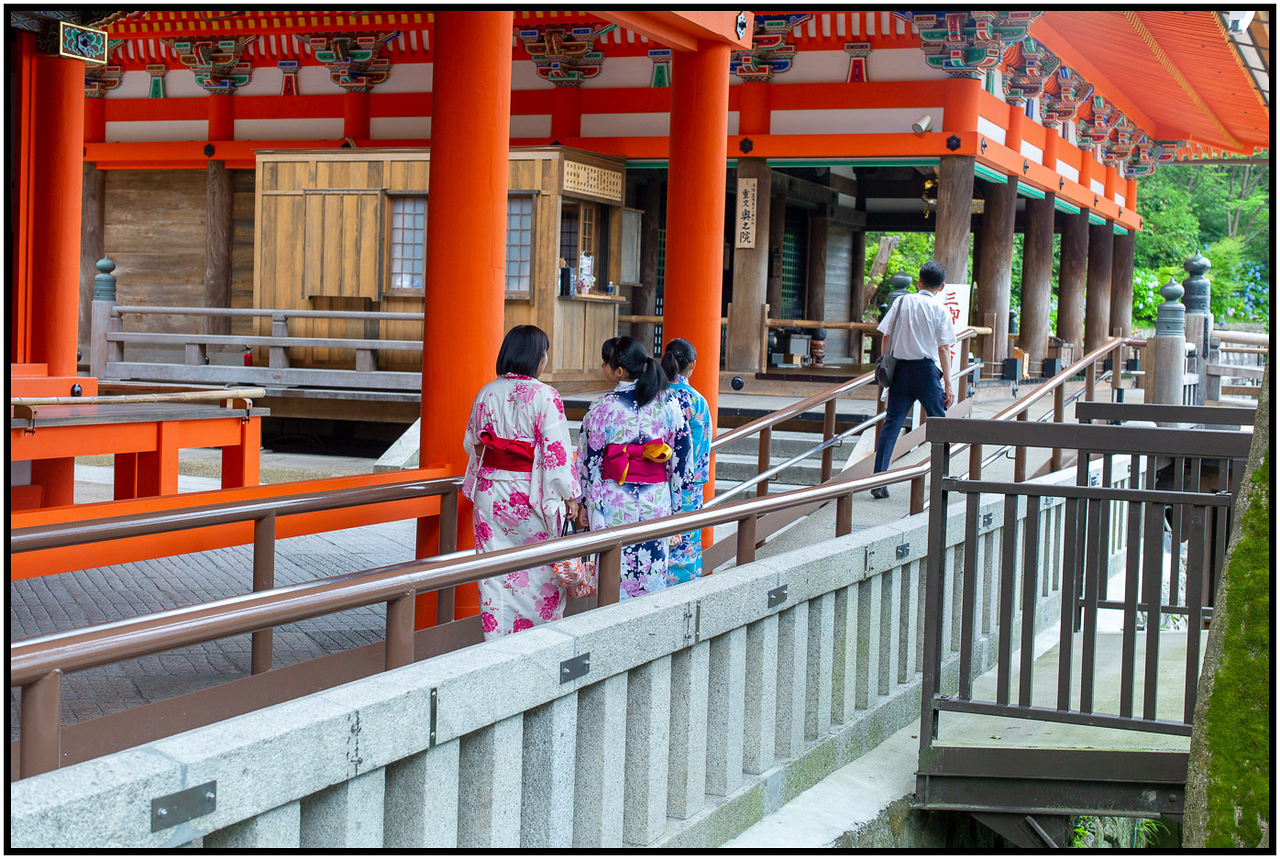
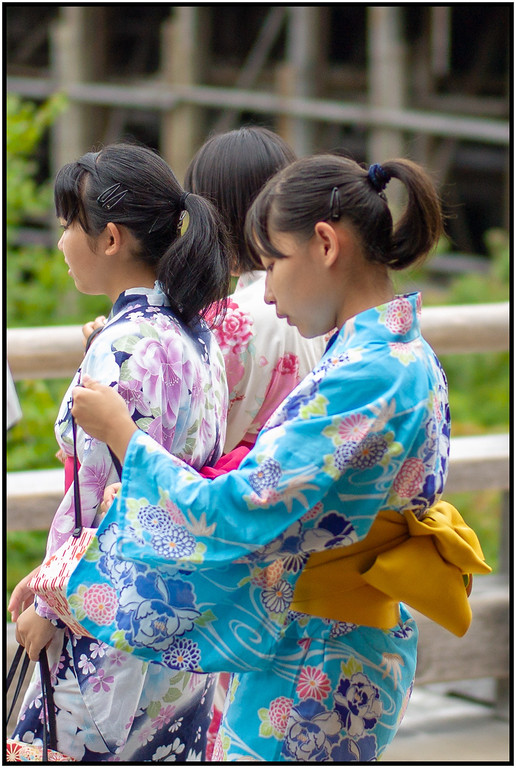
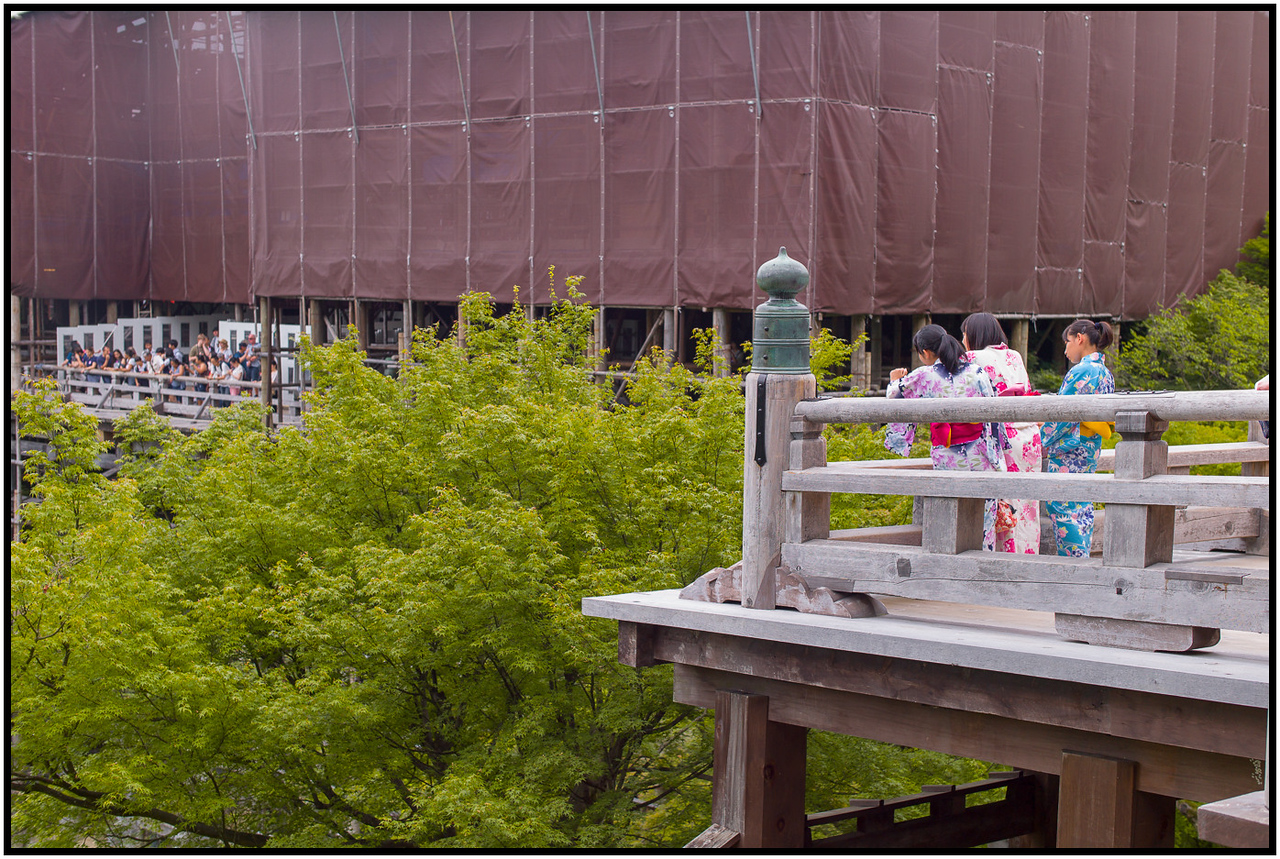
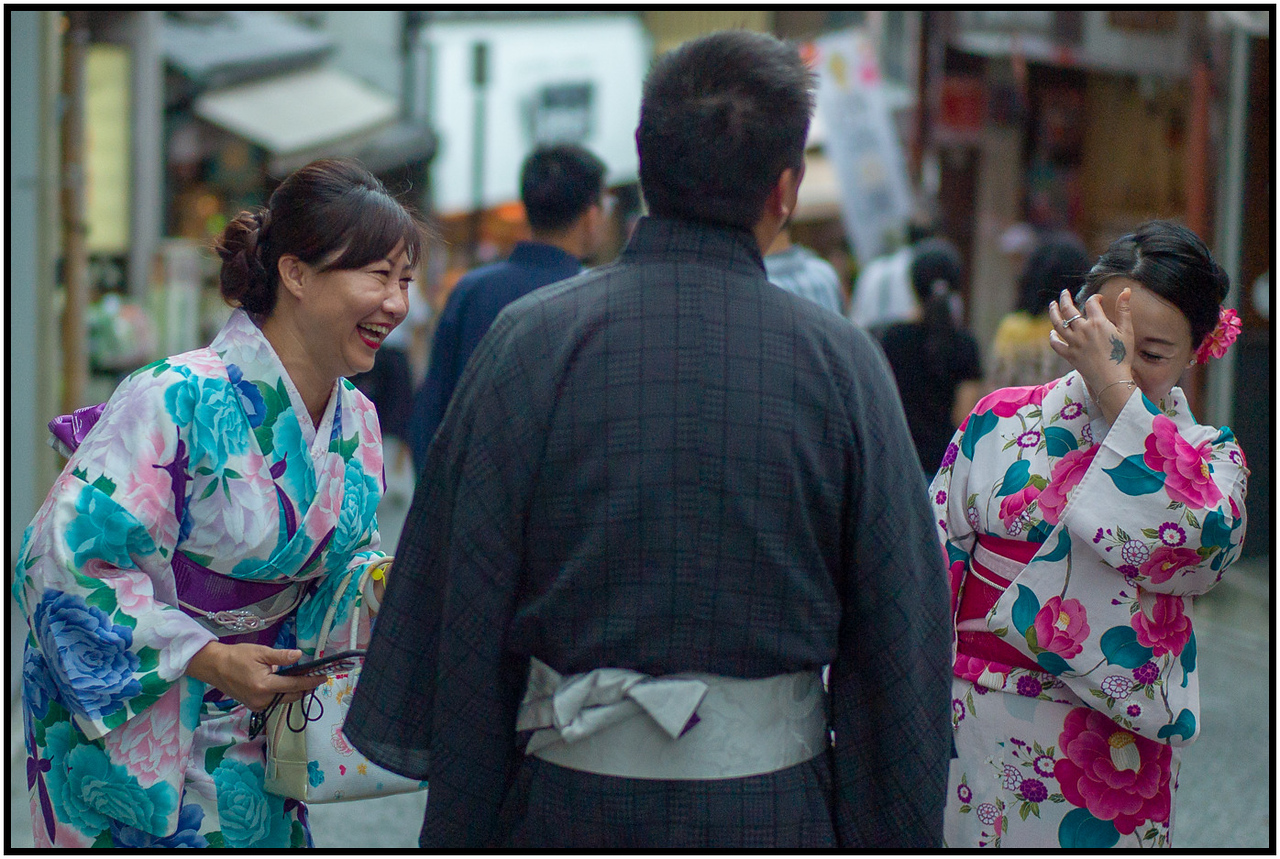
Women wearing traditional yukatas, the cotton kimonos worn during summer.
Unfortunately the main temple building was under renovation. The majority of it was covered in scaffolding and mesh cloth.
On our way to find the Easy Birthing Pagoda, we made a wrong turn and got lost in the woods. We stumbled onto this cemetery.
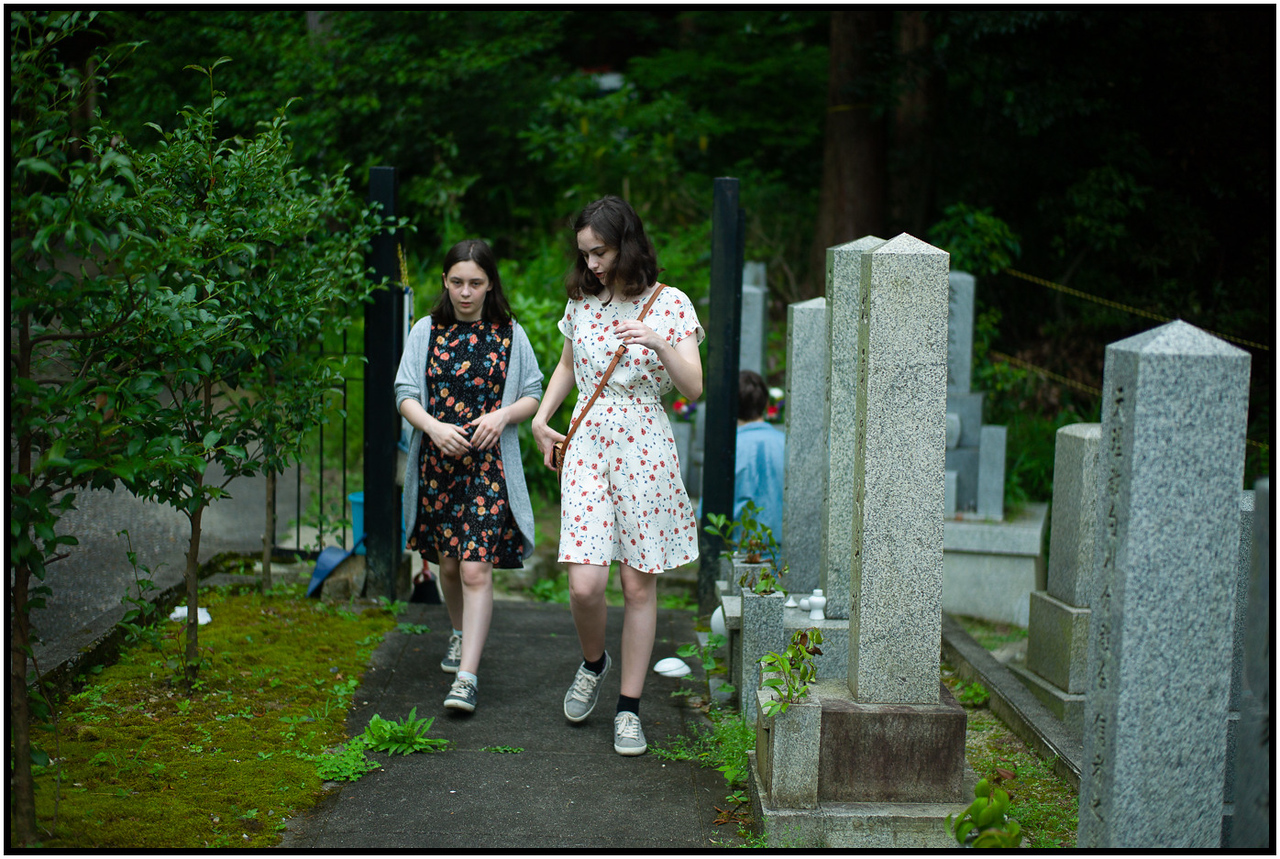
Realising we were in the wrong place, we turned around and headed back the way we came. It was a nice, relaxing stroll though … no crowds and it was cooler in the forest.
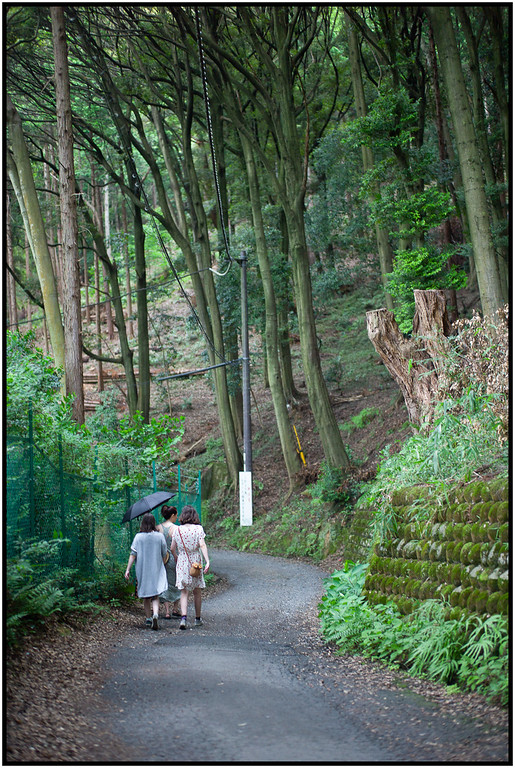
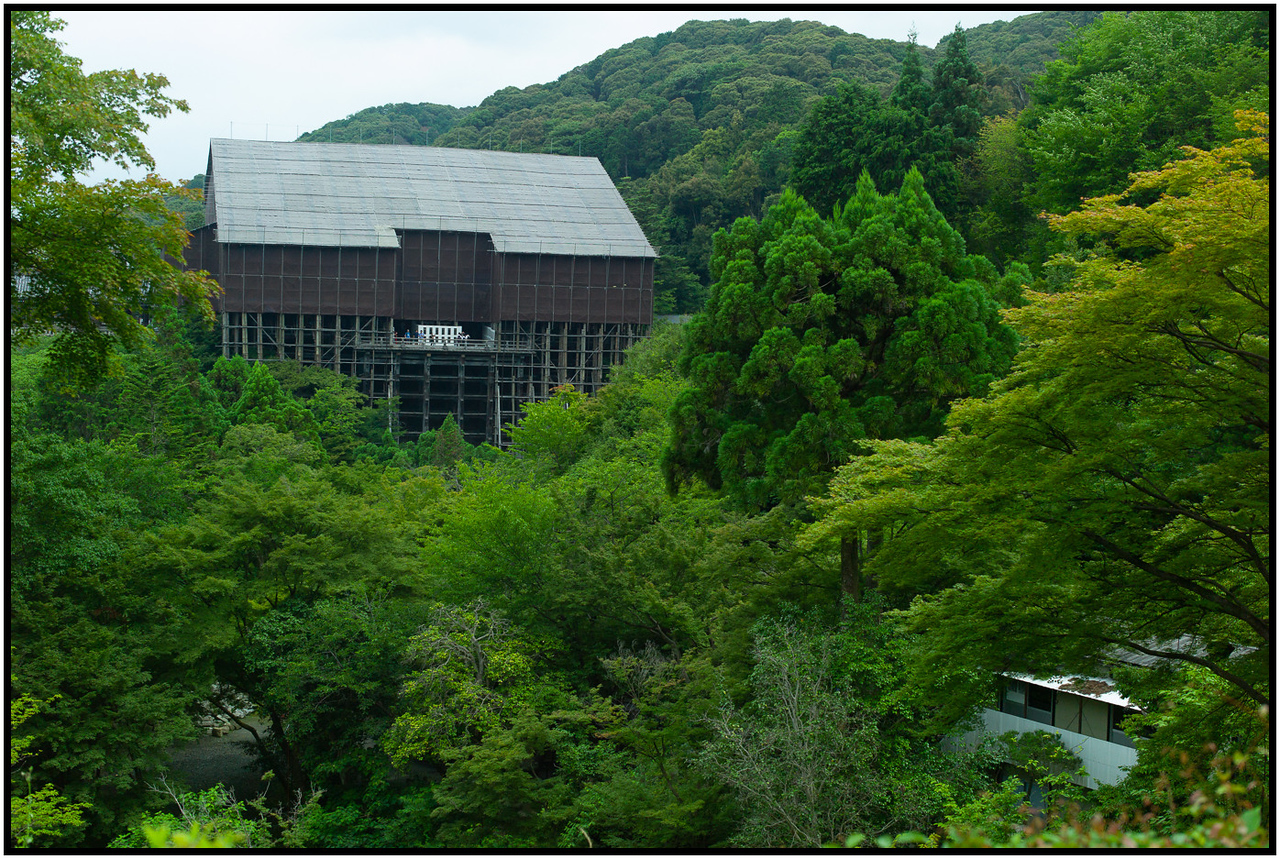
Another view of the temple all covered up for it’s restoration.
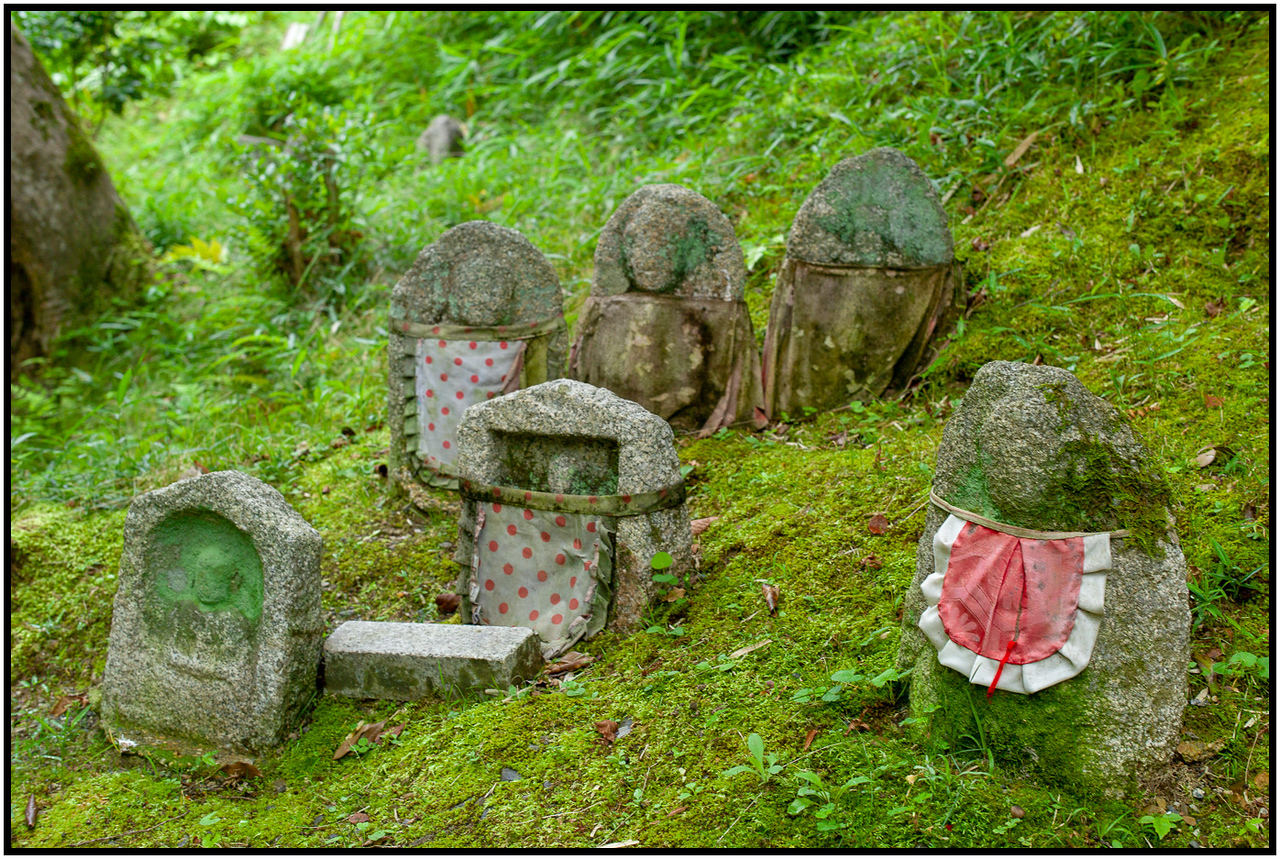
Jizo statues, the protectors of women, children and travelers. Statues were adorned with red bibs by parents who were grateful for saving a sick child or to ask for the Jizo’s protection of a child who has died in the afterlife. Red was believed to banish demons and illnesses.
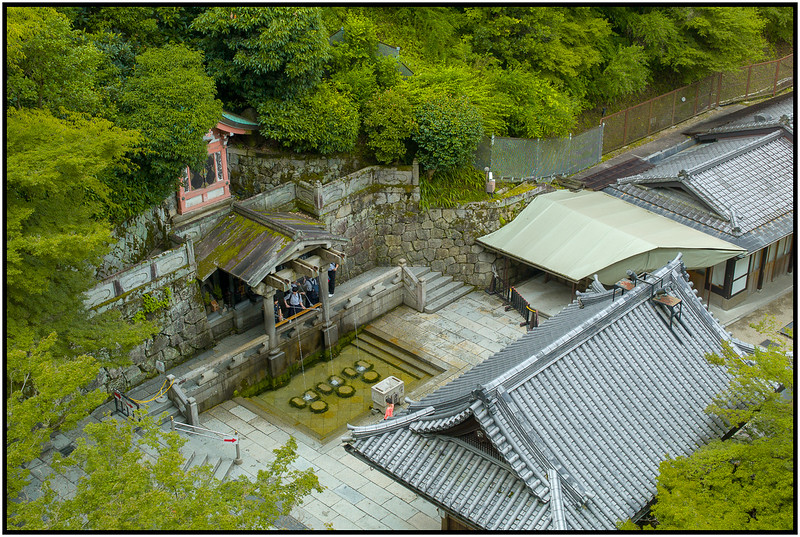
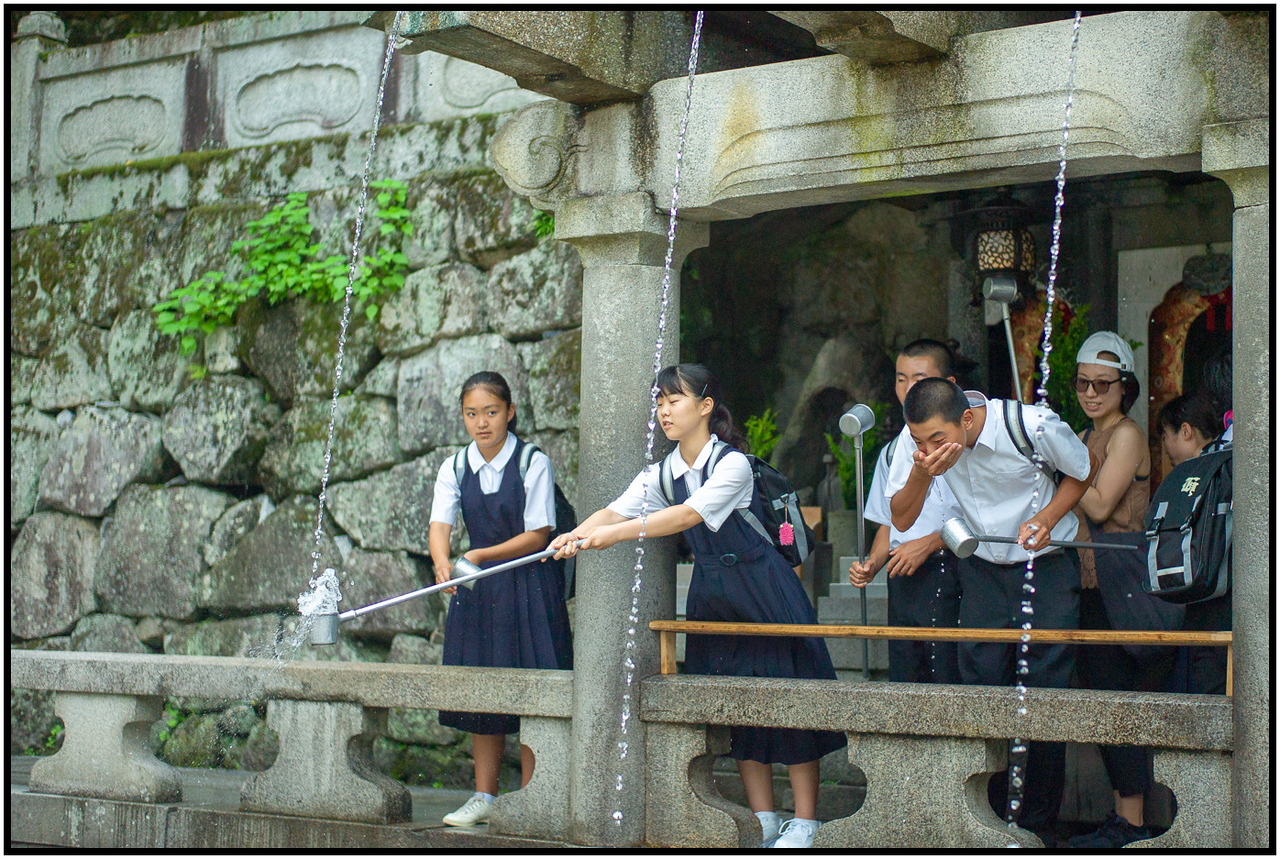
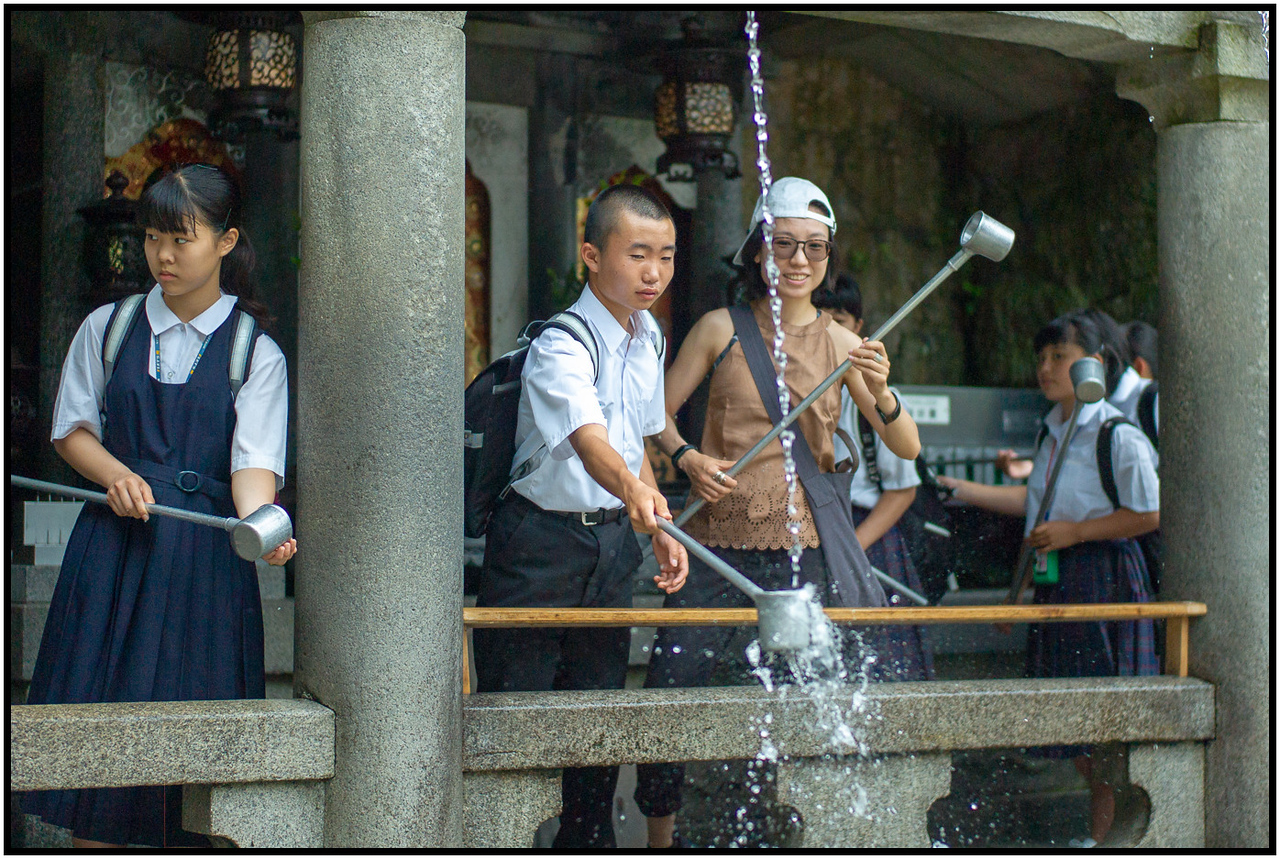
The flowing Otowa Waterfall below Kiyomizudera’s main hall base. It’s actually three separate streams of sacred Otowa Water. Drinking from each stream yields different advantages which were success at school, luck in love or a long life. One must pick from the three since drinking from all of them is thought to be too greedy.
More walking around town. Our next destination is the Nishiki Fish Market.
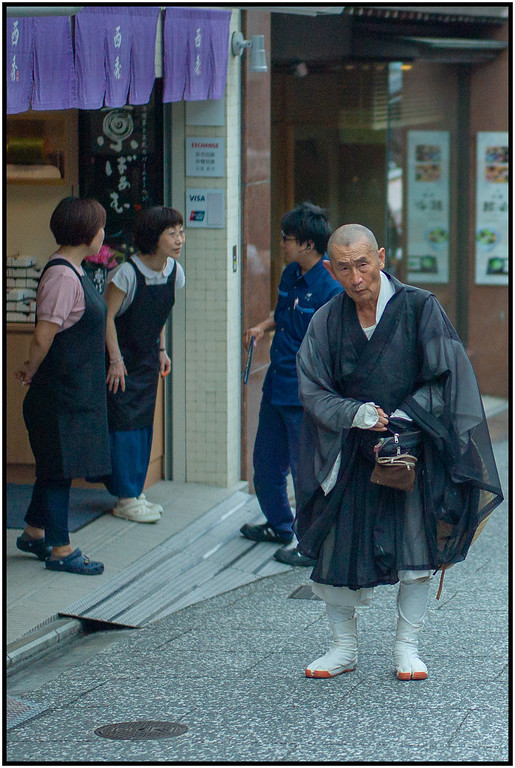
People having fun.
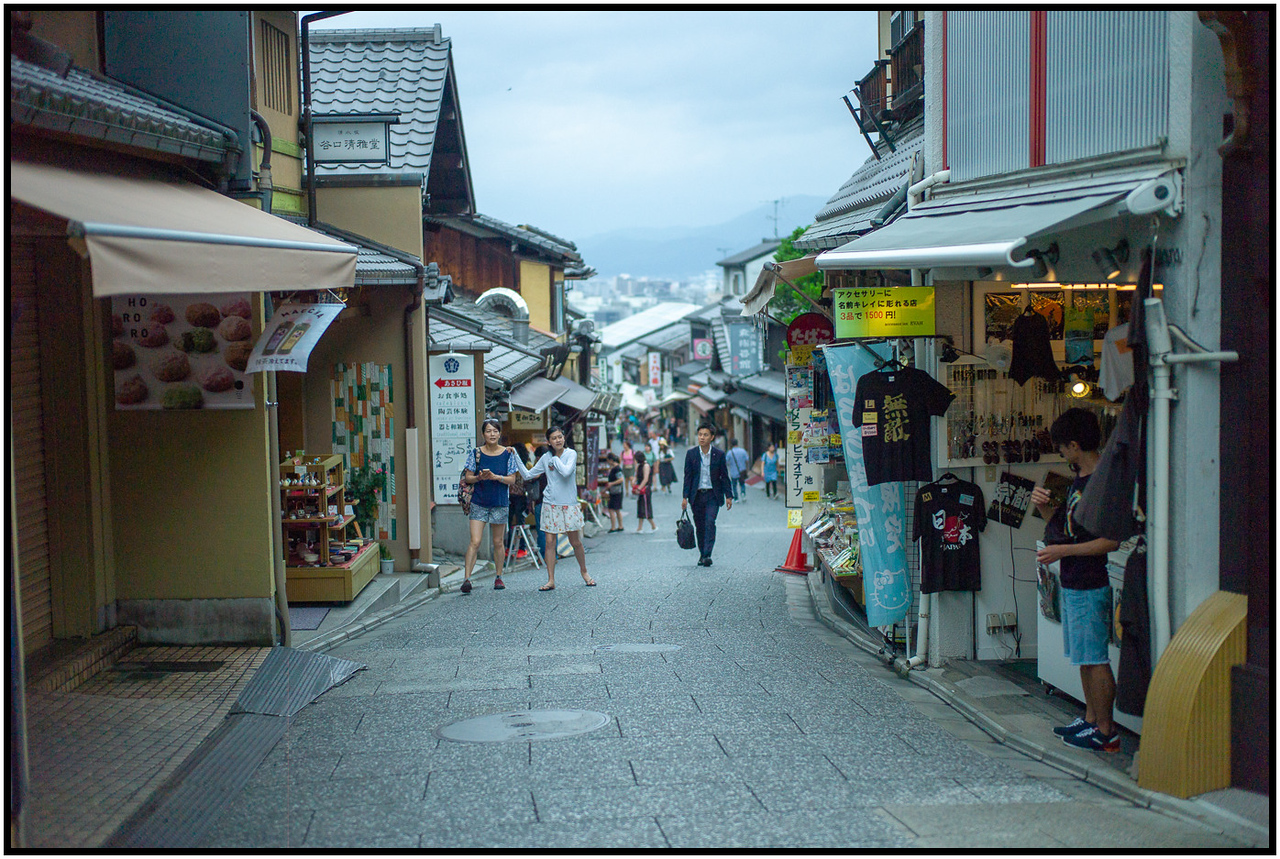
Lots of tourist shops along the way.
A refreshing snack: a cucumber on a stick soaked in salt water. This is a surprisingly refreshing snack on a very hot day.
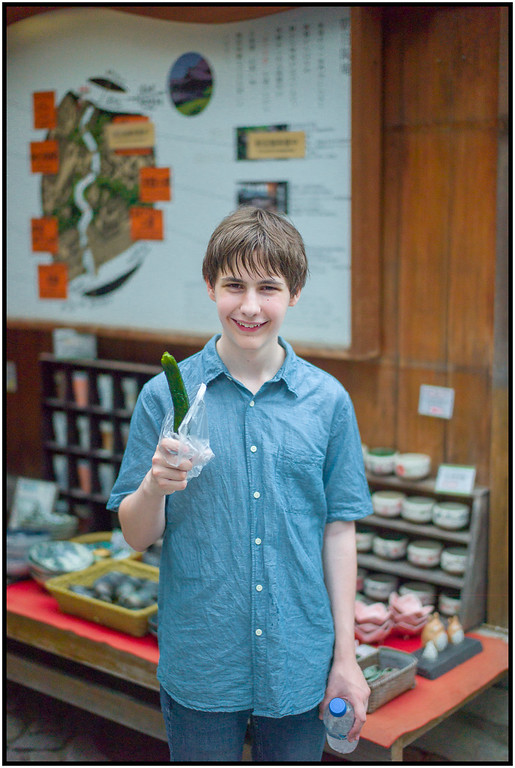
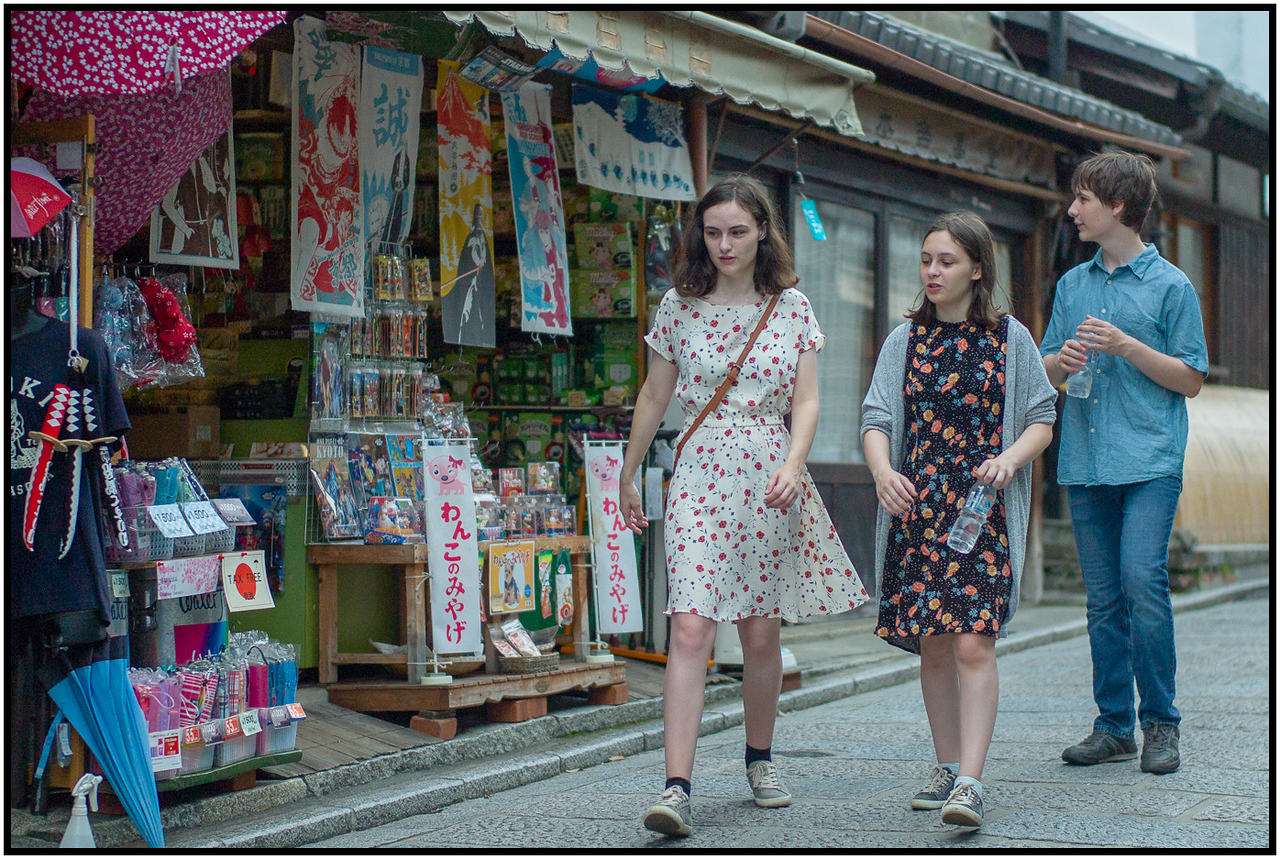
More tourist shops.
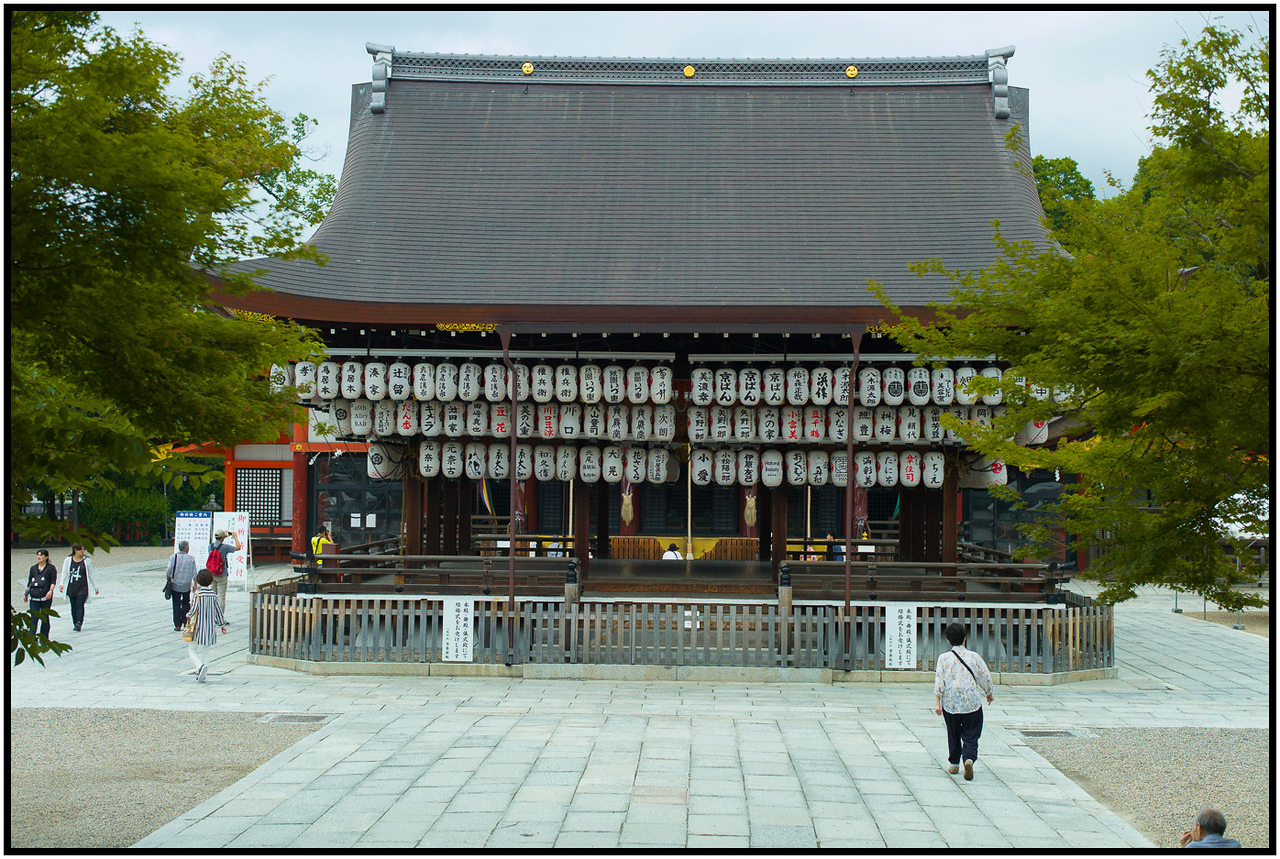
We wandered by a temple we visited last time, the Maruyama park and the 1350+ year old Yasaka shrine.
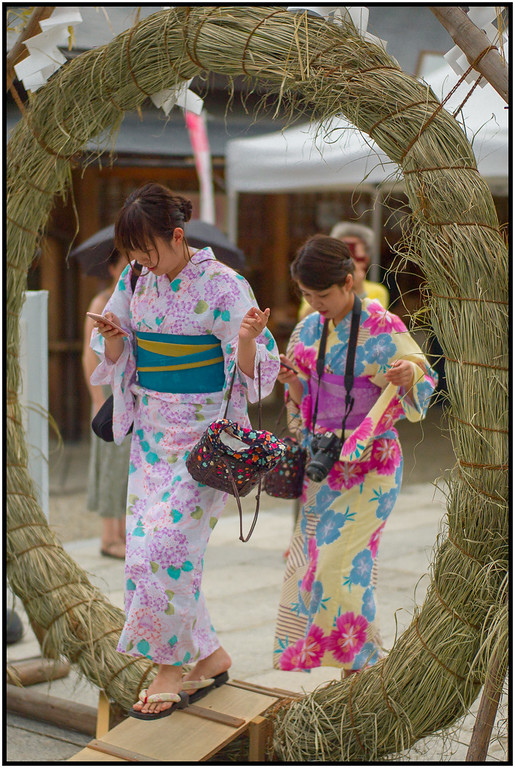
These girls walked through this archway three times, I assume for good luck of some sort. I didn’t ask them. They were reading instructions on how to do it correctly on their phones.
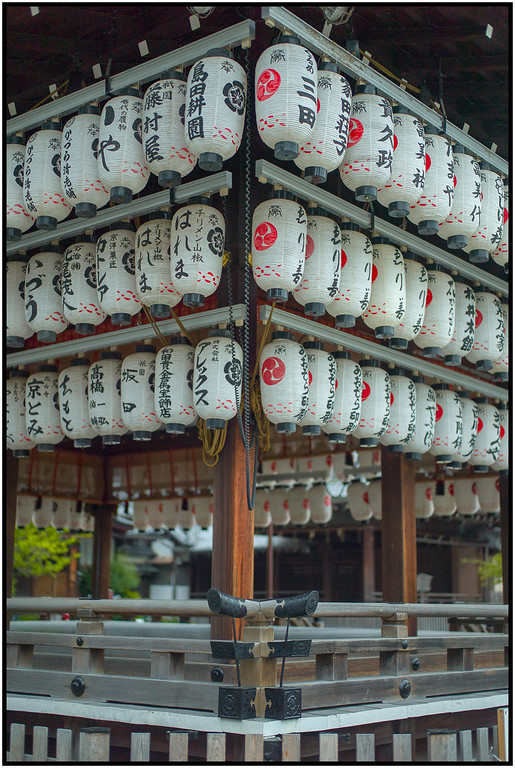
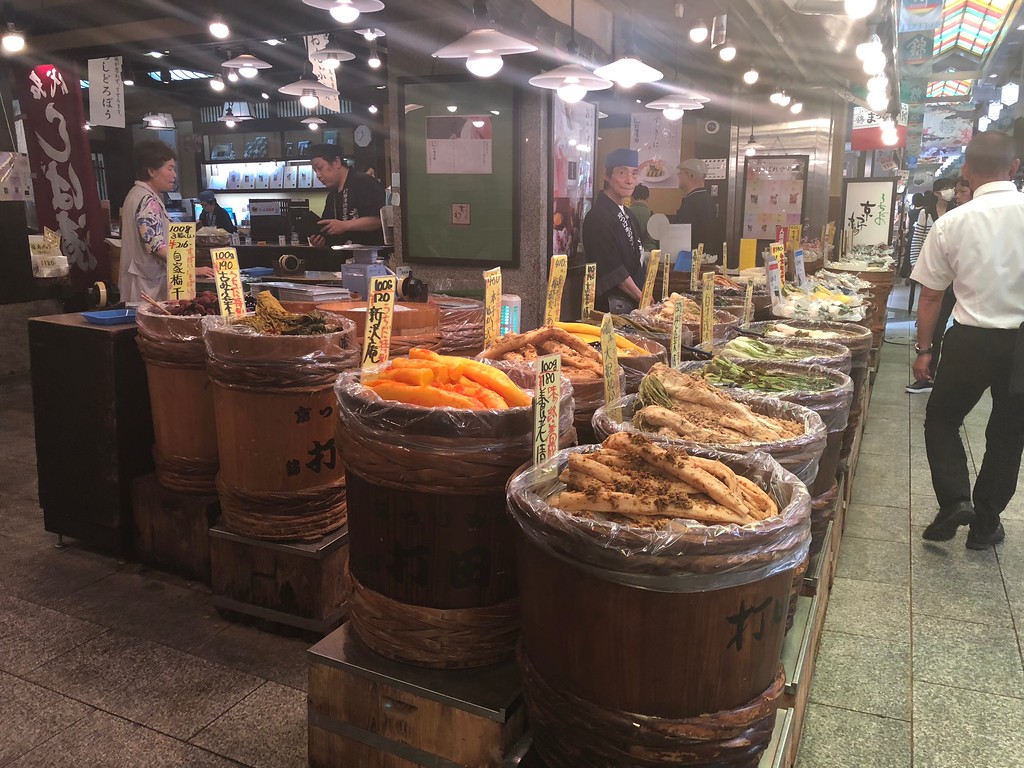
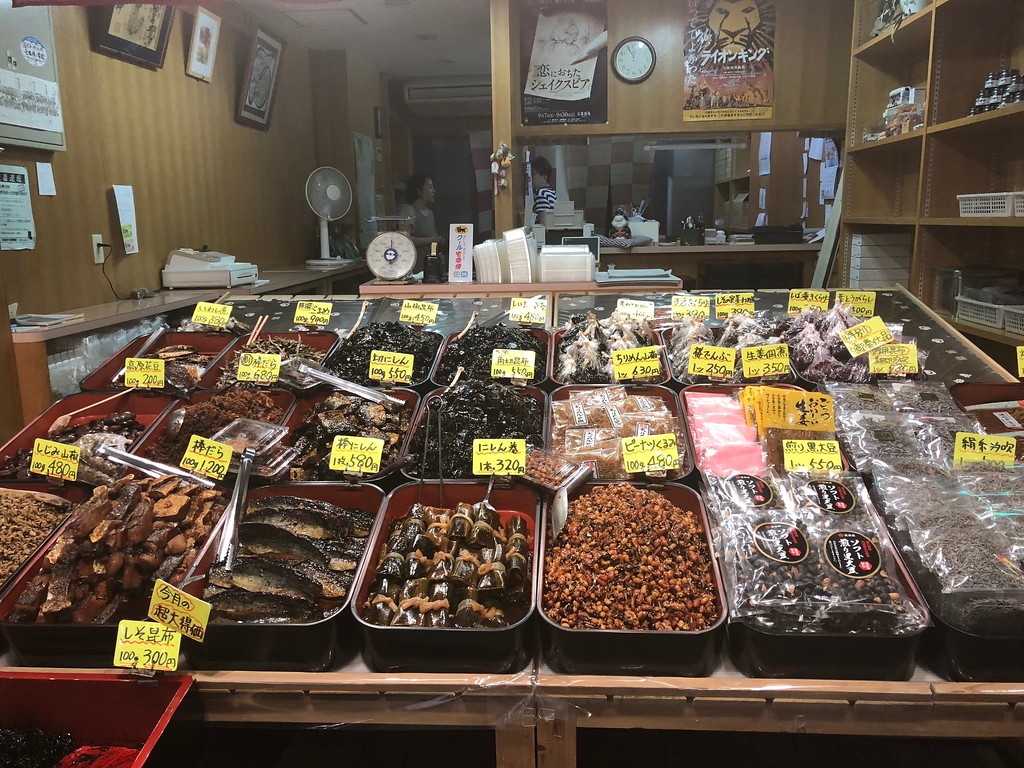
Nishiki Fish Market.
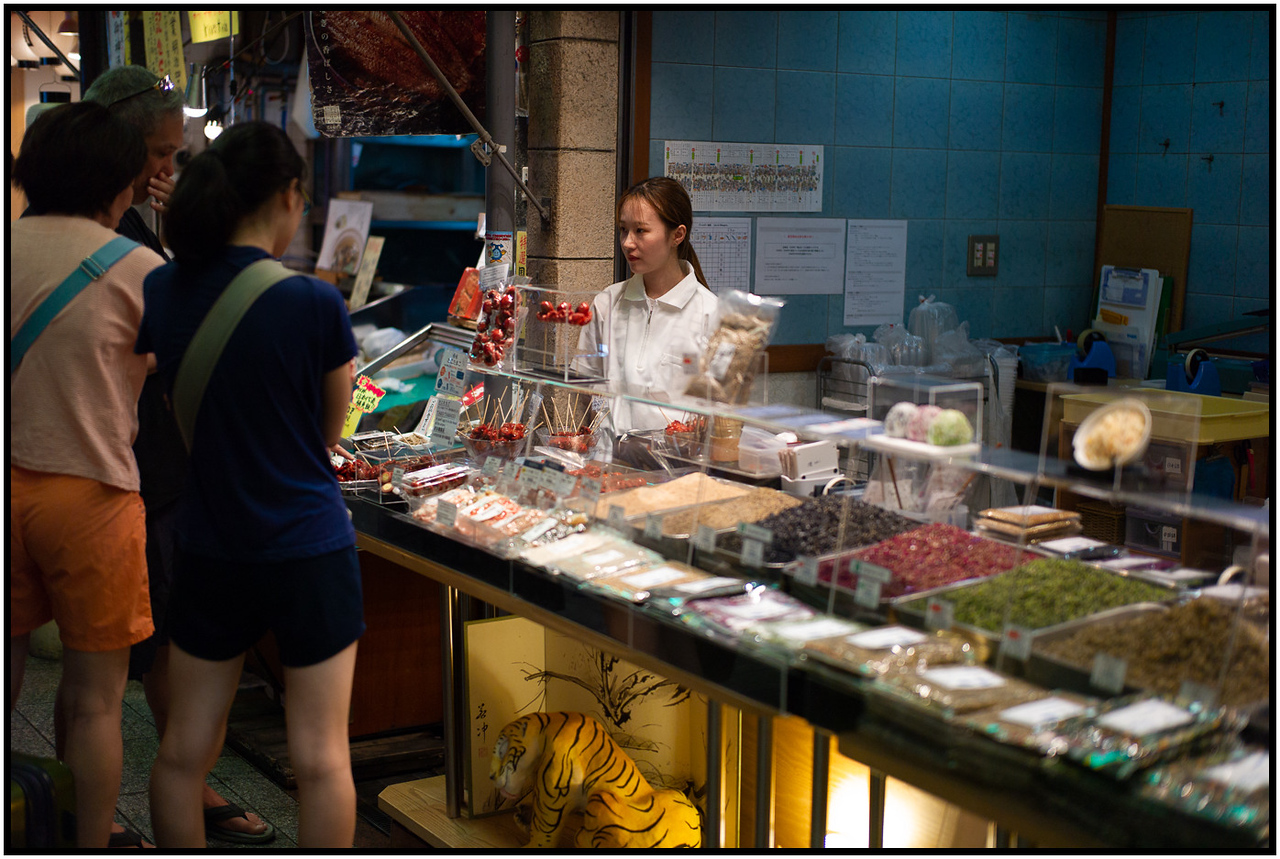
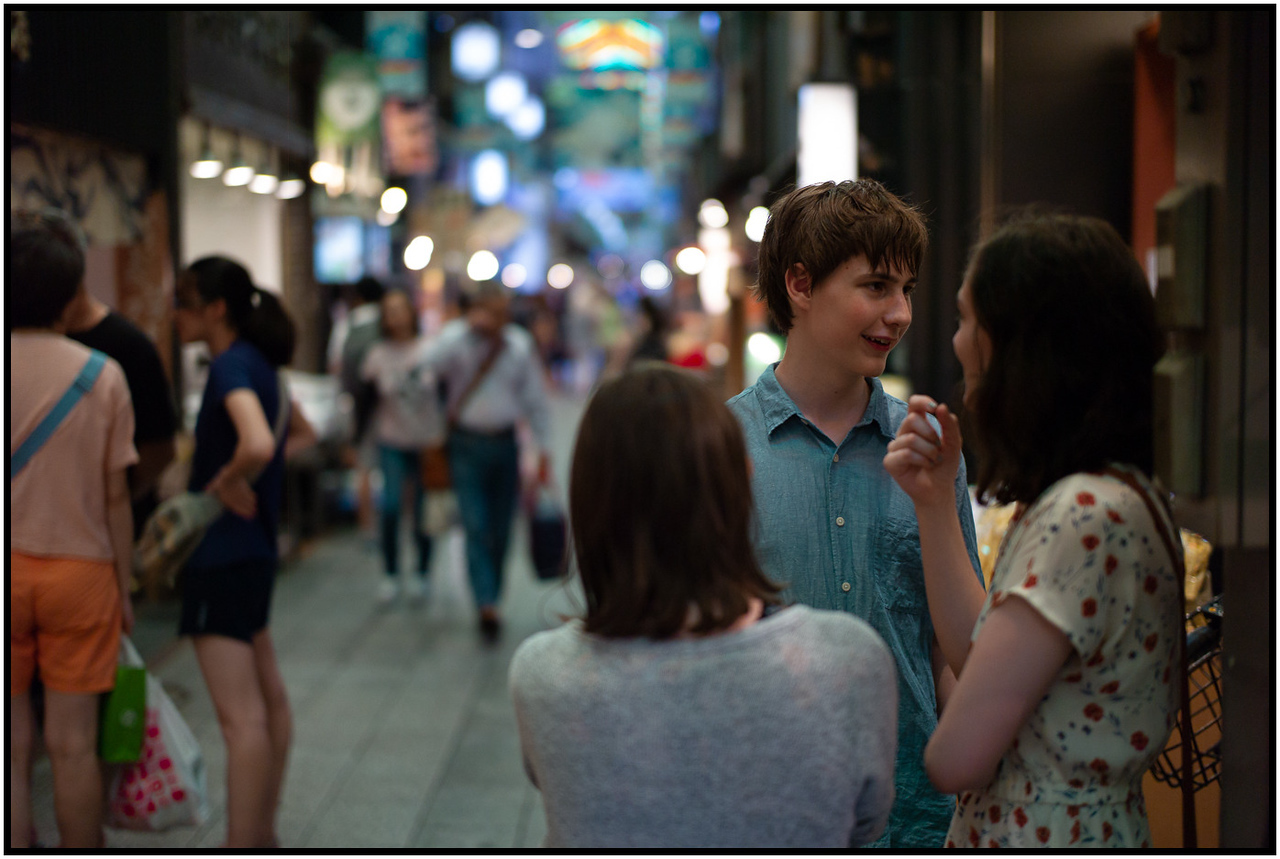
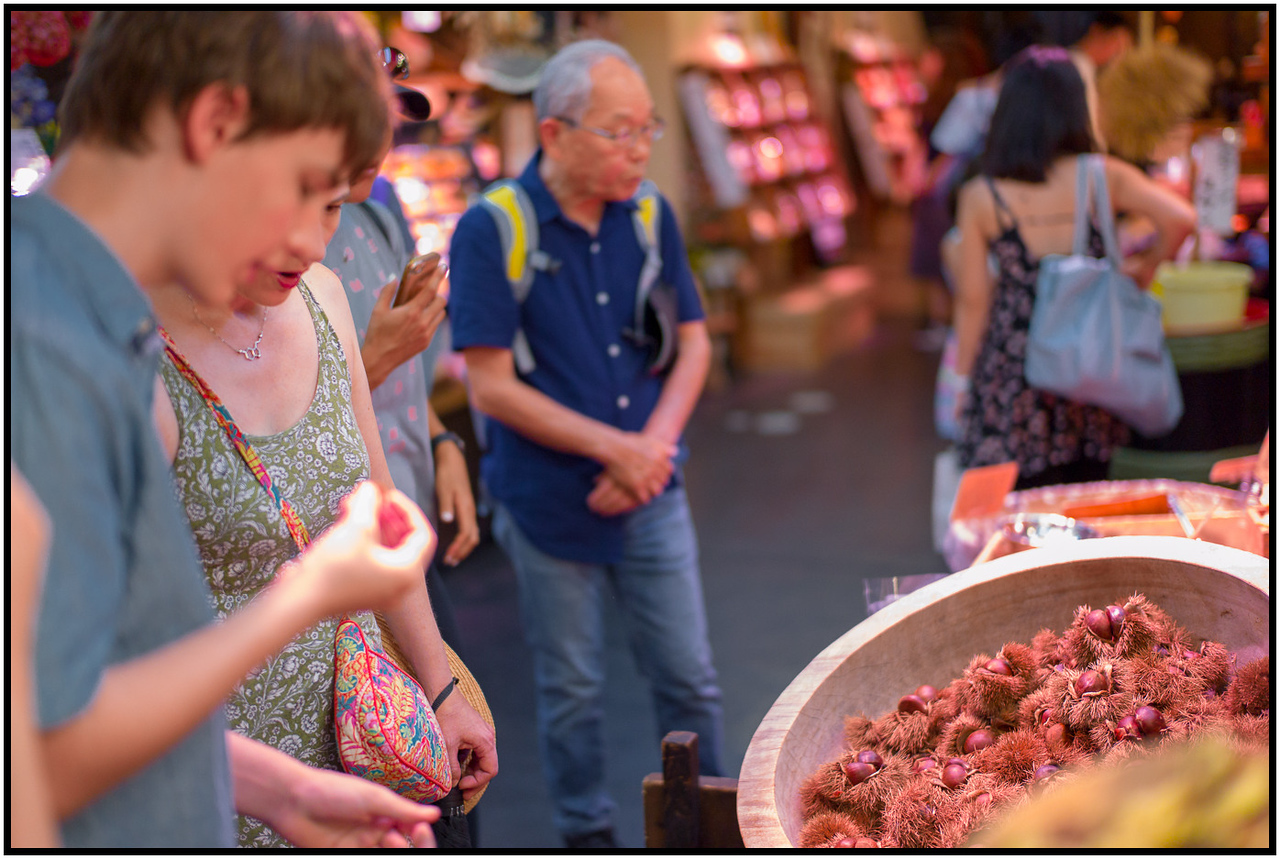
Holden found a vendor for roasted chestnuts, which he loves. In Europe we only ever see these in winter so it was a pleasant surprise to find some here in summertime. We bought a bag.
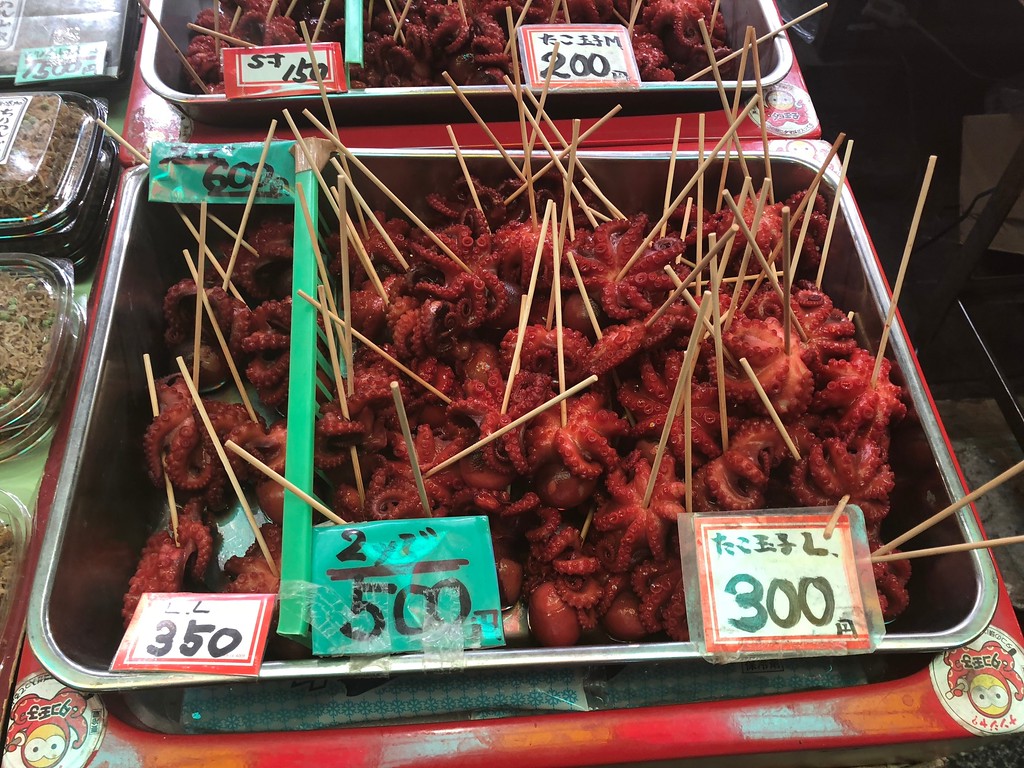
We did not buy baby octopus on a stick.
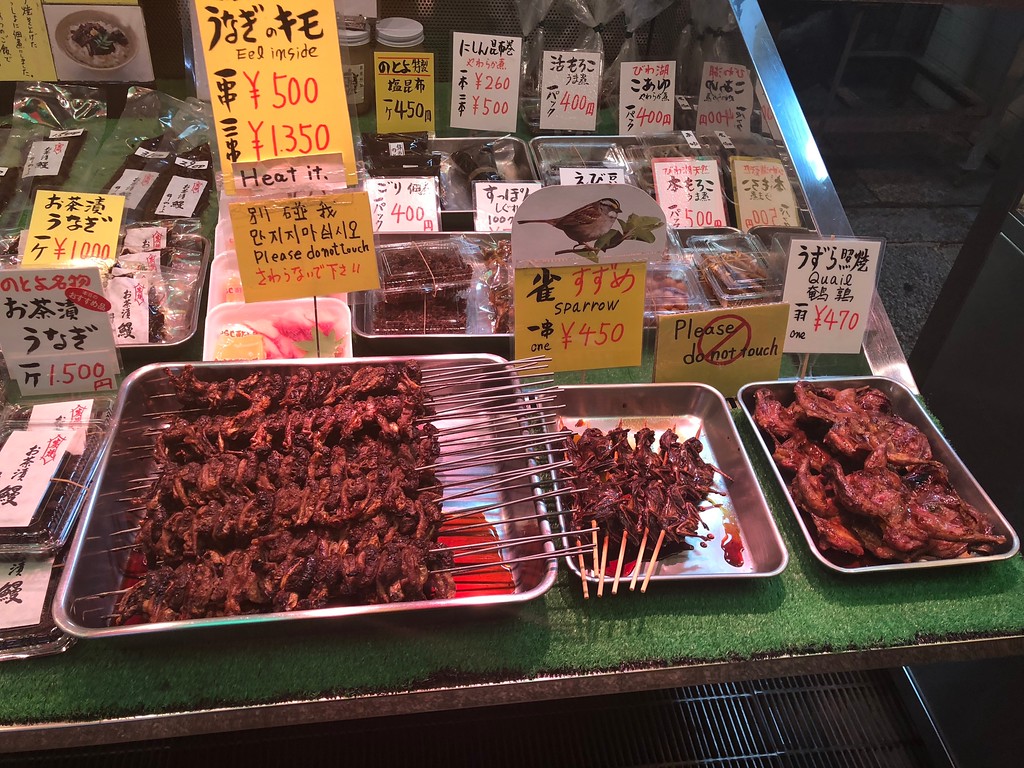
We also didn’t buy roasted sparrow on a stick. (Sparrows — 2 on a stick, or whole quails to go. “Eel inside.. heat it.”)
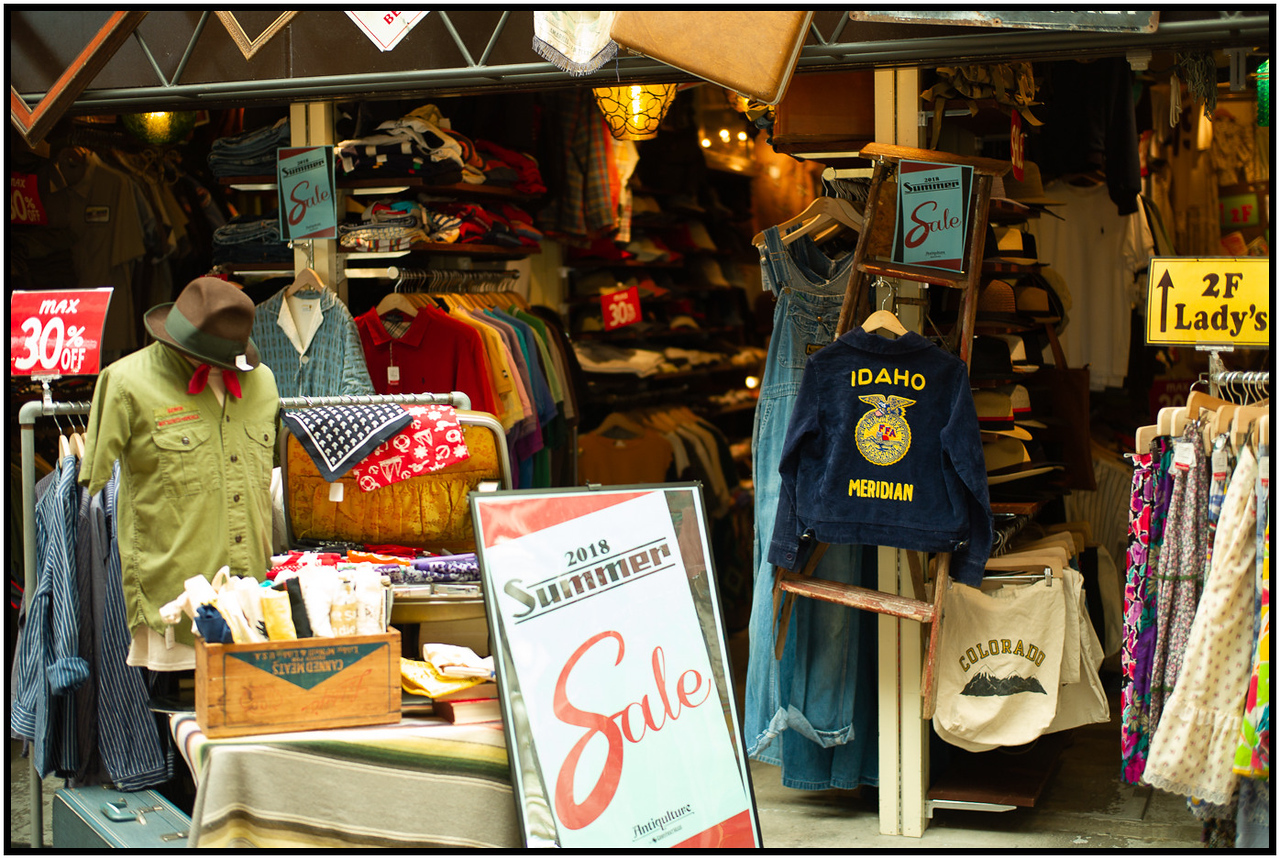
A vintage clothing store — note the Idaho Meridian jacket!
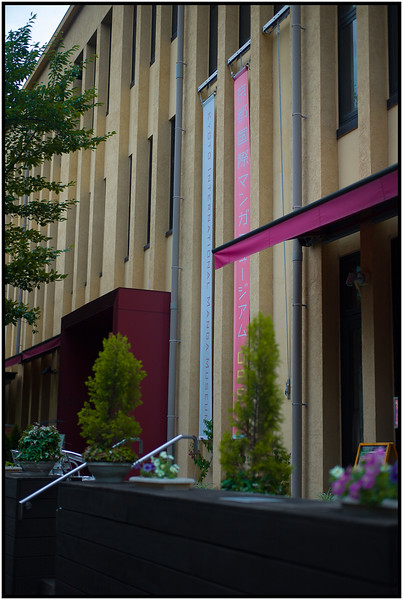
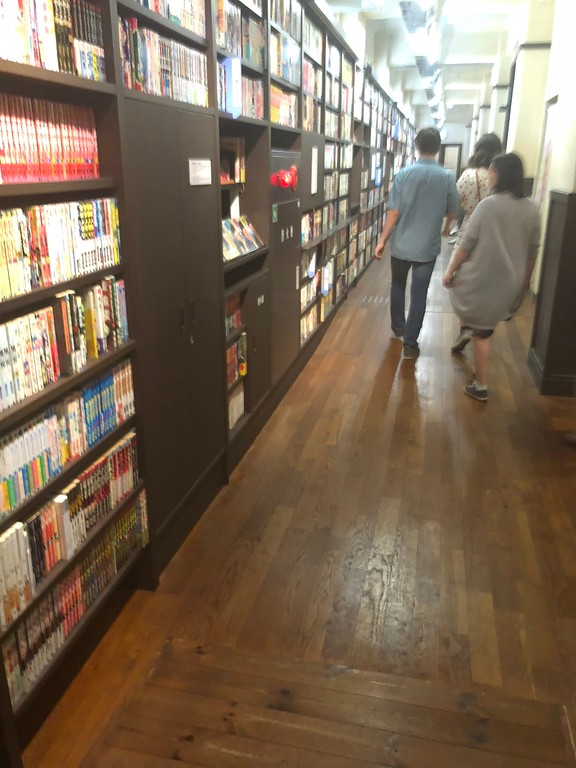
After lunch we visited the Kyoto International Manga Museum. Manga are the Japanese comic books for adults. Both Isabella and Josie are interested in this sort of thing, so we visited.
While it claims to be a museum, most of the 3 floors displayed a collection of more than 40,000 rare Manga books that you could pull off the shelf and read – sort of a reference book library. 99% of it was in Japanese, but they did have a small English section.
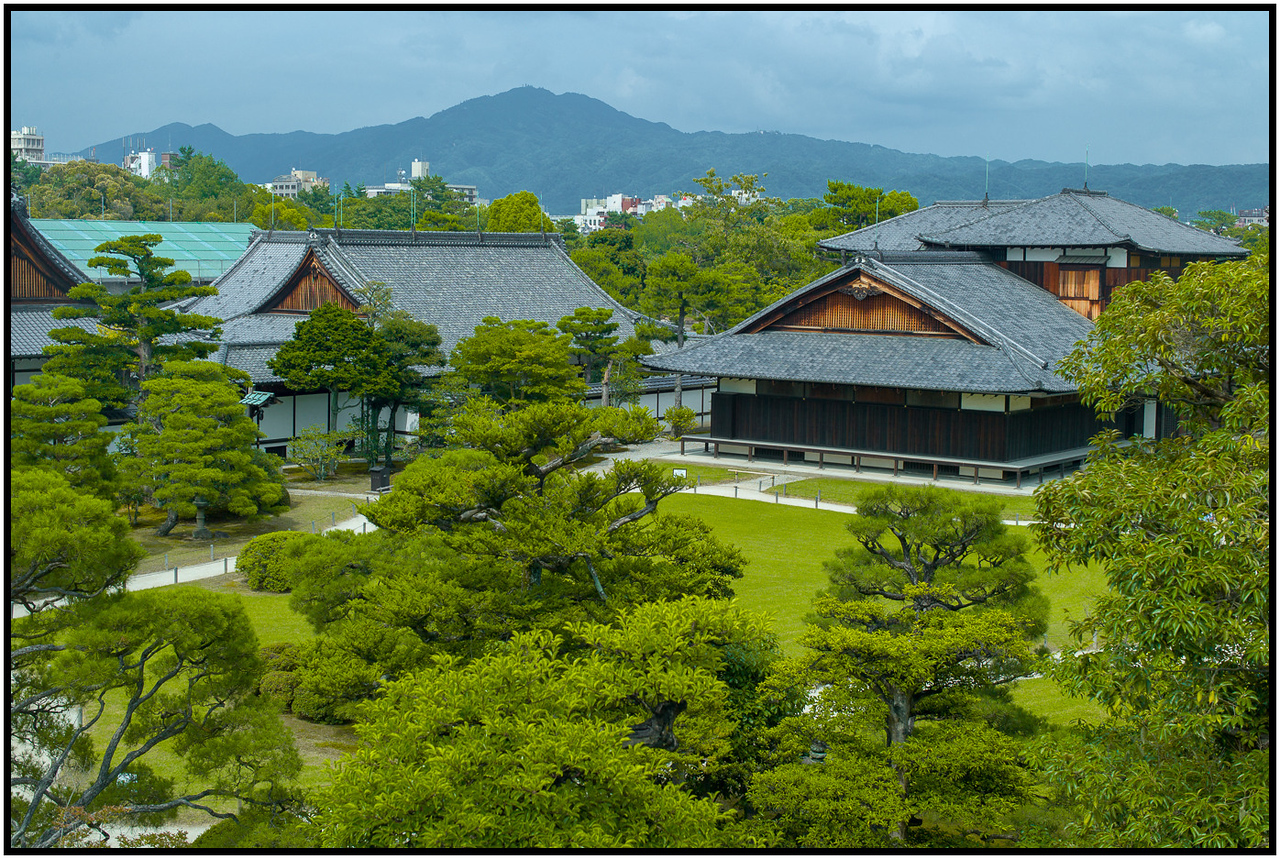
Lastly, we visited Nijo-jo Castle. This is one of the gates leading into the Nijo Castle compound. The castle was erected in the early 1600s (started in 1601, completed in 1626) by Tokugawa Ieyasu, the founder of the Tokugawa Shogunate. It was built as the Kyoto residence of the Tokugawa Shoguns.
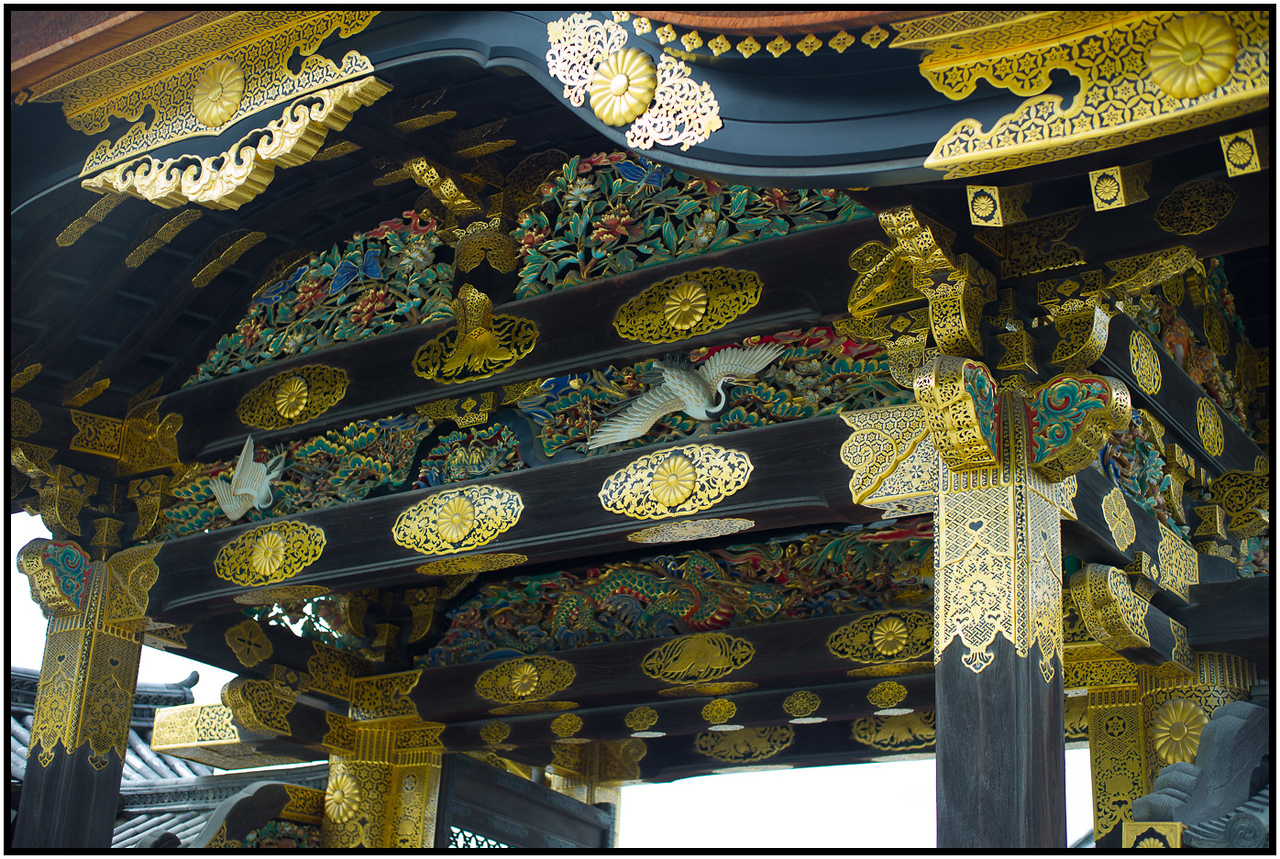
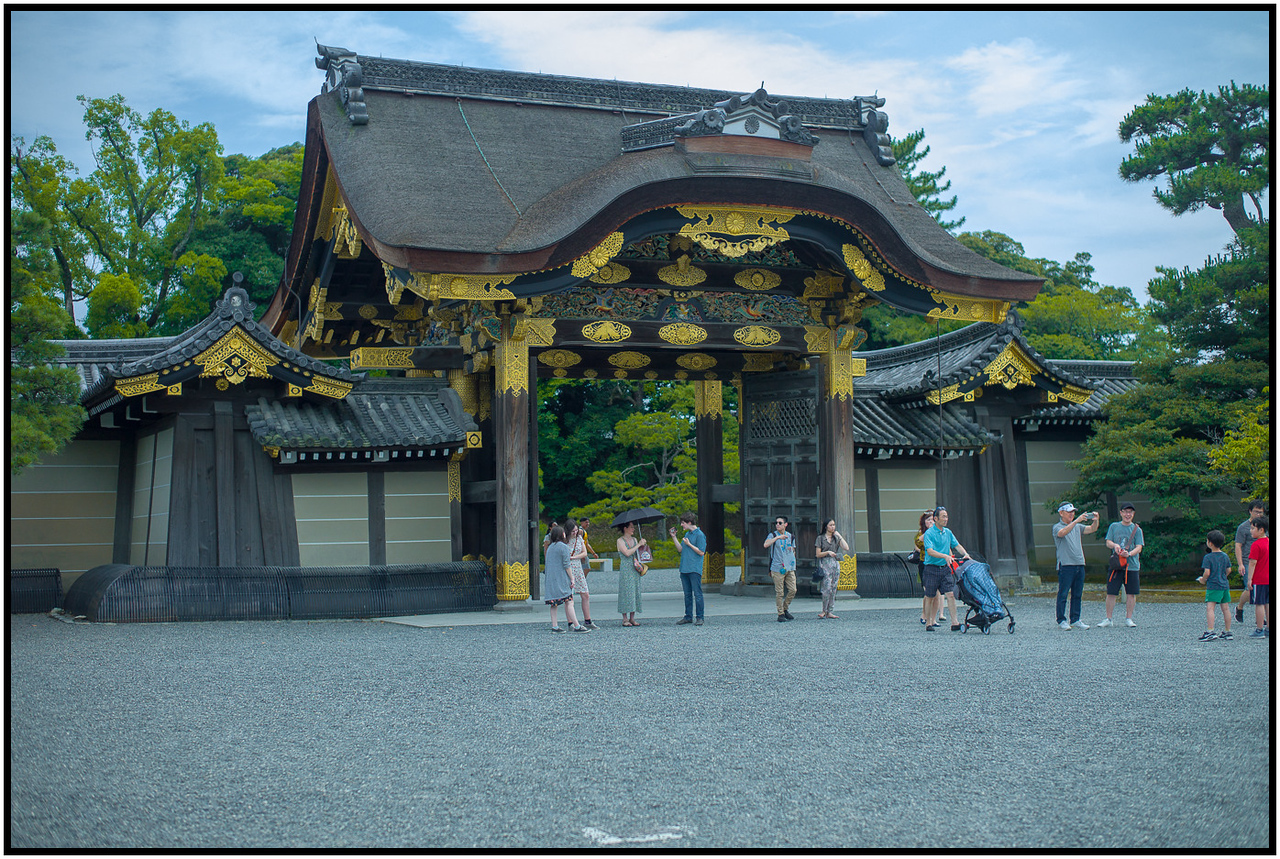
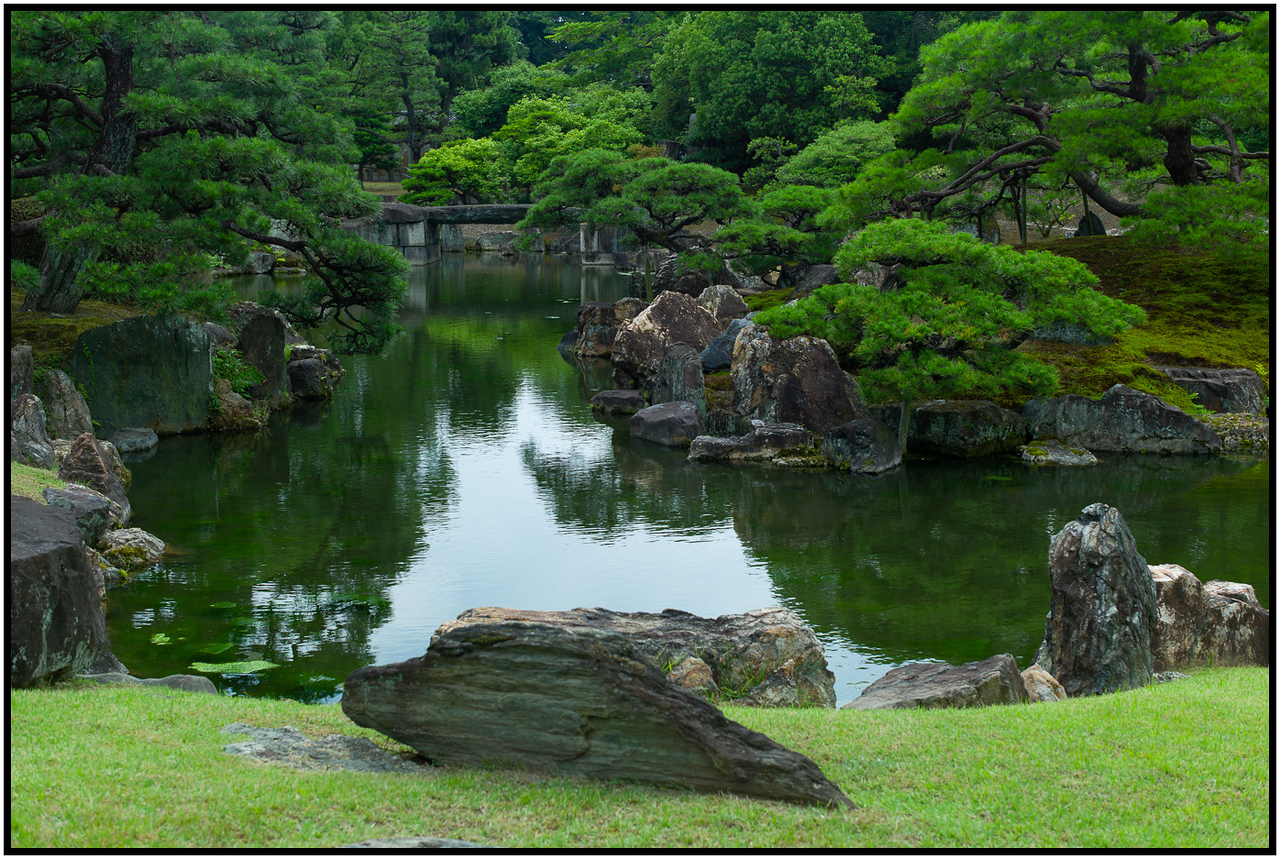
Visitors are allowed inside the buildings but photography is strictly prohibited. You have to take off your shoes, too.
The floors have built-in squeaks so that nobody could sneak up on anybody else in the castle. The wikipedia page about Nijo explains: One of the most striking features of the Ninomaru Palace are the “nightingale floors” (uguisubari) in the corridors. To protect the occupants from sneak attacks and assassins, the builders constructed the floors of the corridors in such a way as to squeak like birds when anyone walks on them. (It sounds funny with hundreds of people filing through … everyone shuffles along in their socks, very quiet and respectful and somber, with a background noise that sounds like dozens of cartoon mice.)
The inside of the Castle looked a lot like the rooms where Po lived and did his training at the Jade Palace in Kung Fu Panda. (Yes, I know that’s Chinese and we’re in Japan, but the style is remarkably similar — mats on the floors, no furniture, walls made of paper, etc.)
The entire building is made of wood, which is impressive because it’s so old. Wood structures generally end up being destroyed by fire or rot after a relatively short period of time. In the European castles, the stone structures are still around but most of the wooden parts are long gone. This entire thing is wood, and still in fantastic shape. (We couldn’t read the signs, so perhaps a lot of it has ben replaced or restored since the early 1600s.)
[note: I did some online research when we got back to the apartment. “The central keep, or Tenshu, was struck by lightning and burned to the ground in 1750. In 1788, the Inner was destroyed by a city-wide fire. The site remained empty until it was replaced by a prince’s residence transferred from the Kyoto Imperial Palace in 1893.” So, not all of it is original to the early 1600s.]
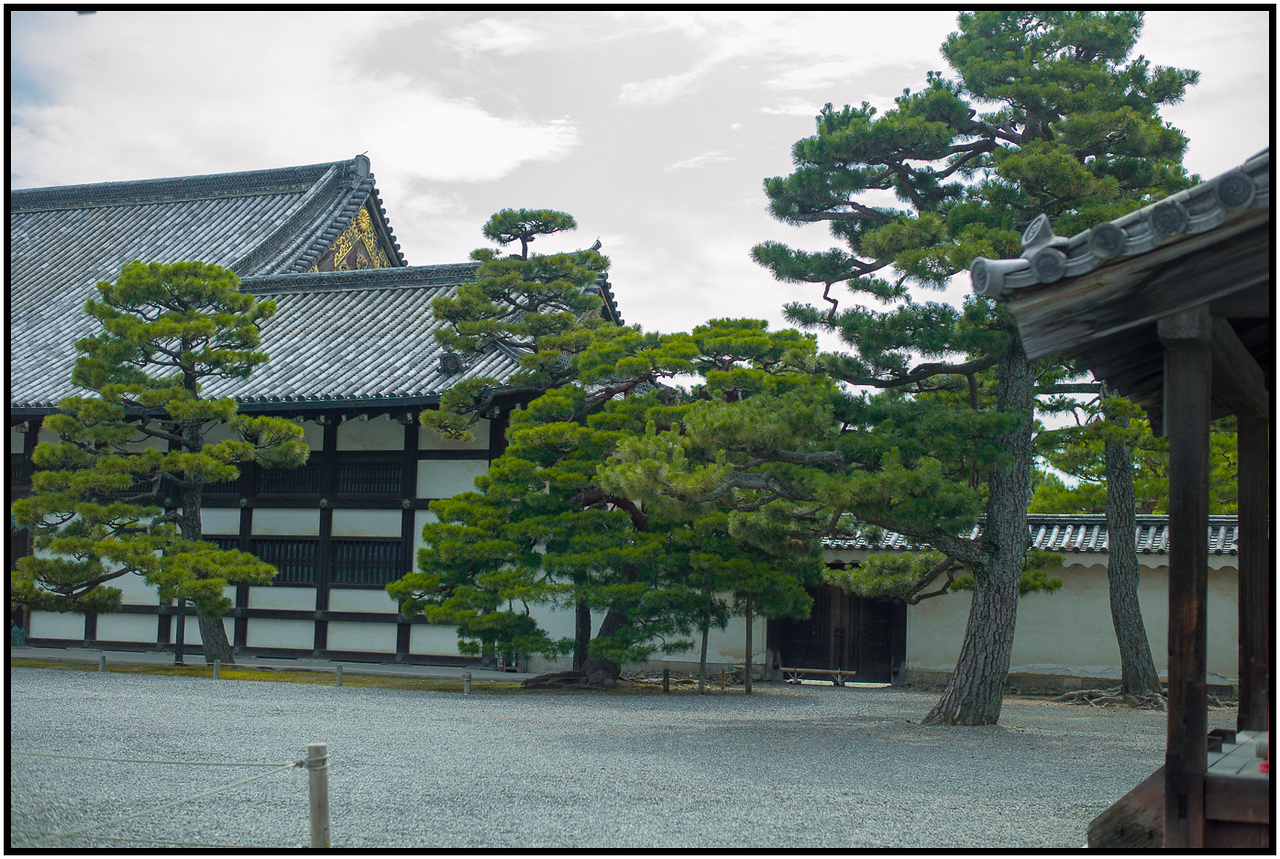
Best part of the way-too-hot visit: the mist tunnel on the way out.
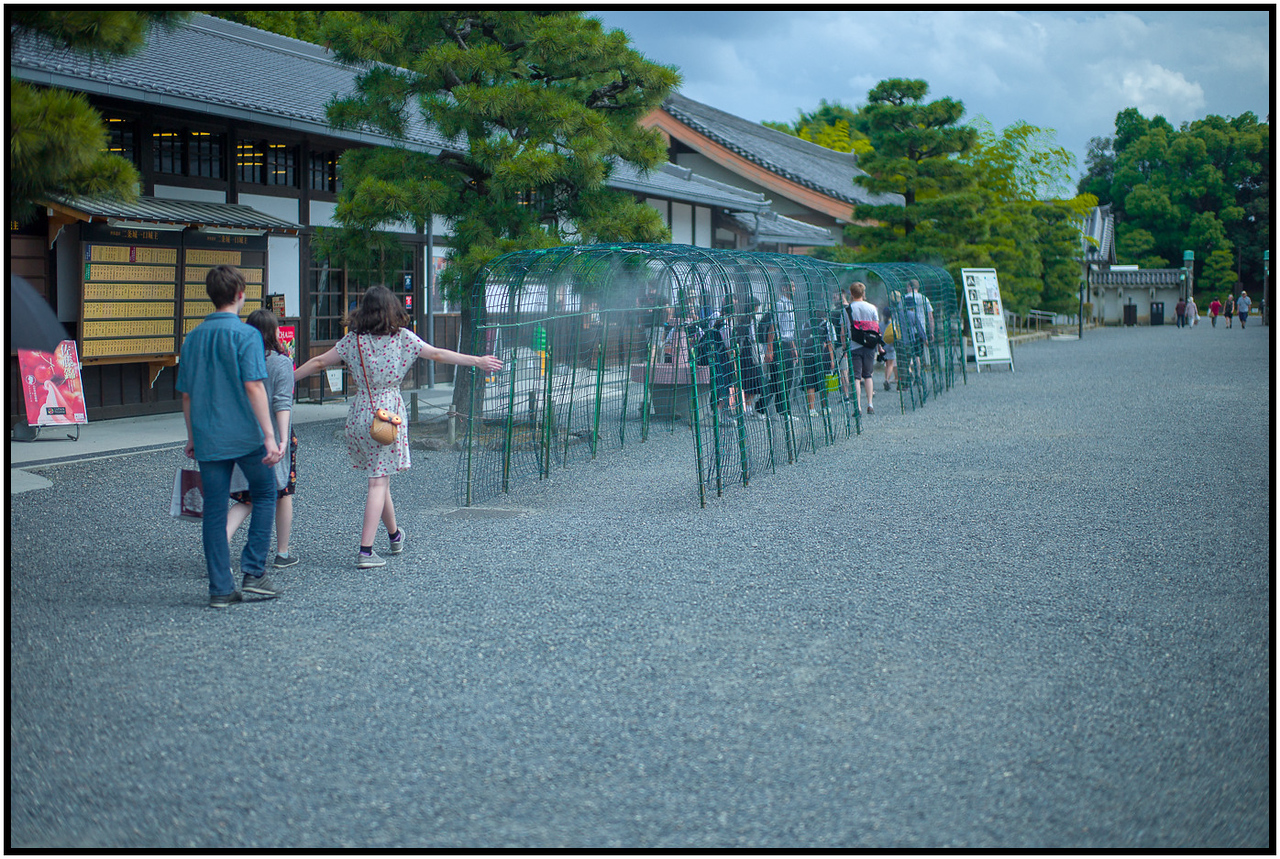
Time to go back to the apartment for a rest. We walked 11 miles today and 12 the day before. In this intense heat, we’re worn out and ready to call it day by around 3:00 p.m. Adam and I ended up walking to McDonald’s later in the evening just to see if a Big Mac in Japan is any different from a Big Mac back in the States. (Turns out they are almost exactly the same.)
Tomorrow morning we rent a car and head over toward Mt. Fuji. More later!

