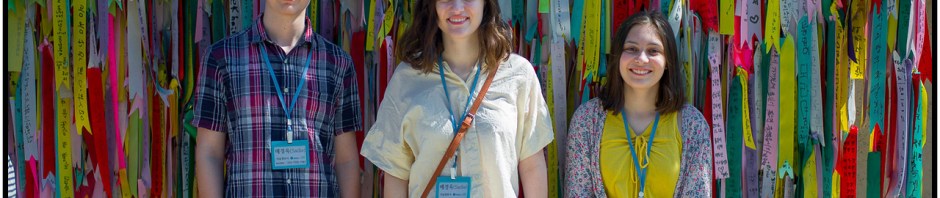
Friday, 22 June 2018
Today we took a guided tour to the DMZ – the De-militarized zone that separates North from South Korea. The zone was set up as part of the armistice of the Korean war in 1953. It runs roughly along the 38th parallel, is 160 miles long and about 2.5 miles wide.
In order to enter the DMZ, you must go as part of a tour. You are entering into military territory and so our bus was boarded on a couple of occasions; South Korean soldiers did passport checks and headcounts on all of us coming and going.
You don’t actually get to go right up to the border – that is strictly prohibited.
We got the sense that South Koreans view the North Koreans as suffering, long lost relatives that have been captive against their will in an abusive relationship — in other words, they very much want to reunite the two Koreas and blame politicians and despots for the divide rather than the people themselves. Our guide said that the North Koreans have been so effectively isolated that whenever one escapes and defects to South Korea, they are quite difficult to understand. They are still speaking Korean, but the accent has evolved into something foreign and they use new words she’s never heard before.
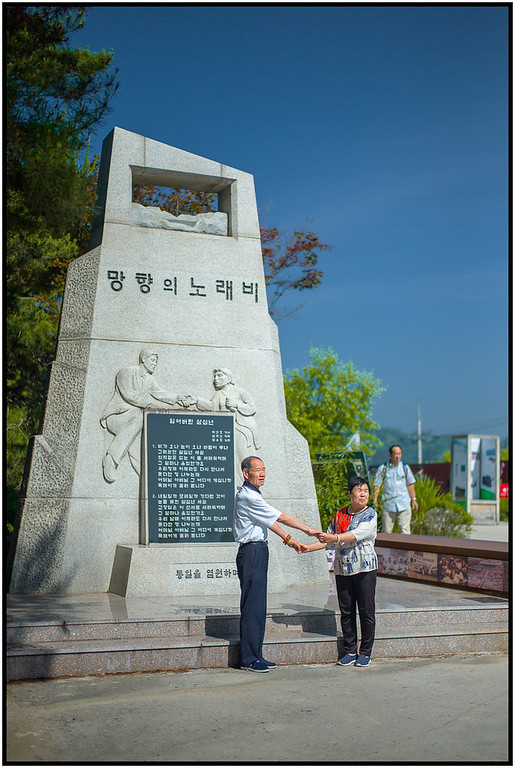
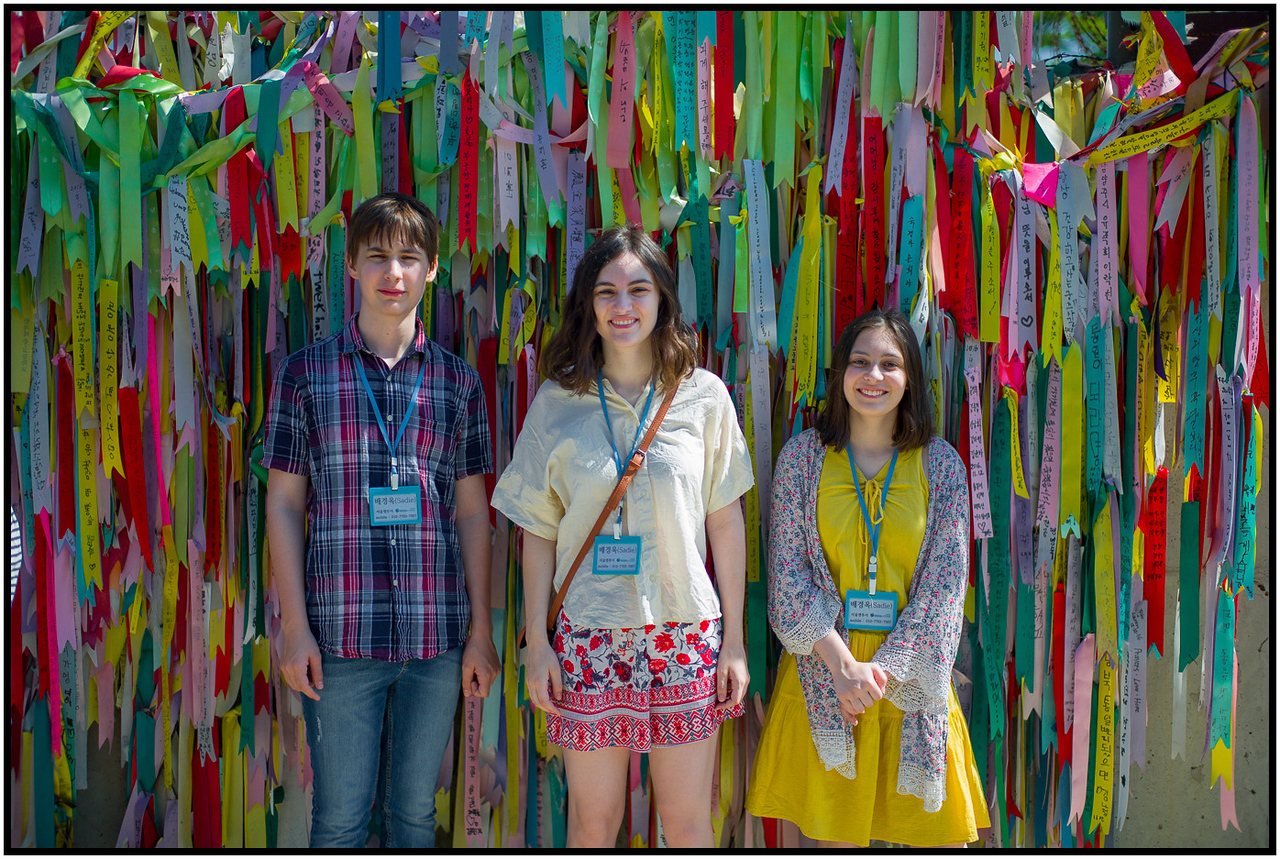
The DMZ is filled with monuments brimming with hope for eventual reunification, such as the one in the photo below.
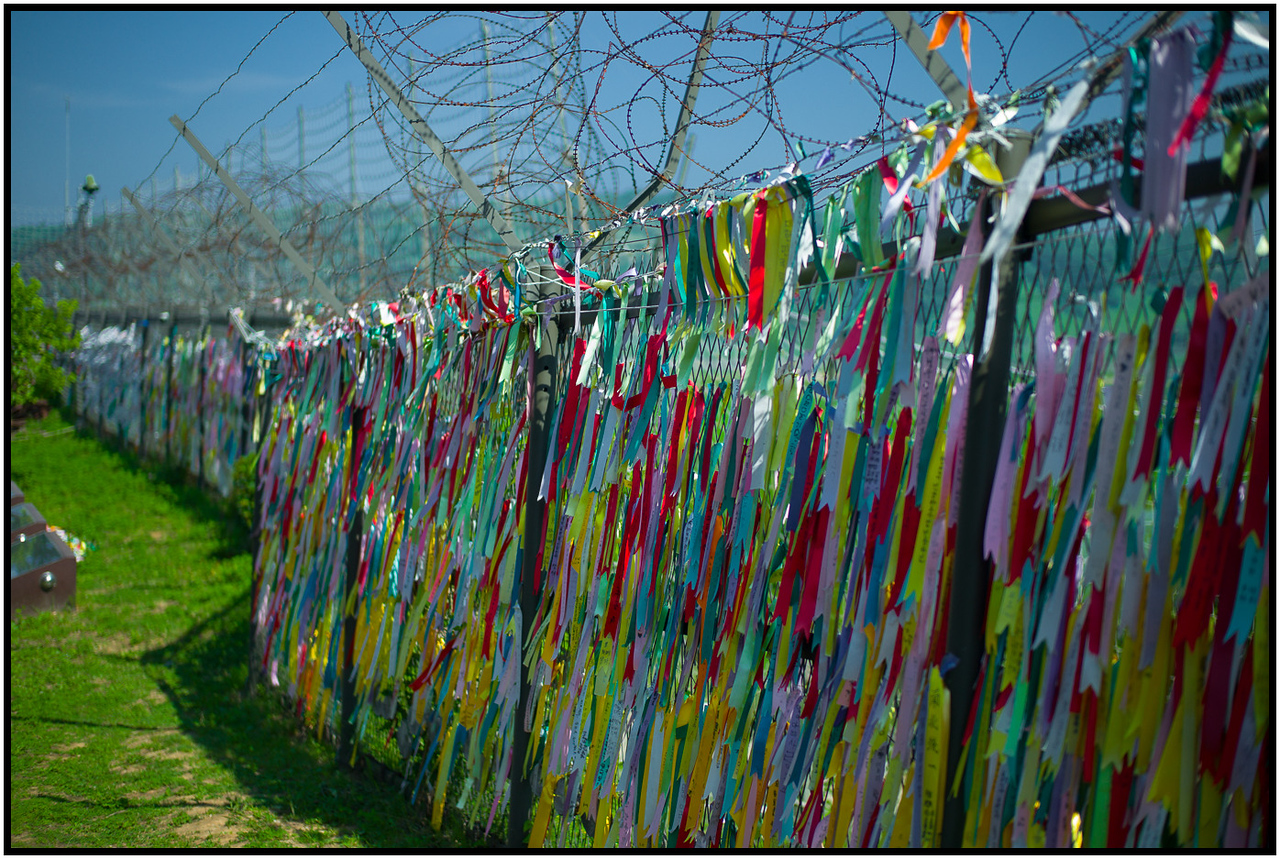
Ribbons at Imjigak Park. Our tour guide said, “People tie ribbons on the fence with letters or hopes written on them. Most of them are sad. Many are from old people who were separated from their North Korean family and wish to see their hometown once more before they die.”
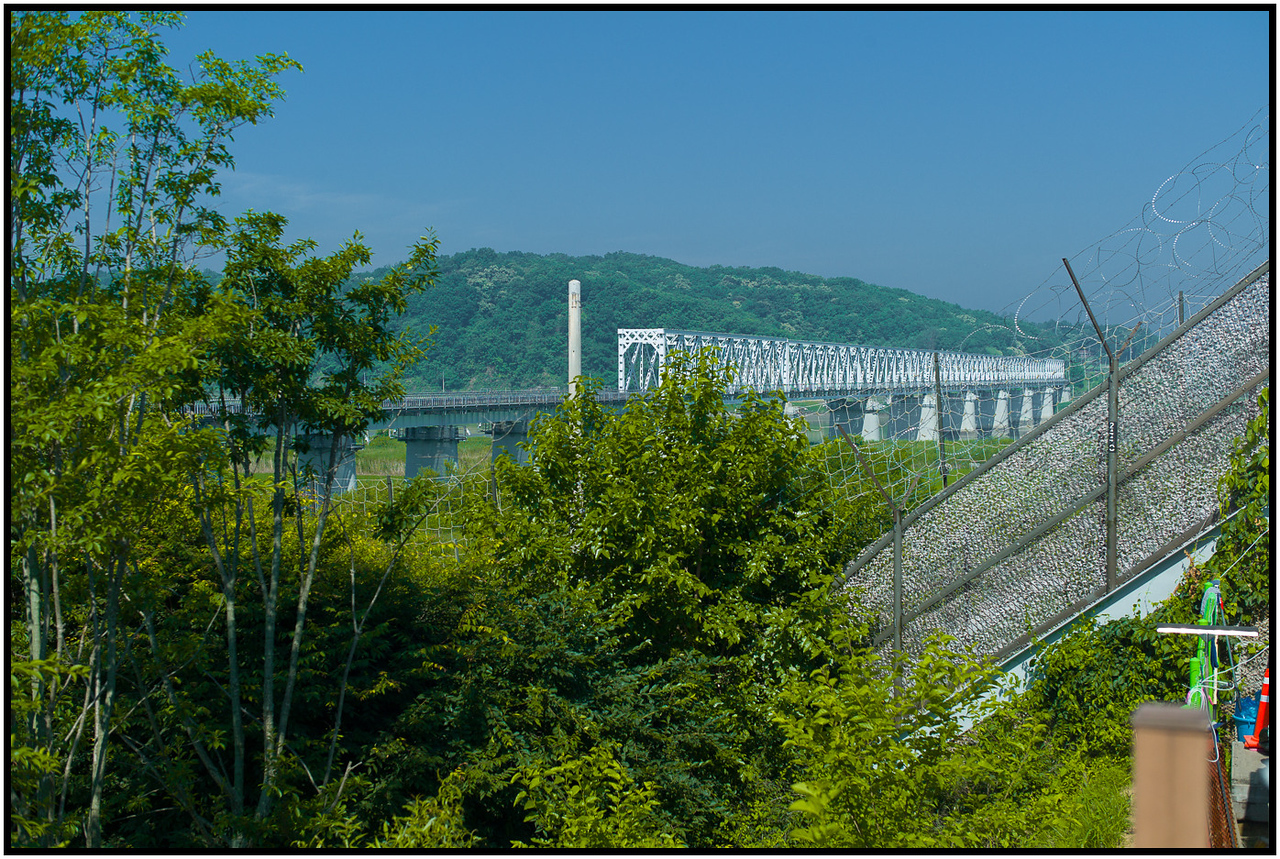
Adam: Bridge of Freedom going north – it does actually cross the Imjin river (into North Korea) and connects with the North-South railway. Before and during the war it was a railroad bridge which was used by repatriated POWs/soldiers returning from the north.
At present, the bridge is unused, but kept in ready condition to be used upon unification.
In general, the South Koreans are anxious for unification. I’ve seen plenty of signs in Seoul advocating for peace, love, understanding and a unified Korea.
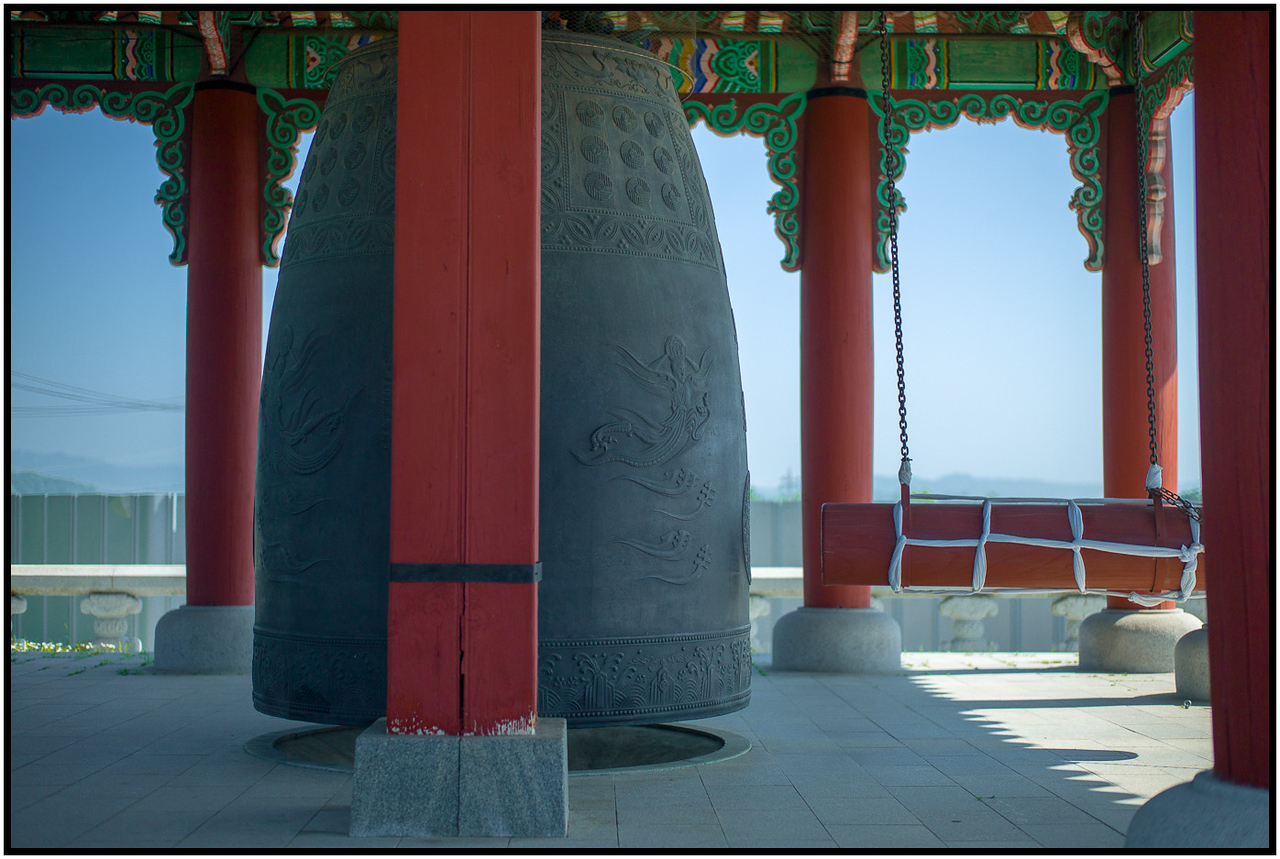
The Bell of Peace
The Stones of Peace Wall
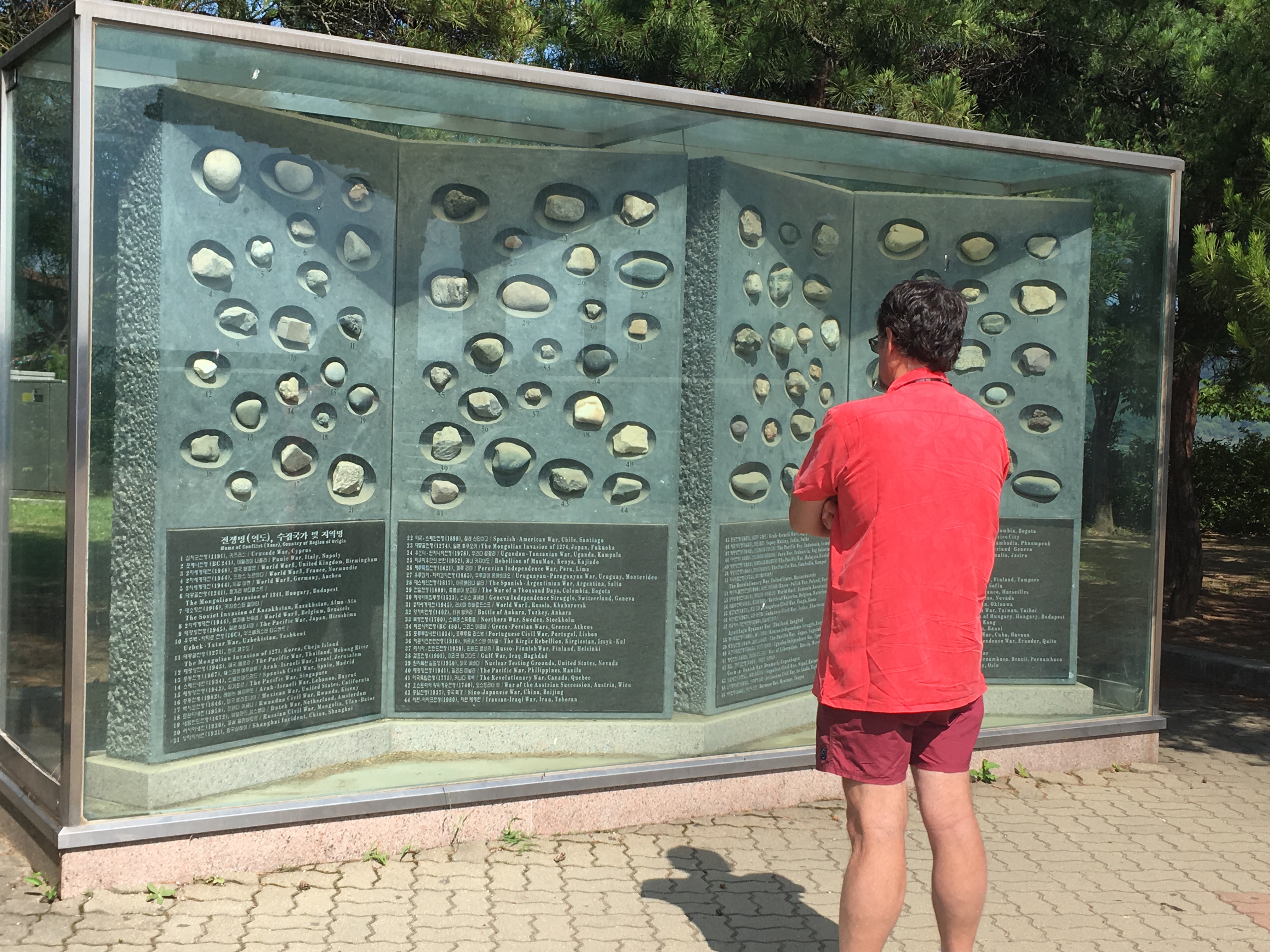
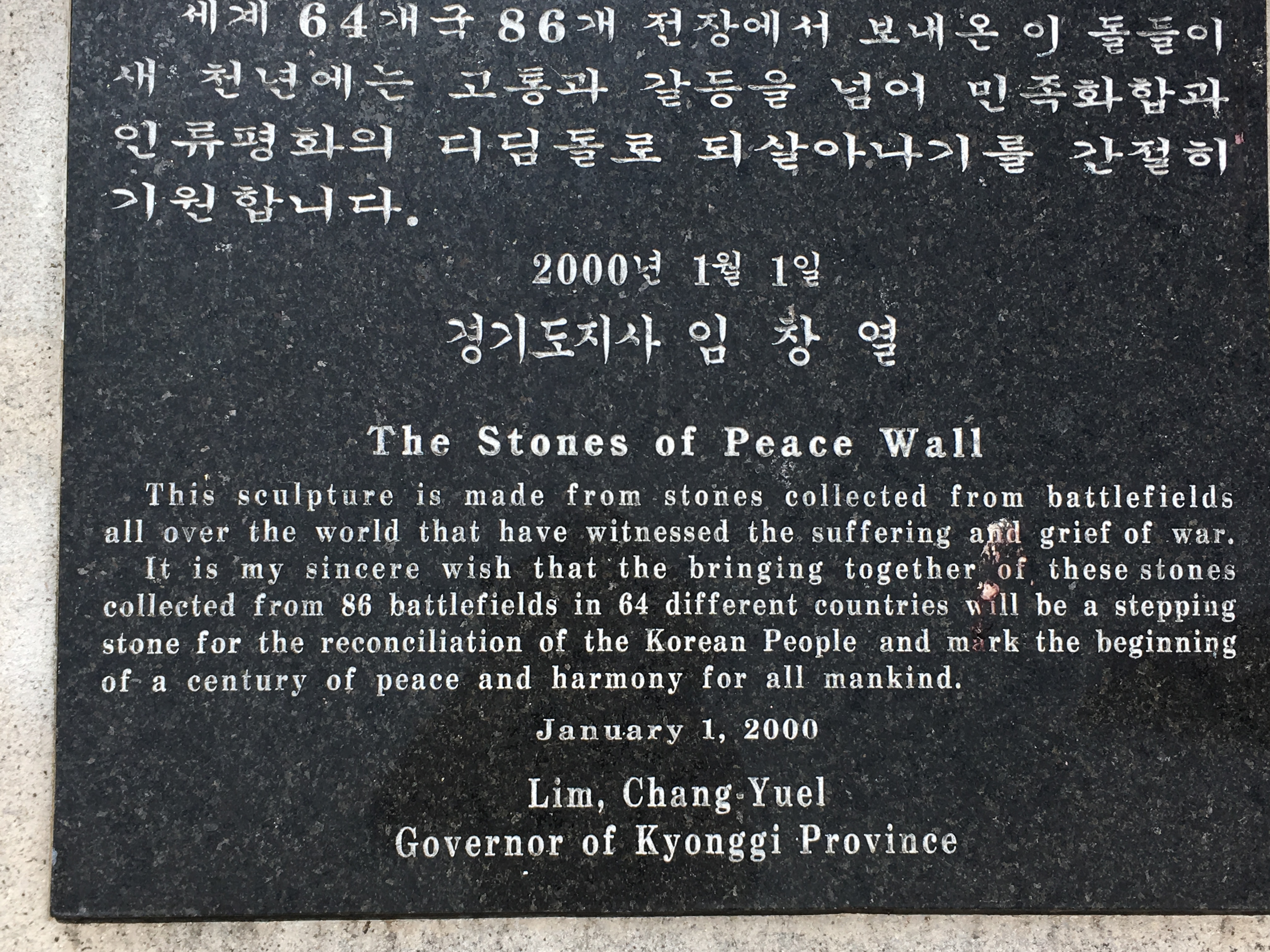
(For those with small screens..) “This sculpture is made from stones collected from battlefields all over the world that have witnessed the suffering and grief of war. It is my sincere wish that the bringing together of these stones collected from 86 battlefields in 64 different countries will be a stepping stone for the reconciliation of the Korean People and mark the beginning of a century of peace and harmony for all mankind.” — January 1, 2000: Lim, Chang-Yuel, Governor of Kyonggi Province
Meanwhile:
Kids goofing off.
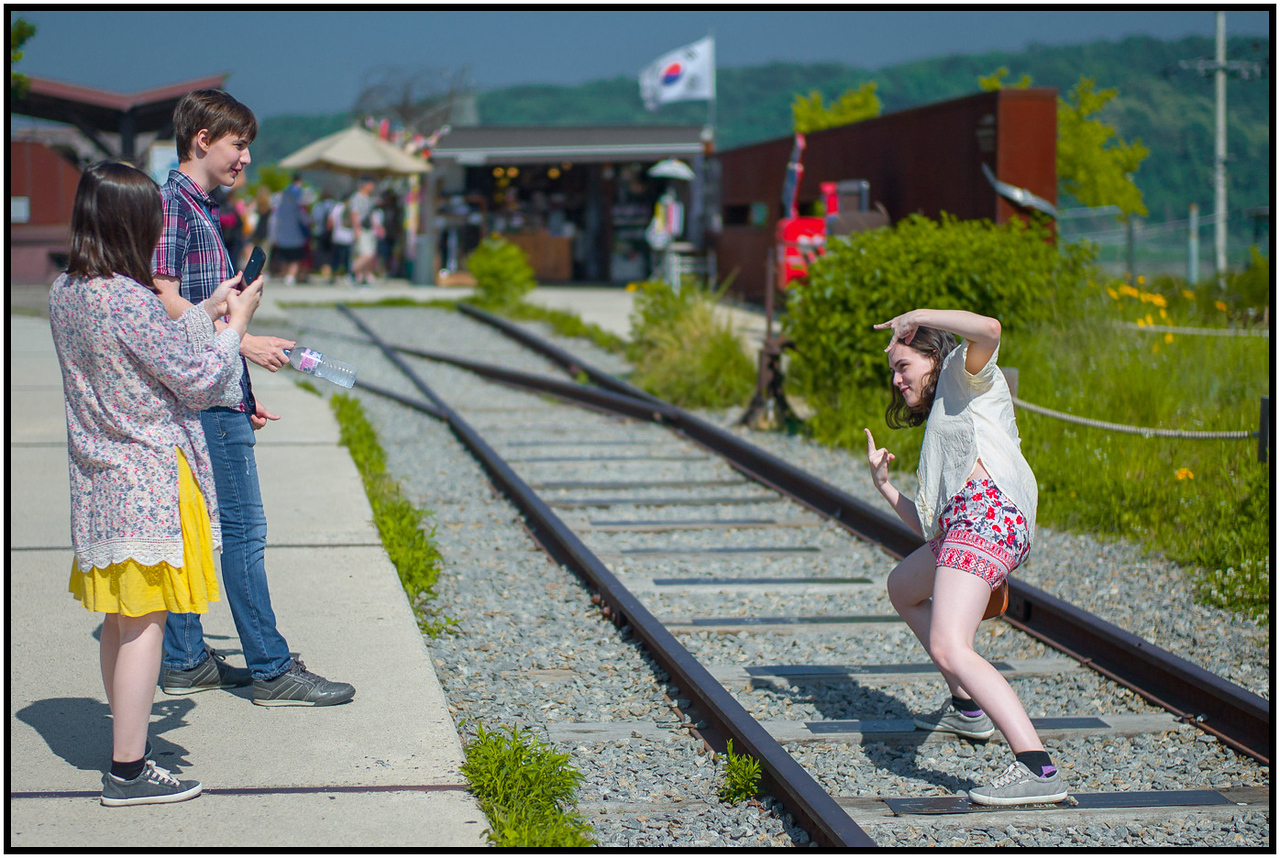
Wrecked train. I’ve typed out what the plaque at the site said below the photo.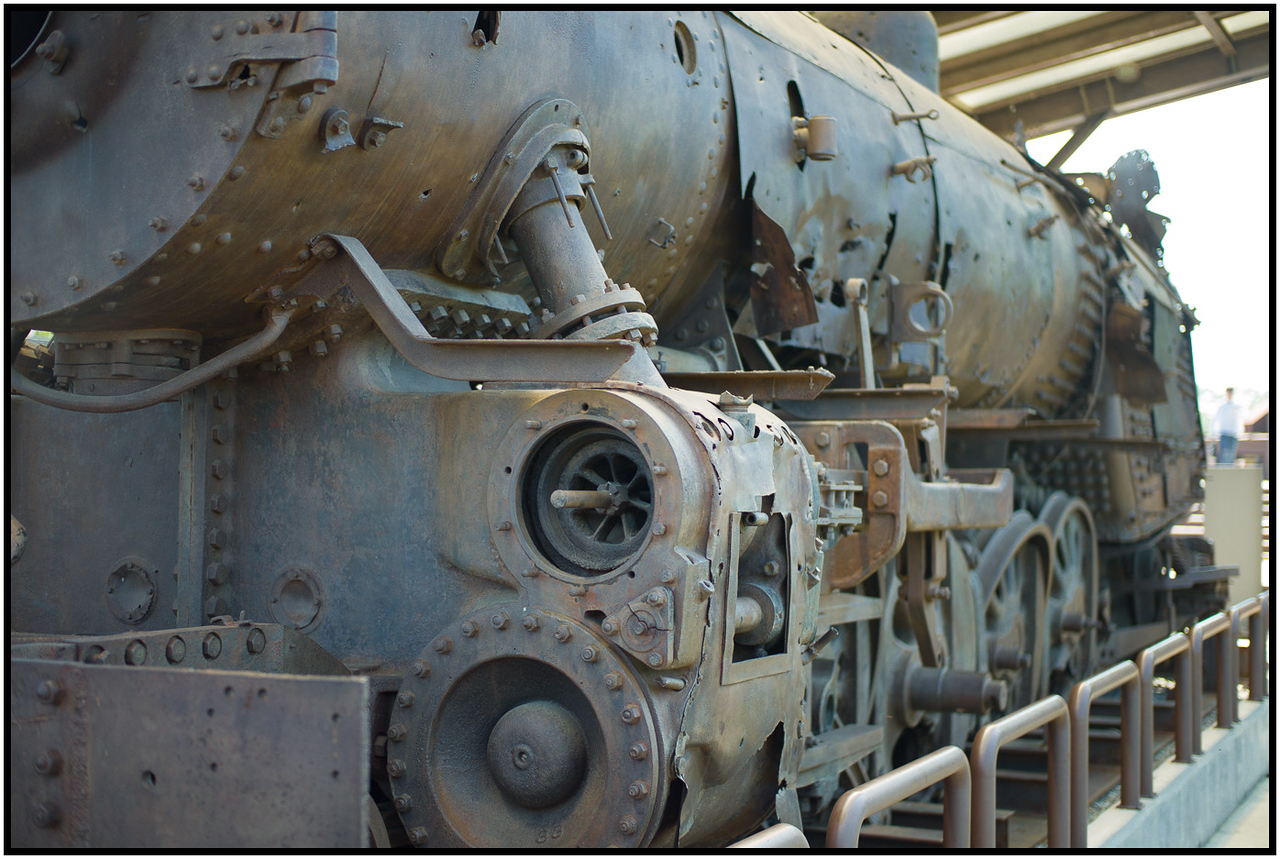
This steam locomotive stopped at Jangdan Station on the Gyeongui Line on December 31, 1950. According to Mr. Han Jun-gi, who was the last person to drive this locomotive, the train was going to Pyongyang from Gyeongui Station with a cargo of military supplies. In the process, the train reversed direction at Han Station in Pyeongsan-gun, Hwanghae-do, and arrived at Jangdan Station, where it was damaged. The locomotive has been left damaged and neglected for over fifty years in the DMZ, bore the traces of 1,020 bullet scars, and its wheels were bent and broken. The locomotive was recognised as a symbol of armistice condition of South and North Korea, and was listed as Registered Cultural Heritage No. 78 by the Cultural Heritage Administration on February 6, 2004.
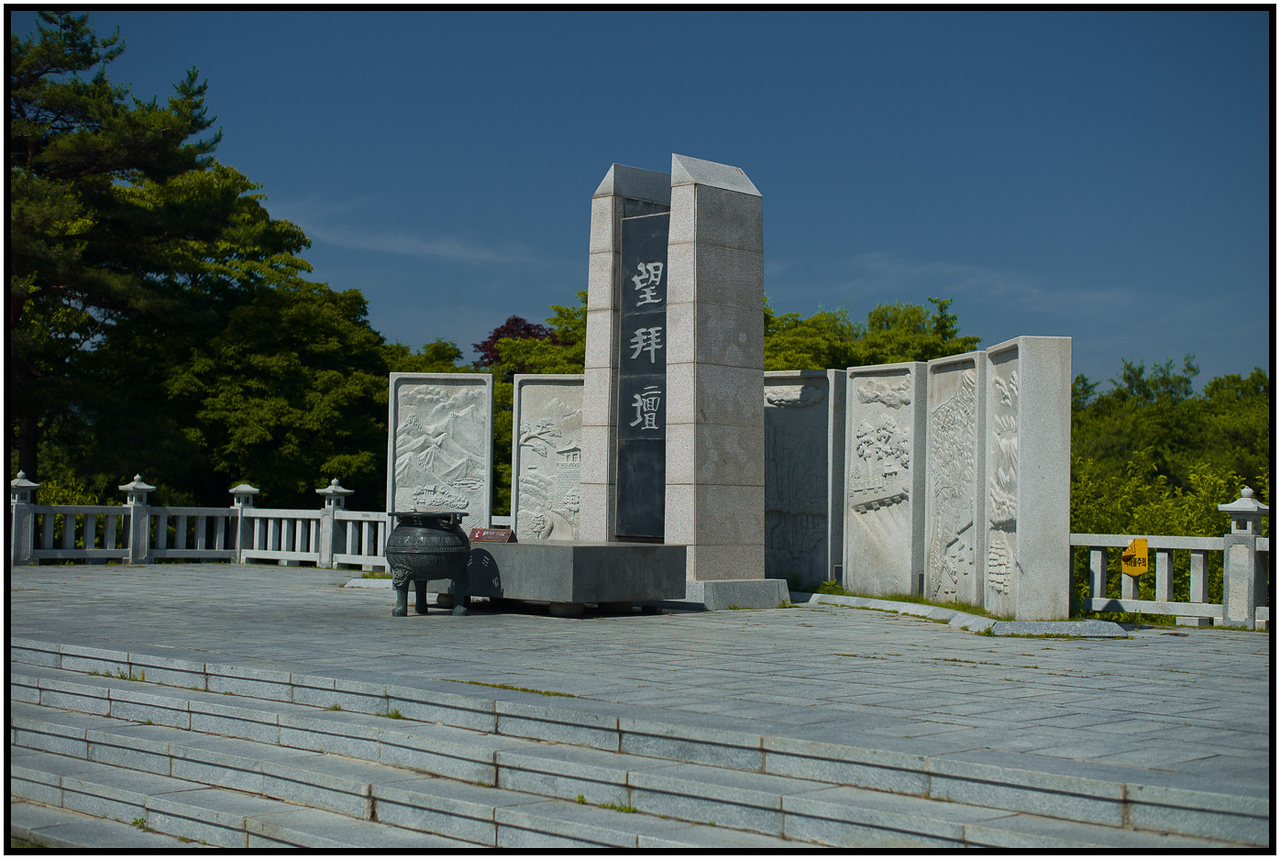
Below: Mangbaeddan enables displaced people whose hometowns are located within North Korea to bow down to their parents or family in North Korea as a sign of respect during cultural events such as New Years and Chuseok (Korean Mid Autumn Festival, usually entails paying respect to your elders and ancestors). This memorial holds many sorrowful memories of separated families during the Korean War.
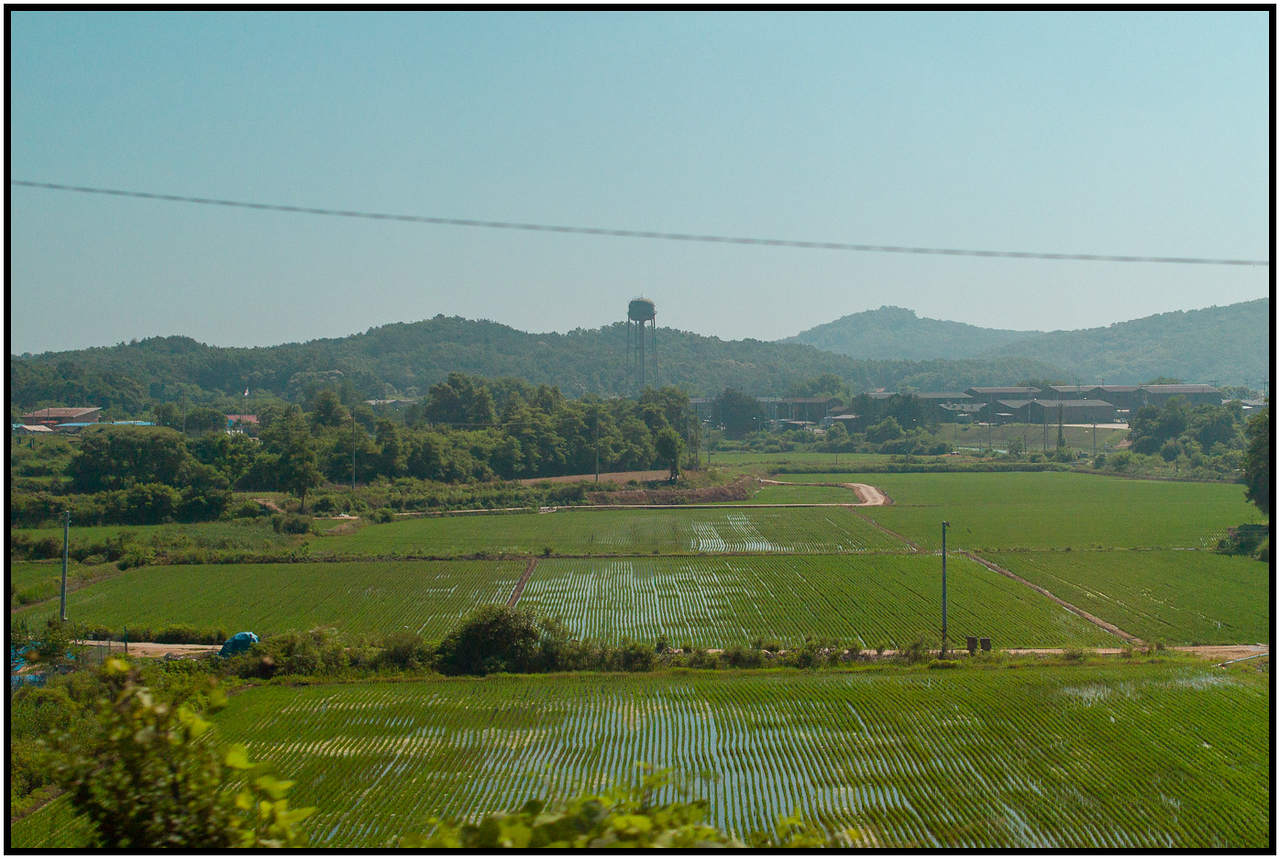
Across the rice paddies, Camp Bonifas – UN Military command post. The ROK have closer installations, but US soldiers are garrisoned here, 400m south of the demarcation line.
Our tour guide told us there are two towns for civilians in the DMZ — one for South Korea and one for North Korea. The South Korean town has about 500 people living in it, but up until recently the North Korean town was built just for show … lots of buildings that were never lived in. Recently N. Korea has allowed people from a nearby factory to start living in the buildings.
In the South Korean town, the civilians living there are almost all rich farmers. They must go through military check points each time they leave and enter and have other restrictions that our guide called “very inconvenient.” They put up with it because they have two really great perks: they don’t have to pay any taxes, and boys don’t have to do the mandatory 21-month military enlistment. For the rest of South Korea, all boys must serve a minimum of 21 months in the military. Typically, they go to University for two years, then do their 21 months, then go back and finish their University degree.
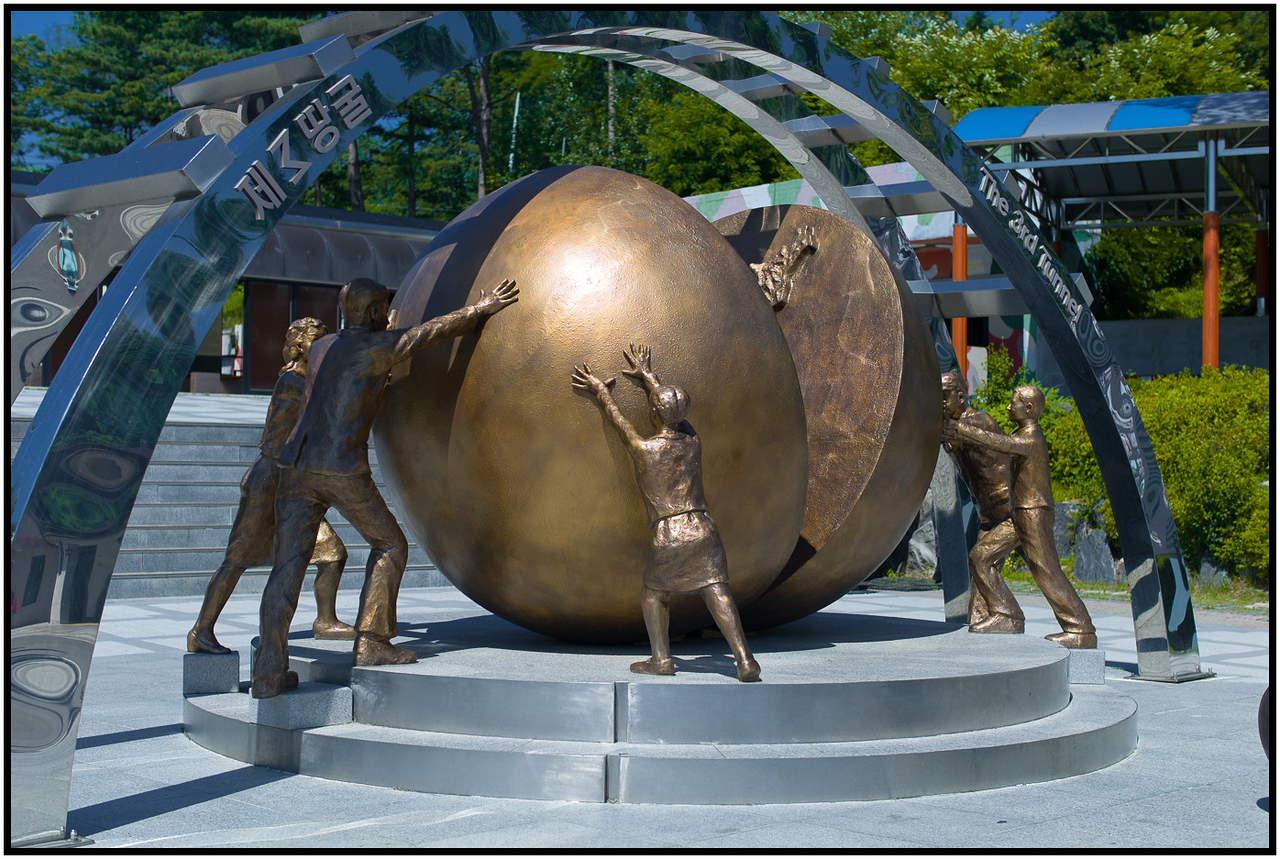
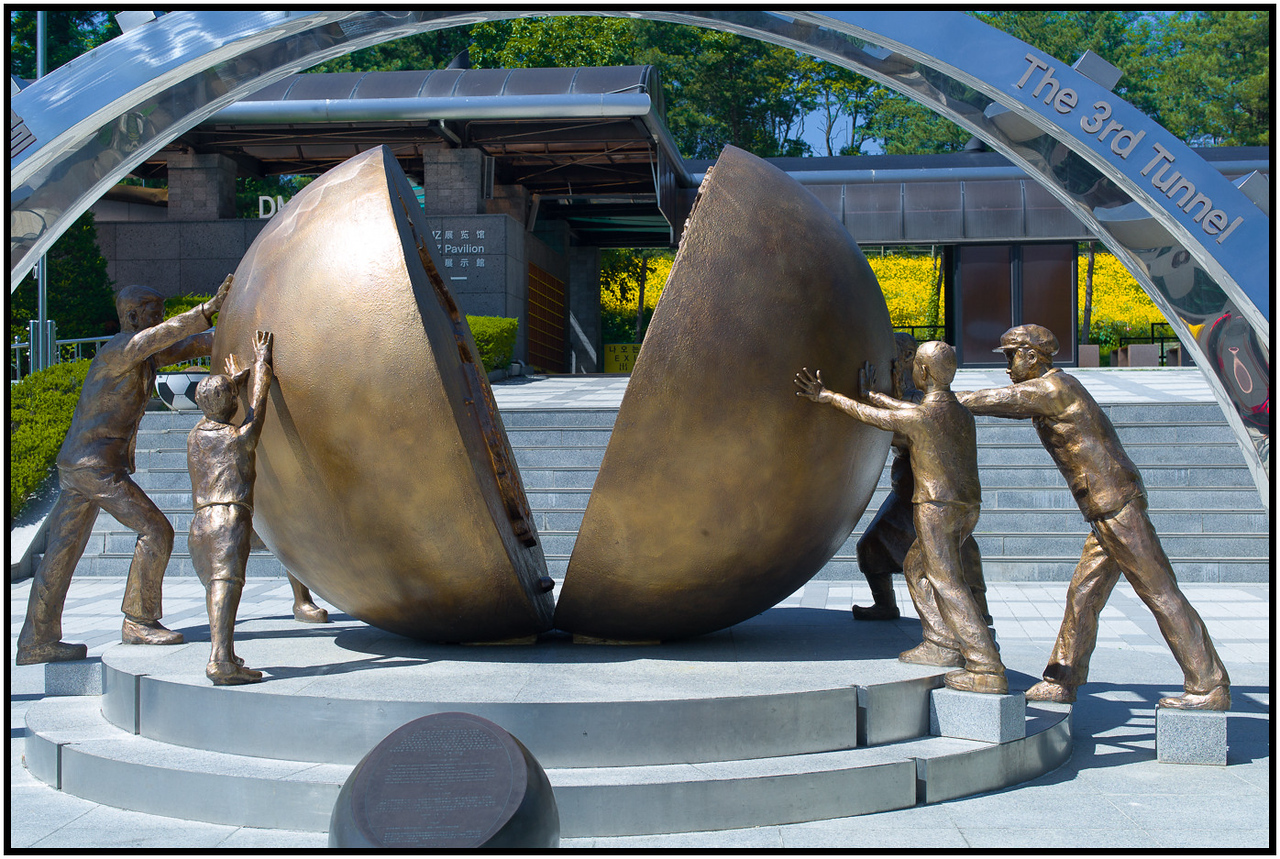
Sculpture of hope for reunification near the “3rd Tunnel of Aggression”: one side has a raised map of North Korea on the inside, the other has a map of South Korea. If the two sides ever come together, the pieces will fit together like a puzzle.
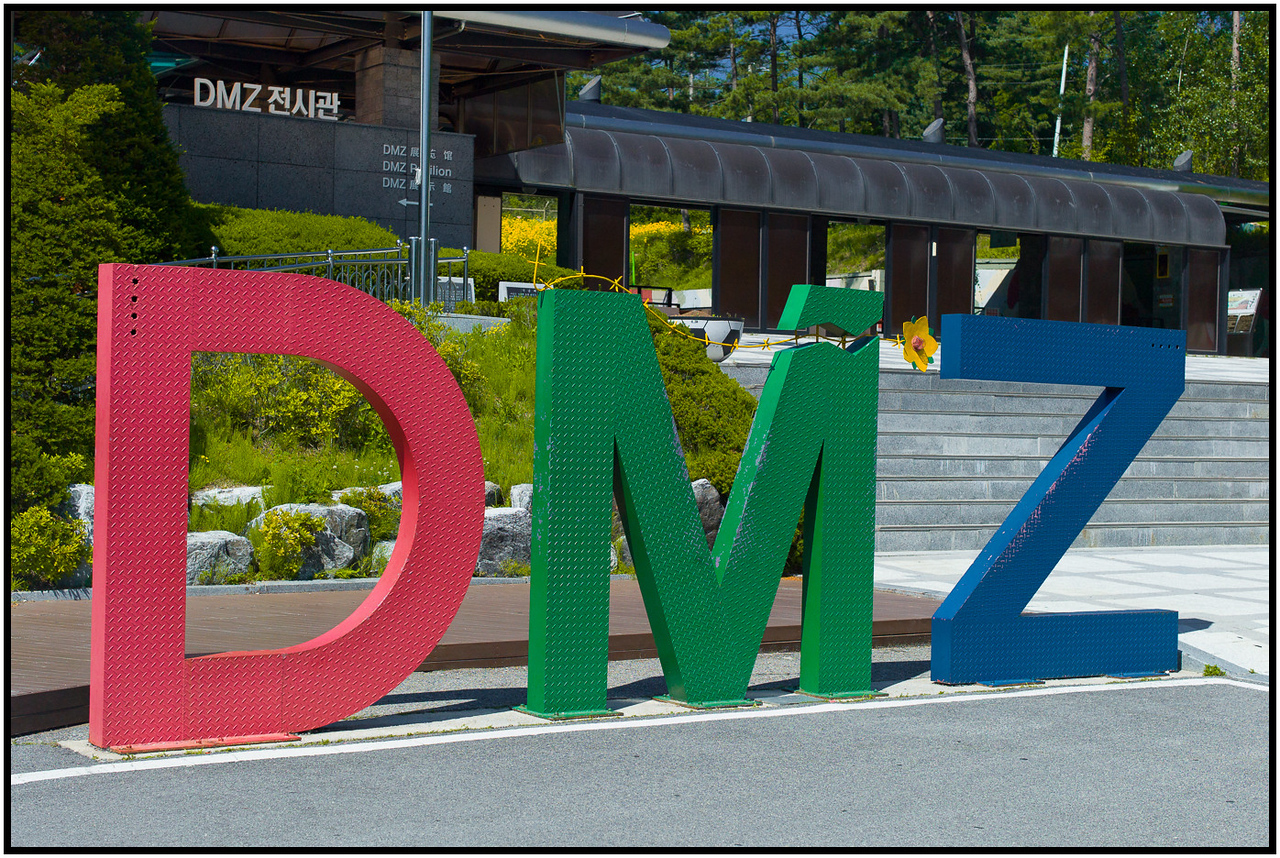
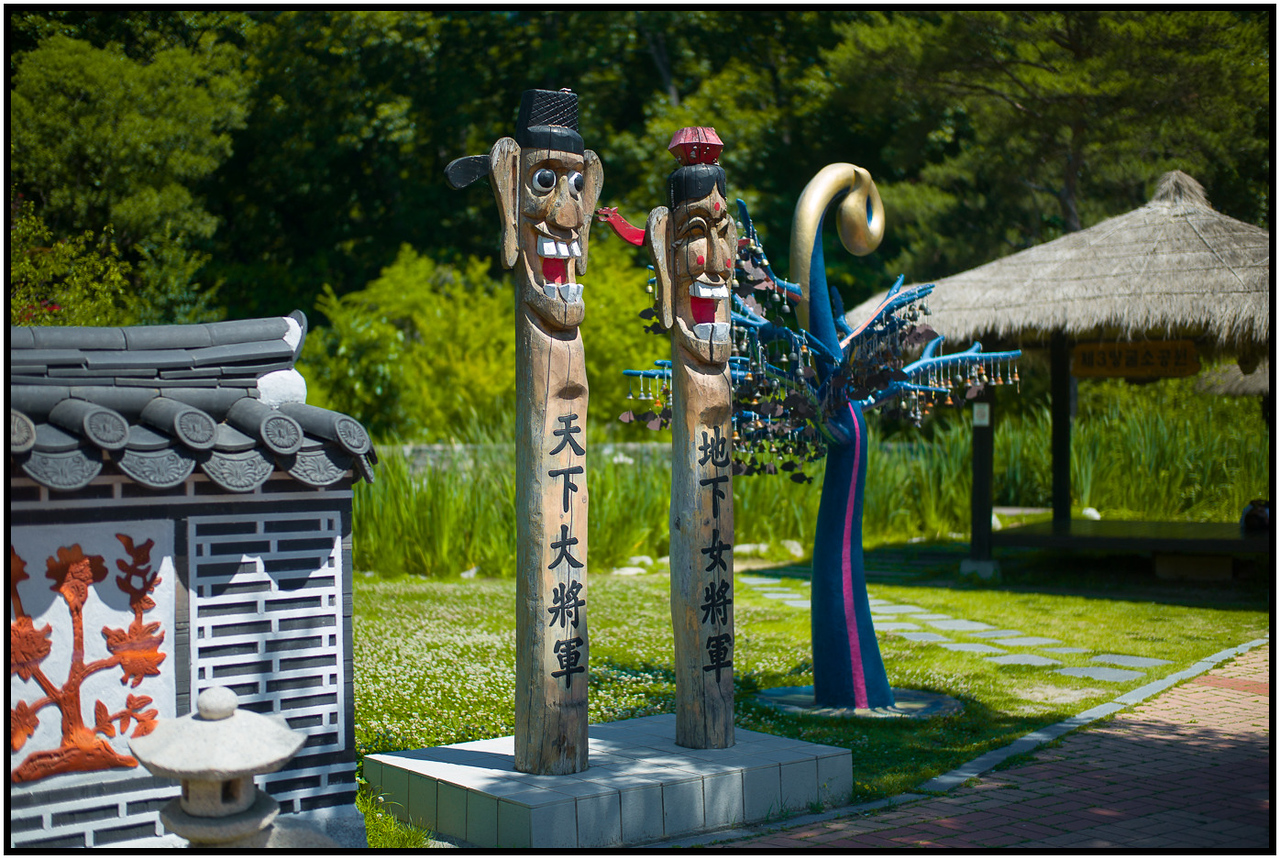
We don’t know what these were supposed to signify.
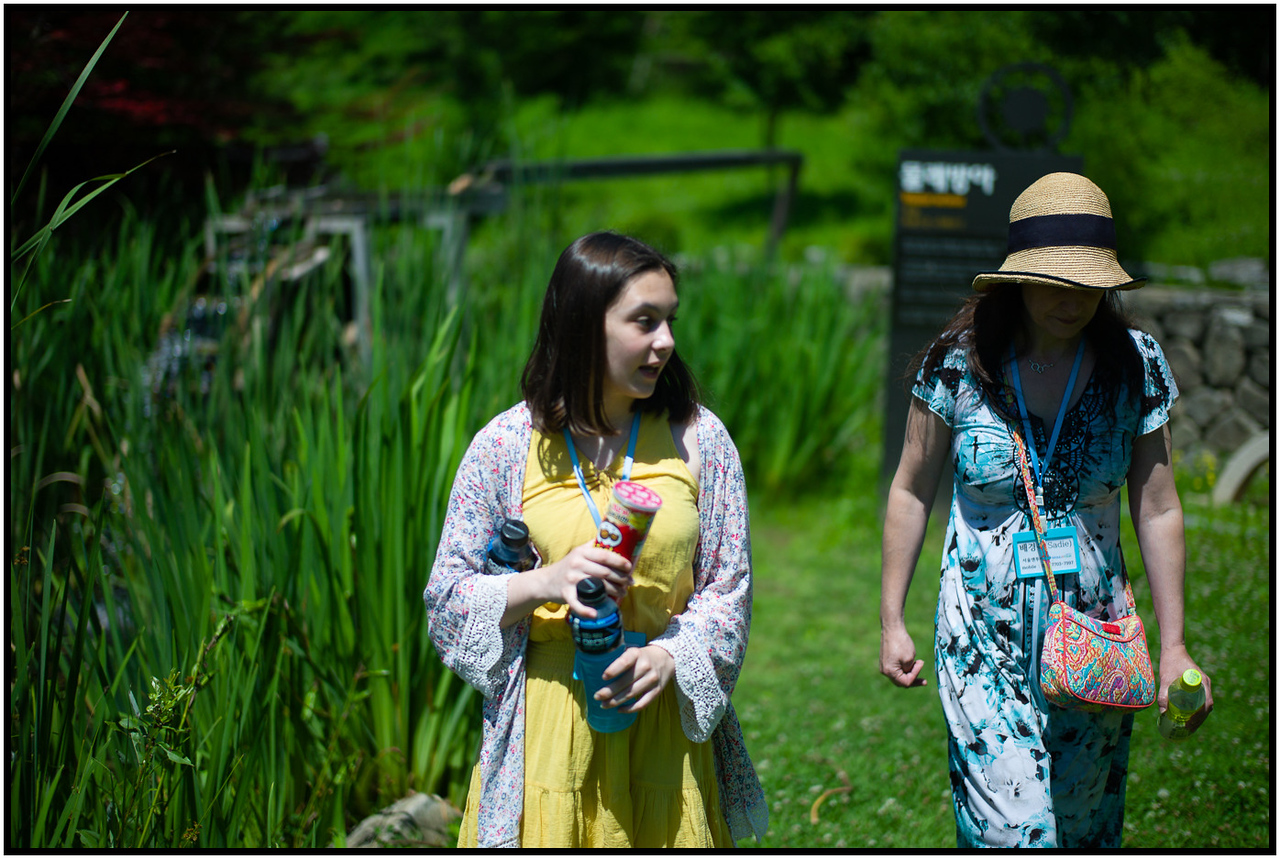
Josie with a nice stash of gatorade and pringles from the snack kiosk at The Third Tunnel stop.
Adam: In 1978, South Korea discovered that North Korea had been quietly digging tunnels into South Korea as part of an invasion plan. When confronted with the evidence, North Korea blamed South Korea for doing the digging. Now, one of the tunnels is open for tourists – no photos were allowed, but you can walk down a steep 1/4 mile ramp to access a mile-long tunnel about 250 feet below the ground.
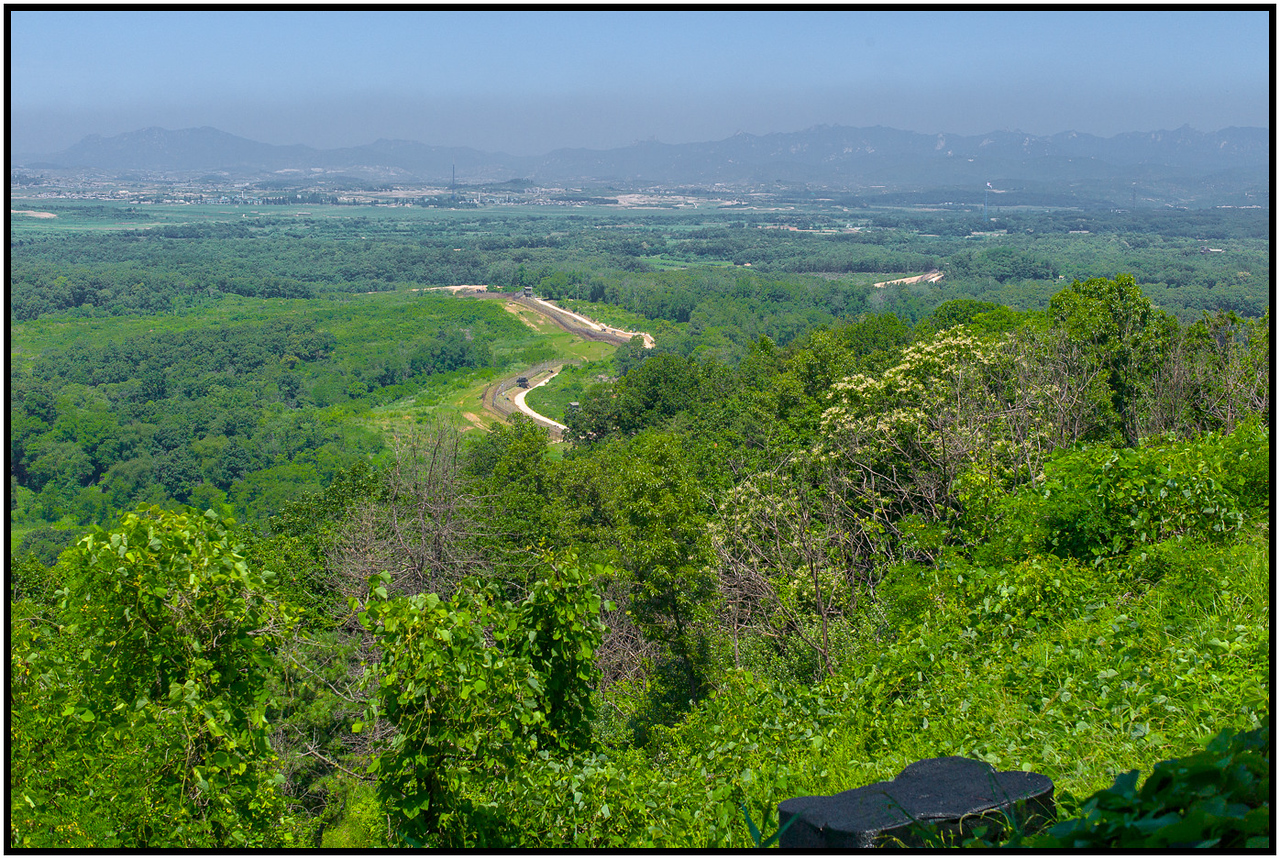
Our tour guide told us a story about what they tounge-in-cheek call The Flag War. When the DMZ towns were initially set up, South Korea hoisted a South Korean flag over their town. North Korea responded by hoisting a North Korean flag over their own town (the fake one with no people in it) but they made sure their pole was taller and had a much bigger flag. South Korea didn’t want to get into a pissing contest over something as stupid as the height of a flag pole, so they just let it be. Their attitude was, “Fine. Let the baby have his bottle.” Unfortunately I don’t think we have any photos where the flags are visible, but you could definitely tell the difference in size. Even though the North Korean flag was further away, it was easier to see.
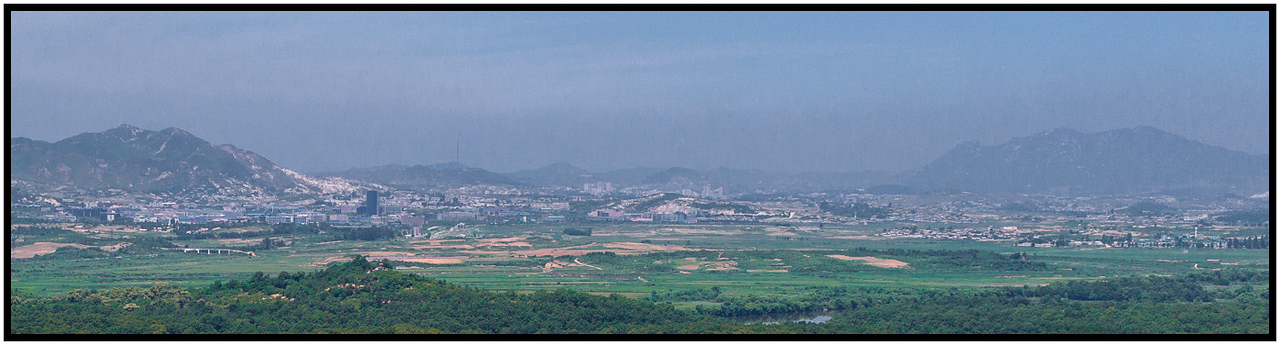
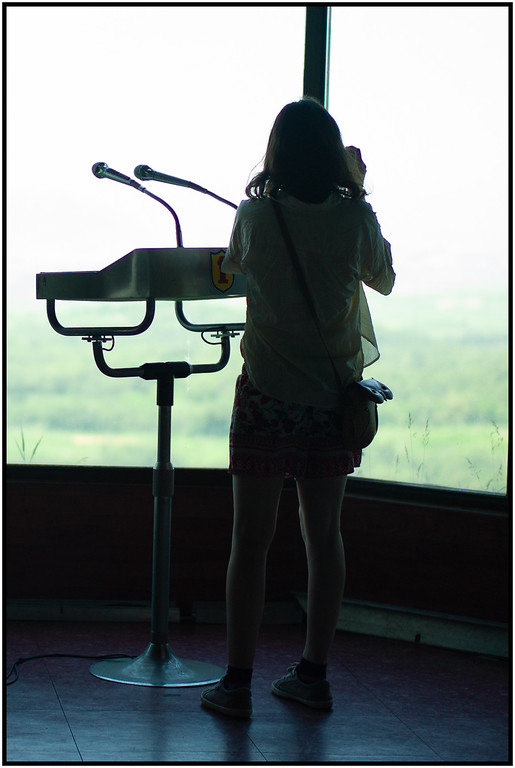
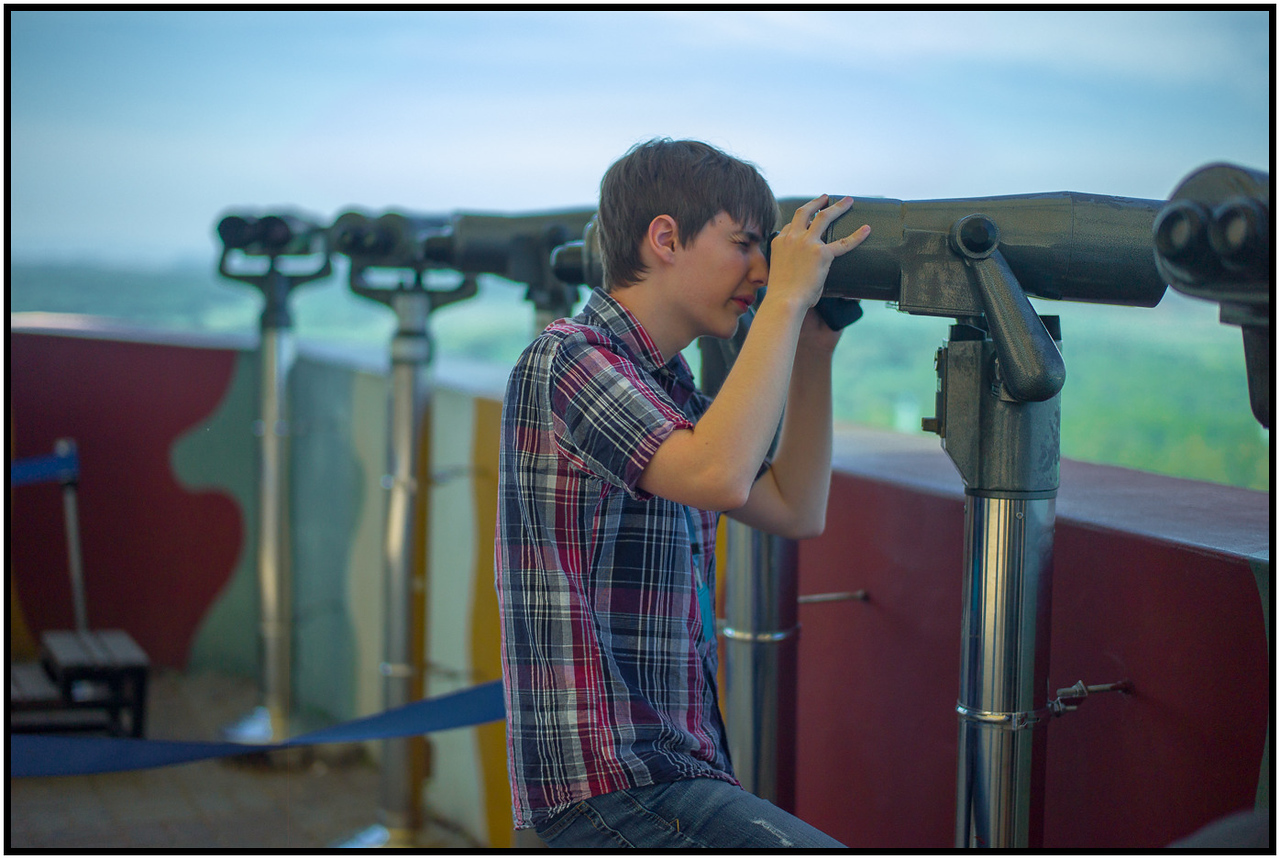
Adam: For what amounted to $0.40, you can use these binoculars to get a better view of what’s going on. Time magazine has reported that North Korean artillery, located in the DMZ and within range of our view, could flatten Seoul in the first half hour of any confrontation. North Korean artillery pieces of calibers 170 millimeter and 240 millimeter could fire 10,000 rounds per minute into Seoul and its environs.
Recent polls in South Korea show a majority (53%) want their own nuclear missiles to act as a deterrent to Kim Jong-eun. The 35MM folks in Seoul are only 35 miles distant from the border.
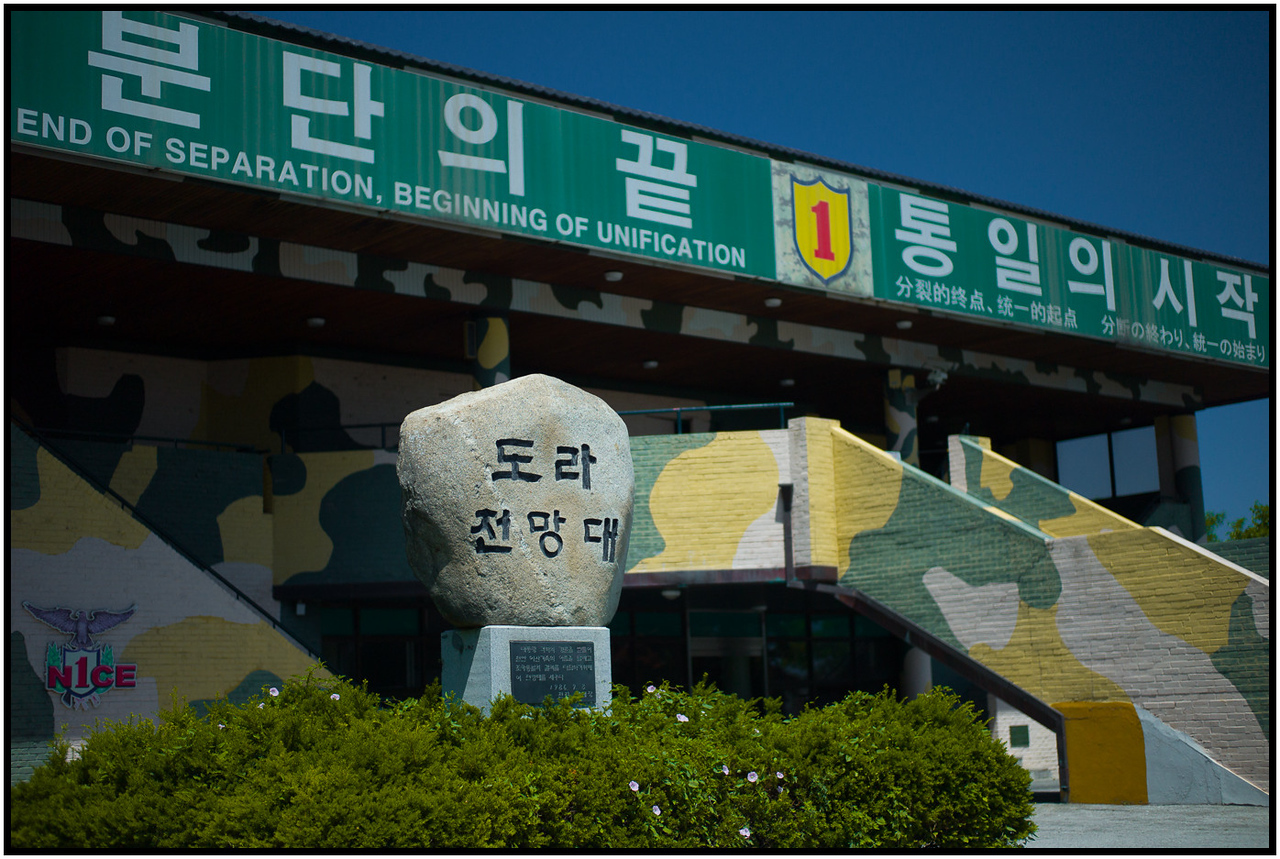
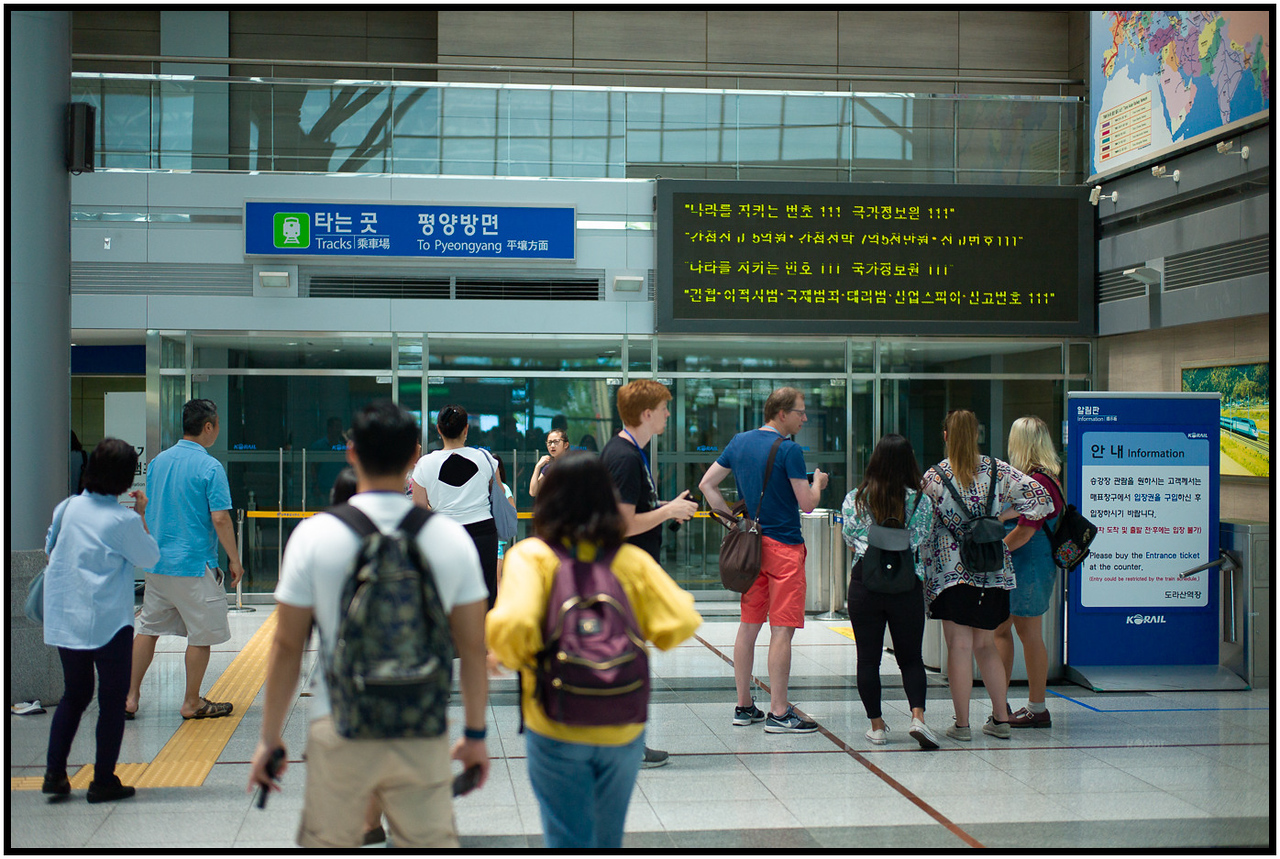
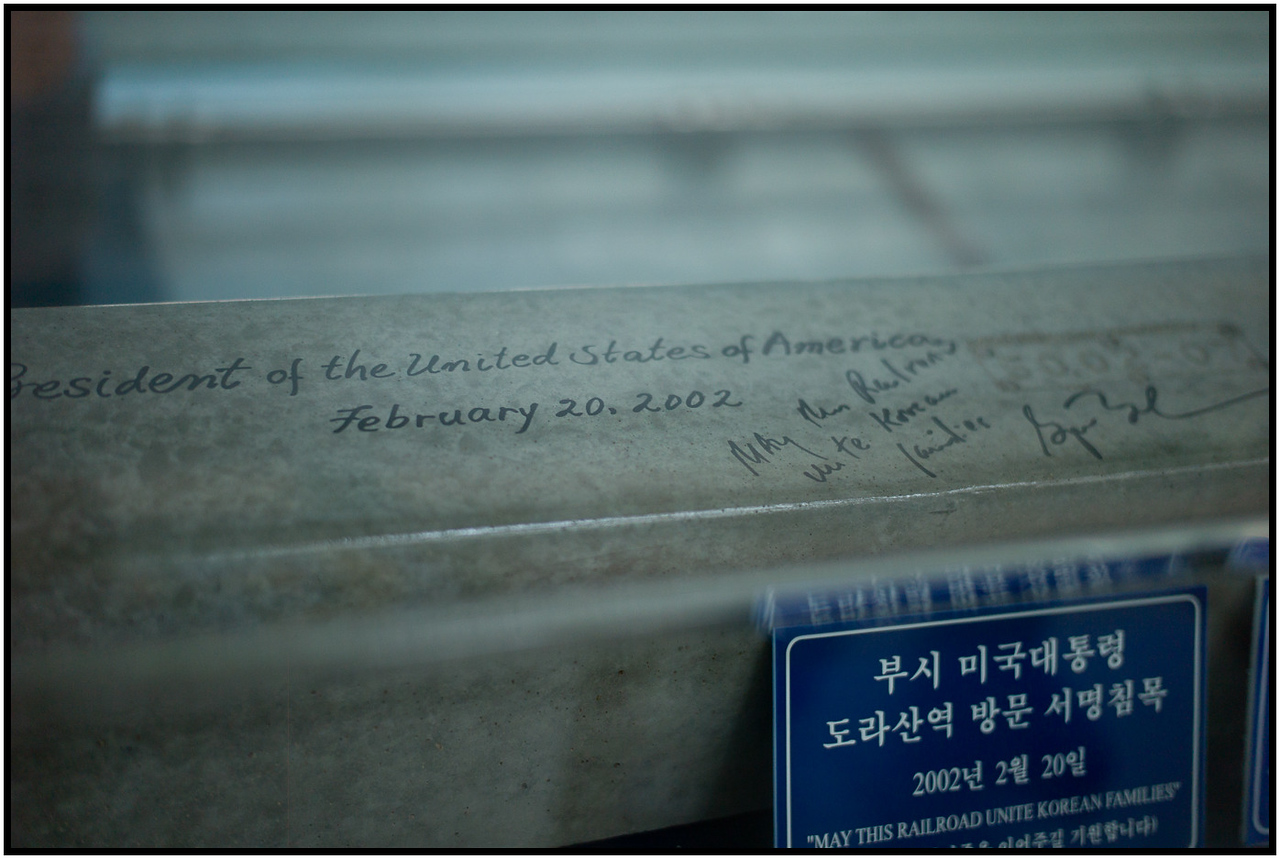
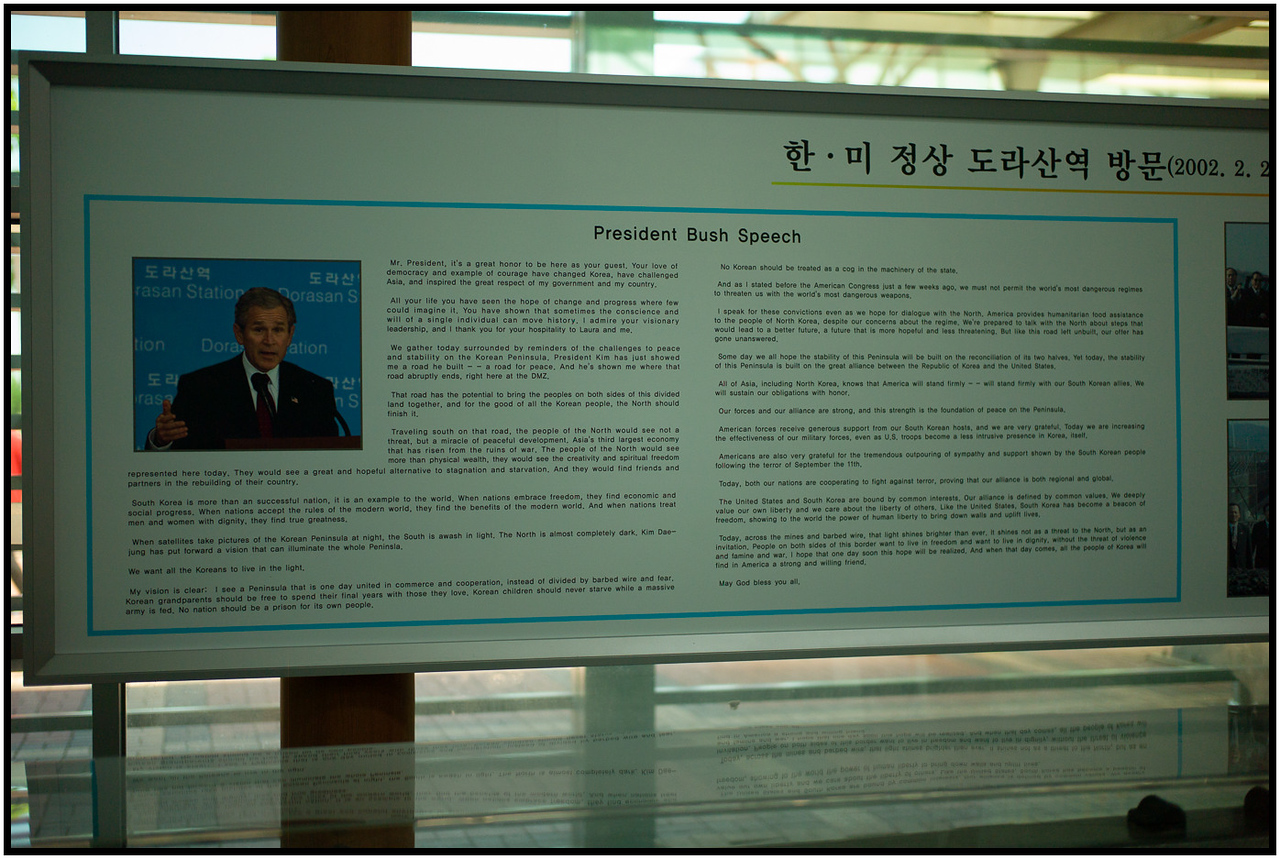
Adam: Another sign of hope – Dorasan Station. Currently, this is the end of the line in South Korea – but was constructed to be ready for unification. If/when there is access allowed, this would be the border crossing for most and the first terminal to reach the rest of South Korea by train. They optimistically display a sign showing the route to Pyeongyang, North Korea’s capital. George Bush 43 was here as president, in 2002, to inaugurate the opening.
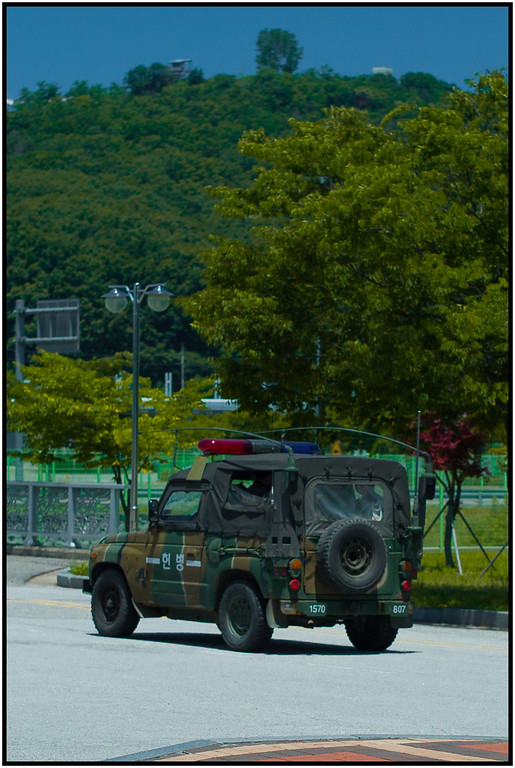
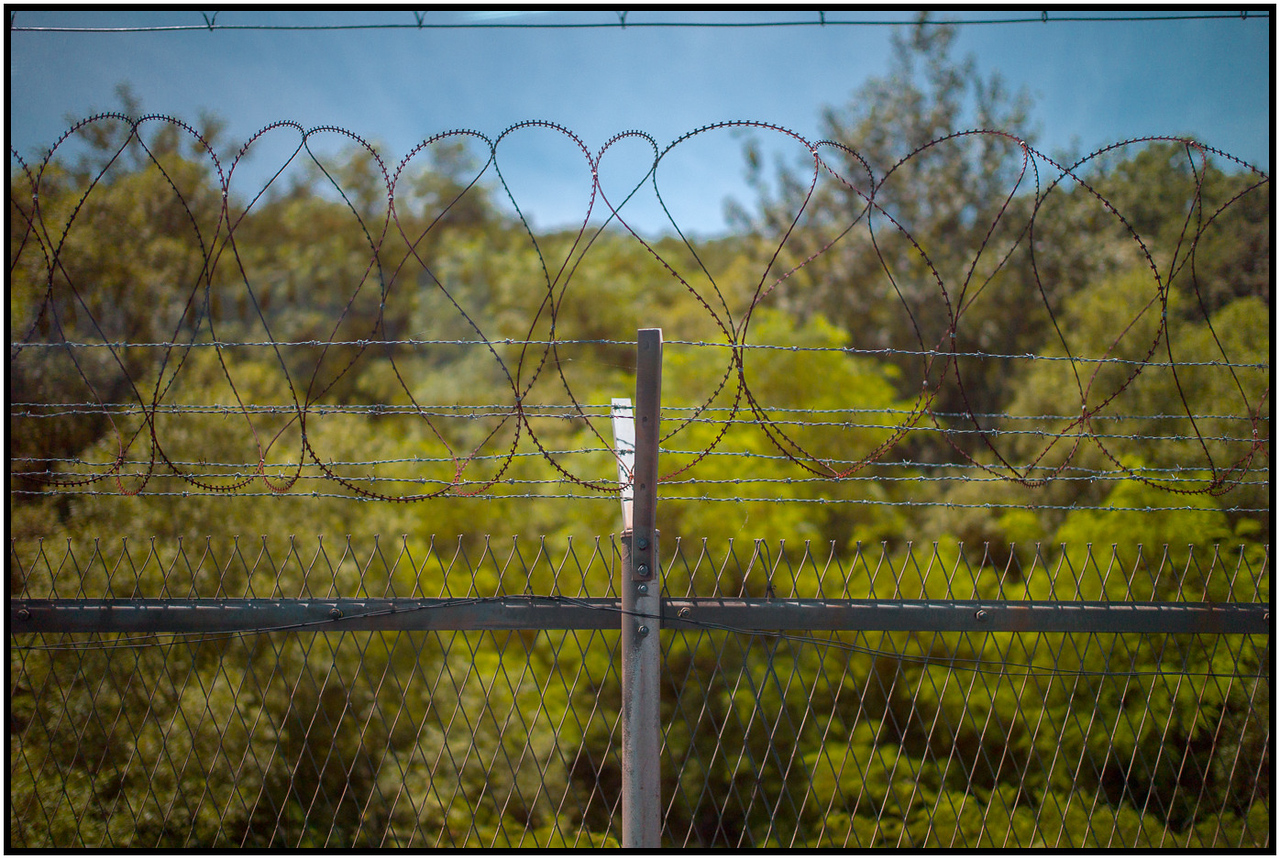
Barbed wire everywhere.
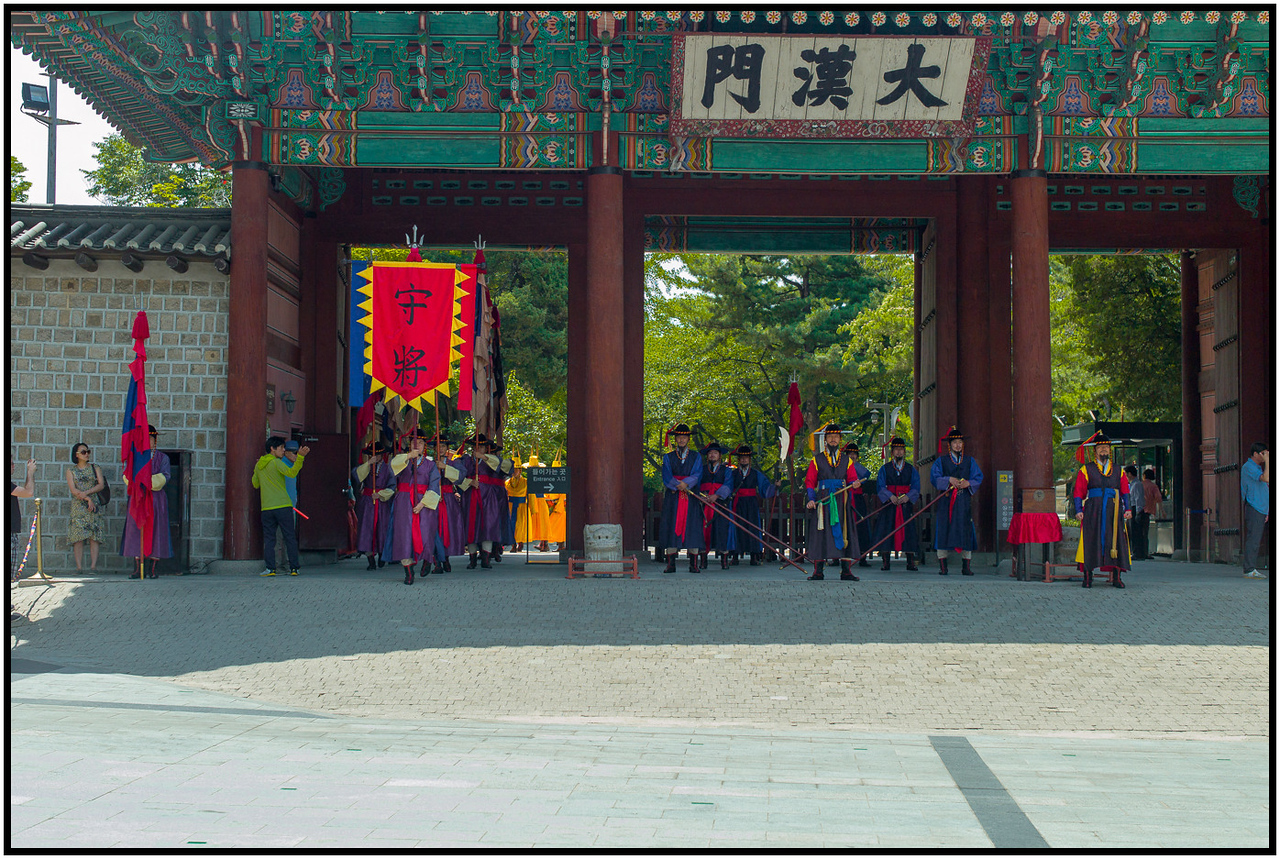
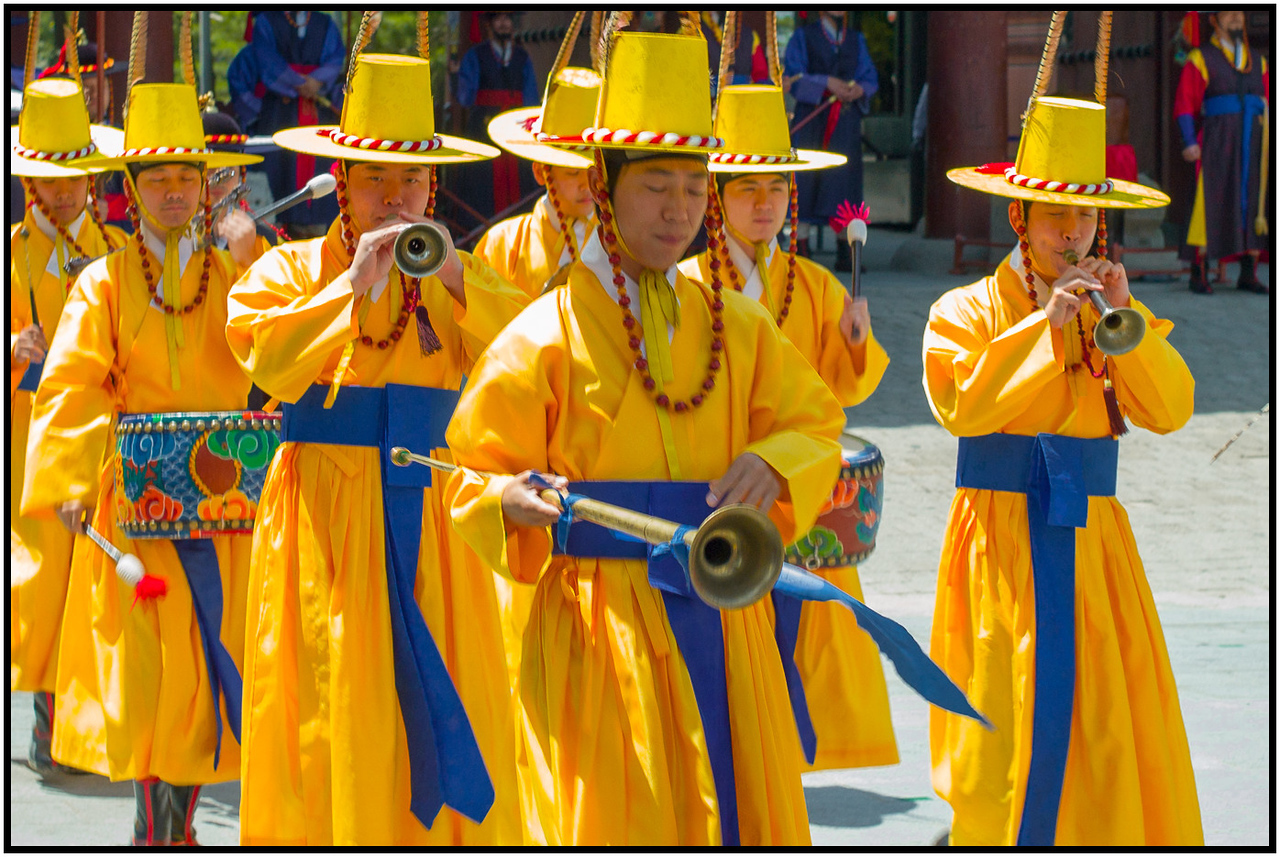
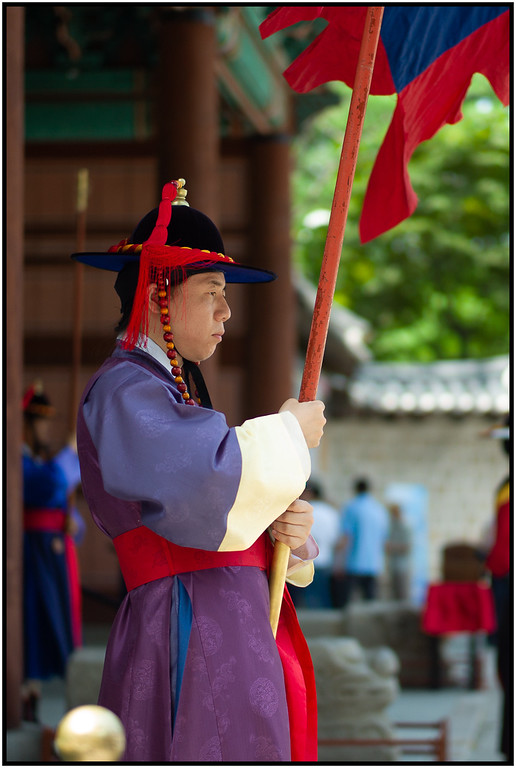
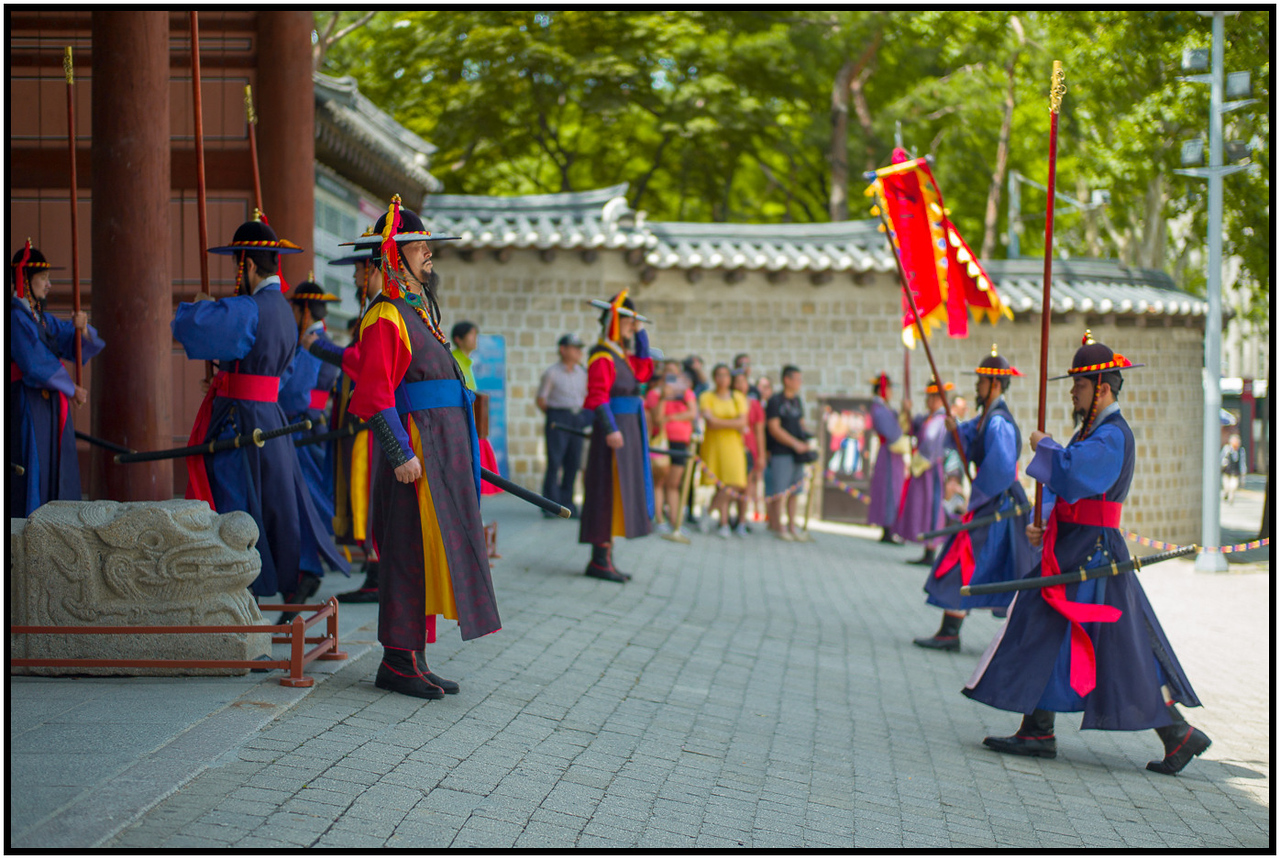
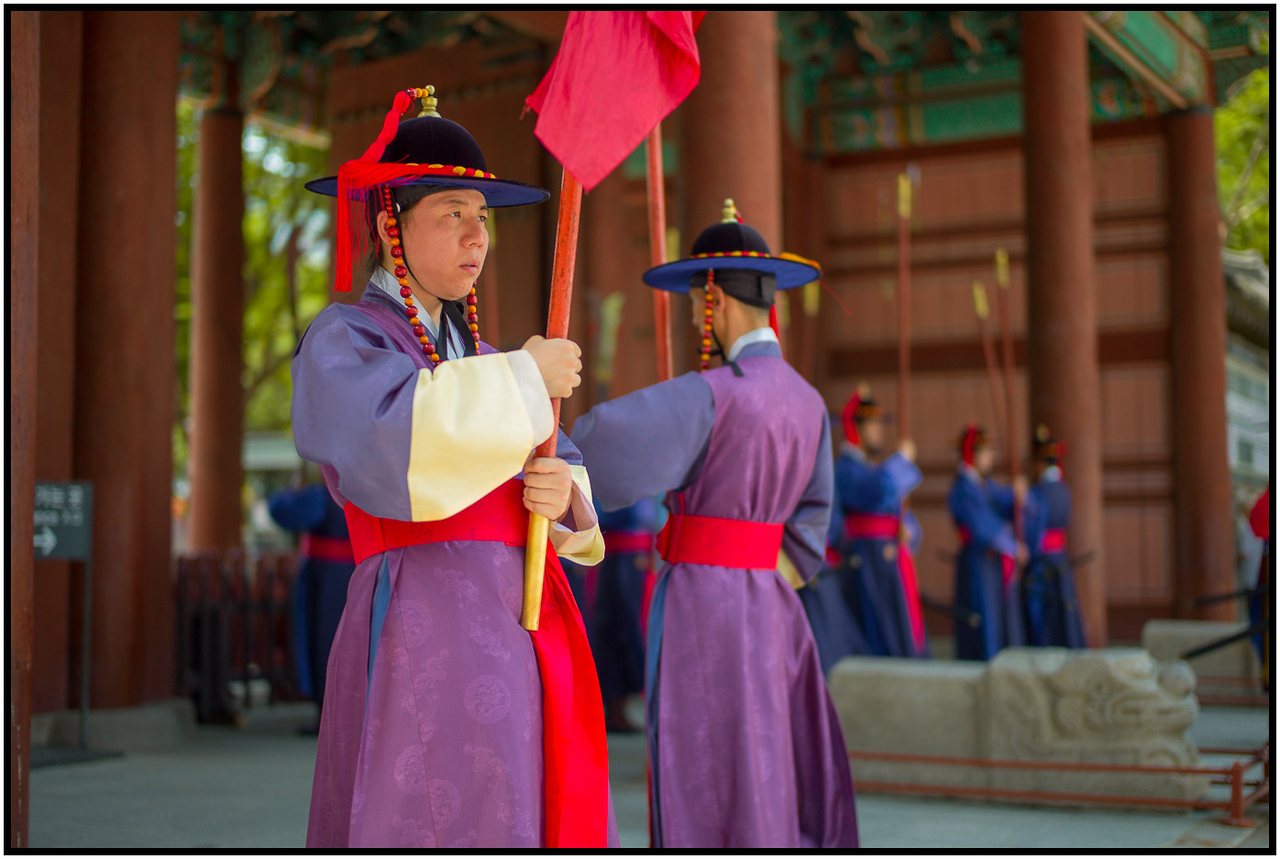
Back in Seoul: Changing of the Royal Guard at Deoksugung Palace. This is a re-enactment from the Joseon Dynasty (from 1392 until 1801) – royal guards were responsible for guarding and patrolling the gates of the capital city and the royal palaces. They were responsible for protecting the king by guarding the entrance gates of the primary royal palace where the king resided.
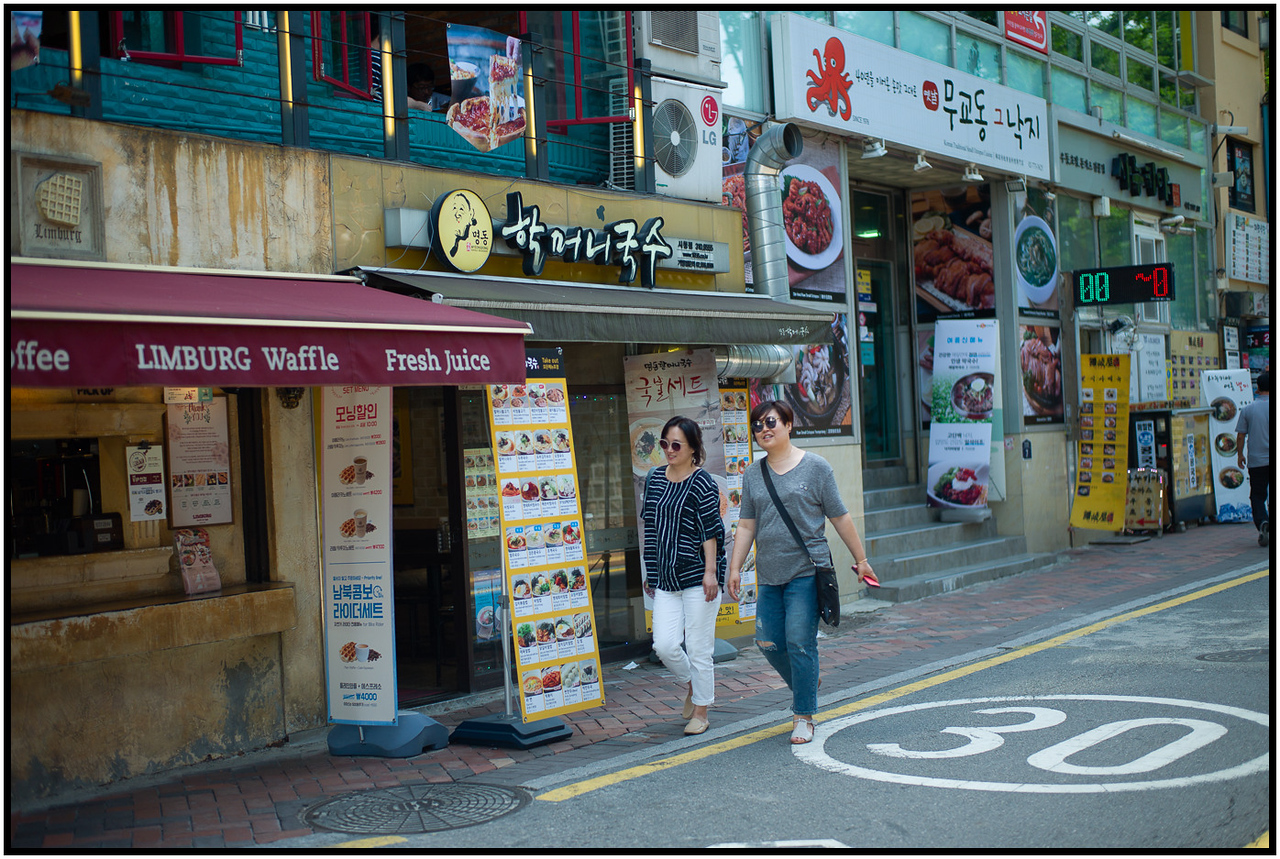
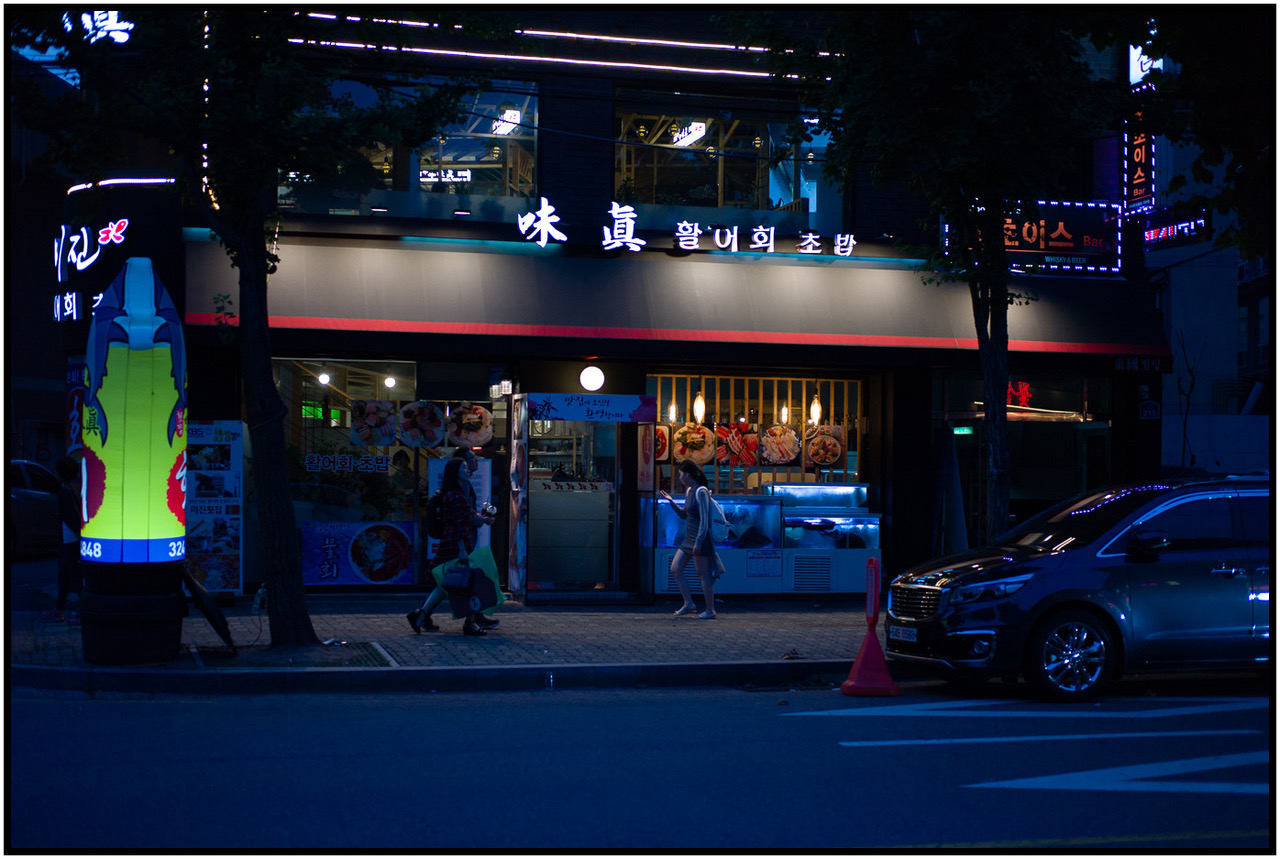
Adam: This is a photo of where we ate lunch – typical location for us. (Restaurant in center below the yellowish circle-logo) The restaurants are all small – they can usually only accommodate the 5 of us if there are few other customers. We’ve usually been eating our lunch late in the day (2 or 3 o’clock) so it hasn’t been a problem. We sit down, get a menu, and start a-pointing! Picture boards out front help us get some sort of sense as to what they serve.
Saturday, 23 June 2018
(Much of today’s post was written by Adam. His comments appear in italic font:) Today was a day of bargaining and negotiations. I dragged my family to The War Memorial of Korea in exchange for a return to the shopping areas in the afternoon.
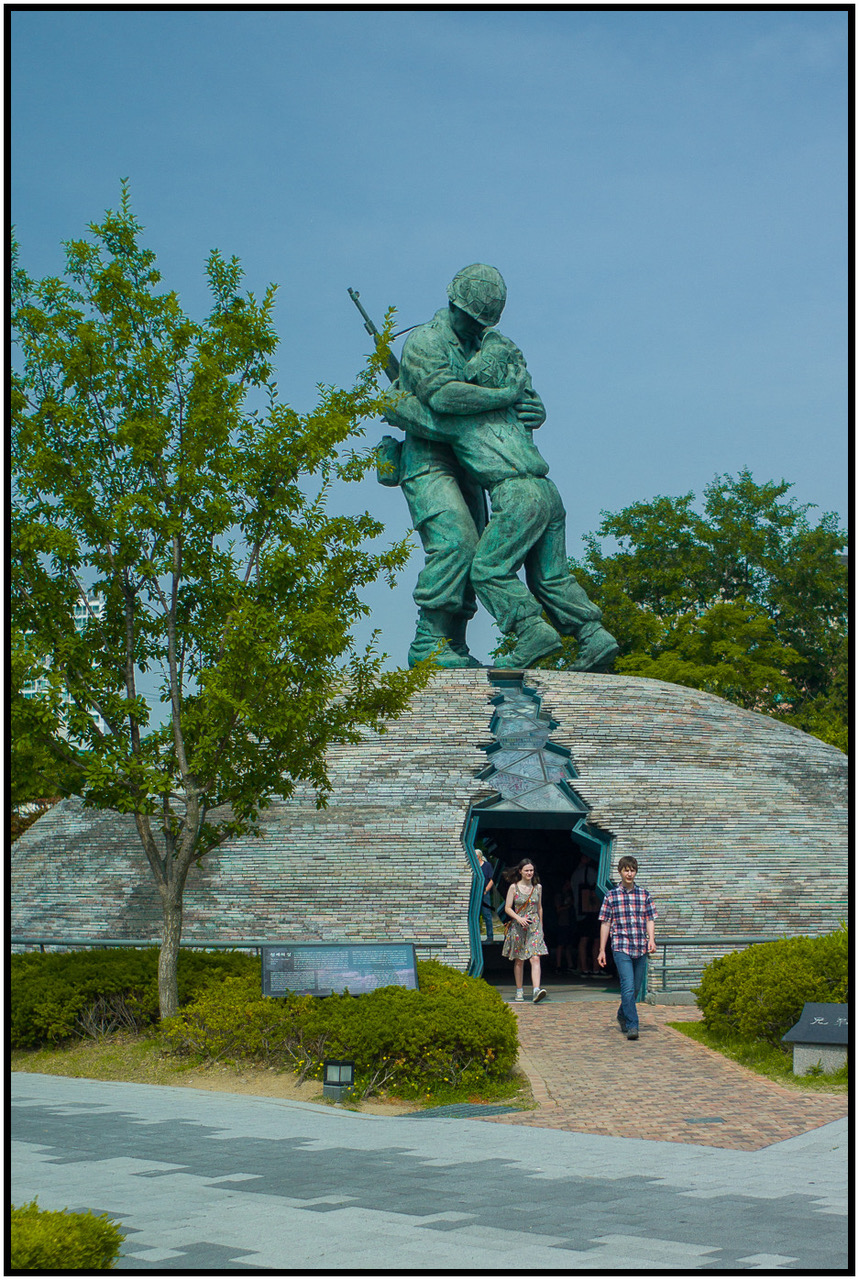
Half of the museum is outdoors, the other half in. Half of the museum is dedicated to their war between 1950-1953, the other half is dedicated to all of their other wars from 5000BC up to 1950.
152,000 South Korean soldiers died in the Korean war.
36,574 American soldiers died as well – and there is plenty of representation and honoring of the US marines (and the various other UN nation participants).
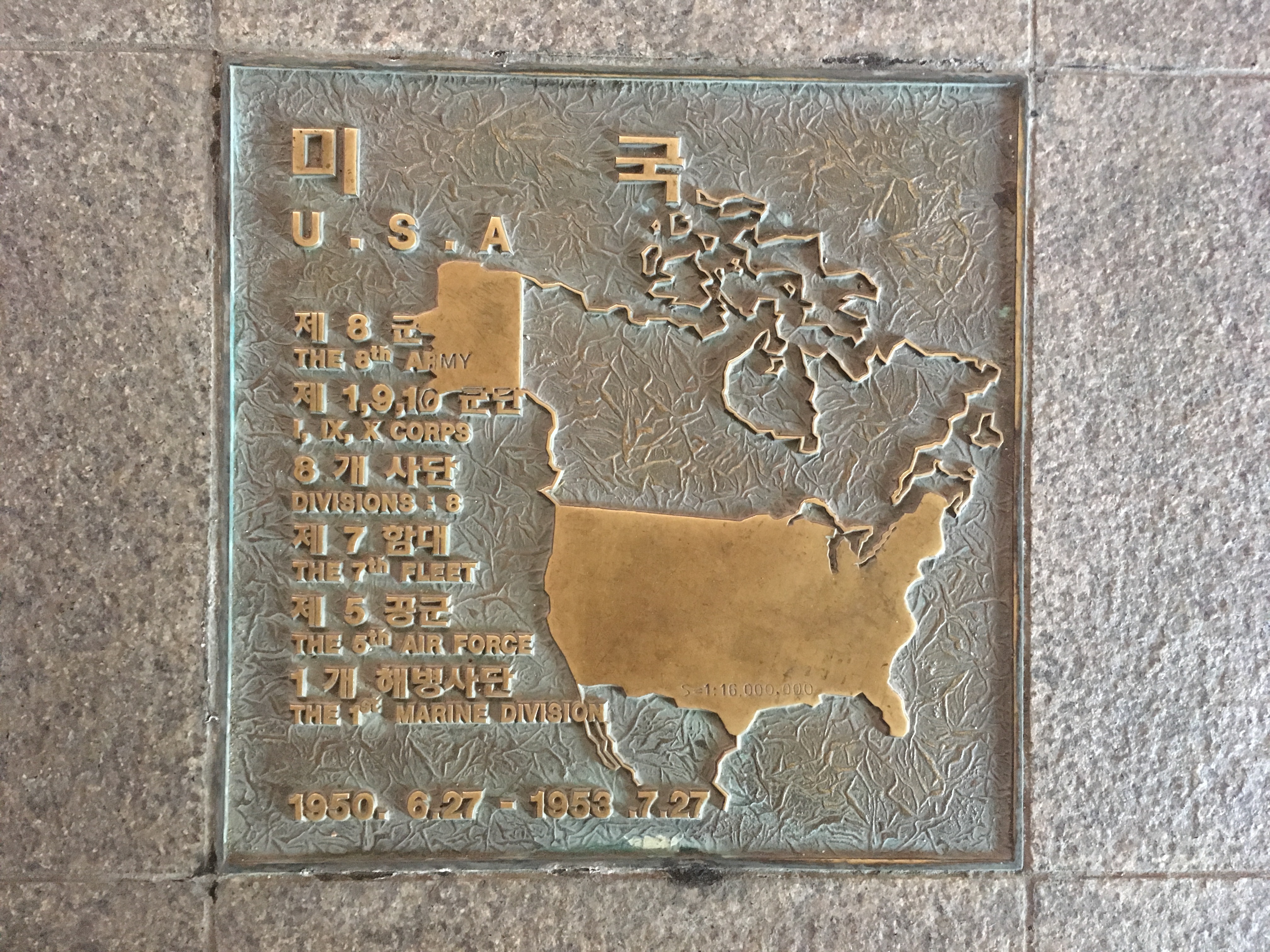
The monument in the photo above had plaques inside recognising every country that came to South Korea’s aid in the Korean War. Here is the plaque for the United States. (I absolutely LOVE that they included Alaska!! It’s not fair that Hawaii got left out, but neither Alaska nor Hawaii were states in 1953, so technically Alaska probably shouldn’t be here, either. They were both granted state status in 1959.)
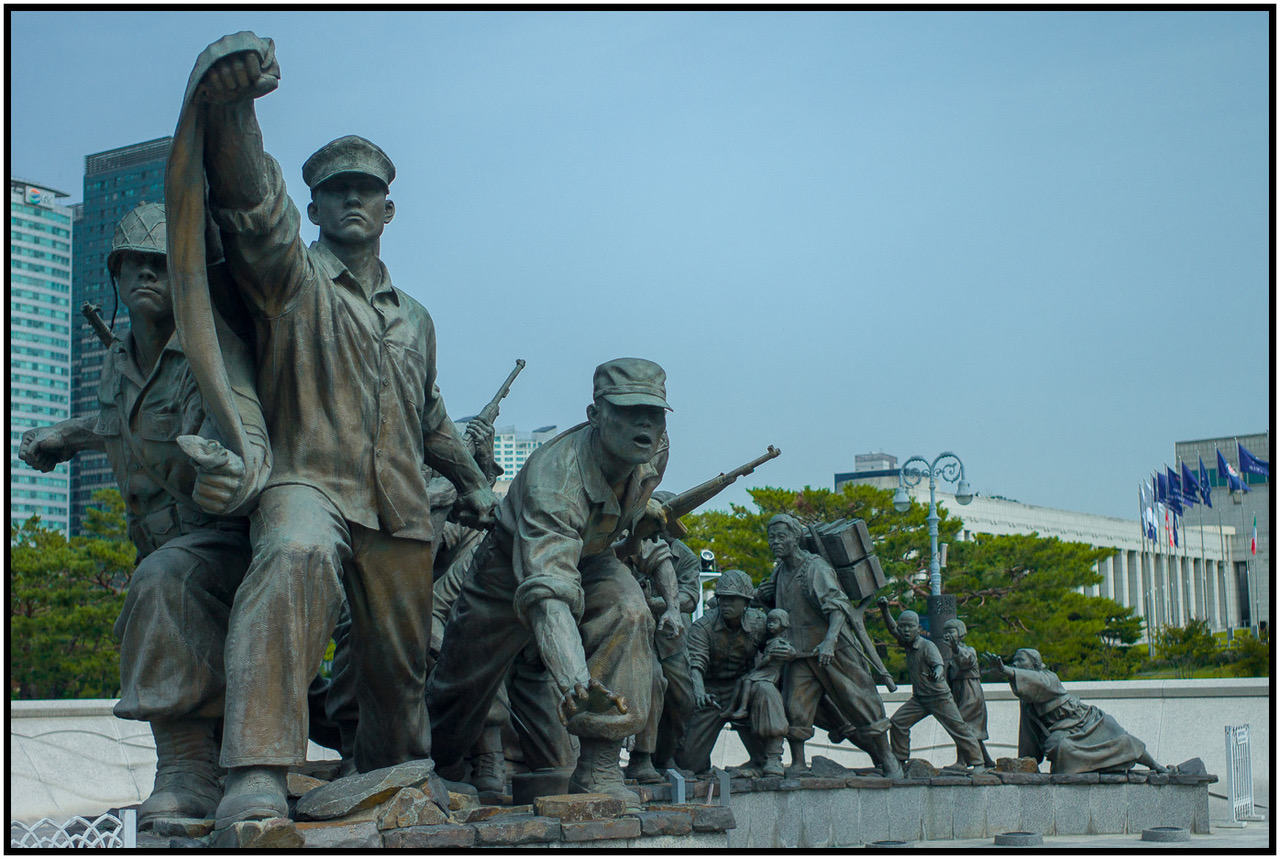
Another memorial dedicated to countries that came to South Korea’s aid. This one had monuments to Australia, Canada, and Northern Ireland, among others.
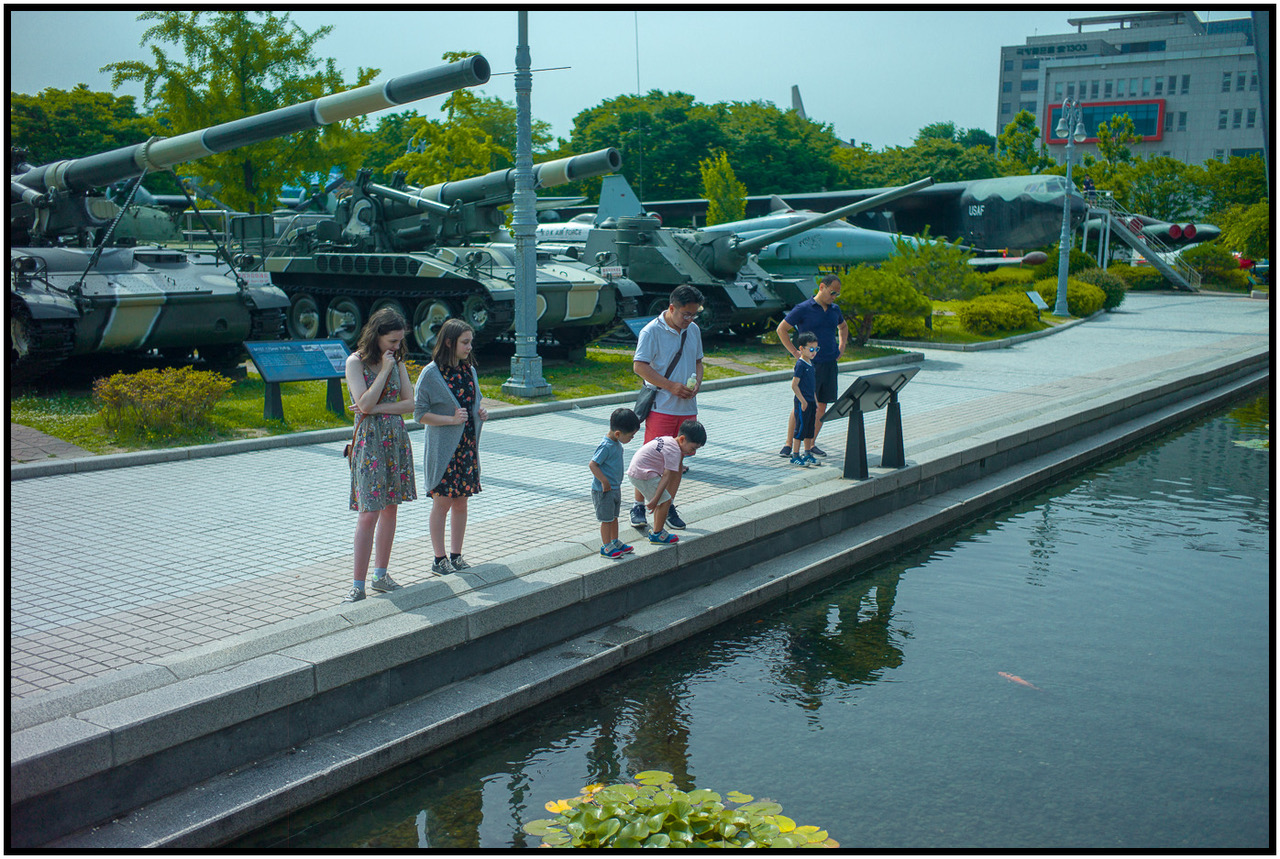
The girls are ignoring all of that fascinating armament behind them and watching the fish in the pond.
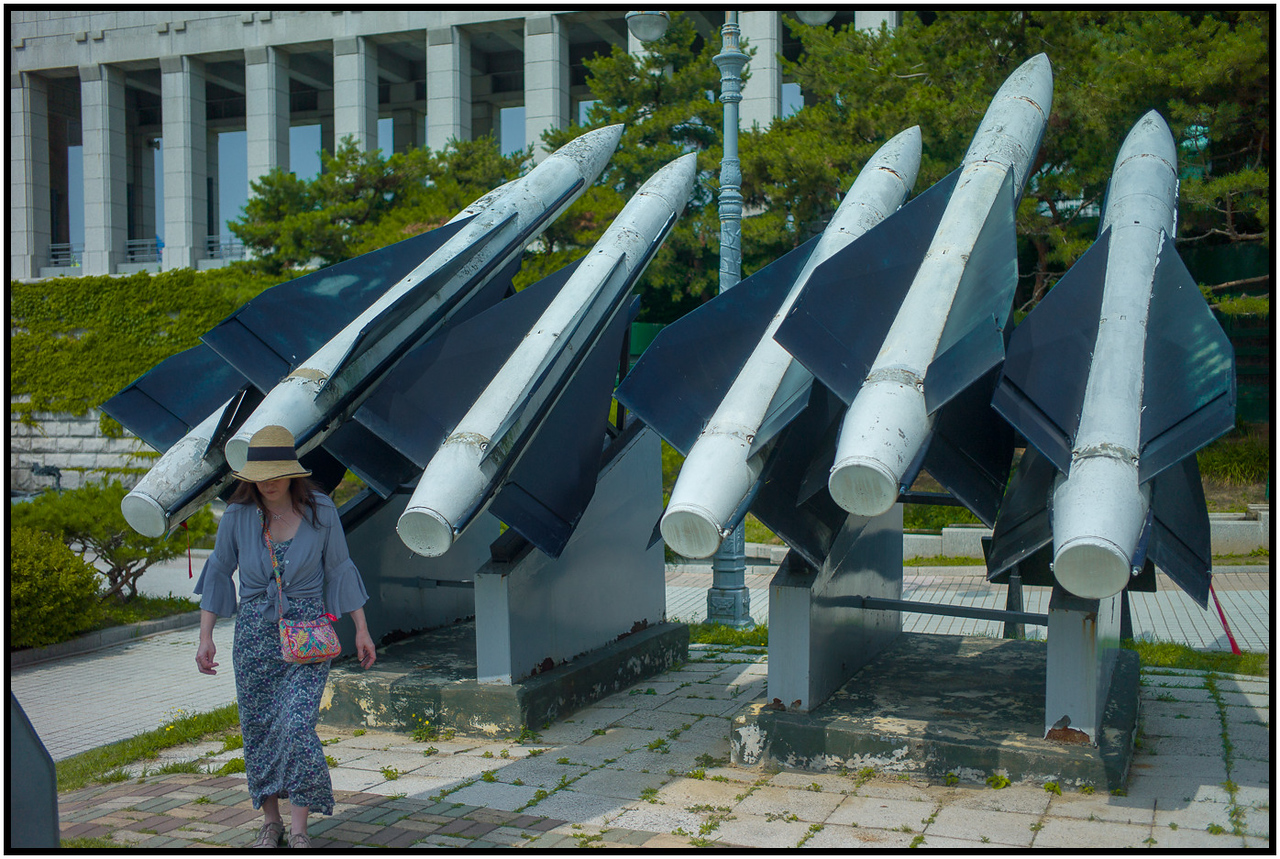
Directly across from the fish is this battleship. The red painted circles are holes made by artillery shells.
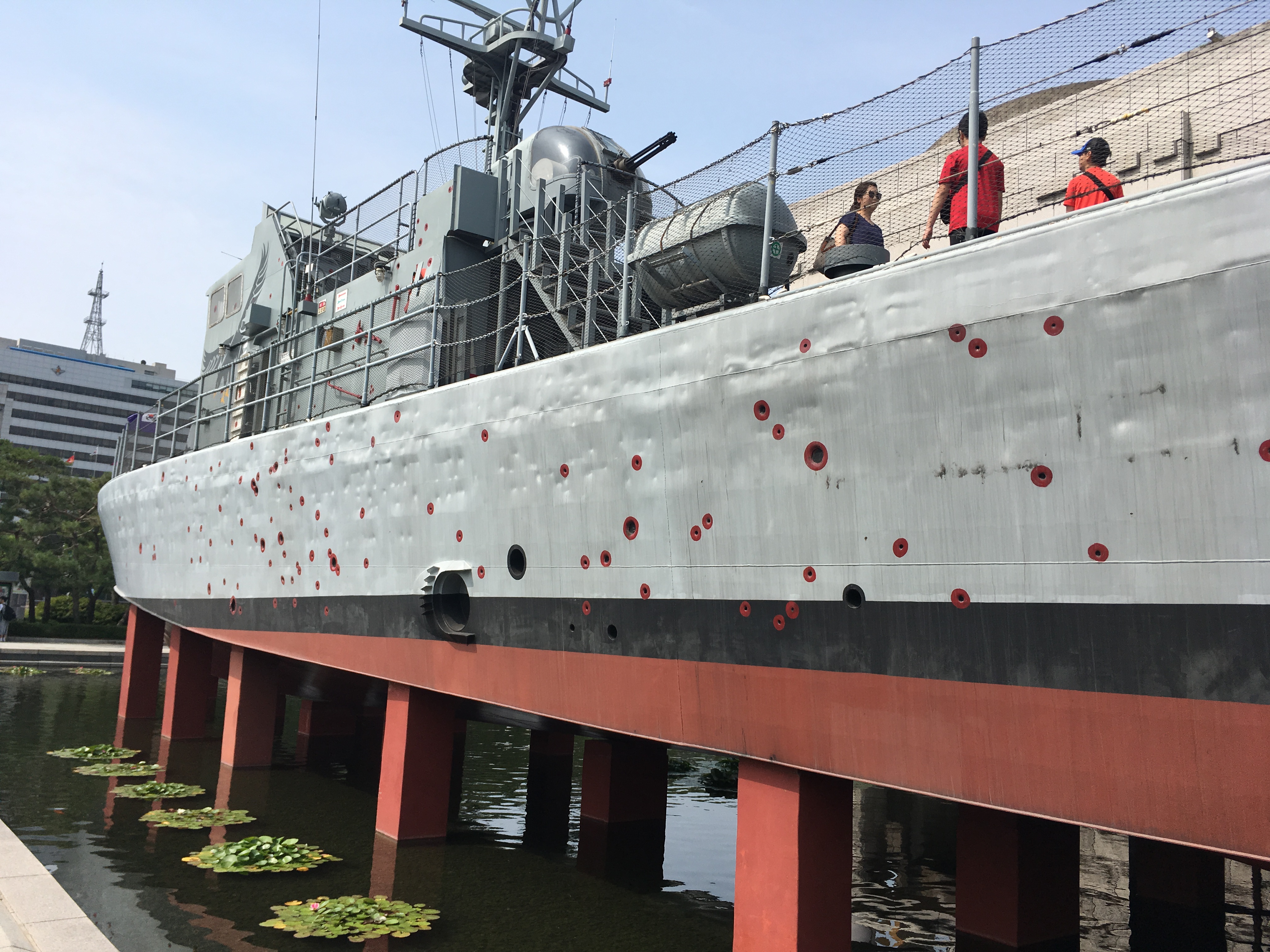
From a plaque at the museum: “In the midst of the World Cup co-hosted by Korea and Japan on June 29, 2002, North Korean patrol boats crossed the Northern Limit Line. South Korean patrol boats were immediately dispatched and warned them to turn back. Without warning the North Korean patrol boats opened fire sinking PKM 357 and killing six sailors. South Korean patrol boats countered the attack sinking two North Korean vessels and inflicting 30 casualties on them. The exhibited PKM 357 is a life-size replica. The Original PKM 357 is exhibited at the park of the Second Fleet Command, ROK Navy.”
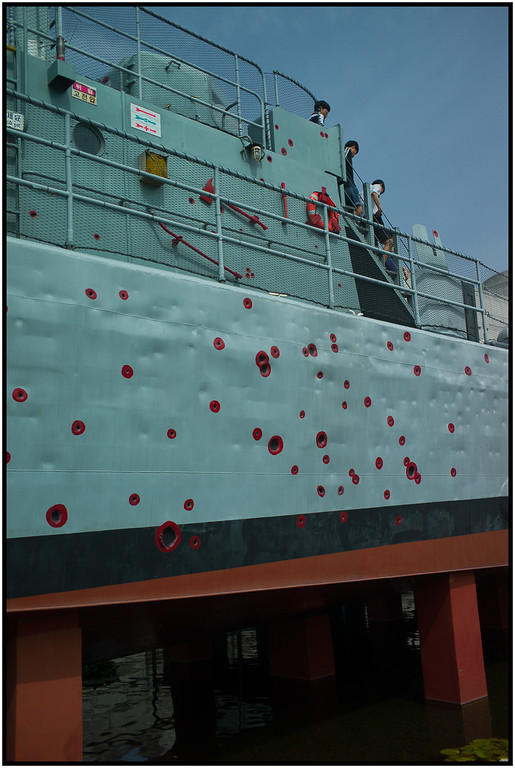
I’d like to note we aren’t the only ones watching the fish and ignoring everything else.
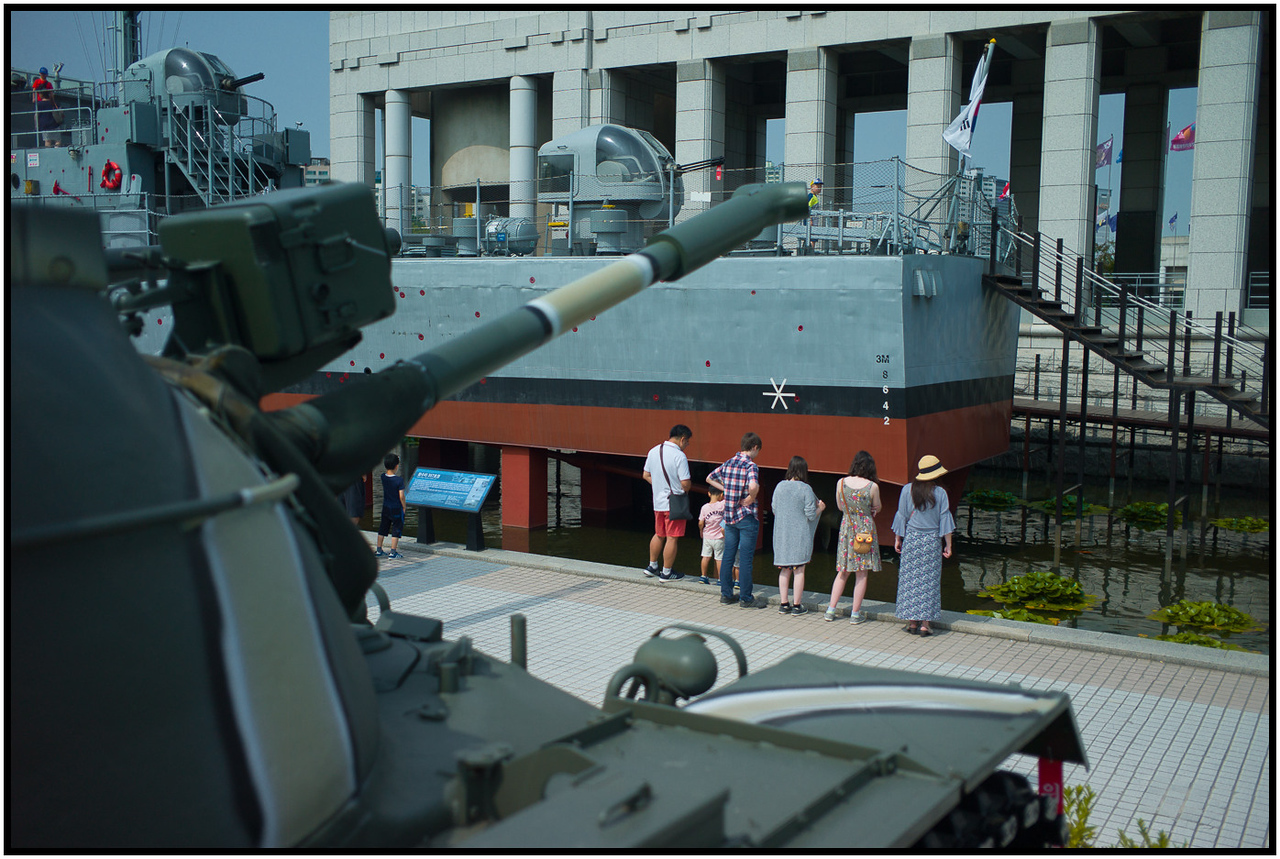
Now the school field trip groups begin to arrive … and just look at what what grabs their attention! The fish were the biggest draw in the entire museum.
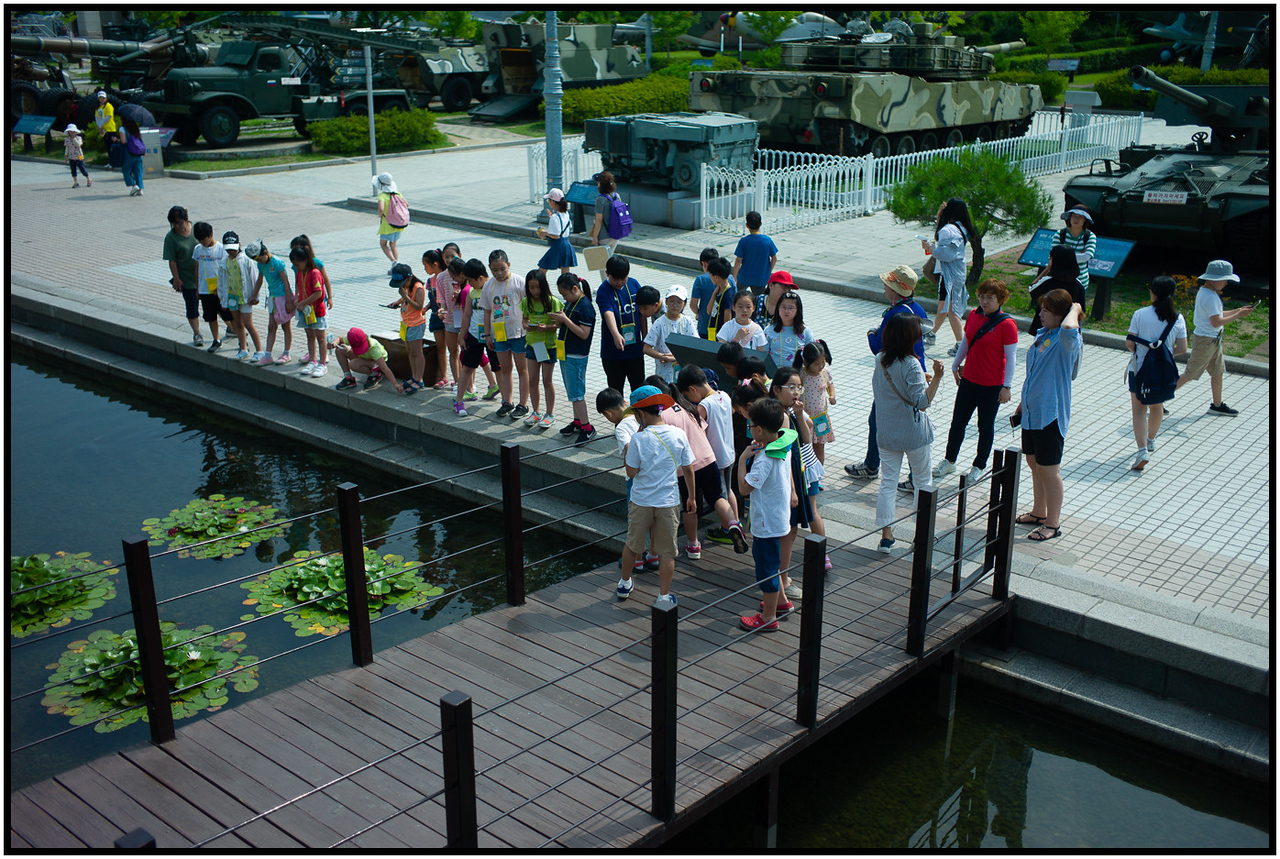
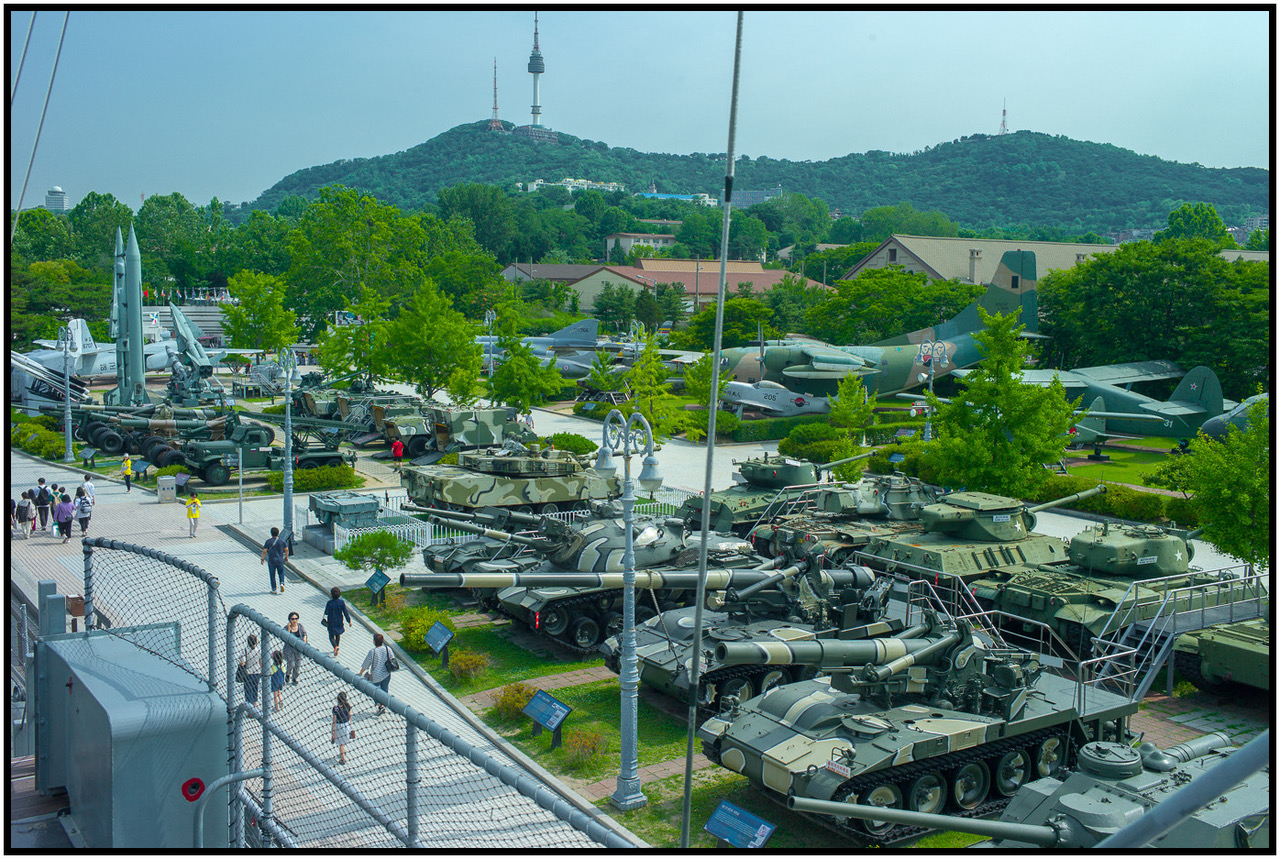
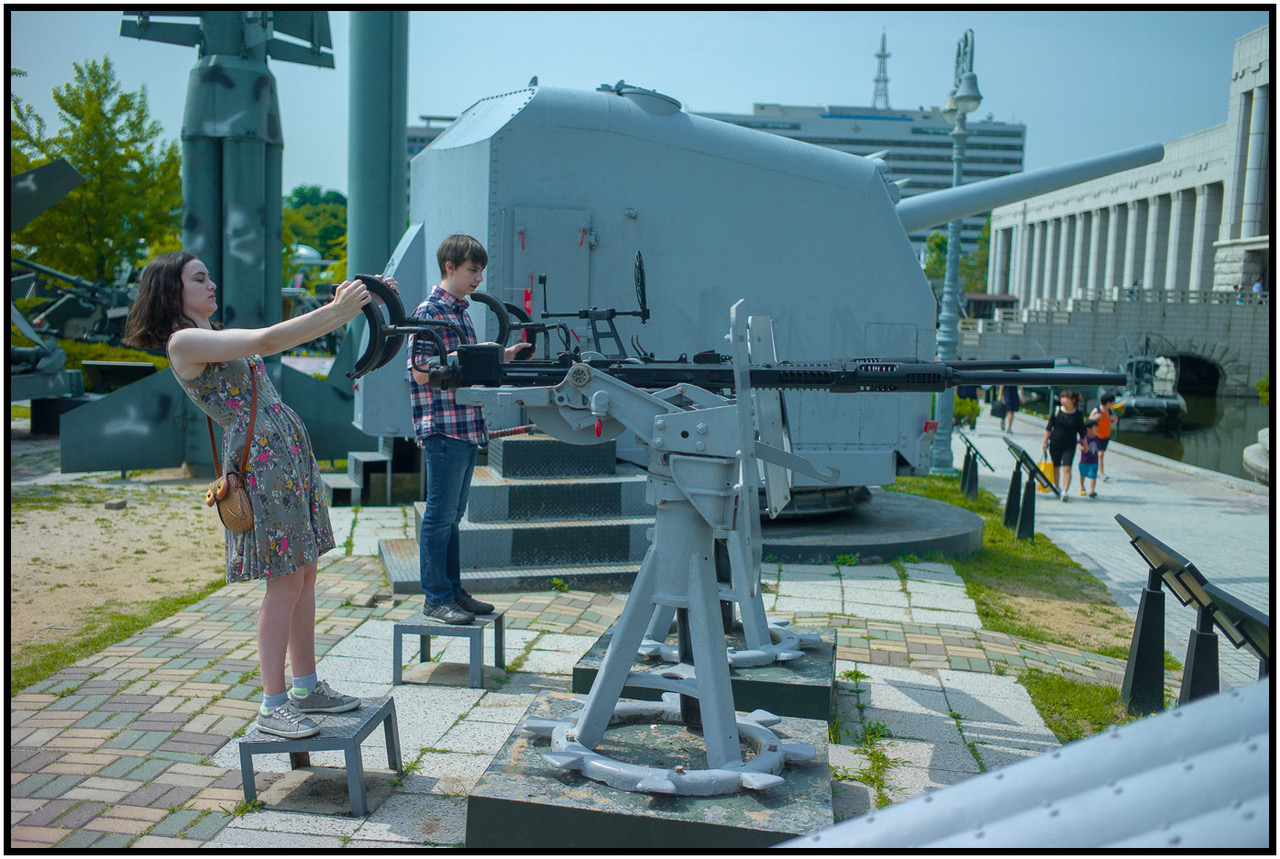
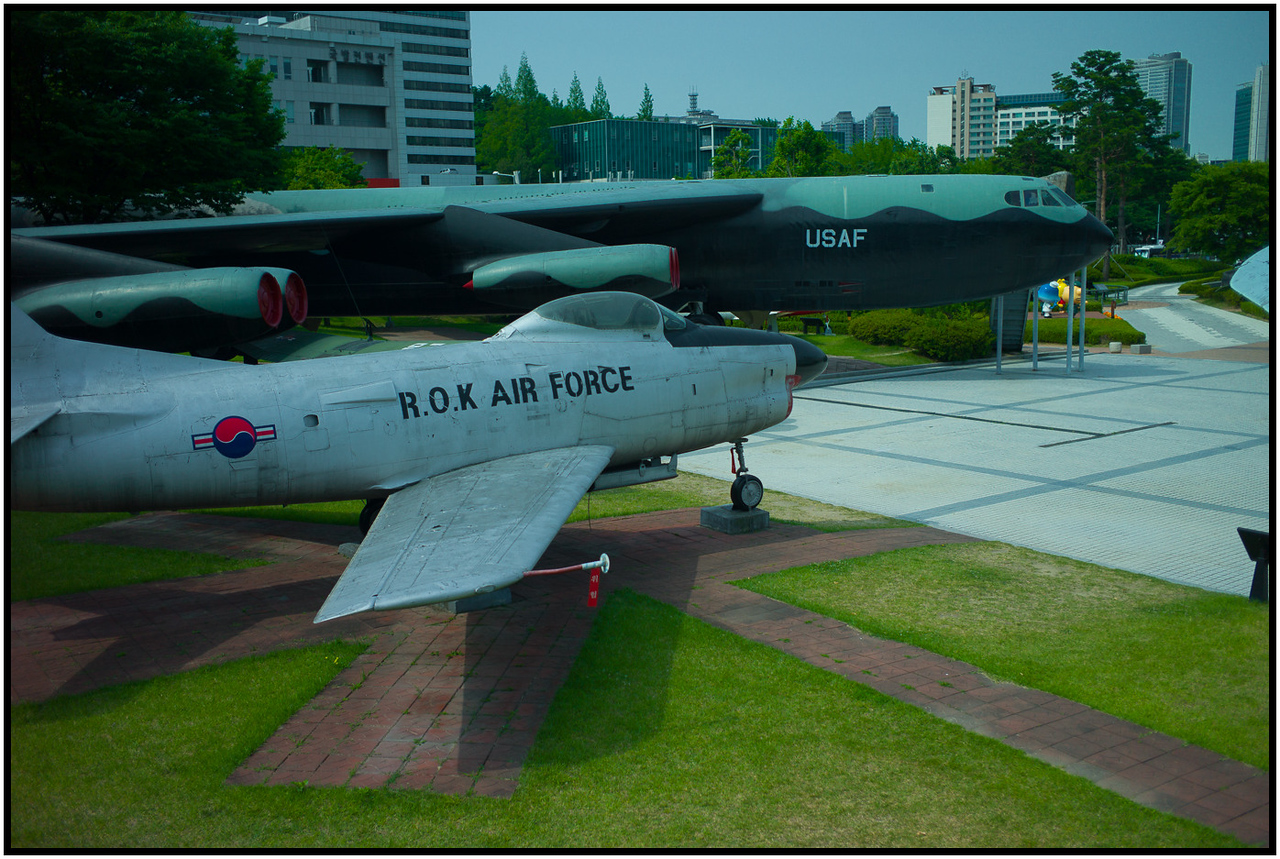
Adam: I kept screeching at them “This is a B-52! These are Katyusha rockets! This is a T-34!” but I was ignored.
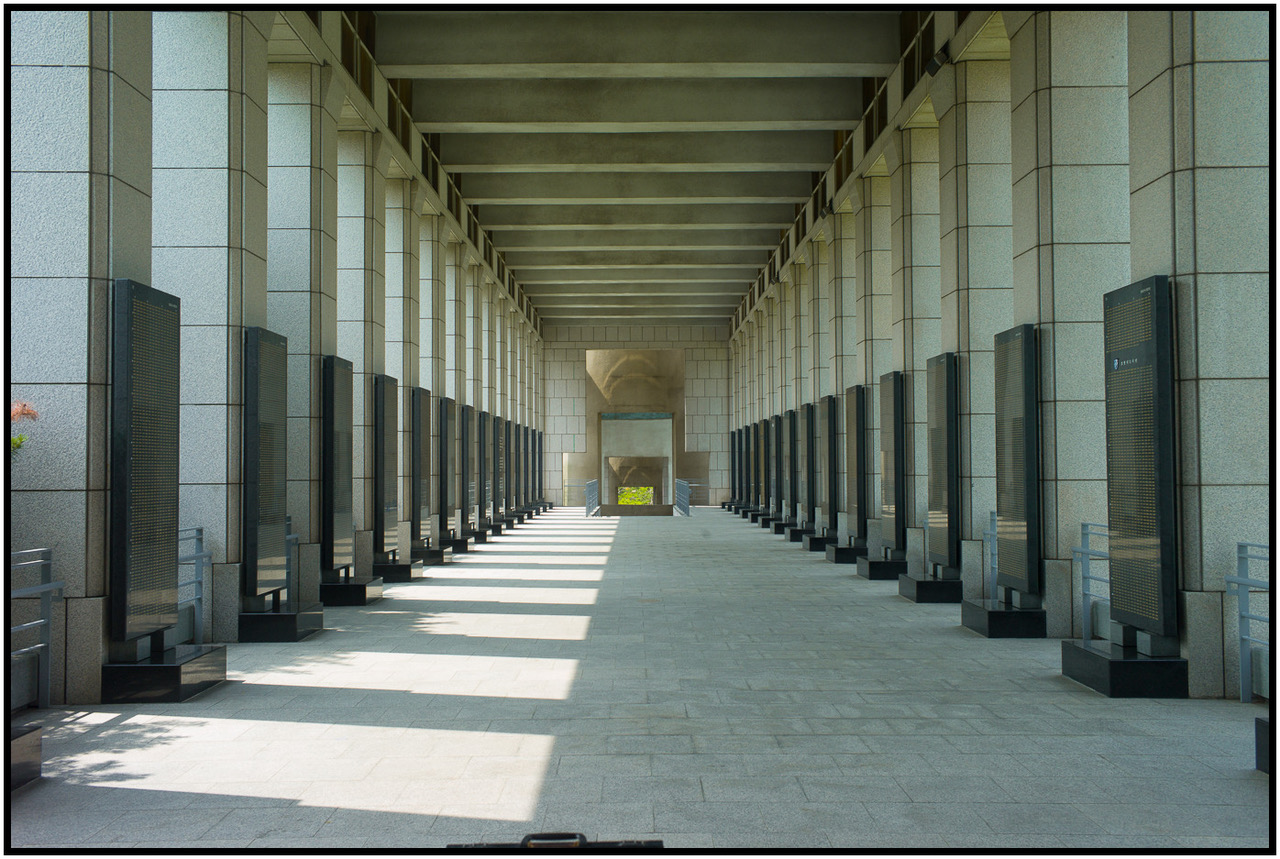
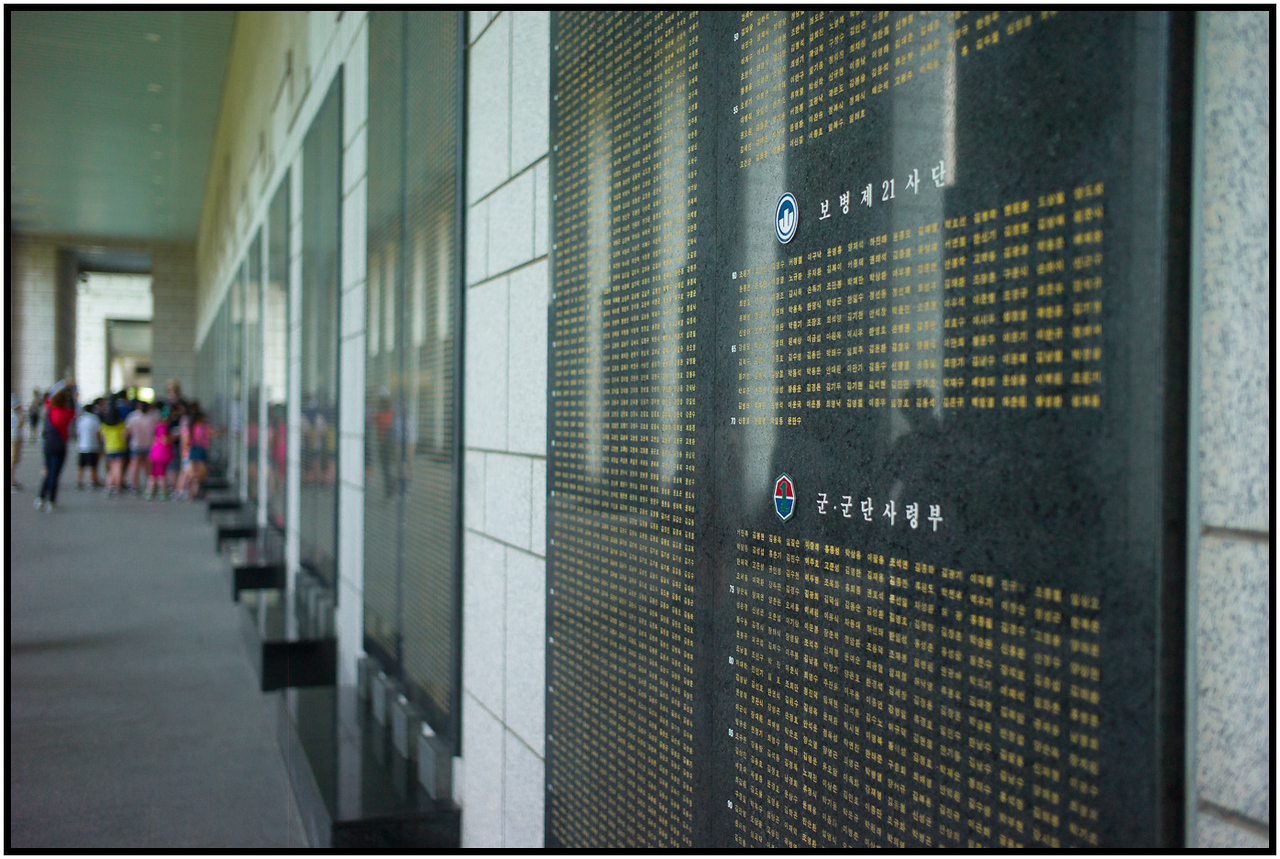
Entering the building, they have two halls with plaques listing out all of the Korean dead.
There was so much more at the museum – thousands of years of history, changing dynasties, kings and nations that have come and gone in this area. The names and locations are completely unfamiliar to me – so it all just sounds like gibberish. I have absolutely no knowledge of Eastern history through the ages – but stuff happened in spades.
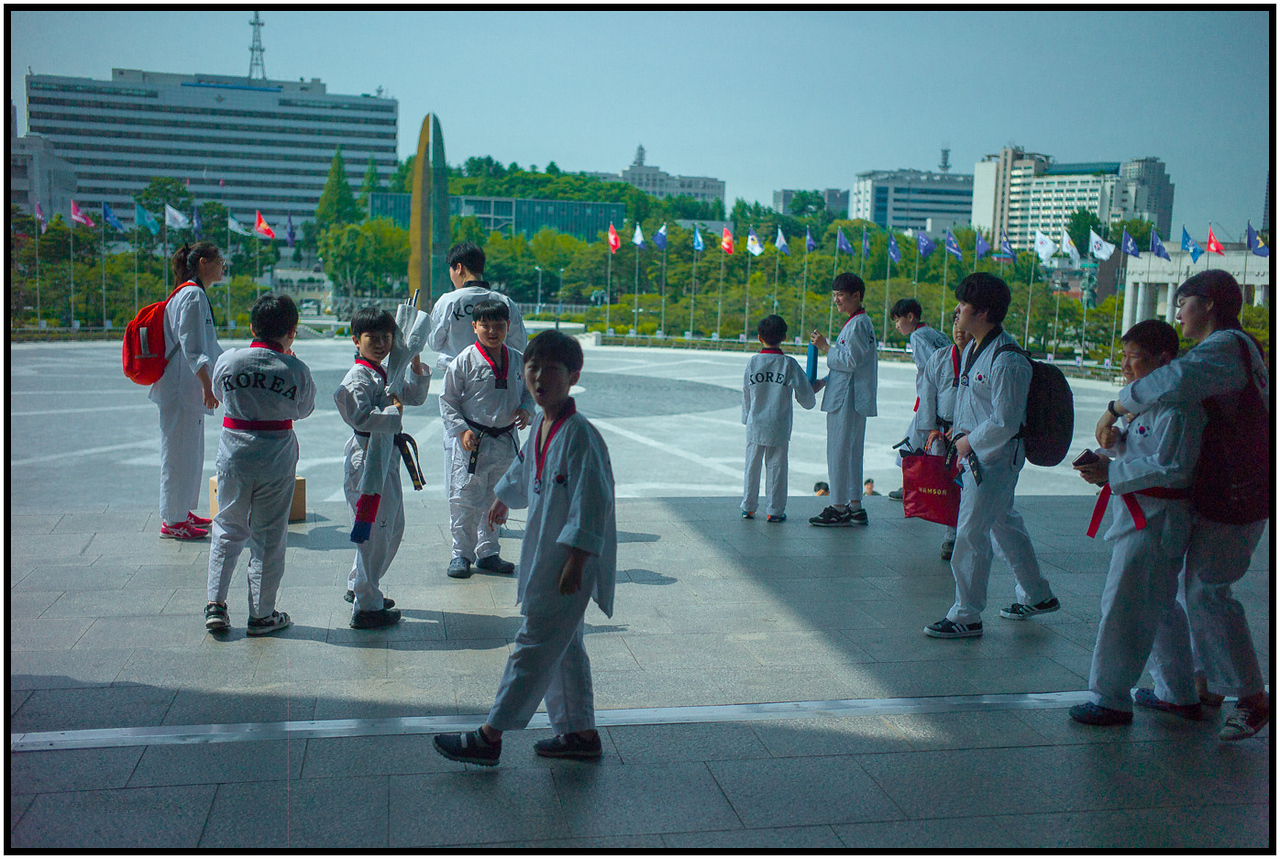
The museum was filled with groups of school-age children. Some were in school uniforms, some were in club uniforms, and some were in regular street clothes. Here is a Taekwondo (karate?) club … a good number of these boys had black belts, the others were all red. I looked up belt colors when I got home and discovered that black is the highest (which I already knew) and red is second-highest (which I did not know.) I wonder if this trip was a reward for the boys who did really well?
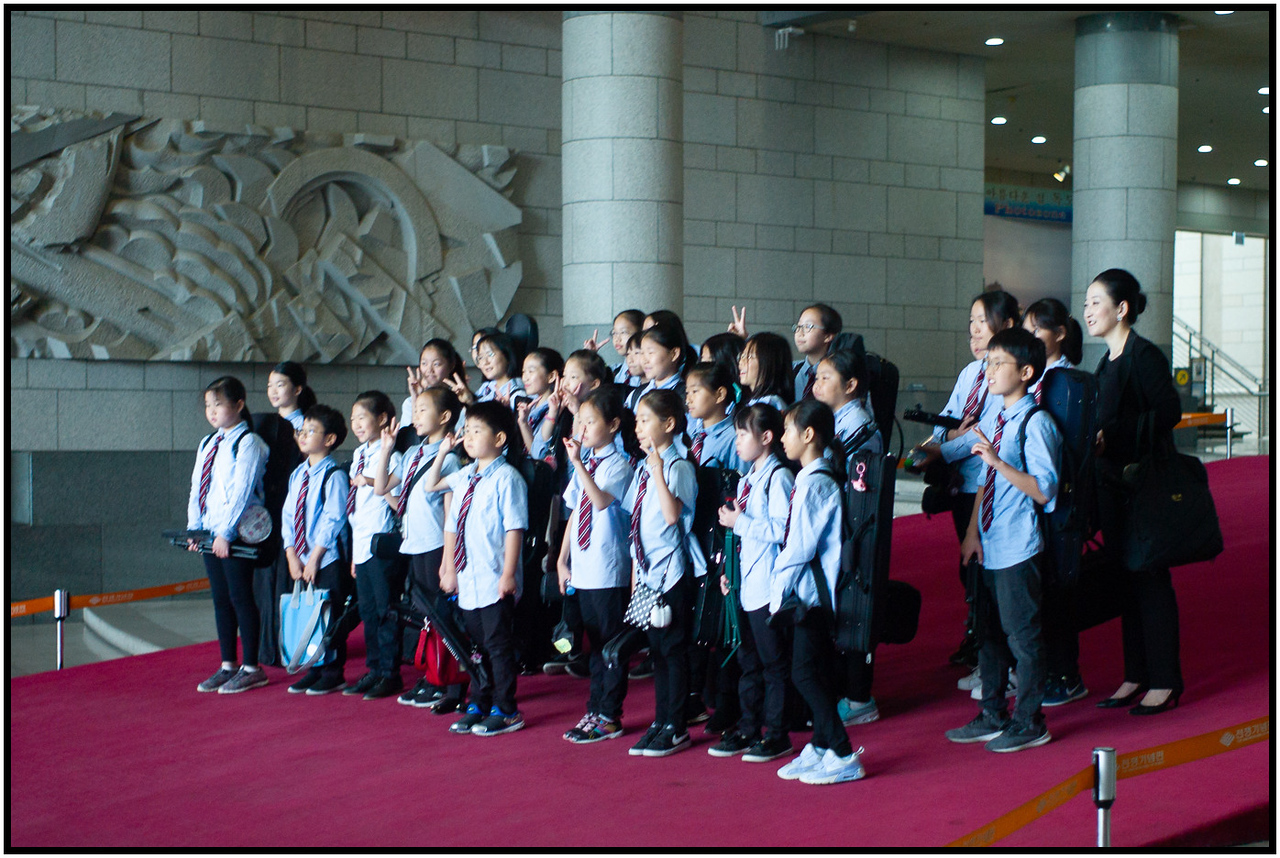
Group of musicians. They set up after this photo — band, orchestra, and choir. We left before they performed, but if their warm-ups were any indication, these kids were GOOD.
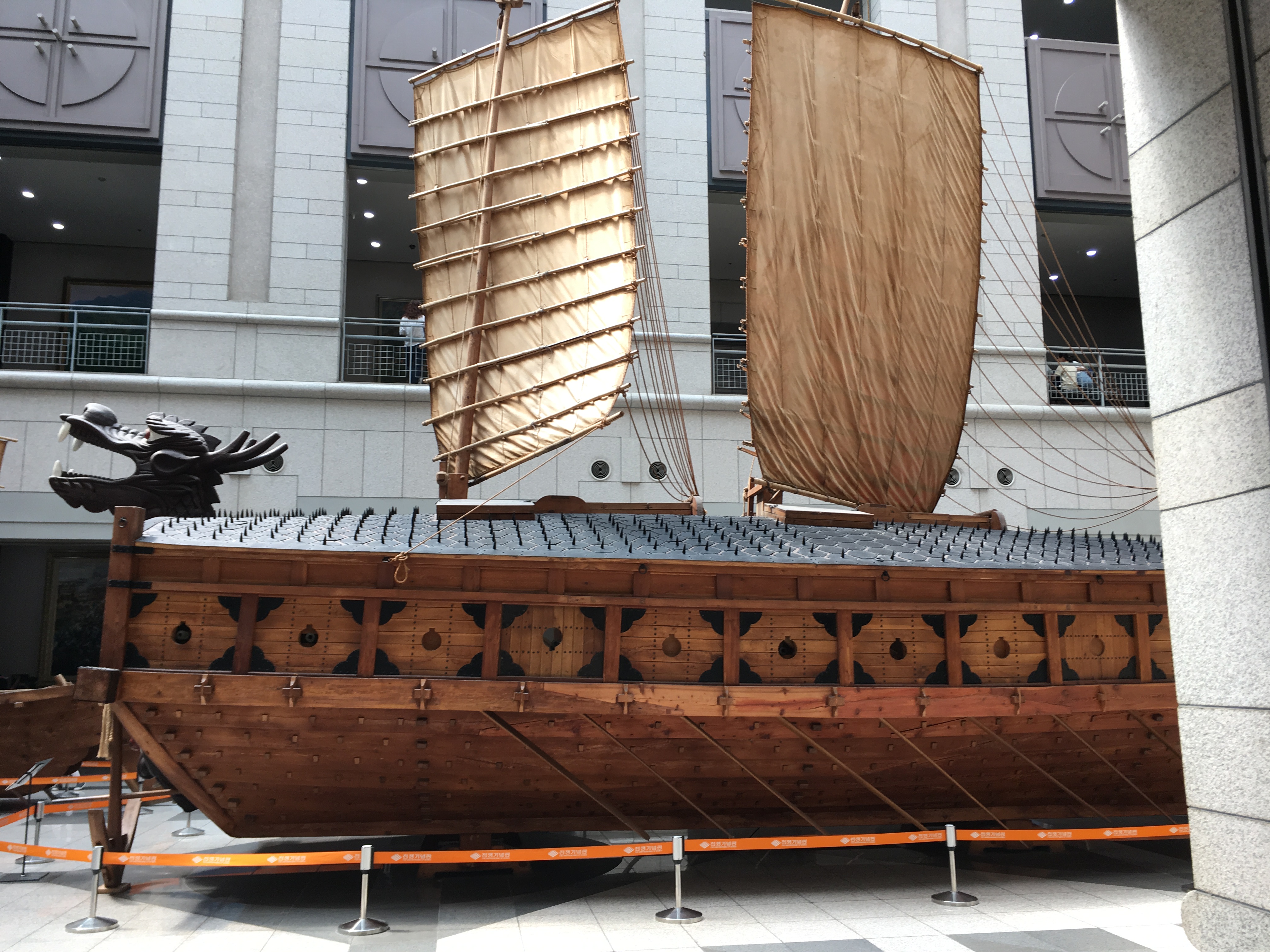
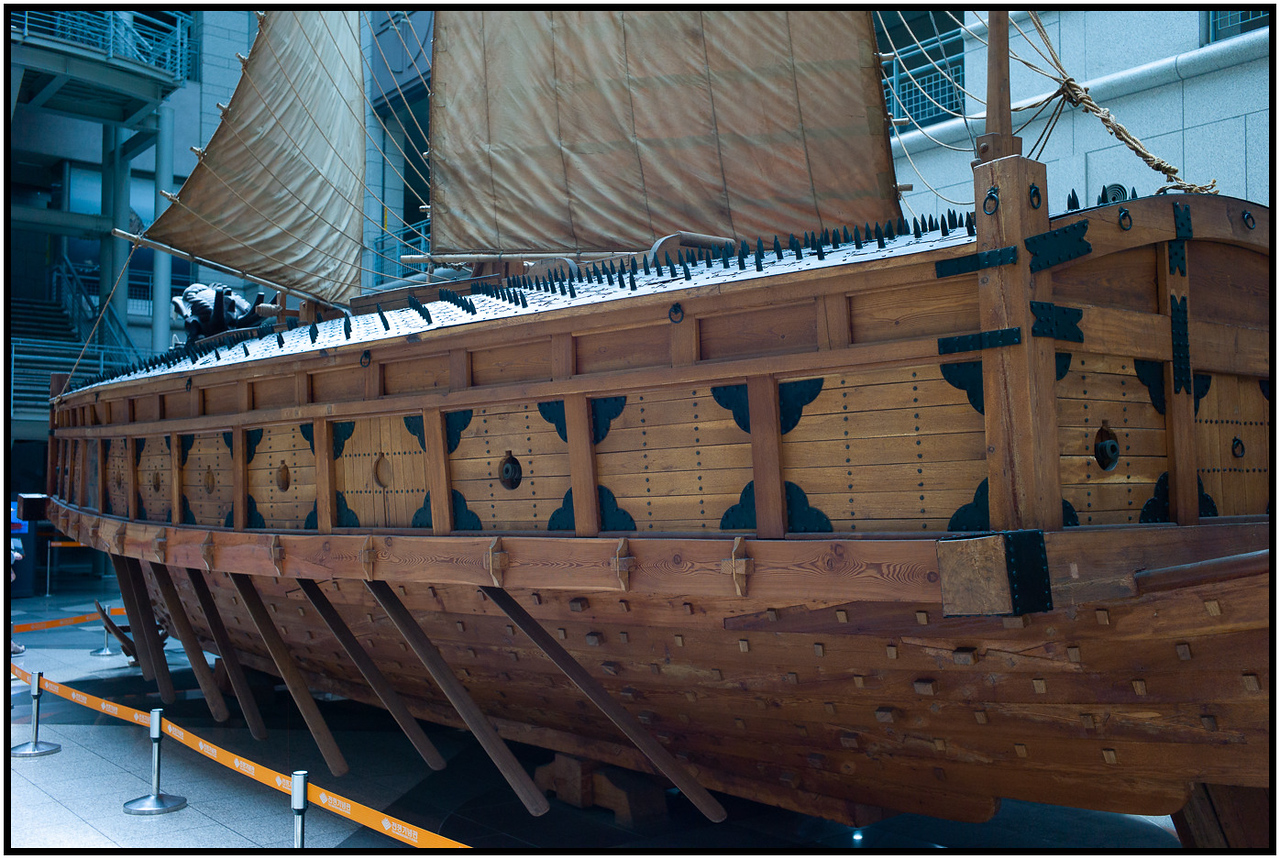
On to the part of the museum that I found most interesting … the ancient history.
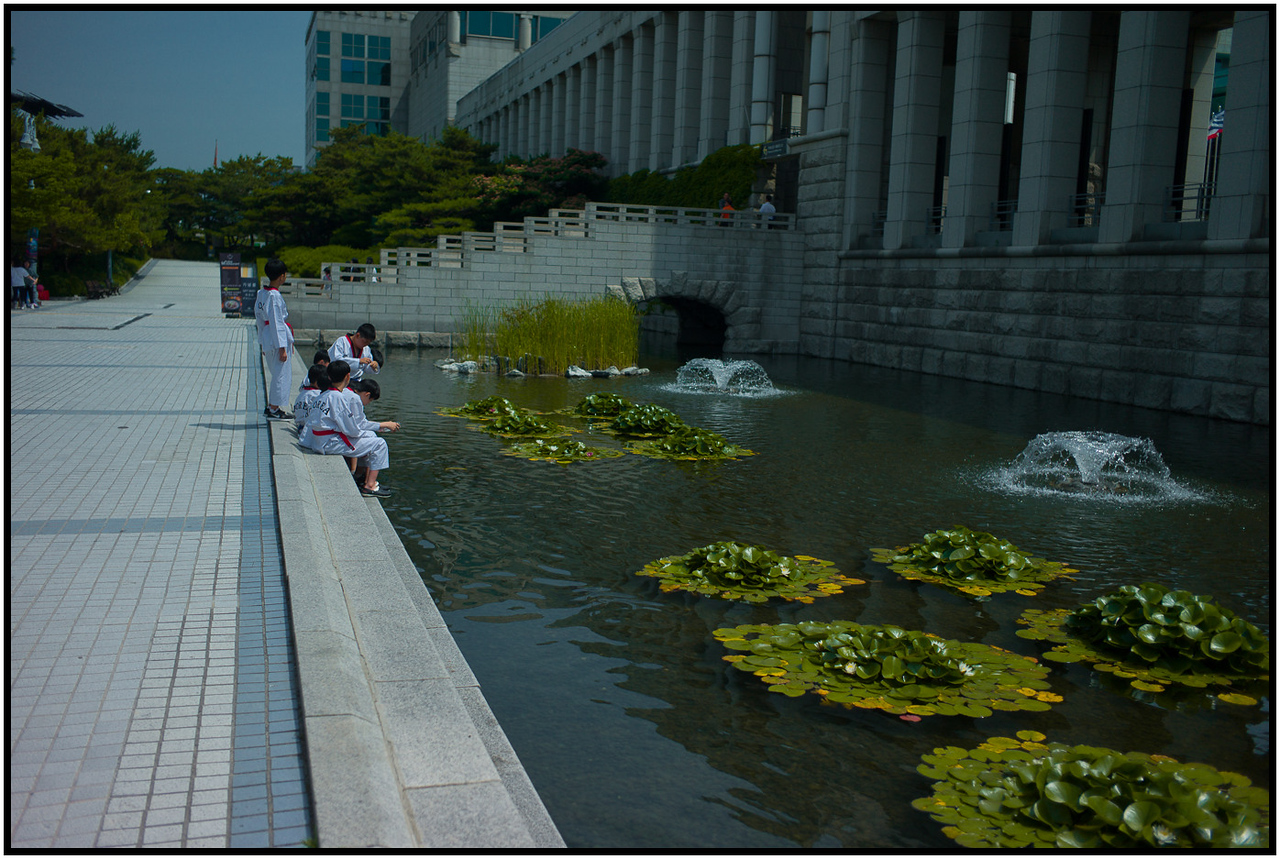
Back outside … the Taekwondo boys feeding bits of their lunch to the fish. Again with the fish!
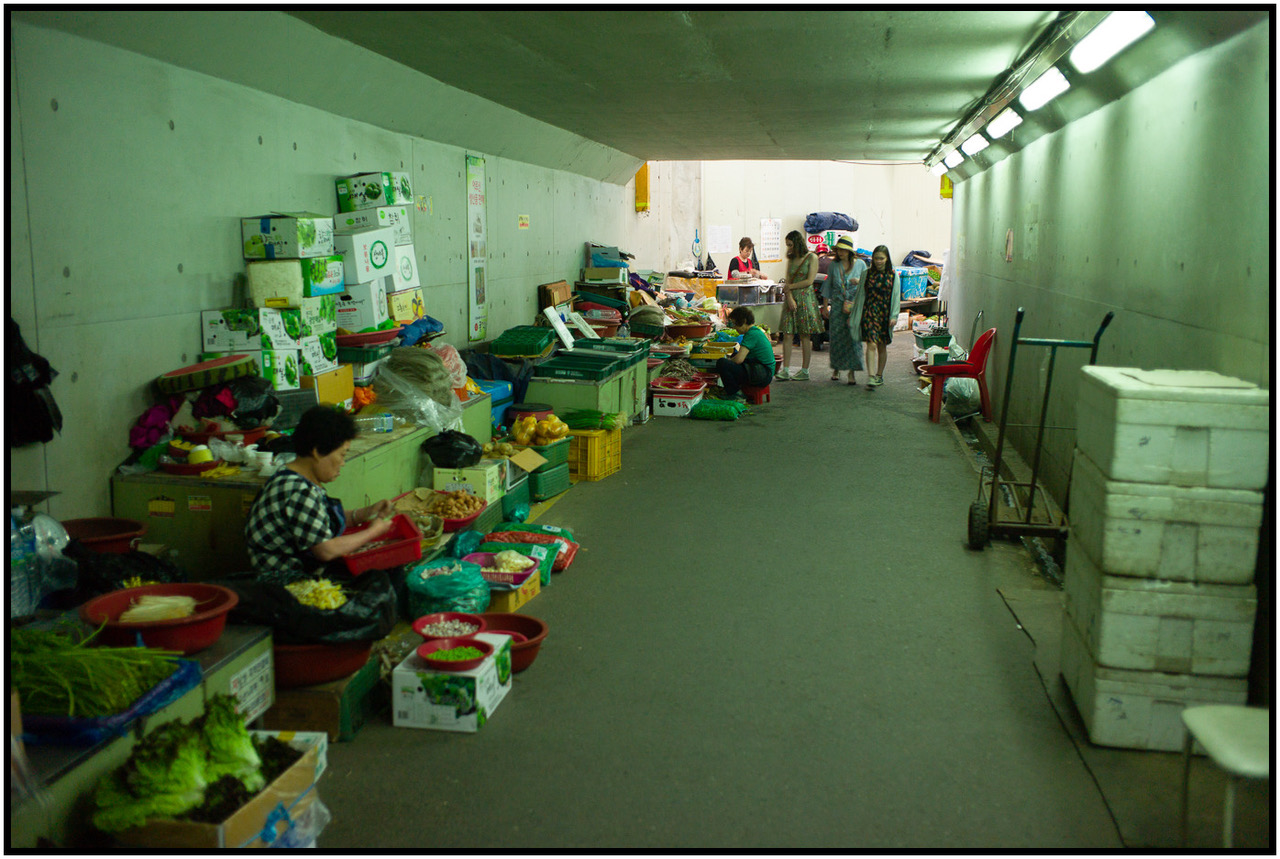
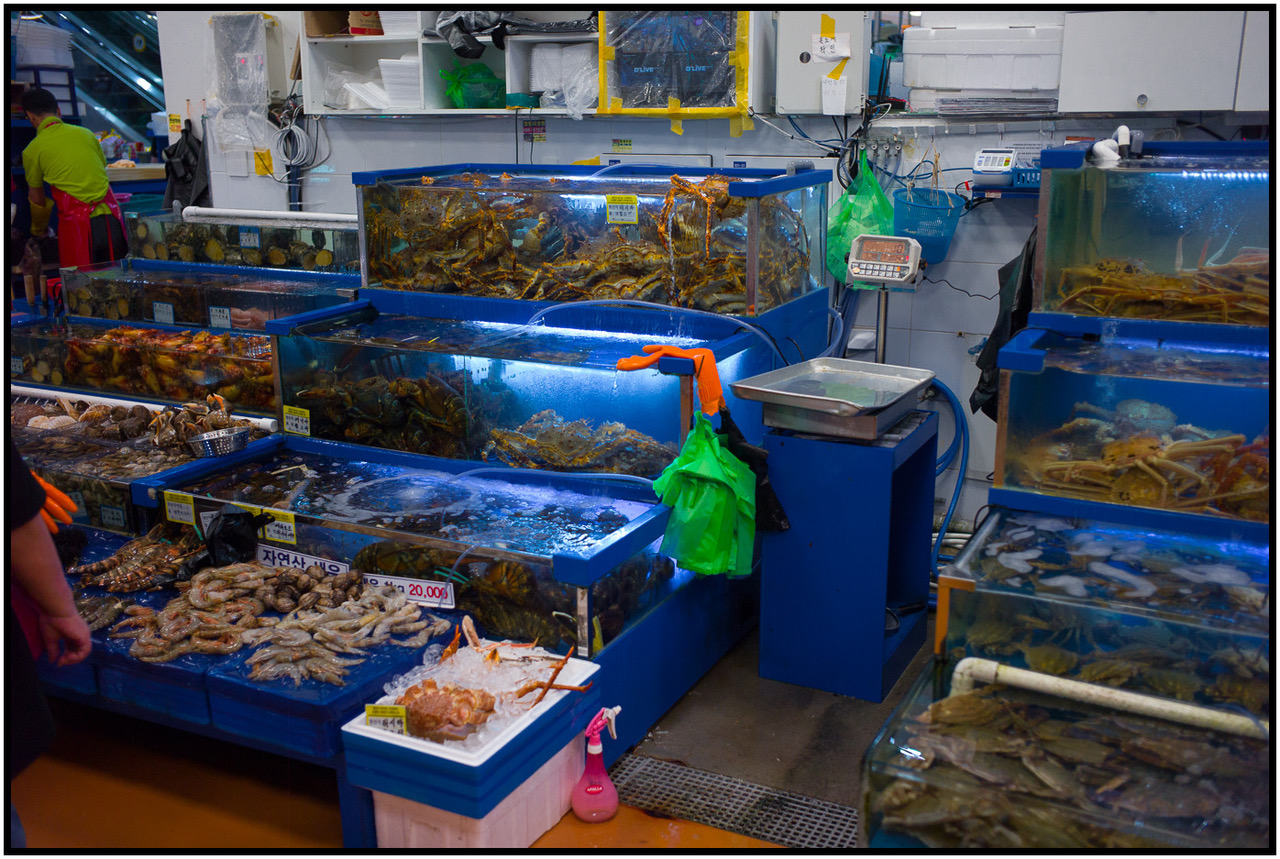
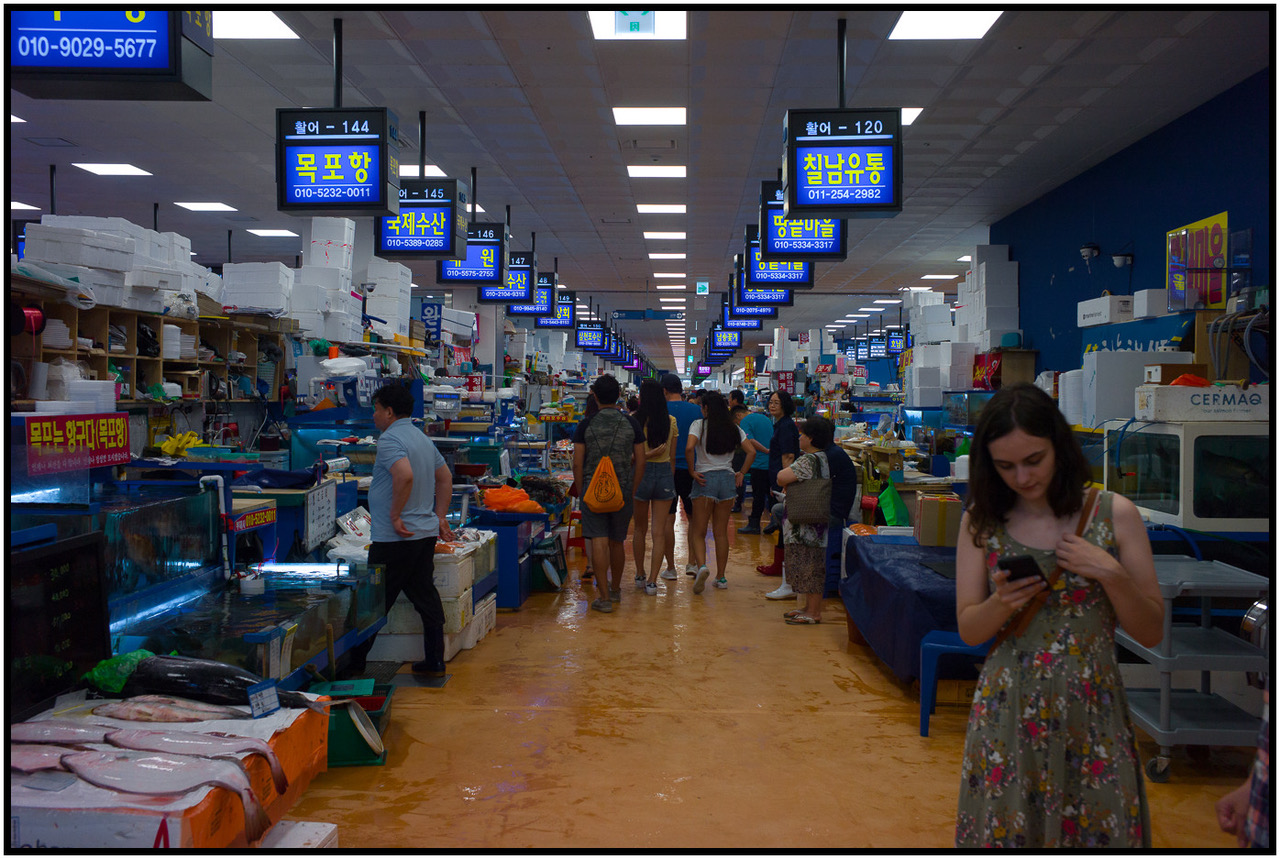
After the museum we headed to the Noryangjin Fisheries Wholesale Market. Brenda and the kids had got such a kick out of the Tokyo fish market that we thought it would be worth it to make a stop. On the way, we went through an underpass with women selling all sorts of vegetables and other foodstuffs.
At one location, a woman was displaying a large bowl full of tiny, live crabs. Our kids weren’t doing anything wrong, but once the old woman decided that none of us Gringos were going to buy anything, she started hollering something that made it clear we were to get the hell away.
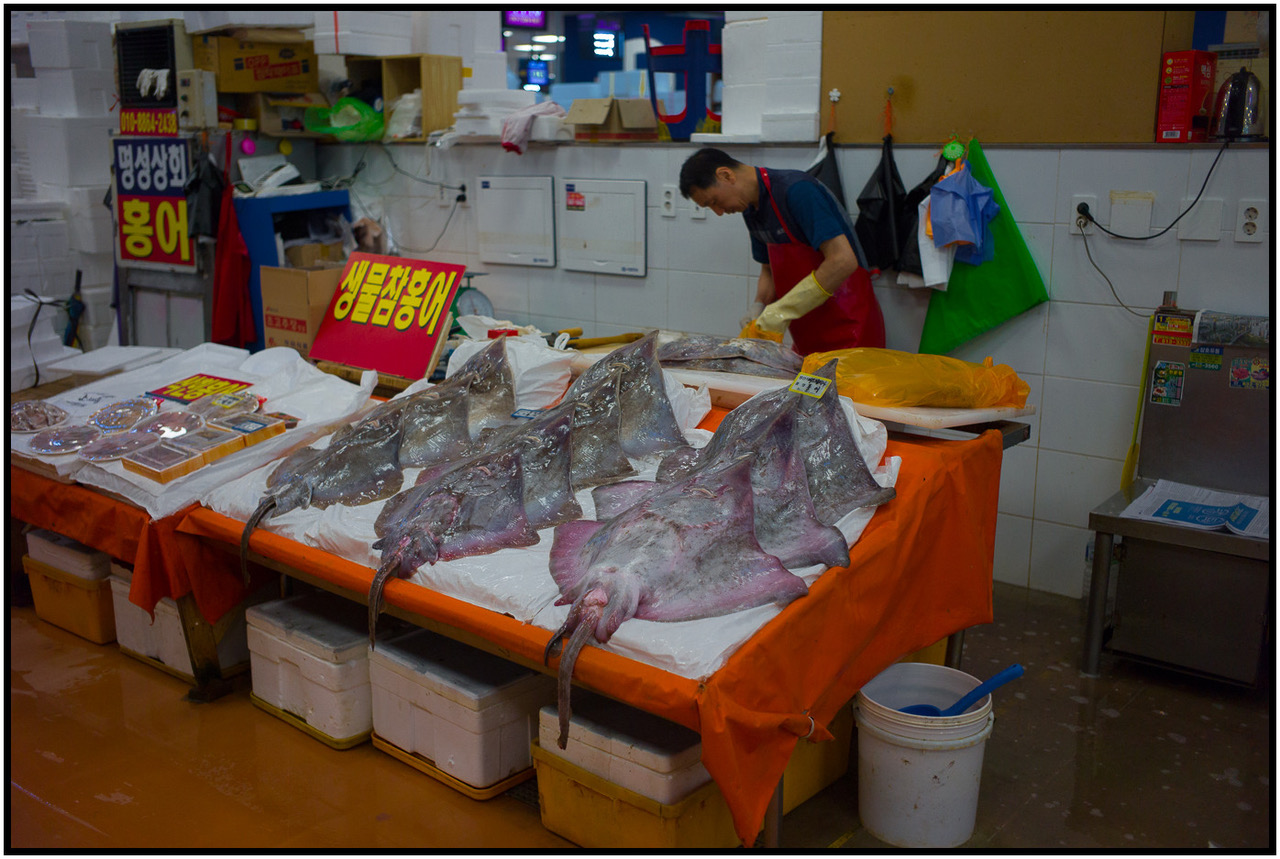
In the fish market. Nobody wanted us to get away. Quite the opposite – it was like the Jade market in Hong Kong. We weren’t left alone. Everyone was confrontational and thrusting live creatures in our faces and trying us to get to buy their catch. We’d only just wrestle our way from one stand to get accosted by the owner of the next. After about 5 minutes of this, Brenda had had enough and we made our escape.
Josie was appalled at what she considered fish abuse. An octopus escaped from one of the tanks and fell into another tank … the lady running the booth grabbed it and tossed it across the aisle to another tank. Josie wanted to buy all the octopuses (octopi? octopodes? octopuseseses?) and release them back into the ocean.
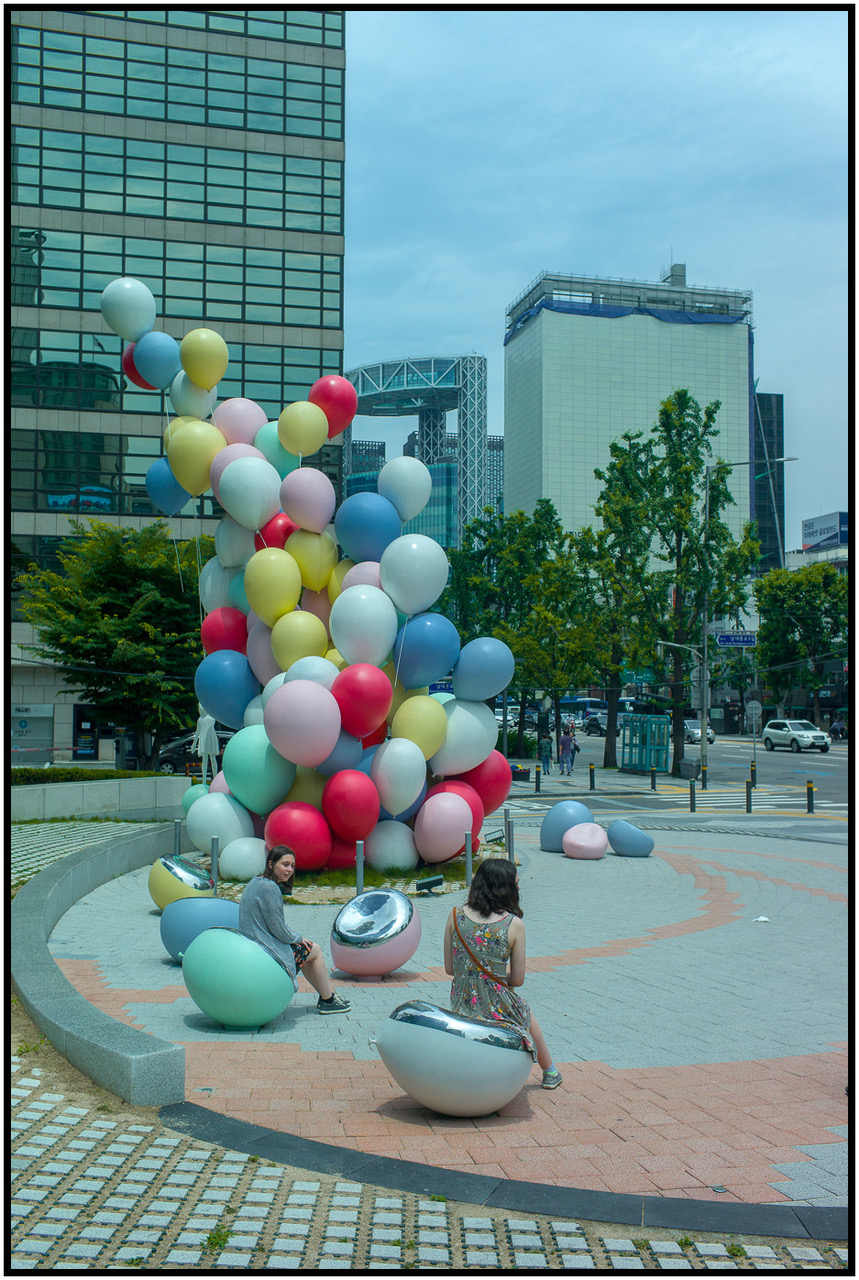
We went back to the center part of town and found another great place for lunch. Brenda has been picking small, modest looking places for lunches. Every one of them has been wonderful – and we can feed a family of 5 for $25-30, leaving food on the table.
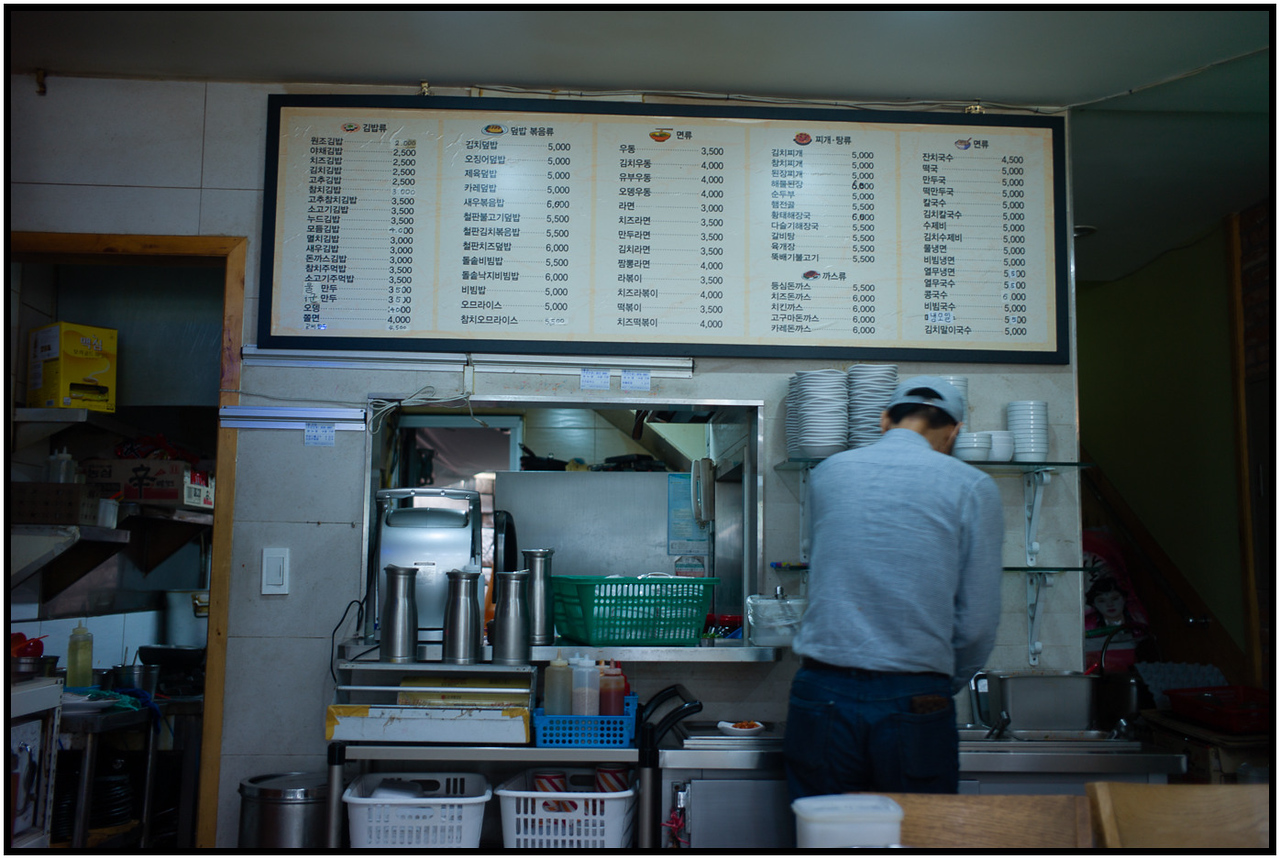
Here is an example of the type of restaurant where we can’t eat — they are always packed and therefore probably very good, but they don’t have a menu with pictures you can point to. We are incapable of placing an order.
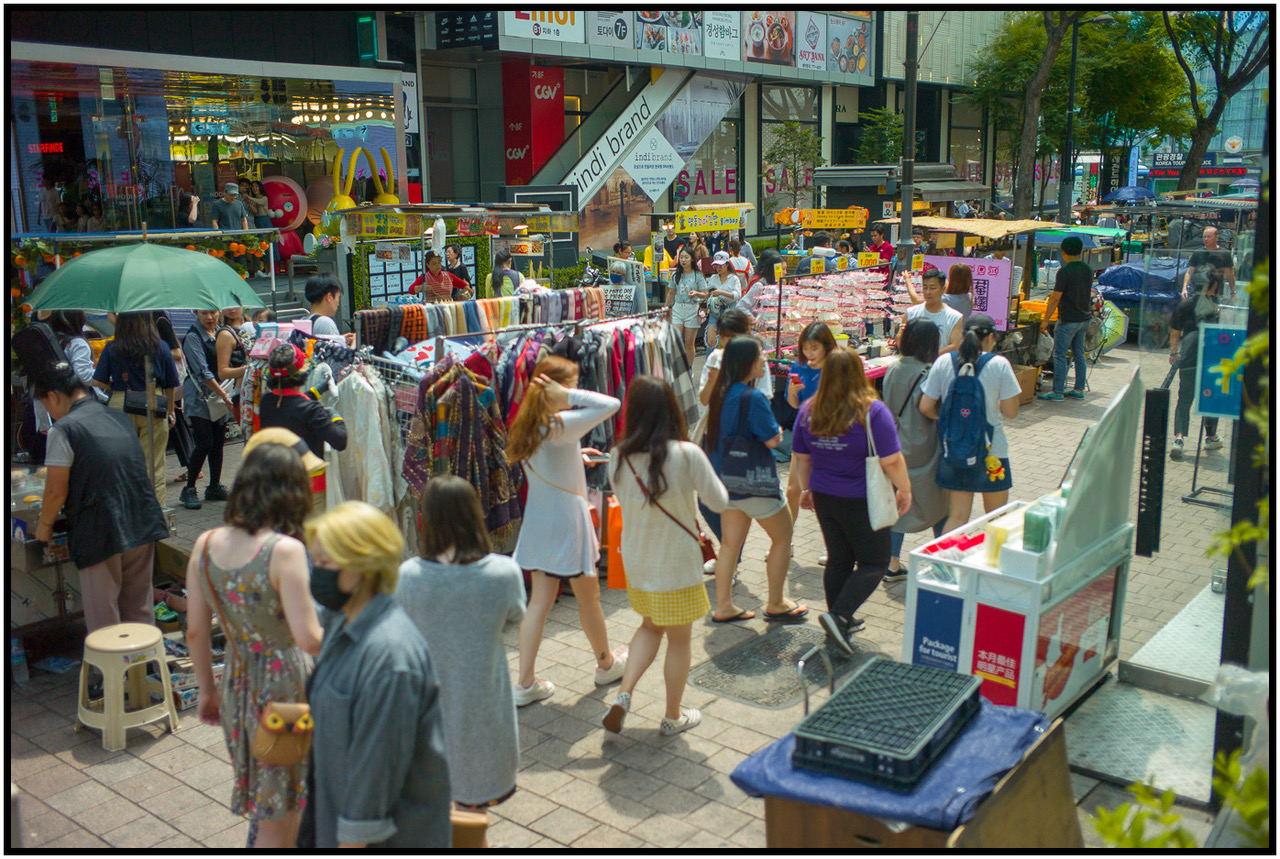
After lunch we returned to the Myeongdong districts for more shopping and people watching. Being Saturday afternoon, the place was packed and the food vendors had set up their rolling carts to keep the crowds fed.
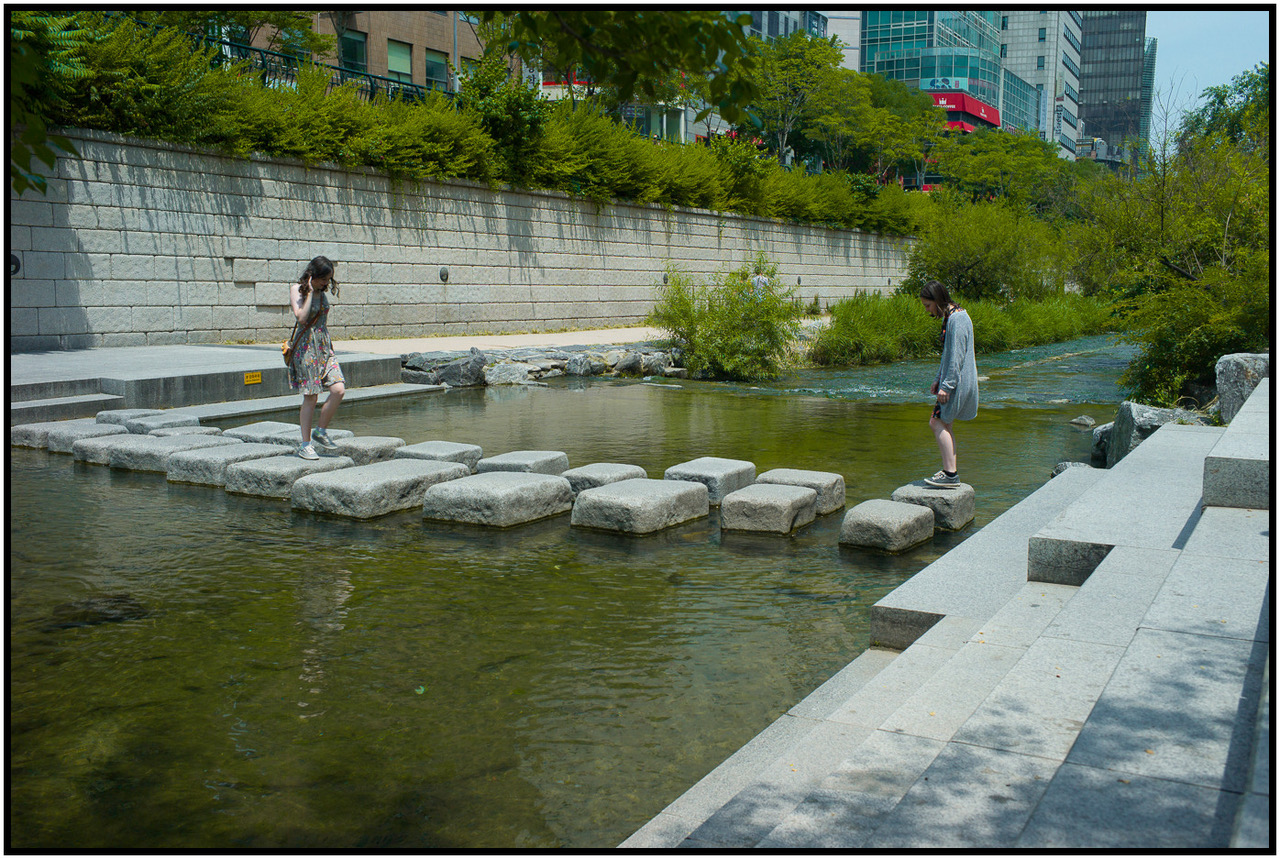
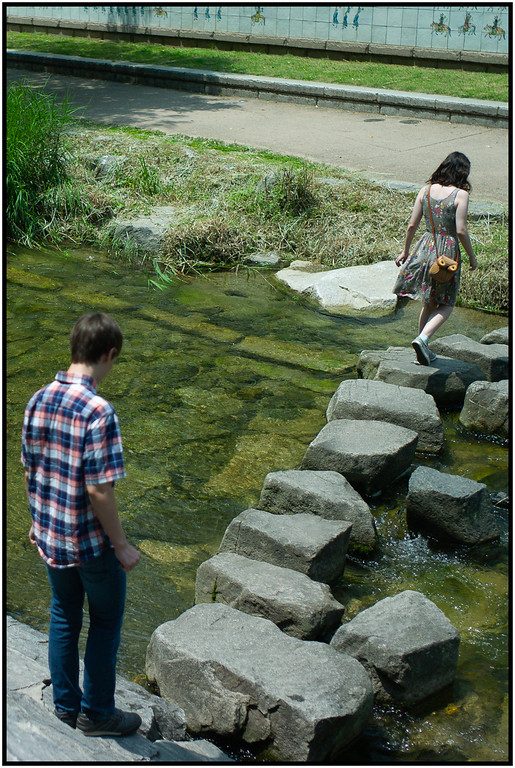
Kids frolicking around Cheonggyecheon Stream.
Just this past Thursday (21 June 2018) a South Korean court ruled that killing dogs for their meat is illegal.
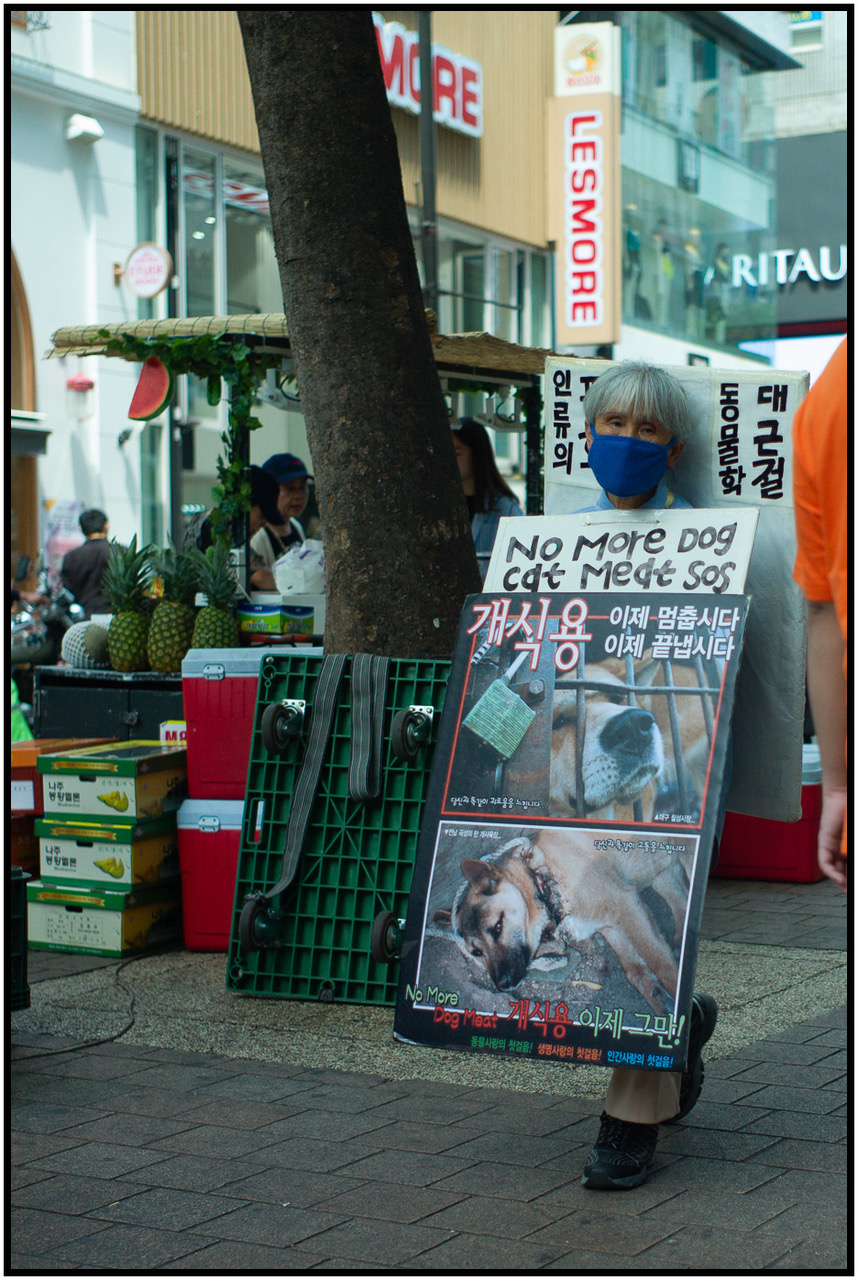
Excerpt from an article that came out yesterday in The Guardian:
“It is very significant in that it is the first court decision that killing dogs for dog meat is illegal itself,” said Kim Kyung-eun, a lawyer for Care.
The precedent paved the way for outlawing dog meat consumption entirely, she added.
Dog meat consumption is a grey area in South Korean law. Despite no specific ban, authorities have invoked hygiene regulations or animal protection laws that ban cruel slaughter methods to crack down on dog farms and restaurants ahead of international events such as the Pyeongchang Olympics.
A lawmaker from the ruling Democratic party introduced a bill in parliament this week that would effectively ban killing dogs for meat. There are about 17,000 dog farms in South Korea, and operators have called for the government to bring in laws explicitly to legalise dog meat consumption and license dog slaughter houses.
A survey last year found that 70% of South Koreans do not eat dog meat, but only about 40% believe the practice should be banned.
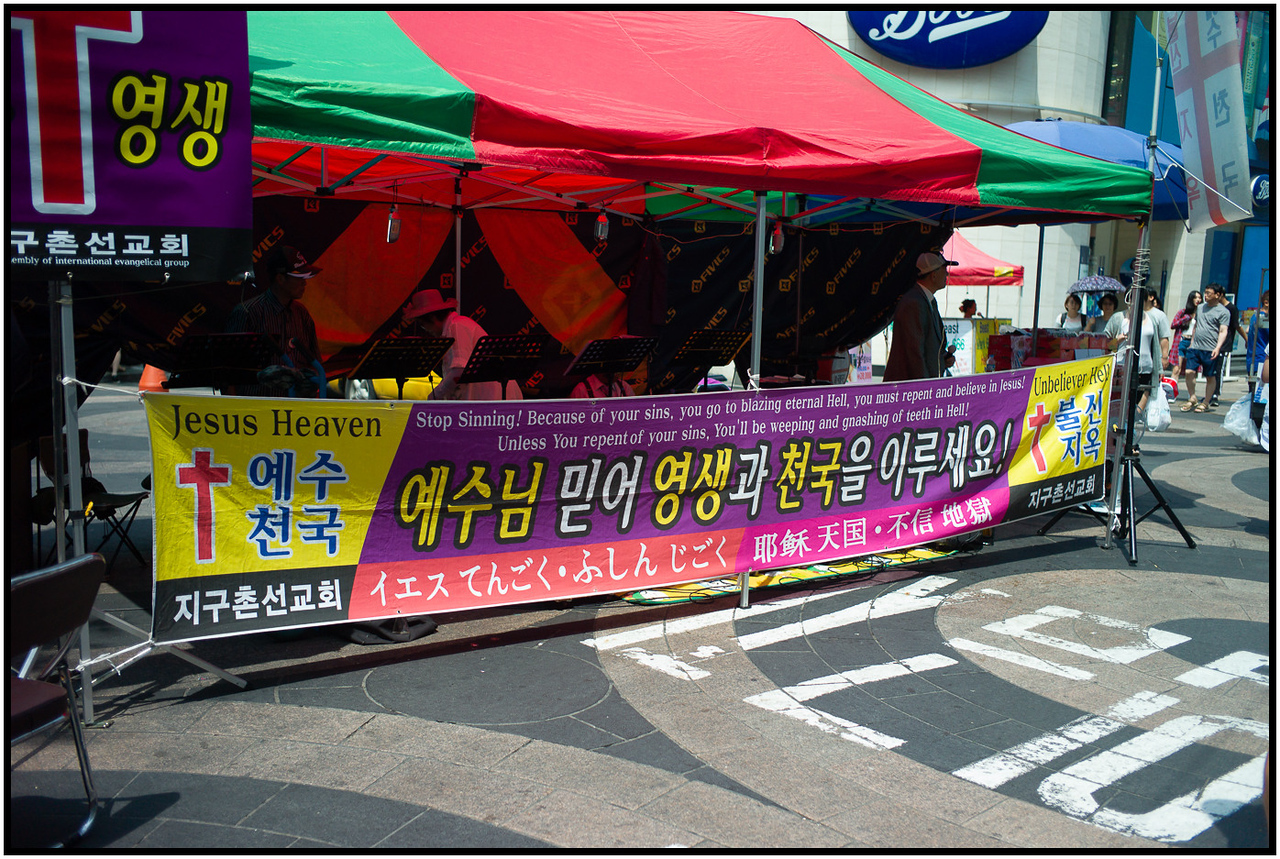
A cause I am less enthusiastic to support: The fear-based brand of Christianity distilled down to its repugnant essence. I was happy to note that the crowd seemed to be ignoring this booth and everyone refused to take the brochures they were trying to foist upon passersby.
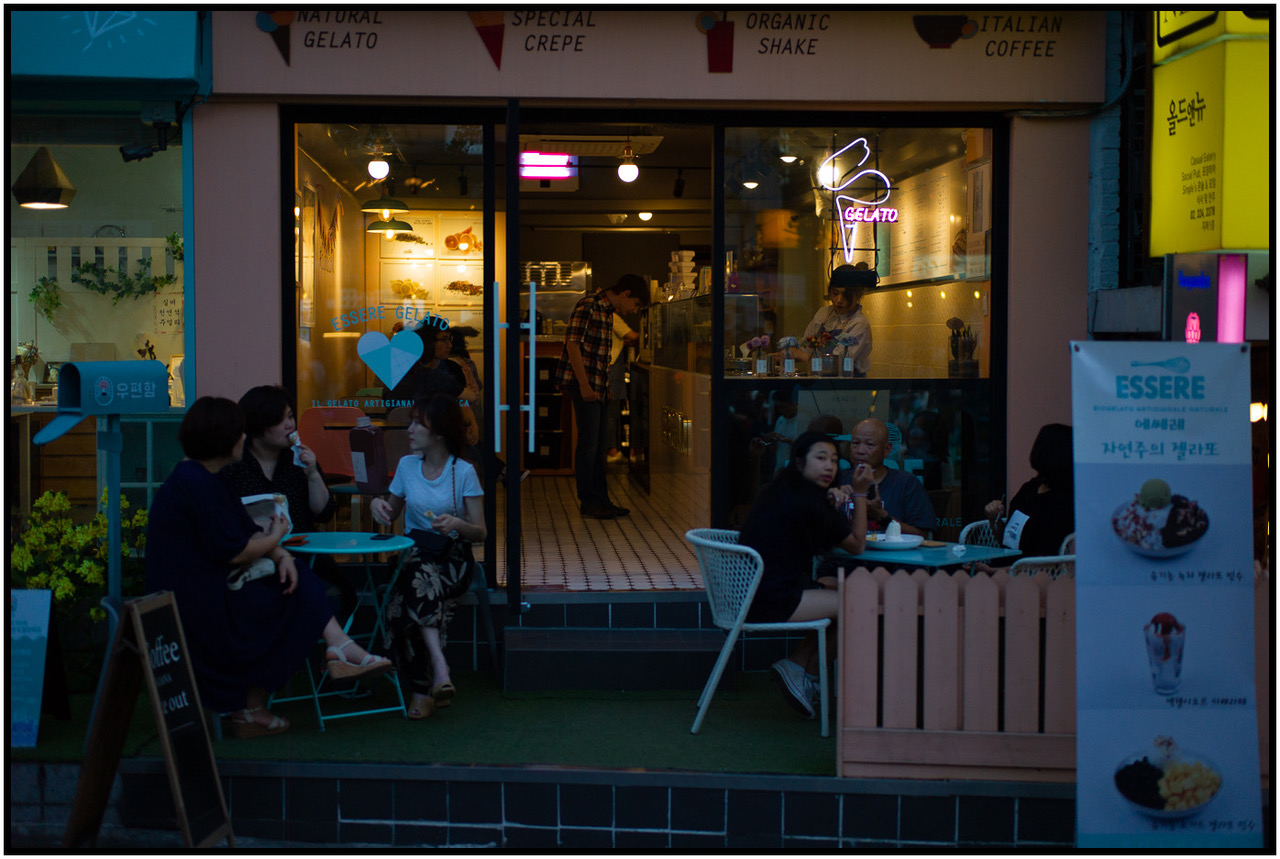
We returned home to rest and get groceries for the night. After several hours of Netflix, we headed back out into the night to get the kids some gelatos.
Holden is just trying to find a gelato flavor that he recognizes. He settled on chocolate.
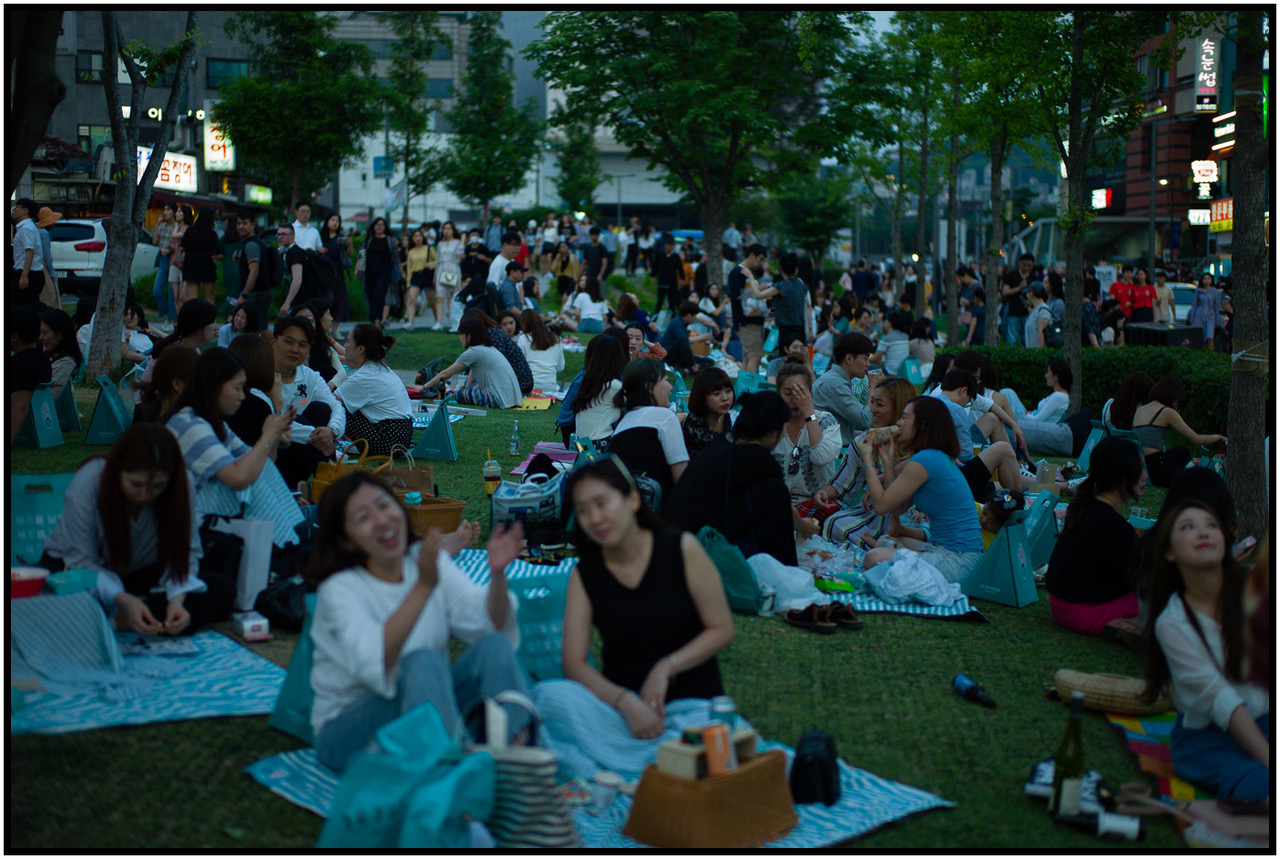
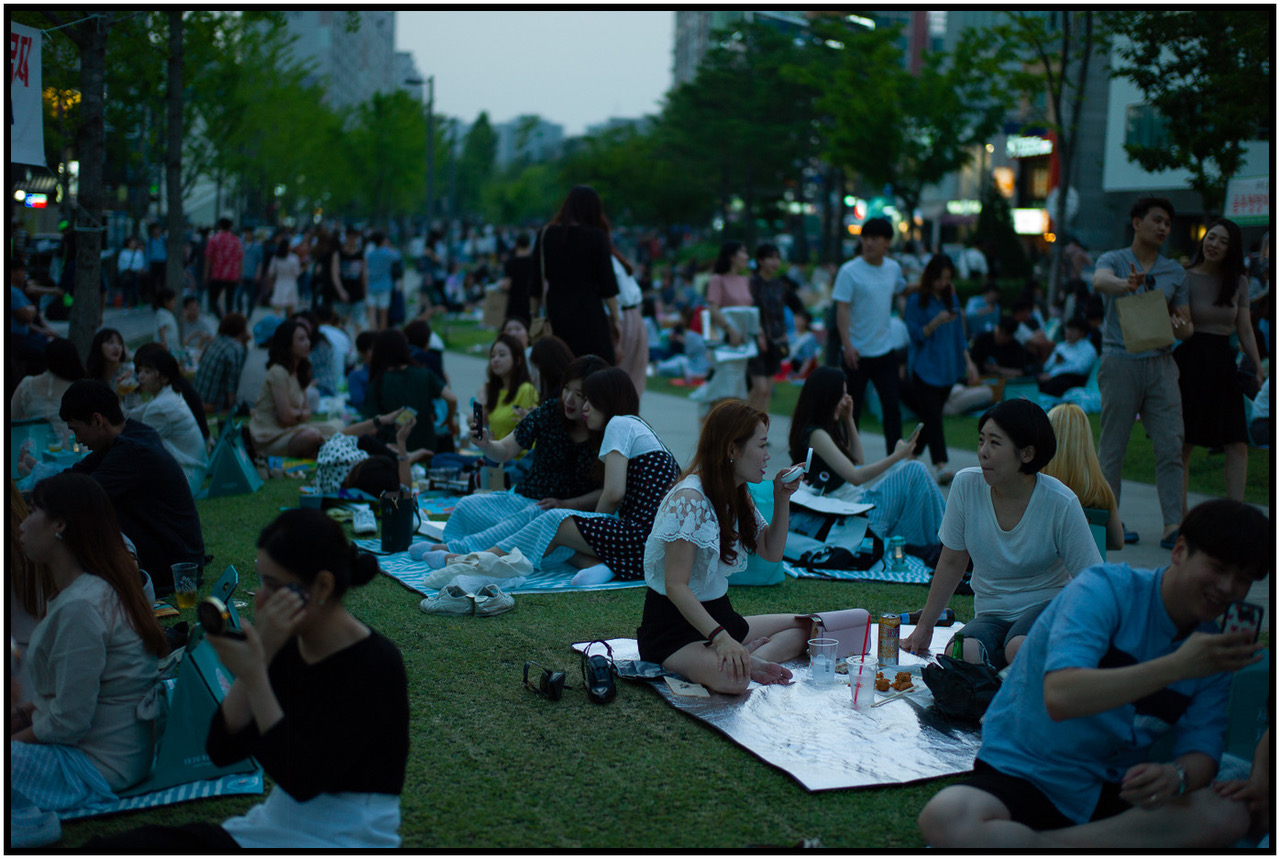
We’re staying in what might be considered “the U-district”. There is a long, narrow park that fills up with the kids every evening. They buy food and beers and set up picnics. Everyone gawks and is gawked at. People are on dates, musicians are playing and everyone is having a good time.
Sunday, 24 June 2018
On our last full day in Seoul we started with a visit to the Trick Eye Museum.
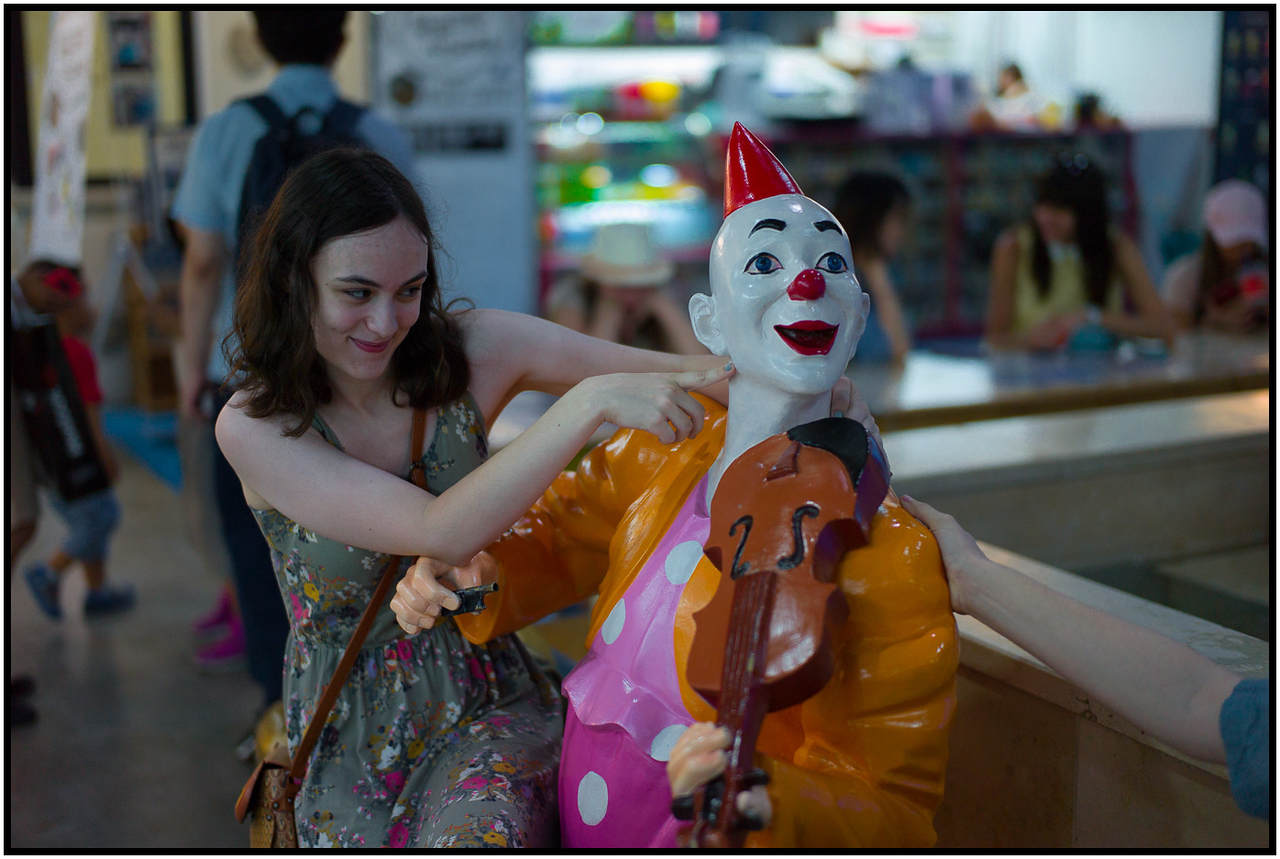
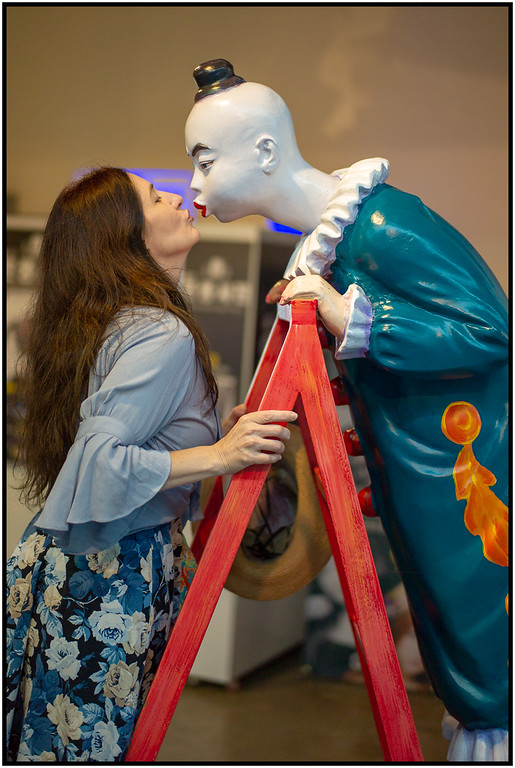
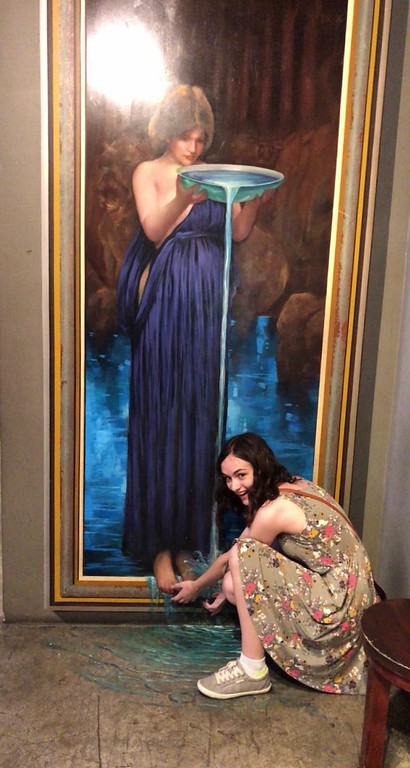
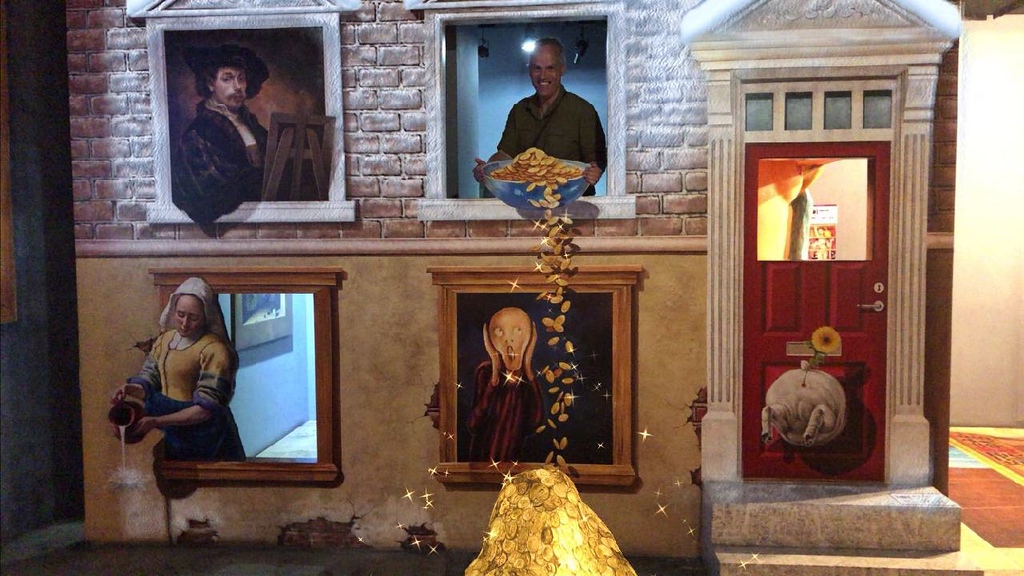
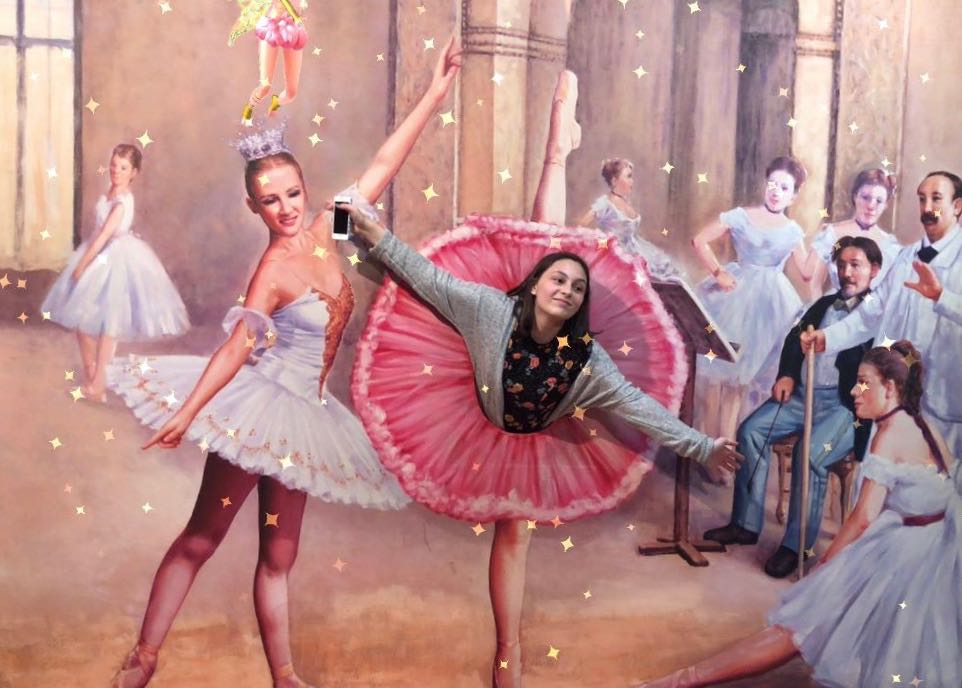
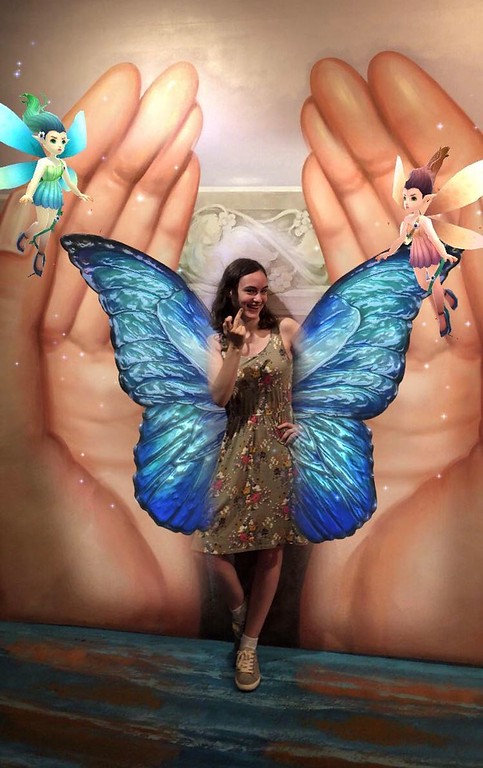
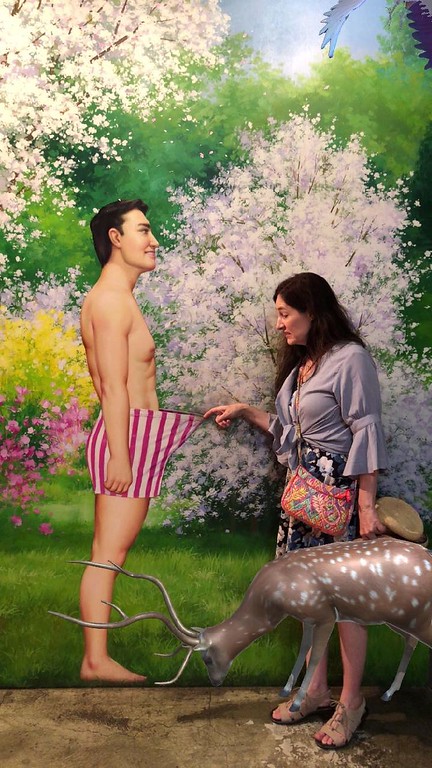
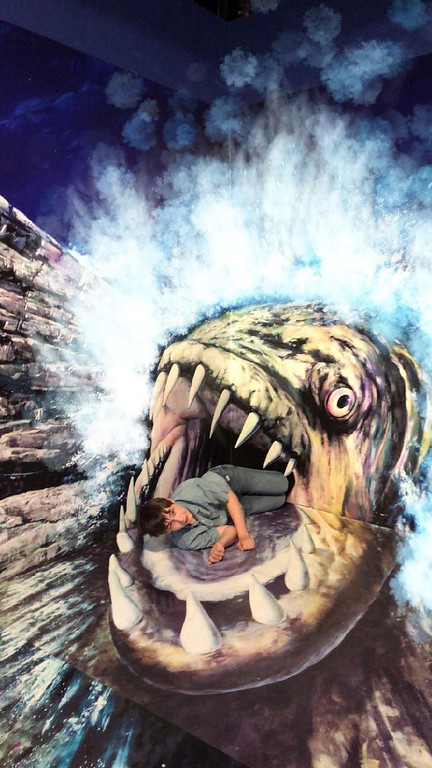
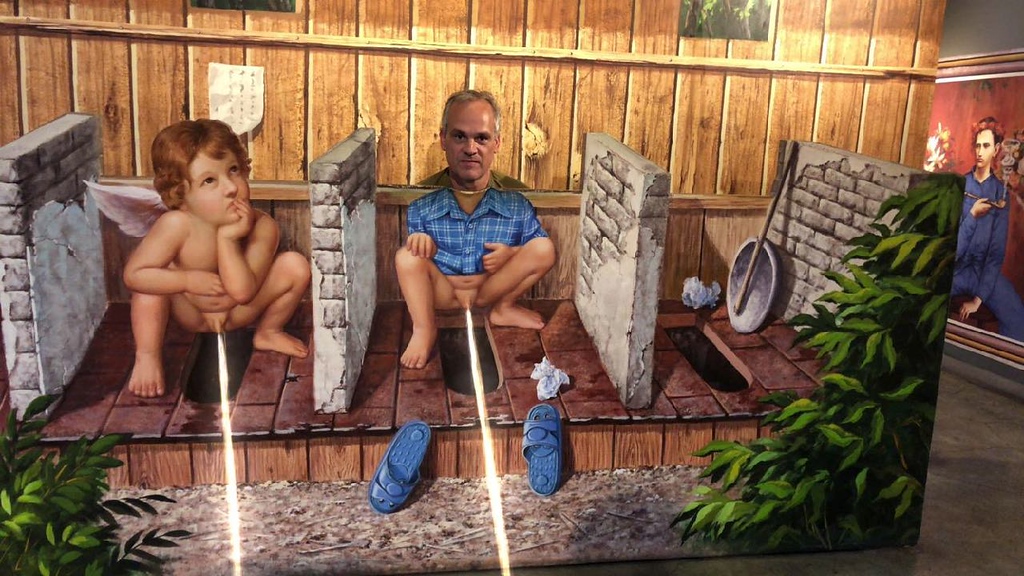
The museum specializes in “Trompe l’oeil” – describing an art technique intended to create the illusion of a three-dimensional object. The Trick Eye Museum is a recreational space where visitors can interact directly with the paintings. It’s also one of the first types of museum to incorporate AR (Augmented Reality) into its exhibits, creating a whole new kind of experience for its visitors. Before we entered, we were instructed to download a special app on our phones that would sense our position and add videos and other elements to the photos we were taking.
This was a museum for kids, but the adults had a good time as well. We were all running from room to room, shrieking at each other to get into position and figure out how to react to make the best photos.
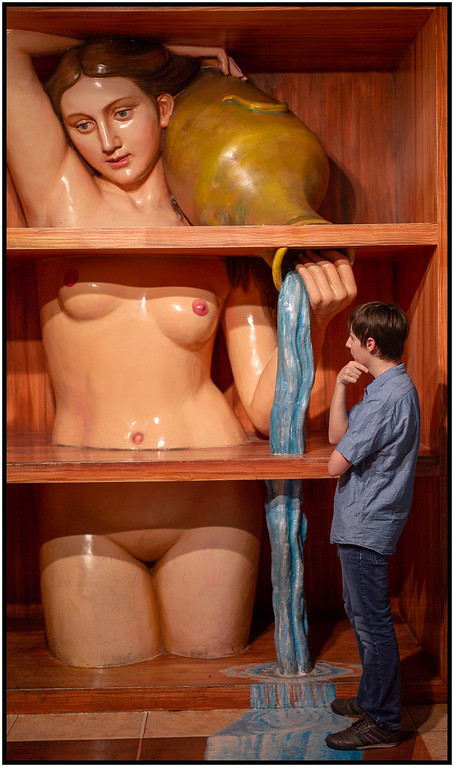
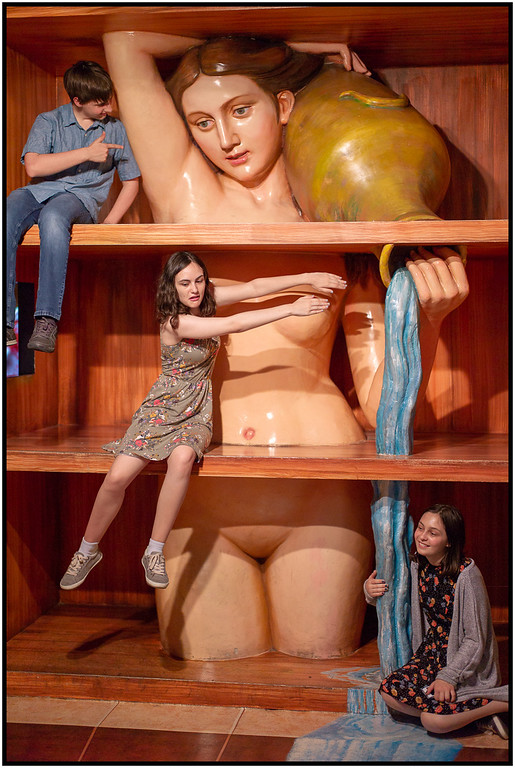
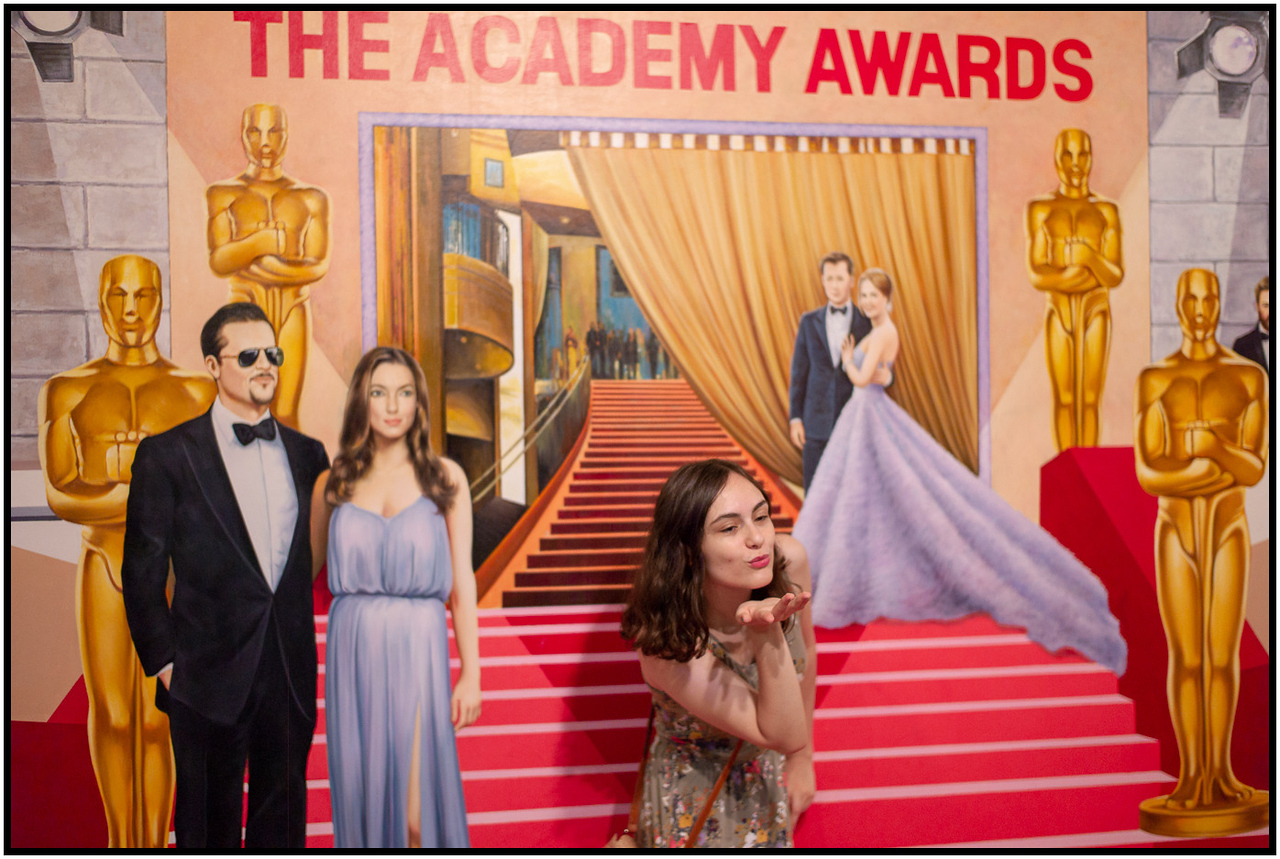
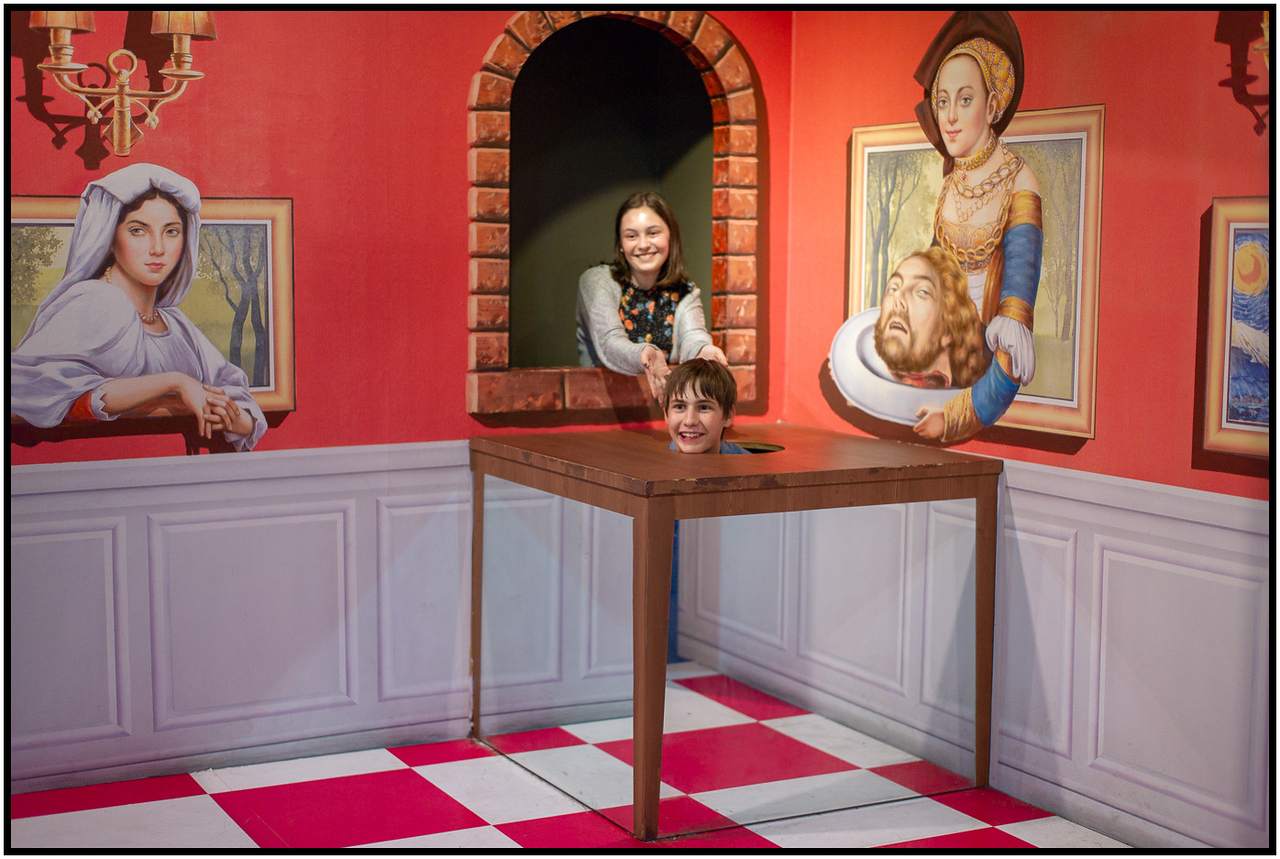
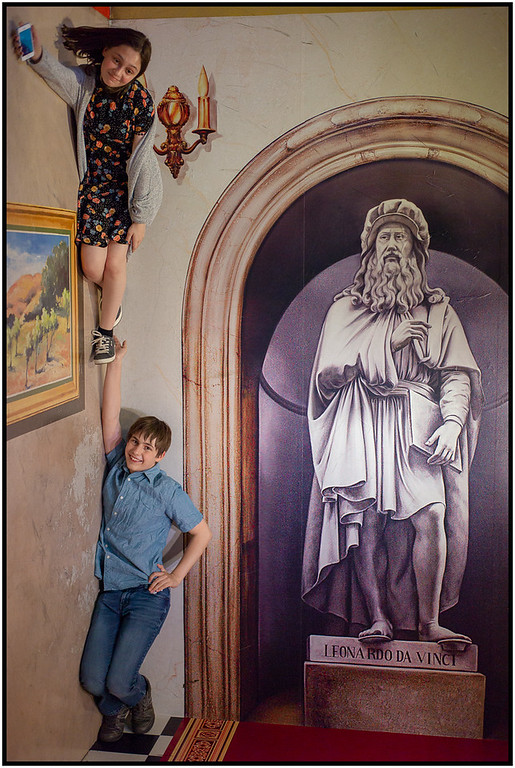
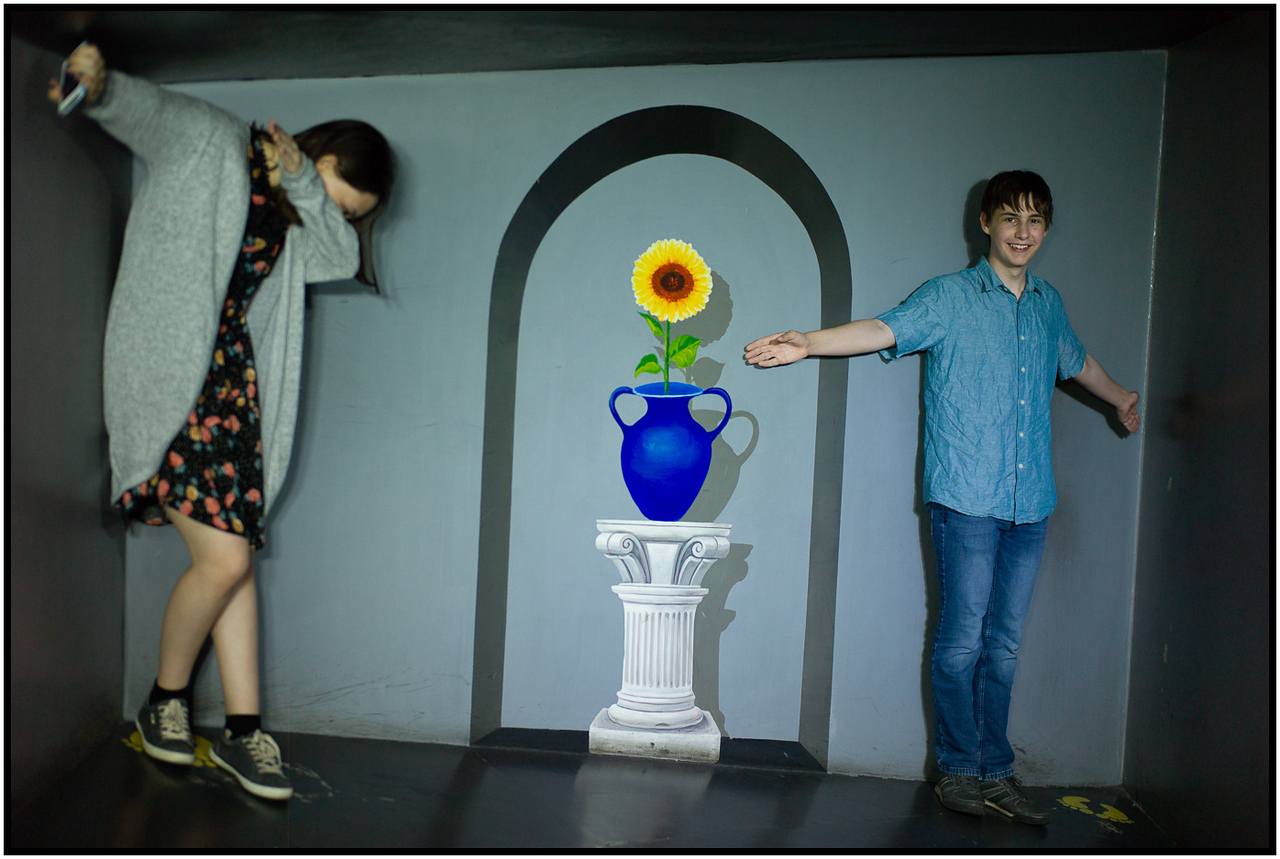
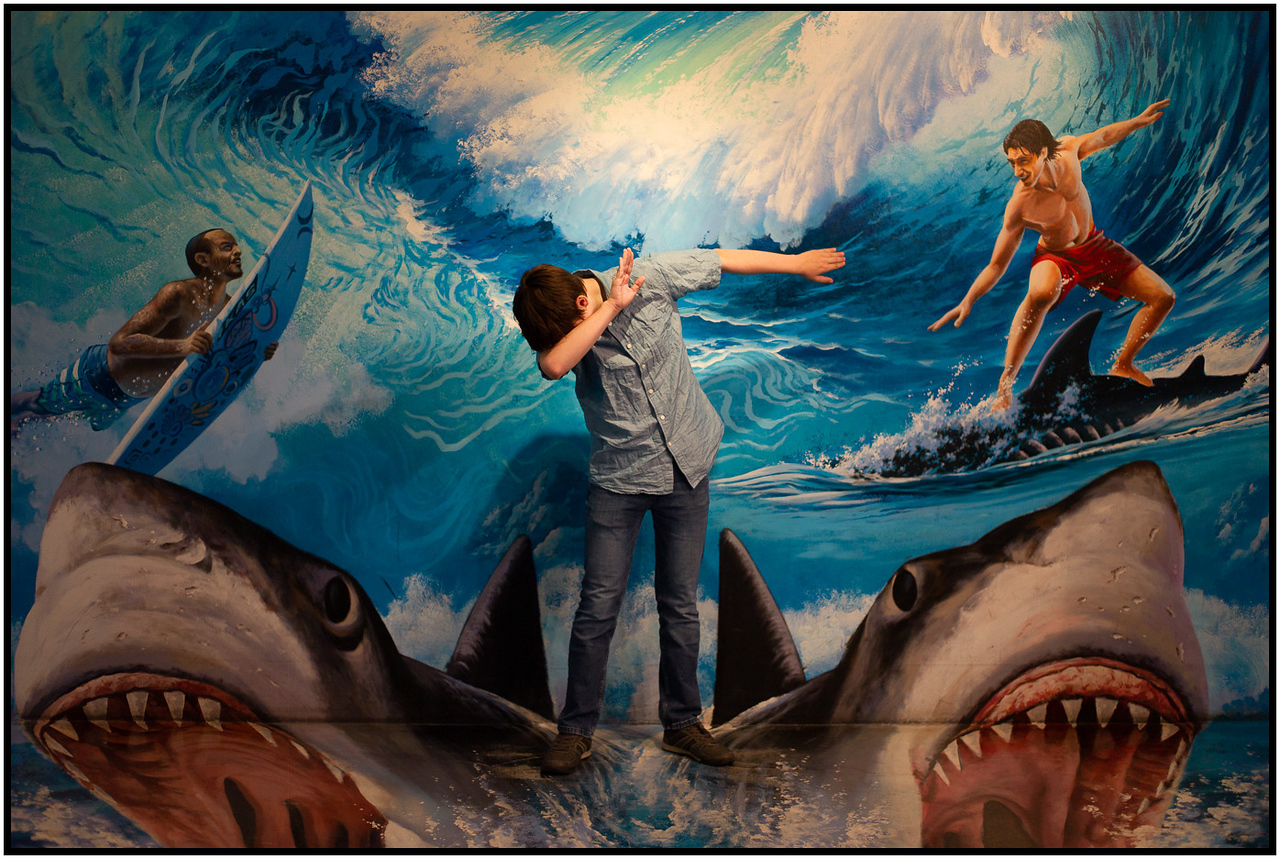
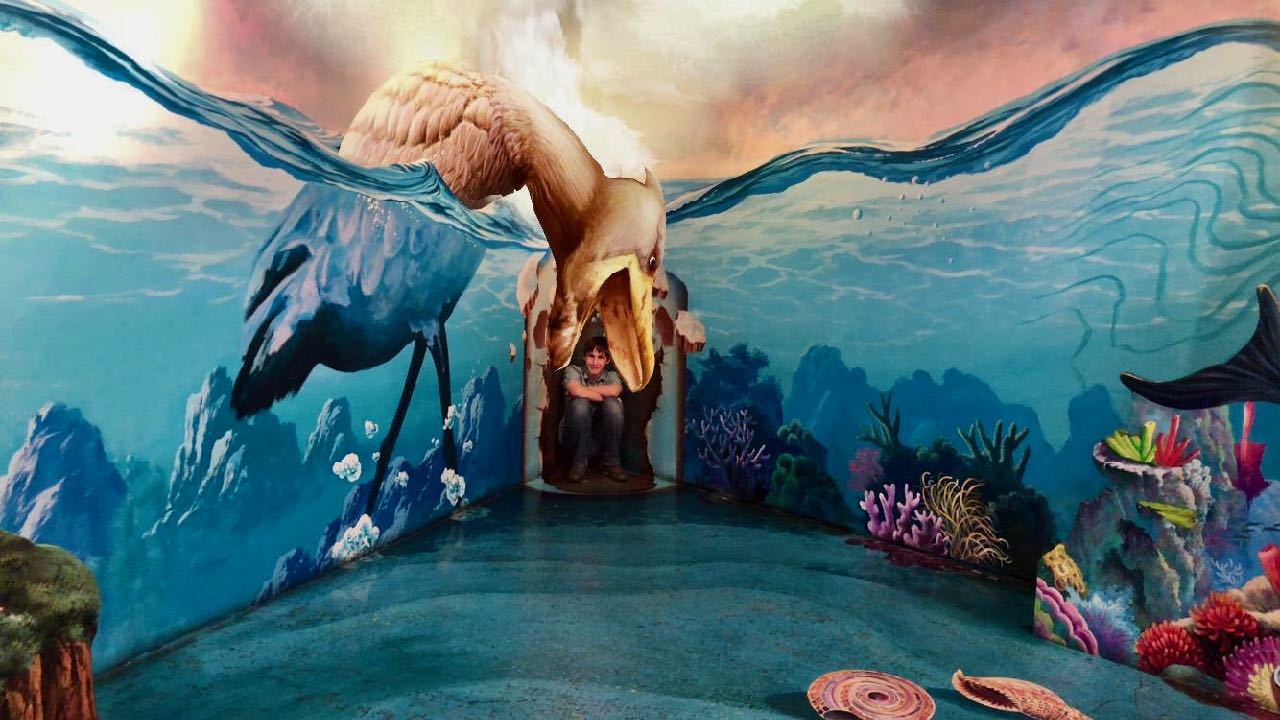
Here is a picture Adam took with his regular camera. You can see the painting on the wall ….
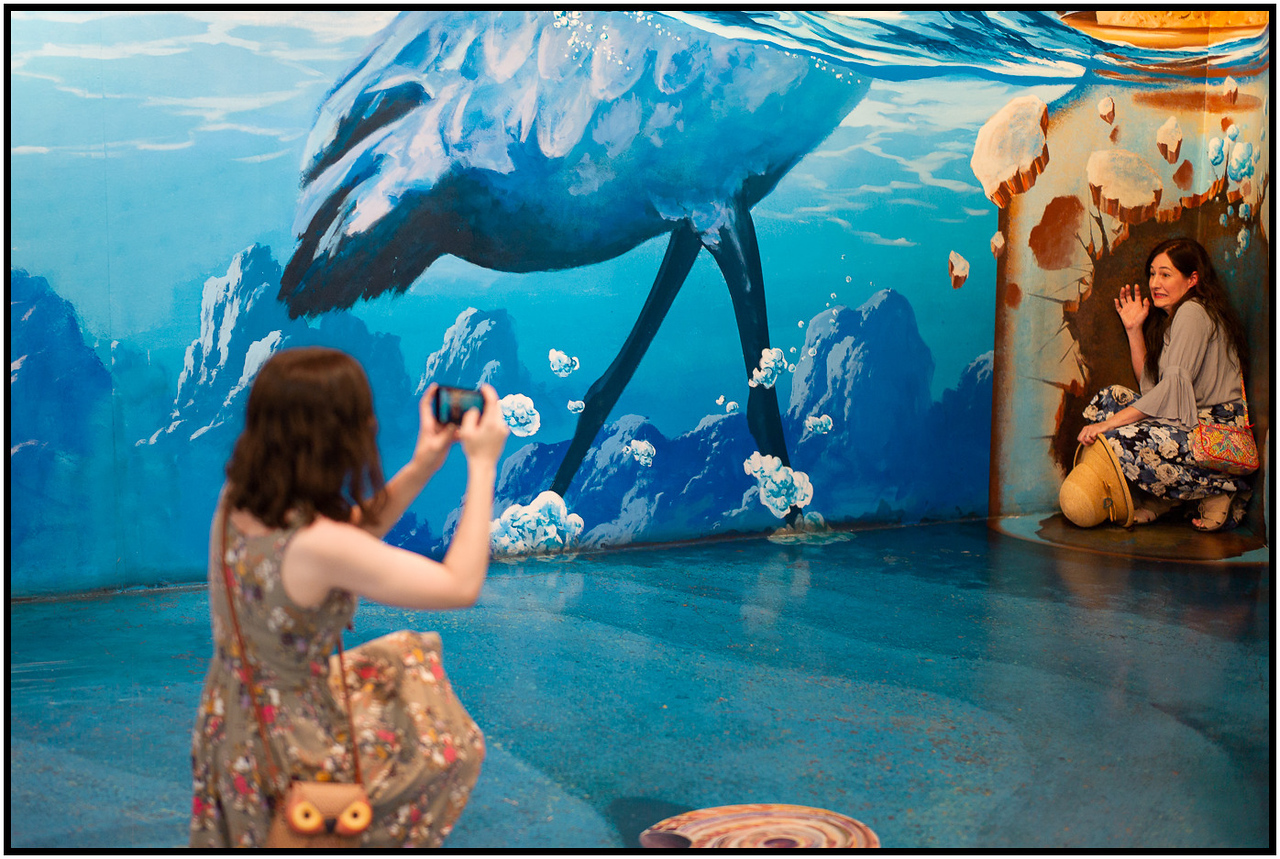
… and here is a photo of the same painting taken through the app on the smartphone. The bird comes alive and eats the person in the jar.
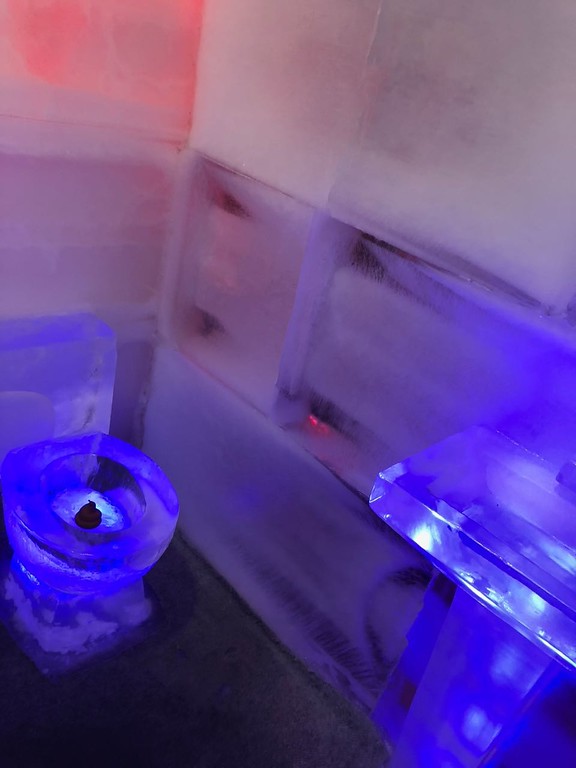
Next to the Trick Eye Museum is another art installation made entirely of ice. The room is kept at -5C.
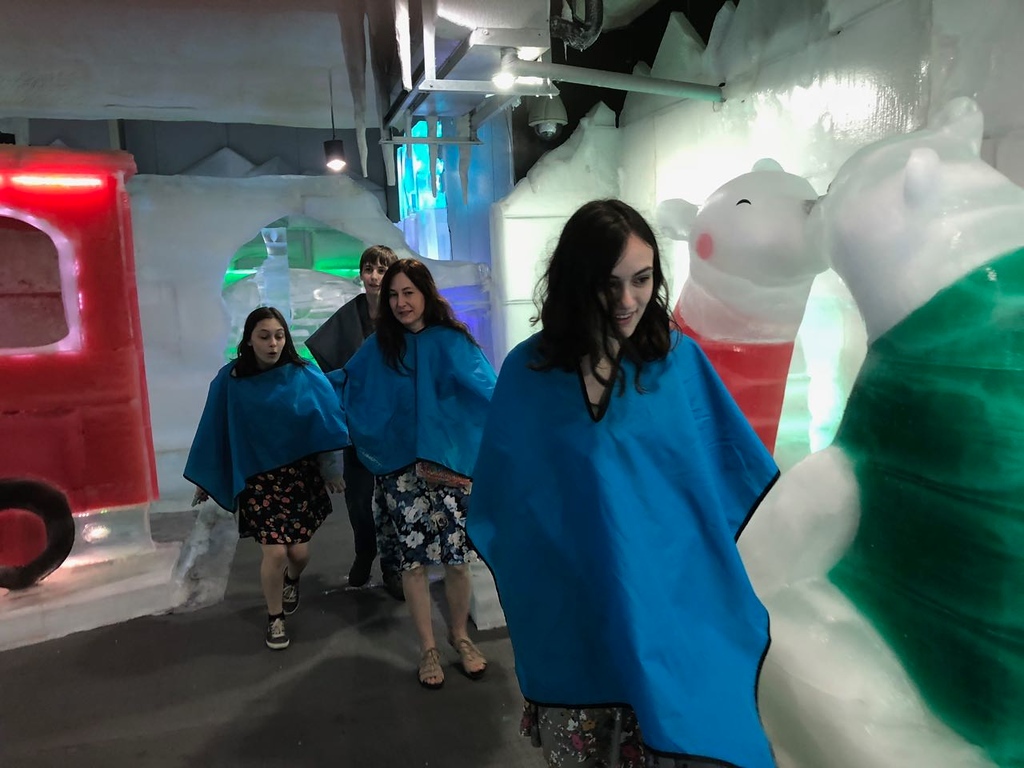
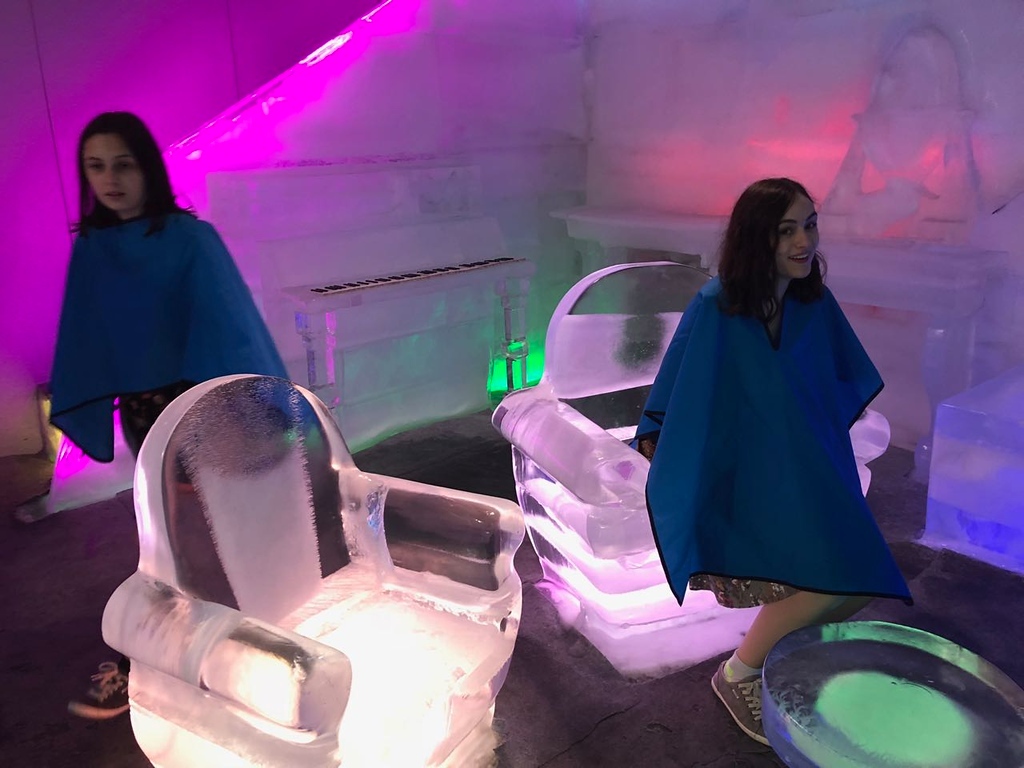
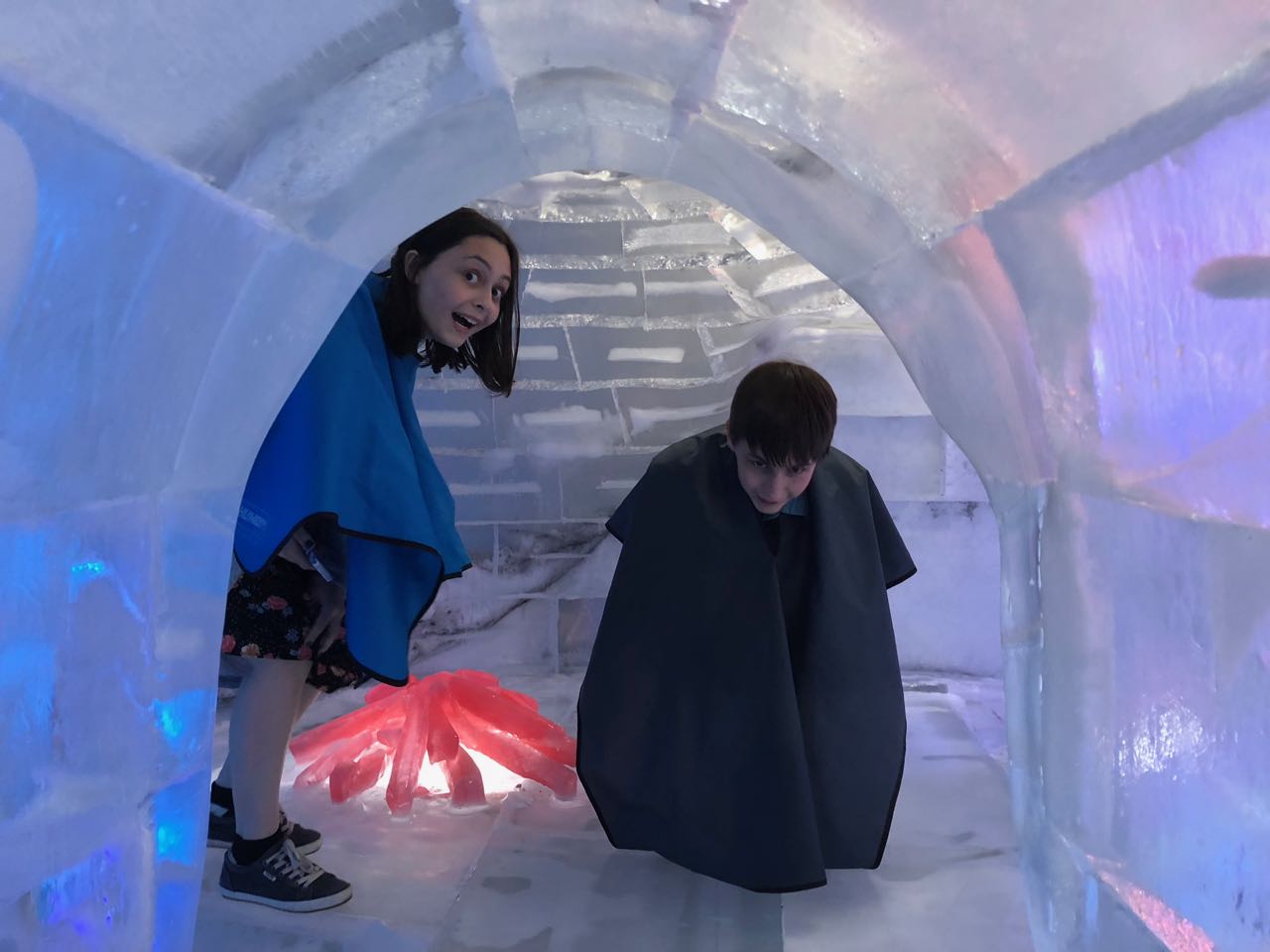
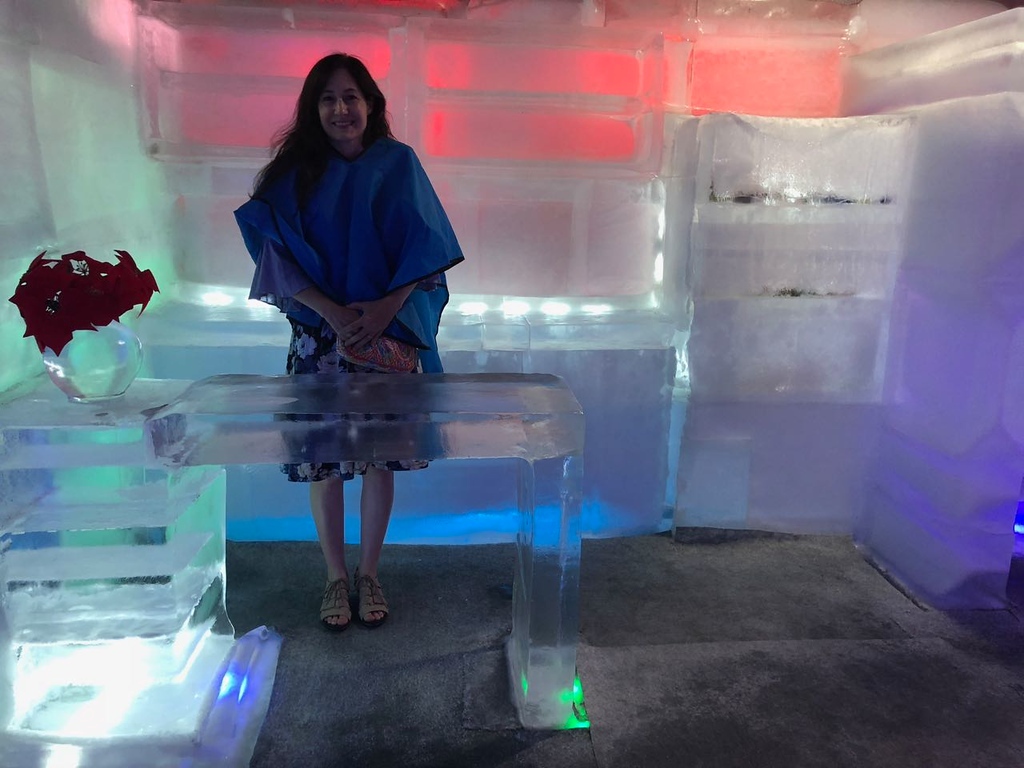
The toilet even has a frozen poo in it.
Upstairs is the Love Museum — we did not go here. The kids were grossed out by the sign. (They deemed a museum that needed to specify “Yes, touch” and “No, sex” disgusting enough to condemn most of humanity; Isabella ranted, “Why are they devaluing the word “love?” Why don’t they just call it what it is; the Porn Museum. Or the You Should Be Ashamed of Yourself for Coming Here Museum. God, sometimes I just hate people.”)
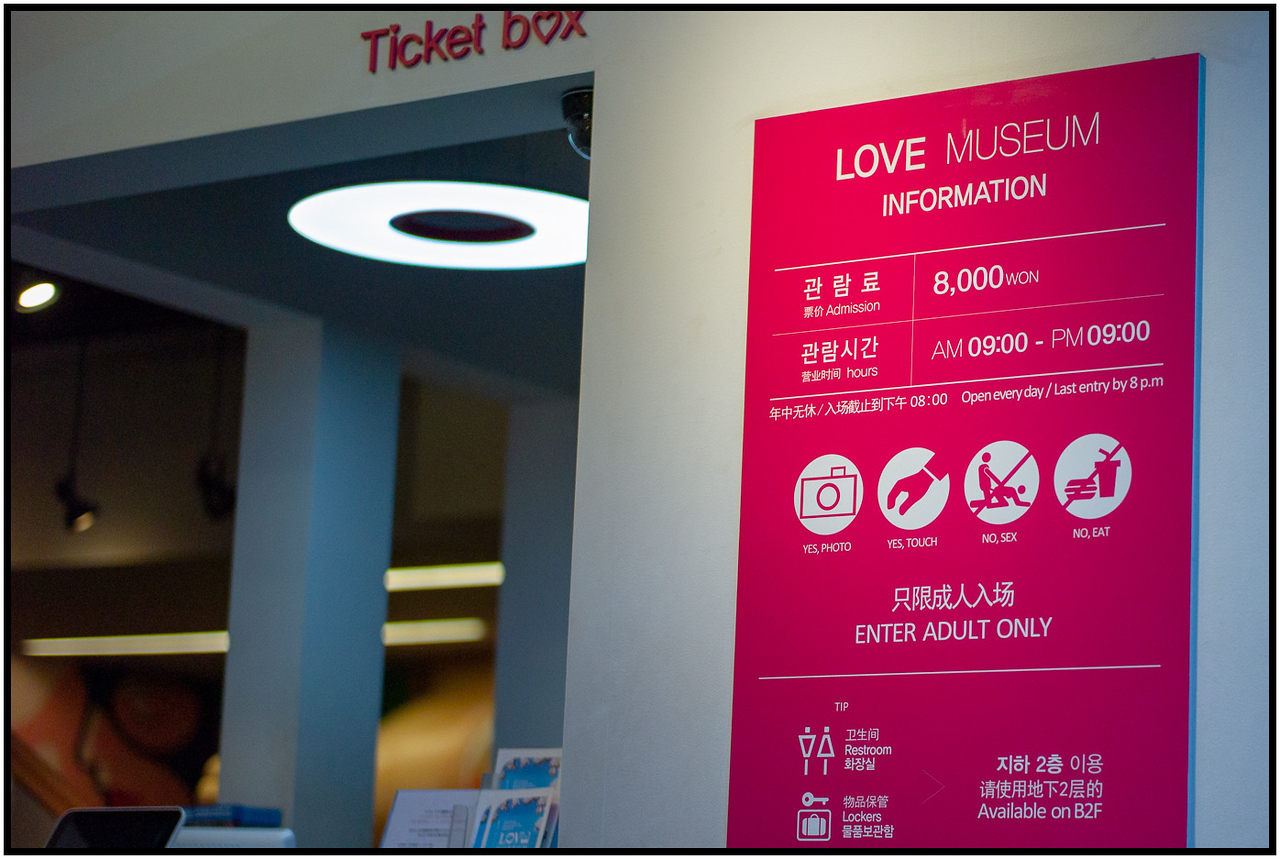
At the entrance to all three museums.
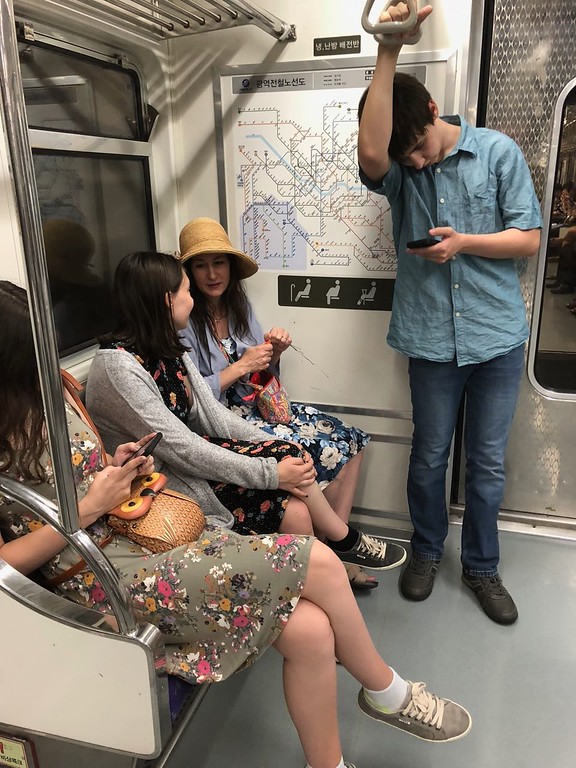
On the train to our next location.
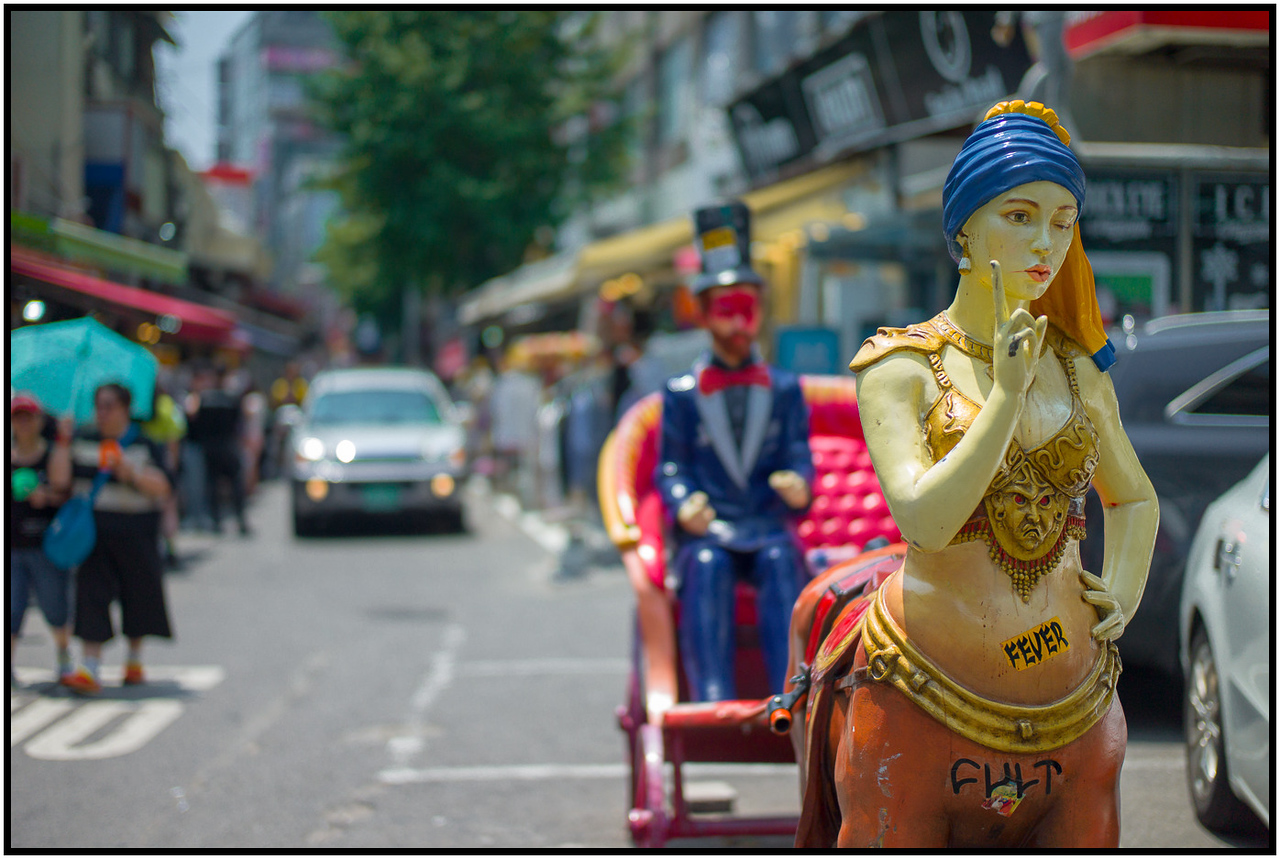
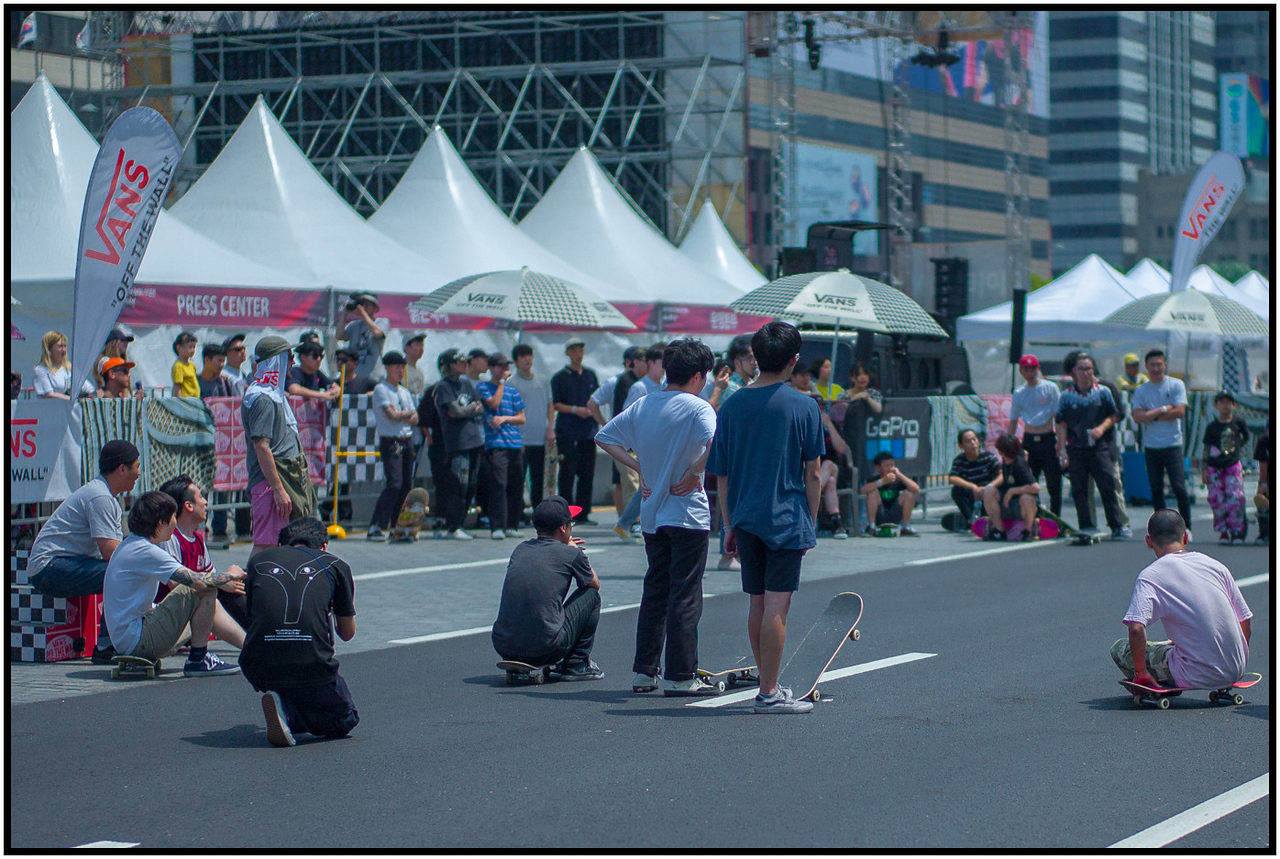
After lunch it got really hot in town. The main road had been blocked off for a skateboarding competition. Everyone looked wilted and miserable.
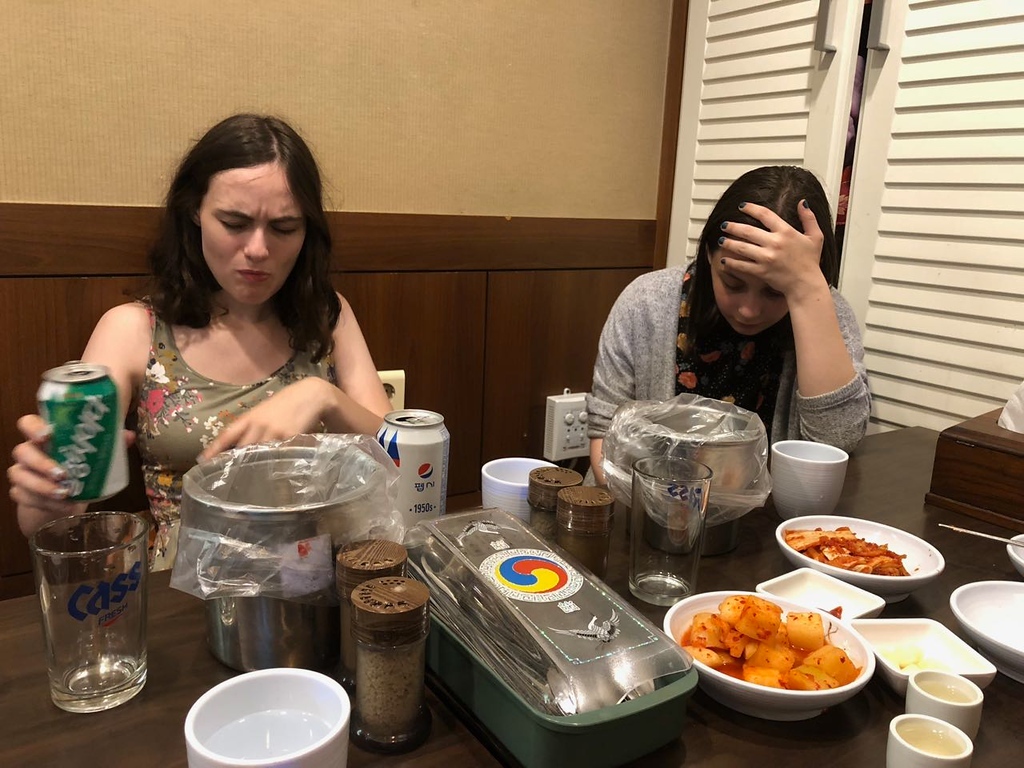
We ate lunch at a restaurant specialising in Ginseng chicken soup, a specialty of Seoul. This restaurant ONLY served variations of Ginseng chicken soup, so Josie was stuck with no other option than to put up with being served chicken. She figured she could just pick the chicken bits out and give them to someone else. However, when the soup arrived, each bowl contained an entire chicken (as in a whole, intact chicken, not chopped up.) The chickens were tiny; about half the size of a cornish game hen, and they were stuffed with rice, ginseng, and other vegetables. There was no way to get at the main contents of the soup without dismantling the chicken with chopsticks. The little tin garbage cans with plastic liners on the table were bone buckets. The kids were all sports, but didn’t like having to pick out hearts and livers and necks, etc from their soup. They all know where food comes from, but don’t like being reminded they’re eating something that used to be alive. (Years ago Holden had a complete meltdown in Trinidad when he was served a fish with the head still on.) Josie really was a trooper and didn’t complain much, but her body language shows pretty clearly how she felt about this meal. (And by the way, it was delicious … probably the best chicken soup I’ve ever tasted.)
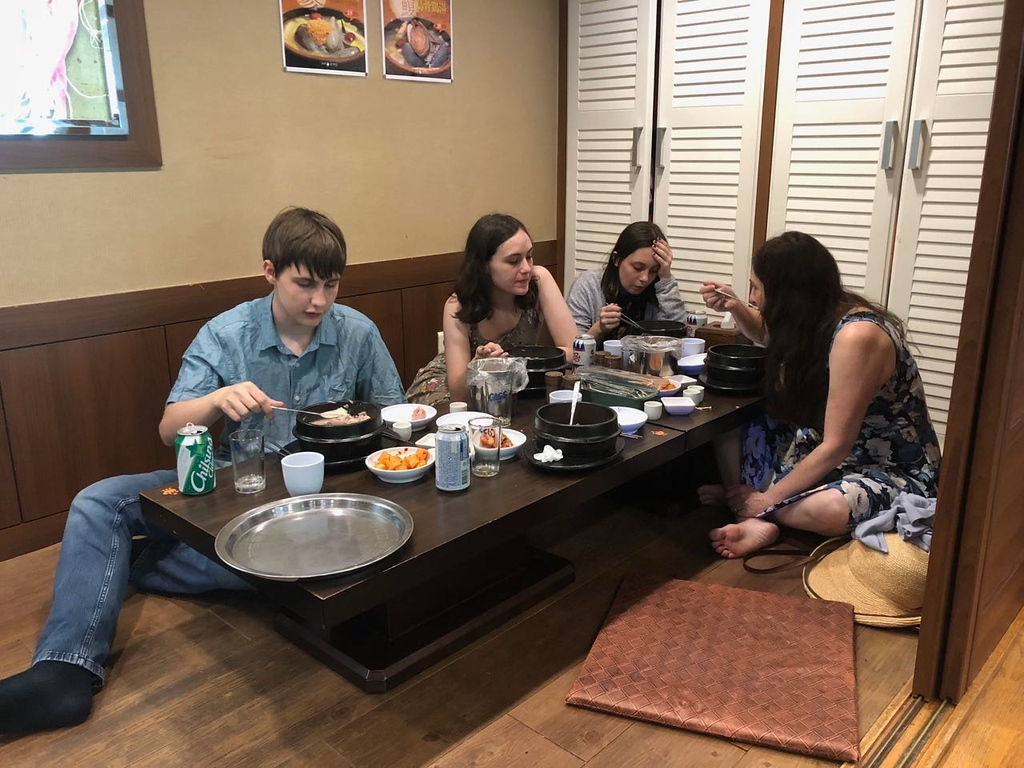
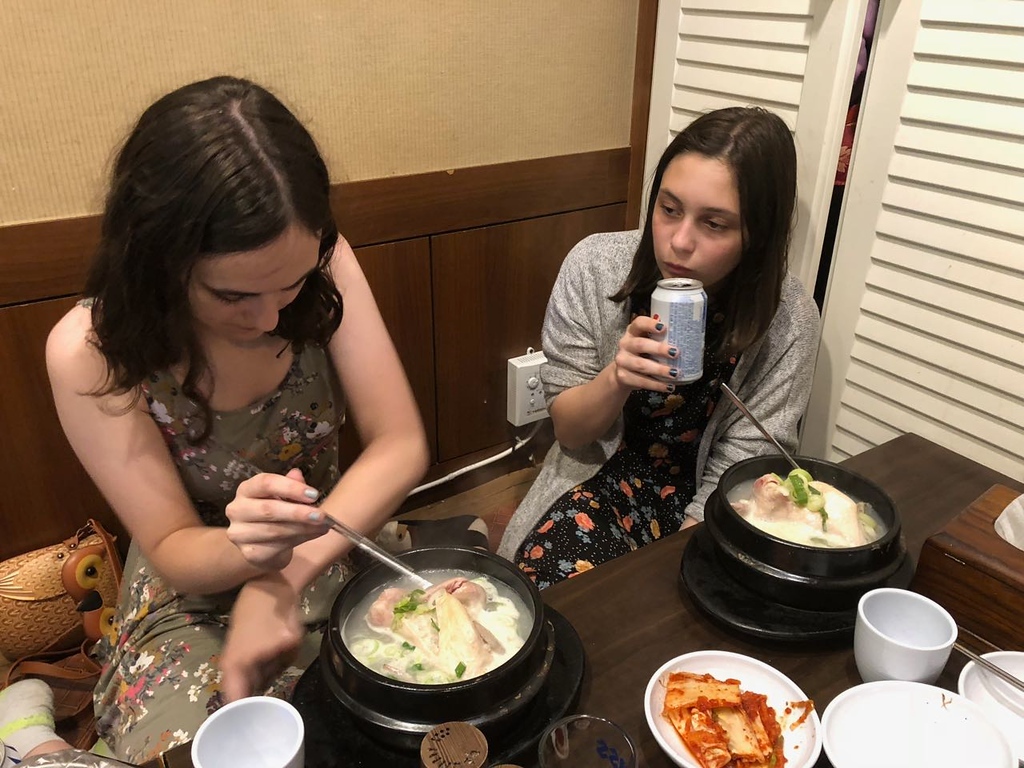
A better view of the soup itself. (The red stuff on the plate is kimchi.) The soup was served in earthenware bowls fresh from a huge oven. The liquid was still on a full rolling boil when it was served to us.
Korea has proven to be a tough place to get vegetarian meals. Even dishes with names such as “vegetable rice” often show up with bits of meat in them. They do serve kimchi and other pickled or fermented vegetables alongside almost all meals, but those tend to be very spicy (some of them really spicy) and I haven’t seen anyplace that serves those things without ordering a meat-based meal to go with it. If you are a strict vegetarian or vegan, I’d recommend bringing some nutrition bars from home just to fill in any meal gaps. It was even hard to find decent fruit in grocery stores, and unless you can read Korean, you’ll be unable to tell what the ingredients are in the packaged foods. We had to do a lot of guessing based on pictures, both in grocery stores and in restaurants. Most of the time what we ended up actually getting was a bit of a surprise. You need to approach eating in Korea with an attitude that it’s all part of an adventure.
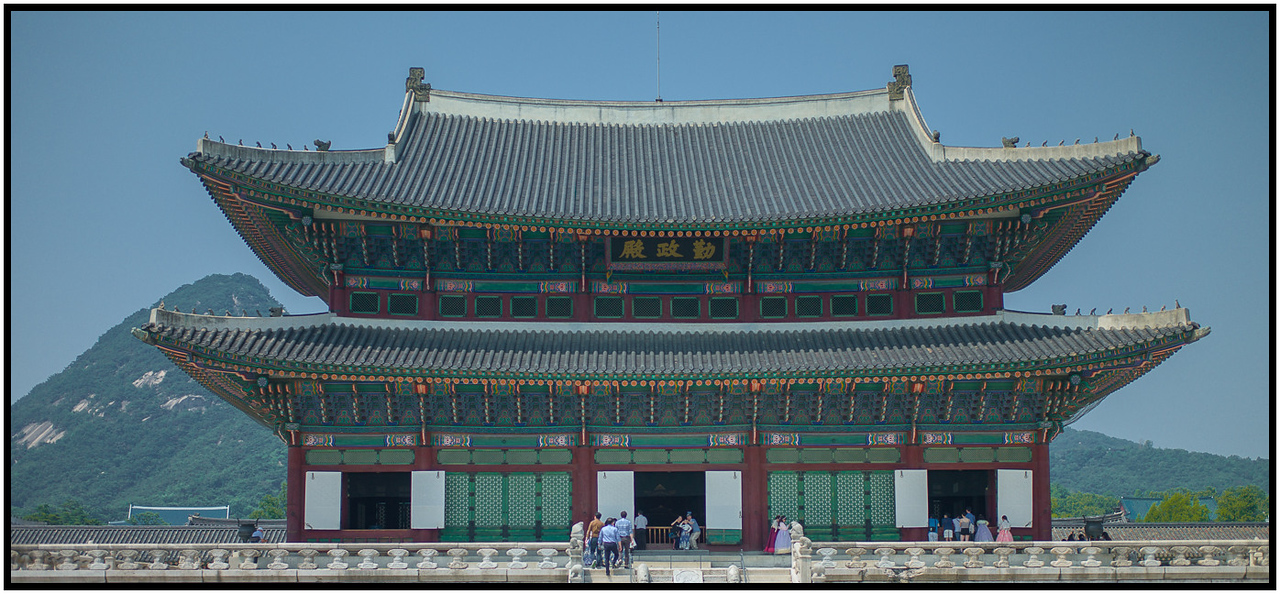
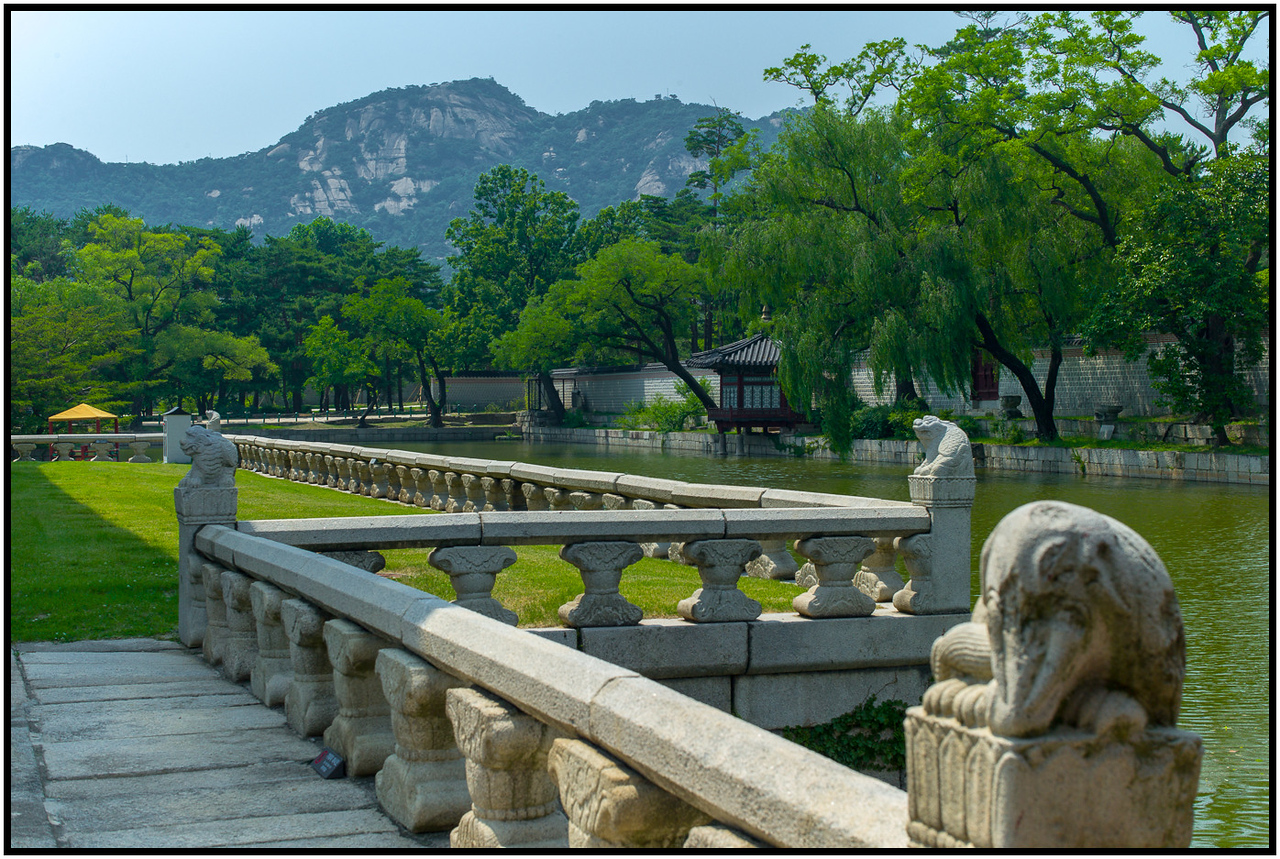
After lunch we made our way to Gyeongbokgung Palace – another iconic location in Seoul – completed in 1395 at the beginning of the Joseon Dynasty during the reign of King Taejo.
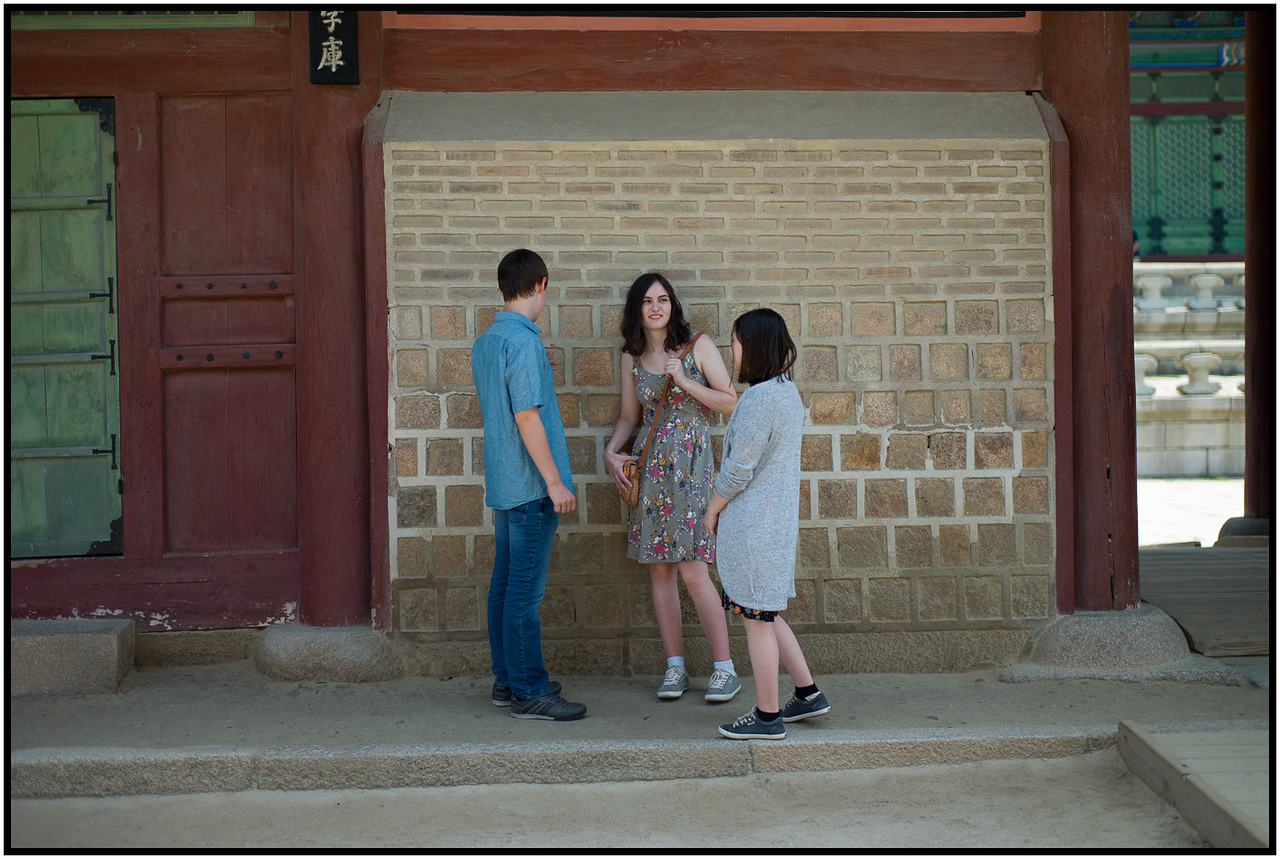
Kids hanging out in a shady spot, ignoring the palace.
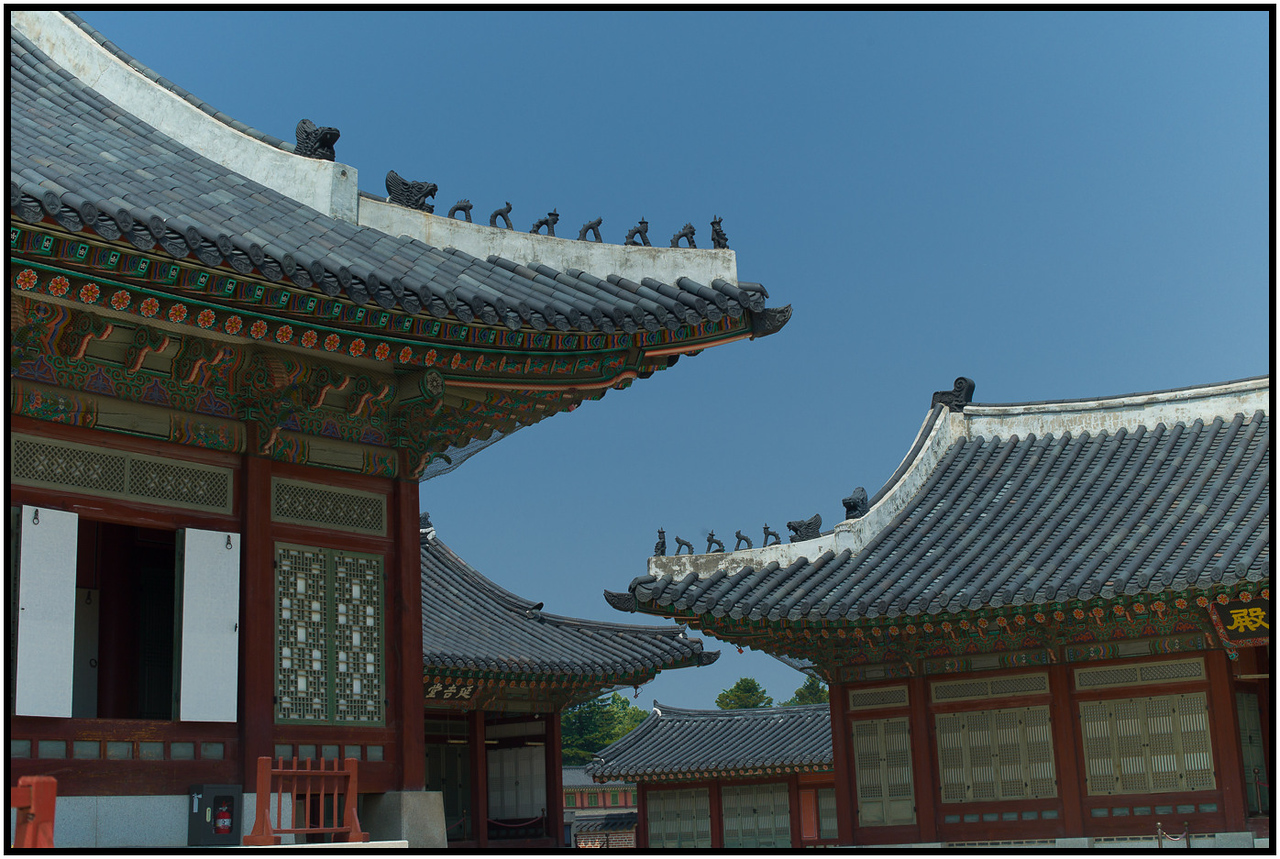
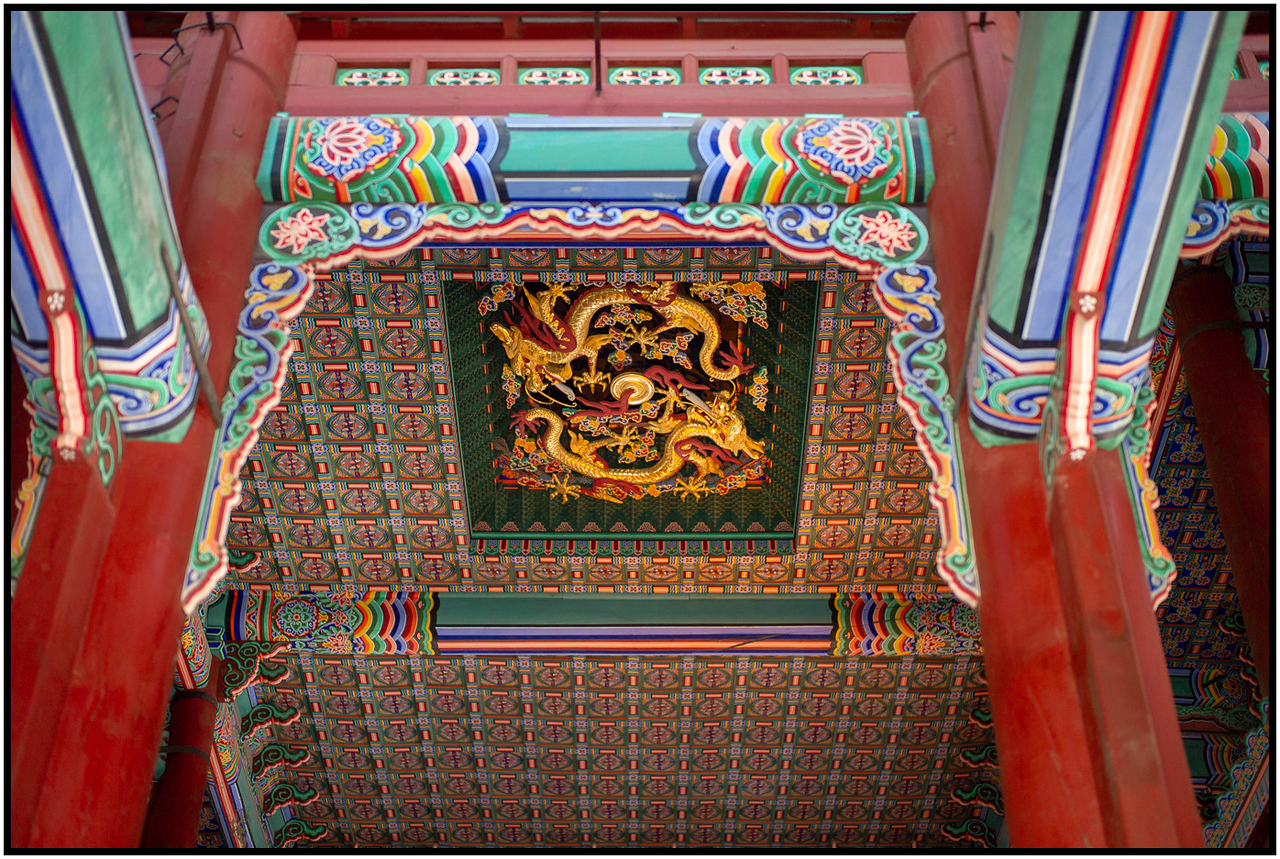
Another ornate ceiling with a dragon motif.
Dressing up isn’t just for the youngsters!
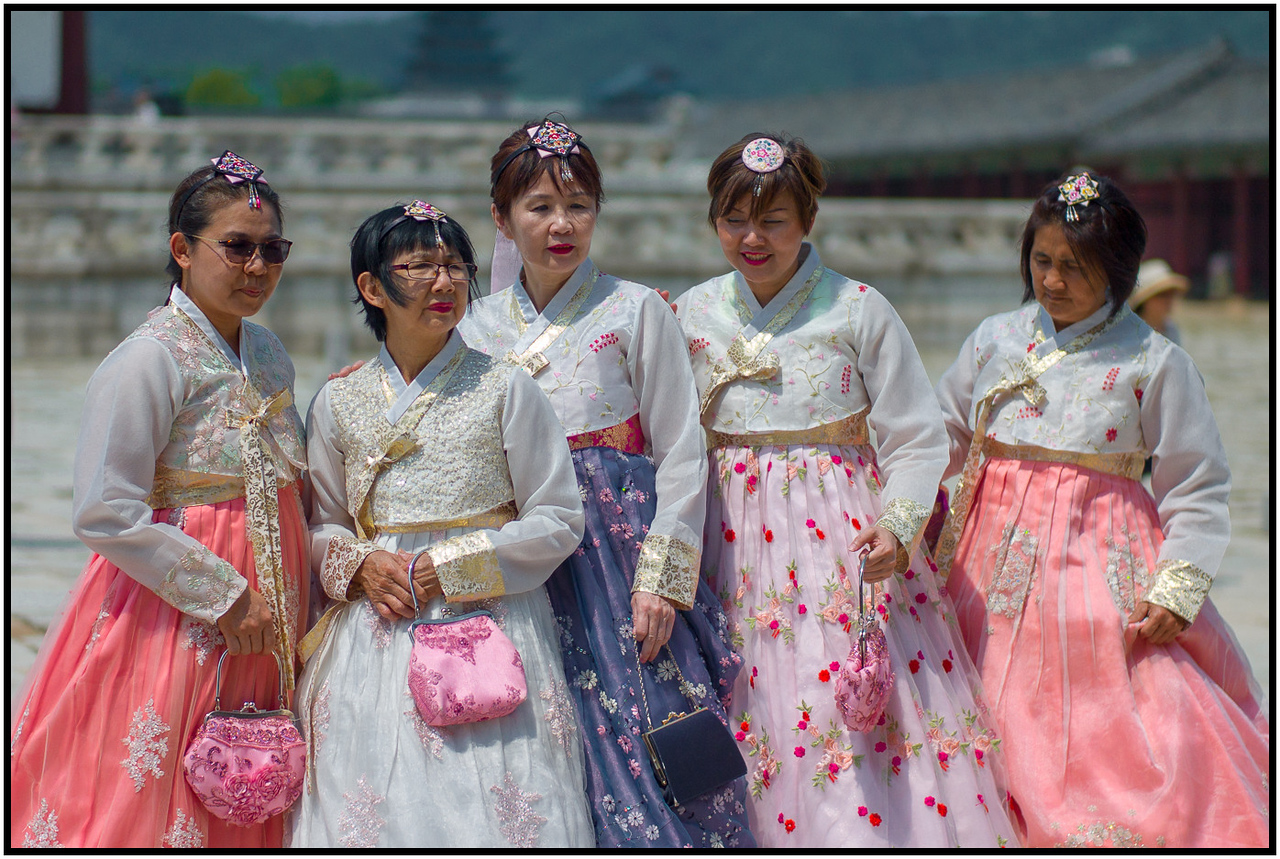
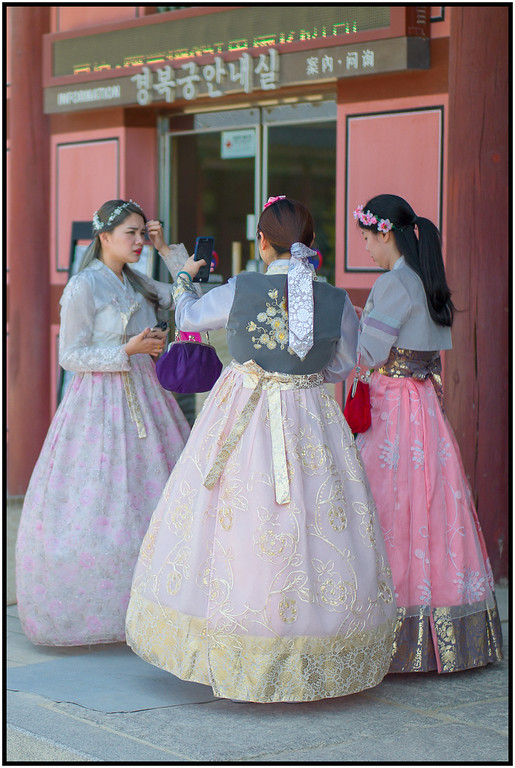
But mostly it is for the youngsters.
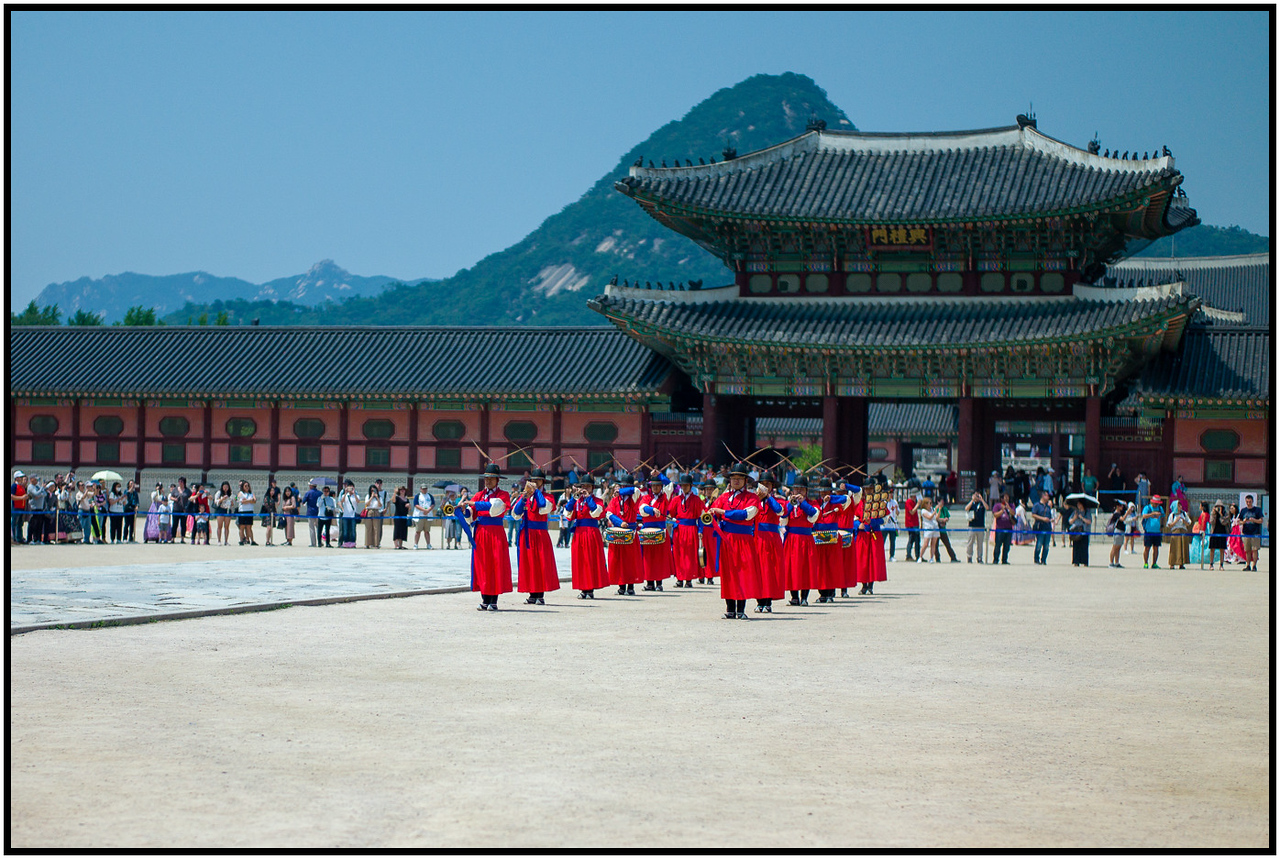
Changing of the guard ceremony.
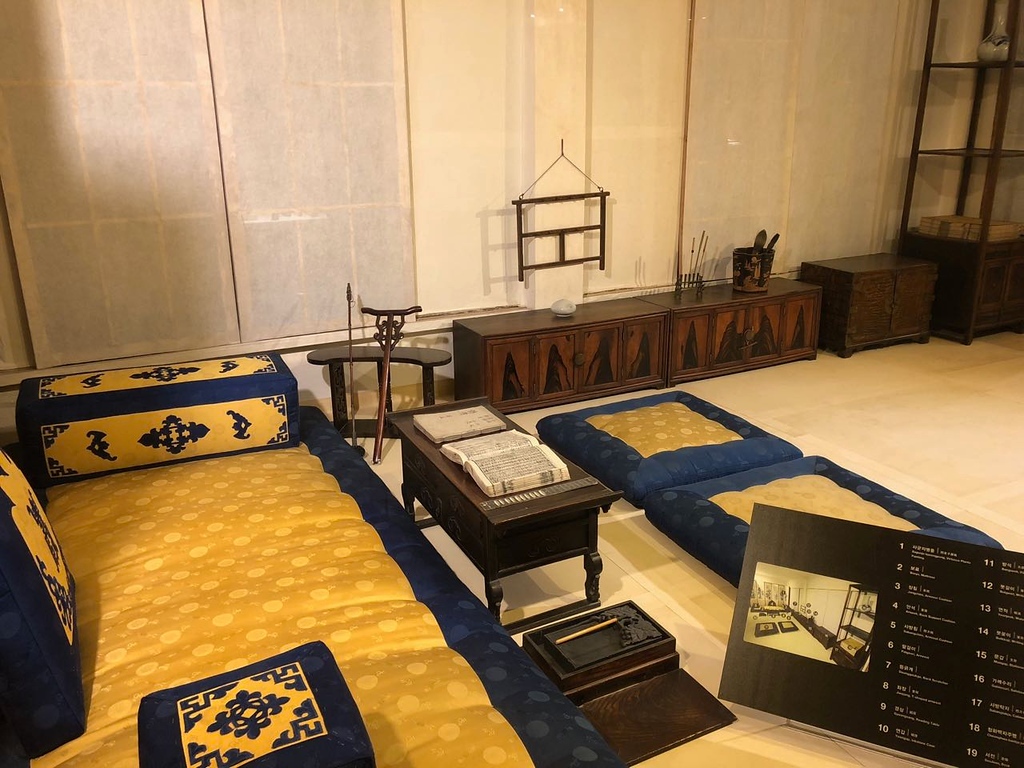
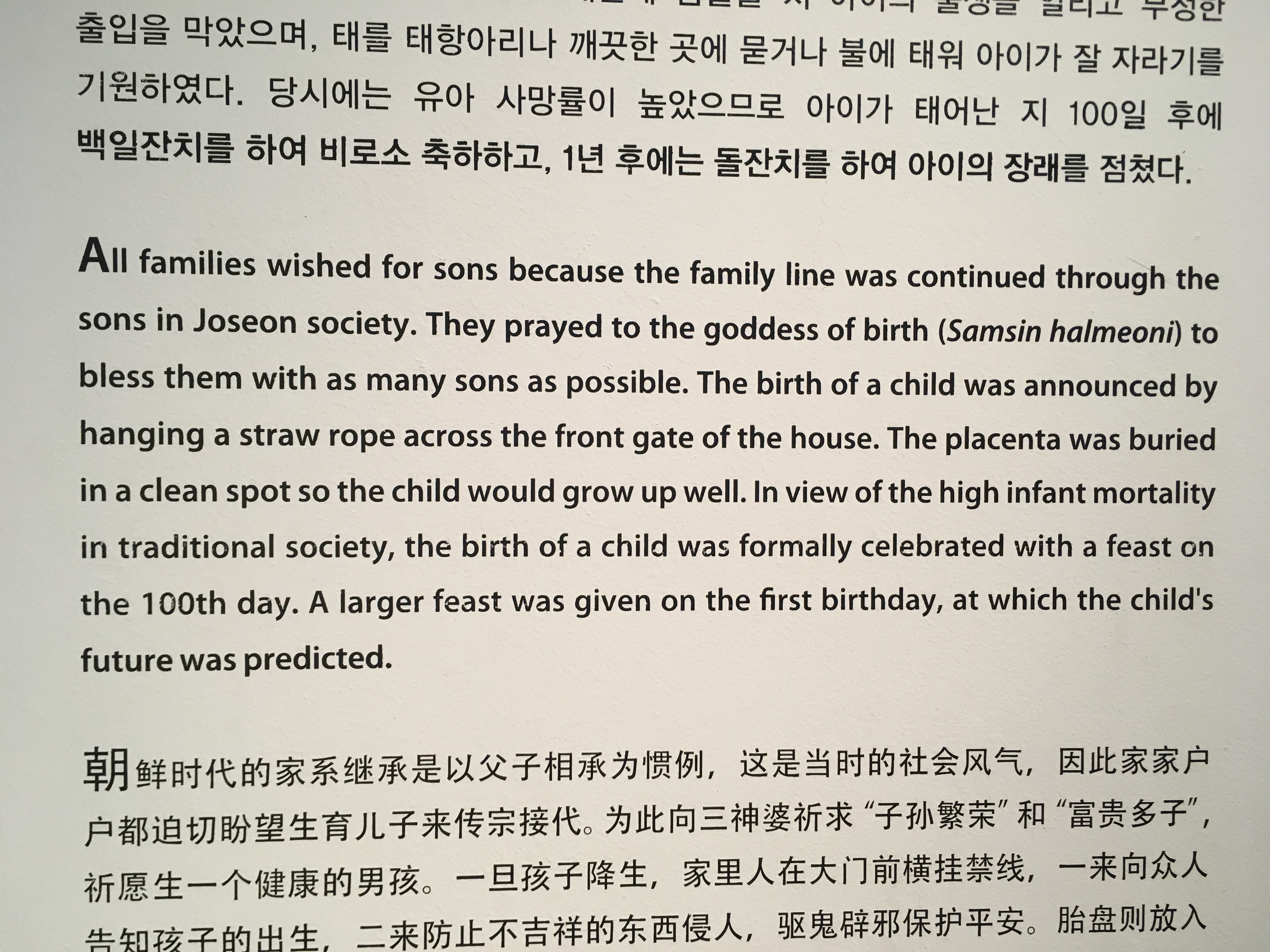
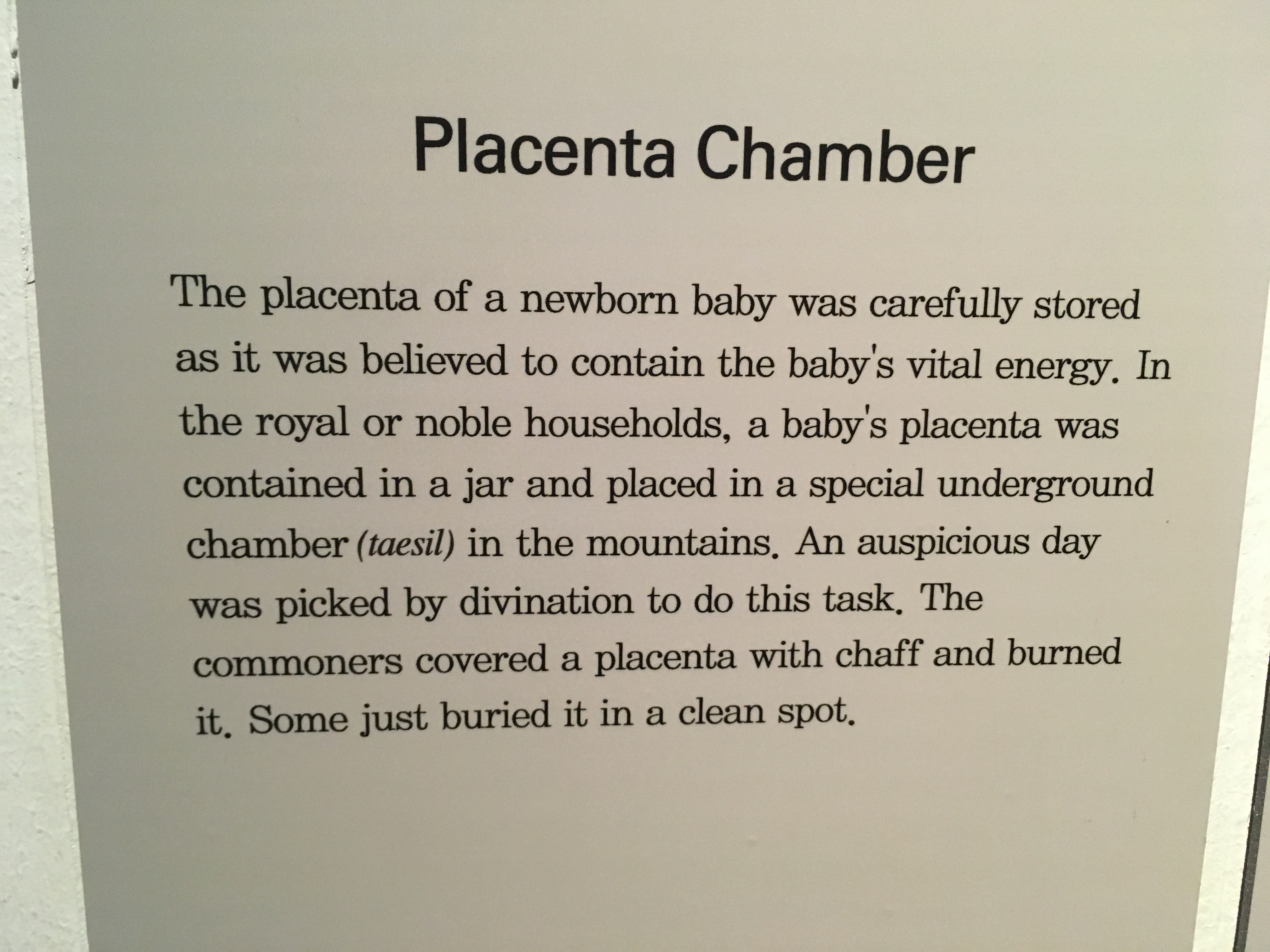
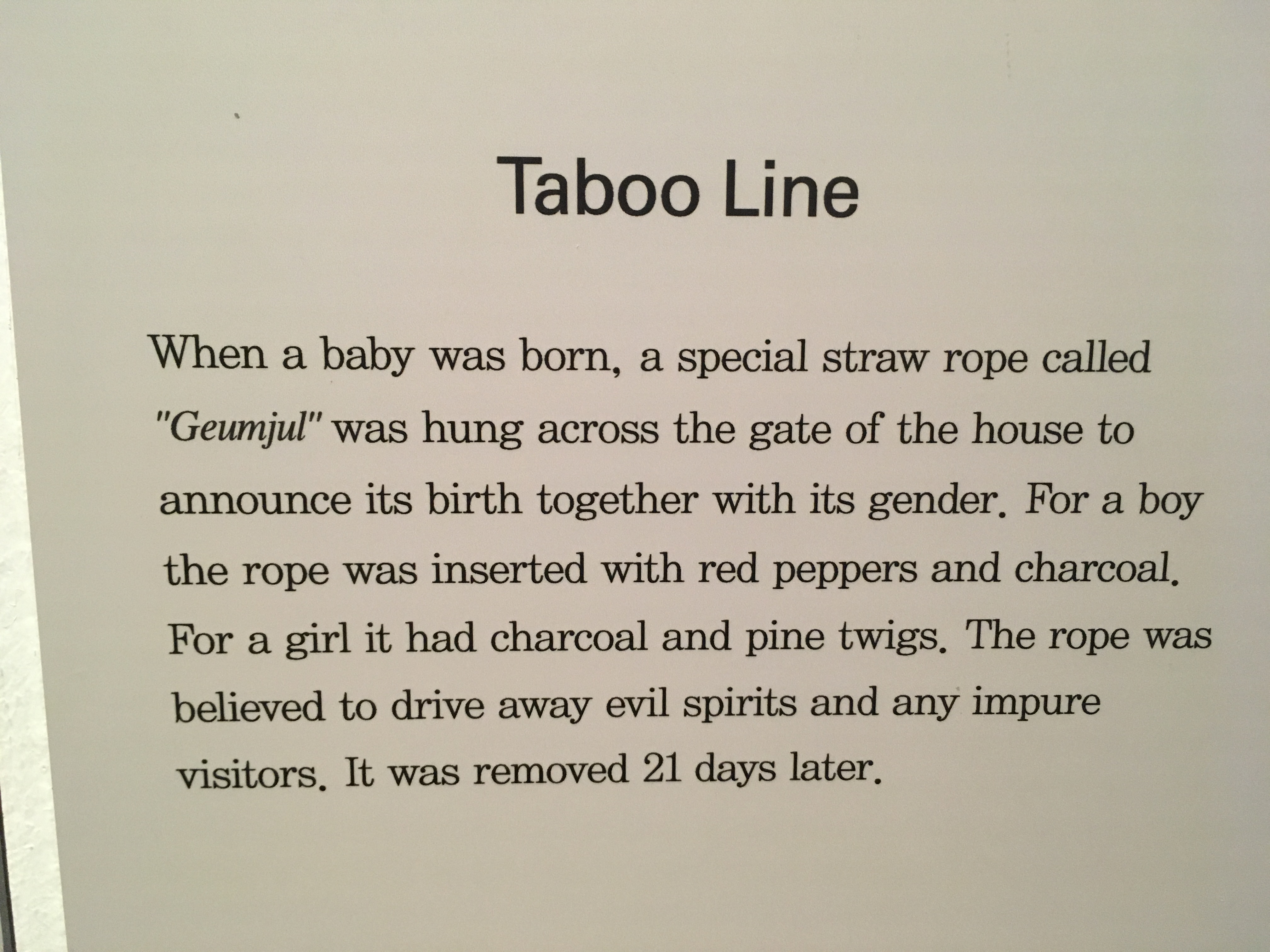
Next to the palace is the National Folk Museum of Korea. I loved this one, as it was dedicated to cultural history. I love seeing how people lived back in the day. Most of the following pictures are just plaques from the museum explaining Korean domestic life. I am putting them here for myself so I can remember the information later. Most people will probably want to skip to the end.
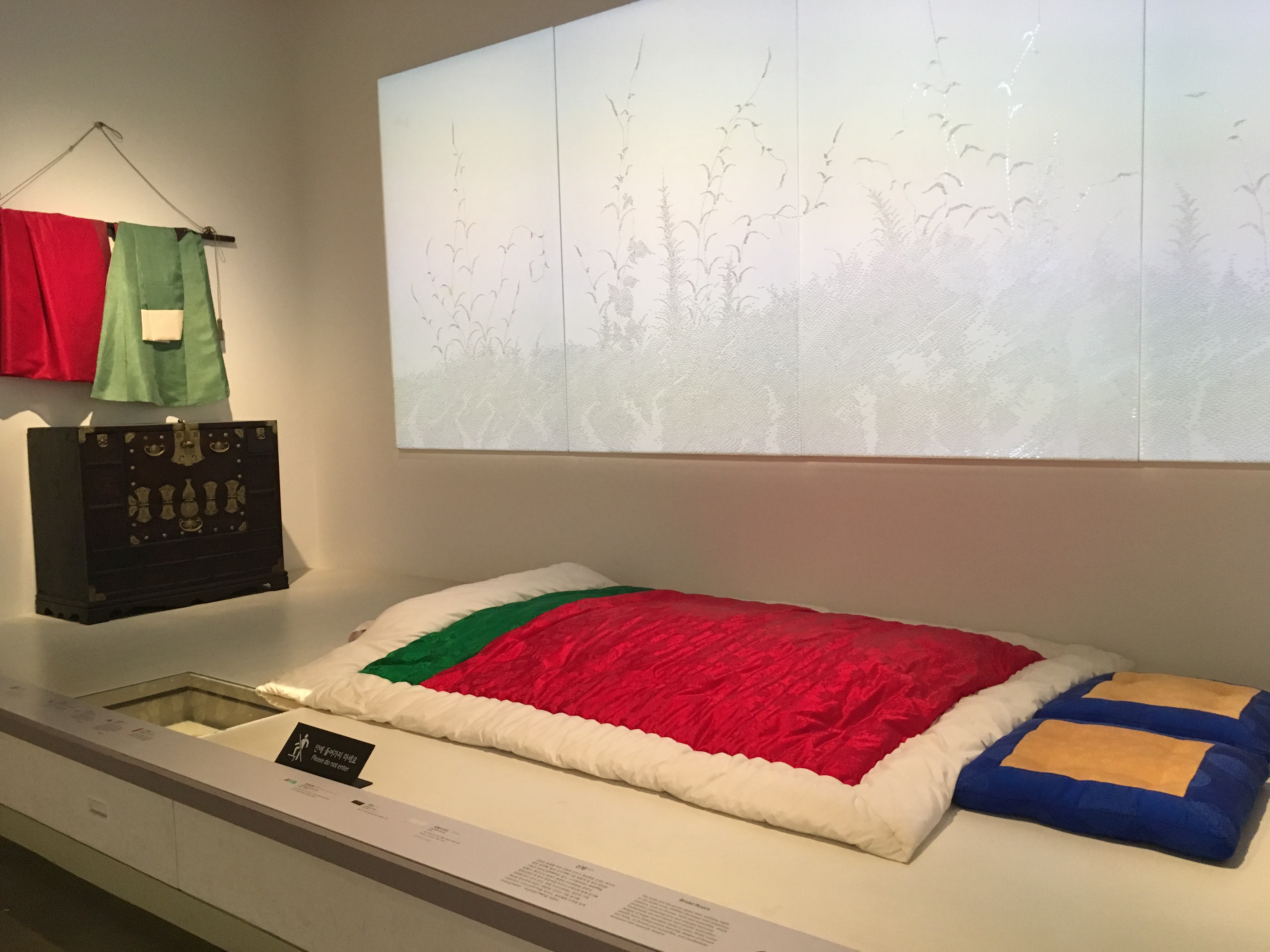
Examples of traditional Korean home interiors.
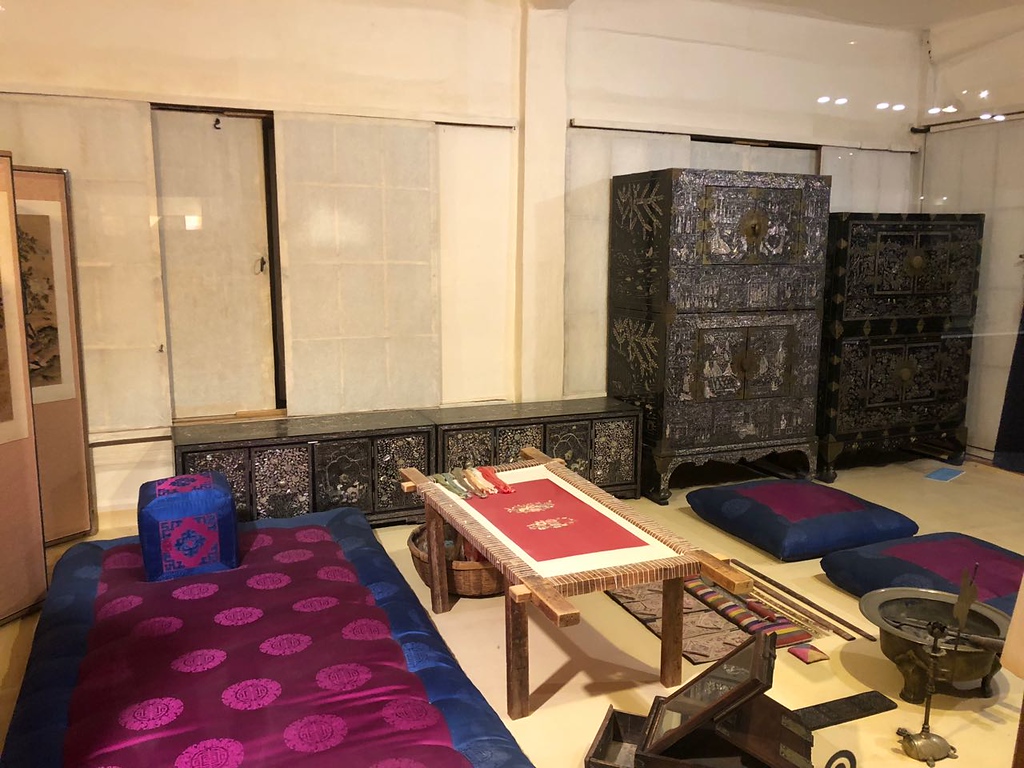
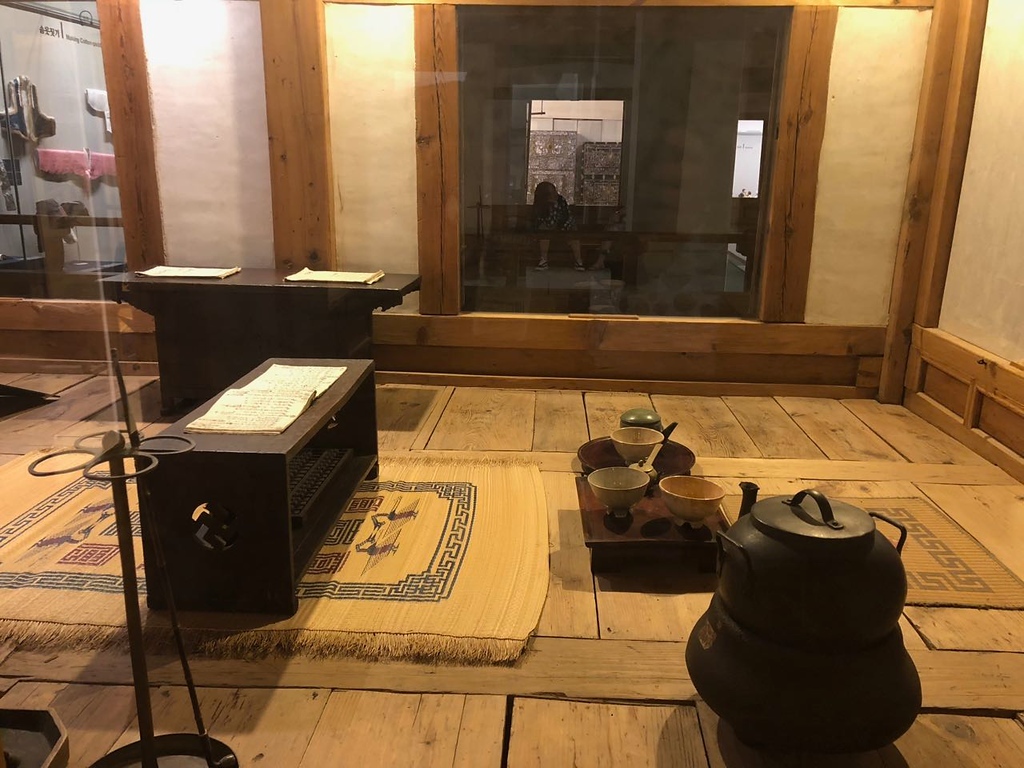
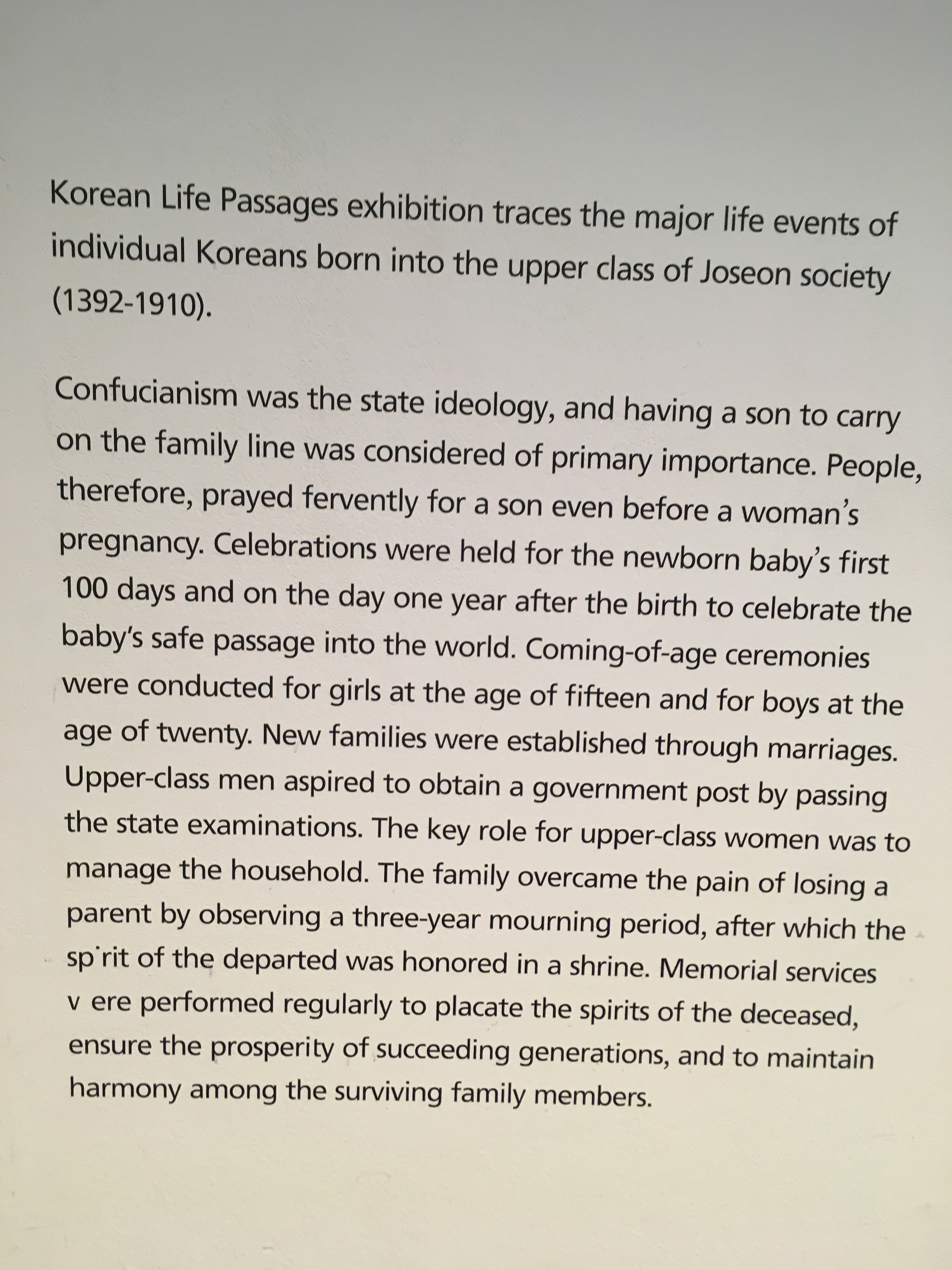
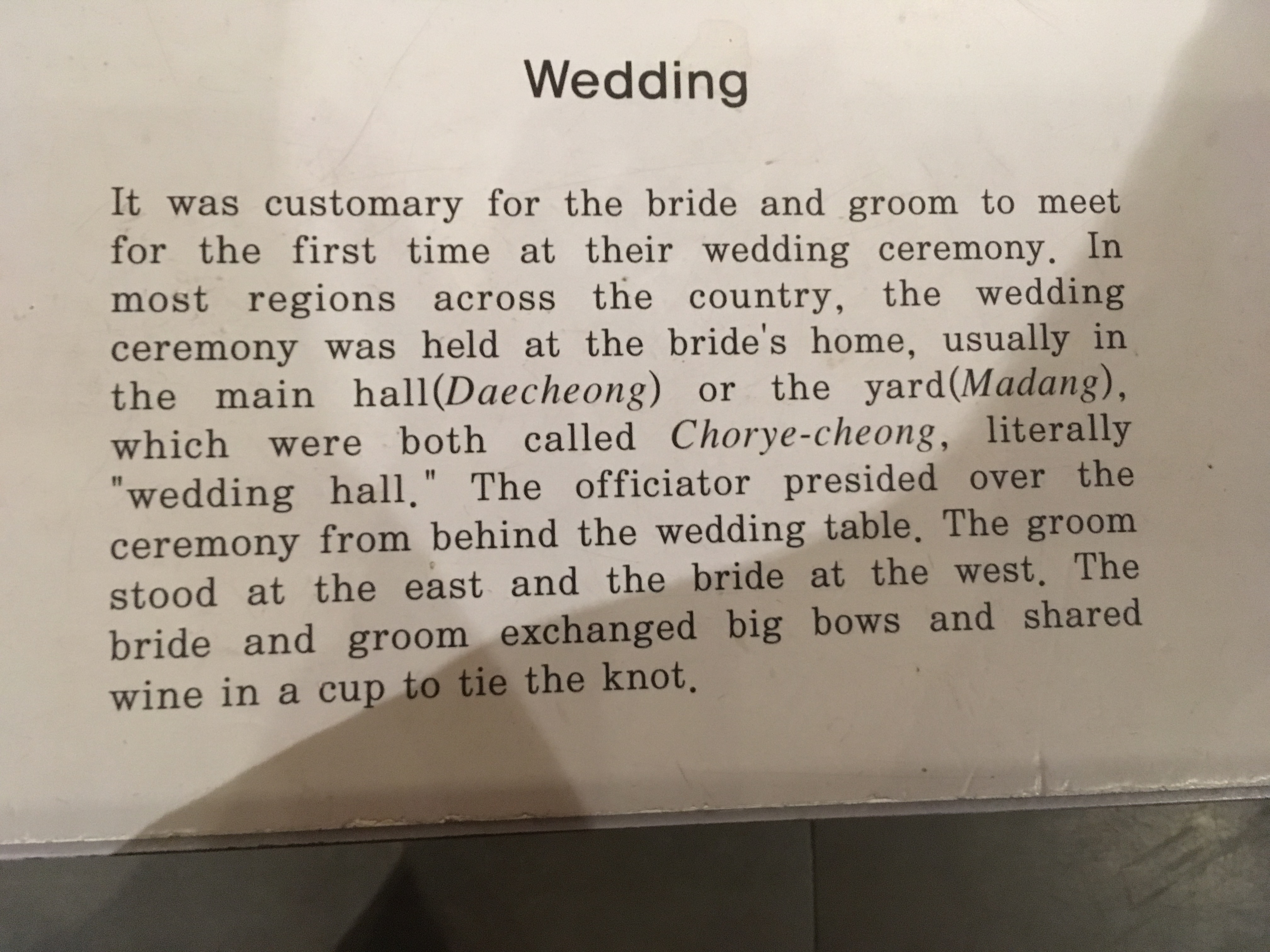
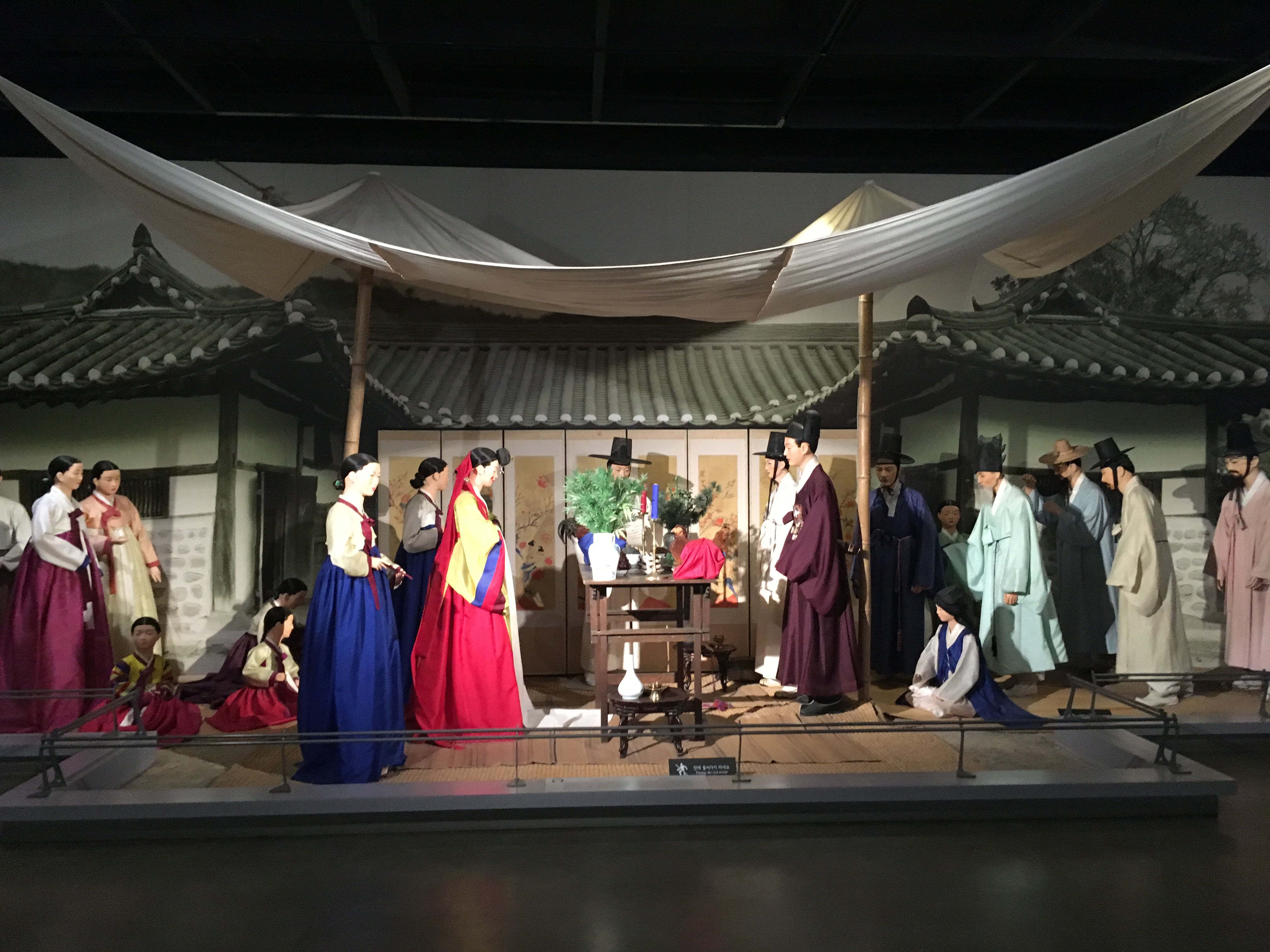
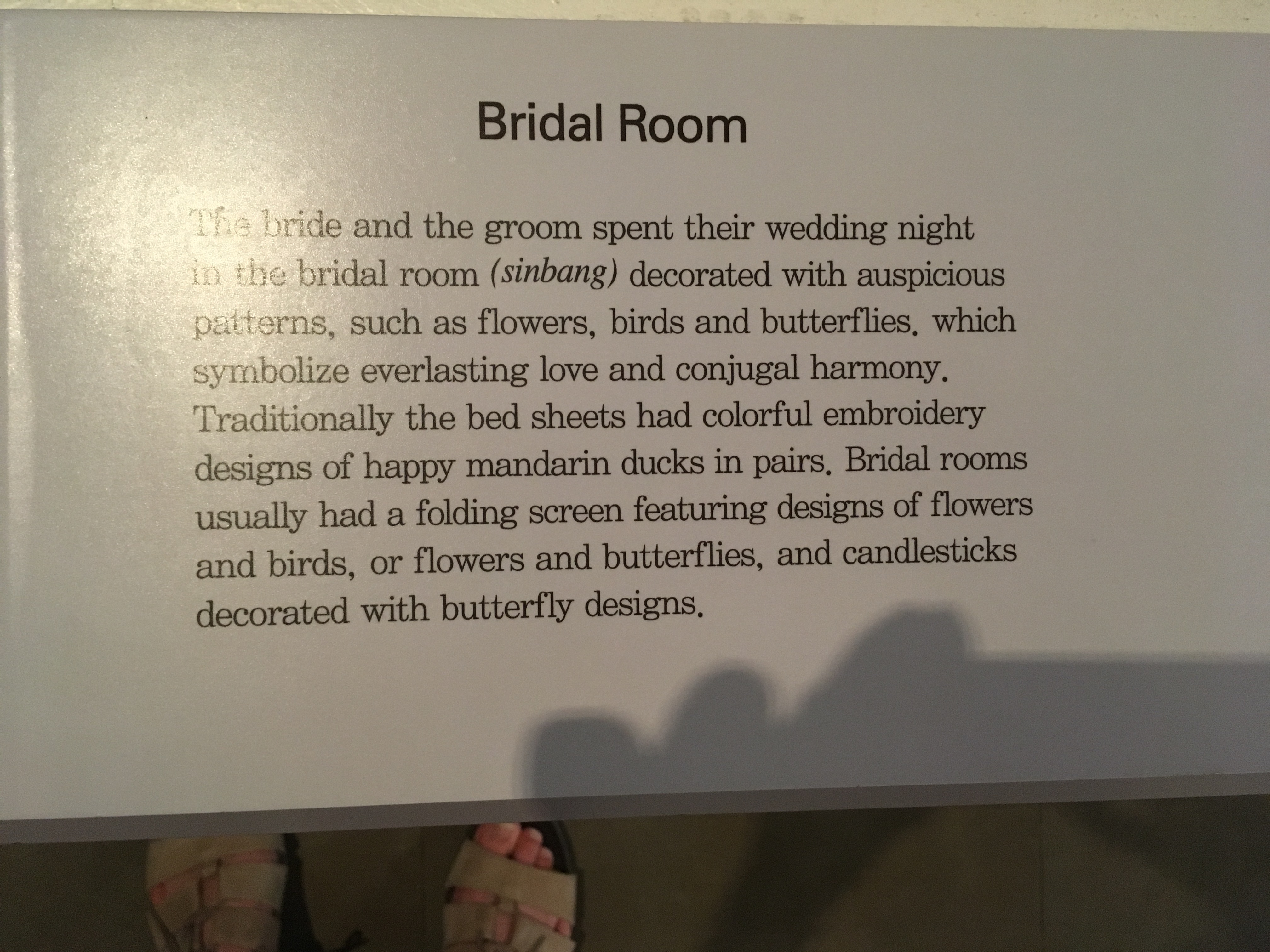
(The bridal room was called a sinbang. Tee hee hee!!) An example of a typical bridal room, below.
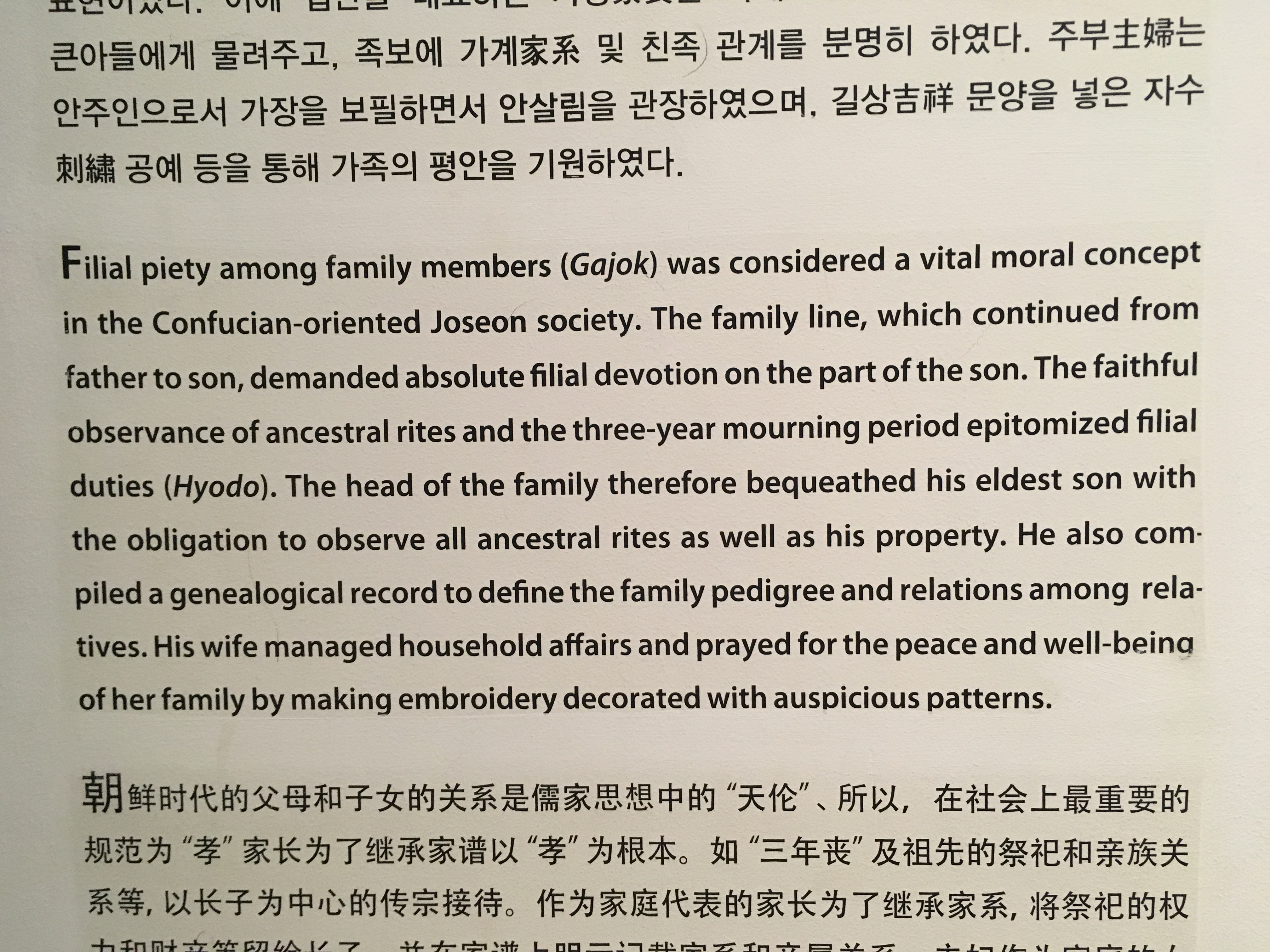
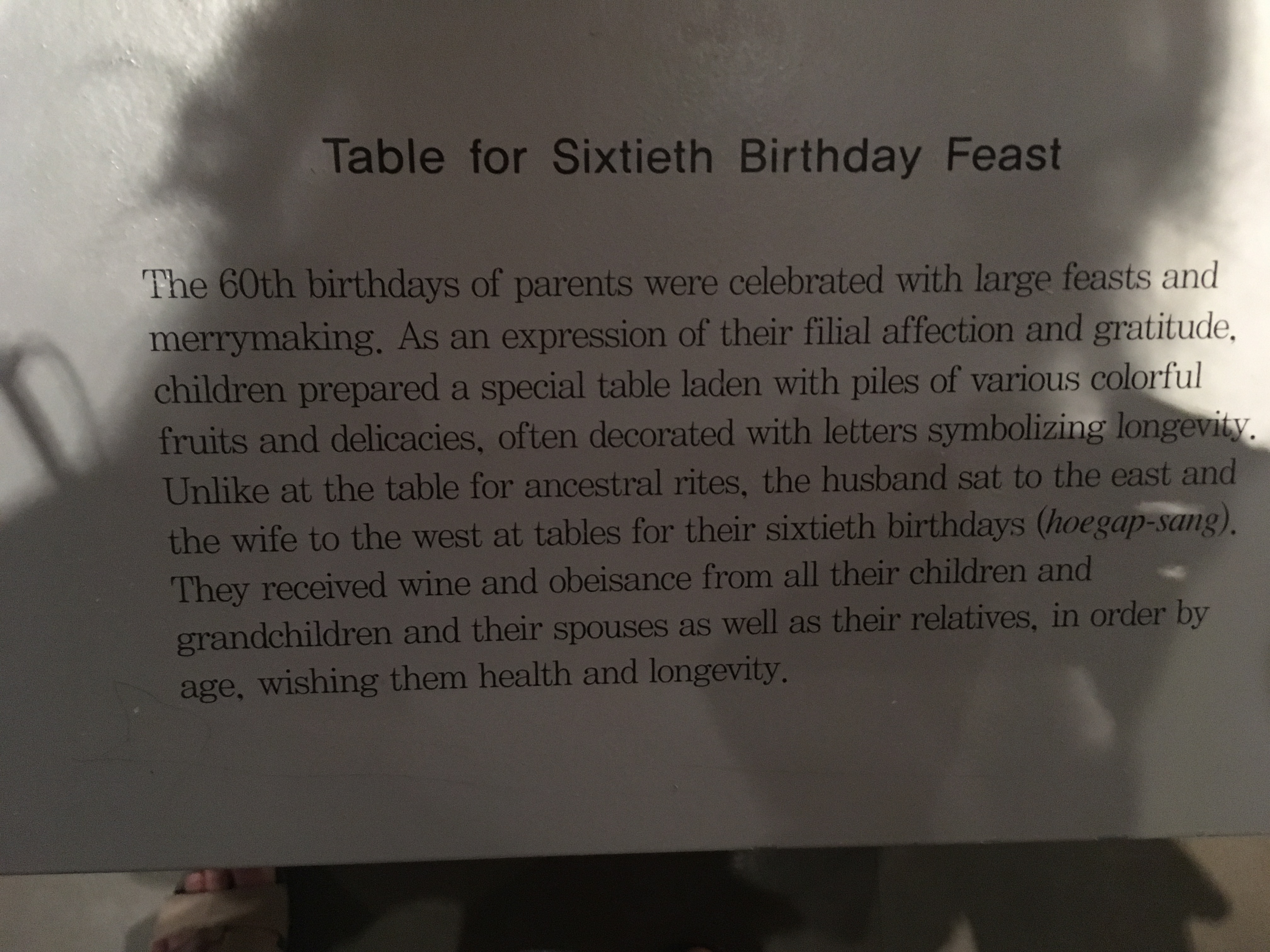
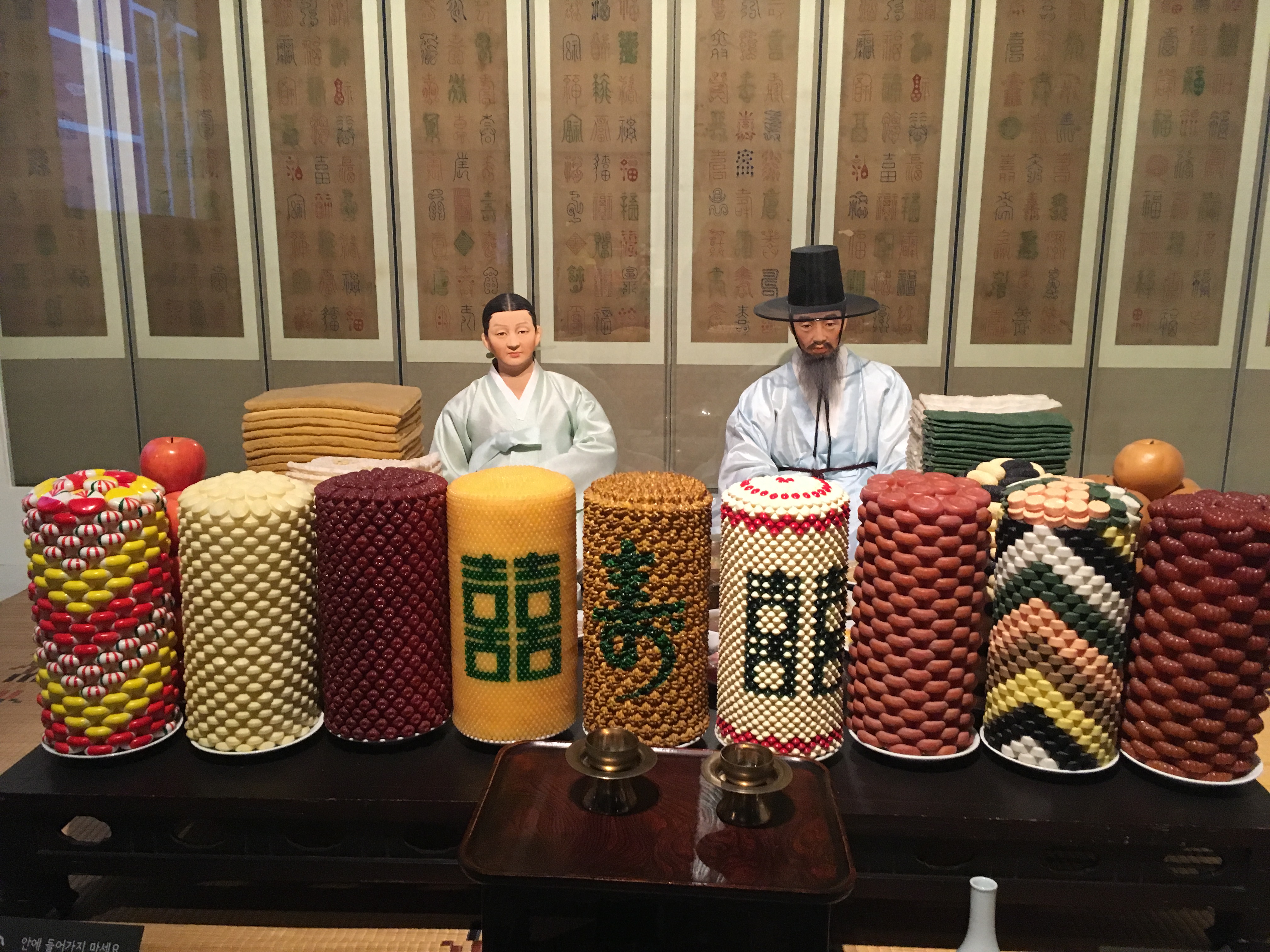
Recreation of a 60th birthday party. Those things that look like candles were made of various foods and candies.
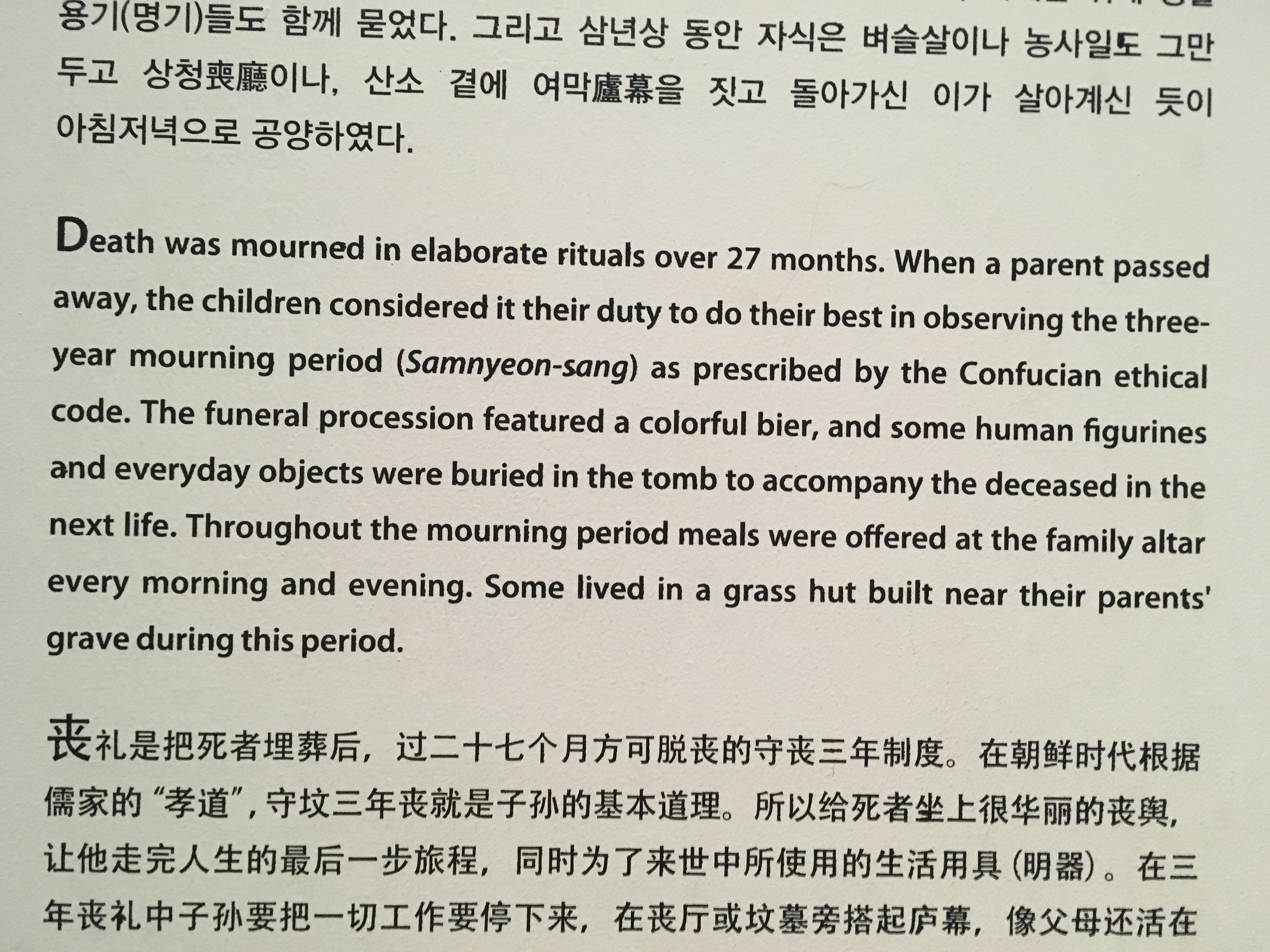
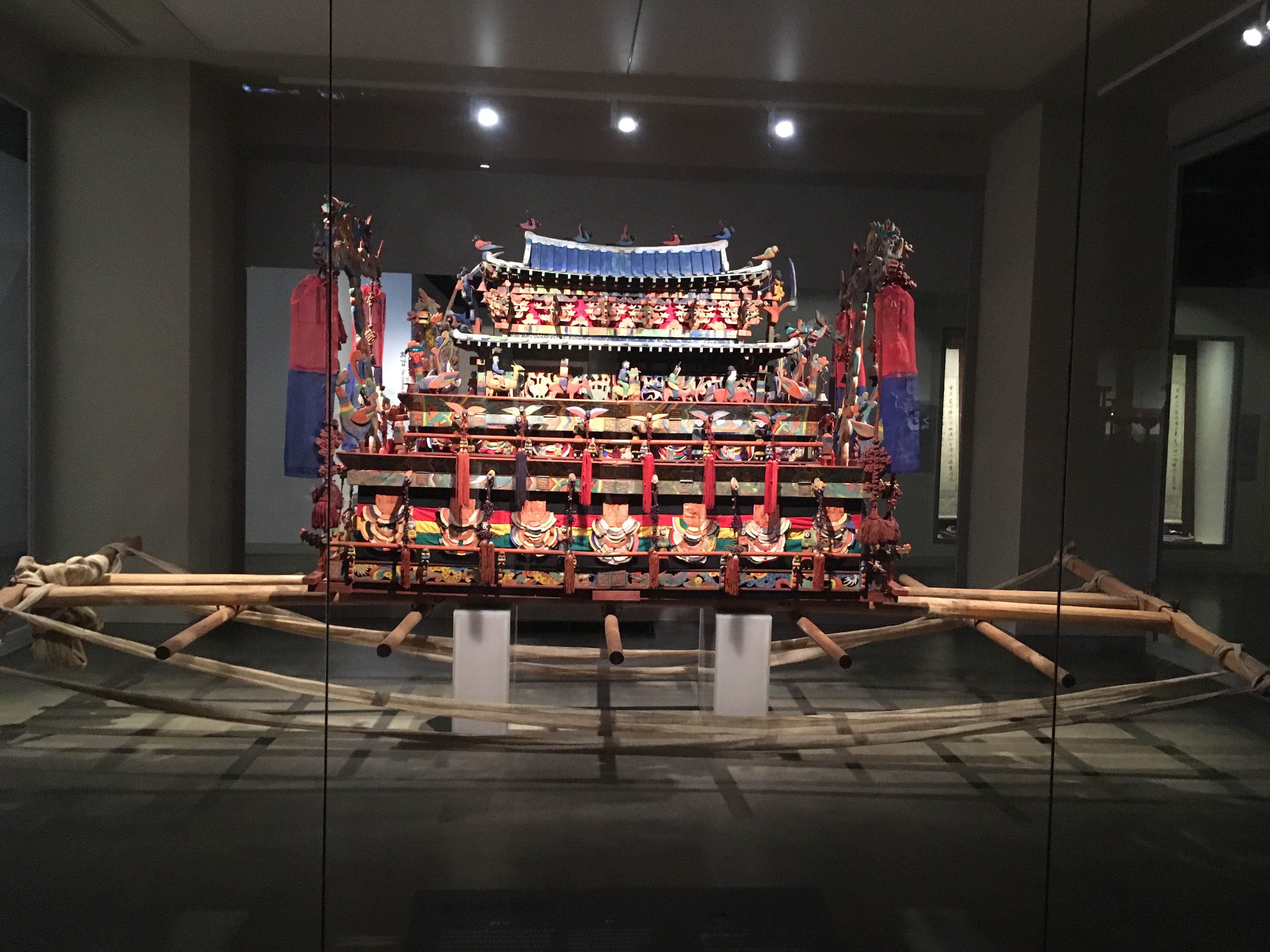
Funeral bier. The biers used for conveying the corpse to the burial site resembled palanquin and had long poles on both sides to be shouldered by 12 to 24 pallbearers. Most villages had such a bier for common use, which was designed to be disassembled for storage in a house removed a short distance from the neighborhood.
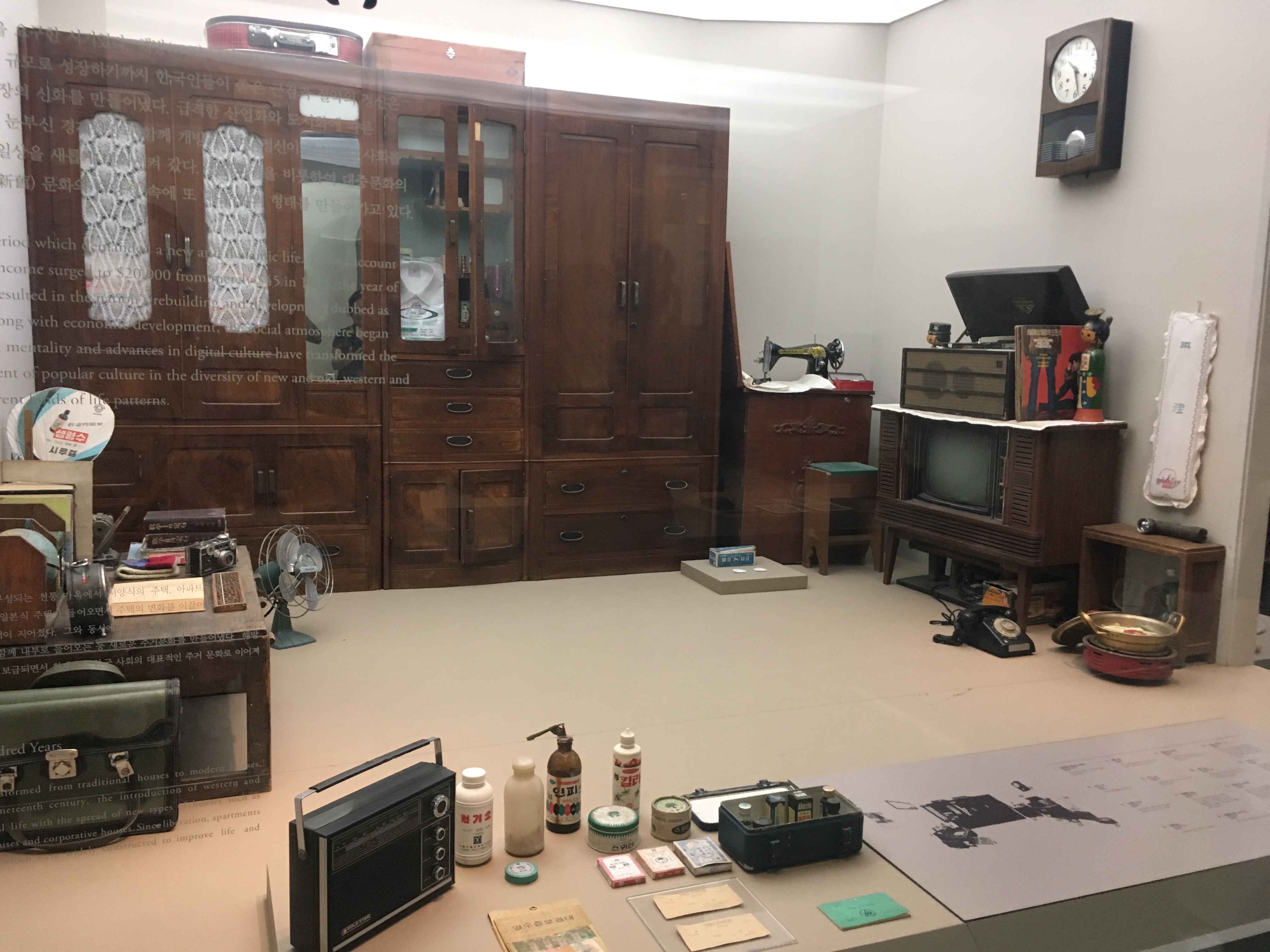
(From the wall plaque below) The late 20th century was a period which demanded a new and dynamic life. Taking account of the fact that Korea’s per capita income surged to $20,000 from merely $45 in 1945, the year of liberation, the vitality of Koreans resulted in the nation’s rebuilding and development dubbed the “Miracle on the Han River.” Along with economic development, the social atmosphere began emphasising an open and practical mentality and advances in digital culture have transformed the Korean way of life. The development of popular culture in the diversity of new and old, western and Oriental cultures has invited different kinds of the patterns.
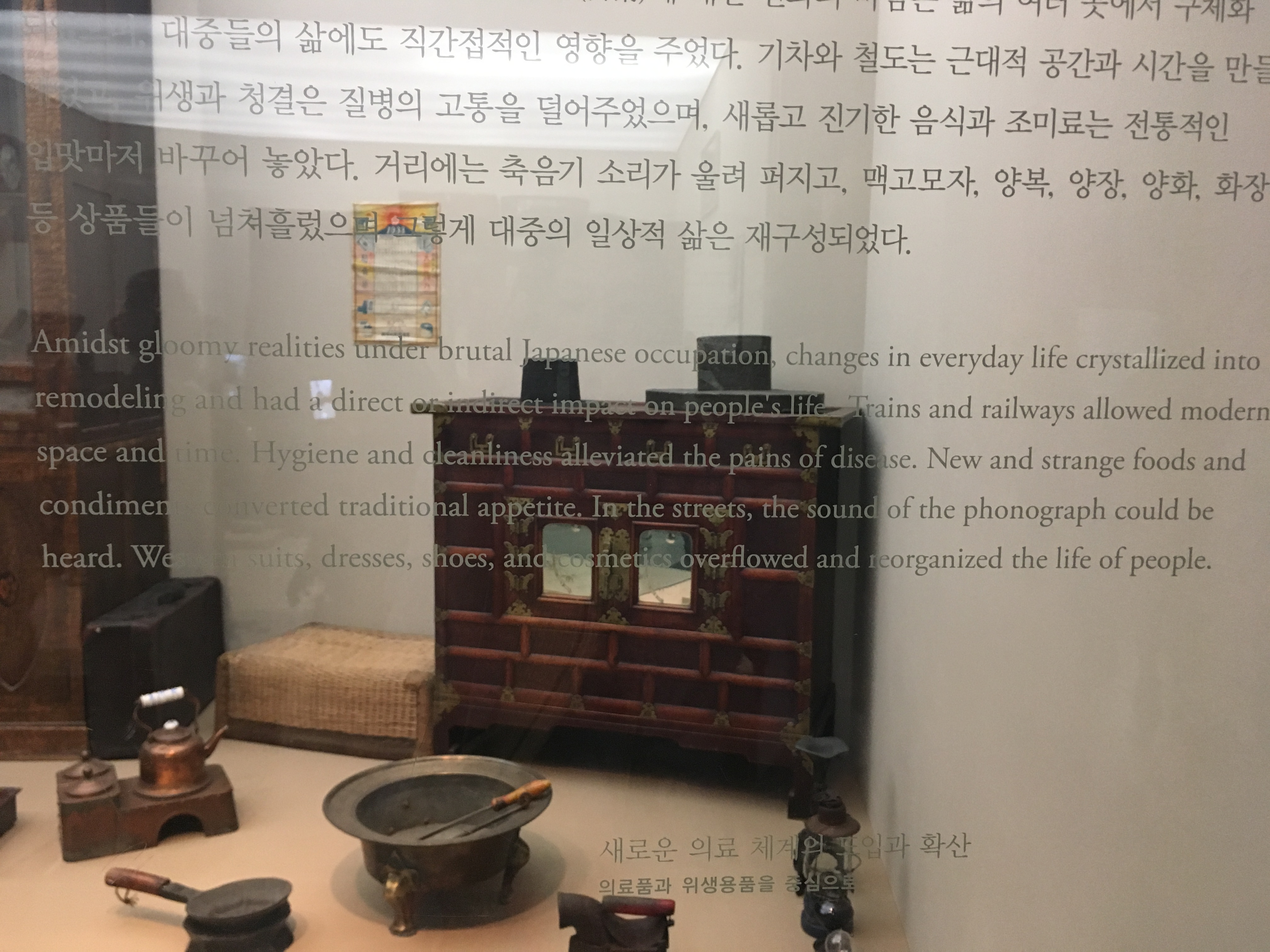
Admidst gloomy realities under brutal Japanese occupation, changes in everyday life crystallised into remodelling and had a direct and indirect impact upon people’s lives. Trains and railways allowed modern space and time. Hygiene and cleanliness alleviated the pains of disease. New and strange foods and condiments converted traditional appetite. In the streets, the sound of the phonograph could be heard. Western suits, dresses, shoes and cosmetics overflowed and reorganised the life of people.
Tomorrow we are flying to Japan. More later!

