Monday, 18 June 2018
We flew from Hong Kong to Seoul on JinAir, an airline we’ve never used before. The one-way tickets were a mere US$58 each for a 3 hour 20 min flight. This airline had a few idiosyncrasies … for example, when you go back to wait in the bathroom line, the steward sits you down in the flight attendant’s jump seat because they don’t want people standing. (If more than 4 people show up, the extras are told to go back to their seats and wait a bit.) They also offer you water or tea while you wait.
Another thing: when food is served, everyone is asked to put their seats back into the upright position. This is annoying if you want to sit reclined, but very nice if you want to eat and the person in front of you has their headrest in your face.
When the flight landed, the pilot made the usual announcement “Flight attendants prepare for landing.”
(approaches runway)
(wheels touch dow...𝄞♬ op-pan gangnum style ♫)
Isabella said, “Oh. My. GOD. Did that just happen??!” Indeed, it did. The second our wheels hit the ground, they started blaring K-pop over the plane’s sound system. Welcome to Korea!
Tuesday, 19 June 2018
Korea is the weirdest place we’ve been. It’s certainly the most foreign. Last night we got into our Airbnb around 8:30 p.m., tired and cranky. The place was hotter than Hades and, despite an air conditioner in every room and a thermostat on every wall, we couldn’t figure out how to get them to turn on. Eventually Adam found a remote control that did the trick.
Then we couldn’t get logged onto the internet. The apartment came with a KT Egg (personal hotspot) but it’s battery was dead and we couldn’t find a charger. Adam contacted the host and she told us, “The last guest lost it. I can bring a new cord by in the morning.” The kids were going nuts because being without internet for 12 hours was going to kill them, and, even worse, it had a 15 gig limit which allotted them each about 15 minutes of internet video per day for the duration of our stay. “I am really not loving Korea,” Isabella announced. Adam emailed the host to see if we could possibly get more than that, and she said she could see about increasing it by 10 gig … and then mentioned quite off-hand, “Or you can just use the unlimited wifi in the apartment. I can give you the name and password if you want.” Ummmm YES PLEASE! Crisis averted, but it would have been nice if she’d given us the wifi name and password when we checked in. It created a problem that needn’t have happened.
The washing machine is also nearly impossible to figure out. It has a strange combination of electronic controls and old-fashioned buttons. The phone app translated the labels with instructions such as “standard clothes dehydrator, “mild cleanliness” and “pause but go.” I did the best I could. (I figured out from trial and error that “dehydrator” means spin cycle, which is something you have to choose separately when the wash cycle is finished. Not super convenient.)
Grocery shopping is also proving to be difficult. There aren’t many grocery stores and the ones we managed to find have crap produce and very little in the way of cheeses, deli meats, hummus, fresh breads, etc.; the stuff we usually eat for Wine Time/dinner when we’re on the road. They are basically glorified 7-11s. Almost everything is prepackaged Top Ramen-style fare. We found a some grapes but they were very expensive and the ones on top were moldy. The bananas were all so overripe they were fit for nothing but banana bread.
I ruined the first “just add hot water” meal because I couldn’t understand the instructions and they were not intuitive … I’ve been making “just add hot water” meals for the better part of four decades and thought I knew what I was doing. Nope. These were different. The instructions, as per the translator app, said things like, “For 10 minutes enjoy heat” and “Packet of happy spices into.” (Into what!!? The boiling water? The drained noodles? The rice packet?) I ruined one of the meals by adding boiling water to the whole kit and caboodle. It was a sloppy mess and I finally realised you were supposed to submerge the unopened packet of meat sauce in hot water for 10 minutes, then open it and mix it in to pre-cooked rice that sits in another hot water bath. It was more of a sous-vide situation than a Cup-A-Soup situation. Once I got that figured out, the meals weren’t half bad. (But they weren’t good, either.)
The toilets are strange, too. They look like those fancy Japanese toilets that double as bidets, but the instructions are all in Korean. (The Japanese toilets at least have little cartoon icons for each button showing you what to expect, presumably for foreigners and illiterates. Not so on the Korean toilets.) When you sit down the toilet turns on, which in itself is something that takes getting used to. Then little green lights appear on the toilet’s arm. Yesterday I ignored the lights because I was too tired to deal with them. Today, I figured I might as well push the first green button because the toilet seemed like it really wanted me to.
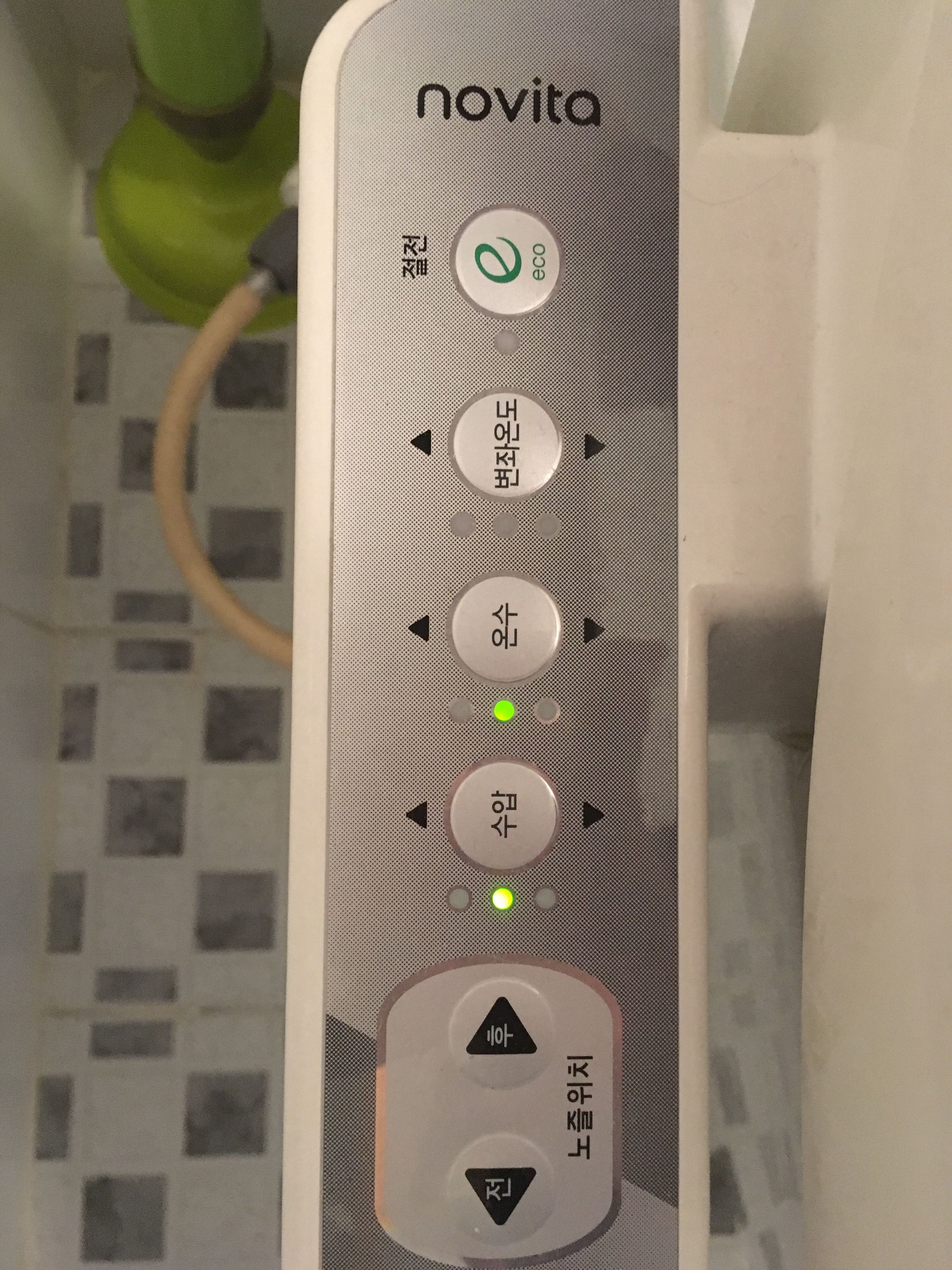
Japanese toilets give you a warm, misty cleansing of your undercarriage, followed by a gentle blow-dry. It’s like a relaxing spa treatment. The Korean toilet blasts a pressure washer right in your bullseye. “WOO HOO HOO!” Instead of a spa treatment, you get a violent enema. I figured it would stop on it’s own after a few seconds but it kept going and going. If I stood up, it would send a water jet into the opposite wall about 18 inches below the ceiling. I started desperately jabbing at all the buttons, trying to find the off switch. I was approaching panic mode when I finally got it stopped. I came out of the bathroom, all jittery, and Holden said, “Yeah, I made that mistake yesterday. I stood up because I thought it would stop if there was no weight on the seat. It didn’t. That’s why the bathroom floor was all wet last night.”
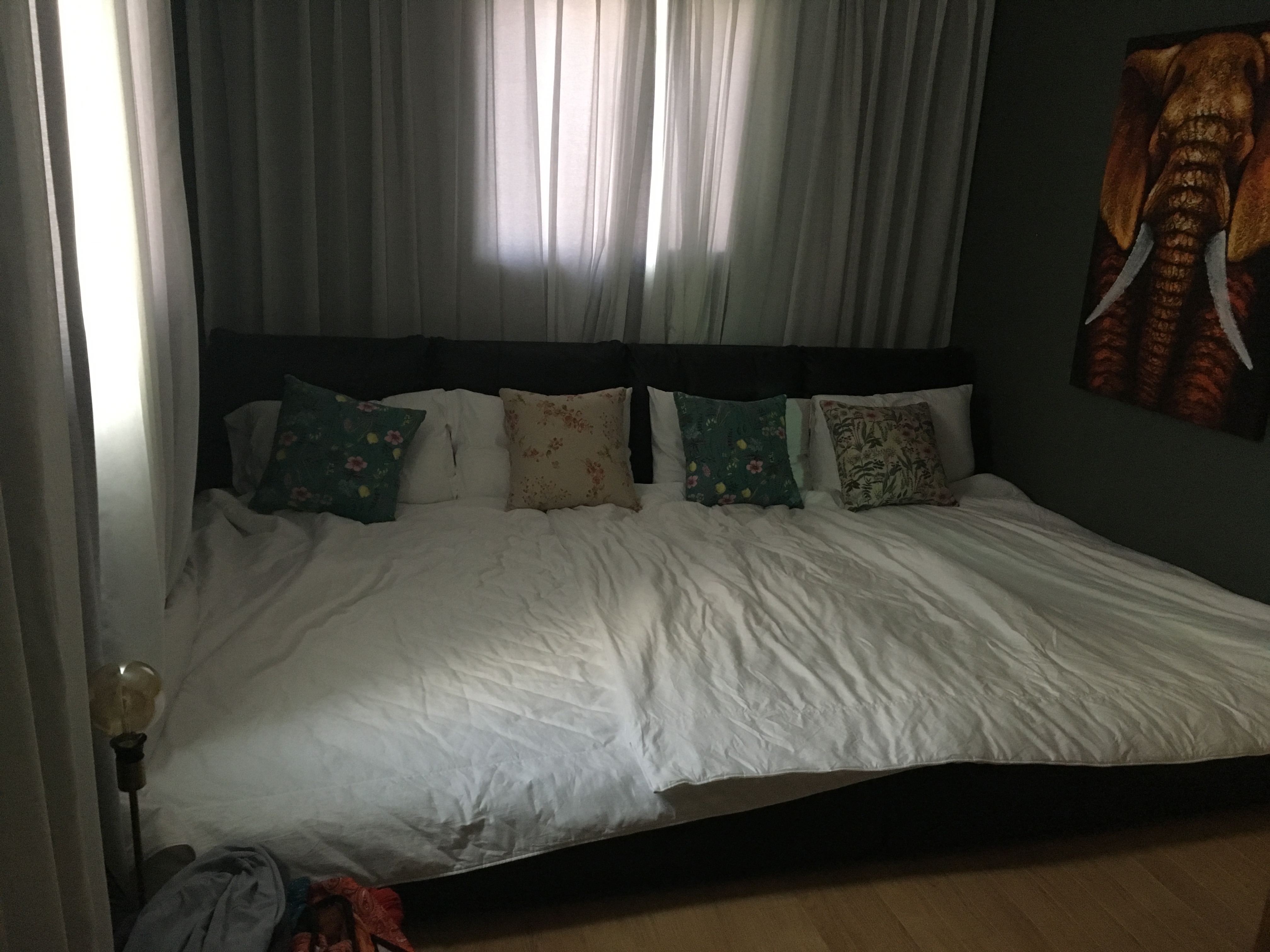
The bed in the master bedroom is also strange. It’s the size of two queen mattresses shoved together and hard as a rock. It’s a lot like sleeping on the floor, but boy do you have a lot of room to stretch out. This is actually quite nice; Adam sleeps like a log, but I toss and turn so much I probably burn more calories while I’m asleep than I do when I’m awake.
Adam: The one thing Josie wanted to do in Seoul was to visit the aquarium. She had seen (when back at home) some YouTube videos showing one shark eating another shark at this particular aquarium. We normally wouldn’t bother, but I thought it was as good a destination as any to start our week here – a good chance to sort out transportation, meals and to flex my now greatly expanding 5 word vocabulary of Korean.
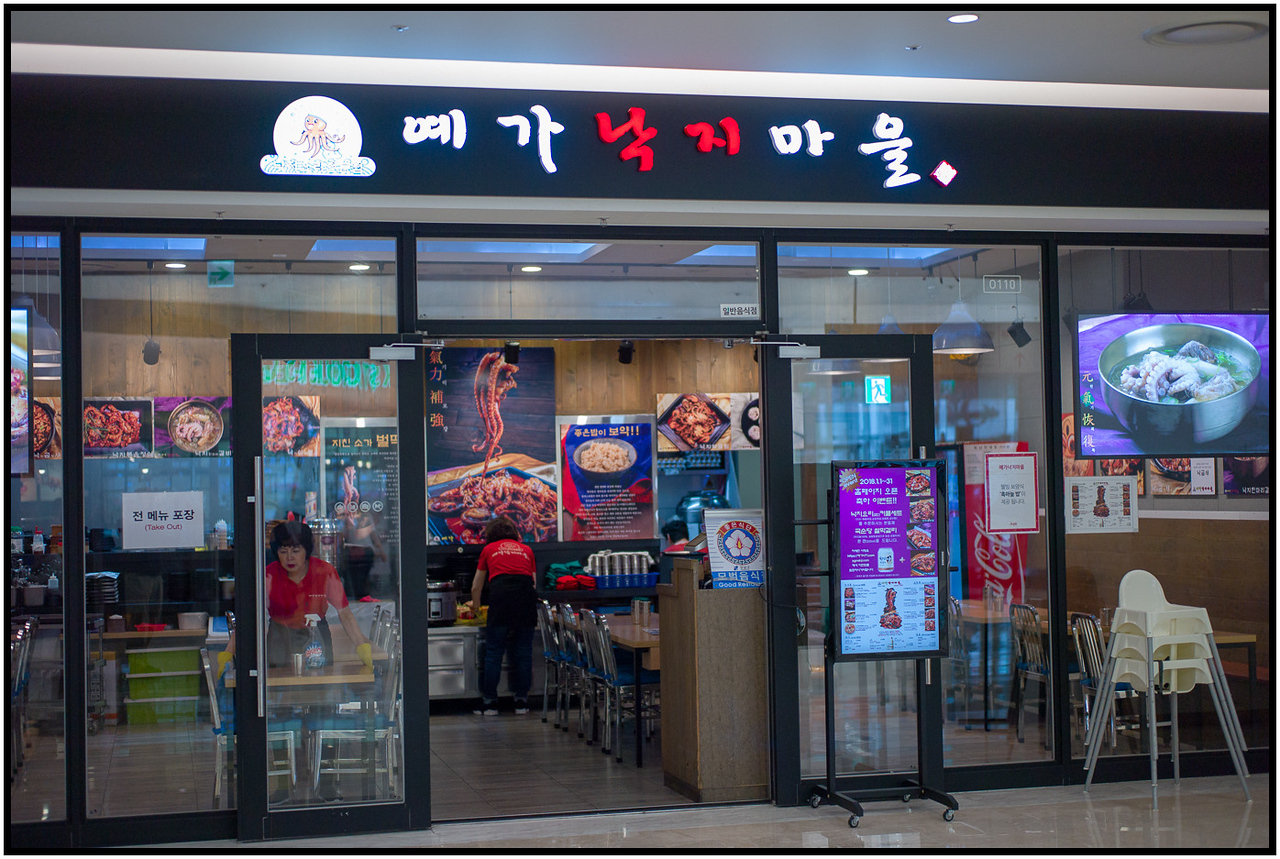
A fast food restaurant that specializes in all things Octopus. It’s right outside the entrance to the aquarium, which itself is inside a mall. The whole set-up is strange.
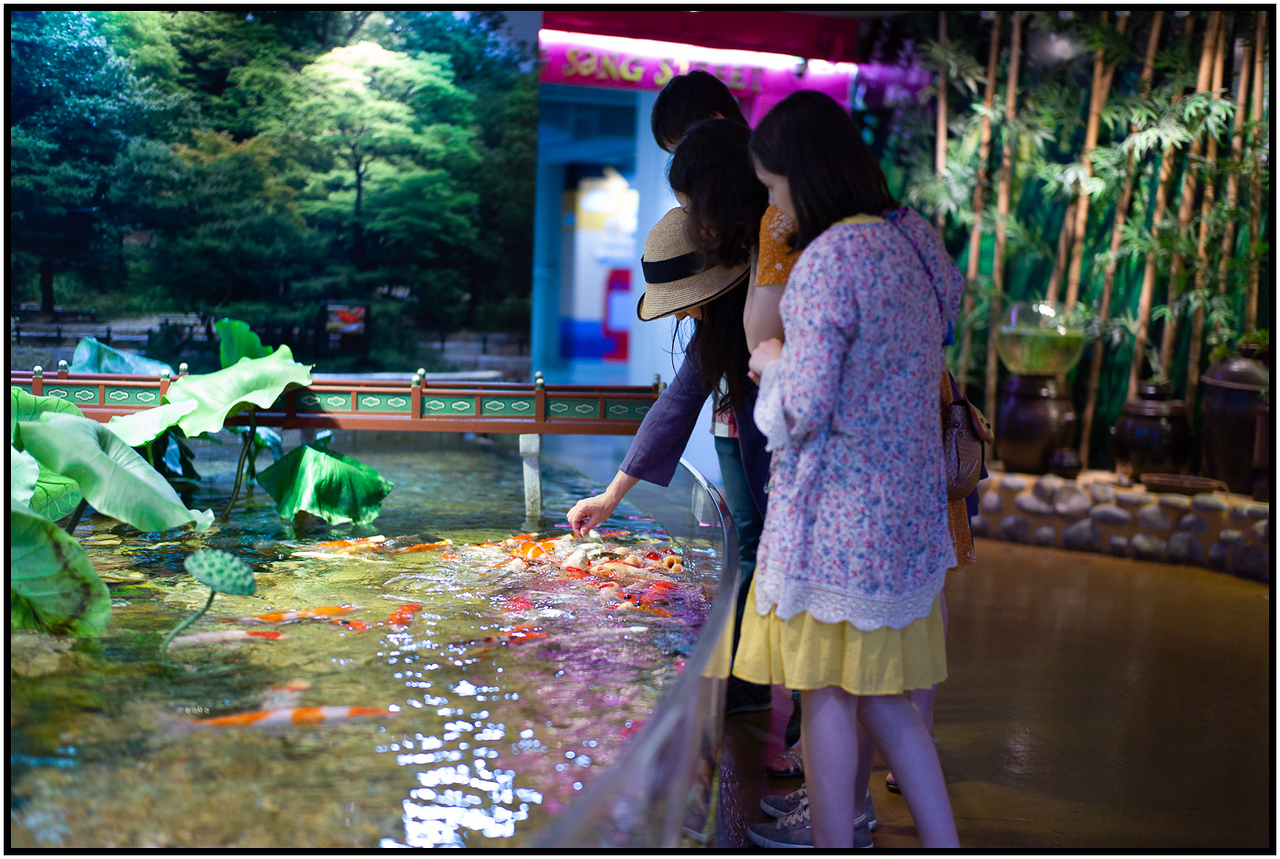
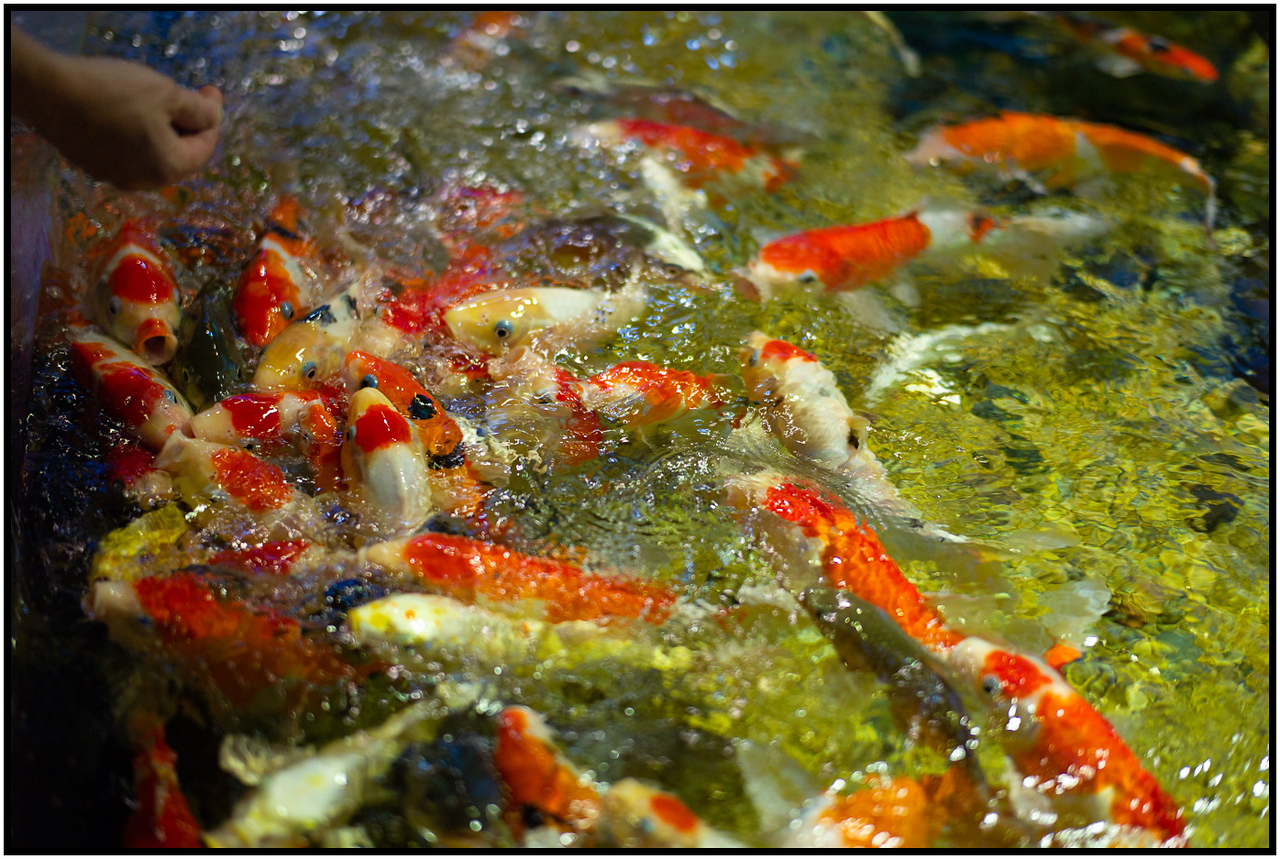
Feeding Koi in the aquarium.
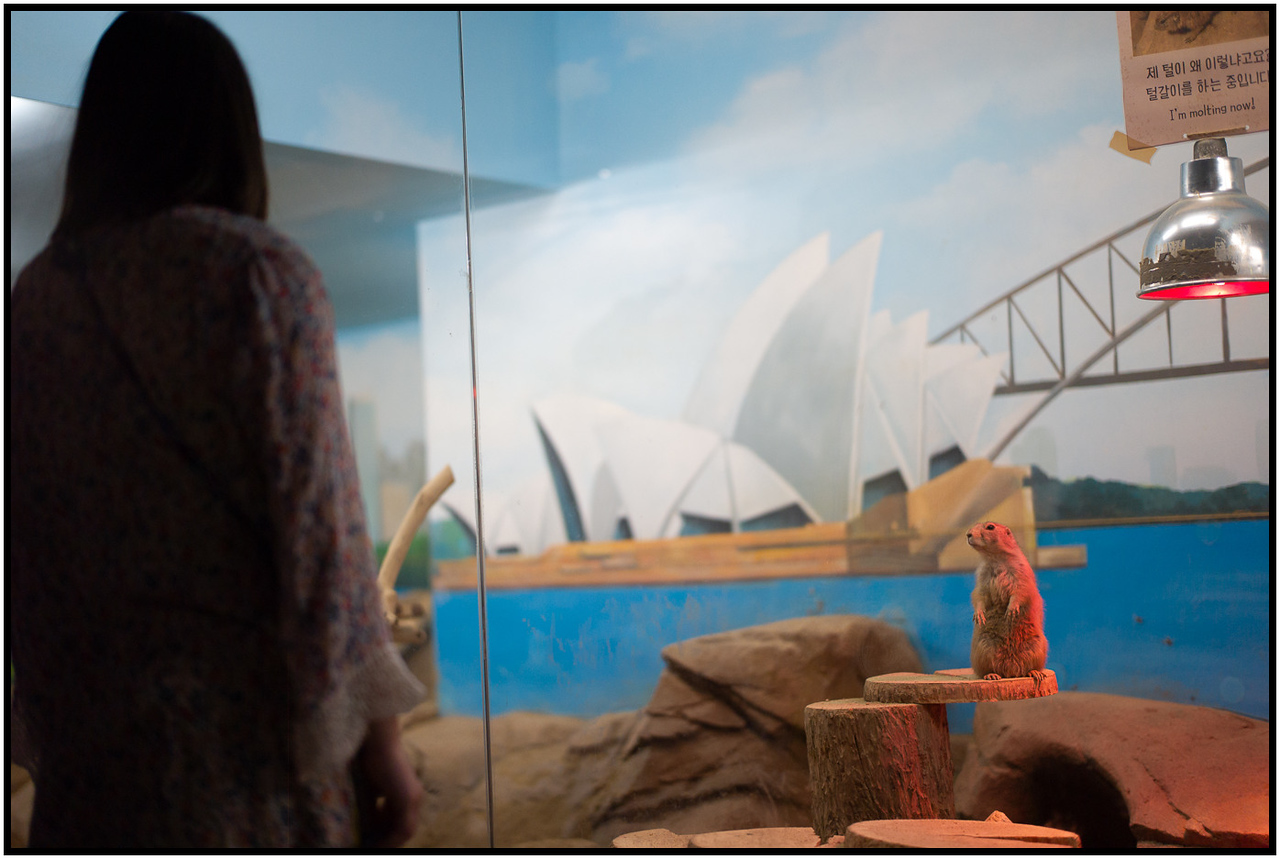
Josie and a groundhog regarding each other.
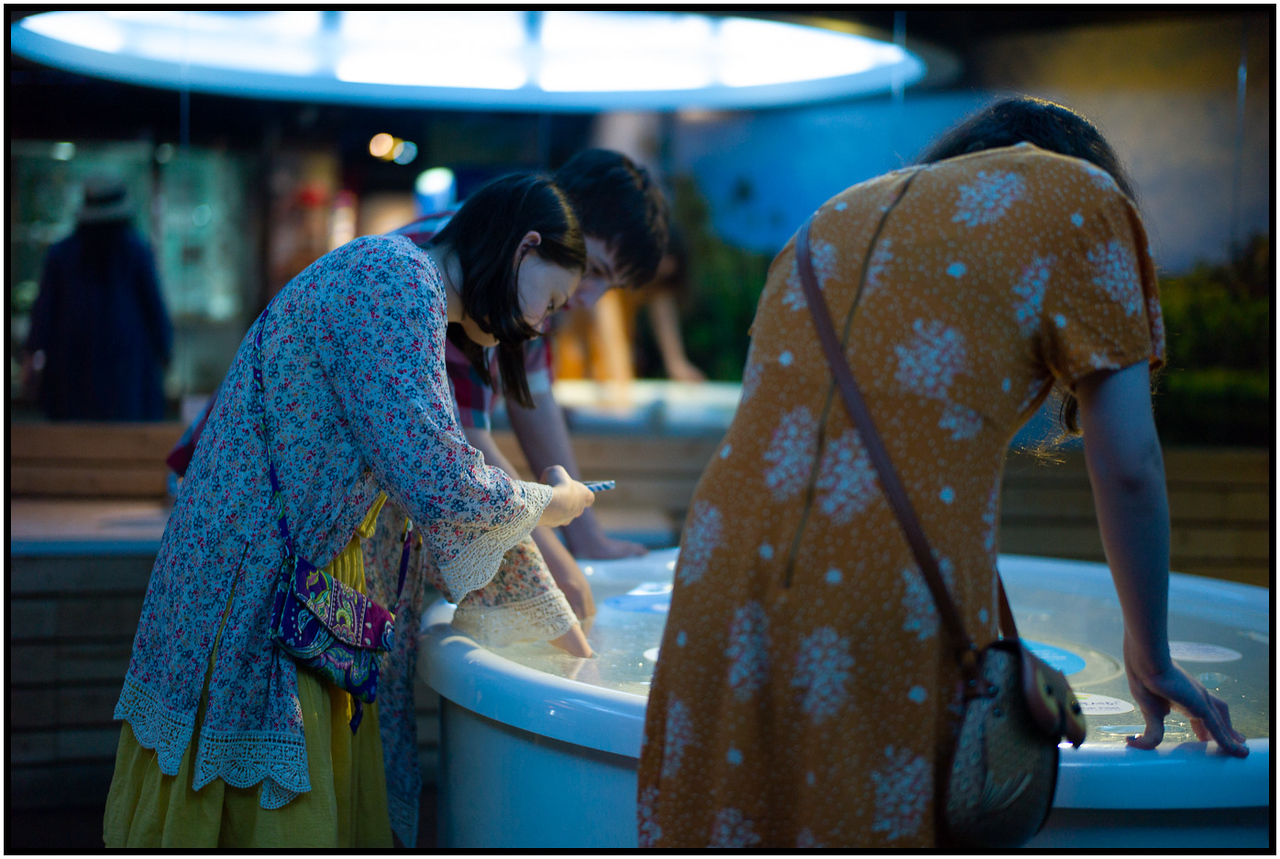
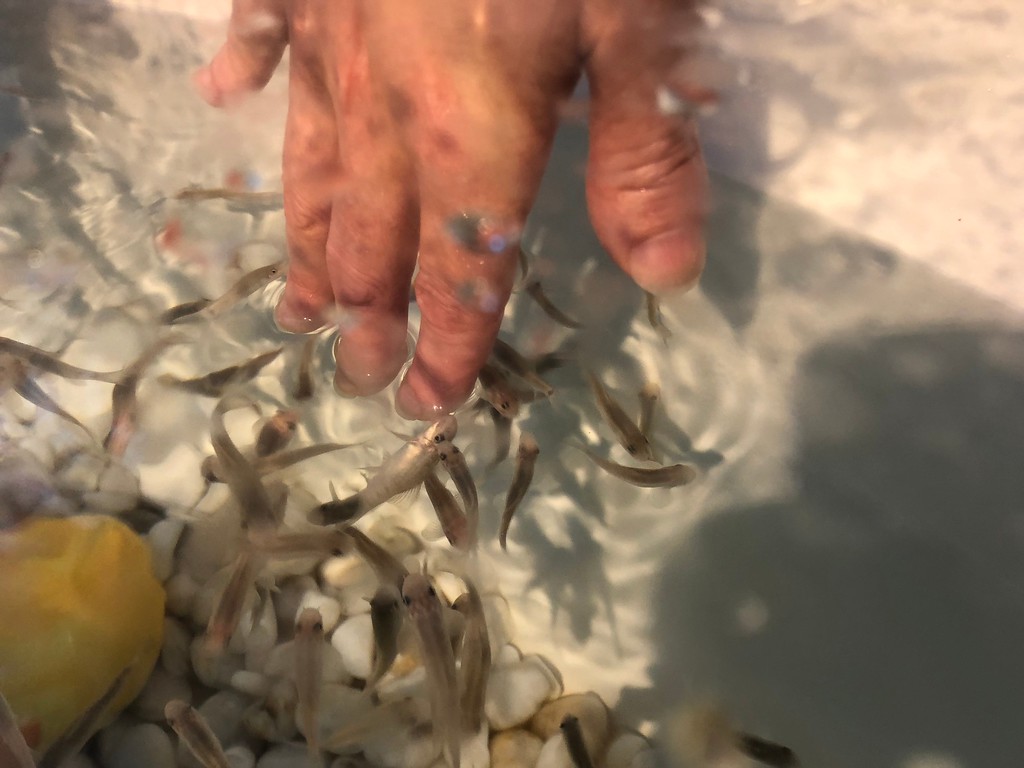
This was a tank of Doctor Fish. They are the little ones that eat dead skin and are sometimes used in spa treatments.
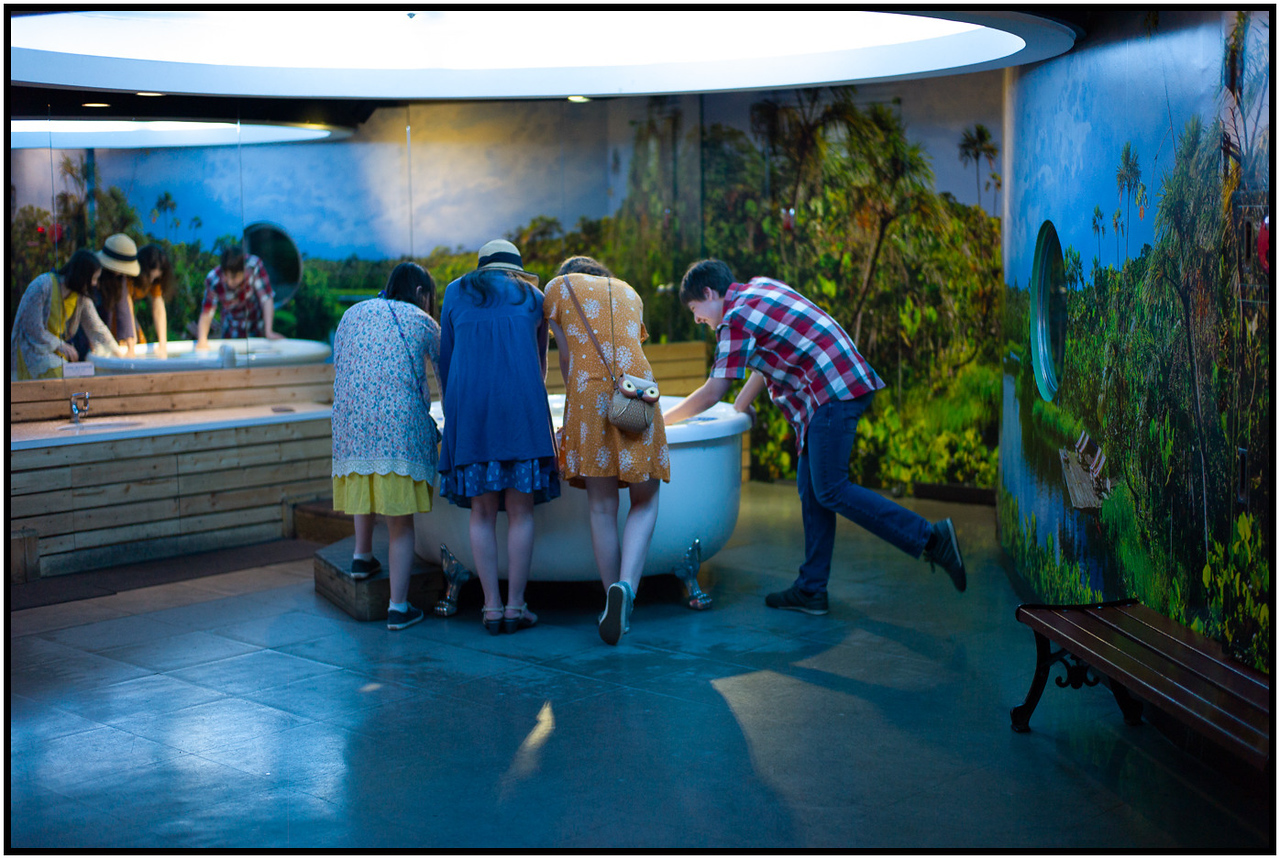
Josie taking a picture of the Doctor Fish eating the dead skin off her hand.
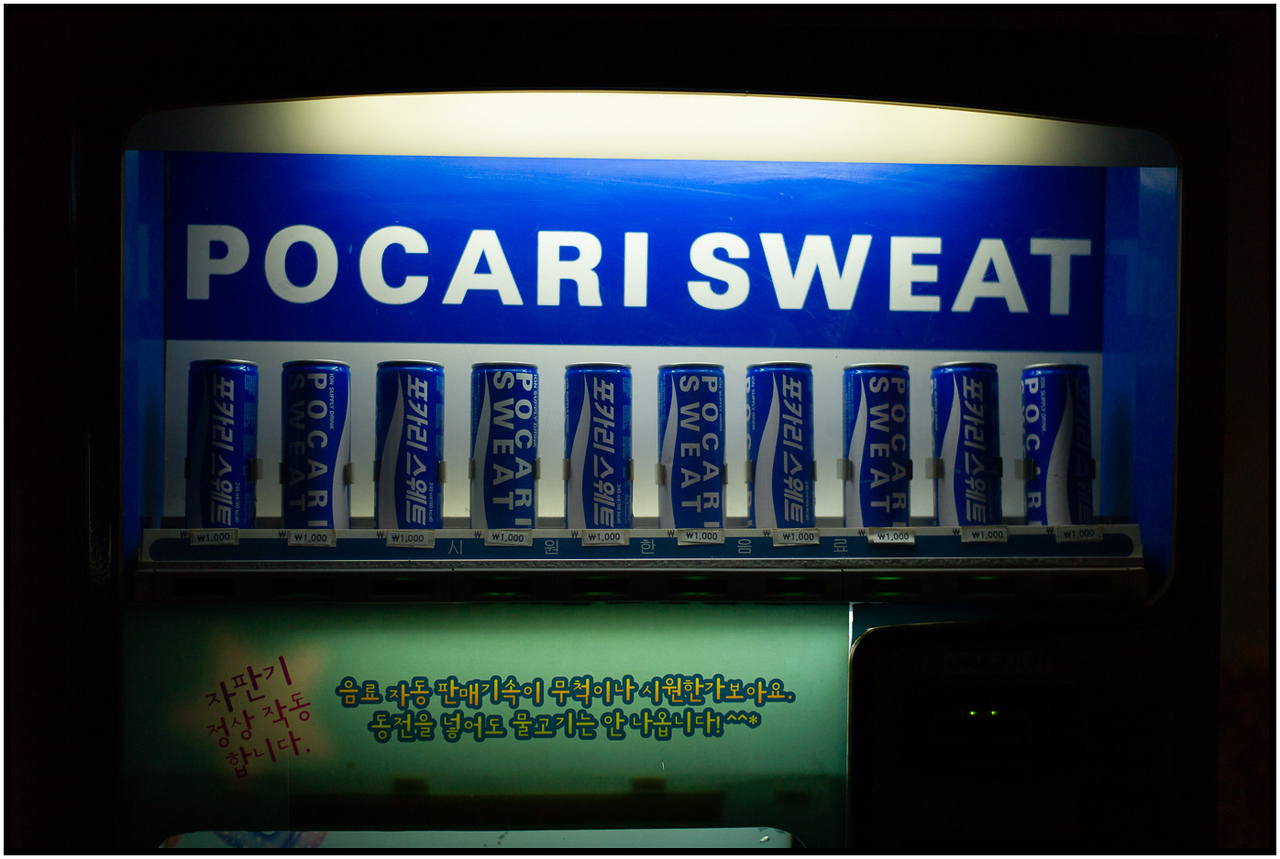
Pocari Sweat is popular in Korea, too.
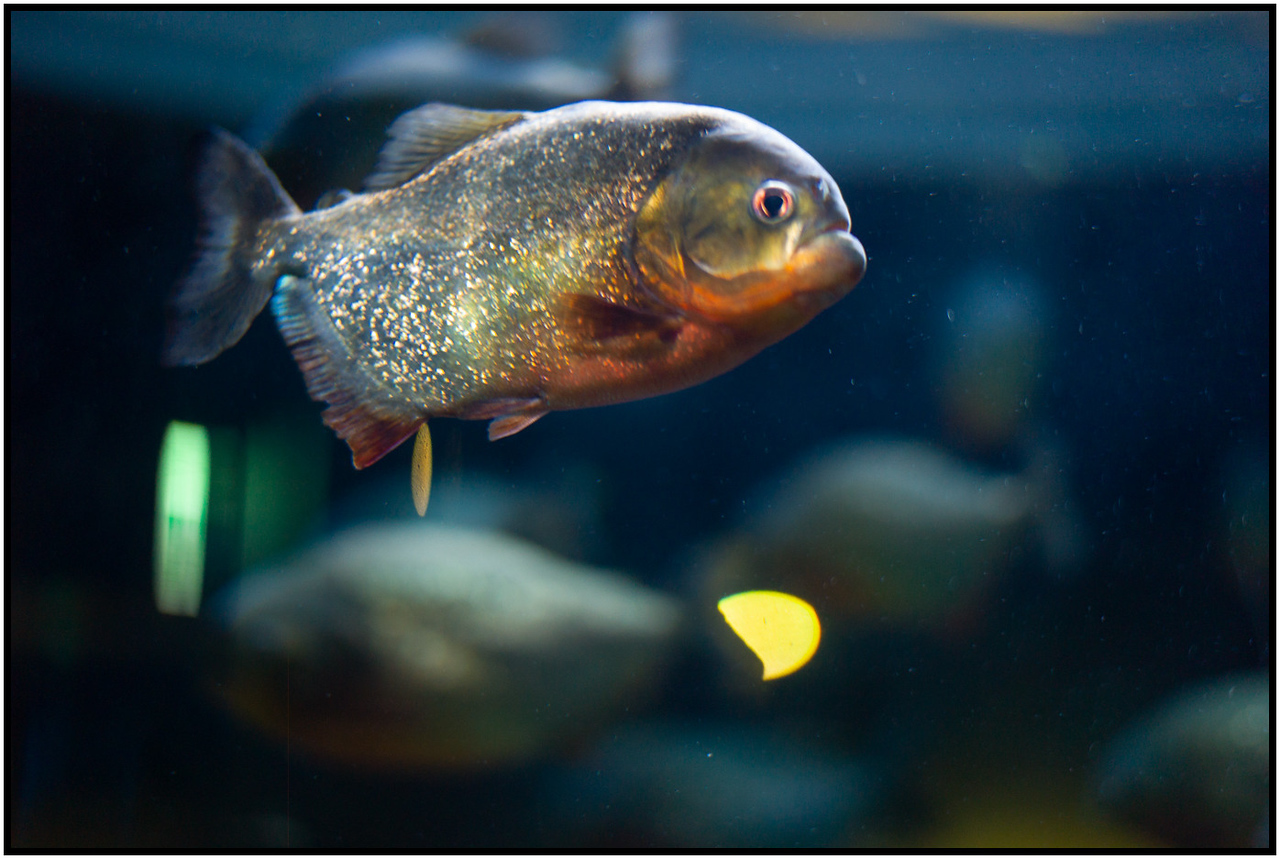
Sparkly piranha.
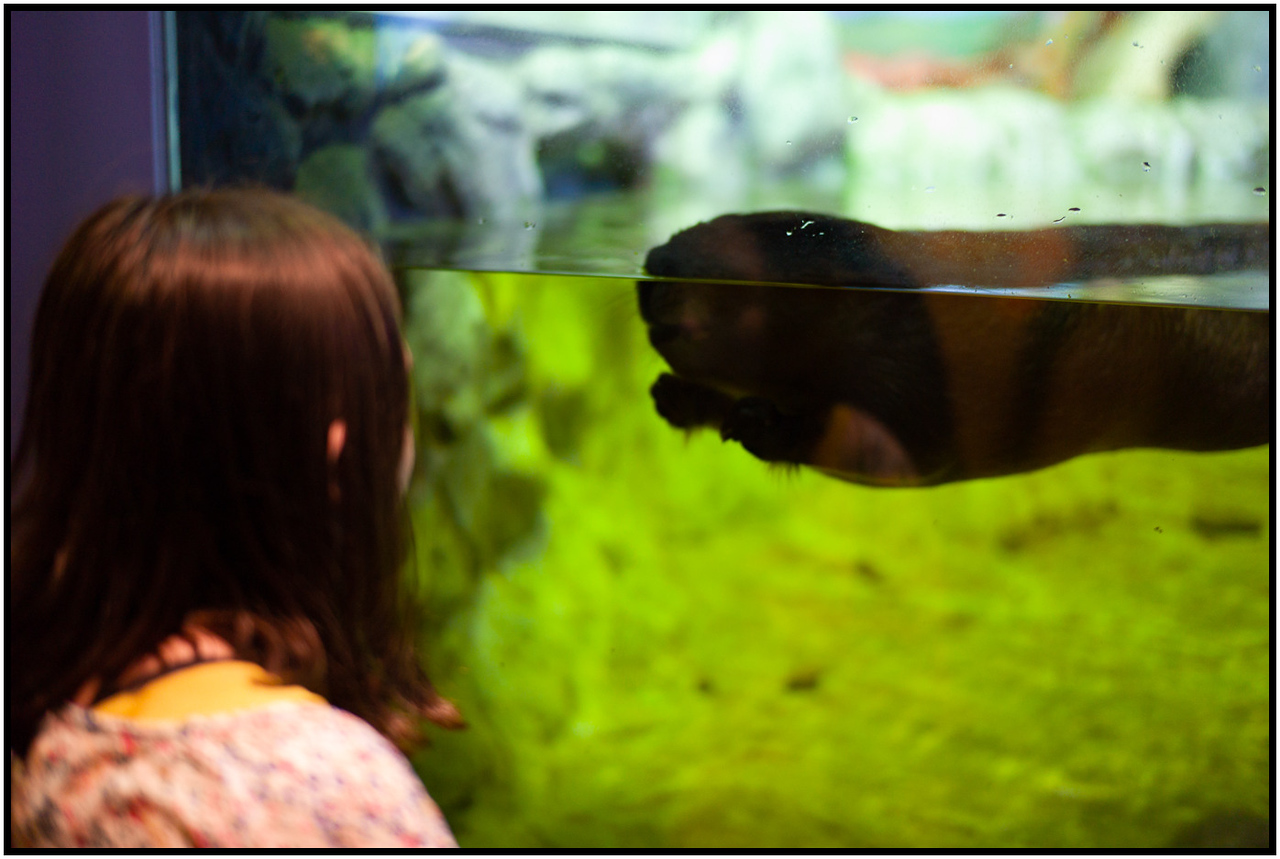
Josie and an otter regarding each other.
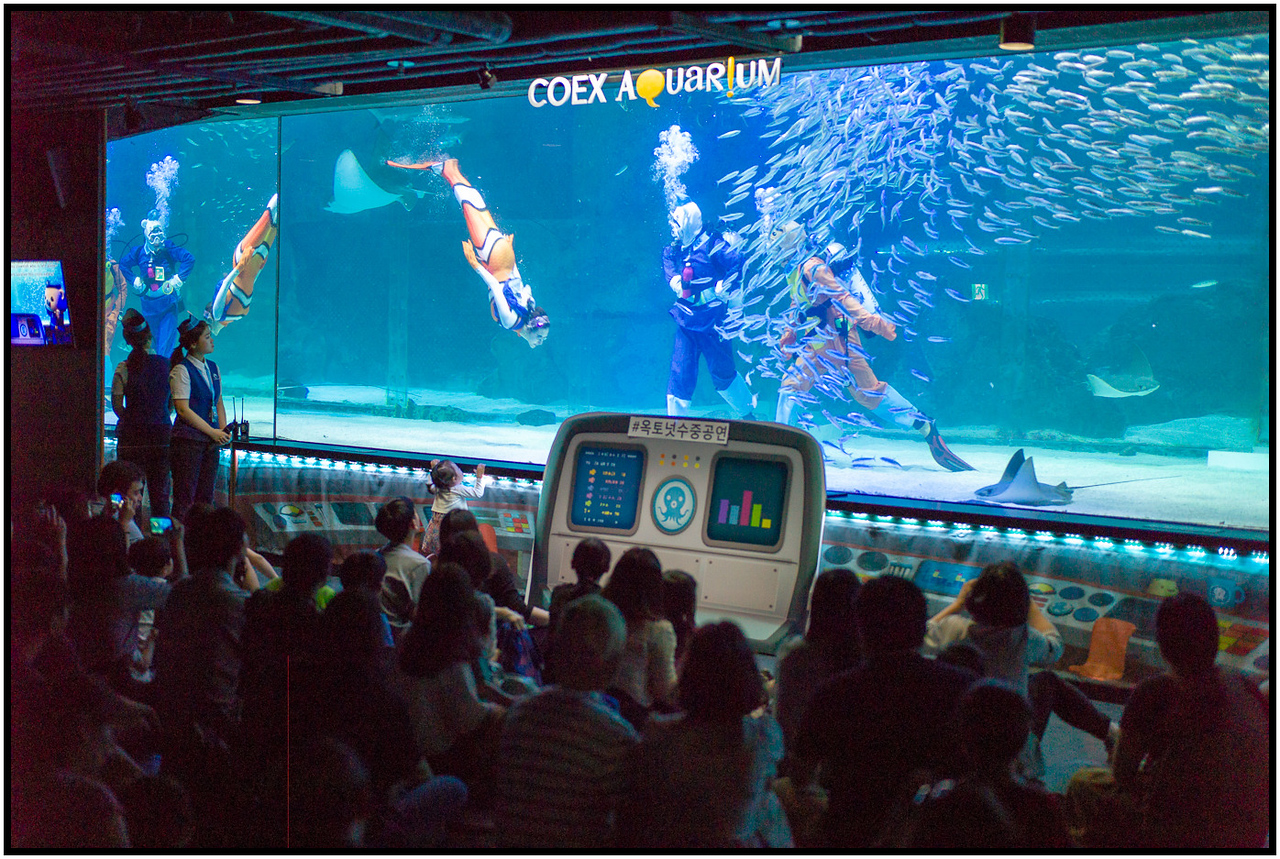
A pre-school group getting a show at the sardine tank. Divers performed a little skit. The girl dressed as a clownfish (aka Nemo) didn’t get an oxygen tank and had to hold her breath the whole time.
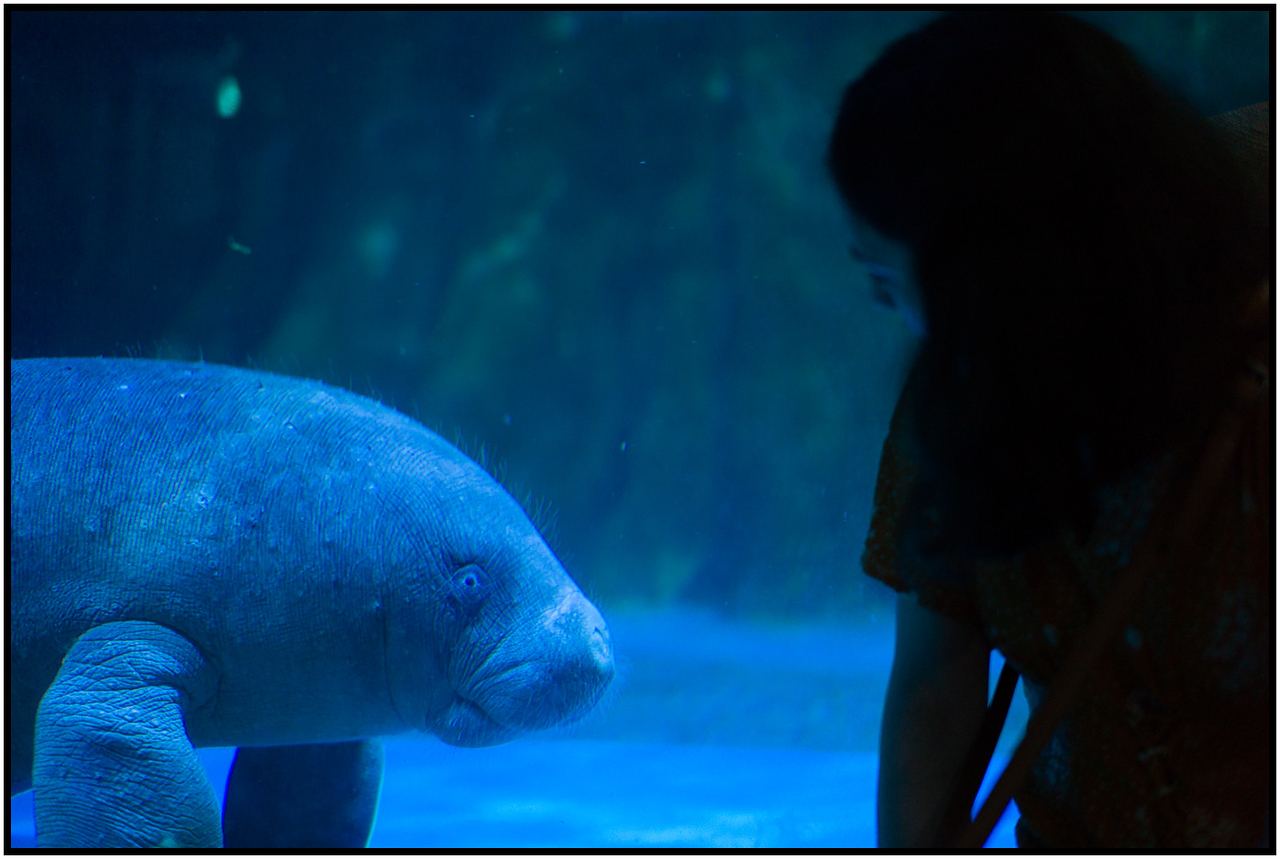
Isabella and a manatee regarding each other.
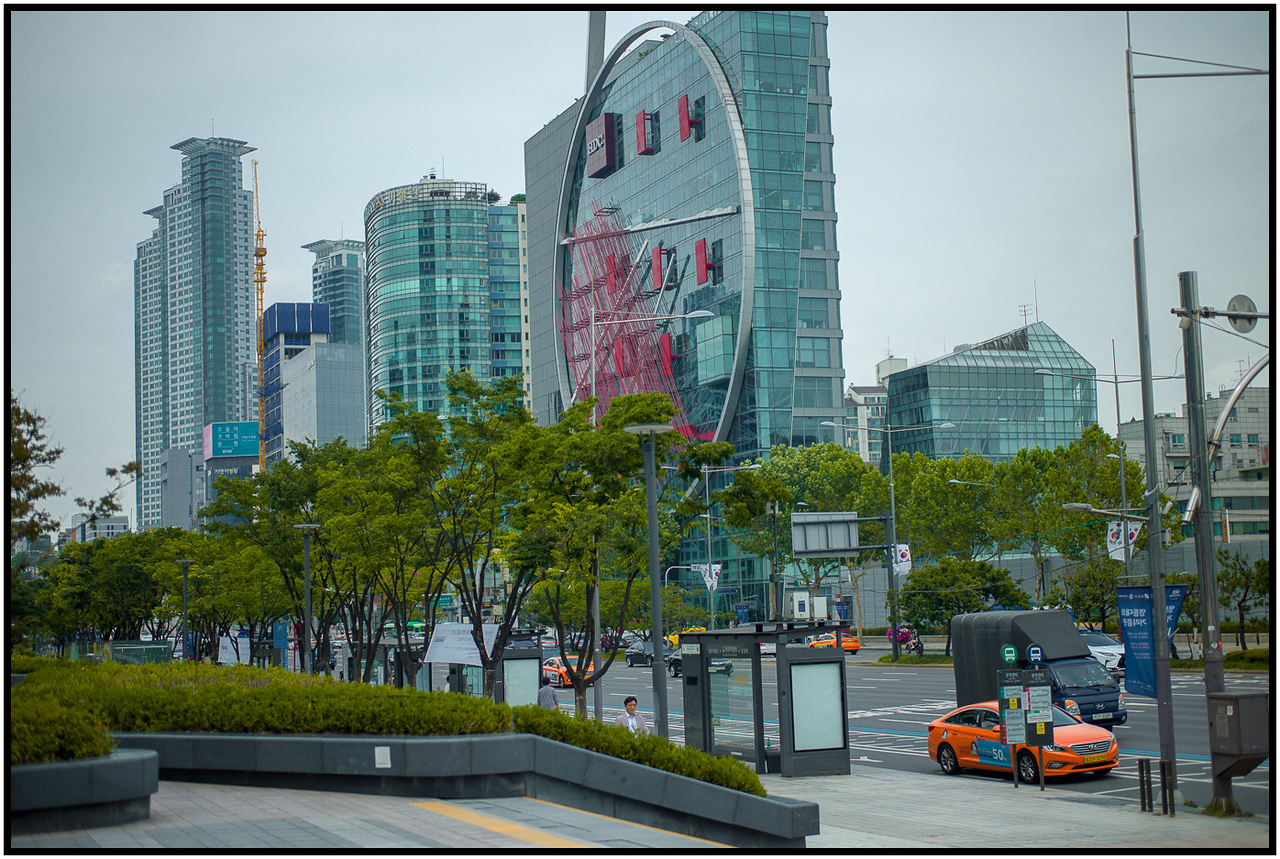
Adam: After the aquarium, we went to a neighborhood called “Gangnam” – known for its youthful population; a hip and modern place to see and be seen. This area is known internationally through the annoying song that took the world by storm in 2014. You’ve surely seen it before. (More than 3 Billion views… Ugh. The Video has some scenes of the city and is entertaining in the “what the hell am I seeing, here?” sense.
Brenda wanted to take a picture of the kids with the statue (below) striking poses. The kids vehemently rejected the request. They even turned down offers of money just in case someone back home accidentally saw the photo, so great would be their mortification.
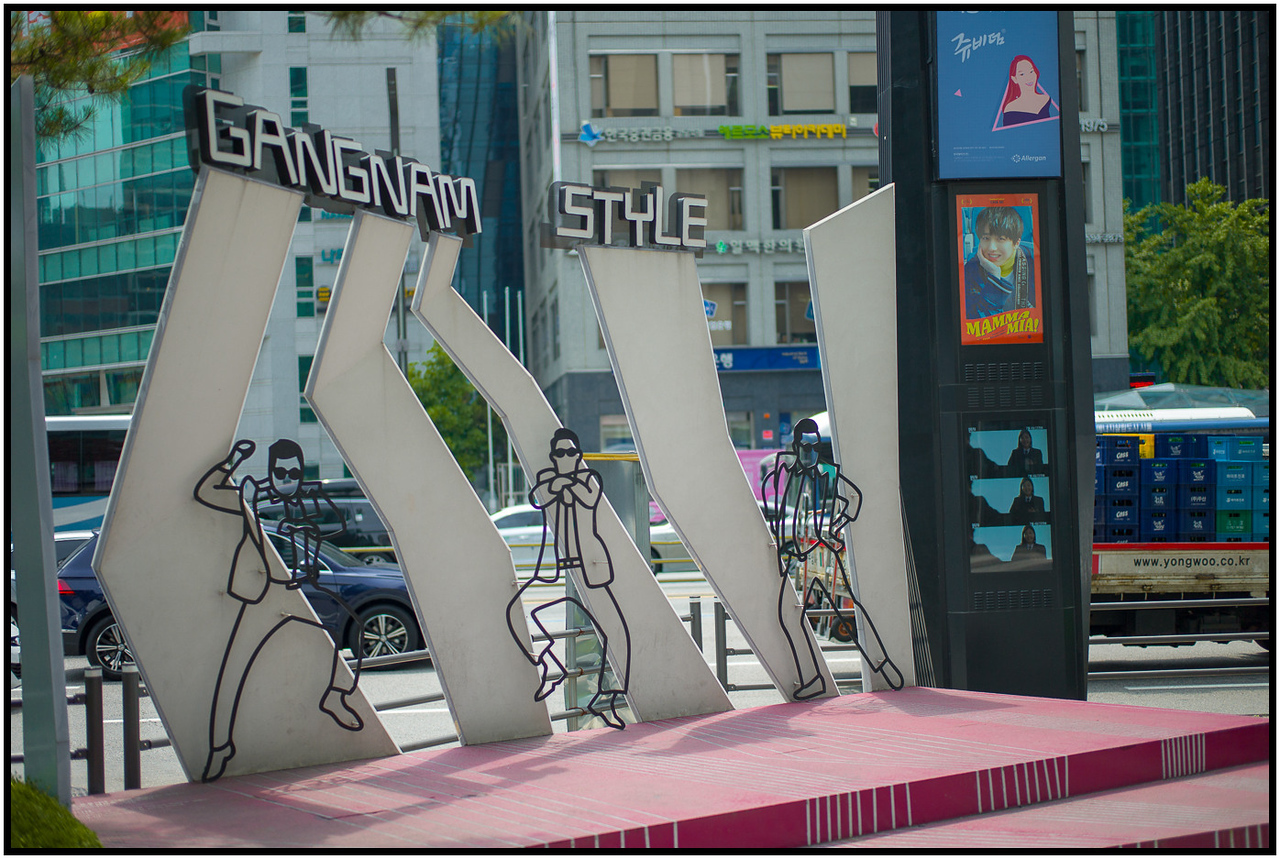
This city is huge and I was surprised to read later that Seoul is the 5th largest city in the world. (for context, the NYC Metro Area is down to 16th in the world). These Asians know their big cities. South Korea has a population of 50MM and about half of those live in the Seoul area.
Wednesday, 20 June 2018
The weather is much nicer here than it was in Hong Kong. It’s still getting hot (upper 80s in late afternoon) but the humidity much lower. It’s cool and welcoming in the morning. We can walk around for 15 minutes without becoming drenched.
Today we decided to hit the #1 tourist destination in Seoul – Changdeokgung and the Huwon Secret Garden.
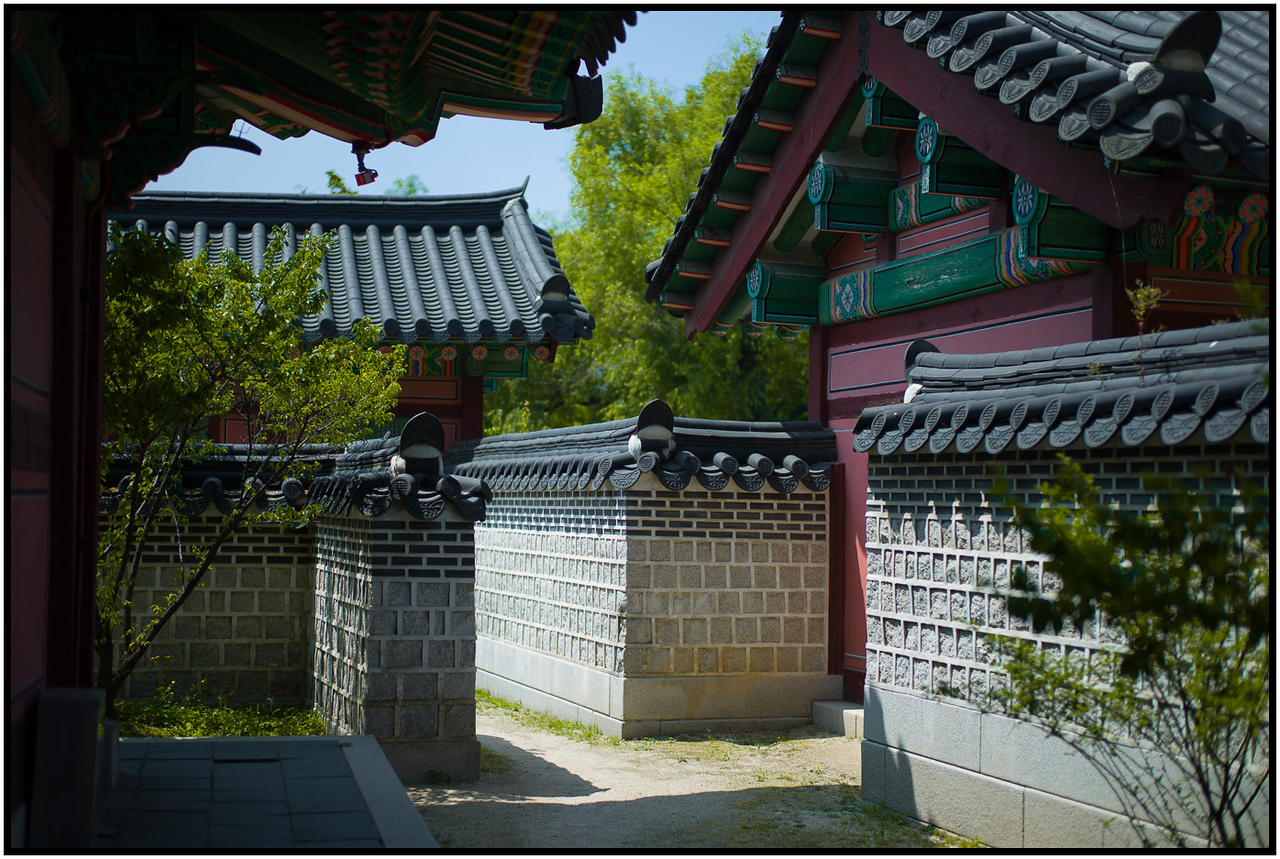
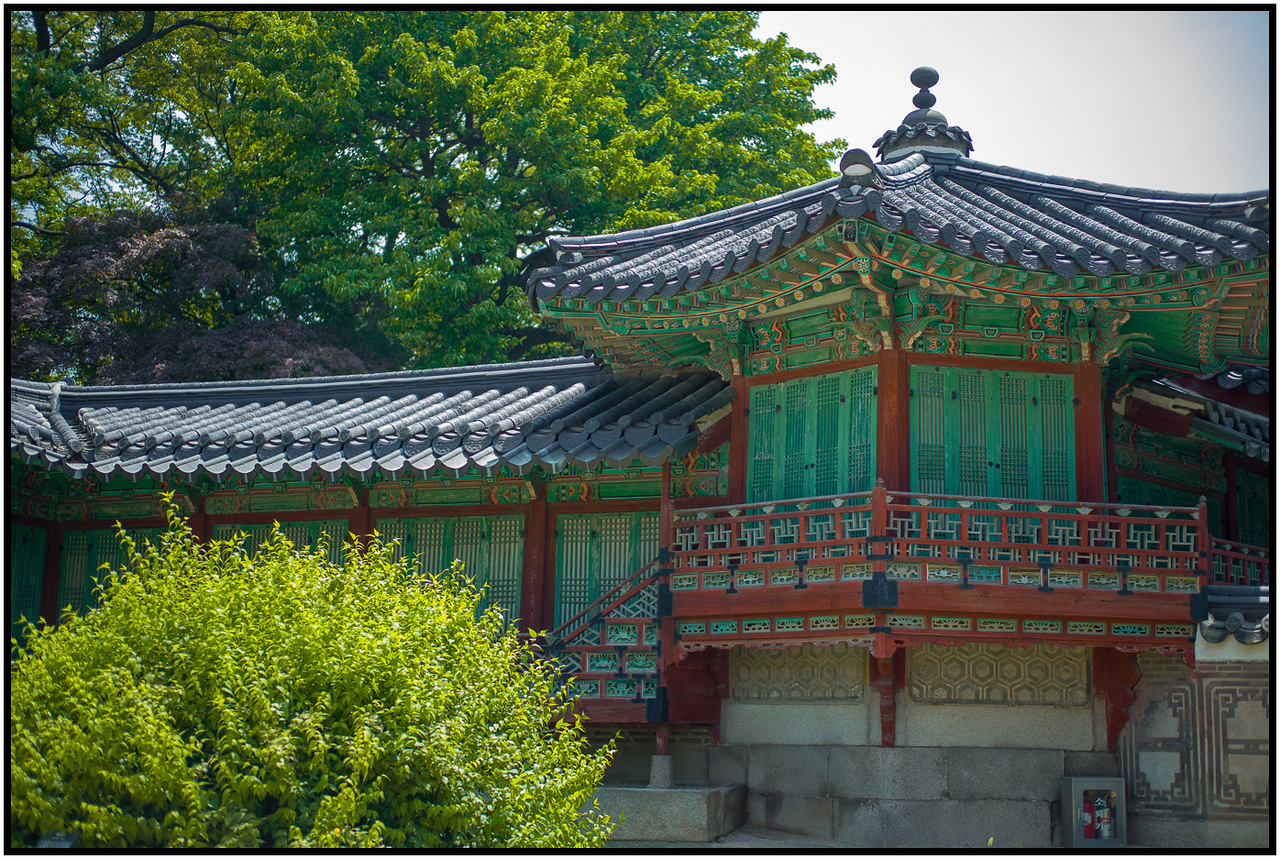
This is a series of royal palaces – Today there are 13 buildings remaining on the palace grounds and 28 pavilions in the gardens, occupying 110 acres. The oldest was built in 1405. It began as a secondary palace of the Joseon Dynasty.
Much of the grounds were destroyed during the Japanese invasion (1592-1598). They rebuilt in 1610 and it served as the main Palace for 270 years. The Japanese again took it over in 1910 … this time they didn’t destroy much, but “defaced” the grounds by adding stone walls and erecting modern (for the time) buildings. In general, the Koreans are still pretty sore about their neighbors to the east.
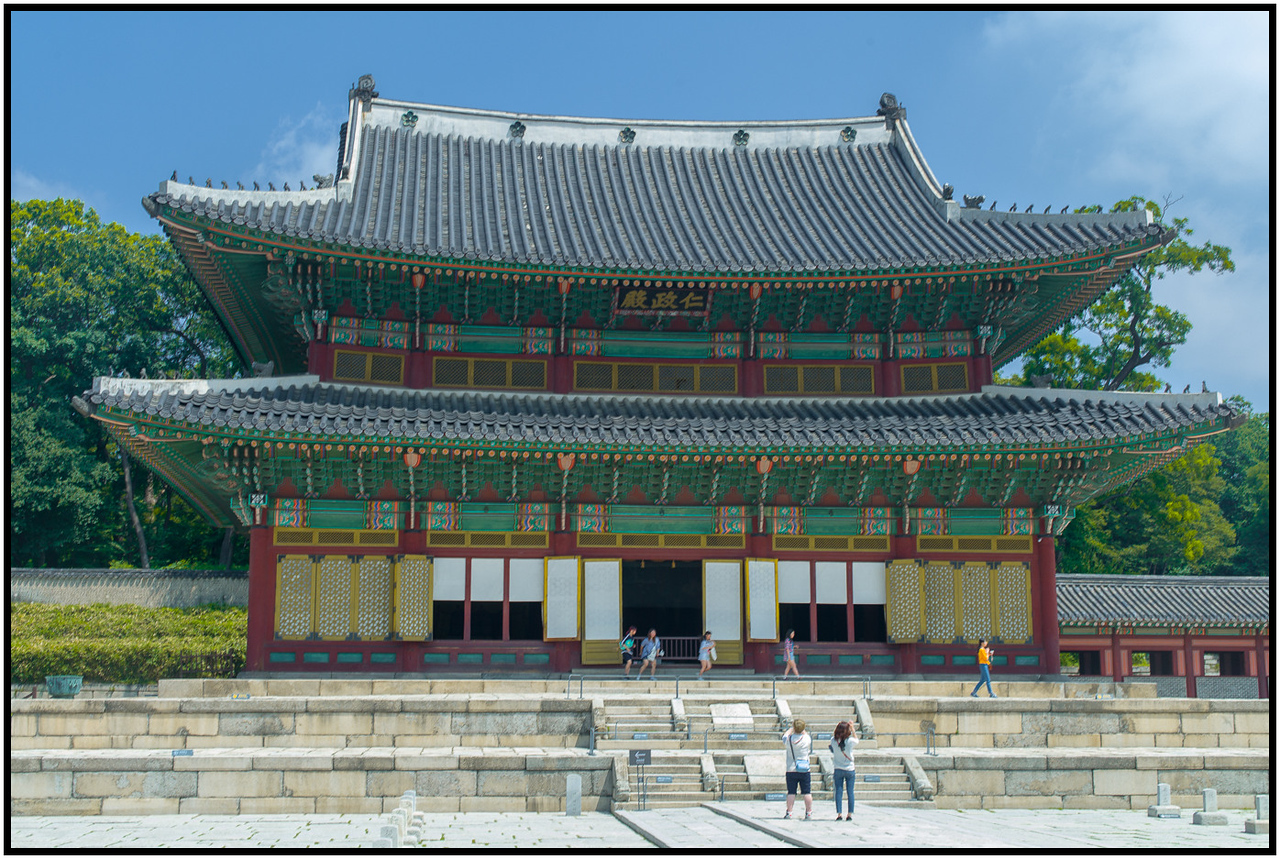
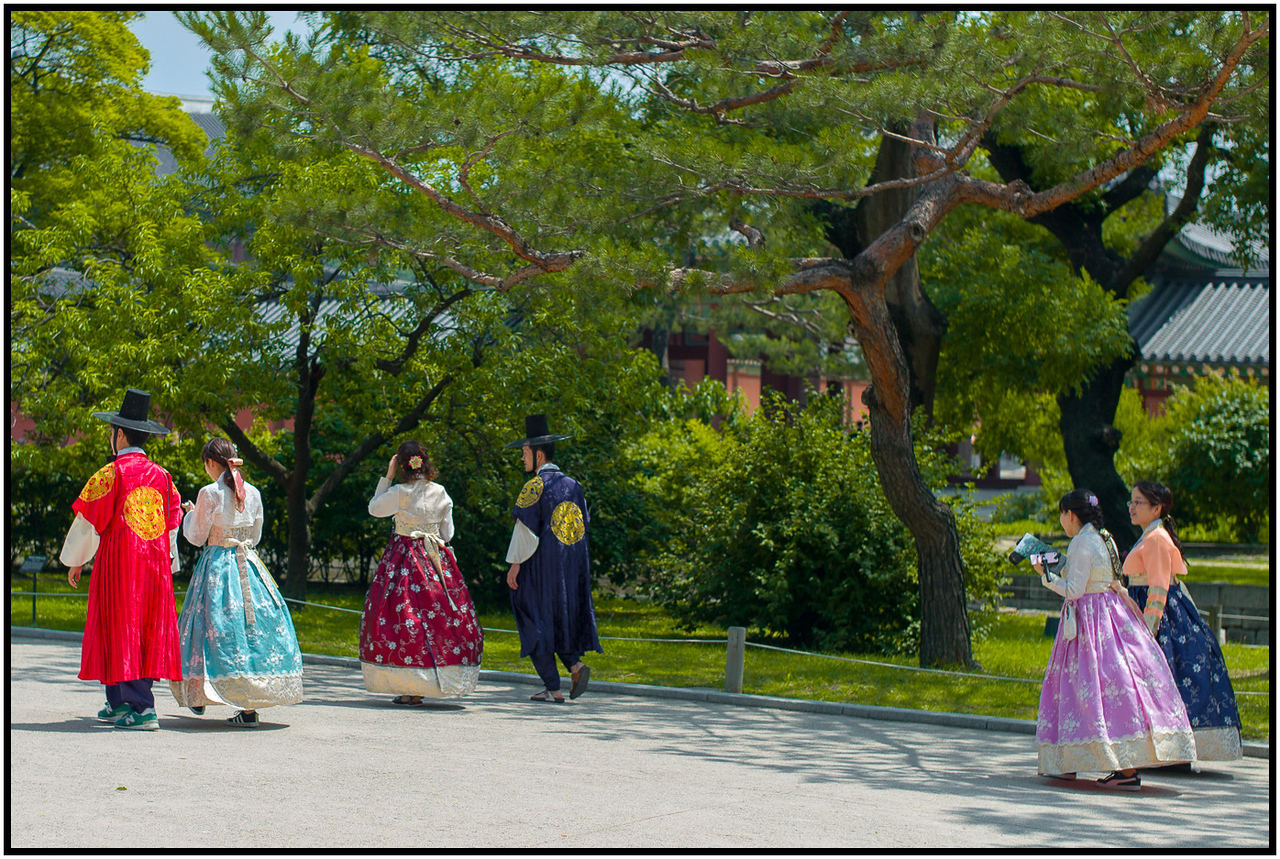
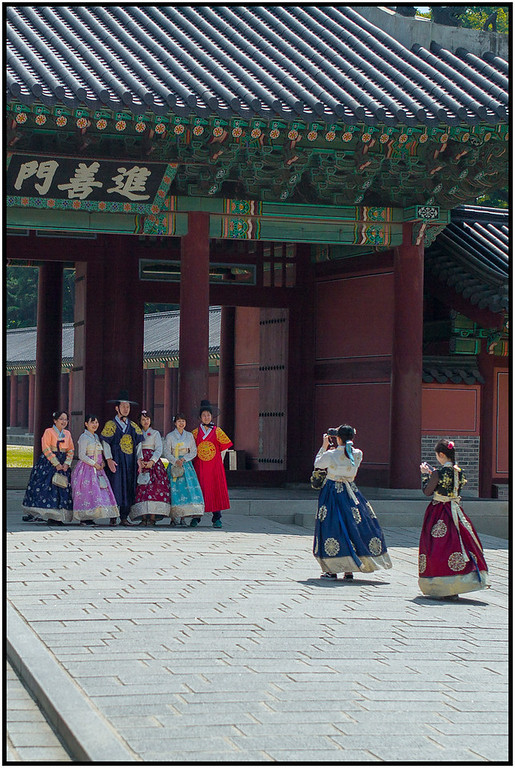
These people don’t work here: there is a costume shop nearby where people can get dressed up so they can walk over to the palace and tour it in old-timey garb. This group was having a lot of fun and taking a lot of selfies.
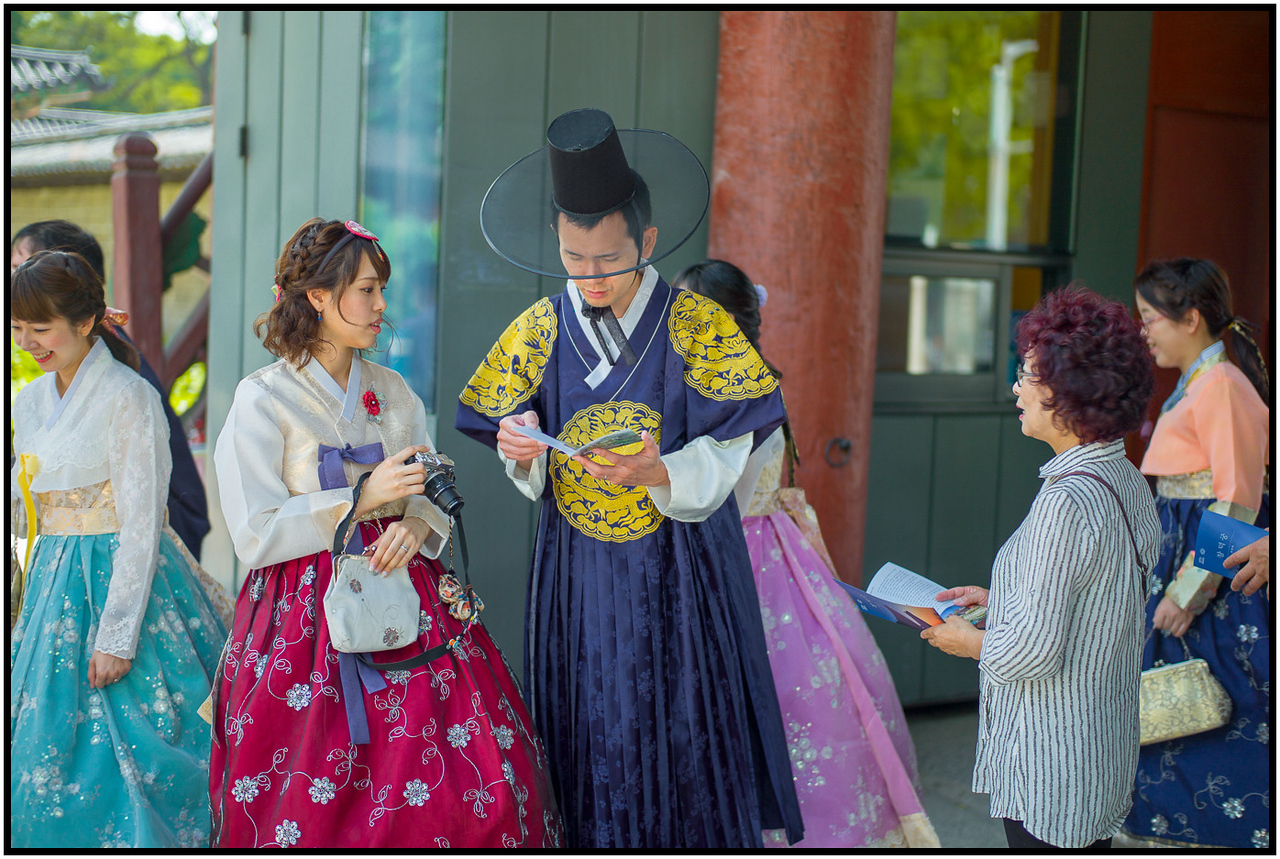
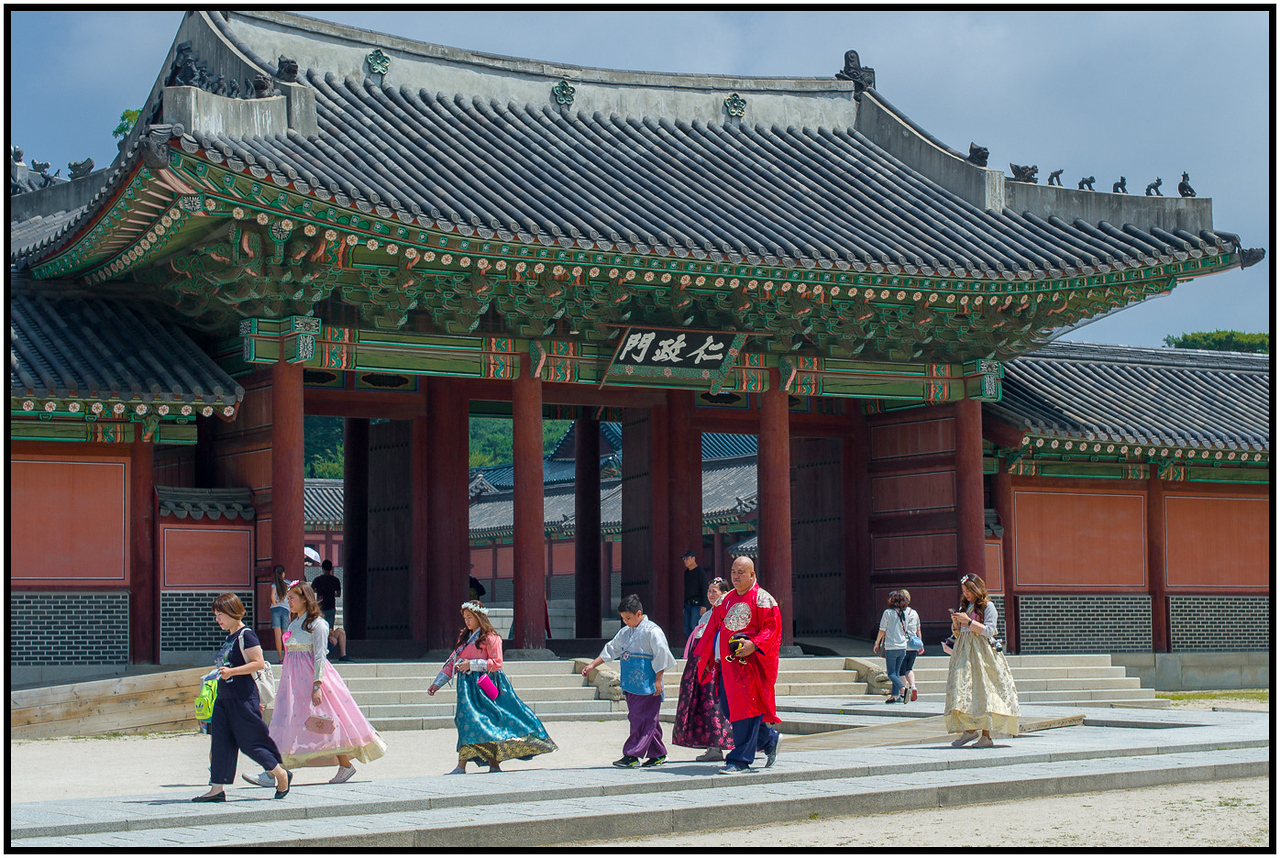
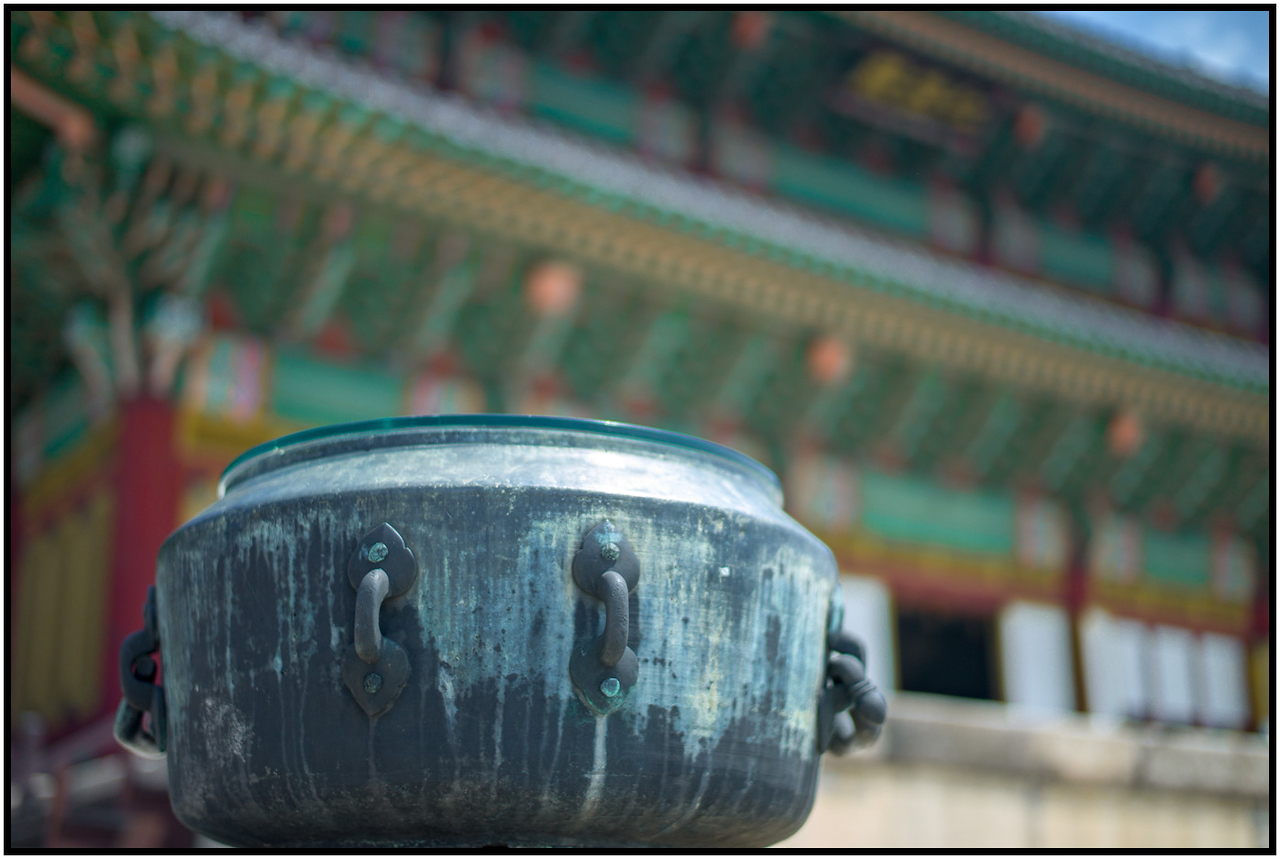
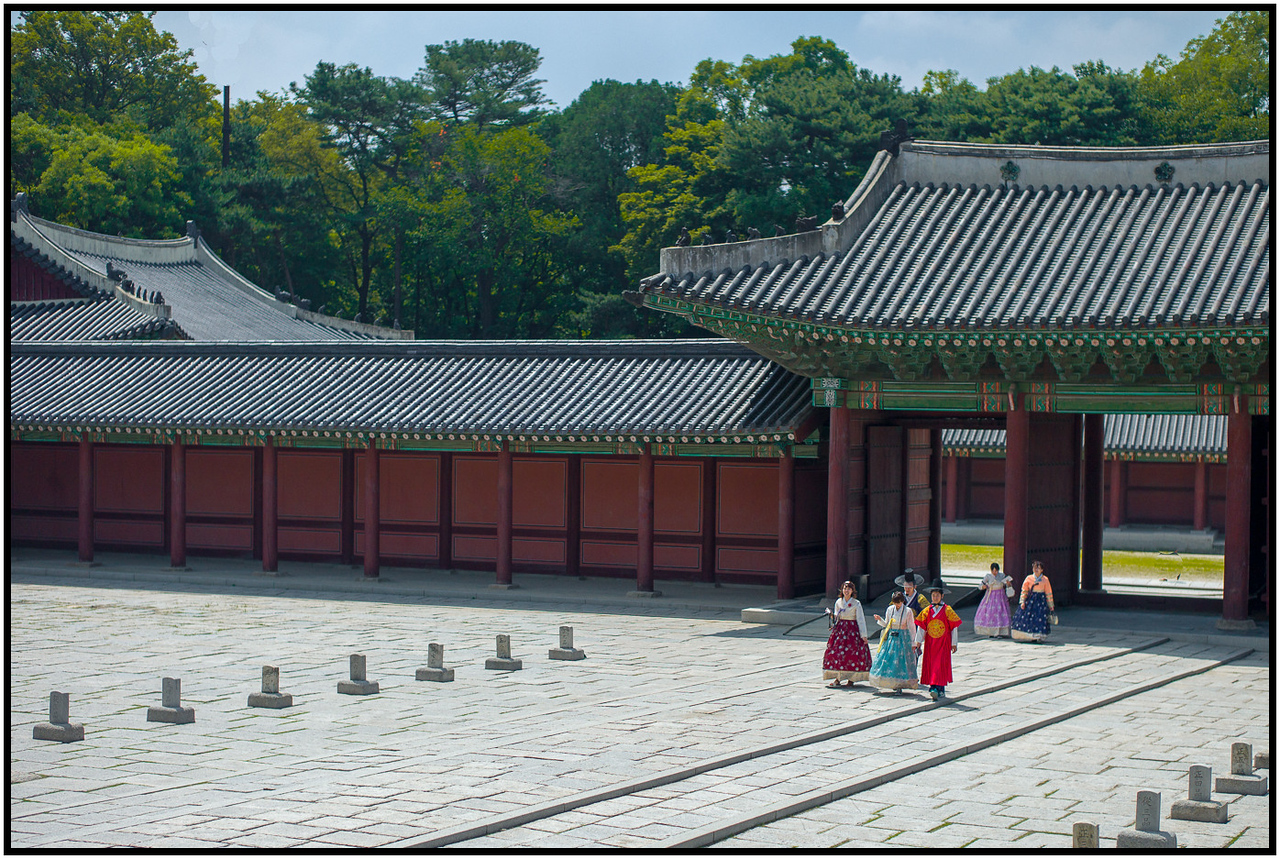
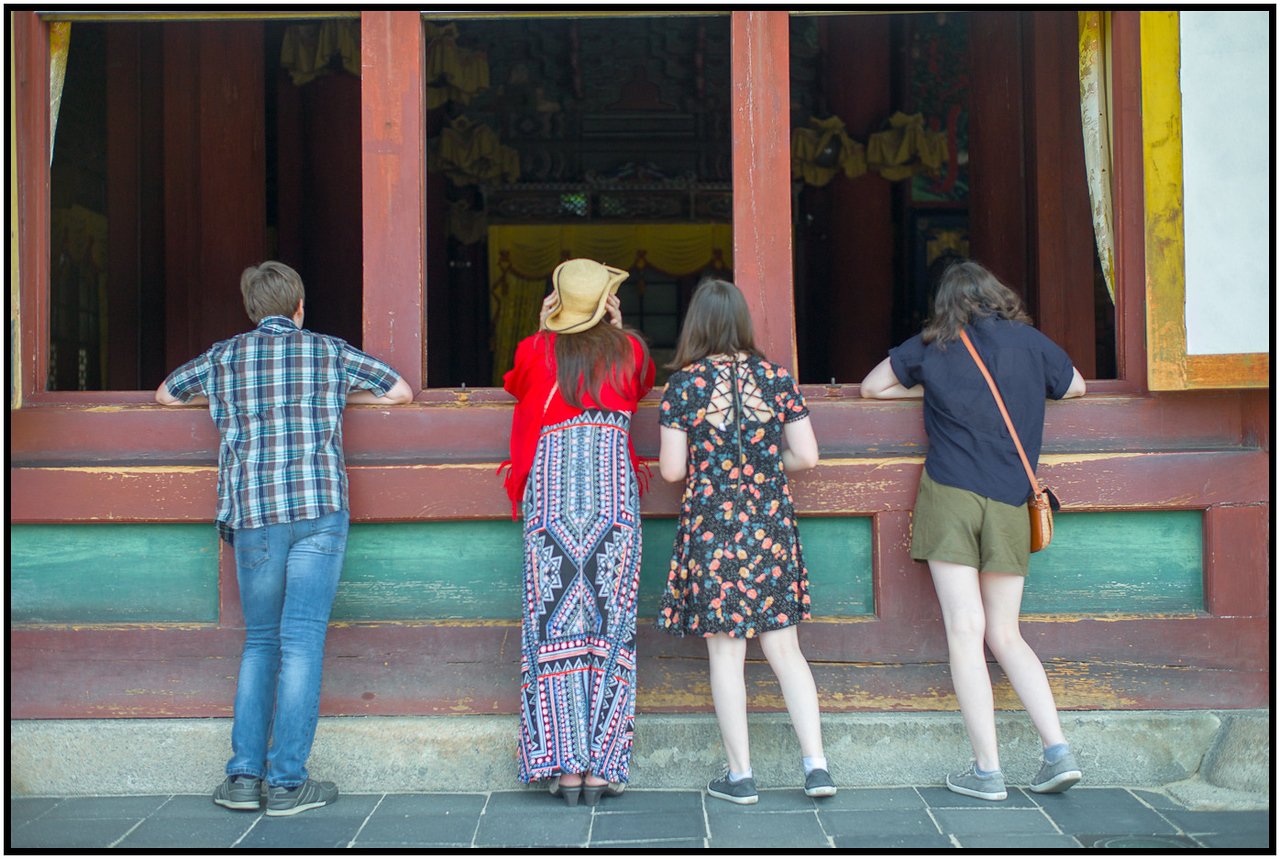
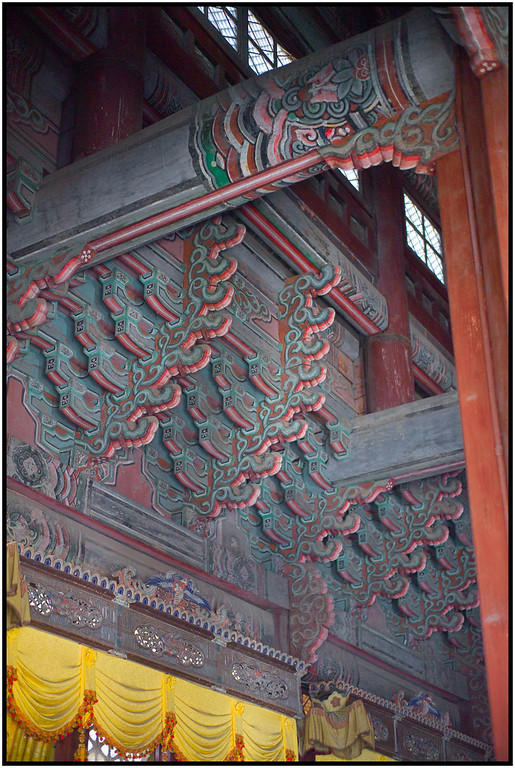
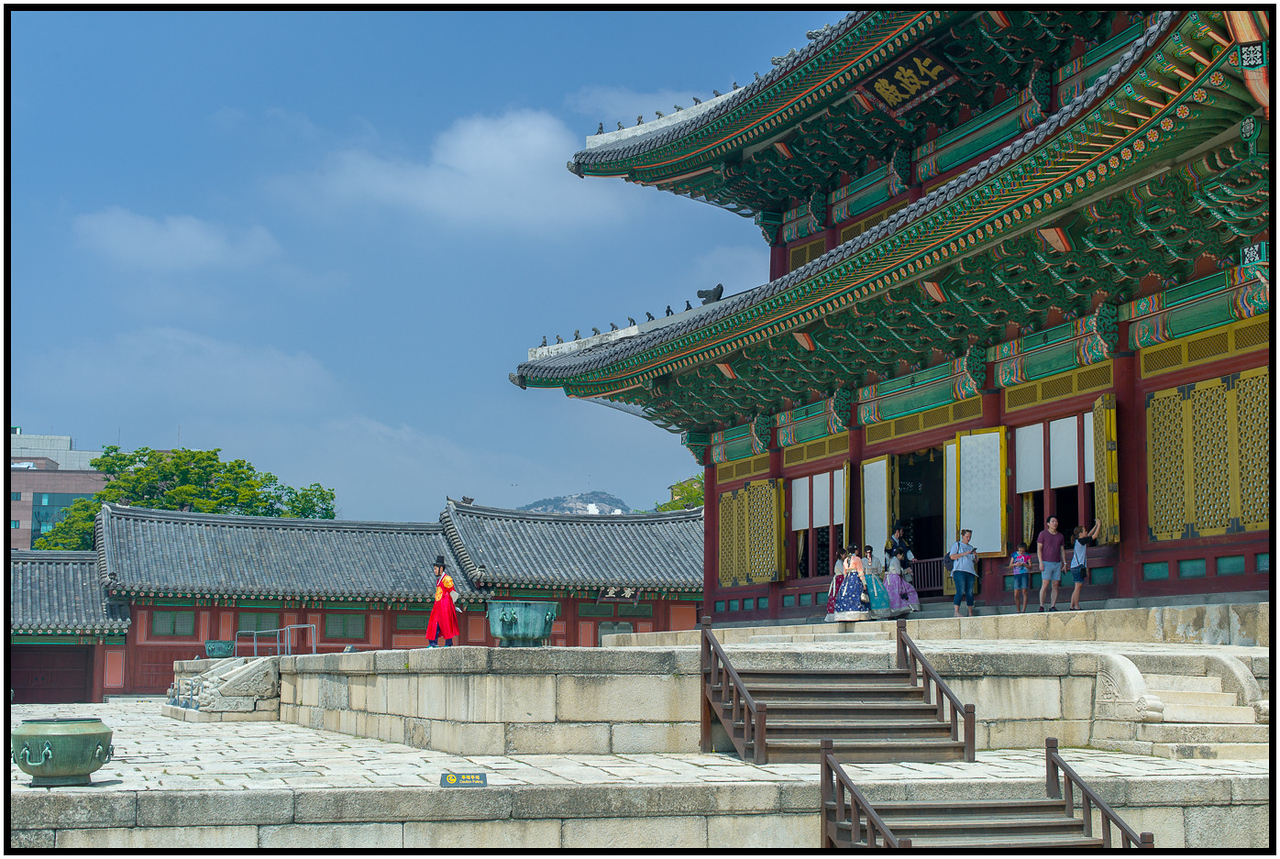
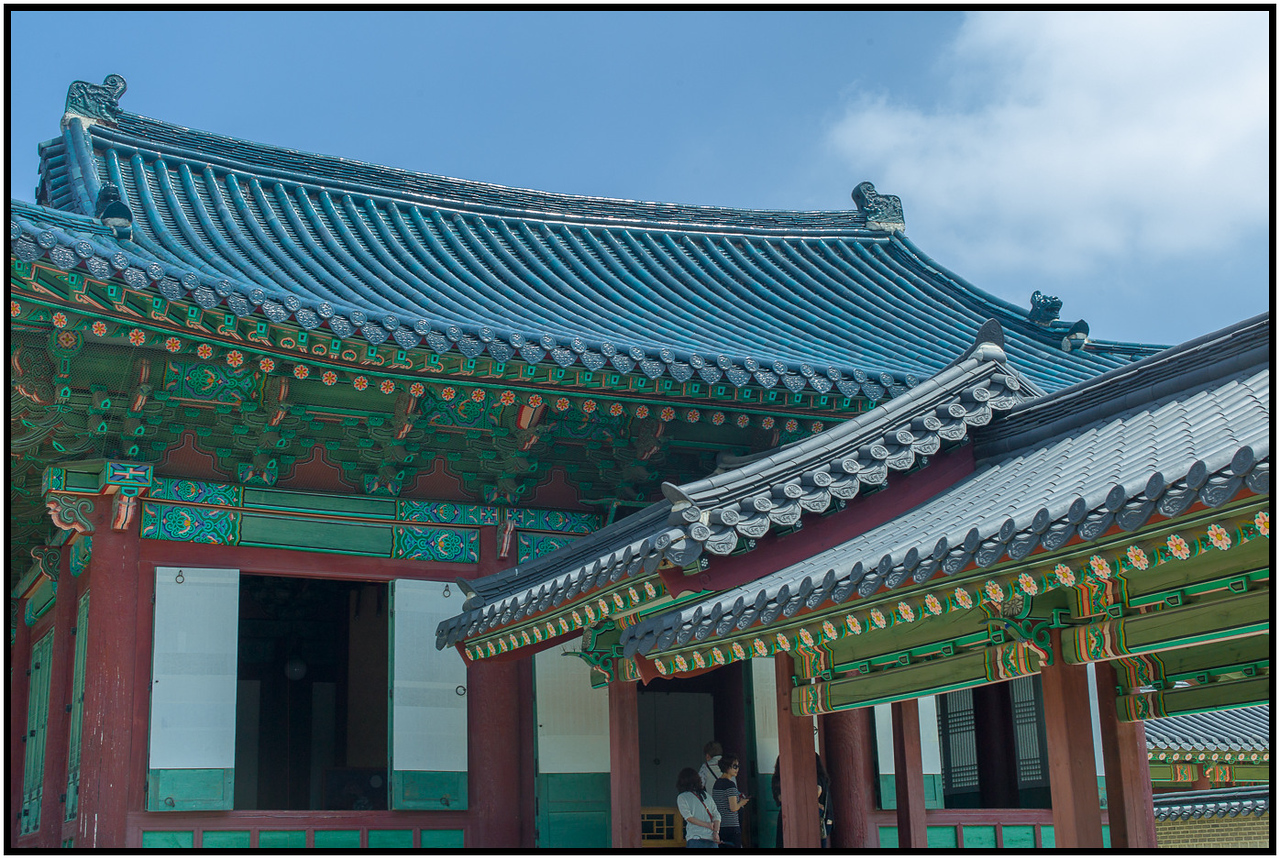
This building is the only one with a blue roof. It was the king’s office, where he held his meetings and so forth.
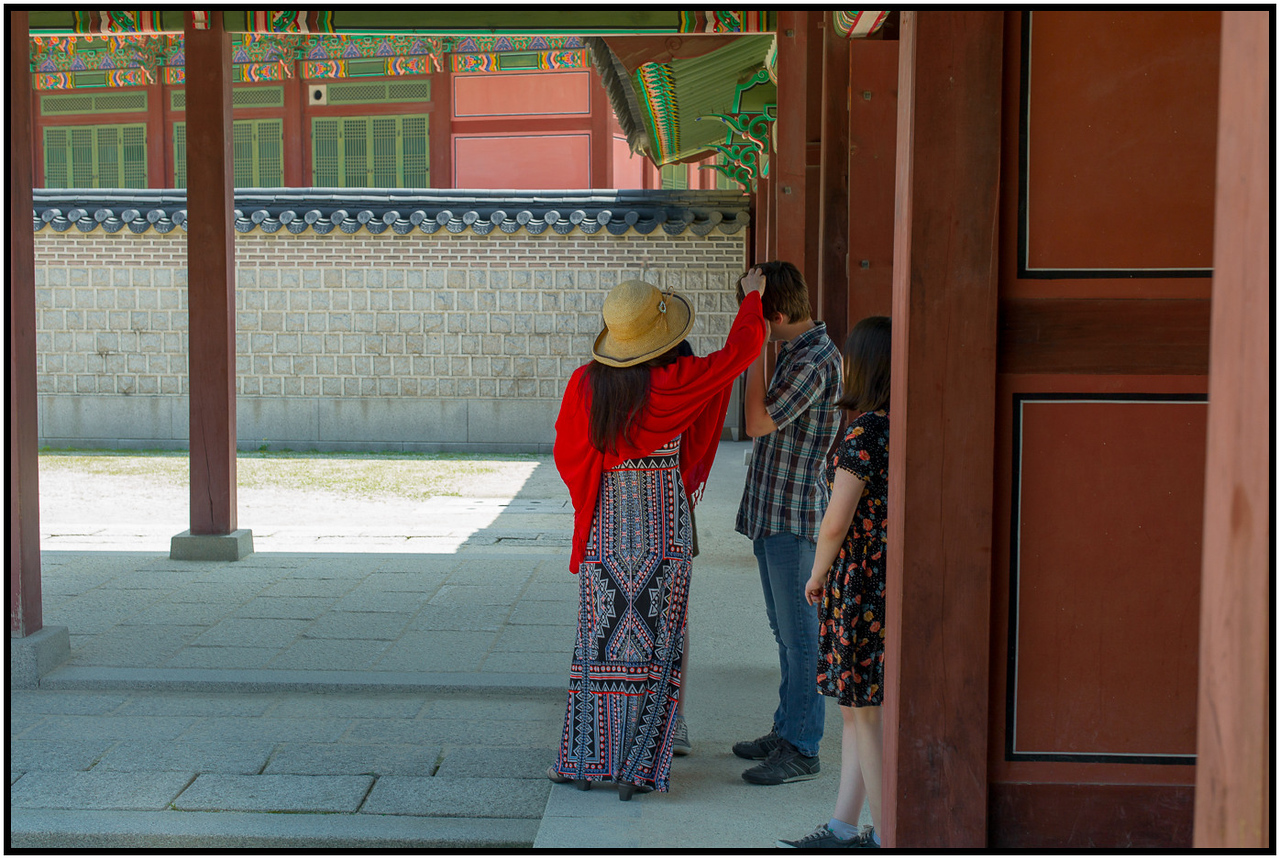
Meanwhile, in the mundane real world ….
Holden: “I have a big bump on my head. Can you feel it?”
Me: “No. I don’t see anything.”
Holden: “Nevermind. It’s gone now.”
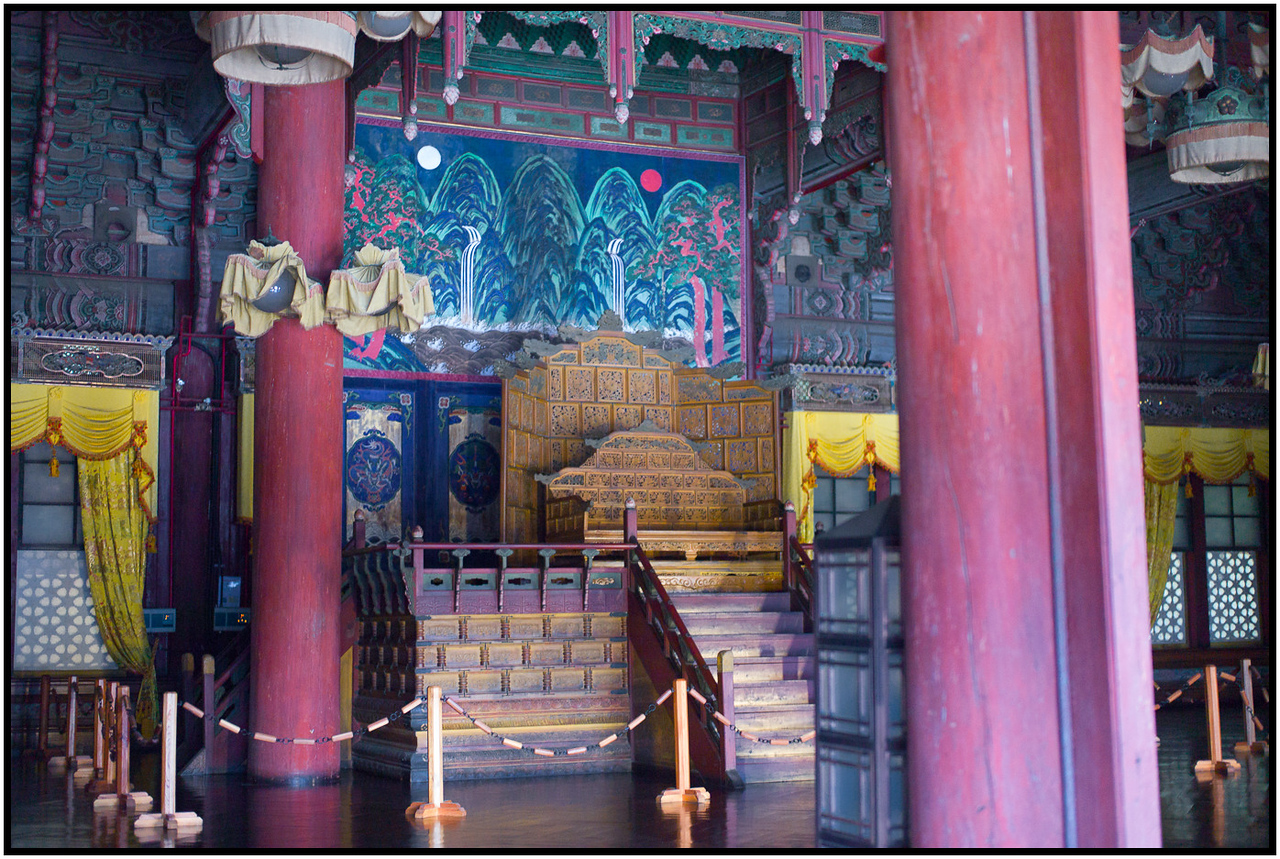
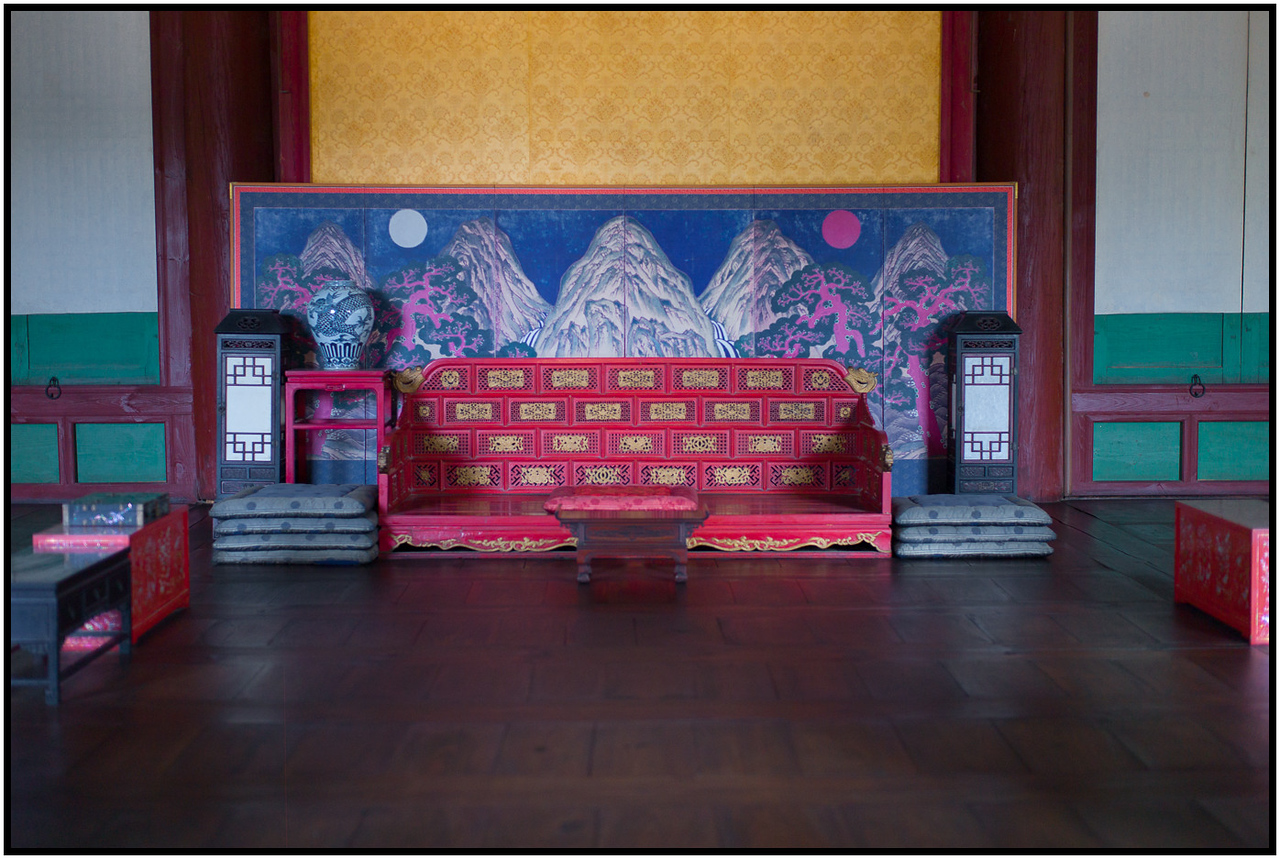
Back to royal things: the king’s throne. This is where he sat while receiving officials and doing his king work.
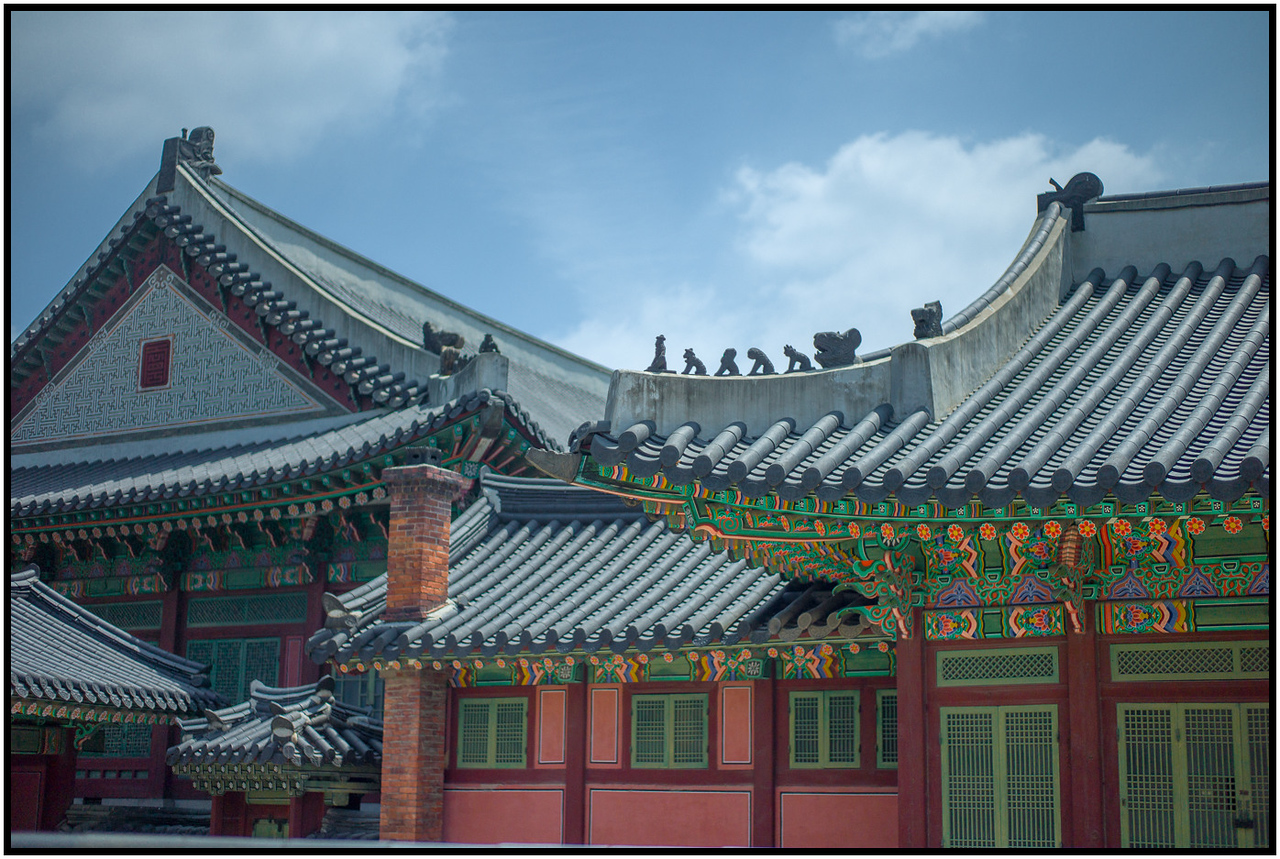
The figures on the roof appear to be a tiger chasing a group of monkeys. We never heard an explanation or learned of the significance.
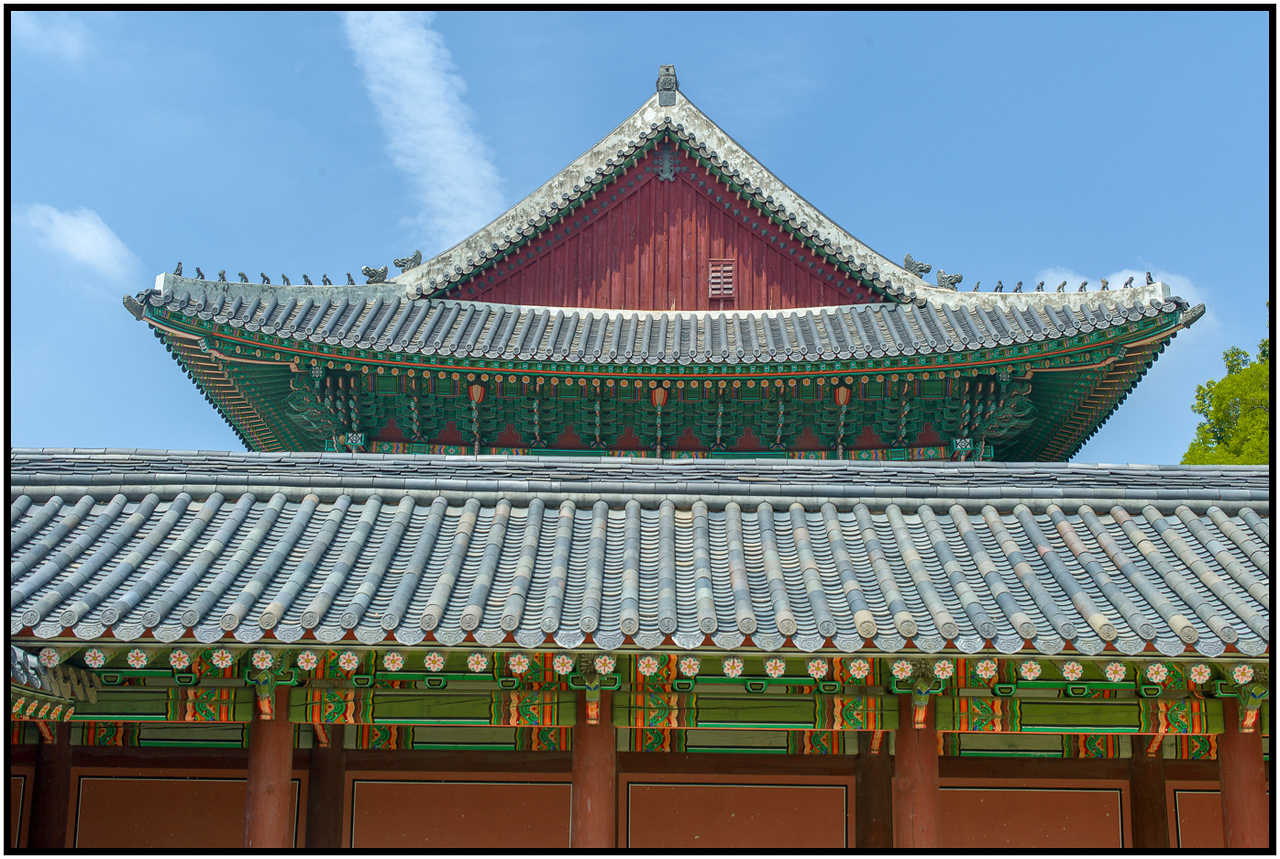
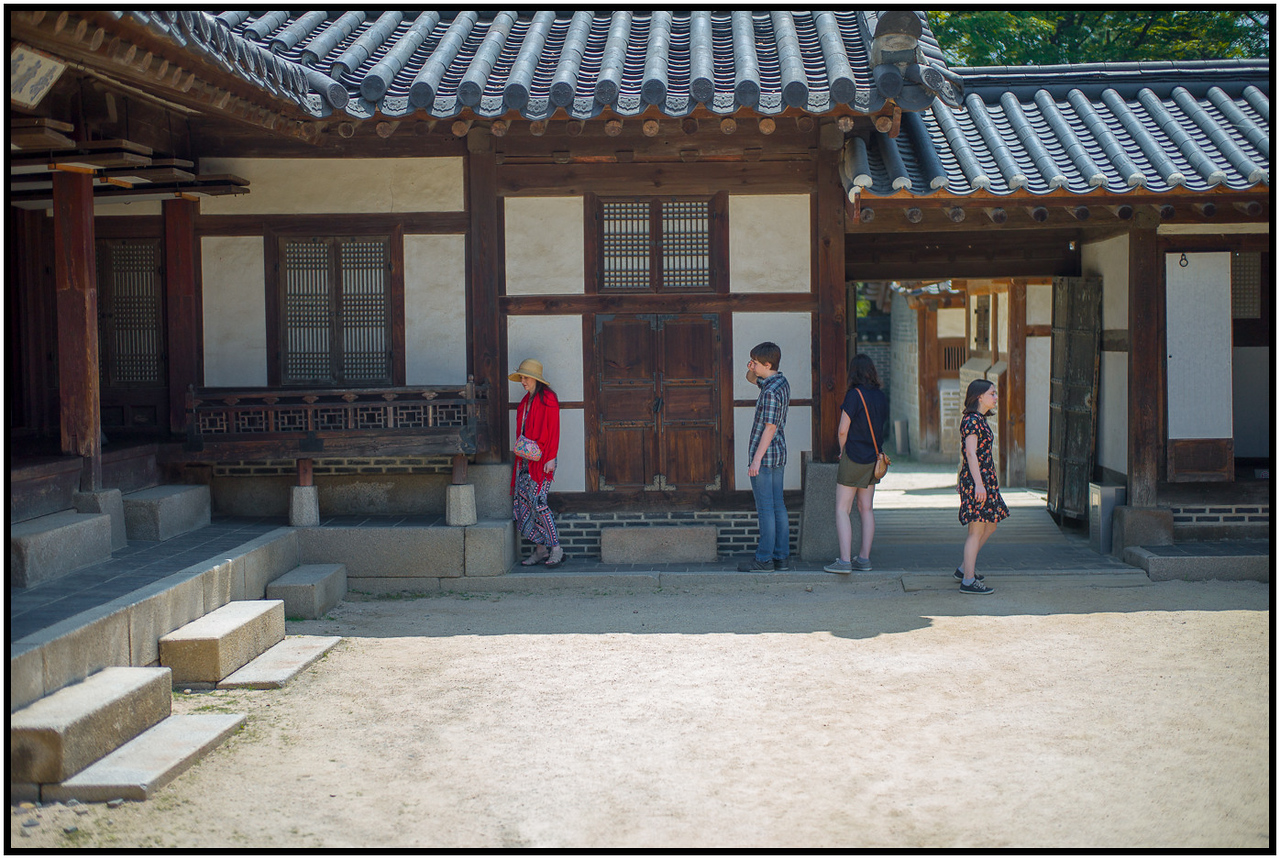
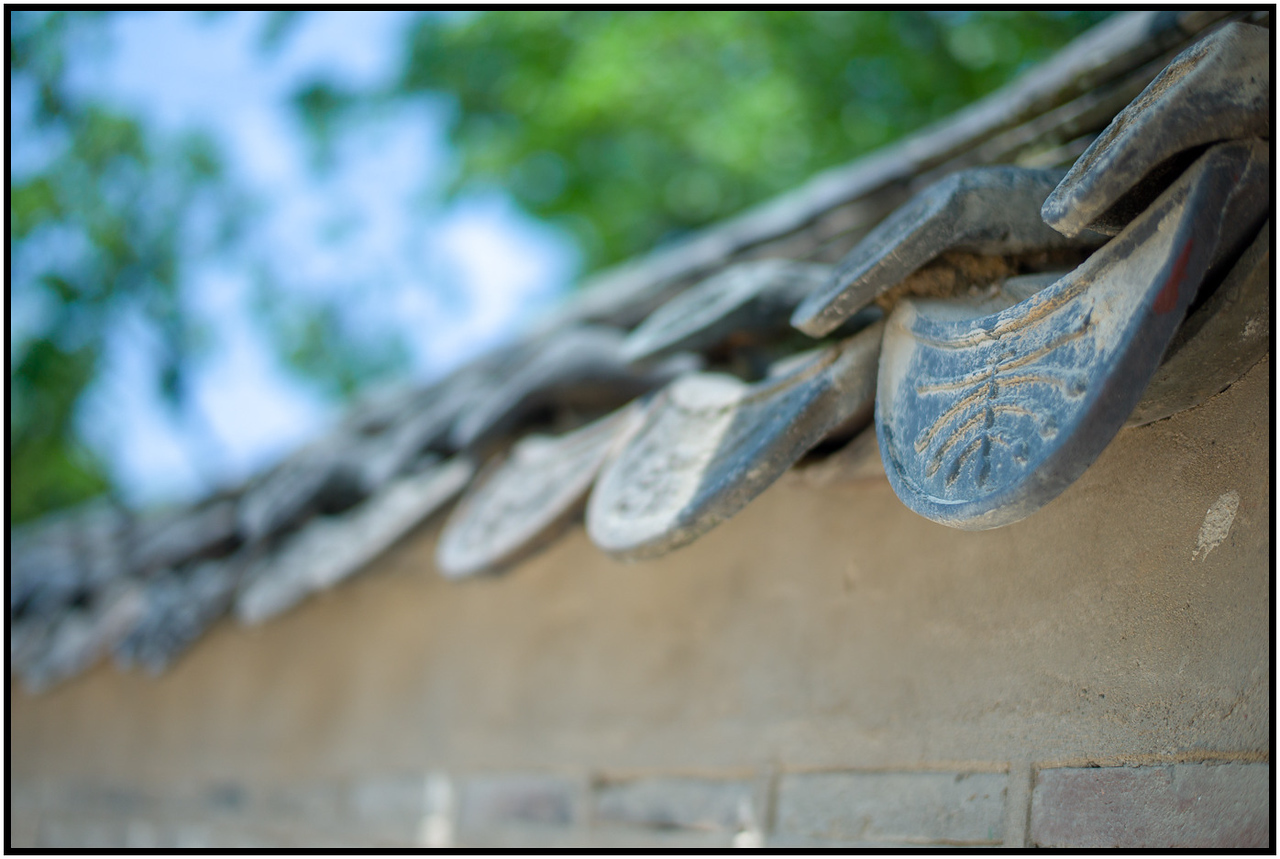
Slate tiles (I think.) They looked like they’d been carved rather than cast. There were thousands of them.
Behind the palace lies the 78-acre Huwon Secret Garden. You have to purchase special tickets to see Huwon and walk through via a guided tour. It was about 75 minutes long, but well worth the expense. The tour was in English, so we got a chance to get some Cliff’s Notes history lessons on an era and culture we know absolutely nothing about.
From the brochure: The Secret Garden was intended as a place of kings and royal family members to relax, but it was also a venue for various outdoor activities. The early Joseon kings would join in military exercises here and archery contests were held, along with banquets for the queen dowager, prominent relatives of the king and high-ranking ministers.
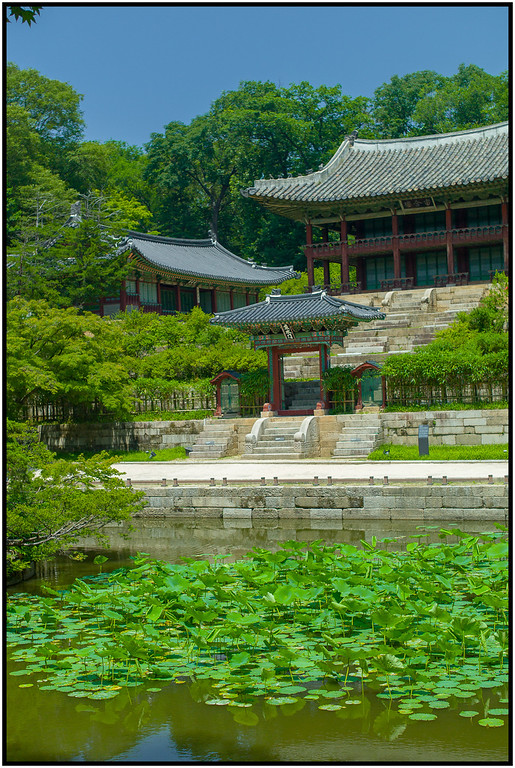
These gardens were called “secret” because of the topography; there is no vantage point where you can see all of it at once. You must meander through, with each area revealing itself as a new, separate space. These gardens are the reason this became the main palace in the first place. It was loved more than any other palace by the kings of the Joseon Dynasty (1392-1910).
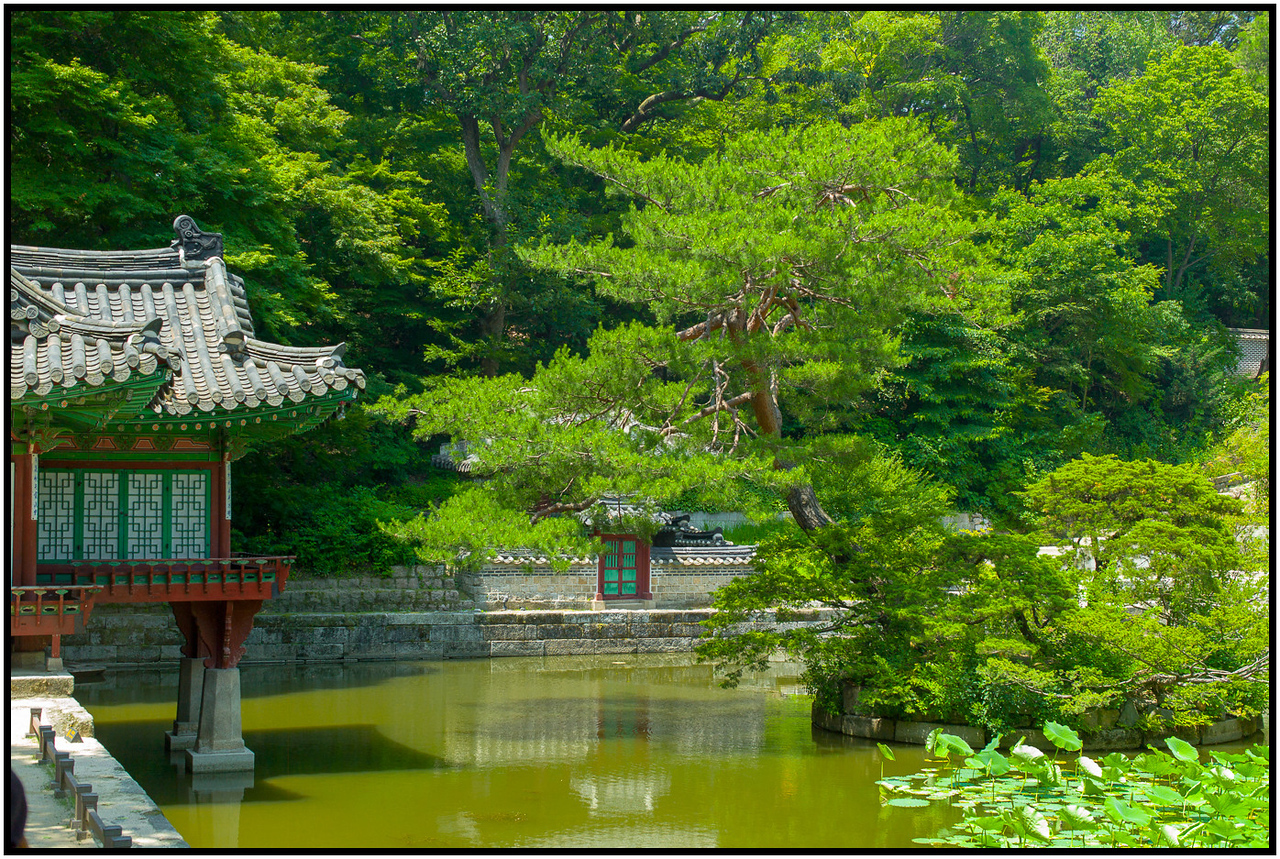
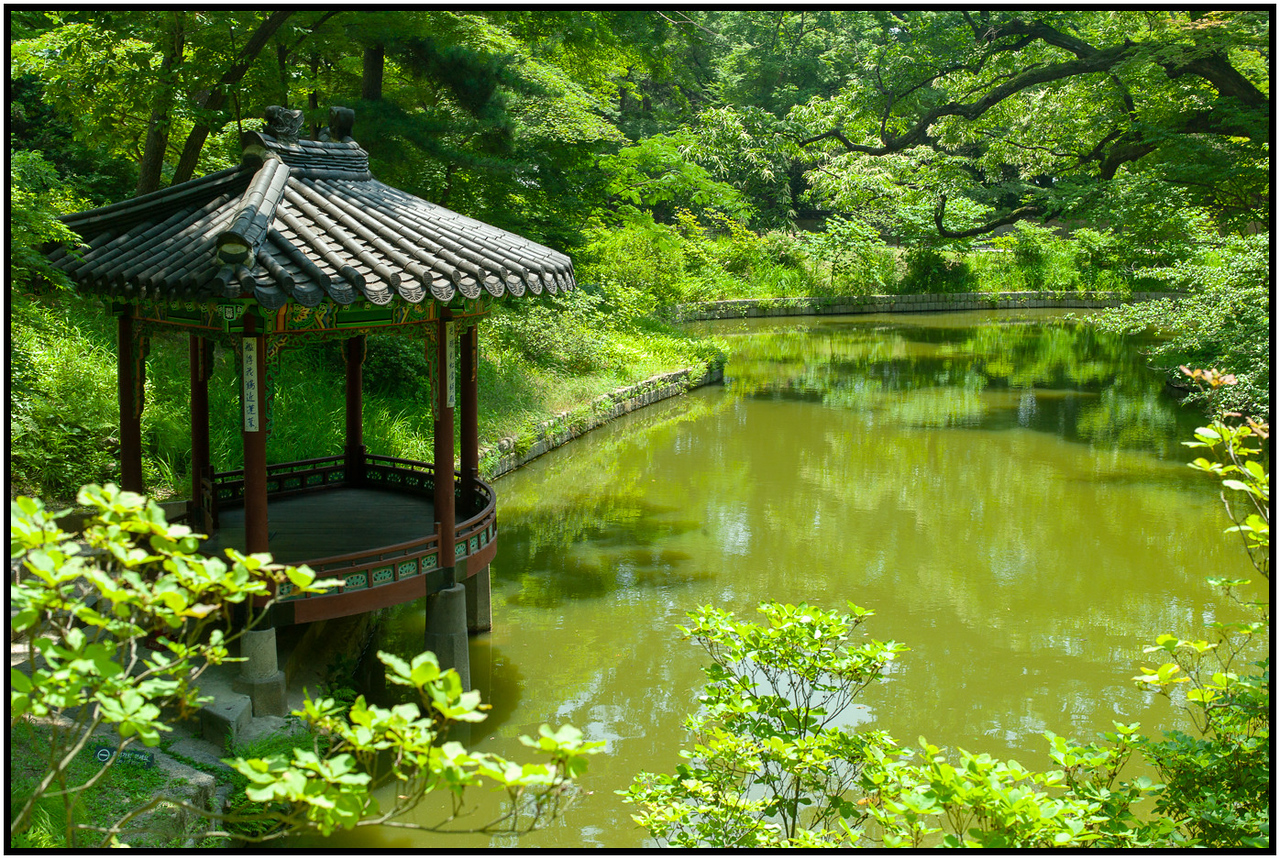
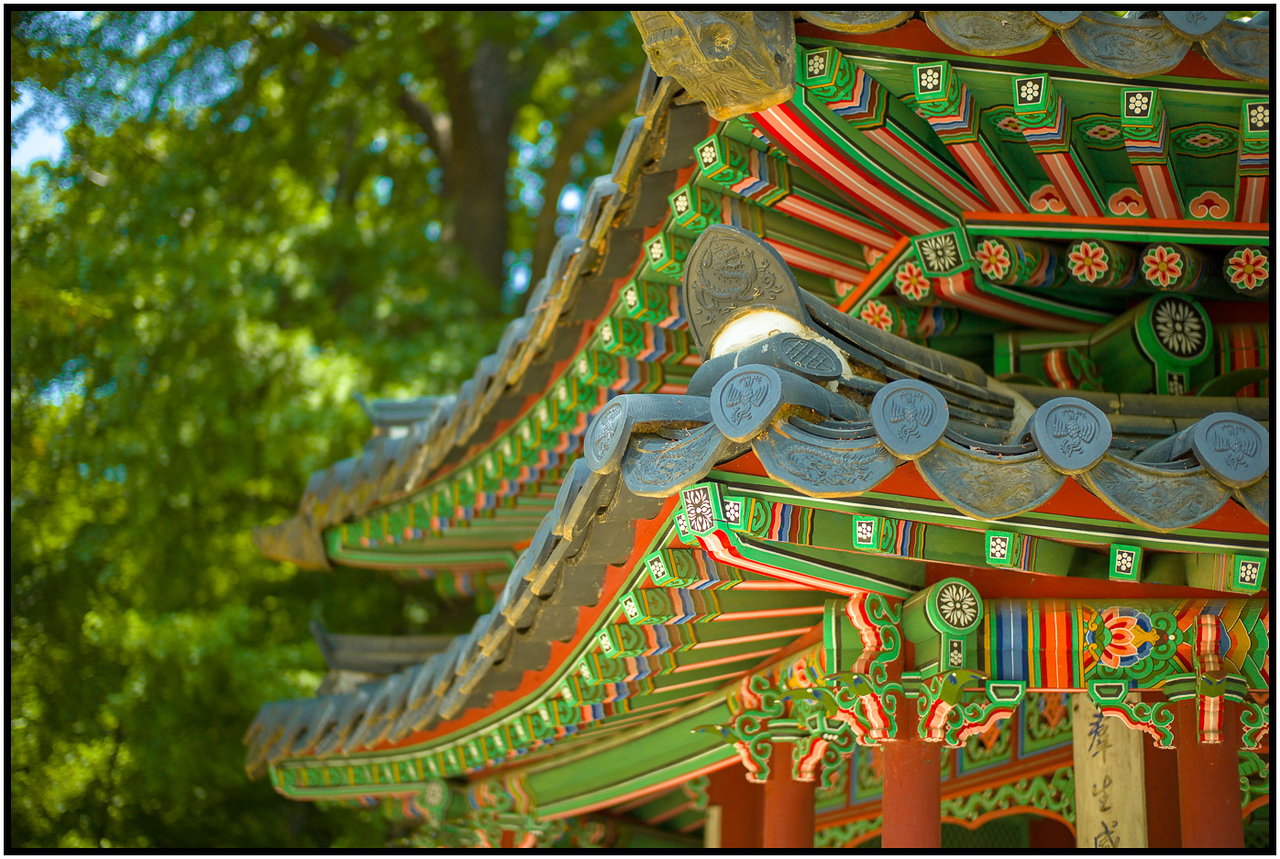
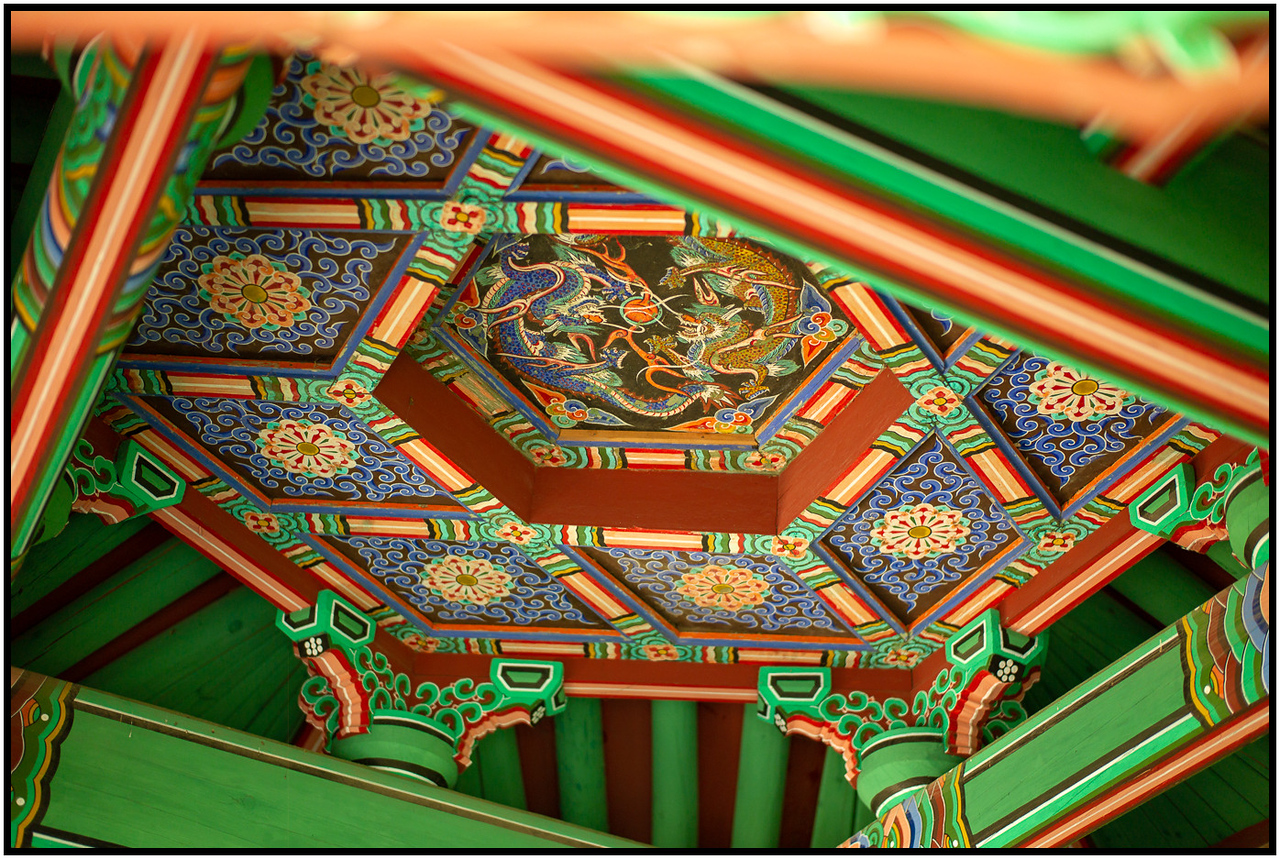
(Brochure:) Preserving the original topography, garden areas were planted in each valley and a series of lotus ponds were built. Small pavilions were also built along the stream that flows through the rear garden. Through this, the natural quality of this Secret Garden has been enhanced.
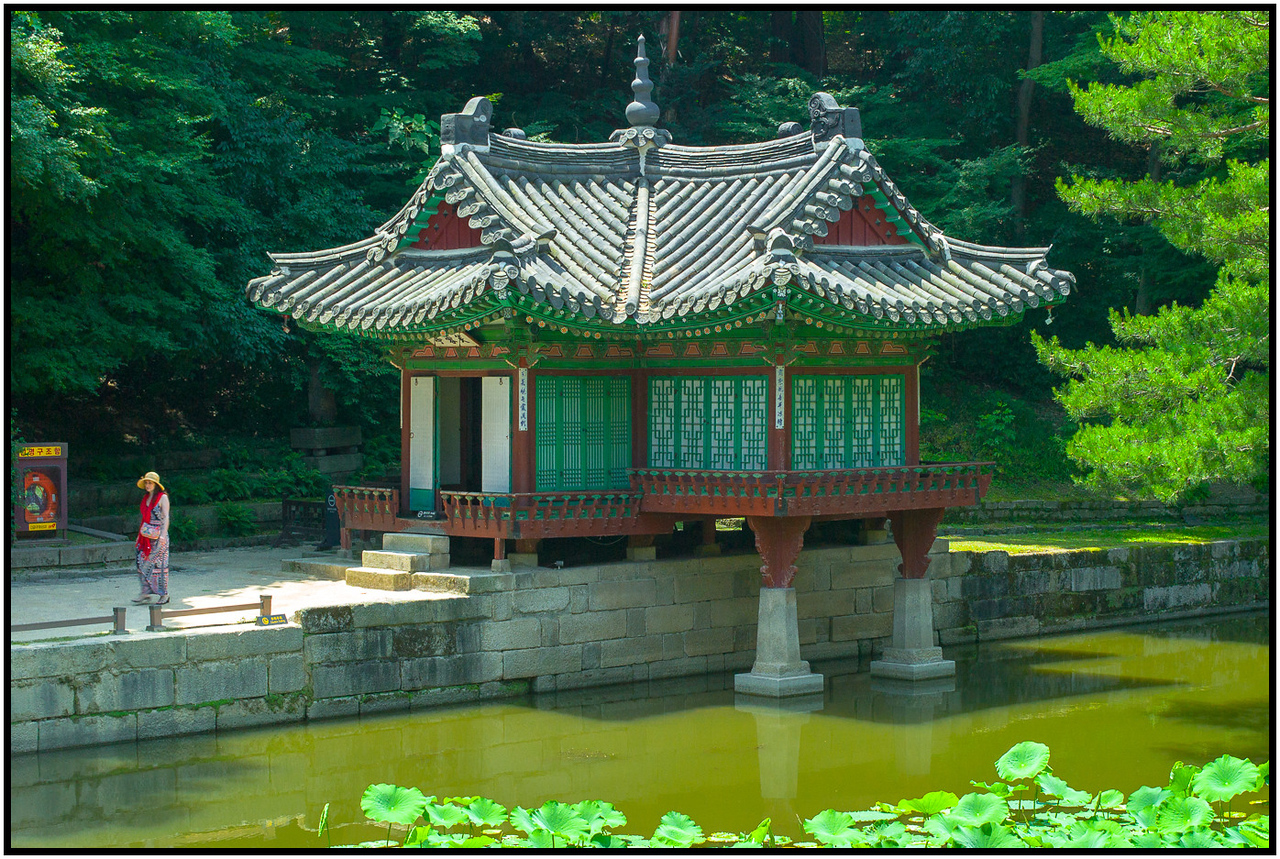
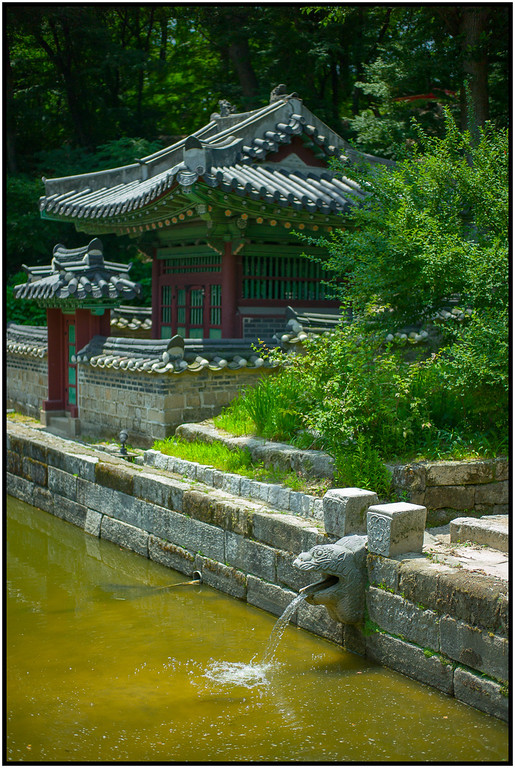
This pond was artificial and constructed with a very sophisticated system of aqueducts to keep the water level stable at all times. Water continuously flows through the dragon’s mouth (photo below.)
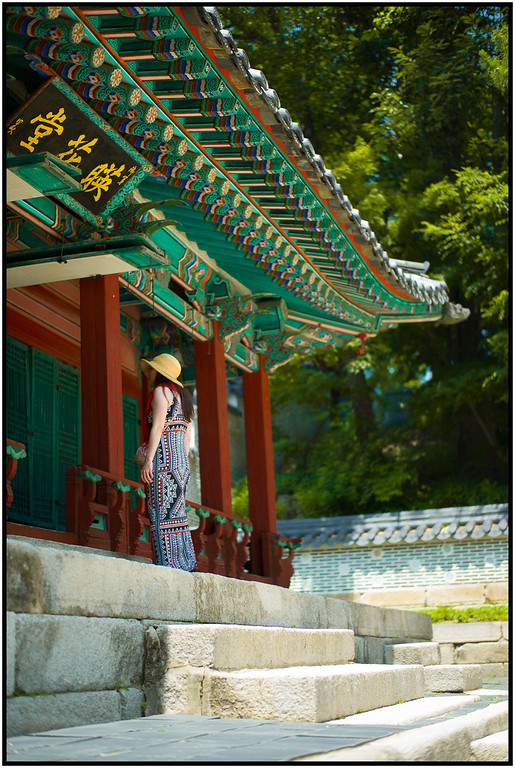
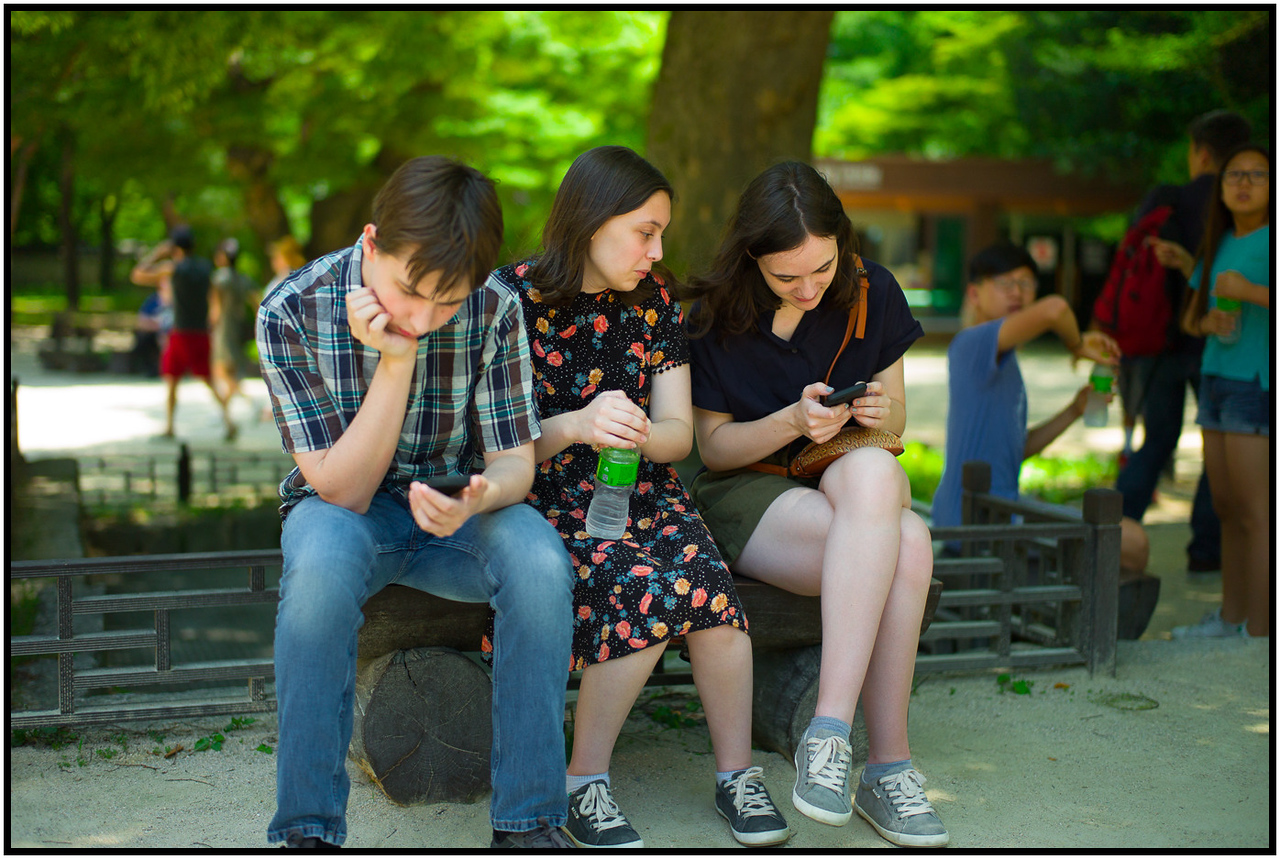
The kids can’t get too far from Adam, the keeper of the KT Egg. They lose their internet connection if he gets out of range. It acts as both an invisible leash and a homing device. If Adam gets too far away, you’ll hear, “Dang it! Lost my internet. Where’s Dad?” “I don’t know but he must be close because mine still works.” [holding phone at arm’s length] “It works here but not here … he must be that way.”
Lotus and water lily pond. The water lilies were blooming but the guide said the lotus won’t bloom for another 4 to 6 weeks. They are currently blooming in Hong Kong, which is quite a bit further south.
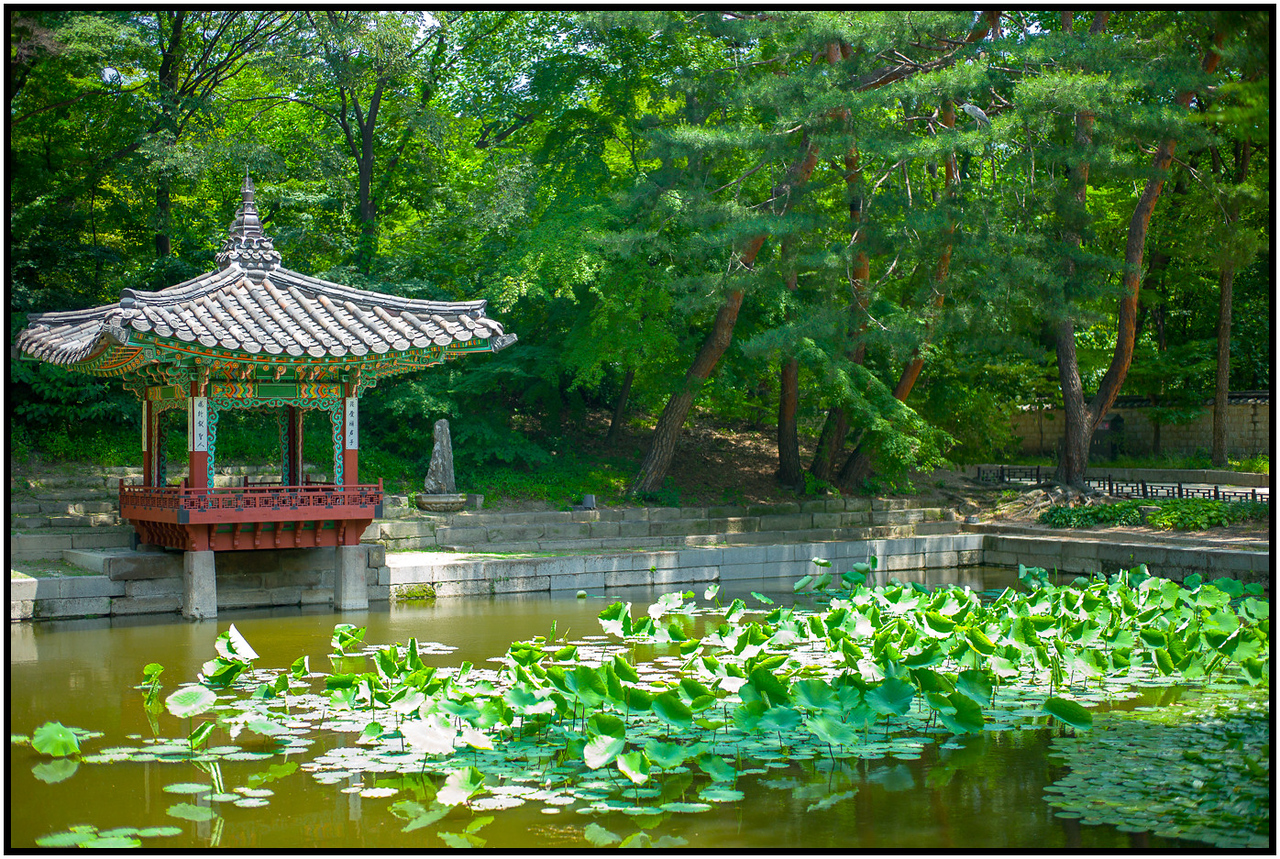
Below: Yeongyeongdang Hall. This was a place for the royal women to live along with all of their servants. It’s architecture and non-coloring style are close to those of gentry level even though they are part of the Royal Palace. These unadorned buildings add to the special atmosphere of the rear garden.
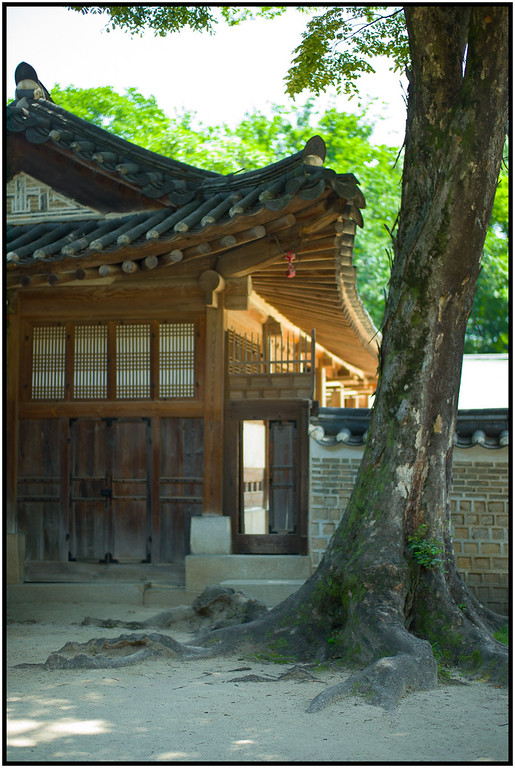
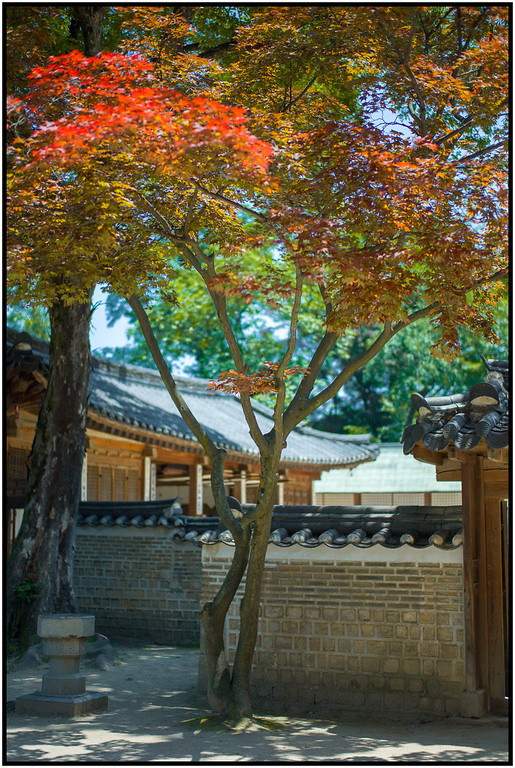
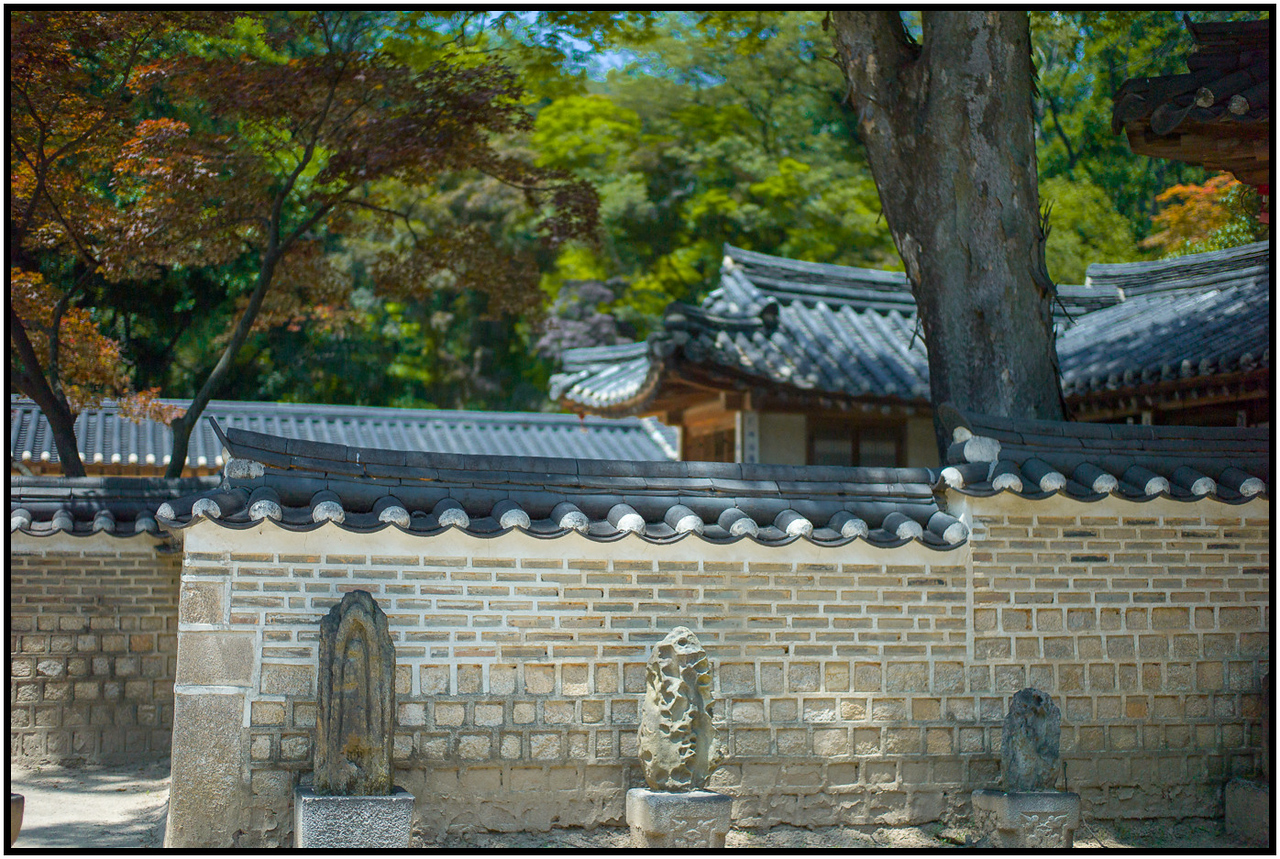
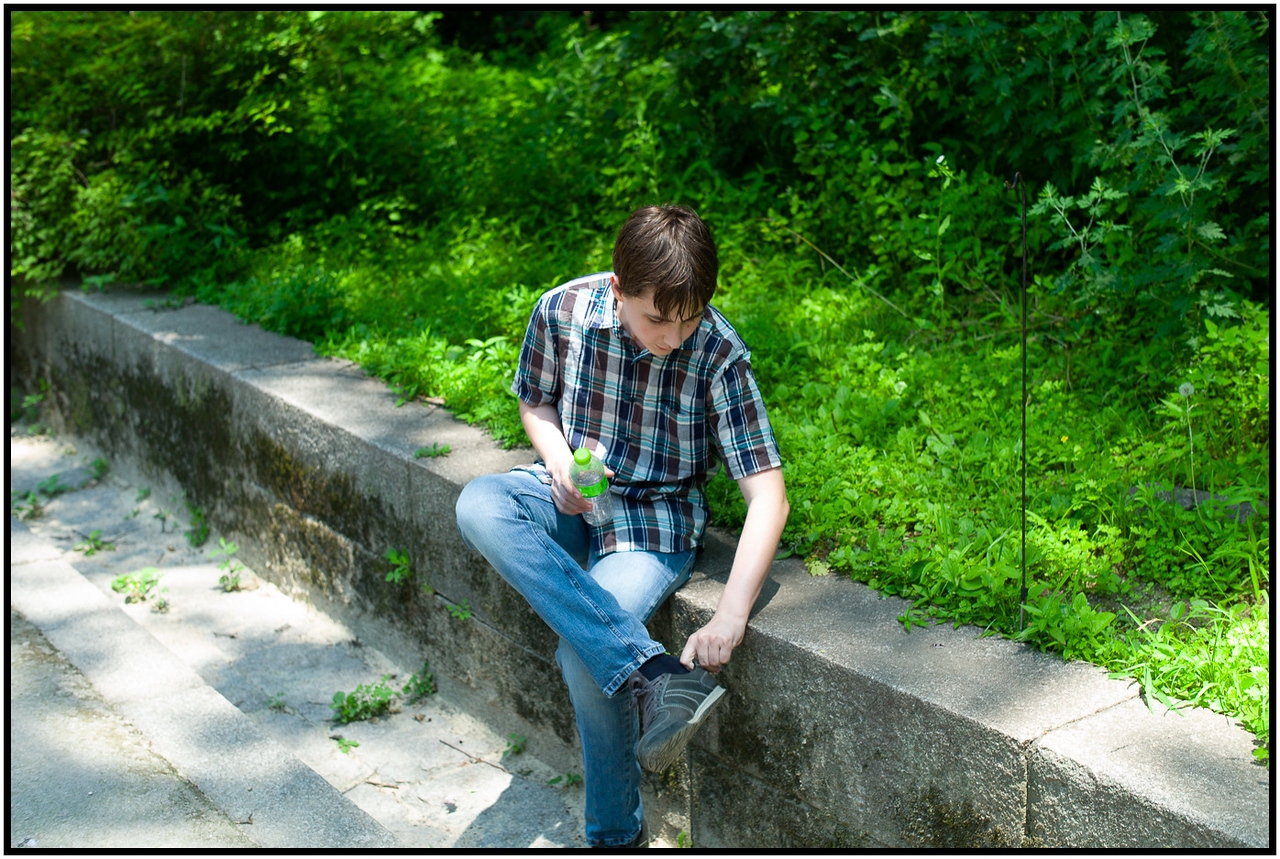
And here is the obligatory photo of Holden fixing his shoe.
Adam: After touring the grounds, we were hot and hungry. We found a Thai restaurant nearby that had room for 5 and served us a fantastic lunch.
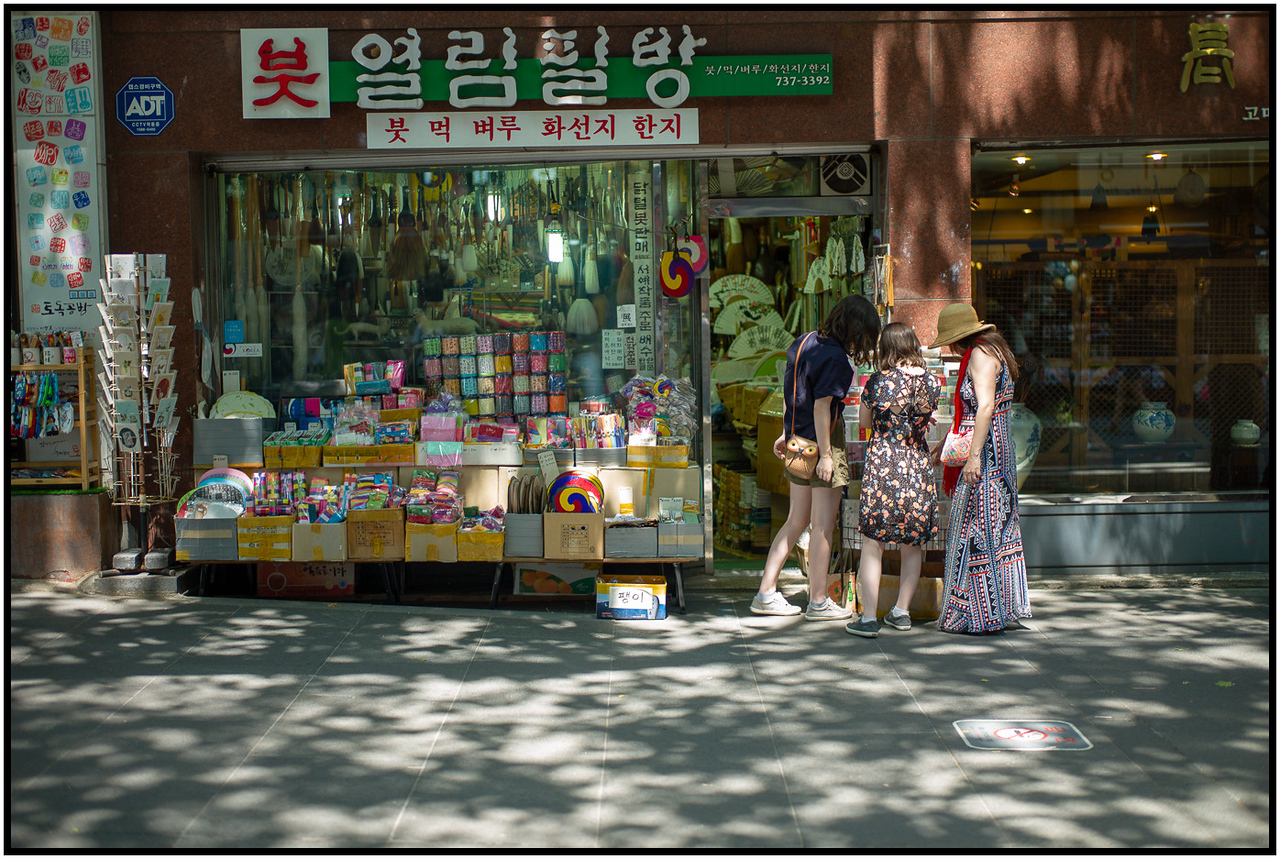
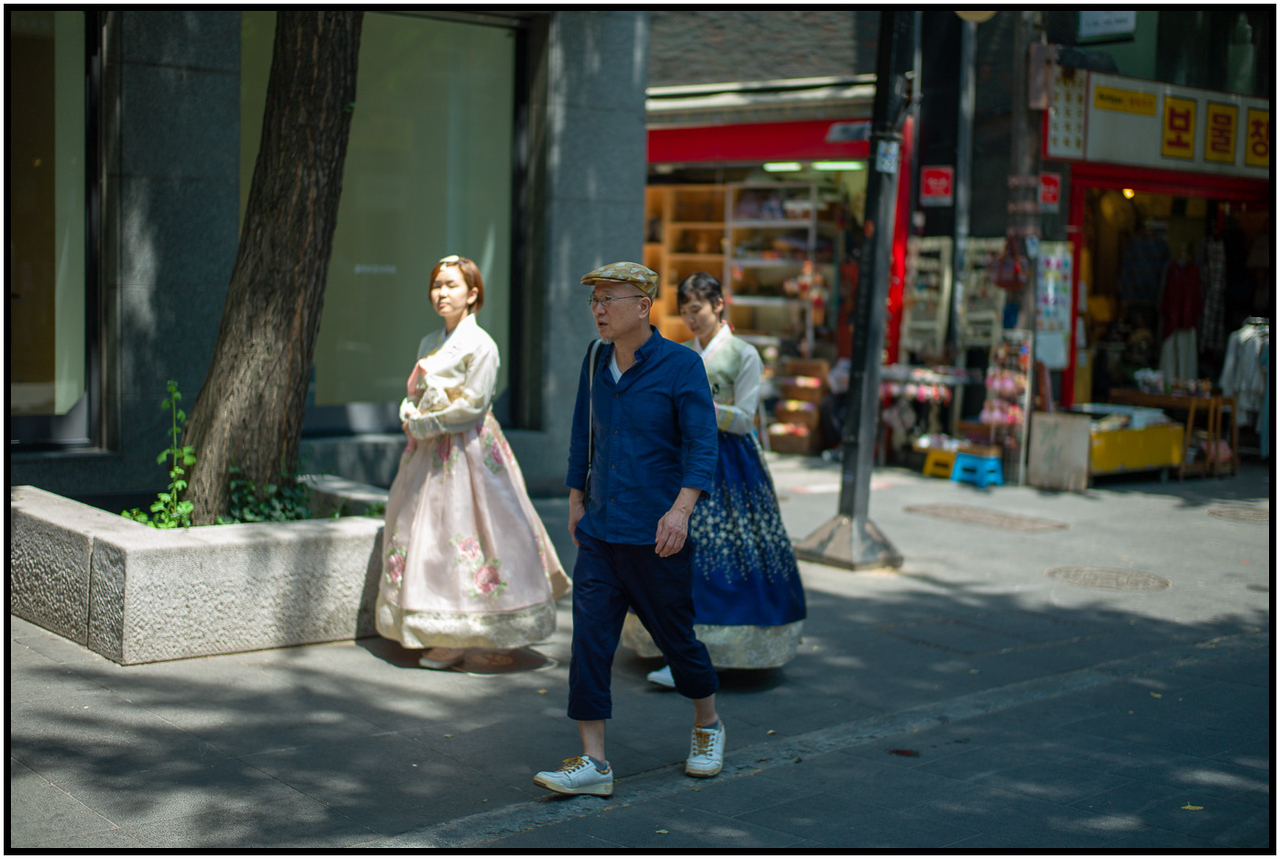
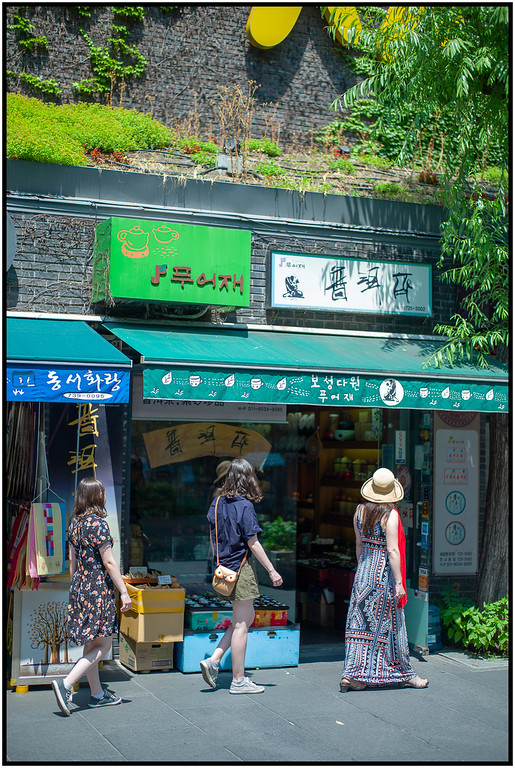
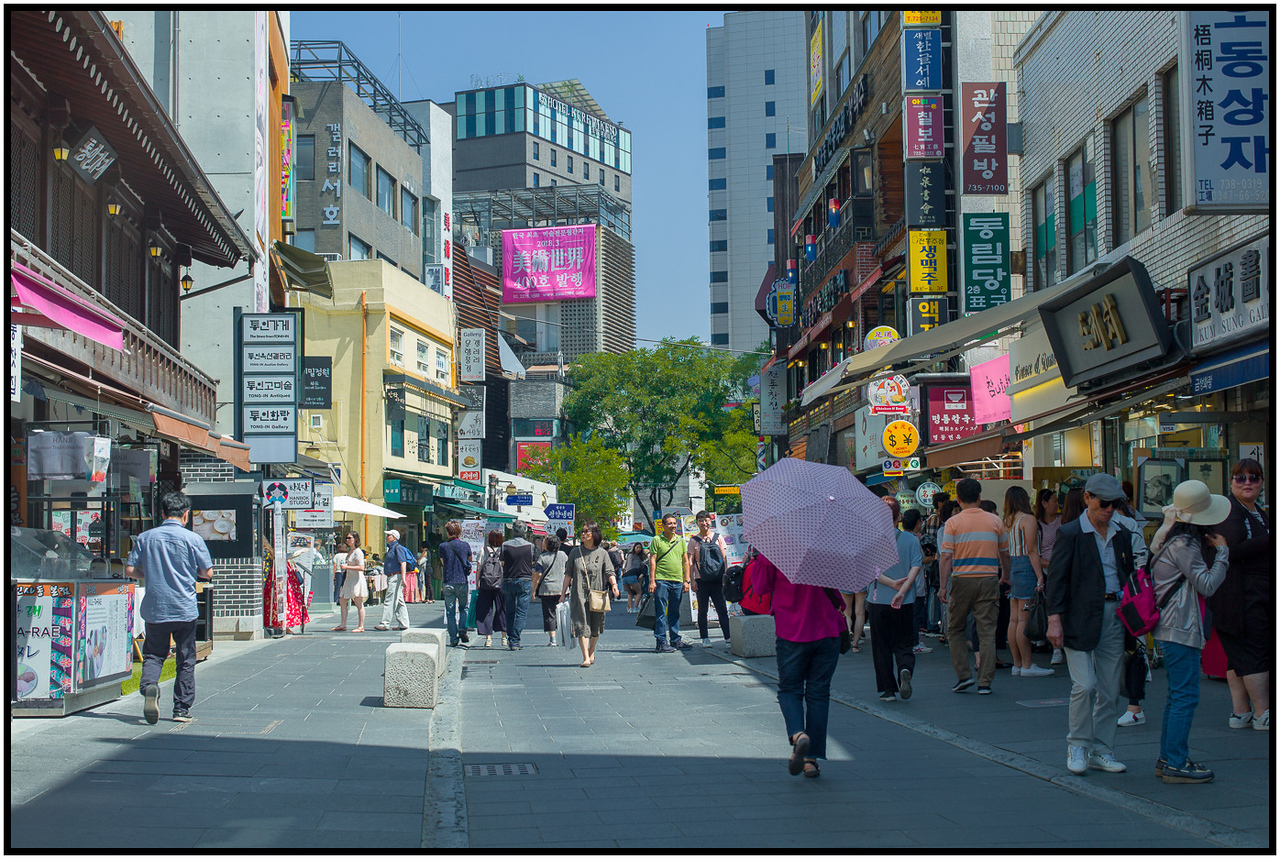
After this, we did some shopping along Insadong-gil. Brenda has been doing some research on the Korean hand-made lacquer boxes. She had read that there was a great location to shop for these items and admire all of the artwork. In the end, she didn’t find what she was looking for, but the girls enjoyed a chance to look at all the strange stuff along the way.
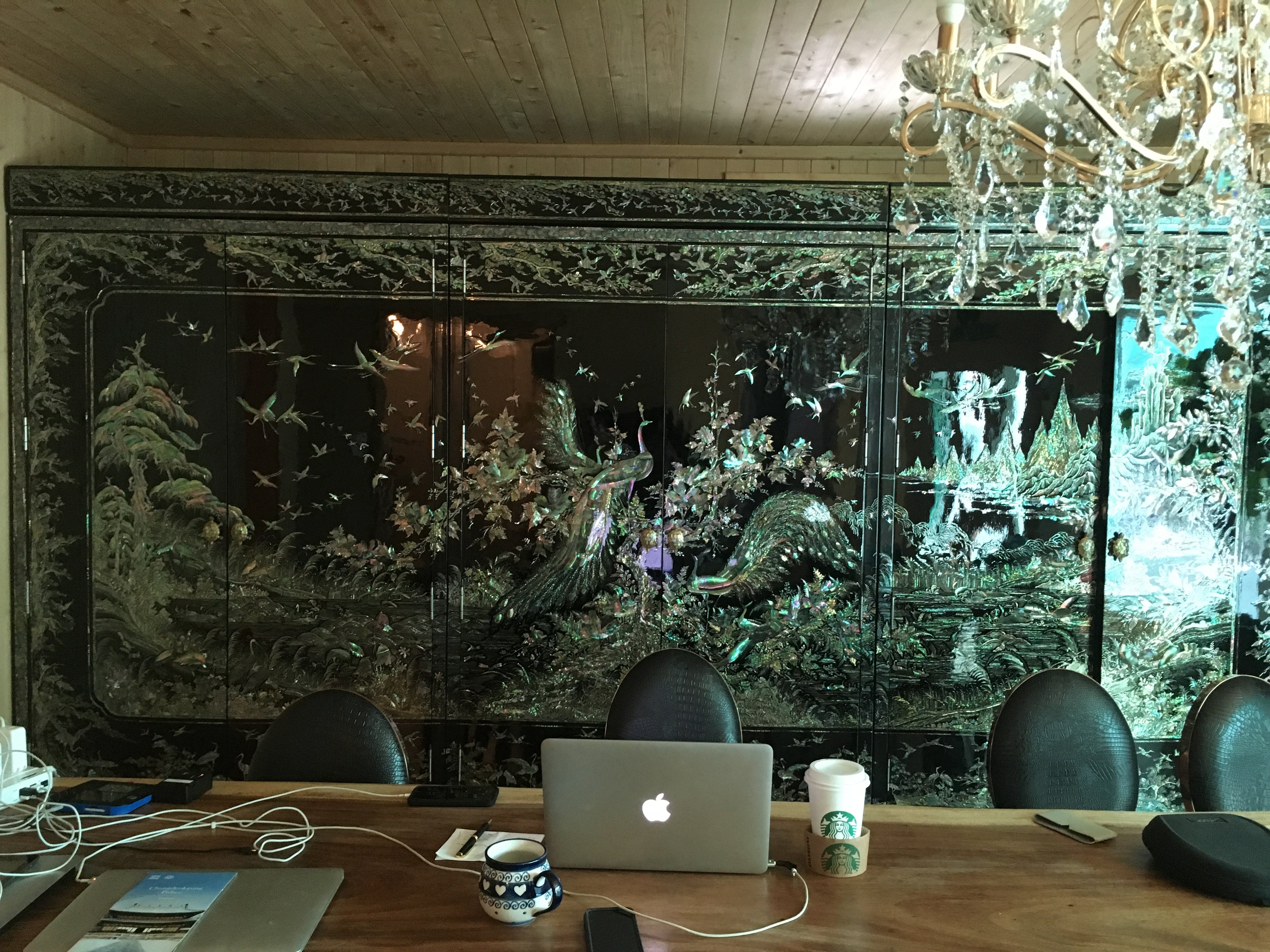
The Korean lacquerware is gorgeous. I found a little box at the aquarium mall the other day, but am still hoping to find another trinket or two to take home. It’s not cheap, but also not nearly as expensive as I would have guessed. (More on that below …)
From The Art of Korean Lacquer: Evidence suggests that lacquer works were produced in Korea by the Neolithic period (6000–1000 BCE) as both China and Japan had lacquer by that time. Lacquerware is produced by layering the processed sap of the lacquer tree onto a core of wood, bamboo or other material to create a variety of items including furniture and other household decor. Each thin layer must dry completely before the next is applied, resulting in resistance to heat and moisture. Pigments can be mixed into the lacquer for different colors in the finished product. Because of the many layers involved and long drying times, a single piece can take months or even a year to complete.
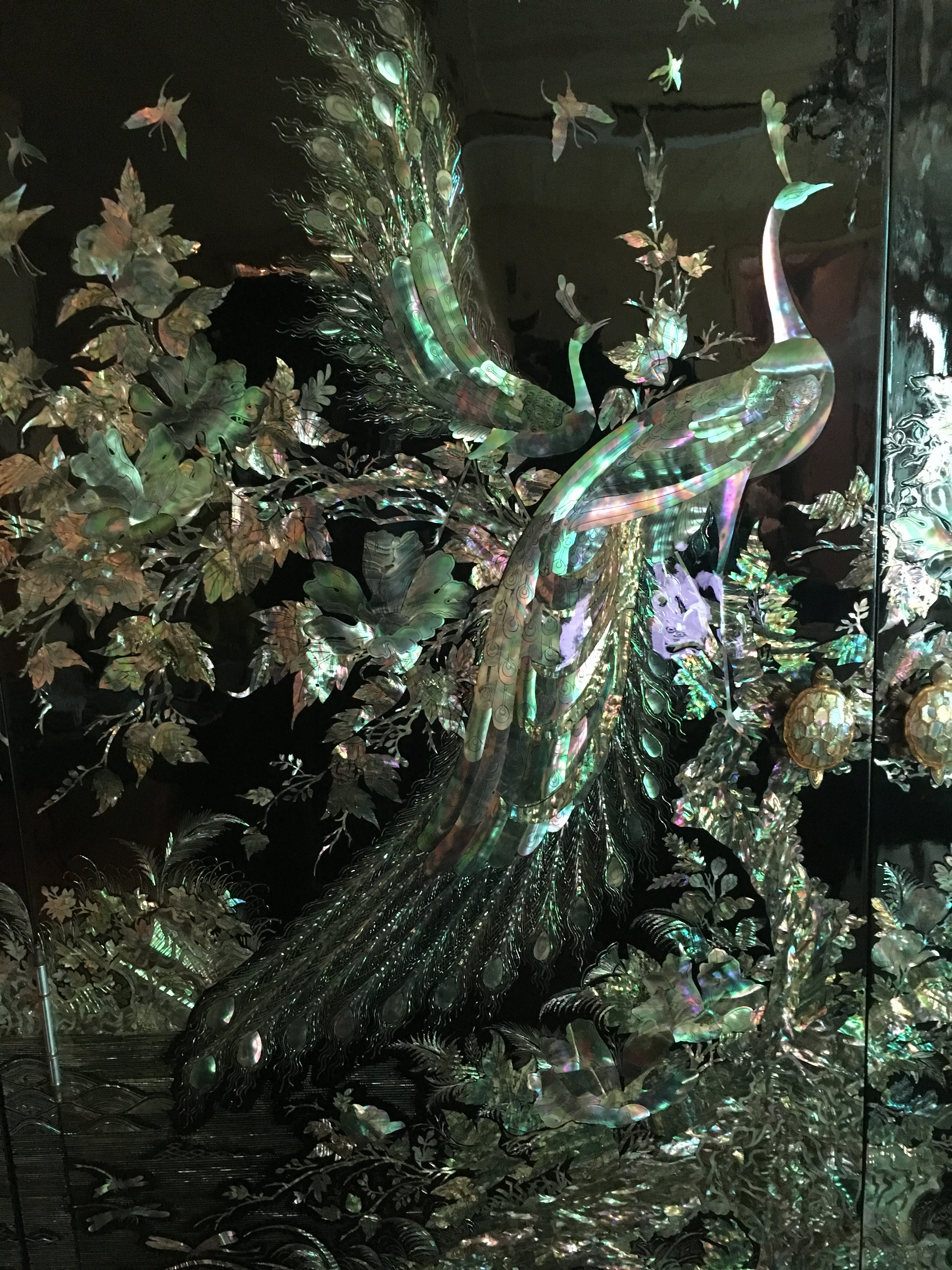
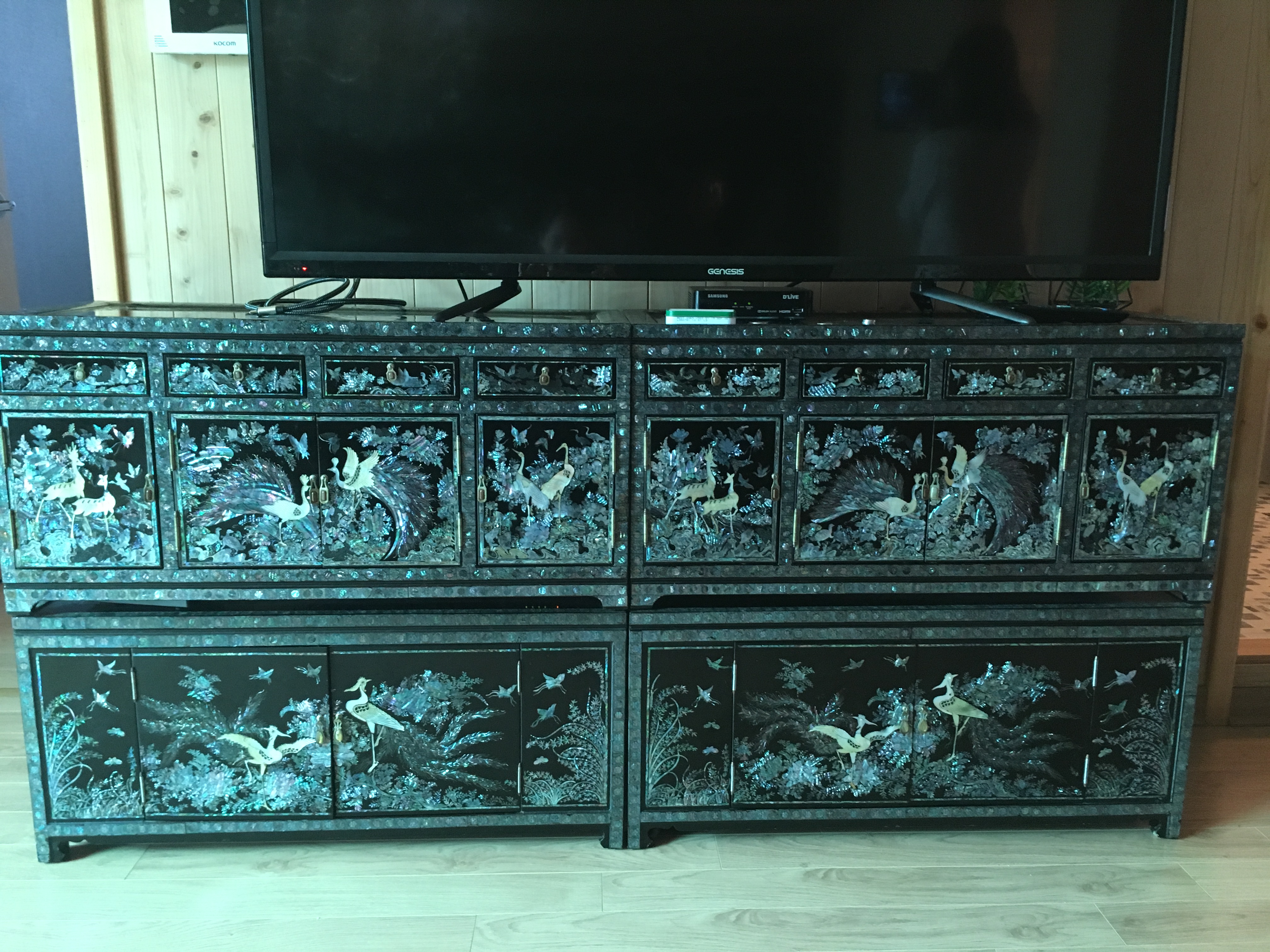
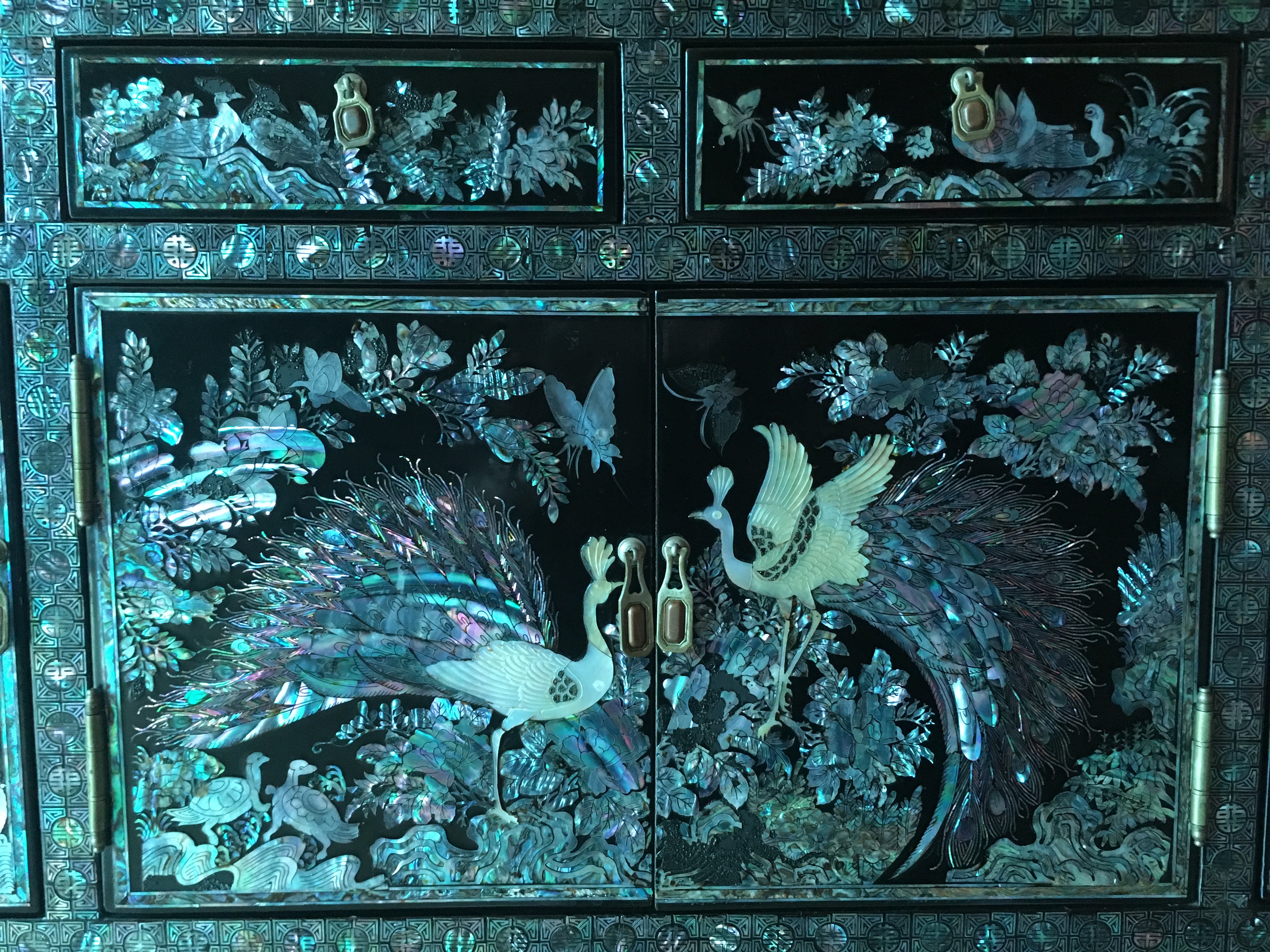
The technique of mother-of-pearl inlay (najeon) also originated in China, and evidence suggests that the technique had reached the Korean peninsula by the eighth century. Today, this is a dominant feature of Korean lacquerware. In this technique, the thin inner layer of shells like abalone are carefully cut and inlaid on the lacquerware. Sometimes the design will be laid on top of the many base coats of lacquer and coated until submerged. Then, the top layer of lacquer is ground down until the mother-of-pearl is exposed. Alternatively, the design is carved into the surface and the material inset, and again more lacquer is applied and ground down. Occasionally other materials such as metal, tortoise shell or sharkskin, are used alongside the mother-of-pearl. Artisans in the Goryeo period (936–1392 CE) began using copper-alloy wires in their inlay designs, and this has remained unique to Korean lacquerware.
It is gorgeous. This enormous armoire is in our apartment.
Armoire detail:
More stunning pieces used as a TV stand. Each little panel is actually a drawer or cupboard.
TV stand detail:
Thursday, 21 June 2018
Today’s mission is to visit the “Make-up district” (for Isabella and Josie) and find a special ice cream treat that Holden scoped out. The two areas happen to be at the same subway stop — the Myeongdong shopping area.
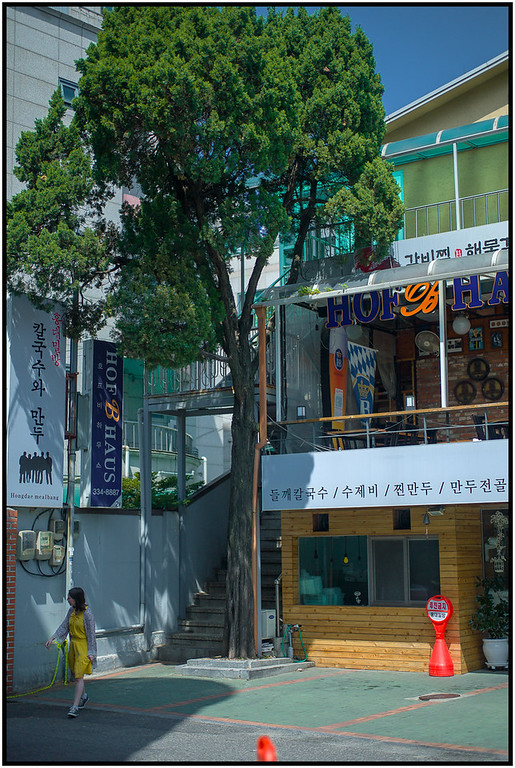
Below: the exterior of our apartment, which is the yellow part of the building at the top. It sits on top of a restaurant and is accessed by that set of stairs hidden on the left. (That’s Josie in the yellow dress.)
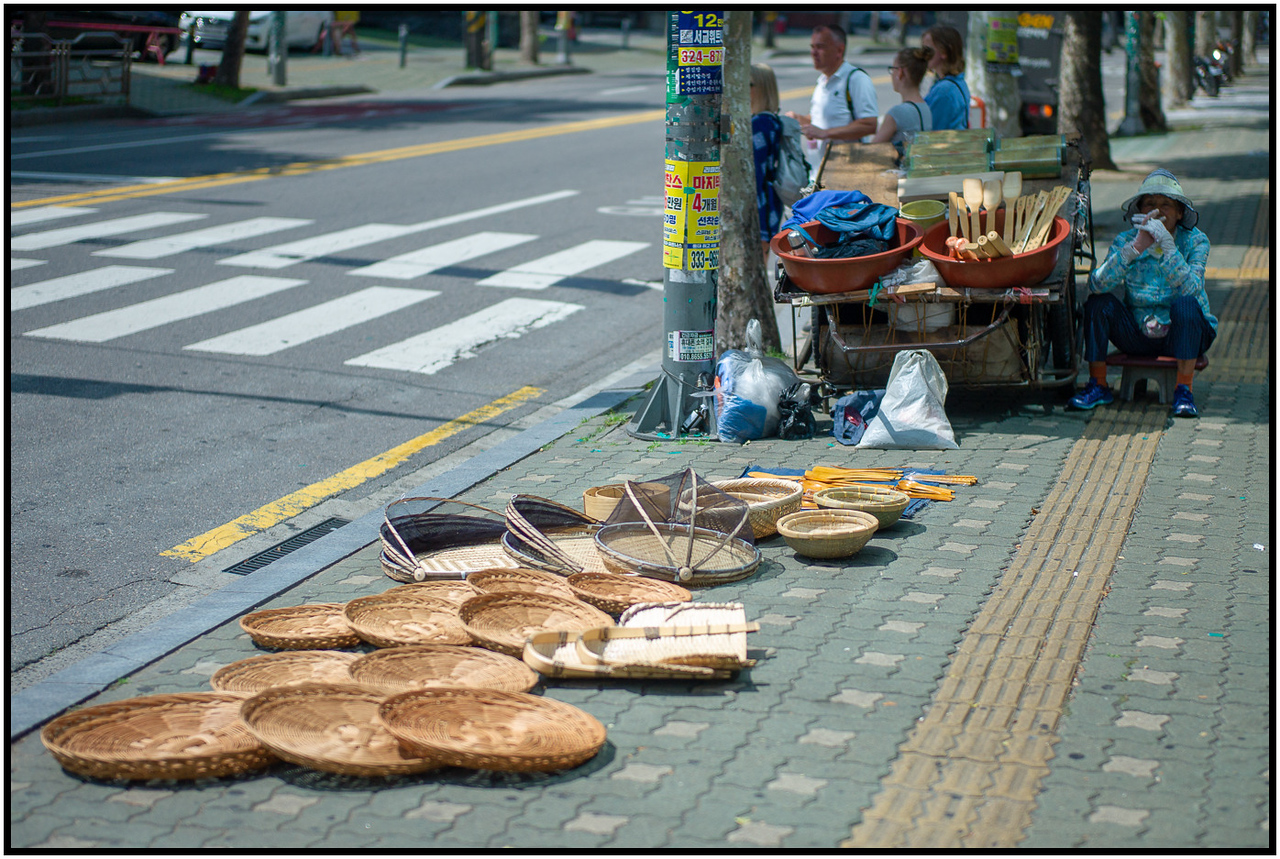
A lady selling handmade things outside our place.
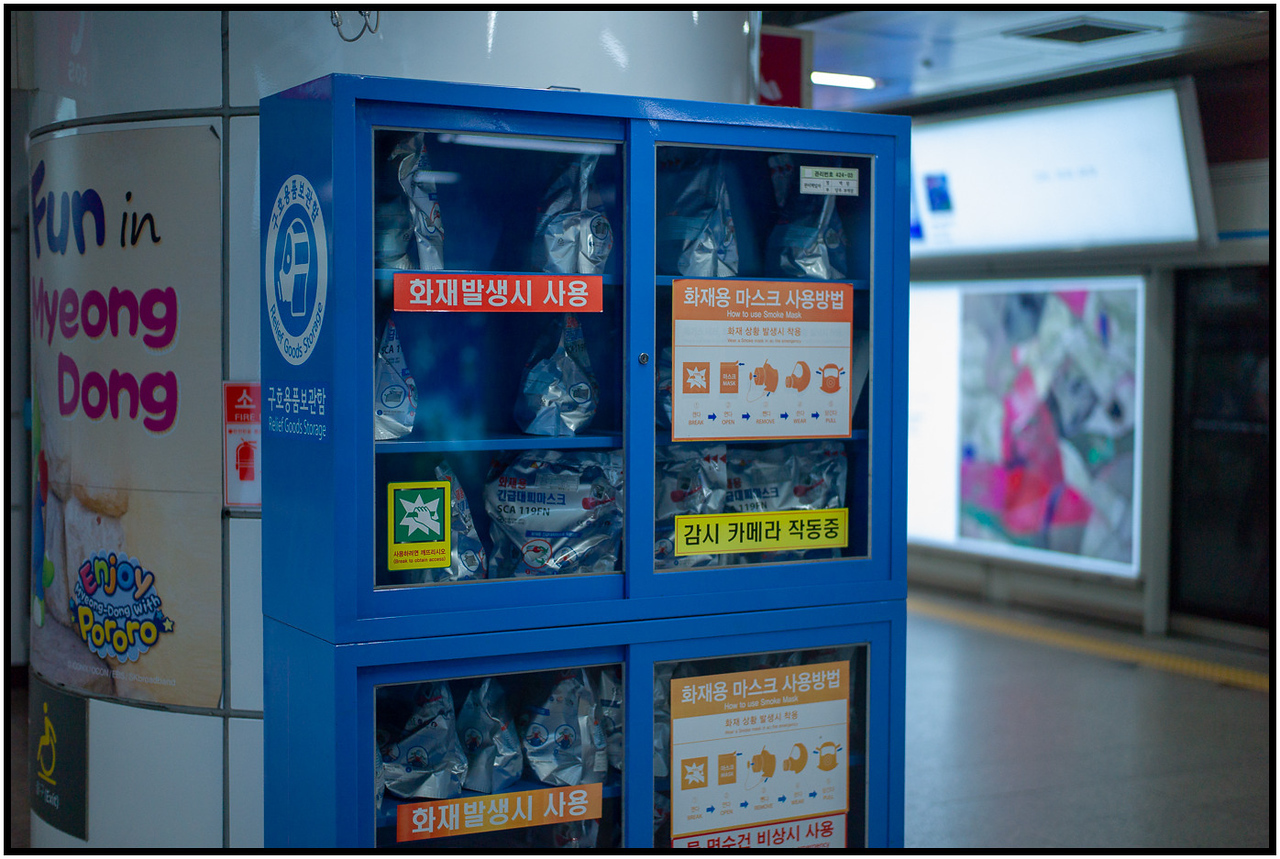
These cupboards filled with gas masks and fire extinguishers are all over the subway stations.
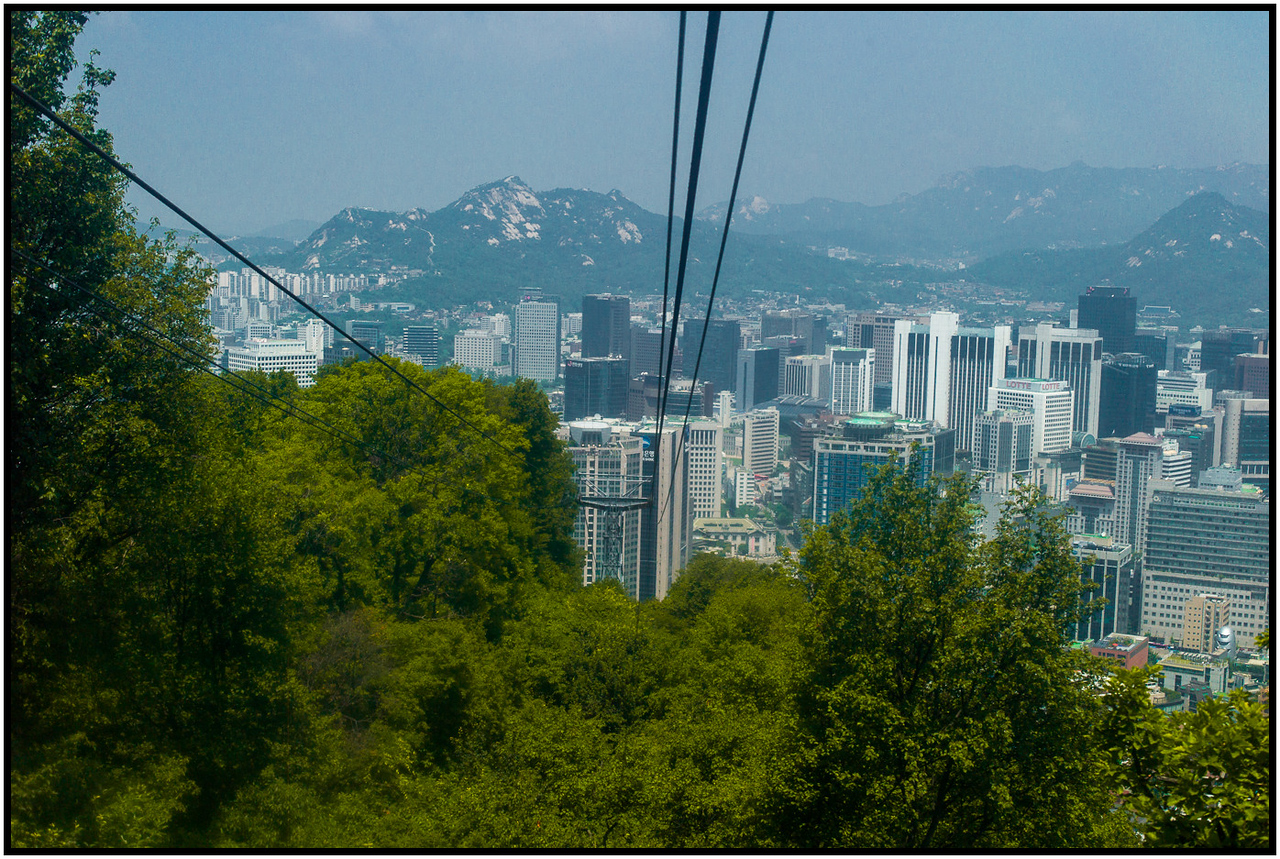
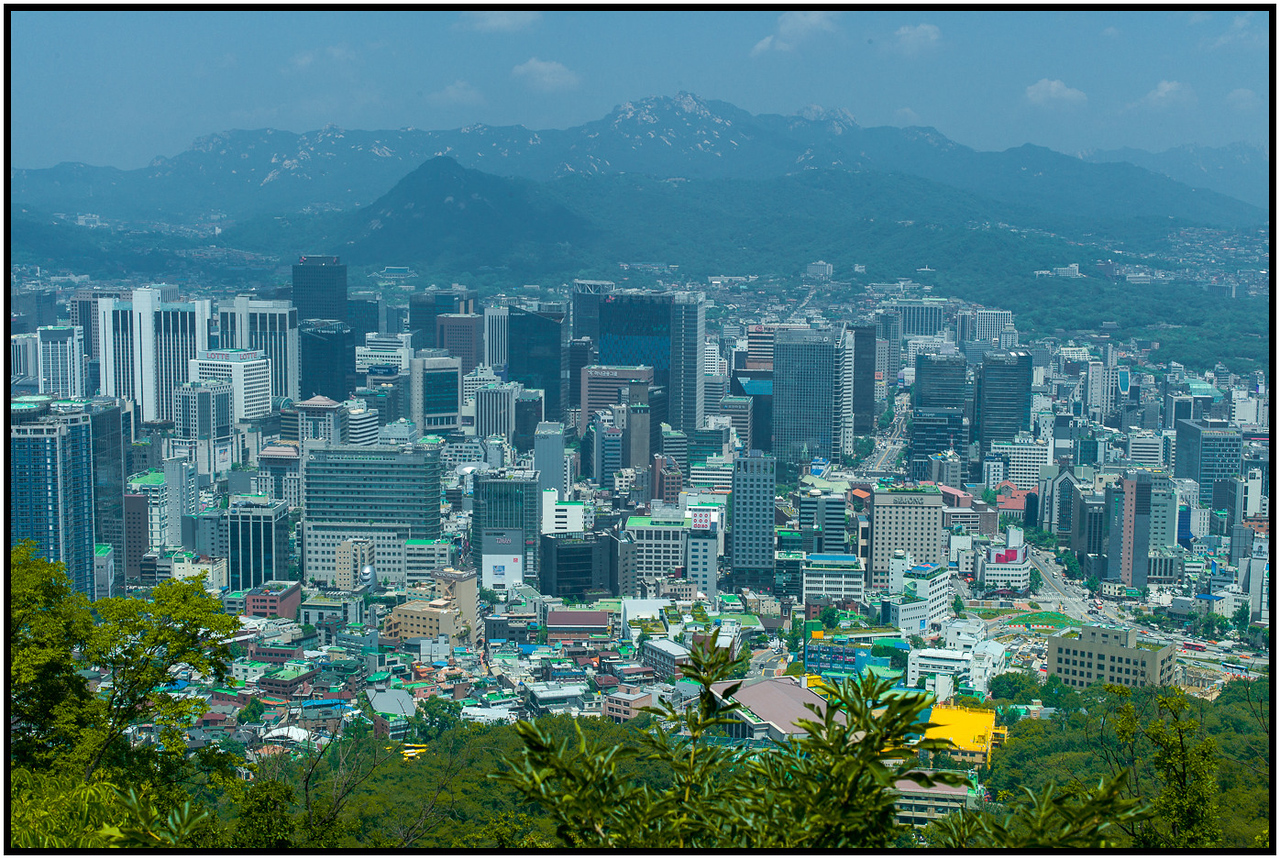
Before we hit the shopping district, we took a cable car trip to the top of Namsan mountain – about 900 feet high and located centered within Seoul – which provides great 360 degree views of the city and gives you an idea of how big this place is.
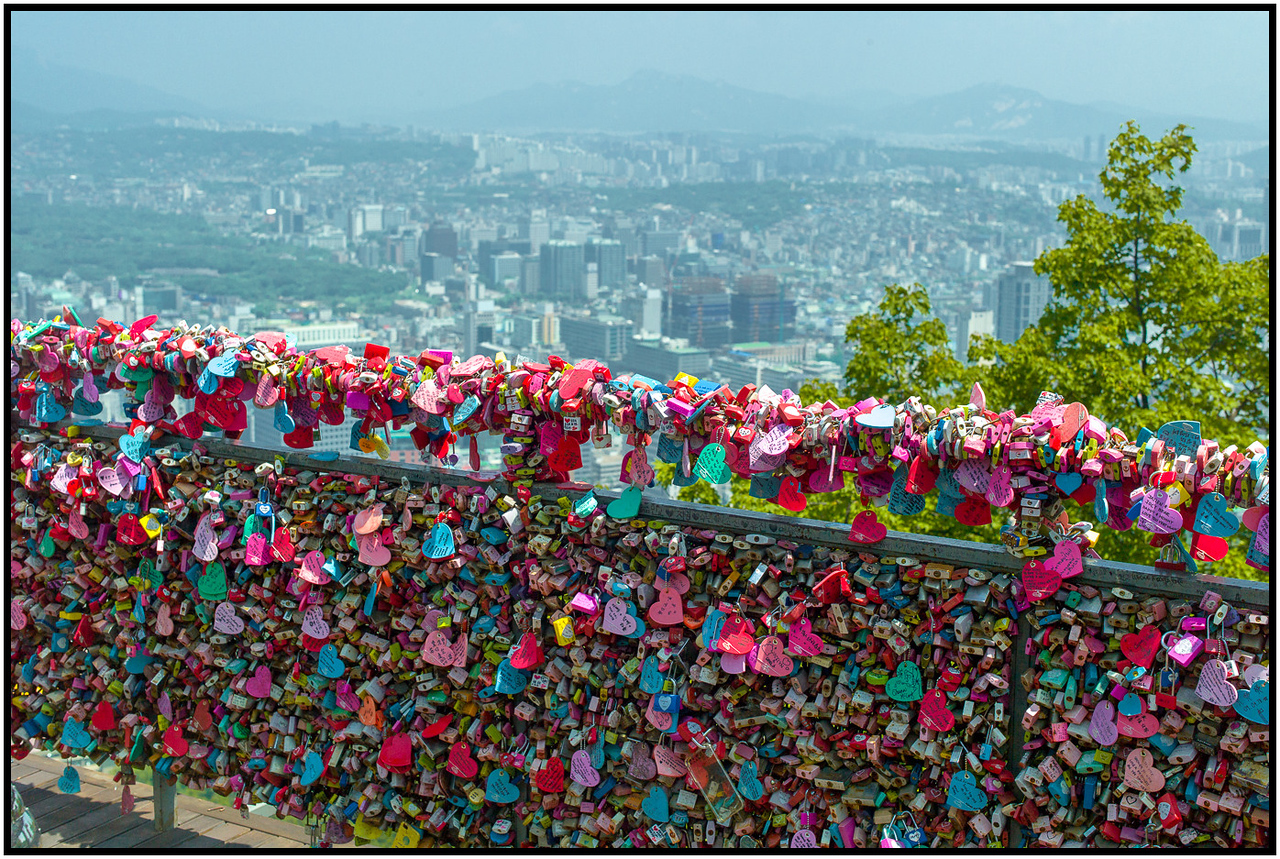
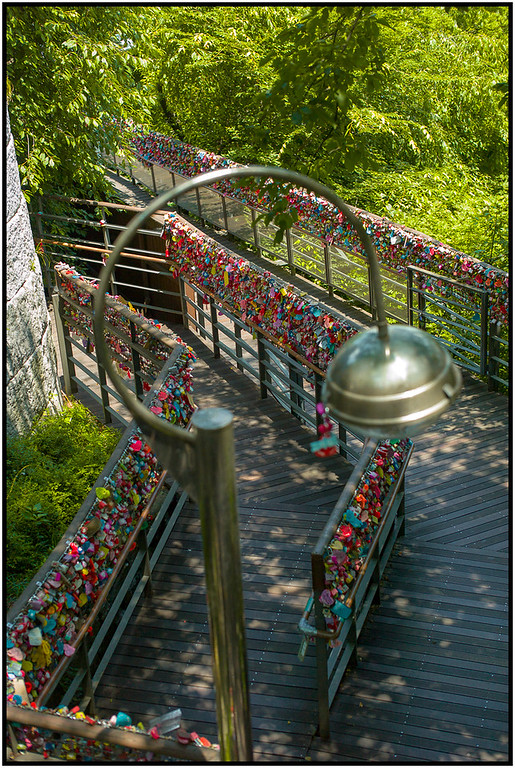
On top of Namsan – love locks on the fences a la the Ponte des Arts in Paris (which are now removed).
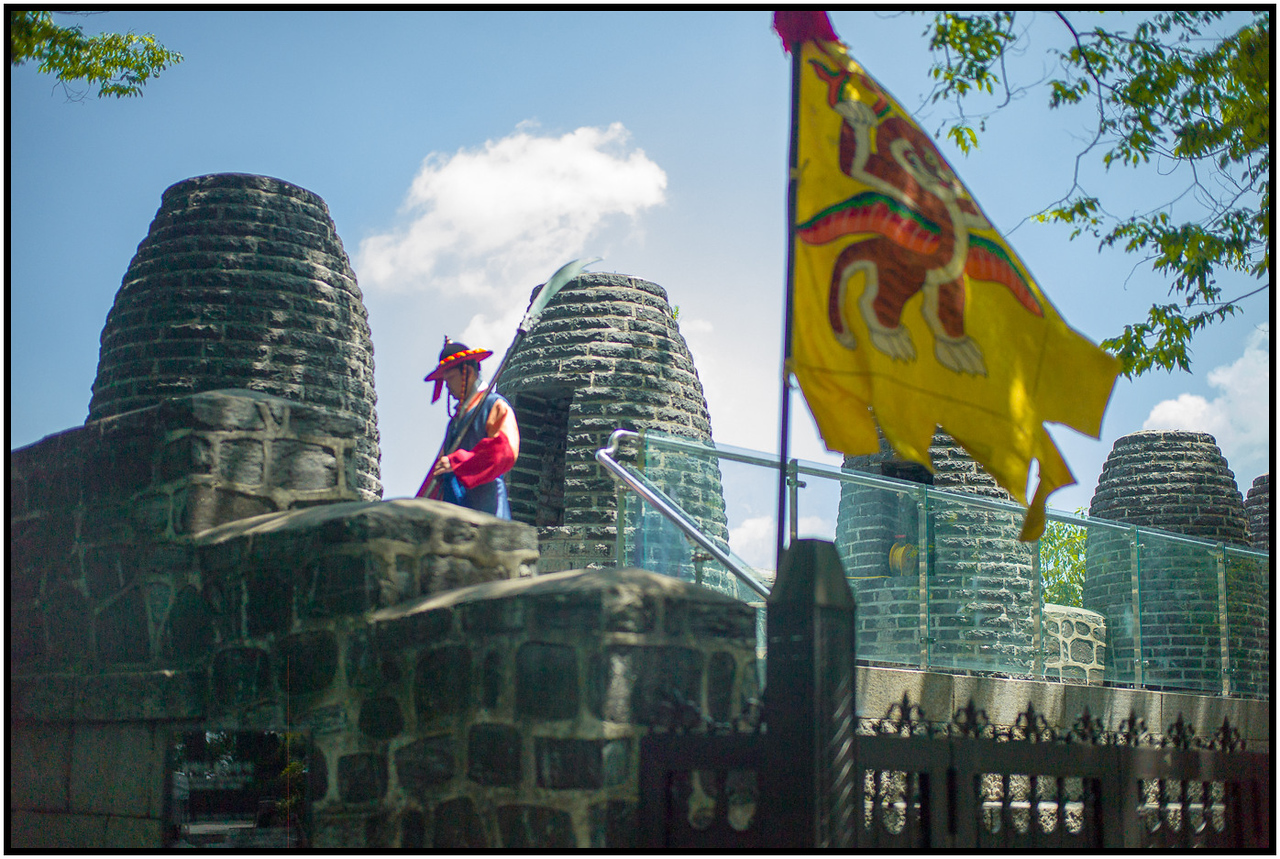
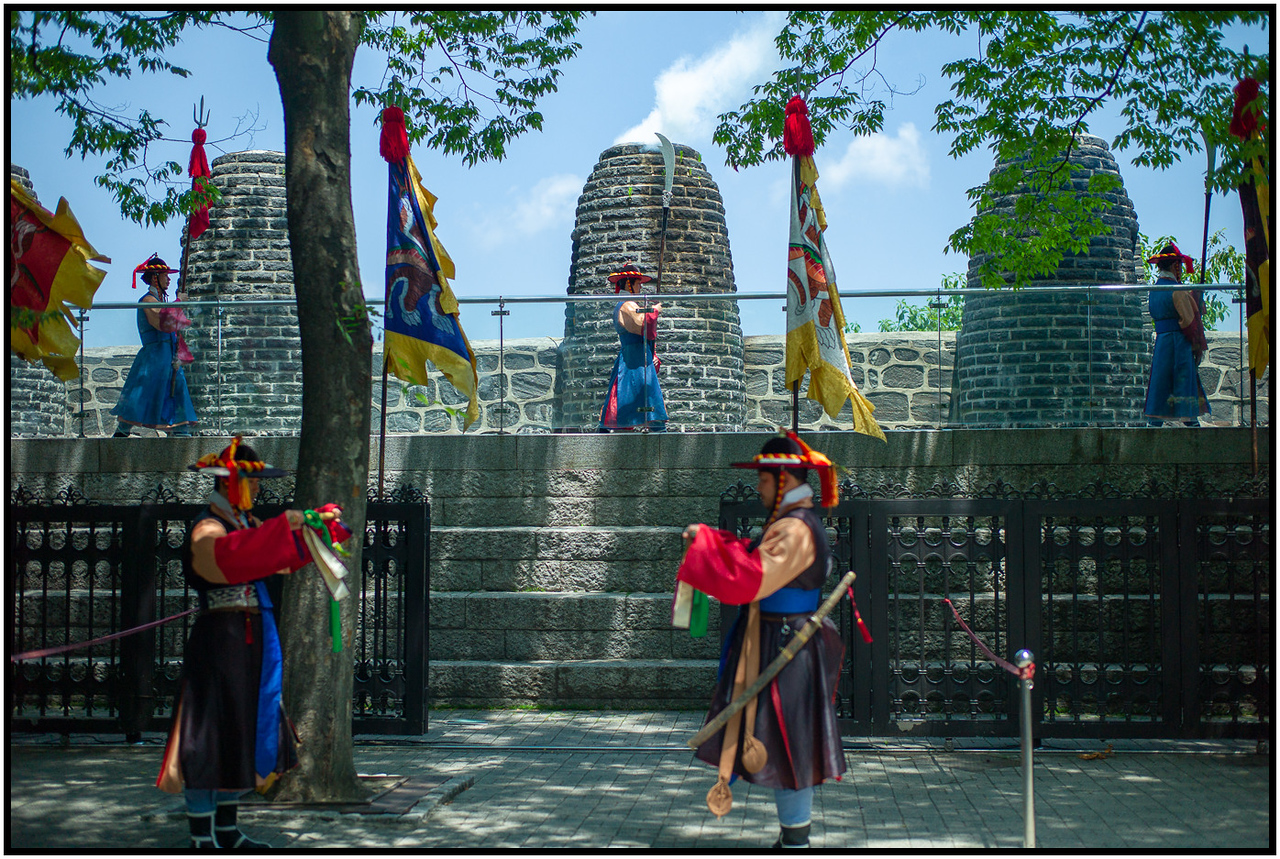
Beacon Hill. There are 5 stone chimneys that used torchlights at night and smoke during the day to send urgent military information from remote areas to the central government. 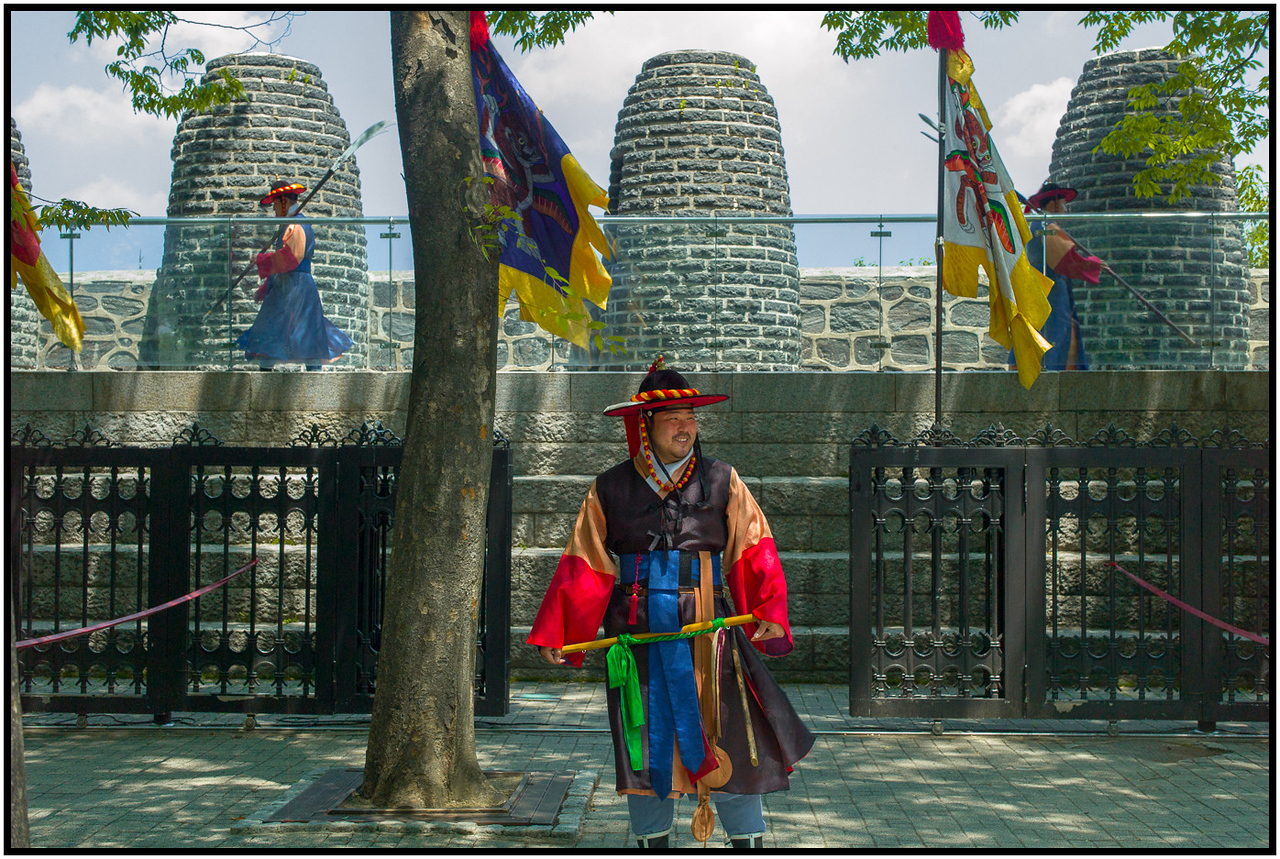
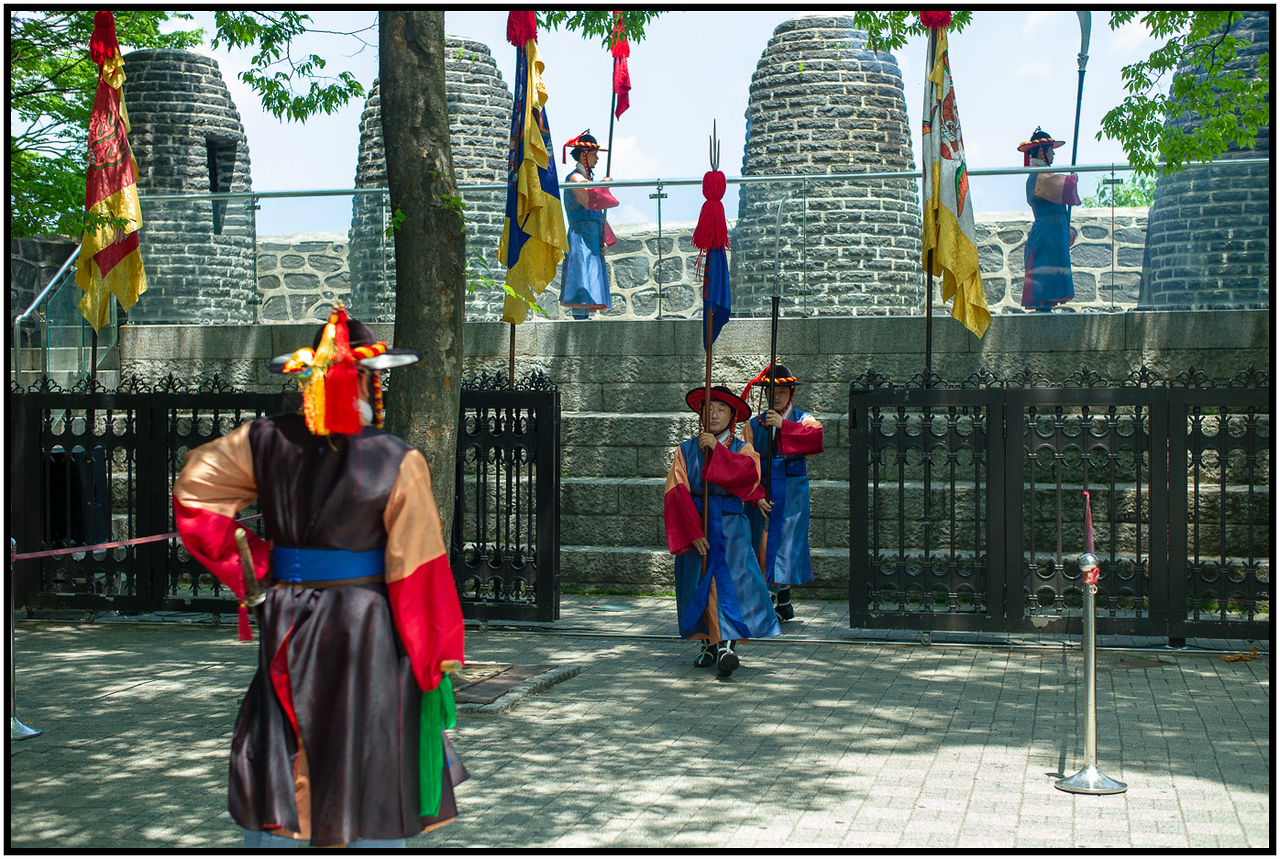
This form of communication was called Bongsu (bong=torchlight, su=smoke). The Bongsu system consisted of five stages: one beacon was lit on normal days; two when an enemy appeared; three when the enemy approached the border; four when an enemy invaded the border; and five when a battle with an enemy had broken out at the border. This hill (Namsan Bongsudae) was the most important bongsudae as all it’s signals could be seen from every corner of the country.
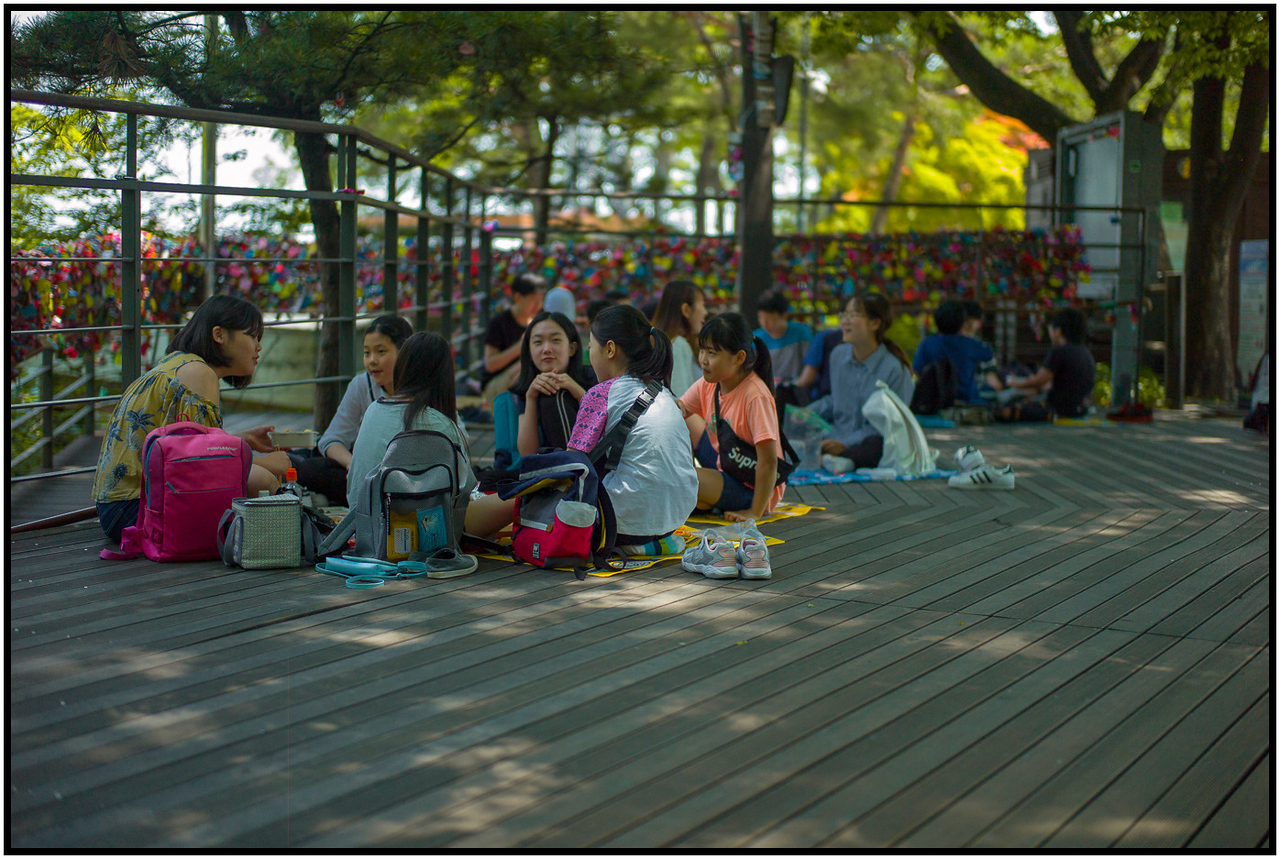
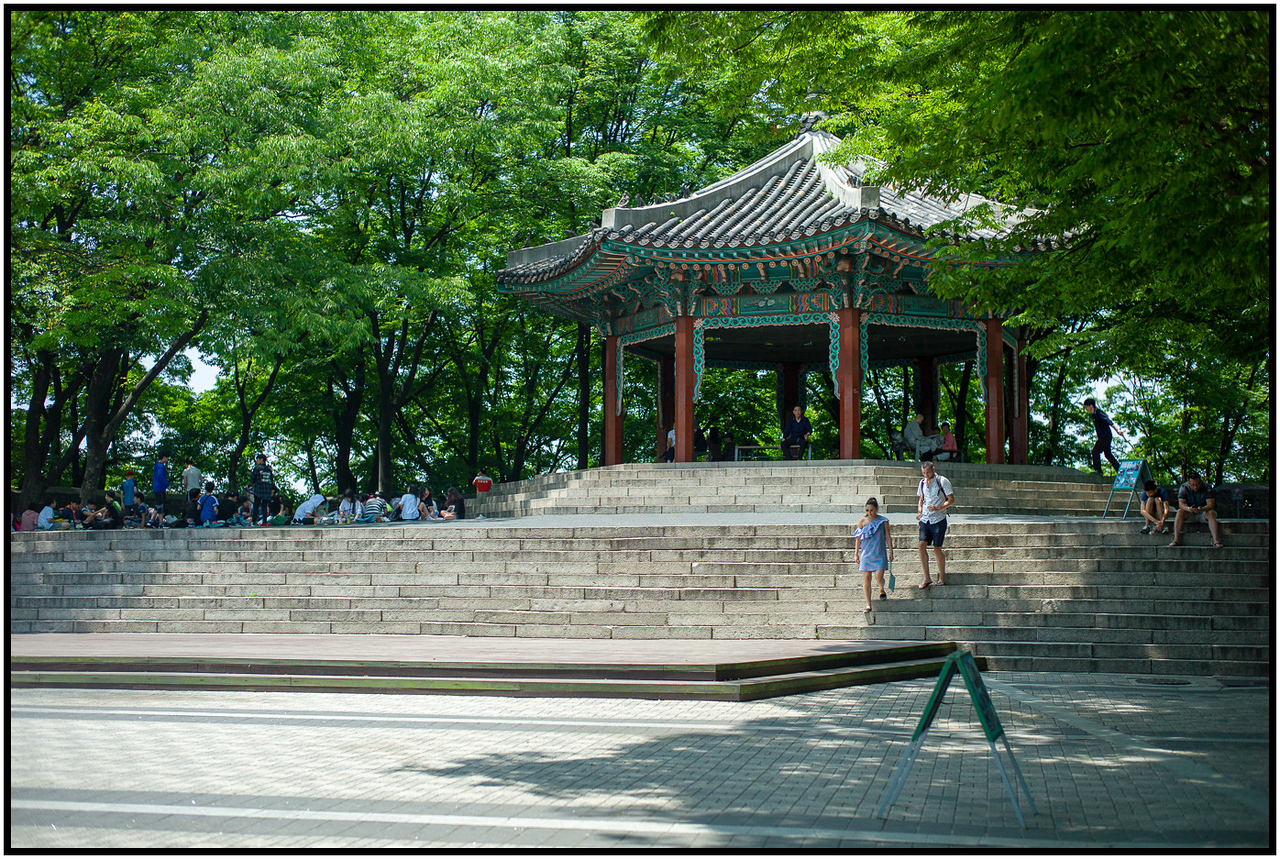
School field trips having a picnic lunch.
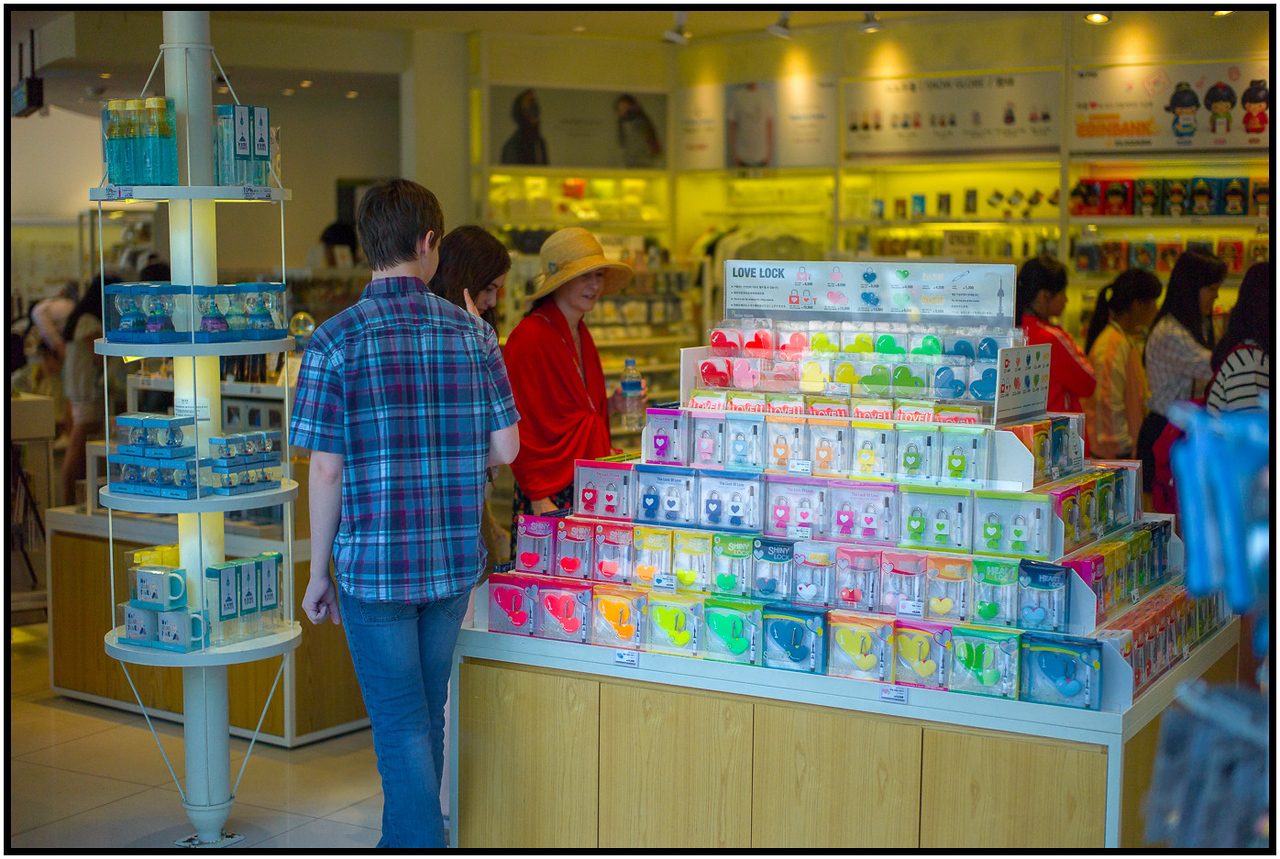
The gift shop sells the love locks so you don’t have to think ahead and bring your own. Each kit comes with a lock, a plastic tag, and a waterproof marker.
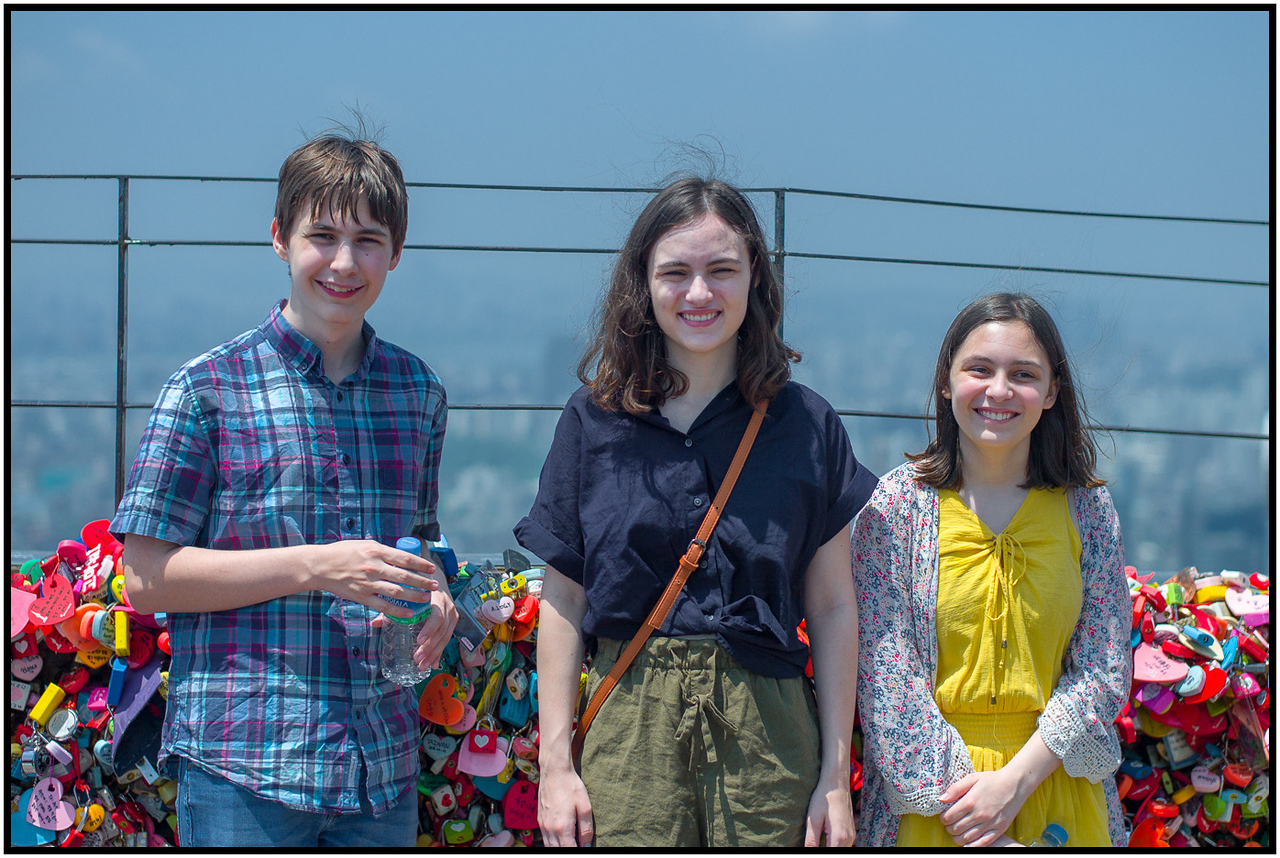
Kids obliging Adam by posing for a picture with the love locks and Seoul in the background.
I liked how the Japanese maples graduated from green to red.
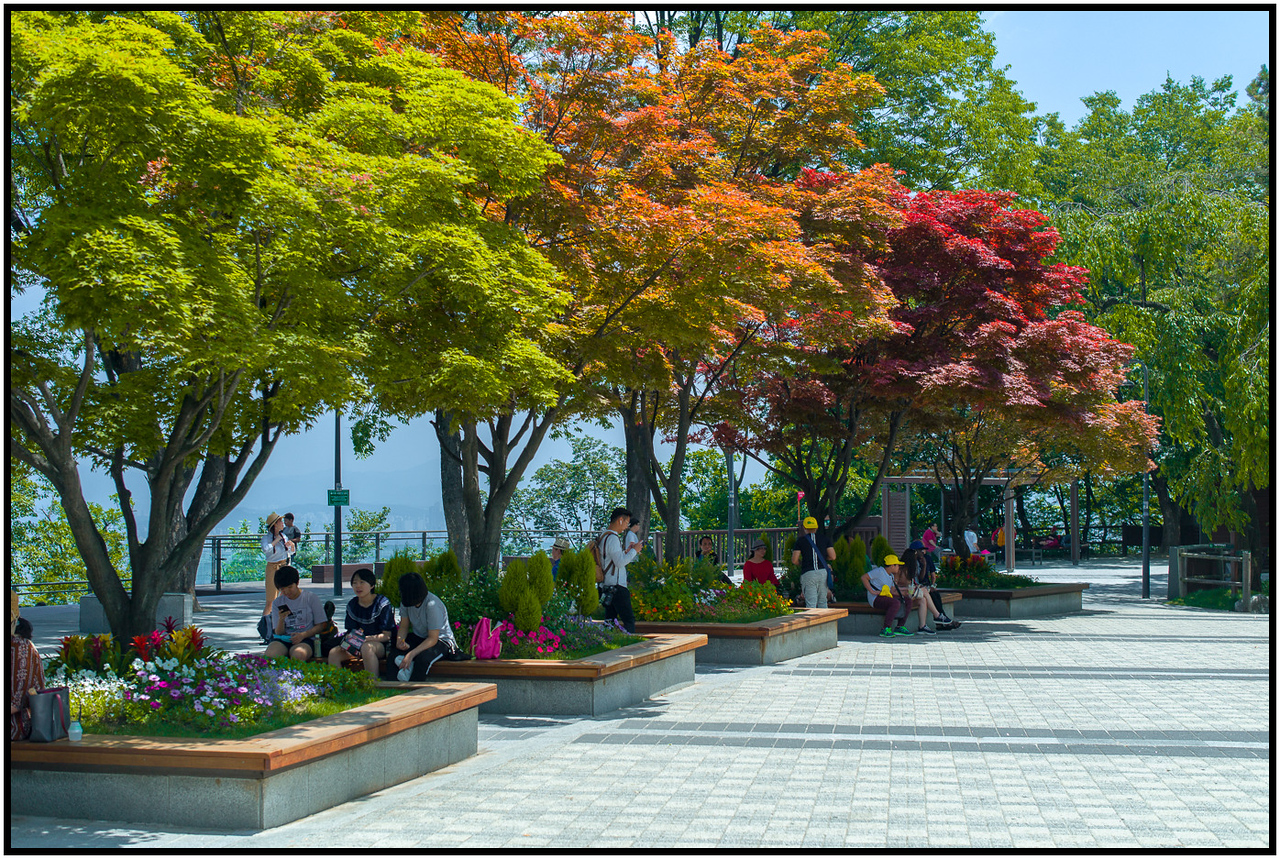
Downtown Seoul.
A replica of the pagodas we saw yesterday at the Palace.
Noon – and the changing of the guard at the Namsan Bongsudae – Beacon Fire Lighting Ceremony. Note the smoke coming out of the central chimney.
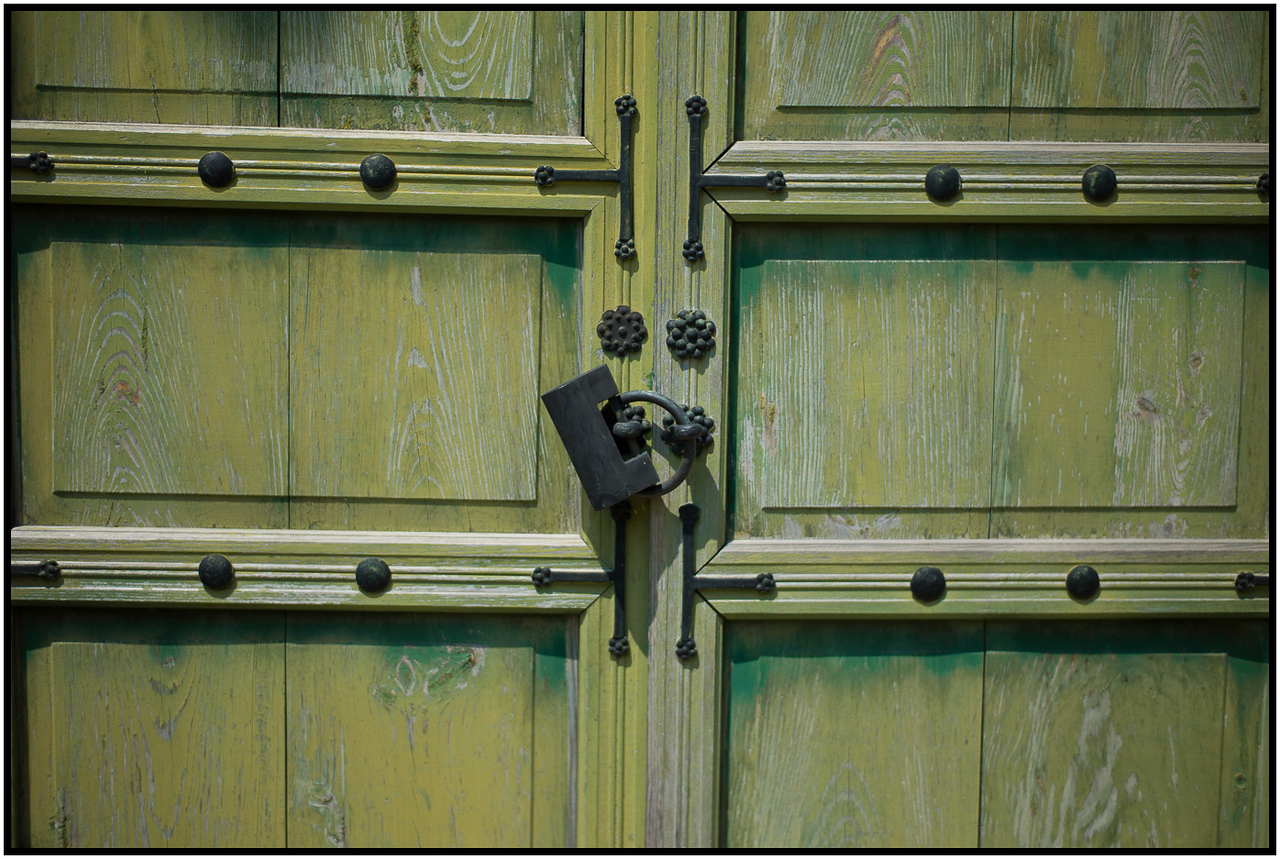
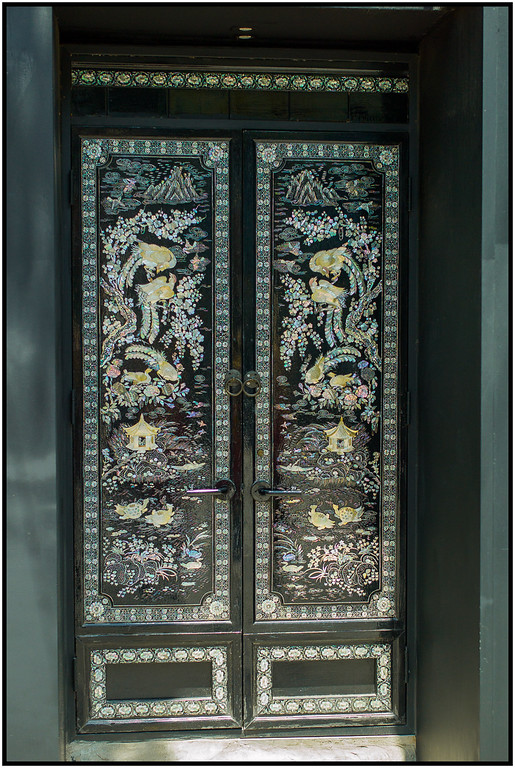
Lacquerware doors! This was an entrance to a building.
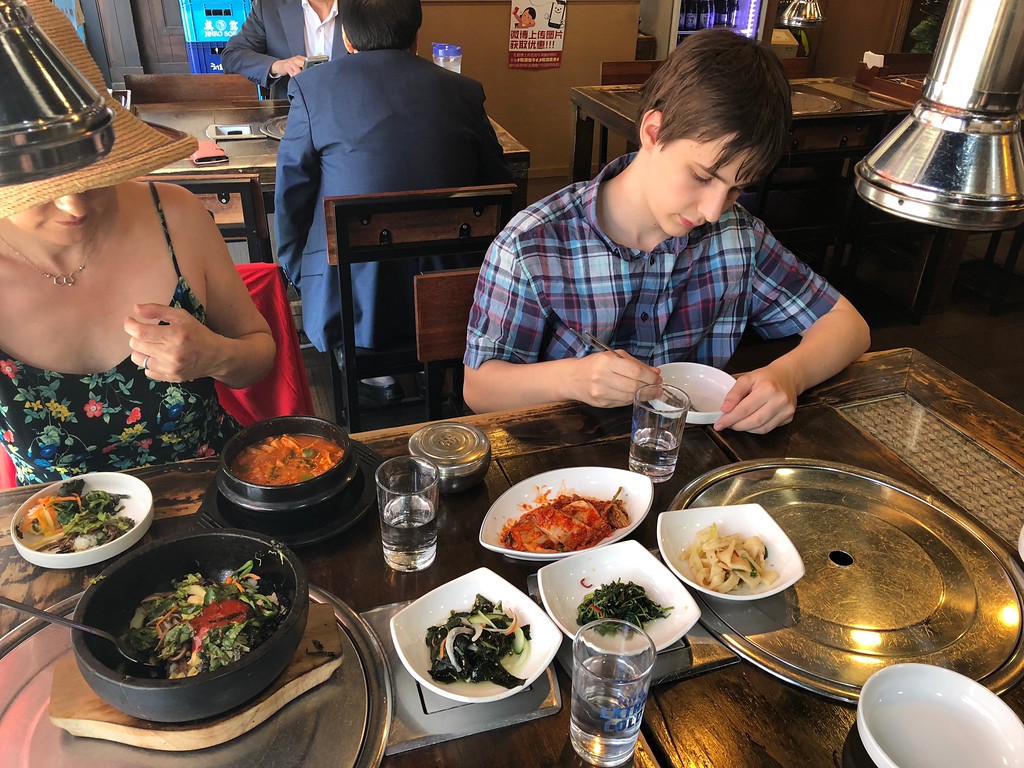
Korean lunch where we ordered a number of local plates to try: Kimchi, Bibimbap, Korean pork and some other things we never quite figured out. Most of it is spicy and that scares the kids away. They at least tried most of the dishes, but in the end ate mostly plain white rice.
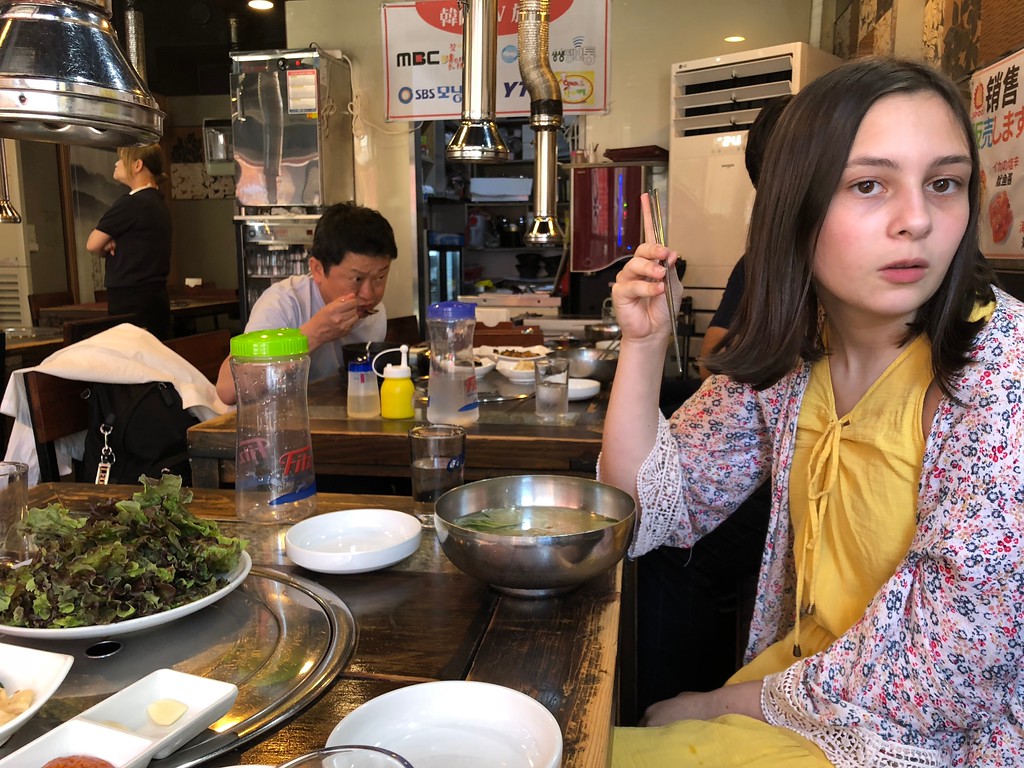
Josie with her “vegetarian” buckwheat noodle soup that came with one large piece of beef in it. Holden ate the offensive beef so that Josie could enjoy the rest of it with her morals intact.
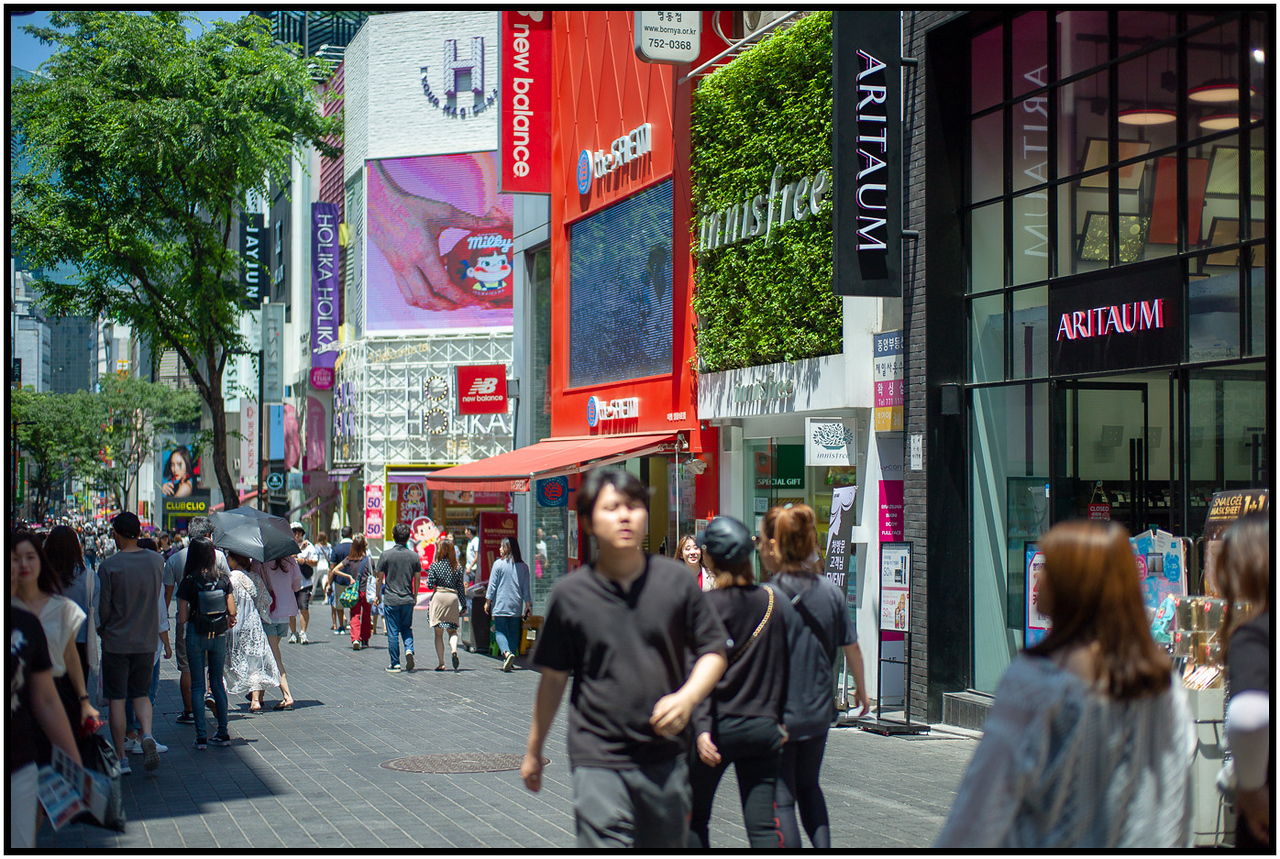
On to the make-up district!
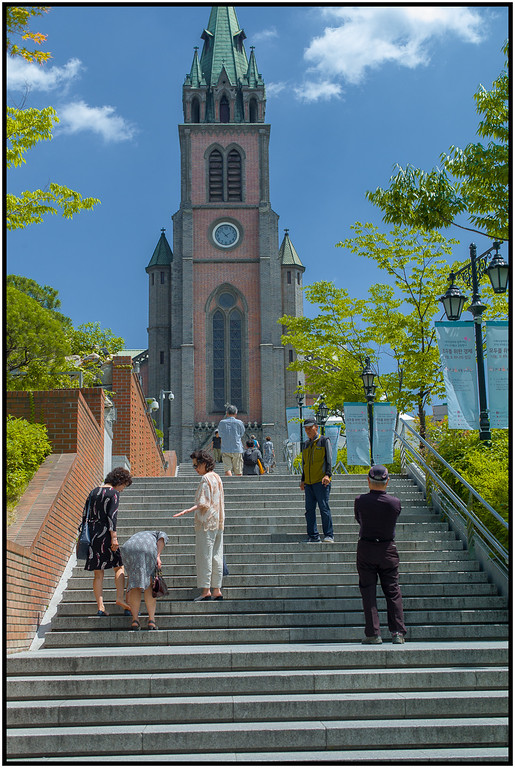
Catholic church. They were having some kind of fundraiser today.
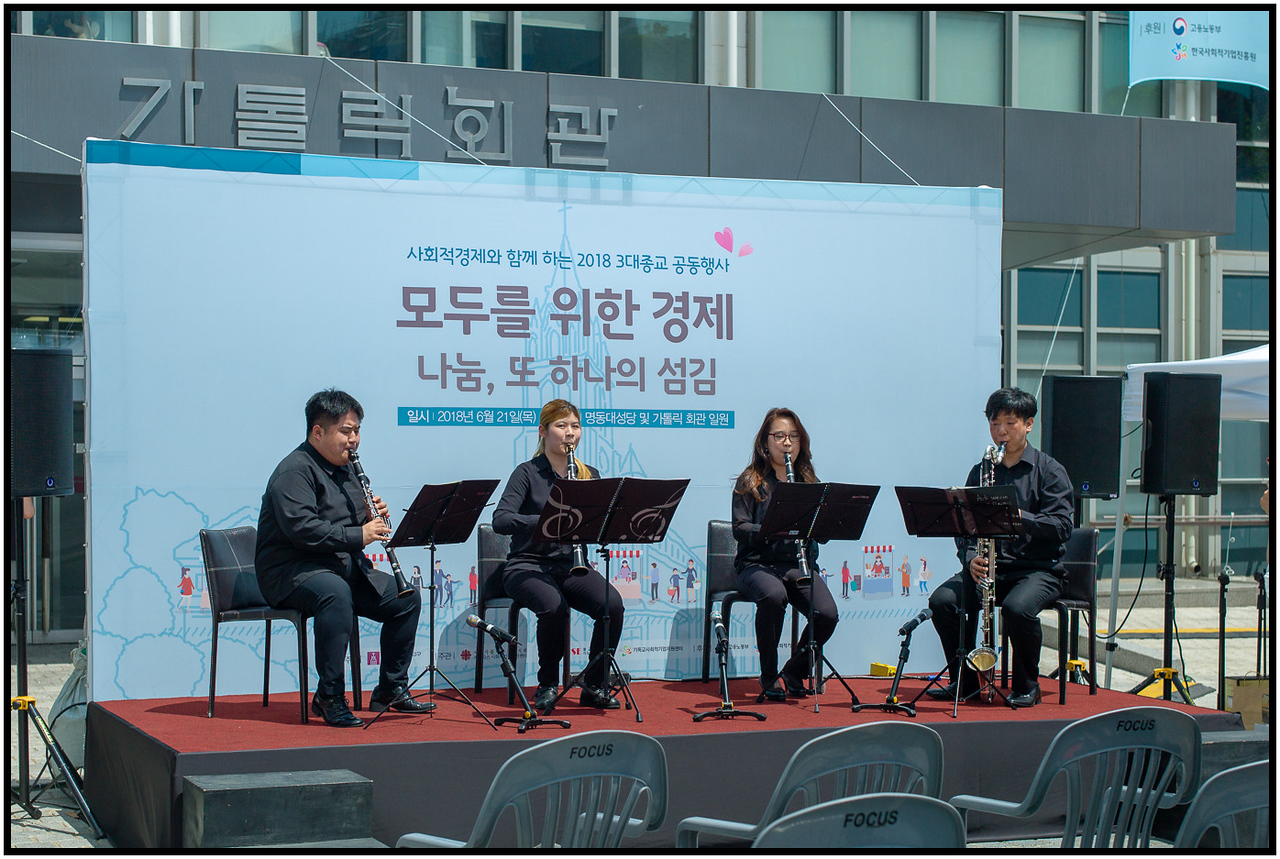
Church-sponsored music for everyone to enjoy. Josie plays clarinet and loved seeing this clarinet quartet perform a classical music piece.
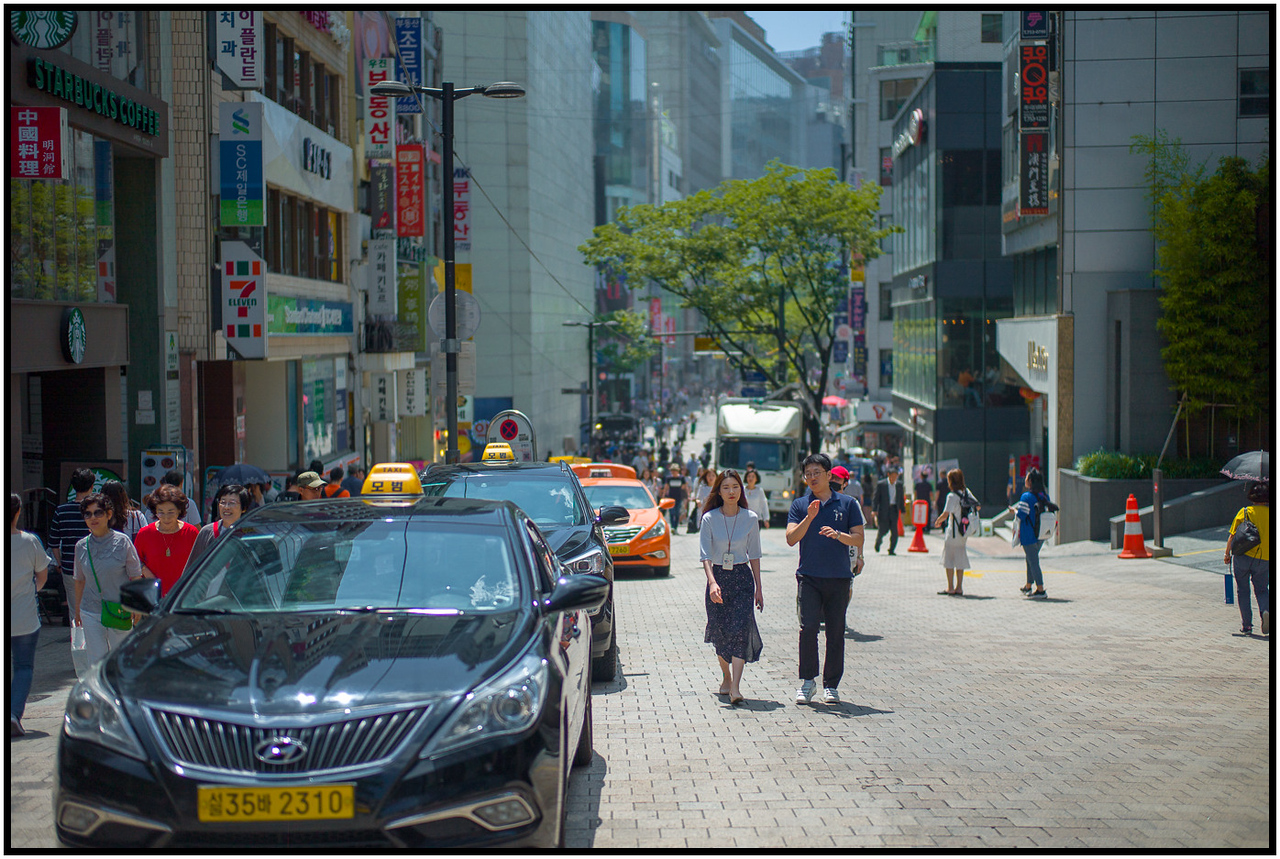
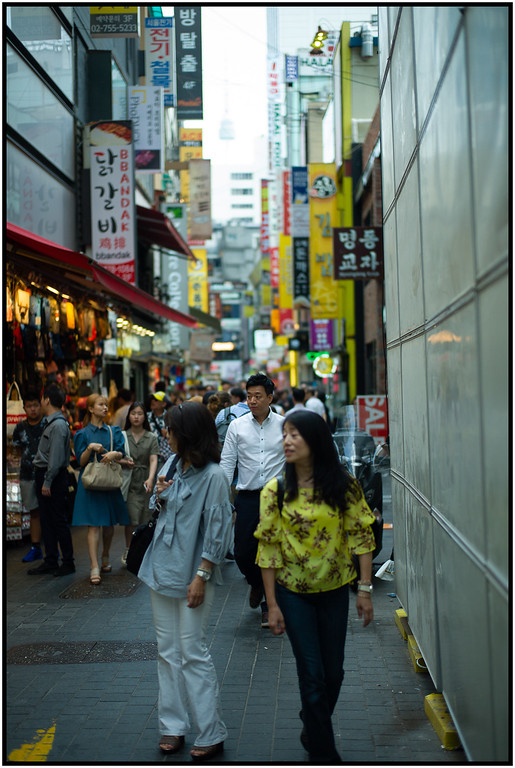
More of the make-up district. They also had a lot of clothing and accessory stores.
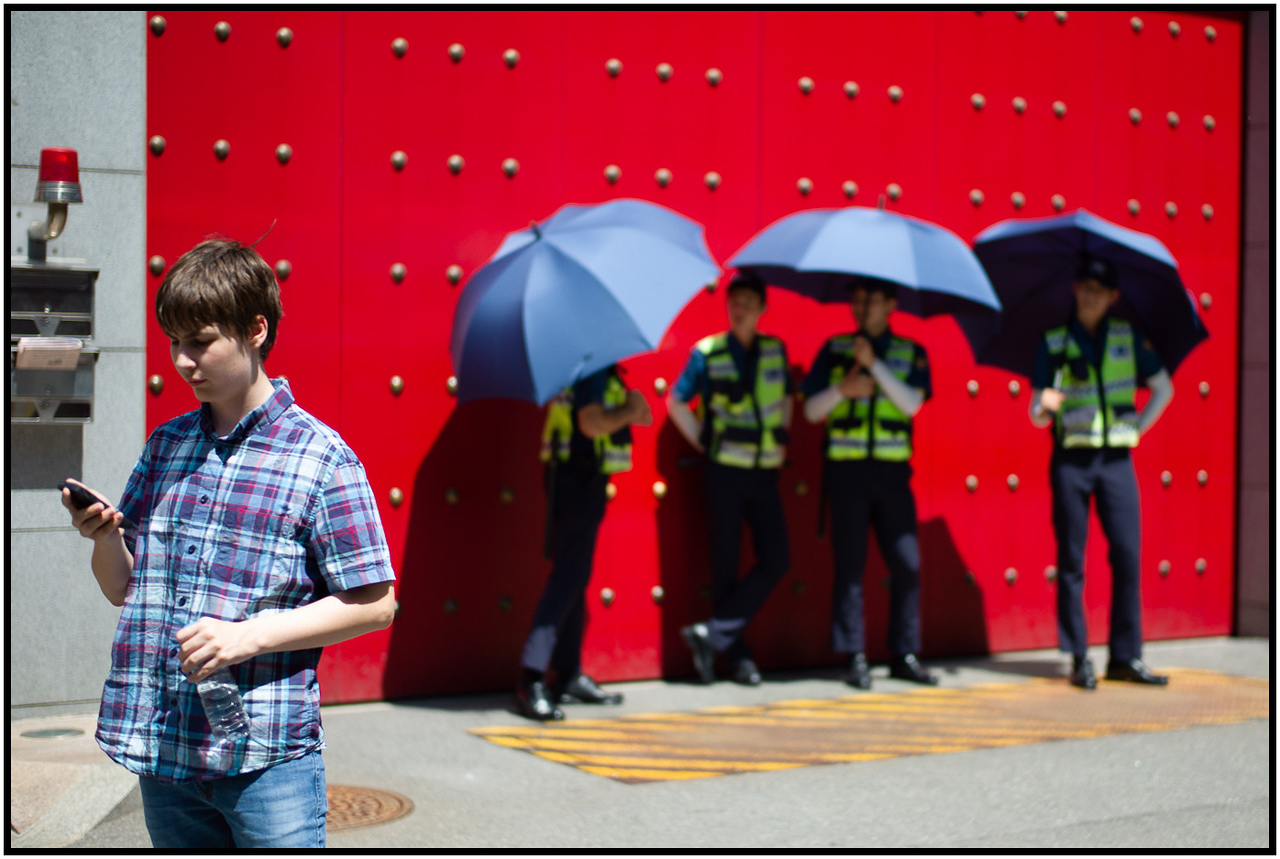
After stomping through street after street of cosmetics, skin care, dresses and handbags, we never ran into one of the shops selling the super-tall ice cream cones Holden wanted. Here he is trying to find an address (Google maps) for a 32cm tall ice cream vendor, in front of policemen guarding the Chinese embassy. They look more stylish than intimidating.
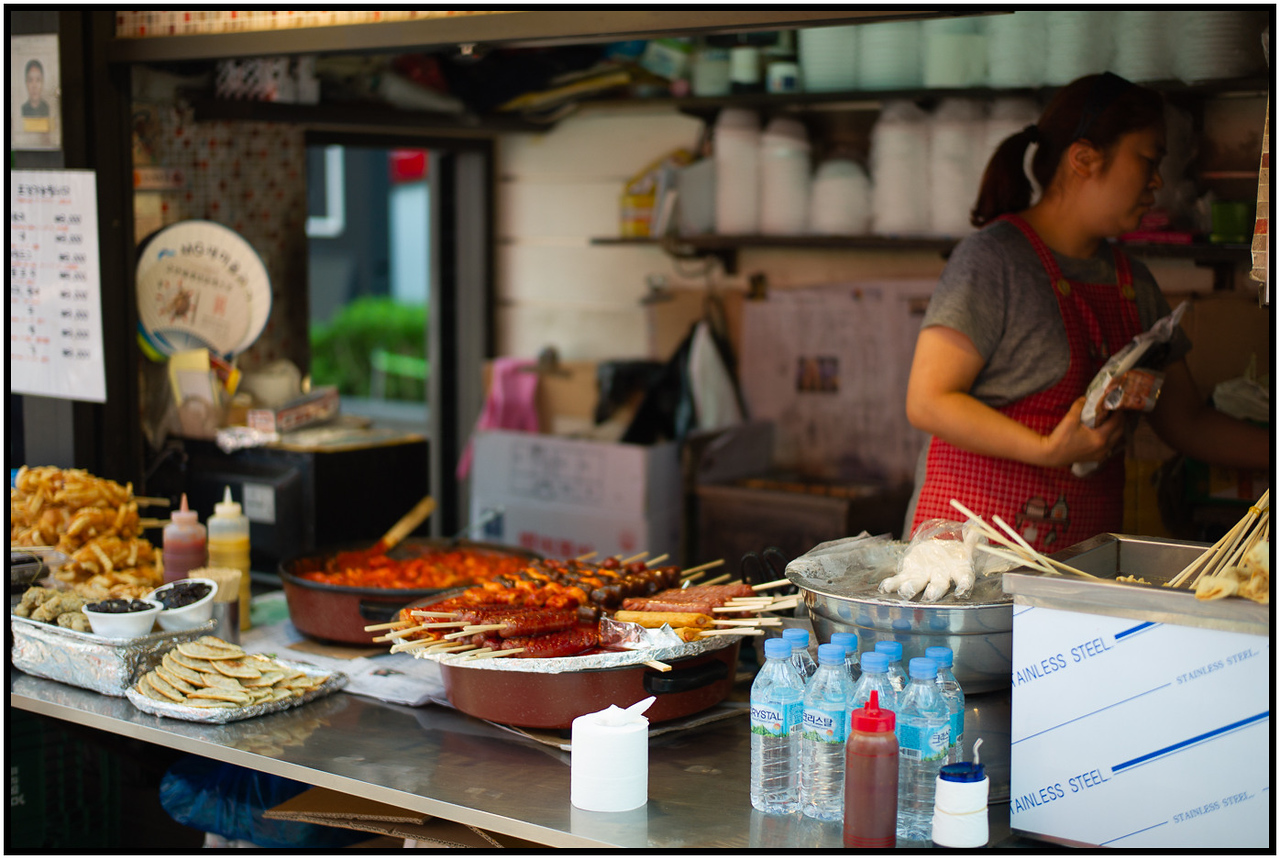
Food on sticks, none of it ice cream.
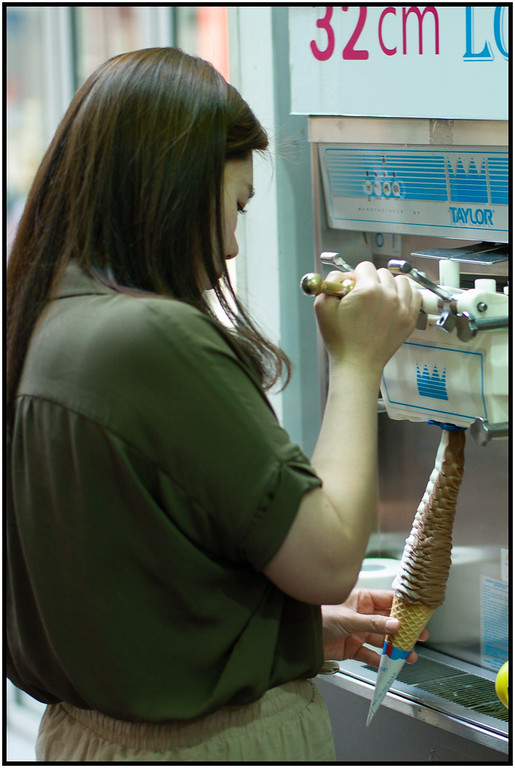
And then success!! We finally found the 32cm ice cream.
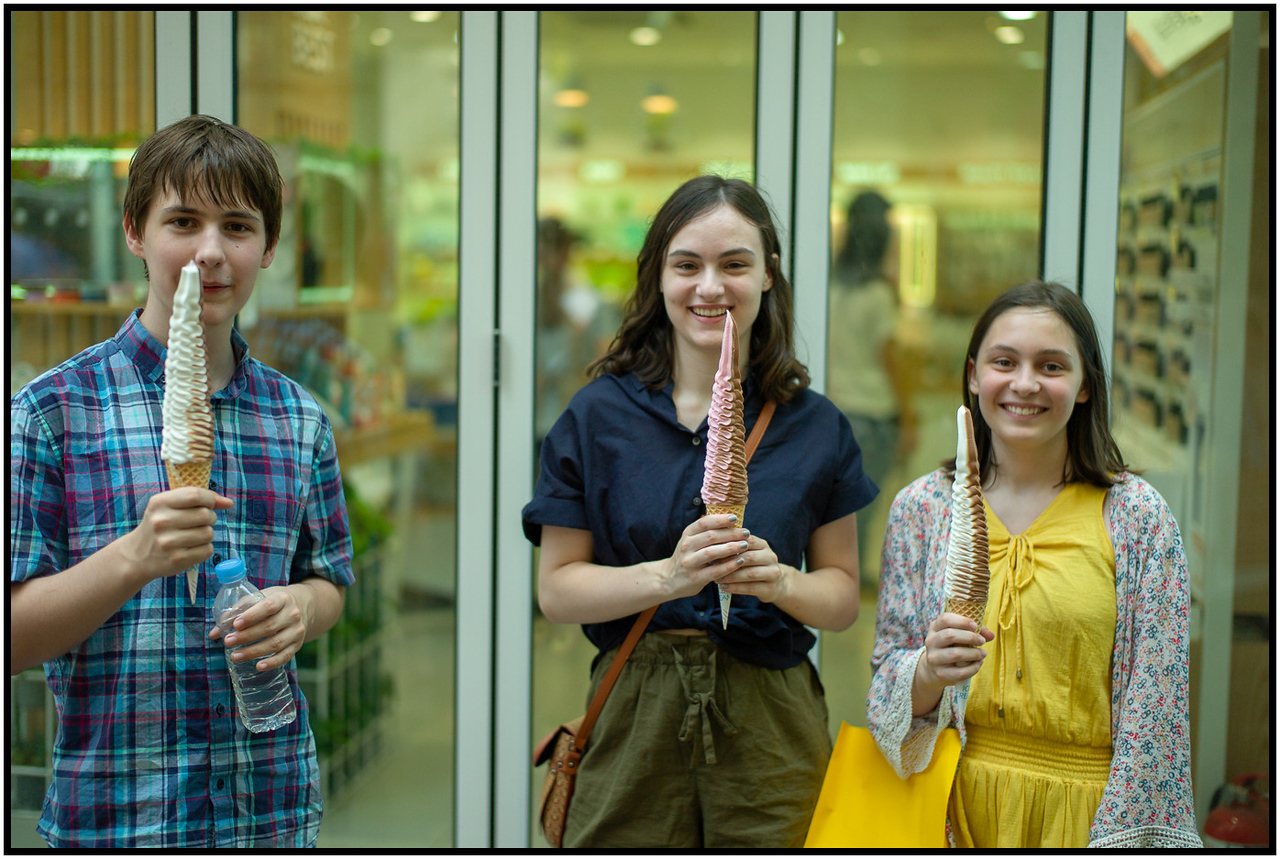
They are happier about posing for this picture.
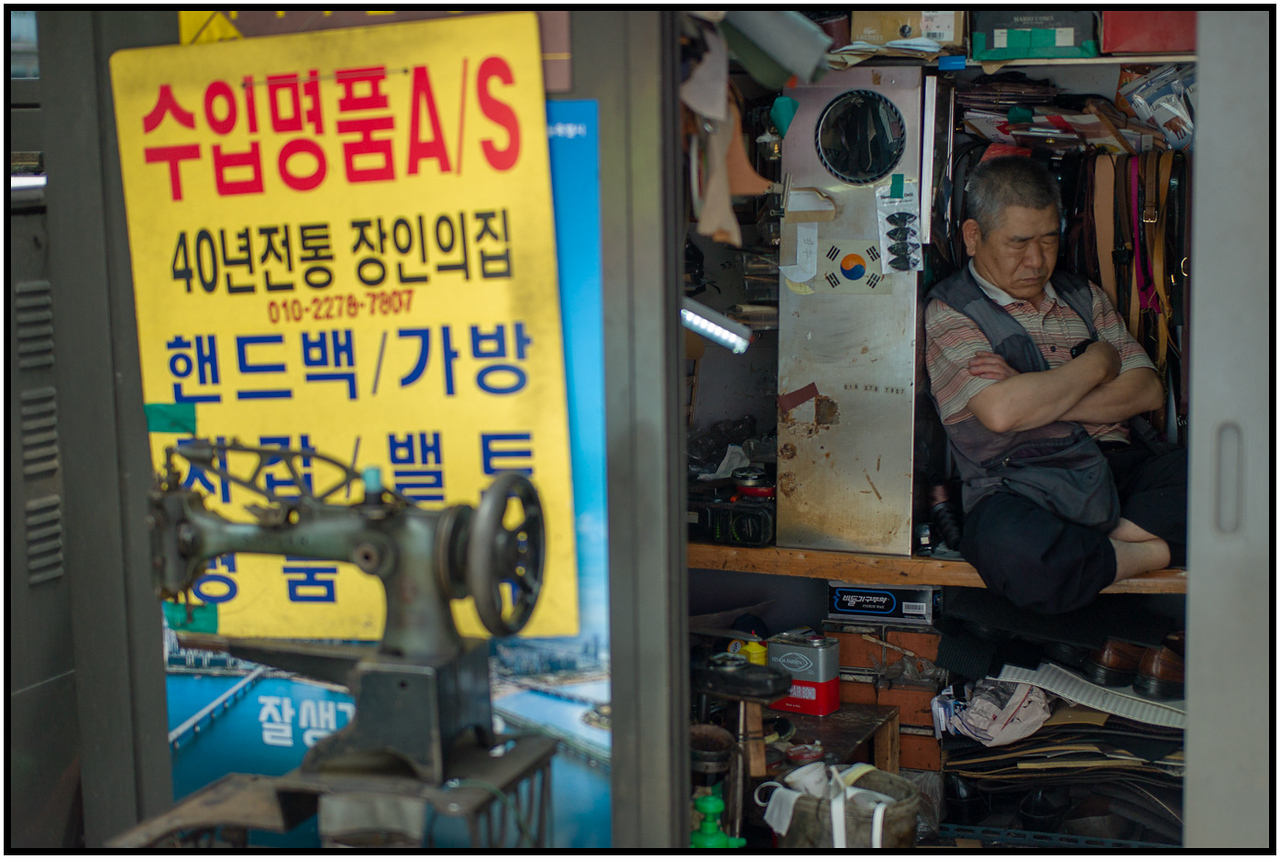
Most subway stations have one of these booths for shoe polishing and repair. Adam managed to catch this guy on his break.
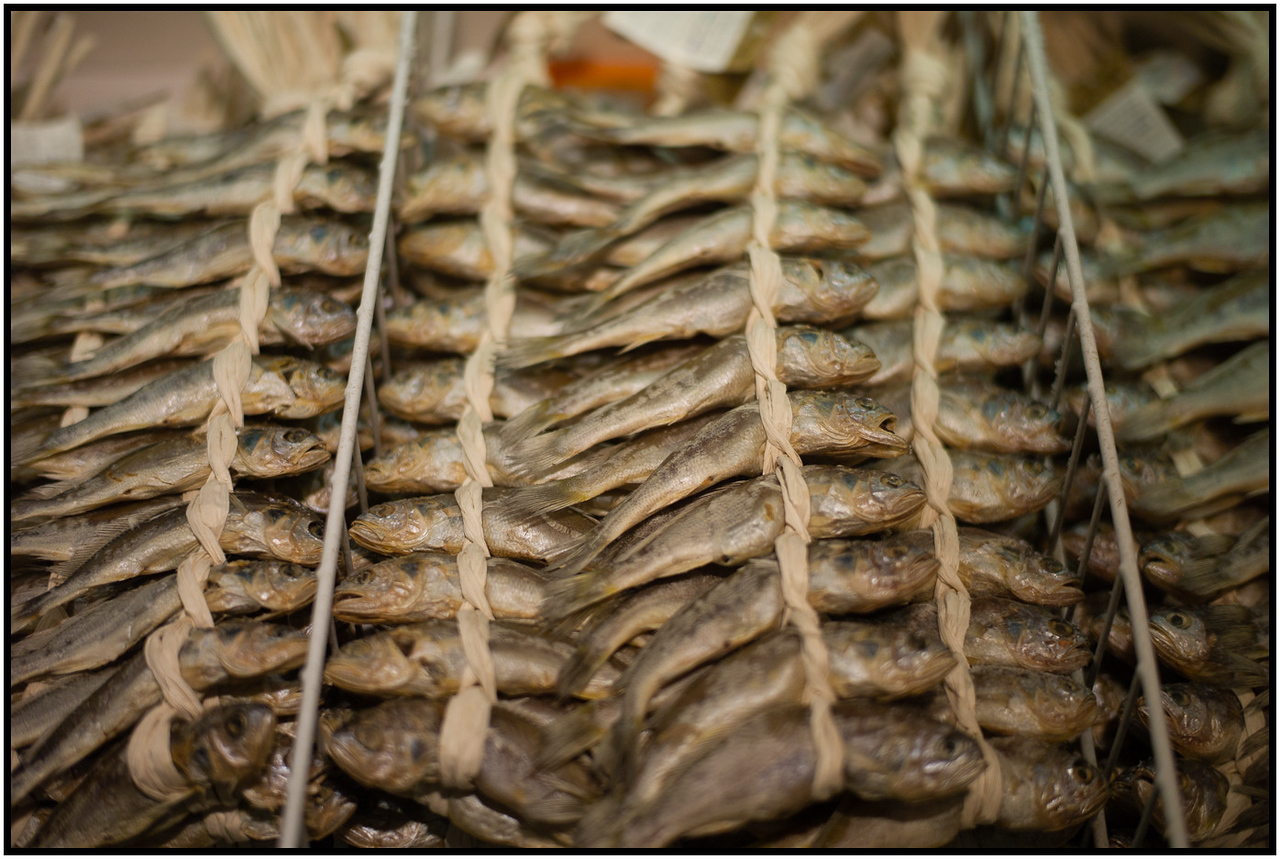
We finally found a fantastic grocery store! It had everything under the sun, from imported foods (like actual cheese and jars of olives) to slimy, mucus-coated fish.
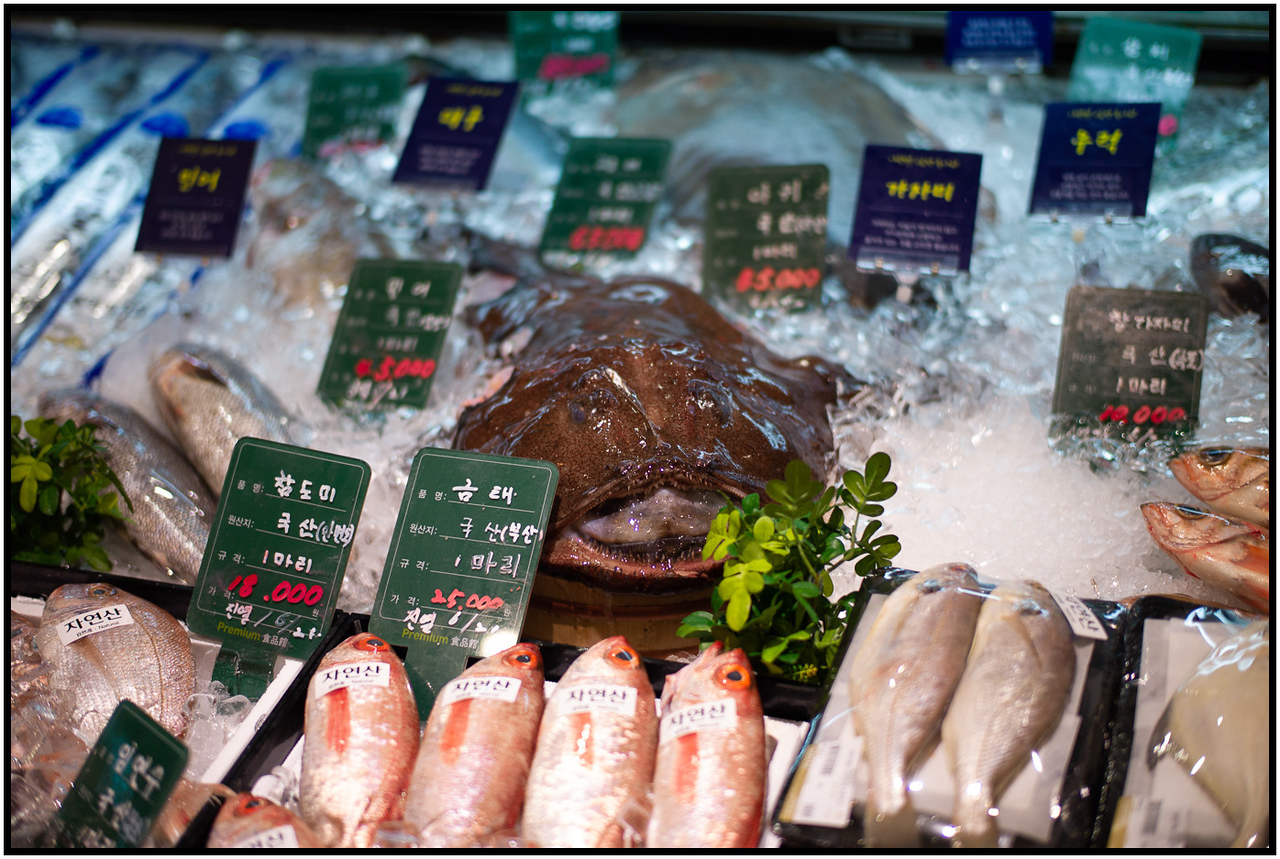
That monstrosity in the center (below) is bigger than you’d guess from the photo. I think it is a monkfish but I don’t know for sure. Anyway, it was oozing slime that froze when it hit the ice it’s packed in. It was sitting in a revolting puddle of it’s own frozen mucus. It reminded me of a scene on The Big Bang Theory:
Amy: Isn’t that gross? I mean, a hagfish can produce enough mucus to fill a bucket in a minute.
Sheldon: I know. It makes its own gravy, it’ll slide right down.
This store is only 5 subway stops from our place so it will probably be our go-to for groceries for the remainder of our time in Seoul. They had a fantastic selection of fresh produce, a huge salad bar full of a wide variety of additional dishes and soups (like at Whole Foods back home) and the Korean version of Ready Meals.
Tomorrow’s itinerary is a tour of the De-militarized Zone between South and North Korea. More later!
 MayseStomp