June 16, Tuesday
Today we headed for Osaka. It was a bit of a weird journey, for a couple of different reasons.
The first reason is that we were under the impression the bullet train ride from Kyoto to Osaka was about 35 minutes. So far, everything in Japan has been very much on schedule. We settled into our seats on the train, the kids pulled out their iPads, we stashed our luggage and Adam and I sat back to relax. A few minutes later, the announcement lady came on and said some stuff in Japanese and I saw Adam perk up … “I think she just announced our stop,” he said. That put us into a bit of a panic because we were unprepared. The ride only took 12 minutes!
The other reason this was an unsettling ride was a little more somber: the bullet train from Kyoto to Osaka terminates in Hiroshima. It felt surreal to get on a train labeled “Hiroshima.” That city has always been synonymous with tragedy and pretty much represents most of my WWII-centric knowledge of Japan’s history prior to coming here.
Hiroshima has always felt about as real to me as Narnia. Boarding a train with it as a very real destination made the ugly human toll of WWII seem closer. I’ve spent a lot of time in the UK and Western Europe, and as an American I’m used to seeing WWII from the Allied perspective; they — us — were the “good guys.” Boarding a train bound for Hiroshima caused me to have a perspective shift, and it didn’t feel good. I did not feel like one of the “good guys.”
Since we arrived earlier than expected, we stopped in a coffee shop at the train station to kill some time before our appointment to meet the lady who owns the AirB&B apartment we’re renting. We got in line behind a big Chinese family who didn’t speak a word of Japanese.
As I’ve mentioned before, every menu in this entire country has pictures of every single dish on it, so ordering is pretty easy … all you have to do is point at a picture. The Chinese lady, however, insisted on taking a picture of the menu with her phone, waiting for it to appear on her screen, zooming in with her fingers on the photo of the food she wanted, and then showing her phone to the girl behind the counter. It was the single worst food ordering in the history of restaurants. The group had 6 adults and 3 kids, so this took foreeeeeeever.
When it was finally our turn, Adam said to the counter girl “Gaijin, neh?” (Foreigners … am I right???) The girl looked shocked, which quickly gave way to delight and she busted out laughing. Adam can now speak Japanese well enough to crack jokes.
Our apartment in Osaka is the best one we’ve stayed in. It’s on the 11th floor of a very nice high-rise building just a couple blocks from the main fish market. The couple who own the apartment are called Bob and Lily; Lily is Japanese and Bob is American. (They live in Nara, the city with the deer.)
Bob is an English professor at the University here. Lily told us that it’s very hard for foreigners to get jobs in Japan. Pretty much the only positions available are Professors/teachers and bartenders. The Professors aren’t allowed to have tenure, either …. foreign Professors can sign on for a maximum 5-year contract, and those are almost always denied renewal at the end of the period. The Professor must then apply for positions at other Universities and hope to get lucky with another 5-year contract. She said, “The Japanese are very polite to foreigners, but also very closed. They will never see a foreigner as anything but an outsider.” Getting work visas is very difficult.
Osaka is much further off the tourist path than Kyoto. Adam and I went walking around this afternoon after we settled the kids into the apartment and got some laundry and grocery shopping done. It was raining so all three kids elected to stay in — this apartment has satellite TV in English, with Netflix, Hulu, and Amazon Prime Instant Video, so they are mainlining TV shows like junkies.
Adam said that Osaka generally gets skipped by tourists because it was bombed to hell by Americans during WWII. Most of the architecture was destroyed and has been rebuilt since then, so the buildings are relatively new and uninteresting. After being on the train bound for Hiroshima this morning and now wandering the streets of a city all but destroyed by American bombs, this is the first time I’ve felt a sense of gravity being in this country.
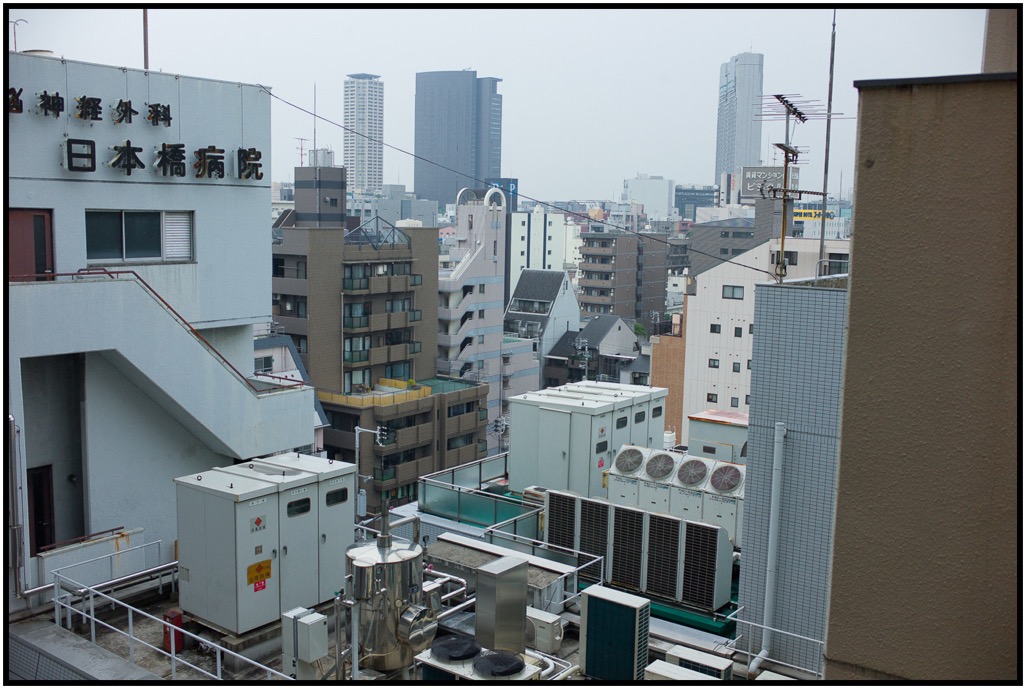
Below: a view of Osaka from our balcony on the 11th floor.
The fish market. This one is geared toward the locals instead of tourists. It has way more fish/foods than the other fish markets we’ve visited and far less “tourist” goods like pottery, knives, and clothing.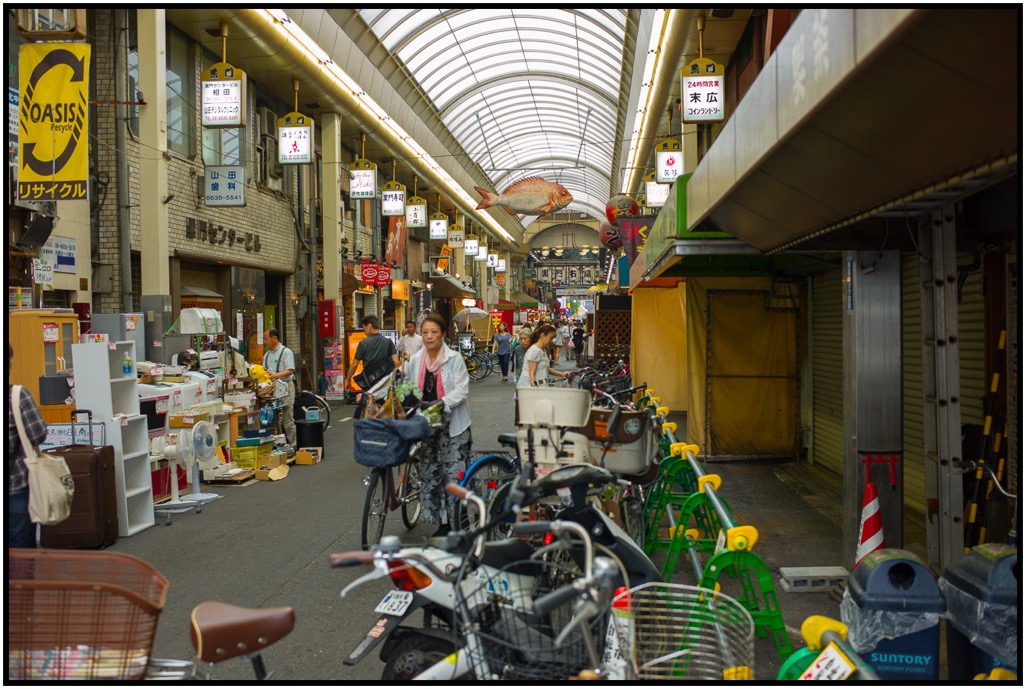
Giant fish heads. We think these are tuna, but we’re not sure. They were actually pretty expensive, so if you get one it’s because you’ve decided you really need a giant fish head. 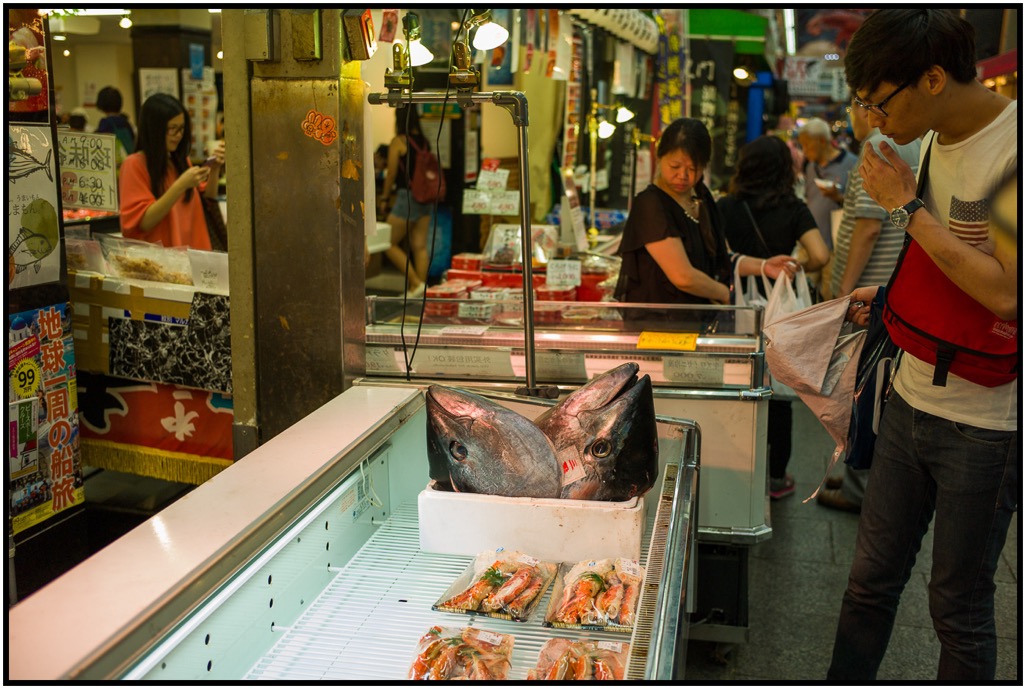
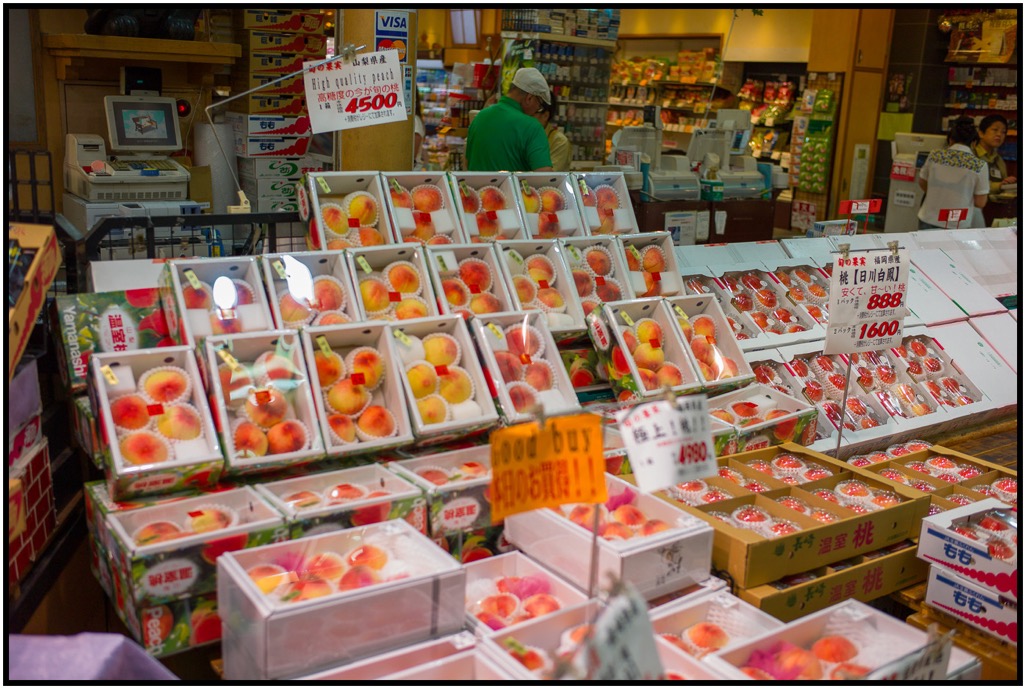
Fruit in general is very expensive in Japan. Even the cheapest of apples or bananas run about $1 each. Fruit is also a common gift in Japan and, as such, they charge a great deal for the highest quality examples. Here, you can buy a box of 5 peaches for about $37.00. We’re going though a bit of fruit withdrawals … I splurged on a package of apples a couple days ago and they got treated like a dessert. When we get back home to the land of cheap and plentiful fruit, I’m going to hit the grocery store and put together a fruit extravaganza of epic proportions. We’ll eat fruit until we’re sick.
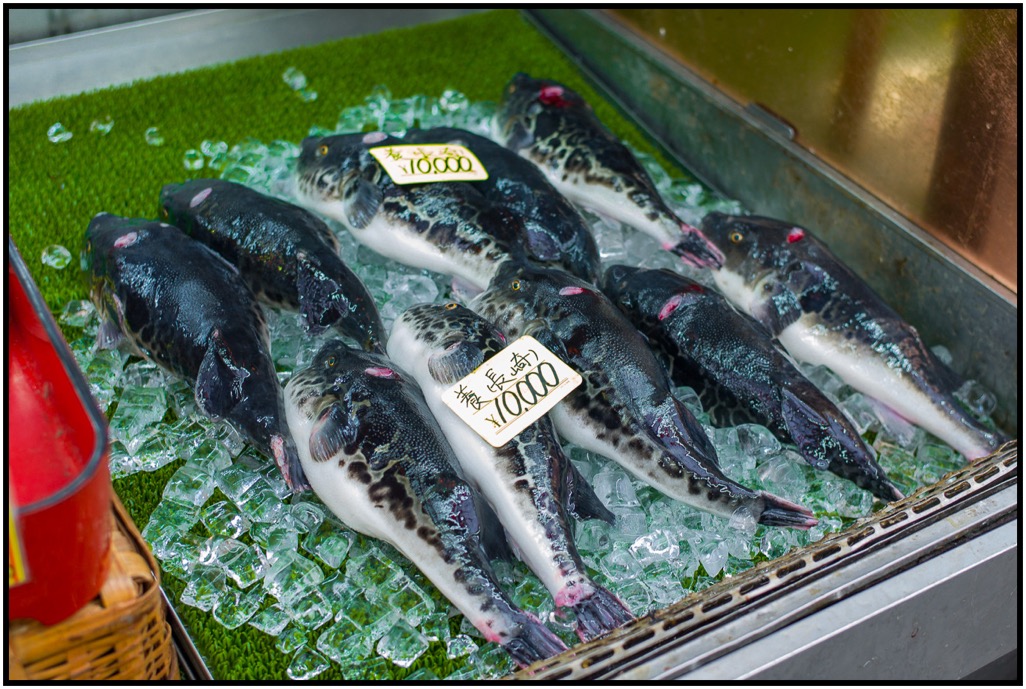
Fresh fugu for you to take home and prepare yourself. Only $81 each. Keep a map to the hospital handy.
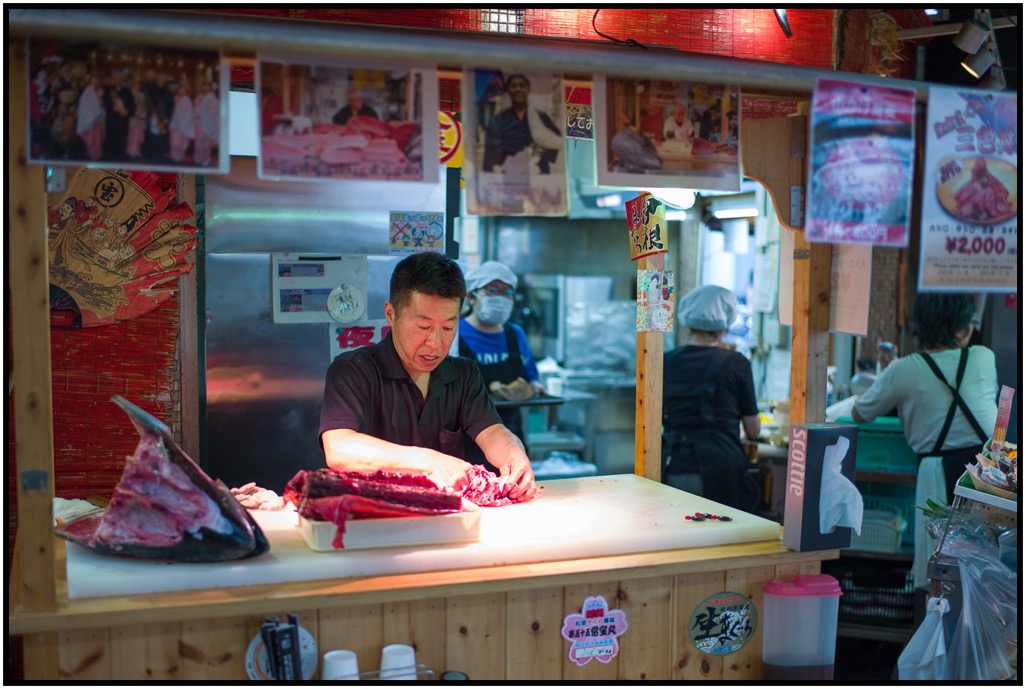
Cutting up fresh tuna cheeks.
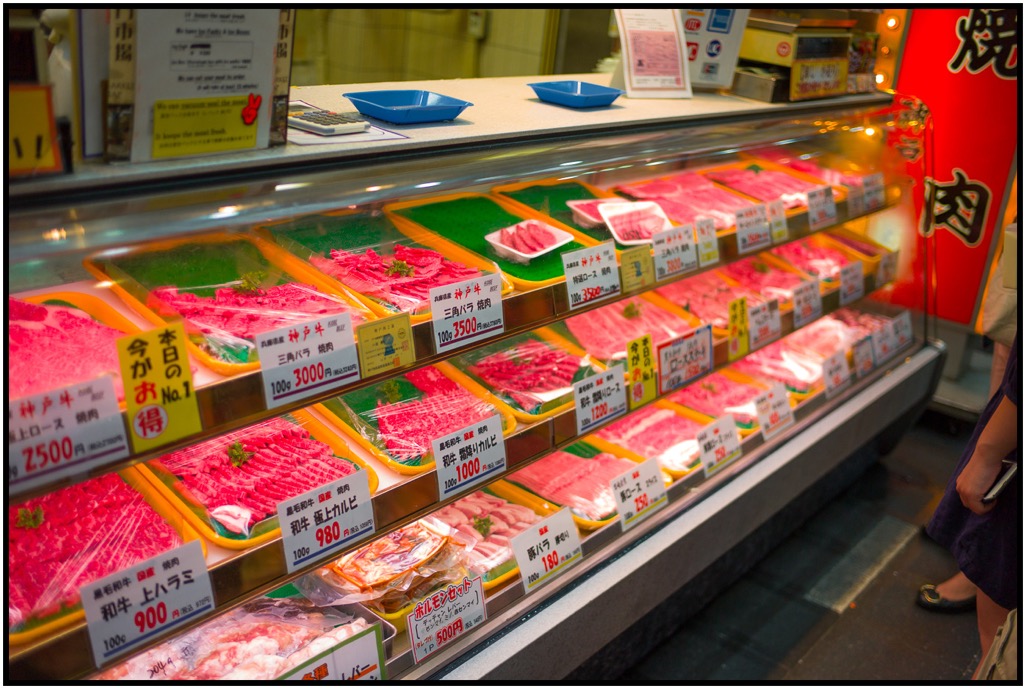
Kobe beef vendor. We’re going to visit the town of Kobe tomorrow, but we are assuming we won’t be able to afford to try the beef at a restaurant there.
On some evening before we leave, we’re going to buy a 100g serving (about 1/5 of a lb) and take it home and cook it up. The priciest cuts at this market run about $130/lb. I couldn’t stomach the fugu, but I’d love to cook up some Kobe beef in Japan. The apartment has a full kitchen, so I’ll grill up five tiny slices and we’ll each get to taste a bite. At $130/lb, it will be by far the most expensive meat I’ve ever eaten (much less tried to cook … I better not mess it up!)
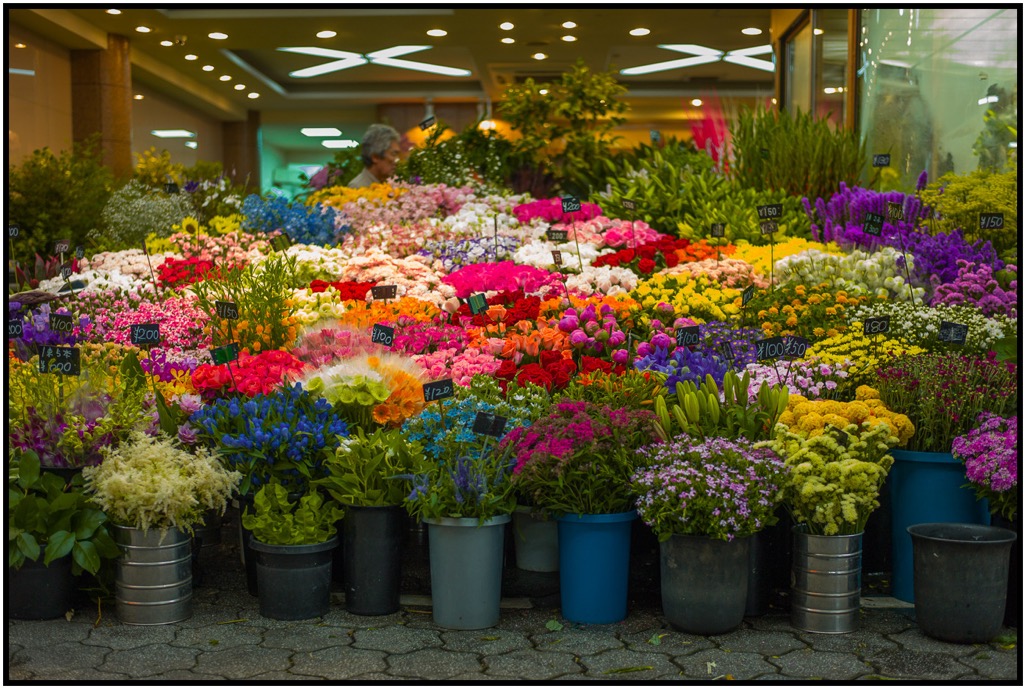
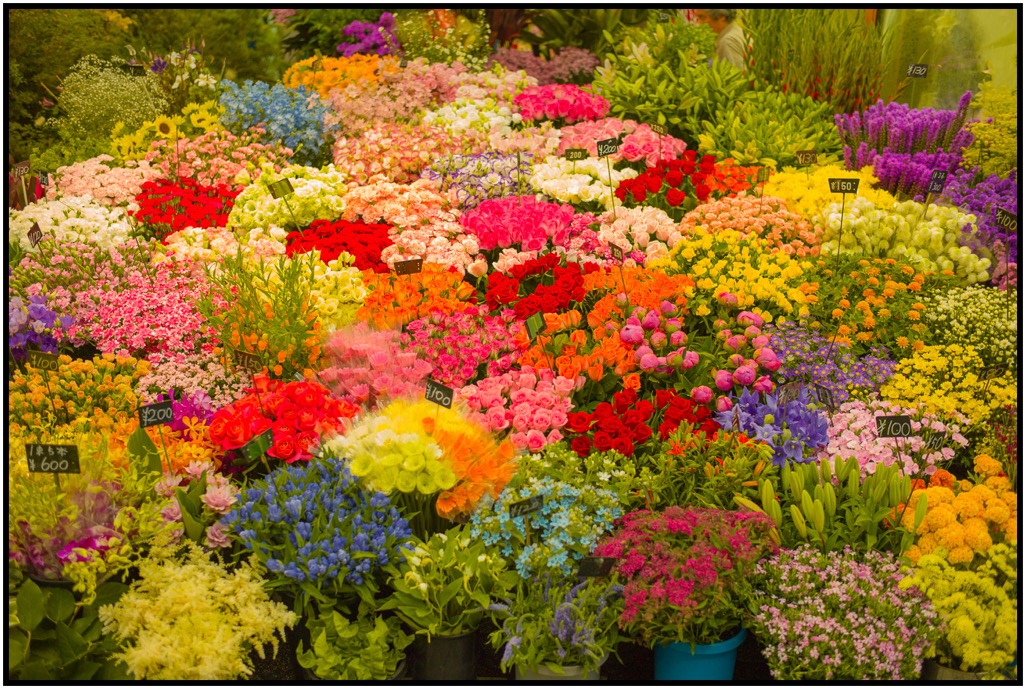
Gorgeous flowers – and really cheap. It’s also the best smelling stand at the fish market. If I lived here, we’d have fresh flowers every day and I’d learn flower arranging.
June 17, Wednesday
Today we took another series of trains to the town of Himeji – about 65 miles west of Osaka.
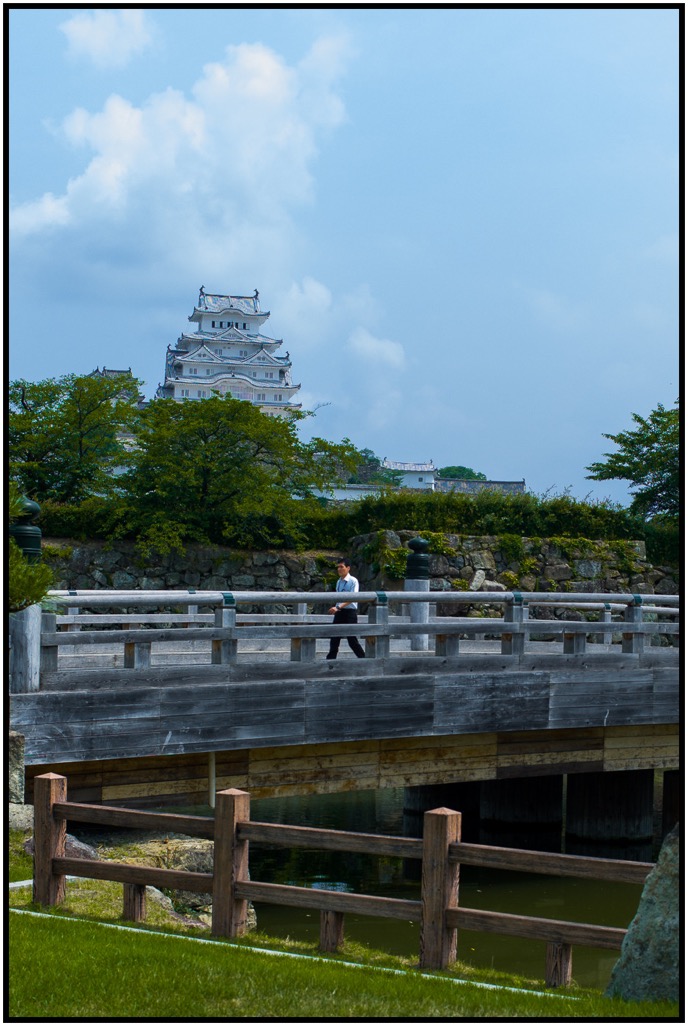
Himeji is home to Himeji Castle (first built in 1333) – and regarded as the finest surviving example of prototypical Japanese castle architecture, comprising a network of 83 buildings with advanced defensive systems from the feudal period.
As a wooden structure, it was very impressive. As a castle, it was a bit of a bust. We’ve seen our fair share of castles and the complete lack of any furniture/furnishings in Japanese structures make for boring tours.
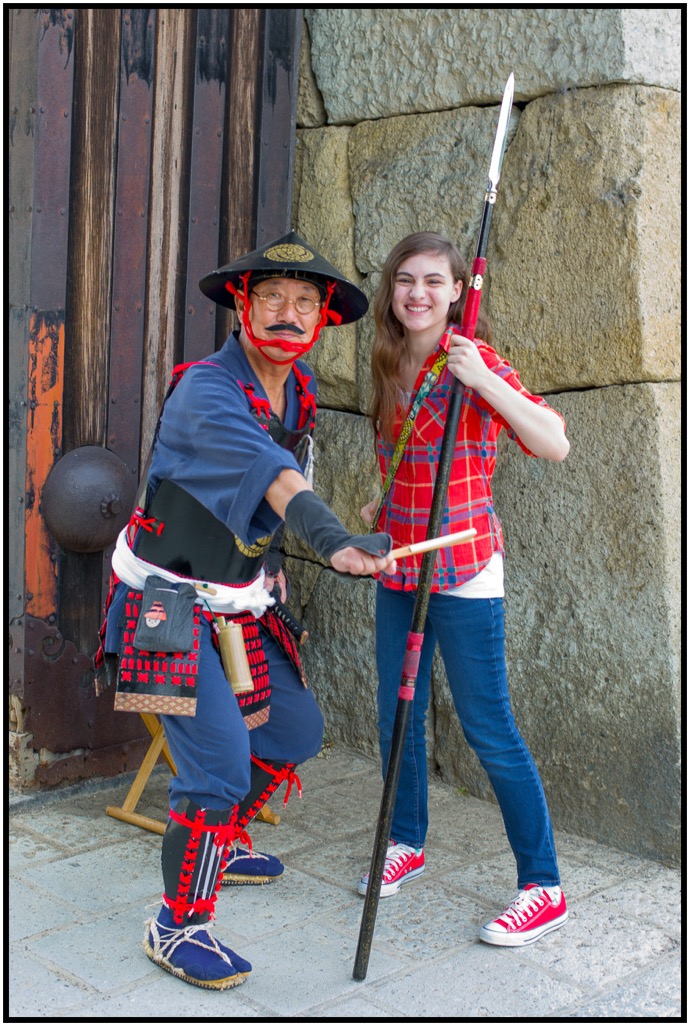
This guy was the best part of the tour. He was hamming it up for the tourists and looked like he was genuinely having a good time, in spite of the fact he was wearing a metal hat in oppressive heat.
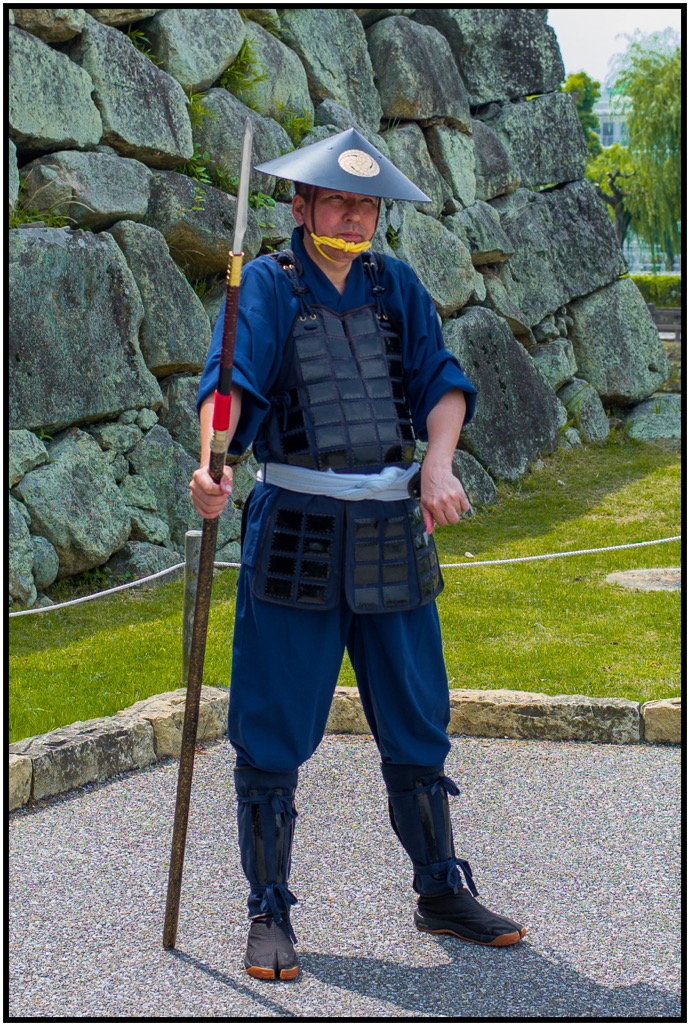
This guy was fun, too.
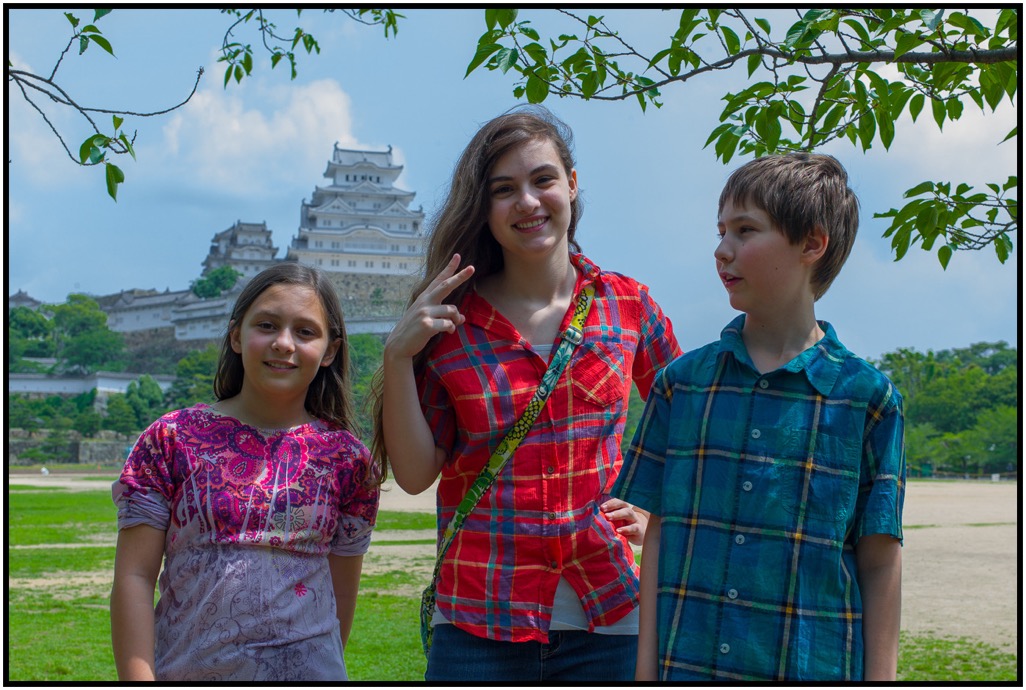
Himeji Castle is also known as the White Egret Castle because the Main Keep (pictured below, behind the kids) is covered in white plaster and looks like a white egret in flight. (You have to use your imagination.)
The plaster is part of a new restoration started in 2009 that took 5 years and cost ¥2.4 billion. All construction was done in the old traditional manner. The plaster is made from slaked lime, shell ash, hemp fiber, and seaweed, and is about 3 cm thick. It helps protect the wood structure underneath from weathering and fires.
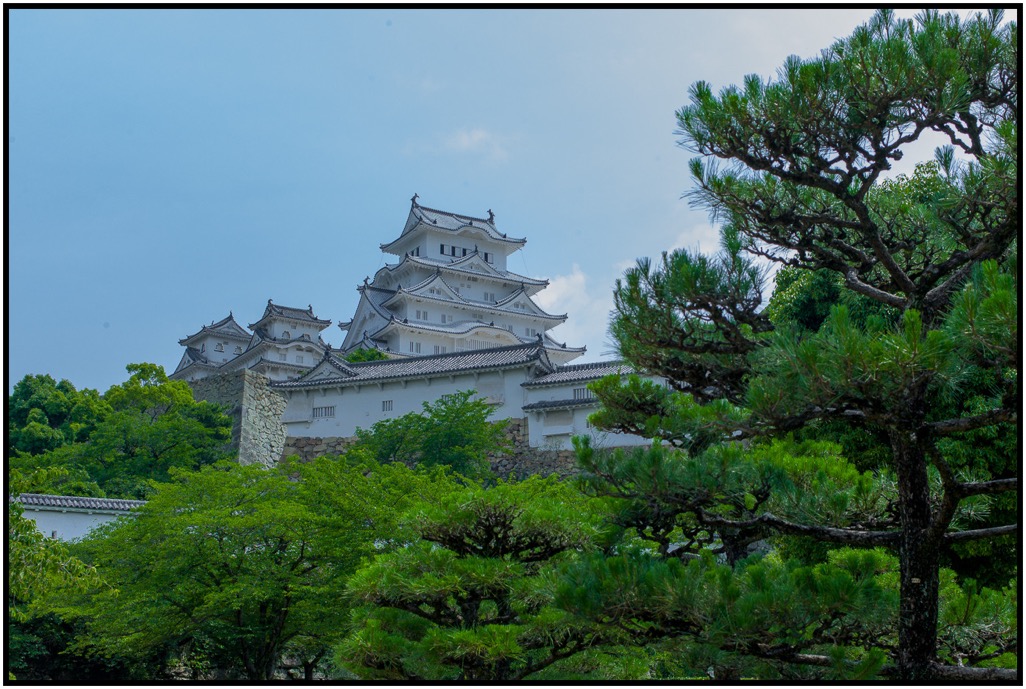
It was just so hot today. So very hot.
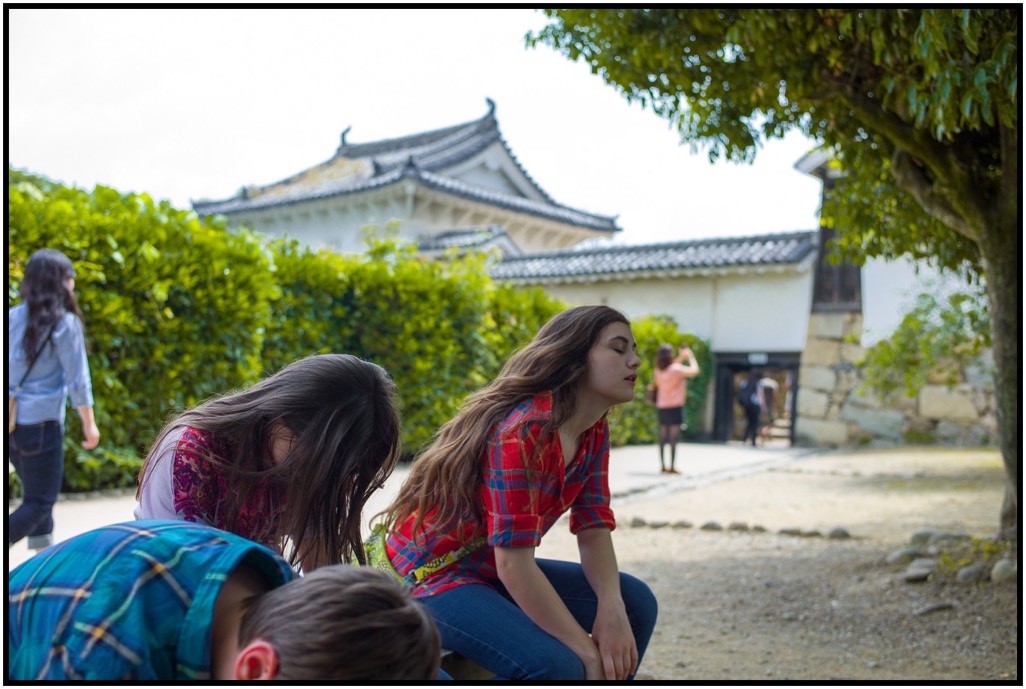
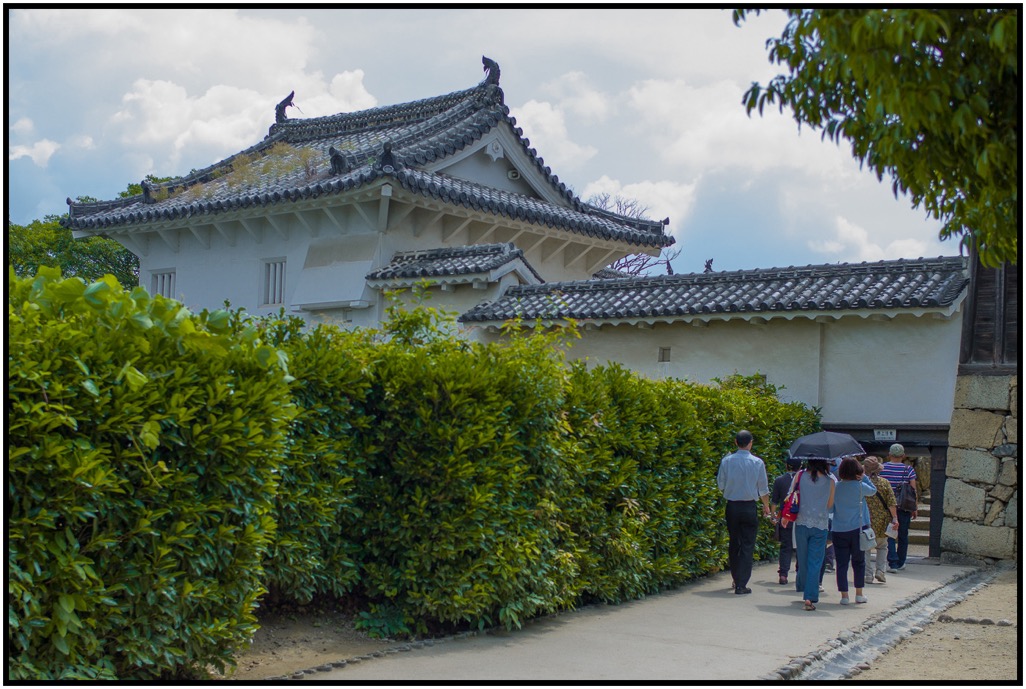
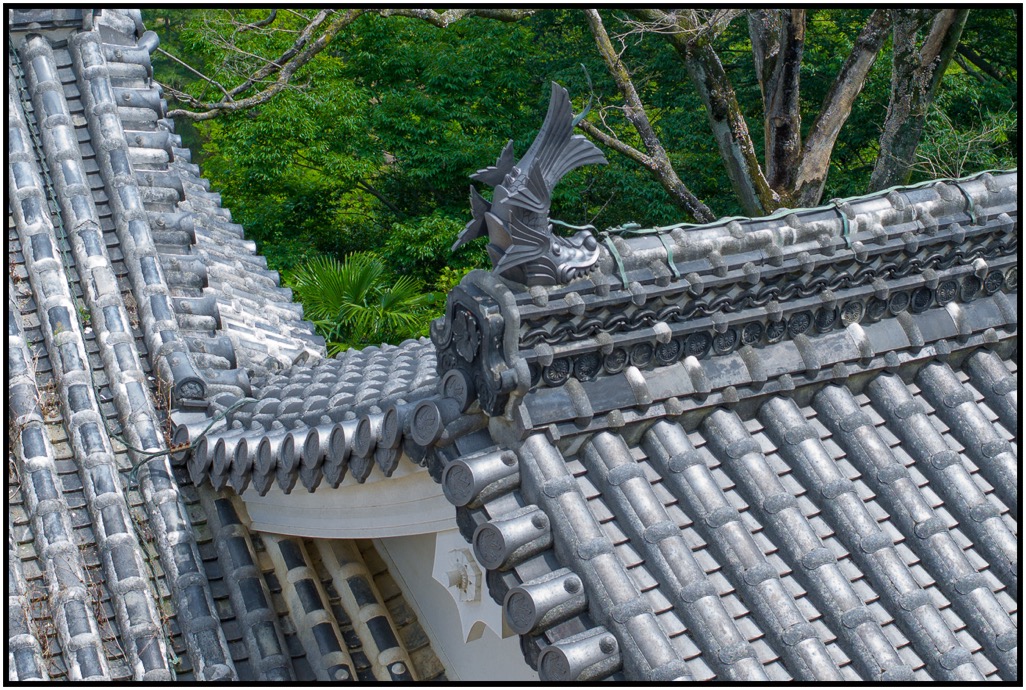
All the roof tiles are new, too.
The one historical person they had a story about in the brochure was called The Tale of Princess Sen. The tragic story in summary; she was married at age 7 to a guy who committed suicide during a battle. She was remarried at age 20 to the son of the guy who lived in Himeji Castle. “She spent the best 10 years of her life with her husband, son Kochiyo, and daughter Katsu.” Then the son died of disease at age 3, the husband died at age 31, and Princess Sen became a Buddhist nun. “She spent the rest of her life mourning the loss of her husband and son until she died at the age of 70.”
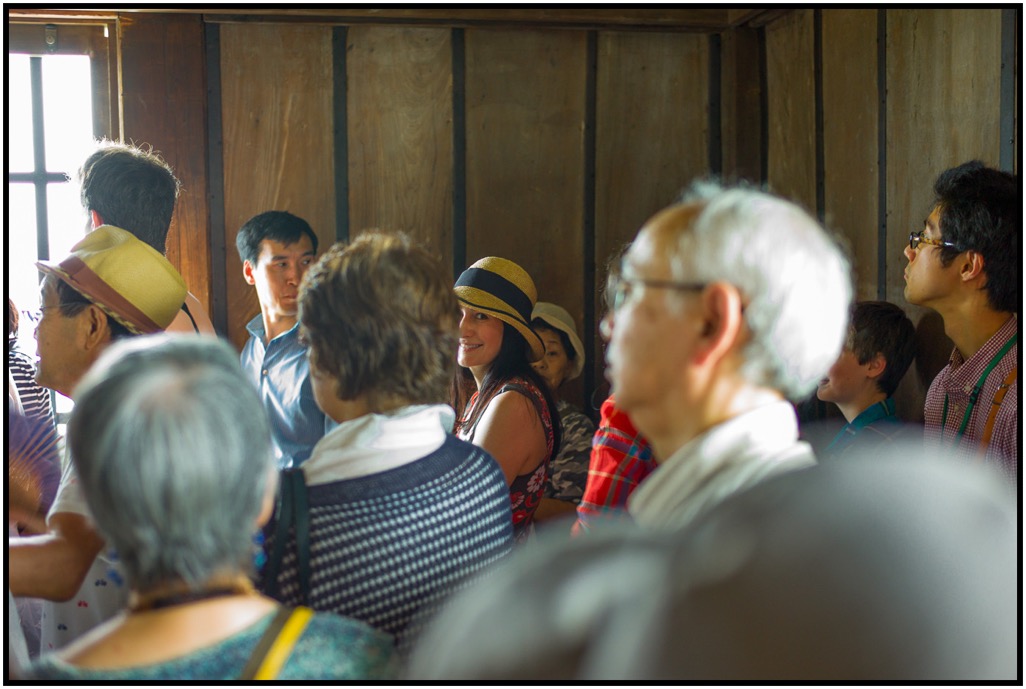
The inside of the castle is interesting … sort of. It was so crowded it was hard to see anything.
The castle is 7 stories tall and not air conditioned. The stairs are incredibly steep … I’m guessing, but I’d say the risers are about 12″ high and the treads are about 6″ deep. Everyone has to take off their shoes and carry them in plastic grocery bags, so the wood floors have been polished by hundreds of thousands of socks over the years. The stairs, in addition to being steep, are also slippery. The staircases are narrow, too … probably 3 feet wide, so funneling that many people up and down those stairs took forever.
What this translated into as a visitor was standing in long, amusement-parkesque lines where your reward at the end is to climb stairs with your nose shoved up the bum of the elderly person struggling in front of you.
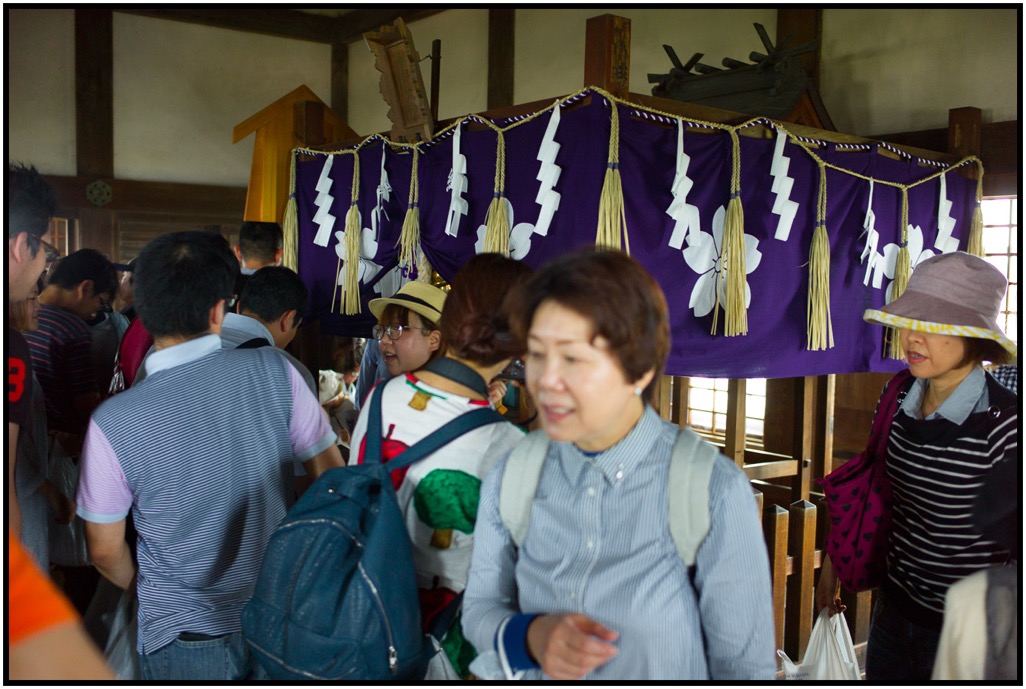
When you finally reach the top floor, hot and sweaty and having seen pretty much nothing but the backs of other peoples’ heads, you are supposed to donate money into a box and pray at this purple alter.
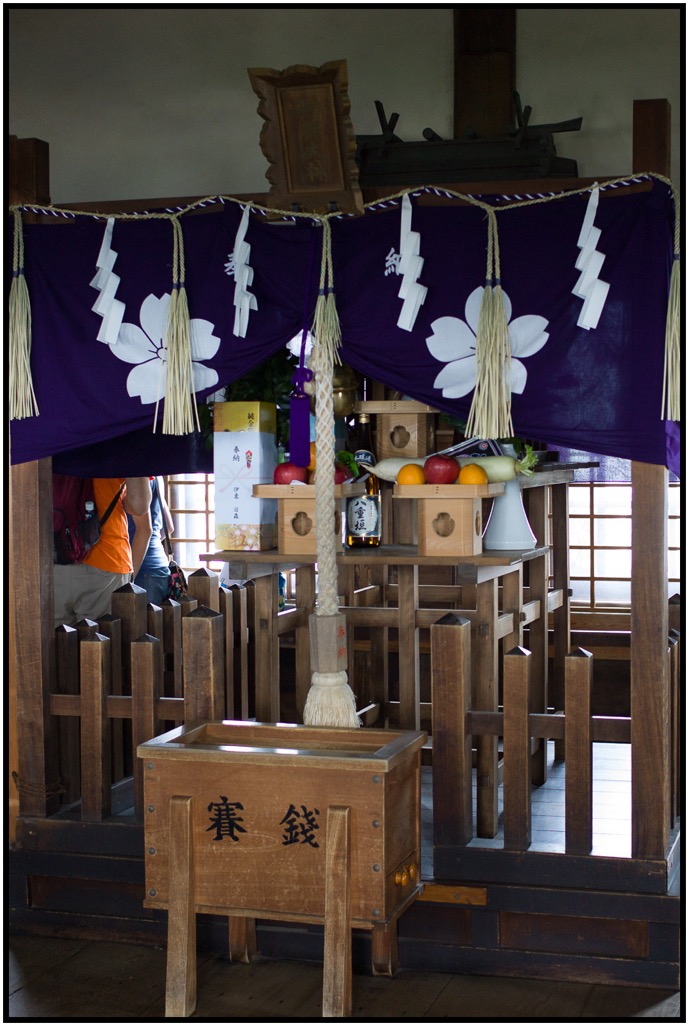
Then you queue up to climb the stairs back down 7 stories. Going down was even harder than going up for all these old folks — the treads were slippery, steep, uneven, the lighting was bad, and the handrails aren’t as long as the staircases. You have to negotiate the last few steps of each section freestyle.
Below: here I am, waiting in line to go back downstairs. Yes, this is the line. It’s more of a mob.
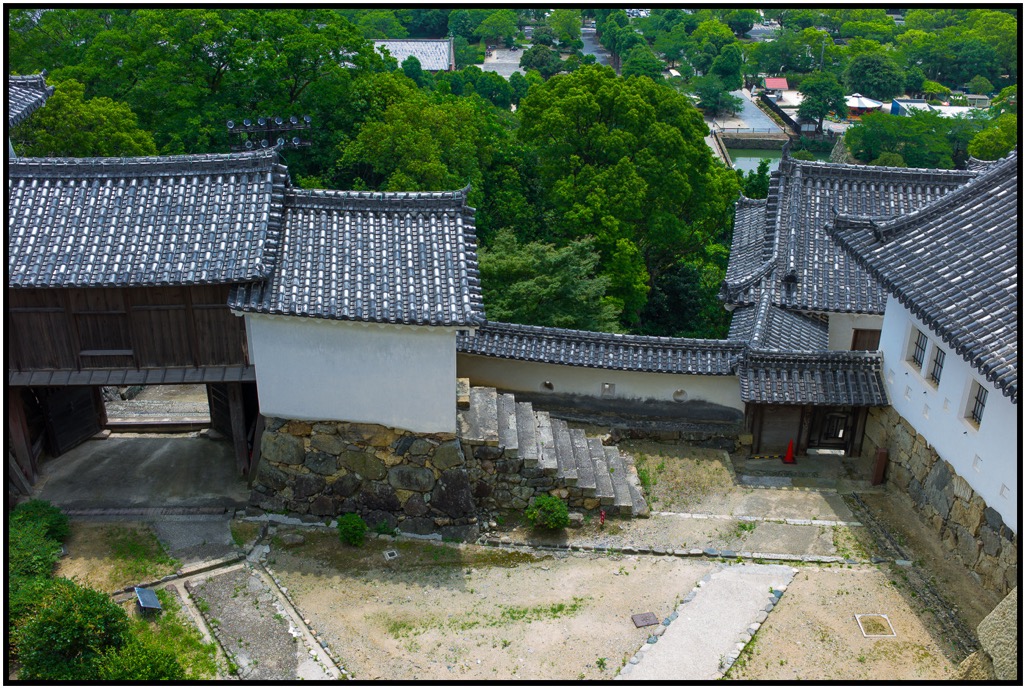
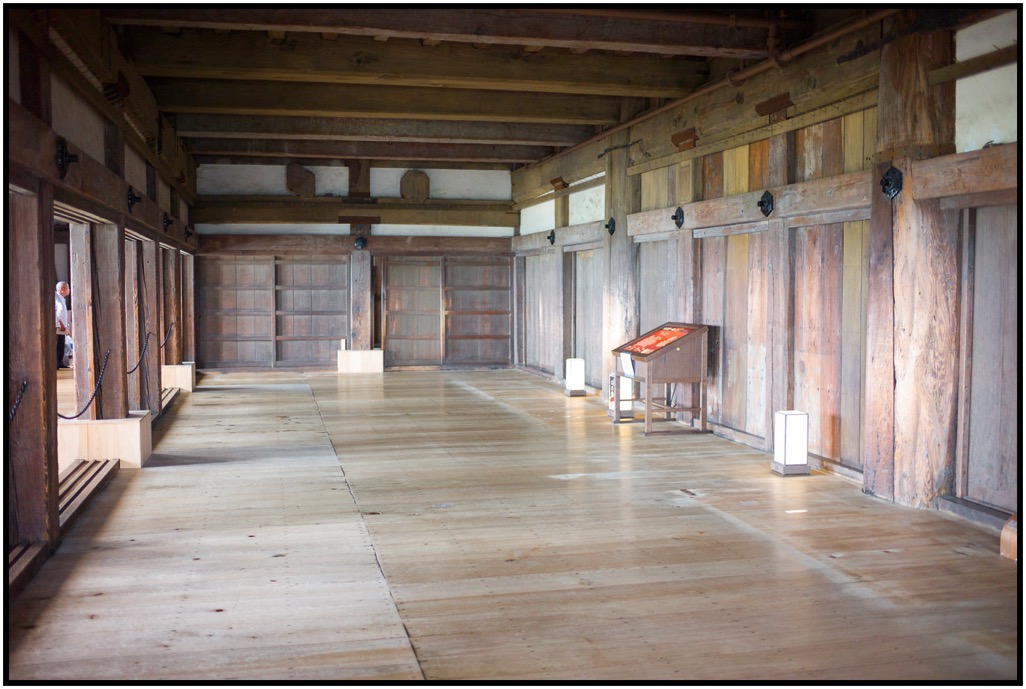
This section (photo below) was roped off. Here you can actually see some of the architecture.
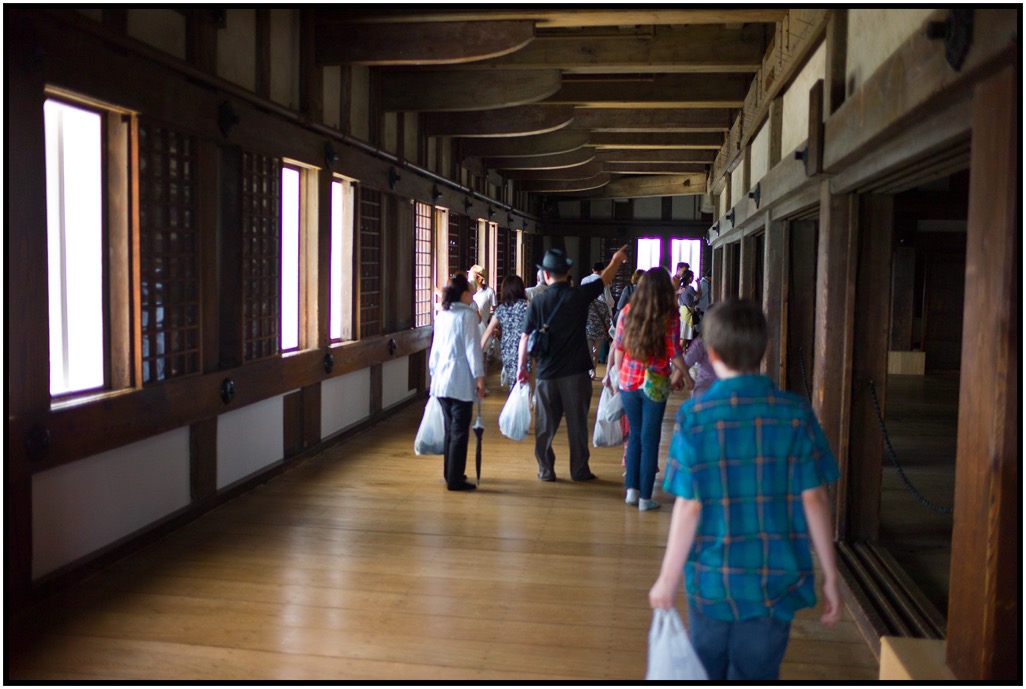
We finally made it back outside. By this time we were hot, sweaty, hungry, and grouchy. We decided to skip the rest of the castle grounds (they said it took about 3 hours to see the whole thing) and go find some lunch instead.
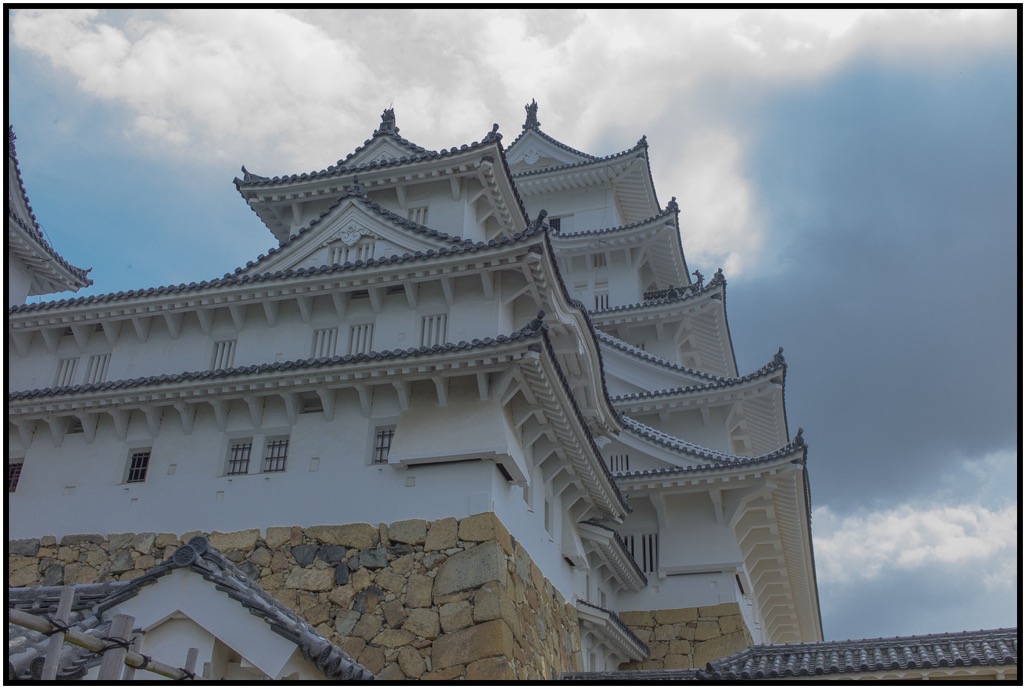
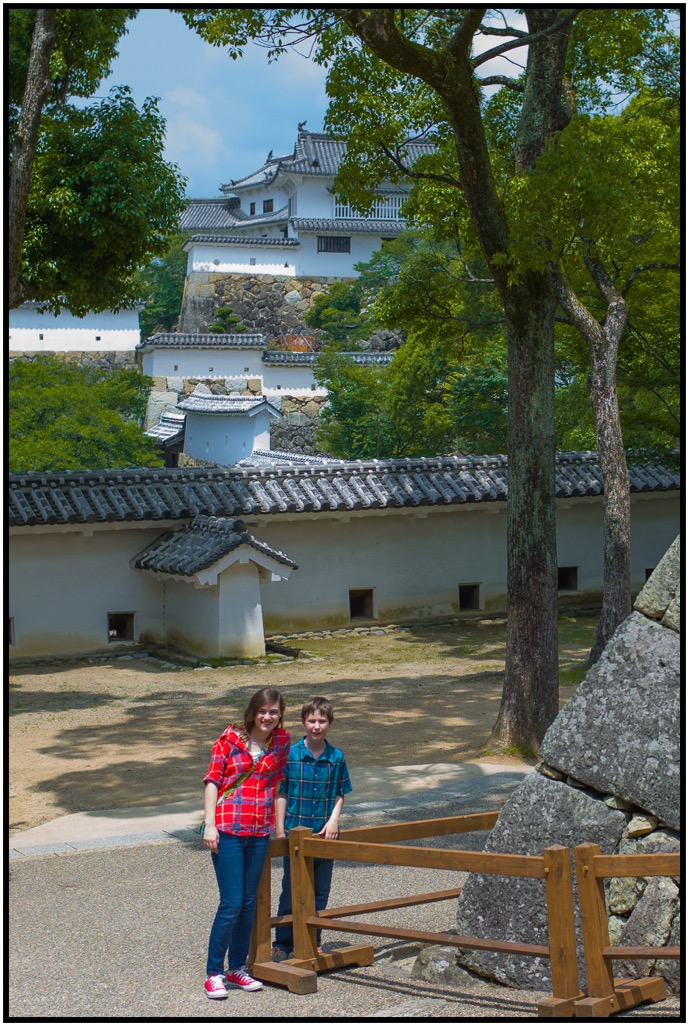
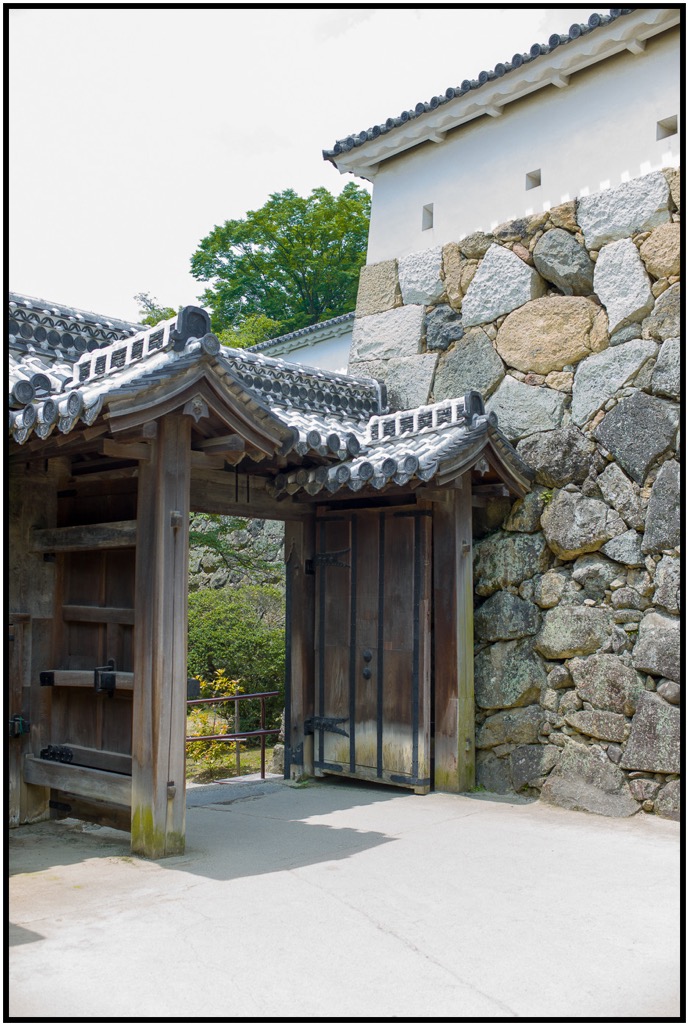
A few more photos from the long walk out.
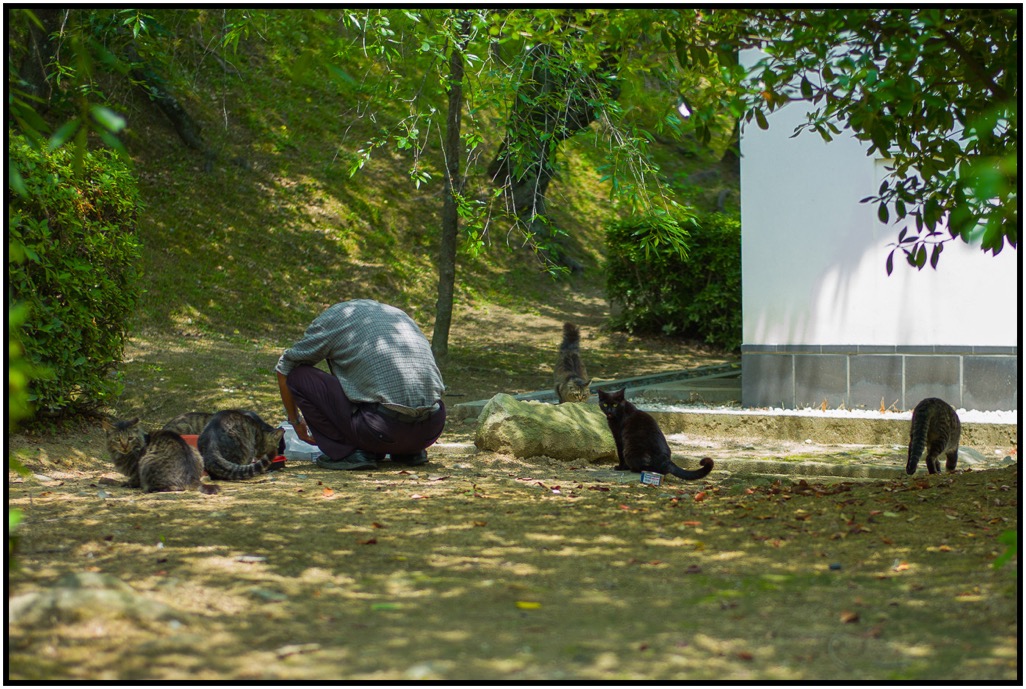
Just outside the entrance/exit to the castle grounds, we saw this guy feeding kitties. This was one nervous-looking group of cats. I am under the impression they are wild — they wanted the food this guy was dishing out, but didn’t want to get too close to him (or anyone else, for that matter.) They were all skittish and on high alert.
The kids and I watching the guy feed cats. This was more fun than climbing stairs.
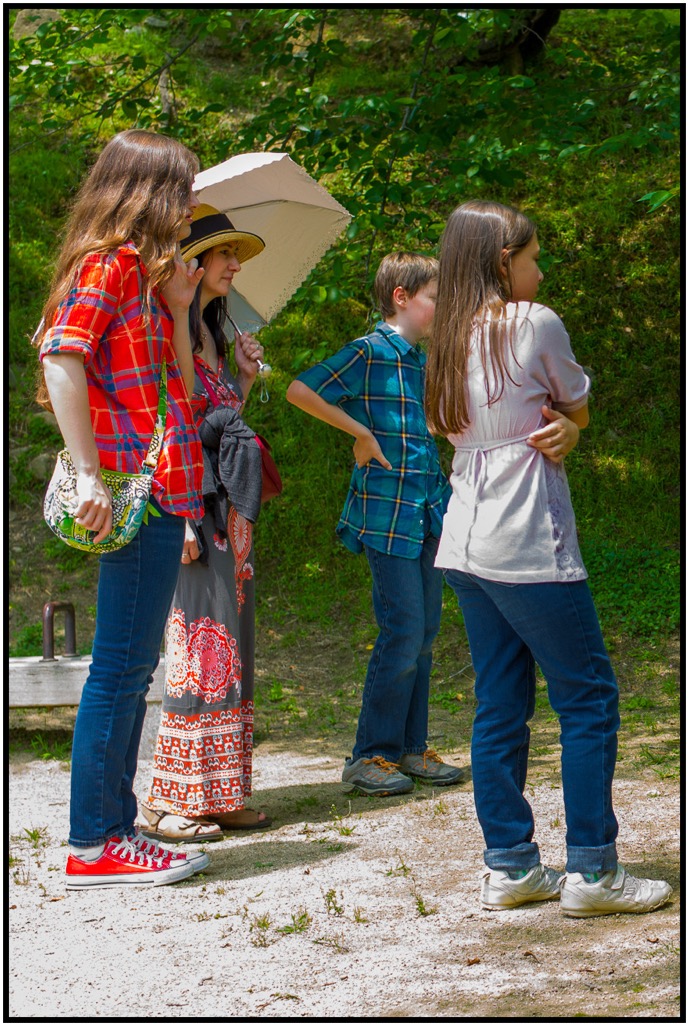
On the way back to Osaka, we stopped off at Kobe — mostly to say we had been there and to see if there was anything obvious and interesting to do.
Adam: However, the part of town I wanted to visit was just too difficult to get to – too far to walk on a hot, summer afternoon – and we couldn’t figure out a decent train/subway route to get there. In the end, we decided to get back onto the bullet train system and head back to Osaka.
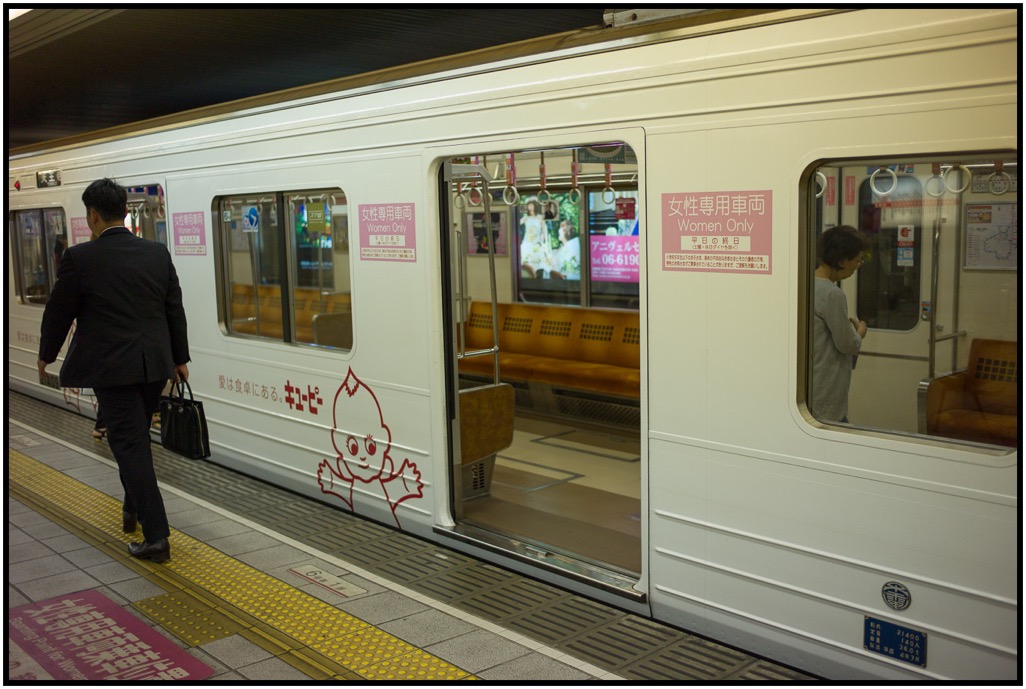
The pink “women only” train cars. This is a reaction to Japanese mens’ propensity to grope female bottoms in crowded train cars when they think there is little chance of getting caught.
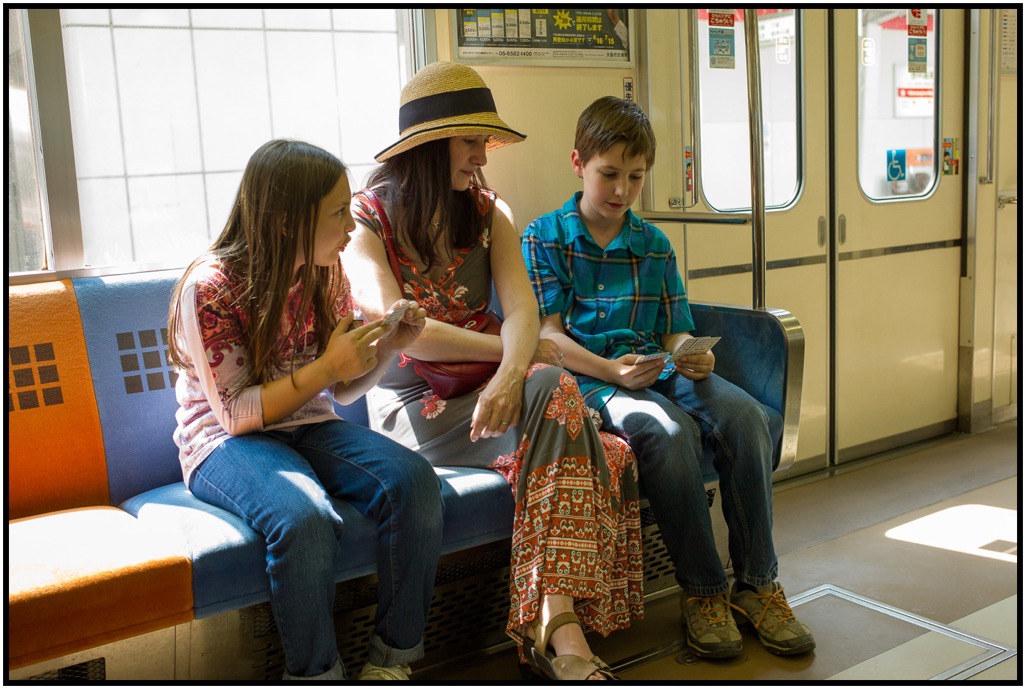
A guy at the train station gave the kids some trading/playing cards, similar to Pokemon cards but with a train theme. They had no idea how to play, but spent a lot of time making up some rules.
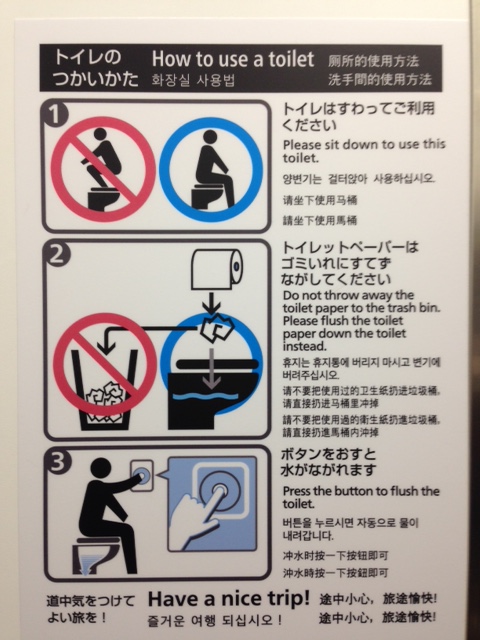
The Kobe train station bathroom had this sign on the stalls labeled “Western-style Toilet”:
Yesterday Adam and I saw a vendor selling kobe beef in the fish market near our apartment. We stopped by on the way home and bought about 100 g. of beef to cook up ourselves. These 5 tiny bites cost ¥4300 (US$35)
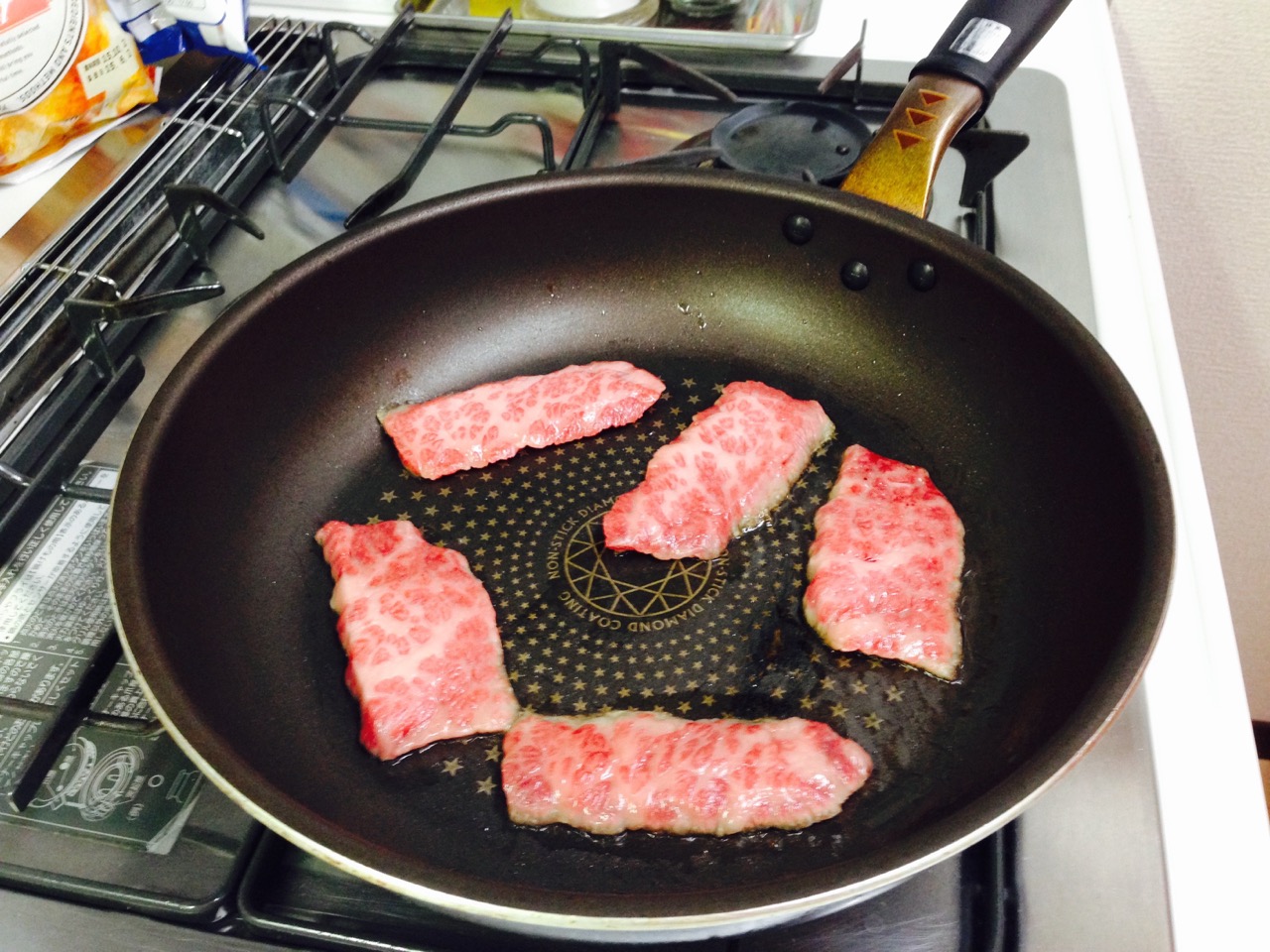
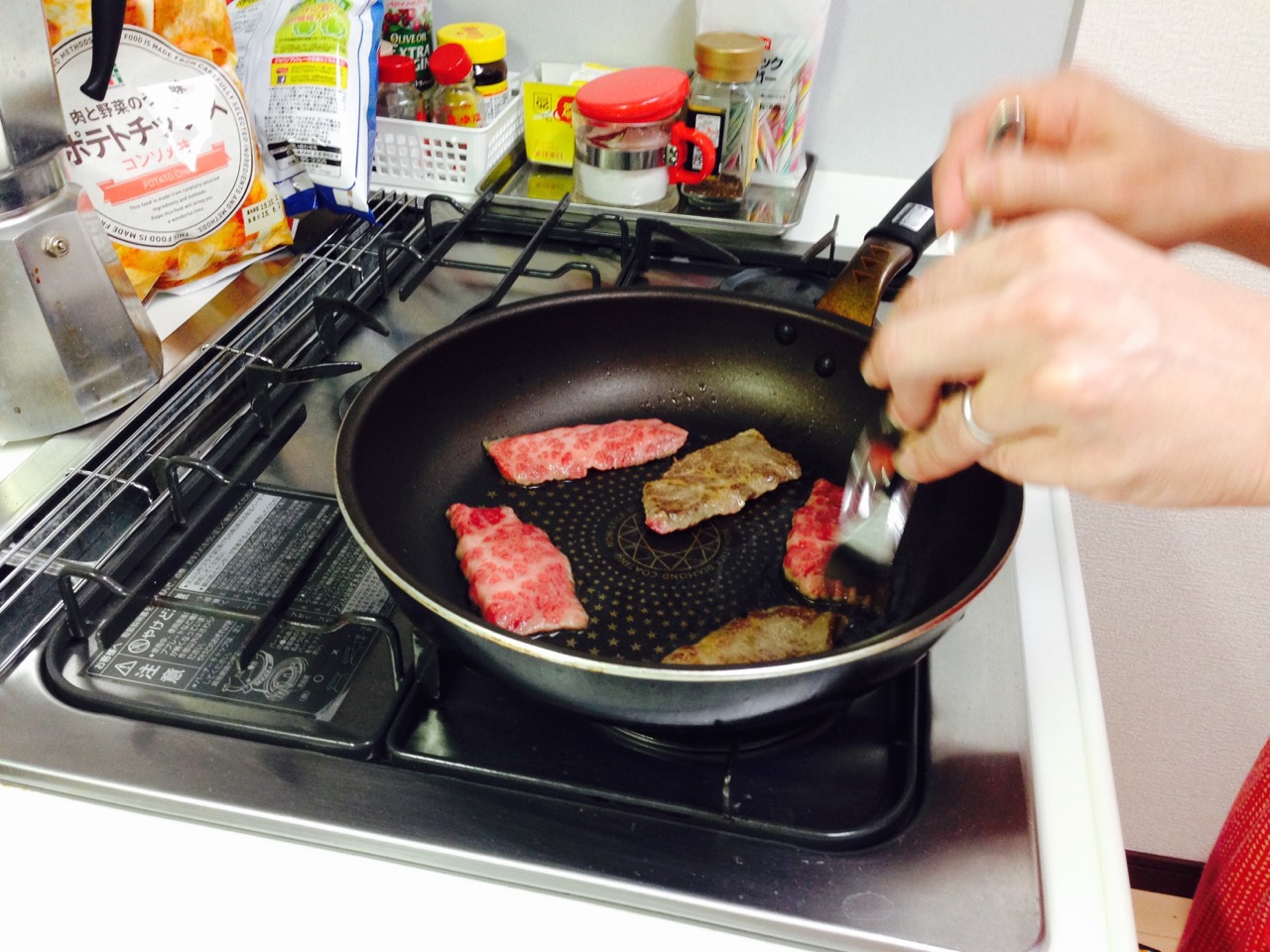
I thought it was gross. It’s mostly fat — the part everyone generally cuts off and feeds to the dog, except in this case marbled throughout the meat so you can’t avoid it. It had a greasy, mushy texture. I like the filet tenderloin we buy at Costco much better, and that comes out to $20/lb. I think this is one of those cases where cost is not indicative of quality.
June 18, Thursday
The weather forecast was for rain all day, so we opted to stay fairly close to our apartment today. There is a shopping district close by that is mostly covered, so we headed over there. Pictured below is the entrance to the Doutonbori Street market, which is mostly food. It connects to a more general shopping district a little further down the street.
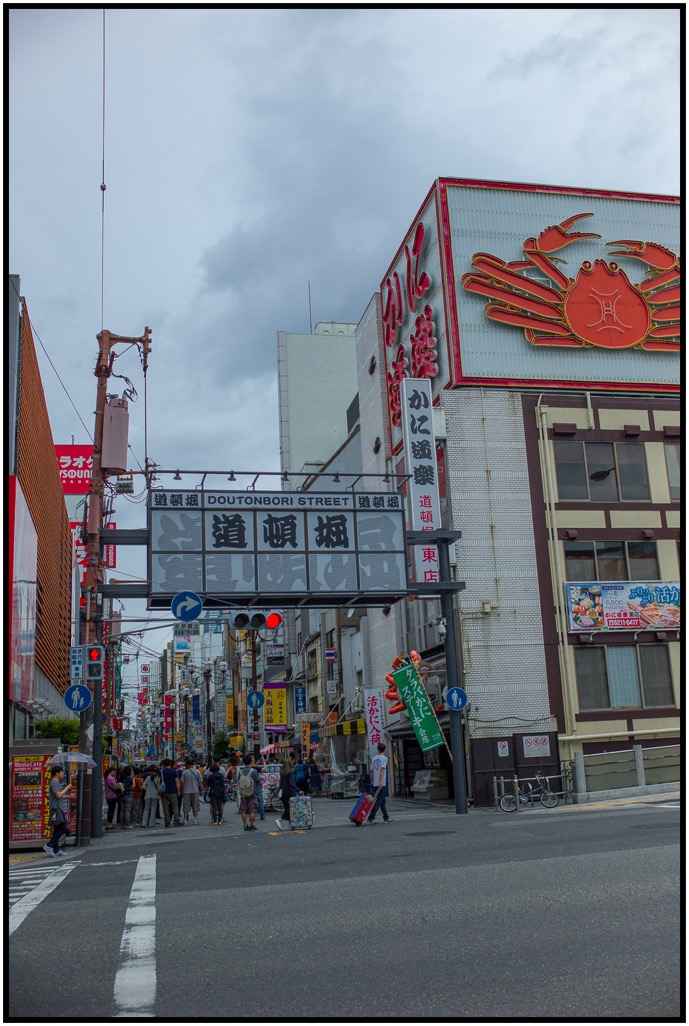
This area has a lot of interesting features.
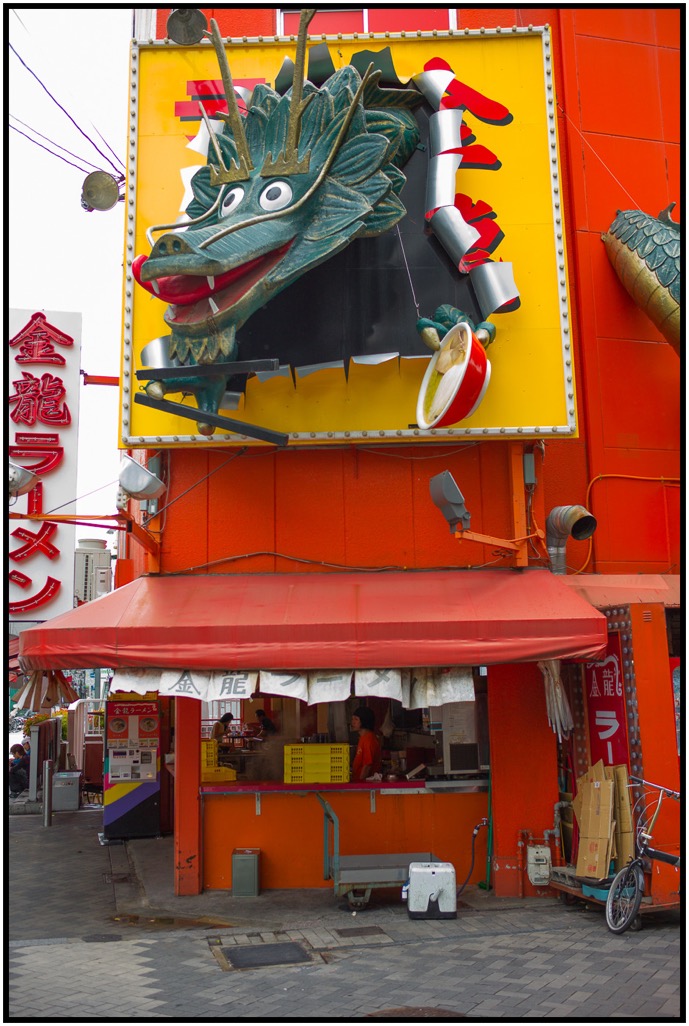
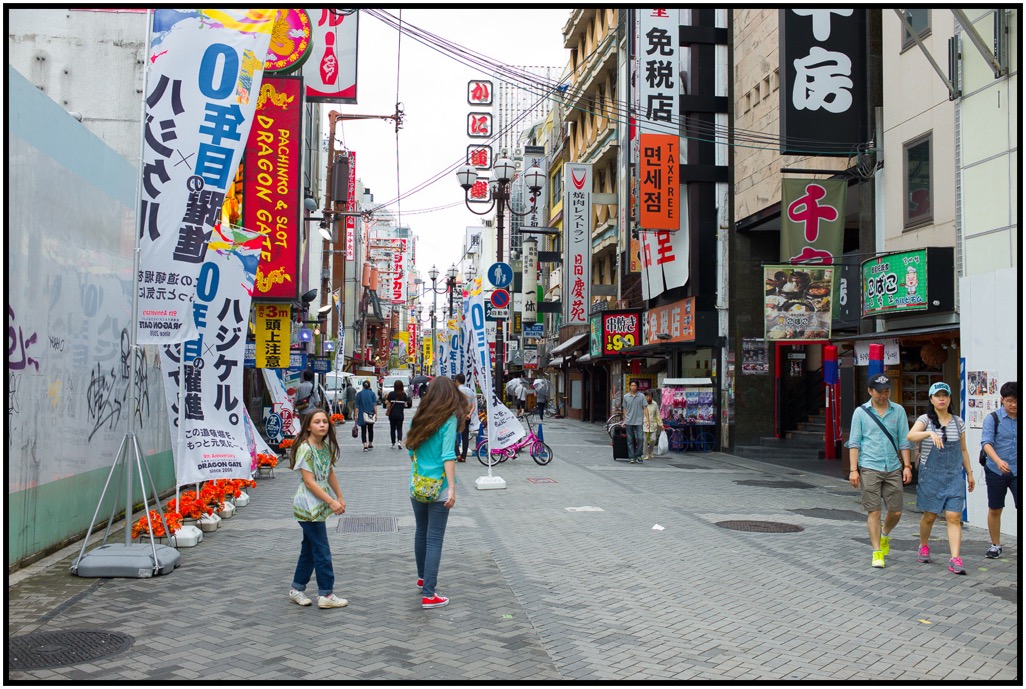
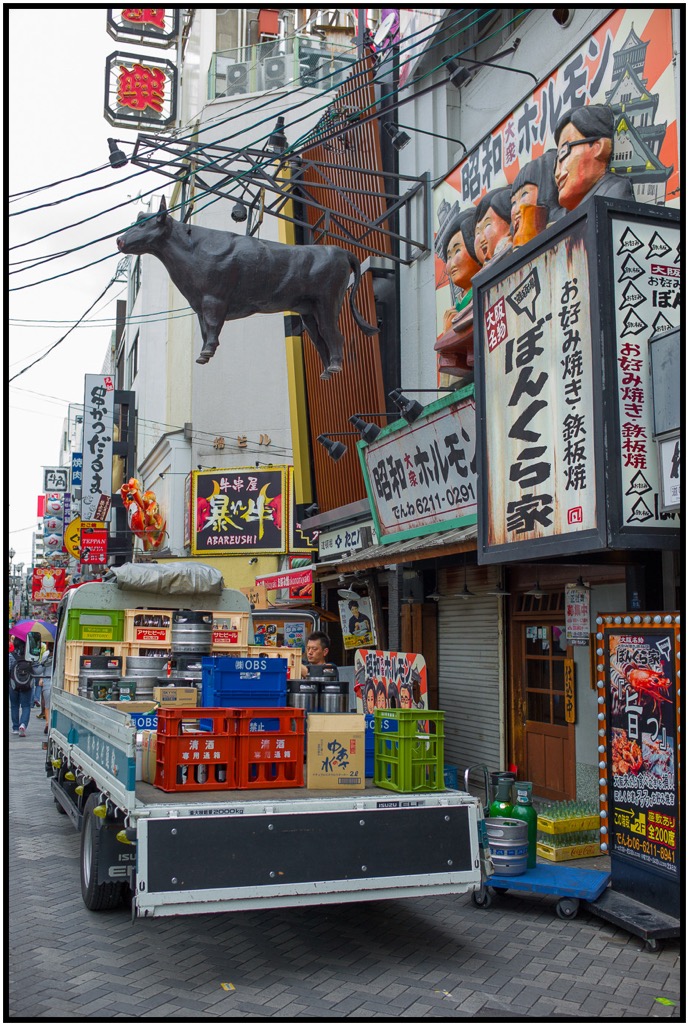
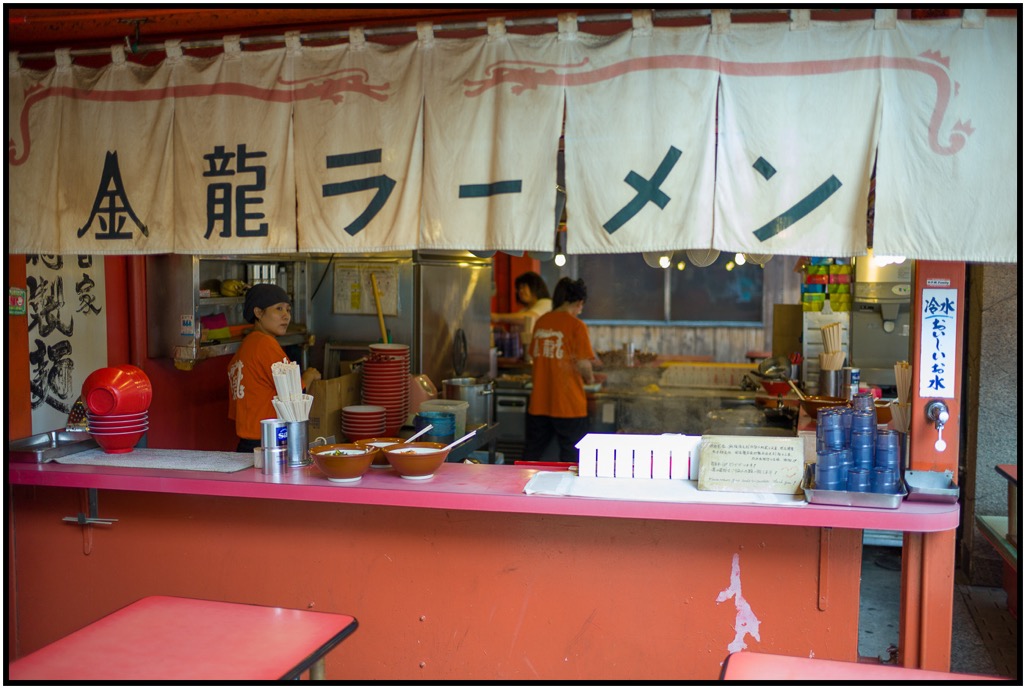
Noodle restaurant setting up for the day.
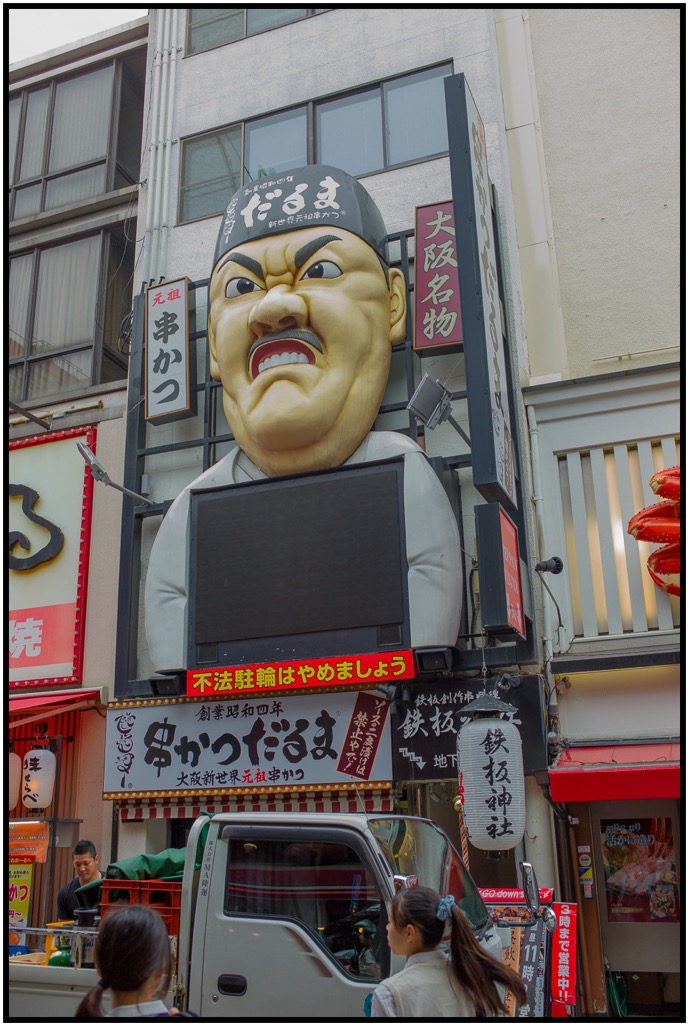
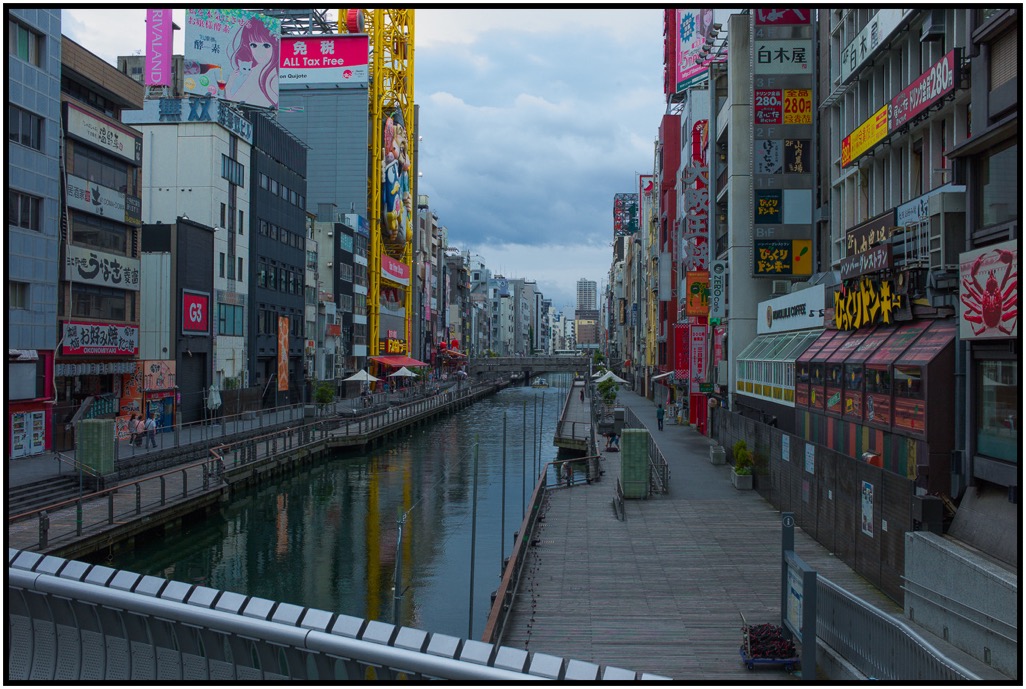
Today, for some reason, we all woke up on the wrong side of the bed. Josie and Holden were fighting before we even left our building; Isabella and I got into an argument at Starbucks a few minutes later. Then Adam and Isabella; finally Adam and I were irritated with each other. We all headed back to the apartment in a huff to take a break.
After some naps and and general quiet time, we decided to salvage what was left of the day by heading out to a big mall that has a Pokemon center. This turned out to be a fantastic decision; we all had a really good time.
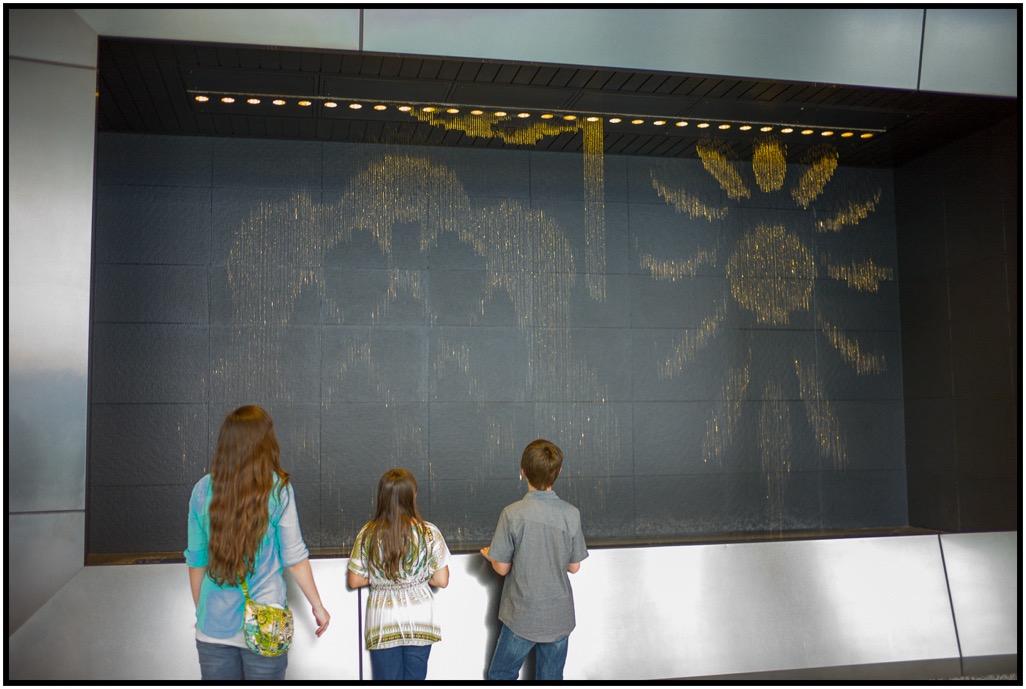
Below: this art feature creates images with falling drops of water. It was so neat we stood and watched it for a long time. “Osaka Station” is the name of the mall … it’s attached to the train/subway station.
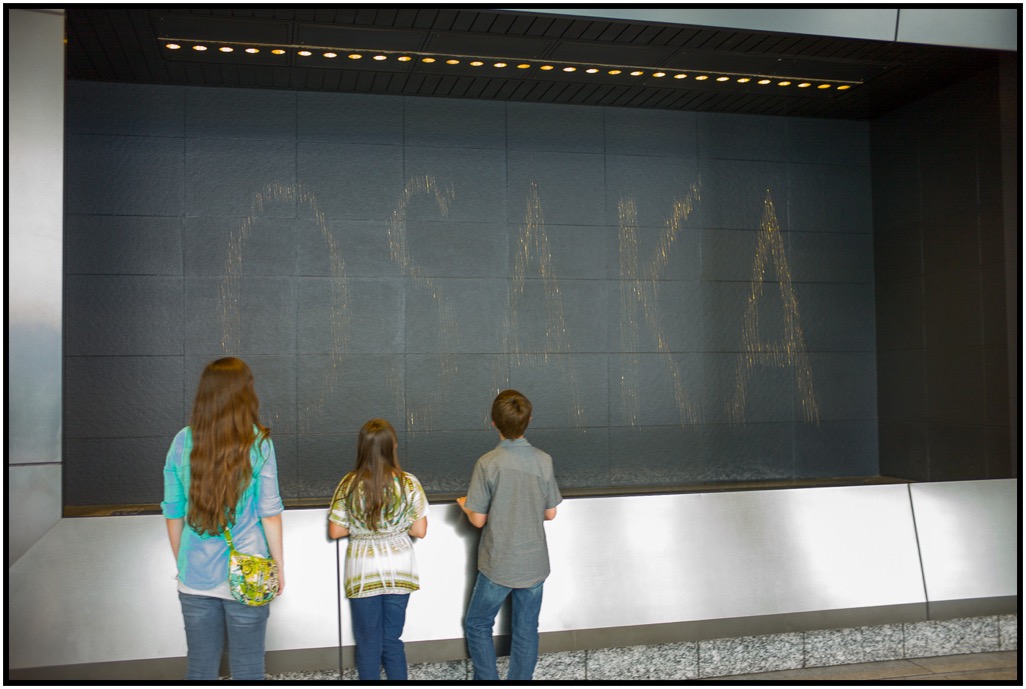
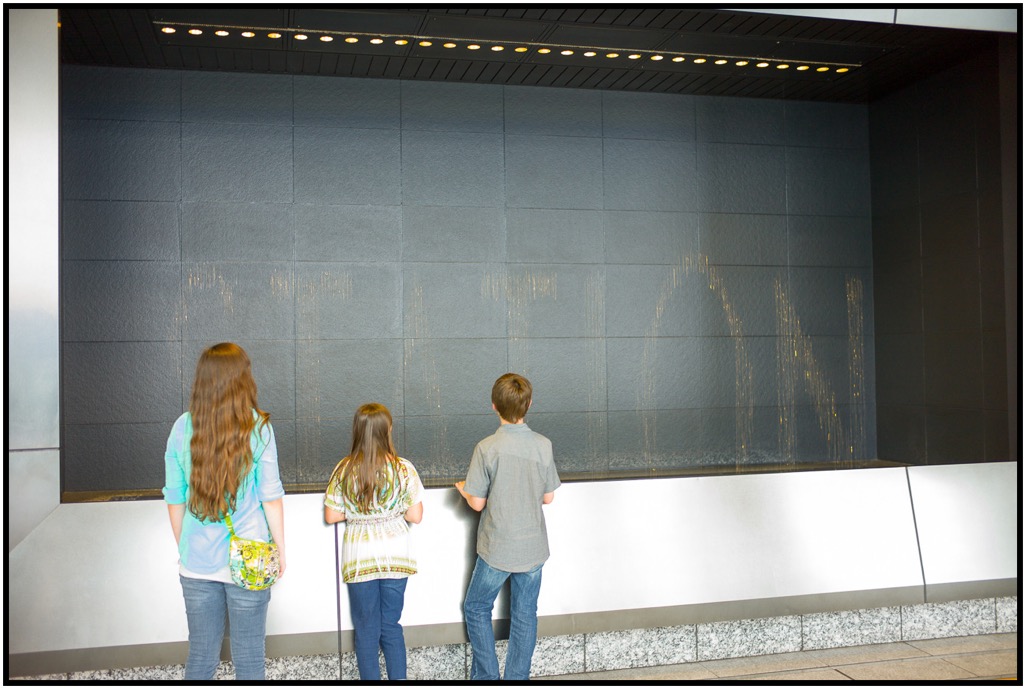
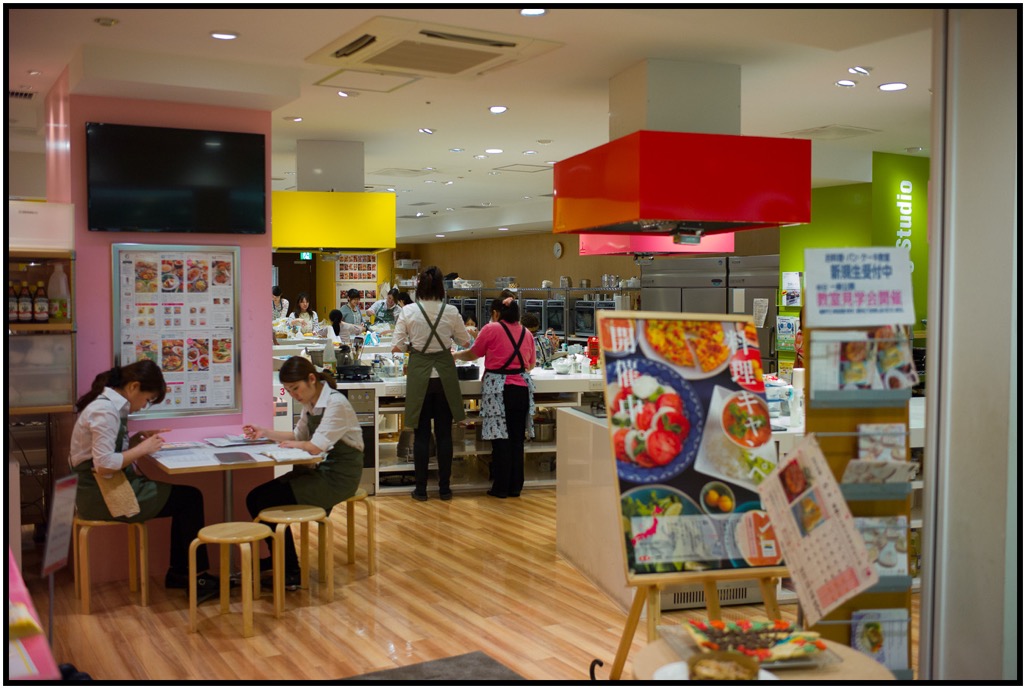
Next to the Pokemon Center on the 13th floor is a cooking school, pictured here.
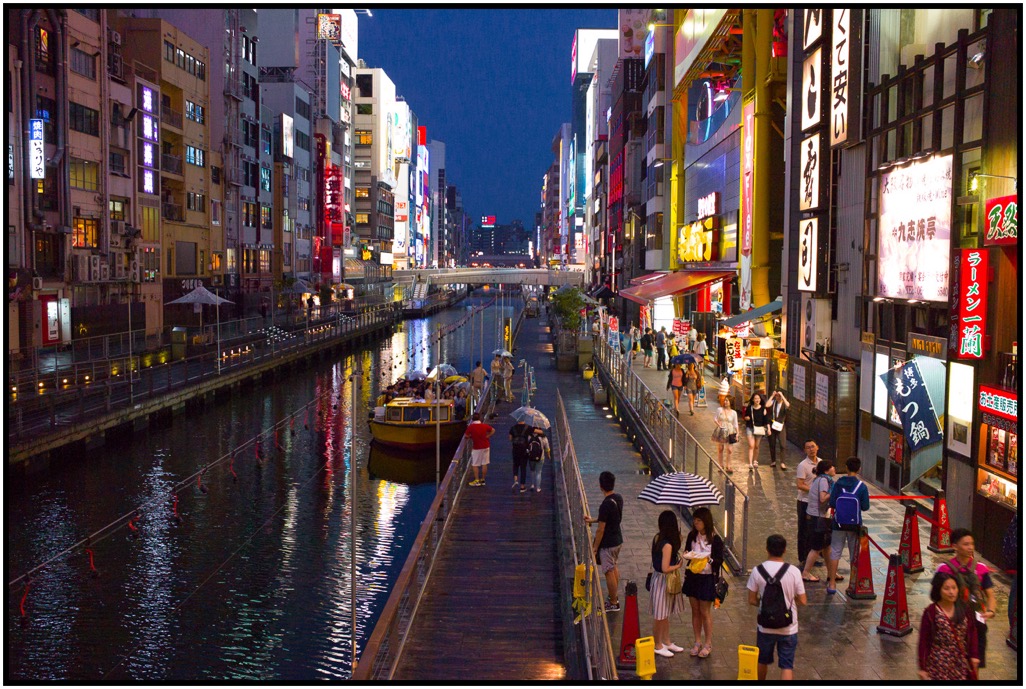
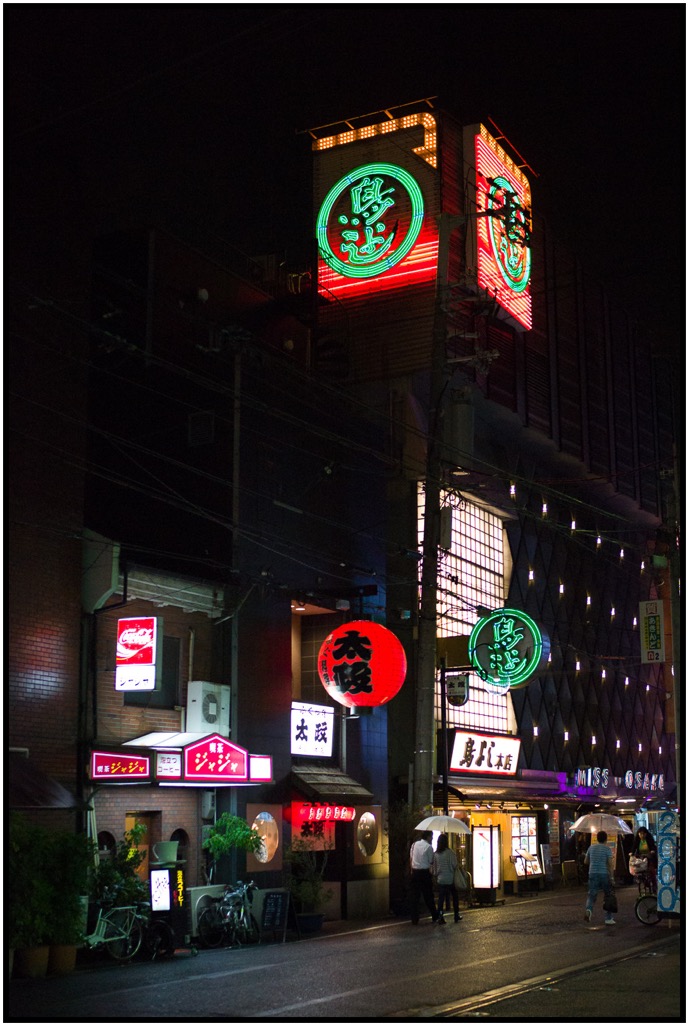
With our moods lifted, we went back home for the evening. Once it got dark, Adam wanted to go back out to Doutonbori Street for some night photography. We left the kids in the apartment and went for a walk.
Below: the same dragon from earlier, this time all lit up.
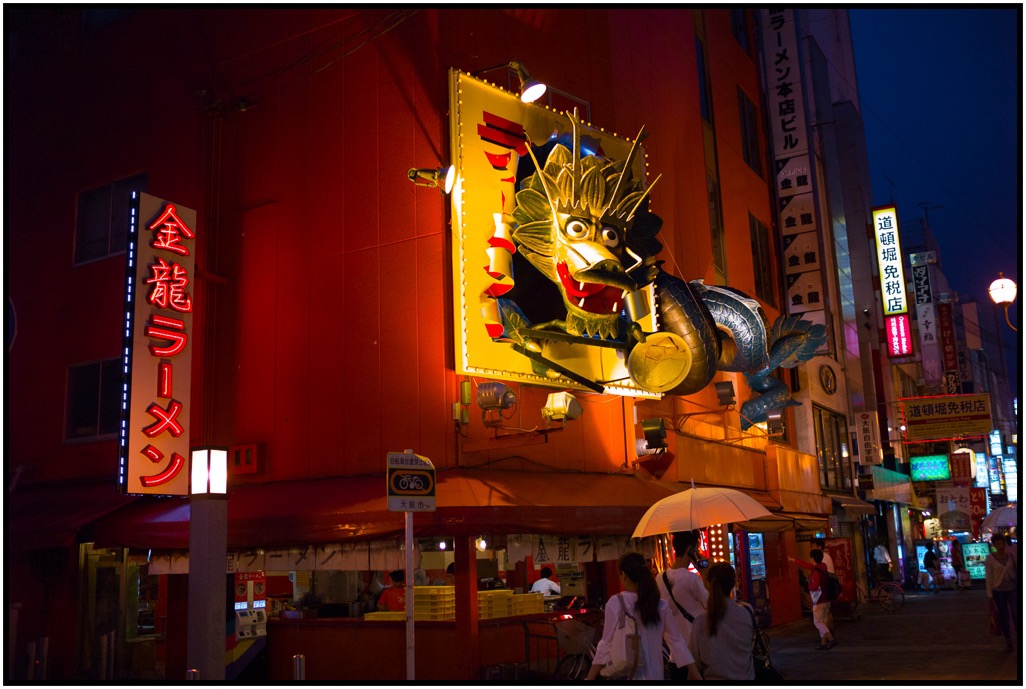
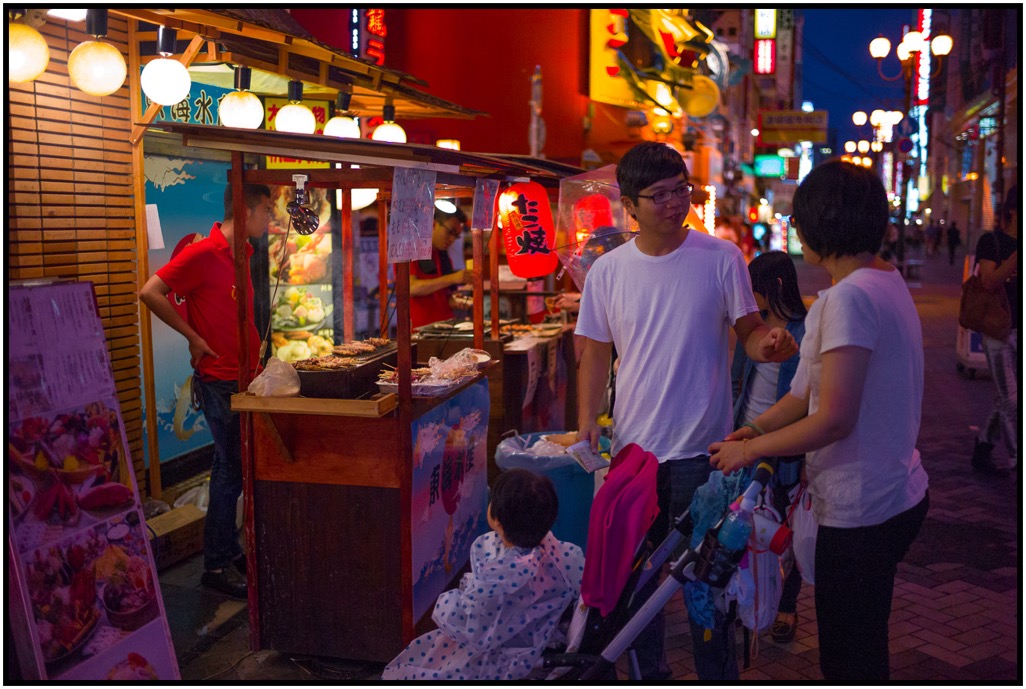
The street was packed. In fact, it was far busier at 7:30 p.m. than it was at 10:00 a.m. Families were out and about getting food from the various street stalls.
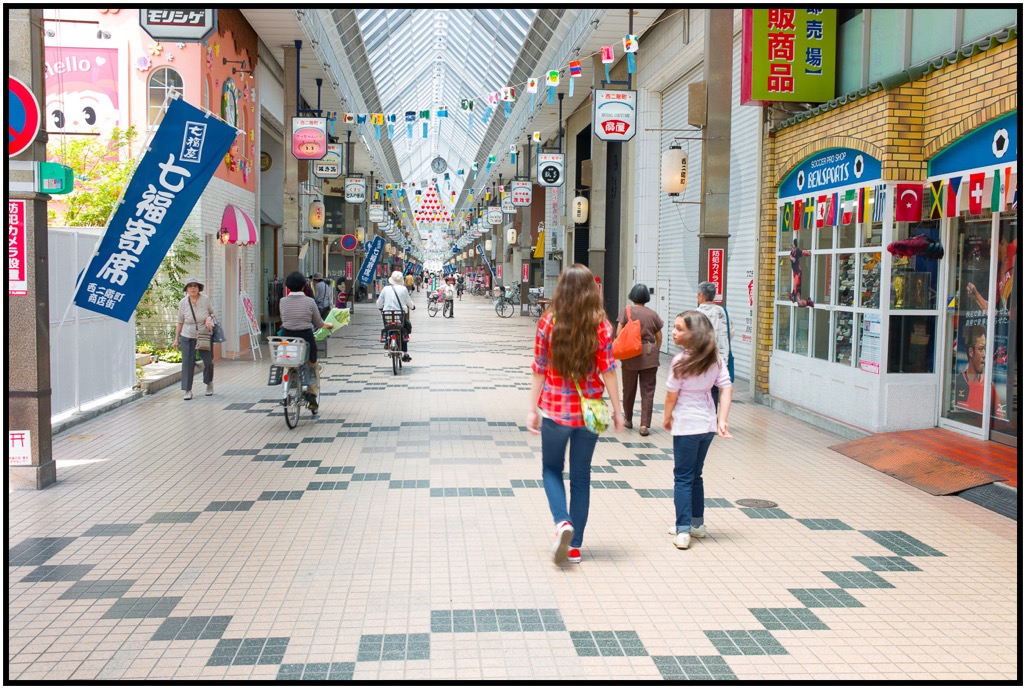
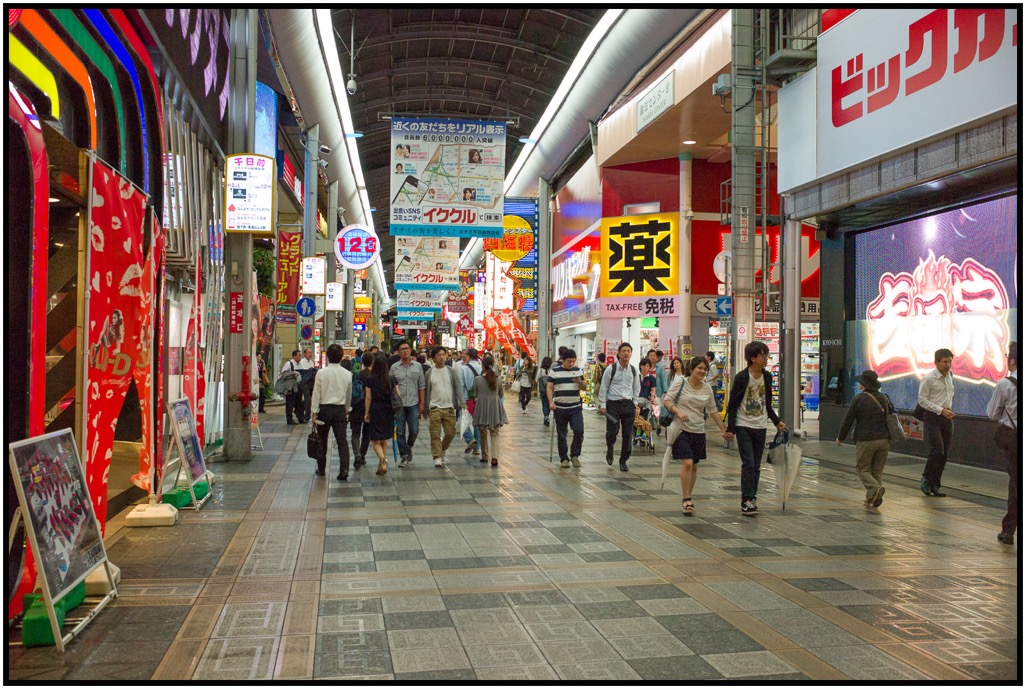
One of the covered shopping streets. These are all over Japan and a really great idea in places where it never gets too cold. It’s essentially outdoors, but they’ve built a ceiling-type open-air structure over the street. It keeps everything dry and, when it’s sunny, keeps the heat down.
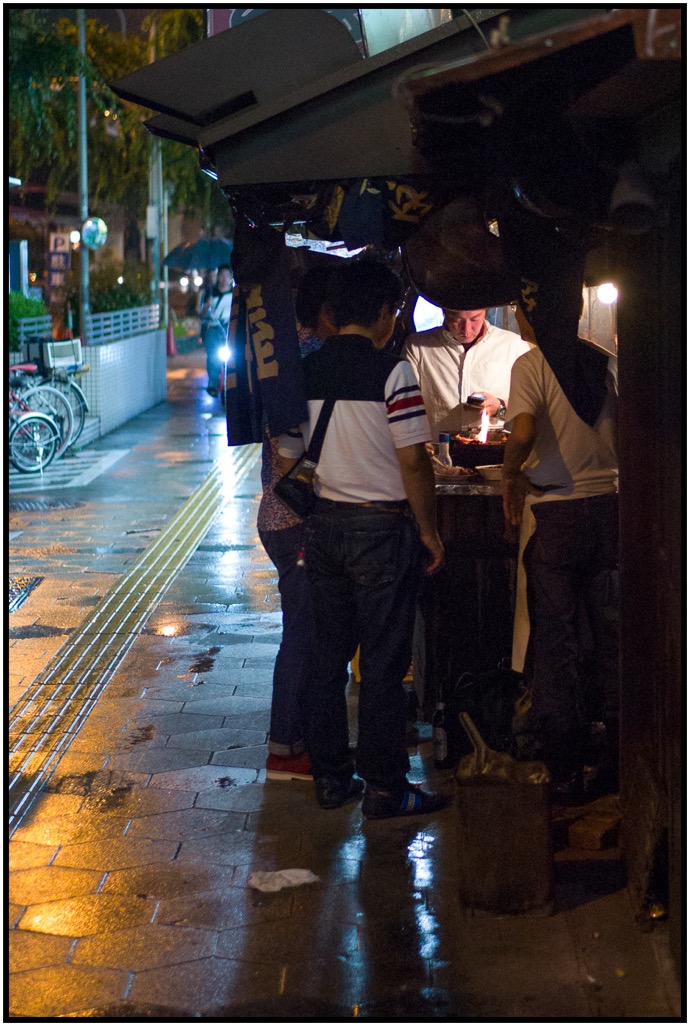
Last shot of the day: men grilling meat over an open grill in the street.
We have two more days in Osaka, which I’ll split into a second post.

