June 13, Saturday
We took the train to the town of Nara this morning. Nara was the capital of Japan from 710 to 794, and has eight temples, shrines and ruins that, together with Kasugayama Primeval Forest, collectively form “Historic Monuments of Ancient Nara”, a UNESCO World Heritage Site.
We went for the sika deer.
Quick wikipedia summary: According to local folklore, deer from this area were considered sacred due to a visit from Takemikazuchi-no-mikoto, one of the four gods of Kasuga Shrine. He was said to have been invited from Kashima, Ibaraki, and appeared on Mt. Mikasa-yama riding a white deer. From that point, the deer were considered divine and sacred by both Kasuga Shrine and Kōfuku-ji. Killing one of these sacred deer was a capital offense punishable by death up until 1637, the last recorded date of a breach of that law.
After World War II, the deer were officially stripped of their sacred/divine status, and were instead designated as national treasures and are protected as such.
We didn’t know what to expect, but were hoping we’d get to see a couple of them.
We made a mistake in getting there. Nara is supposed to be a 45 minute train ride outside of Kyoto and is considered a day trip.
We got on the wrong train — they have different services and we accidentally got on the Local train, which makes 22 stops between Kyoto and Nara. (This ride took 1 hour 20 minutes). The local trains are painted green and they are rickety, old cars. They don’t have air conditioning and instead have giant fans installed in the ceiling. Tourists to Nara are supposed to take the much more modern Express train, which has fantastic comfy seats and only makes a few stops.
The train station in Nara is huge and impressive. When you exit the station, you are almost immediately dumped into an area full of shops and interesting things to see. To get to Nara Park is something of a walk, but it goes by quickly because there is so much going on between the park and the train station.
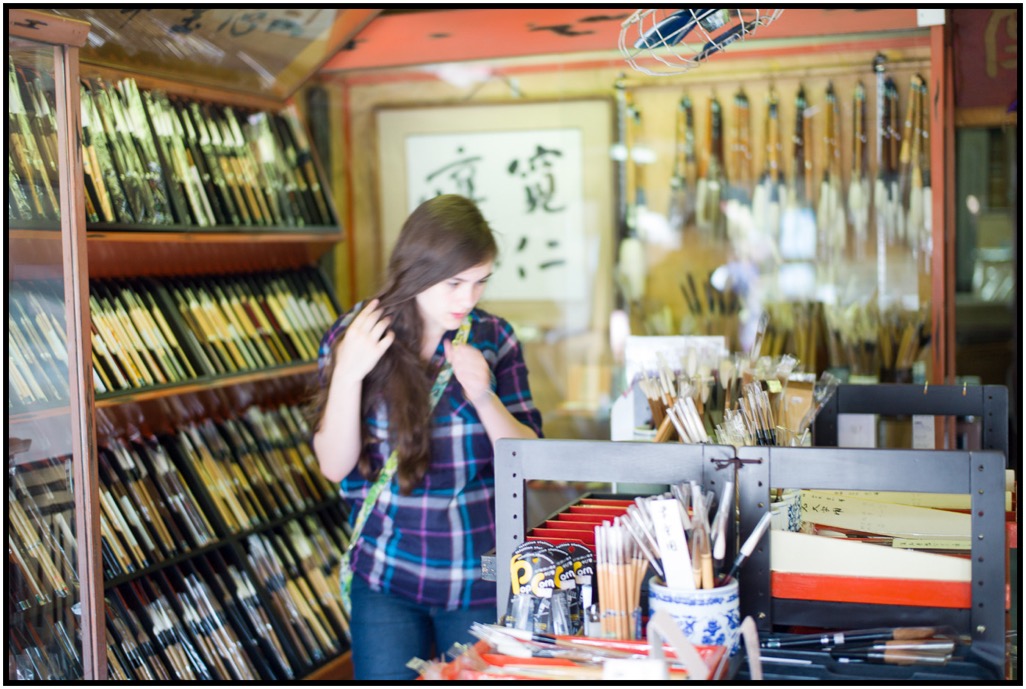
Here is a shop specializing in fancy paper and ink paintbrushes.
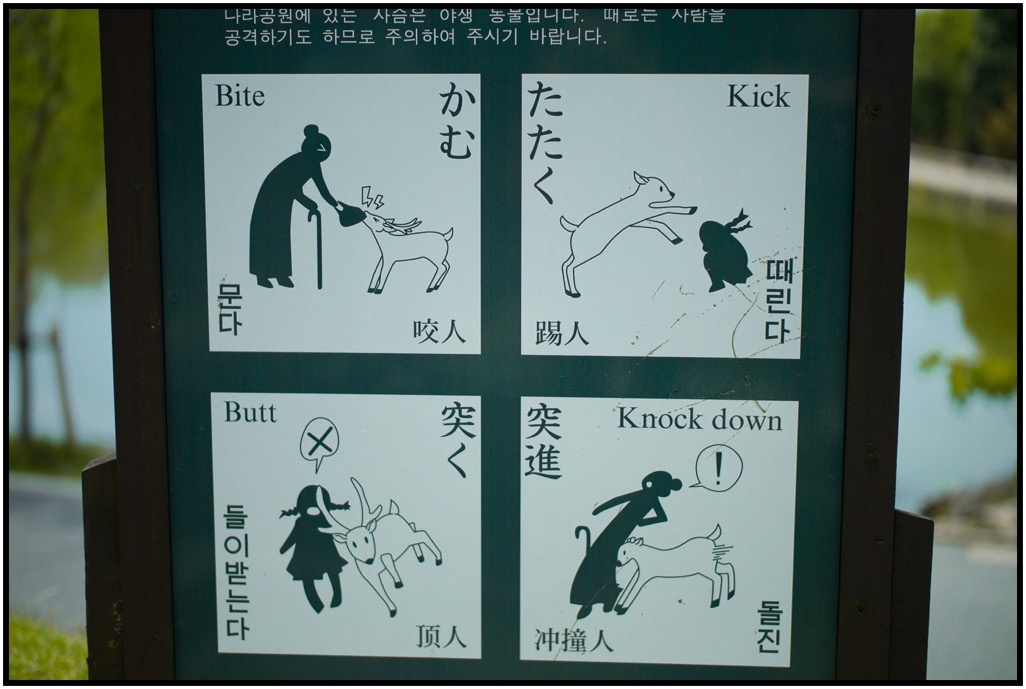
Sign at the entrance to Nara Park. They were warning visitors that the deer are wild animals and can be unpredictable. This sign is funny, but still not as funny as the signs in Yellowstone National Park warning about squirrel attacks with a gory photograph of a guy’s mangled hand full of stitches.
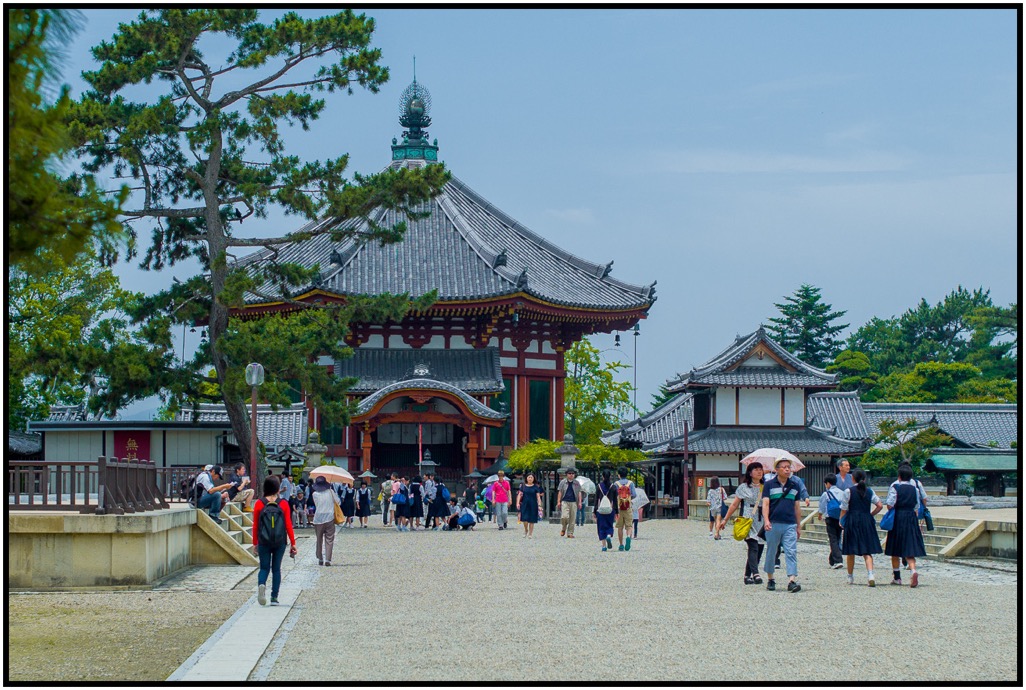
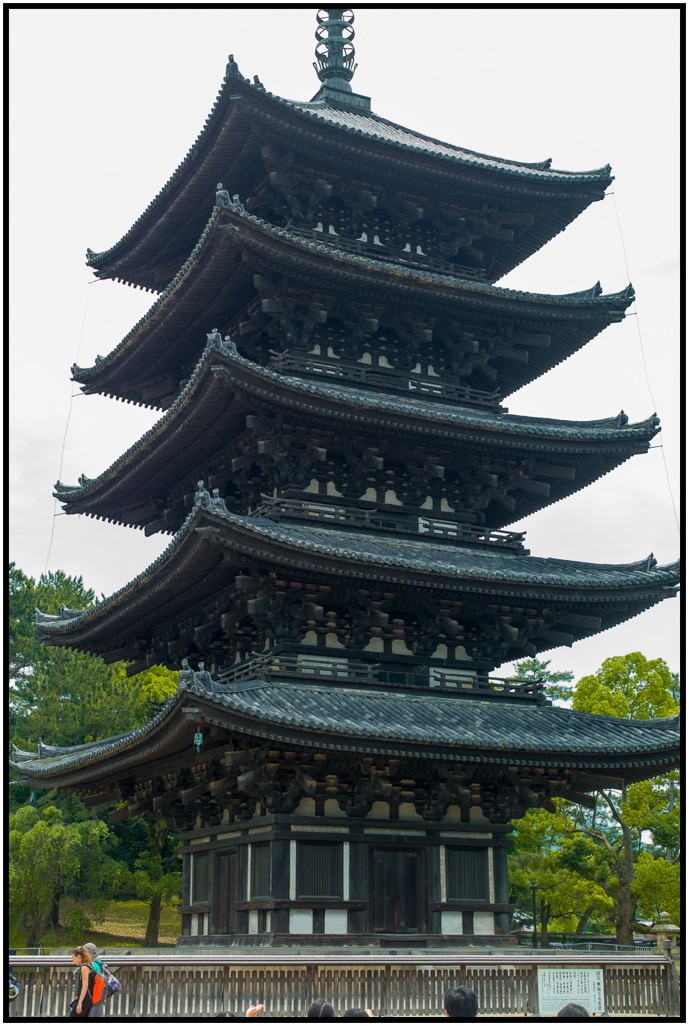
Below: Kofukuji (興福寺, Kōfukuji) used to be the family temple of the Fujiwara, the most powerful family clan during much of the Nara and Heian Periods. The temple was established in Nara at the same time as the capital in 710. At the height of Fujiwara power, the temple consisted of over 150 buildings.
Below: A five story pagoda. At 50 meters, the five story pagoda is Japan’s second tallest, just seven meters shorter than the five story pagoda at Kyoto’s Toji Temple. Kofukuji’s pagoda is both a landmark and symbol of Nara. It was first built in 730, and was most recently rebuilt in 1426.
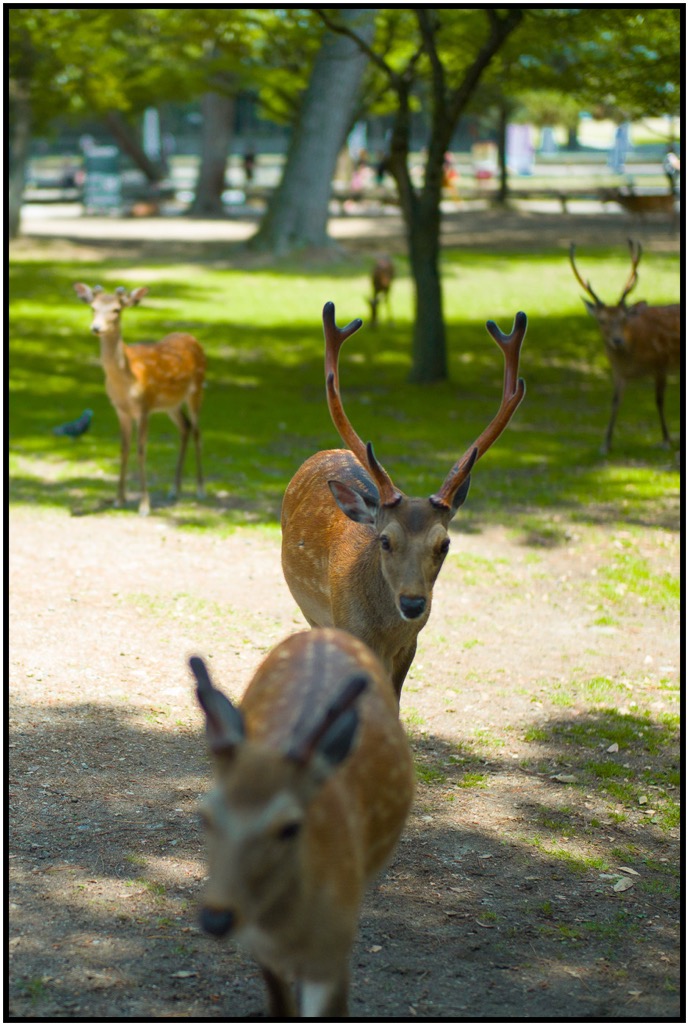
And then we saw deer!! They were everywhere, and totally eclipsed any sightseeing of temples and shrines. Not only were there many deer, they are completely tame. They don’t seem to like being petted very much, but they will tolerate it if you don’t touch their antlers. Their antlers are still in the process of growing for this season and are covered in velvet — the highly vascular skin which supplies oxygen and nutrients to the growing bone. The antlers are really sensitive during this process and bleed heavily if they are damaged. We saw a couple of deer with mangled, bleeding antlers.
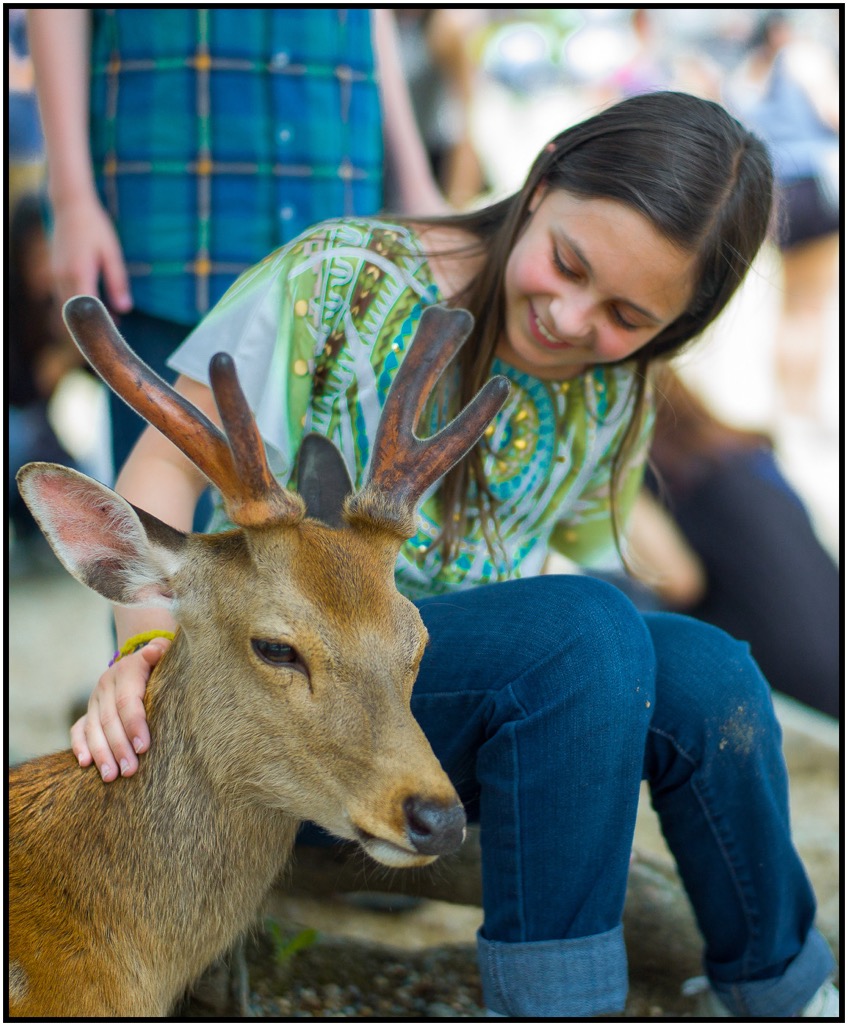
Josie was in love.
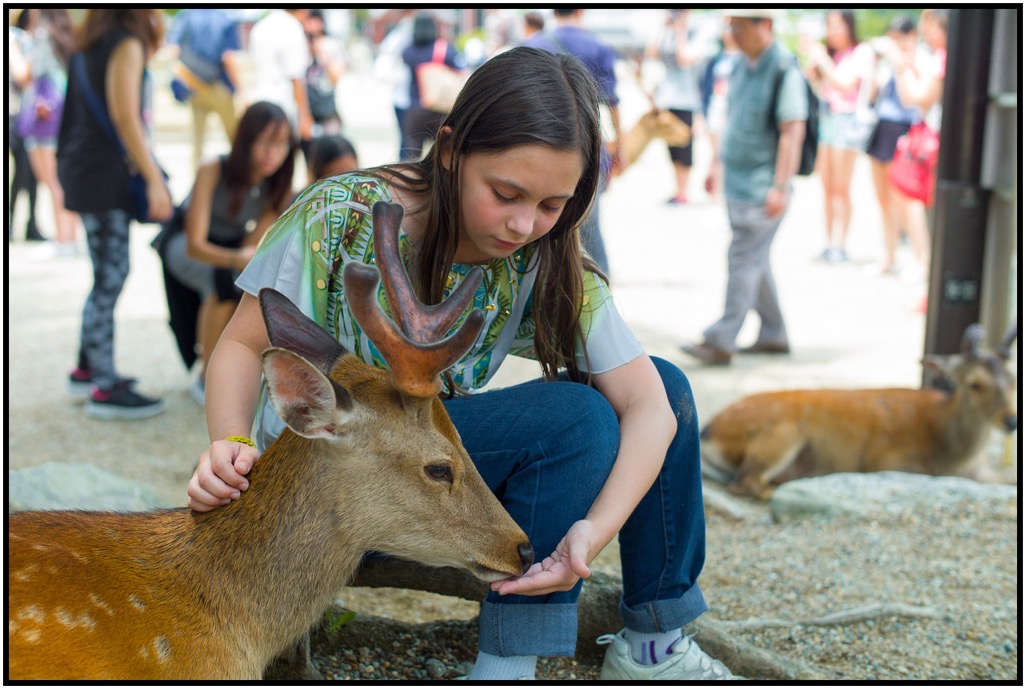
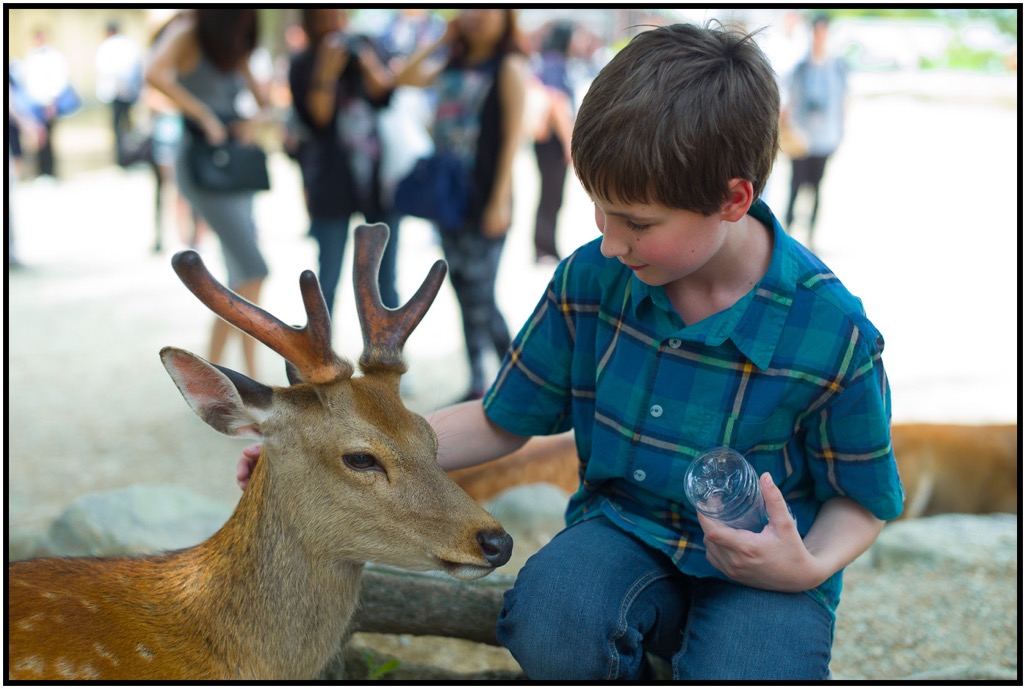
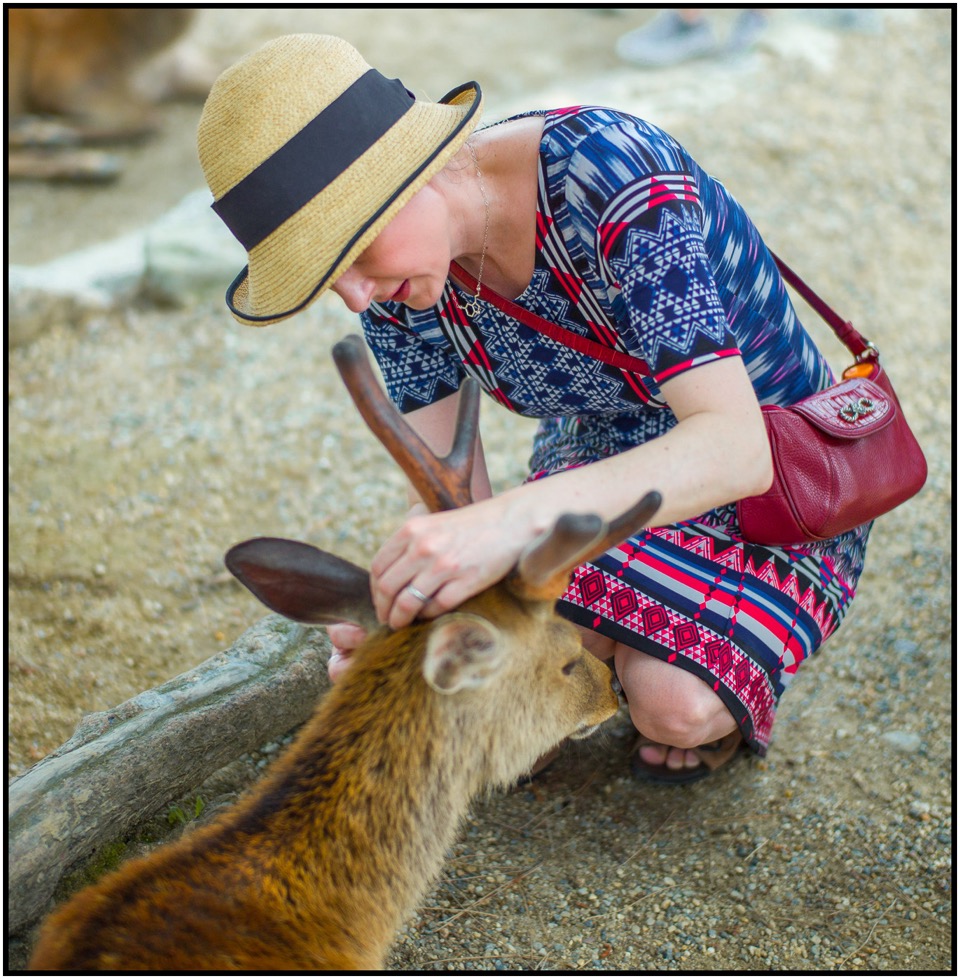
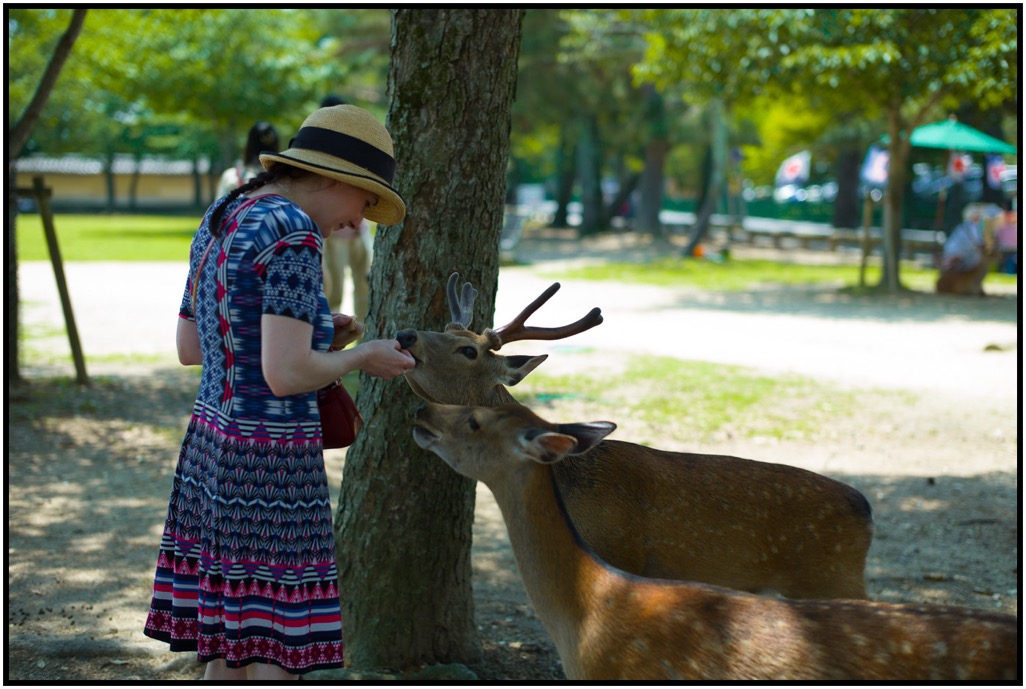
I immediately discovered ticks all over the deer. In the photo below, I’m picking ticks out of this guy’s ears. He had 6 of them. Shudder! I was also immediately scared of Lyme disease. We looked it up on Adam’s phone and were relieved to learn that no cases of Lyme disease have ever been reported at Nara Park, and the national animal management people keep a very close eye on the health of the deer herd.
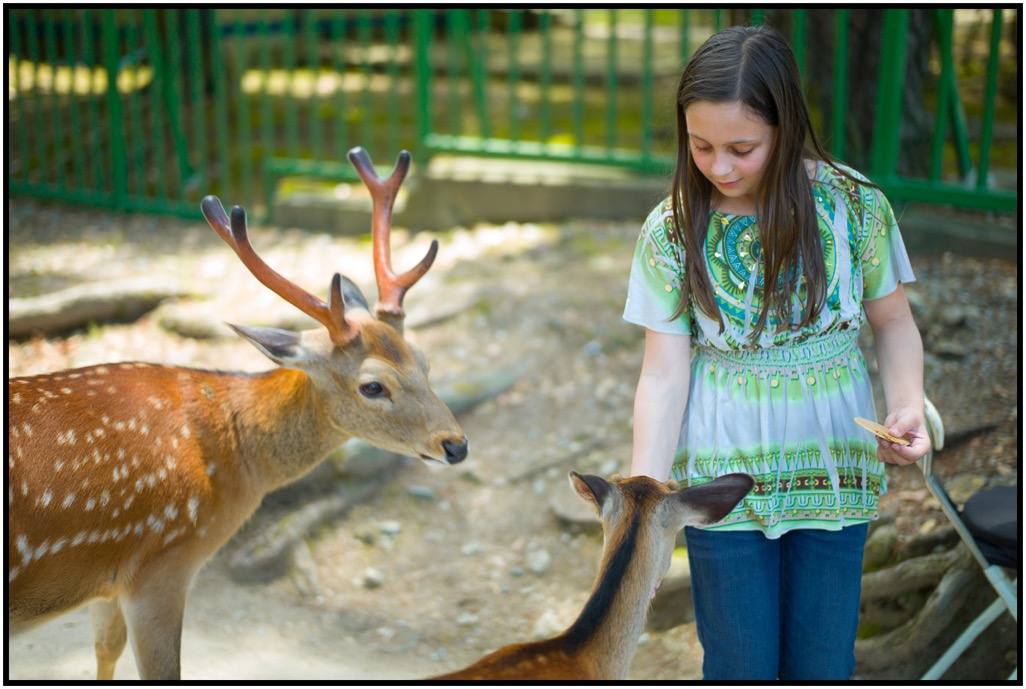
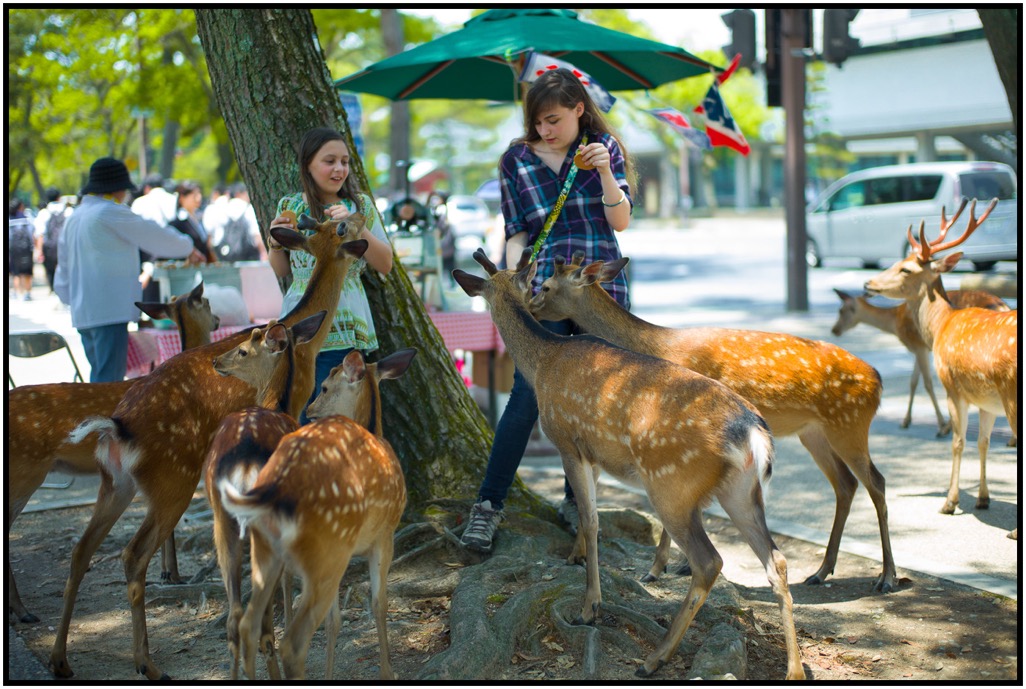
You can purchase “deer-crackers” (鹿煎餅 Shika-senbei) to feed the deer in the park. If you have one of these crackers in your hand, the deer suddenly become pushy and obnoxious. The crackers cost ¥150 and you get a little packet of 10. I bought a packet and tried to divvy them up between the myself and the kids. The deer swarmed me while I was handing crackers to the kids and one bit me. It didn’t hurt, but let us know these deer mean business when you have food in your hands. You need to pay attention.
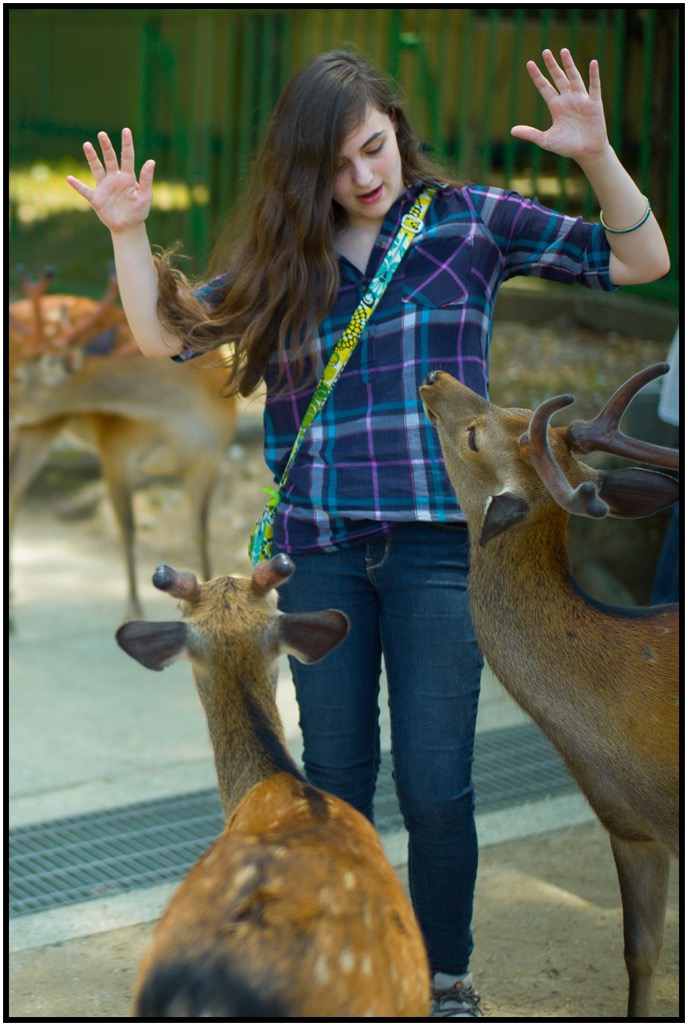
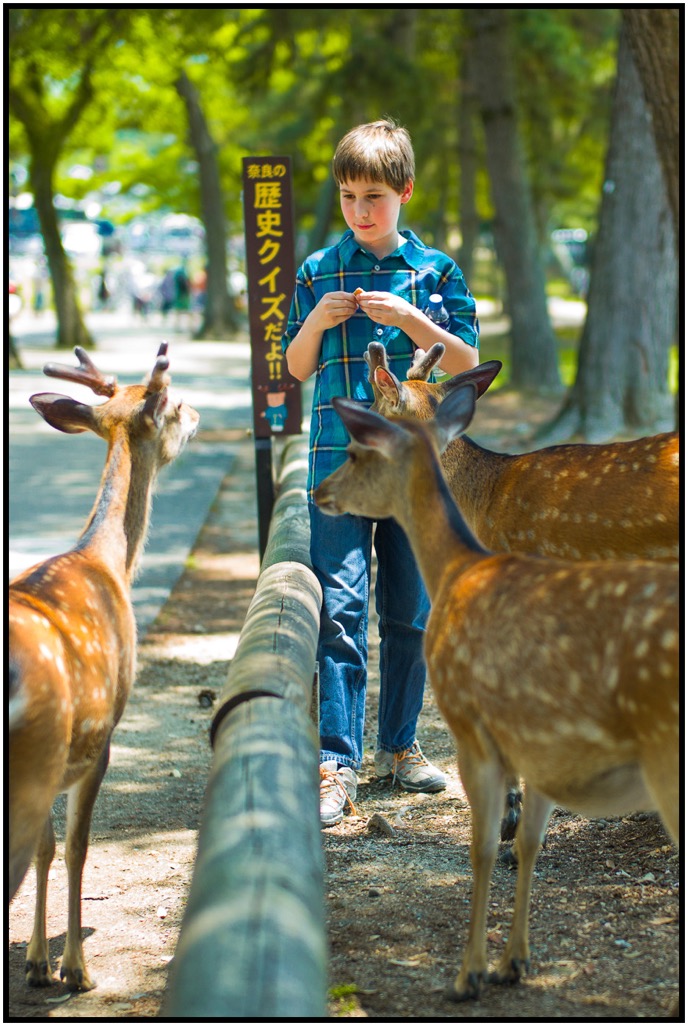
Below: Isabella letting the deer know she’s out of crackers now. Once they see your hands are empty, they get bored and walk away.
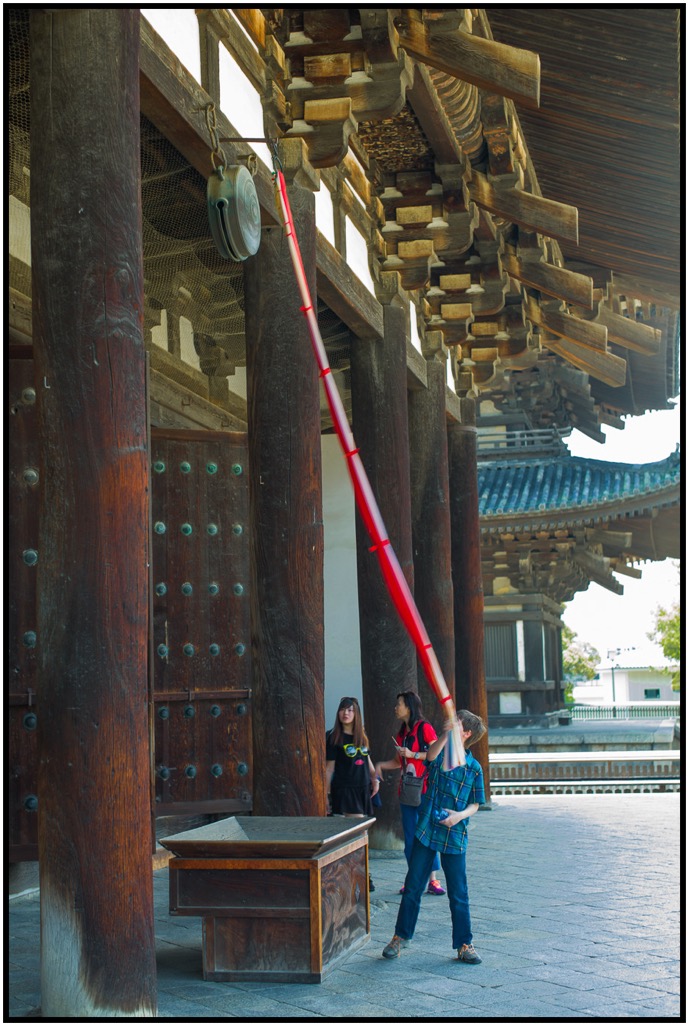
Holden “T-Rex” Mayse calling the faithful to prayer. Buddhism calls for people to pay attention to the now. This focus is also called “mindfulness”, something our kids lack completely. The ring of the bell at temple entrances serves to focus a follower’s attention, bringing it out of future worries or pulling it away from past concerns.
More deer crackers! This is one of the highlights of the trip.
People lined up for lunch. It was hot today and the cloud cover burned off … so many people were using sun umbrellas that I decided to buy one, too.
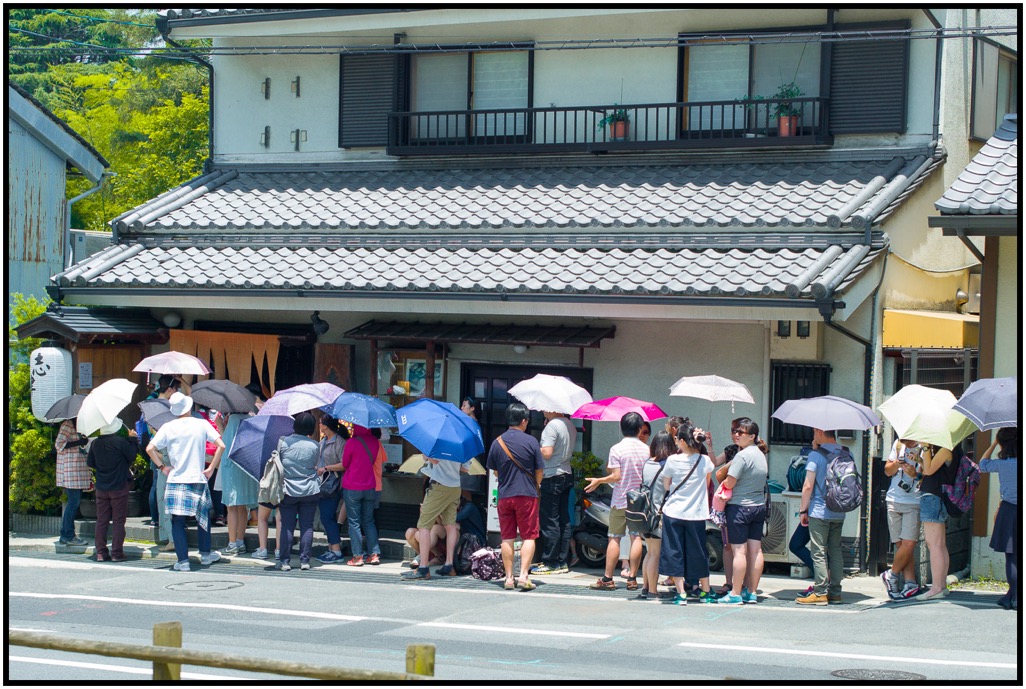
I found a cheap one for roughly US$10. Isabella jumped on it and walked away.
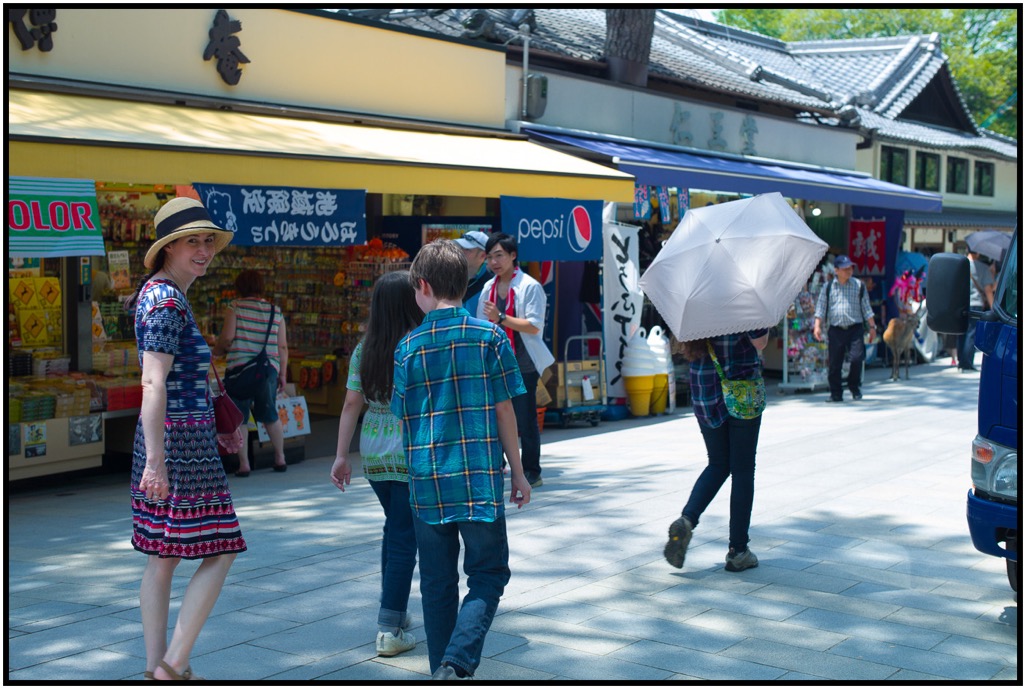
I got my umbrella back. Walking through crowds with it takes some getting used to. I kept whacking Adam in the face with it.
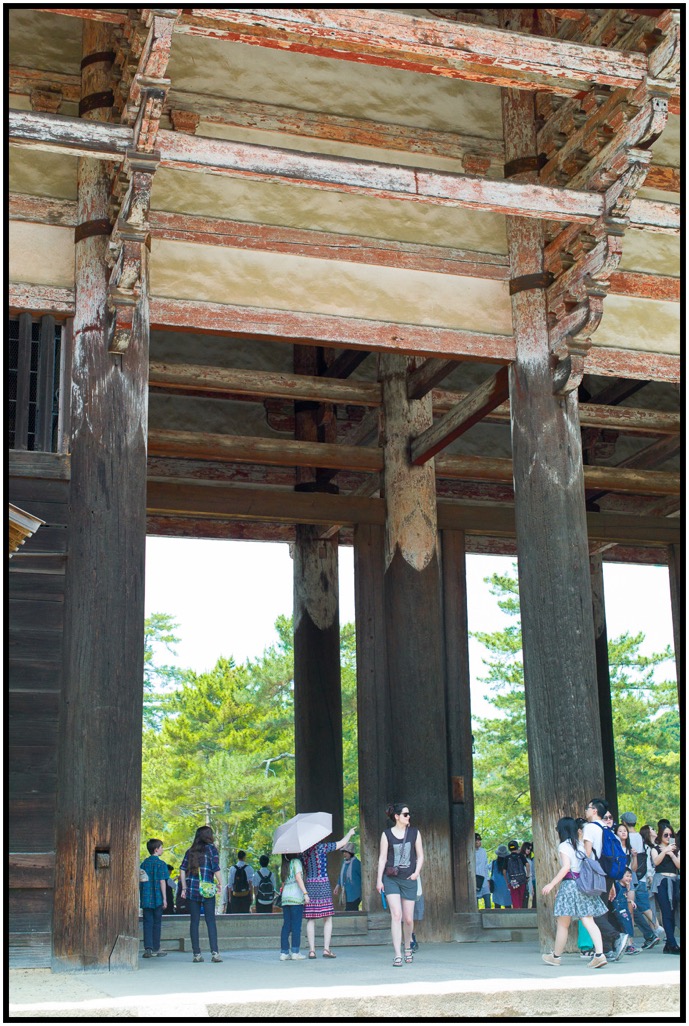
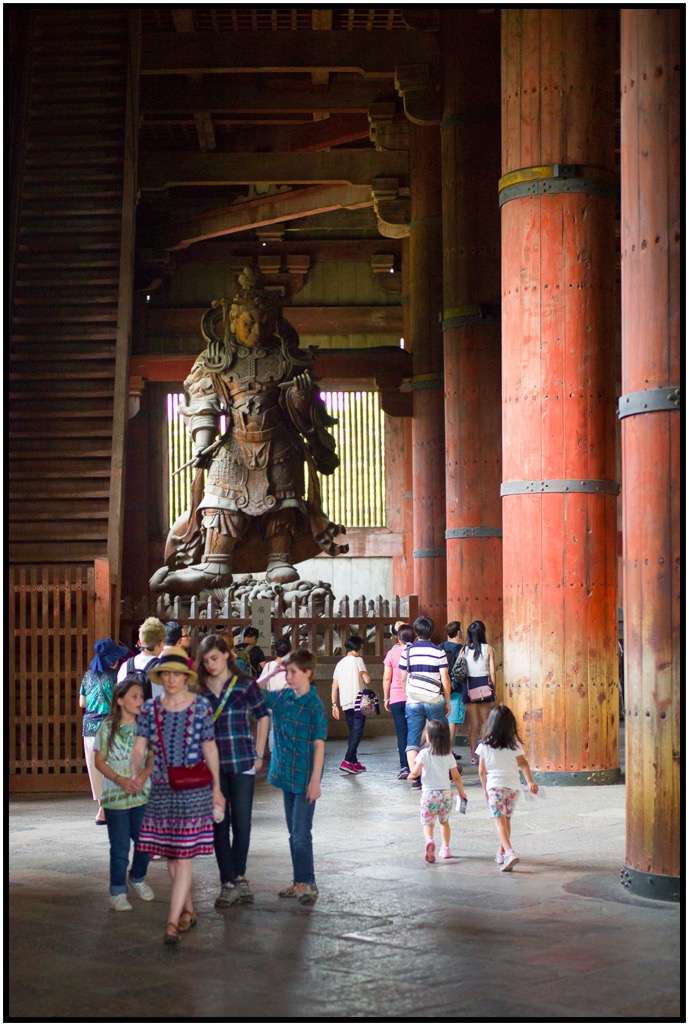
Entrance way to the most impressive Tōdai-ji Buddhist temple. Huge, carved wooden statues guarded the gateway.
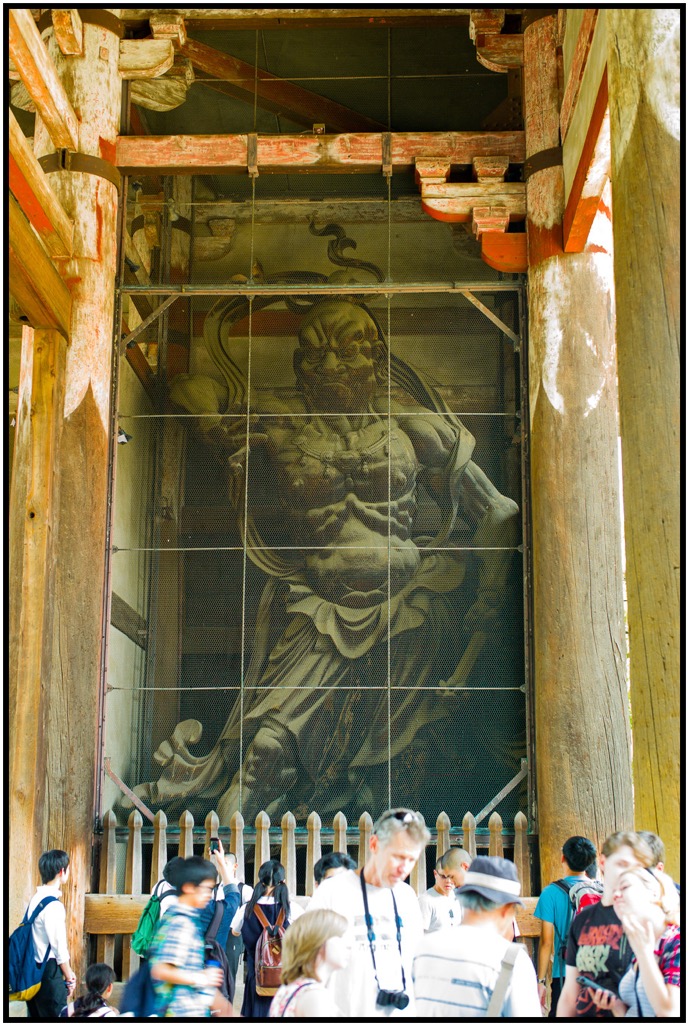
Josie got stung by a hornet walking up to the temple itself – the largest we’ve yet seen. Her hand was swelling up a little and she was upset.
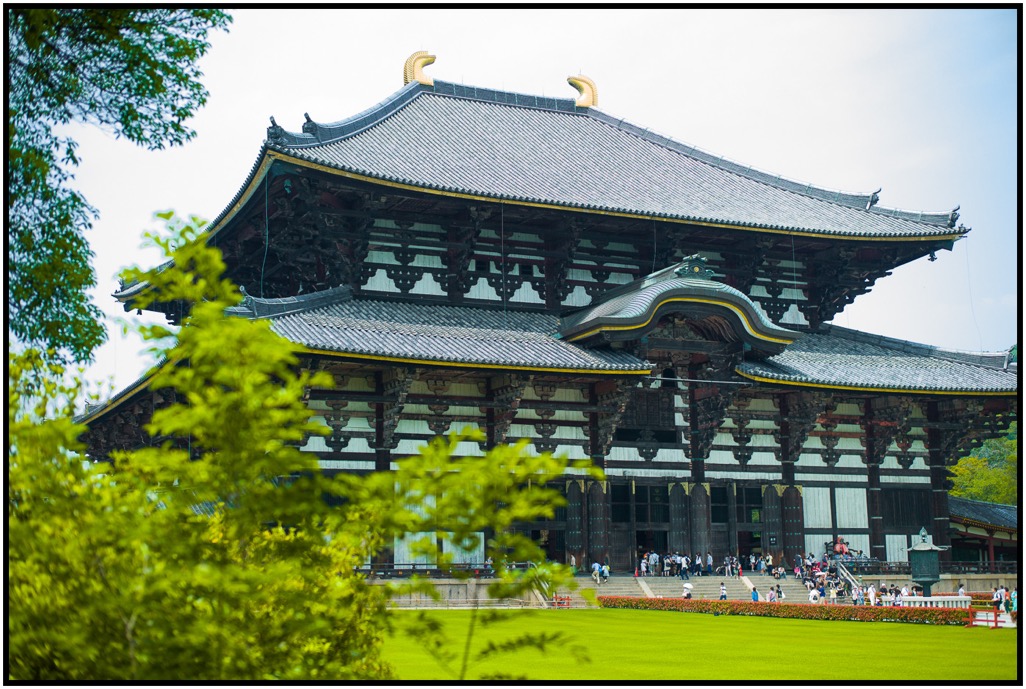
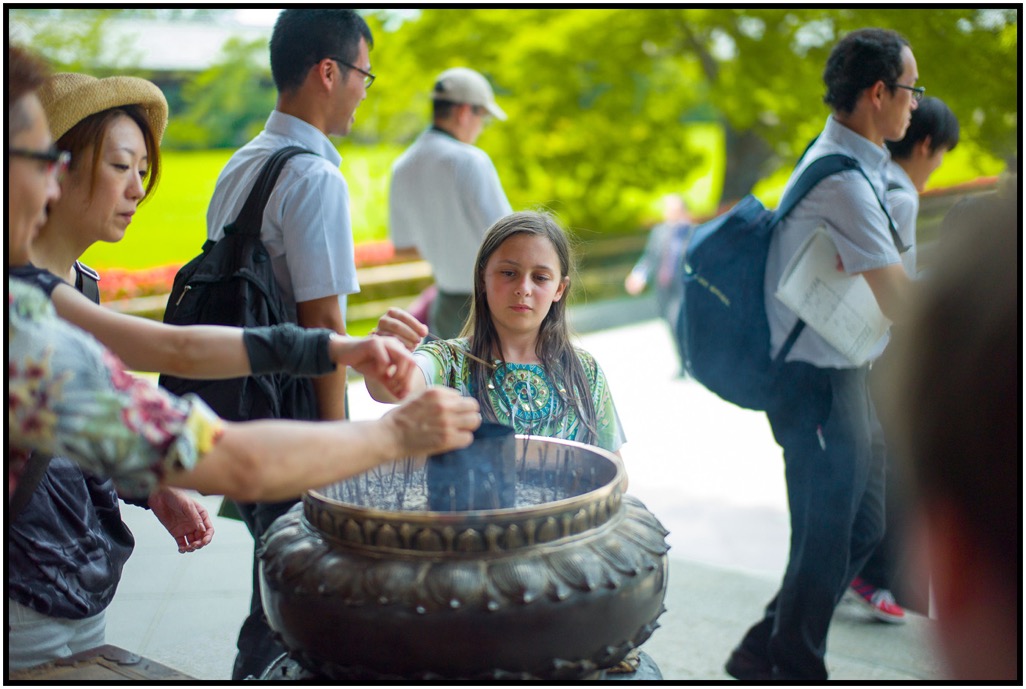
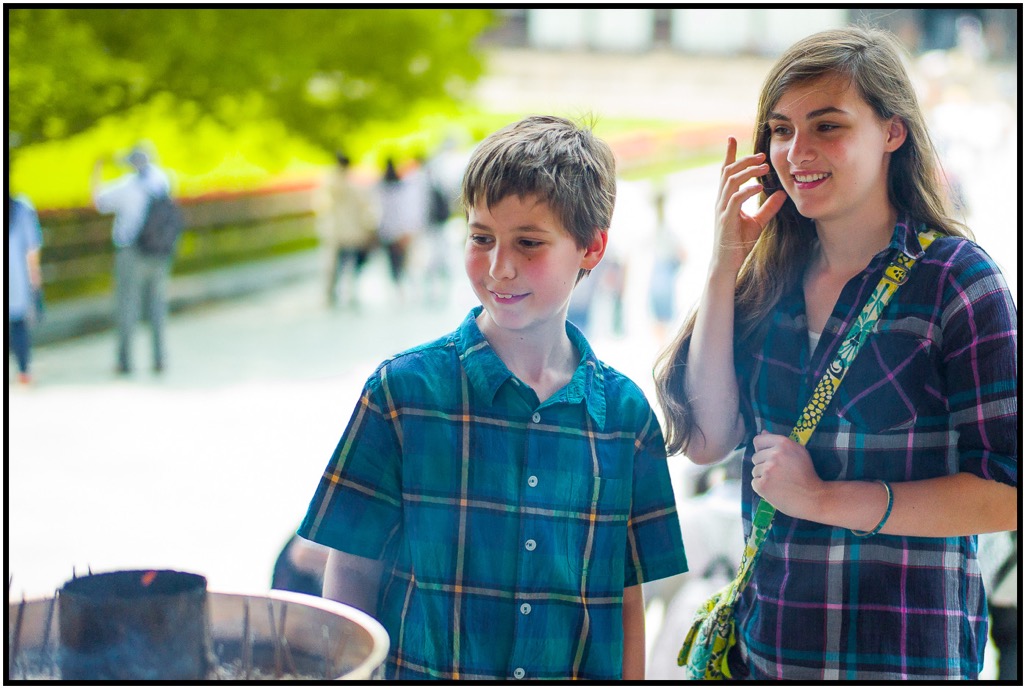
They have an incense station across from the Temple. They ask for a donation, but anyone can light a stick of incense. I’m not sure what the purpose of this is, but I assume each one is supposed to represent a prayer, like the candles in a Catholic church. All three kids wanted to light incense.
Holden lit his stick and put it in the sand. A guy standing there demonstrated that Holden did it wrong … you are supposed to put the incense in the sand, then clap your hands twice and bow.
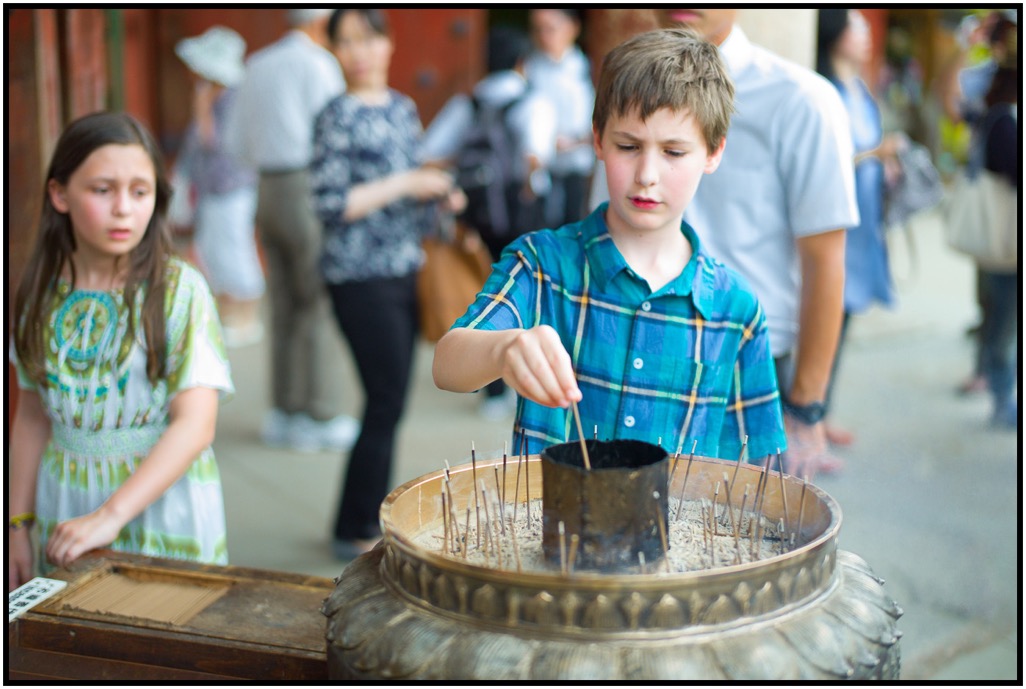
When it was Isabella’s turn, the guy walked her through the steps with pantomime.
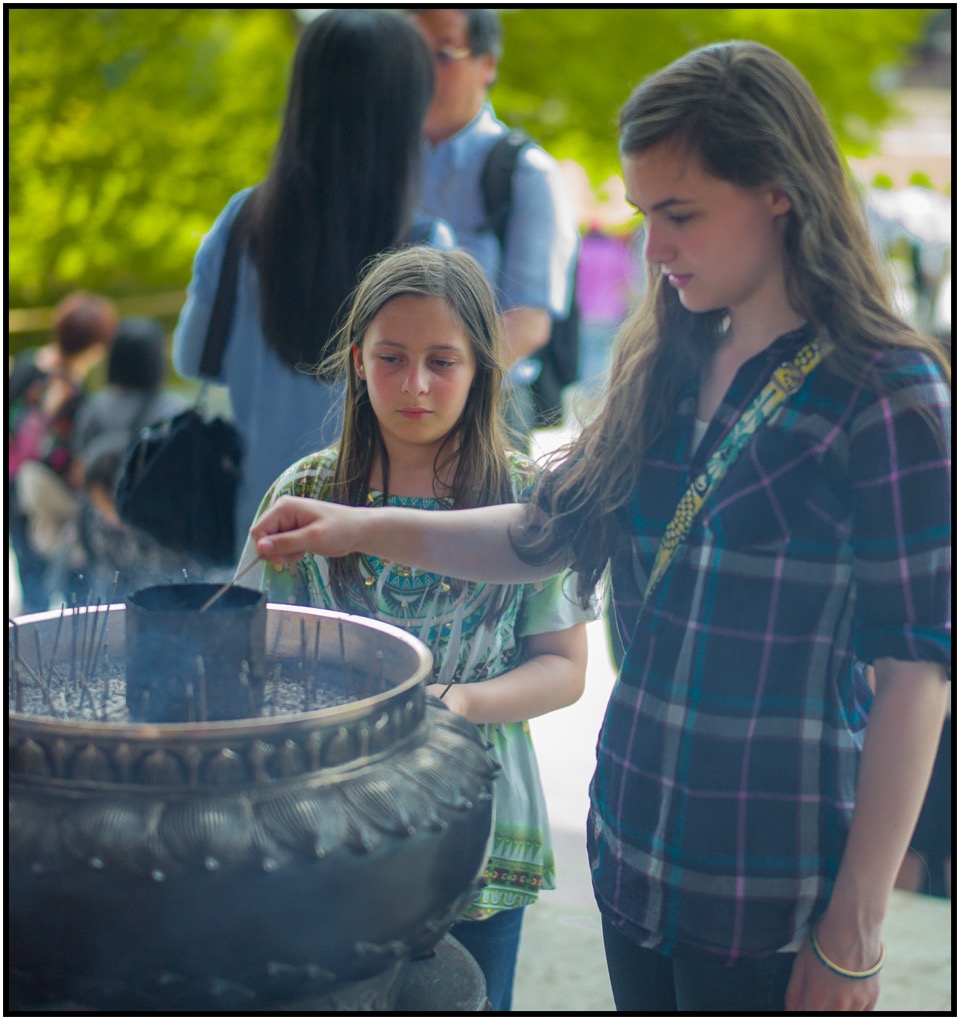
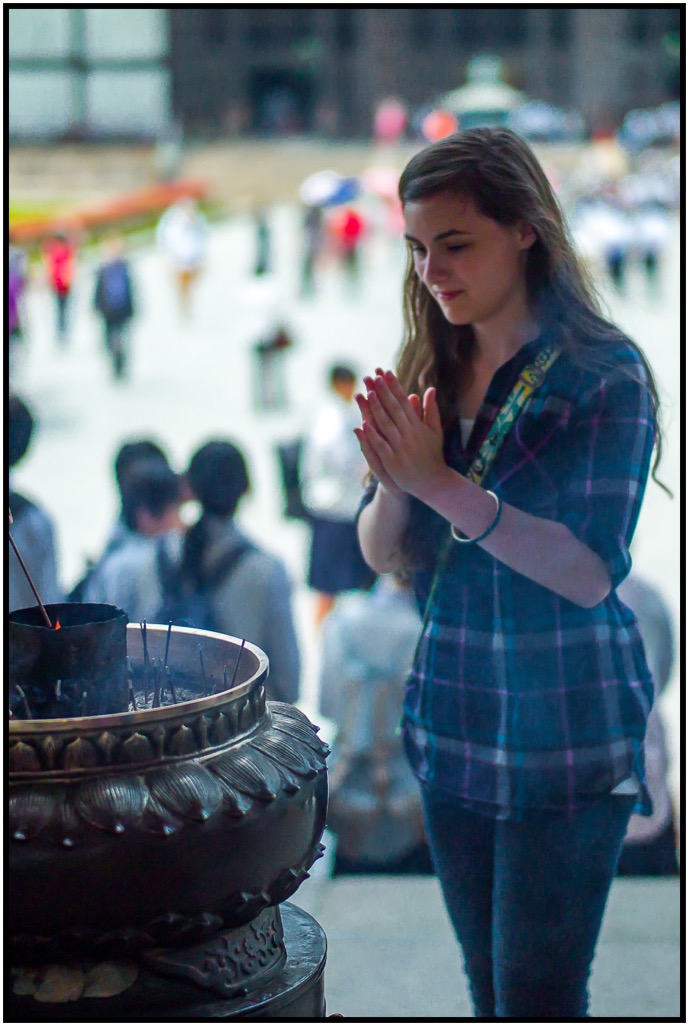
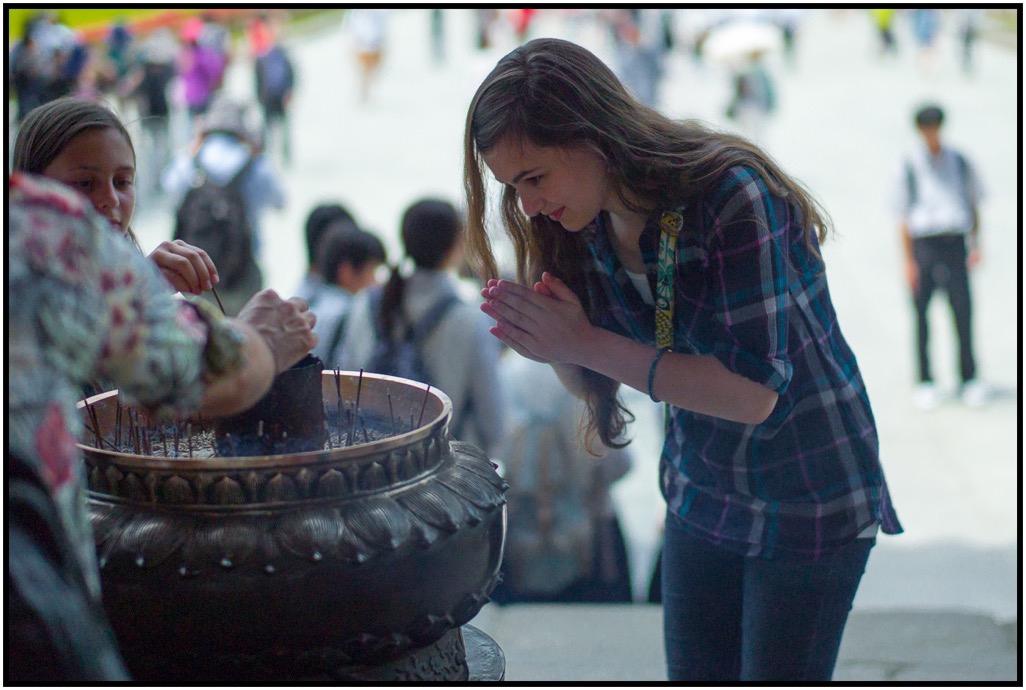
He gave her a huge grin and a “thumbs up” when she was done. Then it was Josie’s turn. She was too short to reach the sand properly and burned her hornet-stung hand on some previously-lit incense. She was really feeling like the universe was out to get her this afternoon.
Isabella taking a photo of the temple to send to her friends.
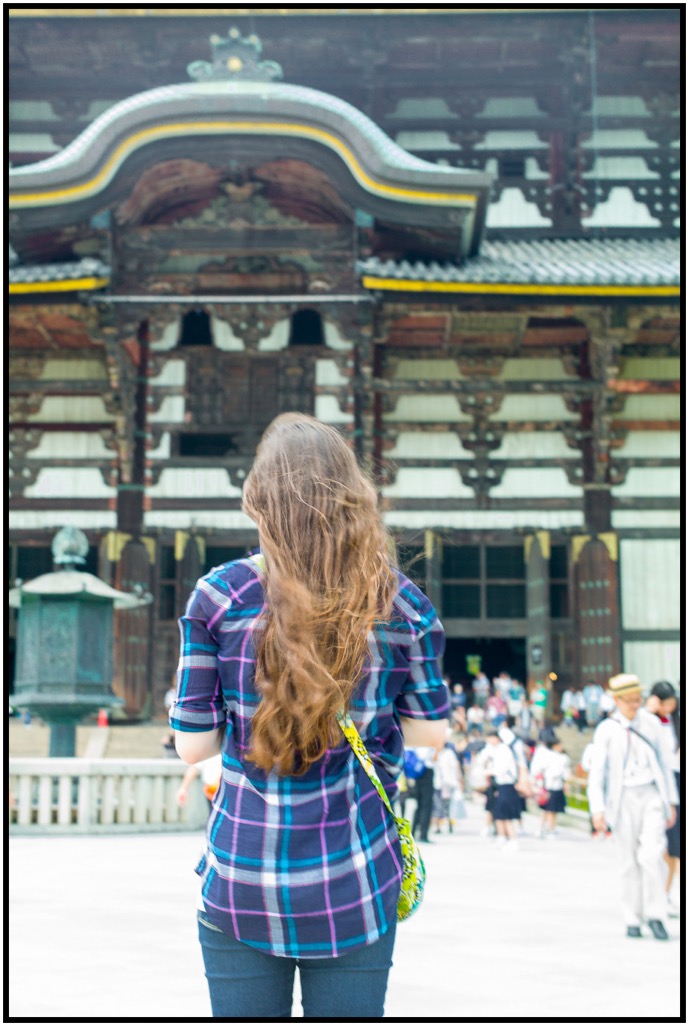
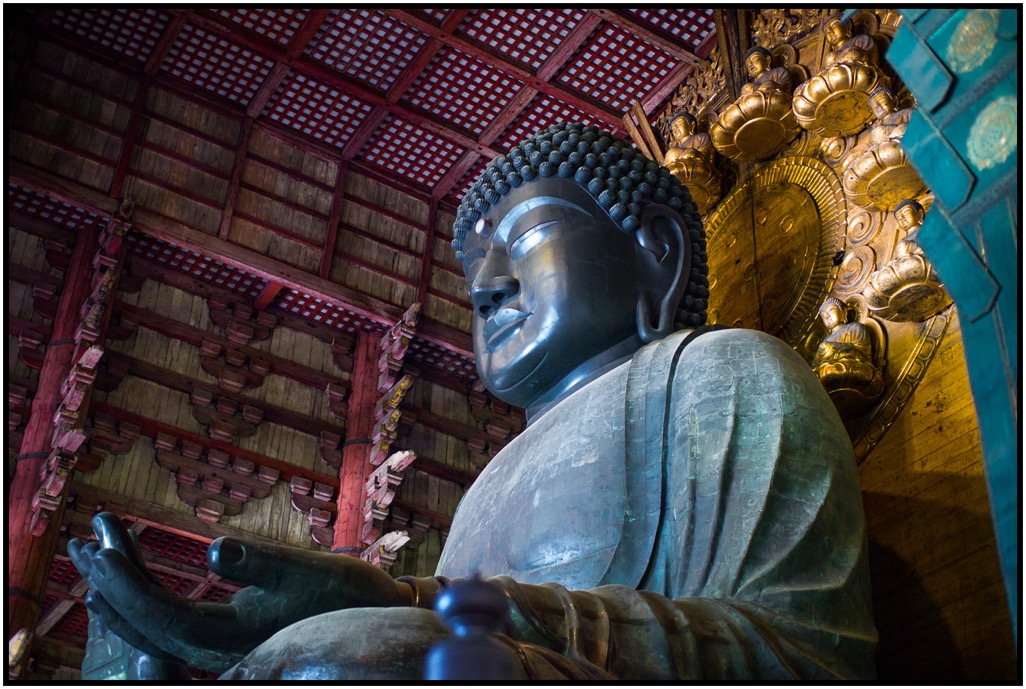
Below: The largest bronze Buddha statue in the world – named Daibutsu. 50 feet tall and weighs 500 tones. First cast in 752 but apparently his head has been made a couple of times over due to numerous fires and earthquakes in the past 1250 years.
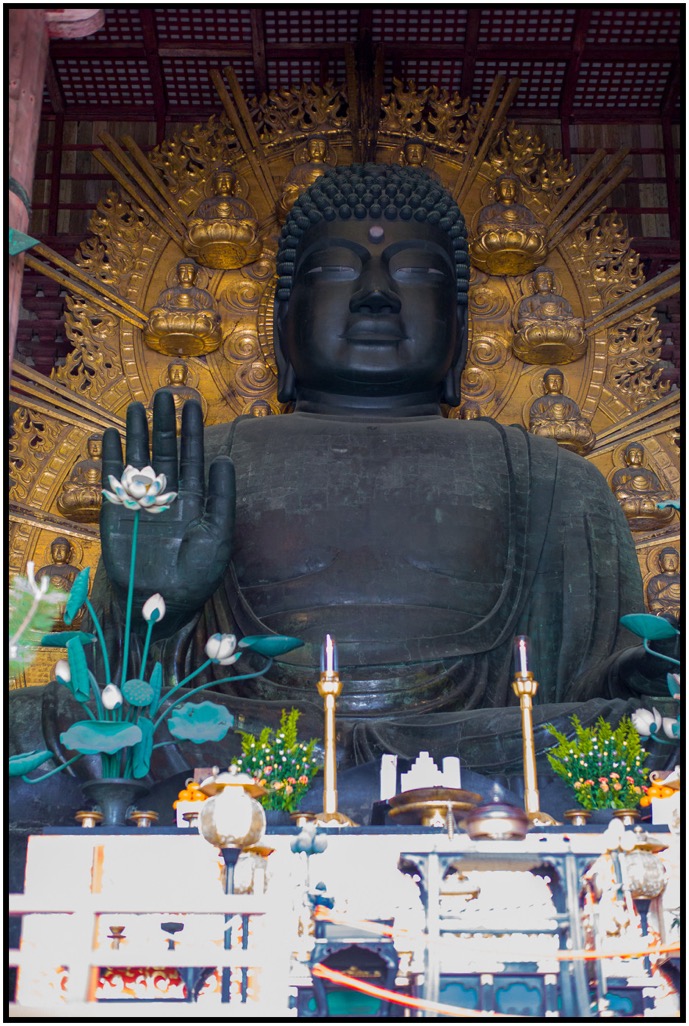
Other Bodhisattvas flank the big guy all around the interior of the temple.
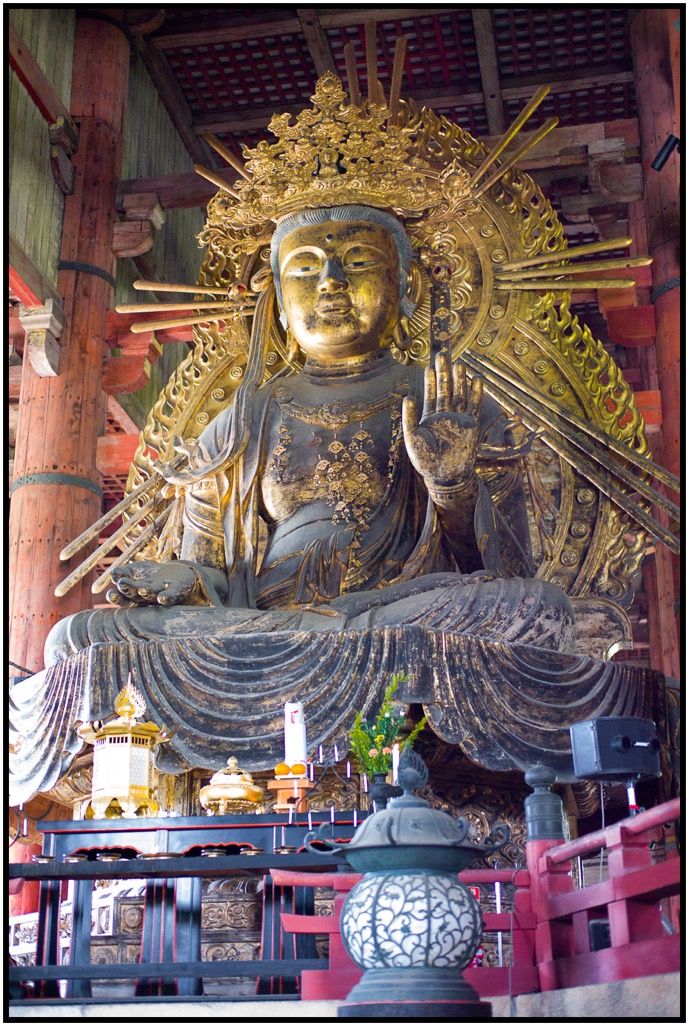
Adam was most impressed with the gorgeous wood carved statues – many of these were made in the 700s and 800s and still exist.
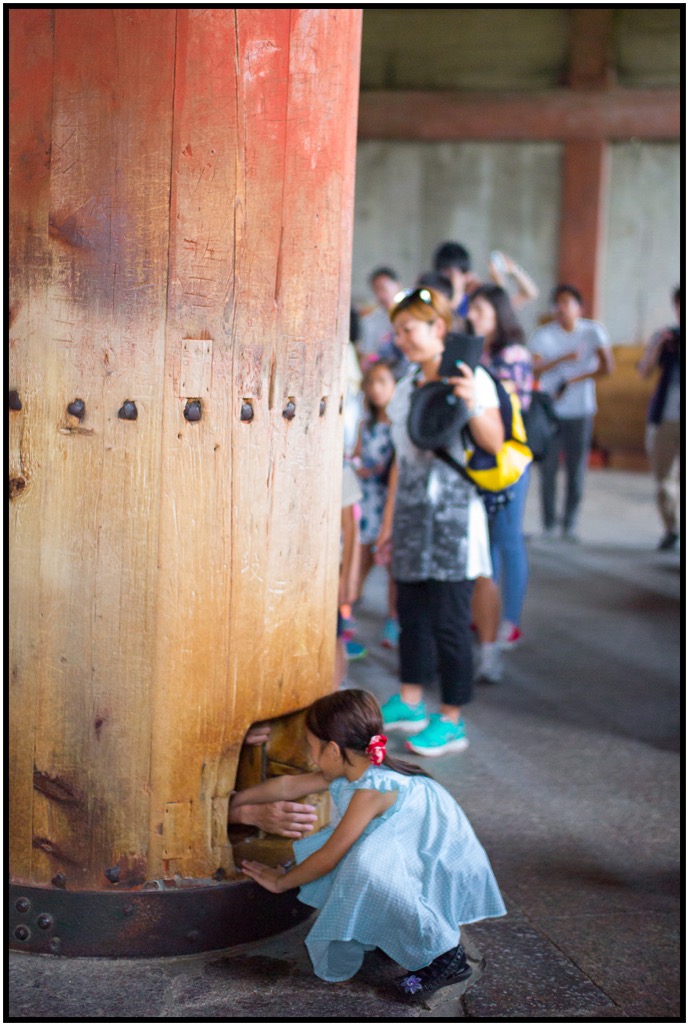
Below: Another popular attraction is a pillar with a hole in its base that is the same size as the Daibutsu’s nostril. It is said that those who can squeeze through this opening will be granted enlightenment in their next life. People were lined up for the opportunity to try. Pretty much only elementary-school aged children can fit through here.
The Daibutsuden (Big Buddha Hall) is the world’s largest wooden building, despite the fact that the present reconstruction of 1692 is only two thirds of the original temple hall’s size.
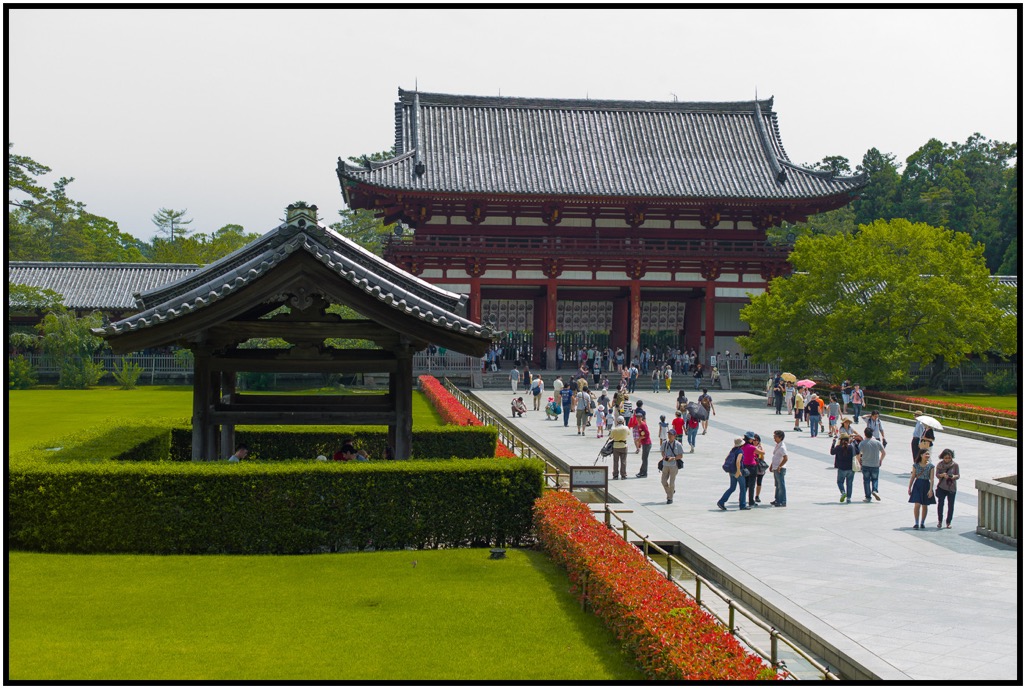
Heading away from the big hall (across the street) to other related buildings.
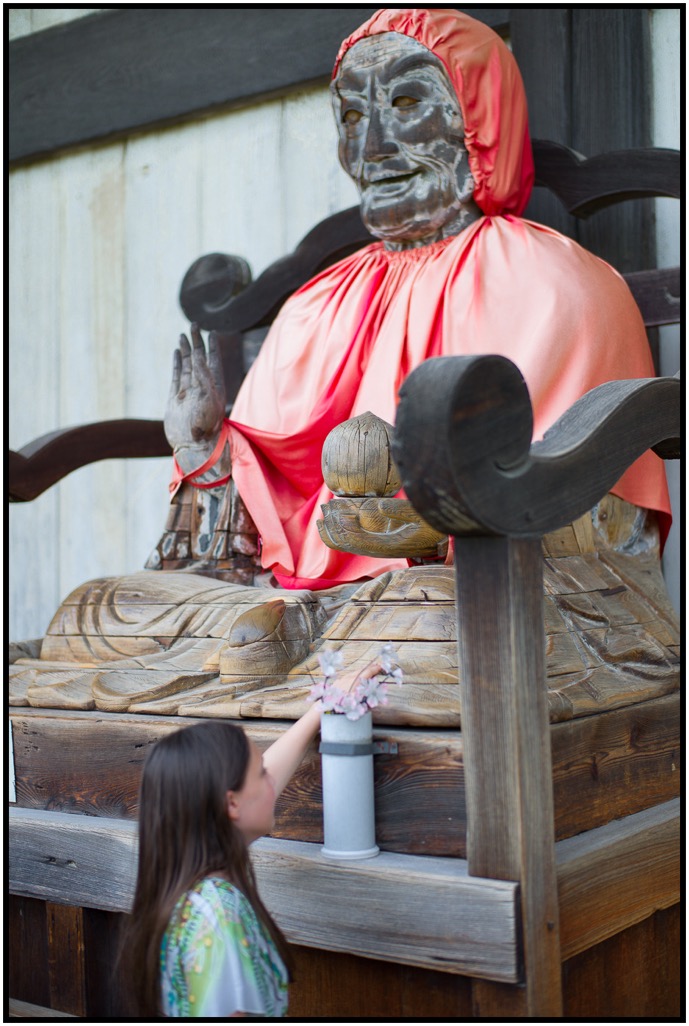
Below: To the right of the entrance to the Daibutsu-den is a statue of the Yakushi Nyorai.
Though a bit scary-looking on first glance, it’s actually a Buddha of medicine and healing. This wooden statue is from the 1700s.
Legend has it that if you rub the part of his body that corresponds to the ailing part of your own body, he will heal you. Josie wanted to rub his hand to cure her hornet sting and incense burn but she couldn’t reach the hands of the statue. She had to rub his foot instead.
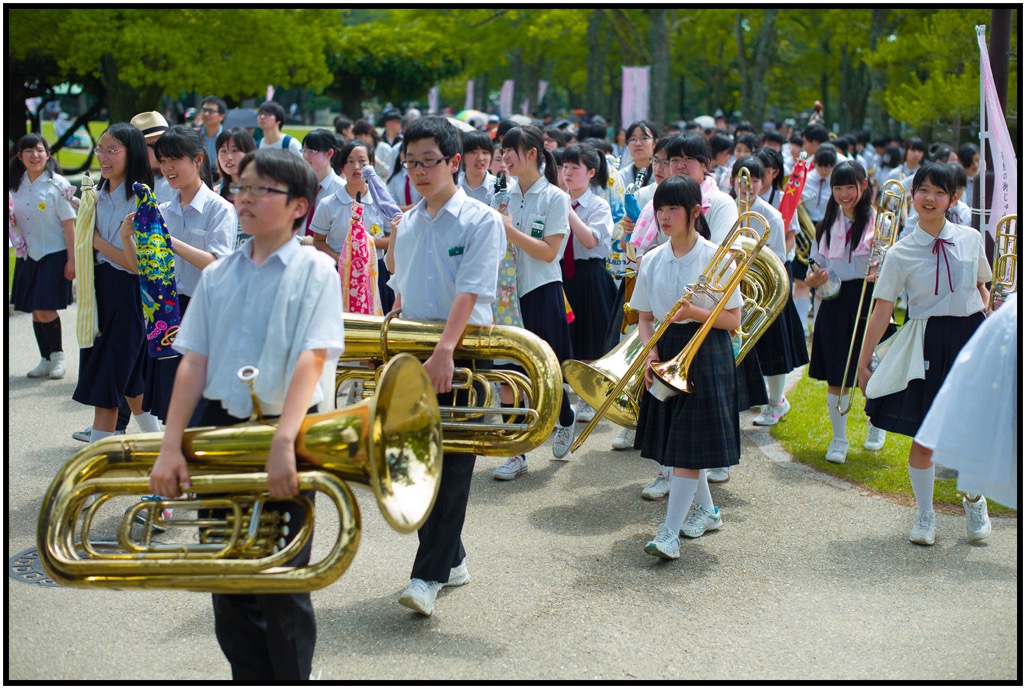
Some sort of band competition was going on today. Hundreds of students were in the park playing for judges.
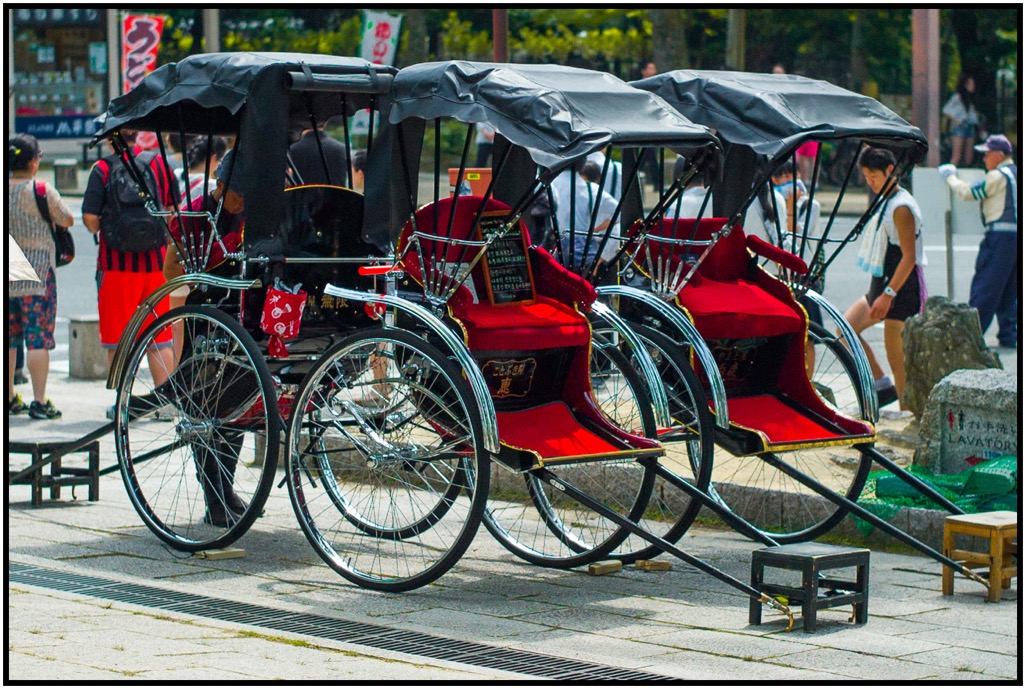
Rickshaws.
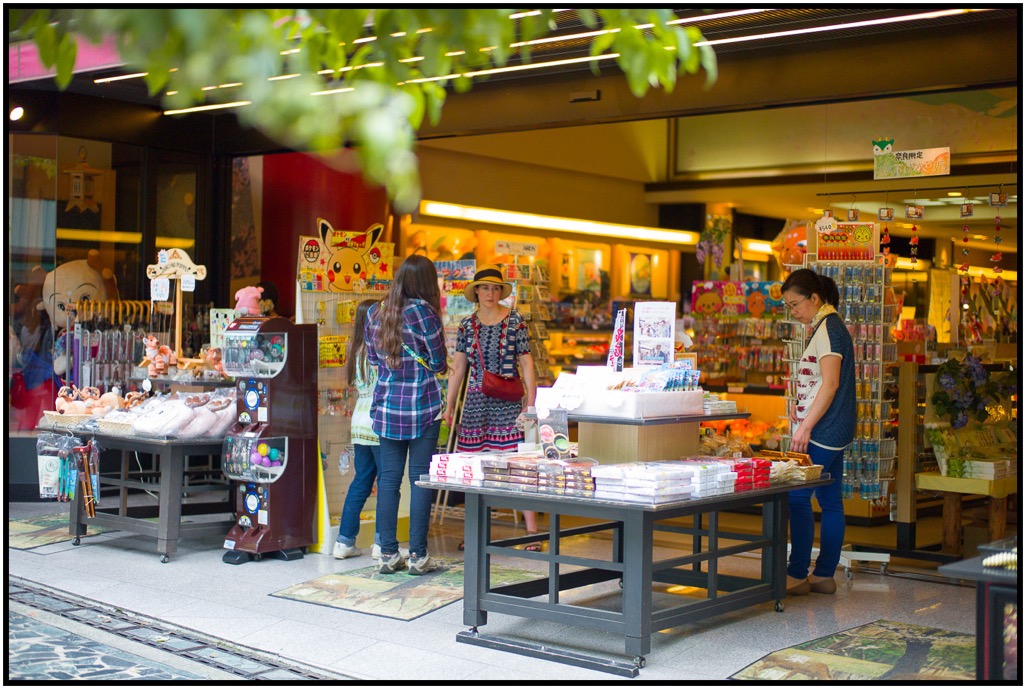
More shopping on the way back to the train station.
We managed to get on the correct train headed back to Kyoto. The Express had much nicer seats and was a short 45 minute ride.
June 14, Sunday
We slept in until 6:00 a.m. this morning, finally breaking the 3:00 a.m. barrier! We had given up on adjusting to the time zone better than that, figuring we were just doomed to wake up at 3:00 a.m. and have 7 hours to kill each morning before any of the shops opened up. Today is a victory!
On our way to the train station after breakfast at the Boulangerie, we saw a bunch of people milling around across the street. We headed over to see what was going on and discovered a huge flea market.
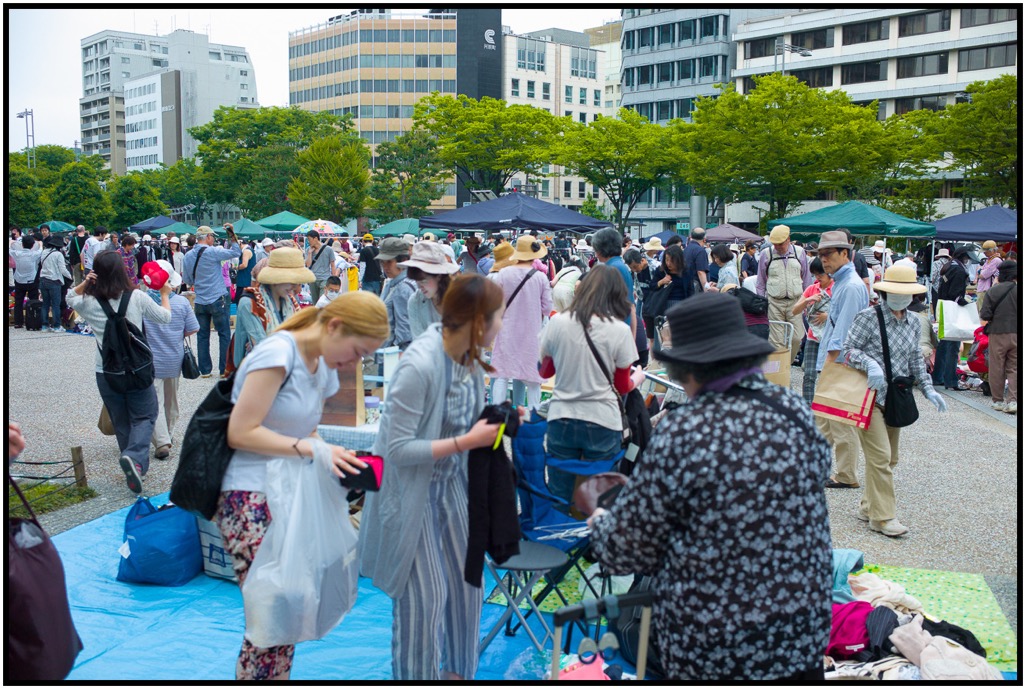
People were selling just about anything you can think of here. Second-hand clothes, shoes, and hats; kitchenware; antiques; pottery; toys; books; food; cosmetics; and lots of old junk. The place was so packed it was hard to walk around.
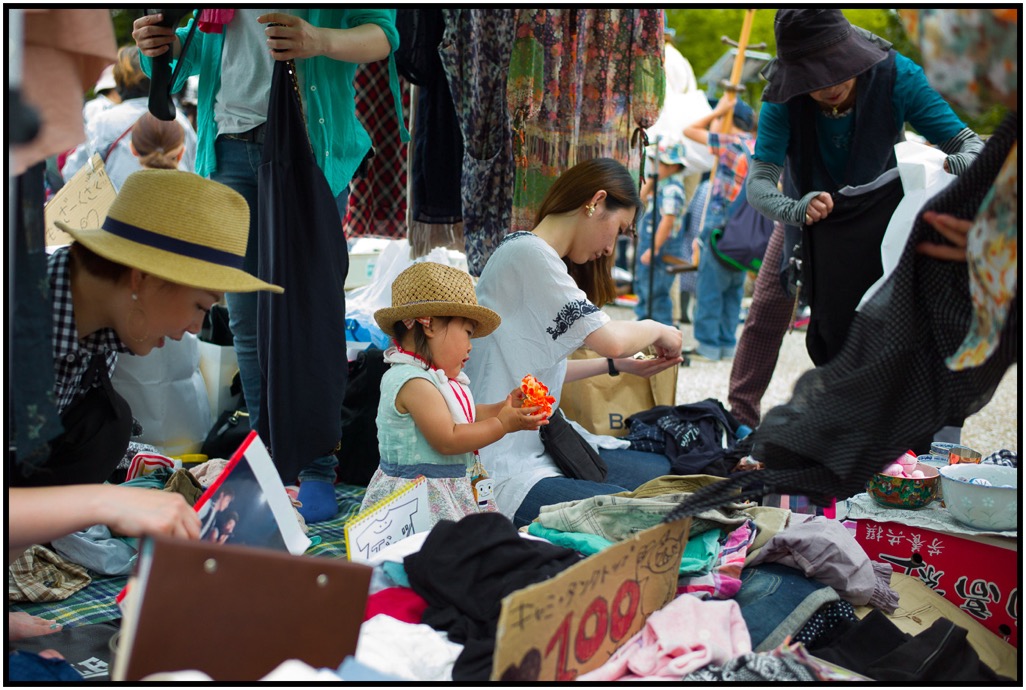
We all left with some treasures. Holden bought a tiny replica samurai sword, Josie bought a $3 parasol, Isabella and I found some old Japanese fans for $4 each, and then Isabella hit the jackpot — an Army-surplus soldier’s jacket from WWII with a hand-stenciled woman spray painted on the back for $17.
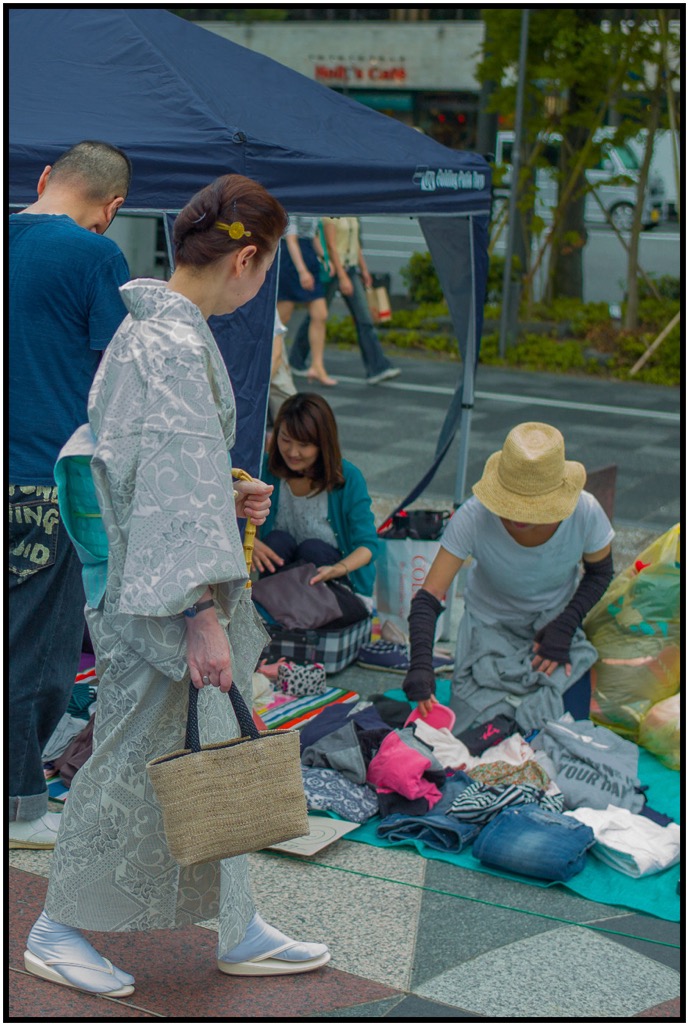
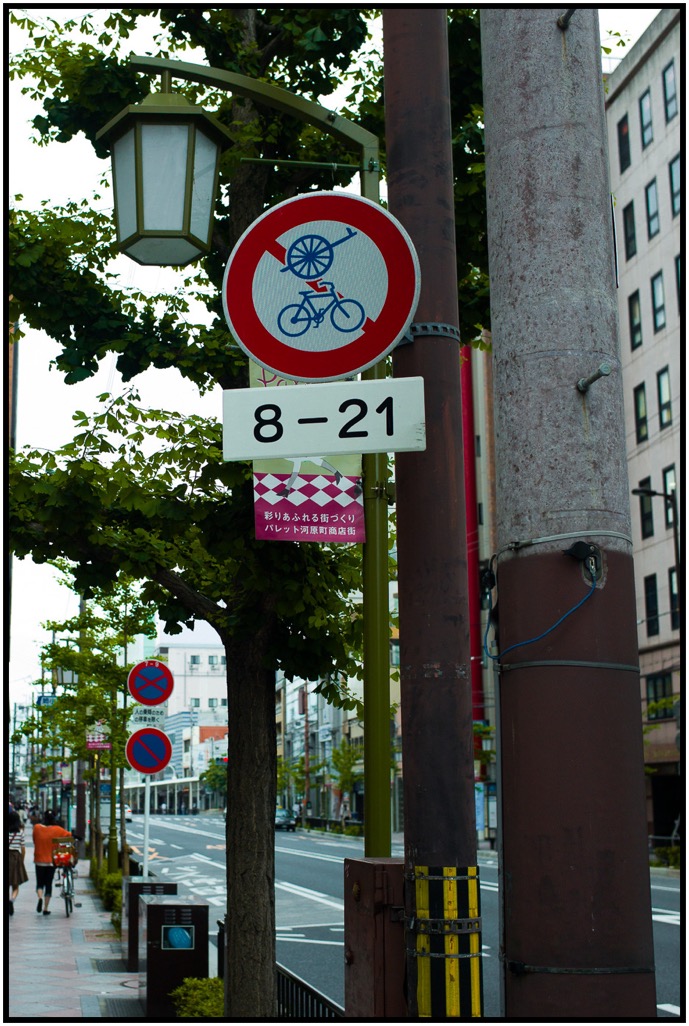
After purchasing all that loot, we needed to go back to the apartment to drop things off. Holden noticed the “No rickshaw or bike” signs. We’ve walked this street a number of times and never noticed them.
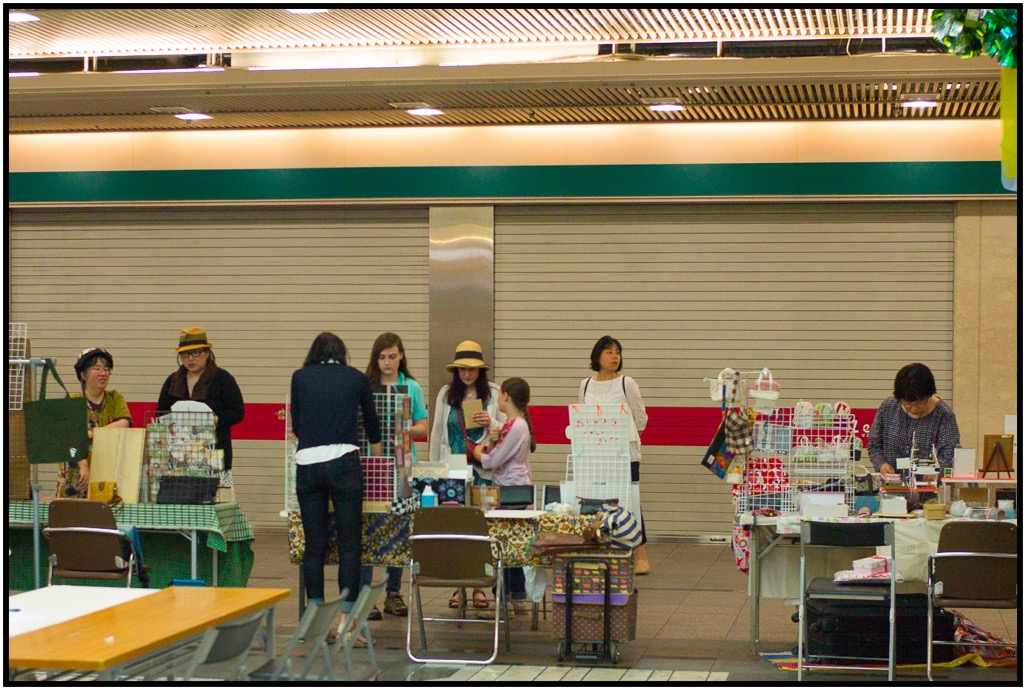
We finally made it to the train station (or original destination when we got sidetracked by the flea market) and discovered artists had set up booths in the lobby. Sunday must be a free day for people to go out and sell stuff. These booths were really cool because the artists were selling their own work. I bought a tiny ceramic lucky cat and the girls got a couple of small postcard-sized prints. Adam and Holden got bored.
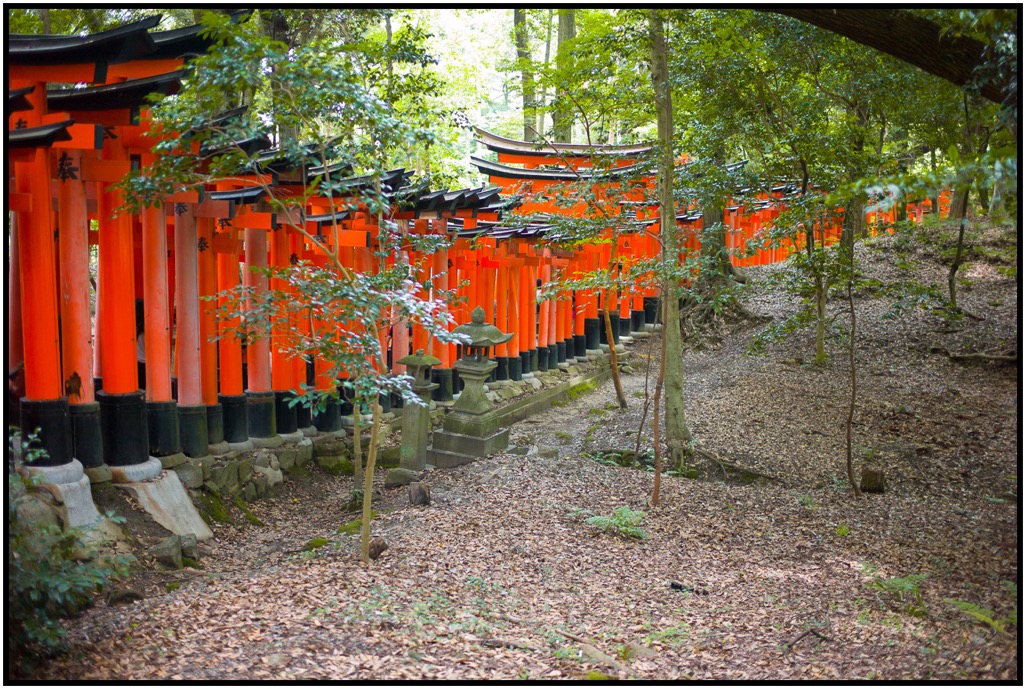
Adam: (photo set below): Fushimi Inari Taisha Temple complex.
The earliest structures were built in 711 on the Inariyama hill in southwestern Kyoto The main shrine structure was built in 1499. At the bottom of the hill are the main gate and the main shrine. Behind them, in the middle of the mountain, the inner shrine is reachable by a path lined with thousands of torii – the OSU-Beaver orange and black gates. The significance of these gates is to symbolically mark the transition from the profane to the sacred. To the top of the mountain are tens of thousands of mounds for private worship.
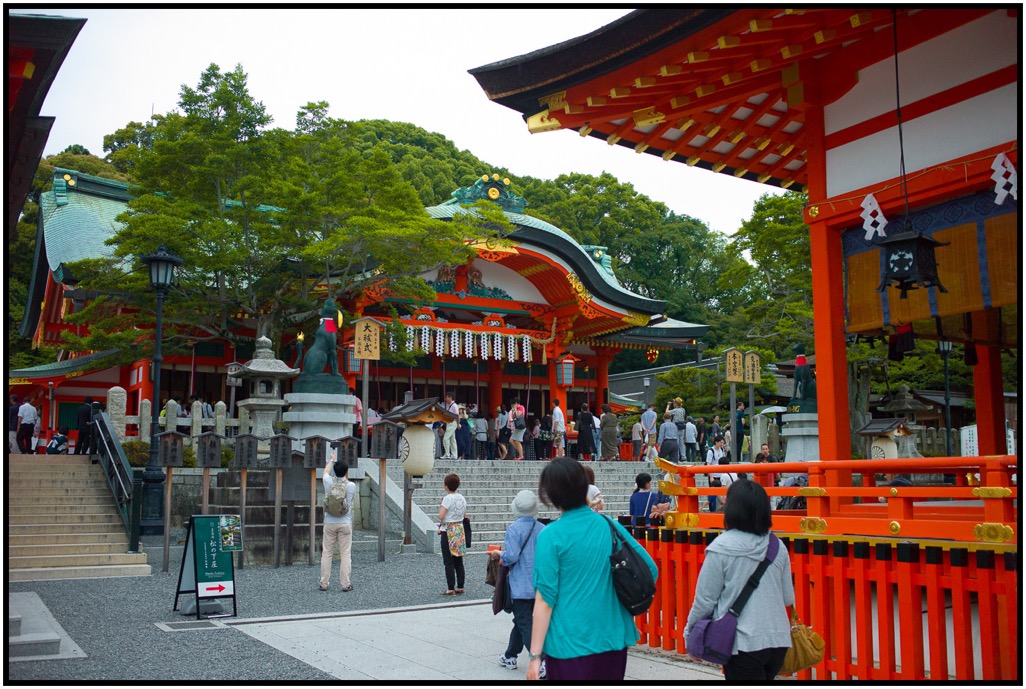
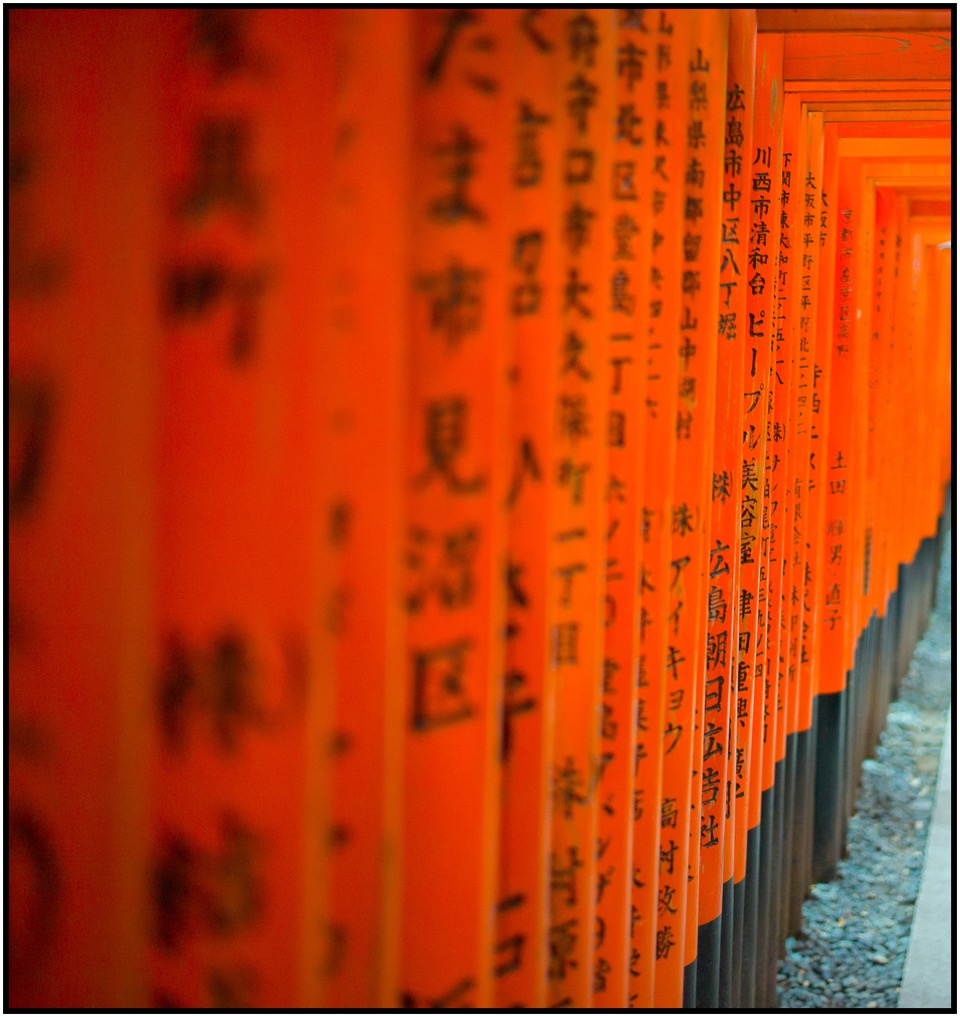
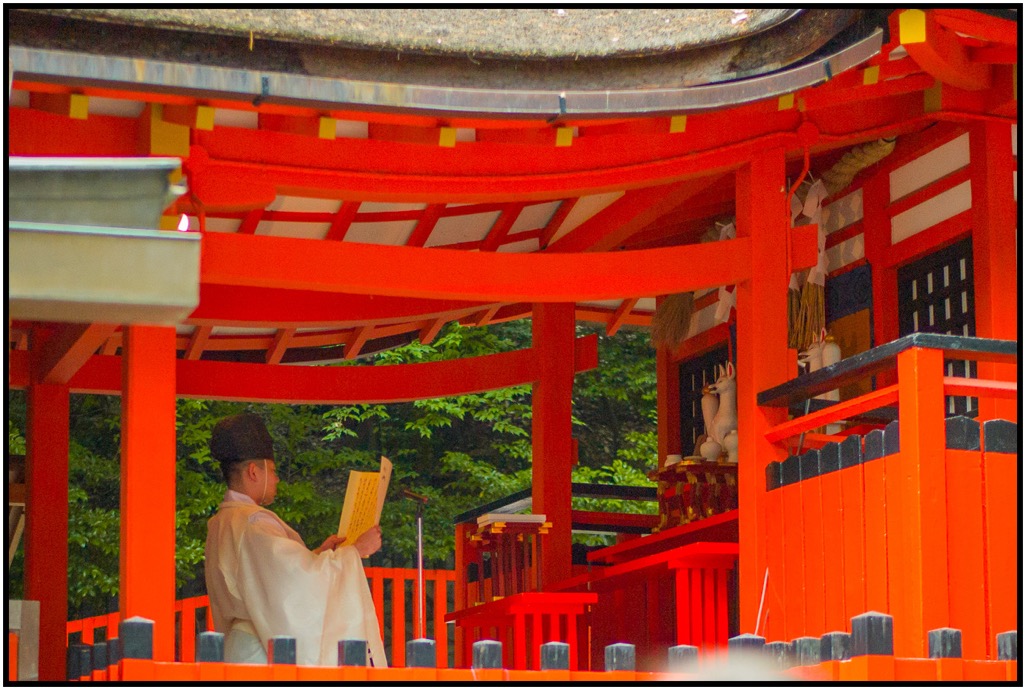
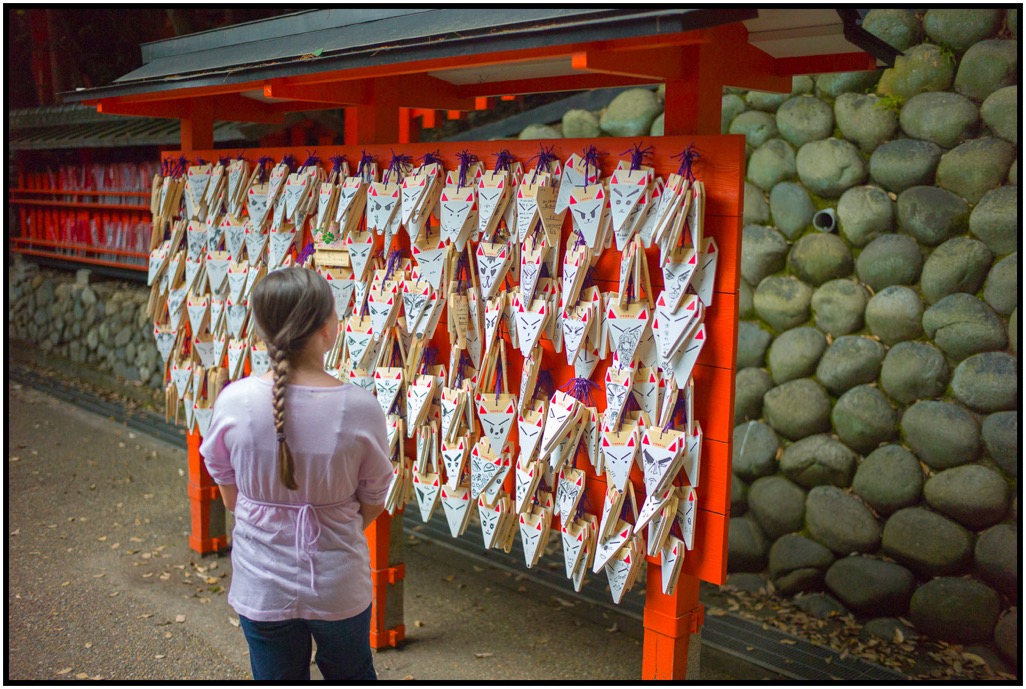
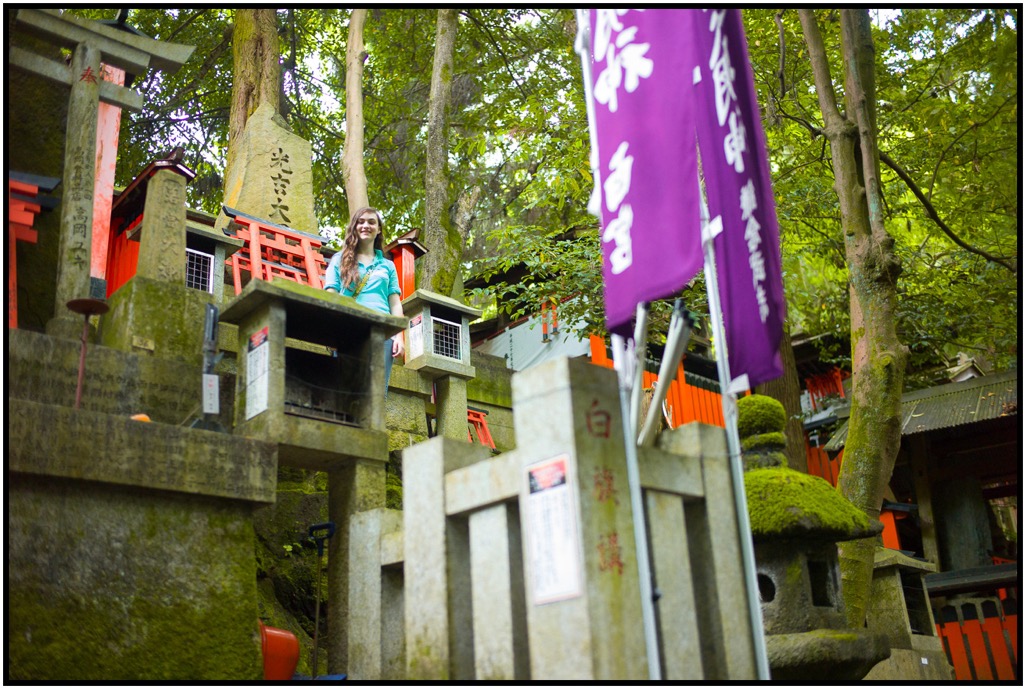
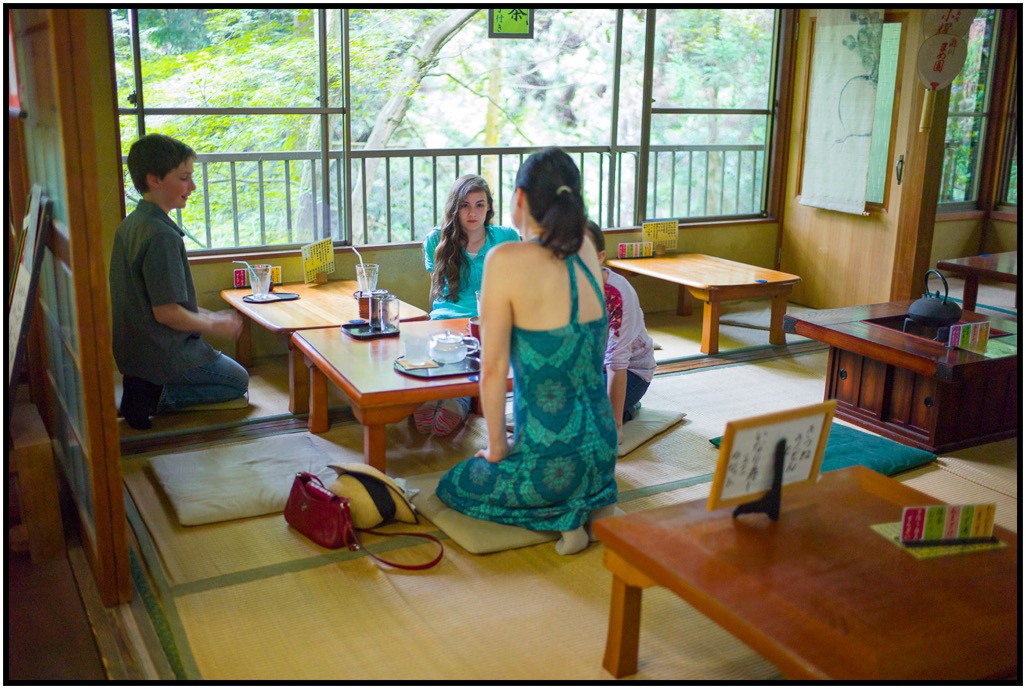
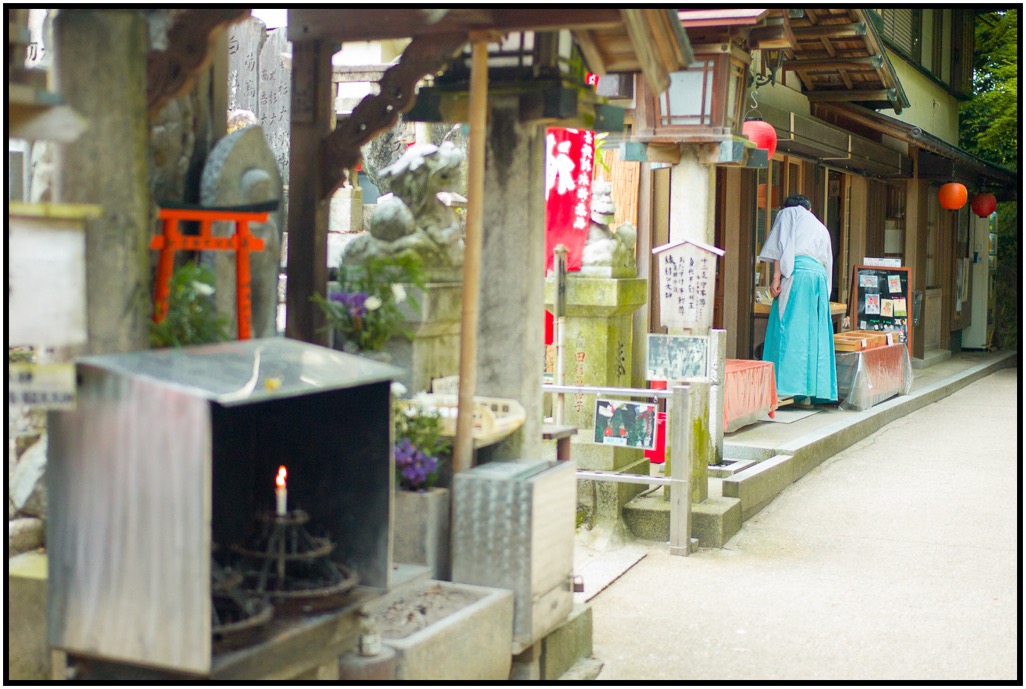
Traditional Japanese tea and noodle shops are set up along the walk. It was more than 90F today and very humid, so we stopped for a rest.
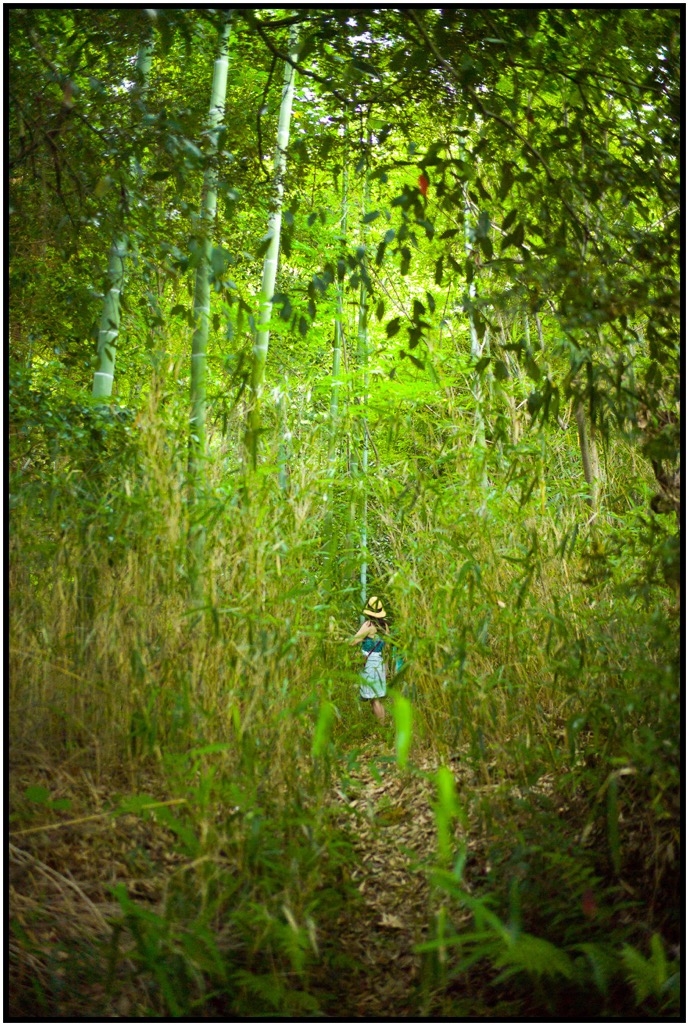
Exploring a short path off into the bamboo forest.
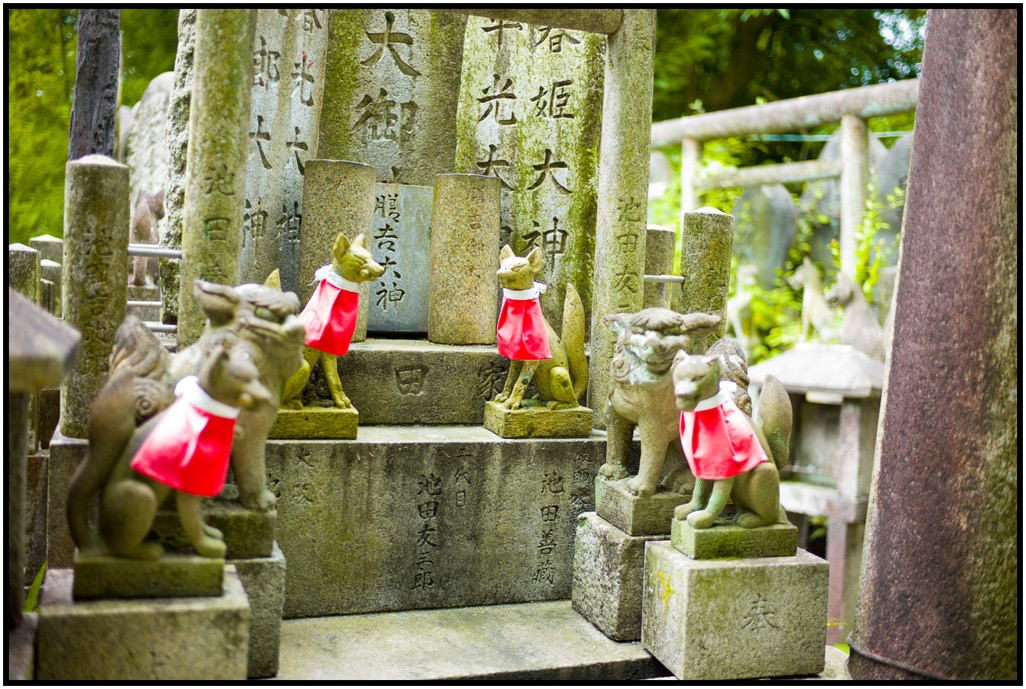
Not sure of the significance of these stone dogs, but they were everywhere. Each one has what looks like either a ball or a stick, and they are all making “growl face.”
More of the tea shops.
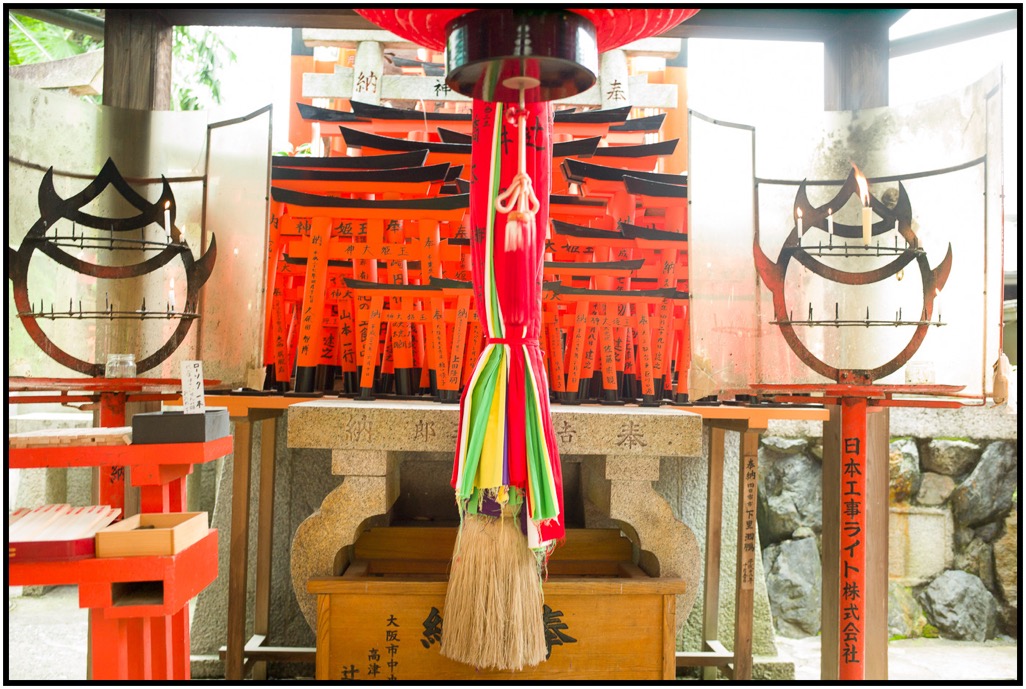
And endless shrines.
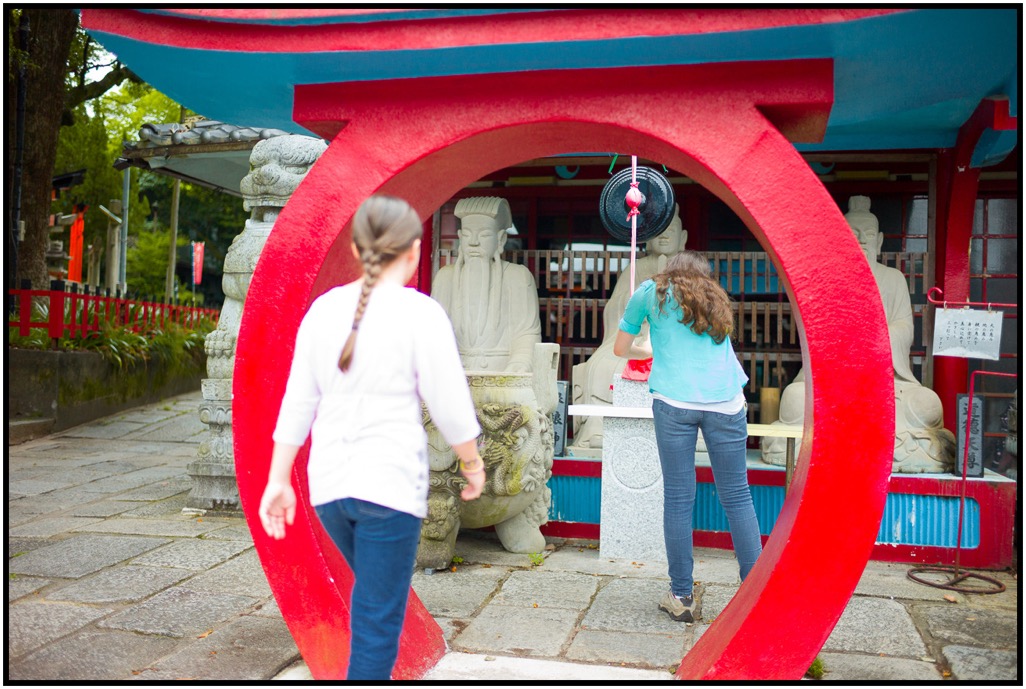
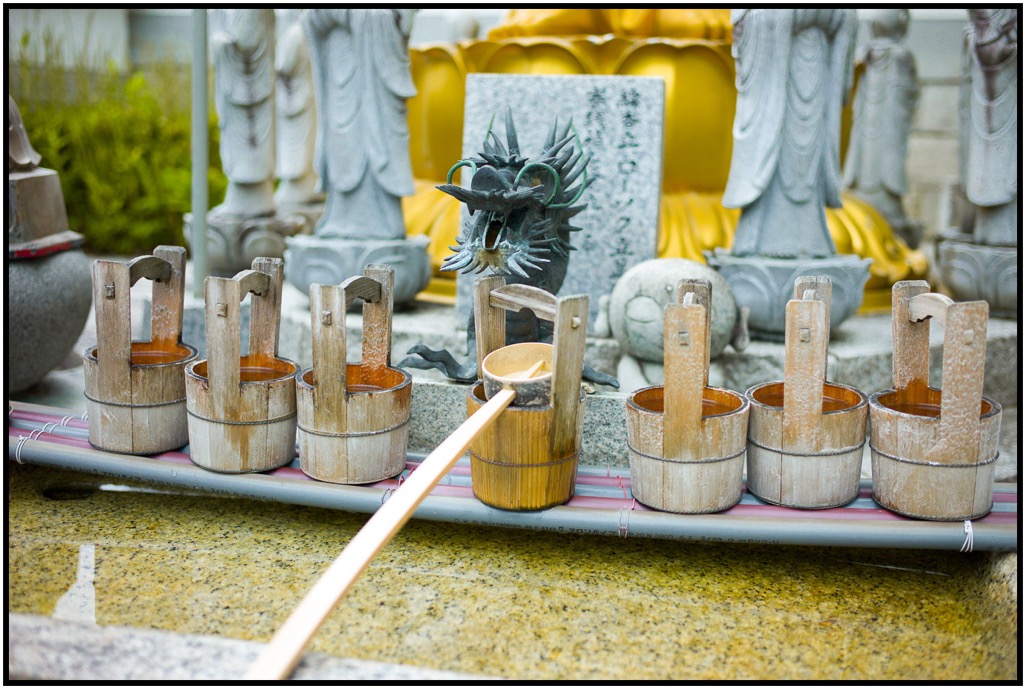
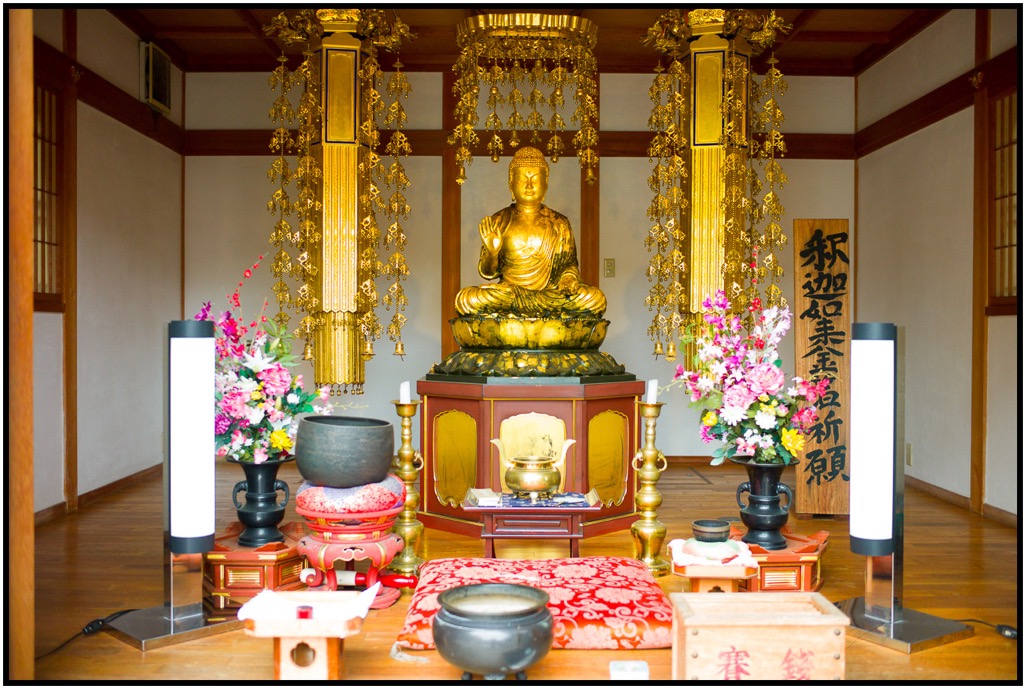
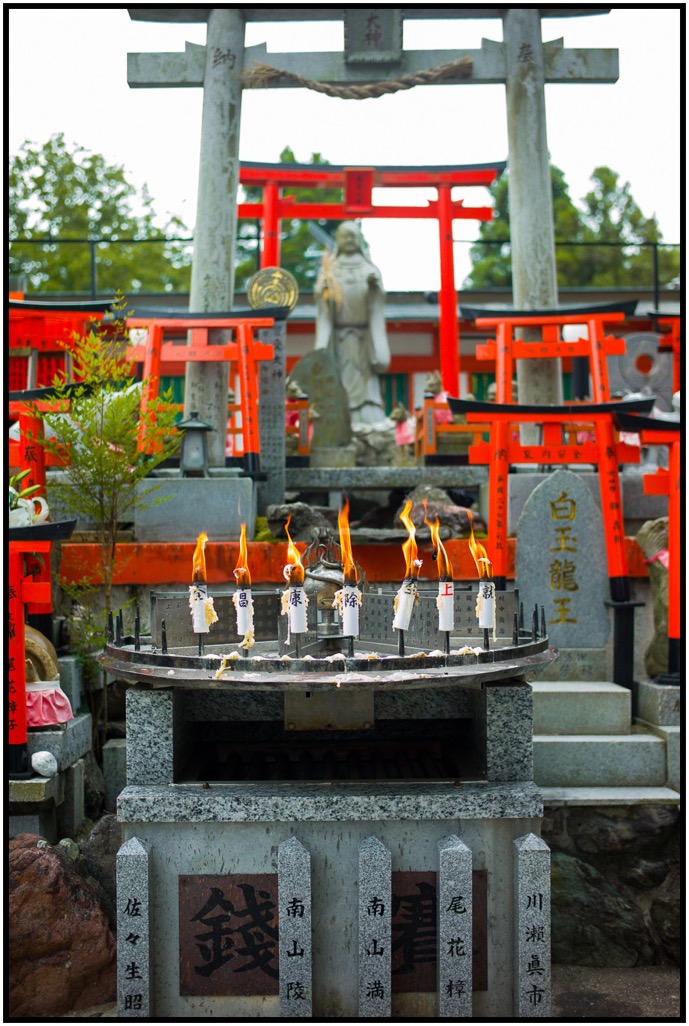
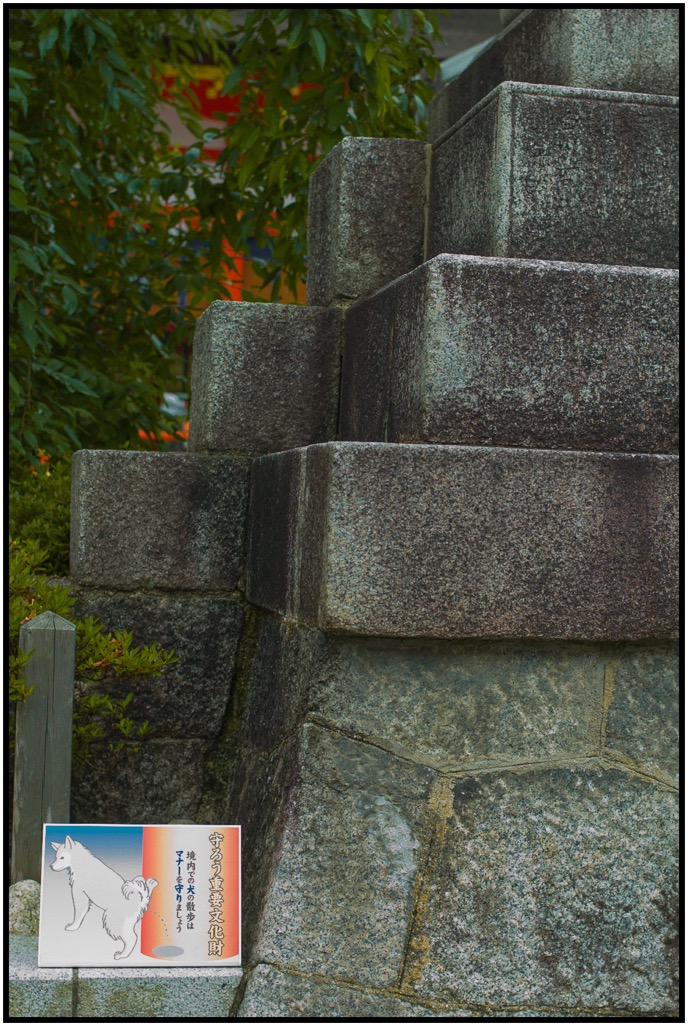
No peeing!!
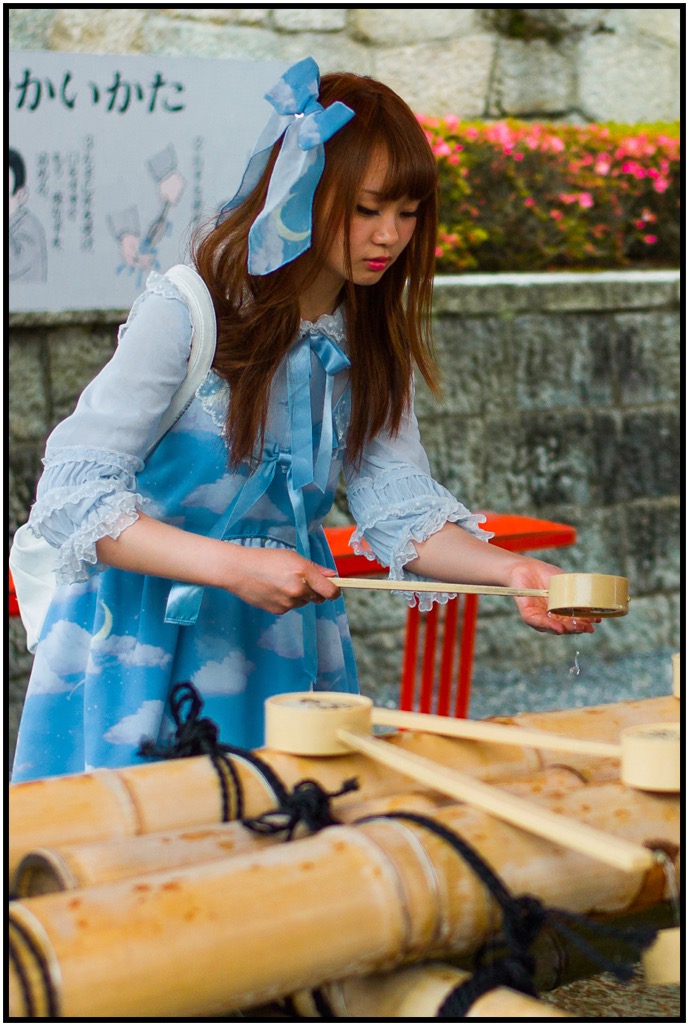
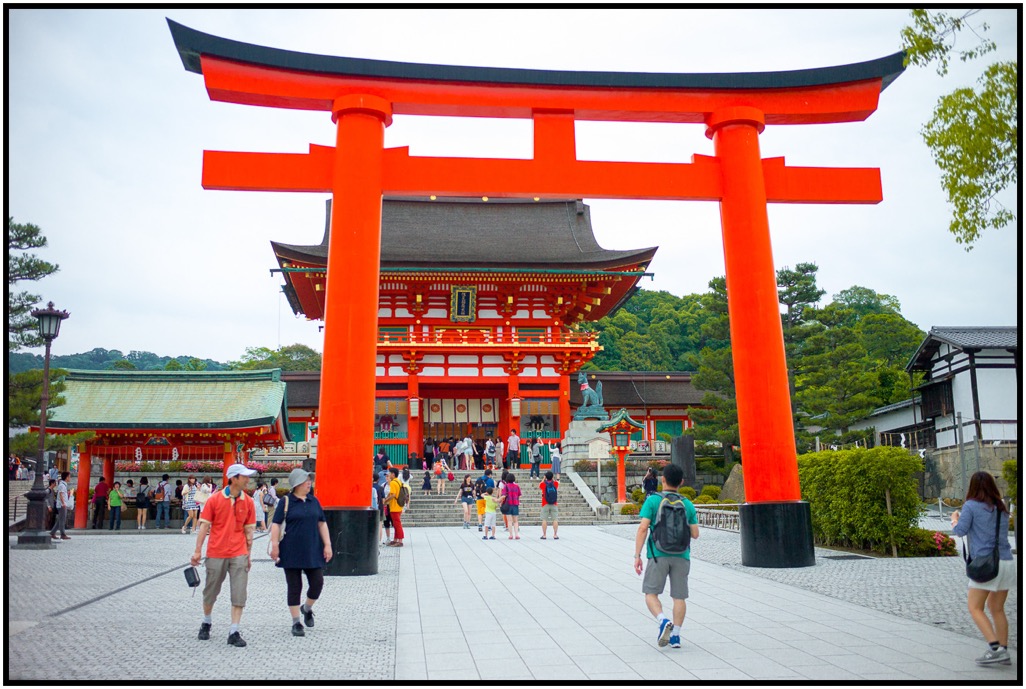
Back in Kyoto. After getting some lunch, we dropped Holden and Josie off at our apartment. They were tired and wanted to play video games. Isabella, Adam and I went to visit Nishiki Food Market to see what was for sale.
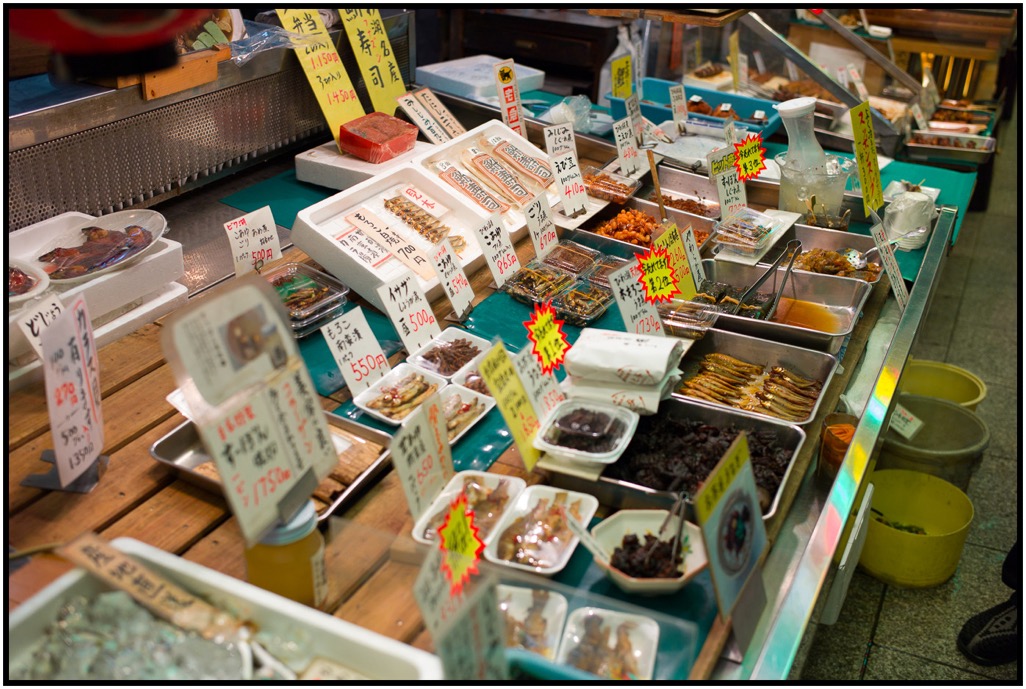
Below: Adam: The girl on the left is preparing “baby octopus on a stick” – which was very popular, but very gross.
This market is a bit like the one at Pike Place, but instead of focusing on majestic slabs of salmon and Dungeness crabs, they tend to only offer small, gross squiggly bits. Creatures from deep in the ocean that really shouldn’t have ever been brought to the surface and have no business being on anyone’s plate.
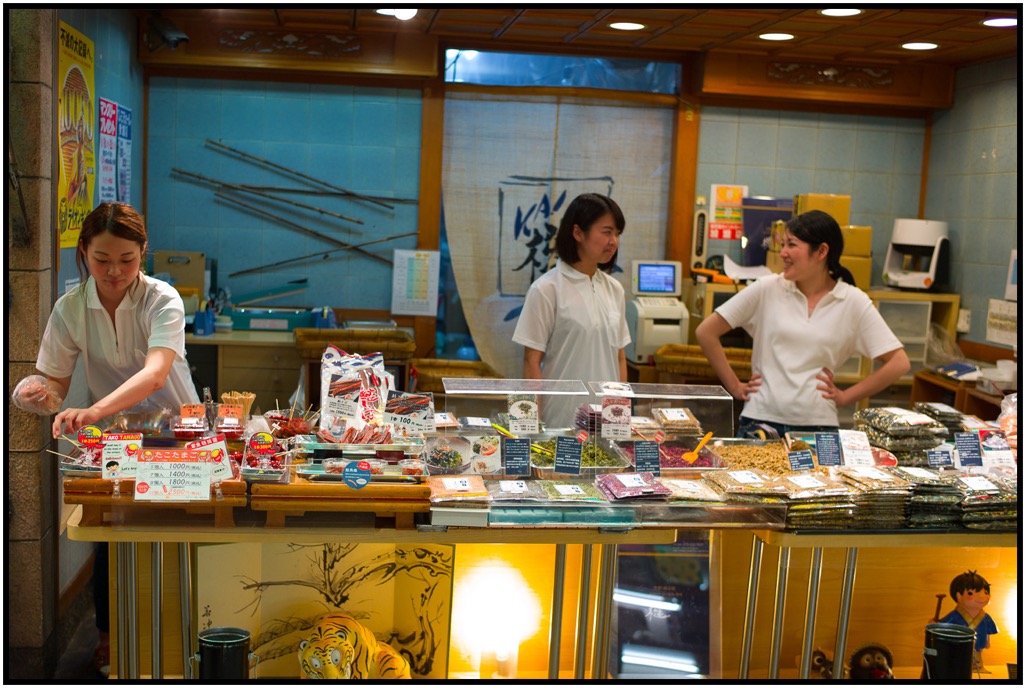
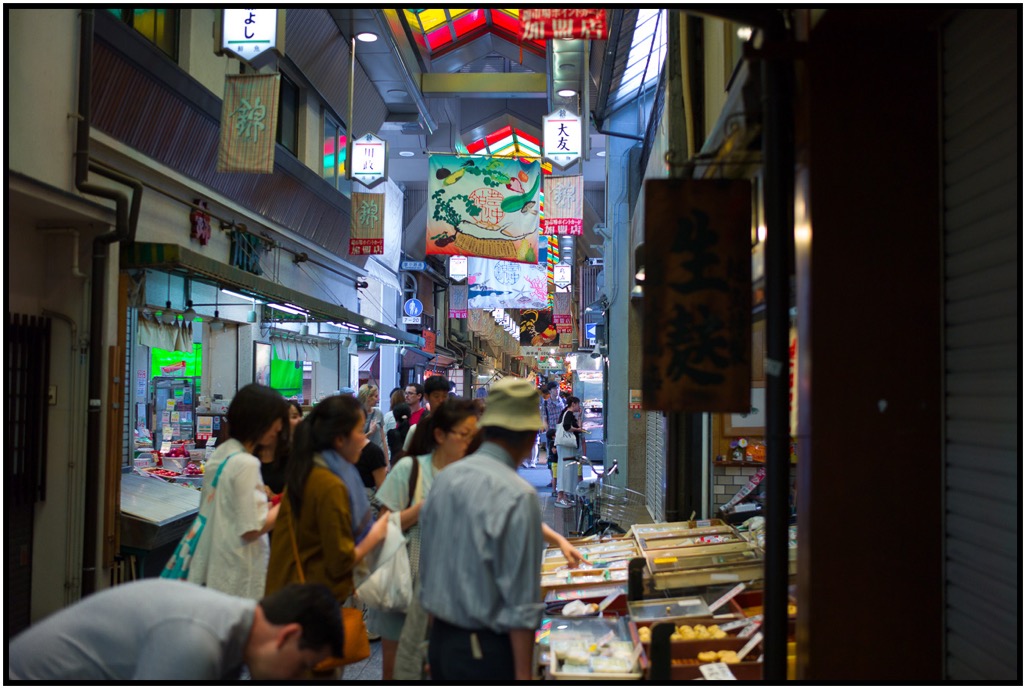
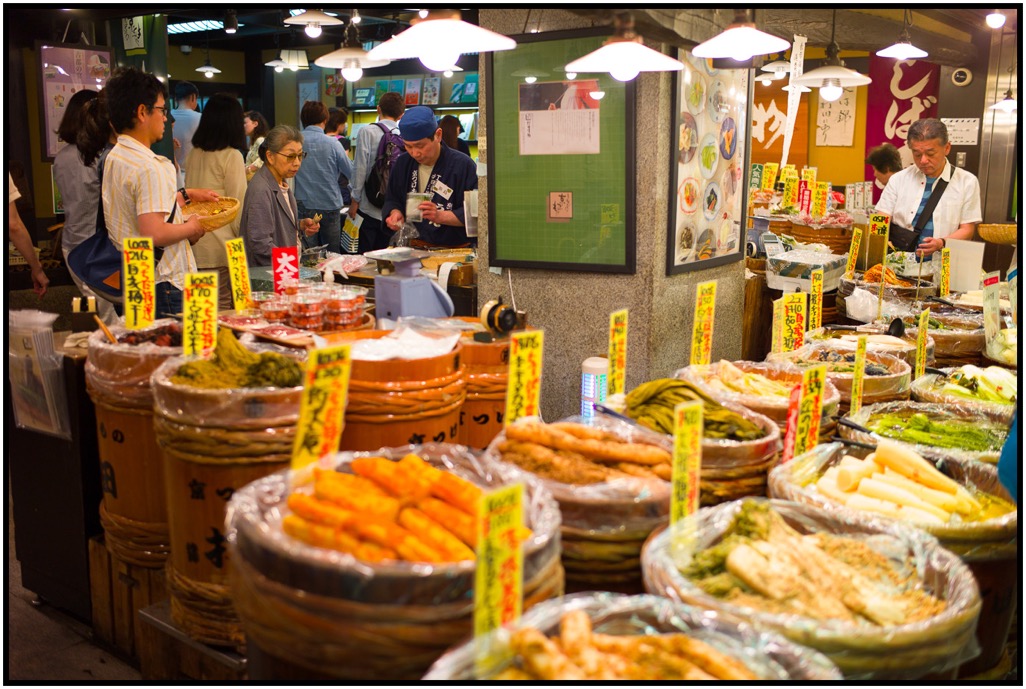
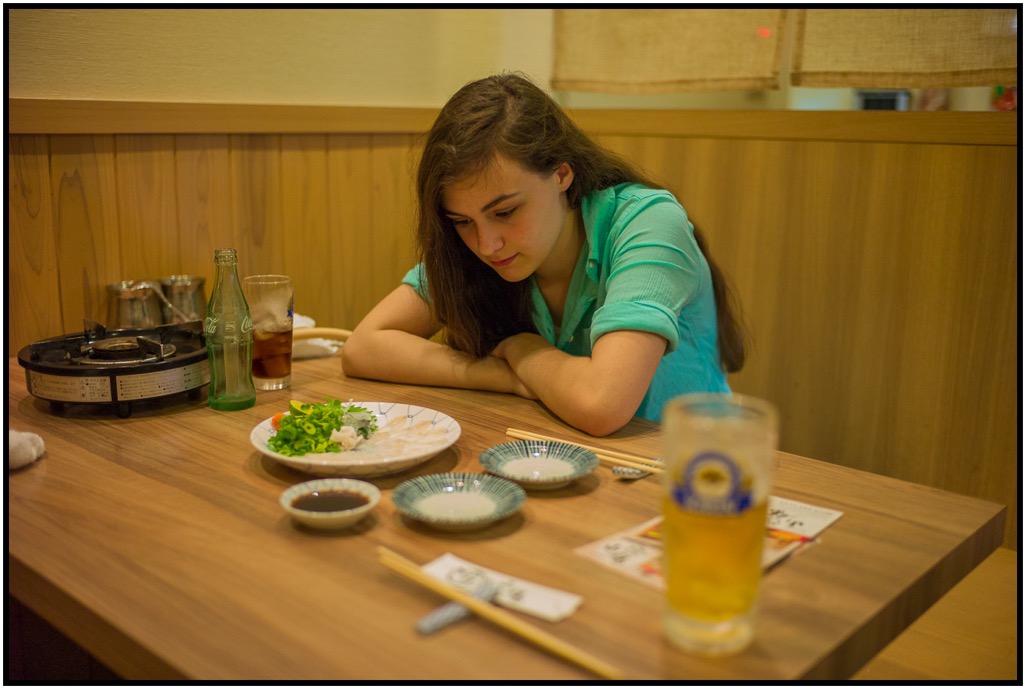
Adam: Finally, Isabella and I wrapped up our evening by visiting the Yamafuku restaurant – specializing in all things Fugu. Brenda wanted no part in eating raw, poisonous blowfish. Isabella and I felt that the opportunity was too good to miss. The food is a delicacy and expensive, so only the two of us went. Isabella wanted to be able to tell her friends how “metal” she was for eating poison. We looked up the stats before we left – there are deaths each year, but none from the professional, higher end restaurants.
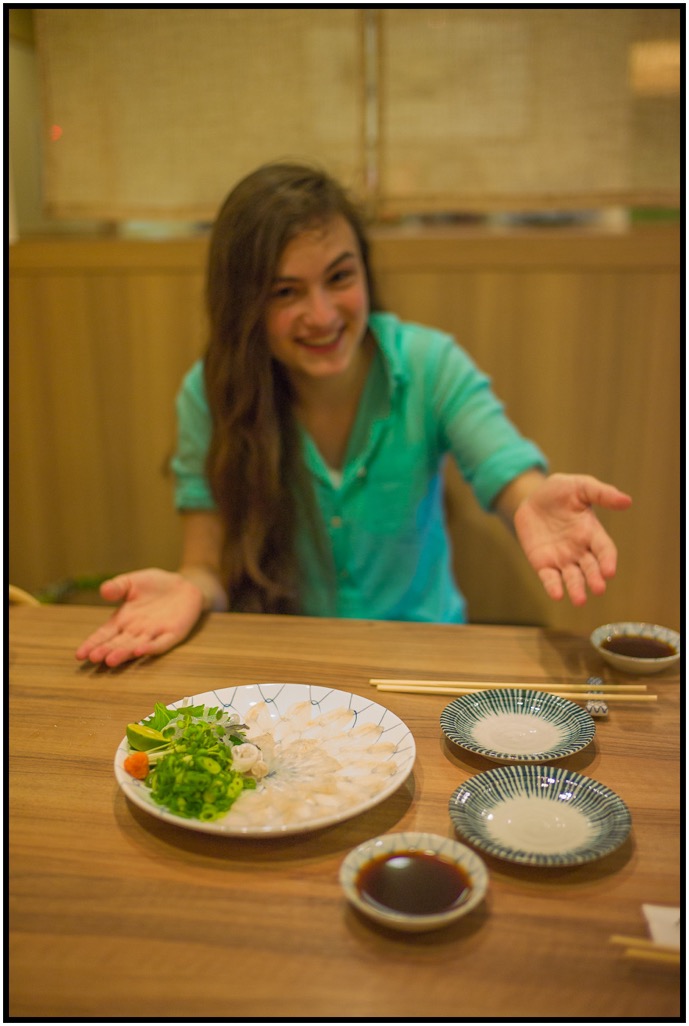
They served the fish in thin, Sashimi style raw filets. I sprinkled lime juice on top and then we dipped the pieces in soy sauce. They were not bad. Not good either.
I got a lot of mileage out of making numerous Simpsons references. There is an episode where Homer eats fugu and nearly dies. Good stuff.
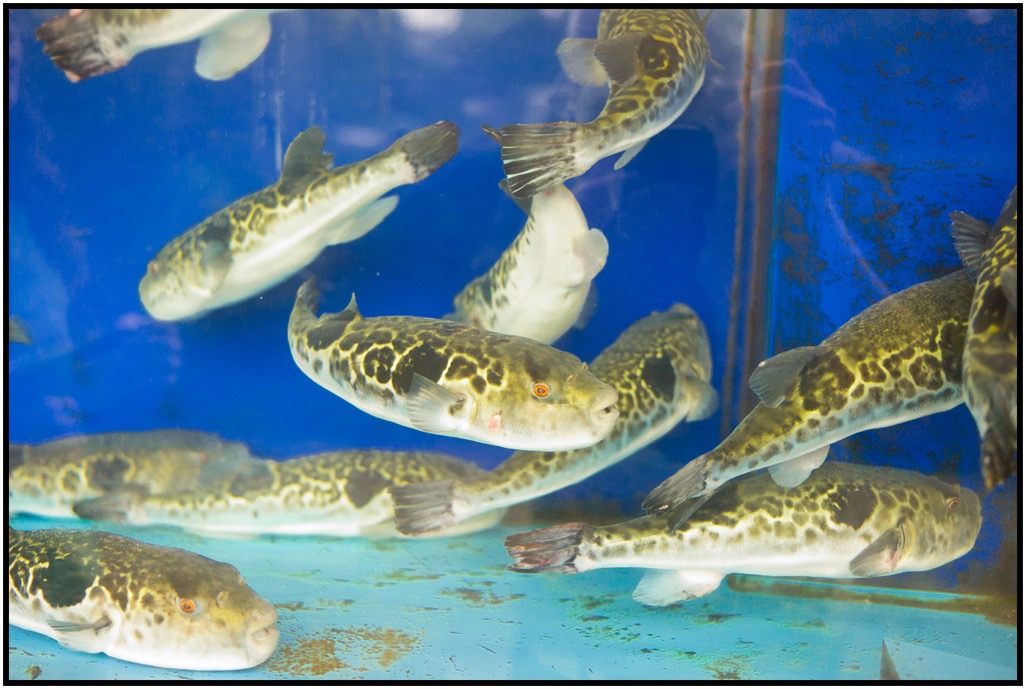
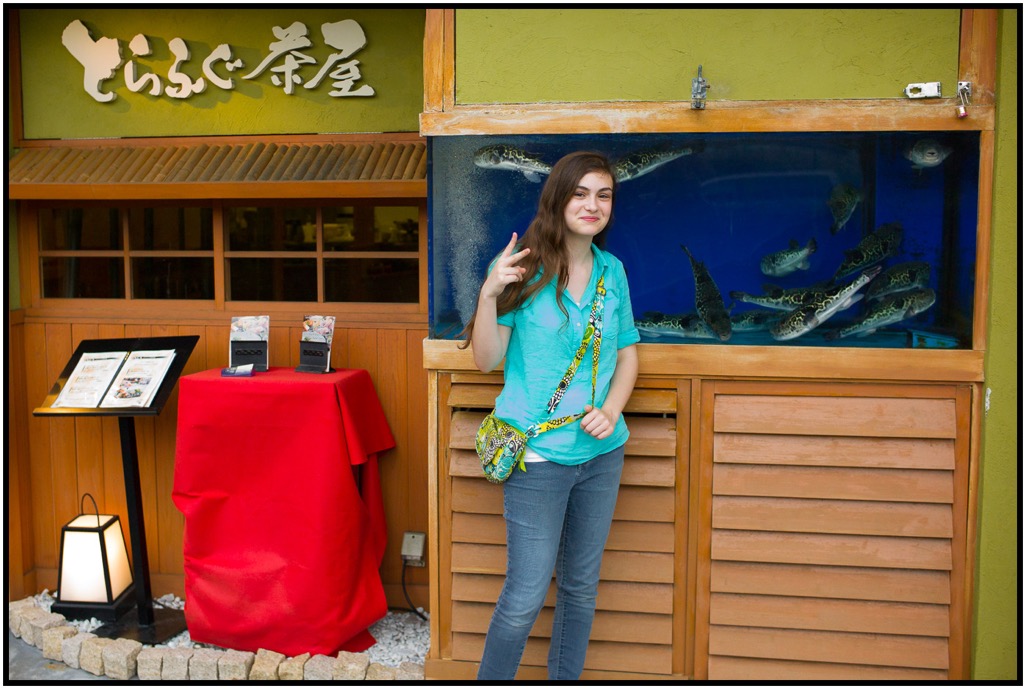
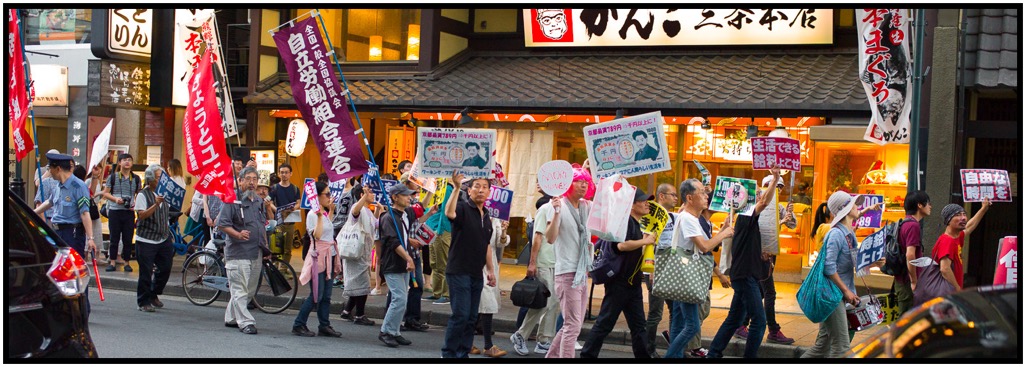
On the way home from the restaurant we ran into a street protest. Even these are well organized and civil affairs. The people were protesting for an increase in the minimum wage rate.
June 15, Monday
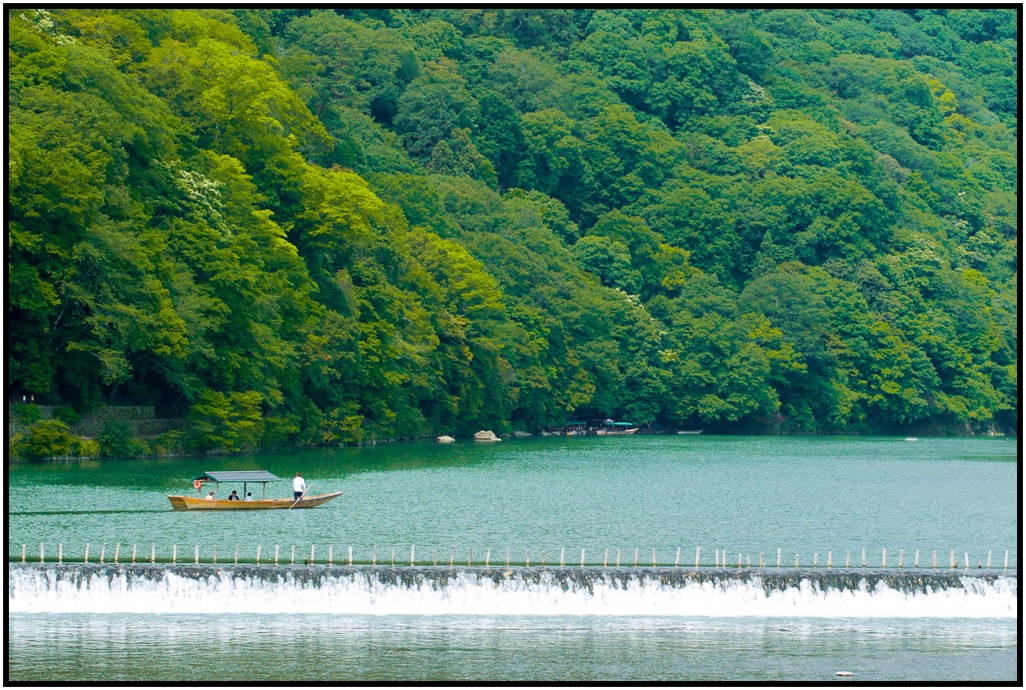
Today we took a train to Arashiyama, a district on the western outskirts of Kyoto, Japan. It also refers to the mountain across the Ōi River, which forms a backdrop to the district. Arashiyama is a nationally-designated Historic Site and Place of Scenic Beauty.
The main attraction (for us, anyway) is Iwatayama Monkey Park. It has a tribe of about 170 Japanese macaques. They are also known as Snow Monkeys.
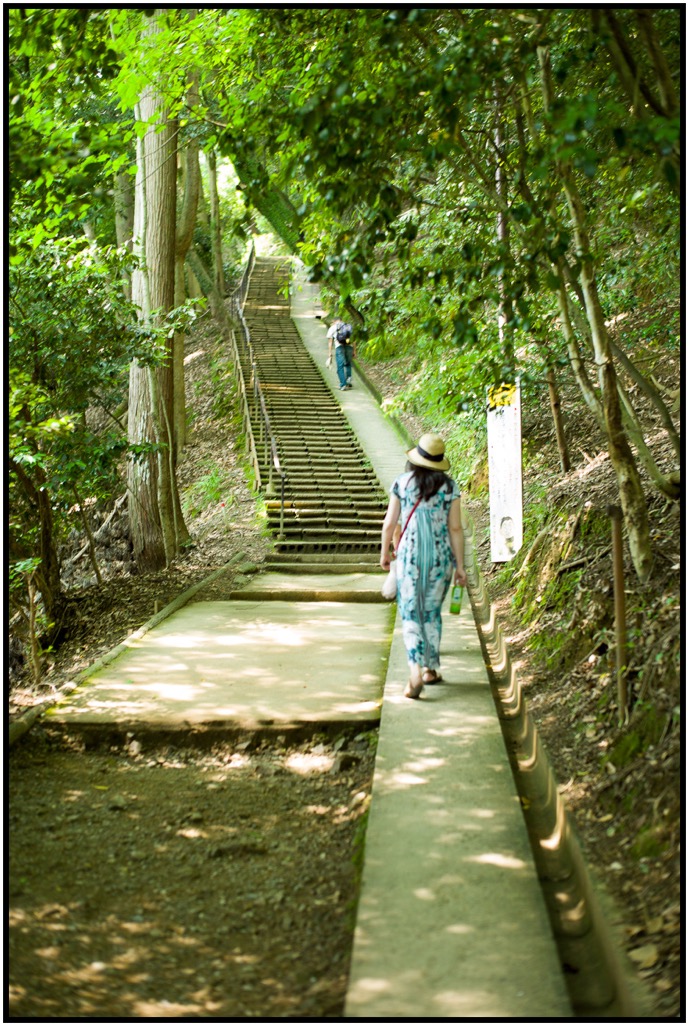
There is a 20 minute hike up the mountain to the monkey viewing area. Signs at the base warn people to take water and watch out for heat stroke. Up we went. It was HOT.
Misting stations are positioned along the path to help people cool down a little.
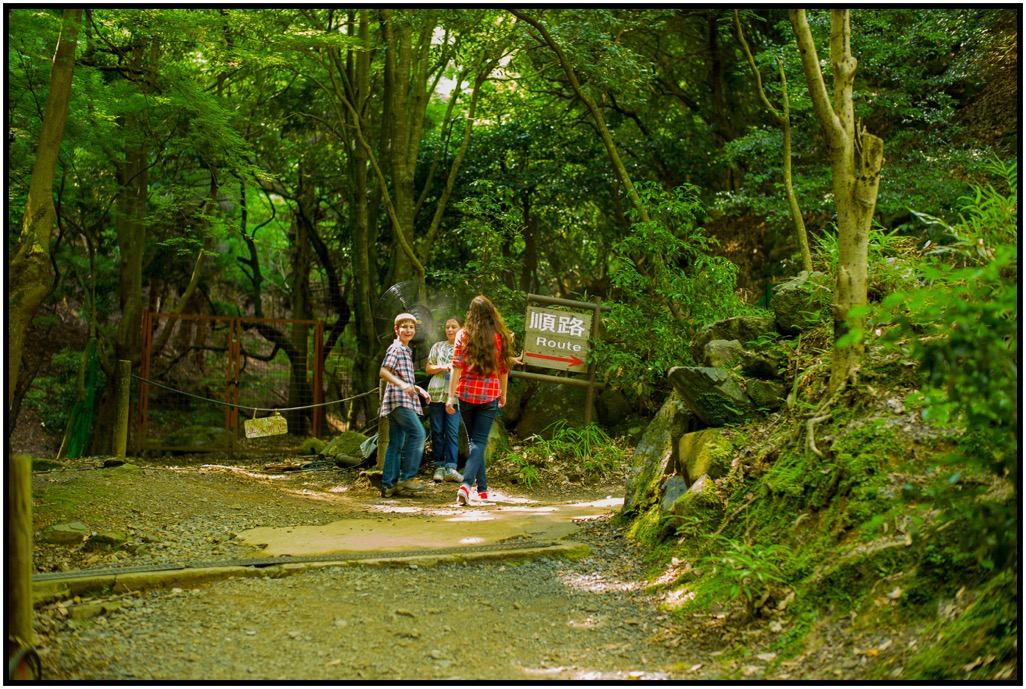
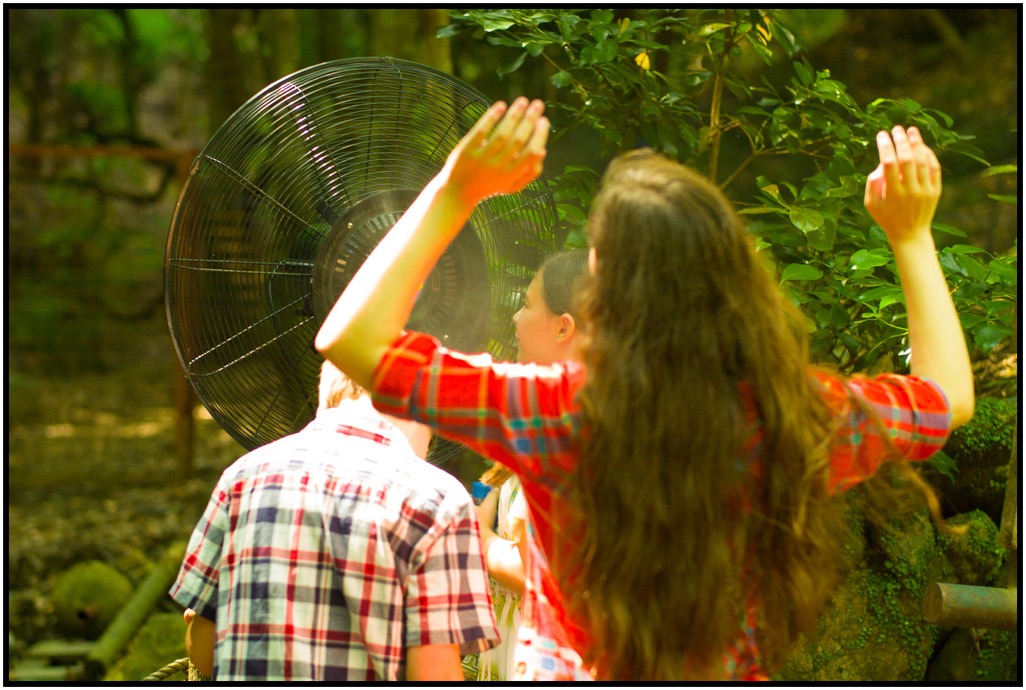
They felt great. Nobody wanted to keep hiking up the hill.
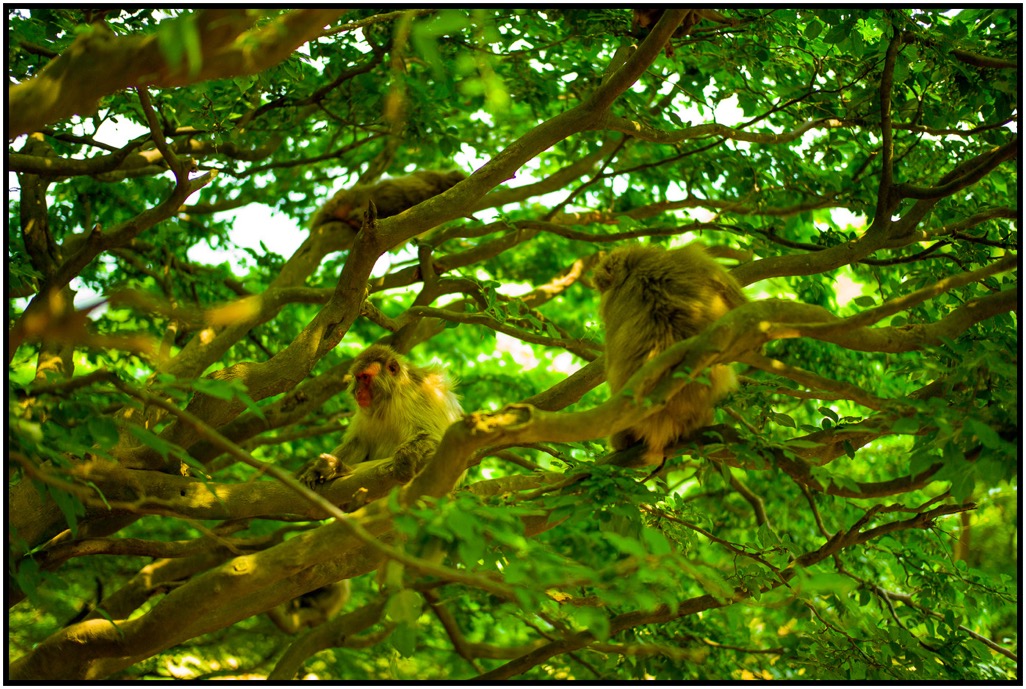
Getting to the top was well worth the effort. The monkeys are wild but accustomed to people. Signs all over the place warn that, basically, monkeys are jerks. There are three rules: Don’t touch the monkeys; Don’t feed the monkeys; Don’t stare at the monkeys … because “the monkeys don’t like it.”
The one exception is to the feeding rule; visitors may feed the monkeys from inside The Cage.
The cage is a reverse-zoo concept. People stand inside a cage and feed apple chunks or peanuts to the monkeys through the bars. This is to protect the humans. The monkeys are prone to violence.
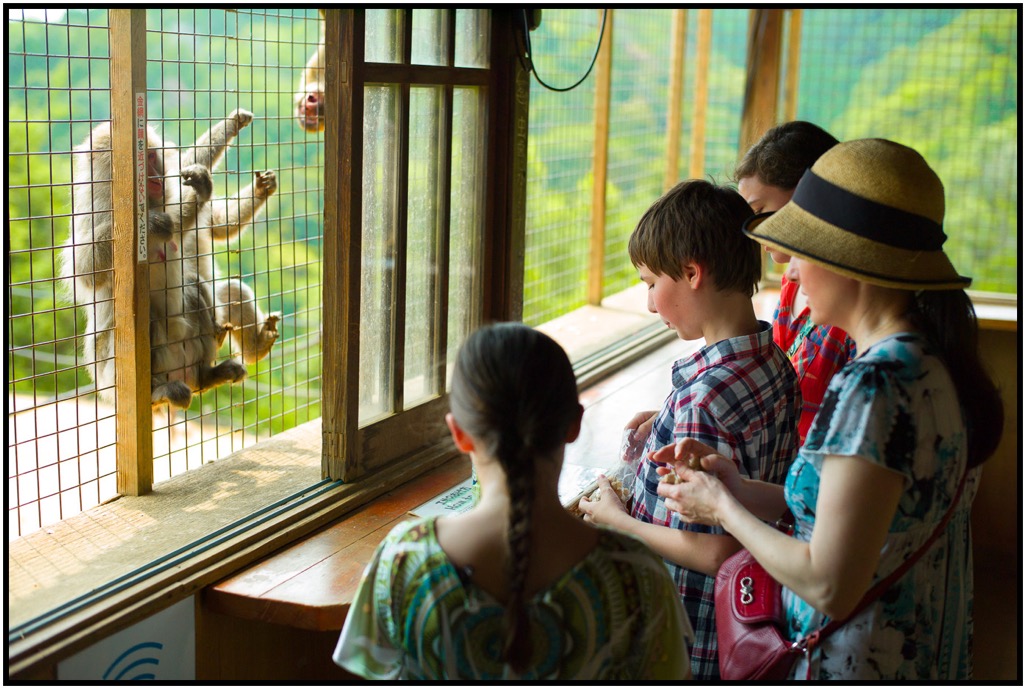
They snatch food out of your hands like it’s owed to them, and they’re picky. They preferred the apples to the peanuts. On more than one occasion a monkey got pissed because she received a peanut instead of an apple. The peanut is thrown away with disgust and you get angrily screeched at for offering an inferior treat. One of the babies only wanted the white part of the apple; if you gave him a piece with a little bit of skin on it, he’d eat the white part and then throw the leftover skin away. A couple times I tried to give the apple skin back to him because that’s where all the nutrition is, but he shoved my hand away.
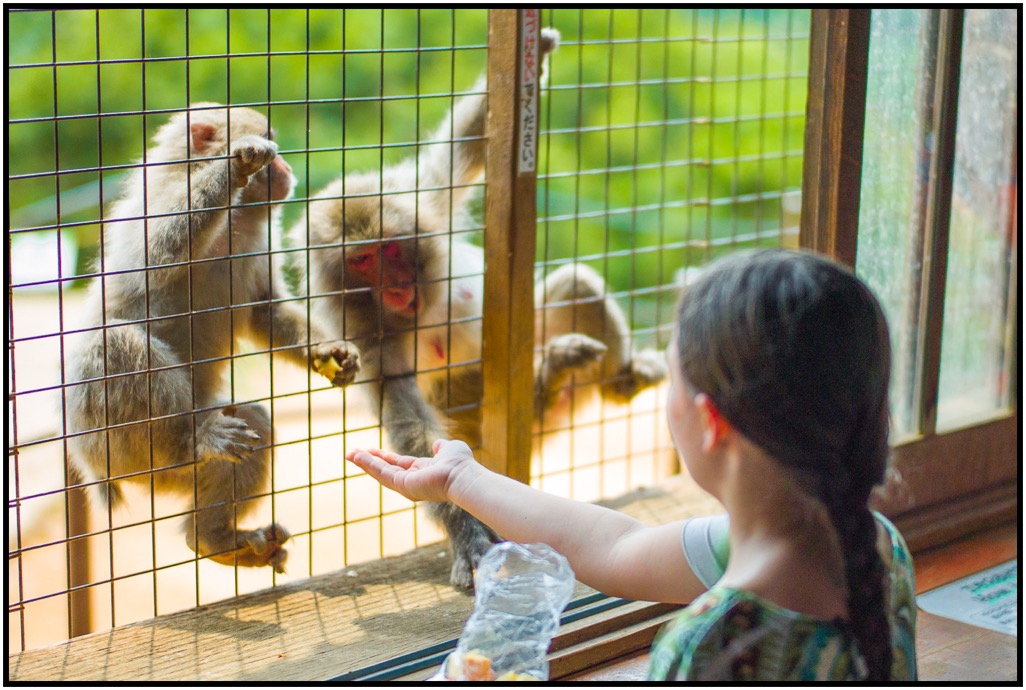
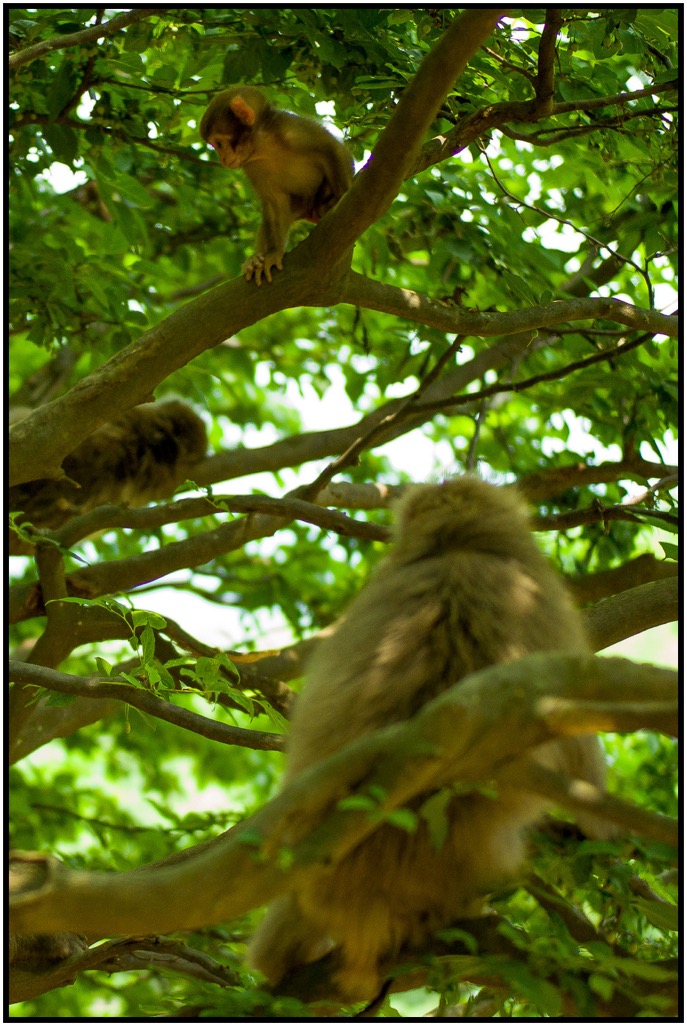
The birthing season lasts from April to July, so many of these were mamas and babies. In fact, only females and infants came to the feeding cage. The only “polite” monkey was so pregnant she looked like she was about to pop. I suspect she was just so hot and tired she didn’t have the energy to be grabby. She took the peanuts, too, and did so very gently. 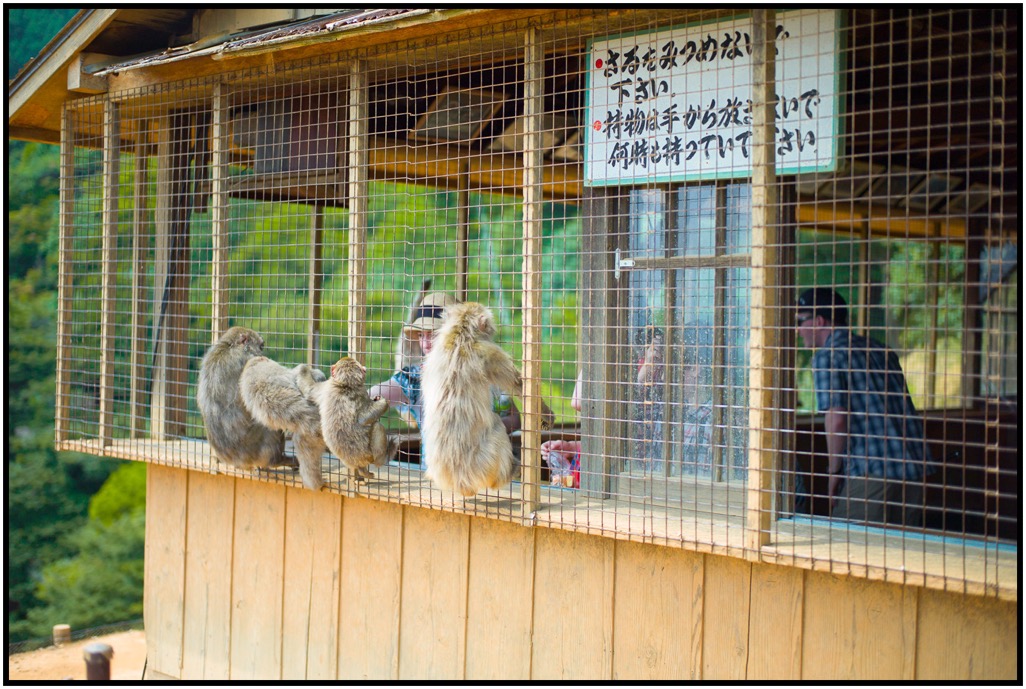
Below is a photo of the pregnant polite monkey — she’s the fat one hanging on the left-hand side.
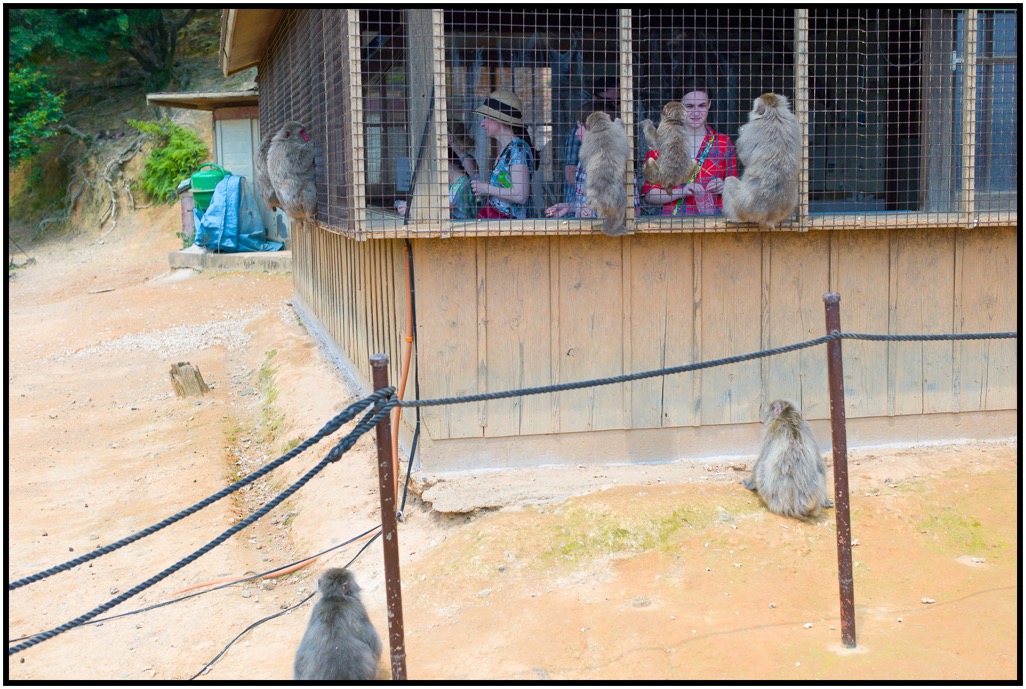
There were quite a few serious photographers up here.
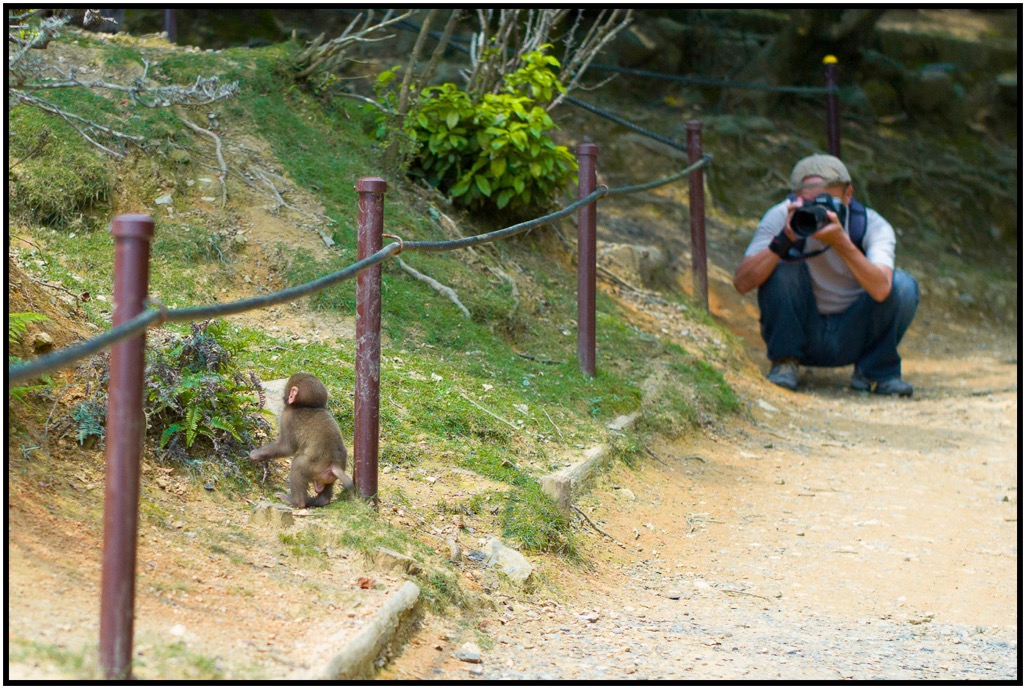
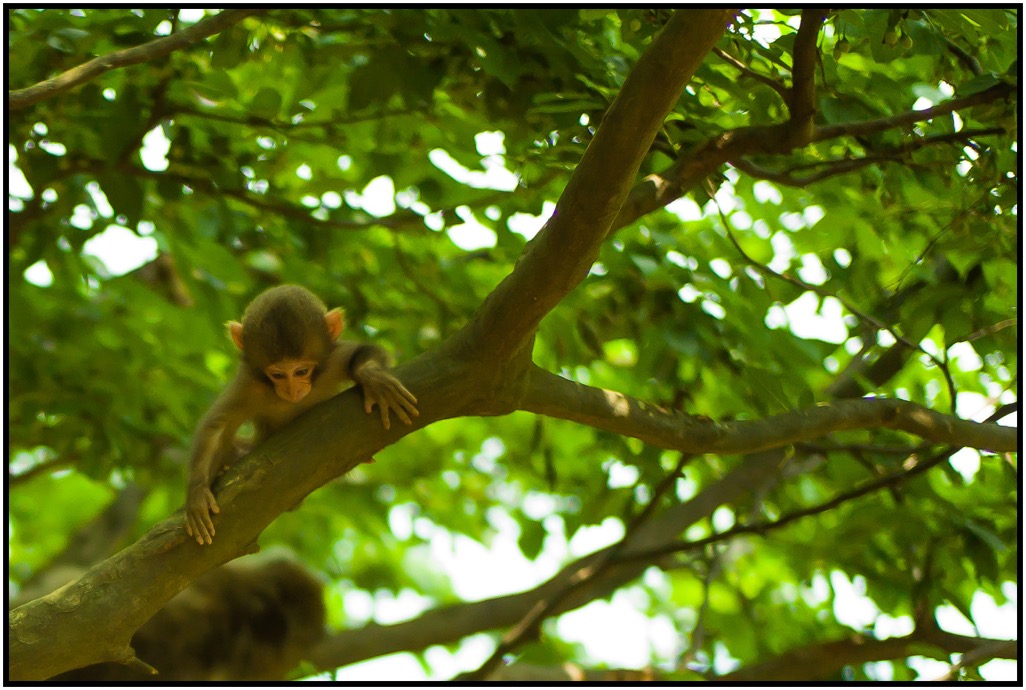
The babies were so cute! 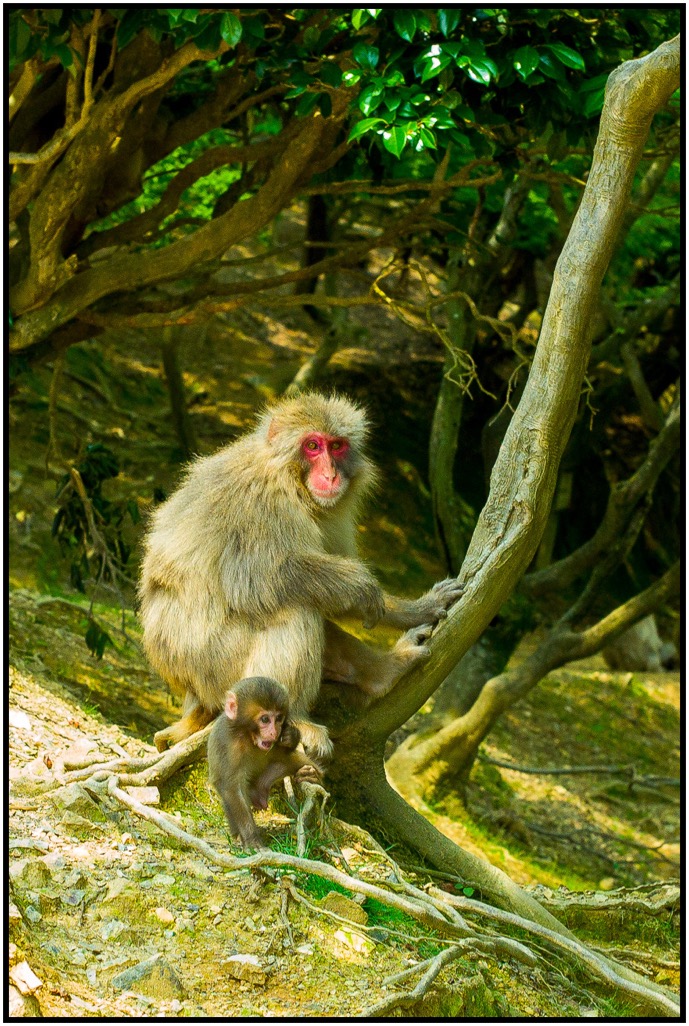
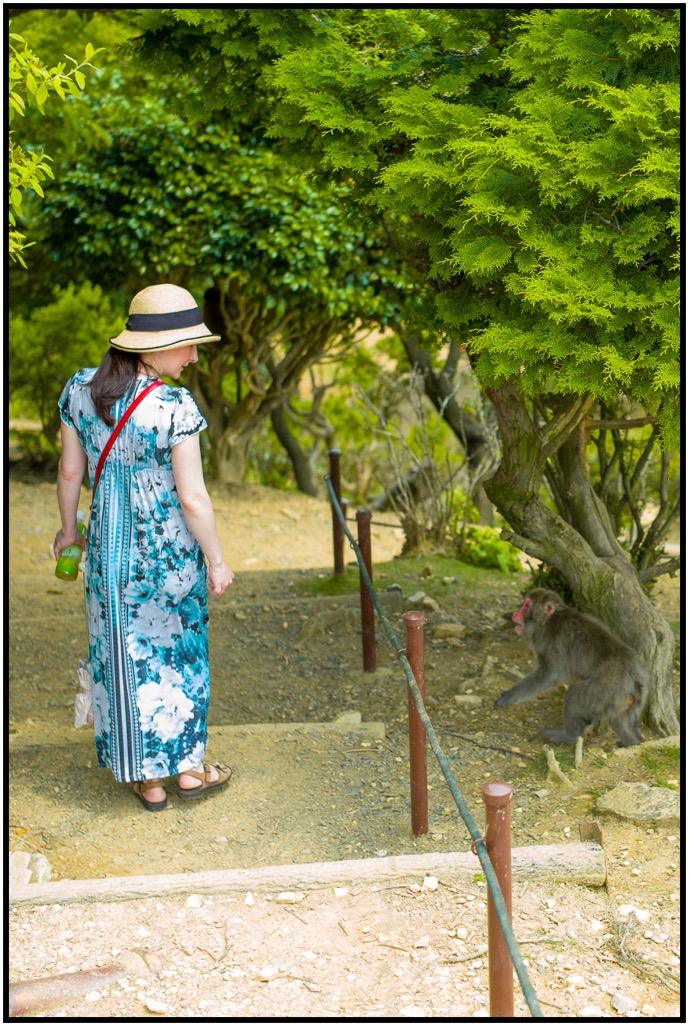
In spite of all the signs warning humans that the monkeys don’t like “staring,” I forgot and made eye contact and smiled at this one. She bared her teeth and started coming at me. I backed off in a huge hurry and avoided “staring” at any others. Those warnings were serious.
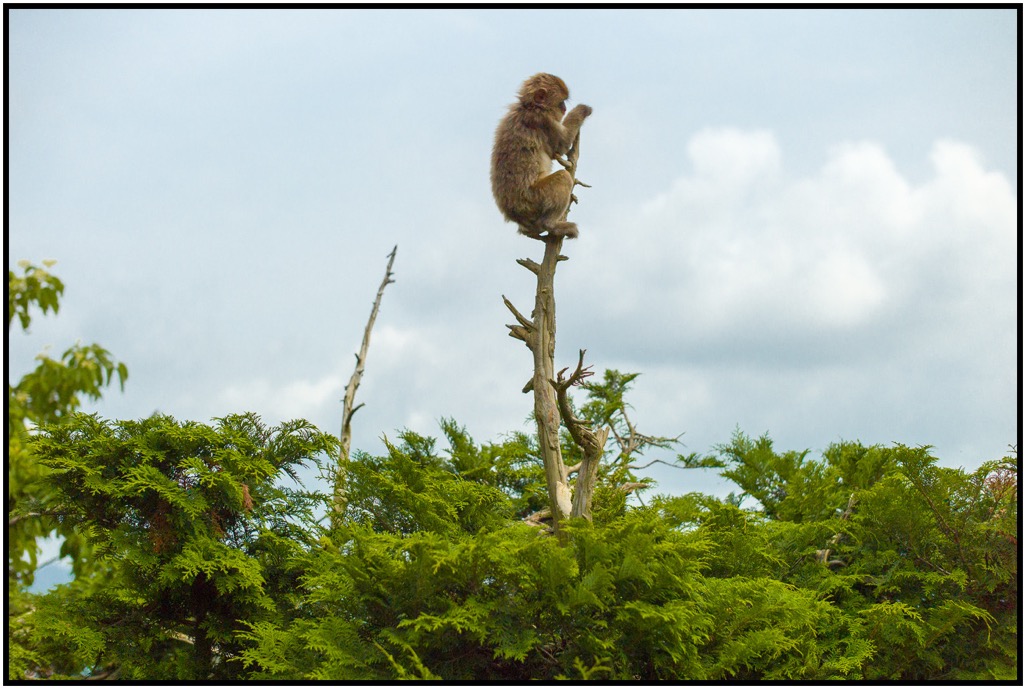
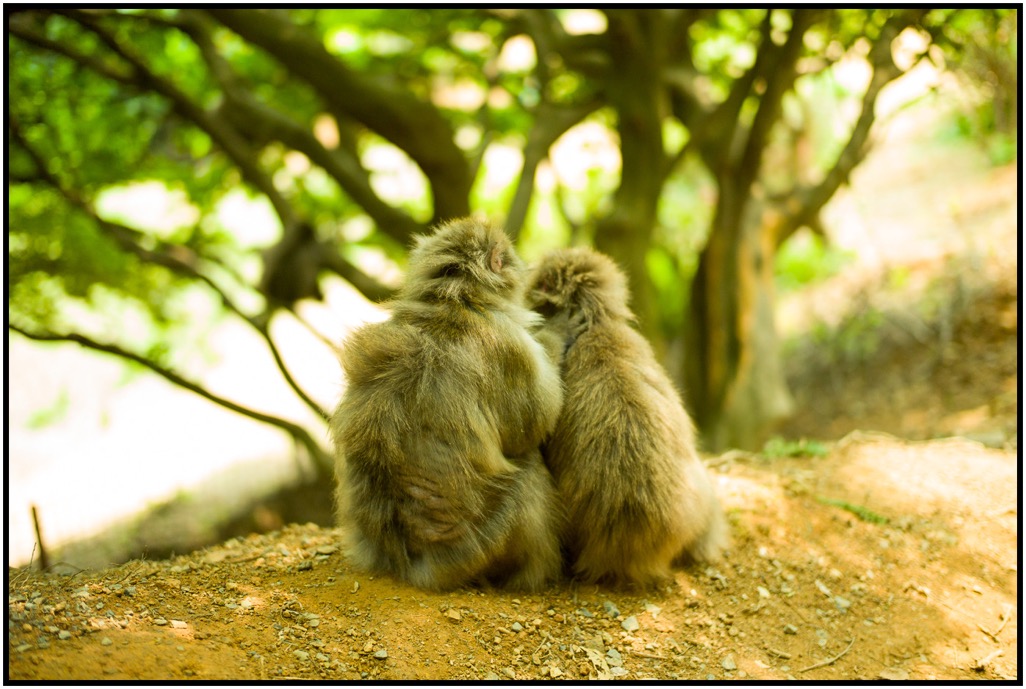
Snuggles!
They had a slide you could take as you’re leaving, for people sick of climbing stairs. Going down is so much easier than going up.
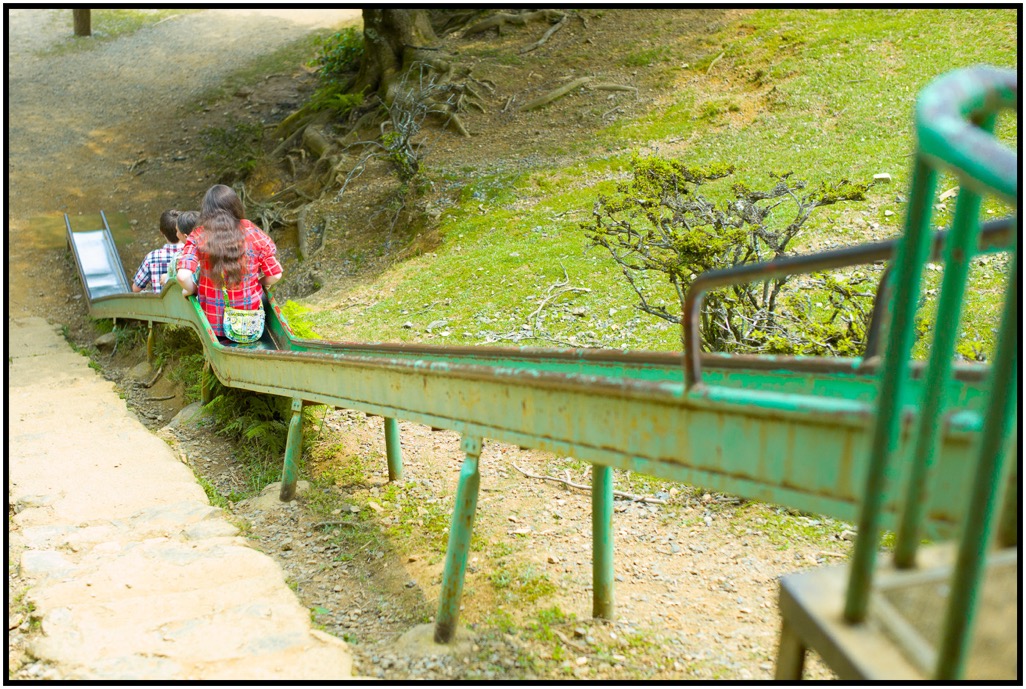
Our little monkeys enjoying the playground before we head back down the mountain.
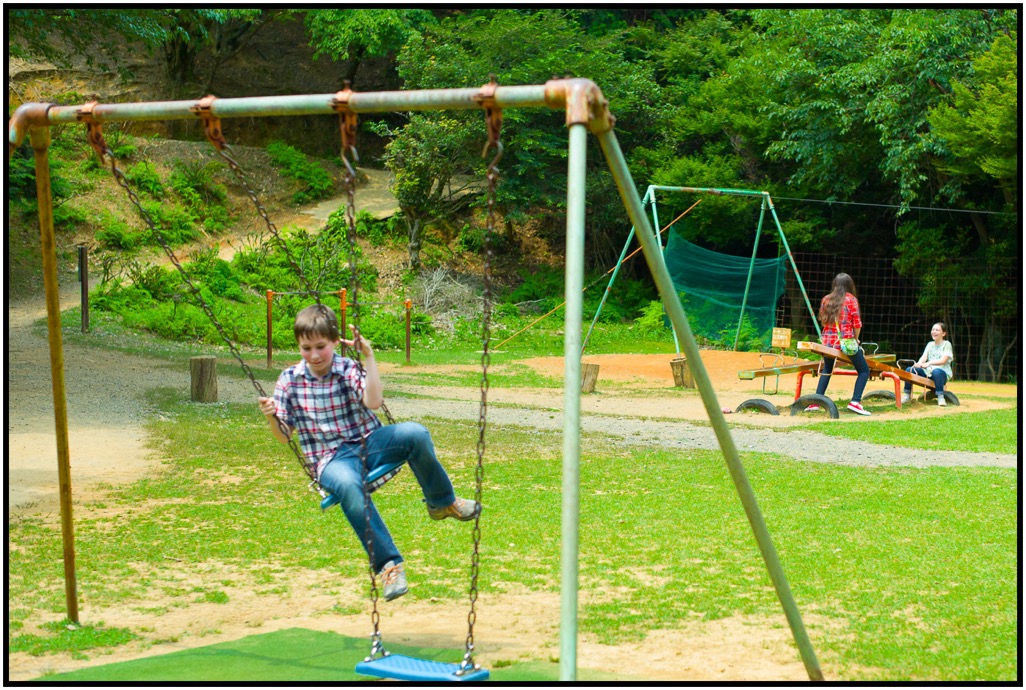
Back in town:
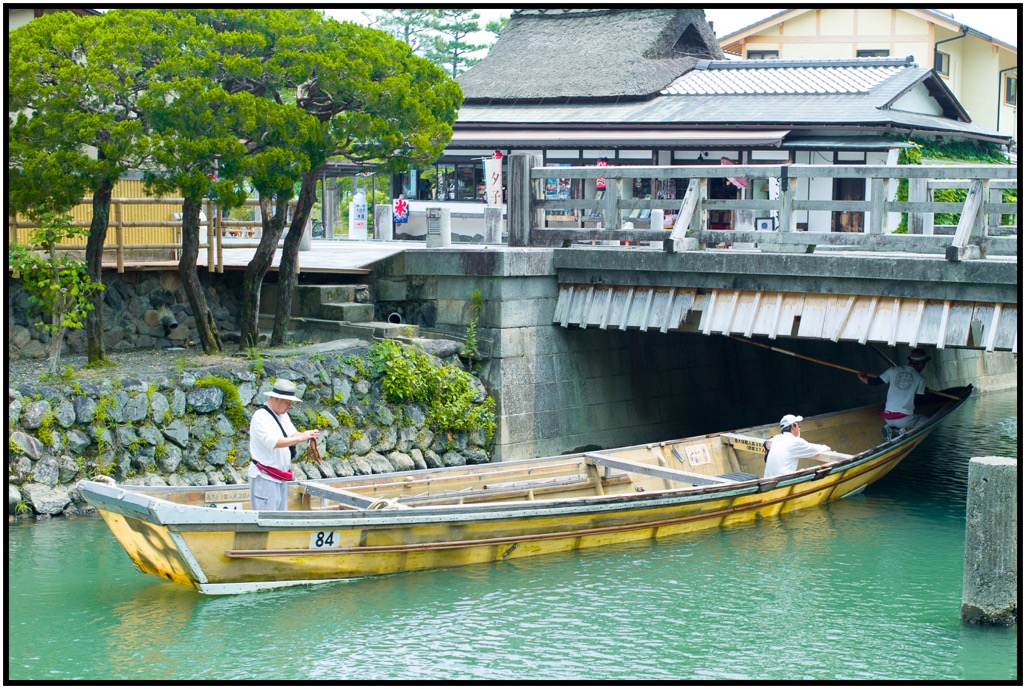
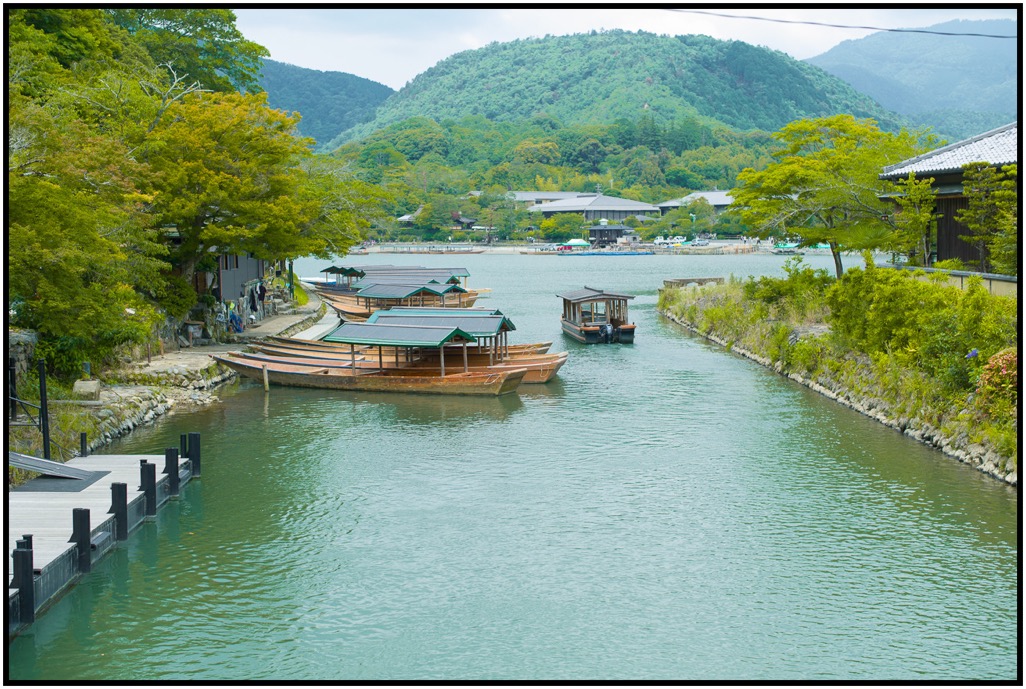
Hot and sweaty; we stopped for lunch early, mostly so we could sit in an air-conditioned place for awhile.
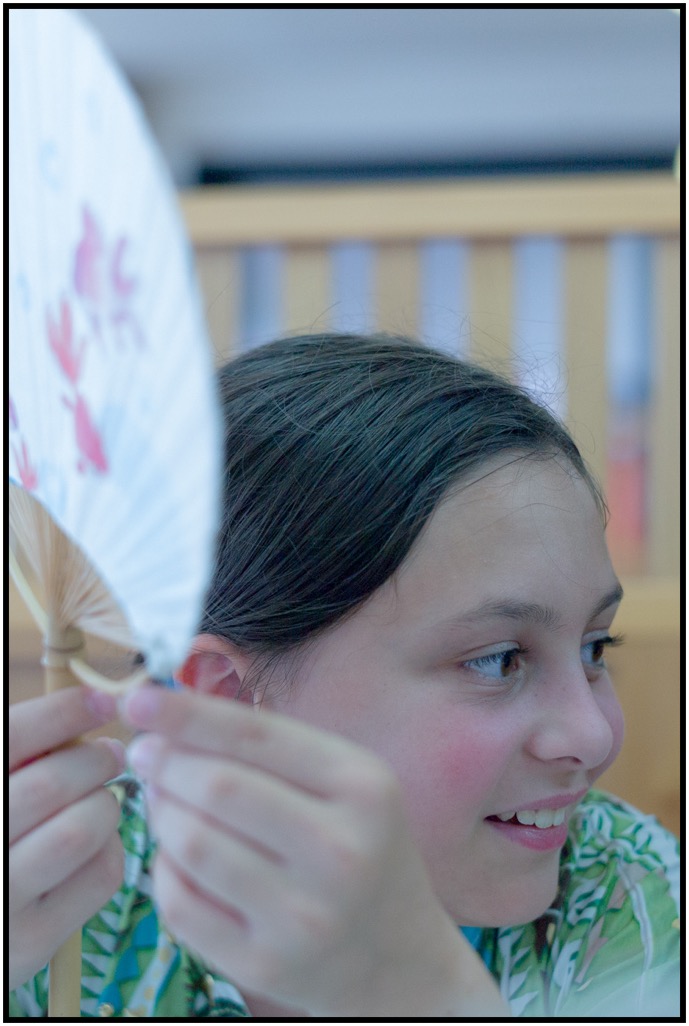
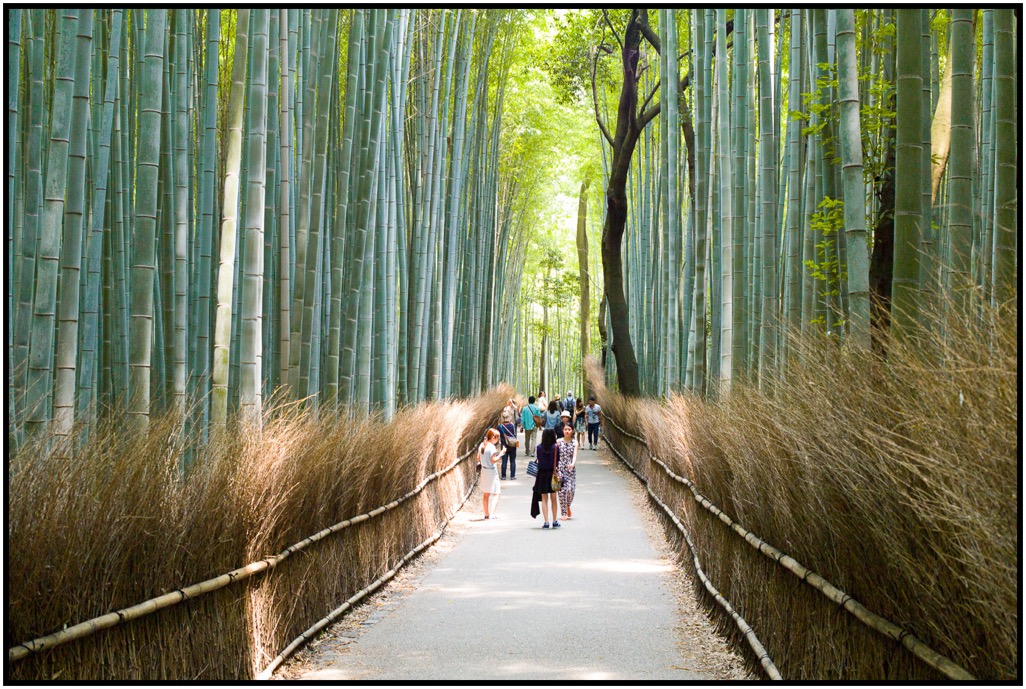
Refreshed after lunch, we headed out to the Sagano Bamboo Forest.
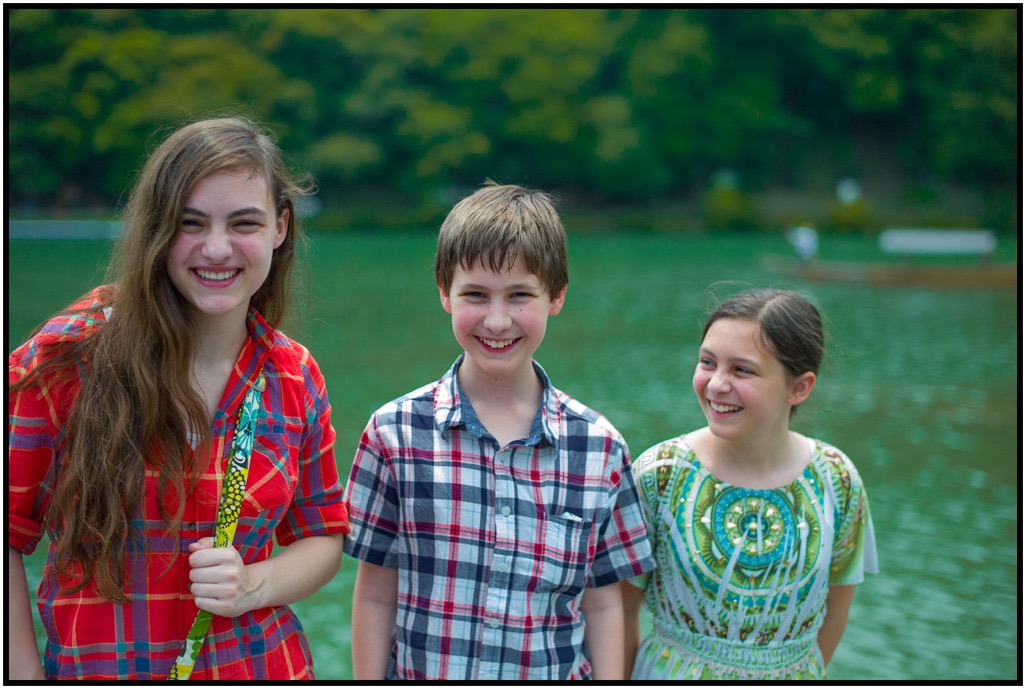
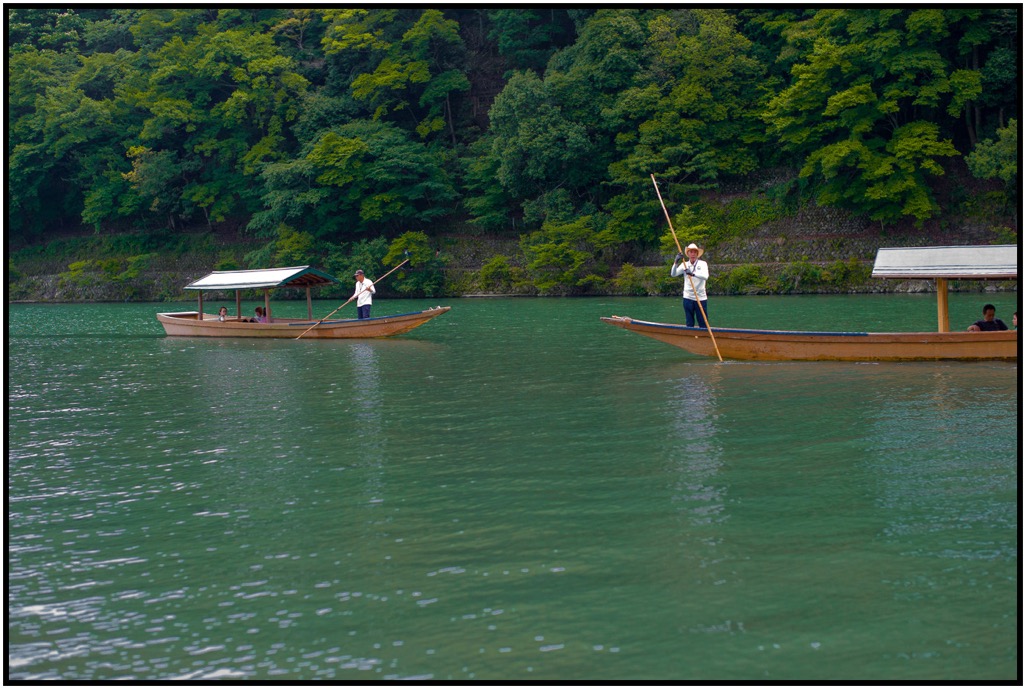
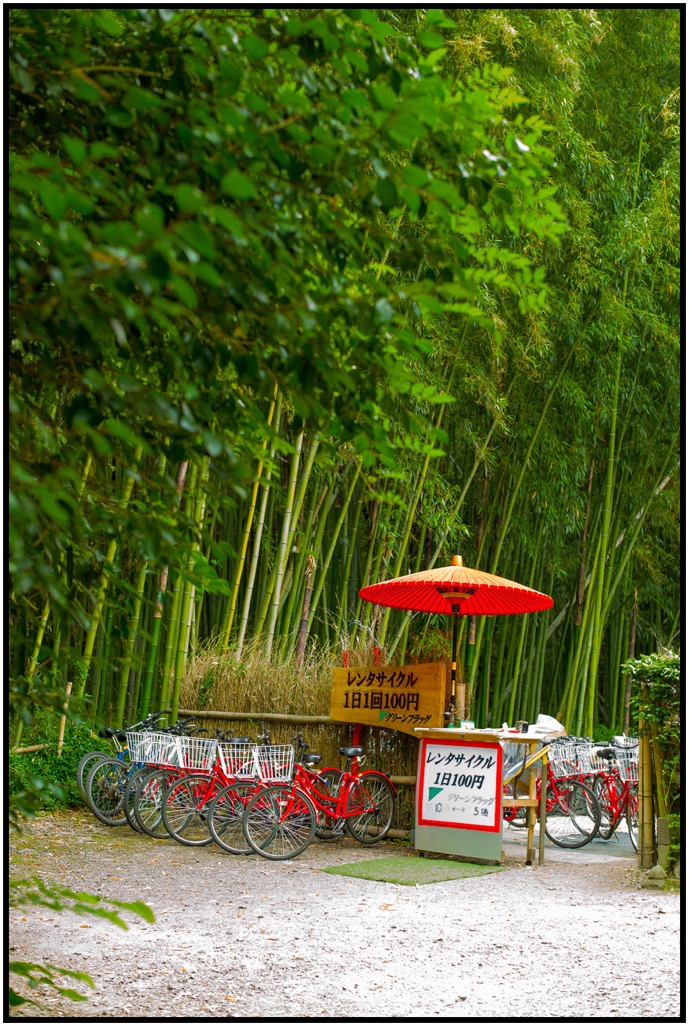
Arashiyama’s famous bamboo forest. Scenes from Memoirs of a Geisha were filmed here.
Today was our last in Kyoto. Tomorrow we head to Osaka, which is actually quite close. I think it’s only about 30 minutes by bullet train.

