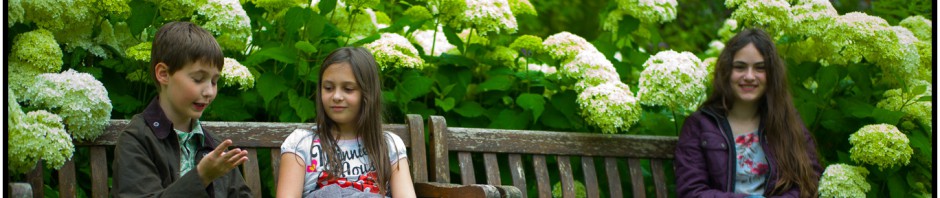
June 19, Friday
We visited Osaka Castle today.
Adam: I was particularly interested to see this building – it played a prominent role in Clavell’s Shogun series of books – a couple of which I had re-read this past year to get ready for our Japan trip.
This structure was smaller than that we visited in Himeji, but much more interesting. They had filled out the 8 interior floors with numerous museum pieces and audio/visual displays of the history of the castle and surrounding areas since the 1600s.
A lot happened here over the past 500+ years, but all of the names and titles and battles blur together – it’s all so alien to us whose military history is decidedly Westernized. Still, the recurring themes are familiar.
Like all the other castles we’ve seen in Japan, this one had been destroyed by fire more than once and what you see today is the result of extensive renovations and restorations done recently. The castle has a museum inside, and most of the things in there are also replicas … I have the impression that a lot of Japanese history has been lost (the originals, anyway.)
The original castle was completed in 1597. It was the site of a whole bunch of battles over the years and changed hands many times, suffering damage each time. In 1620, the new heir to the shogunate, Tokugawa Hidetada, began what I believe was the first major reconstruction, a mere 23 years after it was finished.
Osaka Castle was used as an arsenal. In 1660 lightning ignited the gunpowder warehouse and the resulting explosion set the castle on fire. Five years later, another lightning strike burned down the main tower. It was restored in 1843, which I guess means it sat as a pile of burned-out rubble for 180 years.
In 1868, the castle was surrendered to anti-bakufu imperial loyalists. Much of the castle was burned in the civil conflicts surrounding the Meiji Restoration. In 1928, the main tower was restored once again.
Finally, during WWII the arsenal at Osaka Castle became one of the largest military armories in Japan, employing 60,000 workers. This made it a major target for bombing raids. In August 1945, 90% of the arsenal was destroyed.
The last round of restorations was completed in 1997. So, pretty much everything you see when you visit the castle today is a restoration of a restoration of a restoration.
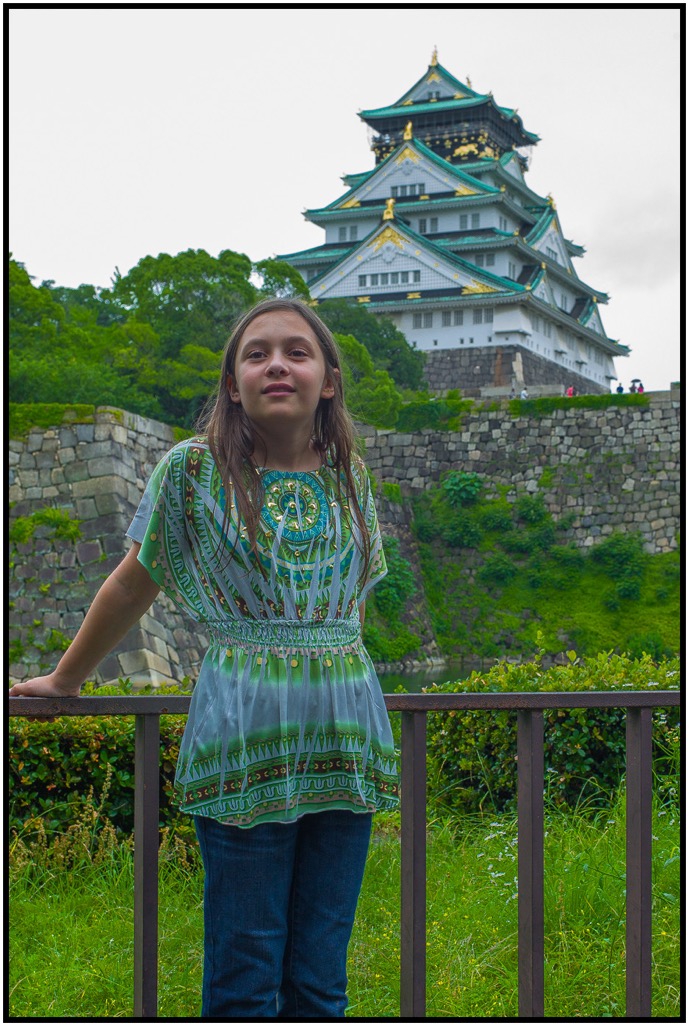
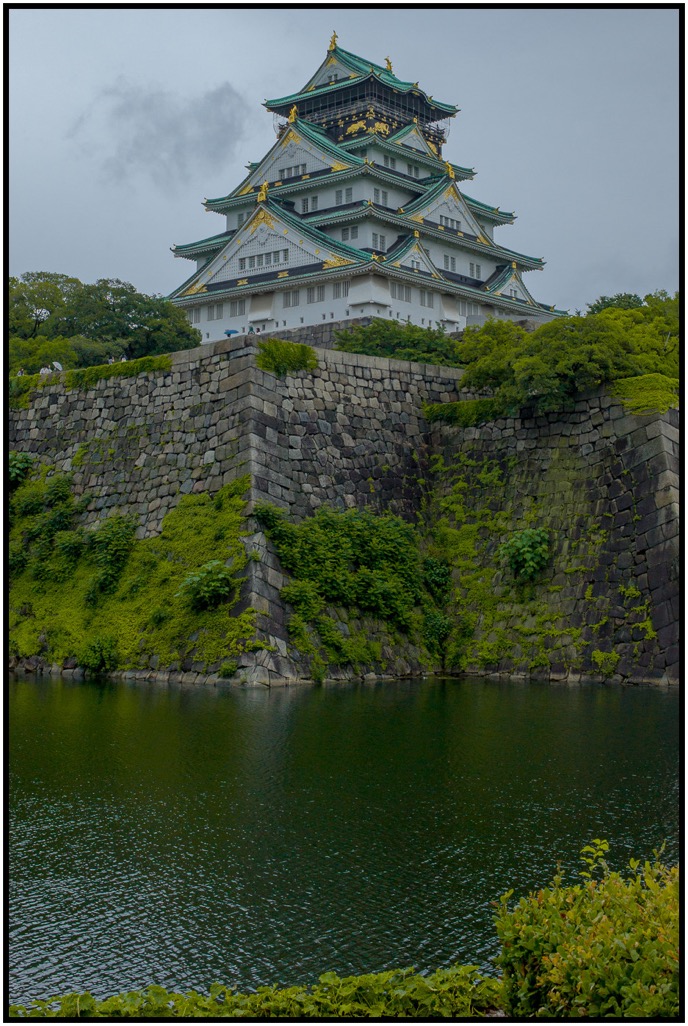
The outside of the castle is impressive. The green roof is oxidized copper. The gold is actual gold leaf laminated onto copper structures.
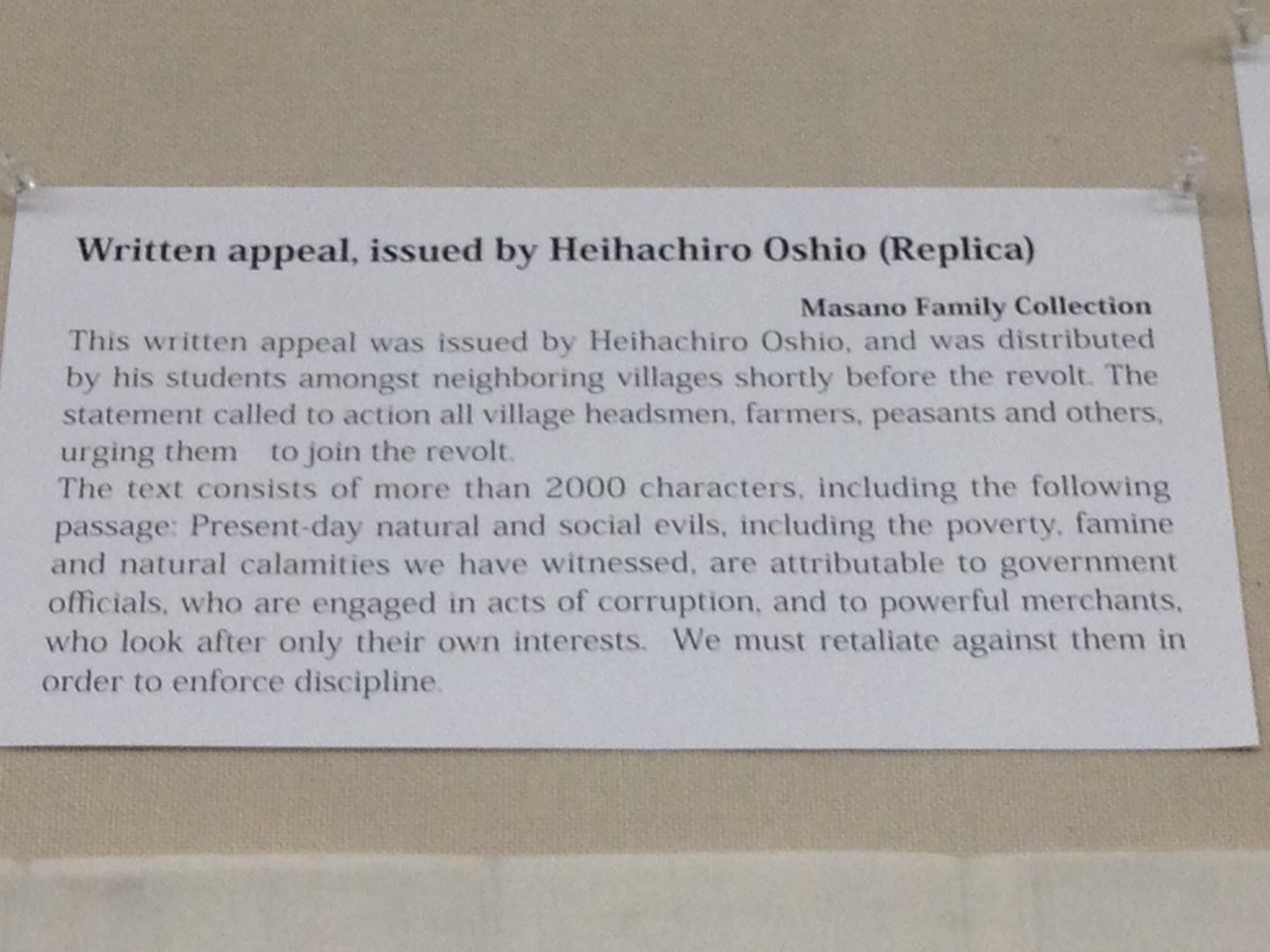
You’re not allowed to take photos inside the museum, but the passage in the photo below resonated with me … I snuck a quick picture of the English translation with my phone so I could remember it.
In 1837, Heihachiro Oshio wrote: “Present-day natural and social evils, including the poverty, famine and natural calamities we have witnessed, are attributable to government officials, who are engaged in acts of corruption, and to powerful merchants, who look after only their own interests. We must retaliate against them in order to enforce discipline.”
This was written in Japan in 1837. What struck me about it is that it sounds like something I’d see on my Facebook page on any given morning, written in 2015 in the United States. Humans are humans, and they haven’t changed over time. We’re still having the same problems in the present day that these guys were fighting in Japan more than 175 years ago. Human behavior is nothing if not consistent. It is pretty much the same no matter what culture or time period you look at.
A short wikipedia history to put the above artifact in context:
At the height of nineteenth century Japan’s greatest famine, in 1836 [Ōshio Heihachirō] petitioned the magistrates to help the starving citizens. After this was refused, Ōshio sold all the books he possessed to buy food for the suffering. Adhering to one of Wang Yangming’s central tenets that in times of crisis men must follow their intuition rather than their institution, Ōshio circulated a manifesto charging the bugyō with moral corruption. (The replica of this manifesto is the one referred to in the photo above. I didn’t get a picture of the document itself, just the English translation. They didn’t want photos taken of the items.)
He then led an army consisting of his students, peasants, and some outcasts into the city in 1837. They managed to burn about a fifth of the city before government troops put down the rebellion. Months later, Ōshio committed suicide when he was found by the authorities.
I can’t say that I think burning about a fifth of a city as a form of protest is ever justified, but it just goes to show that rioting and destruction of life and property are also human behaviors as old as the hills. It’s depressing that nothing has changed, but also kind of reassuring.
After the castle, we took the subway back to the area with the huge malls at Osaka Station City. This place is like nothing I’ve ever seen in terms of shopping. The amount of stuff for sale here is astonishing and the malls look like luxury hotels. (In fact, some of them are hotels; one is the Hilton. They have an Hermes and a Loro Piana in the lobby.)
The kids wanted to see the cool fountain again at the southern entrance to the Daimaru Umeda shopping center. This thing is mesmerizing.
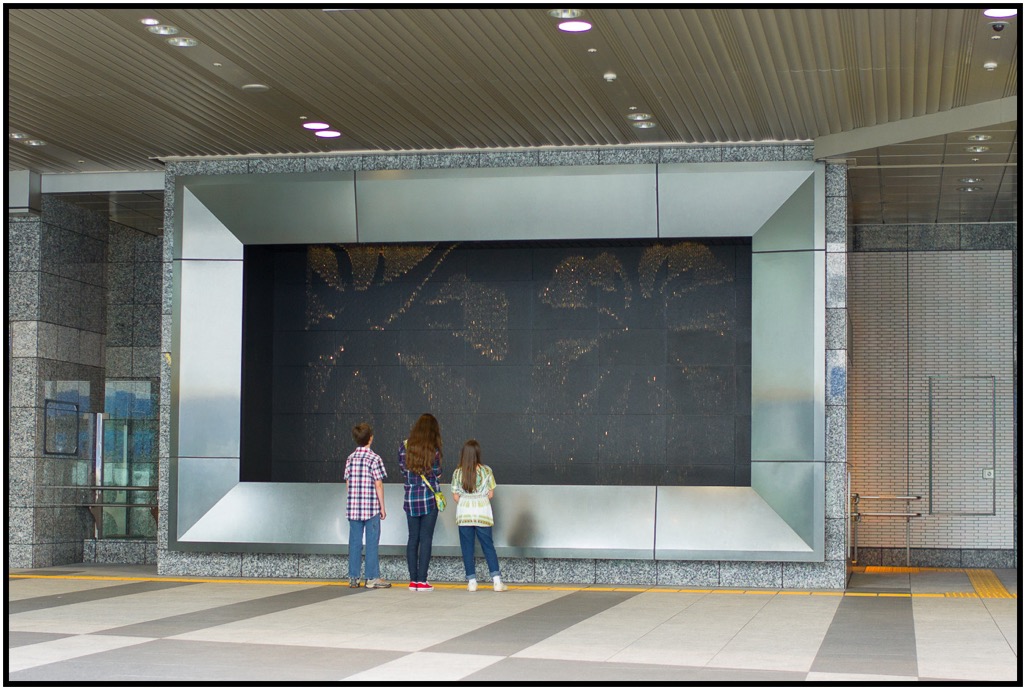
Aaannnd, since we were already right there, the kids finagled their 4th visit to a Pokemon Center on this trip. It’s on the 13th floor. We took the elevator up, but the elevators are so busy you have to wait forever for your turn. On the way down we used the escalators …. so (of course!) we had to hit every floor to see if we missed anything yesterday. It takes a long time and a lot of walking to explore 13 floors (plus two basement levels) of a gigantic mall, so we were tired by the time we got to the bottom. (And this is only ONE of the shopping centers here!)
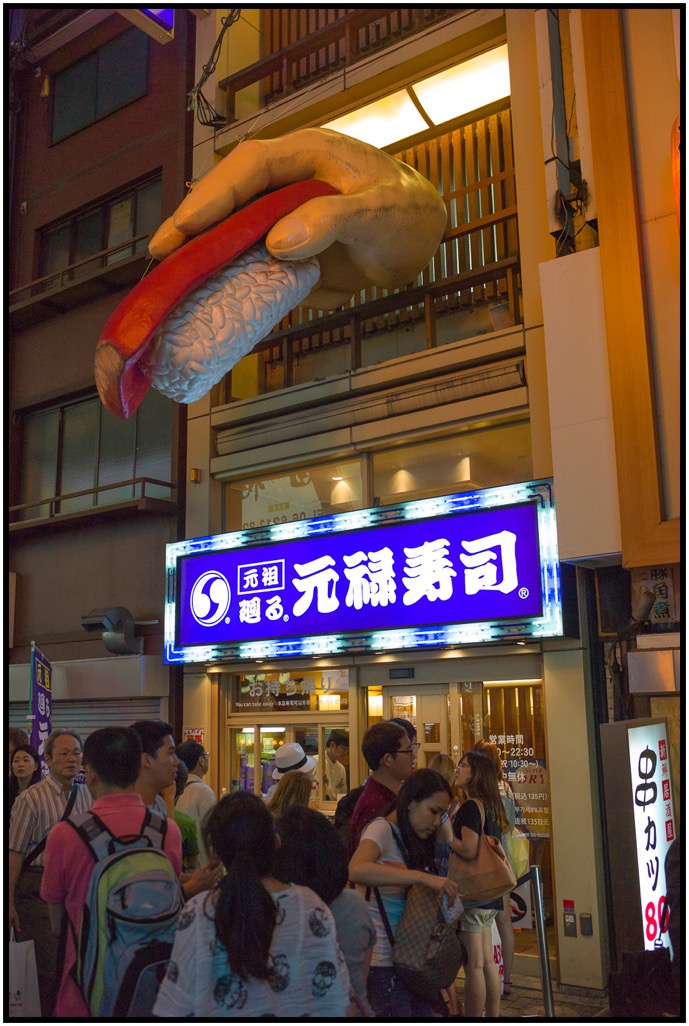
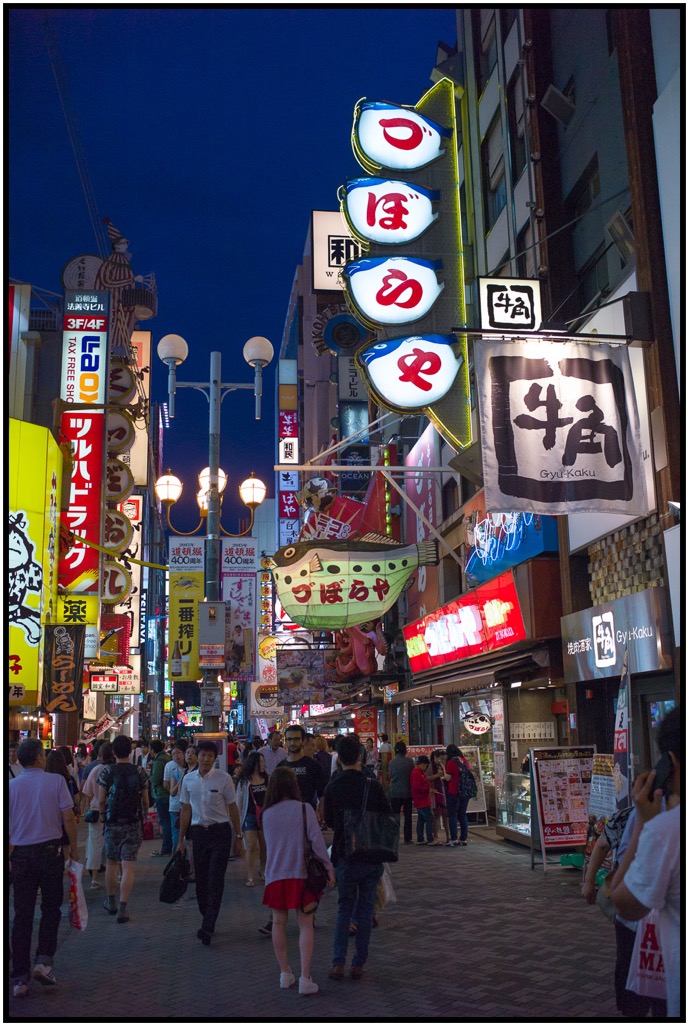
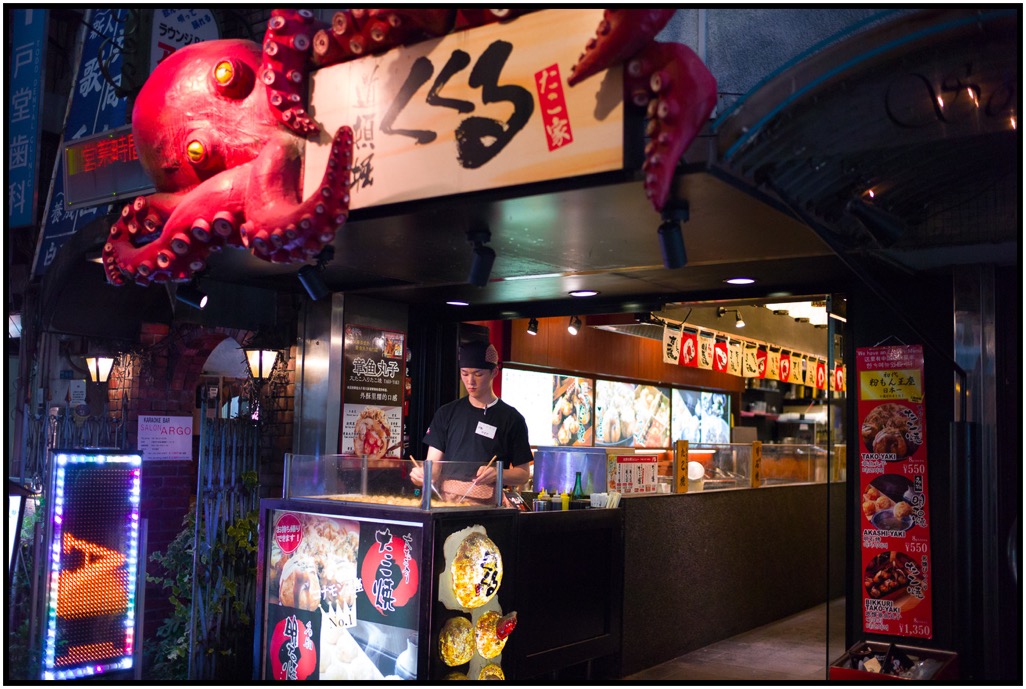
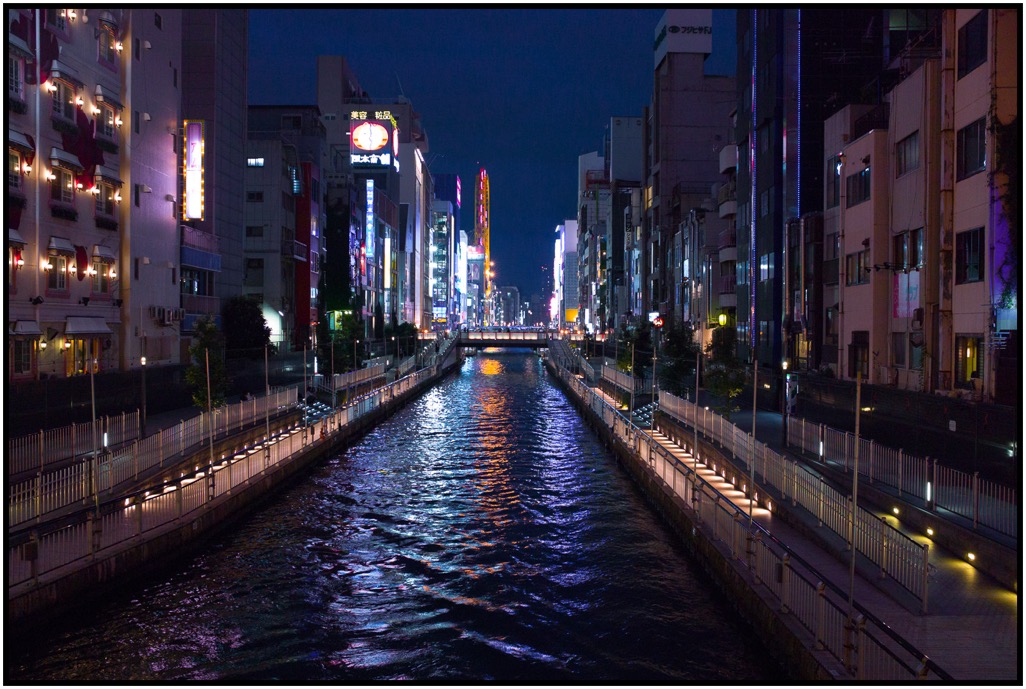
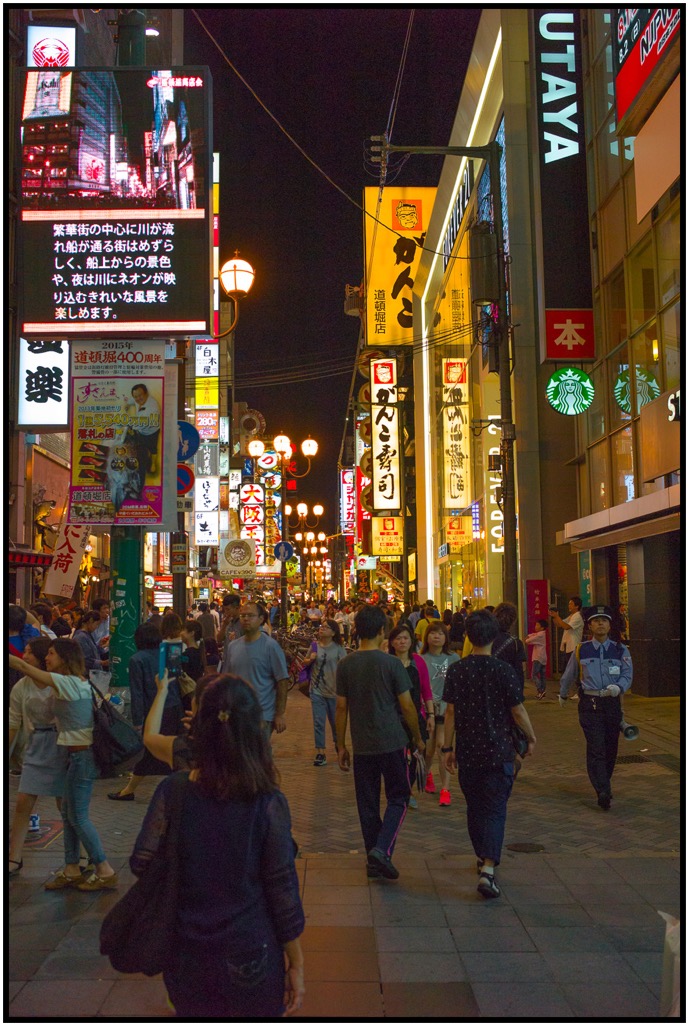
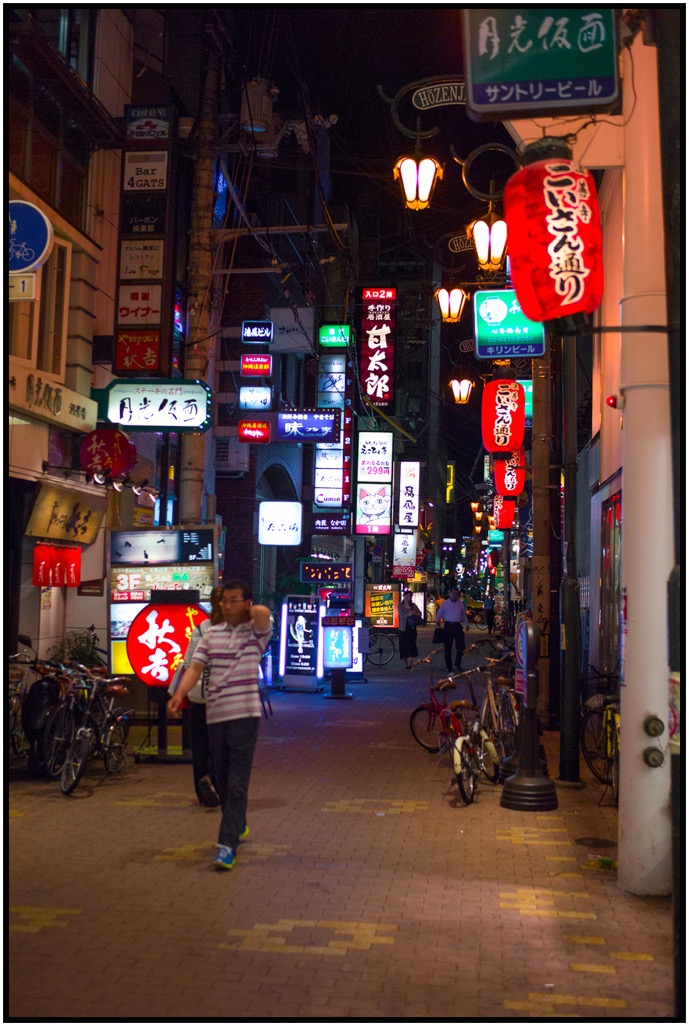
We went back to the apartment for a late-afternoon siesta. Adam and I had such a good time yesterday wandering around Doutonbori Street that the kids all wanted to see it, too. We waited until 7:00 p.m. and then headed out. The vibe is definitely cooler, younger, and more exciting at night. The kids were all jazzed up like they get at Disney.
Some more street shots:
June 20, Saturday
Adam: Light day today.
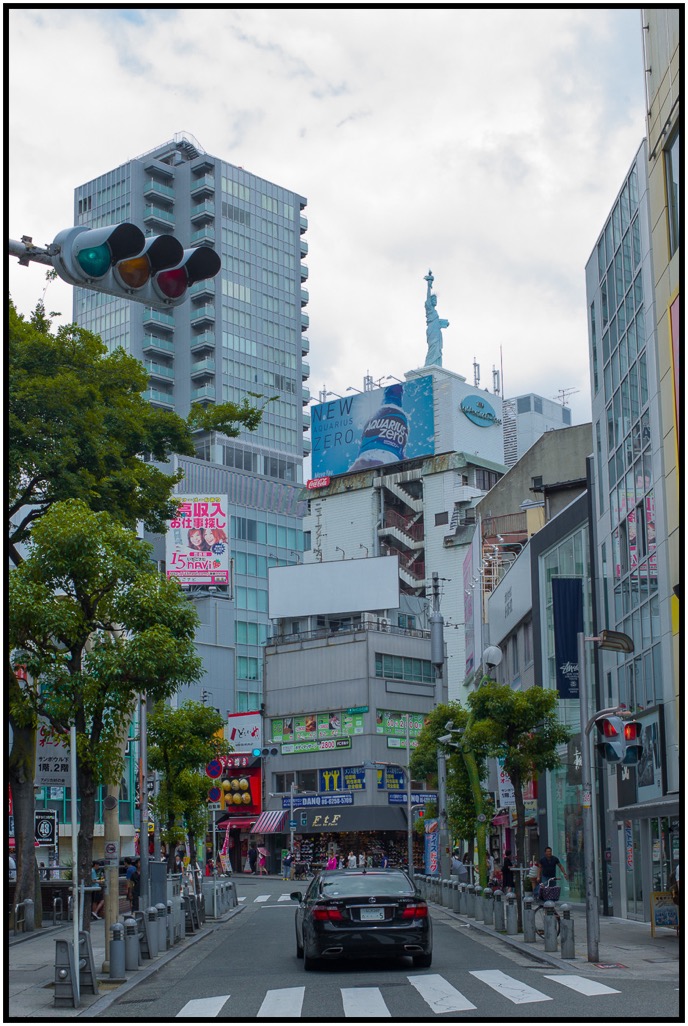
For our last day in Osaka, we decided just to wander around various neighborhoods and see what we ran into. We started off by heading towards Amerikamura – identifiable by a small-scale reproduction of the Statue of Liberty that peers down on the streets. It is a well-known haunt of expatriates, and centres on Triangle Park, a concrete rest area surrounded by retail outlets of Western fashions, bars and nightclubs, some of which are run by Westerners.
For lunch we found a fancy place that served organic hamburgers. We’ve all been dying for something that wasn’t noodle- or rice-based, and all of us ordered a burger and shared a plate of large cut fries. They were wonderful – the Japanese do get good beef (unlike anywhere in Europe, apparently) – it’s just not cheap.
Afterwards, we took the subway back to Namura to find a whisky shop I had read about online. Despite a long time searching, we couldn’t ever find the shop. The Japanese have become experts at building up and building underground. Since there is limited real estate outside, they have developed passageways and mazes throughout the city. This makes it very easy to get from one place to another, but very difficult to find anything. (not reading Japanese doesn’t help.)
Later that evening, we did run across a couple of whisky shops. I won’t bore you with the details, but the goods – both Japanese and Scotch whisky are cheap here! I don’t have the space the bring anything home, unfortunately.
(Dad – 70cl bottles: JW Red $10. JW Black – $17. Dalwhinnie – $30. Lagavulin – $55. JW Blue – $105, etc etc)
I have been surprised at how Osaka is a surprisingly massive city that’s too often overshadowed by Tokyo. Doing some research here, I read that its economy, as measured by GDP, makes it the 7th biggest city in the world just after Paris.
Osaka forms one contiguous urban area with neighboring Kyoto and Kobe. This region, known as the Keihanshin Metropolitan Area, has a population of 19 million people. Osaka has a completely different personality from Tokyo. Where Tokyo is reserved, Osaka is extravagant. Where Tokyo is shy, Osaka is warm and outgoing. People here dress down more and are larger (fatter) than in Tokyo. Osaka is not a pretty city, but probably (for Westerners) a lot more fun place to live.
Later in the afternoon, we returned to our apartment and dropped off Isabella and Holden. They were behaving in a manner less than ideal. Josie had been getting short shrift on shopping/store choices, so we took her out, just the 3 of us, to let her explore some of the markets at her pace.
After dinner, Brenda and I went out one last time to scour some of the 2nd-hand luxury goods stores. These are like pawn shops, but only carrying Rolex, Tiffany, Louis Vuitton & etc. The government regulates the stores (so they’re not fakes) but everything is in “used like new” condition. It’s very strange to look over cases and cabinets of purses that cost $15,000 each next door to the baby octopus-ball and noodle stands.
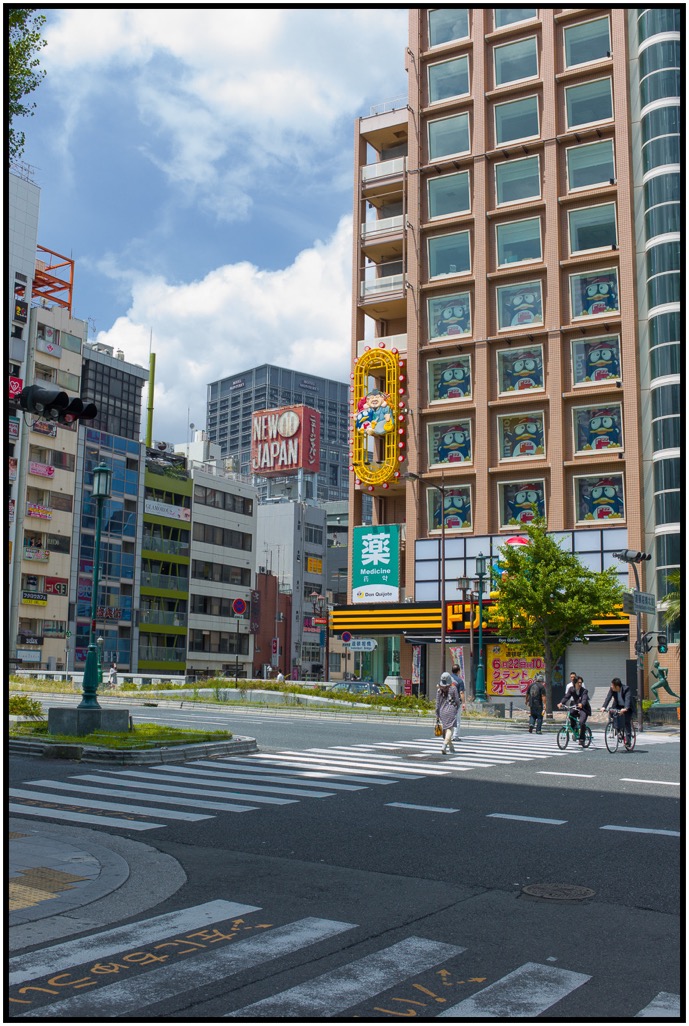
Statue of Liberty
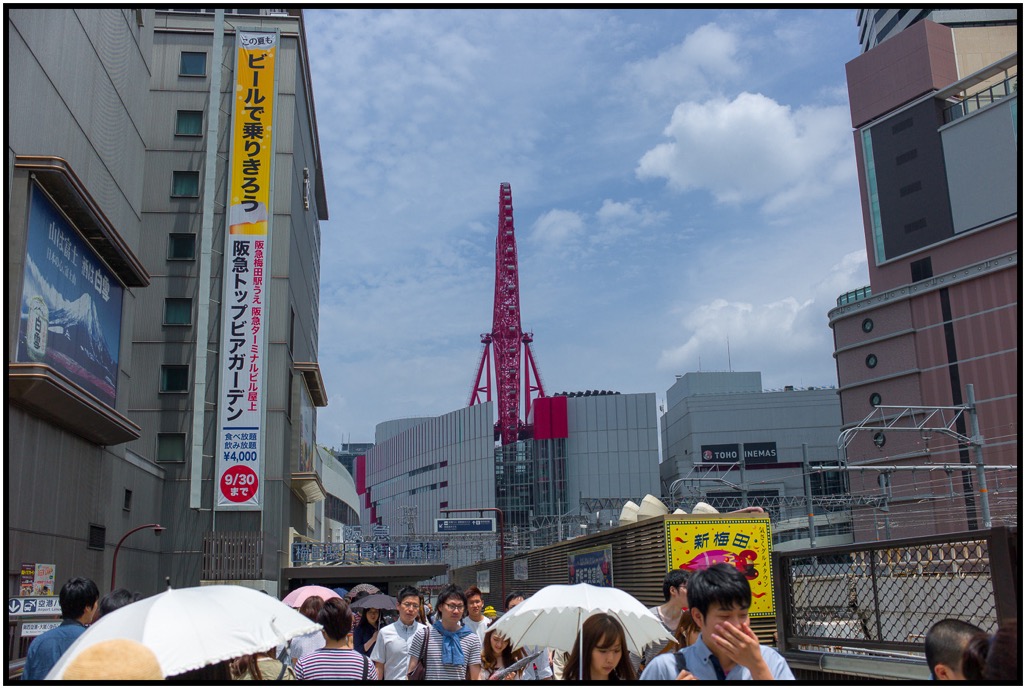
The HEP Five ferris wheel – which starts 8 stories up at the top of a fashionable shopping mall.
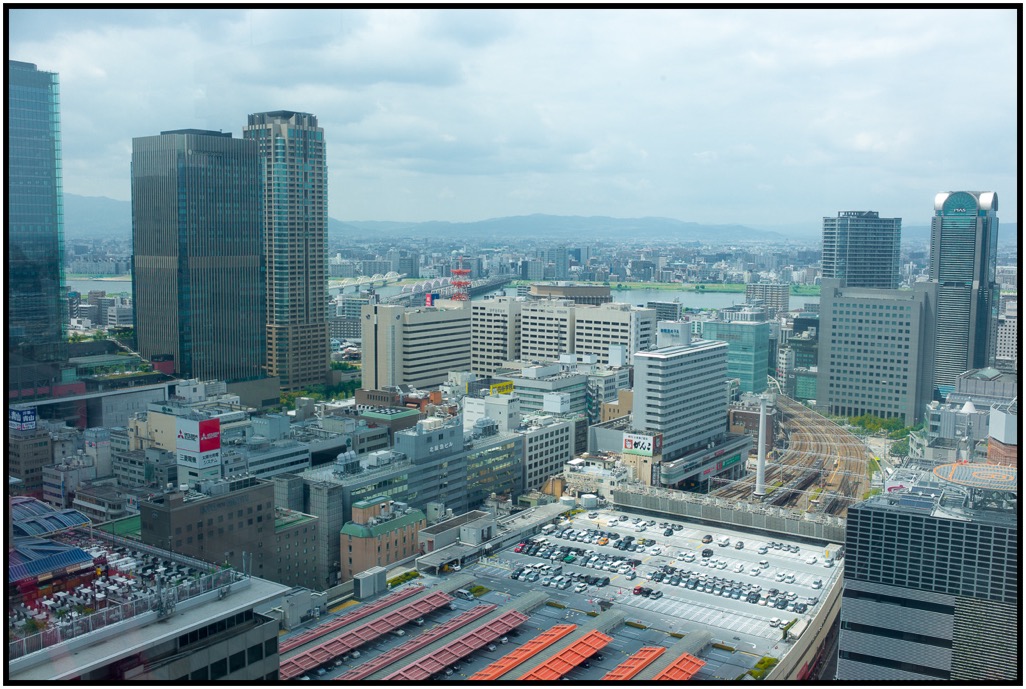
View of Osaka from the Ferris wheel – we had to take a turn. Brenda loved it because it bought us 17 minutes of quiet (the time to make one revolution). The cabs only hold 4 people each – so we split up 3 kids in one and the 2 of us in the other.
Our cab looked directly into the kids’ cab for much of the ride. It was clear from their body language they were singing and being really loud, but for once they were in a spot in Japan where they could make as much noise as they wanted and not bother anyone. Nobody could hear them, including (thankfully!) us. 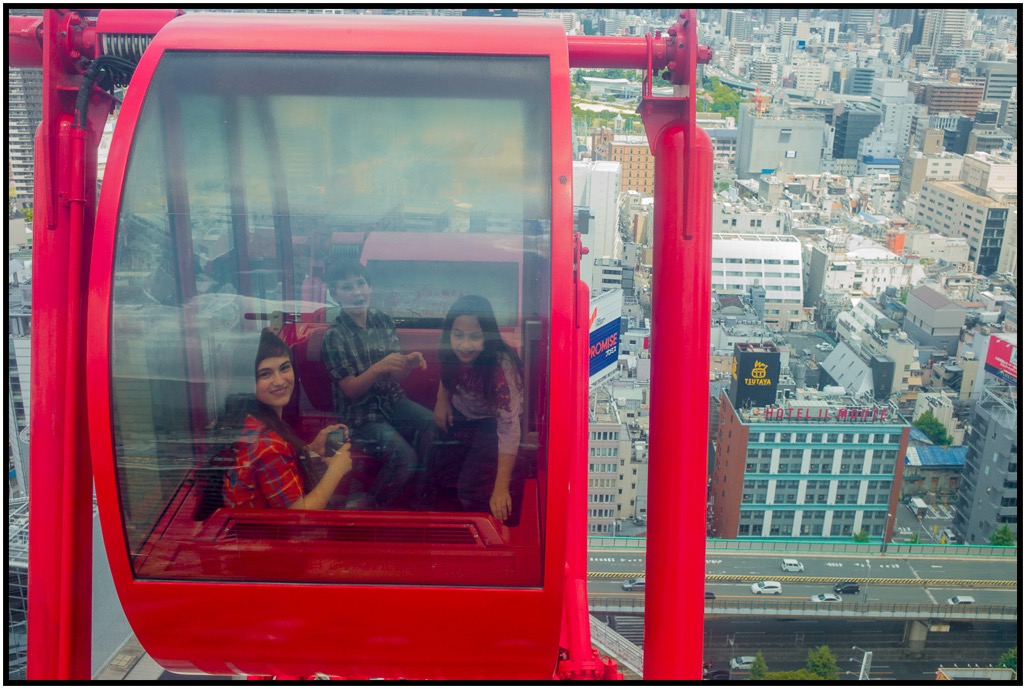
Today was our last day in Osaka. Tomorrow we take the bullet train back to Tokyo, where we have two more days before we go home.
June 21, Sunday
Adam: Travel day, so no photos.
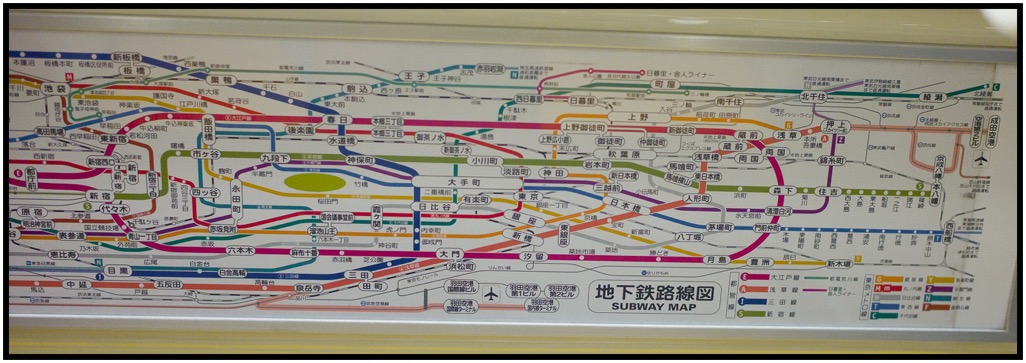
2 subway trains to the Shinkensen station. Bullet train (2hrs 45min) to Tokyo station. Two more subway trains to our destination.
We met up with a 6’3” New Yorker living with his Japanese wife – they own the apartment we rented. We’re on the 30th floor of a building on an island in Tokyo harbor – great views of parts of the city and well located to get around our last couple of days here.
After getting settled in and groceried up, Brenda and I walked around a bit in the evening to get our bearings.
Below are a couple of photos from our balcony.
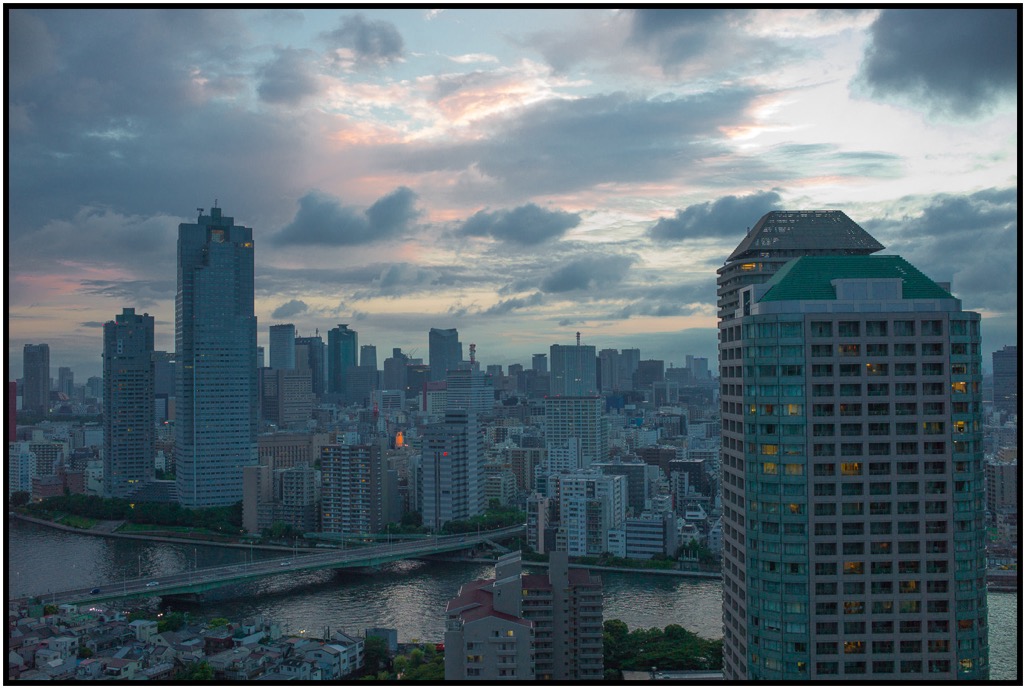
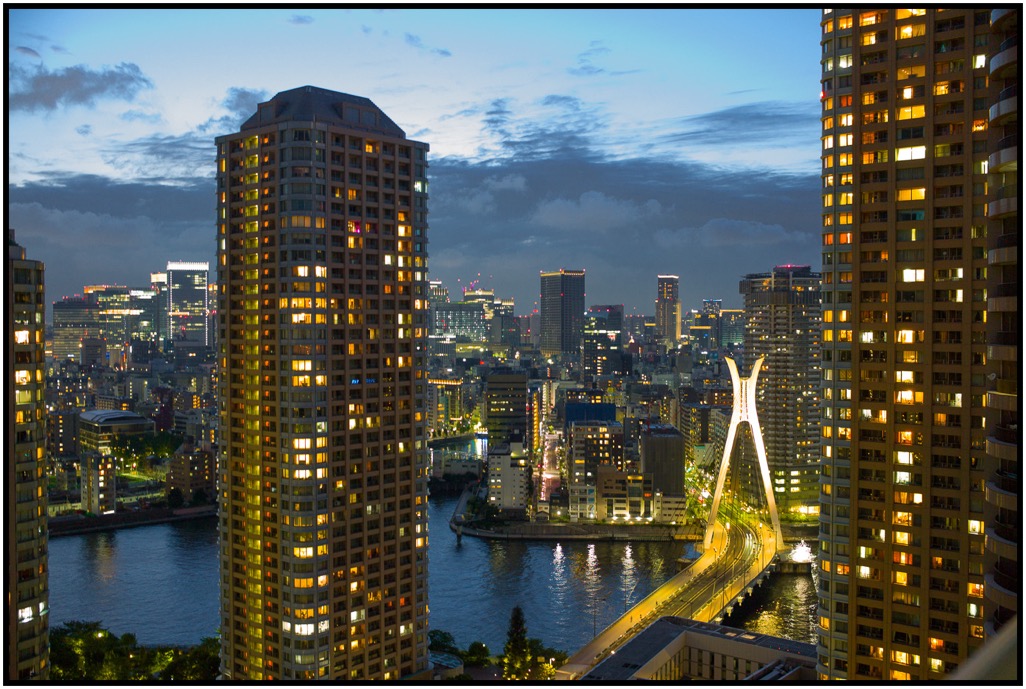
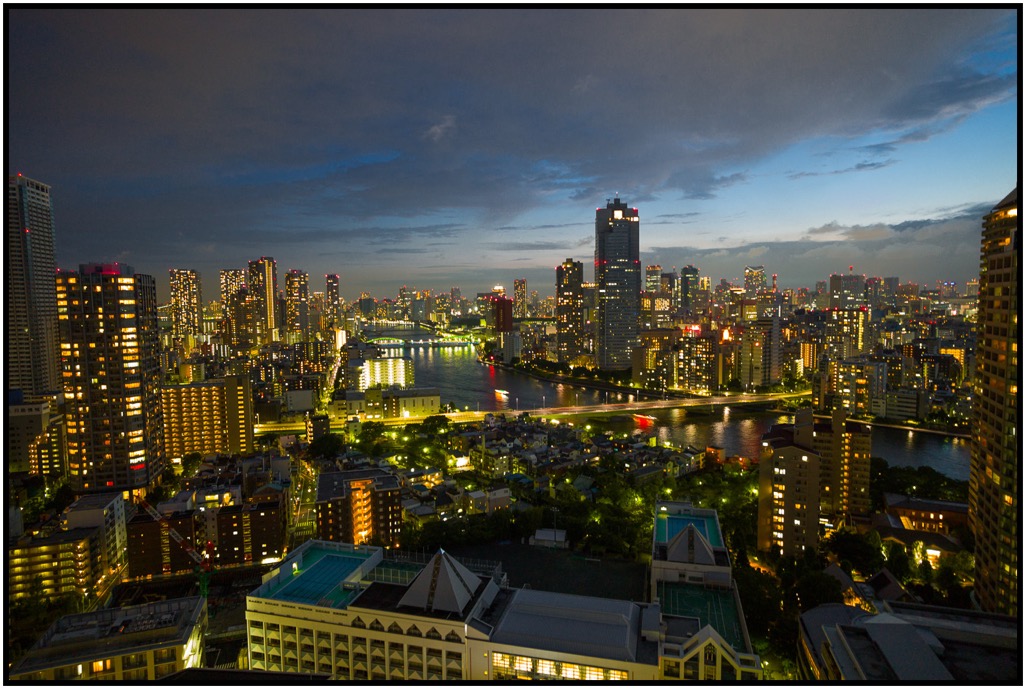
June 22, Monday (Tokyo)
All over Tokyo and Osaka we’ve seen these grotty little stores selling used designer goods. We’d been laughing at them because they’ll have, for example, a big bargain bin sitting in the front (Walmart-style) filled with Louis Vuitton bags with US$15,000 price tags. We assumed they were fakes and didn’t bother going in.
On the evening Adam and I went out sans kids in Osaka, we went in to one of these stores just out of curiosity. I found an Hermes scarf that looked suspiciously real, selling for around $120. That price is so low it feels practically like stealing. So, that piqued our curiosity even more and we went back to the apartment to do a little research on these “Brand Off” stores we keep seeing.
Imagine our surprise when we found out just what a real deal these stores happen to be. They are referred to as “Blow Job Stores” because rich men will buy expensive gifts for their mistresses, who in turn sell the items for far below retail to get cash so they can buy things they like better. It’s a huge business. The stores are regulated by the government, so the merchandise is guaranteed to be authentic.
These stores have developed such a good international reputation that buyers from all over Asia (particularly China) come to Japan to clean out the inventory and resell it back in their home countries. If they can prove to a potential buyer that the item did, indeed, come from Japan, it’s as good as a guarantee from the designer company itself.
Tokyo is lousy with these stores, so now we have a new mission on our last couple of days here. The Shibuya district has a bunch of them. In addition to visiting these designer secondhand shops, Isabella wants to go back to Takeshita Street for another visit to the Harajuku dress shops, and Adam wants to visit the “guitar district” — which is exactly what it sounds like: a district with streets filled with guitar stores.
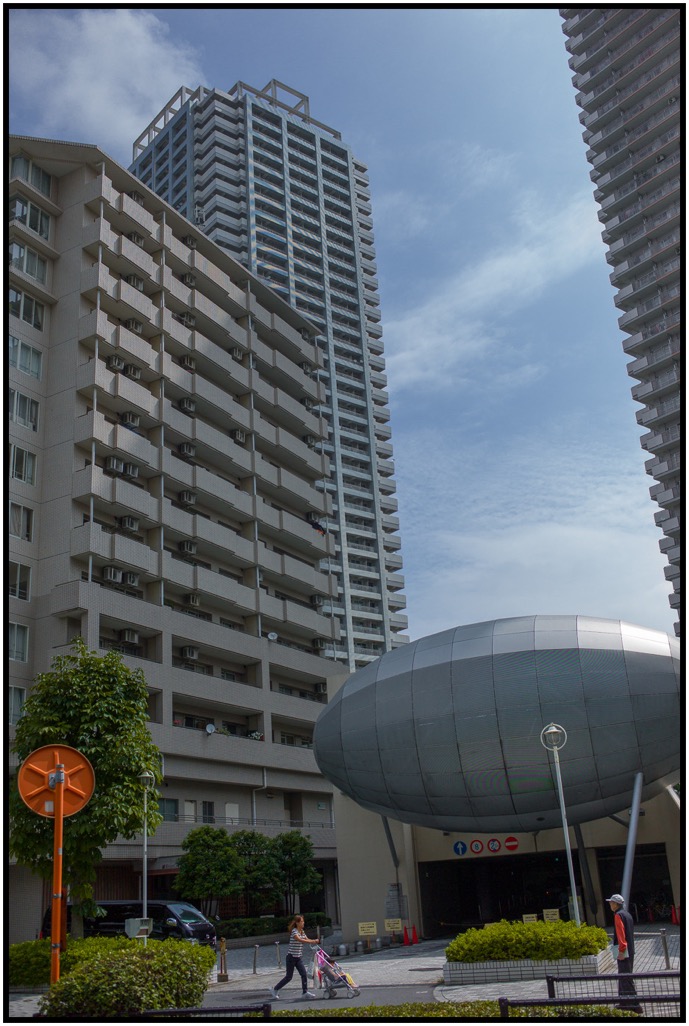
Below: Our building … the tall one behind on the left. We’re on the 30th floor with spectacular views of Tokyo.
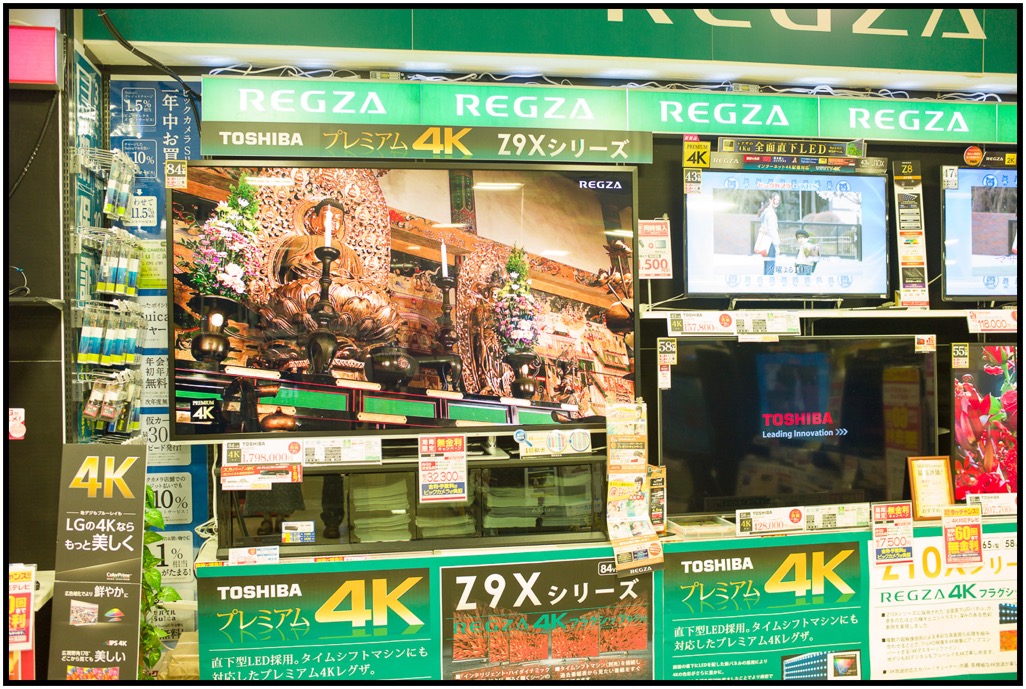
 Adam: We visited one of the high end electronics stores. The photo doesn’t do it justice – but this is an 84” TV with the 4K technology. This model isn’t yet available in the US but will be coming soon, surely. The screen was something to behold. You can get one now in Tokyo for around $15k.
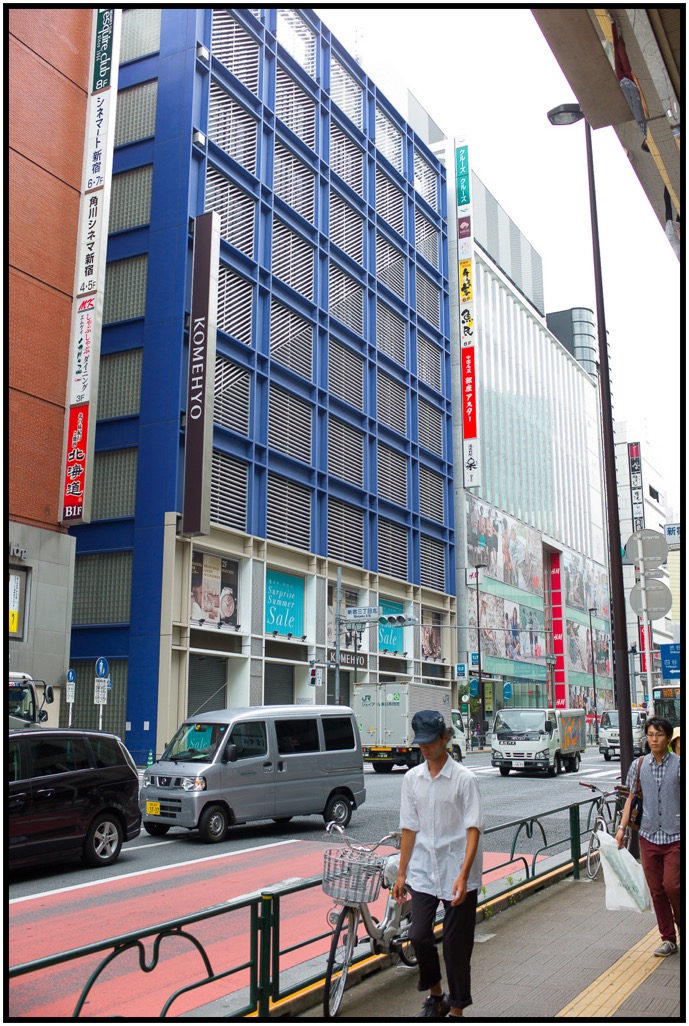
And now for the second-hand pawn shop-type stores! The blue building in the photo below is one such store. It has 8 full floors of designer goods — clothing, handbags, accessories, jewelry, watches, shoes …
We didn’t buy anything, but it sure was fun to look at it all.
Next we headed over to the Harajuku district (Takeshita Street) because that’s where Isabella and Josie wanted to do their shopping. The merchandise here is much cheaper and skews very young. Nobody over about age 23 would we able to wear anything sold here, aside from the costumes (from which they have plenty to choose.)
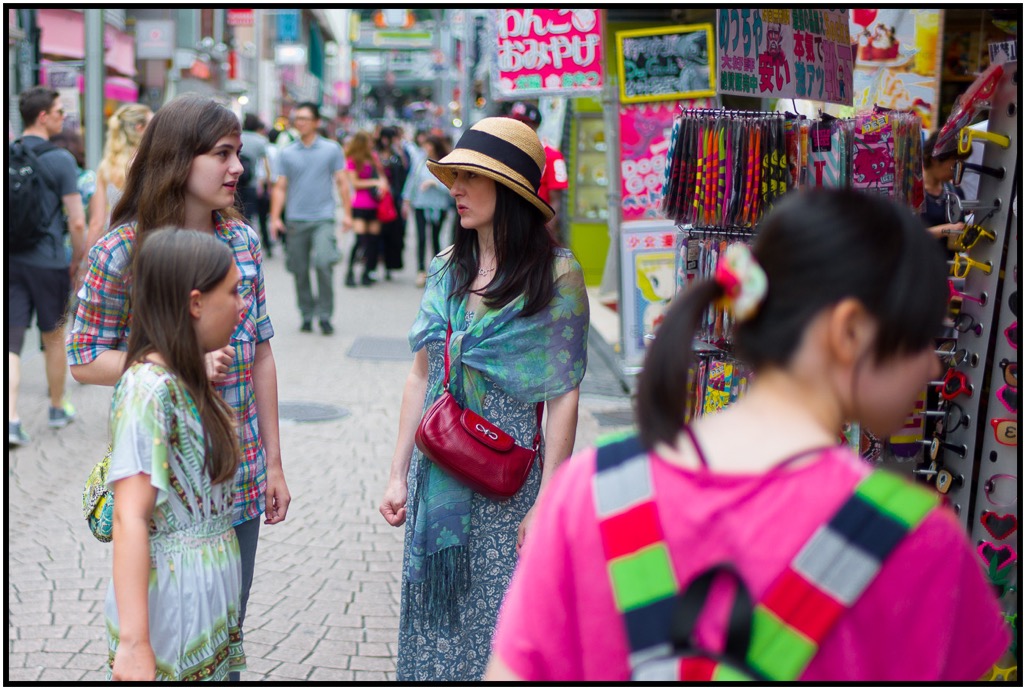
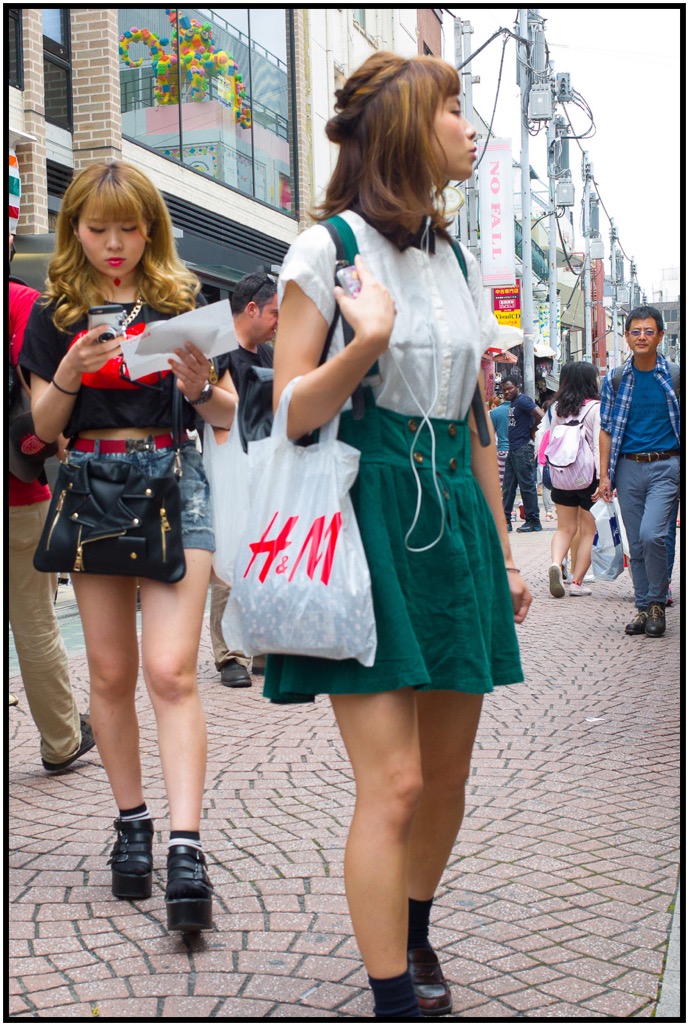
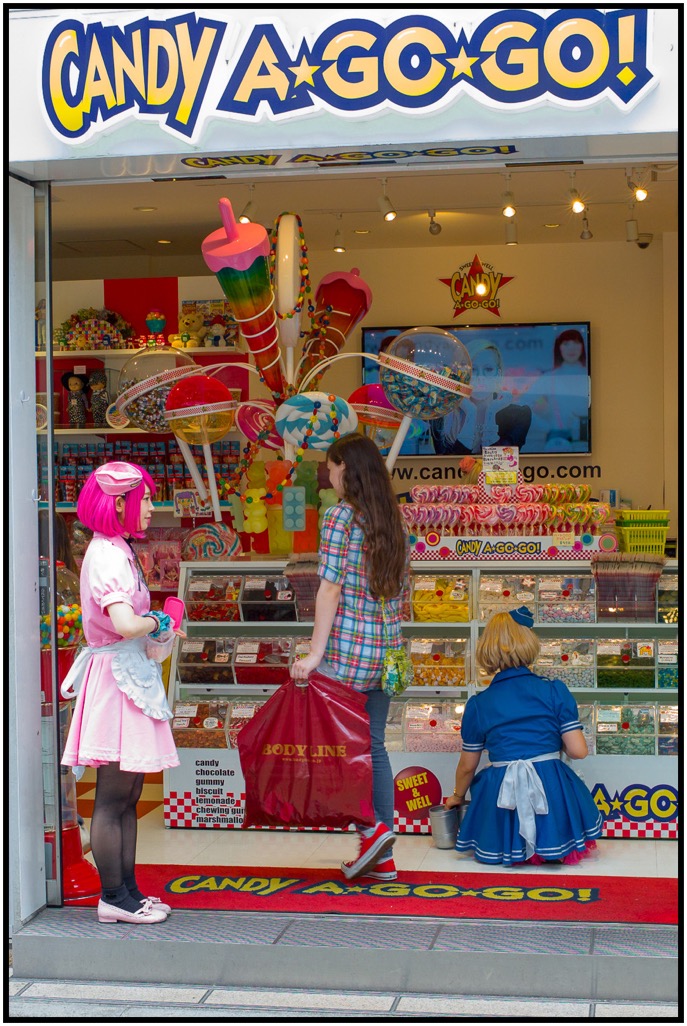
Josie and Isabella hit just about every store. Adam stood outside and took street shots of all the people walking by. Some were pretty interesting characters.
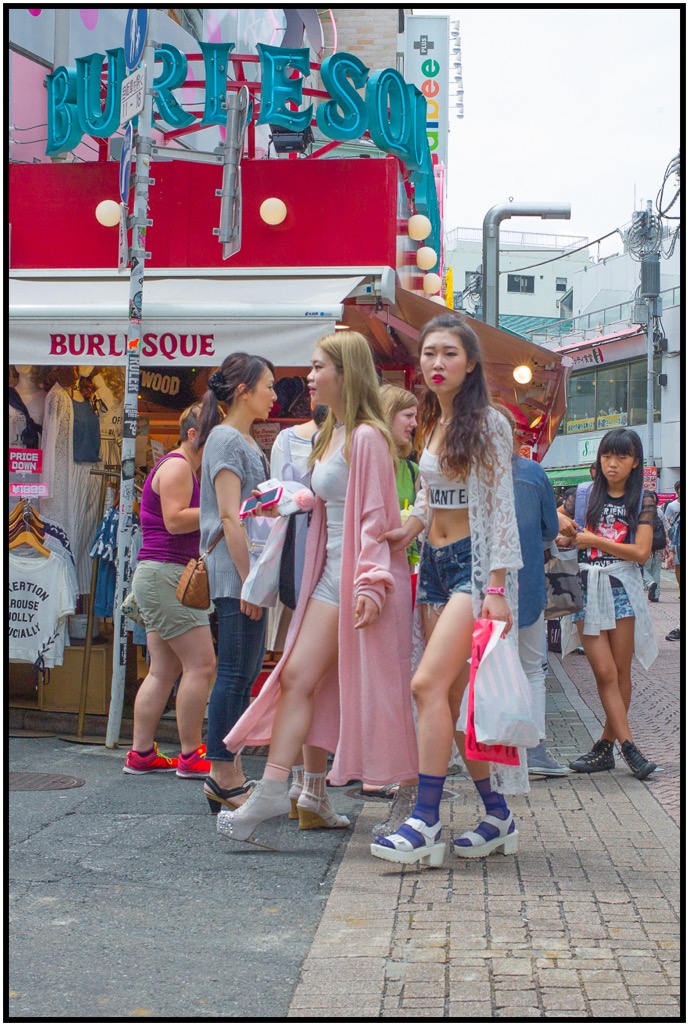
The kids found a candy store. Notice Isabella is holding a bag … she talked Adam into buying her an Attack on Titan sweatshirt (“It’s school clothes, Daddy!”) and then spent her own money on a new purse.
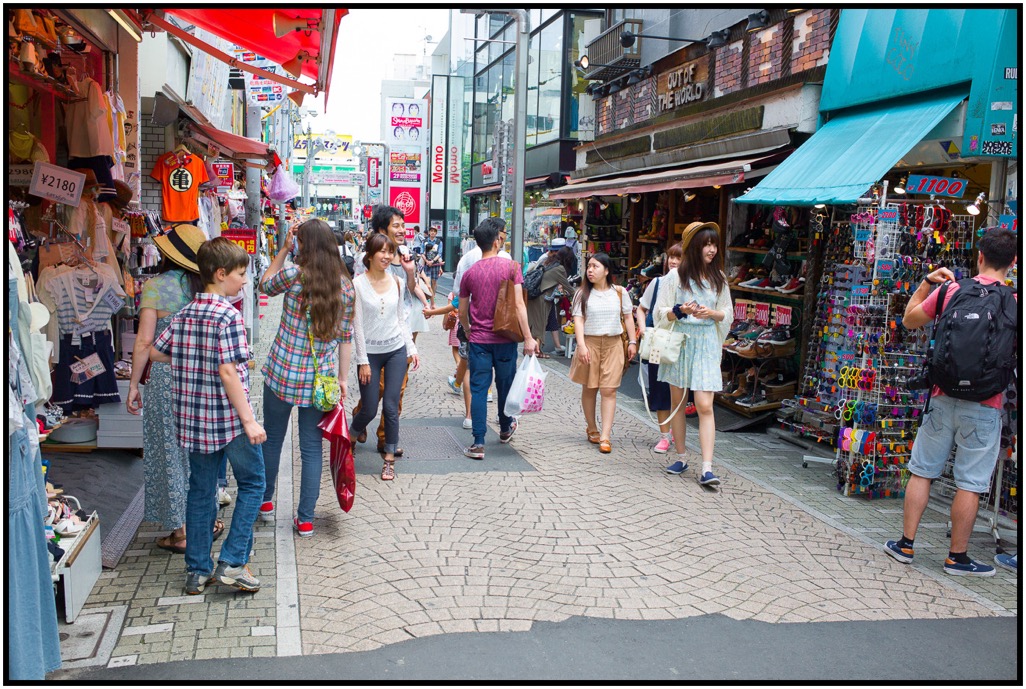
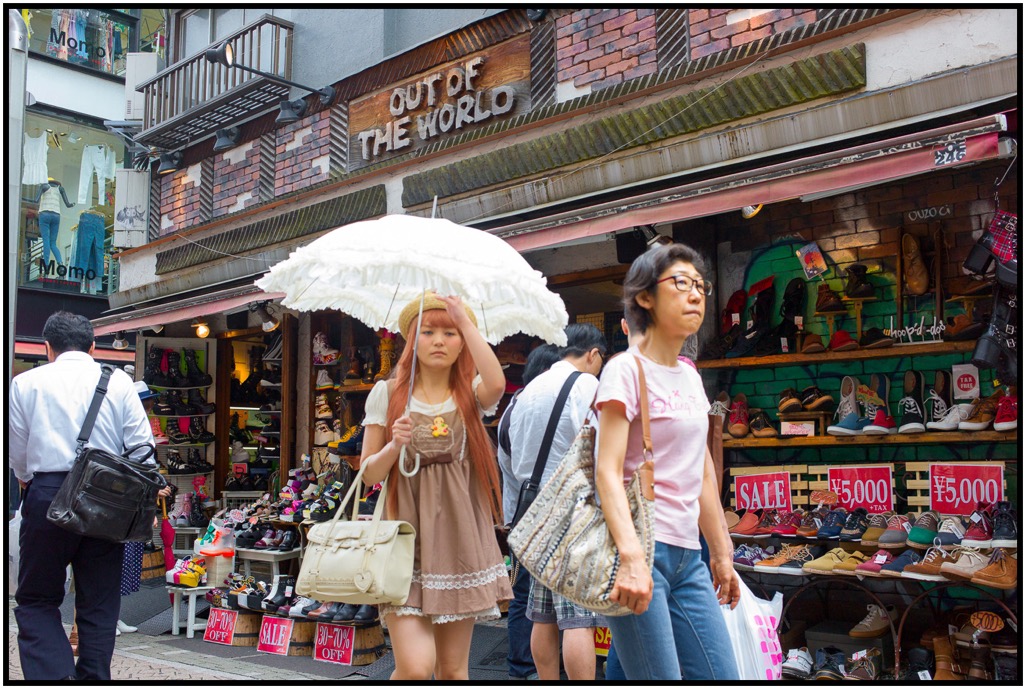
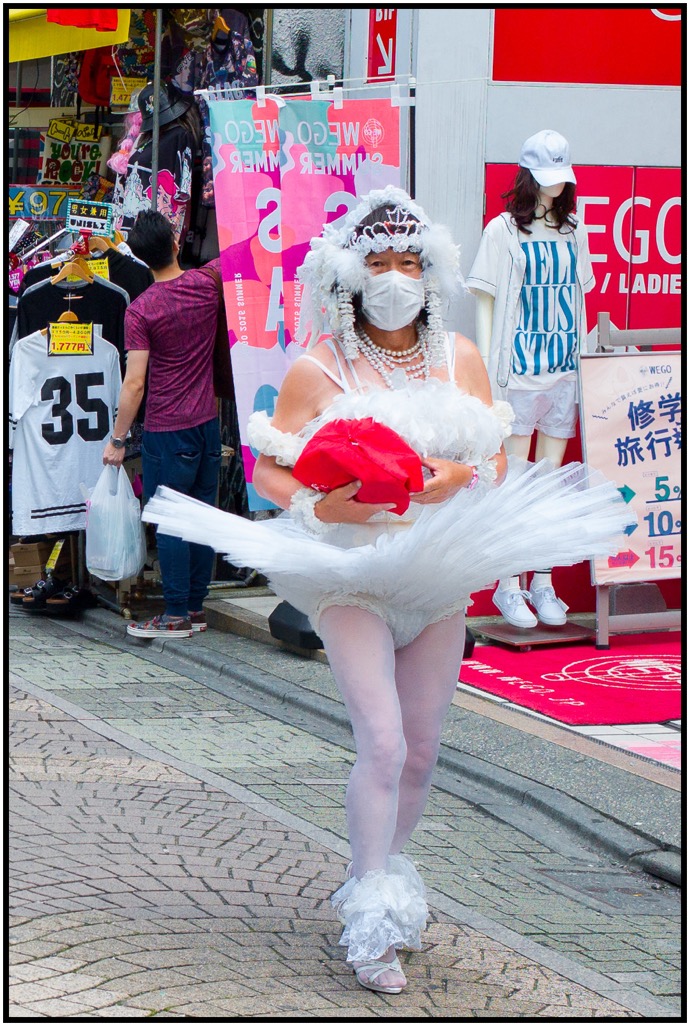
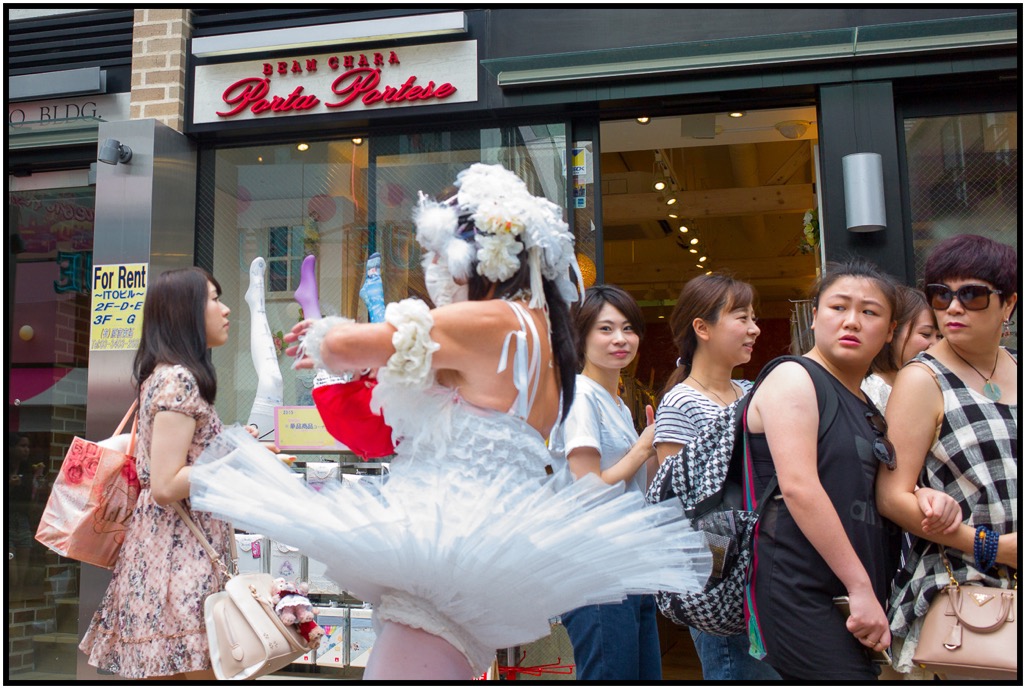
Women aren’t the only people dressed up.
Adam: The one cracks me up for two reasons … the reaction of the women looking at the guy … and the fact that, despite him, the one woman in the middle is looking at me instead… What must I look like to them?
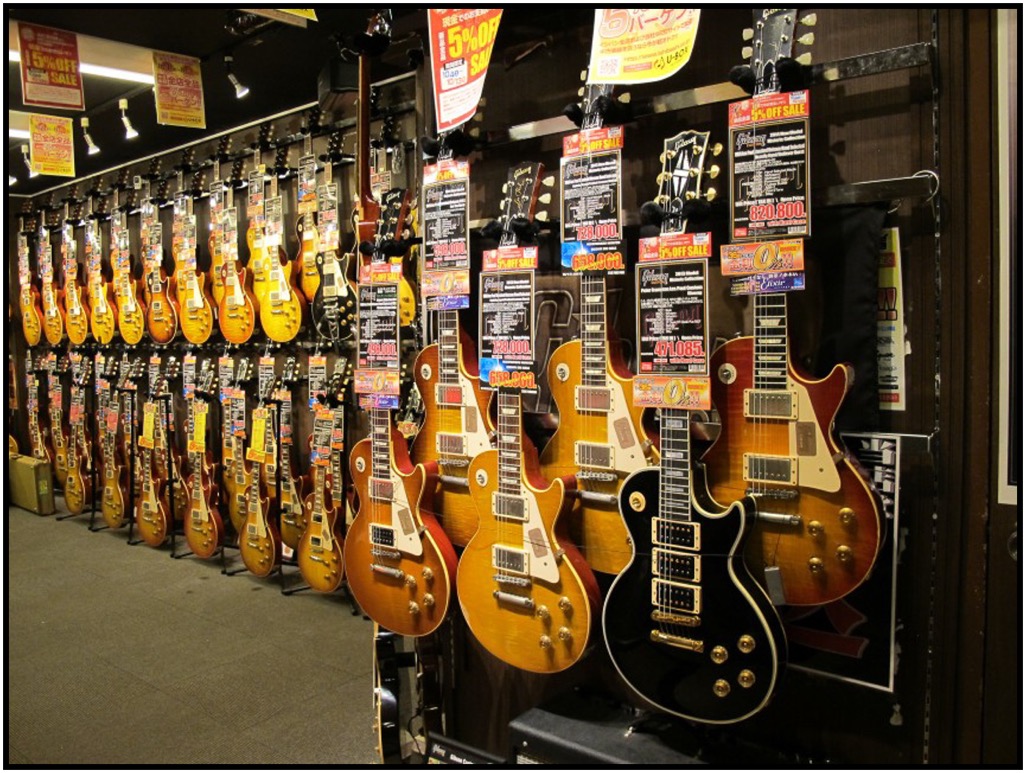
After Harajuku, we ended the day at a guitar/music shop. Below: this is a solid wall of Gibson Les Pauls. These guitar stores are usually around 6 floors of retail space with each floor dedicated to a different type of guitar; electric on one floor, acoustic, bass, antiques & collectibles, new, and accessories (amps and things like that). A music person could spend a whole day in just one of these shops.
 We also stumbled, quite by accident, onto a violin store in the Shibuya district. Josie wants to play violin when she gets to middle school, so Adam took her in to look at them. This violin store, tucked into the basement of some huge building and easy to miss, houses museum quality instruments dating all the way back to 1713. They had bows selling for $10,000 each. We don’t have any photos of this place … but it’s just astounding what you can find by accident here in Japan. They have EVERYTHING.
June 23, Tuesday
Today is our last day. Isabella, in particular, doesn’t want to go home.
This trip has been one of our more frustrating from Adam’s and my point of view because of the kids — Isabella is 15, and Holden is going to be 13 in less than 3 months. We’ve basically got two teenagers and all the mood swings that goes with that territory, not to mention that Holden and Isabella both want tons of privacy now and that’s hard to accommodate in cramped spaces.
And poor Josie — still a little kid and feeling left out of everything. The older two have passed that invisible, impossible-to-define mark that changes them from little kids to pre-adults. They think of themselves as (more or less) grown-ups now, but can’t handle anything without emotional over-reactions. Anyway, Adam and I were both surprised when the kids unanimously declared that Japan is their favorite trip so far because they have done a lot more squabbling than usual. The sarcastic eye-rolling and snarky comments have been off the charts.
We discussed this at length last night and agreed to make our last day the best day with NO FIGHTING and no crappy attitudes. I didn’t think they would be able to pull it off, but they did! We had a fantastic day and everyone kept their cool (including us parents — which is actually easy to do when the kids are behaving like civilized human beings.)
Adam: We spent our final day in Tokyo visiting Ginza and Ochanomizu – two districts we hadn’t yet hit in previous wanderings.
Before that, we went to the bus station to work out our bus transfer details from Tokyo to the airport. Tokyo Narita airport is about an hour and half out of town from Tokyo, so even getting there today will be a chore requiring two subway transfers and then the bus ride.
The Ginza district is famous for shopping. All of Japan has been one giant shopping spree, so I didn’t think Ginza could improve on the shopping opportunities. It did. If shopping is your thing, Japan is by far the best place we’ve ever seen to visit. Bring a couple of empty suitcases for taking home your loot. Not only can you find endless cool things to buy here, the prices on most things are incredibly low, thanks (currently) to the strong US Dollar/weak Yen. If you take your passport with you on your daily outings, you don’t have to pay the 8% sales tax, either.
I wasn’t expecting this kind of shopping bonanza. On every other trip we’ve taken, we’ve found that “stuff” is harder to get than it is in the United States, and when you do find “stuff” it’s always for much higher prices than you can get it at home. Because of this, we’ve always limited ourselves to buying very few items on our travels, and usually things that are produced locally (art from local potters or painters, or items the region is famous for — fancy soap from Provence, France, for example.) On this trip, I’ve gone a little overboard on the purchases, but everything is so cheap!!
Below photo: For example, this shop in Ginza had some sale bins outside. Women were frantically picking through these like crows fighting over an open garbage bag. I went over to see what the fuss was about and found clothing with ¥30,000+ price tags ($250+) that had been reduced to about $40. I’d never heard of the brand but it sure seemed popular.
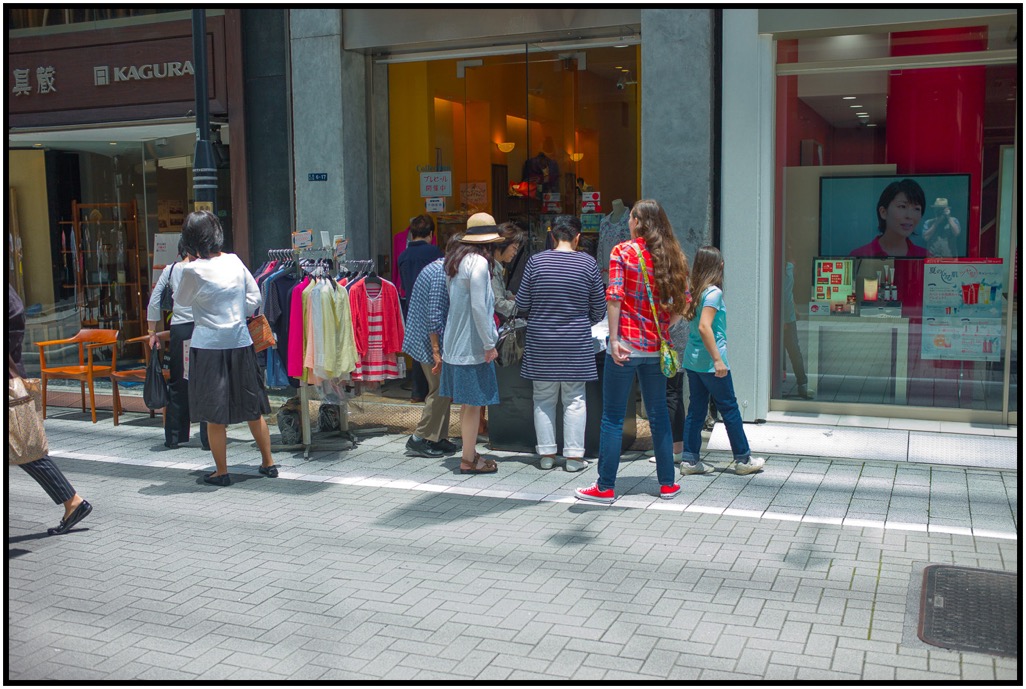
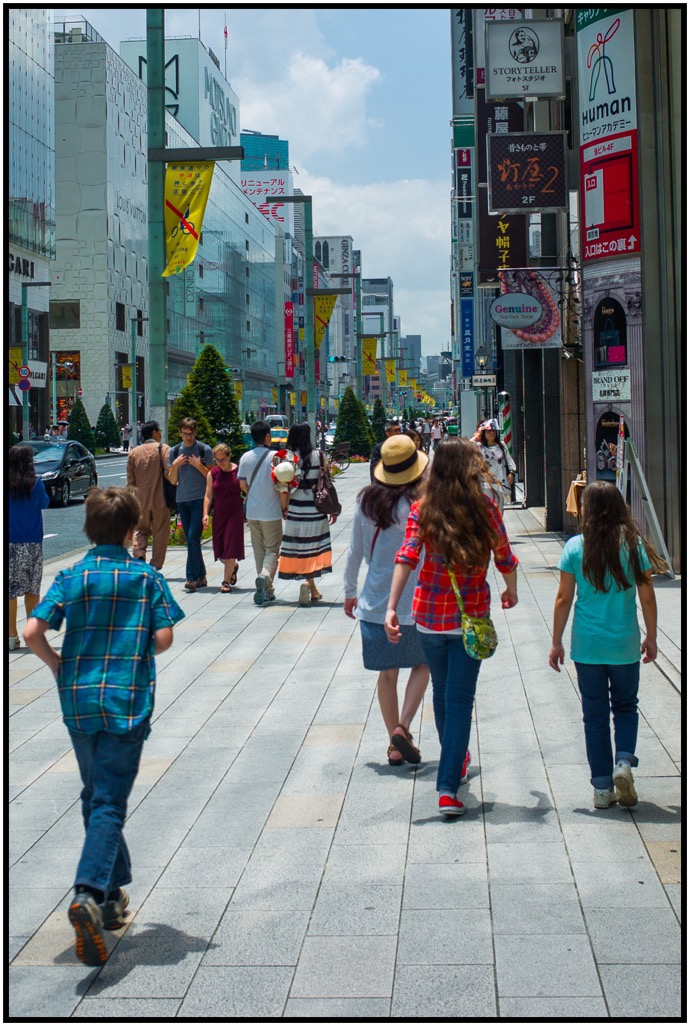
The Brand Off shops (the ones selling all the secondhand designer goods) are all over Ginza. They can be hard to spot because they are generally down in the basements of these huge buildings, and the advertising signs are are difficult to find amongst all the other signs plastered everywhere. It can be overwhelming. Once you figure out what to look for, though, you start being able to pick things out of the chaos. In the photo below, you can see the tiny “Brand Off” sign directly over Josie’s head.
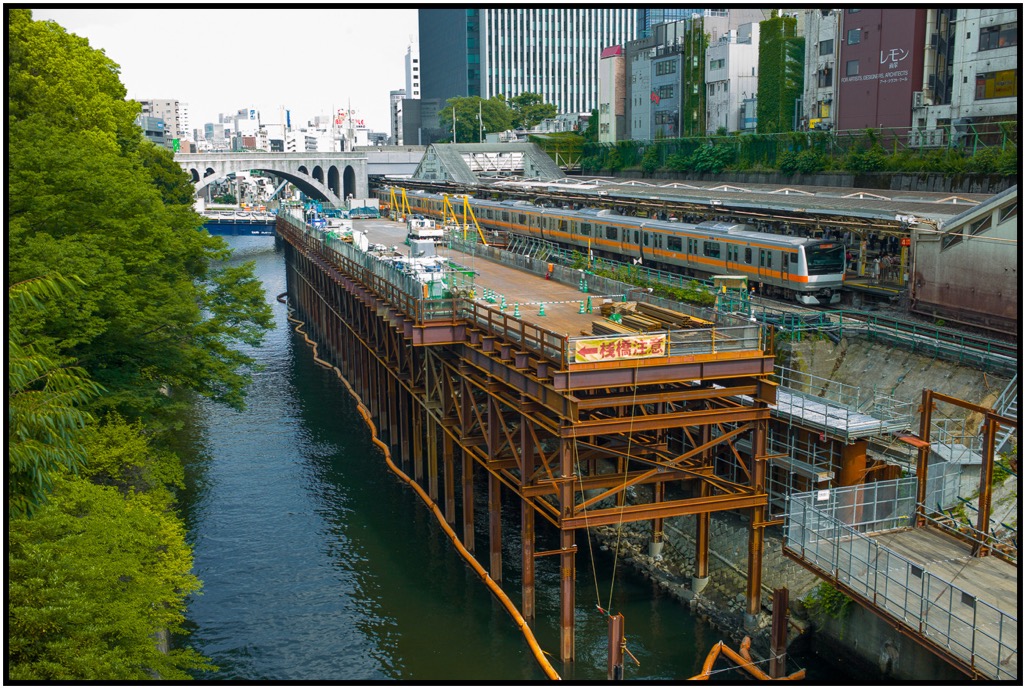
After Ginza, we went over to what Adam has been calling “the guitar district.” It’s officially called Ochanomizu and is the coolest music spot we’ve ever seen. There is store after store after store of musical instruments — and not just guitars. You can find musical instruments here that you’ve never heard of. Holden plays the trumpet and just went nuts here. He knows a lot more about trumpets than I thought he did.
One of the coolest guitar shops was a place called ESP Ochanomizu. They produce custom-made fully-functional guitars carved into pieces of artwork. If you google “ESP guitar Ochanomizu” and look at the images you can see examples of their work. Unfortunately we didn’t get any photos ourselves – all of the stores had “no photo” signs prominently displayed.
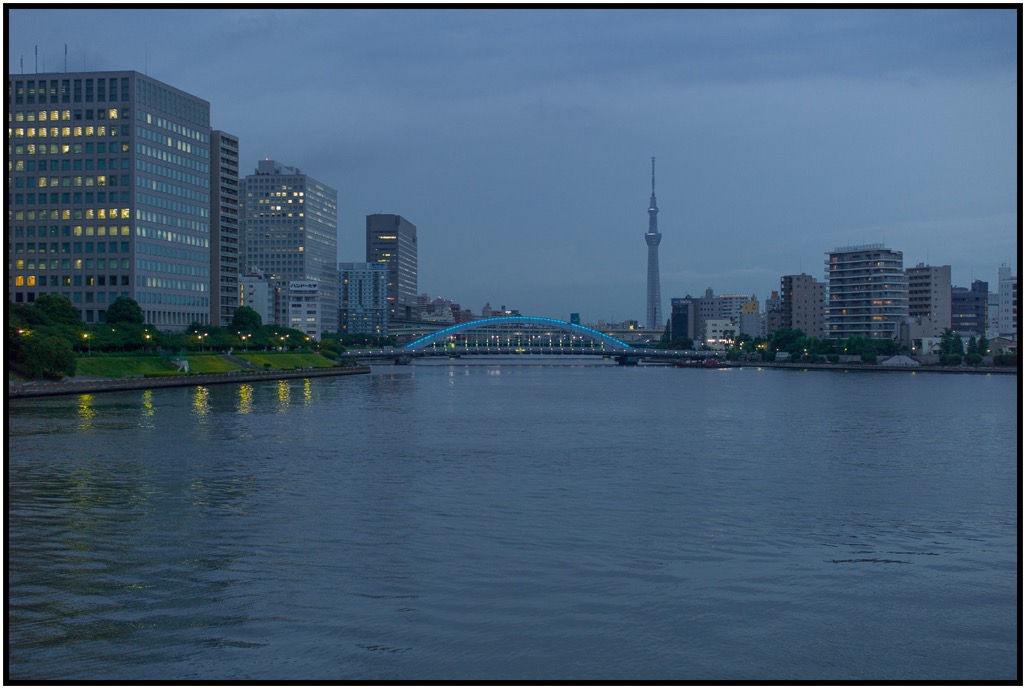
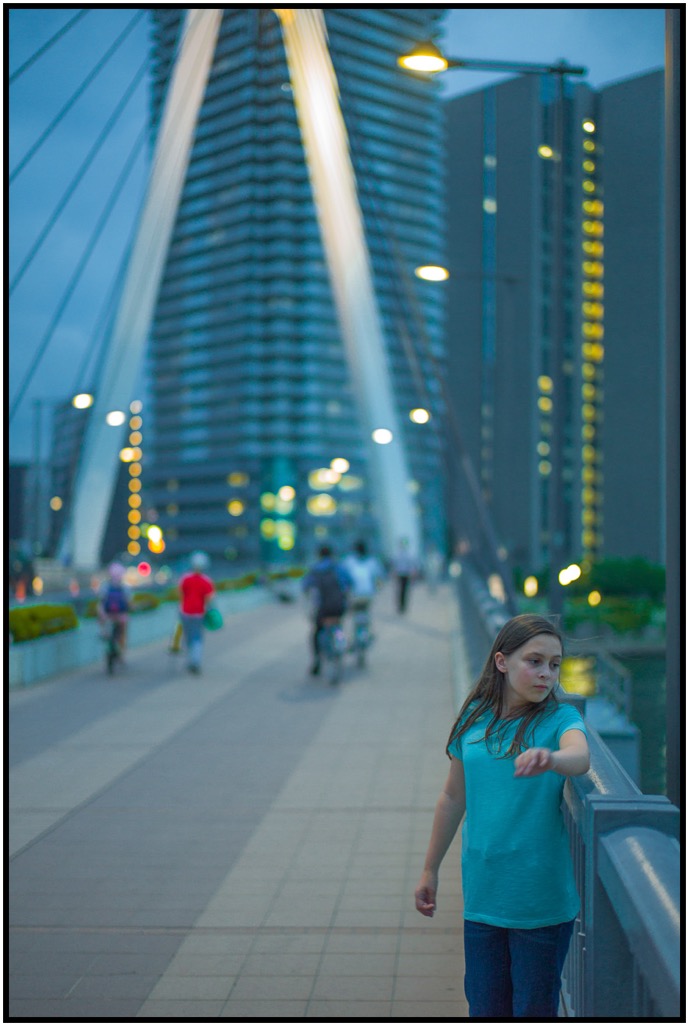
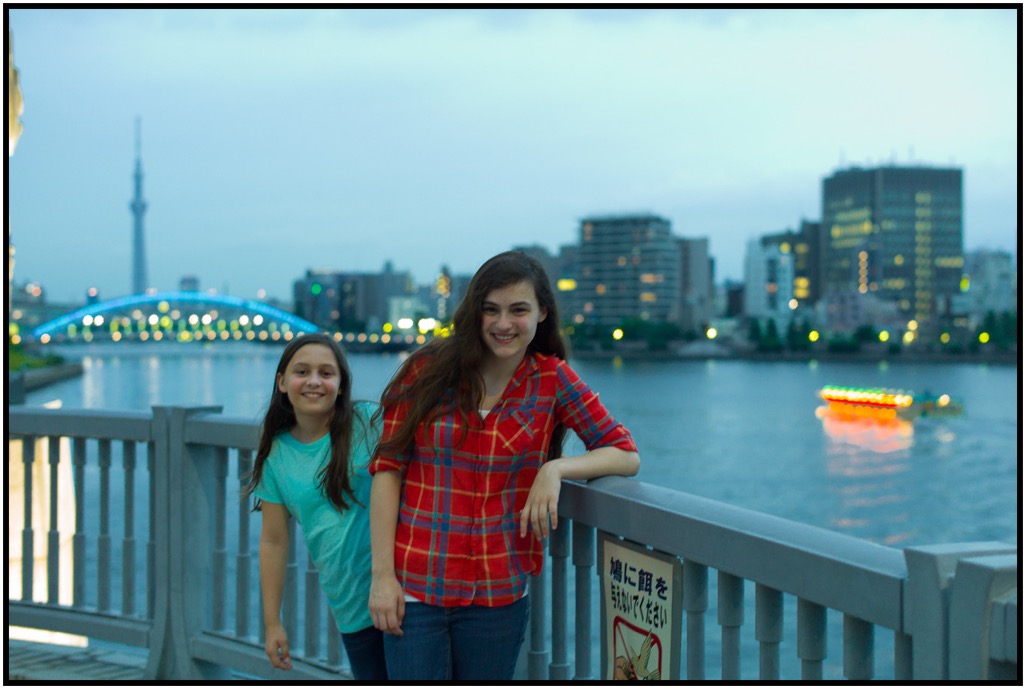
After it started getting dark, Adam and the two girls went out for one last walk around our neighborhood. In a couple of these you can see Tokyo Skytree in the background. It’s the world’s second tallest structure (the first is Burj Khalifa in Dubai.)
Our experiences in Japan have been fantastic. The kids all want to come back. We’re kicking around the idea of stopping in Tokyo for a few days next summer on a trip that hits Singapore, Malaysia, and Hong Kong. We’ll just have to wait and see what next summer brings!

