For the next two weeks we are in Brazil. There is one week of play and then one week of work (in Sao Paulo) on the schedule.
We have traveled to Manaus, Brazil – in the heart of the Amazon jungle and right along the river. We have never been before; it’s not like getting here is on the way to something else. We’re going to spend the week in the jungle, exploring the Amazon.
Several months ago we both went in for the “traveler vaccine package.” Yellow fever vaccine, typhoid, Hep A and B, tetanus boosters, and anti-malaria pills. We were quite surprised when we showed up for our appointment, expecting to spend 15 minutes getting shots, but instead were ushered into a private room with two nurses who gave us a 2-hour counselling session about how to keep ourselves healthy for the duration of our trip and non-contagious upon our return home.
Among other things, we had to sign a solemn oath that we would not, !under any circumstances!, touch a bat. We also have to continue taking the anti-malarial medications for 7 full days after we leave the area so as not to pass malaria into an uninfected mosquito population. 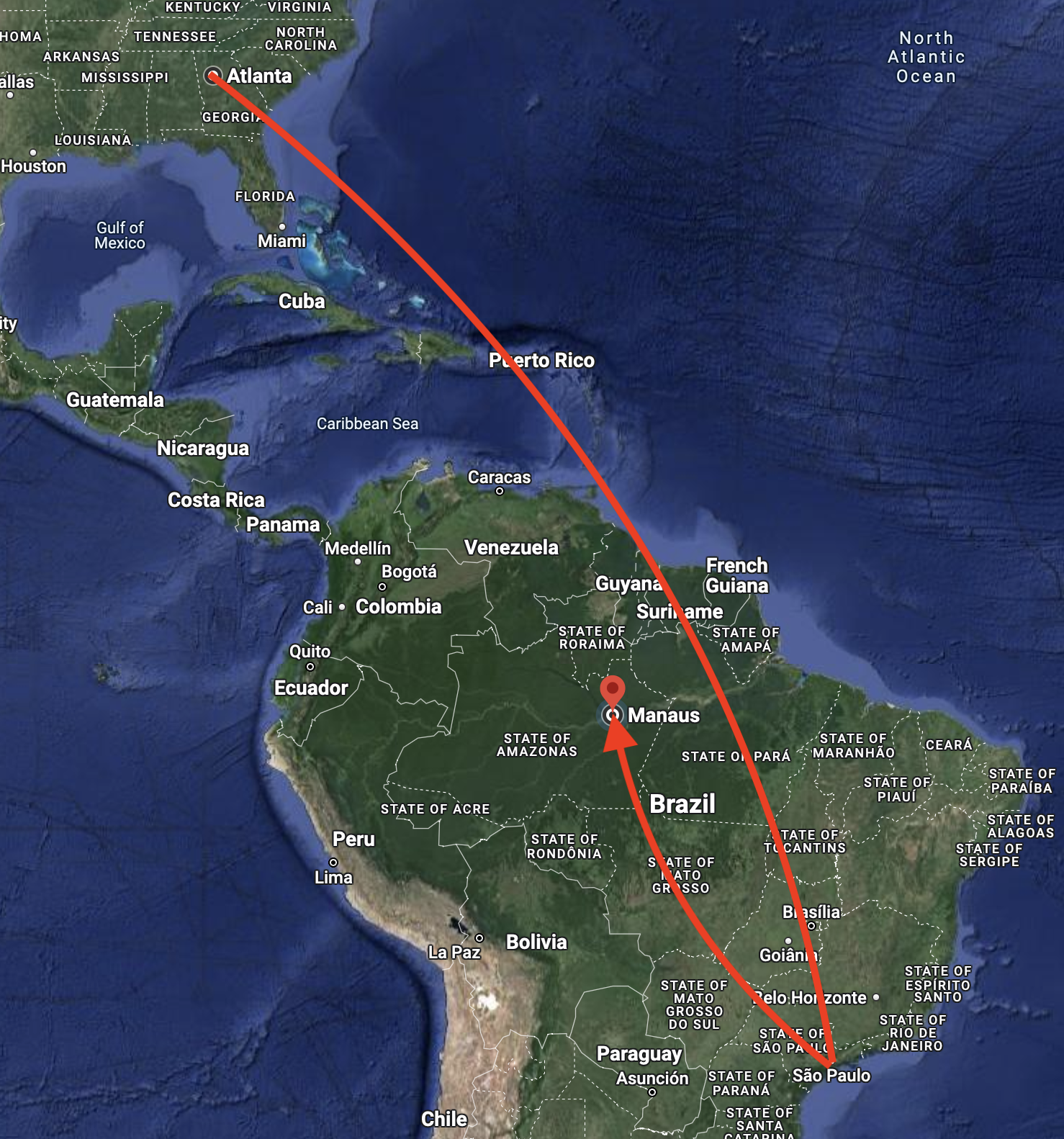
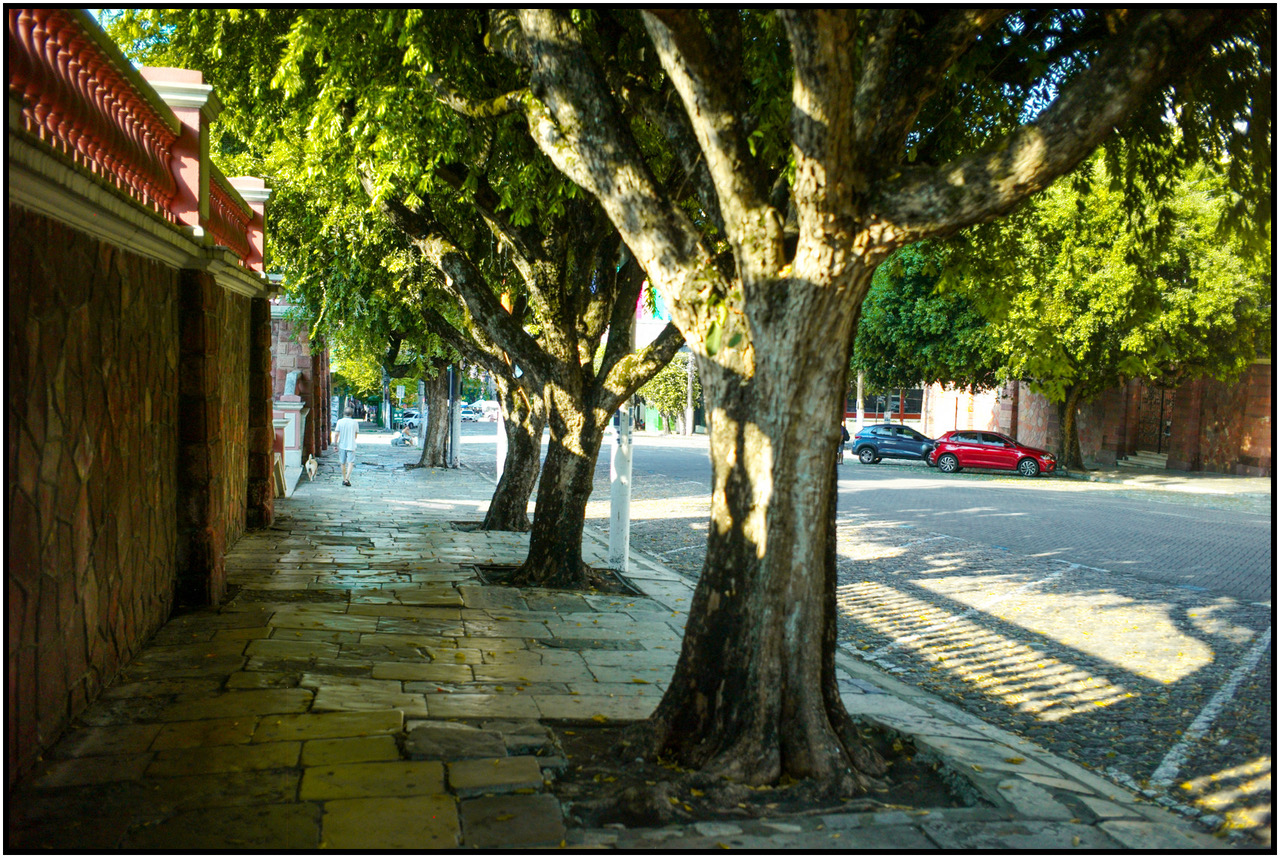
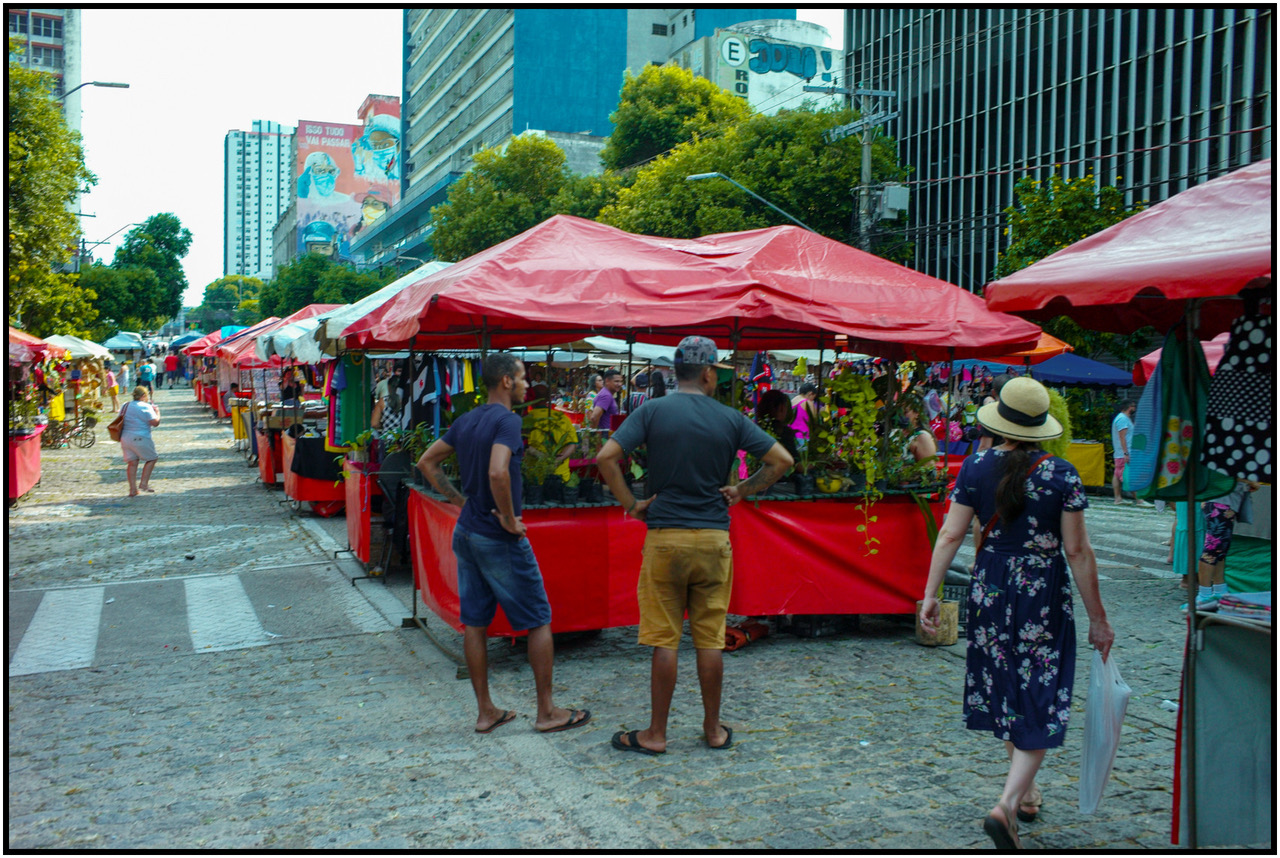
Streets of Manaus on a Sunday morning.
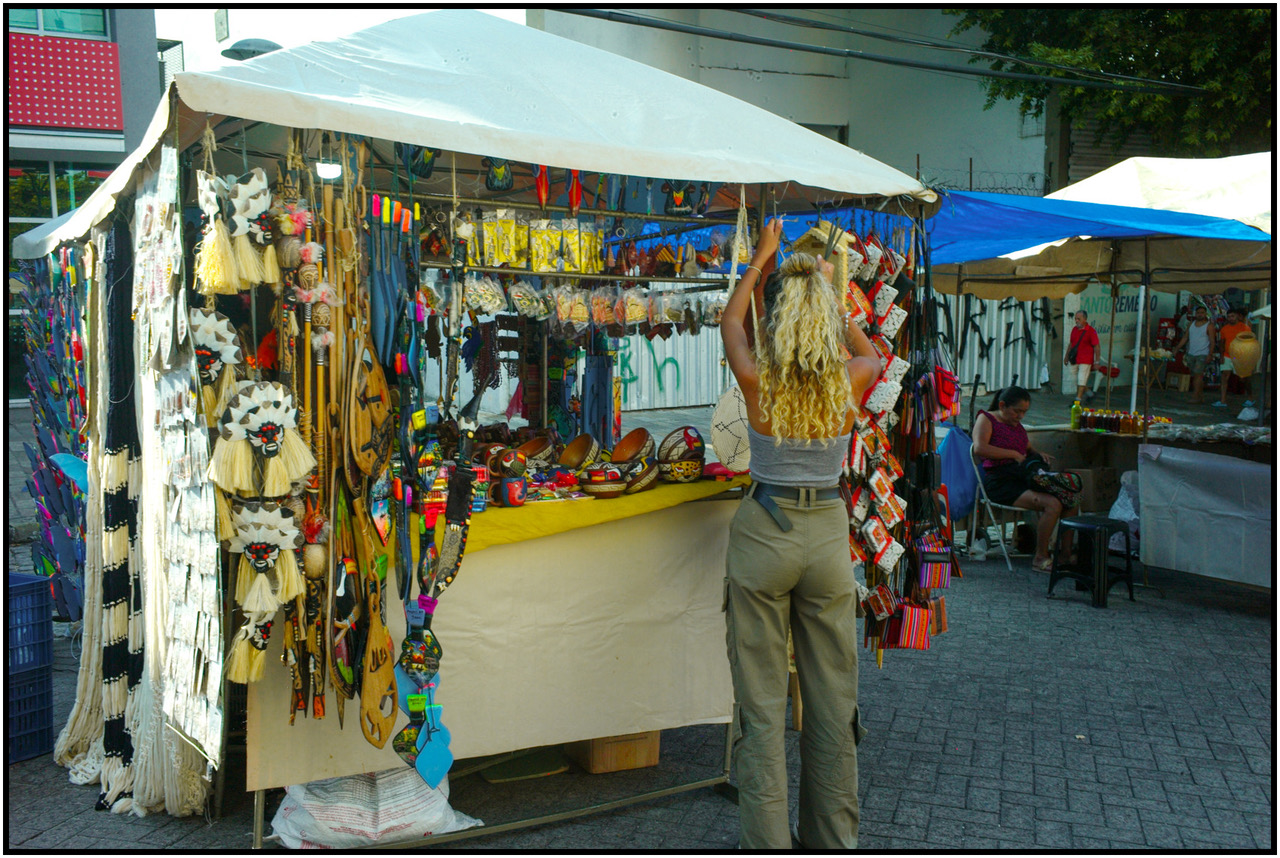
At breakfast the waiter recommended an open market they set up each Sunday morning. We were off as soon as we finished our plates. 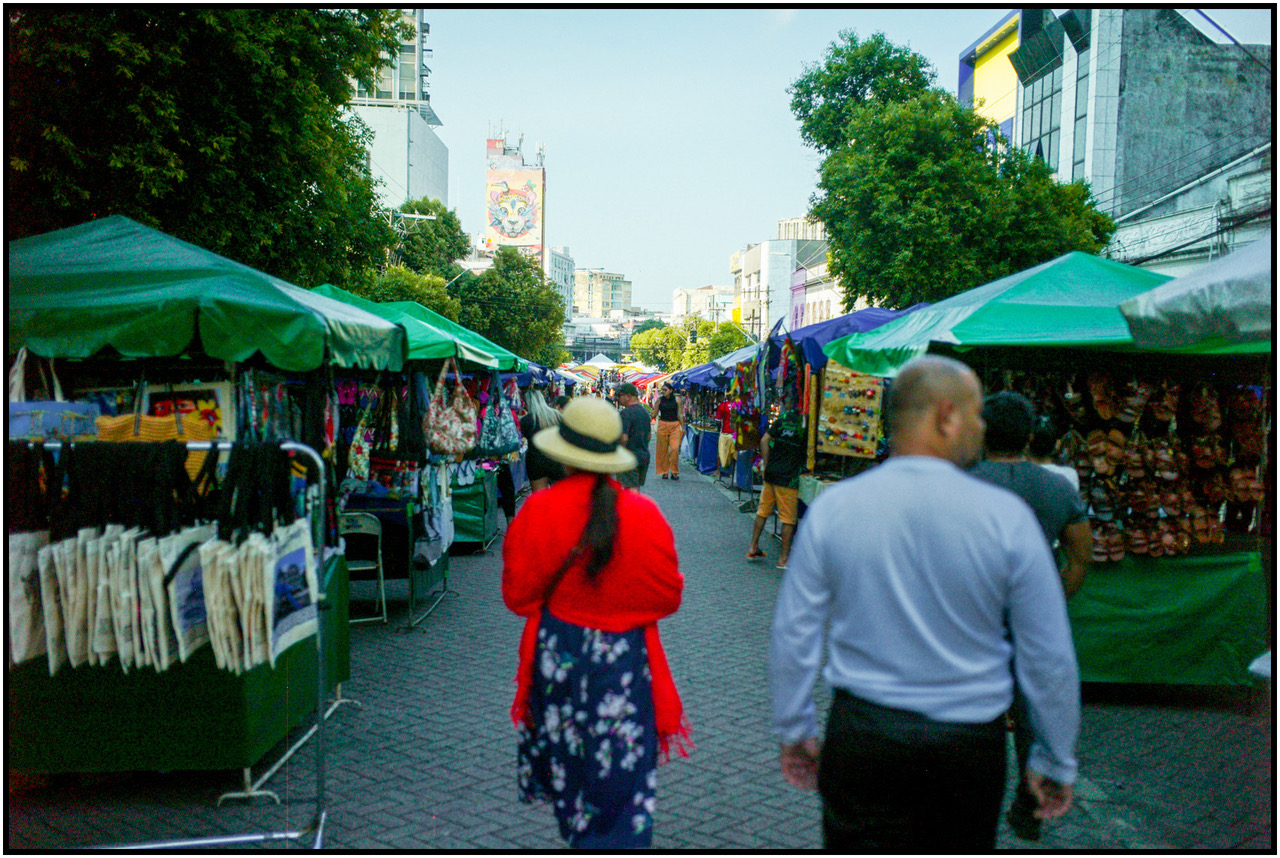
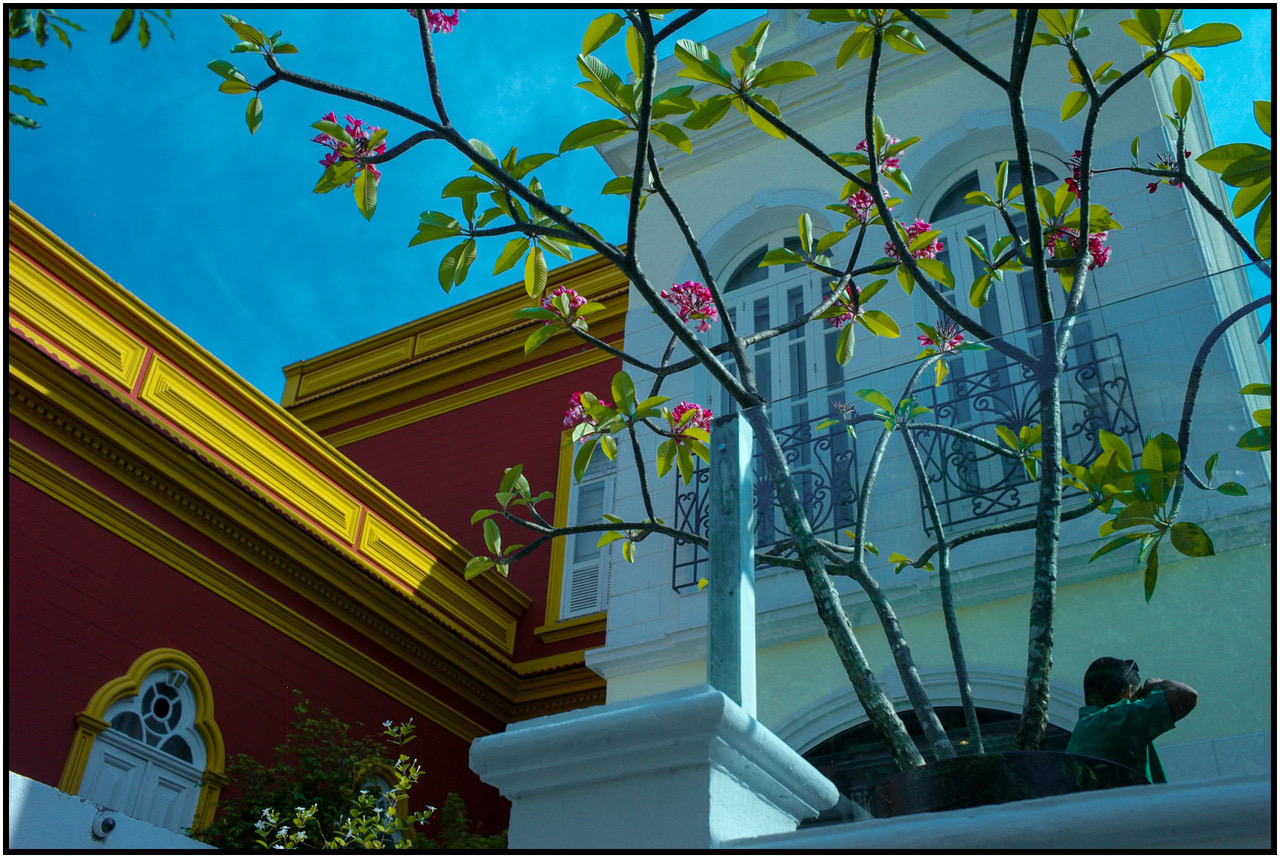
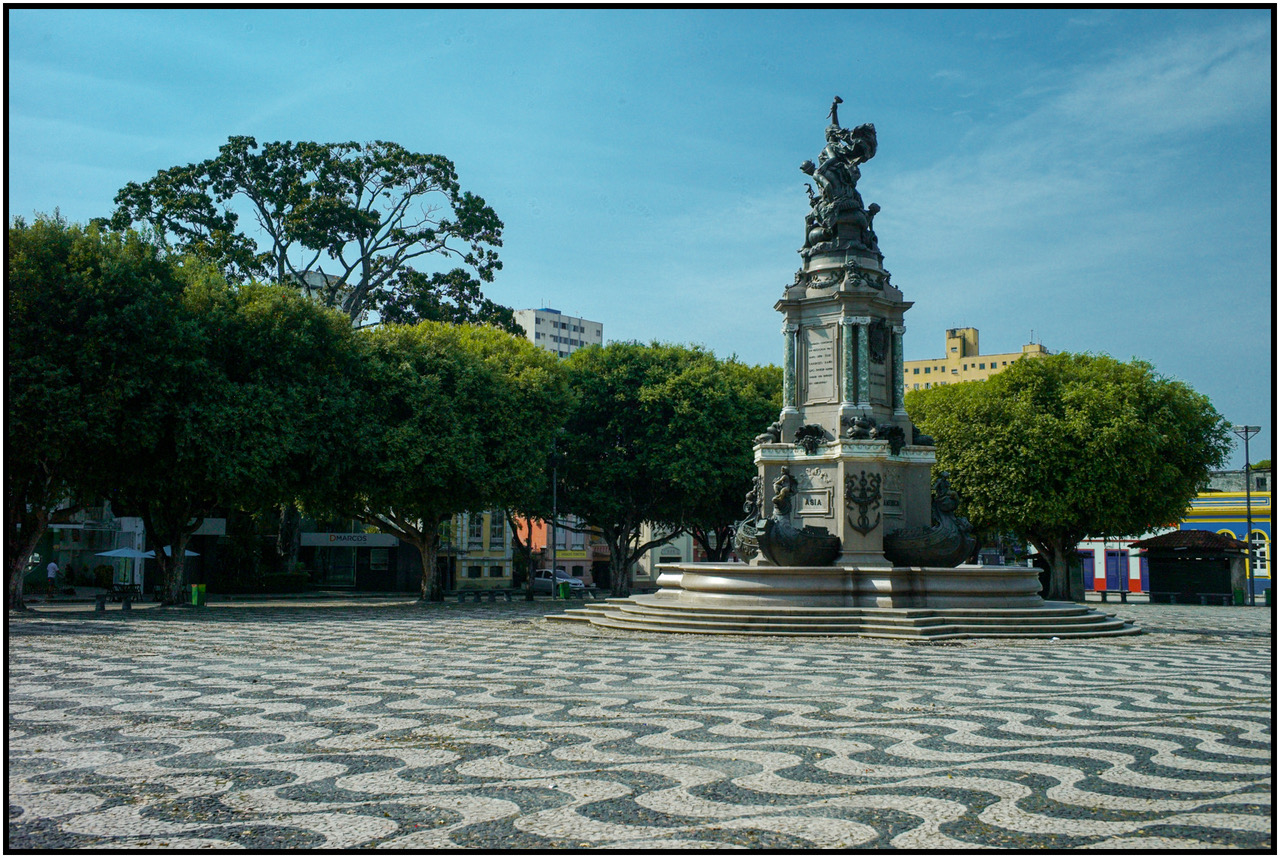
 Manaus exists due to the rubber trade in the 18th and 19th centuries. At one point, Manaus was one of the wealthiest cities in the Hemisphere… not so much now. First Malaysian rubber plantations were established that out-produced Brazilian methods (more on that later), and then technological/chemical improvements developed alternatives to pure rubber killed the industry.
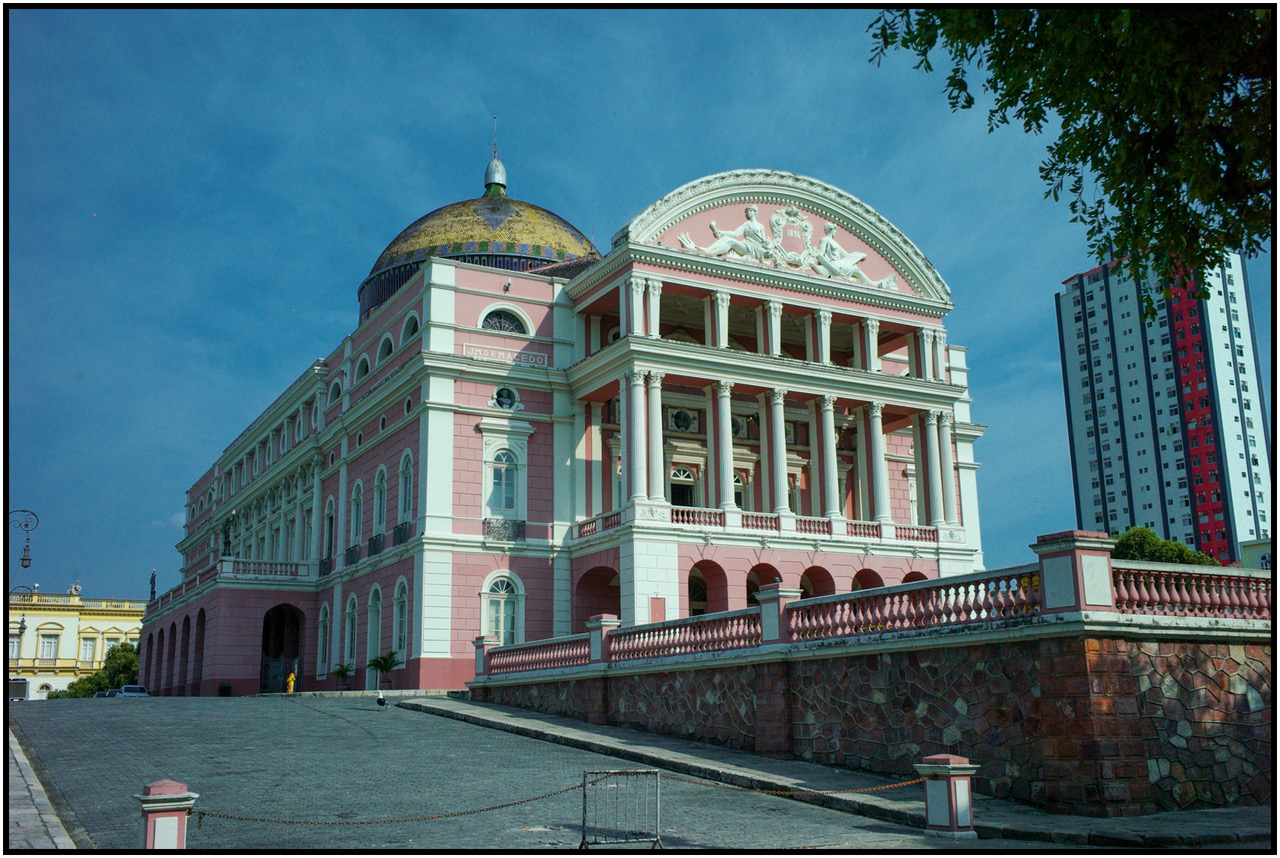
In Manaus, the city elders had so much money that they constructed “The Paris of the Tropics” – including an opera hall that now serves as the city’s most recognizable landmark.
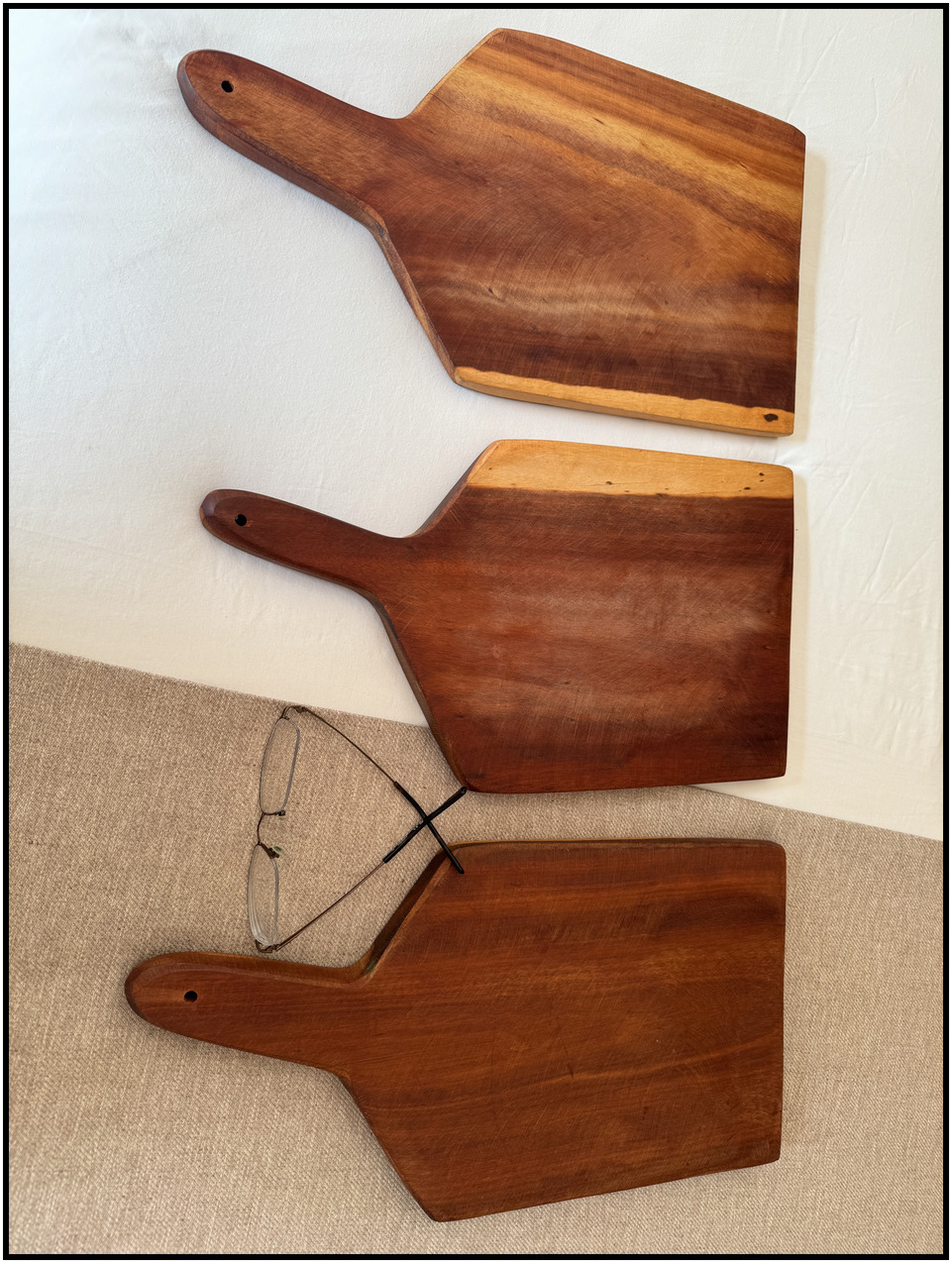
We bought these Brazilian cherry wood cutting boards to bring back as gifts (plus one for ourselves.) Brazilian cherry wood is a misnomer, considering it is not related in any way to cherry trees. It’s a tree in the legume family (Hymenaea courbaril) and produces wood with a hardness rating nearly double that of oak. It grows fast, is hard and durable, and is therefore used everywhere. It makes particularly nice flooring, since it can take a beating in high traffic areas without getting dented and scratched up. It is also popular for use in kitchen equipment (cutting boards, wooden spoons, bowls, etc.) and furniture.
Later in the day we went to the Marina do Davi to find a boat that would take us to The Museu do Seringal, a recreated rubber plantation. Figuring out all this chaos was an adventure in itself.
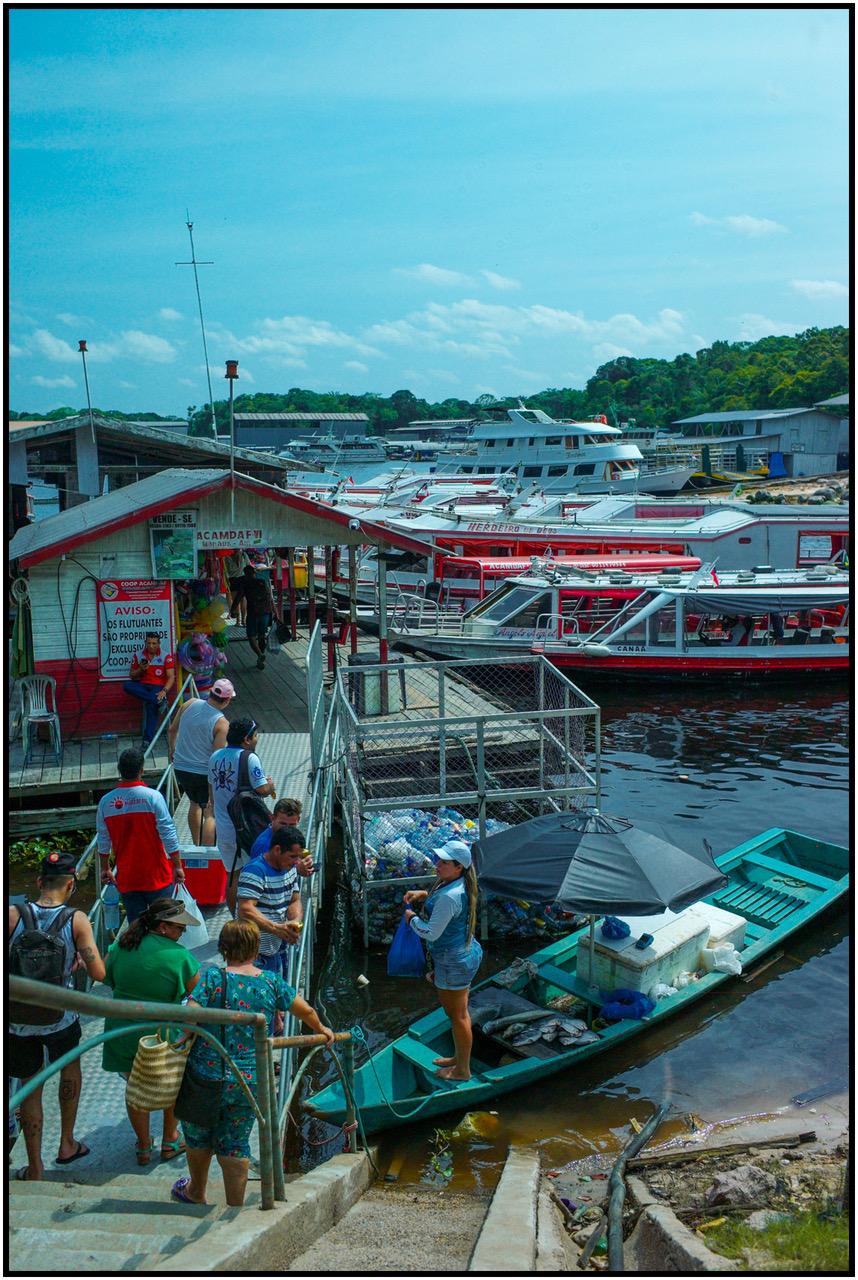
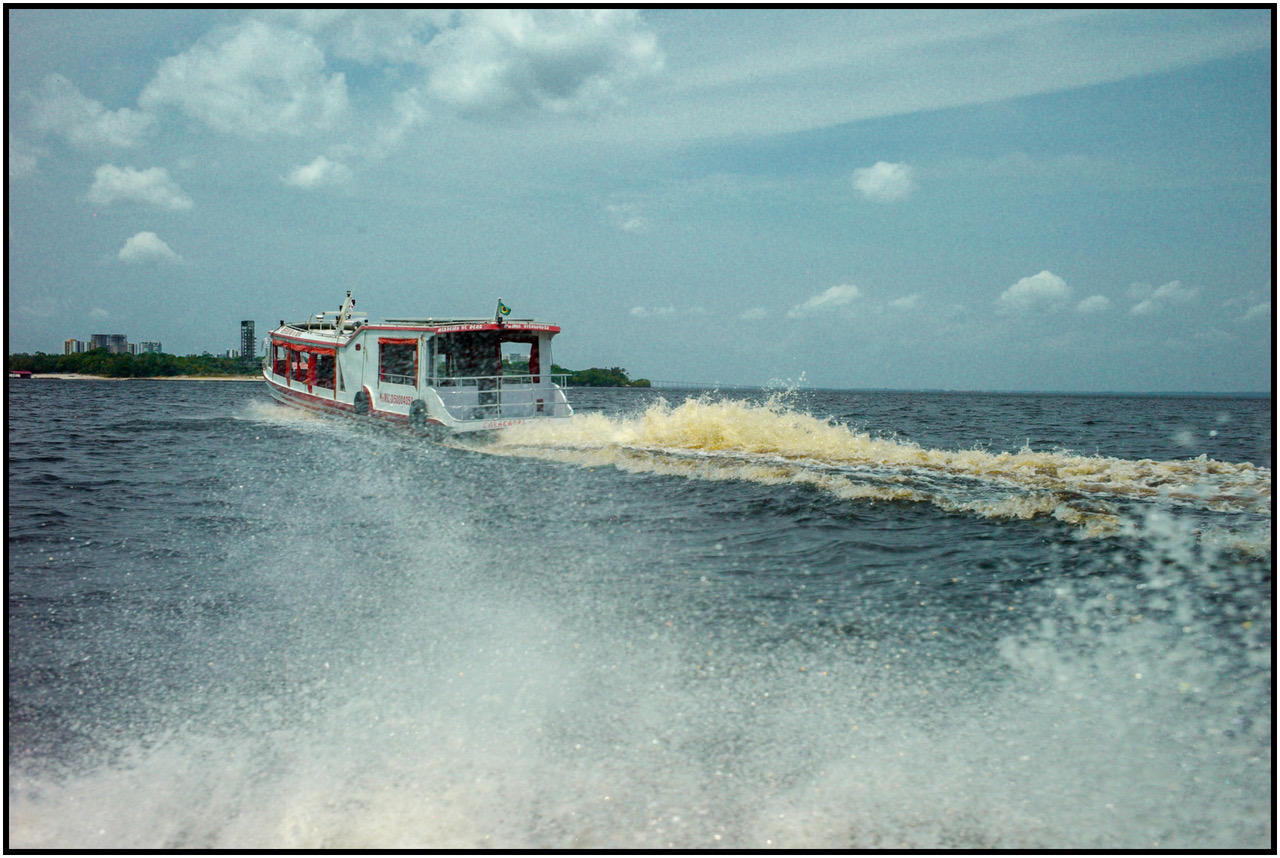
The boats serve as taxis along the river with defined stops. There are numerous sandy beaches along this portion of the river where people stop off to party, swim and do general weekend beach stuff. I guess they don’t have any nasty critters along this stretch of the river.
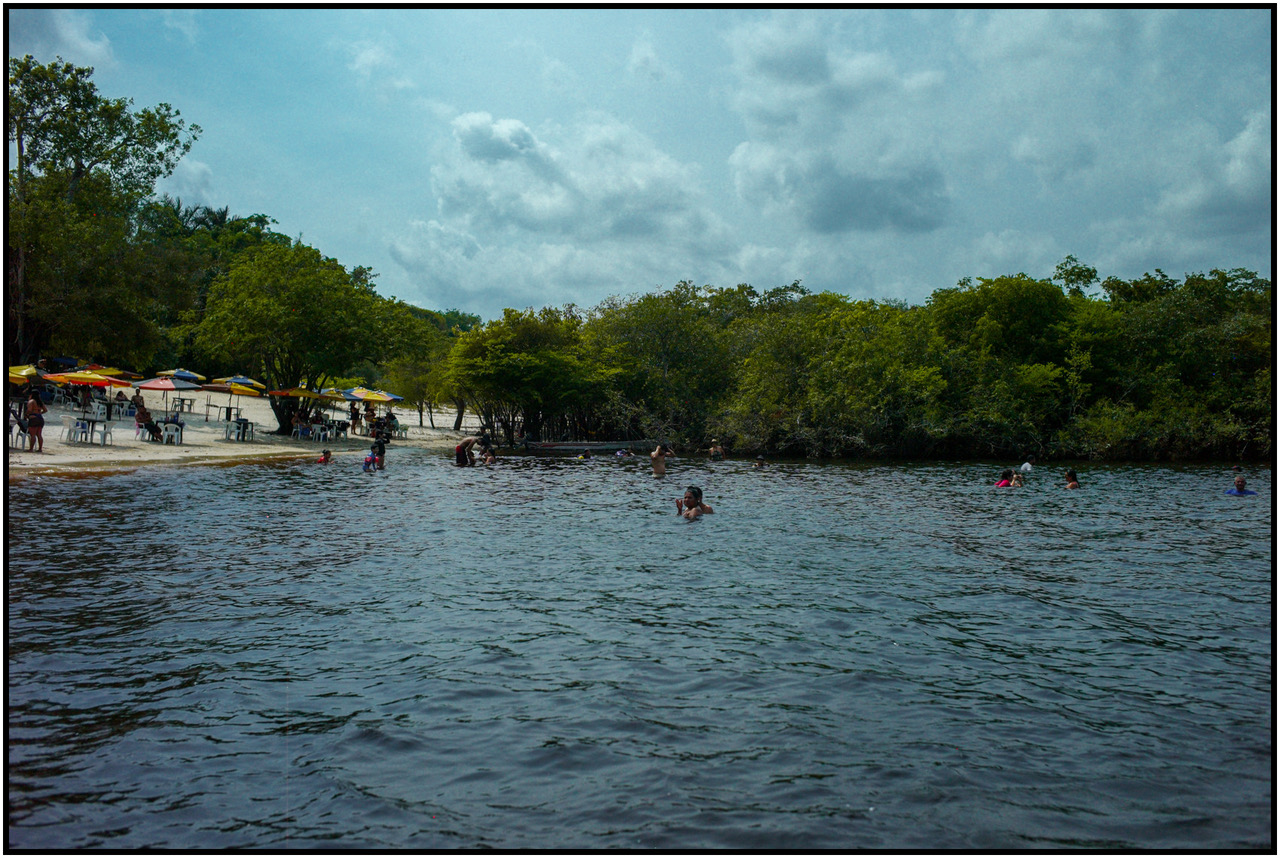
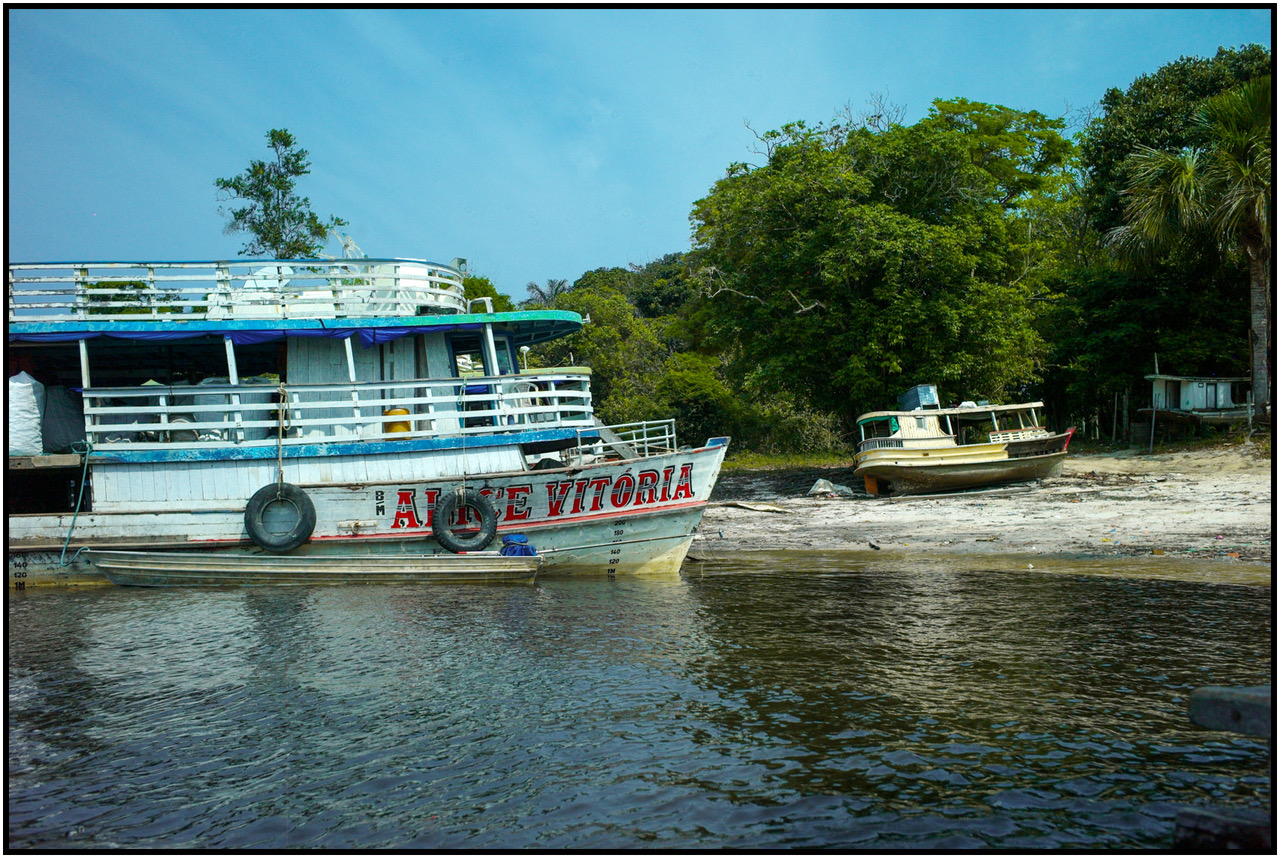
After about a 30 minute boat ride upriver, they dropped us off at Seringal Museum. This was originally created as movie set for the film “A Selva” that came out in 2002- but is based on a Portuguese book written in the ‘30s that recounted what actually happened at a nearby rubber plantation.
We found someone here who spoke English and he gave us a personalized tour of the grounds, showing us how rubber was harvested, how the business operated and the miserable conditions everyone suffered living in the Amazon during this period.
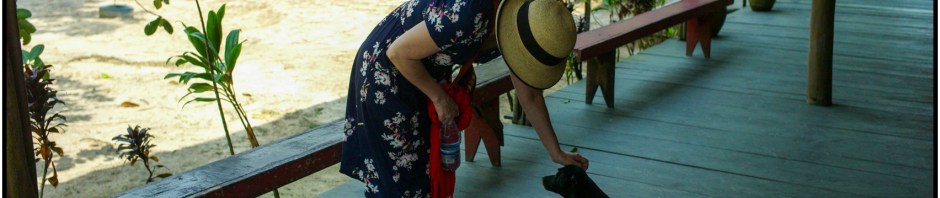
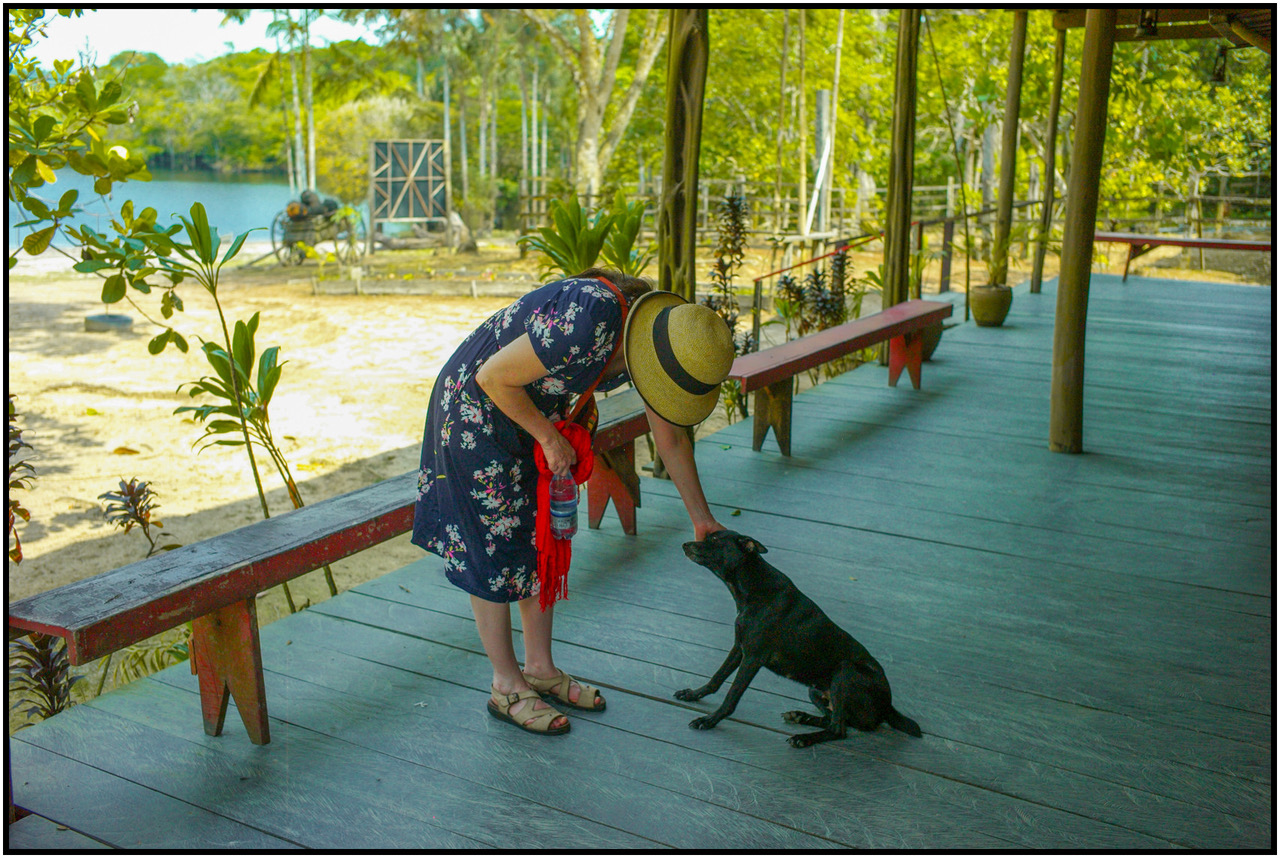
Meeting the greeter dog. She was a sweetie.
The story was a sadly familiar one of colonial times, wherein Europeans established colonies and proceeded to enslave, abuse, cheat, exterminate, and exploit native peoples.
In this case, the Portuguese established the rubber production and used all sorts of nasty tricks to enslave local people. The man who ran the plantation (called The Colonel) was essentially a dictator. The Portuguese would persuade men from other areas of Brazil to come work the rubber plantation on the promise of high wages and wonderful opportunities. (Local people could see how the place was run and steer clear.) Once the men arrived, they were turned into slaves. They were killed if they tried to escape, they were forbidden to fish or forage food in the jungle and had to buy food from the company store, at massively jacked-up prices. They were paid for the rubber they produced by weight, but the Colonel’s scale was rigged to cheat — for example, 100kilos of rubber would weigh in at about 40kilos.
In an effort to get more fairly paid, the workers started embedding rocks and bits of metal into the rubber blocks to make them heavier. This worked for a little while, until the Ford Motor Company started sending letters of complaint that when they cut into the rubber blocks to start processing them into tires, the rocks and metal bits were wrecking their machinery. At this point, the Colonel figured out what the workers were doing. He would make men throw their rubber blocks into the river — if it floated, it was pure, but if it sank it had rocks in it. If someone got caught with a block that sank, they were tortured and killed.
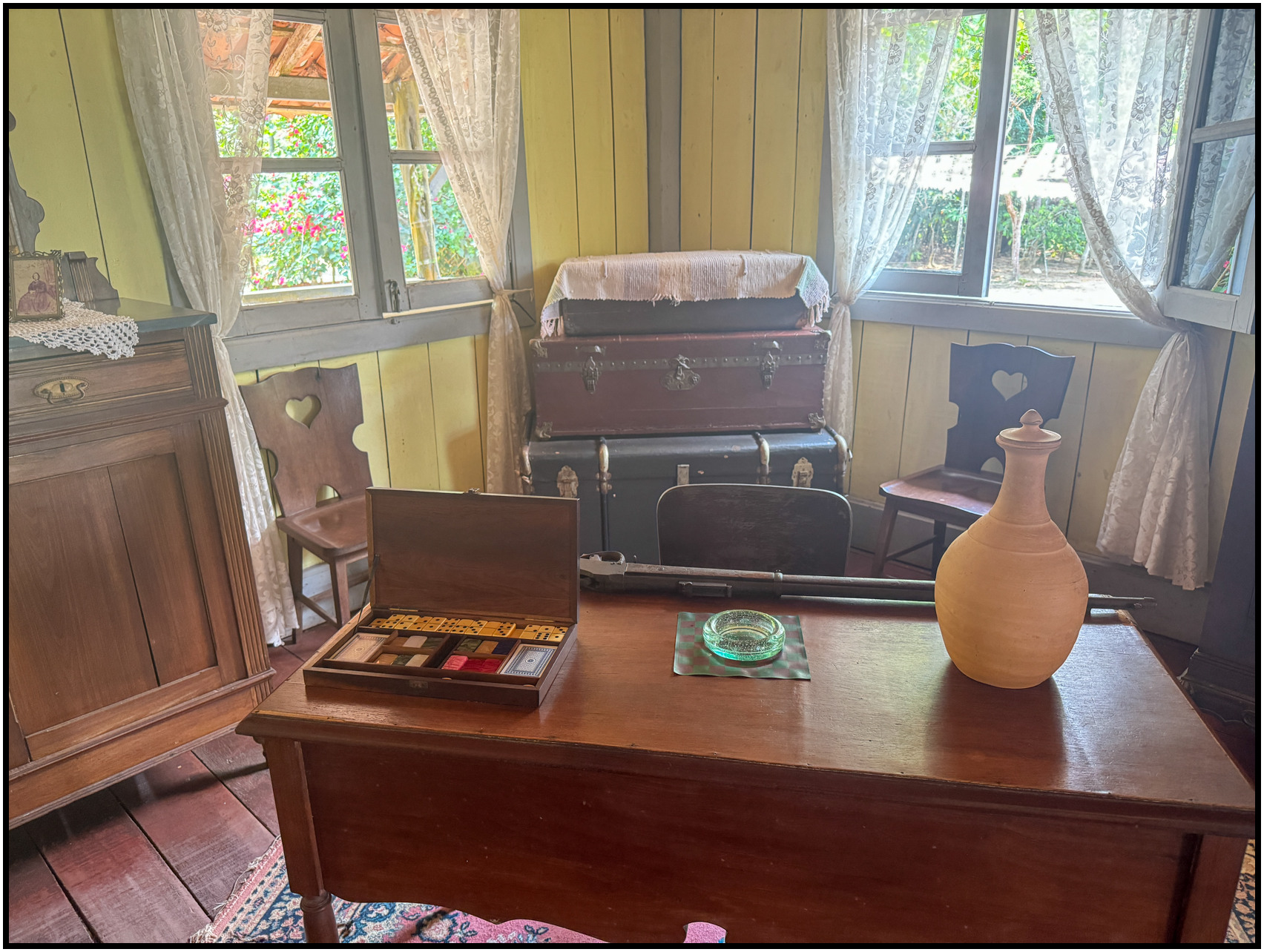
Meanwhile, the Colonel lived in a fancy house filled with fine furniture and fittings from Europe and the United States.
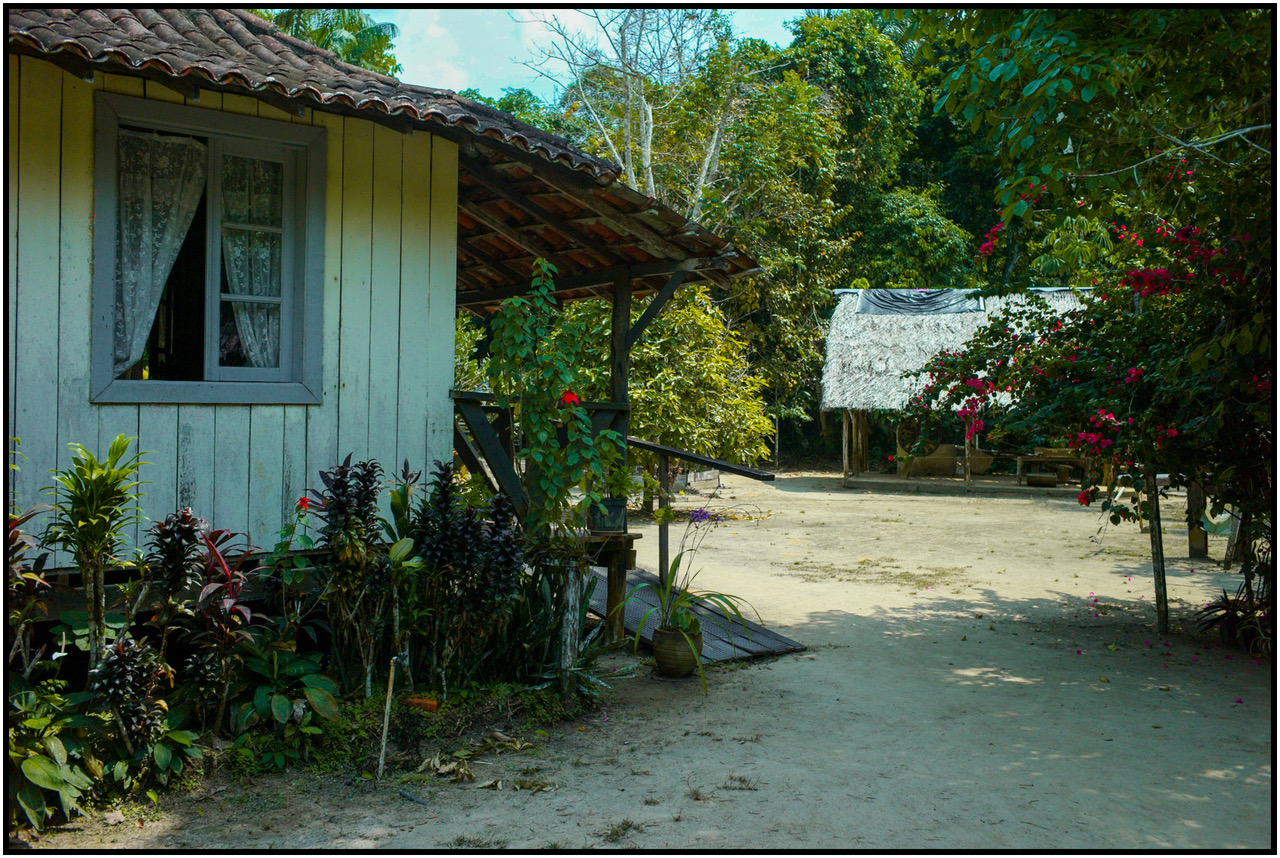
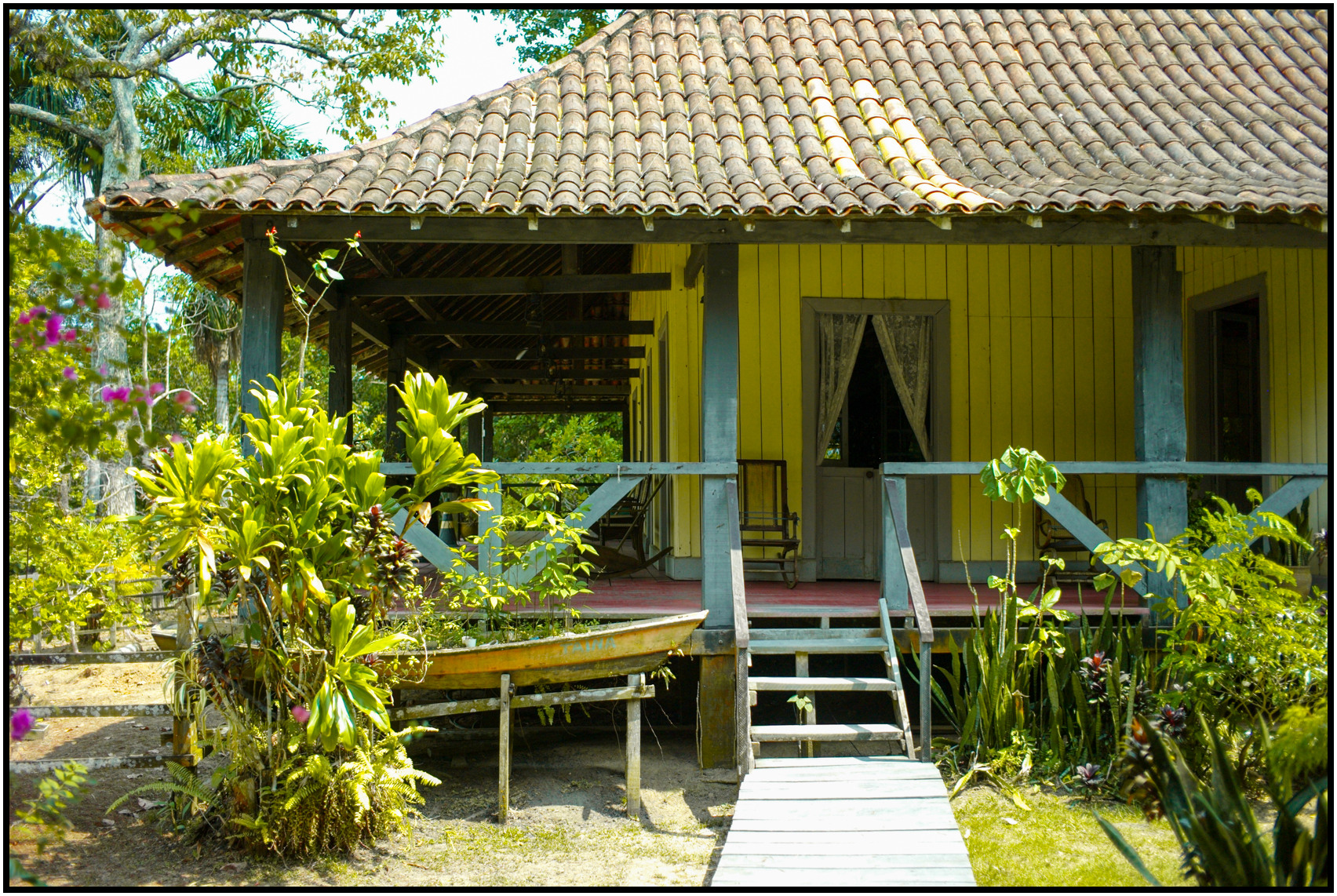
This room was the guest room where Ferreira de Castro, the author of the original book, stayed during his time in Manaus. (A reproduction for the movie set, based on drawings and descriptions from the author.)
The dining room, with Portuguese glassware, oriental china, a huge clock (not pictured) from Boston, linens from France, etc. Nothing but the best for these guys. The Colonel’s wife thought the water from the Amazon river was dirty, so she had water for her bath imported from Europe. She took a bath once a week. The extravagance and waste was appalling, considering the conditions they forced on the men they enslaved and abused to make all their money. (No women worked the rubber plantations.) 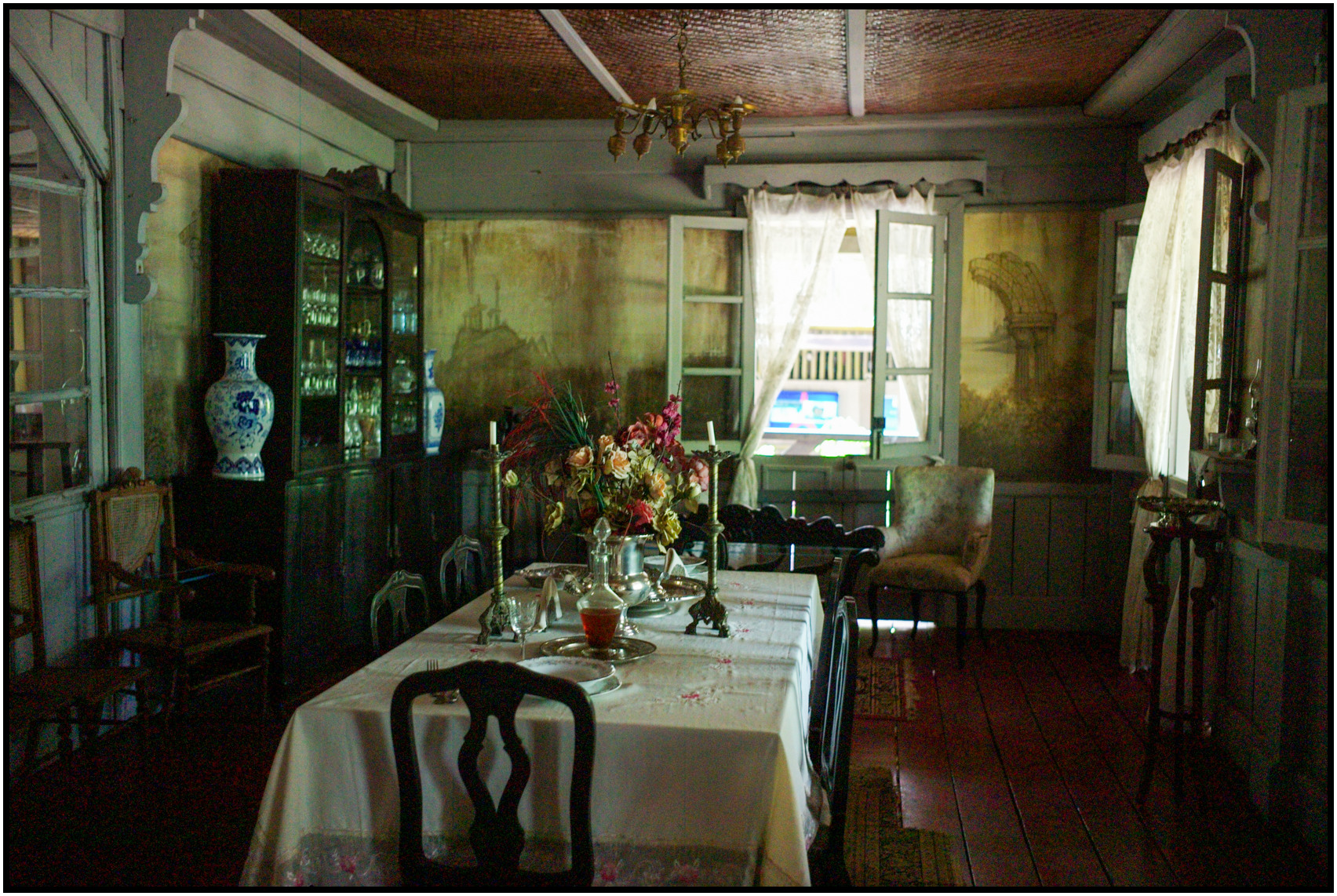
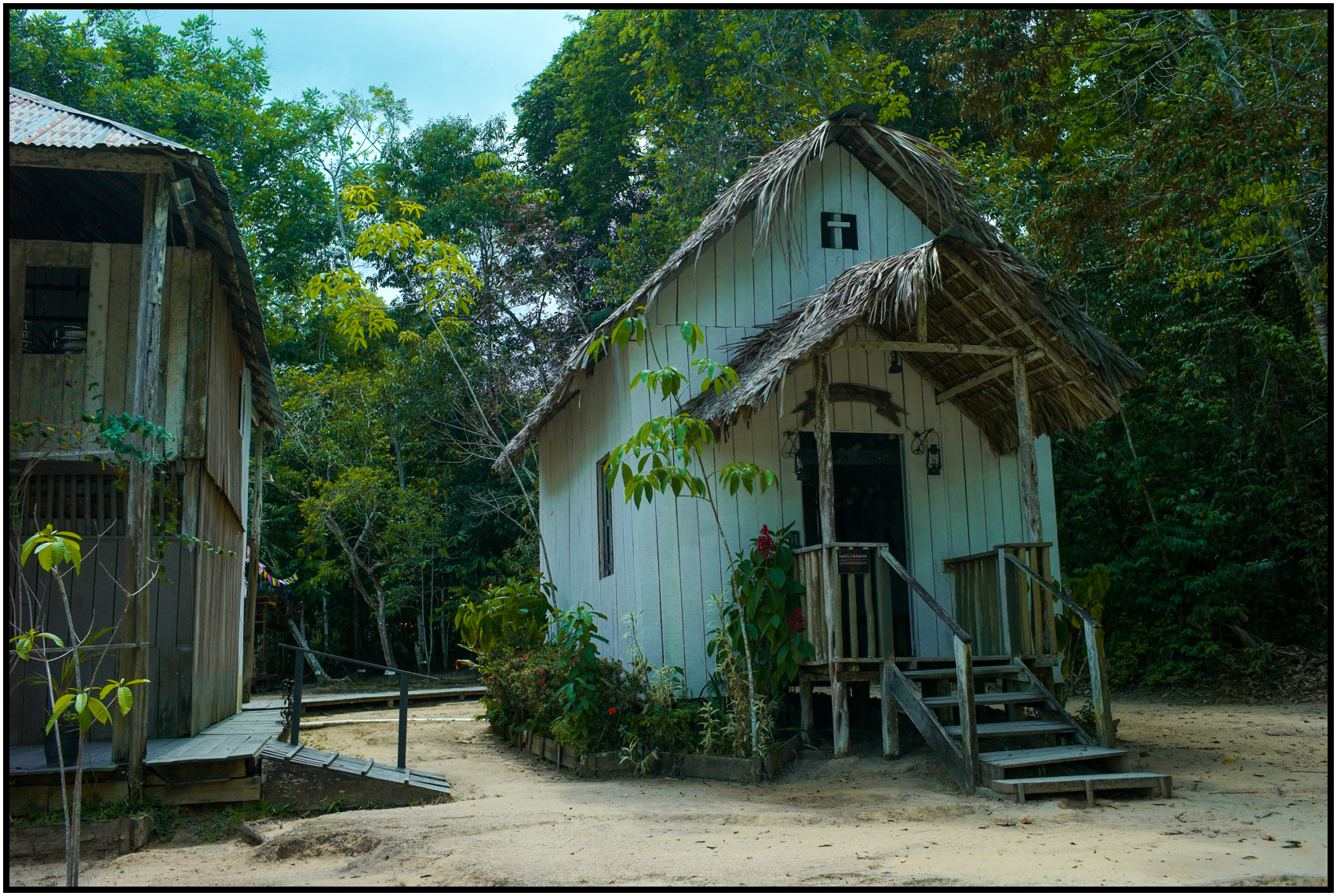
One final insult to injury, the Colonel “encouraged” his workers to convert to Catholicism and built a little chapel on the grounds (below). He doled out favors and slightly better treatment to those who converted. The priest he installed, however, was fake … he was not a priest at all, but a spy who kept tabs on what was going on in the work camps by taking confessions and earning the trust of the men who came to him. He then reported everything to the Colonel, who used the information to punish and/or kill anyone they felt might become a troublemaker.
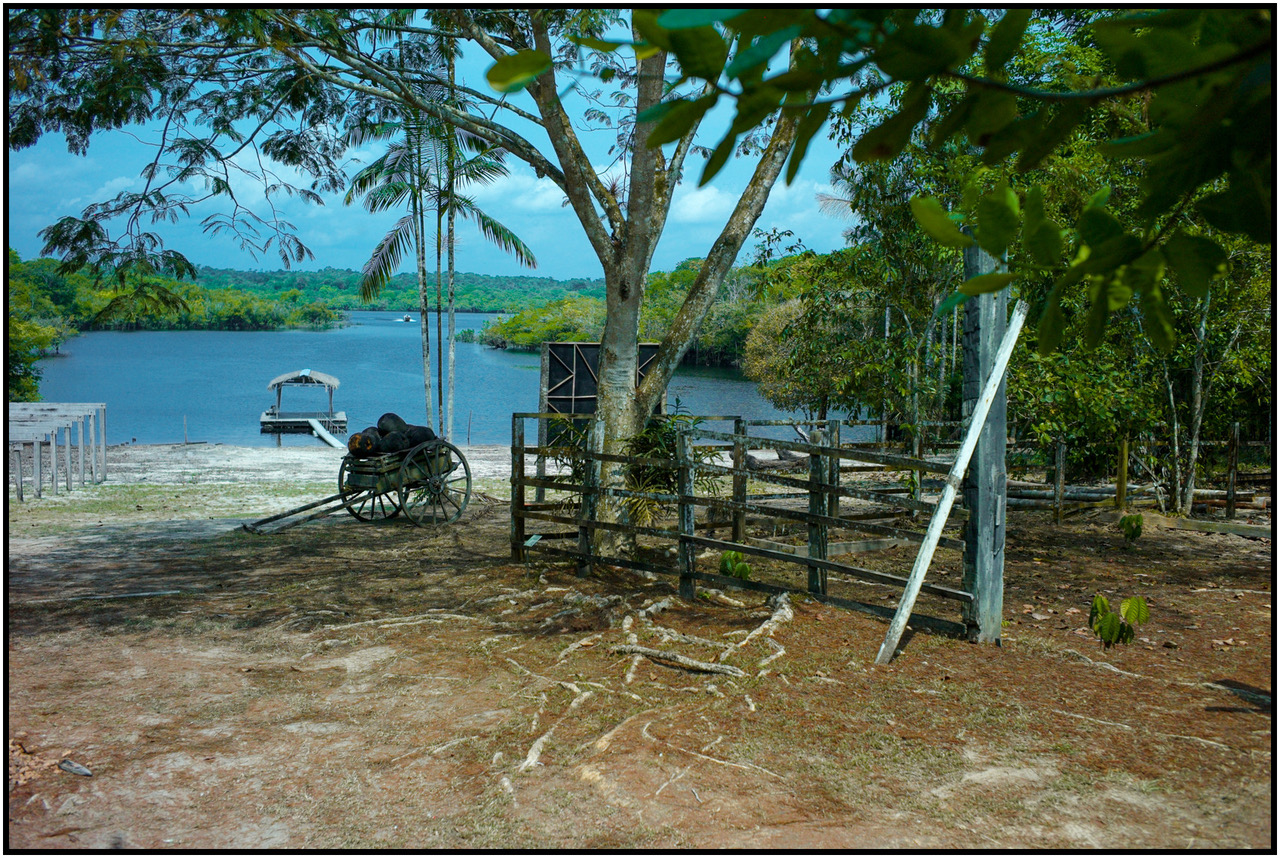
The cylinder shaped rolls are actual rubber “blocks”. Each weighed about 22 pounds. The guide showed how you could bounce one on the floor like a basketball.
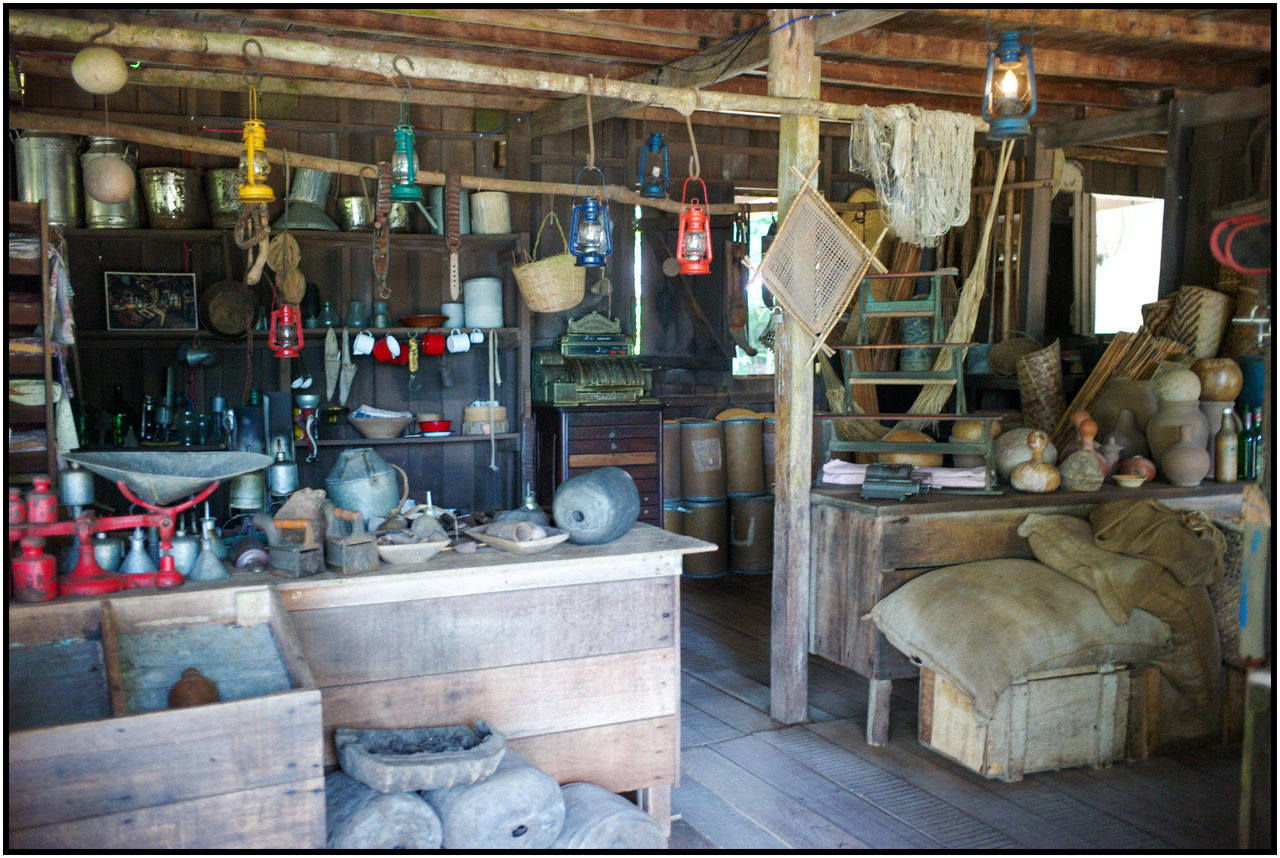
Our guide explained that the rubber trade in Brazil ended up being out-performed by rubber plantations in Malaysia, which was the beginning of the end of Manaus’s prosperity. Seeds were smuggled out of Brazil and grown on farms in Malaysia, which were able to be much more efficient. The Brazilians didn’t farm as such; they tapped trees already growing in the jungle. It took much more time to harvest the sap because they had to find the trees, and go some distances between them. The Malaysians farmed in the traditional manner, with big fields (orchards?) of trees in dense copses.
Later, in a tour of botanical gardens, we learned that the soil in the amazon forest is very thin sand. All the nutrients that support the vast jungle come from fallen plant debris that rots on the ground. Once you clear a piece of land for farming, the soil itself is so poor nothing can grow. It only works in an environment of great biodiversity. I’m guessing that had something to do with why the Brazilians didn’t farm the rubber trees and hunted for wild ones instead. Perhaps Malaysia had better soil to work with. (Just guessing, I don’t know much about it.)
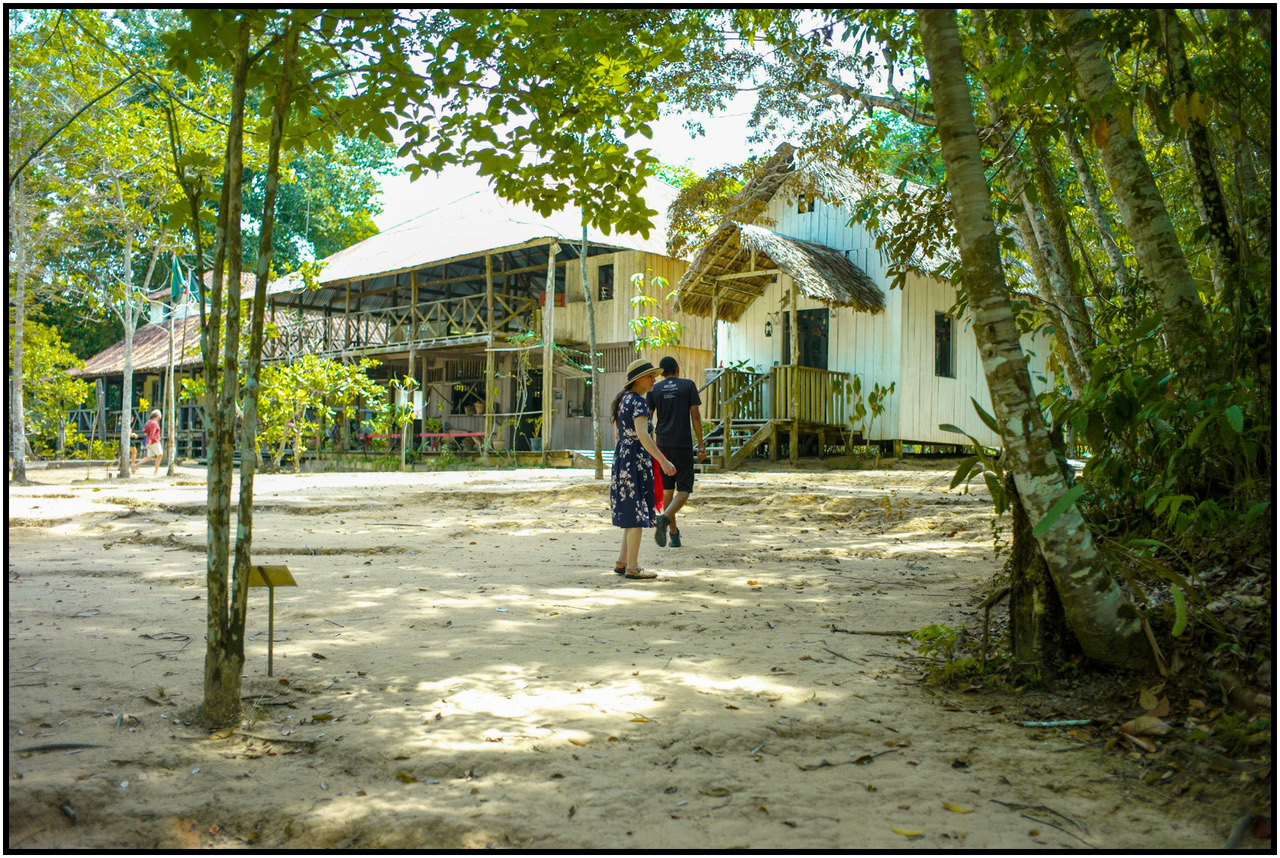
For our benefit, the guide cut a fresh gash on the rubber tree and embedded the container to catch what “bled” out… not much different than how one taps for maple syrup. A single person would fill about 100 of these little cups per night. They did all their cutting at night because the sap flowed better when the temperature was lower.
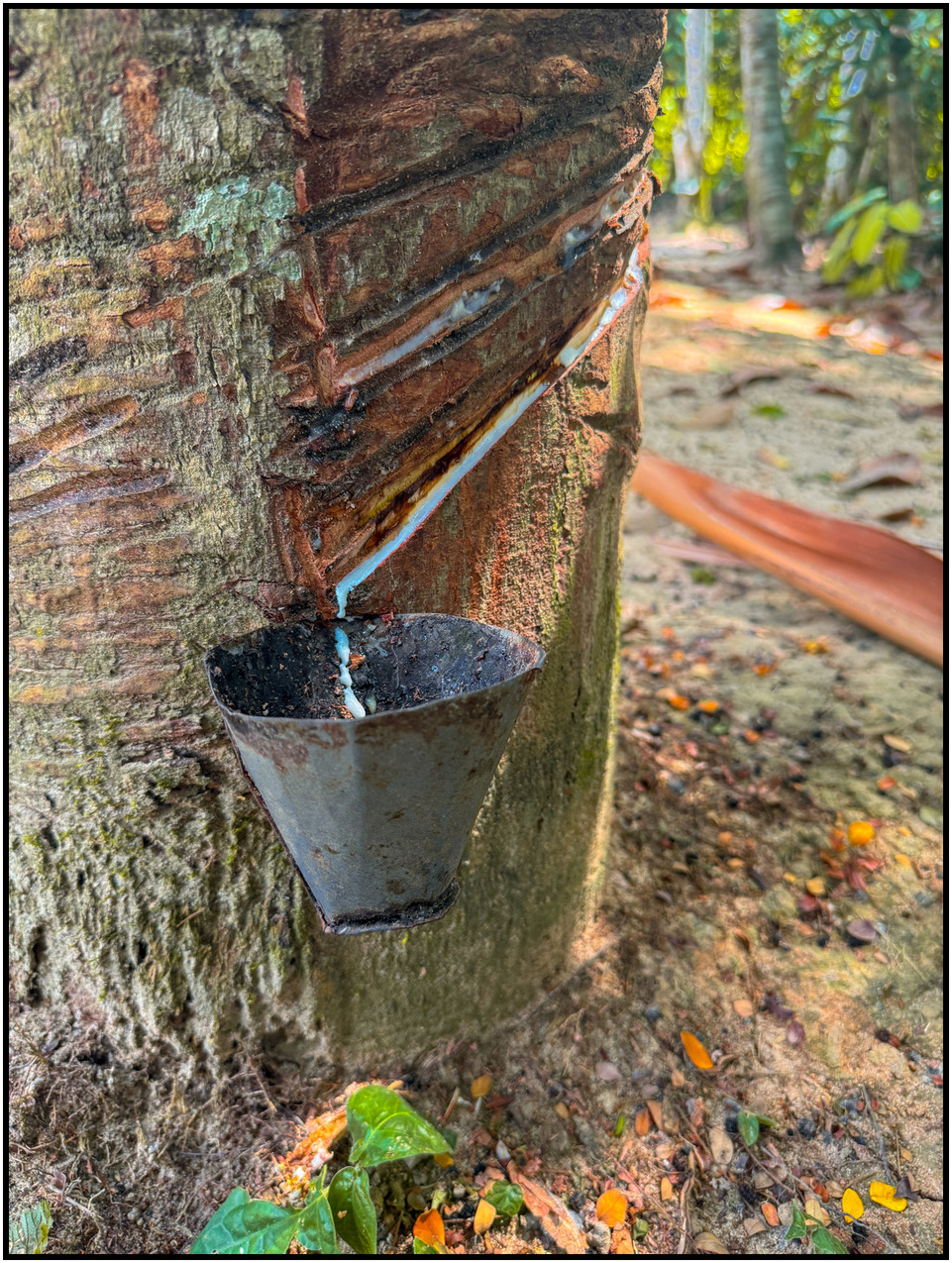
The liquid sap was applied to a stick and heated up over a chimney to smoke. The material would eventually go from yellow to black, then the worker would ladle more of the liquid on the pole, always turning and adding, layer upon layer (much like making a dipped candle) until the final block was completed. A single block took about 4 hours to make. The smoke and fumes were so toxic that every worker with this particular job died within 3 years.
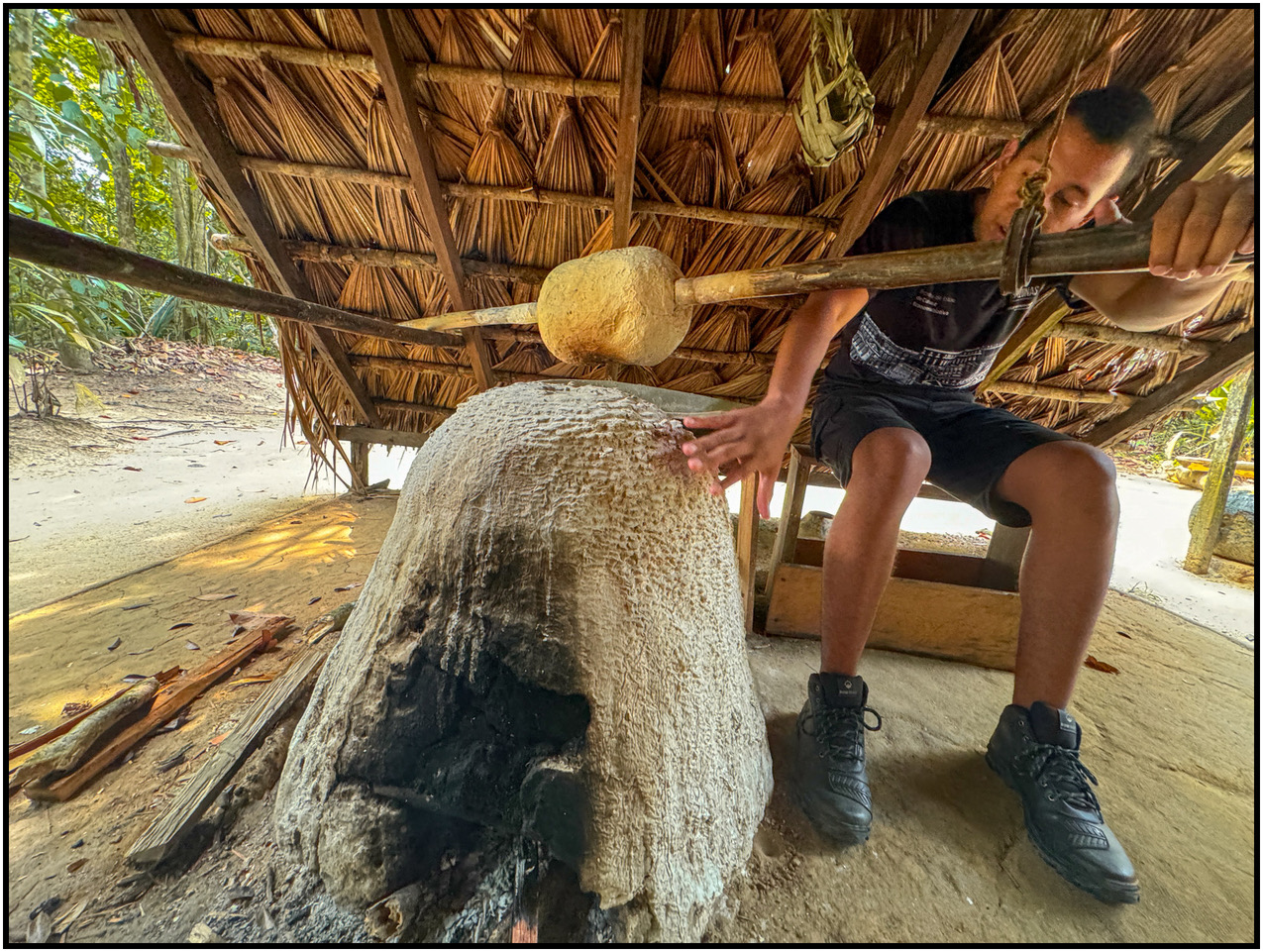
The structure in the background was the “house” for the workers.
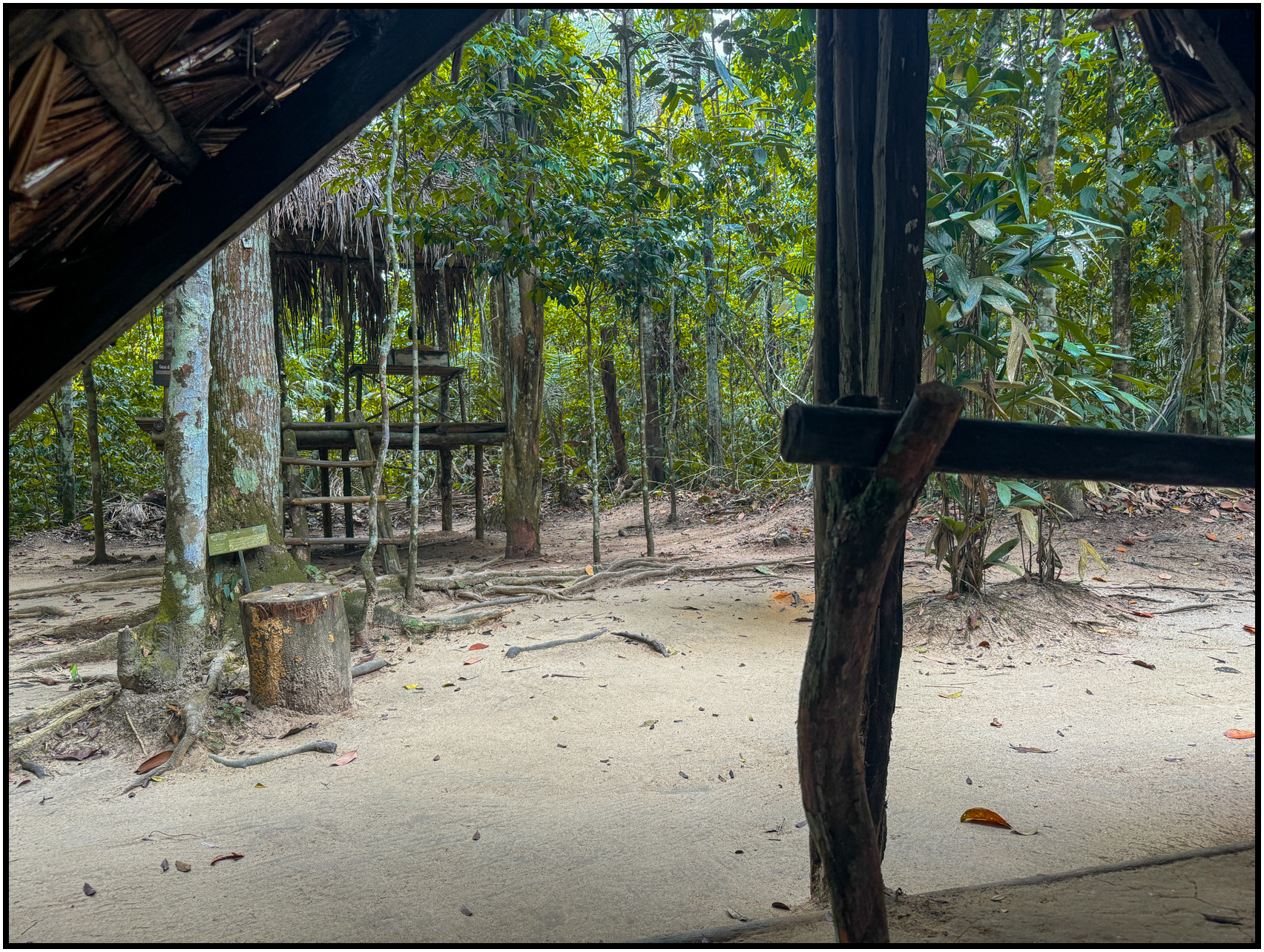
It was up on stilts as a (largely ineffective) safety measure against jaguar attacks. People died here constantly — jaguar attacks, horrible working conditions, torture and execution at the hands of the Colonel, malaria and other diseases, starvation, and attacks from indigenous people who wanted the rubber-making people to go away. I made the comment that out of all of those ways to die, jaguar attack might be one of the better ones because at least it would be quick: the guide got all serious and said, “No no, ohhh no no you do not want to die by jaguar.” He then told a story that happened just about a year ago, his friends were out and a jaguar attacked a man in front of them. The group managed to chase the jaguar away, but not before it disemboweled the guy. His intestines were hanging out of his body, and his chest was so flayed you could see his heart beating through his rib cage. He died before the ambulance could get there.
Another story, his uncle came home to find his dog missing. He checked his security cameras and saw a jaguar attack his dog, drag it up on top of a high wall, and tear it to shreds. He had to go find the shredded pieces of his dog that were still left and bury them. He now takes his remaining dog with him everywhere he goes. He won’t take any chances leaving her home alone. So jaguars are still to this day something to fear.
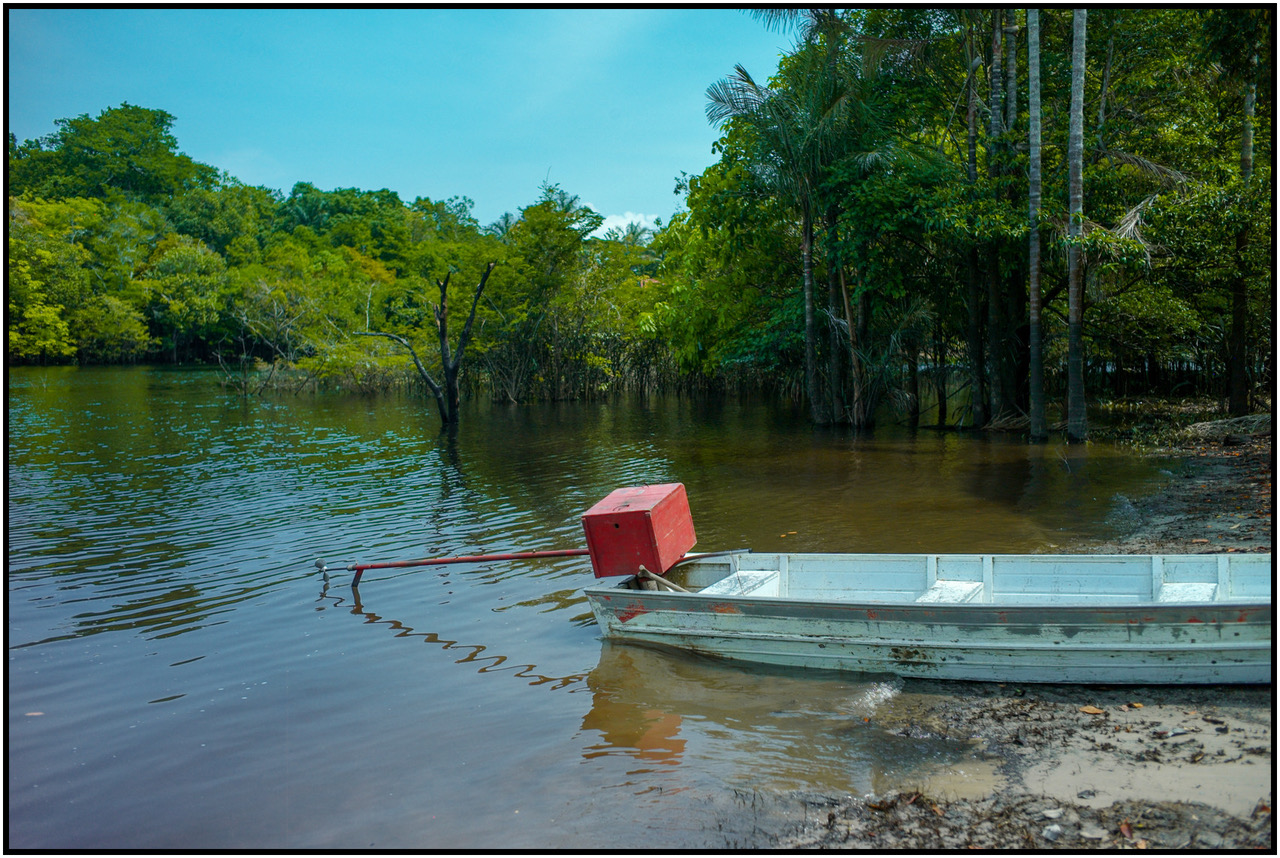
We saw a lot of boats with these tiny outboards.
5 August 2024
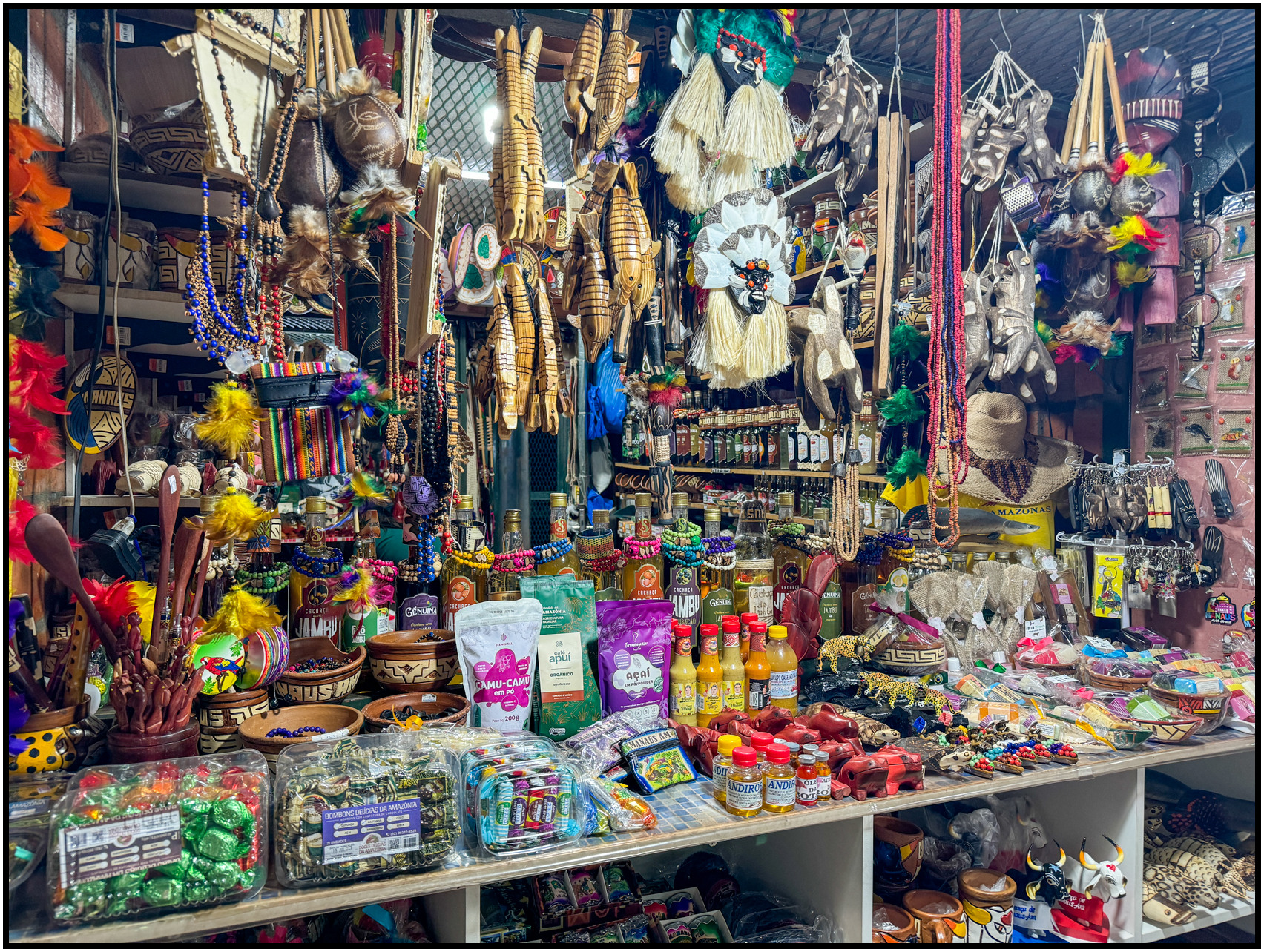
We started today at the art market in Manaus. We hit the internet and got the locations of some potential sites that were pretty active on a Monday. Unfortunately, we struck out. No treasures coming home from this morning’s excursion.
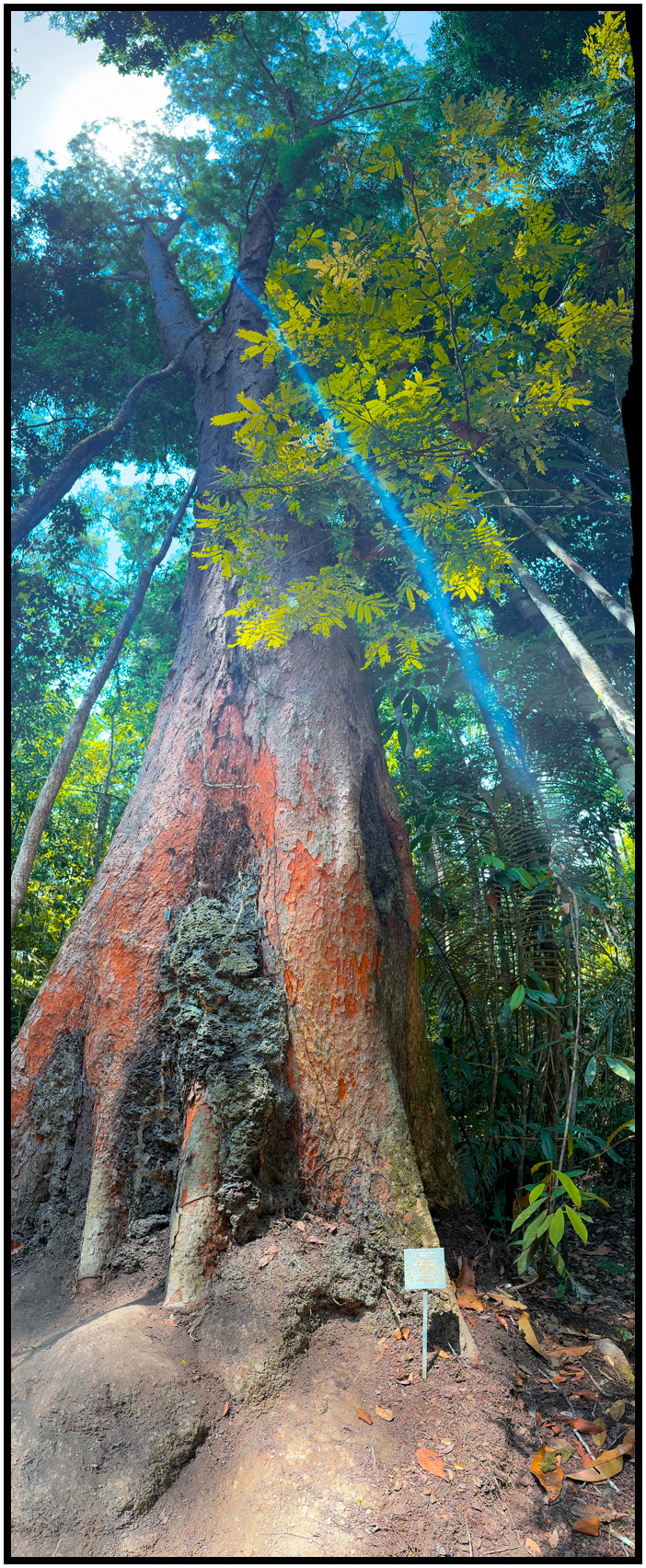
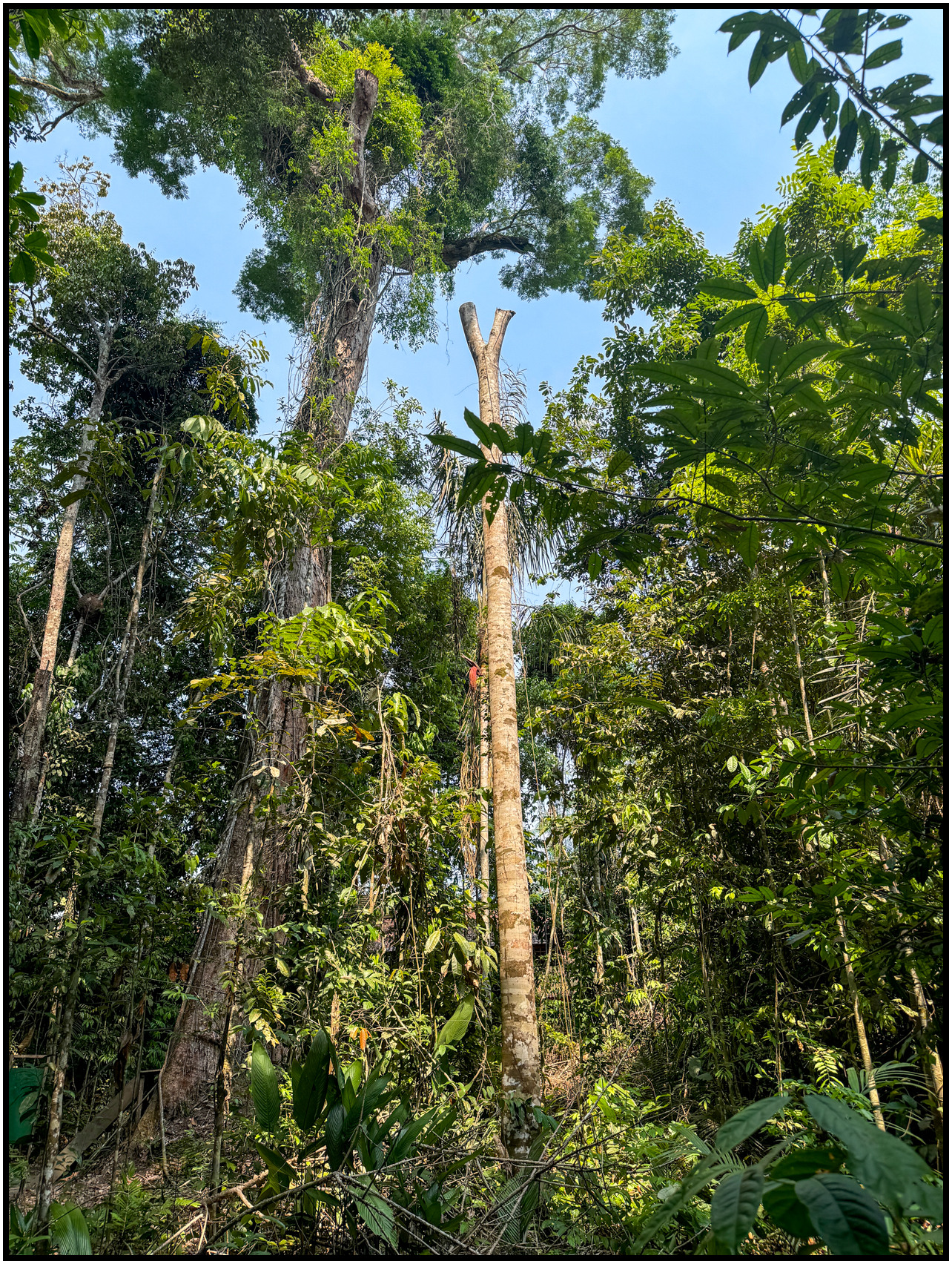
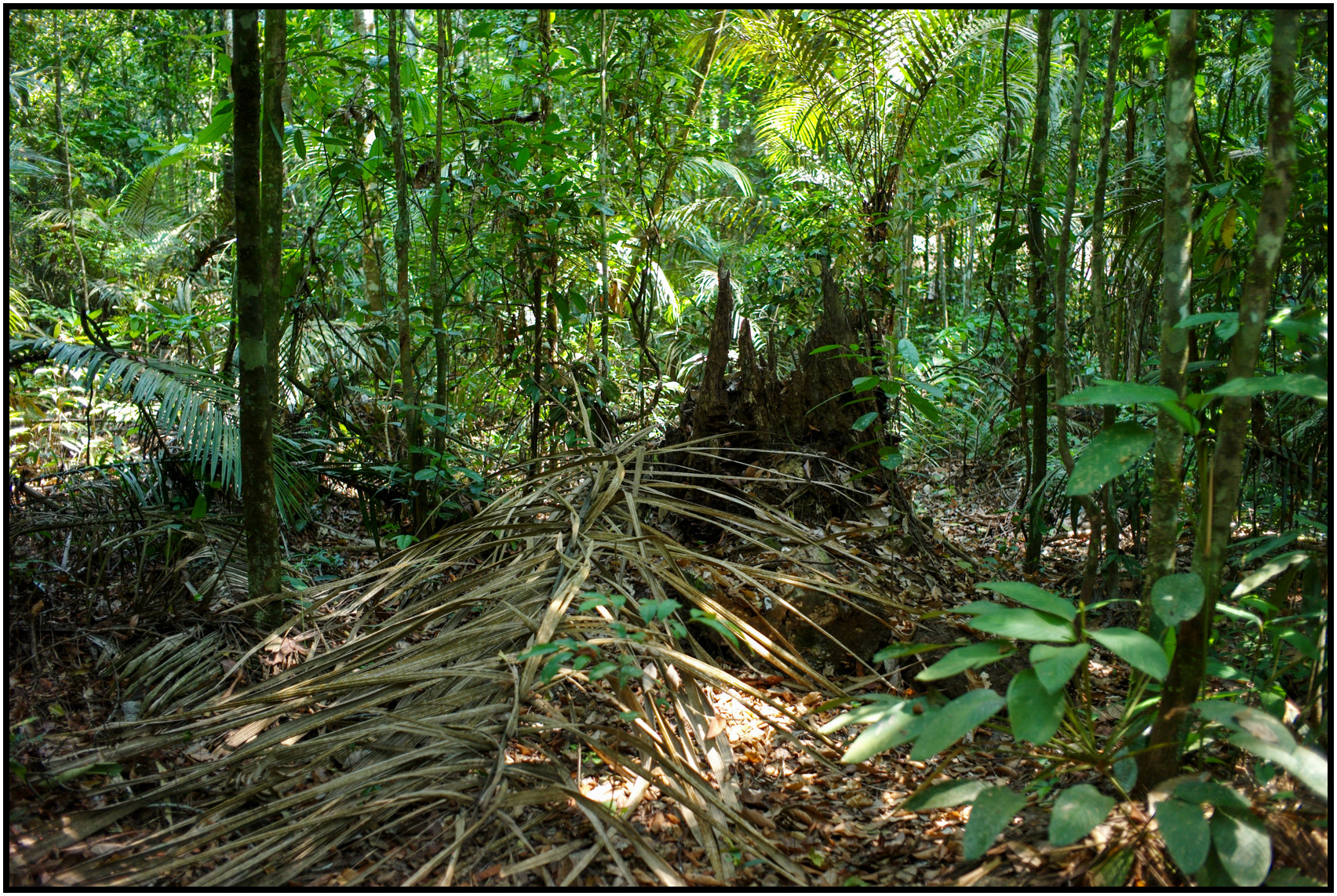
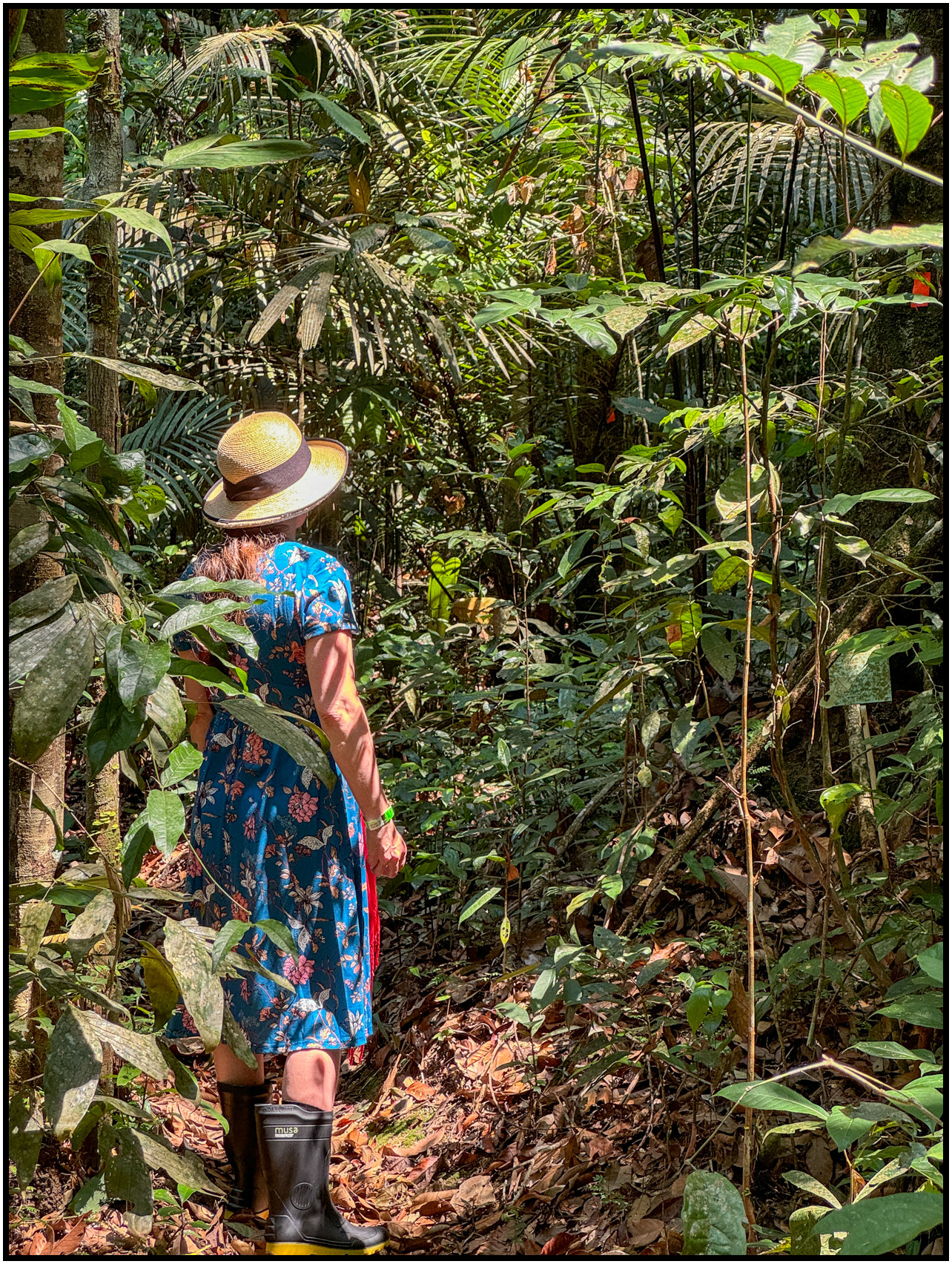
From there we took an Uber about 30 minutes outside of town to the MUSA – the Museu da Amazônia – a botanical gardens in the jungle. This was more like it. Although the heat was stifling (96 degrees and muggy) the walk through the woods was well worth it.
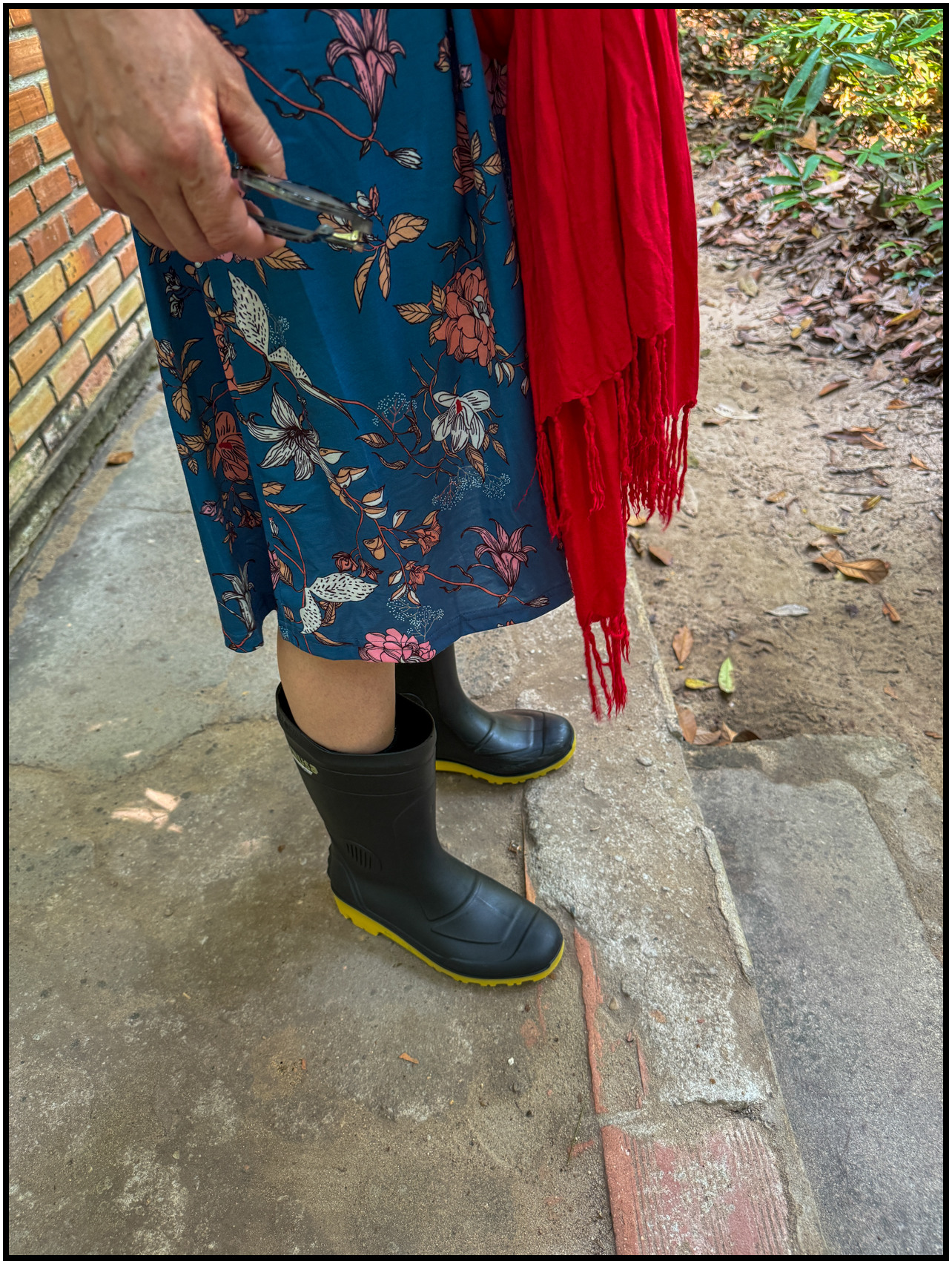
At the Botanical Gardens, They would not allow Brenda entrance with her open-toed sandals. Too many snakes and spiders; they rent boots and socks, like at the bowling alley, for folks who did not come prepared.
We never saw any snakes, but did encounter one extremely aggressive spider.
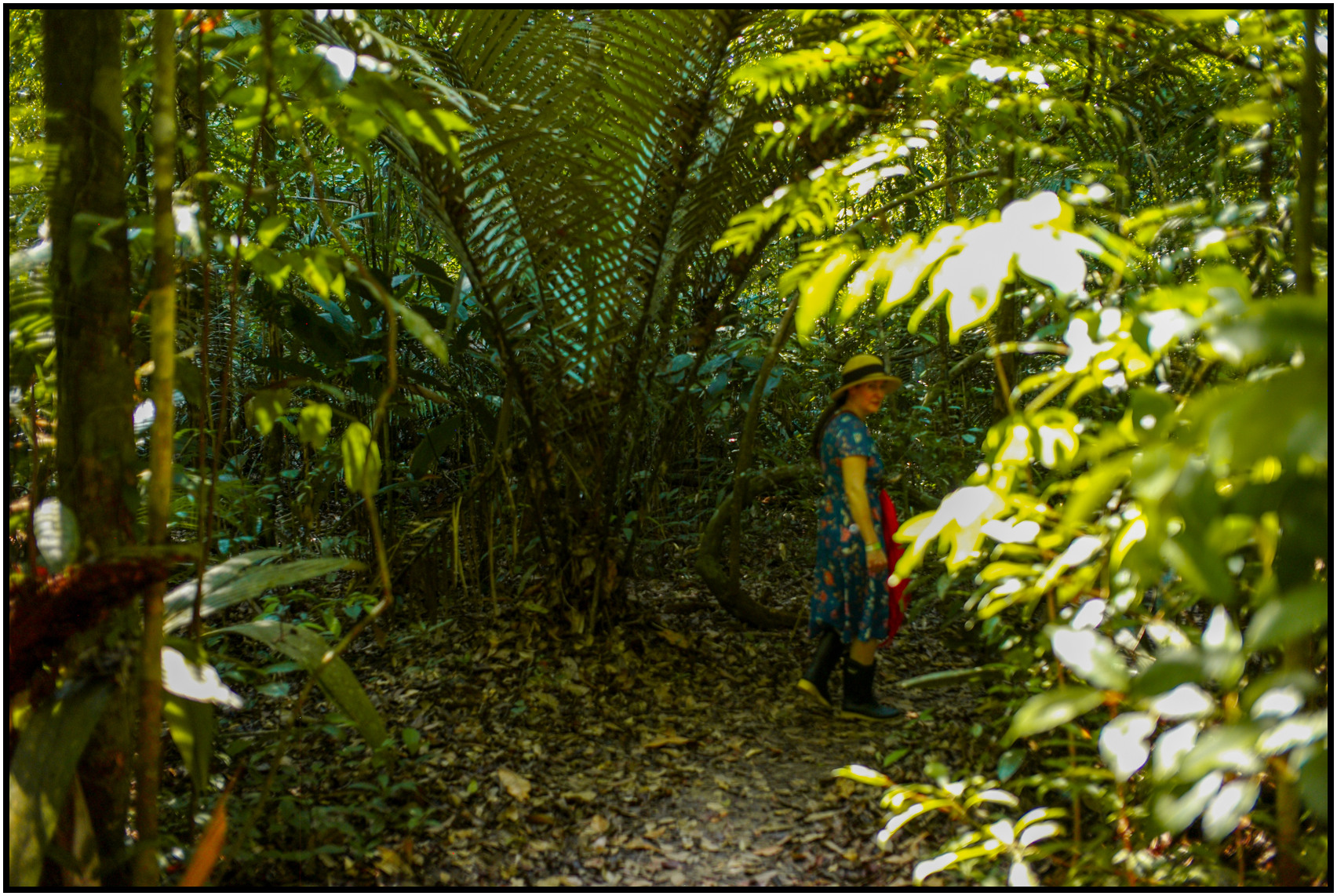
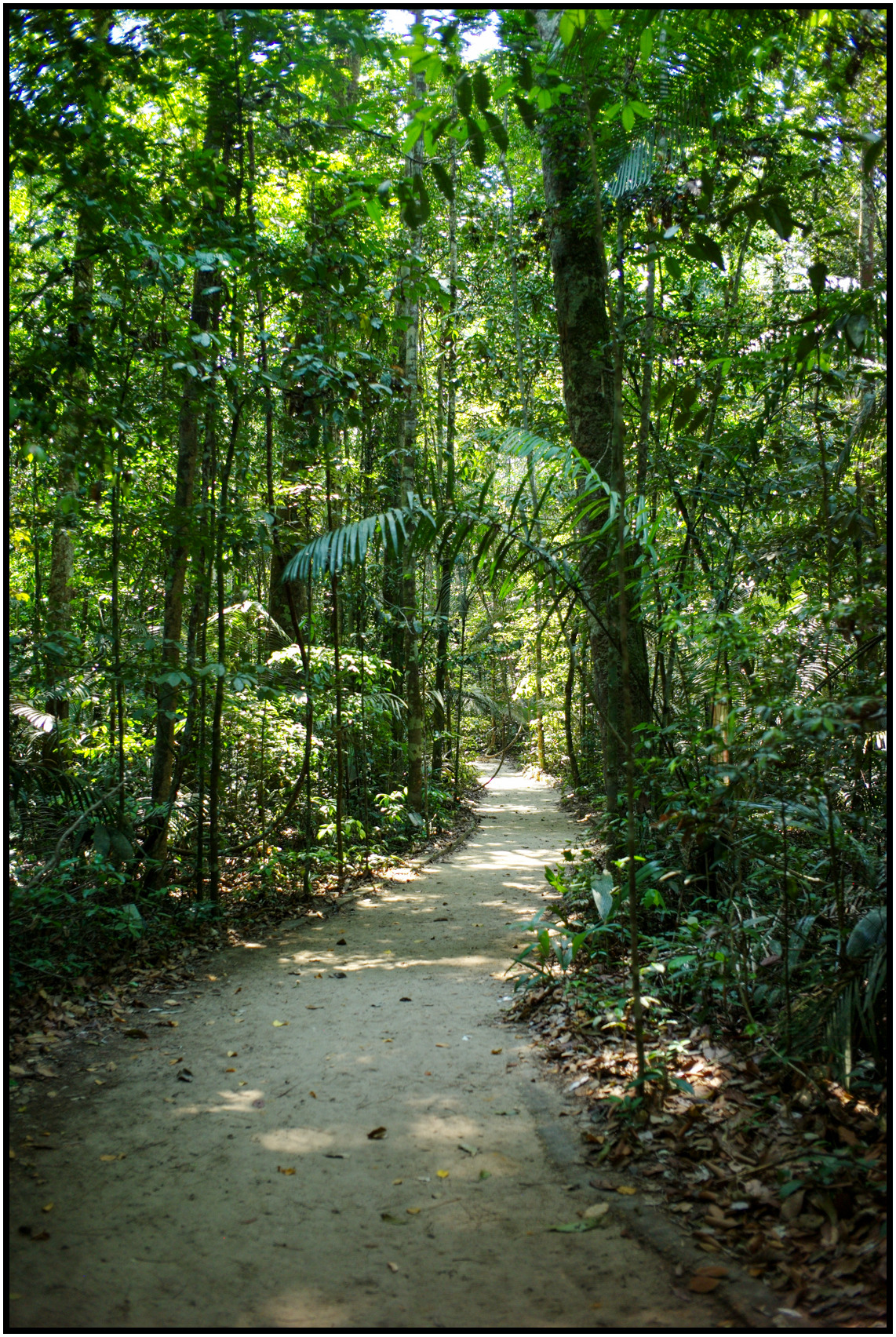
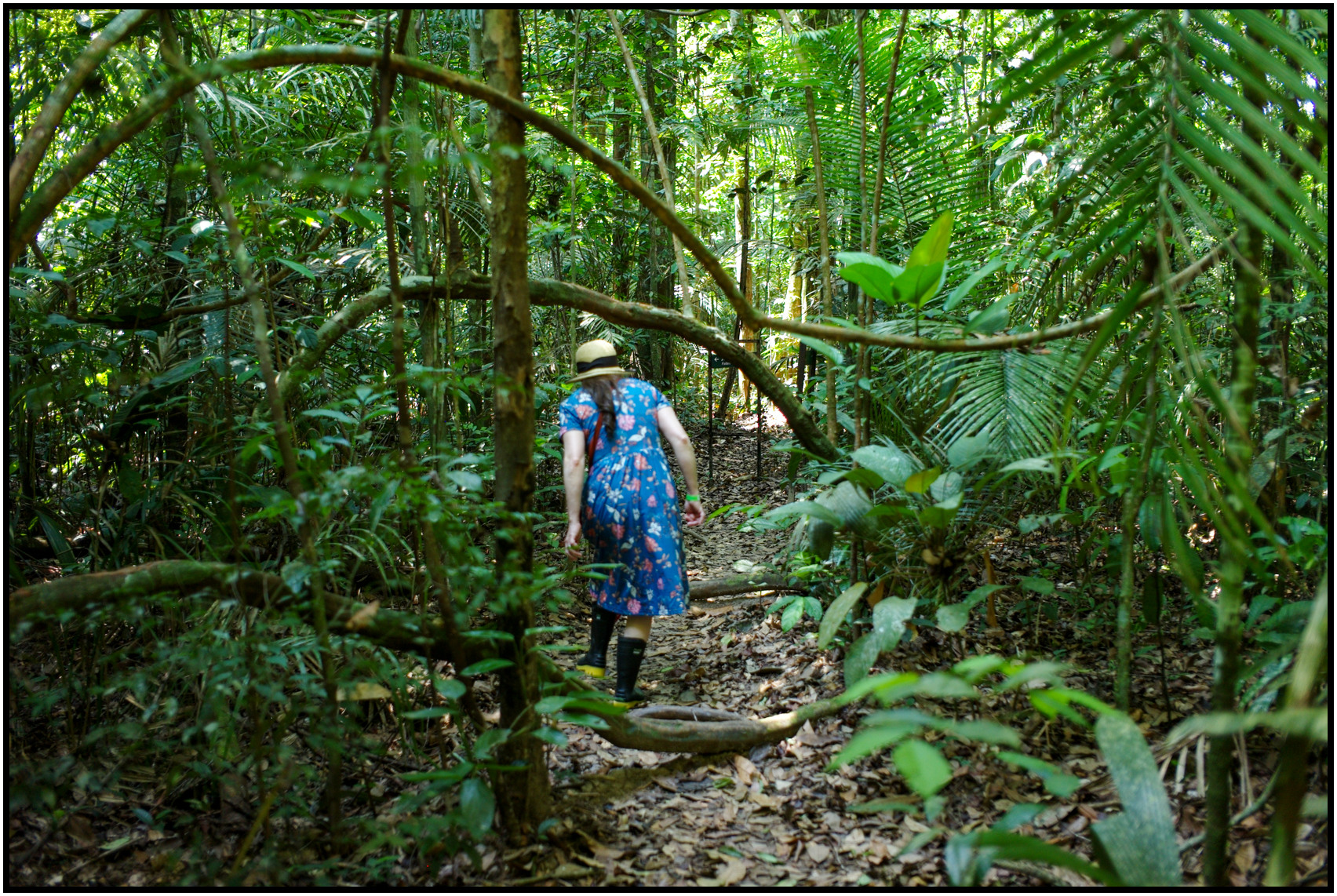
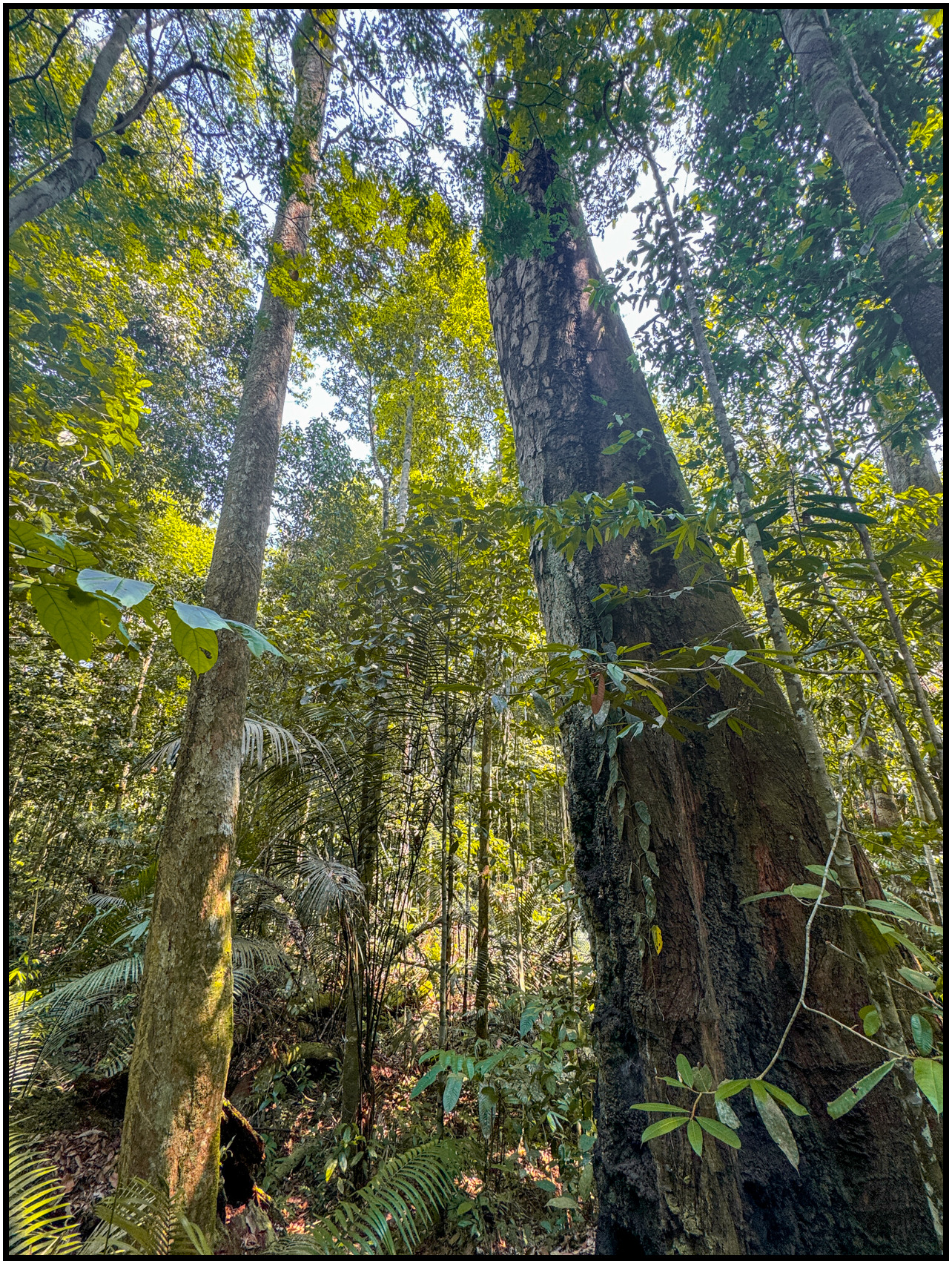 Below: We saw an enormous dragonfly with spectacular yellow wings. He looked like a small drone. I was attempting to get close enough for a photo but I noticed a spider dangling off the brim of my hat directly in front of my nose. I went into “Eek, a spider” mode and by the time I got the spider safely off on a tree, the dragonfly was gone. (This was not the aggressive spider.)
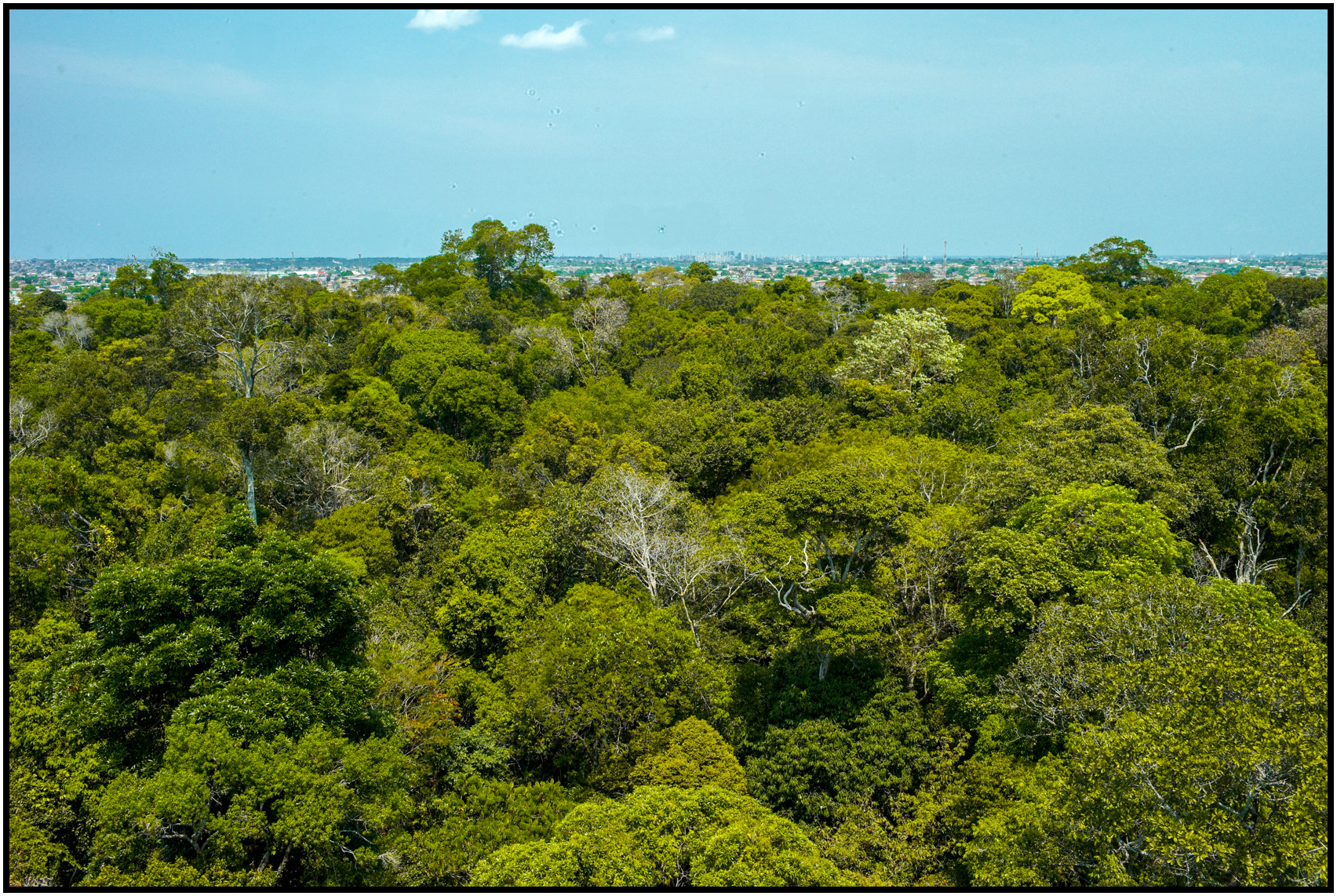
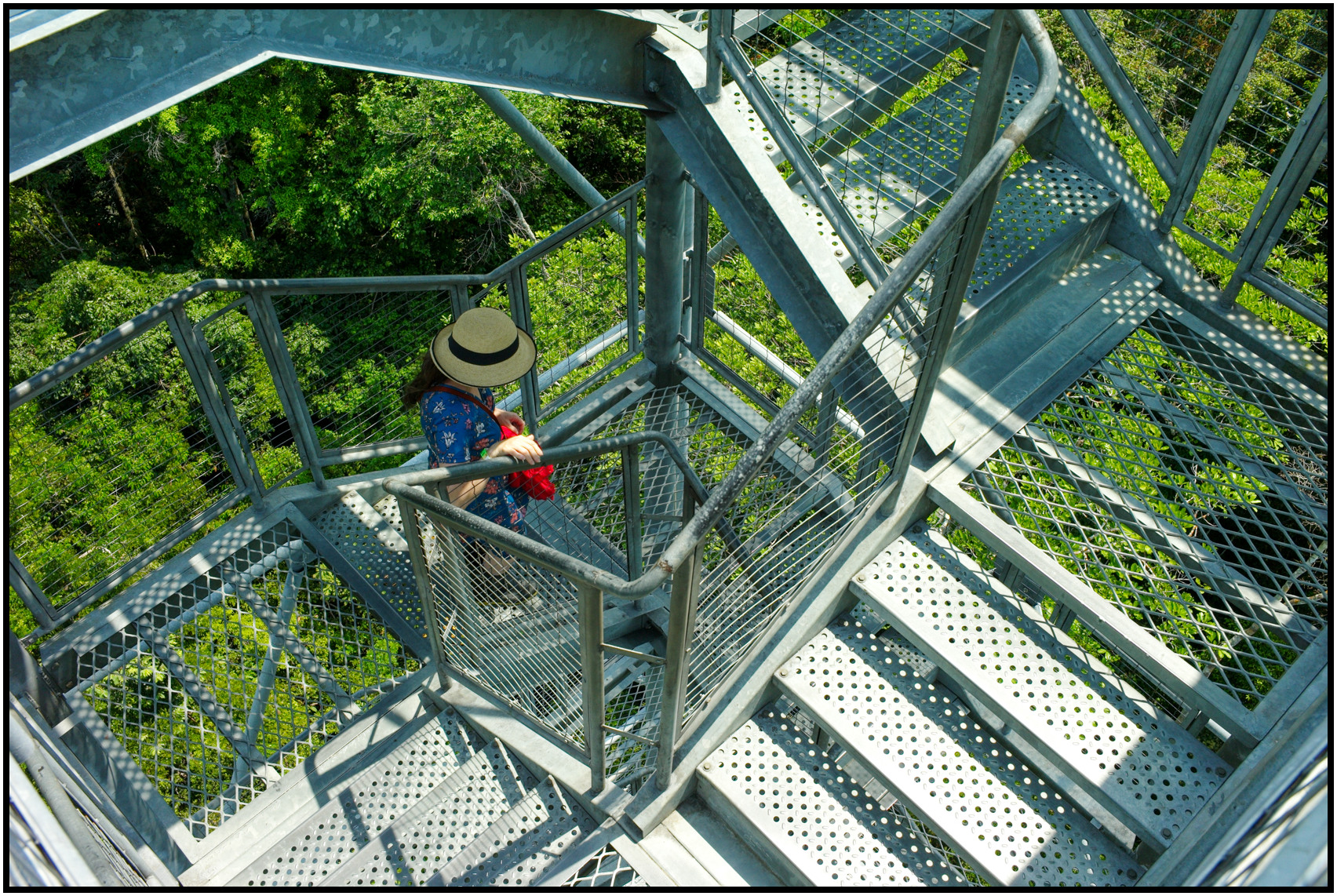
The gardens has a tall metal tower that you can climb to get a view of the jungle canopy and then well over it. This is from the top viewing back to Manaus. It goes up some 250 feet and allows great views and a decent breeze.
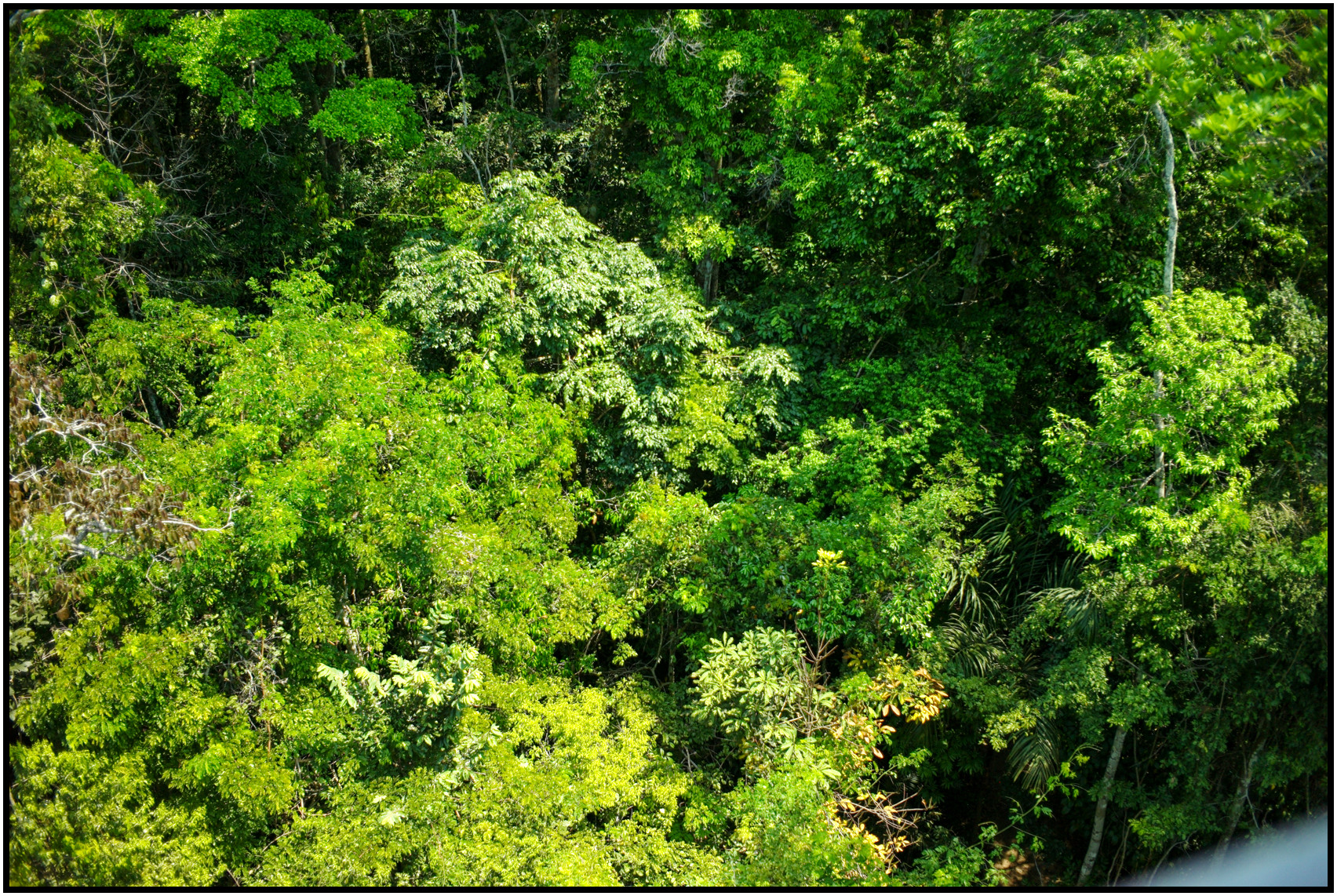 However, it also felt a bit precarious; the railing swayed in the breeze a bit. I spent about 10 seconds at the top and immediately headed down. I waited for Adam at the base while he took photos. One guy at the top was sitting in the yoga Lotus pose, meditating. I hope he felt peaceful up there… I certainly did not!
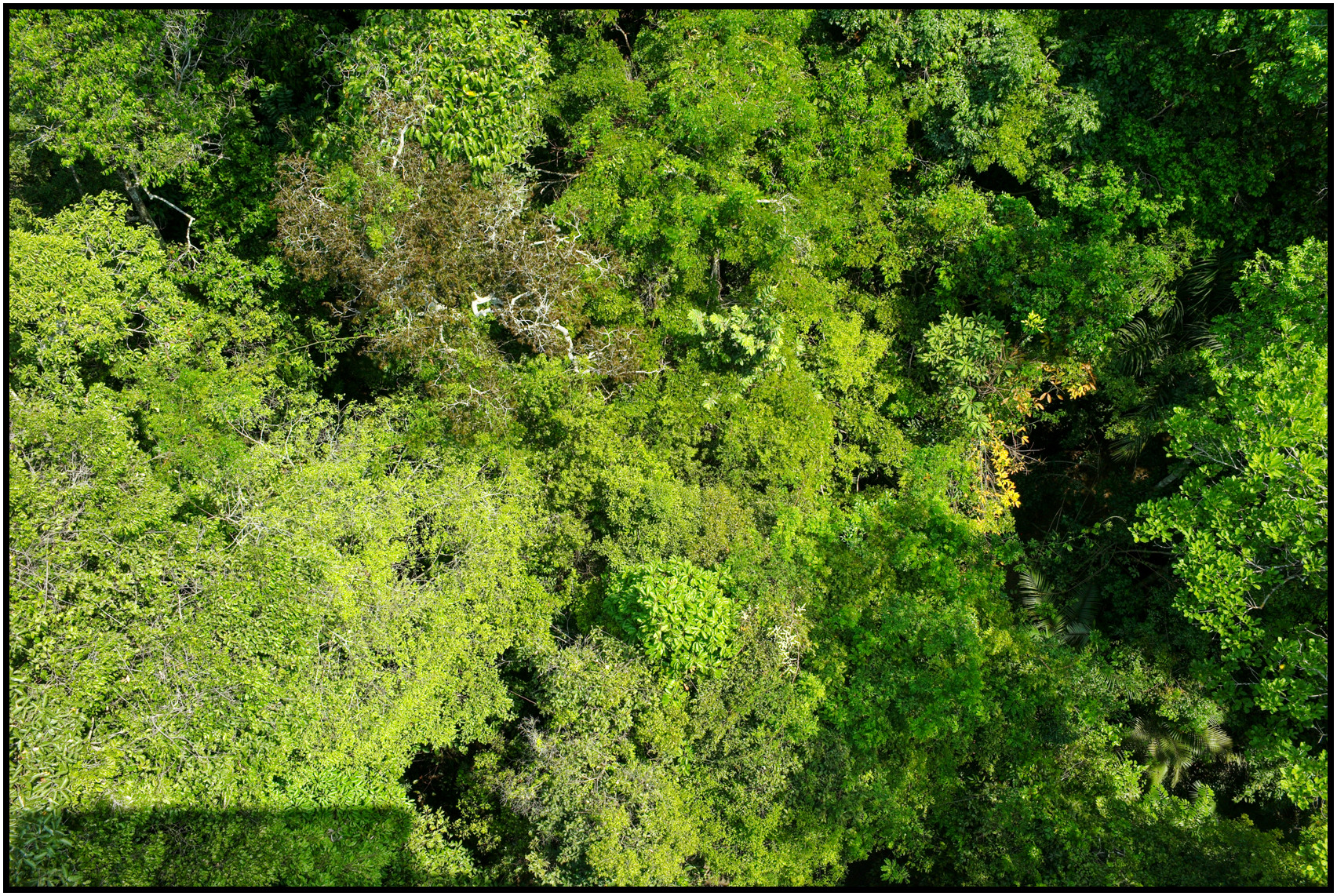
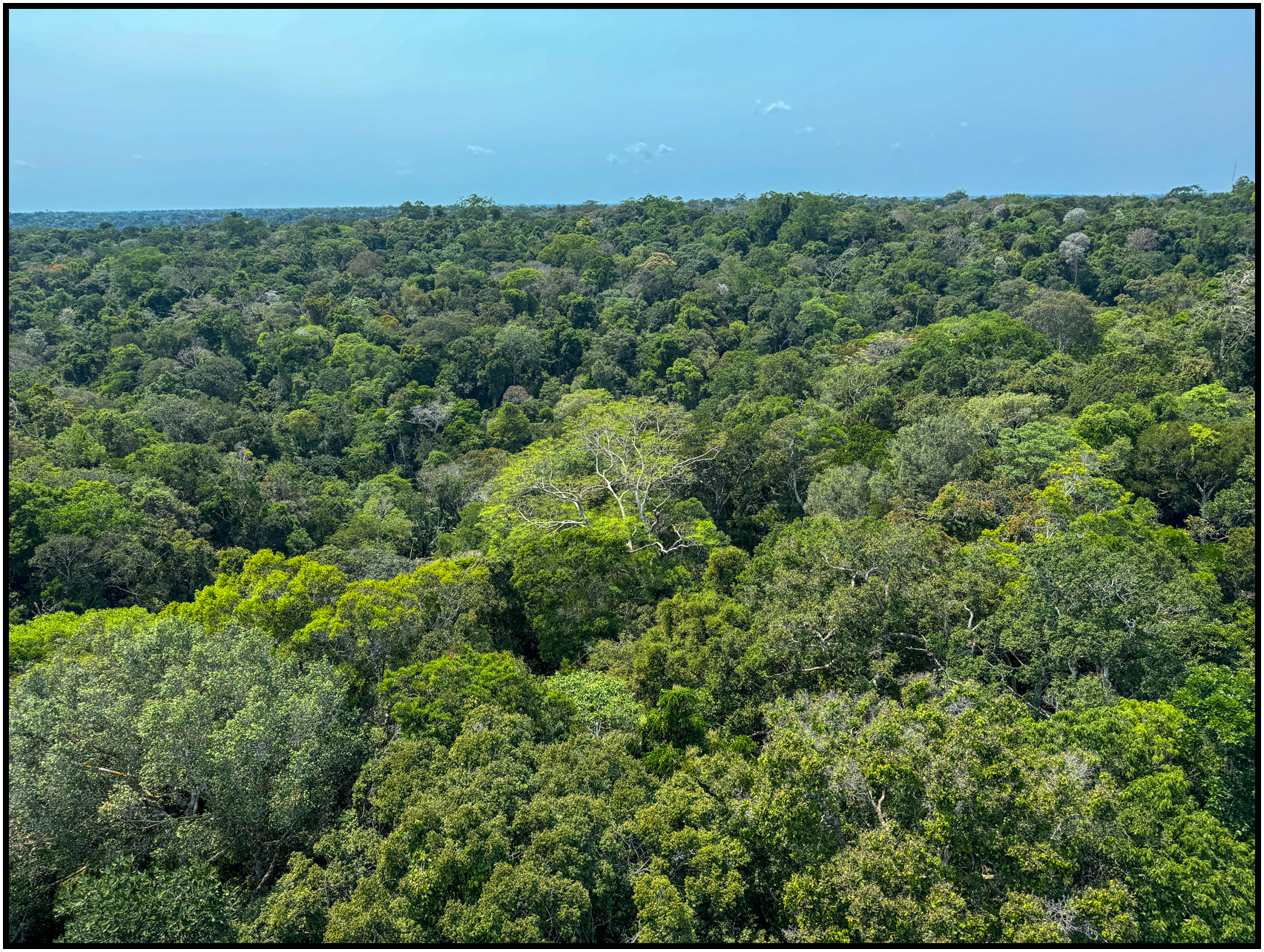
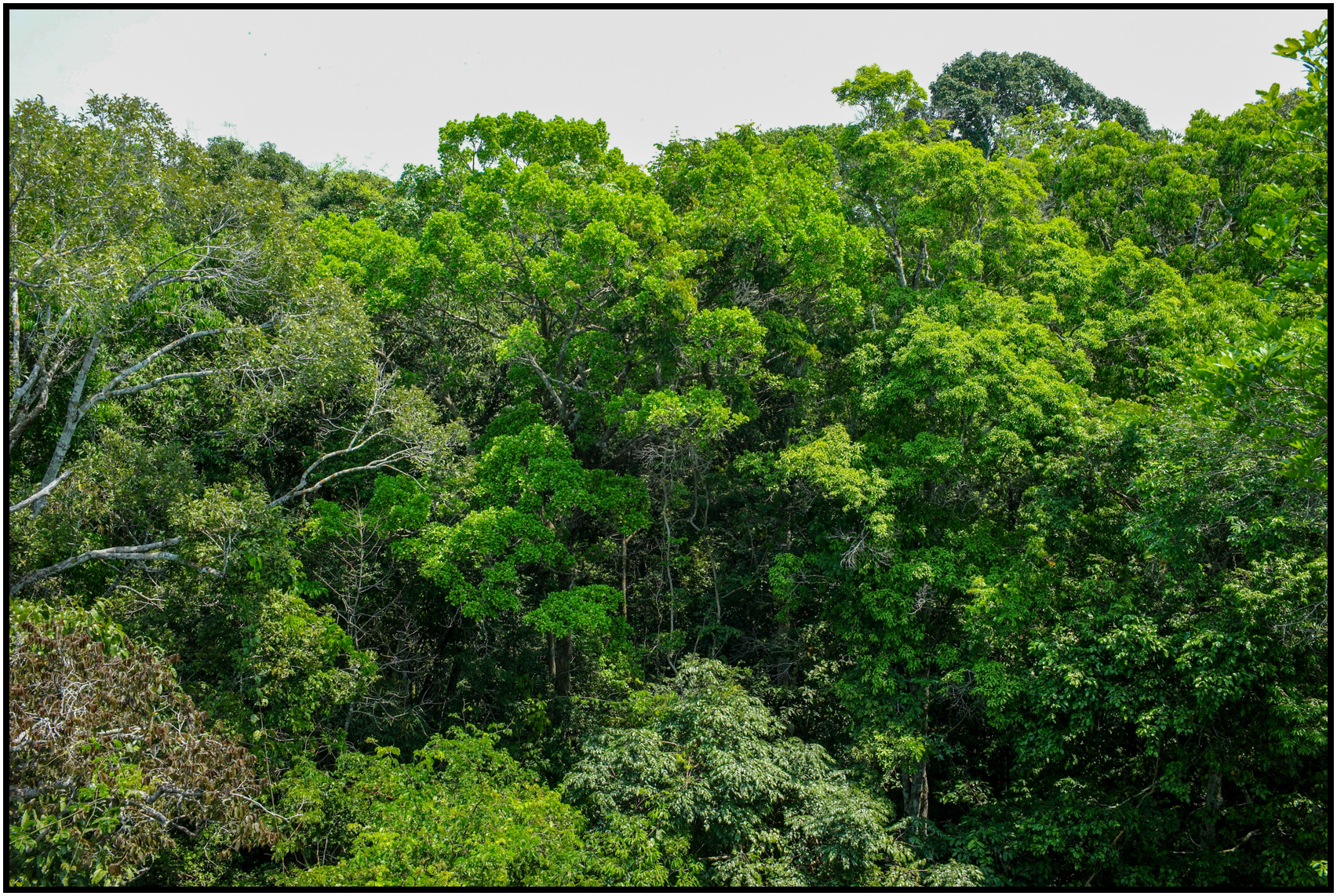
They had a small section with replicas of dinosaurs fossils found in the area. Below is an enormous pre-alligator. It weighed between 10 and 15 tons.
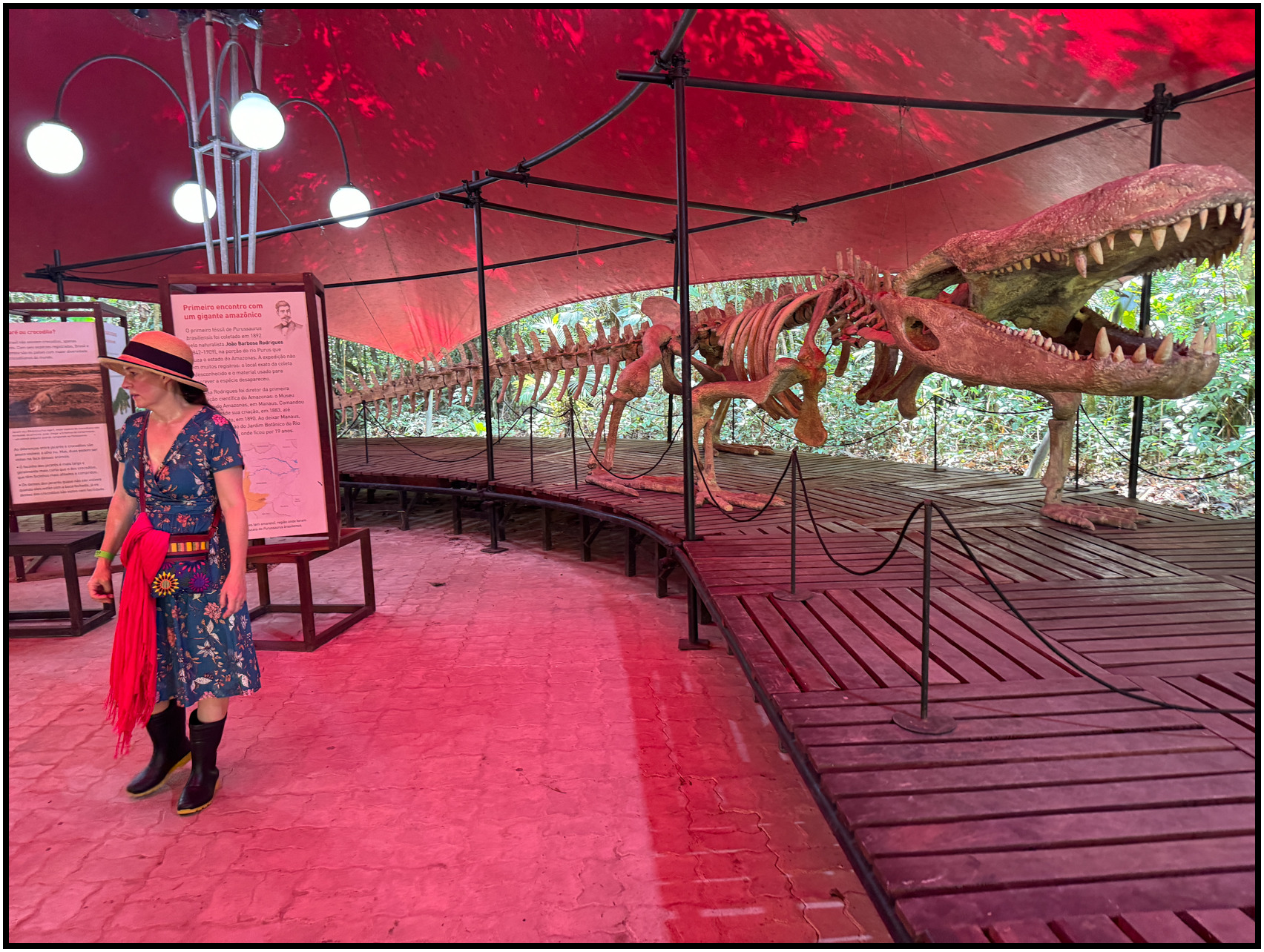
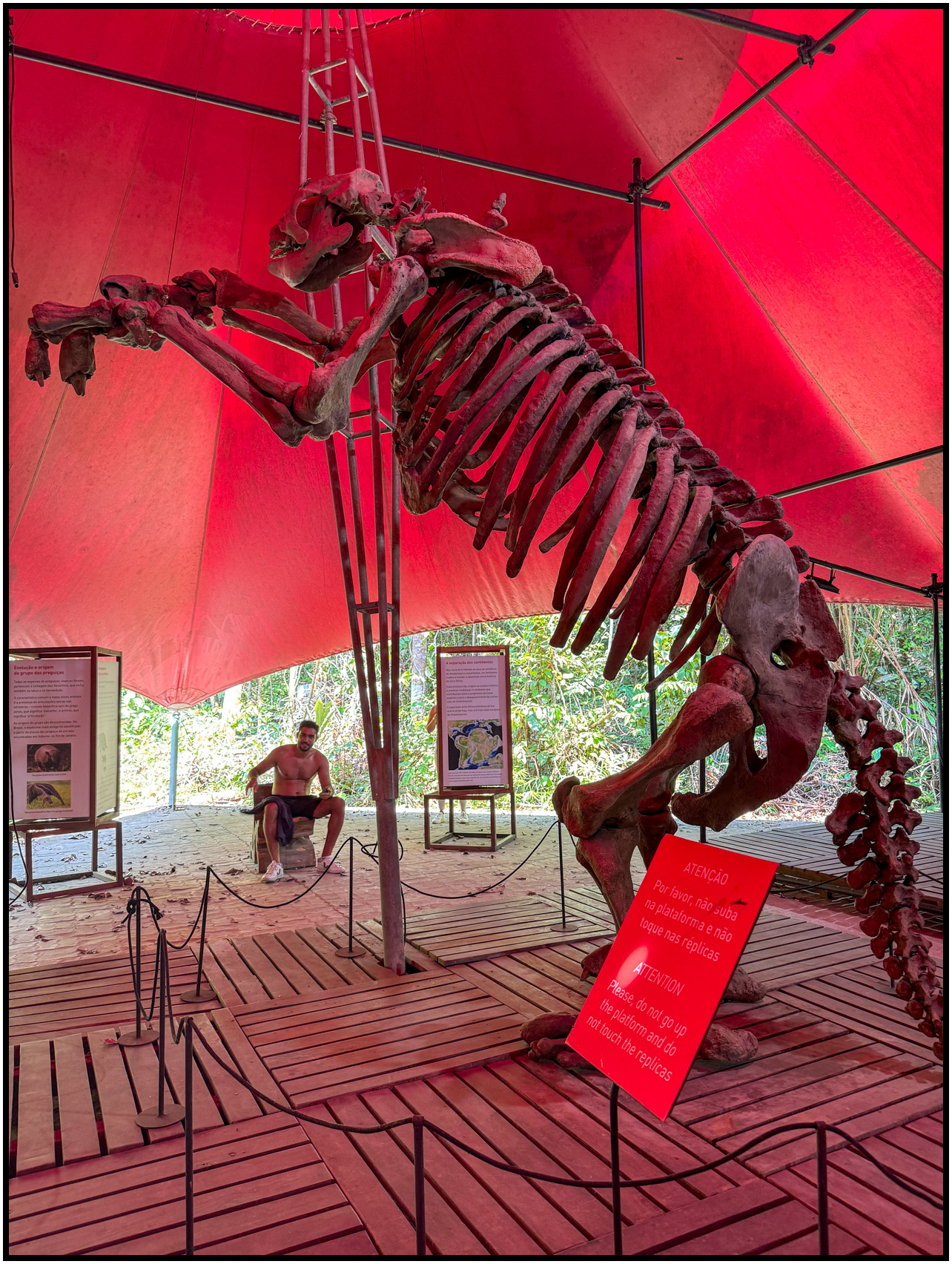
The giant sloth weighed around 5 tons.
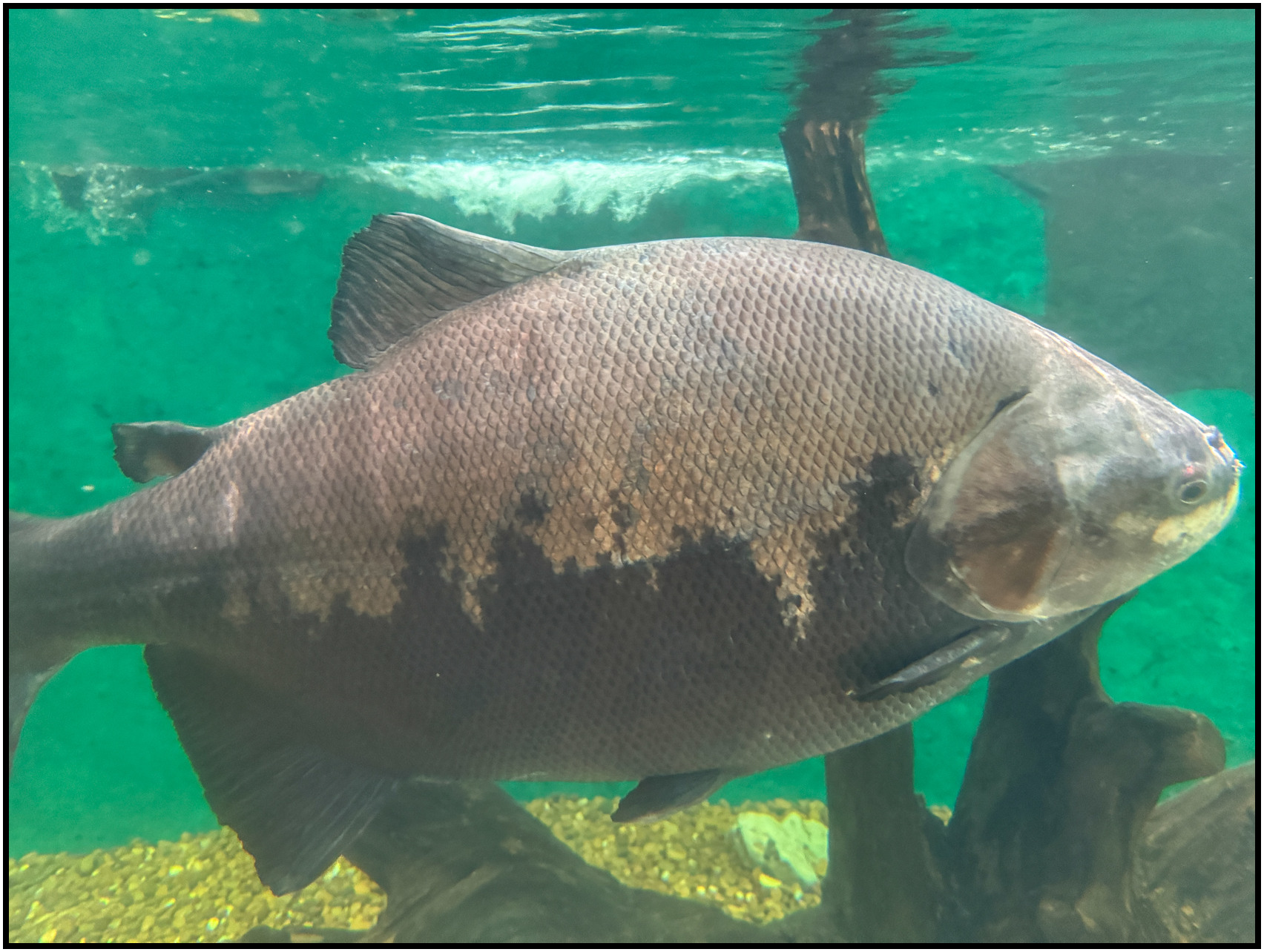
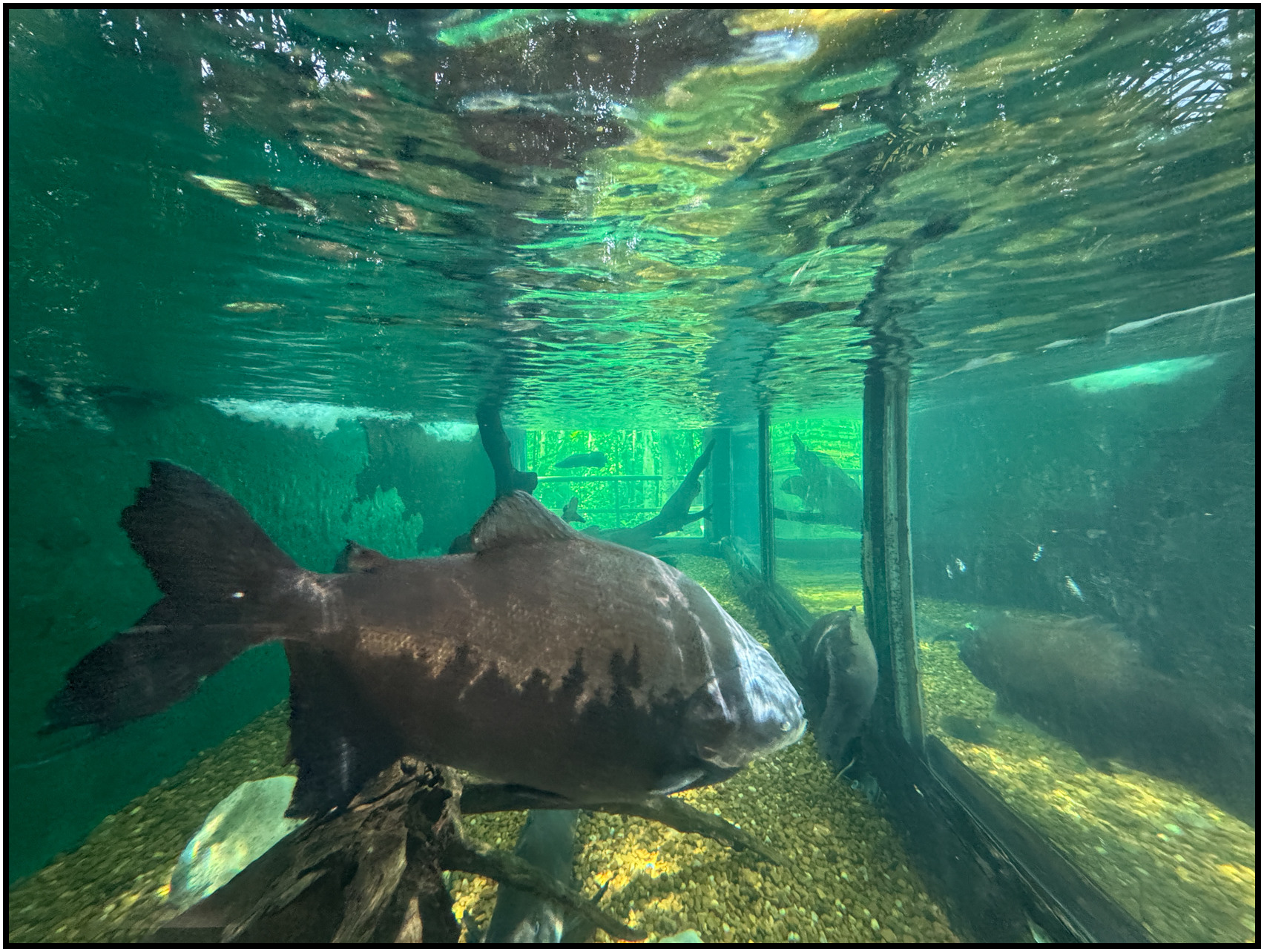
There is an aquarium at the gardens as well. This fish is a Tambaqui, a freshwater white fish found in the Amazon. These are a staple of the diet here – they can get quite large. The flavor reminds me of halibut.
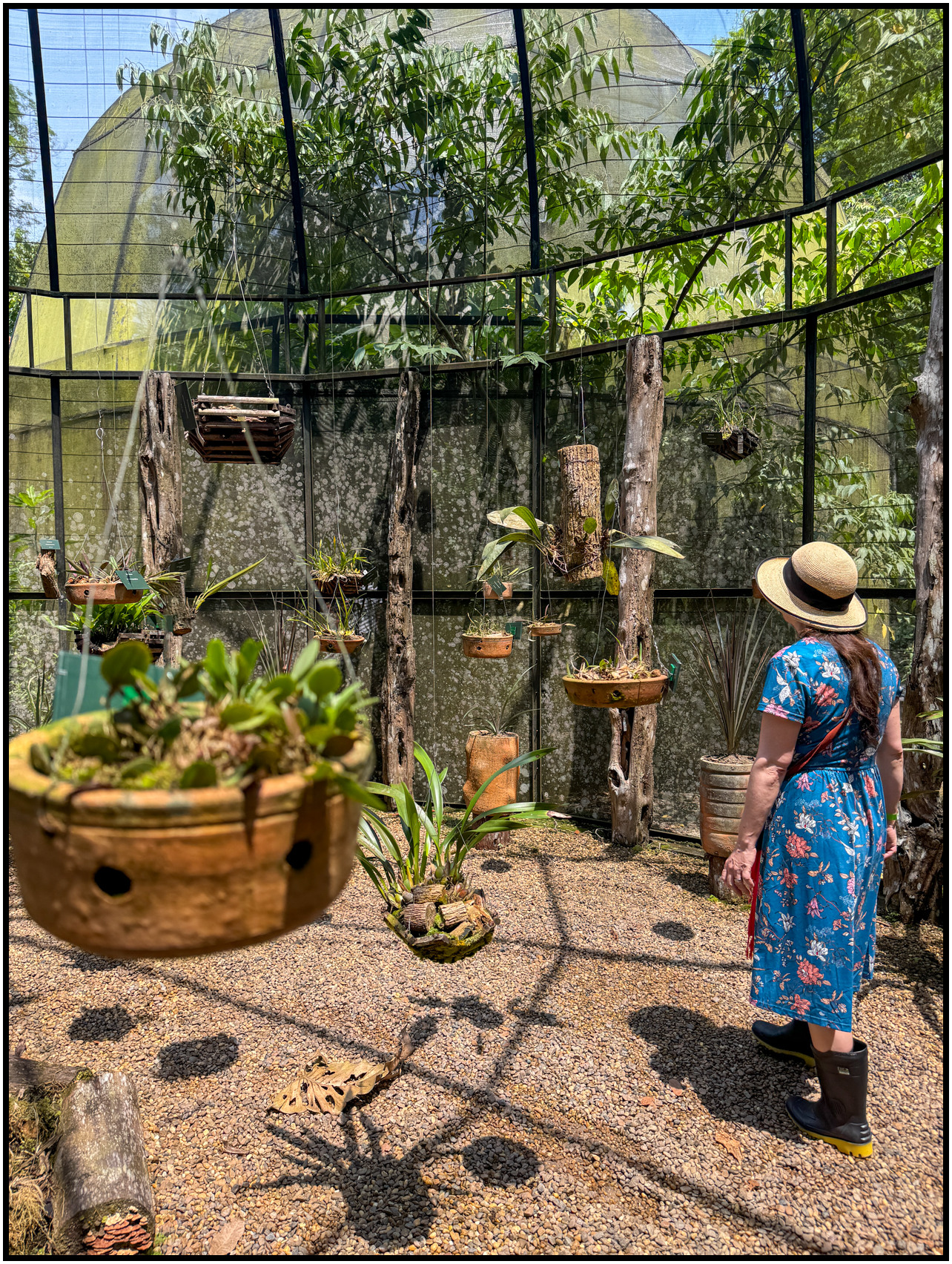
Orchid and bromeliad house. 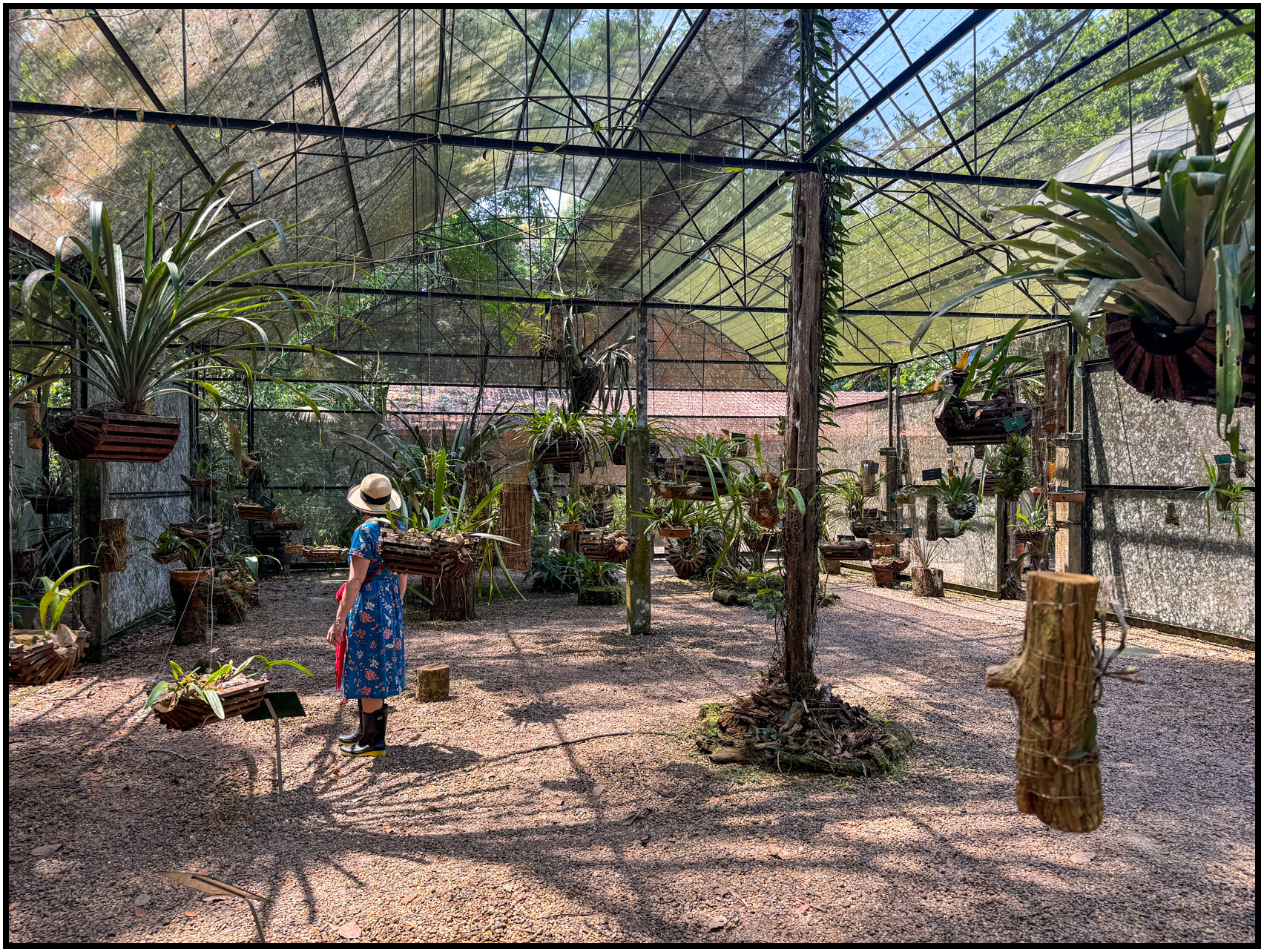
Our final meal in downtown Manaus. This restaurant (Tambaqui de Banda) is listed as the #1 joint in town. We tried to get in on Sunday, but it was packed. Late afternoon on a Monday was better. We tried two special, local foods:
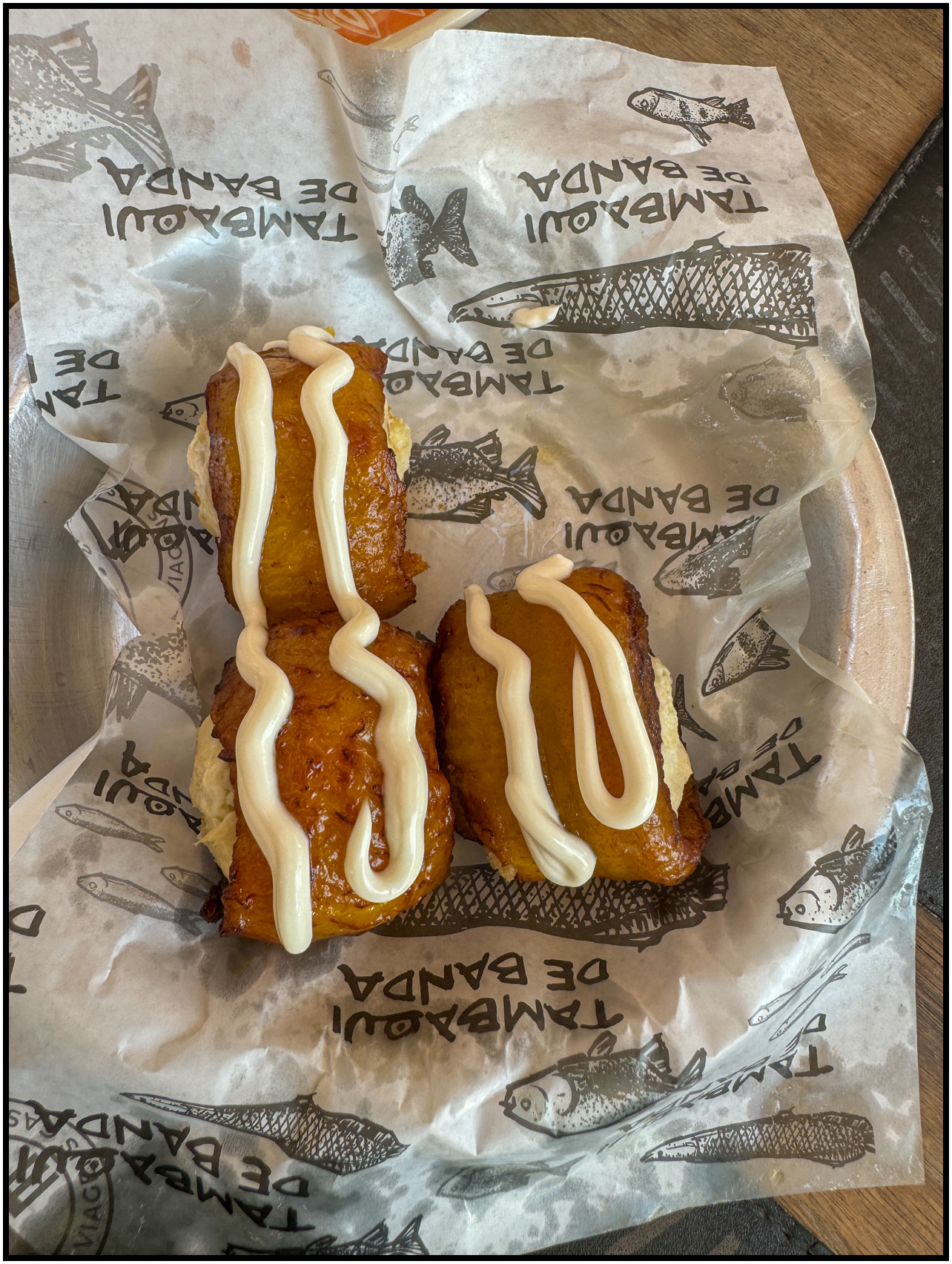
An appetizer called “Caboco Enrolado” – made from an eel called “Pirarucu” wrapped in fried plantains and cream cheese. It was better than it sounds, but not great.
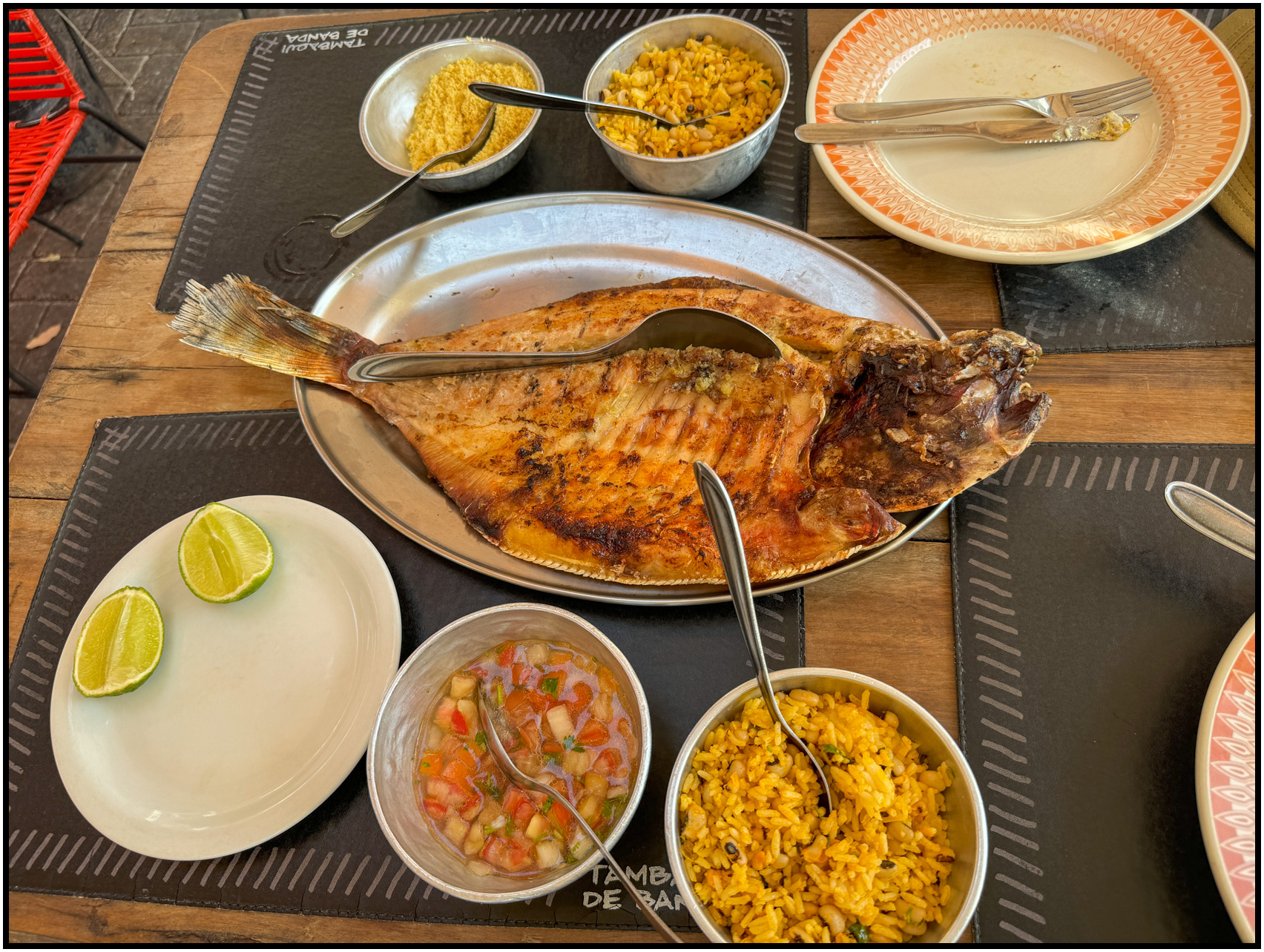
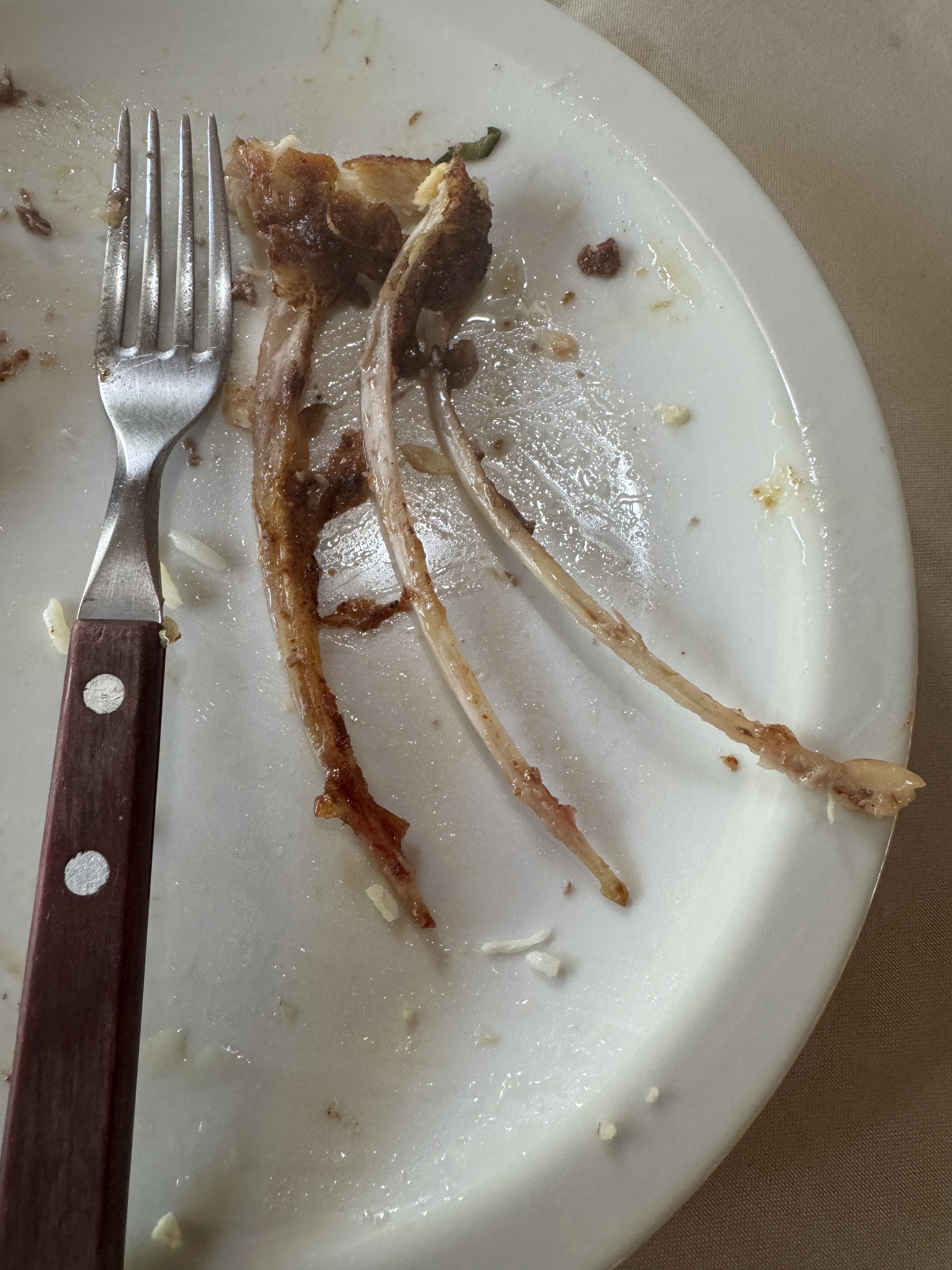
Typical grilled tambaqui meal. Just fresh fish with salt, other dishes served on the side. Usually some rice and a salsa or two, plus limes for squeezing. The bones in these fish are quite large. You can pull the meat off of them like you do with spare ribs.
Tomorrow morning we are being picked up by a tour company and going to a place deep in the jungle on the Amazon river called Turtle Lodge. This will be the adventuresome, “rustic” part of our trip.
 MayseStomp