Arrival, Acclimation
DAY 1
25 March, Wednesday
“Adam, look.” I pointed out the airplane window. “I was expecting to see jungle growth, but it looks like the vegetation around Atlanta.”
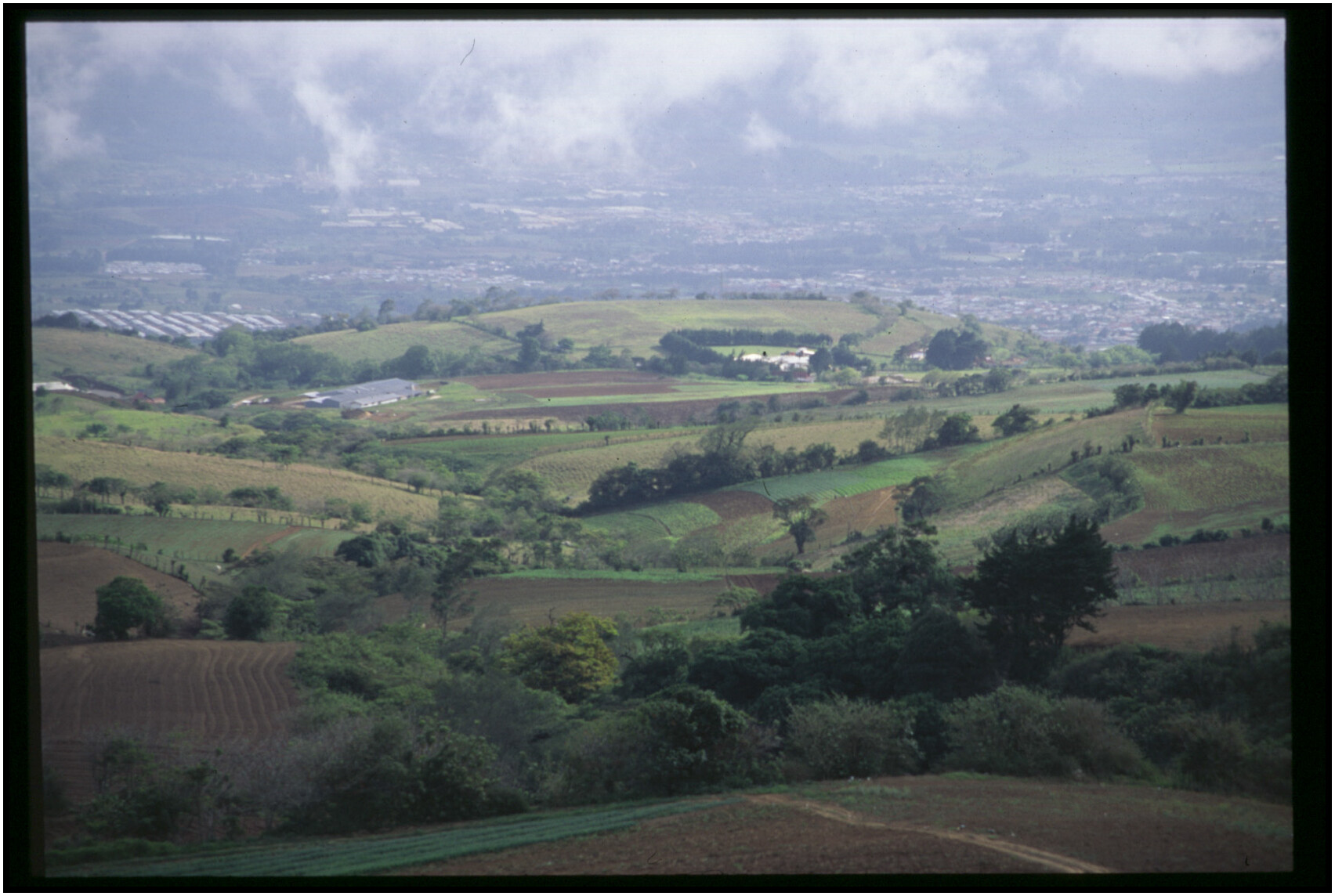
From the air, San José was a disappointment. The city was smaller than Atlanta, to be sure, but the overall feeling was not one of having entered a dramatically different world.
“Give it a chance, Bin. We haven’t even landed yet.” Adam, always the rational one. I thought he look a little disappointed, too, though.
We had crammed all our gear into backpacks. In theory, this was to insure we wouldn’t be bogged down with excess baggage that hampered our adventures. In reality, I developed a crick in my neck and a strained back before we even got off the plane. However, backpacks fit in the overhead compartments so we avoided having to check any luggage. This more than compensated for the back pain when I saw the “baggage claim” area of the San José airport. Luggage was taken from planes and dumped into a big pile in the middle of the airport floor. It was up to individual passengers to dig through several flights’ worth of bags to find their stuff.
Customs (migracion) was another surprise. Nothing was computerized. No one had bothered to put up signs with instructions, either. Debarking passengers walk down a long flight of stairs (no escalators here!) and find themselves in a huge room with dozens of very long lines. Confused people simply choose a line and stand in it. This turned out to be great for people with passports, like me, but for people like Adam who just had a driver’s license and a birth certificate, they didn’t bother to advertise another line you must go through first to obtain a tarjeta de turismo. We ended up standing in the very long line twice. To add to the misery, the building was not air conditioned and several people were smoking. 200 people standing around can make a room stifling even in northern climates. By the time we got through customs, we were rather wilted.
Immediately outside the airport, dozens of cab drivers were accosting tourists. “Taxi! Taxi! Hey, lady, you want a taxi?” They were all yelling in English and weren’t shy about tugging on someone’s sleeve to get attention. They also managed to squeeze in between couples to separate men from women, which added to the confusion. I grabbed Adam’s hand and tried to stay as close as possible. At this point, I was fearing for our safety and half wondering if we should just go home.
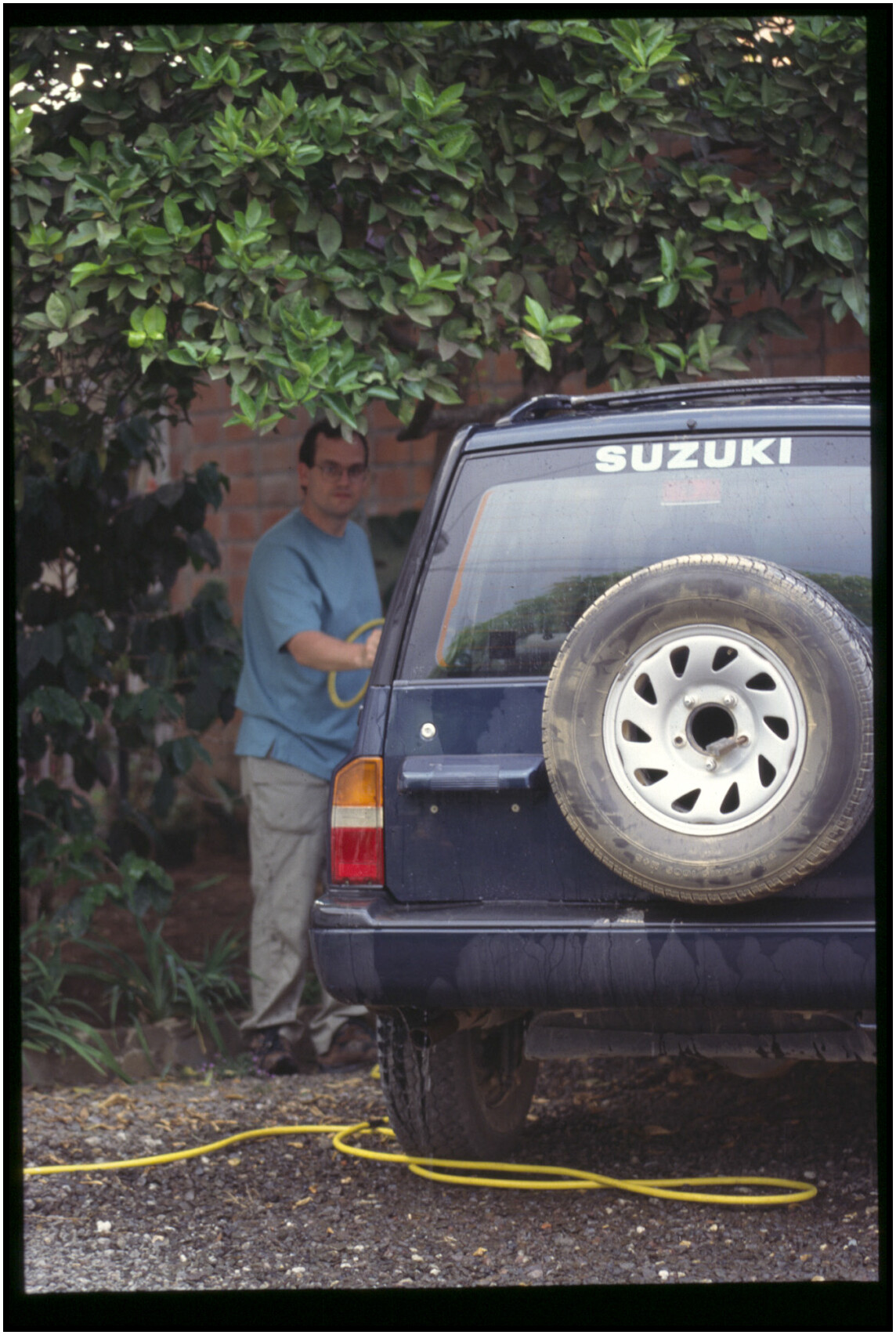
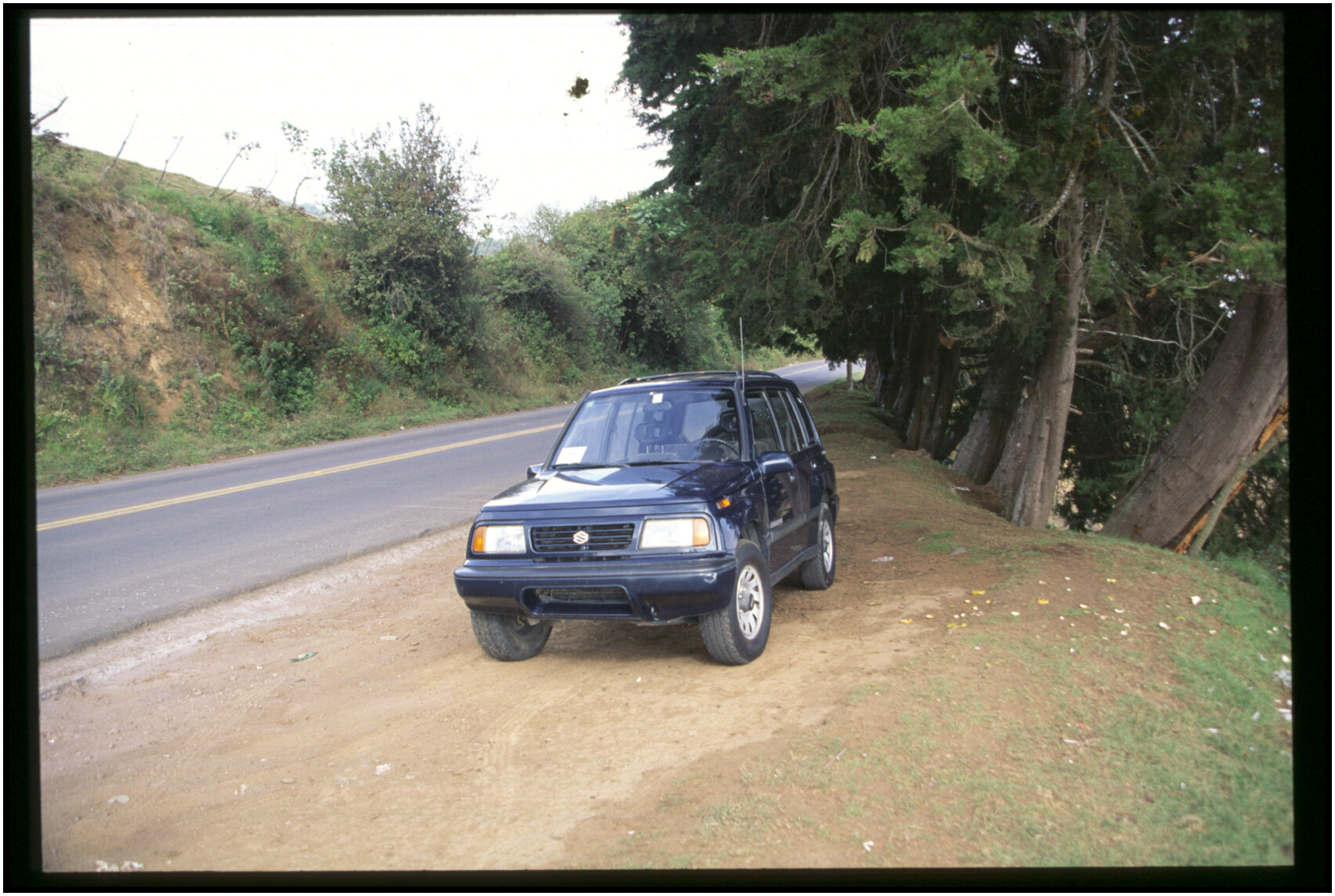
“Don’t make eye contact, Bin. It only encourages them.” Adam shoved his way through the crowd, me in tow, until he spotted the Dollar Rental Car office where he’d made reservations for a Suzuki Sidekick. Several tourist guides mentioned Costa Rican roads were rough, at best, and that a four-wheel drive vehicle was a necessity. Costa Rica has a very reliable bus system that is recommended as an economic means of travel, but we only had six days in the country and didn’t want to be constrained by a bus schedule. A week’s rental of the Suzuki was $324, which we decided was well worth the freedom it provided.
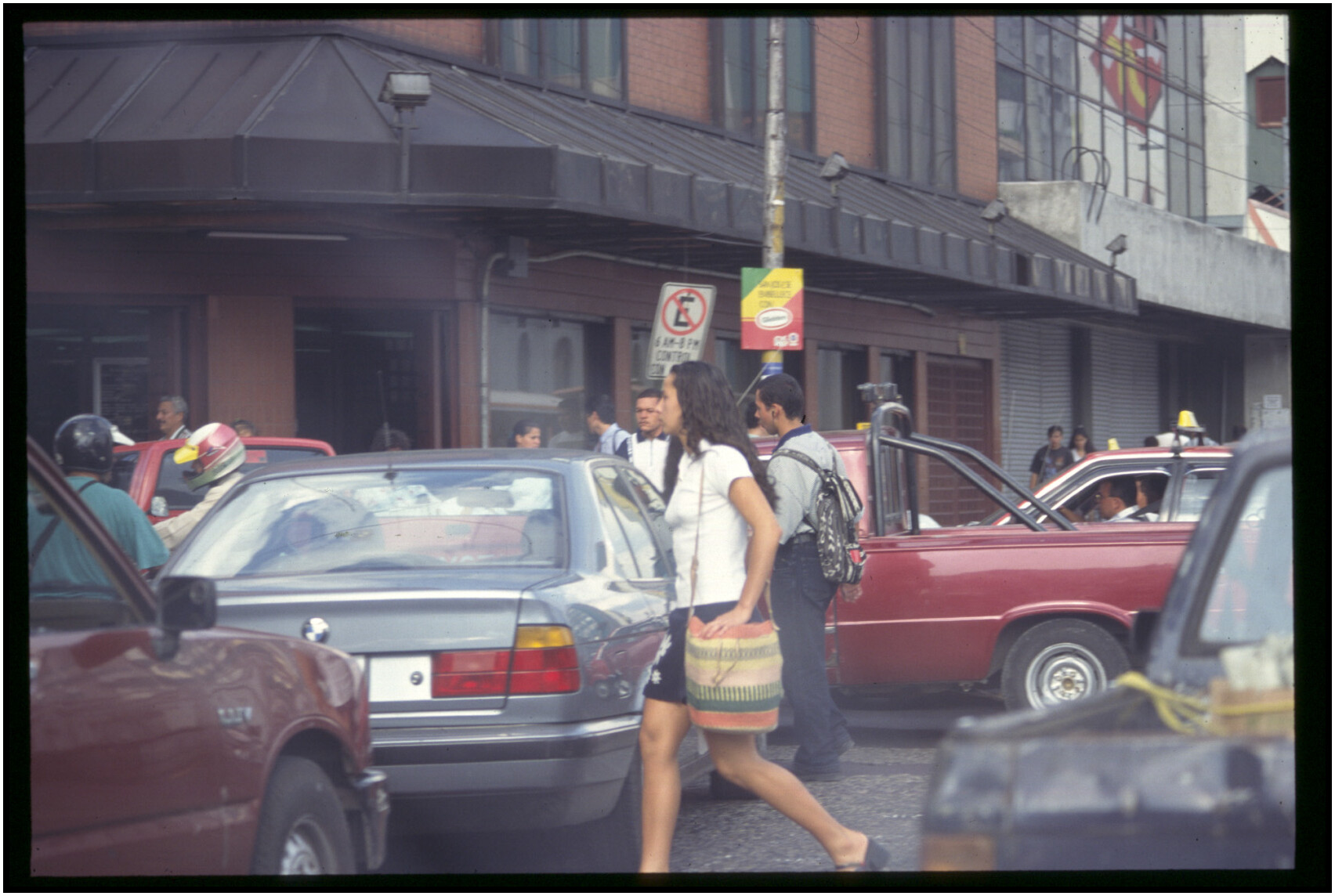
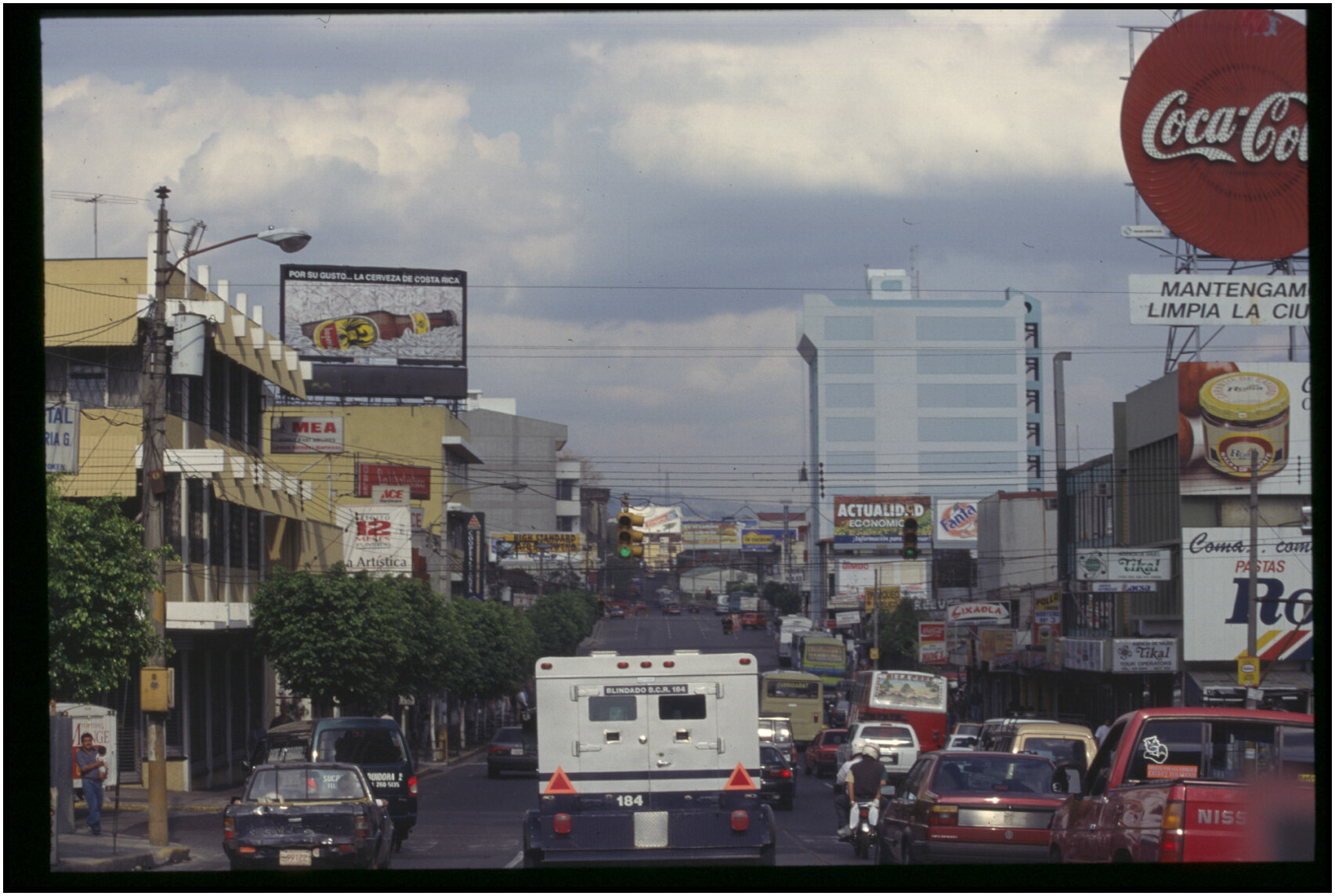
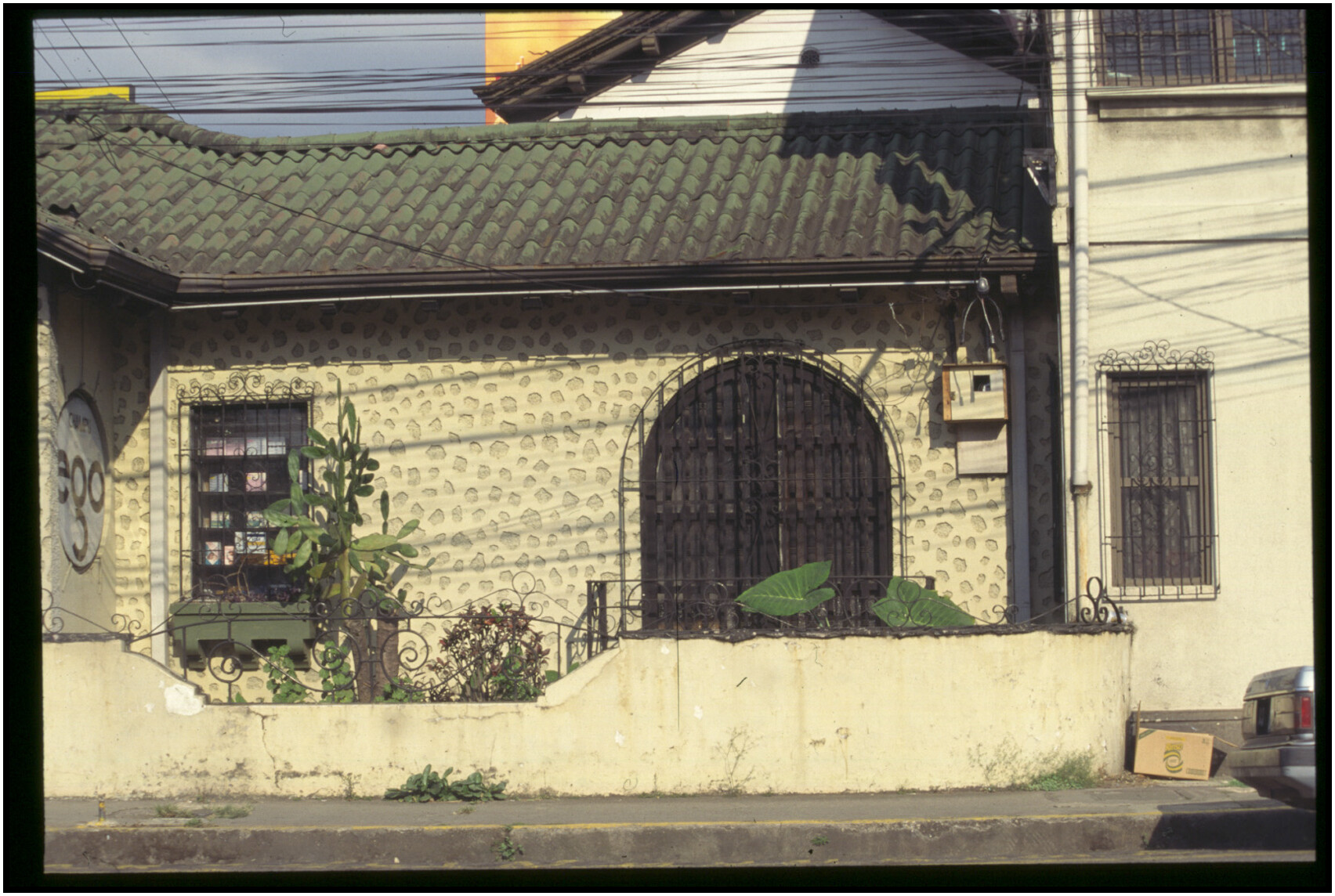
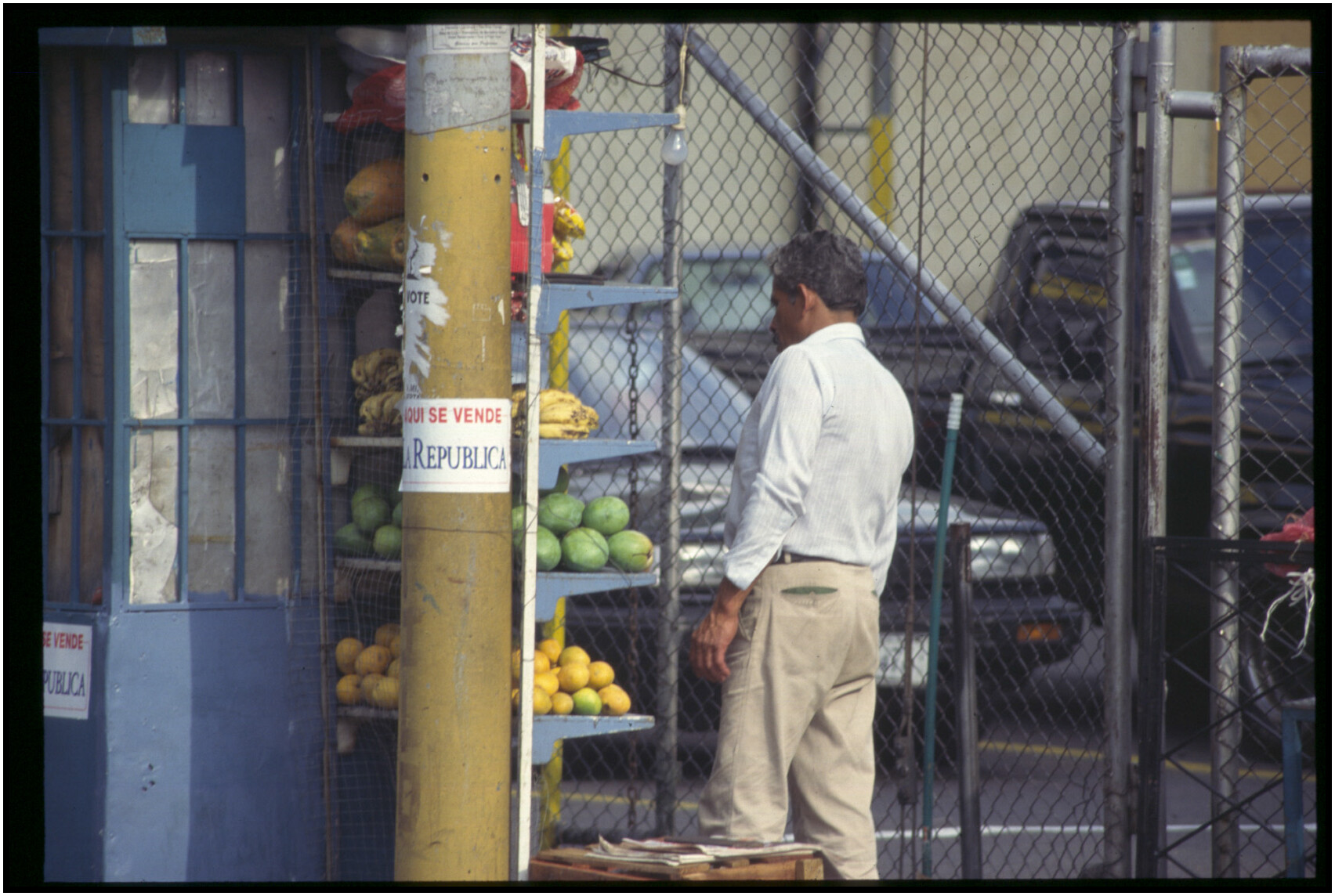
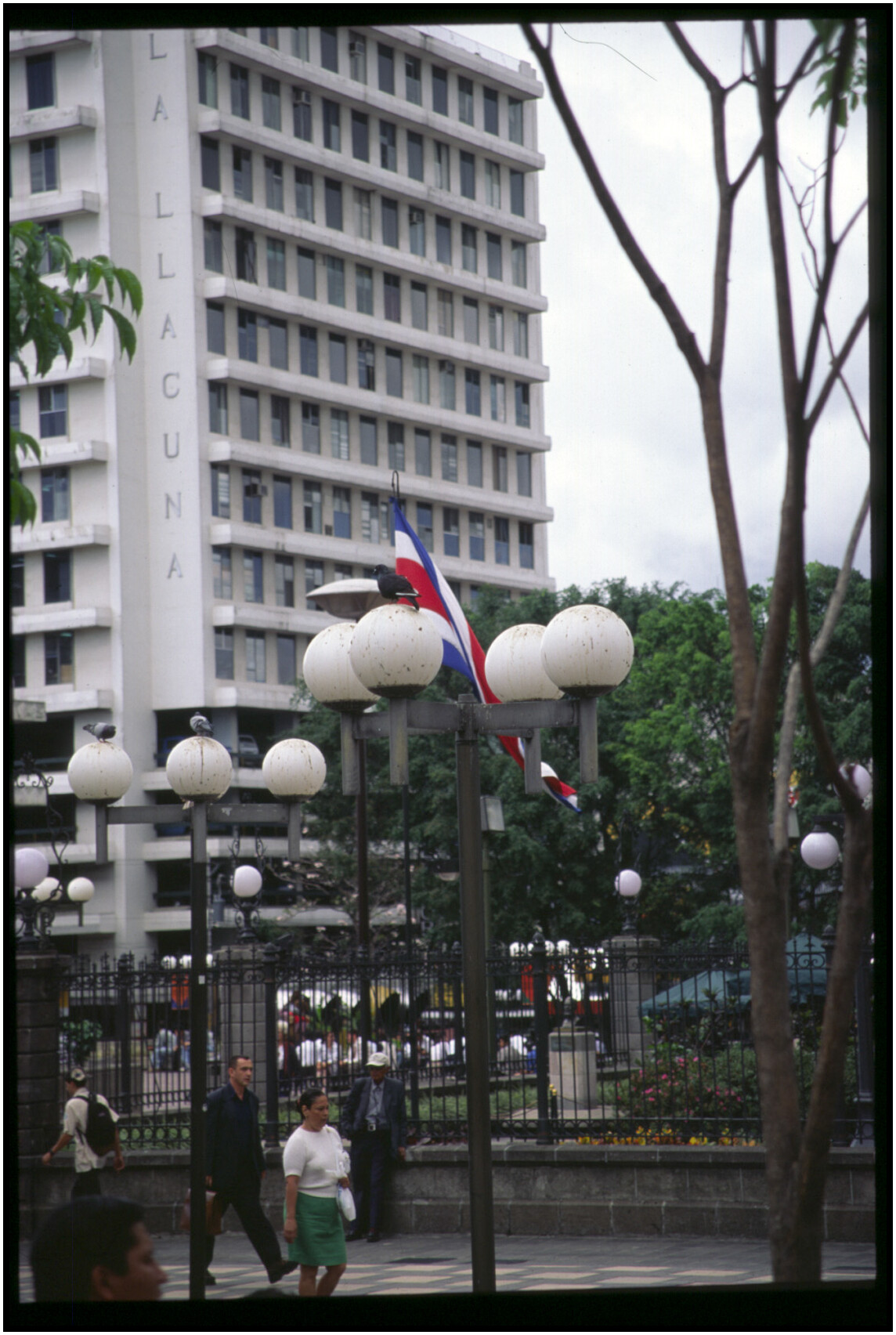
As “American” as San José looked from the air, it was a shock at ground level. San José was a madhouse. No street signs were posted, no one drove in their lane, and masses of pedestrians walked through the streets without a second glance at the motorized vehicles. Motorcycle drivers weaved in and out of traffic, utilizing sidewalks when convenient. No one seemed to mind. Most of the streets were one-way, but you could only tell which way by watching the cars. There weren’t any one-way signs, nor were there lines painted on many of the streets. Hundreds of busses, all of which were wider than the “lanes,” crowded cars, motorscooters, and pedestrians alike. Bus drivers maintained an interval of approximately 8 inches between their noses and the butt of the vehicle in front of them. The road surfaces were rough and terribly uneven, so the maximum speed was around 45 mph. People blared their horns for any and all reasons. Everything was in Spanish, which I fully understood would be the case, but it was still something of a shock. Street scene in San JoseIt was like an idealistic Disney World “Latin Americaland” gone bad.
Adam glanced at me out of the corner of his eye. “What are you thinking?” he asked.
“I’m feeling a little overwhelmed” I admitted.
“Me too. Now do you feel like you’re in another world?”
“Yeah” I said. Adam was usually very self-confident and it was nerve-racking for me to see him looking sort of lost. It was a side of him I very rarely see.
“It’s Mr. Toad’s Wild Ride out here!” Adam said as he tried to navigate and dodge traffic at the same time. “I’m really glad for my Metro training. I don’t think I could do this otherwise. What street are we on now?”
I had the map. I couldn’t read the map because it was labeled no better than the physical streets were. I couldn’t even find a sign at an intersection to get our bearings. “I don’t know!” We were both stressed out and getting crabby. “Why don’t you pull over so we can figure out where we are.”
“Just where do you suggest I pull over, Brenda?” Adam was getting sarcastic, which is never a good sign.
“Everyone else is just stopping in the middle of the road. Pull in behind one of them.”
“I’m not going to do that. It’s got to be illegal and the last thing we need is to land in a Central American jail.”
We fought through San José into the neighboring San Pedro, where our hotel was supposed to be, and found a Kentucky Fried Chicken with a parking lot. Adam took the map from me and tried to do a better job of reading it than I had done. He failed. Not only did we not know where the hotel was, we didn’t know where we were. The guidebook offered the directions: “Following Avenida 2 east from San José, turn left 100 meters beyond Centro Comercial M&N in San Pedro, then the first right. The hotel is 50 meters on the left.”
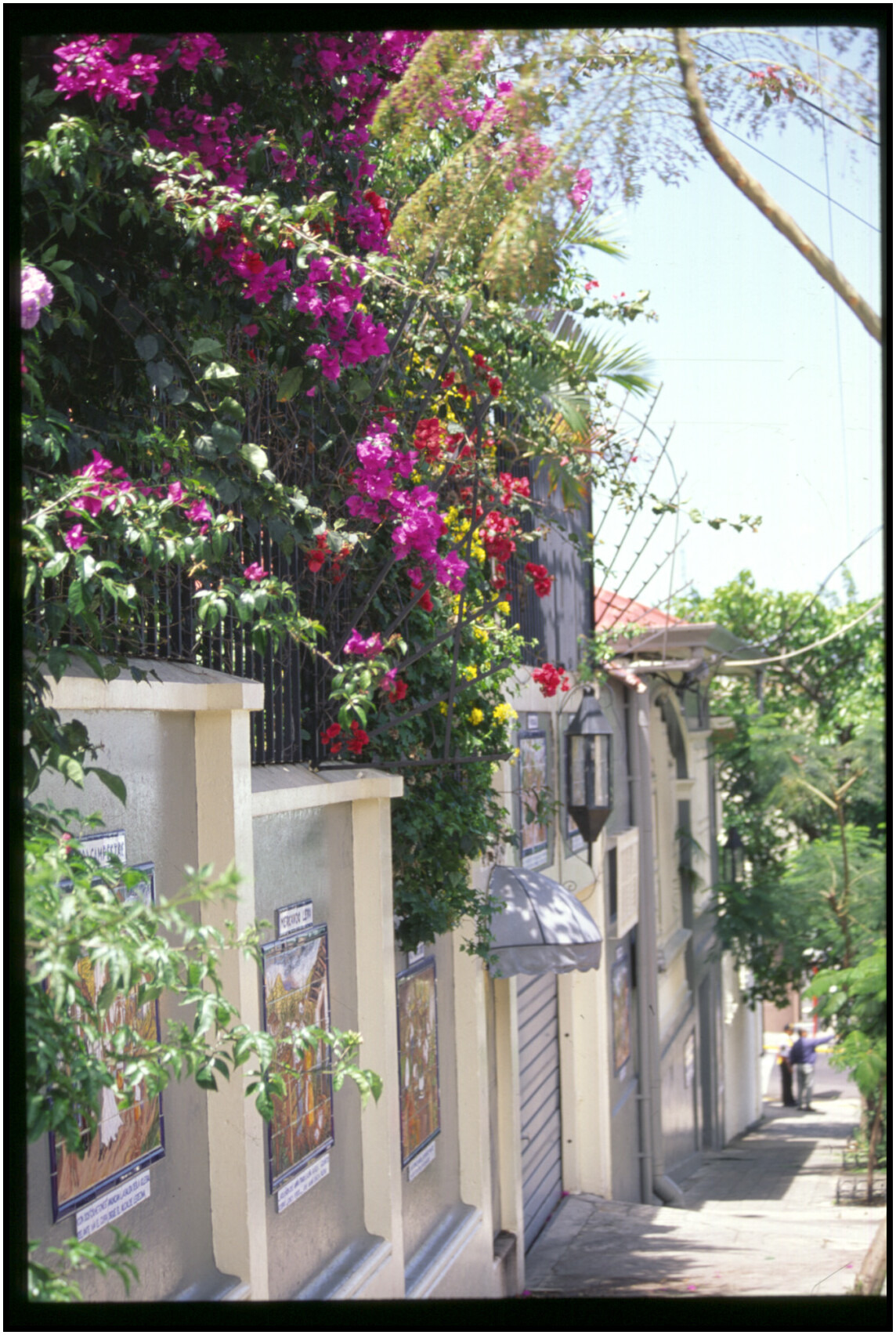
“The street Hotel Milvia is on doesn’t appear to have a name. What’s the address?”Hotel Milvia’s
“It doesn’t have one. They just have a post office box.” Adam folded the useless map and handed it back to me. “I guess we should just drive back the way we came and look for the Centro Comercial M&N. I think we’ve gone too far.”
On the second pass we finally spotted the M&N sign. It was hidden in amongst a dozen other signs and not terribly easy to see.
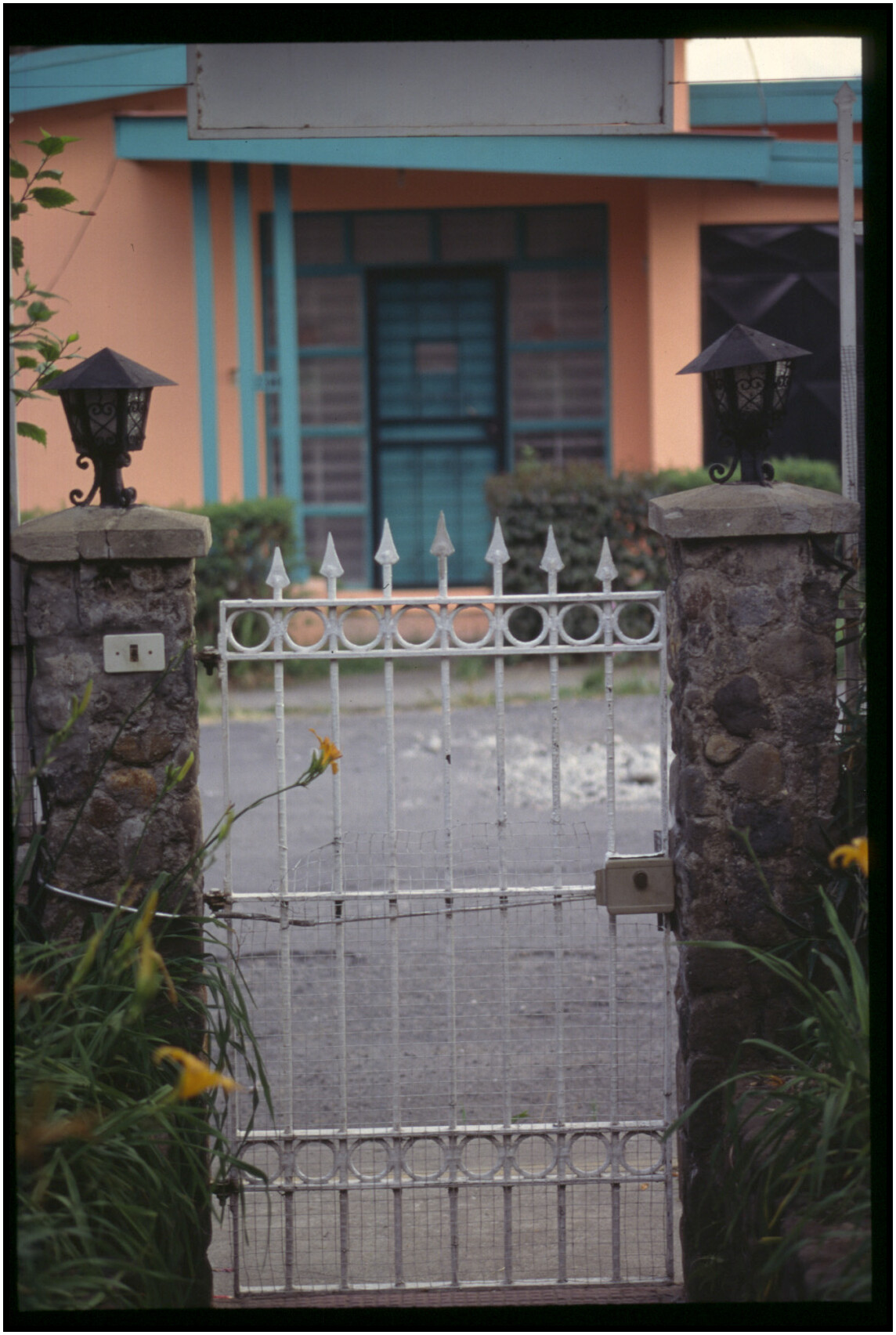
Milvia’s was on a small residential road. Like the businesses we saw in San José, the private homes all had wrought iron bars on the windows and huge locked gates in front of doorways and driveways. I didn’t feel safe in a place where residents turned their homes into fortresses, but I was also amazed at how many small children and single women were walking freely in the streets. It led me to think that perhaps violent crime wasn’t much of an issue, but people would steal from you if given half a chance.
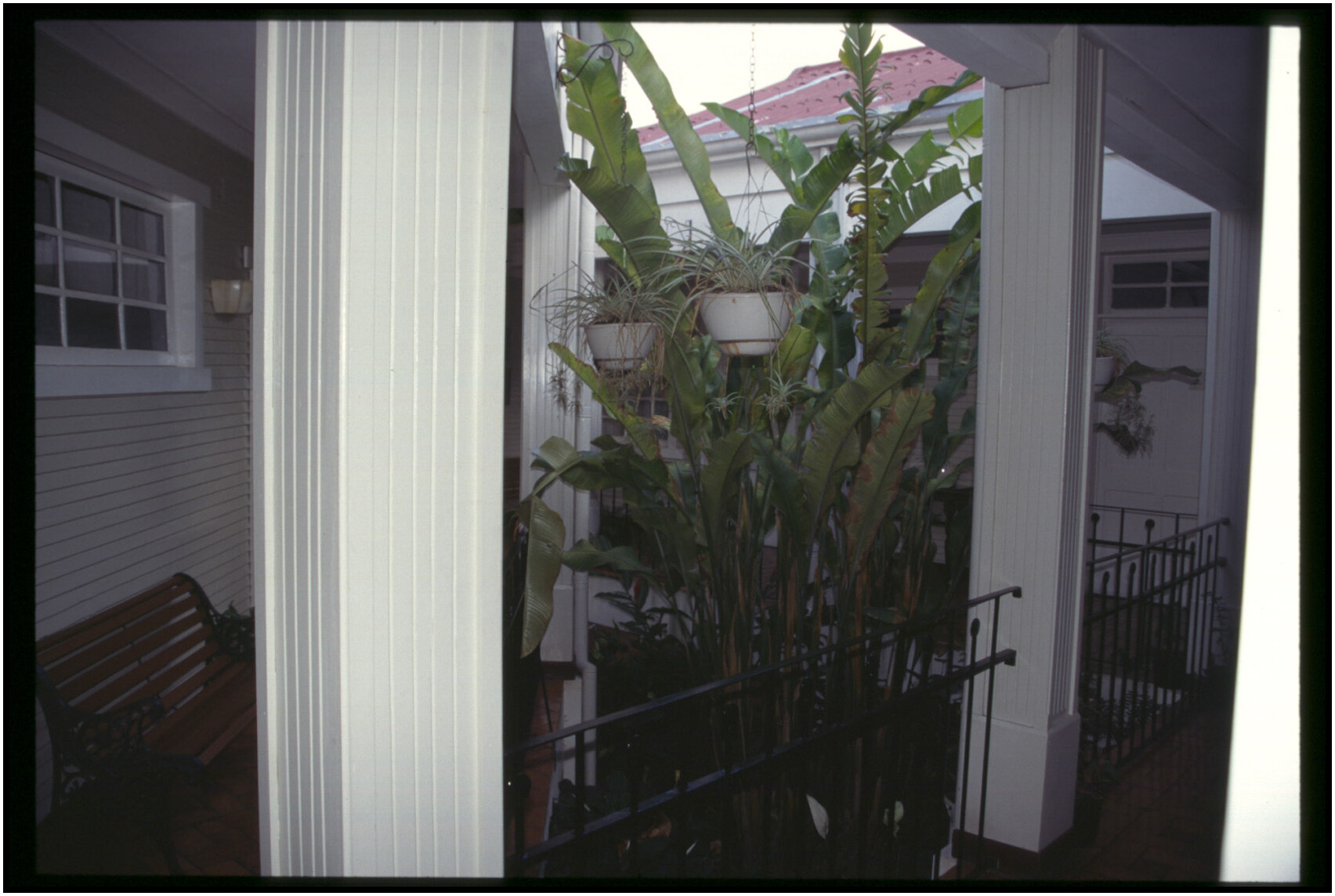
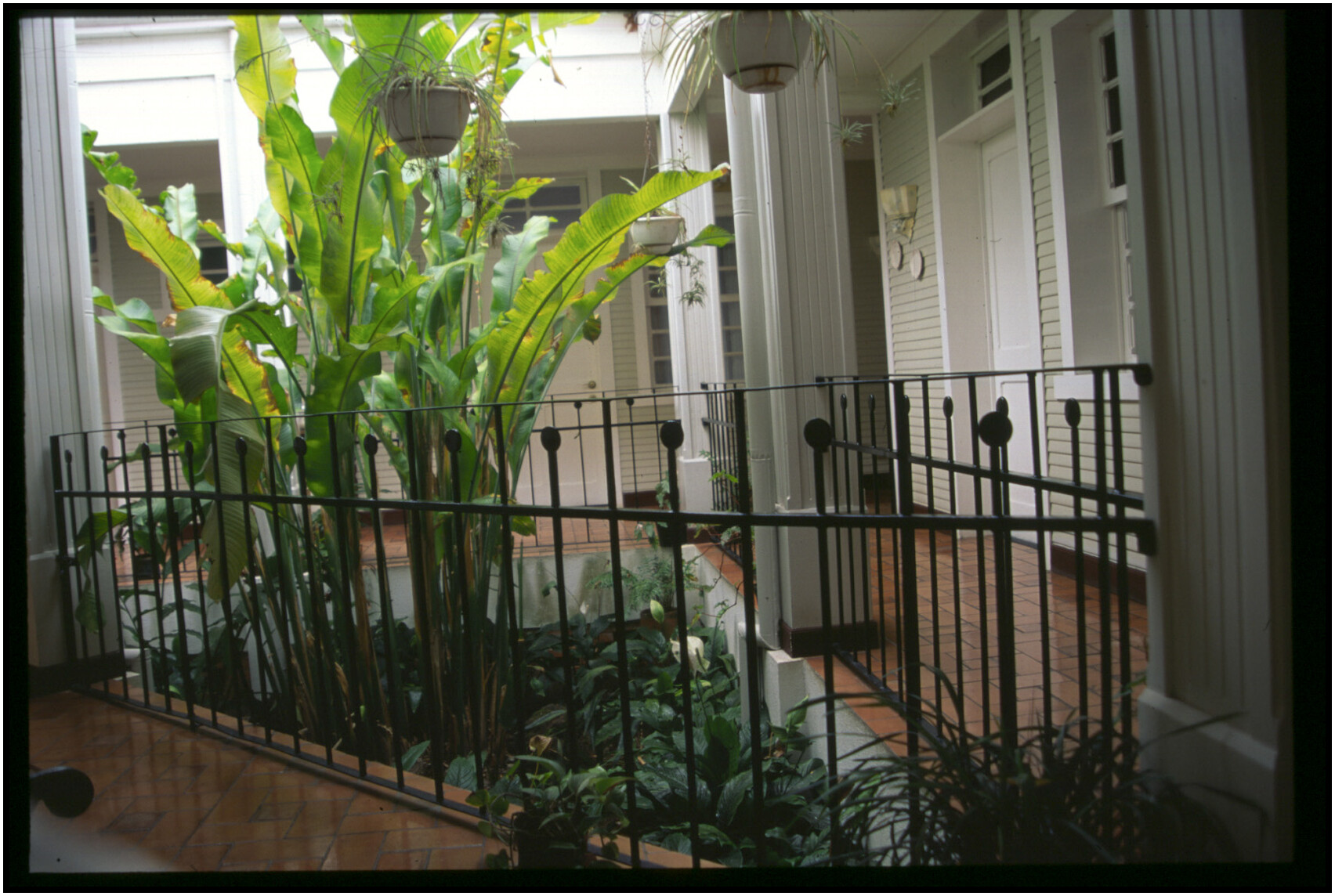
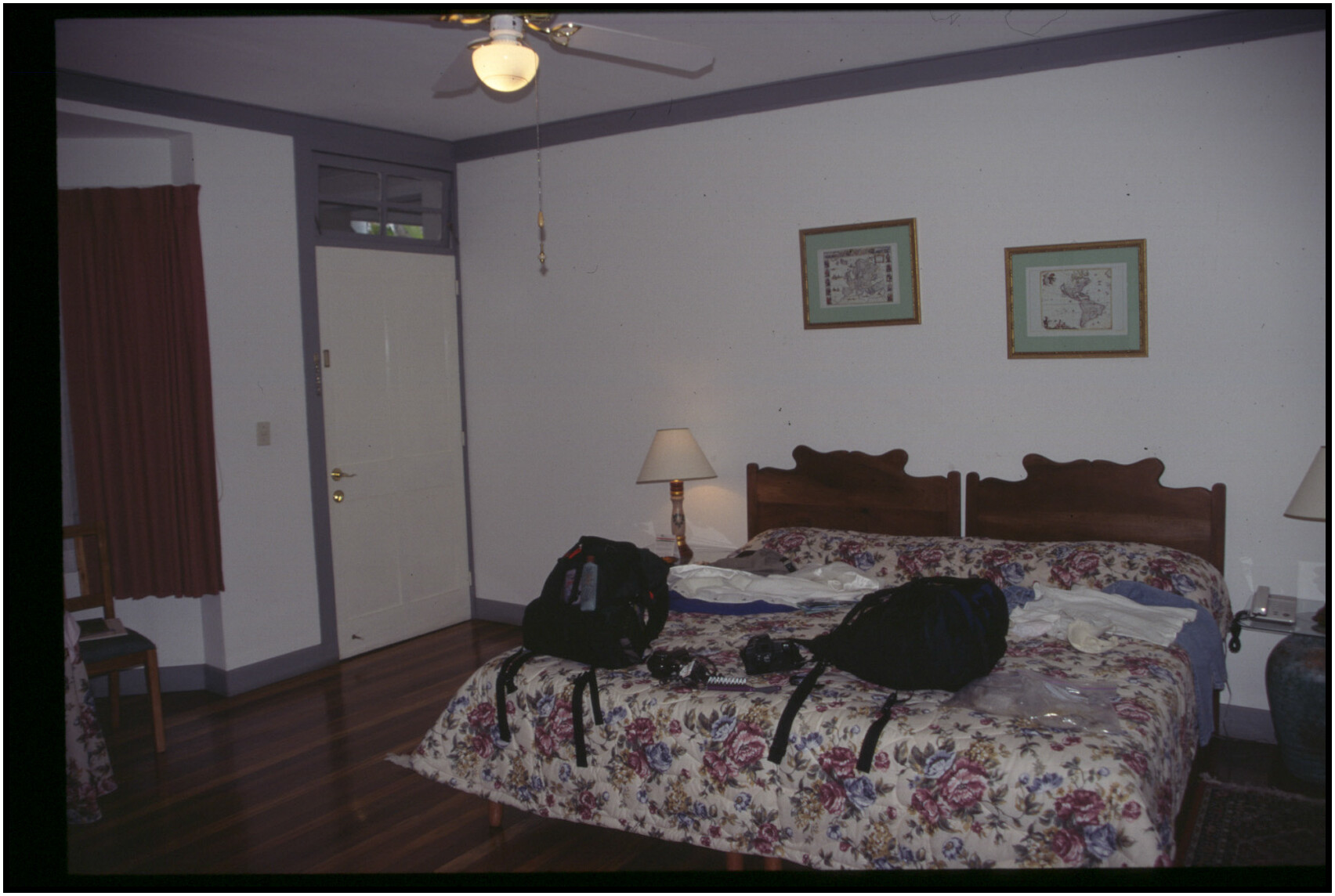
Hotel Milvia had a large gated area for us to park our car and a beautiful courtyard with a fountain and fish pond. The house dated from the 1930s. Milvia had restored it and turned it into a quaint bed and breakfast. It was an oasis of serenity in the middle of a chaotic city. Once you were behind the gates, it was a peaceful little country cottage that could have been on a farm instead of 5 km from the biggest city in the country.
“Is there someplace near here I can exchange some money?” Adam asked the hotel receptionist. She spoke English very well and gave us directions to a bank about three blocks away.
Interfin bank was very small and had a uniformed guard standing in front of the entrance with a huge shotgun. I suddenly had a lot of respect for the Costa Rican banks. Unlike in the US, I had no doubt that the Costa Rican guard would shoot to kill and then be awarded a medal instead of a lawsuit. It was a very effective deterrent to bank robbery. I felt like a criminal just walking in.
“Habla usted ingles?” Adam asked the bank teller.
“No ingles” he replied with a shrug. Adam shot me a panicked look, then in Spanish asked to exchange some money. He was a little bashful to be speaking his very limited Spanish, but the teller understood perfectly and did the transaction. As we were leaving, a Canadian couple behind us in line was dealing with the same language barrier but didn’t do nearly as well with Spanish as Adam had done. “Good job.” I told him. “I’m impressed. You handled that well.”
“Thanks.” With a sheepish grin, he said “I was kind of nervous. It feels different to speak Spanish for real instead of to another English-speaking person who doesn’t know any more than you do.” The grin broadened. “I did do a good job, didn’t I! See, I take good care of my Bin.” His usual self-confidence was starting to return already.
With a pocket full of cash, we decided to take a bus into downtown San José. We were both tired and emotionally drained from traveling, but didn’t want to waste any of our precious time sitting in a hotel room. We walked about 4 blocks from Milvia’s to a bus stop in front of a mall.
I felt like I was naked … men openly stared at me even though I was holding Adam’s hand. They blatantly tried to make eye contact with me and I ended up studying the sidewalk. (Men in the States like to ogle women, too, but in general they are more discreet and don’t want to get caught staring. Years of hearing their mothers snap “Don’t stare! It’s rude!” forge habits that are hard to break.) The Tico men, on the other hand, gawked at women as if they were studying a zoo exhibit. I was grateful I was with my husband when I realized that men were actually honking and calling out to single women. They were leaving me alone as a sign of respect for Adam. I did not look like the average Costa Rican woman, either, so I suppose I stood out in the crowd.
Most of the native women had thick, black hair, dark skin, and were, on average, about 10 pounds heavier than the US “ideal” but a good 20 pounds lighter than the average US reality. This gave them a very curvy, sexy look. Coupled with their exotic Latin features, they were a good-looking group. The men were rather good-looking, too. They tended to be quite muscular and on the short side. Adam is 5’10” and he looked tall compared to the population of Tico men. We didn’t see any obese Ticos. We assumed this was due to eating healthier foods and having a physically active lifestyle. I was amazed at how fat Americans were in comparison. I’d quit noticing the obesity at home, but seeing a population of physically-fit people made the difference painfully obvious.
The busses don’t have a set schedule; you simply stand in the road and look for a bus with the name of the place you want to go painted on it. We found a bus to San José and hopped on. The bus fare was only $0.22. “I can’t believe how cheap it is!” marveled Adam. “It’s at least $1.25 in Seattle.” It was interesting to watch the bus driver battle the congested traffic. “Rita and Randy would freak out if they saw this! Metro it ain’t!”
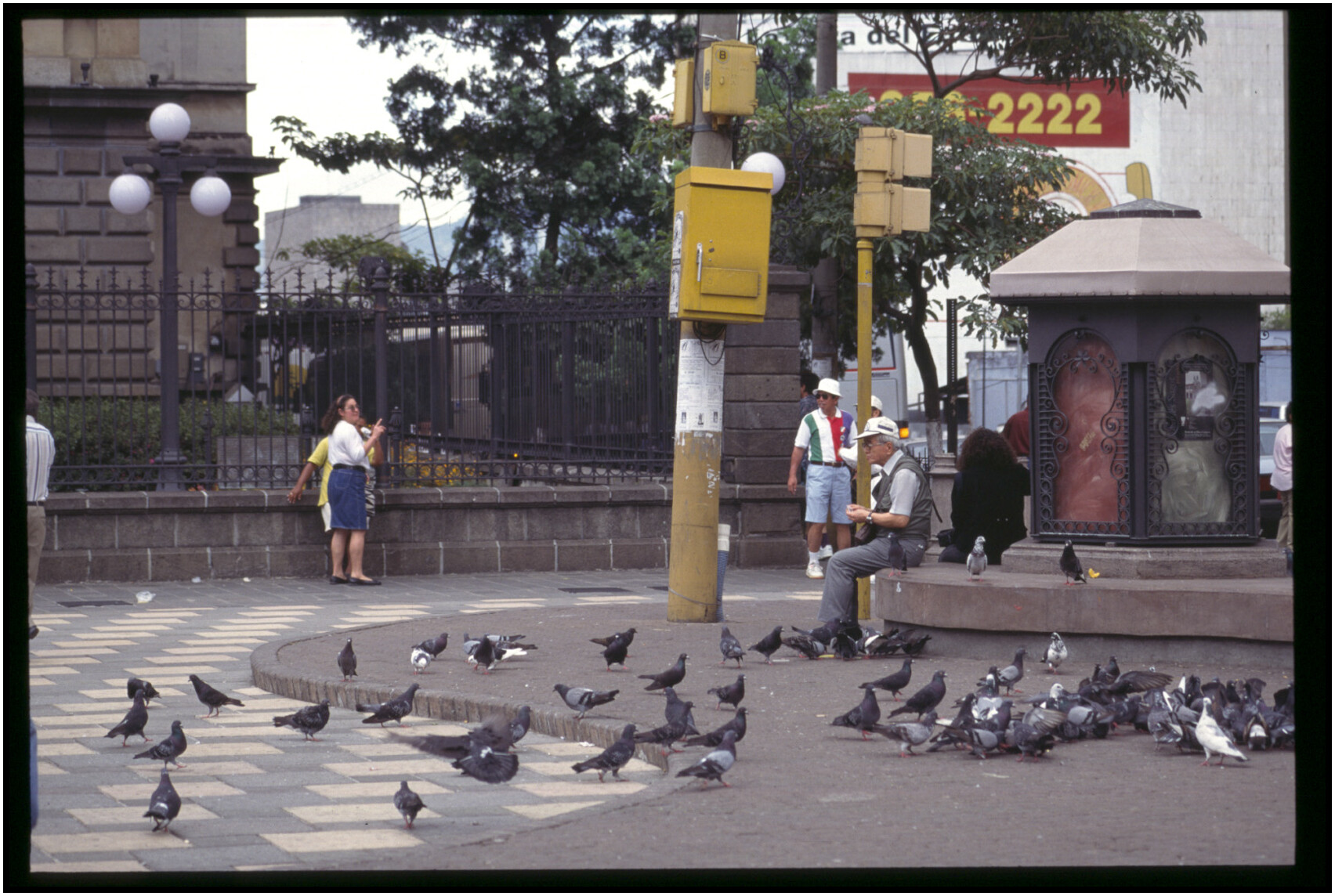
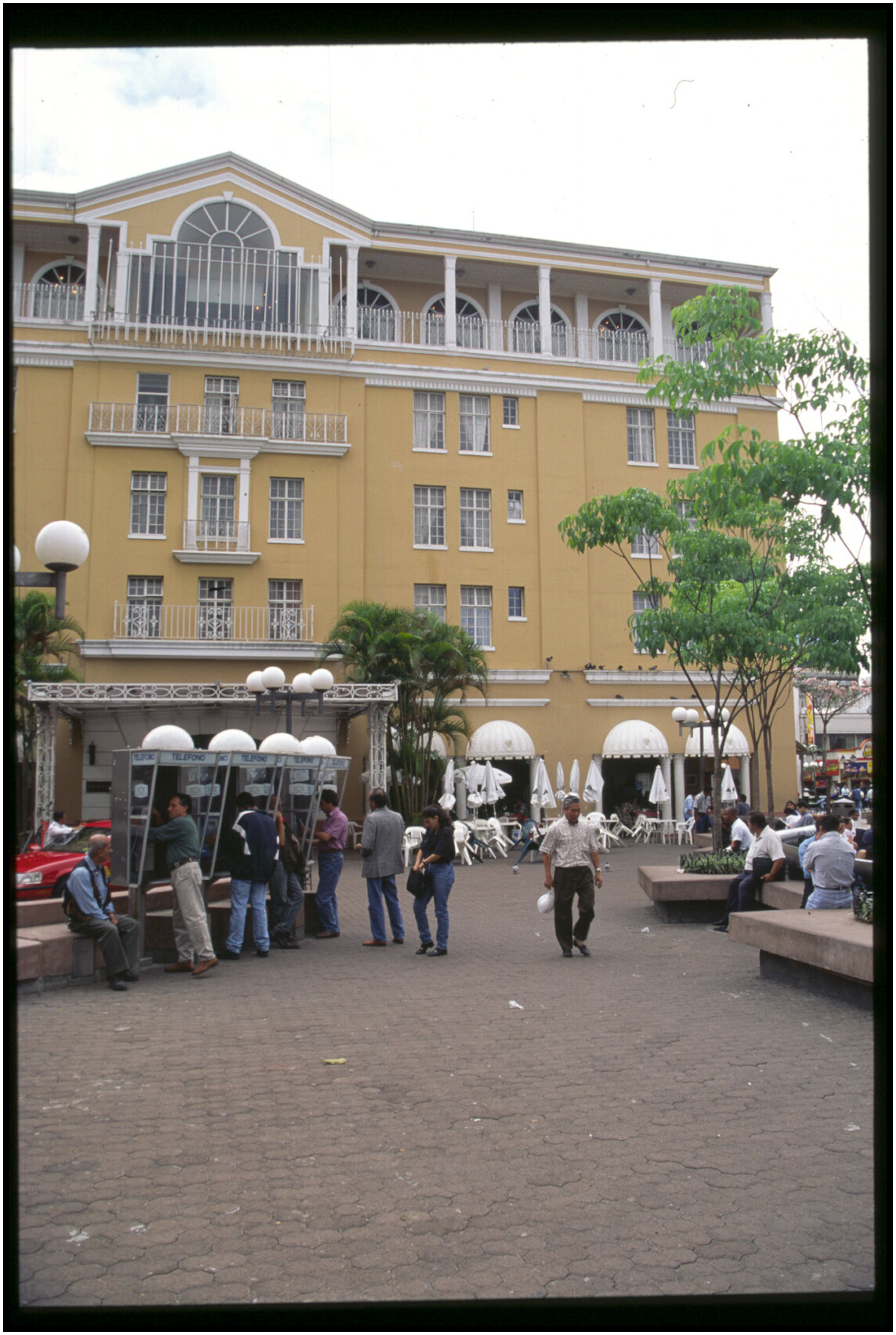
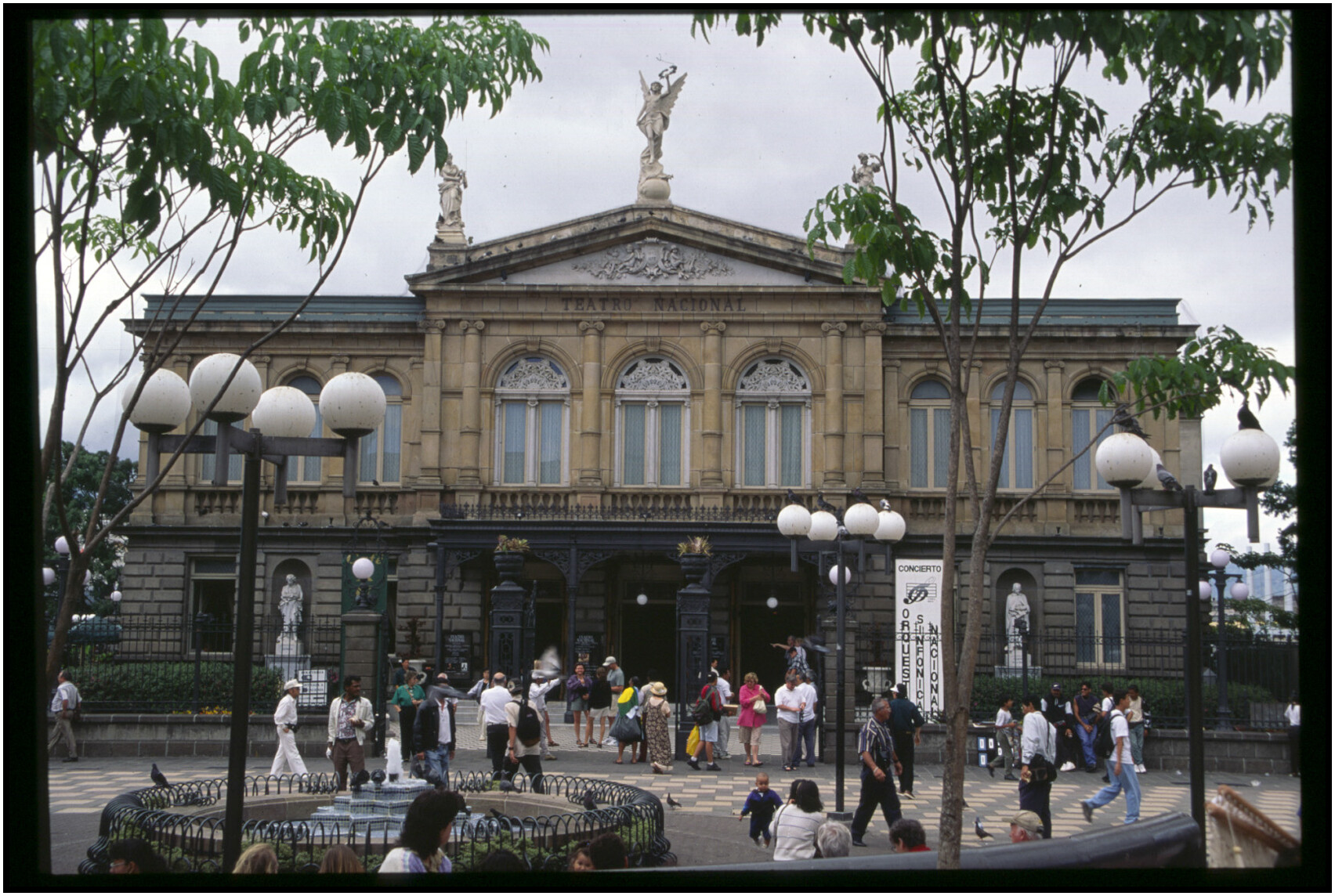
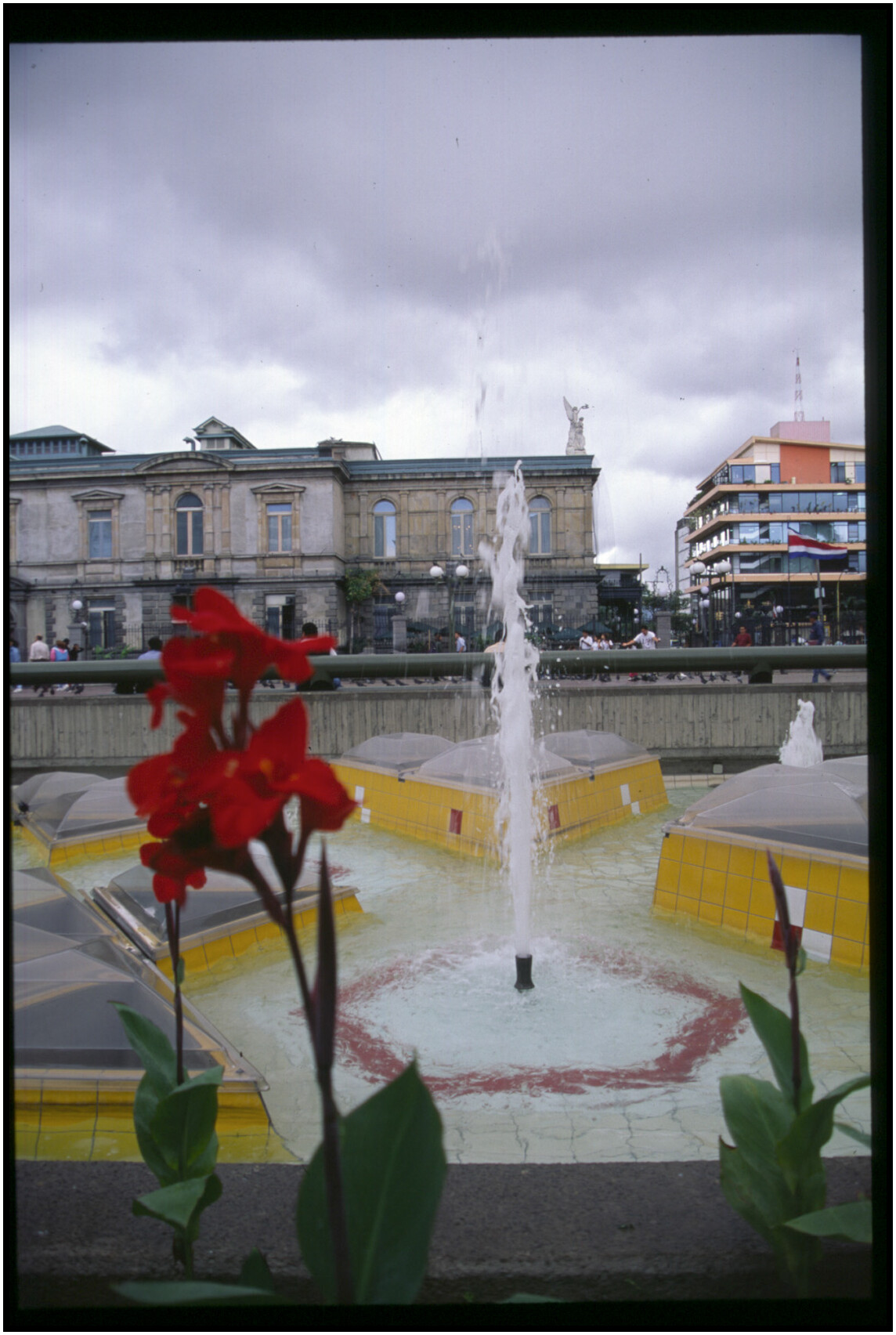
The bus dropped us off near a big square in the center of San José. For a city of only 300,000, the air was incredibly polluted. The busses belched diesel fumes which hovered in big, eye-stinging clouds that slight breezes couldn’t sweep away. Every once in a while we would catch a whiff of raw sewage running through a gutter. Adam would sniff audibly, wrinkle his nose, and say, “Oh, Bin! Is that you?” (Ha ha. No one ever gets tired of hearing that joke.)
As dirty as the air was, however, the streets and stores were surprisingly clean. The city looked rather poor by US standards, but shopkeepers took a lot of pride in their little stores and kept them spotless. There was also a noticeable lack of homeless people in the streets.
We tried to get some photographs of the city and it’s inhabitants, but the day was overcast and too dark. We finally gave up and decided to try our picture taking the next day. We found a bus headed back to San Pedro.
“I’m hungry. What time is it?”
Adam consulted his watch. “Almost 5:00 p.m.”
“Let’s find some food. All we’ve had today was that gross airplane meal. My stomach is starting to hurt.”
One of the employees at Milvia’s had given us a list of restaurants within walking distance of the hotel. The nicest one was called Ambrosia. We decided to eat there, assuming the better places would have “safer” food. We got to Ambrosia at 5:20 only to find the restaurant didn’t open until 6:00 p.m. There were several other restaurants in the area and not a single one was open. Costa Rican’s eat later than North Americans do.
Adam found a tobacco shop (tabaqueria) nearby and bought an $8 Habana (Cuban) cigar. The shopkeeper spoke adequate English. He was about 30, had long, curly black hair and wore a lot of jewelry. He put heavy pressure on Adam to buy a whole box of cigars instead of only one.
Adam attempted to turn him down politely. “I have to smoke what I buy before I leave the country. I can’t take these back to the United States.”
The shopkeeper raised a conspiratorial eyebrow and said, “There are ways.”
“I’m sure there are.” Adam tried a different tactic. “Nevertheless, I should just get one to see if it’s any good before I invest in a whole box.”
The shopkeeper leaned back, insulted. He pointed to a framed certificate hanging on the wall above the glass display counter. “This is a certificate of authenticity. I am one of the only tabaquerias in Costa Rica licensed to carry these Cuban cigars.” His behavior indicated the certificate was something special, indeed. “They are the best.” he proclaimed proudly.
Adam asked what time the tabaqueria opened the next day, promising to come back if he found the cigar satisfactory.
We wandered back to Ambrosia, which was now open. We walked in and were the only customers in the place. We stood in the doorway waiting for someone to show us to a table. Finally a waiter came forward and indicated we were to sit wherever we chose. Restaurant lesson #1: you always seat yourself in Costa Rican restaurants.
The waiter spoke very little English. Adam ordered a chicken entrée.
“Dos?” asked the waiter, holding up two fingers.
“No, uno.” Adam looked to me to place my order. I ordered steak. The waiter became confused and looked back to Adam, who didn’t say anything. The waiter came back a while later and gave my food to Adam.
Restaurant lesson #2: In Costa Rica, men always order for women. We eventually got the food straightened out and had a fantastic meal.
By the time we finished eating, I was tired and had to go to the bathroom. I didn’t see a ladies room at the restaurant. “Let’s get the bill and go.”
The waiter came back and asked if we wanted dessert or coffee. Adam said, “No, we’re finished, thank you.”
We waited for the bill. And waited. And waited. I was getting desperate for a bathroom and wanted to leave. “Adam, ask for the bill!”
“I will if he doesn’t bring it in a minute.”
Still no bill. Finally, Adam asked the waiter for the check. It was on our table within two minutes.
Restaurant lesson #3: It is considered rude for a restaurateur to deliver a bill to a customer who is not ready to leave. Once a bill is asked for, however, things move along quickly.
For two glasses of wine, an appetizer, and two entrees the total bill was only ¢6.200.
With full stomachs, we walked back to the hotel and I fell asleep by 7:45 p.m. Adam stayed awake a bit longer and called his parents to let them know we had arrived safely. Later that night, the car alarm on our Suzuki went off and Adam had to figure out how to shut it down. I slept through it all.
San Jose, Cartago and Volcan Irazu
DAY 2
26 March, Thursday
“Brenda, time to get up.”
I felt like I had sand in my eyes, despite almost 11 hours of sleep. “What time is it?”
“6:00 a.m. You can shower first.”
The bathroom had a large open window high on the wall perpendicular to the sink. While brushing my teeth, I heard the unmistakable screeching of conures outside. “Adam!! Do you hear the conures? I can’t believe it! Do you hear them?”
We both stood on tiptoe trying to get a good look outside. We could hear what sounded like dozens of birds flying overhead, but we couldn’t catch a glimpse of even one.
Hotel Milvia advertised with pride that they had hot running water. I couldn’t get any out of the shower. Believe me, I really tried. I took the fastest shower I could, dried my hair, and got out of the bathroom with blue lips. “Good luck with the shower, Adam. It’s cold.”
15 minutes later Adam announced, “That was a great shower. I had warm water. I don’t know what you did wrong.”
The hot water secret turned out to be that the faucet knobs were labeled incorrectly. The cold knob actually produced hot water, the hot knob turned on the shower head, and the shower head knob offered icy water. We found this disregard for knob labels throughout the entire country. The plumbers must hook up whichever knob they happen to grab out of the box.
Milvia’s offered a continental-type breakfast of cold cereal, hot biscuits with marmalade, fresh fruits, and a delicious frothy juice we assumed was a combination of cantaloupe and watermelon.
After breakfast, we decided to take a bus into San José. We’d been unable to get satisfactory photographs the day before due to threatening weather. Adam, in particular, wanted some cityscapes and good photos of Costa Rican people. Unfortunately, the weather today didn’t seem much better. Dark storm clouds gathered on the horizon.
We were completely overwhelmed by the sheer mass of traffic clogging the street into San José. I’ve been in bad traffic jams in the United States; however, the United States could never produce this tangled web of cars, busses, motorscooters, and pedestrians. Cars literally sat sideways in the middle of the thru-way. Pedestrians easily out-sped the vehicles. Furthermore, every bus into the city was at full capacity with people packed into the aisles subway-style. Bus drivers refused to pull into the bus stop because it was impossible for them to reenter the main body of traffic.
Adam and I stood for quite a while waiting for a bus to pick us up, and finally realized our only chance was to be a lot more aggressive. We ventured into the street to get on a bus headed for San José, but the bus driver turned us away. He didn’t have any room.
Adam was disgusted. “I don’t want to get stuck in this anyway. Do you want to go do something else?”
“Sure. What else is there to do?”
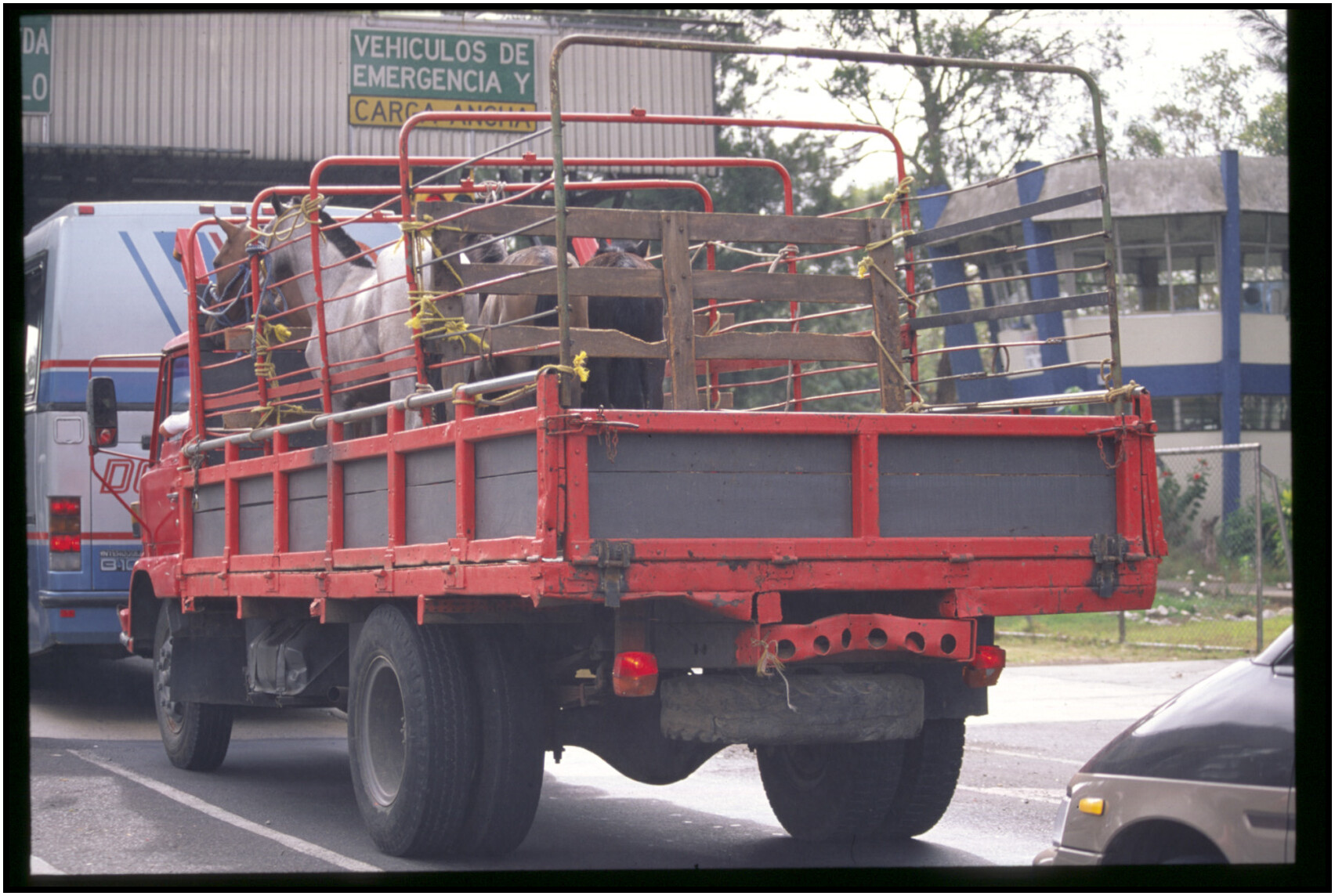
“Let’s get the car and drive to Cartago to see what that’s like. By the time we get back, traffic into San José should be betteIn line at the tollbooth, road to Cartagor.” Cartago was a small historical town several kilometers southeast of San Pedro – the opposite direction of the rush-hour flow.
In Costa Rica, gas stations are few and far between. Dollar Rental gave us the Suzuki with less than a quarter tank of gas and we were getting concerned about running the tank dry. Immediately out of San Pedro we saw a filling station, but it was on the other side of a divided highway and we couldn’t gain access to it. Adam decided we would chance it and continued toward Cartago. Another 10 minutes of driving and one tollbooth later (¢60, $0.24), I suggested we turn around and drive back to the single known station. The gas gauge was registering below “E.” When we got there, Adam fumbled out something in Spanish about “filling” and “regular gas” to the attendant. He was still uncomfortable with Spanish, but already making smoother transactions. I was still having trouble remembering to say “perdón” instead of “excuse me” when I bumped into someone. Adam learns remarkably fast.
Once we were on the road with a full tank of gas, getting to Cartago only took about 20 minutes. Cartago had a couple of neat-looking old buildings, but there wasn’t much to do. We took in most of the sights in half an hour and headed back to Milvia’s.
Hotel Milvia had several tourist pamphlets sitting on a table by the front entrance. We didn’t have any specific plans for the day, so we grabbed a couple of the more interesting brochures. We decided to check out Simón Bolivar Zoo and a butterfly farm called Spyrogyra.
Traffic had subsided enough that we were able to board a bus to San José. From the center of town, we walked several blocks to the zoo. The sky had cleared up and I got several decent photographs of the town on our way.
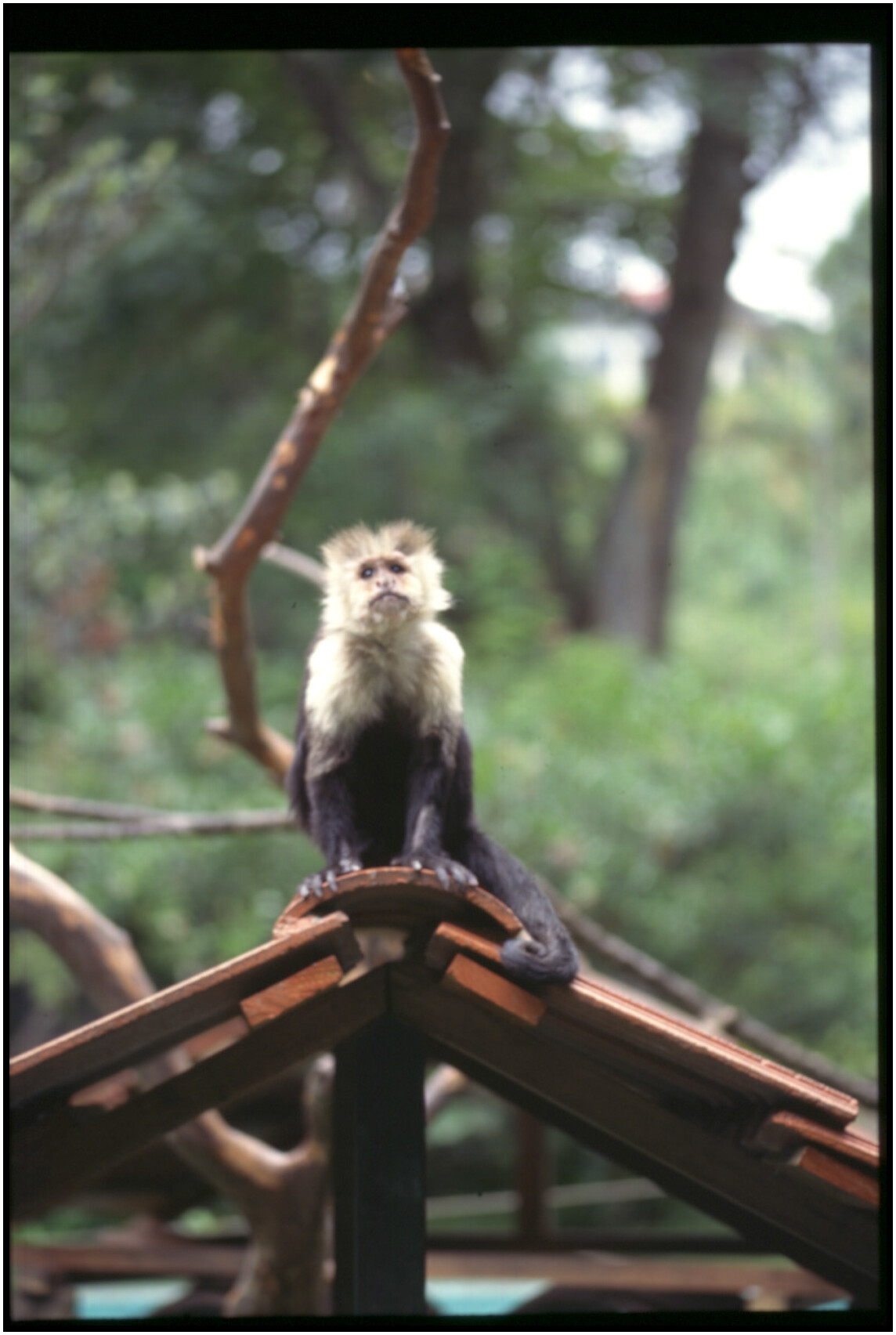
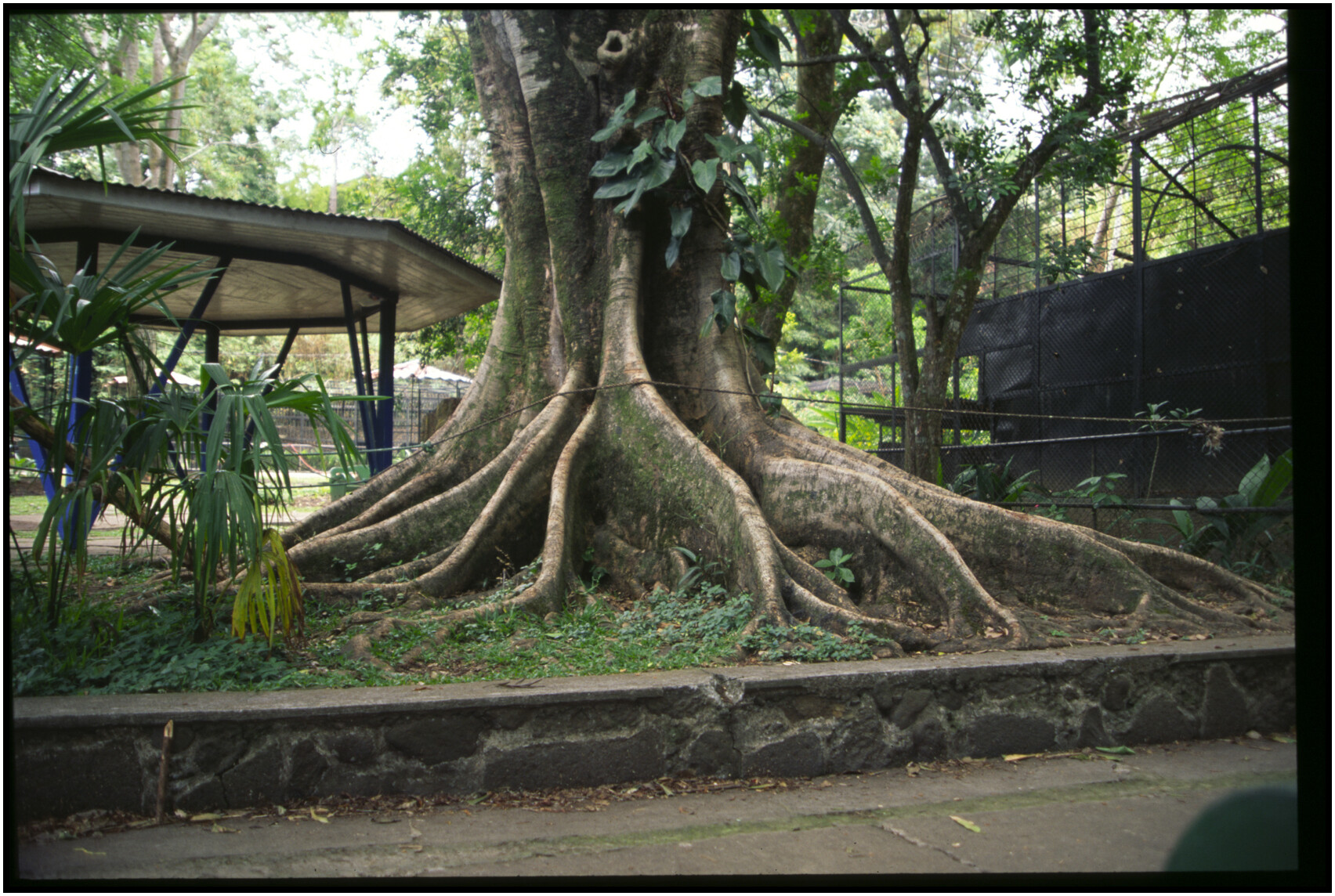
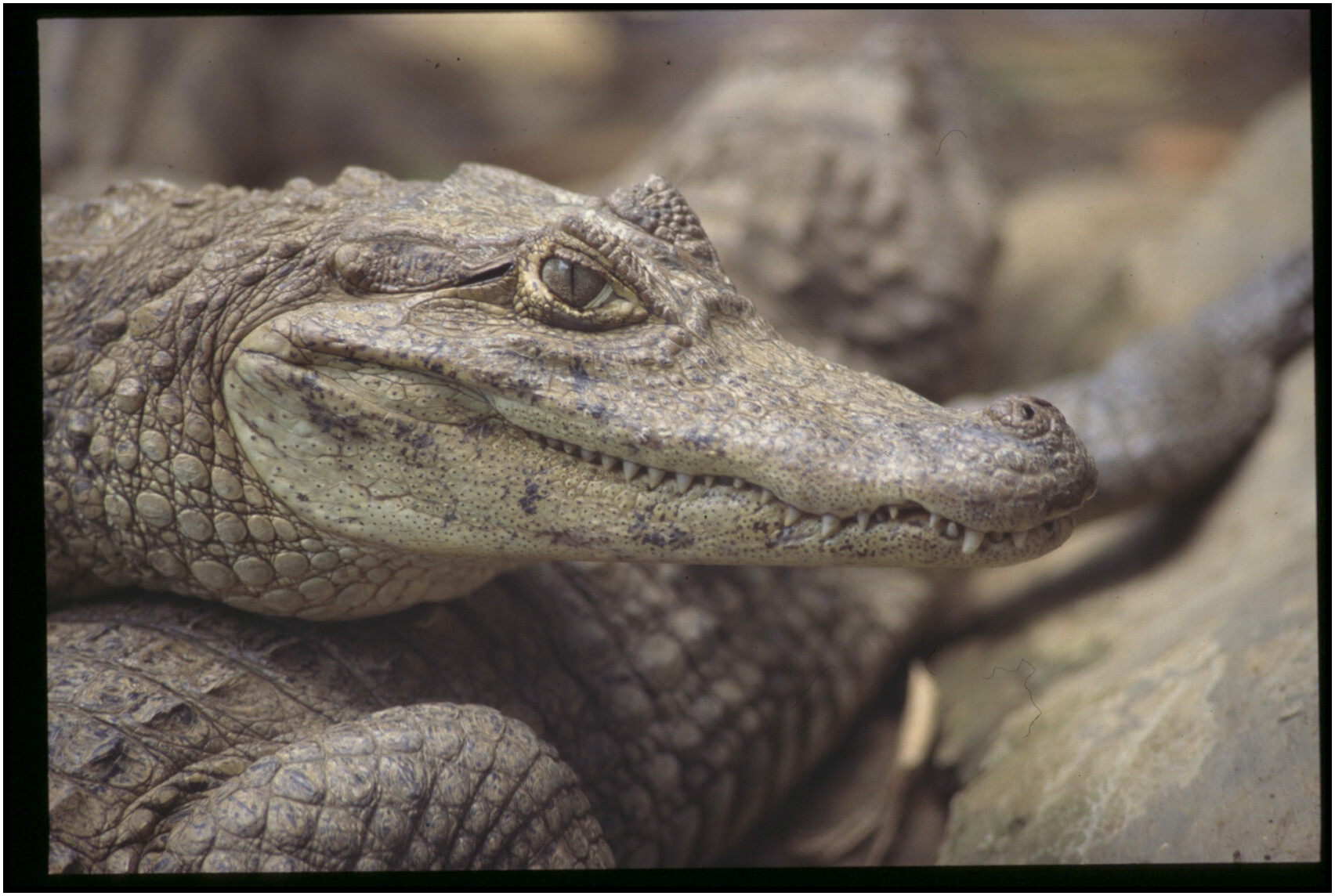
Most of the zoo’s exhibits were of Costa Rican wild animals. (There was a tiger, but I think that was the one exception.) Featured were a large number of birds and reptiles, several different species of monkeys, and a couple of Costa Rican wild cats. I was studying a huge cage full of birds I didn’t recognize when I heard Adam calling to me from the other side of a tree easily 6 feet in diameter.
“Brenda! You’ve got to come see this!”
I found Adam peering into the top of the giant tree. I didn’t see what he was looking at so intently. “What’s up there?”
“Don’t you see it? There’s a wild conure up there. It looks like a cherry head.”
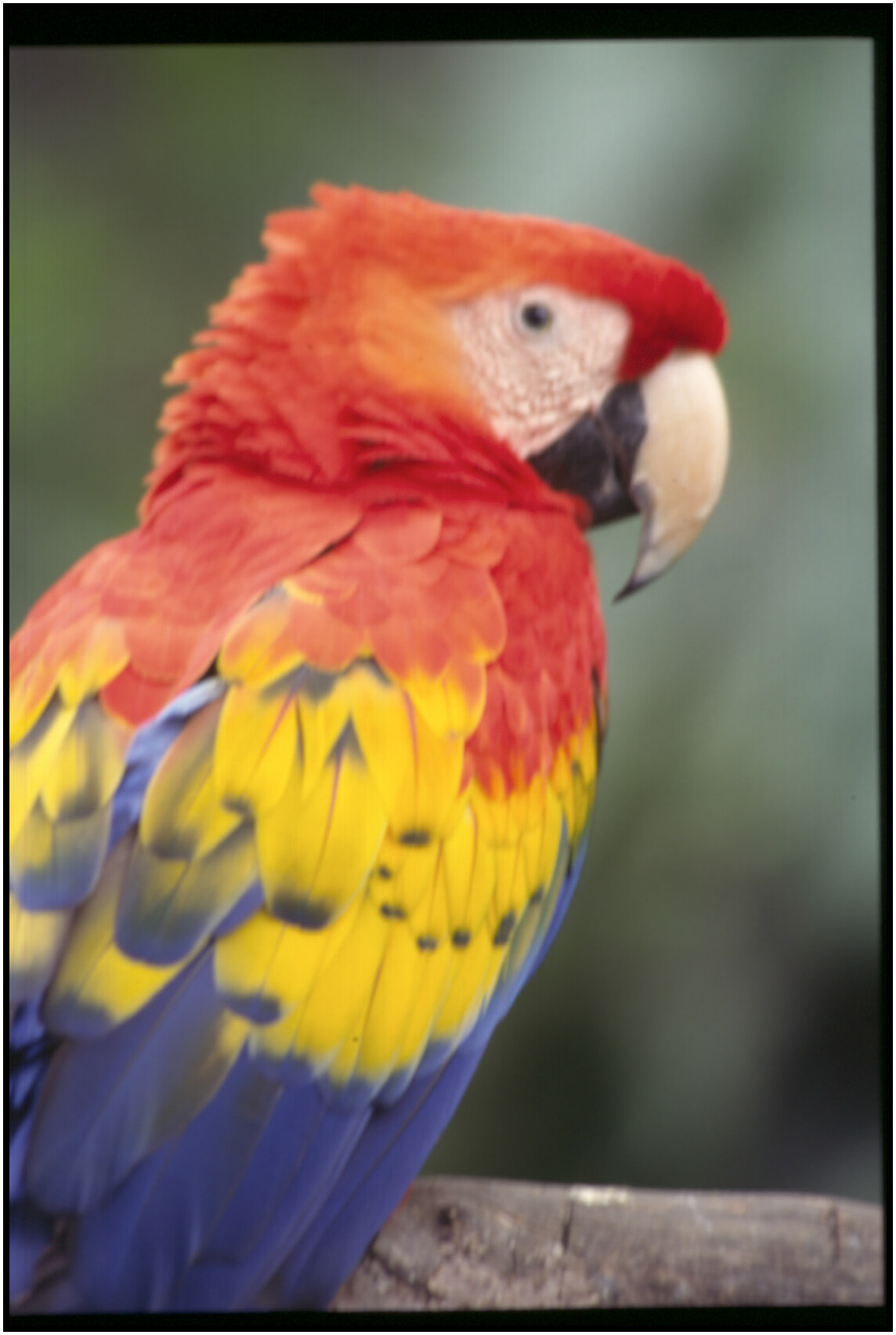
Sure enough, sitting beside a large hole in the tree trunk was a green conure with a red head. It was the first wild parrot we’d seen, and we got lucky enough to see it beside it’s nesting cavity. “It must be the same kind we heard from the bathroom this morning.” I tried to get a picture of it, but my 300mm zoom lens wasn’t long enough to make a decent image. How exciting though! Our first wild parrot sighting!
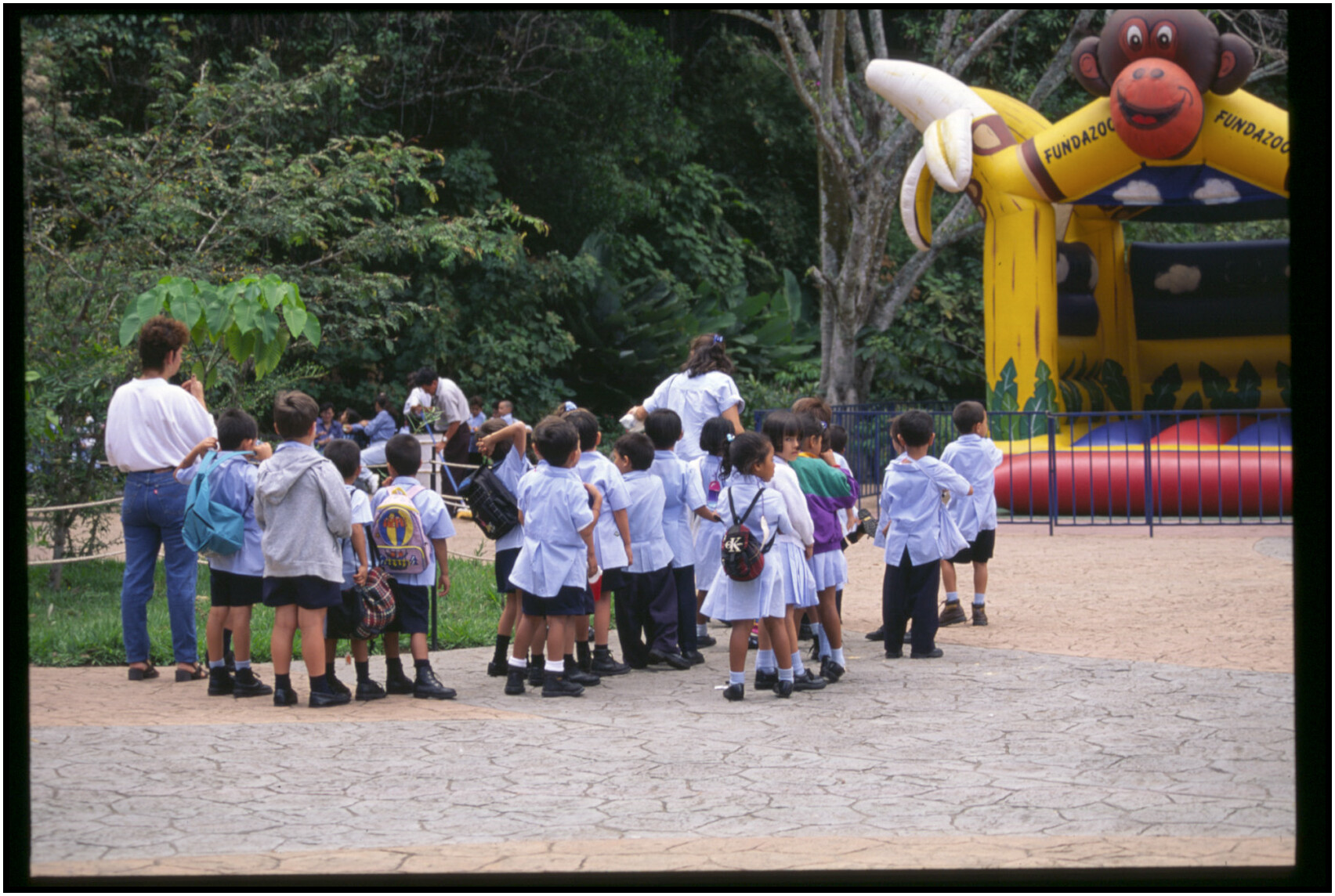
A large group of young school children on a field trip, each wearing the standard blue uniform we’d seen on students throughout the city, was just as much fun to watch as the animals were. We spent a little more than an hour taking photographs and wandering along the overgrown paths cut into the steep hill above the main part of the zoo.
Next, we wanted to go to the Spyrogyra butterfly farm. The tourist guide promised it was only a few blocks from the zoo, but after 30 minutes of wandering through unmarked streets unable to find it, we gave up and decided to get some lunch instead. Finding things in Costa Rica was turning out to be difficult.
Adam had read about a good restaurant near the central square called La Parisienne. It catered to tourists rather than to locals, so they had menus in English. Most of the people at the tables around us were also speaking English. We ordered chicken with black beans and rice, two cokes and a dessert called flan. I hated the flan – it was soggy cake roughly the same texture as tofu – but Adam loved it. Aside from the flan, the meal was excellent. The total bill for lunch was $12.00.
La Parisienne had a roof but no walls. Tables were set out on a terrace-like area adjacent to the Square. A group of Marimba musicians played requests on their kettledrums and lent a festive air to our meal. While we ate, street vendors offering hammocks, local cigars, candy, and wooden trinkets paced by the tables, allowing tourists a closer look at their wares. Vendors were not permitted to come onto the restaurant premises, so they leaned over the waist-high fence and sold to diners sitting nearest the street. A dog came and sat by the fence, too, but never once attempted to set foot on the restaurant floor. I gave him a couple of my french fries (papas fritas). For a stray, he was extremely clean and well-behaved.
“What do you think of Costa Rica so far?” Adam asked me.
“I thought I’d like San José more that I do. It’s smaller and more crowded that I thought it would be. I don’t know. I guess I was just expecting it to be more … tropical or something. Instead it reminds me of the scummy areas of US cities. I get the feeling San José is trying to be like the United States but doesn’t have the money to pull it off. And the air is dirty. My eyes and throat have been bothering me since we got here. It’s interesting though. It certainly is different.”
Adam laughed through a mouthful of beans and rice. “So you don’t want to move here?”
“No. Not to San José, anyway. What do you think of it?”
Adam watched people bustling through the square. “I guess it’s pretty much what I expected. I mean, it is Central America. But I don’t think I would want to live in San José, either. I hope we like the rest of the country better.”
“I want to get out of the city and see the jungle. Are there any rain forests on our route?”
We had hotel reservations at a bed and breakfast called Finca Los Caballos near Montezuma for the next day. “There’s a national reserve south of Montezuma, but this is the dry season. I’m not sure how green it will be. Tomorrow we’ll drive to Puntarenas and catch a ferry to the Nicoya Peninsula. Montezuma is on the beach, so maybe we’ll like that better. It certainly won’t be as crowded.”
Before finding a bus back to San Pedro, we stopped at a bookstore and purchased a quality map of Costa Rica – something that would definitely be useful once we headed out of the city.
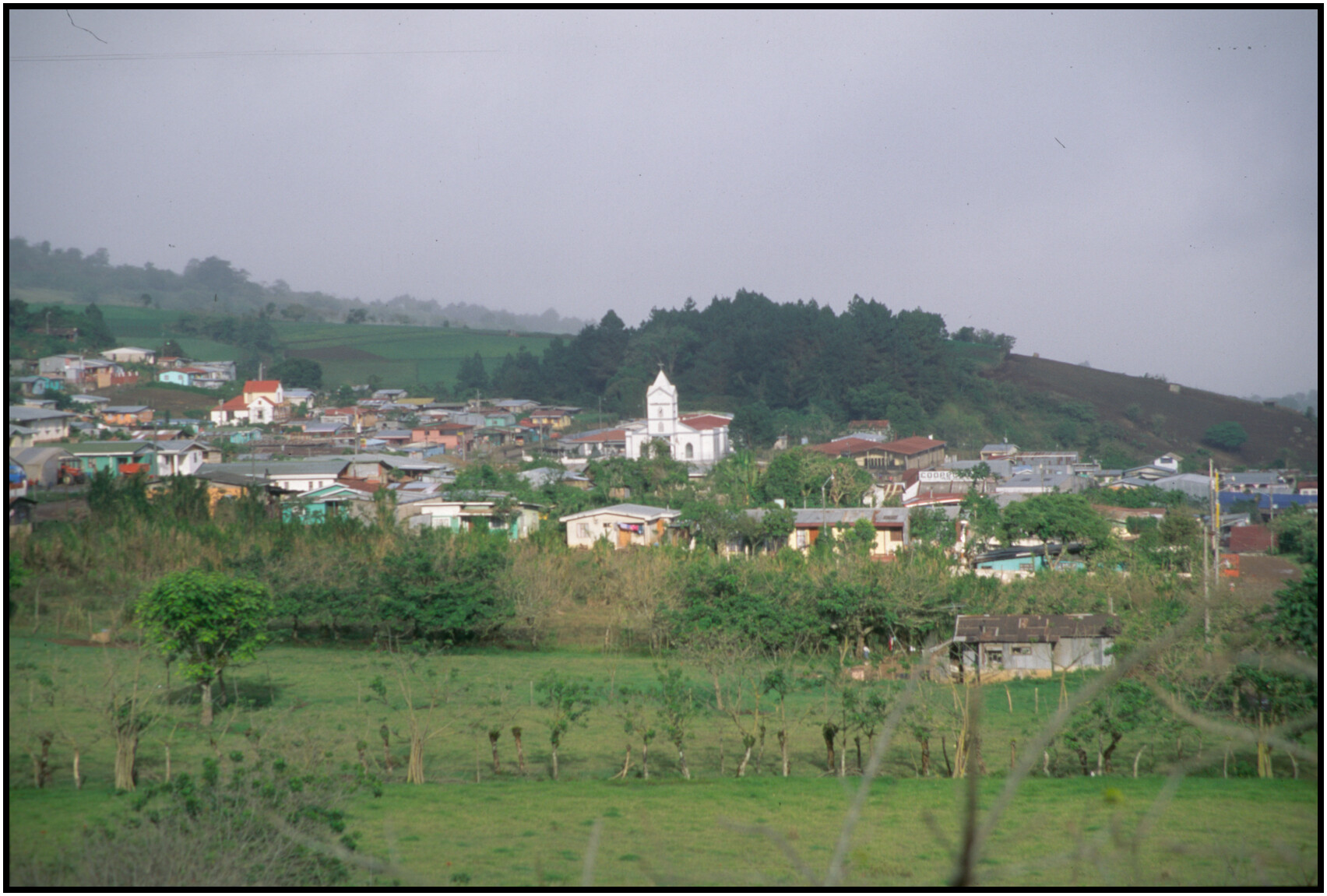
On the bus trip back to San Pedro, we decided to drive to another butterfly farm we’d read about. Once back at the hotel, we realized the farm’s brochure indicated they closed at 3:00 p.m. It was already past 2:00 o’clock and we didn’t have enough time. Improvising, Adam suggested we visit the nearby Irazu volcano (Volcan Irazu).
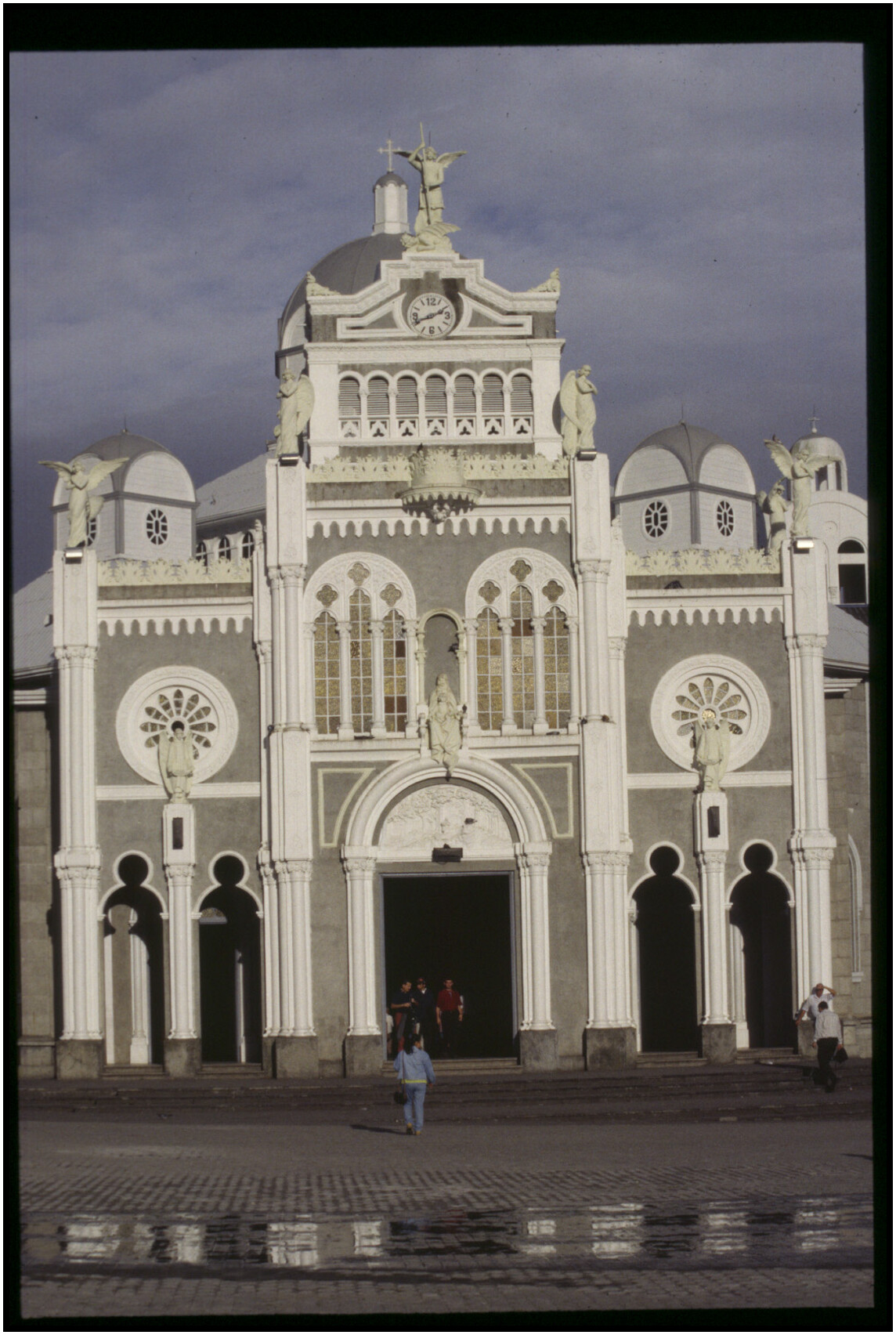
CartagoVolcan Irazu is reached by way of Cartago, so we found ourselves in downtown Cartago for the second time that day. The guidebook said a sign showing the way to the volcano could be found near the basilica, a remarkable building that was very easy to find (picture at left). We did see an Irazu sign, but it led us to a forked road with no indication of which fork to take. We chose the one appearing to head up the mountain, but less that 2 km along this road we ran into a poor-looking residential area and the pavement gave way to a very narrow dirt road. “This can’t be it.” I said. We must have picked the wrong way. Let’s go back.”
“You’re right. This doesn’t look too promising. But the other road looked like it went back into town. Maybe we missed something.”
We drove back to the basilica and tried again, going slower and trying to spot a hidden sign we must have overlooked the first time. We came to the same fork in the road without having seen anything new. We chose the second road this time, and wound up back at the basilica. Adam looked at me and shrugged. “Well, we must have had it right the first time. I can’t believe how poorly marked everything is. You’d think at least the tourist spots would have signs. Let’s try it one more time. If we can’t find it, we can go do something else.”
This time we stayed with the dirt road regardless of how wrong it seemed and after 15 minutes of driving, we found another Irazu sign. We were on the right track after all.
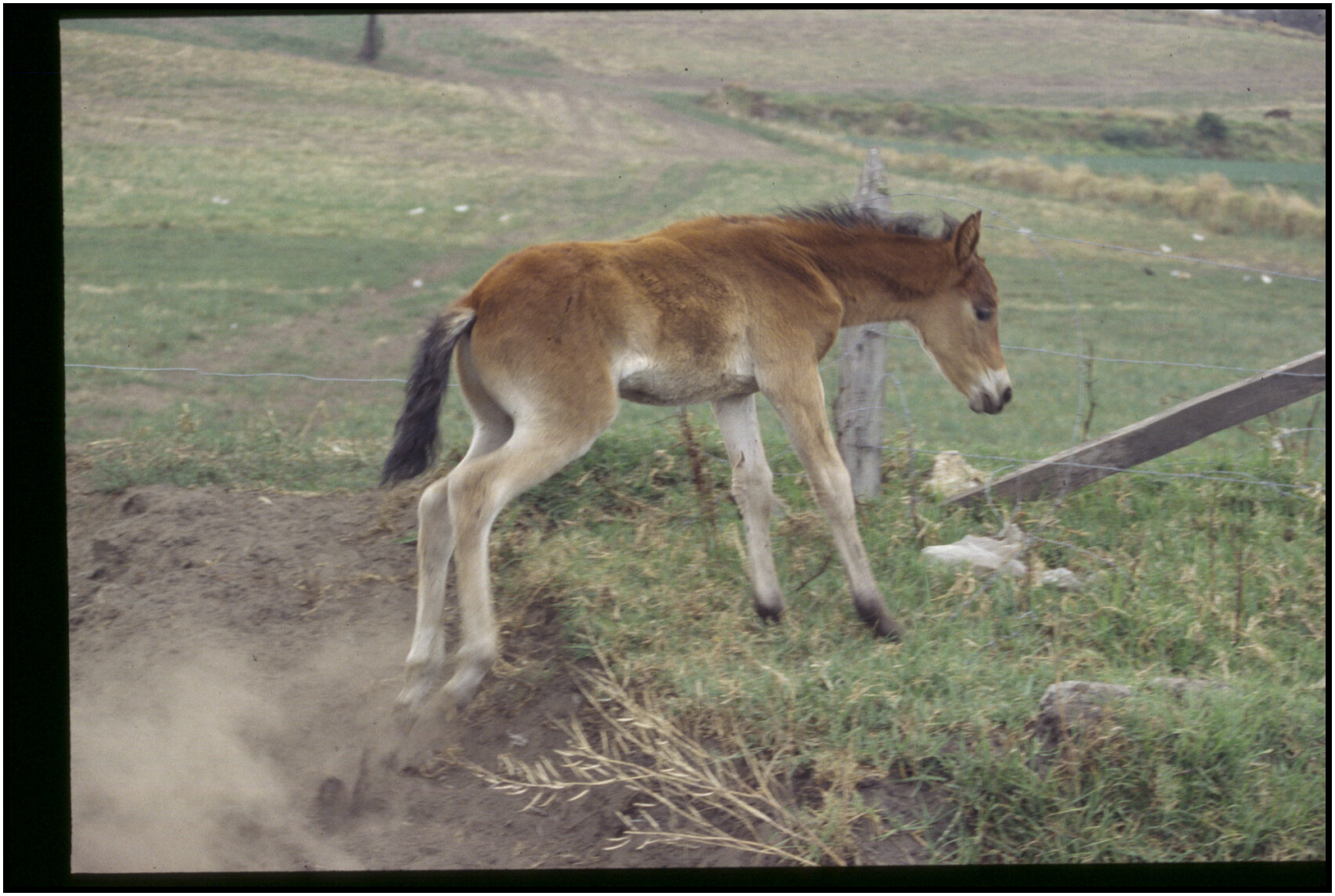
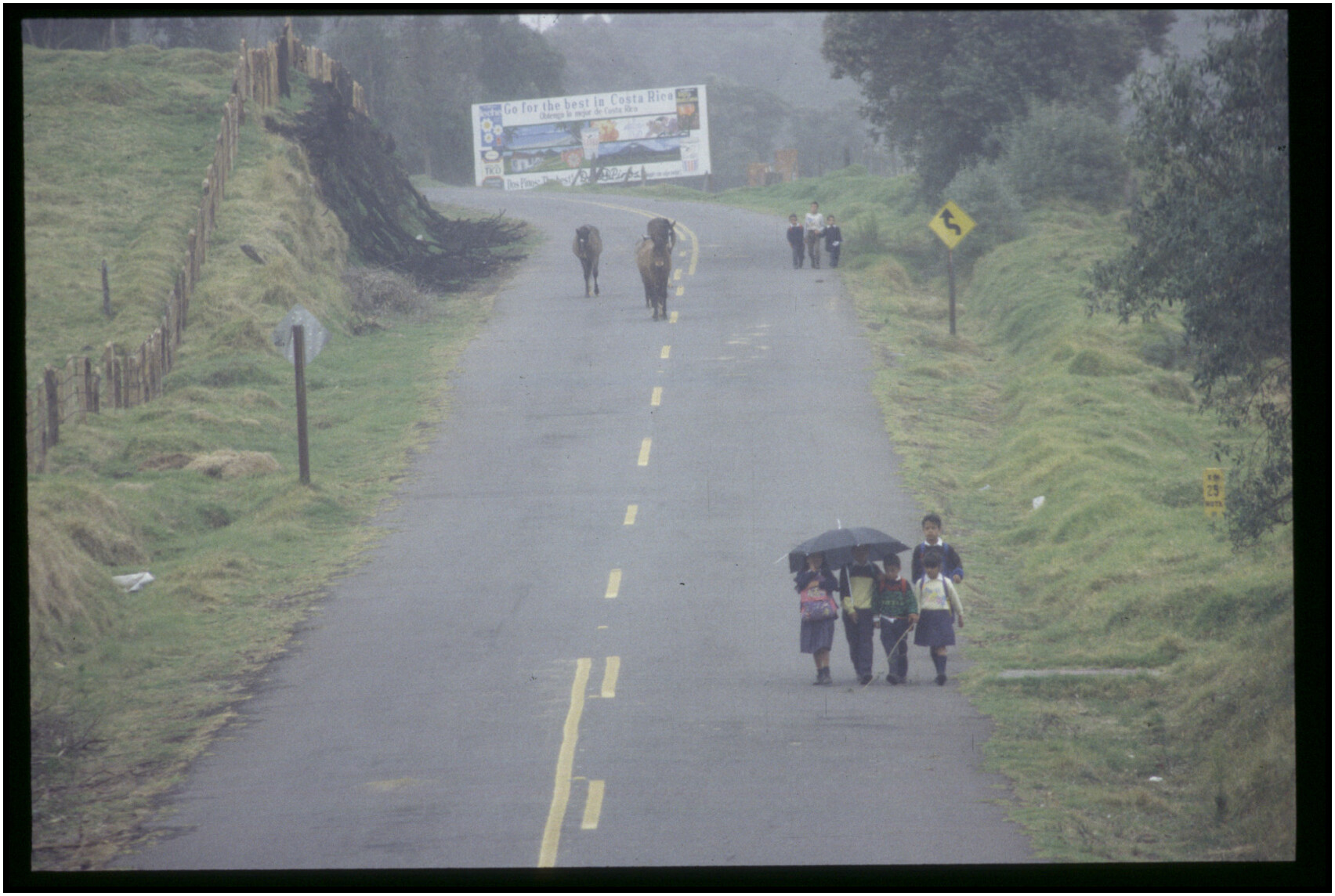
On the road up Volcan IrazuThe road to the summit of the volcano gave us a good opportunity to view Tico life outside of the big city. As the road meanders ever upward, you pass numerous small villages. Because the soil is unusually fertile (owing to the fact that this is the side of an active volcano) and the weather much cooler at the higher elevations, the entire mountainside is filled with small, well-groomed farms. Horses and cattle wander freely and their occasional appearance on the road around the next corner made for a long, cautious journey to the top. School children, brandishing umbrellas, trudged through the misty rain on their way home from a one-room school house we passed on a steep hill.Volcan Irazu, higher elevations.
Near the apex we passed into the clouds, diminishing our visibility to well under a quarter of a mile. It also began to rain steadily. Once we reached the ranger station at the entrance of the crater park, the weather was quite dismal – an amazing change from what we were experiencing only 30 minutes before. We arrived at the entrance at 3:50 p.m., 20 minutes after the park had closed.
“Well, this sucks. The book didn’t mention anything about it closing so early.” We were disappointed, but not getting to see the crater didn’t depress us too much, given that it was cold, foggy, and pouring.
At 6:30 p.m., we drove back to a restaurant we’d seen on the road to Cartago called The City Club. The restaurant looked like a tropical bungalow and we figured it was a fancy place that catered to foreigners.
Black-and-white Hollywood glamour shots of ’40s and ’50s movie stars – Marilyn Monroe, Cary Grant, Elvis Presley, Vivian Leigh, Betty Grable, James Dean – wallpapered the entire dining room. Adam spotted a picture of Paul Hogan (Crocodile Dundee) and laughed. “I wonder if they know he’s not from the US, nor from the ’50s. He’s the only one who doesn’t fit the theme.”
The restaurant had a very nostalgic American feel, but the patrons didn’t understand a word of English and we were the only non-Ticos in the dining room. They did have a little English on the menus, though, so we were able to figure out what they served.
The food was outstanding. We dined on filet mignon, fresh salmon imported from Chile, several beers, soda water, and a strange three-layer cake marinated in a sugared liquid. This was the second piece of wet cake we’d been served in one day. I hated it, but Adam liked it and ate both his piece and mine. The total bill came to ¢8300 ($33) that included the tax and service charge.
The service we received in Costa Rican restaurants was always impeccable. The ratio of waiters to guests is much higher than in the United States, which allows the help to stand in a conspicuous location waiting for the slightest inclination that the diners might desire his attention. We felt like members of royalty every time we ate out. The price for this service is a 10% charge automatically placed onto your bill. Tipping is not expected. Considering that paying anything less than 15% in the States seems unappreciative and miserly, we definitely got our money’s worth in Costa Rica.
We noticed there are very few “no smoking” areas in Costa Rica. People felt free to light up at the airport, in the mall, and at restaurants. Costa Ricans have much more personal freedom than people do in the US, and with that you must put up with a bit of inconvenience once in a while. In many ways, it was very refreshing. This trip was showing us how much day-to-day freedom we don’t have back home. We were to find that the entire country has very few “rules;” therefore, people are much more responsible for their own behavior and must suffer the consequences of poor judgment. It’s how I imagine the United States must have been 60 or 70 years ago.
We liked Hotel Milvia, so Adam made reservations to stay there again on our last night in Costa Rica. We went to bed at 9:00 p.m. so we could get an early start the next day and hopefully avoid the hellish morning rush hour through San José on our way to Montezuma and the Nicoya Peninsula.
Montezuma and The Nicoya Peninsula
DAY 3
27 March, Friday
In spite of the good map we purchased, we still had an impossible time finding our way through San José to Route 1, the main road out of the city and over the mountain range. We managed to beat the majority of the morning traffic, but San José’s lack of adequate signage found us traveling the wrong direction on a one-way street. This particular stretch of road not only had yellow two-way lines painted on it, but it also had giant white arrows indicating we could turn the way we needed to go. Once on the street, we faced three lanes of honking cars headed straight for us. Apparently this avenue was converted to one-way use during heavy traffic times, but again this was labeled neither by a sign nor with traffic lights. Adam made a panicked right-angle turn onto a nearby surface street and narrowly missed being hit head-on by a bus.
“S—!” He didn’t even slow down!” We now appeared to be backwards on yet another one-way street, but thankfully this one was traffic-free.
We spent the next 30 minutes driving in circles through San José, trying to find a way out. By the time we finally located Route 1, I was practically in tears and Adam was frustrated and angry. Driving in San José can be downright dangerous for the inexperienced.
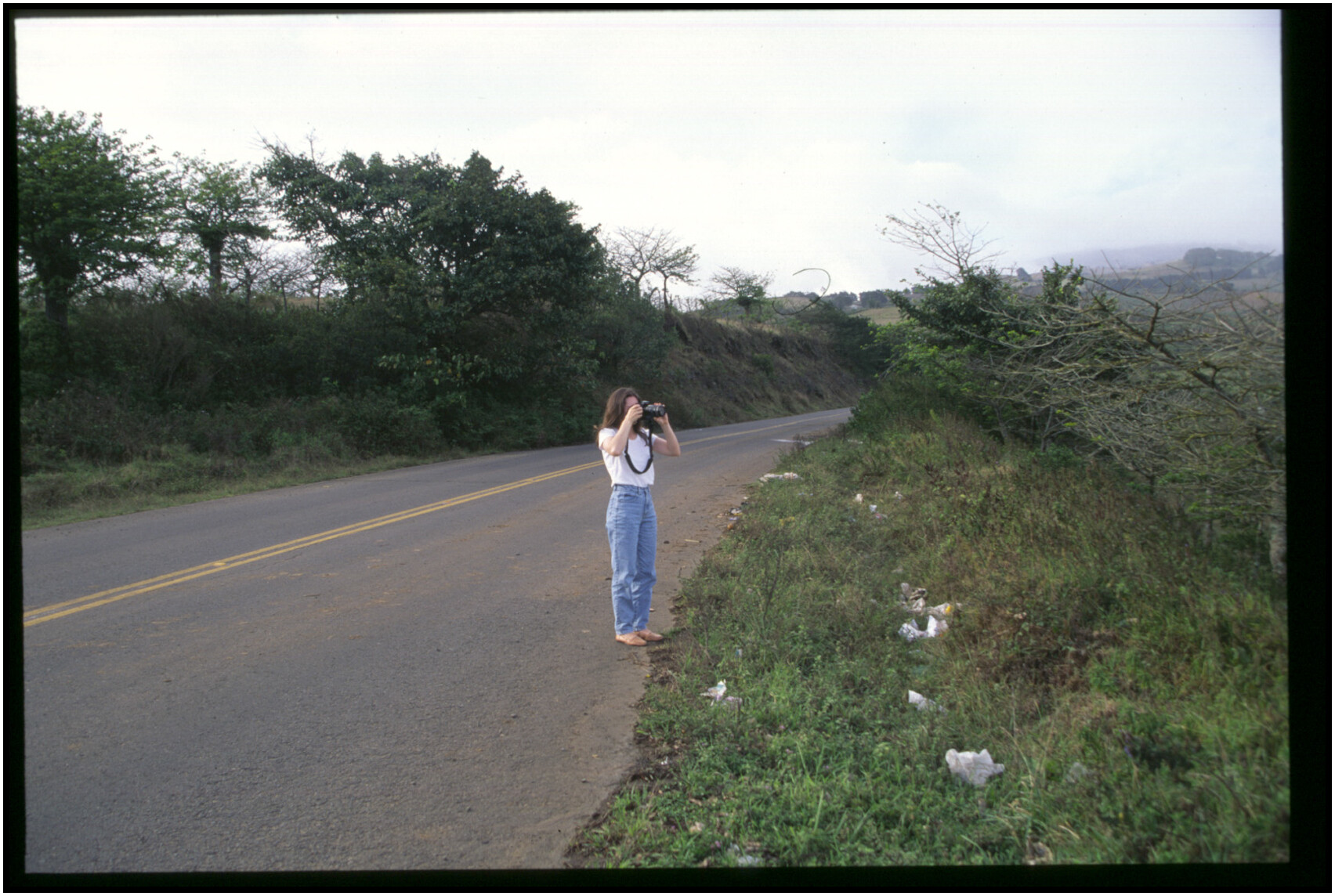
Our moods were elevated just a few kilometers beyond the city limits. The countryside suddenly became dazzlingly beautiful. We had a clear, warm day and the drive from this point on looked like it was going to be pleasant. Route 1 was in decent shape, although narrow, so travel was limited to about 30 mph. The lack of speed didn’t bother us, however, because there was so much to see along the way.
Even at the end of the dry season, the mountainside was emerald green with so many different species of plants that it looked like a man-made nature park. I kept noticing common “house plants” growing in the wild, but so large they were barely recognizable. Huge expanses of land had been fenced off with scraggly trees tied together with barbed wire. (We later found out from Robert, our bird guide in Montezuma, that soil in this region is so fertile that 4″ and 5″ diameter branches used as fence posts sprout roots and begin to grow into full-sized trees. The resultant “living fences” need very little maintenance.)
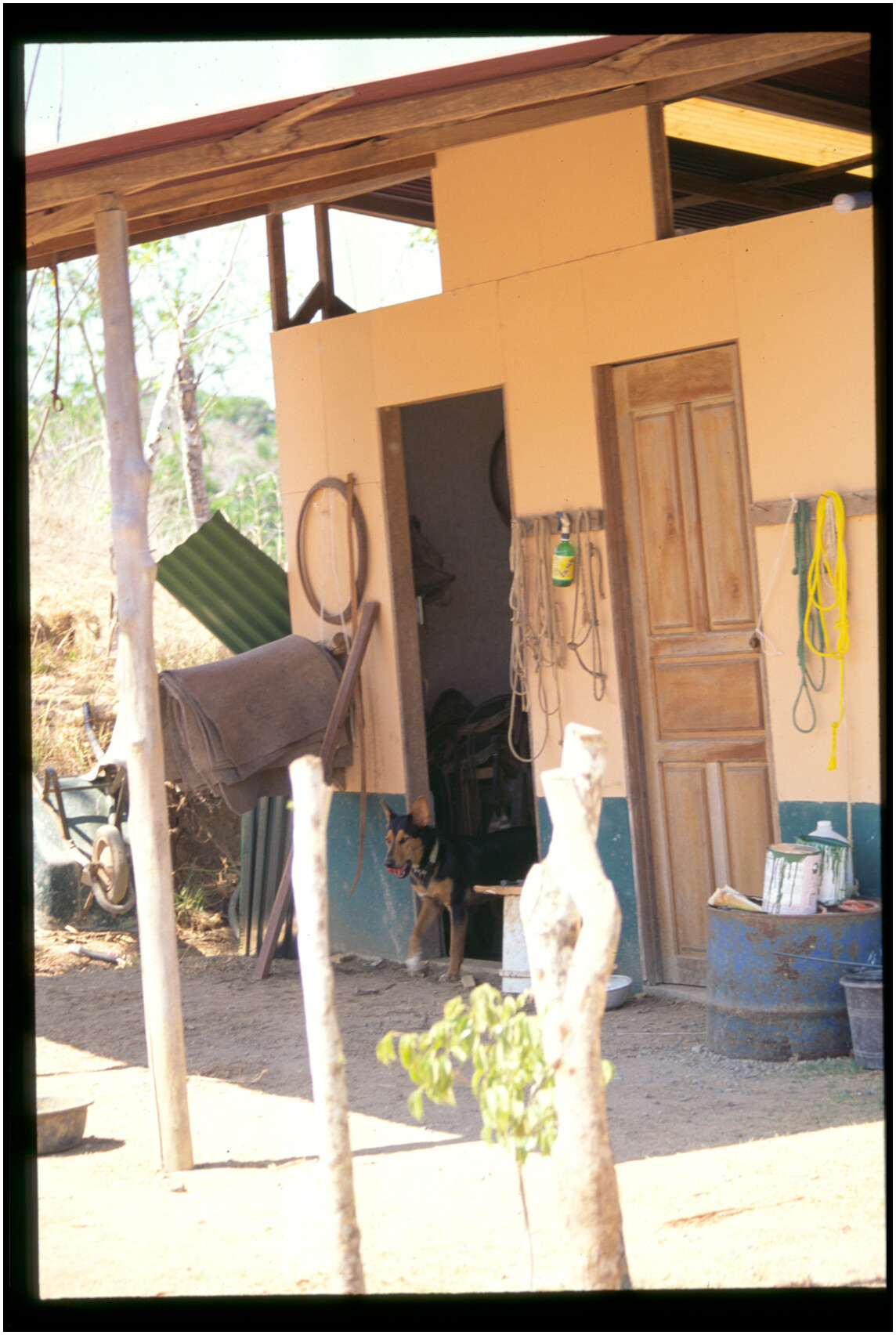
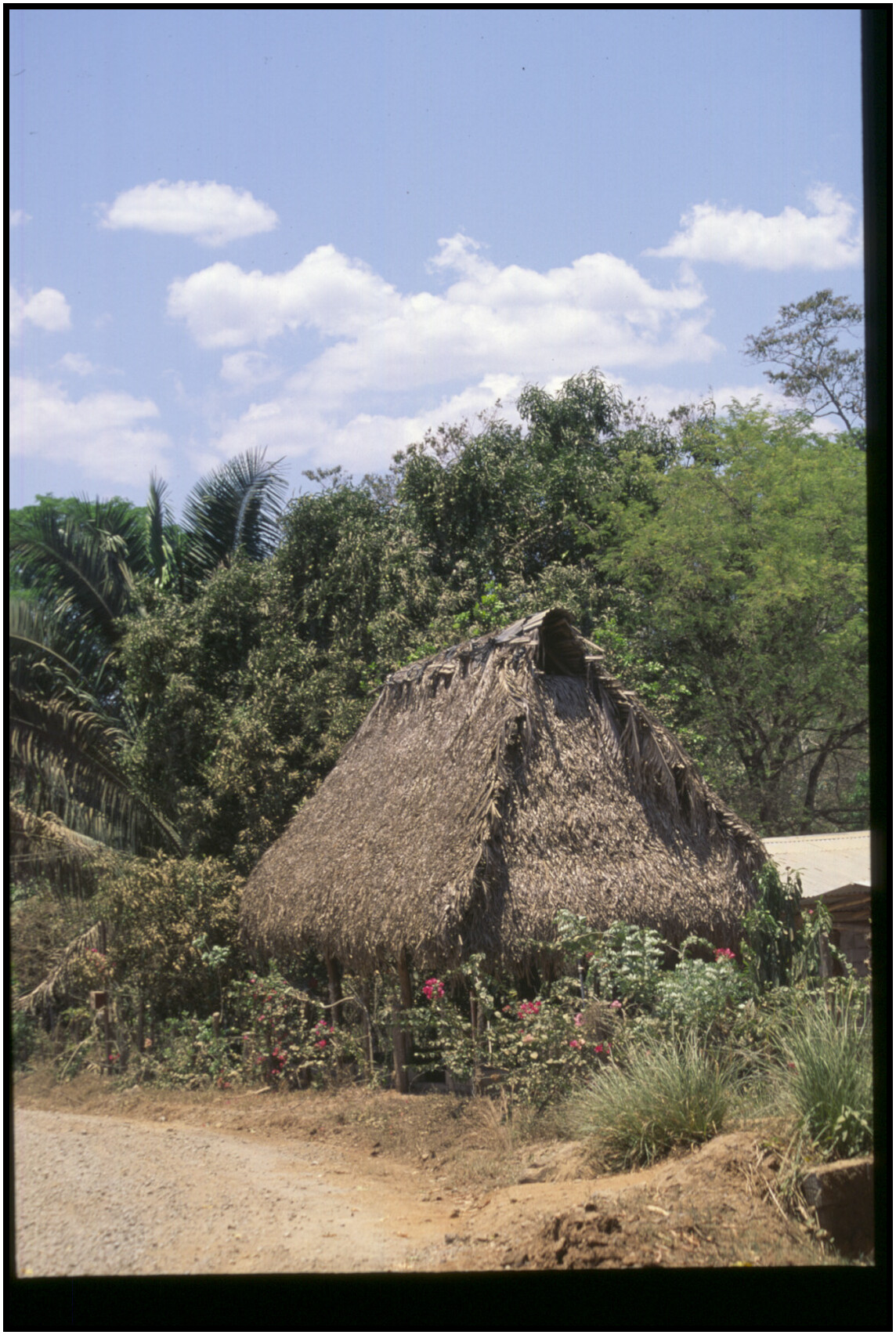
Tiny huts and cabins lined the highway. The poverty-stricken nature of these dwellings was softened considerably by the lush surroundings. Living in a one-room hut with no electricity or running water seems quaint in paradise, whereas in any other setting it is heartbreaking. Most of these families grew and harvested fruit to sell to travelers.
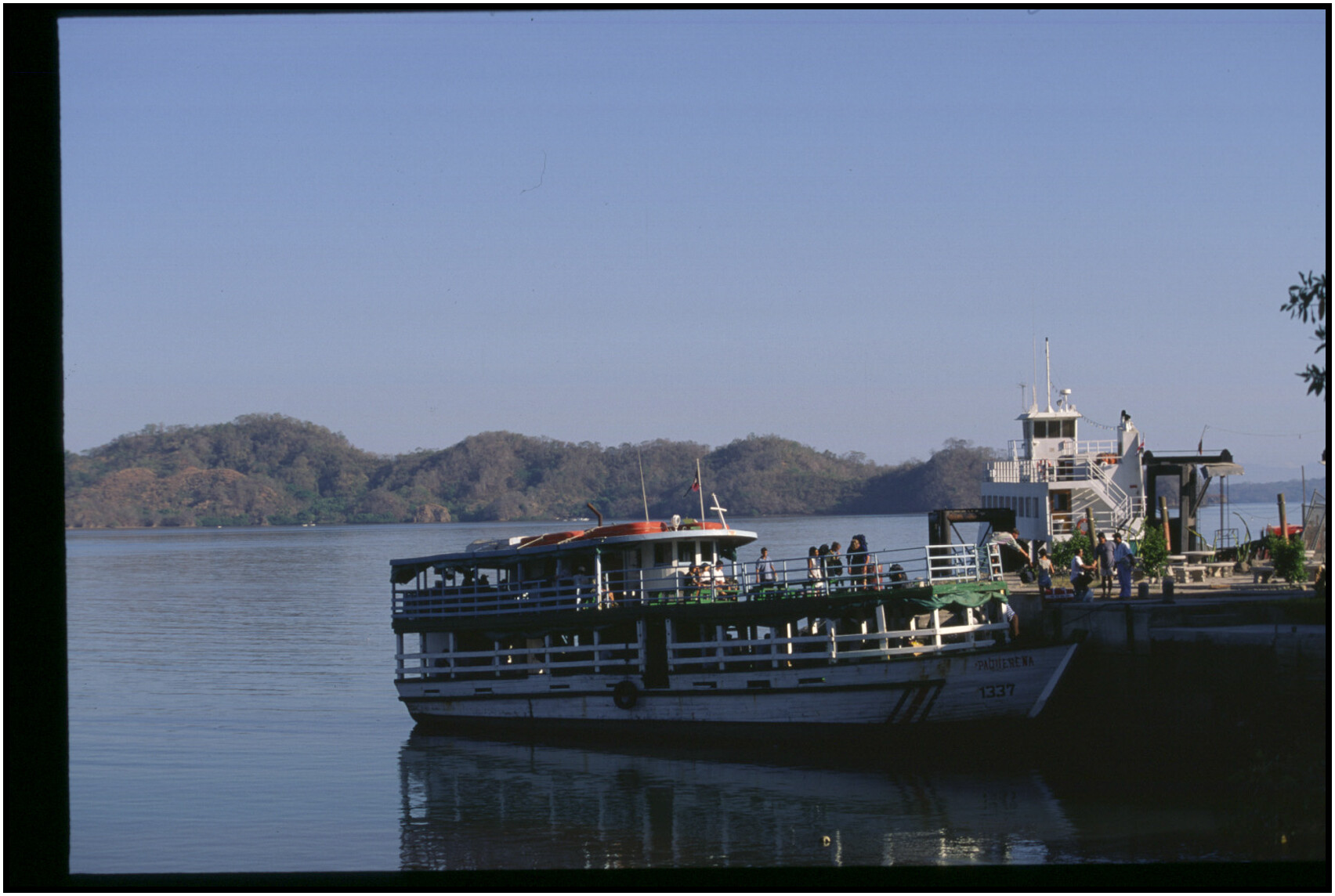
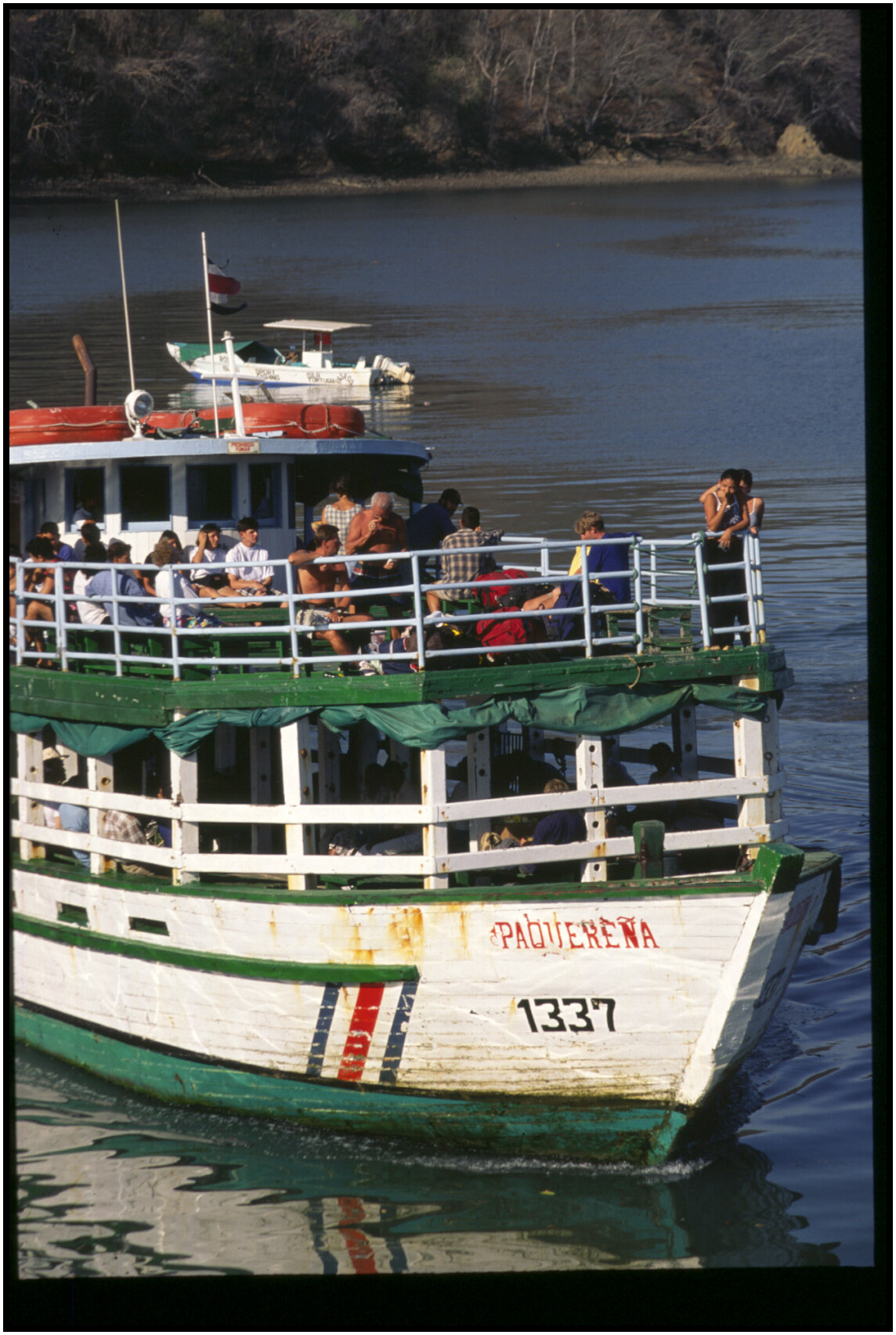
Puntarenas is a quaint seaside town that offers ferry service to several points on the Nicoya Peninsula. We arrived around 10:00 a.m. and only had to wait 30 minutes to board a ferry. The weather on this side of the mountain was very hot and we were grateful for the breeze at the bow of the boat.
A small snack stand on board sold over-priced food and soft drinks, but we’d left Milvia’s before breakfast was served and were starving. We bought a couple of Sprites and a little cake that looked like a Twinkie but had generic packaging and no creamy filling.
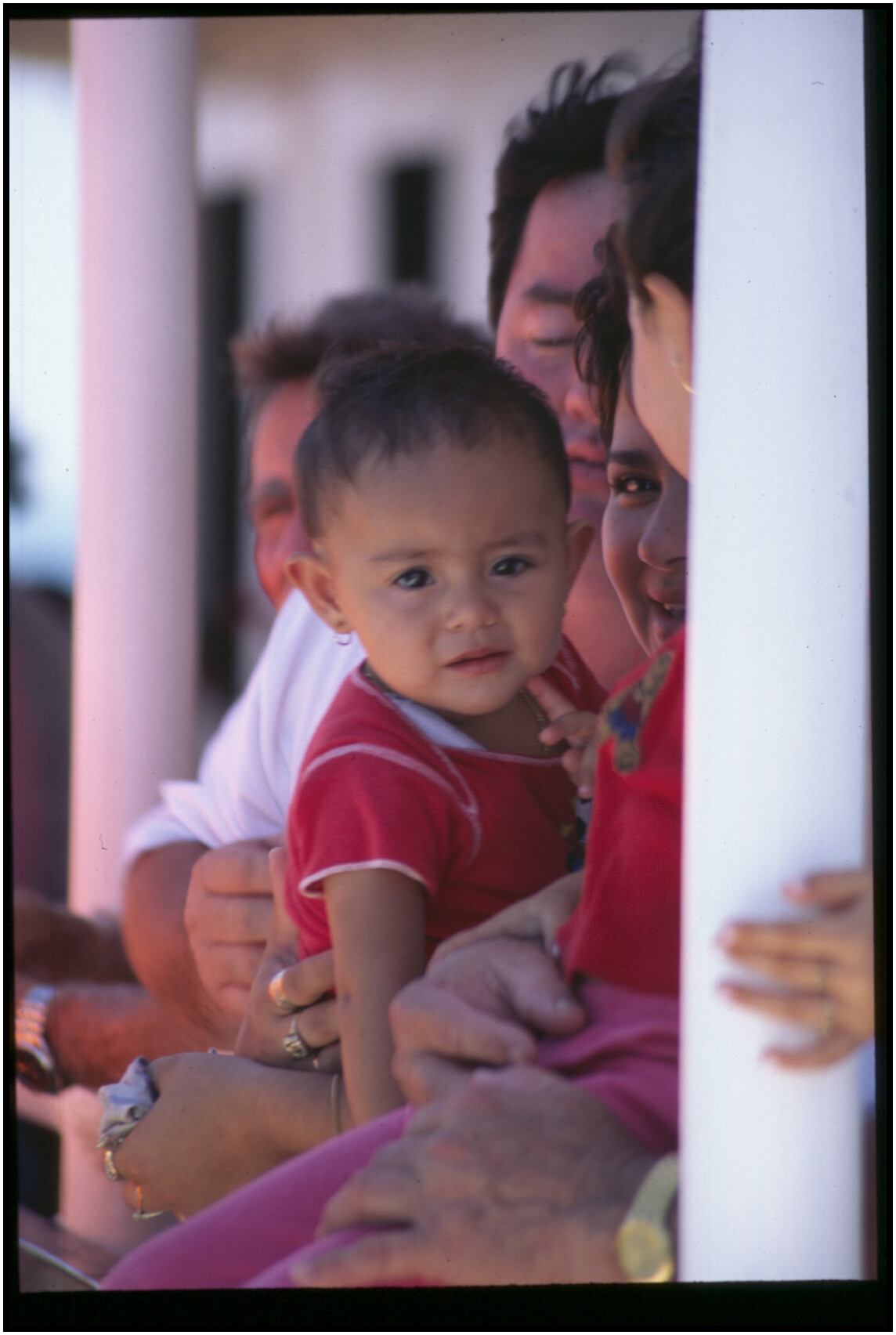
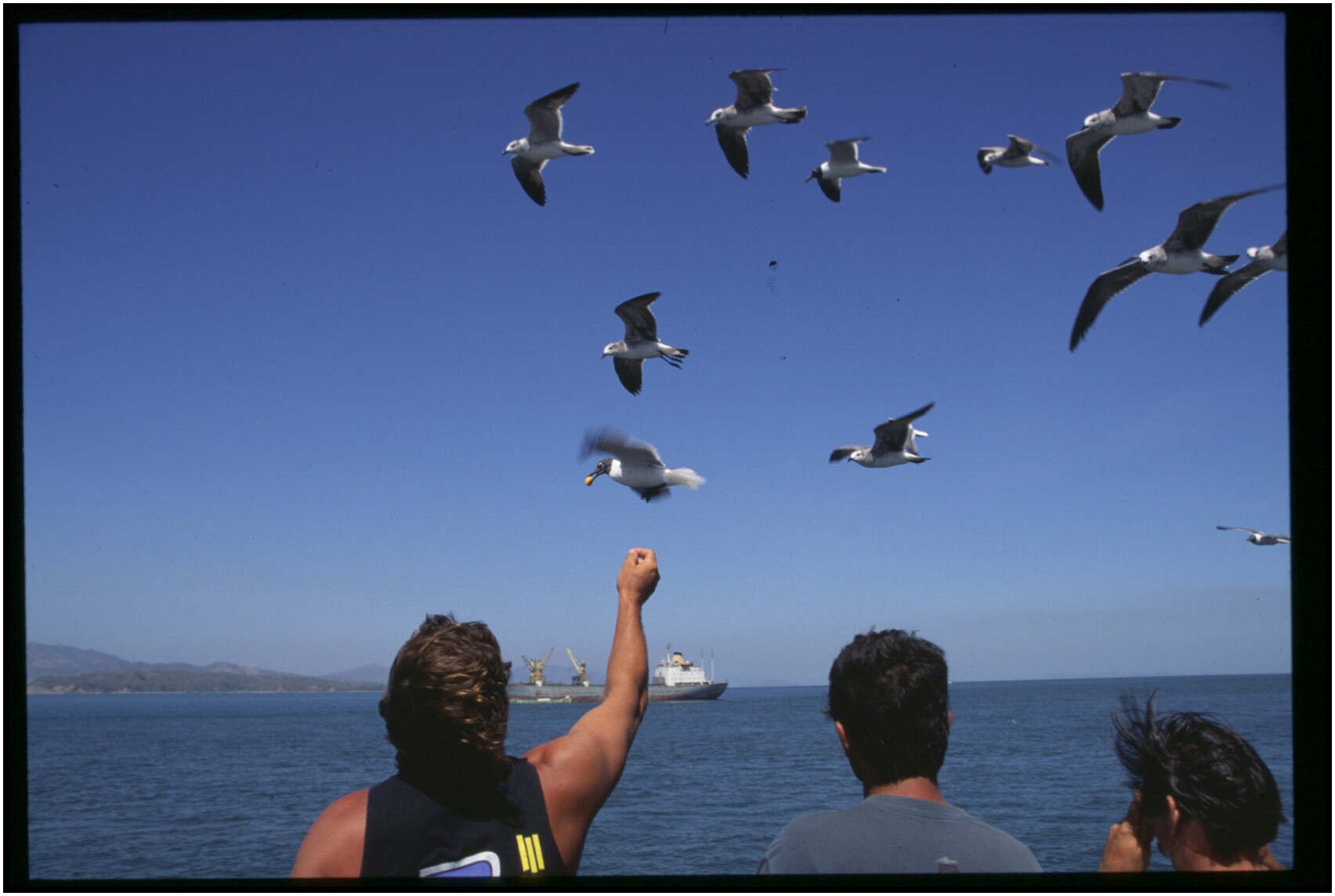
A flock of sea birds gathered to catch plantain chips people were throwing overboard. Several of the bolder birds got close enough to take food from people’s outstretched hands. Using the 300mm zoom lens on my camera, I managed to sneak a few shots of the passengers without them knowing they were being photographed. I don’t know how ethical that is, but I did it anyway.
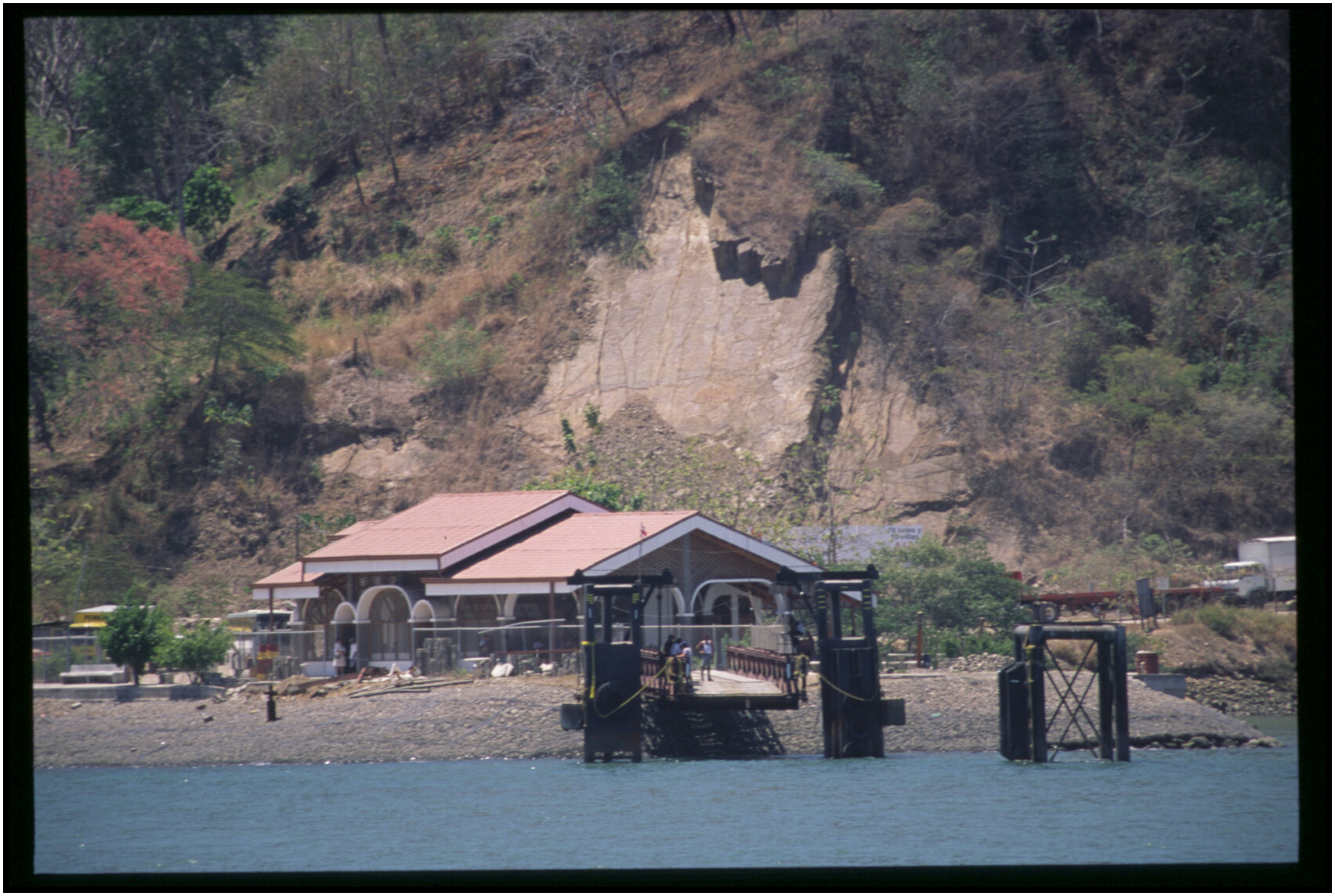
The ferry ride was approximately 1.5 hours. Near the dock at Cabo Blanco, everyone with a vehicle headed to the lower deck. We followed the crowd. Adam, buried in the back seat organizing our camera gear, didn’t see an older man approach me. The man said something in Spanish I didn’t understand. He did not speak English. I was getting nervous because I thought he might be demanding money, assuming I was a single woman traveling alone. He finally pointed to the rear of the Suzuki and, mashing his hands together, said, “squoosh!” Adam had finally noticed the man and suddenly realized what he was trying to tell us: we had a dangerously low tire. Adam’s Spanish had improved enough over the last three days that he was able to gather from the kindly gentleman that there was a service station 3 km from the ferry dock.
The main road was unpaved and incredibly bumpy. It was also dry, and with every car going the same direction, a thick cloud of dust kicked up making both visibility and breathing difficult.
“Do you think we can make it with that tire?” I was worried about getting stranded in the middle of nowhere, unable to speak enough Spanish to get help.
“I think we’ll be OK. That guy said the gas station was only 3 km away. That’s about a mile and a half. Plus, we don’t know if the tire suddenly went flat or if it’s got a slow leak and has been low for several days. We didn’t really look at it before. Worst case scenario is we blow the tire and have to put on the spare. We won’t be stranded, so don’t worry, Bin.”
Nearly 4 km later, we found the gas station. “Thank God!” We both breathed a sigh of relief. Our happiness was short-lived, however. The gas station was closed for repairs. A guy working on the pumps indicated there was another station in Cóbano – nearly 20 km away. The poor Suzuki was going to have to tough it out.
Peaceful-looking villages dotted the drive from Cabo Blanco to Cóbano but we were too worried about the tire to appreciate them. We were also hungry and thirsty. The pseudo-Twinkie and small bottle of Sprite we’d shared two hours before weren’t enough to sustain us in the 100° heat. The only saving grace at that point was the Suzuki’s air conditioner, which worked like a charm.
In Cóbano we got air for the tire and found a little fast-food place (soda or pulperia) to eat lunch. Costa Rican “fast food” is not the same as in the US — generally, it is a tiny privately owned restaurant with a limited menu. Your order is cooked on the spot using fresh ingredients. The food was outstanding.
A young American-looking couple with huge backpacks trudged into the soda while we were waiting for our food and collapsed at a nearby table. They looked like they had been doing some serious hiking and were exhausted.
Earlier, Adam and I had realized our anti-social natures were robbing us of interesting experiences, so Adam went out of his way to start a conversation with these people. (We found, to our surprise, that most people welcome friendly conversation and we met some very diverse individuals from this point on.)
“Where are you headed?” Adam asked.
“San Jose. How about you?”
“We just came from there. Where have you been?”
“We walked from Montezuma this morning (about 10 miles). We’re catching a bus here in Cóbano to the ferry.”
They had been traveling throughout the country for over two months, taking busses when possible and hiking/camping the rest of the time. Their experience must have been very different from ours. I overheard them debating whether or not they could afford to each get a second coke, so I figured they had a lot of time and very little money. We, on the other hand, had enough money to enjoy the luxuries of our own car, staying at nice hotels and eating at nice restaurants, but we only had six days before Adam had to be back at work. In a way I really envied this couple’s lifestyle, but they probably envied us a little, too.
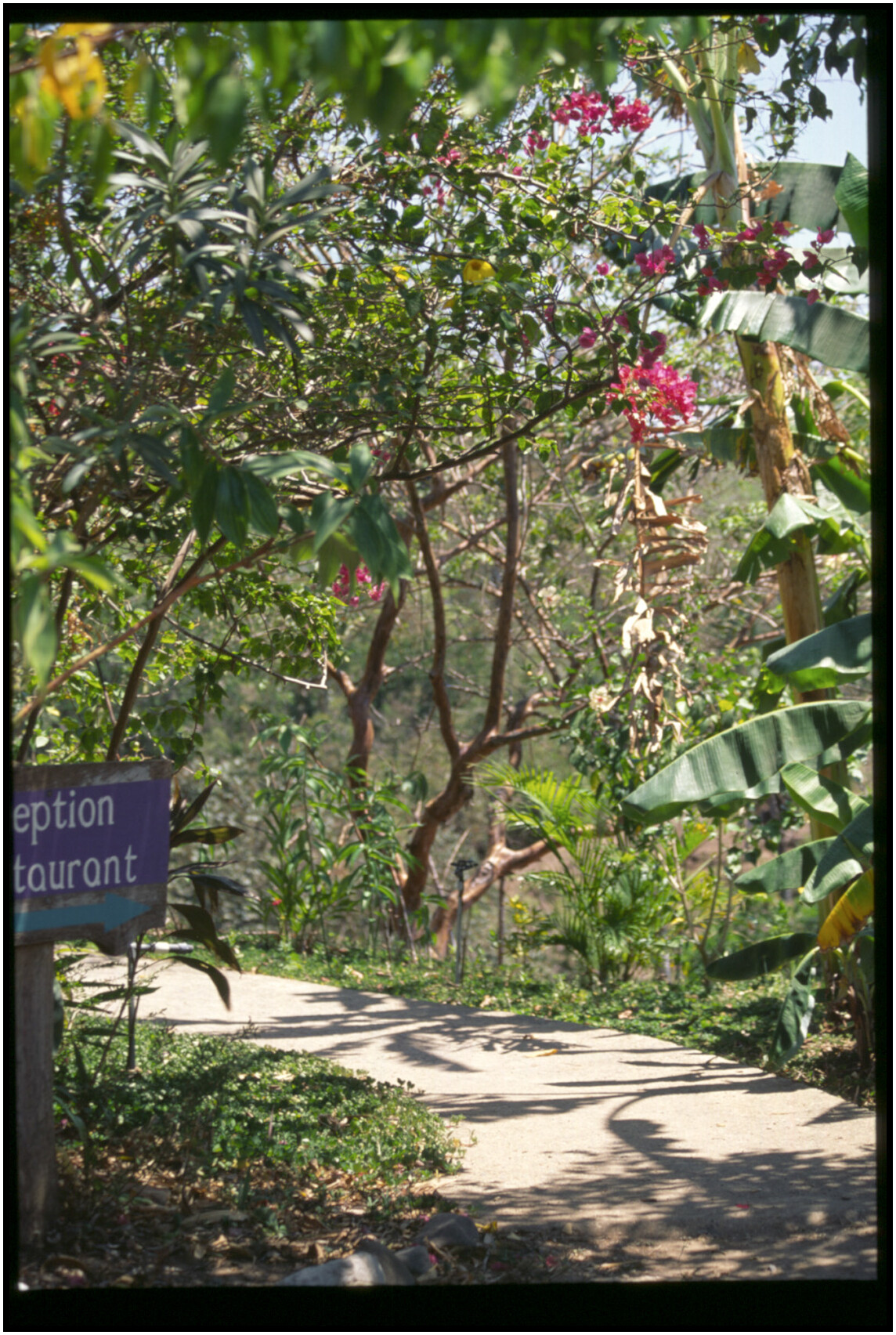
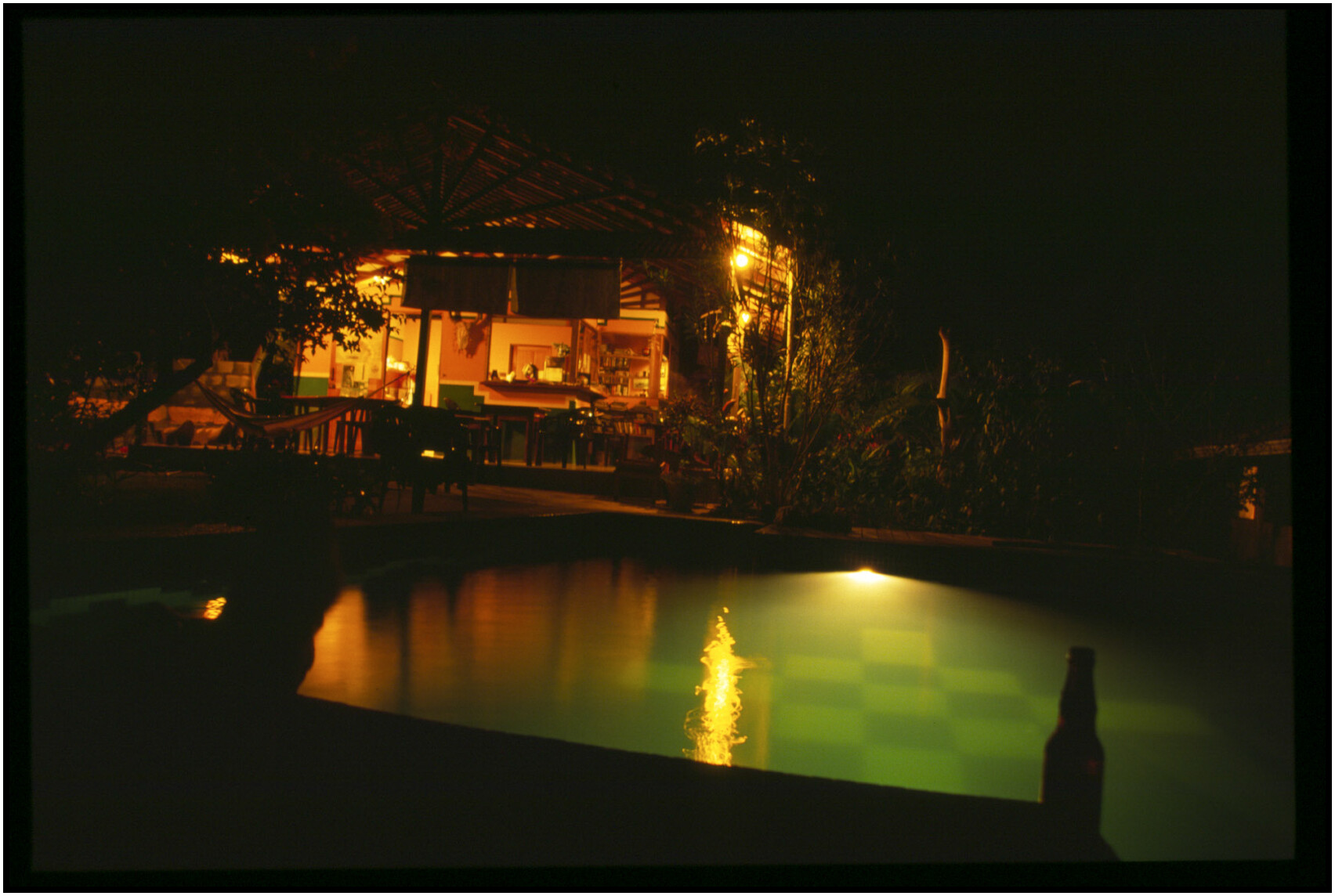
We arrived at Finca Los Caballos around 1:30 that afternoon. (A finca is much like a ranchero: a ranchero is a working ranch and a finca is a pleasure ranch. Caballos is Spanish for horses — therefore, we were staying at a horse ranch aimed at entertaining tourists.) The “house” was an eight-room building at the top of a beautifully landscaped hill with a breathtaking view of the ocean. The common areas included a small swimming pool with a fabulous view of the valley below, and a covered deck. The latter was used as a restaurant at meals and a place for relaxing in the shade with a drink or good book the rest of the time. I fell in love with this paradise at first sight.
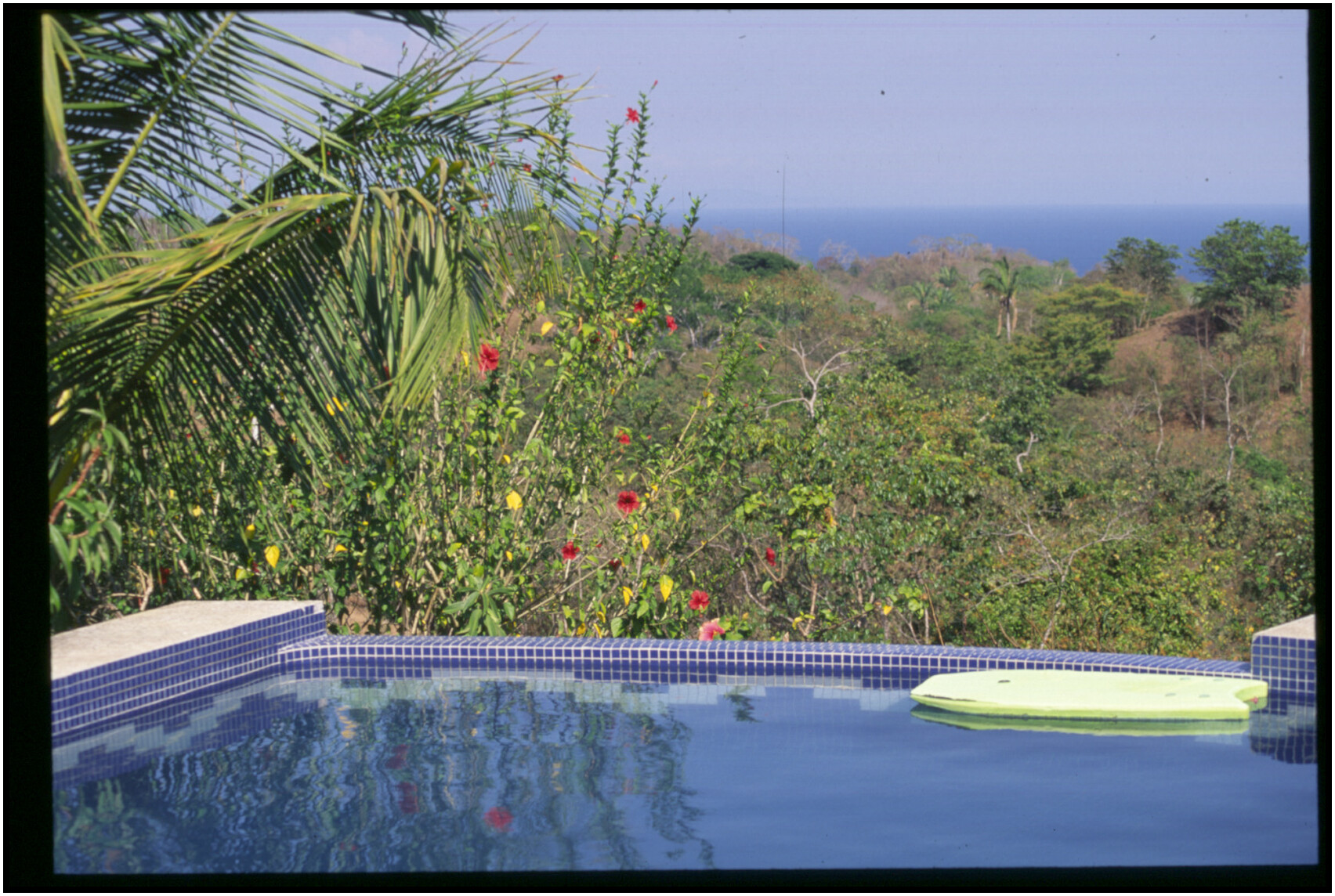
Barbara McGregor, the Canadian owner, and one of her employees, a woman in her 20s named Sarah, were both wearing bathing suits when we arrived. Other guests were either lounging by the pool or relaxing in large reclining chairs in the shade. Everyone greeted us warmly, guests included, and made us feel very welcome. It was a wonderfully casual place and we felt like we were visiting someone’s home instead of staying at a hotel.
The rooms at Los Caballos are spartan. Each has two beds (one double and one twin), a floor fan, a small private bathroom with a shower, and a shelf with a few hangers for clothes. The main buildings are concrete block construction with stucco finish, all painted vibrant colors. Barbara designed them herself to fit unobtrusively into the landscape. You felt as though you were comfortably living right out in the jungle.
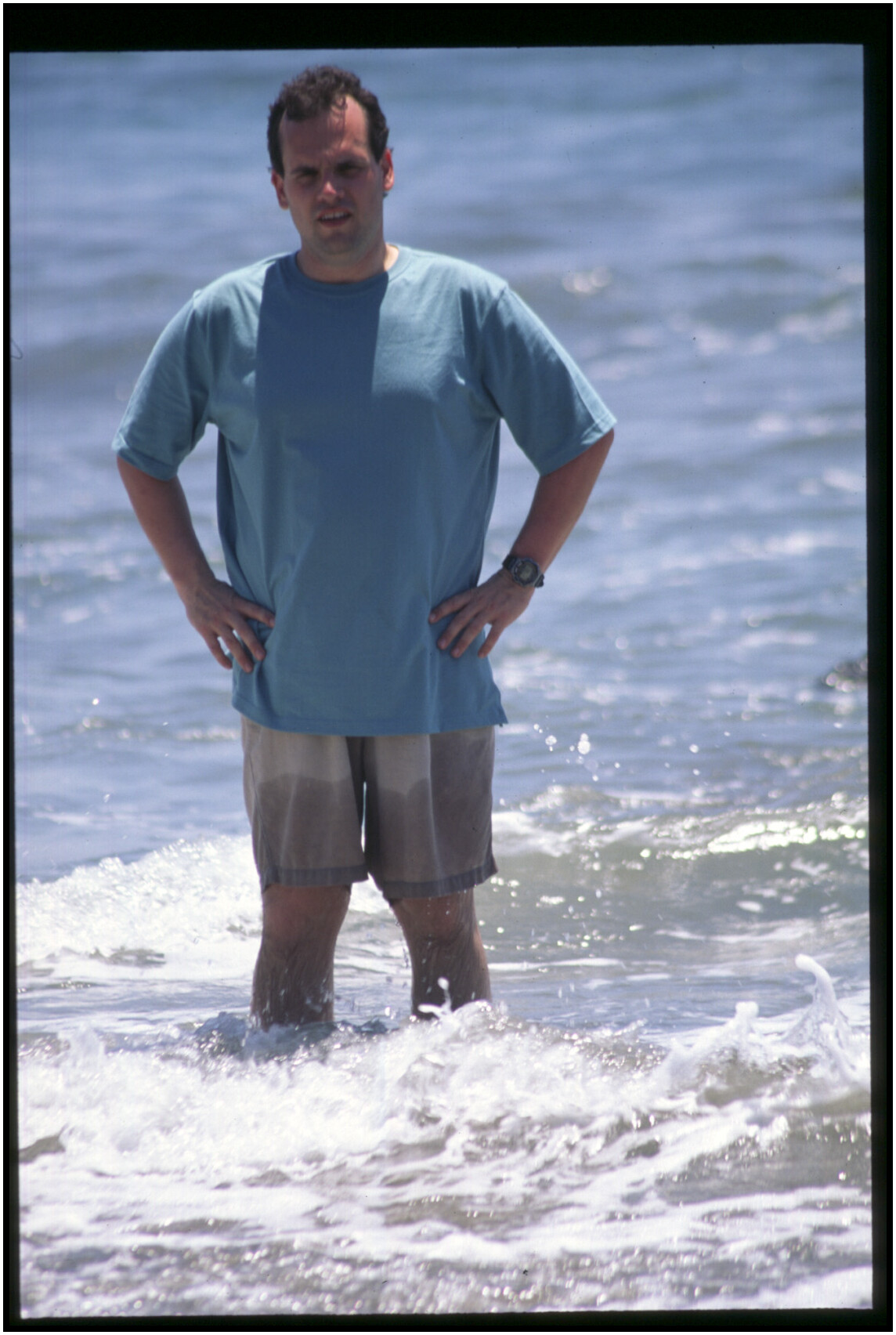
After stowing our gear in our room, we returned to the common deck for cool drinks and to relax a bit before we drove down to Montezuma’s beaches. We met a young Canadian woman by the pool named Alia. She was a true free spirit, complete with shaved head and multiple face piercings. As far as we could tell, she was traveling alone. We visited with her for a couple of hours, mostly about her Costa Rican experiences. This was her third trip to the country, so we considered her a “pro.”
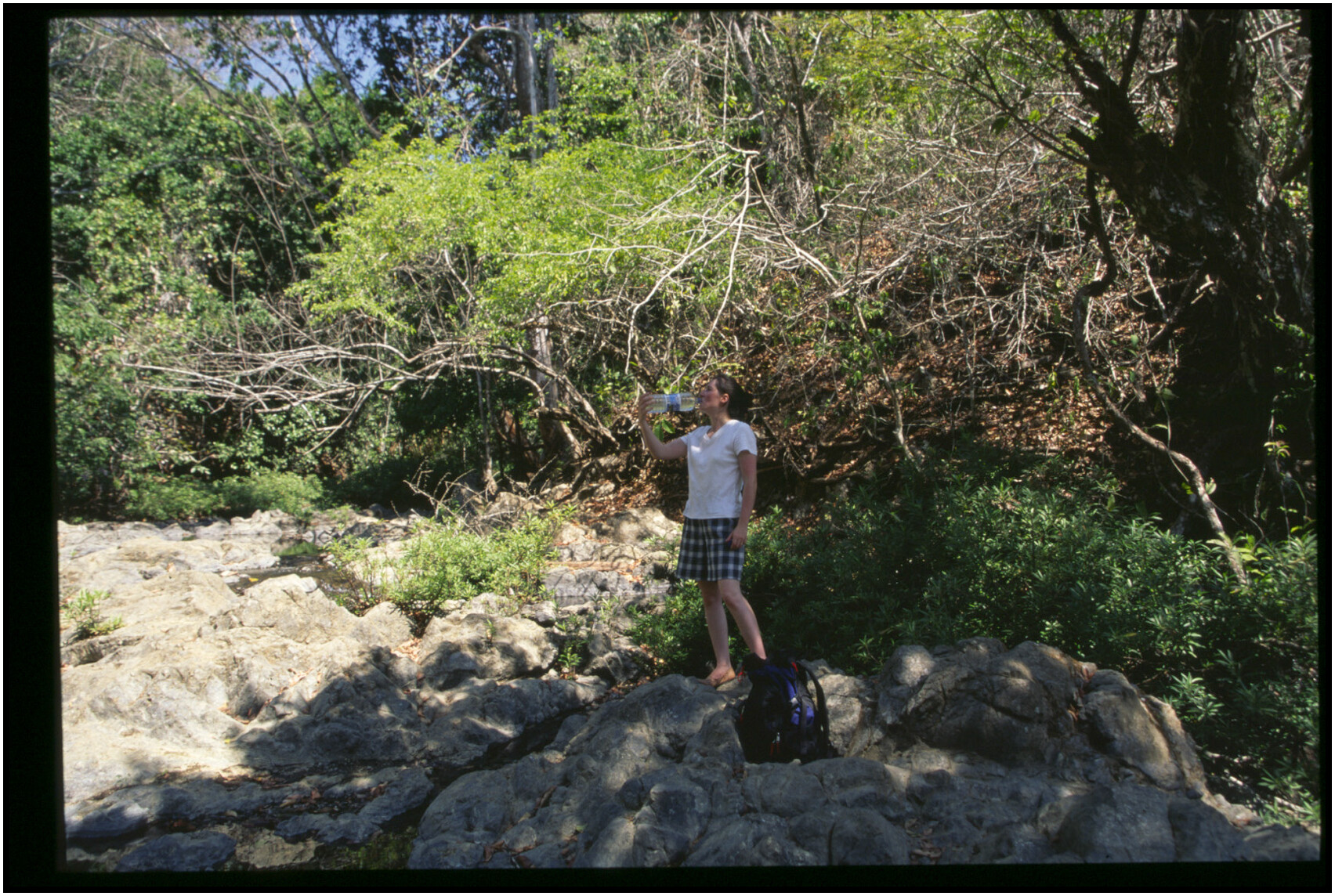
We soon discovered that Montezuma and the surrounding areas attract a very eccentric group of people. The town itself has many resident drop-outs from life in the States, Canada, and Europe seeking a much simplified lifestyle.
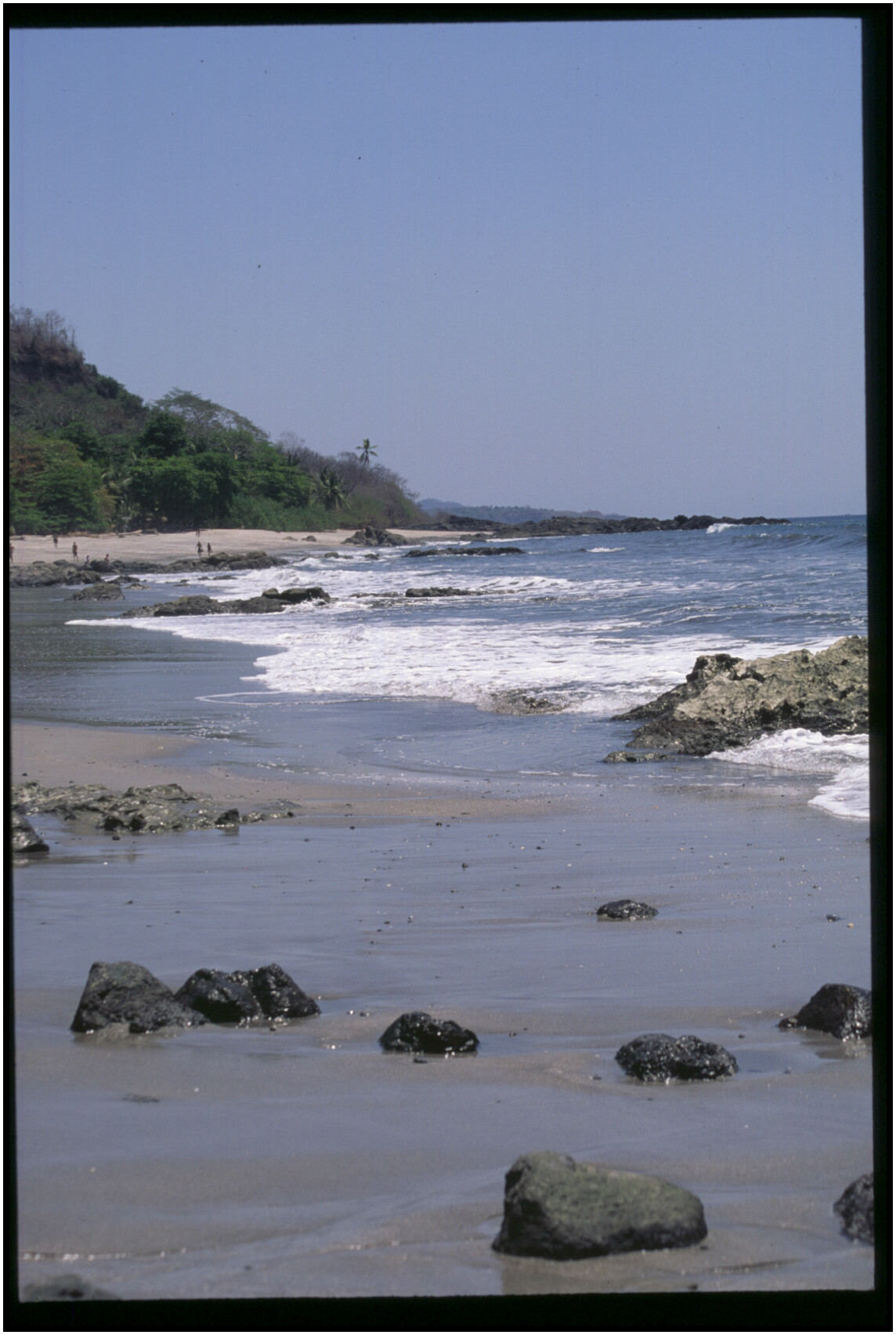
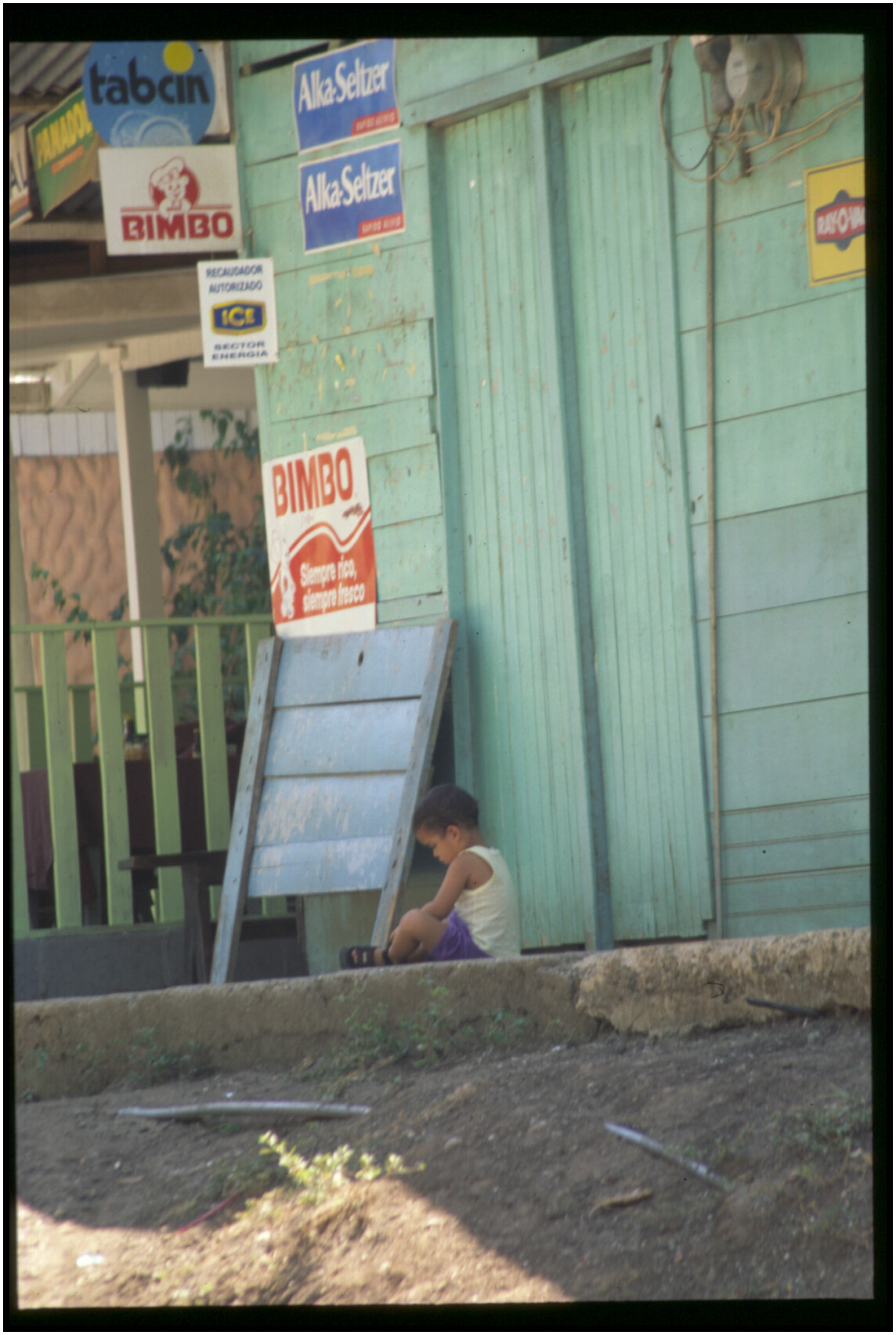
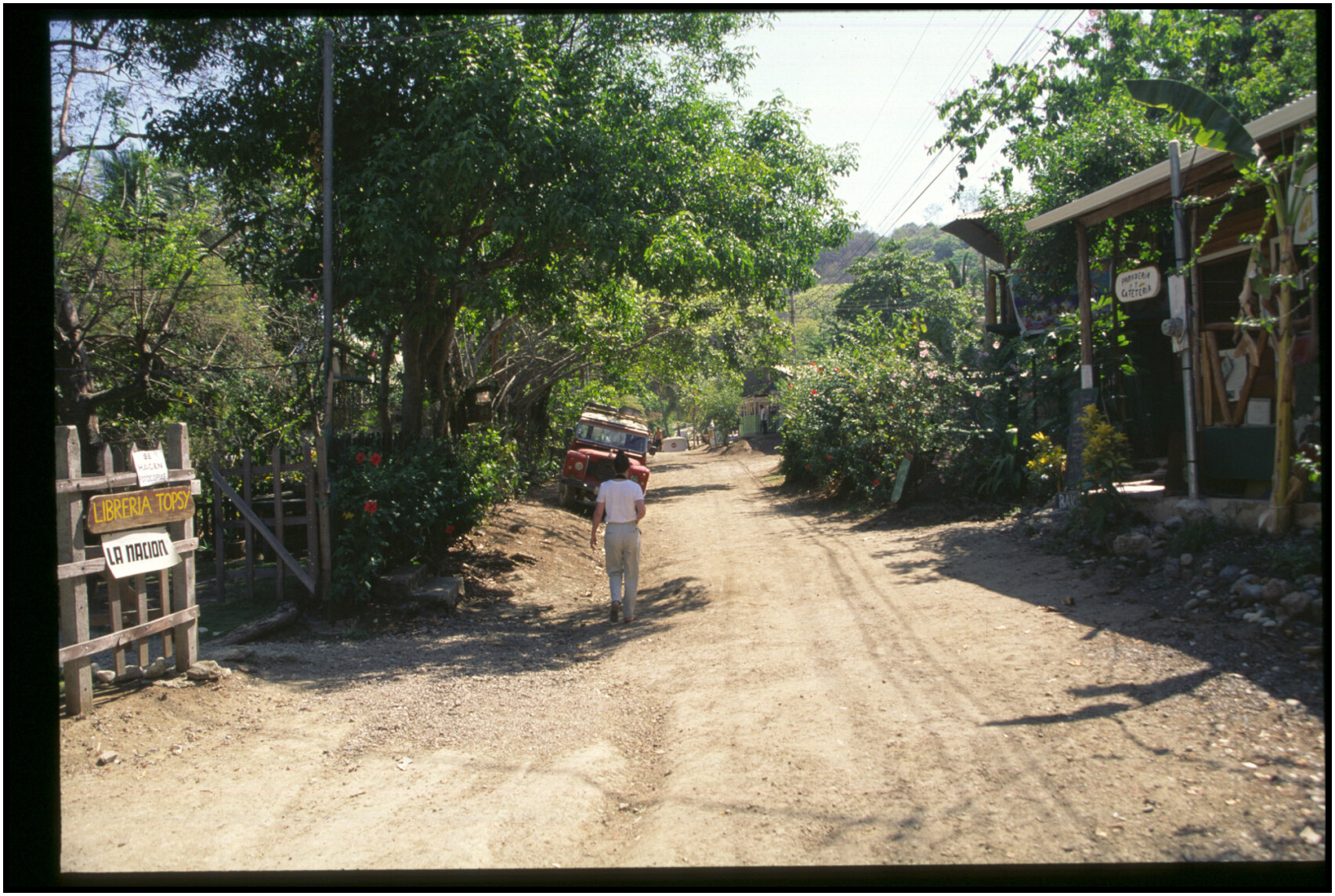
In Montezuma, we enjoyed watching people live their outdoor lifestyles; everyone had a friendly word. Children played in the dirt streets, dogs and horses alike roamed freely, and the festively colored shops offered fresh fruit drinks from mango and banana trees growing in their back yards.
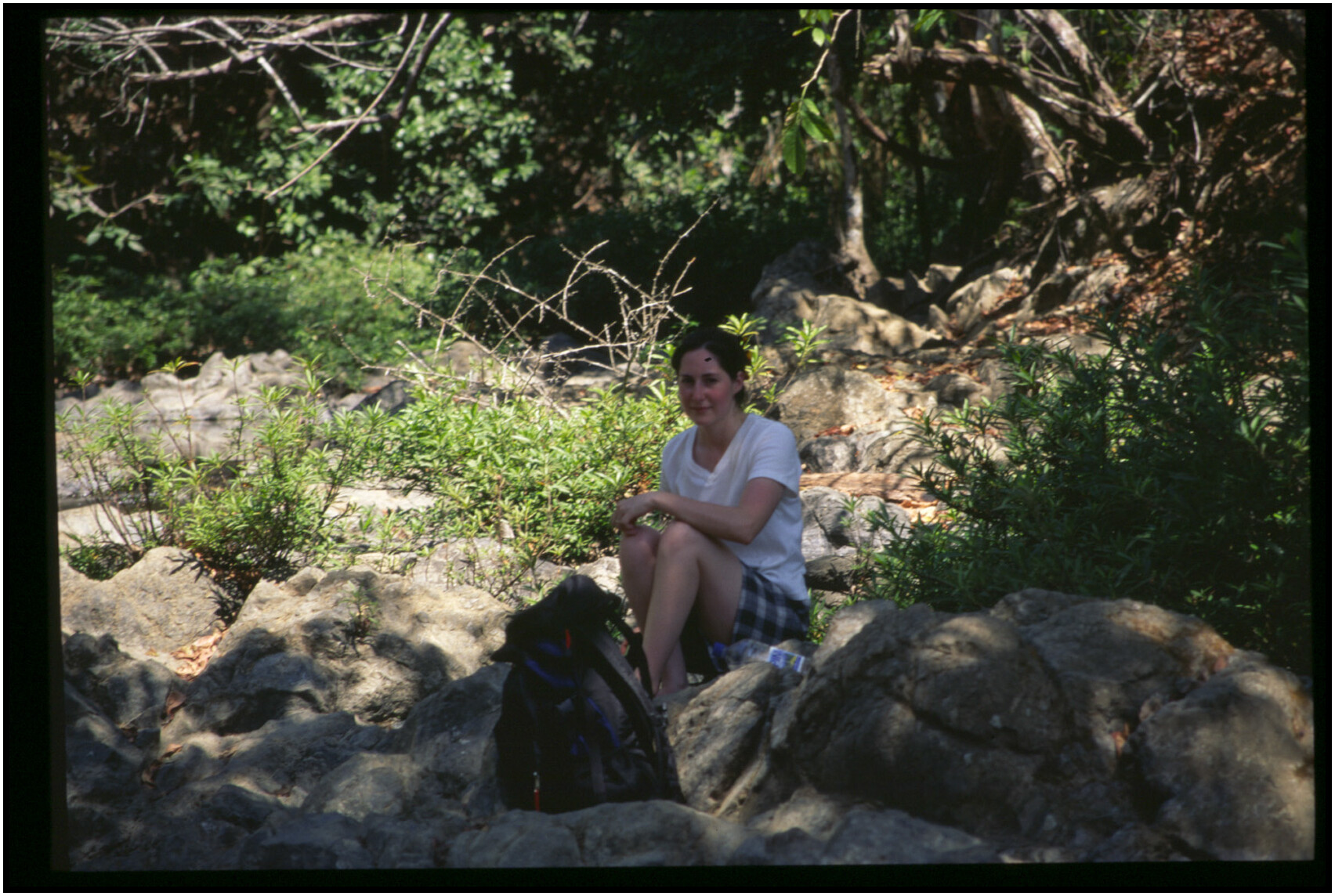
Feeling sunburned, we returned to Los Caballos for a quick shower before dinner, served between 6:30 and 7:00 p.m. Hummingbirds came to feed from the hibiscus flowers dangling over the pool and we got a close view of them. We saw four different species of parrots flying by in pairs, headed back to their roosting spots for the night, and, although we couldn’t see any, we heard howler monkeys barking from the nearby tree tops.
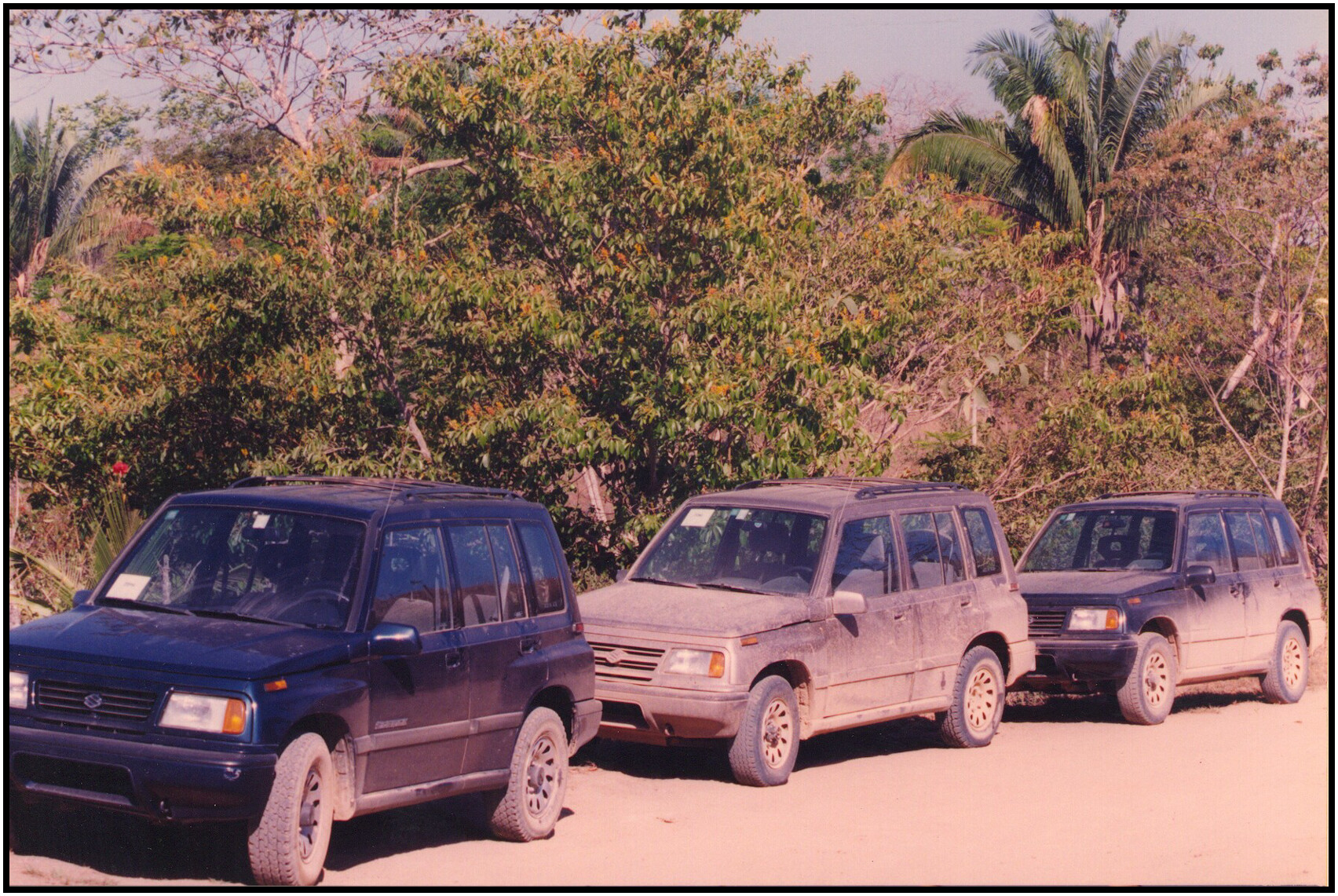
Six guys from New York, all in their late 20s or early 30s, were vacationing together and we traded adventure stories with them before the family-style dinner was served. We compared road condition horror stories — they won. Between the six of them, they had rented two Suzukis just like ours. They had managed to blow two tires, and when we saw their vehicles they were coated with road dust so thick we could not tell what color the paint was. The next day these guys were going to Isla Tortuga (Turtle Island) for a day of tropical beach-combing. It sounded like fun, but Adam and I wanted to get up early for bird watching and go on an afternoon horseback excursion with Barbara. We, too, had a full day planned.
Day of Relaxation and Reflection in Montezuma
DAY 4
28 March, Saturday
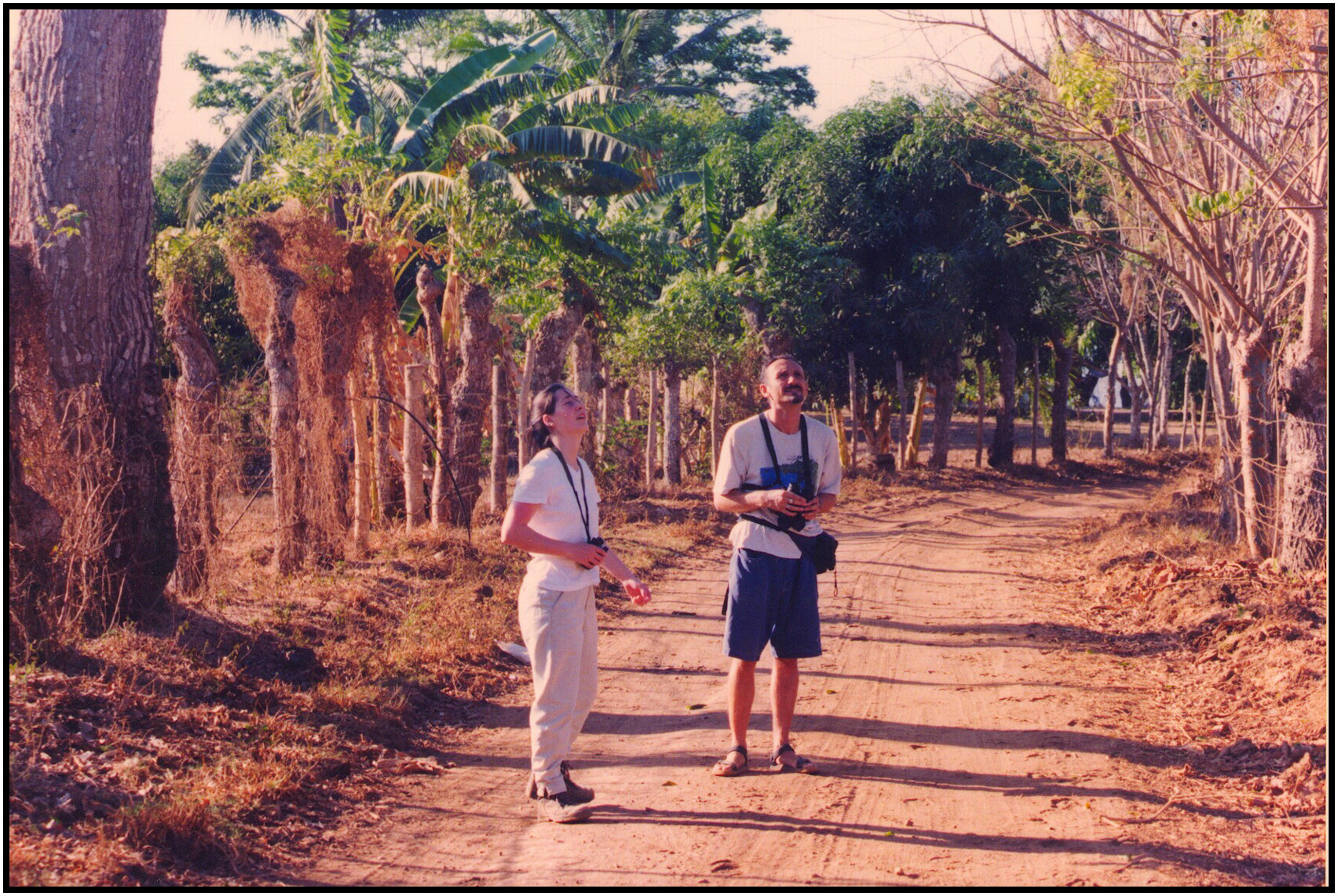
At 4:00 a.m. we dragged ourselves out of bed and hiked down the long dirt driveway to the main road into Montezuma. We were meeting Robert, our bird guide, at the bottom of the hill at 5:30 a.m. One of Barbara’s dogs followed us.
Robert hadn’t arrived yet. A very friendly young man, an Italian named Bruno, was waiting for the bus. He struck up a conversation with us even though we didn’t understand Spanish well.
Bruno gestured at the bend in the road. “Bus muy rapido.” Barbara’s dog was happily playing the street. “Perro en peligro.”
The bus always came around the corner fast and the dog was in danger of getting hit. Bruno wanted us to tell the dog to go home in English because the dog didn’t “speak” Spanish.
15 minutes later the bus arrived and we traded Bruno for Robert; a small, wiry Brit, most likely in his mid 30s. Sarah told us later that Robert had been a professional drummer in his “former life,” touring with Sinead O’Connor.
Robert brought an additional pair of binoculars (Adam and I only had one pair between us) and we started off down the road, Robert intently surveying the surrounding trees for movement.
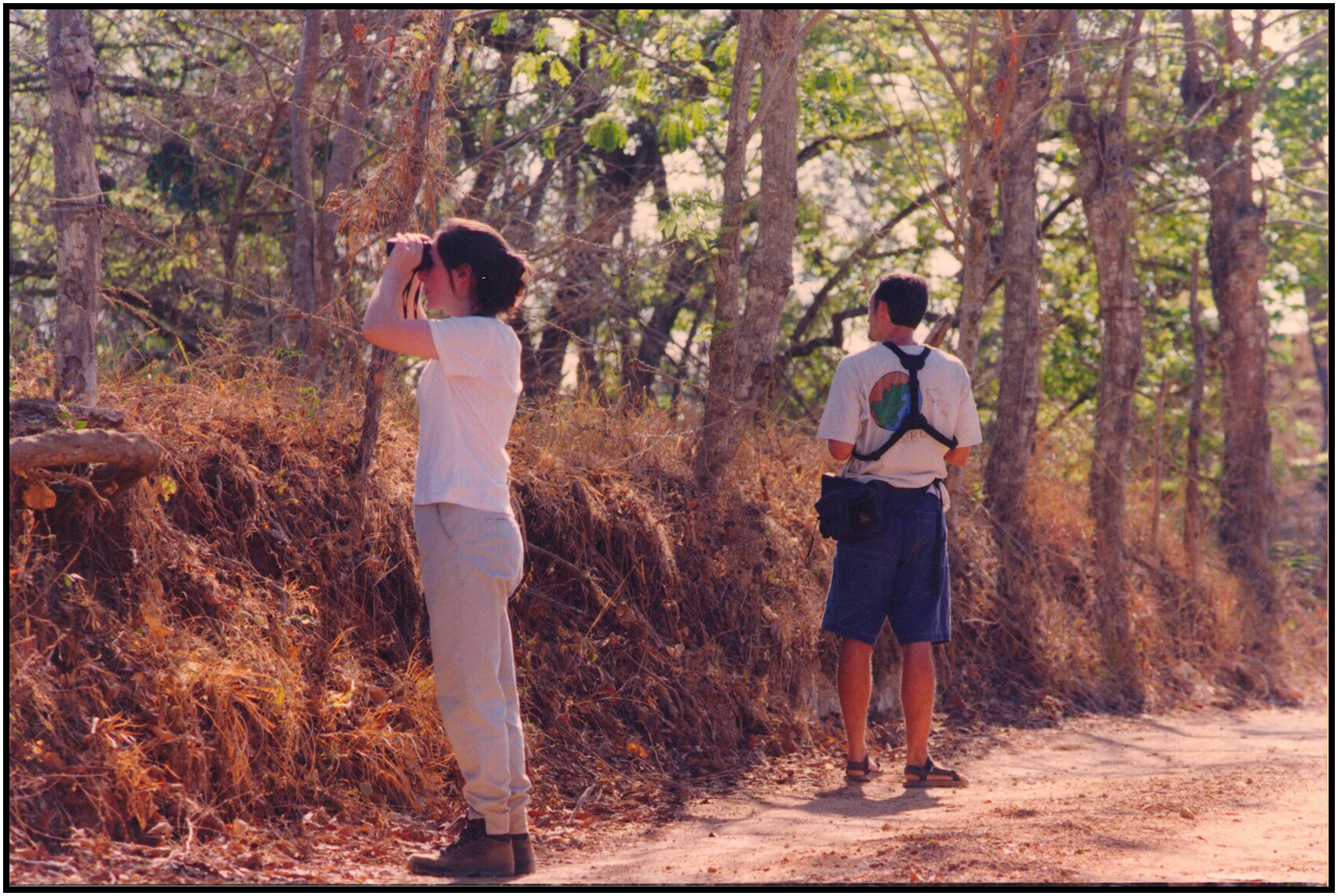
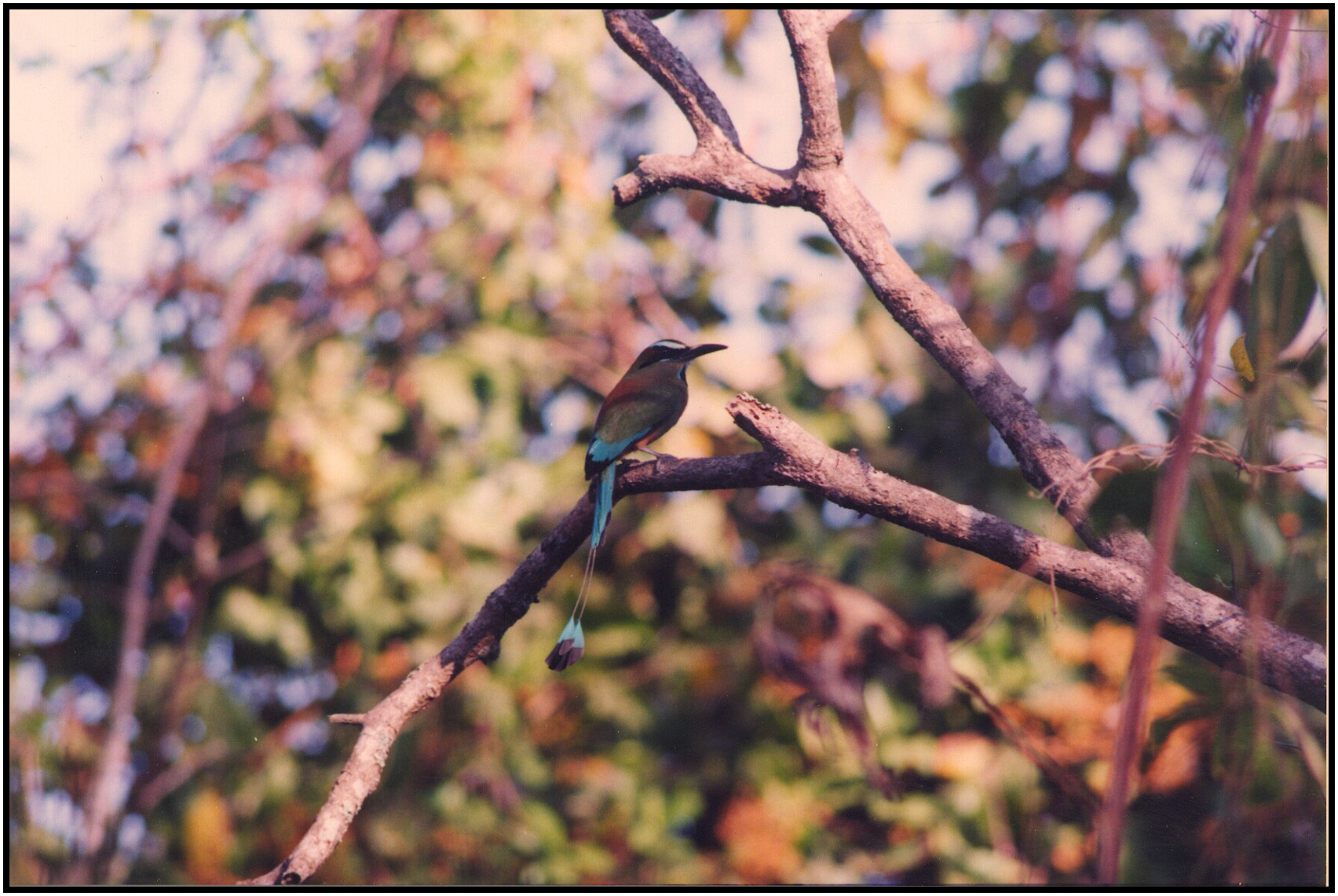
The hike took nearly 2 hours, although we didn’t cover much distance. The area was so thick with birds we would only walk a few feet between sightings. Robert identified most of the birds by their songs before he was able to locate them with his field glasses. We must have seen roughly 25 species. We also lucked into several different lizards, squirrels, and monkeys. It illustrated just how many creatures are packed into these forested areas. (Unfortunately, we couldn’t get close enough to any of these animals to take decent photographs. We didn’t have a big enough lens or a tripod, and the lighting was inadequate. The best photo we took was of the Motmot pictured at left, and the quality isn’t very good. In person, this bird is absolutely stunning.)
It was nearly 8:00 a.m. by the time we got back to Los Caballos. Having eaten nothing since dinner the previous night, and were starving. Walking for several hours in stifling heat had made me feel sick. Adam looked beat, too.
“Are we too late for breakfast?” I asked Sarah. “Are you still serving food this morning?”
Sarah, in a quiet voice, calmly said, “Slow down. Take a deep breath … now, would you like something to drink first?” Impatience and worry simply were not tolerated. I forced myself to relax and ordered fresh-squeezed orange juice and a plate of mixed fruit. Like the rest of the food we’d eaten in Costa Rica, it was marvelous.
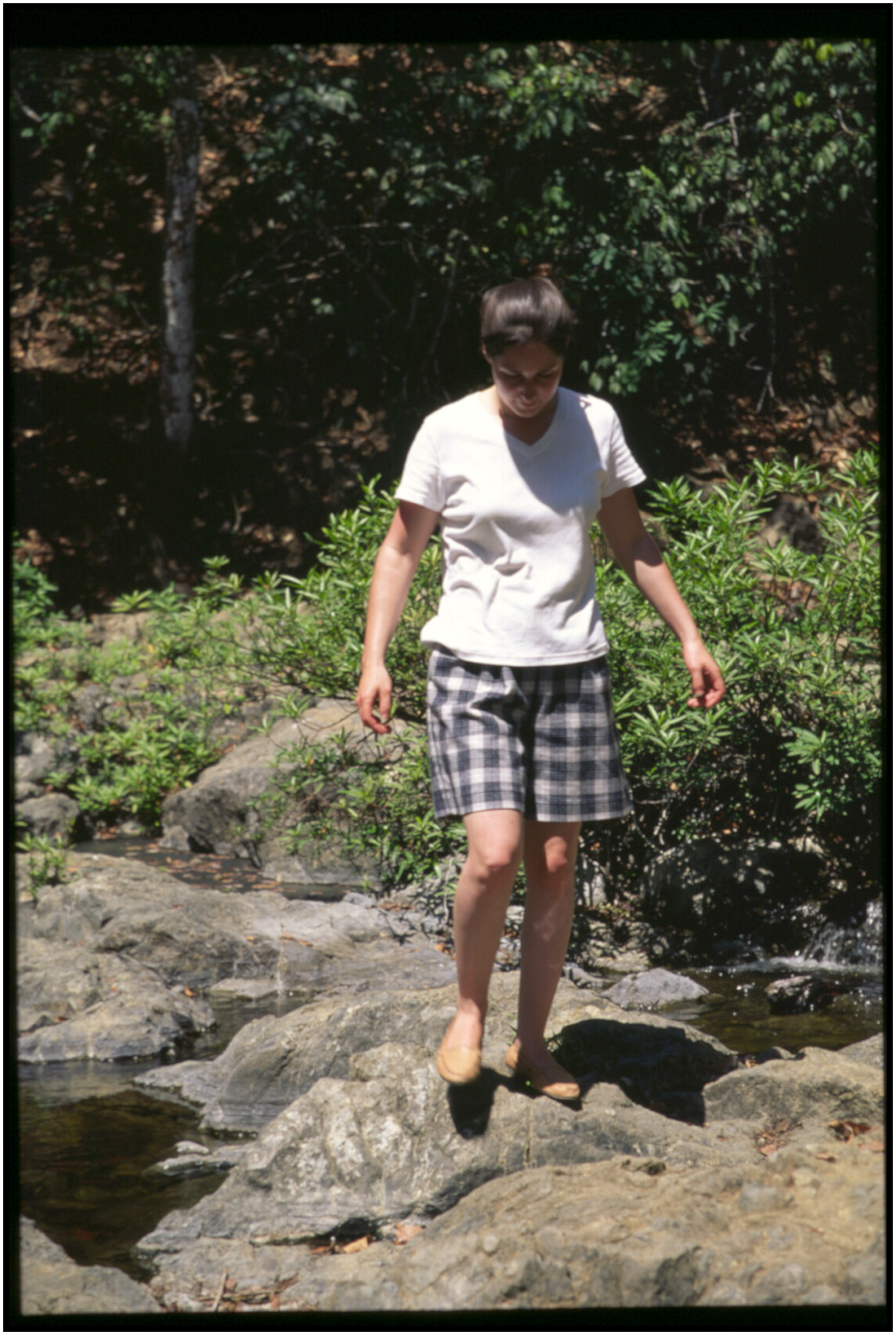
After breakfast, we drove back down to Montezuma to hike to a waterfall Barbara had mentioned. The trail was rough and tended to suddenly disappear, rendering it difficult to follow. Hikers were forced to wade through the river in several places. We were so unsure of ourselves that we almost turned around, but we happened upon a Tico going to the waterfall himself and he showed us the way. He spoke very limited English and was almost impossible to understand, but he claimed he was from New Jersey. Later he added, “I’m also from Costa Rica.” No kidding.
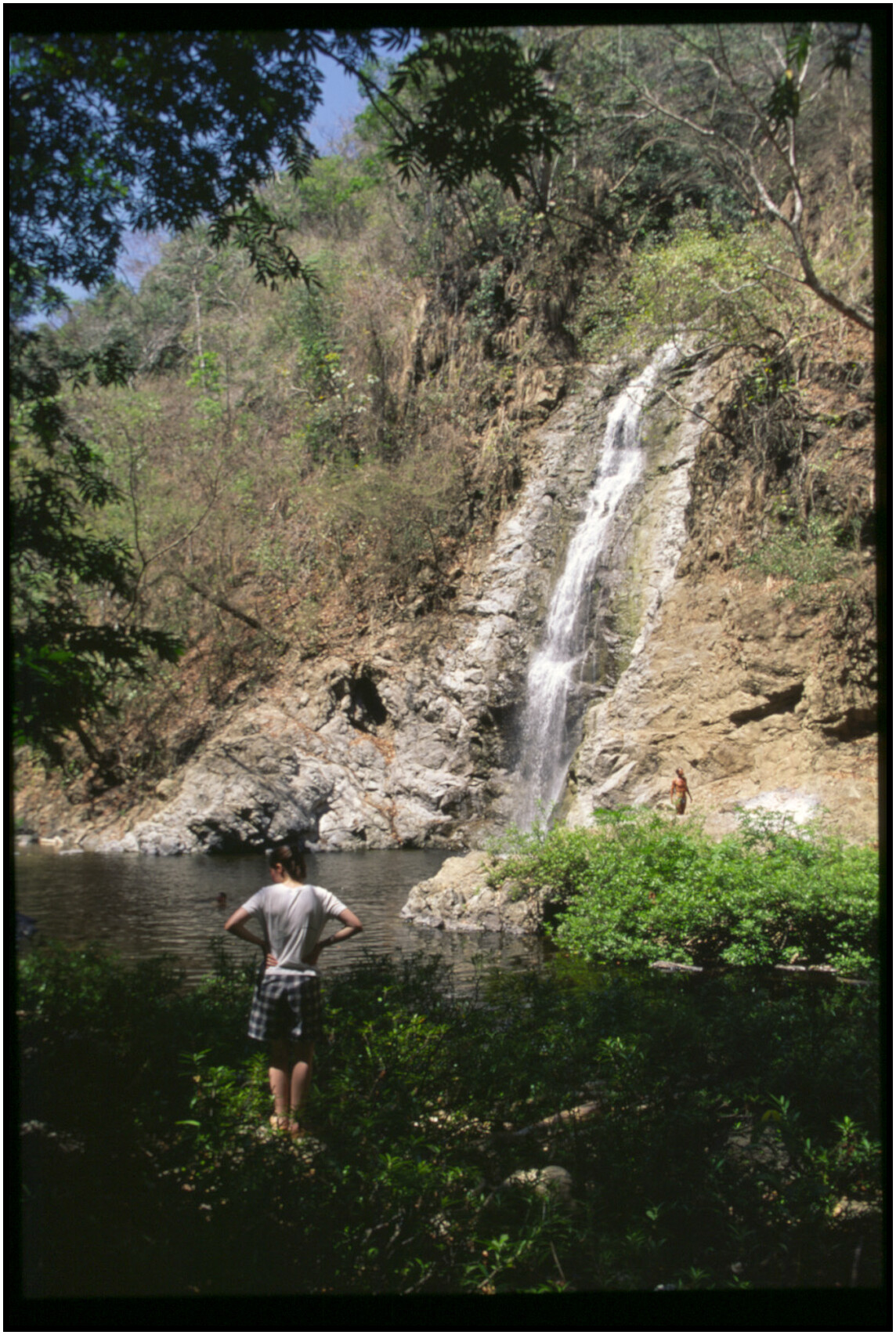
The waterfall was pretty, although I’ve seen much more impressive ones in Alaska. Costa Rica was at it’s very driest part of the year, however, so the waterfall may be more of a spectacle during other seasons. Too many people were swimming in the natural pool at the base of the falls to suit us, so we didn’t spend much time there.
Back at Los Caballos, everyone else was off doing their own things. We pretty much had the place to ourselves. Horseback riding with Barbara was scheduled for 3:30 p.m., but other than that we didn’t have any plans.
I have been few other places in my life as peaceful as Los Caballos. It’s an ideal destination for anyone wishing to do some soul searching. It offers guests a chance to really get in touch with the most basic and important aspects of life that unfortunately get overlooked with hectic schedules and routines.
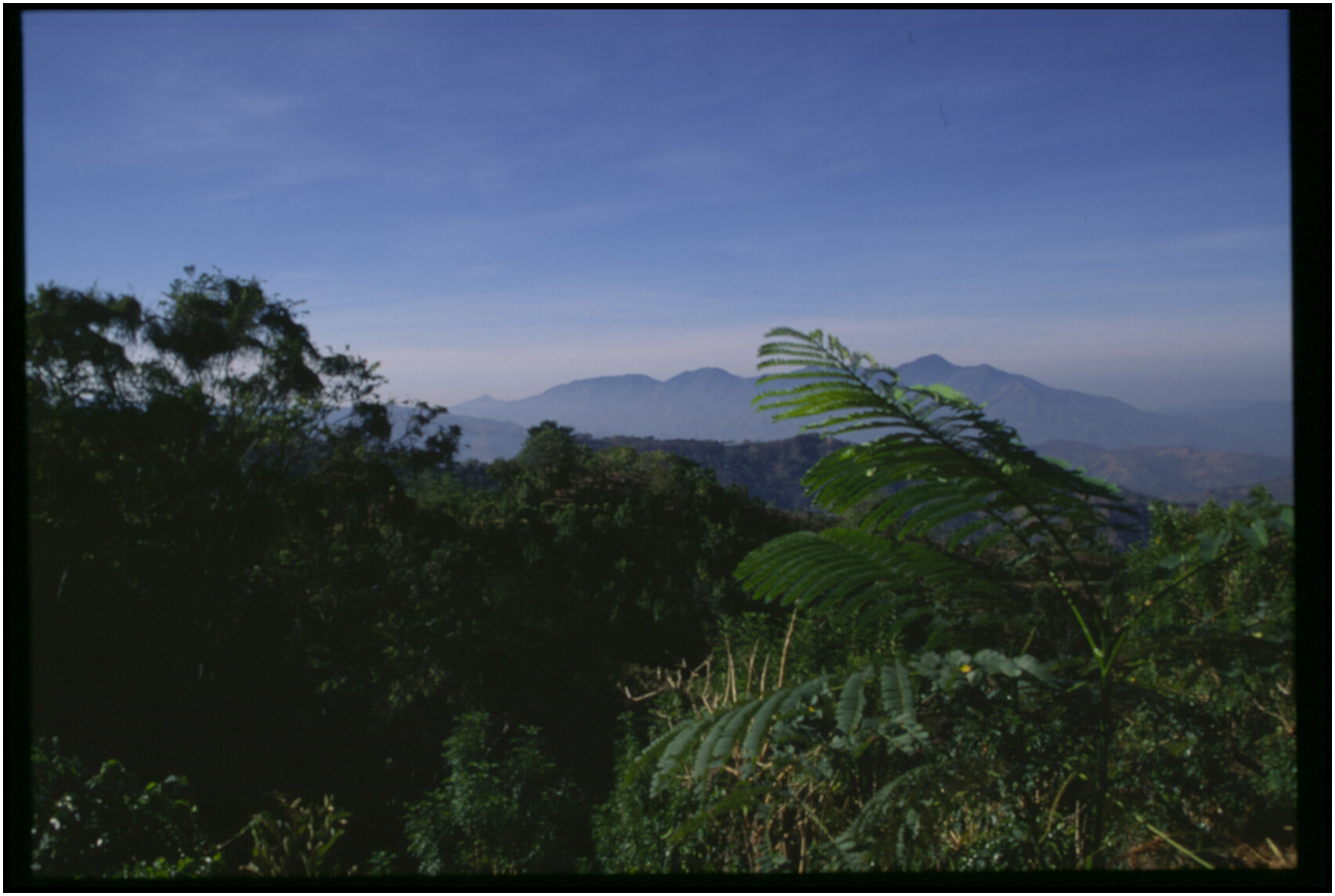
For the past 20 years or so, I have been trying to figure out what I need to be happy with my life. In many respects I keep failing over and over again, unable to determine where I am making the mistakes. I have sought happiness through many different avenues, the most successful being through my relationships with other people, but even marriage to a man I dearly love has not been able to completely fill that void. I frequently feel trapped by decisions I have made, almost as though they were made by another person, and now I am stuck living out the consequences.
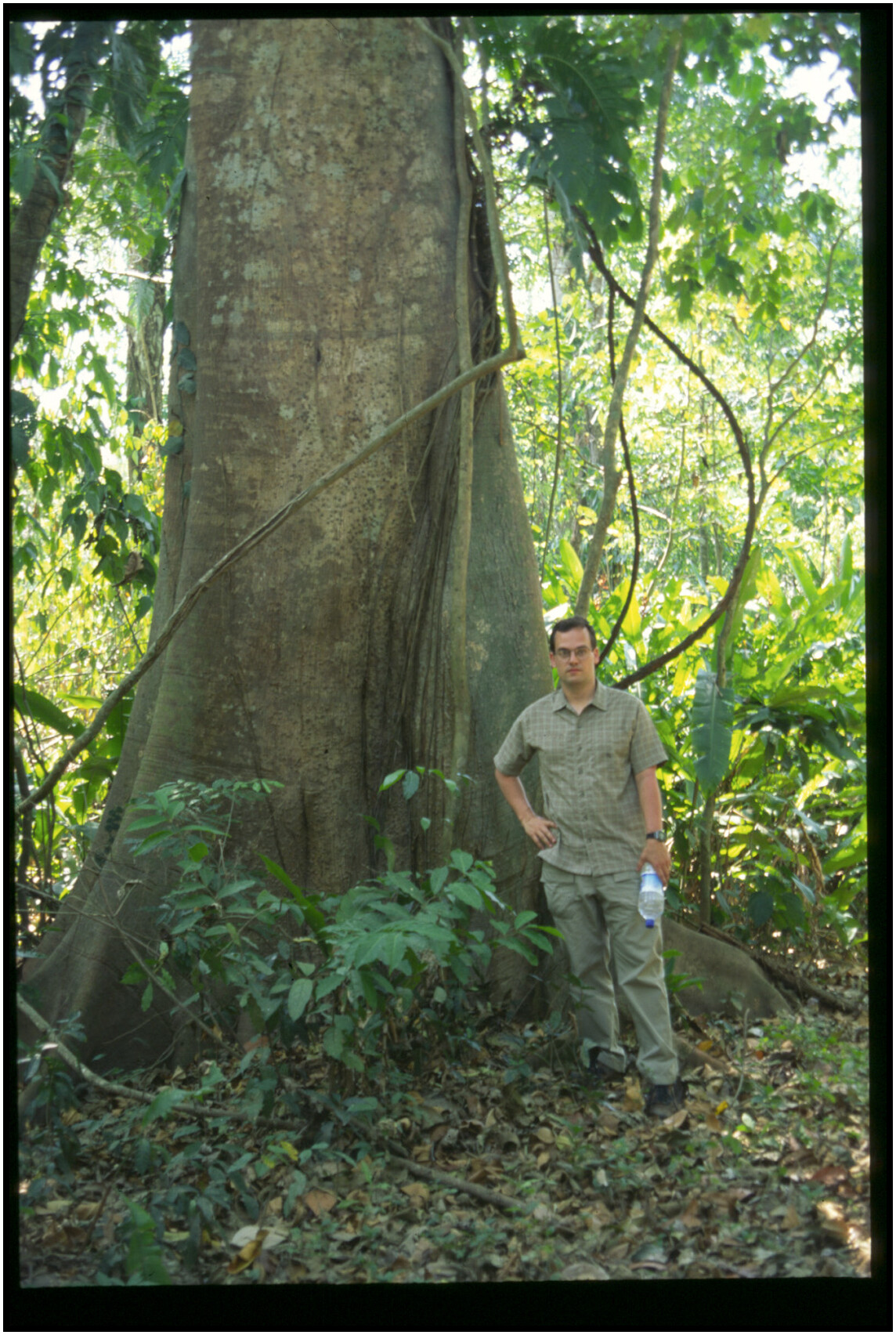
This hotel out in the middle of a Central American jungle enabled me to finally grasp meaning that has been eluding me. Adam and I spent a lot of time sitting by the pool talking about the direction we want to steer our lives and, after 5 years of coming up with plans that ultimately get discarded because they don’t meet the needs of us both, we were finally able to see a path we were both excited about taking.
“Can you see yourself living here?” he asked me.
“Yes. This is what I mean when I say I want to sell everything we own and go live in a grass hut on the beach. I just didn’t have the specifics worked out and I haven’t articulated it well. But this is what I’d like to do. What do you think? Could you run a place like this and be happy?”
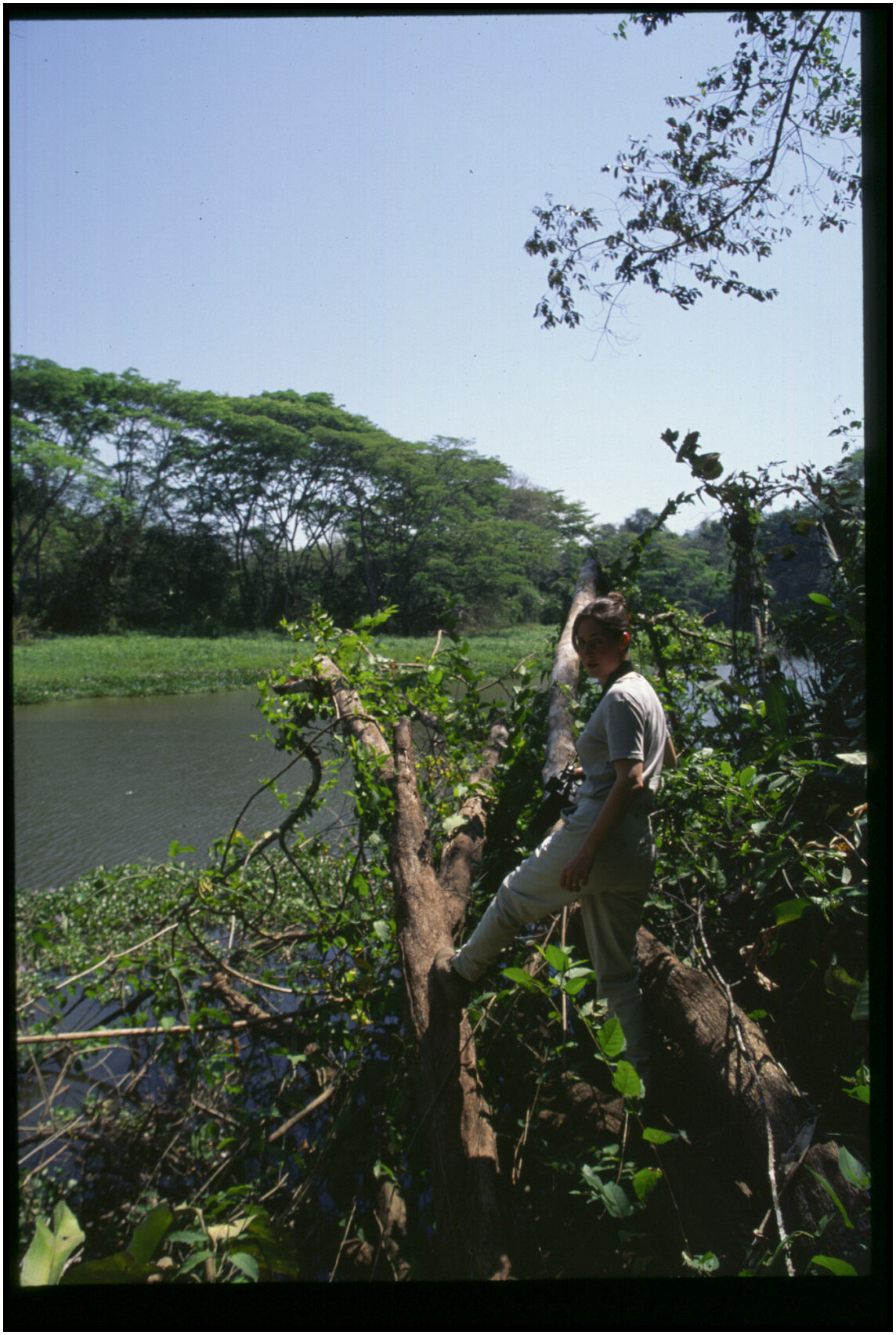
Adam said, “I could easily live in a place like this as long as I had something to keep me busy. I’d need to run some other kind of business and have my computers and stuff, but everything I like to do could easily be done from here. I think we should work toward getting our own Finca. I’ll start looking into the details when we get home.”
We talked about our future plans for several hours and, for once, agreed on almost everything. I will never forget that afternoon by the pool at Finca Los Caballos.
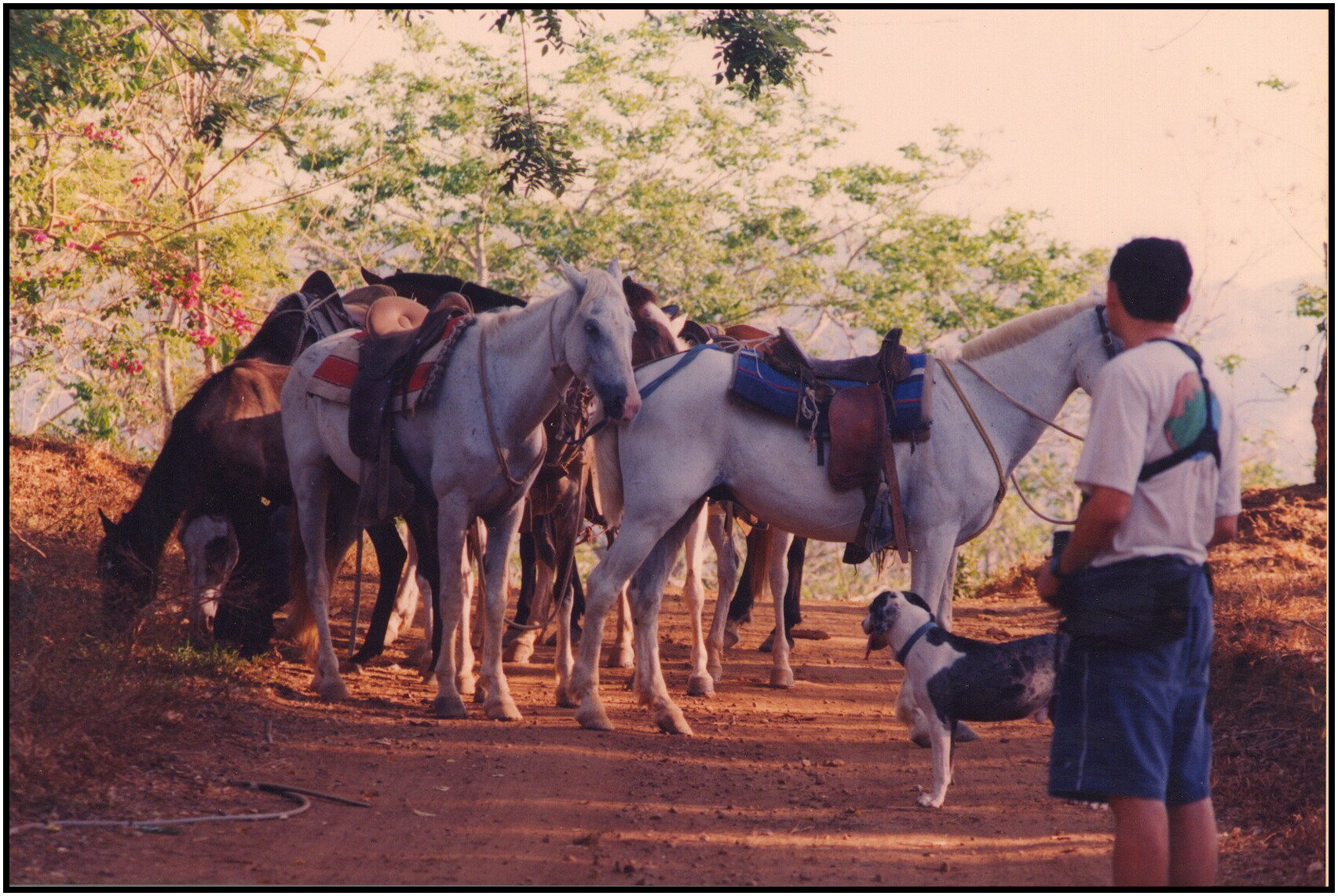
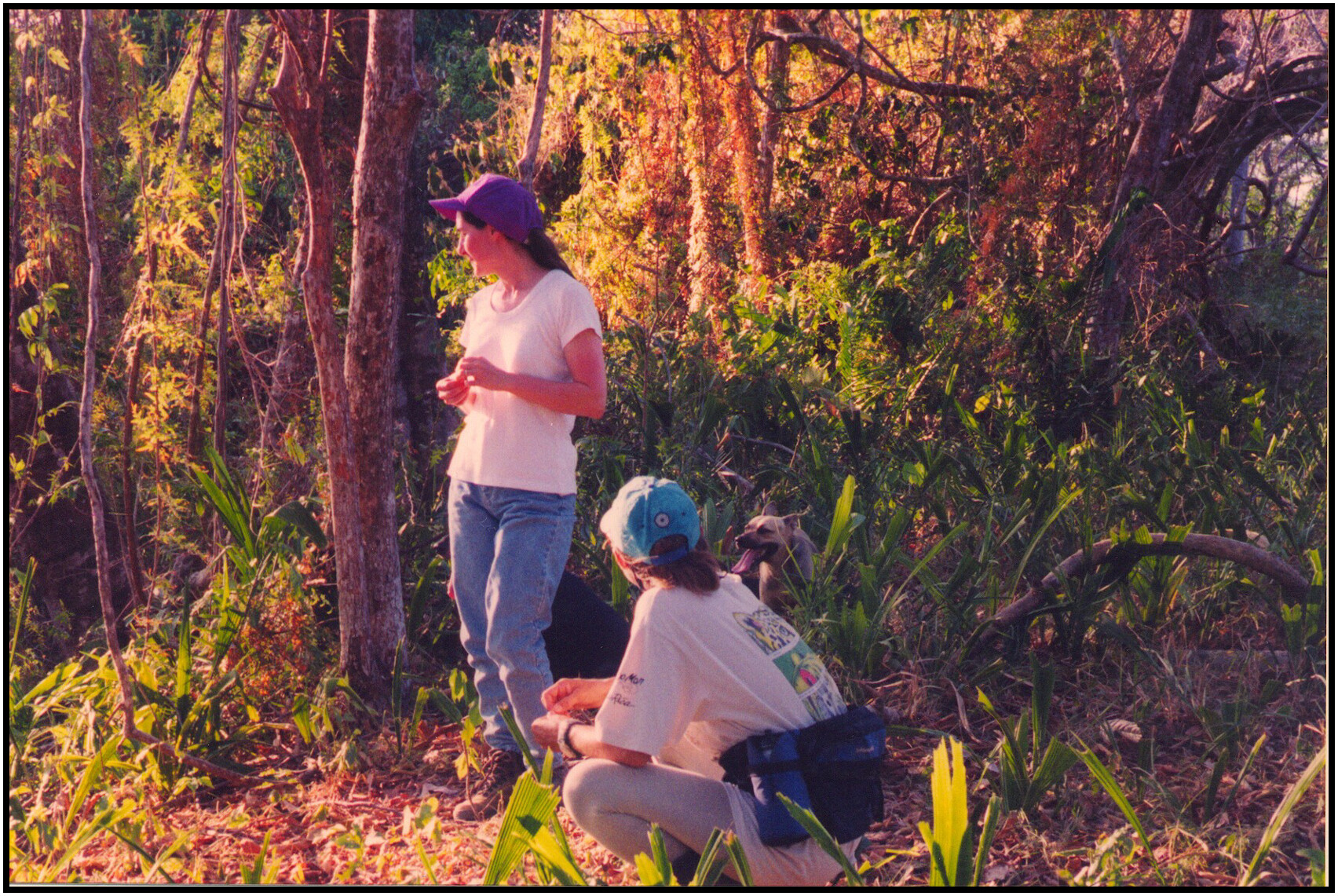
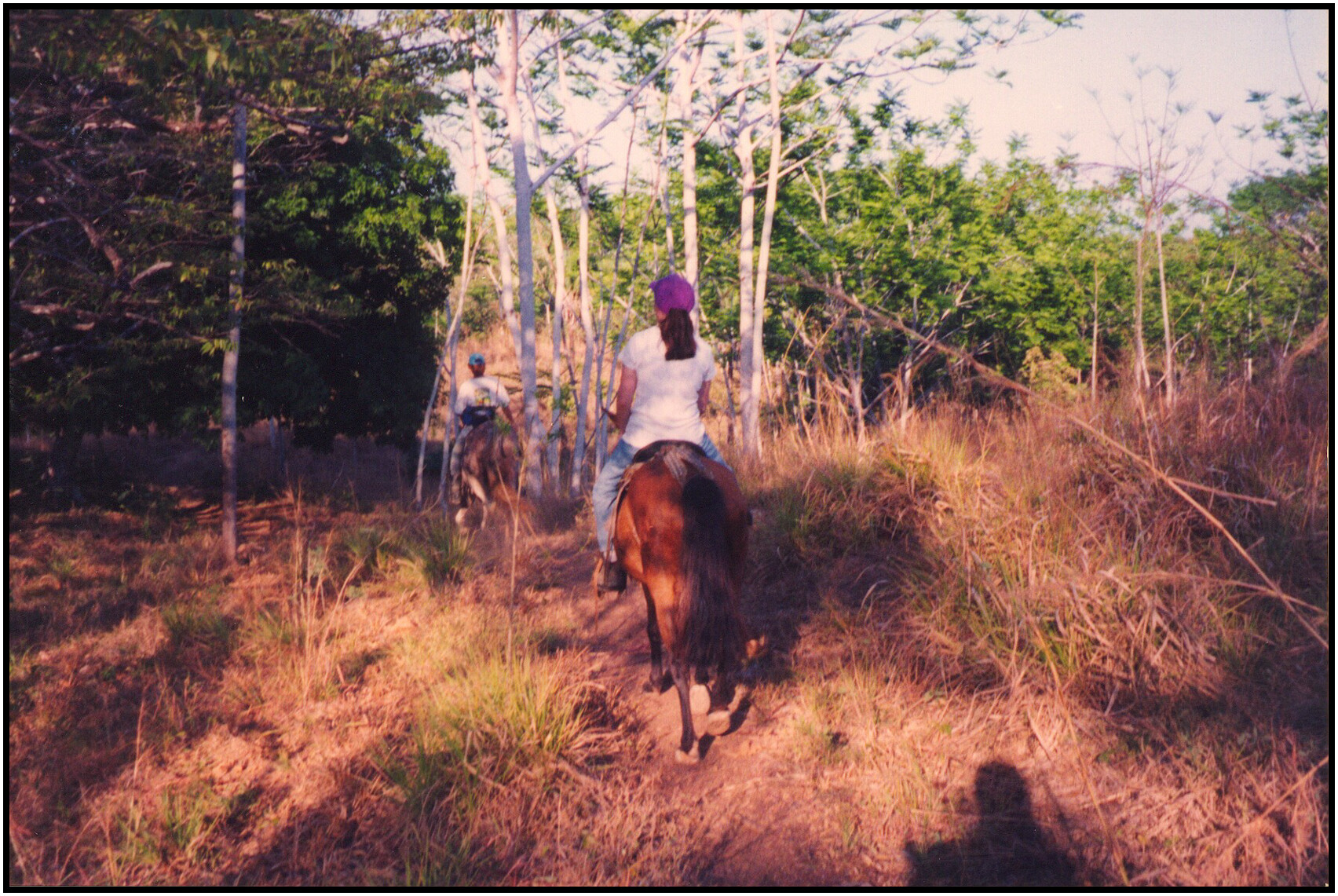
Horseback riding was fun. Adam and I have very little experience with horses, but Barbara tries to match the personality of horse to rider and the horses she had for us were very gentle and easy to control.
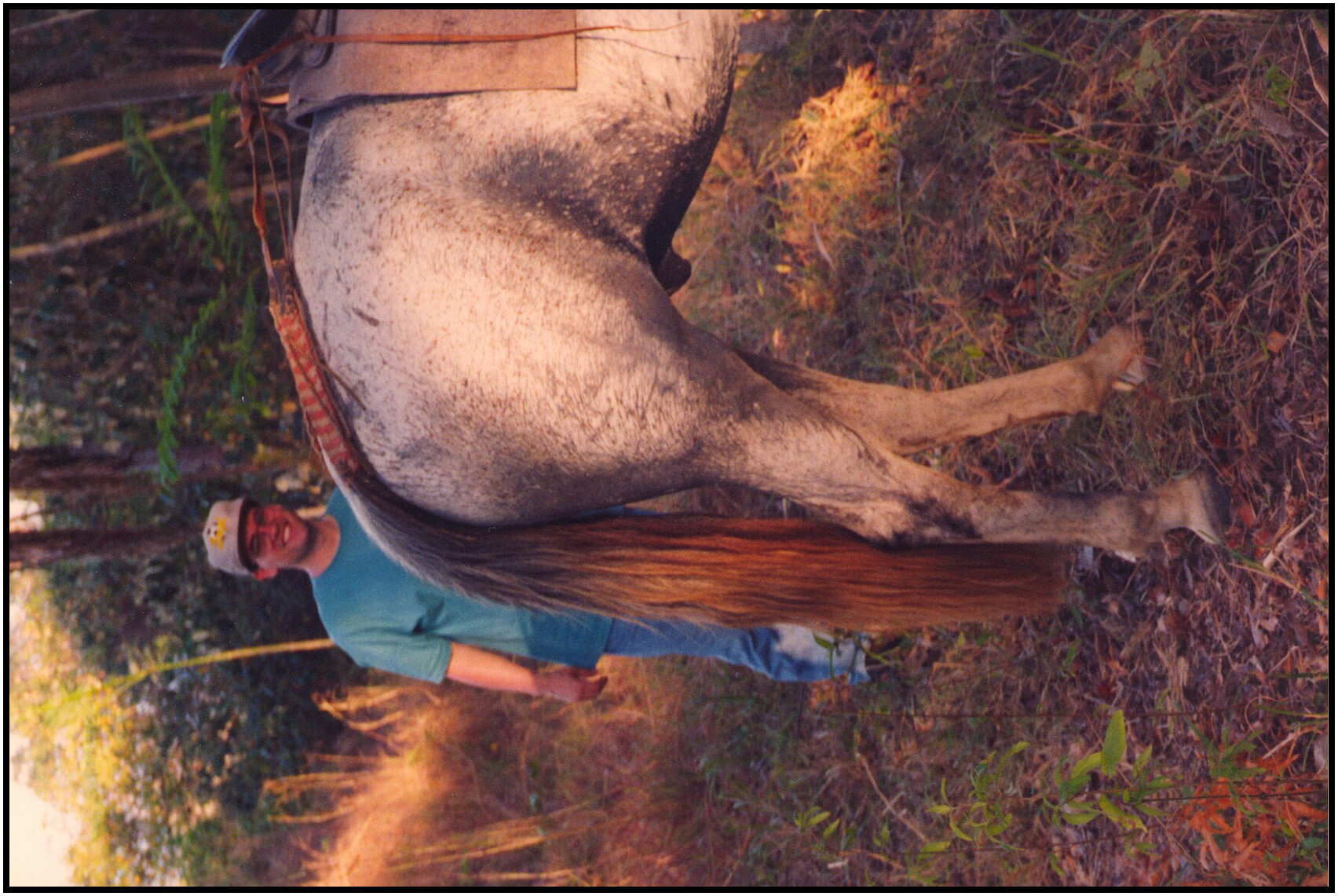
My horse’s name was Flora and Adam was with Romeo. Flora and Romeo had a pecking-order competition going and the only problem we had was when Romeo tried to pass Flora on the trail. She started running to keep her lead, which I was not expecting and had a scary moment before she obeyed my command to slow down. Adam needed to make sure Romeo didn’t come up behind Flora too close because Flora had been known to kick him in the past. Once that bit of excitement was over, though, the rest of the ride was peaceful.
Flora had a large patch of dried blood on her ear. I asked Barbara if it was the result of fighting with another horse.
“She was bitten by a vampire bat.”
I was not expecting that answer! I’ve heard of vampire bats, but I never expected to witness first-hand the evidence of one. Barbara said bats in that area didn’t carry disease, but they would go back to the same animal night after night, making the animal anemic. Other than that, the bats weren’t a big concern.
That evening, we went into Montezuma for dinner at a restaurant Alia recommended called the Sano Banano. It was the most “American” restaurant we’d been in as far as service was concerned and most of the other diners were speaking English. Our waiter also spoke English very well. Adam and I assumed it was a place the “imports” could afford to eat but was too spendy for the true Ticos. It was still cheap by US standards, but more expensive than anywhere else we’d eaten. Most of their dishes are vegetarian. They boycott beef products in protest of the forested areas destroyed each year to make grazing land for cattle.
Sano Banano also serves as the local movie theater. On Saturday nights at 7:30, a huge screen is pulled down over the restaurant’s entrance and a Hollywood movie featured. This time it was Jerry McGuire, starring Tom Cruise. Since we’d already seen it, we finished our food and went back to Los Caballos. We needed to get an early start in the morning to ensure we didn’t miss the 8:00 a.m. ferry back to Puntarenas. I would have loved to stay one more night but Barbara didn’t have any more vacancies.
The Suck Day
DAY 5
29 March, Sunday
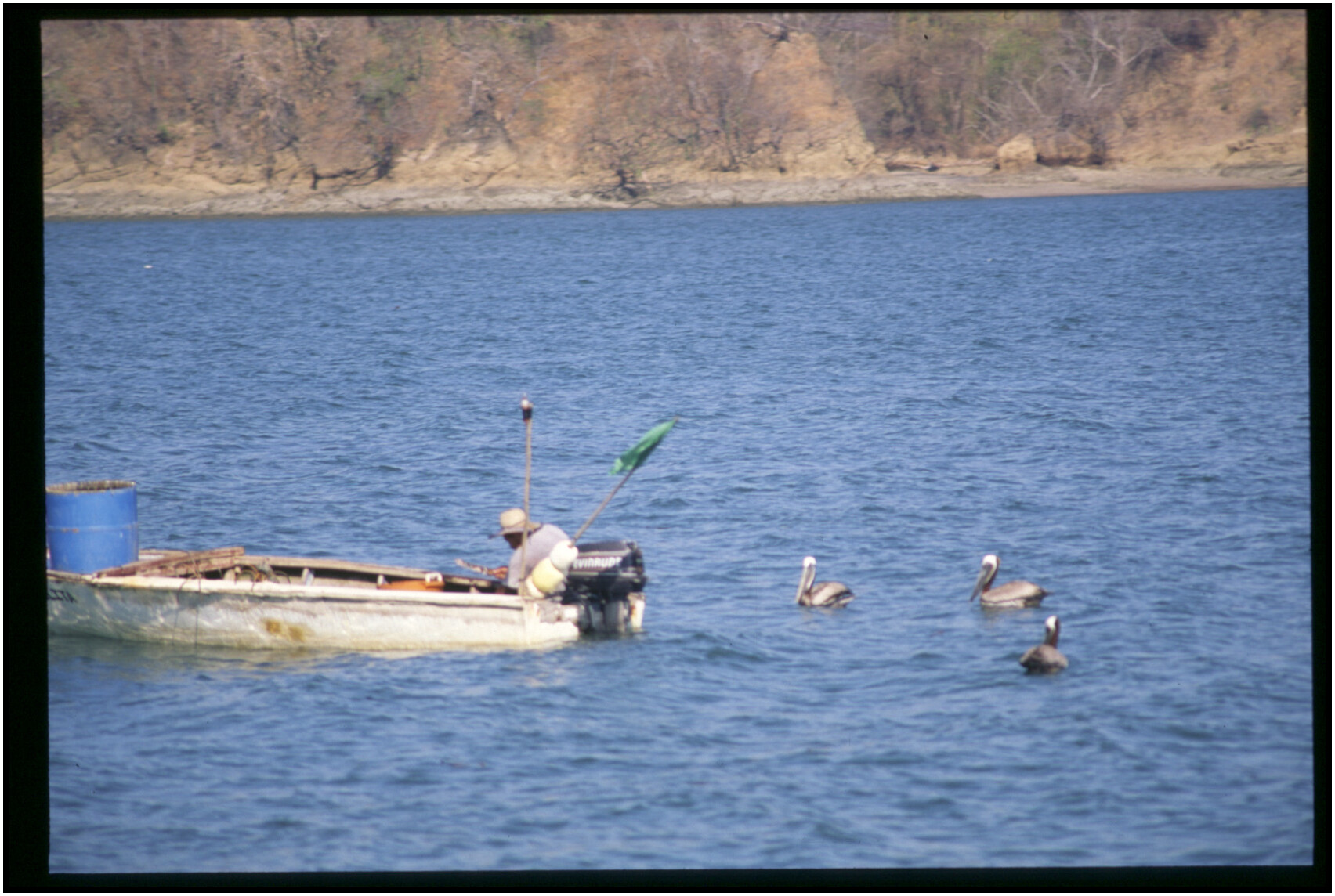
Fisherman with flock of pelicans
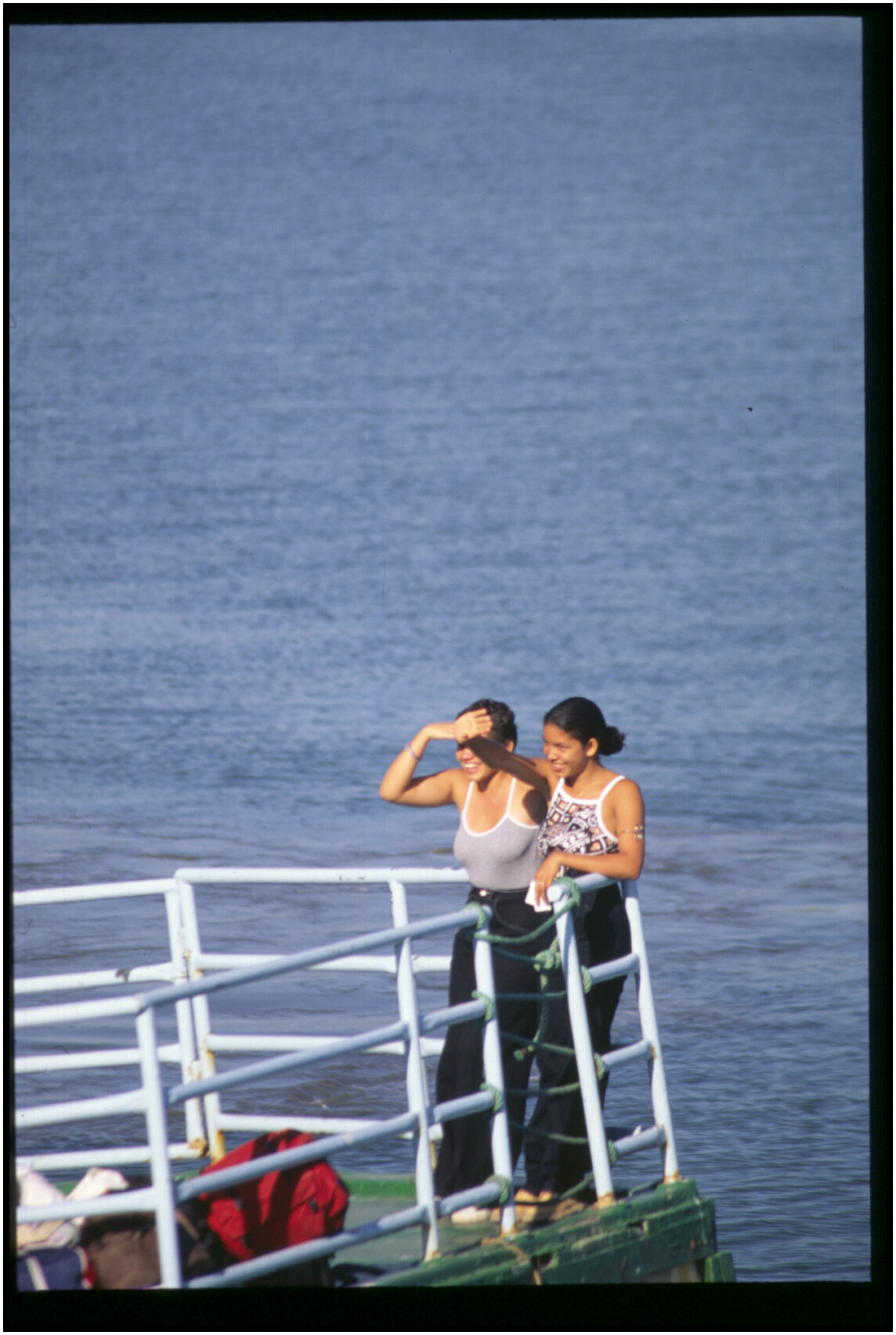
Upper deck of our ferryDay 5 will forever be known to us as “The Suck Day.”
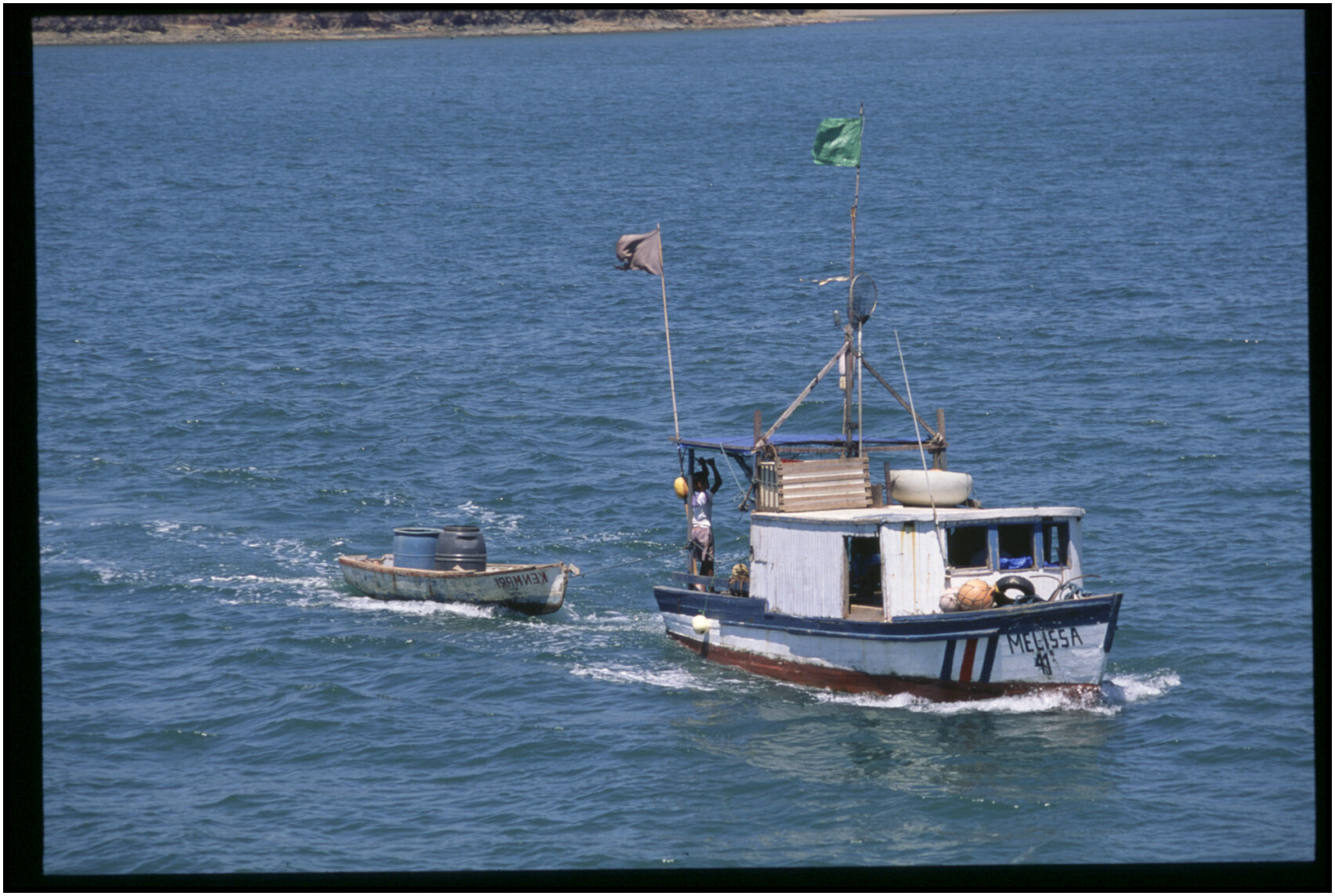
We had an uneventful drive to the ferry terminal. The ride back to Puntarenas was peaceful … there were very few other passengers on the boat early on a Sunday morning, so we were able to sit back and enjoy the scenery. An old man in a tiny dilapidated boat was fishing off in the distance and had attracted a flock of pelicans. The pelicans were probably hoping for a free meal. This was to be the only pleasant experience in this whole cursed day.
I was depressed because I wasn’t ready to leave the Nicoya Peninsula and felt that my vacation was more or less over at this point. We didn’t even have a hotel reservation for tonight, so we were completely up in the air about where we were going to stay. Plus, Barbara hadn’t been equipped to take credit cards so we used up almost all of our cash there. Since it was a Sunday and banks were closed, we were edgy about our money situation. We didn’t like this arrangement at all because hotels in Costa Rica tend to be small privately owned places that get booked weeks in advance. There aren’t any Motel 6’s available. We decided our best bet was to go back to San Jose and look for one of the big US chains. We both hated to do it that way, but didn’t like the alternatives. We didn’t want to find ourselves sleeping in the car. I especially didn’t want to go back to the city. Now that I’d seen what the rest of the country had to offer, I didn’t want to waste one more minute there.
Enhancing the dark mood we were both already in, we got pulled over by a local policeman for “illegally” passing a bus on our way through a small town between Puntarenas and San Jose. Since he did not speak any English, it took a while to get his message across. However, he was quite able to ask in English for $25 in cash (we noticed that he specifically asked for US currency), which we didn’t have. We only had about $30 worth of colones on us. The policeman accepted ¢5000 (approximately $20), which he put in his pocket and sent us on our way. He didn’t bother to issue a ticket. Adam became angry after we left the scene of our crime.
“I haven’t noticed one single instance where it appeared to be illegal to do anything! People drive on sidewalks here. That guy was just waiting for an obvious tourist to drive by so he could nail them and pocket the money.” Adam stewed for awhile, then said, “I wonder what he would have done if we hadn’t had any money. I guess we should just chalk it up to paying off the local authorities for a safe passage. That’s the way things seem to be done here.” (We later read in several different sources that you should NEVER give cash to a policeman. You are supposed to demand a ticket, which can be paid at any Costa Rican bank. If you speak enough Spanish, you should get the officer’s name and badge number and report him to the authorities. It is completely illegal for a policeman to take cash from you.) However, this is Central America, and when La Policia asks for $20, you give them $20 and go on your way.
Broke, depressed, and now scared of getting pulled over a second time with no money, we were a sorry couple. Today was not a good day.
We made it back to San Jose without further incident, but had a hard time finding a hotel. We stopped at the Hampton Inn near the airport, but they couldn’t give us a room because no one had checked out yet. Twelve people were scheduled to leave, but they couldn’t promise us a room that was technically “sold.” It was 11:00 a.m. and the clerk told us to come back at 2:00 p.m. We decided to find the butterfly farm we missed our second day.
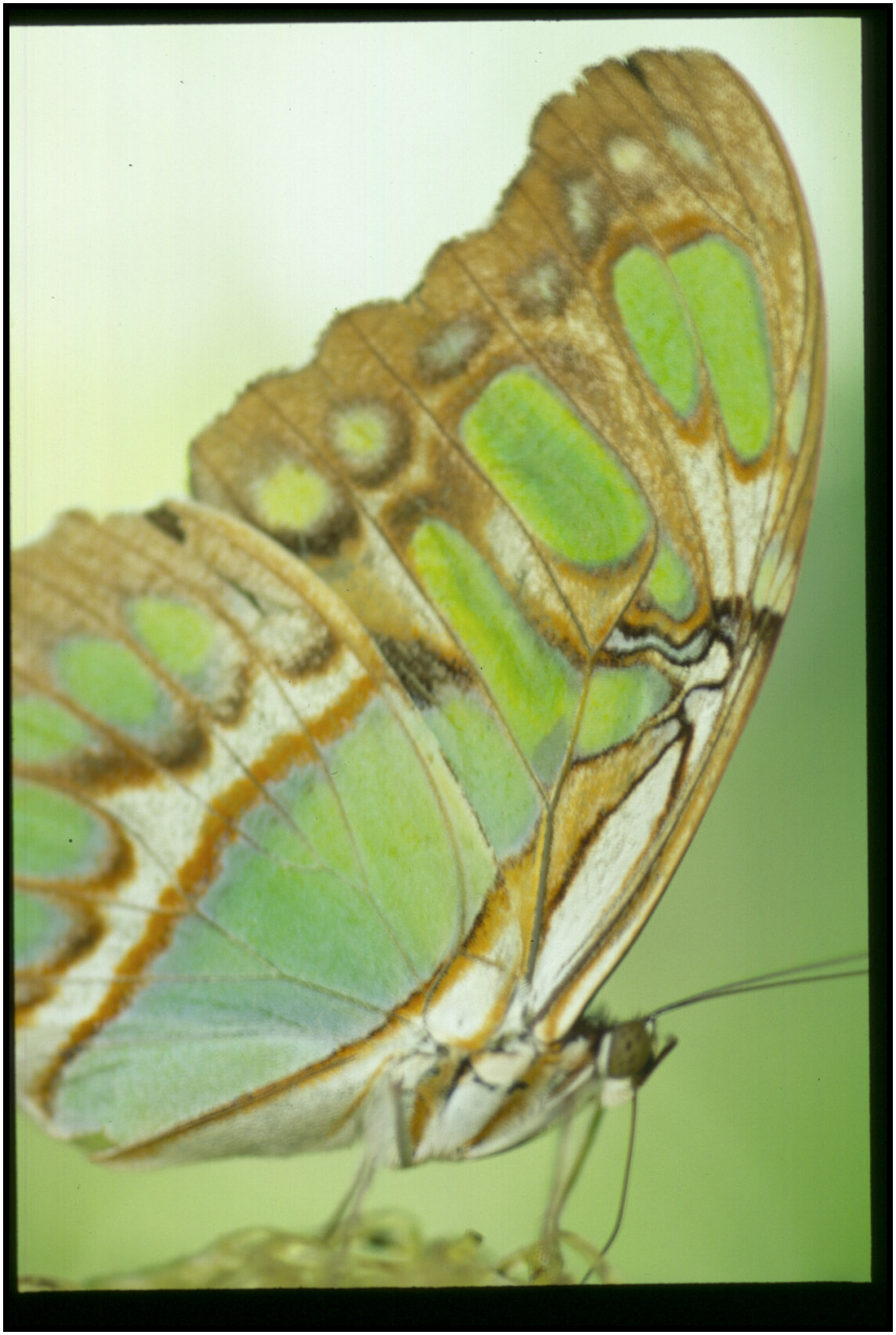
The Butterfly Farm, in La Guacima, Alajuela, was very expensive ($14 per person) and, in our opinions, not worth the money … although, to be fair, we got bored after looking at the butterflies and didn’t stay for the 2 hour tour. They had a 1 hour video for people to watch, then a guide to take you through the hatchery. We got there early and waited in the adult butterfly area. One of the guides was taking a group through and, after listening to him, we decided we didn’t want to bother with the tour ourselves. It may have been really neat, but we left anyway. I still don’t think it was worth $14 per person. (Incidentally, this place accepts credit cards.)
At 2:00, we went back to the Hampton Inn, hoping for a room. We were tired, hungry, and wanted to shower. They still couldn’t give us a room. Disgusted, we headed out to find another hotel.
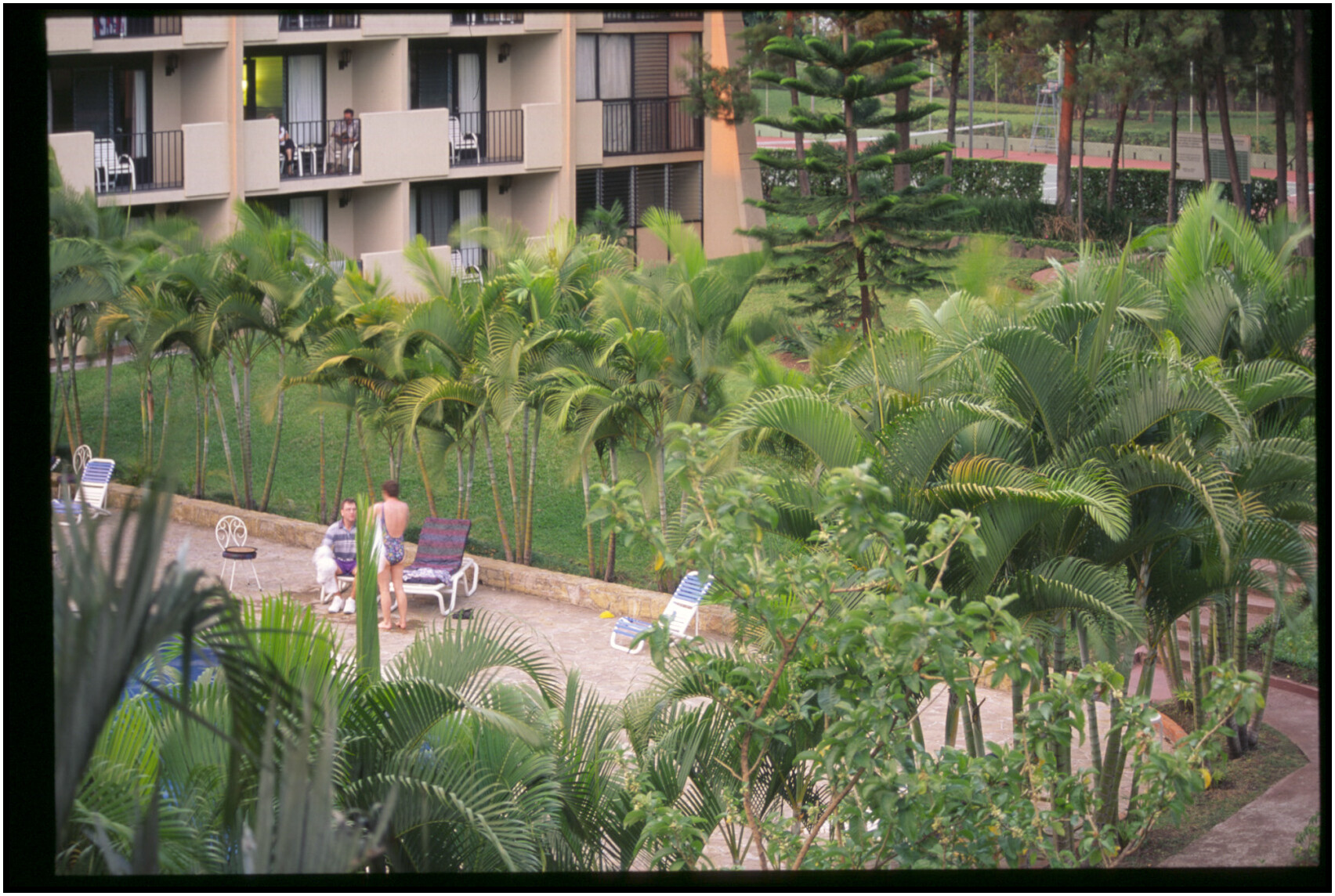
We ended up at the Best Western Irazu. It was the nicest Best Western we’d ever seen, but it was very Americanized and we didn’t like staying there. Most of the guests looked to be Americans in their 50s and 60s. It was very much like a resort, complete with a gambling casino. We sat by the pool for awhile listening to conversations around us and realized most of the people there had not bothered to ever leave the hotel grounds. A 45 year old bottle-blonde American woman had a conversation going with a young Italian man. He was saying, “There are more things to see in Costa Rica than this hotel.” She replied, “I know, but I’m having fun. What could I possibly be missing?” They made a date for later that evening and both retired to their separate rooms to get ready. Adam watched the woman walk away and said, “She’s going off to her room all excited isn’t she.”
I said, “She’s going to shave her legs, make sure her makeup is on perfect, put perfume in naughty places …. she’s thrilled to be having a love affair with a young Italian in an exotic country.”
“And the guy is telling his friends, ‘American women are sluts.'”
We laughed and felt smug that our own trip was so much more than just a hotel and a seedy one-night stand. We were also embarrassed by the stereotypical arrogance we witnessed in our fellow countrymen.
Too tired to go out and find a restaurant, we ordered from the room service menu. The food we received was by far the worst meal we’d had since arriving in San Jose Wednesday afternoon, not to mention the most expensive. Afterwards, we both felt slightly sick. I washed some of our clothes in the sink and hung them out to dry on the balcony. At least the Best Western had a clothes iron.
We had replaced Finca Los Caballos, the personification of my idealistic “grass hut on the beach” fantasy, with a cheesy American semi-resort full of uninteresting, aged American socialites gambling and drinking the night away in a neon-soaked den of iniquity. I cried.
We ended up watching TV in our room the rest of the evening. Almost all of the shows were American, and the majority of them didn’t even have Spanish subtitles. We watched Joan Rivers take pot-shots of celebrities’ outfits at the Academy Awards. (She, of course, was wearing something garish and hideous.) We went to bed with broken spirits.
DAY 6
30 March, Monday
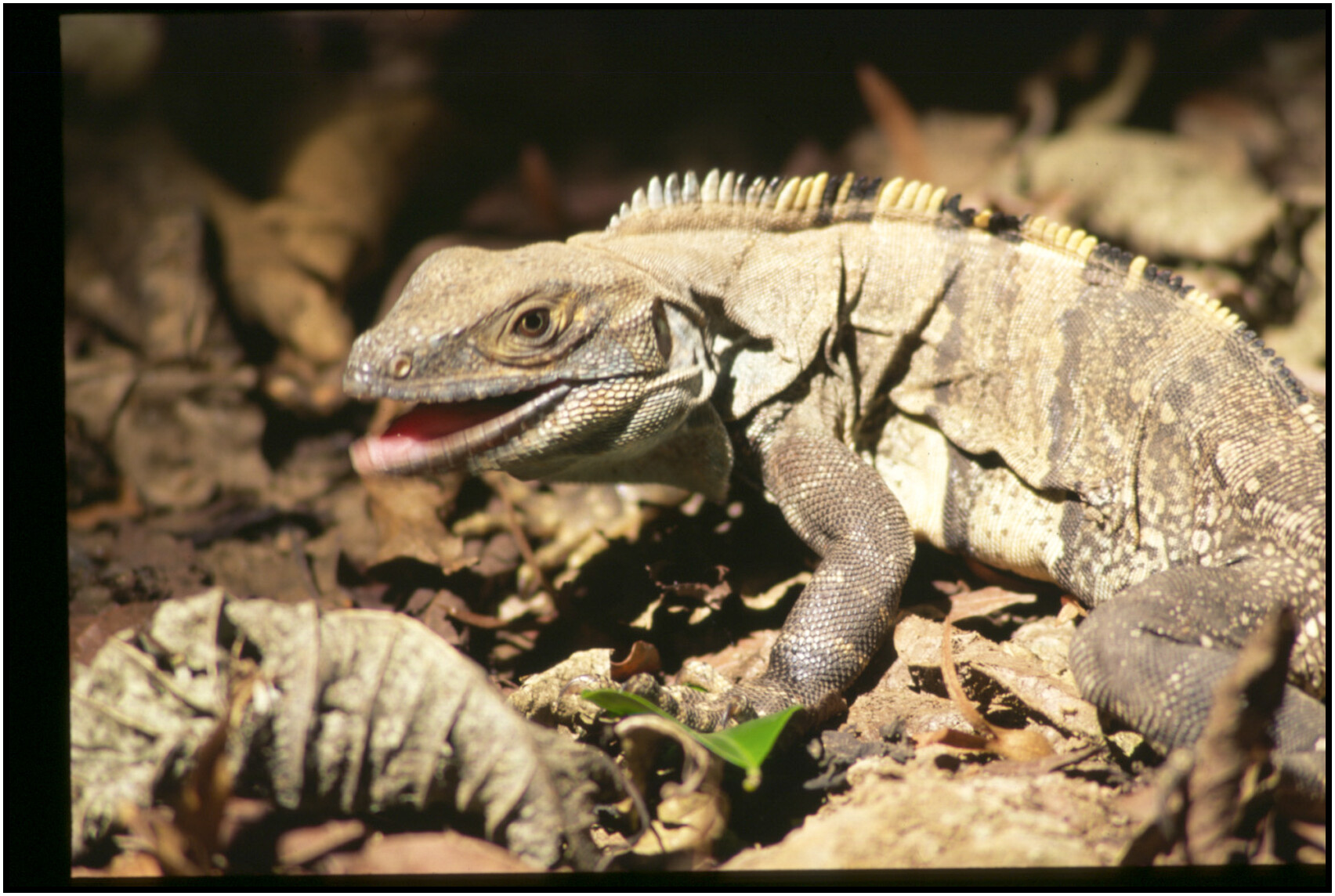
This was to be our Jungle Day. I’d been looking forward to seeing a real-life rain forest for months, and it wasn’t until our final day in Costa Rica that we had the opportunity. We drove from San Jose down to the Carara Biological Reserve, one of only two areas of Costa Rica that has a natural scarlet macaw habitat. We paid at the ranger station, then headed alone down the path into the depths of the forest. Almost immediately we heard a creature rustling through the dead leaves covering the forest floor. It was a small brown lizard. He caught a bug and ate it, watching us disinterestedly the whole time.
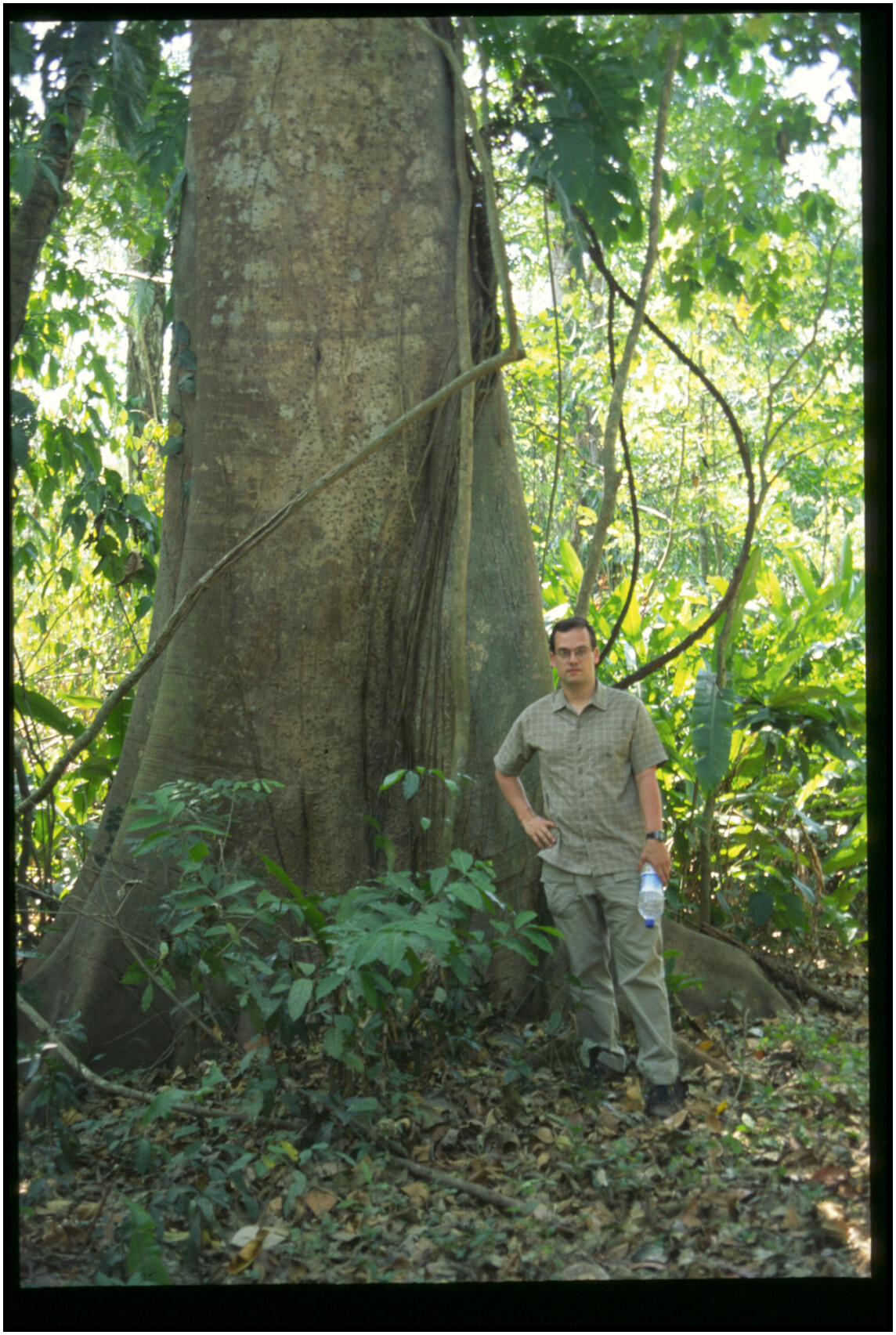
The trees in the Biological reserve were enormous and crawling with life. One tree would support several different vines and small-leaved plants grew in the cracks of the bark. Lizards skittered everywhere. Most of the time we could hear them running away but their camouflage was so perfect that we had a hard time seeing them. We also saw a lot of birds, but without a guide we didn’t know what we were looking at. We did see one pair of scarlet macaws flying overhead, but we never got a chance to see some up close.
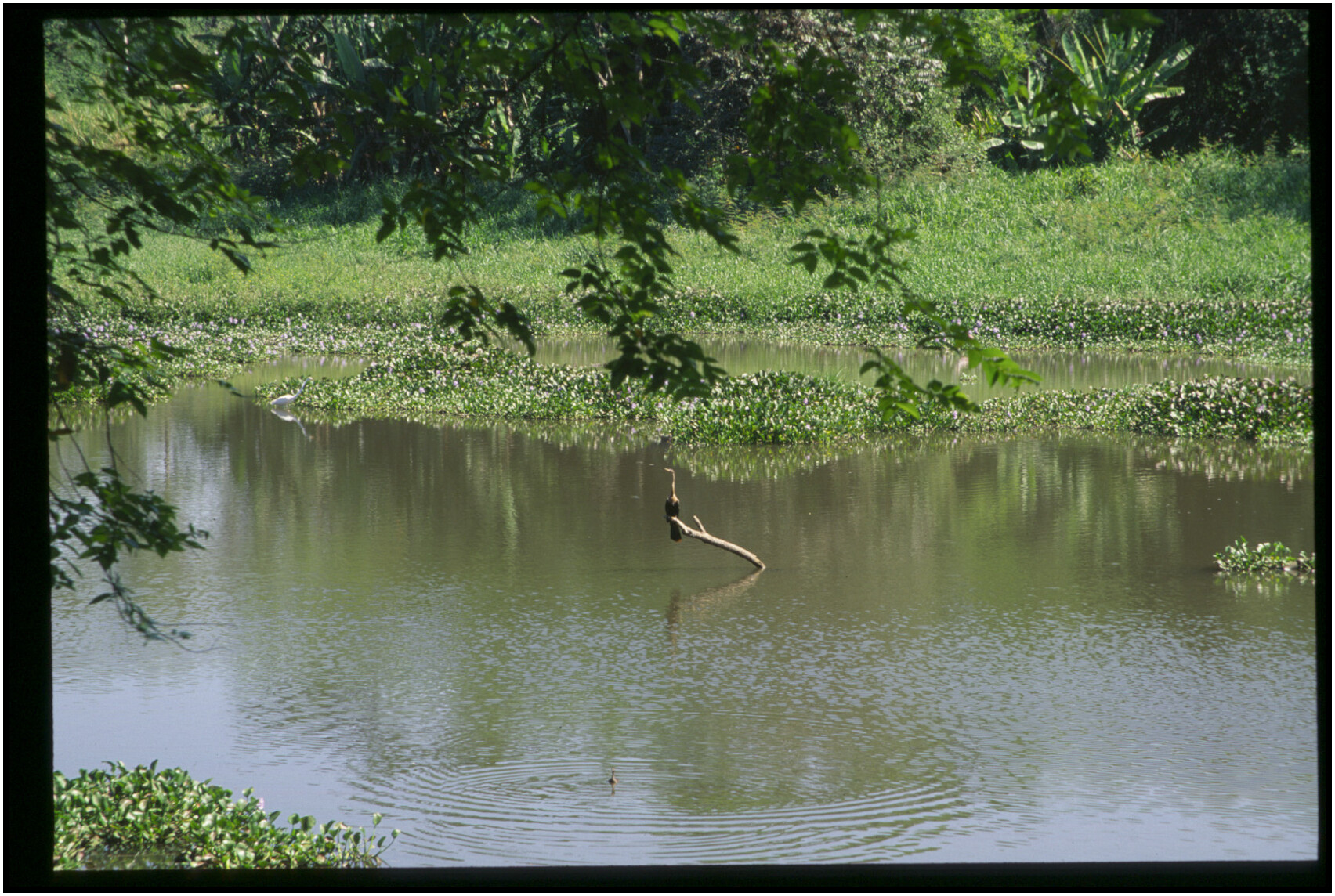
We’d worked up an appetite by the time we got back to our vehicle at the reserve’s entrance. Our two bottles of water were empty but we were still thirsty because of the heat. Adam suggested we get a meal at a Soda located across the bridge about 2 kilometers up the road. We pulled ourselves up onto bar seats and asked for menus. We were hot, hungry and thirsty and everything looked good. Adam ordered a beer (Imperial, of course) and a plate of rice and chicken. I was tired of the ubiquitous gallo pinto offering, and opted for the exotic sounding “hamburguesa con papas fritas”. Adam was embarrassed and pleaded with me to pick something else, but my mind was made up. I justified it by explaining that I was curious to see how a hamburger in Costa Rica differed from one at home. I also ordered a drink made from the Tamarind fruit. Both meals were excellent.Adam standing by tree in Carara National Forest
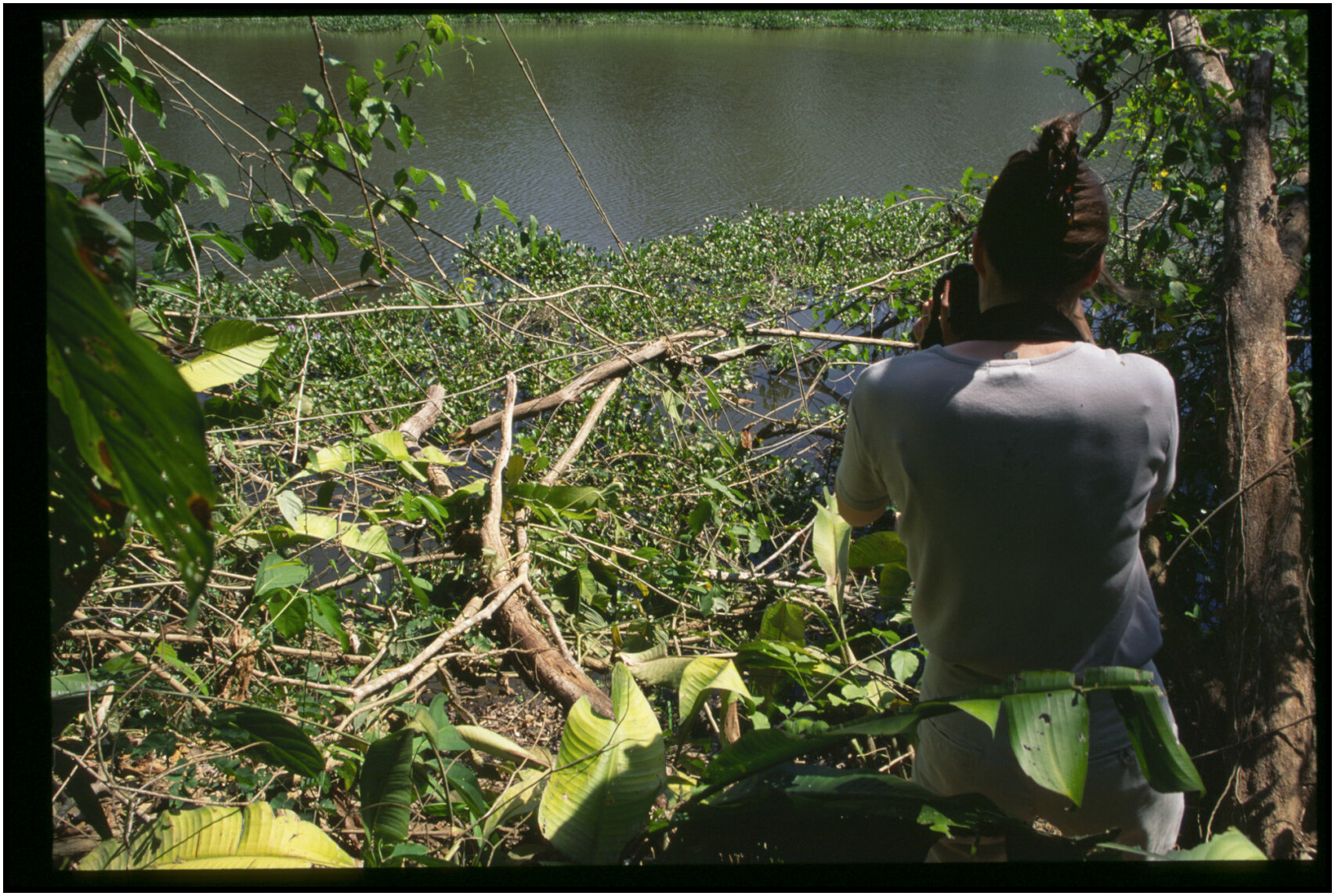
While we were eating, a couple in their fifties, obviously not Costa Rican, sat down on stools to our left and ordered two beers. The man had a Ketchum Air (from Ketchikan, Alaska) hat on so I asked him if he was from Alaska.
“No, but I’ve been there several times on fishing trips. We’re actually from Oregon.” This couple had a daughter attending Oregon State University, which is where Adam attended his first two years of college. Small world! He asked us what we were eating. They both laughed at me for ordering a hamburger, too. Then, wife embarrassedly admitted that she, too, was in the mood for a hamburger, but couldn’t bring herself to ask for one. This was also their first trip to Costa Rica, so we swapped adventure stories about our experiences. They had spent most of their time over on the Caribbean side of the country and recommended several placed for us to see on a future trip. They decided not to hike into the Reserve when they found out we’d seen lizards on our walk. The wife said seeing crocodiles from the safety of the bridge was adventurous enough for her.
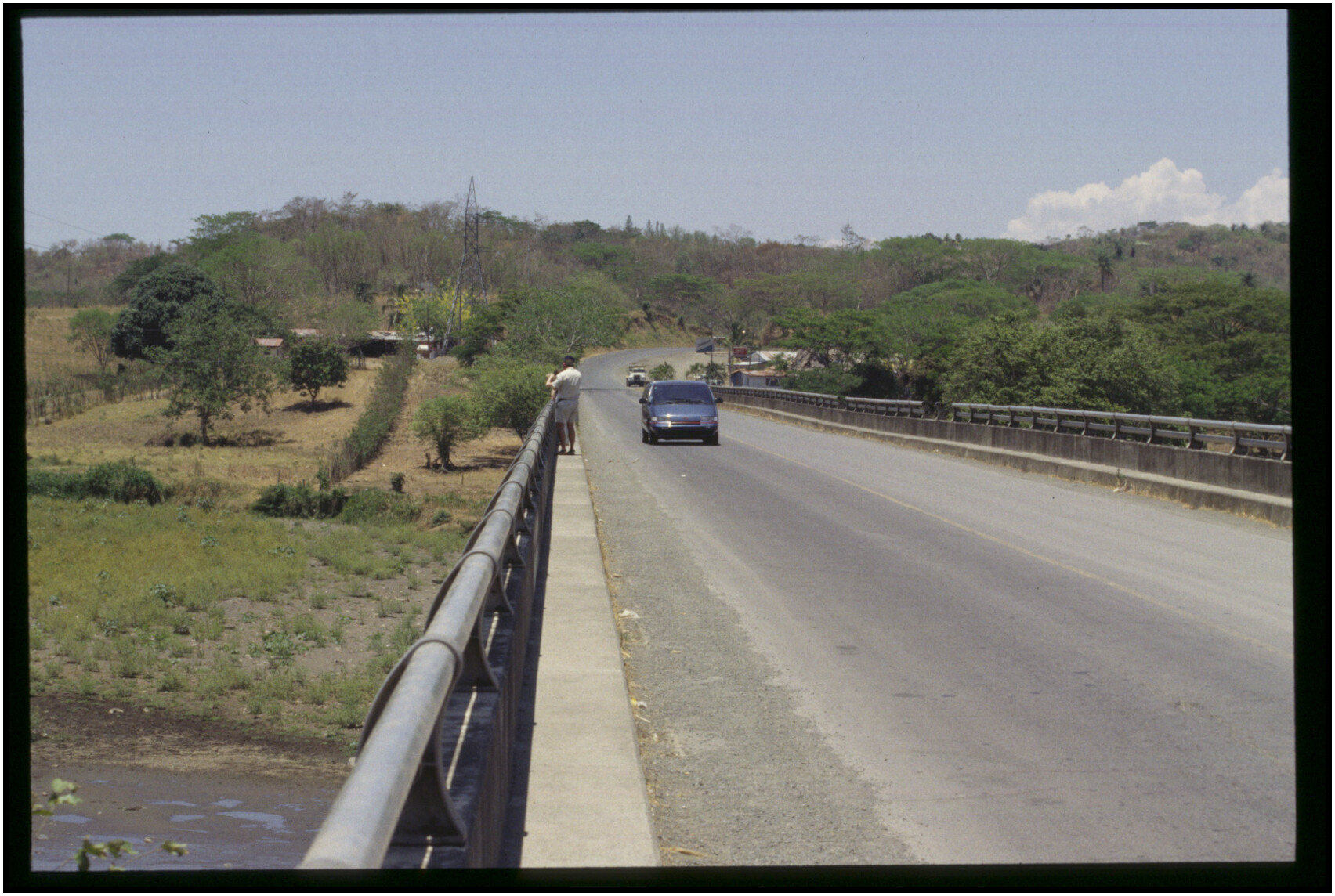
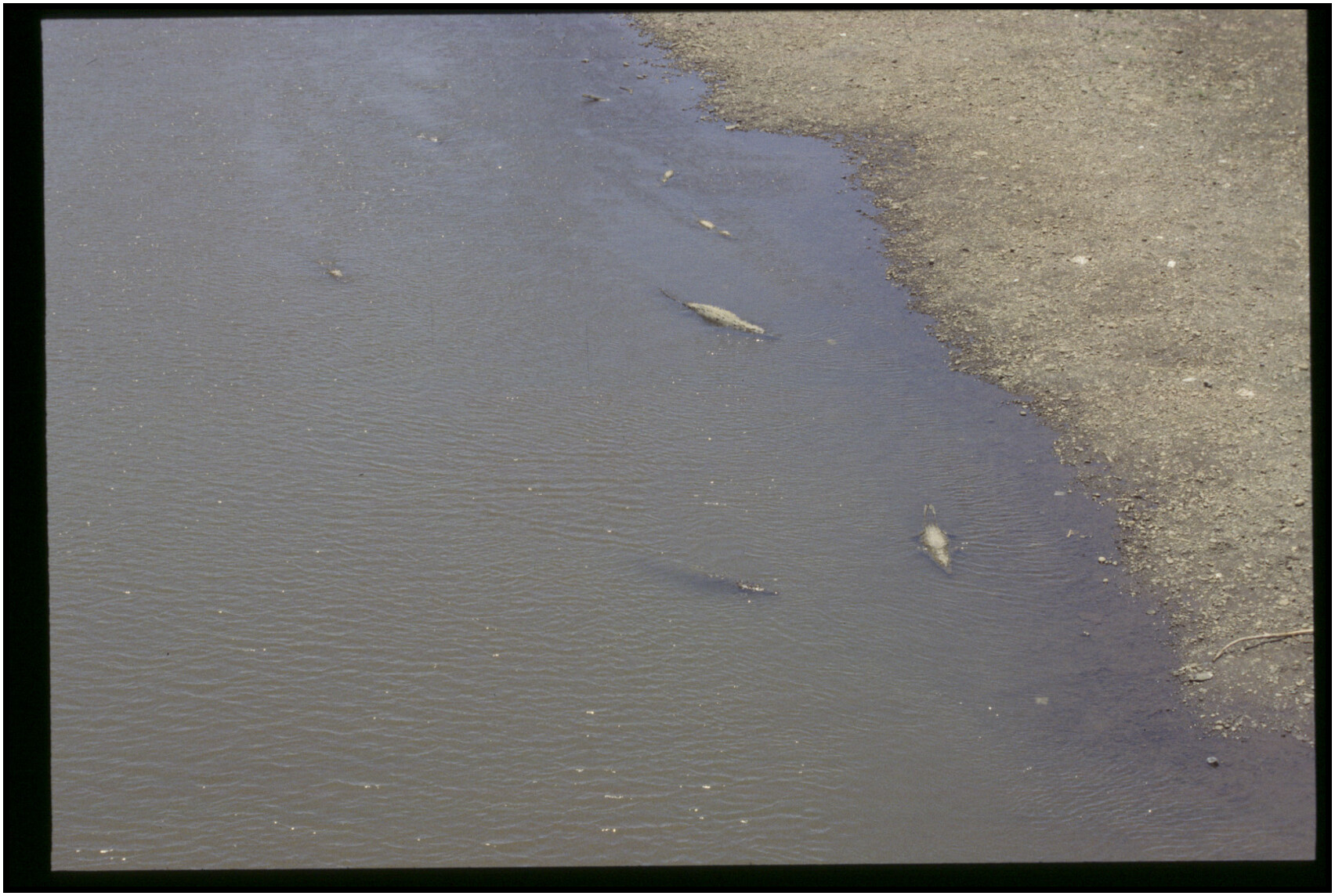
After our meal, the four of us drove our cars to the bridge, hoping to see crocodiles. We were not disappointed. It was a perfect way to end our trip down to the Reserve. We packed up our gear, and headed back toward civilization once again.
Barbara (Finca Los Caballos) told us before we left her hotel that we should stop at Zoo Ave, located in a suburb of San Jose. We had seen large billboards advertising the place on our initial stay in San Jose, but did not have a very good idea on how to find it. As the week wore on, the prospect of searching around through the labyrinth of suburban streets, where street signs and address markers were sparse, seemed less and less appealing. This changed, however, as we happened to pass right by the front gates of the zoo while we were on our way to the Carara Biological Reserve. We made a note of it and promised ourselves that we would give this place a visit on our way back to San Jose, near the end of the day.
Later that afternoon we visited Zoo Ave. This zoo is small by American standards, but quite diverse and better kept that the Simon Bolivar zoo. Although the zoo was initially founded to house all sorts of bird species, and they represent by far the majority of animals in this zoo, there were quite a number of other native animals – monkeys, turtles and snakes, and various indigenous mammals.
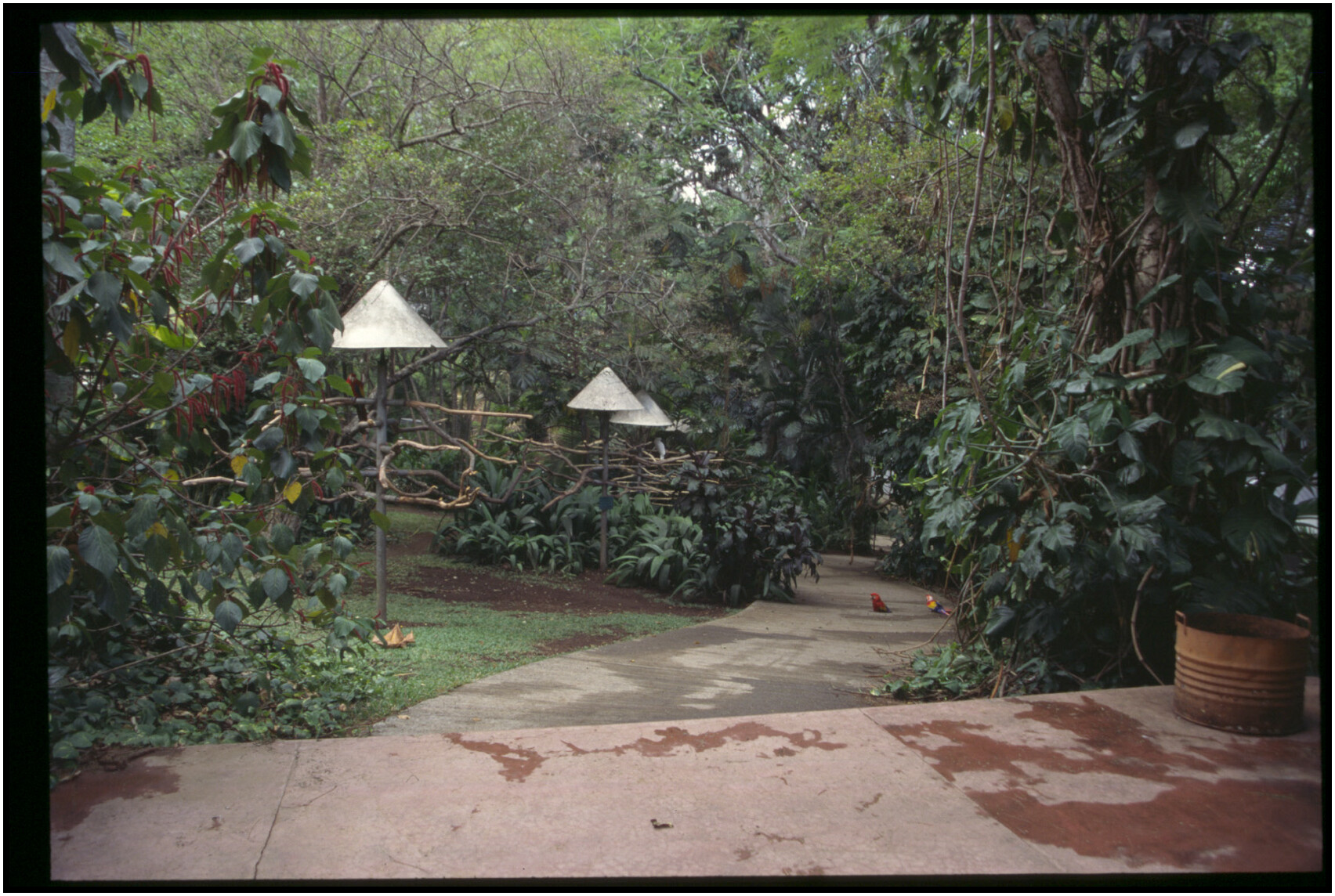
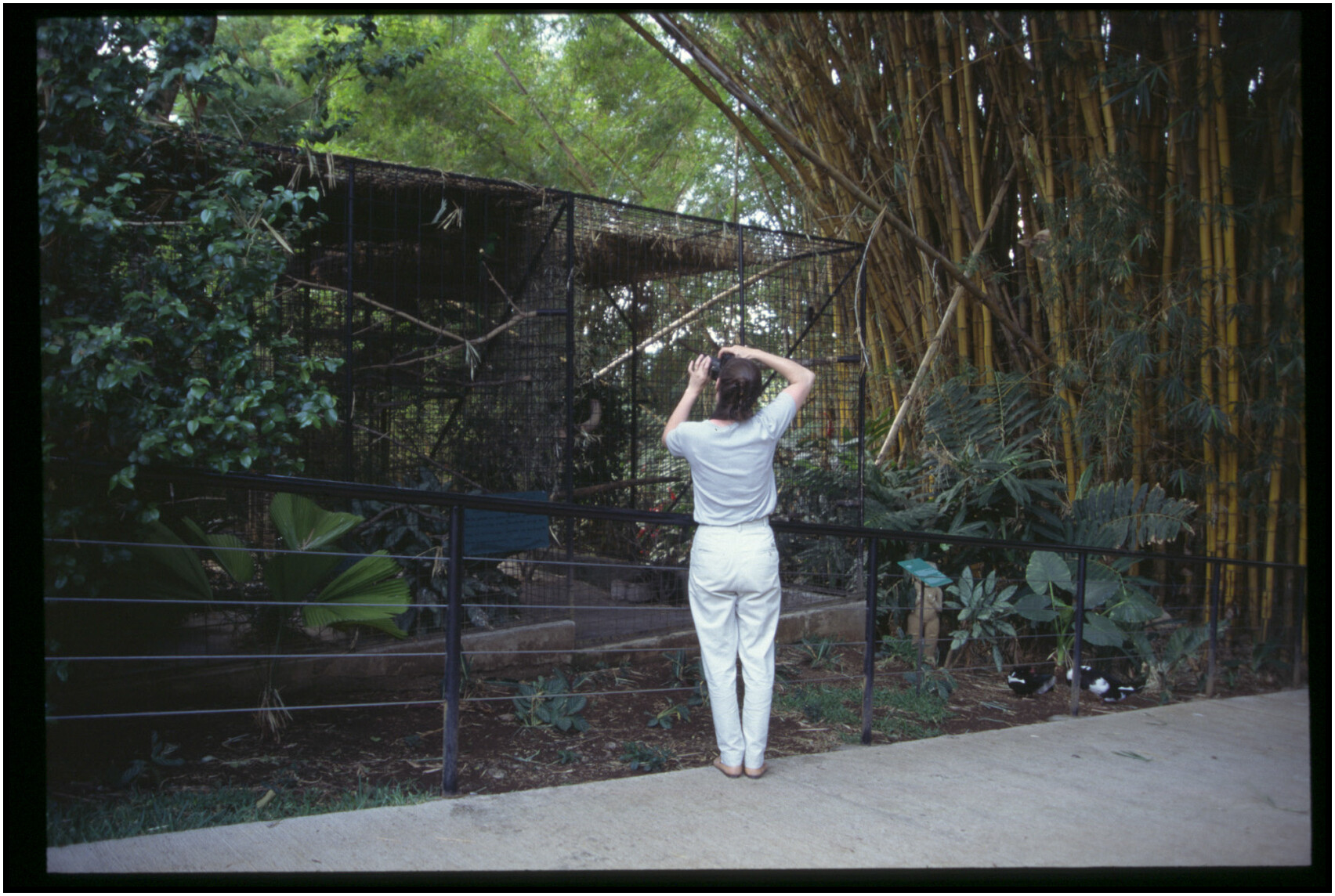
Zoo Ave does not have off-the-street parking and this exposed our vehicles to all sorts of interested passersby. An old man holding a broom stood outside the front gates and tried to give the appearance of legitimately sweeping the neighboring sidewalks. As we exited our Suzuki, he approached Adam and offered to “watch” the vehicle for ¢200 ($0.80.) Adam’s Spanish was not good enough to get the entire story, but he did make out enough to know that this old man was suggesting that this protection money would be a good investment on our part. We were bringing the majority of our camera gear into the zoo, but were still leaving both our backpacks and the rest of our belongings. Adam offered ¢100 for the job, and he accepted. We knew that he would not be able, or interested, in offering any real protection from would be thieves, but reassured ourselves that the ¢100 ensured that at least he wouldn’t be the one to break into our car.
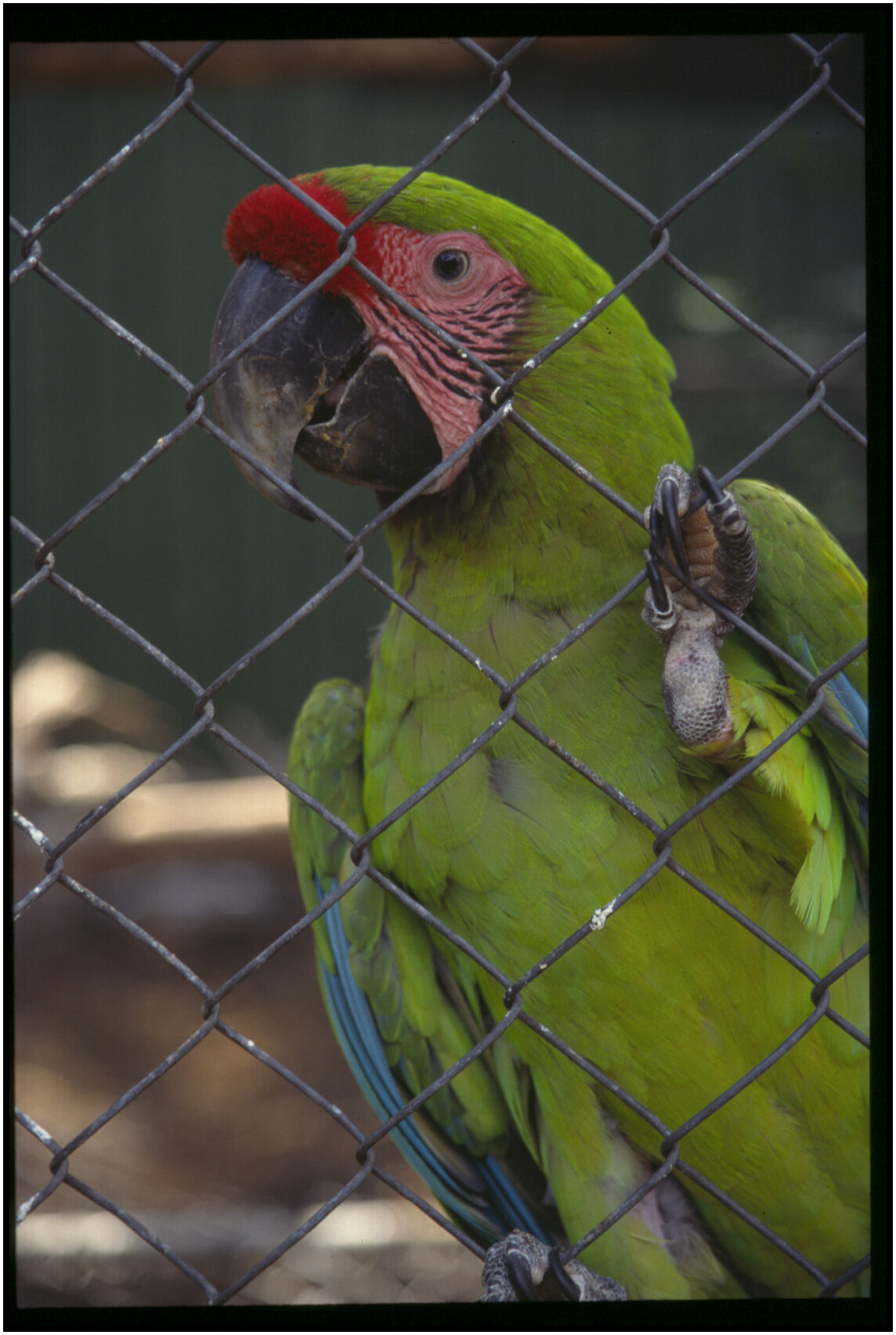
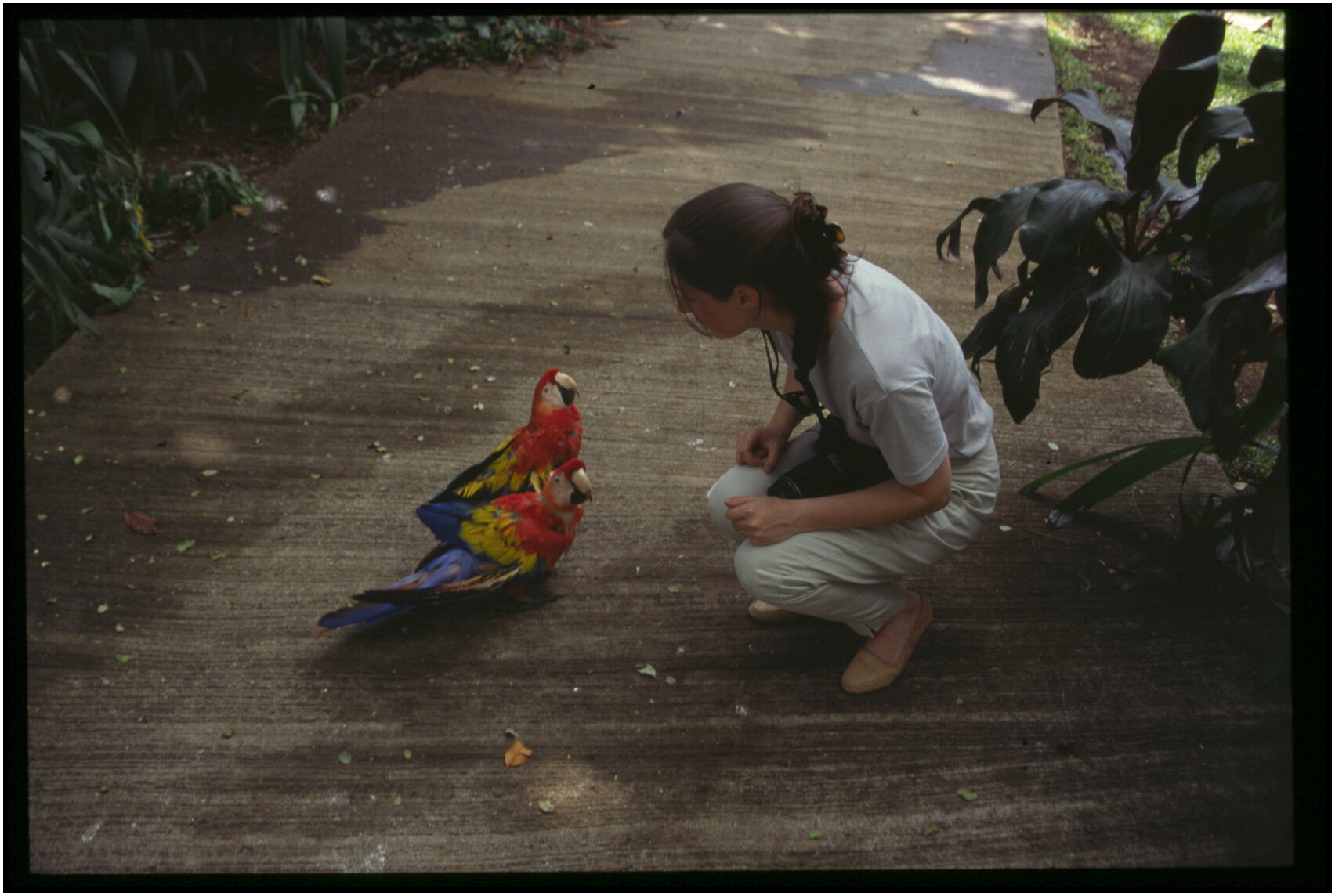
Afternoons in the central valley are quite pleasant, and walking amidst the abundant park plant life was a fun way to kill an afternoon. We shot several rolls of film trying to get unique shots of the local wildlife (all without some sort of cage bar foreground or background).
It was also at the zoo, unfortunately, that Adam made perhaps the biggest mistake on the trip. Throughout the entire trip, we had been very conscientious about bringing along bottled water. Although all of the tourist books had stressed that the water was safe to drink, once we left San Jose, we were warned it would be a good idea to avoid drinking tap water. At one point along the walk at the zoo, Adam forgot this sage advice and drank from a public water fountain. This lead to
sharp intestinal pains the following day and a week-long battle with a bug bent on making bathroom visits a frequent and altogether unpleasant experience.
After the zoo, we found our way back to San Pedro and Milvia’s. We had made reservations for our final night at Milvia’s during our first stay, and after the prior days’ problems with hotels, we were glad to have that load off of our mind. By this time, the sun was beginning to set and we were tired from the hiking done earlier in the day. We had to rise early the next day to get to the airport, turn in our rental car, clear export and catch an 8:00 am flight.
We walked several blocks down to a restaurant that we wanted to try for dinner but found they were closed on Mondays. Not in the mood to keep searching for something else, we decided to give RostiPollos a try. Even though there were plenty of American-based fast food restaurants in San Jose, RostiPollos was a quick service restaurant based in Latin America. We though it would be neat to try out their version of fast food. True to its name, RostiPollos displayed a large rotating spit filled with a dozen roasting chickens. All meal options centered on the main course of roasted chicken. Adam ordered a “numbered special” that appeared to have a little of everything. We soon discovered, also, that we had mistakenly ordered a meal that is only served “to-go”. We were handed two large plastic sacks containing our order and sent on our way. We took the food back to Milvia’s courtyard and ate under the stars. The chicken was far better than anything you would find at an American fast-food chicken place, but the tortillas, refried beans and salad were served a la KFC, and the quality was below that of the Colonel’s.
The following morning we made our way through the pre-dawn deserted San Jose streets toward the airport. After returning the rental, paying airport export taxes, confirming tickets and passing customs, we were on our way back to Miami and the rest of “our life”.
I will not labor over a long summary of the trip and what it meant to us. For those who have gone before, you will understand it when I say that “it is a whole other world down there.” The country offered extreme frustrations and incredible excitement. Barbara MacGregor recollected about a common complaint from her guests:
In between adventures, many of her patrons would complain about the lack of national organization, or infrastructure, or a seeming inability of Costa Rican citizens to get through life in the most efficient of manners.. Tourists would offer “Why don’t they….?” Barbara would cut them off right there. Costa Rica is unique and wonderful precisely because “they don’t …” and the moment that they do, something special in this world will be lost forever.
We plan on returning this fall. You are welcome to join us.

