Friday and Saturday, 14 & 15 February, 2020
The four of us are in Guatemala for a bit less than a week. It’s Holden’s and Josie’s first of two spring breaks they get this year so we made a quick trip to the land of humming birds and volcanos for some adventure. This is our first international family adventure without Isabella … her college (UGA) spring break isn’t for another two weeks. We felt awful about going without her, but then she ended up organizing a trip to Disney World with her boyfriend for her spring break and then we felt less bad. She’ll get to have fun on a different trip a couple of weeks from now.
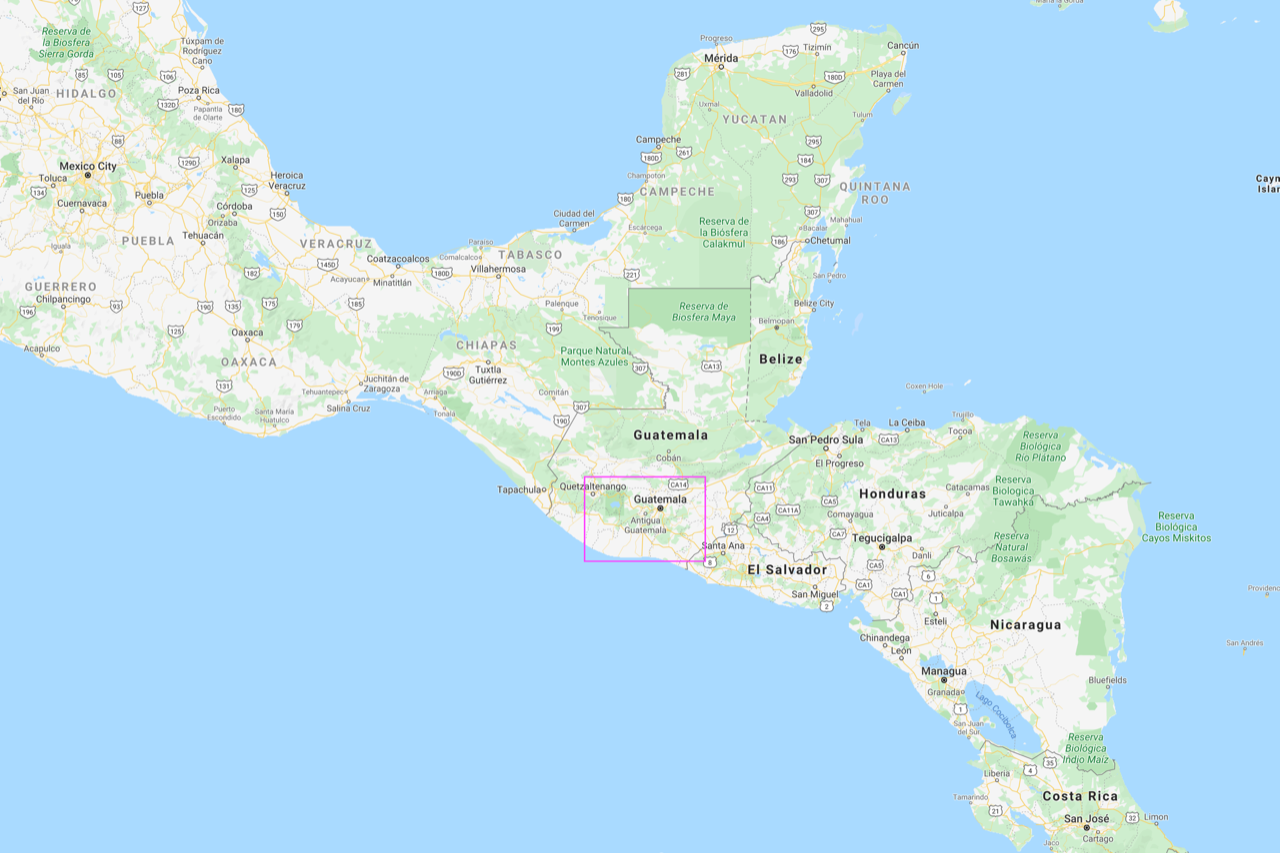
Map showing Guatemala relative to Mexico and rest of Central America. Rectange on map is zoomed in below.
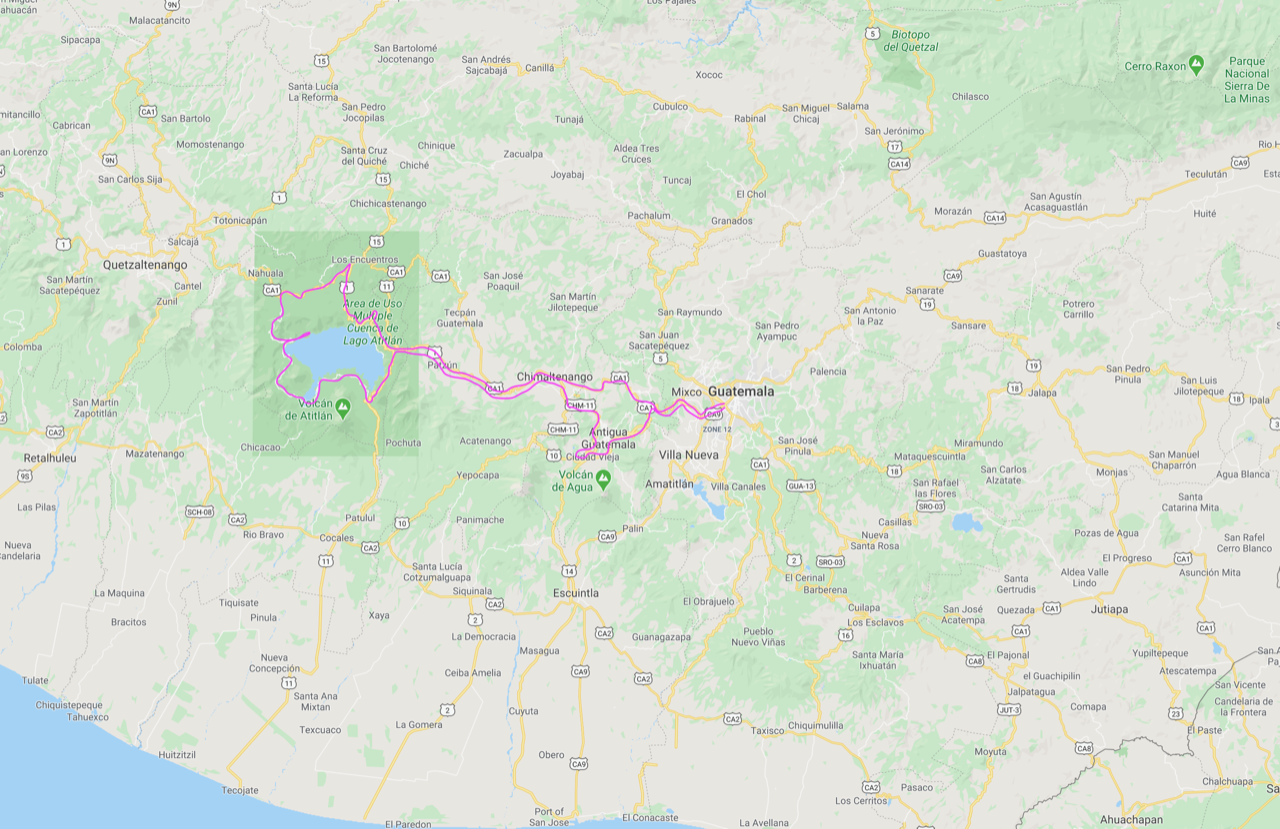
Map showing our planned route/destinations.
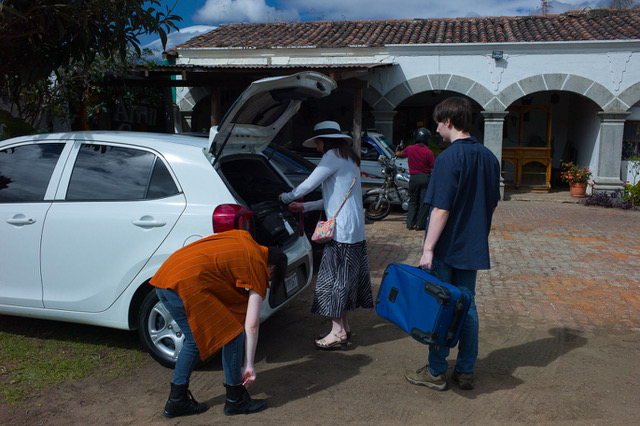
We flew to Guatemala City (the Capital) on Friday night and stayed at a hotel near the airport. The next morning, after breakfast, we got our rental car and started loading.
The white Kia (below) is our clown car HQ for the trip. There’s barely enough room for 4 of us plus luggage and it’s not exactly the lifted 4wd vehicle we really need where we’re going.
On the way to Lake Atitlán, where we’ll spend 3 nights, we decided we had some time to stop in Antigua and see the sights.
Antigua is known for its preserved Spanish Baroque-influenced architecture as well as a number of ruins of colonial churches. It served as the capital of the Kingdom of Guatemala until too many earthquakes drove the settlers to move toward calmer ground – now known as Ciudad de Guatemala or Guatemala City. The entire town of Antigua has been designated a UNESCO World Heritage site.
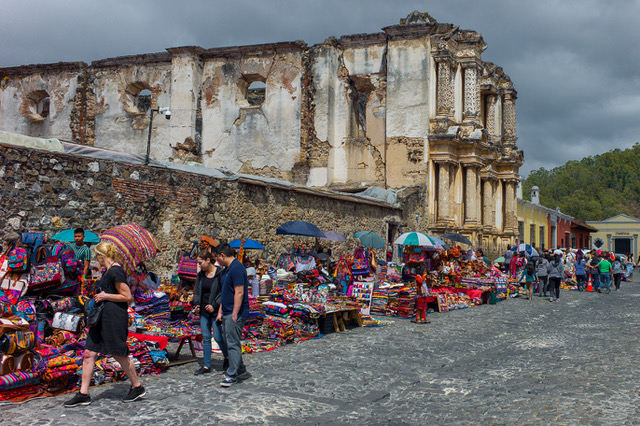
We don’t know if this is a daily thing or just because we were there on a Saturday morning, but folks had set up scores of tables and booths in the town square to show off their wares. Brenda bought several pieces of art, Josie bought an amethyst and jade bracelet and Holden bought chocolate.
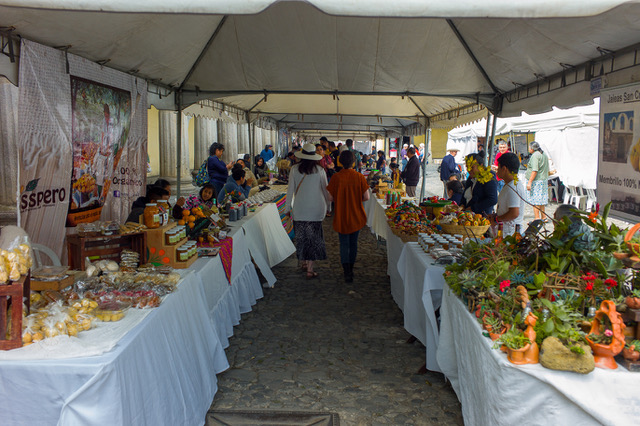
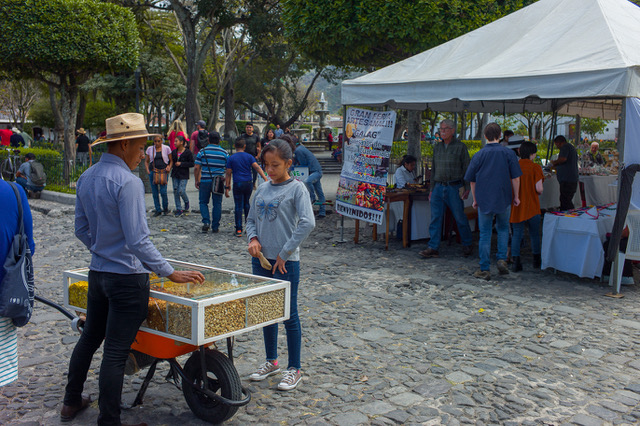
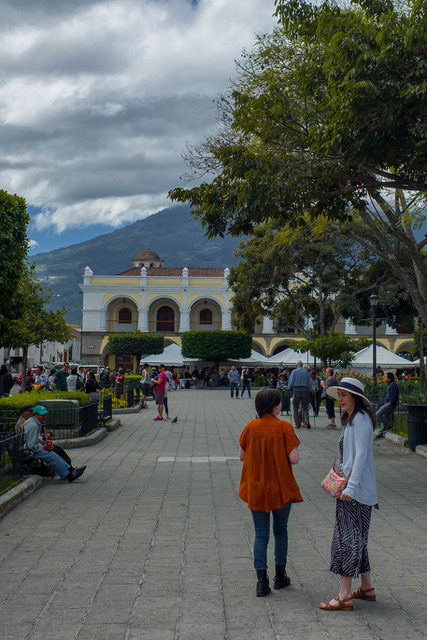
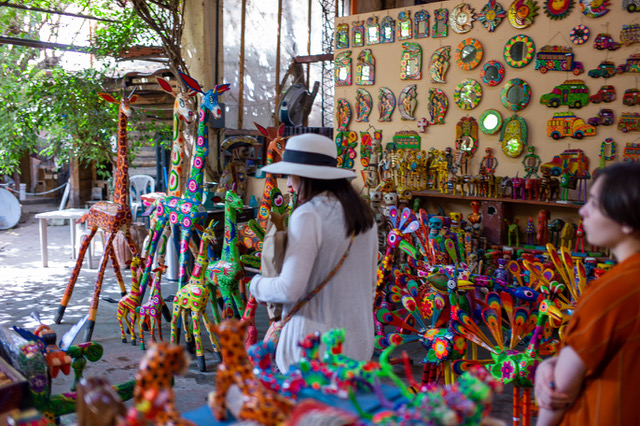
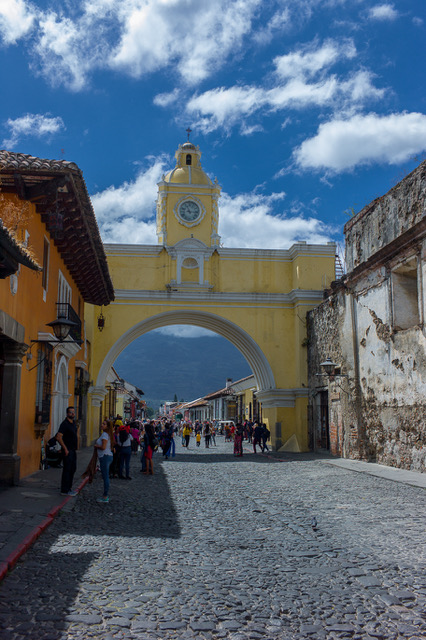
More weekend markets.
We then continued our journey toward the house we rented on the lake. This drive took FAR more time than we had figured. This part of Guatemala is very mountainous. We spent our time going up and down switchback roads ranging from 5000ft to 7000ft elevation. Even though we spent most of our drive on the Panamerican Highway, we found that we could not rely on any form of decent roadways. There were many traffic jams and roads partially to fully blocked with landslides. At one point we were driving along when a sign read “Puente destruido. Pasar por el rio.” (Bridge destroyed. Go through the river.) We figured that couldn’t possibly be true.
It did turn out to be true.
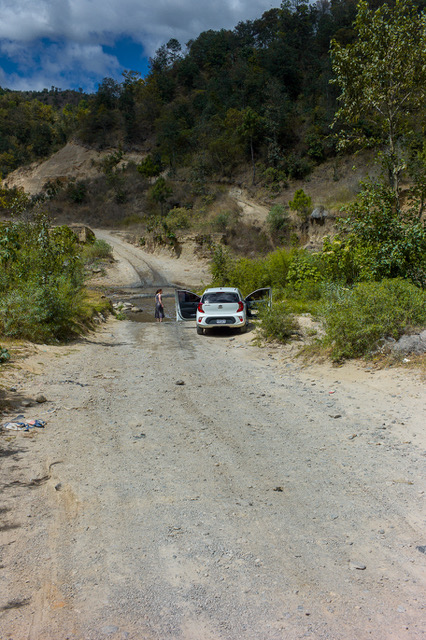
We came up to a ford in the river, but couldn’t tell how deep it was. Mind you, we have this clown car with no clearance and weak front wheel drive power. We stopped and tried to figure out what to do next. There was no other way to continue. We waited until some other car came (similar in size to ours) and watched them do it. After that, we loaded up and just followed them, hoping for the best.
(Little blue car in distance drove through with no trouble.)
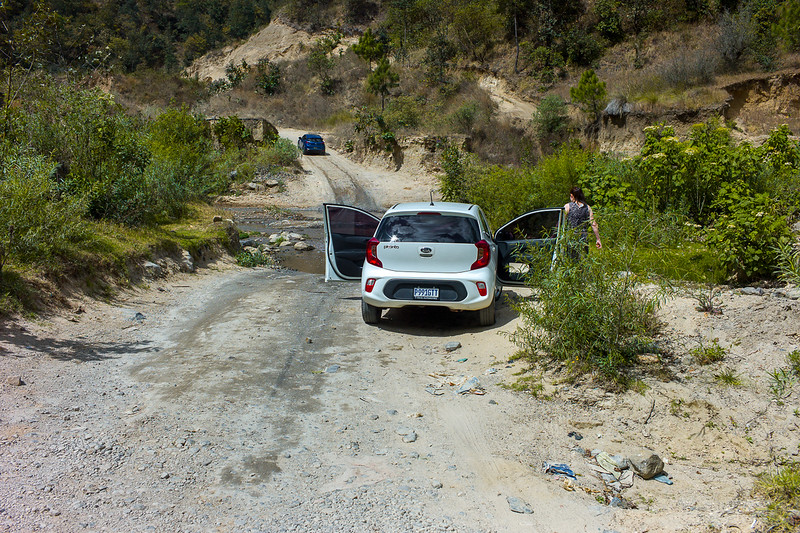
All turned out well, but who knows that this poor rental car will look like when we get it back.
Heading toward the lake, we had to descend several thousand feet to the lakeshore down miles of switchbacks. I managed to start overheating our breaks and the car began acting strange and making unpleasant noises. I had to slow down to about 5 miles and hour and keep it in first gear (manual transmission) down the rest of the way.
We finally arrived to our rental house (miles of dirt roads in at 5mph to keep from destroying the tires and suspension) in a small indigenous mayan village called Tzununá. We made it several hours late, but got there safe and before sunset. You do not find this place by accident.
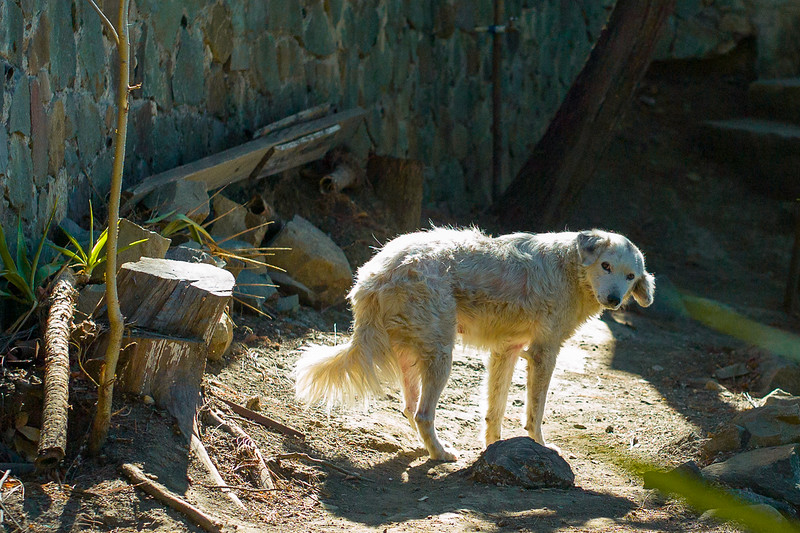
After figuring out where to park and finally getting down all the stairs to the front door of the house, we could go no further because a dog was standing by the front door growling at us. He wasn’t barking and frantically hopping around like most dogs do to announce a visitor … this guy had his shoulders squared and nose crinkled up ever-so-slightly to show his teeth and that low grow deep in his throat. We stopped on the stairs not sure what to do next because this dog clearly meant business, but right then the groundskeeper, Pascual, came out of the house and told the dog to stop it. (After that, the dog spent the remainder of our visit with this expression of pure contempt every time he caught sight of us. He loathed us.)
I had previously made arrangements for a local woman to come there and cook us dinner. We were tired, hungry and cranky but could sit down immediately to a great meal of chicken stew, rice, platanos, and some other funky (but yummy) traditional Guatemalan dishes that we never quite caught on what was in it.
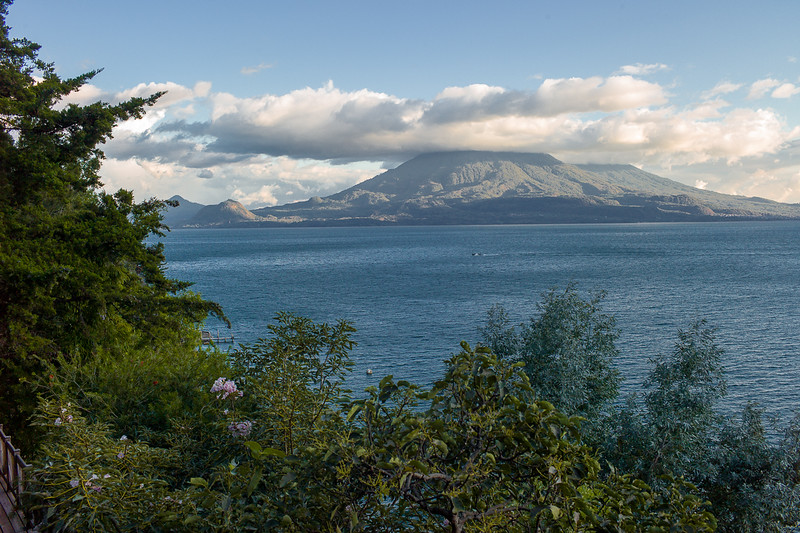
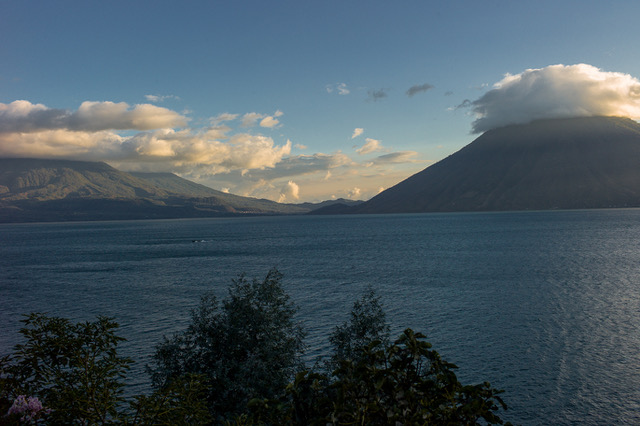
Views of the lake during wine time from the deck of our house. Lake Atitlán and two volcanos.
Sunday, 16 Feb 2020
For the next three days, we’re staying at a rented house on the shore of Lake Atitlán.
The lake is about 50 sq. miles in size and located at an elevation just shy of a mile high. Our house is at 5,240 feet, so we’ve been huffing and puffing anywhere we go. Lake Atitlán is renowned as one of the most beautiful lakes in the world, and is Guatemala’s most important national and international tourist attraction. German explorer and naturalist Alexander von Humboldt called it “the most beautiful lake in the world,” and Aldous Huxley famously wrote of it in his 1934 travel book “Lake Como, it seems to me, touches on the limit of permissibly picturesque, but Atitlán is Como with additional embellishments of several immense volcanoes. It really is too much of a good thing.”
Our view when having breakfast.
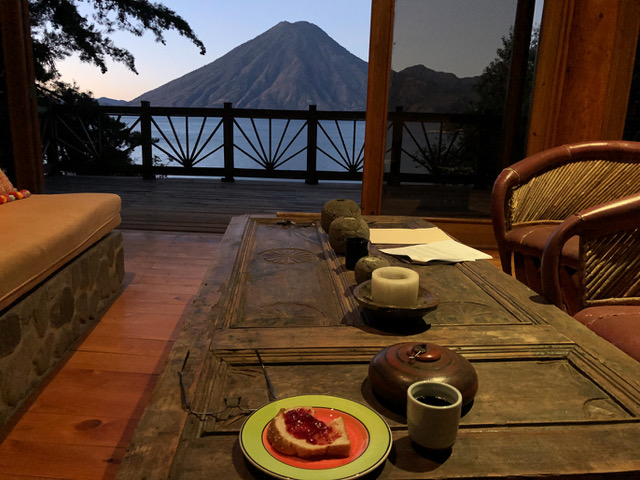
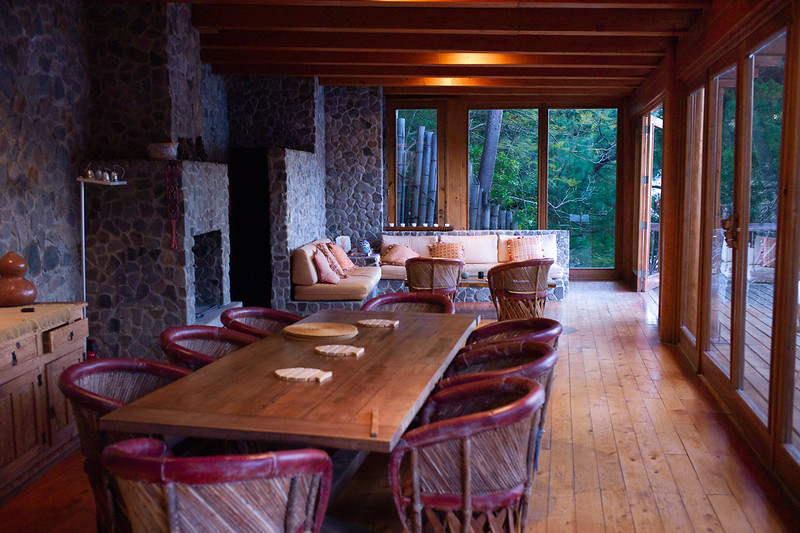
The house is built into a cliff (as they all are). The wall facing the lake is one long expanse of glass doors that open to the deck.
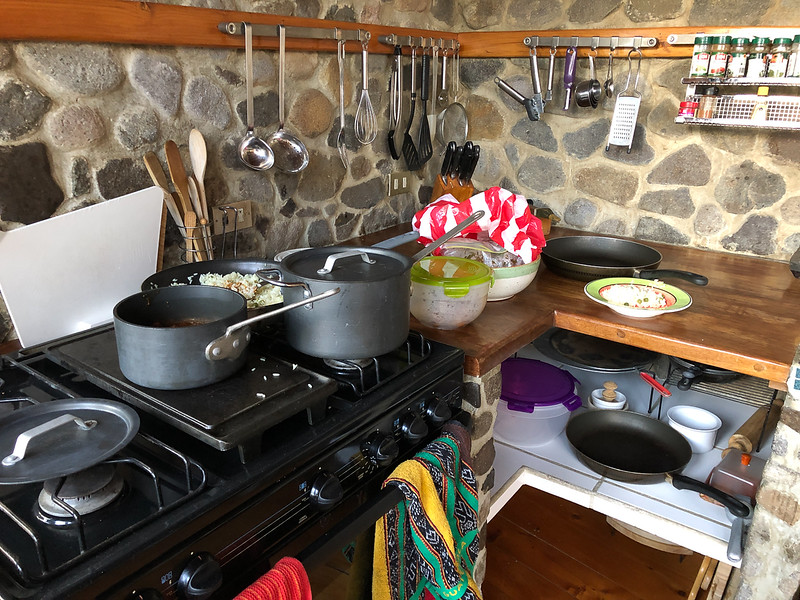
Very serviceable kitchen.
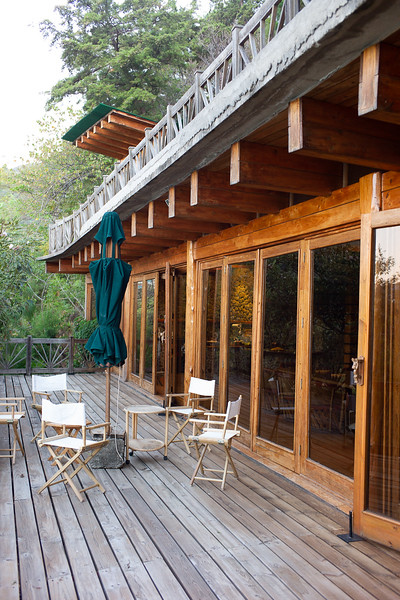
Two sets of decks, one on the main floor and one on the bedroom level above.
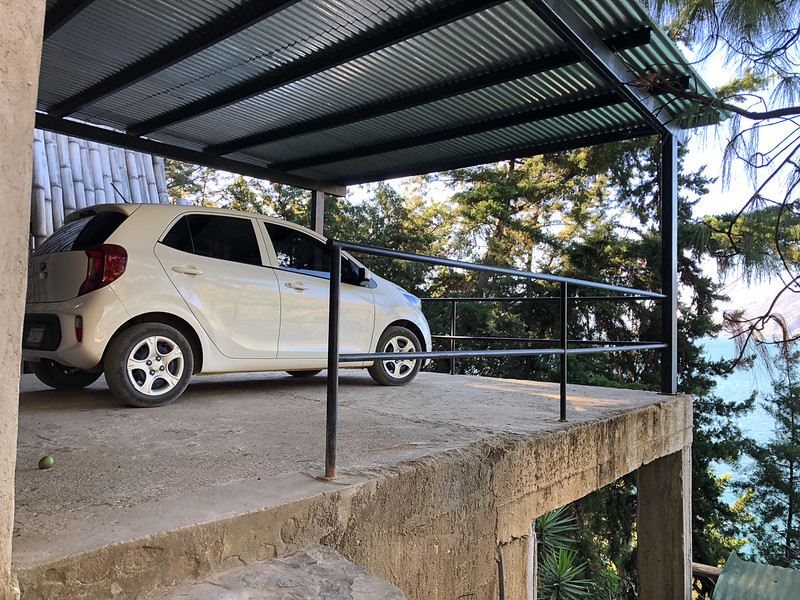
The parking spot is way above the house. You park here then walk down a long, winding stone path/staircase to get to the house.
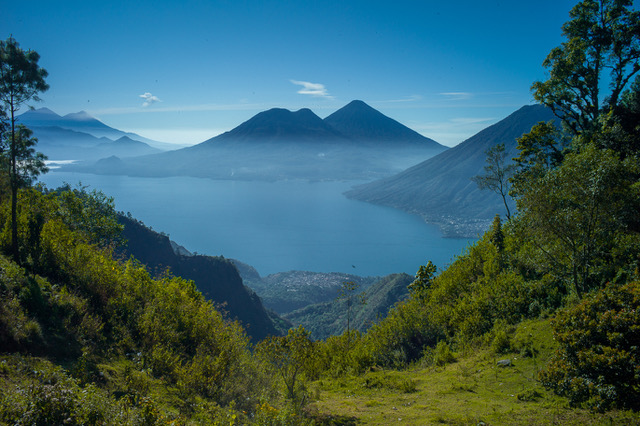
Lake Atitlán’s most prominent attractions are two (still) active volcanos. The rest of the lake is ringed by steep cliffs. It is impossible to travel around the lake at lake level; the main form of transportation are water taxis that constantly go to and fro from one village to another. Transportation is cheap if a little spotty.
We are staying near a tiny Kaqchiquel Mayan village of Tzununá. The locals (according to the internet) speak K’iche rather than Spanish. Tzununa either means “hummingbirds of the lake” or “land of the sparrows.” Either description fits the place really well, so I guess it doesn’t matter which of the translations is the correct one.
From our house we walked the half mile or so into the village to look around; mostly we just got stared at. Never have we felt more obvious. Josie observed that we stand out here more than we did even in Japan and Korea. She observed: “Our culture is a lot more similar to Japan’s than to Guatemala’s.”
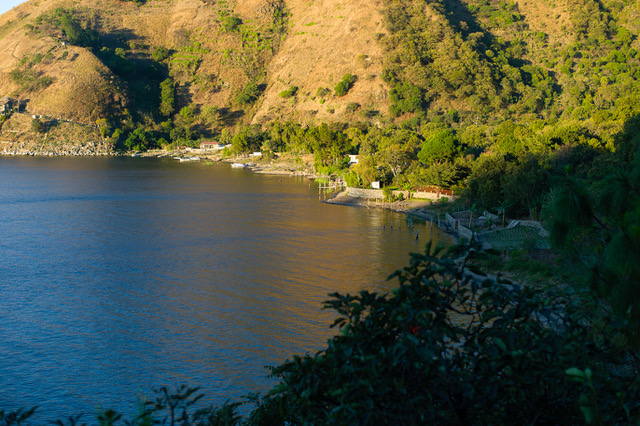
View of Tzununá from our house deck. The boat dock at the left-most collection of white buildings.
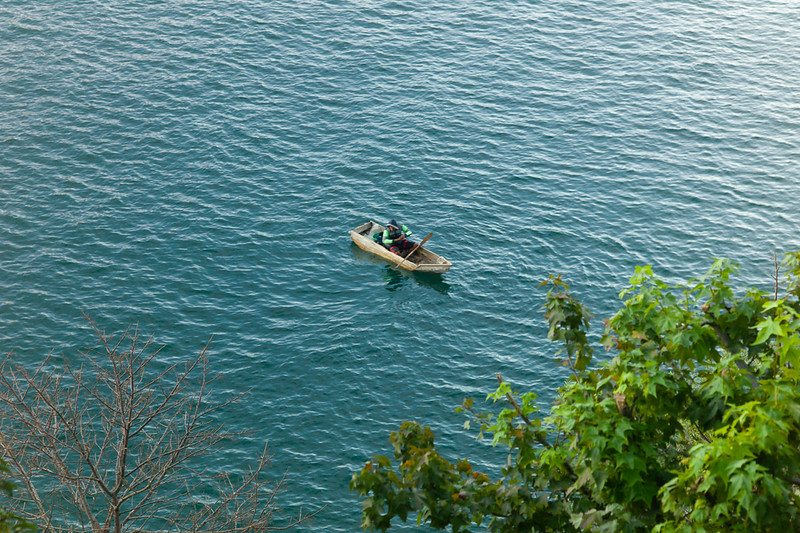
Fisherman in what looks like a hand-hewn wooden boat.
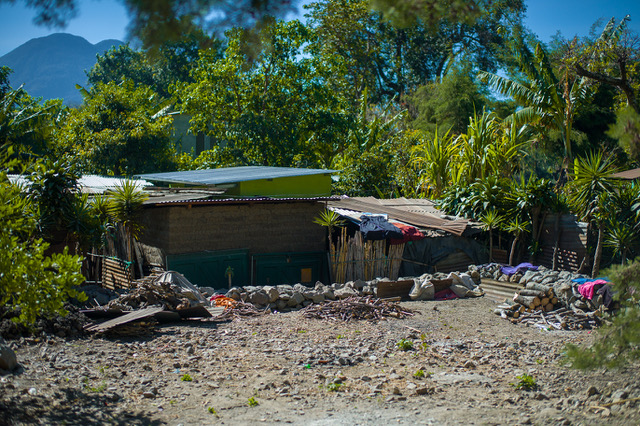
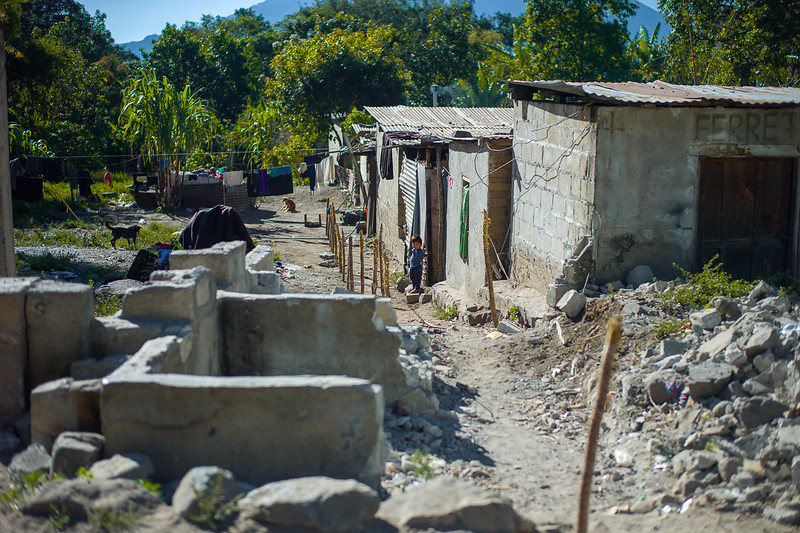
Most of the housing looks like this. Some have electricity, most do not. The weather is always spring-like here, so no heating nor A/c is required. Everyone uses wood for cooking and heating.
Coffee cherries drying in the sun.
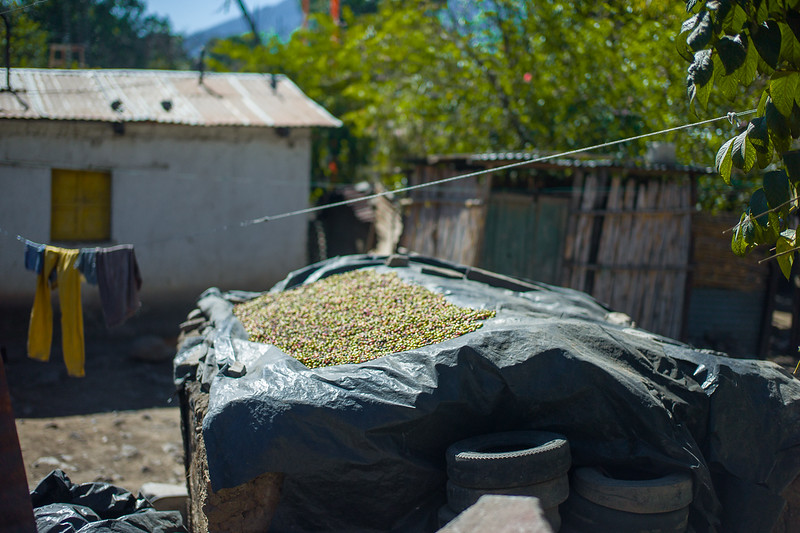
Sunday morning laundry day.
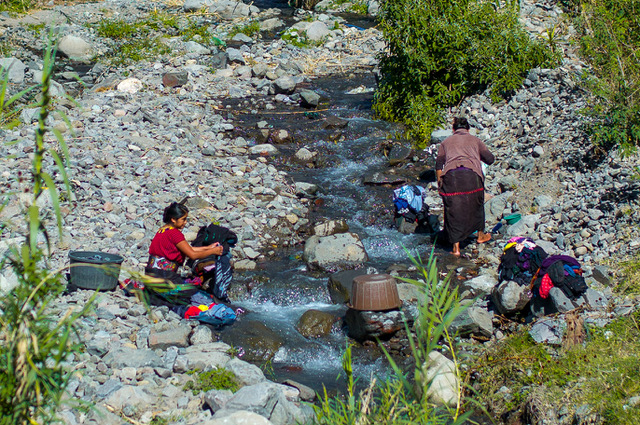
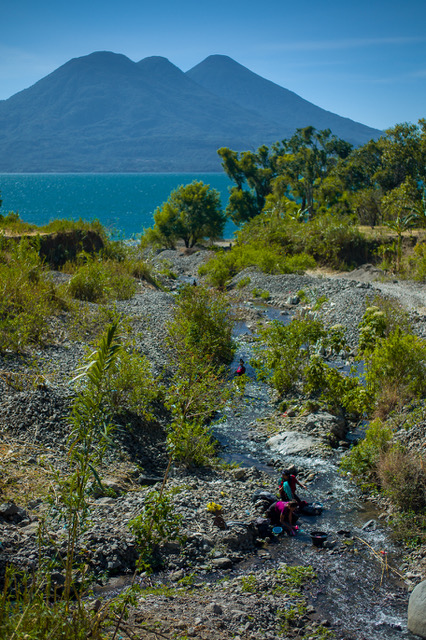
This must be the best view from a laundry facility in the world. It sure beats rinsing stuff out in a bathroom sink (which is what I’ve been doing.) The water is probably pretty clean; we’re at a very high elevation here with nothing up-stream to contaminate it.
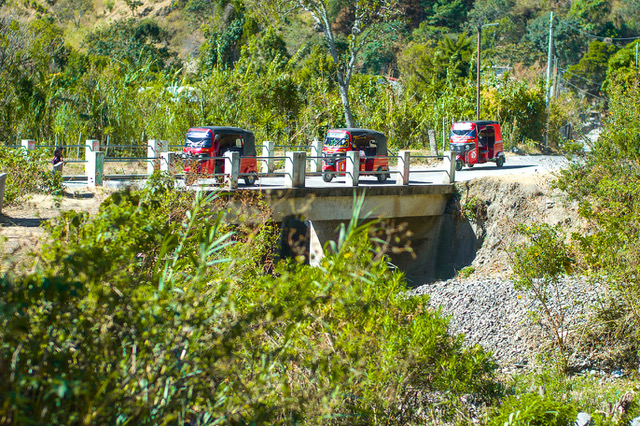
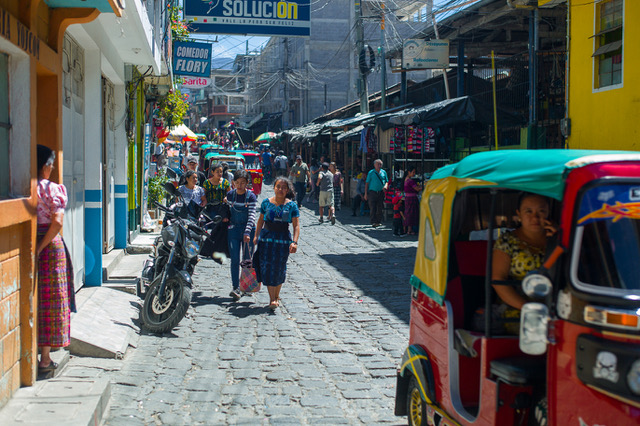
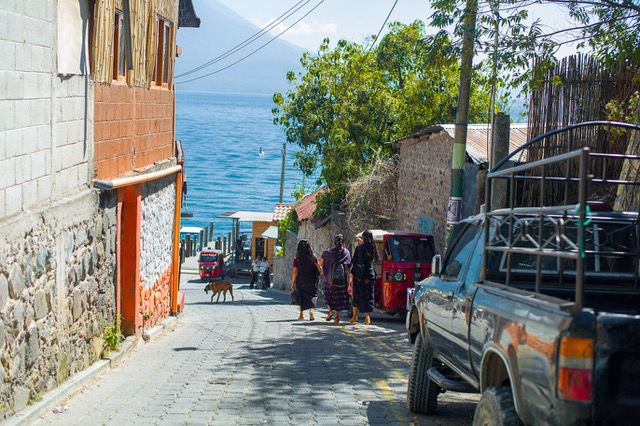
A collection of Tuk-Tuks crossing the bridge. This is the primary mode of transportation. They’re all taxis and are cheap to use. There are almost no cars in any of the lakes villages – no one can afford them, they’re practically useless for getting from village to village, the roads are terrible and small and almost also too steep to be safe to navigate.
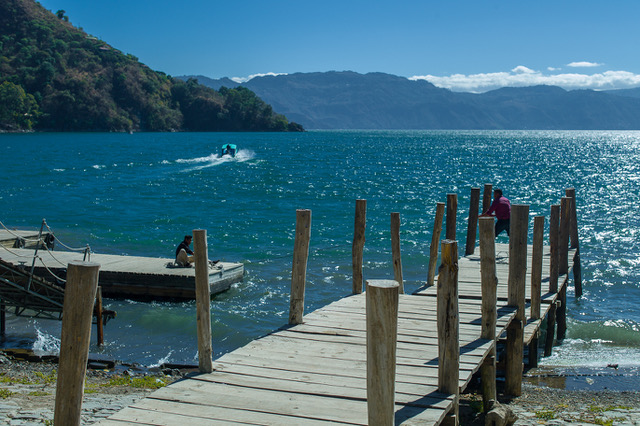
Tzununá dock from where we caught a boat to San Pedro La Laguna, across the lake. More on that later.
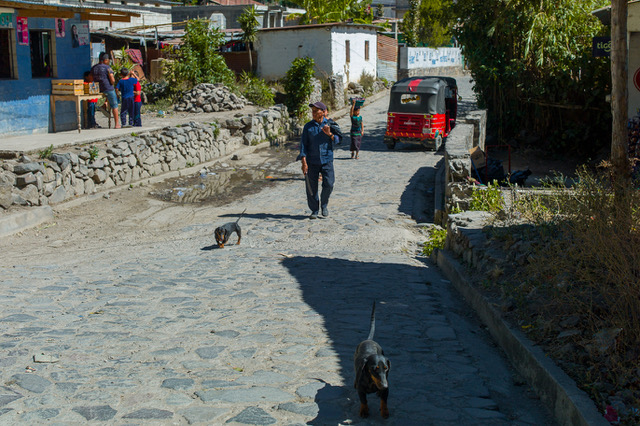
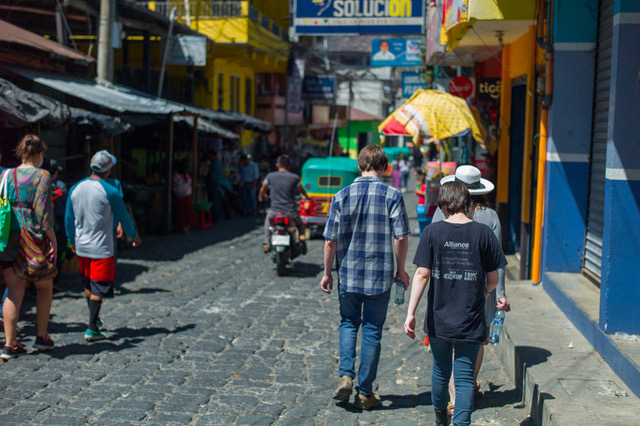
Street scene in Tzununá.
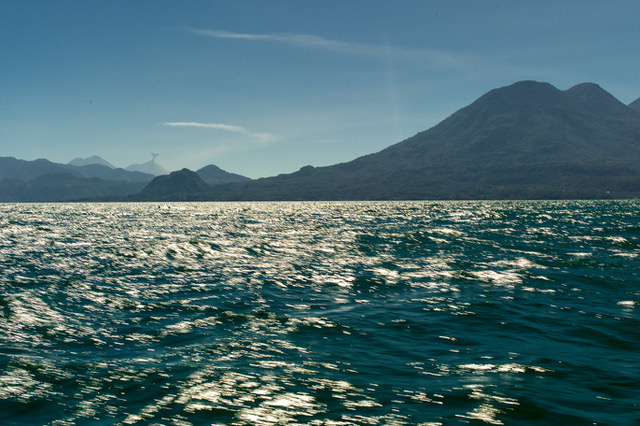
On the boat ride to San Pedro, you can see in the distance a smaller, active volcano with a steady puff of smoke coming out. The two volcanos right next to us (Volcan San Pedro and Volcan de Atitlan) haven’t erupted since the 1850s. They were quite active from the 1400s to the 1800s, but have been quiet since. Nobody seems to know when/if they will wake up again. The entire lake is a result of a huge eruption of the entire region about 84,000 years ago.
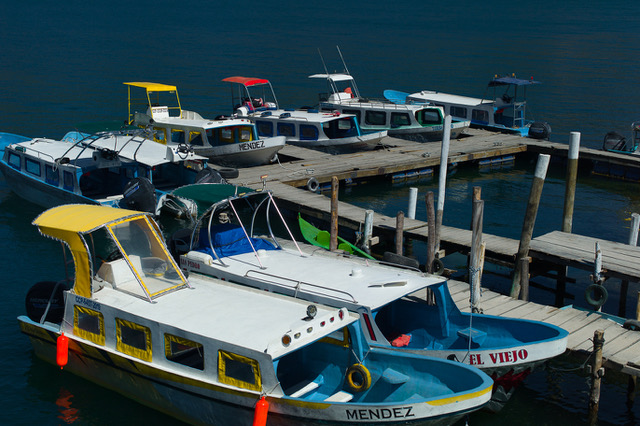
Boats in San Pedro. This is a larger town and is better suited for some tourist time – there are a few restaurants and bars. We went there on a Sunday and the place was crowded with locals selling all sorts of food and clothing. Brenda bought an aluminum pot in order to cook eggs and hot dogs back at our house. I bought a couple bottles of cheap wine before heading home.
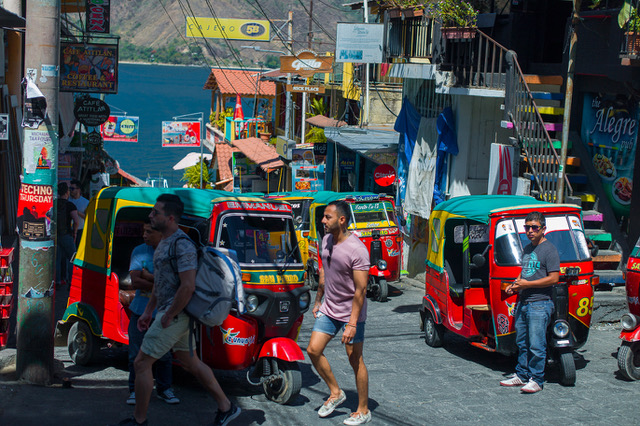
Street scene in San Pedro.
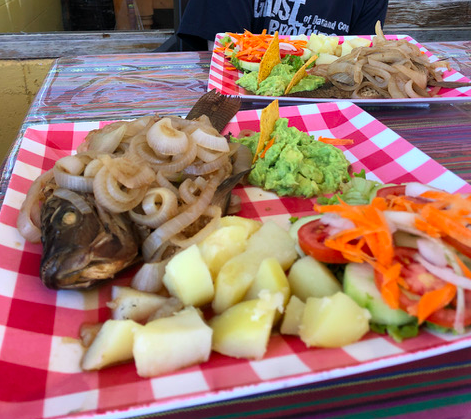
At a restaurant right near the dock, we ordered garlic fish. It came with head, tail, bones and all — which I should have expected but forgot that it’s usually served like this in a lot of countries. In 2011 (when Holden was 8 years old) we ordered fish off the kid’s menu at a restaurant in Tobago. It arrived looking just like this and Holden burst into tears. He got down from the table and refused to even sit until we’d taken the head and tail off, removed them to another plate and covered them with a napkin. I remember him saying “I thought it was going to be fish sticks.” We told him that fish sticks were the same, just with the heads cut off and the meat cut into strips. He looked horrified and yelled “FISH STICKS USED TO BE ALIVE?!” Today, we were reminiscing about that story and Holden joked, “Well, get ready, because I think all that’s about to happen again.”
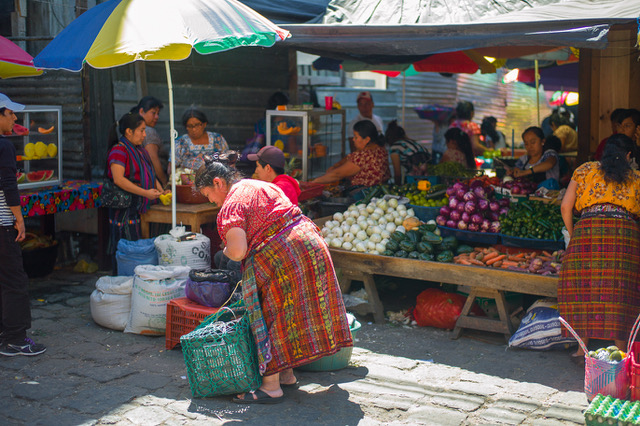
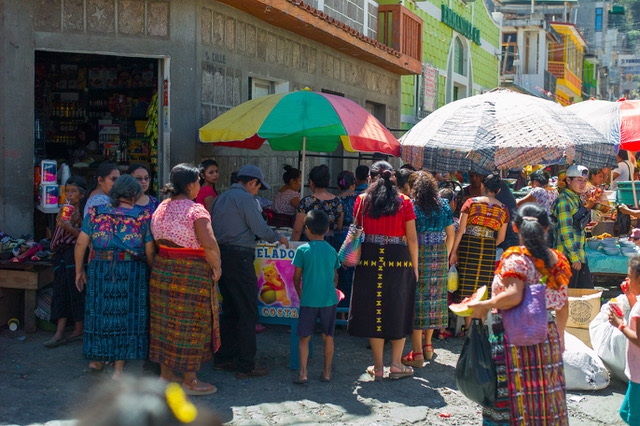
Local outdoor market. We don’t know if this was an every-day market or something set up just on Sundays. It was packed with people selling food products … very much for the locals and not for tourists. We’ve noticed that most families in this area seem to have gardens and are using traditional growing methods. A lot of people have chickens, too. We’ve seen a couple of cows, but fruits, vegetables and chicken (meat and eggs) seem to be the dietary staples. This market had a few stalls selling fish, as well, but not as much as I expected considering how prominent the lake is.
No shortage of avocados.
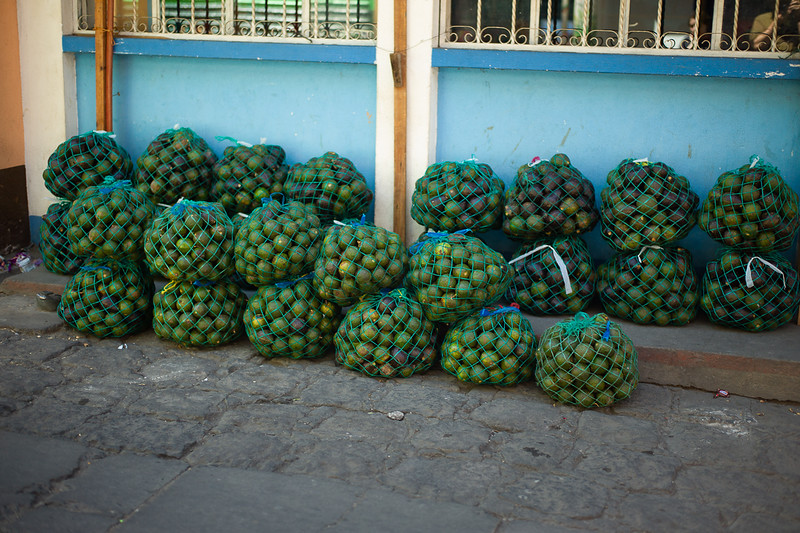
The ice cream cart was popular.
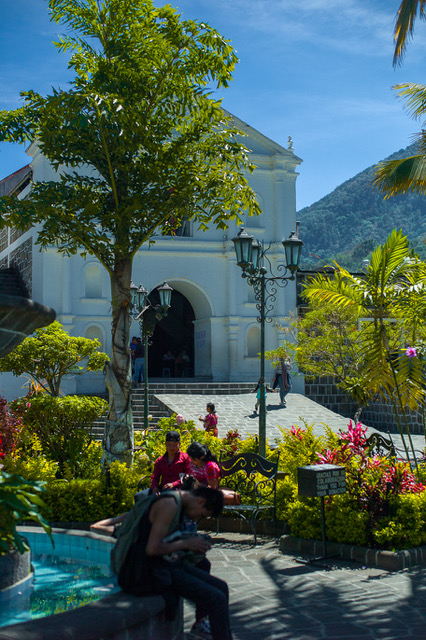
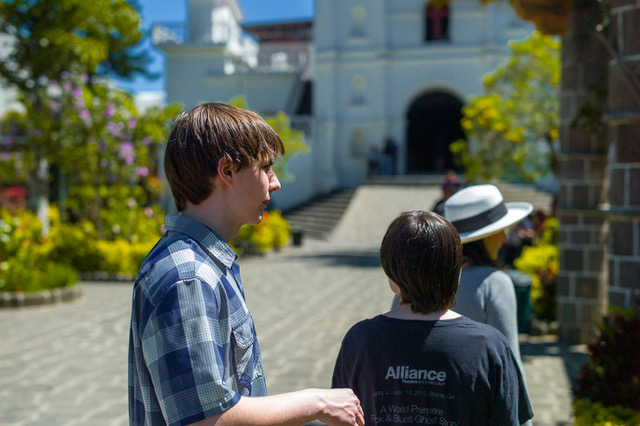
La Igleasia Catolica de San Pedro la Laguna. This church has some really pretty gardens and a park-like area in front of it. People were hanging out, enjoying the afternoon.
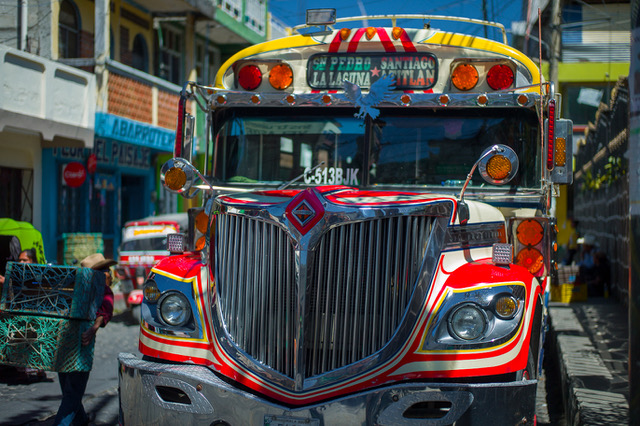
Most of the buses appear to be imported decommissioned school buses from the United States. Most of them are blinged out like this one, but the plainer ones are still yellow and have ” ____ County School District” written on the side, with the name of the county blacked out with spray paint.
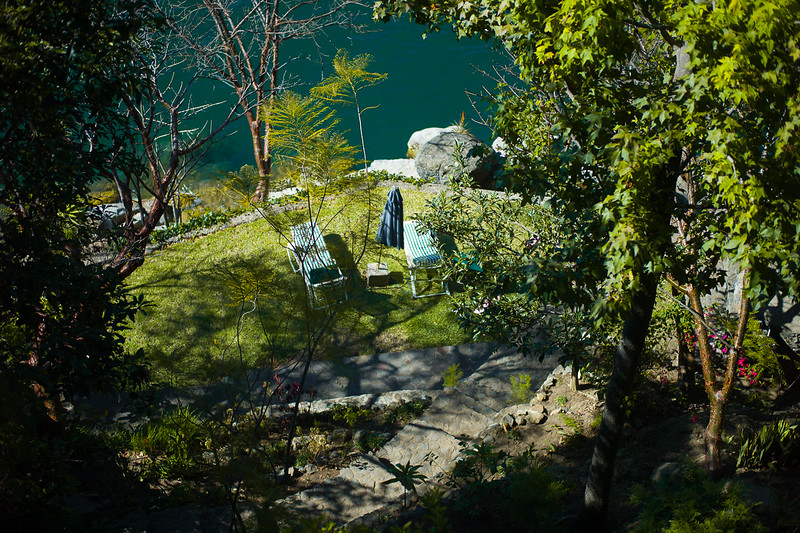
Back at our house. After lunch and some exploring in San Pedro, we caught a boat that headed back to our village. Late in the afternoon, we started wine time with some lounging on the lake and then leftovers of what Maria cooked for us the night before.
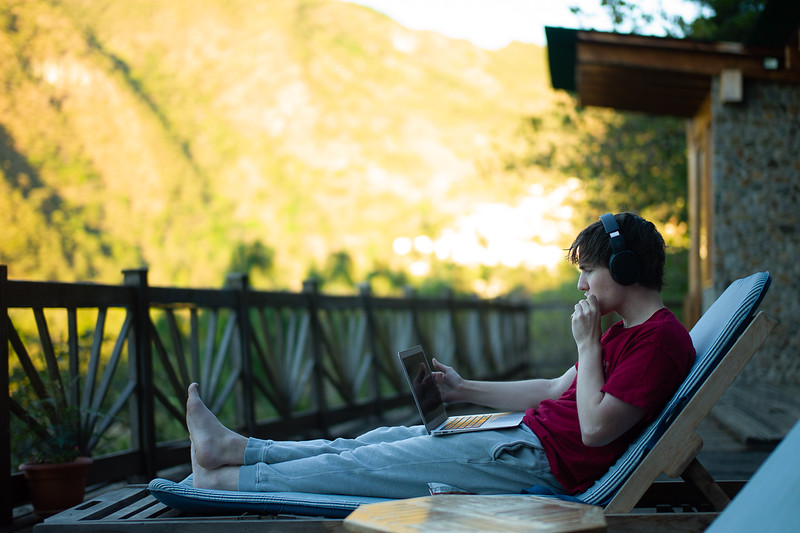
Holden enjoying the late evening atmosphere while the internet works. (It’s been a bit spotty.)
Monday, 17 Feb 2020
Today we took a number of water taxis to towns along the Lake Atitlan shore.
Josie waiting for everyone else to get ready for the day to start.
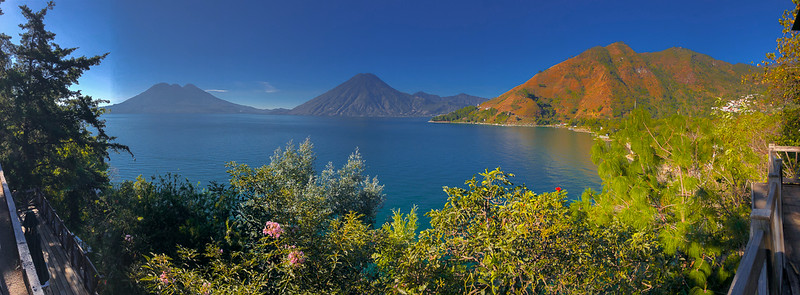
Panoramic view from the upper deck of our house.
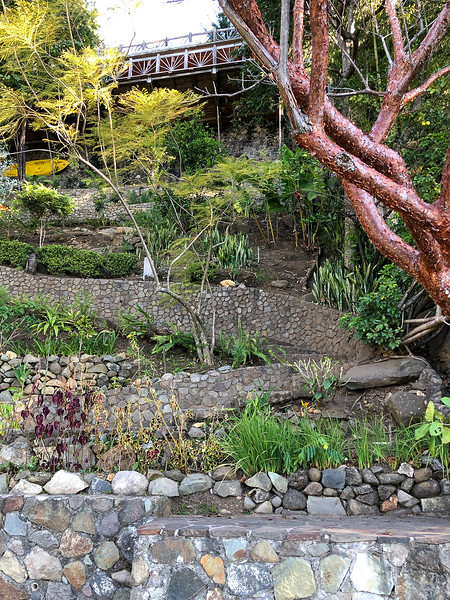
The path from the house’s dock up to the house.
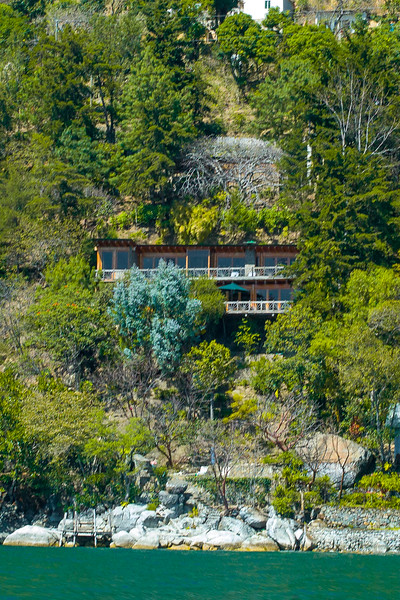
View of our house from the water taxi.
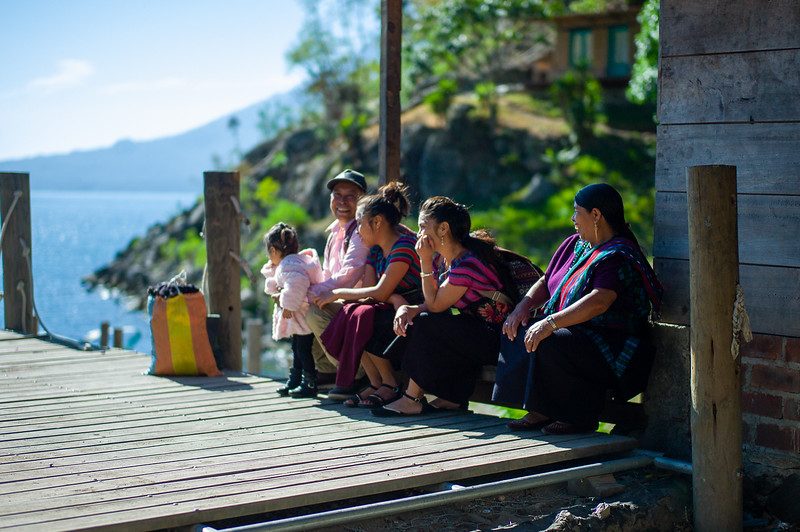
People walking into the village in the morning. This little baby watched us the entire time we were behind them.
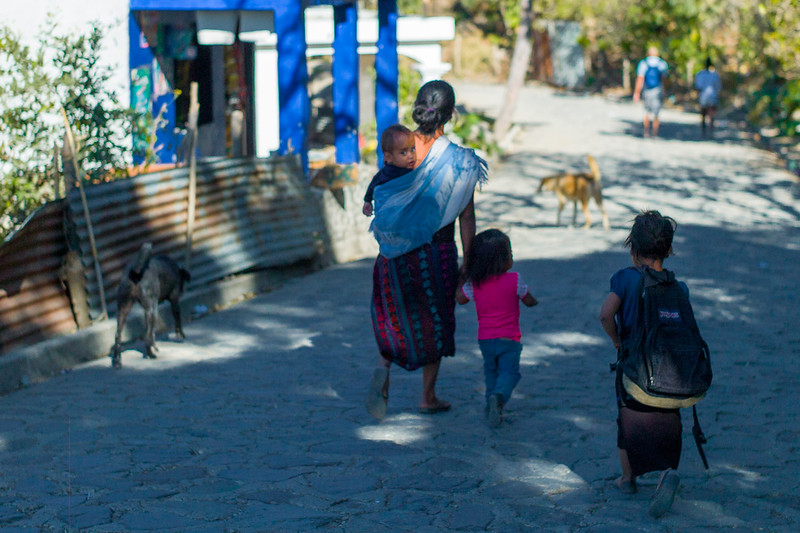
Another family of morning commuters.
Houses along the way.
At the Tzununa docks waiting for the next water taxi to Panajachel, the biggest town on Lake Atitlan.
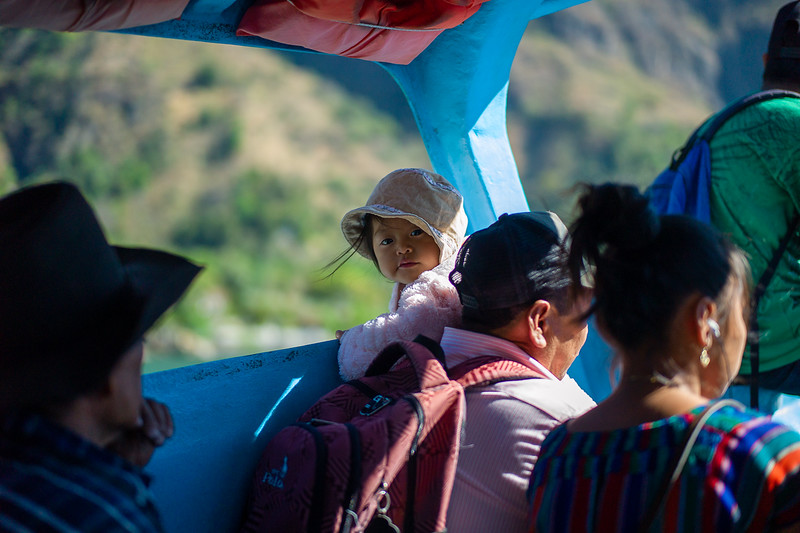
On the boat, we got stared at by another baby.
Arriving at Panajachel docks.
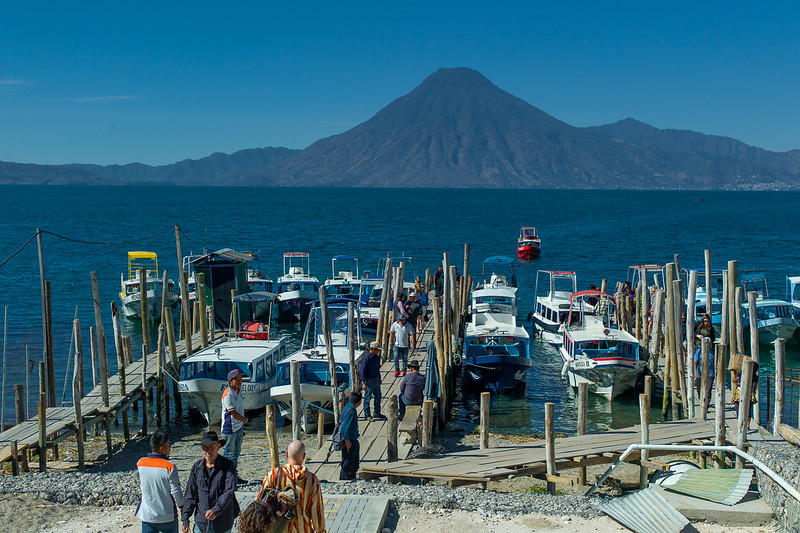
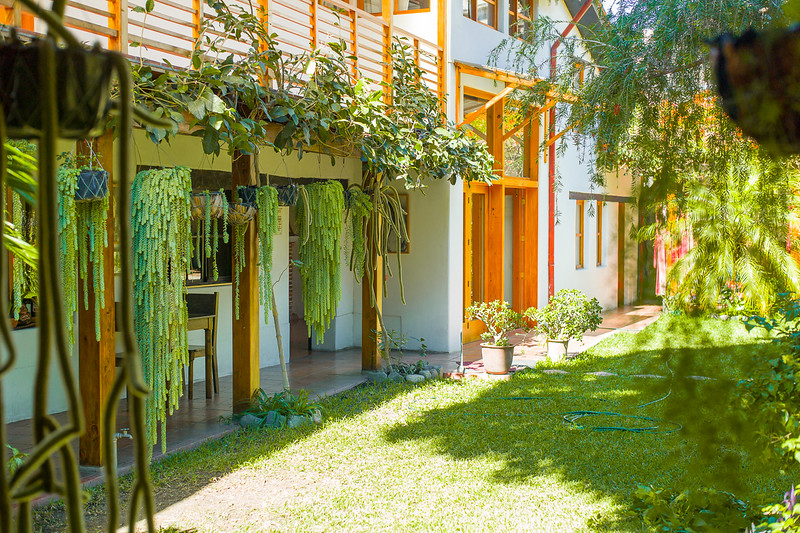
There was a small photography museum in town; this building used to be a hotel called El Cakchiquel. It was built in the 1940s and hosted movie stars and dignitaries. Che Guevara spent a lot of time here. So did Ingrid Bergman.
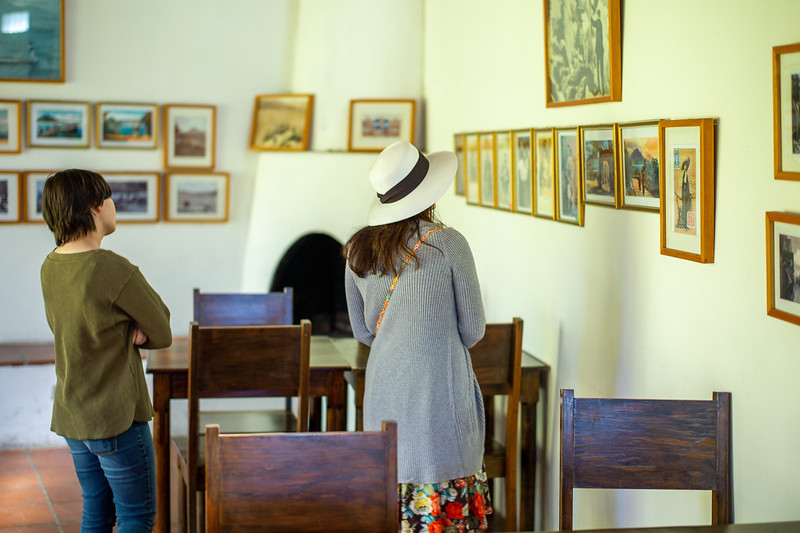
The photography exhibit is mostly photos from the early 1900s of life in the Atitlan towns. It was interesting to see that not much has changed since the 1910s and 1920s.
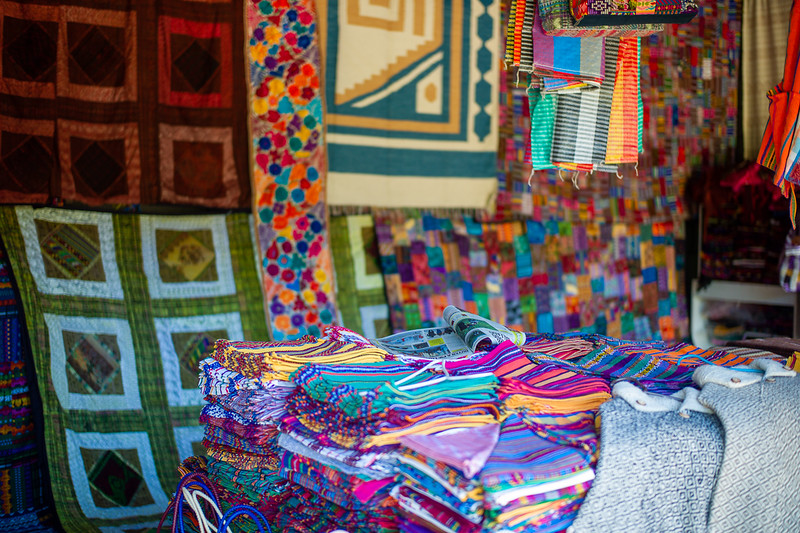
Panajachel has lots of markets selling goods aimed at tourists. The most common items are textiles. This town also has lots of items made from glass beads that have been strung together. At first I thought they were mass-produced (in spite of vendors assuring us “my wife made this”) but as I got to looking at each individual booth, the beaded items were, indeed, different from each other. The themes were common to all (little hummingbirds, lizards, necklaces and bracelets) but each vendor had a slightly different style.
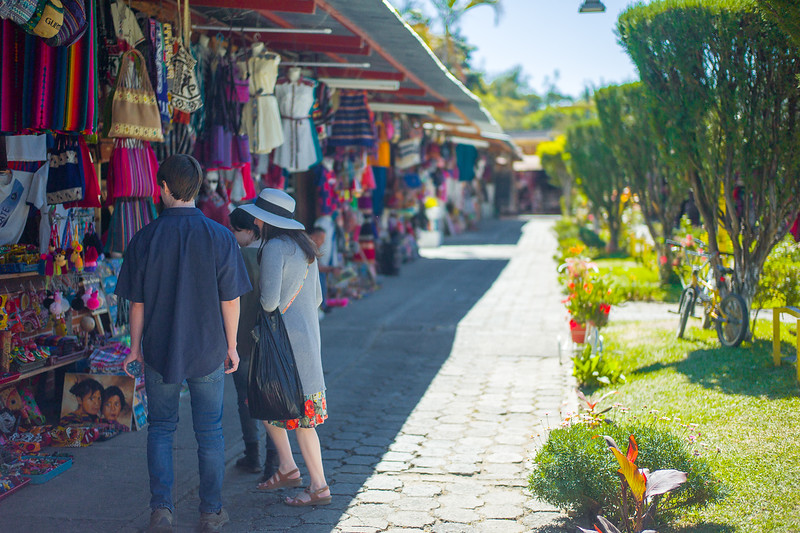
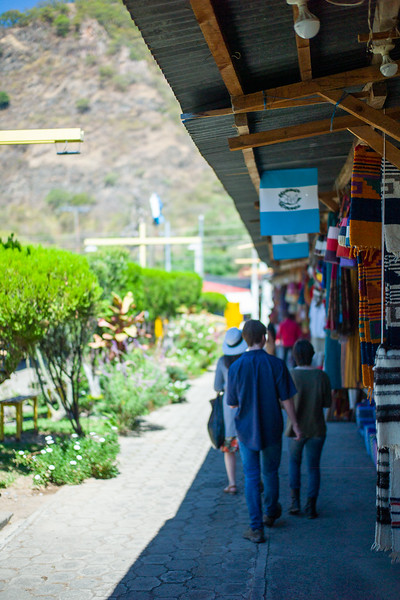
Textiles were by far the most prevalent. In a different town, we saw women weaving these on big looms.
According to people on the internet, the best restaurant in town is a Japanese place, so we decided to have lunch there. Unfortunately, when we arrived they were still serving breakfast. We wandered around a little more and decided to get a snack and drink at a little cafe while we waited for it to be lunchtime.
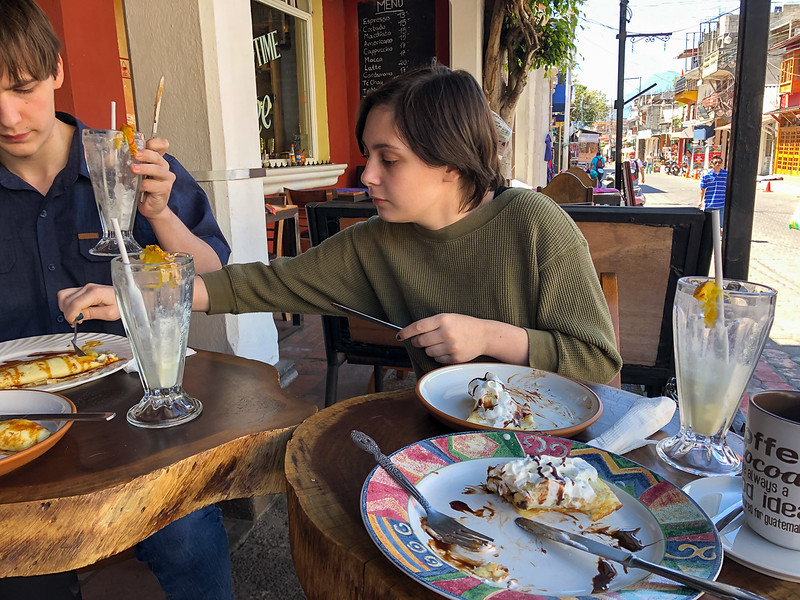
We had virgin pina coladas and ordered a couple plates of crepes to share. The portions turned out to be very large, so after our “snack” we weren’t hungry anymore. Below: Holden finally talked Josie into tasting his. She kept saying, “No thanks, I’m good with mine” but eventually she caved in and have his a try. (It reminded me of that Seinfeld episode where Jerry is miffed after his girlfriend refuses to try a bite of his apple pie.) But then Adam emailed this picture to people with the caption Josie grabbing more than her fair share in Panajachel. Poor Josie!
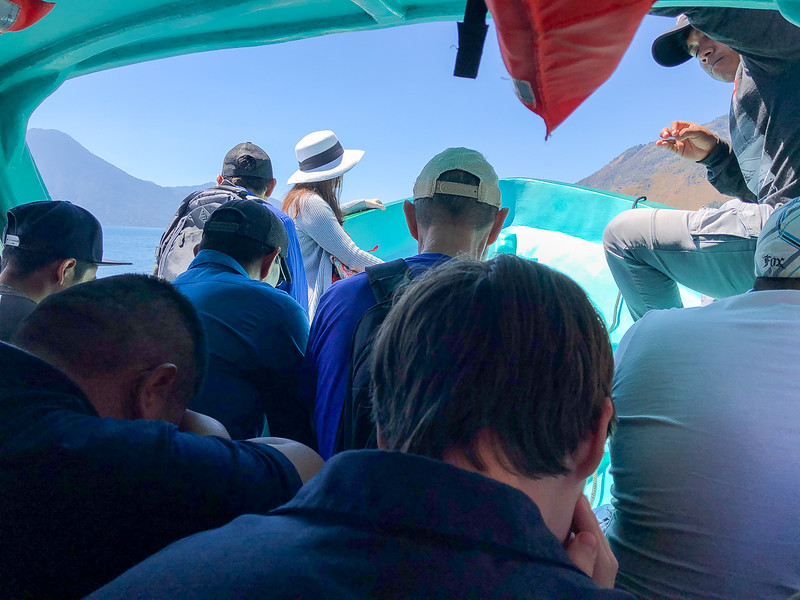
Leaving Panajachel. The boat was overloaded and I ended up getting stuck in the prow.
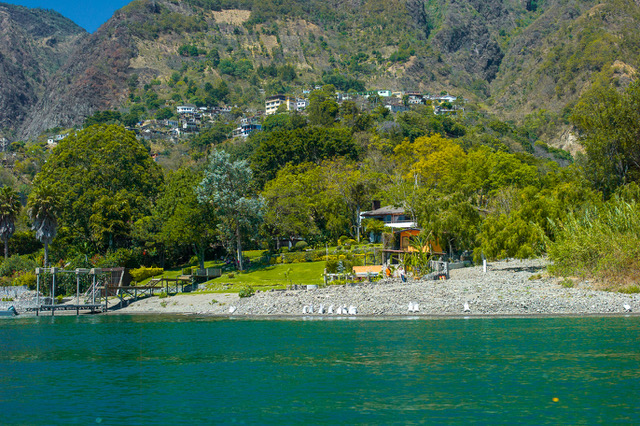
Dock at Santa Cruz.
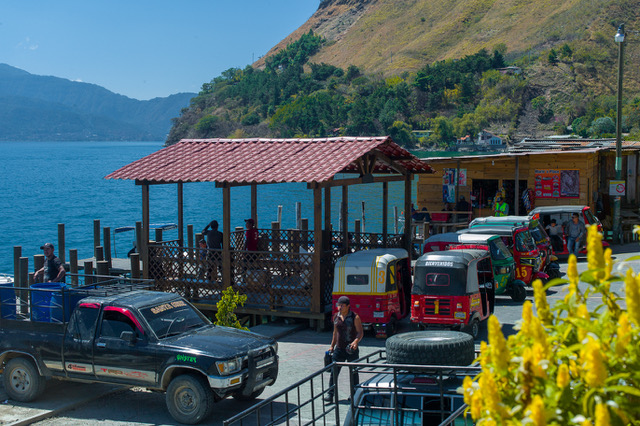
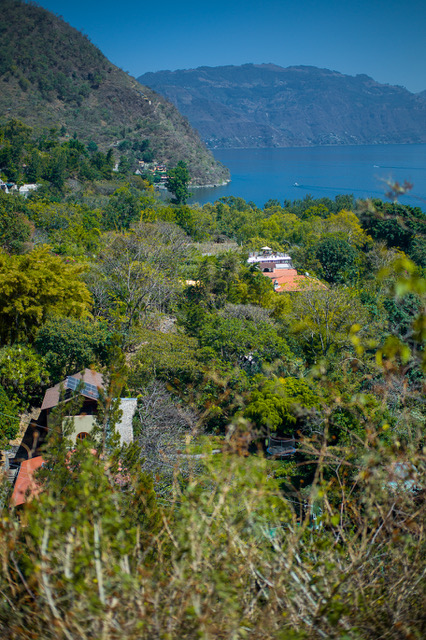
View heading up the hill. We got a lunch at a restaurant near the water and decided to walk to the top of the village. We didn’t get half way up before our huffing and puffing and sweating was too much. We turned around and headed back to the docks.
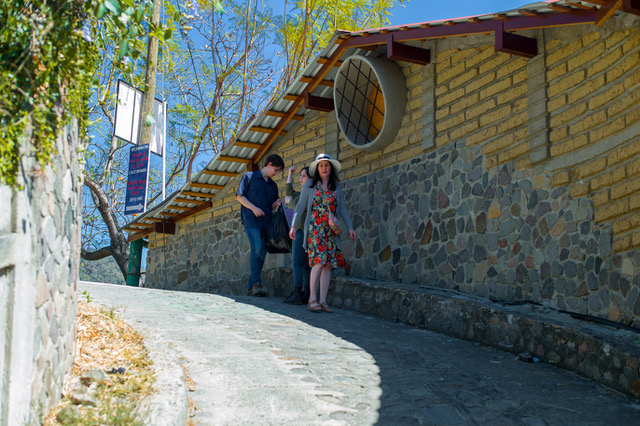
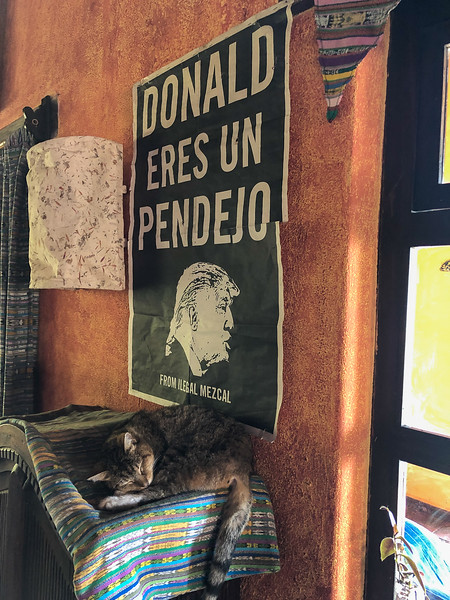
Poster (and kitty cat) in the restaurant.
After Santa Cruz, we got another boat back to Tzununa and our house and called it a day. The views during sunset are stunning and we’ve really enjoyed spending our evenings in.
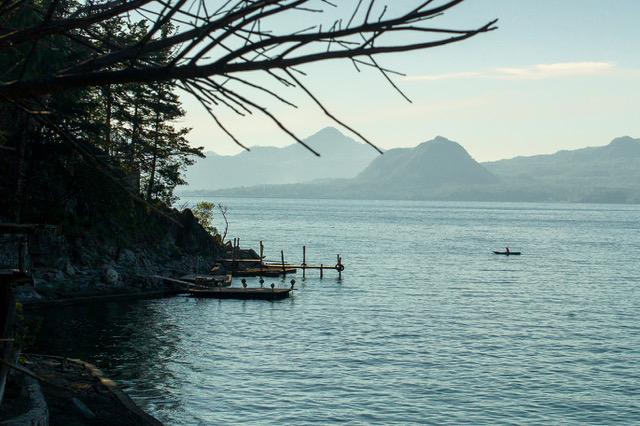
Fisherman out on the lake right before sunset.
Tuesday, 18 February 2020
We packed up our things and left the house on the lake. Getting out was easier that getting in and soon we were on our way. We had enough time to make a side trip to the north to a Mayan town called Chichicastenango. Even though it was only 17 miles as the crow flies from our lake house, it took us 2 hours to get there – such are the roads.
One last view from our house.
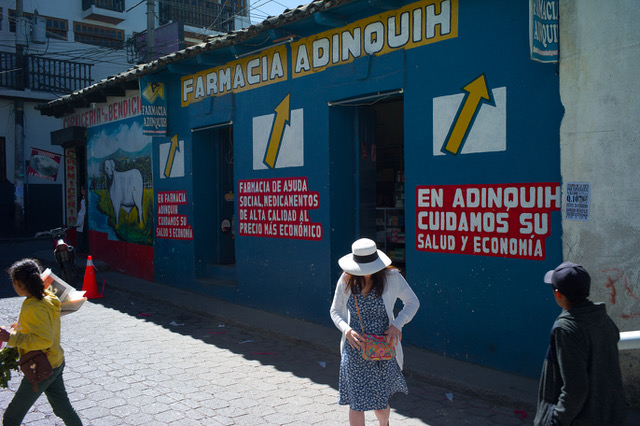
One of the first things we did when we arrived in “Chichi” was to hit a pharmacy to restock our supply of Amoxicillin. You don’t need a prescription and a complete 10-day series only costs about US$15.00.
Chichicastenango hosts huge market days on Thursdays and Sundays (we were here on a Tuesday, so the vibe of the town was considerably more calm). Vendors sell handicrafts, food, flowers, pottery, wooden boxes, condiments, medicinal plants, candles, pom and copal (traditional incense), cal (lime stones for preparing tortillas), grindstones, pigs and chickens, machetes, and other tools.
We were just about the only tourists in town and the markets were clearly set up to serve locals only. There wasn’t anything for us to buy, but it was fun to watch everyone else doing their daily shopping. 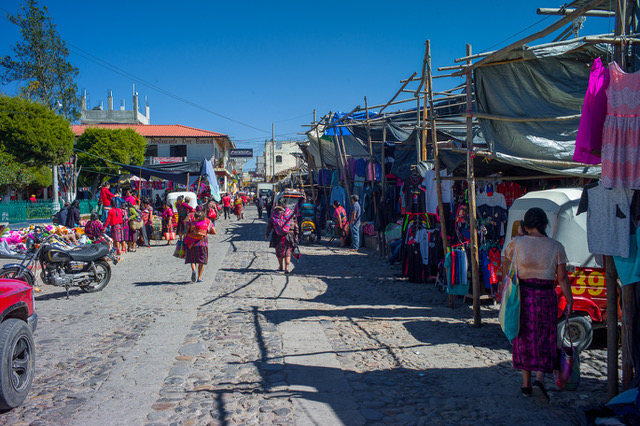
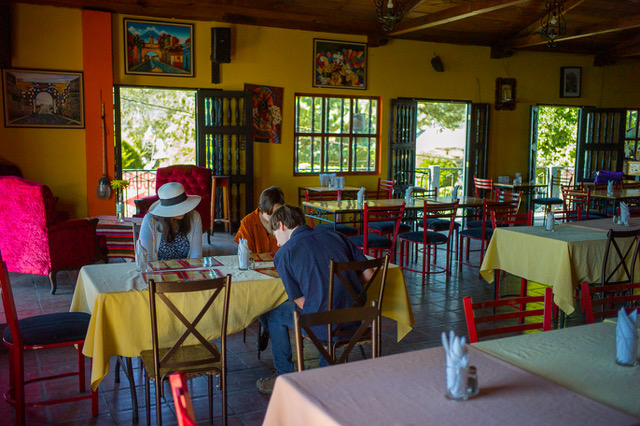
Getting a late breakfast – empty restaurant. It was starting to fill up by the time we left.
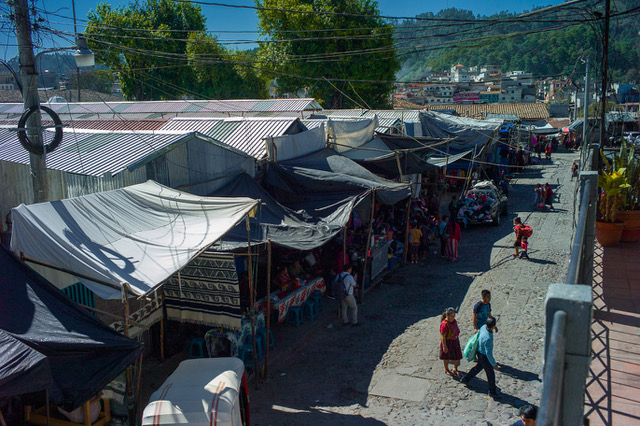
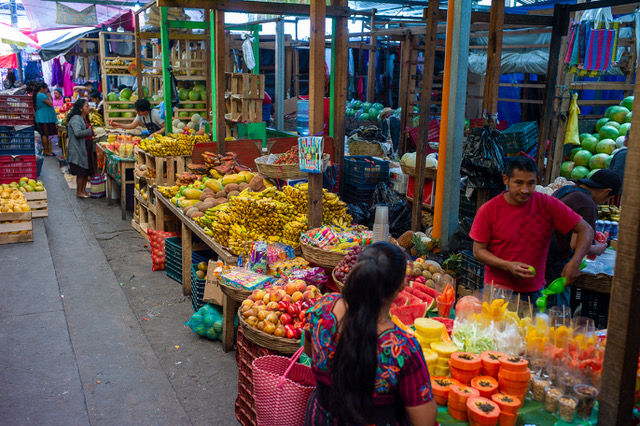
Every marketplace we’ve seen is bursting with fresh fruits and veggies.
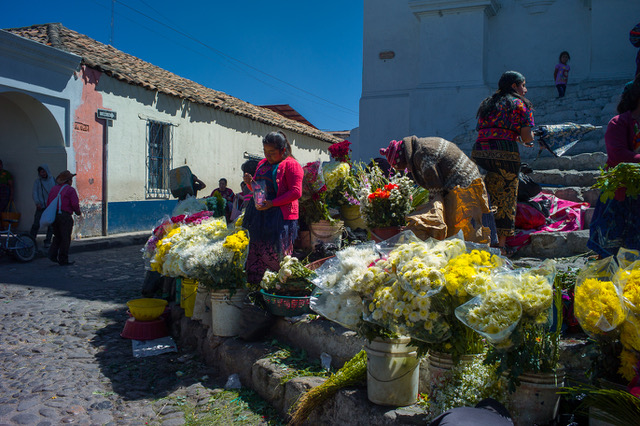
The flower markets are gorgeous, too.
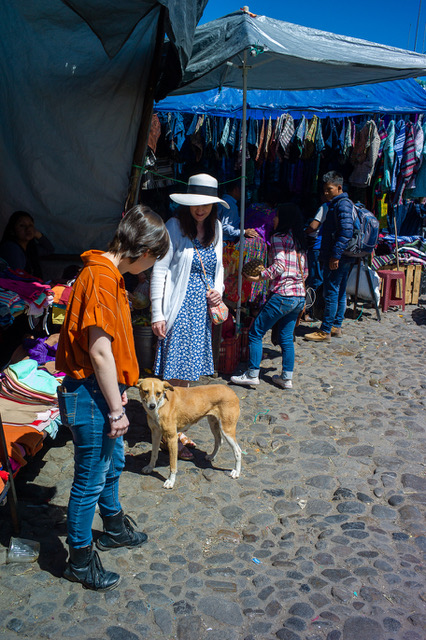
This stray dog adopted us and followed us all through the town – all the way back to the car to continue on with our trip. Josie was really trying to figure out a way to bring a Guatemalan stray back home to the United States.
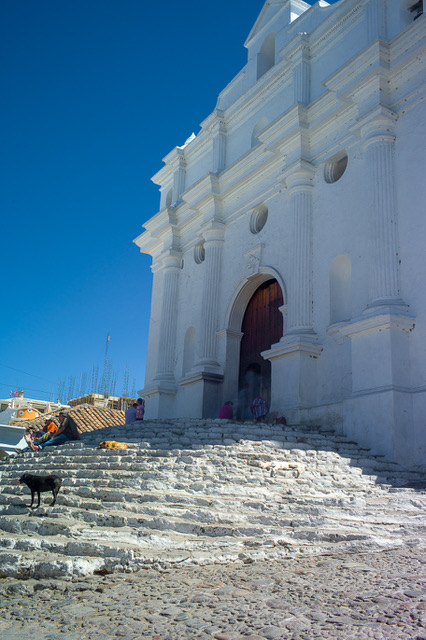
The 400-year-old church of Santo Tomás. It is built atop a Pre-Columbian temple platform, and the steps originally leading to a temple of the pre-Hispanic Maya civilization remain venerated. K’iche’ Maya priests still use the church for their rituals, burning incense and candles. In special cases, they burn a chicken for the gods. Each of the 18 stairs that lead up to the church stands for one month of the Maya calendar year.
We continued on back to Antigua – about 2 hours away from Chichicastenango. We’re staying here one more night at a bed and breakfast called “Casa Bella”.
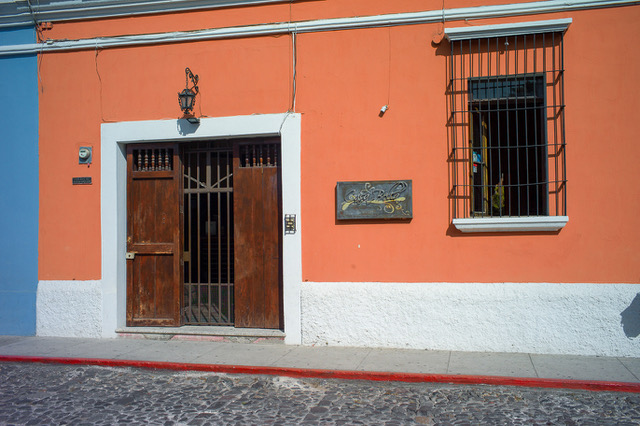
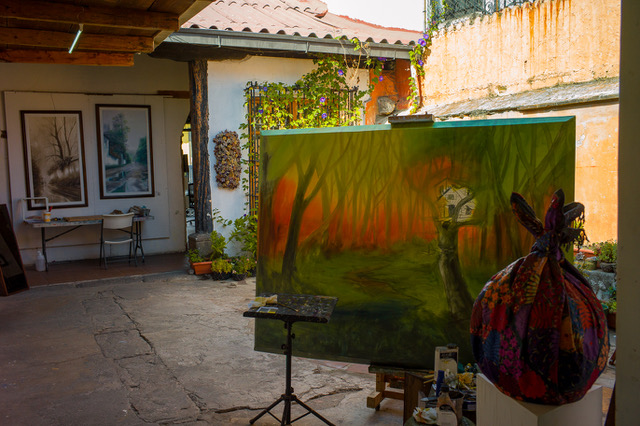
In the late afternoon, we visited an artist’s workshop where paintings are made and sold. It is a cooperative of 35 artists, some of them working right there on site. Both Josie and I are bringing something home from this place. (Josie is beginning to curate her own art collection.) This is one of the better artist co-ops I’ve seen, anywhere in the world. Almost all of the works were original paintings (just a few prints), very affordable, and there were a nice variety of artistic styles to choose from. We spent a lot of time in here — way more, in fact, that Holden could stand.
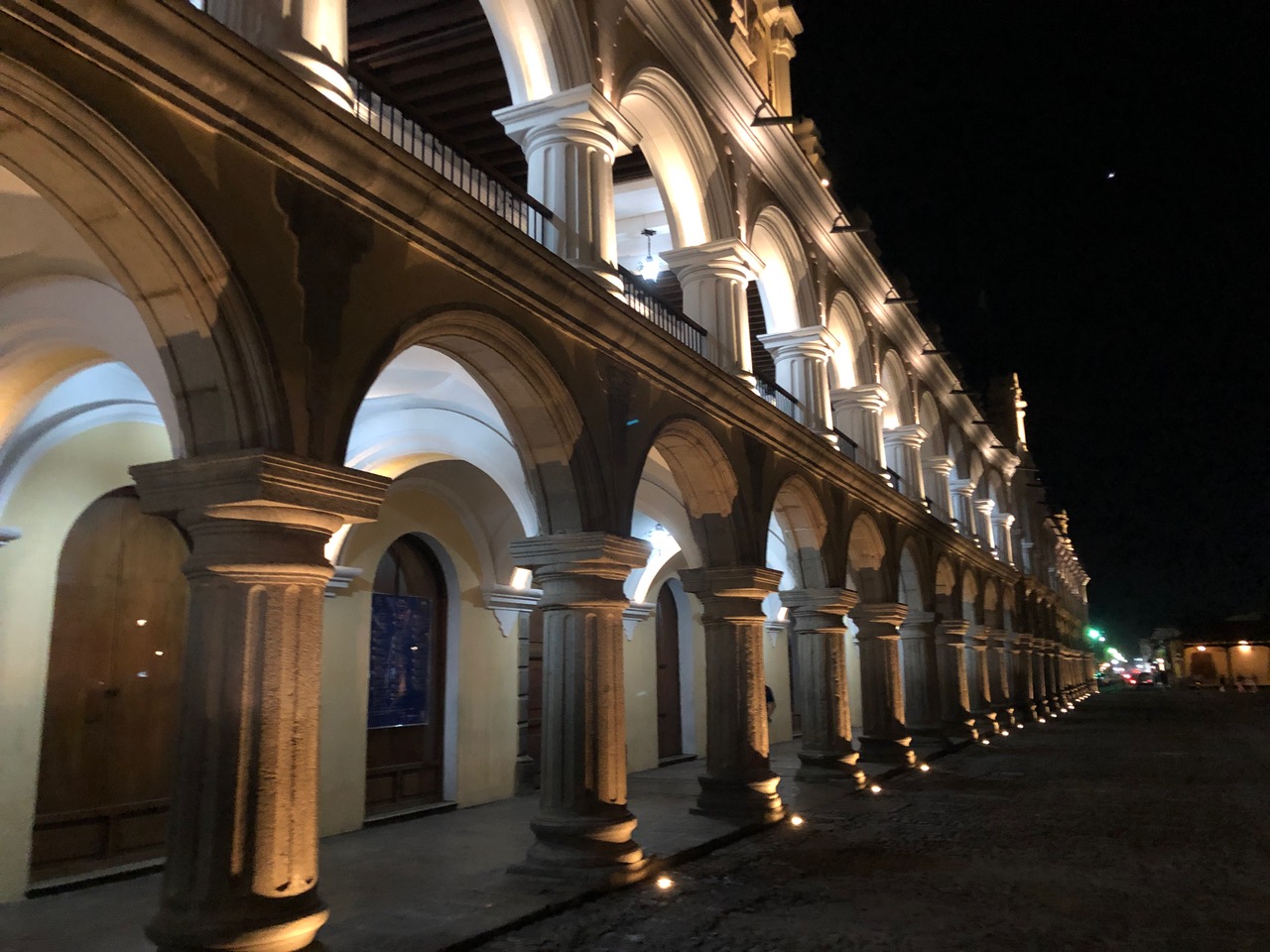
We arrived in the afternoon and had some time to walk around and do some end-of-the-trip shopping. We then met up with Sal and Ana (they live in Guatemala City) who joined us for dinner in one of the many fantastic restaurants in Antigua. Sal is retired now, but I’ve worked with Sal since the late 90s and we still do some projects together in Central America.
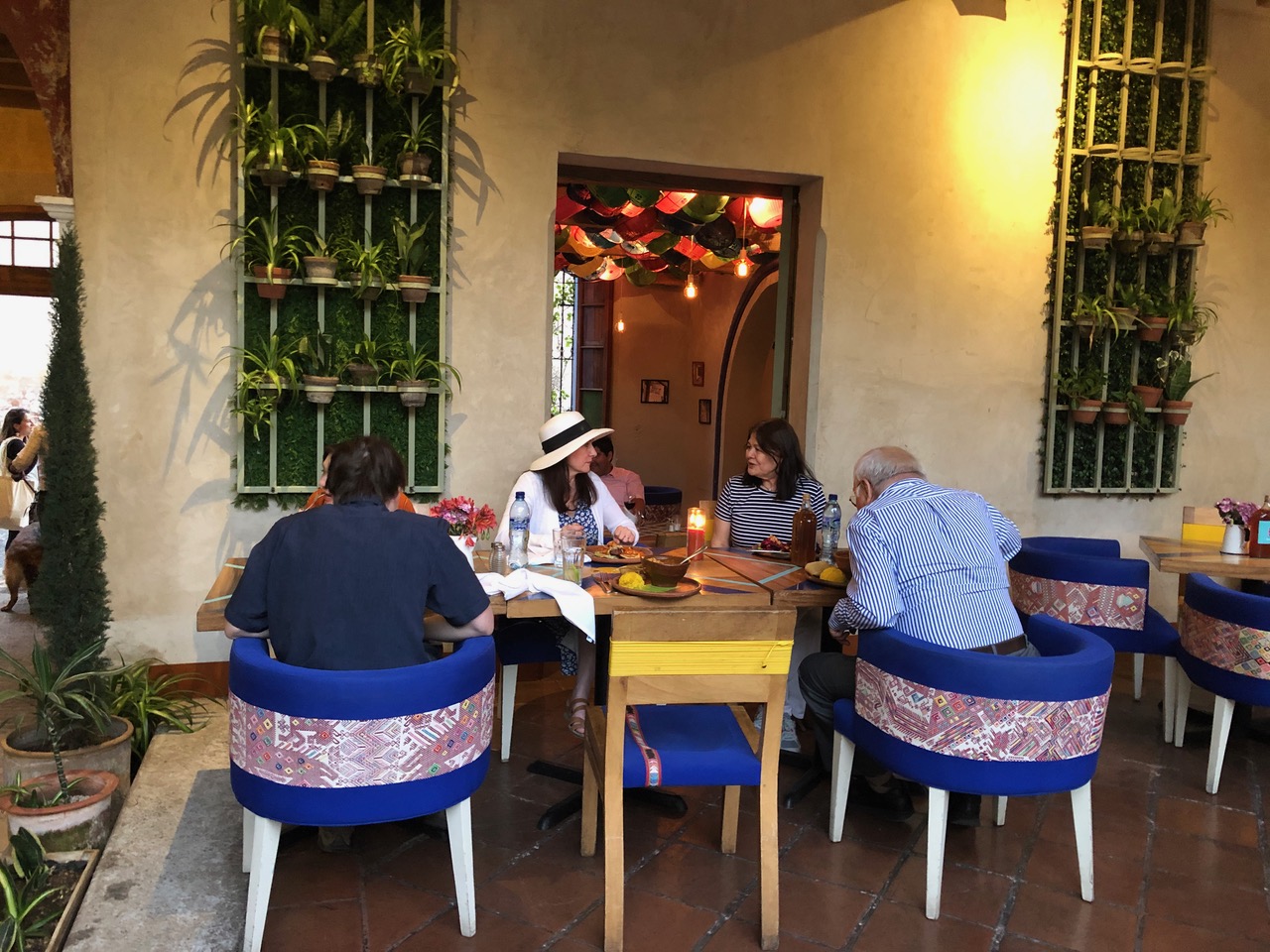
Dinner at Los Tres Tiempos, a restaurant Sal & Ana picked out. It was by far the best meal we’ve had on the whole trip — everything was excellent and the outdoor courtyard setting was beautiful.
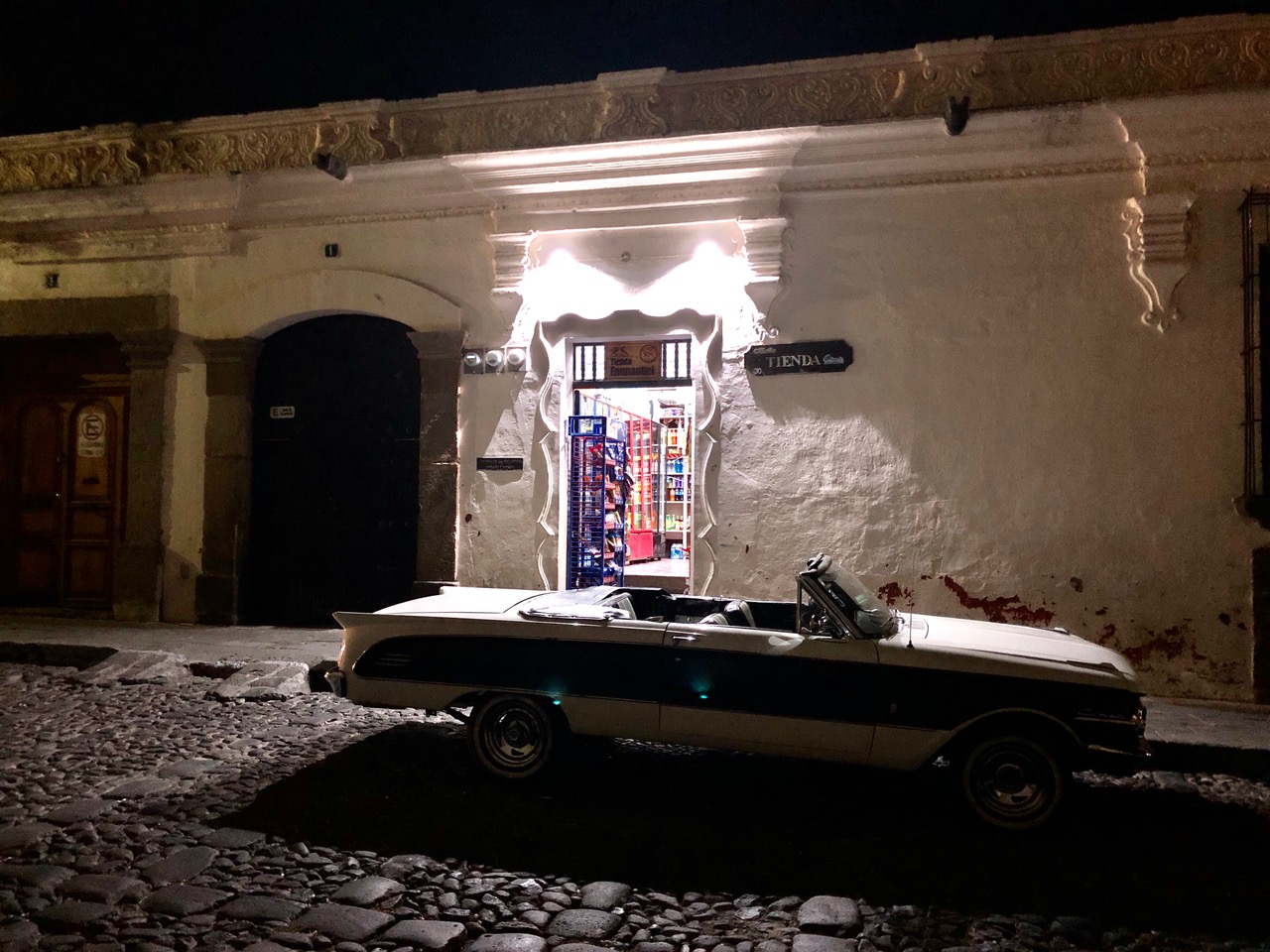
Wednesday, 19 February 2020
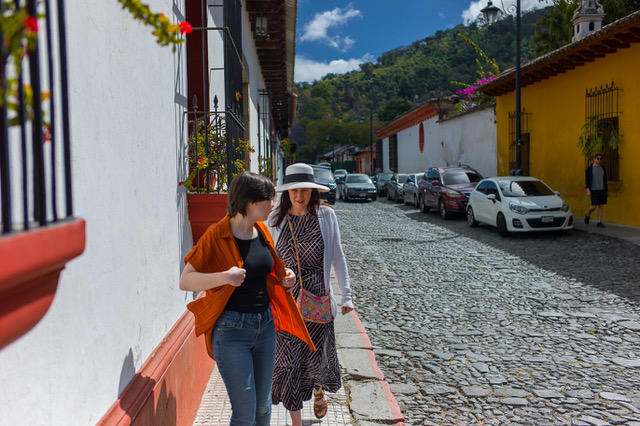
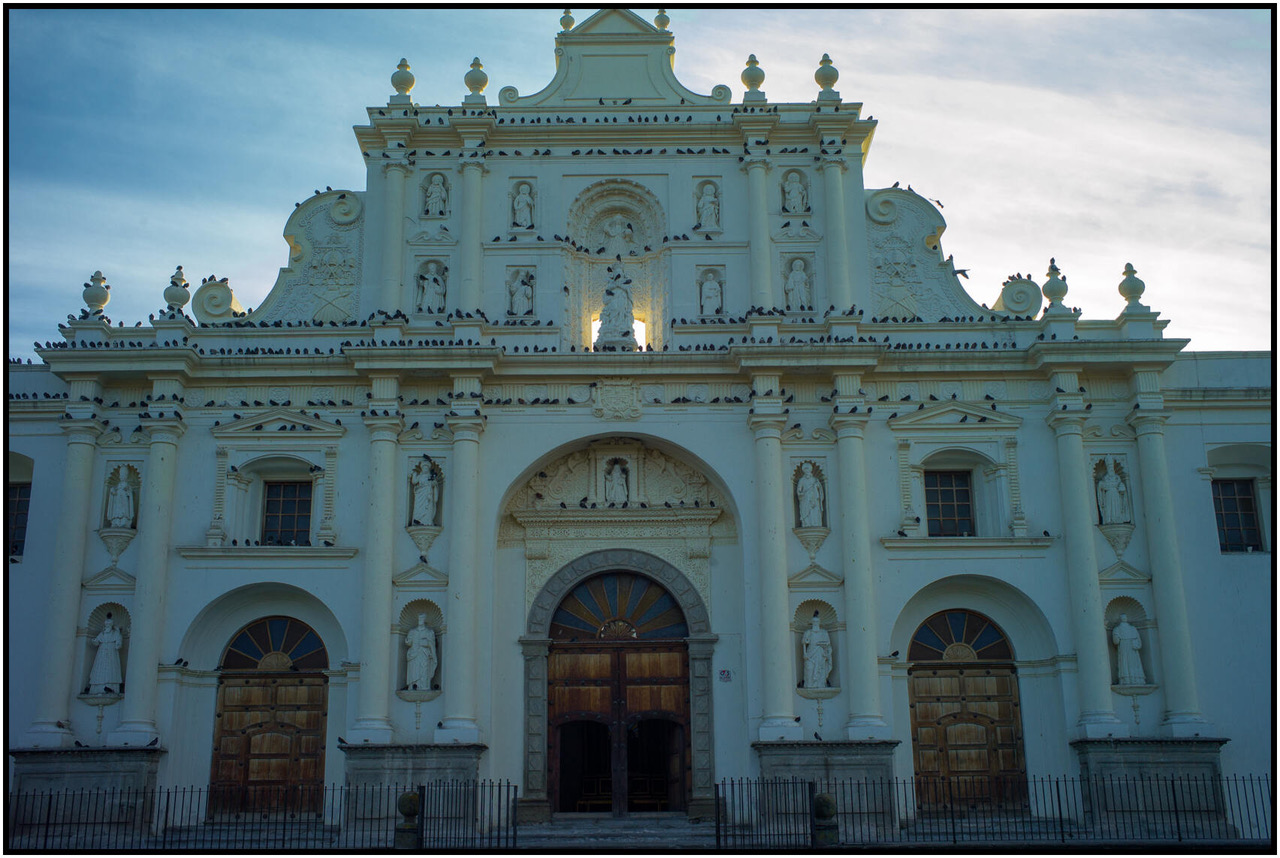
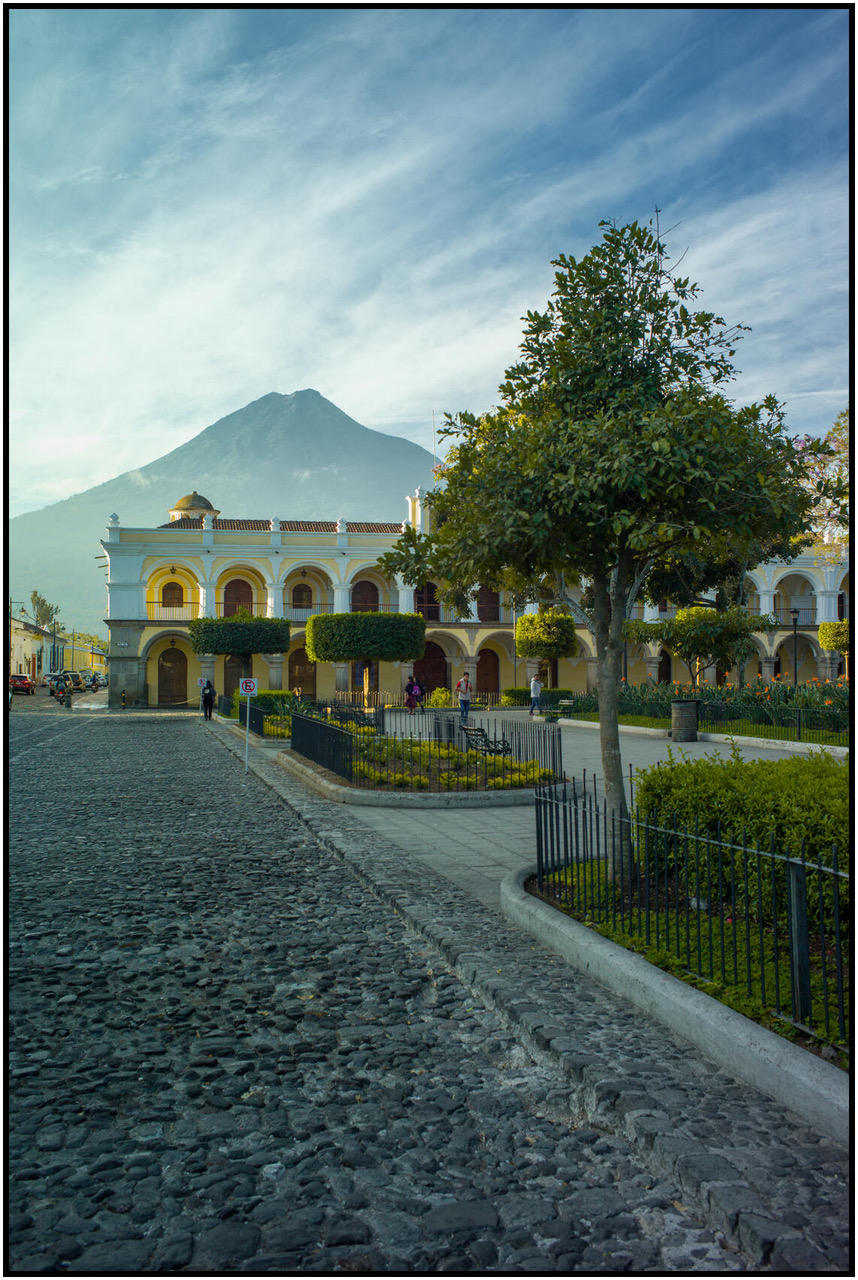
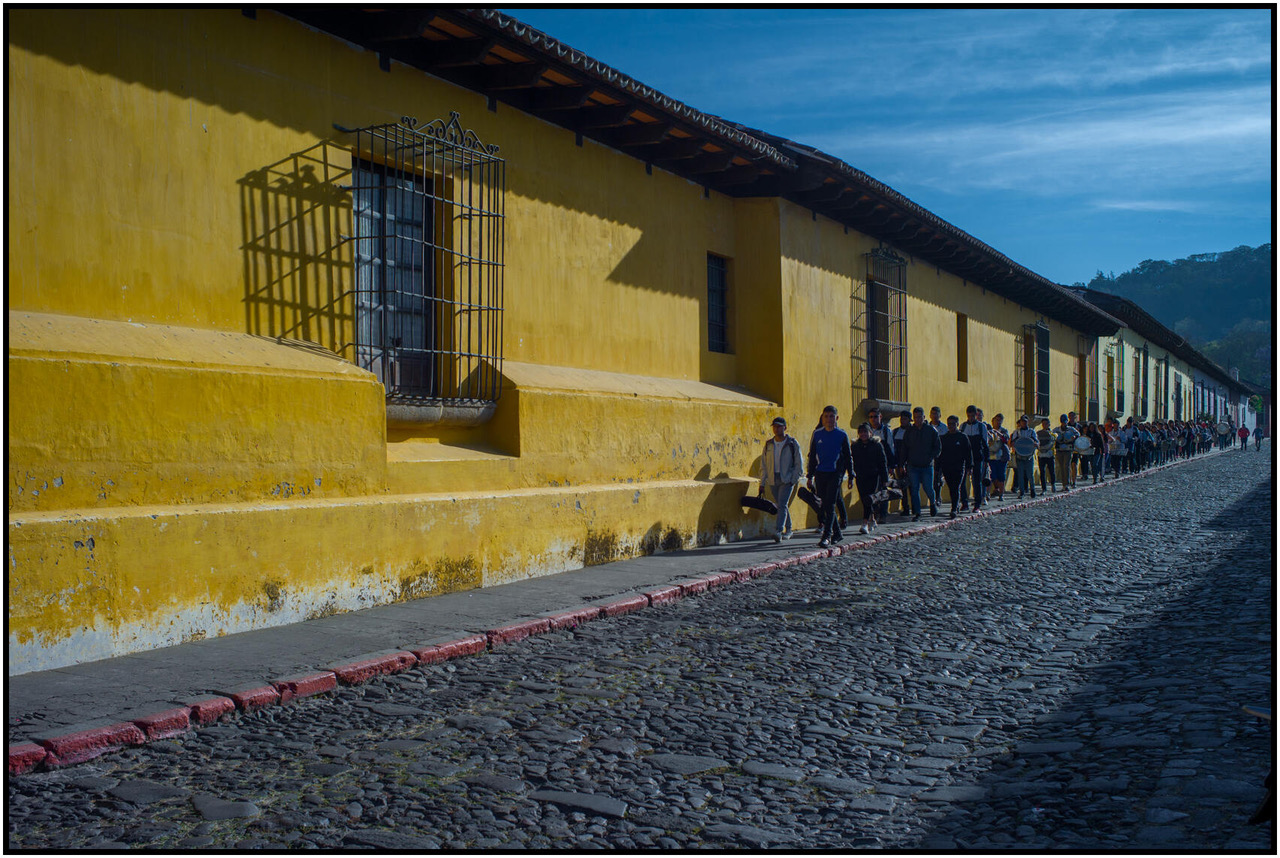
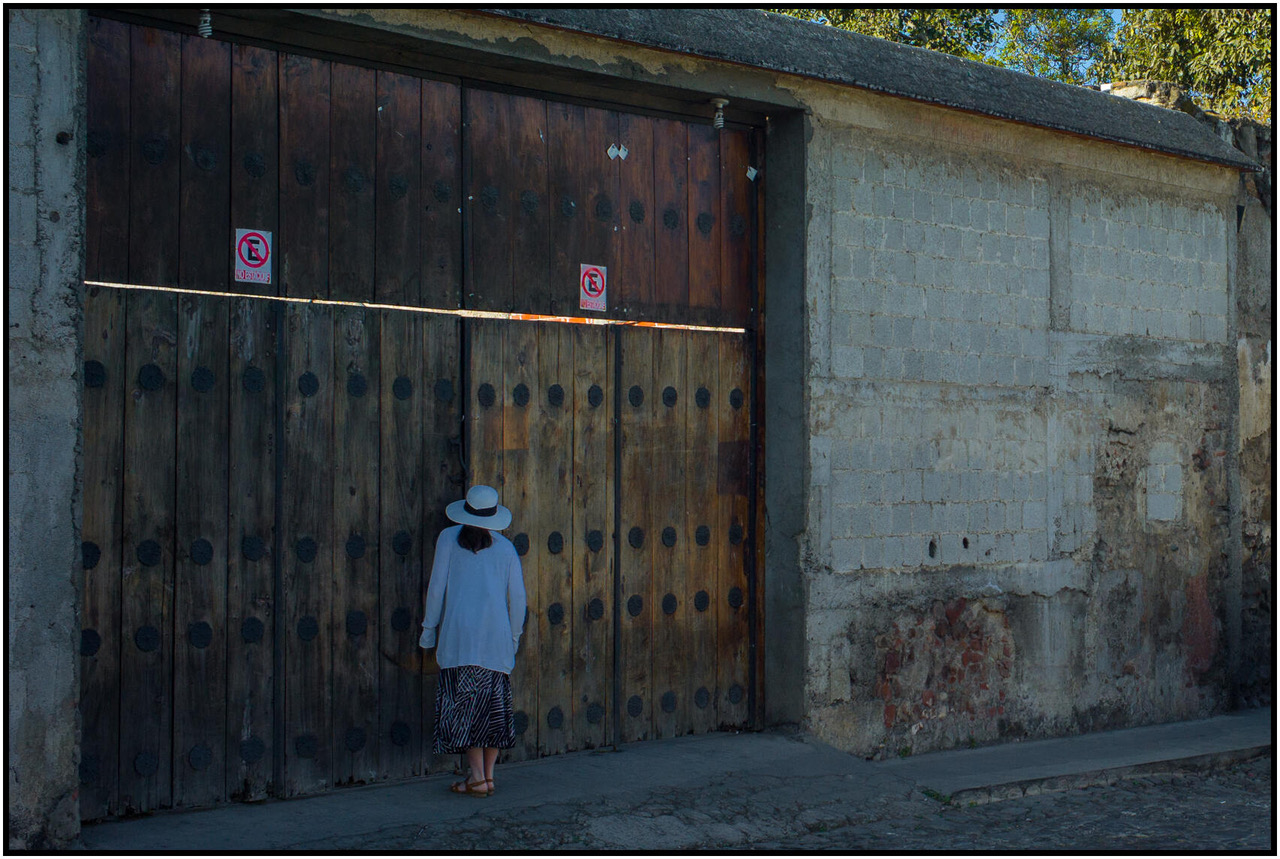
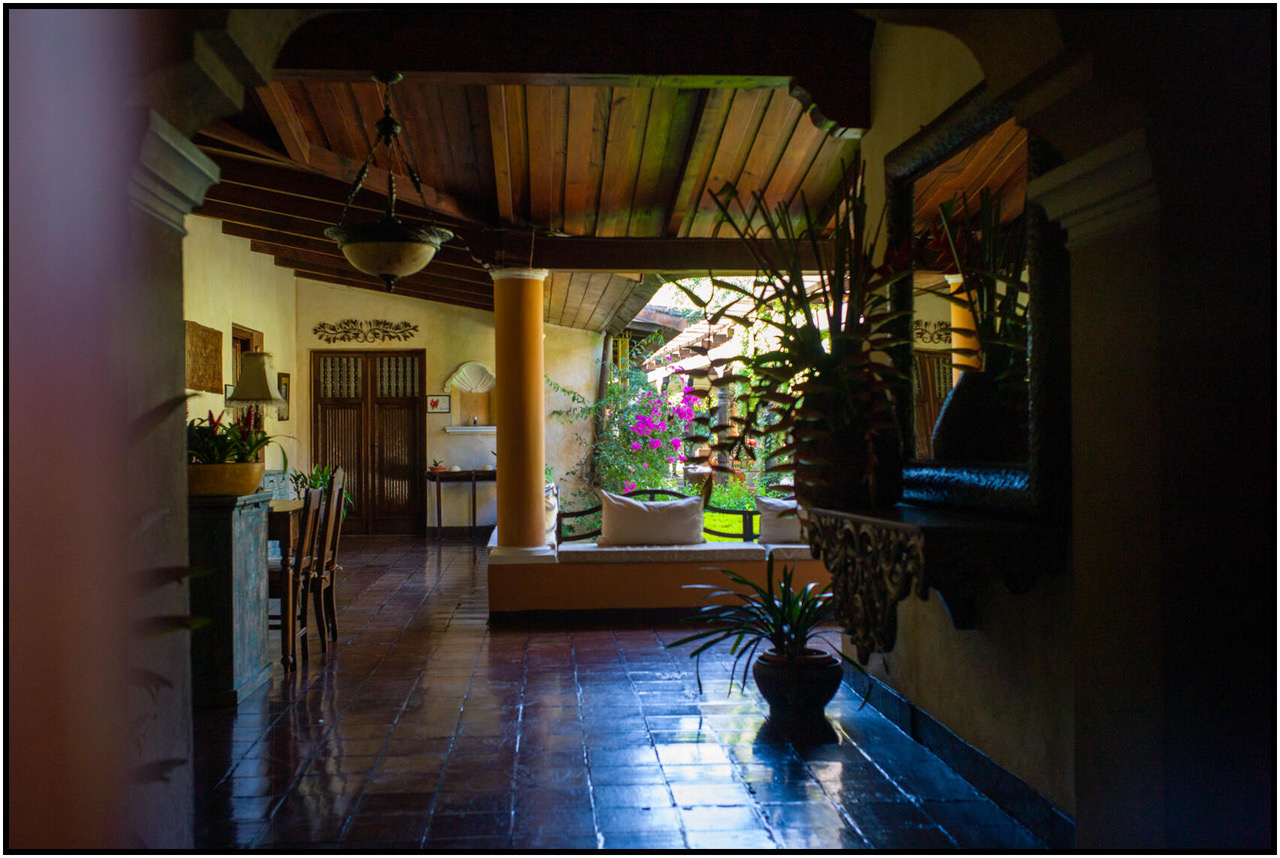
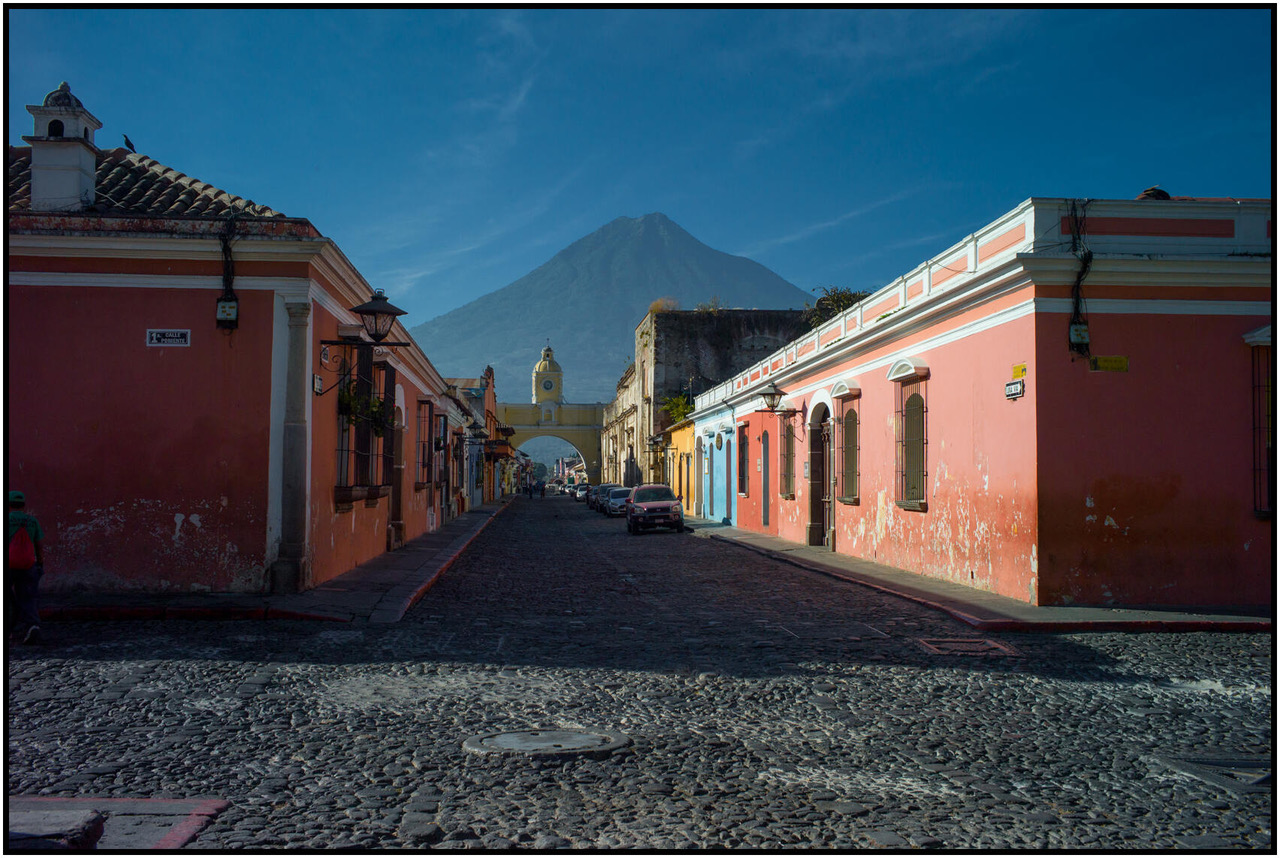
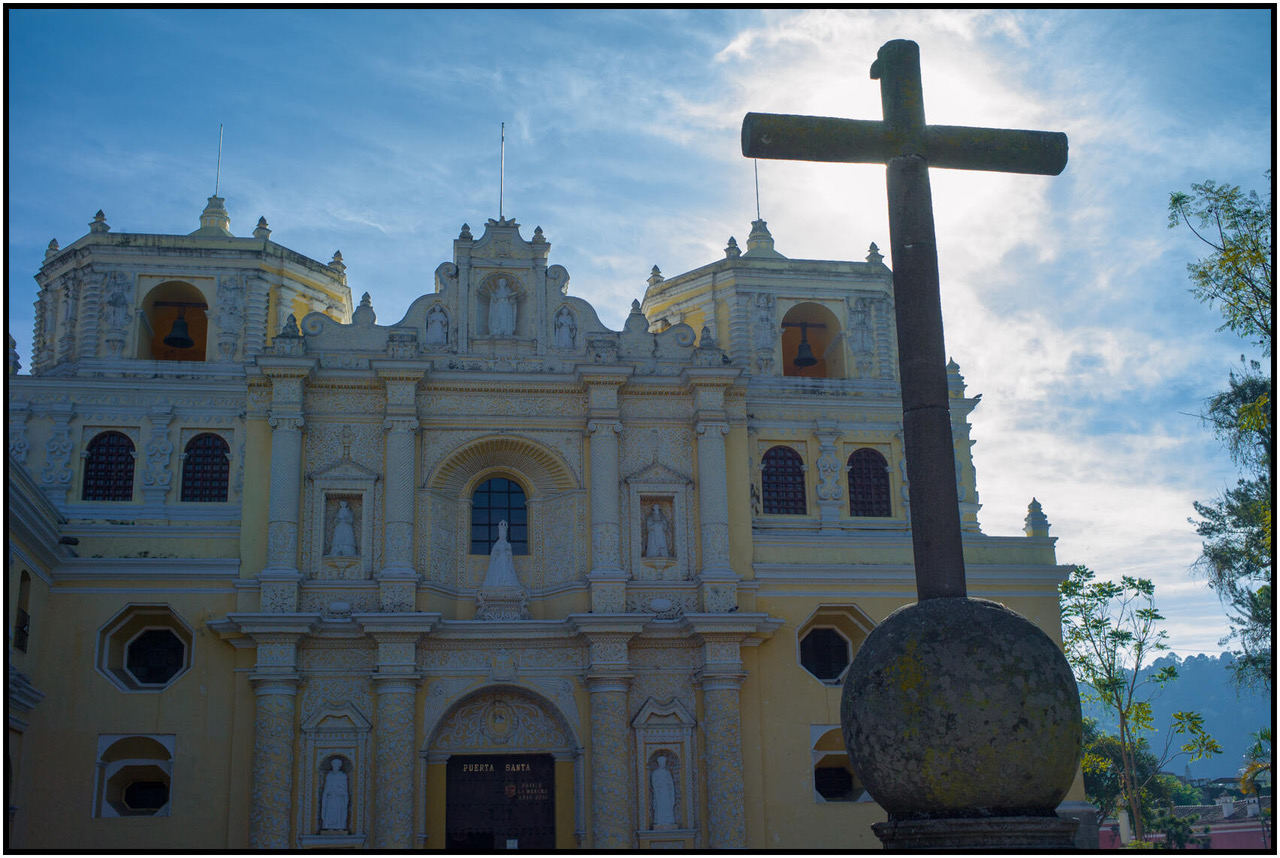
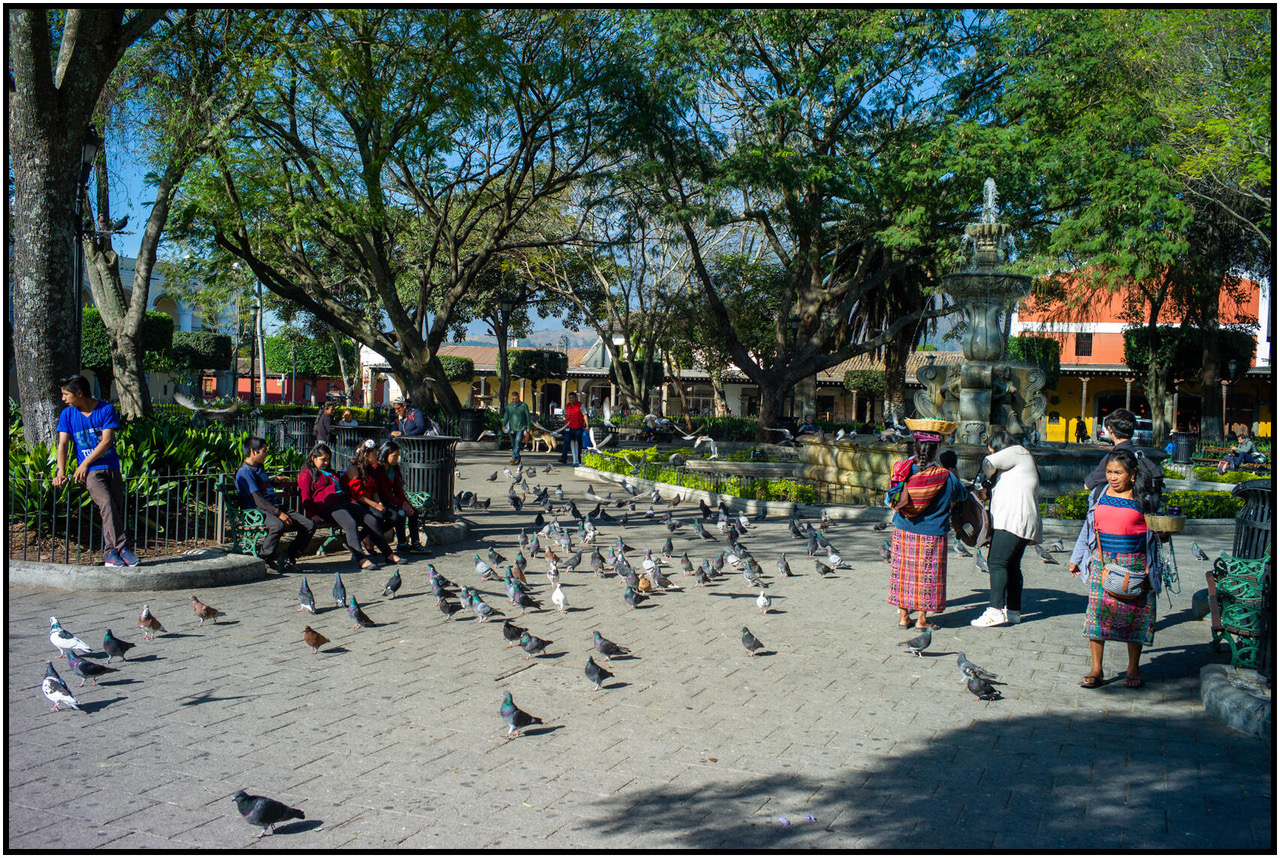
Most shots below are from a couple of “walkies” around town this morning. Antigua is a photographer’s dream location. We had about an hour to wander the streets before we needed to head out.
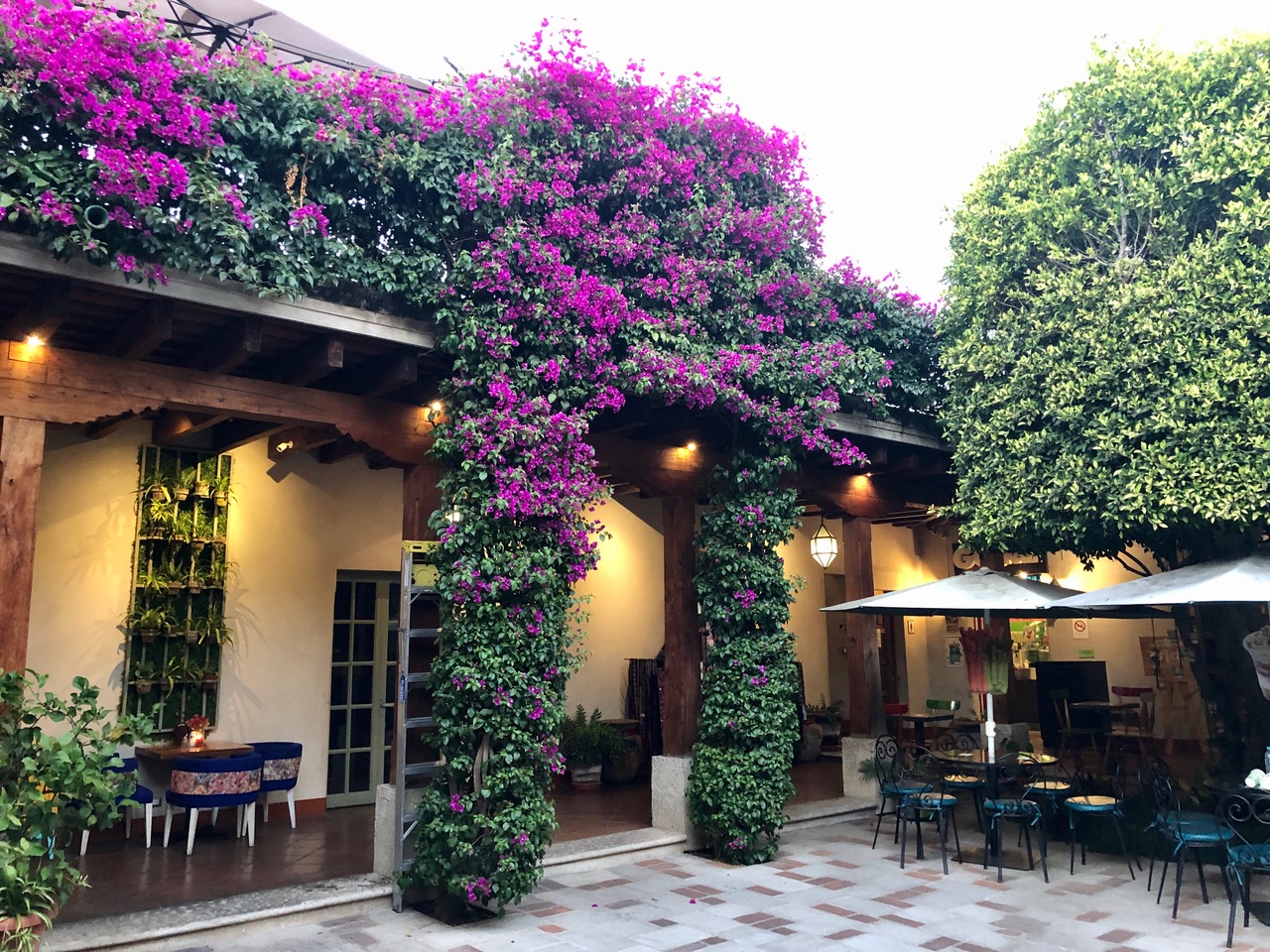
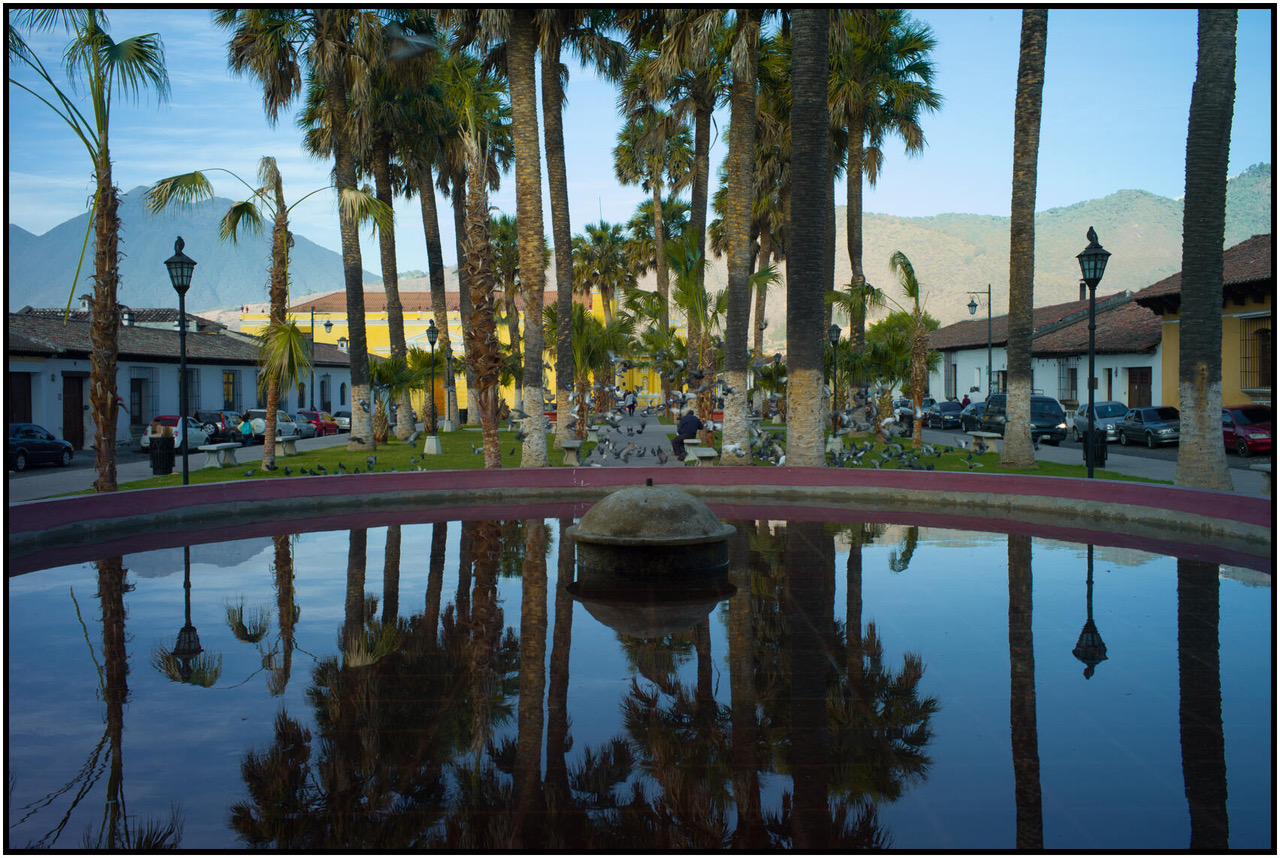
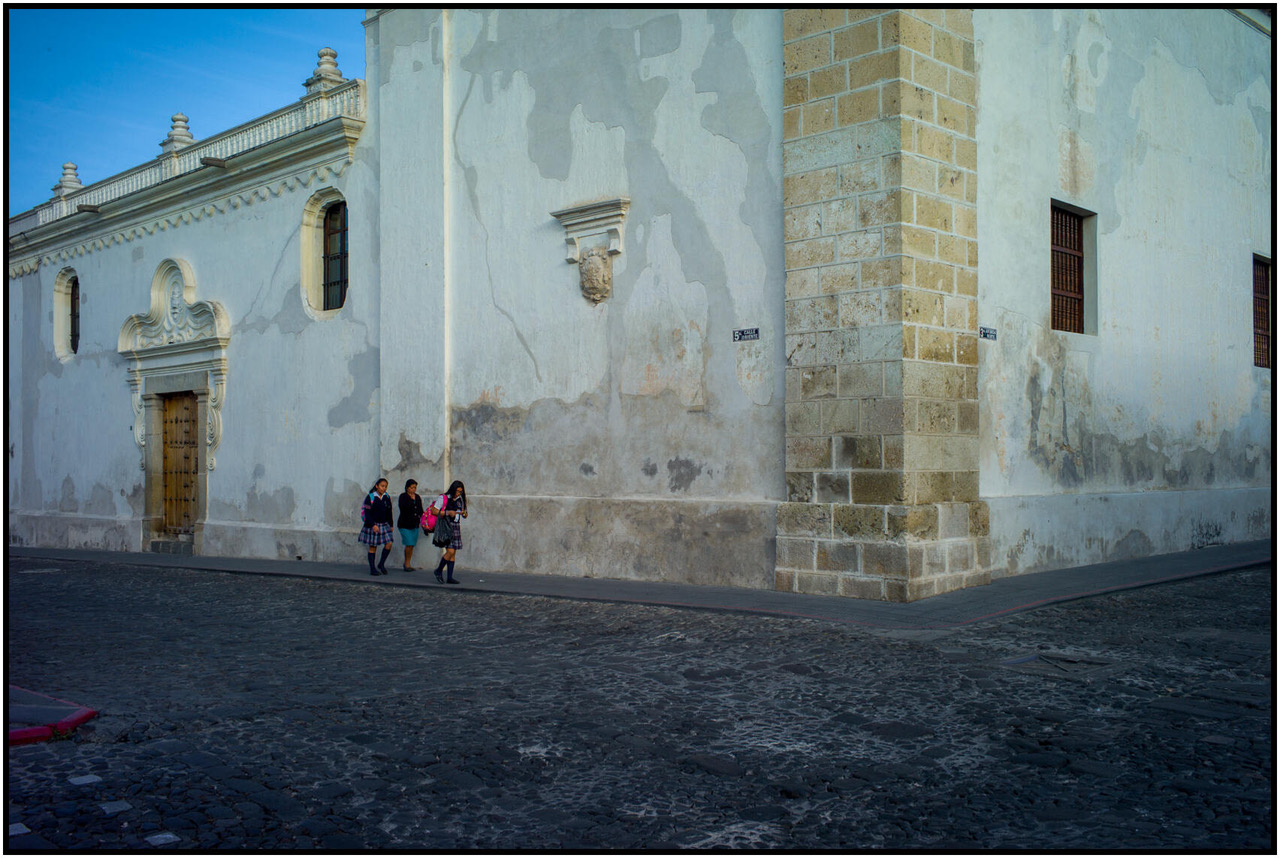
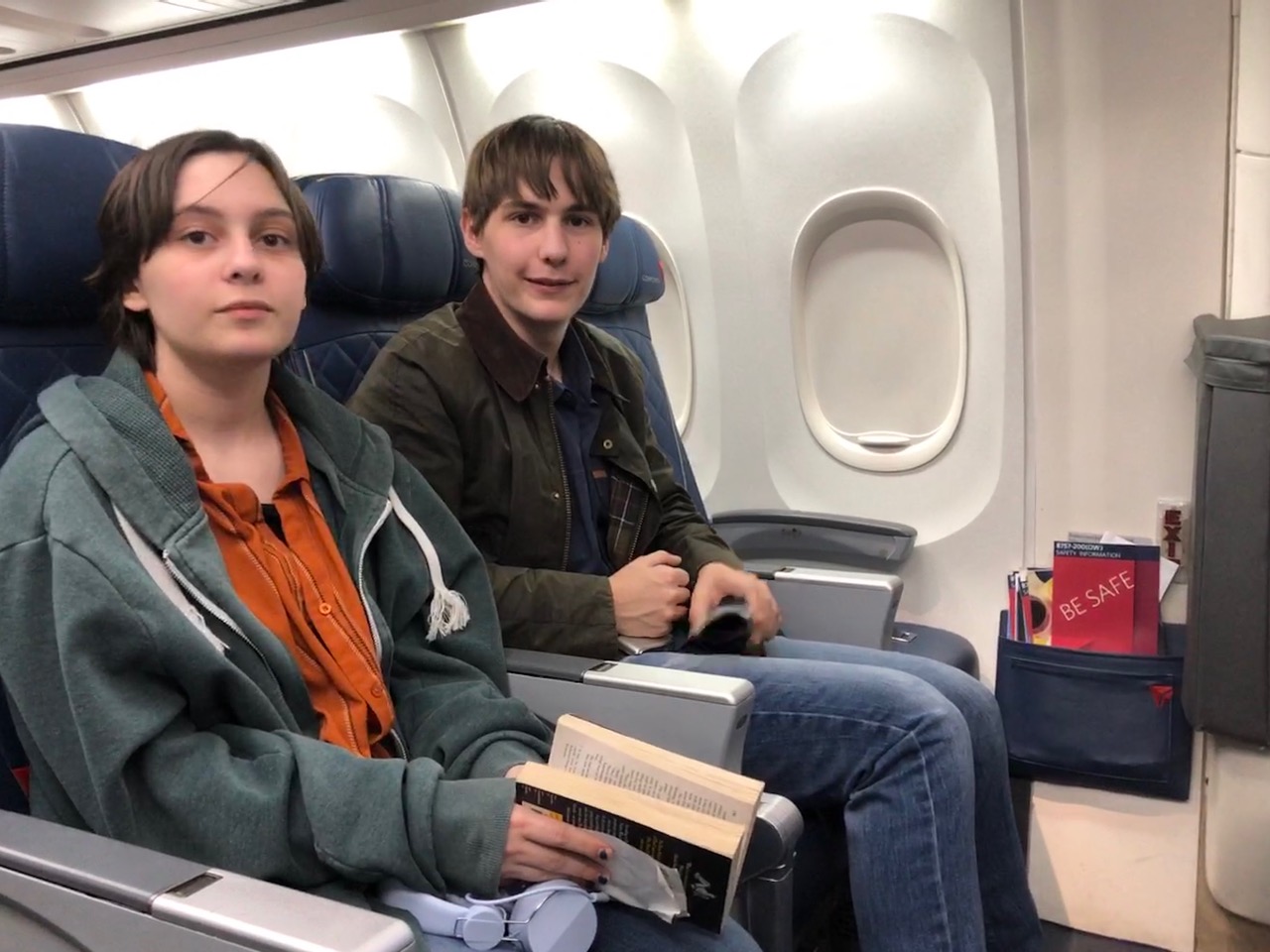
We then drove back to the airport in Guatemala City and boarded a plane back home. The plane wasn’t full on a Wednesday afternoon, so we got $10 upgrades to Comfort Class. Leg room! Our seats were also right by the toilet, which turned out to be a blessing because Holden got a touch of Montezuma’s Revenge and was grateful for the easy bathroom access. He wasn’t the only one, either … one guy was so desperate he cut the line and banged on the door until the person in there came out, then he dropped trou and hit the seat without closing the door. The lady next in line was horrified but trying to react in such a way as to preserve what was left of the man’s dignity.
Until next time!
 MayseStomp