July 10, Thursday
This morning Adam announced, “Today we’re going to dig for fossils.” We are visiting Monmouth Beach, in Lyme Regis (town) and known as part of the Jurassic Coast. The cliffs have been estimated at 199 million years old. This is where Mary Anning grew up and started her paleontology work. (She is worth reading about — fascinating woman in a time when women weren’t allowed to do much.)
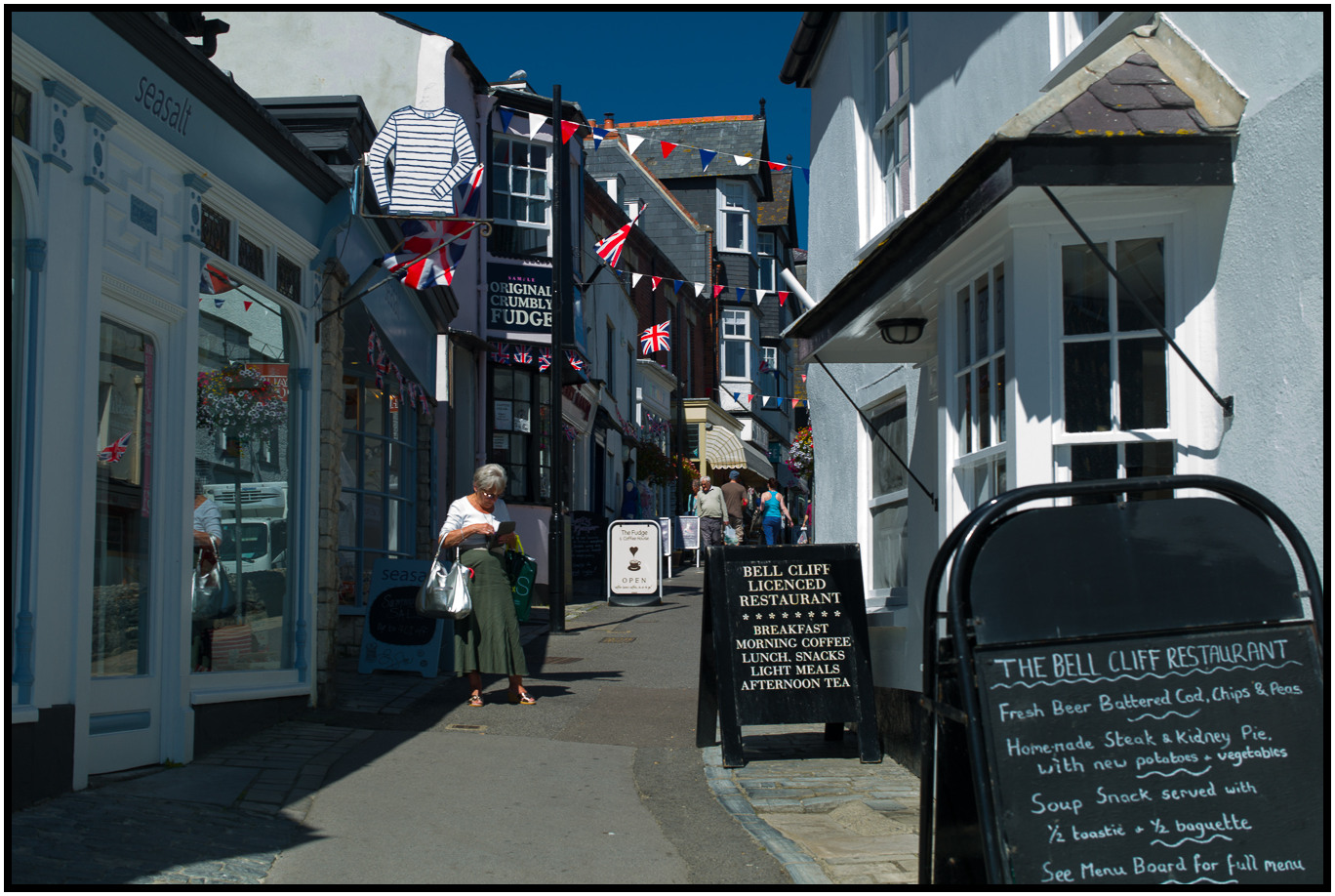
But first, breakfast. This restaurant had floors and walls made of reclaimed ship boards.
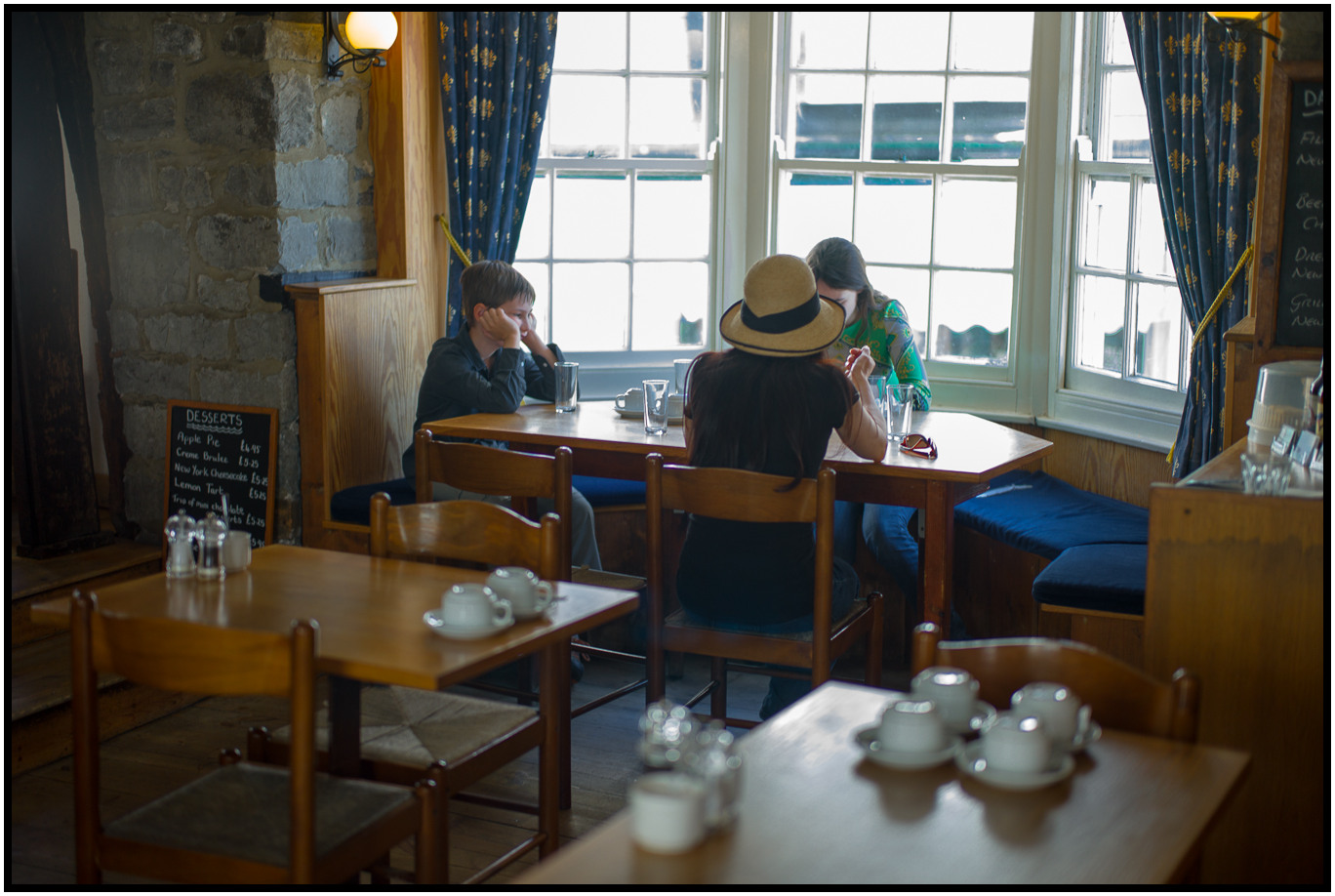
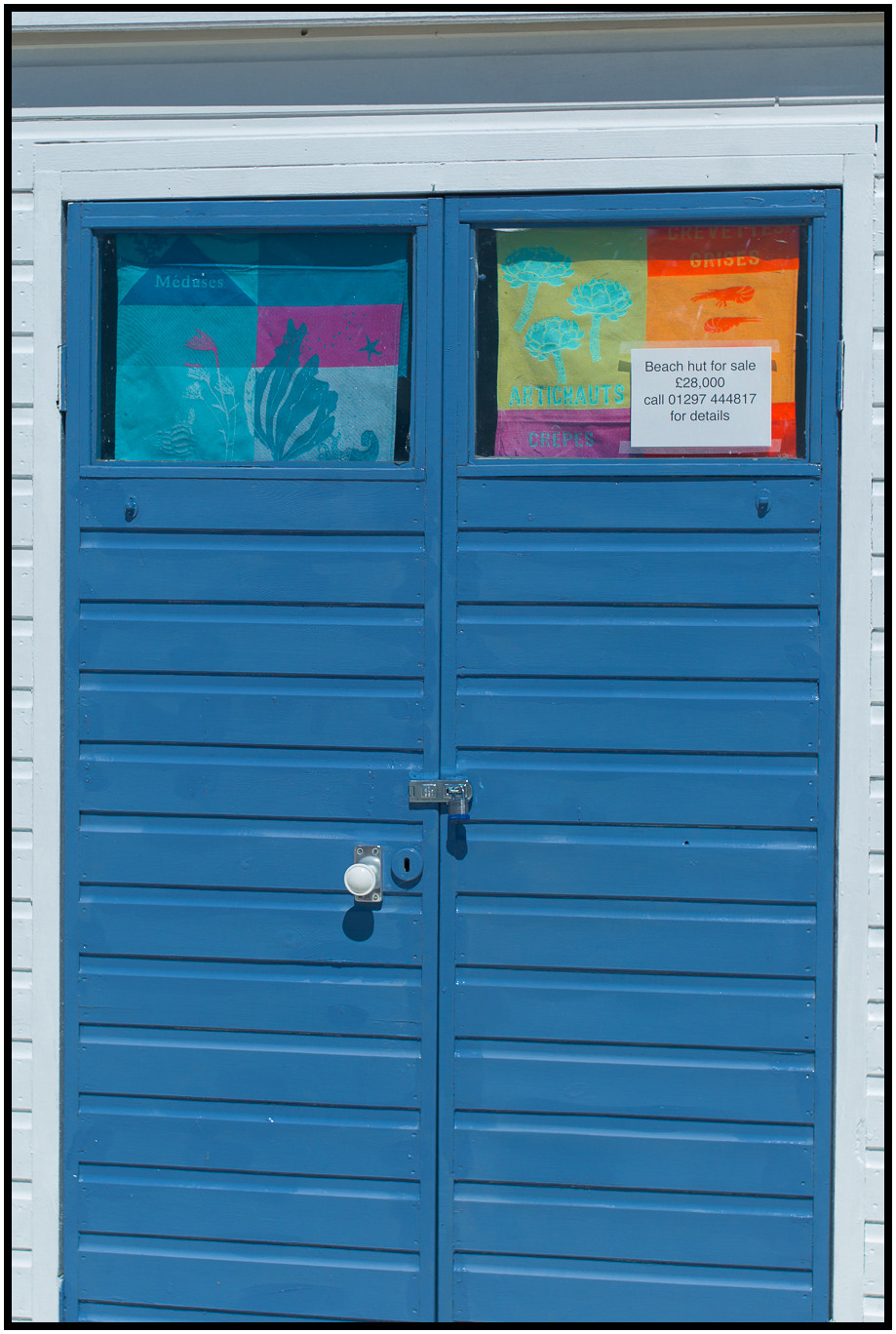
These little beach huts open up and have chairs, a shelf to put your stuff, and a spot to sit in the shade.
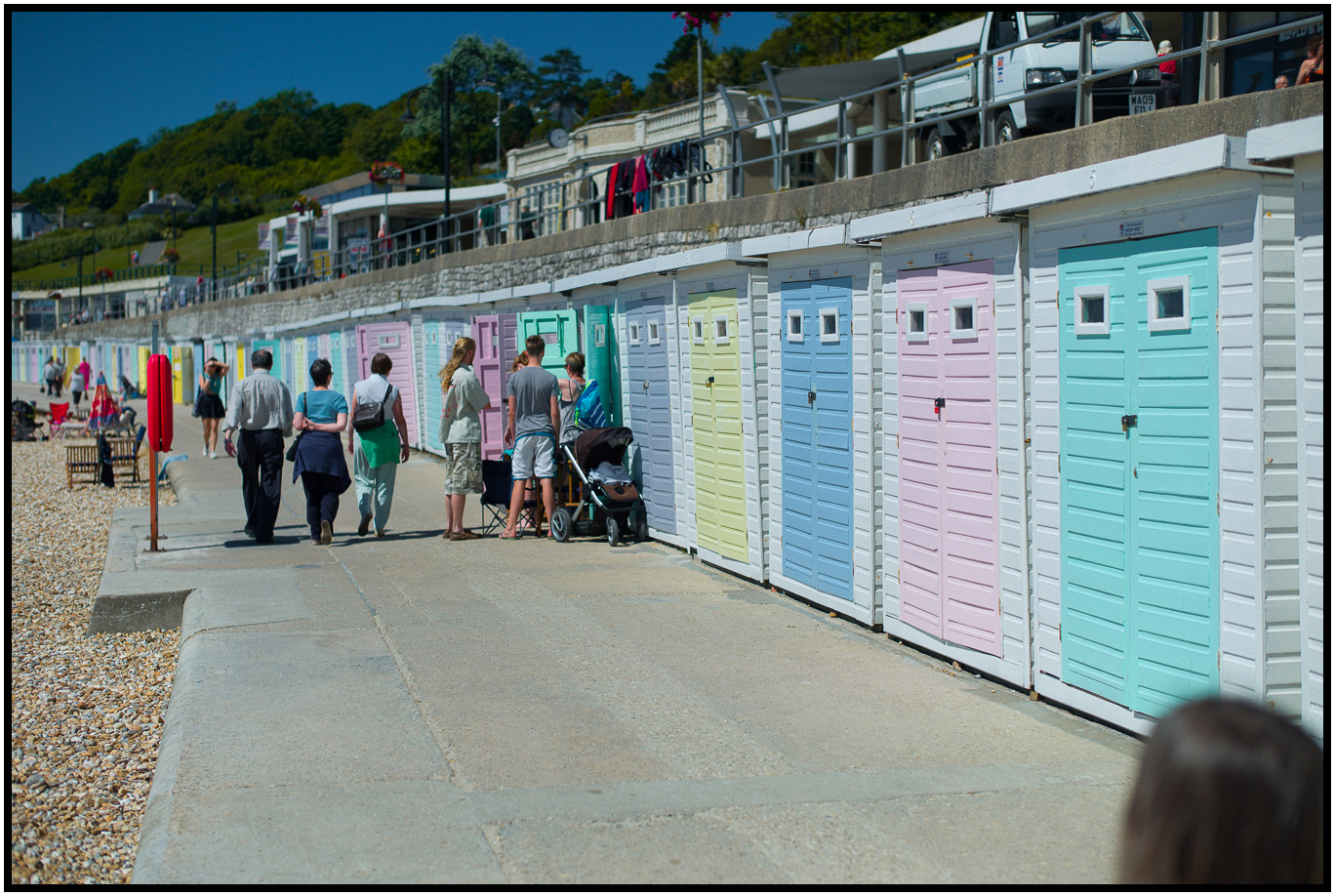
And for £28,000 you can have your very own.
That cliff is full of fossils. They erode from rain and wind, and fall down onto the beach.
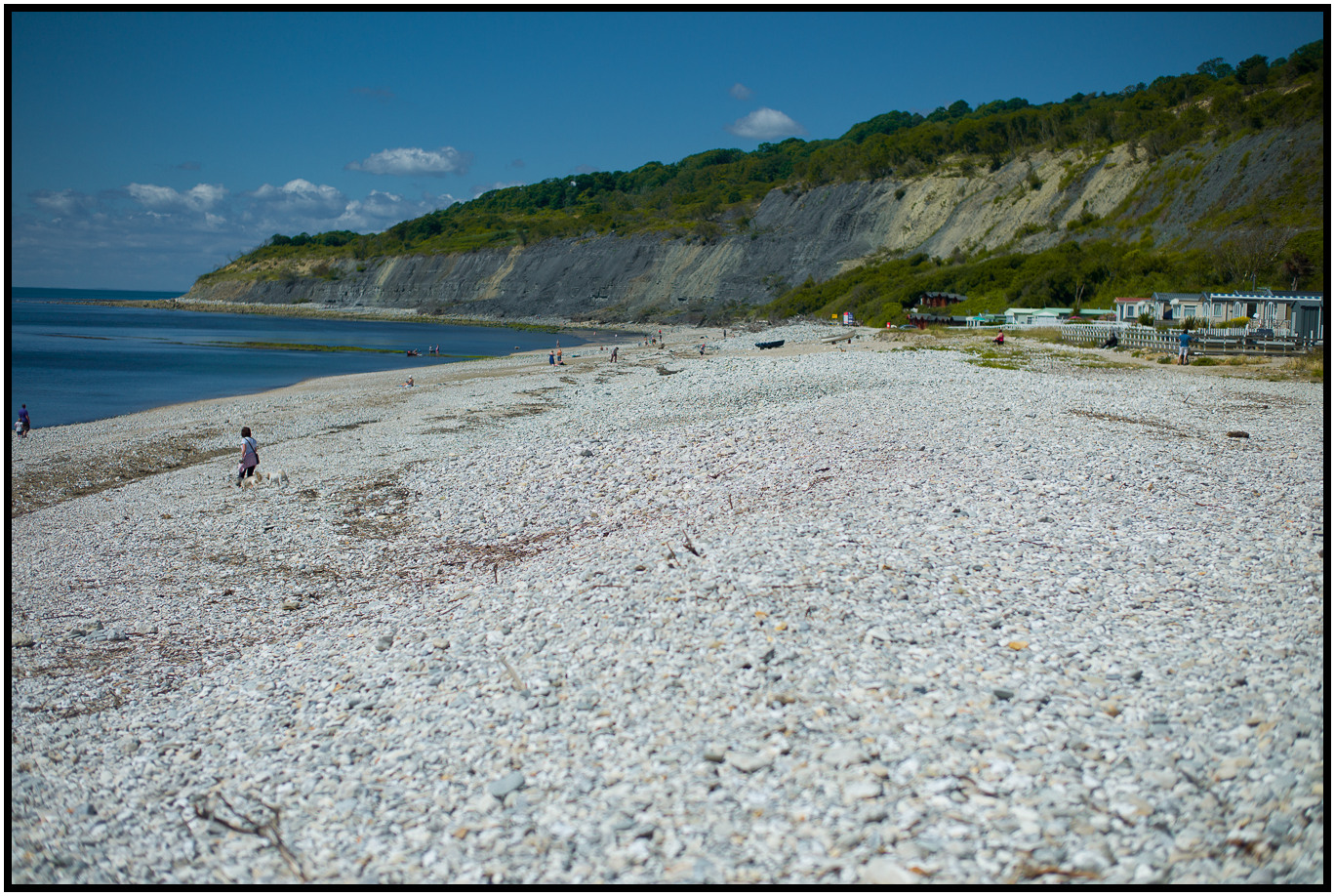
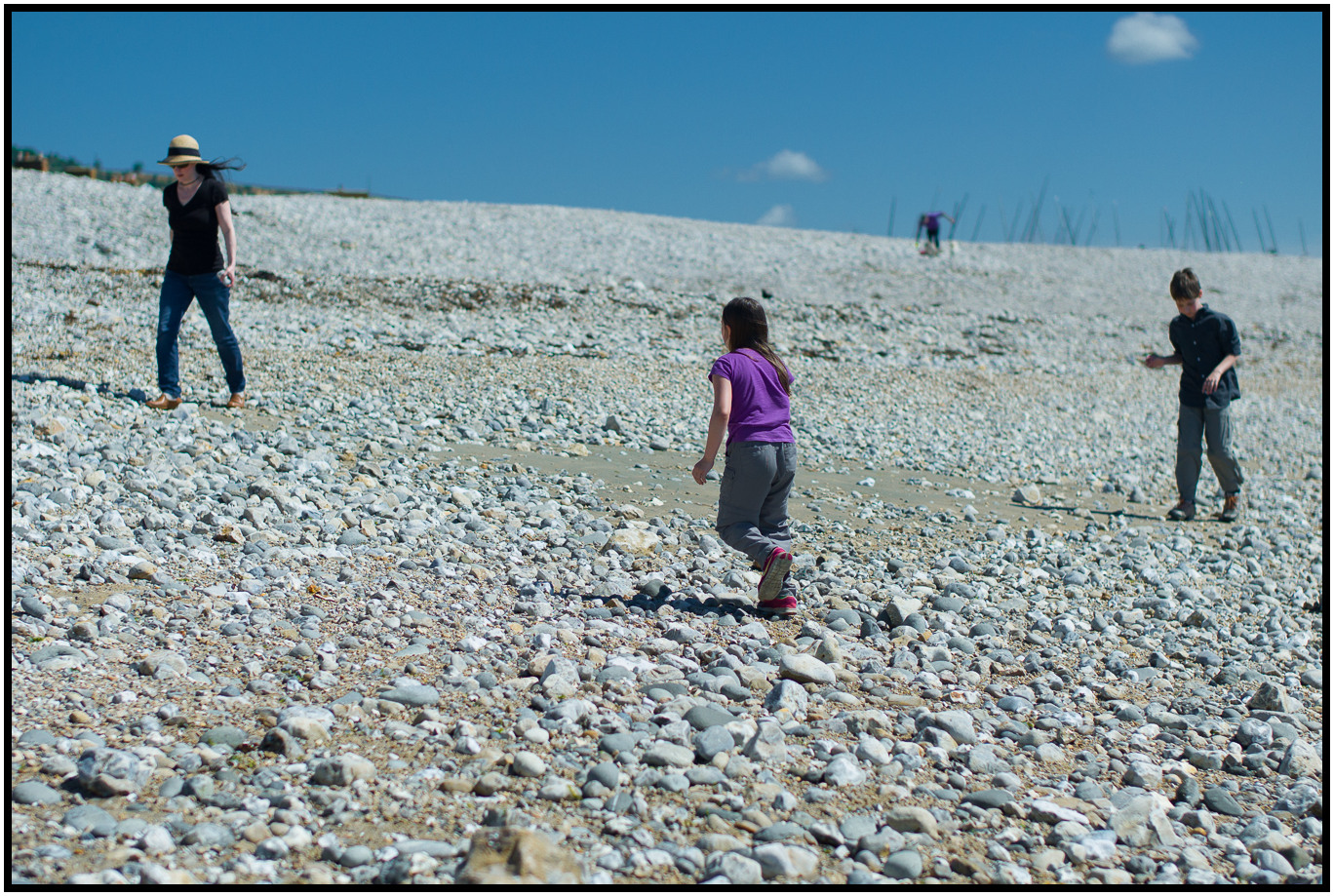
There are fossils everywhere underfoot.
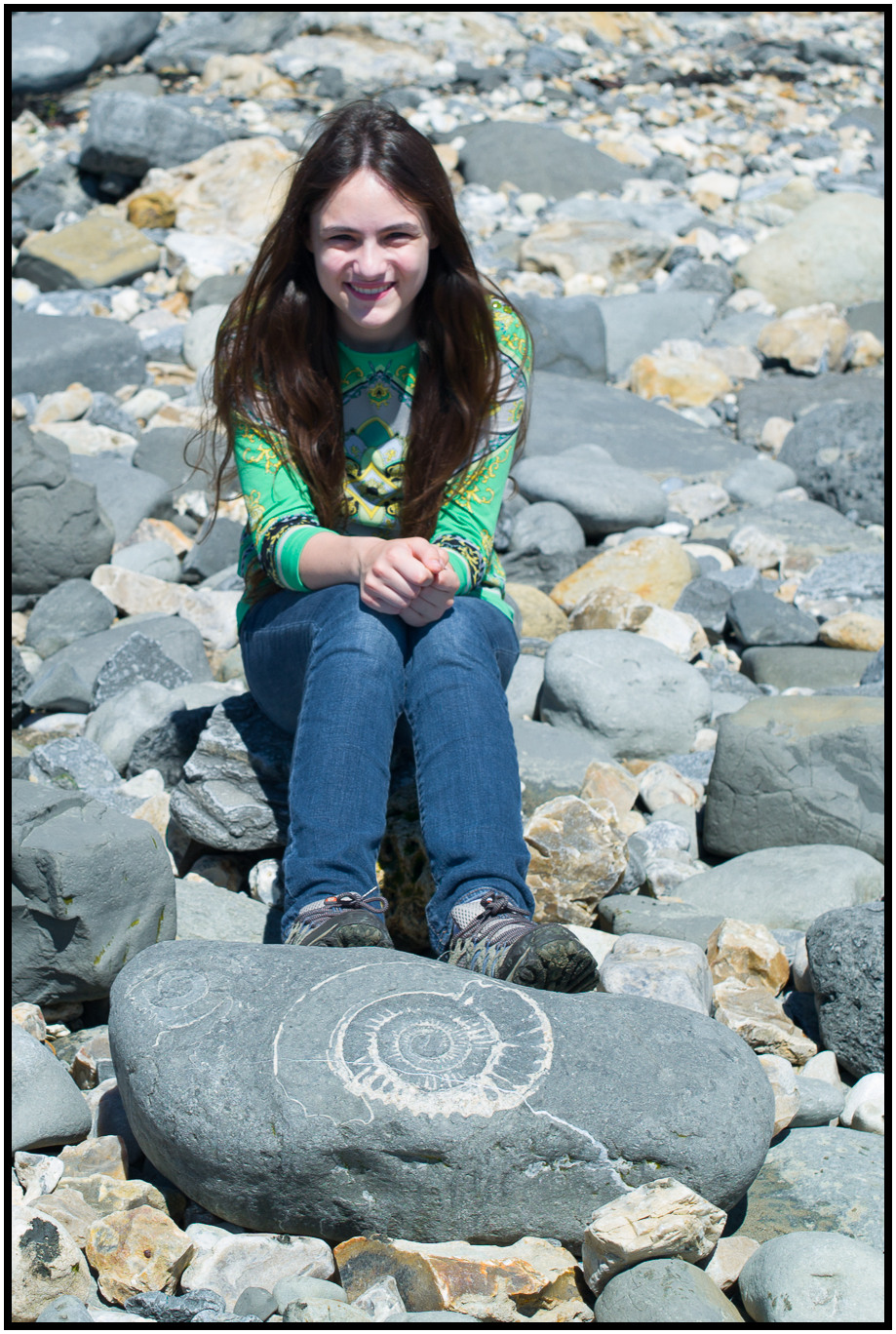
Some of the huge ones on boulders that nobody has taken. You’d need a tractor to haul these out.
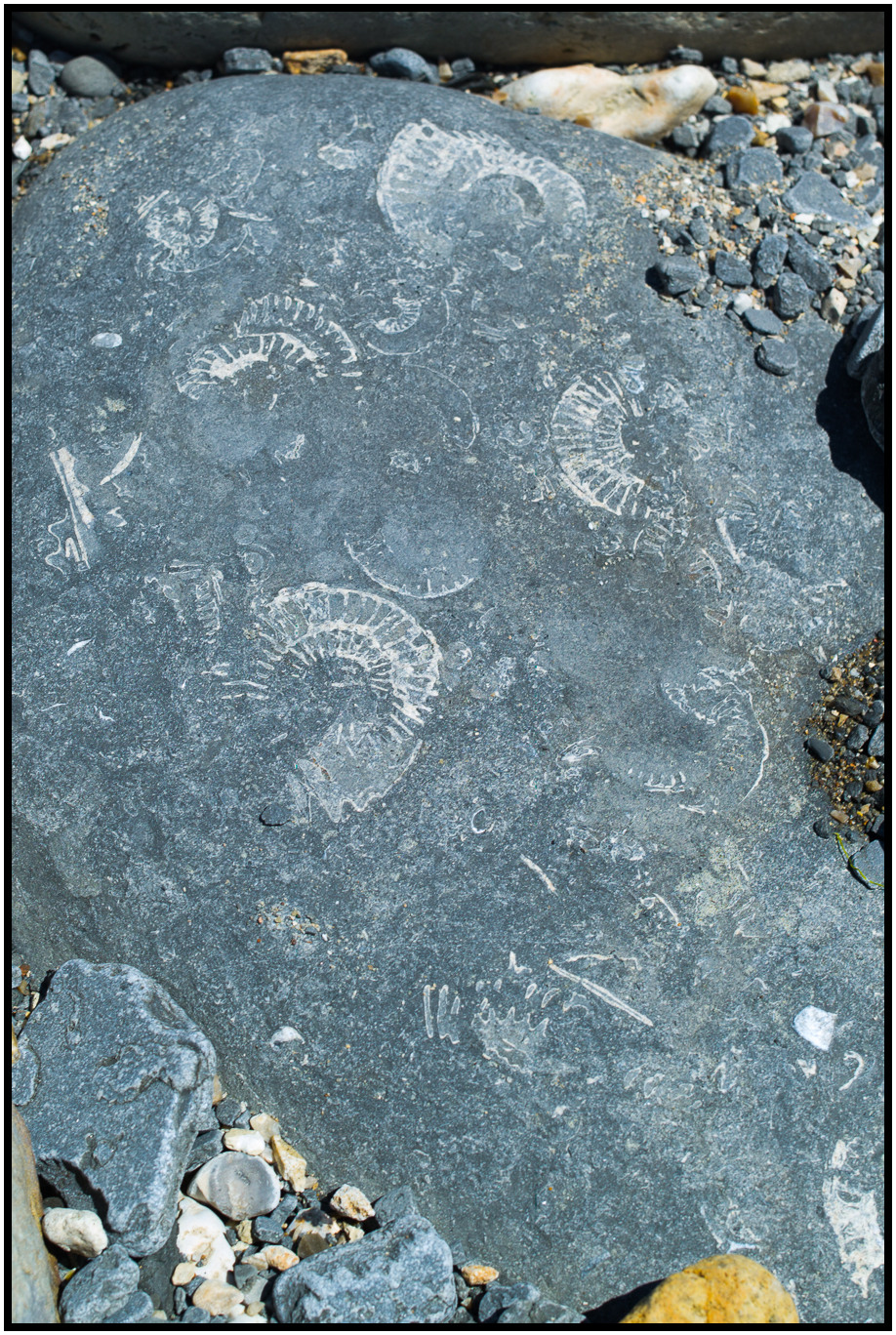
Isabella loved this one, but alas it was way too big for us to take.
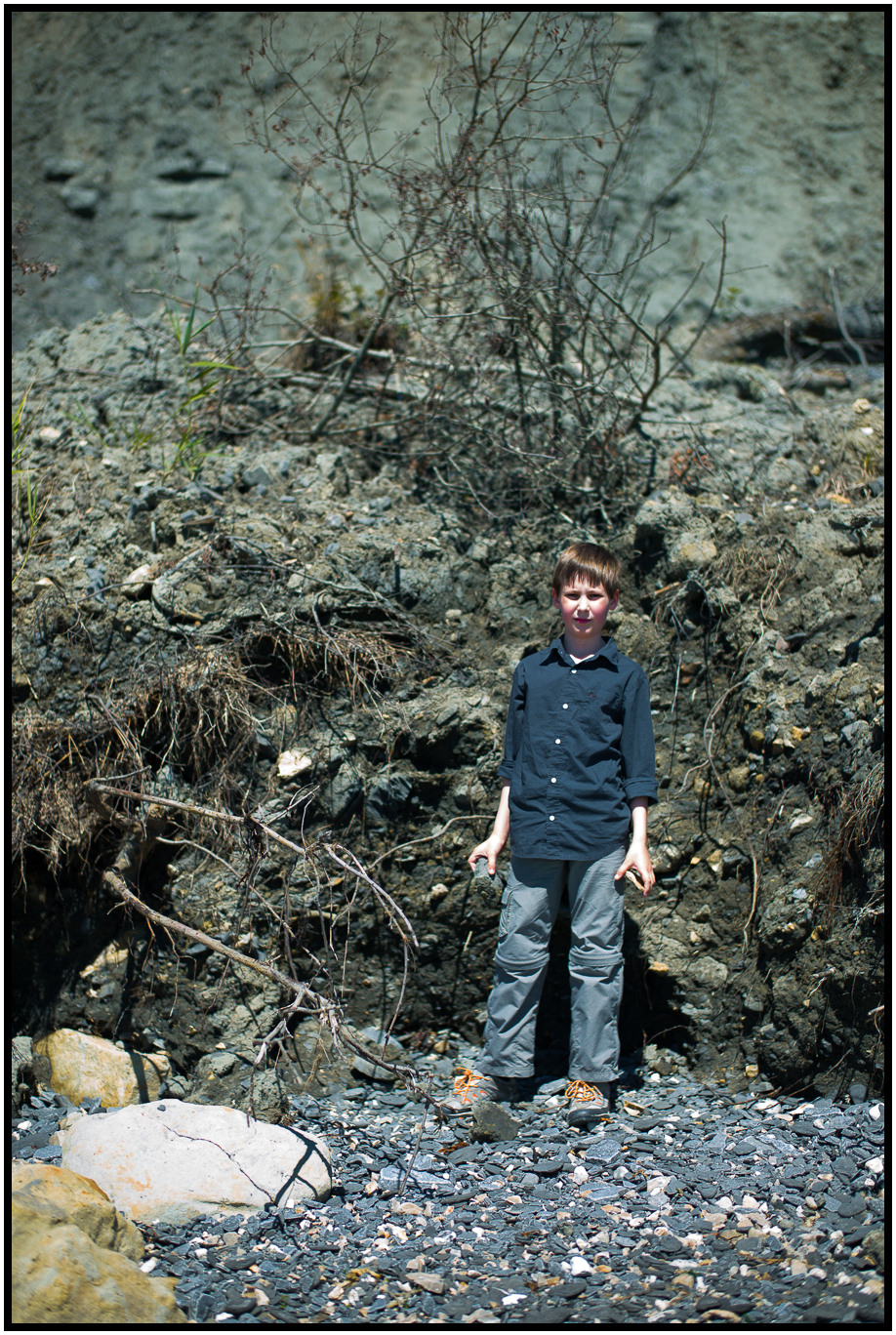
Holden went straight to smashing rocks, and later moved on to stick harvesting. No interest in looking for fossils here.
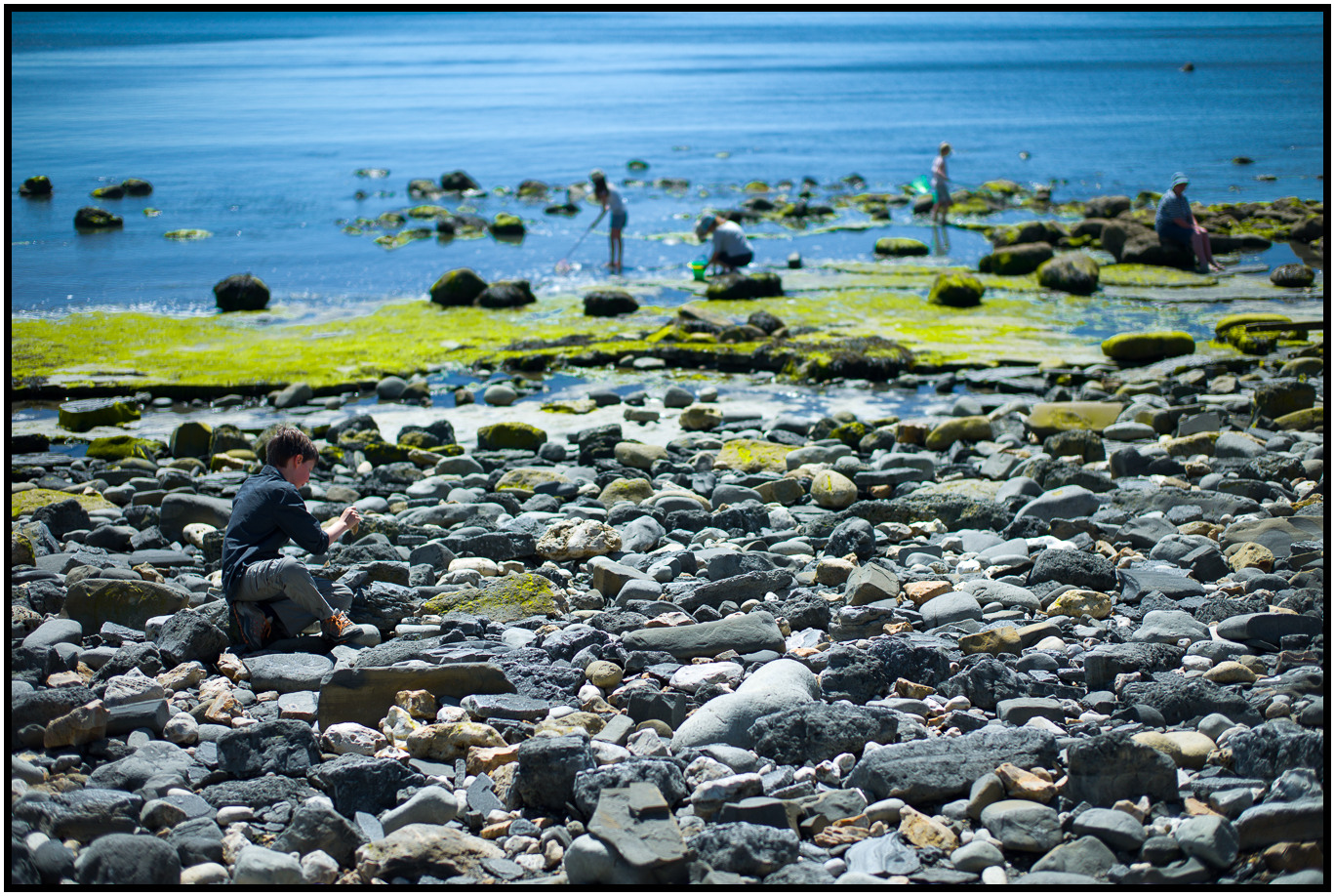
Isabella is out in the water with a stick looking for crabs. Holden is in the foreground smashing more rocks.
Josie and I diligently looking for fossils.
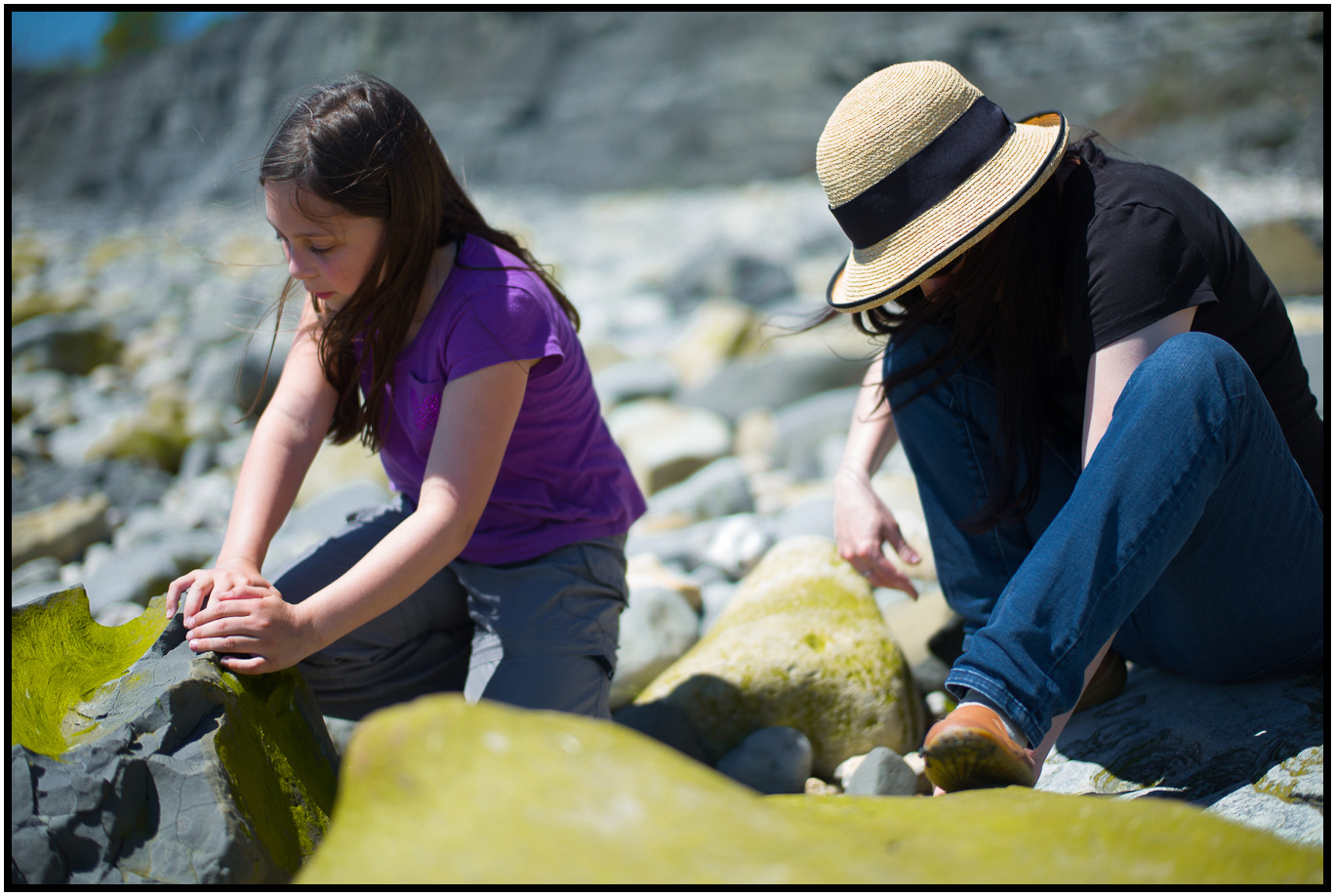
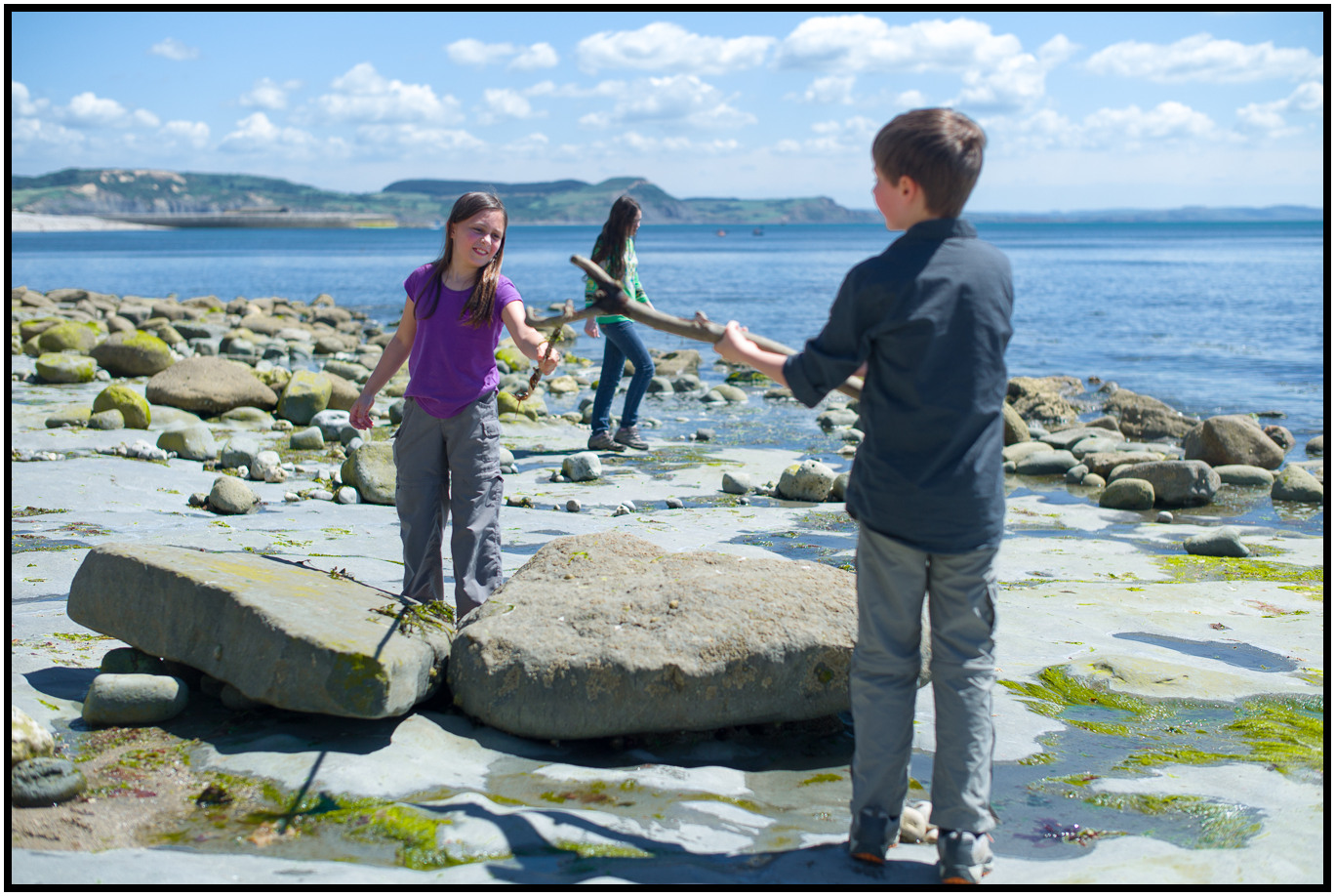
I outlasted even my little Jo, who eventually lost interest and started playing swords with Holden.
Now he’s trying to flip over seaweed to see if there are any creepy-crawlies under there.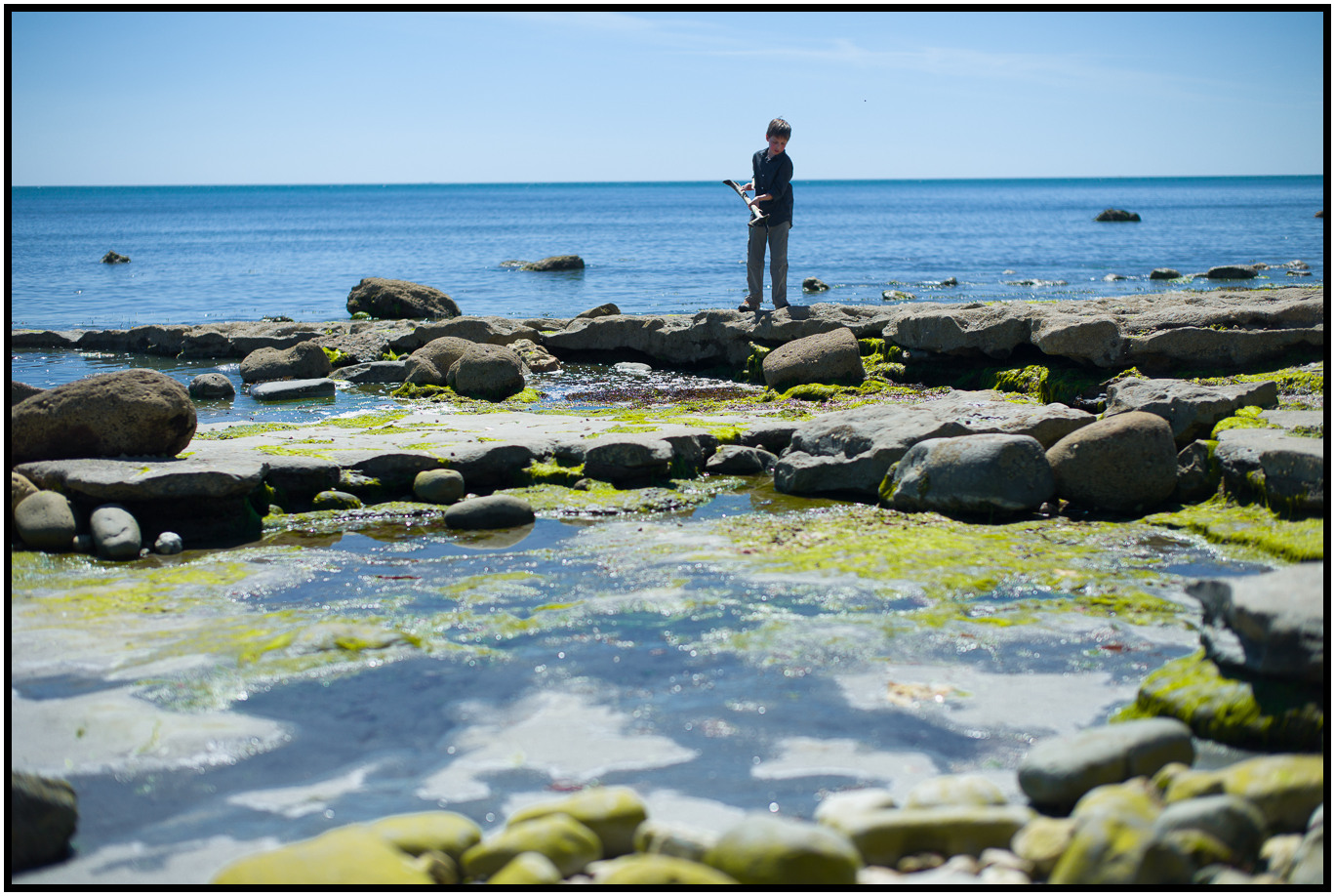
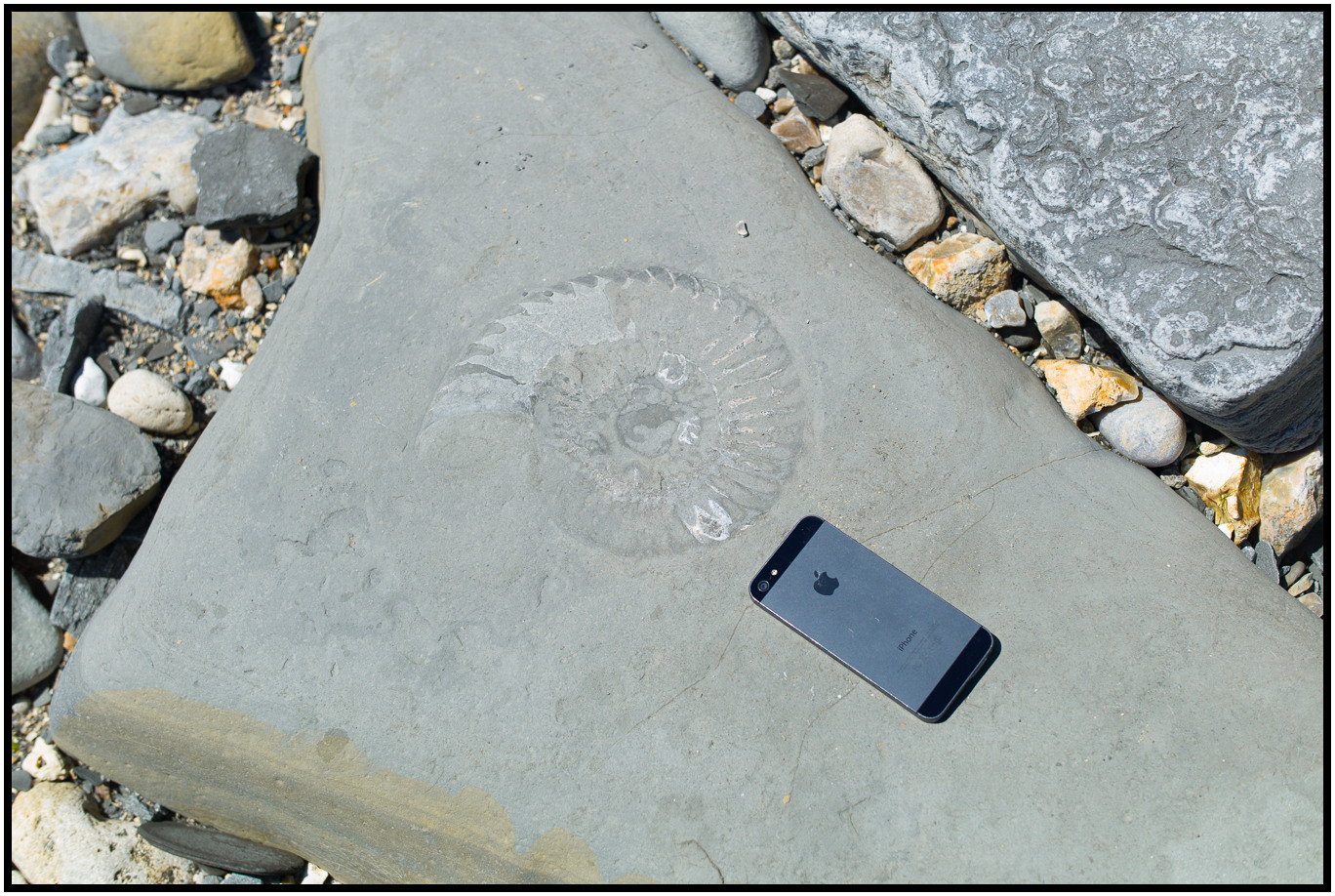
Another beautiful fossil that was just way too big to move. Adam’s phone here for scale.
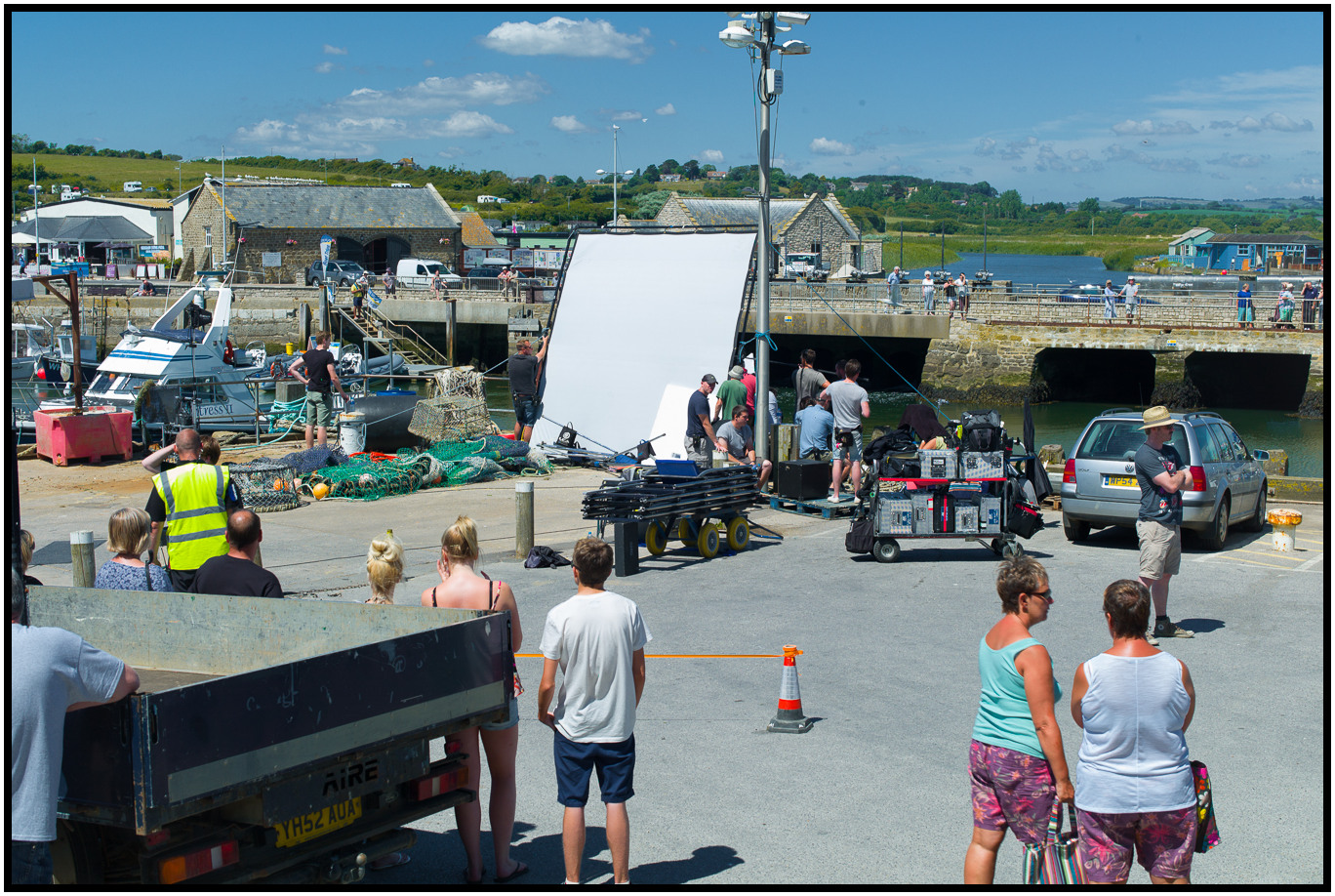
A little further down the road we visited West Bay, which is the filming location for the British TV show Broadchurch. We happened to show up while they were setting up to film scenes for series 2. We saw Olivia Coleman standing around on set with people holding an umbrella over her. I assume they were trying to keep the sun from melting her make-up. We didn’t see David Tennant.
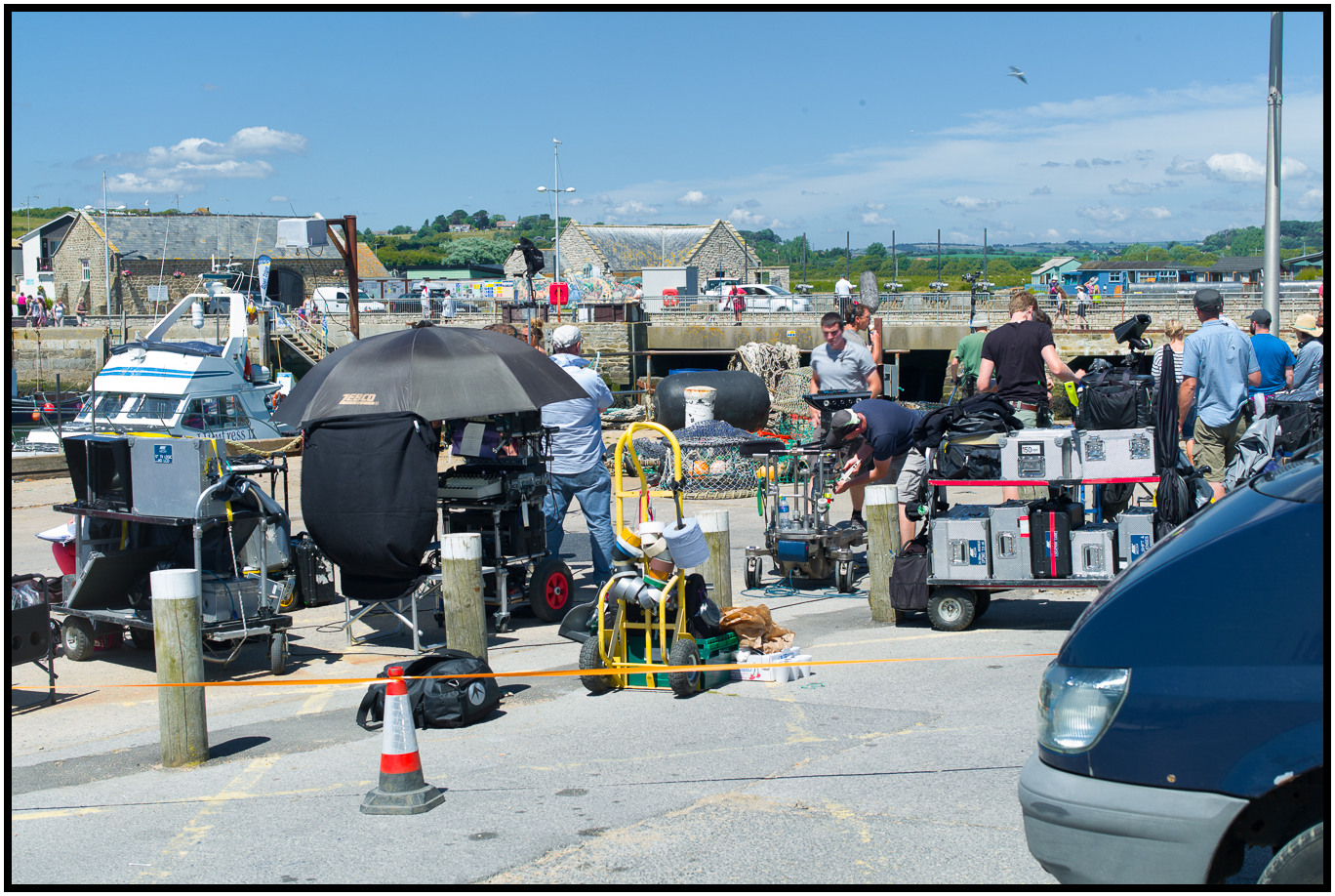
That big white reflector screen is for eliminating shadows. After Adam took this shot, a policeman asked him to stop taking pictures. He said it wasn’t against the law, but gave Adam a piece of paper that reads: “Thank you for taking an interest in today’s filming. We are happy for you to watch what we’re doing but would be very grateful if you could avoid taking photos of us with your phone or camera. The cast and crew find it very distracting and unsettling. Thank you for your support and understanding.”
So — no more photos of the Broadchurch filming.
We walked over to the iconic cliff. Anyone who has seen the show will recognize this as the place where the murdered boy was pitched over.
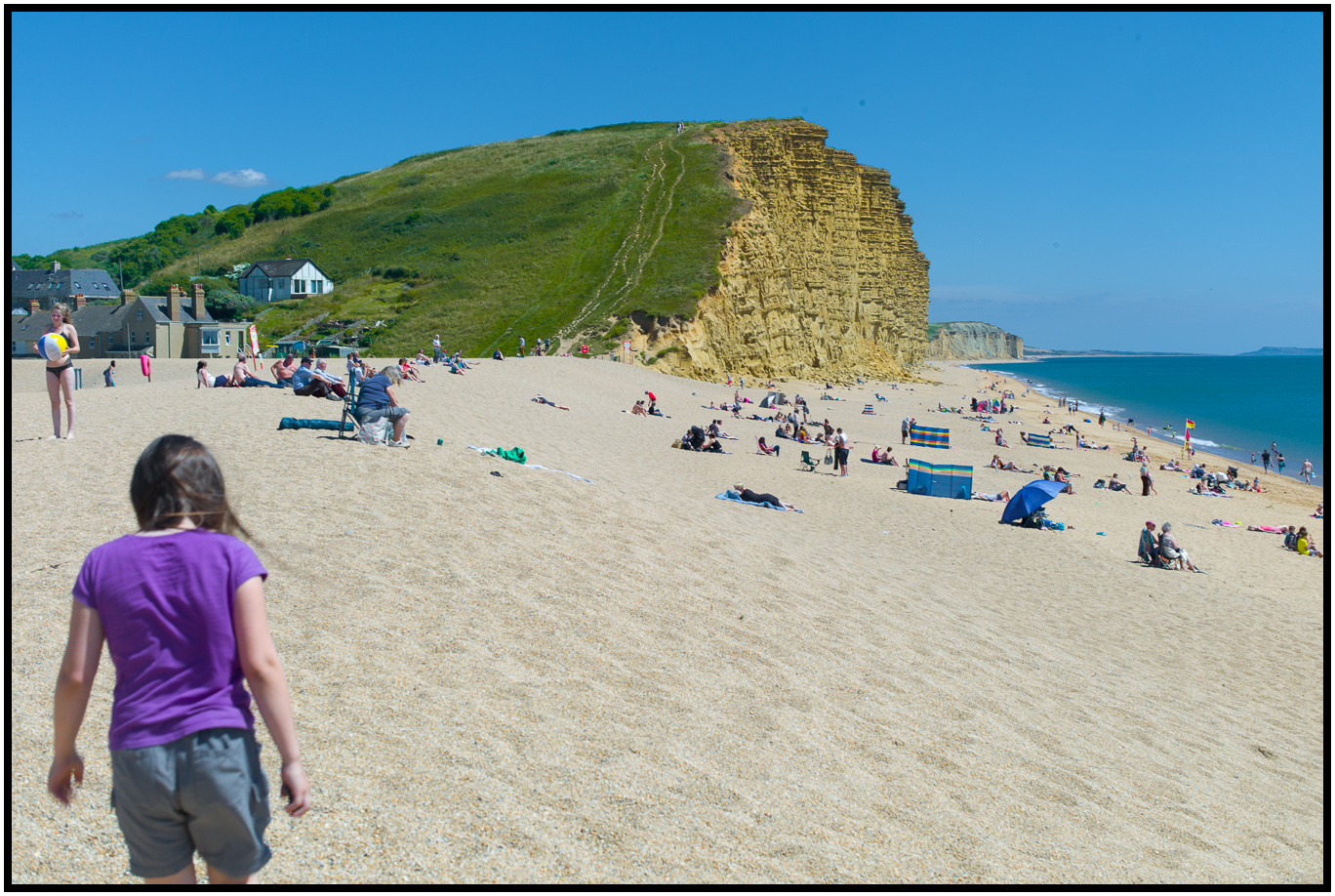
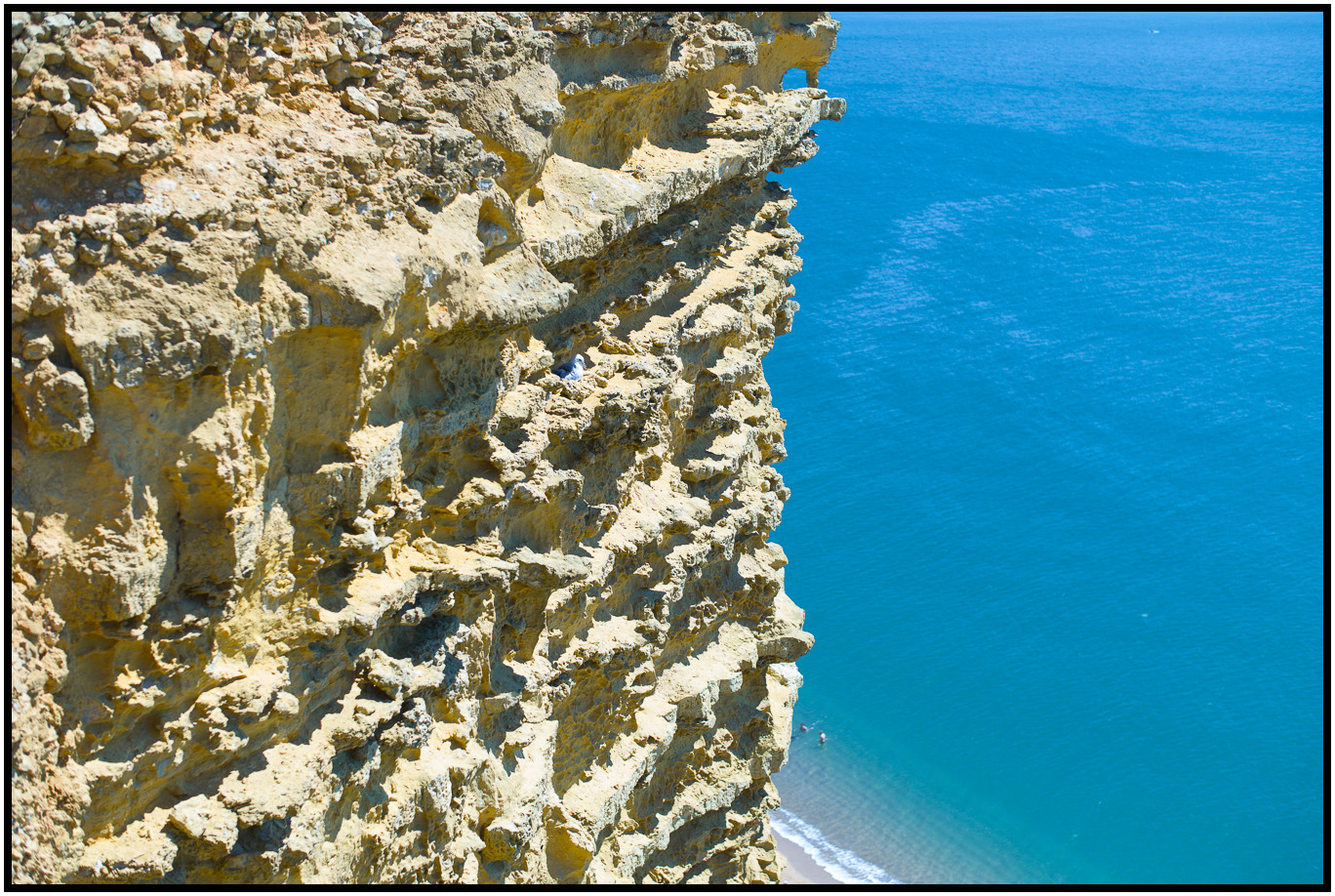
We walked up the hill. It is a very dangerous cliff. Nearly every year someone is killed by accidentally falling off. We took a quick peek and scurried back to the safe zone.
It was also really windy. I had to hold my hat on.
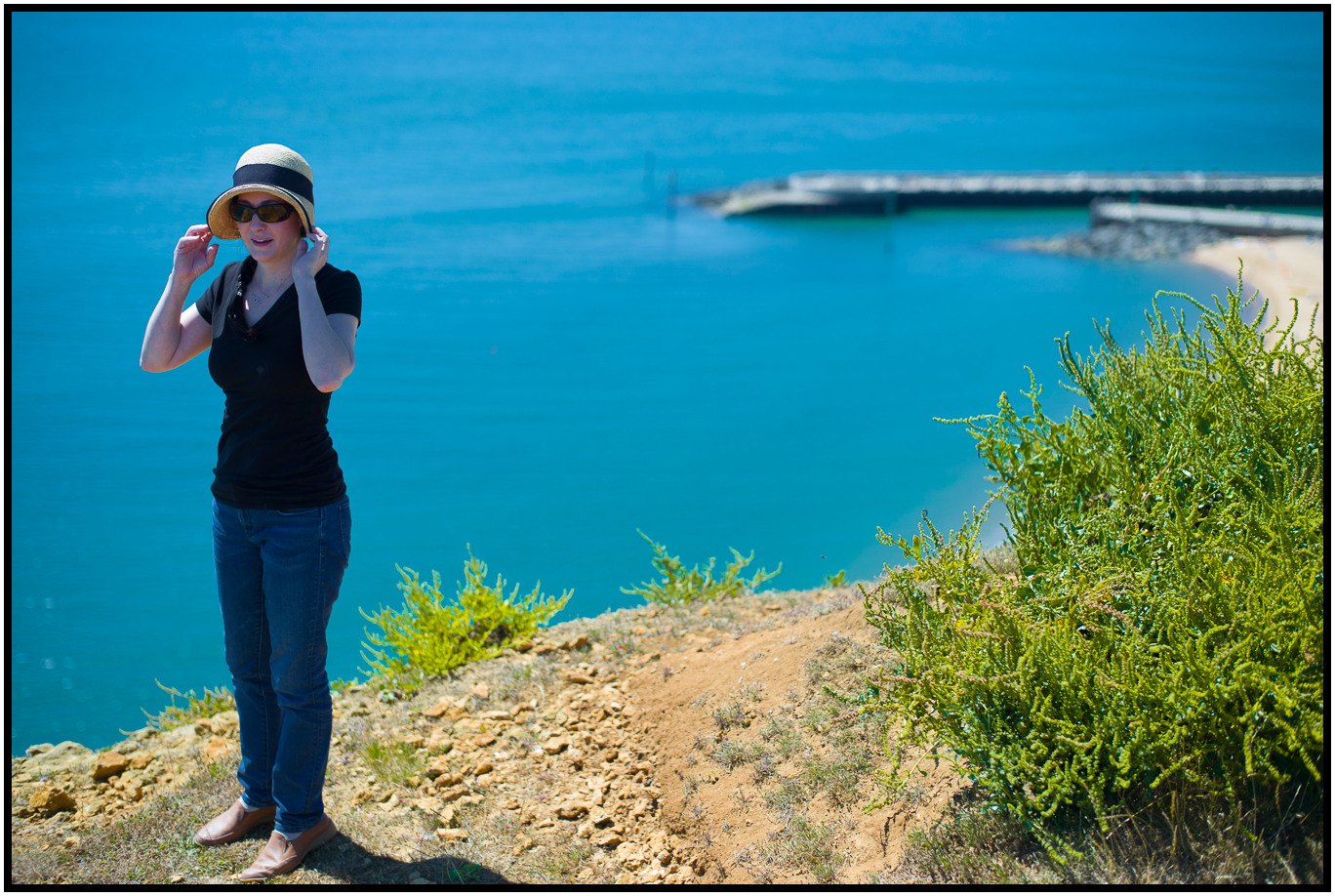
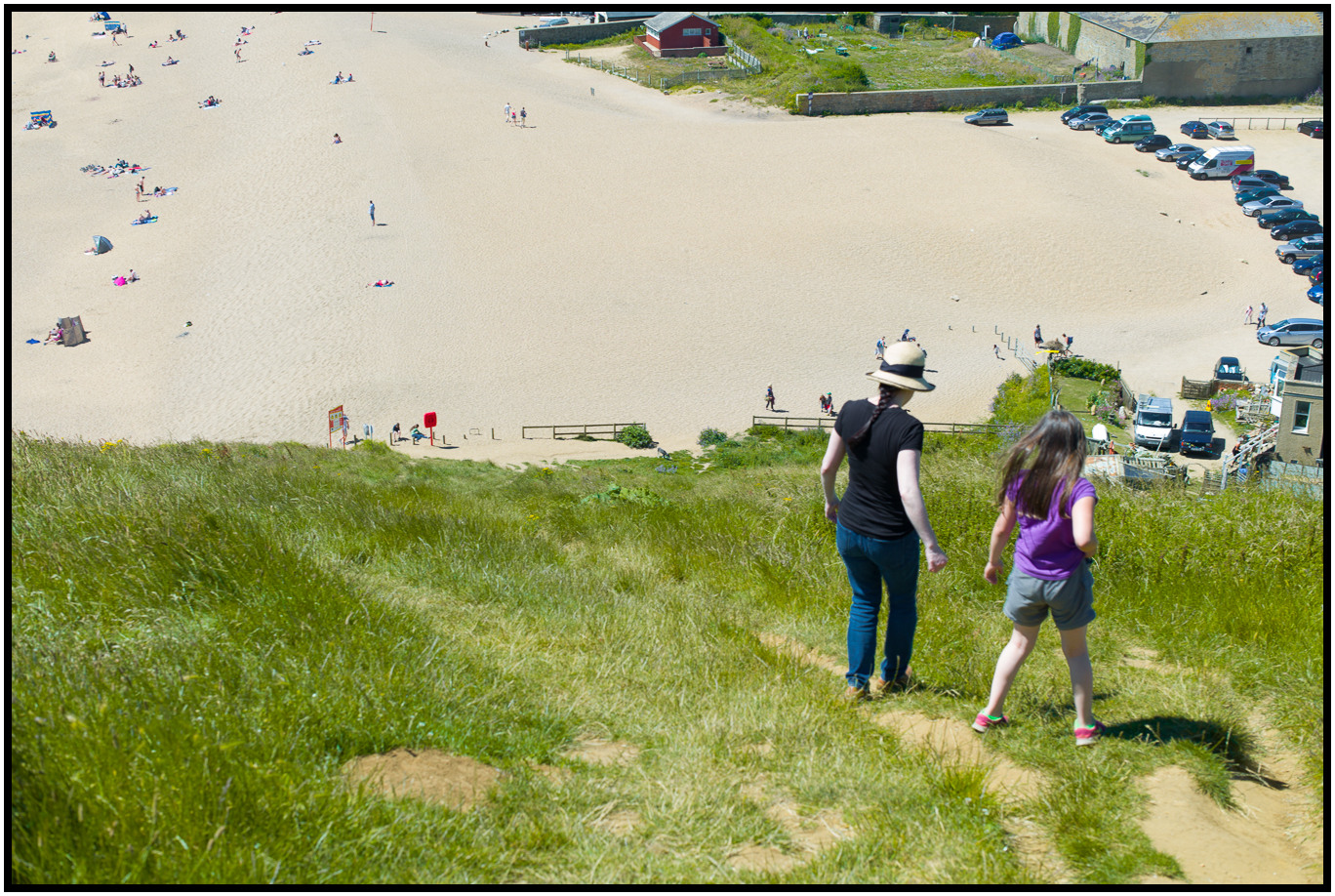
Josie joined us, but the other two didn’t want to hike up the hill. You can barely see them down at the bottom of the hill next to the red sign.
July 11, Friday
Today was all about Adam. Therefore, all photos and commentary from here on out are his. (I added my two cents at the end.)
Adam: Before we left Georgia, I had assembled a list of “must do” things for the summer. Near the top of my list was a visit to Portsmouth – specifically to see the HMS Victory. This is the famous flagship of the British Fleet during the Napoleonic Wars, and the star of the Battle of Trafalgar. This is the site of Horatio, Lord Nelson’s untimely death. She remains the world’s oldest naval ship still in commission.
On my last visit to England, with Jim and Arge, we visited the National Maritime Museum in Greenwich. In that museum are a number of Nelson’s personal possession as well as the jacket he wore during the battle of Trafalgar. You can see the holes in his coat where the fatal bullet entered at his shoulder. (He was shot by the equivalent of an 19th century French sniper, high up on the ropes of the ship Redoubtable – which had rammed alongside the Victory and was scraping up the starboard side.) The bullet entered and ran down along his spine and scrambled some of his internal organs. Separately, the actual bullet is prominently displayed inside Windsor castle as a relic. Nelson means to England what Washington, Grant or Eisenhower mean to the US in military lore.
When I got home from the trip last fall, I immediately read Roy Adkins’ book Trafalgar – which helped fill a big gap in my historic knowledge.
The visit is well worth it – and all during the day I sorely missed Jim’s and Arge’s company – they would have oohed and ahhed for hours until their mouths were sore from gaping and taking it all in.
Warning: Lots and lots of shots of the ship, inside and out. These turned out better than I had hoped. Many of the shots were taken with exposures running from 2 seconds to 10 seconds. It is VERY dark down in the lower decks and I didn’t have a tripod. I did the best I could and, for the most part, did quite well if I do say so myself.
This visit was a highlight (for me) of the trip. The others in my group suffered (mostly) silently.
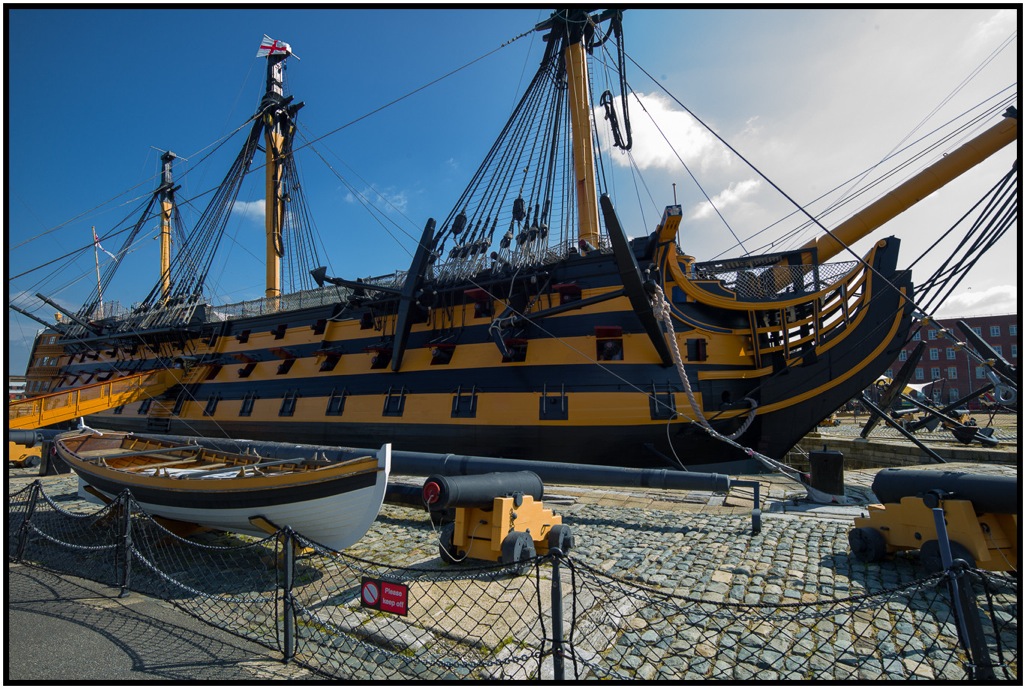
HMS Victory [below]: Launched in 1765 and the first ship of the line in 1805 when her presence secured a British victory against the French and Spanish at Trafalgar. After this date, the UK ruled the seas uncontested.
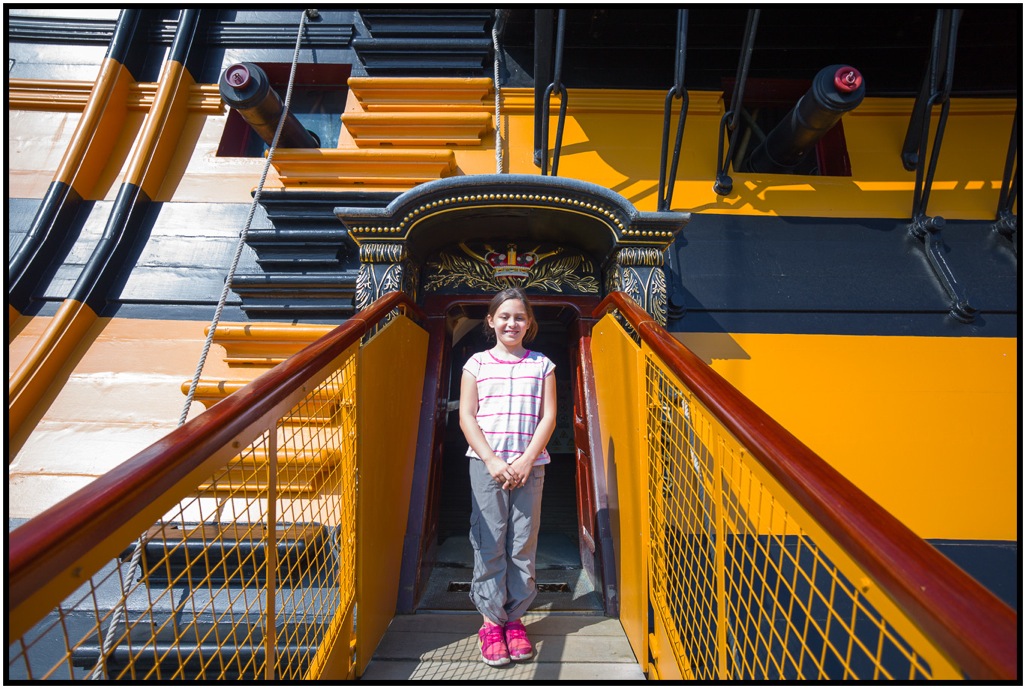
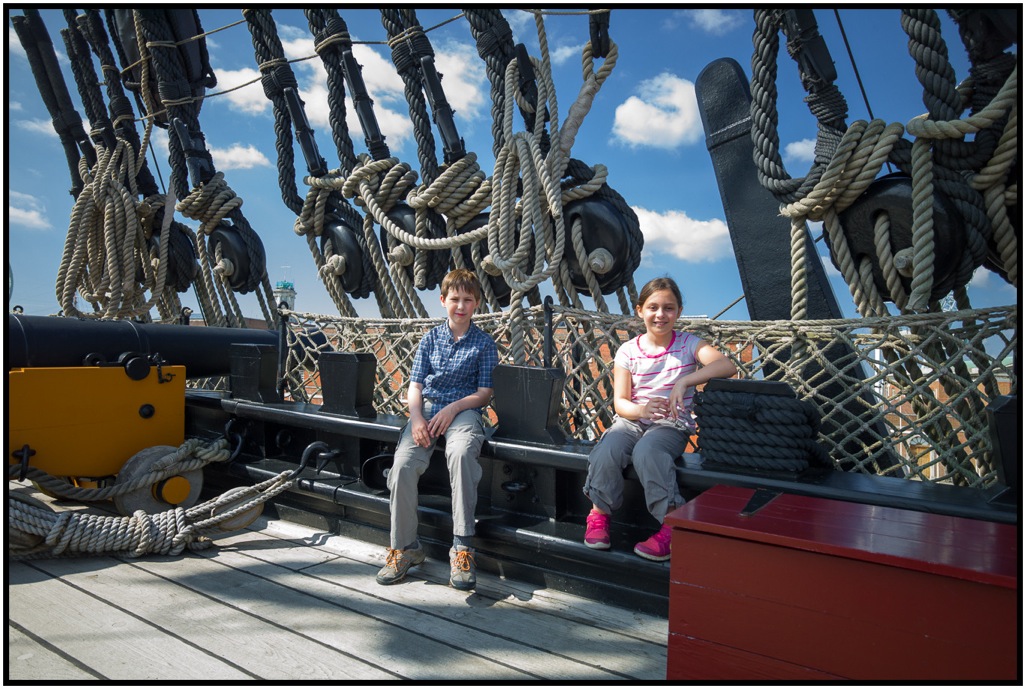
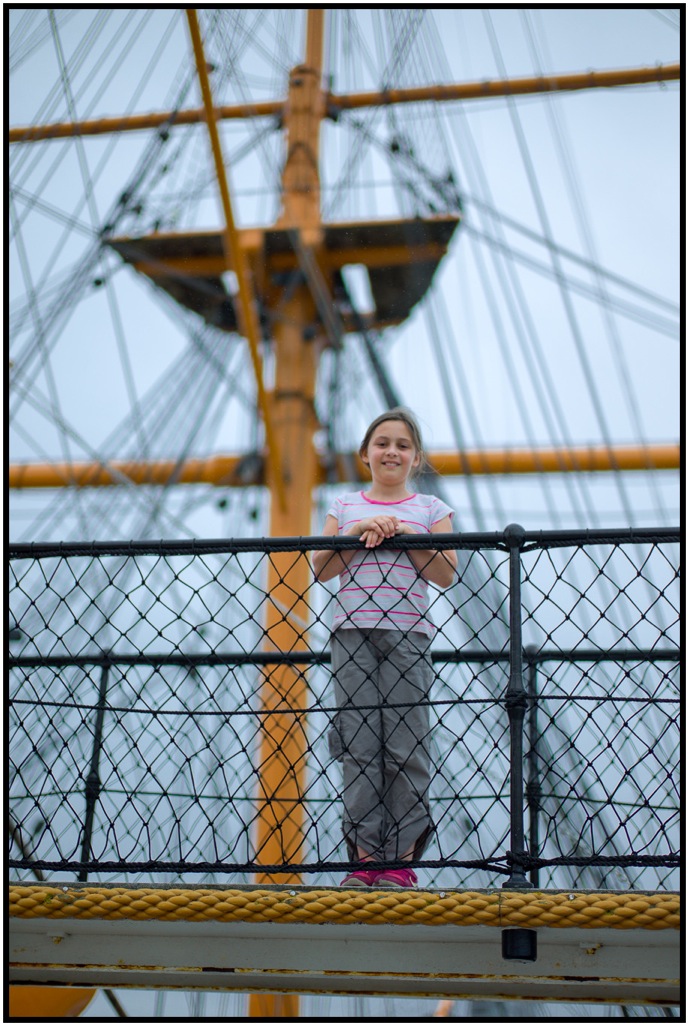
Josie preparing to board. Even she had to duck in some areas of the ship.
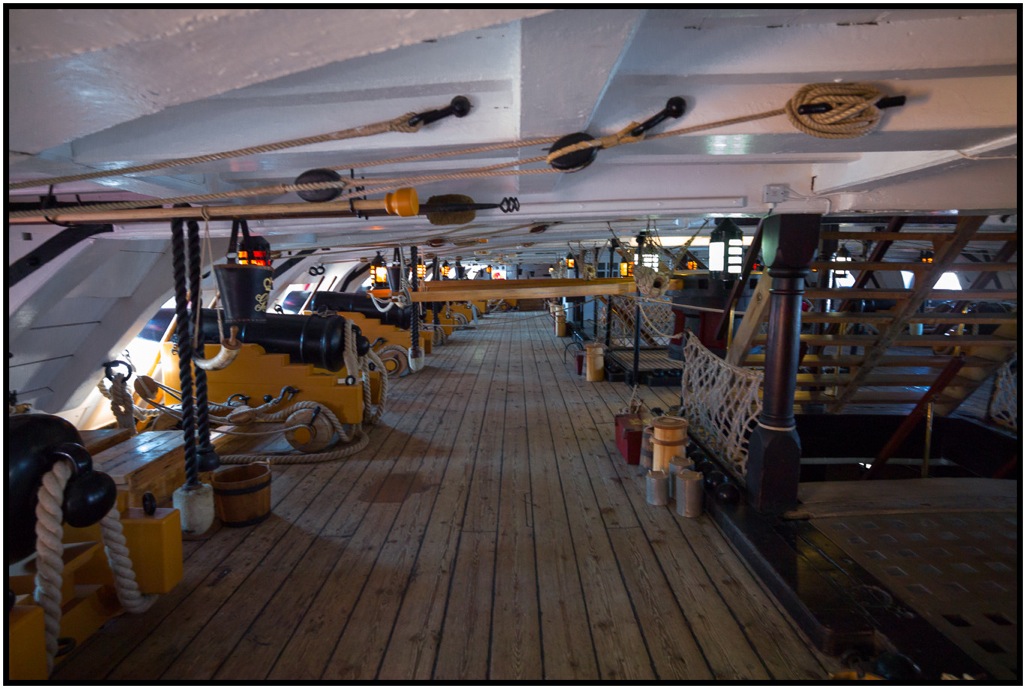
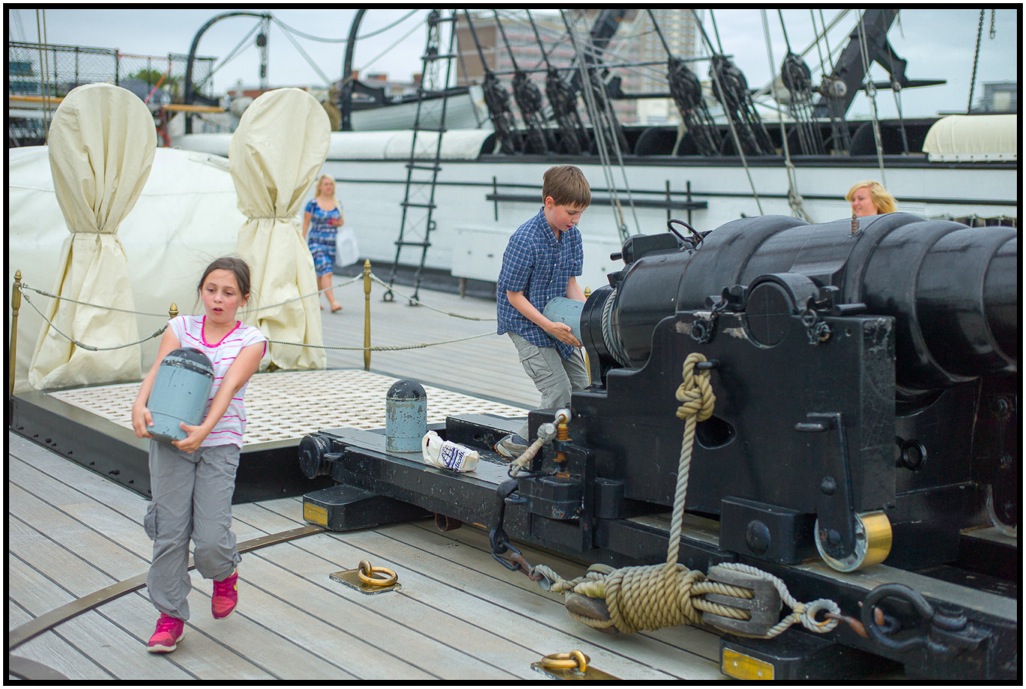
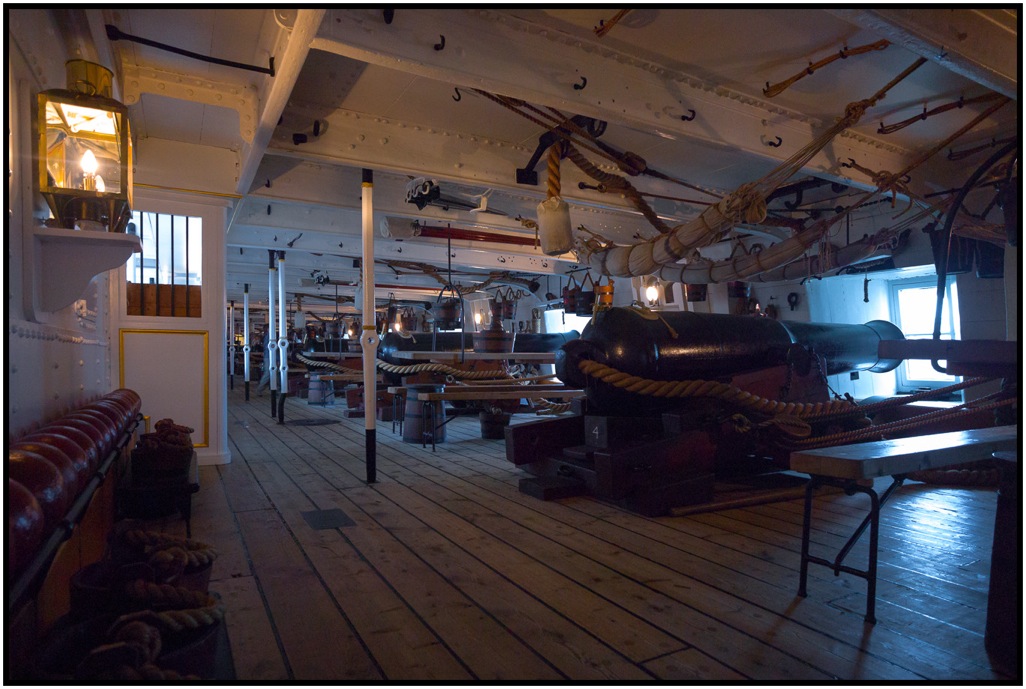
One of the decks laden with canons. The kids kept commenting about how it seemed exactly like Hollywood’s version of a Pirate Ship – and it really did.
Manning the fo’c’sle.
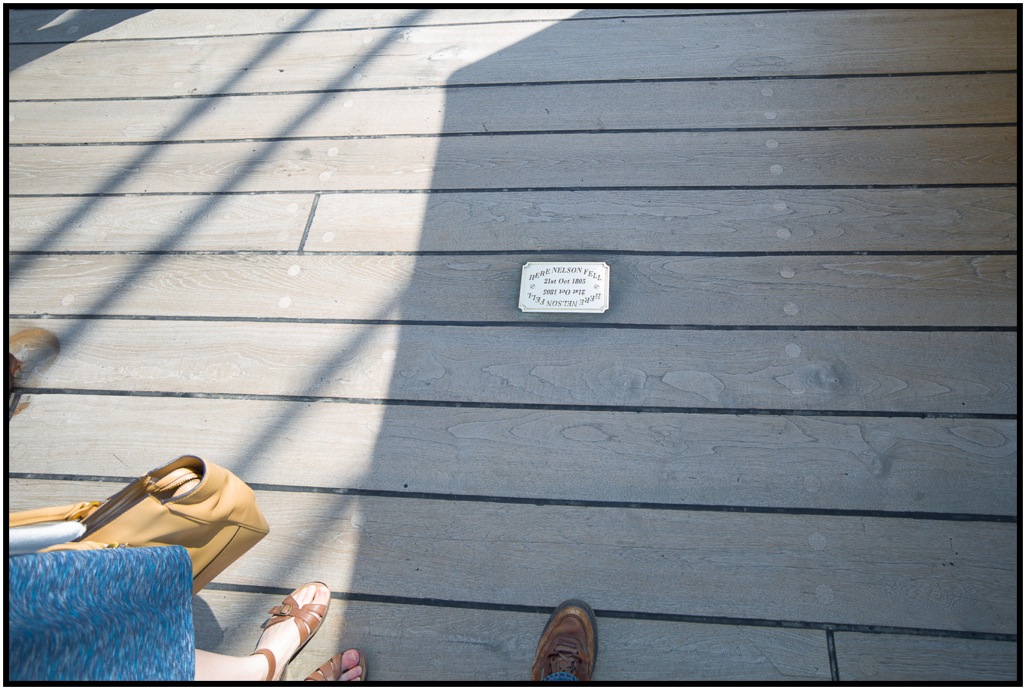
The site where Nelson fell on the rear deck; hand-to-hand combat took place all around him. Nelson famously signalled to his fleet: “England expects that every man will do his duty.” There were 33 ships in the British fleet and 41 ships in the combined French and Spanish fleets. In all, only 458 British sailors died. France and Spain lost 21 ships and almost 14,000 casualties (killed, drowned or captured).
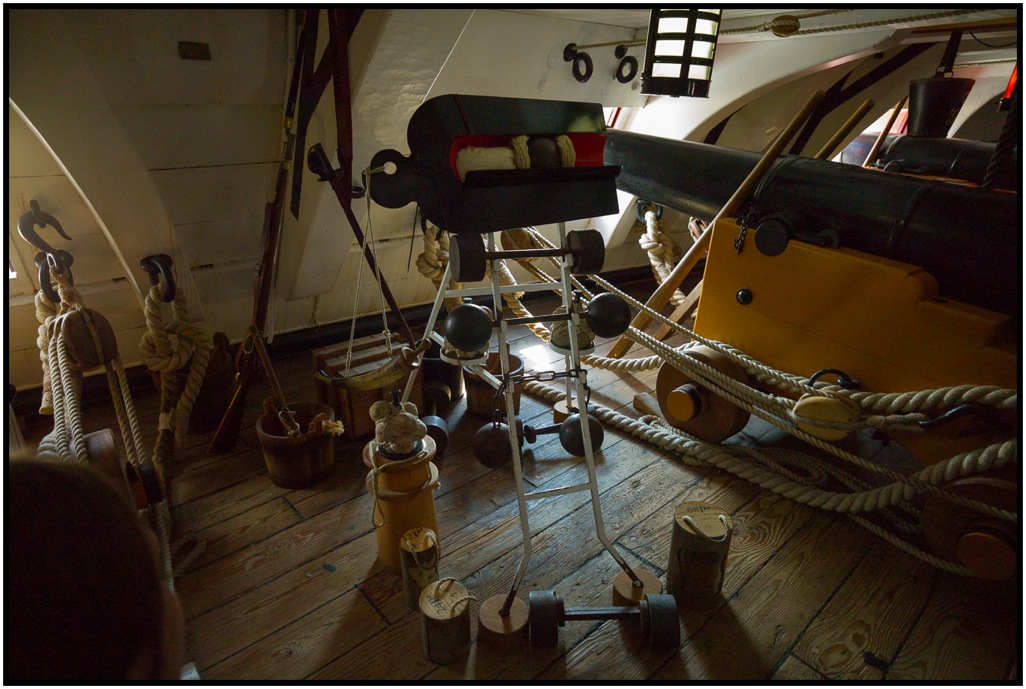
Each canon station had its own kits of cannon balls as well as other types of chain-shot and bar-shot to take out sails and masts.
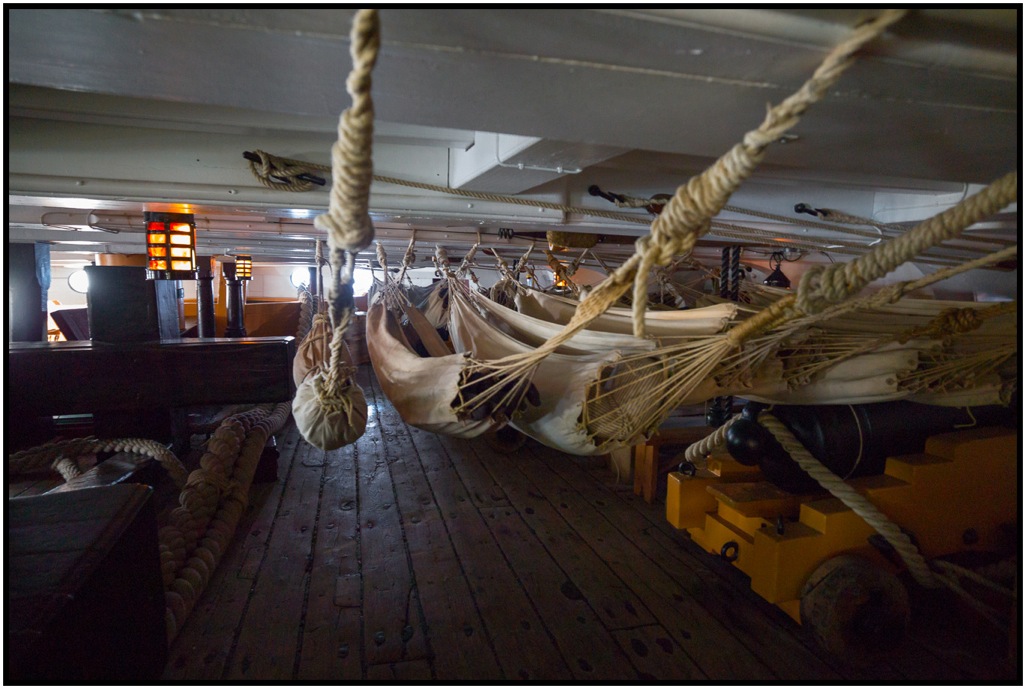
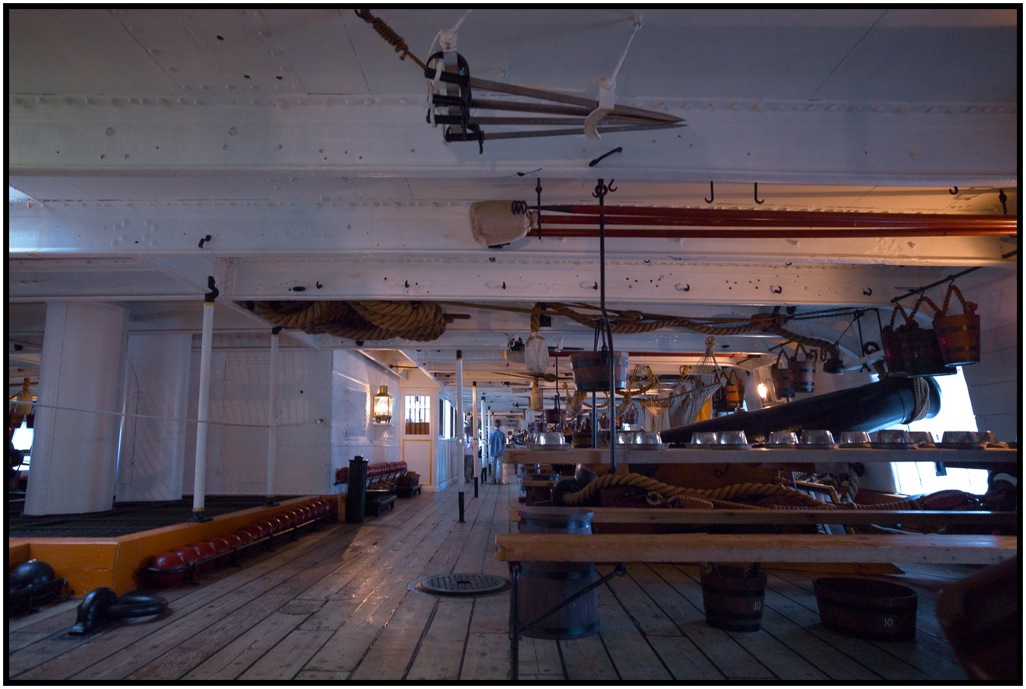
Bunks right out in the open. The complement at Trafalgar was 820 and there wasn’t a private spot on the ship.
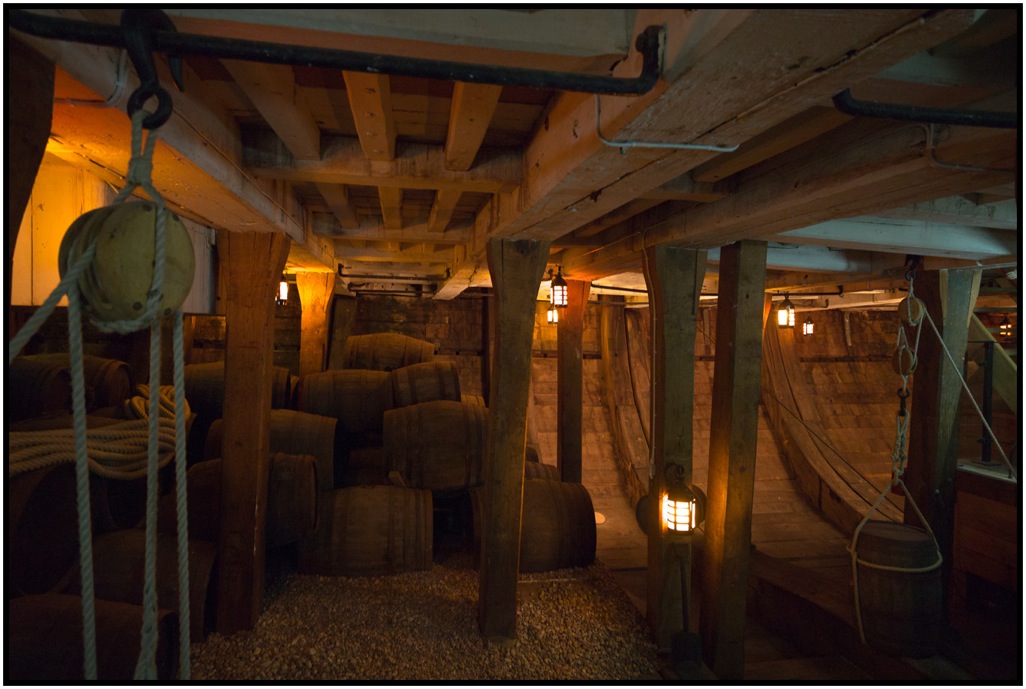
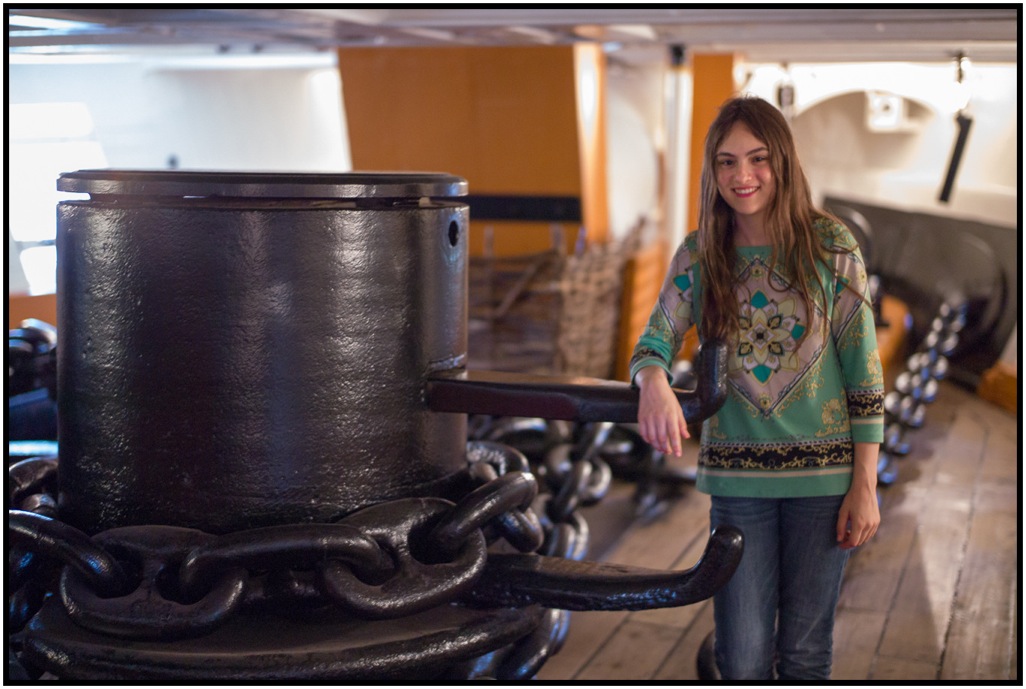
Down in the hold.
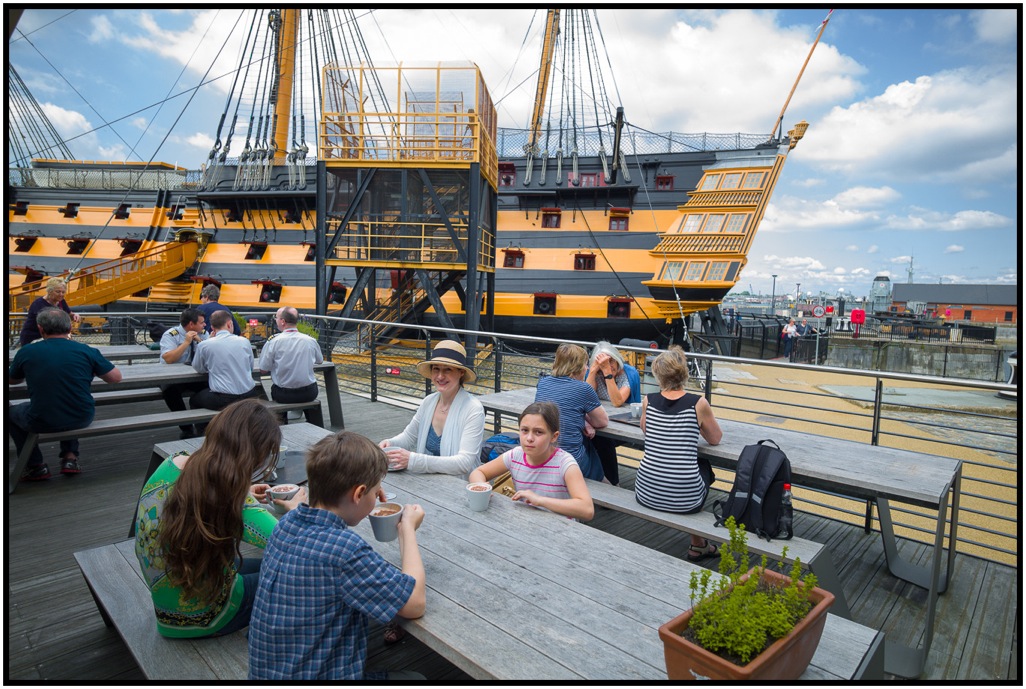
Enjoying coffee, tea and hot chocolate afterwards. Great tour – we got full access to all parts of the ship.
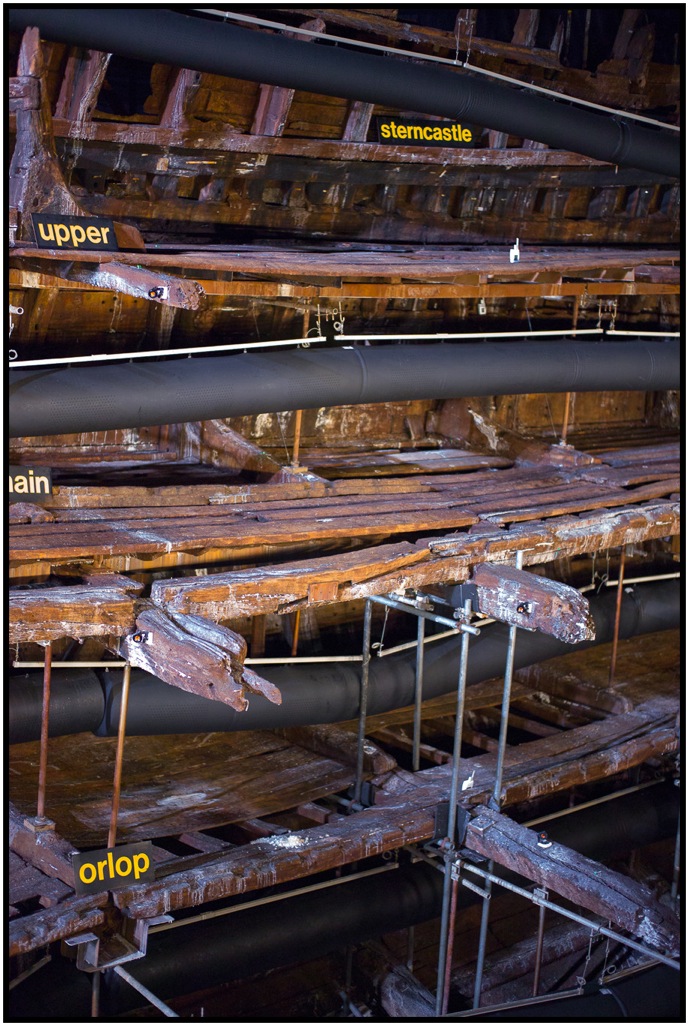
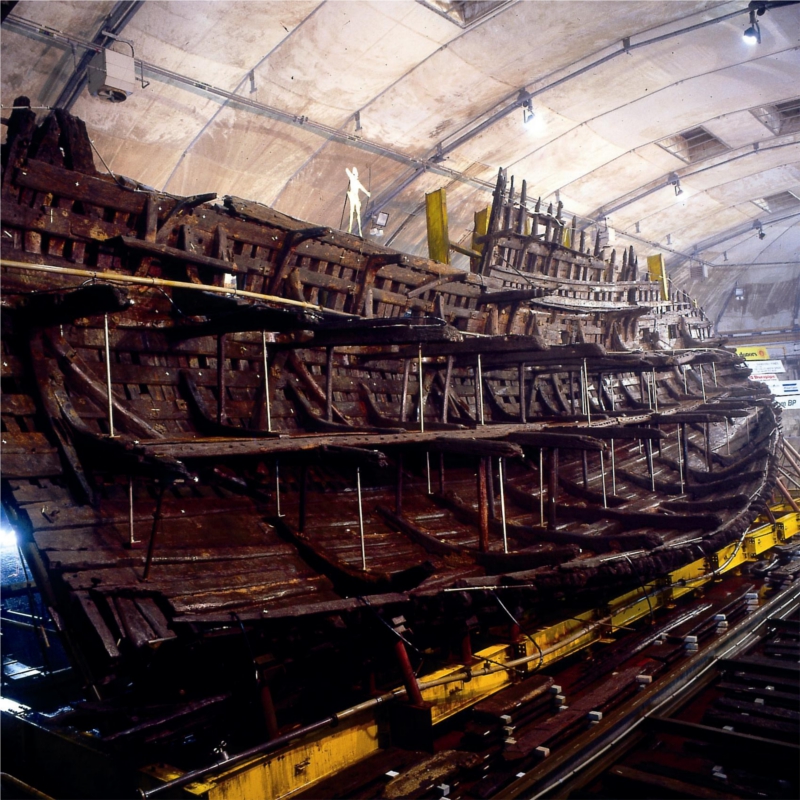
View of the Mary Rose [below]- a carrack-type warship in the time of Henry VIII. The Mary Rose sank in 1545 during the battle of the Solent against the French. At the time, she was the largest and most well-appointed attack ship on earth.
The remnants of the ship (the port side, which had buried itself in silt and thus preserved the wood and other artifacts) was salvaged in 1982. They have created a museum around the ship’s remains and display all of the items that were recovered.
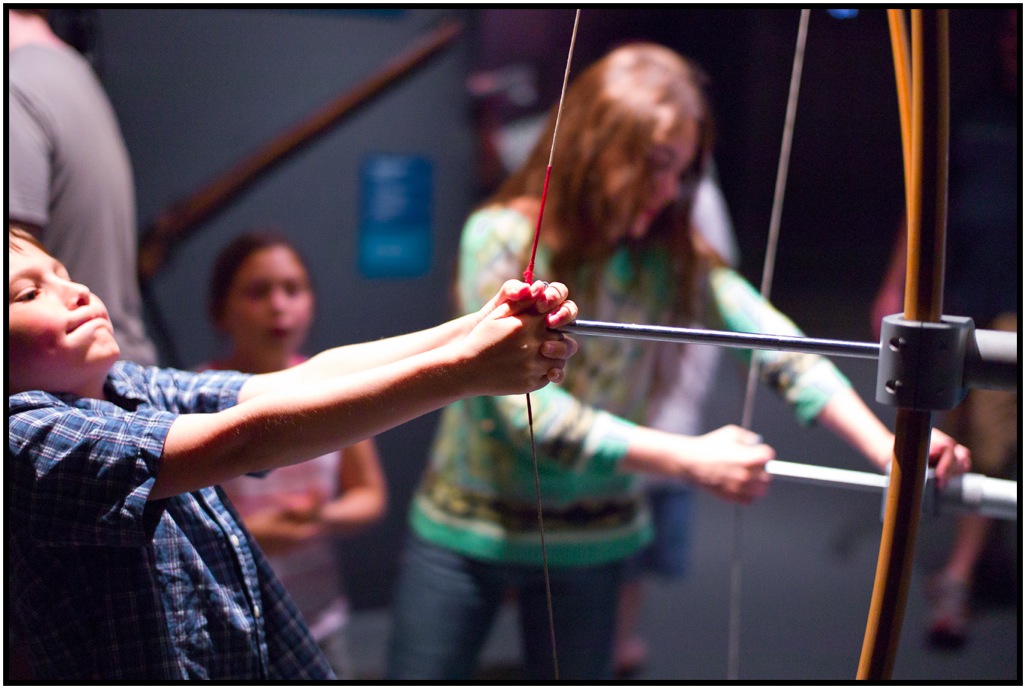
Another archery display, letting the kids try to pull the string of the typical 16th century long bow.
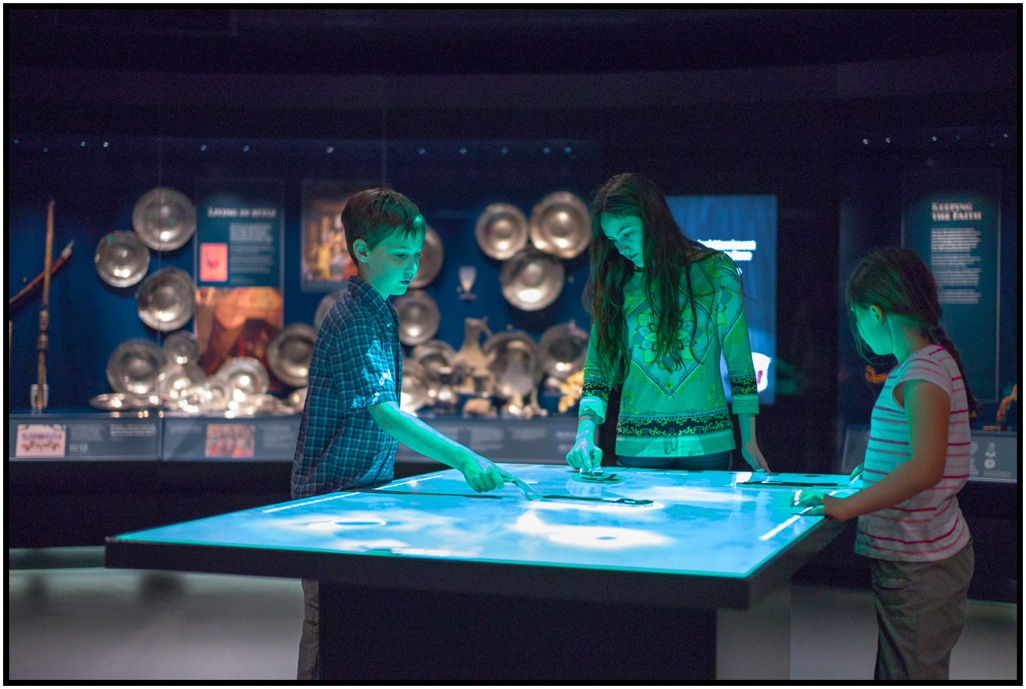
Modern museums are very interactive – with ipad like screens and videos to keep the younger generation happy. This table was a game that allowed kids to find recovered treasures from the Mary Rose at the bottom of the sea.
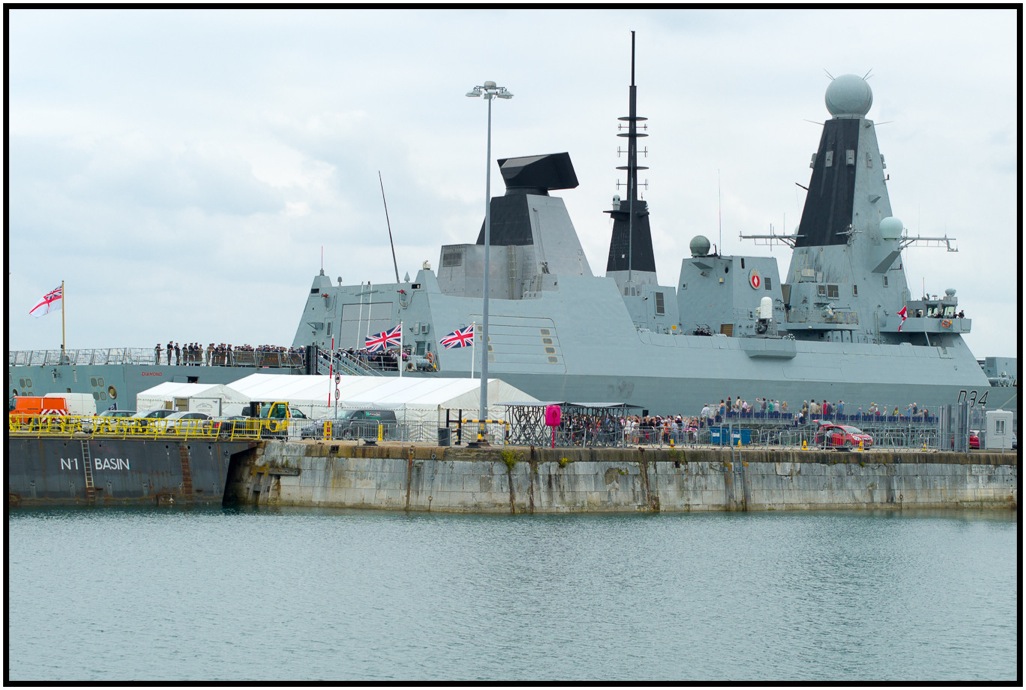
Portsmouth is the UK’s second largest naval base. Here, the HMS Diamond (a Royal Navy Air Defense Destroyer) was docking from being away. The sailors were assembling on the top deck and stepping back on to the quay. The families & etc were anxiously awaiting the arrival.
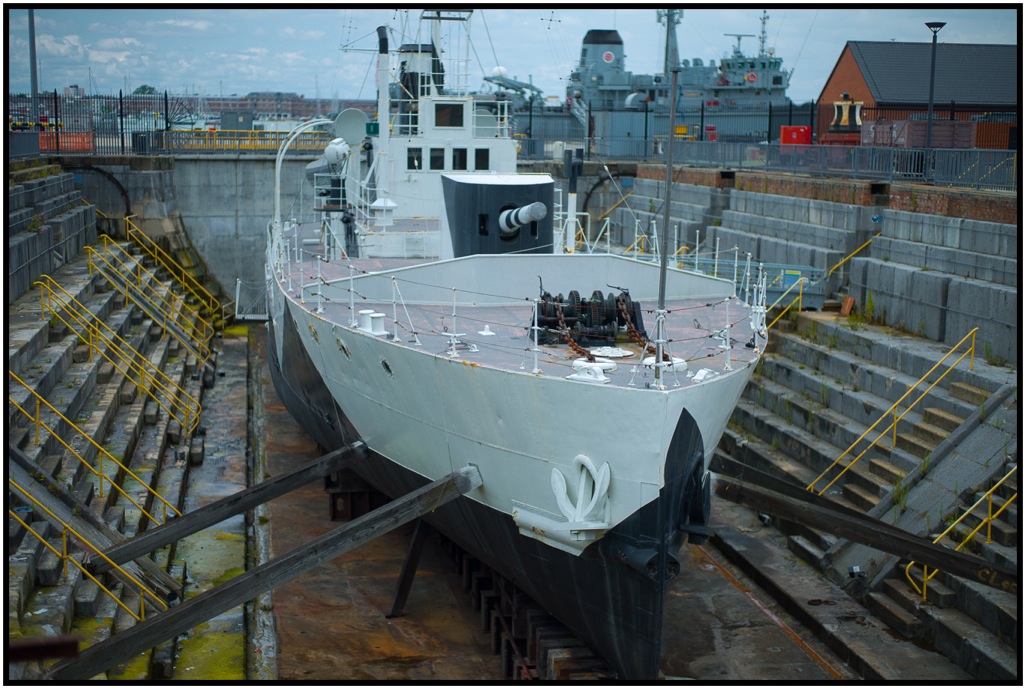
This is the Monitor 33 from 1915. The ship was not yet open to the public – it is going through a restoration before opening up the display. The Monitor 33 was built to bombard coastal positions from the sea and is just 1 of 2 surviving British warships from WWI.
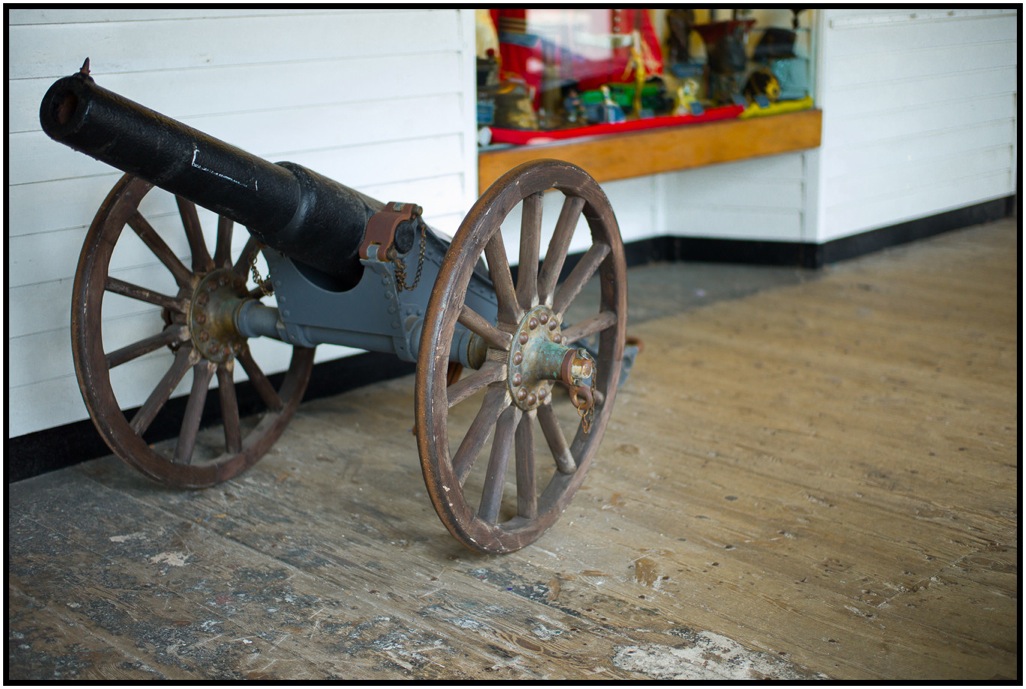
Canon display near an old dock warehouse that has been converted to an antique shop. What was interesting were the floors – wood that had been repurposed from captured french vessels from the Seven Years’ War (1754-1763).
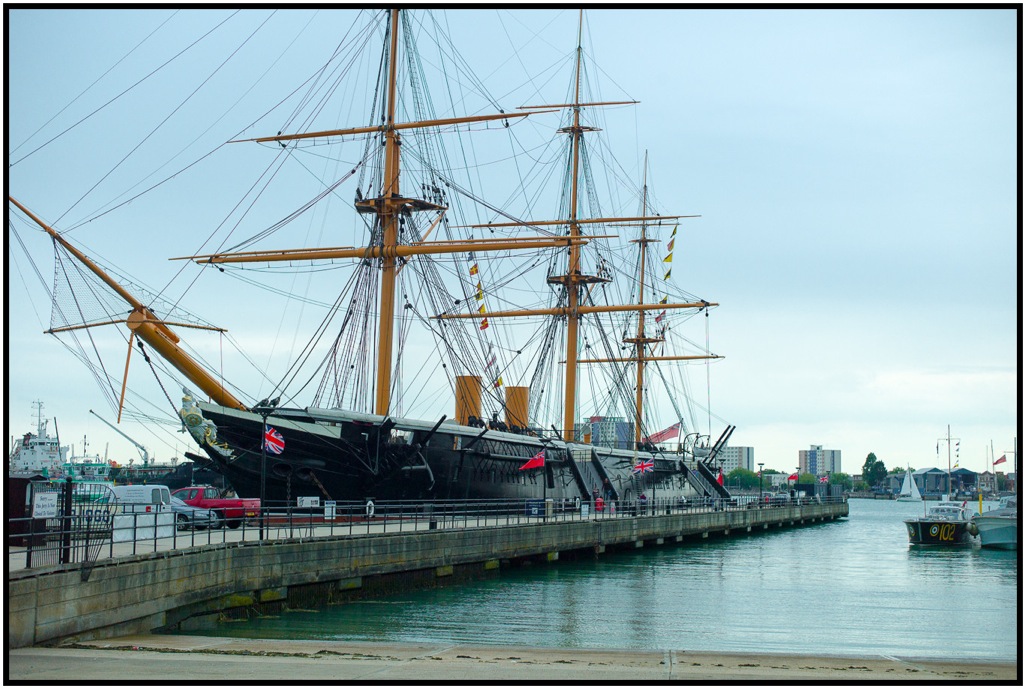
The HMS Warrior (1860). This was the world’s first iron-hulled, armored war ship. It never fired a shot in anger. It was built to counter French developments in naval shipbuilding and, at the time, was the largest, fastest and most powerful warship in the world.
Within 10 years time, the ship was all but obsolete. The difference in technology and comforts between this ship and the HMS Victory were notable – only 60 years later. The period of 1860-1920 saw computer/iphone-like dramatic changes in technology and rapid obsolescence that kept the major superpowers constantly scrambling to develop and launch bigger and better ships.
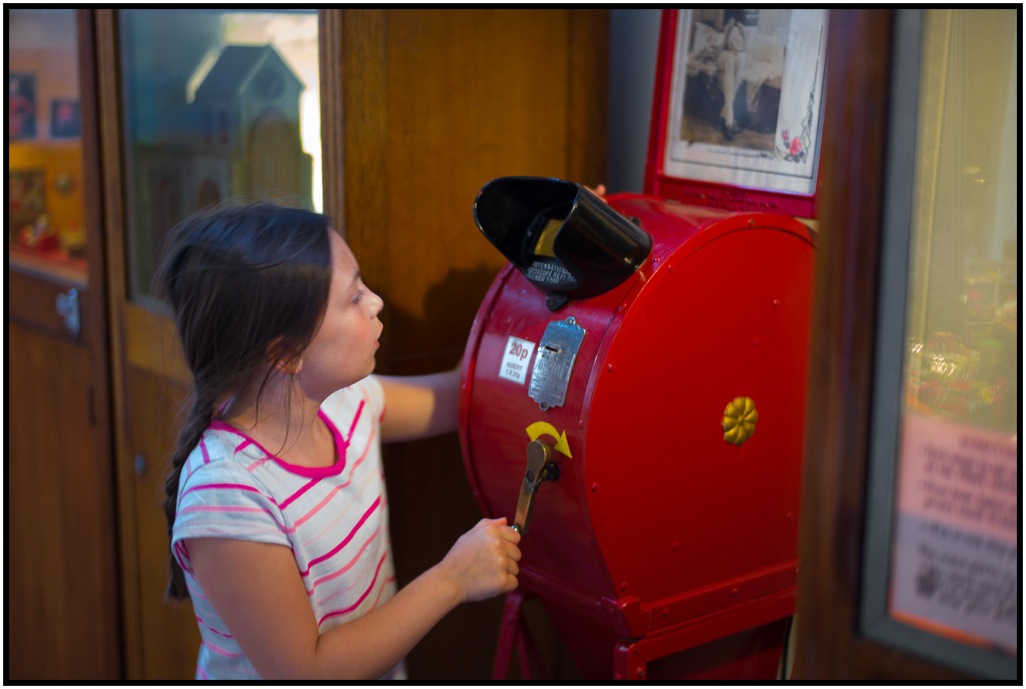
Josie trying to watch an old Mutoscope hoochie-coochie film. You put your 20p in, turn the crank, and watch a scandalous hula dance “movie” (a flip book series of still images) from 1894.
Breech loading the stern chaser gun on the deck of the HMS Warrior. Real shells weighed 110# and fired a rifled shot 2.5 miles.
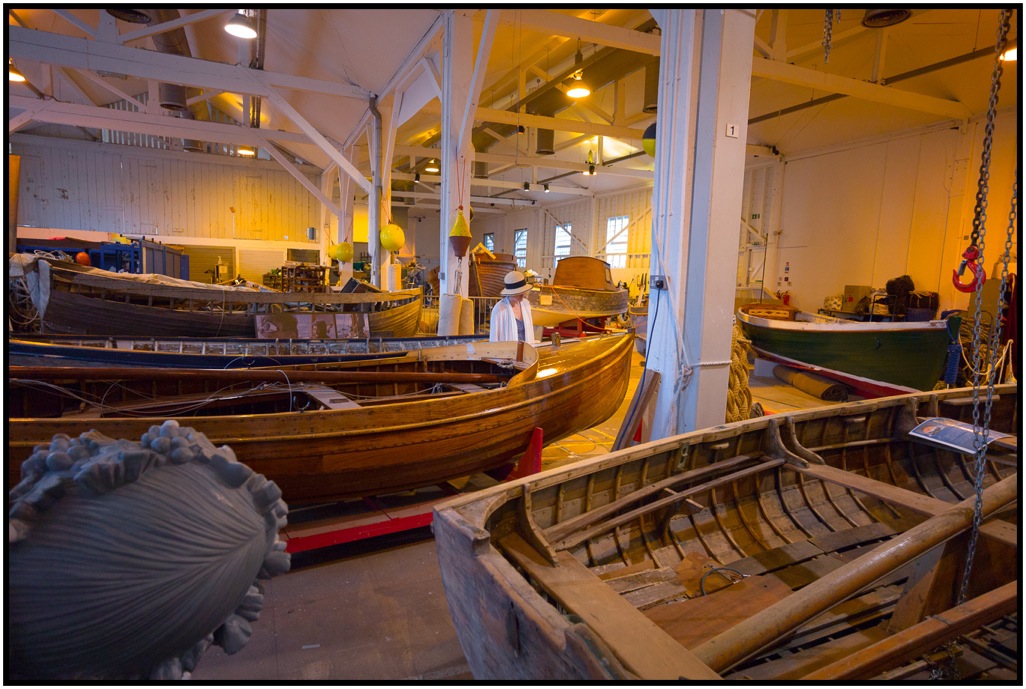
Visiting the boat restoration workshop. They have a team of skilled volunteer workers who maintain the collection of historic boats. Some of the vessels restored and maintained by the Historic Boat Volunteers include the Green Parrot, formerly the barge of the Commander-in-Chief Naval Home Command; Osborne, a 31 ft steam launch built in 1891 for the Royal Yacht, and more recently Cyclops – a 42 ft rowing boat built in 1916 as launch to the World War 1 battleship Royal Sovereign.
Brenda again: I was surprised by a few things today that probably shouldn’t have surprised me. The first was the realization of just how awful it was to be a sailor.
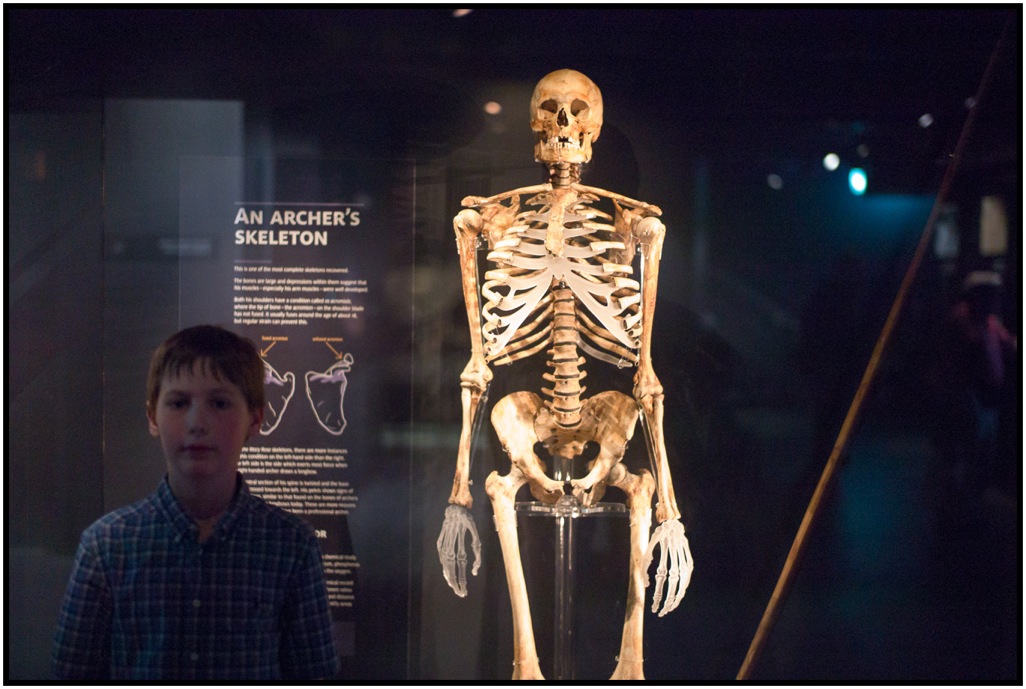
In the Mary Rose, around 500 men drowned. When they recovered the boat, they also recovered a whole lot of skeletons (including a pet dog). They had many of them on display in the museum. From the skeletons, they were able to glean a lot of information about the sailors.
The average height seemed to be around 5’4″. I think the tallest man I saw was 5’7″. Most of them were in their early-to-mid-30s when they died and almost all of them had absolutely terrible teeth. Just over and over again, the descriptions were of rotten, abscessed, and missing teeth, and jawbones that had been eaten away by infection. The chronic pain they experienced must have been awful.
They also had deformed bones. Vitamin D deficiency was common, as was vitamin C deficiency in early childhood which resulted in rickets and scurvy; bowed legs, porous and easily broken bones, and other deformities. They could also tell what a man’s profession likely was — the archers, for example, had deformed shoulders and crooked spines from the heavy pull of long-bows from early childhood on. The cook had a badly stooped back from chronic bending over and would not have been capable of standing up straight.
The descriptions of how they lived on the boats was horrible, as well. Those boats weren’t that big and would have had around 700+ men living on them. They were so crowded it was pretty much standing-room only. The Mary Rose didn’t even have bathrooms (or “heads”) — sailors went potty by hanging over the side of the boat, which was dangerous (not to mention often cold and wet.)
Most of the sailors didn’t get a bed or hammock, either. They had to sleep directly on the wooden deck. They only had one set of clothes, which would be worn for months at a time without a wash. If the weather was bad, they could expect to be wet for days at a time without drying out.
Could things get worse? Yes. Also found in the wreckage were hundreds of combs. They were for scraping lice and fleas out of hair. Each sailor had a comb and a knife. For many, these were the only personal property items aside from clothes. Other chronic conditions included sexually transmitted diseases, gastroenteritis, arthritis, and diarrhea.
I went through the shipyard today with a mounting sense of horror. What a torturous, miserable existence. From birth all the way to death, they were marked by malnutrition, deformities, chronic pain, environmental discomfort, starvation, infestation of pests, lack of sleep and any sort of hygiene … and that was not counting the brutal and violent treatment they could expect from other humans hell-bent on making things even worse.
My own complaints for the evening pale in comparison. We’re staying at a Holiday Inn because suddenly all the B&B houses are booked up for July. This place doesn’t have a little fridge or any kind of kitchen, so we’re stuck with the paltry amount of food brought up by room service for dinner.
I’m trying to keep to a healthy diet, so even though I was extra hungry I ordered a salad. (I gave half my lunch to Holden and Josie.) The salad was £12.95 (US$22!!!!), so I assumed it would be a big, substantial entree salad. It was not. I ate my tiny pile of lettuce and drank my wine.
Without adequate food in my stomach, the wine gave me a headache. I kept complaining to Adam that I was still hungry and he offered to go downstairs with me to get a dessert, but I was mad about the £12.95 and didn’t want to give them any more money.
That was a bad call, too. It’s now well past midnight and I can’t sleep because I have a headache from the wine and a stomach ache from lack of dinner. Everything is closed so I’m just stuck until tomorrow morning when we can drive 4 miles to Starbucks. I keep thinking about how much better I have it than the sailors of 1530, but that isn’t really helping me much. Knowing they were far more miserable then than I am now doesn’t make my empty tummy feel any better. It is, however, making me feel guilty for being spoiled. Most of my life I haven’t had to worry about going to bed hungry. That’s something to be thankful for.

