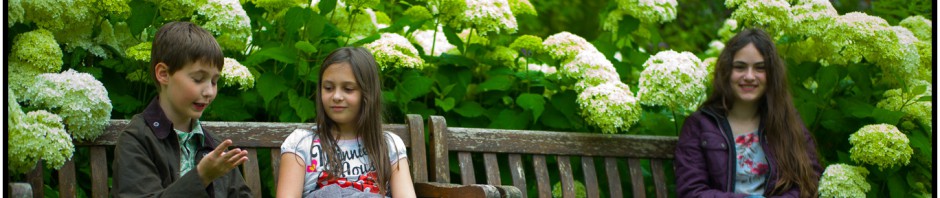
June 25, Wednesday
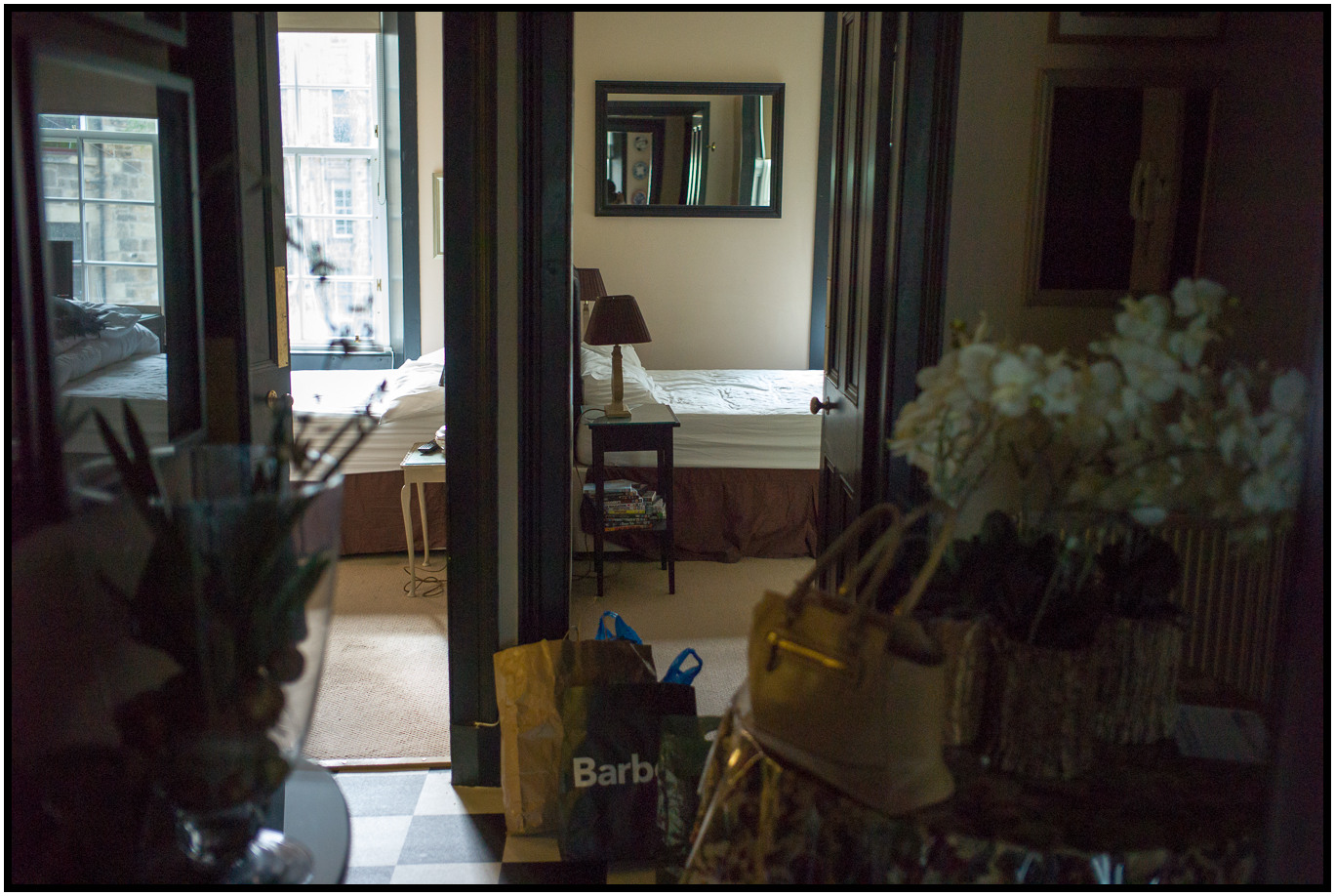
Our lovely Glasgow apartment
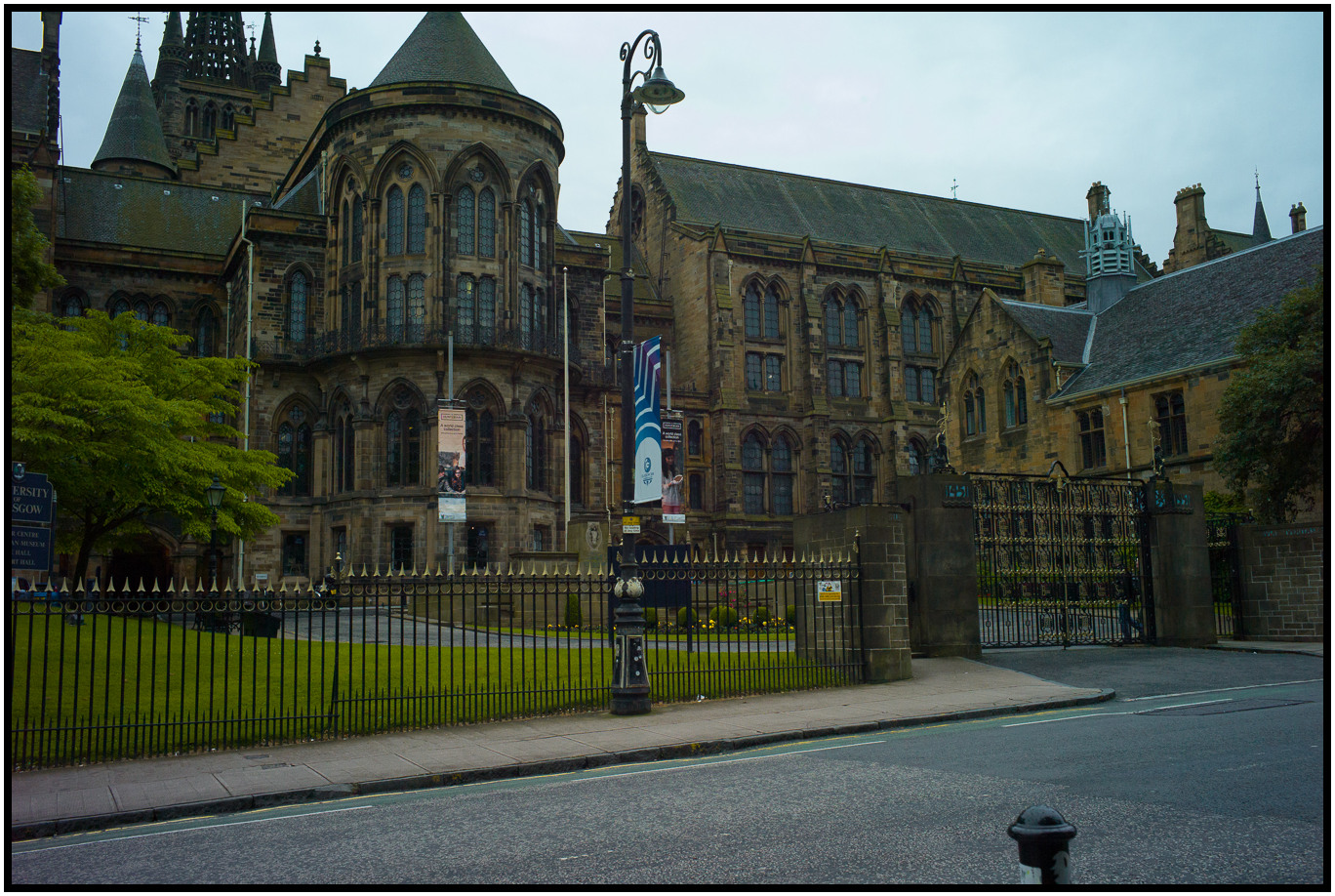
Adam and I took another early morning walk around Glasgow while the kids were getting ready to go out. This building is part of the University of Glasgow.
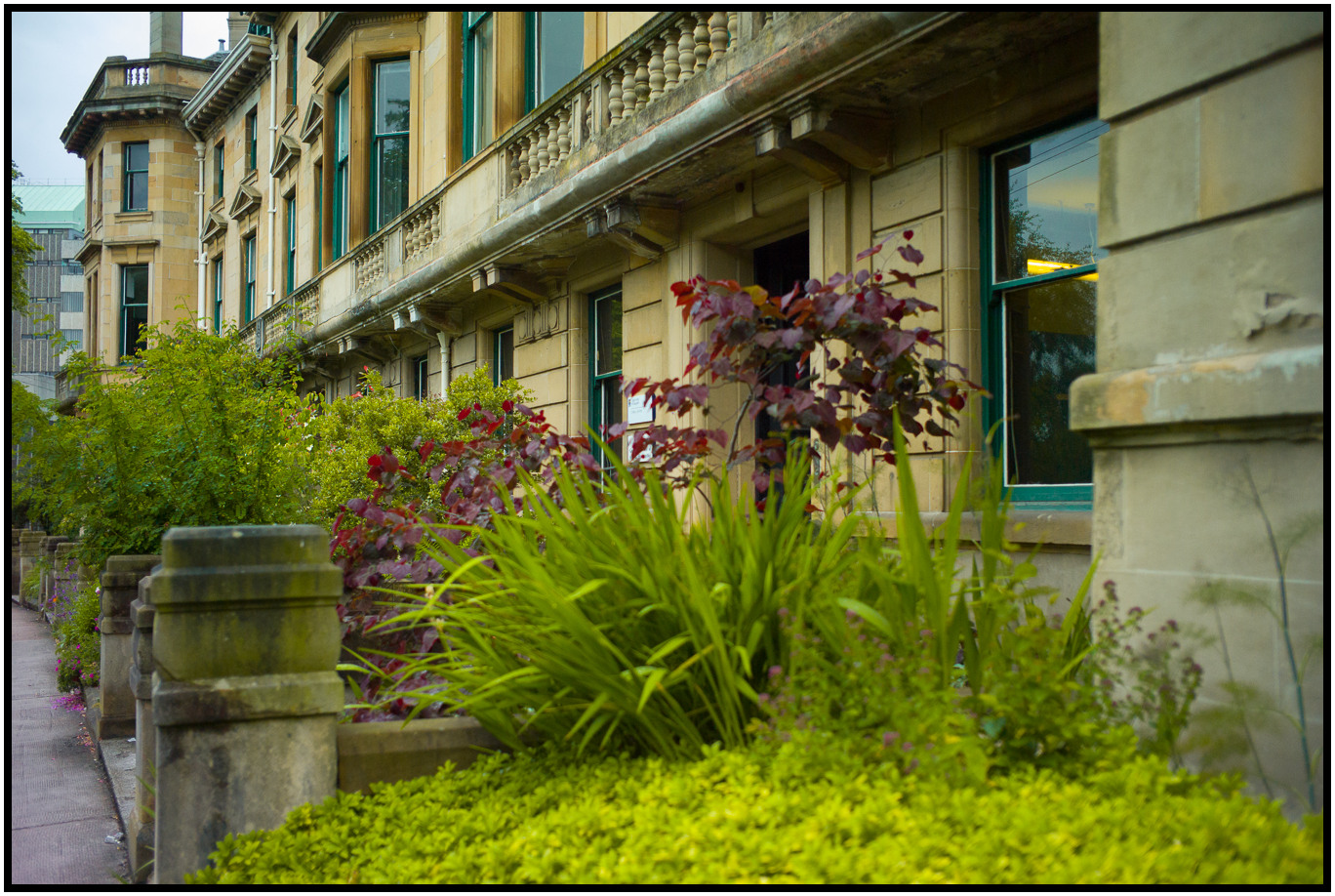
More buildings of classrooms. They are all gorgeous.
“Dr. Livingstone, I presume?”
Today we visited the birthplace and childhood home of David Livingstone. He was something of a rock star Indiana Jones-type figure in 19th century Victorian Britain for his exploration of the African continent.
He started life very, very poor. His family worked in a cotton factory and lived in a tiny one-room tenement apartment. David was the second of seven children, so there were a lot of people crammed into that one room. He started working for the cotton mill when he was 10 years old, and was one of the lucky ones not to have to begin his career at age 5.
Fortunately for him, though, he enjoyed two important advantages: his dad was a good father and all-around decent man (many weren’t), and the guy who owned the mill thought it was important for the children of workers to get an education. He hired a teacher and built a school room for kids to attend in the evenings after the day’s work if they wanted to.
David took full advantage of his chance at an education, and was fully supported in doing so by his family. He scrimped and saved enough money working in the mill to attend University by the time he was 23, at a time when less than 10% of mill workers’ children could read or sign their own names. His parents not only were willing to sacrifice the loss of David’s wages for all those years, they put as much of their own money aside to help him as they could.
Livingstone was an intensely religious guy and drawn to the sciences, which his dad wasn’t too keen on because he thought religion and science were mutually exclusive. He changed his mind, though, and encouraged David to become a doctor when David expressed an interest in becoming a Missionary. Missionary settlements desperately needed doctors. David originally had his eye set on China, but then the Opium Wars started up in 1839 and he decided to go to Africa instead.
He spent 30 years (off and on) in Africa and only managed to convert one person to Christianity, so as far as being a missionary was concerned, he was a terrible failure. He became internationally famous, though, nearly by accident. He wrote long letters and reports about what was going on in Africa to various government officials and friends back in England, who published his writings in the paper as a regular column (unbeknownst to Livingstone.) He returned to England after something like 16 years and discovered that he’d become a famous celebrity adventurer while he was away. People were fascinated by his travels. (He survived a lion attack, for example, depicted in the statue below.) I got the sense it was basically a mid-1800s version of a travel blog.
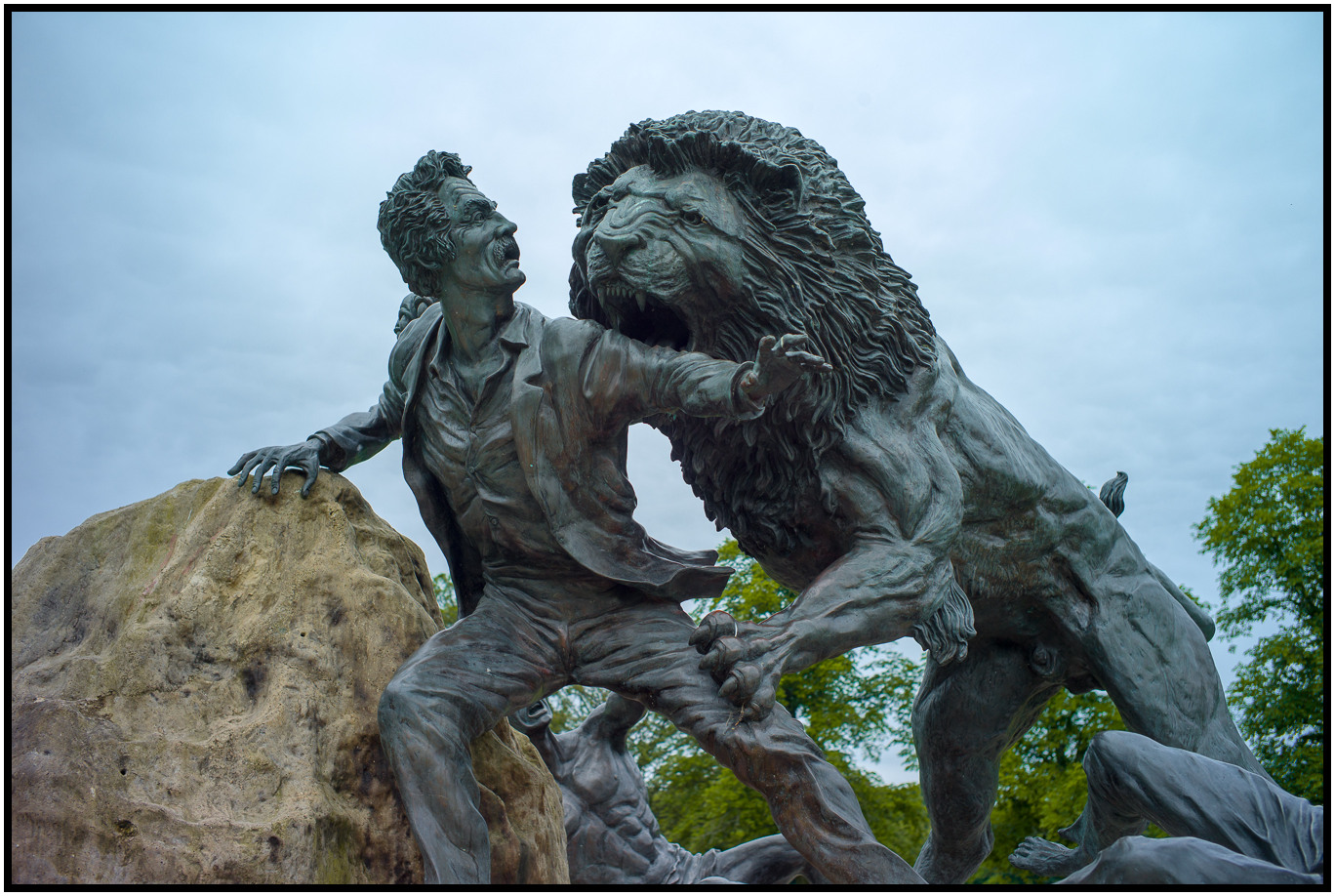
“The lion leapt on him and, catching him by the arm, shook him ‘as a terrier dog does a rat.’”
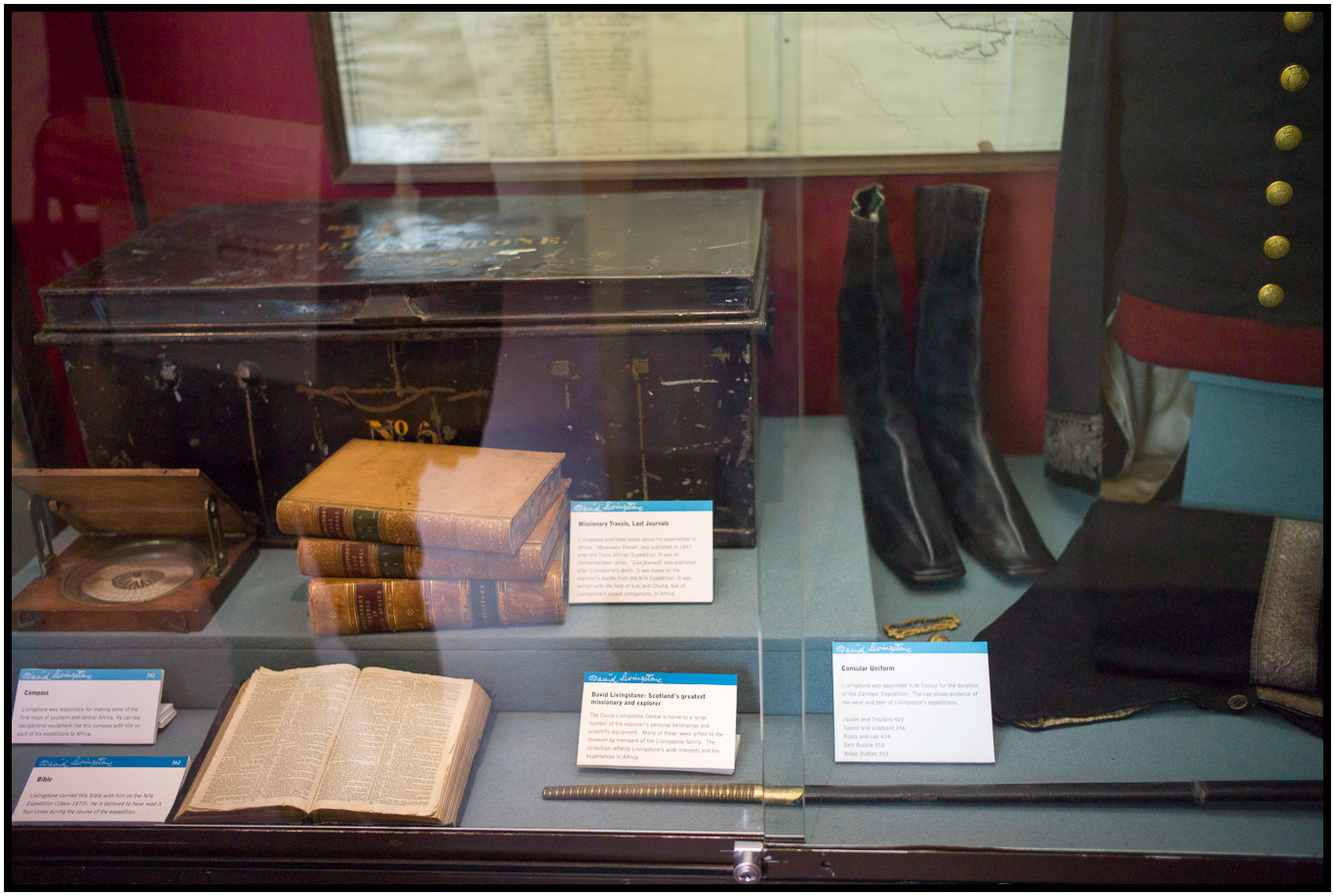
Here is the very Bible he carried with him on his travels (the open book at the bottom of the frame.) He read it cover-to-cover four times on his first excursion. The other items in this case also were his personal belongings … the boots, coat, compass, etc.
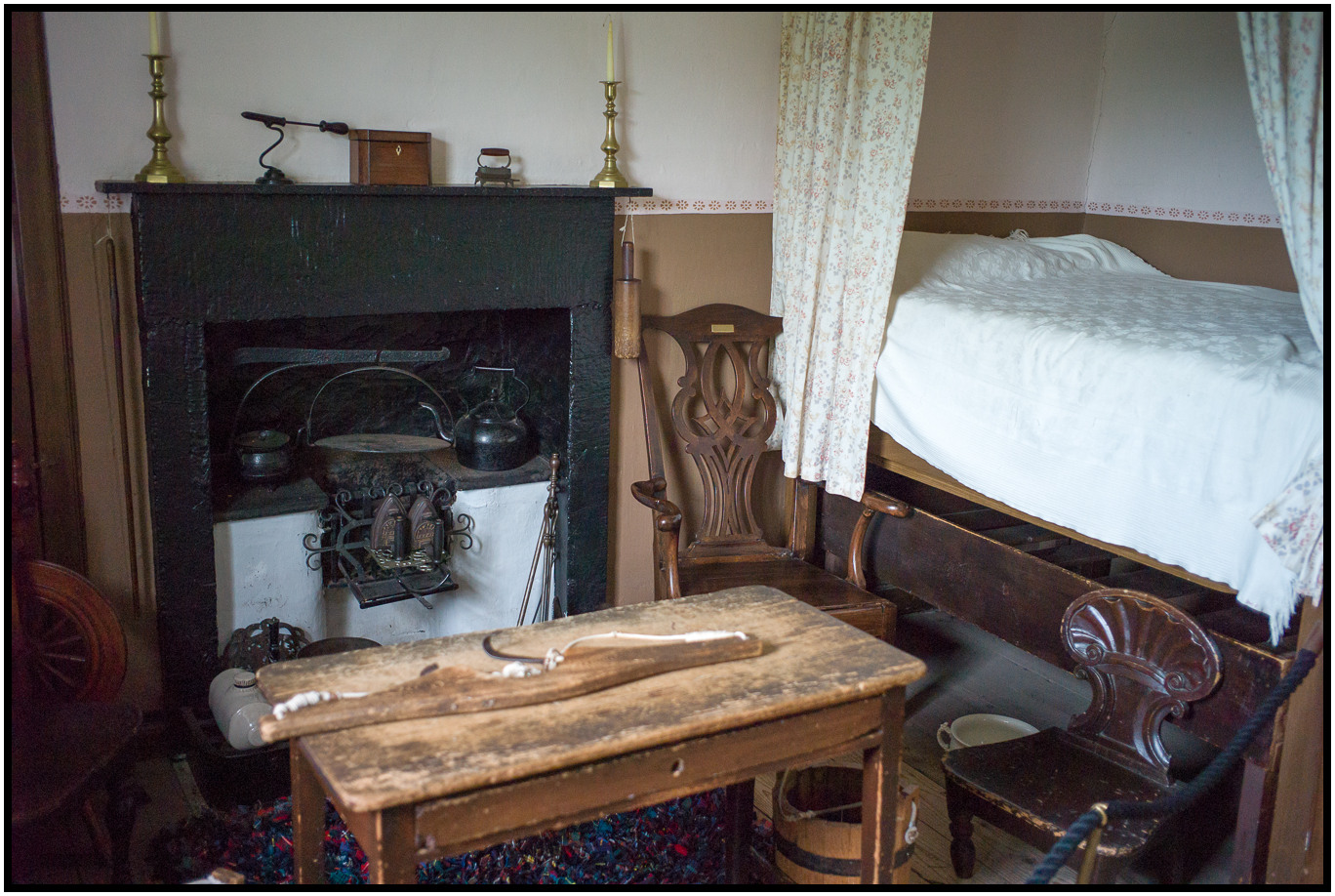
This was his family’s one-room tenement house. That bed has a trundle underneath it, and there was an identical set-up on the opposite side of the room. For anyone counting, that’s a total of 4 beds for a family of 9 people. That fireplace was their source of heat and also for cooking. The water had to be brought in by a bucket from a well in the common courtyard, and there were outdoor common latrines, as well. The building was organized much like a college dormitory, except instead of two roomies per room, it was entire families per room.
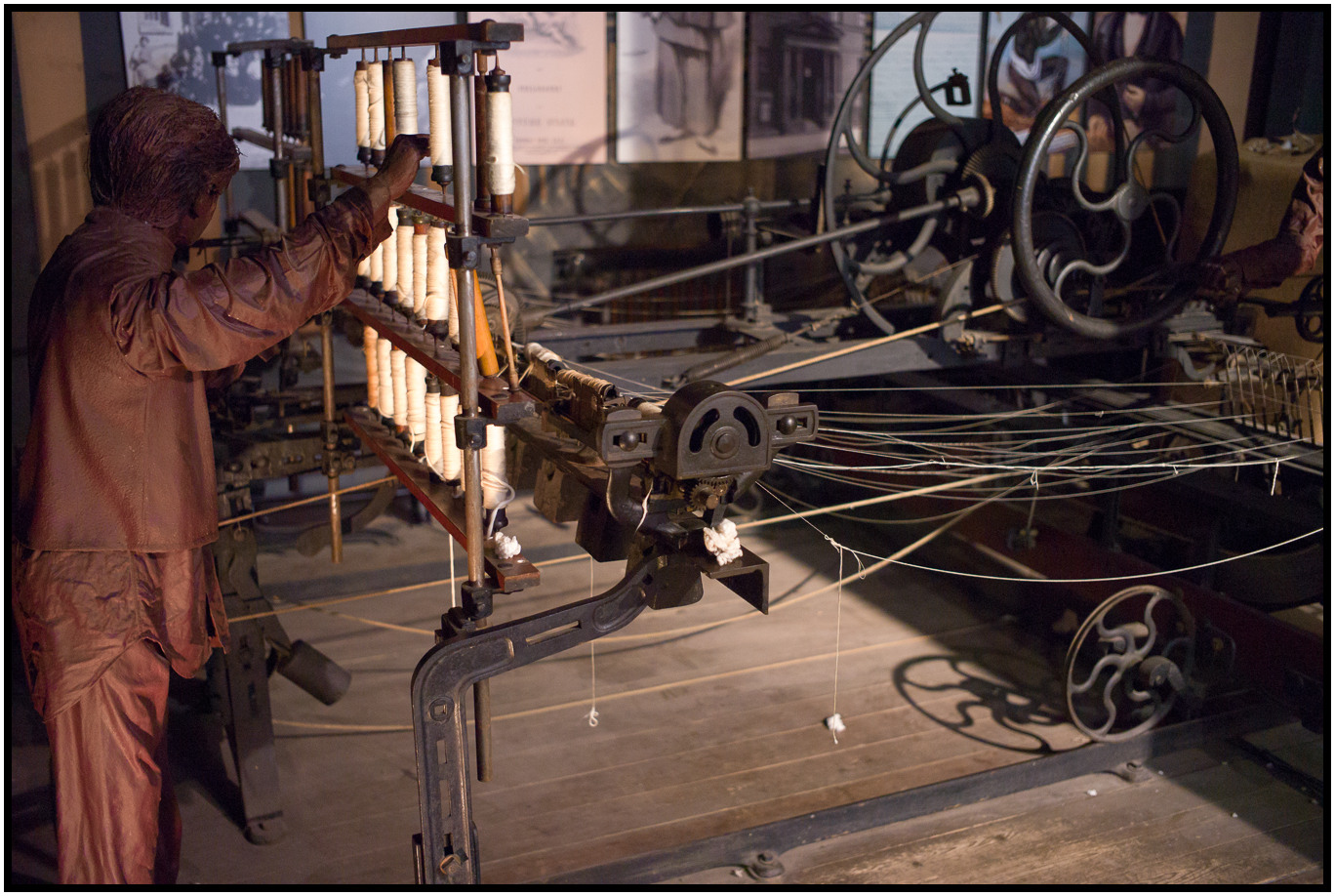
An example of the spinning room. Children were employed to crawl under that machinery because they were small enough to fit, and it was very dangerous. They were supposed to tie broken yarn ends back together, and sweep up the yarn dandruff which was highly flammable and needed to be constantly removed. Children were injured and killed by the moving machinery on a fairly regular basis. The yarn fibers in the air also caused most of the workforce to have lung and respiratory diseases that lasted their entire lives and contributed to early demises.
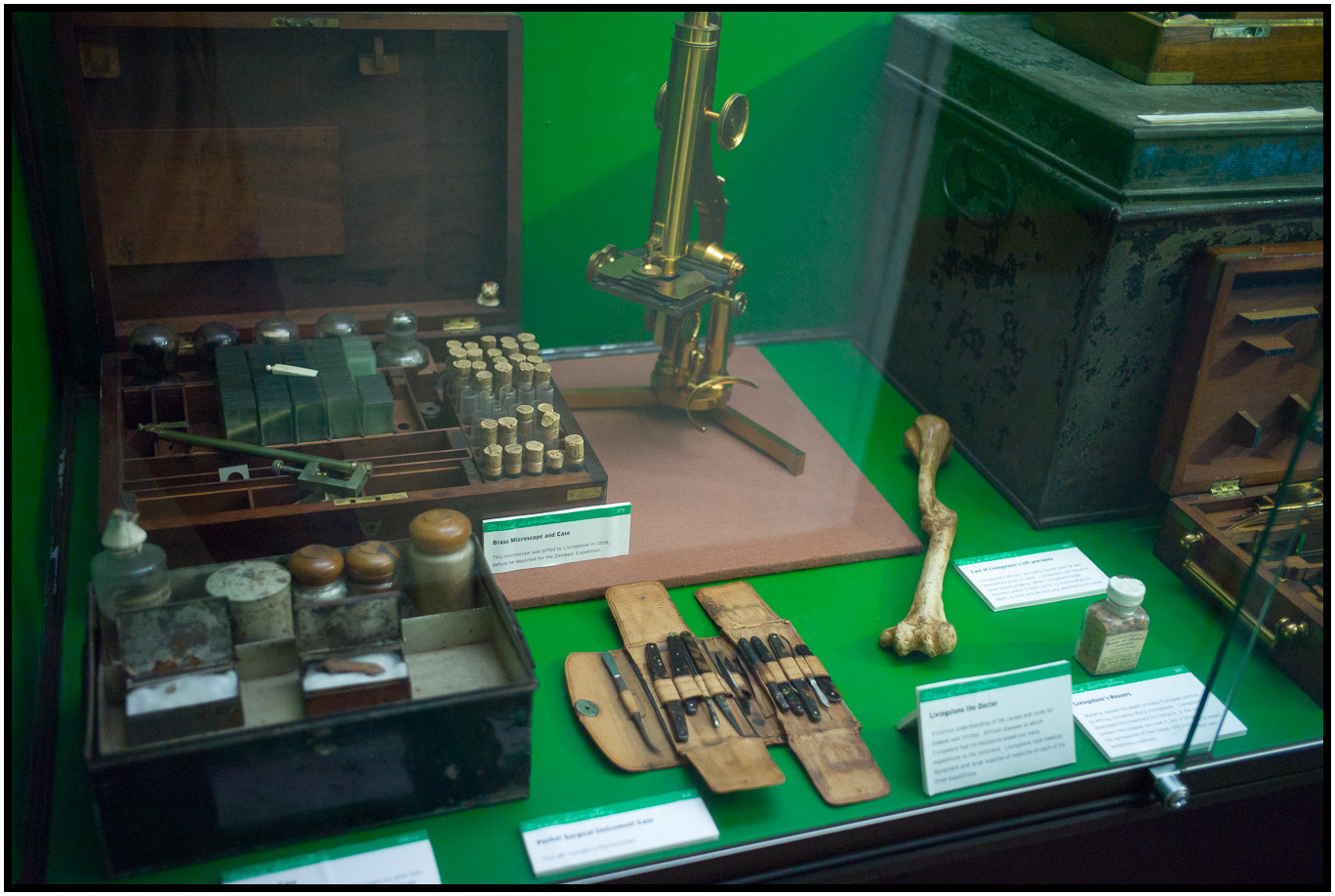
Some more of David Livingstone’s equipment. He traveled with the microscope, and those wooden cases contained medicines. He invented a pill to help with malaria … it didn’t prevent or cure it, but helped make it less devastating. The pills were a combination of quinine and rhubarb extract. Unfortunately, one of their side-effects was temporary deafness. (They are in the little pill bottle with the white cap near the bottom of the frame, to the right of the broken arm bone.)
The crooked arm bone is a cast of Livingstone’s arm, made after he died and his body was shipped from Africa back to England for burial at Westminister Abbey. It took 11 months for his body to make it back, and by the time it arrived the body was so decomposed they had to identify it by his crooked arm. It was broken by the lion during the lion attack and never healed properly.
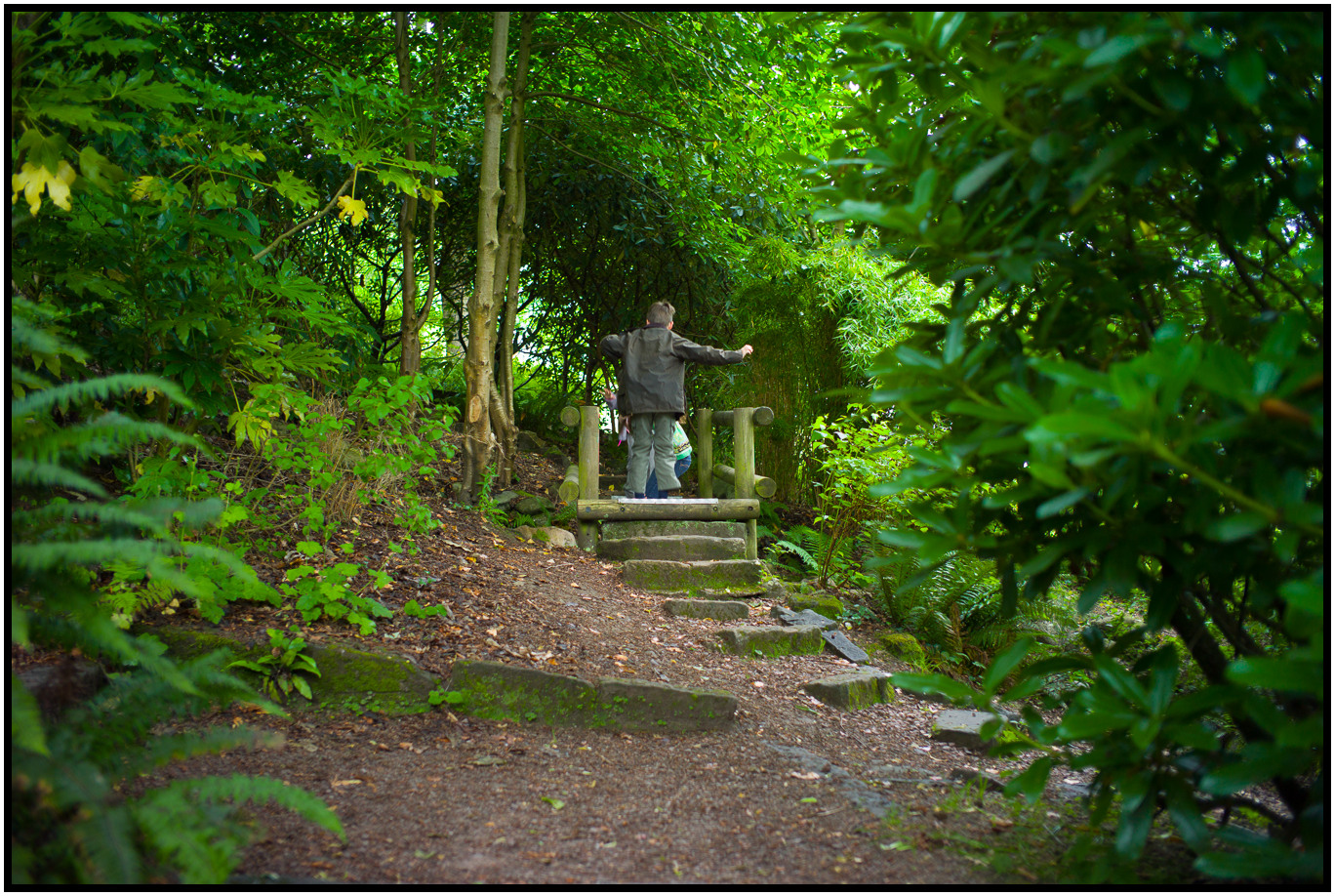
The kids playing in the Discovery Garden outside the tenement house.
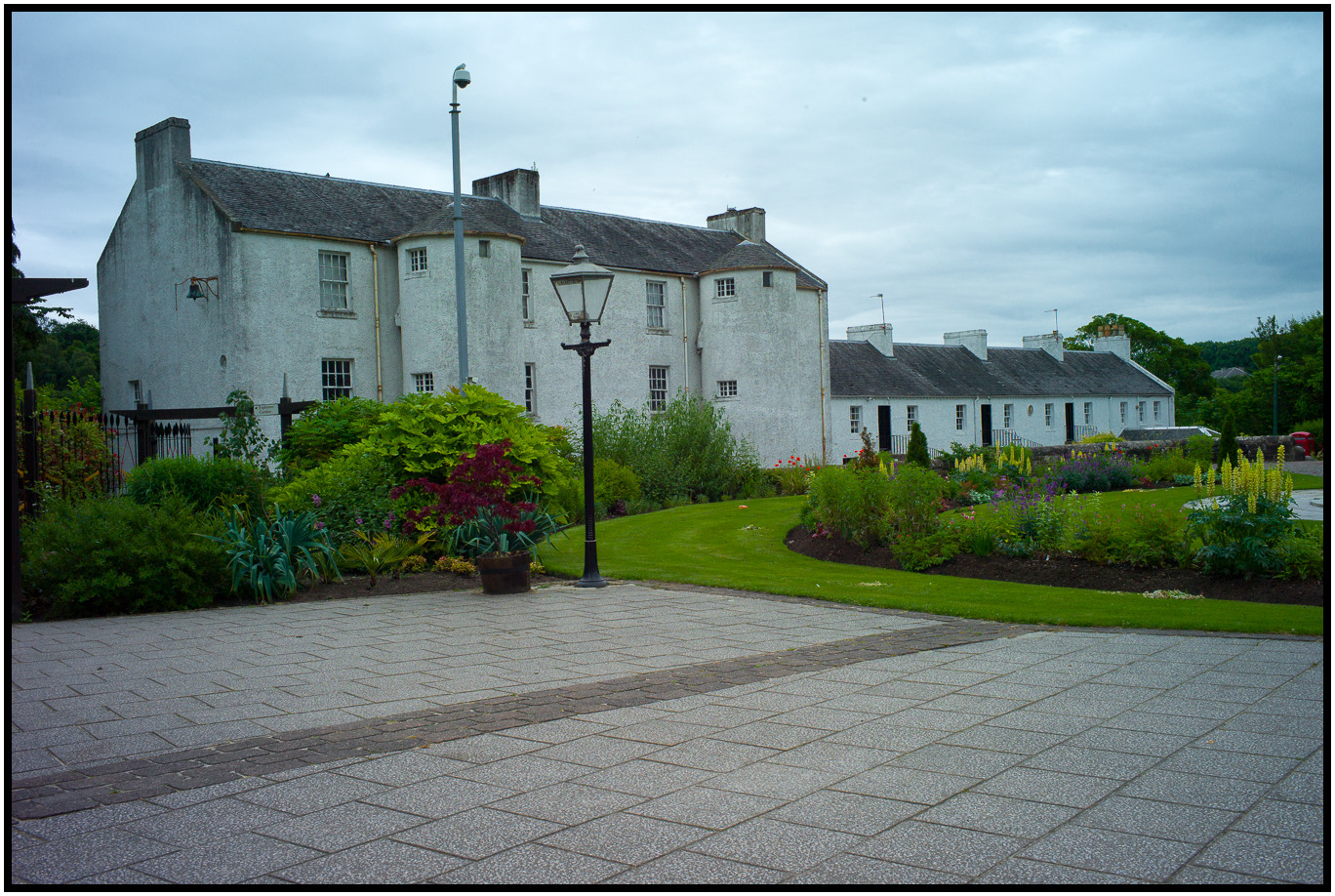
Exterior view of the tenement house.
Livingstone was a fascinating guy and worth reading about, although I’ve gone on about him enough for now. This wikipedia entry has a lot of information.
______________________________________________________________
Next up was Bothwell Castle. It was built in the 1200s and played a key role in several battles and sieges between the Scots and British in the 1300s and 1400s.
The guy selling tickets was an older gentleman who was clearly a huge history buff. He gave us a detailed, interesting account of the key historical incidents that happened here. He also gave the kids a worksheet with a quiz on it. The answers were scattered throughout the castle. He asked Holden, “Would you like to do the quiz and win a sticker?” To my embarrassment and horror, Holden said, “No. I’m on vacation and don’t really want to learn anything.” The guy handed him the quiz and a pencil and said, “Well, just in case you change your mind.”
What the kids didn’t know was that I’d purchased some rhubarb rock candy in the gift shop. They were complaining about “baaaahhhhh, another boring old castle!” so I said, “If that quiz gets completed — and I mean every single question is answered correctly — everyone gets some candy. It has to be a team effort though … either everyone gets candy or nobody does.”
Those three knuckleheads had a quick conference and decided trying the weird candy was worth doing a little learnin’ outside of the classroom.
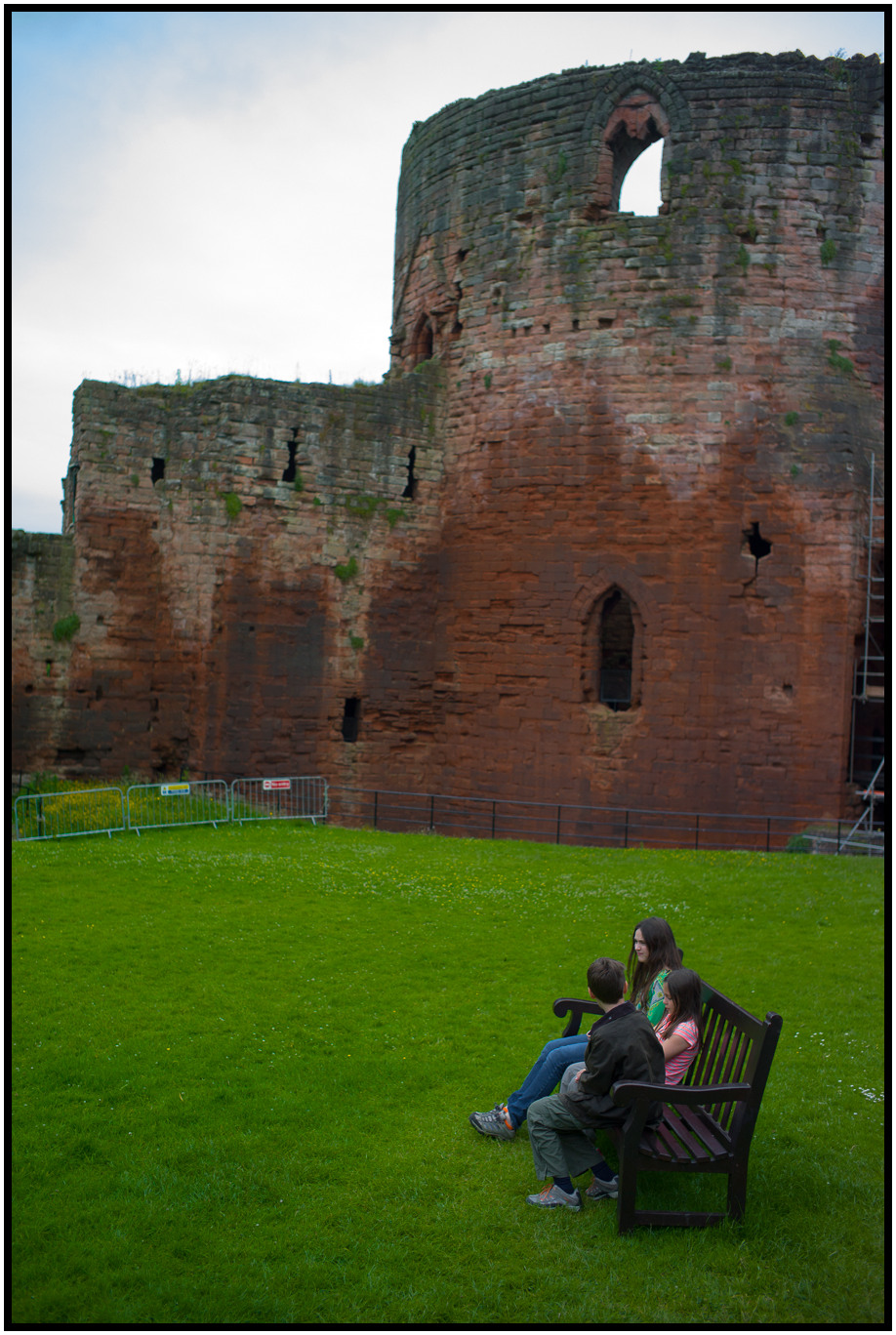
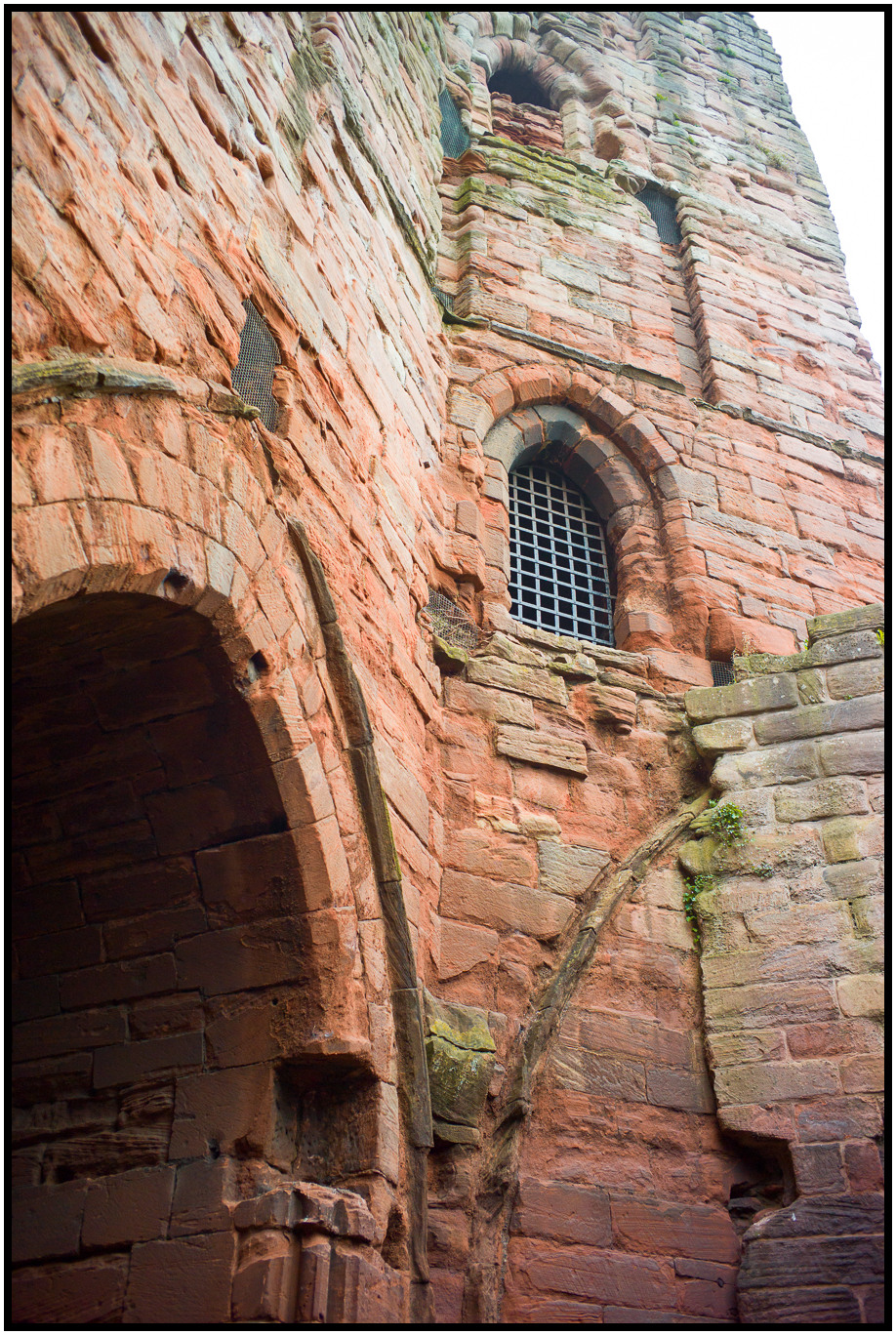
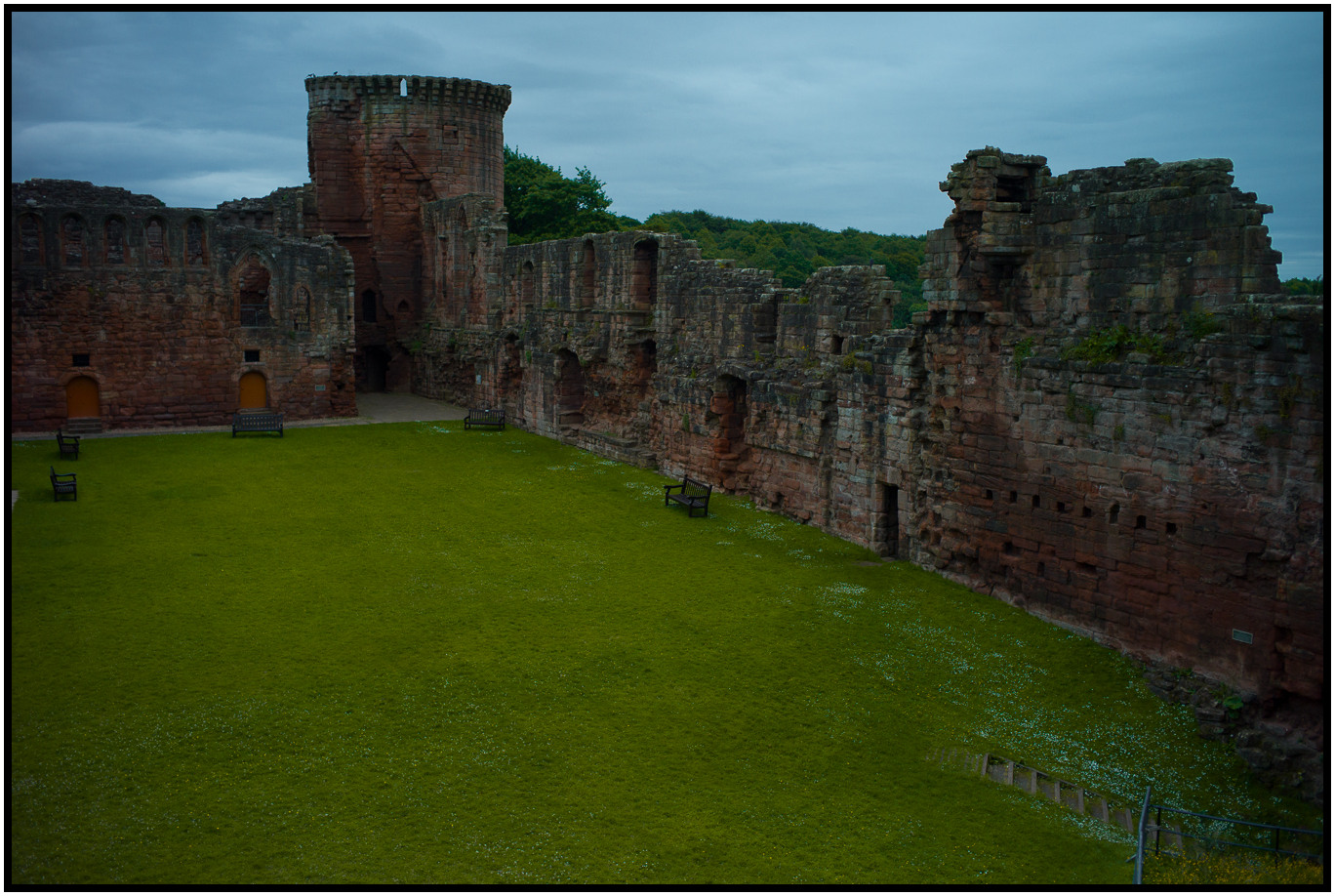
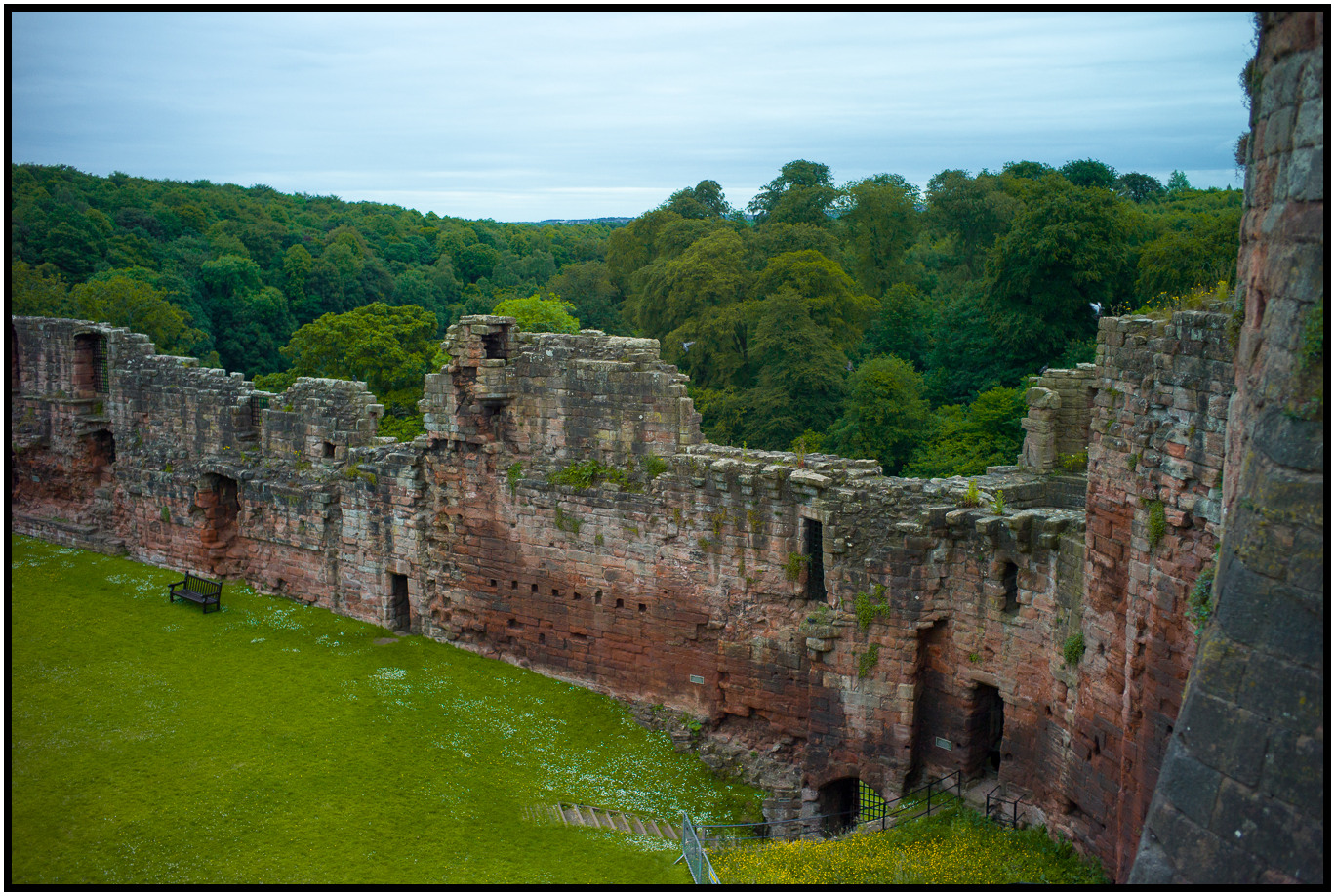
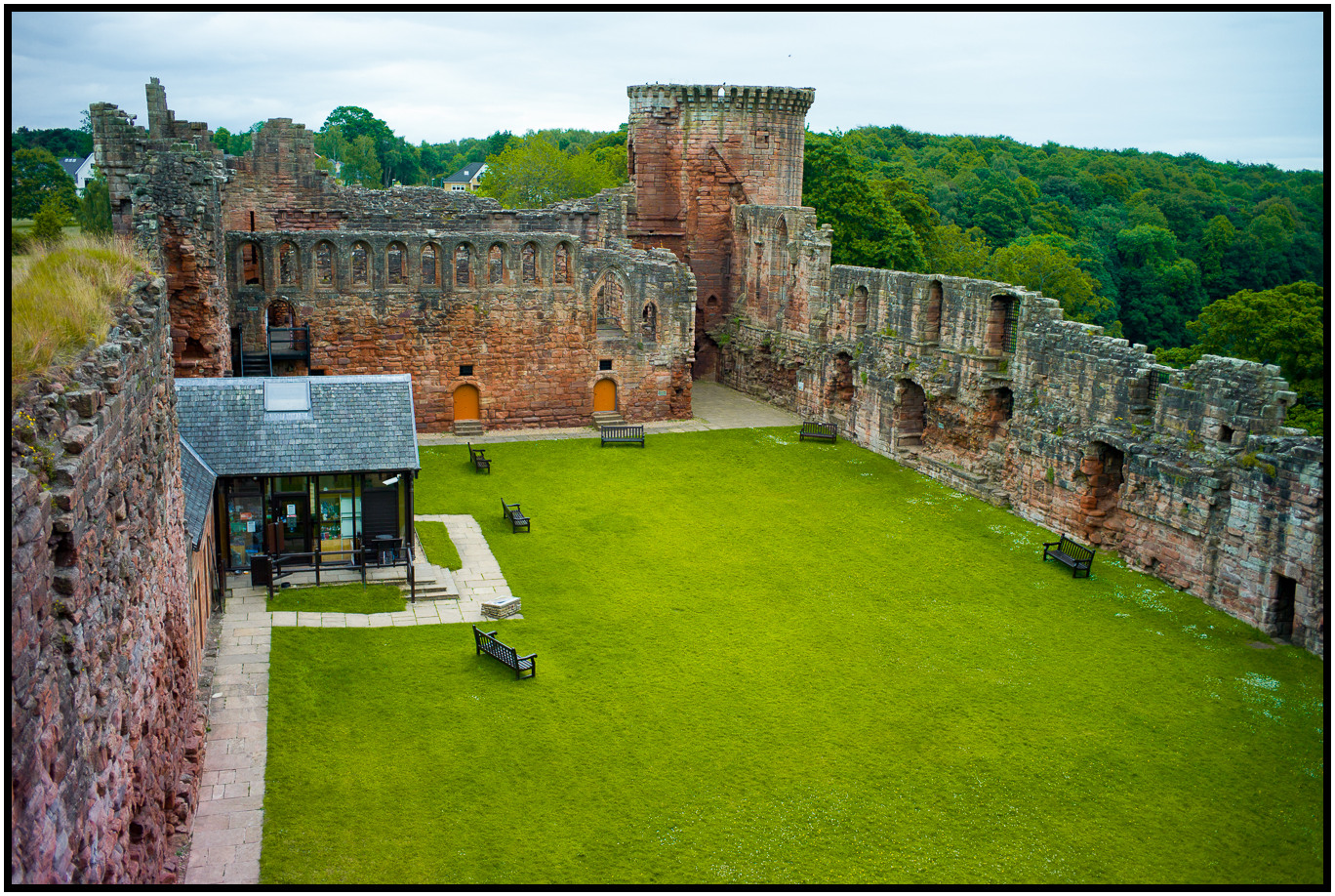
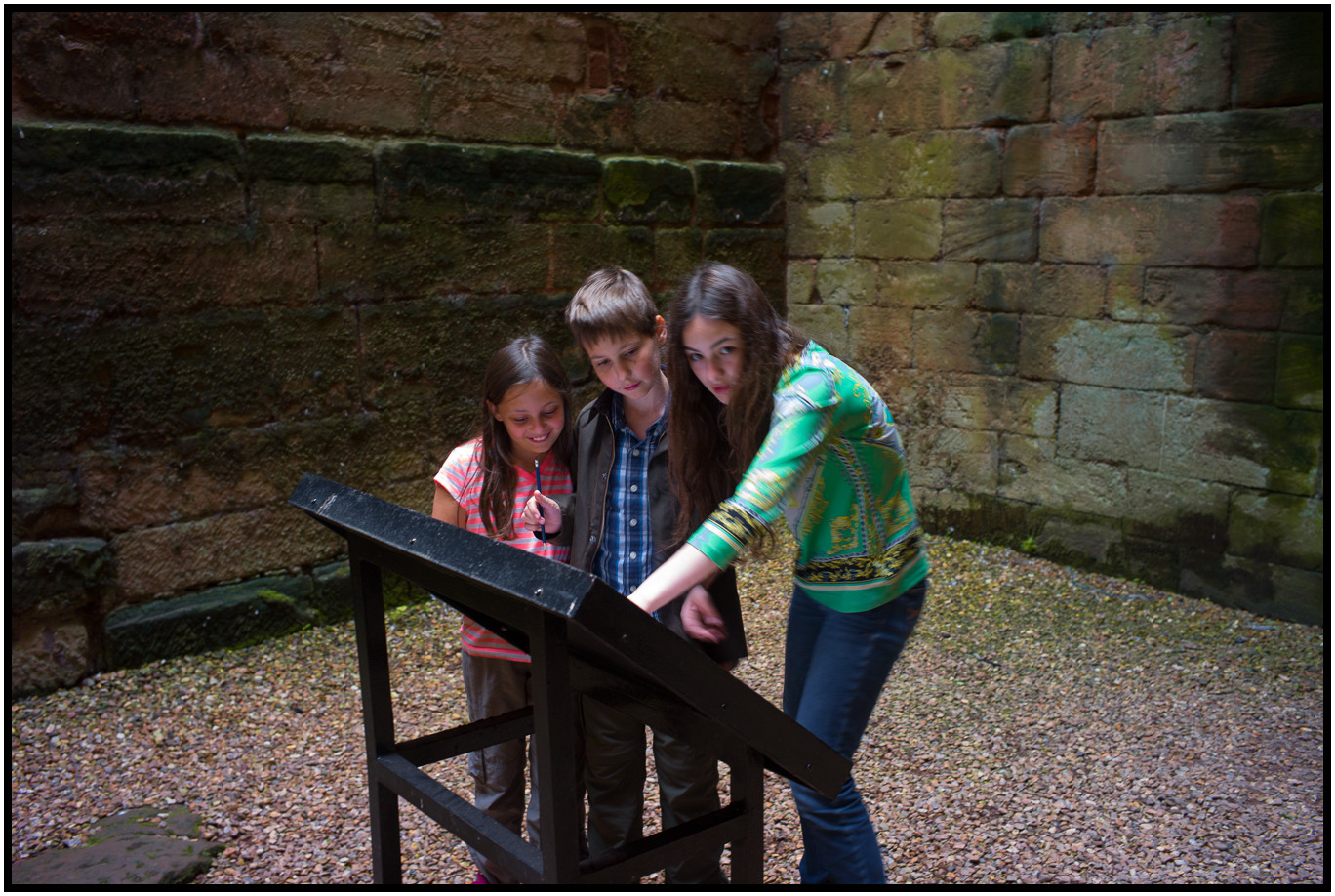
The kids suddenly interested in completing the quiz. They read every single plaque and sign. Incentives work wonders.
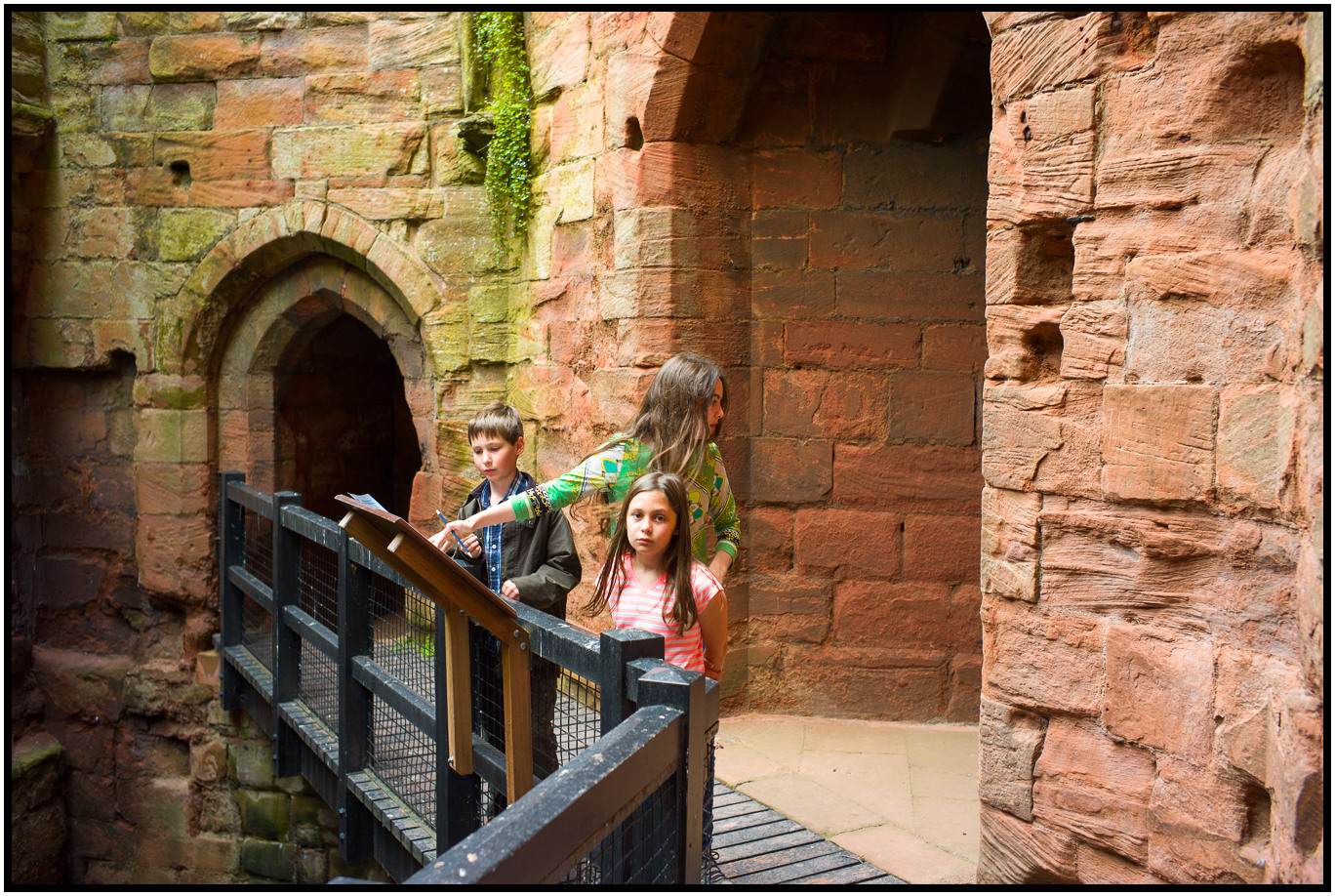
In what turned out to be the highlight of the visit, the curator came outside and offered to show the kids a special, secret room they only use for school field trips and — oddly enough — weddings. Since we were the only ones there at the moment, he had some extra time. (I suspect he saw the kids actually doing the quiz, and being a history buff himself, relished the opportunity to share something special to kids who were showing an interest.)
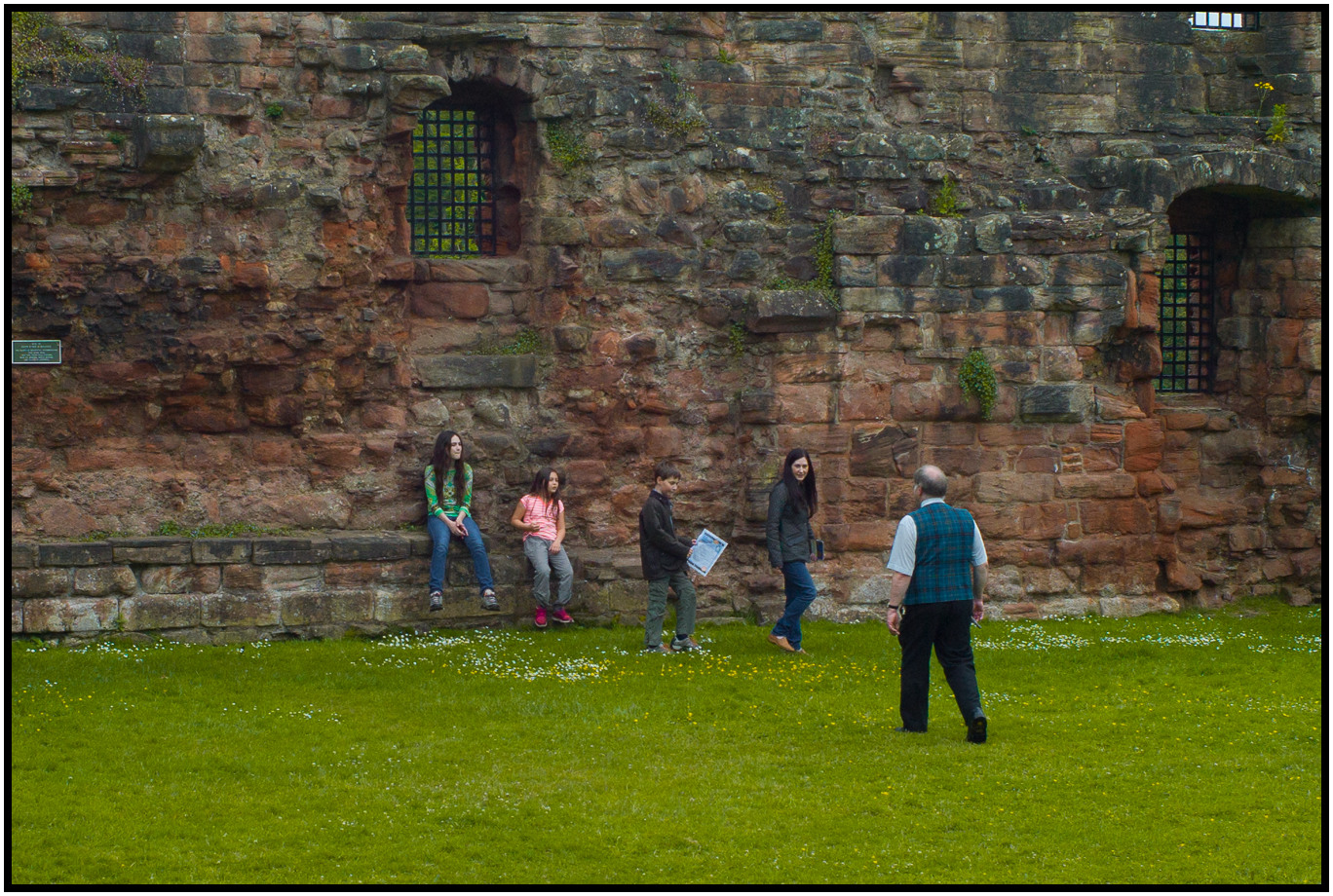
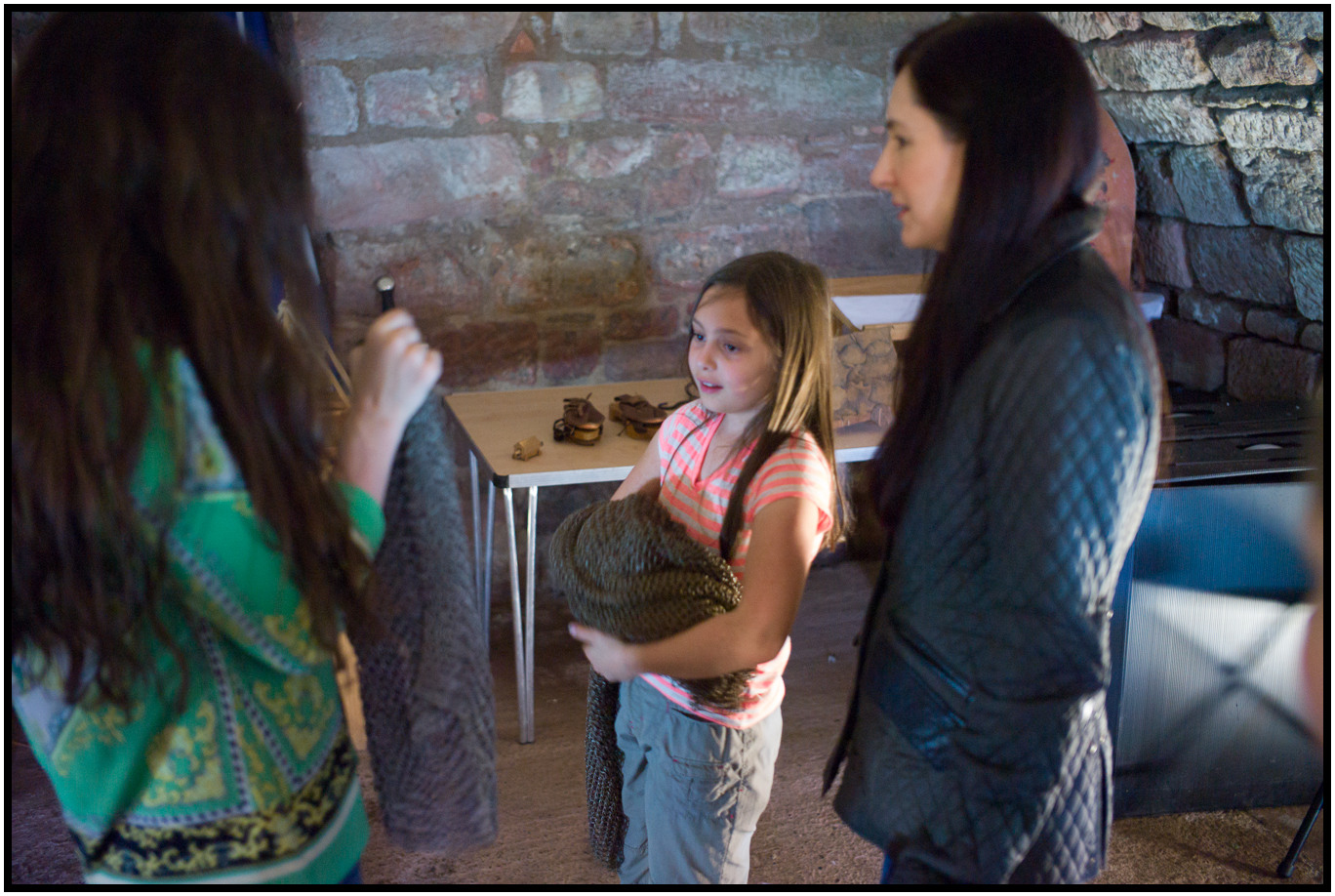
Suddenly everything was COOL! They got to hold chain mail (incredibly heavy) and learn that it was merely the undergarment for the rest of the armor. The guy said, “Every time you see a knight jump up on a horse in a movie wearing all his armor, you will know it’s fake. Feel this chain mail? With this on, plus the armor, it was so heavy the knights had to have help getting up on their horses. They couldn’t run, either. Everything they did was pretty slow, but that doesn’t make for a good battle scene, now does it?”
The little ball of chain mail Josie is holding was so heavy she couldn’t lift it high enough to put it back on the table.
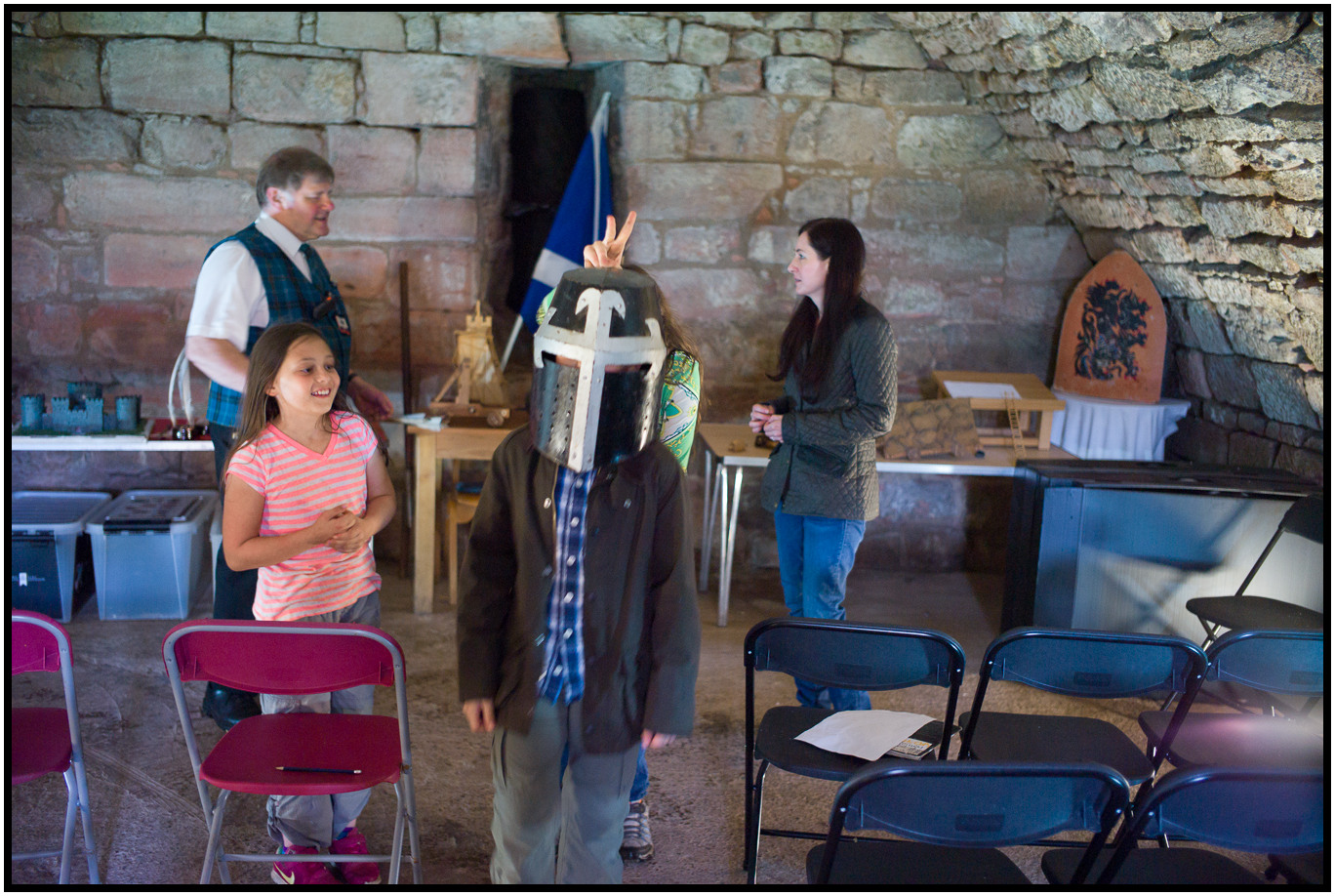
Trying on an authentic knight’s helmet. It had tiny slits for seeing through and a few holes for breathing — archers were so skilled they could put an arrow through the eye slits from the back of a moving horse. The guy scandalized and grossed out the kids when he told them, “The archers used to poop in buckets and then dip the arrow heads in the poop.” He mimed stringing a bow and dipping the arrow tip in a bucket. “If the arrow itself didn’t kill the person, the infection from feces probably would. Aye, they were a nasty bunch.”
(Note Isabella hiding behind Holden making rabbit ears.)
Real swords. Those things were heavy. The ones for this demonstration were really dull (because kids handle them) but the ones used for battle had razor sharp blades.
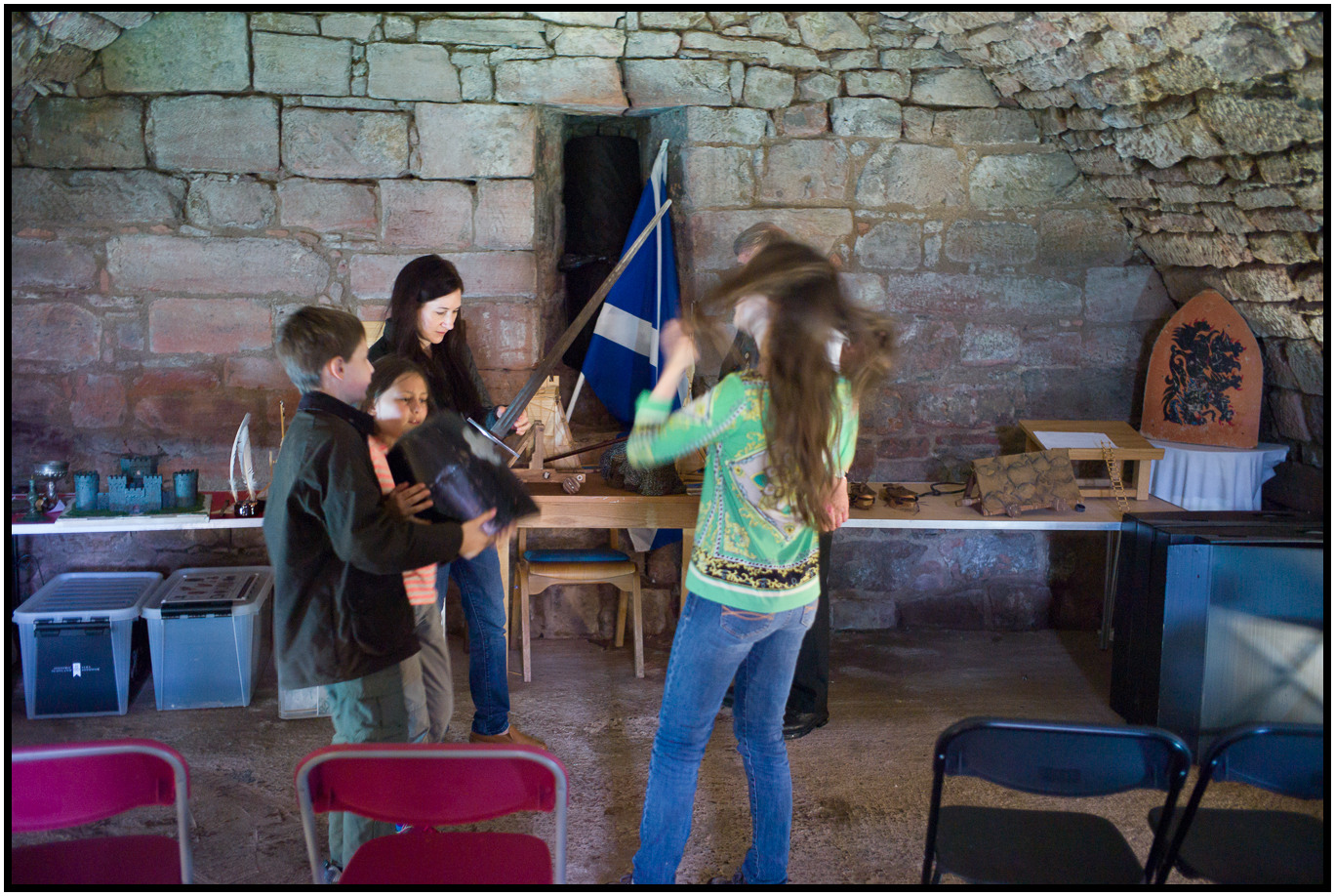 Josie trying on the helmet — “It’s so heavy it hurts my shoulders” — and Isabella imagining what the sword would be like sharpened. (If she took a BuzzFeed quiz “Which Game of Thrones character are you?” she’d totally be Arya Stark.)*
*Update: This is an actual quiz and Isabella got … ARYA STARK. I called it!! (And now she’s mad because we won’t let her watch the show. We told her she had to read the books first.)
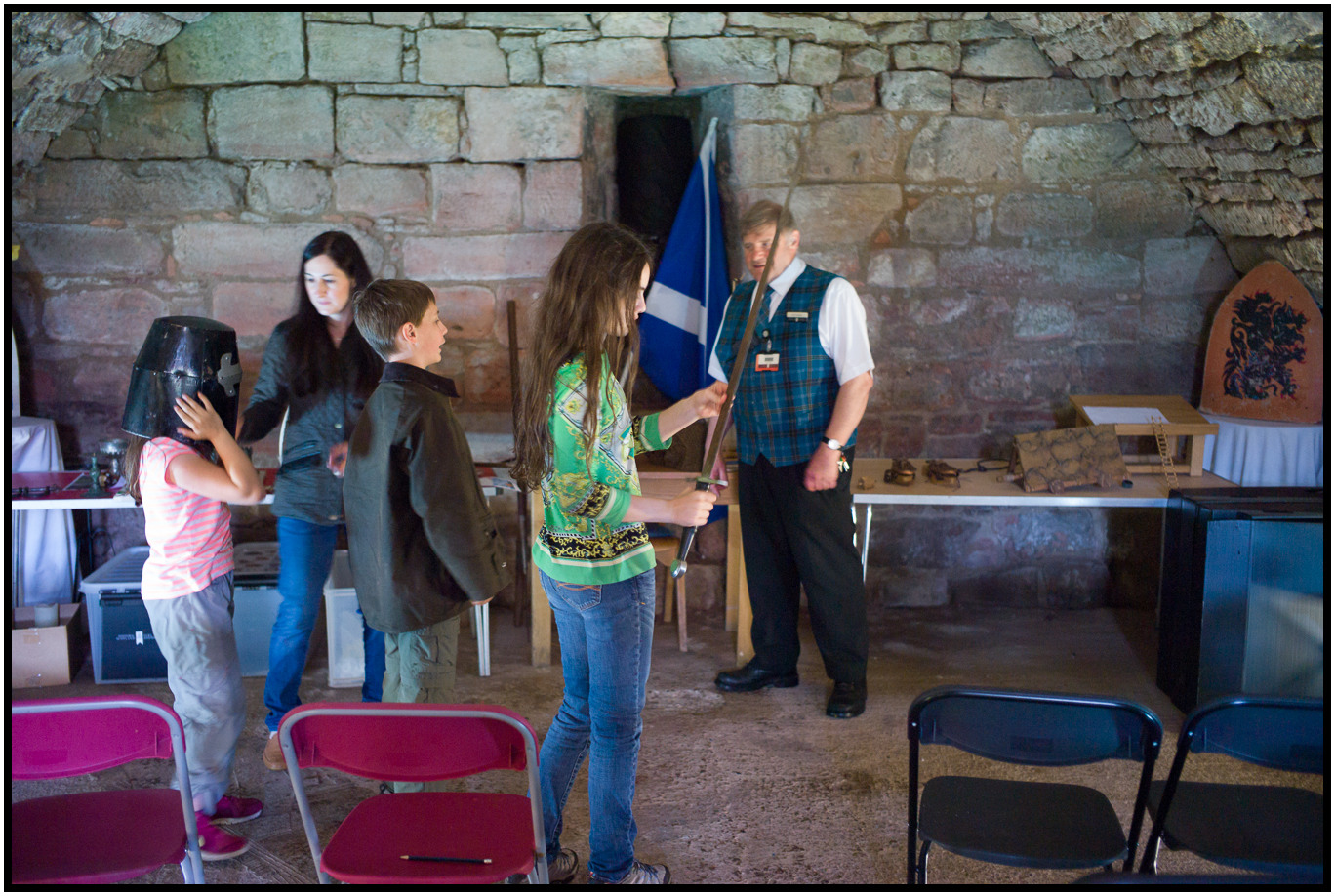
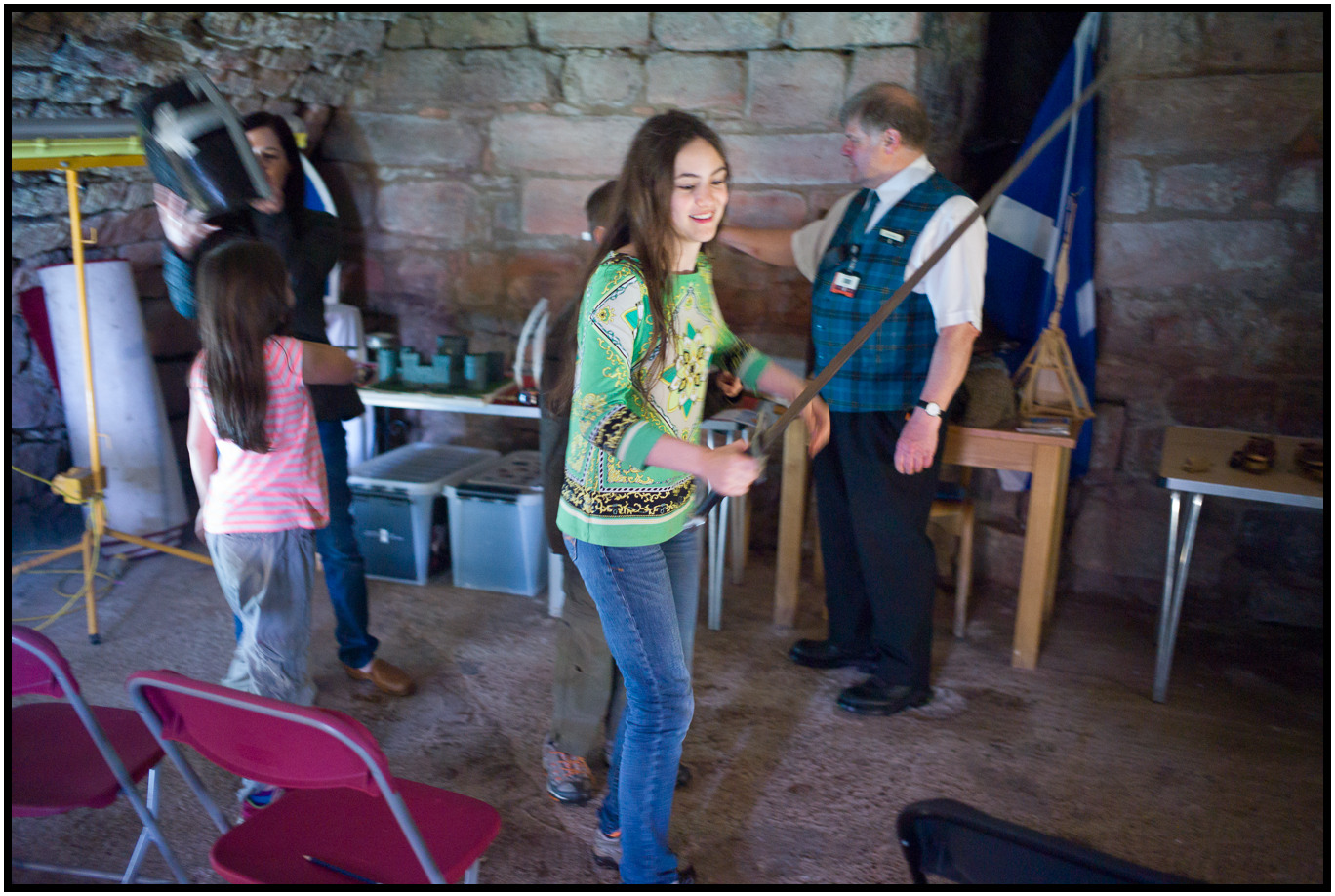
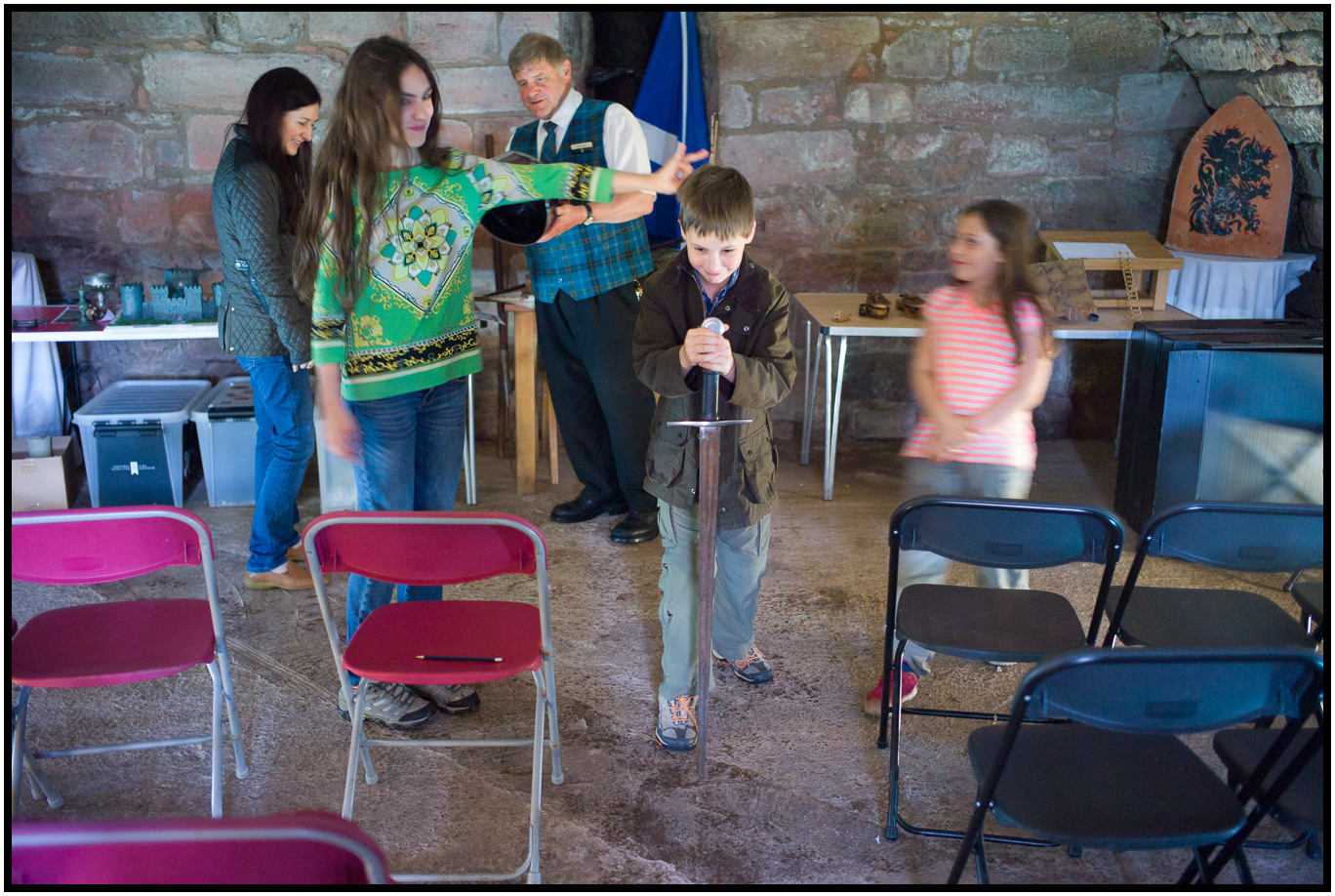
Holden pretending to pull the sword out of stone, a la King Arthur.
After that, things took a turn for the more boring. We were starving and got back to Glasgow ready to eat anything we could find. The first restaurant we came to was a Persian place that turned out to be pretty bad. It was expensive, slow, and not very tasty. 0 for 3. You can’t win ’em all.
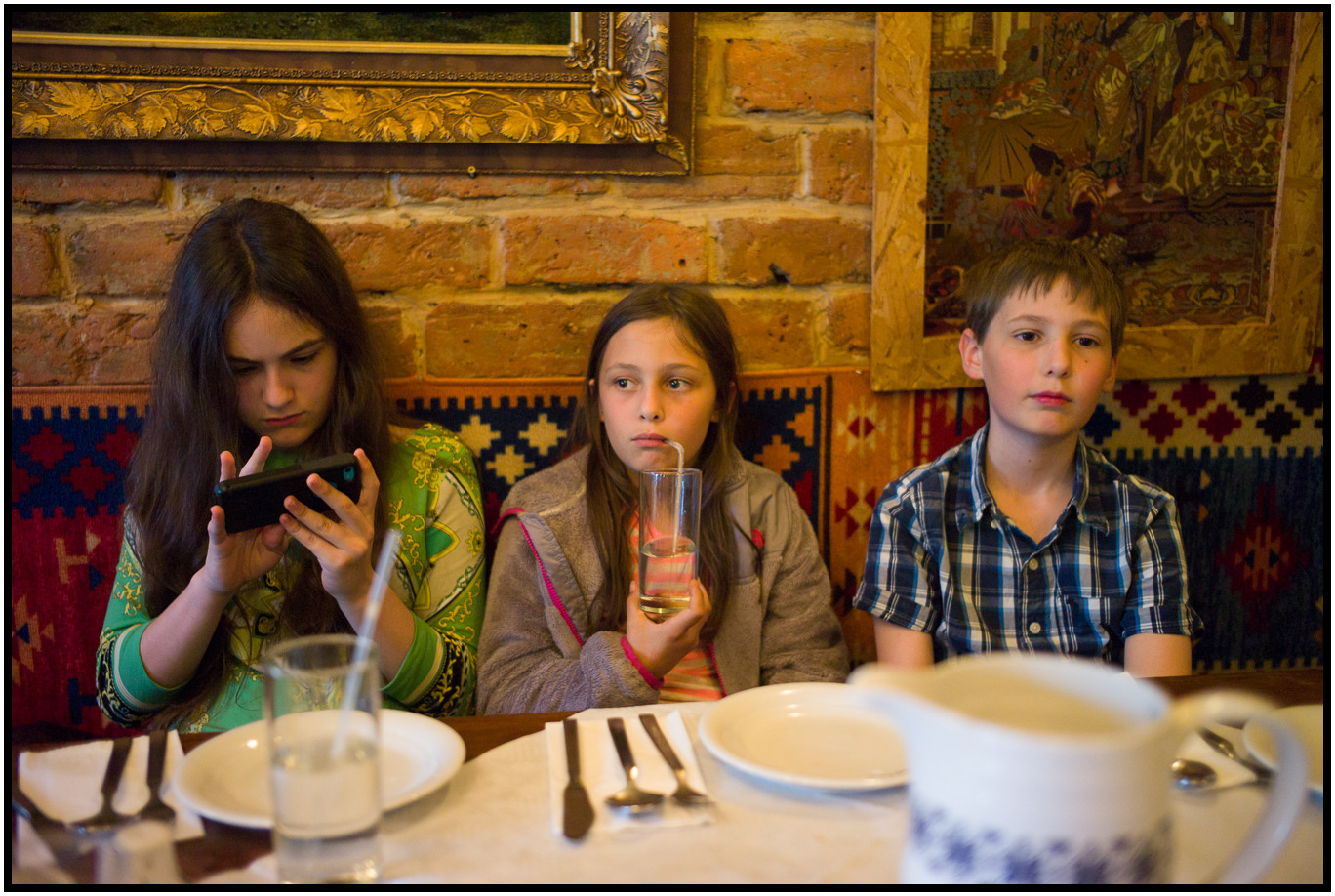
Isabella ran her battery down … that’s how long the wait was.
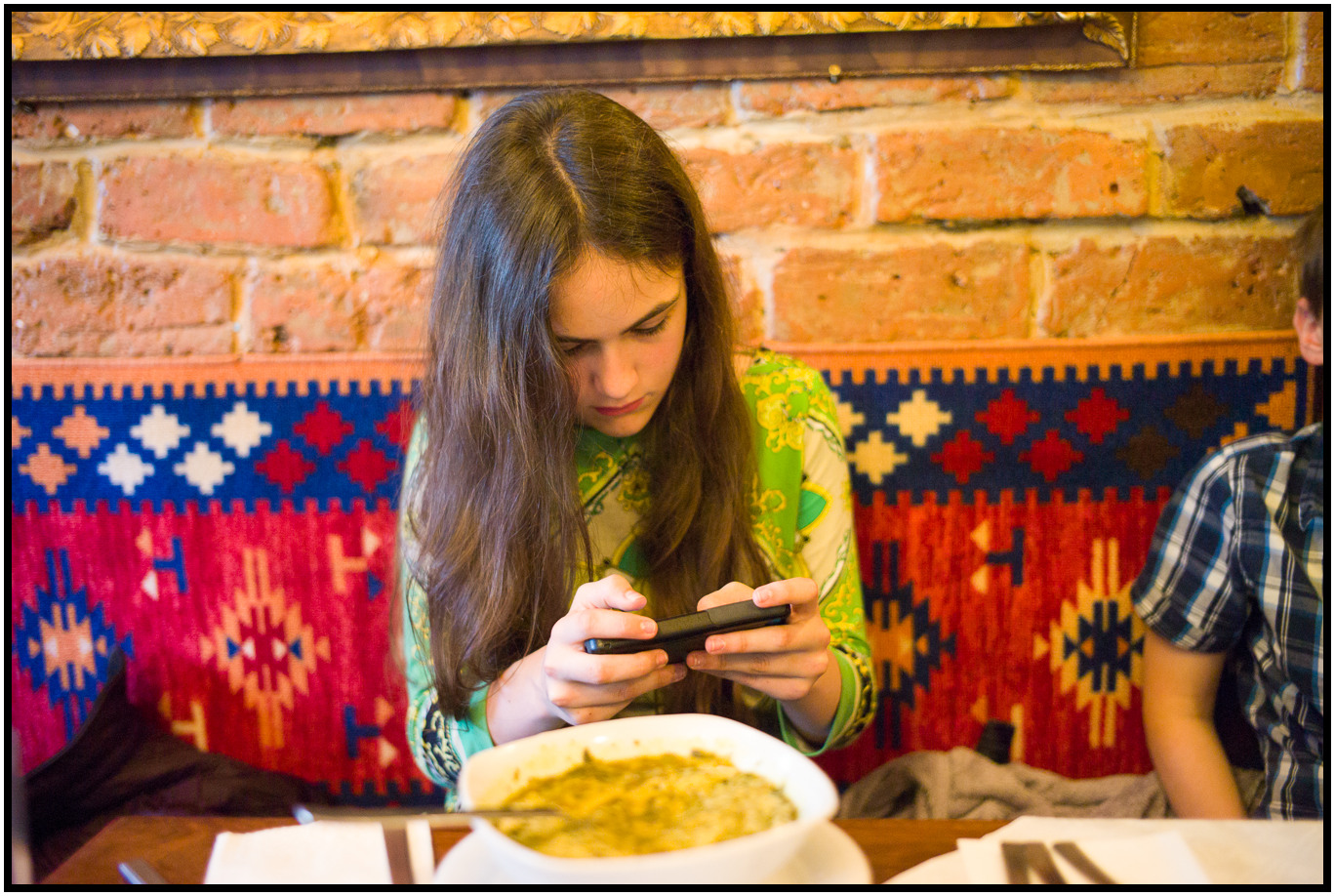
By the time lunch was over, it was after 3:00 p.m. We decided to go back to the apartment and call it a day.
We ate what was left of our food stash — cereal and cheese, mostly — for dinner. It was better than the Persian food we had for lunch. Then Adam and I watched two episodes of Orange is the New Black, caught up on some work, and got ready for an early departure tomorrow morning. We’re heading back into England tomorrow. Our trip is at it’s halfway point now … half in Scotland and half in England is the plan.
June 26, Thursday
Today was mostly a travel day, but we did make one stop at the Robert Burns Museum and Birthplace cottage. We saw a painting of this cottage in the Kelvingrove art gallery in Glasgow and thought it would be fun to see it in person.
Robert Burns was really famous in Scotland and England. They love this guy. For those not into English poetry, you’ll know him best as the guy who wrote Auld Lang Syne and the poem “To A Mouse” that John Steinbeck used as the title for Of Mice and Men.
The Brig o’ Doon played a major role in the poem Tam O’ Shanter.
“Having disturbed the eerie gathering of witches in nearby Alloway Auld Kirk, Tam and his horse Meg flee for their lives, reaching the safety of the keystone of Brig o’ Doon in the nick of time. The screaming witches, unable to cross the running water, are left seething with poor Meg’s tail in their knurled clutches as their consolation prize.” (excerpt from the National Trust of Scotland brochure.)
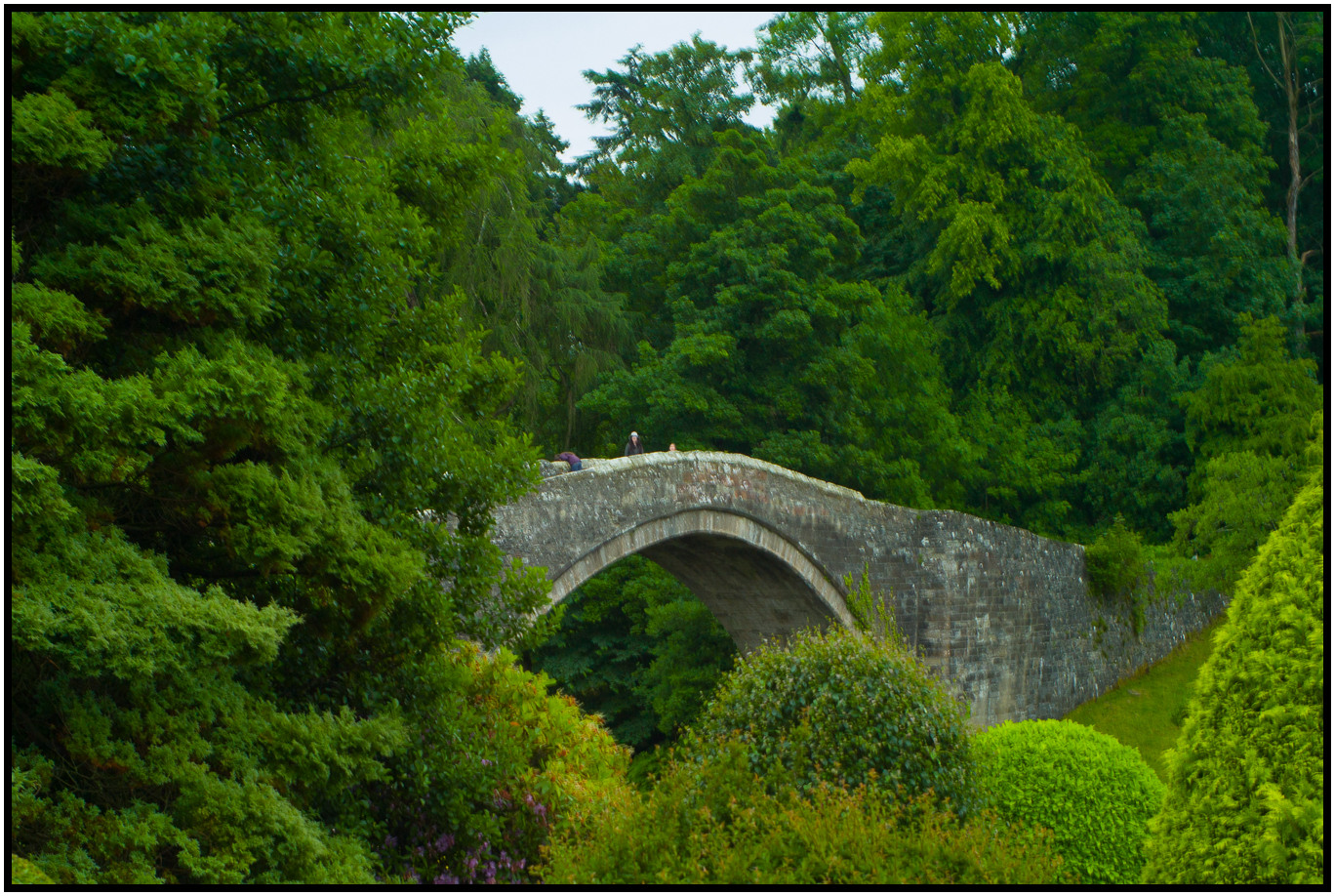
The Brig o’ Doon.
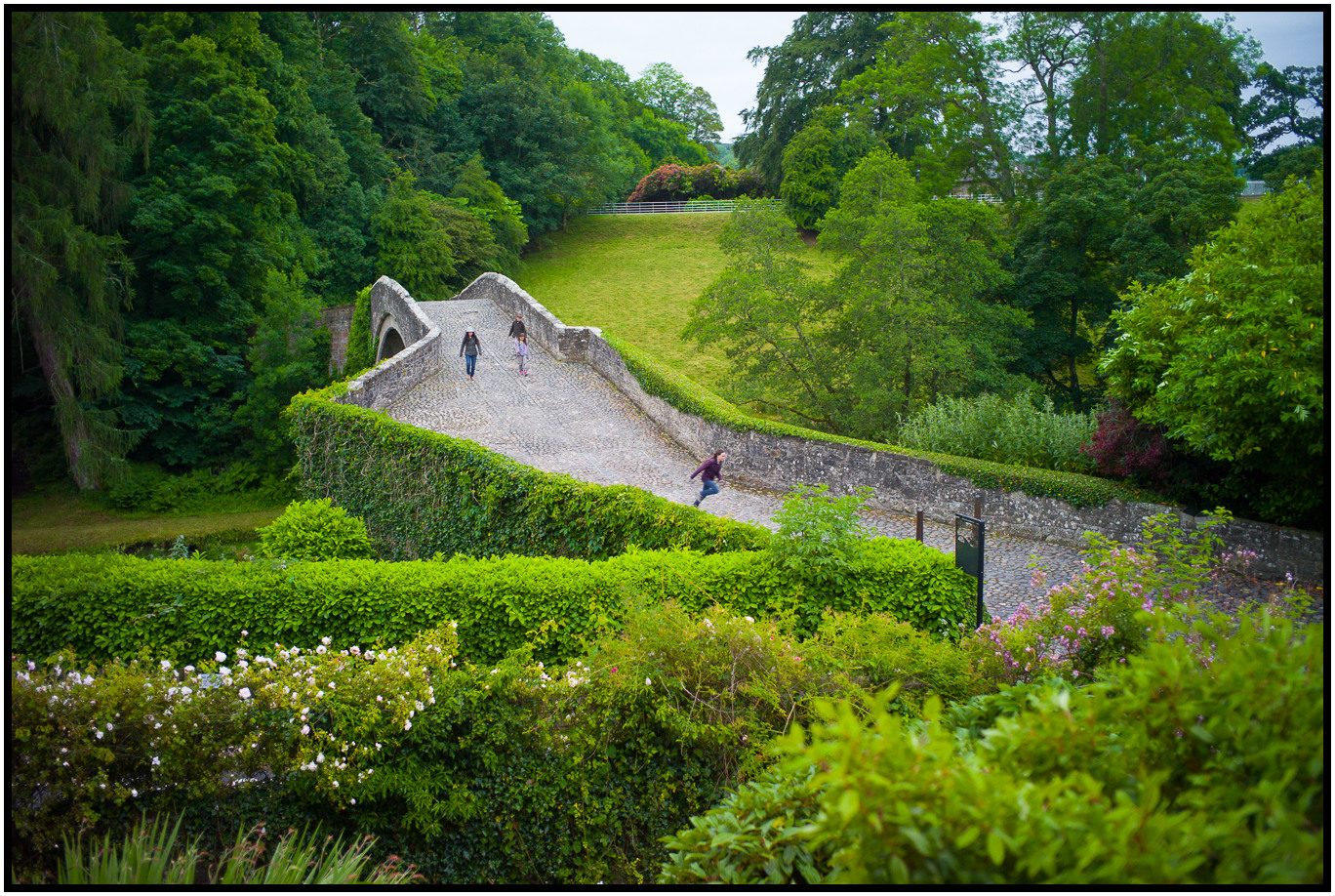
Brig o’ Doon … Isabella running, like always!
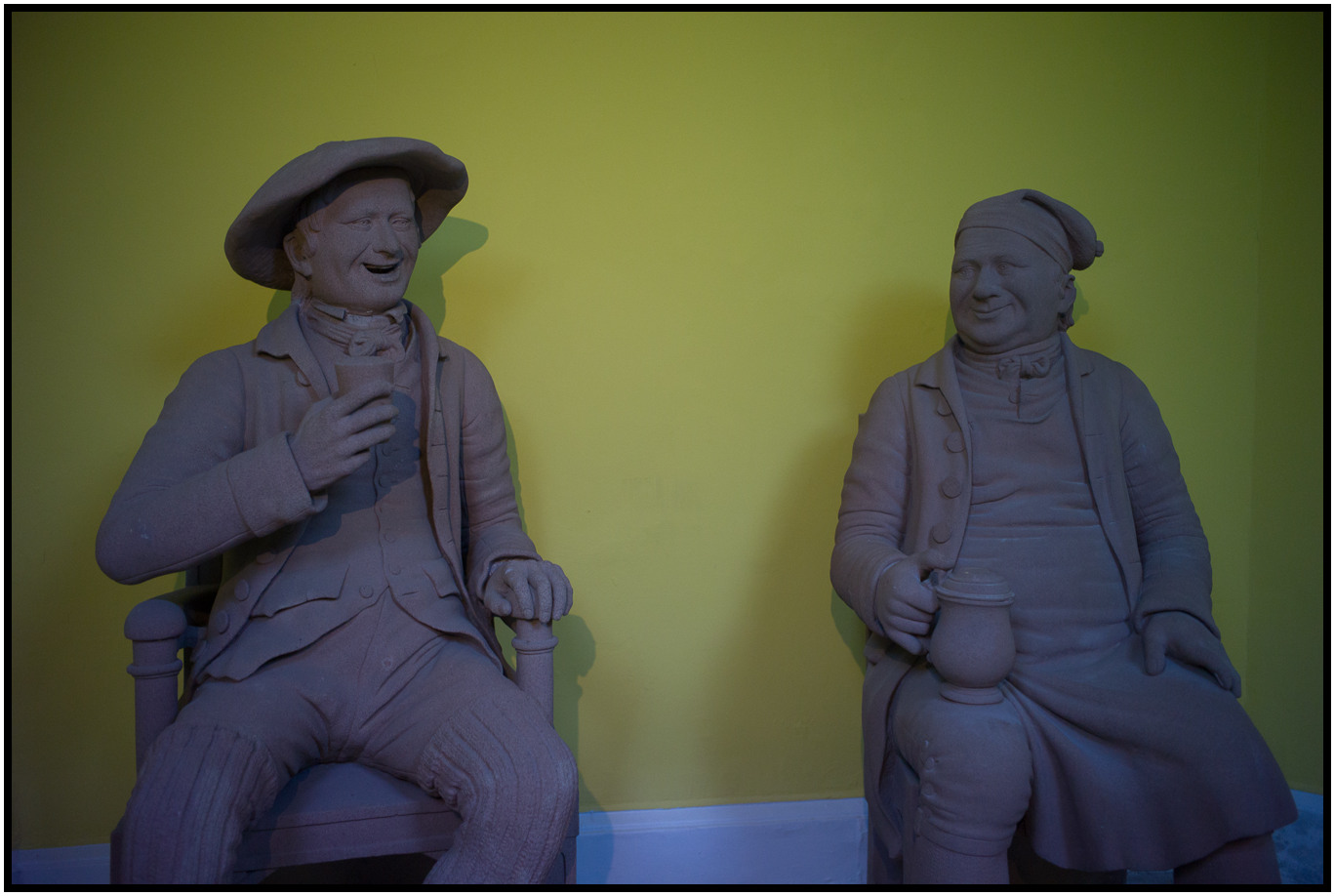
Inspired by the poem Tam O’ Shanter, a self-taught Scottish stonemason, James Thom, created these life-sized stone statues of Tam and Johnnie around 1828.
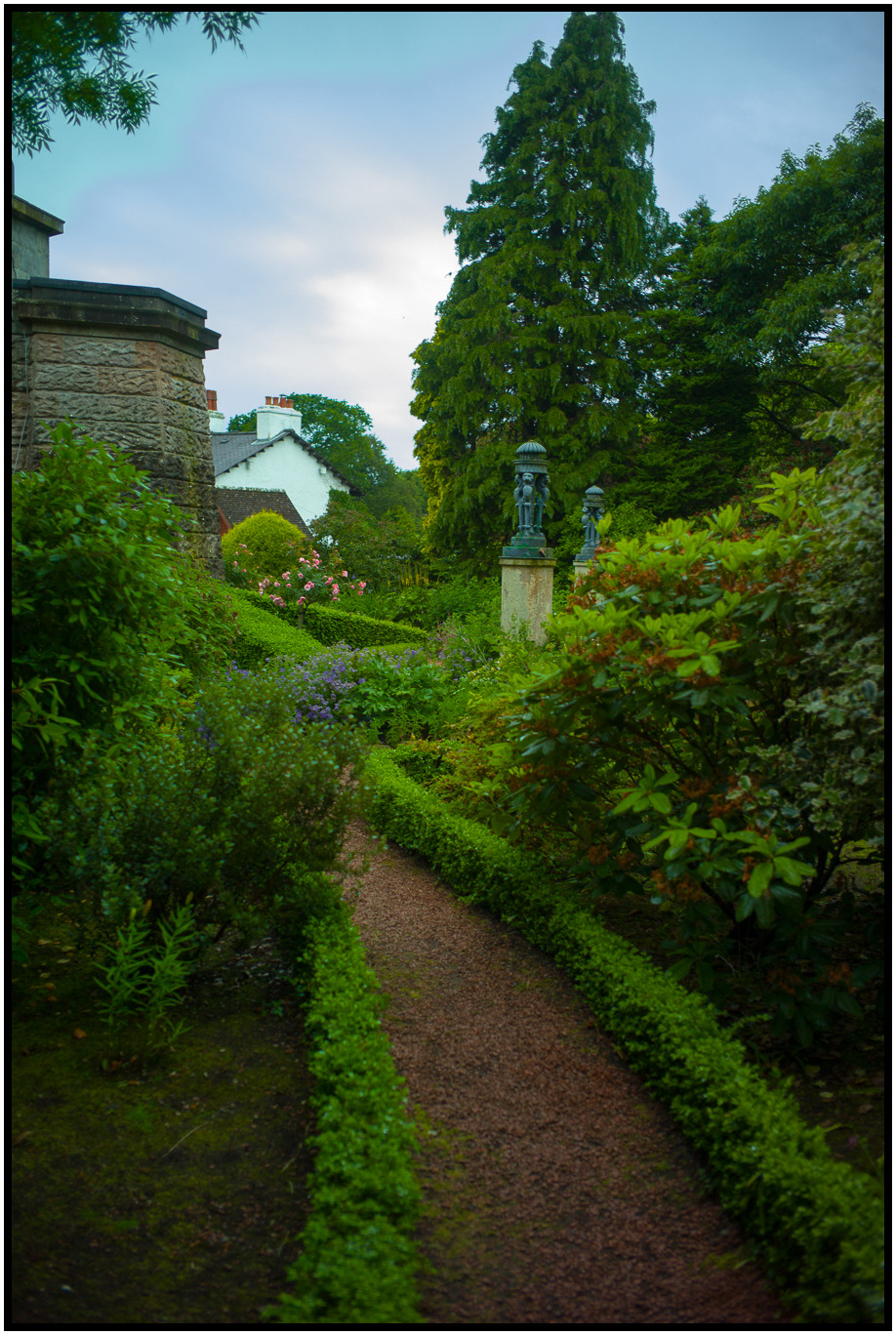
Gardens on way to (supposedly haunted) Alloway Auld Kirk.
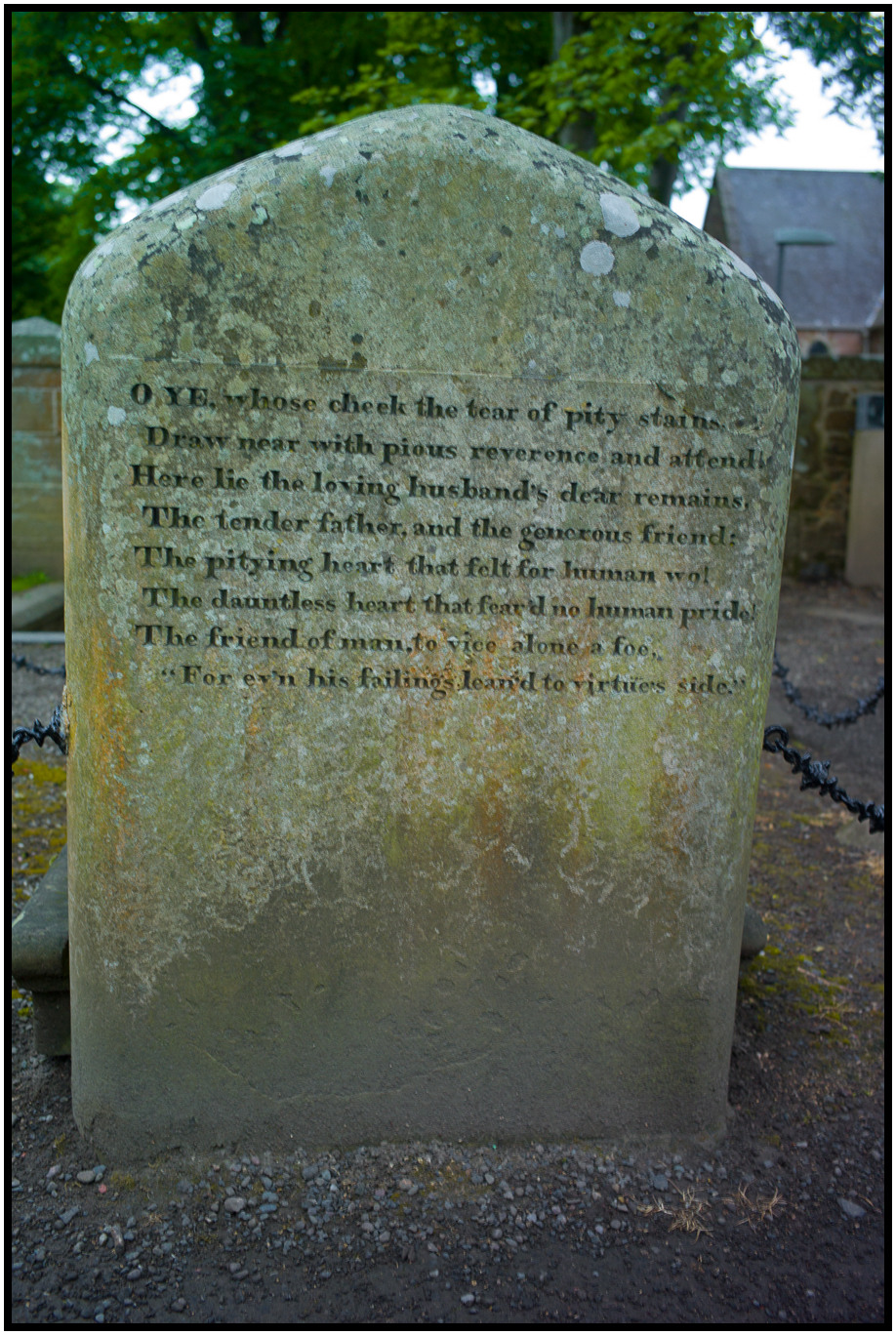
Alloway Auld Kirk. Robert Burns’s dad, William Burns, is buried here. The back of his gravestone in engraved with an epitaph written by Robert.
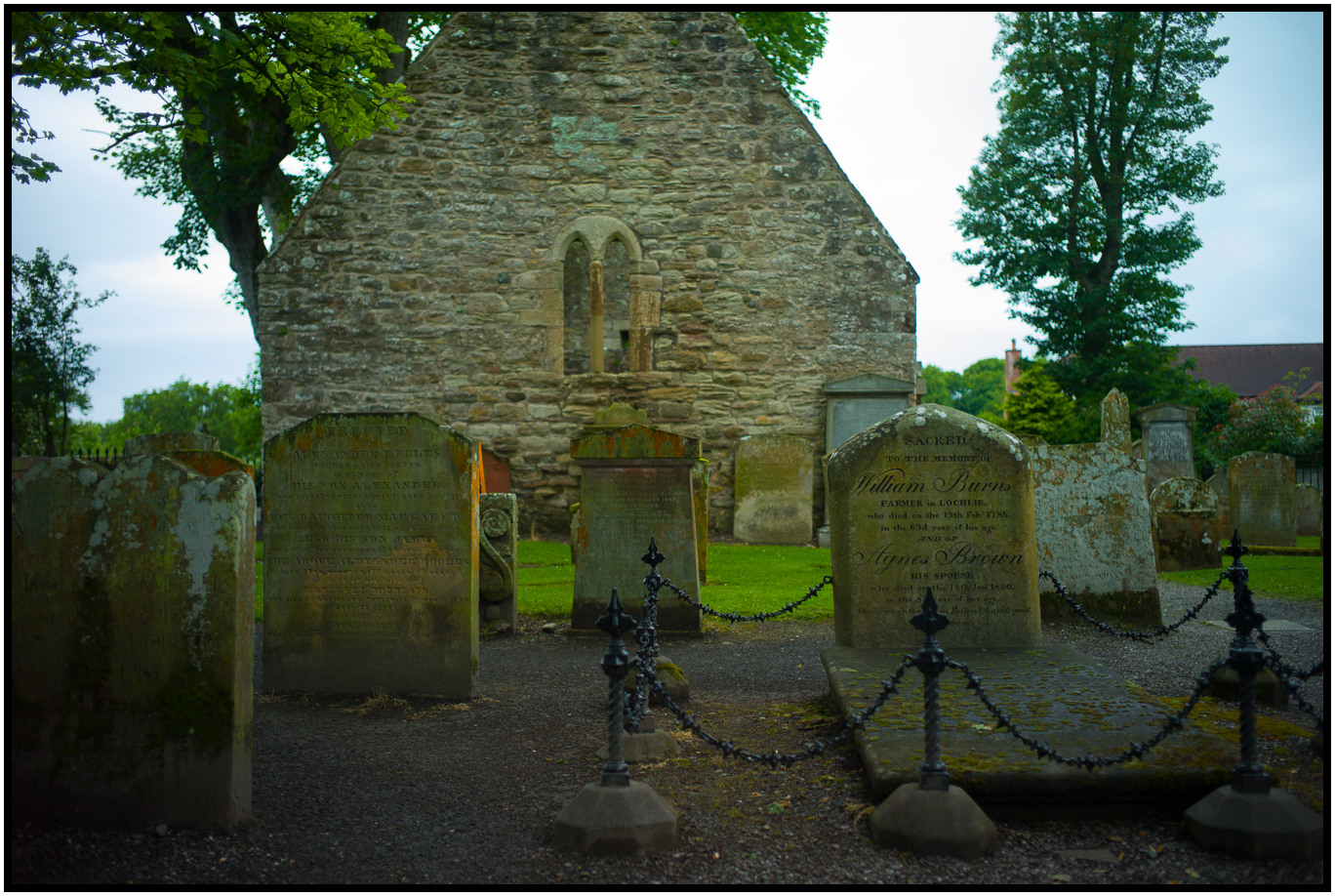
I especially love the last two lines:
The friend of man, to vice alone a foe
“For ev’n his failings lean’d to virtues side.”
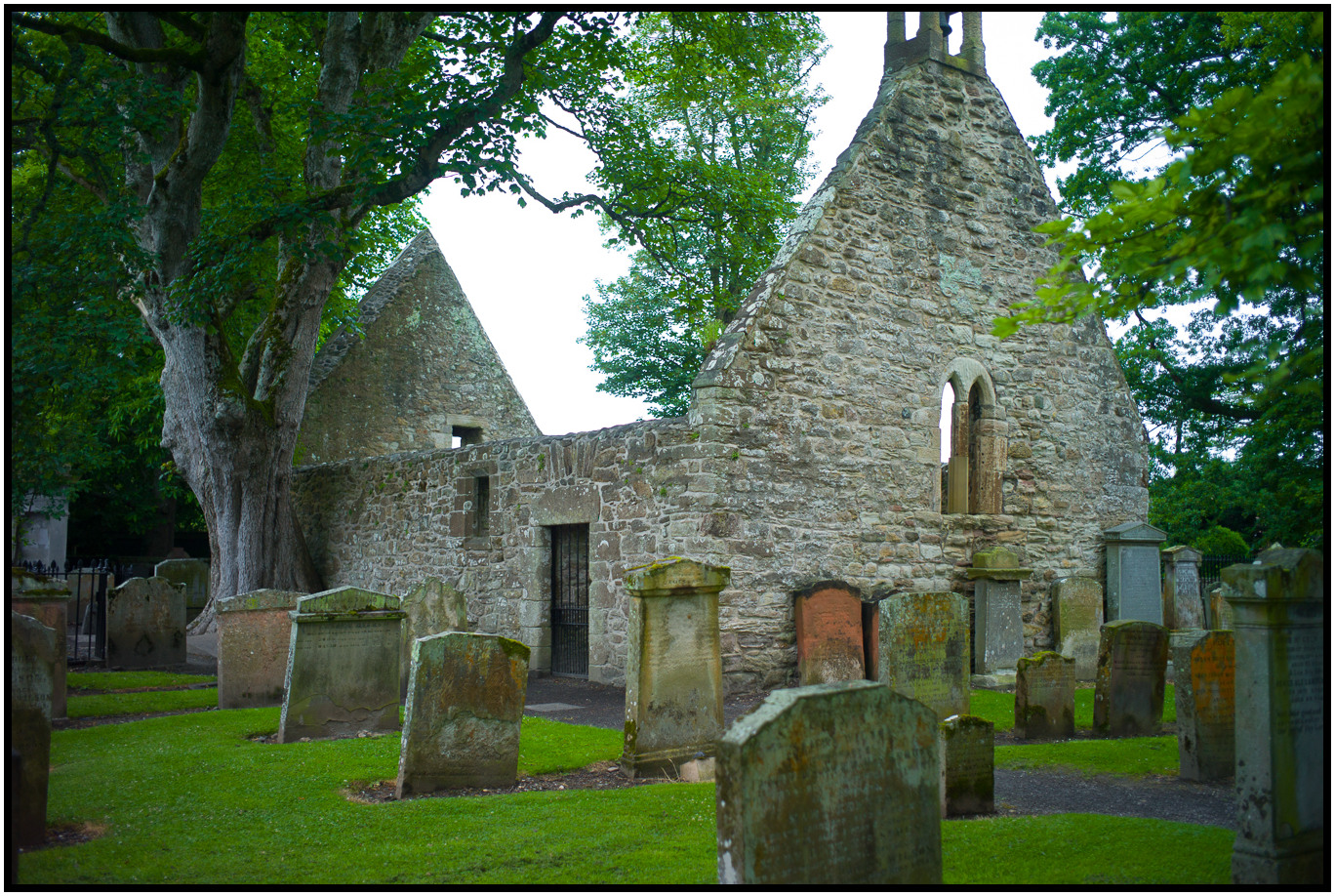
This church was a ruins when Robert Burns was growing up. It was rumored to be haunted and was the inspiration for Tam O’ Shanter.
“In Burns’s poem … Tam peers through the windows of this creepy, ruined kirk one dark and stormy night, and sees a gaggle of witches dancing to a tune played on the bagpipes by the Devil. Tam foolishly disturbs the witches and has to flee for his life.” (excerpt NTS brochure.)
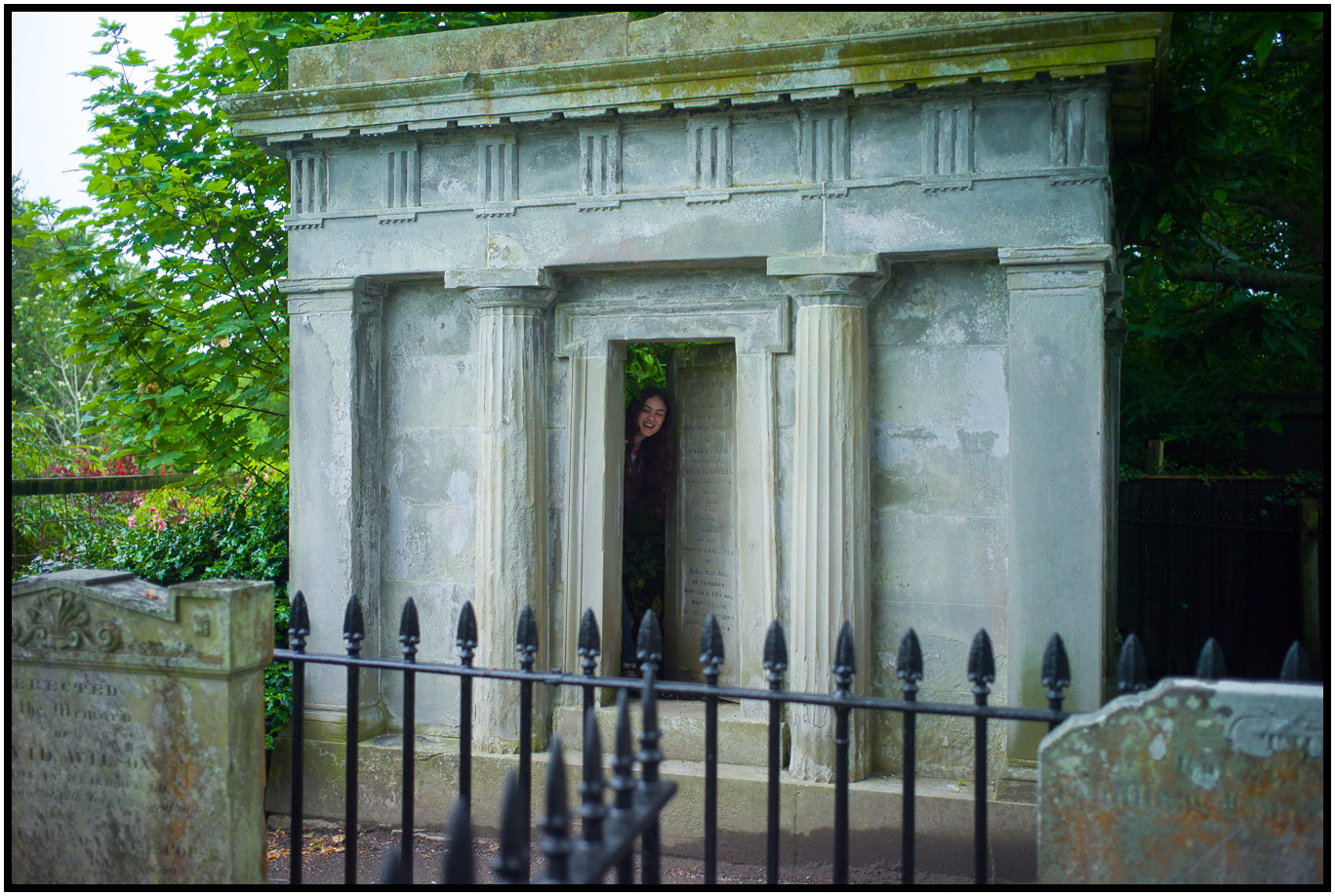
Near the back of the cemetery was this crypt. The door was eerily opened. It didn’t look like a door … it was designed to look like the other panels on the other three sides. Someone had pushed it open. The interior was filled with overgrown weeds and plants, bringing to mind The Secret Garden. It was actually pretty creepy. Isabella worked up enough nerve to dart inside to get her photo taken. She tried to make a scary face but couldn’t stop nervously laughing long enough to look serious or terrifying, and then decided she’d been in there long enough.
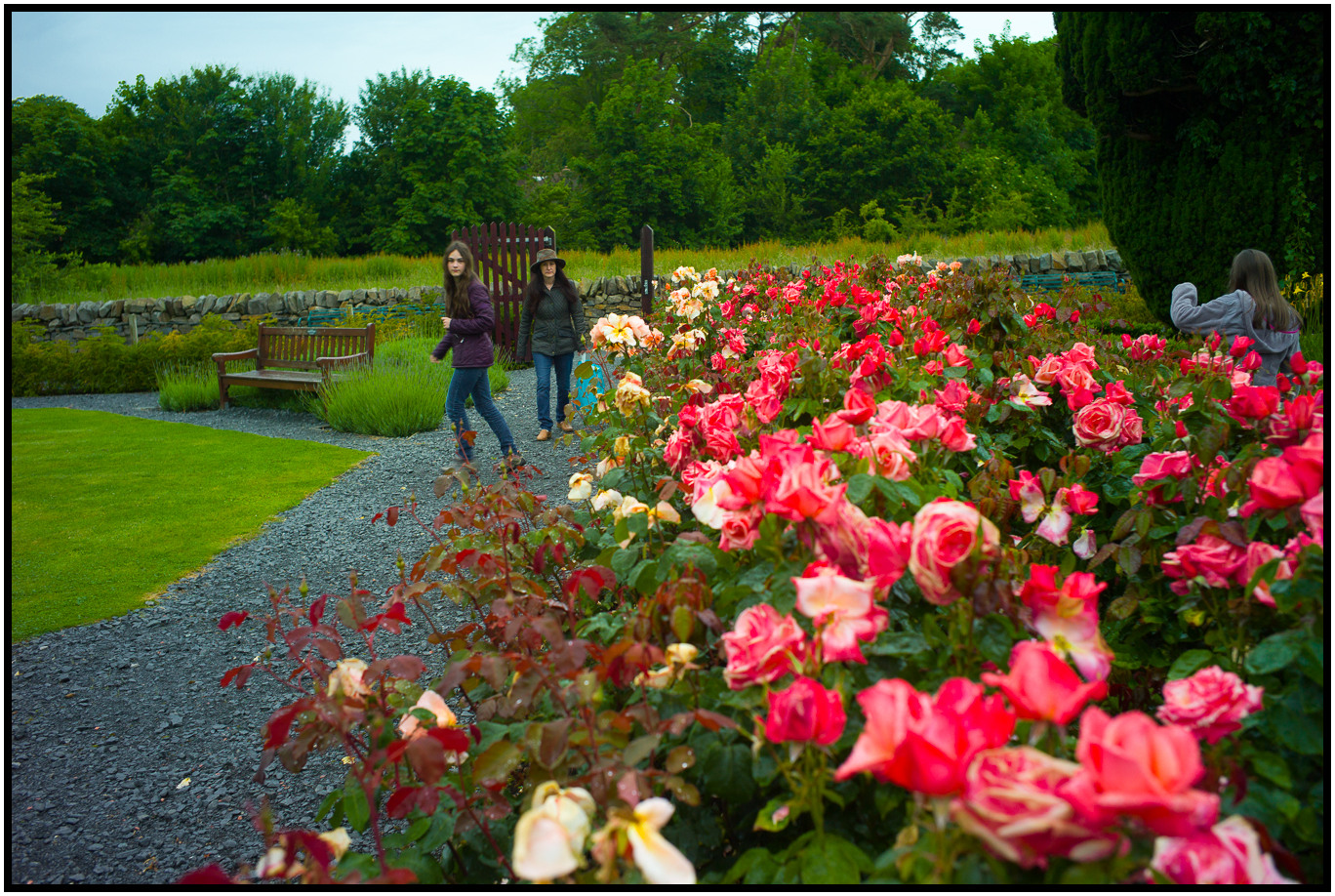
The rose gardens behind the cottage Robert Burns was born in (yellow building in the background.)
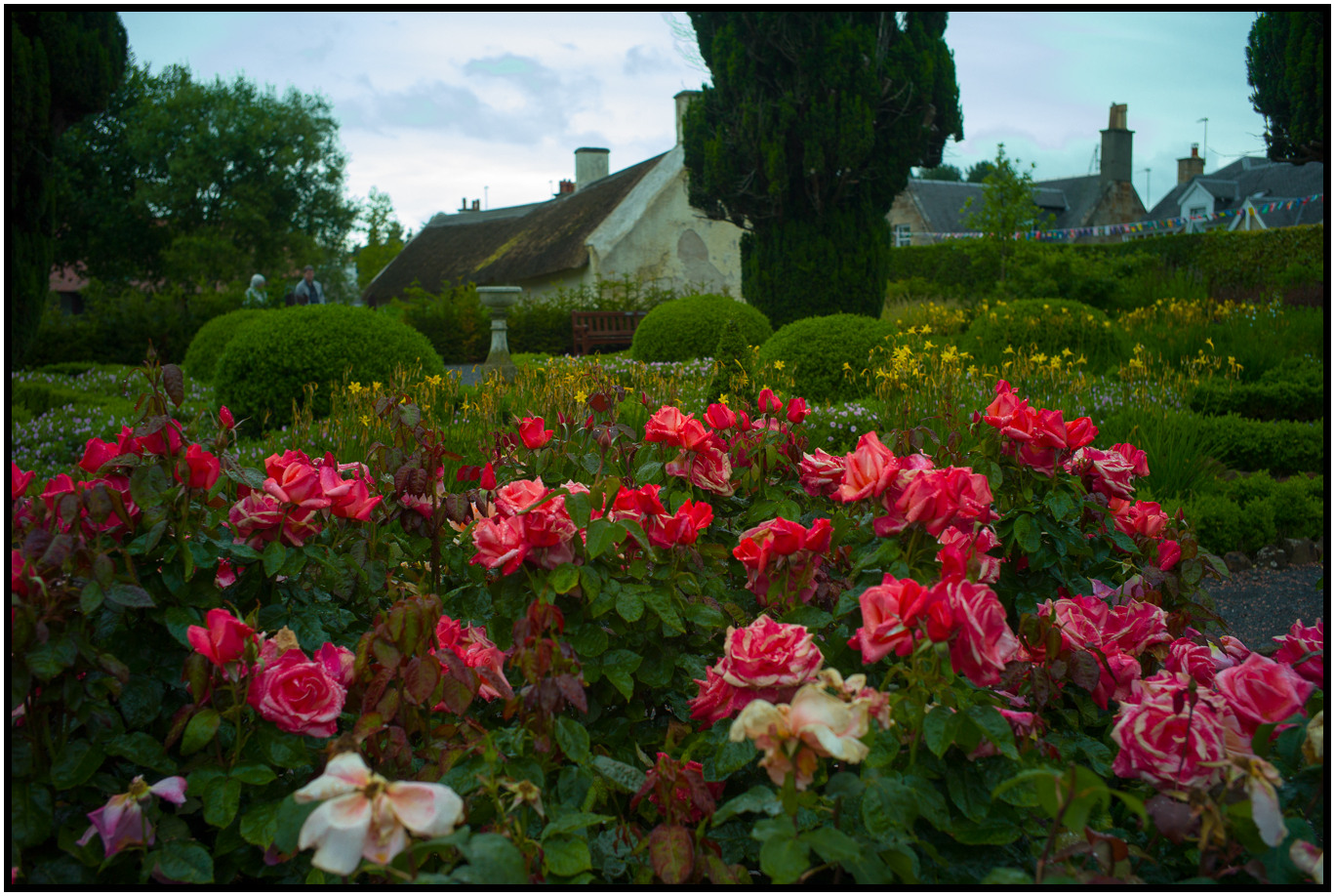
We stopped and smelled lots of roses today.
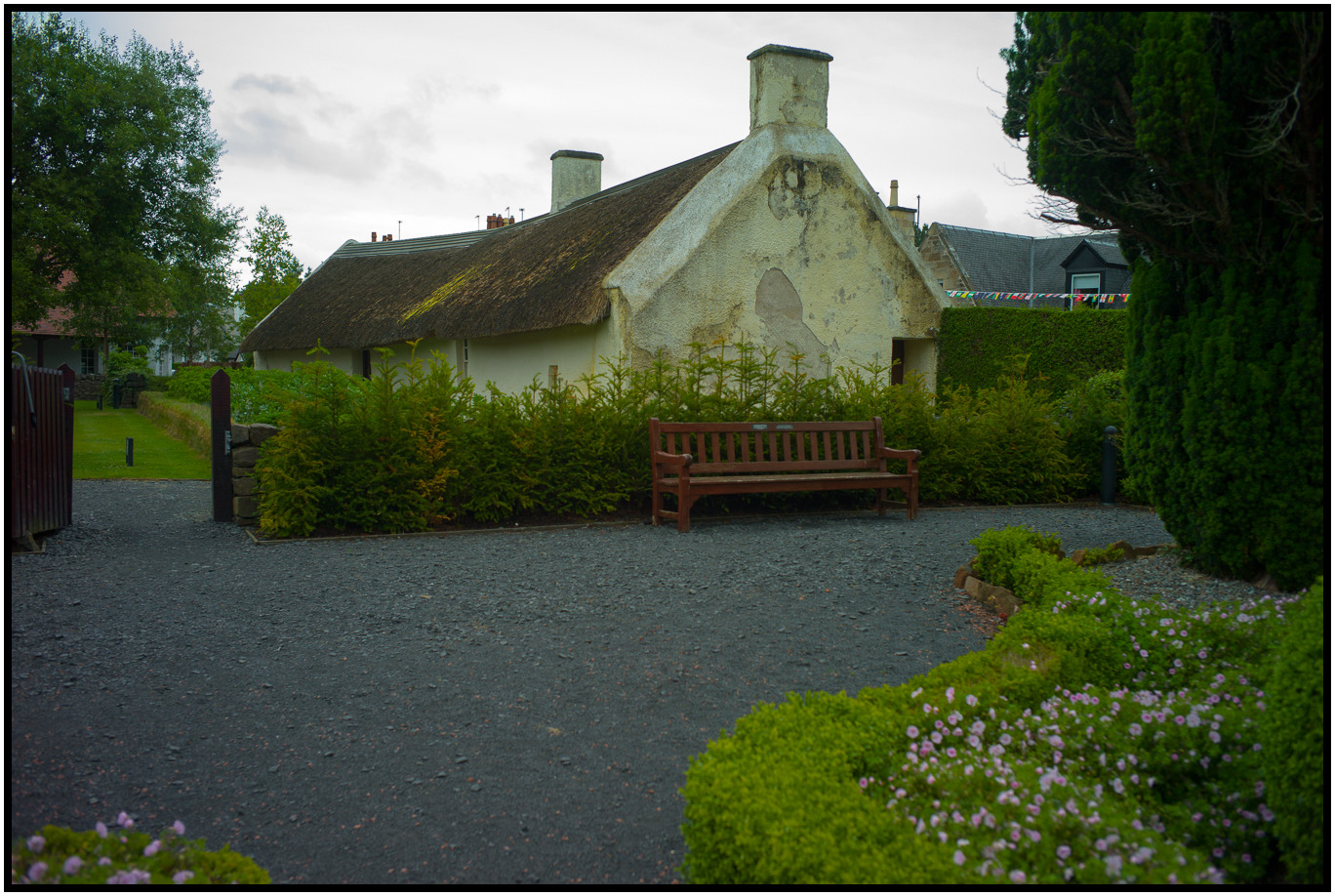
The birthplace — this 4 room cottage. The four rooms were the barn, the byre, the spence (parlor) and the kitchen. The people and the farm animals lived in the same house, on opposite ends.
The kitchen.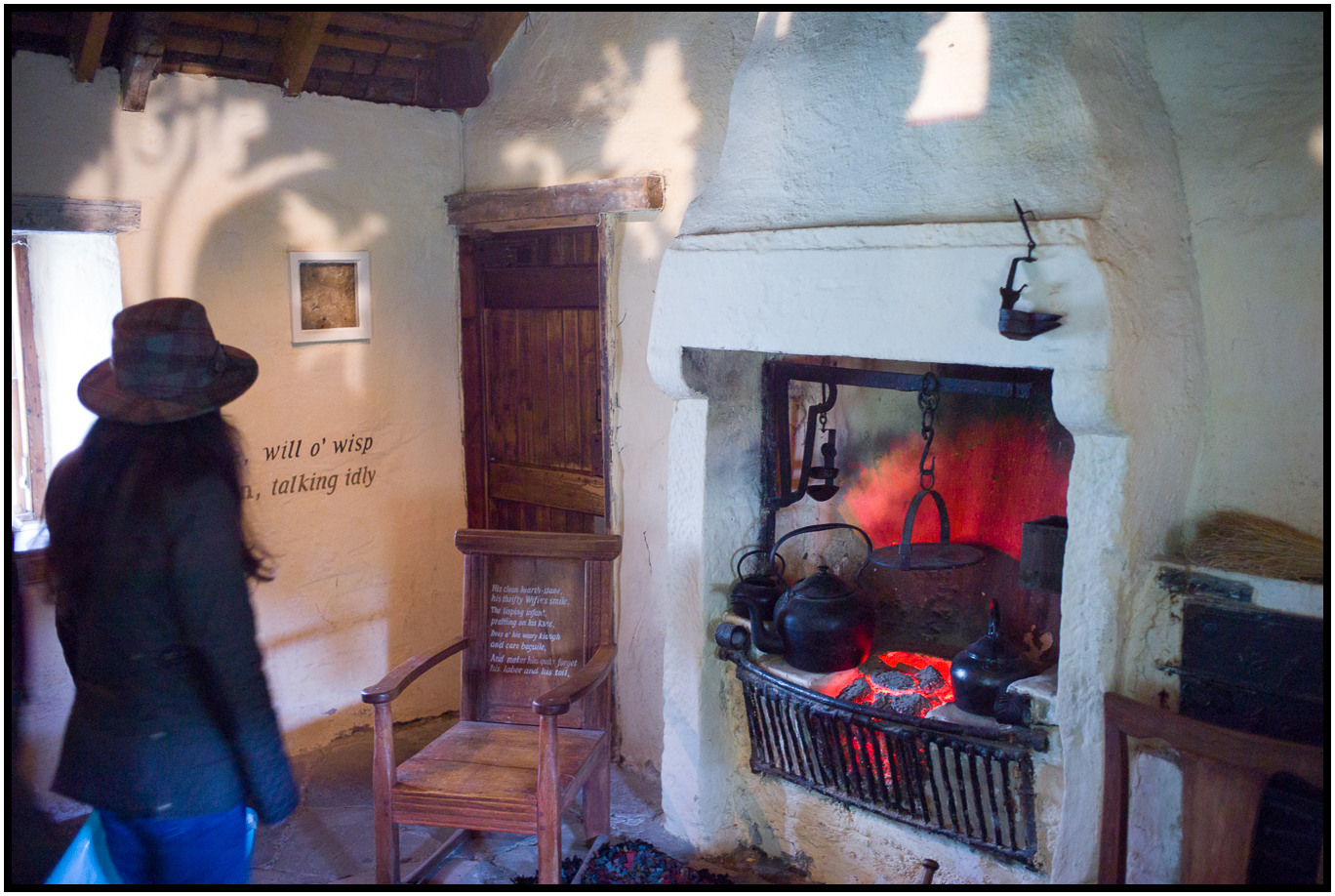
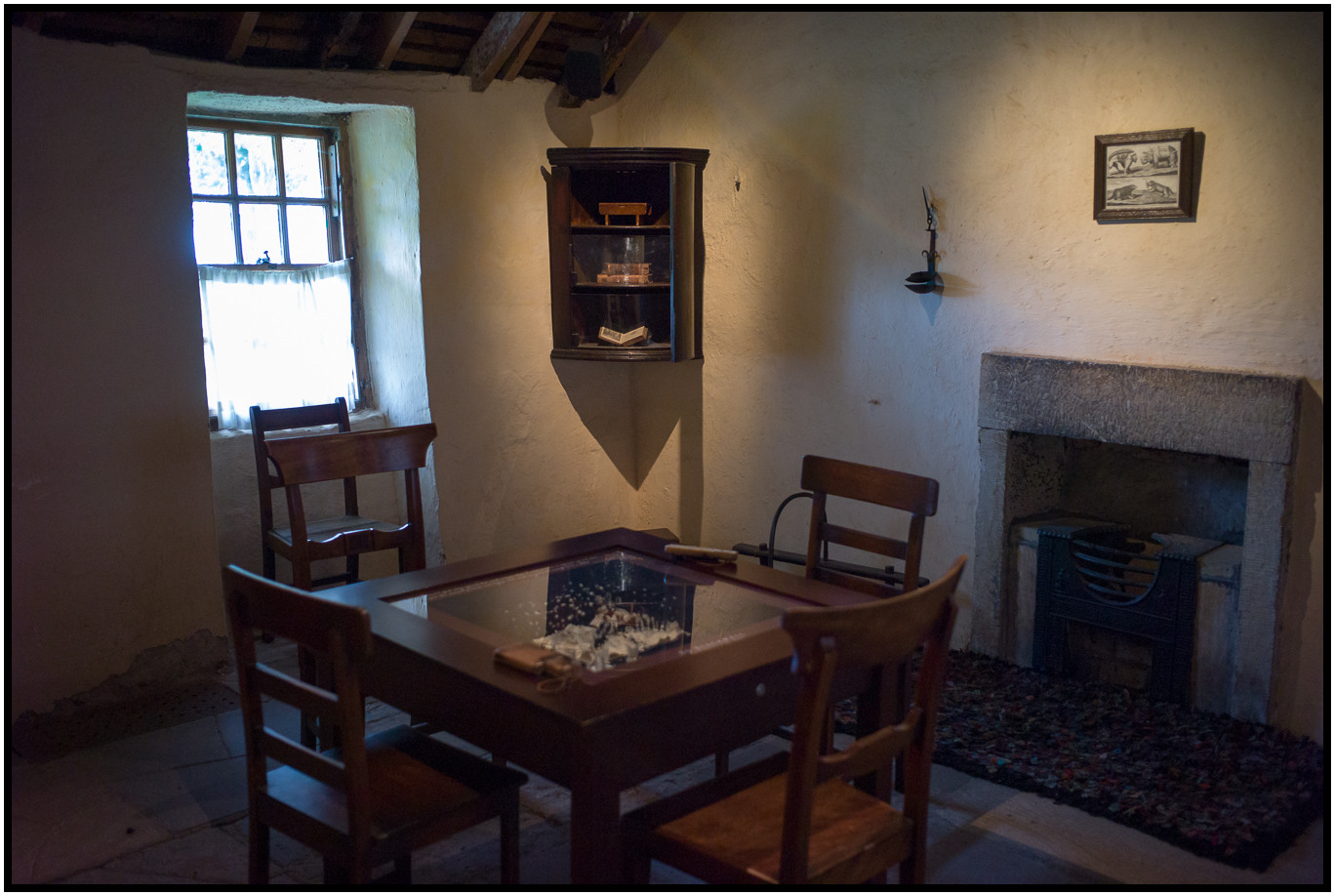
The parlor.
The barn.
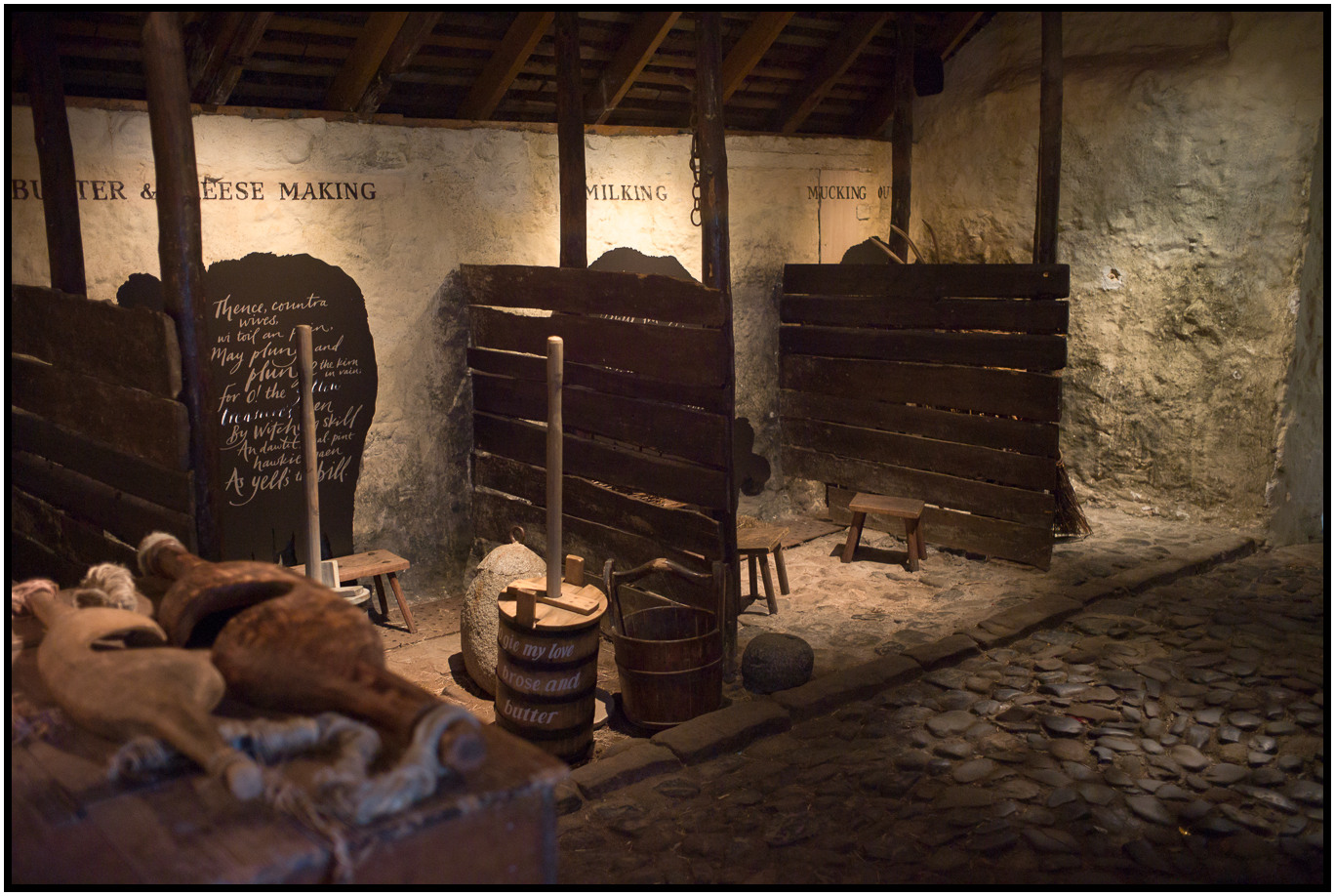
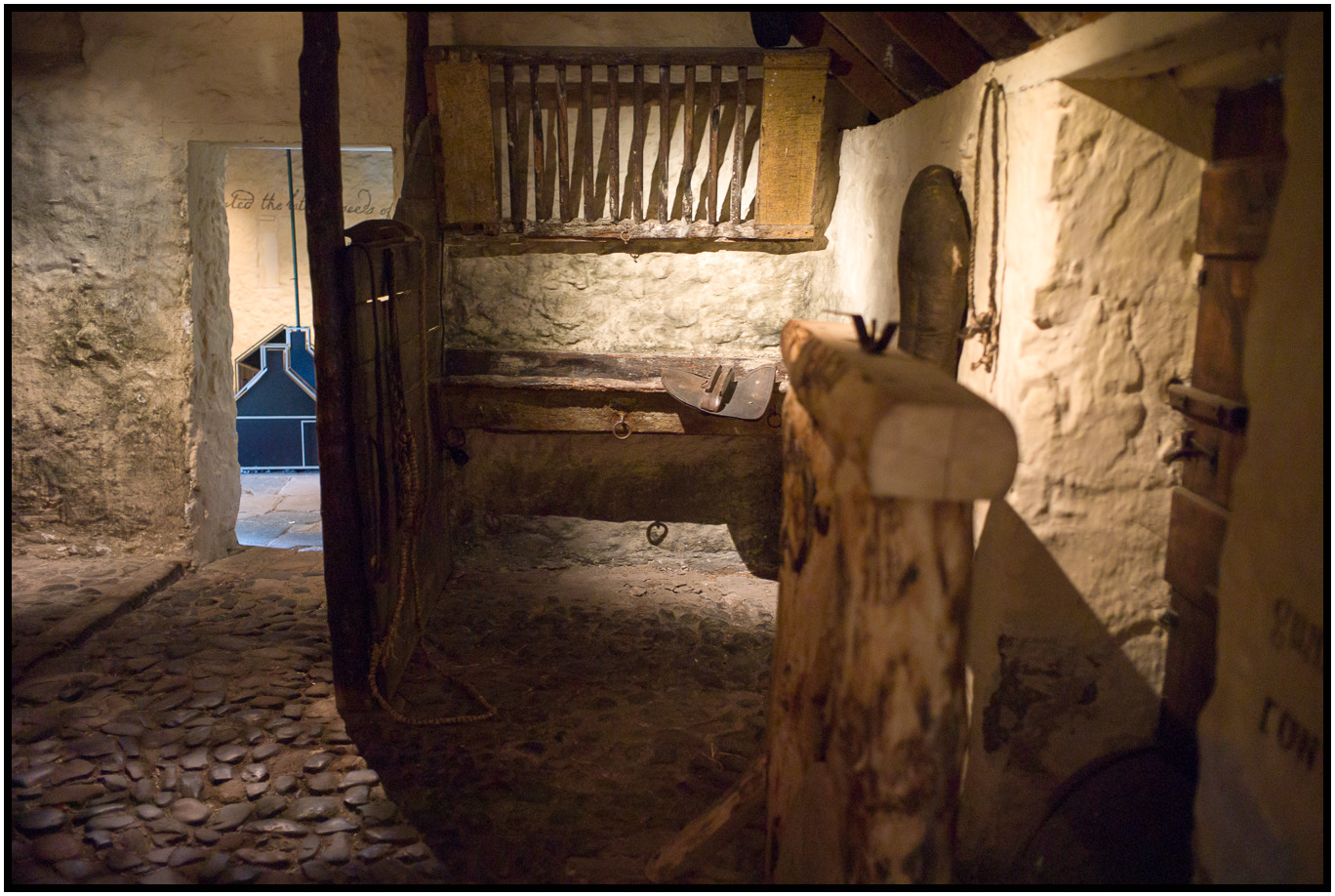
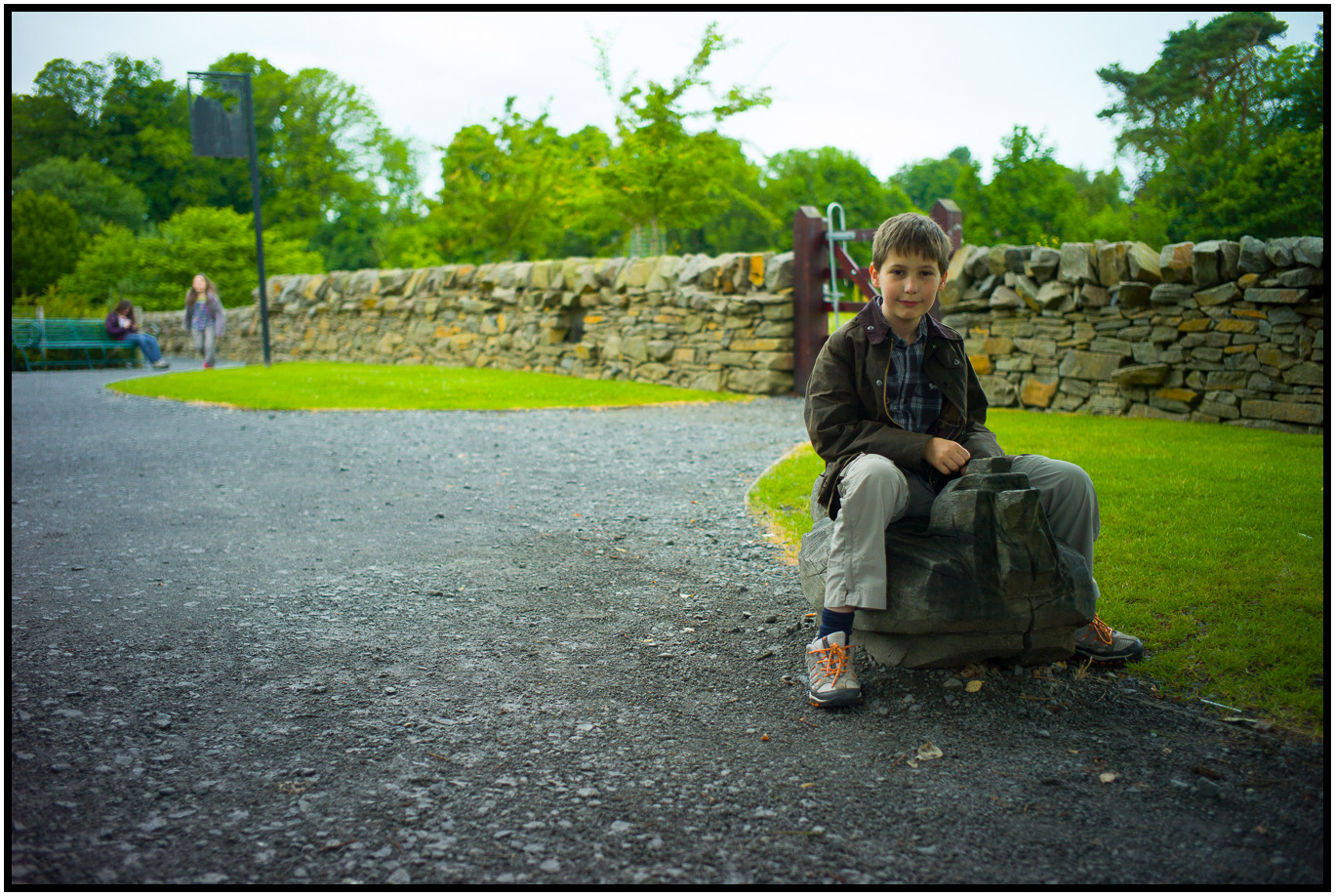
Front of cottage, and as close as we could get to the angle depicted in the painting.
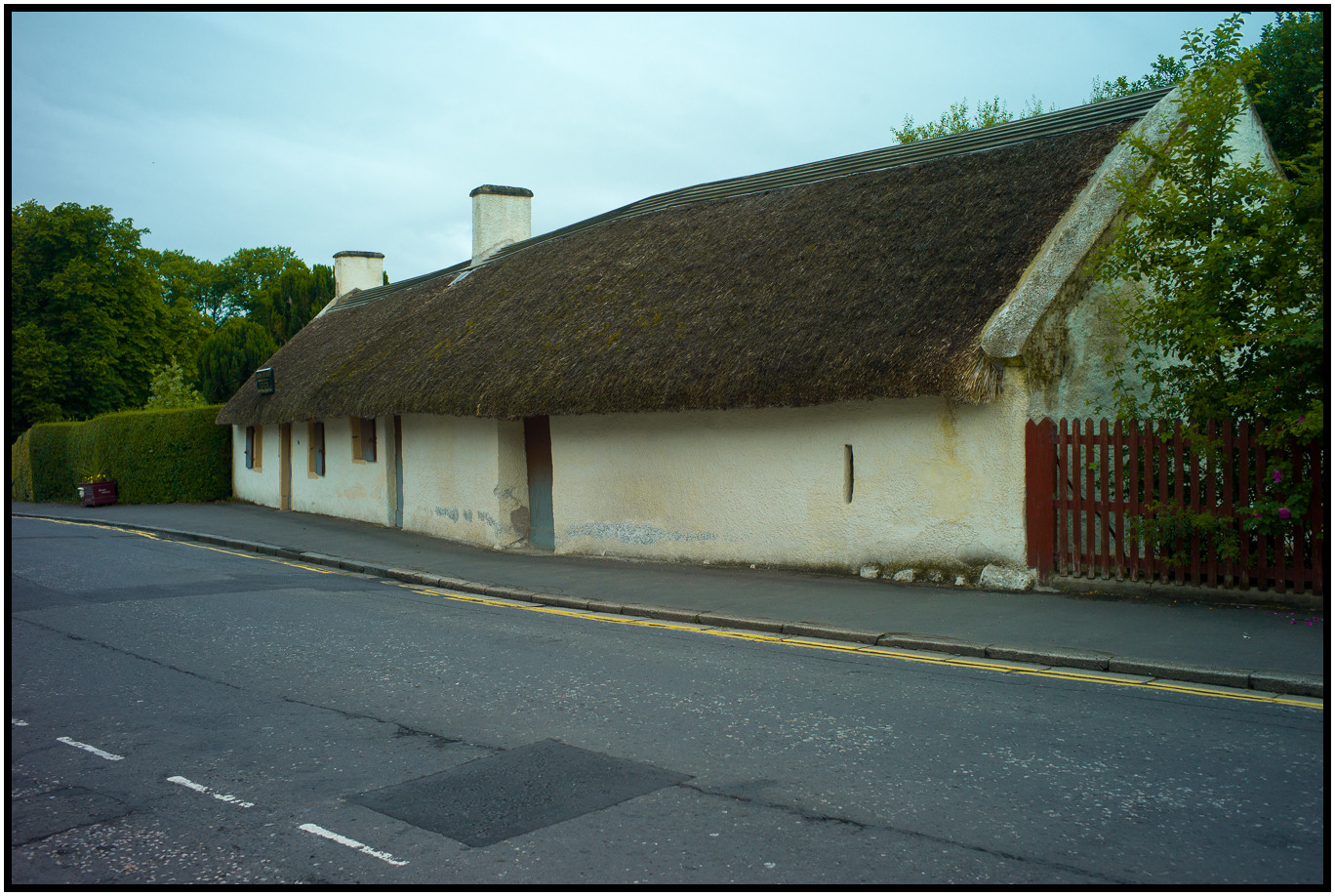
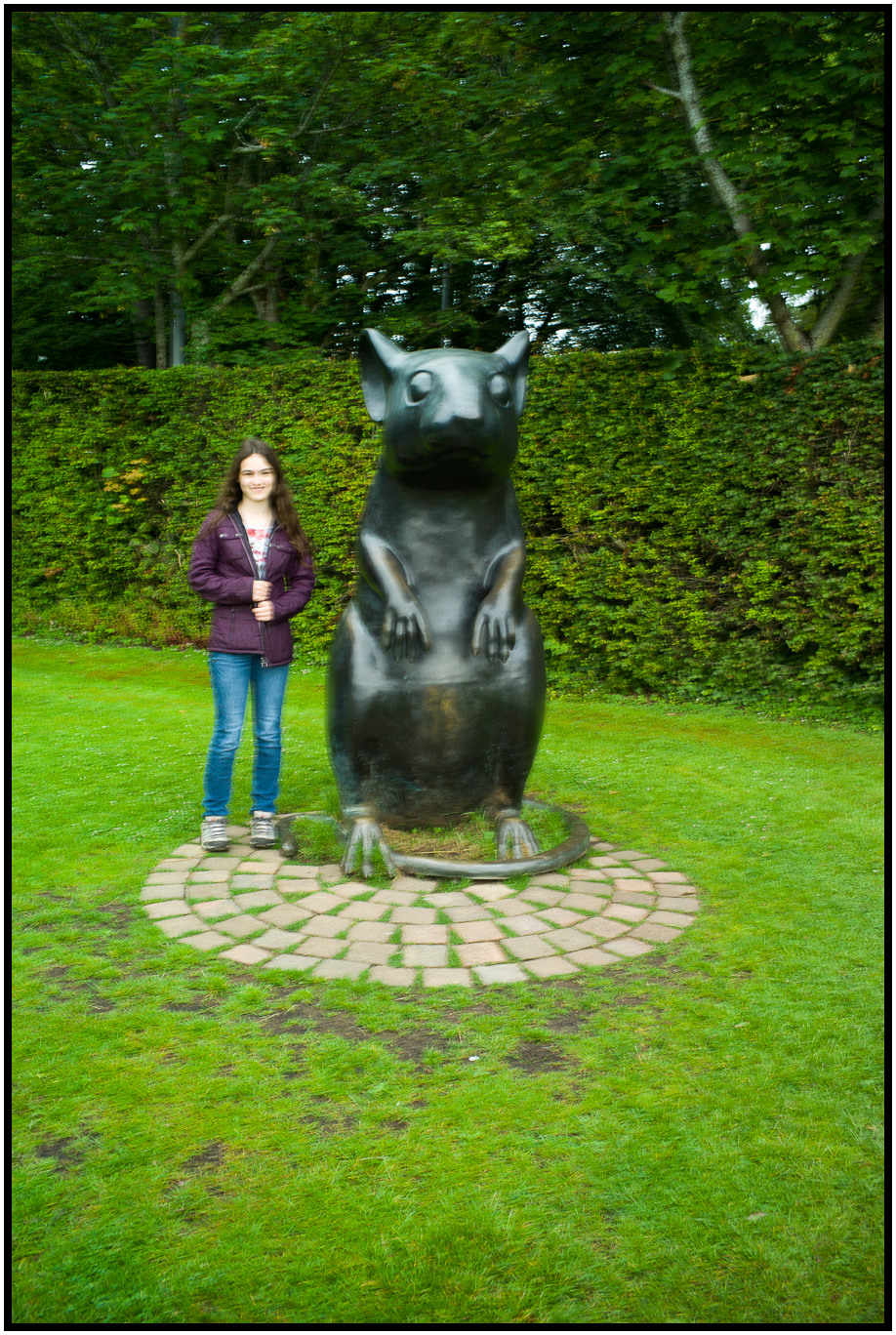
This mouse sculpture represents “To A Mouse.” The most famous line is
The best-laid schemes o’ mice an ‘men
Gang aft agley
It was near this mouse that an elderly man heard Adam talking to the kids and stopped to have a chat. After checking to make sure we were indeed Americans, his first question was “Did you vote for Obama?”
When a stranger cares enough about a subject to ask something like that point-blank, there is usually a definite right or wrong answer. You are left with about two seconds to size the person up and try to figure out which answer they want to hear, and then decide if you are going to tell the truth, lie, or try to get out of answering. Adam decided to straddle the fence: “I voted for him in the first election but not in the second.”
The guy looked surprised and said, “Americans come down this walk every day and I ask all of them who they voted for, and you are the first person I’ve met who voted for Obama! I was wondering how he won the election!”
Adam said, “That surprises me. Liberals generally tend to be the ones who travel internationally and more than half the country voted for him.”
My thoughts immediately turned to the Geezer Brigade being hauled around on a multitude of tour buses, making their glacially slow way through every historical site in the whole of Scotland. Elderly people tend to lean conservative, and they have that magical combination of both lots of money and lots of free time to do things like visit the birthplace of Robert Burns. That’s my guess.
We spent the rest of the afternoon driving the 103 miles from Robert Burns’s house into England’s Lake District — most famous for Beatrix Potter’s Peter Rabbit.
We have rented a house in the middle of some spectacular farm country. The house is an enormous old barn, newly renovated into a duplex. It’s modern, spotless, and (so far, knock on wood!) all the appliances work because they are brand new. The water in the sinks comes out of one faucet so you can have warm water directly from the tap. Most of the places we’ve stayed have separate hot and cold faucets, so you either freeze or scald yourself while trying to wash hands, brush teeth, wash your face, etc. This house even has a dryer! Tomorrow I plan to do some serious laundry. It will be heavenly.
The only drawback we’ve discovered so far is the internet connection is really slow. It’s tough to do much more than check email.


OK. Tell Holden that is the difference between school and a job. At a job you answer, “Sure, I’m on vacation so I can learn something.”
Love the story of the incentive approach! Rita