June 8, Sunday
Early this morning, Adam, Elaine, John and Josie got up early and went for a walk around Inverness. Here are a couple photos:
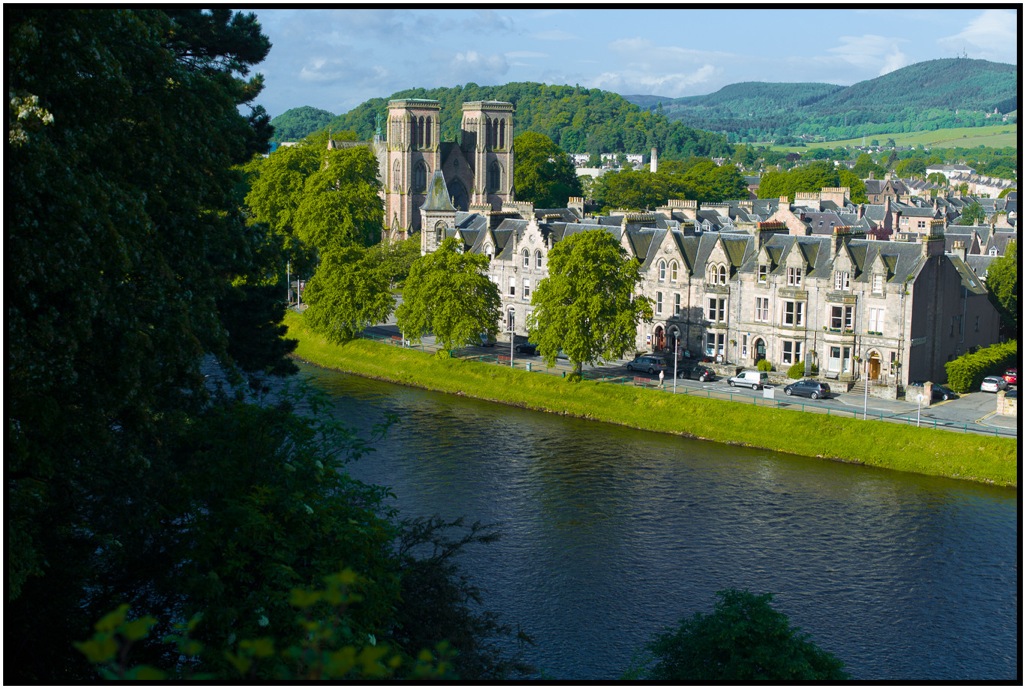
Inverness Castle. Not open to the public because it’s still used for government functions.
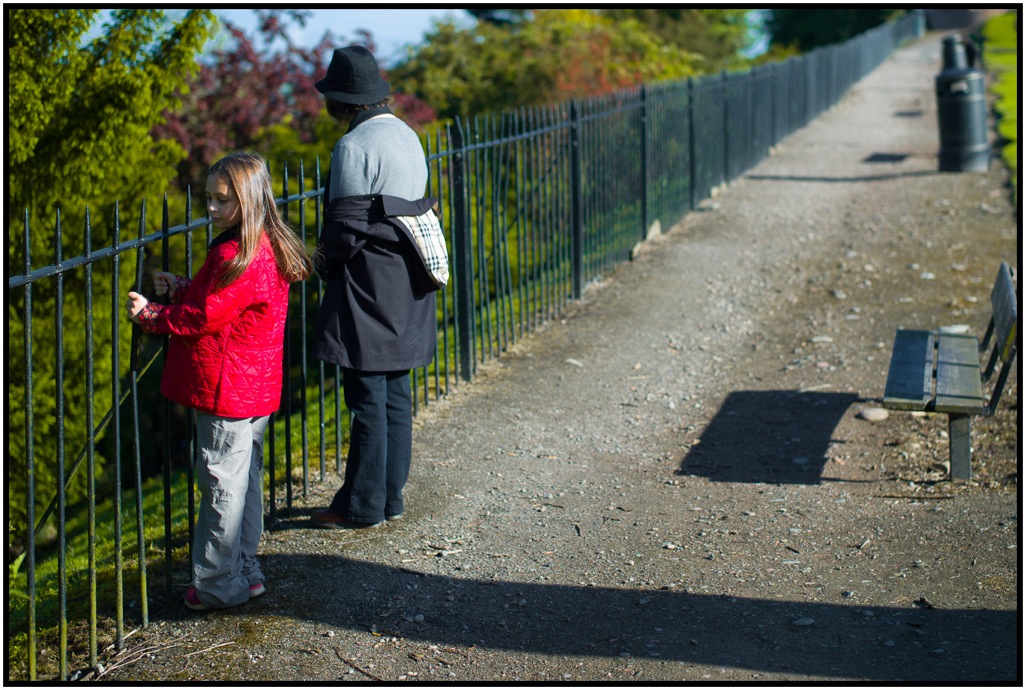
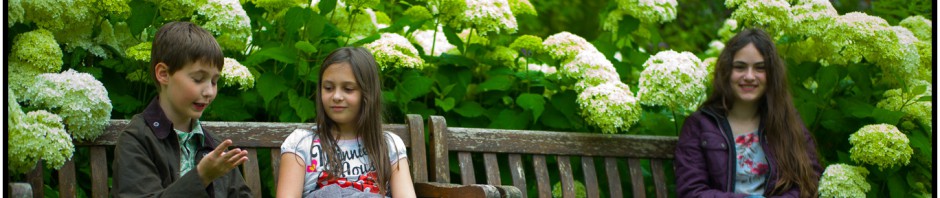
Josie and Elaine looking at bunnies.
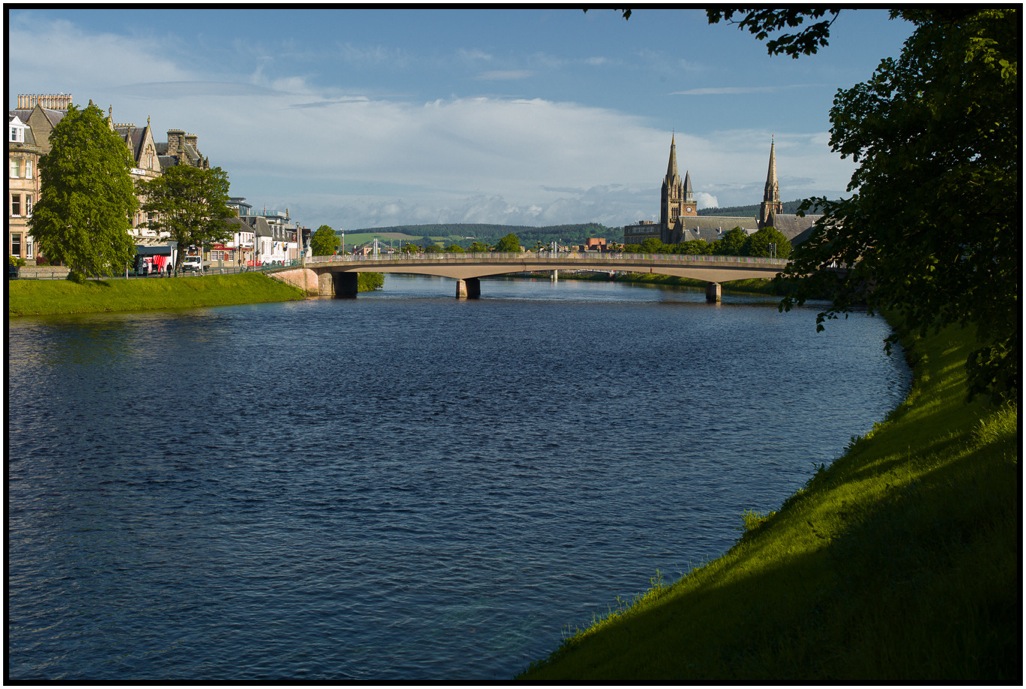
Footbridge over Ness River. Our house is right at the left end of the bridge and Old Inverness (where all the cool stuff is) is at the foot of the right end of the bridge. Our location is perfect.
Loch Ness was our first official stop, and about a 30 minute drive from our B&B. I always thought Loch Ness was in Inverness, but all the touristy parts are actually in a town called Drumnadrochit.
I don’t know what happened to the kids today, but they all woke up on the wrong side of the bed. The entire day was filled with squabbling and things like, “She’s mocking me with her face!” and “He’s breathing in my direction!” Holden kept opening the window and sticking his head out, which caused him to work up a drool (like a dog) and grossed the girls out to the point they refused not only to sit with him, but also refused to sit in the seat he’d been sitting in when he drooled. This caused even more trouble on the turns rotation for having the “good seat.” I spent most of the drive yelling at the kids to shut up, and at Holden in particular for sticking his body parts out the window. Proof I was unsuccessful:
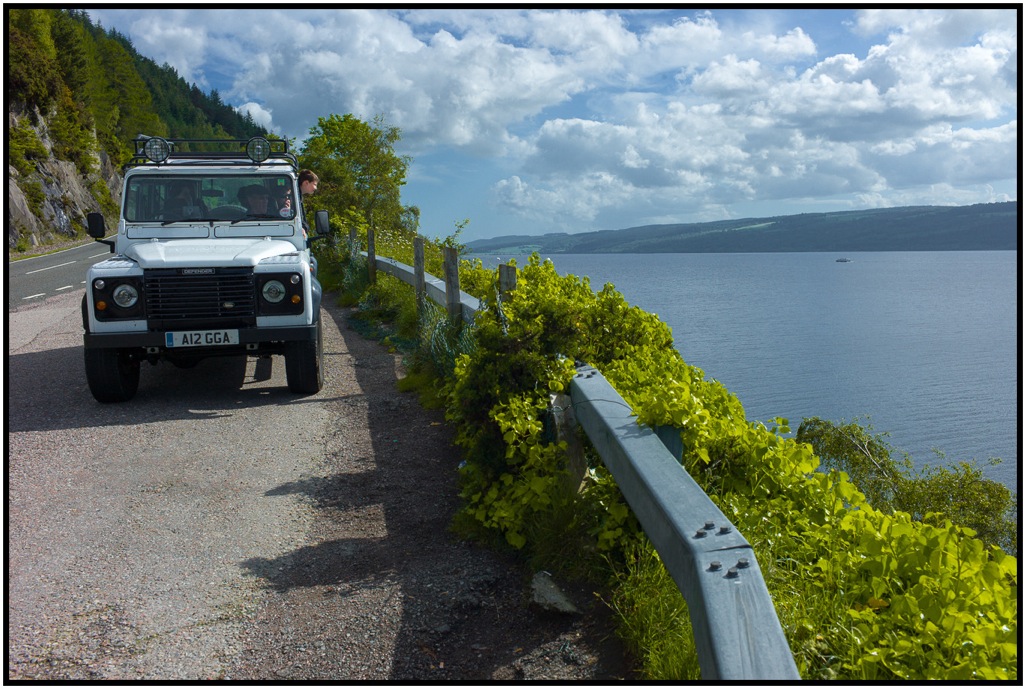
First view of Loch Ness!
Adam and I were scrolling through the photos when we got back home in the evening, and both remarked that Holden looks like he’s having the time of his life. We’ll look back on these pictures with nostalgia, and not remember that when this shot was taken, every female in the family wanted to wring his neck and throw him in the Loch for Nessie. (And it wasn’t just Holden; the girls were insufferable as well.)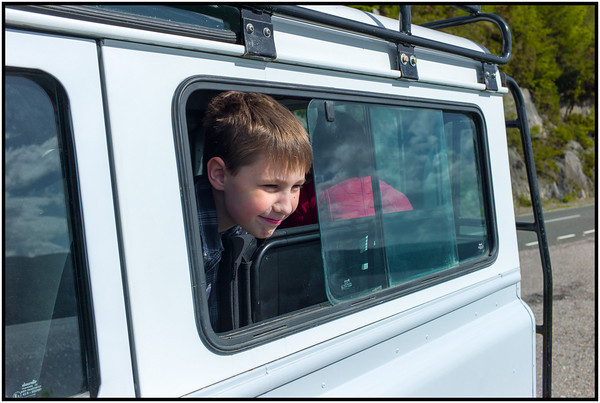
We stopped at the Loch Ness Visitor Centre and Museum, which was a waste of time and money. I can sum it up for you: there is no Loch Ness monster.
All the photos from the past have been proven either to be hoaxes or tricks of the light, and extensive modern scientific equipment and exploration has proven beyond a shadow of a doubt that the ecosystem of Loch Ness can’t support animals larger than a small trout. The Loch is open to the sea, and larger migratory fish swim in annually to spawn (salmon and sea trout), but that’s about it. The Loch is a weird shape (very long and narrow, and incredibly deep) which makes it prone to mirages and optical illusions.
They are pretty sure that the “monsters” people have reported seeing in the past are sturgeon. Every once in a while a sturgeon will get lost looking for a mate and swim up River Ness and end up in Loch Ness. They are incredibly ugly and range from 6-12 feet long, and back in the olden days, people living in this region wouldn’t have been familiar with them. Freaking out when confronted by one unexpectedly would have been a normal reaction. They do look pretty monstrous. Sturgeon have been pulled out of Loch Ness in modern times, so they know for certain that they end up here on rare occasions.
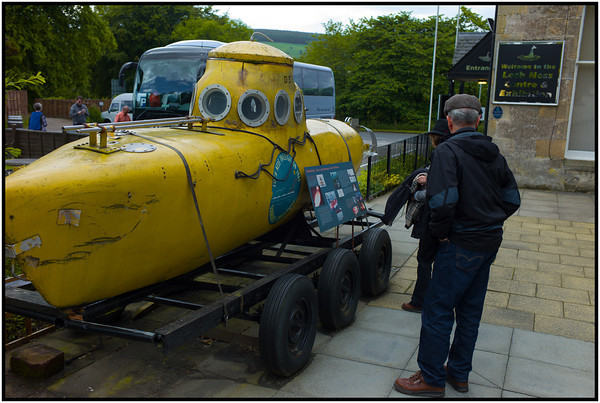
One of the first submarines used to explore the Loch (and look for evidence of Nessie.)
Right down the road from the disappointing Visitor Centre is Urquhart Castle. (It’s pronounced “Irk-it” but I spent the whole day calling it Lord Farquaad Castle.) It’s now just a ruin, sitting right on the edge of Loch Ness.
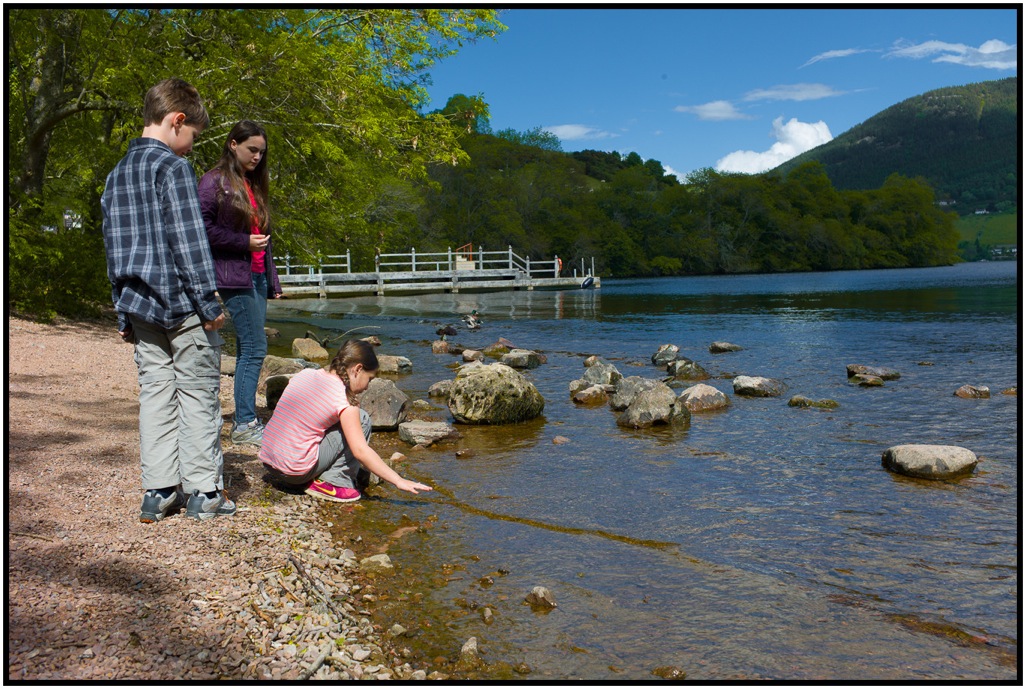
The kids getting to stick their fingers in the water … we’ve all touched the famous water of Loch Ness!
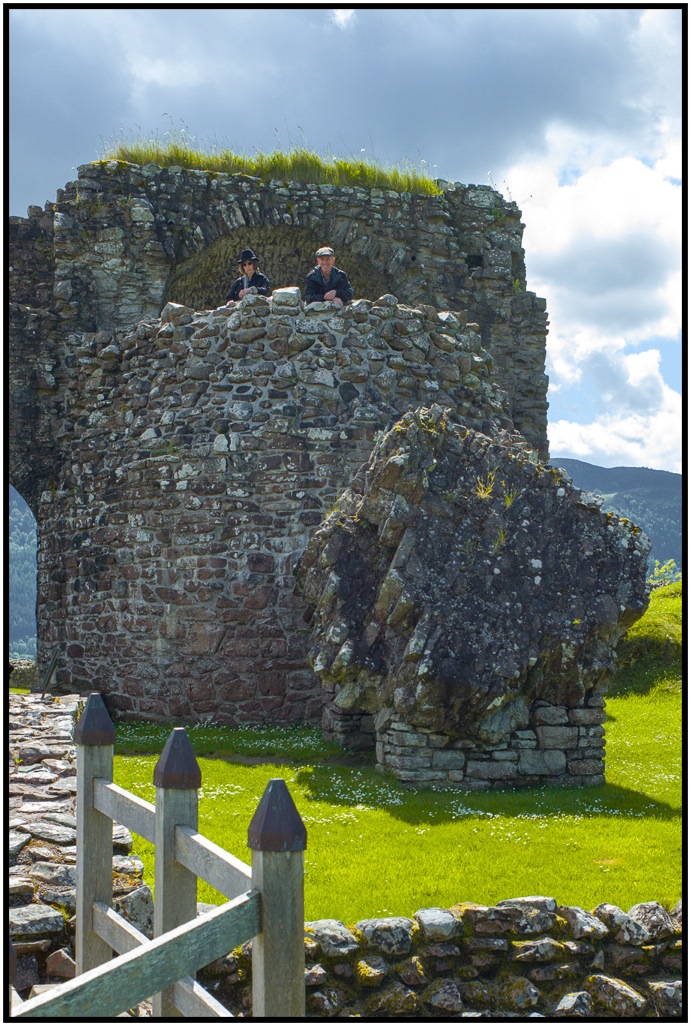
John and Elaine watching everything from up above.
This guy was demonstrating how the medieval knights dressed and fought, and what their lives were like in general. Bottom line, life back then pretty much sucked for everybody.
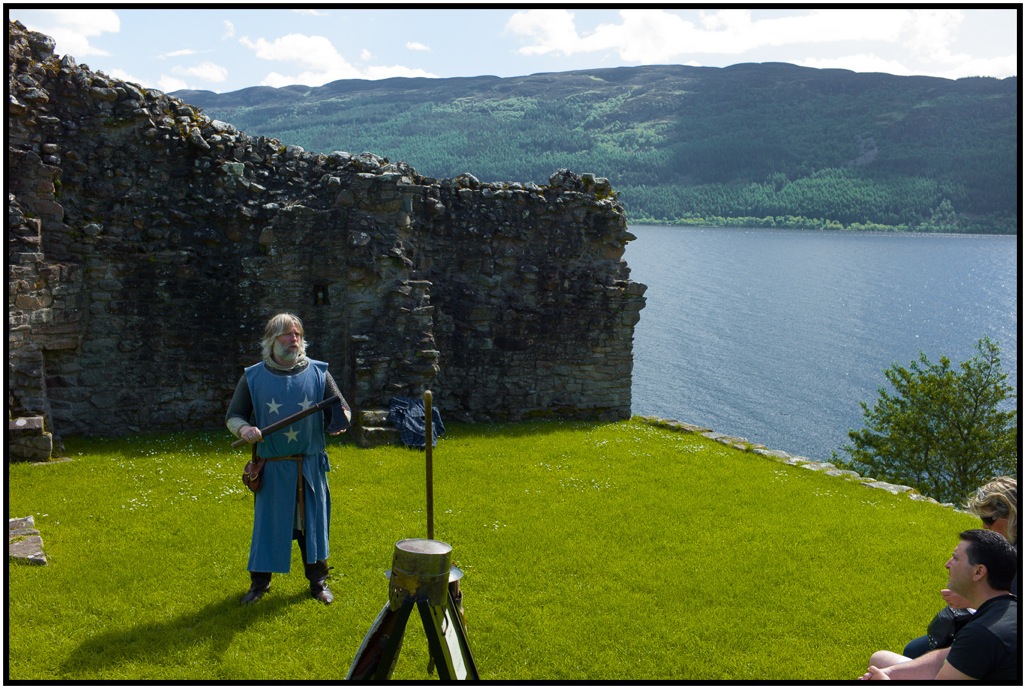
He said that swords were so expensive that only the very wealthy and Knights had them. The only way a poorer person could get a sword was to pick one off a corpse during/after a battle. Even then, the swords were so valuable that a peasant who managed to come by one couldn’t afford to keep it; they would sell it and get enough money to live practically for the rest of their lives.
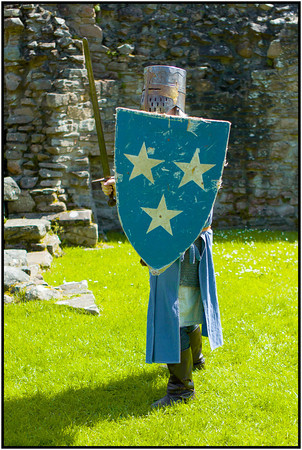
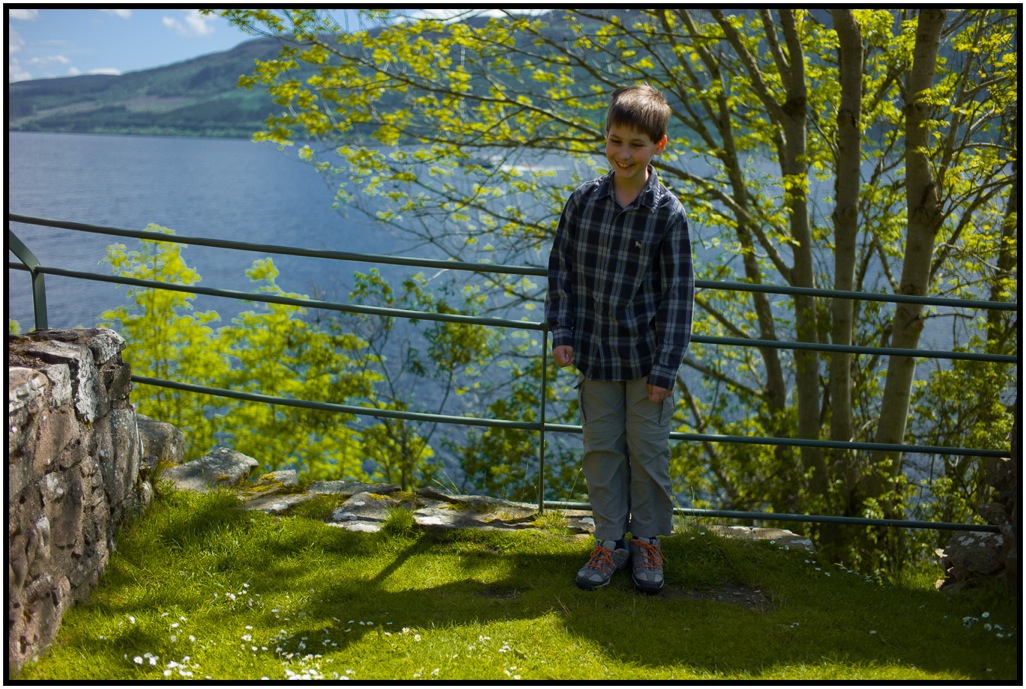
Holden happy to get away from his sisters. The girls wandered off with Grandpa and Grandma.
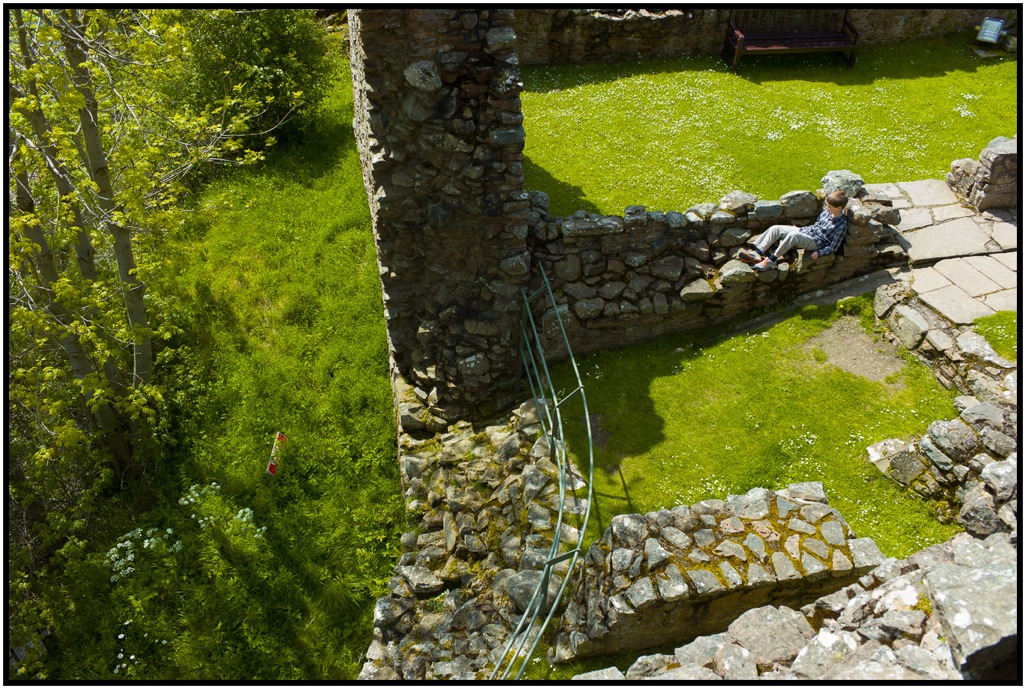
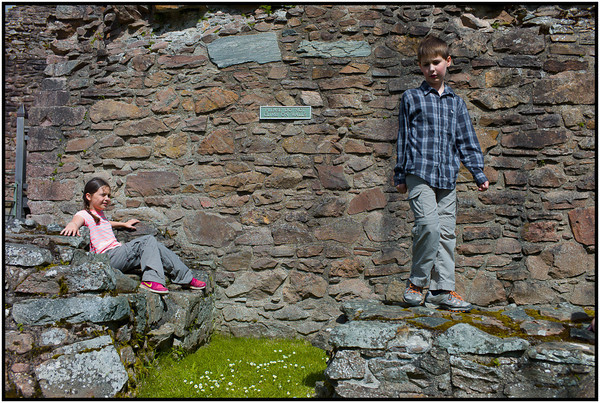
Holden resting on the remains of a once-mighty wall.
Then we picked up Josie.
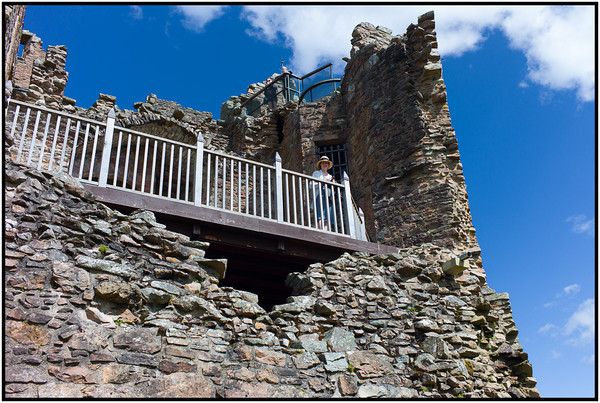
Here I am on the highest point left of the Castle.
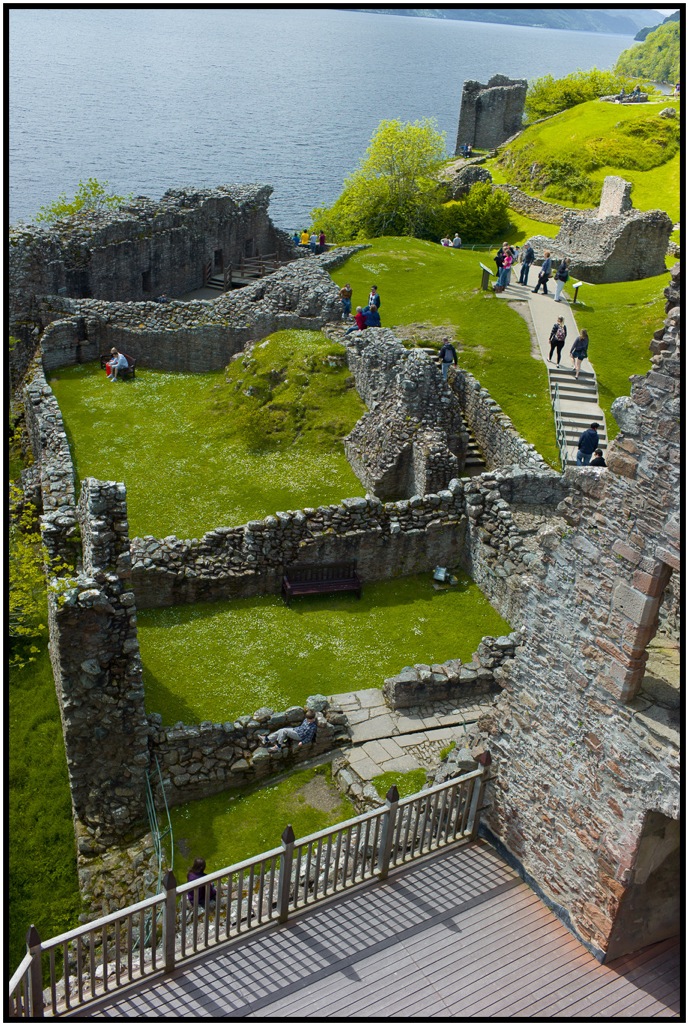
Pretty much all that’s left of Urquhart are the foundations and some crumbling wall remnants.
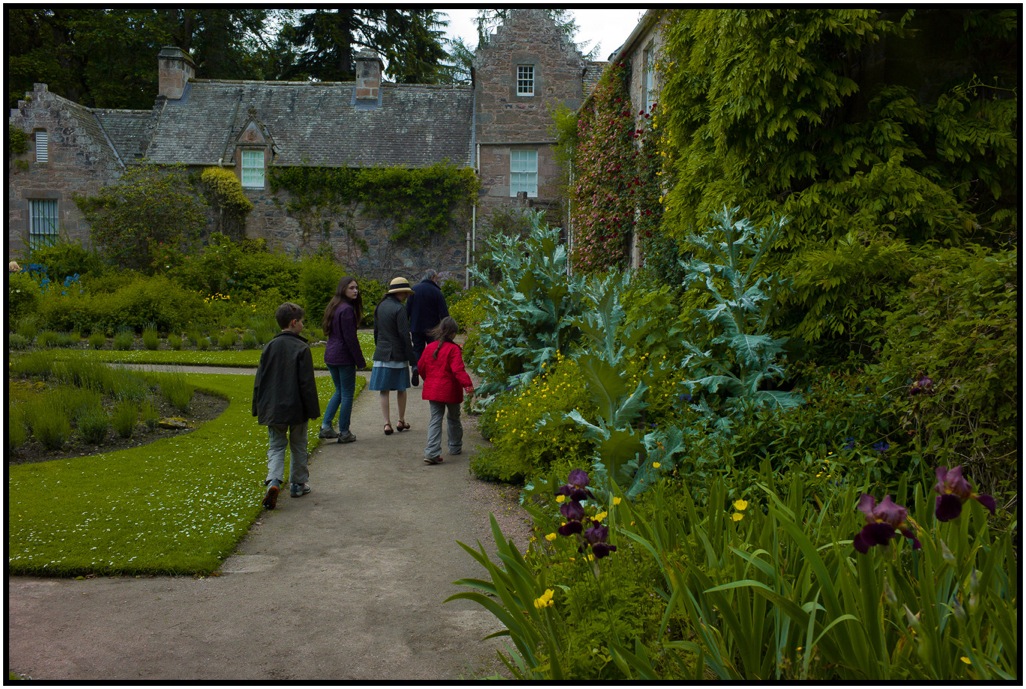
Our last stop for the day was another castle; Cawdor Castle and Gardens. This was prominent in the 1400s and 1500s, but is still used today as a museum and residence of the current Countess of Cawdor. The gardens were spectacular, but the interior of the house smelled like mildew.
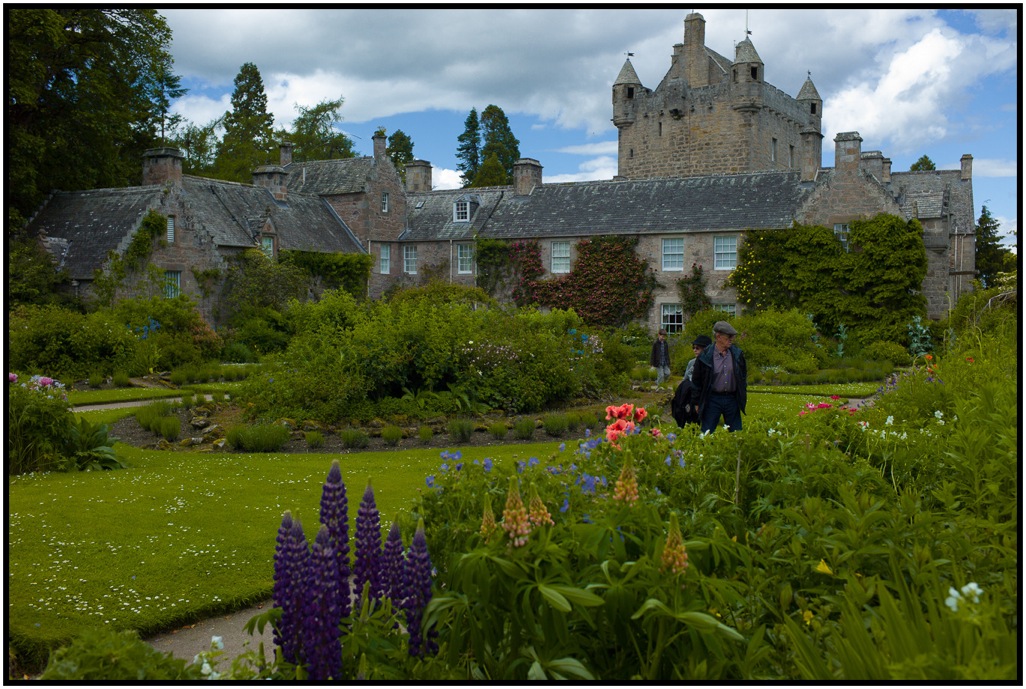
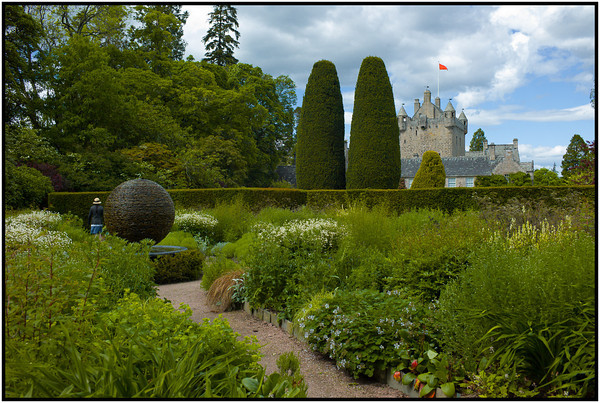
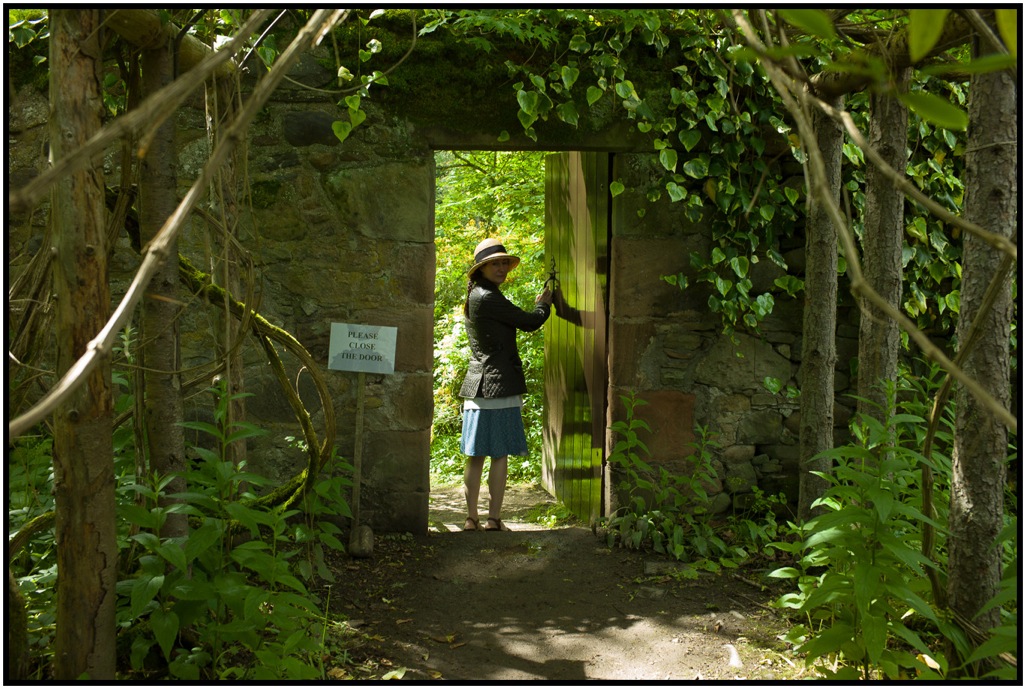
Secret garden gate leading to the hiking trails.
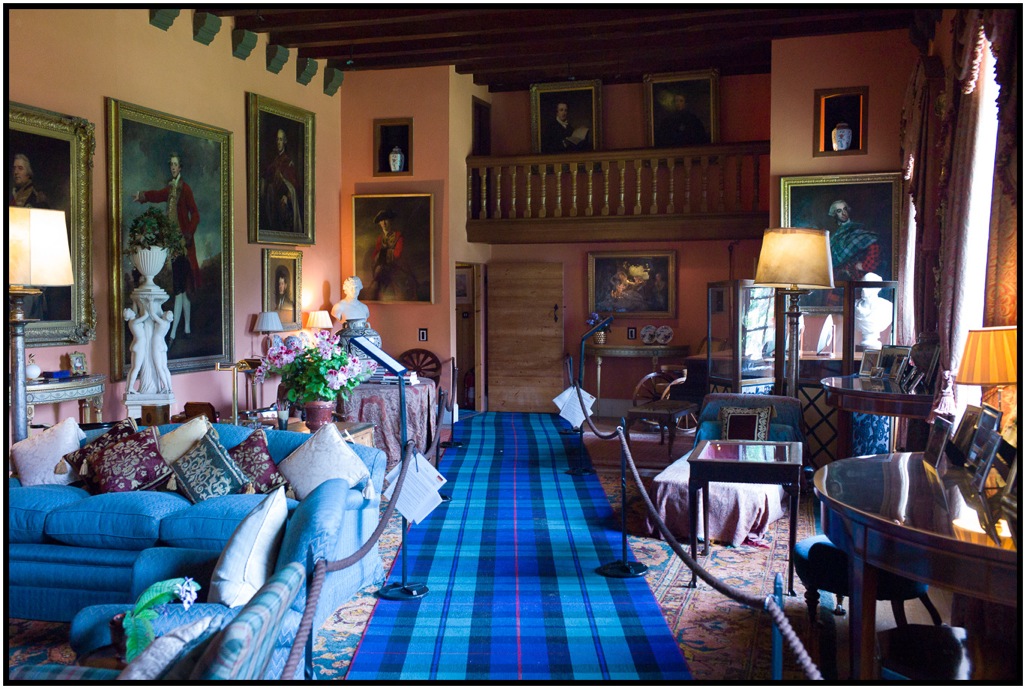
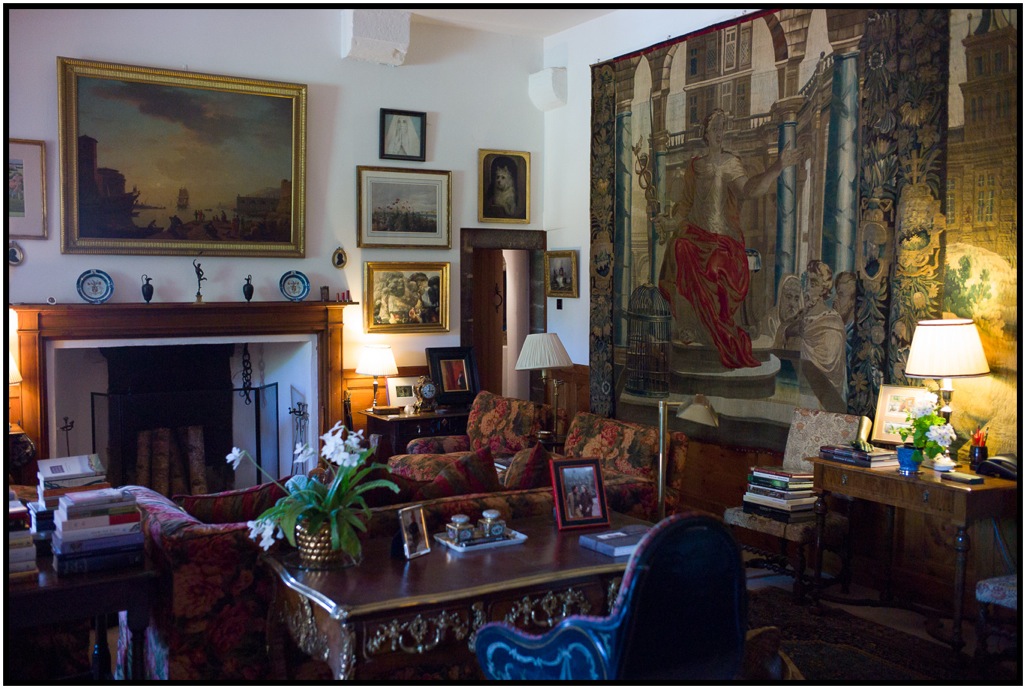
A couple of the interior rooms; they were impressively furnished, but smelled stale and old. This place doesn’t seem to have very good ventilation. The ugly blue strip of carpet was the walking path for visitors, and hopefully is removed when the Countess is in residence.
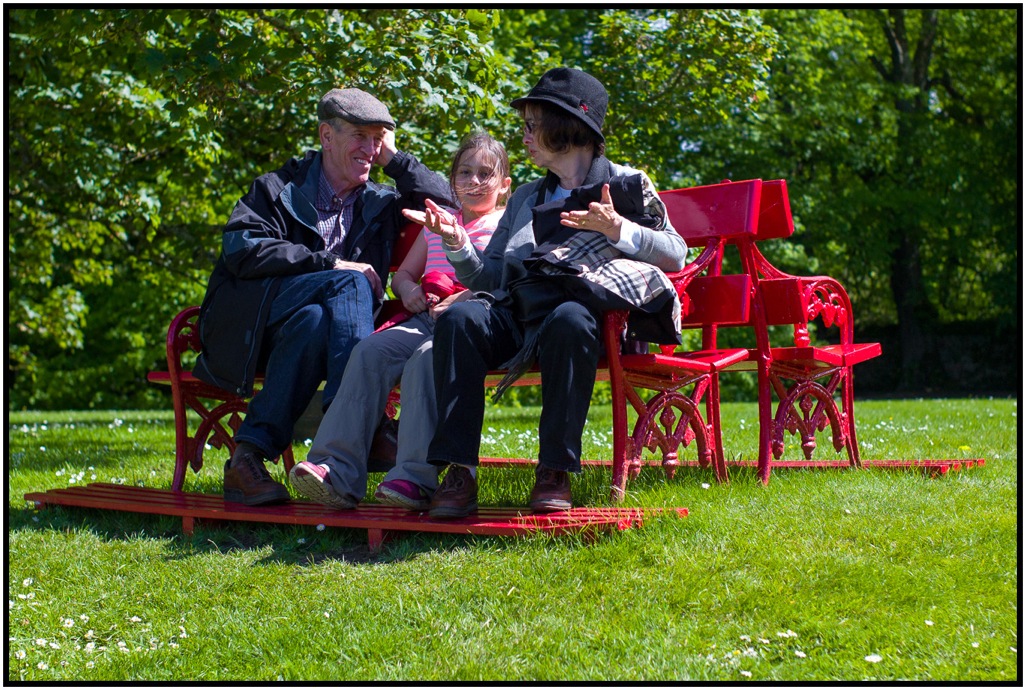
Grandpa, Josie, and Grandma enjoying the beautiful weather and gardens.
June 9, Monday
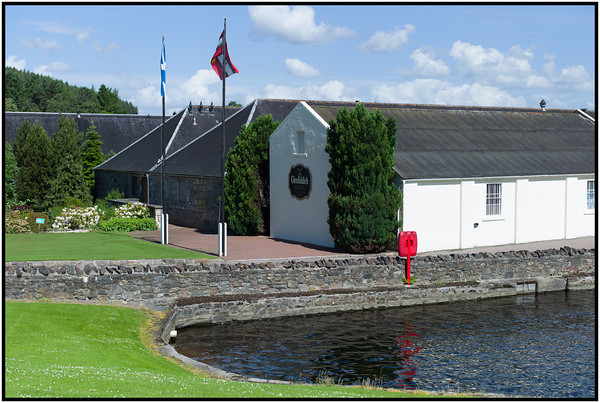
One of the things John really wanted to do in Scotland was visit and tour a whisky distillery. The Glenfiddich Distillery had a free tour and was open to kids, so we drove out there in the morning.
In an attempt to prevent a repeat of yesterday’s bickering, Adam decided to bribe the kids. He promised ice cream at the end of the day to any kid who behaved well. It worked –for awhile. Shortly into the drive, Holden and Josie got into an argument over a video game they were playing together. Josie was able to accept the warning and stop talking about it, but Holden couldn’t let it go. I confiscated his iPad, thinking that if he couldn’t play, he’d stop hollering at Josie for the way she was playing. Nope. He hovered over her shoulder, becoming more and more incensed. Holden didn’t get any ice cream.
The Glenfiddich Distillery is a really neat place to visit. It’s located near Dufftown (obviously you have to say it the way Duff Man would say it; “Dufftown, oh yeah!“)
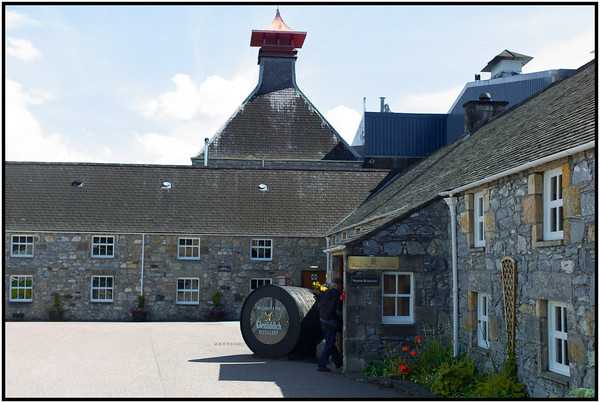
The tour is free and very good. The company was started by a guy named William Grant back in 1887. He, along with his 7 sons and 2 daughters, built the stone distillery by hand. (It took them 371 days, if memory serves.) The original buildings are still in use today, and the company itself is still owned by descendants of the Grant family.
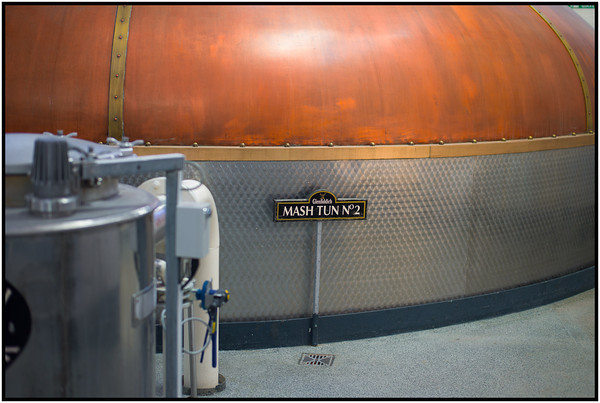
The Mash tanks, full of malted barley.
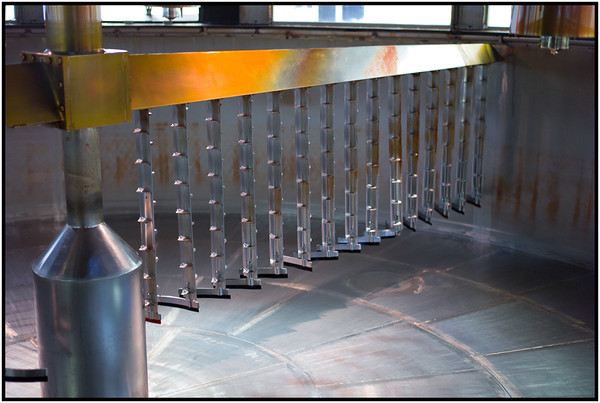
Inside of an empty mash tank. Those spiky arms stir the malted barley/water mixture.
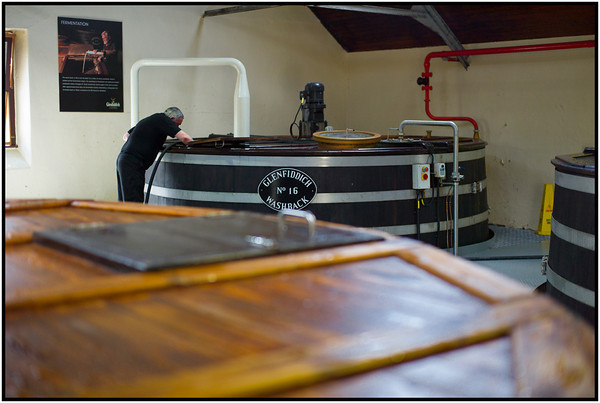
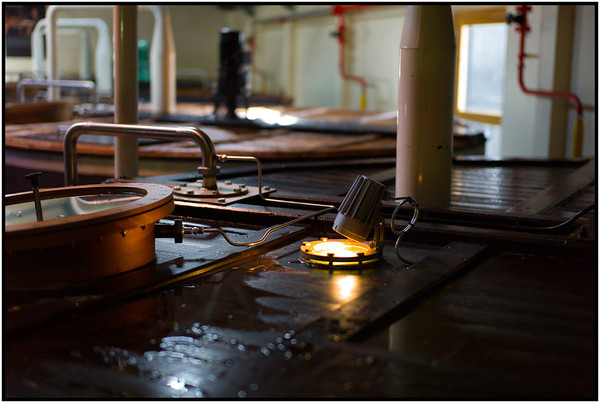
Then yeast is added for the fermentation process. This guy is making sure everything is bubbling along like it should be.
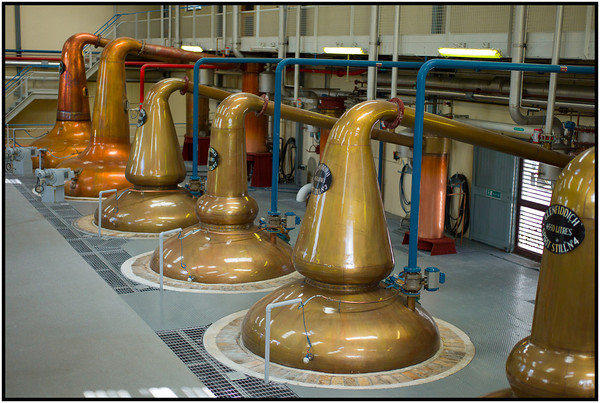
Copper stills. It takes a craftsman 2 years to make one of these by hand. Each still has a different shape to achieve different flavors. This is where the alcohol is evaporated off and collected — the distillation process.
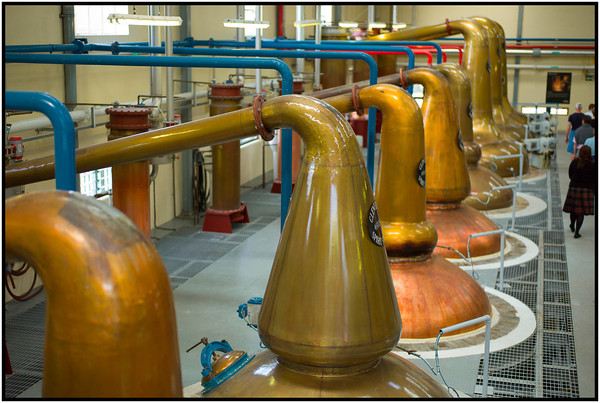
The alcohol evaporates into those tubes and is collected in another jug.
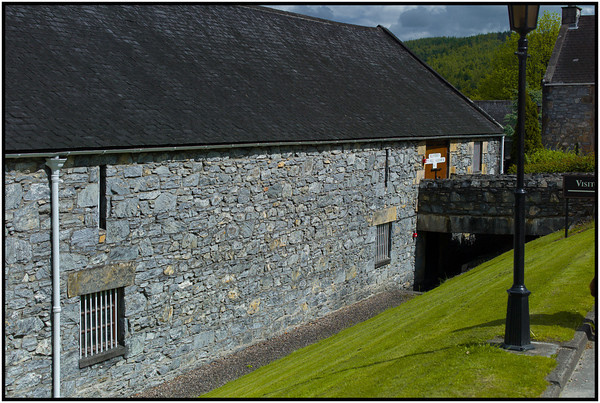
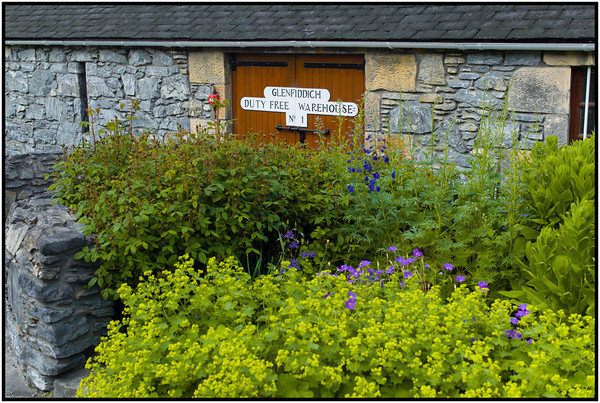
One of the original buildings built by William Grant and his 9 kids. It’s now the place they store the oak casks for aging the whisky.
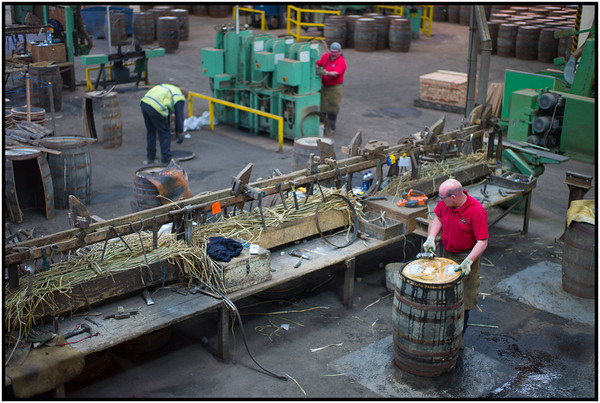
Speyside Cooperage. A cooperage is where they make casks. The guy on the tour made sure we all knew that they did not just make barrels … a barrel is one specific size of cask. Some of the other sizes include the hogshead, butt, and firkin.
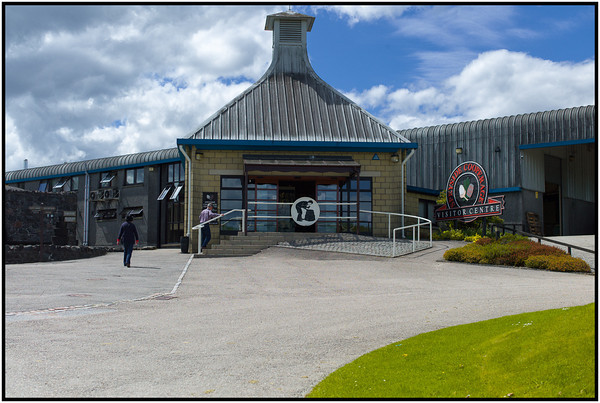
These guys are highly skilled and make some of the best wages in the country. They are paid by cask completed (by the piece) rather than by the hour worked. A good craftsman can do about 30 casks per day. The apprenticeship takes 4 years to complete, but if someone is lucky enough to get an apprenticeship, they are paid well during the whole training period. Once they have graduated, the pay increases and they basically have a job for life: some of these guys have been working here for more than 50 years.
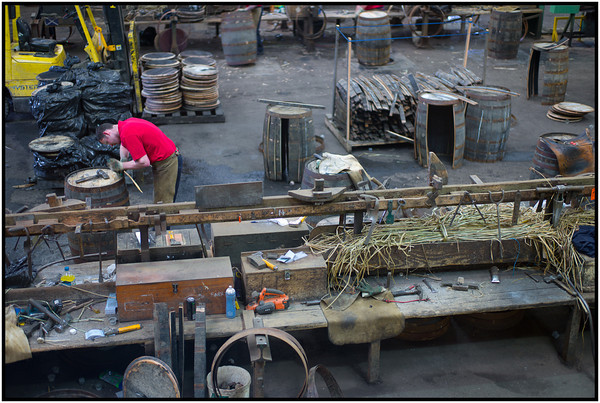
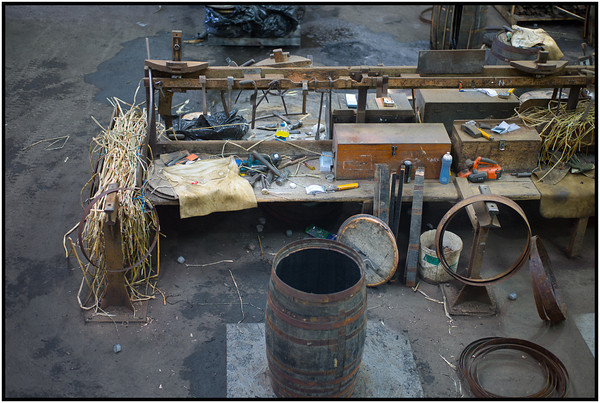
Another view of the factory floor. There are only three “ingredients” to each cask: wood, metal rings, and reeds. The wood is oak, generally imported from Tennessee. The metal rings hold the cask together, and the reed is stuffed into the ends. When it gets wet, it swells and creates a leakproof seal along the seams at each end. There are no nails, glue, resins, bolts, staples, etc. The tour guide said they are making the casks today exactly the same way they made them over 100 years ago.