June 5, Thursday
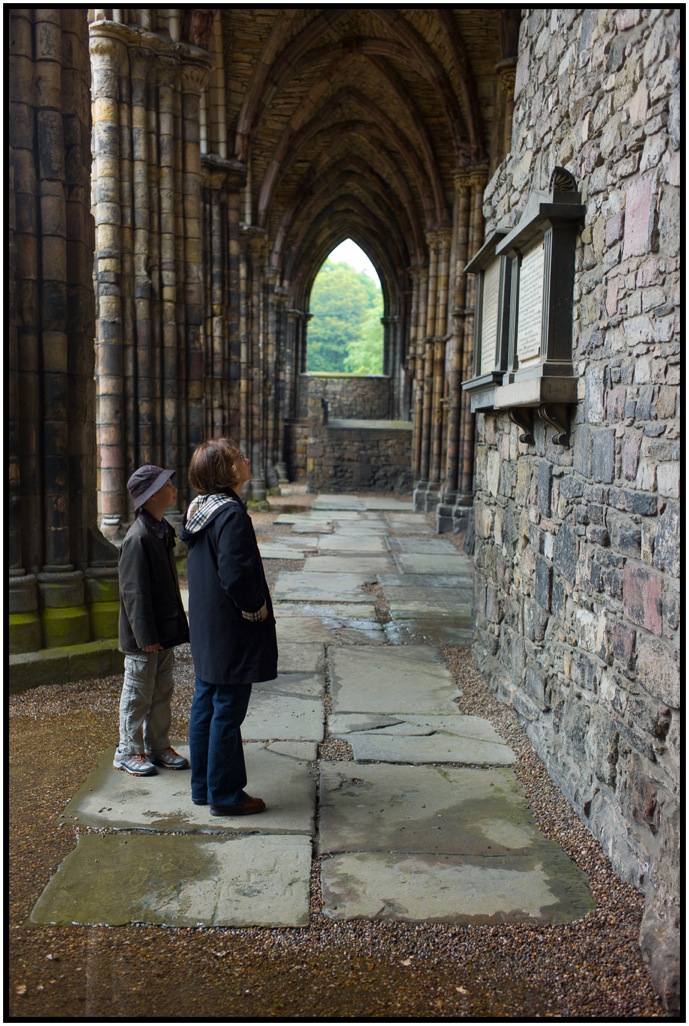
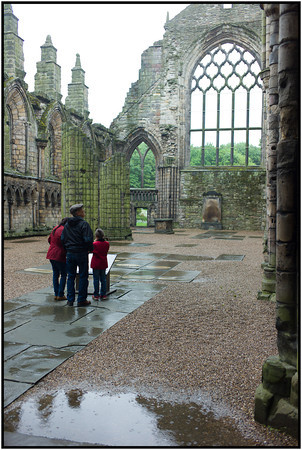
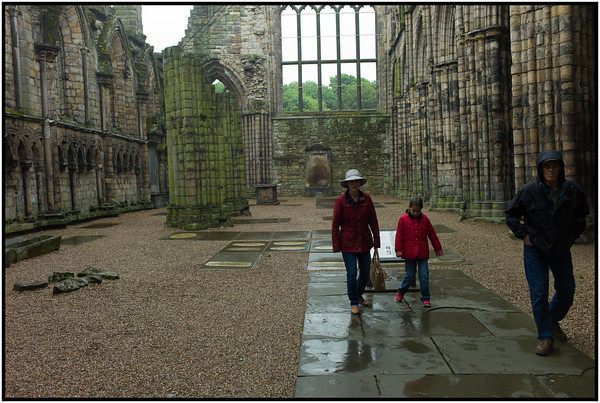
First thing in the morning, we headed over to Holyrood Palace since we ran out of time to see it yesterday. It’s another castle-like museum/palace full of old treasures. The Queen of England spends one week a year in residence here, so technically it’s still in use. They didn’t allow photos inside, but Adam was able to take a few shots in the ruined Abbey off the end of the palace.
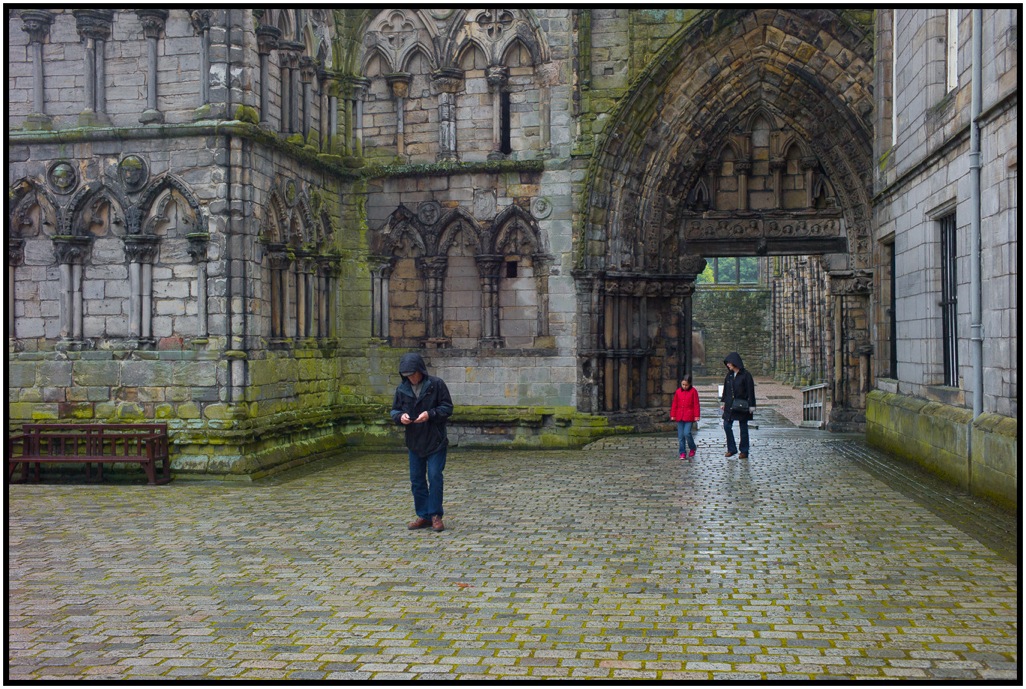
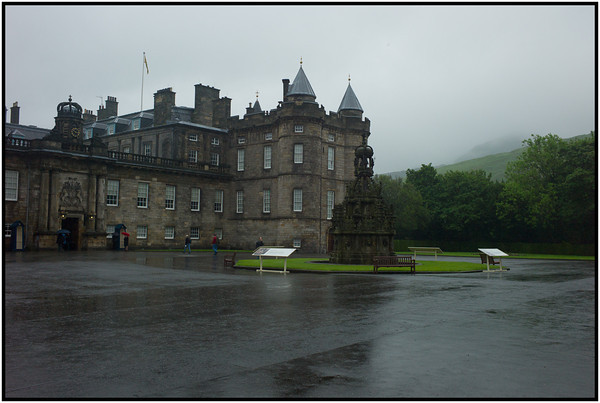
The entrance to Holyrood Palace.
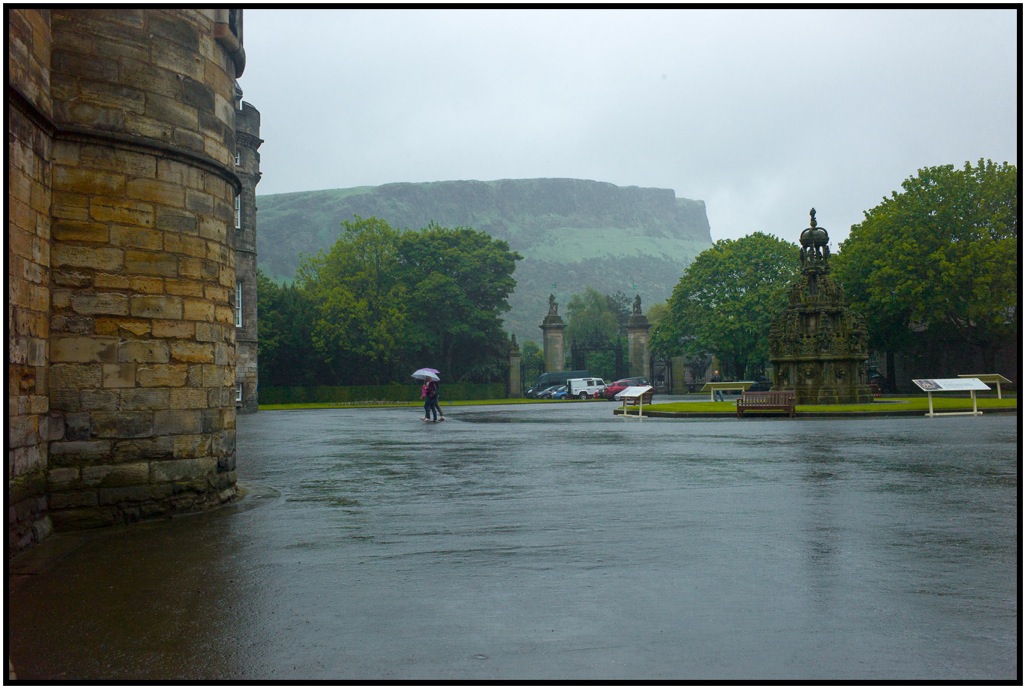
View of Edinburgh with “Arthur’s Seat” (hilltop) in the background.
Going through the Palace didn’t take as long as we expected, so when we got out we didn’t quite know what to do with ourselves. We ducked into Clarinda’s Tea Room for some hot chocolates and tea/coffee while so we could sit in a nice atmosphere and discuss what to do next. The kids were finally happy — hot chocolate is wonderful; being dragged through museums and historical monuments is lame.
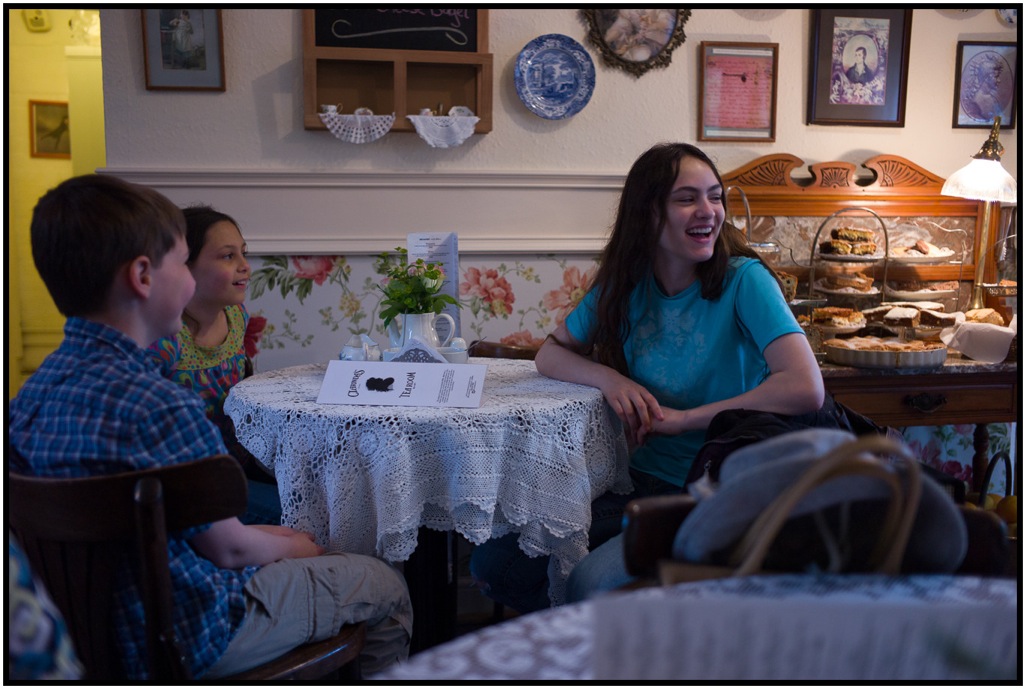
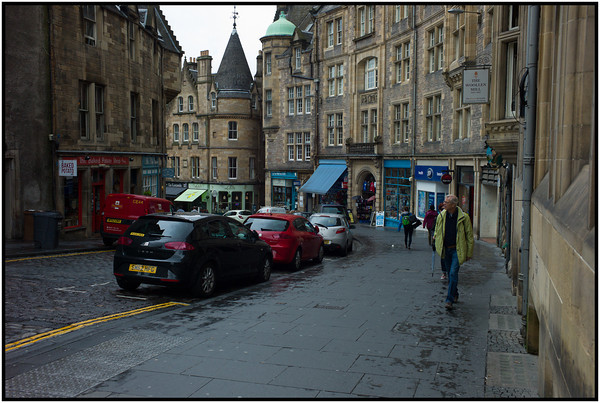
Edinburgh street scene
Elaine needed a rain hat, so we did a little more quick shopping this afternoon. Holden and Grandpa have the same amount of patience for hat shopping: about 10 seconds. They preferred to stand outside the shop discussing the hifalutin topics of great minds.
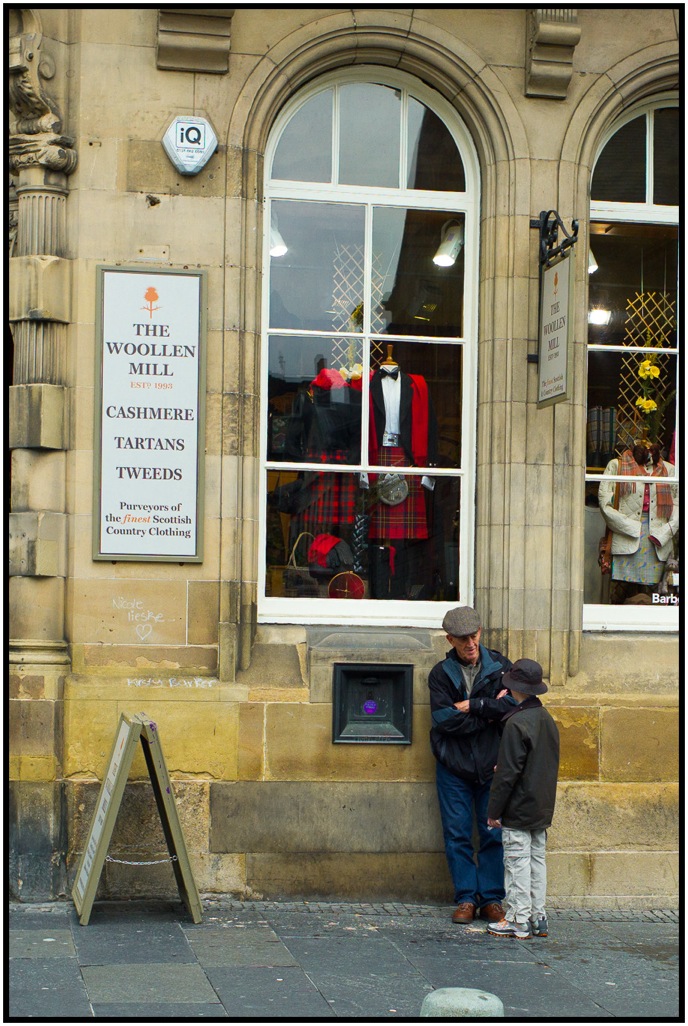
…. and some more manly discussions in front of a different store.
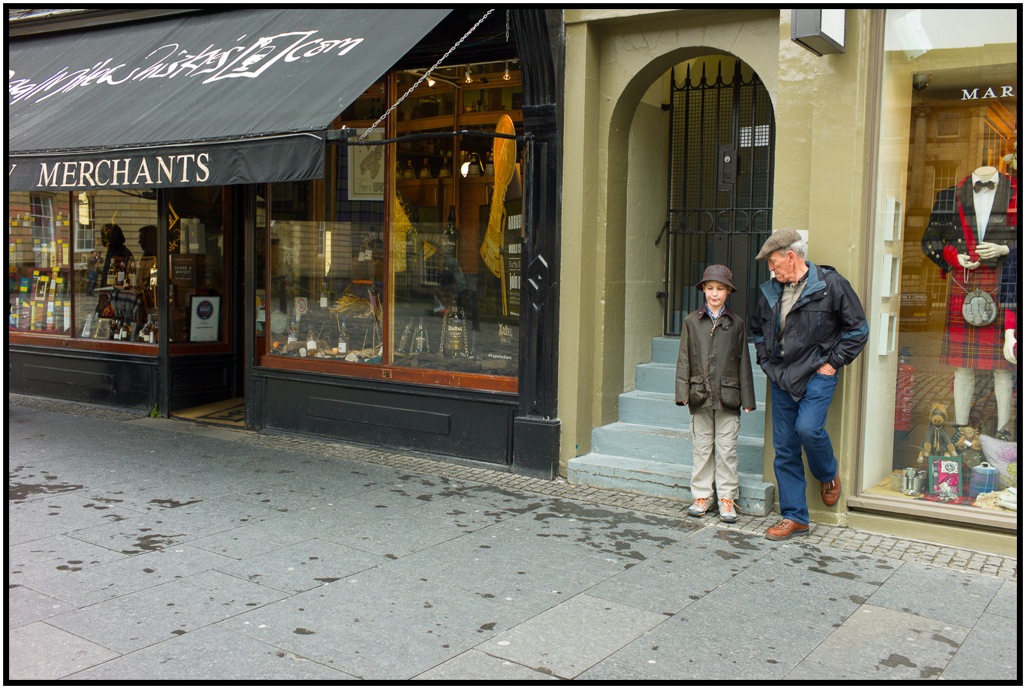
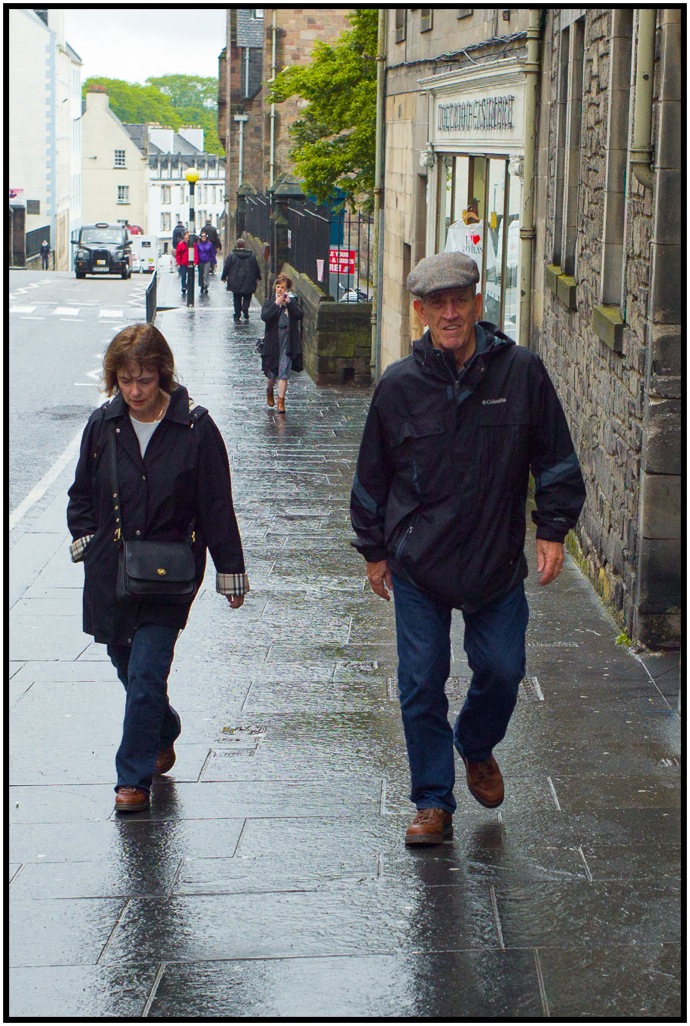
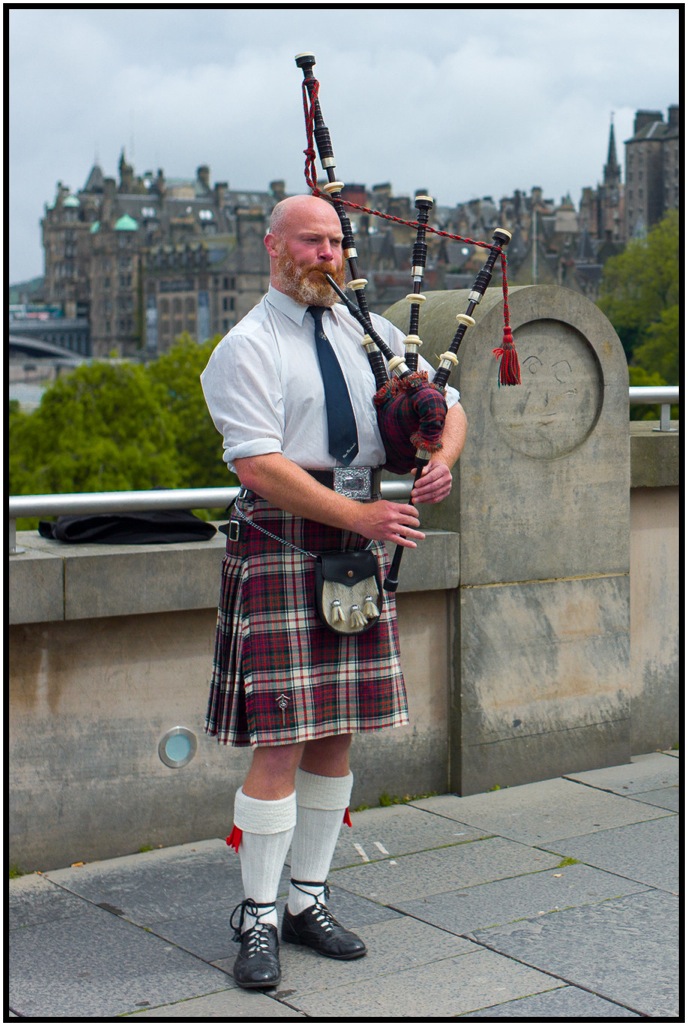
Guy trying to pay his bills by utilizing his talent.
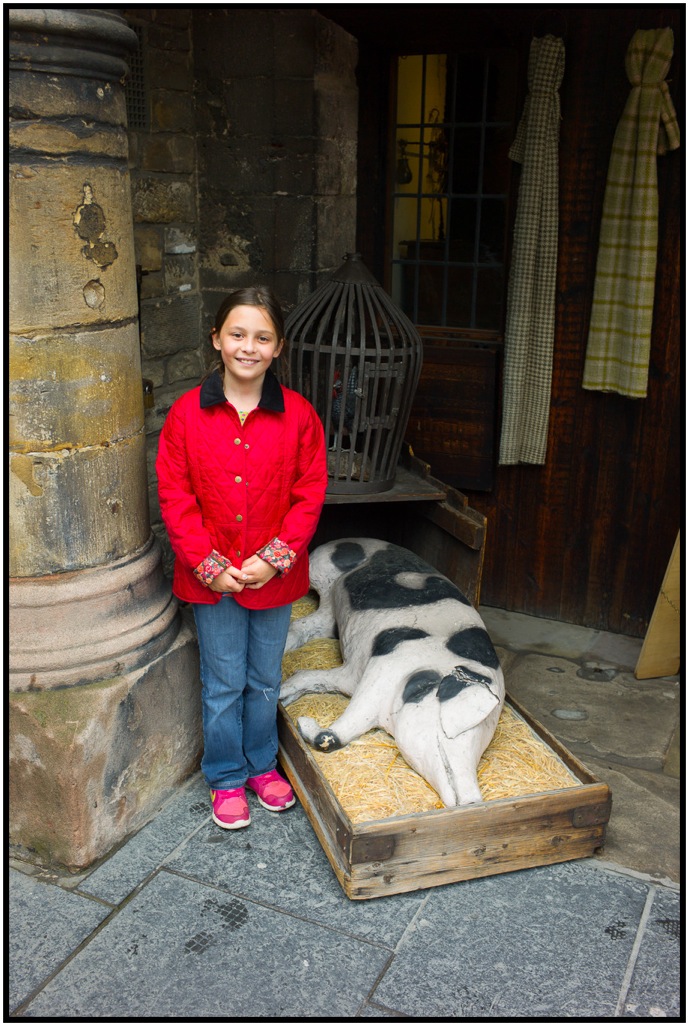
Josie found another pig. This one pleased her because it was fake, and didn’t have a knife stabbed into the back of it’s skull.
We spent the rest of the afternoon going through the Museum of Edinburgh and the Scottish National Gallery. The Scottish National Gallery is an art museum, mostly paintings. By the time we got there, the kids were already pretty museumed out. We dragged them past all the priceless paintings by the best artists the world has ever seen, and then we got to a little room on the top floor filled with religious paintings from the early 1000s. This was the period of time when artists painted babies and children not as they actually look, but as tiny replicas of adults. The results are creepy and gross.
One tragically unfortunate painting depicted Baby Jesus in the center of a panel surrounded by other important religious Biblical figures. He wasn’t a beautiful, angelic, cherubic Baby Jesus; he was a homunculus with a receding chin and an unhappy, pinched look on his face with his arm extended out, pointing belligerently at one of the other figures. The expression on his face reminded me of this internet meme:
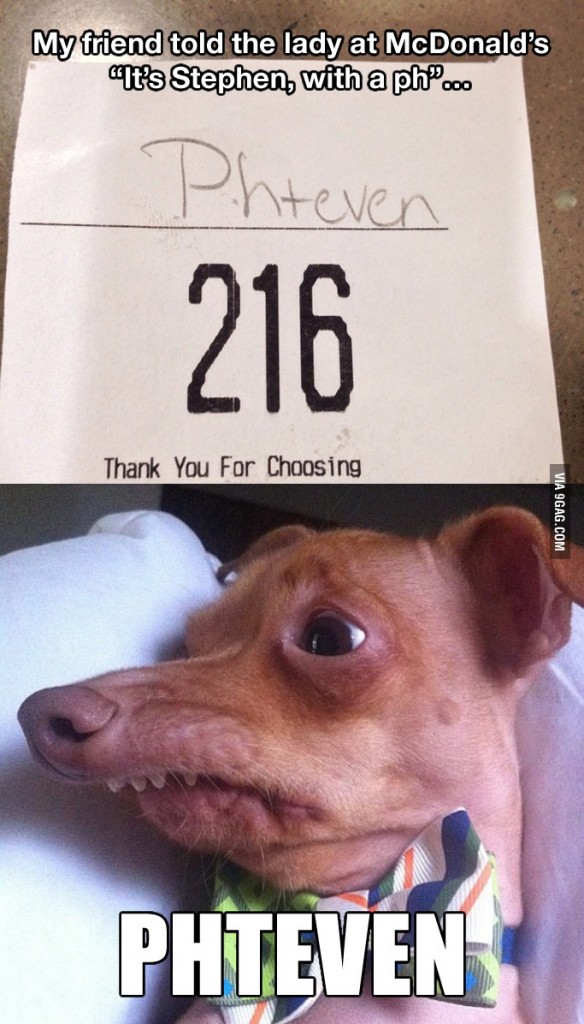
I said to Isabella, “Look … Creepy Baby Jesus is yelling at someone named Phteven.” Isabella said, “Oh … he is!” and got the giggles. She was in a better mood through the rest of the museum because she could sit on a bench and mutter “Phteven” to herself as entertainment. Sometimes it’s the little things that can brighten up a day.
Josie, Isabella and I in front of The World’s End. It’s so named because it was built along the wall that marked the edge of Edinburgh; the point at which the world ended and Edinburgh began.
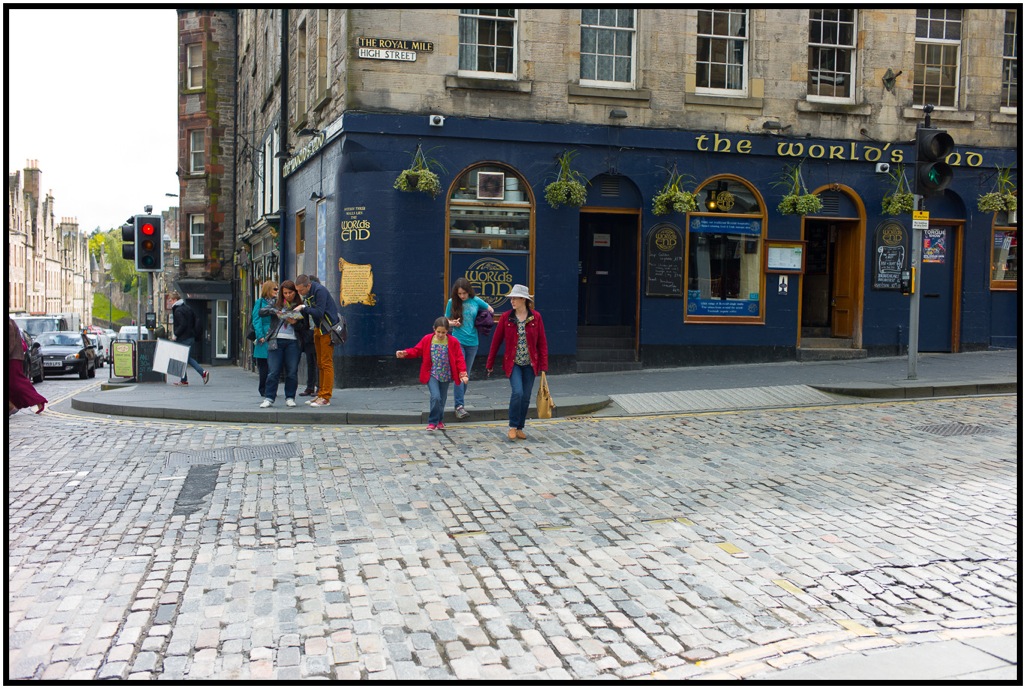
In the late afternoon, we went back to the apartment and dropped off the kids. They were exhausted by a day of “boring museums” and just wanted to stay in, plugged into their phones and computers. We left Isabella in charge and the 4 adults went down the street to John Knox House.
John Knox was an influential Protestant reformer during the 16th century. He lived in this house near the end of his life and died here … and therefore the house has been preserved. It’s the only medieval house left in Edinburgh.
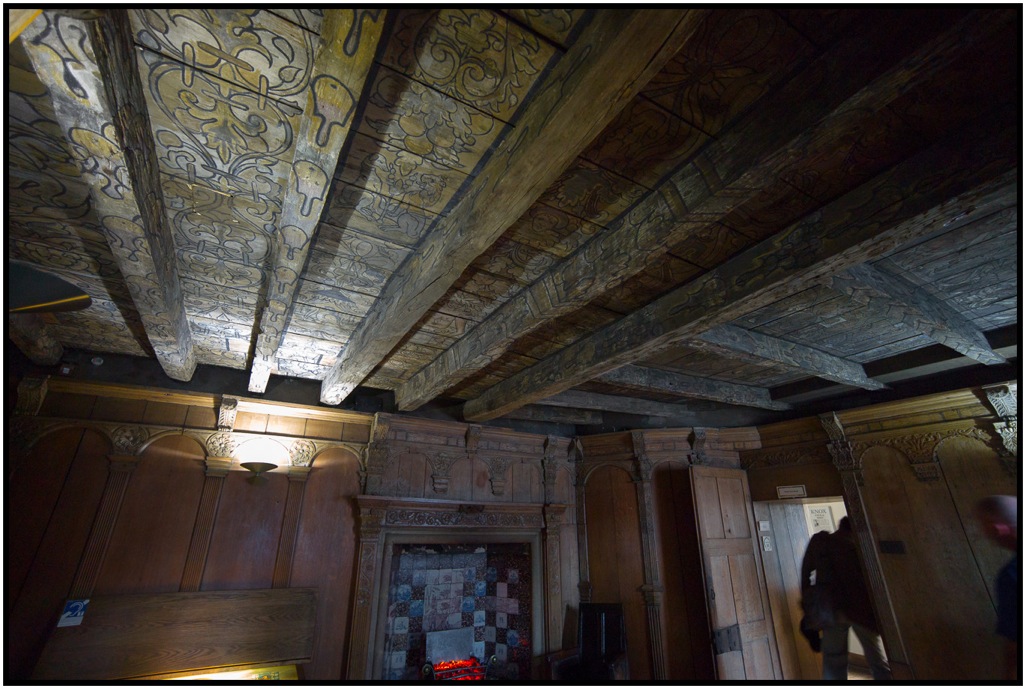
Below is a photo of the ceiling of his main meeting room. He entertained many a famous person of noble birth here. Back in the day, this ceiling was painted in vibrant colors and very bright. It’s faded now, but they had some example panels of what it looked like when it was new (we didn’t get any photos of them). Overall, the house was really cramped and dark. It didn’t seem like the kind of place a very important, influential person would have lived. Things just weren’t very nice back then, even for the wealthy.
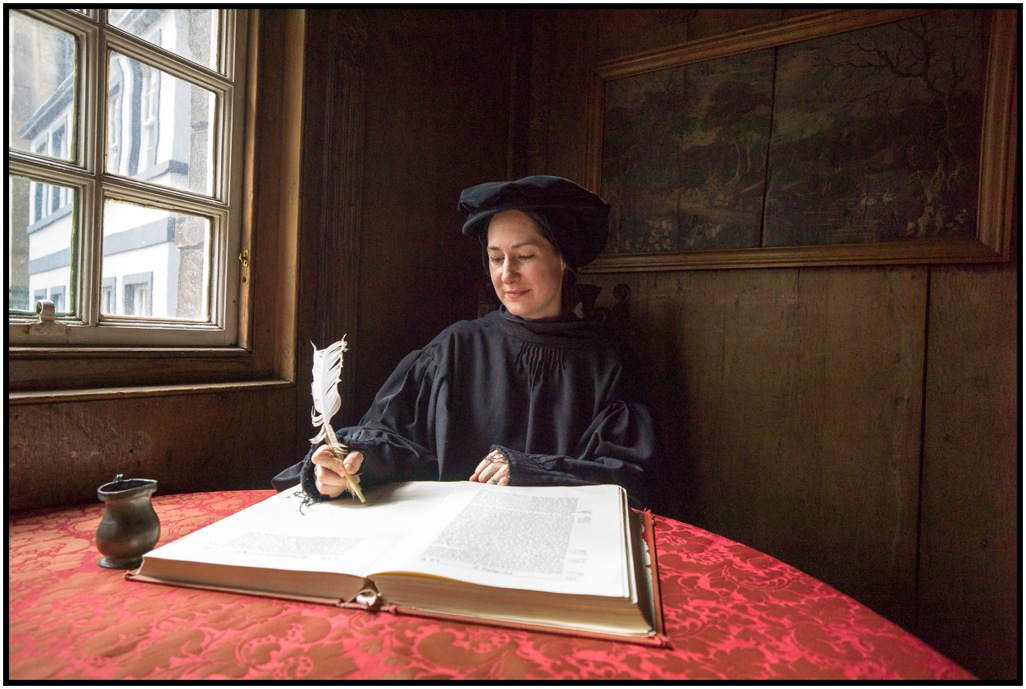
Stupid picture of me. Since the kids were back at the flat, I had to be Adam’s model. They had an area where one could don the academic robes and hat and pretend to inscribe important thoughts with a quill pen.
The outside view of John Knox House. It’s the stone portion.
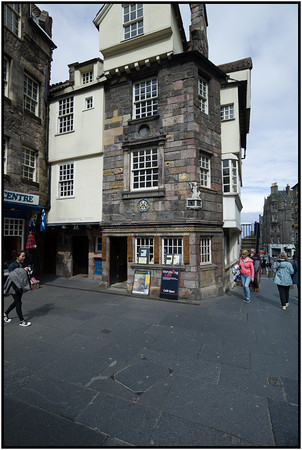
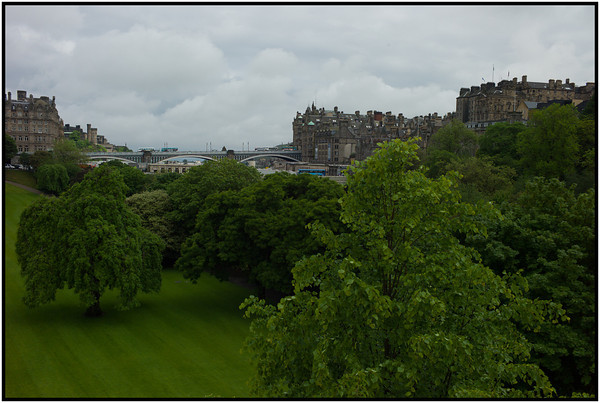
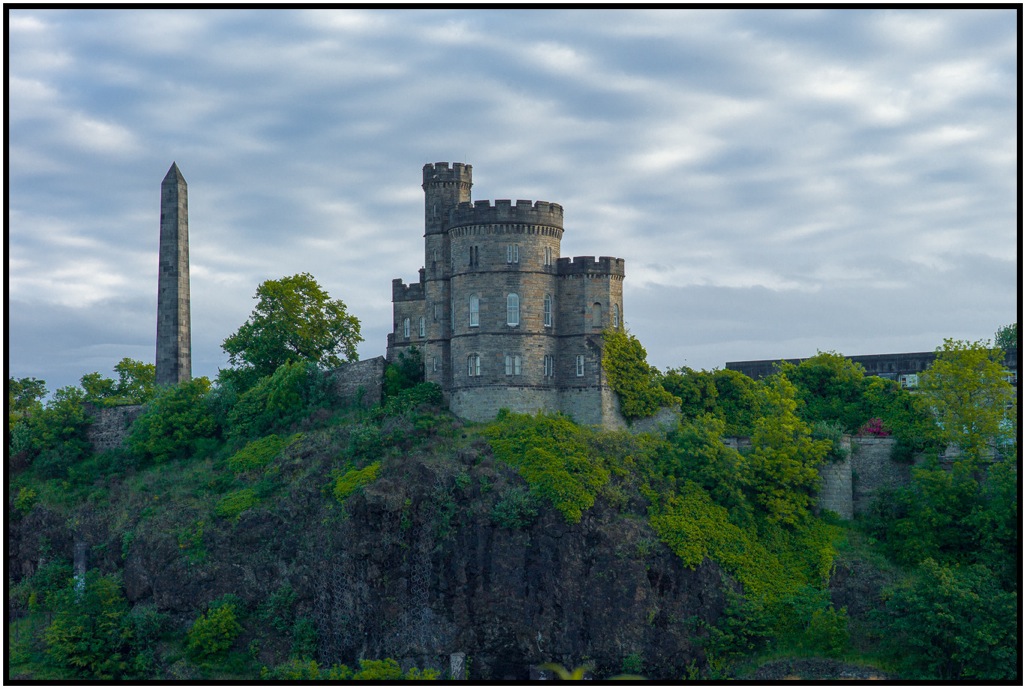
One last parting shot from Edinburgh. We don’t know what building this is, but it sure is pretty.
June 6, Friday
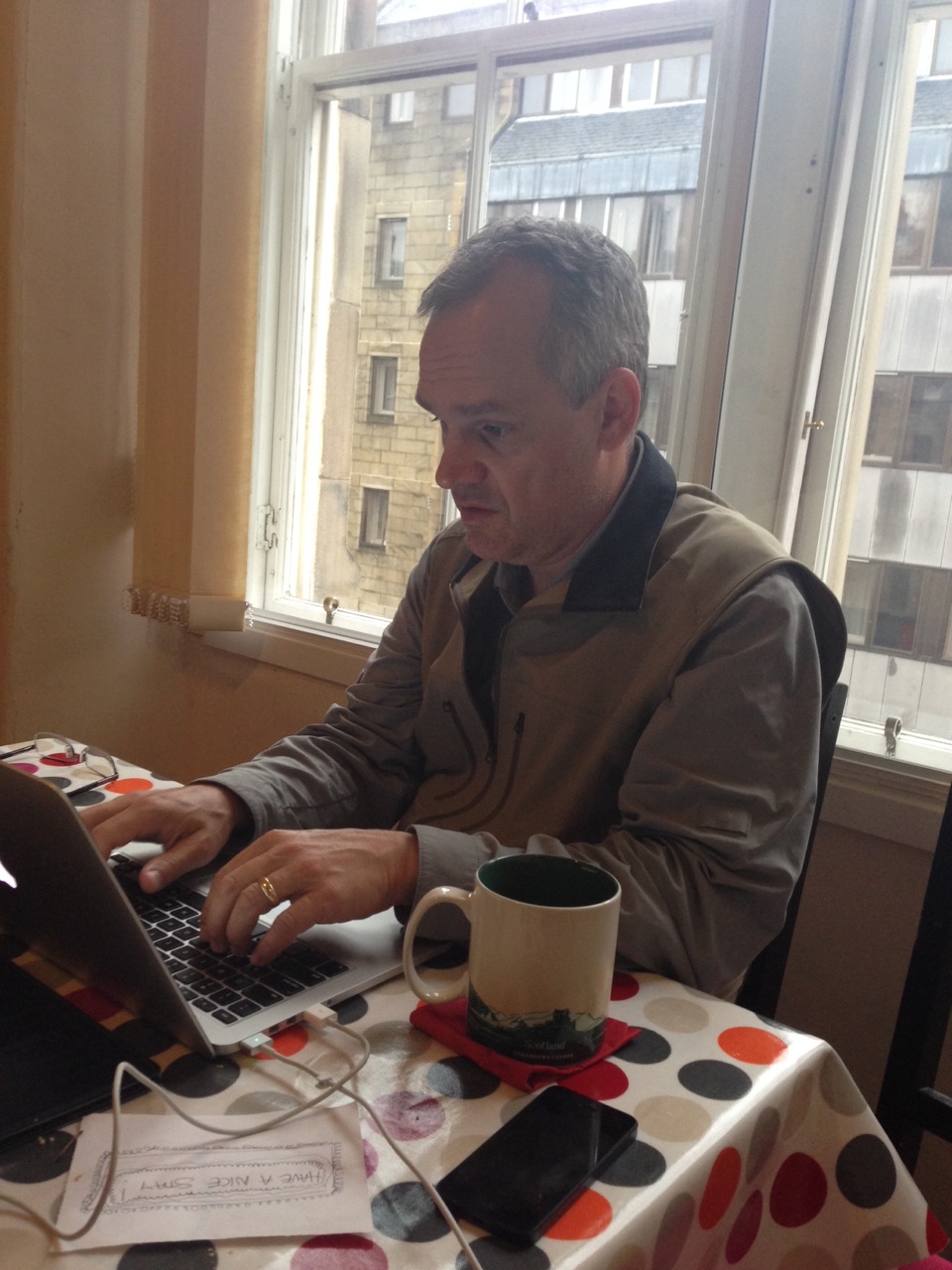
Here is a photo of Adam (finally!) doing his early morning routine. He gets up several hours before everyone else and takes care of business. He is not technically on vacation. Work still needs to be done every day.
We left Edinburgh early this morning, all jammed into the Land Rover. It was a very tight squeeze with all 7 people, plus 7 people’s worth of luggage. Holden and Josie were crammed into the way-back with the bags, and Isabella’s suitcase would come toppling off the pile and onto Holden’s head every time we hit a bump or turned a corner. It’s nearly a 4 hour drive from Edinburgh to Inverness. It felt like a long, long day.
The drive is gorgeous, though. The Scottish Highlands countryside is picturesque and well worth seeing.
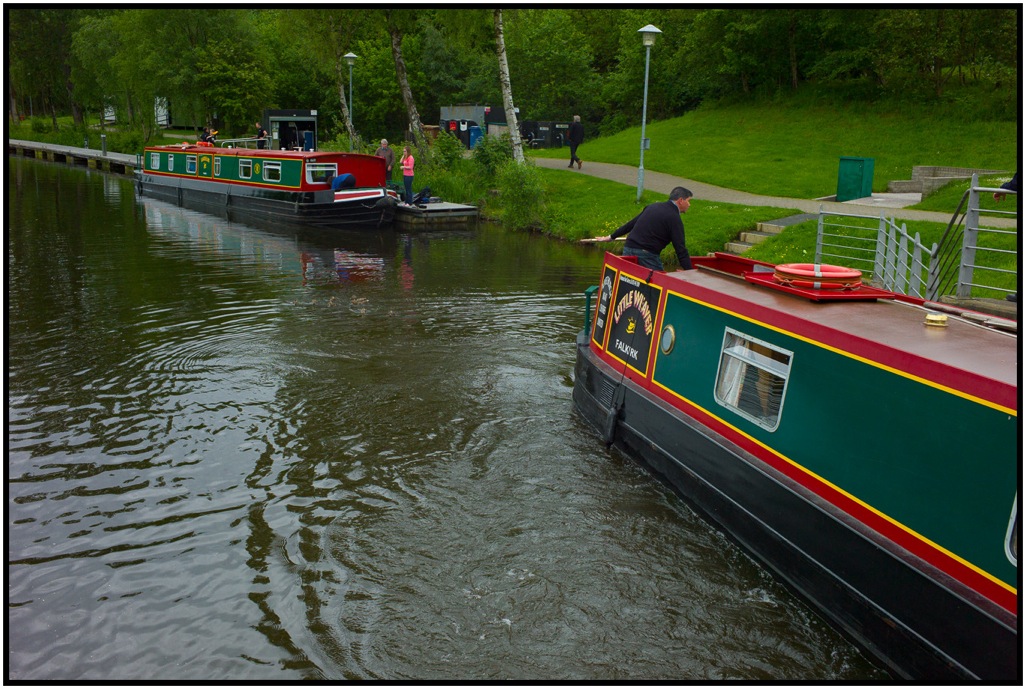
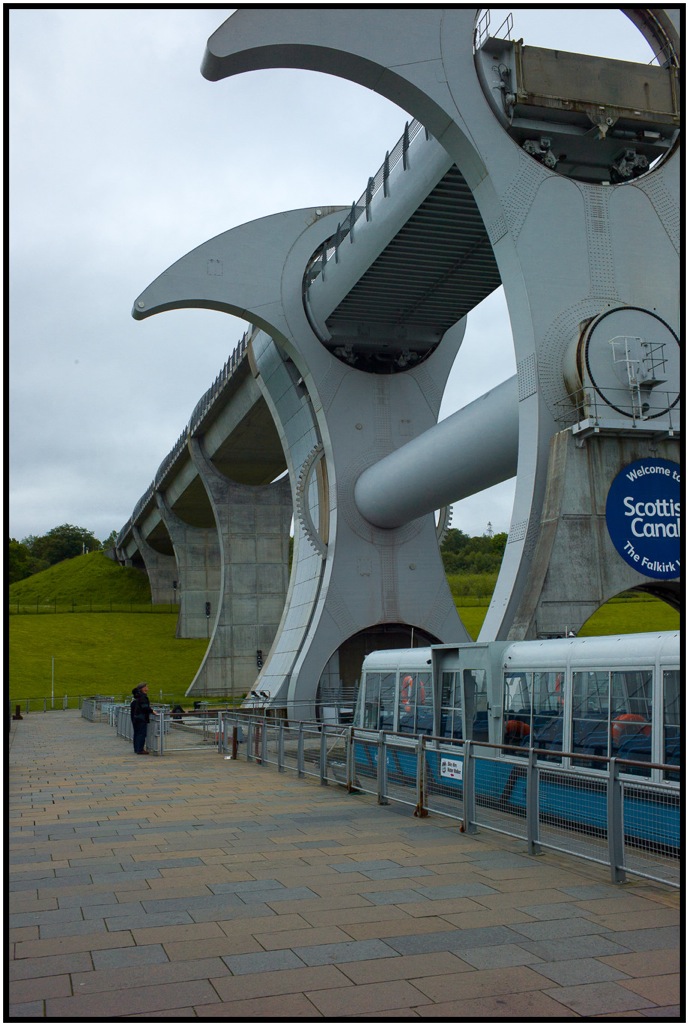
We made a couple of stops: the first was at Falkirk Wheel. Adam wrote: “This is an engineering marvel that my dad wanted to see – something he had read about in the past and since we were passing fairly close by, it was an obvious stop. Prior to the railroads, canals were the principal means of transportation throughout Scotland. These networks of canals still exist and are still used in industry as well as tourism. The Wheel works like a huge merry-go-round for boats – without the use of a lock, it lifts boats 79 feet up from the level of one canal to the next.”
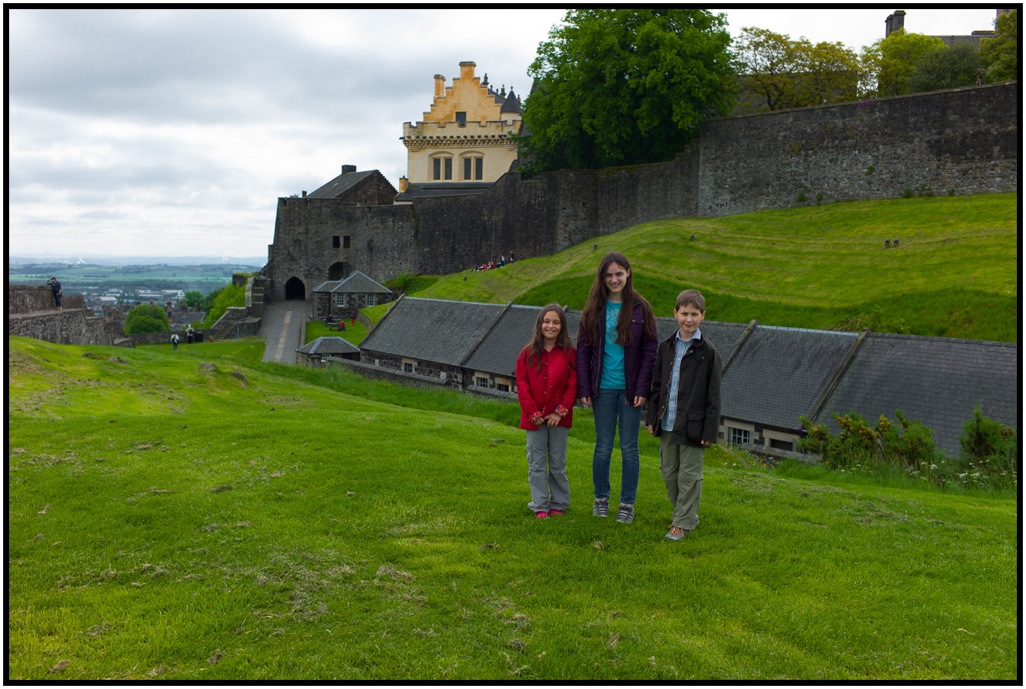
The next stop was Stirling Castle. Stirling Castle was the home for several Scottish kings and queens and served as a major defensive point that separated the Scottish highlands from the lowlands. As a result of it’s location and importance, more than 6 sieges and numerous major battles took place over the centuries to gain control of this stronghold.
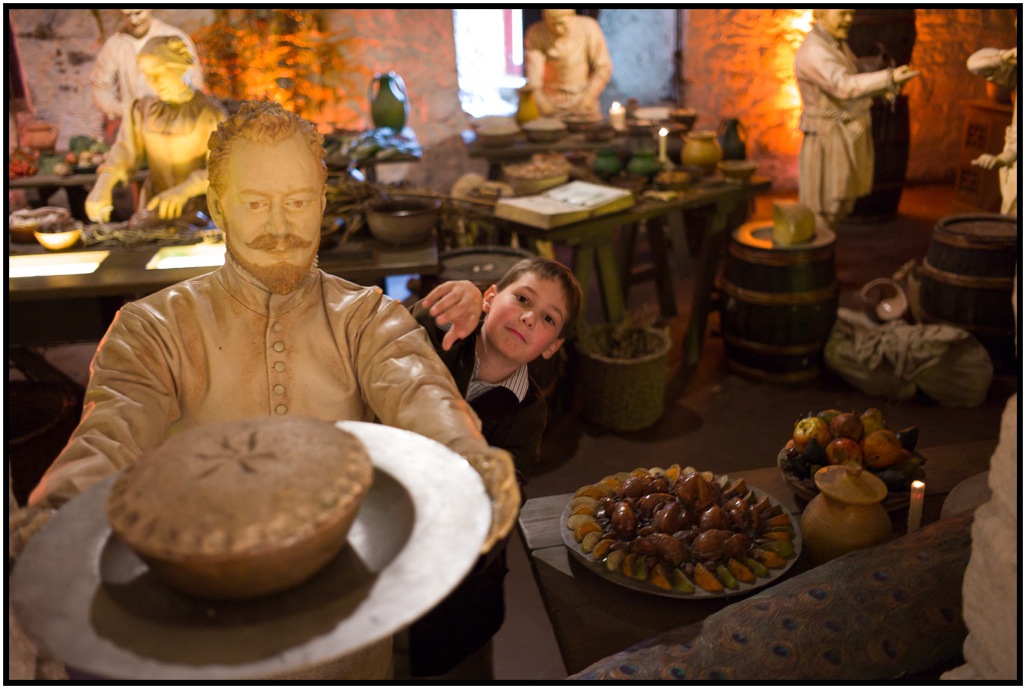
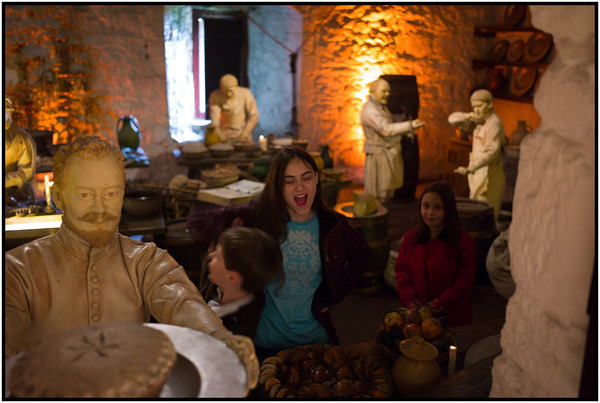
They had the Great Kitchens set up with mannequins demonstrating the activities, and books on display with old recipes. I could have spent a lot of time in this room just reading all the literature they had sitting around. One interesting fact: cooking was considered men’s work and women were not allowed to work in the kitchens. The youngest apprentices were boys around 7 years of age, and they generally started out in the roasting room manually turning meat on huge spits.
The bakery. Every employee (the castle had 350 household employees) received in addition to their wages 1 loaf of bread and 3 pints of mead each day. The higher-up folks got to supplement their diet with scraps from the Royal table, which included meats and vegetables. The lowest-level folks pretty much only got their bread and mead, and as a result scurvy was a big problem.
It also said they ate their food much more heavily spiced than we do today, mostly because they needed to mask the taste of heavily salted meats. They had two ways of preserving meats: salting and pickling. The pickled meats were greatly preferred, but much harder to produce. The Royal gardens provided some vegetables, but the main diet (even of the royals) was bread, meat/fish and mead. Vegetables — and especially fruits — were a luxury.
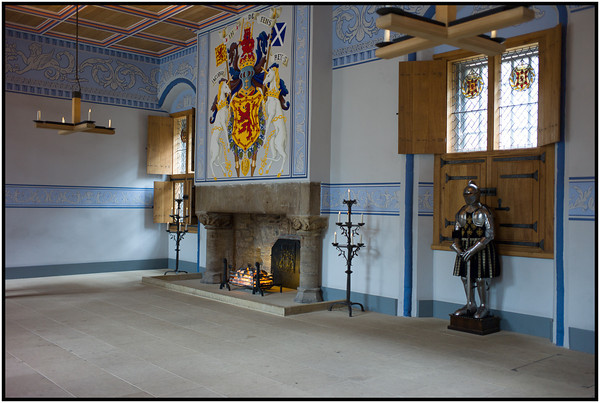
The King’s Outer Hall. Anyone who wanted to have an audience with the king was shown to this room to cool their heels while the King’s minions decided if they were worthy or not. Most people got to sit in here waiting for hours, only to be eventually told they didn’t make the cut. If they did make the cut, they were shown to the King’s Inner Hall to wait some more. Getting in to see the King was tough to do.
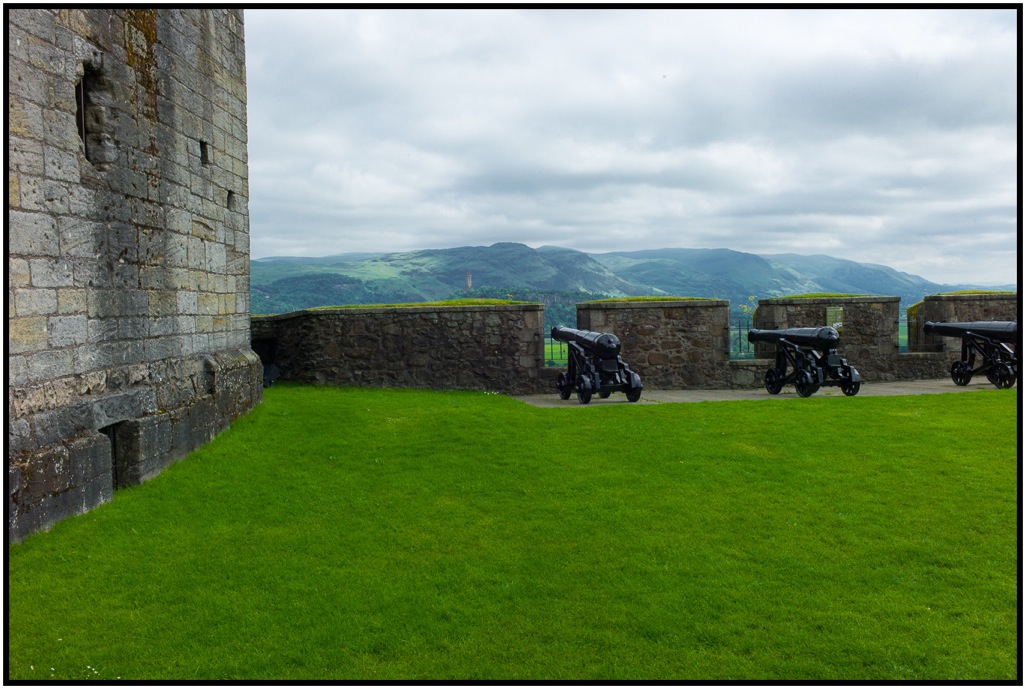
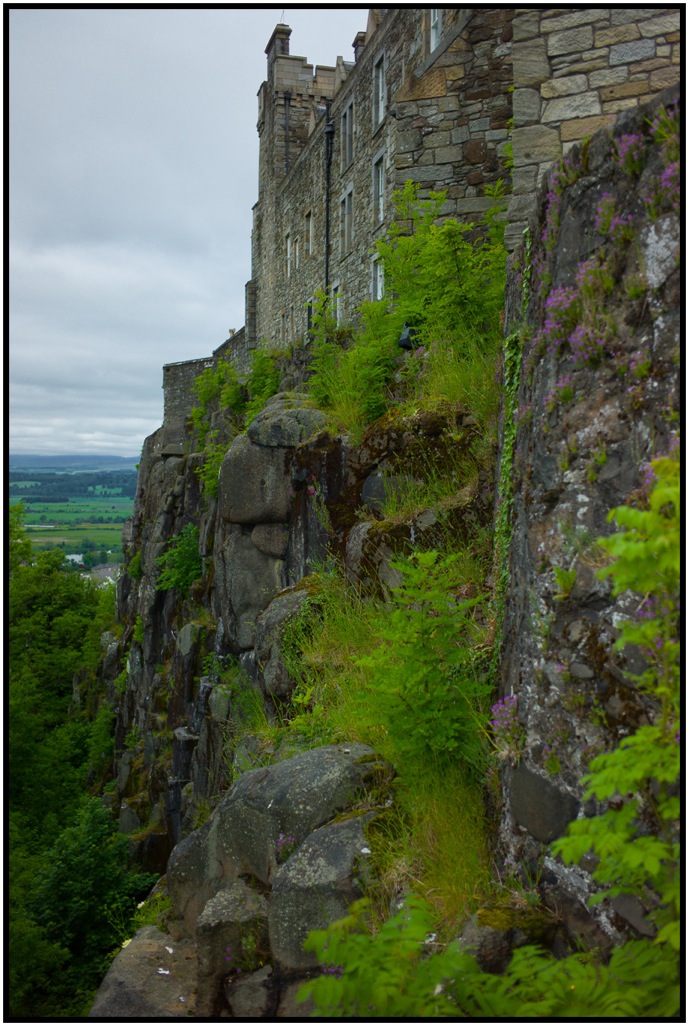
Elaine’s favorite story from this castle was that of John Damian, an Italian “natural philosopher” (what we would today call a scientist) who decided to make a flying machine and fly all the way to France in 1507. He dressed up as a huge bird and leapt off the battlements of the castle (picture below.) Miraculously he didn’t die, but only broke his leg. He blamed the failure of his bird suit on having the wrong type of feathers. He is now known as The Birdman of Stirling.
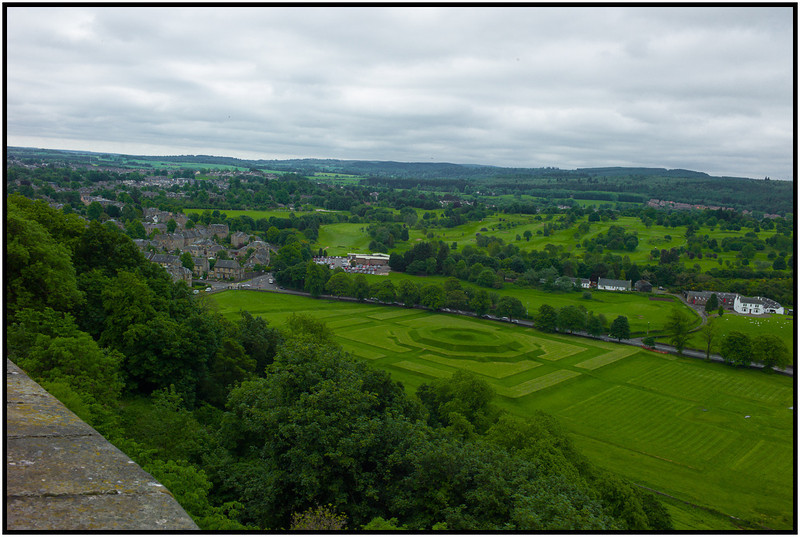
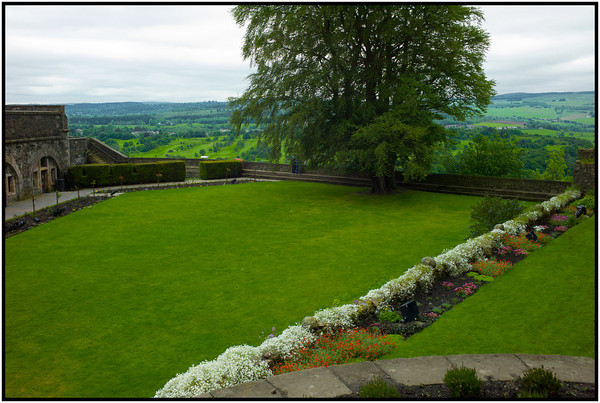
View off the Lady’s Viewing Porch. We never found out what that weird crop-circle looking thing down below was for.
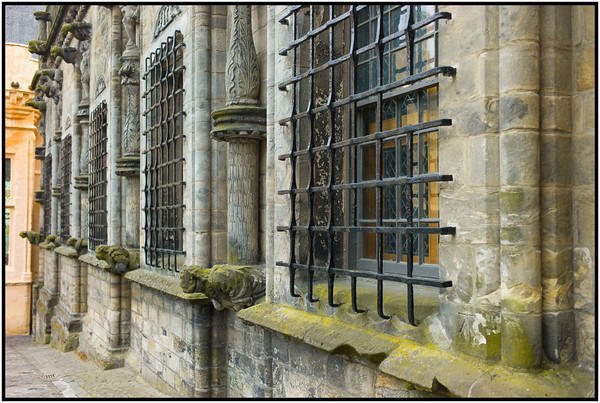
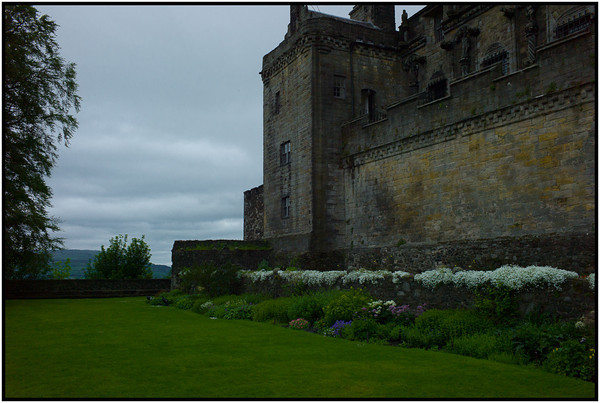
The Royal Courtyard. They played badminton and football (soccer) here, until football was outlawed. They decided that football incited too much violence.
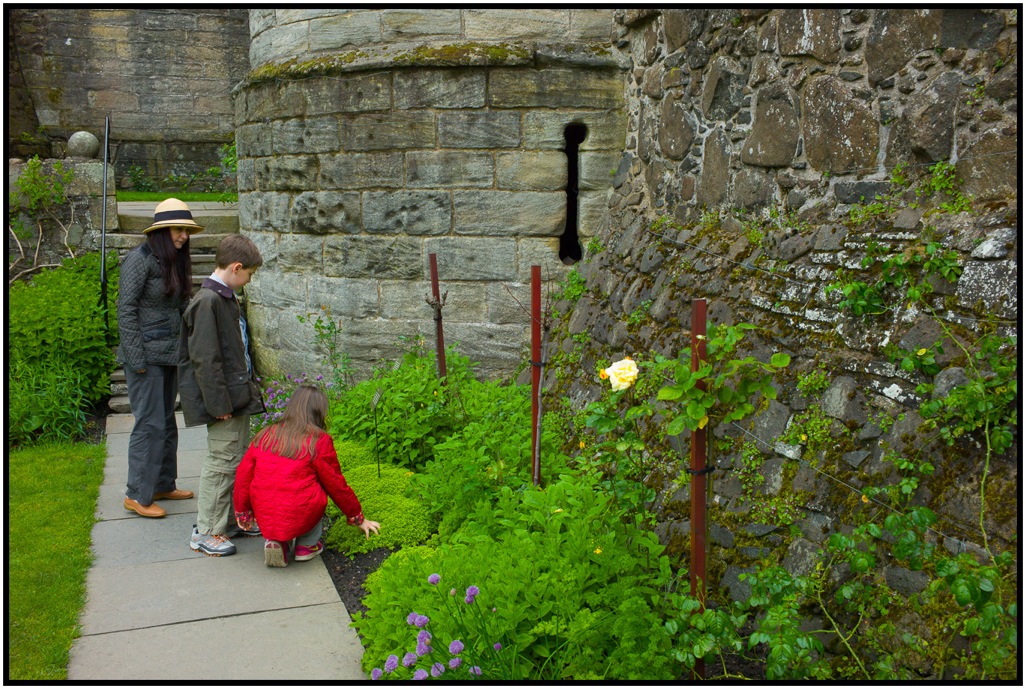
Same courtyard: they had parsley, sage, and thyme … but no rosemary.
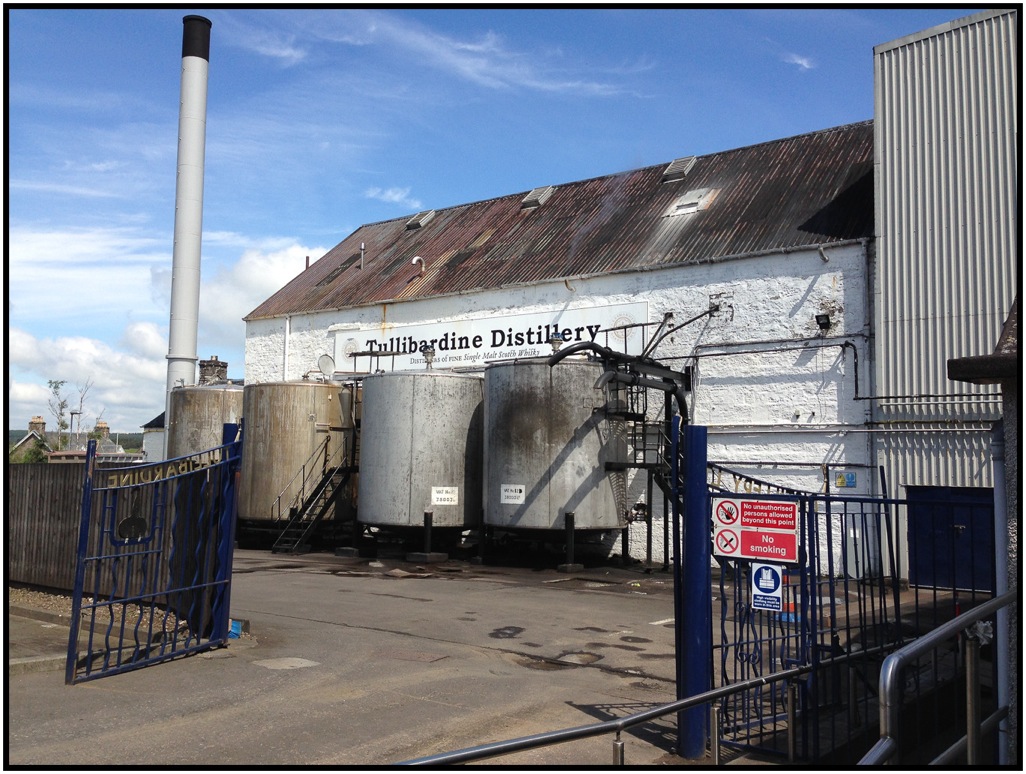
One more stop at lunchtime; Tullibardine Distillery. Adam and John both want to go on at least a couple whisky distillery tours. We didn’t tour this one, but they did buy a bottle in the bottle shop.
We finally got to our house around 4 p.m. We rented a whole B&B … 6 bedrooms, 3.5 bathrooms and full amenities. It’s glorious to have this much space, especially after the cramped conditions in Edinburgh. Each kid gets their own private room, which cuts down dramatically on the squabbling. We’re here for five nights and will use this as our home base for our stay in Inverness. We asked if we could have the house all to ourselves — get the Bedrooms but not the Breakfast service — and the owner was happy to just let us be. Heaven!

