Boxing Day (December 26)
Boxing Day in England is roughly the equivalent of Black Friday in the United States. Shops open early and plaster “SALE NOW ON!” signs everywhere. I don’t think it’s quite as crazy (or as potentially dangerous) as the Black Friday mobs in the US, but people do turn out in droves to scour the after-Christmas sales for half-off treasures.
Our original plan for the day was to visit Canary Wharf, but when we got to the tube station we learned that the Jubilee line was closed until Dec 31. We could have still gotten there, but it would have required about 4 train changes, so we decided to just wait until they get the grey line up and running again. We went with our back-up plan, to visit the high-end shops on Bond Street and meander over to Winter Wonderland in Hyde Park.
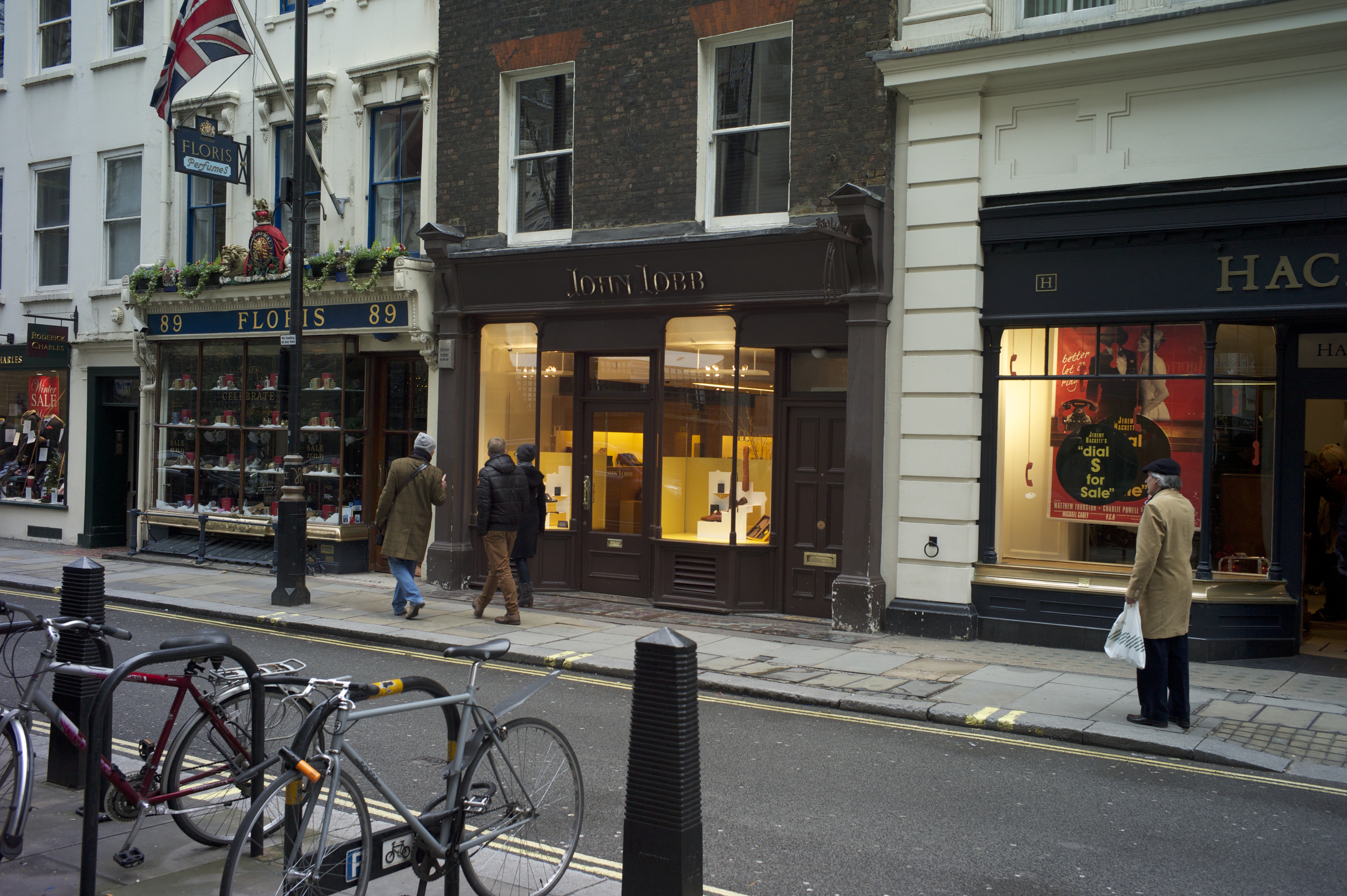
Bond Street is a place where one can buy a nice outfit at Hermes and then hop across the street to purchase a Bugatti. It’s cool to see, but so high-end we didn’t feel comfortable going into any of the shops.
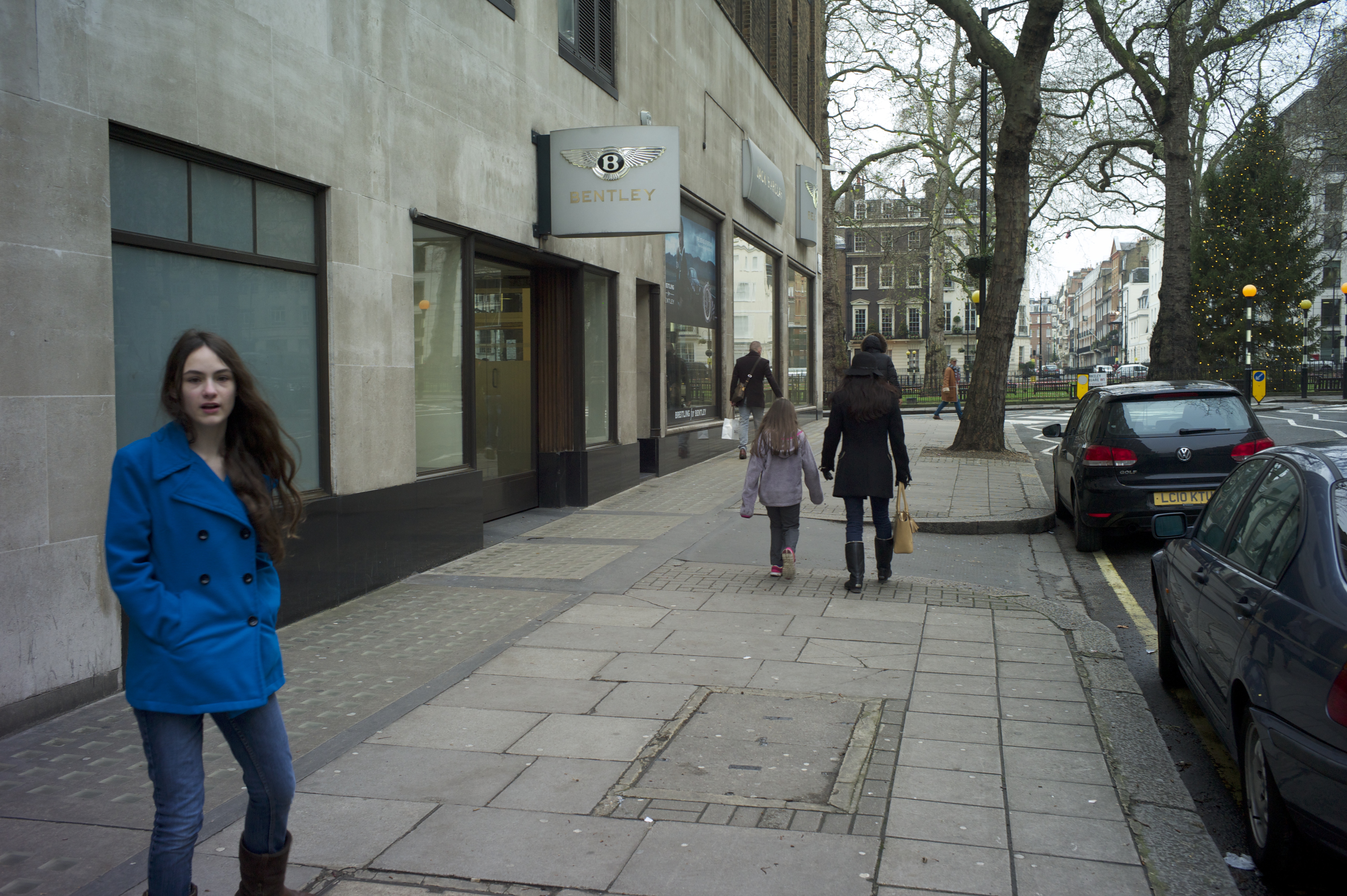
Bentley, anyone?
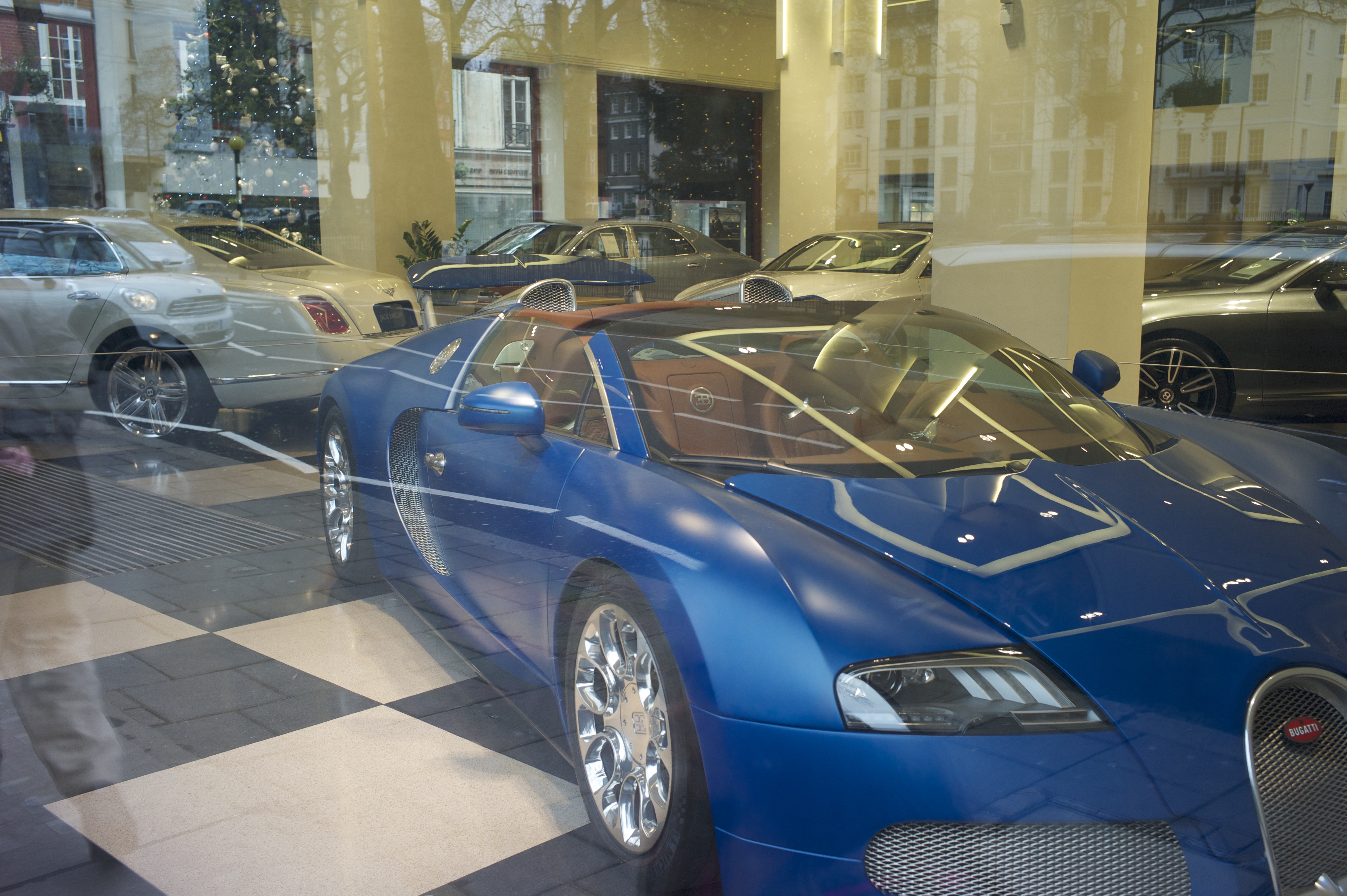
This ugly thing is apparently worth more than $1 million. (When I say stuff like that, Adam shakes his head sadly and says, “You just don’t get it.”)
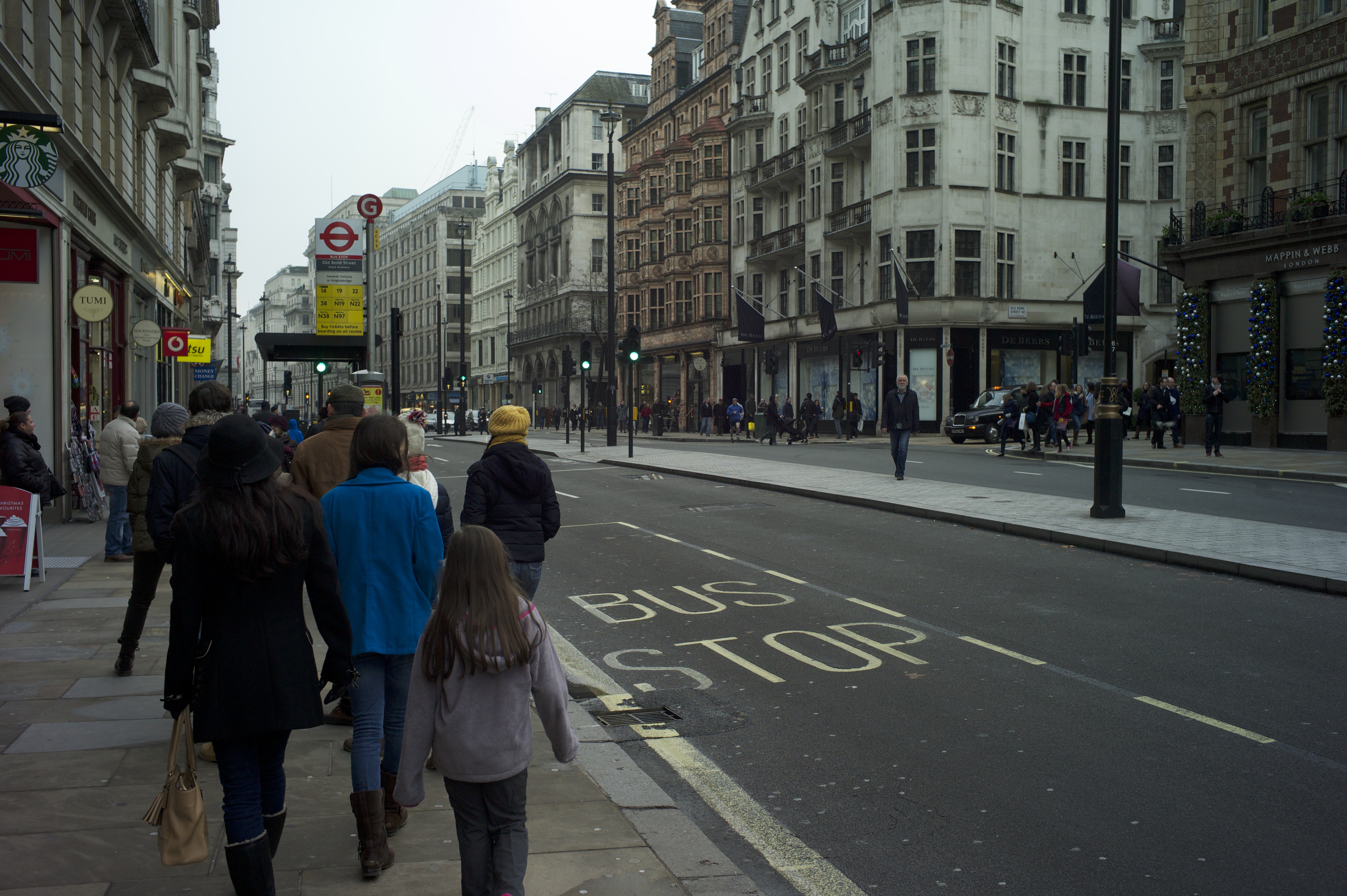
It was around this time that we spotted a really good-looking noodle shop, but it was only 11:30 a.m. and for the sake of spacing our meals appropriately throughout the day, we decided to wait at least until noon before finding a place to eat. This turned out to be a mistake. Every other restaurant was closed for Boxing Day. We walked for miles and miles, headed in the general direction of Hyde Park. Not a single open place to eat!
We finally straggled into Hyde Park starving, grumpy, and cold. Holden had descended into one of his Captain Obvious repetitive loops of uncontrollable whining (“But I’m cold! But I’m hungry!” “We know, Holden. Complaining isn’t doing any good.” “But I’m cold! But I’m hungry!” “We’ll get something to eat as soon as we find a place that’s open.” “But I’m cold! But I’m hungry!” The other four of us simultaneously: “Ohmygod, SHUUUUUT UUUUUUP!”)
Hyde Park hosts Winter Wonderland each year, which is kind of like a Christmas-themed county fair. They have food and drinks, ice skating, rides, little musical shows, and booths filled with handmade stuff to buy, like candles and knitted hats.
We entered the park at the wrong end and had to hike around the entire Winter Wonderland pavilion to get to the front gate. Desperate for food, we hit up the first booth we came to; a place called “Old English Hotdog.” They sold hotdogs and hamburgers grilled on a huge round open pit with a grate thrown across the top. We should have taken a clue from the name: hotdogs are neither English nor old, and they left off the word “Ye.” Anyone who has ever been to a Renaissance Fair knows that a self-respecting old-timey business would have named itself “Ye Olde English Sausage Shoppe.”
Holden ordered a hotdog and the rest of us hamburgers. I’ve probably eaten a worse hamburger in my lifetime, but can’t think of when that might have been. It had a funky taste I couldn’t place. I wasn’t sure if it was a spice that should never be associated with hamburgers, if the wood they were using to smoke the meat was something I’ve never encountered, or if the beef was going bad. After a few more bites, I wasn’t even sure it was beef. I said to Adam, “I think this might be minced lamb. Did they say it was beef?” Isabella laughed and said, “It’s probably horse meat!” It was supposed to be a joke, but just putting the thought out there ruined what was left of our appetites. Adam was mad because those terrible burgers were around $7.50 each. He choked his down growling, “I paid for em, you’re eatin’ em!” Smug little Holden said, “My hotdog is excellent.”
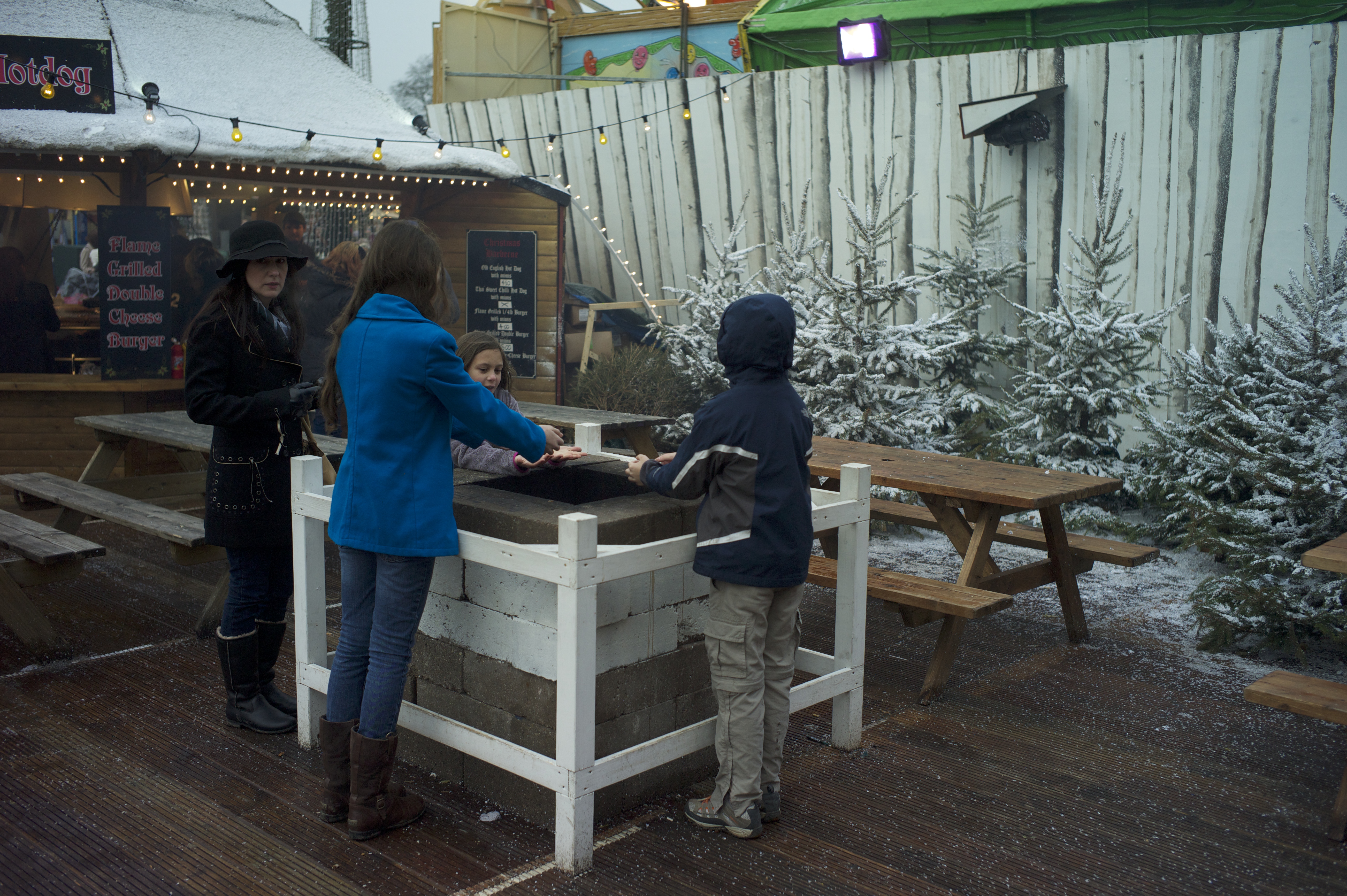
Trying to get warm.
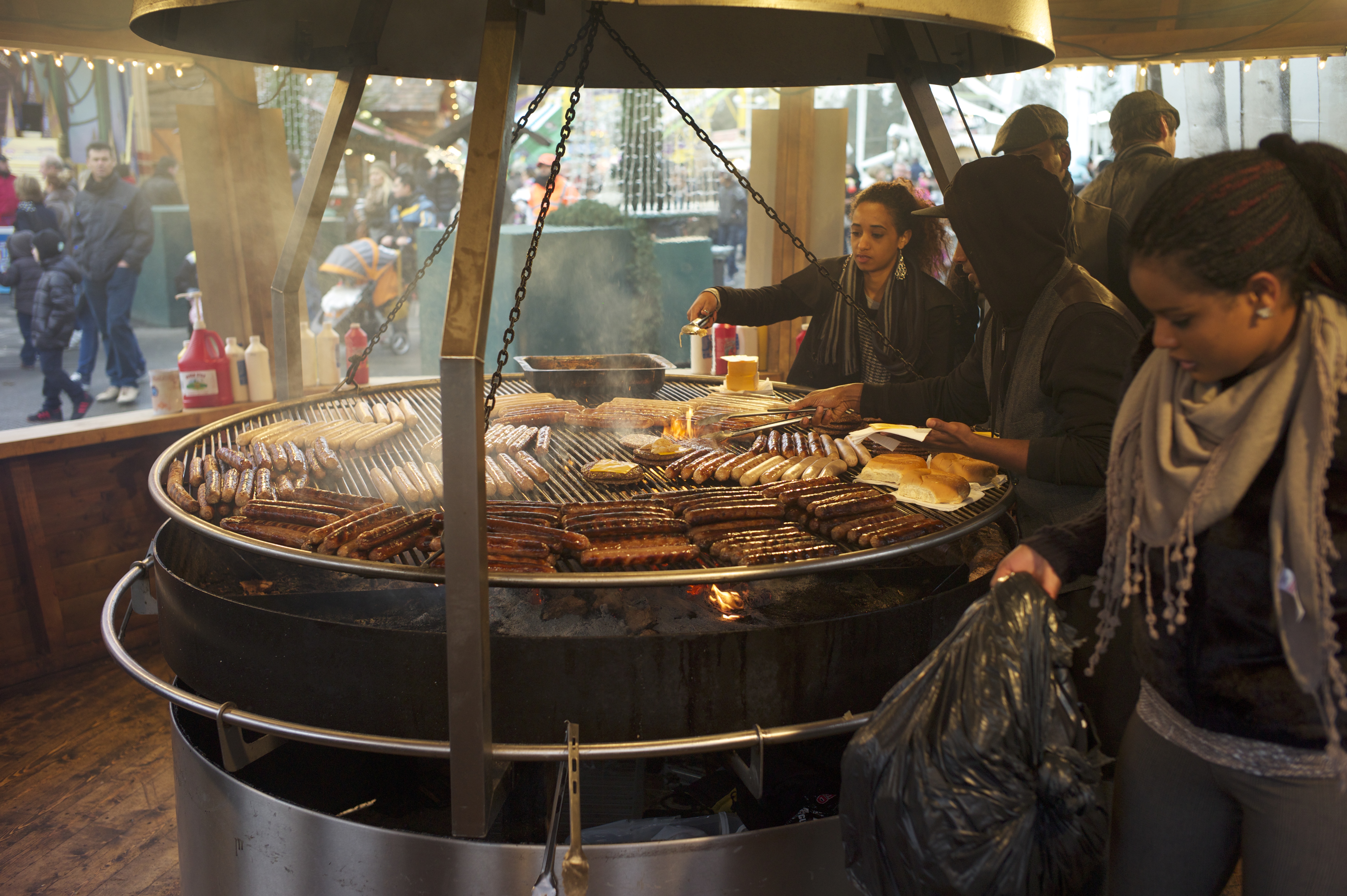
“Old English Hotdog” fire pit.
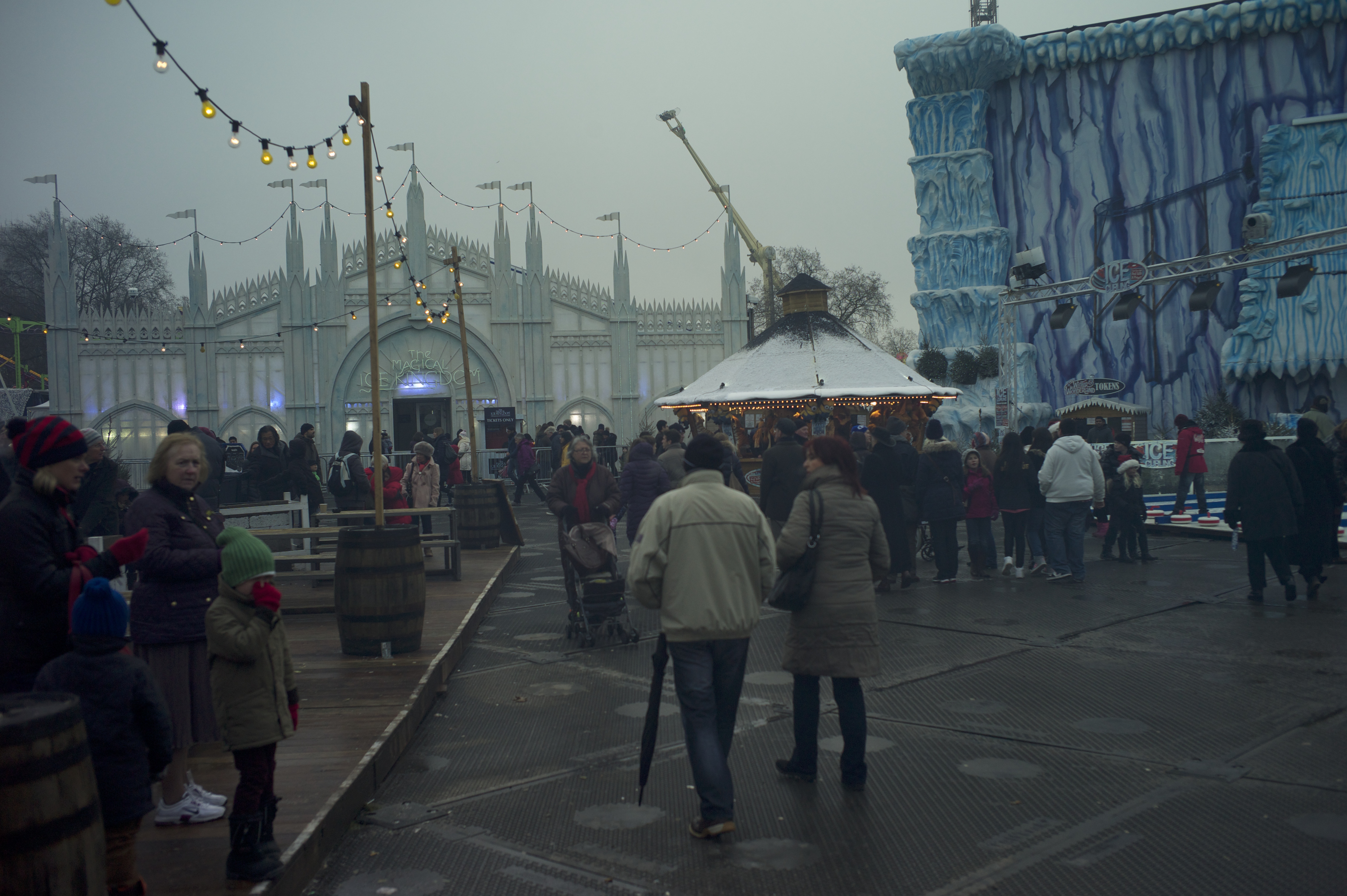
Cold, grey day.
Next up was a cart that sold chestnuts roasted over an open fire. That’s something the kids have always wanted to try, so we bought a little packet of them. They were good, but nothing special. I pulled a Cliff Clavin and reminded the kids that chestnuts are the only tree nut that contains vitamin C, and they accused me of ruining the experience by turning them from a treat into a health food.
After that, we found a booth selling hot chocolate, tea, and spiced mulled wine. That was finally a big winner. The “hot drinking chocolate” came with “whip and a curl” which turned out to be a mountain of whipped cream topped with a 3-inch long stick of chocolate. I had tea. Adam ordered a spiced mulled wine, which is served hot in a dixie cup. He’d heard of mulled wine all his life and wanted to try it. It was only OK … very sweet and syrupy. I didn’t like it and neither did he, but after awhile he declared that it “grew on you” and finished it all. The chocolates were £3.50 each and the mulled wine was £4.00 (for around 5 oz serving.)
My advice to anyone wishing to attend the Hyde Park Winter Wonderland is to eat before you go. Admission is free and the arts and crafts are reasonably priced, but be forewarned that if you plan to eat there, you should bring some lube and prepare to bend over.
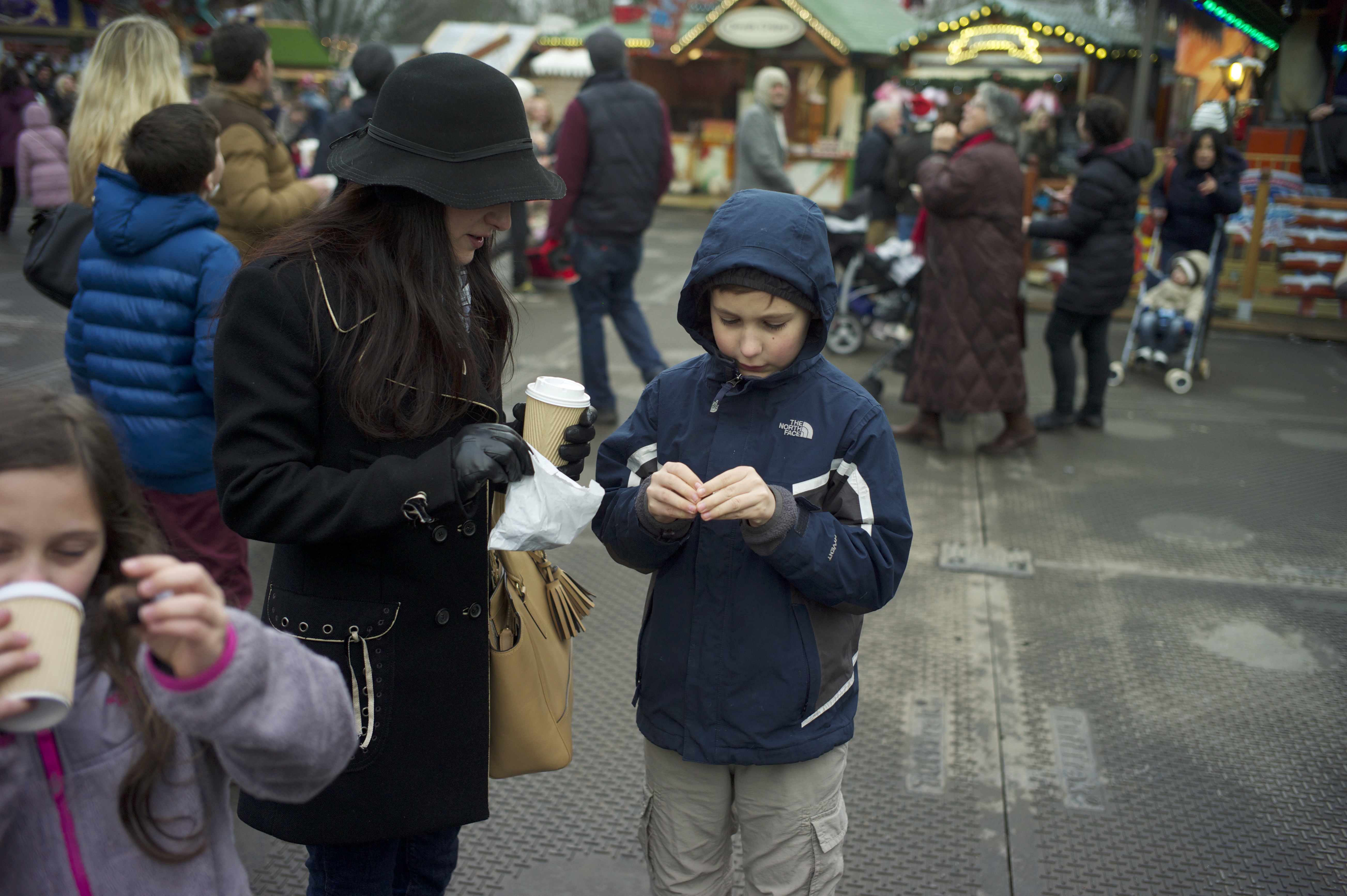
Peeling the chestnuts roasted over an open fire.
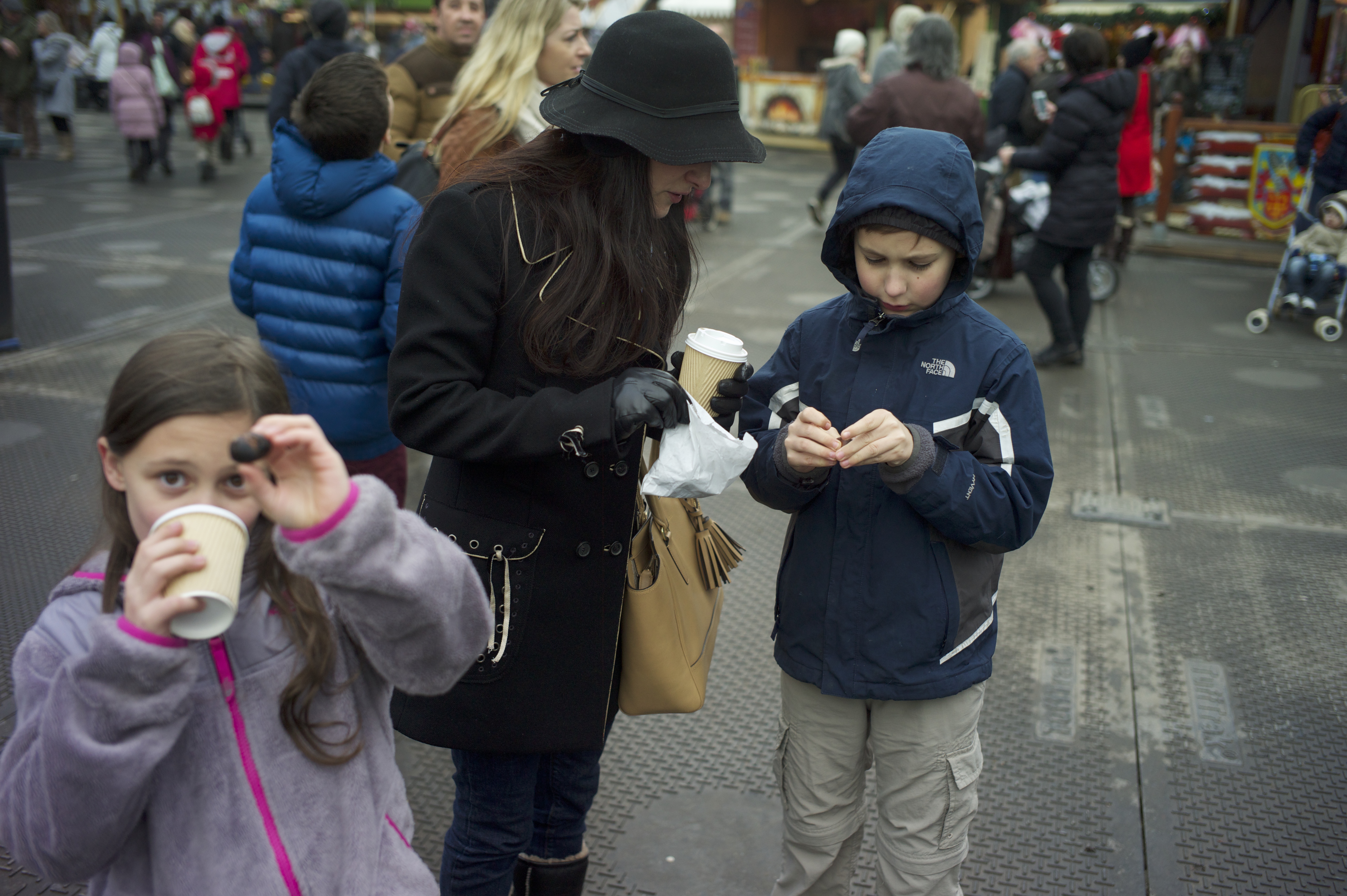
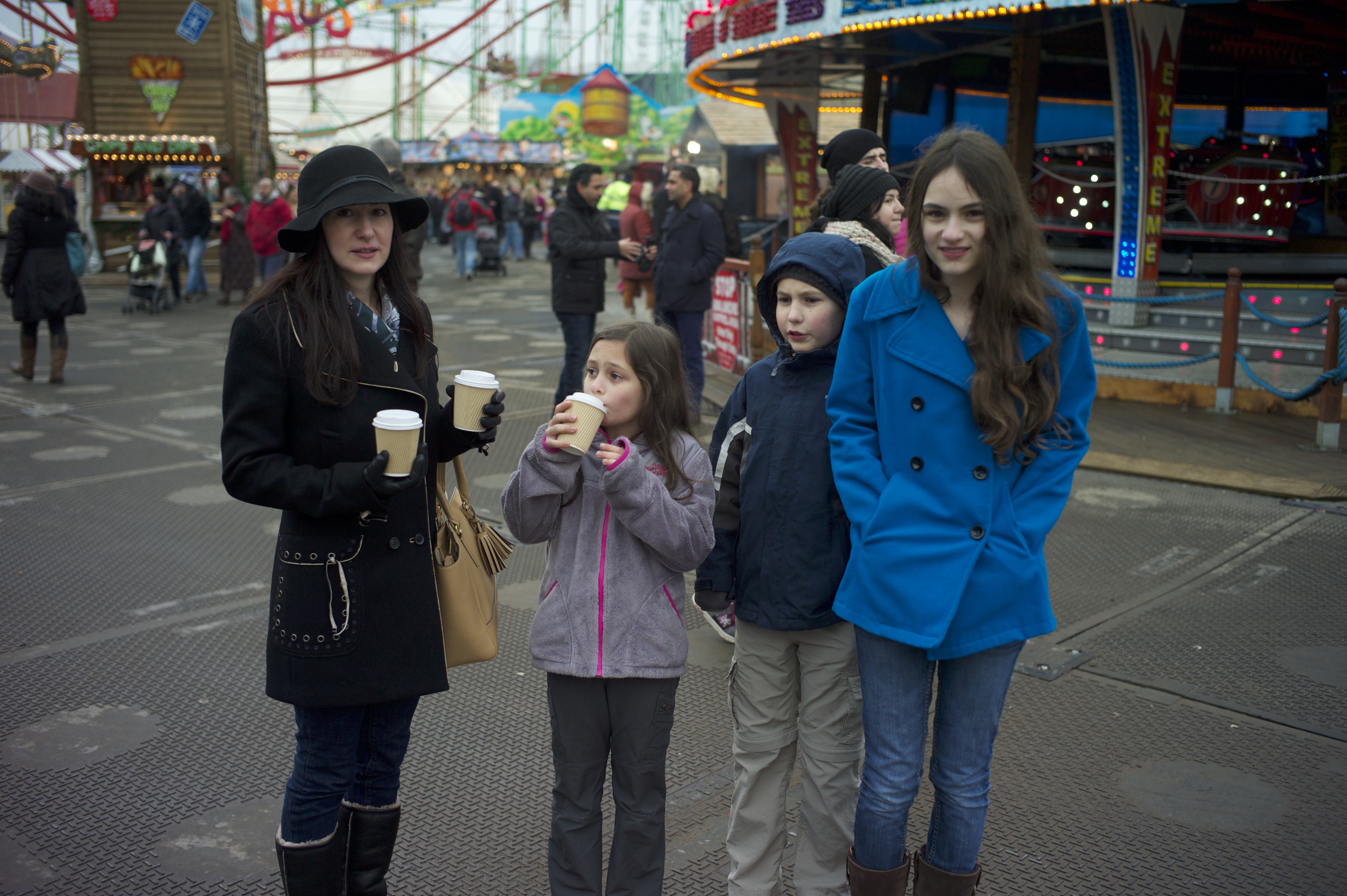
Finally something good; hot chocolate!
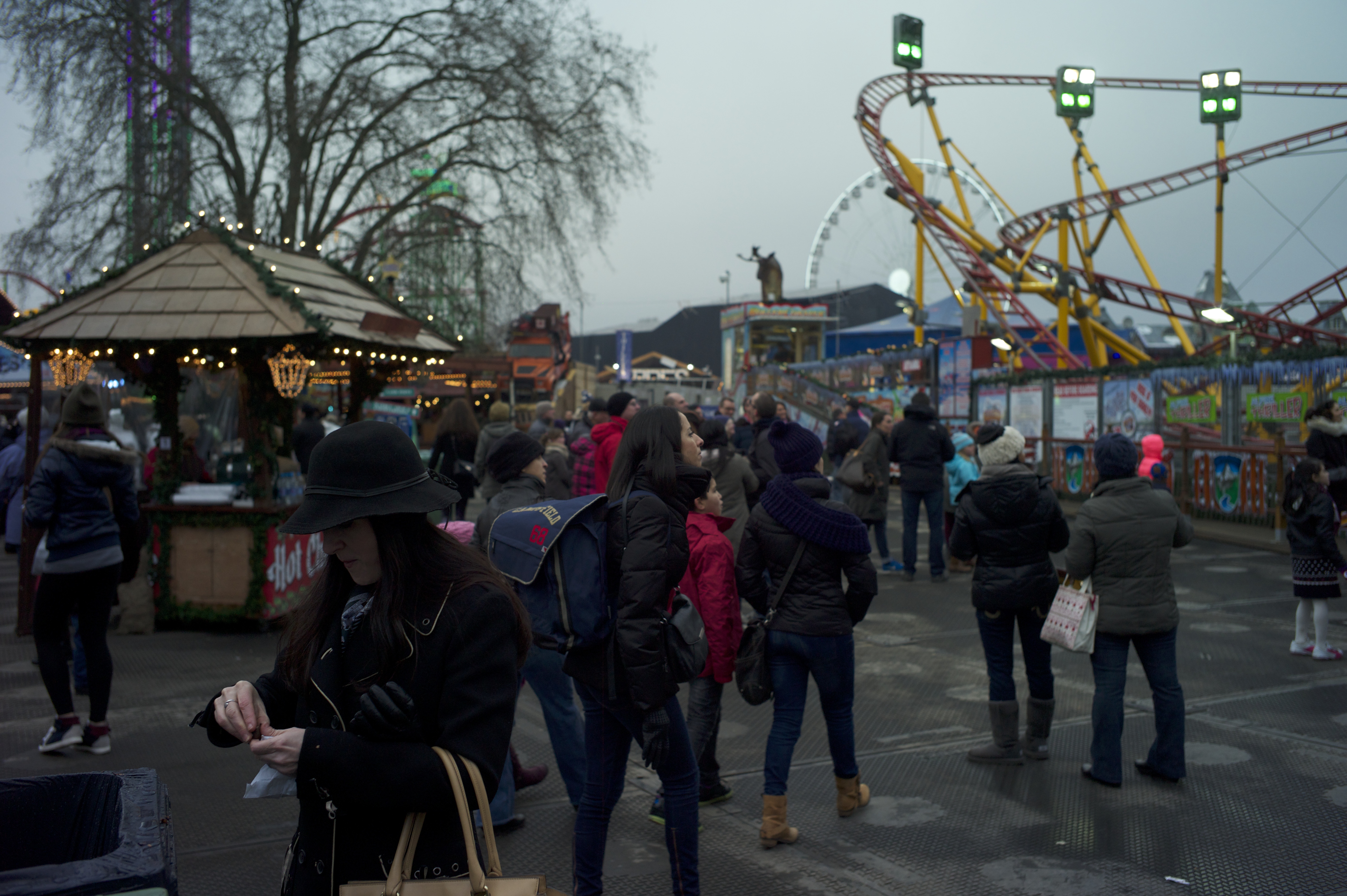
View of the fairway.
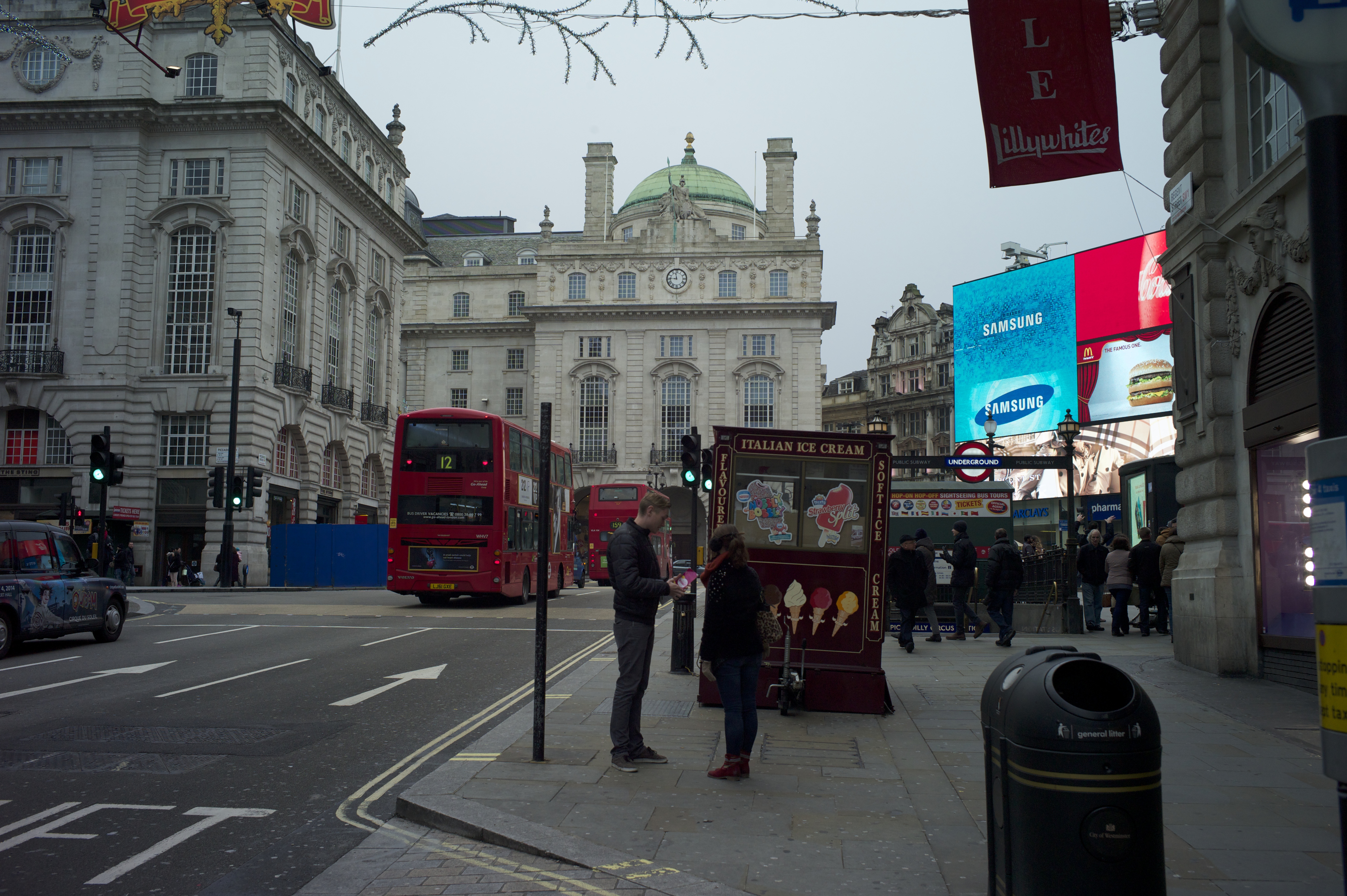
On the way back to the flat, we had to change trains at Piccadilly Circus. There is a cafe we like near the tube station (across from the Apollo Theater) so we hopped off for a quick bite of something better than mystery-meat burgers.
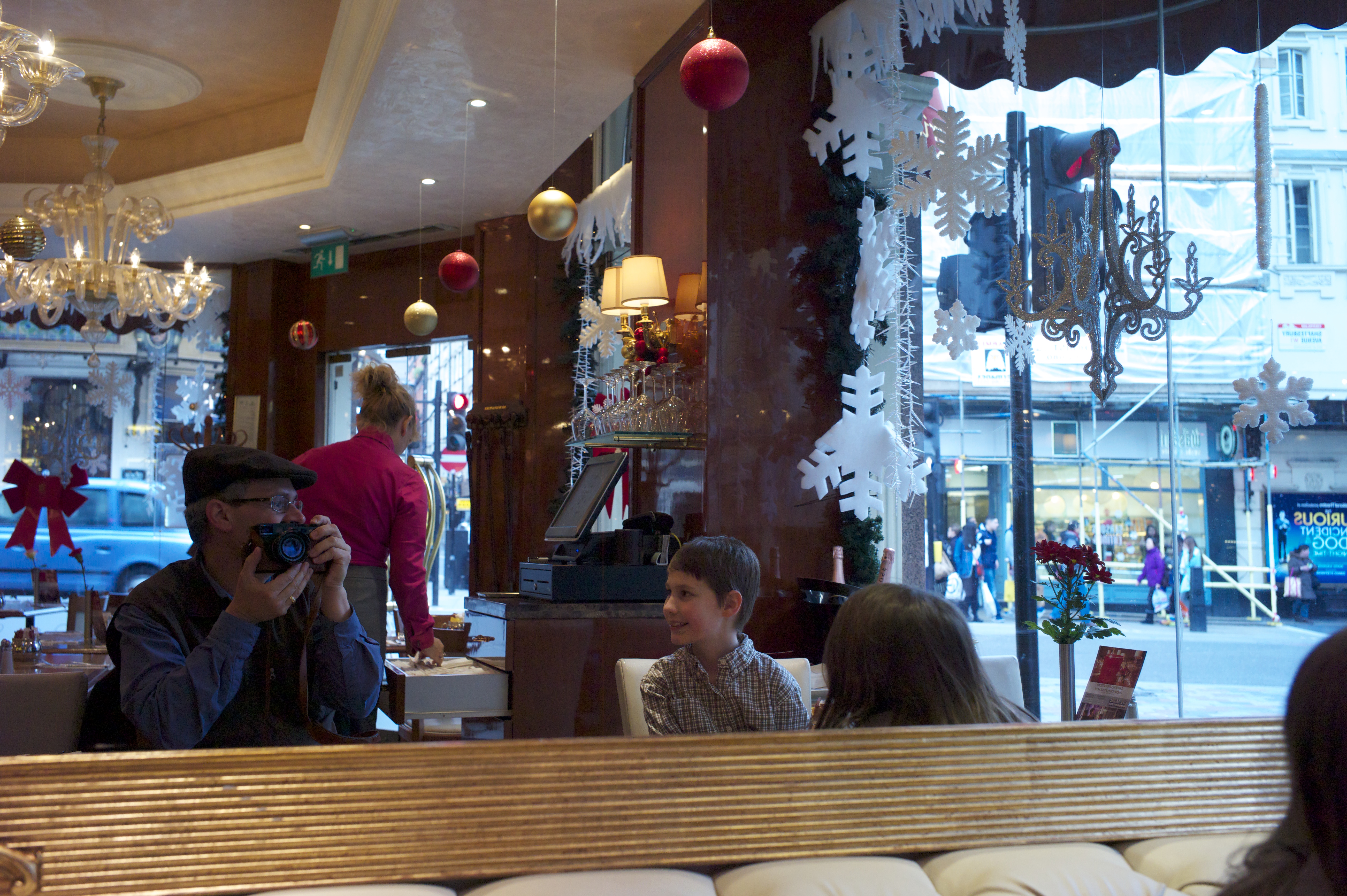
The only way we ever get a photo of Adam; mirrors.
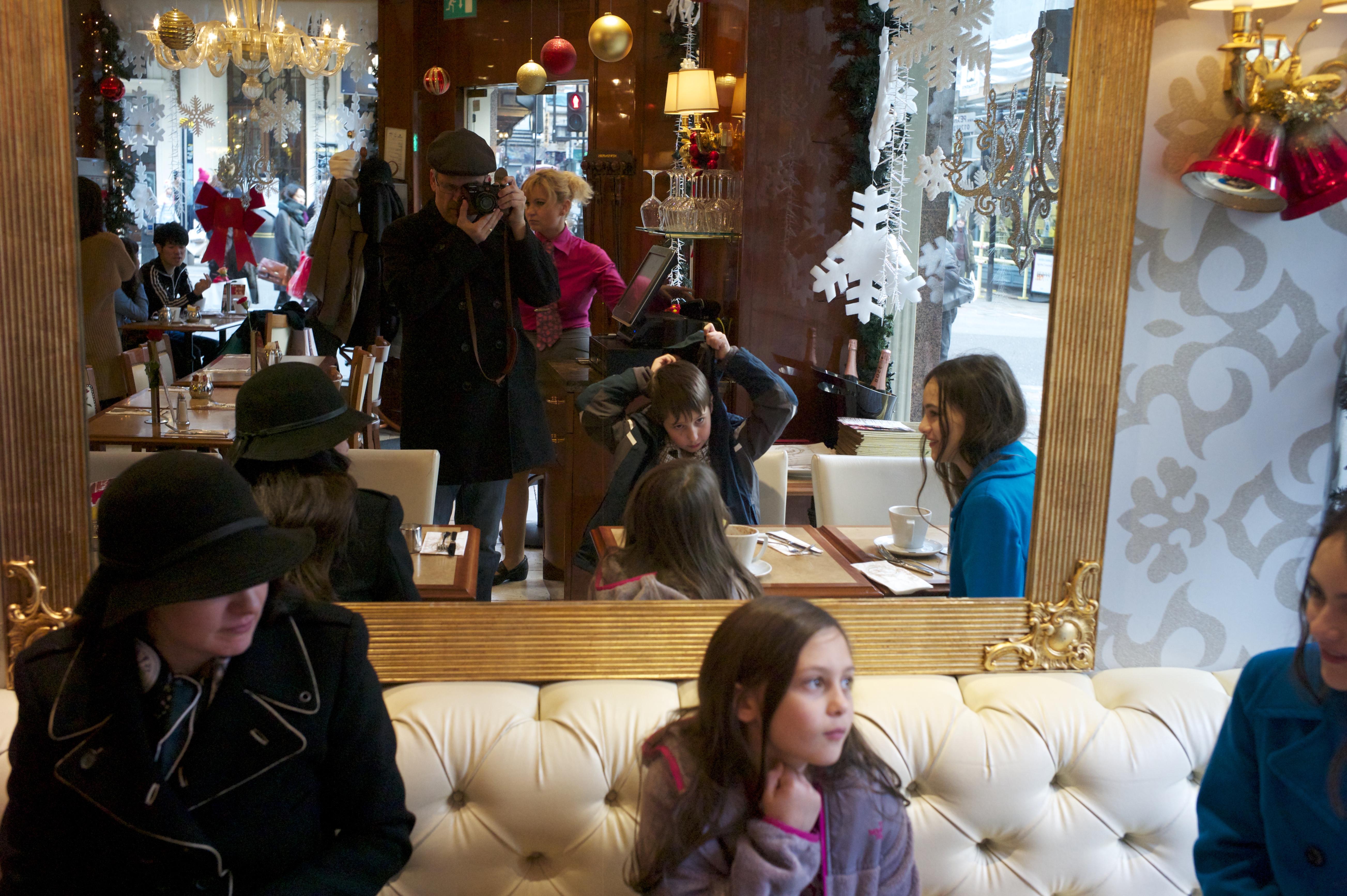
And finally a picture of all of us together (sort of).
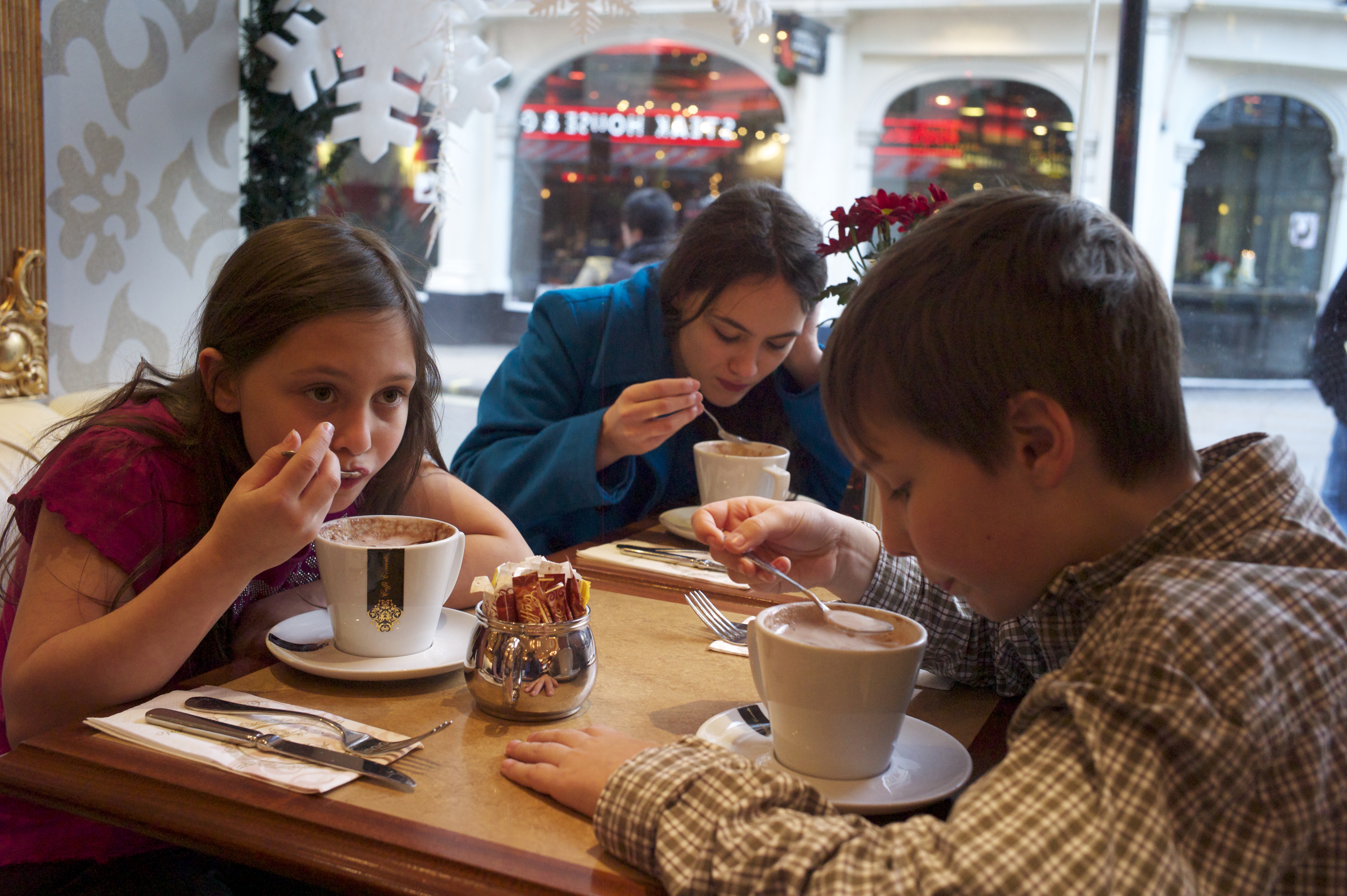
More hot chocolate. One can never have too much hot chocolate.
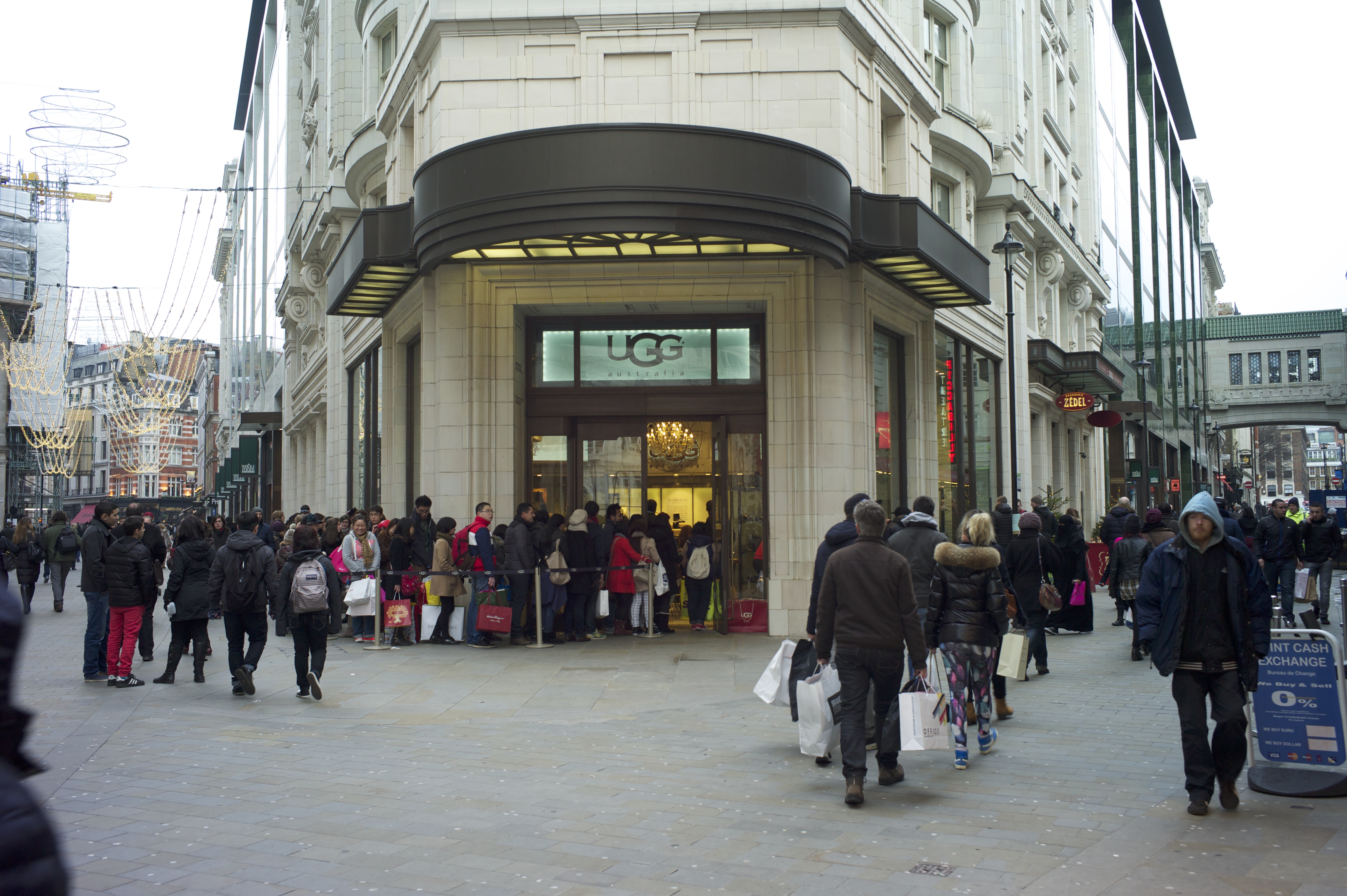
Boxing Day shopping: Crazy line of people waiting for their turn at the Ugg store.
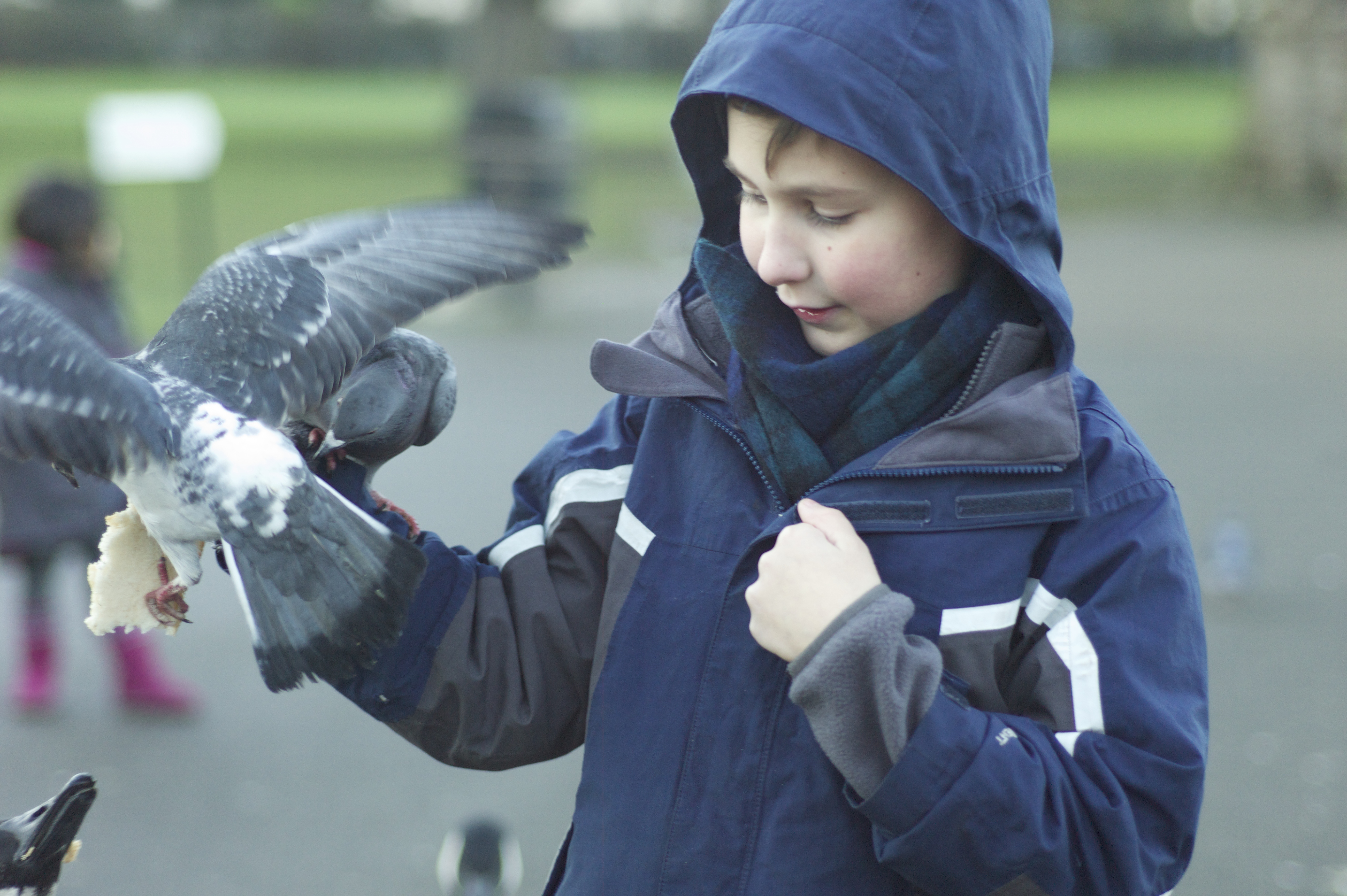
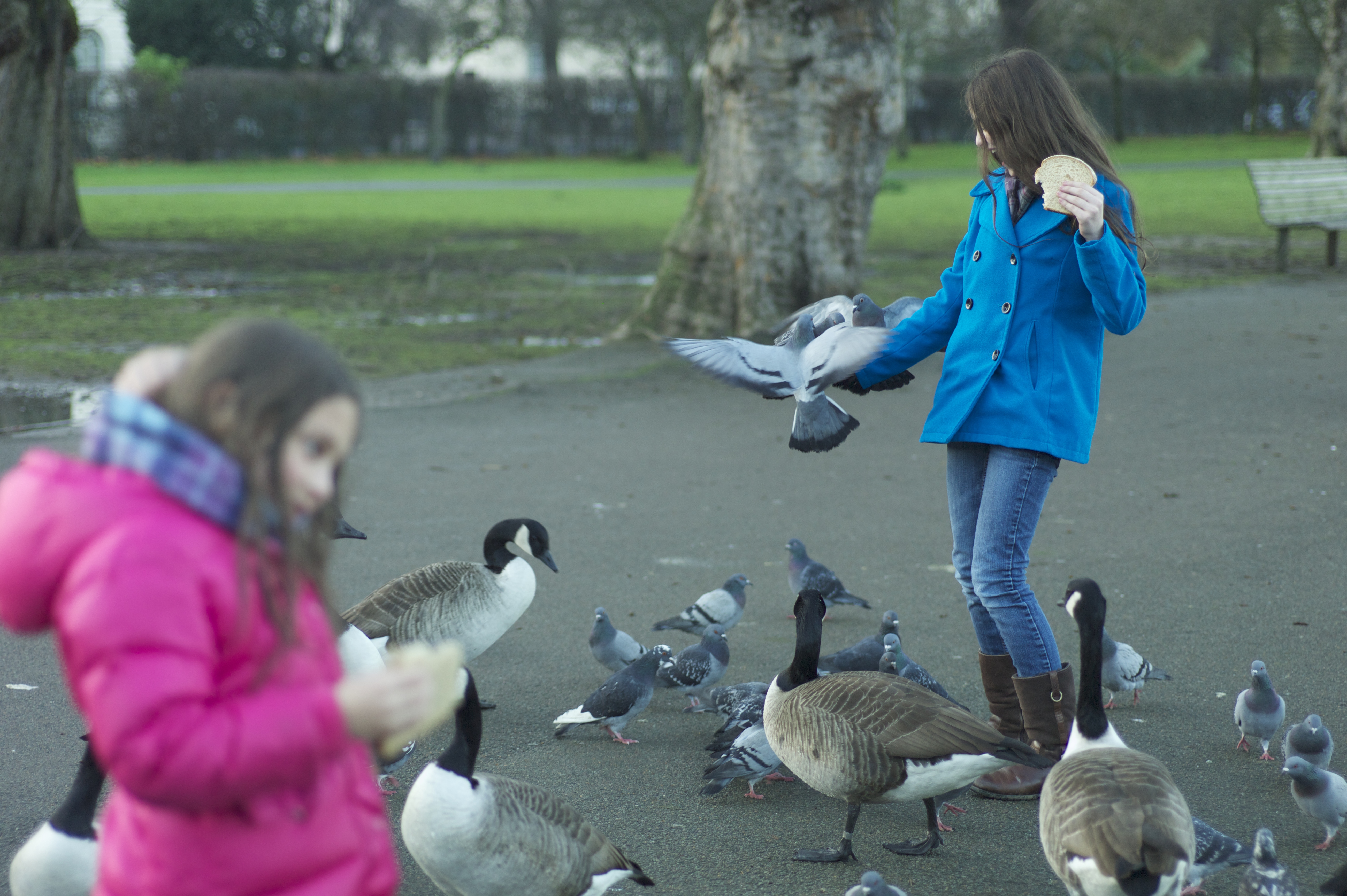
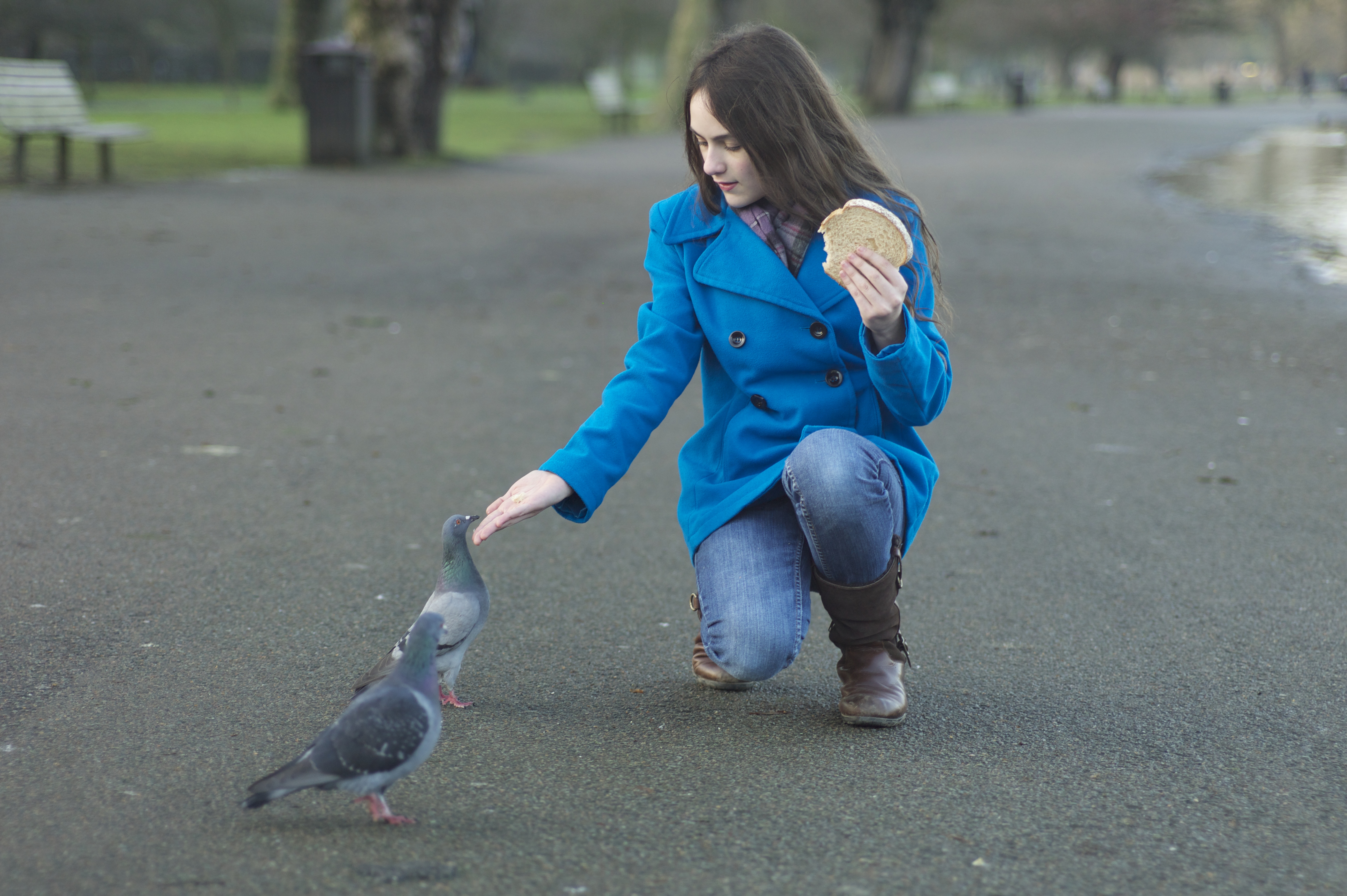
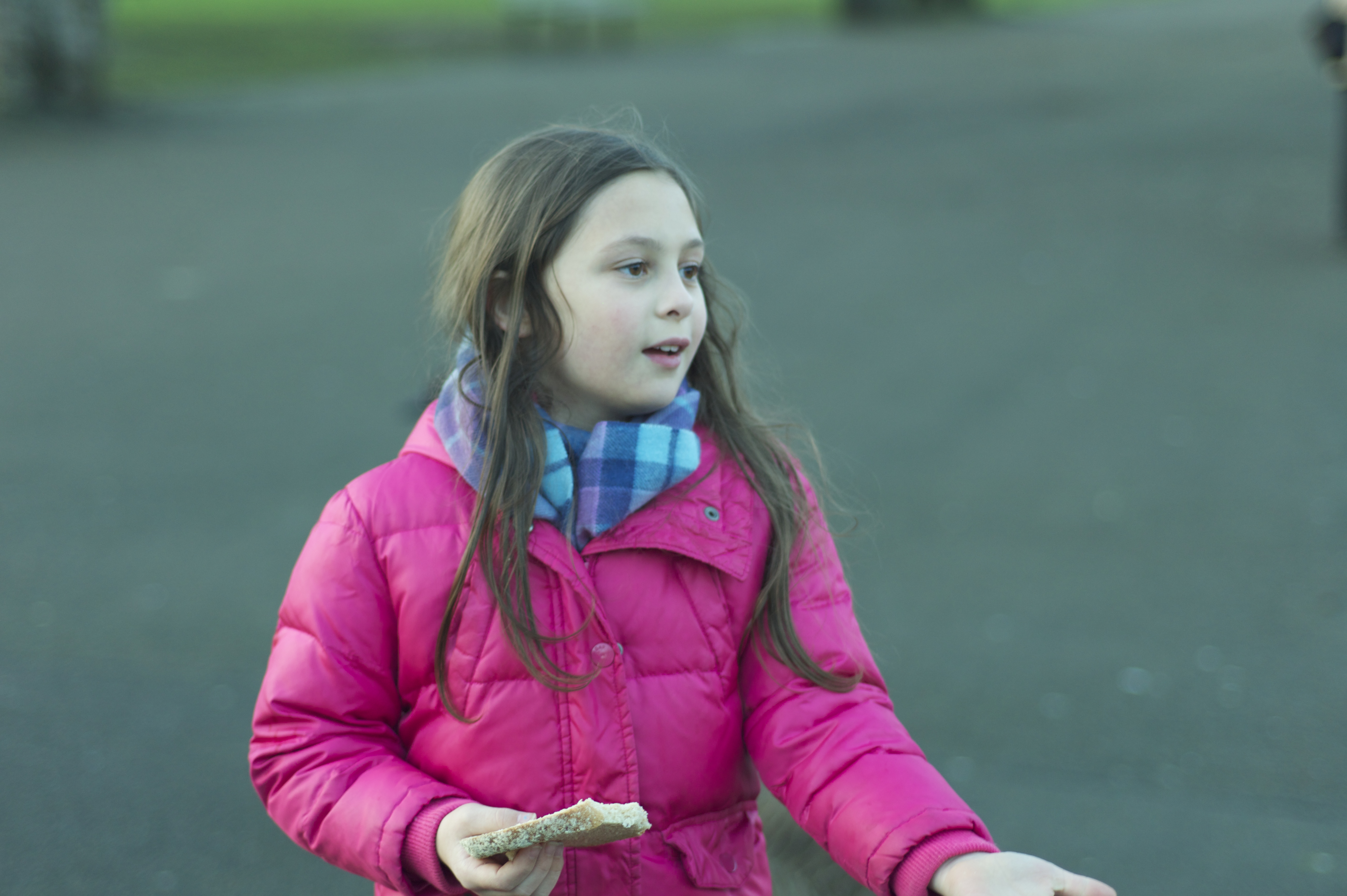
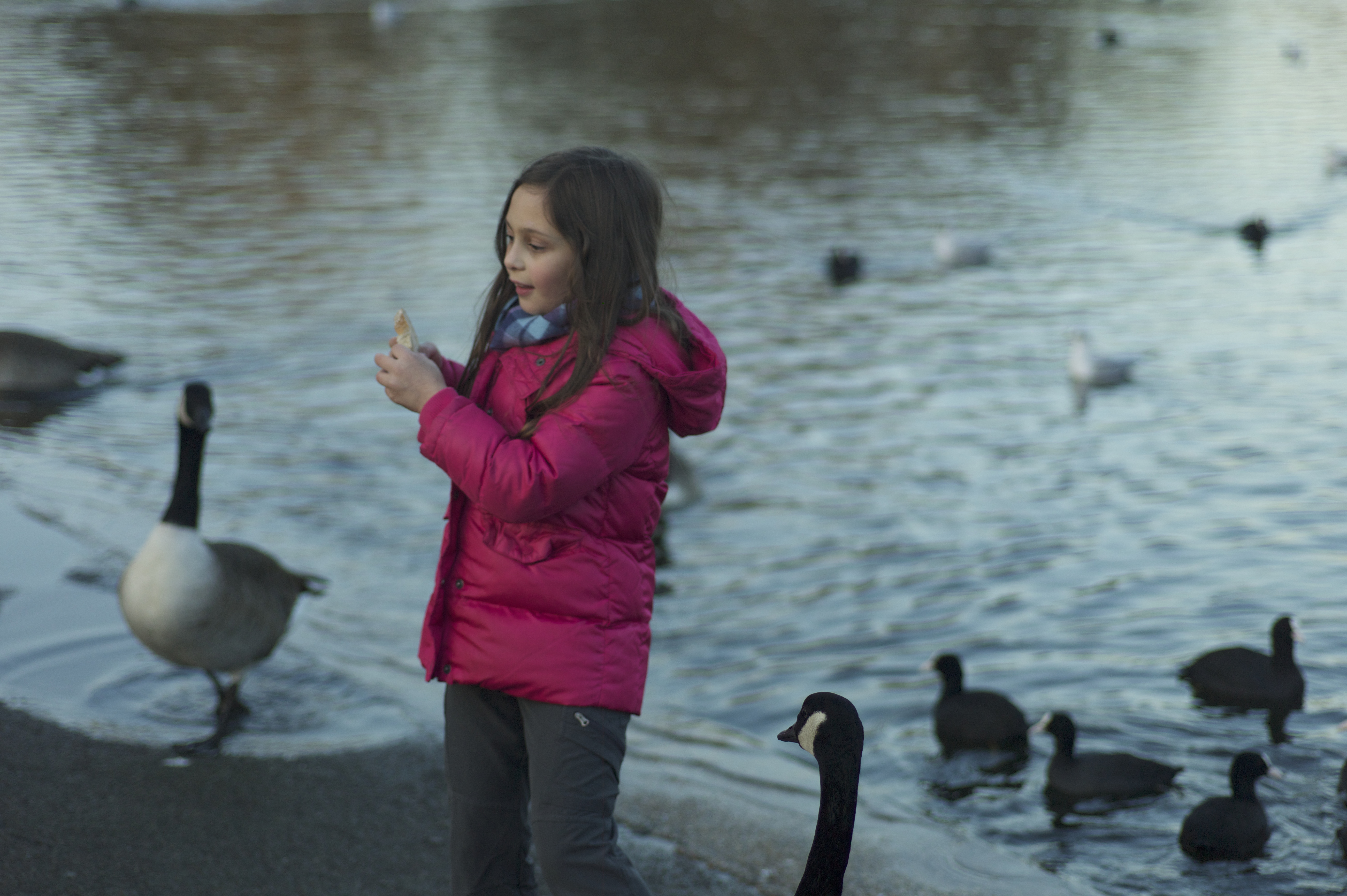
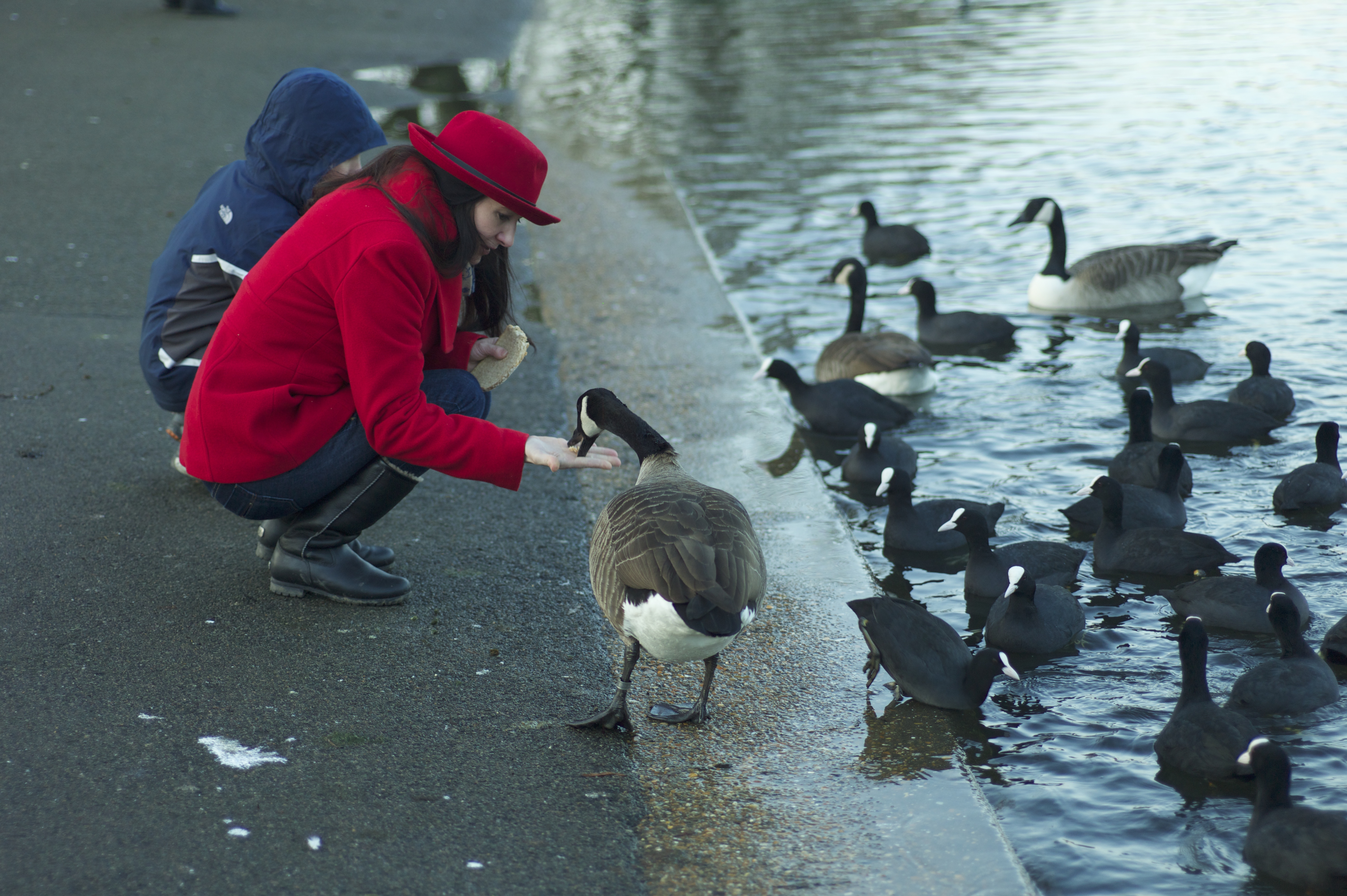
Later in the afternoon, we returned to Regent’s Park for more bird feeding. This is clearly going to be something we do on a regular basis for the duration of our stay. It’s so fun! (I will find something healthier to serve than bread. Bread isn’t very good for birds, but is what we’ve had available.)


December 27, 2013
Adam’s big goal today was to visit The Whiskey Exchange, which we learned about from a billboard in the subway tunnels. It’s over by London Bridge, on the east part of the city. Also on that tube stop were a farmer’s market and, just a little further on, Shakespeare’s Globe Theater.
The farmer’s market was a big disappointment. You exit the tube station and are dumped almost directly into it, but when we arrived at 11:30 a.m. almost all the stalls were still closed.
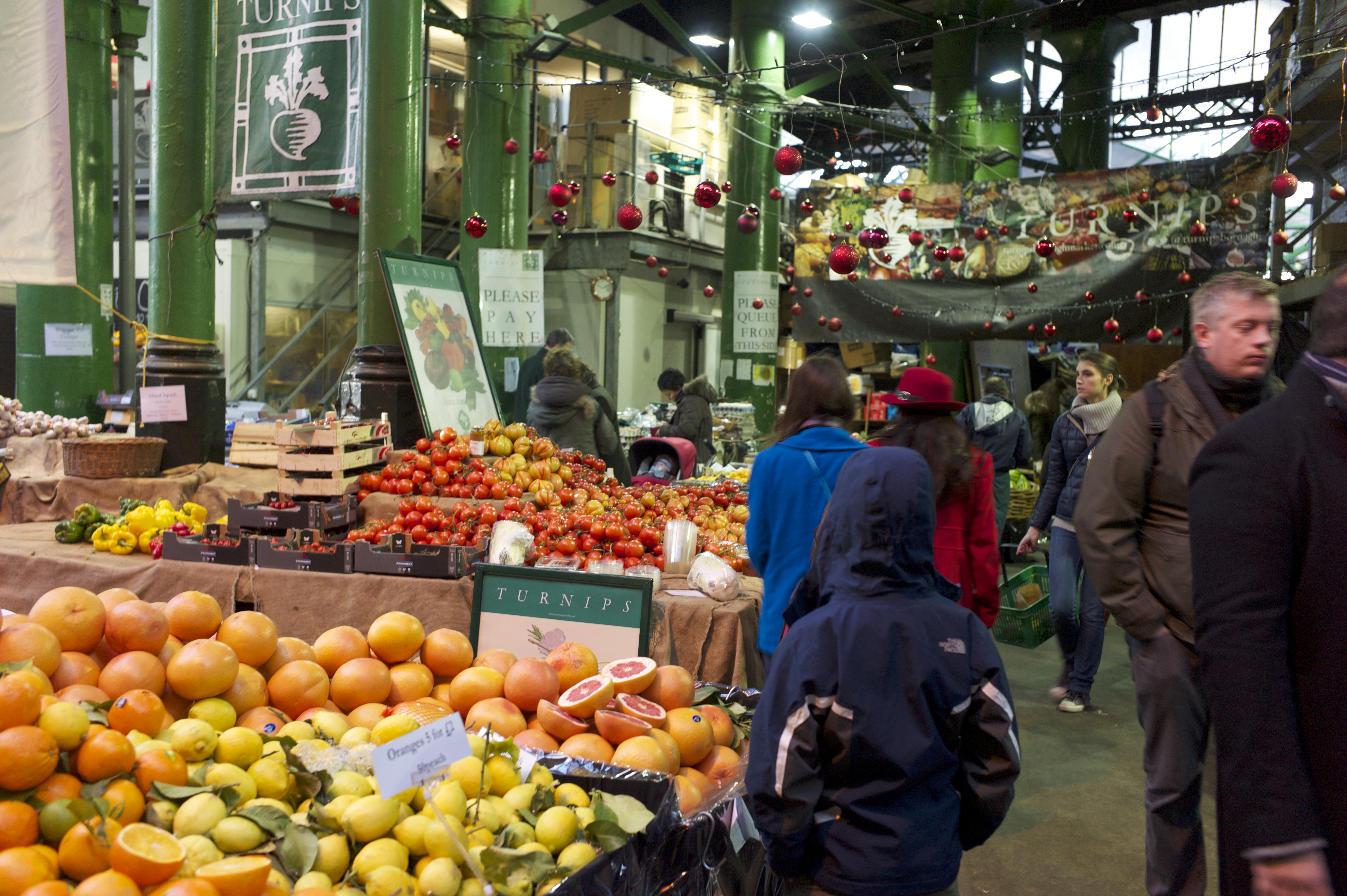
One of the only open stalls. Holden wanted to buy grapefruits, but nobody was willing to carry them around all day.
We turned down an old alley, following signs to The Whisky Exchange, and ran into The Clink Prison Museum, England’s oldest prison dating back to 1144. The signs out front declared, “The Clink, the prison that gave it’s name to all others!” and featured a very cute cartoon rat welcoming children and school groups. We thought, How interesting and fun for kids, too! and bought tickets.
And thus we entered the most disturbing and gory museum we’ve ever seen. The cute little cartoon rat told us all about the most vile and wretched things human beings have ever done to each other. We learned, for example, that a popular torture was to shove a funnel down a prisoner’s throat and fill his (or her) belly with enough water, bile or urine to rupture their stomach, causing a very slow and painful death. If the torturers were in a sporting mood, they would fill the person almost to bursting — but not quite — and then punch them in the stomach until they puked, so the treatment could be repeated over and over until it became boring.
Trials were no picnic, either. If a person was accused of a crime, the “trial” was generally to injure the accused and see how well they healed. It was fairly straightforward — good healing/God says you’re innocent; infection/God says you’re guilty. A common method was to force the person to reach into a pot of boiling water to retrieve an object at the bottom. Then the judge would monitor the burns. If the person had not healed within three days, they were deemed guilty. Then, into the Clink!!
The worst fate a prisoner could face was being thrown in The Hole. Another name for the Hole was the oubliette, from the French word oublier, meaning “to forget.” It was called thusly because prisoners would be thrown in there and … out-of-sight, out-of-mind. The warden tended to forget who was in there. The Hole was, as the name suggests, a hole in the floor of the prison. When the Thames flooded (which happened frequently) The Hole would fill with “raw sewage and swimming rats.” The wretched souls trapped down there would become so waterlogged that after a few days their flesh would literally fall off their bodies. Almost nobody survived their turn in the Hole.
Raw sewage and rats plagued the rest of the prison, too. Most people sentenced to Clink Prison died of dysentary, typhoid, malaria, and other diseases … if they didn’t die from starvation, drowning in sewage, or torture first.
Both men and women were held there. If a woman had children, the children were housed with her in the prison. Since the kids were not guilty of crimes, they were allowed to come and go as they pleased. Generally, their job was to go out and scrounge food for themselves and their mother. Children were considered adults at 7 years old and kicked out to fend for themselves.
The entire area around the prison was poverty-stricken and of ill repute. Prostitution was big business, and also a very dangerous profession for the women. They had very short life spans. Prostitutes were not allowed to have Christian burials, so there was a huge pit on unconsecrated ground nearby where their bodies were dumped and covered in lime. Archeologists fairly recently began digging through this pit. They had photos of layers upon layers of bones piled 8 feet deep, like a morbid baklava. Around half the bones were of women aged 35 and under, and the other half were children, babies, and aborted fetuses.
Life was brutal and short. No one valued children at all; one of the women sentenced in the prison was a midwife who, for a fee, would make sure a baby was “stillborn.” When authorities finally caught on to what service she was actually providing (due to the number of babies turning up the Thames), they searched her home and found it reeked of decay. She had so many bodies in her house she couldn’t dispose of them all. She pled guilty to just one murder and was given a death sentence, but they estimate she probably killed over 400 babies. If that number is correct, it makes her one of the most prolific serial killers in history.
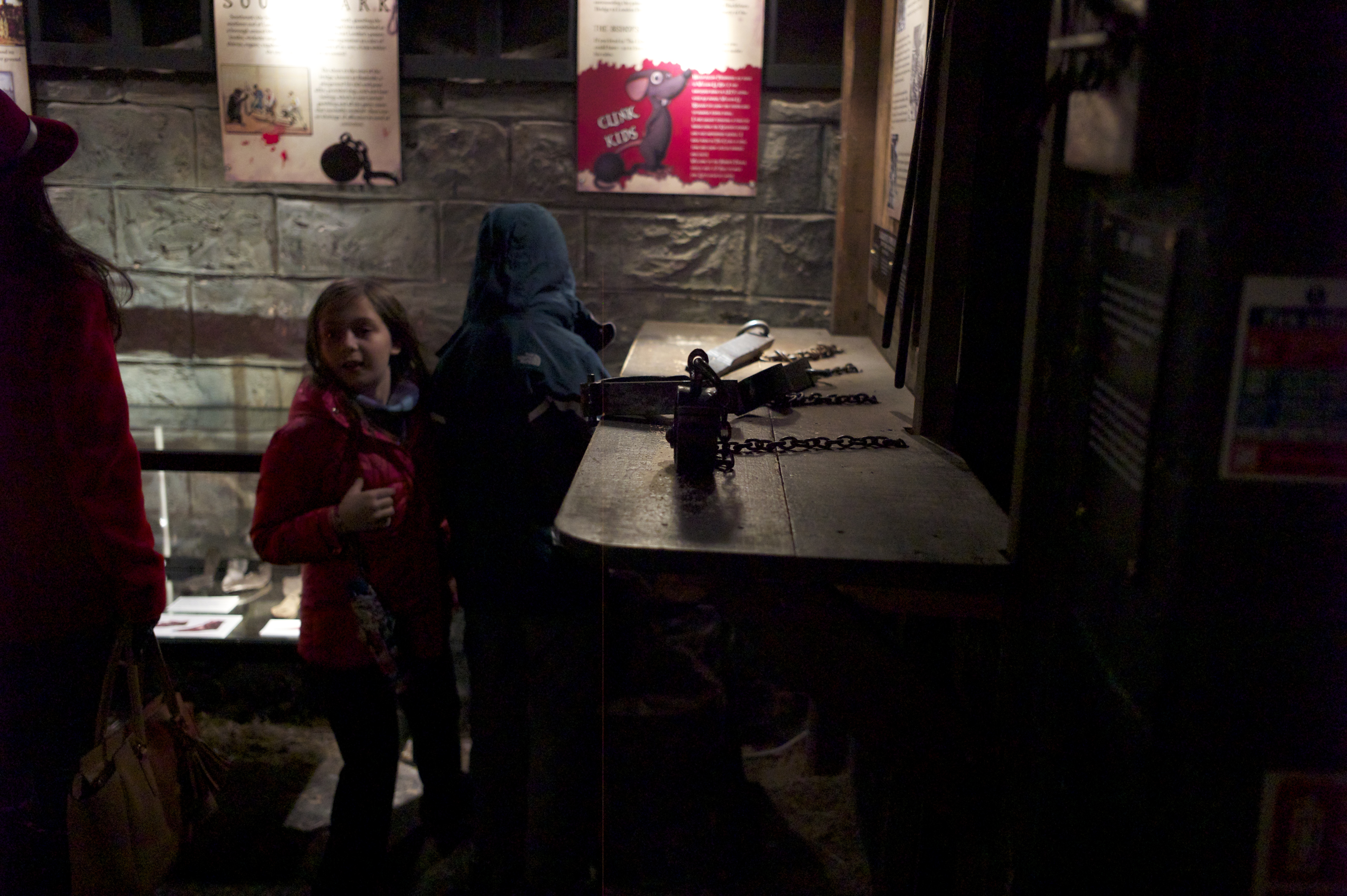
Here you can see the cute little cartoon rat, cheerfully listing all the torture devices in spite of the fact he’s locked into a ball and chain.
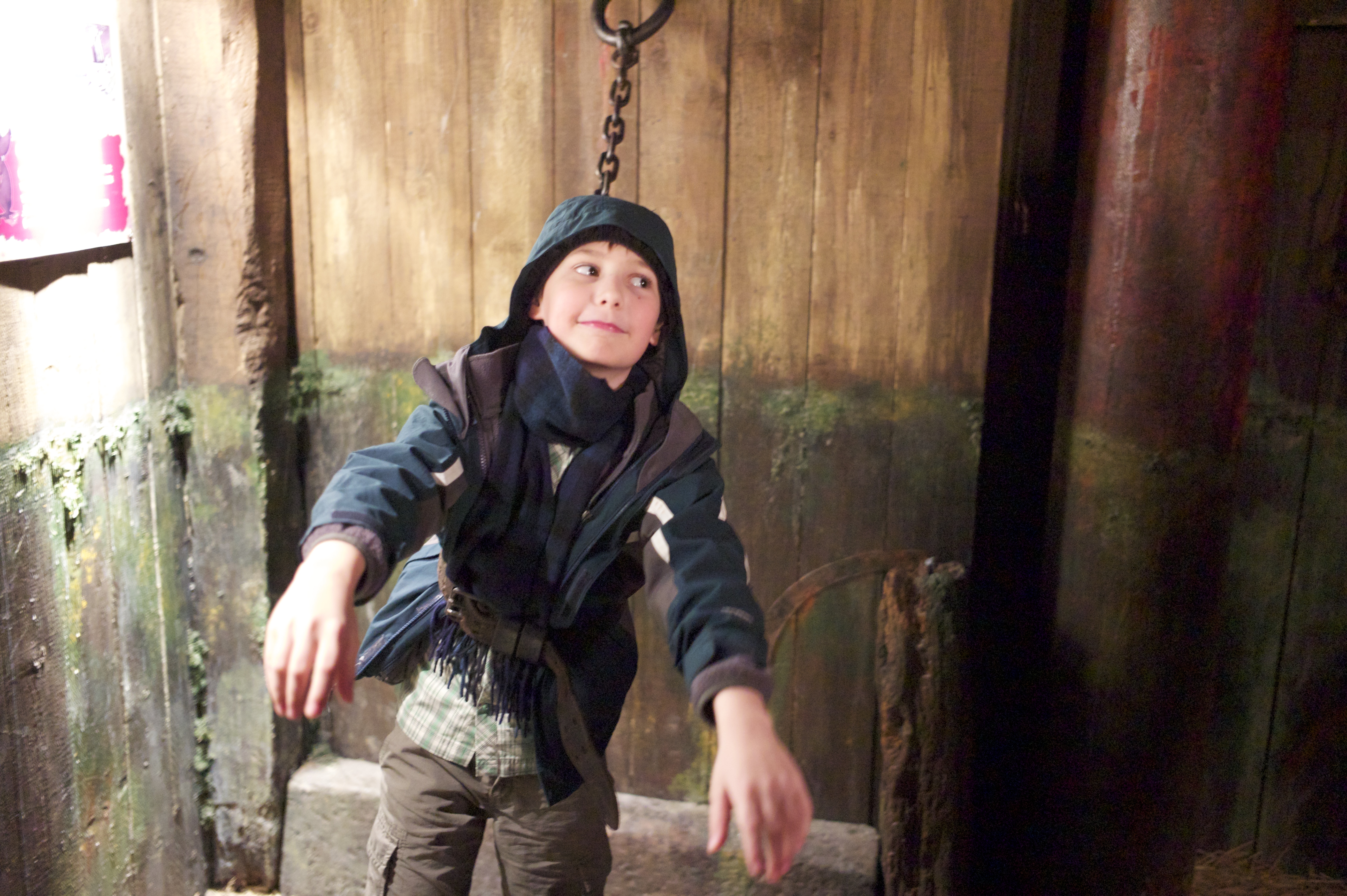
Being chained to a wall was one of the ways they kept prisoners from escaping. You can see on the wall behind Holden the water line. When the Thames flooded, sewage went up to that mark and would stay there for days.
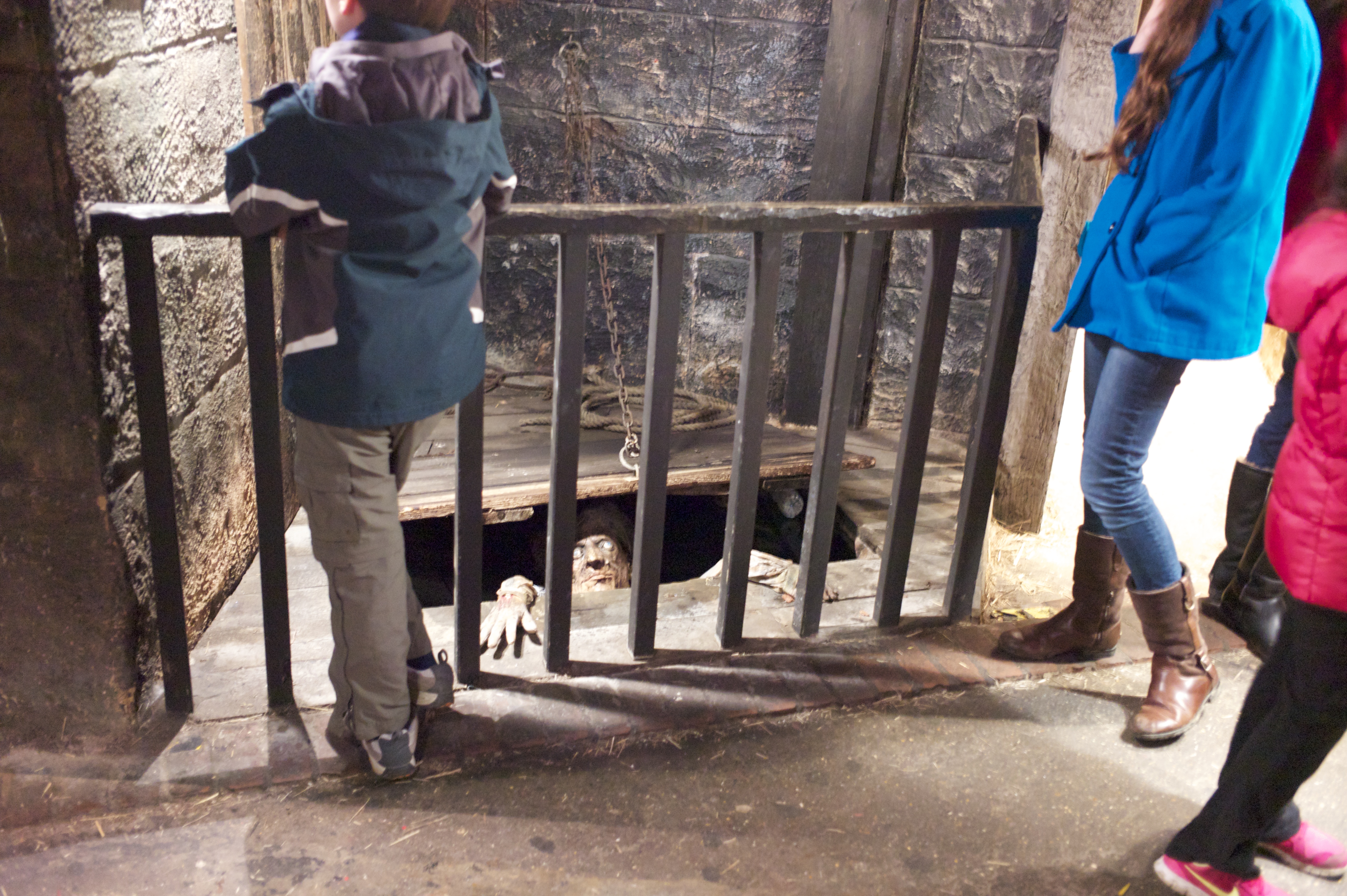
The Hole (with wretched prisoner, just so you can get an idea what it must have been like.)
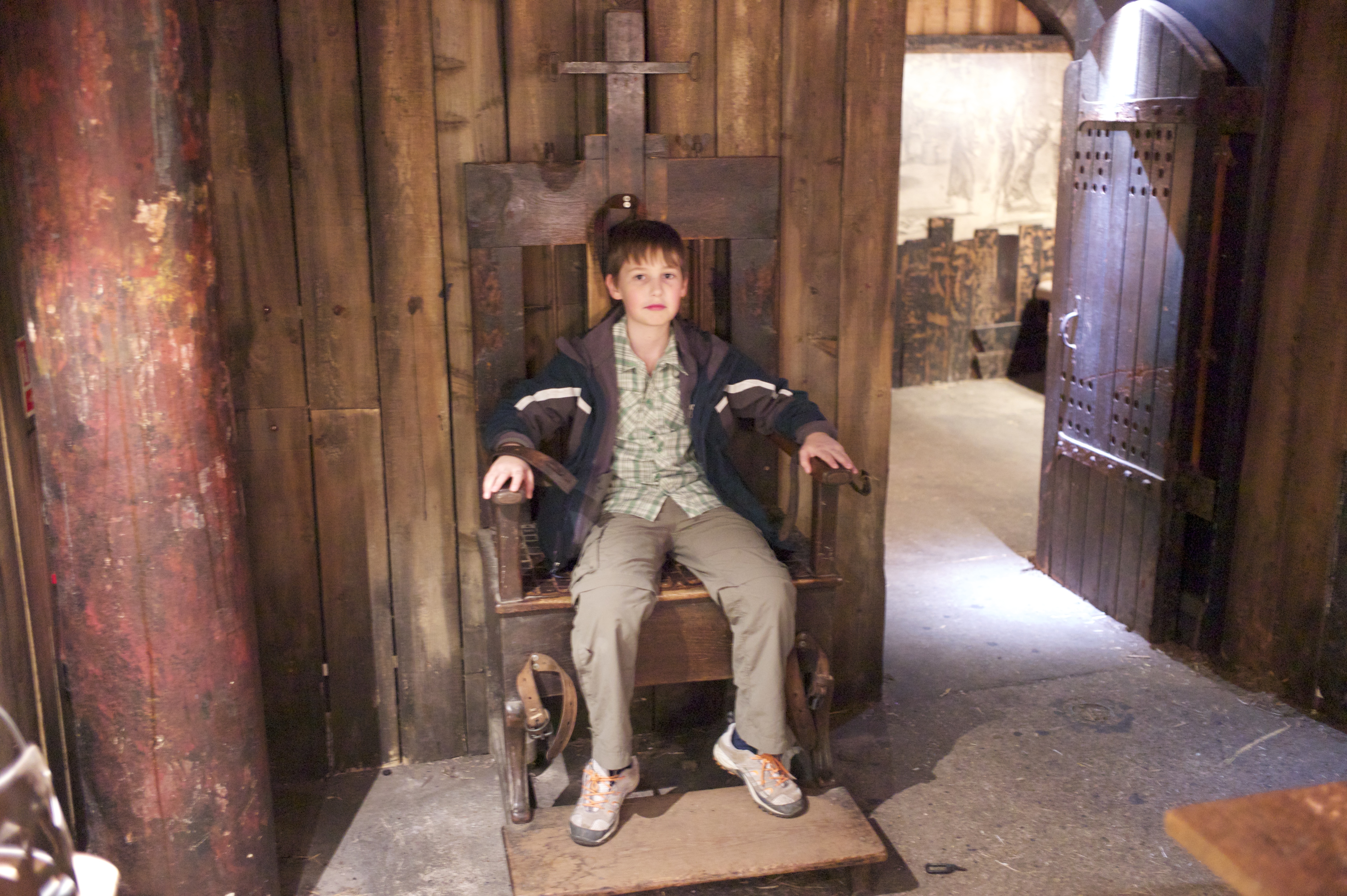
The torture chair was designed to hold prisoners in place while various forms of punishment were carried out. The most gruesome chairs had five hundred sharp spikes covering the back and seat.
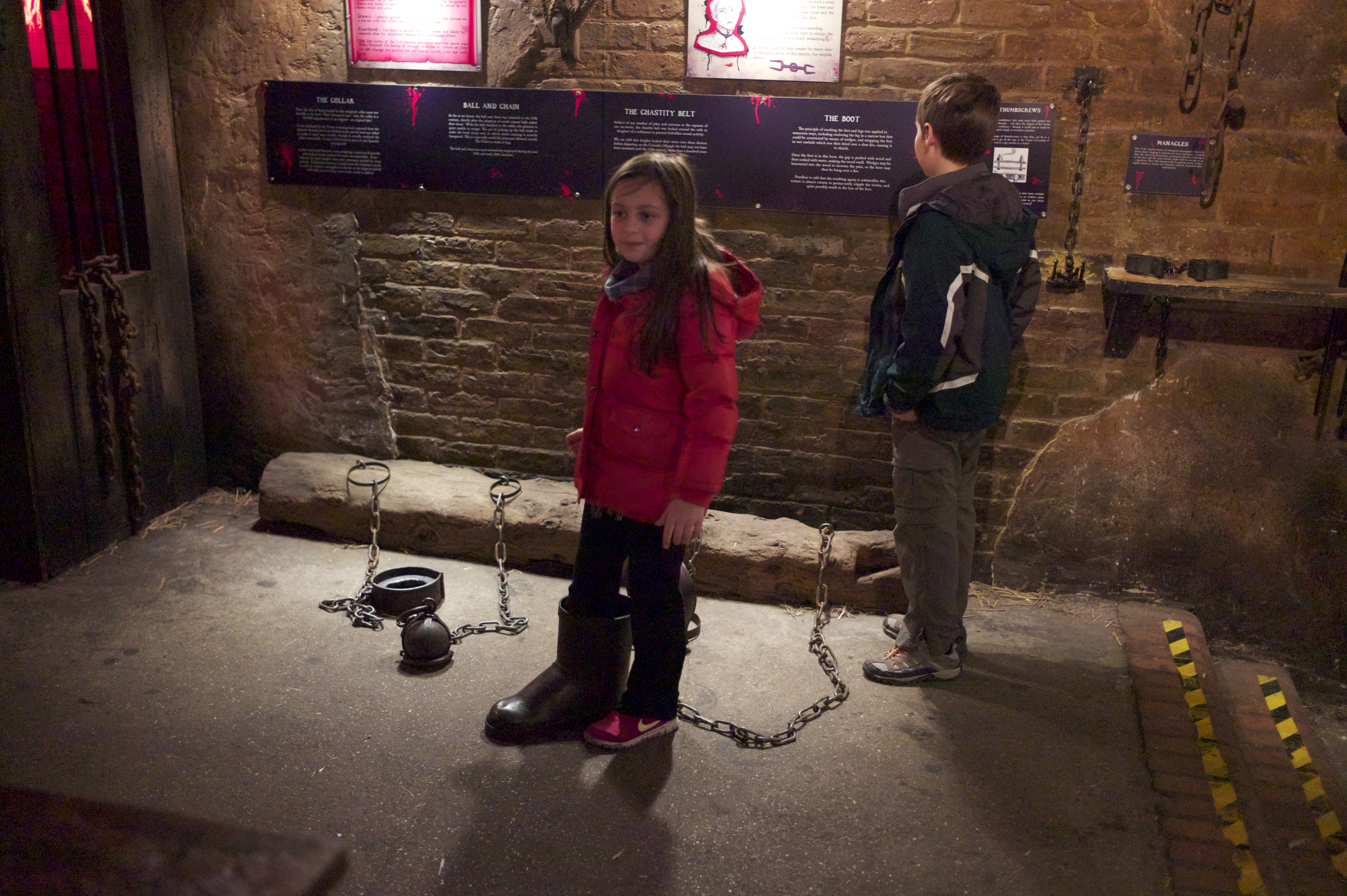
Cute cartoon rat generously offers kids a chance to try out torture devices. Josie is in The Boot: a prisoner’s foot was wedged into this iron boot with wood blocks. Then water was poured in, causing the wood to swell up and crush the foot. And just to make sure you were punished enough, The Boot was often held over a fire. Most people subjected to The Boot could only survive by amputating their foot.
One trip through The Clink Prison Museum will cure anyone of feeling like the world today is going to hell in a hand basket. I know our modern world still has problems (some of them pretty significant) but it’s not even in the same ballpark as England in the 1100-1300 years. As the tour guide at The Globe Theater would tell us later that afternoon, very few people made it to adulthood back then. The ones who did survive had a pretty bleak time of it.
Next up was the Whiskey Exchange. Adam went in by himself and I stayed out in the lobby with the kids. He said it was awesome. I wouldn’t know.
Down the street from The Clink is The Golden Hinde, a replica of Sir Francis Drake’s galleon. He circumnavigated the globe in an unbelievably tiny ship. We didn’t go in because it was fairly expensive and looked so small. Right in front of it, however, is a plaque detailing the history of St Mary Overie’s dock. Her story was interesting.
Legend has it that Mary’s father, the ferryman guarding what was the only entrance into London at the time, was wealthy but a terrible cheapskate. He decided to fake his own death, thinking that his family and servants would fast for a day or two out of sadness and respect, thereby saving him the cost of feeding them. This plan backfired in a big way. Instead of being sad, everyone was overjoyed to hear of his death and started feasting and “making merry.” The old miser became enraged when he heard the festivities and got up to yell at everyone. Seeing what they believed to be his reanimated corpse tromping around, people freaked out and screamed the old-timey equivalent of “Zombie!” and bashed his skull in with an oar. Then he was dead for real. His daughter, Mary, sent urgent word to her fiancee to quickly come help her deal with the whole mess, but in his rush he fell off his horse, broke his neck, and died. Mary then used all her money to build a convent “into which she retreated.” (I guess she was done with men!) She was eventually made into a Saint for her generous contributions to the church. It’s called the Southwark Cathedral and is right behind The Golden Hinde.
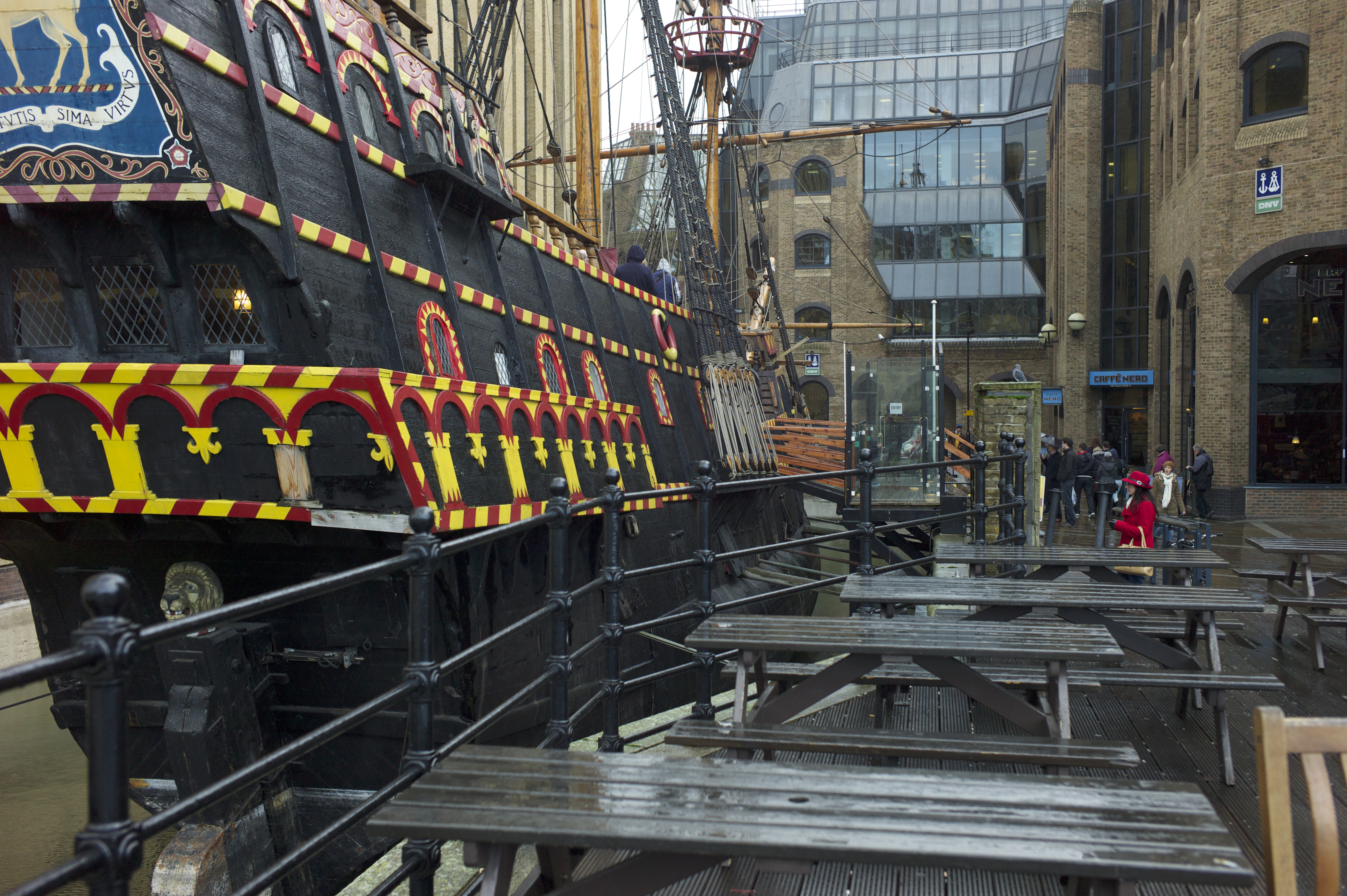
The Golden Hinde
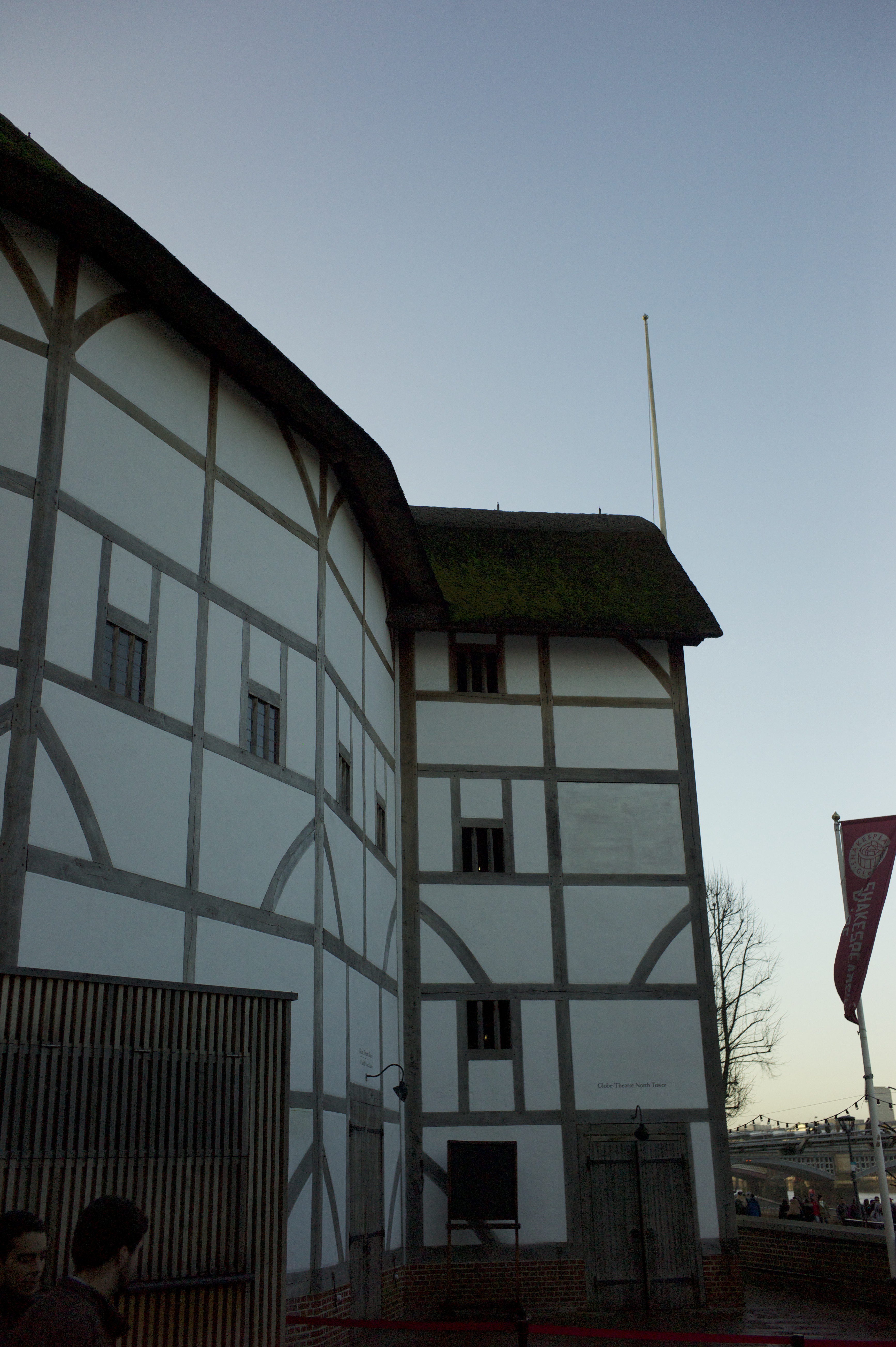
Just a little ways down the road is The Globe Theater, a replica of the original theater Shakespeare used. (The first Globe burned down when they shot off a canon during one of the plays and the thatched roof caught fire; the second Globe was torn down by disapproving Puritans trying to root out sin.) The current iteration of The Globe is the only building in London permitted to be made of wood and have a thatched roof.
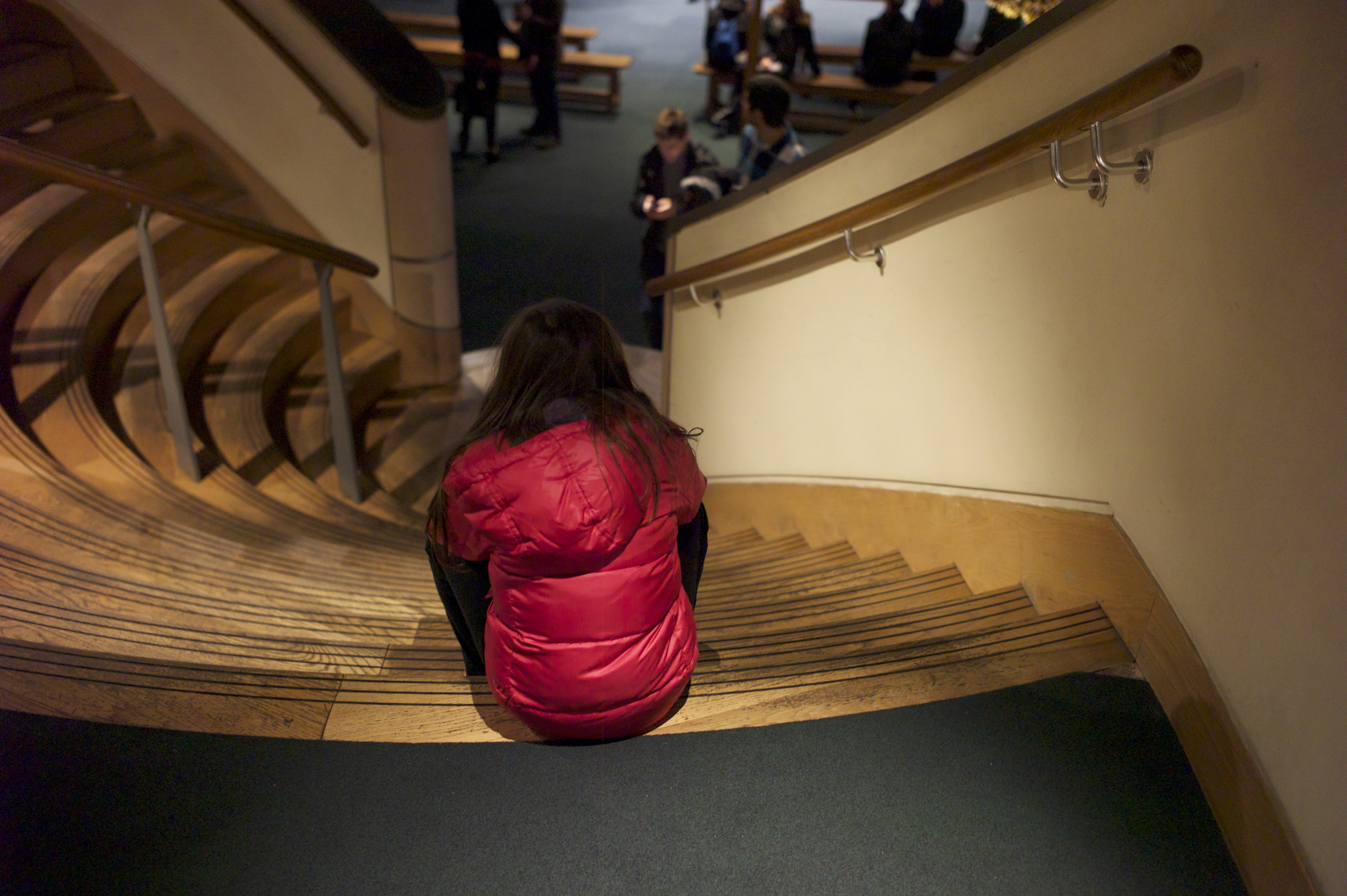
Josie waiting for our tour to begin. She’s terrified this will be “so boring I’ll die.”
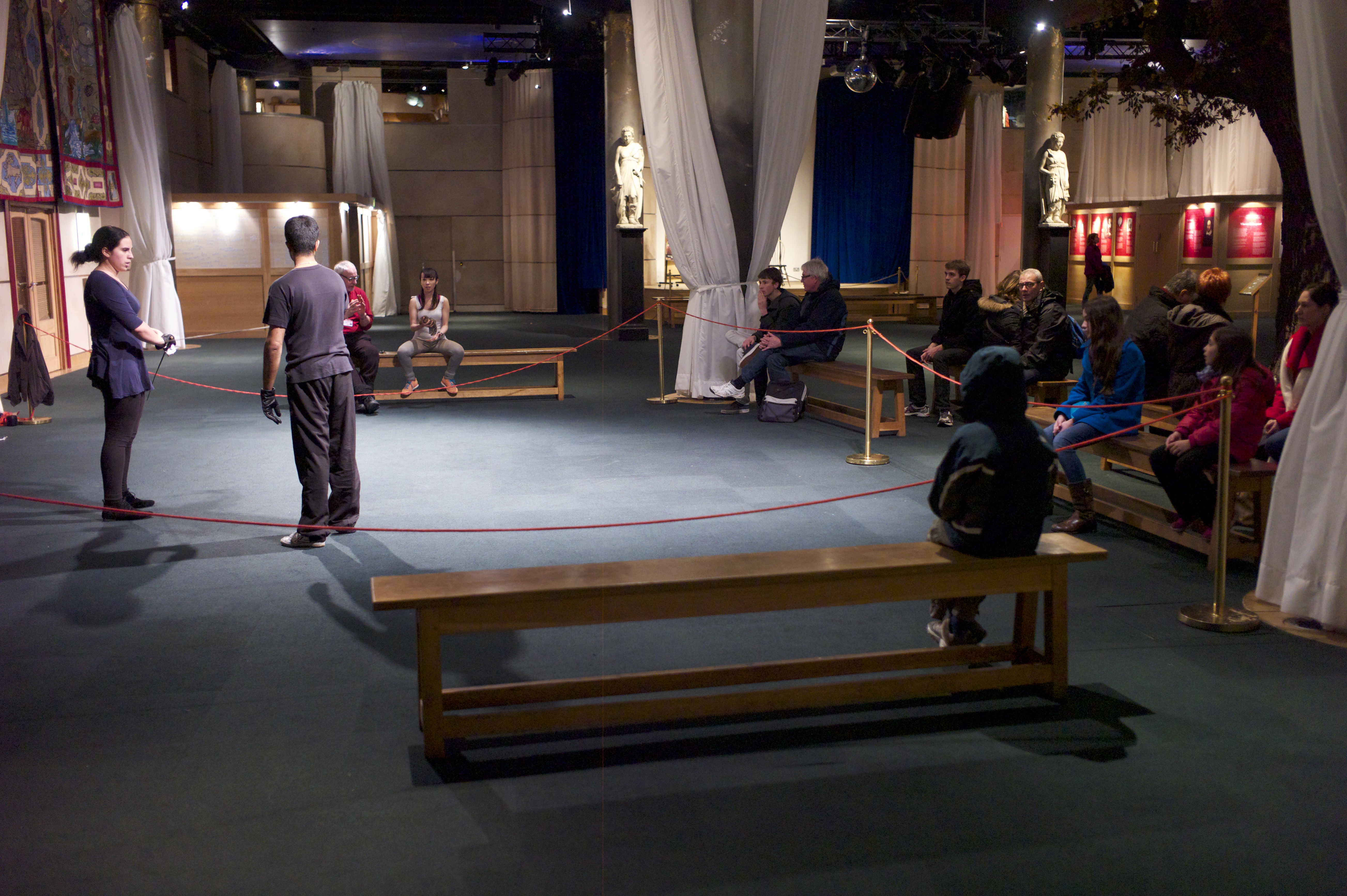
Entertainment while we wait: a sword-fighting lesson. Real students, real teacher.
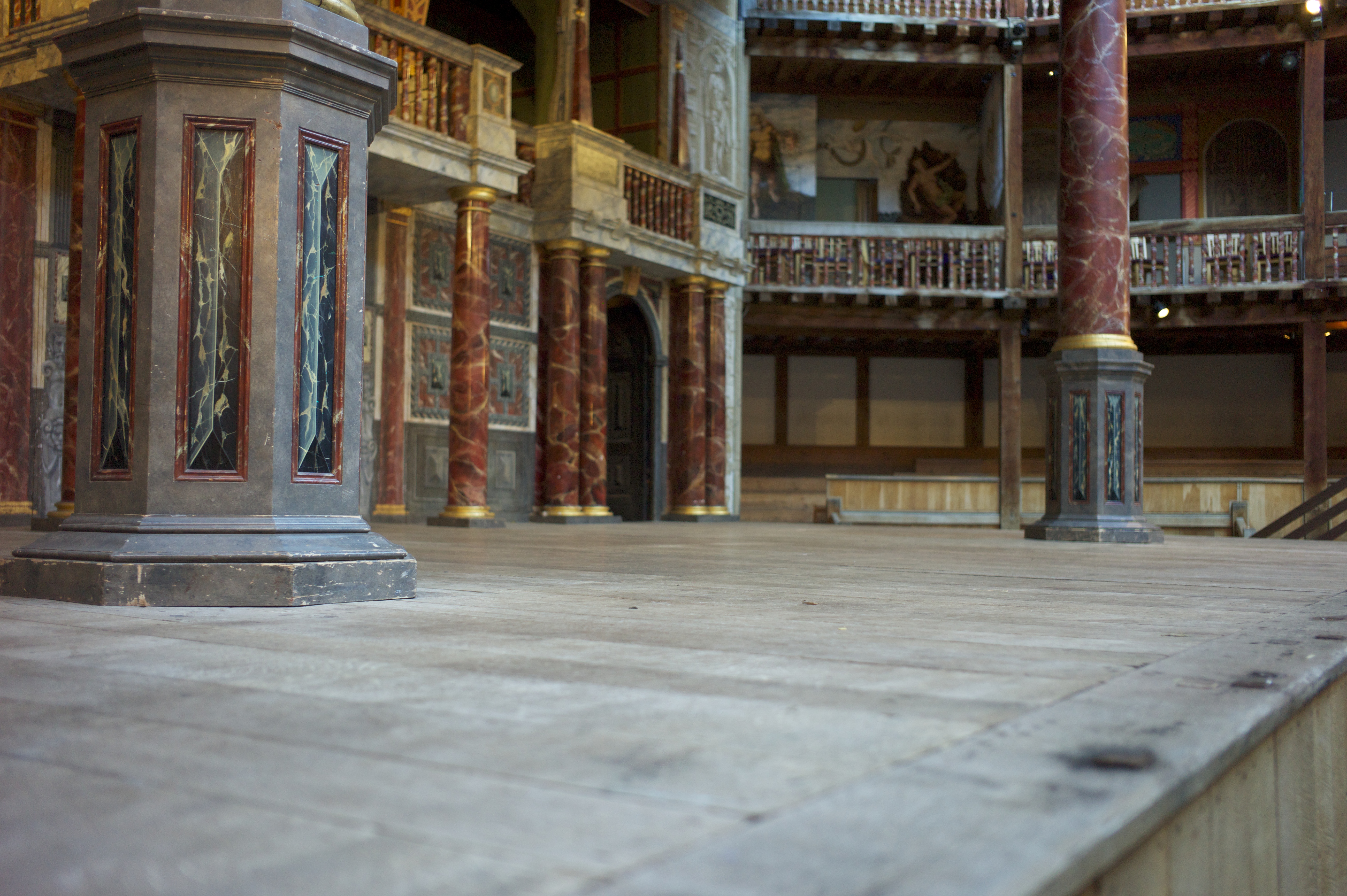
The stage.
In the photo below, you can see the seating. The theater is open air over “the pit,” which is the standing-room only area in front of the stage. Back in Shakespeare’s day, a spot in the pit cost 1 penny. You had to stand, and if it started raining, you got wet. The next level of seating was up in the stands, and cost 2 pence, but you got to sit on a bench and stay dry. The best seats were on either side of the stage (with the painted scenes; they’re the private boxes) and those cost 6 pence. People liked those seats best because they could hear the play better (the word “audience” comes from Latin “to hear”) and, as our guide told us, people back then were much more keen on hearing a play rather than on seeing a play. They were less visual than we are today. Anyway, the other big benefit of the box seats was they were out of the stink zone. The air circulation was such that the stench of the pit people was less disagreeable in those spots.
Today tickets are sold based on these old prices. 1 penny is roughly the equivalent of £5. Tickets for the pit are now £5, the bench seats are £10, and the boxes are £30. Our guide said it’s the best deal in London for seeing a live play.
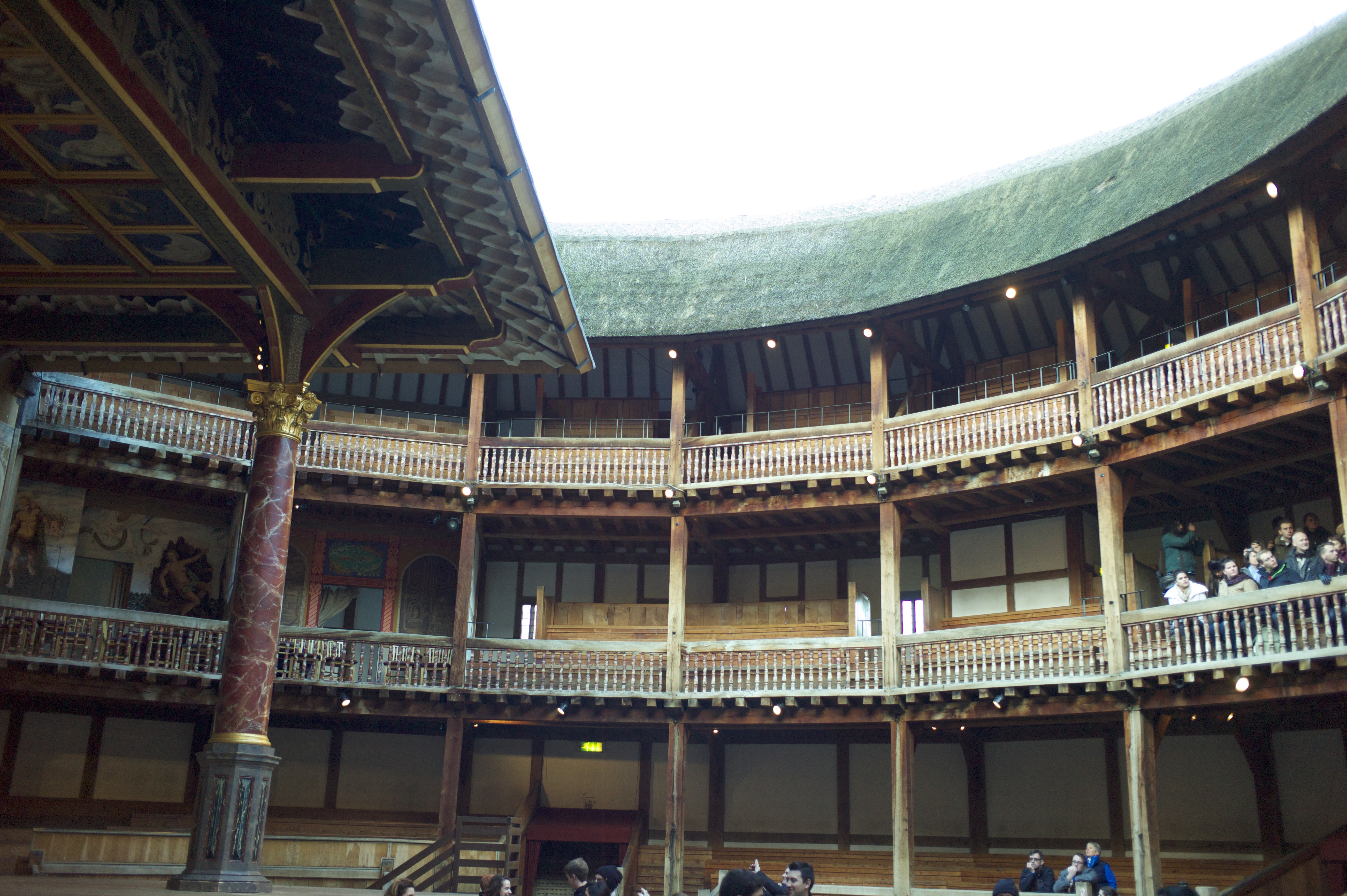
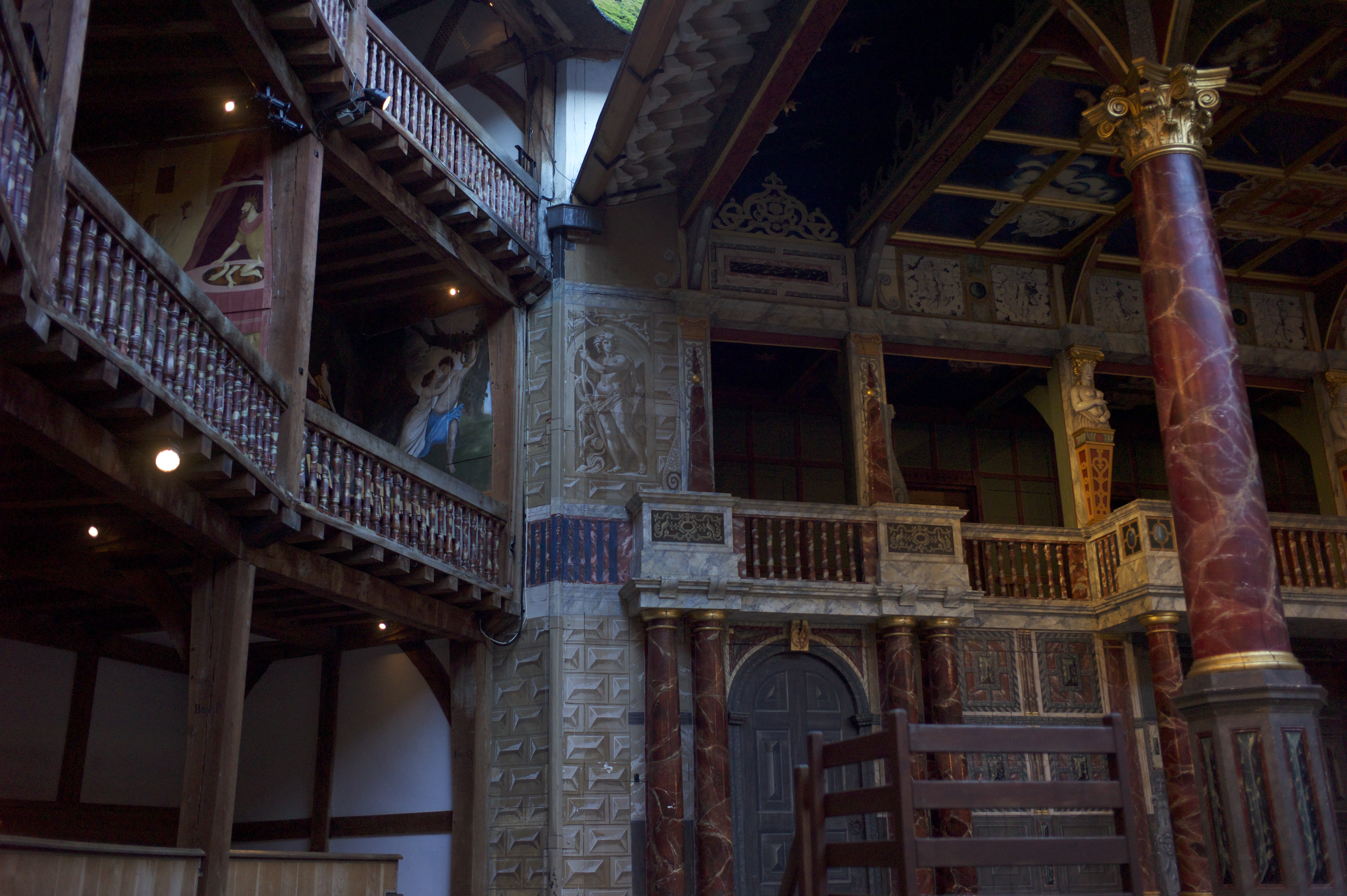
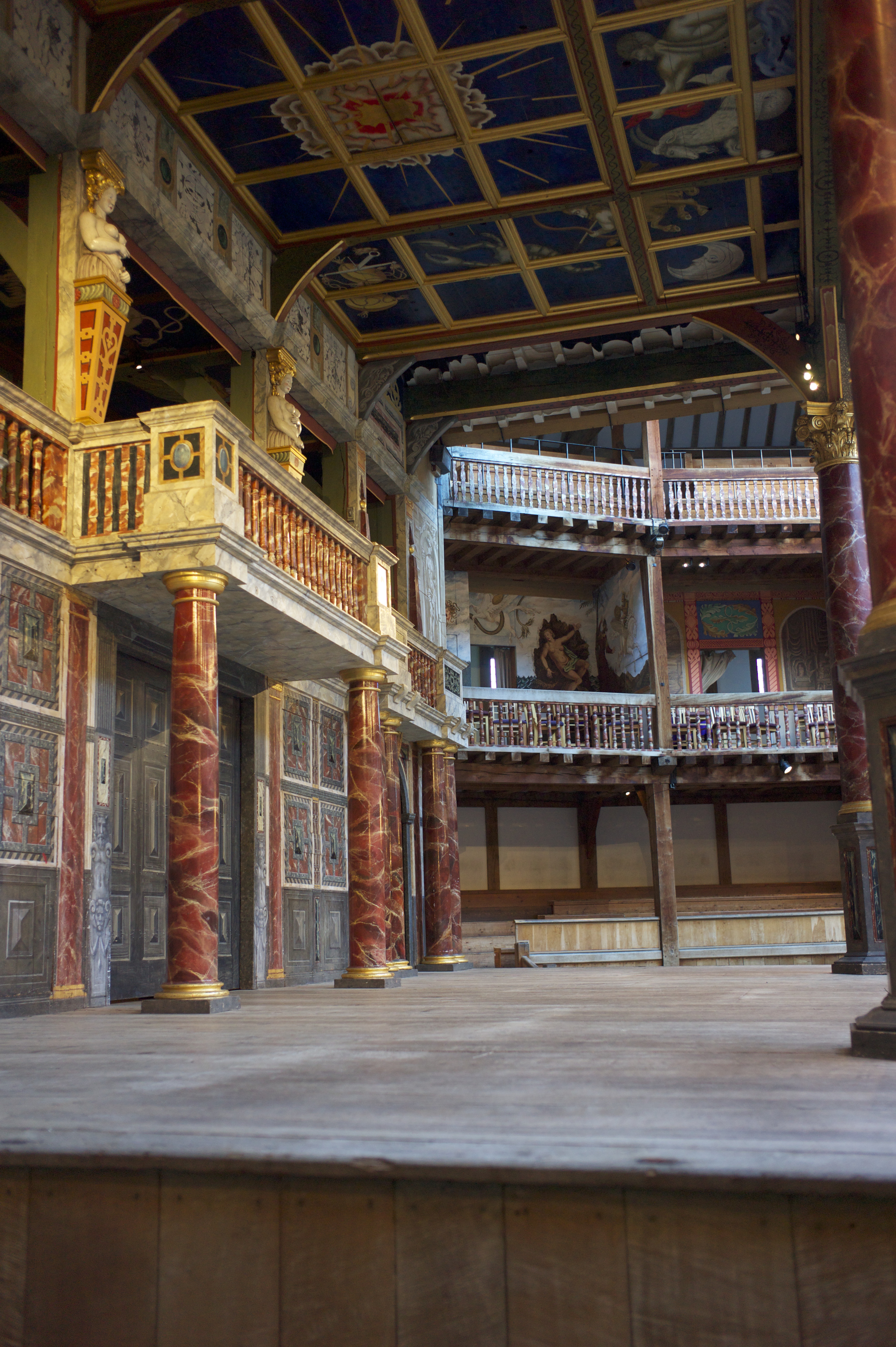
The boxes with scenes painted in them were the good seats.
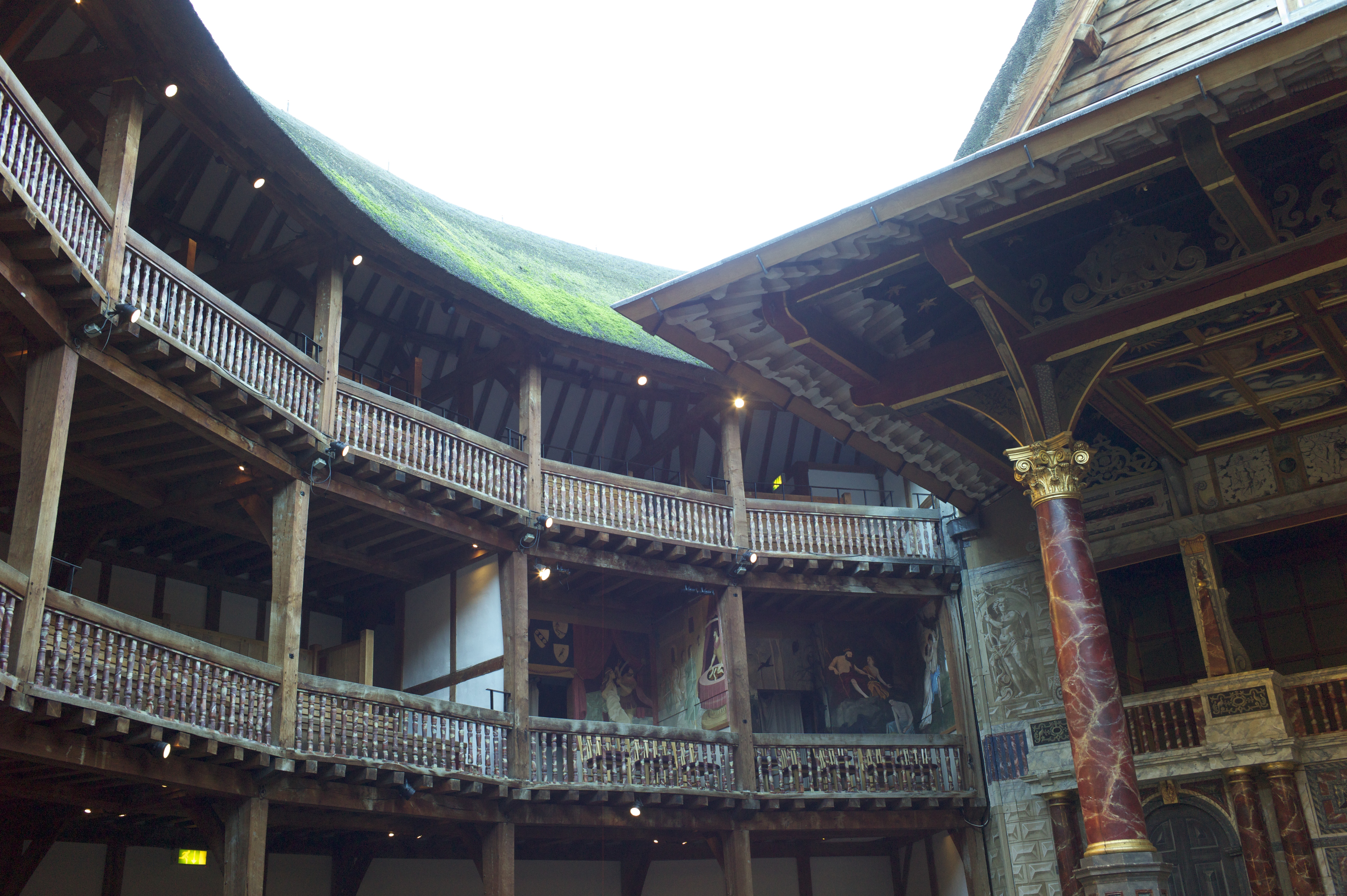
Seating, and a view of the thatched roof.
It was a long day, and when we finally got back to the flat it was too late to go feed the park birds. I changed into my pajamas and collapsed on the couch, saying, “It feels so good to get out of those jeans and sit down!” Josie looked over at me and said, “Whoa. Mama, you’re getting a tiny bit fat.” What?! I looked to Adam for help, but he just shrugged uncomfortably and said, “Welllllllll….”
Groan. It’s the dreaded Travel Bloat, and it happens every time we go somewhere. I even planned ahead and made sure that I was at the very bottom of my acceptable weight range before we left home, so that by the end of our 3 weeks I’d still be able to fit into my pants. I worked really, really hard and ate a lot of kale.
Sadly, I’ve gained my 3-week allotment in six days. We don’t have a scale here, but my clothes are getting “a tiny bit” tight. I was hoping nobody would notice since we’re always in bulky coats and scarves. Oh well. It was fun while it lasted. Food party is now over … I shall be more vigilant starting tomorrow. Maybe it’s not too late to turn this ship around!


Brenda, your account of your travels is just so delightful. I always feel like I’ve had a good visit with you after reading of your adventures.
Lovin’ it in Az.
Aunt Charlotte
Pingback: London, 25-29 May 2017 | MayseStomp